SPRUCE Winter 2025

Page 1


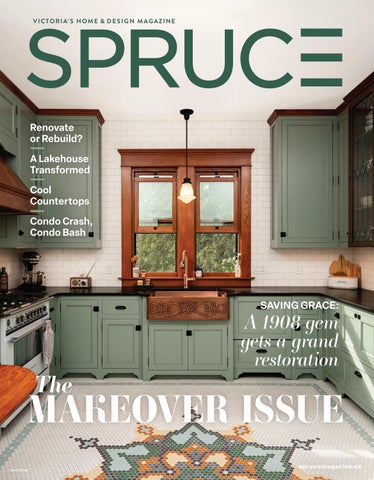
Renovate or Rebuild?

A Lakehouse Transformed

Cool Countertops

Condo Crash, Condo Bash

MAKEOVER ISSUE

16

NATURE INSPIRED

Go, green! Bravo, brown! Paint pros turn to nature for next year’s hottest hues. BY JULIEN JOHNSTON-BREW

20 SAVING GRACE

From the penny tiles to the copper sink, no detail was ignored in this painstaking, seven-year restoration of a stunning historic home.

30

A LAKEHOUSE TRANSFORMED

A smart, thoughtful renovation transforms a worn 1980s cottage into a contemporary forever home.

BY JULIEN JOHNSTON-BREW

38 THE DO OVER

Wondering whether to rebuild, renovate or just add a coat of paint? Our guide has the answers. BY SHANNON MONEO & SPRUCE STAFF

44 COUNTER INTUITIVE

Take a second look at the hardest working surface in your home. BY SPRUCE STAFF

SPRUCE IT UP

Artist Andrea Soos; it’s a plaid, plaid world; lounge in retro style; shine a multi-faceted gem of light; Reading Nook; winners of the inaugural Island Design Excellence Awards.

14

DESIGN INSPO

We round up some of the most exciting pieces from Interior Design Show Vancouver.

18

HOW TO

Refinish a piece of furniture, the most satisfying of DIY projects. BY CAROLYN CAMILLERI

50 REAL ESTATE

As condo sales stagnate, it’s good news for renters — and maybe even better news for buyers.

BY SHANNON MONEO

52 GARDENS

Add colour and beauty to your winter garden with heavenly hellebores. BY CAROLYN CAMILLERI

54 AT THE TABLE

We check in with Finest At Sea chef Anna Hunt for tips on chowder. Plus: Tools and wine pairings. BY JOANNE SASVARI

56

We visit Realtor and woodworker Neil Bosdet in his well-appointed shop where all the magic happens. BY JOANNE SASVARI

58

How to create the dreamiest nook for cozying up with books.

AWARD WINNING REALTORS®

“TheWildmanGroupmade theentireprocesssmoothand professionalfromstarttofinish. Everydetailwashandledwith care.Highlyrecommend!”

S ama nt h a C h is ho l m R E A L T O R ® 2 5 0 8 1 8 2 00 6 R o b y n W il d ma n R E A L T OR ® 2 5 0. 8 1 8. 8 5 2 2

FOR MOVING RESULTS, WORLD- CLASS MARKETING, AND PERSONAL ATTENTION CALL OUR TEAM TODAY G r a c e S h i n

2 5 0.8 9 3 .9 97 6

C’mon, Let’s Stay Awhile

The day our contractor finished work on our kitchen last year, I swore that was it, I was done, no more renovations for at least five years, maybe 10, maybe never. About two minutes later, I changed my mind. We really need a second bathroom, I thought, and the mudroom could use a makeover, and the entire upstairs needs a do-over, and, and, and …

That’s the reality when you own a place. There’s always something that needs fixing or updating or is just getting on your nerves. Besides, who doesn’t love a makeover? It’s only natural to want to improve the place we live, to make our nests as comfortable and stylish as we can.

If you’re contemplating your own makeover (and we bet you probably are), you’ll likely be glad to hear about a pretty big shift in design right now. Over the past 15 years or so we’ve been in a cycle of micro-trends. Back in the day, trends stuck around a while. Some, like Art Deco, never really went out of style, but even short-lived trends, like that time in the 1980s when everyone pretended they lived in Tuscan farmhouses, lasted a few years. But since around 2010 trends have come and gone in the time it takes to devour a cronut (speaking of micro-trends). Remember coloured grout? Maximalist everything? Edison bulbs? Brat green?

“IF YOU’RE CONTEMPLATING YOUR OWN MAKEOVER (AND WE BET YOU PROBABLY ARE), YOU’LL LIKELY BE GLAD TO HEAR ABOUT A PRETTY BIG SHIFT IN DESIGN RIGHT NOW.”

So what changed? Well, 2010 was the year Instagram was released and the style influencer was born. Suddenly these beautiful people were inviting us into their impeccable homes and, because they needed fresh content all the time, tempting us with constantly new ideas. And who were we to resist temptation?

But now the housing market has changed. We’re less likely to flip our homes and more likely to stay in them. More of us are looking to age in place, or to add suites for our adult kids or senior parents, or to build work-from-home units in the backyard.

Not long ago, I attended a presentation led by Marlena Jackson of Benjamin Moore and hosted by Western Design+Build. We were all there to learn about the paint company’s 2026 colour palette, notably the colour of the year, the refined charcoal-meets-espresso Silhouette. But the real, underlying message was that the era of the micro-trend is over. Sure, there will always be fads that come and go — I’m not convinced that colour drenching will be around for long, but then again you never know — but for the most part, rather than follow insta-trends, we want to create homes that express who we are, and that we’ll love for a good long time.

That makes this a fantastic time to consider a makeover. We love the idea of improving our homes because we want to enjoy them to the fullest, to make them more functional and beautiful, to showcase the things we love. A house, after all, should be a home — and this is the best time to make yours one.

PUBLISHERS Lise Gyorkos Georgina Camilleri

EDITOR-IN-CHIEF Joanne Sasvari

DIRECTOR OF PHOTOGRAPHY Jeffrey Bosdet

LEAD GRAPHIC DESIGNER Janice Hildybrant

ASSOCIATE

GRAPHIC DESIGNER Kelly Hamilton

ADVERTISING CONSULTANTS Deana Brown

Jennifer Dean Van Tol Cynthia Hanischuk

Brenda Knapik Ieva Sakalauskaite

ADVERTISING CO-ORDINATOR Rebecca Juetten

MARKETING & EVENTS

CO-ORDINATOR Lauren Ingle

COPY EDITOR Lionel Wild

CONTRIBUTING WRITERS Julien Johnston-Brew, Carolyn Camilleri, Shannon Moneo, Carla Sorrell

EDITORIAL ASSISTANT Julien Johnston-Brew

CONTRIBUTING

PHOTOGRAPHERS Dasha Armstrong, Jody Beck, Vince Klassen, Mary McNeil Knowles, Ema Peter, Platinum Creative

CONTRIBUTING AGENCIES Dreamstime p. 46; Getty Images p. 9, 18, 19, 40, 41, 42, 43, 49, 52, 53; Living4Media p. 44, 58

GENERAL INQUIRIES info@sprucemagazine.ca

LETTERS TO THE EDITOR editor@sprucemagazine.ca

SUBSCRIBE TO SPRUCE subscriptions@sprucemagazine.ca

ADVERTISING INQUIRIES sales@sprucemagazine.ca

ONLINE sprucemagazine.ca

INSTAGRAM @sprucemagazinevictoria

FACEBOOK sprucevictoria

ON THE COVER Saving Grace, p. 20 Photo by Platinum Creative

Spruce magazine is published by Page One Publishing 580 Ardersier Road, Victoria, BC V8Z 1C7 T 250-595-7243 info@pageonepublishing.ca pageonepublishing.ca

ADVERTISE IN SPRUCE MAGAZINE

Spruce is Victoria’s home and design magazine. For advertising info, please call us at 250-595-7243 or email marketinginfo@sprucemagazine.ca

Printed in Canada by Mitchell Press.

Ideas and opinions expressed in this publication do not necessarily reflect the views of Page One Publishing Inc. or its affiliates; no official endorsement should be inferred. The publisher does not assume any responsibility for the contents of any advertisement and any and all representations or warranties made in such advertising are those of the advertiser and not the publisher. No part of this magazine may be reproduced, in all or part, in any form — printed or electronic — without the express permission of the publisher. The publisher cannot be held responsible for unsolicited manuscripts and photographs.

Canadian Publications Mail Product Sales Agreement 41295544

WARM UP TO WINTER

The Artist’s Way

Rich colours, cozy textures, bright ideas.

In Andrea Soos’s latest paintings, rosy browns, poignant purples and misty greens dance across the canvas, moody, mesmerizing, engaging. The Victoria artist is known for playful abstractions in which swathes of fresh, modern colour twist and turn whimsically. Her works adorn the labels of Roche Wines and the walls of the Four Seasons Toronto, and are available in a limited edition partnership at Urban Barn or through the Art Gallery of Greater Victoria. She considers her works “a visceral and therapeutic practice, driven by music and song lyrics.” But bring your own experience and history and ideas to them, and they can mean whatever you desire. andreasoosart.com

Pictured: Then Most Of You, by Andrea Soos, 36 x 36 inches, acrylic and ink on canvas. Custom frame locally made and sourced from Canadian sustainable lumber.

SPRUCE IT UP

MAD FOR PLAID

CHECK IT OUT — THE CLASSIC PATTERN IS BACK IN STYLE.

According to TikTok, this year’s hottest holiday trend was all about Ralph Laureninspired décor. Yes, the 1980s are back with rustic-preppy-cabin vibes, layers of rich colour and texture, brass horse paraphernalia, leather chairs, cozy cable-knits, rugged wood furnishings and, most of all, plaid. Oh, so very much plaid.

Now that we’ve reintroduced plaid into our homes, it’s likely here to stay awhile. The good news is that plaid can fit into any style of home. The key is co-ordinating the colours with the rest of your décor, matching the scale to the size of your space and aligning its vibe with the rest of your furnishings. Think: colourful jewel tones for a traditional home; buffalo plaid in a rustic one; sharp black and white for a contemporary vibe; soft, subtle neutrals in a minimalistic space.

Here are just a few ideas for bringing plaid into your own home. As Martha Stewart, that other ’80s icon who’s made a major comeback this year, would say: “It’s a good thing.”

1. An Homage to Ralph

Ralph Lauren himself has a couple of signature plaids in his home décor collection, notably the Wexford pattern that is used through his restaurant, worn by the Polo Bear and adorns this snazzy, 24-karat-gold-trimmed mug and matching plates. ralphlauren.ca

2. A Terrific Tartan

All tartans are plaid, but not all plaids are tartans — tartans represent specific clans, traditionally Scottish ones, although there are many tartans around the world, even a very festive one for B.C. The Great Scot website is home to a vast library of tartans, including this modern Auld Lang Syne one, that can be purchased by the metre. greatscotscotland.com

3. An Easy Cushion

Cheery enough for holiday; subtle enough for everyday. These spruce green or red plaid throw pillow covers complement any style of décor. Available at Crate & Barrel. crateandbarrel.ca

4. A Rugged Rug

The black-and-ivory Louie rug, made from ethically produced jute, features an inviting cottage plaid pattern and charming tasselled edges. Produced by Magnolia Home by Joanna Gaines X Loloi, it’s available through Modern Komfort. modernkomfort.ca

Ready to Relax

The piece your home needs now may just be this modern lounger.

Now that we’ve met Marley, we’re a little bit smitten. This modern chaise longue from the Canadian furniture company Structube may just be the sleek, sexy piece our homes have been missing. Marley comes in on-trend hues of green, rust, beige or grey, its retro swooping form as stylish as it is supportive and comfortable. Designed for lazy days, slow mornings and evenings of total relaxation. structube.com

Light Bright

The geometric design of this table lamp is, quite simply, dazzling.

Table lamps work in a room much the way a piece of jewelry does on an outfit, adding sparkle and attention in the places you most want it. Even better if the lamp itself is inspired by the art of diamond cutting, its multifaceted design casting mesmerizing shards of light around it.

That’s just what the Marquis lamp is all about. It’s a minimalistic glass cylinder with a polygonal surface reminiscent of cut gemstones, designed by JM Ferrero of estudi{H}ac for Vondom. The glass can be amber, a smoky grey colour called “fume” or crystal clear with battery-powered LED bulbs inside and a charger to keep things light and bright. The line also features a collection of modern resin planters. Available at Gabriel Ross. grshop.com

READING NOOK

How We Live (Or Wish We Did)

The Forever Home: Classic, Clever Design to Help You Put Down Roots by Mikel Welch (Clarkson Potter/ Ten Speed)

Now that we’ve all stopped flipping our homes and plan to stay in them awhile, we could all use some advice on how to make them functional, timeless and uniquely our own. This easy-tofollow book, by the co-host of Netflix’s Hack My Home and in-house design expert on The Drew Barrymore Show, is packed with the design ideas we need.

Tom

Kundig: Complete Houses by Tom Kundig, edited by Dung Ngo (The Monacelli Press)

Craving inspiration? You’ll find plenty of it in the nearly 600 pages featuring the Seattle-based “starchitect’s” extraordinary residential projects from Mississippi to Mexico and across the Pacific Northwest, including homes built into rocky sites, dynamic kinetic devices that open walls and roofs, and even moving architecture that travels via railroad track.

Toronto

Interiors: Modern Residential Design by Catherine MacIntosh (Figure 1 Publishing)

“The 6ix” is perhaps the most diverse city in the world, a multicultural city of neighbourhoods, each with its own distinct architecture. This book offers a fascinating survey of 30 leading interior designers and architects who are defining the city’s signature style through 90 projects that are both deeply personal and highly functional.

SPRUCE IT UP

Celebrating Island Design Excellence

NEW AWARDS PROGRAM RECOGNIZES

VANCOUVER ISLAND’S CREATIVE FORCES.

The inaugural Island Design Excellence Awards (IDEA) marked a milestone for Vancouver Island’s creative community, recognizing the remarkable talent transforming our region’s built and designed environments.

Hosted by Design Victoria and held November 6 at the Rifflandia Showroom, the sold-out event gathered more than 250 guests from across the design, arts and business sectors — a testament to the Island’s growing creative economy and collaborative spirit.

From bold architecture to inspired objects, this year’s winners captured the style, ingenuity and unique ways of working together that define Island design.

AMONG THE WINNERS:

Arbour House by Patkau Architects in collaboration with Rannala Freeborn won the award for Architecture for its elegance, sustainability and mastery of a difficult site.

Softer Drink Shop by Saksun Studio won in Interior Design (Mixed-Use) for its vibrant sense of place. Judge Anicka Quin, editor of Western Living, noted about the

project: “Over the top and delightful. I can imagine a visitor being surprised and intrigued. And a great design for an emerging market of a shop for non-alcoholic drinks.”

Jade Lake Cabins by Bidgood was celebrated for residential interiors that blend warmth, restraint and efficiency.

The Product Design award went to A Light Studio for its crafted

approach to lighting, and Ugly Duckling by EDDA earned the Scrappy Design award for resourceful reinvention.

A tie for the Urban Design award celebrated both the Beachlands site by Oasis Landscape Design and the Victoria Scottish Community Centre by DAU Studio, a space that senior editor of Azure magazine Eric Mutrie observed “feels like a true community landmark.”

Other highlights included: Sligo Chair by Kerfwork for Sustainability Standout; New Neighbour by Man & Son Design in the IDEATED on the Island category, celebrating designs that are delivered off the Island — in this case affordable housing in New Zealand; and the Unlikely Collaboration winners Atelier Dimo and Montauk’s Dimo Daybed

Bronté Freeman of Freeman Fabrication and Suzanne Bradbury of Fort Properties were recognized for Creative Leadership and Community Champion,

respectively, underscoring how design extends far beyond esthetics into civic and cultural contribution.

IDEA’s debut makes one thing clear: design excellence isn’t imported — it’s imagined, built and celebrated right here on the Island. Visit designvictoria.ca/awards for more info and the complete list of winners.

Note that the author is the founder of Design Victoria. For more info and a complete list of winners, visit designvictoria.ca/awards.

Winner of the IDEA Architecture award: Arbour House by Patkau Architects and Rannala Freeborn.
Winner of the Product Design award: A Light Studio.
Winner of the Interior Design award: Saksun Studio’s Softer Drink Shop.
VINCE KLASSEN

Hardware on Demand

Next time you run out of nails mid project, this new partnership has you covered.

How about an electric drill or maybe some wall anchors to go with your burger and fries? A new partnership makes it easier than ever to get essential home improvement essentials when you need them most — on demand and delivered right to you.

In what can only be good news for contractors, tradespeople and anyone who’s discovered they’re missing an essential doohickey in the midst of a DIY project, RONA has just become Canada’s first home improvement and construction retailer on DoorDash. Customers can now order thousands of in-store products from nearly 200 RONA+ and RONA locations across seven provinces in 150 cities, including here in Victoria.

It’s a move that reflects both consumers’ shopping habits and their expectations for quick, convenient on-demand delivery of more than just food. It’s also one that could save us from those panicked trips to the store when time is of the essence.

Customers can search for RONA on DoorDash’s app or website, then browse a selection of thousands of items per store including tools, hardware, cleaning supplies, seasonal and home décor, small appliances and more, so long as they can be safely delivered by car, and quickly receive their order at home or on the job site. doordash.com

Material Optimism

Highlights from Western Canada’s premier interior design show reflect a playful future.

At this year’s Interior Design Show Vancouver in September, the standout exhibitors were all about feel. Designers traded sleek minimalism for colour, texture and a sense of play — proving that the next era of design is anything but flat. From colourful felt walls to digitally printed furniture, the show hummed with ideas that celebrated touch, tactility and the joy of making.

Characteristically for the West Coast, wood had a strong presence across the show floor. From sculpted furniture to vivid veneers, designers explored the expressive side of this timeless material. It wasn’t about nostalgia or live edges, but about transformation — bending, carving and tinting wood to reveal its emotional depth and contemporary potential.

The mood? Material optimism. Across the floor, there was a renewed sense of curiosity — designers exploring how technology and craftsmanship can coexist, how sustainability can be sensorial, and how colour can reconnect us to the spaces we live in.

Here are five standout moments that defined this year’s IDS and the textures inspiring us now.

Known for his sculptural lighting, Matthew McCormick introduced a new palette to his Ova pendants — translucent glass in unexpected colours that shift with the light. They feel modern and joyful, casting a glow that lifted above the IDS show floor like a soft, chromatic rainbow. matthewmccormick.ca

1. Matthew McCormick Studio > Light in Colour
Think pink — blush or fuchsia rose — with Matthew McCormick’s Ova pendants.

2. Prototype 3D > Printing the Future

Squamish-based Prototype 3D is turning digital fabrication into an art form. Their sculptural chairs — made from recycled materials — look like they’ve been grown rather than printed. Organic curves meet algorithmic precision, pointing to a future where design is sustainable, expressive and joyfully experimental. prototype-3d.com

3. Hush Acoustics > Felt, Reimagined

Forget beige sound panels. Hush Acoustics is transforming acoustics into art with bold, sound-absorbing felt walls in painterly prints and saturated hues. The pieces are tactile, vibrant and unapologetically graphic — proof that functional materials can steal the spotlight. hushacoustics.ca

4. Lock & Mortice > Soft Minimalism

Vancouver’s Lock & Mortice continues to perfect the language of quiet luxury. Their shelving unit, rich in wood tone and soft curve, was displayed in collaboration with &Daughters — a curated vignette of considered objects that embodied a sense of calm, craftsmanship and restraint. A perfect counterbalance to the digital chaos of everyday life. lockandmortice.com

5. The New Wood > Craft with Character

In the Prototype exhibition, wood took centre stage as a material for innovation. Thomas Bogda of Bogda Woodworks (bogdawoodworks.ca), a recent Camosun College Fine Furniture graduate, showcased chairs for small spaces — refined in joinery, yet playful in colour and form. Mohsen Sharif (mohsensharif.com) approached wood with bold texture and colour, blending artistry and architecture. Along with other examples in the show, their work showed how contemporary makers are reimagining wood as expressive, modern and full of character. interiordesignshow.com/vancouver/prototype

A luxe shelving unit from Lock & Mortice.
Hush Acoustics is turning sound panels into art as seen in this booth at Conestoga College in Kitchener, Ontario.
Practical chic: Bogda Woodworks’ portable Polly, the Pocket Chair, folds to just three inches wide.
The futuristic form of Prototype 3D’s Astro Lounge chair.

NATURE INSPIRED

According to the top paint brands, the trendiest homes will be drenched in arboreal hues.

Each year, paint brands release what they predict will be the colours of the upcoming year, and for 2026 those hues are turning out as a nearly down-themiddle split between woody browns and leafy greens. But why choose just one when decorating? Mixing various tints, shades and tones of both can create a cozy canopy in the comfort of your own home. Whether you’re team green or team brown — or prefer to mix the two — here are some of the trendiest paint hues for 2026.

TEAM GREEN

Warm Eucalyptus by Valspar (800428F): on the lighter side, like a spot of sunlight on fresh leaves.

Hidden Gem by Behr (N430-6A): though appearing teal at a glance, direct light brings out the softer green pigments, creating tones that shift throughout the day.

Midnight Garden by Dunn-Edwards (DE5657): despite its name, a more moderate option to add verdancy to a room.

Boreal Forest by Sico (6167-83): a deep green specially chosen to reflect Canada’s vast woods.

GET THE LOOK

TEAM BROWN

Warm Mahogany by Glidden (PPG1060-7): veers toward a richer, clay-like ruddy tone.

Special Walnut by Minwax (MW224): a tried-and-true classic that celebrates simplicity and natural wood grain.

Universal Khaki by SherwinWilliams (SW 6150): the palest of the bunch, offering a chalkier option for those who favour pastel shades.

Silhouette by Benjamin Moore (AF-655): a dusky greyish-brown, reminiscent of charcoal and espresso.

From far left to right: Brunelli bedding in brown cotton muslin (available at Heirloom Linens); York Wallcoverings Bird and Blossom Chinoiserie wallpaper in green (Decor2Go); Jerusha dining chair in Estrella Forest (Urban Barn); Forpost Trade cotton printed area rug in rust (Paboom).

Refinish a Piece of Furniture

With just a few steps, you can transform that drab old table or chair into something fresh and wonderful.

Furniture refinishing is a satisfying DIY project for so many reasons. Whether it is a table, chair, dresser, coffee table, bookcase, desk, you can have some fun with colours — a red chair! a yellow bookcase! — and breathe new life into a whole room. It is true upcycling — why throw it out when you can extend its life by years? Unlike a full room refresh, refinishing furniture is a much more compact project in terms of space, timelines and budget.

With the huge range of finishes available and a bit of effort, you can refinish just about any piece of indoor or outdoor furniture.

A few things to note before you start

• If the piece of furniture you want to refinish is an heirloom or antique of value, monetary or emotional, take it to a qualified professional. Unless you have solid furniture refinishing experience, you don’t want to risk damaging it.

• Decide where you are going to work. You need space to move around without bumping into your project. The space needs to be clean, with good ventilation and light. It may take a few days or even weeks for your project to dry and fully cure.

• Look at the detail in your piece. Furniture can be more complex than it looks at first glance. Understand that every surface, spindle, edge and bit of carving or design will need to be sanded and painted or stained. Is it made from the same material or is it a mix of wood, laminate and veneer?

Can any parts — handles, pulls, legs, spindles, drawers, shelves — be removed to make painting easier? Can you keep it in the same position to paint all surfaces or will it need to be upside down at times? To save your back, you may want sawhorses or a workbench or table.

• What is the piece made of? You can paint over anything — wood, laminate, metal, veneer — as long as you choose the right paint and prepare the surface properly. If the furniture is solid wood or even wood veneer, you can stain it, but the process is a bit different from painting and likely requires more sanding. Note that laminate cannot be stained.

• Is there any damage you need to repair? While scratches and chips can add character, you may not want them all. Sanding is all you need to smooth away a scratch. Wood putty in different colours is

available for deeper scratches and chips. You can even repair cracks using adhesives, wood filler and clamps. Note that you need to allow time for a repair to dry before moving to the next stage.

So much depends on the paint

Paint options and colours for furniture are pretty amazing. Consider sheen: matte or glossy, velvety or distressed. Is the furniture going to be used in a high-traffic area or used every day? Acrylic and mineral paints are a good, durable choice and clean up fairly well, while oil-based (alkyd) paints are even tougher, but are messy to work with. Some paints, like latex or chalk, may need a topcoat if the furniture is in high use.

I cannot recommend enough asking for guidance at the paint store. The paint you choose determines the brushes you use, whether you need a primer and/or a finish, how many coats you need, the dry time between coats, the sandpaper grit for betweencoat sanding and how you clean up. Staff at the paint store can also direct you to environmentally safe paint strippers if you need them — and give you directions for using them.

Know your enemies: dust and grease

Keep your work area and your project free of dust and pet hair. Vacuum often, especially while sanding, and use a damp cloth on all surfaces in the work area and tack tape on the surface you want to paint.

Before painting, clean the furniture using a greasecutting product such as Simple Green, an alternative to the corrosive TSP (trisodium phosphate) that was once the norm. Painting over residual grease may cause the paint to bubble later or not adhere as it should.

Paint vs. Stain

While paint is applied onto the surface, stain is absorbed into the wood.

In some ways, staining is easier than painting. However, stain only works on real wood. It is the preferred choice if the furniture is made from a beautiful hardwood, like oak, maple, walnut, teak or cherry. You can stain wood veneer, but be careful sanding — the real wood is just a thin layer. You cannot stain laminate. (Note that some pieces may be wood with laminate tops.)

Do a test patch somewhere hidden so you can see how the stain will turn out. The stain colour on the label may not be exactly the same when applied to your piece.

To stain, steps one to four (on the next page) are basically the same as for painting, except that when you sand, you really do need to remove the old finish or the new stain won’t absorb. Sanding can be quite a lot of work, so you may want a stripper. (See note about dust and grease.)

Once the piece is clean and dry, apply a thin layer of stain using a sponge brush, paint brush or cloth, wiping off excess using a clean cloth or paper towel. Let it dry and repeat until you get the tone you want. Then apply a finish coat with a paintbrush to protect the wood; finish coats are available in different sheens so you get the look you want.

Step by Step

SUPPLY LIST

❍ Paint or stain

❍ Paintbrushes or foam brushes

❍ Sandpaper

The lower the grit number, the coarser it is. For solid wood, try 80 to remove old finish, then 120-180 to smooth the surface, and maybe a 200-220 for final smoothing and between coats. For laminate or veneer, stick with finer grain.

❍ Sanding block or sponge Depending on your project list, you may want an electric sander.

❍ Wood putty/filler and a palette/putty knife

❍ Drop cloths/plastic sheets

❍ Dust masks

❍ Gloves

❍ Microfibre or tack cloth For ensuring dust is cleaned up.

❍ Painter’s tape In case you need to paint a fine, exact line.

❍ Clean rags

❍ A degreasing cleaner

❍ Worklight

1) Using a wet cloth and degreaser, clean and rinse the furniture really well. Allow it to dry.

2) Sand as much as the situation calls for. For example, if you are painting over veneer or laminate and using a primer, you want to use a finer grit paper, just enough to remove the shine so the new paint will stick. If you are sanding off old finish on solid wood, you may need a coarser grit to start, followed by a finer grit. If you are staining wood, all the old finish needs to be removed.

3) Repair deep scratches and chips using wood putty or filler. Wait 24 hours before sanding the repaired area smooth.

4) Vacuum and clean everywhere, using a damp cloth to remove all dust made while sanding.

5) Apply a thin but even layer of primer, if using. (See notes about paint; not all paints require primers.) Let it dry completely. (See paint can for wait times.) If you are not using a primer, go to Step 8. If you are staining, see Paint vs. Stain sidebar on the previous page.

6) Once the primer is dry, use fine-grit sandpaper to lightly sand the primed surface. You are just roughing up the surface ever so slightly to ensure the next layer of paint sticks well.

7) Clean the surfaces to remove all dust.

8) Apply a thin, even coat of the new paint. Let it dry completely.

9) Once dry, use fine-grit sandpaper to lightly sand the newly painted surface. Carefully smooth any areas where the paint went on too thick or formed a droplet (it happens).

10) Apply a second, thin coat of paint. Once it’s dry to the touch, examine the whole piece in good light to ensure complete coverage. Let it dry completely before very carefully reassembling the furniture. Don’t set heavy objects on it until the paint cures, which can take two to four weeks.

SAVING GRACE

It took one couple seven years, thousands of penny tiles and plenty of elbow grease to restore this Fairfield grande dame to its former glory — and make it even better than before.

When Fiona and Steven Cork first stepped into the 1908 home on Richardson Street, she wasn’t put off by the cracked foundation or the peeling paint. She saw possibility.

“The inspector said the foundation was cracked,” she recalls with a laugh. “And I thought, ‘Perfect — that means we can lift it up and put a new one underneath!’ To me, that’s an opportunity.”

For most people, that kind of optimism would fade fast. But for the Corks, it became the fuel for a seven-year restoration project — a personal, hands-on and often bruising mission to save a piece of Victoria’s history.

DO IT YOURSELF

Their home sits on what was once part of Fairfield Farm, a patchwork of early 20thcentury lots now surrounded by grand but aging character houses. Many of those homes have fallen into disrepair — too big, too expensive, too far gone.

“People are buying these houses and knocking them down,” says Fiona. “If somebody doesn’t spend the time and energy to save them, Victoria will lose this culture of all these cute historic houses.”

When they bought the property, Fiona and Steven’s son had just started at the University of Victoria. Steven, originally from Campbell River, and Fiona, a former teaching assistant and retired florist, saw the home as an opportunity to create a multi-generational space — a place for their son to live downstairs as he moved out of dorms and into the challenging rental market.

“I always dreamed of living in an old Victorian house,” says Fiona, who was married to Steven at the Fairmont Empress and used to visit family here while growing up. “I pictured it full of suites and people, but in reality, I didn’t want to be surrounded by so many people.”

That dream nearly didn’t happen. They had six offers fall through before finding this house — and even then, they faced a major decision: walk away or take on a massive restoration.

When Fiona and Steven Cork found the badly worn 1908 Fairfield house, they saw its many challenges as opportunities. Over the next seven years, they replaced the entire exterior of the home — and that was just for starters.

The couple started out with a contractor, but eventually Fiona took on more and more of the work herself.

“Steven would come home after two weeks of work to another full-time job here,” Fiona says. “We learned everything. How to strip wood, how to build cabinets, how to tile. We figured it out together.”

They weren’t entirely alone. Eventually, Fiona got in touch with New Pacific Design, whose team came in much later to help them find their footing, and one contractor in particular, Garry Knapik. “He saved us,” Fiona admits. “He understood this kind of house and how to work with it. He’d mock up trim and details so I could see what he meant. That’s how I learn — I need to see it.”

Still, most of the work was done by their own hands. “It was a big learning curve. Learning how to build our own cabinets when you can’t rely on getting people, and you want it done a specific way,” says Steven.

And it was the kind of labour that leaves marks.

“I broke three bones, got stitches, and had a really cute doctor pull a nasty sliver out of my finger,” Fiona says, grinning.

UNEARTHING THE PAST

Lifting the house revealed surprises — newspapers from 1908 and 1912, remnants of the home’s original footprint, and a surveyor’s tag from 1926. The original records had been lost in a 1912 fire, so they hired someone to redraw the plans from scratch.

The home had been built by two sisters, something that’s echoed in the design.

“The staircases are wide — to make room for their bustles — and every bedroom has a walk-in closet, which was rare back then,” Fiona explains.

Even the soil held history.

“When we were digging, the neighbouring old-timers said, ‘Don’t get rid of that — that’s good farm soil!’ So we piled it in the back,” says Fiona. “It’s all used now.”

Above: Historic details like the wainscotting and inlaid hardwood flooring were preserved and, in some cases, recreated with modern materials.

Below: Because the foundation was cracked and ill-suited for modern living, the Corks had the entire house lifted and the basement refinished. As they did, they discovered fascinating traces of the past.

Staircases were designed to be wide and sweeping to accommodate the long, full skirts that were fashionable back in 1908.

Inside, Fiona and Steven approached every project as an act of learning. Fiona spent six months just tiling the kitchen floor — “Nothing in the house is straight, but it looks it,” she jokes — and scoured salvage shops from Seattle to San Francisco to find materials.

“I thought Victoria would be full of old stuff, but people just scrap it,” she says. “In the States, they save everything. That’s where all the cool stuff is.”

A pew from a Kerrisdale church became a built-in kitchen bench. Wood from an old sleeping porch was denailed and reused in the bathroom.

“With a home like this, everything you’re throwing away is antique,” Fiona says. “So I saved as much as I possibly could from everywhere, repurposed everything. I kept saying, ‘No, we’re taking it, we’re denailing and we’re going to reuse it.’ ”

Some pieces had to be custom made. The new radiators were imported from the U.K. to match the originals, and the HardiePlank exterior was painted to match the home’s earliest colours, revealed in scraped layers beneath the old stucco.

The downstairs bathroom, with its intricate tiling, took inspiration from the washrooms in Victoria’s Parliament Buildings, which had struck a chord with Fiona.

“I’m not a tile layer — I’m a teaching assistant. But it’s amazing what you can learn,” Fiona says. “You can learn to do anything.”

Above: The natural wood and sage green of the kitchen may be on trend right now, but they also suit the era when the home was built. The copper hood vent in the kitchen creates a beautiful focal point.

Left: When she designed the downstairs bathroom, Fiona was inspired by the restrooms at the B.C. Parliament Buildings.

CRAFT, CHARACTER AND COMFORT

The result is a magnificent, generous house that marries heritage charm with modern comfort. They installed a hydronic heating system, which heats a building by circulating hot water through a closed loop of pipes — it was “the cost of a trip to Europe,” Fiona jokes, but it cut their energy bills to a quarter of what they’d paid in their previous home. The house is now earthquake-proof, with new wiring, plumbing and reinforced lower levels ready for future adaptations, from a nanny suite to an electric vehicle charger or even a garden coach house.

Every detail, from the trim to the colour palette, was chosen to echo the home’s original personality.

“One city staffer told us, ‘There are no houses like this in Victoria anymore,’ ” Fiona says. “We wanted it to be robust, to last another hundred years.”

Right: Throughout the process, Fiona took on many of the projects herself, learning something new at every step of the way. Here she works on installing the spectacular penny tile in the kitchen — a job that took her six months to complete.

Below: The colours in the penny tile are captured in the kitchen’s cabinetry, wooden details and the warm gleam of the copper hood vent and farmhouse sink.

FIONA
CORK

had always dreamed of living in an old Victorian home, and with a lot of hard work, she made her dream come true. But all that work also made a house that is functional and welcoming to a modern family, with room for a car, storage and outdoor living, too.

Left: Fiona Cork
Right: The primary bedroom was created out of an old sleeping porch.

Upstairs, the layout was reimagined for modern life. The former primary bedroom became a nursery, and Fiona transformed a sleeping porch into a serene primary suite filled with light. A powder room is tucked off to the side under a large, angled window. The ensuite, with walk-in shower, is cleverly linked to the main bathroom, complete with a soaker tub. Future owners who want a more generous ensuite could open the two up with ease.

Through the project, Fiona and Steven developed a rhythm. With Steven working away for two weeks at a time, he would call in to support Fiona. “We’d talk every night,” Fiona says. “Eventually I told him, ‘Don’t say anything nice, just listen while I vent.’ It sounds funny now, but it worked.”

Their teamwork, and the patience it required, became as much a part of the renovation as the house itself.

Seven years later, the house is stunning: an iconic home full of the layered texture that only comes from being loved and laboured over. But the time has come to move on. Their son moved to Vancouver and has a family of his own now, and Fiona’s ready to be closer to her granddaughter on the mainland.

“It was fun,” she says. “I’m sad to leave it. But my granddaughter’s pretty cute.”

“There’s always a price — financial, emotional, whatever. But in the end, we’d 100 per cent do it again.”

Asked what she’d tell someone else thinking of taking on a project like this, Fiona doesn’t hesitate.

“You can do anything. The only thing that’s holding you back is fear. People are scared to try,” she says. “You watch a dozen YouTube videos, figure out which ones skip the hard parts, and then you just go for it. Anyone can learn how to do anything if they want it bad enough.”

That fearless spirit and determination defines both Fiona and the house she saved — a little piece of Victoria’s history standing tall again, thanks to a couple who refused to let it crumble.

tailored custom home design collaborative design approach energy smart : fire smart : net zero design single family : multi family : feasibility

Every bit of space in the home was put to good use, including this bathroom tucked under the sloped roof. To create the vintage-style décor elements, Fiona repurposed old wooden furnishings.

PROJECT SUPPORT

Contractor: New Pacific Designs; construction: Garry Knapik

Home plans: Latitude 48 Design, Ryan Wyllie

Engineering: Hoel Engineering, Ritchie Smith

House lift: Level Lift Canada, Tom Forest

Environmental: AREC Environmental Group

Doors and windows: Slegg Building

Materials, Milgard Windows

Plumbing: On Demand Plumbing & Heating

Surveying: Explorer Land Surveying

Heating: Good Grade Plumbing & Gas

Electrical: AA Clarke Electric, James Clarke

Gutters: Victoria Gutter Installation

Countertops: Floform Countertops

Shower base: Precision Marble

Skylights: Island Pro Skylights

Tiles: Tile Town

Tiles: Decora Tile & Natural Stone

Insulation: Knights Insulation

Deck railings: Langford Aluminum Railings

Iron railings: Crescent Moon Forge & Ironworks

DESIGNS THAT TELL YOUR STORY

The 19K Design & Contracting team believes that every home renovation deserves the same care, thoughtfulness, and refinement as the finished space itself. Too often, homeowners in Greater Victoria encounter rushed timelines, hidden costs, and craftsmanship that doesn’t stand the test of time. 19K Design & Contracting was founded to rewrite that story, offering a process built on integrity, design-forward thinking, and transparent communication from concept to completion.

Founded by Matt McLean, a Red Seal carpenter with over a decade of hands-on experience, the company has worked on everything from boutique interior remodels to large-scale home extensions and full property transformations. Matt saw firsthand how overwhelming renovations can be for families — dusty job sites, fluctuating budgets, and shifting schedules can turn excitement into stress. Determined to redefine that experience, he built 19K Design around a higher standard: a smooth, structured process where expectations are clear, craftsmanship is consistent, and clients feel like valued partners every step of the way.

What truly distinguishes 19K Design

"I KNOW HOW OVERWHELMING THE RENO PROCESS CAN BE FOR HOMEOWNERS. I WANT TO REDEFINE THAT EXPERIENCE FOR OUR CLIENTS.”
— Founder Matt McLean

& Contracting is its rare blend of designdriven creativity and builder-level precision. Each project begins with a genuine conversation — listening to what’s working in a home, what isn’t, and what the homeowner envisions for the future. The team doesn’t just renovate; they reimagine living spaces to enhance function, flow, and everyday comfort. Whether it’s opening a kitchen for entertaining, finishing a basement to grow with a family, or designing an addition that feels like it’s always been there, every detail is thoughtfully aligned with the homeowner’s lifestyle and long-term goals.

Rooted in their core values of transparency, craftsmanship, and respect, 19K Design &

Contracting operates out of North Saanich, proudly serving Greater Victoria and surrounding communities. Their crew of Red Seal carpenters and dedicated apprentices reflects a deep commitment to mentorship, sustainability, and excellence. The company prioritizes responsible building practices, including recycling materials and reducing waste wherever possible.

For homeowners who believe their project deserves more than “good enough,” 19K Design & Contracting offers something different — a partnership where integrity, design, and craftsmanship meet to create spaces that last, inspire, and truly feel like home.

A Lakehouse Transformed

FOUR DECADES AFTER IT WAS BUILT, THIS SHAWNIGAN LAKE COTTAGE WAS READY FOR A DOWN-TOTHE-BONES RENEWAL.

PHOTOS BY DASHA ARMSTRONG

Lynn George grew up spending her summers in a cozy cottage tucked amid the Douglas firs and Western red cedars on the shores of Shawnigan Lake.

Decades later, the neighbourhood still had sentimental value. Although she spent most of her adult life up north in Prince George, in the early 2000s she and her husband Dave bought a 1.78-acre lakeside property just two doors down the road from her family’s cabin.

The property featured a cottage, built in 1987, that was well-loved and home to plenty of family memories, but was showing signs of having weathered lakeside life.

“We had been using it in the summer as a cabin,” says

Lynn. But when she and Dave retired, they decided to spend more time enjoying the warmer waters and milder seasons of Vancouver Island. “We decided that we would spend part of the year here, and we wanted to fix it up accordingly.”

So began a two-year journey to transform a wellloved home into a space worthy of making more family memories.

Today Lynn is especially happy with how the home and landscaping complement one another rather than compete. “I had a friend come to stay with us, and she said, ‘It’s like you created a little sanctuary here for yourself.’ ”

FIRST IMPRESSIONS

Initially, the Georges only wanted to do some cosmetic changes downstairs and they reached out to K2 Developments to undertake the project. Although the Cowichan Valley-based construction company typically works on new builds, the chemistry between K2’s owner at the time and the Georges during consultations cemented the working relationship.

“They’ve had a lot of great memories there with their kids and grandkids,” says Peter Greenway, who took over as co-owner of K2 and site manager for the renovation. “A lot of emotional attachment to the site between her growing up there, at her father’s home, and the family having spent so much time in the home.”

But those simple plans shifted once demolition began — it quickly became apparent that the existing insulation, plumbing and electrical systems needed a significant update. Luckily, the Georges were open to overhauling the entire house.

“Other than the bones of the home, everything else was completely taken off and started from scratch,” says Greenway. “It was a total gut.”

He adds: “Going forward for K2, it’s really the only type of reno that we have much interest in. Patching together new and old systems is something that makes us a little uncomfortable.”

That’s because, with the evolution of HVAC electrical technologies and codes, functional shortcomings can emerge when attempting to mesh current-day mechanical systems with decades-old counterparts. To minimize the risk of incompatibility-induced failures, replacing entire household systems is a safer bet.

What started as a simple, cosmetic redo became a full reno when serious problems were discovered with the home’s functionality.
“OTHER THAN THE BONES OF THE HOME, EVERYTHING ELSE WAS COMPLETELY TAKEN OFF AND STARTED FROM SCRATCH. IT WAS A TOTAL GUT.”

From there, more alterations were drafted. Paul Koopman, the architect hired by the Georges for the renovation, helped improve usable floor space throughout the home. One such improvement came from adjusting the stairway connecting the top floor to the basement.

“We didn’t change the location, we changed the orientation of the stairs,” says Koopman. This allowed for the old entrance to become basement access. “That was kind of the eureka moment for us in the design process, because it just changed the whole flow of the floor plan … so we could create a better sort of entrance to the home.”

Taking advantage of the beautiful setting, nearly floor-to-ceiling windows were installed facing the lake, allowing an abundance of natural light into the kitchen and living room. Creative Woodcraft added built-in, rift-cut, white oak cabinetry to bring the organic textures of the surrounding forest inside, while creating more organization space. Library-style shelves in the living room turn storage into a design statement with touch-latch doors that open with a gentle press, the absence of visible hardware giving the surfaces a smooth, seamless and sophisticated appearance.

Rusnak Gallant, the landscape design firm in charge of creating the Georges’ dream yard, was brought into the renovation early on and worked closely with Koopman and K2 to make sure the landscaping, architecture and construction meshed seamlessly.

Floor-to-ceiling windows, a huge deck and sliding glass doors allow the homeowners to take full advantage of the beautiful views of Shawnigan Lake.

Twyla Rusnak, co-owner of Rusnak Gallant, attributes this collaboration to how cohesive the overall design turned out. “We did it over two different seasons,” says Rusnak. “At one point, getting the rough grades in and getting started, and then we had to get out of there while they were doing stuff for the house. Once they got to a certain point in the house, then we could come back and work our way out again.”

LANDSCAPE LOGISTICS

Those big windows may be a spectacular focal point, but they raised concerns about structural integrity and seismic resistance.

The solution? A reinforced bunker.

“It’s sort of two-fold,” says Lynn. “The bunker was put underneath to support the hardscape that is off the side of the house, but also it supports the structure.” An added benefit of this room was creating space for the home’s water filtration system. “We also turned it into a sort of tool room storage area.”

The top of the bunker, at ground level, created the perfect area for a patio between the home and detached garage, which has been converted into a garage-slash-guest-suite.

“We did take part of the garage and made it into what I call a flex space,” says Lynn. “I could use it as an exercise studio, but also it has a wall bed in it, a tiny bathroom.” An added carport off the garage makes up for the sacrificed sheltered parking.

The lakeside location created other logistical considerations. K2 was in constant contact with the Cowichan Valley Regional District (CVRD) prior to starting construction.

“You run into the typical development permit requirements when you’re working close to the water,” says Greenway. “You need to stay your certain distance and set up all your proper environmental protection measures.”

Lynn especially appreciates K2’s persistence with acquiring permits. “They worked very hard on our behalf to work with CVRD to be allowed to just dismantle what was on the inside until they had to proceed fully.” The Georges were keen to be able to traverse their property more easily, whether that be down to the nearby dock on the lake — especially since Lynn loves to swim — or around the sides of the home.

“It was really dysfunctional, the decking that was there,” says Lynn. “It looked ugly. And there was an old A-frame that we realized we could not reuse, so we tore it down.”

Access to and from the home was a challenge for more than just the Georges. Contractors also had to be conscious of the limited space manoeuvring down the property’s driveway.

“It’s a narrow, steep, winding driveway down there, and not a ton of room to spread out and work,” says Greenway. “We really had to juggle and plan deliveries and busy days on site.”

Above: To support all that glass and deck space, K2 Developments built a bunker under the house, which also created space for the water filtration system and tool storage.

Below: As seen in this rendering, landscape designer Rusnak Gallant designed an entertainingfriendly patio between the house and garage, which itself was reworked to become a guest house/flex space.

RENDERING: RUSNAK GALLANT

FINISHING TOUCHES

The hassle was certainly worth the outcome. The Georges now enjoy a fresh-faced home with easy waterfront access and ample storage, all created to show off the beauty of natural materials and textures: cedar shakes for the siding and poles to support the new deck; a multi-level yard with a custom, intricate cut-granite wall that curves along the back stairs; seating nooks surrounded by low-maintenance plants that buffer the yard from surrounding underbrush; and a gentle grass slope down to the Shawnigan Lake shore.

Though the home renovation is complete, more features are planned for the future. “We’re actually going to go build them another garage here next year,” says Greenway.

The additional garage has been in consideration since 2015, and is finally set to become a reality.

“We thought we would see if we really needed it,” says Lynn. “Up until the last two years it’s been quite doable.”

The garage will be at the top of the driveway, closer to the main road and out of sight from the house, so people won’t have to tackle the winding driveway in slippery conditions.

The Georges’ appreciation for the hard work put into

PROJECT SUPPORT

Architect: Paul Koopman (now with dHKArchitects)

Construction: K2 Developments

Structural engineering: WSP

While a new garage is in the works, the old one is now a flexible space that can store vehicles but also works as a guest house or workout room.

Well made, beautiful little luxuries

This beloved boutique in the heart of Sidney-bythe-Sea is known for its beautifully curated selection of meaningful luxuries. With nearly four decades of expertise, the team helps clients bring true coziness into their homes through European-milled bed linens, Canadian-made duvets and soft textures that warm even the chilliest spaces. Clients cherish how cozy linens, a plush robe or an artisan candle can turn a cold room into a deeply welcoming one. The shop also ships thoughtfully packaged orders across Canada.

To find your own touches of comfort, visit their boutique in Sidney.

Your professional home comfort experts

Green Coast Heat Pumps believes true coziness is effortless — spaces where warmth, simplicity and aesthetics work in harmony. Led by Darcy Cross, the skillful team designs and installs high-efficiency, low-profile heat pump systems that deliver quiet, consistent comfort while blending seamlessly into a home’s architecture.

Since launching in 2021, this local, family-owned HVAC company has grown through word-of-mouth from homeowners who value sustainable, designforward solutions and meticulous workmanship. Clients appreciate their hidden lines, tidy finishes and balanced, whisper-quiet performance. Come home to consistent and even warmth, no cold spots, no noise, just effortless comfort. Call today!

Creating Cozy, Efficient Homes

For Coastal Heat Pumps, coziness is the quiet luxury of clean, warm air that greets you after a long winter day, creating comfort that feels effortless. Locally owned and family operated since 2005, their awardwinning team specializes in residential and light commercial installations that transform homes into havens of year-round comfort through energyefficient heating and cooling solutions. With offices in Victoria and Sidney, Coastal Heat Pumps proudly serves communities across Southern Vancouver Island.

Discover how comfortable living begins with perfect air temperature. Book your free in-home estimate today.

Your wellness store — and so much more

Pharmasave Broadmead is a community-driven pharmacy located in Broadmead Village that goes beyond everyday essentials to help customers create homes filled with warmth and personality. Alongside trusted pharmacy services, the store offers a beautiful selection of home décor pieces — each chosen to suit a variety of styles and spaces. With an eye for current trends and timeless comfort, Pharmasave Broadmead helps customers find the perfect touches, from cozy blankets and soft pillows to candles and unique treasures, ensuring every home feels warmly welcoming and beautifully personal.

The Coastal team, from the left: Ashley Gulevich, Joanne Gulevich, Don Gulevich and Jordan Caton

DO OVER

THE WHEN TO RENOVATE

(And When Not To) A SPRUCE Guide

Your home needs a refresh. But should you renovate, redecorate or tear it all down and start from scratch? It’s a big decision, and one that is costly in terms of both time and money, not to mention the disruption to your life. What you decide depends on your goals, timeline, budget and the condition of your existing home.

We talked to local experts and looked at stats and trends across the country to learn when it’s best to renovate or to rebuild. Before you start swinging the sledgehammers, here’s what you need to know.

RENOVATE, REDECORATE OR REBUILD?

Over 18 years of working in home construction, in both B.C. and Alberta, Jackson Leidenfrost has seen the to-and-fro where homeowners debate whether to renovate their premises or plunge into a new build.

“Sometimes you’re asked to renovate an entire home, when it should be about tearing it down and starting over,” says Leidenfrost, a Red Seal carpenter who also brings design and project management skills to his role as owner of Hygge Design. “There’s much less price uncertainty with a new start.”

Leidenfrost has done several renos this year and notes that when it comes to estimating costs, “You don’t know what you’re dealing with.” A job quoted for $150,000 could morph into $250,000, depending on what’s behind the walls. Another factor? Unpredictable material costs. Certainty is all but unknowable.

Additionally, making older structures comply with the current BC Building Code means that items such as a lack of insulation have to be addressed; old wiring must be upgraded; aged plumbing, including the dreaded Poly-B piping, has to be replaced; and perimeter drains have to work. As well, seismic upgrades and fire-resistant construction will pile on costs.

Still, many homeowners see renovations as more affordable, especially in an uncertain economy. Two years ago, when homeowners were feeling more confident, Leidenfrost says the ratio of renovations to new builds was 25/75; in fall 2025, it’s 50/50. He predicts in two years it will be 75/25, much of the change due to cost pressures.

FUNCTION COMES FIRST

But maybe you don’t need to rebuild or renovate. If all you’re seeking is a dopamine hit or a simple refresh, it might be wise to start by redecorating.

Before embarking on structural change, plenty can be done with fabric, paint, tile, furnishings, drapes and upholstery. “And lighting is a big one. It’s very important. It creates ambience,” says Susan Brisbane, an interior decorator with Chintz & Company. She notes that how a space is used — its function — remains the most important and enduring factor to consider, adding, “You build the personality of the room with things the homeowner loves. One piece can be the focus.”

Even if you start with redecoration, though, at some point the lines become blurred.

“Where’s your cut-off point? When does redecorating become renovation?” asks Ines Hanl, owner of The Sky Is The Limit Design.

Opposite page and above: This home in the Cowichan Valley, designed by Fold Architects and built by Hygge Design, was a down-to-the studs renovation of a much older one. Due to local bylaws, the team had to maintain the existing footprint so a total rebuild wasn’t possible. At only 1,400 square feet it is small, but cleverly designed to make the best use of space possible. It is also built to a very high energy performance standard and, making it even more sustainable, the exterior shakes were repurposed from another house that had been deconstructed.

A FRESH START

Since 2000, she has been designing luxury homes and assisting DIY homeowners in Greater Victoria, mingling her European training in interior architecture with West Coast panache.

For Hanl, the transition is often when a tradesperson, such as an electrician or plumber, gets involved or when municipal permits are required. For instance, one of her recent projects involved converting a living/dining area into a theatre-like family/ media room; as soon as a carpenter was hired to build a platform and an electrician was required to do rewiring, the project moved beyond redecorating.

“If you want to redecorate, you don’t want the city involved,” she says with a laugh. Hanl cautions that if a reno is completed without necessary permits, it may catch up with the homeowner later since municipalities can compare original home plans with new upgrades. So once a job becomes a structural matter, hustle down to the municipal office.

Sometimes, though, an owner simply wants to tear everything down and start from scratch. Leidenfrost has completed million-dollar renovations only to have a new owner demolish the structure and start again. Other times, someone will buy an older home on an expensive piece of land, raze it to the ground and re-raise a bigger house.

But there are exceptions. Leidenfrost recently completed a $250,000 Oak Bay renovation that addressed 75 per cent of the home. It was an older structure and “forever home” for the owners.

If clients don’t have big bucks to throw around for upgrades, Leidenfrost says that sequential renovations work well for segments of a home.

“Do what you can afford,” he says. His own pieceby-piece schedule has involved building a deck, then a suite addition with a bathroom renovation on the horizon. And, he says, there’s no need to go big and get high-end everything all the time.

“I spend a lot of time asking people, ‘Do you really need that?’ ” he says.

DASHA ARMSTRONG

RENO OR REBUILD

THE CASE FOR RENOVATING

Renovate if:

• Your home has solid bones and is structurally sound.

• You love its location.

• You want to preserve its charm, heritage and/or architectural details.

• You just want to update a specific space, such as a kitchen, bathroom or basement.

• You want to improve your home’s resale value with specific upgrades (see page 42).

• You want a faster turnaround than a new build would require, or prefer to complete your home improvements in stages.

PROS

CONS

Cost. Renovating usually costs less than building a new home, especially if you’re only updating a limited area, such as the kitchen or bathroom. And because renos can be done in stages, you can spread the costs over time, rather than making one massive upfront investment.

Time. Renovations generally take less time to complete than new builds, and can be done in stages so they are less disruptive.

Resale. The right renovations, strategically undertaken, can improve the resale value of your home.

Red tape. Smaller renovations typically involve fewer permits and approvals.

Character. Renovations allow you to maintain the original charm and character of your home, while improving its comfort, functionality and efficiency.

Sustainability. Renovating a home also reduces construction waste and requires fewer building materials, making it more environmentally friendly.

Convenience. Disruptive though renovations are, you can usually stay in your home during the project.

The unexpected. Open a wall, especially in an older home, and you can discover all sorts of unpleasant surprises such as mould, asbestos, faulty wiring and structural damage, which can result in unplanned-for costs and delays.

Other costs. The cost of a reno can vary widely depending on project scope and building materials, which makes it hard to estimate accurately. The bill can quickly add up beyond the original budget, especially if major structural changes are needed, and can even exceed the cost of building a new home.

Other delays. Although a reno should take less time than a rebuild, there can still be delays if materials are held up, problems arise or workers are unavailable.

Design limitations. The existing layout, foundation or location of load-bearing walls may limit what you can change.

Disruptions. Even if you can stay in your home, a renovation is still highly distributive — noisy, dusty, with rooms off-limits — and you may need to move out for part of the process.

Inefficiency. It’s hard to make an older home as energy efficient as a new one built to modern BC Energy Step Code standards.

THE CASE FOR REBUILDING

Rebuild if:

• Your house is aging badly, was poorly built or has significant problems with the foundation or other serious structural issues.

• You can’t achieve your goals due to structural limitations.

• You want complete design freedom.

• You want a home that will last for generations, with minimal maintenance.

• You want maximum energy efficiency or significant seismic upgrades.

• You want to maximize the potential of a unique lot.

• You have the time, budget and patience for a rebuild.

PROS

CONS

Customization. Since you’re not limited by an existing structure, you can build the home you want in the architectural style you like with finishes and features tailored to your lifestyle.

Efficiency. New builds can be designed with advanced insulation, high-efficiency systems and smart home technology, which can reduce your long-term energy costs and environmental footprint.

Longevity. If built with care and quality craftsmanship, a new build can last for generations to come.

Landscape. Starting from scratch allows you to make the most of your property, whether that means working with a sloped lot, building for privacy or taking advantage of a lush landscape or stunning view.

Fewer surprises. While any construction project has its setbacks, new builds present fewer unknowns than renovations.

Higher upfront cost. Building a new home typically involves additional expenses such as demolition, site preparation, multiple permits, design fees and so on. While the investment can pay off in the long term, the initial cost can be comparatively high.

Longer timeline. With additional permitting, design and site work, new builds often take longer to complete than renovations.

Red tape. In most cases, building a new home involves a longer and more complex permitting and compliance process.

Waste. If you’re tearing down an older home, those materials need to be disposed of. At the same time, you’ll need additional new materials, which all adds up.

Disruption. If you’re building a new house on the property where you currently live, you’ll need to move out during construction.

WAYS TO RENOVATE FOR RESALE

If you’re planning to sell your home, the best advice is generally not to undertake a major renovation, but to focus on decluttering, painting and freshening up the front yard to improve curb appeal. But in a sluggish market where buyers are looking for turnkey properties with all the latest features, that might not be enough. When it comes to resale, these five projects have been shown to have some of the greatest return on investment (ROI), according to RE/MAX and others.

1. UPGRADE THE KITCHEN

According to RE/MAX, a kitchen reno can have a return on investment of up to 100 per cent, making it an excellent bang for your buck. Today’s trendiest kitchens are all about charm, colour and character, but if you’re looking to sell, keep things neutral and functional, with plenty of prep space and loads of plug-ins and built-in storage.

2. BEAUTIFY THE BATHROOM(S)

Next to kitchens, bathroom renovations offer the most ROI (62 to 100 per cent), according to RE/MAX. If you only have one bathroom, adding a second will instantly increase the value of your home. In any case, incorporate luxurious spa-like features like glass walk-in showers, beautiful tiling and calm, soothing colours.

3. FINISH THE BASEMENT

By finishing your basement, you add to the usable square footage of your home, instantly increasing its value, with an estimated ROI of 75 per cent or more. After all, a basement is pure potential, whether as a media room, guest suite or other purpose. Just keep the design basic so future owners can design it to suit their needs.

4. REDO THE ROOF

If your roof is old and worn out, that’s a cost and hassle a potential buyer is likely to avoid. Replacing it can result in an ROI of up to 75 per cent.

5. REPLACE OLD FLOORING

If your floors are old, damaged or, worse, covered in carpet, installing new flooring can be a smart move. You don’t need to use the most expensive materials, but investing in quality installation is a good idea. The good news? Your ROI can range from 100 to 150 per cent.

Custom Jason Good kitchens and bathrooms are built for inspired living. From initial sketch to final installation, we transform design dreams into functional masterpieces.

X

Forget the basic countertops of the past decade or so. For 2026, we’re looking at a world of colour, texture and intriguing edges.

Counter Intuitive

Whether they are in the bathroom, the kitchen or the laundry room, your home’s countertops have a lot of heavy lifting to do. They are work surfaces, storage areas and design statements. They are also a significant investment of both time and money, so they should last a good, long time.

All of that makes it a big deal when there is a major shift in style, like the one we’re going through now.

For the past number of years, countertop trends have generally fallen into a fairly narrow range: whites and greys; granite or engineered quartz; flat, squared-off edges and that blip when waterfall edges were all the rage. But just as all-white kitchens have fallen out of style, so have boring, basic countertops. As we move into 2026, we have a world of colour, texture, material and silhouettes to choose from.

If you’re considering an update to your kitchen, bath or laundry room, here are the trends to look for now.

1. HEAVY METAL

The ’90s are back on the fashion runways, so it’s not all that surprising to see some elements of the decade return in home décor, too. Specifically: the comeback of stainless steel countertops. Cool, durable and professional, stainless steel is the ideal kitchen countertop surface for MasterChef wannabes and fans of The Bear. Make it modern by balancing it with warmer elements like bright colours and wood accents. But it’s not the only metal we’re seeing these days. The warmer tones of patinated finishes like zinc or bronze are also becoming popular, especially for kitchen islands, where they create a striking contrast to cabinetry in rich, dark earth colours and the stone used for countertops elsewhere.

2. RETRO TERRAZZO

Our love of mid-century modernism is not fading any time soon, so it should come as little surprise that one of the era’s signature materials is back in style, too.

Terrazzo is a composite material made of chips of marble, granite, quartz or glass cemented together by some sort of binding material and typically used for flooring. It first appeared more than 10,000 years ago in Turkey, and has gone in and out of fashion ever since. In the 1920s, new technologies, including electric grinders and metal divider strips, made terrazzo easier and less expensive to produce and install, and more elegant and durable to use. Affordable, versatile and fun to look at, it exploded in popularity during the building boom of the 1960s and ’70s.

In this project by Point Break Developments and Falken Reynolds Interiors, the Broadwell Metal Company updates the classic stainless steel countertop. Additional credits: architecture by Bo.Form; millwork by Jason Good Custom Cabinets; countertops by Stone Age Marble; backsplash by Matrix Marble.

Terrazzo from Victoria Stone Design brings mid-century vibes while adding colour to a space.

Now with the rise in retro everything, we’re seeing a return to terrazzo. For countertops, look for terrazzo that’s set in resin, which is less porous than traditional cement, easier to use as a work surface and more resistant to stains. Terrazzo is a great way to add colour to a space and pairs nicely with wooden cabinetry, colourful tiles and soft, neutral walls.

3. NATURAL STONE

Engineered quartz — a composite material of about 90 per cent natural quartz mixed with polymers, resins and pigments — is non-porous, low-maintenance, resistant to scratches, stains and chips, and available in a wide variety of designs, many of which mimic natural stone. There’s a reason why it’s so popular.

But it still doesn’t look quite as beautiful as natural stone, and in 2026 we can expect to see quartz being replaced by countertops made of quartzite, honed marble and soapstone.

Quartzite especially is seeing an upswing in popularity; with its bold veining, it has the natural variations homeowners are looking for, but is more resilient than marble, which is quite porous and can stain easily.

That said, marble has the advantage of a wider range of colours: reds, greens and browns as well as all the variations of white, grey and black. Look for “slip-matched” marble, where the veining flows continuously, rather than the dramatic “book-matched” marble we’ve seen so much of these past few years.

Soapstone, meanwhile, is soft and beautifully textured and patterned, durable, nonporous and heat resistant, but can scratch easily.

The warmth and varied hues of natural stone make it an increasingly popular choice for countertops in both kitchens and bathrooms.
Right: The Calacatta Macaubas quartzite adds an elegant note to this kitchen project by Philco Construction.

4. WORLD OF COLOUR

If there is one big, overarching story in the world of design, it’s the return of colour to our white and grey worlds, and that’s as true in countertops as it is in walls, furniture and cabinetry. Of course, neutrals will always be with us, but right now we’re seeing plenty of bold greens, blues, golds and burgundies, as well as dramatic veining and other patterns. And where we’re leaning toward neutrals, it’s likely to be the warmer hues of beige, copper and chocolate. In countertops, that might mean terrazzo, natural stone, porcelain, the warmer and darker hues of quartz, patinated bronze, even wood.

Similarly, we’ve moved away from the idea that everything has to match, and we’re seeing more spaces with a mix of counter materials, textures and colours. That could mean wood on a kitchen island and quartz or soapstone on the perimeter countertops. It’s all about tailoring a space to your taste, and how you plan to use it.

PHOTO BY JODY BECK / DESIGN & STYLING BY JEN EVANS
Look to warmer neutrals like the granite in this Matrix Marble & Stone project.
JODY BECK

Bonnie British Blankets

BROADMEAD

Broadmead Village Shopping Centre 310-777 Royal Oak Drive | 250-727-3505 pharmasavebroadmead.com

Imported from the U.K., our pure wool Highland Tweeds blankets will become a family favourite. Perfect for snuggling up next to the fire, reading a good book under, taking on a road trip, or simply keeping cozy while having an afternoon snooze!

5. EXPRESSIVE EDGES

Colour, texture and performance aside, the other thing to consider for 2026 is your counters’ edges. For years mostly what we’ve seen are flat, square-cut edges, which certainly have the benefit of practicality. But now we’re seeing more intricate, curved edge details, which can instantly — and subtly — add personality to your space.

Look for: bullnose (a smooth, rounded profile), Dupont (a short, 90-degree vertical drop followed by a rounded, convex curve, often described as a “bird’s beak”) and ogee (a distinctive “S” shape created by a concave curve on top and a convex curve on the bottom) edges. They add softness and elegance to a room, often evoking bygone eras, and can be used to echo other curved features like arches or furniture.

Reverse waterfall edge.

Dupont edge

Ogee edge

3 MISTAKES TO AVOID

Just as important as what countertop to choose for your space is what not to choose. It’s easy to look at poor decisions of the past — think: small, cracked ceramic tiles set in stained grout or Formica covered in burns and melted bits — and wonder: What were they thinking? To avoid becoming tomorrow’s cautionary tale, these are the mistakes to avoid right now.

1. Falling for a fleeting trend

We all know the ones. The heavily speckled granite, the “Tuscan” tile, the shiny black quartz that shows every fingerprint. When it comes to choosing countertops, it’s best to avoid the trends of the moment and look for quality, durability and subtler styles, nothing too glossy or heavily patterned. It’s not just that they age poorly, but they can make a space look busy, dark and cramped.

2. Choosing style over function

Whether they are in your kitchen, bath or laundry room, your countertops have a job to do. They

need to be functional and durable. Be honest with yourself about how much wear and tear your counters will undergo, and how much time you have to take care of them. You may love marble (who doesn’t?), but if you are a messy cook, prone to spilling tomato sauce and splattering lemon juice everywhere, it will inevitably become stained and unsightly. Similarly, softer stone, like soapstone, may not be tough enough to stand up to a busier household. And do you really think you’ll have enough time to treat your beautiful wood countertops with beeswax every month? Thought not.

On the flip side, many DIY shortcuts may seem like a budget-friendly quick fix, but you will quickly find out that contact paper and faux paint effects just don’t do the job. They won’t last, can look tacky and, in kitchens especially, aren’t perhaps the most foodsafe choice.

3. Underestimating the space you need

When renovating, it’s best to err on the side of caution and plan for more counter space rather than less. Also pay attention to things like faucets and any holes you need to drill. This is one case where you should definitely heed the old saying: Measure twice, cut once.

Function first: Cool, smooth marble makes a great surface for bakers.

REAL ESTATE

Condo Crash or Condo Bash?

With stagnant sales and lowered prices, now may be the time to buy.

Up until 2022, condos were a hot commodity in most urban markets. By summer 2025, condo sales in Vancouver dropped by 37 per cent, while roughly 4,000 new units were sitting unsold and highrise projects had gone into receivership. In Victoria, the situation has local Realtors looking at the upside.

“Now is a good time to buy,” says Jason Leslie, a Realtor with RE/MAX Generation. “It’s a great opportunity for end users and investment buyers.” Price drops of about two per cent each month this past year, along with a solid inventory, have become motivators. Bidding wars have become ceasefires.

So how did a market, once touted as insatiable and unsusceptible to price drops, reach a stage where the buyer can enjoy a bit of leverage?

SHIFTING NEEDS

As Ryan Cook explains, condos began to lose their lustre in the spring of 2022 when a notable

shift in interest rates took hold, and again in 2023 when the province passed legislation that, in effect, outlawed the use of vacant condos as short-term rentals. “The policy had a dramatic effect on the appetite to buy,” says Cook, a Realtor with RE/MAX Camosun.

As Leslie explains, there have been three types of condo buyers: end users, speculators and investment-minded. When the ability to AirBnB a condo was lost, the latter two buyers felt the pain. Using the Era condo as an example, Leslie says a unit could be rented for about $2,000 a month while an owner could earn double that with a short-term rental. In another 158-unit downtown condo, Leslie estimates about 60 per cent of units were short-term rentals.

That loss of short-term rental income has brought financial grief. In early fall, Leslie was dealing with two condo foreclosures at Shoal Point, with some units selling below their assessed value. “Owners have been forced to sell and some are taking serious losses,” he says.

Added into the condo cauldron is that a sizable number of mortgages are facing renewal. Rates that were once around two per cent can now be triple that, Leslie notes. As well, some younger potential condo owners have been hightailing it to Alberta, where they can buy a family home with a yard for the same price as a Victoria condo. Just in a few months of 2025, Leslie had two clients who sold their condos and moved to Edmonton.

But Leslie remains bullish on condos. He points to the 130-acre The Beachlands development in Colwood’s Royal Bay area and the Oakwoods development in Esquimalt.

At Abstract Developments, the director of marketing and communications stresses that his 25-year-old company hasn’t pushed pause on condo construction. “We’re building projects to suit different needs,” says Owen Rennison.

In the fall, Abstract had one project near completion and two under construction, all three totalling 262 units. Interest is coming from those purchasing a condo for their children,

With the shifting focus in the condo market, units like the ones in Starlight’s Harris Green Village are likely to become available to renters instead of buyers, a process helped by generous government loans.

downsizers and students seeking housing. Outof-town investors have dropped off, Rennison says. Notable is that the three Abstract projects are not in downtown Victoria, instead being located near the Gorge, with its water views, as well as near UVic and in Saanich.

A DUAL MARKETPLACE

The downtown hiatus is noteworthy, says Cook, who spent a decade developing and marketing condos. He calls it The Tale of Two Markets. “There’s downtown and there’s everywhere else. It’s rare to get people to want to buy downtown,” he says.

Several factors have created the dual marketplace.

Open drug use and street disorder have turned would-be buyers away from downtown. A flurry of building activity in the early 2020s, spurred by ultra-low interest rates and foreign investment, delivered hundreds of new condo units to downtown. But the high prices did not reflect the big supply.

Hardest hit are the one-bedroom condos, with many built to avoid an overly high price. The two- and threebedroom condos have proven less susceptible to price erosion.

A recent downtown shift relates to the inability to have vacation rentals coupled with government restrictions on foreign ownership. The policies have forced developers to convert condo buildings into rentals or put projects on hold. One example: Chard’s project on Douglas at Caledonia was to be condos, but now the 516 units will be market rentals and supportive housing.

The condo-to-rental U-turn, also planned for Harris Green Village’s 1,500 units, has been helped by BC Housing, the Canada Mortgage and Housing Corporation — which provided developers with generous loans if they built rental housing — as well as tax breaks.

“There’s a huge supply of rentals coming on line,” says Cook. Which means rental prices have been dropping about five per cent in Greater Victoria. Where it hurts is for the investors who bought condos during the FOMO 2022 to 2024 period. Those who rent their condos may not be getting enough rent to cover their mortgage payments, Cook says.

Hardest hit are the one-bedroom condos, with many built to avoid an overly high price. The two- and three-bedroom condos have proven less susceptible to price erosion.

“It’s like a perfect storm for condos,” says Cook, adding, “And the pre-sale market is on life support.”

But as in any storm, a ray of sunshine is promised.

“Long-term, I’m extremely bullish about downtown Victoria,” Cook says. He predicts that in about four to five years, downtown territory will be less terrorizing for investors and homeowners. He bases his prediction on the fact that in 2027 to 2029, there will be no new condo production in the city core. With a lack of new inventory comes pent-up demand and, accordingly, price hikes.

“We’re in a cycle. By 2030, people will think downtown is better,” Cook predicts. Buy now, smile later.

Shine Financial Group is a unique wealth management firm that specializes in working with women who are divorced, widowed or single by choice, with the desire to thrive through their own financial success.

Book your complimentary goals assessment today — because when your finances shine, your life will follow!

Paul,

GARDENS

The Magic of Hellebores

Let these mythical beauties cast their spell on you and brighten the darker days of winter.

The day hellebores cast their spell on me was cold, grey and damp. I had stopped by the Horticulture Centre of the Pacific to gather some information for a project and decided to wander through the Doris Page Winter Garden. It was like entering a magical woodland: serenely peaceful, but vibrant with life, luxuriant and rich with textures, shapes and gentle colours — so many shades of green. And there they were, hellebores, with their blue-green leaves and pale green, bowl-shaped flowers. It was almost otherworldly the way they drew attention to their shaded bed on that grey day.

Captivated, I whispered a “thank you” to Doris Page (1914-1999), the Cordova Bay gardener credited with bringing hellebores to Vancouver Island and for showing us all that Victoria is one of the few places in Canada where you can garden year round.

A few days later, I bought my first hellebore, a helleborus argutifolius, a.k.a. Corsican hellebore, and did a little digging into hellebore history.

FACTS, LEGENDS AND MYTHS

Despite the common names of Christmas rose (helleborus niger) and Lenten rose (helleborus orientalis), hellebores are not roses, but rather are in the ranunculaceae family along with buttercups. The word itself comes from Old Greek and the plant was used in early medicine to treat everything from gout to melancholy. Hippocrates is believed to have commonly prescribed hellebore as a purgative.

In the Middle Ages, hellebores were thought capable of driving away evil spirits and witches. Those same witches were reputed to use hellebore to make people invisible and also to create an elixir for eternal youth. Some farming

cultures used hellebores to forecast the weather, earning them the name “oracle roses.”

The name Christmas rose comes with its own legends. Apparently, it grew out of the snow from the tears of a child who had no gift for the babe in the manger. Another story is that it blooms near January 6 because that is Christmas Day in the Julian calendar. Some say the January blooming was the reason the Gregorian calendar was not adopted in 1588, but stalled until 1751.

Or so the stories go.

One thing that is true of hellebores is that, like buttercups, rhododendrons, azaleas and foxgloves, they are all toxic to some degree — just think of how Hippocrates used them. It’s something to consider if you have pets or children likely to nibble on them — or if you’re tempted to craft your own eternal youth elixir.

The Ice N’ Roses ‘Red’ hellebore brightens any winter garden.

5 FAVOURITES

It was a difficult task, but Linda Petite, head gardener at the Horticulture Centre of the Pacific, narrowed a long list of favourite hellebores down to just five.

Helleborus

‘Glenda’s Gloss’

From the Frostkiss series of hellebores, this one has large, single cup-shaped white flowers with violet edges and attractive silver mottled evergreen foliage.

Helleborus ‘Sun Flare’

One of the Winter Jewels series, Sun Flare has a stunning double yellow flower with rosy-red edges.

Helleborus

‘Honeyhill Joy’

Honeyhill Joy has large, single outfacing creamywhite flowers with lime green centres and blueishgreen evergreen foliage. It’s one of the earliest and longest blooming hellebores.

Helleborus

Ice N’ Roses ‘Red’

This beauty has bold, single, upward-facing, ruby-red flowers with yellow stamens. The whole series has upward-facing flowers.

Helleborus argutifolius

The Corsican hellebore is the largest and best used as a specimen plant. Bowlshaped pale green flowers are borne in large open clusters on stiff stems above handsome claw-like foliage. It tolerates more sun and blooms later than other hellebores.

WHAT MAKES HELLEBORES SO SPECIAL

In addition to their beauty and colour — shades of pink, red, purple/blue, white, yellow and my favourite green — these wondrous perennials have long lives, are easy to grow and need very little attention.

“They brighten up our dreary winter days, are long-blooming, drought-resistant plants ideal for the woodland garden and containers,” says Linda Petite, head gardener at the Horticulture Centre of the Pacific. “They are both deer and rabbit resistant and, every year, there are more incredible hybrids available at the local nurseries.”

Yes, you read that right — both deer and rabbit resistant.

In general, hellebores are happiest in moist but well-drained soil, perhaps supplemented every couple of years with something organic like mushroom compost. They are less happy in acidic soil, so give them some space away from pine and fir trees, rhododendrons, azaleas and camelias.

Any local garden centre can recommend products and methods for amending the acid/alkaline balance in your soil. Soil testing kits, as well as homemade test methods, are widely available. Learning about your soil — what it needs and how to amend it depending on what you want to grow — may seem like a less interesting aspect of gardening, but it makes a world of difference in the long run.

Hellebores are best planted in the fall so winter rain can help them establish. You can also plant them in the early spring if you water them often. These evergreen, resilient beauties are shade tolerant, frost resistant and great for tucking under deciduous trees and shrubs.

“[Hellebores] are both deer and rabbit resistant and, every year, there are more incredible hybrids available at the local nurseries.”

Depending on the species, hellebores grow from 30 to 90 centimetres in both height and spread and can be quite bushy, making them wonderful as evergreen ground cover and in borders and rock gardens. Hellebores are also great in containers and can dress up your porch or entrance beautifully.

While they don’t usually need dividing and prefer not to be transplanted, hellebores do reseed if you leave the seedheads on after blooming — but nicely and not in an invasive, out-of-control way.

Hellebores don’t usually need much maintenance, but they do benefit from a good tidy up in the late fall or early winter to prune away dead leaf stems and any signs of disease (rare). Just be careful not to clip off any new growth. You can also do this in the summer after the flowers are done.

But for the full hellebore experience, start by visiting the Doris Page Winter Garden at the Horticulture Centre of the Pacific in the winter and let these mythical, magical wonders cast their spell on you.

Hellebores come in a variety of colours and styles. Clockwise from top left: Helleborus argutifolius, Sun Flare, Honeyhill Joy and Glenda’s Gloss.

AT THE TABLE

Choose Chowder

It’s soup season, and nothing satisfies like a bowl of local seafood.

Is there anything better on a cold, blustery day than a bowl of chowder, all rich, creamy and packed with local seafood? We think not.

“It’s a really comforting, warming meal. It’s cozy and nostalgic. It’s love food,” says Anna Hunt, who for the past five-plus years has been chef at Finest At Sea, producing what many Victorians consider the best chowder in town.

Chowder is both a soup and a stew, humble and haute, nourishing and indulgent. It originated in the coastal regions of France and England in the 16th or 17th century — the name most likely derived from “chaudière,” a French word for cauldron — and made its way to North America some 250 years ago.

There are, generally speaking, two styles of chowder: the tomato-based Manhattan style and the creamy New England one. At Finest At Sea, Hunt makes both, although the red chowder is only sold frozen. “It’s the creamy white one that we sell hot in our food truck and frozen in our store, and in stores around the Island. We definitely sell more of that,” she says.

A classic New England-style chowder begins with a roux, a mix of butter and flour cooked together to create a thick, sturdy base. A classic mirepoix of diced onions, carrots, celery and maybe leeks and garlic adds flavour. Once the vegetables are cooked, hot cream and/or broth is mixed in, everything simmered until thick and rich, before the seafood goes in.

But within that framework there is plenty of room for variation. Some people add bacon to their chowder, others a splash of white wine or beer. Some might add curry paste, lime leaves and coconut milk. Corn and potatoes can make an appearance. So can fresh herbs like parsley, dill or chives. Cajun spices or a dash of hot sauce can kick things up a notch or two.

As for seafood, clams are the classic choice, but the options are almost endless.

“We put all sorts of things in ours. In the very beginning it was made with the bits and bobs,” says Hunt, referring to pieces of fish trim from the seafood market. “But now it’s become its own beast.”

At Finest At Sea, the red chowder is made with

clams and mussels, while the white chowder features off-cuts of halibut, ling cod, sablefish, rock fish and salmon, both fresh and smoked. “We have spot prawns in the chowder or shrimp depending on what we have,” Hunt says. “There’s a recipe we follow, but if we’re shy on white fish, we use more of the salmon.”

The one thing she emphasizes, especially for home cooks making their own chowder, is to cook the base low and slow so the roux doesn’t burn or the cream split, then add the fish just at the end so it barely cooks through. “Always finish

with the fish and serve it right away,” she says. Serve it with crusty bread, soft rolls, saltines or oyster crackers and you have a perfect meal for a chilly winter day.

“It’s delicious,” Hunt says. “Chowder is comforting and nurturing, especially at this time of year. You want something that warms the body and heart at the same time.”

Find Finest At Sea’s seafood chowder readyto-eat at their food truck or frozen at their store as well as The Market Garden, Root Cellar and Daniel’s Market in Sooke. finestatsea.com

JEFFREY BOSDET/SPRUCE MAGAZINE
At Finest At Sea, chef Anna Hunt transforms fin fish into hearty, comforting New England-style chowder.

STOCK UP

Planning to make your own chowder? You’ll need cream, seafood, veggies — and these essential tools.

A Sharp Knife

If you’re slicing fish you need a sharp, narrow and supple blade like the West Coast filet knife made by DICED Knives, a Lower Mainland company started by former chef Don Guthro. (He’s also the founder of DICED Culinary School, which makes professional training affordable and accessible to anyone who needs it.) At DICED Knives, the team makes everything in house. This particular knife uses tough, durable and super-sharp AEB-L steel and offers a choice of beautiful, ergonomically designed handles in maple, walnut or cherry hardwood. dicedknives.com

An Immersion Blender

A Sturdy Soup Pot

Sure, you can cook chowder in any old pot, but for the best results you want something heavy that distributes heat evenly and holds it at low temperatures. Enamelled cast iron is an excellent medium for this; its smooth surface also makes it less likely that all that starch and cream will stick and burn. We love the seemingly endless colour choices of Le Creuset’s Dutch ovens. Just choose a round rather than oval pot that holds at least five litres. lecreuset.ca

Every kitchen needs an immersion blender, which purées food without messing up a bunch of bowls and gadgets. It’s especially handy if you want a thick, smooth chowder base rather than a chunky one. One to try: Breville’s consistently highly rated Control Grip Immersion Blender in brushed stainless steel. It’s a multi-function kitchen tool that slices, chops, grates, purées and mashes, without scratching the vessel you’re using it in. breville.com

A Generous Ladle

If you’ve been getting by with a ladle that is too small, too big, too flimsy, too cumbersome or just not functional enough, do yourself a favour and replace it with a proper steel one like the ones by Oxo. Look for a comfortable handle and pouring lips to make it even more practical. Available at Penna & Co. pennakitchen.com

A Beautiful Bowl to Serve It In

Make mealtime even more special by serving your chowder in a gorgeous vessel like this porcelain Octopus (Nuu) bowl by awardwinning Haida carver, jeweller and artist Ernest Swanson. There are also matching oven mitts, tea towels, plates and coffee mugs, all available through RavenSong, a Campbell River-based Indigenous wellness brand. ravensongsoap.com

3 TO TRY

Chowder being a humble sort of food, you may be tempted to reach for a pint of ale to go with it and there’s nothing wrong with that. But the right wine can balance out all that rich cream while highlighting the minerally, briny notes of the seafood.

Unsworth Vineyards 2023 Chardonnay

For creamy chowders, you have two options: either complementing the creaminess with a rich, buttery, even slightly oaky, somewhat neutral wine like a Chardonnay or white Côtes du Rhône, or contrasting it with something crisp and high in acid, like a Sauvignon Blanc or Albariño. Somewhere in between are the Chardonnays from the Cowichan Valley. The gold-medal-winning Chard from Unsworth has a classic citrus and apple profile, with mouth-watering acidity, creamy mouthfeel, delicate almond notes and just the faintest hint of salinity from those ocean breezes. It’s a perfect example of what grows together, goes together.

Rías Baixas Rosal Albariño — Adegas Valminor Davila 2023

Rías Baixas is a tiny wine region hanging out on the west coast of Spain, just above Portugal, where the vineyards are merely an energetic gust of wind away from the ocean’s waves. This blend of Albariño, Loureiro and Treixadura is tangy, fresh and citrusy, with the briny minerality of oyster shells and a medium body that stands up to the richness of the chowder.

Beaujolais Villages — Domaine André Colonge et Fils Lancie 2023

But what if your chowder is the tomato-based Manhattan style? In that case you will want to reach for a lighterbodied red, and Gamay is your friend here. For the most classic expression look to the French region of Beaujolais. This wine, for instance, is both supple and structured, with notes of black plums, raspberries, dried wildflowers and a savoury black-olive note that pairs beautifully with seafood.

AT HOME WITH Woodworker Neil Bosdet

By day, Neil Bosdet is a multi-award-winning Realtor with Royal LePage Coast Capital Realty in Victoria and founder of the Bosdet Homes Handcrafted Real Estate Team. Then he comes home to Brentwood Bay, steps into his favourite room and becomes a woodworker.

As founder of Acres Away Woodworks, he crafts “Funktional Art for the Kitchen.” He started by making pizza peels after a trip to Italy got him into homemade pizza, and also crafts tapered French rolling pins, live-edge charcuterie boards and end-grain cutting boards. But between his job and volunteer projects, Bosdet doesn’t have as much time as he’d like to spend in his woodshop. He was previously president of the Vancouver Island Woodworkers Guild and still sits on the executive; he has also been involved in numerous community-building and charitable initiatives, including treks to raise funds for the Royal Lepage Shelter Foundation.

Bosdet’s work and philanthropic schedule keeps him busy, but whenever possible he still finds time to head to his happy place.

When did you begin woodworking?

Bosdet: My brochure says I started when I was seven, but that’s a guess. I’m completely self taught. [He laughs.] “Funktional Art for the Kitchen” has a K in it because everything is kind of funky.

Tell me about your woodworking space.

Bosdet: It’s a full woodworking shop. It’s very large, a 1,000-square-foot shop, and I also have a 600-square-foot gallery. It was a three-bay garage. It was a shell. I put in a hardwood hickory floor and the same in the gallery. I’ve got every woodworking tool known to man, and all industrialsized units.

There’s another building as well. What’s in that one?

Bosdet: That’s all Guild wood. That’s all recovered wood. What we do is get windfall trees or trees that are taken down for projects, get the wood milled, dry it, stack it and sell it back to our members. With the profits we buy kiln-dried wood for our local schools [shop classes] because they can’t afford it any more.

What’s your favourite thing about woodworking — and about your woodworking shop?

Bosdet: I like it all, from recognizing something in a tree to the finished project. We all have our happy places, and being in the shop is my happy place.

What are you working on these days?

Bosdet: I’m very much into turning now, so I’m doing a lot of bowls and vessels. You’ll take a green piece of wood — in other words, wet — and put it on a lathe and make it into a thick bowl that needs to dry for a long time, up to a year. Then it needs to be turned a second time.

What’s your favourite tool?

Bosdet: Right now it’s my lathe. I have a very large lathe and that is my favourite thing to do. Every piece you turn is completely different.

“WE ALL HAVE OUR HAPPY PLACES, AND BEING IN THE SHOP IS MY HAPPY PLACE.”

So what’s next?

Bosdet: I recently listed the house for sale so [the woodworking shop] is going to be gone soon and I don’t know how I’m going to recreate it — or move everything. I’ve had a woodworking shop in every home I’ve lived in and I’ve been here since 2013. I probably have a few hundred projects on the go.

I know you used to sell your products on Etsy and at markets like Out of Hand, but where can we find them now? Or can we?

Bosdet: I love the feedback [of being at a market], but I’m just too busy. I have a hard time keeping up with orders from our clients. I don’t advertise. I’ve got a gallery and it’s mostly empty. My focus is on closing gifts for clients, and then it’s gifts for family and friends. I do have a website, though (acresaway.ca).

THE BOOK NOOK

Create a space for reading and dreaming.

There are basically two camps when it comes to books and décor: The first considers books clutter, something to tuck out of sight, donate or discard. The second considers books as essential to a home as its very walls.

It should come as little surprise that here at Spruce, most of us fall into the second camp. But even we admit that books can pose a challenge when it comes to decorating.

We dream of having a library like the one at the late actor Diane Keaton’s home in Brentwood, all floor-to-ceiling shelves built around a staircase and featuring rolling ladders (yes, plural). She called it

the Riviera Ranch Road Living Library, and described books as “elegiac tokens of forgotten moments” that “enhance and enrich our lives.”

Thatcher Wine, the “celebrity bibliophile” who advised Gwyneth Paltrow on her own book collection, considers books a growing trend in décor. But unlike most of us, who collect our books randomly at airports and Little Free Libraries and under the Christmas tree, he suggests buying books in bulk according to what colour they are and to arrange them “in a way that makes you feel comfortable and looks inviting.” As he noted a while back in Town & Country

magazine: “It may take a few hours to get it just right.”

Whether you organize your books by colour, size, alphabet or the Dewey Decimal System, it’s best to gather them, as much as possible, in one place. That place should be a comfortable one, designed for reading. That means a comfy chair, a quiet ambience, good lighting and a side table for a cup of tea or, perhaps, a glass of whisky. And, of course, it must have sturdy shelves for all those volumes. After all, fact or fiction, crime or classics, cookbooks or artbooks, your books deserve a setting as beautiful as the stories they tell.

RICHARD GADSBY/LIVING4MEDIA

Turn static files into dynamic content formats.

Create a flipbook
Issuu converts static files into: digital portfolios, online yearbooks, online catalogs, digital photo albums and more. Sign up and create your flipbook.