WINNING THE NAME GAME: IT’S PART OF YOUR BUSINESS STRATEGY DAN PONTEFRACT ON FUTURE-PROOFING THE WORKFORCE
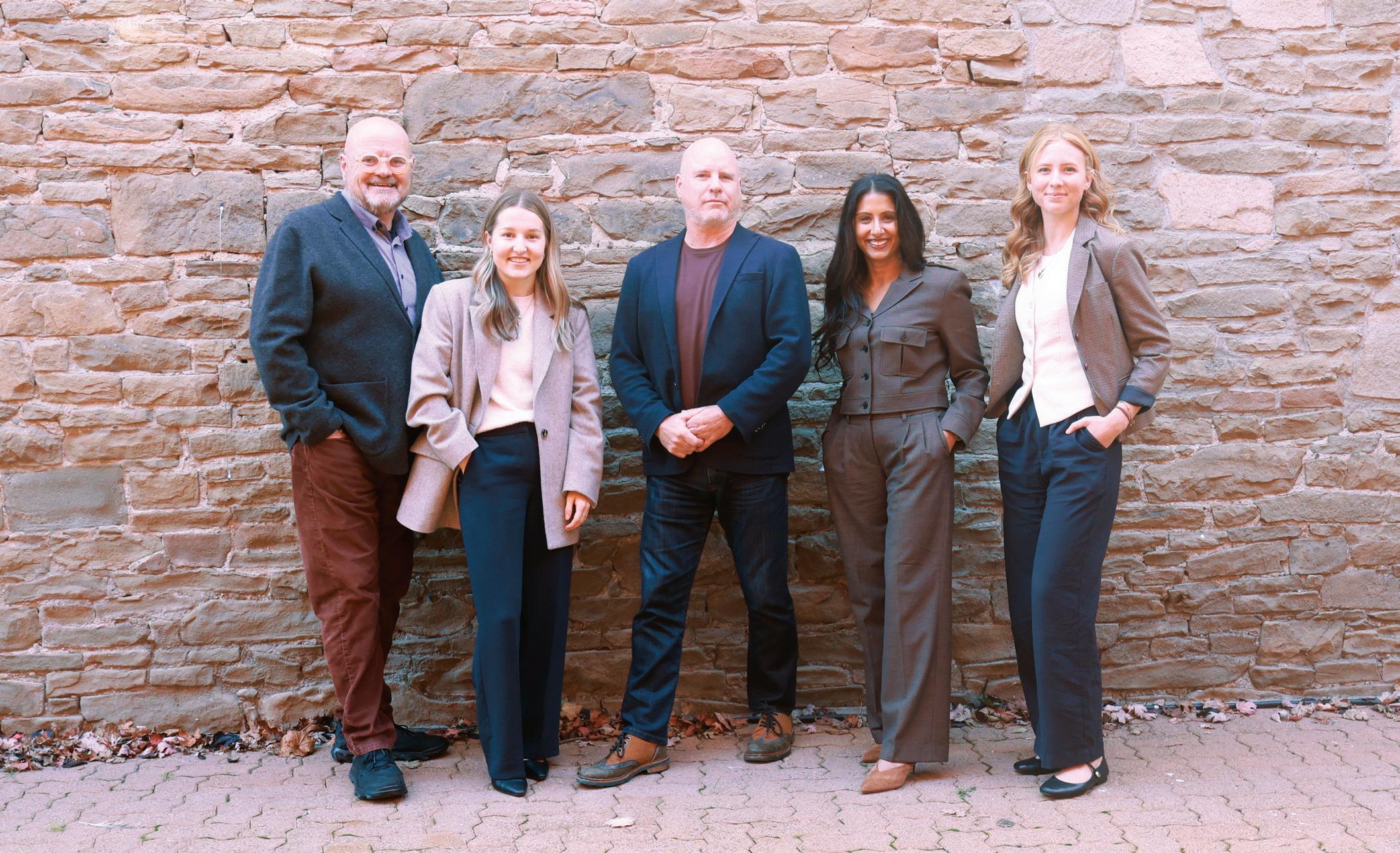
Drs. Linda Lee (Urologist), Dan Warren (Division Head, Neurosurgery), Heather Emmerton-Coughlin (General Surgeon), Mona Mazgani (Gynecologic Oncologist), & Sepehr Khorasani (General Surgeon)
The next chapter of surgical care is unfolding at Royal Jubilee (RJH) and Victoria General (VGH) hospitals.
Together with our donors, the Victoria Hospitals Foundation is advancing minimally invasive surgery and transforming care for 930,000 Vancouver Island residents across our Island’s two referral acute centres.
Together, we are positioning Victoria as a leader in surgical innovation—across Canada and beyond.
LEARN MORE AND DONATE
Future-proof the Workplace
Victoria leadership strategist and author Dan Pontefract on the greying of the labour force.
BY TAMMY SCHUSTER
18 Victoria 2026: ‘Get On With It!’
Public safety, infrastructure and affordability challenge the region’s shaky prosperity in a civic election year.
BY SHANNON MONEO
28
To Whom this Land Belongs
The K’ómoks First Nation’s new treaty with federal and provincial governments is poised to create an economic boom for the Comox Valley region. But it hasn’t come without controversy.
BY ANDREW FINDLAY
34
Winning the Name Game
Things to take into consideration, what to aim for and what to avoid, when choosing your new business’s name.
BY TAMMY SCHUSTER
6
9 IN THE KNOW
The Victoria Hand Project forges ahead in developing new techniques for manufacturing prosthetics; Kenyan students to take lessons about Island entrepreneurship home with them from Camosun College business program; Also: A “State of the Island” economy report; a stable local housing sector; a “made-in-B.C.” funding boost; Ecostar Awards; Douglas Reads. 38 INTEL
38 THE PSYCHOLOGICAL CONTRACT
How unspoken expectations between employer and employee can break a company’s culture.
BY INGRID VAUGHAN
40 SEO IN THE AGE OF AI
The biggest shift in search functions is a focus on what a robot can’t be (yet): human.
BY TEDI BEZNA
42 BREAKING COUPLING DYNAMICS: LEADING TEAMS BEYOND OLD PATTERNS
Uncoupling from past failures and/or patterns of behaviour with a body-based approach to combatting stress, burnout and trauma.
BY DANIELLE SMELTZER
44 LIFE + STYLE
Red light therapy helps you glow; getting creative with workplace gift giving; non-alcoholic options that will truly lift your spirits.
46 DID YOU KNOW
Snow kidding: Sure, we don’t get much of the white stuff, but when it lands — and sticks — you should know what the cost will be for not keeping your walkways clear.
JEFFREY BOSDET/DOUGLAS
Progress is Rarely Perfect, but it’s Always Possible
AS ANOTHER YEAR WINDS DOWN, we find ourselves caught in between reflection and anticipation.
This year has brought its share of hardship, disappointment and uncertainty. Across the region, people continue to see downtown disorder, strained infrastructure and the daily realities of the rising cost of living. None of these topics are new, but they have reached a point where solutions must be bold, co-ordinated and grounded in purpose.
But 2025 has also revealed reasons to remain optimistic. A historic treaty signing in the Comox Valley marks a significant step forward in Indigenous self-governance and is a reminder that progress happens through partnership, persistence and respect. And progress is never perfect.
In Nanaimo, the three-day Vancouver Island Economic Alliance’s Economic Summit drew more than 600 delegates from all sectors and industries to share and explore ideas about the future of the Island, reminding us that collaboration remains one of our region’s greatest strengths. As Avery Brohman, CEO of the Victoria Hospitals Foundation, reminded us during her panel on leading change: “Diverse perspectives move the needle. Change is never done by one person.”
wealth strategy that addresses the entirety of your life.
The McNaughton Group ScotiaMcLeod® , a division of Scotia Capital Inc.
“Diverse perspectives move the needle. Change is never done by one person.”
— Avery Brohman
Our annual look-ahead issue is an opportunity to take stock of what’s shifting and what still needs our collective attention. In this issue, we bring together the thinkers and doers helping define what comes next for Greater Victoria. Across industries and perspectives, our contributors share insights into the conversations that will matter most in the months ahead.
As we close out the year, Douglas magazine looks forward to a year filled with celebration. Nominations for the annual 10 to Watch Awards are in, with winners to be announced in the April/May issue, and 2026 marks Douglas magazine’s 20th anniversary!
We are honoured to hear and share the stories that help drive honest conversations about where we are headed and what it will take to get there. Let’s stay curious enough to see where it leads.
Tammy Schuster Douglas Editor editor@douglasmagazine.com
®
From
We
Brian Young, PFP Financial Planner
Scotia Financial Planning™ Scotia Securities Inc. 250.216.8159 brianjp.young@scotiabank.com
Riyad Elarid Business Advisor
250.953.5561 x4451 riyad.elarid@scotiabank.com
VOLUME 19 NUMBER 6
PUBLISHERS Lise Gyorkos, Georgina Camilleri
EDITOR IN CHIEF Joanne Sasvari
DOUGLAS EDITOR Tammy Schuster
ASSISTANT EDITOR Lionel Wild
DIRECTOR OF PHOTOGRAPHY Jeffrey Bosdet
LEAD GRAPHIC DESIGNER Kelly Hamilton
ASSOCIATE GRAPHIC DESIGNER Janice Hildybrant
ADVERTISING CONSULTANTS Deana Brown, Jennifer Dean Van Tol, Cynthia Hanischuk, Brenda Knapik, Ieva Sakalauskaite
ADVERTISING CO-ORDINATOR Rebecca Juetten
MARKETING & EVENTS
CO-ORDINATOR Lauren Ingle
EDITORIAL INTERN Julien Johnston-Brew
CONTRIBUTING WRITERS Tedi Bezna, Andrew Findlay, Julien Johnston-Brew, Shannon Moneo, Tammy Schuster, Danielle Smeltzer, Ingrid Vaughan, Lionel Wild
CONTRIBUTING PHOTOGRAPHERS Jesse Savage, Chris Jaksa
CONTRIBUTING AGENCIES Getty Images p. 18 - 20, 22, 24, 28, 29, 48 All Canada Photos p. 33 iStock p. 46
GENERAL INQUIRIES info@douglasmagazine.com
SEND PRESS RELEASES TO editor@douglasmagazine.com
LETTERS TO THE EDITOR letters@douglasmagazine.com TO SUBSCRIBE TO DOUGLAS subscriptions@ douglasmagazine.com
Ideas and opinions expressed within this publication do not necessarily reflect the views of Page One Publishing Inc. or its affiliates; no official endorsement should be inferred. The publisher does not assume any responsibility for the contents of any advertisement and any and all representations or warranties made in such advertising are those of the advertiser and not the publisher. No part of this magazine may be reproduced, in all or part, in any form printed or electronic without the express written permission of the publisher. The publisher cannot be held responsible for unsolicited manuscripts and photographs.
Canadian Publications Mail Product Sales Agreement #41295544
Undeliverable mail should be directed to Page One Publishing Inc. 580 Ardersier Road, Victoria, B.C. V8Z 1C7
Douglas magazine is a registered trademark of Page One Publishing Inc.
ADVERTISE IN DOUGLAS!
Douglas is a premium magazine dedicated to innovation, leadership and business lifestyle. Established in 2006, Douglas is the first choice for business leaders and achievers. Align your business with Douglas For more information or to request a media kit, please call us at 250.595.7243 or email us at marketinginfo@douglasmagazine.com.
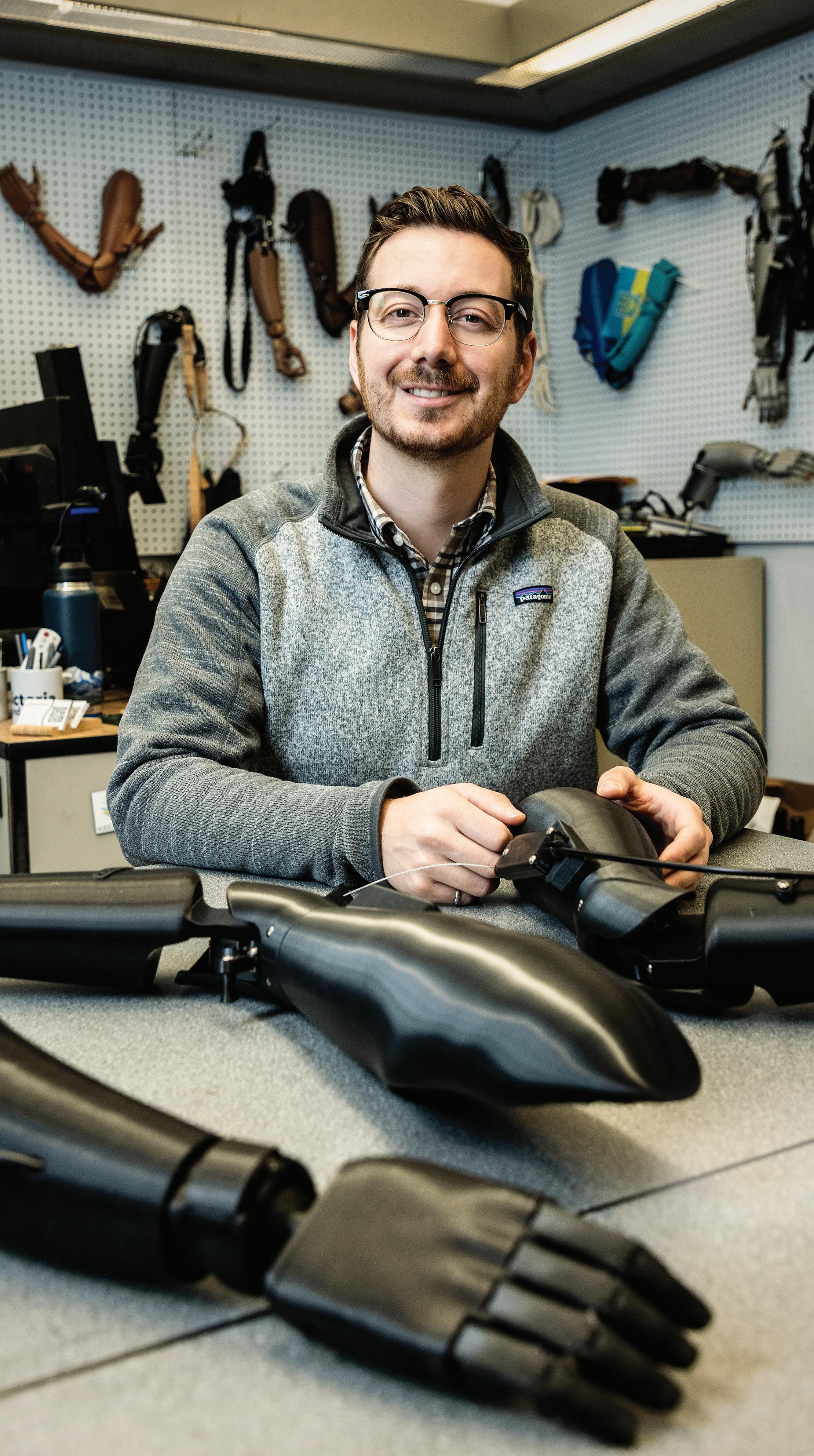
Victoria Hand Project CEO Michael
says the registered charity is trialing a new model of the prosthetic elbow for people in Ukraine, a region wracked by war.
3D CUTS ABOVE
BY JULIEN JOHNSTON-BREW
The Victoria Hand Project continues to change the lives of amputees with lightweight, low-cost, 3D-printed prosthetics.
The Victoria Hand Project, a registered Canadian charity, has spent a decade developing quality upper-limb prosthetics for those with limited to non-existent access to prosthetic care. The project uses 3D-printing technology to speed up the manufacturing process while allowing for broken and/or outgrown prosthetic components to be reprinted and replaced with minimal fuss.
One of the project’s most recent campaigns saw several team members travel to Nepal in October. The six-day trip, supported by seven local Rotary Clubs, was to assist Limb Care Nepal with muchneeded improvements including new equipment, software upgrades and clinician training.
JEFFREY BOSDET/DOUGLAS MAGAZINE
Peirone
“We haven’t been back to Nepal since 2019 and a lot has changed,” says Victoria Hand Project CEO Michael Peirone. “There’s only so much we can do online.”
The project develops prosthetics, then partners with organizations internationally to provide training, funding and equipment so the prosthetics can be manufactured and provided in the regions where they are needed. This approach allows prosthetic-care professionals to support their own communities. “When they continue to produce the prosthetic arms, they have the latest technology, the latest skills and everything like that,” says Peirone.
The project’s largest campaign is Hands for Ukraine, which has helped more than 140 Ukrainians since its launch in June 2023.
Victoria Hand Project’s humanitarian work earned the charity the 2025 VIATEC Social Impact Award.
“We’re actually trialing a new model of the prosthetic elbow in Ukraine,” says Peirone, noting that aboveelbow amputations are particularly prevalent in the region wracked by war. “Above-elbow prosthetic arms are more expensive, harder to make. So many people, even soldiers who lost their arm defending the country, are waiting — we’ve heard six months, 12 months.”
The 3D-printing process cuts the manufacturing time down to a few short days. The new elbow model provides improved functionality, broadening the range of use to improve patients’ quality of life.
Victoria Hand Project’s humanitarian work earned the charity the 2025 VIATEC Social Impact Award, and has emboldened team members to continue supporting amputees in need. While the project mostly focuses on providing international aid in areas lacking prosthetic-care funding, the team also works with Victoria locals to test new upper-limb prosthetics and features. According to Peirone, partial hand prosthetics are particularly in demand in Canada.
“That, surprisingly, isn’t typically covered [by insurance providers] in Canada,” says Peirone. Such prosthetics can cost patients thousands of dollars out of pocket. “We have a solution that can cost $100 or a few hundred [dollars]. We want to, hopefully, begin providing that to Canadians through their care providers in the future.”
CAMOSUN’S KENYAN CONNECTION
Nearly a dozen students from the African nation are here to take entrepreneurial leadership lessons back home.
BY LIONEL WILD
Eleven students from Kenya are getting a window on the Canadian business world at Camosun College this fall, as part of a training program that focuses on entrepreneurship and leadership.
The Resilient Leadership Program, part of the BCDI 2030 program (Canadian International Development Scholarships), has seen this fall semester’s intake of 11 students nine women and two men take part in four courses focused on entrepreneurship, leadership, operations management and sustainability. The program, funded by Global Affairs Canada and co-administered by Colleges and Institutes Canada and Universities Canada, is having a similar, positive impact in Camosun’s classrooms and the local business community.
The 11 Kenyan students,
all of whom are proficient in English as a second language (their first language is Swahili), are either business or hospitality students.
“Students are now here on the ground. And from all accounts, they seem to be enjoying it,” Carl Everitt, associate dean in Camosun College’s School of Business, says of the students from Kenya Coast National Polytechnic in Mombasa, the country’s second largest city. “They’ll do those courses for this semester, and then they’ll return back to Kenya, and bring all that good stuff back with them.”
Course Credits
For the students now here 15 students are slated to arrive for next fall’s semester it’s akin to a work practicum, in which they are in the second year of a degree or diploma program and will return to Mombasa with credits for
their course work.
“What it’s doing for us as an institution as well is we’re able to engage our faculty in this,” says Everitt. “We’ve got some of our core faculty, our business faculty they’re teaching these students, so they’re pretty engaged. And then the local business community is also engaged, so for the extracurricular [students are] going out to business partners to visit, to do site visits, and engage in some cultural stuff as well.”
That “cultural stuff” is largely the example of successful, local First Nations businesses.
“One of the things we hear from our international students is that they have interest in our Indigenous communities and Indigenous partners,” says Everitt. “The students are very curious about that, so we set up experiences for them; for instance, the Malahat Skywalk.
SELLING YYJ
Real Estate sales in Greater Victoria steady heading into winter.
Rethinking the Island Ecosystem
The 2025 VIEA Economic Summit delivered a clear message that Vancouver Island’s future depends on productivity, not population.
“It’s that cultural part of Canadian culture, right? Our Indigenous cultures that we have here, to showcase and celebrate that, and I think students are quite responsive to that.”
Everitt, who just completed his 19th year on the faculty at Camosun, traces his interest and involvement in Kenya curriculum-development projects back nearly a decade and sees this first intake of students as the culmination of that work.
“What’s inspiring for me to be engaged in this and my colleagues is the fact that we could bring students inbound from that part of the world to share their experiences of where they’ve come from and provide opportunities for them,” he says. “These students get an opportunity to go back with a different perspective and a different lens on how things are done in Canada and this part of the world.”
Greater Victoria’s housing sector is set to enter winter on stable footing, which is a positive signal for the region’s economy. Sales climbed month-over-month while prices held firm as buyers regained confidence with a series of rate cuts, keeping conditions balanced heading into 2026. PROPERTIES SOLD IN OCTOBER 617 +11.4% from September 2025 SINGLE-FAMILY HOMES SOLD 350 +2.9% vs. October 2024 CONDOS SOLD 159 -15% vs. October 2024 5.7% SALES DOWN vs. OCT 2024 –1.8% year over year
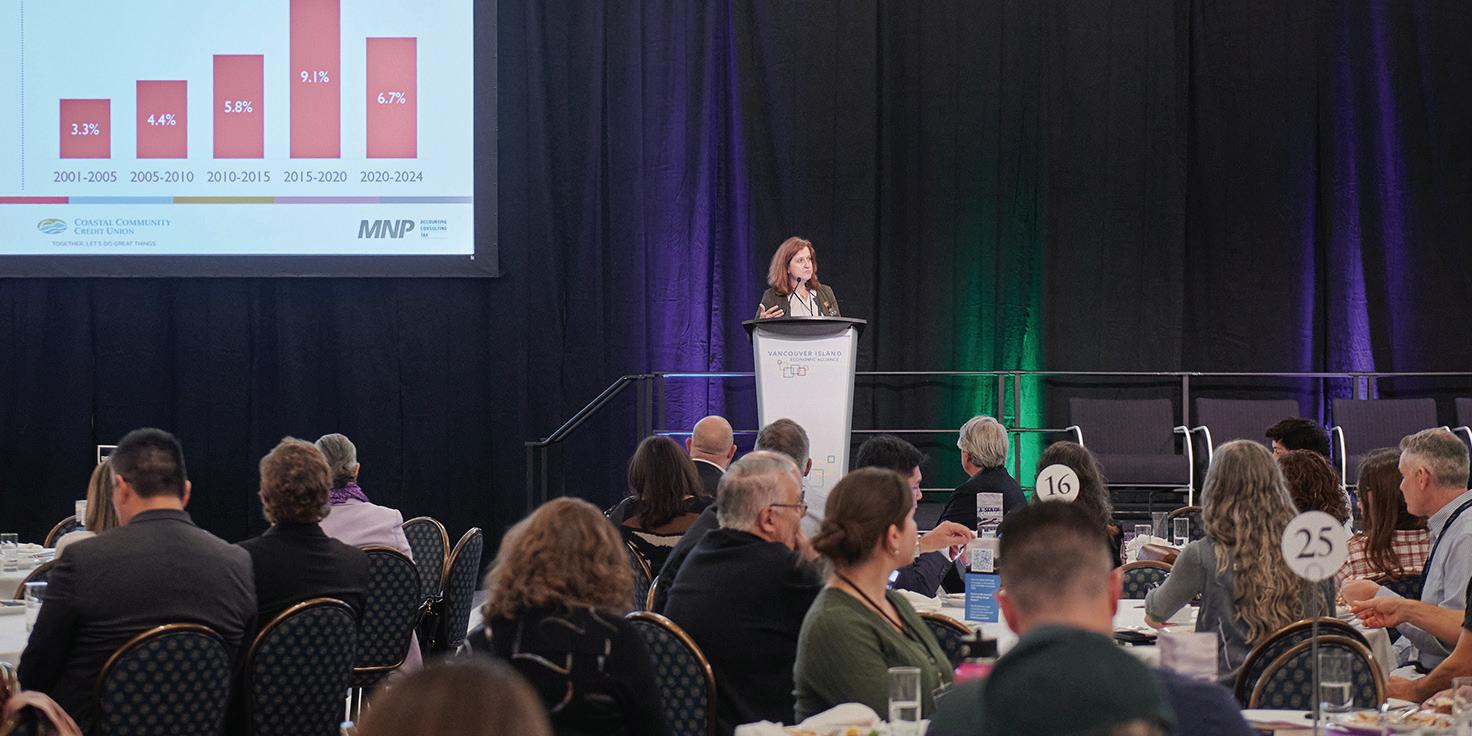
Vancouver Island’s economic resilience won’t come from any single sector or city, but will depend on the Island acting as an ecosystem. That message carried through the 19th annual Vancouver Island Economic Alliance (VIEA) State of the Island Summit held in Nanaimo, where more than 600 delegates from business, government, First Nations, education and non-profits gathered to chart a shared vision for 2050.
Susan Mowbray, partner of economics and research at MNP LLP, returned to deliver the annual “State of the Island” report highlighting both progress and pressure points.
She reported that Vancouver Island has increased by 250,000 residents in 25 years – nearly 60 per cent in the last decade – but 17 per cent of residents are now over the age of 70. Mowbray noted that this growth masks a deeper challenge: We are growing older, not necessarily stronger. With fewer workingage residents, the labour force is tightening, productivity is slowing and the economy is leaning more heavily on public spending and population-driven growth rather than private investment and innovation.
Slowing Growth
She said that for every new private sector job on the Island, two public sector jobs have been added, and economic growth has slowed to one to 1.5 per cent since pre-pandemic (which was two to 3.5 per cent). Mowbray cautioned that this leaves the region too reliant on the public sector and raises long-term sustainability concerns. The province’s reliance on population growth, housing construction and public investment rather than private-sector productivity has created a fragile foundation.
“We’re starting to see the government move on to things that are within their control. We’re seeing efforts made to diversify our trading relationships. We’re seeing interprovincial trade barriers come down. But these changes are going to take time,” said Mowbray, highlighting that what made us great in the past is now over. “We need to be thinking about where we want to be, not where we were.”
She said that while exports have not yet declined, early stockpiling ahead of tariff threats earlier this year masked underlying vulnerabilities.
“It’s not just governments that need to do things differently,” she said. “Businesses need to change how they are operating as well.” Mowbray stressed the need for investment in productivity, training for youth and innovation.
As the Island looks ahead to 2050, Mowbray reminded delegates that the issues of infrastructure, housing and demographics have been on the table for decades, but the opportunity now lies in tackling them together across communities and sectors to build the Island’s next economic chapter.
Source: Victoria Real Estate Board
Newly arrived Kenyan students, who will be taking part in the Resilient Leadership Program, are welcomed at the Alex & Jo Campbell Centre for Health & Wellness on Camosun College’s Interurban campus.
Susan Mowbray told the VIEA summit it will take years to reduce our trade reliance on the U.S. market.
DIRK HEYDEMANN/HA PHOTOGRAPHY
Modernization on the horizon
Provincial funding supports equipment, facility upgrade at two wood-product manufacturers.
Two Vancouver Island wood-product manufacturers are among nine B.C. companies sharing $2.5 million through the province’s B.C. Manufacturing Jobs Fund (BCMJF), aimed at strengthening the woodproducts sector and supporting local job growth.
Island Precision Machining in Central Saanich will receive $124,000 to purchase new, advanced equipment to increase production capacity and help meet growing demand for architectural millwork and cabinetry. The project could lead to 12 new jobs as the company scales up its operations.
Chemainus-based Canadian Bavarian Millwork and Lumber will receive $1.4 million to build a
PAY PALS
Victoria fintech firm enables spending at B.C.’s biggest holiday market.
Victoria-based Peloton Technologies is set to help holiday shoppers get a little spendy this season. The fintech company is bringing its seamless point-of-sale payment technology to The Shipyards Christmas Market in North
new facility and upgrade equipment. The company, which specializes in architectural millwork and specialty wood products, plans to expand its production capacity and support staff training on new AI-enabled machinery, positioning the business for long-term growth and efficiency. The expansion is expected to generate up to 10 new jobs in the near future.
The funding is part of the province’s ongoing effort to support “made-in-B.C.” manufacturing by helping companies modernize, grow and compete in global markets. Through initiatives like the BCMJF, the province aims to strengthen rural economies, create employment and promote the use of B.C. wood products.
Vancouver, B.C.’s largest holiday market.
The market runs through December and is expected to have 100-plus vendors serving 350,000 customers this holiday season. That’s a lot of tapping.
“Peloton has powered small-
business payments across the country for the last decade,” says Craig Attiwill, founder and CEO of Peloton Technologies. “It’s a blast to do this for the many local businesses setting up booths at the market during such a festive time of the year.”
Canadian Bavarian Millwork and Lumber in Chemainus (left) and Island Precision Machining in Central Saanich are receiving provincial funds to help modernize their production facilities.
GREEN LEADERS
The 2025 Ecostar Awards celebrate 10 years.
The 2025 Ecostar Awards marked a decade of recognizing environmental and social leadership on Vancouver Island. At a gala held on November 13 at the Laurel Point Inn, 17 companies were honoured for their innovations in environmental and social leadership. Visit ecostarawards.com to learn more.
2025 Ecostar Award Winners
Circular Champion: BMEx (Building Material Exchange)
Clean Oceans: COAST Centre for Ocean Applied Sustainable Technologies
Climate Action: Urban Thrive Developments Inc.
Construction and Manufacturing: Ron Anderson & Sons Ltd.
Ecological Stewardship: Pauquachin First Nation Marine Department
Ecopreneur of the Year: Meaghan McDonald of Salt Legacy
Experiential Tourism: Eagle Wing Tours
Greenest Retailer: Easy Vegan
Innovation: ALUULA Composites
Inspirational New Venture: Wise Hawk Environmental
Leadership in Hospitality: Black Rock Oceanfront Resort
Legacy Award: Rugged Coast Research Society
Local Food: Sandown Centre for Regenerative Agriculture
Non-Profit of the Year: Power To Be
Sustainable Workplace: Harmonic Arts
Waste to Resource: Alberni Valley Makerspace
Youth Leadership: Janna Wale of Pacific Institute for Climate Solutions
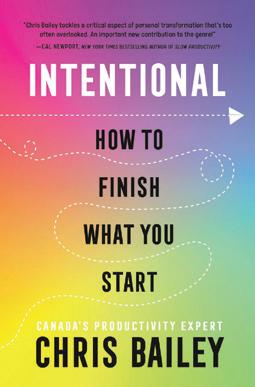
Where there’s a will, there’s a way. Not quite. In Intentional: How to Finish What You Start (Random House of Canada), productivity expert Chris Bailey reveals that finishing what you start isn’t about willpower or to-do lists. Instead, he draws from decades of research to show that true productivity comes from aligning your daily actions with your deepest core values to create a sustainable system for getting things done. Available January 6, 2026.
“We are built to feel like we matter, like we belong, like someone cares about us.”
— Dan Pontefract
Futurethe proof
Workplace
Forget Gen Z and AI. The next workplace revolution is grey. In Dan Pontefract’s latest book, the Victoria author shows leaders how to turn an aging workforce into their biggest asset.
BY TAMMY SCHUSTER | PHOTO BY JEFFREY BOSDET
“Society is aging fast,” says Dan Pontefract, Canadian leadership strategist, speaker and bestselling author. “We are entering a massive demographic change that will forever alter the workplace.”
In his sixth book, The Future of Work is Grey: The Untapped Value of Age in the Workforce, Pontefract is sounding the alarm for leaders everywhere that they must change their perception of age as an opportunity to harness instead of a problem to manage.
Drawing from global research on the topic, he explores how different cultures around the world value experience and what that means for organizations facing the looming pressures of pending retirements, declining birth rates and a widening skills gap. He calls this imbalance the “age debt,” which he defines as the organizational failure to plan for and value age, resulting in a weakened workforce.
Pontefract believes that with deliberate strategy, that debt can be transformed into what he refers to as an “experience dividend,” which he defines as valuing employees across all age groups to drive innovation and resilience and help future-proof the workplace. The outcome is companies recognizing age as an asset rather than a liability.
He likens it to Star Wars without a Yoda or Obi-Wan Kenobi.
Douglas: When it comes to the effects of the aging demographic on organizations, who do you think needs to pay attention the most? Who is this book for?
Pontefract: Demographic change is actually affecting us all, but most of us don’t know that it’s happening. There are three main groups of people: senior leaders who aren’t paying attention because it’s going to be someone else’s problem once they retire; those who see the challenges but lack a playbook and don’t know what to do; and younger or mid-career employees and leaders who will inherit the disruption and need guidance.
Douglas: Based on your research and experience, what are the big mistakes organizations make when they’re trying to modernize their workplace culture?
Pontefract: How long do we have? Let me see if I can put this into three categories. I have found in my work that it’s leaders who almost all suffer from a self-inflicted hubris. Leaders who are unable to see their own role in a problem, leaders who spend their time unwisely by focusing on the wrong tasks instead of developing and supporting their teams, and leaders who rely on fear or apathy rather than empathy which is a root cause of disengagement. If you’re not coming from what I call a “head, heart, hand” approach understanding what people think, how they feel and actually doing something about it you’re not creating engagement.
Douglas: We’ve all worked under leaders who motivate through fear or constant pressure and it can be effective. Why does that model eventually backfire?
Pontefract: That is just not how the human being is built. We are built to feel like we matter, like we belong, like someone cares about us as part of a
dream team. Performance is important, but how is my leader here to help me be the best that I can in the situation?
Douglas: Some of your research involved direct observation of people in organizations in Japan, South Korea and Germany. Did you find these organizations to be more progressive than North American companies?
Pontefract: Oh, incredibly so. I think North America is blind as a daytime bat. In Japan in particular, they are what I call the canary in the “age coal mine.” They are showing us a picture of themselves 20 years ahead of where we’re going to be. But I have hope.
Douglas: People love to talk about boomers versus millennials, what Gen Z is up to and what happened to Gen X. Is that the right way to think about leadership and teams in today’s workplace?
Pontefract: I think we need to disband from the motley crew adage of generations. I don’t think it does us any service. I think it actually arms what we inevitably are going to enter into with this demographic disruption. If we can start thinking more about how we
all go through these eras and identify each other as being in a particular era, we can look at each other in ways in which we can help and learn from each other and work together in this idea of a community. If we do that, we can go from grey to gold, my friend.
Douglas: There’s so much debate about AI taking over, but your book seems to bring a fresh perspective by putting people back at the centre of work. It’s like people are the new novel idea.
Pontefract: Exactly. It’s like Return of the Human. We had the Jedi, we had Return of the Jedi, now it’s Return of the Human. I spent maybe 1,500 words on AI technology, robotics, automation, etc., because that’s going to evolve anyway. The argument I’m making in the book is that the future of work is grey, we are aging and it’s a bit murky, but I see hope. I see gold on the horizon. That gold is how we work together in the return of the human. That’s why I’m so hopeful.
Dan Pontefract’s book The Future of Work is Grey: The Untapped Value of Age in the Workforce will be published in May 2026 and is available for pre-order.
SHOP
YOUR GUIDE TO GREAT GIFTS, JUST AROUND THE CORNER!
A
But not everyone can open it.
Give the gift of nature. Donate today! In a world of overwhelm, nature has the power to heal. Power To Be creates access to nature for people with cognitive, physical, financial and social barriers.
POWER TO BE 250-385-2363 | info@powertobe.ca powertobe.ca
Meet your new holiday crush! With cool, crisp peppermint swirled into the warm scent of freshly baked butter cookies, Voluspa Candles create an instant infatuation.
PHARMASAVE BROADMEAD 310-777 Royal Oak Drive pharmasavebroadmead.com
Join us for 50% off all gold and silver jewelry in stock. Vintage and modern designs. Located in the heart of Langford. WESTSHORE JEWELRY 730 Goldstream Avenue 778-406-0606 westshorejewelry.com
A Gift of Relaxation! Give the gift of deep relaxation. Float, unwind, heal, and recharge. Save on floats, massage, and hot/cold sessions all December during our annual holiday sale.
FLOAT HOUSE VICTORIA 662 Herald Street 778-433-3166
FLOAT HOUSE WESTSHORE 106-2871 Jacklin Road 778-433-6655 floathousevictoria.com
VICTORIA 2026
‘GET ON WITH IT!’
Downtown safety. Infrastructure. Affordability. These are the hot topics shaping Victoria. Here are the solutions we need to consider.
BY SHANNON MONEO
This year marked a post-COVID apex of challenges. With downtown businesses threatening to decamp as street encampments increasingly spread, with the traffic cauldron bubbling amid bike lanes, bus lanes, no lanes and congestion threatening to overflow, and with continued pressure surrounding trade with the U.S., Victorians seemingly got little relief from local and global pressures.
Everyone knows the issues. Now decision makers are being pushed to act.
With strategies in development, 2026
will be a year of tests for Victoria. Will the new Community Safety and Wellbeing Plan reduce crime and drug use and elevate safety? Will the federal government release idle lands for housing? Will the province allocate more money for transit and perhaps a ferry link between Colwood and downtown Victoria?
Let’s examine three relevant threads that warrant attention: downtown safety, drug use, crime and street disorder; infrastructure and transportation; and housing, affordability and the cost of living in the region.
1
VICTORIA
Downtown Safety, Drug Use, Crime and Street Disorder
When homelessness, drug use and street crime are discussed, viewpoints are diverse. There’s the business perspective, which is concerned with staying afloat, and there are the politicians’ positions, which tread the ever-shifting waters of pleasing voters. Caught in the middle are police.
City Under Strain
In August, Fiona Wilson replaced Del Manak as Victoria/Esquimalt’s new police chief, arriving in the Garden City after 27 years with the Vancouver Police Department, most recently as deputy chief.
“Victoria is almost a small sample of Vancouver,” says Wilson. Not only do the two cities share a robust, summer tourism environment, they share the very apparent population of unhoused individuals and a similar drug scene where fentanyl reigns as the biggest issue. “Fentanyl is a wicked, wicked drug,” Wilson says, referring to the manic hold the drug has on users layered on top of mental health afflictions that lead to repeated hospital emergency department visits.
Shared Responsibility
Victoria Mayor Marianne Alto shares the frustration. “You can be sure this council has had enough,” she says of Victoria being the centre of Greater Victoria’s homeless/addiction/crime triple threat. “It’s been years in the making. We have years of work ahead of us.”
12 months.
The city intends to spend more than $10 million over several years on its Community Safety and Wellbeing Plan (CSWB) to address disorder downtown. “We want to interrupt behaviours that have become commonplace, but we want to make sure we’re not adding money to the city’s budget,” Alto says.
The plan will take into account the business community’s concerns, but Alto says it will also provide a template for how Victoria will evolve.
“There is a role for police, many roles for bylaws, but also roles for public works,” she says.
Key highlights include adding police and bylaw officers, expanding cleanup and rehabilitation efforts, establishing more short-term shelter options and improving support and transport for unhoused residents.
“We are very committed to dealing with the issues now, but we cannot sustain this over the long run,” Alto says.
The city intends to spend more than $10 million over several years on its Community Safety and Wellbeing Pla n to address disorder downtown.
What rankles Alto is that surrounding municipalities have not been doing their part to address the problems. Accordingly, Alto supports amalgamation, which means sharing the burdens currently on Victoria’s shoulders. She envisions three, not 13, municipalities: Core, Peninsula and Westside.
“Victoria has carried the load for a long time,” Alto says, referring to Sidney’s refusal to open an overnight shelter and Saanich’s delayed temporary overnight shelter decision. “We need to have other municipalities step up.”
A New Plan
The City of Victoria began to look at the crime, drug use and disorder problem in 2023, but by the summer of 2025 creating a plan became the city’s biggest priority. The urgency was in response to the Downtown Victoria Business Association’s annual report which revealed that 48 per cent of downtown businesses would consider closing if their lease expired in the next
The city has been funding programs and services usually financed by the provincial government. Funding for the multifaceted plan will be taken from existing programs and projects such as upgrades to Royal Athletic Park and the renewal of Centennial Square.
Breaking Point
The CEO of the Greater Victoria Chamber of Commerce says all levels of government have been aware of drug- and homeless-related problems for years, yet they have ignored policy changes. “We need a legal system that works, not catch and release,” says John Wilson. He believes the government is too lenient, pointing to roughly 30 highly active offenders in Victoria. Multiple business leaders agree that the legal system must better support police and enforce consequences for repeat offenders.
“Judges have become social workers,” says Gerald Hartwig, CEO of Hartwig Industries, adding that the judiciary needs to get tougher on criminals. “A bad upbringing used to be a reason to succeed. Now it’s an excuse to fail,” he says. He also believes organizations providing social services to the street population must ensure they clean up sites where they operate.
“Make social providers follow the same rules as businesses and society,” Hartwig says.
Provincial Programs and Police Support
Nina Krieger says she shares the concerns of business owners and police regarding crime, but there’s no silver bullet. As minister of public safety and solicitor general, Krieger says the root causes of crime continue to be a significant concern for her government. The MLA for VictoriaSwan Lake says poverty, mental health issues and addictions are driving crime, not solely in Victoria, but across North America.
At the Union of B.C. Municipalities’ annual convention in September in Victoria, multiple resolutions were brought forward by B.C. mayors and councillors in relation to homelessness and public safety.
Krieger points to programs like the Road to Recovery model and New Roads Therapeutic Recovery Community as programs to address mental health and addiction. There is also ongoing development of involuntary care programs. She also references the Special Investigation and Targeted Enforcement (SITE) program, which monitors repeat offenders. Victoria police have received over $500,000 since SITE’s launch in 2023. In September, Krieger said 44 individuals were being monitored in Victoria.
Former police chief Manak offers a parting perspective. “We need to be soft on our vulnerable, marginalized street population and we need to be hard on the criminals who are exploiting the marginalized for profit,” he says. Moreover, involuntary care should be ramped up. “It’s naive when we continue to ignore the problem. It’s inhumane to let someone suffer on the street.” But Manak warns that recovery programs lead people “right back into supportive housing where there are active drug users,” and he calls for more dry housing or restricted housing. “There’s an overreliance on harm reduction.”
BIG IDEAS PROGRAMS + SUPPORT
• Expand involuntary care and recovery programs.
• Share responsibility through amalgamation and by requiring surrounding municipalities to create their own regional supportive services.
• Implement and fund the City of Victoria’s Community Safety and Wellbeing Plan.
• Enhance public safety by increasing police presence through bike and foot patrols.
• Disrupt the flow of fentanyl into the province by enforcing Bill C-2.
Infrastructure and Transportation 2
VICTORIA
Finlayson Arm 17A
Gowlland Tod Provincial Park
The timeworn phrase “build it and they will come” could not be more fitting for Greater Victoria. Adding road lanes or parking lots appears to feed demand. Removing lanes and parking spots appears to stoke anger. The region’s transportation system is at a crossroads, and the debate on how to move people around efficiently is getting testier.
Mount Work Regional Park
Public Transit
Recently elected Victoria member of Parliament Will Greaves says that he and fellow Liberal MP Stephanie McLean (Esquimalt-Saanich-Sooke) identified public transportation as a priority early on. “It’s near and dear to my heart,” pointing that half of
View Royal
Cordova Bay
Elk / Beaver
Lake Regional Park
Taking advantage of the water and an oftmentioned ferry link between Royal Bay, Esquimalt and downtown Victoria would do much to ease vehicle traffic on oversubscribed roads. “It’s an opportunity to make better use of the water,” Greaves says, adding that like most challenges in the area it involves different levels of government. “The federal government can’t take it on itself,” he says, adding that the feds can assist municipalities and facilitate conversations between local governments and stakeholders. Plus conversations have already started with CFB Esquimalt about restoring the military ferry.
The chamber’s Wilson agrees: “I’d like to see our waterways used better. A Westshore ferry would take off the roads. could be
Strategy, $380 the parking the
Cadboro-Gyro
D’ARCY ISLAND
Victoria
Westshore
Colwood
Royal Bay
Esquimalt
“Victoria
is relying on the steady expansion of BC Transit’s services, but infrastructure, like bus lanes, is key. The city can’t do it on its own.”
— Marianne Alto, Victoria mayor
crosshairs. Parkades are one option, but Alto notes that a very diverse population calls Victoria home and their methods of transport are wide-ranging and not solely based on vehicles.
“We have to be able to design for that. This is an evolving city,” she says. Victoria is relying on the steady expansion of BC Transit’s services, but infrastructure, like bus lanes, is key. “The city can’t do it on its own,” Alto says.
Balancing Bikes and Business
Wilson acknowledges that the business community is not against bike lanes; the “but” is that the city has gone overboard in its quest to shape Victoria into a bicycling mecca. “We still have to make sure all people can drive downtown,” he says.
Khloe Campbell, owner of Amelia Lee clothing boutique, knows firsthand how parking can affect business. She recalls sales plunging by 40 per cent the day free parking on Sundays ended in 2019. When paid parking was extended from 6 p.m. to 8 p.m. on weekdays in 2023, Campbell began to lose roughly $800 of sales during those two hours. Her solution: “Make parking free again on Sundays. Make parking free again after 6 p.m.”
In August, Campbell closed her Yates Street location; her Uptown boutique continues to operate. “It used to boom downtown, but now with the lack of accessibility, there’s been so much contraction. It’s hard to navigate,” she says. With many out-of-town customers who need to drive, Campbell says many would get frustrated venturing downtown due to the street scene and lack of parking.
BIG IDEAS
TRANSIT + PARKING
• Increase reliable public transit options by, for example, establishing a commuter ferry between Royal Bay, Esquimalt and downtown Victoria.
• Create more downtown parking options.
Wirk + Chinook = A Stronger Exit for Your Business
We are excited to announce that Wirk Consulting is partnering with Chinook Business Advisory Ltd. – two local firms, one seamless process.
Wirk Consulting helps your business become sale-ready – strengthening people, processes, and performance.
Chinook Business Advisory Ltd. guides you through the sale journey –from valuation to negotiation and closing the deal.
Wirk Consulting supports the new owner with Strategy and Executive Coaching to ensure a smooth transition and long-term success.
VICTORIA
Se
Housing and Affordability
Victoria’s reputation as one of Canada’s most beautiful and livable regions comes at a price that’s getting harder to afford. Leaders, developers and businesses are searching for ways to bring costs back within reach.
Building In and Up
When Greaves addressed affordability, he notes how Greater Victoria’s beauty makes it a desirable place to live. His boss, Prime Minister Mark Carney, is promising more housing, particularly less expensive digs. “People on the lower end of the income scale have problem
working federally owned Greaves says. would be the them from seeking stock. But there non-military members the development represent the next amenities. There’s urban areas, Inner Harbour need to see the right
place. There’s so much opportunity to build on blacktop,” he says.
Alternative Cost-Cutting Formulas
Gene Miller, a Victoria-area developer and urban planner, has no shortage of ideas on how to bring down the price of a home. “As you start to pick apart every expense, from the largest down to the last nail, as you analyze and go cheaper, the cost of housing starts to drop,” he says from his Langford home. “By the time you finish, it’s affordable.”
Miller stresses that the “cannot state of mind” needs to be replaced by a “place of will and intention.” He rejects the idea that only the government can build affordable housing and instead recommends a third or middle way, in lieu of government or privatesector builders who regularly go over budget.
The third-way success story is the Kiwanis Village Society, which manages 265 rental units at four projects in Victoria and North Saanich. “They had a project manager who beat costs to death. It was unprecedented,” Miller says. Rents settled at about half of market rates.
Miller’s cost-cutting formula includes smaller units, less on-site parking, lower ceiling heights, simpler finishes and quicker approvals.
“As you start to pick apart every expense, from the largest down to the last nail, as you analyze and go cheaper, the cost of housing starts to drop. By the time you finish, it’s affordable.”
— Gene Miller, Victoria-area developer and urban planner
The Cost of Living and Doing Business
Housing costs and most other expenses have been impacted by tariffs and relief hasn’t been manifest. Instead, selected sectors in B.C., like softwood lumber and seafood, have received support, Greaves notes. Where individuals can feel the impact is with transportation. If reliable transit is an option, people don’t need private, costly vehicles, he says.
BIG IDEAS
HOUSING + FISCAL MEASURES
• Create more housing opportunities with developments on federally owned land.
• Densify urban areas such as downtown’s Matullia Lands and the Uptown corridor.
• Deploy cost-cutting measures during planning, design and construction.
11.6% VACANCY
Downtown Rate YOY
6.1%
Suburban Rate YOY
But for business owners like Campbell, it’s taxes that are making life unaffordable. By 2025, she paid over $2,000 per month to cover the building owner’s property taxes and $1,200 per month in strata fees on an 1,800-square-foot premises. Her total costs for her Yates Street boutique were close to $8,000 per month. And while there was an immediate post-COVID rebound of downtown shoppers, Campbell says 2024 was very slow.
Source: Colliers Canada
Meanwhile, her Uptown location of Amelia Lee is flourishing. “Locals go to Uptown. They feel safe, there’s parking and Uptown has the most amazing security system. There’s 24/7 security guards and tons of cameras. If someone shoplifts from us, we instantly call security. It’s all seen and dealt with,” she says.
“If
downtown really wants small businesses to evolve and thrive, property taxes for owners can’t continue to rise.”
— Khloe Campbell, owner of Amelia Lee clothing boutique
“If downtown really wants small businesses to evolve and thrive, property taxes for owners can’t continue to rise,” she says. Campbell believes support programs should be created based on a business’s gross sales, with tax breaks for businesses generating under $500,000 in sales. And those earning less than $1 million per annum should be exempt from paying property taxes levied by building owners.
• Implement tax relief programs for small businesses.
Campbell believes support programs should be created based on a business’s gross sales, with tax breaks for businesses generating under $500,000 in sales. And those earning less than $1 million per annum should be exempt from paying property taxes levied by building owners.
Keeping Downtown Alive
At the chamber of commerce, Wilson says getting workers back into downtown offices is key. “Without government employees, we rely on tourism and tech. We can’t take them for granted.”
Greaves echoes the sentiments of most of those living in the region. “Victoria’s concerns are not unique. They are shared across Canada. We are very much at the stage where people want to see results. There’s not a lot of appetite for dillydallying,” he says. “There’s been lots of discussion already. We need to get on with it. The government will move with speed to address these issues.”
CHINOOK BUSINESS ADVISORY
Helping entrepreneurs exit on their terms
Over the last 15 years, Chinook Business Advisory Ltd., a Victoriabased M&A advisory firm, has guided nearly 400 business owners across Western Canada to successful exits. As they look ahead to supporting their next 400 clients, they see an opportunity to help entrepreneurs be more prepared and realize their full potential when it comes to maximizing their business’s value and navigating a smooth sale.
Chinook — with its team of experienced brokers, a dynamic marketing group, and skilled administrative staff — is excited to announce its collaboration with local management consulting and executive coaching firm Wirk Consulting. Chinook excels in orchestrating sales across British Columbia and Alberta, delivering accurate valuations, targeted buyer outreach, and expert deal-closing. Wirk Consulting, led by Ashka Wirk, focuses on strategy and operational planning to enhance saleability or ensure post-sale success. Together, they offer a comprehensive approach to business transitions.
For owners ready to sell, Chinook’s intermediaries craft compelling sale materials and manage negotiations. For businesses needing preparation, Wirk — using their tested
SuccessionReady approach — helps the business owner and team get the business ready for a stronger transition, focusing on people, processes, finances, leadership and legacy. When ready, Chinook steps in, offering a success-fee discount to reduce costs for owners.
Beyond the sale, buyers benefit from complimentary executive coaching from Wirk Consulting, funded by Chinook, to jumpstart their ownership journey. Chinook’s marketing team amplifies this partnership through co-hosted webinars and insightful content, educating owners from Victoria to Calgary on strategic exits.
“Too many owners miss their ideal exit due to unreadiness,” says Keith MacKenzie, Chinook’s Managing Partner. “With Wirk, we leverage our 15 years of experience and regional expertise to change that.”
“We know that owners start their business with passion, purpose, and planning. When they carry this through to how they approach their exit, the outcome is stronger,” says Ashka Wirk, Wirk Consulting’s Principal. “The same is true when a new owner acquires an existing business — taking the time to articulate a strategy pays dividends.”
Whether you’re a retailer in Nanaimo or a manufacturer in Edmonton, Chinook’s experienced deal-making team, in conjunction with Wirk’s strategic expertise, delivers a clear path to a stronger sale. This partnership ensures your business not only sells but thrives in its next chapter.
Chinook and Wirk: a powerful partnership dedicated to helping entrepreneurs achieve their life goals.
Changing lives, one sold business at a time.
Modern PURAIR Victoria specializes in commercial duct cleaning and strata services, including dryer vent, hallway vent and bathroom fan cleaning. Renowned for being professional, punctual and on budget, the team has earned over 500 five-star Google reviews in the Victoria area. Property managers and strata councils value their reliability, detailed post-cleaning reports and easy communication. Residents and employees love the noticeable difference in air quality after each service. Modern PURAIR Victoria is happy to provide free, no-obligation quotes and welcomes calls, emails or drop-ins — feel free to stop by their office for a coffee and a chat.
ayfair Optometric Clinic believes vision care is just the beginning. They proudly sponsor the Victoria Royals and HarbourCats to empower young athletes, enthusiastically participate in the BC Children’s Hospital Festival of Trees and generously support The Victoria Hospitals Foundation, Our Place, Power to Be and many other local organizations all year round.
Their commitment to community wellness is rooted in compassion, connection and giving back.
This holiday season Dr. Taylor, his associates and staff invite everyone to contribute to the health of our city and to look forward with hope to a future where Victoria shines even brighter.
Dr. Stephen Taylor, Marty the Marmot and Carolyn Knox of Canadian Cancer Society
To Whom this Land Belongs
After three decades of negotiations, K’ómoks First Nation members voted to ratify a treaty that includes transfer of lands and almost $90 million that could create economic opportunity for the entire Comox Valley region. But the treaty is not without its critics.
BY ANDREW FINDLAY
Last March, K’ómoks First Nation members headed to the polls to mark “yes” or “no” on a ballot about ratifying a treaty negotiated with the federal and provincial governments. Support was far from unanimous, but it was easily more than the double-majority required for ratification.
The KFN is a small First Nation of 350 members, many of whom live on Indian Reserve lands along the north shore of Comox Harbour. More than 90 per cent of the eligible voters showed up. When the ballots were counted, 181 were in favour of ratification and 35 were against.
The treaty will see the transfer of roughly 50 square kilometres of land and a one-time payment of almost $90 million, which includes a capital transfer of $56.5 million, $20 million in cash from the province, funding for
self-government startup and implementation and a payment for fish reconciliation and implementation. The KFN will also receive $7.5 million in annual funding for fish, land and resource management, forestry revenue and governance and treaty management.
The treaty also forgives a federal government loan of $5.3 million that the Nation accumulated during negotiations, which many K’ómoks people demanded as a condition for voting in favour of the treaty.
Deep Roots
It’s been a long road. Treaty negotiations began more than 30 years ago, when the KFN decided to join a group of other Nations embarking on the treaty process. In 2006, feeling that negotiations were going nowhere, K’ómoks leaders at the time decided to go it alone. Six years later, the KFN signed
an agreement in principle, but it would take another 12 years of meeting around conference room tables plus millions of dollars in lawyer and consultant fees to hammer out the complex details of funding, land and governance that form the backbone of this modern treaty.
Though the process seems long and drawn out, negotiations occurred against a backdrop of Indigenous occupation of KFN territories that isn’t measured in years but rather in millennia.
Petroglyphs carved into the bedrock of Chrome Island off the southern tip of Denman Island depict sunstars, fish, birds, deer and people. These wonders are of undetermined age but could be thousands of years old (shell middens and other archeological evidence points to Indigenous occupation on Denman Island as far back as 4,600 years ago.)
FIRST NATION TREATY NEGOTIATIONS
1876
Enactment of Indian Act
1990s
K’ómoks First Nation begins treaty negotiations under the B.C. Treaty Process with a group of Nations
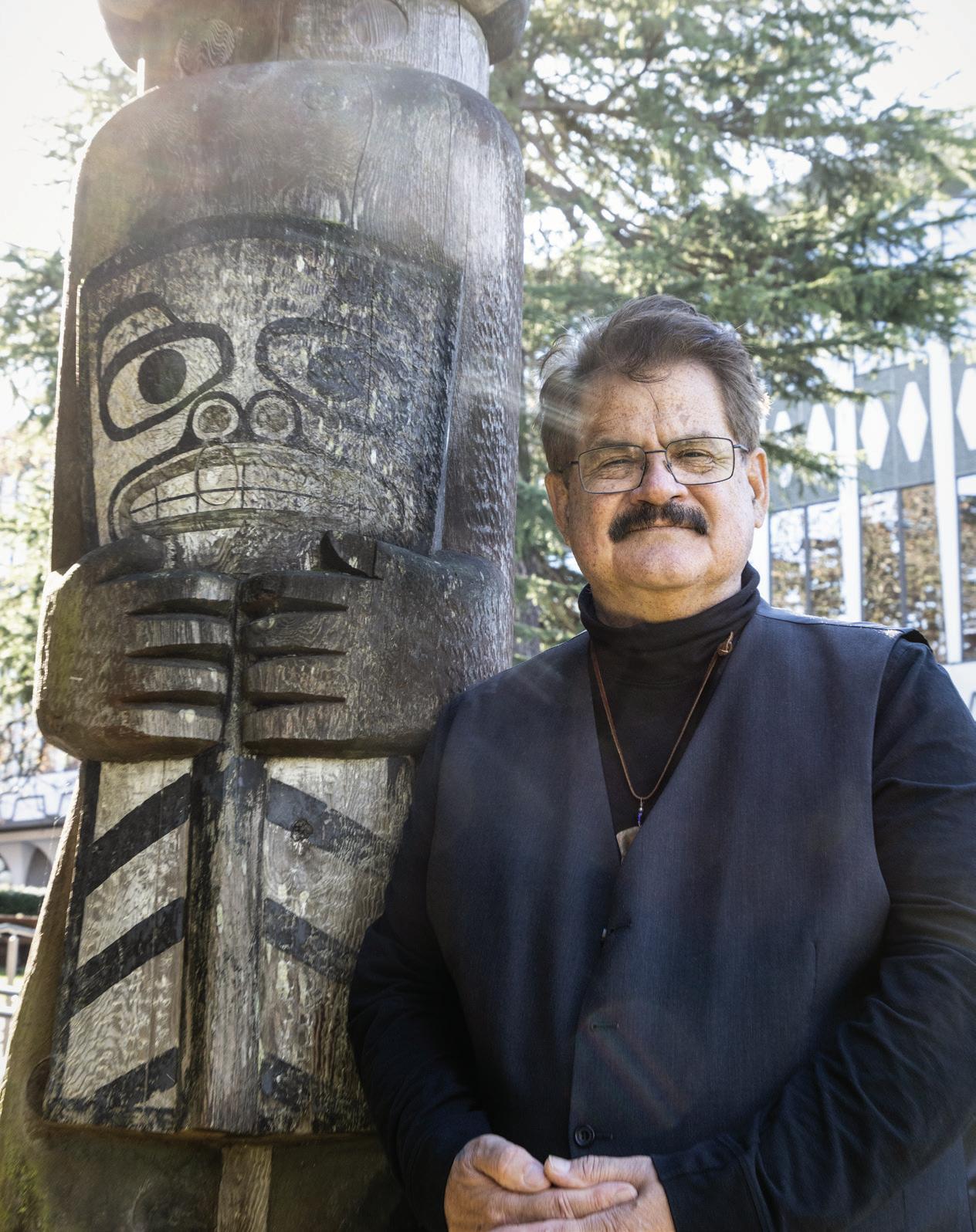
Wedlidi Speck, an Ieeksen tribe hereditary chief who opposes the treaty, says the elected K’ómoks First Nation council “are not in the business of culture.”
1940
K’ómoks First Nation formed, comprising of Ieeksen, Sathloot, Sasitla and Xa’xa tribes
For years people walking along the shore and beaches had noticed wooden stakes poking from the mudflats of Comox Harbour. However, their origin and purpose were a mystery until 2002 when then-archeology student Nancy Greene started taking a closer look. Over the next decade, she mapped out a network of fish harvesting weirs that’s been called one of the largest archeological sites on the B.C. coast and evidence of a sophisticated Indigenous fish harvesting system. Radio-carbon dating of the wooden stakes made from Douglas fir and cedar confirmed some to be 1,300 years old.
BRIDGING PAST AND FUTURE
Bridging ancestral connection to the territory with a modern responsibility to move forward with the new treaty, the Nation still has a lot of heavy lifting to do. Following last spring’s treaty ratification, the KFN has three years to prepare for what’s called “the effective date” in 2028. Preparation includes government restructuring, capacity building and drafting new laws for everything from property taxation to environmental stewardship.
2006
K’ómoks First Nation leaders decide to pursue their own treaty independently
2012
K’ómoks First Nation signs agreement in principle with B.C. and Canada
2025
K’ómoks First Nation members vote in favour of the modern treaty ratification
2024 Planned effective date 2028
K’ómoks First Nation initializes treaty agreement
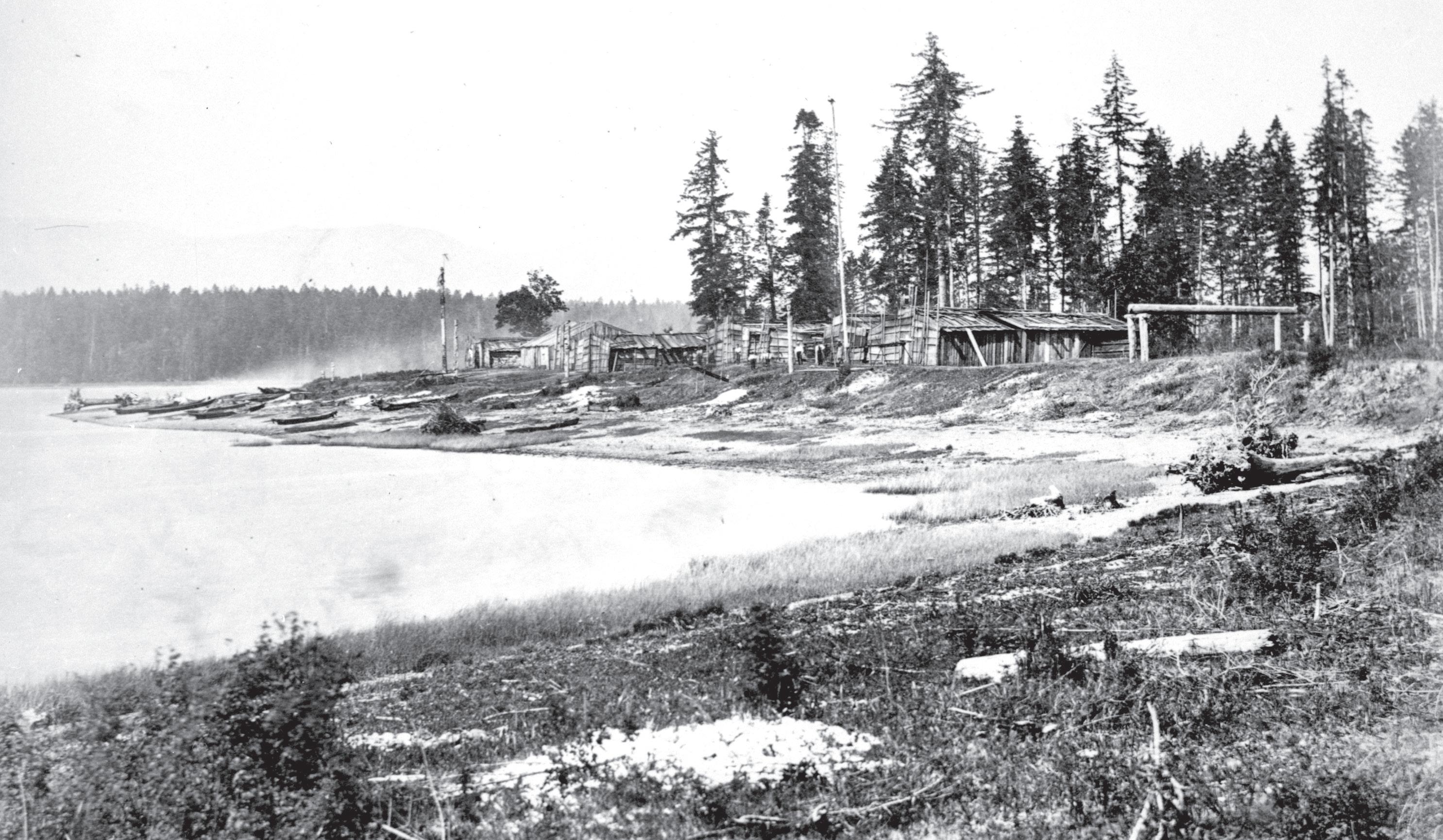
A historical view of a K’ómoks village as it appeared in 1866. Image c-09292 courtesy of the BC Archives.
JEFFREY BOSDET/DOUGLAS MAGAZINE
Until then, K’ómoks people will remain under the Indian Act. This federal law, enacted in 1876, has undergone many amendments over the years but it still governs many aspects of life for Indigenous people in Canada, including the definition of “Indian” status and the inability for First Nations to own fee simple houses and property on reservations.
Now, the treaty may help bring potential jobs and increased revenue in expanded forestry and fisheries opportunities for the Nation. Residential development on lands acquired through treaty could provide homes for the KFN and the broader Comox Valley region.
DIVIDED OPINION
Despite a majority of KFN members ratifying the treaty, the path forward could be rocky as the band’s leadership rolls it out. There is a distinct divide within the KFN between pro-treaty elected leadership and hereditary leadership, among whom are some prominent hereditary chiefs who voted resolutely against ratification.
It speaks to the Nation’s complex composition. The KFN, as it is known today, is an Indian Act construct. Peel under the name and the Nation is an amalgamation of several distinct tribes that were displaced by other tribes, only to have their populations devastated by smallpox in post-European contact.
The Nation includes the Pentlatch people, who spoke Pentlatch and occupied territory between the present-day Little River ferry terminal and Englishman River, and the Sathloot, Sasitla, Xa’xe (K’ómoks) and Ieeksan peoples, which had territory between Salmon River in the Sayward Valley and Little River.
Wedlidi Speck is a hereditary chief within the Ieeksan tribe and a well-known speaker and cultural leader who voted against the treaty. He says the elected KFN council derives its authority from the Indian Act and does not represent the diversity of hereditary leadership that is rooted in culture instead of suit-and-tie negotiations with Ottawa and the province.
“They are not in the business of culture. They like to think they are, but they’re not,” Speck says. “So for the Ieeksan, as title and rights holders we predate the 1763 Royal Proclamation [this decree by King George III set the foundation for treaty making in Canada] and we know that distinctly. We say where our territory is and so the K’ómoks First Nation has no claim to that territory,” he says.
Rob Everson has straddled the worlds of hereditary and elected leadership, having served as elected KFN chief from 2013 and 2017. He’s a hereditary chief of the Gigal’gam Walas Kwagut and has K’ómoks, Pentlatch and Kwagu’t. Everson voted against the treaty.
Ærth Saunas has been thoughtfully designed by awardwinning architects to celebrate natural harmony for a uniquely West Coast experience.
aerthsaunas.com 312 Quebec Street, Victoria
“… I realize there are different families and different perspectives within that community.”
— Bob Wells, Courtenay mayor
“Hereditary leaders were not meaningfully involved in the negotiations,” he says.
The land aspect of the KFN treaty is complicated by the Esquimalt & Nanaimo Land Grant. It’s one of the largest land giveaways in B.C. history, which saw 8,000 square kilometres of timber and coal-rich unceded Indigenous land on Vancouver Island handed over to coal baron Robert Dumsuir in the late 19th century.
Consequently, much of what was the traditional territory of the various tribes that comprise the modern K’ómoks First Nation have been locked up in privately owned forest land. Most of this land is now managed by Mosaic Forest Management on behalf of TimberWest and Island Timberlands.
“We’ve been shut out of our traditional territories and any benefit from them for 150 years,” says Everson, adding that the small and isolated parcels that make up the land portion of the treaty settlement don’t offer a real solution. “It will take investment
and capacity to develop those lands and that can take decades and we’re a small Nation.”
BALANCING LIMITATIONS
Because of the lack of available Crown land, finding chunks of it to include in the treaty has been difficult and not without controversy. Given the lack of available Crown land in KFN’s collective territory, government treaty negotiators earmarked three Crown woodlots scattered around the Comox Valley to be transferred to the KFN in the coming years. Woodlots are small, area-based forest tenures that are often near communities, family run and generally considered models of forest stewardship.
Gord Chipman, executive director of Woodlots B.C., says negotiations between the provincial government and the licence holders are ongoing and wouldn’t comment specifically on the three woodlots caught up in the KFN treaty. However, he says the process is
About 50 square kilometres of land located in pockets throughout the Comox Valley will be transferred to the KFN through the treaty ratification. This map illustrates the complexity of ratification in an area where so much land has been privatized. All area indicators are approximate only. TREATY
WILLIAMS BEACH
MOUNT WASHINGTON GRAVEL PIT
GOOSE SPIT
ROYSTON
COMOX LAKE COMOX HARBOUR
UNION BAY
HORNBY ISLAND
SANDY ISLAND MARINE PARK
VILLAGE OF SAYWARD
complicated by the fact that multiple government ministries are involved in the treaty process, and each one is operating in its own silo.
Woodlots B.C. has a no-net loss goal provincewide; however, the number of woodlots has dropped from 863 in 2025 to 836 today. It’s not the first time that small woodlots have become embroiled in treaty negotiations. Last year, seven went to treaty and other Indigenous settlements. In a best-case scenario, the three woodlot licensees will get replacement woodlots of equal value so they can keep their small businesses afloat. In a worst-case scenario, they’ll get fair financial compensation, which past experience has shown is not guaranteed, according to Chipman.
He says the fact that the KFN has its own woodlot near Union Bay and is already in the business of forestry demonstrates that the Nation understands the importance of woodlots.
“This is not about the KFN,” says Chipman. “They’ve been supportive and have made it clear that they value these woodlot owners as neighbours and community members. As an organization, we support reconciliation, but we also think that rights and title for both Indigenous and non-Indigenous people need to be recognized and respected in the process.”
MUNICIPAL PARTNERSHIP
Over at Courtenay City Hall, Mayor Bob Wells is looking forward to strengthening relationships with the KFN. Wells was first elected as Courtenay’s mayor in 2014 and says the city has supported the KFN’s right to self-determination throughout the treaty process.
“I tell my staff that their job is to work with the elected council at the KFN, but I know the hereditary leadership and make a point of communicating with them,” he says. “It’s a small Nation and I realize there are different families and different perspectives within that community.”
Courtenay is the largest of the three municipalities that comprise the Comox Valley, which includes the Town of Comox and the Village of Cumberland. City Hall sits near the west bank of the Courtenay
years old.
River, a short paddle upstream from where the traditional village of Kus-kus-sum, dating back four centuries, once stood.
In 2017, the city partnered with the K’ómoks First Nation on a major ecological restoration of an industrial site on the river that was home to Field Sawmills from the late 1940s until its closing in 2006. Last year, the Real Estate Foundation of B.C. awarded the KFN, City of Courtenay and the non-profit Project Watershed with its Land Award for this ongoing restoration project, also called Kus-kus-sum.
It’s the kind of co-operation Wells says he hopes to see more of as the KFN implements its treaty. He sees particular potential for KFN treaty lands, such as
the Sage Hills parcel south of Courtenay, to help take the pressure off the Comox Valley housing, which like many mid-sized B.C. communities struggles with availability and affordability.
THE PATH FORWARD
There has been criticism from within the KFN that the lands will take a long time to generate anything tangible for the Nation, that they are isolated scraps.
When Chief Nicole Rempel was first elected chief councillor in 2017, she was also critical of the lands being negotiated as part of the treaty, but has since changed her tune, believing this to be a starting point. Due to the division of opinion on the matter, Chief Rempel has elected not to be a part of this article.
The Sage Hills property has been on the books for residential development for several decades but plans have faltered because of a lack of capital and pushback from some area residents. It is said that the KFN now has agreements in place with the federal and provincial governments to service the property with sewer and water, so this may expedite development.
Another significant aspect of the treaty is that it is a “living” document, which means it can be adapted in the future to reflect changing realities.
Part of self-government means creating space for the voices of the hereditary leaders whose authority is derived not from the Indian Act but from bloodlines. Walking the tightrope between colonial and Indigenous forms of governance is a tricky balancing act, but the treaty recognizes Aboriginal title and the right to self-government and that can never be taken away.
The
Though a small First Nation of 350 members, more than 90 per cent of the eligible voters cast a ballot last spring to ratify a treaty with the federal and provincial governments.
CHRIS
JAKSA/ALL
CANADA
PHOTOS
Petroglyphs carved into the bedrock of Chrome Island depict sunstars, fish, birds, deer and people, and could be thousands of
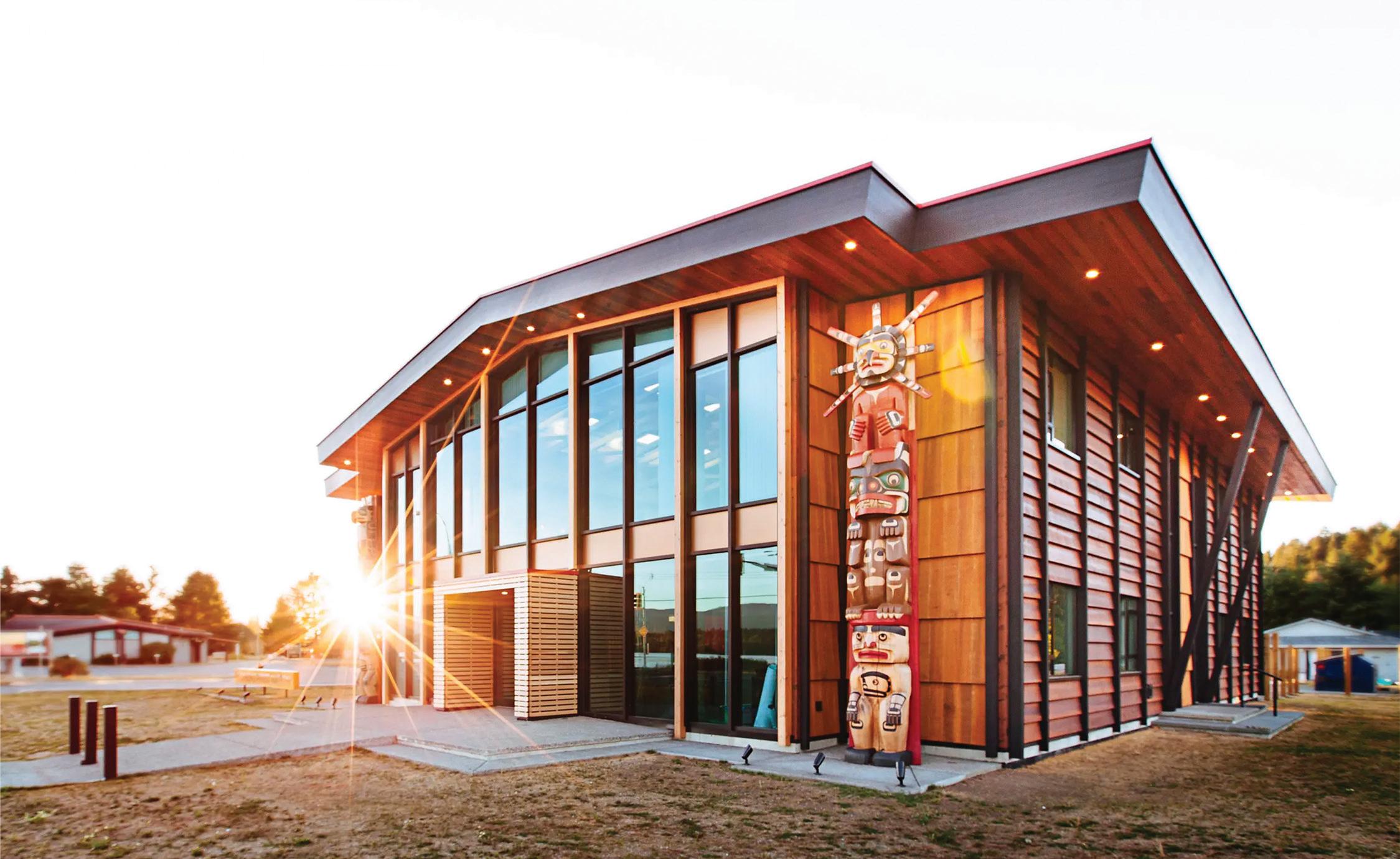
K’ómoks First Nation’s tribal headquarters on Comox Road.
It’s also important to own your name legally. Even if the SEO checks out, you don’t want to build your brand on a name you don’t legally own.
WINNING THE
game name
BY TAMMY SCHUSTER
BRANDING YOUR BUSINESS IS PART CREATIVITY AND PART STRATEGY. WHAT TO CONSIDER WHEN CHOOSING A NAME THAT IS BOTH MEMORABLE AND SEARCHABLE.
When launching a business, choosing a name may seem like the fun part of getting things off the ground. But it’s a key piece of your creative strategy and it requires some serious contemplation. Your business name is usually the first thing customers see, summing up your entire business in a handful of words. A strong business name should be clear and unique, and it should be something that people can remember and something they can actually find. Before falling head over heels for a name, consider how it will serve you now and in the future. We’ve provided you with a few things to consider when choosing a business name that is both catchy and searchable.
Research Search Habits
Start by researching how people actually search for businesses like yours. Using tools like Google Keyword Planner will give insight into search volumes. For example, if you own a landscaping business, keyword research might show that “landscaping Victoria” is searched more often than ”garden design Victoria.”
If your name includes relevant keywords, you’ll have a better chance of appearing in the right searches.
HOW PEOPLE SEARCH FOR YOUR BUSINESS
Your business name plays a big role in how you appear in search results. A clever or creative name won’t be helpful if no one can find it online.
AVOID USING YOUR OWN NAME
TRY TO AVOID USING ACRONYMS
ENSURE YOU HAVE A RELATED DOMAIN
Include Relevant Keywords
Incorporating keywords that are relevant to your business, such as landscaping, plumbing or tax, can increase your chances of it appearing in local and map-based searches. So, for our landscaping business, a name like “Victoria Landscaping Services” could perform much better in a search than a creative but vague name like “GreenLush.”
If your name includes relevant keywords, you’ll have a better chance of appearing in the right searches. For example, “Harbour Landscaping and Design” will likely perform better in a local search than a more abstract name like “HLD Services.”
USE RELATED WORDS IN A CREATIVE WAY
KEEP IT SIMPLE
CHOOSE A NAME THAT IS SCALABLE
Before you get in too deep with your name choice, check to ensure your domain name is available.
AVOID COPYING YOUR COMPETITORS
BE DESCRIPTIVE BUT NOT TOO GENERAL OR VAGUE
Simplify your IT
Every successful business needs reliable technology and skilled IT support. Westcom’s managed IT service lets you refine your system, relieve digital headaches, and scale up smoothly—all for one simple, monthly fee.
(778) 401 6160 612 Boleskine Road, Victoria, BC westcom.it
It’s
important to ensure your name appears consistently across all platforms.
What to Avoid
Try to avoid names that are too similar to existing brands or overly generic terms. They’re harder to rank and can confuse customers. For example, if you name your firm Harbour Accounting, but there’s already a Harbour Accounting Services or Harbour Tax Advisors nearby, customers (and Google) might confuse you.
Be cautious with popular regional names. Using highly common words like Victoria, Island or other regional favourites might bury your listing under dozens of others. You’ll be competing with established businesses that have years of online history, reviews and backlinks, making it harder for your business to appear near the top.
Before you commit, test your name idea by searching for it in quotes (“Your
Name”) to see what other businesses appear in the results. This quick check will show how crowded the name space is and determine whether it will be a challenge for yours to stand out.
KEYWORD GOLD VS. PERSONALITY
While “Victoria Landscaping Services” might hit the SEO jackpot, it’s not very memorable. The best names strike a balance between keyword relevance and personality.
Consider using a hybrid approach by using a keyword along with a unique element. For example, Oak Bay Plumbing Co., Summit Legal Advisers or Garry Oak Cafe Victoria. Or you could build in a clear tagline for SEO purposes. For example, Leafy Horizons Sustainable Landscaping in Victoria.
COMMON MISTAKES
Some names may look creative and clever but can cause trouble for search engines. Here’s what to avoid.
Spelling and pronunciation: If people can’t say or spell your name, they can’t search for it either.
Unusual spellings: “KwikKlean” is cute and clever, but it might confuse both humans and search engines.
Generic single words: Minimalist may be your esthetic but naming your business something generic like “Solutions” or “The Studio” is going to make you almost impossible to find.
Common names: If your name is already everywhere, especially in your region or industry, you might struggle to appear in search results.
Future-proof: If you plan to expand beyond one location or service, avoid over-specifying. “Victoria IT Solutions” is highly searchable now, but if you open in Vancouver, you may be facing a rebrand. Choose a name that gives you room to grow.
CHECK FOR DOMAIN AVAILABILITY
Before you get in too deep with your name choice, check to ensure your domain name is available. You’ll want to secure as many of the domains as possible. A strong match between your business name, website URL and social media handles helps with brand consistency and visibility, and it strengthens search cues.
Search visibility goes beyond a rummage through Google. Social media and map apps are major discovery tools. Check to see if your chosen name is available as a .com or .ca domain, and whether you can claim matching handles on platforms like Instagram, TikTok, BlueSky and LinkedIn. There are online tools available that let you check multiple platforms at once.
HOW YOUR NAME APPEARS
Once you’ve secured your business name and all relevant socials, it’s important to ensure your name appears consistently across all platforms.
Your business name isn’t just on your website and business cards, it appears across dozens of digital locations including your Google Business Profile, directory listings (Yelp, TripAdvisor, Houzz, etc.), social media handles and any metadata on your website that help search engines understand your business.
For SEO, consistency across all listings is key. Search engines cross-reference your business information to verify credibility and accuracy. If your name includes a place or keyword, like “Westshore Accounting,” keep the format identical across every platform.
OWN YOUR NAME
It’s also important to own your name legally. Even if the SEO checks out, you don’t want to build your brand on a name you don’t legally own. You can run a free business name search with B.C. Registries and Online Services to ensure there’s no trademark conflict. Once you find a suitable and available name, you can register it on the spot.
Creating a business is a labour of love, and choosing a name for it can be an emotional and tedious process. But rebranding later could end up costing your business and confusing your customers. While it may take a few attempts, with some creativity, patience and research you will win the name game.
UP FOR ADVENTURE
The Herschel Retreat™ Backpack is reimagined with lightly padded quilting inspired by tactical gear and vintage bomber jackets. Made of 100% recycled polyester, it features a contrasting liner and multiple pockets for carrying and organizing everything you
Ingrid Vaughan, principal of My Smart HR and founder of the Smart Leadership Academy, provides HR support and leadership coaching to smallbusiness owners and managers.
The Psychological Contract
The unspoken expectations between employer and employee can make or break a company culture if left unclear or ambiguous.
Imagine you’ve just hired Tessa. She’s a superstar. She’s ambitious, smart, quick to learn and a great cultural fit. The team loves her, and her manager, Jane, sees leadership potential. For the first 10 months, everything clicks. Tessa is fully engaged and eager to grow.
Suddenly, things shift. Tessa becomes disengaged, does the bare minimum and brings down team morale. When Jane finally checks in, Tessa shares that she expected a promotion and leadership opportunity by now. Jane is stunned. How could she think that after less than a year? She tells Tessa to keep doing great work and opportunities will come. Instead of motivating her, this frustrates Tessa even more. Her negative feelings increase and when the company tries to manage her performance, the relationship breaks down to the point where they feel they have no choice but to let her go.
Stepping back, it’s clear both sides contributed to a sad situation. Jane skipped regular oneon-ones, missing the chance to uncover Tessa’s expectations. And Tessa’s frustration didn’t come out of nowhere because she was once thriving and contributing. Too often, we blame the “bad apple” employee without realizing something deeper is at play.
It can be a misalignment in the psychological contract. This is the set of unwritten, unspoken expectations and beliefs that exist between an employer and an employee. When these don’t match, it creates a disconnect, resulting in tension and unexpected or surprising behaviours.
Most companies are good at creating employment (logistics) contracts outlining the job position, vacation time, rate of pay, benefits and all the legal stuff that protects both parties from painful outcomes. The psychological contract is shaped by mutual perceptions, promises and assumptions about what each side will give and get in return. It’s around things like trust, respect, fairness, recognition and commitment. These things are rarely written down but deeply felt.
Think of the employment contract as the tip of an iceberg. It’s visible and explicit. The psychological contract lies hidden beneath the water and is significantly larger. What’s unseen shapes the culture and fuels expectations that may or may not match. It’s murky, assumed rather than stated and often misaligned, and can cause serious culture damage.
Let’s revisit Tessa’s situation. In her interview, Jane told her she saw huge leadership potential
Here are a few more examples:
EMPLOYER SAYS
We offer flexible work options
We invest in your development
We value work-life balance
We have a family culture here
We reward high performance
We have an open-door policy
We trust you to get the job done
EMPLOYEE HEARS
I can work from home when I want to
I’ll get promoted quickly
I won’t be expected to work evenings or weekends
I can be super open about my needs, thoughts and concerns here
I’ll get big raises and bonuses
I can say anything I want without consequences
I have full autonomy in how I work
EMPLOYER MEANS
You can leave early for appointments if you need to
We’ll provide occasional training opportunities
Most of the time, but crunch periods will require extra hours
We have a winter and summer party to which you can invite your family
You may receive recognition, small perks or a thank you
You can share concerns if framed constructively
You’ll still need approvals and oversight
This is how “under the water” psychological contracts cause problems. It’s in the language we use, the ambiguity we allow and the assumptions that take root when expectations are not made explicit.
and that she could quickly move onto a management track. To her, “potential” meant that within 18 to 24 months she might be ready. To Tessa, “quickly” meant she’d be on that track within a year. Neither expressed their assumptions, but both silently built them into the psychological contract.
When nothing happened, Tessa felt misled. Jane compounded the issue by skipping regular check-ins and failing to clarify expectations when Tessa started to struggle. Her message of “keep working hard and someday it might happen” only deepened Tessa’s sense of betrayal.
The leadership team didn’t question their role in this breakdown. They labelled Tessa as having an “attitude problem” and moved to let her go rather than explore and clarify the unspoken misunderstandings on both sides.
This is how “under the water” psychological contracts cause problems. It’s in the language we use, the ambiguity we allow and the assumptions that take root when expectations are not made explicit.
When the psychological contract is ignored or left unclear, the impacts ripple through the workplace. Employees who feel their expectations aren’t met often disengage, lose motivation and stop putting in the effort they once did. Trust and commitment erode, creating tension, misunderstandings and resistance to feedback as well as cynicism and low morale. This results in a decline in productivity, creativity and collaboration, as well as an increase in turnover and recruitment costs. Unearthing misaligned psychological contracts can be a game changer in explaining poor performance and toxic cultures.
Where in your organization might you have unspoken or unwritten psychological contracts that may be causing negativity,
disengagement or misalignment on your team? If you’re not sure, look at your job postings, job descriptions and onboarding processes and documents. Review your interview questions. Is the language you use to describe culture or work expectations clear or does it leave room for ambiguity and assumptions? Are you regularly having conversations
with your team to uncover issues that may be a result of “under the waterline” misalignment?
Tessa could have been a superstar, but the unspoken agreements led to a costly and avoidable missed opportunity to create alignment and develop a loyal, high performer. What do you need to bring your communication above the waterline?
dedicated, reliableREALTOR
Every day your Realtor goes to work, for you.
Tedi Bezna is the founder of Searchlight Digital, an all-women, all-Canadian search marketing agency that takes the scary out of SEO and helps businesses connect with their ideal clients.
SEO in the Age of AI
As artificial intelligence transforms the search space, the new rules aren’t about robots, they’re about people and how brands can connect, serve and show up in the evolving world of AI search.
Just when you thought you had a handle on SEO, a series of new acronyms AIO, AISEO, GEO has crowded the conversation. In 2025, the world of search was shaken up with entirely new search engines, updated interfaces and what seemed to be a fundamental shift in how people search and connect with the information they’re seeking. While the initial rise of ChatGPT had everyone in a tailspin (Will it take our jobs?), one of the most compelling shifts to come from the rise of AI is the new value and focus on the one thing a robot can’t (yet) be: human.
The nature of AI search has, ironically, placed a significantly greater value on the human experience. From nuanced, deep, personalized answers that go beyond a simple keyword and consider every facet of a person’s life, to the value of sharing firsthand, realworld, lived experiences online, both AI and the people using these tools are craving the connection of humanity, putting people back in the driver’s seat and beginning to use these programs for the exceptional tools they are.
And while everyone on LinkedIn will tell you that the new way of search means a completely different playbook, a lot of the same rules apply: create content that serves your clients and make sure both search engines and people like it.
Whether you’re a local service business or an international e-commerce brand, here are some human-first steps to help your brand show up in AI search.
1. Start with a strong technical foundation Websites need to work. Whether it’s a crawler trying to understand your site to show up in search or your ideal client trying to figure out how to book your service, your website must have a fast load time, easy-to-use navigation and the right pages to provide the information people need.
Action: Run a free site audit or speed test to make sure your website loads fast, works on mobile and makes booking or buying simple.
2. Create content that is clear, relevant and helpful
Robots need facts. People need clarity. While conveying your personality is valuable for relationship building, it’s of no use if your website doesn’t clearly convey who you are, what you do, who you help and where you do it. Treat each page on your site as if it’s the first page someone is seeing do they have the information they need to take action? Is your content about you or the person you want to help? What makes a site great for a user unsurprisingly makes it great for search engines.
Action: Rewrite your home page and service pages so they answer who you are, what you do, who you help and where you’re located in plain language.
3. Bring back the blog
This is one area where I’ve been loving the future-forward strategy shift. Blogging today isn’t about who can write the longest, wordiest post to rank in the top spot. It’s about authority, specificity and helpfulness. To-the-point, Q&Astyle content allows search engines to quickly and easily understand and serve your content to users across all search platforms.
Action: Create short Q&A posts that directly answer the most common questions your clients ask.
4. Highlight experience, yours and your clients
AI, and search in general, is craving reallife, first-hand, lived experience. With everyone using AI for their content, the greatest differentiator is sharing what is happening offline. Whether it’s Google reviews, testimonials, Reddit threads, listicles or directories, search engines are looking for first-hand experiences they can reference when giving customized recommendations.
Action: Collect and share reviews, testimonials and case studies to highlight your expertise and client results.
Both AI and the people using these tools are craving the connection of humanity, putting people back in the driver’s seat and beginning to use these programs for the exceptional tools they are.
5. Be where the search is by diversifying platforms
While your website will always be the foundation of your digital presence, search engines are pulling information from across the web to give the most relevant and helpful results for a given search. For local questions, it may be your Google Business Profile or local food blogger’s guide. For how-tos and instructions, a YouTube video might make the most sense. Search the terms you’d like to be showing up for and see what kind of content search engines are referencing, saving you time, effort and resources by investing in what’s most likely to succeed.
Action: Claim or update your Google Business Profile, and test which platforms (YouTube, directories, social) your clients are using most.
While SEO is often one of the more nebulous marketing channels for entrepreneurs, at its core good SEO is about connection and service how can we help connect with our ideal clients by providing the information they need where they’re looking for it. You don’t need to know how to code to know how to make the best content that genuinely serves your clients. If you keep your focus on helping real people, you’ll never have to chase the next algorithm update.
Danielle Smeltzer is the founder of Awarely Embodied Leadership and the director of people and business operations for First Light Technologies. She’s a passionate advocate for trauma-informed leadership, gender equity and progressive workplace wellbeing.
Breaking coupling dynamics: leading teams beyond old patterns
When fear and blame take over, old patterns repeat — leaders who can uncouple create space for trust, focus and progress.
We’ve all had moments when our reaction felt bigger than the situation. Maybe someone’s comment sent you into a spiral for no clear reason. Or you shut down on a new idea before you could explain why. We’ve all been there.
That’s a coupling dynamic. Present challenges get tangled up with old stories, past failures or ingrained performance patterns. Fear especially the fear of blame drives us into self-protection. We defend, deflect or retreat. Connection gets cut off, ideas are squashed before they’re explored and progress grinds to a halt.
The good news? It doesn’t have to stay that way. Through the lens of Somatic Experiencing a body-based approach to working with stress, burnout and trauma we can learn to uncouple: separating personal history from present performance, loosening the grip of old stories and reorienting to what’s true right now.
Common coupling dynamics you’ll recognize
In my work supporting tech teams through people operations and coaching leaders through my embodied leadership practice I’ve seen the same patterns play out again and again. They’re so familiar I’ve started naming them.
The recovery skeptic: Many of us carry scars from a bad boss. I once managed someone who second-guessed every bit of feedback I gave.
At first I thought it was resistance. But when I asked, he admitted: “My last manager shredded me in front of clients I can’t tell the difference between constructive input and attack.” His reaction wasn’t about me. It was about history. Naming it gave us both room to reset.
The replayer: Some people can’t move past an old failure. I coached a leader who relived a disastrous past product failure in every new project, despite different teams and tools. Each setback triggered the story: “It’s happening again.” Helping him pause, breathe and orient to the present broke the spell.
The mistaken identity: Sometimes it’s about association, not the person. A client once shared how she shut down around a colleague named Rob not because of anything he’d done but
because he had the same name and speaking style as a former boss who humiliated her. Her body reacted before her brain could catch up. Once she named the association, she stopped treating this Rob as if he were that Rob.
Safety, survival and nervous system responses
Underneath these dynamics is something beautifully human: our nervous system’s built-in ability to protect us when it senses threat. Fight, flight, freeze, fawn or appease are all survival strategies that once kept us safe. The challenge is that the nervous system doesn’t always update its files. What was once protection can now become a barrier.
Re-establishing safety takes work and awareness. As leaders, our job isn’t to fix or resolve deeply personal wounds. That’s outside our scope and blurs important boundaries. But we can help people notice patterns and support them in the work context whether by naming what we see with compassion, offering mentorship or connecting them to resources like EAP programs.
The line between workplace support and personal healing matters. Trauma may be part of the story, but leaders are not therapists. Our role is to create conditions of psychological safety at work while respecting the limits of what we can and should hold.
Spotting the loop
The first place to look is yourself. We all get pulled down by old stories. Maybe you tense up when someone questions your decision, because it reminds you of a time you weren’t taken seriously. Or you overreact to a small mistake because it echoes an earlier failure. When your reaction feels bigger than the moment that’s a loop.
Once you’ve built awareness in yourself, it becomes easier to spot in your team. Coupling shows up in familiar ways: “We always …” statements, posture that collapses at the first sign of challenge or defensiveness that feels out of proportion.
Looking back isn’t bad in itself. Reflection can be valuable but only if the point is to learn, not relive.
Local expertise, limitless reach. Digital marketing that expands horizons.
GO WITH THE GLOW
Red light therapy is a glow-up that claims to stimulate healing, relieve pain and enhance cell function, all from the comforts of your living room.
If 2026 is looking to be your “new year, new you” moment, red light therapy might be the glow-up self-care ritual worth trying. Unlike trends like the freezing cold plunge (brrr!) or the pricey commitment of installing an infrared sauna in the creepy basement, red light therapy promises comfort, convenience and wellness perks, all from your living-room sectional.
The science behind the red light is known as photobiomodulation, a non-invasive treatment that uses low-level red or near-infrared light from LEDs or lasers to stimulate cell function and accelerate tissue healing.
Our cells contain mitochondria tiny powerhouses that generate energy and when they absorb red or infrared light, they ramp up their activity. The benefits of super-juiced mitochondria include better blood flow to the brain, more energized cells and stem cells that are activated to repair and regenerate tissue.
The benefits claim faster recovery from activity or surgery, reduced pain and inflammation, improved sleep and healthierlooking skin.
Critics argue that the evidence is still emerging on this treatment, but that hasn’t stopped red light therapy from making its way into wellness clinics, spas and homes.
Whether you are hoping to ease joint pain, fade fine lines or give your housemate a scare, red light therapy might be the easiest option to add to your self-care ritual this year.
A few Canadianmade options to consider when treating yourself:
Helight Sleep $129
Kala Red Light Pro Panel $516
Infraredi LED Light Therapy Mask $449
HAPPIER HOUR
Enjoy the spirit of happy hour minus the spirits.
Maybe you’ve nominated yourself as the designated driver this holiday season, signed up for Dry January after the holidays or simply want to celebrate without the next-day headache. If you’re curious about joining the growing no-booze movement, there are many options for finding fresh, delicious alternatives to your traditional cocktails. Cascadia Liquor has grown its non-alcoholic section in all its locations, and Spinnakers has added more N-A bevies to their lineup. Check out these places offering de-spirited sips worth sampling.
Softer Drink has curated a standout selection of nonalcoholic and specialty beverages including sparkling, red and white wines, craft beers, ciders and ready-to-drink mocktails. The shop also carries all the spirits and bitters necessary to keep your mixology practice afloat, along with a collection of loose-leaf teas and elegant tea ware for those everyday rituals.
760 Broughton Street softerdrink.ca
Fizz Bottle Shop is designed for good vibes and aims to challenge the norms of going for a bevy by creating a new kind of ritual. The shop is stocked with non-alcoholic beer, wine, spirits and elixirs, plus functional beverages crafted with botanicals, adaptogens and nootropics to help energize or rejuvenate — whatever your fancy.
569 Johnson Street fizzbottleshop.com
The Market Garden, the grand grocery emporium, has unveiled a section devoted to a carefully chosen collection of non-alcoholic pours, from craft sodas and sparkling aperitifs to zero-proof wines and mixers. It’s another reason why this local favourite is always worth a visit.
810 Catherine Street rttownsend.com
Whether you’re stocking up for a gathering, looking for a thoughtful gift or are just alcohol-alt curious, you now have plenty of ways to raise a glass, enjoy the moment and still wake up fresh tomorrow.
CREATIVE IDEAS
FOR THE WORKPLACE GIFT EXCHANGE THAT DON’T REQUIRE WRAPPING
If gift giving is your love language, then ’tis the season. But finding the right workplace gift can be tricky. You want something thoughtful but not overly personal, fun but not too frivolous and something a little more original than a corporate logo’d water bottle (although these are still awesome). Here are a few ideas that work year-round and stand out from the usual mug-and-gift-card ensemble (although these are awesome, too).
Local Food Finds
Curate a box of local snacks, cookies, chocolates, coffee beans or tea blends from nearby makers. It’s a delicious gift that supports small businesses and we have an abundance of local producers and retailers in the city that can answer this call. Make it a theme or a variation of delectables. The possibilities are endless.
Desk-Friendly Greens
Plants have never been cooler and are an obsession for many people nowadays. A hardy succulent, lowmaintenance desk plant or even a little hydroponic herb kit can brighten up a workspace and is a gift that keeps on living and giving, Even better if you choose a stylish planter.
Small-Experience Passes
Instead of objects, give a memory. Gifts like tickets to a comedy show, cooking class or a wine tasting are all activities that can help break up someone’s January. We don’t need to be tourists to enjoy the Malahat Skywalk or The Butchart Gardens, both of which offer gift passes and are experiences that bring excitement long after the unwrapping.
Subscription Surprises
Niche subscriptions can be both practical and fun. Magazine subscriptions (say to Douglas, YAM or Spruce...wink, wink) or monthly or quarterly deliveries of goodies like craft beer, specialty teas, snacks from around the world, books or games can deliver repeat moments of amusement and discovery without taking up office space. Jell-O of the Month? Yes, please.
Poring over the options at The Market Garden.
SNOW PATROL
We don’t see it often, but when enough of the white stuff lands — and sticks — Greater Victoria can grind to a halt. Here’s what businesses need to know to comply with bylaws and keep customers safe before the flakes fall.
BY JULIEN JOHNSTON-BREW
Victorians are seldom treated to white winters. Though the Old Farmer’s Almanac forecasts a “mild, wet” season for southern B.C. and the islands, the occasional snowy stretch, cold snap and polar surprise can make for a truly abominable commute. With this in mind, expect the unexpected and ensure your property remains accessible for everyone.
Across all bylaws in Greater Victoria and the surrounding area, both property owners and occupiers (a.k.a. tenants) are responsible for snow and ice removal from private parking and sidewalks adjacent to their properties. Failing to do so within a specified amount of time can result in fines up to $260 per day, depending on the municipality. Keeping walkways clear tells customers and clients that you’re committed to their safety and patronage, not to mention that you’re still open for business.
Some regulations specify that removal must use non-corrosive materials since they can damage surfaces and vehicles. Many chloride-based ice melts are minimally corrosive (with the exception of the highly corrosive sodium chloride/rock salt), but it’s important to read the packaging for any ice melt’s impact on concrete — lest you find yourself with unseemly sidewalks once the snow melts.
Municipality
Victoria, Colwood, Langford, Saanich, View Royal
Esquimalt, Metchosin, Oak Bay, Sidney
Central Saanich, North Saanich, Sooke
By 10 am
Unspecified
Within 24 hrs
$50-$150
$45-$260
$50-$150
Redefine winter driving with commanding all-wheel drive, smooth electrified performance, and refinement, built to conquer the harshest winters with confidence. Inside, flexible third-row seating, generous cargo space, and intuitive climate features create a warm, tailored escape. This plug-in hybrid delivers powerful capability without compromising efficiency, with up to 455 hp and 53 km of pure electric range, making every cold-weather journey effortless and refined. Available from $95,195*