p.5 Editor’s Foreword
Leveraging AI in standards
Designing with QMC
p.5 Editor’s Foreword
Leveraging AI in standards
Designing with QMC
Pg Advertiser
1 Annapolis Micro Systems –WP3H20 Switch/SBC – multiple channels of 100GBE, Gen4 PCIe and/or LVDS
3 Behlman Electronics, Inc. –When it comes to VPX, one company has the most flavors
20 Behlman Electronics, Inc. –The race to open systems: Behlman leads the pack again!
15 Dawn VME Products –Dawn single slot OpenVPX development backplanes
9 Elma Electronic –Leaders in modular open standards enabling the modern warfighter
13 LCR Embedded Systems, Inc. –All systems GO, VPX and SOSA aligned solutions for any mission
Advertiser Page
AirBorn 17
Annapolis Micro Systems 17-18
Interface Concept
16, 18
Dawn VME Products 16, 18
Events
Embedded Tech Trends (ETT) 2026
January 26 & 27, 2026 Savannah, GA
https://embeddedtechtrends.com
Sea-Air-Space 2026
April 19-22, 2026
National Harbor, MD
https://seaairspace.org/
AUVSI Xponential 2026
May 11-24, 2026
Detroit, MI
https://xponential.org
VITA EDITORIAL DIRECTOR Jerry Gipper jerry.gipper@opensysmedia.com
GROUP EDITORIAL DIRECTOR John McHale john.mchale@opensysmedia.com
ASSISTANT MANAGING EDITOR Lisa Daigle lisa.daigle@opensysmedia.com
TECHNOLOGY EDITOR – WASHINGTON BUREAU Dan Taylor dan.taylor@opensysmedia.com
CREATIVE DIRECTOR Stephanie Sweet stephanie.sweet@opensysmedia.com
WEB DEVELOPER Paul Nelson paul.nelson@opensysmedia.com
EMAIL MARKETING SPECIALIST Drew Kaufman drew.kaufman@opensysmedia.com
WEBCAST MANAGER Marvin Augustyn marvin.augustyn@opensysmedia.com
DIRECTOR OF SALES Tom Varcie tom.varcie@opensysmedia.com (734) 748-9660
STRATEGIC ACCOUNT MANAGER Bill Barron bill.barron@opensysmedia.com (516) 376-9838
STRATEGIC ACCOUNT MANAGER Bill Baumann bill.baumann@opensysmedia.com (609) 610-5400
SOUTHERN CAL REGIONAL SALES MANAGER Len Pettek len.pettek@opensysmedia.com (805) 231-9582
DIRECTOR OF SALES ENABLEMENT Barbara Quinlan barbara.quinlan@opensysmedia.com AND PRODUCT MARKETING (480) 236-8818
INSIDE SALES Amy Russell amy.russell@opensysmedia.com
STRATEGIC ACCOUNT MANAGER Lesley Harmoning lesley.harmoning@opensysmedia.com
EUROPEAN ACCOUNT MANAGER Jill Thibert jill.thibert@opensysmedia.com
TAIWAN SALES ACCOUNT MANAGER Patty Wu patty.wu@opensysmedia.com
CHINA SALES ACCOUNT MANAGER Judy Wang judywang2000@vip.126.com
www.opensysmedia.com
CO-PRESIDENT Patrick Hopper patrick.hopper@opensysmedia.com
CO-PRESIDENT John McHale john.mchale@opensysmedia.com
DIRECTOR OF OPERATIONS AND CUSTOMER SUCCESS Gina Peter gina.peter@opensysmedia.com
GRAPHIC DESIGNER Kaitlyn Bellerson kaitlyn.bellerson@opensysmedia.com
FINANCIAL ASSISTANT Emily Verhoeks emily.verhoeks@opensysmedia.com
SUBSCRIPTION MANAGER subscriptions@opensysmedia.com
967-5581

®
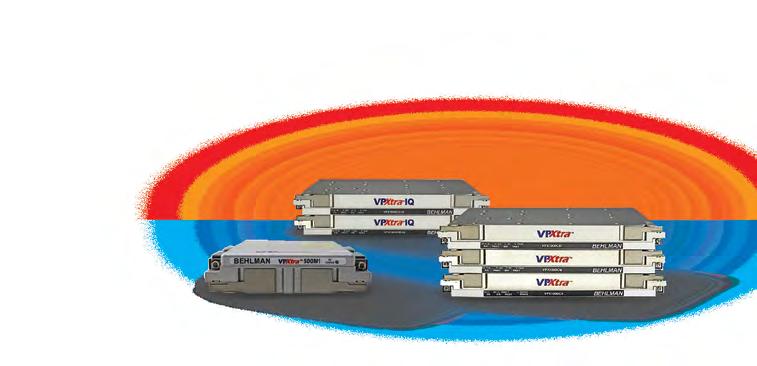
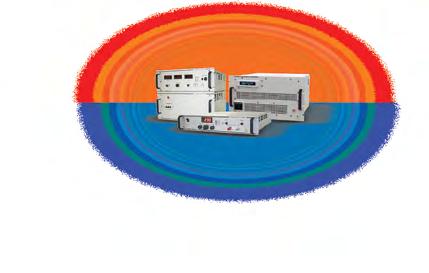
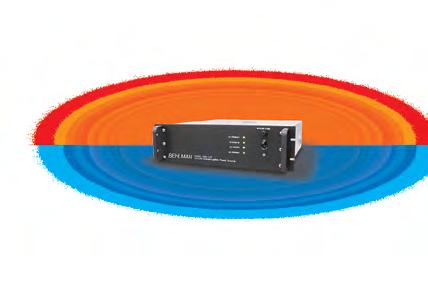
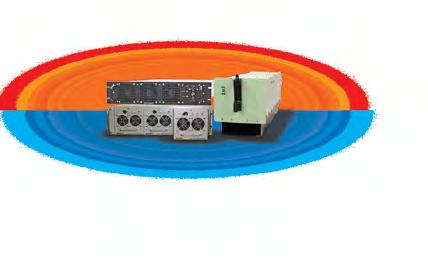
Most manufacturers offer just a few VPX power supplies off the shelf, with high costs for full-custom. The Behlman the most COTS AC to DC and DC to DC units configured for a wide range of high-end industrial and military applications. All feature our state-of-the-art new engineering standard, Xtra-reliable design and Xtra-rugged construction.
Insist on the leader. Not just VPX,


Annapolis
Systems
and/or LVDS (see on page 17).
By Jerry Gipper, Editorial Director
The year 2025 has been particularly significant for VITA. With over 31 projects currently supported by active study or working groups and 15 standards under routine maintenance, the organization remains highly active. This year, 10 new working or study groups have also been established. In parallel with this activity, VITA’s membership has risen to levels not observed since the peak of the VMEbus era. As of this writing, VITA boasts 152 current members, including 28 new additions and 10 returning members who have renewed their affiliation.
This expansion in membership is largely attributed to the heightened interest in modular open standardsbased products across various sectors, including the defense, space, industrial, and transportation industries. The increasing influence of artificial intelligence (AI) is accelerating the demand for highperformance computing. VITA-developed standards are specifically designed to address these requirements in embedded devices operating outside traditional data centers.
The Sensor Open Systems Architecture, or SOSA, initiative has become a benchmark within the defense sector’s sensor segment, providing a model for other industries to consider. Similarly, the space industry is investigating modular open standards as a means to expedite satellite development, while the transportation sector faces analogous challenges.
VITA working groups face many challenges, but one of the greatest is the challenge of choosing connector technologies that meet tough requirements for modularity, bandwidth, durability, reliability, and cost. Trends like miniaturization and advanced materials improve design but also create issues with signal integrity, heat, and reliability. Use of optical connectors is rising due to their benefits. VITA 100 targets doubled connector density and greater support for high data rates and power, preparing for future processing and ruggedization needs.
These complexities present difficulties in supporting a diverse supplier base for specific connector styles. Consequently, new VITA working groups often allocate substantial effort during the early phases of standard development to define and select suitable connectors that align with their objectives. Furthermore, relatively low unit volumes, especially compared to larger markets such as data centers, make it challenging for


connector suppliers to establish a viable business case for developing new designs.
While many end users of VITA standards would prefer multiple sources for key connectors, the current environment makes it increasingly difficult to support a competitive second source. Although working groups express interest in leveraging existing, higher-volume connectors, industry-specific requirements often preclude this option.
INDUSTRIES ARE PREPARING FOR A SURGE OF AI-DRIVEN TECHNOLOGIES.
As we look at the future, VITA’s commitment to innovation is reflected in the ratification of new standards like ANSI/VITA 93.0-2025 and the ongoing development of VITA 90 VNX+ and VITA 100 Next Generation VPX, which promise to redefine performance and flexibility in embedded systems. The increasing integration of AI into standards development is driving new requirements for safety, reliability, and responsible governance. Our growing membership base, including a surge of younger professionals, ensures that VITA remains vibrant and forward-thinking. With the SOSA initiative setting benchmarks for interoperability and rapid deployment, and advances in connector technology addressing the challenges of miniaturization and ruggedness, VITA is wellpositioned to lead the industry into a new era of modular, open, and sustainable solutions.
AI is increasing the need for high-performance computing and shaping the processes by which standards are formulated, evaluated, and upheld. As systems incorporate greater levels of intelligence, rigorous standards for critical embedded computing applications become increasingly essential. Digital tools, simulation, and predictive engineering are transforming standards development and connector design, enabling faster innovation and better performance. Standards developers across industries are preparing for a surge of AI-driven technologies.
Now, more than ever, VITA must stay alert to new tools, methods, and technologies that support the development of open standards.


By Jerry Gipper, Editorial Director

Note: This update is based on the results of the September 2025 VITA Standards Organization (VSO) meeting, held in Torrance, California, and hosted by Intellisense Systems. Contact VITA if you are interested in participating in any of these working groups. The full reports can be accessed at www.vita.com/ StandardsUpdates. Visit the VITA website (http://www.vita.com) for details on upcoming VITA meetings.
Accredited as an American National Standards Institute (ANSI) developer, VITA provides its members with the ability to develop and promote open technology standards.
The following standards have recently been ANSI and VITA approved via public VITA consensus ballot:
› ANSI/VITA 47.2-2025, Class 2 Requirements for Environments, Design and Construction, Safety, and Quality for VITA 47 Plug-In Modules Dot Standard
› ANSI/VITA 47.3-2025, Class 3 Requirements for Environments, Design and Construction, Safety, and Quality for VITA 47 Plug-In Modules Dot Standard
› ANSI/VITA 65.0-2025, OpenVPX System Standard
› ANSI/VITA 67.3-2023, Coaxial Interconnect on VPX – Spring-Loaded Contact on Backplane
› ANSI/VITA 93-2025, QMC – Small Form Factor Mezzanine
All published standards are available for download by VITA members and are posted at the online VITA Store for purchase by nonmembers.
Standards within VITA may be initiated through the formation of a study group and developed by a working group. A study group requires the sponsorship of one VITA member, while a working group requires sponsorship of at least three VITA members.
Several working groups have current projects underway. Here’s a roundup of these projects:
Abstract: This standard defines a VPX connector that supports data rates to 56 Gbaud, for protocols such as 200GBASE-KR4 Ethernet and PCIe Gen 5. These connectors are intermateable to legacy VITA 46.X
backplane connectors and follow the same form factor.
Status: Working group is developing a draft document.
Abstract: This standard establishes the design requirements for an air-flow-through (AFT) cooled plug-in unit. This plug-in unit uses a compact core heat exchanger located within the central heat sink of the unit and uses a mil/aero-qualified seal on the inlet and outlet of the heat exchanger, eliminating any direct air contact with the PWB and components. The standard defines both a 3U and 6U form factor in various pitches and air inlet sizes, providing a highperformance thermal solution for existing or new CCA [conduction-cooled assembly] designs.
Status: This standard is open for revisions to more clearly define some of the rules and recommendations. Verification method notation being added.
Abstract: This standard defines an AFT module format, 3U and 6U, that uses retractable module rack seals to improve module-chassis seal durability, simplifies the design by eliminating tapered module and chassis features, and allows easy migration of existing CCA designs to an air-cooled module format.
Status: Working group is developing a draft document.
Abstract : The OpenVPX standard uses plug-in module mechanical, connectors, thermal, communications protocols, utility, and power definitions provided by specific VITA standards to define a series of slot, backplane, module, and standard development chassis profiles.
Status: This document is open for additions of new profiles.
Abstract: This document describes an open standard for creating high-performance fault-tolerant interoperable backplanes and modules to assemble electronic systems for spacecraft and other high-availability applications. Such systems support a wide variety of use cases across the aerospace community. This standard leverages the OpenVPX standards family and the commercial infrastructure that supports these standards.
Status: The standard is open for revisions to the 2022 edition.
Abstract: The VITA 89 MT circular connector standard defines a standard for circular connectors with optical MT. Circular connector shells are compliant to MIL-STD-38999. MT offers options for up to 48 fibers per MT and for physical contact or lensed MT.
Status: VITA working group to develop a new standard for circular connectors with optical MT. Working group is developing draft document.
Abstract: The VITA 90.x (VNX+) family of standards builds on the foundation established by VITA 74 VNX. VNX+ significantly increases performance and system versatility beyond VITA 74, while following its mechanical framework.
Status: VITA 90.0 is in public review for release. Working groups are developing drafts for each level of VNX+.
Applications
Abstract: This standard defines a system definition that provides higher pin density to the backplane for VPX applications.
Status: VITA working group to develop a new standard for higher pin density for VPX.
Ruggedized 10 Gbaud Bulkhead High Speed, D- Sub, Rectangular Connector for Copper Cables
Abstract: This standard defines a rugged standardized 10 Gbaud interconnect system with a high pin count and high-density, lightweight, rectangular connector (meets MIL-DTL-24308 physical envelope) for I/O. It can support multiple high-bandwidth protocols and power while optimizing SWaP [size, weight, and power] benefits in smaller systems with limited panel space availability.
Status: The working group is reviewing a draft document.
VITA 93.1: QTM – QMC I/O Transition Module
Abstract: This standard complements the VITA 93.0 QMC standard by detailing the mechanical design of a mezzanine card installed on a carrier card or rear-transition module, enabling the transition of QMC I/O signals to industry-standard connectors accessible through the carrier card’s or rear transition module’s front panel.
Status: Working group developing draft document.
VITA 94.0-2024xNew: Power Distribution Plug-In
Abstract: This standard provides requirements for building a power distribution plug-in module with digital controls that can be used in a VPX chassis. The plug-in module will fit within the standards envelope defined for VPX modules in the VITA 48.x standards.
Status: Working group is developing a draft document.
VITA 95.0: Circular 38999 Connector with EBO Fiber Technology
Abstract: This document defines a standard for circular connectors with Expanded Beam Optical (EBO) ferrules. Circular connector shells are compliant to MIL-STD-38999 Series III. EBO ferrules are available in multi-mode or single mode.
Status: Working group is developing a draft document.
Abstract: This document defines a standard for Backplane Connectors with EBO ferrules. EBO ferrules are available in multimode and single mode.
Status: Working group is developing a draft document.
VITA 100.x: VITA 100
Abstract: The VITA 100 suite of standards is an evolution to OpenVPX, VPX, and related mechanical standards while embracing a paradigm shift in technology and capability with at least double the pin density, speed, and power for electrical contacts.
Status: Working group is developing draft documents.
For a complete list of VITA standards available for purchase and their status, go to https://www.vita.com/Standards
Sponsored by Annapolis Micro Systems and TE Connectivity
This webcast featuring VITA experts, moderated by VITA President and Executive Director Dean Holman, explores how VITA 100 will enable designers of military systems to counter complex adversarial threats on tomorrow’s battlefield. (This is an archived event.)
Watch this webcast: https://tinyurl.com/ws83s8cp

By Jerry Gipper, Editorial Director

The intention of the VITA Technologies Hall of Fame is to honor and preserve the remembrance of those people and technologies that have had the greatest influence on the VITA open standards industry. These are the people who have overcome technical and procedural problems to help bring forth the products that set new expectations. It is our pleasure to honor these contributors to this industry.

Uwe Tews founded TEWS Technologies GmbH in 1973. He launched the company to design OEM-specific solutions for process and machine control applications, becoming a pioneering company in embedded I/O solutions. Uwe wasn’t just a founder – he was a technical architect who shaped TEWS Technologies’ product philosophy. His legacy in embedded systems and industrial computing is rich with innovation, precision, and long-term impact.
Uwe championed modularity early on, allowing customers to build scalable, applicationspecific systems with products of his design. Under his leadership, TEWS introduced a range of VMEbus I/O products in 1985, followed by IP modules in 1992, later expanding into PMC, CompactPCI, XMC, and mPCIe formats. The company became known for its high-performance computer boards used in industries like medical technology, aerospace (including the ISS), and research.
Uwe Tews is listed as an inventor on multiple patents, including a notable one for a method and apparatus for positioning components on a workpiece, which was granted in 1986. His work reflects a strong focus on precision engineering and automation, particularly in component handling and placement systems.
He retired in 2018 after decades of innovation. Uwe Tews’s career exemplifies the kind of visionary engineering that shaped modern embedded systems.
Key Patents:
› EP0144717B1 – Method and device positioning elements on a work piece
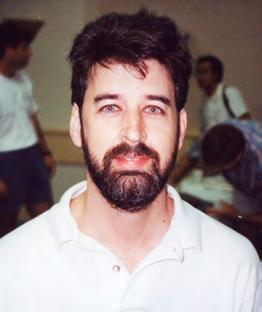
Kim Rubin
Kim Rubin was the technical visionary behind GreenSpring Computers. In the late 1980s, Kim led the technical direction at GreenSpring Computers, where he designed a modular I/O concept that would become the IndustryPack® (IP) standard.
Kim’s work laid the groundwork for formal standardization. In 1994, the VITA Standards Organization (VSO) formed VITA 4, a committee to validate and clarify the IP Module specification. The result was ANSI/VITA 4-1995, which remains a recognized standard for modular I/O in embedded computing. VITA 4 was the first non-VMEbus standard to be developed under the VSO.
This innovation addressed a growing need for granular, low-cost I/O expansion in embedded systems, and by 1994, over
80 companies were building products to the IP standard. His foresight helped shift the industry from proprietary daughterboards to interoperable, open standards, enabling broader adoption and innovation.
Kim currently works as a registered patent agent, helping startups and midsized companies develop intellectual property strategies, working on technologies related to autonomous vehicles, vehicle-to-vehicle (V2V) communication, and consumer electronics. He is also the founder of Elephant Timer, a rugged, simplified timing device.
Kim Rubin holds over 30 patents spanning fields including networking, image processing, autonomous systems, and wearable tech.
Principal standards participation:
› VMEbus
› VITA 4-1995 – IP Modules
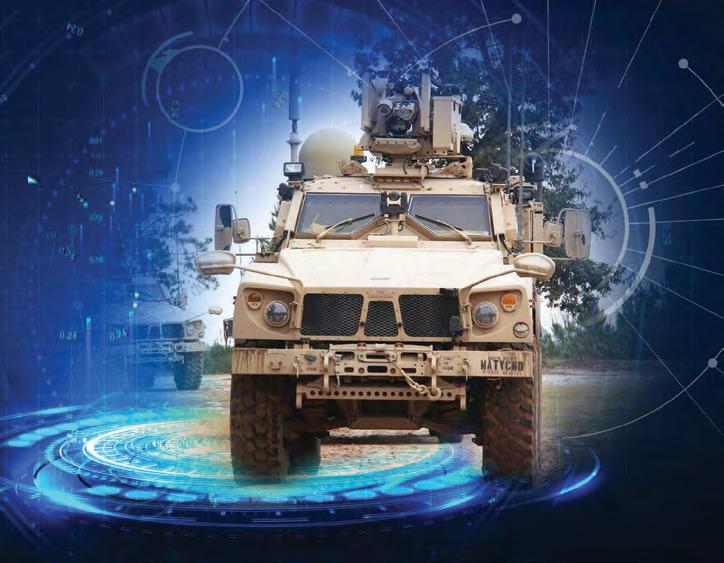

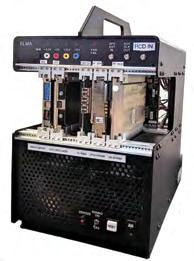
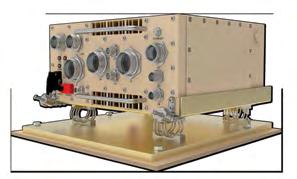
Go from development to deployment with the same backplane and integrated plug-in card payload set aligned to SOSATM and CMOSS. Includes chassis management, power and rugged enclosure for EO/IR, EW, SIGINT and C5ISR applications.
With you at every
By Jerry Gipper
Since the inception of computer boards, optimizing board real estate has consistently posed challenges for designers. Space constraints often prevent the inclusion of all desired functionalities, prompting inventive solutions. Mezzanine cards have become a prevalent method for expanding available board space, enhancing capabilities, and improving modularity. Over time, numerous approaches have been developed, with many tailored to specific board layouts, while others have achieved industry-standard status.
The first non-VMEbus standard established by VITA was VITA 4 IP modules, which were based on the widely adopted IndustryPack® from GreenSpring Computers. Subsequently, VITA has introduced standards for M-modules (VITA 12), PMC (IEEE 1386, VITA 32), XMC (VITA 42), and FMC (VITA 57) –each of which has gained substantial popularity within the embedded computing industry.
In October 2025, VITA announced the ratification by ANSI and VITA of the ANSI/VITA 93.0-2025 standard for small form factor mezzanines. The VITA 93 standard, referred to as QMC, is designed for both performance and flexibility. QMC defines a mezzanine card form factor that is significantly smaller than the popular XMC form factor. QMC was developed specifically to support various carrier-card formats for use in a wide range of deployed environments, supporting both air- and conduction-cooled designs in commercial, industrial, space, or military-grade rugged environments. Multiple modules can be installed on various carrier card form factors, including 3U/6U Eurocards (VPX, CompactPCI, VME, etc.), VNX+, PCIe
expansion cards, and others. QMC supports high-speed serial data links through its host carrier interface, along with its userdefined I/O interface.
QMC addresses the need in the market for a small-form-factor I/O mezzanine. Its function is much the same as the earlier IP Module, PMC, and XMC standards in that it provides connectors and interfaces for both the carrier-side connector as well as the I/O side, but in a much smaller form factor. The emergence of the VNX+ standard [VITA 90.0] drove the initial need for a smaller-form-factor mezzanine with backplane I/O capability, but it was soon realized that this new form factor would have significant utility across many form factors and deployed environments.
“QMC represents a revolutionary change in small form factor mezzanine cards,” stated Mark Littlefield, VITA 93 Working Group Chair and Director, System Products at Elma Electronic. “The need for a smaller-form-factor mezzanine has been challenging the industry for years, and QMC brings a
much-needed standards-based solution to the industry.” VITA 93 started as a study group that spent considerable time surveying the industry to gather information and requirements for small mezzanine cards. This then turned into the VITA 93 working group that started with a clean slate to develop the VITA 93 QMC standard.
“The versatility of QMC modules will serve a broad range of industries and applications,” explained Robert Greenfield, VITA 93 Working Group Co-Chair and Director of Business Development at Acromag. “The combination of highperformance connectors, rugged design, scalability, and variable stack heights offers endless possibilities for modular expansion of I/O and signal processing capabilities.” Acromag has been a provider of mezzanine cards across multiple form factors for many years. Their expertise made a significant contribution to the development of the final standard.
“The publication of the VITA 93 QMC standard is a milestone for the embedded systems industry,” commented Jan Zimmermann, General Manager, TEWS Technologies GmbH. “It opens new opportunities for innovation in rugged, deployed applications across aerospace, defense, industrial, and transportation markets. At TEWS Technologies, we believe QMC will play a defining role in the next generation of embedded computing, and we are committed to shaping this future with a strong and growing portfolio of QMC modules and carriers.” Small-formfactor cards and mezzanine modules are widely utilized throughout Europe. TEWS Technologies contributed its extensive expertise in this market to the working group.
“The VITA 93 standard represents three years of collaboration among leading experts in mezzanine card technology, including PMC and XMC,” said Joe Norris, VITA 93 Working Group Co-Chair and President of Technobox, Inc. “Our goal was to build a strong, open market that benefits suppliers and customers alike. We focused on cost, manufacturability, interoperability, cooling performance, scalability, and simplicity – all essential to making this standard a success,” Norris added. “The result is a platform that sets the stage for real business
growth across the industry.” Technobox has been a pioneer in mezzanine module technology. The depth of knowledge in mezzanines provided by Technobox was instrumental in refining the QMC standard.
Ancillary standards on the way
The VITA 93 working group continues to work on ancillary standards for QMC. VITA 93.1 and VITA 93.2 will define the mechanical details of two mezzanine cards with front-panel I/O. These I/O cards are intended to be used on carrier cards or rear transition modules to break out the QMC I/O signals to industry standard connectors that fit through the carrier card’s face plate or rear-transition module panels. The work on these projects is moving quickly and will be published in the coming months.
QMC standard-based products
Members of the ecosystem are launching new products based on the QMC standard.
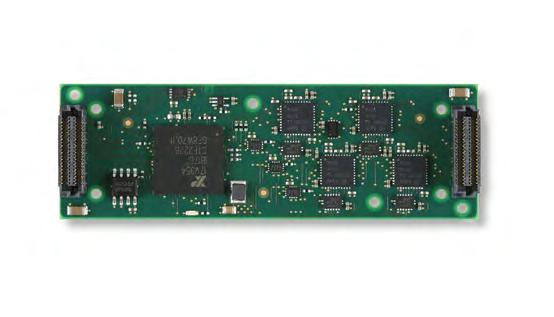
Acromag announced the QMC Series plus PCIe/VPX carrier boards and evaluation carriers. (QMC Series I/O Modules for VITA 93 Small Form Factor Mezzanine | Acromag) (Figure 1.)
› QMC350: Analog input, 20 channels, 1 MSPS 16-bit A/D
› QMC440: Digital input, 32 optically-isolated channels
› QMC450: Digital output, 32 isolated solid-state relays
› QMC510: Octal serial communication, programmable RS-232/422/485 ports
› QMC520: Quad isolated serial communication, programmable RS-232/422/485 ports
› QMC730: Multifunction I/O, A/D, D/A, DIO, counter/timers
› QPCe7210: PCIe carrier, one QMC site
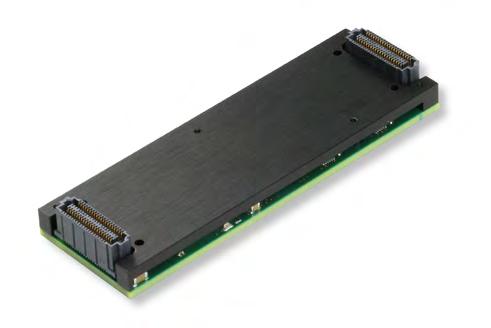
TEWS Technologies announced a portfolio of QMC modules, a TPCE210 dualsite PCIe carrier, and a QMC Starter Kit (TQMC400 + TPCE210 + drivers). (VITA 93 – QMC | TEWS Technologies GmbH) (Figure 2.)
› TPCE210: PCI Express x4, Gen 2, Dual QMC Carrier
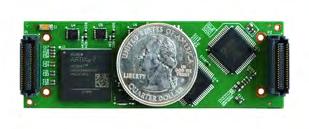
Figure 1 | Acromag offers the QMC Series plus PCIe/VPX carrier boards and evaluation carriers.
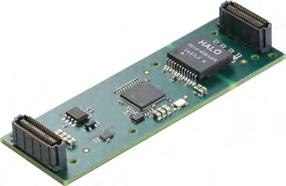
Figure 2 | TEWS Technologies’ offerings include a portfolio of QMC modules, a TPCE210 dual-site PCIe carrier, and a QMC Starter Kit.
› TQMC400: 4 Channel Full-Modem RS232/RS422/RS485 Programmable Serial Interface
› TQMC401: 4 Channel High Speed Sync/Async Serial Interface
› TQMC600: Reconfigurable FPGA with Digital I/O
› TQMC700: Reconfigurable FPGA with AD/DA & Digital I/O
› TQMC701: 8 Single-Ended/ Differential A/D Channels, 4 D/A Channels and 16 Digital I/O Channels
› TQMC800: 1 Channel 1000BASE-T Ethernet
Additional announcements are expected in the coming weeks and months.
The QMC Community website offers an up-to-date selection of announcements, articles, webinars, and white papers that provide comprehensive information on designing with QMCs. Designers seeking to expand their knowledge are encouraged to consult this resource first (www.vita.com/QMC). A thorough discussion of QMC took place during a panel session at Embedded Tech Trends in January 2025. Related videos and presentations can be accessed through the Embedded Tech Trends website (www. embeddedtechtrends.com).
The ANSI/VITA 93.0-2025 standard is available for purchase at the VITA Online Store (www.vita.com/Standards).
By Tim Tews

The defense landscape is evolving rapidly – nowhere more visibly than in the skies over Ukraine. There, small, cost-effective drones have become indispensable tools for surveillance, targeting, and tactical disruption. This shift underscores a broader reality: embedded systems must now be smaller, more modular, and rapidly adaptable to new mission requirements. Platforms must be smaller, more modular, and rapidly upgradable. One powerful response to these demands is the emergence of the VITA 93 QMC standard that brings unprecedented modularity, flexibility, scalability, and ruggedness to system designers, making it highly relevant to modern defense and aerospace applications.
In mid-2025, the VITA 93 standard reached a critical milestone as the VITA Standards Organization (VSO) finalized the core mechanical and electrical specifications, and early adopters, including TEWS Technologies, announced their first modules and carriers in alignment with the new standard and first products are expected to be shipped in fall of this year. The announcement of the new standard raised a lot of interest in the market while the ecosystem continues to gain momentum. More product announcements from VITA member companies are expected in the near future.
The VITA 93 working group continues its work by drafting the VITA 93.1 substandard, defining QTM [QMC Transition Modules], small expansion mezzanine modules that will allow interchangeable connector interfaces on QMC carrier cards enabling even more flexibility and modularity.
A strategic leap forward
While mezzanine standards like PMC and XMC continue to play an important role in many embedded systems, evolving application demands – particularly those involving higher I/O density, greater thermal efficiency, and increased modular scalability – have driven the development of new approaches. VITA 93 was created to complement these existing standards by addressing emerging challenges in next-generation designs that require enhanced performance and flexibility across a broader range of platforms.
The VITA 93 standard introduces a modular, stackable mezzanine architecture that supports up to PCIe Gen 6 and allows configurations ranging from a single QMC (26 mm by 78.25 mm) to a quad QMC module (104.375 mm by 78.25 mm). This flexibility makes it a strong fit for systems requiring every thing from basic serial I/O to complex, high-throughput sensor processing.
Moreover, VITA 93 is designed with interoperability at its core. A single QMC module can be installed on any compliant carrier regardless of stacking height, cooling method, or vendor. This level of abstraction not only simplifies integration but also promotes ecosystem development and competitive
innovation – core goals of the modular open systems approach (MOSA) and related initiatives like the Sensor Open Systems Architecture, or SOSA, Technical Standard.
Several technical innovations distinguish VITA 93 from prior mezzanine solutions:
1. Scalable architecture: VITA 93 defines four module sizes – single, double, triple, and quad – each supporting a proportional increase in PCIe lanes and I/O pins. A single QMC module offers PCIe x4 and 40 I/Os, while a quad module scales to PCIe x16 and 160 I/Os. This approach enables system designers to choose the right footprint and bandwidth without needing to change carriers.
2. Universal cooling design: A major pain point in prior standards was the mechanical incompatibility between air-cooled and conduction-cooled variants. VITA 93 solves this by using a unified mechanical layout. Designers can convert between cooling types simply by replacing the heatsink, with no PCB redesigns or additional variants needed. The conduction-cooling mechanism


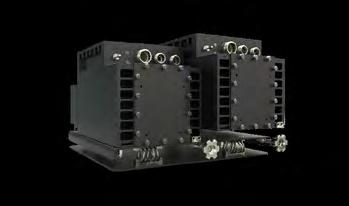
LCR products enable the fullest capabilities of the best aspects of VPX and SOSA aligned system architectures. Integrated systems, chassis, backplanes and development platforms that help streamline the journey from early development to deployment.
Look to LCR to realize what’s possible in demanding environments across a wide range of defense applications.
SAVE compliant, ATR and Small Form Factor

also offers superior thermal performance compared to legacy solutions. (Figure 1 & Figure 2.)
3. Flexible stacking heights: To support diverse mechanical envelopes, especially in VPX systems, VITA 93 carriers define four stacking heights – 9, 11, 14, and 16 mm – accommodating tight spaces and maximizing usable PCB [printed circuit board] area. This variable stacking height model enables designers to add components underneath the QMC, optimizing space without sacrificing performance.
4. Simplified system integration: With standardization of interfaces and mechanical dimensions, QMC modules can be swapped across different platforms and carriers. System architects no longer need to coordinate tightly between I/O design and carrier layout, drastically reducing integration effort
5. Robust I/O organization: The 40 I/Os of a single QMC are organized into five IOPIPEs, each offering eight singleended or four differential I/ Os. Each IOPIPE comes with its individual ground supporting the integration of isolated interfaces. This setup also aligns well with military applications requiring discrete signal channels and
Sponsored by RTI
Autonomous-system developers face mounting pressure to demonstrate prototypes in weeks, not years; to quickly evolve prototypes into reliable, scalable and secure production systems; and then rapidly update products post-deployment. This “field fast” imperative is reshaping how systems are designed, developed, and deployed.
This webcast explores how a datacentric architecture can provide the critical bridge from prototype to production for complex autonomous systems. (This is an archived event.)
Watch this webcast: https://tinyurl.com/3x972new

Scaling I/O in a VPX-centric world
VPX is a robust and proven platform, especially with 3U and 6U form factors aligned to the Sensor Open Systems Architecture, or SOSA, Technical Standard and the CMOSS architecture. System integrators face a recurring bottleneck, however: Each VPX slot is expensive, and traditional mezzanine cards like XMC can only offer limited flexibility due to its size; for example, a 3U VPX card can hold only one XMC.
Its smaller footprint enables multiple QMC modules on a single 3U VPX carrier, supporting multifunction processing without the need for multiple full-sized cards. As the military moves toward software-defined multifunction systems, this ability to pack heterogeneous I/O and compute onto one card becomes vital.
Moreover, the modular nature of VITA 93 aligns with modular open system approach MOSA principles, offering interoperability, vendor independence, and rapid upgradability – key demands for programs adhering to SOSA aligned procurement mandates.
Integration into the broader VITA ecosystem
VITA 93 does not exist in isolation – it’s a complementary addition to standards like VPX (VITA 46/48), VNX+ (VITA 90), and even external standards bodies such as PCI-SIG and PICMG. This interoperable nature ensures broad applicability in systems built on PCIe, CompactPCI Serial, and other small-form-factor platforms.
In a world where new threats emerge faster than procurement cycles, VITA 93 offers a new blueprint for agility. It meets the growing needs for flexibility, performance, and interoperability in a way that legacy standards simply cannot. Whether enabling scalable mission computing at the tactical edge or facilitating rapid system upgrades in airborne ISR [intelligence, surveillance, and reconnaissance] platforms, QMC is a timely and powerful addition to the modular embedded ecosystem.
QMC modules enable designers to add or swap new I/O capabilities at the module level without redesigning carriers or consuming precious slots. For defense contractors adapting rapidly to
changing mission profiles, QMC delivers the time-to-market, cost, and SWaP advantages they need to remain competitive and mission-relevant. With ratification underway and productization accelerating, VITA 93 is not just a new standard – it is the future of mezzanine I/O. .

Tim Tews is one of the two general managers at TEWS Technologies. TEWS Technologies – which provides rugged COTS [commercial off-the-shelf] and custom solutions for defense and aerospace applications – has been an active VITA member for well over 30 years. Together with Jan Zimmermann, Tim successfully managed the company’s succession and is responsible for all aspects of the business, especially its strategy and business development. Tim holds an MBA and master’s in project management from Bond University, Australia.
TEWS Technologies • https://www.tews.com/
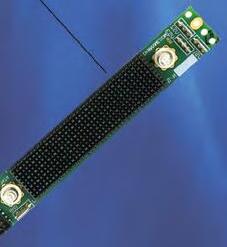

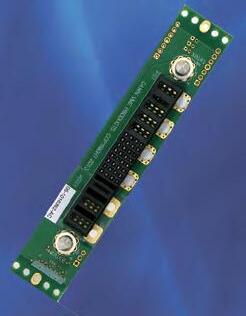






The Dawn family of one-slot OpenVPX test station and development backplanes gives engineers the ability to perform compatibility tests and easily reconfigure payload module profiles and slot interoperability to meet custom requirements.



Highly useful as stand alone or in combination with other backplanes, with or without RTM connectors. Multiple units can be topology wired using MERITEC VPX Plus cables.


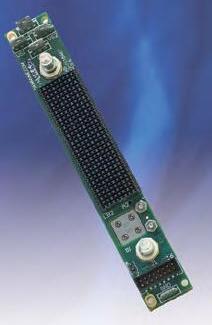
Available 3U and 6U in VITA 65, VITA 67.1, VITA 67.2, VITA 67.3, Nano-RF, SOSA-aligned and Power Supply slot profiles. Custom configurations available.
Rugged, Reliable and Ready. You need it right. You want Dawn.

(510) 657-4444 dawnvme.com

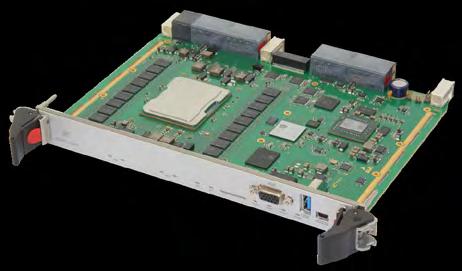
The IC-INT-VPX6i is a 6U VPX Single Board Computer based on the Intel® Xeon® (Ice Lake-D) D-2700 12, 16 or 20-core processor and designed in alignment with the SOSA® Technical Standard.
Dedicated to Edge applications and High computer needs, the ICX-D processor provides the IC-INT-VPX6i module with performance, efficiency and flexibility required by the most demanding applications in the industrial and mil-aero fields: intelligence surveillance (C4ISR), electronic warfare and broadly speaking, all applications requiring AI hardware platforms. The IC-INT-VPX6i takes advantage of the ICX-D density and scalability, enabling integrators to choose from various board configurations depending on whether they require processing power or power management. To meet their needs, the board can be factorybuilt with a 12, 16 or 20-core processor and a Dynamic Random Access Memory (DRAM) capacity up to 64 GB bearing in mind that this processor can support up to 4 fast DDR4 channels.
In addition, with the ICX-D, the IC-INT-VPX6i benefits not only from the well-proven Intel® Advanced Vector Extensions 512 (AVX-512) instruction suited for Real-Time applications, but also from a complete set of high speed interfaces featured by this processor. Indeed, the 16 PCIe Gen4 lanes and the two 40/100GB Ethernet interfaces with RDMA supported by the IC-INT-VPX6i, make it the ideal solution for scalable edge computer platforms requiring multiprocessing and sophisticated network features with low latency. The on-board open FPGA provides the board with extra interfaces (HDLC, SFPDP, ARINC818).
https://www.interfaceconcept.com/products/single-board-computers/ ic-int-vpx6i/
Communications
ECM-9958 Ethernet Conversion Module
• Dawn VME Products ECM-9958 10G-KR/ KX/SGMII to 10G/1G-BASE-T Conversion Module.
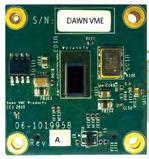
• Convert Backplane SERDES interfaces (KR/KX/SGMII/USXGMII) to 10G/1000/100 BASE-T for External Chassis interface.
• 10GBASE-T/5GBASE-T/2.5GBASE-T/1000BASE-T/100BASE-T) Ethernet PHY transceiver.
• IEEE® 802.3-2012 compliant auto-negotiation.
• High-Performance full KR (with auto-negotiation)/XFI/ USXGMII/2500BASE-X/SGMII.
• Configurable as KR or XFI in 10G, 2500BASE-X in 2.5G, and SGMII in 1G/100M, or all rates via USXGMII/KR.
• 10G-Base T operation at 2.7W (Typical for 30 m of CAT 6 cable.)
https://www.dawnvme.com/shop/accessories-vpx-accessories/ecm-9958ethernet-conversion-module/
Communications
Interface Concept
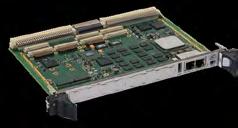
IC-ARM-VMEa : 6U VME LX2160A Arm® SBC
The IC-ARM-VMEa is a generalpurpose 6U VME Single Board Computer based on a NXP Layerscape® LX2160A processor with up to 16 cores up to 2.2GHz, two large banks of DDR4 with ECC support, local storage and Giga Ethernet interfaces. The processor hardware accelerator and large caches provide outstanding computing performance to the IC-ARM-VMEa with powerful packet processing offload and Ethernet controllers. It provides up to 32 GB DDR4 with ECC, two XMC slots, up to 8 Ethernet ports and one open FPGA.
https://www.interfaceconcept.com/products/single-board-computers/ ic-arm-vmea/
Communications
Interface Concept
IC-PPC-VMEb – 6U VME QorIQ® SBC with on-board switch
The IC-PPC-VMEb is based on one or two QorIQ® T2081 (or T1042) processors, implementing the Altivec™ technology or T1042 (four e5500) and a memory bank from 4 to 8 GB DDR3 with ECC/node. The board integrates an embedded Ethernet switch. Each processor features two Giga Ethernet ports (one on the backplane and one attached to the switch). Five additional Giga Ethernet ports are filled out by the Ethernet L2+ switch. The PCIe advanced switch offers versatile coupling between the two processors and the end-points (two PMC/XMC slots, FPGA).
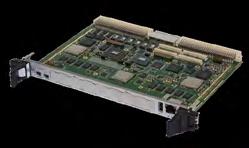
https://www.interfaceconcept.com/products/single-board-computers/ ic-ppc-vmeb/

3U
VITA 91
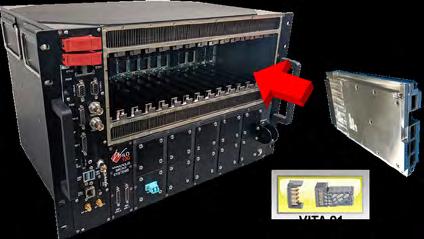
Annapolis is the first embedded computing manufacturer to integrate new high-density VITA 91 connectors into its COTS products. With HD VITA 91 connectors, SOSA aligned WILDSTAR 3U OpenVPX Switches keep pace with the high speed and bandwidth of the latest high-performance transceivers and FPGAs, including Agilex 9 Direct RF-Series and Versal Premium. These boards and systems are ideal for challenging applications including low latency jamming, EW, or radar.
VITA 91 HD connectors allow for a completely switched backplane, so the expansion plane is no longer defined by a fixed backplane PCB, but is now flexible and fully reconfigurable. Chassis and backplanes with two HD switch slots allows for one switch to handle all Data and Control Plane Ethernet, with the second switch dedicated to the expansion plane. The expansion plane supports Dual 100Gb Ethernet, 8x Gen4 PCIe, or 128 LVDS.
The following SOSA aligned Switches integrate high-density VITA 91 connectors and one or two AMD Xilinx Zynq UltraScale+ MPSoC Motherboard Controllers. WP3H20 also includes an Intel Xeon CPU option.
Sponsored By:
HD Chassis also available:
The high-density WILD100 3U OpenVPX Chassis feature 6 or 13 conduction slots.
www.annapmicro.com/vita91/

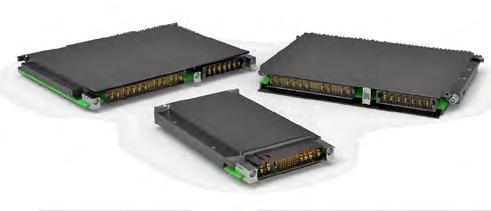
Modern defense systems are pushing the limits of power–driving the need for compact, efficient, and exceptionally reliable power solutions. AirBorn power supplies rise to meet this demand, delivering dependable performance in the harshest environments while supporting the mission-critical systems that protect and connect.
The 6U VPX Power Supply supports both power density and efficiency, delivering 2300W+ at 95% efficiency while meeting the VPX and VITA 62 open architecture and performance requirements. Notably, it delivers nearly twice the output of traditional 6U power supplies allowing engineers to support the higher power levels required in modern defense applications without increasing the size of their power supply units.
The new 3U VPX Power Supply delivers 1000W at 95% efficiency at one-third the size and weight of the 6U VPX power supply. This new model supports industry trends seeking to reduce size, weight, power and cost without sacrificing features or functionality.
In addition, AirBorn VPX power systems feature conducted EMI emissions that are well below VPX requirements. This unique capability offers significant cost and space savings compared to alternative solutions on the market.
AirBorn 6U VPX Power Supply Specs:
• Delivers more than 2300W
• Auxiliary DC Output: +3.3V/60A
• Peak Efficiency of 95%
• Input-Output Isolation 3000VDC
• Main DC Output: +12V/180A
• Overvoltage, Overload, & Overtemperature Protection www.airborn.com/vpx
Sponsored By:
ComEth4690e –3U VPX Dual-Plane 100G Ethernet
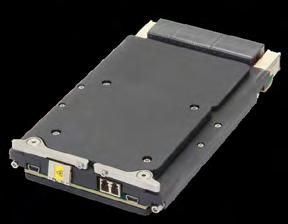
The ComEth4690e is a high performance ruggedized dual plane 3U VPX Layer 2/3 Ethernet switch, developed in alignment with the SOSA® (Sensor Open Systems Architecture) Technical Standard. The ComEth4690e integrates two sets of independent layer 2 (Ethernet) and layer 3 switches & control processors to support physically separated Control and Data Planes for highly secured 3U VPX systems. These two Ethernet packet processors, managed by ARM core-based processors, offer remarkable switching capabilities with 1G, 10G, 25G, 40G and 100G Ethernet configurations. The ComEth4690e is available as a conduction-cooled type 1 plug-in unit compliant with the VITA 48.2 standard (version without front panel optical ports). It includes a secondary side cover and supports 2 Level Maintenance (2LM) environments.
1/10/25/40/100G Data Plane Switch:
• 6 * Fat Pipe ports supporting 40/100GBASE-KR4 [VPX backplane P1/P2]
• Each Fat Pipe being splittable into 4 * 1000BASE-KX or 4 * 10/25GBASE-KR ports
• 2 * optional optical ports supporting 40/100GBASE-SR4 [Front Panel]
• Each port being splittable into 4 * 1000BASE-SX or 4 * 10/25GBASE-SR ports
• Optical ports are available through a single MPO (Multiple-Fiber Push-On/Pull-Off) connector.
1/10/25G Control Plane Switch:
• 7 * Ultra-Thin Pipe ports supporting 1000BASE-KX or 10/25GBASE-KR [VPX backplane P2]
• * optional optical port supporting 10/25GBASE-SR [Front Panel]
• The optical port is available through the LC connector.
• Switchware is a comprehensive switch management stack running on the ComEth4690e on-board processor and supports a rich set of Layer 2/3 features.
https://www.interfaceconcept.com/cometh4690e-3u-vpx-sosa-aligned100gbe-ethernet-switch/
Radar/Electronic Warfare
Annapolis Micro Systems
Liquid Flow-Through (LFT) Solutions
LFT is used for extreme heat dissipation at high altitudes and in other rugged environments.
• Conformity: VITA 48.4
• Form Factor: 6U OpenVPX
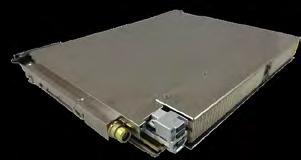
• Capability: 300+ W per slot
• BSP: VHDL or GUI-based
• Availability:
› WS6XV4/8 FPGA Boards
› WP6E10 Switch
› WCG000-17 Chassis
www.annapmicro.com/products/WS6XV4/
Radar/Electronic Warfare
Interface Concept
IC-FEP-VPX3h – 3U VPX SOSA and VITA 66.5 FPGA board


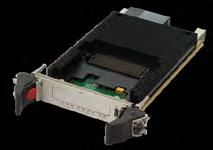
The IC-FEP-VPX3h board is based on an AMD Versal™ FPGA, a combination of adaptable processing and acceleration engines with programmable logic and configurable connectivity. The board supports AI Edge VE1752, an adaptive technology platform that combines high AI inference performance, low latency, and power efficiency for edge applications. It also supports AI Core VC1702/VC1802/VC1902, a high-compute series with medium density programmable logic and connectivity capability coupled with AI and DSP acceleration engines. And to finish with, it supports Prime VM1502/ VM1802: mid-range series with medium density programmable logic, signal processing, and connectivity capability.
https://www.interfaceconcept.com/products/fpga-boards/ic-fep-vpx3h/
PSC-6238 3U VPX 800W 28VDC
Input Conduction Cooled
Dawn Powers VPX: PSC-6238 3U
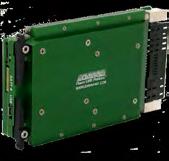
VITA 62 OpenVPX Power Supply. Wedge lock conduction cooled module. Wide temperature range at high power levels. Extended shock and vibration compliant. Onboard real-time clock. Switchable Battleshort and NED functions. Embedded RuSH™ technology actively monitors voltage, current, temperature and provides protective control of power sequencing and shutdown of all voltage rails. Up to 800 Watts power output with 1 inch pitch form factor. True 6 Channel supply provides full OpenVPX support. Current/Load share compatible with up to 4 PSC-6238 units.
https://www.dawnvme.com/shop/power-supplies/psc-6238/
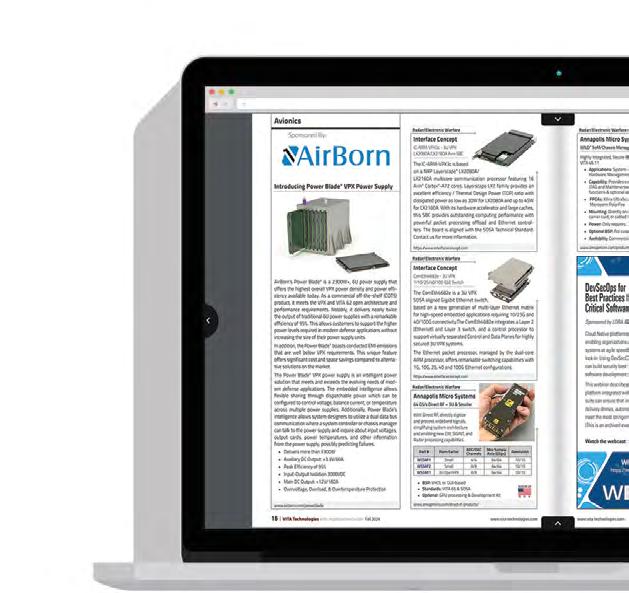
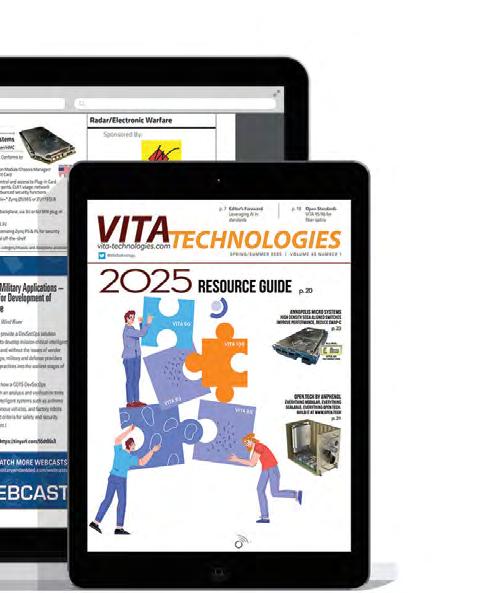
The Spring VITA Technologies Resource Guide provides the latest technical information and updates on QMC/VITA 93, VPX, OpenVPX, SOSA, SpaceVPX/VITA 78, and other standards to engineers, managers, and decision-makers in the U.S. and internationally.
The Resource Guide also highlights such key electronics-buying categories as Communications, Operating Systems & Tools, PMC/XMC, Uncrewed Systems, Radar/EW, and Rugged Computing. Don’t miss out on the Resource Guide in 2026!

Behlman introduces the first test-proven VPX power supplies developed in alignment with the SOSA Technical Standard. Like all Behlman VPXtra® power supplies, these 3U and 6U COTS DC-to-DC high-power dual output units feature Xtra-reliable design and Xtra-rugged construction to stand up to the rigors of all mission-critical airborne, shipboard, ground and mobile applications.
> 6U power module developed in alignment with the SOSA Technical Standard
> Delivers 1050W DC power via two outputs
> VITA 46.11 IPMC for integration with system management
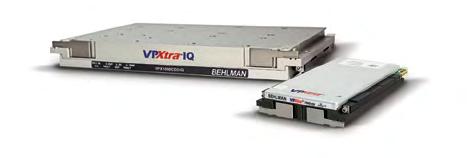
> 3U power module developed in alignment with the SOSA Technical Standard
> Delivers 800W DC power via two outputs
> VITA 46.11 IPMC for integration with system management