Welcome from the Growing Faith Foundation
Introduction
At Growing Faith, we are absolutely delighted that you have decided to take on the Growing Faith Strategic Leaders’ Programme. This programme is having wide-ranging impact in the participants who have journeyed this programme so far - both internally, as God deepens calling and refreshes vision, and externally, as long-lasting change is initiated for the children and young people in their contexts. We are full of hope for all that God will do in and through you as you commit to this year of professional development.
Growing Faith is the movement that exists to put children, young people and families instinctively at the heart of all the mission and ministry of the Church by changing the culture of the Church of England.
It comes from the vision set by the House of Bishops and endorsed by General Synod in 2019. It concerns relationships between schools and churches, and how these are developed to resource and support households to grow in faith together. The Growing Faith Foundation has been created to support dioceses and parishes to do this even more effectively than they do at present.
Through the Growing Faith Foundation, this culture shift is being addressed via a number of avenues, namely: funding research projects, by hosting peer-support networks, creating hubs of practice and implementing professional development programmes. You can read by visiting our website or by scanning the QR code.
Programme overview
Three key objectives
• Provide a learning space for a collaborative learning community which models the intersections of Growing Faith.
• Professionally develop leaders and aspiring leaders, bringing sustained change in a range of contexts.
• Have a transformative impact on children and young people’s faith formation.
Who is the programme for?
This programme is designed to embody the heart of Growing Faith by fostering cross-sector collaboration, engaging diverse audiences, and encouraging the dynamic interplay between church, home and school. We’ve had the privilege of working alongside clergy, school leaders, chaplains, ordinands, diocesan advisers, and leaders from parachurch organisations. Through professional dialogue, coaching cycles, action learning sets, and in-person gatherings, participants are invited into a rich space of shared learning and connection across varied backgrounds and perspectives. By working together, we create opportunities to strengthen practice, deepen understanding, and reimagine what is possible. We believe there is profound value in difference, and we are committed to promoting equality and inclusion. This programme encourages participants to embrace discomfort as a catalyst for growth—learning from one another as they seek to fulfil their unique callings with greater impact.
"After just one session, I was already sharing with my manager ways we can bring about a culture change in our organisation…I already feel enriched!"
Discerning whether this programme is for you
Area
Evidenced by
The table below seeks to provide focus areas and exemplify points for consideration when discerning whether this programme will suit you.
Posture A humility from participants to learn from others and grow in their calling, competence and character.
Passion for CYP A yearning to see children and young people encounter the love of God through Jesus Christ.
Growing Faith An evident understanding of the principles of Growing Faith and a hope to apply its principles in practice.
Love of God A desire to grow in God and pursue God’s call as a leader.
Outcome from participation
To demonstrate a full commitment to engage with the programme, building meaningful and reciprocal relationships with fellow participants.
To bring sustainable action in participants' contexts for the benefit of children and young people.
To create and champion innovative practices across church, home and school.
To be inspired by scripture and moved by the Spirit, in recognising where God is at work in participants’ ‘worlds.’
"This course is the first thing that has been offered to me in church, both voluntary and paid, that is not about how to deliver a new piece of material, or run an activity, but how to be me!”
The GFF team will also use this discerning criteria when selecting the cohort. Additionally, consideration will be given to the cohort make-up, to ensure that a broad range of participants are represented. To apply for your place on the programme, click here

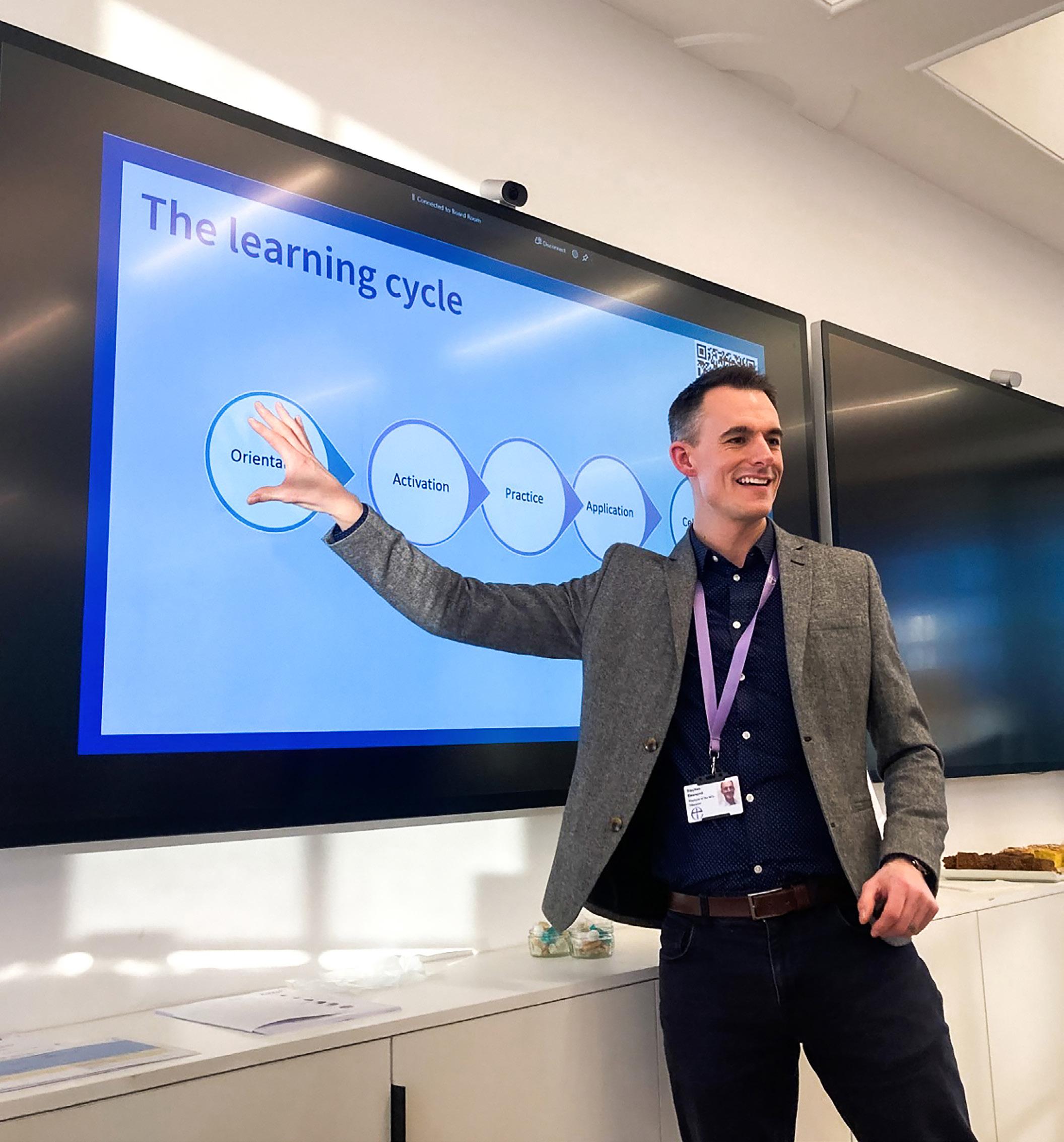
The learning cycle
This evidence-informed learning cycle (above) has been shaped as a result of the extensive experience and reach of the Church of England’s Foundation for Educational Leadership. You can read more about the research that underpins this approach here.
This initial stage will welcome participants to the programme and help orientate the group to the requirements and expectations of it. Participants will gain a clearer understanding of the learning cycles and the modules of study as well as being inspired by the opportunities to bring change within the overlapping spheres of Growing Faith.
During this stage of the learning cycle, participants will undertake self-guided, asynchronous study. There are ~50 hours of study to be completed throughout the course of the year. Individuals will journey through the content at their own pace. Each unit is credibly informed, theologically underpinned and practically applicable. A range of media are used and a pattern of read, watch, listen, reflect is presented. Read more about this in the following pages. Embedded throughout, are opportunities for participants to deepen and go further with their learning should they wish to.
Each module will involve two coaching conversations in small groups of 4 called huddles. These sessions will be facilitated by a trained coach online and are called practice and apply.
Following the learn stage, participants will deepen their knowledge by taking part in facilitated group coaching. In this first session, participants will share what they have connected to as part of their learning so far. Within peer-supportive relationships, participants will reflect on how their learning could impact their own work and begin to think about next steps. Read more about coaching on page 11.
In the second coaching huddle, participants take part in action learning sets, bringing with them a ‘How do I...?’ question. This approach involves a small groups of individuals who take on specific roles with a view to facilitate solutions-focused conversations around particular goals.
The Learn — Practice — Apply cycle takes place in each of the three modules.
Celebration
In many respects the end is just the beginning! The programme will culminate with a celebration of everyone’s learning at the final face-toface gathering. Participants will share how their learning has impacted themselves, those they work with and their organisations. They will be required to share their learning with the rest of the cohort in the form of a poster presentation.
Principles of the programme
Growing Faith/Impact
Participant flexibility
As outlined in the objectives, this programme seeks to provide professional leadership development with a specific focus on bringing change in wide ranging contexts. This is done with a strong emphasis on bringing sustainable impact across the spheres of church, home and school for children and young people. We want to see the younger generation connect with the love of God through Jesus Christ.
We recognise that we are engaging with busy leaders in this programme and so, where possible, we have built into the programme a degree of flexibility. At the learn stage of the cycle, participants engage in learning asynchronously (in their own time) via an online platform and set goals pertinent to the contexts that they serve.
Collaborative
We learn and grow best of all when we grow together. The learning cycle, previously explained on p5–6, has been designed to maximise the opportunity to learn together in peer-supportive relationships, deepening our learning and sharpening each others’ focus.
Evidence informed
Expert led
The programme will take the best evidence from research and quality resources, practitioner expertise (particularly in relation to Growing Faith) and will seek to contextualise this, drawing upon participants’ expertise and contexts within which they find themselves.
The programme will draw upon the advice, input and guidance from knowledgeable experts in the field. A range of stakeholders have been, and continue to be, instrumental in the shaping of the programme and will deliver certain elements of the programme.
Spiritual Formation
Deep at this programme’s core is not only a sense of growth in community with others but also is an opportunity to grow in all that God is leading us into. Space for pausing and reflecting on our own leadership journey and our calling in God is integral to the programme and is embedded throughout each stage. The ‘Golden Threads’ section of this document (p10) seeks to outline some of the deep questions that participants will grapple with as they journey through.
Modules
There are three modules across the course of the programme that will be introduced on a termly basis. The table below outlines the modules and the unit headers.
Module 1
Counter culture
CORE: Casting the vision
What do we mean by culture? Sustaining vision for everyone
Module 2
Leading me, leading others
CORE: What sort of leader am I?
Managing change
Module 3
Conflict and reconciliation
Making an impact
CORE: What is the plan?
Collaboration
Communication
DEEPENING OF LEARNING
Although distinct units of learning are outlined above, a number of golden threads are woven through the content of the programme. This ensures that knowledge, skills and understanding progressively develops. The table below shows some of the key questions explored at each stage.
Module 1: Counter culture
Growing Faith
Leadership
Equity, diversity and inclusion
Children and young people
Spiritual formation
Change
What does my current context look like in relation to GF?
How do I cast and sustain vision and how do I fit in within it?
Does my context reflect a truly inclusive culture?
How effective is my organisation in developing CYP's faith growth?
Where do I see the Kingdom of God at work within my organisation?
What change is needed in my organisation?
Module
2: Leading me, leading others
What can I learn from others' practice in relation to GF?
What sort of leader am I and how does this impact others?
How does everyone know that they are seen?
What change needs to take place to enhance the provision for CYP's faith growth?
What sort of leader is God calling me to be?
How do I manage difference and conflict?
Module
3: Making an impact
What action will I take for sustainable impact?
What is the strategy in bringing about change?
How will my actions bring benefit for all?
How do CYP remain central to my organisation's strategic plan?
How do I aid the flourishing of others?
How do I make change happen?
Coaching
Called
Coaching Huddle 1
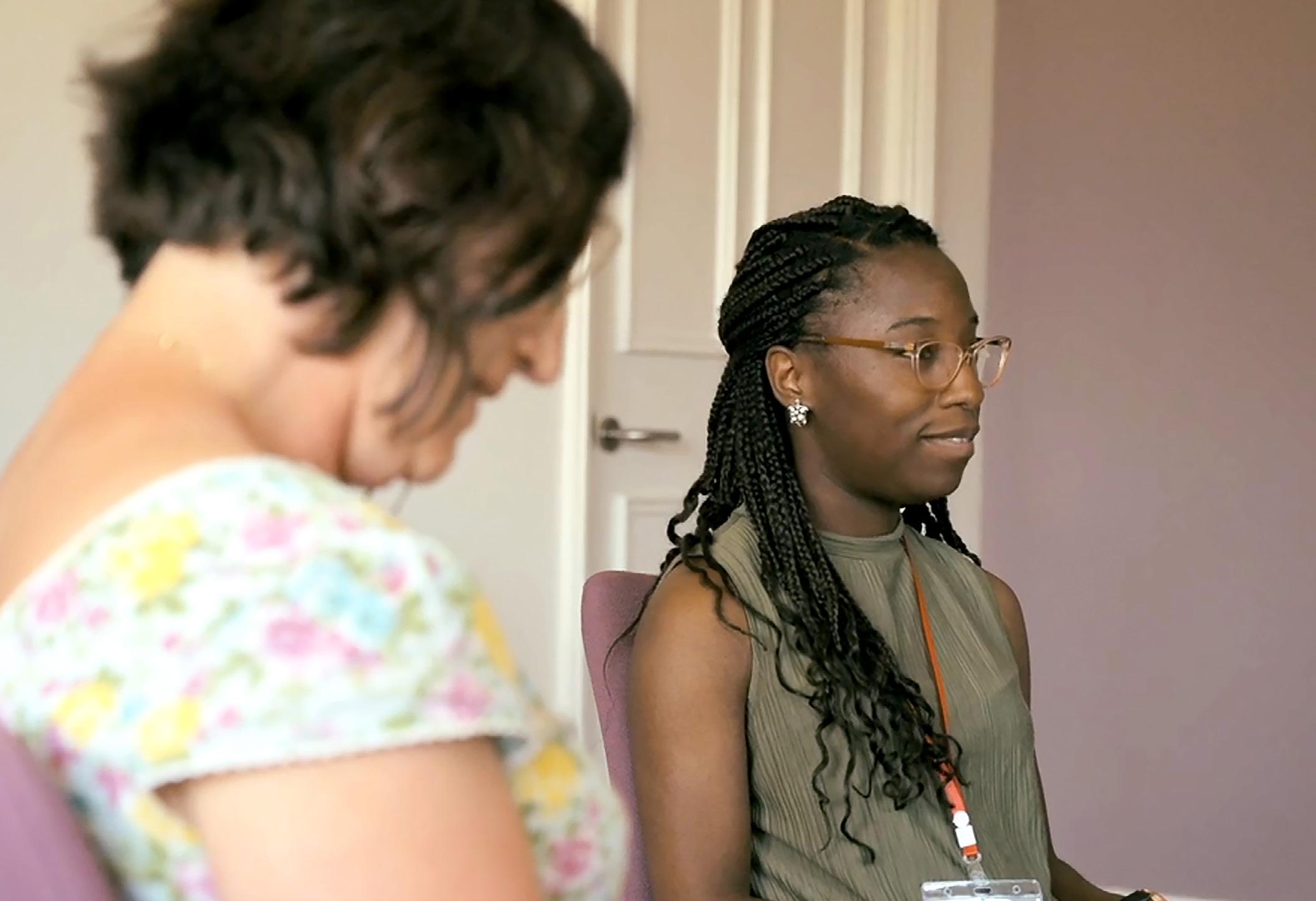
There are three stages to the coaching model used within GFSLP namely: Called, Connected and Committed. Participants journey through this model alongside a small group of peers forming a ‘coaching huddle.’ One cycle includes two separate sessions.
Connected
Coaching Huddle 1
• This first step of the process seeks to build presence and shed light on ourselves as leaders to develop greater self-awareness and regulation.
• Leaders who are called can articulate a strong sense of personal vocation to their role, and demonstrate this through their words, actions and decision making, exemplifying a strong moral purpose, confident vision, and ambitious trajectory of improvement. For some, this sense of vocation will be driven by an established or developing faith commitment. All will show integrity, honesty and a deep sense of resilience, underpinned by their personal sense of vocation as a leader.
• In this next step of the process, leaders are encouraged to practice critical interaction with the asynchronous, online learning content, and engage in dialogue that reveals direct learning for differing contexts.
• Leaders who are connected operate deliberately within communities of practice, positioning themselves within positive relationships that sustain and encourage all parties. They embrace interdependence, demonstrate compassion and embody humble service to others. They create shared identity within their teams and draw colleagues around a common purpose. Called Connected
Committed
Coaching Huddle 2
• In this final stage of the cycle, clarity and commitment to next steps is sought through an Action Learning Set model.
• Leaders who are committed show energy and passion in all they do, inspiring confidence and faithfulness in their teams. They are clear about their purpose and resilient in the face of challenge. They take long-term decisions and are not easily swayed by short-term changes of policy or procedure. They articulate a sense of mission in their approach, into which they draw others.
Blackboard
Throughout the Growing Faith Strategic Leaders’ Programme, we will be using a learning management system called Blackboard. Click on the image below to take you to a short guide on using the platform.
This system will provide a platform for participants to access all resources, learning content and discussion spaces. Here you will also have access to a calendar of key dates, and it also will enable us to communicate with each other, saving the need for a plethora of emails and attachments!
You can access Blackboard on any device and there is also an app that you can access through a mobile device. Participants will initially complete an overview of the programme on Blackboard which will provide more guidance for accessing the module.
For any issues relating to Blackboard please contact: stephen.beamond@churchofengland.org
"Probably the most effective experience I have had in over 20 years in ministry.”
Strategic Leaders' Programme
A guide to using blackboard
Accountability
For participants to fully maximise their learning potential and the opportunity to bring about sustained change of a Growing Faith nature within their context, degrees of accountability are essential. Your progression throughout the activation stage will be monitored by the programme lead to ensure readiness for the practice and application stage of learning.
In embarking upon the programme, it is crucial that you have the blessing of your line manager to take part. Not only will your learning require significant time and energy, your learning will be contextualised within your setting or organisation and is much more likely to be applied with the support of your line manager. If this is impossible to arrange however, you are still very welcome to partake independently.
Each participant will also ideally need an accompanier, (who could also be their line manager) who will be expected to:
• Have regular (at least termly) informal check-ins with the participant to discuss their progress.
• Provide encouragement, guidance and support.
• Be a ‘first audience’ for presentations of learning.
Participants are strongly encouraged to keep reflective journals, but these will not be looked at by anyone other than the individual.
At the end of the programme each participant will be expected to share the impact of their learning on themselves and the organisations they lead within.
Face-to-face gatherings
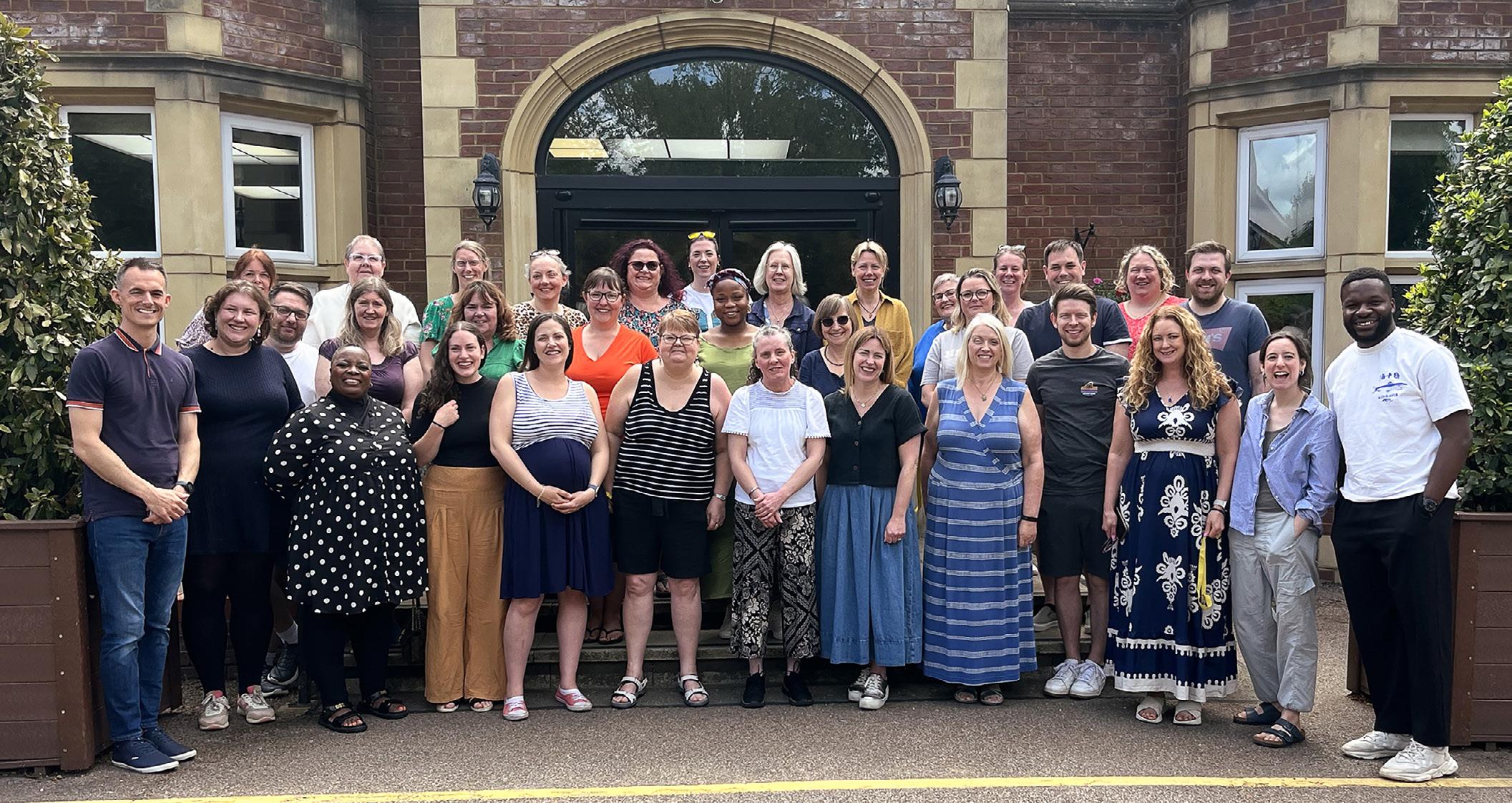
Although online platforms provide an easy and accessible way to connect regularly, this never replaces the joy of meeting in person. There are multiple opportunities to meet face-to-face as a cohort which will vary depending on whether you are engaging on the national programme or within the South West regional cohort.
Refer to the key dates page to see where and when the in-person gatherings will be taking place.
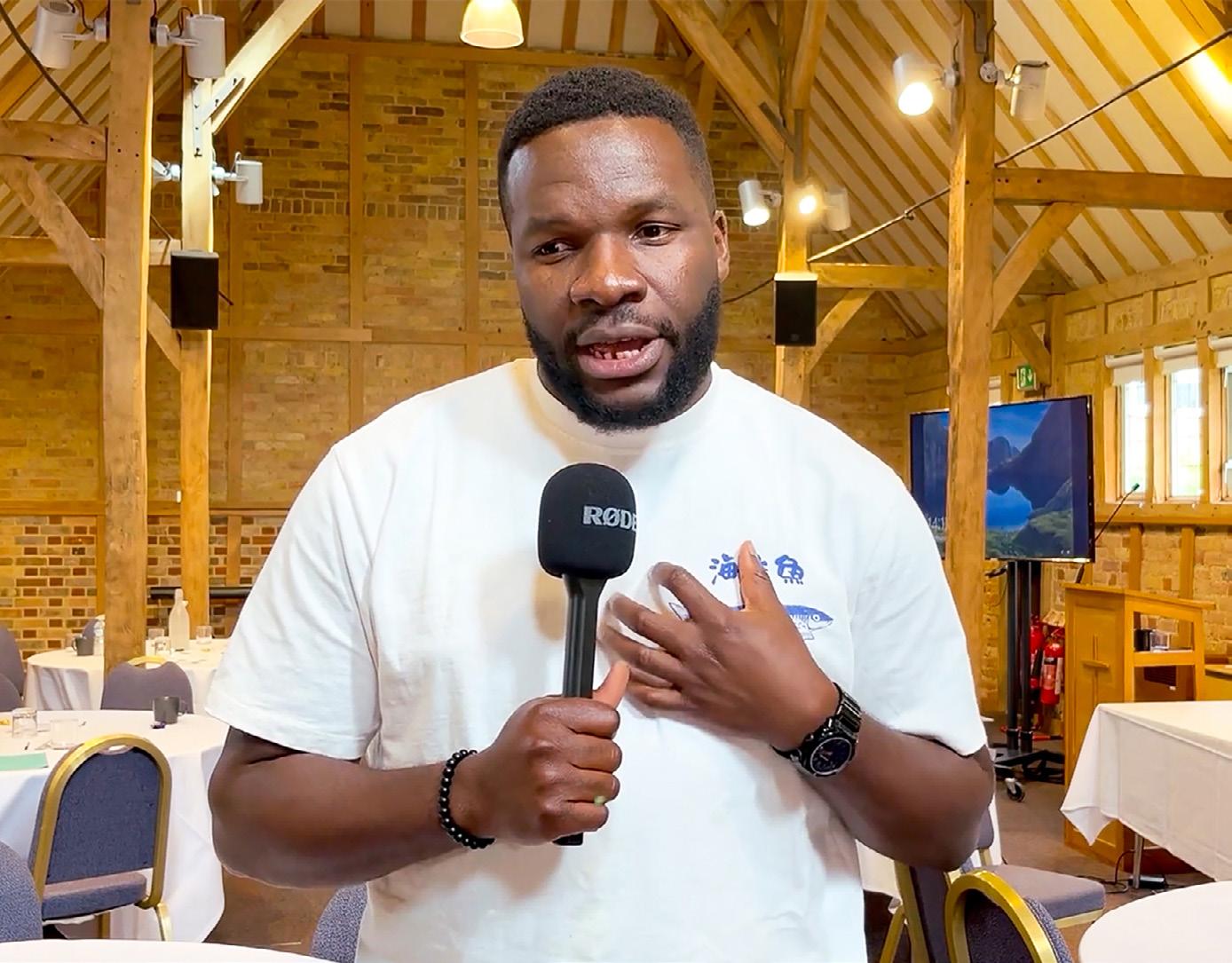
Click the image below to find out what our participants thought about their last residential.
What has been life changing for you on the GFSLP residential?
CLICK here to HEAR MORE STORIES OF IMPACT
Costs
The cost for cohort 5 is £600 + VAT. This covers the cost of the residential, all teaching materials and resources as well as the cost of coaches and guest speakers. The cost does not include travel to in- person gatherings or physical copies of resources, for example any books that a participant may like to purchase.
Cohort 5: key dates 2026
Thursday 15th January – Group A Friday 16th January – Group B
Wednesday 11th February
Wednesday 25th February
Wednesday 4th March
10:00am–12:30pm
1: Coaching Huddle 'Practice'
(North)
Wednesday 11th March In-person 11:00am–3:00pm Regional meets (Midlands)
Wednesday 18th March In-person 10:00am–12:30pm Regional meets (South)
Wednesday 24th March
Wednesday 22nd April
Thursday 21st May
Wednesday 3rd June
16–17th June – Group A
1st July
11:00am–3:00pm
10:00am–12:00pm
1: Coaching Huddle 'Application'
2: Activation launch
2: Coaching Huddle 'Application' Thursday 9th July
Wednesday 14th October
Thursday 22nd October
Wednesday 9th December – Group A Thursday 10th December – Group B
Participant agreement
In order to maximise the potential impact of this programme on your leadership development, we expect high levels of engagement from all of our participants. In this vein, please read through the bullet-pointed responsibilities below and sign to confirm that you agree to commit to them. (You can print, sign and send a photo/scan if that is easier).
Your responsibilities
In accepting a place on the Growing Faith Strategic Leaders’ Programme you confirm that you will:
• Attend the GFSLP fully, achieving an attendance rate of 100% overall. (If, due to extenuating circumstances you are unable to attend a session, contact stephen.beamond@churchofengland.org as far in advance as possible).
• Conduct yourself in a professional manner and treat all fellow participants, coaches and programme facilitators with dignity and respect.
• If you have a line manager, ensure that they are also committed to your learning and fully endorse your participation in the programme.
• Make a positive contribution to online and face-to-face gatherings.
• Demonstrate self-organisation throughout the programme and take ownership for your own learning.
• Comply with the processes within the GFSLP outlined in this handbook.
• Access Blackboard (Learning Management System) in a timely manner, to complete asynchronous learning for each teaching cycle and stay abreast of all communications from programme facilitators and other participants.
• Complete all evaluation surveys.
• Consent to being recorded or photographed during face-to-face learning events for publicity purposes.
• Consent to your email address being shared with fellow participants and coaches.
• Consent to your action plan being shared with coaches.
Signed (a typed signature is sufficient):
Frequently asked questions
What is the time commitment?
Will the programme be online or in person?
Across the programme there are 3 modules to complete. You can expect to spend around 15 hours on each module. There are 6 x 2 hour coaching sessions online as well as a number of face-to-face gatherings. Please refer to the key dates page for more details.
In order to accommodate the wide and diverse reach of the programme, the programme will adopt a blended approach of learning. Most sessions will be online, however, opportunity for face-to-face sessions will also play a key part in the programme. Again, please see the attached 'Key Dates' section.
How big will each cohort be?
I’m
not a reader or a writer, can I still access the programme?
There will be up to 35 participants in cohort 5 which will be broken down into coaching huddles of 4 people. We will also be running a cohort specifically in the South West region (Bristol, Bath and Wells, Salisbury, Exeter and Truro dioceses) which will have some overlap with the national cohort.
The programme has intentionally been designed to be as accessible as possible for a wide range of learning needs. Participants will engage in around 15 hours of self-study within each module, which will include things to read, listen to, watch and reflect upon. Participants will be expected to write a 300-500 word reflection each module and create an action plan. Neither of these tasks are assessed.
Is the programme accredited?
Do I have to be Church of England?
No. The programme has been developed to be flexible and accessible for leaders and aspiring leaders who are placed in wide ranging settings. In this sense, while expectations of participants are high, extended written assignments are not well-placed within the ethos of the programme. Our focus is upon impact of learning in context.
No. As shared above, we are welcoming participants from differing backgrounds. We ask for a strong commitment to Growing Faith which seeks to instinctively place children and young people at the heart of all ministry and mission. The impact you will be activated to bring will have a strong emphasis on the overlapping spheres of home, church and school. The discerning criteria are on p3.
Can I do the course without the backing of my organisation?
Do I pay for myself or does my organisation?
Ideally each participant will have the blessing of their line manager to take part in this programme. If this is impossible, participants are still welcome to apply independently. The participant will also need an accompanier (this may well be a line manager), someone who will be expected to support, guide and encourage the participant, meeting regularly to discuss progress.
This varies participant to participant. In the large majority of cases, costs are covered by an individual’s organisation, being viewed as a valuable professional development opportunity which will impact the organisation as a whole.
Strategic Leaders' Programme
Thank you so much for expressing your interest in the Growing Faith Strategic Leaders’ Programme.
If you would like to apply, please do so by filling out the application form here.
For more information, or to arrange a call to talk about the programme further, contact:
stephen.beamond@churchofengland.org or growingfaith@churchofengland.org