


The National Church of England Academy Hucknall and The Minster Church of England School Southwell
Leadteachers

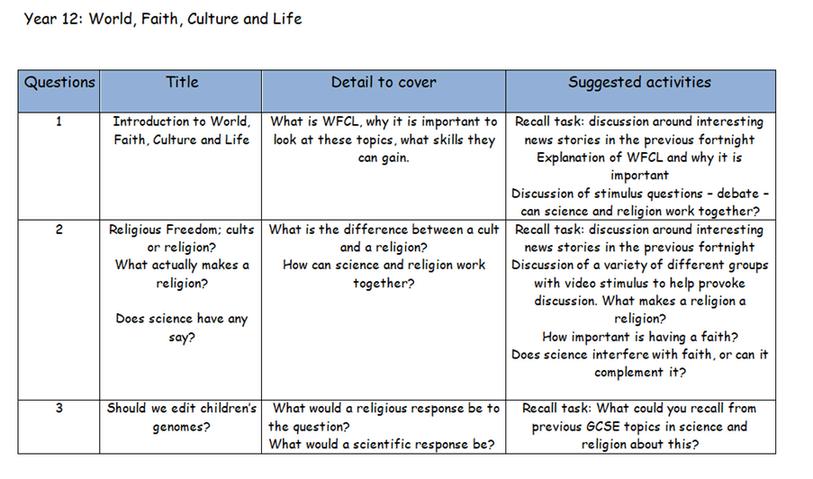
Following the initial project input sessions, and meetings between our two secondary schools, we agreed to aim our project at sixth form students Our hope was that the project would enhance our Key Stage 5 statutory Religious Education curriculum, making it more engaging, and providing further opportunities for critical thinking. We also hoped to allow students to discover the links between Religious Education and Science through exploring Big Questions. Our primary intention was to develop the concept of elements of scientific thinking along with religious values and moral questions, giving students the opportunity to develop substantive knowledge from a range of perspectives Through working collaboratively on the project, we also wanted to deepen existing connections between the two secondary schools in the MAT
One challenge we faced was ensuring our plans could be effectively realised within the time constraints of the statutory RE curriculum. The sessions were to run either in one tutor period each week or in a fortnightly lesson The planning had to be shared across a range of teachers with different subject specialisms, who would all take responsibility for delivery We overcame this challenge by ensuring our planning was precise and robust.
The research and development all took place during the academic year 2024/5, trialing elements of our project in the summer term Full delivery of the revised statutory Religious Education curriculum started in September 2025 with year 12 Development of the project is therefore ongoing This project has opened up opportunities for Sixth Form students to explore links between Religious Education and Science and some of the moral and ethical issues that both subjects can address. We have also successfully opened up further channels of discussions between the secondary schools in the MAT, and the different subject areas. Students have had the opportunity to study independently with guidance but are also gaining confidence in the ability to debate and tackle questions relevant to society today. Finally, the project has provided an opportunity for students to refine their debating skills.
Collaborative work between members of the Religious Education and Science departments led to a shared curriculum being jointly developed This involved collaboration in both specific subject knowledge and pedagogy to ensure that joint topics were not superficial, but really stretched students to understanding both curriculum areas and the links between them Staff worked across the two secondary schools in the trust in both the planning and evaluation phases In doing so a range of scientific and religious topics were addressed such as:
Genetic modification
Artificial Intelligence
Assisted Suicide
The chosen big questions were deliberately selected firstly, to show the links between science and religion, but also, to have a clear grounding in significant real-world issues, relevant to the students today. The work was aimed at developing students’ debating skills as well as maintaining a culture of respect and tolerance while increasing students’ confidence in defending their personal opinions.
The project therefore supported students to become more open to the opinions of others Students developed an awareness of the sensitivities involved in attempting to answer such contentious questions, so through this process we aimed to develop their social and emotional awareness.
In preparing to debate these topics, the students developed a variety of research skills, exploring academic and nonacademic sources and learning to select and utilise relevant information Students developed a critical awareness of false data and were exposed to some of the issues surrounding AI and its use in the world today Students were given structured and guided activities which built up their independence and allowed them to develop their own disciplinary and personal knowledge over time. Throughout this process, students were required to come to a judgement, having examined in detail the areas of interest, and while maintaining a broad and balanced approach to the questions being asked.
In setting out the scope and nature of the work, both schools ensured that the new topics and activities met the statutory guidelines for Religious Education at Key Stage 5 In addition, there was a collaborative focus on ensuring that the project encouraged Sixth Form students to think deeply about Big Questions This remains a key element in maintaining the positive place of Religious Education within the schools’ Sixth Form provision. These sessions have ensured that students have a wider knowledge of diversity and the viewpoints of other faiths and secular beliefs which helps in developing the students as global citizens. It has also increased their understanding of scientific facts and laws surrounding the question areas addressed.
Our project effectively brought together the EEF implementation considerations, Through the sessions led by the Church of England, and the collaborative work across our MAT, we were able to identify what we wanted our project to focus on and examine the feasibility of this within our school contexts We agreed our focus would be on further enhancing our key stage five statutory religious education curriculum.
Bringing together teachers and leaders from the science and religious education departments has been highly beneficial for the preparation stage of our project as it has enabled a collaborative approach to curriculum planning
A series of professional discussions have taken place to embed the big question debate format and to share ideas and develop resources We used an evidencebased approach to develop a structured implementation plan to ensure that the project would be ready for delivery in September 2025 This included the trialing of some of the sessions and resources, which, following feedback, resulted in amendments being made prior to the delivery stage.
We are currently in the delivery stage of the project. The project and its core aims have been introduced to all staff delivering the statutory religious education curriculum to ensure there is a purposeful delivery and engagement
The structured resources provide support for staff who may be delivering outside of their subject specialism Staff have also been supported through follow-up meetings to ensure they are confident in their delivery of the sessions and we are constantly tweaking the curriculum in response to teacher and student feedback For example, overview sheets have been created to support the teachers delivering the sessions.
These will enable them to guide the students more effectively if and when they require it We are continually reflecting on the project as we progress. This will include a full review at the end of the academic year so that improvements can be made as required prior to embarking on the project in 2026-27, when we will move firmly into the sustain stage.

Meetings between the two secondary schools within the MAT led to lots of discussions about how the project would provide an opportunity for all sixth form students to deepen their thinking on issues relating to religion and science. These meetings also included senior members of staff from both schools and a trustee who had heard of the project and wanted to learn more This allowed for a positive and well-rounded discussion which gave the opportunity for us to continue to reflect on, and refine, the journey we had planned
To fully embed the concept of research-led debate for Sixth Form students while studying the Big Questions within the curriculum and tutor programme. This will support students as they move to university or into the work place
To continue to support staff with the planning and delivery of sessions to ensure they feel fully equipped to lead an open and research-based debate
Potential of a ‘big debate’ across the secondary schools in the MAT in the form of a Houses of Parliament debate on an agreed big question. Support would be needed to facilitate travel, time out of school etc
To look into the possibility of introducing the project lower down the school with Key Stage 4 students.

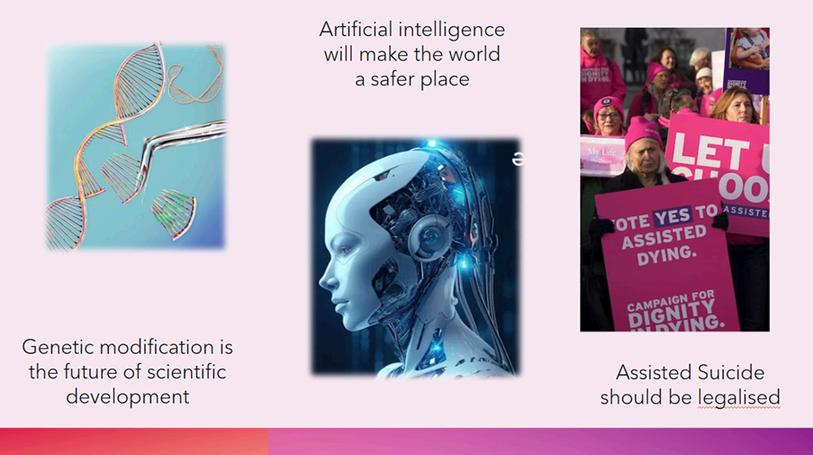
1: Setting up debates for sixth formers