Annual report 2024


Educating for 'life in all its fullness'
John 10:10
Educating for 'life in all its fullness'
John 10:10
Returned to our historic name, the National Society for Education, with fresh, new branding.
904 SIAMS inspections carried out.
4,000 participants were recruited onto our NPQ programmes.
NSE rated as an OUTSTANDING NPQ provider by Ofsted.
18,292 children and young people across 515 primary and secondary schools were empowered through the Archbishops’ Young Leaders Award (AYLA).
AYLA launched in Wales with 12 new schools.
292 KS2 pupils from 73 schools across 25 dioceses shared their opinions and feedback with us, via our National Younger Leadership Groups.
New anti-bullying guidance published.
1,077 CofE schools signed up to Lets Go Zero.
73 participants on our Strategic Leaders Programme, with a 99% satisfaction rate.
17 learning hubs are thriving across the country.
6 new research projects have been commissioned.
1,000 leaders across 40 different dioceses participated in our Growing Faith networks.

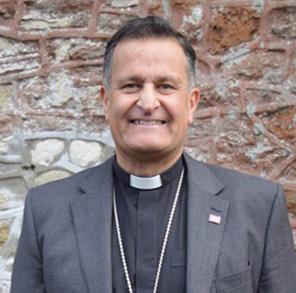
An introduction from our Chair, the Rt Revd Dr Jonathan Frost.
It is a pleasure to commend this annual report for 2024. Under the leadership of Nigel Genders CBE, the National Society for Education (NSE) continues to thrive as one of the Church of England’s, National Church Institutions. Working in partnership with the Church in Wales and each Diocesan Board of Education across the Church of England, the NSE lives from a vision of education which is deeply Christian and serving the common good.
In serving the nation, through our church schools, the NSE’s work is focused on three key areas: developing leaders; shaping policy; and growing faith. I trust you will find the breadth of what is described here both inspirational and a source of encouragement. On behalf of the Council of the NSE and its outstanding executive team, I commend the report to you.
Over 213 years of history, the National Society has endeavoured to serve the nation by providing Church schools with a vision for education, summed up in 2016 as ‘Deeply Christian, serving the common good.’
Throughout those years, the relationship with schools changed, with Diocesan Boards of Education taking the dayto-day responsibility for engaging with and offering advice to nearly 4,700 Church schools across England and Wales. But since the publication of our Church of England Vision for Education, the role of the National Society has gone from strength to strength across its three key strategic aims: developing leaders, shaping policy, and growing faith.
2024 has been a year where we have looked back and rearticulated our commitment to that long history and looked forward as we seek to embrace the future, developing new thinking about the purpose of education and what it means to develop a flourishing schools system.
Building on the strong foundations of Joshua Watson and his colleagues, we were delighted to take our national conference back to the parish of St John’s, Hackney, where he and his friends first founded the National Society in 1811. It was a poignant moment to welcome hundreds of school leaders and young people into SAINT church, where this beautifully restored space still holds the memorial stone to Joshua Watson, with a reminder of his commitment to shaping children and young people with wisdom.
Ten years after the latest revision to the Society’s royal charter, it has been wonderful to see our new branding give a fresh and contemporary focus to our historic name, the National Society for Education, along with the launch of our website, which sets out the huge scope of our work.
It is with that renewed confidence in our past and our vision for the future that we set out Our Hope for a Flourishing Schools System, seeking to articulate the vital nature of all that the National Society aims to do in partnership with children, adults, trusts, dioceses, and the whole educational landscape.
This annual report for 2024 summarises the key themes of all that work over the year, but none of it would have been possible without the dedicated work of a fantastic team and the deep partnerships we have sought to build with dioceses, schools, and parishes.
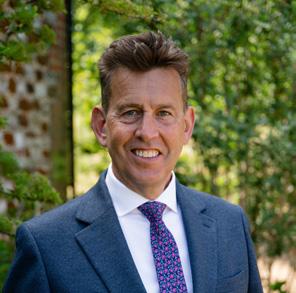
The Revd Canon Nigel Genders CBE Chief Education Officer

The National Society for Education (NSE) supports the mission of the Church of England and Church in Wales in line with the Church of England’s role as the largest single provider of education in England and as the established Church, as well as supporting the development of the Church in Wales’s work in education through its Church schools.
Founded in 1811 to provide education for those most in need, the Society continues to shape the future of learning in England and Wales, supporting over one million students in 4,800 Church schools. As part of the Church of England’s national mission, we work in partnership with Diocesan Boards of Education, Anglican foundation universities, and the Church in Wales to ensure every child and young person can flourish. Our strategic priorities are clear:
who are called, connected and committed to a vision for education which is deeply Christian, serving the common good.
02 Shaping policy to promote high quality education for all, particularly the poorest and most disadvantaged.
03 Growing Faith amongst children and young people through churches, schools/ colleges and homes.
Guided by the Church of England Vision for Education—deeply Christian, serving the common good—we uphold the values of wisdom, hope, community, dignity, and respect. Church schools remain at the heart of their communities, equipping a new generation to shape society and contribute meaningfully to an increasingly complex and globalised world.

Educating for 'life in all its fullness'
We believe education should nurture the whole person—spiritually, morally, socially, and intellectually—so that every child and young person can flourish. Inspired by Jesus’ promise in John 10:10, our vision is for schools to be places where 'life in all its fullness' is not only imagined, but experienced. There are four basic elements that run through the whole approach. Together they form an ‘ecology’ of the fullness of life, each in interplay with all the others:
Good schools foster confidence, delight and discipline in seeking wisdom, knowledge, truth, understanding, knowhow, and the skills needed to shape life well.
Good schools open up horizons of hope and aspiration, and guide pupils into ways of fulfilling them.
Good schools have a core focus on relationships and commitments, participation in communities and institutions, and the qualities of character that enable people to flourish together.
Good schools are places where the value of each person is honoured through ongoing discernment, deliberation, and action— shaping the understanding and practices needed to live well together.
Flourishing schools system
Flourishing dioceses
Flourishing schooltrusts
Flourishing schools
Flourishing adults
Flourishing children
Good schools place children at the heart of every decision and resource. Their flourishing depends on the wellbeing of the adults around them, and on strong, values-driven partnerships between schools, dioceses, and trusts. As we reaffirm the Church of England Vision for Education, we offer a hopeful and expansive view of education—one that embraces local nuance, strategic collaboration, and a shared commitment to life in all its fullness.
Our vision for a flourishing school system is the thread that runs through everything we do:
• We are collectively called to the flourishing of all children and all adults across the sector, a pursuit of flourishing that leads to transformational impact on every unique community that each school and school trust is called to serve.
• As relational beings and institutions we are connected for flourishing—the deep commitment to mutuality and collaboration which prioritises the other, pursues equity, diversity, inclusion and justice, and understands flourishing as an inherently social and relational construct —that we flourish together, not alone.
• A shared calling and relational connection leads us to become committed to the flourishing of all— taking courageous steps together to re-shape the sector so that education can once again become a career in which adults can expect to flourish, serving children who are each supported, encouraged, empowered, loved and equipped to flourish.
Click here to learn more
SIAMS is the Church of England and Methodist Church’s framework for evaluating how schools live up to their foundation as Church schools.
SIAMS inspections support school improvement by examining how each school’s theologically rooted Christian vision shapes its work and enables pupils and adults to flourish. It provides a framework for schools to reflect on three key questions: 'Who are we? What are we doing here? How shall we live and learn together?'
September 2023 saw the launch of the new SIAMS Framework.
Rooted in research and shaped by ‘inspection in a Christian manner’, the new approach replaces grades with contextuallyapplied compassionate accountability—reducing stress for leaders while strengthening the robustness of inspection. The rich data emerging is already providing sharper insight to support schools, while inspections continue to celebrate strengths and highlight development needs.
904
SIAMS inspections carried out in the last academic year.
2X as many
SIAMS inspections as the year before.
1/5 of all Church of England & Methodist schools in England.
SIAMS also carried out its first nationwide survey, gathering the opinions of school leaders, Diocesan Boards of Education, representatives of MAST, inspectors, and quality assurance inspectors. The data that emerged through these surveys has been analysed and has fed into the minor revisions that have been made to the Framework for September 2024.2

The SIAMS Framework influences our diocesan training and advice to schools.
84% of schools say that SIAMS shapes the direction that they take; and 98.6% of diocesan responses indicate that their engagement with schools and MATs through training is largely rooted in the requirements of SIAMS. The high percentage of positive responses indicates that the direction given by SIAMS, even inadvertently, is playing a significant part in shaping the agenda for Church schools.
94.5% of diocesan team members read the SIAMS reports about the schools in their dioceses. The majority of schools (53%) indicate that they also read other schools’ reports and that they find them helpful.
There is general agreement across all three groups of respondents (schools 83%; dioceses 90%; inspectors 97%) on the value that inspection development points bring to school improvement.

'A theologically-rooted Christian vision'
The following is a glimpse at some of the main points emerging from the 2023-2024 SIAMS Annual Report, shining a spotlight on the strengths within Church of England and Methodist schools, as well as on the areas that need more attention.
• Strong, knowledgeable, and supported leadership is the single most effective element in a successful Church school, shaping vision and maintaining culture during both calm and challenging times.
• Understanding of Christian vision is improving as inspectors, diocesan education teams, and schools have gained a better understanding of the meaning and potential impact of a school's contextually appropriate, theologically-rooted Christian vision.
At St Mary and St John VA Primary School in the Diocese of Oxford, the Christian vision of 'doing everything in love' shapes an inclusive approach that meets the needs of a diverse community, with leaders modelling Jesus’ welcome and showing how vision and context work together in practice.
• Since the introduction of the 2023 SIAMS Framework, schools have worked hard to address how their Christian vision creates a culture of justice and responsibility (Inspection Question 5). Schools are still developing a deeper focus on justice understood as something of the Kingdom of God— a culture of mutual care, responsibility, and love for people and creation.
At Lady Margaret Secondary School in the Diocese of London, the Christian vision rooted in the parable of the mustard seed shapes a community where every individual is nurtured to grow, flourish, and develop their ‘goodly heritage’. Leaders see their work as deep service to God, ensuring no pupil is left behind, while pupils become passionate advocates for justice and responsibility—raising their voices on issues from tackling homophobia to global change through initiatives like the Model United Nations.
• Inspection evidence shows that inspirational and inclusive collective worship remains a vibrant strength of many Church schools, often inspirational. However, there remains a limited shared understanding of spirituality in schools whereby worship does not always lead to genuine spiritual flourishing for pupils or adults, even when pupils help to plan and lead it. It is crucial that we do not lose sight of the need for all Church schools to offer high quality in this area of their work.
• Strengths in Religious Education include subject leadership, quality of the curriculum, teaching and learning about Christianity, and understanding of difference and diversity.
• Where schools invest in strong leadership, high-quality training, and well-resourced curricula, RE has proved transformational—an encouraging sign that real, sustained improvement is possible.
• Church schools are widely recognised for cultures of dignity, respect, and inclusivity, with pupils and adults from diverse backgrounds feeling welcomed, supported, and able to flourish. Reports frequently highlight forgiveness, harmony, and strong relationships as hallmarks of these communities, alongside leaders’ commitment to staff wellbeing.
• Chaplaincy continues to be an overwhelmingly positive provision in Church schools. To read more about the impact of educational chaplaincy, turn to page 52.
“In nurturing and celebrating everyone as God’s creation, leaders champion a transformational school culture of equity and love. A courageously inclusive curriculum recognises and celebrates diversity in all its forms. Pupils’ infectious friendliness and a rich variety of displays around the school illustrate their commitment to upholding individuality. The school holds the national School of Sanctuary Award in recognition of its inclusive and welcoming culture. As a result, pupils love coming to school. They feel safe and look after each other in friendship and respect.” St Philip’s Primary School in the Diocese of Liverpool.

“As National Director of SIAMS, I would like to thank everyone who is involved with SIAMS inspection – school, diocesan, and MAST leaders, inspectors, quality assurance inspectors, and the national SIAMS team. All are playing their part in ensuring that pupils who attend Church of England and Methodist schools are receiving an education that is rooted in the Christian principles of dignity, equity, fullness of life, and human flourishing— an education that unashamedly puts love at its heart.”
Dr Margaret James, National Director of SIAMS.


The National Society for Education leads the Church of England’s work in nurturing leaders who are called, connected and committed to creating schools where children and adults flourish.

We’re reimagining education as a place where both children and adults can truly flourish—rested, supported, and inspired to lead with purpose. Change takes courage, but by nurturing the wellbeing of our school communities, we lay the foundation for a thriving future for every child.
“Every person that ever made a difference was once a young child with a dream to change the world.”
KS2 pupil
2024 saw exceptional progress in the delivery of our National Project Qualifications (NPQs) for teachers and leaders across the country. In May, Ofsted rated our NPQ delivery and programmes as 'Outstanding,' commending the exceptional quality of training, coaching, and curriculum design.

Inspectors highlighted not only the 'skilfully crafted curriculum' and 'expert trainers' but also the NSE’s 'strong ethos of continuous improvement', prioritisation of safeguarding, and relentless determination to promote diversity and accessibility. We’re especially proud of our partnership with NPQ Delivery Partners—a dynamic mix of school trusts and Dioceses—whose collaboration was key to recruiting participants and delivering the high-quality professional development recognised in Ofsted’s report.
This year, we were also privileged to be selected as one of 7 providers of the new NPQ SENCO qualification. The NPQ SENCO is the first statutory NPQ, now mandatory for all staff in the SENCO role, creating urgency for schools to ensure timely qualification. With 750 participants starting in November 2024, the NSE is the largest provider nationally—delivering sector-led, inclusive training through expert partners and a rigorously quality-assured curriculum. Content is shaped by experienced SENCOs and professionals to ensure real-world relevance and impact in schools.
Furthermore, we continue to receive encouraging feedback from participants across our programmes:
• Over 98% of participants agreed that their coaches and facilitators were knowledgeable and engaging.
• Over 98% of participants said that their self-study materials were comprehensive and expanded their knowledge.
• Over 98% participants agreed that facilitator and coach-led training sessions enabled them to develop their knowledge and think critically about their practice.
• Over 98% of participants said that completing their NPQ with the Church of England (NSE) has had a positive impact on their professional practice as a leader.

“You are blessed when you are given opportunities to inspire.”
KS2 pupil
Launched in 2023, Leaders Like Us (LLU) is a multifaceted programme for aspiring senior leaders from UKME/ GMH backgrounds with the aim of enabling them to progress to headship.
LLU made a strong impact in 2024, supporting over 116 UKME/GMH educators across three cohorts:
• Cohort 1 began with 41 participants, of whom 38 successfully completed the programme.
• Cohort 2 welcomed 35 participants, continuing the momentum of leadership development.
• Cohort 3 is currently underway, with 40 individuals actively engaged in the programme.
• Across all cohorts to date, 22 participants have progressed into senior leadership roles, demonstrating the programme’s tangible impact.
• These leadership roles include positions such as Assistant Headteacher, Deputy Headteacher, Acting Headteacher, and Strategic Lead, reflecting a broad range of advancement opportunities.
• This equates to an overall promotion rate of approximately 19%, highlighting the programme’s effectiveness in supporting career progression within education leadership.
Mentoring emerged as the most valued element of the programme, significantly boosting participants’ confidence and helping to clarify their career aspirations.
Leadership training—including Aspiring Heads and NPQs—received widespread praise for its role in developing essential leadership capabilities.
Networking sessions, particularly those held in Birmingham, were described as 'memorable and inspiring,' offering participants meaningful opportunities to build confidence and forge professional connections.
Participants consistently highlighted the importance of connecting with like-minded educators. Feedback included powerful reflections such as:
“Any opportunities minority educators get to engage with other, like-minded educators is invaluable.”
“I would
not have moved into headship without the LLU programme.”
Looking ahead to 2025, the programme will focus on strengthening monitoring and quality assurance processes, with a longterm goal of supporting 470 UKME/GMH headteachers by 2027.
“Children are empowered and know they have a voice to speak out against injustice, they have shown cornerstone values in school of respect, compassion and wisdom. They have lived the Christian premise of the Good Samaritan, understanding that everyone who needs help is their neighbour.”
KS2 AYLA teacher

In 2024, 18,292 children and young people across 515 primary and secondary schools were empowered through the Archbishops’ Young Leaders Award (AYLA) to live out the call to ‘Be the change you want to see’. Of those, 104 schools have now celebrated over five years of delivering the Award—championing a wide range of social and environmental action projects including supporting community foodbanks, engaging with dementia groups and care homes, advocating for refugees, creating prayer spaces, raising environmental awareness, partnering with wildlife reserves, campaigning against wildfires, and building biodiversity gardens.
Feedback from teaching staff highlighted teamwork as the most developed leadership skill (95%), followed by communication and listening (86%), and motivation and encouragement (66%). Kindness, respect, resilience, and compassion were the top character virtues observed in pupils. One community school also marked a decade of running the Award in 2024—celebrating a remarkable journey of sustained impact.
AYLA is now available to all Church schools in Wales for Years 4–6 – following a successful pilot supported by the Archbishop of Wales, with 12 new schools already beginning their young leader journey. CLICK

2024 marked significant progress in amplifying the voices of children and young people. Through the National Younger Leadership Groups, 292 KS2 pupils from 73 schools across 25 dioceses took part in five online sessions—exploring how their voices can shape flourishing and address issues that matter to them, as well as sharing their ideas about how the church can help children and young people grow in their faith.
A major milestone saw NYLG voices contribute to a motion at General Synod, calling for a shift in prioritising children’s voices. Alongside findings from a survey of over 600 NYLG and AYLA students, pupils from two schools spoke passionately about local initiatives, including an ‘After School Church’ and a ‘Youth Drop-In’—spaces described as sanctuaries where young people connect with peers, family, and God. One pupil’s powerful words received a standing ovation, and Synod approved the motion, committing to hear children’s voices in future Church business.
Read more here.
“We are asking for a seat at the table, we deserve a seat at the table. We are worried that if we don’t have a seat, then we might just become the menu.”
The power of school leaders supporting one another has never been more vital. That’s why we’ve established a range of Peer Support Networks alongside a National Conference, creating spaces where leaders can connect, share and grow together.
Flourishing Trust Network
87 Multi-Academy Trusts representing 1,116 schools.
Includes 1–2 day residential gatherings.
3 national events.
National Secondary Leaders Network
57 secondary schools involved.
3 national events and 3 regional events.
Themes include Flourishing Leaders, Flourishing Schools, EDIJ, and Career Development.
Participants from 2 dioceses (314 schools), 8 individual schools, and 3 MATs (50 schools).
Leadership of SEND, Wellbeing and Inclusion: 4 MATs (23 schools), 3 primary schools.
Justice and Courageous Advocacy Network: 2 dioceses (491 schools), 1 MAT (8 schools), 4 primary schools.
International Leadership of Diversity Network: 16 US schools, 2 Canadian schools, 1 New Zealand school, 8 Church of England schools, 1 CofE Independent School, and 1 CofE Diocese representative.
Our 2024 National Conference served as a powerful moment of connection, reflection, and renewal for school leaders across the country. Held at St. John’s at Hackney—the historic founding place of the National Society in 1811—the event symbolised both legacy and forward momentum in Church of England education.

Over 667 guests, performers, staff, and press were welcomed with personalised name badges, and more than 500 tote bags were distributed, featuring promotional materials from The Difference and other partner organisations. The day concluded with a drinks reception hosted by the Growing Faith Foundation, offering further opportunities for networking and engagement.
As we gathered in this historic space, our shared hope and prayer was that this network of leaders would be strengthened —partnering in a collective narrative of rebuilding a system focused on the flourishing of all.


The National Society for Education leads the Church of England's work in developing and shaping education policy for early years, schools, colleges, and universities.

We’re driving a bold and unified approach to education—anchored in policy alignment and curriculum development that aligns our vision for flourishing with the wider policy priorities of the Church. By working collaboratively across national and diocesan structures, we’re shaping educational frameworks that guide schools with clarity, purpose, and theological depth.
“We want the world to be better for everyone, not just some.”
KS2 pupil
This year, we have seen great progress in our work building relationships within government and with the Lords Spiritual. We are a founding member of the 'Improving Education Together' board and have been working closely alongside the teacher and support staff unions and the employer organisations to collaborate around some of the biggest challenges facing our sector: namely SEND, Workforce (recruitment, retention, and wellbeing) and Accountability. Through this partnership we have also been invited to further policy meetings about supporting Gypsy, Roma and Traveller learners, and recruiting 6,500 teachers to name just two.
“Flourishing children are to be loved unconditionally, enabled ambitiously, supported compassionately and championed relentlessly.”3
Nearly one in four children (23%) in England’s schools report being frequently bullied, leading to a significantly diminished school experience (The Anti-Bullying Alliance, 2023). Over the past decade, the National Society for Education has worked to support Church schools in addressing bullying. Language and understanding around these issues has evolved, and school leaders have increasingly sought clearer guidance to navigate the complex and often contentious discussions around gender and sexuality. Our Curriculum & Inclusion team has developed a new, more inclusive suite of guidance aimed at helping schools prevent bullying in all its forms.
Our work began with a focus on addressing homophobic, biphobic, and transphobic bullying, and has since expanded to reflect a wider range of concerns raised through research and the voices of young people. These include race-based bullying, bullying of those with disabilities and additional needs, faith or belief-based bullying, sexual harassment and violence against women and girls (VAWG), and bullying rooted in socio-economic disadvantage. At the heart of this work is a Christian vision for the flourishing of all—a commitment to ensuring every child feels safe, valued, and able to thrive. We are privileged to collaborate with experts across these fields, whose insights are shaping each section of the guidance. The full suite is expected to be completed by the end of 2025. School leaders have been positive in their feedback thus far, telling us:
“The tone and language are so positive and practical and in line with best practice.”
“[What was] especially helpful was the deep theological rootedness.”
“[It's] not just what we do but how it flows from our faith.”
3The Church of England Education Office, Our Hope for a Flourishing Schools System, page 9 [Internet], Available at Our_Hope_for_a_ Flourishing_Schools_System.pdf (contentfiles.net)
Link to the guidance here.
'There
is no fear in love, for perfect love casts out fear'
1 John 4:18
As part of the Church of England’s commitment to achieve net carbon zero by 2030, this year marked the first year of operation for the National Framework for Net Zero Schools—designed to target support for eligible Church of England schools to leverage public sector funding for decarbonisation schemes. Find out more
“If
you don’t do anything, there might not be anything left. The more we protect our planet, the better the earth will be.”
So far, the framework has helped to secure funding which has enabled over £4m of decarbonisation projects including around £2m in public sector funding, as well as £867k of Low Carbon Skills Funding, to support technical analysis and feasibility work to ensure that dioceses continue to be competitive.
This is a success rate of around 27% which is above the national average of between 5%-10% for public sector applications.
What’s more, schools are now supported in their Climate Action Planning thanks to a new suite of resources published by the Framework and designed to work alongside the Let’s Go Zero campaign by Ashden Climate Solutions and the Count Your Carbon project by Eco Schools.
'The highest heavens belong to the LORD, but the earth he has given to mankind.'
Psalm 115:16
1,077
CofE schools are signed up to Lets Go Zero.
1,300
CofE schools are engaged in Eco Schools.
OVER 100 heat decarbonisation plans and supported applications for around 34 decarbonisation projects.


Growing Faith is the movement that exists to put children, young people and families instinctively at the heart of all the mission and ministry of the Church by changing the culture of the Church of England.

Together, we’re working towards a more equitable faith ecology—where everyone belongs, flourishes, and has the opportunity to grow in faith. Progress takes time, but the Foundation’s thoughtful, relational, and prayerful approach is slow by design— ensuring that what emerges is rooted and built to last.
“Sometimes we might not know the answer, but we know that we want something different than what's happening.”

The Growing Faith Foundation is a small cog that turns some big wheels of culture change. It is championing ways for schools, churches and households to work together to put children or young people at the centre of all that is done. One vital aspect of this change of culture is hearing and responding to the voice of children and young people.
So far, we’ve engaged with over 70 young people who have shared honest thoughts on everything from leadership to the role of music in their lives. Hearing directly from children and young people has also provided helpful feedback for the leaders who work closely with them. This exchange has reminded us of the importance of creating spaces where children and young people feel heard. As a church, we still have a long way to go before children are fully embraced as fellow disciples. “I want [my church] to know that young people are definitely part of the church just as much as older people,” said one young chorister. But change is underway. Through collaborative work with dioceses, the Foundation is helping to raise expectations, build skills, and grow confidence—particularly through diocesan young people’s forums, which are already beginning to shift attitudes.
We continue to champion the vital role of school and college chaplains in the Growing Faith vision. Building on insights from this year’s chaplaincy research, our new Chaplaincy Specialist (in post from mid-November 2024) has identified key priorities for the Growing Faith Chaplains’ Network and led a second webinar to explore emerging opportunities and challenges. Across our webinars, we’ve engaged around 100 participants from dioceses, parachurch organisations, and chaplaincy settings, and remain committed to resourcing, connecting, and advocating for chaplains as central to Growing Faith among children and young people.
'So then, just as you received Christ Jesus as Lord, continue to live your lives in him, rooted and built up in him, strengthened in the faith as you were taught, and overflowing with thankfulness'
Colossians 2:6-7
The Growing Faith Strategic Leaders’ Programme (GFSLP) is a one-year course for current and aspiring leaders across home, church, and school, offering a collaborative learning space shaped by the Growing Faith vision. It deepens a sense of calling, builds confidence, and equips participants to lead lasting change in children and young people’s faith formation.
Range of participants' roles
Find out more about the programme here.
Participants have expressed high satisfaction with the programme, and we have seen churches grow, church-school connections thrive, and leaders become confident in how God is calling them to lead within the spheres of influence they occupy. One Diocesan Secretary, who is a participant on the programme remarked:
“…actually having that network coming together through the prism of leadership development means that you are consistently encouraged and you hear what is possible… it has emboldened me to be a little bit more forthcoming about my personal faith and how it impacts the decisions that I make.”
3 cohorts of the Growing Faith Strategic Leaders' Programme so far.
73 participants taking part in the training.
99% of participants reported being satisfied or very satisfied with the programme.
Growing Faith Learning Hubs are an opportunity for local church, school, community and Diocesan leaders to work together, creatively and innovatively exploring approaches to putting children, young people and families at the heart of all mission and ministry.
In 2024, four new Learning Hubs launched in Bath and Wells, Exeter, Gloucester, and St Albans, joining 13 others nationwide from Carlisle to Cornwall. Applications for new Hubs opening in January 2025 saw 13 successful bids. Meanwhile, 13 research projects concluded and six new ones began, with findings published in the Growing Faith Foundation Research Digest 2024 and shared at the well-attended Research Conference at Ripon College, Cuddesdon.
Looking to the future, our Learning Hubs are focusing on evaluating their impact and sharing learning more widely—supported by deeper integration with other Growing Faith strands and increasing the agency of children and young people.
'Don’t let anyone look down on you because you are young but be an example for the believers in speech, in conduct, in love, in faith and in purity.'
1 Timothy 4:12
Culture change is also happening through connecting and equipping the committed individuals who work in the spheres of church, home and school via the Growing Faith Networks—creating inspiring spaces for peer support and collaborative learning.
To date, approximately 1000 leaders have actively participated in Growing Faith networks.
55
We have conducted 55 national sessions across 2024.
Network participants this year have come from 40 different dioceses.
99%
99% of respondents find networks sessions ‘helpful’ or ‘very helpful’.
80%
80% of respondents said that sessions ‘will impact my work’ or ‘will impact my work a lot’, with 15% recognising barriers to local impact such as leadership priorities, finance, personnel capacity and culture.



Guided by expert advice and ethical principles, the National Society invests with long-term purpose— prioritising steady income and lasting value.
Course & Network Fees
GrantsArchbishops' Council (11%)
Diocese
GrantsOther
Department for Education (66%)
As we step into the next chapter, our focus remains clear: to deepen impact, strengthen partnerships, and place children and young people at the heart of all we do. The year ahead is full of promise—with new initiatives, expanded networks, and bold steps toward a more inclusive, flourishing future for education and ministry.

Flourishing Leaders Programme
Flourishing Leaders Programme
Flourishing ECT Programme
Flourishing for all guidance
Launching Autumn 2025 to support transformational growth for leaders at every level.
Equipping educators to thrive through values-driven professional development.
In partnership with UCL, supporting early career teachers to grow in confidence, capability, and character.
Launching FLOURISH
New race-based bullying prevention guidance launching March 2025, with ongoing updates throughout the year.
Growing Faith Leaders
Piloting 40 new worshipping communities to deepen church–school connections and ministry with children and young people.
Welcoming new participants to the Strategic Leaders’ Programme to strengthen leadership across the sector.
Evaluating the first two phases of Learning Hubs and preparing for the next stage of Growing Faith development.
nse.org.uk