
BigQuestions inClassrooms


Howandwhyshouldwesave ourplanet?
Participatingschools
St Peter’s Smithills Dean CE Primary School, Bolton
All Saints’ CE Primary School, Clayton-le Moors, Lancashire
Beacon Primary School, Bolton
St. Paul’s CE Primary School, Bolton
Gorsefiled Primary School, Bury
Greenhill Primary School, Bury
St. Paul’s CE Primary School, Bury
St John’s with St Michael’s CE Primary School, Lancashire
Canon Johnson CE Primary School, Tameside
Parochial CE Primary School, Tameside
St. James’ CE Primary School, Tameside
St John’s CE Primary School, Oldham
St Anne’s CE Primary School, Oldham
St. Chad’s CE Primary School, Oldham Leadteachers
Matt Harding (St Peter’s Smithills Dean Primary School)
Nicola Saporita-Clark (All Saints’ CE Primary School)
Tellingthe storyofour project

Our project set out to explore the question: How and why should we save our planet? We collaborated with schools across a wide geographical area, embracing diversity in background, beliefs, and experiences. Despite challenges such as distance, differing school contexts, and curriculum variations, we united around a shared goal: to raise awareness of our responsibility as stewards of the Earth
Before the project, we would definitely describe RE and science as independent They had never really worked together on any project. This project brought RE and Science leads together to create a project to enhance both subject areas Dialogue was created and collaboration happened By linking RE and science, we showed that these subjects complement each other science explains how the planet works and what threatens it, while RE explores why we should care, drawing on values such as compassion, justice, and stewardship We enhanced both the RE and the science curriculum by embedding sustainability themes and encouraging critical thinking
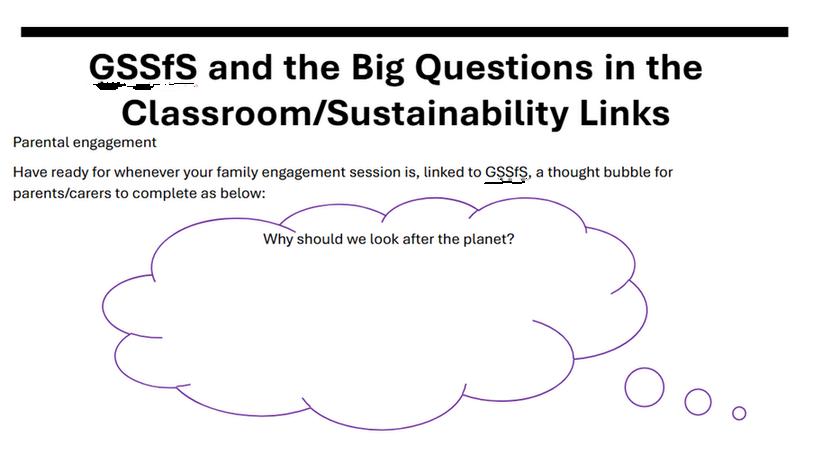
Parental engagement and live involvement with Water Aid added real-world impact, helping students connect their learning to global issues. We are immensely proud of the widespread participation from staff and pupils and the meaningful conversations sparked in classrooms and communities
Now that the project is complete, we feel inspired and hopeful It proved that collaboration can overcome barriers, and that education, rooted in both scientific understanding and ethical reflection, can empower young people to protect our planet.
“BylinkingREandscience,weshowedthatthesesubjectscomplement eachother—scienceexplainshowtheplanetworksandwhatthreatensit, whileREexploreswhyweshouldcare,drawingonvaluessuchas compassion,justice,andstewardship.”
DevelopingLastingConnections BetweenScienceandRE
As part of The Big Questions in the Classroom project across Forward as One Trust, our curriculum has been intentionally developed to make meaningful and lasting connections between Science and RE Rather than being taught as isolated subjects, both disciplines now interact through shared themes that encourage pupils to think deeply about humanity’s relationship with the world For example: In RE units on Creation, pupils now explore not only religious narratives (e g , Christian, Islamic and Hindu creation stories) but also scientific theories such as the Big Bang and evolution. This helps them understand that both subjects offer different ways of explaining how the world began and what our responsibility towards it might be
In Science topics on climate change, biodiversity and sustainability, pupils are introduced to religious perspectives on stewardship and caring for the planet (e g , Christian ideas of “creation care,” Islamic “khalifah,” and Hindu “ahimsa”) This cross-disciplinary approach helps them see that the motivation to protect the planet can come from both scientific understanding and faith-based values. Each school’s Sustainability Action Plan became a live learning tool Pupils engaged in scientific investigation (collecting data on energy use, recycling, biodiversity) while also reflecting through RE discussions on the moral and ethical reasons why people of faith and scientists act to protect the environment
Building Disciplinary Knowledge in ScienceandRE
Disciplinary knowledge was developed by teaching pupils how scientists and theologians know what they know
In Science, pupils were explicitly taught about scientific enquiry: forming hypotheses, testing ideas, analysing evidence, and drawing conclusions based on observation and data Pupils explored the limits of science what questions science can and cannot answer.
In RE, pupils examined how religious knowledge is gained through sacred texts, interpretation, lived experience, and moral reasoning They were encouraged to understand that belief systems use different methods to reach knowledge and truth claims
Joint discussions allowed pupils to compare disciplinary methods, asking, How does a scientist find out the truth? How does a person of faith find truth? What can each learn from the other?
Through enquiry-based learning, children recognised that while Science relies on empirical evidence, RE values interpretation, meaning, and purpose both vital in understanding our world and our place within it

BuildingSubstantiveKnowledge
Substantive knowledge was strengthened by integrating the key concepts, facts, and vocabulary of both subjects.
In Science, substantive knowledge included understanding ecosystems, climate systems, and human impact on the environment.
In RE, pupils learned substantive content about creation beliefs, stewardship, and ethical responsibility across world religions.
When these were intentionally connected through teaching, pupils gained a richer, more holistic understanding for instance, linking the scientific concept of carbon footprint with the religious idea of moral responsibility and compassion for creation
Teachers supported pupils in making connections between concepts, such as cause and consequence (science) and morality and duty (RE), leading to deeper, more integrated learning.
Impact
By embedding these connections, the curriculum not only improved pupils’ knowledge in both subjects but also developed their ability to think critically, ask meaningful questions, and understand that knowledge can be built in multiple, complementary ways. Pupils came to see that Science and RE are partners in exploring truth, purpose, and responsibility both essential to answering today’s “big questions,” such as how and why we should save our planet.
Thinkingaboutthe EEFImplementation Considerations
Using the EEF Implementation Guidance, we ensured our project was evidenceinformed, feasible, and right for our diverse Trust context. The sustainability agenda was embedded through structured systems dedicated time, clear roles, and collaborative logistics Positive leadership and shared vision enabled change, with RE and science leads driving non-forced, meaningful links between subjects The NPQLT supported implementation by helping shape strategic direction, engage stakeholders, and monitor progress Staff were united around the “why” of the project ethical and scientific stewardship and contributed to shaping curriculum amendments Reflective practice and ongoing evaluation allowed us to adapt and embed long-term sustainability action plans in every school
The ‘engage’ aspect of this project was particularly key for us We wanted 15 schools across the MAT to work together and we wanted Science and RE leads to get behind the project so they could drive it in each school To do this we started with the headteachers – we presented the project to them at our half termly think Tank meetings; we kept them informed of progress and thinking and when they had got behind us and supported the project we shared it with schools’ RE and Science leads – knowing they had the backing and support of headteachers The project was then well supported in schools and barriers to implementation were reduced as all key stakeholders were behind it
Deeperdialogues
A key conversation took place between the RE and science leads across the Trust, where the sustainability agenda emerged as a shared priority. Through open dialogue, they recognised that links between RE and science didn’t need to be forced both subjects naturally support the concept of stewardship This unexpected synergy became the driver for the project and led to its long-term impact As a result, every school developed a sustainability action plan and embedded cross-curricular “big questions” into their curriculums.
Sustainingthisworkinthe future
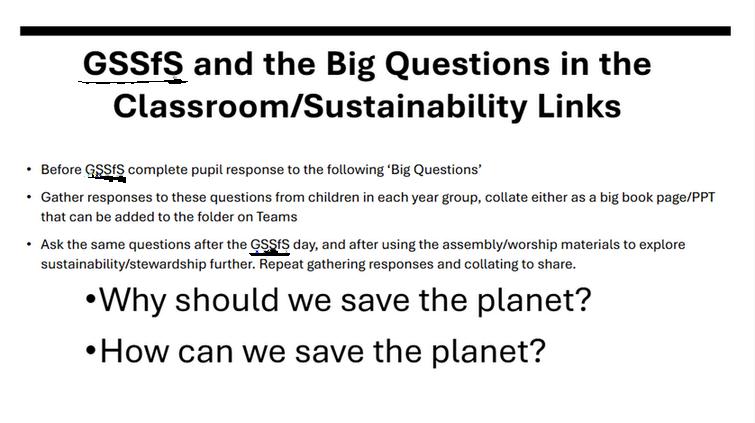
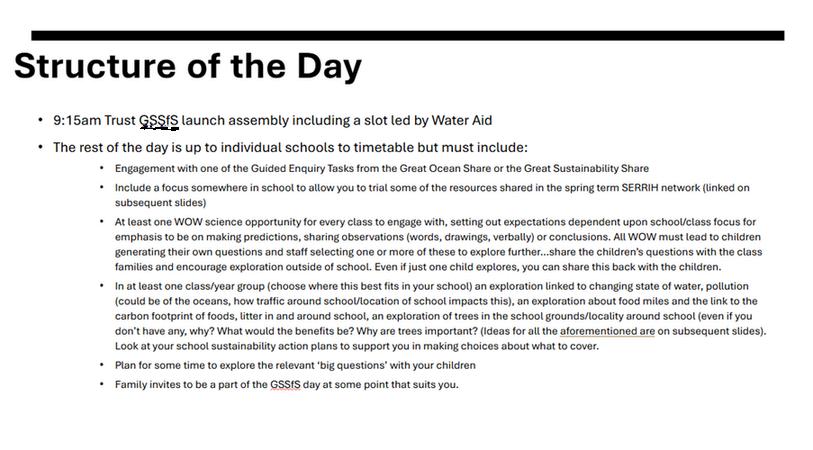
Next, we’d like to see individual schools fully implement their sustainability action plans and continue sharing good practice across the Trust. Embedding this work into future Trust-wide science weeks and participating in initiatives like the ‘Great Science Share for Schools’ will help maintain momentum
We aim to keep strengthening the links between RE and science through curriculum planning and collaborative events To make this sustained practice, we need ongoing support and commitment from the Trust to build on the strong foundation already laid and ensure sustainability remains a core part of our educational vision and values
Established lastinglinks between ScienceandRE.
Embedded sustainability themesacrossthe curriculum. Enhancedcritical thinkingthrough cross-disciplinary dialogue. 01
02 03

Resourcesandoutcomes
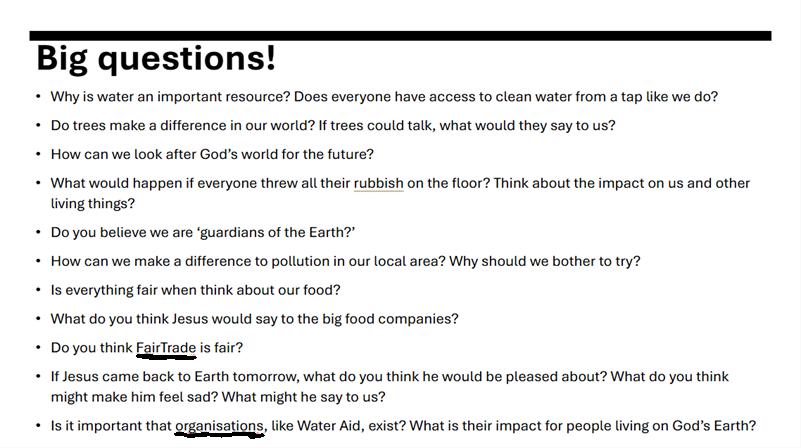
Figures 1-4:
Why might people of faith believe it is important to take care of the earth?
God has created the Earth
It shows respect to God for his creation
The earth is our home and so it is important to look after it and keep it clean
So future generations have a nice world to live in which is not polluted
Animals have become extinct because we have not take care of them
Muslims are not allowed to drop litter
How can this affect the way that people of faith treat the environment?
Encourage recycling
Use of renewable energy
Eat less meet
Create less waste
Save electricity
Set up religion related charities to help people and look after our world
Set up religion related charity shops to reuse goods
Cut deforestation and plant trees
Hunting ban

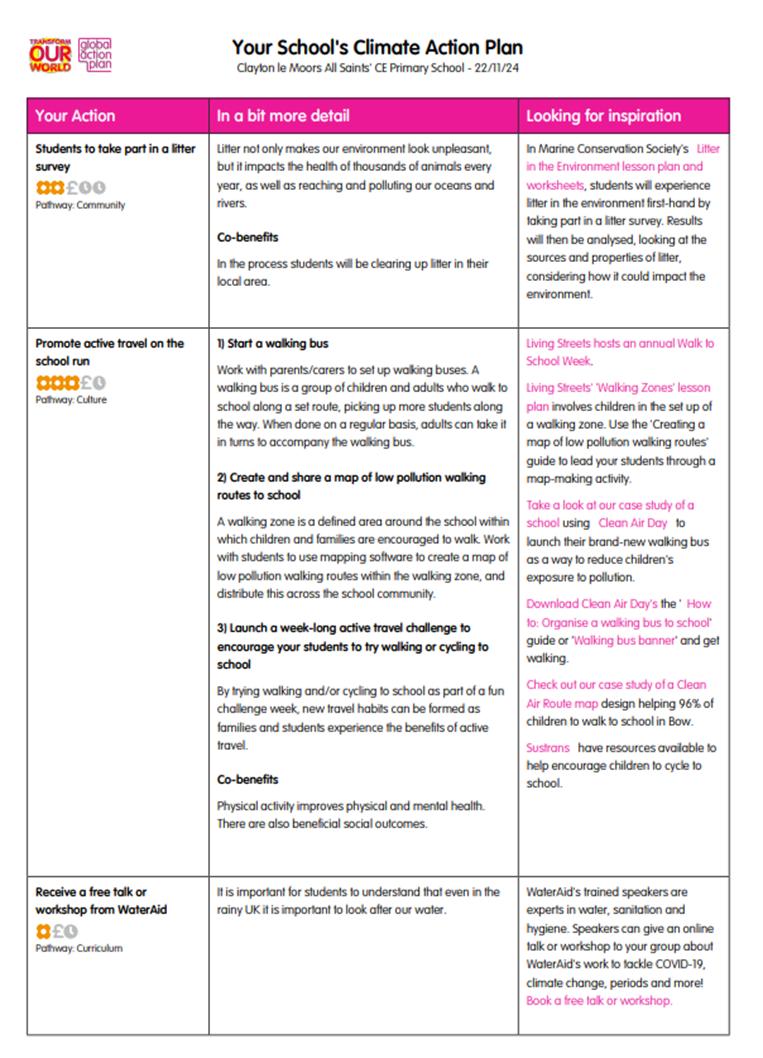
Figure 5: Extract from Climate Action Plan, Clayton le Moors All Saints’ CE Primary School