visiting/intro track side ticket in the city
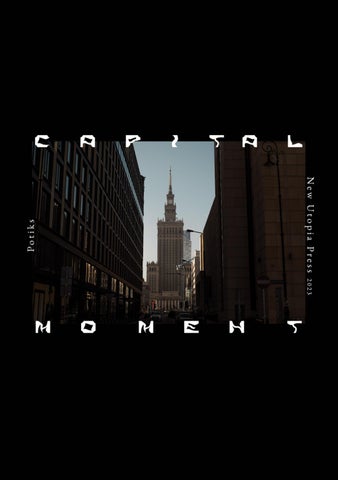
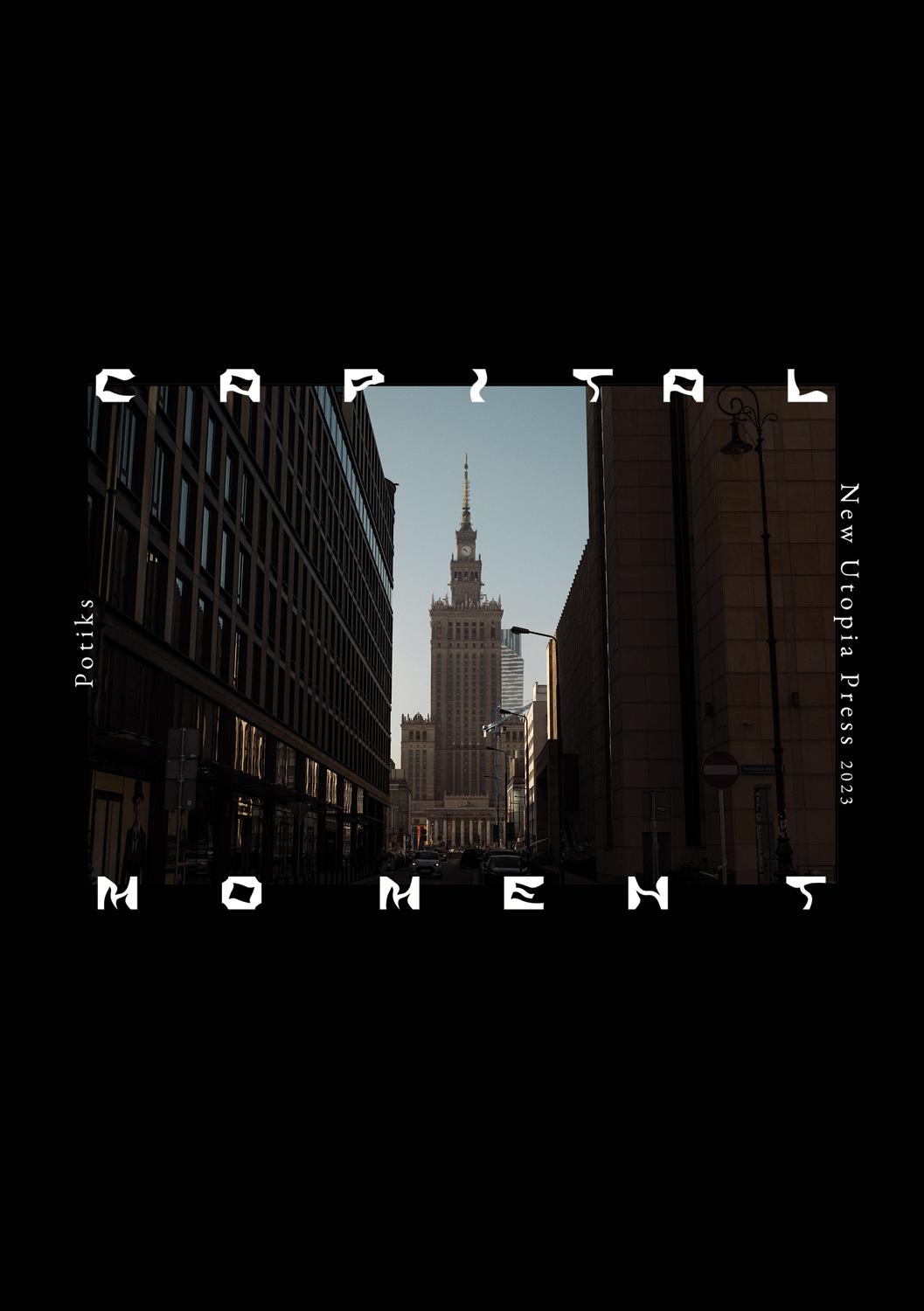
Moment w stolicy to stanowczo za mało, aby wydobyć esencję tego miasta. Gdzie się człowiek nie ruszy, napotyka na sporą ilość grafciarskich imion. Każda dzielnica to trochę inny klimat. Nowoczesna architektura przeplata się z historią, dodając wrzutom kolejnych przymiotów. Kilka różnych wyjazdów, różnymi środkami transportu złożyło się na to, co teraz trzymasz w rękach. Każdy sposób podróżowania do i po mieście daje inny efekt.
Niniejsza opowieść porusza parę istotnych kwestii grafciarskiej rzeczywistości, a jej tłem są fotografe sztuki pisania swojego imienia na tkance miasta. Ten dosyć krótki reportaż fotografczny z ulic Warszawy, skupia swą uwagę na „ bombingu”, czyli nieskrępowanym niczym uderzeniem w czyste elewacje stołecznych budynków, głównie w centrum i śródmieściu, oraz symbolicznym liźnięciu kawałka warszawskiej linii.
Zwiedzając kolejne strony, możemy nie tylko zobaczyć, jaka jest kondycja ulicznego bombingu pod względem estetycznym, technicznym, stylu czy kreatywności. Możemy także wgryźć się w kontekst architektoniczny. Przeanalizować jak, ten najbardziej nachalny typ graffti, działa na budynki i czym się one mu odwdzięczają. Zapytać siebie, jaki jest bilans? Na ile i gdzie, tagi, t-upy, srebra i inne elementy street bombingu są akceptowane?
Jest też oczywiście rolą fotografowania dokumentacja. Dzięki formie papierowej i bibliotecznemu numerowi, dajemy temu katalogowi ulicznych prac wieczne życie. Ta wieczność, choć oczywiście ograniczona nieuniknionym w przyszłości rozpadem wszelkiej materii, daje pewne poczucie nieśmiertelności. Nasze ego, a w przypadku tej publikacji ego writerów warszawskich ulic, jest nakarmione do syta. Zapisani, nie w cyfrowym przepływie energii, lecz po prostu na papierze kurzącym się w bibliotece, mogą swobodnie czekać na moment odgrzebania archeologicznym pędzlem, po technologicznym armagedonie, który rozsadzi każdy smartphone i komputer w pył. Już teraz strony internetowe i profle w social mediach przepadają w czeluściach niepamięci. Papier pozostaje jedynym nośnikiem i bankiem pamięci naszych dokonań.
A moment in the capital is defnitely not enough to bring out the essence of this city. Wherever you go, you encounter a large number of grafti names. Each district has a slightly diferent atmosphere. Modern architecture is intertwined with history, adding more attributes to the pieces. Several diferent trips, diferent means of transport have made up with what you are holding in your hands right now. Each way of traveling to and around the city delivered diferent efect.
This story raises some important issues of the grafti reality, and the background to it are photographs of the art of writing your name on the fabric of the city. This rather short photographic reportage from the streets of Warsaw is characterized by focusing attention on “bombing”, which is an uninhibited hit on the clean facades of capital buildings, mainly in downtown with additional, symbolic lick of pieces on the track side.
Visiting the next pages, we can not only see what is the condition of street bombing in terms of aesthetics, technology, style and creativity. We can also bite into the architectural context. Analyze how this most intrusive type of grafti afects buildings and how they repay it. Ask yourself what is the balance? How much and where are tags, t-ups, chromes and other street bombing items accepted?
Of course, there is also the role of photography – documentation. Thanks to the paper form and the library number, we give this catalog of street works eternal life. This eternity, although obviously limited by the inevitable disintegration of all matter, gives a certain sense of immortality. Our ego, and in the case of this publication, the ego of the writers of Warsaw streets, is fed to its heart’s content. Enrolled, not in a digital energy fow, but simply on dusty paper in the library, they can freely wait for the moment of unearthing with an archaeological brush, after the technological armageddon that will blow every smartphone and computer to dust. Even now websites and profles in social media are lost in the depths of oblivion. Paper remains the only carrier and memory bank of our achievements.
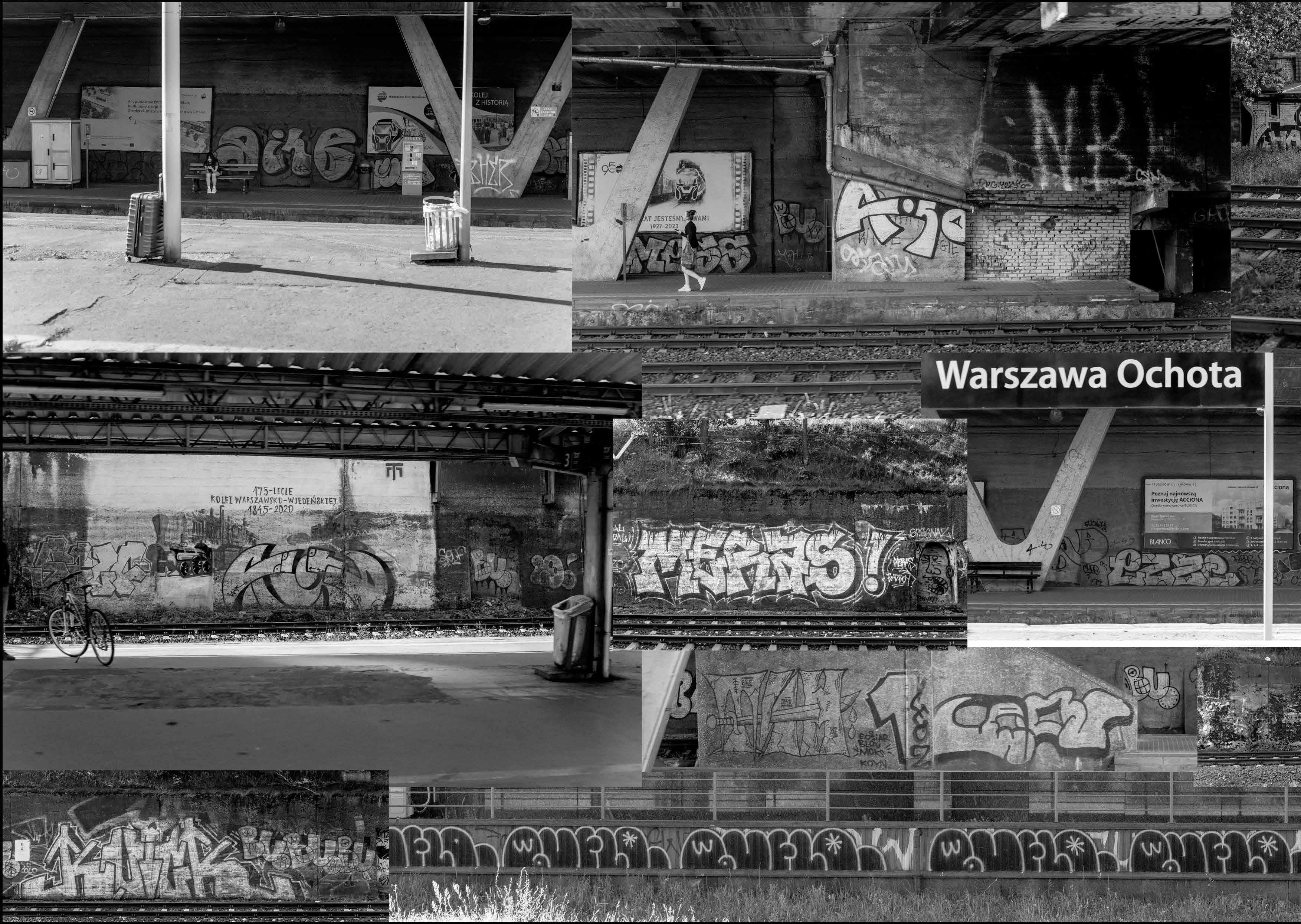
Wsiadasz do pociągu. Szybko zajmujesz miejsce, rzucasz niedbale wszystkie klamoty i czekasz. Zniecierpliwiony otwierasz okna. Przechodzisz z jednej na drugą stronę. Przygotowujesz się do wizyty w ruchomej galerii. Kiedy wreszcie pociąg zaczyna ruszać, nie wiesz, gdzie masz się podziać. Szukasz najlepszego miejsca, punktu, który da ci podgląd na dwie strony. Głowa zaczyna latać w lewo i prawo, bo nie chcesz pominąć żadnej z prac. Szukasz swoich i podziwiasz innych. I tak przez parę, parę kilkadziesiąt minut, aż do momentu, gdy przekroczysz granice miejskiej dżungli i wjedziesz w pszenicę lub żyto. Powtarzasz to w każdym mieście.
Doświadczenie linii jest niepowtarzalne. Ekscytacja, która towarzyszy przygodzie wypatrywania imion na przy kolejowej architekturze jest nieoceniona. Mógłbym to porównać do wyszukiwania eksponatów do kolekcji. W tym wypadku uzupełnianym zbiorem są znane nam wrzuty. Wzbogacamy naszą świadomość o nową obecność na danym terenie. Dzieje się tak, zwłaszcza gdy wyjeżdżamy ze swojego miasta. Dojeżdżając do nowego po prostu chłoniemy wszystko jak leci.
Oprócz nowości na lokalnej scenie szukamy świeżych spotów, myślimy o pozycjonowaniu, o nietuzinkowych pomysłach. Przejazd, zawsze wiąże się z kombinowaniem i planowaniem nowych akcji, zwłaszcza u siebie. W innych miastach liczymy na pokaz siły. Linia jest prestiżowa. Daje ekspozycje, która jest esencją grafti. Na linii jest ten, kto się liczy. To raczej zawsze było jasne. Dlatego też linia jest swego rodzaju wizytówką sceny. Jest robiona głównie pod oko turysty, kolekcjonera z innej krainy. Pomimo mediów papierowych, a potem internetu, nie zmienia się podejście do miejscówek przy torach. Myślę, że zawsze będzie to najwyższej rangi priorytet.
You get on the train, quickly take a seat, throw all the clutter carelessly and wait. You open the windows impatiently, walk from one side to the other. You are getting ready to visit the moving gallery. When the train fnally starts moving, you don’t know where to go. You are looking for the best place, a point that will give you a view on both sides. The head starts fying left and right because you don’t want to miss any of the work. You look for your own and admire others. And so for a few, several tens of minutes, until you cross the borders of the urban jungle and you will drive into crossroads or rye. You repeat it in every city.
The experience of the track side is unique. The excitement that accompanies the adventure of looking for names on the railway architecture is invaluable. I could compare it to fnding items for a collection. In this case, the set is complemented by throws known to us. We enrich our awareness with a new presence in a given area. This is especially the case when we leave our city. Reaching new one, we just absorb everything as it fies. In addition to novelties on the local scene, we are looking for fresh spots, we think about positioning, about unusual ideas. Traveling always involves scheming and planning new actions, especially at home. In other cities, we count on a show of force. The track side is prestigious. It gives exposure, which is the essence of grafti. Whoever counts is on the track side. It was rather always clear. Therefore, the track side is a kind of showpiece of the scene. It is made mainly under the eye of a tourist, a collector from another land. Despite the paper media, and then the Internet, the approach to places near the tracks has not changed. I think it will always be a top priority.
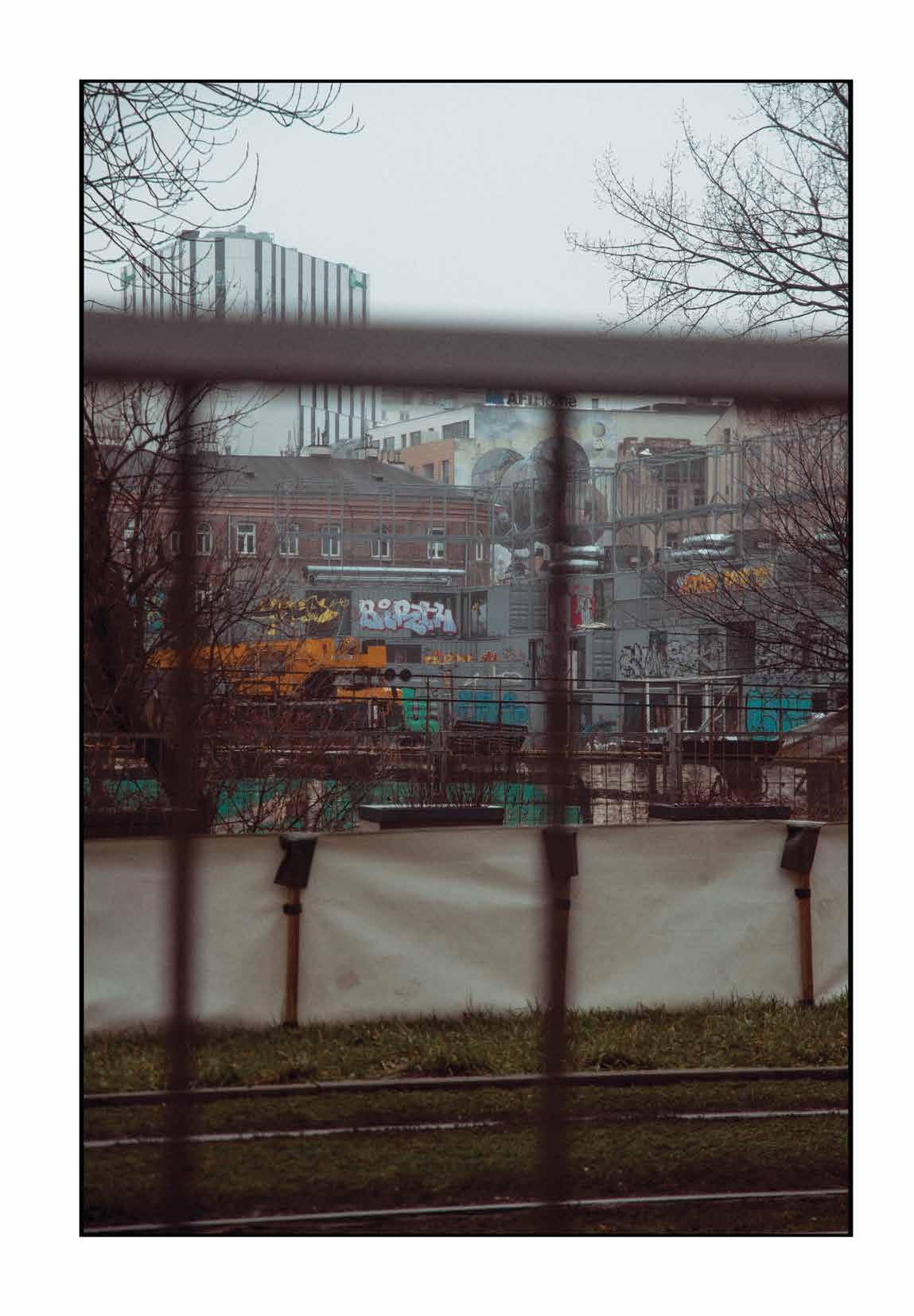
Przez okno samochodu.
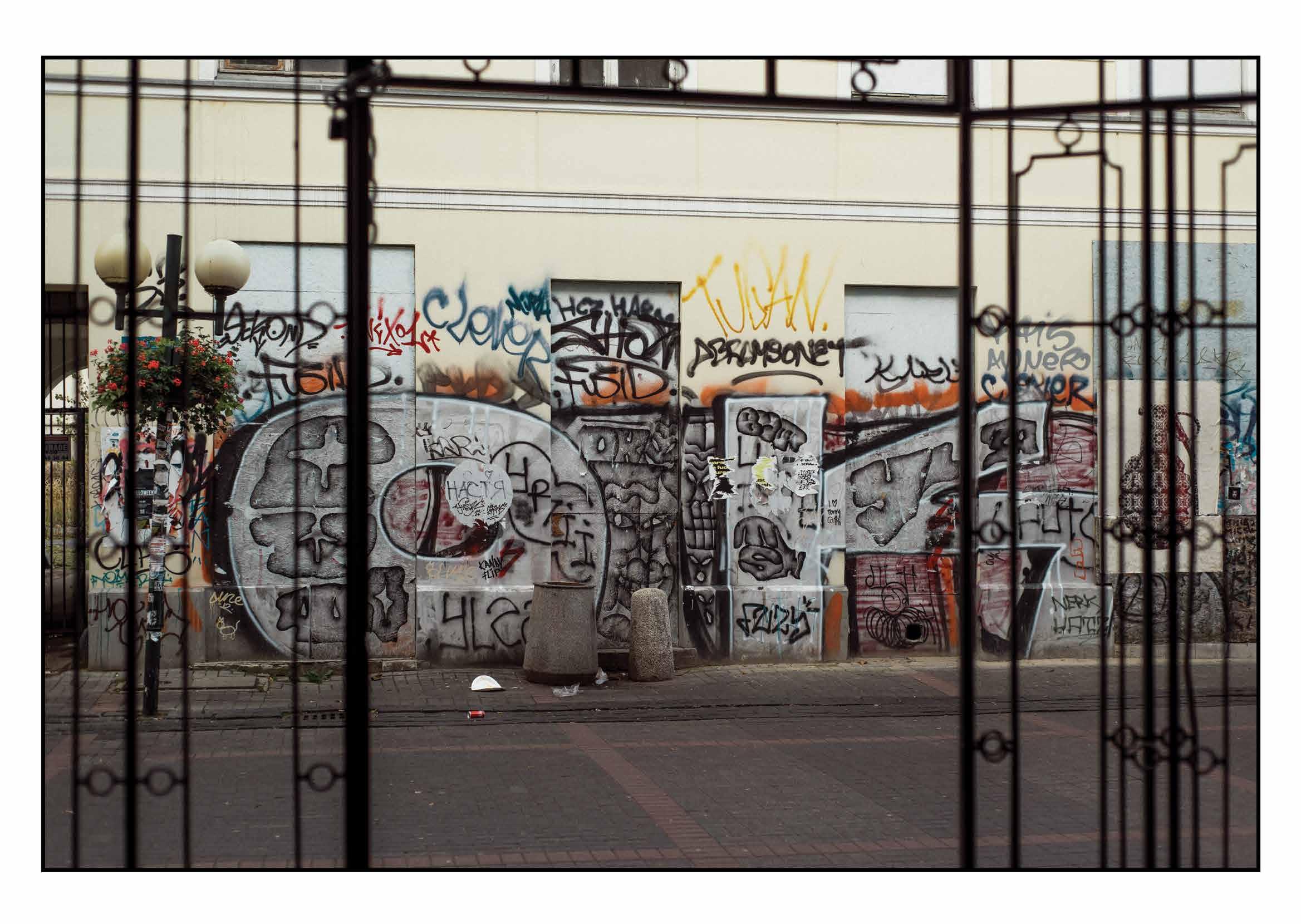
Ta, jak i parę innych fotografi w tej książce, zostały zrobione przez okno samochodu. Stojąc na światłach dałem radę szybko wyjąć aparat i strzelić. Wiadomym jest, że kolekcjoner nigdy nie przejedzie obojętnie wobec dobrych numerów. Dlatego najtrudniej jest właśnie, jak jestem za kółkiem. Oprócz zbieractwa, zawsze interesuje mnie stworzenie kontekstu, który powie o grafti trochę więcej. Narzędzie, jakim jest fotografa, nadaje się do tego idealnie. Kadrowanie, perspektywa, edycja, kolor… iluzja rzeczywistości.
Through the car window.
This, and several other photographs in this book, were taken through a car window. Standing at the lights, I managed to quickly take out the camera and shoot. It is known that a collector will never be indiferent to good pieces. That’s why it’s the hardest when I’m behind the wheel. Apart from collecting, I’m always interested in creating a context that will tell a little more about graffti. Photography is the perfect tool for this. Cropping, perspective, editing, color... the illusion of reality.
Architektura.
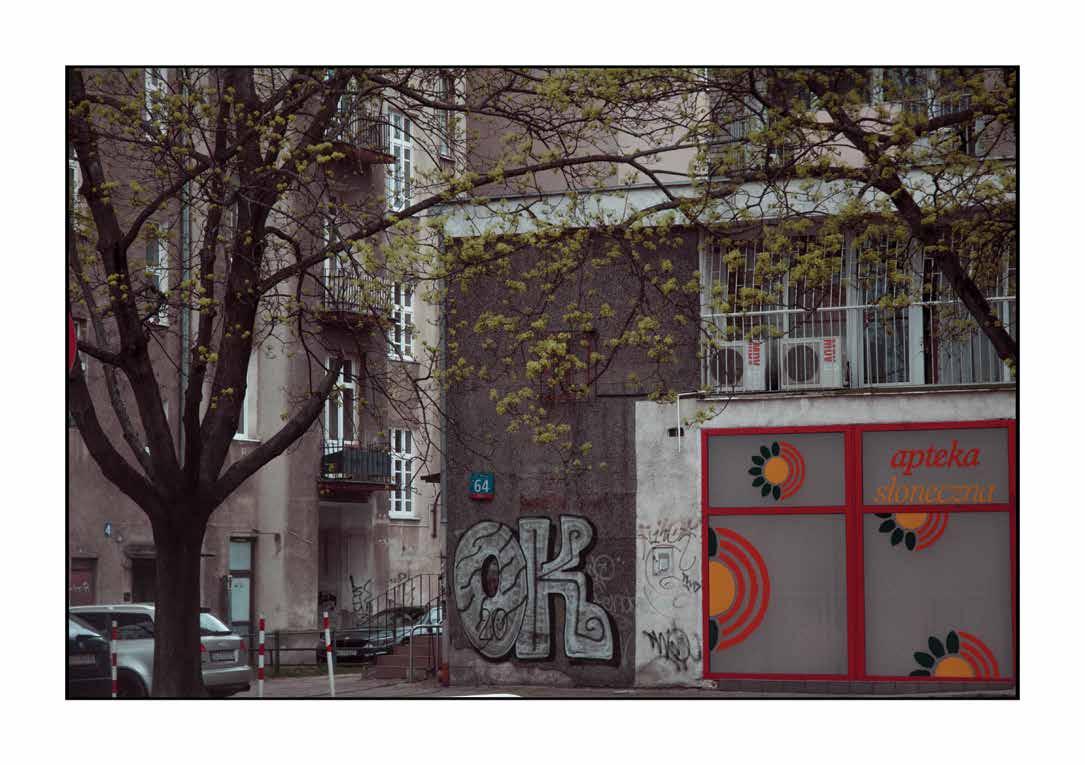
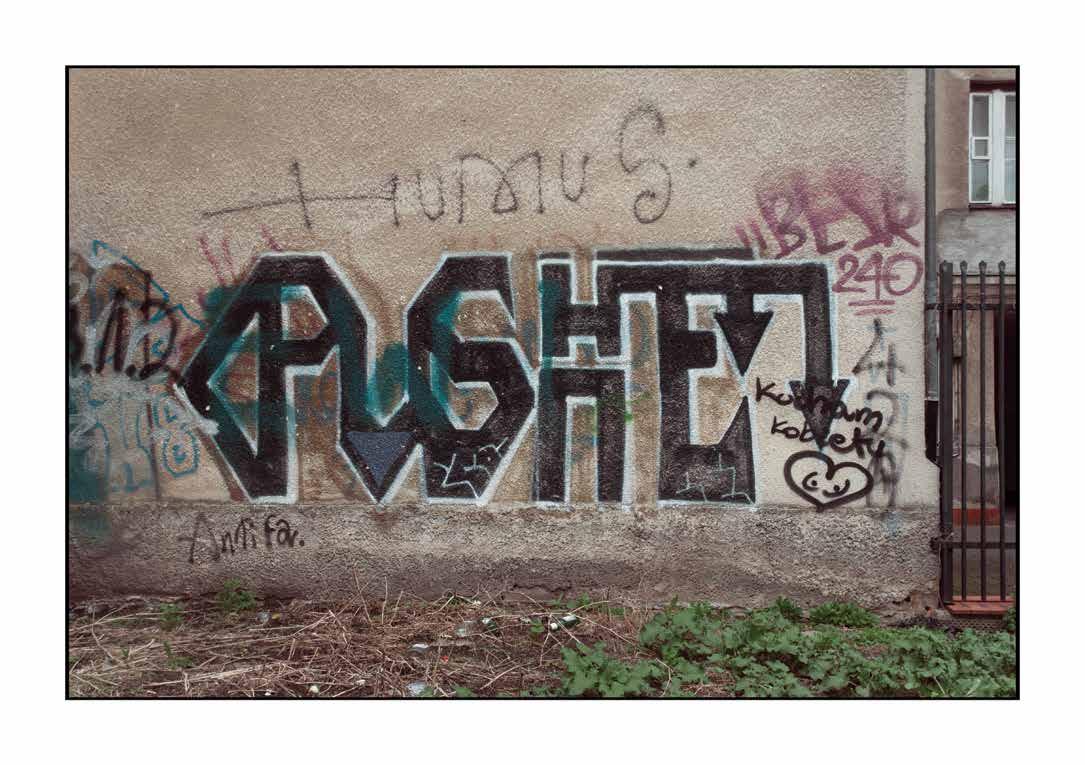
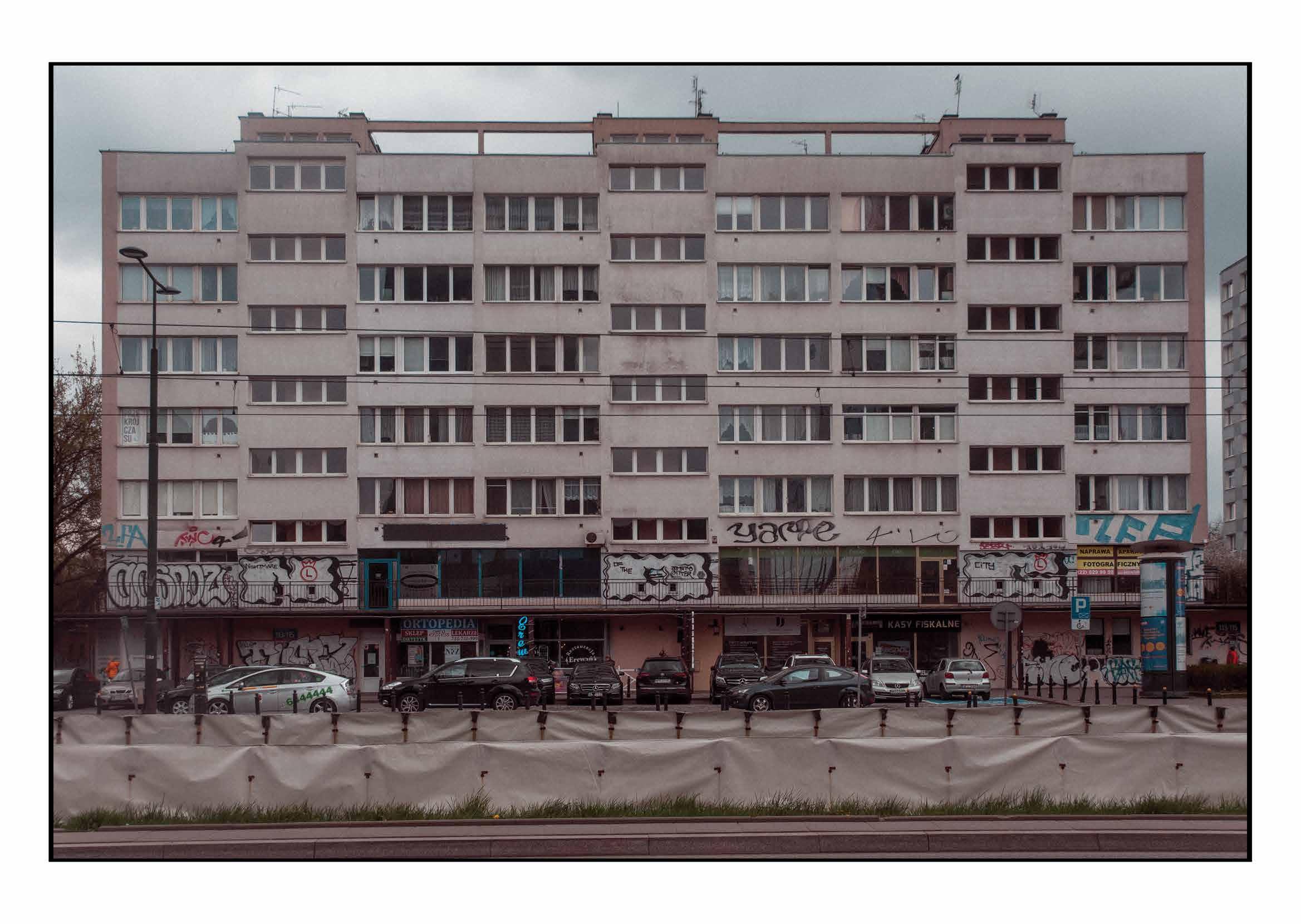
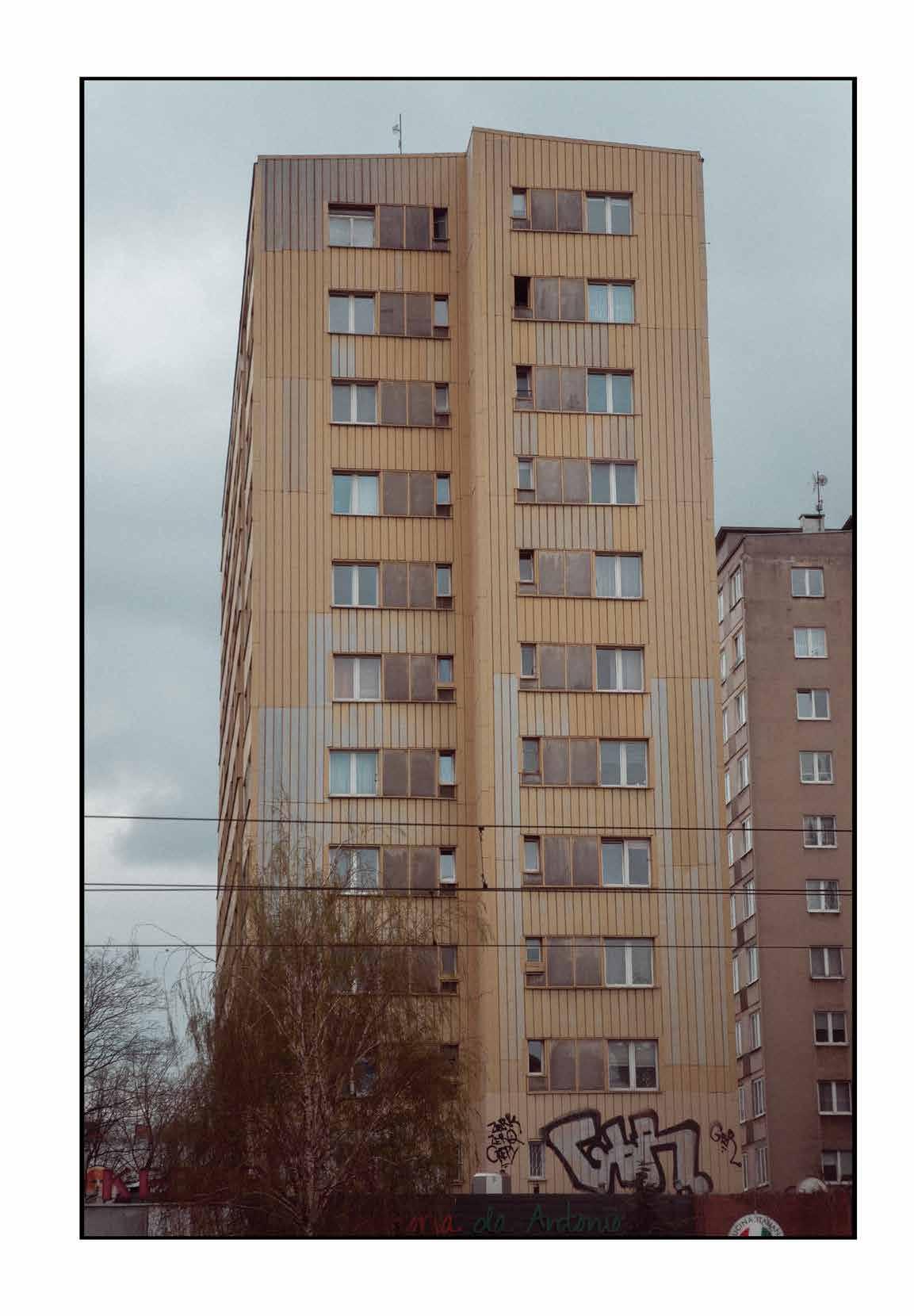
Grafti, które nasyca miasto, nie istnieje bez podłoża. Karmi się każdym tynkiem, blachą czy betonem. Jest pasożytem, uzależnionym od swego żywiciela.
Pytanie, jakie nasuwa się każdemu, kogo, choć trochę zajmuje estetyka otaczającej rzeczywistości, jest proste: Czy to pasuje? I dla pewnie większości ludzi, codziennie stykających się z wizualną mazią na elewacjach zabytkowych kamienic, równie prosto będzie krzyknąć stanowcze – NIE! Jest to reakcja emocjonalna, bez wgłębiania się w sens grafti. Czyli dosyć naturalna bazująca na pragnieniu wyjścia z chaosu. Nie sądzę, że można mieć do tego głośnego - nie, jakiekolwiek pretensje.
Writerzy nie mają pretensji, bo nie potrzebują zrozumienia ani akceptacji. Raczej trudno wymagać od nich jakiegokolwiek dialogu, gdy esencją prac na mieście jest właśnie wymuszony udział architektury w grze planszowej, jakim jest grafti writing.
Temat współistnienia architektury z grafti jest bardzo szeroki. Nie jestem w stanie poruszyć w tym projekcie wszystkich wątków. Natomiast chciałbym postawić, na razie bez odpowiedzi następujące pytania: czy jest jakiś styl architektoniczny, na którym grafti nie kłuje w oczy, a harmonijnie zlewa się z otoczeniem? Albo czy są architekci, którzy przy projektowaniu biorą pod uwagę przyszłe istnienie grafti na ich projektach?
Jak będzie wyglądać przyszłość organizacji naszych miast, gdy technologia pozwoli na bilokacje i podróże w inne galaktyki… no i czy grafti będą robić za nas roboty?
Architecture.
Grafti that saturates the city does not exist without a foundation. It feeds on every plaster, sheet metal or concrete. It is a parasite, dependent on its host.
The question that arises for everyone who is even slightly interested in the aesthetics of the surrounding reality is simple: Does it ft? And for the majority of people who come into contact with the visual slime on the facades of historic tenement houses on a daily basis, it will be just as easy to shout a frm - NO! It is an emotional reaction, without delving into the meaning of grafti. So quite natural, based on the desire to get out of chaos. I don’t think you can have any complaints to this resounding NO!
Writers don’t hold grudges because they don’t need understanding or acceptance. It is rather difcult to require any dialogue from them, when the essence of work in the city is the forced participation of architecture in the board game which is grafti writing.
The topic of the coexistence of architecture and grafti is very broad. I am not able to cover all the threads in this project. However, I would like to pose the following questions, so far unanswered: is there any architectural style in which grafti does not sting the eyes, but blends harmoniously with the surroundings? Or are there architects who take into account the future existence of grafti on their projects when designing? What will the future of organizing our cities look like when technology allows bilocation and travel to other galaxies... and will robots do grafti for us?
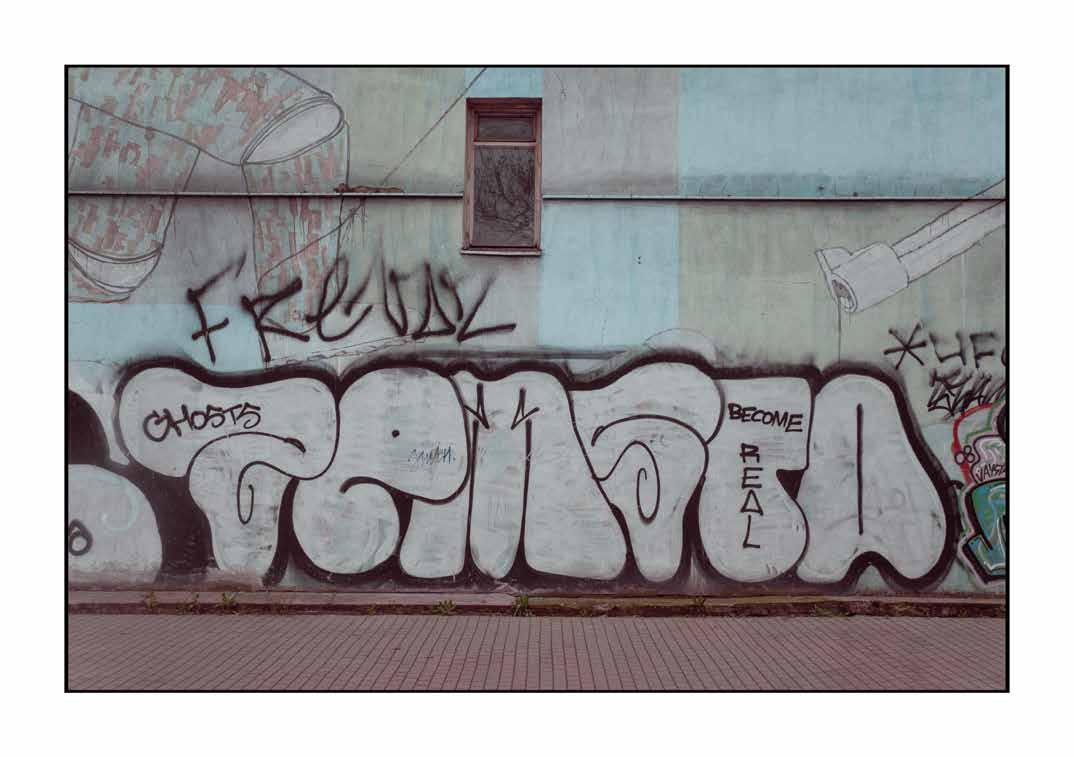
Walka klas.
Street art zawsze był podkładem pod grafti. Zawsze, to znaczy, odkąd zaczął być tak nazywany. Odkąd grafti szeroko pojęte zaczęło rozgałęziać się na różne typy i podgrupy. Wcześniej wszelka sztuka była crossowana, lecz nie była nazywana sztuka uliczną. Ktoś, kto zajmował ścianę pod jakieś malowidło musiał liczyć się z tym, że szybko zostanie pojechany.
Writerzy roszczą sobie prawo do pierwszeństwa wizualnego. Imiona muszą być zawsze na wierzchu. Nieważna jakość, czy pomysł. Istotą jest wyższość ulicznego grafti nad „artystycznymi wypocinami”. Zachodzi tu zawłaszczanie wyglądu miasta poprzez wszechobecny bombing. Trudny do wyczyszczenia, zamalowania, złapania na gorącym uczynku. Praktycznie niemożliwy do wypędzenia za mury miasta. Nie ma tu żadnych negocjacji… Na ilustracji “Zemsta na Blu”.
Class struggle.
Street art has always been the basis for grafti. Always, that is, since he started being called that. Since then, broadly defned grafti has branched into various types and subgroups. Previously, all art was crossed, but it was not called street art. Someone who occupied a wall for a painting had to take into account the fact that he would be crossed quickly.
The grafti writers claim visual priority. Names must always be on top. Quality or idea doesn’t matter. The essence is the superiority of street grafti over „artistic scribbles”. Appropriation of the appearance of the city through ubiquitous bombing. Diffcult to clean, paint over, catch red-handed. Practically impossible to drive outside the city walls. No negotiating here... On the left picture “Vengeance (Zemsta) on Blu (mural)”.
Murarz.
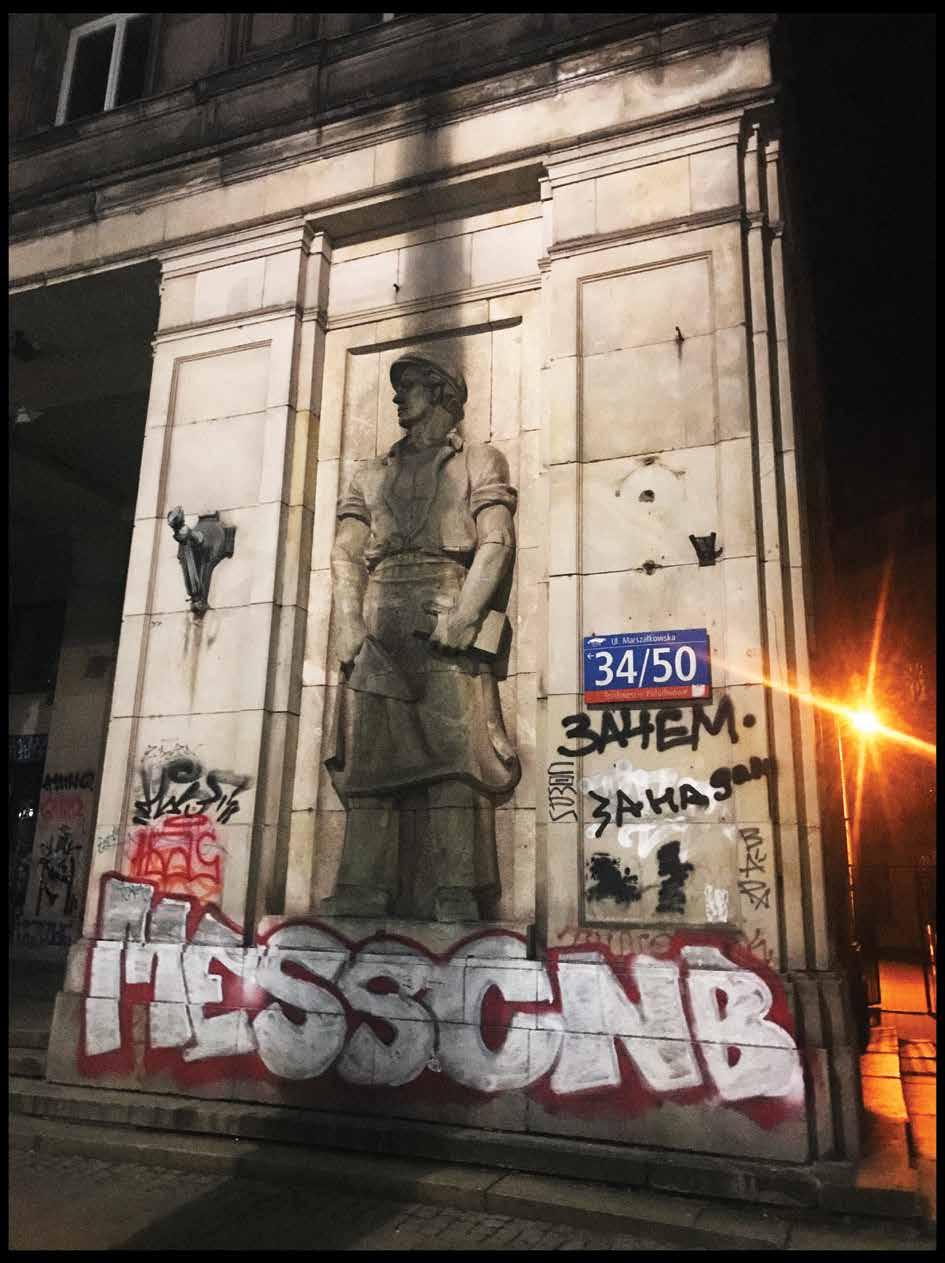
Noc jest porą czynów. Fotografe przy sztucznym świetle uwydatniają i dodają wrzutom cech świeżo upieczonej bułki. Dużo writerów woli dzienne foty, ja, nawet jeśli chodzi o panele, bardzo lubię nocny klimat.
Fotografa na stronie obok posiada dużo wątków. Chromy i tagi spotykają się, z jak się wydaje, zabytkowym budynkiem, a nad nimi góruje płaskorzeźba socrealnego murarza. Można by tutaj wrócić do tematu architektonicznego. Grafti uderza nie tyle w budynek, co w cały kontekst historyczny. Porównałbym to zdarzenie z kryciem murali, gdzie grafti nie liczy się z niczym i prze na wierzch, przepycha się łokciami, by krzyczeć swą obecnością. Wychodzi to oczywiście na korzyść grafti, kontrowersje dodają rozgłosu.
Do tego wszystkiego jeszcze cień latarni padający wprost na przodownika pracy, świadczący chyba o braku ładu i składu w projektowaniu urbanistycznym, albo totalnej ignorancji roli światła w prezentacji sztuki...
Bricklayer.
The night is the time of action. Photographs in artifcial light enhance and add the features of a freshly baked roll to the throws. A lot of writers prefer daytime photos, even when it comes to panels, I really like the night atmosphere.
The photo on the next page has a lot of threads. Chromes and tags meet what seems to be a historic building, and a bas-relief of a socialist bricklayer towers over them. We could go back to the architectural topic here. Grafti strikes not so much at the building as at the entire historical context. I would compare this event with the covering of murals, where grafti does not count for anything and pushes to the top, pushes with its elbows to scream with its presence. This, of course, is in favor of graffti, the controversy adds to the publicity.
In addition, the shadow of the lantern falling directly on the foreman of the work, probably testifying to the lack of order and composition in urban design, or total ignorance of the role of light in the presentation of art...