10 NMCGA President’s Message by Bronson Corn, NMCGA President
12 Just the Facts ... & Then Some by Caren Cowan, publisher, New Mexico Stockman
14 New Mexico CowBelles Jingle Jangle
28 News Update: State Fair Sale, NMCGA Scholarship, Tim Cox, King Ranch Institute
36 New Mexico Federal Lands News by Jerry Schickedanz
39 Riding Herd by Lee Pitts
40 Food & Fodder by Deanna Dickinson McCall
41 View from the Backside by Barry Denton
44 New Mexico’s Old Times & Old Timers by Don Bullis
48 Sandhill Sheriffs and Shotgun Diplomacy by a Sandhills Vet in the Tradition of Baxter Black
50 Marketplace
52 Seedstock Guide
55 Real Estate Guide
67 From The Arena by Julie Carter and Sage Faulkner
72 In Memoriam
76 Advertisers’ Index
OCTOBER 2025
16 Hereford
FEATURES
16 Purina Animal Nutrition Center Hosts Hereford Juniors
Source: American Hereford Association
18 Countdown: Herd Expansion Appears To Be At The Threshold by Wes Ishmael reprinted courtesy of the American Hereford Association
30 Taking the Reins on Responsible Horse Breeding
Source: Texas A & M
32 New Study Delivered One Crushing Blow to Food Nannies That Left Them Scrambling for Excuses Source Renewed Right
34 New Mexico Soil Conservation Districts by Rebecca Dow, Assistant Executive Director New Mexico Association of Soil Conservation Districts
37 Lawmakers Deserve Credit for Recent Success Against the Green New Deal by Daren Bakst, Competitive Enterprise Institute, published on thecentersquare.com
42 Texas Sued Over Its Lab Grown Meat Ban by Jessica Shuran Yu, Texas Tribune
46 Some Minimum Requirements for a Proper WOTUS Rule by Daren Bakst, Competitive Enterprise Institute
49 NMDA, NM State Fair Announce 2025 Farm and Ranch Families
50 USDA to Provide $1 Billion to Flood, Wildfire & Drought Impacted Livestock Producers
64 NMCGA Heritage Buckles
73 Jerry Hawkins Memorial Livestock Judging Contest 2025 New Mexico State Fair
74 Livestock Water Quality in New Mexico: What It Means for Your Nutrition Program by Marcy Ward, NMSU Extension Livestock Specialist
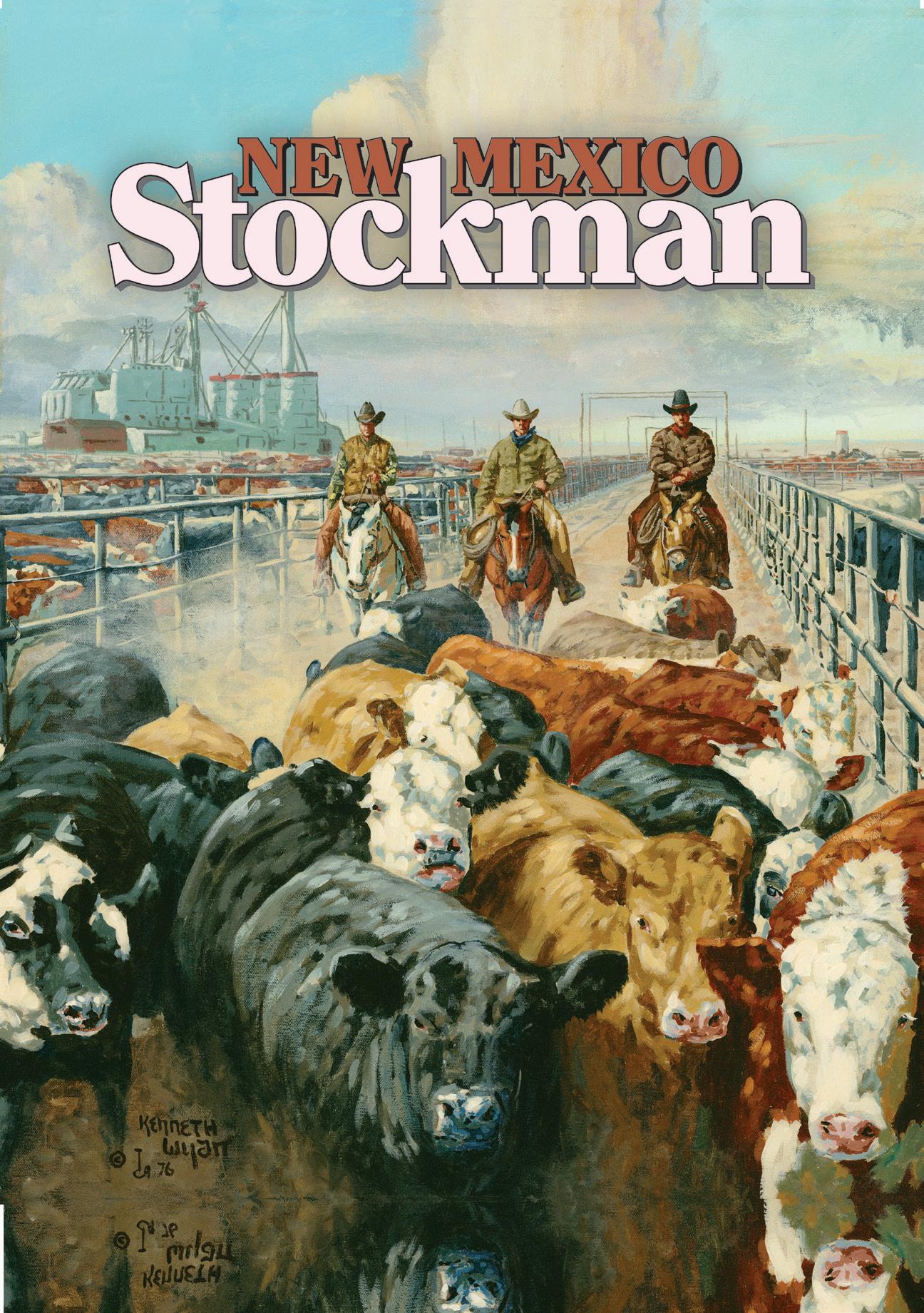
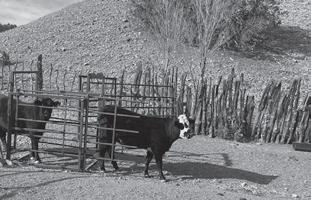
“Back Alley Crowd” by Kenneth Wyatt, Plainview, Texas, graces our cover this month with one aspect of cattle production most people don’t see. This and Kenneth’s other works can be found at kennethwyatt.com or you can contact him at 806.587.0417 or info@kennethwyatt.com
by Bronson Corn NMCGA President PRESIDENT’S MESSAGE
Bronson Corn President Roswell
Tom Paterson President-Elect Luna
Dave Kenneke NW Vice President Cimarron
Jeff Decker SE Vice President Lovington
Roy Farr SW Vice President Datil
Cliff Copeland NE Vice President Nara Visa
Becky King-Spindle Vice President at Large Moriarty
Shacey Sullivan Secretary/Treasurer Peralta
Loren Patterson
Immediate Past President Corona
Randell Major Past President
The eradication of the screwworm in the 1960s stands as a landmark achievement in pest control, accomplished primarily through the innovative use of the sterile insect technique (SIT). The screwworm fly lays its eggs in open wounds of any and all animals. The larvae then feed on living tissue, often resulting in death if left untreated. The SIT involves breeding and hatching millions of screwworm flies in laboratory conditions.
Male flies were sterilized using controlled doses of radiation, ensuring they could not produce viable offspring. These sterile males were then released in vast numbers across infested areas, outnumbering wild fertile male screwworm flies therefore drastically reducing the effectiveness of the fertile male flies throughout our countryside.
The U.S. Department of Agriculture (USDA) initiated large-scale releases of sterile males in the southern United States, starting with Florida in 1957 and expanding across the Southwest. By the early 1960s, coordinated releases, surveillance, and rapid response to outbreaks led to the screwworm’s eradication within U.S. borders. The final case was reported in Texas in 1966.
This was a monumental success that helped save the livestock industry in the United States in the late 1960s. Fortunately, we now have tools at our disposal that we didn’t have during the 60’s. With the invention of Ivermectin in the 1970s, this started the race to help the livestock industry protect ourselves by being exponentially more effective from contracting parasites.
There are currently some visionary minds and friends of the industry that are trying to utilize ivermectin in feeds to help combat the NWS particularly in the wildlife industry. This is huge as that is a very large portion of the animals on the landscape that we have no control over. I am very confident with the conjunction of old and new technology of the sterile flies along with the use of products such as Ivermectin and Dectomax injectables we stand a much better and faster success rate in the eradication this dang fly!
With all of the craziness that we have to contend with on a daily basis, we tend to forget the impact we have on not only our state but also in our country. Did you know that the economic value of the beef industry in the United States contributes over $165 billion annually, with nearly $2 billion in New Mexico alone.
We are relevant! I have to say that the Covid pandemic was a very sad time for our country. I know that a large majority of us know someone who lost their life to this horrible event. But... if there’s one thing that came from that horrible event that plagued our world, it’s that people had to learn how to cook again!
People rekindled their love and ease of cooking beef, and they totally rejected the “Fake Protein” beyond beef lab grown whatever the heck it was! PEOPLE LOVE BEEF! That’s exactly what we learned! Did you know that we are producing more pounds of boxed beef on the least cattle inventory in history in the United States? Look it up!
Stand Firm my Friends! God Has a Plan for Us! He created a small but mighty group of us to feed the rest of the world, and frankly we are pretty darn good at it! We all Pray when times get tough, MAYBE we should all remember to Thank Him for the Good Times Too! Psalms 46:10-11!
God Bless You and Your Family! (Ya’ll Have A Good’en) ▫
Bronson Corn
by Caren Cowan, Publisher New Mexico Stockman
Life is always a whirlwind around me. I must like it because I keep it that way. However, the last few months have been extraordinary.
As I have mentioned, in late June the New Mexico Federal Lands Council (NMFLC) made a trip to Washington, D.C. We spent three days in the halls of federal agencies and Congress telling the stories that we talk about in this space every month.
We saw many of our own putting long hours in those halls to make lives of ranchers, their families, and rural communities better. We have seen progress being made and we are doing our best to support these folks as they work to help us.
We met some new faces in the Small Business Administration (SBA) who are unbeknownst to us were already working in our corner, too. They have spent days in New Mexico learning about the issues facing us ranging from wolves to the overzealous federal agents who continue to take away our rights — water rights, property rights, anything they can get their hands on.
Among the things that apparently hit home hard with the SBA folks is the vandalism and threats of violence ranchers especially in wolf county continue to face. That become clear when President Trump gave his speech to the United Nations in late September.
“It is interesting, in the United States we have still radicalized environmentalists. They want the factories to stop, everything should stop. No more cows, we don’t want cows anymore. I guess they want to kill all the cows,” the President said.
Clearly our plight has made its way to the White House. We do not know what actions are coming, but after that speech there is great hope, something is coming.
Eco Terrorists & Cattle Make United Nations Speech
Thanks to all who had a hand in this. Their next stop is Arizona.
Hats
Off to
the New Mexico Magazine!
With the 2025 New Mexico State Fair in the books, it is fun to look back on the coverage of the event. The New Mexico Magazine took a deep dive into the Fair and the highlights of rural New Mexico. Their stories included one on Harper Dunn who competed in the Steer Show and was part of a near record breaking Junior Livestock Sale. Another featured youth public speaking competition. Then came Green Chile Stew Cook-Off for high school students and a story about Seth Hall a Pro Rodeo Cowboy Association calf roper from Albuquerque who has competed in rodeos across the country this rodeo season.
According to the Magazine there were 997 animals shown.
Screwworms
At almost record speed, the screwworm is within spitting range of Southwestern cattle ranchers and wildlife. Word is that sterile fly drops have
begun to stave off catastrophe.
Ranchers and hunters need to be vigilant in inspecting their livestock and kills for any sign of the pest. The New Mexico Department of Game & Fish is working with the New Mexico State Veterinarian and will be alerting hunters on what look for. Surveillance on hunting check points will take place as well.
Charlie Kirk… A young man who changed the world in so many ways.
There is little to be said about Charlie Kirk that is not already circulating around the world. Kirk’s impact on the United States and the world was monumental in the 2024 US elections. His impact on the young of America, especially young men, is unmatched.
In death that impact is spectacular and will only continue to grow. The reawakening to religion around the world because of him is incredible.
As we continue to pray for Kirk and his family, we will lift the world. ▫
The Darnells Continue a 132-Year-Old Family Tradition of Raising Good-Doin’ Hereford Cattle Jim, Sue, Jeep, Meghan & Jake Darnell
TEXAS/NEW MEXICO RANCH 5 Paseo De Paz Lane, El Paso, TX 79932 Jim 915-479-5299 Sue 915-549-2534
Email: barjbarherefords@aol.com
OKLAHOMA RANCH Woods County, Oklahoma
JINGLE JANGLE
Calves are bawling outside as I write this. What a sound. A sound that not everyone understands or some have never even heard. Isn’t it great that we get to live this life that we do? What a blessing to be in the beef industry.
New Mexico CowBelles have been busy with fair season. Several of our locals have had booths at their county fairs. They have raffled off some amazing things to bring in money for beef promotion, education and scholarships.
Some of our ladies and our Beef Ambassadors also attended the New Mexico State Fair and assisted the New Mexico Beef Council with beef samples and information.
A few other updates and reminders:
NMCB Cattle Card Photo Contest is going on through October 1. You can enter on our Facebook page or send your entries to president.nmcb@gmail.com. All photos must be original, no AI and must contain beef cattle.
New Memberships and Associate Membership Drive deadline is also October 1st. I know that several of our ladies have been hard at work getting new members and I am excited to see the growth in our organization.
Cattlewoman of the Year Nominations are due to me by October 15. Applications can be found on our website and need to be emailed to me at the email address mentioned above.
See y’all down the road.
Blessings, – Corrina Casler
New Mexico CowBelles President ▫
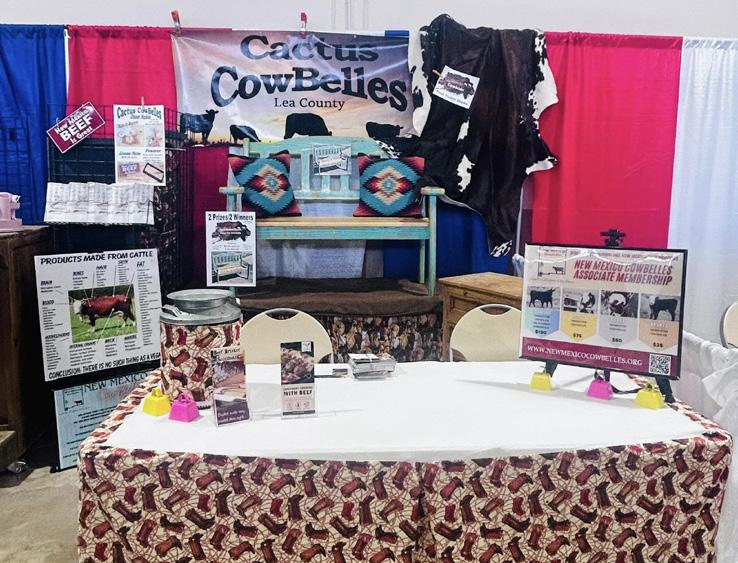
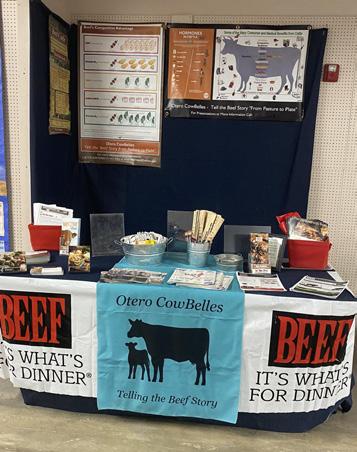
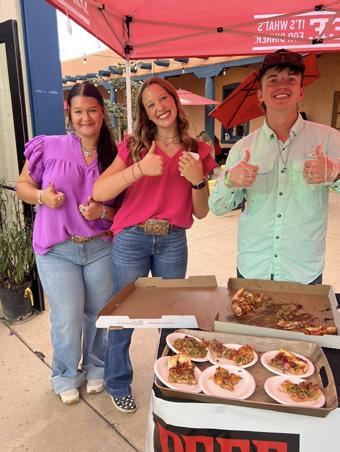
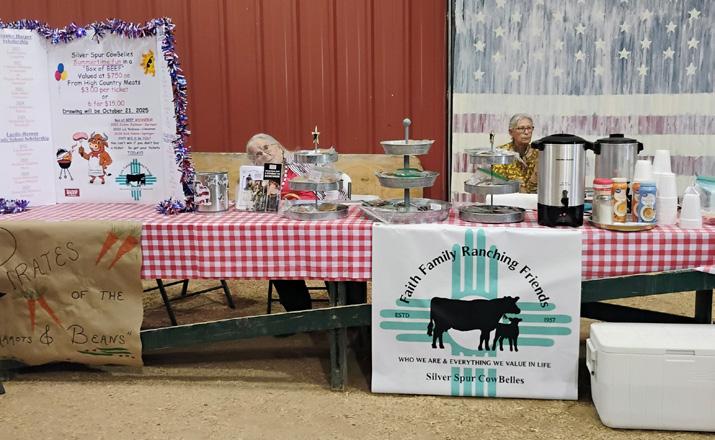
Top: Cactus CowBelles booth at the Lea County Fair in Lovington Center Left: Otero County CowBelles booth at the Otero County Fair in Alamogordo Center Right: New Mexico CowBelles Beef Ambassadors Riley Fury, Greeley Goodson and Truitt Sallee handing out beef samples and promoting our industry with the New Mexico Beef Council at New Mexico State Fair
Bottom: Silver Spur CowBelles booth at the Colfax County Fair in Springer
captions to come
Frisco Cowbelles met in June to verify plans for the barbecue, auction, and dance event on July 4th weekend. Radio ads were confirmed for the week before. Sponsors for the dance were mostly covered. Needed a few more. And rooms for the band were taken care of. The flatware was wrapped and ready to go. Other tasks included when to thaw the meat for the smoker, cutting and wrapping potatoes on the 4th, and cleaning the park. Impressive artwork ready for the auction. A donation made for a bingo that had prizes to give backpacks to school kids for the beginning of the school year. Changes to scholarships were voted on for the 3rd time and accepted. The August meeting covered the recent events. The school backpack bingo was a huge success. Will want to do that again. Working on a plaque for the Aldo Leopold monument workday was postponed. Two handmade knives by Frank Christensen have been sponsored and paid for by the local. It is an incentive to get more kids entering items in the fair building. Knives were to be given to high point ribbon winners. One for Champion and the other for Reserve winner. Scholarships will be awarded when confirmation of enrollment arrives. The 4th of July event went very well. Numbers for BBQ were down some. Art auction was very successful and had many active bidders. The ranch rodeo was great (though hot), with quite a few teams. Catron County Fair is August 20-24. It was discussed how much to give each of the beef exhibitors. Also donated to the Frisco Buyers Club for the auction. Next things coming up will be the Trunk or Treat for Halloween. And then it is time for officer elections again. Submitted by Margie McKeen
Mesilla Valley CowBelles met out at the
Southern New Mexico Fair Grounds booth for cleanup. Several were present and group cleaned out best as possible with predicted rain coming the following week. It never seems to hit where it is needed. Discussion of who would man when and whether we had received a bill for the Beef Buckles that were voted on last meeting. Two baskets will be donated to the Bake Sale auction. One beef and one NMSU one. Reminder AgExplorer is Wednesday and Thursday where Mary Esther and Fita will present Wow that Cow and Janet will be assisting with logistics of tables, buses, signs, and tour movement.
Janelda and Janet will meet Monday to put up the shade cloth and unload the final boxes. Mary, Gretchen, and other will decorate on Wednesday morning. Fair time is a busy one so whenever anyone can assist, we always love having you! Submitted Janet Witte
New Mexico CowBelles thank you to all who have submitted their news to Jingle Jangle. Please send minutes and/or newsletters to: Jingle Jangle, Janet Witte, 1860 Foxboro Ct., Las Cruces, NM 88007 or email: janetwitte@msn.com by the 15th of each month. ▫
WOODS
Purina Animal Nutrition Center Hosts Hereford Juniors
Source: American Hereford Association
Eighty-four National Junior Hereford Association (NJHA) members from 21 states gathered at the Purina Animal Nutrition Center in Gray Summit, Mo., July 30 through August 2, for the 2025 Faces of Leadership conference. Hosted in partnership with Purina, this year’s event kicked off with a focus on exploring leadership through a personal lens, encouraging members to discover and develop their unique leadership styles while sharpening vital communication and team-building skills.
“People want to follow leaders who stay humble, stay hungry and always try to find better for those around them,” said Mike
Matheny, St. Louis, Mo., setting the tone for NJHA members during the first night of the conference. Matheny is a New York Times best-selling author, former Major League Baseball catcher and manager. He is also a leadership coach who inspires others through his faith-based approach to mentoring, team building and character development.
Conference participants enjoyed several unique learning opportunities during the event, including:
Ї An inside look at Purina Animal Nutrition Center, where participants toured the dairy, beef, poultry and companion animal facilities, learning about the farm’s diverse operations from industry leaders.
Ї A hands-on leadership simulation led by the NJHA board of directors, designed to challenge and grow their decision-making and communication skills, while working in a team-setting.
Ї Roundtable discussions with American Hereford Association staff provided valuable insight and guidance to help prepare participants for future careers in the industry.
Ї The Bridging the Gap — College and Career Fair, included representatives from 13 agricultural companies and universities for juniors to meet with and explore opportunities.
Among other key insights, Faces of Leadership conference participants learned the importance of understanding their personal “why” and how it inspires and drives leadership, no matter the career or educational path.
Missouri Director of Agriculture, Chris Chinn, explained how her personal “why” fuels her advocacy for agriculture and those who work in it.
“My “why” is because I want my kids to have a better future than I had. I want you [NJHA members] to have every opportunity available to you,” Chinn explained. “Don’t not try.”
Over the course of the two-day leadership simulation workshop, participants leaned into their personal leadership styles and found motivation through their individual “why.” The experience came full circle with a powerful closing keynote from NJHA Chairman Salem Sifford.
“I was never told that I had to be one way or another to be a leader within the Hereford breed. My Hereford family accepted me as I am and simply encouraged me along the way. I learned that it truly is all about the people that meet you where you are and encourage you,” Sifford explained. “Sometimes being unique isn’t always key, but support, encouragement, acceptance, and transformation are.”
Made possible by the Coley-Malir Leadership Endowment and the Hereford Youth Foundation of America, this conference is a pivotal stepping-stone to building the pipeline of future leaders for the Hereford breed. This year, juniors were fortunate to have Rick Malir and his wife Bonnie Coley-Malir join for a duration of the conference, and heard from Rick as a keynote speaker.
The annual Faces of Leadership conference is open to NJHA members 14-21 years old. Watch for more information on future conferences at Hereford.org/youth/njha/ faces-of-leadership. ▫
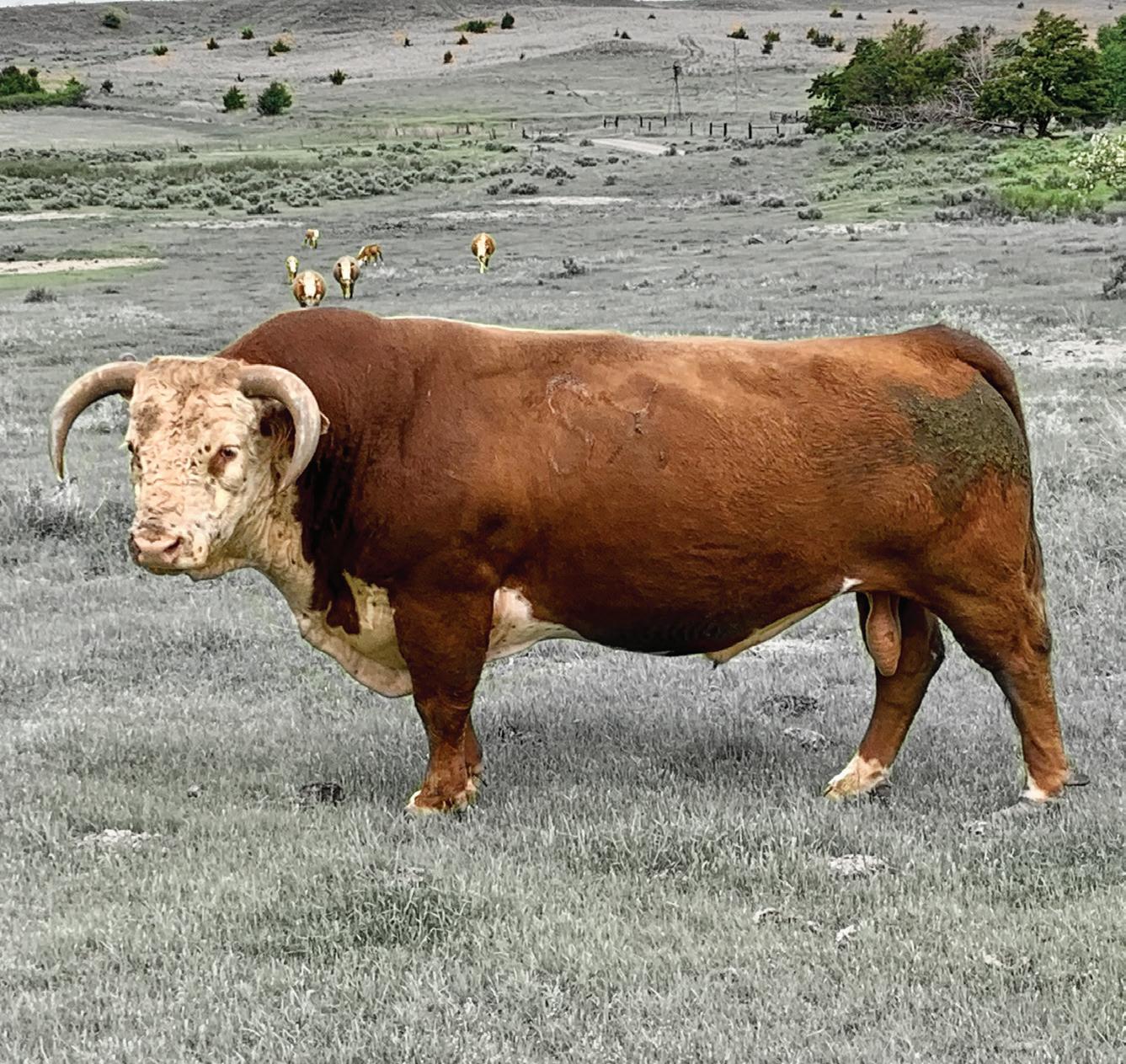
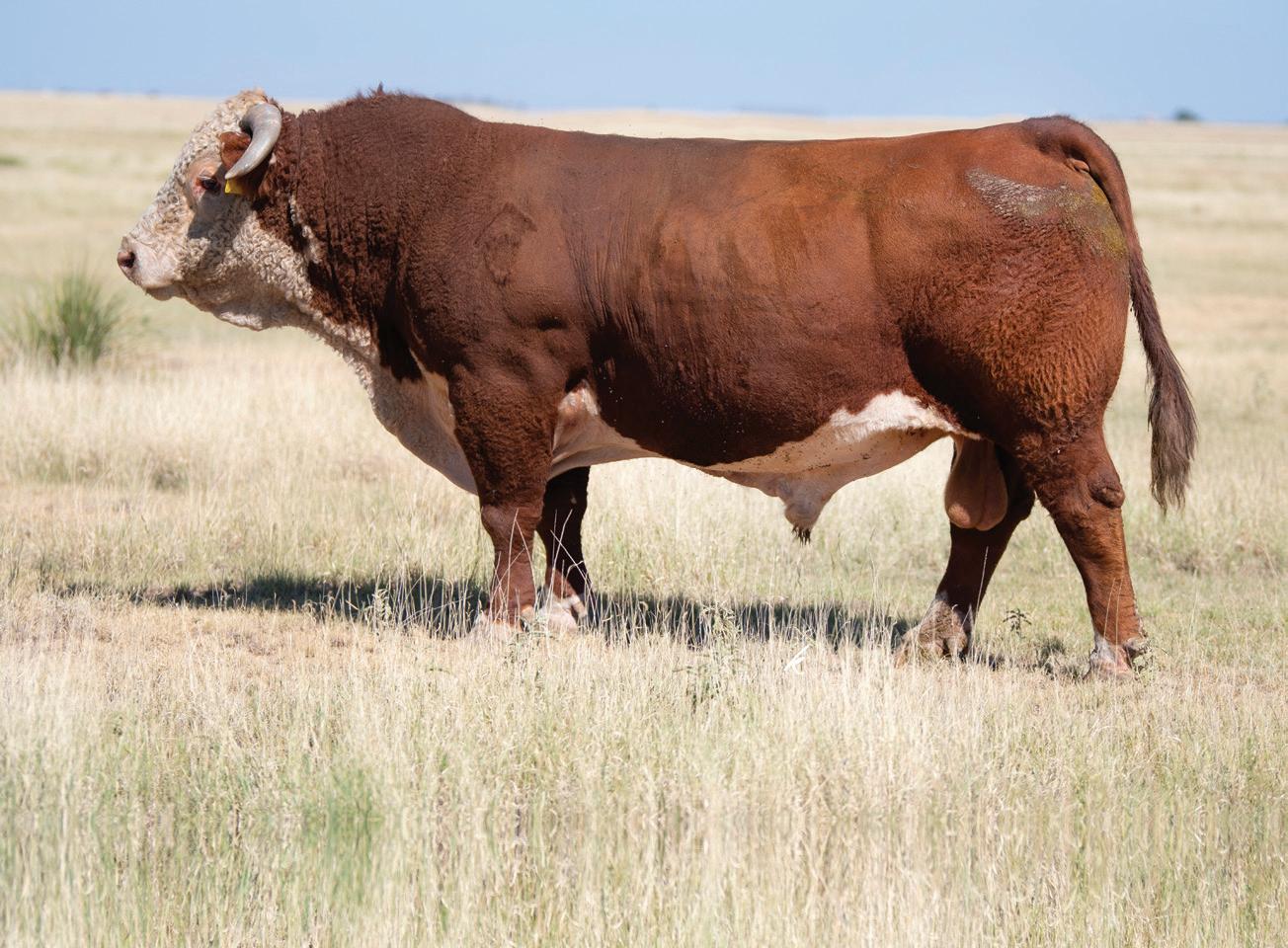
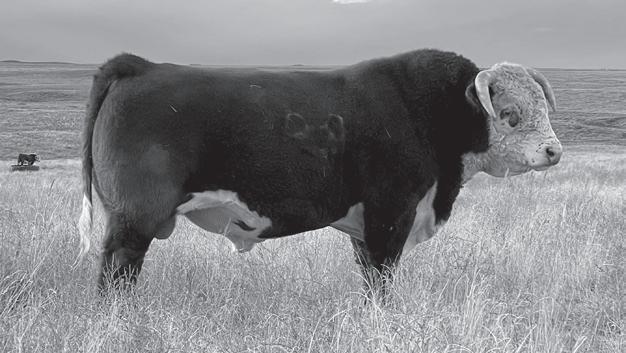
Producing rugged, deep sided, thick made, easy doing, range
ready bulls like this sire.
Annual Bull
Sale March 30, 2026
Selling 50 plus Hereford Bulls both Horned & Polled.
RIO PECOS VETERINARY
Veterinary Supplies &
P.O. Box 129, Roswell, NM 88202
Herd expansion appears to be at the threshold.
by
Wes Ishmael / reprinted courtesy of the American Hereford Association
Odds remain stacked against aggressive beef cow herd expansion. Historically high prices challenge keeping heifers rather than selling them, while dry weather and the threat of reemerging drought in some key cattle states add reluctance. However, growing signs point to more producers leaning in that direction.
“Though there is no data confirmation yet, it seems likely that heifer retention may be underway in several areas including the Southern Plains and points east,” says Derrell Peel, Oklahoma State University Extension livestock marketing specialist, in his mid-June weekly market comments. “However, it is doubtful that much aggressive restocking or herd rebuilding is in progress in several major beef cow states from Nebraska north and west. In total it is likely to still be a slow pace of herd rebuilding.”
At the very least, Peel says it looks more likely the 27.9 million beef cows at the beginning of this year were the cyclical low.
“Although the inventory of bred heifers was record-low, beef cow slaughter is down 16.2 percent for the first 21 weeks of the year, indicating a low level of cow culling that might allow for a fractional increase in the beef cow herd this year,” Peel says.
Further, Peel points out that Jan. 1 beef cow inventories were unchanged or slightly higher year over year in seven of the 10 largest beef cow states. He adds beef replacement heifer inventories at the beginning of the year were unchanged or higher in eight of those states.
Although forage conditions continue to be a limiting factor in some areas, Peel says, “It would appear that a number of major beef cow states are interested in herd rebuilding.”
USDA’s semiannual Cattle report scheduled for release at the end of July should provide more clarification about producers’ expansion intentions.
Prices march higher
In the meantime, cattle prices continue higher, absorbing negative headlines and volatile outside markets. Prices should continue even higher when producers hold back more heifers to expand the herd.
“The cattle industry has been experiencing record-high prices for cattle, which is undoubtedly influencing larger profits. The forecast for
the next couple of years is that cow-calf producers can expect to continue experiencing these high returns due to tight supplies and strong consumer demand,” explains Hannah Baker, University of Florida Extension beef and forage economist, in the early July issue of In the Cattle Markets from the Livestock Marketing Information Center. “However, just like cattle prices, operating costs have also increased over the last few years. Even with slight declines forecasted for the future, it is still important to intentionally manage input costs and marketing strategies regardless of how large the revenue stream may be.”
Based on price strength at the time, the USDA’s Economic Research Service (ERS) increased the projected average feeder steer price for the remainder of this year, compared to the previous month, in the June Livestock, Dairy and Poultry Outlook . Forecast prices increased $4 in the third quarter to $306 per hundredweight (cwt.) and $2 in the fourth quarter to $308. The projected annual average price was $297.78 for this year and $306.25 for 2026. Prices are basis a 750 to 800 pound Medium and Large #1 steer selling at Oklahoma City.
ERS analysts noted this class and weight of steers averaged just over $272 per cwt. at Oklahoma National Stockyards during the first 11
weeks of the year and had averaged almost $296 since then. However, they say lower auction volumes some weeks due to inclement weather add challenge to identifying price trends.
On the other side of the feedlot gate, negotiated cash fed cattle prices continued higher through the second week of July. Live prices that week (FOB) were $228 to $230 per cwt. in the Southern Plains and $235 to $240 in the North. Dressed delivered prices were $380.
July’s World Agricultural Supply and Demand Estimates pegged the five-area direct weighted average fed steer price at $226 in the third quarter this year and $229 in the fourth quarter for an annual average price of $221.31. The projected annual average price for 2026 was $229.
“Looking ahead, it appears that risks to the cattle complex come from macroeconomic uncertainty that may impact demand (domestic or overseas) and from any disruption that may push feed prices higher,” says Will Secor, University of Georgia Extension livestock economist, in the late-June issue of In the Cattle Markets. “Production risks from screwworm should continue to be watched as well. Otherwise, market fundamentals continue to point to strong prices year over year. In the months ahead, look for lighter-weight feeder cattle prices to slide as weaned calves hit auction barns this fall. However, given tight supplies, price declines may be small.”
Consumers want beef
All of this is underpinned by consumers’ willingness to pay more for beef. Reduced packer production, seasonal demand strength and resilient consumer beef demand continued pushing wholesale beef values to new recordhigh levels through June with the Choice boxed beef cutout reaching $396.49 per cwt.
More specifically, Peel provided perspective on the sizzling ground beef market in his early-July market comments. He pointed out the price for 90 percent lean trimmings the last week of June was record-high at $401.45 per cwt.
“Not only have 90 percent trimmings continued to increase in price, but 50 percent trimmings have also jumped sharply in recent weeks due to declining fed beef production,” according to Peel. He noted the price of 50 percent lean trimming the last week of June was $236.03 per cwt., the highest price ever, except for a two-week period during the pandemic in May 2020.
Further, Peel explained that mixing 90 percent and 50 percent trimmings in a 7:1 ratio produces an 85 percent lean ground beef product. Using the prices above results in a price of $380.77 per cwt. for wholesale 85
Progressive cattlemen have been choosing Barber Ranch bulls for over 100 years. Wanna know the reason?
Our emphasis has always been on extra muscle in an attractive package. Our 2025 sale bulls sport impressive carcass EPDs to complement their performance. We offer a unique combination of calving ease, explosive growth and highly desirable carcass traits with extra good looks.
In addition to approximately 100 Hereford bulls ready to work for you, our 2025 San Saba sale will feature approximately 50 head of spring bred registered Hereford heifers— all with genomically enhanced EPDs.
Our bulls can improve your cow herd for generations!
Brett Barber (806) 681-2457
Justin Barber (806) 681-5528
Terri Barber (817) 727-6107
Jacob Toombs (417) 399-0738 Dale & Mary Barber office@barberranch.com 10175 FM 3138, Channing, TX 79018 barberranch.com
Catalog requests: Rylee.R.Barber@gmail.com
Barber Ranch is located 60 miles northwest of Amarillo, Texas. Visitors always welcome!
Also selling Angus bulls from Express Ranches
CHURCHILL DOMINO 2160K
percent lean ground beef, also an all-time record-high price, according to Peel.
“Ground beef prices will remain high for the foreseeable future as cull cow numbers will remain tight while the cattle industry transitions to herd rebuilding,” Peel says.
Trade confusion pressures beef exports
Exports of U.S. beef and pork trended lower in May, due primarily to steep declines in shipments to China, according to data released by USDA and compiled by the U.S. Meat Export Federation (USMEF).
Beef exports totaled 97,266 metric tons (mt) in May, down 12 percent and the lowest in nearly five years. Export value was $798.7 million, down 11.5 percent and the lowest in 18 months. Even so, May beef export value equated to $406.05 per head of fed slaughter, down just 1 percent from a year earlier.
“The situation with China obviously had a severe impact on May exports, underscoring the importance of diversification and further development of alternative markets,” says USMEF president and CEO Dan Halstrom. “The need for progress in the U.S.-China trade negotiations is extremely urgent because tariffs could soar again on Aug. 12. This deadline is already impacting exporters’ decisions about whether to continue producing for the Chinese
market. On the bright side, amid all this uncertainty, demand for U.S. red meat remains robust in many key regions.”
May beef exports to China plunged to just under 1,400 mt, down 91 percent from a year ago. Export value fell 90 percent to less than $15 million.
Overall, January-May beef exports were down 5 percent from last year’s pace at 508,293 mt, while value declined 3 percent to $4.15 billion.
Peak cattle prices projected in 2027
Cattle prices will peak in 2027, suggests the latest U.S. Agricultural Market Outlook from the Food and Agricultural Policy Institute at the University of Missouri.
The outlook projects the five-area direct weighted average fed steer price rising to $198.19 per cwt. in 2027 and then declining to $169.29 in 2034. Likewise, steer calf prices (600-650 pounds, Oklahoma City) were projected to rise to $307.21 in 2027 and then decline to $250.54 by 2033.
The Outlook provides projections for 20242034, using data available in January of this year.
For broader context, the projections pegged the U.S. beef cow herd at a low of 27.8 million head when 2026 begins and then growing to a peak of 30.6 million head in 2031 before declining to 29.1 million head in 2034. ▫
Mexico Confirms Case of New World Screwworm in Nuevo Leon
On Sunday, September 21, 2025 Mexico’s National Service of Agro-Alimentary Health, Safety, and Quality (SENASICA) confirmed a new case of New World screwworm (NWS) in Sabinas Hidalgo, located in the state of Nuevo León, less than 70 miles from the U.S.-Mexico border.
This is now the northernmost detection of NWS during this outbreak, and the one most threatening to the American cattle and livestock industry. Sabinas Hidalgo is located near the major highway from Monterrey, Nuevo Leon, to Laredo, Texas, which is one of the most heavily trafficked commercial thoroughfares in the world. ▫
PAT WOODS
be featured in our November Issue
Help us congratulate Jeff with your personalized ad in this special issue.
Please contact Chris at chris@aaalivestock.com
ABERCROMBIE
ROSWELL LIVESTOCK AUCTION SALES, INC. & ROSWELL LIVESTOCK AUCTION TRUCKING, INC.
900 North Garden · P.O. Box 2041
Roswell, New Mexico 88201
575-622-5580
www.roswelllivestockauction.com
CATTLE SALES: MONDAYS • HORSE SALES
BENNY WOOTON CELL 575-626-4754
SMILEY WOOTON CELL 575-626-6253
Producers hauling cattle to Roswell Livestock New Mexico Receiving Stations need to call our toll-free number for a Transportation Permit number before leaving home. The Hauling Permit number 1-800-748-1541 is answered 24 hours a day, 7 days a week.
Trucks are available 7 days a week / 24 hours a day
Roswell livestock Auction Receiving stAtions
ATTENTION RECEIVNG STATION CUSTOMERS, To be able to schedule trucking, all cattle need to be permitted by 1:00 p.m.
LORDSBURG, NM
20 Bar Livestock Highway #90 at NM #3 – East side of highway. Receiving cattle for transport 2nd & 4th Sunday of each month. Smiley Wooton, 575622-5580 office, 575-626-6253 cell.
PECOS, TX
Jason Heritage is now receiving cattle every Sunday. For information to unload contact Jason Heritage 575-840-9544 or Smiley Wooton 575-6266253. Receiving cattle every Sunday.
VAN HORN, TX
800 West 2nd, 5 blocks west of Courthouse. Bob Kinford, 432-284-1553. Receiving cattle 1st & 3rd Sundays.
MORIARTY, NM
Two blocks east and one block south of Tillery Chevrolet. Smiley Wooton 575-622-5580 office, 575-626-6253 mobile. Receiving cattle every Sunday
SAN ANTONIO, NM
River Cattle Co. Nine miles east of San Antonio on U.S. 380. Receiving cattle for transport 2nd & 4th Sunday of each month. Smiley Wooton 575-626-6253.
2025 State Fair Junior Livestock Sale Raises $739K, 2nd Most Ever
Source: KOAT
The New Mexico State Fair Junior Livestock Sale, featuring FFA and 4-H youth and their animals from across the state, raised $738,700, the second-largest amount in the fair’s history. The Grand Champion Junior Market results were Samuel Fodge, Eddy County (steer, $29,000); Kody White, Curry County (lamb, $15,000); Kaitlyn Hall, Quay County (swine, $6,000); Tristan Salopek, Dona Ana County (goat, $15,000); and Elsie Matthews, Roosevelt County (dairy heifer, $5,500). ▫
New Mexico Cattle Growers’ Association Announces Fall Scholarship Applications
The New Mexico Cattle Growers’ Association (NMCGA), in collaboration with Purina Mills and Depot Farm and Ranch Agency, is excited to announce that fall scholarship applications are now open. These scholarships are designed to support the educational endeavors of young individuals from agricultural backgrounds, fostering leadership and academic excellence within New Mexico’s thriving cattle industry.
As part of its ongoing commitment to empower the next generation of agricultural leaders, the NMCGA will award multiple scholarships during the upcoming 2025 Joint Stockmen’s Convention, scheduled for December 10 through 13 at the Hotel Albuquerque in Albuquerque. This event will highlight the importance of education and innovation in the cattle industry while providing valuable resources to aspiring agricultural professionals.
The scholarships are open to high school seniors and college students pursuing careers related to agriculture, particularly those focused on the cattle industry. Recipients will be recognized for their academic achievements, leadership skills, and commitment to the future of agriculture in New Mexico.
NMCGA, alongside Depot Farm and Ranch Agency, Purina Mills, and Cowpuncher Coffee, is dedicated to cultivating the talents of young individuals who are passionate about agriculture. The partnership exemplifies the collaborative spirit needed to strengthen the agricultural community and ensure a bright future for New Mexico’s cattle industry.
“We believe that investing in the education of our youth is vital for the sustainability and advancement of agriculture in New Mexico,” said Bronson Corn, NMCGA President “These scholarships are not just financial support; they represent our commitment to fostering the next generation of agricultural leaders.”
Interested students can find scholarship details and application instructions on the NMCGA website at www.nmagriculture.org. The application deadline is October 15, 2025 ▫
22nd Annual Holt
Cat® Symposium on Excellence in Ranch Management
November 6-7, 2025, Riviera, TX & Online
The storied history of the US beef industry contains numerous examples of change, barbed wire, refrigerated transportation, breed improvements and professional feeding, just to name a few. But it seems the pace and magnitude of change has quickened in the last few months.
With the lowest beef cow inventory since 1962, the industry continues to produce record-large quantities of the highest quality beef in the world. Cattle are being fed longer and to heavier finished weights than ever before. Consumer demand for beef’s superior eating experience is driving fed and feeder cattle prices to record highs, weekly. Rapid changes. Charting new territory. Difficulty keeping track of one enterprise, much less the whole industry. Our segmented
industry seldom affords a glimpse of the entire system.
Please note: Due to a fire at the Texas A&M University-Kingsville Student Union Building, the 22nd Annual Holt Cat® Symposium on Excellence in Ranch Management will take place at the Erma Center in Riviera, Texas.
Governor’s Awards for Excellence in the Arts Announced
Seven influential art trailblazers have been chosen by Governor Michelle Lujan Grisham for the 2025 Governor’s Awards for Excellence in the Arts. “Each of these artists tells a part of New Mexico’s story—our Indigenous heritage, our Western traditions, our multicultural identity,” Lujan Grisham said. “Together, they create a tapestry that reflects the full beauty and
complexity of who we are as New Mexicans.”
The governor, the New Mexico Department of Cultural Affairs, New Mexico Arts, and the New Mexico Arts Commission are proud to recognize these awardees who represent the very best in artistic achievement: Alden Timothy Cox, Western Artist, Bloomfield; Peter “Amahl” Amaral, Musician, Albuquerque; Kevin Box, Sculptor, Cerrillos; Keshet Dance Company & Center for the Arts, Major Contributor to the Arts, Albuquerque; Cannupa Hanska Luger (Mandan, Hidatsa, Arikara, Lakota); Interdisciplinary Artist, Glorieta, Nacha Mendez a.k.a. Margarita Cordero (Chihene Nde Nation) Musician, Santa Fe; and Connie Voisine, Poet, Las Cruces.
You are cordially invited to the 2025 Governor’s Awards for Excellence in the Arts ceremony. We hope you will join us for the ceremony on Thursday, October 16, 2025, at 5:00 p.m. at the St. Francis Auditorium at the New Mexico Museum of Art, followed by a short reception in the museum’s courtyard with light appetizers and sparkling cider. The events are free and open to the public so please bring your family and friends. ▫
Taking the Reins on Responsible Horse Breeding
Source: Texas A & M
For many horse owners, breeding is an opportunity to shape the next generation — whether by continuing a trusted mare’s legacy or raising a foal with carefully selected traits like temperament, athletic ability, or pedigree.
While it can be a deeply rewarding experience, breeding requires a long-term commitment and thoughtful preparation to help ensure a healthy outcome for both mare and foal.
Dr. Mariah Pearson, a clinical assistant professor at the Texas A&M College of Veterinary Medicine and Biomedical Sciences, emphasizes the importance of preparation and offers valuable insights into the mare
breeding process.
Starting on the right hoof
Because breeding season typically begins in early spring, planning should start in the fall to allow time for health evaluations, reproductive screenings, discussions with your veterinarian, and to ensure your mare is fully prepared.
The first step is to have a trusted veterinarian perform a breeding soundness exam, an assessment that evaluates a mare’s overall health and reproductive condition through a physical exam, palpation, ultrasound, and sometimes testing for potential infections in the uterus.
“Mares need to be systemically healthy first,” Pearson said. “That means no metabolic diseases, no severe lameness, and a sound body condition.”
Without the breeding soundness exam, underlying problems may go unnoticed and lead to serious complications in the future.
“A lot of times, people love their horse so much they want her to have a baby — but they don’t think about all the potential problems,” Pearson said. “You could spend all this money and get your mare pregnant, and then she has trouble giving birth, putting your mare’s life at risk.”
Even manageable conditions can worsen under the physical demands of pregnancy.
“Getting pregnant puts weight on the mare. If she has laminitis or tendon problems, the lameness could get worse,” Pearson said.
If your mare is not a candidate for pregnancy, embryo transfer or other alternatives may be worth discussing with your veterinarian.
‘Foal’ proof planning
Another important step in preparing your mare for breeding is discussing genetic testing.
“Certain breeds have known genetic problems,” Pearson said. “If your mare carries a genetic disorder, breeding her could pass that on.”
Timing also plays a major role. Mares are seasonally polyestrous, meaning they cycle during the months that have the longest amount of daylight. Most begin cycling naturally in spring, but artificial lighting can stimulate earlier cycles.
“I love to see mares early in their cycle — ideally in January if they are under lights or in March and April if not,” Pearson said. “The challenge comes during the transition period, when mares may act like they’re in
heat but have not ovulated yet.”
Age matters, too. Younger mares tend to conceive more easily and carry foals with fewer complications.
“The quality of a mare’s eggs declines with time because she’s born with all she’ll ever have,” Pearson said. “Breeding younger mares generally gives better results, especially if you want her to carry the foal herself rather than having a recipient mare.”
Bridling your budget
Breeding is not only physically demanding — it also can be a significant financial responsibility. Even if your mare is generally healthy, complications can make it more expensive than planned.
“Getting a mare ready to breed — even a young, healthy one — can cost thousands of dollars,” Pearson said. “You might need mul-
tiple exams or antibiotics for uterine infections before conception even happens.”
After breeding, your mare will need veterinary checkups at key milestones such as:
Ї 14 days post-ovulation to confirm pregnancy
Ї 25 to 28 days to check for a heartbeat
Ї 35 to 45 days to make sure the pregnancy is progressing
Throughout gestation, your veterinarian may also recommend:
Ї Vaccinations for equine herpesvirus at five, seven, and nine months
Ї Fetal sexing, typically performed between 63 and 73 days or 100 and 120 days
Breeding a mare is a big decision — medically, emotionally, and financially. Horse owners should carefully consider not only their mare’s physical health and genetic
history but also their own readiness for the long-term commitment involved.
If you are thinking about breeding, be sure to talk with your veterinarian early to develop a plan that is right for you and your mare.
“Breeding isn’t for the faint of heart,” Pearson said. “It’s important to understand the risks and responsibilities before you start. That way, you’re prepared — not just for the foal, but for everything that comes with it.”
Pasture Talk is a service of the College of Veterinary Medicine & Biomedical Sciences, Texas A&M University. Stories can be viewed on the web at vetmed. tamu.edu/news/tag/pasture-talk/. To sign up for the Pasture Talk mailing list or suggest a future topic, please email vmbs-editor@tamu.edu.
New Study Delivered One Crushing Blow to Food Nannies That Left Them Scrambling for Excuses
Source: Renewed Right
For decades, the food police have been wagging their fingers at red-blooded Americans who dare to enjoy a good steak. Government bureaucrats and their allies in white coats have spent years trying to scare you away from the very foods that built this country. But a new study just delivered one crushing blow to their anti-meat crusade that has them scrambling to rewrite their talking points.
Canadian Researchers Drop a Truth Bomb on the Food Nannies
McMaster University researchers in Canada – and you know they wanted to find something wrong with meat – just published findings that completely demolish years of anti-meat propaganda.¹
After analyzing data from nearly 16,000 adults, these scientists discovered something that’s going to make the plant-based crowd absolutely furious.
Animal protein doesn’t just fail to kill you – it might actually help protect you from cancer.
The study found “no increased risk of death in association with eating more animal protein” and revealed a “modest but significant reduction” in cancer-related mortality among meat eaters.²
Wait, it gets better.
When they broke down the numbers, plant protein showed “minimal impact on cancer mortality, while animal protein may offer a small protective effect.”³
You can practically hear the collective
gasp from Berkeley to Brooklyn right about now.
The Decades-Long War on Your Dinner Plate
Think about what they’ve put you through over the years. First it was eggs that were going to give you a heart attack – until they weren’t. Then it was butter that was going to kill you – until margarine turned out to be worse. Coffee was poison until it became a superfood.
And through it all, they’ve been telling you that a nice ribeye is basically a death sentence waiting to happen. These people have spent decades trying to shame you out of eating foods your grandfather thrived on.
Stuart Phillips, the research supervisor at McMaster University, admits there’s been “a lot of confusion around protein” – which is academic speak for “we’ve been lying to you for years.”⁴
The guy literally says people need clarity to make “informed, evidence-based decisions” about what they eat. You know what that means? It means the decisions you’ve been making based on their previous “evidence” weren’t actually evidence-based at all.
Follow the Money Trail Behind the Anti-Meat Crusade
Here’s where this gets really interesting. Lead researcher Yanni Papanikolaou confirms that “both animal and plant protein foods promote health and longevity.”⁵
Both. Not just plants. Both. But you wouldn’t know that from listening to the environmental extremists who’ve been pushing their plant-based agenda for the last two decades.
These are the same people who want you eating lab-grown fake meat while they fly around in private jets lecturing you about your carbon footprint. They’ve turned your dinner plate into a battlefield in their war against traditional American life.
The study was funded by the National Cattlemen’s Beef Association, and before you roll your eyes, the researchers made sure to note that the NCBA “was not involved in the study design, data collection and analysis or publication of the findings.”⁶
They followed what Phillips calls “the most rigorous, gold standard methods” –which apparently didn’t exist when they were busy demonizing your burger.
Here’s What This Really Means
You want to know what this study really
tells us? It’s not just about protein. It’s about the entire apparatus of food shaming that’s been deployed against regular Americans for decades.
These are the same experts who brought you the food pyramid that made us fatter and sicker. The same people who told you to eat margarine instead of butter, then quietly admitted butter was fine all along. The same crowd that’s been pushing expensive plantbased alternatives while your grocery bill skyrockets.
They’ve weaponized nutrition science to make you feel guilty about foods that have sustained human beings for thousands of years. Your great-grandfather ate meat, built railroads, fought wars, and raised families without worrying about whether his dinner was going to give him cancer.
But somehow we’re supposed to believe that everything changed in the last 50 years, and now the very foods that made America strong are suddenly deadly.
The truth is simpler than they want you to know: humans are omnivores. We’re designed to eat both meat and plants. We’ve been doing it successfully for millennia.
And despite decades of propaganda telling you otherwise, eating animal protein might actually help you live longer. For folks
who’ve been listening to their bodies instead of the food police, this isn’t exactly shocking news.
But for the millions of Americans who’ve been guilted into expensive, unsatisfying plant-based diets, this study is a permission slip to get back to eating real food. The next time some know-it-all starts lecturing you about your ribeye, remind them that the latest science says you might be the one making the healthier choice.
And maybe ask them why they spent so many years being wrong about something so basic as what human beings should eat for dinner.
¹ McMaster University, “Eating meat could protect against cancer-related death, study suggests,” Press Release, August 2025.
² Ibid.
³ Ibid.
⁴ Ibid.
⁵ Ibid.
⁶ Angelica Stabile, “Eating meat could protect against cancer-related death, study suggests,” Fox News, August 26, 2025. ▫
New Mexico Soil Conservation Districts
by Rebecca Dow, Assistant Executive Director New Mexico Association of Soil Conservation Districts
For generations, New Mexico ranchers have known one simple truth: without taking care of the land, the land won’t take care of us. Nowhere is that truer than in our state’s Soil and Water Conservation Districts (SWCDs). These local, producer-led entities nurture working landscapes— exactly what ranchers need to keep their operations viable and sustainable.
What Are Soil and Water Conservation Districts?
Soil and Water Conservation Districts are special-purpose governmental units formed by state statute to help landowners conserve vital natural resources. Governed by locally elected boards—often consisting of farmers, ranchers, and landowners— SWCDs don’t impose mandates; they deliver support. Whether the challenge is erosion control, water infrastructure, grassland restoration,
or educational outreach, SWCDs link landowners with technical expertise, cost-share funding, and partners like NRCS (Natural Resources Conservation Service) to get the job done.
As each SWCD is deeply rooted in its community, landowners aren’t jumping through federal hoops—they’re talking to their neighbors, people who understand the realities of ranching in New Mexico.
Conservation in Action: The Berlier Ranch Story
Jim Berlier is a fourth-generation rancher in Encino, New Mexico. Jim and his wife Vickie run a cow-calf and yearling operation in Estancia and he also serves as a board member of the East Torrance SWCD.
When Jim inherited the family ranch, it was in poor condition due to past overgrazing. Armed with a degree in range science, he resolved to heal the land. Through his district, he implemented several conserva-
tion practices:
Ї He installed cross-fencing to enable rotational grazing.
Ї He extended several miles of livestock water lines to better distribute cattle and reduce pressure on any one area.
Ї He removed hundreds of acres of invasive juniper trees, restoring grasslands in the arid 12–14 inch rainfall zone.
These changes made an immediate difference.
“With the improved plant community and increased ground cover, I’ve been able to reduce wind and water erosion, which has greatly improved soil health as well. … I have more than doubled my forage production over the last 20 years.” — Jim Berlier
Jim’s story highlights how meaningful relationships—with technical staff, funding programs, and local leadership—can transform operations. The district connected him to cost-share options and offered guidance through planning and implementation.
Why SWCDs Matter
Berlier’s experience is far from unique. Across New Mexico, SWCDs enable ranchers to:
Ї Access state and federal cost-share programs like NRCS’s EQIP.
Ї Receive on-the-ground technical support for projects such as water development, invasive species control, and fencing.
Ї Collaborate with other agencies— NRCS, the State Land Office, BLM, or US Forest Service—to streamline efforts and funding.
This has broad benefits. Healthy soils better retain water, reducing drought stress
and erosion; restored rangelands support wildlife; and improved productivity strengthens rural economies.
Challenges and Innovation
Still, SWCDs face challenges: funding is often limited, and the growing pressures of drought and climate variability heighten the need for conservation. But many districts continue innovating. Some are leading watershed-scale restoration, acequia repairs, noxious weed control, or youth outreach— preparing the next generation for stewardship.
Conservation Is a Shared Responsibility
Soil and water conservation isn’t just a program—it’s a partnership. Ranchers like Jim Berlier are on the front lines, and SWCDs equip them to succeed. Jim says:
“Implementing soil health practices has been a win-win situation for me… I have more than doubled my forage production.” — Jim Berlier
He adds something more personal: telling his story through district meetings, he inspires neighbors—what began as management for his own place turned into leadership for the broader community.
Keeping Land Productive for Generations
Jim’s example illustrates the heart of conservation: ensuring working land remains productive and resilient. With the support of SWCDs, ranchers can make improvements that benefit crops, livestock, wildlife, communities, and the generations to come.
Next time you hear about a Soil and Water Conservation District, don’t think red tape—think community, innovation, and hope for lasting stewardship. ▫
Mac Langford, President/CCO
Gordon Morris, Chairman of the Board/EVP
Colten Grau, Vice President
by Jerry Schickedanz
Heads Up
The views and opinions expressed do not represent those of the Board of Regents of NMSU
Idon’t know about you, but my head has been drowning with information or disinformation overload on “Climate Change” or is it “Changing Climate” and the cause of climate change, is CO 2 the culprit or the good guy and many other issues. Can we trust the reporting on “Science vs Climate Science” to be accurate? Hopefully, I can try and sort some of this out to help you in seeking the truth about Climate Change.
First, we must understand what Science vs Climate Science is. Implicitly, the Scientific Method has four rules:
1) Formulate a hypothesis,
2) systematically collect real data,
3) evaluate the hypothesis vs the data, 4) repeat the study.
This is the basis for scientific endeavor, question the conclusion and repeat the study to formulate confidence of the finding.
Since World War 1, many political movements have claimed to be based in science and invoked scientific consensus that convinced highly educated citizens, who were ignorant of science, to set aside their anxieties associated with their ignorance. Because all scientists agreed, then there was not a need to understand the science.
Consequently, if we are pushing an agenda, then we look for a way to “scientifically” prove our agenda or bias. A somewhat facetious definition of Climate Science then is:
1) Formulate the conclusion, 2) manipulate the data/model to fit the conclusion,
3) announce the world is ending, 4) smear the critics.
Let’s look at some of the facts surrounding climate change. CO 2 is a naturally occurring greenhouse gas that can remain in the atmosphere for decades to centuries. It has implications for increasing the temperature on the earth.
The predictions of the increasing tem-
Cattlemens Livestock
perature on the earth are the results of computer models simulating future conditions. Man-caused CO2 level is approximately 430ppm and increases at a rate of about 2ppm per year. The statement: “consensus on global warming by 97 percent of scientists.”
One of the early alarms was sounded when the climate model of a global temperatures graph was published. It showed that in the 1990’s temperatures began to rise rapidly and was called the “Hockey Stick” and doomsday predictions followed.
However, when actual observations are plotted, they closely follow a straight line instead of the sharp increase in temperatures. In fact, since 1975, 102 models on temperature have been unable to duplicate actual temperature measurements. But the scare tactic worked, and many million dollars have been funding inaccurate models and continue to interject fear into our citizens.
CO2 has been given a bad rap as a culprit in global warming, but one doesn’t see or hear about the favorable and positive aspects of CO2. It is essential for our food production, and thus, life here on earth. Plants consume CO2 and water which produce carbohydrates and oxygen through photosynthesis.
Carbohydrates are converted into protein for human and animal consumption. It has been estimated that if 420ppm increases to 840ppm of CO2 by the end of this century it will increase crop productivity by 40 percent.
Consensus of 97 percent of scientist’s opinions is not science. Science is not a product of consensus, but of rigorous application of the scientific method. The scientific method requires models to be tested by unbiased experimental design to see if they work. If they don’t agree, then they are wrong and should never be used or touted as science.
You should never accept a scientific prediction without questioning the validity of the report. Science has been corrupted by many who have political gains, monetary gains and stature by scientific organizations.
As a new scientist many years ago, I was naive to accept a written report or paper as the truth without questioning the results. I have learned to question and ask for further scientific data.
Keep your eye on the horizon, truth will prevail when both sides of an issue are disclosed. ▫
Lawmakers Deserve Credit for Recent Success Against the Green New Deal
by Daren Bakst, Competitive Enterprise Institute, published on thecentersquare.com
Lawmakers took a significant step toward ending the Green New Deal. In the One Big Beautiful Bill Act (OBBBA), they started to dismantle the radical “green” subsidies embedded in the partisan 2022 Inflation Reduction Act (IRA), a law that didn’t get a single Republican vote in the House or Senate.
The OBBBA eliminated many of the IRA’s energy and environmental subsidies that had been projected to cost over $1 trillion. The price tag, though, isn’t even the biggest problem with these policies: The spending forms a central planning scheme to dramatically change how Americans produce and use energy.
The IRA tried to shift electricity generation from affordable and reliable sources of electricity (e.g. coal and natural gas) to unreliable and costly sources (e.g. wind and solar). It was filled with subsidies to prop up electric vehicles at the expense of gas-powered cars and kill off the use of natural gas appliances. It also created numerous programs at the Environmental Protection Agency (EPA) that are, in effect, slush funds to spend billions of dollars for such things as community activism and tree canopies to provide shade.
In response, the OBBBA repealed numerous electric vehicle tax credits and many credits aimed at eliminating the use of natural gas in homes and other buildings. And eligibility for the major tax credits for wind and solar projects (the production and investment tax credits) have been significantly tightened, thanks to the OBBA: The credits won’t be available for projects placed in service after December 31, 2027, unless
construction on the project began by July 4, 2026.
Further, the OBBBA rescinds unobligated funds for a litany of IRA programs administered by the EPA. This includes the Greenhouse Gas Reduction Fund, a $27 billion program that creates slush funds for progressive nonprofits. A handful of nonprofits were selected to receive a whopping $2 billion or more to dole out at their discretion. One nonprofit was chosen to get $8 billion to shell out as it deemed fit.
This entire program is rife for corruption, waste, and abuse. Fortunately, Congress didn’t just rescind unobligated funds for the program but also repealed it entirely, so it no longer exists in law and can’t be used in the future without new legislation reestablishing the program.
This is by no means a full list of the good deeds done in the OBBBA to fight back against the Green New Deal provisions in the IRA. However, there’s still more to do. Some objectionable tax credits were extended or expanded in the OBBBA, such as the tax credits for “clean” transportation fuel and carbon sequestration.
Phasing out subsidies instead of eliminating them is problematic. Many tax credits
are being phased out over time, which means they are still available for now. Even the major wind and solar credits will be blowing around for a while. Until they are repealed and have not been brought back for years, there is a decent chance they will resurge as they repeatedly have for decades or simply be extended because they ultimately may not be eliminated.
To fight the Green New Deal, lawmakers must remain vigilant and recognize this will be a continuous battle. Climate extremists will use all possible means – subsidies, regulation, and taxes – to kill off reliable energy and change how Americans use energy, with little regard for higher prices and reduced freedom.
For now, lawmakers have exceeded expectations when it comes to dismantling the IRA subsidies. They deserve kudos for a job well done.
Daren Bakst is director of the Competitive Enterprise Institute’s Center for Energy and Environment.
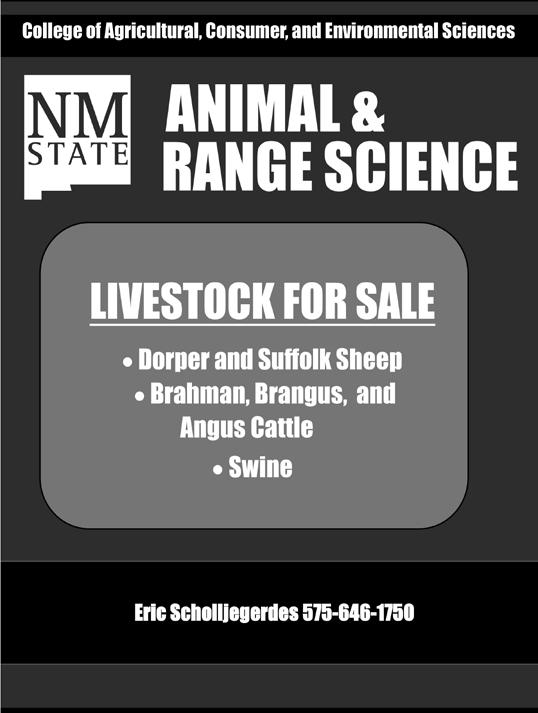
ANIMAL & RANGE SCIENCES
The Department of Animal & Range Sciences is part of the College of Agricultural, Consumer & Environmental Sciences
Department of Animal & Range Sciences is part of the College of Agricultural, Consumer & Environmental Sciences
Students can major in Animal or Rangeland Resources and are provided with the very best of “hands on” academic instruction by our faculty. Fully equipped labs allow students access to cutting-edge research in: LIVESTOCKNUTRITION / GENETICS / PHYSIOLOGY / ENDOCRINOLOGY / MEATSCIENCE / WOOL / TOXICOLOGY / WATERSHED & RANGELANDECOLOGY / WEED & BRUSHCONTROL / PLANTSYSTEMATICS / GRAZINGMANAGEMENT
The Department also offers pre-veterinary studies –our graduates have a high acceptance rate into veterinary medicine programs. We offer graduate degrees at the Master of Science and Doctor of Philosophy levels. The M.S. or Ph.D. in Animal Science can emphasize nutrition or physiology, and offers a Ph.D. in Range Science to study range management, range ecology and watershed management.
• The Chihuahuan Desert Rangeland Research Center (The College Ranch) –64,000 acre ranch just outside of Las Cruces
• The Corona Range & Livestock Research Center – 28,000 acre ranch & facilities in Corona, NM
• Student organizations, including a Block & Bridle Club, Pre-Vet Club, Range Club, Horsemen’s Association, Therapeutic Riding Club, & Judging Teams
• Clayton Research Center hosts research on shipping protocols, particularly evaluating the health and performance of newly received cattle, and nutrition and management from feedlot to slaughter
Hernandez Appointed to New Mexico Beef Council
Nolberto Hernandez has been appointed to the New Mexico Beef Council by Secretary of Agriculture Jeff Witte. The appointment begins immediately and runs for a three-year term.
Hernandez and his wife Carlene are ranchers in Sandoval County and have recently started a small registered Santa Gertrudis herd in Torrance County. Both Nolberto and Carlene come from ranching families.
They are currently active members of the New Mexico Cattle Growers’ Association (NMCGA) for the past 16 years and New Mexico Federal Land Council for the past five years. Nolberto served on the NMCGA Board of Directors for three years and the Promotions and Marketing Committee.
He is currently serving on the Northern New Mexico Bureau of Land Management Resource Council that provides advice to BLM’s Farmington District Manager regard-
ing management of public land resources within the council’s jurisdiction. His membership represents the interests of Federal grazing permit holders.
He has been a Treasurer for our local Livestock Water Association in Sandoval County.
Nolbert’s professional work experience includes 25 years in the Architectural and Engineering field specifically in architec-
2025 CATTLEMAN
OF THE YEAR
PAT WOODS
Will be featured in our November Issue
Help us congratulate Jeff with your personalized ad in this special issue.
tural design, construction documentation, specification review, construction administration, and observation. Work has included office buildings, municipal structures, educational facilities, public housing, recreation centers, public safety buildings, and water/ wastewater process buildings.
Currently certified by the Construction Specifications Institute as both a Construction Document Technologist and Construction Contract Administrator.
As a Construction Contract Administrator, he works with American Institute of Architects (AIA) contract documents, such as Contracts for Construction, pay applications, construction change directives, change orders, and certificates of substantial completion.
Nolbert’s education includes an Associate of Applied Science Degree in Construction Management Technology, Albuquerque Technical Vocational Institute (now Central New Mexico Community College); as well as an Associate of Applied Science Degree in Architectural/Engineering Technology, Albuquerque Technical Vocational Institute.
Hernandez was nominated to the Beef Council by the New Mexico Federal Lands Council.
by Lee Pitts
My Cowboy Christmas
I’ve read all the articles telling the unenlightened, like me, about all the money we’re leaving on the table by not weaning our calves for at least 45 days. I don’t blame the feeders and stocker operators who don’t want to put up with sickly bawling calves either but some of us run on leased land and don’t have the facilities to wean our calves. For two years I attempted to put a long wean on our calves and I still have bad dreams about it.
We gathered the herd, sorted off the calves and thus began the nightmare. At the time we were living in a trailer house on the ranch within a stone’s throw from our weaning pens so we got to listen to the cacophony of calves all night. Even the bottle calves that never tasted their mother’s milk were bawling for their mommas long since gone. I tried everything from ear plugs to Tylenol PM but I didn’t sleep a wink. So I woke up grouchy . . . who could sleep through an earthquake. Her naturally cheery outlook started getting on my frayed nerves and by the end of breakfast I was already madder than a rained on rooster, only to look outside to see there’d been a jailbreak and half the calves were already back with their moms.
The problem was to reinforce a falling-down set of corrals where I intended to wean our calves. I bought a load of cheap
panels that I swear were welded together with the school glue you used in kindergarten. Those calves and their mad mothers made quick work of those panels so we had to gather the entire herd again to sort off the jailbirds. That meant the noise on the second night was even worse. Even grouchy couldn’t sleep so she took that opportunity to announce she was going to visit her sister. This meant I had to feed and doctor the sick calves all by my lonesome.
One thing all the articles fail to mention when weaning your calves are all the added costs involved. I’d already spent a small fortune on the panels and now I had to feed the calves 75 pound sacks of a starter ration I bought from a feed mill an hour from home. Then there was the chiropractor bill I paid to realign my back after lifting a truckload of 75 pound sacks all by myself because my wife was still at her sister’s place.
For some reason my calves have always been dumber than a fence post. They didn’t even know what a water trough was because they’d been drinking out of a creek their entire lives so I had to dig an artificial river through the weaning pens and run water through it from a water truck I had to rent. Then one day I had a brainstorm; I put on my swim trunks and frolicked in a water trough splashing water on the noses of the
stupid calves until they figured out there was water in them there troughs. Then there’s the cost of all the vaccines my vet said my calves would need to satisfy the buyers and reap the big rewards. Add it all up over the 45 days that separates the premiums from the discounts and I think I’d have been better off if half the calves had died the day we kidnapped them from their mothers.
The next year we tried something called fence-line-weaning that must have been invented by someone with w-a-a-ay better fences than mine because after every jailbreak of fence crawlers I had to spend three days fixing fence all by my lonesome because my wife was on her now-annual visit to see her sister.
During the National Finals Rodeo every year in addition to all the rodeo action there are big trade shows they call Cowboy Christmas which I absolutely love. I mention it here only to say that my Cowboy Christmas occurred instead on the 45th day of weaning when I said good riddance to those little hell-raisers with not a tear in my eye.
And that’s why we went back to weaning our calves the same day we sent them to the auction market. It was either that or my wonderful wife was going to go stay with her sister on a more permanent basis. ▫
RIDING HERD
RANCH FOOD & FODDER
by Deanna Dickinson McCall
The air is crisp, at least in the mornings. Leaves are starting to change color, New Mexico has some of the prettiest colors to be seen. The Rio Grande and other water courses become a rich golden path due to centuries old cottonwood trees. The mountains come alive with aspen, oak, and other trees showing off alongside the green of the evergreen trees. The pastures and hayfields begin changing their colors, too. There may be considerably less stock in your pastures, or gathering to sell is coming close, depending on your operation. It is a peaceful time, a season to wind down before winter sets in.
Fall foods and festivals reflect what the state is growing. Pumpkin and corn mazes are popular, along with apple and other Fall food events. We’re also known for our pecans, with the Las Cruces area producing wonderful nuts. It seems our bodies begin to crave those seasonal foods. At least mine does. I think mine kicks into overload and tells me to eat and store fat!
While I am a big advocate of eating whole,
local, minimally processed foods, I occasionally break the rules when something really good comes along. This recipe combines the seasonal flavors of pumpkin and pecans and doesn’t require a pie crust. I personally prefer it to a pumpkin pecan pie. It is great to take to a community gathering, church supper, or just for your family. It is also fast and easy, using a cake mix, canned pumpkin and no special ingredients or steps.
Pumpkin Pecan Crisp
Ingredients
1 can (15 ounces) pumpkin
1 can (12 ounces) evaporated milk
3 eggs
1 cup granulated sugar
1/2 cup firmly packed brown sugar
5 teaspoons pumpkin pie spice (store bought or your own variation)
1 teaspoon cinnamon
1 tablespoon vanilla Extract
1/4 teaspoon salt
1 package (2-layer size) yellow cake mix
1 cup chopped pecans
1 cup (2 sticks) butter, melted
Instructions
Preheat oven to 350°F. Mix pumpkin,
milk, eggs, sugars, 4 teaspoons of the pumpkin pie spice, cinnamon, vanilla and salt in large bowl until well blended. Pour into 13x9-inch baking pan which has been sprayed with no stick cooking spray.
Mix the cake mix and remaining 1 teaspoon pumpkin pie spice in medium bowl with wire whisk. Sprinkle dry cake mix evenly over pumpkin mixture. Sprinkle with pecans. Drizzle evenly with melted butter.
Bake 50 minutes or until golden brown. Serve warm or at room temperature. Serve with whipped cream and Spiced Pecans, if desired. Store leftover dessert in refrigerator.
Spiced Pecans Recipe
Ingredients:
1 teaspoon salt
1/2 teaspoon chili powder
1/2 teaspoon ground cumin
1/4 teaspoon cayenne pepper
1/4 teaspoon ground cinnamon
1/4 teaspoon sweet paprika
2 tablespoons unsalted butter
1/4 cup (packed) light brown sugar
2 cups pecan halves
Instructions
Preheat the oven to 325°F. Line a rimmed baking sheet with parchment paper or aluminum foil.
In a small bowl, mix together the salt, chili powder, cumin, cayenne, cinnamon, and paprika.
In a large skillet over medium-high heat, melt the butter. As soon as the butter melts, add the sugar. Stir until the sugar dissolves. Stir in the spices.
Add the pecans and toss to coat them, stir until the butter is absorbed
Spread the pecans on the baking sheet and roast until fragrant and toasted and the coating is caramelized, 13 to 15 minutes. Let the spiced pecans cool on the baking sheet for about 10 to 15 minutes. Taste and add more salt if you want. If some are stuck together, break apart once cool.
These are great on anything from salad to ice cream.
VIEW FROM THE BACKSIDE
by Barry Denton
Time To Rally!
(The views expressed in this column are not necessarily those of the New Mexico Cattle Growers’ Association of this publication.)
Ifind it quite appalling that Governor Ron Desantis of Florida and Kristi Noem the former Governor of South Dakota had to sign laws preventing China from buying farmland in their respective states.
What is most appalling, are the Americans that sold the farmland to China in the first place. Everywhere you look greed has become more important than doing the right thing.
Now granted, the Chinese are 18th in the amount of land owned by foreign investors. Canada is the largest foreign investor followed by the United Kingdom, Italy, and the Netherlands. However, none of those other countries are Communist and control people as well as the Chinese.
At this point China owns about 400,000 acres of US farmland. Keep in mind that China is our largest trading partner, but that
does not mean that we should not watch their every move.
I still want to know why Americans want to sell their precious farmland to our arch enemy. It seems quite silly to have to have laws about what should be common sense.
The longer I’m around, the more I am astonished by the amount of people that will sell out to the highest bidder, no matter who they are. Hopefully, more states will be passing anti- Chinese land ownership laws soon.
Let’s look at people in our communities that are letting us down. Right at the top of the list must be public education. I hate to tell you, but that has been hijacked since the 1960s at least. Public schools and universities seem to be an indoctrination into Socialism.
Ranchers and farmers alike pay taxes to support a very un-American institution. Go and ask many young people about George Washington or Thomas Jefferson and see what kind of answers you get from them.
Many that I have talked to know nothing about the history of the United States or the American Revolution. Several cannot explain why we celebrate the Fourth of July.
The other people letting us down in our communities are clergy. Many of them seem to be far left in the same institutions that were traditionally conservative, just a few years ago.
A blatant example of that was the late Pope Francis. Now the Catholics have a new American Pope Leo XIV who seems to be steering down the path of traditionalism within the church. It will help.
I attended a service at a United Methodist church not too long ago and when the service came to the “announcements” I thought we were going to hear about parishioners that needed to be visited in the hospital or needed help in some capacity. Instead, I learned that Joe’s Car Wash was giving a 10 percent church member discount.
Really folks, commercials during a worship service? I can remember when preachers from all denominations were for towing the mark, living right, and walking the line. Some are making religion a joke, and we need it now more than ever.
I know that you are all aware of the assassination of Turning Point USA’s Charlie Kirk. What a true tragedy this has been. Why should a man using his first amendment right of “free speech” be gunned down by someone that disagrees with him?
It is a solemn reminder of John F. Kennedy, Robert Kennedy, and Martin Luther King. All these people were killed for no good reason.
America really needs to think hard about this. To me this is no longer a Democrat versus Republican rivalry.
We are far beyond that. It looks to me like it is good versus evil. We need to take Charlie Kirk’s death as a rallying cry for “doing what’s right”! ▫
Texas Sued Over Its LabGrown Meat Ban
by Jessica Shuran Yu, Texas Tribune
Two cultivated meat companies have filed a lawsuit against officials in Texas over the law that bans the sales of labgrown meat in the state for two years.
California-based companies UPSIDE Foods, which makes cultivated chicken, and Wildtype, which makes cultivated salmon are suing Attorney General Ken Paxton, Texas Department of State Health Services, Texas Health and Human Services, and Travis County, accusing them of government overreach.
“This law has nothing to do with protecting public health and safety and everything to do with protecting conventional agriculture from innovative out-of-state competition,” said Paul Sherman, a senior attorney at the Institute for Justice, a non-
profit law firm that is representing UPSIDE Foods and Wildtype. “That is not a legitimate use of government power.”
The background
In June, Texas lawmakers passed Senate Bill 261 (SB 261), which bans the sale of labgrown meat in Texas for two years. Lab-grown meat, also known as cell cultivated meat or cultured meat, is made from taking animal cells and growing them in an incubator or bioreactor until they form an edible product.
Lawmakers expressed concerns during the Senate committee hearing on the bill that cultured meat will disrupt traditional family farms in Texas, as well as concerns over product labeling and safety.
The ban went into effect on September 1.
Before the ban, there was only one restaurant in Texas selling cultured protein. In the last month and a half, OTOKO, a high-end sushi restaurant in Austin, included Wildtype salmon into the omakase menu.
Why cultured meat companies are suing
Cultured meat company founders and their lawyers held a press conference recently to announce a lawsuit over SB 261, saying the
ban is “unconstitutional” and “un-American.”.
“We do believe that Americans should have the freedom to choose what to eat,” said Justin Kolbeck, a co-founder of Wildtype. “We think even if you hate the idea of cultivated seafood, we hope you agree that we’re on a slippery slope if we’re handing over intensely personal choices like what to feed ourselves and our families to the government.”
Sherman, the lead counsel on the case, added that the federal government has approved cultivated meat as safe for consumers. In 2022, the U.S. Food and Drug Administration (FDA) gave approval for two companies, UPSIDE Foods and GOOD Meat, to sell cell-cultivated chicken and a year later, the U.S. Department for Agriculture (USDA) approved the label of “cell-cultivated chicken” for the products.
As of July, four companies have received regulatory clearance to sell cultured meat in the United States, according to the Good Food Institute.
Texas lawmakers and the Texas & Southwestern Cattle Raisers Association, who testified in favor of SB 261 before it was passed, said that they are concerned about the safety of cultured meat products.
“The USDA and The FDA have agreed that these products are safe,” Sherman said. “If that’s not good enough for some consumers, there’s a simple solution, don’t eat it.”
Kolbeck added that Wildtype salmon doesn’t have the contaminants that are commonly found in traditional seafood, such as
heavy metals, antibiotics, microplastics, and other pollutants.
“Making America healthy requires innovation,” Kolbeck said.
What cattle raisers and lawmakers are saying
The Texas & Southwestern Cattle Raisers Association did not immediately respond to a request for comment but previously, Carl Ray Polk Jr., the president of the association, said in an interview that SB 261 isn’t about banning competition.
“We’re not pushing back on these products because we have a concern about competition,” Polk said, adding that the cattle industry has welcomed competition with poultry, fish, and plant-based proteins.
Senator Charles Perry, R-Lubbock, the author of the bill, said that there are “concerns over the transparency and labeling, risk of contamination, and long term health impacts of consuming cell culture products” when he presented the bill during a March Senate committee hearing.
Senator Lois Kolkhorst, R-Brenham, asked the Texas & Southwestern Cattle Raisers Association if they see the lab-grown meat companies as part of the Make America Healthy Again Movement or against it.
“I would see the lab grown meat as against it,” said Dan Gattis, a rancher and lawyer from Georgetown.
Broader impact
Texas is the seventh state to ban labgrown meat and this is the second lawsuit in the nation over such bans. Last year, the Institute for Justice also filed a similar lawsuit in Florida. If Texas’s ban on cultured meat sales is lifted, Wildtype said in the lawsuit that they would immediately resume selling their cultivated salmon at OTOKO and reach out to other chefs in Texas to pursue partnerships. However, the state may not immediately see a surge in the sales of cultured proteins. Cultured meat scientists and experts agree that the industry is not ready to sell their products at a large scale yet.
Disclosure: Texas and Southwestern Cattle Raisers Association has been a financial supporter of The Texas Tribune, a nonprofit, nonpartisan news organization that is funded in part by donations from members, foundations and corporate sponsors. Financial supporters play no role in the Tribune’s journalism. ▫
JANUARY — Wildlife; Gelbvieh; Joint Stockmen’s Convention Results
FEBRUARY — Hereford; Beefmasters; Texas Longhorns
MARCH — Limousin; Santa Gertrudis
APRIL — Dairy
MAY — News of the Day
JUNE — Sheepman of the Year
JULY — Directory of Agriculture
AUGUST — The Horse Industry
SEPTEMBER — Charolais; Fairs Across the Southwest
OCTOBER — Angus; Brangus; Red Angus; NM State Fair Results
NOVEMBER — Cattleman of the Year; Joint Stockmen’s Convention Preview
DECEMBER — Bull Buyers Guide
Territorial Governor Merriwether Returns to New Mexico
After his youthful adventure in New Mexico in 1819, as detailed in last month’s column, David Merriwether returned to Jefferson County, Kentucky, married and settled into farming. He also studied law, passed the bar, and established a law practice. Along the way, he became an active participant in Democratic politics and a staunch supporter of Andrew Jackson.
Merriwether was elected to the Kentucky House of Representatives in 1832 and served there until 1845. He ran for the United States Congress in 1846 and lost before he served as Kentucky Secretary of State in 1851 and 1852 when he was appointed to the United States Senate to replace noted Whig Senator Henry Clay who died in June of that year. He held that seat from July 6 to August 31 when a successor was elected.
During his brief tenure in the U. S. Senate, Meriwether served on a committee that examined the United States border problems with Mexico that existed in the American Southwest following the close of the Mexican War and the ratification of the Treaty of Guadalupe-Hidalgo in 1848. It was he, in fact, who drafted the committee’s report. His special knowledge came to the attention of James Guthrie, the Secretary of the Treasury and also a Kentuckian, and President Franklin Pierce. The president reviewed the report and said to Meriwether, “You have to go to New Mexico, you know more about this matter than any one of us.”
Thus, David Meriwether was appointed territorial governor of New Mexico in early 1853. He was also designated as territorial Indian agent with two subordinate agents: Michael Steck (1818-1883) for the southern
tribes and his son-in-law, Captain Edmund A. Graves (1818-1889), for the northern Indians.
Meriwether was inaugurated on August 8, 1853. In his address, he said in part: “A stranger in a strange land, I am aware that unaided my feeble arm can accomplish but little towards the preservation of order and the enforcement of law; but relying as I do upon the smiles of divine providence, and the aid and assistance of the several co-ordinate departments of government; together with that of the virtuous and intelligent portion of the community, I now say to you, the laws of the land must, and shall, be impartially enforced.”
As he uttered those words at the conclusion of his speech, according to legend, the roof of the room in which he had been imprisoned in 1819 collapsed. Local Democrats took that as a good sign. So did the Whigs.
Following his inauguration, Meriwether wrote, “Now my troubles and vexations commenced.”
The two territorial governors who served in Santa Fe before Meriwether— James Silas Calhoun (1802-1852) and William Carr Lane (1789-1863)— were both Whigs. Virtually all office holders in New Mexico were Whigs.
Those incumbents correctly perceived that the new Democratic governor intended to, as Meriwether wrote, “…turn the rascals out.” They did not intend to allow that to be easily done.
One of the few Democrats of note at the time was José Manuel Gallegos (1815-1875), a former Albuquerque priest who was running for territorial representative to the United States Congress. His opponent was former territorial governor William Carr Lane. Gallegos was popular among the Hispanic population and Lane was popular among the so-called American contingent. Meriwether, because of party loyalty, if for no other reason, not only endorsed Gallegos for the office, but assisted him in his campaign. When that became generally known, Meriwether and Democratic Judge J. J. Davenport, were hanged in effigy from the flagstaff in the middle of the Santa Fe Plaza. Meriwether visited the scene of the mock execution, along with Judge Davenport, and he commented to the jurist: “Judge, I wouldn’t mind this thing, for I have no doubt that in less than a year, you will have an opportunity of pronouncing sentence of death against its authors [instigators], and I will have the satisfaction of ordering their execution in reality. They can hang suits of clothes stuffed with straw, but you and I can cause them to be hung in reality.”
At the time of Meriwether’s entry into New Mexico public affairs, two newspapers in particular were overtly partisan: The Santa Fe Weekly, edited by James L. Collins (1800-1869), was the organ of the Whigs and El Amigo del Pais edited by Richard Weightman (1816-1861) was the voice of the Democrats. Meriwether, who believed that Collins had a hand in the effigy hanging, observed thus: “Collins did not appear to understand the principles of the Whig party, nor did Weightman expound the principles of the Democratic party [sic] with any degree of force. Both papers indulged more in personalities than in argument.” Collins in particular gave Meriwether little respite.
With the congressional election in September of 1853, Meriwether’s view toward New Mexico Indians began to emerge. He flatly stated that no Indians were allowed to vote. They did, however, and José Manuel Gallegos was elected, without counting Indian votes, so that Meriwether’s position did not become a problem at that point.
Next it was time to address the border problem.
In western Kansas, along the trail to New Mexico earlier in 1853, Meriwether took custody of two Mexican girls who had
escaped from their Indian captors a couple of years earlier. He kept them under his care until he reached Santa Fe when he returned them to their homes in Chihuahua, Mexico. After he arrived in Santa Fe, he became aware of two other Mexican children who had been freed from Indians, and he also arranged for them to be returned to Mexico. Along with them he sent a note in which he wrote, “The United States wishes to comply with the dictates of humanity.” The Governor of Chihuahua at the time was Ángel Trías Álvarez (1809-1867). He was favorably impressed with Meriwether’s interest in the welfare of the Mexican children and was
Ttherefore willing to meet with Meriwether to discuss the border between the two counties. They did meet and simply agreed that the status quo would be maintained until negotiations between the United States and Mexico were complete.
Next Month: The Gadsden Purchase and some Unhappy Apache People. ▫
hank you to all those who supported our members on their venture to Washington, D.C. on behalf of New Mexico and Arizona ranchers, their families, and their community.
From agencies to the halls of Congress we were welcomely greeted with interest and concern for the issues making ranching in the West difficult.
It is not often you see almost immediate results from these trips, but the US Small Business Administration had stepped up to the plate before we even got there by advising the US Department of the Interior to delist the Mexican wolf.
The SBA has sent their Office of Advocacy to wolf country in New Mexico to learn more about the plight of living with wolves. Thank you to all the ranchers who came to these meetings to share their stories.
Learn more about this and many other issues, meet some candidates and see friends at the upcoming . . .
FALL MEETING
10am / Saturday / October 18, 2025 Johnny Bs / 2260 N. Date Drive / T or C, NM
F E D ERAL LAN DSCOUN C I L
Some Minimum Requirements for a Proper WOTUS Rule
by Daren Bakst, Competitive Enterprise Institute
In the coming weeks, the Environmental Protection Agency (EPA) and the US Army Corps of Engineers are expected to release a proposed rule defining what is meant by “waters of the United States” (WOTUS) under the Clean Water Act (CWA). The proposed rule is currently at the Office of Information and Regulatory Affairs for review.
The WOTUS definition is critical because it informs what waters are regulated under the CWA. For decades, the meaning of this term has been a constant source of confusion and a prime example of agency overreach. Both the EPA and Corps have long tried to regulate almost every water imaginable, acting like local zoning boards more than federal regulators.
In 2023, the Supreme Court in Sackett v. EPA finally provided some long-needed clarity on which waters are deemed to be waters of the United States. In September, 2023, the Biden EPA and Corps published a “conforming” rule purporting to amend their January, 2023 final WOTUS rule so that it complied with Sackett. They failed in this effort.
The Trump EPA and Corps now have a chance to develop a rule that is consistent with Sackett. What would this entail? The following are some minimum requirements for making this happen:
Wetlands are not WOTUS by themselves. Wetlands are only regulated to the extent “that the wetland has a continuous surface connection with that water [of the United States], making it difficult to determine where the ‘water’ ends and the ‘wetland’ begins.” Wetlands are not WOTUS independent of their relationship with an actual WOTUS. As explained in Sackett, citing the plurality opinion in Rapanos v. United States (2006), “In sum, we hold that the CWA extends to only those wetlands that are ‘as a practical matter indistinguishable from waters of the United States.’“ The Court also explained regulable wetlands “must be indistinguishably part of a body of water that itself constitutes ‘waters’ under the CWA.” [Emphasis added].
Regulated wetlands must have a contin-
uous surface-water connection and no demarcation. The connection requirement between wetlands and WOTUS is critical to understanding when a wetland can be regulated. The following is what I wrote in my comment to the EPA and Corps in April, when they sought feedback on the WOTUS issue:
So when would a continuous surface connection be indistinguishable? The connection would need to be a continuous surface water connection. In the 2023 WOTUS final rule, the agencies disagreed that there needs to be this water connection. Such an interpretation makes no sense unless the agencies simply want to improperly ignore the indistinguishable requirement. If there is water and then there is land, then that is a clear demarcation. It is because of the water connection that there could be a demarcation problem.
Similarly, if there is a natural or artificial barrier between the water and the wetland, there is clear demarcation. In addition, when a water abuts a wetland, this by itself would not be enough to show adjacency. Once again, the agencies have to go back to the central reason for why adjacent wetlands are covered: the problem of distinguishing “where the ‘water’ ends and the ‘wetland’ begins.”
Relatively permanent waters, at a minimum, require the presence of water for a majority of the year, and identifying such waters should be informed by a reasonable-person standard. In Sackett , the Supreme Court clarified that for a wetland to be regulated under the CWA, it must have a continuous surface connection to, and be indistinguishable from, a WOTUS “(i.e., a relatively permanent body of water connected to traditional interstate navigable waters).” The Court further stated:
[W]e conclude that the Rapanos plurality was correct: the CWA’s use of “waters” encompasses “only those relatively permanent, standing or continuously flowing bodies of water ‘forming geographic[al] features’ that are described in ordinary parlance as ‘streams, oceans, rivers, and lakes.’“
Here is what I wrote in my comment as to how the EPA and Corps need to interpret what is meant by relatively permanent waters:
When defining the scope of what are “relatively permanent” waters, the ordinary parlance language is critical. It provides
specific examples and clarity as to the scope of what waters are regulated. It also captures the point that figuring out what waters are jurisdictional [subject to regulation] should not be difficult. Bright line rules, as this language helps to establish, are critical to making implementation of the CWA feasible for the agencies and compliance feasible for property owners.
As applied, this language should mean: would a reasonable person look at a water and call it a stream, an ocean, a river, or a lake? If not, then it should not be jurisdictional. A reasonable person-type approach is consistent with Sackett and helps to develop a workable framework for understanding what waters are covered under the CWA.
Further, a relatively permanent water must have the ordinary presence of water, as explained in Sackett and the plurality in Rapanos v. United States, which as the agencies have explained “the Sackett Court ‘conclude[d] that the Rapanos plurality was correct.’“ This does not mean the ordinary presence of water by itself makes a water jurisdictional. However, it does mean for a relatively permanent water to be jurisdictional, there must be the ordinary presence of water.
The ordinary presence of water requirement indicates that at minimum a water should contain water for a majority of the year. When combined with “relatively permanent,” “standing,” and “continuously flowing,” this language suggests something a lot more than a majority of the year.
Sackett likely requires relatively permanent waters to have continuous flow or standing water for almost all of the year. The plurality opinion in Rapanos did provide the possibility of some exclusions:
By describing “waters” as “relatively permanent,” we do not necessarily exclude streams, rivers, or lakes that might dry up in extraordinary circumstances, such as drought. We also do not necessarily exclude seasonal rivers, which contain continuous flow during some months of the year but no flow during dry months—such as the 290day, continuously flowing stream postulated by Justice Stevens’ dissent.
A proposed rule should follow this approach and clarify that relatively permanent waters are not regulated except at most in these very narrow circumstances. At a minimum, it should require continuous flow or standing water for a majority of the year.
Intermittent waters are not WOTUS. The Rapanos plurality opinion, which is supported by Sackett, makes it clear that waters
with ephemeral and intermittent flow are not jurisdictional:
All of these terms connote continuously present, fixed bodies of water, as opposed to ordinarily dry channels through which water occasionally or intermittently flows. Even the least substantial of the definition’s terms, namely “streams,” connotes a continuous flow of water in a permanent channel—especially when used in company with other terms such as “rivers,” “lakes,” and “oceans.”
The plurality went on to explain:
In sum, on its only plausible interpretation, the phrase “the waters of the United States” includes only those relatively permanent, standing or continuously flowing bodies of water “forming geographic features” that are described in ordinary parlance as “streams [,] … oceans, rivers, [and] lakes.” See Webster’s Second 2882. The phrase does not include channels through which water flows intermittently or ephemerally, or channels that periodically provide drainage for rainfall.
Any new proposed rule should make it clear that ephemeral and intermittent waters are not WOTUS.
Ditches are not WOTUS, unless a ditch somehow meets the definition of a relatively
permanent water. Ditches, along with impoundments and intrastate lakes and ponds are not WOTUS unless they can somehow meet the definition of a relatively permanent water. As explained, relatively permanent waters, among other things, need to be described in ordinary parlance as a stream, ocean, river or lake, and they must be connected to traditional navigable waters.
The Biden administration rule seeking to conform to Sackett claimed that intrastate lake and ponds could be regulated if they were connected to tributaries or traditional navigable waters. This is wrong. The connection can’t be to tributaries. This is another example of the EPA and Corps trying to regulate more waters than is authorized.
The Trump EPA and Corps have a chance to put an end to the constant federal overreach when it comes to WOTUS. They shouldn’t get cute, as the agencies have done in the past, and interpret both the statute and court opinions in an overbroad manner. The agencies have repeatedly been shot down by the Supreme Court for such overreach and there shouldn’t be a repeat performance.
The agencies need to define WOTUS in a manner that is clear and understandable. There are too many people who find them-
selves subject to the CWA’s severe penalties. As the Court explained in Sackett , “The CWA is a potent weapon. It imposes what have been described as ‘crushing’ consequences even for inadvertent violations. Property owners who negligently discharge ‘pollutants’ into covered waters may face severe criminal penalties including imprisonment.”
When there is a new WOTUS rule (a too common occurrence), the agencies frequently claim that they want to provide clarity. But if figuring out whether a water is a WOTUS requires such things as aerial photographs, sophisticated software, or hydrology experts, then the agencies won’t be providing the necessary clarity. Nor have they likely developed the reasonable brightline rules that would be consistent with Sackett and the plurality in Rapanos.
Let’s hope the Trump EPA and Corps take advantage of this opportunity to finally develop a WOTUS rule that is workable, durable, and consistent with the rule of law. If they do, it will be a big win for Americans.
SANDHILL SHERIFFS AND SHOTGUN DIPLOMACY
Sandhills Matriarch
It was spring 1970 in the Nebraska Sandhills, a postcard-perfect cow town called Bassett, home to 1,200 people and nearly 87,000 horned Herefords. Life was simple: grow hay in the summer, feed it in the winter. If you needed water, you didn’t call in contractors—you drove a sandpoint well yourself. No fuss.
There were two hard rules out there: no black bulls—only Herefords—and no pivot irrigation systems. Those pivots came eventually, draining the water table and souring neighborly relations. There were even whispers that digging too close to gas pockets could spark explosions. But talk is cheap, especially in a place that doesn’t much care for change.
By then, I’d grown my vet practice enough to need help and hired Doctor John, a soft-spoken Kentuckian educated in Alabama. He was polite, slow-moving, and as Southern as they come. Like sweet tea in boots.
About a month in, we got a call from
Emma Bothwell, a regular client known for being anything but easy. She was loud, tough, and ran 3,000 head of mother cows. Her calls were short and sharp: “Veterinary! This here’s Emma! Need you!” Click. That day, she had a cow down.
Emma was the real deal—short, bulldozer-tough, always in a buckskin jacket and beat-up felt hat, with a chainsaw voice that brooked no nonsense. I couldn’t go, so I sent Doctor John.
He didn’t ask questions—first mistake.
Emma’s ranch sat up by the Niobrara River, and when Doctor John arrived, she stormed up to his truck. “Who are you, boy? Where’s Doc?” she barked. But he passed the test and followed her out to the cow.
The cow had been down for days—sores, maggots, the works. It didn’t take long for Doctor John to realize she wasn’t getting up. So, he launched into a detailed vet-school explanation: trauma, swelling, obturator paralysis. Full dissertation mode.
Emma wasn’t listening.
She walked to her truck, pulled out her 30-30 Winchester, and without a word, dropped the cow. “Dang boy,” she said, slinging the rifle back in, “If she needs to die, just say so! Don’t talk me to death!” Then she drove off like it was just another Tuesday.
Doctor John, rattled and wide-eyed, sped back to the clinic. He recounted the whole thing, still buzzing with disbelief.
I just smiled and said, “John, relax. She wasn’t mad. This is Nebraska. In the Sandhills, we don’t talk things to death—we get ‘em done.” ▫
WANTED: CAREGIVER
Are you passionate about making a positive impact in the life of my Mother? I am seeking a dedicated & compassionate caregiver to take care & provide exceptional care for my mother. As a caregiver, you will play a crucial role in supporting my mother who is Elderly. Schedule is 5 days a week & 5 hours per day. Salary is $30/hour. Apply by contacting me via email at George (gwssheets@gmail.com) for more details.
by a Sandhills Vet in the Tradition of Baxter Black
NMDA, NM State Fair Announce 2025 Farm and Ranch Families
The New Mexico Department of Agriculture (NMDA) and the New Mexico State Fair recognized the 2025 New Mexico Farm and Ranch Families of the Year during the rodeo at the fairgrounds in Albuquerque on September 11.
This year’s honorees are the Silverblatt-Buser family of Silver Leaf Farms in Corrales as Farm Family of the Year and the Elkins family of Dunken as Ranch Family of the Year.
Silver Leaf Farms, a 15-acre Certified Organic vegetable farm founded by brothers Aaron and Elan Silverblatt-Buser, supplies local farmers markets, grocers, restaurants, schools and food banks in Albuquerque and Santa Fe. The brothers’ backgrounds in business and plant genetics have fueled their growth and innovation, including their retail space, The Farm Stand, which highlights local food and products.
The Elkins family began ranching in New Mexico in 1917 and today manages cow/calf operations across Otero, Chaves and Eddy counties. Alden and Randy Elkins, along with their families, continue the multi-generational ranching legacy while working together to market cattle, maintain the original Dunken ranch, and support their communities.
“Families like the Silverblatt-Busers and the Elkins represent both tradition and innovation in agriculture,” said New Mexico Secretary of Agriculture Jeff Witte. “They embody the very best of New Mexico’s farming and ranching communities.”
The Farm and Ranch Families of the Year awards are presented annually by the New Mexico State Fair. NMDA helps select the Farm Family of the Year, while the New Mexico Cattle Growers’ Association helps select the Ranch Family of the Year. The Silverblatt-Buser and Elkins families join past honorees including the Wagner and Major families (2024) and the Mayberry and Perez families (2023). ▫
The New Mexico Department of Agriculture and the New Mexico State Fair will honor the 2025 New Mexico Farm and Ranch Families of the Year during the rodeo at the fairgrounds in Albuquerque on Thursday, Sept. 11. The Elkins family has been named the Ranch Family of the Year. (Photo courtesy of the Elkins family)
The New Mexico Department of Agriculture and the New Mexico State Fair will honor the 2025 New Mexico Farm and Ranch Families of the Year during the rodeo at the fairgrounds in Albuquerque on Thursday, Sept. 11. The Silverblatt-Buser family has been named the Farm Family of the Year. (Photo courtesy of the Silverblatt-Buser family)
USDA to Provide $1 Billion to Flood, Wildfire & Drought Impacted Livestock Producers
U.S. Secretary of Agriculture Brooke L. Rollins has announced eligible livestock producers will receive disaster recovery assistance through the Emergency Livestock Relief Program for 2023 and 2024 Flood and Wildfire (ELRP 2023 and 2024 FW) to help offset increased supplemental feed costs due to a qualifying flood or qualifying wildfire in calendar years 2023 and 2024. The program is expected to provide approximately $1 billion in recovery benefits. Sign-up begins on Monday, September 15. Livestock producers have until October 31, 2025, to apply for assistance.
“We are providing continued support for livestock producers whose livelihoods and way of life have been disrupted by catastrophic floods, wildfires, and poor forage conditions in 2023 and 2024. Under President Trump’s leadership, USDA is standing shoulder to shoulder with America’s farmers and ranchers, delivering the resources they need to stay in business, feed their families, and keep our food supply strong,” said Secretary Brooke Rollins. “This announcement builds on the Supplemental Disaster Relief Program (SDRP) and the historic levels of assistance we have rolled out over the last few months.”
Qualifying Disaster Events
To streamline program delivery, FSA has determined eligible counties with qualifying floods and qualifying wildfires in 2023 and 2024. For losses in these counties, livestock producers are not required to submit supporting documentation for floods or wildfires. A list of approved counties is available at fsa.usda. gov/elrp.
For losses in counties not listed as eligible, livestock producers can apply for ELRP 2023 and 2024 FW but must
provide supporting documentation to demonstrate that a qualifying flood or qualifying wildfire occurred in the county where the livestock were physically located or would have been physically located if not for the disaster event. FSA county committees will determine if the disaster event meets program requirements.
Livestock and Producer Eligibility
For ELRP 2023 and 2024 FW, FSA is using covered livestock criteria similar to the Livestock Forage Disaster Program (LFP) which includes weaned beef cattle, dairy cattle, beefalo, buffalo, bison, alpacas, deer, elk, emus, equine, goats, llamas, ostriches, reindeer, and sheep.
Wildfire assistance is available on non-federally managed land to participants who did not receive assistance through LFP or the ELRP 2023 and 2024 for drought and wildfire program delivered to producers in July of this year.
Payment Calculation
Eligible producers can receive up to 60 percent of one month of calculated feed costs for a qualifying wildfire or three months for a qualifying flood using the same monthly feed cost calculation that is used for LFP.
ELRP 2023 and 2024 for drought and wildfire and ELRP 2023 and 2024 FW have a combined payment limit of $125,000 for each program year. Producers who already received the maximum payment amount from ELRP 2023 and 2024 for drought and wildfire will not be eligible to receive an additional payment under ELRP 2023 and 2024 FW. Eligible producers may submit form FSA-510, Request for an Exception to the $125,000 Payment Limitation for Certain Programs, to be considered for an increased payment limit of $250,000.
MARKETPLACE
Kaddatz Auctioneering & Farm Equipment Sales
SIERRA MADRE RANCH PATAGONIA, AZ —
Consisting of 50 deeded acres and 21,607 acres of Coronado Nat. Forest grazing acres. 350 head yearlong, beautiful owners home, and Improvements. High Rainfall area. Live water, Many improved springs. Priced at $4,950,000
I have many qualified Buyers looking for Ranches. Give me a call
If you are looking to Buy or Sell a Ranch or Farm in Southwestern NM or Southern AZ give us a call ...
ANTELOPE
ROSWELL,
opportunity with this 737 acre property nestled in the heart of New Mexico ranch country. With 2,800 feet of Hwy 70 road frontage, rolling terrain, and breathtaking views of Capitan Mountain, this property is an ideal candidate for your dream retreat and outdoor living. Excellent new water well producing approximately 40 gallons per minute. New electric line ready for home build and development. Antelope Creek runs through the property enhancing both wildlife habitat and scenic value. Rolling hills and native grasses, perfect for grazing and outdoor recreation. Prime wildlife area, ideal for outdoor enthusiasts.
1907 WHITE MILL ROAD, ROSWELL, NM Horse Facility located southeast of Roswell, NM. Could be used as horse hotel, stallion station, horse facility, or ideal for team ropings. 3 horse barns with almost 100 stalls and runs, hay barns, commodity barn, and small feedyard. Property also has a 3,166 square foot home, office and apartment.
EAST SECOND FARM #1, ROSWELL, NM 29 acres with 29 acres of Artesian Water Rights, early priority. Irrigation wells pumps at 600 gpm, well tests at 784 total dissolved solids. Land is irrigated by side roll sprinklers.
EAST SECOND FARM #2, ROSWELL, NM 91 acres with 96.6 acres of Artesian Water Rights. There are two irrigation wells. Each well is pumping 400-500 gallons per minute to go through side roll sprinklers. Priority date of 1894, 1903, and 1910. Well drilled in 1964. Water test at 645 TDS.
Cherri Michelet Snyder – 575-626-1913 or Jan “JJ’’ Graham – 806-782-1986
SCOTT MCNALLY www ranchesnm com
575/622-5867
575/420-1237
Ranch Sales & Appraisals
James Sammons III
Texas, New Mexico, Arkansas, Oklahoma & Missouri Broker 214.701.1970
Buggy Wheel Ranch – Coconino County, Arizona: 446 deeded acres located between Flagstaff and Williams, north of I-40 in the Pittman Valley. Surrounded by tall ponderosa pine the property has access to electrical service and includes paved access along Buggy Wheel Ranch Road. Tremendous privacy being surround by National Forest land on three sides, yet only minutes to I-40 access. Price: $9,500,000 ESCROW Contact Traegen Knight.
80- Acre Mountain Retreat – Apache County, Arizona: 80 deeded acres located in the foothills of the White Mountains and overlooking the town of Eagar. Numerous building sites with amazing views over 100 miles & mountain side privacy yet only 5- minutes from town shopping and dining. The White Mountains provide year-round recreation including winter activities such as snow skiing and snowmobiling. Spring, summer and fall provide opportunities for hiking, fishing, camping & hunting. Property also includes 160-acres of Arizona State Lease land used for livestock grazing. Price: $799,000 Reduced! $699,000 Contact Traegen Knight.
Burro Springs Ranch – Grant County, New Mexico: 423 AU with 1,073 deeded acres, state and BLM leases located north of Lordsburg. Abundant old feed as ranch has been rested for two years. Livestock water supplied by four wells serving over twelve miles of pipeline. Nice set of shipping corrals located just off the improved county road with great access.
Price $3,100,000 ESCROW Contact Traegen Knight
CONTACT: ST. JOHNS OFFICE: TRAEGEN KNIGHT www.headquarterswest.com email: info@headquarterswest.com
■ AKELA RANCHES — located in Deming, NM 18,467 total acres spread across 28 sections +/-, deeded land: 66 acres, Bureau of Land Management (BLM) land: 7,646 acres, New Mexico State land: 5,190 acres, City of Deming: 1,260 acres, Uncontrolled land: 4,305 acres. 107 AYL. Priced at $1,200,000
■ PRIME MIMBRES VALLEY FARM FOR SALE! — The Grey Farm is an exceptional 480-acre farm, located in Deming, NM presents a rare opportunity, 319 acres of water rights. Five irrigation wells with drip irrigation, great water quality. The farm is perfectly suited for growing a variety of crops, including onions, chile, alfalfa, corn, lettuce, and cabbage. Favorable Location: The Mimbres Valley’s rich soil and climate create an ideal environment for agriculture. This farm is well-suited for various agricultural endeavors, from producing high-value specialty crops to maintaining a diversified farming operation. The combination of ample acreage, adjudicated water rights $2,718,300 PRICE REDUCED: $2,600,000
■ FLORIDA MOUNTAIN FARM — Prime agricultural property in Deming, NM. Outstanding farm presents 118 acres of irrigated water rights of 321 total acres. Approximately 24 acres are planted with four and five year old pecan trees, irrigated by a sprinkler system. The remaining 94 irrigated acres are equipped with a drip system, two electric wells, site-built home, barn, electric well with a filter station, block system. Priced at $1,200,000
JT Ranch
24,680.46± Total Acres | $21,000,000 | Colfax County, New Mexico
15,327± Deeded Acres and 9,353± State Lease Acres. Located in the heart of New Mexico’s most sought after ranch country, the JT Ranch has been under one continuous ownership since 1901. Watered by live creeks, springs, and many wells, the ranch features a topography ranging from open rolling hills to rocky ridgelines, elevated mesas, and dramatic peaks. Elevations range from 6,300 feet to nearly 7,800 feet. This ranch represents the best of the best in Northeast New Mexico. All owned minerals, water rights and green energy rights convey. $1,370 per deeded acre.
25,244± Total Acres | $10,000,000 | Socorro County, New Mexico
25,255± total acres located in Socorro County, along the western slope of the Magdelena Mountain Range. The ranch is comprised of 4,371 deeded acres with the balance being State and Federal leases. Elevations range from around 5,800 feet in the lower plains country to nearly 8,800 feet in the upper mountain reaches of the ranch. The property is very well watered by wells, waterlines, water storages and springs. This ranch offers outstanding big game hunting and is located in New Mexico’s famed GMU17. Improvements include a beautiful owner’s home, well maintained lodge, manager’s home, two cabins and many extras. Offered at $10,000,000 including furnishings and substantial equipment.
Hi Lo Springs Ranch
756± acres | $749,500 | Union County, NM
756± Deeded Acres. This ranch is located between Clayton and Raton and features a gently rolling and hilly topography. The centerpiece of the ranch is the series of large spring fed ponds located in a fertile bottom area. These springs have declared irrigation water rights allowing 46 acre feet per year. $749,000.
Historic Coe Ranch
10,174.5± Total acres | $4,450,000 | Lincoln Co., NM
379± Deeded Acres, 640± State Lease Acres and 8,556± Acre Forrest Permit. Established in 1882, the Coe Ranch is one of the most scenic properties in the Hondo Valley. Rio Ruidoso River runs through the ranch. Massive cottonwood and willow trees are common throughout the river bottom. 281 acre feet of extremely valuable water rights. Improvements include an approximate 6,000 square foot adobe Spanish style hacienda, three additional residences and numerous outbuildings. $4,450,000.
3H Bear Peak Ranch
Oden Lake Ranch
16,528± total acres | $9,894,020 | De Baca County, NM
14,246± Deeded Acres, 642± State Lease Acres, and 1,640± Bureau of Reclamation Acres. Located just north of Fort Sumner, the property adjoins the eastern side of Lake Sumner. The terrain varies from rolling plains to some broken country as the ranch descends to Lake Sumner. Elevations range from 4,300 feet to 4,500 feet. The property is well improved with an adequate owner’s home and two excellent sets of shipping pens. The ranch is well watered by numerous wells, waterlines and drinking troughs. $695 per deeded acre.
Hurd Wild West Ranch
1,625± acres | $1,218,750 | Lincoln County, NM
1,625± Deeded Acres. This ranch is owned by the heirs of noted artist, Peter Hurd. This rugged, untamed property is now offered for sale for the first time in many years. The ranch is east of Ruidoso near the San Patricio Community. The topography is a mixture of rolling hills, steep slopes and canyons, all draining towards the scenic Hondo Valley. The Hurd Wild West Ranch has limited motorized vehicle access, and is a haven for elk, mule deer and aoudad. The property has highway frontage on US Highway 70 and is only a 20-minute drive to Ruidoso. Exceptionally priced at only $750 per acre.
UNDER CONTRACT!
LetItRide Ranch
12,698± Total acres | $12,202,300 | Torrance County, NM
11,093± Deeded Acres and 1,065± State Lease Acres. Located in Central New Mexico near Mountainair, this ranch features a scenic mix of piñon and juniper hillsides, meadows and open grama grass plains. The property maintains a resident elk, mule deer and antelope population with blue quail for upland bird hunting. Improvements include an excellent headquarters complex with an owner’s home, shop, horse barn, equipment storage and roping arena. $1,100 per deeded acre.
L6 Cattle Ranch
3,847± acres | $2,750,000 | Torrance County, NM
3,847± Deeded Acres. This property is located in the heart of the wind energy center of New Mexico. The ranch has an active and developed wind energy contract providing substantial supplemental income to the property. The ranch is well improved by an attractive owner’s home and many outbuildings. The ranch is priced at $4,250,000 with all wind generation energy rights included or $2,750,000 with wind generation rights reserved.
Mercer Farm
228.6± acres | $650,000 | Socorro County, NM
228.6± Deeded Acres, Socorro County, New Mexico. The Mercer Farm is a highly productive irrigated farm located in the central Rio Grande River Valley. There are 7 laser level irrigated fields, and the property is allocated 3 acre feet of water rights for 93 acres.
Lake Sumner Ranch
$12,643,440 | Guadalupe & De Baca Co, NM
18,192± Deeded Acres, 819± St Lease Acres, 80± BLM Acres and 826± Bureau of Reclamation Acres. The ranch is located on the western side of Lake Sumner and features a terrain of gently rolling and hilly country draining to the lake and the Pecos River. Improvements include the owner’s home, manager’s house, guest house, outbuildings and pens. The ranch is watered by wells, waterlines, springs and the Pecos River. Two CRP Contracts and one GRP Contract provide substantial additional income. $695 per deeded acre.
LESS HASSLE
O’NEILL LAND, llc
MIAMI 80+/- ACRES, 3 bedroom, 2 bathroom home with water shares, roping arena, steel barn with shop. Other historic barns, Pipe corrals. Far enough off road to be private. Includes 80 shares of irrigation 2350 SHW 21, Miami NM 87729. $569,999
BAR LAZY 7 RANCH, Colfax County, Moreno Valley 594.38 +/- deeded acres, accessed off blacktop between Eagle Nest and Angel Fire. Historic headquarters. Currently used as summer grazing, pond and trees accessed off county road on rear of property as well.
Keli Cox • 575-937-4616
Nick Cortese • 575-760-3818
Kelly Sparks • 575-760-9214
Rye Richardson • 575-430-0777
Jymmy Kay Cox • 512-921-8877
Donda Richardson • 575-937-1056
Jackie Higgins • 806-787-5814
Jenna Lawrence• 575-937-8849
Dixie Brown • 575-937-1049
MIAMI PRIVATE 80, Located ¼ mile off blacktop with dedicated easement, 80 +/- deeded acres, large barn, small sleep out, buried utilities, domestic water meter, 80 shares of irrigation and septic able to handle a 3 bedroom home. Some of the best views in Miami. 2050 HWY 21, Miami NM 87729.$559,000
Presented “ASIS” New Survey, $3,800,000 $3,629,000
MAXWELL FARM, 320 +/- Deeded acres, 180.80 Irrigable acres, center pivot, mid 2000’s modular home, two water meters, two barns and one large insulated shop on concrete slab. $848,000
342 CR B41E, RIBERA, NM – Located just south of Ribera, this 2,000 sf wood frame home has 3 bedrooms, two baths & two kitchens. Live in one side & lease the other as its easily a ready made duplex but handily converted back into a 3 bedroom home. Mini splits, baseboard heat and a wood stove heat & cool the home along w/ceiling fans. Seller(s) fenced small garden plot next to the house with raspberry & blackberry bushes nearby. There are apple trees next to the chicken coop & goat shed and the remainder of the 5 acre farm is planted w/brome. The farm is perimeter fenced, has cross fencing plus there are two sheds, one a work shop the other much appreciated storage. This farm has a 3 ac. ft. private domestic well and the flood irrigation is handled from the Los Trigos ditch along with some underground delivery on the east boundary. A huge bonus is an almost new John Deere tractor and several farming attachments, mower, ripper and a planter, all going for the purchase price. Call Ken soon to arrange
I’M LOOKING FOR RURAL LISTINGS & RANCH PROPERTY
REAL ESTATE CO., INC.
www.scottlandcompany.com
RANCH & FARM
Ben G. Scott – Broker
Krystal M. Nelson – NM QB 800-933-9698
5:00 a.m./10:00 p.m.
REAL ESTATE
We need listings on all types of ag properties large or small!
■ NEW LISTING! REEVES CO., TX — Organic alfalfa farm, producing mineral, feedlot, rock quarry, 2,777 acres +/-.
■ UNION CO., NM —
ac. +/- enrolled in the new Grasslands Conservation Reserve Program & 120 ac. +/- of the property in the standard CRP program. GCRP can be grazed year-round each year. Excellent fencing, one mile of hwy. frontage together with all-weather roads on the remainder, equipped with almost new set of steel working pens with scale, a second set of almost new working pens, watered by subs on electricity with pipelines furnishing water for drinkers in each pasture. Gramma & buffalo grasses. Broker owned.
■ UNION CO., NM —
irrigated by ¼ mile sprinklers, five irr. wells, one domestic well for office & feedyard & just across the hwy. an 800 ac. grass lease.
freedom on the Old Route 66 Ranch — 1,540 acres of rolling hills, native pastures, and rugged beauty nestled halfway between Santa Rosa and Tucumcari, New Mexico.
perfect for ranchers, hunters, and outdoor lovers alike, this Guadalupe County gem offers room to run cattle, space to roam, and unforgettable views in every direction. Sheltering terrain draws in wildlife, making this property the real deal for those who crave privacy, purpose and the outdoors. Privacy, potential, and panoramic skies — give us a call to walk the land and make it yours.
■ QUAY COUNTY ALFALFA AND LIVESTOCK — miles southeast of Tucumcari, NM in Quay County. A total of 112.3 ± acres irrigated, 107 ± acres of native grassland, and 40 ± acres of dry farmland is combined with a 20’ x 80’ shop with concrete flooring and electricity.
■ TELL TX HALF SECTION — on the northern end of Cottle County. With the majority of the ranch being native pasture, it lends itself to grazing opportunities, hunting or recreational use. Along with perimeter and interior fencing, a 60 ± acre portion of the property is tilled ground.
■ MULESHOE HOME AND FARM —
a 2017 built home in Bailey County 4.5 miles west of Muleshoe on FM 1760. The home has 3 br, 2 ba and an office. Other improvements on the property include a 4,032 sq.ft. pole barn with attached shed housing horse pens and cattle working pens. A 5 tower Zimmatic center pivot irrigates approximately 70 acres with three irrigation wells equipped with submersible pumps producing a total of approximately 150 GPM.
■ PRICE REDUCED! CHOICE 320 ac.+/—, sprinklers, irrigation wells & an older home which would be liveable or could be moved. Located on pvmt. in prime farming area of Castro Co., TX.
The tract is located roughly 21 miles north of Plains, Texas and 32 miles southwest of Whiteface, Texas. Mule deer in the area. Good small hunting, grazing ranch.
■ ANGUS, NM —
Elevations from 6,800 to 7,200 feet. Two springs along a creek. Ideal for future development or build your own getaway home.
■ CLAYTON, NM. — on Hwy 87 on the East side of the highway. This property has about ½ mile of highway frontage and would be great for residential housing, commercial development or addtl. RV development (adjoins the 16.75 ac. RV park).
■ CLAYTON, NM —
store on which has been partially begun infrastructure for an RV park. This property will also lend itself well as a large development such as new or existing businesses expanding their company.
■ PECOS CO., TX —
■ DALLAM CO., TX — County. Possible wind potential.
Riding for the brand... is our time-honored tradition.
■ PALO DURO CREEK TREASURE — 941 acres +/- in Randall Co. NW of Canyon, TX. STUNNING VIEWS OVER LOOKING PALO DURO CREEK. Turn key cow/calf operation w development potential. Property includes: 3/3/3 ranch style home, 4 wells, large shop plus shed, enclosed livestock working facility w/hydraulic chute, livestock pens & shed, miles of 5 & 6 barbed wire fence & over 7000’ of pipe fence. YOU WILL NOT WANT TO MISS THIS! Canyon School District.
160 +/- Acre, San Simon Pistachio Orchard
50 Acres of third leaf Pistachio trees and 110 acres of second leaf trees. Planted and developed with best farming practices. USDA compliant. Irrigation well capable of producing 1,000+ gpm. Well currently equipped with an 8” submersible producing 625 gpm from 350’. $2,610,000. Call Harry Owens.
SOLD Hale Ranch, Patagonia, AZ
218+/- Acres and 60 Head USFS Grazing Allotment. Sold prior to auction.
RECENTLY SOLD
Ranches/Farms
472± Acre Organic Apple Orchard (5 Tracts)
Horse Properties/Land
Includes processing facilities, retail center, two homes, wells, and apple trees. Sold at auction.
1883.45± Acres – McNeal, AZ
2 registered wells, dirt tanks, fenced. Ran 80± head seasonally. Sold following auction.
305± Acres – Ash Creek, Pearce, AZ Organic potential, cleared of mesquites, FAA landing strip, two wells, fenced/cross-fenced.
98± Deeded Acres – Bonita, AZ 2 small pivots, 35 ac water rights, shop, hay shed, 3BR/2BA home, corrals, irrigation well.
200–300 Head Cattle Ranch –Marana, AZ
112.8± deeded acres, pastures, farm fields, HQ on state land, two homes, two sets of steel corrals.
19± Acres – Vail, AZ (Mountaintop Estate) 3BR/2.5BA home with 360° views, wrap-around porch, steel home, detached garage. Sold at auction.
10± Acre Country Estate –Sonoita, AZ
Hilltop home with mountain views, stable, shop, orchard, water features. Sold at auction.
Pearce, AZ – Four Offerings at the Foot of Dragoon Mountains Lot 1: 3BR/2BA custom territorial-style home on 5.5± acres. Lots 3 & 4: Three vacant 1± acre land parcels. Sold prior to auction. Lot 2: Three 1± acre lots (total 3± acres). Sold at auction.
Auctions are gaining momentum like never before—delivering faster results, competitive prices, and real-time excitement. We’re seeing more buyers, more sellers and more success with every auction! Feel free to call us if we can help you accelerate the selling process.
Nancy Belt, Broker
520-221-0807
Harry Owens
602-526-4965
Paul Ramirez 520-241-3333
TWO NEW MEXICO RANCHES
TORRANCE COUNTY, ABOUT 8 MILES SE OF WILLARD. 4,680 Acres of Deeded Land plus a small Forest Allotment. Mostly open grassland with some Cedar Trees. Two wells less than 150 feet deep with attached pipeline systems that include enclosed 12,000 gallon storage tanks and a total of 9 water troughs. Sandy-Clay Loam Soils support good turf and no erosion. A nice small operation suitable for a yearlong operation or a seasonal use for cows or yearlings or combination.
GUADALUPE COUNTY, JUST SOUTHWEST OF DILIA; which is between Las Vegas and Santa Rosa. 7,483 ALL Deeded Ranch, joins the Pecos River for over 2 Miles. Varied terrain with lots of “Scenic Views”! Both open grasslands and some pastures with scattered Juniper Trees. Six main Pastures and two smaller pastures-traps. Fences are good to new. Nice 2 bedroom, 1 bath house with a huge living room. Oldervery large barn and a brand-new barn/airplane hanger with concrete floor. A nice Ranch for cows yearlong or yearlings.
New Mexico Cattle Growers’ Association
TCustom Slaughtering & Custom Processing
(top) Valencia County / Sophia Chavez / sponsored and presented by Representative Gail Armstrong (above) Socorro County /Jonae Rosas / presented and sponsored by Representative Gail Armstrong
THE COMPLETE GUIDE TO GRILLING AND SMOKING BEEF!
Phil Harvey Jr. delivers clear, actionable solutions and the confidence to grill and smoke incredible beef every time. This book is a must-have for every ranch family, backyard chef, and every beef loving American! Yes, you can Master the Art of Perfect Beef!
Great Gift Idea!
Order Today: Available in Paperback from the Amazon Bookstore or E-Book from Kindle (KDP)
2025 CATTLEMAN OF THE YEAR
PAT WOODS
Will be featured in our November Issue
Help us congratulate Jeff with your personalized ad in this special issue.
Please contact Chris at chris@aaalivestock.com
Catron County / Juliette Baldridge / presented by Ron Burnett
DeBaca County / Carson Fech / presented by Senator Pat Boone on behalf of sponsor Senator Candy Spence Ezzell
Roosevelt County / Camden Myers-Southard / sponsored by AgTrust Farm Credit, presented by Shannon Berry Strube. Also pictured James Southard
Rodeo Roundup
TThe Cowboys of Fall
he New Mexico High School and Junior High Rodeo fall schedule has gone “live” and while the weather in Socorro got cool and very wet, the competition was “hot.” Numbers were high in many events with 39 HS barrel racers, 40 in HS team roping, 30 HS tie down ropers and so on. And the cutest? Those new members in the 5th grade, making their debut to play with the big kids. The absolute best to watch.
The Shooting Sports (Light Rifle and Trap) hit the books “a guns a blazing,” literally. Out of the 10 HS Light Rifle shooters, five of them shot scores over 300, indicating this year’s competition could be a full season battle. Addison Tixier topped the board with a 320, but Zoey Cline’s trigger finger challenged with a 319, followed by Rody Mack, Ethan Don Tibbs and freshman shootear Macklee Cain with 310, 306, and 304 respectively.
A dozen JH shooters saw the scorecard topped by Jaret French with a 280. Forrest Browning, Riggs Mack and Waylon Valdez claimed 2nd through 4th with scores of 265, 262 and 247. With the number of shooters entering up, the future of NM shooting sports is looking good.
Thirteen HS trap shooters took their stations this first rodeo weekend with Weston Marr claiming the “W” with a score of 50. Brenden Morris, Lane Helmer and Ace Whitson followed with scores of 49, 46, and 44.
Socorro Results
HS Girls All Around:
Caydence Roberts
JH Girls All Around:
Payzlee Ware
HS Boys All Around:
Bray Bennett
JH Boys All Around:
Jace Wild Green
HS Light Rifle: Addison Tixier
JH Light Rifle: Jaret French
HS Trap: Weston Marr
HS Boys Cutting:
Bray Bennett
HS Girls Cutting:
Mikayla Bricker
HS Reined Cow Horse:
Kyon Hatley
HS Bulls: Jason Vigil
JH Bulls: Jace Wild Green
HS Saddle Bronc: Slade Thompson
JH Steer Saddle Bronc: Catch Roberts
JH Steer Bareback:
Catch Roberts & Jace Wild Green
HS Poles: Cacie Sherburne
JH Poles: Breely Green
The exciting first rodeo weekend for the 2025-26 season came with the expected nervous anticipation that hard working competitors had to fight through often resulting in empty loops and other versions of event disappointments. Like true competitors, those losses became lessons and a tug to the reservoirs of grit each one brings to their game. It will be a whole new version of themselves as they compete through the remaining three weekends left in the fall season.
HS Barrels:
Channing Robinson
JH Barrels: Kenley Lewis
JH Boys Goat Tying: Reiner McConnel
HS Goat Tying: Wacey Trujillo
JH Girls Goat Tying: Payzlee Ward
HS Breakaway: Avery Henard
JH Girls Breakaway: Elise Martinez
JH Boys Breakaway: Jett Jameson
JH Ribbon Roping: Jax Jameson & Kollins Griggs
HS Tie Down: Dawson Mathis
JH Tie Down: Taylor McCutcheon
JH Chute Dogging: Oliver Chadwick
HS Steer Wrestling: Pike Ketcham
HS Team Roping: Tyan Gonzales & Bray Bennett
JH Team Roping: Jace Wild Green & Oliver Chadwick
Brody Bisetti
All photos courtesy of Tasha
Trujillo-Madrid
Phillip Aragon
Caydence Roberts
Kenzie Enriquez
Jace Wild Green and Shanley Thompson
Jayden Padilla
Stetson Trujillo
Tate West
Waylon Valdez
Ruby Jacobs
Slade Thompson
Reese Barba Oliver Chadwick
All
photos courtesy of
Tasha
Trujillo-Madrid
PARKER BRANGUS
Private Treaty Sales at the Ranch
Registered & Commercial
“Brangus Raised the Commercial Way”
DIANE PARKER
P.O. Box 146, 1700 N. Parker Rd., San Simon, AZ 85632
Diane’s Cell: 520-403-1967 • Bus: 520-845-2411
Email: jddiane@vtc.net
Jacob Brown - Cell: 520-780-7937
Welcome to the first “FOR THE LOVE OF BEEF” column. Each month we will be sharing Beef recipes and information with you. We invite you to be part of our journey by submitting your favorite beef recipes, stories and pictures. Families come together around the dinner table and traditions are made. Join us in exploring the world of beef and the hardworking families that play a key part in raising a quality product for our tables.
SPICED BEEF STEW
Ingredients
• 2 pounds Certified Hereford Beef shoulder pot roast, cut into 1-inch pieces
• 2 medium sweet potatoes, peeled, cut into 3/4-inch pieces
Toppings (optional):
• Chopped red onion
• Chopped fresh cilantro
• Sour cream
• Lime wedges Instructions
• Remove and discard stems and seeds from chiles. Pour boiling water over chiles in medium bowl; let stand 20 minutes or until chiles are softened. Drain chilies, reserving 1/2 cup of liquid. Place chiles, reserved 1/2 cup liquid, cornmeal and 1/2 teaspoon salt in food processor container. Cover; process until smooth. Set aside.
• Coat beef with cumin. Heat 1 tablespoon oil in stockpot over medium heat until hot. Brown half of beef; remove from stockpot. Repeat with remaining oil and beef. Pour off drippings; return beef to stockpot. Add tomatoes and ancho chile mixture to stockpot. Bring to a boil. Reduce heat; cover tightly and simmer 1-3/4 hours.
• Add sweet potatoes to stockpot; bring to a boil. Reduce heat; cover and continue cooking 25 to 30 minutes or until sweet potatoes and beef are fork-tender, stirring once.
• Serve stew with toppings, as desired.
www.certifiedherefordbeef.com
Pa tty s Pointers: If you don’t like sweet potatoes, substitute 2 medium russet potatoes.
• Hereford beef is known for its mild, "beefy" flavor and leaner cuts. Herefords are recognized for their hardy, adaptable nature and mellow disposition, often thriving in tough conditions.
• Beef Shoulder is also know as Beef Chuck and can be one of most tender cuts IF cooked properly. Cook at slow and simmer for a length of time, while covered well.
• For cost conscious consumers, Beef Shoulder is one of the most economical cuts to purchase.
Beef is such a big part of our lives. We invite you to share your special recipe, memory or a picture.
Please email photos to Caren Cowan, caren.cowan1@gmail.com. All pictures must be in JPG form and 600 DPI.
Your story or special recipe should be emailed to Patty Waid, patty@pattywaid.com.
Deadline for all information submitted is the 5th of each month.
All submissions will be published at the discretion of NM Stockman Magazine and it is not guaranteed to be posted.
Happy cooking! See you all next month, Patty
Sybrand “Randy” Vander Dussen, 69, Clovis, passed away on September 7, 2025.
Randy was born on January 22, 1956, to Broer and Agnes Vander Dussen in San Bernardino, California. On May 5, 1979, he married the love of his life, Jenise Van Dam. They started their life together living on their dairy farm in Chino, California. In 1992, Randy moved his family to Clovis where he and Jenise had built Rajen Dairy. A devoted husband, generous father, and fun-loving grandfather, Randy lived a life full of purpose
and passion.
He was a lifelong dairy farmer and an active member of the agricultural community. His leadership included serving as President of Dairy Producers of New Mexico, being a member of the Committee of 50, and participating in Select Milk Producers. Randy was deeply committed to growing the family dairy alongside his six sons and their families, leaving a lasting impact on the dairy industry throughout his career.
than-life person who loved being with family and friends. And while he might have moved his family to New Mexico, he hated the wind and loved the water. His favorite place to be - besides the dairy - was Ute Lake, his home in Florida or his favorite beach destinationSt. Maarten. He is famous for his legendary Fourth of July celebrations.
But more than that Randy was a larger•
Randy always loved to host a party because he loved being surrounded by his friends and his family. Randy will be remembered for his kindness, compassion, and unwavering work ethic. His loving wife, Jenise, recalls his deep care for others, his sons reflect on the values he instilled in them, and his grandchildren treasure the unforgettable summers spent with “Opa” at sailing camp in Florida.
He is survived by his beloved wife, Jenise Vander Dussen, Clovis; his six sons: Sybrand Vander Dussen (Janemarie), Clovis; Jonathan Vander Dussen (Jennifer), Shallowater, Texas; Daniel Vander Dussen (Tara), Clovis; Bryan Vander Dussen (Ashlee), Clovis; Cody Vander Dussen (Tara), Clovis; and Jared Vander Dussen (Christopher Gartner) Albuquerque, NM. He is also survived by his siblings Grace Fikse (Alvin), Lubbock, Texas; Joanne DeVry (John), Grants Pass, Oregon George Vander Dussen (Paula), Amarillo, Texas; and Robert Vander Dussen (Heidi), Clovis. And by his cherished grandchildren: Alexajane, Alora, Blake, Hudson, Gwenevere, Anneliese, Avery, Blair, Baron, and Adaline Vander Dussen.
Randy was preceded in death by his father, Broer Vander Dussen.
He leaves behind a legacy of love, hard work, and joyful community that will continue to live on in all who knew and loved him.
In lieu of flowers, we are asking for donations to be made in Randy’s memory for the U.S. Dairy Education and Training Consortium at the following link: https:// dairyproducersnm.com/donationrvd/ Alice Eppers, 91, Roswell passed away on September 4, 2025. She was born to Carl and Frances Long on December 7, 1933 in Roswell where she graduated from Roswell High School. She met the love of her life, H. W. “Bud” Eppers, at Toad’s Western Store in downtown Roswell and they married on her birthday.
They worked on a ranch and then moved to Las Cruces so Bud could attend New Mexico State University and Alice took care of their baby (Carl) and took in laundry and baby sitting to supplement their income. After several years, they moved back to Roswell to work for Bud’s stepfather, W. H. ‘Will” Johnson on the ranch that they would
purchase from Bud’s mother and sister in the coming years.
Alice had grown up in the city so ranch life was all new to her, but she learned quickly and became a good ranch wife and “free employee”. They raised their four children, Carl, Tommy, Cathy and Bobby on the ranch and made sure they participated in all sports and civic activities as they wanted. It was a 50-mile drive into Roswell, so this took planning and perseverance. During this time, Alice also began serving the community in many ways by joining many groups and serving on boards.
In 1981, she began working for Congressman Joe Skeen and headed up his Roswell office. During this time, she became very involved in the Republican Party and she loved both her work and her involvement in politics. Alice served her community, city, county, and state to the best of her ability and was well known throughout the state and nation.
This is a very short summary of Alice’s life, but those that knew her know she gave her all in EVERYTHING she did. She was a good and faithful servant and knew the Lord, but she would argue with Him from time to time.
She is preceded in death by her parents, husband of 49 years Bud Eppers, her oldest son Carl Eppers, grandson Kirk Eppers and sister-in-law Carol Long.
She is survived by her son Tommy Eppers (Gloria), Roswell; daughter Cathy Crossley (Pat), Roswell; and son Robert Eppers (Jackie), Bullhead City, Arizona, as well as her grandchildren the light of her life: Delane Abbott (Craig), LaDon Trevino (Freddy) and Jerri Bearden (Jimmy), Lisa Martinez (Jesse), Paul Thompson (Stephani), Melissa Harrison (Brett), Dawna Burton (Johnny), 20 great- grandchildren and 12 great-great-grandchildren. She is also survived by her brother Jimmy Long, sister Mary Curtis (Bob), sister Dorothy Hellums (Bill) and numerous nieces and nephews.
The family would like to thank Tracy DeLaRosa, Martha Leyba and Lauren Campbell for their special love and care, as well as Genteva Hopice and Heartfelt Manor and all their wonderful caregivers.
Editor’s Note: Email caren@aaalivestock.com. Memorial donations may be sent to the Cattlegrowers’ Foundation, a 501(c)3, tax deductable charitable foundation serving the rights of ranch families and educating citizens on governmental actions, policies and practices. Cattlegrowers Foundation, Inc., P.O. Box 7517, Albuquerque, NM 87194. The New Mexico Stockman runs memorials as a courtesy to its readers. If families & friends would like to see more detail, verbatim pieces must be emailed to us, & may be printed at 10¢ per word.
Jerry Hawkins Memorial Livestock Judging Contest
2025 New Mexico State Fair
Ninety-four contestants judged 8 classes, and the seniors gave 3 sets of reasons. The high individual in each age group won a buckle and the top ten in each age group won a jacket. Jordyn Lott from Colorado was high individual senior and won the High Reasons buckle with a total reasons score of 141.
Senior Winners, Jordyn Lott and High Reasons Winner, Masen Greer, Lexis Corvin, Kaydence Spruell, Riley Rodgers, Kayden Halls, Ali Poling, Lexi Thomas, James Tucker, Shane Henry,
Livestock Water Quality in New Mexico: What It Means for Your Nutrition Program
by Marcy Ward, NMSU Extension Livestock Specialist
A2023 water quality survey evaluated mineral concentrations from seven ranches across New Mexico. The results revealed wide variation in water quality, depending on ranch location. Most ranches had excessive levels of certain minerals that could directly affect livestock health and nutrition.
The survey focused on four key minerals and mineral compounds: calcium carbonate (CaCO4), sulfates (SO4), sodium (Na), and iron (Fe). In excess, these can reduce water intake, upset digestion, and interfere with absorption of other essential minerals. Importantly, differences weren’t only found between ranches — mineral levels also varied from source to source on the same ranch. This can influence grazing patterns, as cattle may congregate around more palat-
able water supplies, leading to uneven pasture use.
Calcium
Carbonate and Sodium
Ranches in the eastern and southern parts of the state had the highest CaCO₃, SO₄,
and Na levels. Cattle generally tolerate higher amounts of calcium and sodium, but some water samples contained 10 times the safe level of calcium and 5 times the safe levels of sodium (Figures 1 and 2). These levels can disrupt mineral balance and reduce water intake due to poor palatability.
Sulfates: The Biggest Concern
Among the minerals tested, sulfates raised the most red flags. Ranches on the east side of the state showed the highest SO₄ concentrations, with southern ranches close behind (Figure 3). High sulfur intake can cause polioencephalomalacia (PEM), a neurological condition that is often fatal. Toxicity is typically seen when cattle consume diets exceeding 0.4% sulfur on a daily dry-matter basis.
While cases of PEM are rarely reported in New Mexico, elevated sulfur can still reduce absorption of key trace minerals such as copper, zinc, selenium, and manganese — all essential for reproduction and immune function.
Iron in the Northwest
Excessive iron was only found in water
Figure 1. CaCO4 (mg/L) water concentration
Figure 2. Na (mg/L) water concentration
sources from the northwest region (Figure 4), often near old mining areas at higher elevations. Ranches there recorded Fe concentrations up to 17 times the recommended maximum. Like sulfur, excess iron interferes with copper, zinc, and manganese absorption, increasing the risk of deficiency even when diets appear adequate.
Practical Implications for Ranchers
Water is your greatest asset, but it can also be a hidden liability. Testing both water and forage for mineral content is an investment that pays off in more precise supplementation decisions — and ultimately, herd health. If your water contains >700 mg/L sulfates or >3 mg/L iron, select a mineral supplement higher in copper and zinc (Cu >500 ppm; Zn >2,000 ppm).
Avoid feed supplements high in sulfur — for example, either straight or feed containing distillers grains, which can push total dietary sulfur above safe limits.
Check feed tags and avoid products with >0.3% sulfur listed in the guaranteed analysis if your water is already high in sulfates.
Bottom Line
Livestock water quality in New Mexico is highly variable and, in many areas, excessive in certain minerals. These imbalances can silently erode performance by reducing mineral availability, water intake, and forage use. By monitoring your water sources and tailoring supplementation accordingly, you can protect animal health, improve reproductive performance, and better manage one of your ranch’s largest expenses: feed.
Figure 4. Fe (mg/L) water concentration
Abercrombie Ranch
Herefords . . . . . 27
AgTrust Farm Credit . . 6
American Angus Assoc 44
American Heritage Bank / Colten Grau 35
American International Charolais .
B & H Herefords . .
54
24
Bar G Feedyard 29
Bar J Bar Herefords 13, 52
Bar M Real Estate 56
Bar S Ranch 77
Barber Ranch . . . . 23
Beaverhead Outdoors . . 57
Bill King Ranch . . . . 9
BJM Sales & Service Inc 50
Black Angus “Ready for Work” Bull Sale 41
Border Tank Resources 44
Bradley 3 Ranch, Ltd . . 54
Brinks Brangus / Westall Ranch 54, 79
Brownfield Ranch & Farm Properties 56
Brushmaster 51
C Bar Ranch . . . . . 53
Carter Brangus . . . . 52
Carter’s Custom Cuts . . 64
Casey Beefmasters 53
Cattlemen’s LS Auction 36
Cauthorn & Griffin Insurance 5
Chas S Middleton 56, 58, 59
Clark Anvil Ranch . . 27, 53
Clavel Herefords . . . 25
Clovis Livestock Auction 31
Cobb Charolais 74
Coleman Herefords . . . 26
Conniff Cattle Co ., LLC . . 53
Copeland & Sons Herefords 17
Corn Herefords 16
Cornerstone Ranch 19
Cox Ranch Herefords 25, 52
Coyote Ridge Ranch 25
CS Cattle Co . . . . . 26
Decker Herefords . . . . 16
Denton Photography 48
Depot Farm & Ranch 3
Dexter LS Commission 76
Diamond Seven Angus 52
Domenici Law Firm, PC . . 51
Express Scales Services . . 72
Farmway Feed Mill 30
FBFS / Larry Marshall 40
Five States Livestock Auction 39
Ft . Sumner Processing . . 44
4 Rivers Equipment . . . 11
Genex / Candy Trujillo . . 52
Grau Charolais 54, 78
Grau Ranch 2, 52
Hargrove Ranch Insurance 75
Harrison Quarter Horses 51
Hartzog Angus Ranch . . 53
Headquarters West / Traegen Knight 56
Headquarters West Ltd / Sam Hubbell 55
Heartstone Angus, LLC 69
Henard Ranch . . . 27, 53
Hi-Pro Feeds / Sendero . . 8
Hooper Cattle Company 21
Hubbell Ranch 55
Hudson LS Supplements . 33
Hutchison Western . . . 65
J & J Auctioneers 67
James Sammons III 56
Kaddatz Auctioneering & Farm Equipment 51
Ken Ahler Real Estate Co 60
L & H Manufacturing . . 51
Landmark Mercantile LS . 68
Lavender Brangus 54
Lazy D Ranch Red Angus 54
Lazy J&G Sales 51
Lonestar Stockyards, LLC 43
Lyssy & Eckel Feeds . . . 65
Manzano Angus . . . . 52
Matlock & Associates 70
McPherson Heifer Bulls 52
Mesa Tractor, Inc 32, 51
Michelet Homestead Realty 55
Monfette Construction Co . 50
NM Federal Lands Council . 45
NM Purina Dealers . . . 80
NMSU Animal & Range Sciences 37, 38, 42
O’Neill Land 60
Olson Land and Cattle 52
Parker Brangus . . . . 70
Perez Cattle Company . 25, 55
Phil Harvey 66
Pinnacle Solar Power, LLC 48
Pratt Farms 20, 54
Rafter G Ranch Supply 35, 64
Republic Ranches, LLC . . 55
Reverse Rocking R Ranch . 7
Rio Grande Scales & Equipment 51, 68
Rio Pecos Veterinary 18
Roswell Livestock Auction 28
Running Creek Ranch 54
Rusty’s Weigh Scales & Service . . . . . . 66
Santa Rita Ranch 52
Sci-Agra Inc 50
Scott Land 61
Select Sires Member
Cooperative . . . . . 53
Stockmen’s Realty . . . 61 T & S Manufacturing 63
TechniTrack, LLC 51
Terrell Land & Livestock Co 56
Texas Hereford Association 26 The Ranches . . . . . 38
Thompson Ranch . . . . 53
Tom Robb & Sons . . . 27, 53
2 Bar Angus 52
United Fiberglass, Inc 34
USA Ranch 18, 54
Verde Real Estate 60
Virden Perma Bilt Co . . 51
W&W Fiberglass Tank Co . 20
Wanted Caregiver 48
Waypath 15
West Star Herefords 26, 55
White Mtn Herefords 18, 52
White Mountain Herefords 52
Rancho De Santa Barbara . 26 Redd Summit Rangeland Insurance 64
Zia Real Estate . . . . . 60
4285597 0597 is a power cow that blends the in uence of Red Six Mile Sakic 832S and WEBR Night Train 324. She is a carcass curve bender within the o ering! BAR S BLACKCAP 1558 • RAAA: 4537007 1558 is a stunning young daughter of WEBR Brigade 13G that o ers superior udder quality and a balanced set of genomic data. A must-see sale attraction! BAR S PRIDE 8435 • RAAA: 4009738 A trait leader for ME and MARB that is a standout phenotypically. This dark cherry red hided female traces to a FULL SISTER to the dam of the popular stud known as Bar S Range Boss 1118!