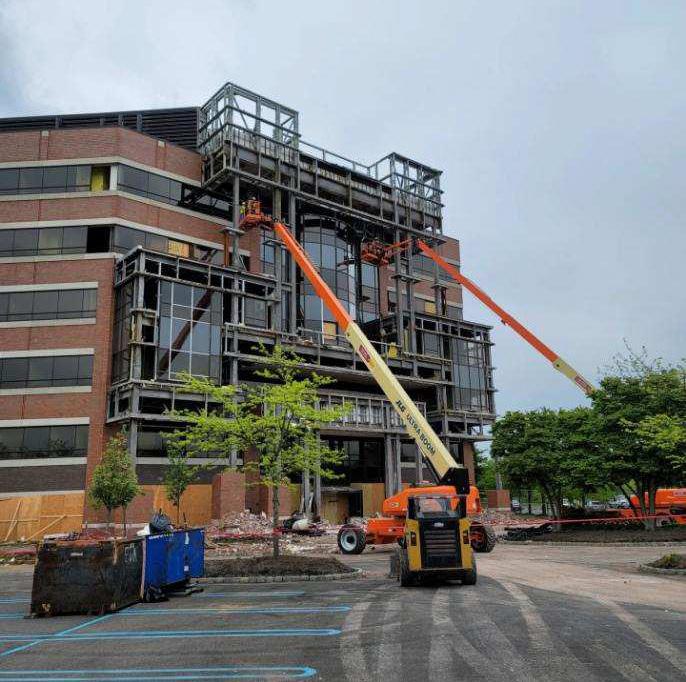
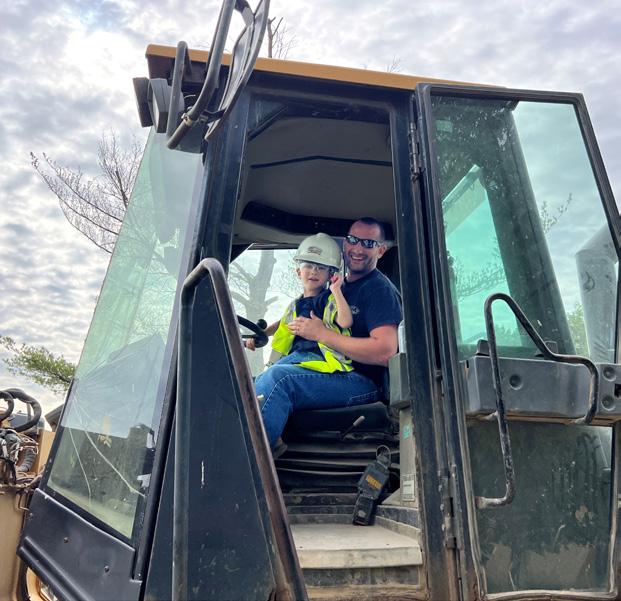
Chris Martino runs a demolition company, EDM, alongside his brother and childhood friend.
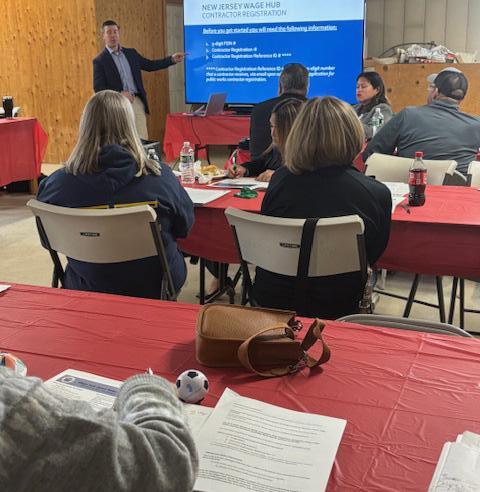
Summer 2025 labor law updates, dealing with shifting immigration policies, and insurance essentials for land improvement contractors.
How Can Apprenticeship Training Help Your Company?
• Instill your company’s culture and retain workers
• Recruit and develop a diverse and highly skilled workforce
• Improve productivity, profitability, and your bottom line
• Reduce tur nover, improve loyalty, and retain top talent
• Demonstrate investment in your community
New hires and/or existing employees or Hire an apprentice from the NJLICA Apprenticeship Program
Dear fellow members and associates,
As we approach the second half of the year, I want to thank each of you for your ongoing dedication to the work we do as members of the New Jersey Land Improvement Contractors of America. Your commitment, professionalism, and forward-thinking mindset continue to be the foundation of this organization and the broader land improvement industry across our state.
I’m excited to introduce our upcoming fall schedule of events that will enhance NJLICA and support our industry as a whole in New Jersey. This season’s programming features two key dinner meetings designed to help our members strengthen their skills, refine their busi ness operations, and stay informed about significant regulatory and policy changes.
the political landscape in New Jersey requires serious focus and engagement. The upcoming 2025 gubernatorial election will be one of the most important elections in recent memory for our industry.
Infrastructure spending, permitting reform, environmental regulation, workforce development, and public-private partnerships are all issues that directly impact our members’ operations and long-term sustainability. The next governor of New Jersey will have the authority to determine how these issues are prioritized and carried out over the next four to eight years.
• 37th Annual Golf Classic North: August 18, New Jersey National, Basking Ridge, N.J.
• Fall Dinner Meeting North: September 17, Yogi Berra Museum, Montclair, N.J.
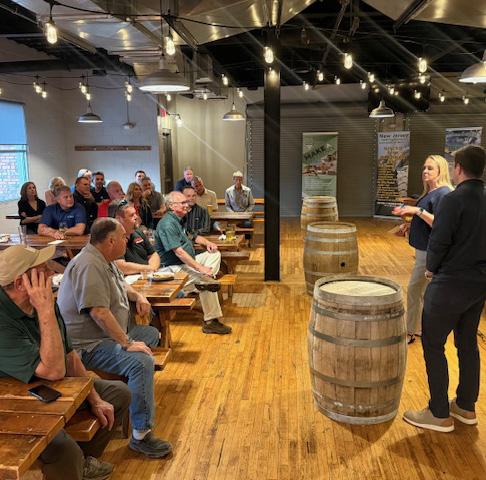
• Fall Dinner Meeting South: October 8, Laurita Winery, New Egypt, N.J.
• Third Annual NJLICA Sporting Clays: October 27, Lehigh Valley Sporting Clays, Coplay, Pa.
• 47th Annual NJLICA Holiday Awards Dinner: December 4, The Meadow Wood, Randolph, N.J.
Whether you’re a seasoned expert or an aspiring leader in the industry, this fall provides numerous chances to learn, network, and make a difference.
A Pivotal Political Season Ahead
While our fall programming excites us,
We cannot afford to just passively observe this election. As land improvement contractors, we need to ensure our voices are heard. We should actively connect with candidates, ask tough questions, and highlight the significance of our daily work in protecting, maintaining, and enhancing New Jersey’s land and water resources. NJLICA plans to actively participate in this initiative.
Your Voice Matters
Stay informed, get involved, and leverage our network’s strength. The more unified our advocacy, the greater our collective impact, not only in this election but also in shaping the future of land improvement across New Jersey. Thank you again for your ongoing leadership in the field and for being an active member of the NJLICA community. I look forward to connecting with many of you at our upcoming fall events and working together as we navigate this critical election season.
Respectfully,
Dennis Mikula, Jr. President, NJLICA
NJLICA BOARD OF DIRECTORS
Dennis Mikula, Jr., President Mikula Contracting, Inc.
Mark Krutis, Vice President Tom Krutis Excavating, Inc.
William J. Esposito, Historian Espo's Tree and Crane Service
Frank C. Del Guercio Tilcon NY
Ron Garofalo
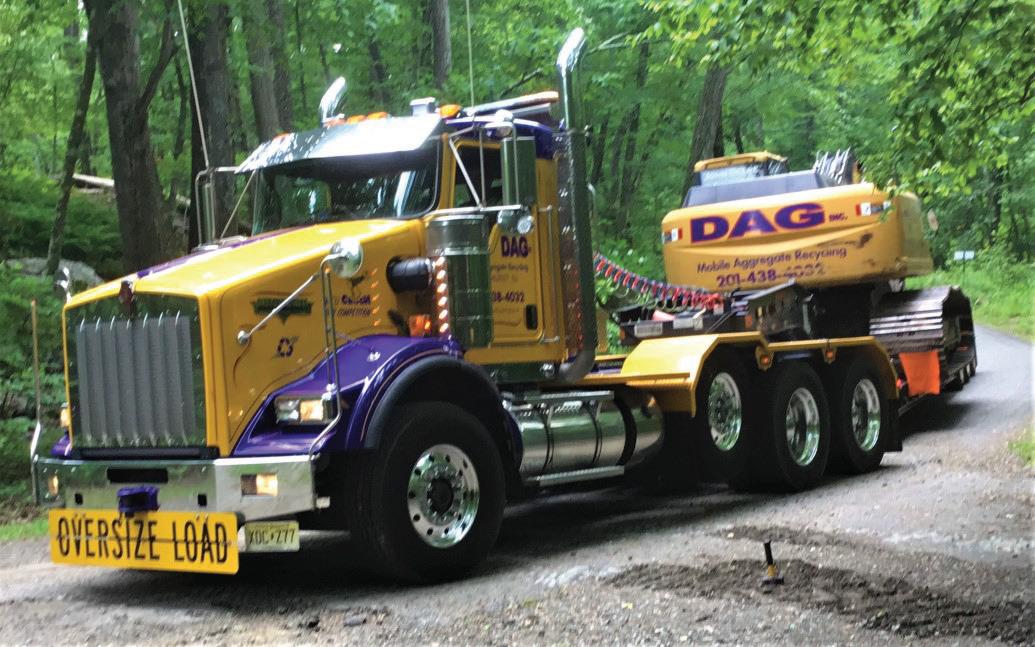
DAG Mobile Aggregate Recycling, Inc.
Warren Gonzalez Foley, Inc.
Shelly Hewson Hewson Landscape, Inc.
Frank Horan Groff Tractor Mid Atlantic, LLC
Bob Manis North American Aggregates
Joe Mayers Septic Experts, LLC
John Rothberg L.N. Rothberg & Son
Dave Vander Groef Wantage Excavating Co., Inc.
Buddy Freund, Executive Director
COVER PHOTO BY JOHN ESPERANCILLA, UNSPLASH; PHOTO PAGE 5 BY BUILT ROBOTICS, UNSPLASH
SUMMER 2025 LABOR LAW UPDATE
Although developments at the federal level are getting most of the headlines, New Jersey employers should continue to monitor legislative developments coming out of Trenton since most federal law changes are not usurping or preempting state legislation.
First, at the federal level, given the Trump Administration’s emphasis on detention and deportation, a prudent step is to finetune your business’s compliance with the I-9 process. The Immigration Reform and Control Act (IRCA) requires that any person hired in or after November 1986 must provide documentary evidence of authorization to work in the U.S. As immigration law enforcement is stepped up, we anticipate various federal agencies will focus increasingly on workplaces to identify and detain persons who are working without authorization. To manage risks in this area (penalties increase depending on the number of violations), ensure that your I-9 forms are being completed properly, documentation is examined for authenticity, and the forms are being preserved in the event of an agency audit. If your business does not have a policy calling for the lawful destruction of documents, consider creating one, because the I-9 form does not have to be retained indefinitely after an employee separates.
You may recall that in November 2024 a federal judge in Texas vacated the U.S. Labor Department’s final rule that was designed to lift the salary requirements for overtime exempt status in three steps, one each in 2024, 2025, and 2027. The Labor Department appealed this decision but in April 2025 advised the Court of Appeals that it is reconsidering the final rule and asked the court to place the appeal in abeyance. The court agreed to do so and as a result, for now the minimum salary requirements for exempt status remain as they were, generally at $35,568 per year.
In another reversal, a current Labor Department assistant secretary has re-instated the Opinion Letter Program which allows employers to request an opinion letter explaining how the Labor Department would apply federal labor law under various fact scenarios. This Program was abandoned by the Obama Administration under pressure from the plaintiffs’ bar.
New Jersey’s legislature refuses to be overshadowed by the federal government. Our state’s Pay and Benefit Transparency Act took effect on June 1, 2025 and applies to employers with at least 10 employees in New Jersey, regardless of whether the employer itself is physically located in New Jersey. The act requires covered employers to disclose the hourly wage, a salary or salary range, and a general description of benefits and other compensation for which a newly hired employee will be eligible, if hired. These disclosures must be included in job postings and job advertisements, regardless of whether they are published internally (within the business) or externally (to the public). The act also applies to promotional opportunities and requires that the op-
BY PATRICK W. MCGOVERN
portunity be posted or announced to all employees working in the department in question before the promotion decision it made. An exception applies when the promotion is based on the employee’s years of experience or job performance.
Not yet in effect are proposed regulations promulgated in April 2025 by the N.J. Department of Labor and Workforce Development (DOL) that will codify New Jersey’s version of the ABC test which determines whether a service provider is an independent contractor or an employee of the business. The proposed regulations suggest they are merely explaining the test articulated by New Jersey courts over the past 30 years, but they do much more than that. In all events, the legal burden is on the business to establish the individual’s independent contractor status. Failing to do so, the business must treat the individual as an employee and manage a past liability for misclassifying the person as an independent contractor. The business must prove all three prongs of the ABC test to avoid a determination that the service provider
is an employee of the business. Prong A requires the business to show not only that it does not control the service provider, but also that it has not reserved the right to control the individual’s performance. The DOL then lists nine factors as considerations for applying Prong A, including “whether the services must be rendered by the individual personally” and whether the business “limits the individual’s performance of services for other parties such as by limiting the individual’s geographic area or potential clientele.” The nine factors are neither dispositive nor exhaustive.
Prong B requires the business to prove that the services in question are either outside the usual course of business or the service is performed outside, away from the usual place of business. In essence, if the services are essential to the business and are performed at a usual place of the business, Prong B will dictate that the service provider is an employee.
The DOL lists seven factors to be considered in applying Prong C, which inquires whether the service provider is engaged in an independently established trade, occupation, profession, or business. The DOL will consider “the duration, strength, and viability of the individual’s business (independent of the putative employer)” and the number of customers the service provider has. The DOL clarifies that simply because the service provider has multiple clients does not equate to an independently established enterprise.
In addition, the commentary to the proposed regulations indicates that the DOL will not defer to an “agreement that labels the individual an independent contractor.”
The comment period for the proposed regulations has been extended to August 6, 2025.
Another regulatory development that merits attention is a New Jersey Senate bill (Senate Bill No. 4385) which, if enacted, would void many non-compete agreements that would otherwise be enforceable in a New Jersey court and would have retroactive effect. Under the Senate bill, the only non-compete agreements that would be enforceable in New Jersey would be pre-existing agreements with senior executives — persons in policy-making positions whose compensation is at least $151,164 annually. Even with these limitations, not all non-compete agreements with senior executives would be enforceable under this bill if they are too broad, or longer than 12 months in duration, or attempt to restrict the employee’s services outside New Jersey.
As these developments show, one thing that is predictable in 2025 is there will be more changes to come, both in Washington and in Trenton.
For over 30 years, Genova Burns has partnered with companies, businesses, trade organizations, and government entities on mattress in New Jersey and the greater Northeast corridor between New York City and Washington, D.C.
ESTATE PLANNING FOR BUSINESS OWNERS: AVOIDING FAMILY DISPUTES
When the founder of a family-owned construction business passes away, the impact can be both financial and personal. Even successful companies can face significant conflict if there isn’t a clear plan for how ownership and control will transfer to the next generation. This risk is particularly high when some children are actively involved in the business while others are not. This is a common issue in the construction industry.
For example, one child might be managing job sites, handling bonding, or overseeing client relationships, while their siblings may have different responsibilities at the company or no involvement in the business. If the owner dies and leaves the business equally to all children, disagreements about leadership, control, pay, and profit distribution can quickly harm both the business and family relationships.
Fortunately, with proper planning, these conflicts can be avoided.
“Equal” Isn’t Always “Fair”
It’s important to understand that treating children fairly doesn’t always mean treating them equally. Sometimes, fairness means giving different things to different children, especially if only one child is actively contributing to the company’s success.
Instead of dividing company stock or LLC ownership interests equally, many business owners choose to leave the business to the child who is involved. For the other children, assets of similar value — such as life insurance proceeds, real estate, or investment accounts — can be provided.
BY ELIZABETH PETITE
In some cases, families may choose to keep all children as owners but structure the company to reflect different levels of participation. This can be done by creating different classes of ownership. For instance, children active in the business might receive voting shares, while those not involved receive nonvoting shares. This allows profits to be shared, but control of daily operations remains with those who are doing the work. Of course, this type of arrangement works best when the siblings who are not involved in the company on a day-to-day basis allow the others to run the company and not second guess every decision.
Clear Agreements Are Key
Having an unambiguous and up-to-date operating agreement or shareholders’ agreement is also crucial. These documents should clearly state who is in charge, how decisions are made, how profits are distributed, and how ownership interests can be bought or sold.
Many business owners include a buy-sell agreement, which gives the company or the remaining owners the right to purchase the interest of a deceased or departing owner. This helps keep ownership concentrated and prevents unintended co-owners, like in-laws or distant relatives, from becoming involved.
Recent legal changes have made the design of buy-sell agreements even more important. In 2024, the U.S. Supreme Court ruled in Connelly v. United States that life insurance held by a company to fund a buyout is an asset of the company and must be included in the company’s value, which effectively increases
the value of the deceased owner’s taxable estate. This means that many buy-sell agreements funded by company-owned life insurance might now create unexpected estate tax obligations. As a result, some businesses are instead using cross-purchase structures, where individual owners — not the business — own the policies, or they are using a separate entity to hold the insurance.
Personal Guarantees
Another important area to address is the personal financial exposure that many business owners have. It’s common for contractors to sign personal guarantees on loans, equipment leases, or surety bonds. These obligations do not disappear upon death. A properly designed estate state plan should identify who will take on these guarantees and whether there are enough liquid assets, such as life insurance or cash reserves, to meet these obligations and keep the business operating.
Choosing the Right People to Manage Your Estate
The individuals appointed to manage your estate will play a significant role in how smoothly your plan is carried out. Executors need more than just a basic understanding of probate; they must be able to oversee payroll, communicate with bonding companies, manage bank relationships, and navigate disputes among beneficiaries. In some cases, it can be beneficial to divide these responsibilities, naming one person for operational matters and another for financial or legal oversight.
Open Communication is Vital Communication during your lifetime is just as important as written documents. Family members should be aware of your wishes. Even if a formal meeting isn’t possible, a letter explaining your intentions can go a long way in preventing future misunderstandings. If you want one child to take over the business, clearly state this. If you want profits shared but decision-making centralized, that should also be documented.
Without a plan, state law will determine how your business is divided, which often means equal shares to all children, regardless of their involvement. For business owners who have built a valuable company and want it to continue, this default approach rarely works.
By working with professionals who understand both the legal and business aspects of succession planning, you can protect what you’ve built, provide for your family, and leave a legacy that avoids litigation.
This article provides general information and should not be considered legal advice. For guidance specific to your situation, consult an estate planning attorney licensed in your jurisdiction.
Elizabeth Petite is the chairperson of Lindabury’s Wills, Trusts & Estates practice. She can be reached at 908.233.6800 or EPetite@Lindabury.com.
HOW BUSINESS LEADERS CAN NAVIGATE A SHIFTING IMMIGRATION POLICY LANDSCAPE
BY JORGE LOPEZ, DEEPTI OREKONDY, AND GEORGE MICHAEL THOMPSON
Immigration policy changes under the Trump Administration extend far beyond border security, creating immediate business disruptions from workforce gaps to compliance challenges. The administration’s goal of conducting 15,000 ICE audits annually — up from fewer than 1,000 under the Biden Administration —signals a dramatic enforcement shift that many employers expect will significantly impact their workplaces. Littler Mendelson attorneys outline how policy changes affecting everything from humanitarian parole programs to social media monitoring create new risks for businesses across industries, particularly in hospitality, manufacturing, construction and agriculture.
President Donald Trump’s second term has brought a host of new immigration-related proposals, policy changes, and executive orders. Meanwhile, longstanding executive orders implemented under the Biden Administration, as well as past presidential administrations, are being rescinded. Although major policy initiatives generally require approval by the legislative branch, executive orders have significant influence over the internal affairs of government, especially in the context of immigration. This includes deciding how and to what degree legislation will be enforced, how to deal with emergencies, and wide discretion regarding the entry and removal of individuals in the US.
While at first glance, policy changes related to immigration enforcement and visa processing would appear to be an individualized, personal issue, these changes can have drastic and im-
mediate effects on businesses of all types — be it retention and recruitment of their workforce, travel restrictions on specialized knowledge employees and executives, and/or increased focus on legal compliance due to ever-shifting policy changes.
Case in point: Littler’s latest employer survey revealed that 58% of U.S. employers are concerned about potential staffing challenges as a result of immigration-related regulatory changes, while 70% expect enforcement from Immigration and Customs Enforcement (ICE)/Department of Homeland Security (DHS) to have a significant or moderate impact on their workplaces in 2025.
Given the wide-ranging implications of the Trump Administration’s immigration policies for companies, executives and their compliance teams will have a key role to play in effectively navigating these changes, guiding operational continuity and legal compliance while enabling their businesses to focus on growth and stability in a dynamic political climate.
Overview of major policy shifts
Let’s look at some of these major changes and policy initiatives and the effect they can have on business, including labor shortages, resource allocation and strategic direction.
Mass deportations
One of the major initiatives promoted by the Trump Administration
has been a reinvigoration for so-called “mass deportations.” While there was an initial belief that such increased enforcement would be directed at individuals without lawful status or authorization in the US, the reality is the administration has expanded its policies to include ending lawful programs created under previous administrations — and continued under the first Trump Administration — such as temporary protected status and humanitarian parole, each of which provided employment authorization. The result is already creating disruptions in employer workforces, especially as most of these programs are terminated with little warning, leaving employers scrambling to comply with new enforcement directives while simultaneously preparing to fill potentially large gaps in their workforce.
Less resources for key government agencies
Further exacerbating potential labor issues is the administration’s cost- cutting initiatives being spearheaded by the Department of Government Efficiency, which will likely result in a reduction in staffing for federal agencies involved with benefits processing, such as the U.S. Citizenship and Immigration Services (USCIS) and the US Department of State (DOS) through U.S. consulates and embassies abroad. As a result, companies can expect an impact on their employees’ abilities to obtain timely work authorization or nonimmigrant visas necessary to enter the U.S. Such delays will likely create uncertainty for businesses that need to ensure continued workforce availability to meet business objectives and easy travel for senior executives seeking to enter the U.S. for high-level meetings and trainings.
Mounting immigration enforcement
Additionally, the administration has made immigration enforcement a top priority. This goes beyond increased security measures and tools at border crossings, targeting U.S. businesses as well. Again, this impact has been immediate, creating a nationwide rift with employers preparing for unexpected visits from ICE.
Under the Biden Administration, worksite enforcement and general immigration compliance issues were quite relaxed, resulting in less than 1,000 audits a year; even during the Bush and Obama administrations, audits averaged between 3,000 to 3,500 a year. By contrast, the first Trump Administration saw a dramatic shift in traditional worksite compliance of federal immigration laws. For instance, ICE I-9 audits increased to 5,981 in fiscal year 2018 and 6,450 in fiscal year 2019, with the stated goal of the administration to reach 15,000 audits per year (a goal that was hindered only by the nationwide disruptions caused by Covid-19). The first administration also saw the return of ICE raids after a near 10-year pause.
Now, the second Trump Administration has made clear that they intend to, once again, significantly increase ICE presence and worksite enforcement operations, as stated in an executive order. As such, businesses can expect 15,000 audits per year to be an ultimate goal of the administration and worksite raids to return.
Sweeping travel restrictions
Under the first Trump Administration, we witnessed sweeping travel restrictions that imposed severe limits at U.S. borders and international travel for non-citizens. This included nationwide travel bans on countries deemed a threat to national security and increased scrutiny on travelers from countries identified as main-
taining insufficient security standards. At that time, travel bans proved to be a large hurdle from a workforce staffing perspective, as legal immigration was brought to a halt for such travelers. With U.S. consulates limiting resources and appointment availability, qualified foreign workers were unable to enter or return to the U.S. to continue their work. Many businesses faced severe financial repercussions due to their inability to bring in necessary talent.
Under the current Trump Administration, similar travel restrictions are likely. Most recently, the administration issued an executive order titled “Protecting the United States from Foreign Terrorists and Other National Security and Public Safety Threats.” This order requires enhanced vetting and screening of nonimmigrant and immigrant visa applicants, including those sponsored by employers, in countries that the administration deemed to have deficient security controls; this sets the stage for stricter embassy/consular policies. Notably, the executive order provides for enhanced vetting and screening across federal agencies, particularly regarding the issuance of visas and the admissibility of visa applicants. Countries that may be affected include Pakistan, Venezuela, Cuba, Haiti and Syria, among others.
However, more troubling are the proclamations by the administration to assess “all visa programs to ensure that they are not used by foreign nation-states or other hostile actors to harm the security, economic, political, cultural, or other national interests of the United States.” In effect, the administration has clarified through speech and action that activity considered “anti-American” or “antisemitic” can be grounds for revoking an individual’s visa status or green card. This includes actions like participating in protests to posting on social media. For context, U.S. Secretary of State Marco Rubio confirmed in March that at least 300 visas have been revoked by the department, adding that the state department specifically targeted those individuals who were involved in activities that “run counter” to U.S. national interests.
Best practices for business leaders
As a result of the above, business leaders should consider proactively taking the following steps:
Coordinate with legal and HR departments to review current immigration compliance policies and conduct an internal I-9 audits. This includes conducting an internal Form I-9 audit to ensure all such documentation is up to date and valid. Ensure, too, that the relevant staff are properly trained and supervised in the preparation and maintenance of Form I-9s to reduce the risk of their making common I-9 mistakes. Finally, companies should verify that all internal policies are consistent with state and federal employment verification requirements.
Consider enrolling in E-Verify. Administered by the Social Security Administration and USCIS, E-Verify streamlines employment eligibility verification through an online process. However, employers should consult with their legal departments to understand the full pros and cons of E-Verify enrollment.
Develop clear action plans in coordination with legal and HR to ensure staff are properly trained in the event of a visit from federal agents. Executives should begin creating a crisis management team that is prepared and knowledgeable on action items in the event of a site visit by any government agency seek-
ing to enforce federal immigration laws. Employers should work with legal counsel to create internal policies and memoranda to instruct their employees on what to do and what not to do in the event of a visit from such federal officers. They should also prepare to address any public relations issues that may arise as the result of any federal enforcement actions, such as an ICE raid.
Businesses within the hospitality, manufacturing, construction and agriculture industries are particularly high-priority targets for the administration and should be vigilant in ensuring their internal policies and compliance are up-to-date.
Littler’s survey, for instance, showed that immigration topped the list of policy changes that manufacturers most expect to impact their businesses in 2025, while nearly 90% of retail/ hospitality employers said they expect enforcement by ICE/DHS to have a significant or moderate impact on their workplaces (compared with 70% of all employers). Large employers (those with more than 10,000 employees) are more concerned than their counterparts about ICE/DHS enforcement (84% expect a significant or moderate impact on their workplaces) and workforce staffing challenges (69% expressed concern, versus 58% overall).
While this can undoubtedly create a resource strain on the HR and legal departments of large businesses, proactive measures now can prevent later hefty fines from the federal government as well as potentially unwanted press as the administration seeks to promote successful agency enforcement actions.
Review and revise current company policies with regards to social media activity and travel guidance for employees. Businesses must be more cognizant than ever regarding the social media activity of all employees, including senior executives who frequently travel and/or stay in the US, as any activity deemed “counter” to U.S. national interests can result in visa revocation or lengthy visa processing delays. Again, businesses should direct their legal departments to create travel guidance for all those engaging in international travel, be they returning from abroad or entering the US for the first time, to ensure they are prepared to answer questions and provide relevant documentation to government officials to reduce the risk of unwarranted delays or denials.
Understand restrictions on attorneys and law firms related to immigration benefits. A recent memo issued by the White House titled “Preventing Abuses of the Legal System and the Federal Court“ specifically targets law firms and attorneys in their representation of clients in immigration proceedings or before “any component of the Federal Government.” While the document focuses on ethical violations, what it does raise is that now, more than ever, executives should be coordinating the representations made on behalf of the company in immigration proceedings and/ or filings with federal government agencies. In other words, closely monitoring and coordinating the procedures and representations implemented on behalf of the company is critical.
Prepare to address labor shortages for employees employed through programs targeted for termination. Harsher scrutiny on visa processing and the termination of lawful programs that provided work authorization for individuals in the U.S. will require business leaders to rethink their staffing efforts and perhaps curtail planned expansion efforts. Further, strategic planners must
be prepared for an increase in requests from non-US citizen or permanent resident employees seeking sponsorships for permanent residence (aka green cards).
Employees without permanent residence, and the additional protections such a status provides, are likely to feel increased fear given their temporary legal status and push for employer sponsorship for permanent residence sooner than typical company policy dictates; this can be a significant financial burden on employers. Further, such a sponsorship process can be complicated by a slowing economy as the green card conversion process, managed by the Department of Labor, can also be expected to experience significant delays as a result of a downturn in the economy and agency staff shortages.
A difficult road ahead
Collectively, new executive orders, policy changes, and shifting federal resource allocation with regard to immigration enforcement and compliance will have a significant effect on long-term strategic planning for businesses in the U.S.
Under Trump’s order titled “America First Trade Policy,” the president intends to promote investment and productivity and defend the nation’s economic and national security to benefit American workers, manufacturers, farmers, ranchers, entrepreneurs, and businesses.
In practice, increased immigration enforcement efforts and policy changes regarding visa processing is likely to only increase labor shortages for U.S. businesses. Companies with large multinational staff or reliant on specialized skilled workers seeking to expand their presence within the US, are likely to face hurdles in filling these gaps given the absences already present in the U.S. workforce.
Importantly, increased worksite enforcement actions will undoubtedly result in increased spends in HR and legal departments to ensure up- to-date compliance with federal law and policies. Naturally, this will affect the overall resources available to strategic planners for the current fiscal year and possibly beyond.
Given the vast changes already implemented in just the first few months of this administration, we can expect to see similar changes over the next four years that will create stricter controls over immigration benefits, increased workplace enforcement and a significant increase in immigration compliance audits. If businesses have not already started to prepare for the upcoming changes, now is the time to take proactive measures to prepare for potential changes that may greatly affect their workforce and business operations.
Reprinted with permission from Corporate Compliance Insights. Information contained in this publication is intended for informational purposes only and does not constitute legal advice or opinion, nor is it a substitute for the professional judgment of an attorney.
Littler Mendelson is part of the international legal practice, Littler Global, which operates worldwide through a number of separate legal entities.
HOW TO HAND OFF YOUR BUSINESS WITHOUT HANDING OVER A MESS
If you’re like most contractors I’ve worked with, you didn’t get into this business because you loved paperwork or long-term planning. You got into it because you know how to build things — systems, drainage, ponds, roads, careers. You’re a problem solver. A hands-on leader. Someone who gets the job done when others can’t.
And after decades of doing just that, you’ve built more than a business — you’ve built a reputation, a livelihood for your family, and a legacy in your community.
But there’s one project many contractors never quite finish: planning their own exit.
You might have an idea of who you’d like to take over — maybe your son or daughter, a trusted foreman, or even a longtime competitor. But the how remains fuzzy. And let’s be honest: when you’re chasing permits, running crews, and juggling seasonal cash flow, it’s hard to focus on something that’s five years away.
So the planning gets delayed… until it’s too late.
The Cost of Avoiding the Conversation
When there’s no plan in place, I’ve seen contractors run into real problems:
• The business loses value the moment the owner steps back — because everything was in their head
• Family members aren’t ready or don’t want the responsibility
• Employees get nervous and start looking for new jobs
• The owner is forced to sell due to health or burnout, often for less than the business is worth
I’ve even seen businesses that simply shut down, not because they weren’t profitable, but because the owner waited too long to make a plan — and no one could fill their boots on short notice. It’s a tough pill to swallow. But the good news is this: with some intentional planning, you can create an exit that protects your people, preserves your legacy, and gives you the freedom to walk away on your own terms.
What a Rock Solid Exit Looks Like
A successful business transition doesn’t happen overnight — it happens over time. Here’s the framework we use at Granite Wealth Partners to help contractors and business owners build a rock solid exit plan:
1. Clarify your vision
Start by defining your goals. Do you want to keep the business in the family? Sell to a key employee? Bring in a younger partner and phase out over time? Each option has its pros and cons — financially, emotionally, and practically. The best exit plan is the one that aligns with your values and long-term goals.
BY MICHAEL J. GUARINO III
2. Build your Bench
If your goal is to pass the business to someone, whether family or internal staff, they need to be prepared. That means more than just learning the trade. They need to understand the books, client relationships, cash flow cycles, and how to run the business behind the scenes. Start grooming them now — not when you’re ready to retire. A slow, steady transition creates confidence — both for you and for your successor.
Scheideler Excavating Co.
4. Protect your Plan
A written succession plan and updated estate documents are essential. These ensure that your wishes are carried out, your family avoids legal headaches, and your business can keep running even if something unexpected happens. Don’t leave it to chance or vague conversations — put it in writing.
5. Partner with Pros
You don’t need to figure this out on your own. A good team — typically a financial advisor, CPA, and attorney — can help you design and execute a clear exit plan that covers taxes, timing, and legacy issues.
Don’t Let the Business Die with You
Here’s the truth: if your business can’t survive without you, it’s not a business — it’s a job. And it ends when you do. But with the right planning, your business can outlive you. It can fund your re-
tirement, provide income to your family, support your employees, and continue making an impact in your community. I’ve helped dozens of business owners in construction, trades, and land improvement build their next chapter — whether that’s retirement, mentorship, or simply working less. The earlier you start, the more options you have.
So whether you’re 10 years out or already thinking about hanging up your boots next season, take that first step: start the conversation. Your last big project might just be your most important one.
Ready to explore what a rock solid exit could look like for you? Reach out to Granite Wealth Partners at www.granitewealthpartners.com or call us at (973) 625-1112. We’ll help you protect what you’ve built and plan your next move with clarity and confidence.
Michael Guarino, III, CDFA®, AIF® is the CEO and founder of Granite Wealth Partners.
BRIGETTE EAGAN, ESQ.
PATRICK W. MCGOVERN, ESQ.
ONE BIG BEAUTIFUL BILL SUMMARY
After much hype, debate and negotiation, President Trump and Congress delivered the One Big Beautiful Bill, which was signed into law on July 4. There is a lot going on in this big piece of legislation, too much to go through in detail in this article. So below is a summary of some of the provisions, or at least the ones that got the most attention. Once the think tanks get to dig into the hundreds of pages of tax law, I am sure the details and applications will provide for continued debate, and if past history is any indication, require additional legislation to clarify the bill.
Business Provisions
Asset expensing Section 179 depreciation: The maximum annual expense limit has been raised to $2.5 million reduced dollar for dollar by the amount by which qualifying property placed in service exceeds $4 million. Effective for taxable years beginning after December 31, 2024.
Bonus Depreciation: Permanently reinstates the 100% deduction in the year of acquisition for qualified property acquired and placed in service after January 19, 2025. There is no retroactive change to bonus depreciation for assets placed in service for 2023 and 2024 tax years.
Depreciation for Qualified Production Property (QPP): Intended to stimulate manufacturing, this new provision provides 100% bonus depreciation for qualified production property placed in service after enactment of the bill, but before January 1, 2031. QPP is defined as nonresidential real property located in the U.S. or its territories used in manufacturing, agricultural or chemical production, or refining of tangible personal property. QPP requires a substantial transformation of the property comprising the product.
Qualified Business Income (QBI) Deduction: Permanently extends the 20% deduction for qualifying business income and increases phase-in income limits beyond which the deduction may be limited based upon W-2 wages, qualifying property, and being a specified service trade or business.
Excess Business Losses: Permanently limits the amount of aggregate business losses of non-corporate taxpayers to the amount of aggregate gross business income and gains plus a threshold amount of $250,000 adjusted annually for inflation (for 2025 inflation adjusted threshold is $313,000). Losses exceeding income gains and the threshold amount will carry forward and follow NOL rules.
Renewable energy credits: Terminates credits for alternative fuel vehicle refueling property placed in service after June 30, 2026 and commercial clean vehicle for vehicles acquired after Sept. 30, 2025.
Energy Efficient Commercial Buildings deduction: Terminates the deduction for new energy efficient buildings with construction beginning after June 30, 2026.
BY DIANE MCNULTY
Cost Recovery for Solar and Wind Energy Property: Removes solar and wind energy property from the definition of five-year property for construction beginning in 2025. However, bonus depreciation may still apply to these projects as well as other tax credits.
Estate and Trust Provisions
Estate and Gift Tax Exemption: Permanently increases the estate and gift tax exemption to $15 million, indexed annually for inflation.
Individual Provisions
Individual Income tax rates: Permanently extends the TCJA decrease to income tax rates and thresholds (tax brackets) with the highest tax rate being 37%.
Standard deduction: Permanently extends the TCJA increased standard deductions
State and Local (SALT) Cap: Temporarily increased to $40,000 for 2025 and starting with $40,400 in 2026, will be increased by 1% through 2029. The amount of the deduction is subject to phase down (floor of $10,000) when adjusted gross income exceeds $500,000 in 2025 and adjusted by 1% through 2029. This provision expires for 2030.
Enhanced Senior Deduction: Provides for a temporary $6,000 bonus deduction to seniors over 65 years old beginning in 2025 through 2028. The bonus deduction is reduced by 6%, but not below zero, of AGI exceeding $75,000 ($150,000 for joint filers).
Deductions for Tip Income: creates a temporary deduction for qualified tips up to $25,000 phasing out with AGI exceeding $150,000 ($300,000 for joint filers). The deduction is effective for 2025 through 2028.
Deductions for Overtime Pay: Creates a temporary deduction for qualified overtime pay of $12,500 ($25,000 for joint filers) for years 2025 through 2028. The deduction phases out when AGI exceeds $150,000 ($300,000 for joint filers).
Auto Loan Interest Deduction: creates a deduction for auto loan indebtedness incurred to purchase a passenger vehicle assembled in the US. This deduction is subject to phase out when AGI exceeds $100,000 ($200,000 for joint filers) and is effective for indebtedness incurred in 2025 through 2028.
If you have any questions or need assistance, Smolin is here to help. Please do not hesitate to contact a Smolin professional at 973-439-7200.
Diane McNulty, CPA, of Smolin, Lupin, & Co. can be reached at 732-945-4923 and dmcnulty@smolin.com.
THE IMPORTANCE OF COMPLIANCE AND SAVINGS WITH A 401(K) PLAN UTILIZING FRINGE BENEFITS
For open shop contractors working on government-funded projects, navigating prevailing wage laws can be complex. One of the most effective strategies to ensure compliance while maximizing financial efficiency is directing fringe benefits into a 401(k) plan. TLC4 Prevailing Wage specializes in helping contractors leverage this approach, leading to substantial payroll tax savings and regulatory compliance.
When contractors pay fringe benefits in cash rather than allocating them to a bona fide benefits plan, they increase their payroll tax liability. Taxes such as FICA, FUTA, SUTA, and workers’ compensation premiums apply to the entire amount paid in wages. However, by directing fringe dollars into a 401(k) plan, contractors can significantly reduce payroll tax expenses while simultaneously enhancing employees’ retirement security. This method provides dual benefits — helping workers save for the future and improving a contractor’s bottom line.
Compliance is another critical reason to allocate fringe benefits properly. The Davis-Bacon Act and related state prevailing wage laws require that fringe benefits be used for the direct ben-
SAFETY PERSPECTIVES
BY TRACY CARVER
efit of employees. By utilizing a 401(k) plan, contractors meet these legal obligations while avoiding the scrutiny and potential penalties associated with non-compliance. Moreover, TLC4 Prevailing Wage ensures that contributions align with ERISA and DOL regulations, simplifying the process for businesses.
In today’s competitive market, contractors who use a 401(k) for fringe benefits gain a financial edge by bidding more competitively and reducing overall labor costs. TLC4 Prevailing Wage provides the expertise and tools necessary to implement this strategy effectively, ensuring compliance while maximizing savings. Adopting this approach is a smart move for any contractor looking to improve financial efficiency and workforce benefits.
Tracy Carver is the president of TLC4 Prevailing Wage, a company specializing in custom 401(k) plans and compliance for open shop contractors, as well as those contractors working on prevailing wage projects. With over 16 years of experience, she is recognized for her extensive knowledge in retirement programs. Tracy is also an associate member of NJLICA.
FRAUDULET ACTION REQUIRED NOTICE
FMCSA’s customers have been receiving an email from sender admin@fmcsadministration.com, which is not related at all with the Federal Motor Carrier Safety Administration (FMCSA). See next page for reference. The correspondence notifies of an “immediate action required” to submit:
• Certificate of Insurance
• IRS-issued EIN Verification Letter
• Certificate of Organization
• Clear copies of your driver’s license (front and back)
For assistance with your OSDOT and OSHA compliance, don't hesitate to get in touch with Anthony Morreale, co-owner of TriState Safety Solutions, at 732-551-3833, amorreale@tsss-nj.com, or visit our website, www.tsss-nj.com.
BY ANTHONY MORREALE
PHOTO BY POP & ZEBRA, UNSPLASH
INFRASTRUCTURE FUNDING MOVES INTO FOCUS
Now that Congress has finished President Trump’s One Big Beautiful domestic policy legislation through the reconciliation process, the focus will turn to the appropriations process and funding programs in FY 2026. Also in focus will be reauthorization for infrastructure programs and the farm bill. Congress passed two major acts during President Biden’s administration to provide economic stimulus in response to the COVID pandemic: the Infrastructure Investment and Jobs Act (IIJA) and the Inflation Reduction Act (IRA) which are now expiring and need to be addressed.
The IIJA provided a record $1.2 trillion of investment in various infrastructure categories including roads, bridges, water, wastewater, ports, freight and passenger rail, and broadband internet. It was the vehicle for reauthorizing the five-year highway and transit legislation, which was often described as “historic” or “generational,” including its $673.8 billion in transportation funding for roads, bridges, transit, airports, ports, and rail. Of that $673.8 billion, the largest share — or $379.3 billion — was for highway infrastructure, with roughly 20 percent of the total highway allocation to be distributed in each of the five fiscal years from 2022 through 2026. However, this funding runs out at the end of FY 2026 on Sept. 30, 2026.
The boost in infrastructure funding in all categories ensured a steady and growing infrastructure construction market. However, the outlook moving forward could prove challenging. Since IIJA enactment in November 2021, the nation as a whole — and the transportation sector especially — has experienced a significant loss of purchasing power due to inflation. According to USDOT’s Bureau of Transportation Statistics (BTS), their “modest inflation” scenario for the IIJA estimates a 31% loss in purchasing power for the total of its five fiscal years from fiscal 2022 to 2026, reducing the $379.3 billion in nominal dollars for highways to $260.5 billion in real dollars. The BTS’s “high inflation” scenario estimates a 40% loss in purchasing power of the IIJA, reducing $379.3 billion in nominal dollars to $224.2 billion in real dollars. The same loss in purchasing power impacts other infrastructure categories as well.
The Congressional debate over the reconciliation legislation put a bright spot light on the federal debt currently over $36 trillion. Congressional Budget Office estimates indicate that the impact of the “Big Beautiful Bill” could be an increase in the debt of as much as $4 trillion over the next 10 years. Many Republican senators and representatives expressed grave concern about these numbers and looked for ways to cut government spending to placate their concerns about the debt. Additional focus on cutting
BY BRIAN DEERY
federal spending can be expected as Congress moves along with FY 2026 appropriations and with pending reauthorization of the Surface Transportation and Farm bills.
Many members of Congress, however, voted for the reconciliation legislation with the expectation that extending tax cuts and enhancements to providing government services will lead to economic growth that will reduce annual deficits and ultimately the federal debt level. Experience points to infrastructure investment providing that kind of economic growth. The Association of Equipment Manufacturers (AEM) reports a direct positive impact from the infrastructure law. Shortly after the IIJA was enacted, equipment orders grew by 13 percent and inventories grew by 22 percent, as manufacturers anticipated growing demand. The U.S. Bureau of Labor Statistics (BLS) also reports record levels of employment since quarter 1 of 2023. Employers have added 41,600 jobs in the highway, street, and bridge construction sector, bringing total 2024 summer construction employment to a record 413,400 workers. Simply put, these companies would not be investing in the people or equipment if there was not significant work to be done. As promised in the run-up to the 2021 infrastructure law, the investments in infrastructure would enable growth across the economy, and even despite inflation, these positive effects are proving true.
NJLICA members must be ready to make this case with our senators and representatives. Our future market is at stake.
Brian Deery serves as the director of government relations for LICA.
BY
PHOTO
JOSHUA SUKOFF, UNSPLASH
SPRING/SUMMER 2025 REPORT
This period has been quite active. New Jersey’s 2025 primary election has ended with a good turnout for both parties.
On the Democratic side with six candidates running, Congresswoman Mikie Sherill won with 34% of the vote, with Newark mayor Ras Baraka coming in second with 20% of the vote.
On the Republican side, former Assemblyman Jack Ciattarelli defeated radio talk show host Bill Spadea by over 45% of the vote cast. Ciattarelli won all 21 counties by large margins.
All 80 seats of the General Assembly are up for re-election in November. Only three incumbents will not be returning to Trenton in January. Democrats currently hold a 52-28 margin.
We continue to monitor various pieces of legislation which may affect the members of the NJLICA. We also are attending
BY ALADAR G. KOMJATHY
and participating in various networking and fundraising events on behalf of our clients.
We wish you all a safe and successful 2025 summer season.
Aladar G. Komjathy & Kean LLC represent NJLICA’s best interests in Trenton with both the legislative and executive branches of government.
NJ MANDATORY JOB POSTING PAY TRANSPARENCY LAW ENACTED
New Jersey Governor Phil Murphy signed Senate Bill 2310 into law, mandating pay transparency in job advertisements and the posting of internal promotional opportunities. The law takes effect on June 1, 2025, and applies to New Jersey employers with 10 or more employees.
Pay Transparency Requirements
Under the new law, covered employers must disclose in each posting for new jobs and transfer opportunities, whether advertised externally or internally:
• The hourly wage or salary, or the range thereof; and
• A general description of job duties, compensation, and benefits the available position offers
Note that employers may increase the compensation identified in the posting when an employment offer is made.
Internal Promotion Requirements
Employers must make reasonable efforts to announce promotional opportunities to all current employees in the affected department before making a promotion decision, unless the job position has specific requirements such as years of experience or performance.
Penalties
Employers who fail to comply with the new law may be subject to civil penalties of $300 for the first violation and $600 for each subsequent violation.
What Employers Should Consider In Preparation Of This New Law Effective 6/1/25
To be compliant with the law by its effective date, employers can take steps now, such as setting up compensation ranges paid for each job position, reviewing and updating job postings, doing a pay audit to identify and remedy any pay discrepancies or disparities, and get trained on the requirement to include compensation information in job advertisements and post promotional opportunities internally.
This is a good reminder to review your employment practices liability insurance (EPLI) and employee handbook.
Richard Gaynor is the president of Middleton & Company Insurance, the insurance advisor for many trade and business associations. The company provides informative, relevant, and cost-effective business insurance programs.
HOW SOCIAL INFLATION DRIVES UP COMMERCIAL AUTO INSURANCE COSTS
In recent years, social inflation has become a major issue in the commercial insurance industry. Social inflation refers to rising insurance claim costs caused by factors such as increased number of lawsuits, larger jury awards, and a growing distrust of corporations. While it affects many types of insurance, commercial auto insurance has been hit especially hard.
The Impact of Social Inflation on Commercial Auto Coverage
Social inflation creates challenges for all types of commercial insurance. Higher legal costs lead to expensive claims, forcing insurers to pay out more money. This can result in financial losses, causing insurers to raise premiums and impose stricter coverage limits to compensate.
The commercial auto insurance market faces additional struggles due to social inflation. This segment has already been unprofitable for years, and rising claim costs have only made things worse. As a result, the market remains difficult, and experts predict these challenges will continue into 2025 and beyond.
Businesses that use commercial vehicles — regardless of industry or fleet size — are likely to face higher premiums, reduced coverage limits, and tougher policy renewal processes. Companies with large fleets or poor safety records may see even steeper cost increases or the loss of their insurance at renewal.
Why Commercial Auto Insurance Faces Bigger Challenges
Several factors make commercial auto insurance more vulnerable to social inflation:
• More accidents: Fatal truck crashes have risen sharply, increasing the number of lawsuits and associated costs. According to the National Safety Council (NSC), deadly crashes involving large trucks have jumped 43% since 2010, now exceeding 5,000 per year. Many accidents are linked to dangerous driving behaviors like speeding, hard braking, and distracted driving.
• More severe crashes: Accidents are not only happening more often, but they are also becoming more serious. According to loss data from Advisen, the median cost of a single fatality jumped to $3.7 million in 2020, which represents a 60% increase from $2.3 million in 2010. Fatal truck crashes and high-cost injury claims are driving up the severity of insurance losses, making coverage more expensive.
• More safety violations: Poor driver training and vehicle maintenance contribute to more safety violations, which can lead to additional legal costs and higher potential for claims. This reduced emphasis on safety and vehicle maintenance has caused juries to shift more blame to employers rather than the actions of drivers.
How Businesses Can Reduce Risks
To minimize claims and navigate coverage challenges, businesses should take proactive steps:
BY DAVID CONCODORA
• Hire qualified drivers: Ensure all drivers have proper licensing and an acceptable driving record.
• Retain good employees: Experienced drivers are safer. Research from Idelic shows that drivers in their second year with a company are 40% less likely to be involved in a crash than in their first year. Offering competitive pay, extra time off, and benefits can help retain skilled drivers.
• Promote a safety culture: Regular training, safety meetings, and incentive programs for safe driving can help prevent accidents and strengthen your position in the event of a lawsuit.
• Use technology: Tools like telematics, vehicle cameras, and GPS navigation can monitor driver behavior and road conditions, reducing accident risks and false claims.
• Follow regulations: Work with legal experts to ensure compliance with Department of Transportation and FMCSA rules. Clearly outline these requirements in company policies.
• Consult an insurance expert: Stay in touch with a trusted insurance professional to help implement safety resources, provide risk management advice, receive compliance updates, and assist in the event of a claim or lawsuit.
For expert insurance solutions and risk management support, contact me today at 609-586-7474.
David Concodora, a risk management consultant, joined Rue Insurance in 2011 and specializes within the construction industry. He holds several designations, including Certified Insurance Counselor (CIC), Construction Risk and Insurance Specialist (CRIS), and Accredited Advisor in Insurance (AAI). David takes great pride in partnering with his clients to provide effective insurance and risk management solutions.
BEYOND THE JOB SITE: INSURANCE ESSENTIALS FOR LAND IMPOVEMENT CONTACTORS
Insurance may not be the most exciting part of running a land improvement business, but it is crucial. Misclassifying your equipment, whether it is a backhoe, trailer, or rented loader, can lead to costly coverage gaps and denied claims when you least expect it. For contractors in New Jersey, where dense roadways and strict regulations add extra layers of complexity, getting it right is critical.
This guide breaks it down so you can protect your business, stay compliant, and focus on what you do best: improving the land.
Rented and Subcontracted Equipment
Renting a loader or hiring a subcontractor’s trailer might seem straightforward, but insurance coverage can get tricky. Many contractors assume their general liability (CGL) policy will cover any mishap. In reality, you need a hired-auto endorsement on your business auto policy to extend coverage to vehicles you do not own.
Without a hired-auto endorsement:
• Your CGL policy will deny claims involving rented or subcontracted vehicles.
• Your business auto policy may not respond unless the vehicle is specifically endorsed.
Practical tips:
• Require certificates of insurance, naming your company as an additional insured and confirming hired auto limits.
• Verify in writing that the endorsement covers damage to both hired and non-owned vehicles at your policy limits.
Interstate Transport Nuances
Moving equipment across state lines adds additional challenges. Each state has its own rules for registration, titling, and financial responsibility. If your policy declarations do not align with the jurisdictions where your machines travel, you could face a coverage dispute.
Key considerations:
• Multi-jurisdiction endorsements can automatically extend your business auto policy to all states where you operate.
• If such endorsements are unavailable, track each machine’s home state, registration expiry, and regular travel routes in a simple spreadsheet.
Next steps:
BY WORLD INSURANCE
• Discuss with your client advisor whether a single endorsement or manual filings in each state is the better option.
• Maintain a log of every cross-border move to ensure adjusters can confirm coverage at the time of an incident.
Policy Limits and Deductibles
Transporting high-value equipment raises the stakes on liability limits. Business auto policies often have lower caps than general liability policies because auto incidents are more frequent. This discrepancy can leave you exposed.
For example:
• If your CGL limit is $2 million but your auto limit is $1 million, you could be responsible for the difference in a catastrophic claim.
• Hired auto endorsements often come with separate deductibles for non-owned vehicles, which can complicate claims.
Questions to ask your client advisor:
• What is the maximum liability per occurrence on my business auto policy?
• How does the hired-auto deductible work when a rented flatbed causes the loss?
• Who covers the deductible first, the insurer or the rental company?
Best Practice: Consider increasing your auto liability cap to match your CGL limit for seamless protection.
Preparing for Regulatory Audits
In states like New Jersey, where oversight is strict and roadways are dense, regulatory audits are a real possibility. A serious accident or routine highway safety inspections may trigger these audits.
To stay prepared:
• Keep transport logs with dates, routes, and vehicle identifiers. GPS records or signed haul manifests add credibility to the claim.
• Store certificates of insurance and policy declarations listing every vehicle, trailer, and towed implement.
• Organize these documents in a binder or secure digital folder for quick access during inspections.
Quick checklist:
• GPS and haul manifests covering public roadway use.
• Up-to-date certificates from rental providers and subcontractors are required.
• Policy declarations showing all scheduled autos and endorsements.
Turning Complexity into Opportunity
Understanding rented equipment coverage, multistate filings, policy limits, and audit readiness does more than check a compliance box. It protects you from denied claims, speeds up incident re-
sponse, and builds confidence with clients and regulators. When every machine is classified correctly and every policy is aligned, your team spends less time on paperwork and more time on the job. In the end, a wellexecuted insurance strategy not only shields your projects but also gives you a real edge in the marketplace.
World Insurance is a national insurance broker that provides insurance products and services to construction, commercial, and industrial companies.
SPOTLIGHT MEMBER
CHRIS MARTINO, MATT MARTINO & BRAD WILD
Growing up in Middletown, N.J., brothers Chris and Matt Martino and their friend Brad Wild spent a lot of time together playing sports and going paint balling after meeting through Pop Warner football. Years later, not only are three still friends, but they own a business.
“We had always talked about doing something together, working for ourselves. But we never really knew what it would be.”
It turned out to be knocking down buildings. Expert Demolition Management (EDM) is a full-service demolition contractor, started in 2013. At that time, Matt was just graduating from college and unsure what he wanted to do, while Brad had grown up around heavy equipment and started working in the demolition industry right after high school. Brad loved doing demo but didn’t love working for other people, and floated the idea of launching a business.
Chris had graduated college in 2009, gotten married, and was in the process of buying a condo. He wasn’t ready to leave his job at Ryder Transportation, but offered to help wherever he could.
“My role was being the big brother, offering help to get the business going, offering support from afar, or getting involved in the nitty gritty if they needed me to,” Chris says.
Matt and Brad built the business from scratch, starting with no equipment and only a few contacts that they started reaching out to. But timing was on their side: it was the year after Hurri-
cane Sandy hit New Jersey, and there was some opportunity for cleanup around where they lived in Monmouth and Ocean County — jobs that had low barriers to entry but provided some experience.
The next few years were a grind. Matt and Brad worked demo during the day, either for themselves or for other businesses, and then took on side gigs at night. At first they rented equipment, then bought their own as the work load grew. A job demolishing a Colgate-Palmolive manufacturing plant in 2017 became a key building block for EDM. It was a large building at around 450,000 square feet, had an aggressive eight-month schedule, and a lot of eyes from the local community on the project. EDM used a third party to hold an auction for the equipment left behind, and as the project went on, took on additional work, such as soil remediation. It was a good job to have on the resume.
The plan was for Chris to become a full-time partner when the company became more stable, and he made the transition in January 2018. Armed with a business and economics degree but no construction experience, Chris spent time on job sites to learn the company from the ground up, and then set out to grow the company even more.
“We needed to focus on getting in front of people, building a resume, and doing more consistent work,” Chris says. “So we did everything we could, whether it was the perfect job or not. That allowed us to build out our team and purchase more equipment.”
Today, EDM has about 35 employees. Their equipment roster includes a fleet of skid steers, excavators, and processing attachments such as shears, hammers, munchers, and magnets. The company offers structural demolition services, as well as select interior and exterior demolition, rigging, excavating, and site remediation.
“People ask if we get to blow things up,” says Chris. “We do not use explosives. But there is a cool aspect to playing with heavy equipment.”
EDM provides their services across New Jersey. Because the company is based in Monmouth County, the team can get anywhere in the state without too much effort. In some cases, they work in Pennsylvania, and are willing to go almost anywhere if it makes sense for them and their clients.
As the general manager, Chris handles everything from business operations to sales and estimating. (The hardest part of his job? Getting a job off the ground and obtaining demolition permits.) Chris’ wife, Kailyn, works as EDM’s office manager.
The company takes on 80-90 projects a year; some last just a day, others months. Because these jobs involve existing structures, the EDM team often doesn’t know how a building was put together when they start or even bid on a project. This can present some challenges, as does working on active buildings with tenants. Chris says these jobs in particular take a lot of coordination.
While Chris, Matt, and Brad might not be doing the actual demolition work, they still have their hands in every single project that comes their way.
“Maybe that limits our growth potential at this time, but it also allows us to have good oversight on our team on the job,” Chris says. “Having the ability to be small enough where we’re involved like that, but also having the right tools, equipment, and industry knowledge, we’re able to take on projects, no matter how difficult. I think that’s a little bit unique.”
Being unique in the demolition industry is difficult. As Chris points out, clients are paying demolition contractors to make something disappear and some don’t give them much thought after that job is done. Like EDM, other companies also have the right equipment, do quality work, and have outstanding safety records.
“So we always go back to putting others’ wellbeing first, and we run our company that way,” Chris says. “Day-to-day, we strive to exceed our employees’ expectations. And as for our clients, our goal is to do another project with them. We strive to be easy to work with and take into consideration what’s important for our clients. We’ve seen a lot over the years, so we’re able to foresee problems and address them before they become problems. That goes a long way. Many clients will hire us because we make things easy for them.”
One thing Chris has learned through building up a small business is that you can’t do it alone.
“You need allies, mentors, and people who care about you,” he says. “Although we’re 12 years in, I still feel like we’re brandnew, especially when we’re in an industry where so many of our competitors are generations in. For us, NJLICA has given us a
formal way to network with like-minded people in similar industries. We value those relationships. I will pick the brain of anyone willing to talk and share information. In return, I love passing on knowledge or experiences we have gained.”
Chris, Matt, and Brad have also learned that while there are advantages that come with running a company, there are also some challenges. As the bosses, they’re never technically “off.” And they are the ones deciding what direction to take the business. It can be freeing to not have to ask anyone else about these decisions, but Chris jokes it would sometimes be nice to do that. For example, one of things they ask themselves constantly is should EDM diversify their services in the future? But for the time being, demolition is what they’re passionate about.
“We’re always the first contractor on a given project,” Chris says. “We’re clearing the way for a redevelopment or to see something be repurposed. We take pride in watching a project evolve even after we’ve left.”
Kelley Freund is a freelance writer based in Virginia.
RECIPIENTS SCHOLARSHIP
Ninety members joined us for this year's scholarship Awards Dinner, as we recognized the accomplishments of 15 young adults. $31,500.00 were awarded to the family members of NJLICA contractor members, associate members, and/or their employees family members. This is the largest amount of scholarship money awarded in the history of NJLICA. We are very proud of being able to help support these outstanding students.
Brody Bogues Wilkes University Weidener Construction
Bennett Burgida University of Michigan Amramp
Tristan Davison University of Oklahoma Wogisch Landscape Contracting
Ashley Downes Skidmore College Dave O'Donovan Excavating
Anthony Facchino Montclair State University Caravella Demolition
Skylar Gash Drew University Wallkill Group
Kate Machleder New Jersey Institute of Technology Filco Industries
Daniel O'Brien Rowan University TLC4 Prevailing Wage
Grace Perna Moravian University KDP Developers
Angelina Rocha McDaniel College Quality Enterprises
Madison Tallamy University of Delaware Wantage Excavating
Megan Vetter Colorado State University, College of Veterinary Medicine Vetter Landscaping
McKenzie Viersma Binghamton University SUNY Bob Viersma & Sons
Samantha Ward University of South Carolina Twin Construction
Faith Macchione Stevens Institute of Technology A. Macchione Brothers
NEWS NJLICA
UPDATE ON NEW JERSEY 2027
The planning process is full steam ahead for New Jersey being the host for the National LICA Summer Conference, to be held July 20-24, 2027. Hilton Hasbrouck Heights/Meadowlands, with its proximity to The American Dream, New York City, and many other New Jersey and New York attractions, will be the venue for the conference.
A committee consisting of both National and NJLICA contractors and associate members has been created. This group of industry professionals are in the process of creating a theme for the conference and developing an outstanding educational track for contractors. In addition, the committee has identified more than a dozen New Jersey and New York attractions for attendees to visit, as well as creating a conference agenda packed with speakers, entertainment, and networking opportunities. Anyone wishing to be a part of developing this killer conference should contact NJLICA Executive Director Buddy Freund at buddy@govisionstrong.com.
Please mark your calendars for July 20-24, 2027. This is one you won’t want to miss!
MEMBERSHIP DUES INVOICES
In an effort to make operations more efficient and defray costs, your membership dues invoice will no longer be hard copy mailed. Membership dues invoices will be emailed to you on September 1. As explained in the news article on our improved technology, you will be able to pay your membership dues either online through our payment platform being created now, or mail a check to NJLICA as you have previously done. Those that pay their dues by Oct. 15, 2025 will receive two free passes to Total Pro Expo, New Jersey’s Winter Conference, being held January 2728, 2026.
A reminder that the NJLICA membership year runs from September 1-August 31 each year. Those contractor members who participate in the United Fire Group Insurance Program and/or the NJLICA Apprenticeship Program are encouraged to follow this payment calendar in order to remain compliant in either program.
TECHNOLOGY: COMING NJLICA'S WAY
APPRENTICESHIP PROGRAM: CERTIFICATE OF PARTICIPATION
The certificate of participation that participants in the NJLICA Apprenticeship Program receive as verification to the Department of Labor that they are part of an apprenticeship program will only be receiving those certificates digitally starting in the coming weeks. The previous practice had been to mail a hard copy original to the contractor. This will no longer be the case. All signatures, stamps, dates, and seals will soon be digitally applied to the certificate and serve as the original document.
I bet I have been asked more than 1,000 times in my years as NJLICA’s executive director, “Can’t I just go online and pay my invoice, register for an event, sponsor the golf outing.” The answer has always been, “No, we are not equipped to handle that yet.” Until now — or should I say shortly.
With the tremendous growth to almost 900 total members now, it is necessary to automate some of our operations, making them more efficient. The hope is that we will install and go live with a new customer relations management system designed to improve business relations and enhance member satisfaction on September 1.
This automation brings with it an updated interactive website, automated new member onboarding, more effective and efficient electronic communication, and online billing and payment links.
Things will get better as soon as I can learn all this stuff — because I’m old!
Please note that this improved technology and more efficient operations does not change everything. We do not, and will not, have an automated phone system. I, Buddy, will still answer my own phone, I will still answer all of your questions and/or point you personally in the right direction. I will return your call and get you the information you need. And I know that Tracy, Hugo, and Bob will do the same.
You can still mail a check if that is the practice you prefer. (I still balance my own checkbook with pencil and paper.)
We will still hard copy mail your issue of The Underground. We will continue to mail two to three large mailers a year with event info, member benefit changes, and promotional material. You will still receive a post card mailer on upcoming events that you can stick on the fridge.
All we ask is that you keep your email current with us so that we can invoice you properly and efficiently
CAREER DAYS
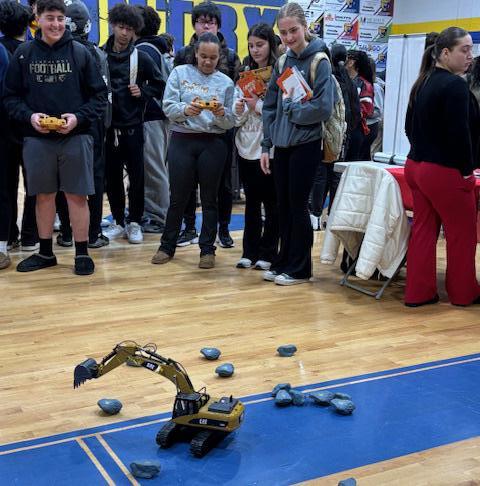
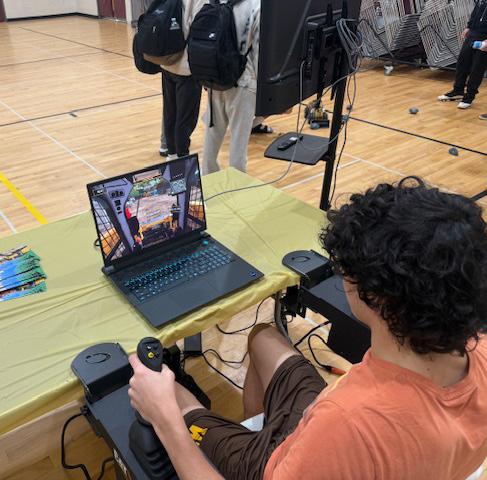
Armed with a CAT Skid steer simulator and several pieces of remote-controlled construction equipment, representatives of the NJLICA Board of Trustees and our new apprenticeship coordinator, Hugo Castillo, visited several New Jersey schools to plant the seed to middle schoolers and high schoolers that the trades are a viable career choice for the future. NJLICA is committed to spreading the word about the trades among young people. There are over 800 middle schools and high schools in New Jersey. We have not been to all of them — yet!
NJLICA has also created a turn key presentation with videos and support material so that member contractors can take that presentation to their own personal school.
Anyone interested in the above should contact Hugo Castillo, NJLICA apprenticeship coordinator, at hcastillo@njlica.org. Castillo will either join you or set you up with whatever you need.
LYNDHURST HIGH SCHOOL
LYNDHURST MIDDLE SCHOOL
SOMERVILLE HIGH SCHOOL
WALLKILL VALLEY HIGH SCHOOL
WATCHUNG HILLS HIGH SCHOOL
NJLICA WELCOMES TWO NEW MEMBERS TO ITS TEAM; BOTH CONTRACTOR MEMBERS AND ASSOCIATE MEMBERS TO BENEFIT
Hugo Castillo has been named apprenticeship coordinator for the NJLICA Apprenticeship Program. Castillo will work directly with contractors who participate in the apprenticeship program, detailing the benefits of apprenticeship and building the classes that NJLICA currently runs in the trades of craft laborer, heavy equipment operator, and truck driver heavy. He will also be involved with special projects and expanding member benefits to the ever-increasing NJLICA membership. Contractors are asked to take a few minutes and meet with Castillo. It will be worth your investment of time.
Bob Hibler will assume the role of association liaison for NJLICA. Hibler will work primarily with associate members with the intent of making a positive connection with our contractor members. He has been meeting with associate members since his employment began, bringing a gift from NJLICA which recognizes the partnership between NJLICA and the associate member.
Hugo Castillo brings over a decade of leadership and customer service experience to his role as apprenticeship coordinator. Formerly the service manager for Pella Windows and Doors in West Caldwell, he led service operations for more than 10 years, managing technicians, coordinating job sites, and ensuring customer satisfaction across a broad client base. Castillo continued to expand his expertise in the construction industry through customer service management roles at Mikula Contracting and Elite Painting, where he oversaw teams of operators and drivers, and served as the primary liaison for contractors and clients.
Known for his hands-on leadership and commitment to quality, Castillo is passionate about supporting the next generation of construction professionals through structured, high-impact apprenticeship programs.
Outside of work, Hugo enjoys fishing and spending quality time with his wife and three sons.
Bob Hibler is a native New Jerseyan born in Teaneck in the last century. He completed his bachelor of science in business administration and marketing at the University of South Carolina. After graduating, he married (and still is) and began a lifelong sales and marketing career in the construction industry. When given the opportunity, Hibler introduced the then little-known Bobcat skid steer loader to rental houses, landscapers, and contractors and sold several hundreds, earning the title "Bobcat Bob.” In 1976, he was offered a position as general manager to a new equipment supply company in Saudi Arabia where he lived for three years, creating it from sand up. General Trading and Equipment thrives today as the largest Bobcat dealership in the world.
Later, at a separate organization, Hibler was their national scaffolding product manager with North America and Mexico as his responsibility, along with 60% travel. It was a wonderful way to learn the territory.
During these years in his "spare" time, Hibler became an avid moto journalist, writing for numerous motorcycle magazines (he has over 130 publications to his name), and riding five motorcycles and 300,000 miles all over the United States, Canada, and Mexico.
The chromatic harmonica always fascinated Hibler with its range, tone, and musical versatility. He has been an ensemble player with the Garden State Harmonica Club for over two decades.
The construction arena has been a central part of Hibler’s life for nearly six decades. When not building up, it is tearing down, an endless cycle, unlike so many other trades and careers, and always challenging. It is Hibler’s way of life.
HUGO CASTILLO, APPRENTICESHIP COORDINATOR
BOB HIBLER, ASSOCIATION LIAISON
Construction, Forestry
Locations
Shrewsbury, MA • Fairfield, NJ • Lumberton, NJ
South Plainfield, NJ • Deer Park, NY • Beacon, NY
Middletown, DE
• Baltimore, MD • Frederick, MD • Delmar, MD
District Heights, MD • Waldorf, MD
Land Surveying
Walk Behind Loaders & Trenchers
Asphalt Pavers & Sweepers
Road Maintenance
Hydraulic Hammers & Compactors
Multi-Tip Dump Trucks
Low Boy & Easy Loader Trailers
Experts in Road Building & Minerals
112 NEW MEMBERS IN THE FIRST TWO QUARTERS OF 2025
GROWING BIGGER AND STRONGER EVERY DAY
Contractor Members
AAA Septic Service LLC
Joseph Placek Browns Mills, N.J.
AIL Construction LLC
Artaeja Loatman Millville, N.J.
Able Companies
Chris Mayer Farmingdale, N.J.
Absecon Electric Motor Works, Inc.
Rebecca Pruchnicki
Absecon, N.J.
Armstead Property Management dba APM LLC
Shamus Armstead Philadelphia, Pa.
BCJ Trucking, Inc.
Terezinha DePaula Newark, N.J.
B & S Transport LLC
Teodoro Lopez East Hanover, N.J.
Below Zero Transportation Corp.
Oscar Cortes Jackson, N.J.
Big Daddy Transportation LLC
Daniel Batista Franklin Lakes, N.J.
Blue Heart Trucking LLC
Cesar Campos Bloomfield, N.J.
Borgese Trucking LLC
Joseph Borgese, Jr. Vineland, N.J.
Capstone Transportation LLC
Tyson Johnson, Jr. Phillipsburg, N.J.
Carolina Marine Structures, Inc.
Heath Davis Virginia Beach, Va.
Cemco-Custom Environmental Management Co., Inc.
George Kayser Hainesport, N.J.
Charruas Trucking LLC
Gerardo Villar Hillside, N.J.
Classic Consulting Group, Inc.
Sandeep Boparai Jamaica, N.Y.
Clearpath Haulers LLC
Raul Mendez
Cherry Hill, N.J.
D & A Demo Limited Liability Co.
Antonio DiMuzio Scotch Plains, N.J.
DCR Landscaping & Construction, Inc. dba DCR Paving & Masonry Anthony Rodden Metuchen, N.J.
DeWitt Concrete & Masonry, Inc. Joshua DeWitt Bridgeton, N.J.
Dirt Force Trucking LLC
Luba Cordero Villas, N.J.
Double D’s Construction
David Dookie Millville, N.J.
Dr. Kings LLC
Danny Reyes Elizabeth, N.J.
D Tapia Transport LLC
Diego Tapia Ulloa Newark, N.J.
E.J. Wilkins Construction
Elijah Wilkins Bridgeton, N.J.
Elevate Services Group dba Elevate Services LLC
Michael Abbruzzese New York, N.Y.
Elite Play Solutions
Antonio Smikle East Brunswick, N.J.
FDF Transport LLC
Roxanne Raymond Morrisville, Pa.
Fugaz Transport LLC
Jorge Zaruma
Newark, N.J.
Fundamental Cleaning LLC
Mike Tsarukyan Keyport, N.J.
GET INVOLVED
THE NJLICA BOARD HAS POSITIONS AVAILABLE FOR THE FOLLOWING COMMITTEES:
Garguilo, Inc.
James Garguilo Bergenfield, N.J.
Garrett Paul Construction LLC
Dustin Worrell Jackson, N.J.
G E Construction Services LLC
Gilberto Eleto Old Bridge, N.J.
Gios Trucking LLC
Claudia Castillo Ledgewood, N.J.
Glenwood Office Furniture II, Inc.
Ravi Uppal Hillside, N.J.
Gordillo Trucking LLC
Chad Gordillo Millville, N.J.
Hawk Pool Management LLC
McKenna Paschell Medford, N.J.
HDM Landscaping & Construction LLC
Hector Merlo Dover, N.J.
Horner Brothers LLC
Frank Horner Lumberton, N.J.
Hudak Infrastructure Repair Systems LLC
Andon Hudak Cherry Hill, N.J.
Iseler Demolition, Inc.
Scott Iseler Port Hope, Mich.
JF Castillo Trucking LLC
Jose Castillo Kearny, N.J.
JGS Transport LLC
Jose Gomez Dover, N.J.
J & J Paving & Sealcoating Corp.
Tracey Costanza Nutley, N.J.
JRM Trucking LLC
Graciela Orellano Hoboken, N.J.
Jadan Trucking Services LLC
Angel Jadan Hillside, N.J.
JayAdit Builders LLC
Jaimin Patel Edison, N.J.
KLS Industries LLC
Gabriel Reinoso South Plainfield, N.J.
KLT Contracting LLC
Galo Tapia Newark, N.J.
KMG Contracting LLC
Kayla Gagvancella Colonia, N.J.
Kaboom Enterprise LLC
Iethia Thompson Millville, N.J.
Kent-Burnette Trucking LLC
Charles Kent-Burnette Vineland, N.J.
L. Adams Enterprise LLC
Logan Adams Westampton, N.J.
LA Transport Trucking, Inc.
Alexandra Rea Veintimilla Newark, N.J.
Leandro Transport LLC
Thomy Alvarado West Orange, N.J.
Lizza Construction & Paving, Inc.
Carmen Lizza Pine Brook, N.J.
Loeffels Waste Oil Services LLC
Matthew Gregorio Sparta, N.J.
Lovato Landscaping LLC
Erica Boscio Hackensack, N.J.
MTS Landscaping and Design LLC
Michael Swoboda Hackensack, N.J.
Manolos Trucking LLC
Manuel Pastuisaca Belleville, N.J.
MASA Landscape and Construction
Steven Black Little Ferry, N.J.
Matarazzo Excavating LLC
Charles Matarazzo Asbury, N.J.
Mike and Sons Contracting
Michael Roberts Egg Harbor City, N.J.
Moosewood Tree Service
Pete Spittel Union, N.J.
Morgan Trucking
James Morgan, Jr. Millville, N.J.
Mouro Enterprises LLC
Daniel Mouro Union, N.J.
Munoz Trucking Corp.
Manuel Munoz
North Arlington, N.J.
NRWK Restoration LLC
Alfredo Sousa Elizabeth, N.J.
O G Trucking
Ryan Goldsboro Vineland, N.J.
One Of A Kind Trucking LLC
Christopher Johnson Elmer, N.J.
Ordonez Trucking LLC
Denisse Ordonez Bloomfield, N.J.
P & A Construction NJ LLC
Paul Cafone, Jr. Fairfield, N.J.
Pipers Corner Contracting LLC
Brian Gerber
Shamung, N.J.
Playground Medic
Amariah Taft-Shivers Hawthorne, N.Y.
Playsafe Surfacing LLC (A & W Safety
Surfacing LLC)
Kimberly Tilghman Farmingdale, N.Y.
Polanco Trucking LLC
Luciano Polanco Newark, N.J.
Pro Bros Management LLC
Peter Rynkowski Lawrence, N.J.
PS Musso Enterprises, Inc.
Joan Musso Millville, N.J.
Quality Landscapes/Irrigation Systems of NJ
Robert Stigliano Wayne, N.J.
ResilientSeas LLC
Richard Sumner Jackson, N.J.
R R Trucking LLC
Walter Brown Bridgeton, N.J.
S. Ulloa LLC
Stephen Ulloa Staten Island, N.Y.
Scorer Sand & Stone LLC
Lorrie Scorer Pemberton, N.J.
SDL Excavating
Larry Miller Glen Gardner, N.J.
Seacoast Construction, Inc.
Carla Lucas East Brunswick, N.J.
Sebas & Kami Construction LLC
Vianca Morales Freehold, N.J.
Sharkbait LLC dba Cooper Construction
Ronald Cooper Jackson, N.J.
Signs CAD Corp dba CAD Signs
Marilyn Orlando Hackensack, N.J.
Soares Brothers Construction LLC
Silvano Soares da Silva Elizabeth, N.J.
Star Janitorial, Inc.
Daniel Shea
Danvers, Mass.
Stone Brook Garden & Landscape Supply
James Ciliento
Saddle Brook, N.J.
The Liner Company, Inc.
Carol Hartwell
Colts Neck, N.J.
Top-Choice Construction LLC
Korab Hoda
Wood-Ridge, N.J.
Tristate Site Materials Corp.
Nicholas Iannacone Brielle, N.J.
T T Dump Trucks LLC
Tennille Thorn Malaga, N.J.
Triangle Concrete Pumping & Construction
Nancy Lynch Hewitt, N.J.
Universal Pavement Specialties, Inc.
Ronald Lozowski Bloomsbury, N.J.
Urgiles Trucking LLC
Dennis Urgiles Belleville, N.J.
US Outworkers
Robert Quaranta Vernon, N.J.
Verdprolawn LLC
Silvestre Walle Madrigal Columbus, N.J.
Vito Tree Care and Land Management, Inc.
Vito Scarvaglione Belleville, N.J.
Wengryn & Sons Construction LLC
Phil Wengryn, Jr. Branchburg, N.J.
WPL Services
William Perrine Robbinsville, N.J.
XFactor Trucking LLC
Roderick McCall
Sicklerville, N.J.
Xylo Enterprise LLC
Troy Pitts
Bridgeton, N.J.
Associate Members
Diamondback Redi-Mix
Will Denise Staten Island, N.Y.
ESSCO Truck & Equipment
Joe Eugenio Farmingdale, N.J.
FleetWatcher by AlignOps
Dave Cataldi Indianapolis, Ind.
Nature’s Choice NJ LLC
Philip Lombardozzi Holmdel, N.J.
Ritchie Brothers
Doug Mingst Midland Park, N.J.
SANY of Pennsauken
Brad Kelly Pennsauken, N.J.
West Shore Trucking, Inc.
Joseph Eugenio Farmingdale, N.J.
THE NJLICA DUES YEAR RUNS FROM SEPTEMBER 1-AUGUST 31. DUES INVOICES WILL BE SENT ELECTRONICALLY ON SEPTEMBER 1. YOUR CONTINUED SUPPORT IS APPRECIATED.
A pprenticeship has been shown to help employers attract and retain employees, as well as cultivate a its members, NJLIC A maintains a USDOL approved apprenticeship pro gram for Tr uck Dr ivers (1 year), L aborers (2 years), and Heav y Equipment O perators (3 years). To encourage active par ticipation in its program,
to apprentices who are enrolled and actively par ticipate in the pro gram.
Employers who sponsor an apprenticeship in 2025 receive a 66% reduction in their annual contr ibution requirement to NJLIC A's A pprenticeship Tr ust fund. In addition, employers who sponsor apprentices gain skilled workers, reduce employee tur nover, an improve productivity. A pprenticeship can also help an employer address skilled labor shor tages at a time when many
are expensive, just about ever y aspect of our ever yday lives
invest in themselves by pursuing apprenticeship, NJLIC A cur rently provides individuals who are reg istered and actively par ticipating in its program with an annual stipend.
Apprentice Tr uck Drivers eligible to receive
• $3000 upon completion of the pro gram, OR CDL class paid for by NJLIC A
• pro gram
Apprentice L aborers elig ible to receive***
•
• $7500 for the second year completed
• the pro gram
Apprentice Heav y Equipment Operators eligible to receive***
•
• $7500 for the second year completed
• $7500 for the third year completed
• the pro gram
Contac t:
Trac y Car ver: tcar ver@tlc4prevailingwage.com
Buddy Freund: buddy@govisionstrong com NJLICA: 973.630.7600
GOLF CLASSIC SOUTH
Forsgate Country Club was again the site for the second annual NJLICA Golf Classic South, where the skills of 72 golfers were put to the test on the historic Banks Course. Although rain threatened, we never saw a drop. The team championship was won by the foursome of Bob Church, Doug Bower, Peter Erndl, and Mark Roberts for the second year in a row.
Premier Sponsors
Invitational Sponsors
North American Aggregates
Ireland Construction Group
Prins Insurance
United Fire Group
World Insurance Associates
Golf Ball Launcher
North American Aggregates
Player Giveaway Sponsor
V.A Spatz & Sons Construction
Lunch Sponsors
Brent Material Company
Premier Emissions & Safety Inspectors
Beverage Cart Sponsors
J.A. Neary Excavating
J. Kramer Landscaping
Top Contracting Industries
Beverage Station Sponsors
Braen Stone Industries
DeSapio Construction
Fleet of Carts Sponsor
The True Agency
Registration Sponsor
Haskell Paving
Ball Sponsor
Foley Caterpillar
Putting Green Sponsors
Braen Stone Industries
Icon Equipment Distribution
Smolin, Lupin, & Co.
Driving Range Sponsors
Mathis Construction Co., Inc.
Tilcon, Inc.
Breakfast Sponsor
L.N. Rothberg & Son
Hole in One Sponsor
DeSapio Construction
Closest to the Pin
Let Us Brand You
Longest Drive
NJLICA
Tee and Green Sponsorship
B & W Construction
Castle Printing Ledgewood
Church Auto
Dave O'Donovan Excavating
Espo's Tree & Crane Service
James R. Ientile
Kelly Donahue Contracting
L.N. Rothberg & Son
Patrick DiCerbo - Northwestern Mutual
Peerless Concrete Products
Rue Insurance
Taylor Oil Co.
TLC4 Prevailing Wage
Tri-State Safety Solutions
Twin Construction
Wantage Excavating
TOTAL PRO EXPO
Total Pro Expo, NJLICA’s Winter Conference, was again a huge success, attracting over 2,000 attendees and 150 exhibitors to this two-day event. NJLICA offered OSHA 10 training as well as CPR/Emergency First Aid Certification for its members. The Business Track was jam packed with presentations regarding several current and relevant topics. Many thanks to our presenters:
• Anthony Morealle, Tri-State Safety Solutions: OSHA 10
• Terrance Hendricks, New Jersey State Police: Roadside Inspection
• Diane McNulty and Chris Barchetto, Smolin, Lupin, & Co: Tax Talk
• Bruce Mosier, Prins Insurance: Town Hall Meeting, Tool Box Talks
• Stephen Ferris, EFB Enterprises: OSHA Update
• Pat McGovern and Brigette Eagan, Genova Burns: Employment Law Update
Four companies were recognized at the members reception for achieving a standard of excellence in safety. The NJLICA Safety Recognition Program honors those companies who demonstrate a commitment to promoting safety within their companies and have a proven track record of safety. Those recognized were:
• Halecon, Inc., Bridgewater, N.J.
• Renova Environmental Company, Ocean Township, N.J.
• Tom Buske & Son Construction, Haskell, N.J.
• Vollers Excavating & Construction, North Branch, N.J.
Mark your calendar for next year’s Total Pro Expo, to be held Jan. 27-28, 2026.
SPRING DINNER MEETING, NORTH
Foley Caterpillar in Piscataway was again the host for our Spring Dinner Meeting North in April. A great presentation was provided to the nearly 50 attendees by Anton Tikhonov of Midland Equipment Finance. Tikhonov spoke about the benefits of leasing in an uncertain economy, interest rate trends, and being financially prepared when seeking a loan/lease.
SPRING DINNER MEETING, SOUTH
Nearly 35 attendees rocked the beach on a beautiful June night and enjoyed some specialty beers at the Beach Haus Brewery in Belmar, N.J. Shannon Mosier and Michael Dimino of Smolin, Lupin, & Co. gave an informative presentation on the Big Beautiful Bill being discussed in Congress and what effect it might have on business owners. What a great venue for a meeting.
PREVAILING WAGE
LUNCH AND LEARN
More than 30 members joined us in March for a Prevailing Wage Lunch and Learn. Long time member L.N. Rothberg & Son was the host of this event. N.J. Department of Labor representatives Joe Kostecki and Dominic Lipira, along with NJLICA member Tracy Carver of TLC4 Prevailing Wage, provided a very informative presentation on the public works certificate, certified payroll reports, NJ Wage Hub, and fringe benefits. Another Lunch and Learn is being planned for the fall of this year. If you would like additional information on these and related topics, please contact Tracy Carver at tcarver@tlc4prevailingwage.com.
VISION STRONG MANAGEMENT GROUP
Buddy Freund PO Box 166 Succasunna, NJ 07876 973-753-2800
buddy@govisionstrong.com govisionstrong.com
Vision Strong Management Group provides full-service association management services for associations, foundations, societies, and trade organizations. Add your company name to our Patron Directory. Contact NJLICA Executive Director Buddy Freund at 973-630-7600 or buddy@govisionstrong.com.
Large Resources. Local Relationships.
We help our clients manage and protect their most valuable assets—their people and their business.
As part of the World Insurance Associates family, we offer our clients top products and services from the best providers that span all of your personal and commercial needs. You will continue to get the white-glove service and personal touch of your local agent. Call or email us today to learn more about our offerings. 908-738-8493 | lica@worldinsurance.com