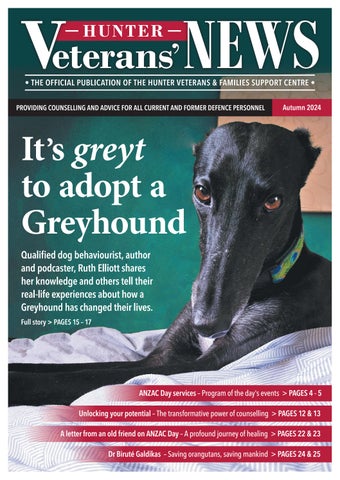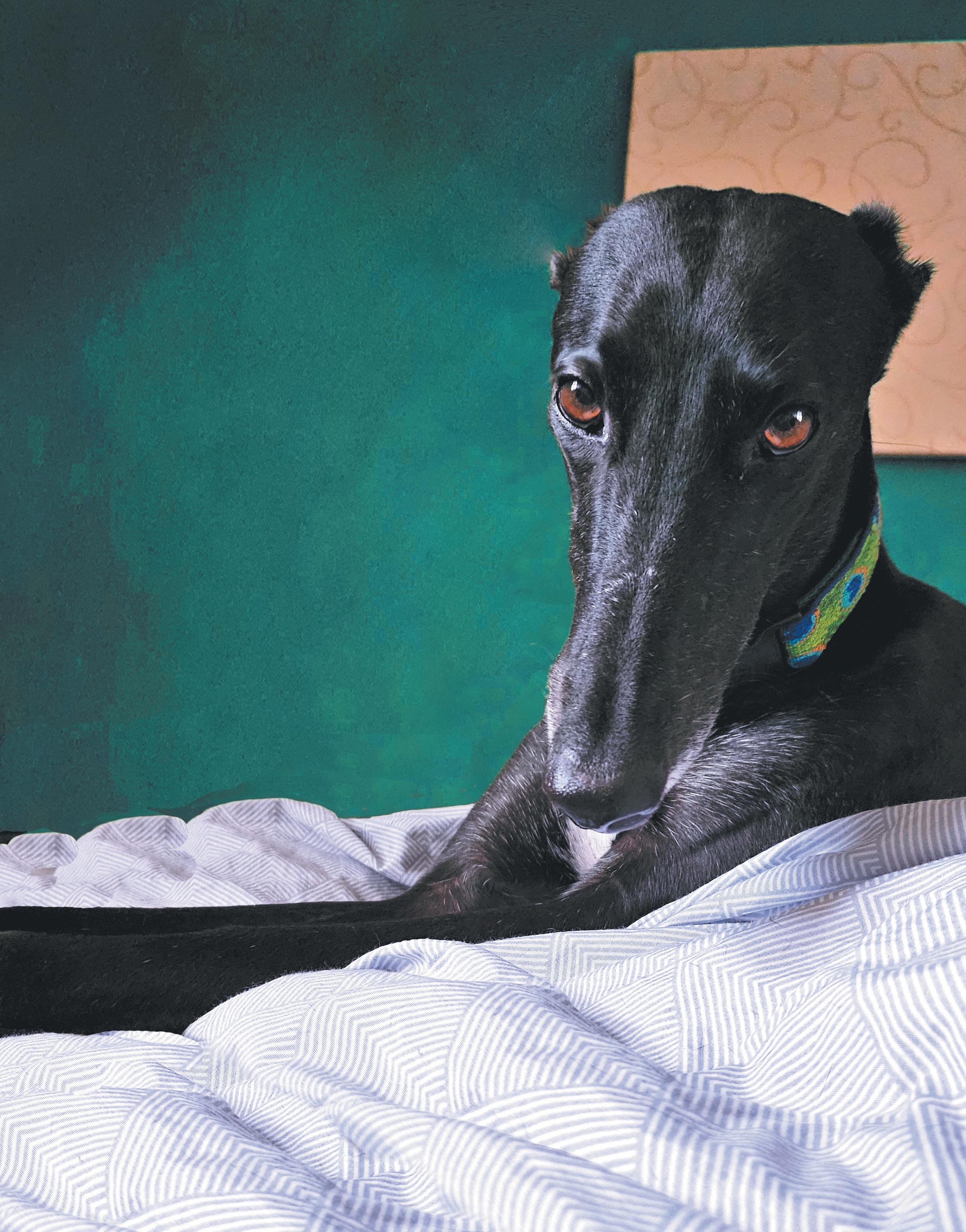
Qualified dog behaviourist, author and podcaster, Ruth Elliott shares her knowledge and others tell their real-life experiences about how a Greyhound has changed their lives. Full story > PAGES 15 – 17 ANZAC Day services – Program of the day's events > PAGES 4 - 5 Dr Biruté Galdikas – Saving orangutans, saving mankind > PAGES 24 & 25 A letter from an old friend on ANZAC Day – A profound journey of healing > PAGES 22 & 23 Unlocking your potential – The transformative power of counselling > PAGES 12 & 13 • THE OFFICIAL PUBLICATION OF THE HUNTER VETERANS & FAMILIES SUPPORT CENTRE • PROVIDING COUNSELLING AND ADVICE FOR ALL CURRENT AND FORMER DEFENCE PERSONNEL Autumn 2024 It ,s greyt to adopt a Greyhound
VETERANS’ SUPPORT CENTRE
NEWCASTLE & HUNTER REGION VIETNAM VETERANS PEACEKEEPERS & PEACEMAKERS
Assisting all past and present ADF members with establishing their eligibility, processing and preparing their claim forms for submission to the DVA.
We can also assist with pension upgrades after 12 months.
We also help you lodge appeals against decisions handed down by the DVA, prepare submissions and represent you at the Veterans Review Board.
PHONE 02 4951 2666 TO MAKE AN APPOINTMENT OFFICE HOURS: MONDAY & THURSDAY 9AM TO 1PM

HOSPITAL ADMISSIONS
Due to privacy laws, hospitals are not permitted to disclose to our Welfare Officers if member has been admitted.
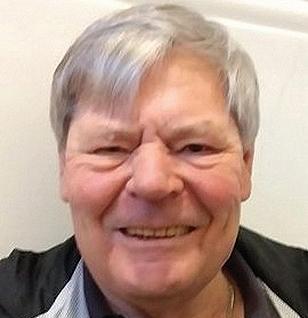
Allan Crumpton
If you or a family member has been admitted to hospital and need assitance or require a visit, please contact our Welfare Officer, Allan Crumpton on (02) 4951 2666.
THESE ARE FREE SERVICES AND YOU DO NOT HAVE TO BE A VIETNAM VETERAN TO QUALIFY
2 Hunter Veterans’ News
INCORPORATING
WHILST
2023 in review
another year has passed us by it’s timely to reflect on 2023.
The rebranding of our organisation has in most parts been extremely well supported by our committee and members [although the vocal minority have their own agenda]. With our focus on trading as the "Hunter Veterans & Families Support Centre", it is our firm belief it will encourage the younger Veteran community to reach out to us in a positive manner as a relevant Veterans organisation. I also want to reaffirm that all Vietnam Veterans will never be forgotten as we will continue to celebrate the various national Vietnam Remberance days such as Long Tan.
Our new trading name, "Hunter Veterans & Families Support Centre", is purely a tool to reach out to the younger Veteran Community, that we are an inclusive organisation. All aspects of this rebranding of our trading name have been fully endorsed by the State and National executive of the Veterans Support Centre in Granville [Vietnam Veterans Assoc.] It has always been the prime motivation of the majority of your committee members that this name change will ensure the future viability of your organisation moving forward.
As most members would be aware we have sold our BBQ trailers due to dwindling numbers of market volunteers, however, we will still run and control the Monthly Wickham Markets. We have engaged Wallsend/Maryland Rotary to run the BBQ together with our coffee man David. Our presence at future markets will require a minimum of two members to oversee the
Cover story
Find out the 5 top reasons to adopt a Greyhound… Ruth Elliot, dog behaviourist, explains why you will only benefit from having a Greyhound in your life. While Greyhound adopters and fosterers share their real-life stories about how a Grey has made a big difference to them, all in our feature story on pages 15-17 of this issue of Hunter Veterans’ News
Graphic Design by KD Design 0408 115 876
collection of monies from stall holders together with ensuring the safe market running in accordance with our public liability requirements.
With the down sizing of our market commitments together with our new trading name it is anticipated that we can devote more time to our core business of advocacy and health and wellbeing
Where are we going you may ask!
It’s no secret that there has been a continuing negative agenda from the vocal minority within our organisation, who have plenty of advice but, no desire to contribute in a positive manner.
If you have a desire to serve the Veteran Community and become a committee member it’s imperative that you become a team player and support all decisions as voted and agreed upon. Don’t sit back and wait for decisions to be made, act in a positive manner to immediately make them happen now. Everyone, must have a voice and an opportunity to display it without fear or favour.
Recently I tendered my resignation as your President, a position that I have held with pride, but it’s time for me to move on. This decision means that all my duties within the organisation will cease, including magazine editor, and will take effect immediately.
I wish all new committee members all the best for 2024 and beyond.
Regards…
Ian Bell
HUNTER VETERANS & FAMILIES SUPPORT CENTRE

Patron
Tom Yeo OAM JP
Chaplain
Chaplain Lawrence Caelli
Senior Vice President
Allan Crumpton
Vice President
Scott Myers
Honorary Secretary
Dave Hansen
Treasurer
John Moreman
Committee Members
Ian Bell – Hunter Veterans’ News Editor
David Byfield
Stephen Finney OAM JP
Paul Halpin
Paul Jones
Graham Leggett
William Morris
Welfare Officer
Allan Crumpton
Association Address
Clem Kealy Centre, I5 Tyrrell Street
Wallsend NSW 2287
Postal Address
PO Box 288
Wallsend NSW 2287
Telephone: 02 4951 2666
Fax: 024951 2633
Email: nclvets@bigpond.net.au
Office Hours
Monday and Thursday 0900 - 1300
Facebook
Newcastle-Hunter-region-Vietnam Veterans-Peacemakers-and Peacekeepers
OUR GOLDEN RULE…
We are a welfare organisation and do not enter into controversial or political matters or discussions; unless these matters or discussions have a direct bearing on the welfare of current and former defence personnel or their families.
3 Issue 9 > Autumn 2024
Ian
ANZAC Day 2024
Thursday, 25 April 2024
Program of Events
ANZAC WALK SUNSET SERVICE
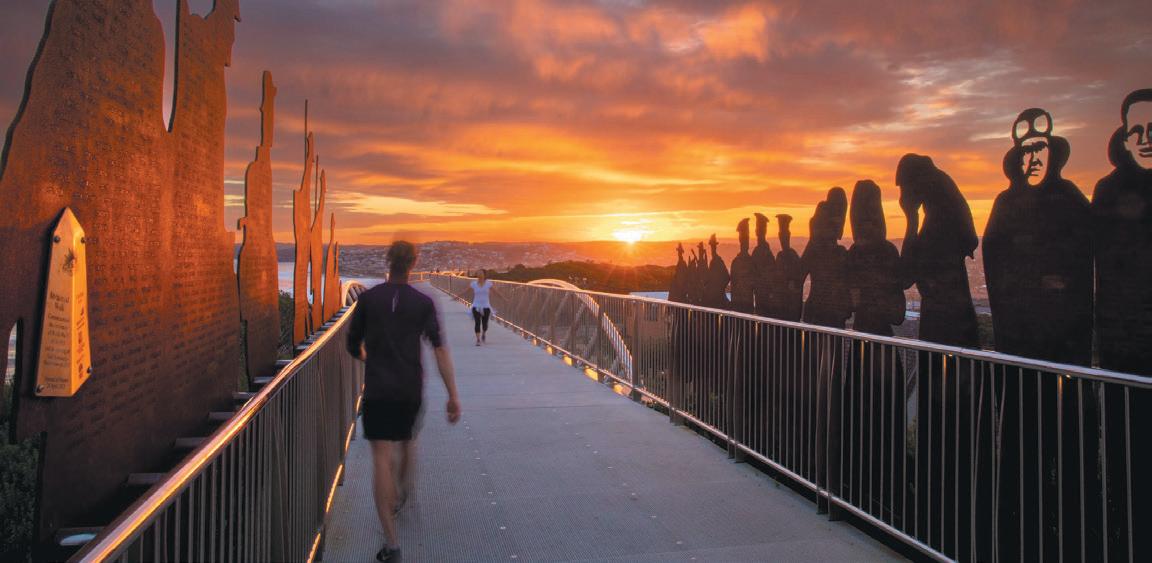
The event will take place at the Strzelecki Look Out at the top of Memorial Drive on Saturday the 20th April commencing at 5:00pm.
This is a Sun Set service presented by the Australian Army Band (Newcastle) and the City of Newcastle RSL Pipes and Drums. It is set in military tradition from years gone past.
CATHEDRAL ANZAC SERVICE
The event will take place at the Newcastle Christ Church Cathedral Church Street Newcastle at 12 noon on Sunday 21st April.
This year the service will include the usual presenting and blessing of the three service military colors as well as the War Widows Standard. Also, the blessing of the 35th Battalion (Newcastle’s Own WW1 Battalion) memorial stone that has recently been relocated to the Cathedral from the City of Newcastle RSL Sub-Branch premises. The War Widows of Newcastle Memorial Garden will be blessed at the end of the Services in the Cathedral.
CANDLELIGHT VIGIL
This event will not take place this year due to the poor health of the organiser Gerry Bailey. Gerry is hoping to put the event on in 2025, so look out for more infomation in future editions of Hunter Veterans' News.
ANZAC DAY DAWN SERVICE
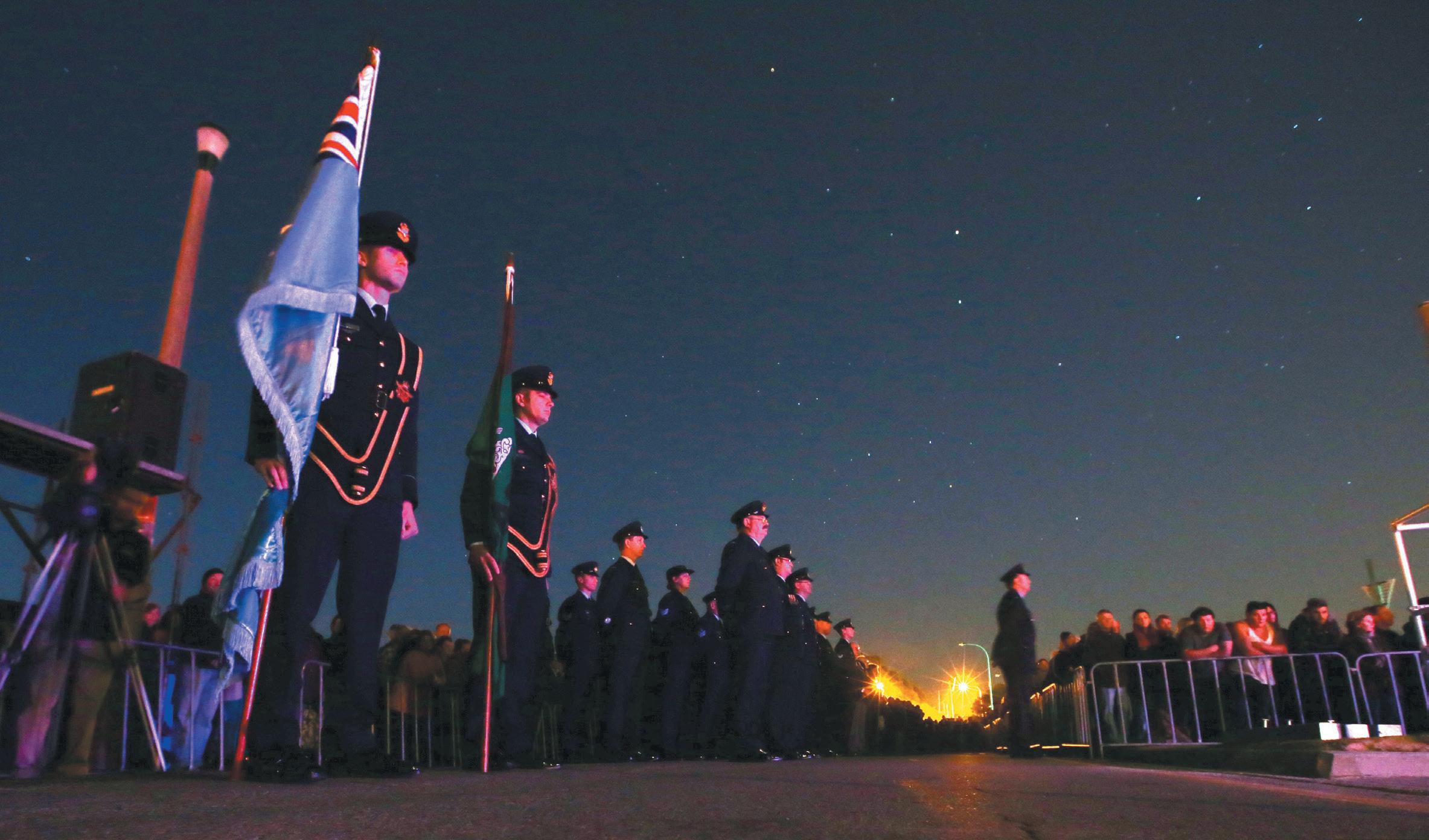
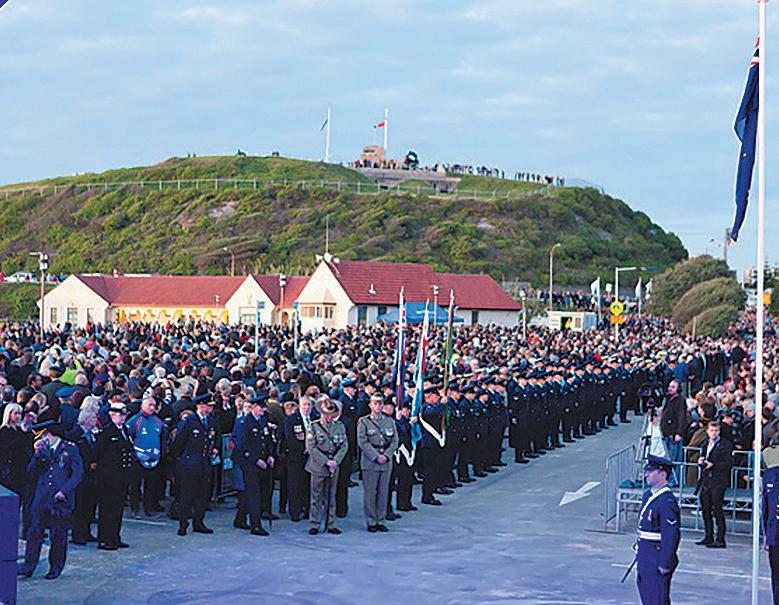
The event will take place at Nobbys Beach foreshore and will commence at 5:00am on ANZAC morning Thursday 25th April. The event will be televised live by NBN Television Live and also broadcast on ABC radio 1233.
4 Hunter Veterans’ News
ANZAC Day dawn service at Nobbys Beach foreshore
Will start from the corner of Perkins and Hunter Streets marching off at 9:10am and will
and
Commemorative Service. Slightly different form up positions for civilian marchers.
Marshals
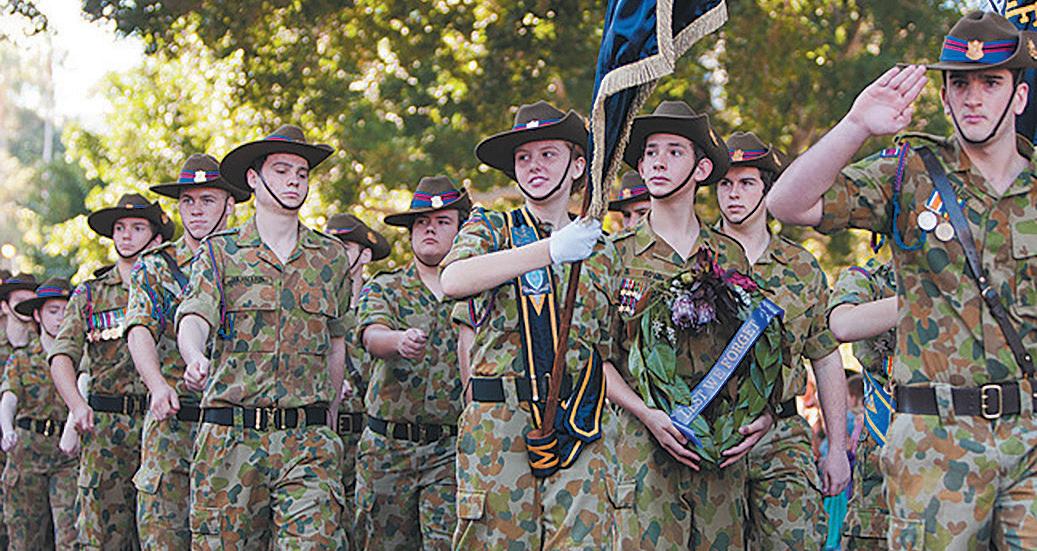
This will be held at the Cenotaph in Civic Park, King Street, Newcastle, opposite the Town Hall and is scheduled to start at 10:00am after the completion of the ANZAC March.
All are welcome…
Lest we forget
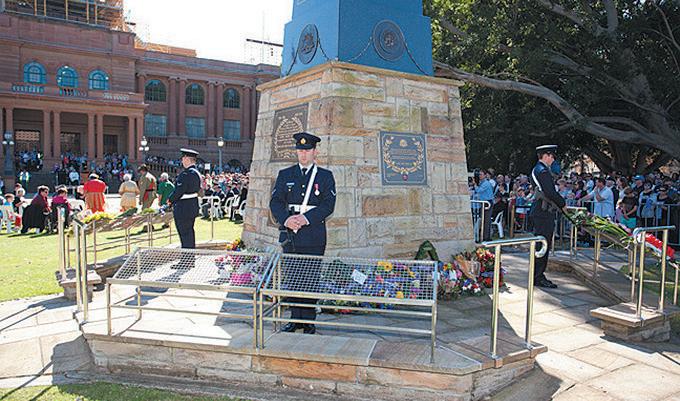
NOTE: For further information about ANZAC Day closer to the event visit the City of Newcastle RSL website at www.newcastlersl.org.au

Focusing
Easy riding on ANZAC Day
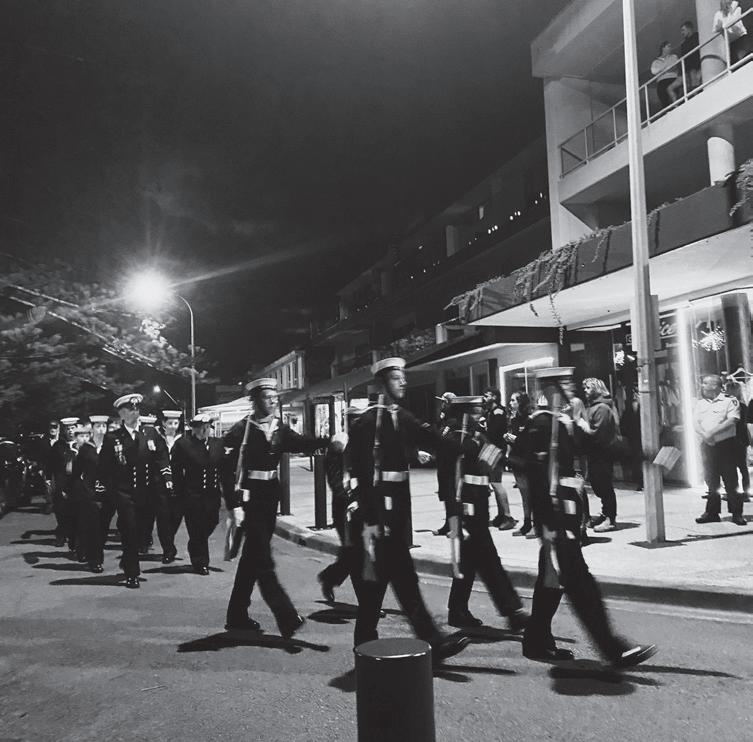
KEEPING with Novocycle tradition a motorcade of bikers set off from Newcastle for the mid-North coast of NSW to commemorate ANZAC Day in the April of 2023.
Headed for the beachside hamlet of South-West Rocks we decamped at the aptly-named Seabreeze Hotel where some of the crew were interviewed for this podcast.
On the way home we overnighted at Walcha where the remaining interviews were done. Walcha, in the picturesque New England region, is a haven for bikers who yearn the adrenaline rush of leaning uphill from Wauchope at speed on the ridiculously twisty Oxley Highway.
For the podcast I asked everyone about their connection to the ANZAC tradition. These are their stories.
https://on.soundcloud.com/ CtbTytkU3QRTHwVg8
Novocycle is a loose collection of guys & gals of a "mature" age from the Hunter region of NSW who enjoy each others' company. We communicate via a Facebook page and a weekly newsletter, called "Novocycle News". And… that's right… we all ride motorbikes.
If you would like to find out more about our group or join us on a ride, please email Novocycle2300@gmail.com
WARNING: This podcast contains some explicit language and also some content and sound bites that some may find triggering.
This podcast is hosted & produced by David "Bonzo" Beins
<All Rights Reserved>
5 Issue 9 > Autumn 2024 IN
Design by Kirrily Dures • e: kirrilyd@bigpond.net.au • m: 0408 115 876
Graphic
on client satisfaction through genuine partnership, good advice, professional service & quality creative solutions. The objective on every project, whatever the budget, is to build your business in both profile & profit Offering competitive rates with special discounts for not-for-profit organisations, sole traders & self publishing authors!
ANZAC MARCH
move along Perkins Street, right into King Street
terminate at the corner of King and Auckland Streets prior to the
Please check with the March
when you arrive on site.
UNITED COMMEMORATIVE SERVICE
First responders aren’t immune to life’s ups and downs
How to support those from our community who care for our community…
Phil is the Deputy ControllerCommunity Engagement at VICSES Chelsea Unit and has been a volunteer for over 20 years. After experiencing a life changing health scare, his orange family rallied around him. He shares his story in the hope to encourage everyone to look out for their peers and make R U OK? conversations a part of their everyday.
For 20 years I have worn the orange uniform and put my heart and soul into helping others on their worst day.
In 2021, on a regular Sunday morning, my worst day came.
I got out of the shower and felt a little lightheaded. Looking in the mirror I noticed my mouth was slightly lower on the right side. My training with SES made me well aware of F.A.S.T – a quick test to recognise common signs of a stroke (F-ace weakness, A-rm weakness, S-peech problems and T-ime to call 000). I attempted to lift my arms, but the right one was struggling. Not wanting to take any risks, but also attempting to remain calm, I called my wife and through slurred speech asked her to call our lovely neighbour who happened to be a nurse.
Within a flash she was there, and immediately called an ambulance. After nearly 24 hours in hospital and numerous tests, it was finally confirmed, I had had an Ischemic Stroke on the left-hand side of my brain stem.
It felt absolutely bizarre to me that normally I am the one rushing to help and be by someone’s side and now it was me that couldn’t move, and I was the one needing help.
The recovery road was rough, especially because it was during COVID-19 restrictions, so no visitors were allowed. After a month of intense speech therapy, physio, and occupational therapy, I was able to go home!
What kept me going?
The unwavering support and frequent check ins from family, friends, my orange family, and my extended orange family (the hundreds of people on our Facebook page who sent comments of support) kept me motivated. They weren’t just checking in on physical progress – but my headspace too. Being able to talk about what had happened helped me process my emotions and stay positive.
Something as significant as a stroke affects more than the person involved. It affects everyone around them. The wonderful orange family checked in on my family daily which gave me permission to concentrate on my recovery, without feeling guilty about not being home.
That’s what makes the SES so special. We are from so many different backgrounds and cultures, but as soon as we put on the orange, we are one – one family, one team, a single unit, and as such, we all care about one another.
Family can mean different things to different people, but for me it’s about care, support, and trust, and knowing that through them, someone will always have your back. Even though I couldn't put the orange uniform on, they continued to care.
Why am I sharing this story?
Because my health scare is a stark reminder that emergency services workers aren’t immune to life’s ups and downs, and there will be times when we need support too.
Now that I’m back working, with a new lease in life, I am more determined than ever to remind people just how important those small (but mighty) conversations are.
At any time, emergency services workers and volunteers can be called on to attend some horrible scenes. We meet people that are going through incredibly stressful times and see things that most people will never see in their lifetime. These jobs can have an accumulative effect on a crew member’s
mental health, and in some cases lead to burn out and major health concerns. Having a connection with fellow members means that you can more easily pick up on subtle changes, small alarm bells and even asks for help, that you wouldn’t see if you didn’t have that connection with them. Which is why conversations matter – it’s what builds those connections!
But this doesn't just apply to SES, it applies to everyone. Life can be tough, and we all have our ups and downs. We don’t have to wait until R U OK? Day to check in on someone. It can be done any day, and every day.
Before you ask, you must be ready and willing to listen. To really hear what they have to say without judgement.Be supportive and never dismissive.
‘You’ll be fine mate’ doesn’t allow someone the time and space to talk. Sometimes the issues are deeper.
My top tip is to be present in the conversation because the opportunities you give someone to speak while really listening, the more chance you have of unearthing the problem and getting them the help they need.
So, here’s your reminder to check in on:
■ Your colleague who is off sick
■ Your emergency service friend who’s responded to back-to-back jobs
■ Your neighbour who lives alone
■ Your sibling who started a new job
■ Your mate who just became a parent
■ And so on…
If conversations helped me bounce back from a stroke, imagine what it could do for others.
For tips and tools on how to meaningfully ask R U OK? visit ruok.org.au R U OK? encourage anyone who needs a listening ear or some extra support to contact Lifeline on 13 11 14 or access one of the services listed at www.ruok.org.au/findhelp
6 Hunter Veterans’ News

 WITH Allan Crumpton, Welfare Officer
Hello
Friends
WELL
the year 2023 has come and gone and here we are well into 2024. Unfortunately, Paul has had to give up his welfare work as he is returning to University to study Psychology and feels he won’t have the time to give Welfare the amount of time it deserves.
Over the past 12 months I have spoken with almost 900 people regarding welfare issues, these include hospital visits, visits to homes phone calls and people attending our offices at Wallsend. With the assistance of our honorary Solicitor we have assisted a number of veterans and the widows of veterans in making or updating their Will, Enduring Power of Attorney and Enduring Guardianship. It amazes me to find the number of people that do not have any of these documents in place. I have taken Terry to a Hospital to make out a will of a person who has been given a very short time to live
Getting our affairs in order
on more than one occasion. Please have a look at your documents and make sure they are up to date and reflect your wishes should the unexpected happen.
To further assist the DVA have put out a number of booklets to assist you with various issues such as going into a Nursing Home, but to my way of thinking the most important booklet that they put out is “Planning Ahead” A guide to putting your affairs in order. This includes an eight page pull out section that you fill out and includes, medical details, bank details, any insurance policies the location of your will and importantly what funeral arrangements you would like. Why is this important? If you put it in your will, your will isn’t read until after the funeral, so it is a bit late if this information is in your will and you have been cremated when you wanted to be buried at sea.
Over the past couple of months our Graphic Artist, Kirrily, who sets our Magazine for us has been remodelling our once defunct Facebook page “Hunter Veterans and Families Support Centre” and suddenly we have a number of new people joining the page.
I have a meeting coming up shortly with Kirrily and we will speak about what we can do to engage with our “Markets” page and improve both pages even more. We need someone who is computer literate to liaise with Kirrily to give information to go on the pages. If that is you, contact the office, for everyone else, come along and enjoy the ride have a look at what is going on with the Veterans Community in the Hunter.
Cheers, Allan
7 Issue 9 > Autumn 2024
WELFARE REPORT ä
A day to acknowledge and commemorate
ANIMPORTANT part of DVA’s role is to acknowledge and commemorate all those who have served Australia and its allies in wars, conflicts and peace operations.
One of Australia’s national days of commemoration, Anzac Day, will soon be upon us.
Anzac Day, 25 April, is a time to come together as a community to remember those who have served, and to honour the more than 103,000 Australians who have sacrificed their lives in our country’s name. We also honour the values that the original Anzacs strove to uphold ‒ loyalty, selflessness, endurance, courage, and mateship ‒ a proud legacy that has been
passed down from generation to generation of Australian service men and women.
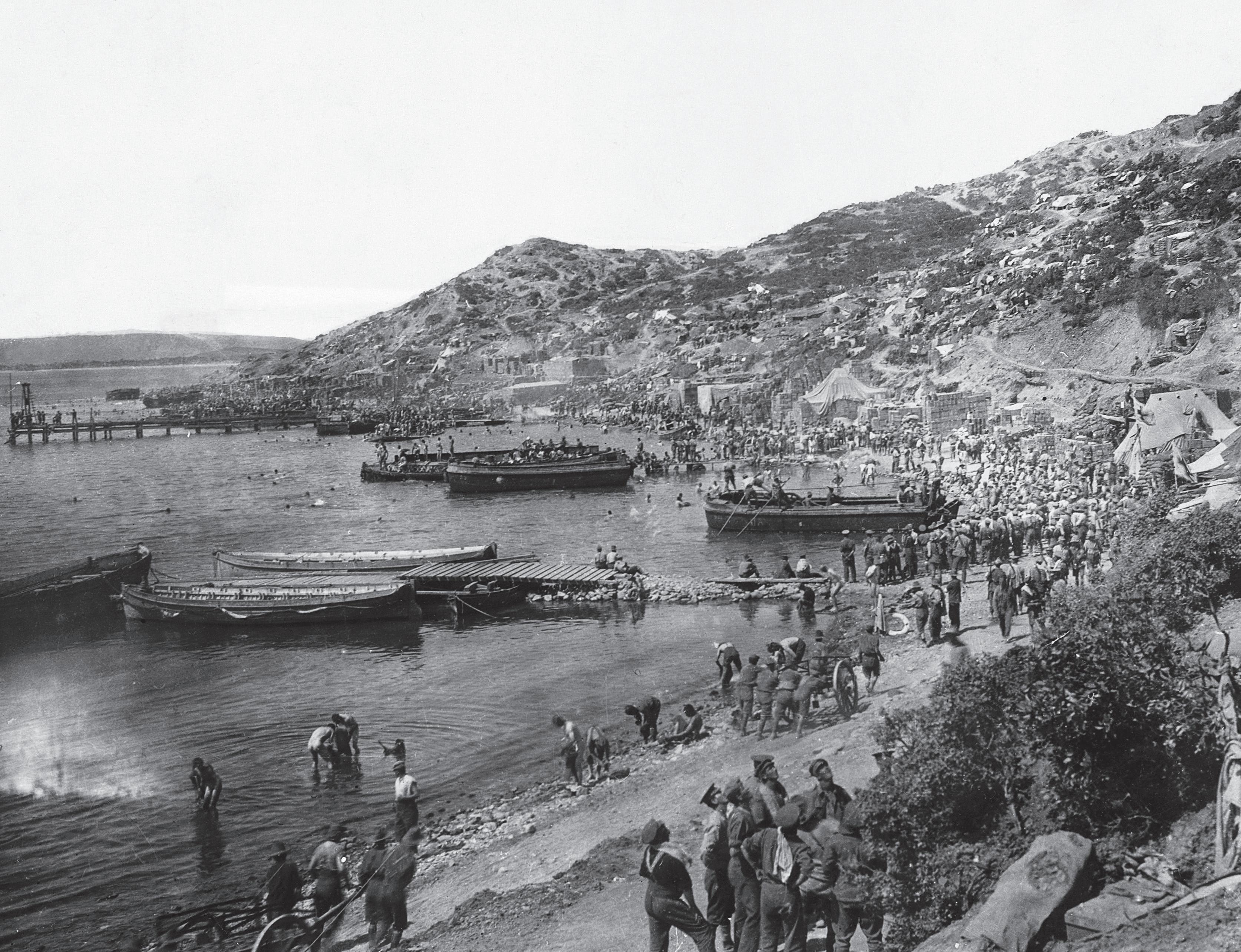
25 April marks the day that a contingent of the Australian and New Zealand Army Corps (ANZAC) landed at Gallipoli in 1915, beginning an eight-month campaign that cost the lives of more than 8,700 Australians, some 2,700 New Zealanders and tens of thousands of Turkish soldiers. Anzac Day commemorations traditionally begin with dawn services around Australia and at important sites across the globe. Services are held at the same time as the original Gallipoli landings in 1915 and to coincide with the military tradition of ‘stand to’ at dawn – the time often chosen to launch an attack. Soldiers in defensive positions were woken in the dark before dawn, so by the time first light crept across the battlefield they were awake, alert, and manning their weapons.
8 Hunter Veterans’ News
A message from Victoria Benz Deputy Commissioner NSW / ACT Department of Veterans’ Affairs
Above: Anzac Beach, Gallipoli, 1915
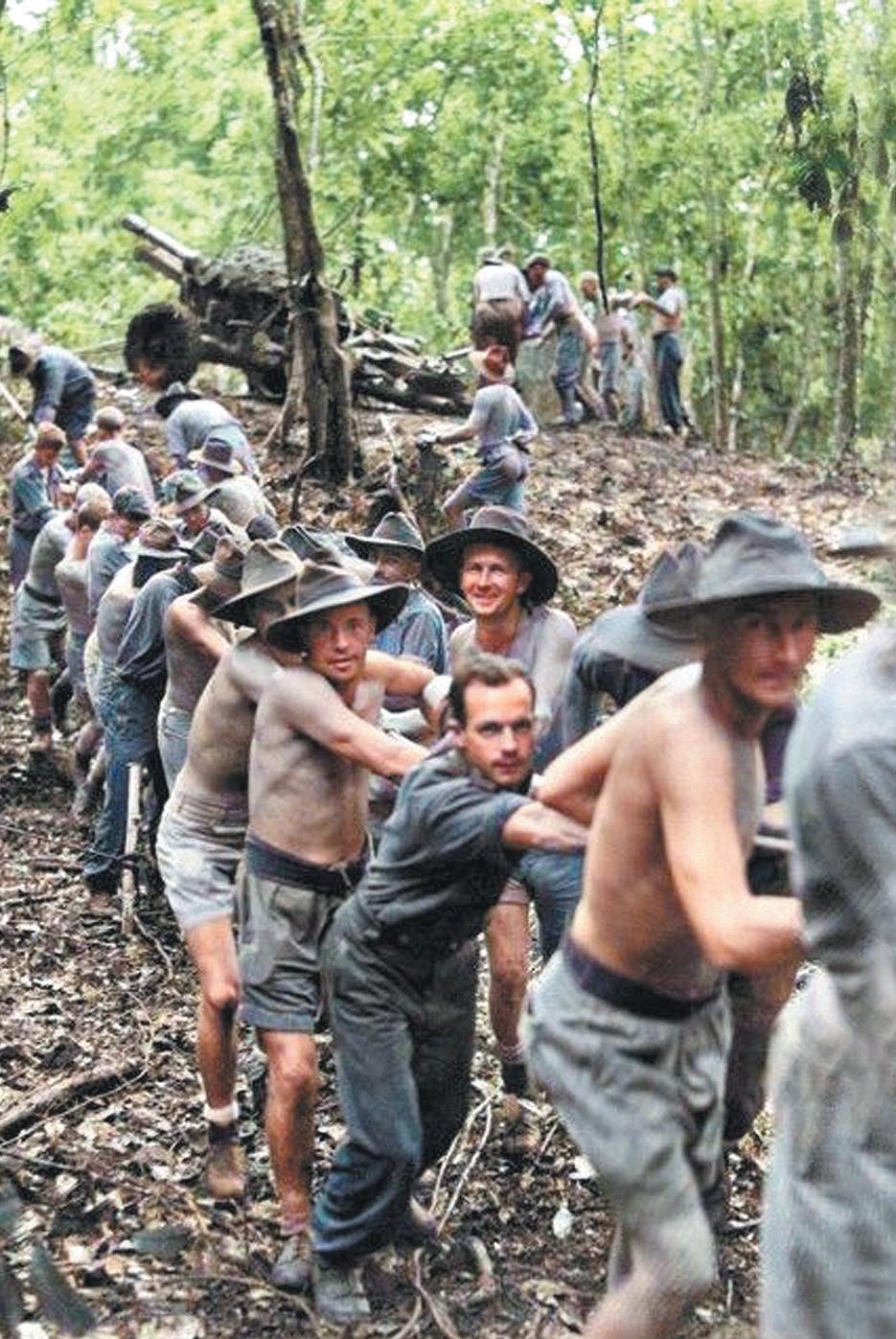
Above: "The Pacific War" Kokoda, Papua New Guinea, 1942
In addition to Anzac Day services, many cities and towns hold marches for current and former serving personnel. Marches are usually organised by the Returned & Services League (RSL) of Australia. Internationally, Anzac Day is commemorated in locations where Australians have served, or are currently serving.
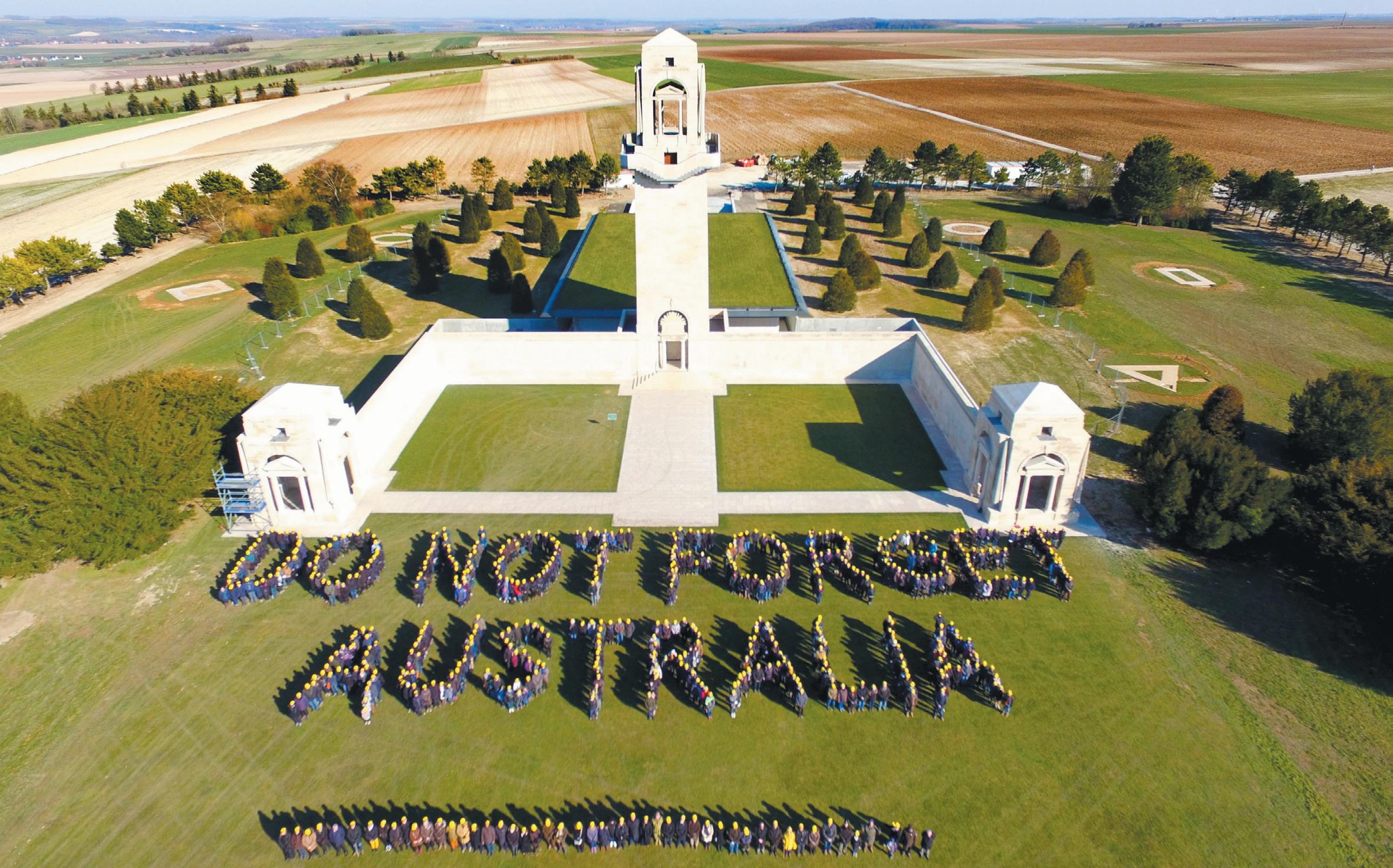
The Australian Government conducts Anzac Day Dawn Services each year at Gallipoli in Türkiye and at the Australian National Memorial near Villers-Bretonneux in France.
Villers-Bretonneux is a town recaptured by Australian and British troops on Anzac Day 1918, and the Australian National Memorial commemorates those who lost their lives on the Western Front during the First World War and who have no known grave.
Those planning to attend these overseas Dawn Services can register for their free attendance passes online at: commemorations.teg.com.au. Registration is essential.
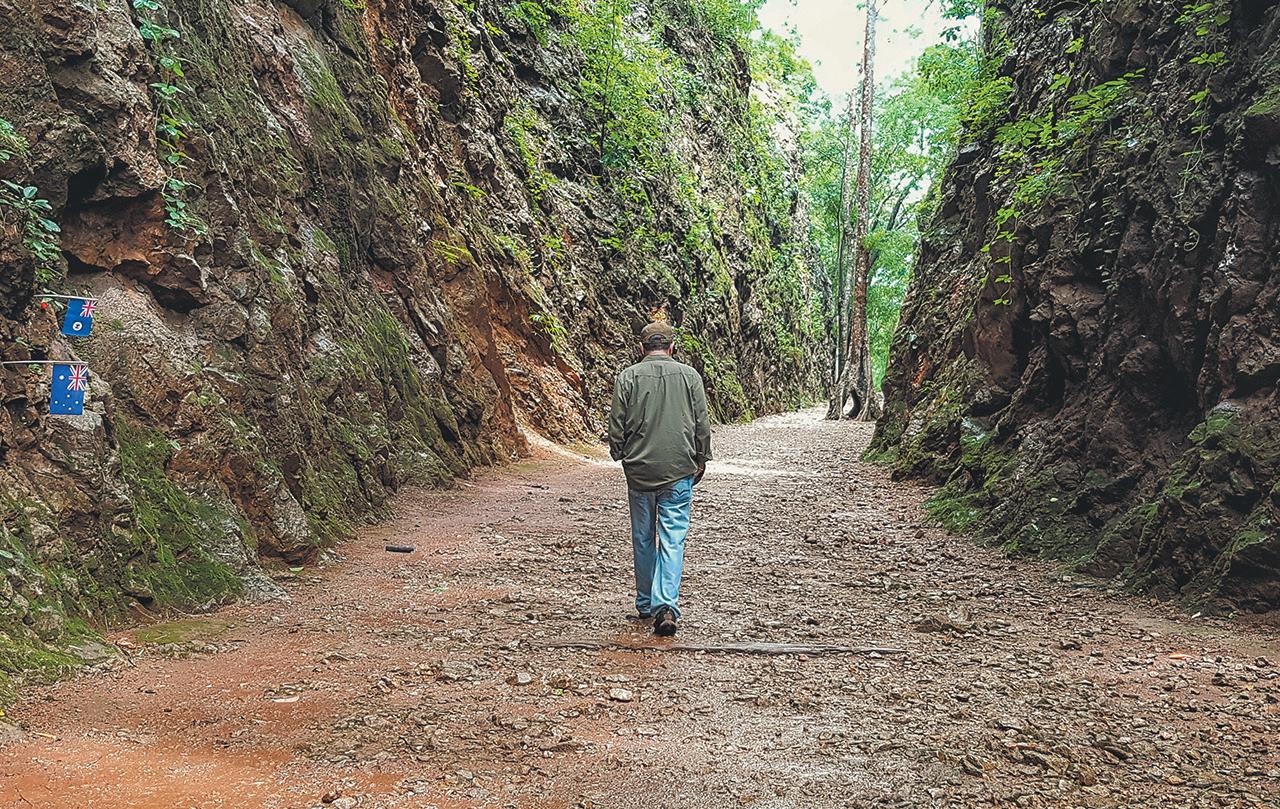
Increasingly, people are making pilgrimages to other significant Australian wartime
locations, such as Hellfire Pass in Thailand, Isurava in Papua New Guinea, and Sandakan in Malaysia.
Many groups choose to organise their own Anzac Day ceremony.
To make organising an event easier, whether an official local ceremony or a service at home, DVA has created a free, downloadable kitbag. The kitbag includes
sample speeches, music and hymns, the Ode of Remembrance, commemorative activities for children and more: anzacportal.dva.gov. au/resources/anzac-day-kitbag
This Anzac Day, I hope you are able to honour all those who have worn our nation’s uniform. It is our duty to ensure their service and sacrifice is never forgotten. Lest we forget.
9 Issue 9 > Autumn 2024
Above: In 2018, 700 men and women join in a remembrance walk to the Australian National Memorial at Villers-Bretonneux Military Cemetery in France, where they formed a tribute that was spectacularly captured from the sky.
Above: Hellfire Pass, Thailand
Can you repeat that? Why the cost-of-living crisis shouldn’t cost you your hearing health
Have you ever sat in a busy restaurant and struggled to hear the conversation at the table? Or noticed a loved one withdrawing from a family catch-up because they couldn’t keep up with the conversation?
You’re not alone. Hearing loss is a common health concern that affects close to 1 in 6 Australians.
Despite the high cost that hearing loss can have on our quality of life and our ability to enjoy moments spent with loved ones, the increasing cost-of-living has made it difficult for those who need it to access affordable hearing care.
In these challenging times, the last thing anyone needs is to be paying more for an essential health service or support than they should be… and that especially includes expert hearing care and hearing aids.
That’s why, during Hearing Awareness Month in March, Specsavers Audiology is imploring
Australians to shop around to ensure that they’re getting the best price and service to meet their needs, and not paying for features that they don’t need. Failing to do so could create unnecessary budget stress.
Specsavers Audiology is committed to providing upfront prices online and without an appointment, because Australians deserve to know what they’ll be paying at the start of their journey to hearing health. But, not all hearing care providers are created equally...
Despite the impact that the current cost-of-living crisis is having on household budgets, some providers are still making it difficult for customers to understand their pricing upfront, online and without attending an in-person appointment.
Customers shouldn’t and don’t need to compromise on their health to be able to afford essentials.
Our stores are locally run and operated, with a team of accredited Audiology Professionals available in almost 300 Specsavers stores nationwide.
Specsavers puts their customers first by guaranteeing value for money and by offering expert care during the hearing journey; before, during and after a hearing check or assessment and hearing aid selection – if aids are needed. A hearing check does not automatically mean that hearing aids are required, but they do help to uncover any changes and ensure hearing loss is monitored, detected and treated earlier if discovered. If further testing is required*, a full diagnostic hearing assessment is used to determine if you would benefit from hearing assistance.
If they are needed, their team of fully accredited health professionals work closely with their customers to unearth what they need – and don’t need –
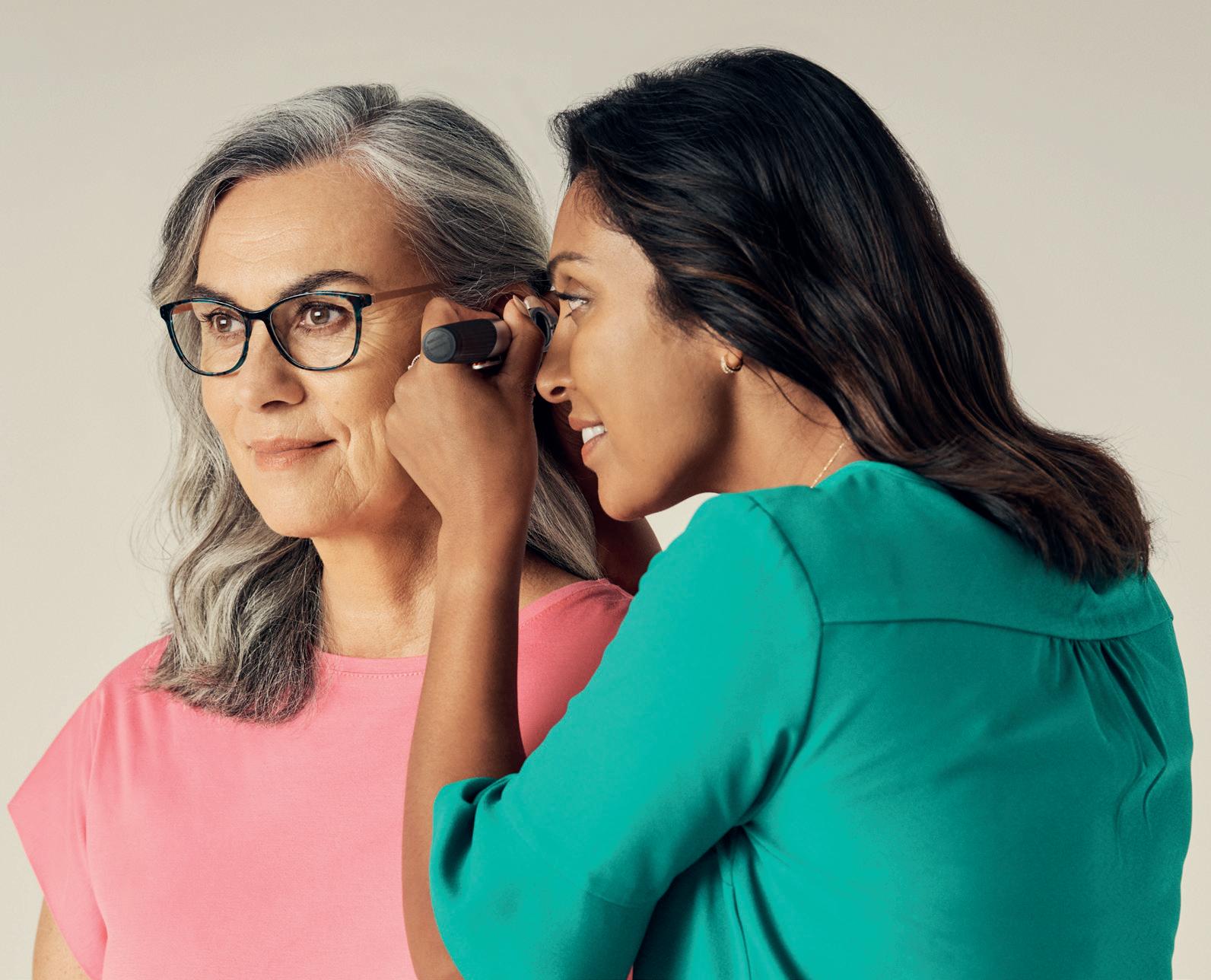
from their hearing aids, ensuring they are fitted with the right level of technology and save unnecessary expense. The price of a hearing aid is based on its technology and features, not the severity of hearing loss, and there is no value in paying for unnecessary features.
The latest technology hearing aids, including rechargeable options, may be fully subsidised for those eligible under the Australian Government Hearing Services Program**.
If a hearing assessment identifies that hearing aids may benefit you, Specsavers’ team of Audiology Professionals are available to help you find the most appropriate solution based on your level of hearing loss, hearing goals, the technology that you require, your lifestyle and budget. Our team is dedicated to helping you find the right solution tailored to you –one size does not fit all.
You can also rest easy knowing that Specsavers Audiology will remain available to support you with an extensive after-purchase support program that includes a 90-day money back satisfaction guarantee, a four-year warranty, free batteries for 12 months and free maintenance checks and adjustments as part of the 12 month aftercare plan.
If you have any concerns about your own, or a loved one’s hearing, visit your local Specsavers store or www. specsavers.com.au/hearing
10 Hunter Veterans’ News
* If further testing is required, a few may apply. ** Conditions apply under the Australian Government Hearing Services Program. ADVERTORIAL

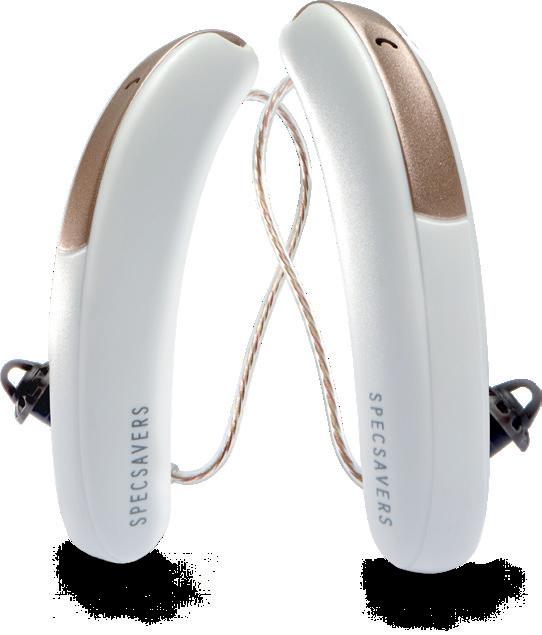
11 Issue 9 > Autumn 2024 Hear more of what you want to hear with Specsavers Advance hearing aid technology Book a hearing appointment with our Audiology Professionals at specsavers.com.au/hearing Always follow the directions for use.

Unlocking Your Potential The transformative power of Counselling

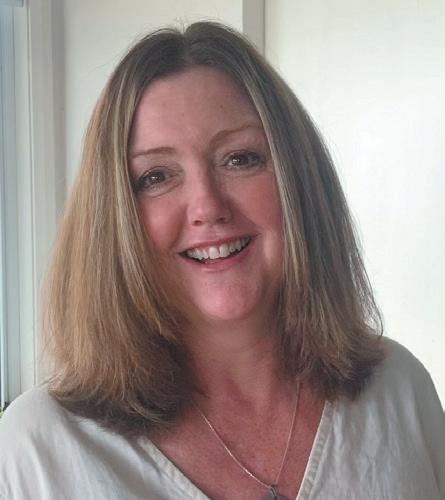 By Wendy Waldron Social Worker and Counsellor Wendy Waldron Counselling

THE UNIVERSAL LANGUAGE OF STRUGGLE
THE GIFTS OF GUIDANCE
IN A world that moves at breakneck speed, the quest for personal balance and mental wellness has never been more challenging— or more critical. Amid the hustle, the idea of sitting down to talk with a counsellor might seem like a luxury or, for some, an admission of vulnerability they're not ready to face. Yet, the journey through counselling is one of the most profound steps an individual can take toward selfdiscovery, healing, and empowerment.
BREAKING DOWN THE BARRIERS
The stigma surrounding mental health counselling has long cast a shadow over its myriad benefits. Myths abound—from the misconception that therapy is only for those with severe mental issues to the mistaken belief that seeking help is a sign of weakness. However, as society progresses, these outdated views are being replaced with a recognition of counselling as a cornerstone of overall well-being.
No one is immune to life's challenges, whether they stem from work stress, relationship issues, personal loss, or the myriad other complexities of the human experience. Counselling offers a safe harbor to explore these challenges under the guidance of a trained professional. It's not just about problem-solving; it's about growth. Through counselling, individuals learn more about themselves, uncovering strengths they didn't know they had and identifying areas where they can evolve.

Improved Mental Health: One of the most immediate benefits of counselling is the alleviation of distressing symptoms. By addressing issues like anxiety, depression, and stress in a therapeutic setting, individuals can find relief and a path to a healthier mental state.
Coping Skills: Life will always have its ups and downs. Counselling arms individuals with the coping skills necessary to navigate these fluctuations more effectively, promoting resilience in the face of adversity.
Greater Self-Awareness: The introspective nature of therapy encourages a deeper understanding of one's thoughts, emotions, and behaviours. This self-awareness is a critical step toward positive change and personal fulfillment.
Enhanced Relationships: The communication skills and emotional insights gained through counselling can transform personal and professional relationships, leading to more meaningful connections and improved conflict resolution.
12 Hunter Veterans’ News
The journey of counselling begins with finding the right therapist. This process is deeply personal and involves considering factors such as the therapist's specialties, their approach to therapy, and the individual's own comfort level with them.
Whether through individual, couples, or group therapy, the key is to find a modality that resonates with the person's needs and goals.


THE JOURNEY FORWARD
The decision to seek counselling is a courageous step toward self-improvement and emotional health. It's an investment in oneself that pays dividends across all areas of life, from personal growth and mental wellness to relationships and career success. If you're on the fence about whether counselling is right for you, consider it not as a last resort but as a proactive, empowering choice for your well-being.
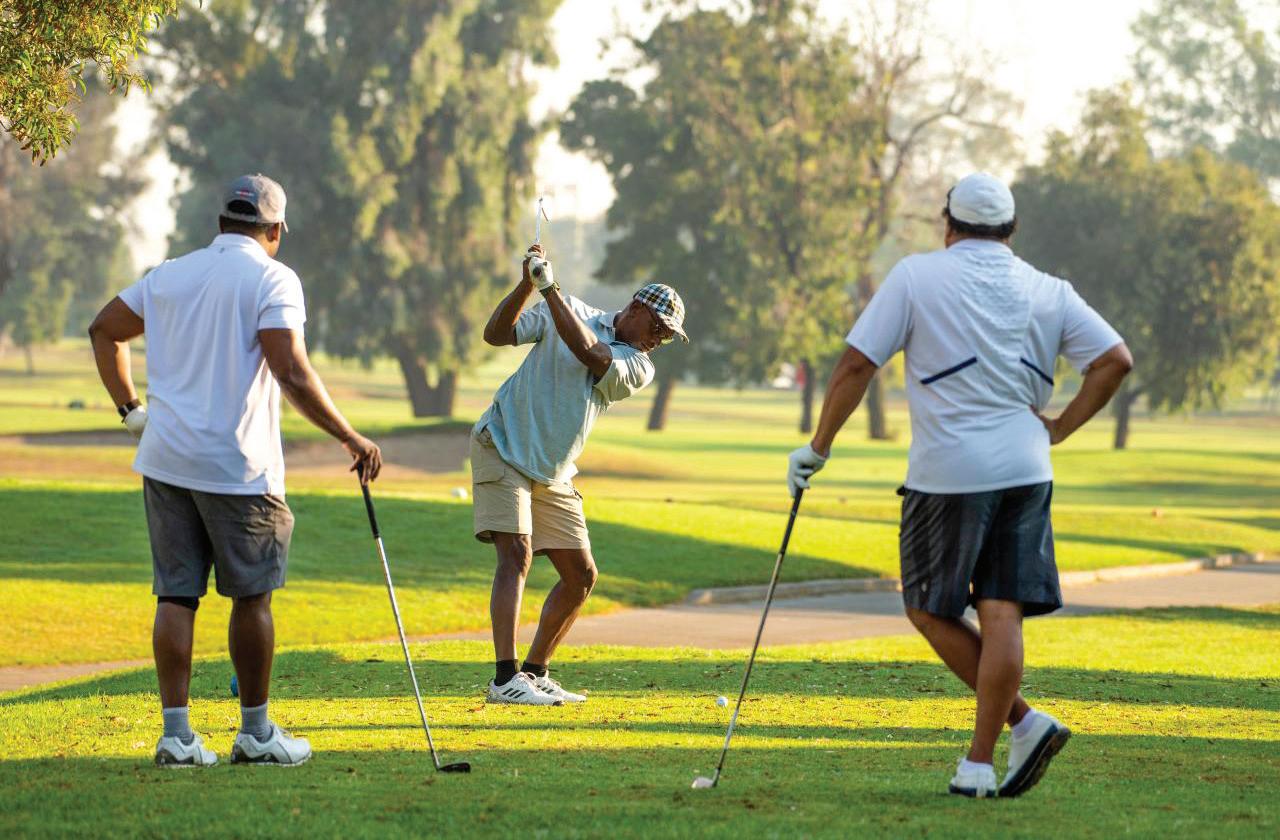

As we continue to navigate the complexities of modern life, the support, insights, and tools provided by counselling can be a lighthouse guiding us toward a brighter, more balanced future. Let us embrace the journey with openness and the knowledge that in the quest for personal growth, we are not alone.
…The decision to seek counselling is a courageous step…
I am available by appointment on Tuesday, Wednesday and Friday at 17 Tyrell Street Wallsend NSW 2287.
For appointments, please call 0417 183 377 or email wendywaldroncounselling@gmail.com
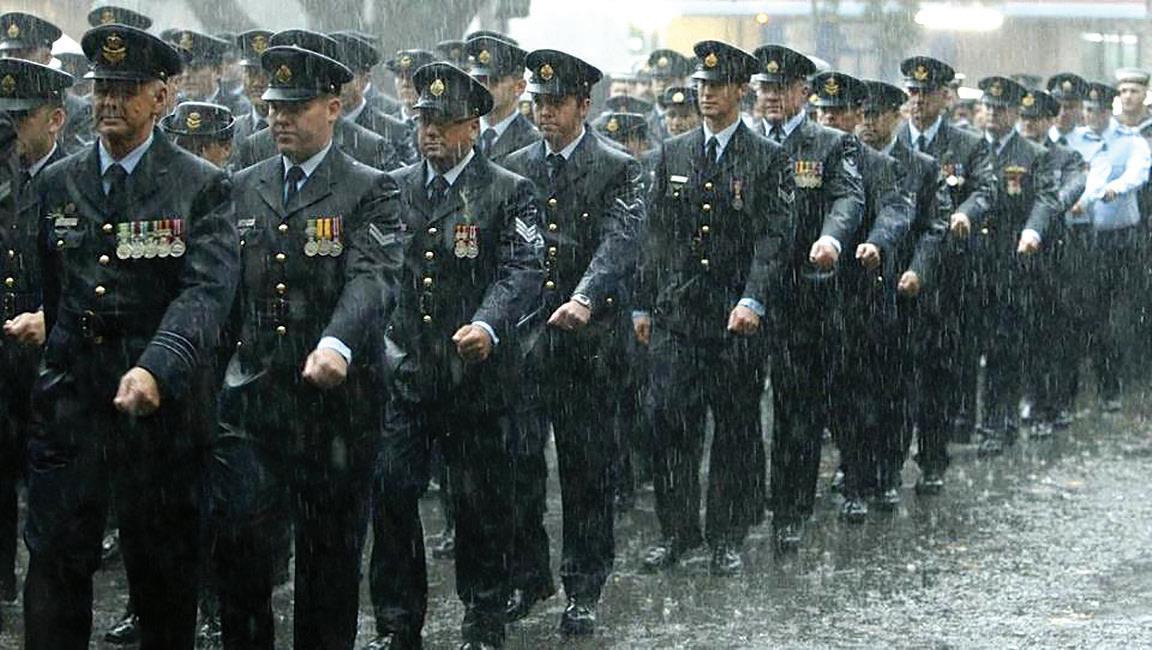
13 Issue 9 > Autumn 2024 13 NEWCASTLE & HUNTER REGION VIETNAM VETERANS If you’re interested in joining the group please contact Bill Myers on 0455 027 415 or Bob Brady on 0409 716 727 SOCIAL CLUB GOLF The RSL is the largest representation Veterans have to watch over our government and The City of Newcastle RSL Sub-Branch have been a strong supporter of the Vietnam Veterans Association for many years. The Vietnam Veterans have been appointed official Pension Advisors, and for this, they pay our association $20 per financial member per year. BE A PART OF IT AND JOIN NEWCASTLE YOUR ASSOCIATION WILL BENEFIT THE PATH TO THE RIGHT COUNSELLOR
Protect yourself from Shingles…
Shingles is an infection caused by the chickenpox virus. It causes a painful, blistering skin rash on any part of the body. Early treatment with antiviral medicines can speed healing and reduce pain.
You can only get shingles if you have previously had chickenpox. After you have had chickenpox, some of the chickenpox virus (called the varicella-zoster virus) stays in your body and lies ‘asleep’ (dormant) in nerve cells. The dormant virus causes no harm or symptoms, but it can ‘wake up’ (re-activate) and cause shingles on the skin near the affected nerve.
Shingles can occur at any age, but is more common in people over 50 years of age. Most people get shingles only once. It is possible to get it again, but this is rare.
WHO IS AT RISK?
Anyone who has had chickenpox can get shingles. No-one knows why the virus reactivates, but factors that may play a role are: n increasing age, especially being older than 50 n conditions or medicines that weaken the immune system
n stress or illness.
SYMPTOMS
Shingles usually starts with a burning, tingling, itching or sensitive feeling on an area of skin. A painful, red rash with fluid-filled blisters then appears a few days later. The blisters slowly dry up, crust over and heal.
The shingles rash may look like chickenpox, but it is usually more painful and less itchy. It can be so sensitive that even a light touch causes severe pain. Some people, especially children, have no pain. Some people have pain with no rash. Shingles usually affects only one nerve on one side of the body. Sometimes it affects two or three nerves next to each other. The rash usually occurs in a narrow band across one side of the
body, neck or face. It may affect an eye, an ear, the inside of the mouth or the genital area. Shingles can also cause other symptoms, including fever and headache. If shingles is not treated, it usually lasts for 2–4 weeks.
POST-HERPETIC NEURALGIA AND OTHER PROBLEMS
Shingles can cause a condition called postherpetic neuralgia, in which the affected area of skin stays painful or sensitive for weeks or months after the shingles rash has cleared. People who are aged over 40, or who have shingles on the face, are more likely to get postherpetic neuralgia.
Shingles can also cause other problems. For example, shingles in an eye can damage eyesight.
MEDICINES
Treatment for shingles includes antiviral medicines, pain-relieving medicines and soothing creams, gels and dressings.
n Antiviral medicines (e.g. famciclovir, valaciclovir, aciclovir) – stop the virus from growing. If you start taking them within 72 hours after the start of the rash, they can speed healing and reduce pain. Antiviral medicines must be prescribed by a doctor.
n Pain-relieving medicines – nonprescription pain relievers (e.g. paracetamol, ibuprofen) may help to relieve the pain. You can buy them from a pharmacist. Stronger pain relievers (e.g. opioids and medicines for nerve pain) must be prescribed by a doctor. You may need prescription pain relievers to relieve post-herpetic neuralgia.
n Creams, lotions, gels and wound dressings – can help to relieve the pain and protect the affected area. You can buy them from a pharmacy. Once the rash has healed, capsaicin cream or lignocaine gel may help to relieve post-herpetic neuralgia.
The shingles vaccine ShingrixTM is available for eligible people most at risk of complications from shingles. A
of ShingrixTM (2 to 6 months apart) will be available FOR FREE* for:
ª
ª
aged 65 years and older


SELF CARE
n See a doctor as soon as possible (within 72 hours) after the start of shingles.
n Keep the affected area clean. Bathe it with saline (salt water) and cover it with a wound dressing. Apply a cool, wet compress (pad) or an ice pack to the blisters to help reduce the pain and itch.
n Don’t scratch the rash. Scratching increases the risk of bacterial infection and scars. Keep your fingernails clean and short to avoid scratching.
n Wear loose-fitting clothes to avoid irritating the rash.
n Get plenty of sleep and rest, and use relaxation techniques to help manage stress. Stress can make the pain worse.
n Have a healthy diet. Eat a variety of vegetables, fruits, wholegrain foods, proteinrich foods (e.g. nuts, lean meats, fish, eggs) and low-fat dairy foods, whilst limiting foods high in fat, sugar or salt.
n Share your feelings about the pain with family and friends. Ask for help if you need it.
IMPORTANT
You cannot catch shingles from someone who has shingles.
However, someone who has never had chickenpox or the chickenpox vaccine can catch chickenpox from someone who has shingles. The virus spreads from person to person through the fluid from the shingles blisters. A person with shingles should avoid physical contact with:
n anyone who has never had chickenpox or the chickenpox vaccine
n anyone with a weakened immune system
n babies under 12 months of age
n pregnant women – chickenpox can be dangerous to the mother and the unborn baby.
people aged 18 years and older with medical conditions including:
ª Haemopoietic stem cell transplant
ª Solid organ transplant
ª Haematological malignancy
ª Advanced or untreated HIV *A service administration fee applies
14 Hunter Veterans’ News
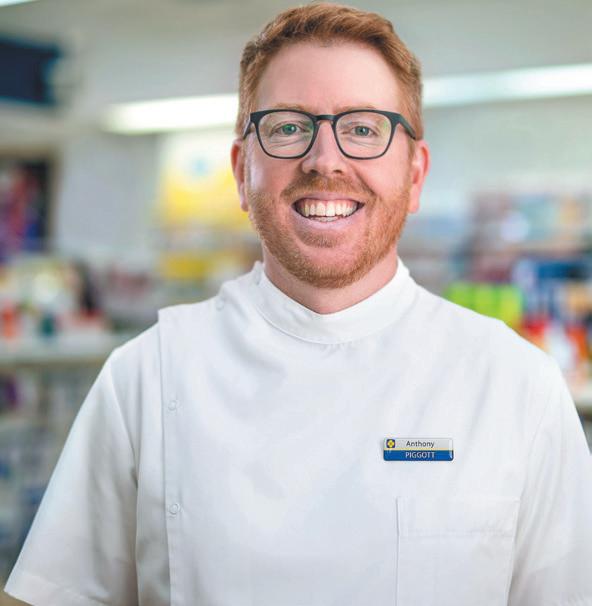
Oh brad , i wish i got my shingles vaccination! ª www.piggottspharmacy.com.au ª BLACKBUTT PHONE 4957 2474 BRANXTON PHONE 4938 1156 HAMILTON PHONE 4961 3179 HUNTLEE PHONE 4067 786 MEREWETHER PHONE 4969 1978 LAMBTON PHONE 4957 3630
course
2-dose
People
ª Immunocompromised
First Nations people aged 50 years and older
5 Reasons to Adopt a Greyhound
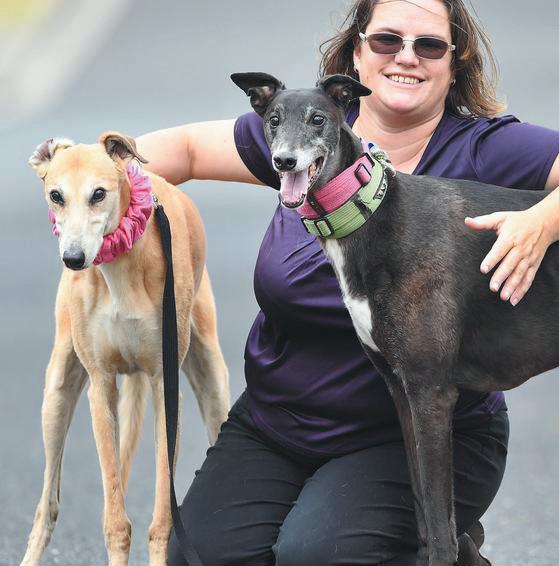 By Ruth Elliot Greyhound Behaviour Consultant
1. THEY ARE GOOD FOR YOU
a. Having a Greyhound as a companion is so good for you. Not only will they provide you with the opportunity for 1 or 2 walks a day, while you are out on walks, you will often get the opportunity to tell people how wonderful a Greyhound is.
b. Dog ownership has been shown to reduce blood pressure.
c. Having a Greyhound to look after gives you a good reason to get out of bed in the morning (unless of course, you are wanting to snuggle in bed with your Greyhound, in which case, they are excellent snuggle companions.
d. You will become part of the greyt Greyhound global community. There are local dog walks, fundraising and volunteer opportunities, and Greyhound owners are often supported through peer 2 peer support groups online through social media groups.
e. Greyhounds are good for practicing your photography skills – they sleep in all sorts of weird and wonderful positions. Some of which you will want to capture. Or, for the photographic enthusiast, catching a Greyhound mid zoomie in a picture is always a source of joy.
f. You will increase your vocabularyThe Greyhound Glossary – words and phrases like: “Rubbernozedoze”; “Bed Fail” “Roaching”, “GSOD – Greyhound Scream of Death – a tongue in cheek

Corrie


phrase for the sound a Greyhound makes when it has a minor injury. Think stepping on a feather, or the wind blowing in a strange direction” Richard Skipworth will give you the lowdown on the language complete with diagrams which are both accurate and hilarious. (www.richskipworth.co.uk)
2. THEY ARE SUPER HEALTHY
a. Are you looking for a pure-bred dog with few health problems? Look no further, the Greyhound is perfect. For as long as Greyhounds have been around, we have been breeding them for health. They have good strong hearts and excellent lungs. Genetic abnormalities are very very rare. Greyhounds just look gorgeous the way they are, they didn’t need to be genetically modified for aesthetics. They are one of the original dog breeds and if you go back in history, you will notice that the old Greyhounds look the same as the Greyhounds you see today.
3. THEY ARE LOW MAINTENANCE
a. Greyhounds need little grooming. Regular brushing will help keep their coats sleek, regular nail trims and annual check-ups at the vet are all most Greyhounds need.
b. Greyhounds are often very happy to spend their time around meals and walks resting comfortably, (this is sometimes upside down, or half on the couch and half off!)
c. Greyhounds are very good at spending time on their own. You probably won't need the expensive toys that are designed
to occupy dogs. If you want to go out with your friends and can’t take your dog with you, most Greyhounds are happy to wait for you at home, they will more than likely sleep. But they will be excited when you return!
d. Training – once your Greyhound knows what you want, they are usually happy to comply. Whilst they may have to learn how to live in a domestic setting, such as climbing and descendng stairs, with patience and a clear understanding of what the boundaries are, they adjust very well. Most people don’t feel the need to take their Greyhound to dog school (although, there is no reason why you can’t) Greyhounds are as intelligent as any other dog. The Greyhounds are typically already leash trained and walk well on a loose lead. Many Greyhounds go into volunteer programs as therapy dogs, visiting nursing homes and hospitals.
4. THEY ARE SUPER SOFT
a. If you’ve never patted one before the first thing most people comment on, is how soft and velvety their fur is. They are a very sleek animal, and the feeling of Greyhound fur is very calming.
5. GREYHOUNDS ARE JUST AN AMAZING BREED
a. They give you an automatic invitation into Greyhound community. They give you companionship and exercise. They listen to you if you need to talk and give you unconditional love.
www.understandinggreyhounds.com.au
Continued over page
15 Issue 9 > Autumn 2024

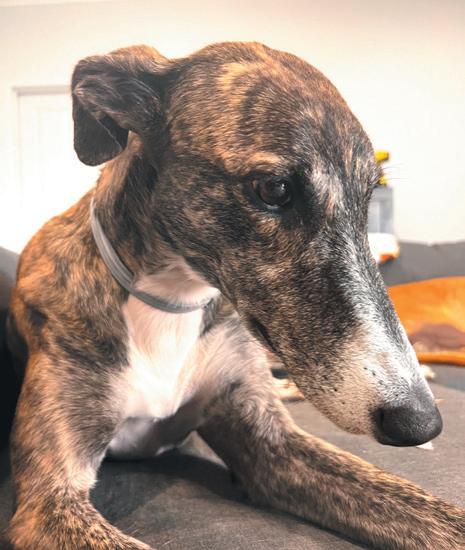
I started out fostering Charlotte, but it got to a point when I couldn’t face the thought of her not being in my life. I’m alone and don’t have much contact with family and friends so she’s my whole world. I went on exercise for a couple of weeks and missed her so much.
I had a very rough year last year, working in a difficult environment and I was diagnosed with an autoimmune disease which impacted every facet of my life. My car also died, so I had to buy a new one whilst building my own house! I also had a number of relatives pass away adding to the stress. Charlotte was by my side through it all and don’t know where I’d be without her. We’re in Darwin and I try to help with rehoming Greys in the NT. I’m currently fostering 2 others, so I have 3 "mini horses" at home and they make my life so complete, they give me so much!
Sigourney W. Lieutenant, RAEME Corps2015 to present Darwin, Northern Territory
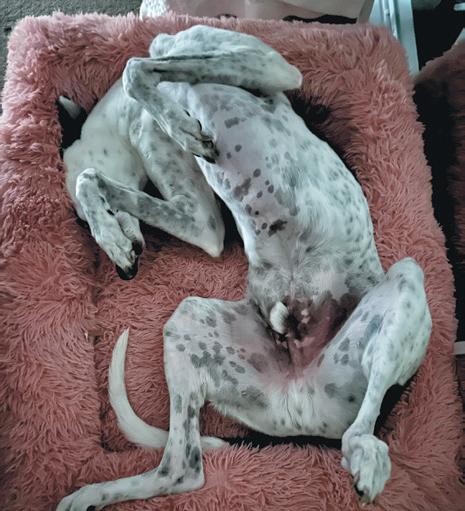
My Greyhound is literally my therapy dog. We have both journeyed together through incredible challenges. I have had PTSD since 2008 from an ongoing work injury and another work injury which occurred in 2012. After years of work cover anguish, IME impacts, anxiety, distress and depression, I'm so pleased I found Snoopy. He failed as a racer at 2 years old, so I gave him a new home. He also suffers from PTSD and (without going into detail), his journey has been absolutely horrendous. We found each other and now Snoopy and I are a team. He's now nine years old!
Susanne - Victoria
My girl is Maddy and she's turning 13 this year. She raced and retired before turning 3 and she's been at home with me ever since. She has always been a very loving dog and never shown any aggression.
In 2019 I was a youth worker and was assaulted. Consequently, I was a nervous wreck and was diagnosed with acute traumatic stress disorder and still have PTSD along with bouts of anxiety. I have troubles with loud noises, car horns and yelling and can't cope well with hearing foot steps behind me or being followed. All I wanted to do was lay out in the entertainment area with Maddy, where she would stay by my side. Socialising felt impossible.
My daughter suggested taking her to a dog park, and I (reluctantly) agreed. I ended up meeting some lovely dogs and their people, and I've now made some life-long friends.
I still see my psychologist (which is important) and have learnt to deal with some of the issues. But when feeling a bit stressed I sit with Maddy, she just rests her head on me, looks up at me, and I calm down. I strongly believe if I didn’t have Maddy, I’d not be here.
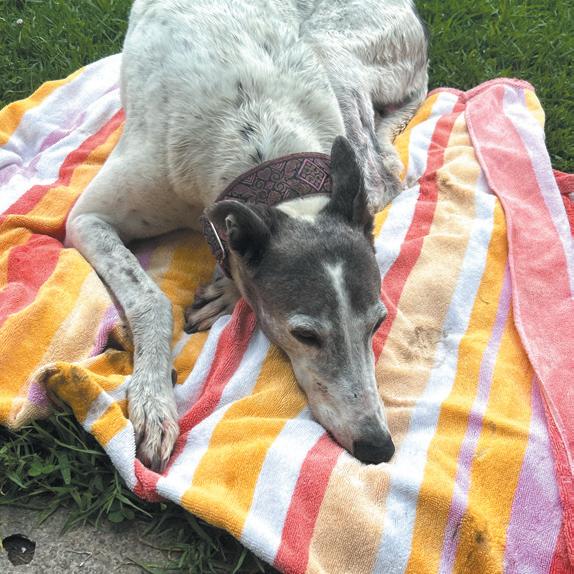 Nik - Victoria
… they make my life so complete, they give me so much…
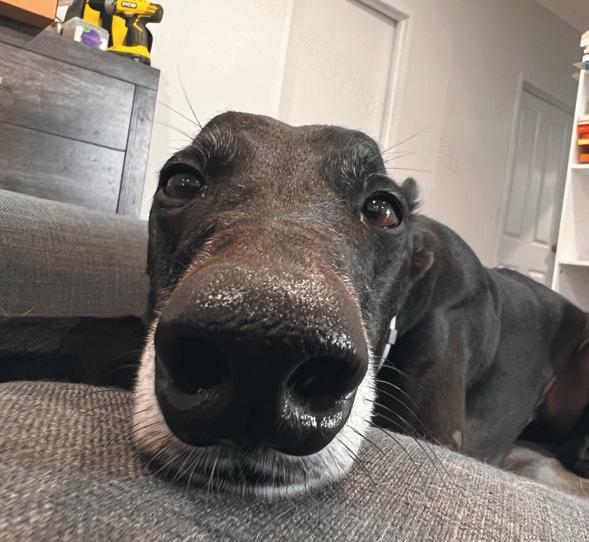
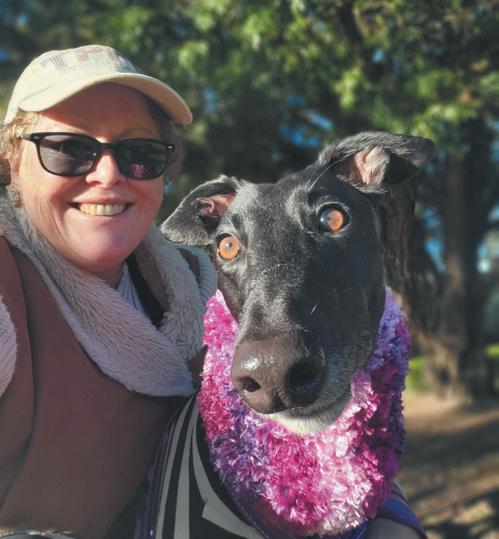
During the "Covid years", my father passed away, my relationship fell apart, my band broke up and my health saw a decline, including a diagnosis of Graves Disease. I was a wreck and fell into a depression, often on the verge of tears. Even after all the lock-downs were lifted, I didn't feel like going anywhere and socialising with others felt like a chore. My weight also ballooned, which just compounded the problems. One day, 18 months ago, a close friend came to visit with his 2 retired Greyhounds and I was instantly in love with them, they were so gentle and placid. I knew I had to give a Grey a forever home!
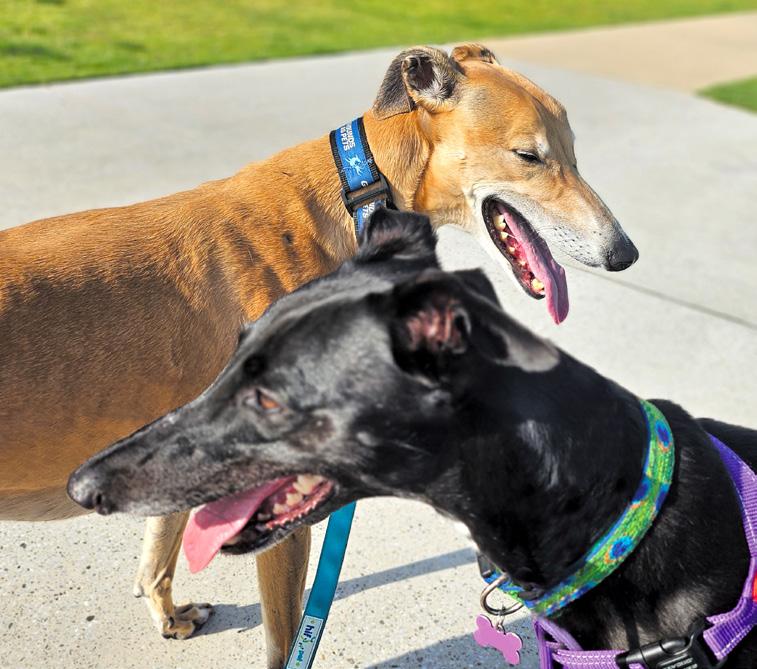
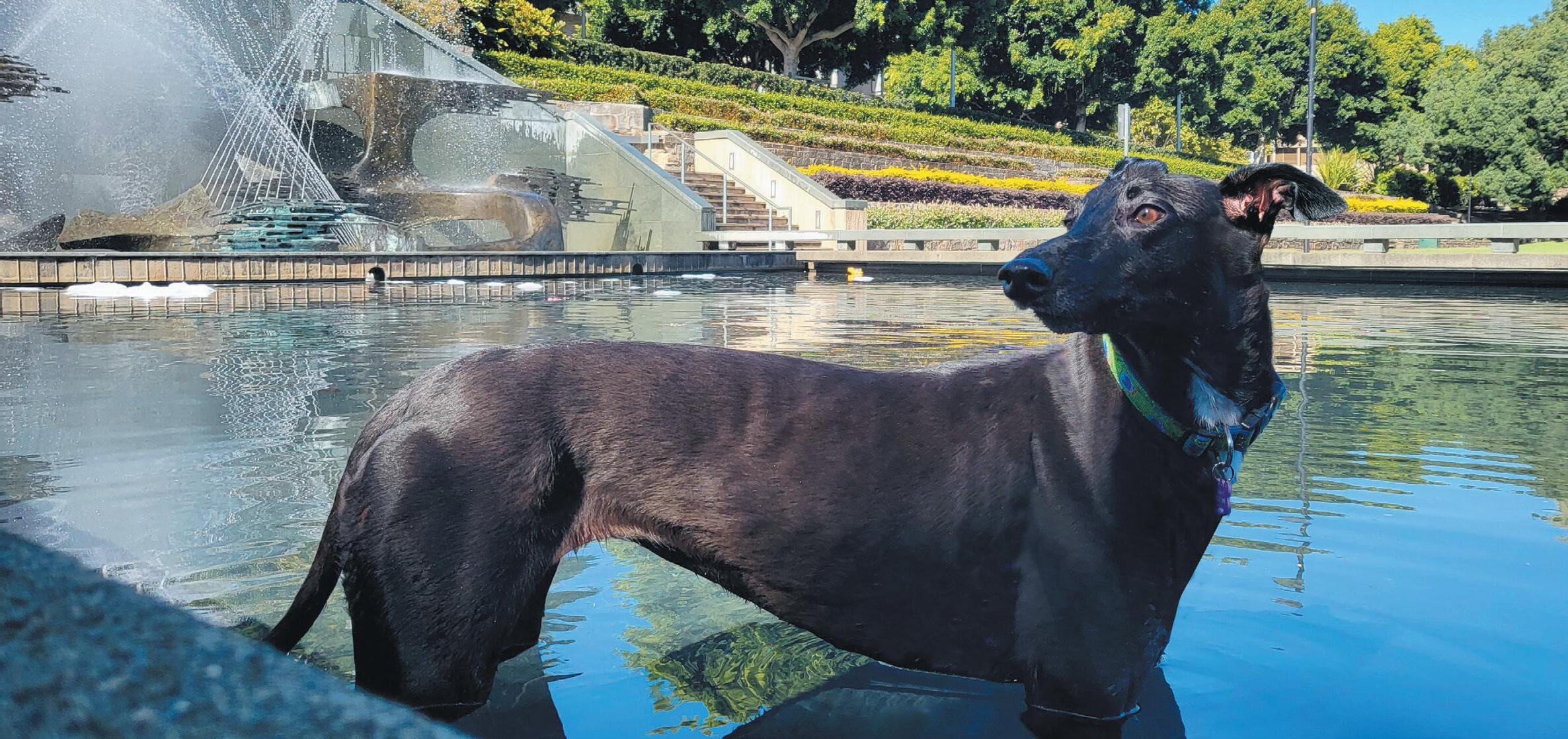
So in November 2022 Corrie came into my life and she's been changing it for the better ever since, physically, emotionally and psychologically. I'm now walking her twice a day, my fitness level has improved out of sight and I'm loosing those Covid kilos. I've met some wonderful people in my neighbourhood and made some new and hopefully lasting friendships. I've even started a sighthound walking group! At home, Corrie makes me laugh almost every day. She has the funniest quirks, from her short 2 minute zoomies jumping from lounge to lounge, to the crazy sleeping positions she can get herself into, which is called "roaching" because they resemble a dead cockroach with their legs akimbo! She's even coaxed me into Civic Fountain for a paddle on a hot day! She's saved my life AND my sanity.
Kirrily D. - Newcastle, NSW
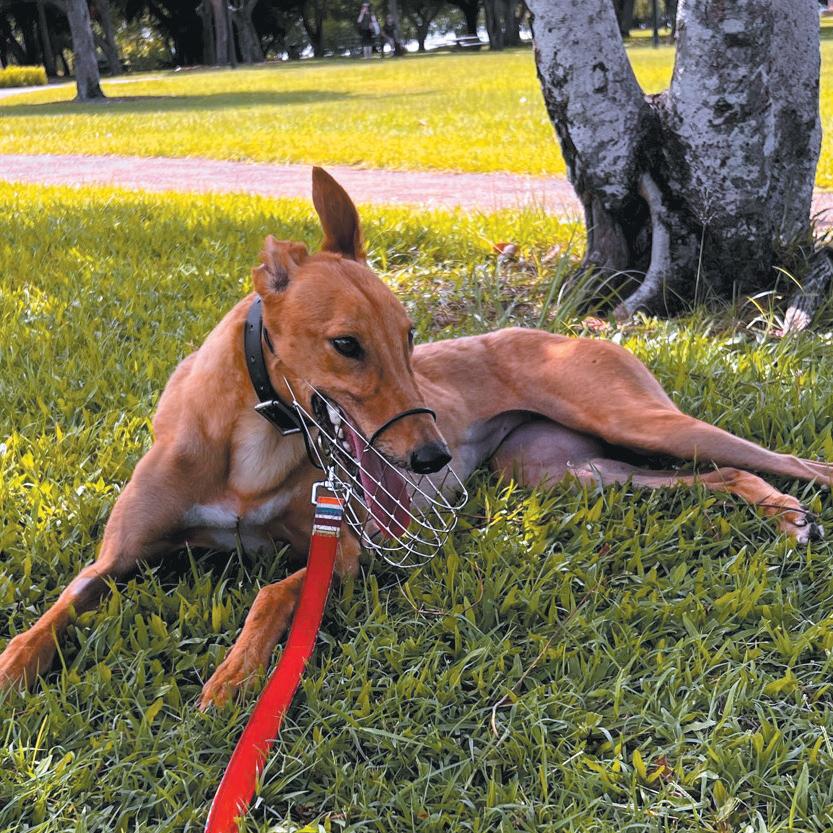
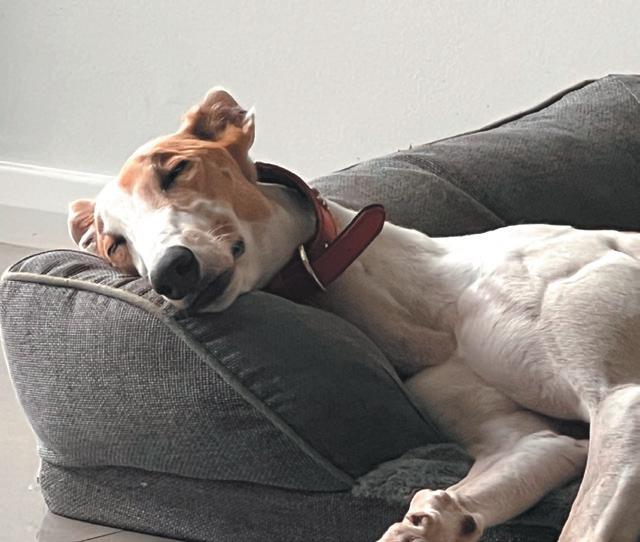
Above: Just a few of the many Greyhounds that Lieutenant Sigourney W. has fostered and rehomed in the Northern Teriitory over the years. Some have been adopted by fellow serving members.
16 Hunter Veterans’ News
Moon
Honey From page 15
Charlotte Corrie Maddy Snoopy
Daphne
As a late-diagnosed neurodivergent person, who has lived with significant anxiety, depression, and other mental health issues most of my life, the comforting, grounding effect of canine companionship cannot be underestimated. However, as a single parent of 2 and a fulltime uni student in my early 40s, I didn’t feel I had the energy to meet the exercise needs of the breeds I’d previously owned such as collies, and a blue heeler. So I reached out on social media asking for pet dog recommendations. One of the more common replies surprised me: ‘An ex-racing Greyhound would be perfect for you!’. 'Really? But don’t they require heaps of exercise?!' I was soon to learn that these nimble noodles, capable of reaching speeds of up to 70km/h, were also the biggest couch potatoes on the planet, rivalling perhaps only the sloth. They were also apparently calm, gentle, loving dogs who snuggle up to their humans, reserving their energy for short bursts of activity.
Sounded perfect! Where do I sign up?
My partner spotted a Facebook post shared by an owner/trainer looking to rehome an ex-racing Greyhound. I immediately messaged them and was invited to take Charlie, the then 3-year-old dog for a trial.
If it didn’t work out, they would take him back no strings attached.
I soon realised what an absolute blessing Charlie was to our family. Despite being somewhat of a stubborn personality (at times), and absolutely food obsessed, this lanky ‘bag of triangles’ became my constant companion and endeared himself to the whole family.
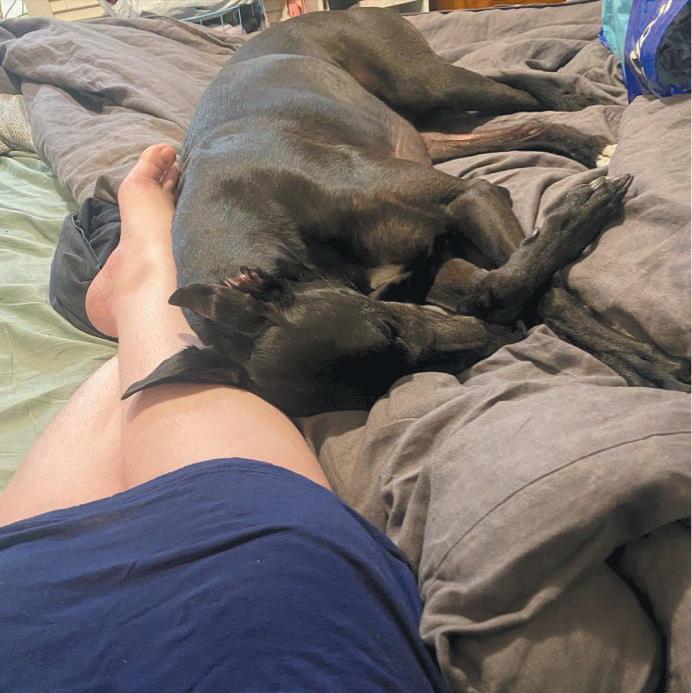
Right: With a bit of training and a lot of patience, Charlie's now 'cat-friendly'
Left: "Sticking to me like glue"
Charlie
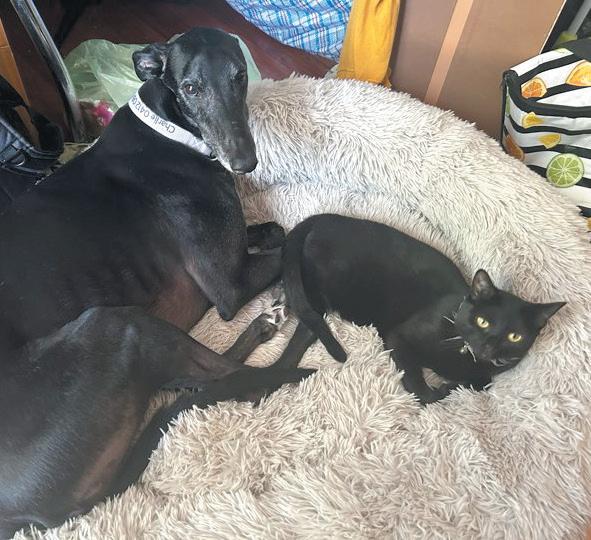
The biggest gift Charlie has given me in the last 3 years, is his status as an unofficial support/therapy dog. Besides my anxiety and related mental health issues, I also live with 2 chronic illnesses that sometimes

result in needing to spend entire days in bed. Charlie sticks to me like glue on these days. He flops himself next to me, jammed up as close as he can get and doesn’t leave (unless he hears the noise of someone is in the kitchen!).
His love is constant and devoted. He just hangs with me as I work from home, and he adores his walks, especially with the local Greyhound walking group. If I am experiencing a pain crash, or an anxious or sad moment/day/week, just having Charlie around is a balm to my ills. I am even considering looking into what it would take to train him to be an official support-dog. To anyone considering introducing a Greyhound into their life, I wholeheartedly and unreservedly say ‘do it!’. Besides their unwavering love for their humans and their sleepy ways, Greyhounds are absolutely hilarious. Their goofy antics, excited zoomies, and derpy tongue-out sleep postures never fail to entertain. I cannot imaging our home without a Charlie in it.
Jayne G. – Melbourne, Victoria
If you'd like to introduce the love of a Greyhound into your life, there are many reputable adoption programs around the country. We suggest you Google "Greyhound adoption" and find the one closest to you.
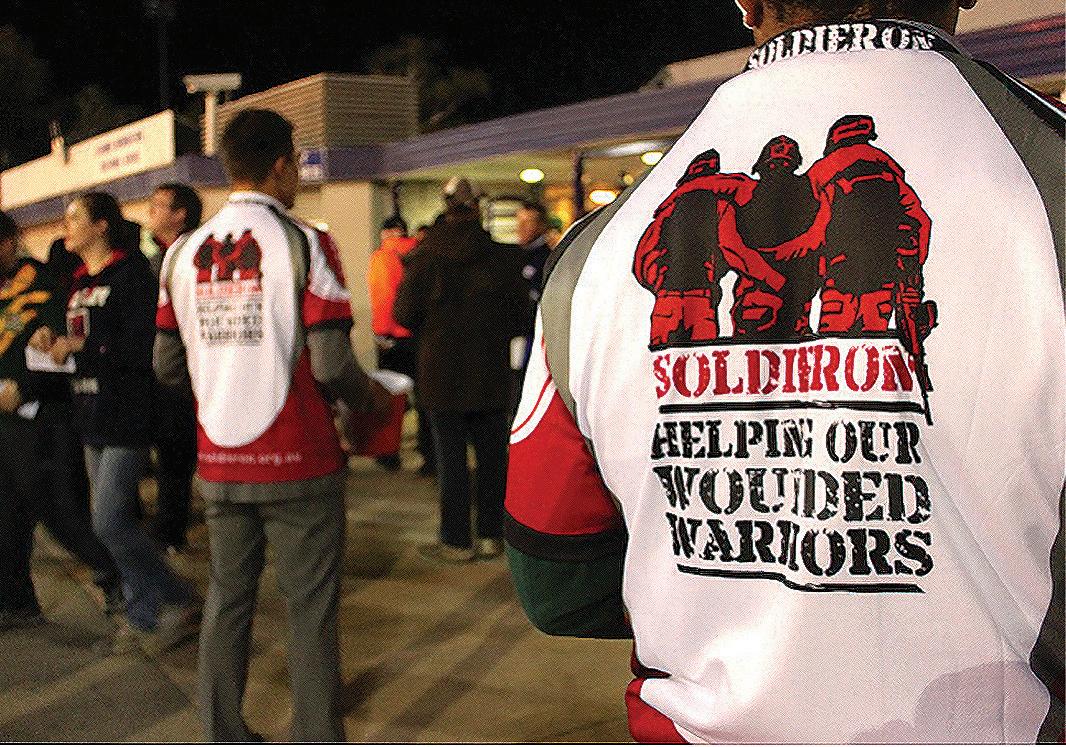
SOLDIER ON NEWCASTLE WORKS WITH VETERANS AND THEIR FAMILIES SUPPORTING THE TRANSITION PROCESS FROM THE ADF, AS WELL AS WITH THOSE WHO HAVE ALREADY LEFT THE ADF WITH THEIR JOB SEARCH.
To be eligible for this support you need to be a veteran or a spouse of a veteran with service since 1990.
Unlike a recruitment agency, SOLDIER ON doesn’t place candidates in jobs. We enable and support veterans with their job search and where required, help that individual become job ready.
This support can include: comprehensive career exploration – helping to identify what you want to do after the military and to help mitigate any barriers that may
exist, helping to navigate and understand your local job market as well as applying for opportunities, providing guidance with respect to translating your military skills and experience, providing meaningful industry insights, helping to uncover opportunities, review a resume or help draft a new resume and interview preparation.
SOLDIER ON provides a suite of services and access to partner organisations to meet the needs of our veterans so that they can start their journey on their road to recovery.
17 Issue 9 > Autumn 2024
TO FIND OUT MORE GO TO www.soldieron.org.au
ON NEWCASTLE
INSIDE NEWCASTLE JOCKEY CLUB, 88 DARLING STREET, BROADMEADOW
SOLDIER
LOCATED
Officer)
DEIRDRE SIMPSON (Programs
Telephone: 02 6188 6131 Email: deirdre.simpson@soldieron.org.au
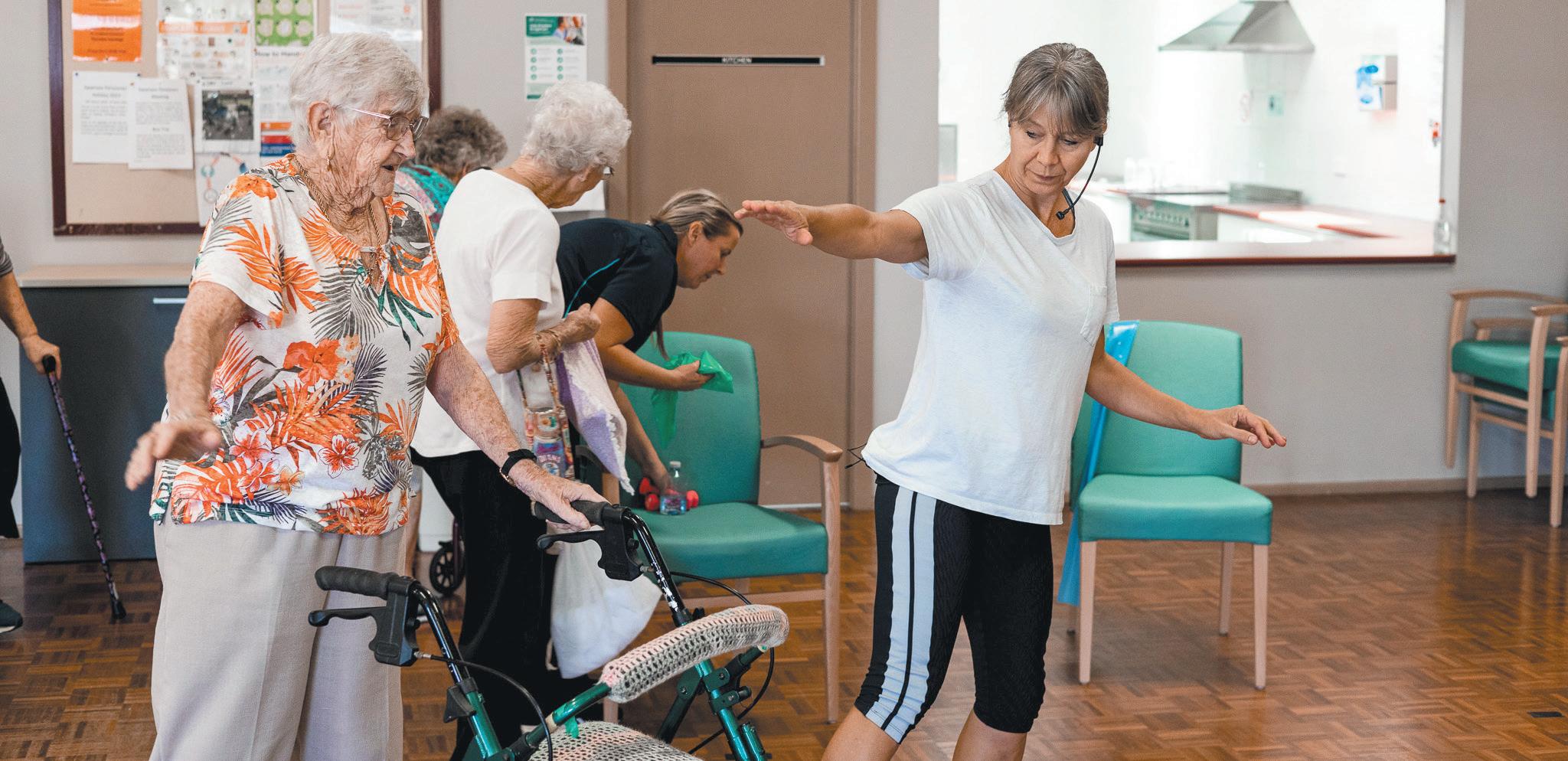
You can reverse major risk factors for falls!
 By Dr John Ward, Geriatrician
2024 NSW Senior Australian of The Year Co-Founder Hunter Ageing Alliance and ActiveStrongerBetter
By Dr John Ward, Geriatrician
2024 NSW Senior Australian of The Year Co-Founder Hunter Ageing Alliance and ActiveStrongerBetter
ABOUT
one-third of older people fall each year. Falls may be a precipitating factor for fractures, hospitalisation, loss of independence and even residential aged care placement.
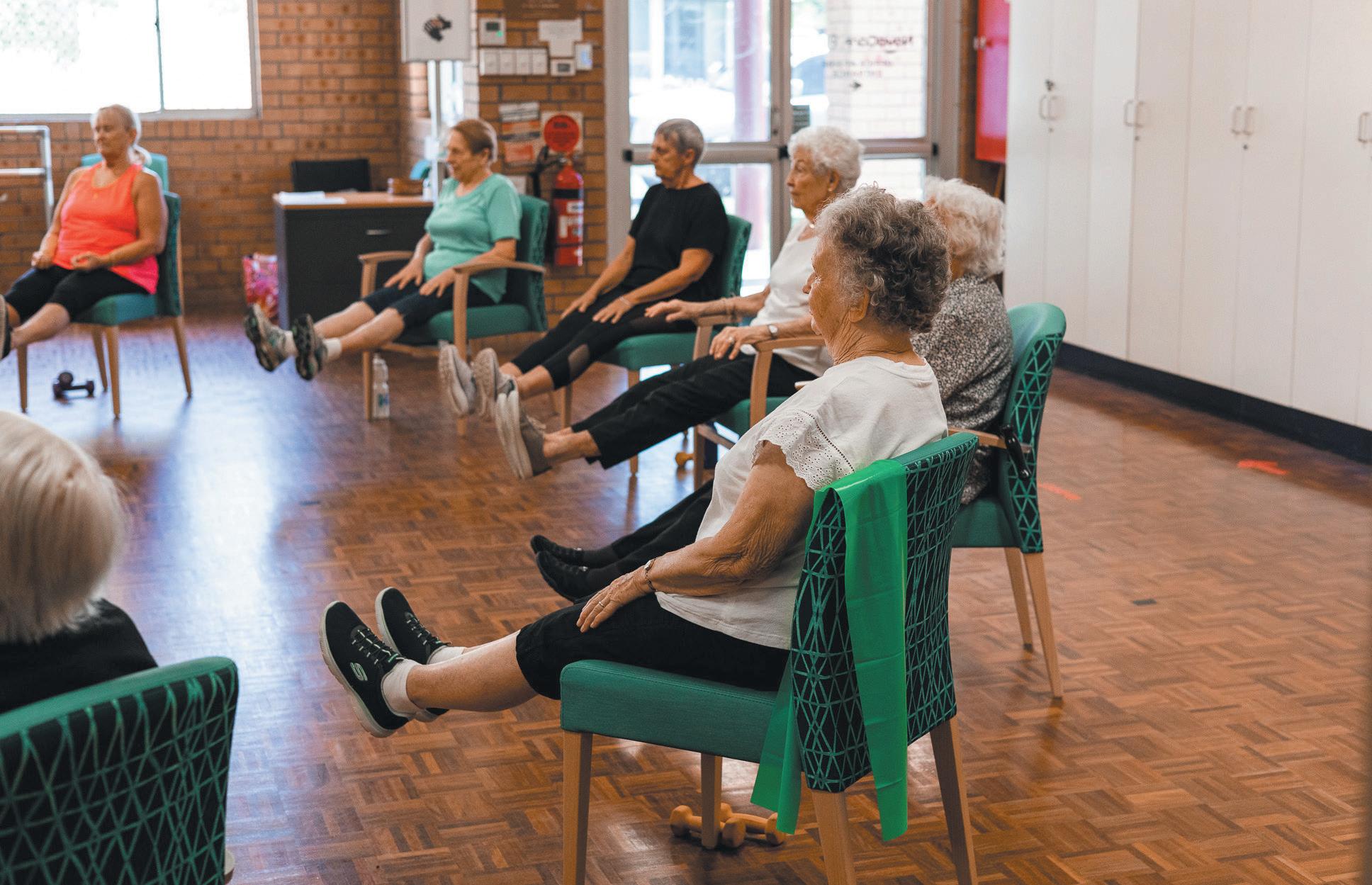
There are a number of risk factors for falling. Two of the major risk factors for falling that increase with age are sarcopenia and declining balance, and they can be reversed with exercise.
Programs like ActiveStrongerBetter focus on strengthening and balance exercises, aerobic exercises and activities that build co-ordination and reaction time which are central to slowing sarcopenia and improving balance.
SARCOPENIA
Sarcopenia is the loss of muscle strength and mass that accompanies older age. You will probably notice that you do not feel as strong and muscular as you were as a younger person. Sarcopenia is made worse by chronic disease and obesity.
Chronic disease has an inflammatory component which exacerbates muscle loss. This is why it is critical to do resistance exercise with conditions such as Diabetes, Heart or Lung Disease, Kidney Failure, Cancer and Cancer treatment, Arthritis, Parkinsons Disease and even Depression and Dementia.
Muscle loss starts in the late twenties in sedentary people and late forties in people who maintain a high level of physical activity. The rate of loss increases with age.
Learn how you can address Sarcopenia and poor balance in older age.
So, as we get older, we should be doing a bit more resistance training to help maintain muscle capacity. There are many ways to build up strength.
People with obesity have large, but poor quality, muscles. Fat tissue is an active endocrine organ releasing many chemicals that increase the rate of muscle loss.
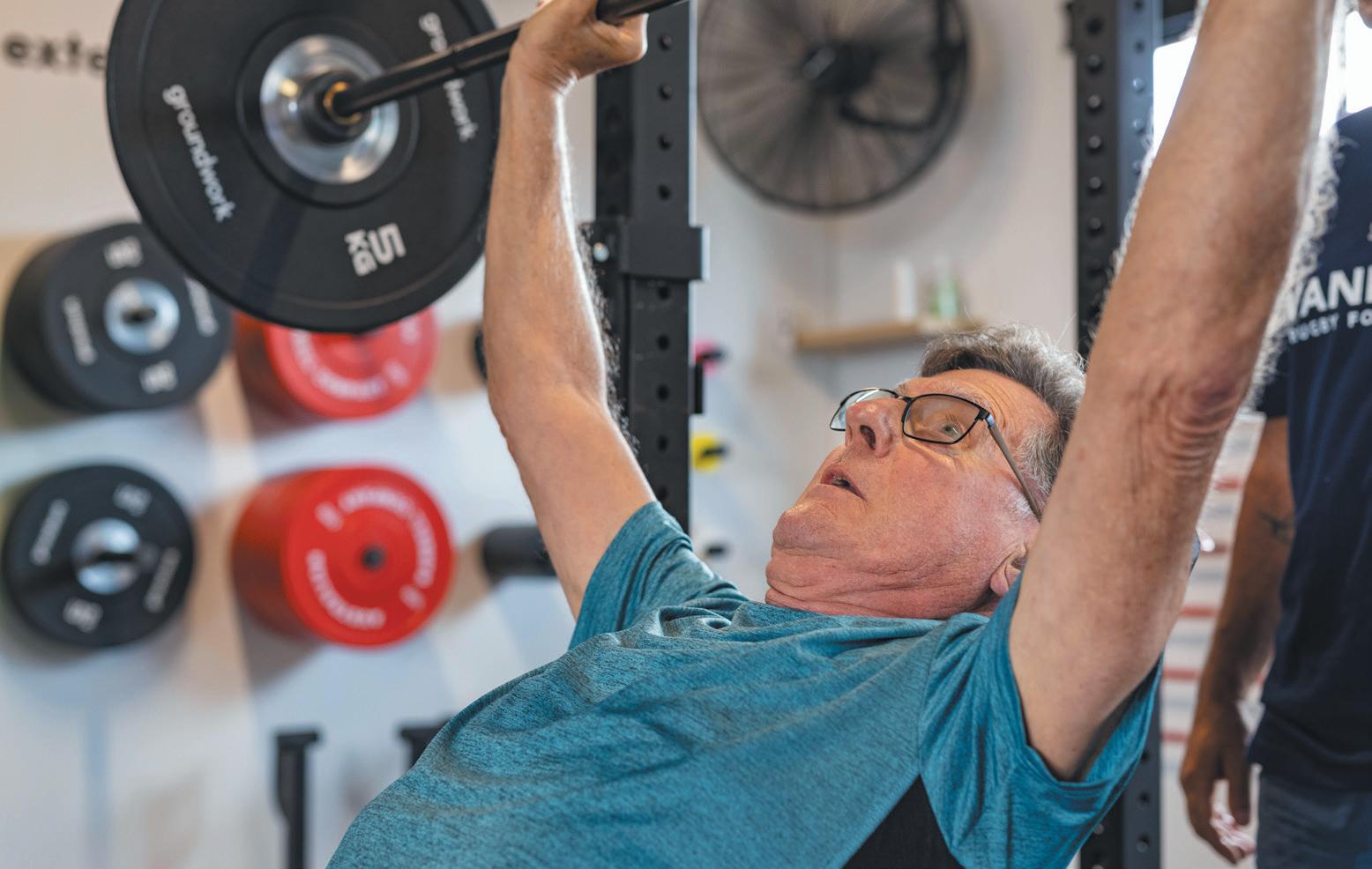
The good news is that the muscle loss related to age, chronic disease or obesity, can easily be reversed with resistance exercise. After eight weeks of weight-bearing exercise, muscle strength can increase by 6-10%. This improvement can be doubled if there is a resistance component (weight-loaded exercise or lifting weights).
Given that the rate of muscle loss in your eighties is about 2% per year, the exercise programs described above can easily give a person an extra 10 years of independent life.
18 Hunter Veterans’ News
BALANCE
One of the first changes that people notice with age is a decline in balance. We are so accustomed as young people to climb on rocks and ladders, reach beyond our centre of gravity, lean onto one leg more than the other. We take balance for granted so much that we are surprised when this skill starts to decline.
There are three physiological systems that control balance: vision; vestibular system (middle ear) and proprioception which is the information fed back from the body to the brain about position and stability.
Proprioception depends on the long nerves to the legs which deteriorate with age as does hearing and vestibular function. As we age, we depend more on vision which explains why balance deteriorates in poor light and why we should wear a hat when we go outside.
Damage to the long nerves can be minimised by abstaining from smoking and controlling vascular risk factors such as high blood pressure, cholesterol and obesity. Damage to vestibular function can be minimised by avoiding loud noise.
The good news is that despite age and inevitable organ function decline, balance can be improved by exercises that are specific for this purpose and are part of the ActiveStrongerBetter program.
The moral of this story is that falls can be reduced by regular exercise that includes
aerobic, resistance and balance components. Another benefit from exercise is that if you do fall, often the recovery process is quicker and the injuries may not be as severe. These combinations of helpful exercises can be found in ActiveStrongerBetter sessions across the region. If you do not find one close to you, you can contact our team, or visit your local Fitness or Exercise Professional for guidance. Otherwise, wear a hat outside, avoid unnecessary risks such as climbing ladders and have safety rails installed on stairs. If you need glasses for reading and out-ofdoors, do not use bifocals but get two pairs,
one for each environment. Other quick tips to support your balance: check with your doctor if you have concerns about your medications and balance; ask your doctor to check your ears regularly for excess wax; keep well and understand that simple colds/ sinus conditions can affect your balance. More information about falls and falls prevention can be found at fallsnetwork. neura.edu.au/aprilfalls/. APRIL every year is the month where the health focus is falls, and strategies to prevent falls especially in older people are highlighted.
To learn more about being active, stronger and better, visit activestrongerbetter.net or email asb@novacare.org.au

19 Issue 9 > Autumn 2024
The Problem with a Poorly Planned Will
YOU’VE gone to the effort of making a Will – well done, that is something fewer than 50% of Australians can say. But any old Will is not good enough. A poorly drafted Will can potentially cause your estate more disruption and financial cost than not having a Will at all.
The recent decision in the case of Re Estate Miletic; Strbik v Strbik [2023] NSWSC 371 is a warning of the unnecessary and expensive litigation that can be avoided by a carefully drafted Will.
THE PROBLEM WITH A POORLY DRAFTED WILL
The recent decision in the case of Re Estate Miletic; Strbik v Strbik [2023] NSWSC 371 is a warning of the unnecessary and expensive litigation that can be avoided by a carefully drafted Will.
In this case, the deceased Joseph Miletic died in 2015 and was survived by his two adult children, Josie and Pauline. His estate worth about $1.5million comprised of two properties in Kingsgrove and about $900,000 in the bank.
Joseph’s Will dated 26 October 2001 appointed his daughter Josie as his executor and left his estate to be equally divided between his two children “subject to the provisions of clause 6” of his Will. Clause 6 created discretionary trusts for the daughters and went on to state:
6.1 My executors shall set up a fund for each Primary Beneficiary comprising that Primary Beneficiary’s share of my estate;
6.2 Subject to clause 6.3, my Executor may pay all or any part of the income or capital of the Primary Beneficiary’s Fund to any one or more of the Primary Beneficiary’s children or grandchildren in such shares and
in such amounts as the Primary Beneficiary (provided that he or she is not deemed under a disability) directs, or failing direction, as my Executor thinks fit, without obligation to make payments to all of those children or grandchildren or to make payments equally among those to whom payment is made;
6.3 If so directed by any Primary Beneficiary who is not under a disability, my Executor shall, from time to time:
6.3.1 …
6.3.2 pay to the Primary Beneficiary all or any part of the Primary Beneficiary’s Fund for the Primary Beneficiary’s own use.
6.5 …when all living children of the Primary Beneficiary have attained the age of 21 years… my Executor shall divide the Fund or the balance of it equally among them…
When Josie’s daughter Dana attained the age of 21 years, she initiated legal proceedings against her mother claiming that the provisions of the Will required Josie to transfer her half of the estate to her children (Dana and Daniel) now that they were both over 21 years.
Josie disputed this, stating that the Will allowed her to retain her half share in the estate for herself.
WHO WAS RIGHT?
This was a legal clash over the correct interpretation of the relevant clauses contained in the Will.
Josie’s sister Pauline had a disability (bipolar disorder) that rendered her in need of assistance from time to time. Justice Lindsay inferred that Joseph had drafted his Will in this complex way with the intention of
protecting Pauline’s share of the estate. In his honourable opinion, Justice Lindsay formed the view that the word ‘comprising’ in clause 6.1 was to indicate that the assets of the trust fund were to come from the primary beneficiary’s share of the estate, but it was up to the primary beneficiary to determine what part of their inheritance, if any, was to be transferred to the trust fund. Further, the primary beneficiary (Josie) was free at any time to direct that her share of the fund be paid to herself.
It was shortly after Joseph’s death, in November 2015, that Josie signed a ‘Direction to Executor’ which directed that her share of the estate was to be paid to her personally and not put into a trust for her children.
The Supreme Court of NSW declared that the proper construction of the Will gave Josie discretion as to what part of her share, if any, she put into the trust, and even if she did put anything into the trust fund, she was also free to pay it to herself.
As such, Dana and Daniel had no interest or right to any of the property of Joseph’s estate.
LESSONS
Requiring the Court to determine what provisions in a Will mean causes unnecessary litigation, requiring time and money from both the applicant and the estate. This can be avoided by ensuring that your Will is carefully drafted to avoid any ambiguity or room for interpretation.
You can make an appointment with one of our estate planning solicitors to review your existing Will and/or prepare a new Will that is expertly drafted to not only reflect your wishes but communicate them clearly.
20 Hunter Veterans’ News ADVERTORIAL
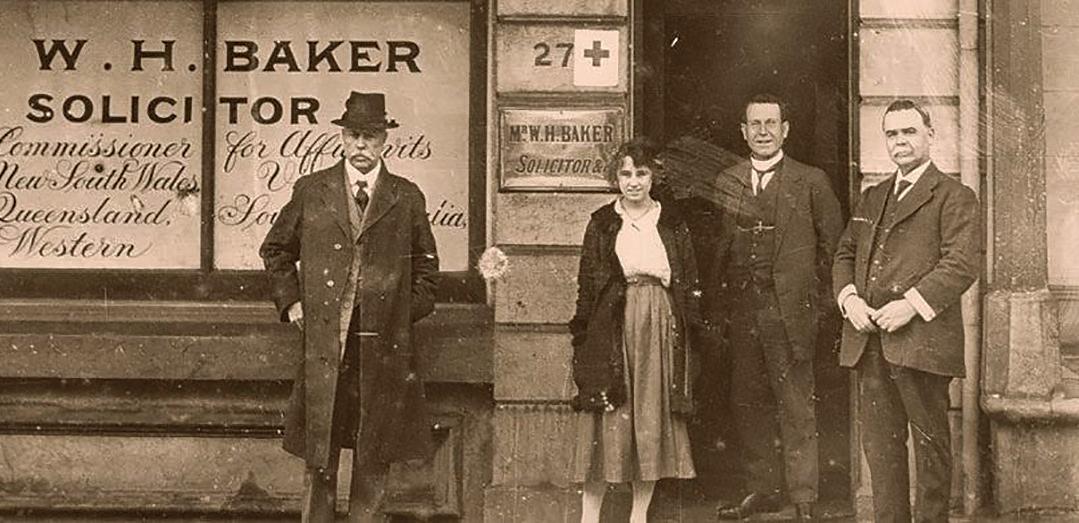
Since 1875, we’ve believed in providing an all-inclusive approach to legal services, encompassing family, estates, property and business advice. WE WORK WITH YOU THROUGH EVERY STAGE MAKE AN APPOINTMENT TODAY… PHONE: 1800 088 557 OR 4944 3322 30 Dan Rees Street, Wallsend NSW 2287 Email: enquiries@bakerlove.com.au Web: www.bakerlove.com.au Support and legal advice when you need it the most YOUR ADVANTAGE

Message from Sharon Claydon MP Federal Member for Newcastle
Cost of living relief for Veterans Making good on our promise
I recognise for many of you it’s become increasingly difficult to access a GP that will service you on a veteran card. From 1 November the Albanese Government tripled the “Veteran Access Payment” in an effort to encourage more GPs to service veterans. We have also streamlined and reduced the paperwork for GPs.
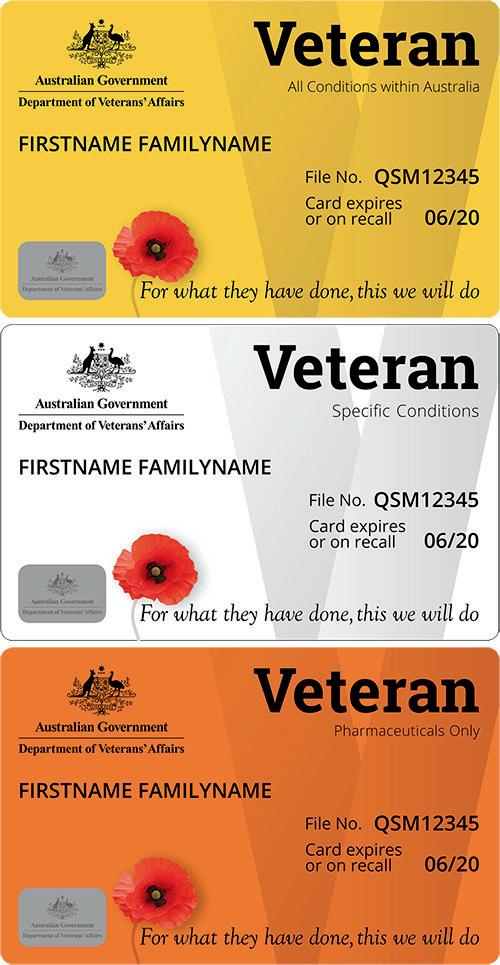
DVA clients may also be able to get some money back that you’ve spent on prescriptions.
If you are eligible under the Veterans Pharmaceutical Reimbursement Scheme, you may be entitled to be reimbursed the difference between how much you spent on your prescriptions, and the amount of pharmaceutical allowance you received during the 2023 calendar year.
If you are eligible, a letter containing information about the reimbursement amount and the date of payment will be sent to you in March 2024. To find out more, visit www.dva.gov.au/vprs
Thanks to the Albanese Government’s increased staffing and resources for DVA, all new initial liability and incapacity claims are now allocated for processing within a two week timeframe –effectively eliminating this part of the backlog and a return to business as usual levels. As at 31 January 2024, the total number of claims yet to be allocated to a delegate had fallen to 3,697.
DVA is also on track to clear the remaining backlog of Permanent Impairment claims before the end of February so they too reach a business as usual rate of allocation.
The Royal Commission into Defence and Veteran Suicide set a deadline to clear the backlog of compensation claims by 31 March 2024. Thanks to the Albanese Government’s investments in 500 additional claims processing staff and in ICT, this target will be exceeded.
While more claims continue to be lodged every day, in November a record 9,800 claims determinations were made which means veterans and families are receiving the support they need, sooner.

21 Issue 9 > Autumn 2024 ADVERTORIAL t I'M HERE TO HELP I can provide advice and assistance regarding any issues you have with Federal agencies including: Department of Veterans' Affairs Department of Defence Centrelink Aged Care National Disability Insurance Agency Australia Taxation Office Medicare Immigration Address: 427 Hunter Street, Newcastle NSW 2300 | Phone: (02) 4926 1555 Web: www.sharonclaydon.com | Email: Sharon.Claydon.MP@aph.gov.au Facebook: SharonClaydonForNewcastle | Instagram: @sharonclaydon_mp

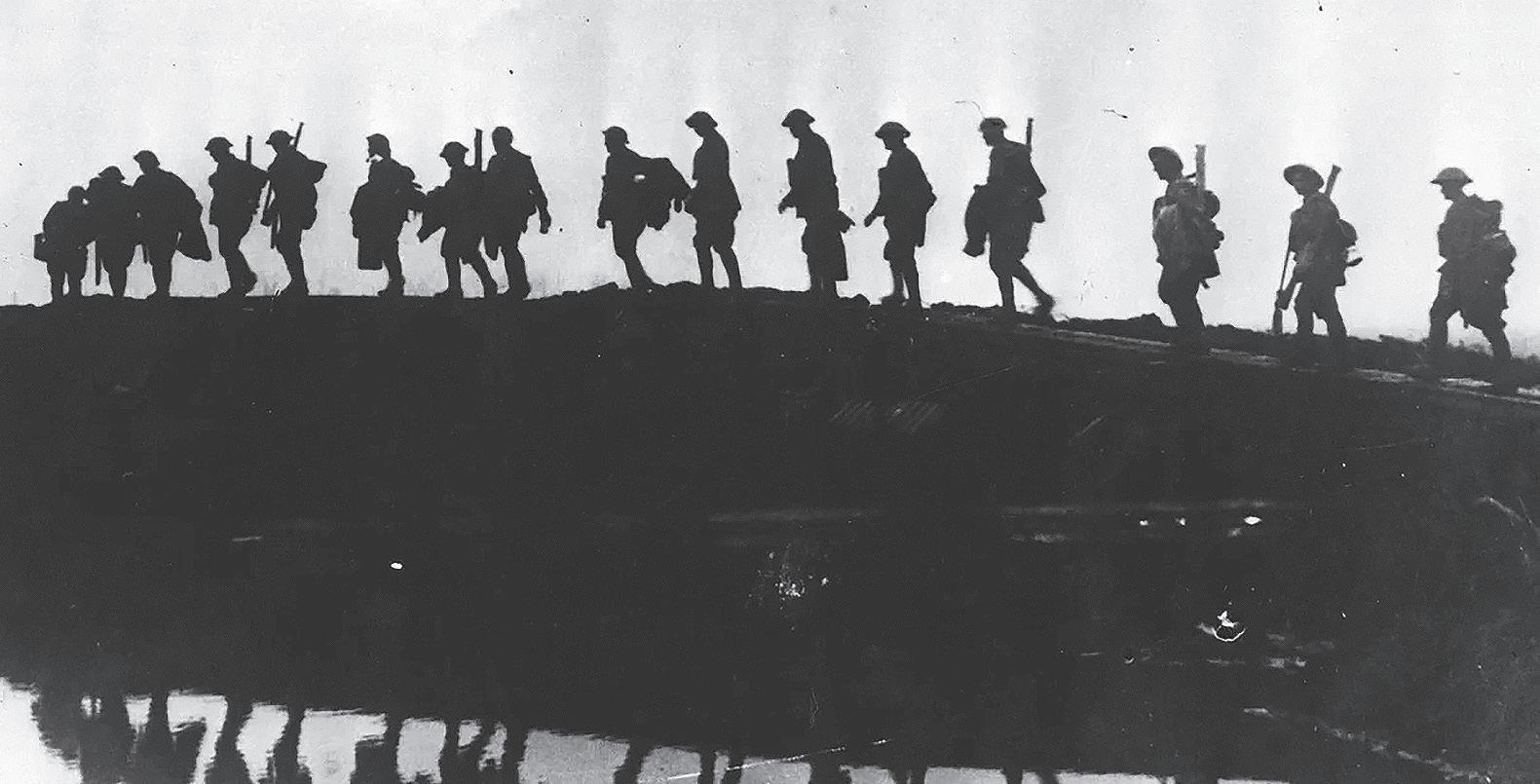
Thank you for remembering, for wearing that poppy, and for sharing our stories…

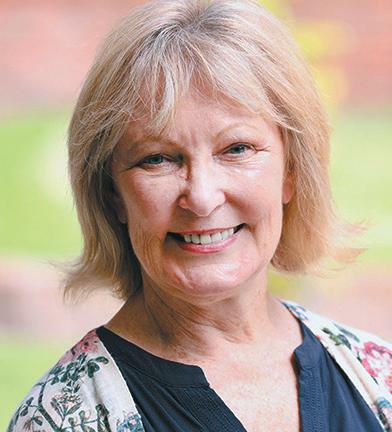 By Professor Lynne McCormack Professor/Clinical Psychologist, University of Newcastle Australia
A letter from an old friend on ANZAC Day
Dear Mate,
THE following letter I have crafted with a deep admiration for the challenges and transformations experienced by those who have served in many theatres of war. It is fictitious drawing upon the lived experience of veterans who have shared their stories with me during my research and in therapy. Their poignant reflections exposed shame, grief, loss, and family dislocation as a result of their military experience but also their profound journey of healing and posttrauma growth defined through empathy, gratitude, humility, wisdom, and a rebirth of trust.
As ANZAC Day dawns, and you're likely gearing up for a day filled with reflection, remembrance, and perhaps a round (or three) of Two-Up, I thought I'd drop you a line. Yep, it’s me, writing from the great beyond.
First off, I want to say thank you. Thank you for remembering, for wearing that poppy, and for sharing our stories. It means the world to me, even from the other side. And while you're out there, standing at dawn or raising a glass, remember to chuckle a bit too. Remember, that laughter at our high jinks was, and is, just as important as any medal.
Through the lens of time, I've witnessed the evolving tapestry of conflict — from the cold
expanses of Korea to Malayia and Vietnam's dense jungles, the vast deserts of the Middle East, Afghanistan's rugged landscapes, to the peacekeeping in Rwanda and East Timor and other missions ongoing. Each has brought unique challenges and has left indelible marks on our souls.
Over those years, researchers have helped us understand why we psychologically respond the way we do to war and how it imparts more than physical injuries. In fact, from treating us like cowards and labelling us as having shell shock, we now know that many in fact suffer long after they come home from posttrauma stress, moral injury, and what is known as altruistic identity disruption leaving individuals with a sense of shame, isolation, and self-blame.
22 Hunter Veterans’ News
We are not alone if we feel alienated or abandoned; it simply means that our complex human spirit is trying to make sense of events when faced with the incongruities of war.
I hear that some of you have had difficulties transitioning back to civilian life, with its bureaucratic mazes as challenging as any battlefield with its quagmire of systemic officialdom. However, in the shadow of
…We are not alone if we feel alienated or abandoned…
conflict and war, the most extraordinary discovery of hope is the human capacity to evolve and grow out of adversity. Surprisingly, values no one would have thought relevant to the tragedy of war are playing an amazing part in recoveryhumility, empathy, and gratitude! These virtues, nurtured with care, help us to accept our frailties, reconnect with those around us, and find solace in shared suffering. Without empathy, we remain
References:
McCormack, L, Zagninski, N. & Falcioni, D. (2023). Can Posttrauma Growth Programs Improve Quality of Life for Veterans After Combat-Related Trauma: A Systematic Review Protocol. Social Science Protocols
McCormack, L. Hogan, M. & Devine, W. (2021). Multiple generations of combat exposure: Military family, moral dilemmas, reclaiming self. Traumatology. https://doi.org/10.1037/trm0000298
McCormack, L. & Bennett, N. (2021). Relentless, Aggressive and Pervasive: Exploring gender minimisation and sexual abuse experienced by women ex-military veterans. Psychological Trauma: Therapy, Research, Practice and Policy. DOI: https://DOI. org/10.1037/tra0001157
McCormack, L., Douglas, H., & Joseph, S. (2021). Psychosocial responses in Humanitarian Aid Personnel Unidimensional structure and convergent validity of the Postmission Altruistic Identity Disruption Questionnaire (PostAID/Q). Journal of International Humanitarian Action. https://doi.org/10.1186/s41018021-00094-8
McCormack, L. & Ell, L. (2017). Complex Psychosocial Distress post deployment in Veterans: Reintegration Identity Disruption and Challenged Moral Integrity. Traumatology. http://dx.doi. org/10.1037/trm0000107
bitter and disconnected, but its power allows us to see through another’s eyes and find compassion.
Humility allows us to listen, engage, and hear others again. Gratitude, becomes a beacon that transforms our perspective, allowing us to appreciate the bonds forged in battle, the sacrifices made, and the simple joys that life offers — like the comfort found in a comrade's jest, the steadfast gaze of a loving partner, or the hug of your child or parent. These three beauties underpin posttrauma growth by helping us to reconnect with ourselves, others, and the world beyond war!
Well my dear friend, remember to take care of yourself this ANZAC Day. Laugh heartily, allow yourself to grieve when necessary, and never shy away from sharing your story or seeking support. Nurture your empathy, humility, gratitude, and humour! Our narrative encompasses survival, and the indomitable human spirit.
On this ANZAC Day, I’ll be with you in spirit - find joy in the small things, like a well-timed joke or the way the morning light looks during the dawn service. And if you find the day weighing on you, reach out to someone, share a story, or simply sit in quiet companionship. We were never meant to shoulder burdens alone.
With all the gratitude, love, humility, and friendship I can muster, Your Eternal Mate
About Professor Lynne McCormack
McCormack, L. & Joseph, S. (2014). A lone journey of psychological growth in aging Vietnam veterans: Redefining shame and betrayal. Journal of Humanistic Psychology, 54, 3, 336-355. Published online before print August 29, 2013: http://dx.doi. org/10.1177/0022167813501393
McCormack, L. & Sly, R. (2013). Distress and Growth: The subjective ‘lived’ experiences of being the child of a Vietnam veteran. Traumatology, 19 (4), 303312.
http://dx.doi.org/10.1177/1534765613481855
McCormack, L., Hagger, M. & Joseph, S. (2011). Vicarious growth in wives of Vietnam veterans: A 3henomenological investigation into decades of 'lived' experience. The Journal of Humanistic Psychology, 51, 273-290.
http://dx.doi.org/10.1177/0022167810377506
McCormack, L. (2009). Civilian Women at War: Psychological impact decades after the Vietnam War. Journal of Loss and Trauma, 14, 447-458. Online: http://dx.doi.org/10.1080/15325020902925209
McCormack, L., Joseph, S. & Hagger, M. (2009). Sustaining a Positive Altruistic Identity (AI) following humanitarian aid missions: A qualitative case study. Traumatology, 15, 2, 109-118. Online: http://dx.doi. org/10.1177/1534765609332325
Professor Lynne McCormack is both an academic and clinical supervisor at the University of Newcastle, whose publications and research, conducted in UK, Europe, Africa, South-East Asia, North America, and Australia, are at the interface of complex trauma and posttraumatic growth. Her clinical work witnessing the metamorphic struggle of those rebuilding shattered lives after trauma, has guided her research producing greater than 90 peerreviewed publications, chapters and scientific abstracts, and international collaborations. Her clinical work in the aftermath of complex traumatic events has spanned three decades directed by historical events such as the Vietnam War and the Rwandan genocide on the one hand, and the emergence of positive psychology for recovery, on the other. She works with those who have experienced war or genocide as civilians or soldiers, been held hostage, lost their identity as refugees, been brutalised as children, or suffered interpersonal violence. She has been part of the outreach psychological wellbeing programs for veterans and families (now Open Arms) in Australia for over 30 years. She is regularly featured in Veteran and Military newsletters, television, and National and popular media outlets. Lynne was granted the Vietnam Logistic Support Medal for her contribution to the Vietnam war as part of the Allied Forces Entertainment Branch during two tours in 1969 and 1971.
23 Issue 9 > Autumn 2024
Saving orangutans saving mankind
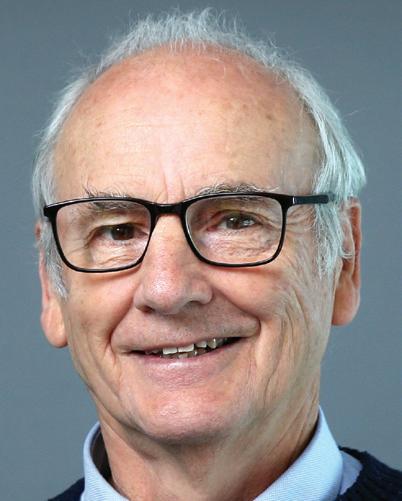 BY Tim Roberts AM Emeritus Professor at the University of Newcastle & Director of InnovAAte Pty Ltd
INRECENT news from the Newcastle Herald, there’s a mix of emotions as they share the story of a Vietnam Veteran, who has spent the last three decades living on the streets of Newcastle but has now reunited with his family. My heart goes out to them, and to all those who have served our country in times of war. It’s a reminder for us all to be less judgmental and more caring, appreciating the many blessings life offers beyond monetary wealth.
Taking care of our health is paramount: Keep your health strong through eating well and exercising often, keep your family and friends close to you, and look after your fellow man. Set about those 10,000 steps per day, but don’t neglect the upper body and the core muscles. Push ups on the floor or push ups against the kitchen sink are a must to keep those shoulders and arms working well. Personally, I find exercising with a group thrice a week not only provides companionship but also keeps me accountable and motivated. Whether its lifting weights with a good instructor like Karl at Groundwork Fitness, or joining
Deb Moore’s crew at ActiveStrongerBetter, or Heartmoves, or Active Over 50s, or Stepping On, or an exercise program on the Active and Healthy website of the NSW Government, find what suits you best. Staying busy and engaged is key to a fulfilling life. Whether it’s committing to a regular work routine or pursuing passions, staying active mentally and physically is crucial.
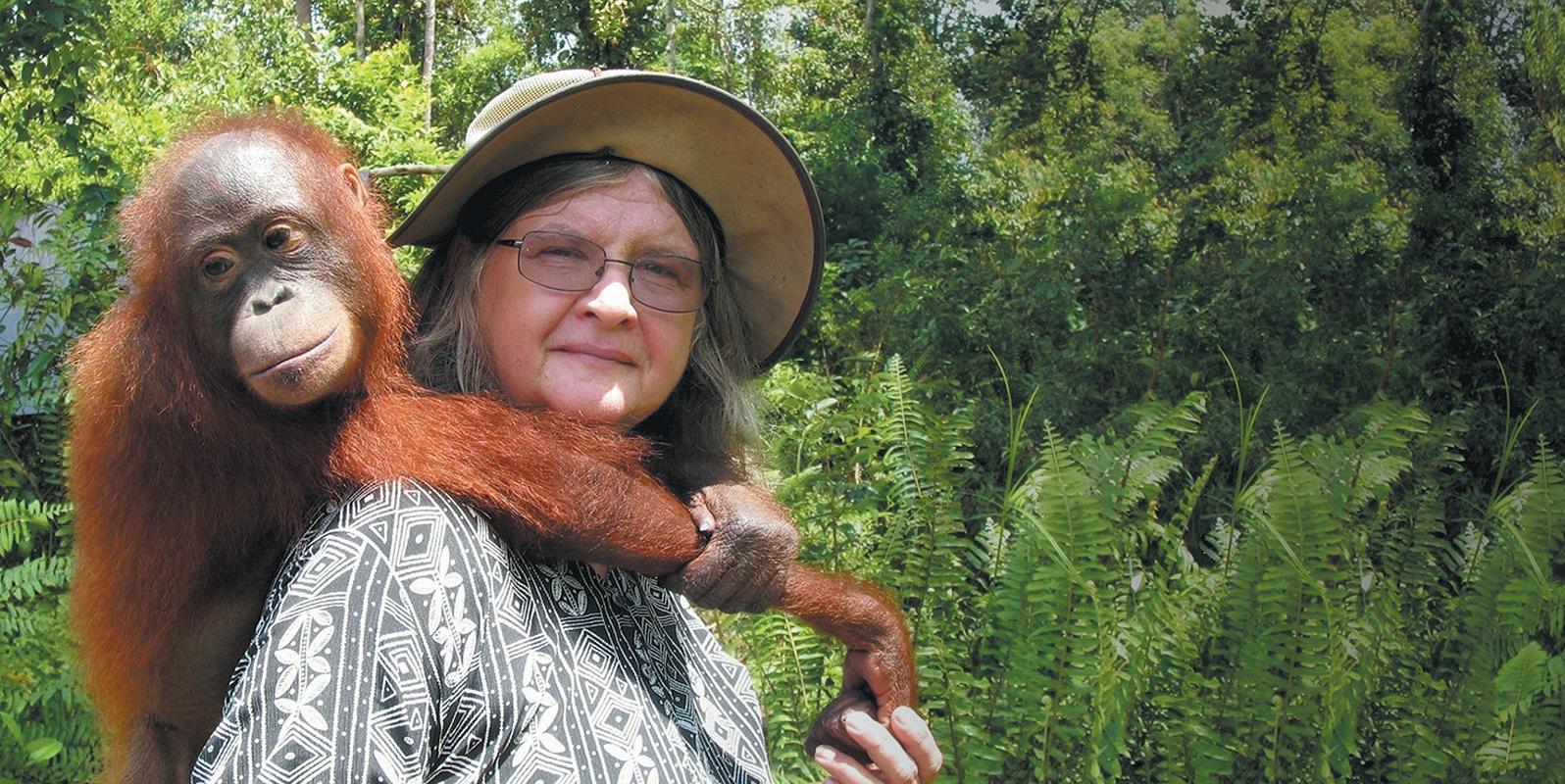
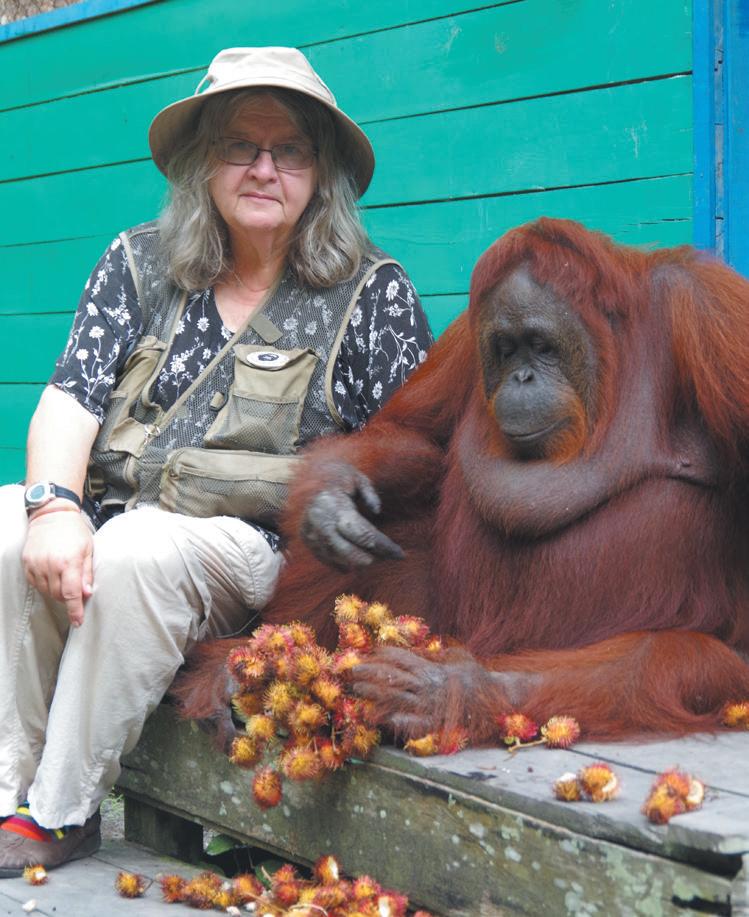
Dr. Biruté Galdikas - global icon of conservation: In the 1970s, she joined Jane Goodall and Dian Fossey as one of Louis Leakey’s “Trimates” to study the great apes. Sadly only Galdikas and Goodall continue the conservation fight to preserve these wonderful animals for our grand-childrens’ children.
Dr. Galdikas’s unparalleled work with orangutans in Borneo has revolutionized our understanding of these majestic creatures. From intricate social behaviors to habitat preservation, her research at Camp Leakey stands as a beacon of hope for orangutan conservation. Biruté Galdikas has created the most complete record of wild orangutan behaviour ever recorded, documenting the long orangutan birth interval, the over 400 types of food consumed by orangutans, the orangutan social organization and mating systems, the flanged adult males in combat, mating rituals, and even wild orangutans giving

birth, providing unprecedented detail about orangutan ecology.
Dr Galdikas continues her work in the jungle protecting the orangutans and their habitat in the Research Centre called “Camp Leakey” she created in 1971, making it the longest study ever conducted in the world by a senior researcher on a species other than humans. Through her efforts over 450 orphaned orangutans have been returned to the Tanjung Puting National Park. Since a baby orangutan takes about seven years to become independent from its mother, these orphaned babies required constant attention and carrying by Dr Galdikas or her assistants for many years before finally gaining enough confidence and foraging skills to be free in the forest. Her studies brought these critically endangered apes to the world stage, and she is still making an impact today some 50 years on through her efforts to conserve their forest habitat.
To have this eminent conservationist spend time at our University of Newcastle mentoring our conservation researchers and research students is both an honour and a
24 Hunter Veterans’ News
Above: Dr Biruté Galdikas with an orangutan baby. Right: On the cover of National Geographic, October 1975
privilege. She stands as an icon for women in science and a role model for women in STEM. Her dedication to conservation and ongoing research is truly inspiring, making her upcoming public lecture a must-attend event.
Proteins and amino acids for health. We need to eat protein three times a day to obtain the amino acid building blocks needed to make our own proteins on a daily basis. These amino acids are strung together in long chains to form proteins and proteins carry out an immense range of functions in our bodies. They are the structural molecules in our muscles, skin and bones, they form the enzymes and hormones that carry out all of the chemical reactions that keep us alive, and they are the immunological molecules of our defense system. Much as our cars get old and are scrapped and the steel used to form new cars, so every protein has a lifespan before it is broken down to its component amino acids - some last a few minutes and some last for weeks and months – and the liberated amino acids used to build the body’s new proteins.
Our own research has shown that this protein turnover is such that there are six
high demand amino acids needed on a daily basis to allow the body to build the proteins needed to function effectively. These six are the ones that we have incorporated into our OptimAAte and ElectrAAte products as a ready source of supply, particularly if the food being eaten is low in protein.
The molecules of our immune defence system are largely proteins and a fully functioning immune system is particularly important with the COVID virus still hanging around. It has been nearly four years since the pandemic began, and most of us would love to forget about it. But there are millions of people who still have the lingering symptoms now known as longCOVID: fatigue, sweating, memory loss, difficulty concentration, general unwellness, and gastrointestinal upsets.
Our research has shown that sweating, whether as a result of an ongoing infection or as a result of exercise or as a result of the hot weather, depletes the body of salts and also these six high demand amino acids. That is the reason that we produced ElectrAAte for proper rehydration because it not only contains the required electrolytes but also replaces the lost amino acids.
Recently, the effectiveness of ElectrAAte in


assisting long-COVID patients was reported at a medical conference and we are now undertaking further clinical studies on this finding.
“The bottom line: keep up the vaccinations; keep properly hydrated; eat less; exercise more; and lift stronger to live longer. I hope I see you at the Public Lecture by Dr Galdikas on the 6th of August 2024 in Newcastle”

25 Issue 9 > Autumn 2024
Helps conserve metabolic energy Great taste Provides Glycine for Collagen production Advanced formulation OptimAAte Protects muscles Preexercise Daily Support Made in 198g Powder Advanced Nutrients HDAA Batch tested for WADA banned substances Free from Caffeine, Fat, Gluten, Sugar Vegan Friendly Formulated Supplementary Sports Food OptimAAte. Supports your body during recovery. Visit our website to learn more. innovaate.com.au Leaders in Amino Acid Biotechnology HIGH DEMAND AMINO ACIDS HIGH DEMAND AMINO ACIDS Faster Recovery Muscle Repair Improve Hydration Made in 198g Powder Recover + Hydrate ElectrAAte electrolytes + 6 AMINOS Batch tested for WADA banned substances Free from Caffeine, Fat, Gluten, Sugar Vegan Friendly WADA Tested Great taste Aids muscle repair Replenishes what's lost in sweat ElectrAAte. Designed to help restore hydration.
Dr Galdikas and Siswi. Photos courtesy of Orangutan Foundation International
Off to a strong start
 BY Sonia Hornery MP, State Member for Wallsend
THEsecond year of the new Government is off to a strong start. I am continuing to serve as Deputy Speaker of the Legislative Assembly, working closely with Speaker Greg Piper MP, and of course I am continuing to push local priorities.
First of all, I want to acknowledge that you will be reading this around ANZAC Day. I would like to acknowledge all of our service men and women, wherever and whenever they have served, for the sacrifices they have made for our country. On ANZAC Day, I will be standing alongside many thousands of locals to pay my respects. Lest We Forget.
I am committed to maximising opportunities for students at Glendale TAFE, working with local police to find crime minimisation strategies and ensuring the good progress on the Newcastle Inner City Bypass continues. I intend to keep working on the issues that are most important to the residents of the Wallsend electorate, such as improving transport and accessibility around the John Hunter Hospital campus. I am also working to maintain local services in the face of closures.
Concerns have been raised about the future of the Wallsend Aged Care Facility, but I can assure you I will be continuing to advocate for this excellent and wellregarded facility to remain open and in public hands. You may remember my involvement in a campaign during my first term as the Member for Wallsend
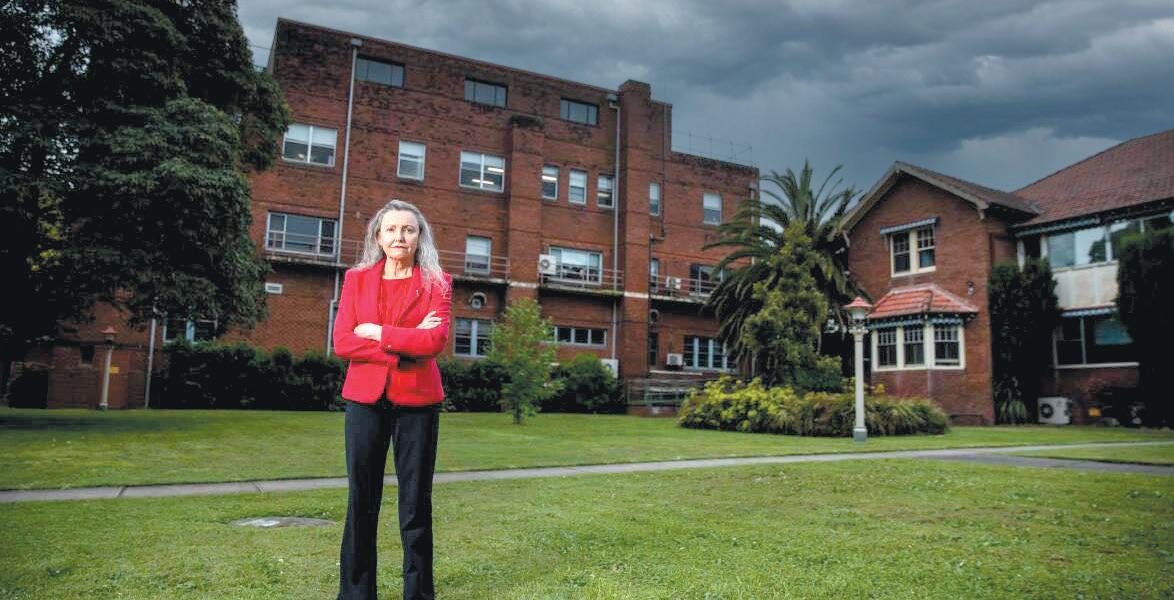
which successfully kept the facility from being privatised. That victory came down to community engagement, showing how important it is for locals to get involved and have their say!
My office is still available to assist with congratulatory messages for milestones such as 50th, 60th, 65th and 70th wedding anniversaries and 80th, 90th and 100th birthdays. These messages can be arranged through my office with a couple of weeks’ notice. We just need the details and confirming documents, like a marriage or
birth certificate or a Statutory Declaration— which my office’s on-site Justices of the Peace can you help you out with. Remember, we’re here to help you, so if there’s a State Government issue that you need some help with, call my office on 4950 0955, email wallsend@parliament.nsw.gov. au or visit the office at 67 Nelson Street, Wallsend. You can also keep up to date with what I’m doing at Parliament or in the community by visiting my website at www. soniahornery.com.au.
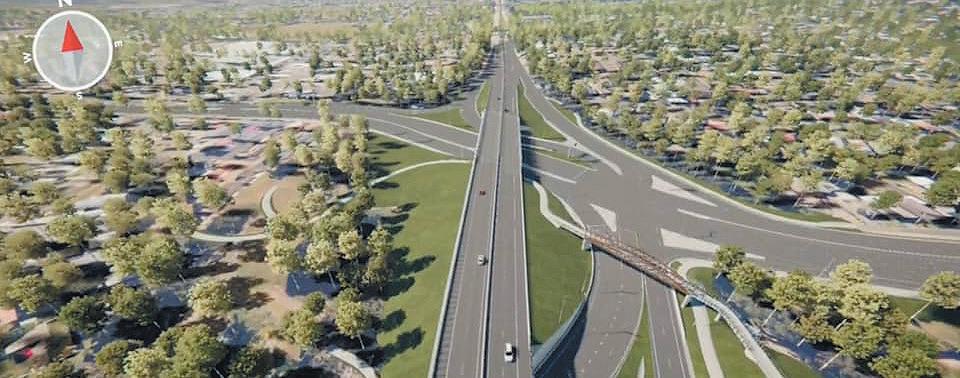
NEWCASTLE INNER CITY BYPASS - RANKIN PARK TO JESMOND
In 2023, the project team completed:
• Site establishment
• Setting up site compounds and environmental controls
• Tree clearing and vegetation removal on the project alignment
• Utility investigations
• Archaeological salvage of the historical 1920’s era Hollywood camp.
• Utility installation and relocation.
In 2024 they are continuing:
• Installing safety barriers and traffic signage
• Line marking
• Bridgework at the Jesmond roundabout (northern interchange) and at Mc Caffrey Drive (southern interchange)
• Earthworks including loading, placement and hauling of materials in the construction zone
• Drainage installation
26 Hunter Veterans’ News ADVERTORIAL
I’m extremely disappointed that the Wallsend Aged Care facility is being closed by the NSW Government. My concerns are with the residents, their families, the staff employed there, and for the future of the site.
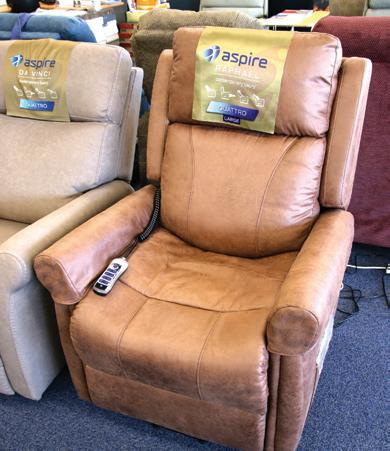
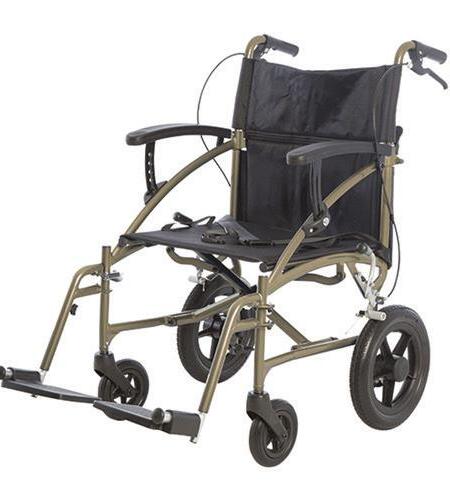
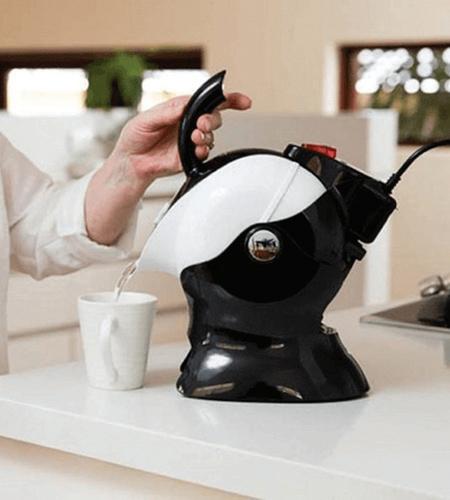
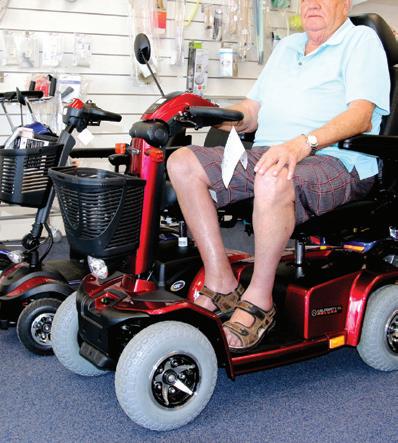
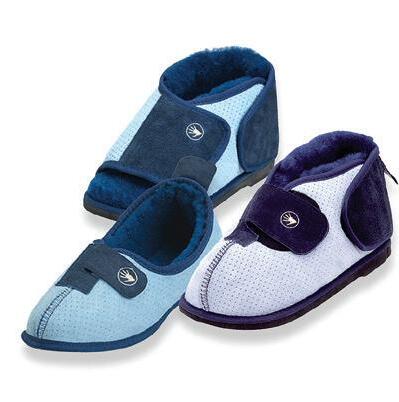
With over 25 years experience, Rex has become well known in the region for his clinical practice across a range of areas including: Department of Veteran’s Affairs’ Patients, Psychiatry, General Surgical Care, Occupational Rehabilitation CTP and Workers Compensation. Rex is committed to the care and advocacy of his patients. His practice is based on the belief that independent living and meaningful occupation should be optimised to achieve and maintain the best possible quality of life for everyone!
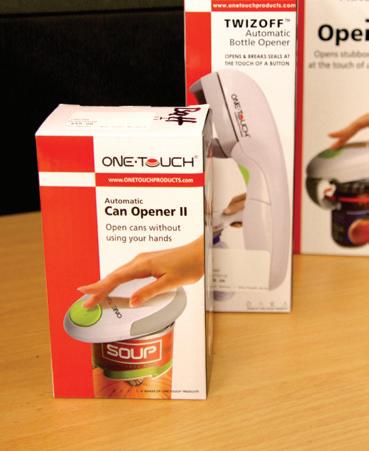

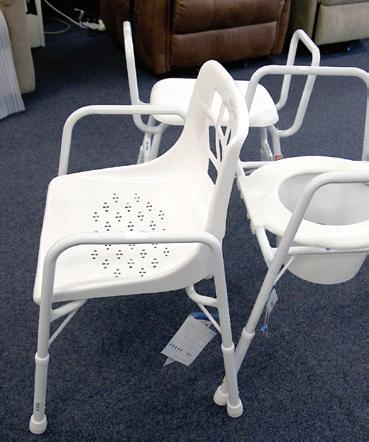
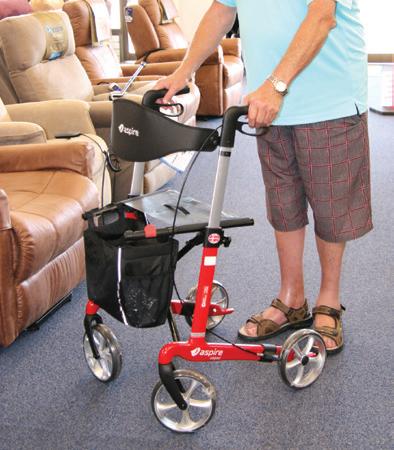
WE PROVIDE OCCUPATIONAL THERAPY SERVICES FOR ALL DEPARTMENT OF VETERAN’S AFFAIRS (DVA)
Advise on DVA Services and other Government Services such as Home Care Packages
Advise on DVA Homecare and respite Services
Falls prevention assessment and education
Pressure care needs such as bed overlays and Roho cushion
Mobility and aids such as walkers and walking stick
Access options such as ramp and possibly a stairlift
Incontinence Needs
Scooter assessments for those eligible DVA clients
Activities of daily living assessment
Minor modifications such as rails in the shower, W.C and at stairs and hand held shower
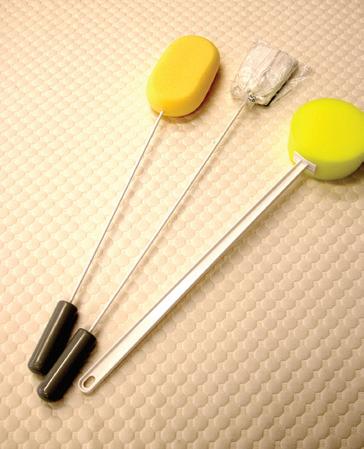
Bathroom, dressing and bedroom equipment
Recommendations for appropriate equipment according to need, such as following eg. spinal surgery, total knee or Hip replacement
Personal response systems
Lymphedema management
Seating options such as dining and lounge room chairs with arms and possibly an electric operated recliner chair if eligible
Wheelchairs, walkers and bed sticks
Kitchen and cooking equipment such as electric operated jar and bottle openers
Lighting needs such as outdoor sensor lights & indoor lights
Retractable garden hose
Back care education
27 Issue 9 > Autumn 2024
PTY LTD PHONE 4946 2088 • EMAIL: admin@otaps.com.au • PO BOX 27, WARNERS BAY 2282
CLIENTS…
and services are prescribed and supplied only according to clinical need per DVA Guidelines.
NB:
Equipment, modifications
Remembrance of the 82nd Anniversary of the bombing of Darwin
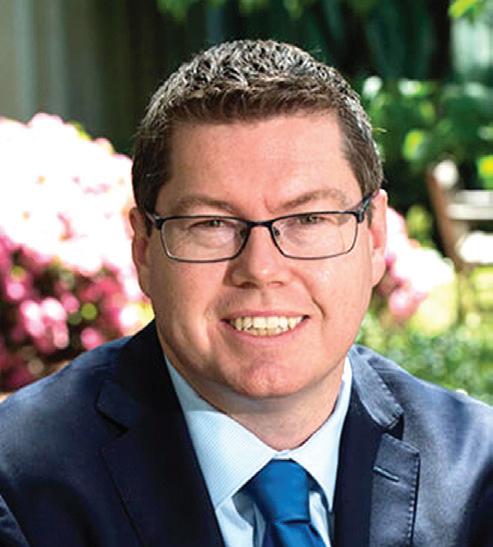 BY Pat Conroy MP Federal Member for Shortland
ON
1942.
On 19 February 1942, Australia faced its first direct attack on home soil during the Second World War when Darwin became
the target of Japanese bombing raids.
Some 240 Japanese aircraft raided the coastal town in two waves with devastating consequences.
More than 250 lives were lost, including members of the armed services, allied personnel, merchant mariners and civilians.
Northern Australia endured almost 100 raids over the course of the Second World
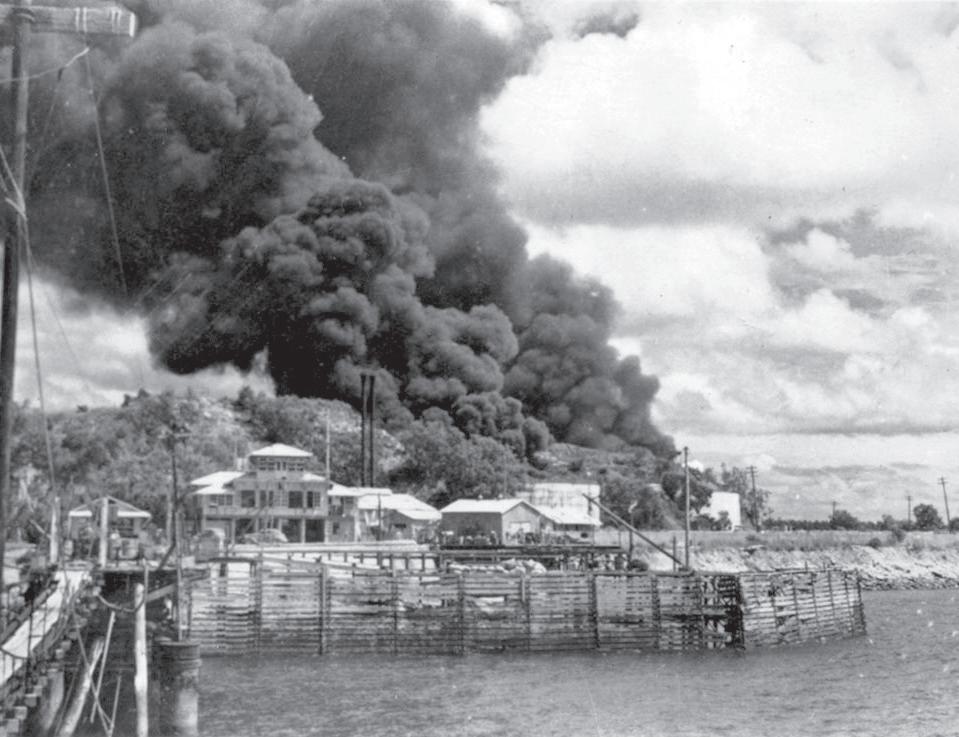
War including Broome, Townsville, Horn Island and Wyndham, with 64 raids in Darwin alone, but none as devastating as 19 February.
On this day, we honoured those who served, the civilians who lost their lives, and those forever haunted by the devastation. Their sacrifices won’t be forgotten.
Lest we forget.
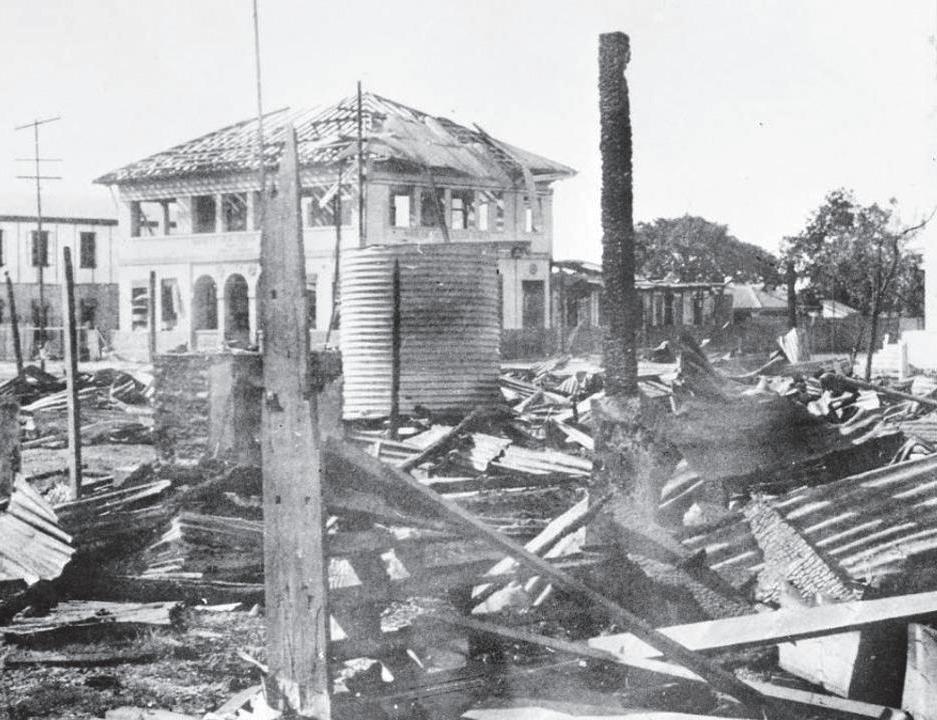


28 Hunter Veterans’ News National Support Line: 1300 553 835 • Web: www.pva.org.au or find us on THE PARTNERS OF VETERANS ASSOCIATION OF AUSTRALIA – NSW BRANCH INC. Would you like to learn more about the PVA? Please come along to one of our local area group meetings or phone a contact listed below. PATRON: Lady Cosgrove NEWCASTLE & LAKE MACQUARIE Meets 10-30am second Friday of the Month at RSL Sub-Branch Hall 48 Baker Street, Mayfield Contact Di on 4956 9450 for more deatils MAITLAND Meets 9.30am every second Monday of the month at RSL Sub-Branch Hall, East Maitland Contact Carol on 4932 0070 for more deatils SINGLETON Meets 10am every third Tuesday of the month at the Legacy Room, Lauren Lane (off Pitt Street), Singleton Contact Betty on 0413 415 838 for more details
ADVERTORIAL
19 February
who lost
and those whose
were
2024, we honoured and paid tribute to those who served, those
their lives
lives
forever changed in the bombing of Darwin in


The Albanese Government recently introduced legislation to give every Australian taxpayer a tax cut.
From 1 July, every Australian taxpayer will get a tax cut because we want people to earn more - and keep more of what they earn.
Tackling cost of living pressures is Labor’s number one priority. That’s why we’re working to cut taxes, boost wages, bring

inflation under control, and drive fairer prices for Australian consumers.
When economic circumstances change, the right thing to do is change your economic policy. That’s what we’re doing. We’re doing the right thing, for the right reasons.
We’ll deliver a tax cut that benefits more Australians, and we’re doing it in a way that is fair and responsible.
A bigger tax cut for more people to help with the cost of living. Labor’s cost of living tax cut is part of our economic plan – along with boosting wages, balancing the budget, and driving fairer prices for consumers.
To find out how much you will save from 1 July visit: www.treasury.gov.au/tax-cuts/ calculator.




29 Issue 9 > Autumn 2024 Unit 2/78 Seventh Street • Boolaroo • nSW • 4958 2378 OPEN: TUESDAY TO FRIDAY 8AM - 5PM • SATURDAY 8AM - 12 NOON • CLOSED: SUNDAY & MONDAY NSW FDL 411930229 FOR A WIDE RANGE OF MILITARY, SPORTING, TARGET AND HUNTING FIREARMS AND ACCESSORIES CHECK OUT WWW.NEWCASTLEARMOURY.COM.AU OR EMAIL SALES@NEWSCASTLEARMOURY.COM.AU NEWCASTLE ARMOURY IS LICENSED FOR ALL CATEGORIES OF FIREARMS & PROHIBITED WEAPONS. FOR CONFIDENTIAL ADVICE PLEASE CALL PHONE (02) 4958 2378
Continued over page
From page 29
In February, the Deputy Prime Minister and I announced the Albanese Government's response to the Surface Fleet Review. Our plan ensures the Royal Australian Navy’s future fleet can meet our strategic
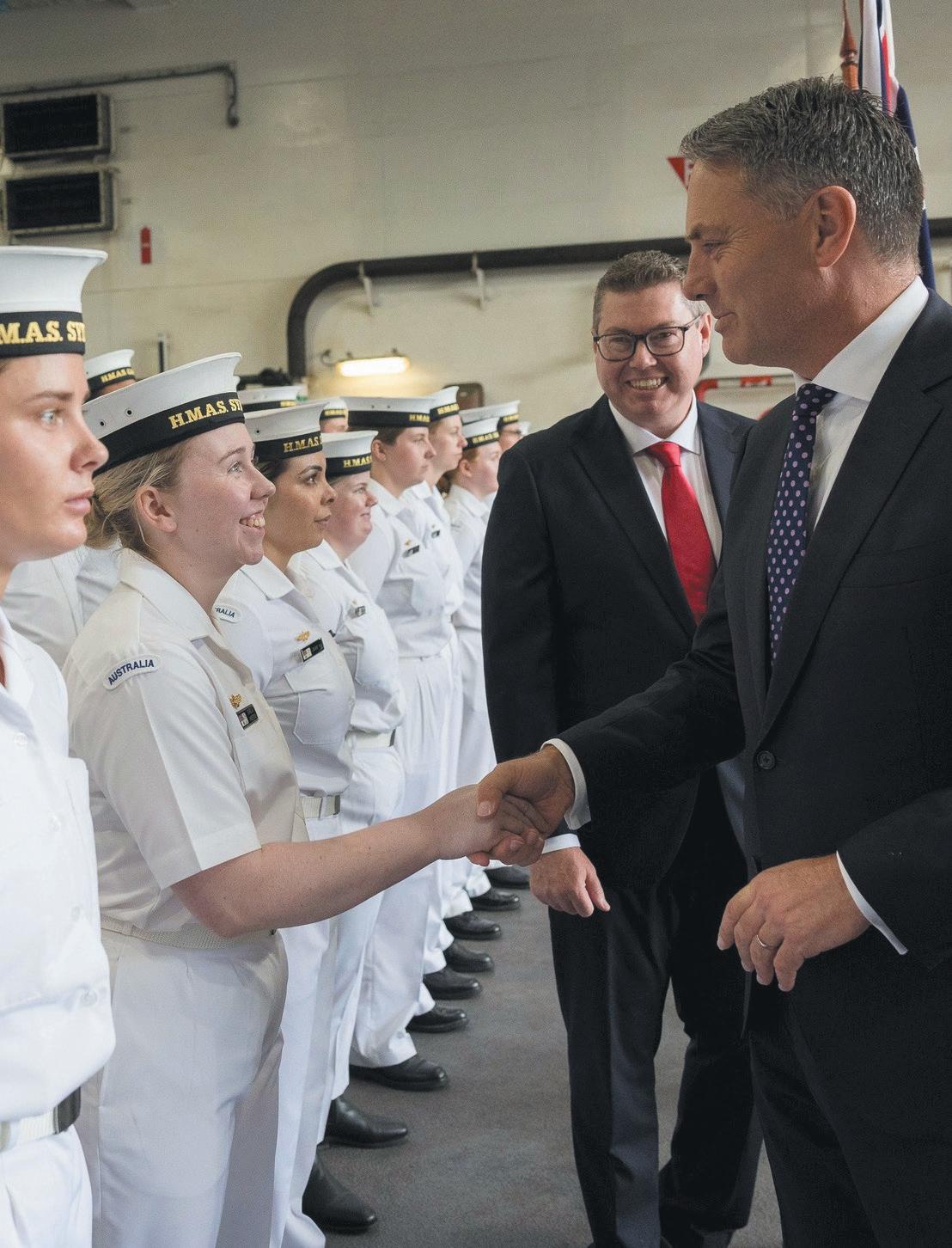
I joined the Deputy Prime Minister Richard Marles MP and met some of our finest Royal Australian Navy personnel.

circumstances by delivering a larger and more lethal fleet sooner.
It will see the surface combatant fleet more than double what we inherited under the former government’s plan.
Importantly, it secures the future of naval shipbuilding in Australia, supporting 3,700 direct jobs over the next decade and thousands of indirect jobs for decades to come.
As always, my Electorate Office is located at 1A 571 Pacific Highway Belmont and is available to assist with Federal issues and Government Departments, such as
n Centrelink
n the Australian Tax Office
n Immigration and Citizenship
n the Child Support Agency
n Defence including Honours and Awards, and Veterans’ Affairs.
n JP Services.
If you have any issues, please contact my office on 4947 9546 or pat.conroy.mp@aph.gov.au. You can also keep up to date with what I am
doing via facebook (www.facebook.com/ PatConroyMP) and my website (www.patconroy.com.au/).
Thank you for your service.
Pat


30 Hunter Veterans’ News
john’S oRE officE RSday o 1pm $35 NHRVV Plague with inscription plate $30 NHRVV or Federation Cap with Badge $15 $8 NHRVV or Long Tan Cross Lapel Pin $8 $7 $12 $8 $8 $5 a vETERan Keep up to date with the local Shortland community news newsletter at www.patconroy.com.au

1300
Occupational Therapy | Physiotherapy
Exercise Physiology | Speech Pathology | Dietetics
In-home and clinic services for a healthier you!
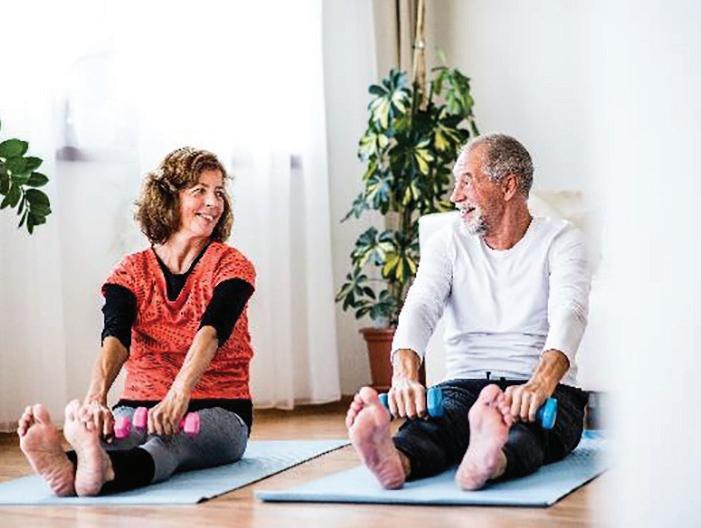
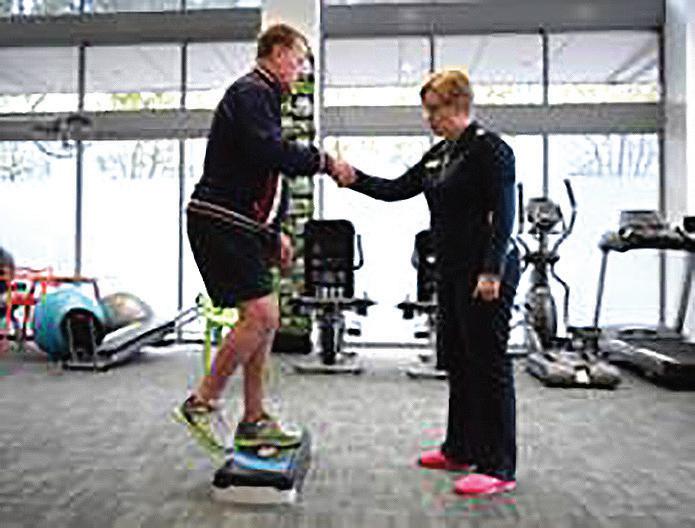
Individual Treatments | Young Vets Classes | Supervised Gym | Chronic Pain
Recovery Station has been providing health services to the Veteran community for over 15 years
We deliver allied health services from our clinics and within the comfort of your own home. We have empowered thousands of individuals to achieve their personal health goals by providing the foundations for living a better quality of life.
We are proud to have assisted people to transition out of nursing homes, live independently, drive safely again, communicate with ease, walk with confidence and to live a quality of life.
Helping you stay in your home longer, re-establishing or enhancing independence, increasing quality of life and safety in order to lead a productive and meaningful life.

Achieving optimal outcomes in physical wellbeing, emotional wellness, functional independence and social connection for you.
Call us now to find out more
1300 588 851
On receiving a referral from your GP, we start working with you on your health and wellbeing.
Telepractice also available.
referrals@recoverystation.com.au • www.recoverystation.com.au
SYDNEY – LOWER HUNTER – CENTRAL COAST
31 Issue 9 > Autumn 2024 Australian Defence Force chief Angus Campbell renews calls to strip medals from Afghanistan war veterans
588 851
recoverystation.com.au