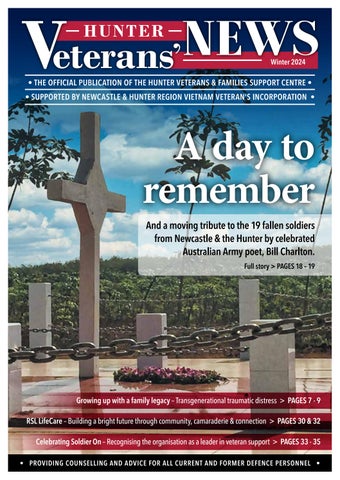

Growing up with a family legacy – Transgenerational traumatic distress > PAGES 7 - 9 Celebrating Soldier On – Recognising the organisation as a leader in veteran support > PAGES 33 - 35 RSL LifeCare – Building a bright future through community, camaraderie & connection > PAGES 30 & 32 • THE OFFICIAL PUBLICATION OF THE HUNTER VETERANS & FAMILIES SUPPORT CENTRE • • SUPPORTED BY NEWCASTLE & HUNTER REGION VIETNAM VETERAN'S INCORPORATION • • PROVIDING COUNSELLING AND ADVICE FOR ALL CURRENT AND FORMER DEFENCE PERSONNEL • A day to remember And a moving tribute to the 19 fallen soldiers from Newcastle & the Hunter by celebrated Australian Army poet, Bill Charlton. Full story > PAGES 18 – 19 Winter 2024

VETERANS’ SUPPORT CENTRE
INCORPORATING
NEWCASTLE & HUNTER REGION VIETNAM VETERANS PEACEKEEPERS & PEACEMAKERS
Assisting all past and present ADF members with establishing their eligibility, processing and preparing their claim forms for submission to the DVA.
We can also assist with pension upgrades after 12 months.
We also help you lodge appeals against decisions handed down by the DVA, prepare submissions and represent you at the Veterans Review Board.
PHONE 02 4951 2666 TO MAKE AN APPOINTMENT
OFFICE HOURS: MONDAY & THURSDAY 9AM TO 1PM

HOSPITAL
ADMISSIONS
Due to privacy laws, hospitals are not permitted to disclose to our Welfare Officers if member has been admitted.
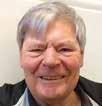
Allan Crumpton
If you or a family member has been admitted to hospital and need assitance or require a visit, please contact our Welfare Officer, Allan Crumpton on (02) 4951 2666.
THESE ARE FREE SERVICES AND YOU DO NOT HAVE TO BE A VIETNAM VETERAN TO QUALIFY
2 Hunter Veterans’ News

MY2023 in review
PRESIDENCY has come about after the previous President Ian Bell resigned. There was no competition and after a couple of months I now understand why there is quite a lot of work involved. I would like to take this opportunity to thank Ian for his continuous loyal and dedicated service over many years as a member and President in supporting advocacy and welfare of all Defence Members, and Veterans, and their families. As we Vietnam Veterans continue to age, gracefully, and respectively, Ian’s foresight and vision for the future was instrumental in gaining members approval to align the name of Vietnam Veterans Centre to capture all Defence and Veterans under the Hunter Veterans and Families Support Centre so that our organisation may survive for the benefit of future generations for the Defence and Veterans and Family support. At the same time, I would like to thank all committee members and office personal for their dedication, support to the advocacy and welfare to all members of the Defence, Veterans and their families. Without the support and dedication of everyone in the office and those who help out from time to time we would and will not survive. Thank you.
Thank you to Wallsend Diggers, CEO John Hume, and Directors for their support through the Clubs Grant Program. Without Wallsend Diggers’ CEO support we would have trouble providing qualified welfare and advocacy aid to our clients. Thank you. Wendy Waldron social worker and counsellor also provides counselling to all members of the Defence, Veterans and the community from our office in Tyrrell Street, Wallsend. Thank you
Cover story
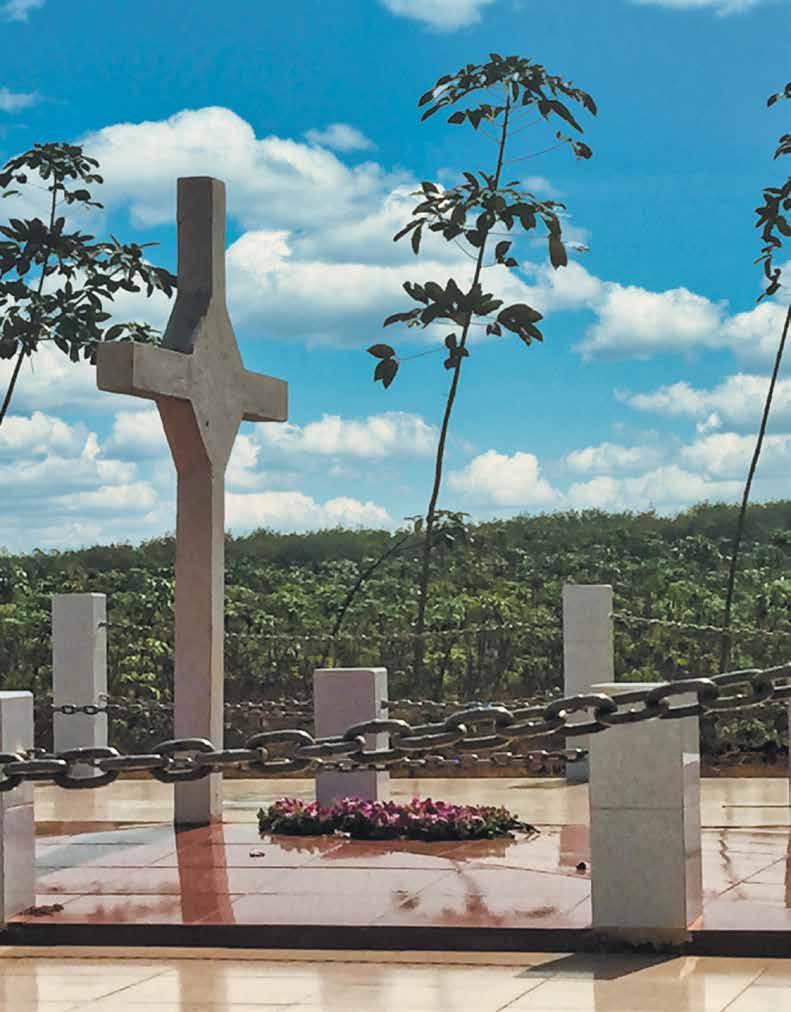
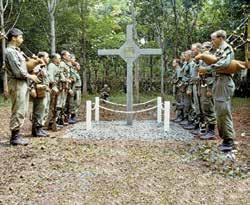
Long Tan Day: Find out why 19 is a special number to the people of Newcastle and the Hunter and be inspired by "Sewn in Gold", in our feature story on pages 18-19 of this issue of Hunter Veterans’ News Cover image courtesy of Getty: The Long Tan memorial cross, commemorating the battle of Long Tan, August 1966.
Graphic Design by KD Design 0408 115 876
Wendy. Should you seek counselling please contact Wendy on 0417 183 377 or email wendywaldroncounselling@gmail.com Hunter Veterans and Families Support Centre, need more Advocates and members to support our organisation with administration, Wickham Markets activities, fund raising and social activities. You do not need to be a Defence or Veteran member to help in the office or to support the voluntary work the Advocates, Welfare Officer, and the work Committee carry out. We do need more volunteers to support office and administration duties, if you have a few hours each week on a Monday or Thursday you would be most welcome.
Senior Advocate, Trainee Advocates and our Welfare Officer are essential in supporting clients submitting their disability claims to the Department of Veterans Affairs. We are in urgent need of more volunteers willing to qualify as an Advocate to help our fellow Veterans in obtaining their rightful DVA entitlements.
Please contact our Senior Advocate Scott Myers during office hours if you are interested in qualifying as an Advocate. Hunter Veterans & Support Centres main priority is to ensure all Serving Defence and Veterans receive qualified advocacy and welfare advice.
Thank you again to Advocates, Welfare Officer, Committee and Office members for helping our fellow Defence and Veteran clients to submit their disability claims to the DVA.
Regards…
Michael
Michael Frost
HUNTER VETERANS & FAMILIES

3 Issue 10 > Winter 2024 Patron Tom Yeo OAM JP Chaplain Chaplain Lawrence Caelli President Michael Frost Senior Vice President Allan Crumpton Honorary Secretary Dave Hansen Treasurer John Moreman Master of Ceremonies Stephen Finney. OAM JP. Senior Advocate Scott Myers. Welfare Officer Allan Crumpton Hunter Veterans News, Editors Ian Bell Colin Cowan Committee Members David Byfield Joseph Dohmen Graham Leggett Stephen Machen William Morris Association Address Clem Kealy Centre, I5 Tyrrell Street Wallsend NSW 2287 Postal Address PO Box 288 Wallsend NSW 2287 Telephone: 02 4951 2666 Fax: 024951 2633 Email: nclvets@bigpond.net.au Office Hours Monday and Thursday 0900 - 1300 Facebook Newcastle-Hunter-region-Vietnam Veterans-Peacemakers-and Peacekeepers OUR GOLDEN RULE… We are a welfare organisation and do not enter into controversial or political matters or discussions; unless these matters or discussions have a direct bearing on the welfare of current and former defence personnel or their families.
SUPPORT CENTRE




With over 25 years experience, Rex has become well known in the region for his clinical practice across a range of areas including: Department of Veteran’s Affairs’ Patients, Psychiatry, General Surgical Care, Occupational Rehabilitation CTP and Workers Compensation. Rex is committed to the care and advocacy of his patients. His practice is based on the belief that independent living and meaningful occupation should be optimised to achieve and maintain the best possible quality of life for everyone!
Advise on DVA Services and other Government Services such as Home Care Packages
Advise on DVA Homecare and respite Services
Falls prevention assessment and education
Pressure care needs such as bed overlays and Roho cushion
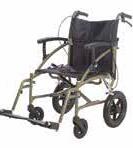
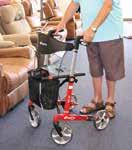
Mobility and aids such as walkers and walking stick
Access options such as ramp and possibly a stairlift
Incontinence Needs
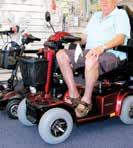
Scooter assessments for those eligible DVA clients
Activities of daily living assessment
Minor modifications such as rails in the shower, W.C and at stairs and hand held shower


Bathroom, dressing and bedroom equipment
Recommendations for appropriate equipment according to need, such as following eg. spinal surgery, total knee or Hip replacement
Personal response systems
Lymphedema management
Seating options such as dining and lounge
room chairs with arms and possibly an electric operated recliner chair if eligible
Wheelchairs, walkers and bed sticks
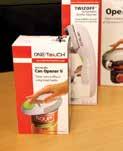
Kitchen and cooking equipment such as electric operated jar and bottle openers
Lighting needs such as outdoor sensor lights & indoor lights
Retractable garden hose
Back care education
4 Hunter Veterans’ News
PTY LTD PHONE 4946 2088 • EMAIL: admin@otaps.com.au • PO BOX 27, WARNERS BAY 2282 WE PROVIDE OCCUPATIONAL THERAPY SERVICES FOR ALL DEPARTMENT OF VETERAN’S AFFAIRS (DVA) CLIENTS…
NB: Equipment, modifications and services are prescribed and supplied only according to clinical need per DVA Guidelines.
 WITH Allan Crumpton, Welfare Officer
Hello Friends
INTHE last magazine I spoke of the need for us all to have up to date wills, enduring powers of attorney and enduring guardianship. Out of that came a suggestion that I hadn’t thought of but most certainly just as important. In your household who attends to the paying of bills the banking, looking after insurances etc. Do you pay those bills and do the banking online, if so who knows all the passwords required to get into the bank accounts or even to get into the computer to tend to these chores? We obviously need to have these passwords written down somewhere but then they need to be in a safe place and our partner or our enduring power of attorney needs to know where you have stored them and what they belong to.
A medical issue raised it head recently. One of our veterans was diagnosed with a cancer. He was sent off for an MRI, however he had had an MRI only a couple of months
FIGHT FOR YOUR RIGHT
Don't just take their word for it!
ago, for the same cancer, as a result when making the appointment he was informed that would have to pay for this treatment as he had received the same treatment in the past twelve months. The veteran to his credit wouldn’t take no for an answer. He rang DVA and explained the circumstances and was advised to have his treating Doctor send a request to DVA and they would pay, otherwise he could pay and be reimbursed by DVA.
I had a similar issue with GST for a motor vehicle some time back. A veteran was buying a disabled vehicle for himself from interstate. He rang DVA and was told that because the vehicle was coming from interstate he wasn’t entitled to the exemption. His wife rang me and I rang the Taxation Department. GST is a Federal Taxation so it doesn’t matter where you purchase the item. If you are entitled to an
exemption in NSW you are entitled to the same exemption anywhere in Australia. An issue has just come to my attention, it relates to the wearing of Medals. As you would be aware most people who served in Vietnam were recently awarded the Vietnamese Gallantry Cross UNIT CITATION, very few people were actually awarded the Vietnamese Gallantry Cross MEDAL. Apparently, some of our people have bought the Medal and have had it mounted along with the rest of their Medals. This is not permitted and if you are wearing the Medal without permission you could be classified as a WANNABE. We don’t want this to happen to anyone. Wear your Unit Citation on the right-hand breast.
Cheers, Allan
5 Issue 10 > Winter 2024
WELFARE REPORT ä

6 Hunter Veterans’ News Hear more of what you want to hear with Specsavers Advance hearing aid technology Book a hearing appointment with our Audiology Professionals at specsavers.com.au/hearing Always follow the directions for use.
 By Professor Lynne McCormack Professor/Clinical Psychologist, University of Newcastle Australia
INGrowing up with a family legacy
2021, a student approached me to supervise his Honour’s thesis. He was a veteran having served in Afghanistan. As he now embarked on a new career, starting with a degree in Psychology, and hearing that I had worked with veterans and families, he approached me to be his supervisor. Together we talked about “gaps in the literature” and his own thoughts having been on active duty. We decided on exploring the lived experience of adult children of veterans who themselves had become veterans of other conflicts.
We chose a qualitative method called Interpretative Phenomenological Analysis which seeks the subjective insights of poorly researched phenomena. For the student, the gathering of data was grim at times and indeed, triggering for him, but his former role offered the opportunity to gather rich and powerful data for the study as the participants trusted him and felt they could be open about their experiences and thoughts. The analysis between us was a delicate integrating of the stories of the four male former Army military personnel
who had variably been deployed to East Timor, Iraq, and Afghanistan. Following the submission of his thesis, I reworked the thesis for a paper hoping for journal publication. It did indeed get published in the journal of Traumatology, an American Psychological Association journal which was started by Professor Charles Figley, a Vietnam veteran formerly in the Marine Corps.
This brief narrative of some of the quotes and reflections hopefully will highlight meaningful reflections for the readers. Please seek support from your counsellor or therapist if any of this reignites memories that need revisiting with support. Open Arms is always a good contact on 1800 011 046.
McCormack, L. Hogan, M. & Devine, W. (2021). Multiple generations of combat exposure: Military family, moral dilemmas, reclaiming self. Traumatology. https://doi.org/10.1037/trm0000298
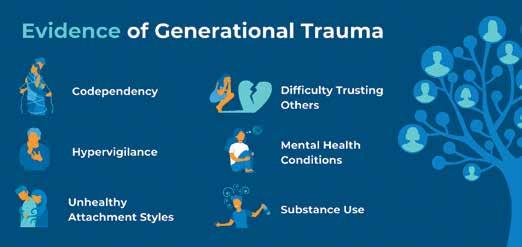
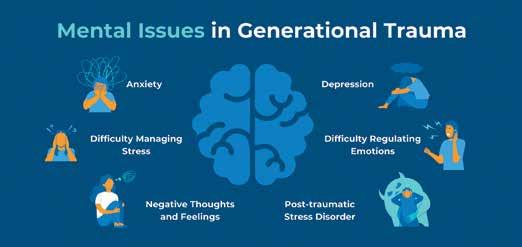
The interviews with the veterans in our study sought very personal reflections of sense making as they reflected on the complex interplay of growing up with the family legacy of parents who have been to war, and second-generation military service. Often referred to as transgenerational traumatic distress, we uncovered their nuanced and often painful experiences
from being raised in a military family, and later experiencing their own service. In reading the following, I am sure there will be moments of recognition and reflection – some things change, some things remain the same. I use some of the quotes from participants to illustrate the themes we uncovered, and the interpretations come directly from these participants who bravely shared their inner thoughts with us.
In this study, one powerful theme emerged in the stories of these veterans raised in military families: Military family, moral dilemmas, reclaiming self. It captures the intertwined positive and negative experiences of tightknit family bonds, the pride and burden of military service, and the challenging transition back to civilian life. It also reveals how deep familial ties to the military shape identities from childhood, push individuals to seek acceptance through service, and leaves them grappling with the heavy shadows of combat long after their uniforms are hung up.
The individuals in this study often faced a private struggle with their fathers, veterans themselves, yearning for approval by continuing the family tradition. However, this pursuit of acceptance was a doubleedged sword. While initially feeling a sense of belonging to a broader military
Continued over page
7 Issue 10 > Winter 2024
community, many found that their fathers' guidance did not prepare them for the moral quandaries and psychological toll of warfare.
FIVE DISTINCT BUT CONNECTED EXPERIENCES EMERGED:
1. Never Getting it Right: This captured the ongoing challenge of establishing a secure connection with their military fathers, disrupting their sense of belonging and attachment.
2. Layered Traumatisation: This theme reflected the compounded trauma of growing up in a military environment, facing the direct hardships of combat, moral trauma, and then dealing with inadequate support after returning home.
3. Used and Discarded: Many felt abandoned after their service, struggling with the realisation that the skills they learned in the military had little application in civilian life.
4. Moral Confrontation: This theme highlighted the stark differences in values between the soldiers sent abroad to train and protect, and the local national forces they worked alongside.
5. Unfamiliar Growth: Despite these challenges, each spoke of a journey of personal and psychological growth as they forged new paths in the unfamiliar terrain of civilian life.
As we unpacked these themes, each narrative reflected a blend of pride, duty, disillusionment, and growth, a testament to the complex legacy of military life.
NEVER
GETTING IT RIGHT
Sadly, David, Sean, Louis, and Harry (pseudonyms) still felt the pain of Never Getting it Right as a child. Raised in the shadows of absent fathers, physically or emotionally, the paradox of yearning for connection while grappling with feeling of having been neglected was explained by David, "It was a struggle because he was always away," revealing the emotional distance further widened by silence around his father's wartime experiences. As children, their attempts to understand were met with evasion. "He didn’t really talk about it too much… didn’t really have a lot of time for me," Sean reflected, interpreting such detachment through a child’s mind as personal rejection.
The narratives that were shared by their
fathers, however, were often sanitised with humour or anecdotes that glorified military exploits, sidestepping the harsher truths of war. Admission to this 'inner circle' of truth appeared contingent on their own enlistment. "He wouldn’t really talk about the bad stuff until I was in," Louis recounted, suggesting a rite of passage into a realm of unspoken experiences. Finally, when let into the inner circle, a sense of betrayal lingered, especially if childhood was also marked by domestic violence. "He was a violent man whether he drank or not," Harry bitterly remembered.
Confronted with their own roles as fathers, these veterans were determined to break the cycle. "I want my child to be open to make their own decisions... I want to help nurture them, not force something I want onto her," Louis shared, emphasising a commitment to fostering choice and nurturing over coercion, a stark contrast to their memories of their own upbringings. Each reflected on not repeating the harsh parenting they remembered, “The amount of times I have smacked my son I can count on one hand... I hate doing it." Louis’ reflections revealed a desire to define a different child/father relationship with his own children.
LAYERED TRAUMATISATION
Layered Traumatisation exposes memories of trauma as a constant companion, beginning in childhood. Harsh words such as neglect or abuse were splattered amongst their childhood reflections and of their own military. David reflected, "I thought I was doing a really important job... now I question it," capturing the disillusionment that grew from his military engagement. This disillusionment was compounded by a slow realisation that there were cultural and moral differences between them and the different allied groups. It revealed itself in
memories of hostility from local populations while deployed, and layers of distrust not knowing who had your back; "I did not feel safe. You were worrying, watching your mates' backs... it was just a case of when you are on patrol you put them in front and you make sure your section is looked after," Sean recounted, painting a grim picture of their day-to-day realities. The betrayal reached its peak when mistakes by allies led to friendly fire incidents. "They actually did shoot one of my mates. It is such a messedup situation... You were fighting the Taliban, but also you couldn’t trust your allies," David explained, highlighting the complex web of mistrust and fear, never discussed as part of their preparation, that characterised their deployments.
Returning home did not ease their burdens; instead, it introduced new ones. "I didn’t believe anything was wrong with me... blokes got shelled and all I done was eight months in Afghanistan," Harry noted, underscoring confused and internalised stigma around seeking mental health support, which he perceived as a weakness in comparison to those who had visible wounds.
USED AND DISCARDED
Used and Discarded painfully acknowledged these young men’s sense of betrayal post-war, as they struggled with the transition back to civilian life, often turning to alcohol to numb their pain. "Alcohol abuse was a big one for me, trying to suppress my thoughts," David shared, indicating the depth of his struggle. The sense of having been misled into service with promises of heroism and camaraderie dissolved into a harsh reality of feeling used and discarded. "Now I question it... I thought what I was doing was the right thing to do... does make you question
8 Hunter Veterans’ News
page
From
7
whether it was worth it or not," Louis reflected, voicing a pervasive sense of futility and disillusionment.
The systemic obstacles they faced in claiming benefits and support only deepened their sense of abandonment by the military. "It’s terrible, it’s depressing having to submit forms... and then they question why I need a disability pension when the military made me discharge with the military pension," Harry lamented, highlighting the bureaucratic challenges that compounded their feelings of betrayal and alienation.
MORAL CONFRONTATION
Moral Confrontation was unexpected. Unprepared for the moral and ethical dilemmas they faced abroad, each felt confronted, "We were helping them... but in the end... what can you do?” David reflected on the profound moral dissonance they experienced, and the cultural clashes and differing values deeply affected their ability to reconcile their roles as protectors with the realities on the ground. For example, Sean expressed his helplessness at not being able to protect children exposed to horrific incidents. He spoke of incidents that shook his moral foundations and still trigger strong visual disturbance in his memory, “…he broke her arm so they could go through to the village”. Powerlessness and disillusionment left each questioning the ethics of their mission and the alliances that they were forced to maintain.
UNFAMILIAR GROWTH
Despite the scars of war and the challenges of reintegration, these young men recognised Unfamiliar Growth and found ways to use their experiences as catalysts for personal growth and newfound purpose. "I’m going through the struggles at the
moment of trying to get back... get my fitness back and trying to move on," David shared, indicating a forward-looking perspective focused on recovery and self-improvement. This theme of growth was echoed by the others who found that reconnecting with friends and family, and engaging in new pursuits, provided a pathway out of isolation and despair. The transformative impact of their experiences was profound. "Having my experiences, and not letting those experiences be negatives. Using them to help me and make me grow," illustrated the potential for working through the legacy of war offering the potential for posttraumatic growth. This sense of evolution was often tied to a broader existential re-evaluation, leading each to seek meaningful ways to contribute to society, whether through humanitarian efforts or entrepreneurial ventures. "Hit up a few... less fortunate countries and try and help them out... volunteer… and help build something... do your part," was Louis’ plan, eager to apply the resilience and skills honed in the military to new, constructive challenges. Finally, these themes and quotes are but a few of the interpretations shared with us during this study. In navigating these complex journeys, these veterans spoke of not only redefining their identities out of their traumatic distress, but also shared with us how the harsh realities of war were also contributing to the reshaping of their relationships with their past, their families, and their future. It is likely that in reading of other’s experiences you will remember your own experiences. Please seek support from your counsellor or therapist if any of this reignites memories that need revisiting with support. Open Arms is always a good contact on 1800 011 046
About Professor Lynne McCormack
Professor Lynne McCormack is both an academic and clinical supervisor at the University of Newcastle, whose publications and research, conducted in UK, Europe, Africa, South-East Asia, North America, and Australia, are at the interface of complex trauma and posttraumatic growth. Her clinical work witnessing the metamorphic struggle of those rebuilding shattered lives after trauma, has guided her research producing greater than 90 peerreviewed publications, chapters and scientific abstracts, and international collaborations. Her clinical work in the aftermath of complex traumatic events has spanned three decades directed by historical events such as the Vietnam War and the Rwandan genocide on the one hand, and the emergence of positive psychology for recovery, on the other. She works with those who have experienced war or genocide as civilians or soldiers, been held hostage, lost their identity as refugees, been brutalised as children, or suffered interpersonal violence.
She has been part of the outreach psychological wellbeing programs for veterans and families (now Open Arms) in Australia for over 30 years. She is regularly featured in Veteran and Military newsletters, television, and National and popular media outlets. Lynne was granted the Vietnam Logistic Support Medal for her contribution to the Vietnam war as part of the Allied Forces Entertainment Branch during two tours in 1969 and 1971.
9 Issue 10 > Winter 2024
What is the difference between an Enduring Power of Attorney and Appointment of Enduring Guardian?
AN ENDURING Power of Attorney and Appointment of Enduring Guardian are common estate planning documents that individuals put in place to assist them while they are alive. They allow the person making the document, referred to as the “Principal”, to appoint an Attorney and Guardian (or more than one) as well as substitutes if the Attorney or Guardian can no longer act by reason of death, incapacity or resignation.
WHAT DOES AN ATTORNEY DO?
Your Attorney is appointed under your Enduring Power of Attorney to act on your behalf to manage your legal and financial affairs. This includes buying and selling property, shares and other assets, as well as operating your bank accounts and transferring money on your behalf. When preparing your Enduring Power of Attorney, you choose when your Attorney’s appointment commences, which may be once they have accepted their appointment by signing the document or once a medical practitioner considers that you can no longer manage your affairs, for example.
An Enduring Power of Attorney will endure throughout your lifetime even if you are no longer able to manage your own affairs. This is opposed to a General Power of Attorney which becomes invalid when you can no longer manage your own affairs. An Enduring Power of Attorney

is recommended as it provides greater protection.
If you wish to change your Attorney, it is important to be aware of Section 47 of the Powers of Attorney Act 2003 (NSW) which states that an Attorney who is unaware of the termination or suspension of the document, is entitled to rely on it as if it had not been terminated or suspended. Therefore, where you no longer wish for a previously appointed Attorney to act, it is essential that you serve a Revocation of Power of Attorney on them, and it is also highly recommended that you obtain written acknowledgement of the revocation from the Attorney.
WHAT DOES AN ENDURING GUARDIAN DO?
Your Enduring Guardian is appointed under your Appointment of Enduring Guardian to manage health and lifestyle
decisions for you. Their functions include deciding where you live, what health care you receive, personal services you receive and consenting to medical or dental treatment on you. Your Guardian’s appointment will commence only if you lose the capacity to make decisions for yourself. Similarly to your Attorney, it is important to serve a Revocation of Appointment of Enduring Guardian should you no longer wish for your Enduring Guardian to be able to act. The form for the revocation is set out in Schedule 1 of the Guardianship Regulation 2016 (NSW).
It is recommended that everyone has an Attorney and Enduring Guardian appointed in case something happens and you are no longer able to make these decisions for yourself. You should ensure that these documents are in place well before you lose the ability to make decisions for yourself. If you would like to make an Enduring Power of Attorney and Appointment of Enduring Guardian and discuss how they could be beneficial for you, please book an appointment with us to discuss by calling 4944 3322.
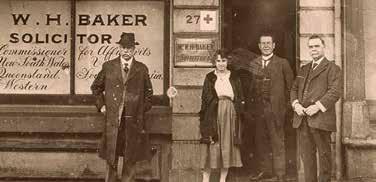
Excerpt – An Enduring Power of Attorney and Appointment of Enduring Guardian are important estate planning documents put in place to assist individuals while they are alive. Solicitor, Liam Schofield, explains what your Attorney and Enduring Guardian do, and why it is important that you appoint an Attorney and Enduring Guardian.
10 Hunter Veterans’ News ADVERTORIAL
Since 1875, we’ve believed in providing an all-inclusive approach to legal services, encompassing family, estates, property and business advice. WE WORK WITH YOU THROUGH EVERY STAGE MAKE AN APPOINTMENT TODAY… PHONE: 1800 088 557 OR 4944 3322 30 Dan Rees Street, Wallsend NSW 2287 Email: enquiries@bakerlove.com.au Web: www.bakerlove.com.au Support and legal advice when you need it the most YOUR ADVANTAGE
Can you repeat that? Why the cost-of-living crisis shouldn’t cost you your hearing health
Have you ever sat in a busy restaurant and struggled to hear the conversation at the table? Or noticed a loved one withdrawing from a family catch-up because they couldn’t keep up with the conversation?
You’re not alone. Hearing loss is a common health concern that affects close to 1 in 6 Australians.
Despite the high cost that hearing loss can have on our quality of life and our ability to enjoy moments spent with loved ones, the increasing cost-of-living has made it difficult for those who need it to access affordable hearing care.
In these challenging times, the last thing anyone needs is to be paying more for an essential health service or support than they should be… and that especially includes expert hearing care and hearing aids.
That’s why, during Hearing Awareness Month in March, Specsavers Audiology is imploring
Australians to shop around to ensure that they’re getting the best price and service to meet their needs, and not paying for features that they don’t need. Failing to do so could create unnecessary budget stress.
Specsavers Audiology is committed to providing upfront prices online and without an appointment, because Australians deserve to know what they’ll be paying at the start of their journey to hearing health. But, not all hearing care providers are created equally...
Despite the impact that the current cost-of-living crisis is having on household budgets, some providers are still making it difficult for customers to understand their pricing upfront, online and without attending an in-person appointment.
Customers shouldn’t and don’t need to compromise on their health to be able to afford essentials.
Our stores are locally run and operated, with a team of accredited Audiology Professionals available in almost 300 Specsavers stores nationwide.
Specsavers puts their customers first by guaranteeing value for money and by offering expert care during the hearing journey; before, during and after a hearing check or assessment and hearing aid selection – if aids are needed.
A hearing check does not automatically mean that hearing aids are required, but they do help to uncover any changes and ensure hearing loss is monitored, detected and treated earlier if discovered. If further testing is required*, a full diagnostic hearing assessment is used to determine if you would benefit from hearing assistance.
If they are needed, their team of fully accredited health professionals work closely with their customers to unearth what they need – and don’t need –

from their hearing aids, ensuring they are fitted with the right level of technology and save unnecessary expense. The price of a hearing aid is based on its technology and features, not the severity of hearing loss, and there is no value in paying for unnecessary features.
The latest technology hearing aids, including rechargeable options, may be fully subsidised for those eligible under the Australian Government Hearing Services Program**.
If a hearing assessment identifies that hearing aids may benefit you, Specsavers’ team of Audiology Professionals are available to help you find the most appropriate solution based on your level of hearing loss, hearing goals, the technology that you require, your lifestyle and budget. Our team is dedicated to helping you find the right solution tailored to you –one size does not fit all.
You can also rest easy knowing that Specsavers Audiology will remain available to support you with an extensive after-purchase support program that includes a 90-day money back satisfaction guarantee, a four-year warranty, free batteries for 12 months and free maintenance checks and adjustments as part of the 12 month aftercare plan.
If you have any concerns about your own, or a loved one’s hearing, visit your local Specsavers store or www. specsavers.com.au/hearing
11 Issue 10 > Winter 2024
* If further testing is required, a few may apply. ** Conditions apply under the Australian Government Hearing Services Program. ADVERTORIAL
The Federal Budget and what it means to us…


Amessagefrom Victoria Benz Deputy Commissioner NSW / ACT Department of Veterans’ Affairs
INMAY, the Australian Government handed down its 2024–25 Budget. The Budget included a number of measures that are of significance to the veteran community.
The Budget is investing $477 million to build the capacity of the Department of Veterans’ Affairs (DVA) and support the more than 340,000 veterans and dependants accessing its services.
This Budget continues to make progress on the recommendations of the Royal Commission into Defence and Veteran Suicide’s Interim Report, keeping the health and wellbeing of veterans and families a key priority.
The Government has committed $222 million in funding for the harmonisation of veterans’ compensation and rehabilitation legislation.
If passed by Parliament, this reform will make it easier for veterans and families to
access support. This commitment represents a significant investment in support directly for veterans and their families and responds to Recommendation 1 of the Royal Commission.
A separate measure provides $59.6 million over three years to support continued access to valuable health and support programs for veterans and families. This includes $48.4 million over two years to support access to the Veterans’ Home Care and Community Nursing programs benefitting 45,000 veterans and war widow(er)s. It includes funding to extend the Military and Veteran Psychiatry Training Program, the Provisional Access to Medical Treatment (PAMT) program and the Veterans’ Chaplaincy Pilot Program.
The Budget also invests $400,000, including $300,000 in grant funding, to extend the Supporting Veteran Owned Business Grant Program for three years, helping veterans and families open or increase the competitiveness of their own business.
The funding will allow the Department to continue to provide self-employment support to veterans and families because we
know that having meaningful employment after leaving the Australian Defence Force is key to a successful transition.
An investment of $194.4 million over four years and $20.6 million every year from 2028–29 onwards will increase DVA’s staffing levels and fund further modernisation of its ICT.
It will fund an additional 141 service delivery staff on an ongoing basis. This is on top of the more than 500 ongoing staff DVA has employed in the last two years. It will also provide $8.4 million over two years to pilot a modern clinical case management and workflow solution.
Finally, the Budget provides an additional $1.16 million over three years to meet our financial obligations to the Commonwealth War Graves Commission (CWGC) and its five other member Governments.
The CWGC ensures perpetual commemoration of those who made the ultimate sacrifice in the First and Second World Wars.
This funding helps deliver on our promise never to forget.
12 Hunter Veterans’ News
Above: Anzac Beach, Gallipoli, 1915

17 AUGUST

VIETNAM VETERANS REMEMBRANCE DAY SATURDAY
SERVICE • 4PM •
CIVIC PARK MEMORIAL
This year we will be profiling the life of: Lance Corporal [L Cpl] (Temporary Corporal [T/Cpl]) Thomas Douglas, Blackhurst Australian Army Training Team
DINNER • FUNCTION ROOM 1 • WALLSEND DIGGERS
Doors open 6pm • Seated by 6:30pm
INCLUDES: 3 Course Meal, Table Wine, Beer, Soft Drinks, Tea & Coffee • Music & Dancing
COST: Members and Partner $25pp • Non-Members & Partner $45pp
DRESS: Veterans - Evening wear & Medals • Guests - Evening Wear
PAYMENT: In person at office - Monday and Thursday 9am to 1:30pm.
DIRECT DEPOSIT: Newcastle Hunter Region Vietnam Veterans • BSB: 650 000 • Account No: 961405306. (Ref: Surname & Suburb) BY POST: The Treasurer NHRVV, P.O. Box 288 Wallsend 2287
TICKET SALES: From Monday 1st July until Thursday 1st August, 2024 (NO DOOR SALES ON THE NIGHT)
NOTE: At time of booking notify us of any dietary requirements
COURTESY BUS: A 20-seater bus will be available to transport Veterans to the Civic Park Service. Departing Wallsend Diggers at 3:15pm, then returning to the club after the service for the dinner. No bookings required, it’s on a first-in basis.
13 Issue 10 > Winter 2024 2024
Committed to my community
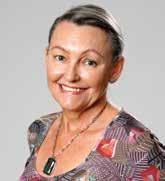 BY Sonia Hornery MP, State Member for Wallsend
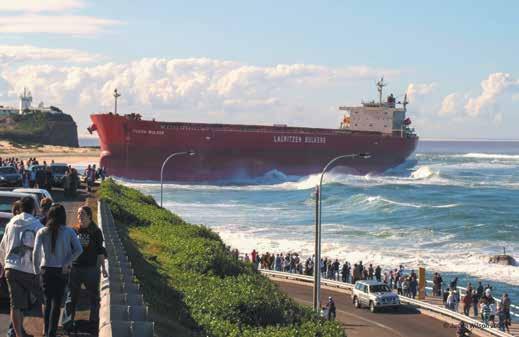
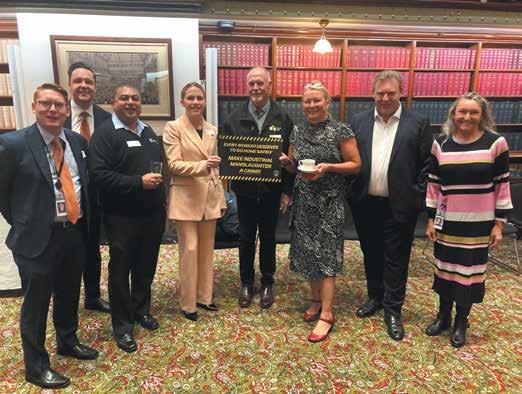
ITHAS been more than seventeen years since the “Pasha Bulker” storm ravaged Wallsend, causing horrific flooding and immense damage to the CBD and surrounds. Homes and businesses alike were inundated with flood waters and the damage costs amounted to hundreds of millions. We have been extremely fortunate that none of the severe weather events we've experienced since have been anywhere near as damaging, but I am committed to getting our community prepared for future events. I was honoured to be in the Speaker’s Chair when Minister Sophie Cotsis introduced Industrial Manslaughter legislation. This important reform will mean employers and businesses will be liable for criminal charges if they do not provide safe workplaces and a worker dies on the job.
Another recent announcement I was glad to see was a $111.8 million package of initiatives to support community mental health and wellbeing by increasing the essential help available to the people of NSW when they need it. Over 2 in 5 Australians aged 16 to 85 are estimated to have experienced a mental disorder at some point in their life. I know how difficult it can be for people trying to access support to find help, and this package will assist.
I am also pleased to hear that, after a lot of advocacy from locals, the Federal Government will be establishing a Medicare Bulk Billed Urgent Care Clinic in either Newcastle or Lake Macquarie. Hopefully, this happens by the end of the year. It will ease a lot of the strain on local health services and make accessing treatment easier for everyone.
My office is still available to assist with congratulatory messages for milestones
such as 50th, 60th, 65th and 70th wedding anniversaries and 80th, 90th and 100th birthdays. These messages can be arranged through my office with a couple of weeks’ notice. We just need the details and confirming documents, like a marriage or birth certificate or a Statutory Declaration— which my office’s on-site Justices of the Peace can you help you out with.
Remember, we’re here to help you, so if there’s a State Government issue that you need some help with, call my office on 4950 0955, email wallsend@parliament.nsw. gov.au or visit the office at 67 Nelson Street, Wallsend. You can also keep up to date with what I’m doing at Parliament or in the community by visiting my website at www.soniahornery.com.au.
14 Hunter Veterans’ News ADVERTORIAL
Above: Friday, 8 June 2007, a storm we'll never forget, the Pasher Bulker run aground on Nobbys Beach
Above: every worker deserves to go home safely… Thank you to the tireless campaigners and unions for pushing for these laws to be enacted.
R U OK? calls on all Australians to make retirement our business

Retirees
and experts have shared their experiences and tips for how to support those navigating retirement. Retirement is the first topic in the When Life Happens, ask R U OK? series being developed with the generous support of ING Australia.
More than 100,000 Australians intend to retire this year1, a commonly celebrated milestone after years of hard work. But for some, closing the door on working life can be challenging, bringing financial stress, social isolation, or the loss of identity and routine.
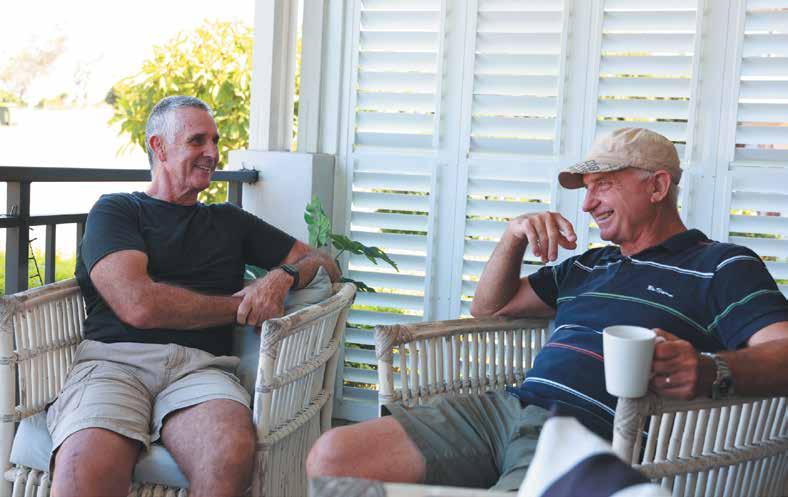
“It can be hard to have so much on your plate each day, then to turn around and feel, well, there’s nothing really that I need to do today, that I have to do today,” said former school principal Geoff Leary.
Having the support of friends and family can help people better manage this transition2.
“As a loved one, friend or colleague of someone retiring, it is important to be aware retirement can be both a celebratory and challenging time,” said Rachel Clements, Director of Psychological Services at the Centre for Corporate Health.
“Signs someone might be struggling include irritability and frustration, withdrawing from usual activities, and sleep disturbances,” explains Ms Clements. “If someone in your world is retiring, keep in
touch and have regular conversations with them about how they’re really going. So, if they do find themselves struggling, they know you’re someone they can talk to.”
Research3 from R U OK? has found that supportive conversations do make a difference. More than four in five people who engaged in a meaningful conversation felt better about managing their situation after talking it through.
“Blokes find it quite difficult to share feelings; I know I do. I think the best way to encourage more open conversations is to create trust with people around you,” Mr Leary shared. “I’ve found catching up regularly, not being judgmental, and just listening after you’ve asked has been the best way to build that trust.”
Because everyone’s retirement journey is different, Ms Clements advises being open to asking what support someone might need and making the time to listen genuinely. “It can be helpful to ask questions like, ‘Can I support you with this?’ or ‘Is there anything I can do?’” said Ms Clements. “When life happens, asking, ‘are you OK?’ and being there to listen is key.” Visit ruok.org.au for tips on how and when to ask meaningfully, ‘are you OK?’ when life happens, so the people important to us know they’re not alone.
If you or someone you know needs extra support, contact information for national support and services is available at: ruok.org.au/findhelp.
Lifeline Australia provides free and confidential crisis support at any time of day or night. Call 13 11 14, text 0477 13 11 14, or chat online at lifeline.org.au.
13YARN is a free 24/7 service offering crisis support for Aboriginal & Torres Strait Islander people. Call 13YARN (13 92 76). MensLine Australia is a free 24/7 service offering support for Australian men. Call 1300 78 99 78 or chat online at mensline.org.au.
The When Life Happens, ask R U OK? series looks at how we can support those going through life’s ups and downs, and has been made possible thanks to the generous support of R U OK? Conversation Partner, ING Australia.
15 Issue 10 > Winter 2024 15
Conversations do make a difference: Left, retired school principal Geoff Leary

The health and wellbeing of veterans and families is a priority for the Albanese Labor Government. Funding for the Department of Veterans Affairs is now at a record high, better funded than it has been in three decades.
The 2024-25 Budget, handed down last month, continues to make progress on the recommendations of the Royal Commission into Defence and Veteran Suicide’s Interim Report. An investment of $194.4 million over four years and $20.6 million every year from 2028–29 onwards will increase the Department of Veterans’ Affairs’ (DVA) staffing levels and fund further modernisation of its IT systems. It will fund an additional 141 service delivery staff on an ongoing basis. This is on top of the more than 500 ongoing staff DVA has employed in the last two years who have been working to clear the backlog of claims inherited when Labor came into government. That backlog has now been cleared, delivering on our commitment and ahead of the dead
deadline recommended by the Royal Commission.
The Government is also delivering on its commitment to implement and deliver simplified and harmonised veteran compensation legislation, which was the first recommendation of the Royal Commission. If passed by Parliament, this reform will make it easier for veterans and families to access support.
This Budget boosts Veterans’ Home Care and Community Nursing Programs, with an additional $48.4 million funding to ensure there are no gaps in service delivery. It also includes the extension of the Military and Veteran Psychiatry Training Program, the Provisional Access to Medical Treatment program, and the Veterans’ Chaplaincy Pilot Program.
Other investments in the 2024–25 Budget include:
$30 million to build more housing and provide specialist services for veterans and families who are experiencing, or at risk of, homelessness.
$1.16 million over three years enabling the domestic War Graves program to continue to care and maintain official commemorations and memorials.
$300,000 in grant funding to extend the Supporting Veteran Owned Business Grant Program for three years, helping veterans and families open or increase the competitiveness of their own business.
tI’m here to help
I can provide advice and assistance regarding any issues you have with Federal agencies including:
Department of Veterans' Affairs
Department of Defence
Centrelink Aged Care
National Disability Insurance Agency
Australia Taxation Office
Medicare Immigration
Address: 427 Hunter Street, Newcastle NSW 2300 | Phone: (02) 4926 1555 Web: SharonClaydon.com | Email: Sharon.Claydon.MP@aph.gov.au
16 Hunter Veterans’ News

National Influenza Program…
ABOUT INFLUENZA
Influenza is a common viral infection that affects people of all ages.
While it may be a mild disease for some, it can also cause serious illness and even lead to hospitalisation in otherwise healthy people.
Vaccination administered annually by a health professional is the safest means of protection from influenza.
ABOUT THE INFLUENZA VACCINES
The strains of the virus circulating can change yearly, prompting updates to the vaccines based on expert advice. That is why it is important to get vaccinated every year.
The vaccine brand used will depend on age. Your health professional can tell you which vaccine they will use for you or your child’s immunisation.
All National Immunisation Program funded vaccines available for use in 2024 are quadrivalent, covering four strains. Egg based vaccines and a cell-based vaccine (for people aged 5 - 64 years) are available on the program. There is no preferential recommendation for either. They are all latex free.
INFLUENZA VACCINE SAFETY
The influenza vaccine has been around for many decades and has a great safety record.
Common side effects from the vaccine include mild pain, redness or swelling where the vaccine was given. These side effects usually last for a few days and go away without any treatment.
Serious side effects, such as a severe allergic reaction are rare.
The vaccine does not contain live influenza viruses and cannot cause influenza.
People with an egg allergy, including history of anaphylaxis, can safely receive all influenza vaccines. If you have an egg allergy, please discuss this with your health professional.
WHO SHOULD RECEIVE THE INFLUENZA VACCINE
Everyone 6 months and over is recommended to get an influenza (flu) vaccine each year. The flu vaccine protects you, but it also can help protect those around you.
INFLUENZA VACCINATION IS ESPECIALLY IMPORTANT FOR SOME
The flu vaccine is strongly recommended and free under the program for the following people most at risk of complications from influenza:

n Children aged 6 months to less than 5 years
n Pregnant women at any stage during pregnancy
n First Nations people aged 6 months and over
n People aged 65 years and over
n People aged 6 months and over with certain medical conditions.
Some states and territories may offer free vaccines for other groups. Talk to your health professional or visit your state or territory health department website to find out.
If you are not eligible for a free vaccine, you can buy the vaccine. Talk to your health professional to find out how much it will cost.
WHEN TO GET YOUR INFLUENZA VACCINE
You should get vaccinated each year from April onwards to be protected before the influenza season. The peak influenza season is usually June to September in most parts of Australia. However, it is never too late to get the vaccine as influenza can spread all year round.
If you had last season’s flu vaccine late last year or early this year, you should still get the new season vaccine this year when it becomes available.
17 Issue 10 > Winter 2024
ª www.piggottspharmacy.com.au ª
2024 FLU VACCINES ARE NOW AVAILABLE AT ALL PIGGOTT’S PHARMACIES… FREE for over 65yo’s and people with at risk medical conditions. For others it’s only $25. We can vaccinate from 5 years and over. Do you have a business? Why not set up an account and vaccincate all your staff? We just need a name and email address! Book your appointment online or drop into a local Piggott’s Pharmacy store today. BLACKBUTT PHONE 4957 2474 BRANXTON PHONE 4938 1156 HAMILTON PHONE 4961 3179 HUNTLEE PHONE 4067 786 MEREWETHER PHONE 4969 1978 LAMBTON PHONE 4957 3630
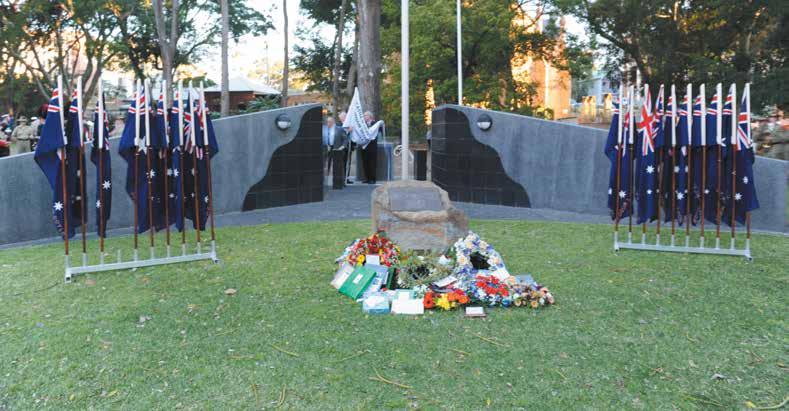
We Will Remember Them…
SINCE the inception of the Newcastle Vietnam Veterans in the Newcastle and Hunter region we have every year remember all those who lost their lives in the Vietnam conflict by holding a service and memorial dinner.
In 1985 when it was decided to research the Vietnam KIA and pay special recognition to those from the Newcastle and Hunter region. The then memorial committee decided to set the criteria that those who were either born or were enlisted from the area would be recognised. Not forgetting the over 500 KIA 19 were selected following the selection criteria. Following this selection the Association went to work to locate the families of the 19 also including those who served with them. This massive task was undertaken.
Service records of all 19 were acquired from Australian Archives through the help of the local federal members for Newcastle Sharon Claydon MLA and her staff. A massive amount of work has been put in to track down the personnel who served with them and the families and with the help of our honorary historian James MacKay OAM over the years we have managed to do so. The number 19 became a special number
for many things and innovations implemented to remember these KIA. For instance the Memorial built by the Newcastle and Hunter Region Vietnam Veteran community is based around 19. At its highest point it is 1900mm high, it is 950mm or half of 1900mm at its lowest point and 5700mm or three times 1900mm at its longest point. The concept of the parading of an Australian flag for every KIA from the Vietnam Veteran’s welcome home parade in 1987 was adopted by the association with a slight difference. Every flag paraded has the name of the soldier sewn in gold on the flag.
The concept of the flags inspired local poet Bill Charlton to write the poem “Sewn in Gold”, published in his book, “A Rugged Bunch of Diggers”
Each year since 2006 we have delivered the profile of each of 19 KIA. Initially the profile was incorporated into the Lord Mayors address but as the years have passed we have found that the Lord Mayors address is for them to speak on the significance of the memorial and the importance that the Community remembers the 19 KIA. The profile for some years now has been delivered by James Mackay OAM our honorary historian.
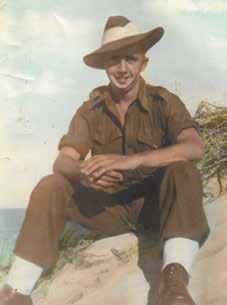
…the average age of the 19 kia from the Newcastle & the Hunter was 24…
Vietnam Veterans Remembrance Day is held in Newcastle on the Saturday closest to the 18th August. This allows any and all family and citizens that want to be there can, as it is not a work day. The service is always held at the Vietnam Memorial at the western end of Civic Park on the corner of King and Auckland streets and commences at 4:00pm. The memorial dinner is always
18 Hunter Veterans’ News
Above: Australian Army Poet, Bill Charlton
Sewn in Gold
A Tribute to the 19 KIA BY Bill
Charlton
We came by chance this year to take, Some flags back home for the Easter break. Each flag the symbol of a Hunter man, Who had lost his life in Vietnam.
They were not aired this Anzac Day. With the school cadets on holiday. But how could we keep these emblems of pride, All wrapped up and left inside.
So we formed them up in ranks of two. All straight and tall - red, white and blue. For each a Hunter story told, With the names of the fallen sewn in gold.
The first flag named a rifleman.
James Houston killed there at Long Tan.
Wayne Blank would follow in September. These were the first to be remembered.
Then Billy Ashton and Richard Lloyd Were killed by mines there in Phuoe Tuy. And almost two months to the day. James Ruddy died there late in May.
Ziggy Trzecinski would suffer the same. And in his memory a bridge was named. Then Langlands, Bailey, Wallis and Moss. Would add to One Battalion's loss.
Brian Walsh's nickname was The Bull. A solid man who had great pull. But he was killed by enemy fire. Just outside the perimeter wire.
held on that evening. This year it will be held at Wallsend Diggers Club in Tyrrell Street Wallsend. If you wish to attend either of these events you are most welcome.
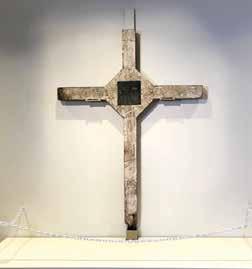
It was returned to Australia on the 50th anniversary of the battle.
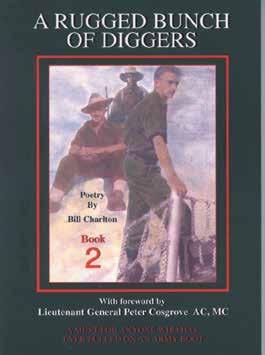
Then Georgie Gilbert and Peter Hines, Both fell to mines in sixty nine. Whilst Dickson and Jackson one year on, Were the next two soldiers called upon.
And Manning and Doyle, were just nineteen, When caught up in this tragic scene. Then Blackhurst from my own home town, Was the next to perish on the ground.
The war was drawing to an end, But death still lurked round every bend. Nineteen from the Hunter had given their all John Hall from Teralba – the last Australian to fall.
Full details of the events are published on page 13.
Initially our memorial services were held at the main cenotaph in Civic Park. Our first Memorial is a small brick pedestal with a granite stone engraved head. It is situated in the Memorial Grove Civic Park. Built in the late 1970’s. Memorial Services were held here each year in September. The area of the Memorial Grove became too small for our Services and we moved to our present location at the Vietnam Memorial. As a result of a survey done by Christopher Richard Linke of Deakin University in 2005 of Vietnam Memorials constructed in Australia. It is understood that this Memorial is the first Memorial to Vietnam to be dedicated in Australia.
Our present memorial is quite significant as the design is based around the number 19 as previously explained. The surface finish of hard rough granesite depicts the
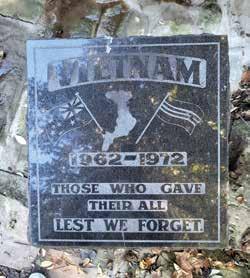
public’s rough response to Veterans on their return, then softens into the soft finish of the granite tiles denoting the gradual acceptance of the Veterans.
19 Issue 10 > Winter 2024
Above: The first Vietnam War Memorial situated in Memorial Grove in the southeast corner of Civic Park.
The original Long Tan Cross is on display at the Australian War Memorial in Canberra.
Unlocking the Secrets to Healthy Aging The Bruce Ames Triage Theory Explained

 BY Tim Roberts AM Emeritus Professor at the University of Newcastle & Director of InnovAAte Pty Ltd
AGING is an inevitable part of life, bringing with it a host of challenges and changes in our bodies. While many seek the fountain of youth through various means, understanding the underlying processes of aging can help us better manage our health as we grow older. Two related issues are in my mind today, sarcopenia and dietary deficiencies. As we age there is a progressive loss of muscle mass. This trajectory to sarcopenia is associated with a higher risk of falls, fractures and hospitalizations. But through strength training and a diet that provides the amino acid building blocks you can actually build new muscles. Most of us know that strength training (with free weights, weight machines, or resistance bands) can help build and maintain muscle mass and strength.
What many of us don’t know is that strong muscles lead to strong bones. And strong bones can help minimize the risk of fracture due to osteoporosis. It can also protect vitality, make everyday tasks more manageable, and help you maintain a healthy weight. And strength training, in particular, has bone benefits beyond those offered by aerobic weight-bearing exercise. It targets bones of the hips, spine, and wrists, which are the sites most likely to fracture. What’s more, resistance workouts — particularly those that include moves emphasizing power and balance — enhance strength and stability. That can boost confidence, encourage you to stay active, and reduce fractures another way — by cutting down on falls
So what about our diet? We all know that we need to eat protein, carbohydrate and fats but how much and which micronutrients and microminerals do we need to keep us going for a long life. According to Harvard University, there is evidence that various micronutrient deficiencies — for example, deficiencies of zinc, selenium, iron, copper, folic acid, and vitamins A, B6, C, and E — alter immune responses in animals. Although the impact of these deficiencies on the human immune response has yet to be assessed, to support
your immune system, you can start by ensuring you meet your micronutrient needs.
Obtaining these by eating a variety of different foods is a helpful way, as different foods contain different micronutrients. The Mediterranean diet is a good example to follow, with it featuring a wide variety of foods. Particularly when supplemented with probiotics. Probiotics are “good” bacteria that promote health. Probiotic foods contain live helpful bacteria, and prebiotic foods contain fibre and oligosaccharides that feed and maintain healthy colonies of those bacteria. Probiotic foods include kefir, yogurt with live active cultures, fermented vegetables, sauerkraut, tempeh, kombucha tea, kimchi, and miso. They can be found in cultured dairy products such as yogurt with live cultures and may also be in other fermented foods such as kimchi.
THE MEDITERRANEAN DIET
Lots of vegetables, legumes, fruits and nuts, cereals, with olive oil as the primary fat source, and moderately high amounts of fish. It also contains moderate amounts of meat, poultry and dairy, and a moderate amount of red wine.
20 Hunter Veterans’ News
One of the intriguing theories that offers insights into healthy aging is the Bruce Ames Triage Theory. This theory, proposed by biochemist Dr. Bruce Ames, provides a fascinating perspective on how our bodies prioritize the use of the 15 essential minerals and 26 micronutrients and its implications for aging and chronic diseases. The term “triage” commonly refers to the medical practice of prioritizing treatment for patients based on the severity of their condition. In a similar vein, the Triage Theory of Healthy Aging suggests that our bodies prioritize the use of essential nutrients (amino acids, vitamins, minerals and fats) for immediate survival over longterm health. According to Dr. Ames, when our bodies face a shortage of nutrients, they allocate these scarce resources to critical functions necessary for short-term survival at the expense of functions related to longterm health and maintenance.
You might be thinking that you are OK because you have a good diet, but if we look at Australian population data only 5% of people over 65 eat the daily intake of fruit and vegetables as recommended by the Australian Dietary Guidelines. Research shows around 50% of older Australians in aged care and in the community are either at risk of malnutrition or are malnourished. Over half of the US population has inadequate intakes of Magnesium for instance and much of the population eat inadequate amounts of Omega-3 fatty acids, potassium, calcium, Vitamin C, vitamin E and vitamin K.
Other nutrients also play a crucial role in a myriad of biochemical processes within our bodies. Vitamins and minerals are cofactors in enzymatic reactions, antioxidants, and structural components in cells and tissues. The Triage Theory states that in conditions of nutrient deficiency, our bodies preferentially use these nutrients for vital processes such as energy production and repair of immediate cellular damage, rather than for functions that support longterm health, such as DNA repair, cellular maintenance, and immune function. The data shows us that
For instance, vitamin K is essential for both blood clotting (an immediate need) and the maintenance of bone health (a long-term need). In most Western diets the supply of
Vitamin K is limited, the body uses what little it can find to protect critical metabolic functions in the liver. When Vitamin K is scarce, the body will prioritize blood clotting to prevent immediate death from bleeding, leaving the other Vitamin K dependent enzymes, the ones associated with bone building, cancer prevention, and protecting the heart from damage, without sufficient Vitamin K to function properly. Short term survival is prioritised over long term health. This prioritization can lead to an accumulation of damage and a decline in physiological functions, contributing to the aging process and the development of agerelated diseases.
The Triage Theory provides a framework for understanding how chronic nutrient deficiencies can contribute to the gradual decline in health observed with aging. As our bodies continually allocate nutrients to immediate survival needs, the neglect of long-term maintenance functions can result in cumulative damage, accelerating aging and increasing susceptibility to chronic diseases such as heart disease, cancer, and osteoporosis.
For example, folate (vitamin B9) is crucial for DNA synthesis and repair. Inadequate folate intake can impair these processes, leading to mutations and genomic instability, which are hallmarks of cancer development. Similarly, deficiencies in antioxidants like vitamins C and E can exacerbate oxidative stress, damaging cells and tissues, and contributing to the aging process.
One of the key takeaways from the Triage Theory is the importance of ensuring adequate intake of essential nutrients to support both immediate and long-term health. A balanced diet rich in a variety of amino acids, vitamins and minerals is crucial for preventing deficiencies and supporting overall well-being.
Our research at the University of Newcastle has identified that six of the 20 amino acids used to build proteins are in high demand each and every day to allow the body to build the proteins it needs. An analogy would be that if you are building an engine and you run out of cogs, then you cannot finish the engine and it will not work. It is the same with the body – if certain amino acid “parts” are in short supply, then you cannot complete construction of that protein. If just one key amino acid is in
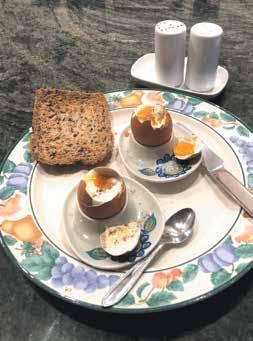
Above: An Eggcellent Breakfast, a couple of boiled eggs and a slice of grain toast.
short supply, then this can limit the ability of the body to efficiently perform specific tasks. Triage theory would say that in cases of shortage of these High Demand Amino Acids the body will make those proteins needed for immediate survival and not make those proteins needed for long life. This led to us developing the InnovAAte products to ensure that there is no shortage of these High Demand Amino Acids in the daily diet.
Other Key Nutrients for Healthy Aging include Vitamin D, Omega-3 Fatty Acids, Antioxidants: Vitamins C and E, as well as selenium and beta-carotene, B Vitamins: Including B12, B6, and folate, and the 19 minerals.
Not to forget of course the Lifestyle Factors for Healthy Aging: regular physical activity, adequate sleep, stress management, and avoiding tobacco and excessive alcohol
The Bruce Ames Triage Theory offers a compelling explanation for the role of nutrient deficiencies in aging and the development of chronic diseases. By prioritizing short-term survival over longterm health, our bodies may inadvertently accelerate the aging process and increase vulnerability to age-related ailments.
The take home message is that we should not miss out on regular daily intake of a balanced diet with all the necessary amino acids, vitamins, minerals and essential fats. Otherwise we pay for it years down the track with faster ageing, cancer and reduced mental function.
21 Issue 10 > Winter 2024 THE BRUCE AMES TRIAGE THEORY OF
HEALTHY AGEING


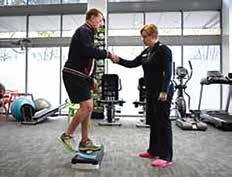
Recovery Station has been providing health services to the Veteran community for over 15 years
We deliver allied health services from our clinics and within the comfort of your own home. We have empowered thousands of individuals to achieve their personal health goals by providing the foundations for living a better quality of life. We are proud to have assisted people to transition out of nursing homes, live independently, drive safely again, communicate with ease, walk with confidence and to live a quality of life.

22 Hunter Veterans’ News Above: "The Pacific
1300 588 851 recoverystation.com.au Occupational Therapy | Physiotherapy Exercise Physiology | Speech Pathology | Dietetics In-home and clinic services for a healthier you!
War" Kokoda, Papua New Guinea, 1942
Individual Treatments | Young Vets Classes | Supervised Gym | Chronic Pain Call us now to find out more 1300 588 851 referrals@recoverystation.com.au • www.recoverystation.com.au SYDNEY – LOWER HUNTER – CENTRAL COAST
your home longer,
independence,
safety
to lead a productive
meaningful life. On receiving
referral
GP,
Achieving optimal outcomes in physical wellbeing, emotional wellness, functional independence and social connection for you.
Helping you stay in
re-establishing or enhancing
increasing quality of life and
in order
and
a
from your
we start working with you on your health and wellbeing. Telepractice also available.
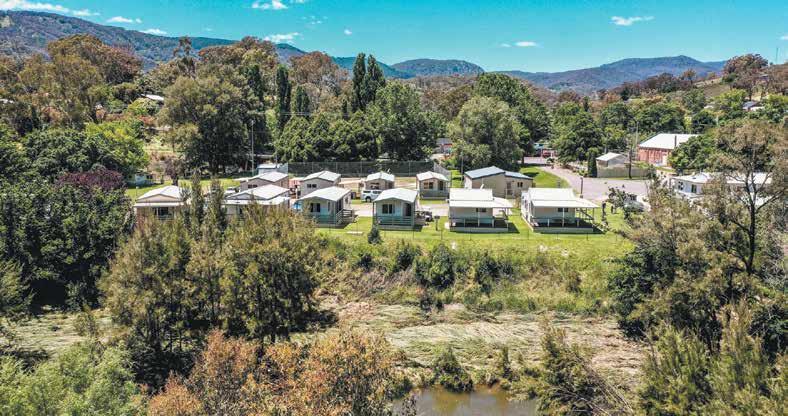
Fossickers Tourist Park
Get together: 16th to 23rd October, 2024
ONCE
again, the bi-annual get together to enjoy R&R, rest, relaxation, fun, frolic, feeding and a chance for catch up at Hawkes Nest Holiday Park by members, wives/partners and family.
Whilst the weather on some occasions called for the use of umbrellas, the overall conditions allowed all of the usual activities, highlighted each day by “happy hour” whereby all gathered to enjoy drinks and nibbles. These “nibbles” took on a life of their own and transformed into the “Feast of the Passover”, most, passing over the need to partake of teatime food.
St Patrick’s Day was celebrated on the
appropriate day with everyone dressing in something green, a sight to behold indeed.
A dinner was also organised at the Golf Club that also provided a courtesy bus to and from the park. Everybody attended and what a rowdy mob they are when seated at one long table, but all enjoyed the dinner. All in all, everybody had a great time, whether they stayed in caravans, motorhome or in the new luxurious cabins and it would be wonderful to see more members and families take advantage of the next trip to Nundle, planned for October. Come along and enjoy a week with likeminded people at Nundle. You could even
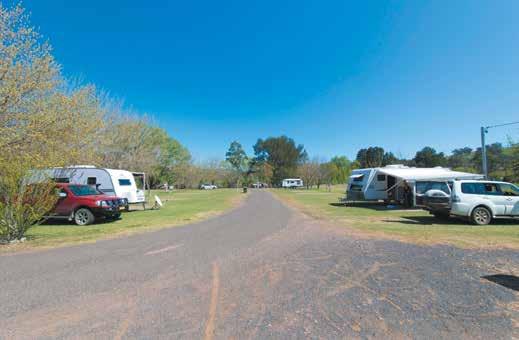
see the platypus playing in the river or find a pot of gold. Cabin stay is also available, so there is no need for a caravan.
Please advise Allan Crumpton if you are intending to join us by emailing allan.crumpon@bigpond.com
Fossickers Tourist Park is located at103 Jenkins Street, Nundle NSW and is a member of G’day Parks.
Phone: 02 67693355
Email: fossickers@outlook.com www.fossickersatnundle.com.au


23 Issue 10 > Winter 2024
A lot more than just the Member for Shortland!
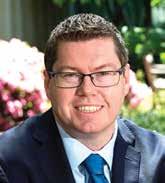 BY Pat Conroy MP Federal Member for Shortland
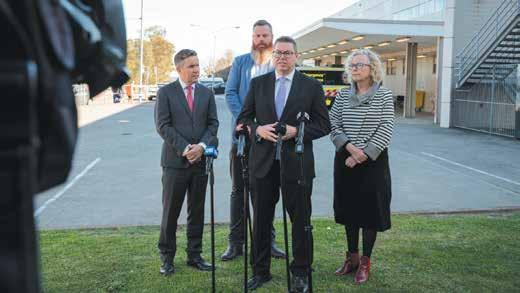
WE RECENTLY announced a Medicare Urgent Care Clinic in the Lake Macquarie-Newcastle region, to help relieve the pressure on John Hospital Hospital.
This will work in conjunction with the great GP After-hours service, that Mark Butler MP and the Albanese Labor Government saved with our first budget.
This is about getting better health care for the residents of Lake Macquarie & Newcastle, including free health care through bulk billing so that people can see a doctor when they need to and get the treatment they need.
The Newcastle-Lake Macquarie Medicare UCC will be open seven days a week, with extended hours, and will be completely bulk billed for walk-in care for urgent, but not life-threatening issues.
Stage 1 works to develop a mines fund for the Lake Macquarie region is underway, fully-funded by a $2 million commitment from the Albanese Labor Government.
The Lake Macquarie Mines Fund will give businesses and the private sector confidence to invest in new developments in our community and also help to address the housing crisis.
It seeks to underwrite developers for the unpredictable cost of filling and remediating historical underground coal mine voids, above a capped rate, providing them with greater cost certainty.
The Lake Macquarie Mines Fund project is being delivered in two stages:
n Stage 1: scoping studies to fully determine the extent of the mine remediation needed, including a base remediation cost. This is underway now.
n Stage 2: establishment of a mine grouting fund to the Lake Macquarie Local Government Area, including
Charlestown, Cardiff, Morisset, Glendale, and West Wallsend.
Stage 1, which was funded with a $2 million commitment from the Australian Government, will be completed in February 2025.
Funding for Stage 2 will be determined based on the outcomes of Stage 1. The Lake Macquarie Mines Fund is expected to open for application in mid-2025.
24 Hunter Veterans’ News
ADVERTORIAL
Above: Announcing the Medicare Urgent Care Clinic in the Lake Macquarie-Newcastle region, to help relieve the pressure on the John Hunter Hospital. Pictured with MPs Mark Butler, Dan Repacholi and Sharon Claydon.
Above: It was a privilege to pay my respects and speak at Doyalson-Wyee’s RSL’s Anzac Day Dawn Service and the Lions Club of Valentine’s service.
As always, my Electorate Office is located at 1A-571 Pacific Highway, Belmont and is available to assist with Federal issues and Government Departments, such as: n Centrelink n Australian Tax Office n Immigration and Citizenship
n Child Support Agency n Defence including Honours and Awards, and Veterans’ Affairs. If you have any issues, please contact my office on 4947 9546 or pat.conroy.mp@aph.gov.au. You can also keep up to date with what I am doing via
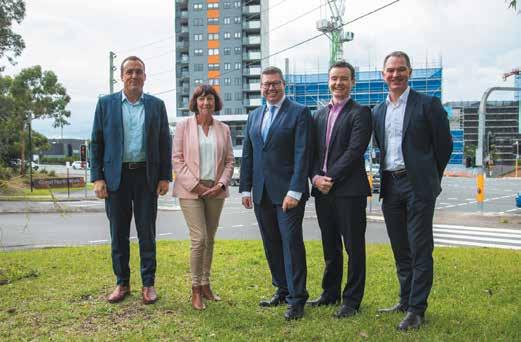
Above: I was really excited to announce today with Cr Kay Fraser - Lake Macquarie Mayor that Stage 1 of the Lake Macquarie Mines Fund is underway!


my Facebook and Instagram pages and my website, www.patconroy.com.au
Thank you for your service.
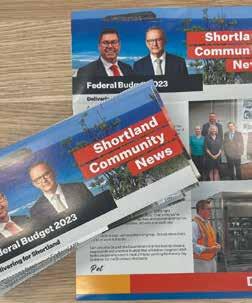

Keep up to date with the local Shortland community news newsletter at www.patconroy.com.au

25 Issue 10 > Winter 2024
Helps conserve metabolic energy Great taste Provides Glycine for Collagen production Advanced formulation OptimAAte Protects muscles Preexercise Daily Support Made in 198g Powder Advanced Nutrients HDAA Batch tested for WADA banned substances Free from Caffeine, Fat, Gluten, Sugar Vegan Friendly Formulated Supplementary Sports Food OptimAAte. Supports your body during recovery. Visit our website to learn more. innovaate.com.au Leaders in Amino Acid Biotechnology HIGH DEMAND AMINO
HIGH DEMAND AMINO
Faster Recovery Muscle Repair Improve Hydration Made in 198g Powder Recover + Hydrate ElectrAAte electrolytes + 6 AMINOS Batch tested for WADA banned substances Free from Caffeine, Fat, Gluten, Sugar Vegan Friendly WADA Tested Great taste Aids muscle repair Replenishes what's lost in sweat ElectrAAte.
to help restore hydration.
ACIDS
ACIDS
Designed
Pat
Exercise to reduce the risk of cognitive decline and Dementia
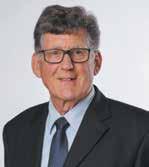 By Dr John Ward, Geriatrician
2024 NSW Senior Australian of The Year
By Dr John Ward, Geriatrician
2024 NSW Senior Australian of The Year
Co-Founder Hunter Ageing Alliance and ActiveStrongerBetter
ONEOF the medical conditions we most fear as we get older is cognitive decline leading to Dementia. We cannot prevent it entirely but we can do a lot to delay or slow down cognitive decline.
Research evidence suggests that the most effective strategy to slow cognitive decline in early Dementia is exercise.
There are several other helpful strategies including:
n a sensible diet
n getting good sleep
n not smoking
n controlling hypertension (blood pressure) and other vascular risk factors such as high cholesterol and triglyceride levels
n minimizing weight gain
n abstaining or limiting alcohol intake (no more than 1-2 standard drinks a day with at least one alcohol free day a week, preferably 2 consecutive days)
Another important strategy to delay Dementia is regular brain activity maintained throughout life. These activities need to be varied rather than just concentrating on one activity. For example, if you just do Sudoku, you become good at Sudoku. Therefore working on a range of activities is ideal. This is not an exhaustive list, but you can include education programs (eg U3A or formal learning courses), reading, book clubs, puzzles, learning an instrument, a language, dance routines or coffee-chat groups.
Your diet is understood to have an increasingly important role with the key being gut microbiome. Your microbiome is the number and variety of bacteria in the bowel, especially the large bowel. A healthy microbiome is critical for many aspects of brain health such as Parkinson’s disease and Dementia. Probiotics can help to maintain a healthy microbiome, particularly after a course of antibiotics which will severely damage the health of the microbiome.
A varied diet rich in vegetables, fruit, nuts, lentils, and fermented foods is ideal. The goal is said to be having around 30 serves of these types of food every week. Eliminate or
restrict highly processed foods as they help to grow the unhealthy bacteria.
None of the above strategies is as effective as exercise. Regular exercise can delay the onset of Dementia and can slow the rate of cognitive decline in early Dementia. Dementia Australia reports that people who are physically active throughout their lives, particularly from 65years of age, are less likely to develop Dementia.
The ideal exercise program is a mix of aerobic and resistance exercises. It is best to combine these with challenging balance exercises to reduce the risk of falls.
Aerobic exercise gets the heart pumping and can include walking, jogging, cycling, dancing, tennis or rowing. This should be done on most days each week, ideally 4-5 days, with about 30-40 minutes a session. Strength/Resistance exercise works your muscles, but it’s also great for tendons, bones, metabolic rate and posture. These can include, using resistance bands, squeezing rubber balls, strength machines or lifting weights. Using weights should be supervised to ensure correct technique to prevent injuries.
26 Hunter Veterans’ News
Regular exercise supports blood flow and oxygen supply to the brain, stimulates growth of new brain cells, helps reduce risk of falls, protects brain function in later life and can keep you socially engaged with others (Dementia Australia, 2023). All these factors aid in keeping your brain healthy and improving your memory. Being active is also good for your heart, sleep and mood, and reduces your risk of high blood pressure, heart disease, stroke, type 2 diabetes and obesity.
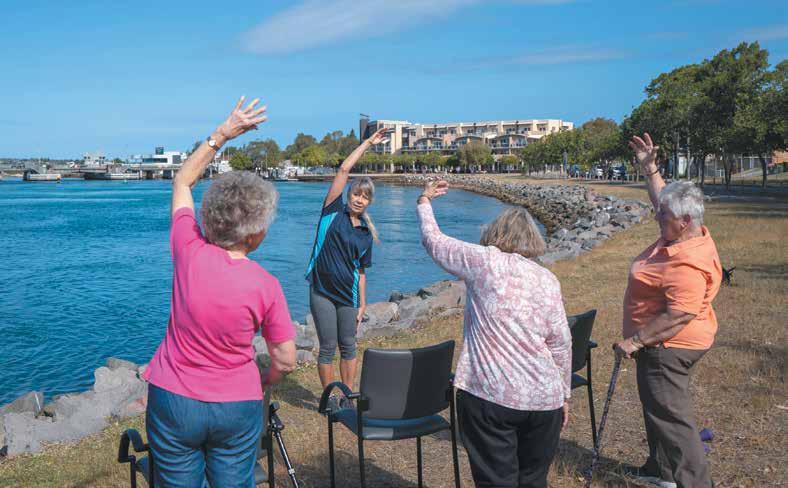
Hunter Ageing Alliance and NovaCare Community Services are working together to provide increased access to safe and enjoyable exercise options for older people throughout the Hunter through the ActiveStrongerBetter program. The program offers exercise classes available throughout Newcastle, Lake Macquarie, Port Stephens and Hunter Valley. Classes are delivered by qualified fitness professionals in friendly, non-clinical and social settings and are designed to promote health, independence, confidence and well-being. Each class is a little different, however, they are all lowmoderate intensity, and include elements of strength, balance, fitness, flexibility, coordination, socialising and fun thinking. To learn more about the ActiveStrongerBetter program and find a class near you, visit activestrongerbetter.net or email asb@novacare.org.au
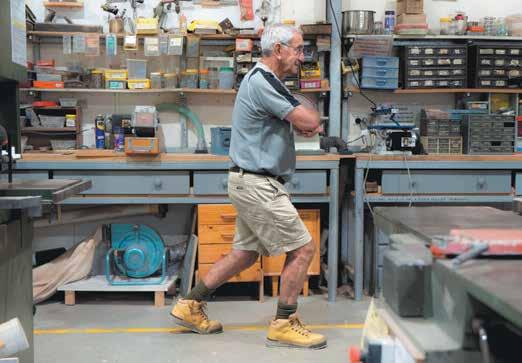
There are almost no contraindications to a low-moderate intensity exercise program. Most conditions will benefit from exercise, including back pain, osteoporosis, chronic health problems (like heart, kidney or respiratory disease, depression or Parkinson’s disease).
A good rule is to start slowly and increase gradually. Often, getting started can feel like the most difficult part. A great approach is to start trying different activities and stick to the ones you enjoy the most. Try to build more movement into your everyday lives
(eg walking to the shops, using the stairs instead of a lift, having a sequence while you wait for your toaster/kettle to boil etc). Any uncertainty can be overcome by discussion with your General Practitioner. They may advise an assessment from an Exercise Physiologist or other exercise practitioner. Make a start, keep going until it becomes a habit. Your brain will never look back!
Useful links: www.activestrongerbetter.net www.dementia.org.au/
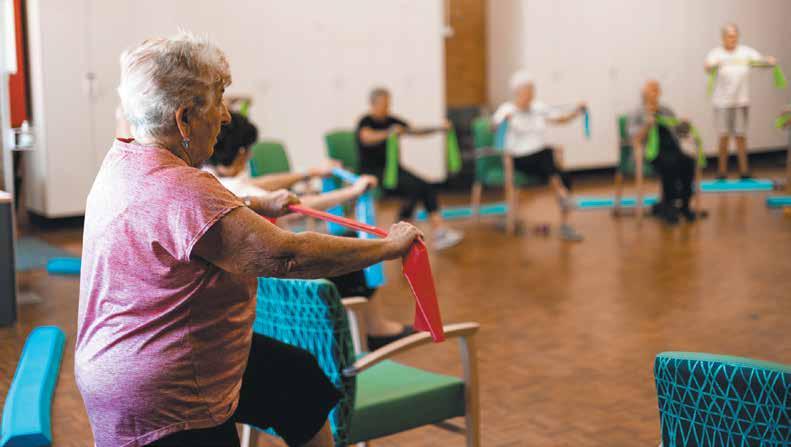
27 Issue 10 > Winter 2024
 BY Travis Maude
APA Sports & Exercise Physiotherapist
Advanced Physiotherapy & Exercise Physiology

ASPHYSIOTHERAPISTS , we witness firsthand the transformative power of movement throughout life. But staying active becomes even more crucial as we enter our golden years. While some may view exercise as a chore for the young, incorporating physical activity into your later years is an investment in your long-term health and independence. Here are five key reasons why keeping fit is a golden rule for ageing well:

Staying Active The physiotherapist’s guide to long-term health in your golden years
1. MOVEMENT IS MEDICINE FOR YOUR BODY:
Our bodies are designed to move. Regular exercise strengthens muscles, improves cardiovascular health, and increases bone density. This translates to better balance, coordination, and flexibility, all of which significantly reduce the risk of falls – a leading cause of injury and hospitalisation in older adults. Strong muscles also support your skeletal system, helping to prevent and manage conditions like osteoporosis and arthritis. Physiotherapists can design a safe and effective exercise program tailored to
Please come along to one of our local area
NEWCASTLE & LAKE MACQUARIE
Meets 10-30am second Friday of the Month at RSL Sub-Branch Hall 48 Baker Street, Mayfield
Contact Di on 4956 9450 for more deatils
MAITLAND
Meets 9.30am every second Monday of the month at RSL Sub-Branch Hall, East Maitland
Contact Carol on 4932 0070 for more deatils
your specific needs and abilities, ensuring you reap the benefits of movement without undue strain.
2.
BOOST YOUR BRAINPOWER:
It’s not just your body that benefits from staying active. Exercise has been shown to improve cognitive function and memory, potentially reducing the risk of dementia and Alzheimer’s disease. Physical activity increases blood flow to the brain, delivering essential oxygen and nutrients that nourish brain cells and promote neurogenesis, the creation of new brain cells. Exercise also stimulates the release of endorphins, which
SINGLETON
Meets 10am every third Tuesday of the month at the Legacy Room, Lauren Lane (off Pitt Street), Singleton

Contact Betty on 0413 415 838 for more details
28 Hunter Veterans’ News National Support Line: 1300 553 835 • Web: www.pva.org.au or find us on THE PARTNERS OF VETERANS ASSOCIATION OF AUSTRALIA – NSW BRANCH INC.
learn more about the PVA?
Would you like to
meetings
contact listed below.
group
or phone a
PATRON: Lady Cosgrove
have mood-boosting and stress-reducing effects, further enhancing cognitive wellbeing. Working with a physiotherapist can incorporate exercises that challenge your balance and coordination, keeping your brain sharp alongside your body.
3. MANAGE CHRONIC CONDITIONS:
Many chronic conditions that become more prevalent with age, such as diabetes, heart disease, and high blood pressure, can be effectively managed through exercise. Physical activity helps regulate blood sugar levels, lowers blood pressure, and improves cholesterol profiles. Physiotherapists can create exercise programs specifically designed to address the limitations imposed by these conditions, allowing you to participate safely and effectively in activities that improve your overall health.
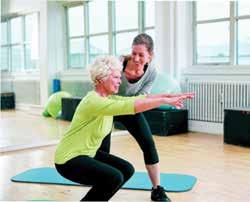
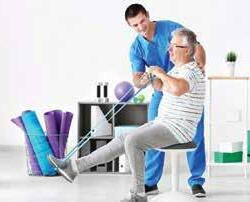
4. MAINTAIN INDEPENDENCE AND QUALITY OF LIFE:
Staying active allows you to maintain your independence for longer. Tasks like climbing stairs, carrying groceries, and dressing yourself become much easier when you have the strength and flexibility to move freely. This translates to a greater sense of control and a higher quality of life. Physiotherapists can help you identify areas for improvement and design exercises that target daily activities, ensuring you can continue living life to the fullest.
5.
FIND JOY IN MOVEMENT:
Exercise shouldn’t feel like a punishment. There are countless ways to incorporate physical activity into your life in a way that you enjoy. Explore options like dancing, swimming, yoga, or even gardening. Join a walking group or a fitness class designed specifically for older adults. The key is to find activities that keep you motivated and engaged. Physiotherapists can be a valuable resource in helping you discover activities that are safe, effective, and most importantly, fun for you.
Remember, it’s never too late to start reaping the benefits of exercise. Even small changes in your activity level can make a big difference. Talk to your doctor or physiotherapist about creating a safe and personalised exercise program that fits your needs and abilities. Invest in your long-term health, stay active, and embrace the joys of movement throughout your golden years. Advanced Physiotherapy and Rehabilitation, Warners Bay, phone 02 4954 5330






29 Issue 10 > Winter 2024 Unit 2/78 Seventh Street • Boolaroo • nSW • 4958 2378 OPEN: TUESDAY TO FRIDAY 8AM - 5PM • SATURDAY 8AM - 12 NOON • CLOSED: SUNDAY & MONDAY NSW FDL 411930229 FOR A WIDE RANGE OF MILITARY, SPORTING, TARGET AND HUNTING FIREARMS AND ACCESSORIES CHECK OUT WWW.NEWCASTLEARMOURY.COM.AU OR EMAIL SALES@NEWSCASTLEARMOURY.COM.AU NEWCASTLE ARMOURY IS LICENSED FOR ALL CATEGORIES OF FIREARMS & PROHIBITED WEAPONS. FOR CONFIDENTIAL ADVICE PLEASE CALL PHONE (02) 4958 2378
Building a Brighter Future for Veterans in the Hunter
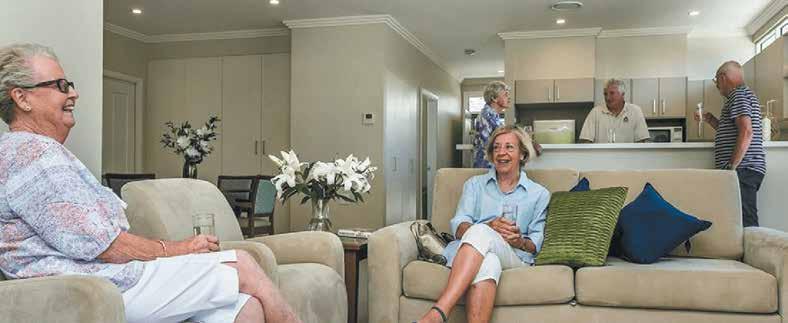
 By Janet Muir CEO RSL LifeCare
TRANSITIONING
from military to civilian life can be stressful and confronting. For many servicemen and women, it marks the end of a familiar lifestyle, leaving them feeling disconnected from both their military peers and civilian society; lost in No Man’s Land.
As I travel to RSL LifeCare operated Veteran Wellbeing Centres and meet with Veterans groups, they continue to share with me the nature of the challenges they face, including the mental and emotional toll of service, the stress of navigating complex DVA claims, the lack of employment security and the risk of homelessness, to name a few. The constantly evolving technological landscape can also make them feel left behind upon returning from active service, adding to their stress.
Our Veterans have unequivocally made sacrifices to defend, secure and safeguard the very freedoms and liberties that we enjoy today. Indeed, it is our moral duty to support our ex-servicemen and women.
FAMILIES OF VETERANS
Families of Veterans also face unimaginable battles. Frequent relocations can leave them surrounded by strangers and unsure where to turn for support. And employment and financial insecurity adds to the strain.
"It’s like leaving a big hole in your life; when you’re in defence, you feel like your part of a family. Often when you get medically separated, you become less a part of that family and feel left behind."
George Sutton, Hunter Veteran

HUNTER VETERANS SERVICES
Until recently, the Hunter region, home to one of the largest defence communities in NSW, had limited local support services available to Veterans. For more than a year, Veterans relied on a temporary centre for assistance. Support and services have been focused on the fundamentals - providing DVA advocates to work through claims processes with Veterans. These advocates bridge the technological gap that some veterans face and help to point veterans to organisations and services for further support.
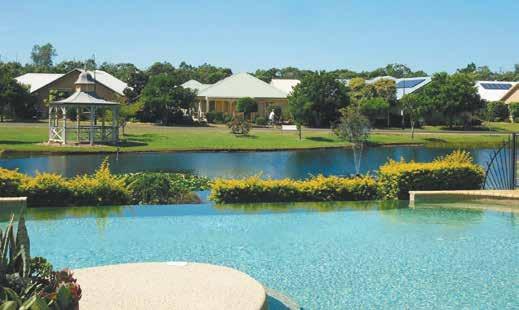
30 Hunter Veterans’ News
COMMUNITY. CAMARADERIE. CONNECTION.
Above: Located in charming Tea Gardens, Gardens Grange retirement living village provides superb facilities and a friendly and active community.
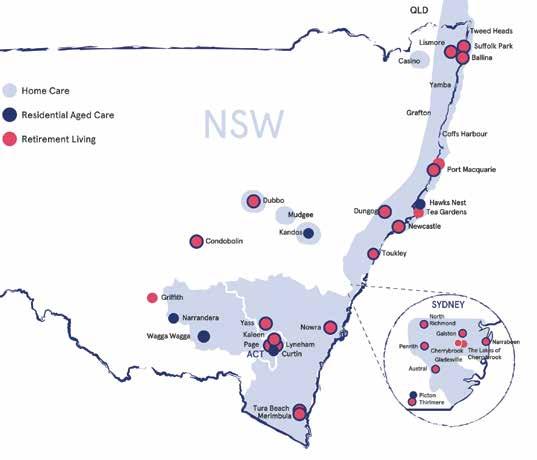
"I can’t overstate how much I appreciate the support that hubs like the one in Nowra provide to me and Veterans like me all over the State. Since I first approached the team, my DVA advocate has helped me with everything from finding the medical assistance I needed, getting my DVA claims in order, and showing me how to use new technology.”
Garrick, Nowra Veteran
RSL LifeCare recognised this void and need and fought hard to secure Commonwealth Government funding to build a dedicated space to replace the temporary centre, providing a comprehensive support hub for Veterans and their families. The Veteran Wellbeing Centre will offer wraparound support and services like financial assistance, disaster aid, housing officer support, including the Homes for Heroes program, employment pathway opportunities and a dedicated wellbeing team to provide mental and physical support.
These Centres are a crucial step in helping to address these gaps. They provide Veterans with access to various support services in one central location. Here, Veterans and their families can connect with specialists who understand their needs, receive
guidance and advocacy for submitting DVA claims, learn new technologies, and find a community with shared experiences. We must not forget the importance of social connection and a sense of belonging, which these Centres provide - a connection with other Veterans, families and indeed the broader community.
Our support for Veterans is not limited to the Hunter Region. RSL LifeCare currently
operates three other Veteran Wellbeing Centres in the Riverina, Nowra and on the Northern Beaches.
NEW VETERAN WELLBEING CENTRES
Last year, as a result of a strong commitment to succeed, we secured further Commonwealth Government funding to develop new Centres in Queanbeyan, the Central Coast, Hawkesbury and in Tweed/North Coast. This is part of the Commonwealth Government’s $46.7 million commitment to deliver ten new Veterans Wellbeing Centres across the country.
"Families can often be left out of the picture. The focus is purely on the Veteran, but it should be on the family as well, because they are also serving, and their lives are disrupted."
Sean McGill, Hunter Veteran
Importantly, since 1 July 2023, close to 10,000 individuals visited our Veteran Wellbeing Centres, and more than 30 per cent of individuals who interacted with our Centres were under the age of 35. This is a significant step in better engaging and assisting our contemporary Veterans, who may not traditionally belong to RSL subBranches or other associations.
Continued over page
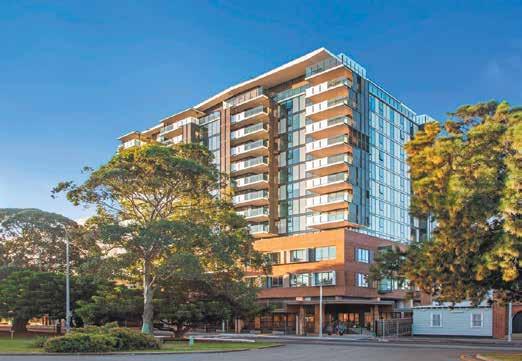
31 Issue 10 > Winter 2024
Veterans Wellbeing Centre
Dee Why
Wyong
Maitland
Above: Newcastle’s first vertical retirement village, Birdwood Parklocated on King Street, Newcastle West
Bill
"Some might need CV writing skills, they can get referrals to TAFE course information, and find out what their service skills bring to a job outside. There are a number of organisations looking to employ veterans; it’s just a matter of putting people in touch with the right services."
Peter Eveille, Queanbeyan Veteran
Interestingly, our mission has not changed. More than 110 years ago, a group of men and women formed themselves into a committee to organise a home for ageing exsoldiers who were living in poverty, leading to the formation of RSL LifeCare as it’s known today. And we’ll continue to pursue all options and opportunities to deliver face-to-face support that enriches the lives of Veterans and their families.
To the Veterans of the Hunter region, and their families: the Veteran Wellbeing Centre is yours. Let the Centre be a place where you connect with other Veterans, the broader community, and a place where you feel
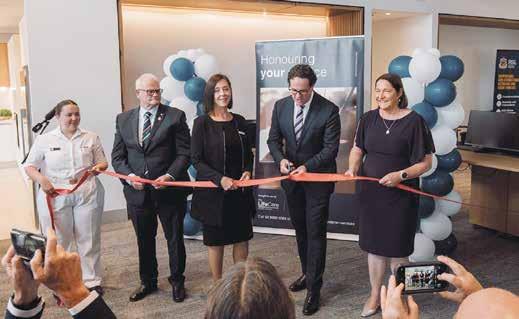
"It gives you that one-stop shop where you can go for services, get information from people at the Centre, and they can point you in the right direction."
seen and heard. Let the Centre also be a sharp reminder of the momentous respect and gratitude that all Australians feel towards you.

Focusing on client satisfaction through genuine partnership, good advice, professional service & quality creative solutions. The objective on every project, whatever the budget, is to build your business in both profile & profit. Offering competitive rates with special discounts for not-for-profit organisations, sole traders & self publishing authors!
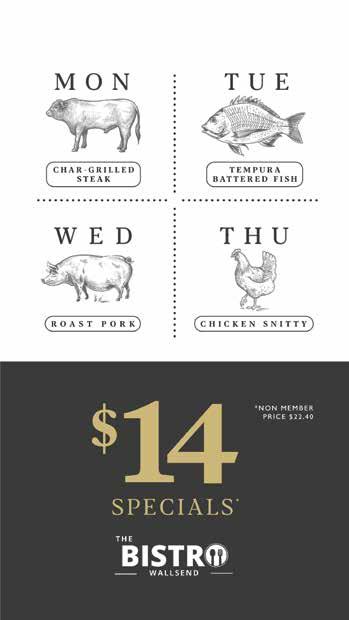 George Sutton, Hunter Veteran

32 Hunter Veterans’ News
• m: 0408 115 876
Graphic Design by Kirrily Dures e: kirrilyd@bigpond.net.au
Above: RSL LifeCare chief executive officer Janet Muir (third from left) at the opening of one of the hubs in Nowra.
From page 31
Dean Mainey, (left) named a finalist for 2024 Employee of the Year, pictured with Member of the Australian House of Representatives, Dan Repacholi MP and Kevin Lomax, Skills and Employment Program Officer with Singleton Council.
Celebrating Soldier On
SOLDIER
ON has recently been recognised for a number of local and national awards for its work providing location-specific and trauma-informed care, education, employment, and social connection services. The charity has a strong community presence in the Hunter. Home to over 22,000 current and former serving personnel and their families, the Hunter region is a strategic and vital hub for the Australian Defence Force. As an ex-service organisation, what makes Soldier On’s services unique in this area is its strong community presence and a particular focus on family. Two people who embody this dedication to the community are local Soldier On Ambassadors and RAAF veterans George Sutton and Karen Gallacher.
In Newcastle, Karen has recently begun hosting fortnightly Soldier On coffee catchup overlooking the picturesque harbour from the office of Aurecon, where she works as Diversity Recruitment and Careers Manager,
A strong advocate for veterans’ mental health, George volunteers his time to host a
longstanding fortnightly coffee catch-up for Soldier On at Heritage Gardens in Maitland. These events provide an important opportunity for social connection for veterans and families in the area, bringing them come together to reconnect with a sense of community many miss when transitioning out of Defence. This strong community presence is an integral part of
the work Soldier On does in the Newcastle and Hunter Region.
“I come to these coffee catch-ups right before I start my Friday,” says one participant. “I see these opportunities as a form of respite for me before checking in on others and caring for family and friends who might need my help or support.”
Continued over page
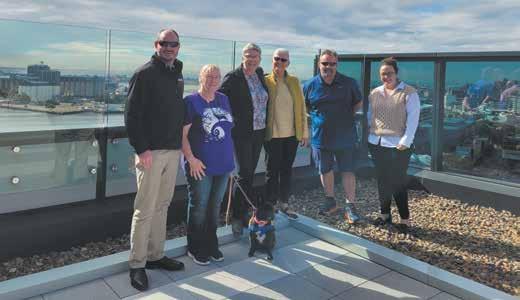
33 Issue 10 > Winter 2024
Above: May 2024: Veterans gathered at the Aurecon Newcastle office, with a beautiful harbour view, to connect and share experiences.
As well as facilitating vital social connection, Soldier On provides education and employment programs for veterans and their families. In addition to opportunities to upskill, retrain, network and find
meaningful employment, Soldier On has a strong focus on tailored support to high school students in Williamtown, Singleton, and Newcastle City, addressing the need for higher education options in the current economic climate. Soldier On’s commitment
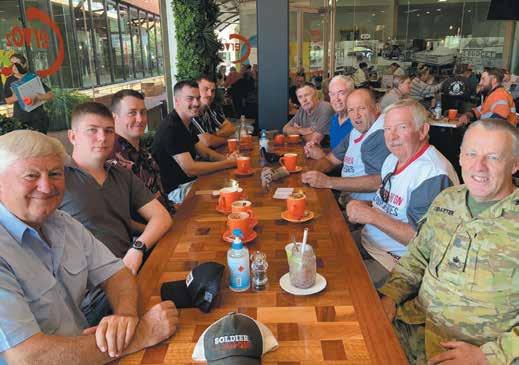


to family-focused support ensures that both individual and collective needs are met, supporting the holistic growth of Defence and veteran families in the region.
In recognition of its work, Soldier On has been named a finalist for several upcoming awards, including Outstanding Community Organisation and Excellence in Supporting the Local Veteran Community at the Singleton Business Awards taking place on 6 July. Soldier On staff will also be highlighted on the night, including Soldier On’s unofficial “morale officer”, Dean Mainey, who has been named a finalist for Employee of the Year.
No one understands the needs of a community more than those who have been in their shoes themselves; having spent over 15 years serving in the RAAF, Dean is Soldier On’s employment expert in the Hunter Region. Beyond his commitment to advocating for veteran wellbeing, Dean is also Vice-President of Singleton RSL SubBranch, a volunteer firefighter with NSW Rural Fire Service, and a volunteer clinician with NSW Ambulance.
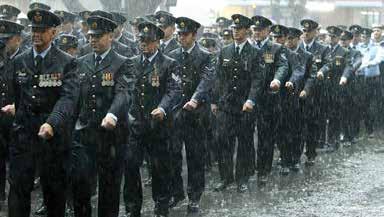
The RSL is the largest representation Veterans have to watch over our government and The City of Newcastle RSL Sub-Branch have been a strong supporter of the Vietnam Veterans Association for many years.
The Vietnam Veterans have been appointed official Pension Advisors, and for this, they pay our association $20 per financial member per year.
BE A PART OF IT AND JOIN NEWCASTLE
34 Hunter Veterans’ News john’S Q SToRE opEn aT ThE vETS officE EvERy monday & ThuRSday fRom 9am To 1pm NHRVV Spray Jacket or Polo Shirt $35 NHRVV Plague with inscription plate $30 NHRVV or Federation Cap with Badge $15 Embroidered Patches $8 NHRVV or Long Tan Cross Lapel Pin $8 Federation Lapel Pin $7 Number Plate Frames (pair) $12 Stubbie Holder $8 Stickers $8 Plastic Jacket Pocket Medal Mount $5 …pRoud To bE a vETERan
YOUR
BENEFIT From page
ASSOCIATION WILL
33
Above: Singleton coffee catch-up
“Dean is my go-to for any problem, especially in the veteran employment space,” says Soldier On Senior Program and Engagement Officer, James Milliss. “I can always count on him to have the solution to any complex question or problem I may have.”
“Singleton and Soldier On are very fortunate to have Dean supporting veterans and their families to thrive.”
Around Australia, Soldier On has staff members like Dean committed to that mission. The charity was recently named as Best Veteran Support Program award at the inaugural Defence and National Security Workforce Awards.
Soldier On CEO, Amy Cooper, said, “[This award] symbolises the significant efforts, dedication, and all-round hard work that the team has contributed over the last 12 months; to the organisation, our participants, each other, our individual communities, and the Defence community as a whole.”
The charity has also been named finalists for Veteran Support Program of the Year,
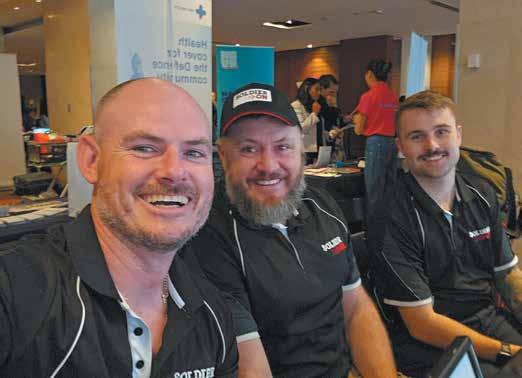
Executive of the Year (Amy Cooper), and Training and Mentorship Program of the Year at the upcoming Australian Defence Industry Awards. These accolades are welldeserved recognition of Soldier On as a
leader in veteran support as it continues to grow and develop as an organisation.
If you or someone you know could benefit from Soldier On’s services, you can contact the team at info@soldieron.org.au
35 Issue 10 > Winter 2024
Above: Newcastle-Sydney Team: Dean Mainey, James Milliss and Hugh Allan.