

EVERYDAY ESCAPES
The Beauty of Local Microadventures THE FUTURE OF BIKING Specialized Bikes for Every Purpose



APR 29NOV 23

The Beauty of Local Microadventures THE FUTURE OF BIKING Specialized Bikes for Every Purpose
APR 29NOV 23
Our weekly mobile farmer’s market selling fresh, local, affordable fruits and vegetables on a sliding scale. 50% off with SNAP/EBT
HIGHLAND PARK
TUES WED
SENIOR APARTMENTS
1221 E Brookland Park Blvd 11:00 – 12:30PM
VCU MASSEY CANCER CENTER
1001 E Leigh Street 10:00AM – 12:00PM (for patients and families)
BON SECOURS CAREA-VAN RAMSEY MEMORIAL UMC
5900 Hull Street Rd N 10:00am – 11:30pm
WINCHESTER GREENS
2700 Bensley Commons Blvd 11:30 – 1:00pm
RVA BLACK FARMERS MARKET
DOMINION PLACE SENIOR APARTMENTS
1025 W Grace Street 1:30 – 3:00PM
BON SECOURS SARAH GARLAND JONES CENTER
2600 Nine Mile Rd 12:30 – 2:00PM
BROAD ROCK PUBLIC LIBRARY
4820 Old Warwick Rd 11:00am – 12:30pm
BHC LINCOLN MEWS APARTMENTS 4101 North Ave 4:00 – 6:00PM
MANCHESTER YMCA 7540 Hull Street 4:00 – 6:00pm
STONEWALL SENIOR APARTMENTS 1920 Stonewall Ave 1:00 – 2:30pm
NEIGHBORHOOD RESOURCE CENTER (FULTON) 1519 Williamsburg Rd 4:00 – 6:00pm
BROAD ROCK ELEMENTARY SCHOOL
4615 Ferguson Lane 2:00pm – 3:30pm
2nd & 4th Sunday 1311 Westwood Ave 11:00AM - 3:00PM JUNE 8TH & 22ND
*No markets : Thursday, June 19, Friday, July 4, Saturday, July 5, Monday, July 28- Thursday, July 31, Friday, August 1


@shalomfarms All produce from our farms is Certified Naturally Grown.

Cash, Cards, and SNAP/EBT accepted.
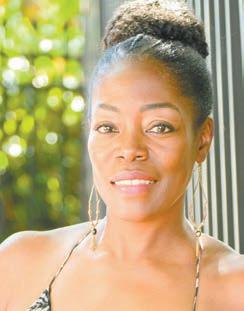
I just returned from Colombia, and let me tell you—it was medicine. The kind you can’t bottle. The beaches were breathtaking, but what moved me most was my time in Palenque with the indigenous community and their medicine man. These beautiful souls live in deep harmony with the land—growing their own food, making medicine from plants, and carrying ancestral wisdom that has sustained them for generations. Their way of life is slow, sacred and rooted in deep respect for the Earth.
Being in their presence reminded me how far we’ve drifted from that connection. So many of us are caught in hustle culture, dependent on convenience, disconnected from our food, our bodies, and the natural rhythms we were meant to live by. But here’s the good news: We can always return. Nature is never closed to us. She’s always waiting.
This Great Outdoors issue is an invitation to come back home—to the land, to our breath, to the healing that comes when we reconnect with the world outside our walls. Whether it’s walking barefoot on the Earth, harvesting herbs from your garden, hiking a wooded trail, or simply sitting under a tree in silence, nature has a way of grounding us, softening us and reminding us who we really are.
I hope the stories in these pages stir something in you. A longing. A remembering. A nudge to make space for the outdoors—not just for recreation, but for restoration. For reverence. For joy.
The medicine is here. It always has been. We just have to choose it again. With love, Regina Hall Rudolph, Publisher

Publisher Regina Hall Rudolph
Editors Tammie Jones Randy Kambic Martin Miron
Design & Production Patrick Floresca
12220 Chattanooga Plaza, Suite 122 Midlothian, VA 23112 804-495-0325
Regina@NARichmond.com NARichmond.com

Natural Awakenings Richmond
Facebook is a registered trademark of Facebook, Inc.
SUBSCRIPTIONS
Subscriptions are available by sending $12 (for 6 issues) to the above address.
CEO Kimberly B. Whittle
COO Michael Bevilacqua
CMO Vee Banionis
Sr. VP Operations Brian Stenzler, DC
National Editor Sandra Yeyati
Editor Brooke Goode
Copy Editor Melanie Rankin
Print Production Specialist Kevin Rankin
Design Director Agnes Mazeikaite
Production Flip180
Customer Service Dani Bucad
Natural Awakenings Publishing Corporation 350 Main Street, Suite 9B Bedminster, NJ 07921 Ph: 239-206-2000
NaturalAwakenings@KnoWEwell.com
Cover image by AdobeStock_1192549385
© 2025 by Natural Awakenings. All rights reserved. Although some parts of this publication may be reproduced and reprinted, we require that prior permission be obtained in writing. Natural Awakenings is a free publication distributed locally and is supported by our advertisers. Please call to find a location near you or if you would like copies placed at your business. We do not necessarily endorse the views expressed in the articles and advertisements, nor are we responsible for the products and services advertised. Check with a healthcare professional regarding the appropriate use of any treatment.





Healthfest 2025 will be held October 11 at the Dewey Gottwald Center in the Science Museum of Virginia, featuring wellness brands, holistic practitioners, conscious businesses and community organizations.
This exciting event connects our vibrant community with holistic health experts, clean beauty, plant-based food, energy healing, sustainable living and integrative care practices. With interactive workshops, product demonstrations, local vendors and healing experiences, Healthfest is where Richmond gathers to align, awaken and thrive.
Vendor and sponsor spaces are now open, with early bird discounts available through August 15. Volunteers are also needed. Whether launching a new product, growing client base or supporting community well-being, Healthfest 2025 offers powerful visibility and connection.
To apply or learn more, email Regina@NARichmond.com or visit NARichmond.com.

The Virginia Museum of Fine Arts (VMFA) offers an exciting slate of special exhibitions, events, programs and delicious dining yearround. On view through September 28, Frida: Beyond the Myth is attracting visitors from near and far. The exhibition is accompanied by English and Spanish interpretive texts and audio guides. Visitors can enjoy artful, Mexican-inspired cuisine at the award-winning Amuse restaurant or critically acclaimed Floris tearoom.
Art installations and exhibitions of works from the museum’s permanent art collection can be viewed, and patrons may participate in a variety of programs and events such as Family Day, Art After Hours, After 5 Fridays and special dinners at Amuse this summer.
Highlights include Dominion Energy Jazz Café every Wednesday from 6 to 8 p.m.; a talk, Frida’s America: Painting the Political, on July 10; TheArt of Wine, on July 11, with a curated selection of European wines, refreshing frozé and light fare designed to complement the wines. On July 12, guests will have exclusive access to the entire museum. Hosted by Kelli Lemon, the event will feature a variety of musical performers.
Location: 200 N. Arthur Ashe Blvd., Richmond. For tickets and more information, call 804-340-1400 or visit vmfa.museum.
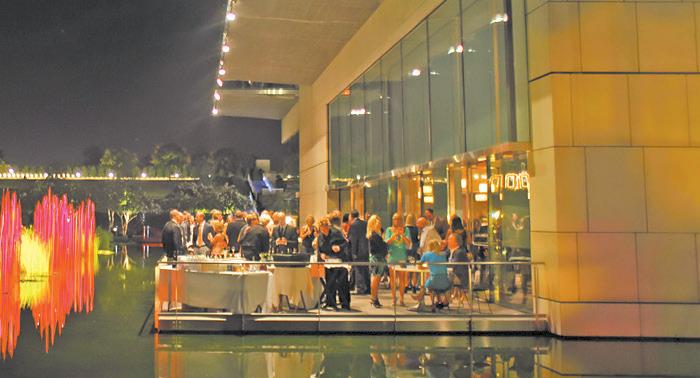

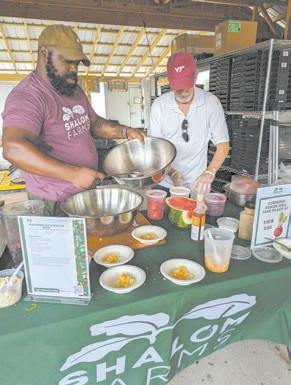
Nonprofit Shalom Farms has launched a new produce prescription (Produce Rx) program that connects Richmond residents managing chronic illnesses with free, fresh produce, hands-on cooking instruction and health education grounded in a food-as-medicine model. The program is made possible through the U.S. Department of Agriculture
Gus Schumacher Nutrition Incentive Program (GusNIP) in partnership with Health Brigade, a longstanding local healthcare provider.
The Produce Rx program provides eligible participants with fresh fruits and vegetables during a 12-week active phase and $30 weekly vouchers for use at Shalom Farms’ 12 Mobile Market locations during a 12-week sustainability phase. Participants receive biweekly cooking instruction with Jason Muckle, owner and cooking instructor at CHEW, as well as nutrition materials and recipes shaped by their preferences, traditions and lived experiences.
Funded by the National Institute of Food and Agriculture (NIFA), the Produce Rx project aims to reduce food insecurity and dietrelated illness, particularly among patients navigating hypertension, Type 2 diabetes and/or obesity. It joins a growing national network committed to evidence-based, community-rooted solutions to health disparities.
Location: 3900 W. Broad St., Richmond. For more information, call 804-220-0025 or visit ShalomFarms.org.
DEBBIE TROXELL
Debbie Troxell, RN, MSNH Thermographer RVAThermography.com • 804-683-7774

A recent study published in the journal Nature suggests a potential link between the shingles vaccine and a reduced risk of developing dementia. To investigate this correlation, the researchers analyzed data from a population of Welsh individuals residing in the United Kingdom. Adults born after September 2, 1933, were eligible for a free vaccination, whereas those born before that date were not. Nearly half of the eligible individuals received the vaccine, compared to a negligible number that missed the cutoff date.
The researchers compared the dementia diagnosis rates of the two groups and found that the vaccinated subjects were 20 percent less likely to develop dementia in the subsequent seven years as compared to the unvaccinated group. Notably, the protective effect was more pronounced in women than in men. Hypothesizing why the shingles vaccine had this effect, the study’s senior author, Dr. Pascal Geldsetzer, told The New York Times, “Inflammation is a bad thing for many chronic diseases, including dementia, [so] reducing these reactivations and the accompanying inflammation may have benefits for dementia.”
The shingles virus, which is caused by the same virus responsible for chickenpox, can remain dormant in nerve cells for decades before reactivating in older adults as their immune systems weaken. Symptoms include burning and tingling sensations, painful blisters, numbness and chronic nerve pain. According to the U.S. Centers for Disease Control and Prevention, approximately one in three Americans will develop the condition in their lifetime, but only about one-third of adults over the age of 50 have been vaccinated.


A study by Israeli researchers published in the journal Nature reported that cellular structures known as proteasomes not only facilitate the breakdown of damaged proteins, but also generate small protein fragments, collectively referred to as peptides, that attack bacterial infections. Using lab experiments and computer modeling, the scientists identified hundreds of thousands of potential antimicrobial peptides from normal proteasome activity.
The study demonstrated the enhanced ability of proteasomes to produce protective peptides when confronted with a bacterial infection. To test this, scientists inhibited proteasome production in one group of human cells and left another group unaltered. Both groups were then exposed to salmonella. The infection thrived within the cells lacking proteasomes but was eradicated in the control group. This discovery could lead to the development of improved antibiotics and other infection-fighting therapies.

While the Pap smear helps diagnose more than 13,000 cases of cervical cancer annually in the United States, nearly a quarter of American women are lagging behind in their screening regimen due to various factors, including discomfort, pain, invasiveness or even traumatic experiences associated with the procedure. Recently, Teal Health, Inc. received approval from the U.S. Food and Drug Administration for an alternative cervical cancer screening device that can be used at home.
The Teal Wand enables individuals to self-collect vaginal samples using a swab, which is subsequently mailed to a laboratory for testing purposes, where it is analyzed to detect the human papillomavirus (HPV), the virus that causes nearly all cervical cancers. A clinical study demonstrated that the Teal Wand was as effective as a Pap smear in detecting early-stage cervical precancers. Among the study participants, 94 percent preferred the self-collection method over the Pap smear, and 86 percent expressed a willingness to maintain regular screening if provided with this alternative option.

According to a report from the American Lung Association (ALA), approximately 156 million Americans, or 46 percent of the population, lived in areas with unhealthy air quality from 2021 to 2023, the period of analysis in the most recent report. This represents a higher number of individuals than at any time in the preceding decade. Bakersfield-Delano, California, was the region most affected by pollution.
The report suggests that the United States is experiencing a decline in clean air measures. Record-breaking heat, drought and wildfire smoke caused by climate change are damaging air quality throughout the country. The ALA’s analysis is based on official air quality monitoring sites maintained by federal, state and tribal governments.
An unrelated 2023 report from Stanford University, published in the journal Nature, estimated that wildfire smoke has undone about a quarter of the progress achieved under the Clean Air Act of 1963.

It is estimated that the human eye can see almost 10 million different colors. In a paper published in Science Advances, scientists described a precise laser setup that stimulated the retinas of five participants, three of which were co-authors of the paper, to perceive colors beyond the normal human visual range.
The procedure, called “Oz”, involved delivering minute doses of light to the cone cells in the eye responsible for detecting the color green. Each participant observed a saturated bluish-green color resembling teal, which the researchers named “olo”. The participants confirmed that olo was beyond the standard visual range by comparing it with a teal-colored laser and adjusting the saturation by subtracting white light.

A new wave of med-cations, or medical-grade vacations, is redefining what it means to take a vacation. This powerful trend combines luxury accommodations with advanced health diagnostics and personalized treatments.
Unlike traditional travel focused on relaxation, med-cations offer a deeper reset. Guests are welcomed not with cocktails, but with full-body scans, bloodwork panels, gut health assessments and curated wellness plans designed by integrative medical teams. Treatments may include ozone therapy, IV nutrient drips, hyperbaric oxygen sessions or neurofeedback, depending on the destination and individual needs.
These wellness retreats are often set amid serene environments, allowing body and mind to recalibrate while supported by science-backed interventions. Participants return home not only refreshed, but equipped with practical data and insight to support long-term well-being. As the demand for preventive health and holistic rejuvenation grows, med-cations are becoming the quite popular in travel, where restoration, intention and longevity meet in one transaction.

Upcycling—the process of giving discarded or worn items new life—offers a sustainable alternative to wasteful consumption. By transforming ordinary objects into artistic creations, we can express our individuality and contribute to a more environmentally conscious society. The garden presents an ideal platform for upcycling because it allows us to repurpose obsolete items at low cost.
Whether we turn a rusty wheelbarrow into a flowerbed, salvage a thrift store teapot to use as a planter or rescue a well-worn table to become an outdoor potting station, our creativity can transform any outdoor space. Reviving haggard chairs and benches with vibrant colors or intricate designs elevates garden seating to new heights. Filling a retired bathtub or sink with plants, repurposing an unused clothing rack for hanging plants or turning a secondhand bookcase into a vertical garden are fun and surprising projects.
• For a touch of functional whimsy, fill chipped teacups with birdseed and hang them on tree branches.
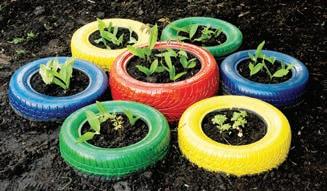
• Paint and decorate discarded tires, then fill them with plants.
• Use shutters and doors as garden dividers.
• Lean an old wooden or metal ladder against a tree and place potted plants on the rungs, or use it as a trellis against a garden wall.
• Position an old bike to support climbing clematis, roses, ivy or morning glories.
• Use scraps of wood, bricks or pallets to create a rustic walkway.
• Turn metal or enamel colanders into hanging planters with built-in drainage.
• Use a weatherproofed baby carriage or
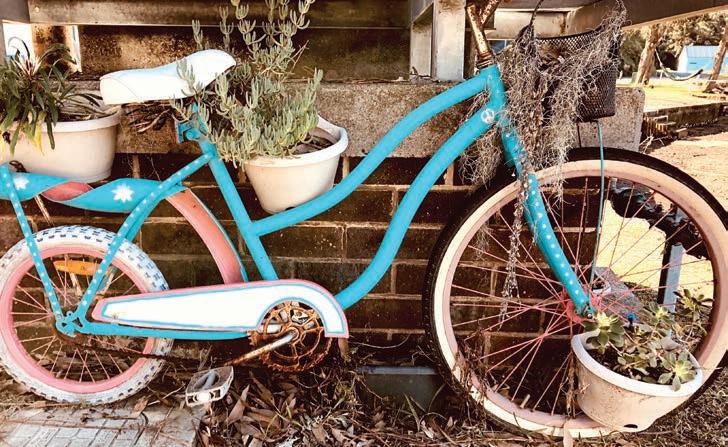
doll stroller to showcase potted flowers on a porch, under a tree or at the edge of a garden.
• Turn old stainless-steel cutlery or wooden kitchen utensils into wind chimes or mobiles.
• Place tea lights in empty jam jars to light garden paths.
• Nestle a plant in a broken terracotta pot for a rustic, bohemian vibe.
• Use buckets as hanging planters for herbs, ferns or flowers.
• Fill old rubber boots with soil to make quirky planters and place them around the mailbox or front door.
• Reinforce any loose parts to ensure that furniture, ladders and other objects can hold the weight of plants.
• Drill holes in items used as planters to provide proper drainage.
• Weatherproof wooden and wicker items with exterior latex paint, stain or sealants. Consider eco-friendly options such as versatile milk paint in earthy or vibrant hues. Remember to protect metal décor with an anti-rust coating or paint.
by Carrie Jackson
While many of us dream of epic journeys to faraway places, humbler excursions can also provide unforgettable memories and experiences. British adventurer and bestselling author Alastair Humphreys coined the term “microadventure” to describe a brief and inexpensive outdoor jaunt close to home. From a weekend getaway on a nearby hiking trail to an afternoon visit at a local park, microadventures offer flexible scheduling, budget-friendly options, health benefits and a deeper connection to Mother Earth.
“I think that microadventures are popular right now because we are short on time, and money is tight for many people,” says Humphreys, a National Geographic Adventurer of the Year. “We are ridiculously busy in our daily lives, but we are also craving the physical and mental respite of time in nature—fresh air, exercise and time away from our cursed phones. It’s great to have the adventure of a lifetime, but until that lucky opportunity comes around, why not try to have a lifetime filled with tiny little experiences squeezed around the margins of busy daily life?”
Humphreys has traveled the globe experiencing extraordinary adventures such as rowing across the Atlantic Ocean, walking the length of the holy Kaveri River in India and traversing Iceland by foot and packraft. More recently, he dedicated a year to
enjoying adventures in his own neighborhood, as recounted in his book Microadventures: Local Discoveries for Great Escapes
“I focused on the single, small local map centered around my home, covering about five miles in each direction from my front door,” explains Humphreys. “At first, I worried that this would be too small, too boring or too claustrophobic. But I realized that once I slowed down, paid attention and had an adventurous mindset every day, I started to discover new places close to home I’d never seen before—new streets, new parks, new patches of woodland, new places to run. I found fragments of wild places where I could sit with a cup of coffee, all within sight of the skyscrapers of the biggest city in my country.”
Humphreys encourages others to embark on a similar year of localized exploration, reminding them to establish realistic goals and remain open to novel experiences. He also suggests aligning activities with the seasons to harmoniously celebrate the natural order. Visit the same spot during each equinox and solstice, for example, to appreciate the way the landscape changes over the course of a year. A mountain view or shoreline feels and looks different in spring, summer, autumn and winter.
“Declare your intention and outline your plans,” Humphreys recommends. “Sleep outside one night. See a sunrise blaze across the sky for a romantic Valentine’s Day. Celebrate blue moons and other celestial events.” Natural splendor is all around us.


Kameron Stanton is the chief operating officer and event manager for Black People Outside, a Chicago-based organization founded during the pandemic to encourage people of color to get outside and explore. A weekend trip with his partner, Chevon Linear, to the Grand Teton National Park during lockdown was a memorable experience. “Seeing the stars so clearly at night unlocked something in us,” Stanton recalls. “We regained a respect for Mother Nature and what the beauty of the outdoors could do for your psyche.”
A microadventure in nature presents Stanton with unique survival challenges. “In the city, everything is zooming past you so quickly. When you are outside in the wilderness, you are often alone with your thoughts and have to fend for yourself in a different way,” he explains. “If you don’t build a fire, you’re going to be cold. If you don’t have the right equipment, you could get in trouble. There are little things the outdoors can teach you in a controlled manner. You learn lessons in planning and structuring your day, while still having fun and discovering new things about yourself and the world you’re in.”
“Activities like hiking help build strength, endurance, respiratory health, weight loss and so many other physical elements,” Stanton asserts. “Most people you meet who regularly spend time outdoors tend not to be angry and upset. They’re looking at the brighter side of things because they are literally around brighter things. Nature feeds you and helps you feel grounded with your thoughts and feelings.”
Microadventures can also be opportunities for social engagement. Stanton suggests joining a local club related to an interest such as fishing, running or birdwatching. “Once you start having microadventures, you’ll connect with like-minded people, and you never know where that may lead you,” he says.
There are myriad ways to enjoy a microadventure in almost any environment, including hiking, kayaking, biking, skiing, climbing, rollerblading and fishing. “Forest preserves and state and national parks offer incomparable views and trails year-round. They tend to have a low admission price, and most are accessible as long as you have a vehicle,” says Stanton, noting that a lazy afternoon fishing or tubing down a river may be just a short drive away.
Day hiking has become a popular pastime, in part because it combines many of the advantages of microadventures. “It offers a perfect opportunity to break away from the routine, explore nature and enjoy the mental and physical benefits of being outdoors," says Jacqueline Kehoe, a journalist and expert advisor for Recreational Equipment, Inc. (REI), which provides a wide range of equipment, apparel, workshops and other resources for adventure seekers. Similar gear retailers include Backcountry and Sierra Trading Post.
“Whether you’re planning a short stroll through a local park or a longer trek up a nearby mountain, you always want to be prepared,” Kehoe advises. “Packing the right gear will help you make the most of your time on the trail, whether you’re a seasoned hiker or just starting out.” For most microadventures, a small hiking pack should suffice for carrying the necessary gear.
What to bring depends on multiple factors, including trail conditions, weather, the hike’s difficulty and the duration, which can range from a couple of hours to an entire day. Kehoe recommends bringing ample food and water to stay energized and hydrated, even on shorter hikes. A good starting point
is one liter of water per person per hour, but this amount should be adjusted based on individual needs and the intensity of the hike. “Once your hike is longer than a few hours or goes into unfamiliar or backcountry terrain, the essential gear list grows,” Kehoe counsels.
Weather-appropriate clothing can make or break an adventure. “Dressing in moisture-wicking layers can help you stay comfortable. The weather may change quickly, so it’s important to be prepared for various conditions. Choose sturdy, comfortable shoes that provide good support and traction. Proper footwear can prevent injuries and make your hike more enjoyable,” says Kehoe.
Safety should always be the top priority. “If you’re going somewhere that is unfamiliar, having the right tools can help you stay on course and find your way back if you get lost. Whether it is a smartphone app or map and compass, orient yourself with your tools and your surroundings before heading off on the trail,” Kehoe suggests. “A basic first-aid kit is useful for treating minor injuries. Include items like bandages, antiseptic wipes and any personal medications. A knife or multitool can be handy for various tasks, from cutting food to making repairs.”
With a little creativity and planning, microadventures can become a joyful addition to an active lifestyle. Humphreys encourages people to step outside, even for short periods of time, asking, “What can you do in the evenings to relax rather than watching Netflix? Can you find a little patch of nature or even a tree to sit beneath when you eat your lunch? Maybe your kids would like to eat breakfast in the park this weekend rather than in front of the TV. Learn to identify a new bird. Forage for your own food. Sleep under a full moon. Share a microadventure with a child to create lifelong memories.”
Carrie Jackson is a Chicago-based freelance writer and frequent contributor to Natural Awakenings. Connect at CarrieJacksonWrites.com.
by Maya Whitman
The world’s agriculture is largely reliant on the cultivation of single crops upon sizable tracts of land for staples like wheat, corn, soybeans and rice. Known as monoculture, this approach offers efficiency and low-cost produce, but it also carries significant ecological consequences, including the depletion of soil nutrients, ground pollution, increased carbon emissions, water scarcity, crop failures and the loss of pollinators due to degraded ecosystems.
One promising sustainable alternative is the development of decentralized food forests in small, local settings like rural backyards, urban parks, roadsides and vacant lots. Based on agroforestry—the practice of integrating trees and shrubs with diverse crops—food forests simulate
the verticality of a forest while creating highly diverse ecosystems comprised of tiers of edible plants.
According to Science Mill, a Texas-based nonprofit that promotes scientific exploration and education, the ideal food forest is comprised of multiple layers, including a canopy of large fruit and nut trees, an understory of dwarf fruit trees, shrubs such as blueberries or currants, perennials and herbaceous plants, ground cover plants like creeping thyme, root crops and climbing vines.
These regenerative, edible landscapes replenish themselves, eliminating the need for annual replanting. Harmonious crops work as a symphonic whole, naturally
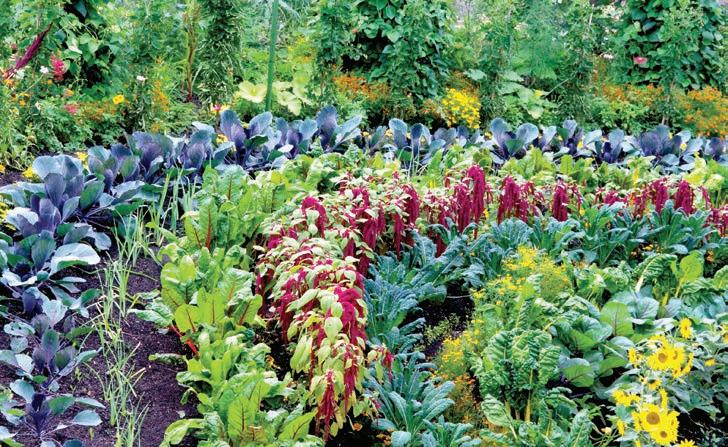
repelling pests and fortifying the soil. The resulting benefits include water conservation, carbon sequestration, biodiversity, thriving pollinator populations, bolstered local economies and a reduction of food transportation costs.
“By creating a regenerative edible garden in whatever space you have available, you are creating habitats and food for the preservation of nature that allows all life—wild and tamed, present and future—to thrive. No plot of land is too small to start a magic garden,” says Maria Rodale, a master gardener and board member of Rodale Institute, as well as the author of several books, including Organic Manifesto. “For me, it’s not regenerative unless it’s organic, and it’s especially regenerative if we are gardening with and for nature, rather than just for ourselves.”
The first step in planning an edible paradise is consulting a resource such as the U.S. Department of Agriculture Plant Hardiness Zone Map (PlantHardiness.ars.usda.gov) to determine which plants thrive in the local climate zone. Choosing native, foodbearing plants and using organic mulch year-round will enhance the garden’s resilience against extreme weather conditions, and annual rotation of plant families will help prevent disease. In urban or small areas, vertical gardening, which is most easily achieved by adding trellises to raised beds, will maximize the available space for additional plants.
“It’s absolutely not necessary to own a lot of land to create a food forest,” says Rodale, noting that edibles can be grown in pots on windowsills, in the front or back yard, and even on rooftops. She recommends planting an understory of edible berries, as well as herbs and vegetable crops at the ground level. Root vegetables such as purple sweet potatoes “make a beautiful ground cover, and the leaves are even more delicious than spinach. Other roots like horseradish make beautiful and productive landscape plants,” she explains.
According to New Jersey horticulturist and certified arborist Melinda Myers, “Containers are great options for everyone. You can increase growing space and keep the plants handy for easy planting, care and harvesting. I like to invite my guests to pick their own salad ingredients, herbs for seasoning or fresh tomatoes for snacking from containers on my patio.”
Myers, an instructor in The Great Courses series How to Grow Anything and the author of several gardening books, incorporates edible plants with flowers in her garden beds and containers. “‘Bright Lights’ Swiss chard has colorful stems and makes a nice vertical accent in containers. It combines nicely with pansies and colorful lettuce in the spring and fall,” she says. “I love to grow asparagus at the back of my perennial gardens. I harvest the spears in spring, and once the greenery appears to replenish the plant’s energy, I have a nice, ferny backdrop for the flowers.”
Sharing a garden surplus with neighbors, senior centers and other organizations that need nutritious produce can have a far-reaching positive impact. Collaborating with fellow gardeners to swap helpful hacks or share garden chores can also be a blessing. “People are so busy these days that working with others provides lots of benefits,” says Myers, praising the roundrobin approach “where you help each other tend your gardens, share food and drink and have some time to socialize.”
Creating a food forest aims to foster a thriving ecosystem and a sense of community that extends to nature. “Let the weeds be part of your garden,” exclaims Rodale. “Many common weeds are habitats for the bugs that feed birds and are edible and medicinal. I noticed that groundhogs and rabbits preferred the weeds to my vegetables when I stopped weeding so heavily.”
Maya Whitman is a regular contributor to Natural Awakenings.
by Marlaina Donato
Summer presents a timely invitation to sip from a full cup, set aside to-do lists and sink our toes into all that shimmers. Somewhere between keeping the kids entertained and weeding the flower beds is an opportunity to tend to our abandoned joys. It can be as simple as noticing the tinkling of ice cubes in a glass or planning an enchanted picnic at sunset with colorful cloths draped beneath a tree.

Summer comes but once a year, and as our backyard blooms in vibrant hues, so should we. Buying new, sultry spices for the cupboard, scenting the bed sheets with stress-reducing ylang ylang essential oil, placing fresh flowers into a tea pot instead of a traditional vase or walking barefoot after a storm tells the nervous system that there is more to life than the chores. Inspiration is an unpredictable muse; waiting for her to notice us in our busy lives is most often futile. Combating the monotony of routine in small, daily gestures is easy and lights up our senses.
Relinquishing the common tendency to feel self-conscious is key. “Be brave enough to live life creatively,” says actor Alan Alda. Such courage may require that we break our own rules. If you usually prefer venturing out with company, make a point of going out solo for a backroad drive with no destination and a good playlist. If you haven’t drawn since childhood, buy some colorful pens and doodle in a sketchbook. Host a fancy herbal tea party and invite a neighbor you’ve never spent time with.
Wear a breezy scarf and flowers in your hair, even if you’re just running errands. Ask someone you’ve long admired to go out on a date and attend a local free concert under the stars. Everyone that is accustomed to seeing you living life a little more low-key will get over it. Having a wild love affair with summer is good for the soul and might even change your life.
Marlaina Donato is an author, painter and composer. Connect at WildflowersAndWoodSmoke.com.
by Carrie Jackson
Cycling is more about the journey than the destination. Bikes are constantly evolving, offering more streamlined rides to engage cyclists of all ability levels. Recent trends include the rise of gravel bikes and electric bikes, advancements in tubeless tires and the increasing integration of technology. For riders that want to explore challenging terrain or upgrade their daily commute, there are numerous options for safer and more connected bikes that offer an enjoyable experience.
Multi-surface gravel bikes are built to explore unpaved roads, striking a balance between the lightweight feel of road bikes

and the off-road capability of mountain bikes. Gretchen Brauer, general manager of Wheel & Sprocket, a cycling outfitter in Evanston, Illinois, attributes the growing popularity of gravel bikes to their enhanced versatility, increased safety and superior comfort on rough terrain.
“Gravel bikes can be ridden almost anywhere—on and off-road,” she explains. “The key features are slacker geometries, a longer wheelbase and higher stack heights, which increase the comfort factor and provide better visibility. Wider road tires enable riders to navigate over all sorts of surfaces.”
Andrew Dutton, director of brand marketing at Trek Bicycle, asserts that gravel bikes open a world of adventure that is tough to find on congested roads. “Gravel bikes give riders the freedom to discover scenic, lowtraffic routes with more confidence, comfort and fun,” he says. Design innovations have made it easier than ever to venture further and discover more. “Modern gravel bikes feature increased clearance for wider tires that offer better grip, more stability and more speed,” Dutton points out. “Integrated storage on models like Trek’s Checkpoint make gravel bikes perfect for everything from one-day races to multi-day escapes.”
Electric bicycles employ an electrified drive system that augments the rider’s
pedaling power. The motor and battery assist in propulsion. Most e-bikes are equipped with a remote or controller to enable adjustments to the power output. The latest generation features integrated, removable batteries and varied mid-drives that position the motor at the center of the bike frame, making them user-friendly, practical and enjoyable to ride.
In recent years, e-bikes have soared in popularity, in part because they accommodate riders of all ages and fitness levels. “E-bikes allow people to ride farther distances and arrive at their destinations more quickly and less sweaty,” Brauer attests. “Some people maybe wouldn’t be able to ride without the assistance of the motors. With the options of cargo e-bikes, lots of people are able to replace their cars.”

Tubeless tire systems have gained increasing traction for a compelling reason. Frequently found on mid-range to high-end mountain bikes, as well as on gravel and road bikes, they offer improved ride quality and tire construction. “Tubeless tires do not require the use of an inner tube,” Brauer remarks. “Instead, a few ounces of sealant are put into the tire. Small punctures become instantly sealed, and the ride can continue. When riding, there are a few benefits that include decreased rolling resistance and a lower tire pressure that reduces the risk of a pinch flat.”
Brauer also notes that most bikes are now equipped with wider tires, which contribute
to a more comfortable ride without compromising on speed. Disc brakes, which stop the bike by squeezing a brake pad against a rotor mounted around the hub, have become standard on nearly all categories of bikes, providing superior stopping performance in all sorts of conditions.
To enhance the riding experience and foster connections among cyclists, riders are actively seeking innovative solutions. “Technology is linking one rider to another, allowing for near constant communication among cyclists who are not actually riding together,” says Brauer. “A handful of applications track your rides. After the ride is completed, these apps allow riders to compare and compete for digital awards. You can see where and how fast your friends rode and get ideas for routes. It brings a sense of community to groups of people who wouldn’t otherwise be able to connect.”
Dutton notes that technology is making cycling safer. “Recent innovations are helping more people feel confident on the bike and excited to ride,” he shares. “Daytime running lights use a specific flash, focus and range to help riders stand out to drivers more than a mile away, even in broad daylight. Rear-facing radar helps riders stay aware of approaching traffic while making them more visible to others on the road. Digital bells with Bluetooth speakers and ad vanced sound engineering help riders be heard, not just seen, even in congested areas. Together, these technologies help create a safer, more connected and more confident riding experience wherever the road (or trail) leads.”
Carrie Jackson is a Chicago-based freelance writer. Connect at CarrieJacksonWrites.com.


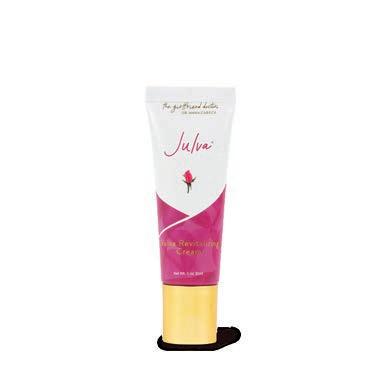
by Megy Karydes
As summer’s longer days encourage outdoor activities, we face heightened exposure to solar radiation and other environmental irritants. Skin protection becomes a priority, and conventional options often employ synthetic ingredients that can irritate sensitive skin and cause adverse environmental effects. Natural alternatives offer a gentler and more sustainable approach to maintaining healthy and resilient skin all season long.
Summer protection extends beyond aesthetic and physiological considerations. According to the American Academy of Dermatology, individuals of all ages are susceptible to skin cancer, with about one in five Americans developing the condition during their lifetime. Because solar radiation can cause
burns, skin cancer and premature aging, avoiding the most intense rays between 10 a.m. and 2 p.m., seeking shade, applying sunscreen and wearing wide-brimmed hats and sun-protective clothing are some of the easiest safeguards.
During the summer months, the skin takes a beating from heat, sweat, sun exposure and frequent washing, so using products that both soothe and restore balance is important. Natural ingredients, including oatmeal, honey and lavender, offer gentle yet powerful options for protecting and soothing skin.
Oatmeal locks in moisture, eases inflammation and soothes irritation caused by sun exposure or sweat, according to the Cleveland


Clinic. When finely ground into what is known as colloidal oatmeal, its efficacy is amplified, forming a protective barrier that hydrates and calms sensitive skin. Its popularity in creams, lotions and sunburn treatments stems from inherent anti-inflammatory and moisturizing properties.
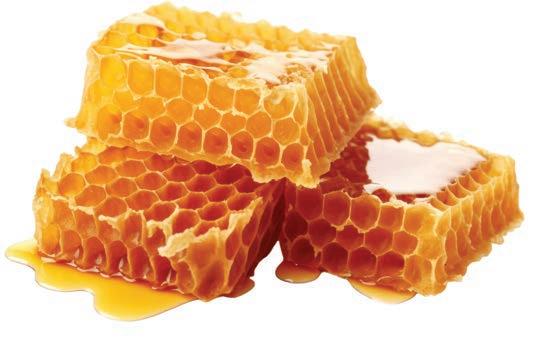
Honey serves as a natural humectant that draws moisture into the skin. Recent research published in Pharmaceuticals indicates that products with higher concentrations of the sweet nectar provide improved skin hydration and reduced wrinkle depth. Floral honey, rich in natural sugars, is more effective at boosting moisture than forest honey. Even with different variants or quantities, honey-infused products feel luxurious and gentle on the skin.
Rachel Sloan, a Chicago-based beekeeper and founder of Nature’s Trace Company, frequently incorporates ingredients from her garden and hives into small-batch, nature-inspired soaps designed for gentle cleansing and nourishment. She uses both raw honey and finely ground oatmeal in many of her soaps.
Renowned for its anti-inflammatory properties, lavender essential oil is another popular ingredient. When diluted in a carrier oil, it may be effective in soothing minor burns due to its pain relieving and antimicrobial qualities. Julie Williams, a medical herbalist and founder of Leaf People, based in the Colorado Rockies, is
drawn to lavender essential oil’s healing properties. It is a key ingredient in some of her products that offer fast, natural relief from sun-exposed skin.
According to both Williams and Sloan, when it comes to summer skin care, most people focus on protection—sunscreen, hats and long sleeves—but what often gets overlooked is replenishment. Even with the best preventative measures, exposure to sunlight can leave the skin depleted and vulnerable due to heat, ultraviolet rays and environmental stressors. It is essential to thoroughly rinse off not only sweat and sunscreen, but also the toxins released by the body through heat and exertion.
“Following that cleanse, replenishing the skin with antioxidant-rich ingredients like vitamin E, vitamin C, green tea, ginkgo biloba or gotu kola helps restore what’s been lost and supports cellular recovery,” says Williams. “For those in persistently hot climates, cooling botanicals like rose, burdock root, cucumber and chamomile can soothe mild irritation and bring down surface heat. Incorporating these into your evening routine allows your skin to rest, regenerate and recover while you sleep.”
Taking care of our skin does not have to involve a complicated daily routine. “A lot of people stress out because they’re not sure if they’re using the right product or doing the right things; half the recommendations on social media conflict with each other,” says Williams. Instead of dwelling on product choices, she suggests that people find what works best for their skin and incorporate it into their daily routine, so that it becomes a constant, like other regular self-care activities.
“If you want to keep it simple in the summer, find one solid, hardworking bar that does it all: shampoo, body wash and exfoliant,” says Sloan. “Your summer skin protection routine should be focused on feeling clean, refreshed and nourished, without the fuss.”
Megy Karydes is a Chicago-based writer and author of 50 Ways to More Calm, Less Stress.

by Ruth Roberts, DVM, CVA, CVH, CVFT, NAN
Arthritis and joint pain cause even the most energetic dogs to slow down. While medications and physical therapy are common treatments, addressing the dog’s digestive system may be the missing link to restoring mobility and comfort.
Inflammation in dogs is commonly associated with injuries or autoimmune diseases such as immune-mediated polyarthritis. However, chronic inflammation can also originate in the gut. The digestive tract hosts trillions of microorganisms that influence the immune response. When the gut lining is damaged or the microbiome is disrupted, substances may leak into the bloodstream, triggering systemic inflammation that can affect organs and joints.
“As a holistic pet health coach, I’ve seen time and again how joint pain and mobility issues improve when the gut is healed,” says Melissa Knievel Natanson, a holistic pet health coach and canine nutritionist in Pismo Beach, California. “Chronic gut inflammation, dysbiosis or leaky gut can trigger systemic inflammation, which often presents as joint pain. Many dogs with arthritis also have a history of gastrointestinal issues like loose stools, skin flareups or food sensitivities. These could be important clues of a gut-joint connection.”
A 2020 study published in Veterinary Sciences supports this link, revealing notable
differences in the gut bacteria of arthritic and healthy dogs. Arthritic dogs had lower levels of microbial families that were more abundant in healthy dogs, including Paraprevotellaceae, Porphyromonadaceae and Mogibacteriaceae. These bacteria are often associated with a strong gut lining and balanced immune function. The arthritic dogs had higher levels of anti-inflammatory bacteria like Megamonas.
Natanson notes that the gut and joints are closely connected through the immune system, and shifts in the microbiome may influence how the dog’s body manages inflammation and responds to joint stress.
Omega-3 fatty acids, which are rich in eicosapentaenoic acid (EPA) and docosahexaenoic acid (DHA), may help support joint health and mobility in dogs. A 2010 multi-center clinical study of 127 dogs with osteoarthritis published in the Journal of the American Veterinary Medical Association found that dogs that consumed higher levels of omega-3 fatty acids and lower levels of omega-6 fatty acids exhibited significantly elevated blood levels of EPA and DHA. They also demonstrated improvements in mobility compared to dogs receiving commercial food. Pet owners of the dogs on the test diet reported that their canine companions


had an easier time standing up, walking and playing within weeks of starting the dietary regimen.
Natanson recommends incorporating omega-3 fatty acids into a balanced and speciesappropriate canine diet to mitigate inflammation. She emphasizes the consumption of fresh foods that are naturally anti-inflammatory such as fatty fish, bone broth, turmeric, fermented vegetables and antioxidant-rich fruits like blueberries. She also advises against the consumption of ultra-processed kibble, grains and synthetic additives.
Additionally, Natanson recommends manganese-rich foods to support the health of joints and connective tissues because it plays a key role in the formation of collagen, cartilage and joint fluid. Many older dogs are deficient— especially those fed processed diets. Whole-food sources such as green-lipped mussels, pumpkin seeds and blueberries can help replenish this important mineral.
Natanson highlights pumpkin as a gentle, gut-friendly food option. Not only does it provide prebiotic fiber to nourish healthy gut flora, but it also delivers a natural dose of manganese, making it a smart addition for dogs with digestive and joint concerns.
It is important to introduce these anti-inflammatory foods with caution, particularly for dogs with sensitive digestive systems. Natanson warns that while turmeric is a powerful anti-inflammatory, it can cause loose stools in dogs with a leaky gut or active gastrointestinal inflammation. Similarly, sweet potatoes, often seen as anti-inflammatory, may not be suitable for dogs with gut dysbiosis, yeast overgrowth or metabolic imbalances due to their high starch and sugar content. Natanson says the same can be said for high-fat fish oils that provide excellent joint support but may

aggravate pancreatitis or bile-related issues when introduced too aggressively.
Because inflammation can originate in the gut, managing arthritis should involve a comprehensive approach that extends beyond joint-focused solutions. Avoiding processed foods, reducing synthetic additives and prioritizing nutrient-dense meals may help reduce overall inflammation and support long-term wellness.
For pet parents grappling with chronic health concerns like arthritis, Natanson encourages taking one step at a time, advising, “Start with gut health. You don’t need 20 supplements—just focus on whole foods, trust the process and pay attention to your dog’s cues. Simple, consistent changes can have profound results.” A holistic veterinarian or pet health coach can assist pet parents by customizing a diet plan based on their dog’s individual condition and tolerance.
Learn more about Dr. Ruth Roberts’ approach to holistic pet care and wellness at DrRuthRoberts.com.

Three-Month Planner



by Christina Connors
Children are naturally curious. They ask questions, dig in dirt and chase butterflies—not because they have to, but because they are wired to explore. The outdoors acts as a rich learning environment, brimming with sensory experiences, challenges and discoveries. Numerous studies corroborate what many parents and educators already sense: Outdoor play is vital to a child’s physical, cognitive and emotional development.
“The simple act of walking barefoot on the earth, feeling the breeze or placing hands
in the soil anchors children in the present moment, calming racing thoughts and settling restless bodies,” says Tara BeallGomes, a therapist, certified school counselor and founder of Main Street Counseling, in Connecticut.
A 2019 study published in Frontiers in Psychology reported that children that spent more time in nature displayed improved executive functioning, which encompasses essential skills such as planning, decisionmaking and problem-solving. The researchers observed that even brief periods

of unstructured outdoor play significantly boosted working memory and attention spans in young children.
“What I have found in my own life is that Mother Nature nurtures and heals,” says Terry Murphy, founder of The Healing Chickadee, a grief program for children. “The energy of the trees, flowers, shrubs and grass feeds our souls. My grandkids crave the outdoors, and it brings about a sense of wonder and a deep serenity.”
According to the Children & Nature Network, a comprehensive review of multiple studies revealed that spending time outdoors reduces stress hormones such as cortisol in children. A compelling 2011 study from the University of Illinois demonstrated that children with attention-deficit/hyperactivity disorder (ADHD) that played in open, natural settings exhibited improved focus and reduced hyperactivity compared to those playing indoors or in less green environments.
“The outdoors is nature’s original healing space. One of my favorite things to talk about, especially for kids with ADHD, is how being outside naturally boosts dopamine,” says Beall-Gomes. “Dopamine is the brain’s ‘feel-good’ chemical that helps with motivation, focus and mood regulation— all areas that can be extra challenging for kids with ADHD.”
Nature offers a multitude of joys, adventures and therapeutic benefits. Here are some ways to enjoy the outdoors with the whole family.
Outdoor Exercise: According to BeallGomes, “Activities like running, climbing, biking or even just digging in the dirt get the body moving and help increase dopamine levels in a natural, healthy way. Plus, the unstructured playtime kids get outdoors gives their brains a much-needed break from screens and structured demands, helping them reset and recharge.”

Connecting With Birds: “Focusing on birds, getting quiet and listening to them singing is a great metaphor for joy and resilience,” states Murphy. “A small bird is able to handle very harsh winters and still have a song to sing. This is something we want to teach our kids. Remind them that even though they are small, they can still get through hard things and find joy.”
Scavenger Hunts: A scavenger hunt is an easy, customizable method to engage kids with the natural environment. Whether in a city park or in the woods, these hunts transform every leaf and stone into an integral component of an exciting game. They provide children with the opportunity to practice and develop a number of life skills. By looking closer at objects and asking questions, they hone their curiosity. Collaborating with siblings or friends teaches them cooperation, teamwork and effective communication. And, analyzing clues sharpens their critical thinking and problem-solving abilities.
Mindful Activities: “You don’t need elaborate plans to benefit from nature. Some of the most meaningful moments come from simple,
mindful activities,” explains Beall-Gomes. “One of my favorite suggestions is taking a mindful walk with a child, intentionally engaging all five senses. If you can’t go for a walk, open a window and just be present. Listen to the rustling leaves or birdsong; notice the colors and patterns around you; feel the texture of tree bark, the grass under your fingers or the rain on your skin; breathe in the earthy or floral scents; and if safe, maybe even taste a ripe berry or fresh herb from a garden.”
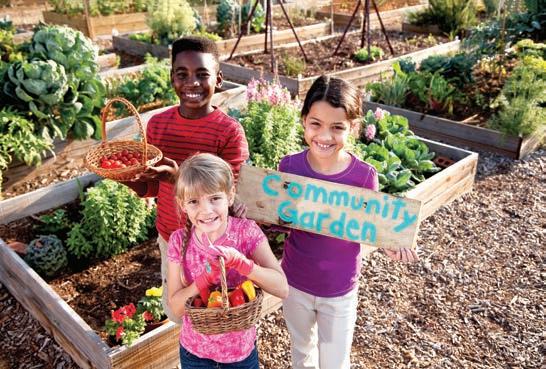
Community Gardens: “Community gardens are another beautiful space for children to connect not just with nature but with others, offering shared purpose, cooperation and the joy of seeing something grow,” says Beall-Gomes. “Beyond the hands-on experience, gardens help kids practice social thinking skills like sharing space, collaborating, waiting their turn and thinking about how their actions affect the group. These kinds of activities help anchor children in the present moment, reduce stress and build emotional and social resilience, all while having fun outdoors.”
Christina Connors is a writer, singer and creator of a YouTube series for children. Learn more at ChristinaConnors.com.


by Marlaina Donato
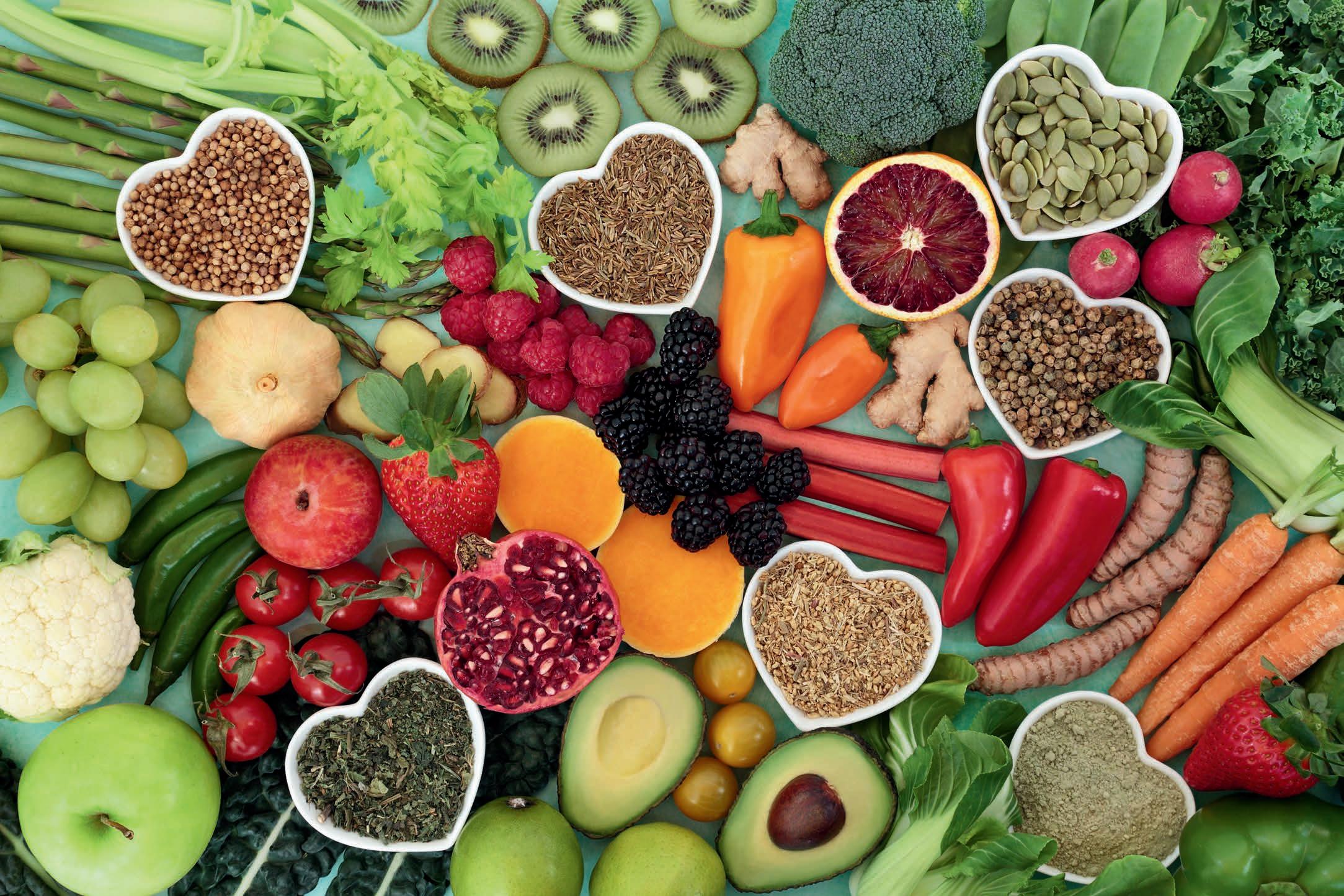
According to the U.S. Department of Agriculture, approximately 85 percent of Americans aged 20 and older consume breakfast daily, with eggs being a common component. Eating protein during the first meal of the day can help us feel full longer, balance blood sugar levels and potentially alleviate chronic anxiety. In addition to complex carbohydrates, fiber and heathy fats, the Mayo Clinic recommends that a nutritious breakfast always include lean protein.
“Protein is the master synthesizer, essential in its role in muscle building, immune function and energy balance,” says Melissa Halas, a registered dietitian nutritionist and certified diabetes educator in California. “Including protein early in the day helps prevent the common energy dip mid-morning and keeps satiety levels high, supporting healthy metabolism and preventing overeating later.” Protein requirements increase during periods of stress, recovery from injury or surgery, pregnancy or breastfeeding, and life stages such as childhood, adolescence and the golden years.
Typical sweet cereals favored by kids often contain a high sugar content of 12 grams per cup, which is half of the daily recommended added sugar allowance for young children, as outlined by the American Academy of Pediatrics. Replacing low-nutrient, high-carbohydrate choices like white-flour pancakes and sugary cereal with delicious, plant-based scrambles, naturally sweet or savory breakfast bowls and delectable fruit parfaits can be both simple and satisfying.
Even if our breakfast choices are already healthier, a little extra fortification can do the body good. “Many common breakfasts like oatmeal and avocado toast don’t have enough protein, so it’s a good idea to be diligent about meeting your protein needs at breakfast. It’ll set you up for better energy, focus and satisfaction throughout the morning, plus better metabolism. The key is combining protein with fiber and healthy fats to keep you full and fueled

until lunchtime,” says New York City-based Samantha Cassetty, a registered dietitian nutritionist, author of Sugar Shock and founder of Sam’s Plate, an online nutrition and wellness source.
Whether we incorporate a tablespoon of unsweetened organic almond or peanut butter into oatmeal or layer smoked salmon and cream cheese on multigrain toast, an added source of protein can provide a boost of energy and vitality.
As a single mom, Cassetty understands the challenges of transitioning kids away from sugary foods and highly processed ingredients. She suggests making smart substitutions, such as serving whole-grain frozen waffles topped with berries and protein-rich Greek yogurt or breakfast nachos with whole-grain tortilla chips instead of breakfast tacos in highly processed taco shells. For a fun breakfast parfait, she heats frozen berries until they release their juices and then mixes the warmed fruit with plain Greek or plant-based yogurt. To enhance the texture and nutritional value, she adds a spoonful of chunky nut butter, a sprinkle of nutritious seeds or low-sugar granola.
An extra-hearty breakfast can be as simple as adding a scoop of whey or plant-based protein powder into a whole-grain waffle mix or blending grass-fed gelatin powder into a smoothie. Protein-rich tofu, which is virtually tasteless when unseasoned, not only absorbs any flavors added to it, but also transforms into a luscious pudding when blended with a dash of plant-based milk, cinnamon and dates.
For Halas, tofu scrambled in a pan as an egg substitute and served on a whole-grain tortilla with turmeric and vegetables offers a well-balanced combination of protein and carbohydrates. She also recommends multipurpose cottage cheese, a favorite of generations past, for breakfast bowls mixed with berries, flaxseeds and walnuts, or

spread onto toast with avocado. Full- or reduced-fat ricotta can provide a healthy alternative, as well.
Nutrient-dense pseudo-grains like quinoa and amaranth offer versatility. “Quinoa is traditionally eaten for breakfast in countries such as Peru as a warm porridge known as pesque,” explains Halas. “You can cook quinoa or amaranth in cow or plant milk and top it with fruit, seeds and cinnamon for a warm cereal bowl particularly well-suited for vegetarian, gluten-free and anti-inflammatory diets, making it an excellent alternative to conventional grains at breakfast.”
Cassetty offers a savory variation, saying, “You can use quinoa to make a breakfast grain bowl with sautéed spinach, eggs and a seasoning like pesto.” She also encourages using dinner leftovers for morning nourishment.
Most of all, breakfast should feel doable. “I recommend making breakfast nourishing, satisfying and practical—something you can prep ahead of time or whip up fast,” advises Halas.
Marlaina Donato is an author and artist. Connect at WildflowersAndWoodSmoke.com.

from
Einladung_zum_Essen from pixabay/CanvaPro

YIELD: 1 SERVING
½ cup plain Greek yogurt (low-fat or fat-free)
½ cup papaya, diced ½ cup low-sugar granola 1 tsp honey
Add ¼ cup of yogurt to the bottom of a 12- or 16-ounce glass. Add most of the diced papaya and granola and a drizzle of honey to the glass. Layer on the remainder of the yogurt. Top with the remaining papaya, granola and honey.
Recipe courtesy of Melissa Halas, MA, RDN, CDE.


YIELD: 2 SERVINGS
1 Tbsp olive oil
1 Tbsp ghee, butter or vegan butter, unsalted
1 block firm tofu
¼ tsp smoked paprika
1 dash turmeric powder
Smoked salt to taste
2 Tbsp fresh salsa
2 Tbsp fresh guacamole
Drain water from tofu and pat dry, then crumble it by hand or smash it with a fork or potato masher.
Warm the olive oil and ghee or butter in a pan over high heat until melted. Add the crumbled tofu to the pan, moving it quickly from side to side with a spatula for about 2 minutes until it resembles the consistency of scrambled eggs.
Reduce the heat to medium and add smoked paprika and turmeric. Stir until spices are well distributed and the color is even throughout the scramble.
Serve immediately with a sprinkle of smoked salt. Add fresh salsa and guacamole, if desired, on the side or spooned over the scramble.
Recipe courtesy of Marlaina Donato.
Natural Awakenings Magazine!
Make a meaningful impact in your community by becoming the owner of a Natural Awakenings magazine.
Empower others with current, valuable insights and resources to enhance their physical, mental, emotional and spiritual well-being.
As a franchise owner, you’ll inspire positive change, provide readers with tools for healthier living and connect local businesses with an audience eager for transformation.
Why Own a Natural Awakenings Magazine?

n Create a Healthier Community: Be the go-to resource for wellness and personal growth in your area.
n Boost Your Income: Take control of your financial future with a proven business model.
n Enjoy a Flexible Lifestyle: Work from home while pursuing a fulfilling, dynamic career.
n A proven business model with low startup costs.
n Comprehensive training and friendly, ongoing support.
n Flexible work schedule with many work-from-home opportunities.
n Access to a network of like-minded franchise owners.
n Financing Options Available.
Join a thriving network of passionate franchise owners reshaping the future of holistic health and wellness.
Call 239-206-2000 for a FREE evaluation of your community’s potential. Learn more or apply today at: Corp.NaturalAwakenings.com
Add Your Community to Where Natural Awakenings Is Now Publishing:
• Atlanta, GA
• Boston, MA
• Broward County, FL
• Bucks/Montgomery Counties, PA
• Central Florida/Greater Orlando, FL
• Central New Jersey
• Charlotte, NC
• Chicago, IL
• Columbia, SC
• Dallas, TX
• Daytona/Volusia/Flagler Counties, FL
• Detroit/Wayne County, MI
• Fairfield & Southern Litchfield Counties, CT
• Gainesville/Ocala/The Villages, FL
• Grand Traverse Region/Northern Michigan
• Greater Ann Arbor, MI
• Greater Lansing, MI
• Greater Oakland, Macomb, Livingston, Genesee, MI
• Gulf Coast, Alabama/Mississippi
• Hartford/Tolland, CT - Coming soon
• Houston, TX
• Hudson County, NJ
• Jacksonville/St. Augustine, FL
• Lancaster/Berks, PA
• Lehigh Valley, PA
• Long Island, NY
• Milwaukee, WI
• Monmouth/Ocean Counties, NJ
• Naples/Fort Myers, FL
• New Haven, CT
• New London/Windham, CT - Coming soon
• New York City, NY
• North Central New Jersey
• North New Jersey
• Northwest Florida
• Palm Beach, FL
• Philadelphia, PA
• Phoenix, AZ
• Pittsburgh, PA
• Rhode Island
• Richmond, VA
• Sarasota, Manatee, Charlotte and DeSoto Counties, FL
• South Central Pennsylvania
• South Jersey, NJ
• Southeast North Carolina
• Space & Treasure Coast, FL
• Tampa, FL
• Tucson, AZ
• Twin Cities, MN
• Westchester/Putnam/Dutchess, NY
• Western Michigan

by Sandra Yeyati
Julian Hoffman is an award-winning fiction and creative nonfiction writer who explores the connections between humans and the natural world, underscoring an inescapable need for conservation. He holds a bachelor’s degree in English literature from Carleton University, in Ottawa, Canada. Hoffman’s first book, The Small Heart of Things, won the 2012 Association of Writers & Writing Programs Award Series for Creative Nonfiction, as well as the 2014 National Outdoor Book Award for Natural History Literature.
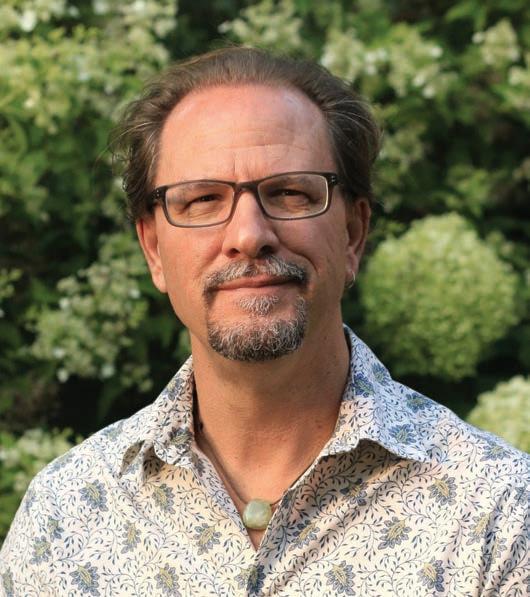
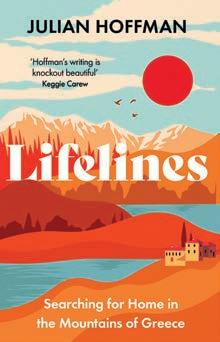
In his book Irreplaceable, Hoffman celebrates the imperiled places that are increasingly vanishing from the world, including coral reefs, tallgrass prairies, ancient woodlands and meadows, along with the many species that live there such as nightingales, elephant seals, water voles, redwoods, hornbills and lynxes. It was the Highly Commended Finalist for the 2020 Wainwright Prize for Writing on Global Conservation. His latest book is Lifelines: Searching for Home in the Mountains of Greece
What was the impetus for writing Lifelines?
I wanted to tell the story of the remarkable Prespa basin, where my wife and I live in Greece. But I also wanted to tell a bigger story of the interconnectedness between humans and the natural world, to explore how our lifelines are entwined. I wanted to see what we get right and what we very often get wrong, and how we might go about healing some of those divisions and building stronger and more resilient bridges between the two, because our lives are dependent on the wild world that we nest inside.
What are the most salient characteristics of the Prespa basin?
Prespa is a unique crossroads place where three countries come together around two ancient lakes that hold colonies of Dalmatian and Great White pelicans. While my wife and I live in Greece, on the other side of the borders are Albania and North Macedonia. This is also where Mediterranean species meet their Balkan relatives in these colder mountains and where a geological line down the middle of the basin separates limestone on one side from granite on the other. This geological collision means that different flora and invertebrate communities can coexist in the same place.
Because of the complex demographic and political histories of the region, and the borders that divide this watershed, it’s a place where conflict has often left terrible legacies that have been written into the landscape itself. But—and this is one of the key themes in the book—it’s also a place where bridges are being slowly and gradually built. Just like those other crossroads of geology and different communities of wild species, I believe borders are not only points of division, but also places of meeting and connection, if we choose them to be. The Prespa transboundary region is showing us a way forward, slowly and not without problems, that the key to change is to recognize that we are connected beyond borders. Climate change, for example, doesn’t recognize a line in the water but greatly affects us all.


Join as a KnoWEwell Regenerative Whole Health member
TO
OF YOUR HEALTH AND WELL-BEING
VETTED PRACTITIONERS
Find your best-matched vetted holistic and whole health providers
WEBCASTS
700+ and Growing ive and On-Demand Expert Webcasts
EDUCATIONAL SHOWS
Curate your own library of 160+ and Growing Whole Health Expert hows
COMMUNITIES
Make meaningful connections in 200+ and growing Whole Health & Expert Communities
DISCOUNTS
Get discounts on expert healing programs and courses
Natural Awakenings
readers receive a 30% discount on KnoWEwell memberships.
Join at: nowewell.com/ communi /join-individuals




GO TO NARichmond.com/Calendar for current offerings, updates and additional listings. Please double-check with the host prior to an event to ensure the information is accurate.
Please call ahead to confirm date and times

SATURDAY, JULY 5
Two-Hour Silent Meditation Retreat –10am-2pm. This retreat is designed to help you acclimate to silence and stillness in a very simple and supportive environment and is perfect for beginners. Benefits: increases confidence and curiosity; creates a deeper connection with oneself; enhances selfawareness and mindfulness; and reduces stress and promotes mental clarity. Register at InnerworkCenter.org. Innerwork Center, 213 Roseneath Rd. Richmond, VA. 804-359-0384. $30+.
SATURDAY, JULY 12
Somatics and Yoga – 9:15-10:30am. Join us on the mat for an exploration of yoga as mindful movement, with the aim of regulating our nervous systems, deepening our sense of embodiment and felt sense, and connecting with our own intuitive movements as a reflection of and to shift our emotional state. Register at InnerworkCenter.org. Innerwork Center, 213 Roseneath Rd. Richmond, VA. 804359-0384. $18+.
FRIDAY, JULY 25
Trance Healing Sessions – 6:30-8:30pm. Trance Healing is a modality that assists you to release outside pressures. If you have been feeling emotions such as fear, frustration, anger, depression etc—some of those feelings may not be yours. Join with like-minded spiritual seekers to awaken your intuitive gifts! We’ll practice tools and techniques to raise your energetic vibration. Reserve your spot in advance as spaces are limited at CommunicateWithAngels.com. Studio D Yoga, 9327 Midlothian Tpke., Ste. 1B, North Chesterfield, VA. $30. find out how to be
Carytown Farmers Market – 9am-1pm. Richmond's premier Sunday market, created to provide local farmers, makers and consumers the opportunity to deal directly with each other. City Stadium, 3201 Maplewood Ave., Richmond, VA. CarytownMarket.com. Free.
South of the James Farmer’s Market – 10am-1pm. Shop local produce, handmade goods, and more year round. Forest Hill Park 4021 Forest Hill Ave., Richmond, VA. Free.
Goat Yoga Brunch & Bubbly – 11:30am1:30pm. Pactamere Farm and Goat Yoga RVA are hosting morning goat yoga followed by a delicious brunch with unlimited mimosas. During the 45-minute class, your certified instructor will guide you into a series of poses with the assistance of our 26 Nigerian dwarf goat yogis. Pactamere Farm, 15577 Stone Horse Creek Rd., Glen Allen, VA. Tickets available at PactamereFarm.com. $65.
The Bench – Community Sit (every 4th Sunday) – 4-5pm. Step away from the noise and into stillness. The Bench is a simple gathering for shared silence, open to everyone regardless of experience or background. There is no agenda, no particular style, no instruction, and no expectations. It’s an invitation to simply come as you are, sit in silence, and be. 804-359-0384 Register at InnerworkCenter.org. Innerwork Center, 213 Roseneath Rd., Richmond, VA. Free.
Sunday Sound Meditation – 6:30-7:30pm. Experience the profound effects of sound vibrations as you journey inward on a wave of relaxation and healing. $5-$25 sliding scale. LivingWaterrva.com. 1000 Westover Hills Blvd, Richmond, VA.
Level 2 Flow Yoga – 9-10:15am. Start your week right with a yoga class that is beyond a beginner’s level. Participants will incorporate new poses and increasingly challenging options. $70/4 classes/mo, $20/ drop-in.Glenmore Yoga & Wellness Center, 10442 Ridgefield Pkwy, 804-741-5267. GlenmoreYoga.com.
Ageless Yoga – 10:30-11:45am. A balanced practice that incorporates basic yoga postures, breath awareness and relaxation. Poses are modified to meet individual needs. Students transfer to and from the floor and the class generally includes a Vinyasa flow of standing poses, guided by breath for a portion of class time to increase stamina and strength. Students continue to develop body awareness to keep the joins safe, increasing range of motion and improving balance. Glenmore Yoga & Wellness Center, 10442 Ridgefield Pkwy. 804-741-5267. GlenmoreYoga.com. Navigating Loss With Compassion (Online)
6:30-8pm. During this six-week journey, you will learn how to talk about feelings associated with grief and be offered the opportunity to be cared for and supported to attend to grief. Through vulnerability and release, the heart can be healed, and we can move towards the state of wholeness. Interested participants are required to fill out a pre-screening form, to be reviewed by the facilitator. Register at InnerworkCenter.org Innerwork Center, 213 Roseneath Rd. Richmond, VA. $155+.
Beginner Qigong with Jonah Marsh –5:30-6:45pm. Qigong is an ancient practice which combines graceful movements with abdominal breathing and mindfulness, allowing us to connect with nature and balance the body’s circadian rhythms. Jonah has been studying Chinese internal martial arts and qigong since 2011. $5-$25 sliding scale. LivingWaterrva.com. 1000 Westover Hills Blvd., Richmond, VA.
The Artist's Way – 6:30-8:30pm. This 12-week course is for all who seek to get in touch with their imagination, inner self and playful nature. 804-359-0384 Register at InnerworkCenter. org. Innerwork Center, 213 Roseneath Rd., Richmond, VA. $155+ Scholarships available.
Beginner-Level Yoga – 9-10:15am. Balanced practice that incorporates basic yoga postures, breath awareness & relaxation. Postures modified to meet individual needs. Online & in-person. $70/4 classes/mo, $20/ drop-in. Glenmore Yoga & Wellness Center, 10442 Ridgefield Pkwy. 804-741-5267. GlenmoreYoga.com.
Yoga for Bone Health – 9:45-11am. Increase bone & muscle through the use of yoga with a combination of dynamic & static yoga poses. Chris Riely. $70/4 classes/mo, $20/drop-in. Glenmore Yoga & Wellness Center, 10442 Ridgefield Pkwy. Registration required: 804741-5267 or GlenmoreYoga.com.
Fundamentals Pilates Mat Class (Online) – 10:45am-12pm. This Pilates Mat Class with Dianne Powers will include the basic exercises emphasizing alignment, elongation of the spine and healthy posture. It will focus on the execution of efficient movement achieving improved core strength and endurance. $70/4 classes/mo, $20/drop-in. Glenmore Yoga & Wellness Center, 10442 Ridgefield Pkwy. 804741-5267. GlenmoreYoga.com.
Slow and Gentle Yoga – 11:30am-12:45pm. An in-studio or online class with a yoga therapist. $70 for 4 classes in a month; $20 drop-in. Glenmore Yoga & Wellness Center, 10442 Ridgefield Pkwy. 804-741-5267. GlenmoreYoga.com.
Men’s Grief Discussion – 1:30-3pm (1st & 3rd Tuesday). This group is peer-led, free and a place to listen or share grief experiences with others with similar grief experiences. Open to anyone that has lost a significant other or spouse. Bliley's Funeral Home, 3801 Augusta Ave., Richmond, VA. 804-355-3800.
Mixed Level 1 & 2 Yoga – 5-6:15pm. This Mixed Level 1 & 2 yoga class is both in-studio and
online. End your work day with this yoga class that will move through all the muscles and joints, transitioning from beginner yoga poses into more challenging poses. If joining online, please register in advance to get the Zoom link. $70/4 classes/mo, $20/drop-in. Glenmore Yoga & Wellness Center, 10442 Ridgefield Pkwy. 804-741-5267. GlenmoreYoga.com.
Qigong – 5:30-6:30pm. Qigong refers to movement practices developed in ancient China and literally means energy work or energy skill. Qigong movements are done slowly and in harmony with one's mindintention and breath, fully bringing one into the present moment and fostering an alert yet calm state of mind. 804-359-0384 Register at InnerworkCenter.org. Innerwork Center, 213 Roseneath Rd. Richmond, VA $17+.
Tuesday Night Gentle Flow into Restoration – 6:30-7:30pm. A nourishing and relaxing 60-minute gentle hatha yoga flow with restorative yoga poses (using props). Suitable for any level, sliding-scale, drop-in & props provided. Leave feeling relaxed, restored & rejuvenated. Like all Living Water classes, this one is sliding scale, $5-$25. Living Water Community Center. 1000 Westover Hills Blvd. LivingWaterrva.com/events.
Yin Yoga (In Studio & Online) - 9-10:30am. This quiet practice with Erin Forsyth, ERYT500, focuses on the deep connective tissue in the lower back, hips and pelvis. Poses are generally limited to seated or reclined. The poses apply passive pressure to the joints, ligaments and tendons and are held for 3 to 5 minutes. While holding, students practice staying mentally attentive by focusing on the breath and to what their body feels in the pose. For the online class, please register in advance to get the Zoom link. Glenmore Yoga & Wellness Center, 10442 Ridgefield Pkwy. 804-741-5267. GlenmoreYoga.com. $20.
Intermediate Flow Pilates Mat Class – 9:1510:30am. A Pilates mat class with a focus on intermediate mat exercises. $70/4 classes/ mo, $20/drop-in. Glenmore Yoga & Wellness Center, 10442 Ridgefield Pkwy. 804-741-5267. GlenmoreYoga.com.
Ageless Yoga – 10:45am-12pm. A balanced practice that incorporates basic yoga postures, breath awareness and relaxation. Poses are modified to meet individual needs. Class generally includes a vinyasa flow of standing poses, guided by breath for a portion of class time to increase stamina and strength. Students continue to develop body awareness to keep the joins safe, increasing range of motion and improving balance. $70/4 classes/ mo, $20/drop-in. Glenmore Yoga & Wellness Center, 10442 Ridgefield Pkwy. 804-741-5267. GlenmoreYoga.com.
Gentle Yoga – 11am-12:15pm. This class features gentle yoga stretches, postures, breath awareness and relaxation to improve flexibility, strength, range of motion, balance and energy. Designed for those recovering from injuries, illness, inactivity or other health considerations. $70/4 classes/mo, $20/drop-in. Glenmore Yoga & Wellness Center, 10442 Ridgefield Pkwy. 804-741-5267. GlenmoreYoga.com.
Vino Vinyasa - 12-1pm. Join instructor Ann Marie Lewis for a strong yoga practice! Rinse out your body and mind with a dose of structural, functional flow yoga at Ashton Creek Vineyard. You are encouraged to stay after class to enjoy some locally produced wine and nibbles! Bring a yoga mat, 2 blocks and a strap. Ashton Creek Vineyard, 14501 Jefferson Davis Hwy, Chester, VA. 804-5365869. $15.
Widow’s Tea Talk – 1:30-3pm (Every 4th Wednesday). This group is peer-led, free and a place to listen or share grief experiences with others with similar grief experiences. Open to anyone that has lost a significant other or spouse. Bliley's Funeral Home, 3801 Augusta Ave., Richmond, VA. 804-355-3800.
Restorative Sound Healing – 6:30-7:30pm. Relax your mind and body with the calming melodies of 432Hz-tuned crystal singing bowls, Himalayan singing bowls, Koshi chimes, shell chimes, tuning forks and more. Register at InnerworkCenter.org. Innerwork Center, 213 Roseneath Rd. Richmond, VA. 804359-0384. $18+.
West African Dance Class – 6:30-8pm. Join an uplifting 60-minute West African Dance Class that includes a cultural overview of the dance being taught, warm-up, and a highenergy blood-pumping workout. Register at Ezibumuntu.org. A New You Wellness Center, 1606 Ownby Lane. Richmond, VA. 804-5920086. $12+.
Small Group Mat Pilates – 8-8:45am. Join Mary Beth Blend, a Physical Therapist with over 20 years of expertise, for an enriching 5-week Experiential Pilates Mat Class series. With a focus on posture refinement and core strength enhancement, you'll learn how Pilates can positively impact your body and overall well-being. SoulShine Studios 9200 Stony Point Pkwy., Richmond, VA. 804-3559593. SoulShineStudios.com/events. $100 for the four-week series.
Vinyasa Flow – 9-10:15am. Join Glenmore Yoga's Randi Weiss, E-RYT 500, for an inperson or online Vinyasa Flow class that incorporates all aspects of a traditional Hatha yoga class – postures, breath & meditation while challenging your coordination through flow. Please register in advance. $70/4 classes/mo, $20/drop-in. Glenmore Yoga & Wellness Center, 10442 Ridgefield Pkwy. 804741-5267. GlenmoreYoga.com.
Chair Yoga – 10:30-11:45am. This online Chair Yoga class via Zoom for older adults offers a balanced yoga practice which incorporates basic yoga postures, breath awareness and relaxation. Students continue to develop body awareness to keep the joints safe, increase range of motion and improve balance. Please register in advance to get the Zoom link. GlenmoreYoga.com.
Fundamentals Pilates Mat Class – 10:45am12pm. This Pilates Mat Class with Dianne Powers will include the basic exercises emphasizing alignment, elongation of the spine and healthy posture. It will focus on the execution of efficient movement achieving improved core strength and endurance. $70/4 classes/mo, $20/drop-in. Glenmore Yoga &
Wellness Center, 10442 Ridgefield Pkwy. 804741-5267. GlenmoreYoga.com.
YOGAbility – 11am-12:15pm. In-studio therapeutic yoga class designed to educate, assess and help you progress in everyday life skills including functional abilities of work, rest and play. Highlighted are abilities of aligned posture, dynamic balance and increased mobility. Glenmore Yoga & Wellness Center, 10442 Ridgefield Pkwy. 804-741-5267. GlenmoreYoga.com. $20.
Online Beginner Yoga – 6-7:15pm. A balanced practice that incorporates basic yoga postures, breath awareness and relaxation. Postures are modified to meet individual needs. Please register in advance to get the Zoom link for this online class. Glenmore Yoga & Wellness Center, 10442 Ridgefield Pkwy. 804-741-5267. GlenmoreYoga.com.
Yin Yoga – 9-10:15am This 75-minute instudio Yin yoga class is a great way to end the week. The quiet practice focuses on the deep connective tissue in the lower back, hips and pelvis. Poses are generally limited to seated or reclined. The poses apply passive pressure (muscularly soft) to the joints, ligaments and tendons and are held for 3-5 minutes. Glenmore Yoga & Wellness Center, 10442 Ridgefield Pkwy. 804-741-5267. GlenmoreYoga.com. $20.
Online Tibetan Rites – 10:30am-11:45pm. The Five Tibetan Rites is a system of exercises reported to be more than 2,500 years old. The Rites are said to be a form of Tibetan yoga similar to the yoga series that originated in India. The Five Tibetan Rites enhance mental clarity and memory, balance the hormones, improve health and support emotional well-being. This is an online-only class; please register in advance to get the Zoom link. Glenmore Yoga & Wellness Center, 10442 Ridgefield Pkwy. 804-741-5267. GlenmoreYoga.com.
Level 1 & 2 Yoga – 10:45am-12noon. This instudio traditional yoga class takes students beyond the beginner level. The class will flow through poses and include more challenging options, ending with a relaxation session. $70/4 classes/mo, $20/drop-in. Glenmore Yoga & Wellness Center, 10442 Ridgefield Pkwy. 804-741-5267. GlenmoreYoga.com.
Saturday
Mixed-Level Yoga – 9-10:15am. Start the weekend off right w/a yoga class appropriate for all levels. Guidance given throughout practice, offering individual students a number of appropriate options. In-person & online. $70/4 classes/mo, $20/drop-in. Zoom. Register, Glenmore Yoga, 804-741-5267 or GlenmoreYoga.com.
Aerial Yoga – 10:45am-12pm. This beginnerfriendly class for adults of all ages combines traditional yoga with the support of a suspended silk hammock. You will be guided through a series of poses and flows designed to strengthen, lengthen, and open the body, leaving you feeling confident, connected, and relaxed. $20 Host of Sparrows Aerial Circus, 97 Manchester Road, Richmond, VA. 804-6150309. HostOfSparrows.com.
Connecting you to the leaders in natural health care and green living in our community. To find out how you can be included in the Community Resource Guide, email Regina@NARichmond.com to request our media kit.
DRS. MAXINE AND JOE ABRETSKI
Omni Family Chiropractic 6806 Patterson Ave. Richmond, VA 23226
804-214-6236

om We specialize in family-based wellness health care, focusing on correcting the structure of the spine and the function of the nervous system. Our goal is to help families live to their healthiest potential naturally. By addressing spinal alignment and nervous system health, we aim to enhance overall well-being and support longterm health!
WELLCOMEMD
2500 Gaskins Rd, Ste A 866-942-4522 · WellcomeMD.com infoRichmond@WellcomeMD.com

Experience concierge medicine with a functional medicine approach. Comprehensive and proactive, limited number of patients, unhurried 30-minute consultations for a personal and effective relationship with your physician. Schedule a discovery call today.
LINDA ZAFFRAM, LCSW, CYT200, PMH-C
Healing Circle Counseling 2819 N. Parham Road, Suite 130 Richmond, VA 23294
804-924-7600
HealingCircleCounseling.com

Linda Zaffram is the founder, owner and CEO of Healing Circle Counseling and Services. Linda’s areas of expertise include adults, women’s issues, depression, panic/ anxiety, PTSD, grief/bereavement, perinatal loss/stillbirth/miscarriage, perinatal mood disorders, maternal mental health, fertility/reproductive issues, NICU families, emotional, physical & sexual abuse, trauma, birth trauma, stress management, relationship issues, life transitions, communication skill building and developing coping skills.
CHERYL DESVERNINE
Braniac Wellness
804-250-3450
BraniacWellness.org

Cheryl is board-certified (BCN) in neurofeedback and has been practicing neurofeedback over the last eight years. We offer neurofeedback, eye movement therapy and traditional counseling to clients ages 6 and up. Neurofeedback is an intervention that improves symptoms associated with ADHD, anxiety, panic, PTSD, trauma, depression and more that is holistic and does not require medication.
NEIGHBORS AND HEROD FAMILY DENTISTRY
Dr. Brian Herod 1009 Crowder Dr., Midlothian, VA 23113 804-794-8745 • MidloDental.com

Dr. Brian Herod centers his holistic dentistry practice on the connection between oral and systemic health. He is a member of the IAOMT, providing an integrative approach to dental care. Safe amalgam removal, metal and BPA-free fillings, ceramic implants, biocompatibility testing, fluoridefree, 3-D cone beam.
NANCY A. POWELL, M.D.
River’s Way Healthcare of Virginia 5500 Monument Ave, Ste T 804-379-4560
RiversWayHealthcareVA.com
RiversWayVA@gmail.com
Offering expanded healing services. Providing traditional primary care and alternative approaches to support the body’s ability to heal itself. Extensive study in the mind-body connection to achieve optimal health. Certified by the Board of Family Medicine and by the American Board of Scientific Medical Intuition.
NAOMI IGUCHI, PHD, LCP, BCN, RYT NeuroFlow Wellness
804-349-3033
Naomi@NeuroFlowWellness.com
NeuroFlowWellness.com

Naomi is a Licensed Clinical Psychologist, Board-Certified in Neurofeedback, and a Registered Yoga Teacher who helps adults break free from cycles of chronic stress, anxiety, inattention, depression and exhaustion. Through her unique method, Embodied NeurofeedbackTM, she addresses struggles at their root—the brain, body, and nervous system—so change is fast, lasting, and medication-free. If you feel overwhelmed, disconnected, or trapped, her neuroscience- and research-backed approach offers a path to reclaim your calm, energy and joy.
REV. CHERYL FARE, MFA, LUT
Certified Enneagram Coach
Ordained Unity Minister CherylFare.com
CherylFare@gmail.com 804-399-1527

The Enneagram is a dynamic system for personal, professional and spiritual growth. Working with an Enneagram Coach opens awareness around personality patterns, creates pathways for relationship connections, and empowers transformation for a happier and healthier life. Sessions available in-person or online. Learn more at CherylFare.com.
AMBER MANCHE, NP – CHRONIC PAIN & NEUROPATHY SPECIALIST Chronic Care of Richmond 8639 Mayland Dr. Ste. 105, Richmond, VA 23294 804-740-7105

Board-certified nurse practitioner and IFM member Amber specializes in treating chronic pain and peripheral neuropathy using non-surgical, root-cause therapies. Chronic pain is addressed with regenerative medicine like PRP, while neuropathy care includes advanced imaging and a multi-modal program. Every consultation includes a team-based approach with a chiropractor and case manager, integrating functional medicine, nutrition and evidence-based care.
DR. MICHAEL WALD
The Blood Detective
4131 Croatan Rd. Richmond, VA 23235 914-552-1442
DrMichaelWald.com

Dr. Michael Wald, known as the Blood Detective, has been in clinical holistic practice for 33 years. Using his Blood Detective Method & software, he analyzes extensive lab data to uncover causes of disease. Dr. Wald offers specialized lab work, targeted nutrition, and lifestyle guidance. He provides lab testing from all areas of medicine at once to ensure a comprehensive health evaluation. The Blood Detective Method allows for targeted natural approaches to optimize health and address chronic conditions. He is also the author of the Anti-Aging Encyclopedia. Dr. Wald’s expertise helps patients take control of their health by identifying hidden imbalances and offering personalized solutions for longterm wellness. See ad, page 7.
VERA DUBOVOY, M.D.
Dubovoy Integrative Health 1404 Starling Dr., Richmond, VA 23229 (Inside the Wellness Village) 757-603-3034
VAIntegrativeHealth.com

Vera Dubovoy, M.D., is dual board-certified in OB-GYN and Lifestyle Medicine. She has over 1,000 hours of training in integrative medicine and functional medicine including health and wellness coaching, nutrition, and herbal medicine. She believes in personalized wellness and nourishing our physical, emotional and spiritual health. She and her husband offer a range of progressive therapies designed to fit the treatment needs of the patient.
PCM INSURANCE AGENCY
Patricia Mayfield
PCMInsurance19@gmail.com 1-800-674-6771
PCM Insurance is your premier destination for Medicare enrollment services. With decades of experience in the industry, our dedicated team of experts is committed to helping individuals navigate the complexities of Medicare with ease. See ad, page 19.
ESCAPE MASSAGE
15500 WC Commons Way, Midlothian 804-794-0445
EscapeMassage.com

We offer a variety of massages including Swedish, Therapeutic Swedish, Deep Tissue, Hot Stone, Aromatherapy and CBD. We also offer energy therapy, reiki and halotherapy services. We have a team of professional, experienced, and caring licensed massage therapists and reiki masters ready to cater to your self-care needs.
NARITA C. SNEAD, MPH, MSN, APN-BC
Certified Medical Cannabis Provider
Adult Nurse Practitioner
Registered Practitioner for Medical Cannabis
804-475-8904
Green-Healing.co

At GreenHealing, we strive to make the process of obtaining a medical marijuana card and locating certified cannabis physicians as easy as possible for our patients.
MAGNOLIA WELLNESS
Regina Rudolph MagnoliaWell@gmail.com
804-495-0325
Wellness-Teas.com
Promoting self-care and disease prevention through the use of our crafted collection of premium wellness teas designed to reduce stress and anxiety, strengthen the immune system, promote weight loss and release harmful toxins. Magnolia Wellness also assists people on their journey to better health and wellness through classes and private sessions. See ad, page 24.
DR. MICAH ALLEN, ND, LAC, FABORM
Essential Natural Health
804-464-3315
DrMicahAllen.com

Dedicated to providing personalized holistic healthcare solutions in Richmond, Virginia. Our practice focuses on integrating time-tested acupuncture techniques with innovative medical
solutions to achieve significant and enduring results for our patients. Specializing in challenging chronic conditions such as peripheral neuropathy, infertility and pain, we strive to help individuals live fulfilling lives. At Essential Natural Health, we prioritize understanding each patient as a whole person. We develop customized preventive and natural medicine health plans for all ages, from pediatrics to geriatrics. Our approach is grounded in harnessing the body’s inherent healing abilities through tailored treatment plans designed to address individual needs effectively.
RX3 COMPOUNDING PHARMACY
12230 Ironbridge Rd, Ste C, Chester 11934 W Broad St, Henrico Ph: 804-717-5000, Fax: 804-717-8300
Rx3Pharmacy.com

RX3, Virginia’s First Nationally Accredited Compounding Pharmac y, has been an industry leader for 23+ years. Specialists in customized compounding, bio-identical hormones, veterinary/equine compounding, traditional pharmacy, palliative care, professional quality supplements, CBD experts, Food Inflammation Testing, and more. See ad, page 17.
DEBBIE TROXELL, RN, MSNH Thermographer
The Wellness Village 1404 Starling Dr, Richmond 804-683-7774
RVAThermography.com

Safe, non-invasive, radiationfree imaging. Preserve your breasts, heart health and much more. Live happier and healthier longer! Interpreted by Matthew Lee, MD, RPh. See ad, page 6.
GLENMORE YOGA & WELLNESS CENTER Far West End Location 10442 Ridgefield Pkwy, Henrico 804-741-5267
Info@GlenmoreYoga.com
GlenmoreYoga.com
Incorporate yoga into your life at Glenmore with in-person and online student-focused, multilevel classes from Ageless Gentle, Beginner and Yin to Vinyasa Flow, Restorative and Meditation. 200- and 300Hour Teacher Training. Voted best Richmond Yoga Center.



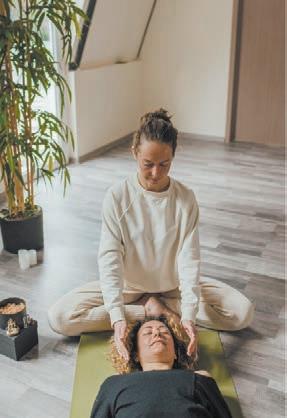

SECURE YOUR SPOT NOW WITH EARLY BIRD SPECIALS.


We are looking for:
• acupuncturists • yoga studios • fitness & wellness centers
• nutritional supplement providers
• herbalists, alternative medicine practitioners
• massage therapists • reiki masters • sports apparel companies
• natural skincare and beauty products
• eco-friendly and sustainable products
• spas • wellness retreat facilities • crystal providers
Location: Dewey Gottwald Center at Science Museum of Virginia
Date: October 11, 2025
Time:12-4pm
Learn more, visit NARichmond.com/pages/healthfest or email Regina@NARichmond.com