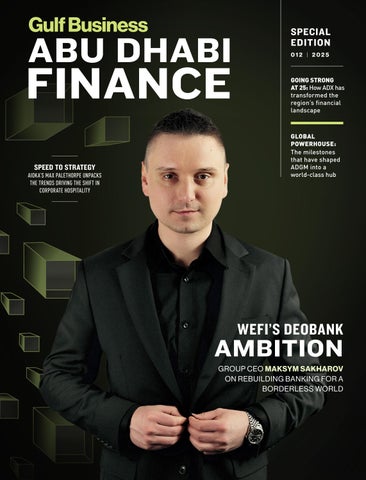
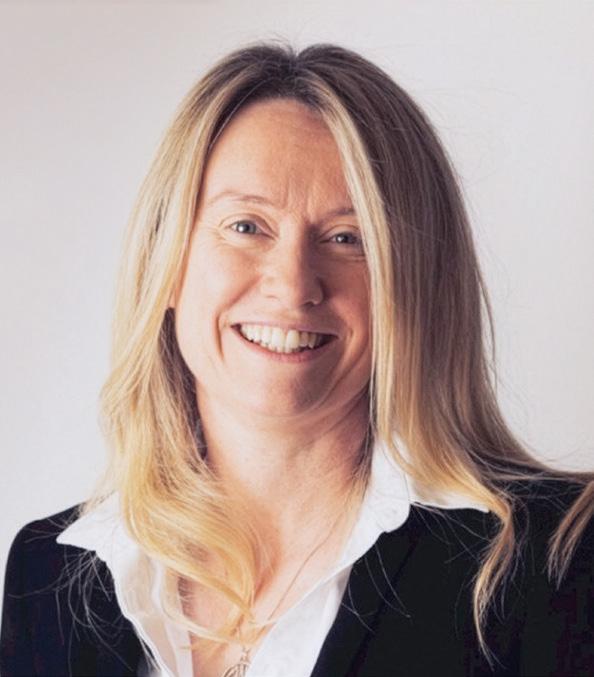
AIOKA’S MAX PALETHORPE UNPACKS THE TRENDS DRIVING THE SHIFT IN CORPORATE HOSPITALITY
| 2025
GOING STRONG
AT 25: How ADX has transformed the region’s financial landscape
GLOBAL POWERHOUSE:
The milestones that have shaped ADGM into a world-class hub
GROUP CEO MAKSYM SAKHAROV ON REBUILDING BANKING FOR A BORDERLESS WORLD
BREAKING BARRIERS: HOW THE DEOBANK MODEL BRIDGES TRADITIONAL FINANCE AND DECENTRALISATION
WeFi group CEO Maksym Sakharov shares insights on rebuilding banking for a borderless world
Inside ADGM’s rise as the new centre of private wealth
We look at how Abu Dhabi’s relationship with family offices has transformed dramatically over the decade
The lesson wasn’ t ‘don’t be ambitious.’ It was: plan and future proof for coming tech adoption, but be sure to build on today’s technology for today’s needs.”
Jeremy Lopez, founder, Hum(AI)n Assets
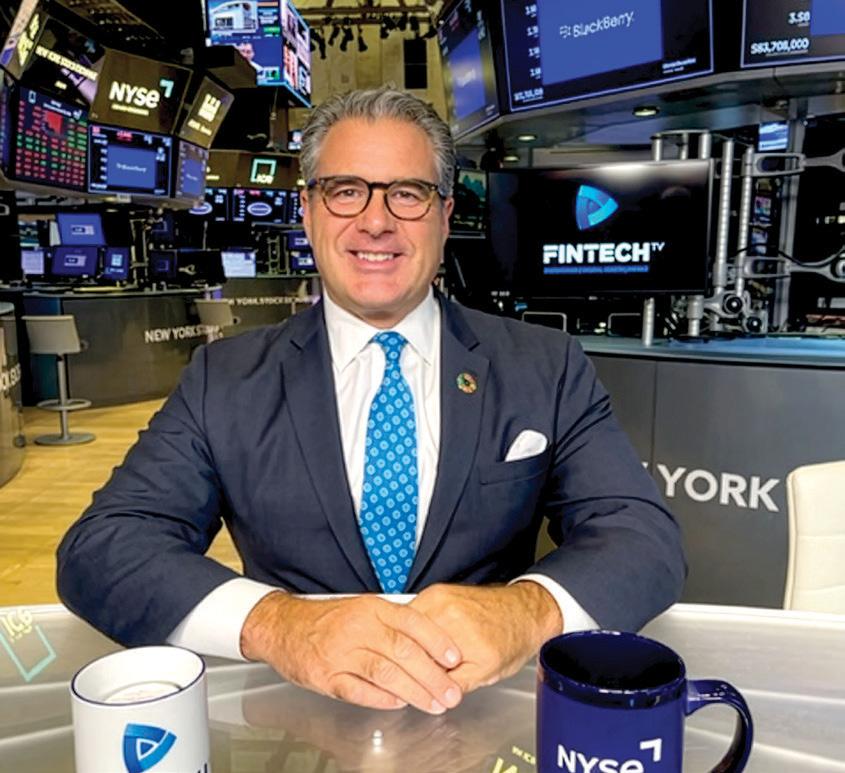
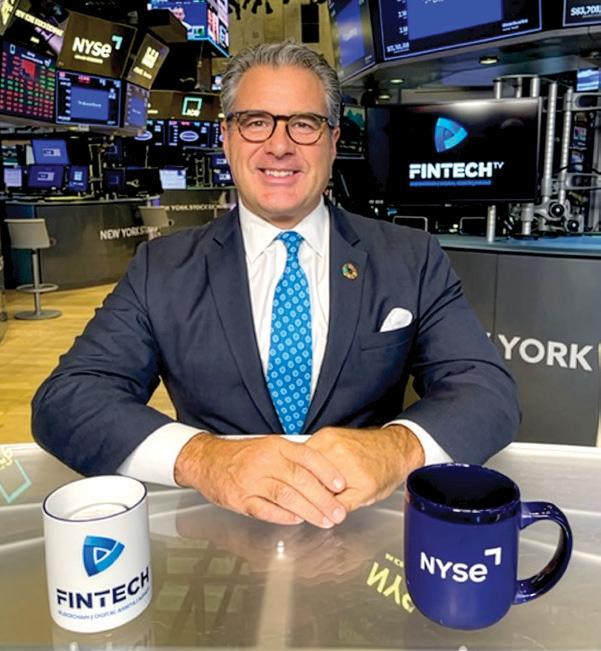
From Wall Street to ADGM: Founder and CEO Vince Molinari on how FINTECH.TV is expanding its presence to reflect the region’s growing influence across the global financial landscape
A preferred choice
Four Seasons Abu Dhabi is redefining how global leaders work, connect and experience the ‘Capital of capital’
Enabling a shift in sport How Scoreboard.ai is blending sustainability in sport
HEAD OFFICE: Media One Tower, Dubai Media City, PO Box 2331, Dubai, UAE, Tel: +971 4 427 3000, Fax: +971 4 428 2260, motivate@motivate.ae
ABU DHABI: PO Box 43072, UAE, Tel: +971 2 657 3490, Fax: +971 2 677 0124, motivate-adh@motivate.ae
SAUDI ARABIA: Regus Offices No. 455 - 456, 4th Floor, Hamad Tower, King Fahad Road, Al Olaya, Riyadh, Saudi Arabia, Tel: +966 11 834 3595 / +966 11 834 3596, motivate@motivate.ae
LONDON: Acre House, 11/15 William Road, London NW1 3ER, UK, motivateuk@motivate.ae
Cover: Freddie N. Colinares
Editor-in-chief
Obaid Humaid Al Tayer
Managing partner and group editor
Ian Fairservice
Chief commercial officer
Anthony Milne anthony@motivate.ae
Group content director
Thomas Woodgate
Thomas.Woodgate@motivate.ae
Publishing director
Manish Chopra manish.chopra@motivate.ae
EDITORIAL
Group editor
Gareth van Zyl
Gareth.Vanzyl@motivate.ae
Editor
Neesha Salian neesha@motivate.ae
Deputy editor
Rajiv Pillai
Rajiv.Pillai@motivate.ae
Reporter
Nida Sohail Nida.Sohail@motivate.ae
Senior art director
Freddie N. Colinares freddie@motivate.ae
PRODUCTION
General manager – production
S Sunil Kumar
Production manager Binu Purandaran
Assistant production manager
Venita Pinto
SALES & MARKETING
Digital sales director
Mario Saaiby mario.saaiby@motivate.ae
Sales manager
Hitesh Kumar
Hitesh.Kumar@motivate.ae
INSIDE ADGM’S RISE AS THE NEW CAPITAL OF PRIVATE WEALTH
OVER THE PAST DECADE, ABU DHABI’S RELATIONSHIP WITH FAMILY OFFICES HAS TRANSFORMED DRAMATICALLY
By Rajiv Pillai
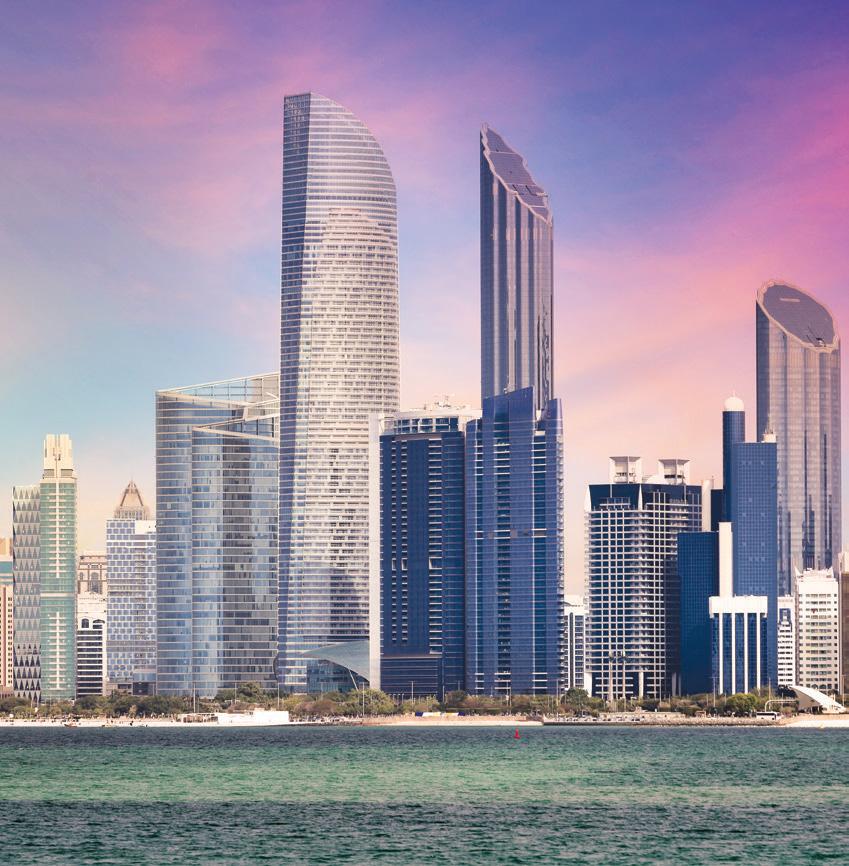
As Abu Dhabi cements its status as one of the world’s most influential financial centres, family offices are emerging as a core pillar of its investment ecosystem. Today, ADGM (Abu Dhabi Global Market) is not only celebrating a decade of regulatory excellence and institutional expansion, but also positioning itself as the most sophisticated jurisdiction for global and regional family offices seeking governance, stability, and long-term wealth preservation.
Few leaders have had a closer vantage point to this transformation than Arvind Ramamurthy, chief market development officer at ADGM, who has witnessed firsthand the explosive growth of private capital entering Abu Dhabi. In this interview, he outlines how family offices are reshaping the UAE’s investment landscape, why ADGM has become their jurisdiction of choice, and how international interest—particularly from the UK—is accelerating.
This comes at a milestone moment for ADGM, which marks its 10th anniversary with recordbreaking growth and unprecedented global interest. Since its inception in 2015, the financial centre has attracted over 300 financial firms, collectively managing $28.6tr globally, according to estimates from AIMA. Over the past three years alone, the number of financial institutions within ADGM has grown by 135 per cent, rising from 131 at the end of 2021 to 308 as of H1 2025—making ADGM one of the fastestgrowing international financial centres worldwide.
In parallel, ADGM surpassed its 5-year Growth Strategy (2022–2027) targets in just three years, fuelled by a surge in funds, asset managers, and private capital platforms choosing Abu Dhabi as their operational base. The centre now counts more than 11,000 active licenses, with a 42 per cent jump in assets under management (AUM) in H1 2025, reinforcing its position as the largest financial hub in MENA.
Against this backdrop, family offices—local, regional, and increasingly global—have become one of ADGM’s most strategically important constituencies.
FAMILY OFFICES: ABU DHABI’S NEXT MAJOR ECONOMIC ENGINE
Ramamurthy is unequivocal about their importance.
“Family offices are among the fastest-growing investment vehicles globally, and Abu Dhabi is no exception,” he says. “In fact, family offices are deeply embedded in the economic and social fabric of the UAE, acting as custodians of generational wealth and key contributors to national growth.”
The scale of their influence is significant. “With billions of dollars in AUM across the UAE, family offices represent a high-quality and stable pool of capital. Their strategic and long-term investment horizons align well with the ambitions of Abu Dhabi’s economic diversification journey.”
ADGM sits at the centre of this “Capital of Capital” ecosystem. “ADGM alone sits within a wider Abu Dhabi capital ecosystem of over $1.82tr in Sovereign Wealth Funds (SWFs), with family offices managing an estimated $200bn, highlighting their strategic importance within the investment landscape.” Abu Dhabi leads the Middle East and Africa in liveability, according to the Global Liveability Index by the Economist Intelligence Unit. The city distinguished itself through improvements in
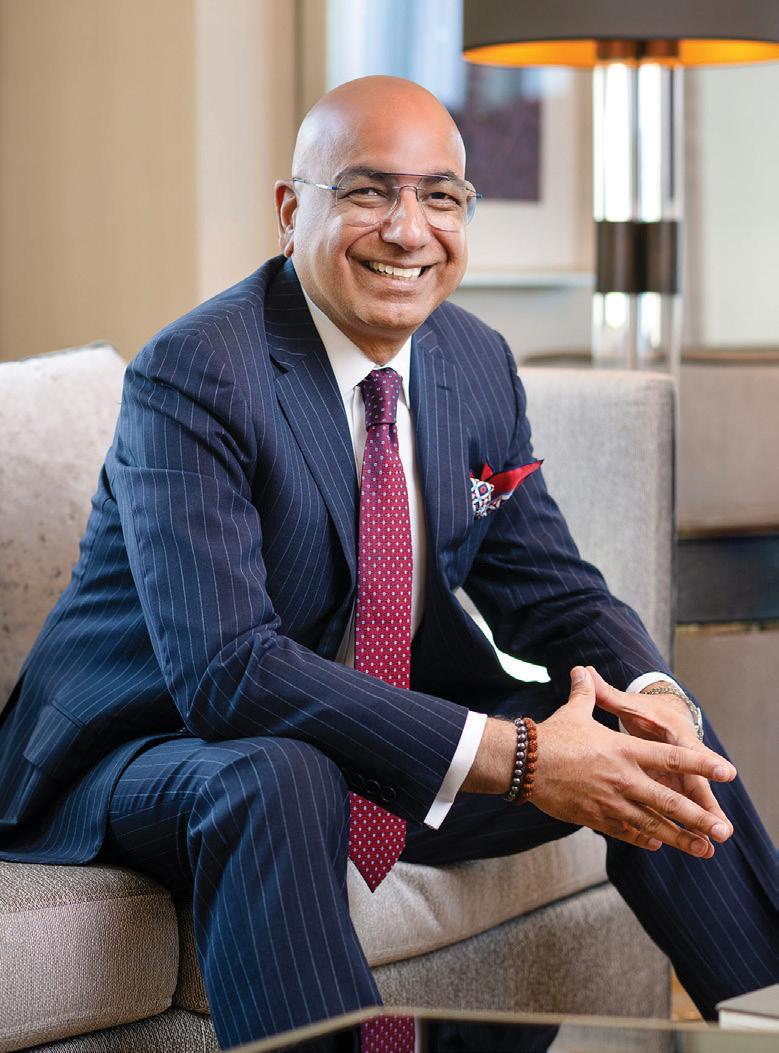
Arvind Ramamurthy, chief market development officer at ADGM
GB ABU DHABI
The platform that ADGM provides is particularly suited to the
unique complexities of family offices, offering governance tools like trusts, foundations, private trust companies, and robust dispute resolution mechanisms,
including direct application of English Common Law.”
healthcare, and infrastructure. These fundamentals give confidence that Abu Dhabi is not just a place to invest, but also a place to live, grow, and thrive long term, Ramamurthy states. But the role of family offices in the emirate goes far beyond capital deployment. “In Abu Dhabi, they are not just capital allocators but ecosystem builders. They’ve been first movers in establishing diverse businesses, nurturing talent, and investing in transformational sectors including technology, healthcare, infrastructure, financial services and sustainability.”
Crucially, many now operate as co-investors and long-term partners to sovereign wealth funds, pension funds, and institutional asset managers. “They increasingly operate not only as investors but as co-investors and capital partners alongside sovereign wealth funds and institutional players, playing a pivotal role in shaping the investment direction of the region.”
ADGM’S TAILORED ECOSYSTEM FOR FAMILY OFFICES
To support this fast-expanding segment, ADGM has developed one of the most sophisticated and flexible family office frameworks globally.
“At ADGM, we have built a sophisticated and tailored ecosystem for family offices, providing flexible structures, bespoke regulatory frameworks, and world-class service providers to support the full spectrum of their needs,” says Ramamurthy.
The jurisdiction offers an unusually deep toolkit of governance and wealth-structuring mechanisms. “The platform that ADGM provides is particularly suited to the unique complexities of family offices, offering governance tools like
trusts, foundations, private trust companies, and robust dispute resolution mechanisms, including direct application of English Common Law.”
Succession planning, a major priority in the region, is embedded in ADGM’s offering. “We also facilitate succession planning and intergenerational wealth transfer through structures like Foundations, where we now host over 448 foundations as of September 2025, one of the highest in the region.”
Family offices can also leverage ADGM’s networking and capital access advantages. “In addition, our ecosystem, wherever needed, connects family offices to leading fund managers, tech innovators, and private capital platforms.”
Collaboration with key industry bodies ensures alignment with market needs. “We are also collaborating with the Emirates Family Office Association and key networks like MEVCA and MEIMA to ensure alignment with market needs.”
A wide range of licensing options allows for flexibility across sophistication levels and operational scope. “Depending on their stage and scope, family offices can choose from three bespoke licensing pathways: Single-Family Office (SFO), Multi-Family Office (MFO), or Structuring Only via SPVs, Trusts or Foundations.”
ADGM also offers confidentiality mechanisms. “ADGM’s RSC (Restricted Scope Company) structure also enables enhanced confidentiality while maintaining full legal integrity.”
Perhaps most importantly, ADGM has built a white-glove onboarding system for families relocating to or operating from the emirate. “Through
AS OF 2024, ADX SURPASSED
$800BN IN MARKET CAP, WITH ACTIVE DEBT, EQUITY, AND GREEN BOND MARKETS INCREASINGLY APPEALING TO FAMILY OFFICES SEEKING SCALABLE EXITS
ADGM’s CRM team, we offer hands-on support in setting up operations, connecting with banks, office space providers, legal advisors and even relocation and education services, ensuring a seamless entry into the Abu Dhabi ecosystem.”
A CHANGING RELATIONSHIP:
ABU DHABI BECOMES A GLOBAL GATEWAY FOR FAMILY OFFICES
Over the past decade, Abu Dhabi’s relationship with family offices has transformed dramatically.
“There has been a significant shift,” Ramamurthy explains. “Family offices now see Abu Dhabi not just as a home base but as a global gateway, a jurisdiction that offers legal certainty, a stable tax environment, access to SWFs and co-investors, and connectivity to global markets.”
The institutionalisation of family offices is accelerating. “Many family offices that were once operated through fragmented structures are now centralising their operations, professionalising governance, and broadening their investment mandates across asset classes and geographies.”
Capital markets activity—both public and private—has been another draw. “The growing number of IPOs, new capital markets access, and greater regulatory clarity in ADGM have further attracted their attention.”
As of 2024, ADX surpassed $800bn in market cap, with active debt, equity, and green bond markets increasingly appealing to family offices seeking scalable exits. “This market
WHY RELOCATE TO ABU DHABI?
SAFETY, STABILITY & QUALITY OF LIFE
Abu Dhabi has been ranked the safest city in the world for nine consecutive years (according to online database Numbeo). Investors and their families benefit from exceptional quality of life, stability, and security.
Liveability Index: Abu Dhabi leads the Middle East and Africa in liveability, according to the Global Liveability Index by the Economist Intelligence Unit. The city distinguished itself through improvements in stability, healthcare, and infrastructure.
These fundamentals give confidence that Abu Dhabi is not just a place to invest, but also a place to live, grow, and thrive long term.
CULTURE, OPENNESS & HERITAGE
Abu Dhabi is a beacon of cultural inclusivity and tolerance
From world-class landmarks like the Louvre Abu Dhabi to the Abrahamic Family House , it demonstrates openness and respect for diversity
The city offers a unique blend of heritage and modernity , reinforcing its role as a global destination.
THE RISE OF UK FAMILY OFFICES IN ABU DHABI
One of the most notable recent trends has been the surge of interest from the United Kingdom.
In recent years, we have seen this interest convert into action. UK-origin family offices are setting up Single-Family Offices, investing through SPVs, and engaging with local opportunities in venture capital, private equity, and real estate.”
cap has since grown in 2025, with recent numbers, and so has the interest from family offices.”
ADGM’s regulatory innovations—particularly in private credit and virtual asset funds—have also expanded the range of investment strategies available to family offices.
Perhaps one of the most impactful developments has been the introduction of Ministerial Decision 261 (2024), which created new tax clarity for structures commonly used by family offices. “It now allows Foundations to hold SPVs and Companies without triggering corporate tax, enhancing Abu Dhabi’s attractiveness for wealth preservation and intergenerational planning.”
The renewed global confidence in ADGM is reflected in the calibre of investors it is attracting. “Recently, several prominent international family offices and billionaire investors — including Ray Dalio, Elysium Management, Asif Aziz, Wafic Saïd, Kishin RK, RB Capital/Royal Holdings, Kapoor Wealth Partners, and Apeiron Investment Group — have established operations within ADGM.”
“Interest from UK-based family offices and highnet-worth individuals has grown meaningfully over the last few years,” Ramamurthy says. Proximity, lifestyle advantages, and investor-friendly policies play a role, but the legal environment is the real differentiator.
“In my opinion, what is especially appealing to UK families is our legal environment. ADGM’s existence as the only jurisdiction with the direct application of English Common Law provides the familiarity and legal assurance that many UK entities seek. That, coupled with a favourable tax environment, is a difficult combination to find in this region.”
What began as curiosity has become action. “In recent years, we have seen this interest convert into action. UK-origin family offices are setting up Single-Family Offices, investing through SPVs, and engaging with local opportunities in venture capital, private equity, and real estate.”
The administrative experience is another draw. “They also benefit from ADGM’s simplified licensing process, digital application infrastructure, and concierge support, including real estate guidance, school selection, fast-track Golden Visas, and banking introductions.”
More broadly, Ramamurthy says the UK trend reflects Abu Dhabi’s positioning as the global centre of private capital. “We offer the ‘Path to Forward’ for family offices seeking jurisdictional resilience, next-gen readiness, and global connectivity. And we are seeing growing interest from UK families who appreciate the combination of operational flexibility and high lifestyle quality, all within a regulatory environment they understand and trust.”
ADGM’s 10th anniversary marks more than a milestone—it marks a strategic inflection point for Abu Dhabi’s financial future.
With its 123 per cent AAGR in AUM, 62 per cent AAGR in fund managers, and expansion to 11,000+ active licences, ADGM has not only become the largest IFC in MENA—it is now one of the most influential hubs for private capital globally.
Family offices are central to this next chapter. As generational wealth grows, as governance structures mature, and as Abu Dhabi continues its economic diversification journey, ADGM’s tailored frameworks, global connectivity, and regulatory sophistication position it as the natural home for the next wave of global family offices.
FROM WALL STREET TO ADGM: FINTECH.TV’S VINCE MOLINARI ON THE UAE’S MOMENTUM
By Gareth van Zyl
FOUNDER AND CEO VINCE MOLINARI SHARES WHY THE UAE IS EMERGING AS A GLOBAL CENTRE FOR FINTECH, TOKENISATION, AI, AND ESG — AND HOW FINTECH.TV IS EXPANDING ITS PRESENCE TO REFLECT THE REGION’S GROWING INFLUENCE
FINTECH.TV broadcasts from both the New York Stock Exchange and Abu Dhabi Global Market (ADGM), giving you a unique vantage point across two major global financial centres. How do you compare the growth and maturity of Abu Dhabi’s fintech and digital-assets ecosystem with what you see in New York?
From my vantage point broadcasting at both the New York Stock Exchange and ADGM, I see two ecosystems that are complementary but moving at different speeds. New York is the world’s most mature capital market, with decades of regulatory precedent and institutional depth. Abu Dhabi, on the other hand, has been able to build a fintech and digital-assets ecosystem without legacy constraints, allowing it to move faster on innovation, licensing, and integrated regulatory frameworks.
ADGM feels like standing in the future — agile regulators, sovereign-capital alignment, and an ecosystem designed to support digital markets from day one. It’s a rare moment where a global financial centre is being built in real time, with clarity and purpose.
FINTECH.TV has expanded its studio presence within ADGM.
From your perspective, what makes Abu Dhabi an increasingly important hub for fintech, digital assets, ESG, and financial innovation? What makes Abu Dhabi so important right now is
Vince Molinari
the convergence of three factors: regulatory clarity, sovereign-capital participation, and a genuine long-term commitment to innovation. ADGM isn’t experimenting on the margins — it’s positioning itself as a trusted jurisdiction for fintech, digital assets, ESG finance, and next-gen market infrastructure. By expanding our presence here, FINTECH. TV is aligning with a financial centre that understands both global standards and where the industry is headed.
You’ve been a strong advocate for the evolution of capital markets through tokenisation, smart contracts and digital securities. How do you see Abu Dhabi’s regulatory and sovereign-capital environment supporting the next wave of these innovations?
Abu Dhabi has created one of the most forward-leaning regulatory environments for tokenised assets and digital securities anywhere in the world.
What makes the UAE unique is that innovation isn’t happening in spite of regulation — it’s happening because of it. ADGM and the broader UAE policy framework give market participants the clarity and confidence to build real-world tokenised products, structured offerings, and institutionalgrade digital-asset solutions.
And when you combine that with the role of sovereign capital in the region, you get an ecosystem capable of scaling these technologies globally.
One of our key editorial themes is “AI and quantum finance”. How is FINTECH.TV preparing to cover — or already covering — the intersection of AI, next-generation computing, and capital-market transformation?
AI and quantum finance are no longer fringe topics, they’re core to the future of capital markets. At FINTECH.TV, we’ve made this a primary editorial pillar because the UAE is positioning itself as a global leader in applied AI. Our focus is on demystifying how these technologies will reshape market structure, risk management, liquidity formation, and even regulatory oversight. We’re building content, partnerships, and coverage that connect policymakers, innovators, and institutional leaders around these shifts, because this is where the global financial system is headed.
Sustainability and impact investing feature prominently in FINTECH.TV programming. How do you view the Gulf region’s position within global green-finance conversations, and what role can media platforms play in accelerating ESG adoption?
The Gulf — particularly the UAE and Saudi Arabia — is no longer a participant in global ESG discussions; it’s becoming a driver of them.
From sovereign-level commitments to decarbonisation, to some of the largest project-finance pipelines in the world, the region is speaking with scale and credibility.
FINTECH.TV plays an important role in amplifying these initiatives, connecting global capital with regional climate innovation, and ensuring the world understands the strategy — and seriousness — behind the Gulf’s sustainability agenda.
We’re building content, partnerships, and coverage that connect policymakers, innovators, and institutional leaders around these shifts, because this is where the global financial system is headed.”
With FINTECH.TV’s footprint across continents, you often highlight where institutional capital and fintech startups struggle to find alignment. What blind spots do you see today as global investors look toward markets like the UAE for opportunity? One of the biggest blind spots I see is that many global investors still view the UAE through an outdated lens, thinking about it as a regional opportunity rather than a global hub. The truth is, the deal flow, regulatory frameworks, capital access, and talent migration into the UAE reflect a financial centre that is reshaping global capital markets. The opportunity is not just in deploying capital here — it’s in building, scaling, and exporting innovation from here.
With global investors and founders increasingly viewing the Gulf as a centre of influence, how is FINTECH.TV adapting its storytelling to reflect the growing importance of the UAE and wider MENA region in shaping the next chapter of global finance?
As the Gulf emerges as a centre of influence for fintech, digital assets, climate innovation, and sovereign-capital strategy, our storytelling is evolving accordingly. We’re not just reporting on the region; we’re reporting from the region, elevating local voices, highlighting regional leadership, and showing how the UAE and MENA are actively shaping the next chapter of global finance.
Our job is to connect these narratives to global audiences — from the U.S. to Europe to Asia — so they see what we see every day on the ground: a region driving innovation at scale.
CAPITAL WITH PURPOSE: HOW HYBRID ADVISORS SEES ABU DHABI’S WEALTH FUTURE
By Gareth van Zyl
WITH THE GULF INCREASINGLY ATTRACTING GLOBAL CAPITAL, HYBRID ADVISORS FOUNDER AND CEO, DION POUNCIL, EXPLAINS HOW ABU DHABI CAN MOVE BEYOND ATTRACTION AND BECOME A POWERHOUSE FOR DISTRIBUTION, LEGACY AND LONG-TERM IMPACT
You lead Hybrid Advisors and the associated foundation with a focus on aligning capital with purpose and legacy. In a finance hub like Abu Dhabi that is attracting global capital, how do you view the role of wealth-advisory firms in shaping the evolution of the emirate’s ecosystem: especially where philanthropy, tax structure and multigenerational wealth meet?
Wealth-advisory firms in Abu Dhabi are uniquely positioned to serve as architects of sustainable prosperity rather than mere custodians of capital. As the emirate evolves into a global finance hub, these firms must transcend traditional asset management to become ecosystem builders who understand the intersection of philanthropy, favourable tax
structures, and multigenerational wealth planning. Through both Hybrid Advisors and our Hybrid Advisors Foundation, we are committed to bridging the worlds of the Emirates and the US through constructive capitalism.
Hybrid Advisors recently committed $1m to its foundation to deepen social-impact engagement. How do you see the synergy between private capital and public mandates (For eg, sovereign funds, government-backed vehicles) in places like Abu Dhabi playing out in the next five years?
The next five years will witness an unprecedented convergence between private capital and public mandates in Abu Dhabi, creating a powerful synergy that accelerates both economic and social development. Our foundation’s commitment reflects our belief in this emerging model.
Abu Dhabi is uniquely positioned to pioneer this model given its combination of significant sovereign wealth, forward-thinking leadership, and growing private capital base. The emirate can become a global laboratory for public-private synergy that other financial centres will study and emulate.
From your experience, how should wealthadvisory and investment firms adapt their frameworks when disruptive technologies change asset behaviour, risk models and capital allocations?
Wealth-advisory firms must fundamentally reimagine their frameworks rather than merely adapt them incrementally. AI and quantum computing aren’t just tools to optimise existing models— they’re catalysts for entirely new approaches to understanding asset behaviour, risk, and capital allocation.
With sustainable and green finance rising on the agenda, how do you advise clients (particularly UHNWIs or family offices) in integrating ESG, impact and legacy strategies — and what lessons might a regional hub like Abu Dhabi draw from global best practices?
For UHNWIs and family offices, we advocate a threedimensional approach to sustainable finance that integrates ESG, impact, and legacy in a cohesive strategy rather than treating them as separate considerations. We begin by helping clients articulate
their “values blueprint”— a comprehensive mapping of family values, impact objectives, and legacy aspirations. This becomes the foundation for all subsequent investment decisions, ensuring alignment between financial strategies and deeper purpose.
Abu Dhabi has a unique opportunity to pioneer a model of sustainable finance that bridges Eastern and Western approaches, creating frameworks that honour Islamic finance principles while incorporating the best elements of global ESG practice.
The blueprint for global capital is shifting: flows from East to West, tech-driven sectors, new asset classes. What are the structural “friction points” you observe when capital tries to move across jurisdictions, tax regimes and generational transitions, and how can hubs like Abu Dhabi mitigate them?
The most significant friction points in today’s global capital flows occur at three critical interfaces: jurisdictional boundaries, tax regime transitions, and generational transfers. Each creates distinct inefficiencies that sophisticated financial hubs must address.
Abu Dhabi can mitigate these friction points by developing a comprehensive “capital mobility framework” with several key components: First, create standardised digital identity and verification systems for both individuals and entities that are recognised across multiple jurisdictions.
Second, establish specialised courts with expertise in cross-border financial matters and transparent precedent-setting.
Third, develop tax-clarity programmes that provide advance rulings on complex structures.
Fourth, implement next-generation education initiatives that prepare future wealth stewards for effective capital deployment.
By systematically addressing these friction points, Abu Dhabi can position itself as the preferred gateway for capital moving between East and West, traditional and emerging asset classes, and across generations.
Many family offices are redesigning their structures around longer-term generational goals rather than short-term returns. Given your emphasis on legacy and education, what key governance or mindset changes do you see as critical for families in the Gulf region who are repurposing wealth for the next phase of growth?
For Gulf region families repurposing wealth for multigenerational impact, three fundamental governance and mindset shifts are essential. First, families must transition from founder-centric to systems-based governance. Many Gulf family offices remain heavily dependent on the founder’s decision-making, creating vulnerability during succession. The critical shift involves developing robust governance systems with clear separation between ownership, management, and
beneficiary roles. This includes establishing professional boards with independent directors, creating family councils that separate family matters from business decisions, and implementing structured decision-making processes that balance entrepreneurial agility with institutional stability.
In the context of your foundation and advisory business, how do you view the role of technology (data, platforms, digital advice) in democratising access to sophisticated wealth-structuring and impact investing? Is there a parallel for Abu Dhabi’s ambition to be a fintech-enabled finance hub?
Technology is fundamentally transforming wealth structuring and impact investing from exclusive services for the ultra-wealthy into accessible solutions for a much broader audience.
First, algorithmic sophistication is replacing human intermediation in many aspects of wealth structuring. Tasks that once required expensive legal and financial expertise — from entity formation to tax optimisation — are increasingly automated through intelligent platforms, dramatically reducing costs while maintaining quality.
The most promising parallel lies in Abu Dhabi’s potential to become the world’s first “democratised sovereign hub”— a financial centre that leverages its sovereign advantages (stability, capital base, strategic location) while embracing the democratising potential of financial technology to create unprecedented access and opportunity.
Looking forward to 2030 and beyond: If you were advising a government-backed finance hub like Abu Dhabi on how to build a sustainable wealth-ecosystem (not just capital attraction, but distribution, legacy, intergenerational linkages), what three strategic moves would you recommend?
If advising Abu Dhabi on building a truly sustainable wealth ecosystem by 2030, I would recommend three interconnected strategic moves: First, establish a “Generational Capital Institute” focused exclusively on the science and practice of multigenerational wealth stewardship. This would be a global centre of excellence combining research, education, and practical application of best practices in family governance, succession planning, and legacy development. Hybrid Advisors is here to aid in reaching those goals through servant leadership leading risk-adjusted based performance metrics.
Dion Pouncil
AIOKA’S FORMULA TURNING HOSPITALITY INTO A BUSINESS ECOSYSTEM
CEO MAX PALETHORPE SHARES HOW AIOKA IS TRANSFORMING THE GLOBAL CORPORATE HOSPITALITY LANDSCAPE THROUGH RACING AND BEYOND
By Neesha Salian
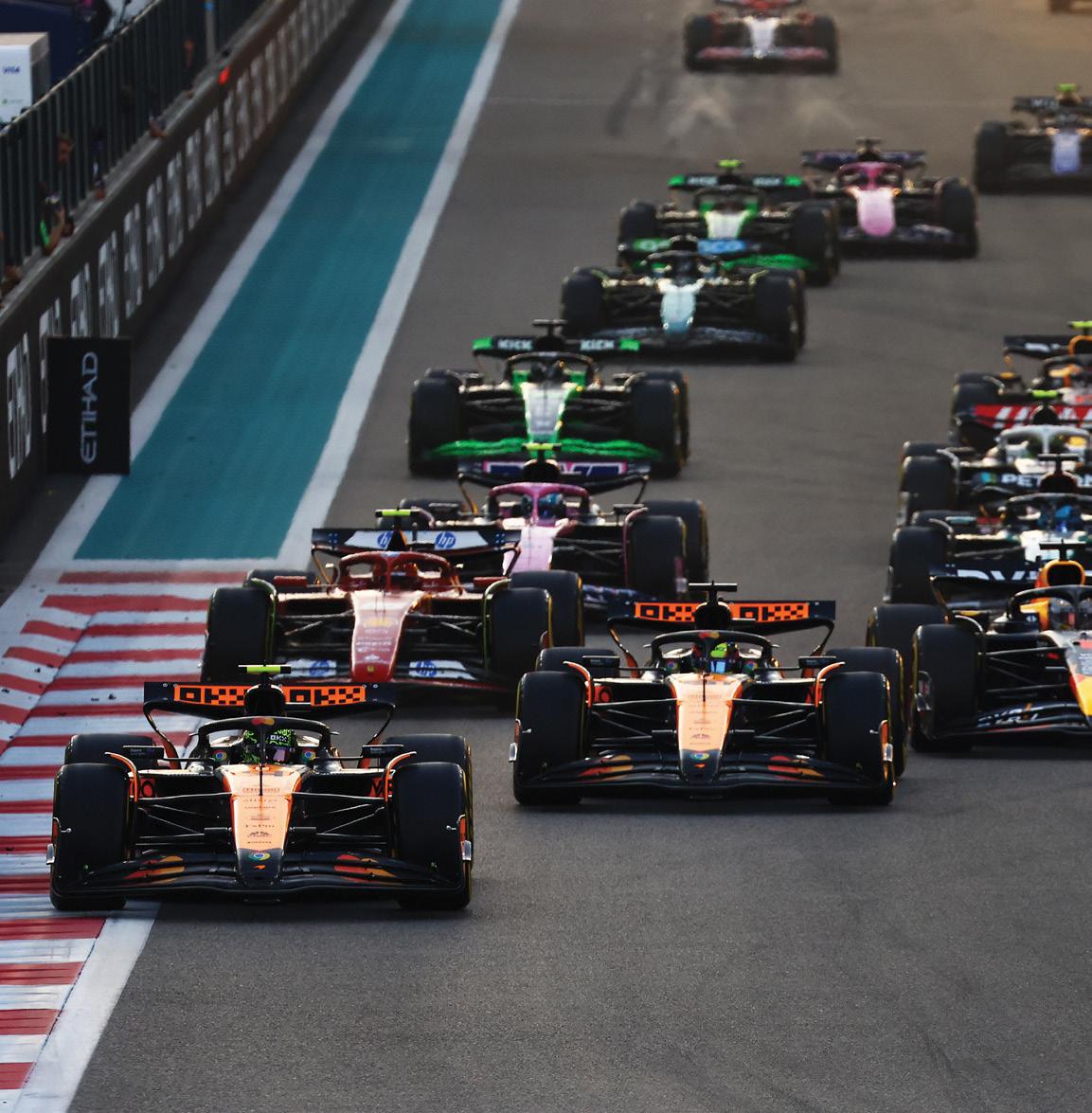
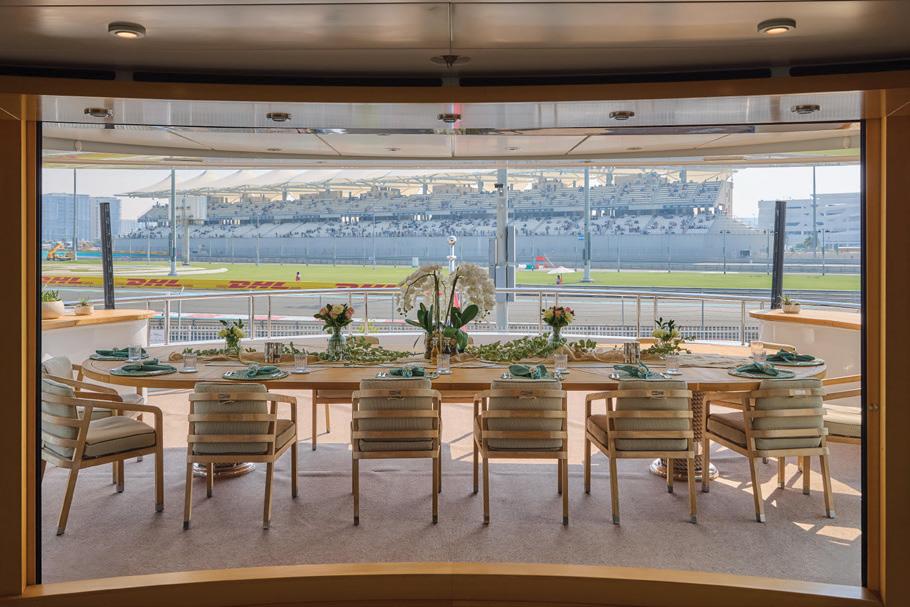
Corporate hospitality is no longer about access; it is about influence. It is where business relationships are built, where decisions accelerate, and where brand presence becomes commercial power. Few platforms demonstrate that shift quite like Formula One (F1), and few partners have leveraged it as effectively as AIOKA. Under the guidance of CEO Max Palethorpe, the company has carved out a leadership position in high-impact hospitality, turning race weekends into deal-making ecosystems for global brands. In this conversation, he explores why Abu Dhabi has become one of the most valuable stages in the F1
calendar, how sponsorship is evolving from spend to strategy, and where technology will shape the next era of premium engagement.
AIOKA has become known for delivering high-impact hospitality and brand activations across the FIA Formula One World Championship. What makes the sorting event such an influential platform for premium brands, globally and particularly in Abu Dhabi?
Formula One sits at the very top of global hospitality. It blends elite sport, international culture, and high-value networking in a way few platforms can match. For a city like Abu Dhabi, a global hub for finance, innovation, and luxury, the association is seamless. Decision makers from around the world converge here, and brands engage with them in an environment that is fast-paced, energetic, and culturally relevant. It is where lifestyle, influence, and commerce meet, and Abu Dhabi amplifies that impact on a global scale.
Abu Dhabi has become one of the most watched F1 destinations. How does that translate into commercial value for AIOKA’s clients?
Abu Dhabi brings together CEOs, investors, founders, policymakers, innovators, and highnet-worth audiences in exceptional density, and that concentration of influence is rare. Our role is to convert visibility into tangible business outcomes by designing hospitality that leads to deeper conversations, more meaningful commercial relationships, and stronger longterm returns. We do that through highly targeted C-suite engagement, curated hospitality flows, commercial pipeline activation, and global storytelling amplified by media and partner networks. When brands activate here, they are not just present, they are positioned in the centre of global attention and business movement.
Many companies still see sponsorship as a cost. How do you help brands turn hospitality into measurable ROI?
The mindset around hospitality has shifted dramatically. What used to be considered a branding expense is now a strategic growth
Success will belong to brands that prioritise premium, personalised, tech-enabled experiences that deliver clear commercial impact. We expect more AI-enhanced environments, more immersive guest journeys, and a sharper approach to measurement as Abu Dhabi expands its cultural and commercial influence.”
lever. We design sponsorship pro grammes with commercial outcomes as the priority, integrating lead generation, guest-journey architecture, measurable uplift anal ysis, investor and partner engagement, and structured postevent conversion. With Abu Dhabi acting as a magnet for global deci sion-makers, the return potential is significantly increased. Hospitality becomes a deal pipeline, not an event line item.
You’ve referenced the rise of bespoke B2B experiences. How is this influencing the next phase of hospitality?
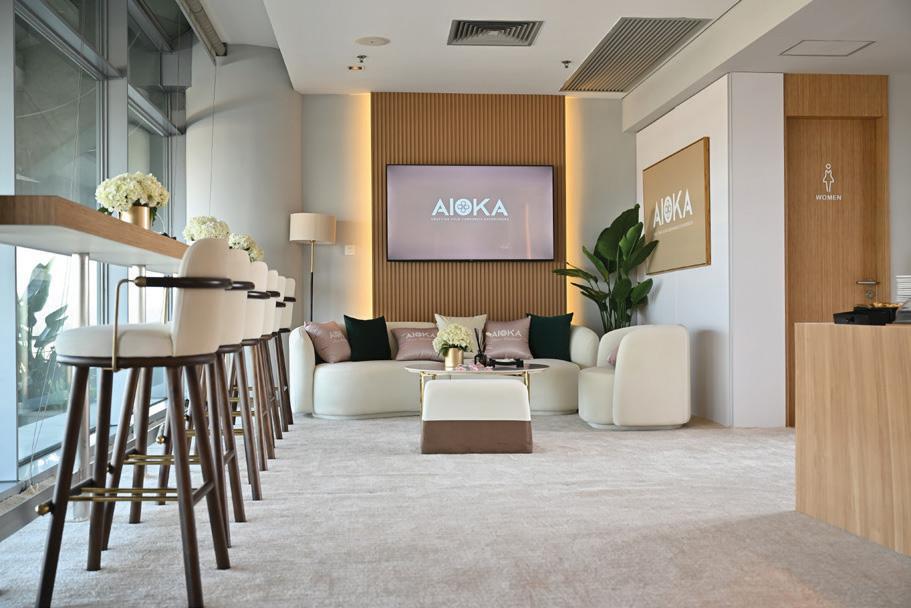
C-suite audiences no longer want generic access, they want depth, texture, and personalised environ ments. Our work is focused on delivering experiences that feel intentional, highly curated, and culturally ele vated. That means everything from custom-designed suites and lounges, to F&B partnerships with luxury brands, personalised arrival and concierge touchpoints, and experiences that are not available to the public. Nowhere is this more pronounced than the UAE, where premium hospitality is woven into the business fabric and expectation.
Given rising costs in hospitality and sponsorship, how do you ensure value for brands activating in Abu Dhabi? The demand keeps rising because the results are real. Abu Dhabi delivers commercial return, brand relevance, and stakeholder influence at a pace few markets can rep licate. Our focus is on converting every investment into equity, whether through deeper stakeholder engage ment, qualified deal pipelines, or long-term relationship development that continues well beyond race weekend. When executed right, sponsorship here compounds, gaining value season after season.
How do you see technology shaping the future of hospitality, and how is AIOKA preparing for it? We are entering a new era, where AI and immersive
expect more AI-enhanced environments, more immersive guest journeys, and a sharper approach to measurement as Abu Dhabi expands its cultural and commercial influence. AIOKA intends to be at the forefront of that shift, helping shape a global hospitality framework where experience and outcome are inseparable.
THE DEOBANK REVOLUTION:
PIONEERING A FINANCIAL MODEL FOR FULL USER CONTROL
WEFI GROUP CEO MAKSYM SAKHAROV BELIEVES THE NEXT LEAP IN BANKING REQUIRES REBUILDING THE CORE SYSTEM ON-CHAIN TO GIVE USERS REAL CONTROL OVER THEIR WEALTH
WORDS: GARETH VAN ZYL
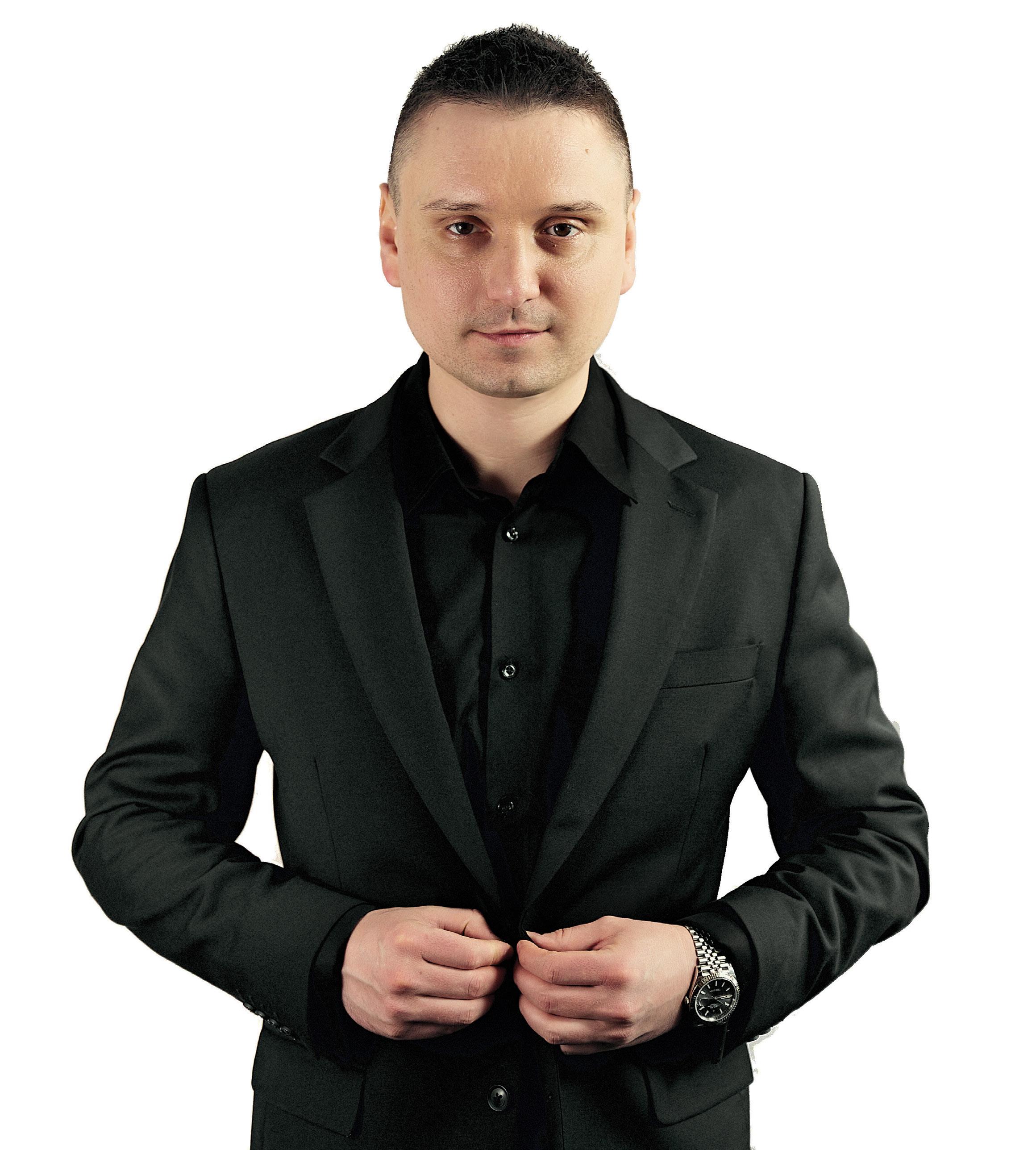
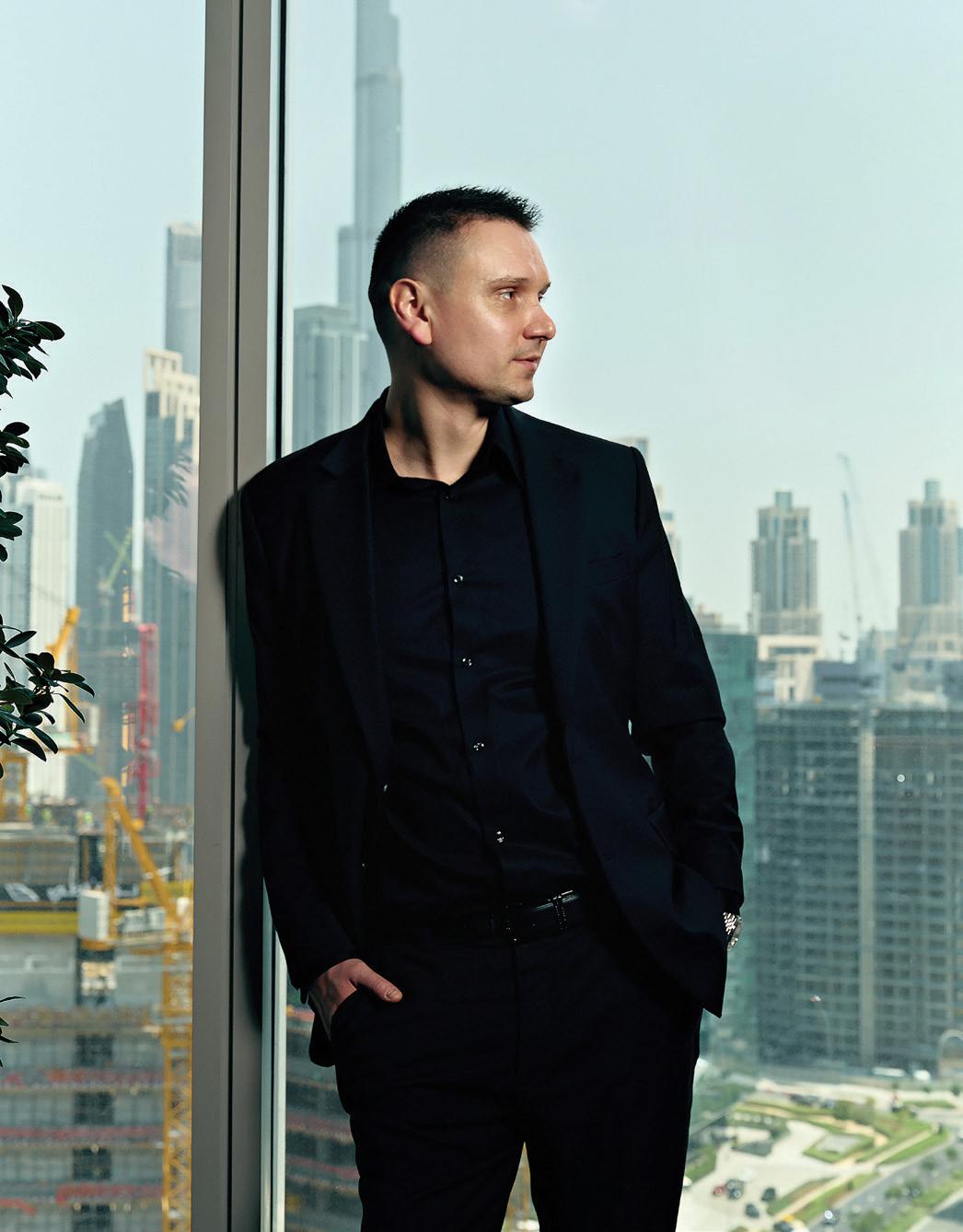
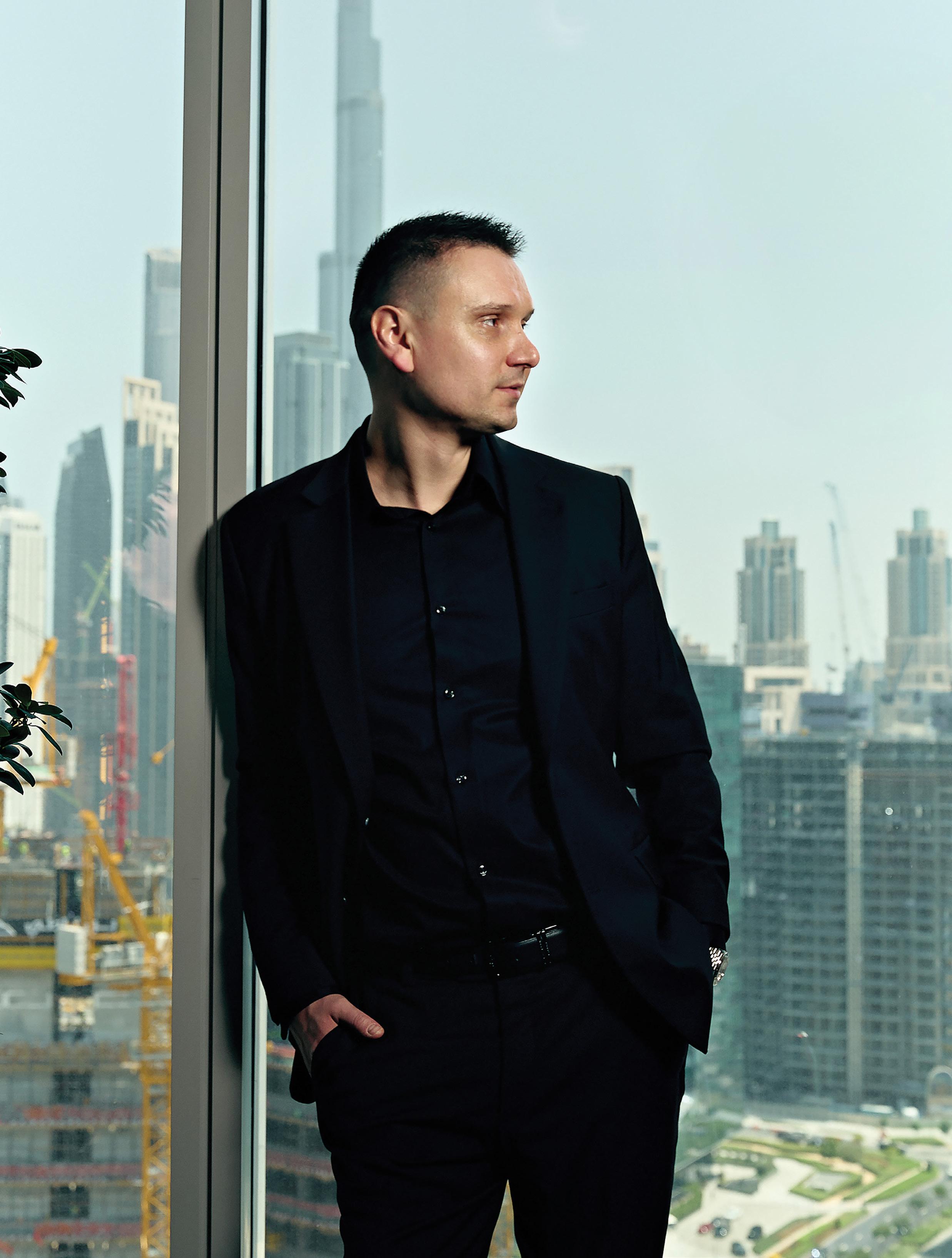
WeFi’s co-founder and group CEO Maksym Sakharov has positioned himself at the centre of a financial shift that is starting to reshape how money moves, how value is stored, and who gets real control over their wealth. Leading the world’s first deobank, he sits at the intersection of traditional finance, blockchain, and global regulation, arguing that the next big leap in banking won’t come from sleeker apps or faster KYC, but from rebuilding the system on-chain. In this conversation with Gulf Business, he breaks down what a deobank actually is, why he believes the model is inevitable, and how WeFi plans to bridge familiar banking habits with decentralised infrastructure for a world that increasingly lives, works, and earns across borders.
You now lead WeFi from Dubai, but originally you come from Ukraine. How did your personal journey, from Ukraine to the Middle East, influence your ambition to build a deobank?
I grew up in Ukraine, a place where money isn’t just numbers on a screen, but something, unfortunately, deeply fragile and uncertain. Over the years, I saw how savings and livelihoods could be destabilised by inflation, restrictive banking practices, or economic turbulence. That background taught me that financial systems built on outdated legacy rails often strip individuals of real control over their own wealth.
When I later moved through different fintech and crypto projects, and ultimately settled in Dubai, this lesson followed
me. In the Middle East, I saw a future where finance could be more inclusive, more global, and fairer. It’s a world where people from different countries, backgrounds, and incomes could access banking without bureaucracy or borders. The question raised logically: if we really believe in financial inclusion and user sovereignty, why don’t we rebuild banking from the ground up, not merely repackage old banks as digital?
The deobank idea is a synthesis of those experiences. It takes the skepticism you develop in a volatile environment and combines it with the openness and regulatory ambition. And then
channels it into a model where people hold the keys to their assets, move value globally in real time, and rely on transparent, programmable accounts. For me, WeFi is a very personal answer to a problem I’ve watched from both sides of the world.
What exactly is a deobank, and how does it differ from both traditional banks and neobanks? What gap does it fill in today’s financial ecosystem?
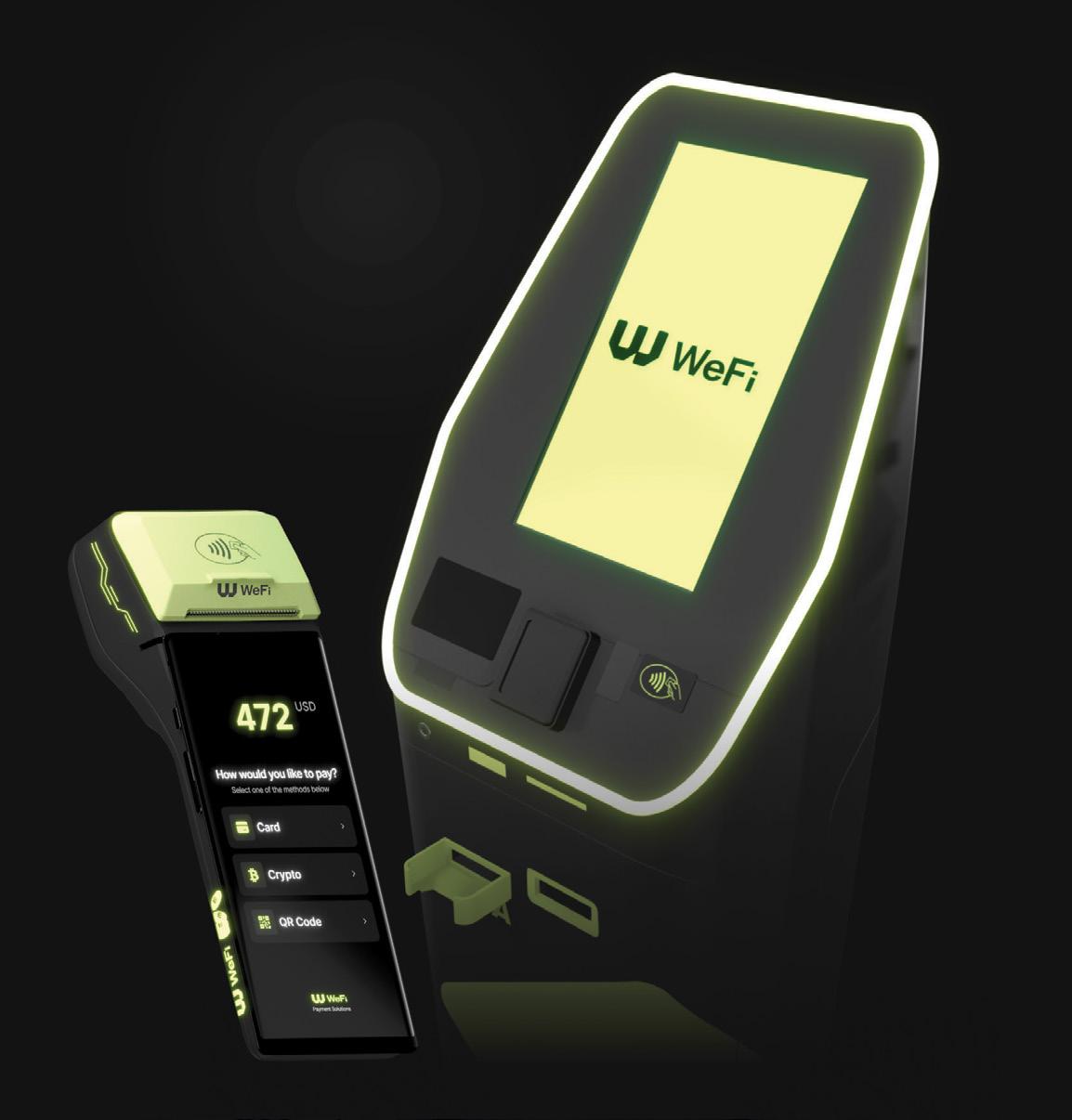
A deobank is not a cosmetic update to banking. It is an institution whose core balance sheet lives on-chain. Traditional banks keep money inside closed, proprietary ledgers and settle via legacy rails like correspondent banking. Neobanks improve the interface but usually still sit on those same rails. A deobank uses blockchain as the underlying accounting and settlement layer, so user balances are held in wallets and smart contracts instead of a black box. Deobank is the world’s first bank where fiat money lives on-chain.
This means users can deposit fiat in a familiar interface and get instant limitless access to stablecoins, with no swaps and no fees. This architectural change means users own accounts with distributed custody, you can retrieve your money under your full control at any moment, but you won’t have to worry about private key management thanks to social recovery. Near-instant global transfers, access to crypto-native tools such as on-chain yield and tokenised assets, all of this is available in an app that feels as familiar as a regular mobile bank.
The gap this fills is the space between two imperfect worlds. On one side, highly regulated but rigid and siloed banking; on the other, powerful but often confusing DeFi protocols. A deobank is designed to combine the sovereignty and transparency of DeFi with the usability and reliability people expect from everyday banking.
With WeFi aiming for “full user control” (distributed custody, blockchain, crypto and fiat under one roof), how do you balance decentralisation with the need for compliance, regulation, and everyday usability?
We don’t treat decentralisation and compliance as enemies. We separate where each one should dominate. On the asset and transaction layer, WeFi is built as an on-chain bank, balances are recorded on public ledgers, and users can opt for distributed custody models that still keep them as the ultimate key-holders. That gives transparency and clear ownership.
Around that, we operate licensed entities in relevant jurisdictions to handle cards and payment flows, which brings us under existing AML, KYC, and consumer-protection frameworks. On the front end, we deliberately make the experience feel familiar: account opening, cards, transfers. People don’t need to understand the technical details of private keys or smart contracts to use it safely.
The balance comes from letting decentralisation govern custody and transparency, and regulation govern how we plug into the real economy and protect users.
We don’t treat decentralisation and compliance as enemies. We separate where each one should dominate. On the asset and transaction layer, WeFi is built as an on-chain bank, balances are recorded on public ledgers, and users can opt for distributed custody models that still keep them as the ultimate key-holders. That gives transparency and clear ownership.”
As a pioneer in the deobank space, what key challenges have you faced, especially regulatory, tech-related, and customer adoption challenges, while building and launching WeFi globally?
The first big challenge has been regulatory language. When you are an on-chain bank, many regulators instinctively compare you to either a traditional bank or a crypto exchange, even if a deobank sits somewhere in between. We’ve had to spend a lot of time explaining how on-chain custody, stablecoins, and programmable accounts can coexist with licensing regimes built for more traditional intermediaries.
The second challenge is technical. If you want to serve people in multiple regions, you need infrastructure that is scalable, secure, and interoperable across chains and currencies. You also need to manage liquidity, stablecoin flows, and tokenised assets in a way that feels invisible to the end user.
And the last one is human, trust and adoption. We invest huge resources in user education to help the mass user understand crypto, stablecoins, and their real-life value.
Part of building WeFi has been showing, through real-world use cases and a familiar interface, that an on-chain bank is as stable and usable as any digital bank, while expanding what is possible.
Which use-cases or customer segments benefit most today from WeFi’s combined fiat and crypto offering?
The strongest early fit is people whose lives are already cross-border, freelancers and remote workers who get paid from other countries, migrant workers sending money home monthly, and entrepreneurs who deal with suppliers and customers across multiple currencies. For them, holding stablecoins on-chain while still paying with a card or sending fiat transfers brings real practical value.
Another important group lives in economies where inflation, capital controls, or fragile banking systems make it hard to preserve value. Adoption is already growing fastest in Nigeria, the Philippines and Argentina, where people use stablecoins for remittances and everyday spending. A deobank allows those users to tap that resilience without losing the convenience of everyday banking tools.
How can WeFi meaningfully support financial inclusion across the Middle East, Africa, South Asia, and the wider Global South?
The problem is still large, with 21 percent of adults globally
having no formal bank account. Many rely on cash or informal networks that are slow, risky, and expensive.
Because a deobank is mobile-first and on-chain, the entry barrier is low, a smartphone, connectivity, and basic KYC are usually enough. In regions where mobile money and informal remittance channels are common, receiving income directly into a stablecoin-backed on-chain account that also issues a card can be a major upgrade.
In the Middle East, large remittance flows and a young, tech-oriented population are already pushing innovation. The UAE’s work on the digital dirham shows how governments are also exploring new settlement layers for low-wage payments.
How does WeFi ensure transparency, trust, and compliance across different jurisdictions?
We build trust in three ways: structure, transparency, and behaviour.
Structurally, WeFi operates through licensed entities that seek appropriate approvals for fiat, virtual assets, and payment flows.
In terms of transparency, using on-chain infrastructure means large parts of our operations are inherently auditable. Wallets, smart contracts, and flows can be reviewed by regulators or independent third parties where appropriate.
Finally, behaviour, we invest in strong compliance standards: KYC, AML, transaction monitoring, and user education. As regulations
“I SLEEP WELL BECAUSE I KNOW THE WORK HAS A REAL IMPACT. THAT’S NOT A SLOGAN, IT’S THE FEEDBACK WE GET FROM A COMMUNITY OF
evolve, especially in markets like the UAE, serious players must build with that scrutiny in mind.
What’s your vision for WeFi in the next three–five years? Will deobanks coexist with traditional banks or replace them in some markets?
They will coexist, but with different roles. In mature markets, people will still rely on legacy banks for mortgages and corporate services. In parallel, deobanks will increasingly handle cross-border income, digital asset savings, and high-frequency payments for users who value flexibility and global reach.
In emerging markets, the shift will be faster. If someone has never had a local bank account, it’s very likely their first will be mobile-first and on-chain. In many places, people could skip several stages of traditional banking altogether. This is where the next billion crypto users will come from, and WeFi aims to be one of the institutions making that transition safe and useful.
What are the biggest obstacles that could slow global adoption of deobanks, and how is WeFi preparing?
Regulatory fragmentation is the biggest one. Countries treat stablecoins and on-chain custody in very different ways, and the rules keep changing.
The technical side is another, scaling securely while dealing with smart-contract risk, chain congestion, and liquidity management.
Culturally, trust is still a hurdle. For many, the word “crypto” triggers memories of collapses and scams. The only way through that is to build products that work, protect user funds, and operate with transparency. WeFi treats this as a decades-long effort.
What role can the UAE play as a regional hub for deobanking?
The UAE is already a major financial and remittance
centre. It hosts a large migrant workforce, a growing crypto founder base, and regulators who are actively shaping digital-asset frameworks.
For WeFi, that means we can test products in a market where cross-border use-cases are normal and work closely with regulators. The challenge is that expectations are high: security, compliance, and user protection are non-negotiable. But this is exactly the environment in which a deobank should prove itself.
Why are events like Abu Dhabi Financial Week important for WeFi?
They bring together regulators, institutional capital, and real users in one place. You can explain the mechanics of on-chain banking to policymakers, demonstrate the product to investors, and shape the wider conversation around crypto beyond speculation. These events let us shift the narrative toward real-world use-cases like remittances, inclusion, and payment rails.
On a personal note, what keeps you up at night, and what excites you most about the future of money in a deobanking world?
I sleep well because I know the work has a real impact. That’s not a slogan, it’s the feedback we get from a community of over 150,000 users globally. What excites me is the chance to build something from scratch that pushes finance forward. And the idea that within a decade, “on-chain bank” won’t sound unusual at all. In many parts of the Global South, people’s first meaningful interaction with formal finance may come through a deobank. If we make that experience safe, fair, and empowering, the effort will have been worth it.
Culturally, trust is still a hurdle. For many, the word ‘crypto’ triggers memories of collapses and scams. The only way through that is to build products that work, protect user funds, and operate with transparency. WeFi treats this as a decades-long effort.”
BEYOND HOSPITALITY: HOW FOUR SEASONS ABU DHABI BECAME THE PREFERRED BASE FOR INVESTORS, INNOVATORS
By Nida Sohail
FROM DISCREET DEALMAKING SPACES TO ESG-DRIVEN OPERATIONS AND BLEISURE-FRIENDLY SUITES, FOUR SEASONS ABU DHABI IS REDEFINING HOW GLOBAL LEADERS WORK, CONNECT, AND EXPERIENCE THE CAPITAL, SAYS GM BOB SURI
Four Seasons Abu Dhabi sits at the heart of Al Maryah Island, adjacent to Abu Dhabi Global Market (ADGM) and the city’s major financial institutions. How do you see the hotel’s role within this ecosystem of banks, sovereign funds, fintechs, and global investors?
At Four Seasons Abu Dhabi, our strategic location on Al Maryah Island positions us at the very heart of the city’s financial ecosystem, adjacent to ADGM and key institutions. This allows us to play an active role in supporting the business community, whether through hosting high-level meetings, networking sessions, or providing spaces where important discussions can take place. For example, our restaurants, such as Butcher & Still and Cafe Milano, as well as the Al Meylas Lounge, have become well-recognised hubs for business gatherings. Each year, we strengthen this role through partnerships such
Bob Suri
as Abu Dhabi Finance Week, and this December, we are proud to cater during the event, further embedding ourselves as a preferred destination for executives and investors. The combination of location, bespoke service, and thoughtfully designed spaces enables Four Seasons Hotel Abu Dhabi to be both a business facilitator and a hospitality destination, offering an experience that seamlessly blends work and lifestyle.
You’ve spent more than three decades in international hospitality, including senior roles in Dubai and Baku before moving to Abu Dhabi. How does your global experience shape the way you support the financial community here on Al Maryah Island?
With over three decades in international hospitality, spanning roles in three continents, I have gained a deep understanding of how business leaders operate and what they value when traveling for work. Each market has its own nuances. Dubai taught me the importance of seamless luxury service in a fast-paced financial hub, while Baku reinforced the value of building strong relationships through hospitality and attention to detail. Applying these lessons in Abu Dhabi allows Four Seasons to anticipate and tailor experiences for the unique needs of the financial community on Al Maryah Island. Our guests are highly discerning finance professionals who seek privacy, efficiency, and spaces that facilitate meaningful discussions. For example, our private dining rooms in Butcher & Still and Cafe Milano are frequently booked by business delegations and executives, providing an ideal environment for focused meetings, deal-making, or networking dinners. Being strategically located adjacent to ADGM, we can attract key executives, delegations, and global investors, and our team works proactively to ensure these guests experience bespoke offerings aligned with Abu Dhabi’s evolving financial ecosystem.
ADGM has seen rapid growth in active companies and assets under management. From your vantage point at the hotel, what shifts are you seeing in the profile and expectations of business and finance guests?
ADGM continues its rapid expansion. What stands out is how executives are increasingly blending longer stays with meaningful in-person engagement; a shift that aligns with broader 2025 travel trends, where business travellers are opting for fewer, but more extended, trips. These longer stays offer the opportunity to build deeper relationships, conduct thorough deal-making, and also take in the local culture. At Four Seasons Abu Dhabi, this manifests in very tangible ways: we see a significant rise in bookings for our private dining rooms and executive suites, as finance delegations increasingly value the combination of discretion, sophistication, and convenience. Meanwhile, the modern business traveller also expects smart, connected spaces; from high-speed seamless connectivity to secure meeting facilities, which is something we deliver very intentionally.
During key events such as Abu Dhabi Finance Week, we scale our services to match the intensity and importance of the moment.”
High-level dealmaking increasingly requires spaces that balance privacy, technology, and a hospitality-led atmosphere. How does Four Seasons Abu Dhabi design or curate its meeting rooms and executive spaces to support discreet negotiations and investor gatherings, especially during events like Abu Dhabi Finance Week? High-level dealmaking requires spaces that seamlessly combine privacy, technology, and a hospitality-led atmosphere, and that is precisely how we approach our meeting and executive spaces at Four Seasons Abu Dhabi. Our property offers a range of venues designed to accommodate every scale and need, from our intimate private dining rooms and boardrooms, which are frequently used by finance delegations for confidential meetings and negotiations, to larger waterfront ballrooms ideal for summits and investor gatherings. Each space is equipped with state-of-the-art technology, including advanced AV systems and secure communication capabilities, ensuring that every meeting runs smoothly and discreetly. During key events such as Abu Dhabi Finance Week, we scale our services to match the intensity and importance of the moment. This includes dedicated concierge teams, bespoke catering, and seamless logistics, allowing executives to focus on their meetings.
Sustainability is now a central priority for many global corporates and investors. How is Four Seasons Abu Dhabi incorporating ESG principles into its operations, and how important is this to your business guests?
Sustainability and ESG are central to how I approach operations at Four Seasons Abu
Dhabi, not just as corporate priorities, but as a personal commitment to the community and environment in which we operate. Over my career, I’ve learned that luxury hospitality and environmental responsibility can coexist and here, we strive to embed both into every aspect of the guest experience.
At our property, we’ve implemented concrete initiatives that reflect this philosophy. For example, our partnership with BE WTR allows us to eliminate single-use plastic bottles by providing purified water in elegant reusable glass bottles, which significantly reduces waste while enhancing the guest experience.
Our hotel’s mashrabiya-inspired façade helps reduce solar heat gain and supports natural ventilation, cutting energy consumption. We also operate water-efficient landscaping and conserve energy through smart room systems, and our food and beverage outlets prioritise locally-sourced ingredients, and zero-waste approaches wherever possible.
From a guest perspective, these efforts resonate strongly with the modern business traveller. Many of our finance and corporate clients actively consider ESG practices when selecting partners, and seeing our tangible initiatives, whether it’s eco-conscious dining, reduced plastic usage, or local community engagement, strengthens trust and alignment. On a broader level, we also engage in local conservation projects, such as mangrove planting in Al Jubail, and ensuring our impact extends beyond the hotel walls. Four Seasons Hotel Abu Dhabi has just achieved Silver Certification by EarthCheck, a global benchmarking program that helps travel and tourism businesses measure, manage, and and improve their environmental, social, and cultural sustainability performance.
Many executives now blend business and lifestyle, bringing families, extending trips, or using Abu Dhabi as a regional base. How is the hotel evolving its offering to cater to this new way of travelling and working?
Many of today’s executives stay, extend their trip, bring their families, and use Abu Dhabi as a regional base. This ‘bleisure’ (business + leisure) trend is especially pronounced in the UAE, where reports suggest that up to 96 per cent of business travellers combine work and leisure to make the most of their time.
At Four Seasons Abu Dhabi, we’ve seen this manifest directly in how guests choose to stay with us. Executives often book our Executive Suites and Deluxe Executive Suites not just for work, but because these spaces offer enough room and comfort for families. These suites combine dedicated work areas, and living space, ideal for someone who needs to work by day but also wants a warm, residential experience in the evenings with loved ones.
Our amenities are designed to support this lifestyle blend. Through our Kids For All Seasons programme, for example, children are looked after by trained staff, giving parents time to strike a balance between business and family. Meanwhile, our location on Al Maryah Island,
We aim to continue building on our existing strengths: our strategic location on Al Maryah Island, adjacent to ADGM.”
connected to The Galleria shopping mall, makes it easy for guests to enjoy shopping, dining, and cultural experiences during downtime.
As Abu Dhabi’s financial sector continues to scale, what opportunities do you see for Four Seasons Abu Dhabi to deepen its role as a preferred hub for global capital, innovators, and decision-makers?
Looking ahead, Abu Dhabi’s financial sector is entering an exciting phase of growth, with increasing activity in areas such as sovereign capital, fintech, AI, and sustainable finance. From our vantage point at Four Seasons Abu Dhabi, this presents a unique opportunity to further position the hotel as a preferred hub for global capital, innovators, and decision-makers.
We aim to continue building on our existing strengths: our strategic location on Al Maryah Island, adjacent to ADGM; our versatile private dining rooms and executive suites that facilitate high-level meetings; and our hospitality-led approach that blends discretion, comfort, and seamless service. By leveraging these assets, we can host more targeted networking events, investor summits, and bespoke corporate experiences that align with the ambitions of Abu Dhabi’s financial community.
Moreover, we see opportunities to integrate innovation and technology into our offering, from hybrid meeting solutions to enhanced executive services, creating an environment where business and lifestyle naturally converge. As Abu Dhabi continues to attract global talent and investment, Four Seasons Abu Dhabi is uniquely positioned to not only accommodate but actively support these leaders in their work, their decision-making, and their experience of the city.
WHERE AI MEETS CAPITAL: ABU DHABI’S STRATEGIC ASCENT
HOW SOVEREIGN-SCALE DATA SCIENCE, PRIVATE CREDIT EXPANSION, AND LONGHORIZON THINKING ARE POSITIONING ABU DHABI AT THE CENTRE OF THE NEW GLOBAL FINANCIAL ARCHITECTURE
How is the global capital landscape shifting for high-growth companies, and where does Abu Dhabi now fit within this new blueprint of global finance?
The traditional pathways to growth capital have fundamentally fractured. For nearly a decade, high-growth companies relied on a predictable sequence: early venture rounds, Series funding, then an IPO exit. That playbook has fundamentally changed. IPO markets experienced their longest drought in forty years, and while we’re seeing signs of a thaw, the reality is that innovative companies are staying private for longer. The average age at which VC-backed companies go public has stretched from roughly seven years during the 90s to over thirteen years today. Meanwhile, private credit has surged to approximately $1.5tn globally and is projected to exceed $2.6tn by 2029.
Abu Dhabi has positioned itself with real intentionality within this new architecture. The emirate now hosts sovereign wealth funds managing a collective $1.8tn — it’s the ‘Capital of Capital’ for good reason. What’s compelling isn’t merely the concentration of capital; it’s the strategic clarity that comes from long-term vision and stability. Through vehicles like MGX, the $100bn AI-focused fund launched with G42 and Mubadala, Abu Dhabi is actively engineering the global capital network rather than simply participating in it. For growth-stage companies seeking partners who understand the intersection of technology and patient capital, Abu Dhabi has become a destination rather than a detour.
How is artificial intelligence reshaping private credit, and what role can Abu Dhabi play as a hub for decision-science-driven finance?
Liquidity is uniquely a one-of-one model for private credit. With AI at the core of the entire deal process, it’s a truly predictive investment engine. Our model is built on deep data integration and credit risk scoring, with a data-first approach now becoming the new standard rather than the exception, specifically in credit. AI is transforming every stage of the credit lifecycle, from deal sourcing and due diligence through documentation review and portfolio monitoring. Where traditional lenders might spend six to12 weeks or
more on an investment decision, our decision science-led approach allows us to make that call in days while maintaining a 0 per cent loss rate against an industry norm of 5 per cent — that’s the precision difference between pattern recognition at scale and human intuition. What makes Abu Dhabi’s position genuinely distinctive is the convergence of capital concentration and AI enablement at sovereign scale. ADIA has embraced a total-portfolio approach, managing all assets as one unified portfolio judged by contribution to total outcomes rather than siloed benchmarks. This framework demands exactly the kind of rigorous, data-driven discipline that AI enables. ADIA isn’t theorising about this either — their Quantitative R&D team numbers around 100 experts in data science, machine learning, and AI. Then there’s ADIA Lab, an independent research institution tackling everything from climate science to federated learning, with an advisory board that includes Nobel and Turing laureates. When TPA-adopting funds demonstrate a 1–2 per cent edge over traditional approaches, that edge comes from disciplined, data-informed decision-making — and Abu Dhabi is building the infrastructure, talent, and intellectual architecture to lead it. The emirate isn’t just deploying capital into AI — it’s restructuring how capital gets allocated using AI. That’s the difference between participating in the AI economy and architecting it.
You previously worked with ADIO to help global firms establish in the emirate. What strategic advantages does Abu Dhabi now offer fintechs and investors that were not as visible five years ago?
Abu Dhabi was always a highly compelling jurisdiction, but those advantages have come even more sharply into focus. When Liquidity established our R&D centre in ADGM through ADIO’s Innovation Programme in 2022, we were amongst the first asset management companies to benefit from that partnership. The incentive structures were attractive, but what truly moved the needle was access to talent, time zone advantages that overlap with global markets, and a regulatory environment that genuinely understands technology-enabled finance. Several advantages have crystallised that weren’t as obvious before. The strengths of the regulatory, capital, and social environment were always apparent, but what has truly changed is the attractiveness of the emirate to the most driven individuals out there. Human capital is what drives firms to success, and you need a great city to attract great people — which means social, educational, lifestyle, safety, and cultural infrastructure that requires time and investment to shine. Now everyone wants to move here. Abu Dhabi has evolved from an interesting option to an obvious choice.
Looking ahead to 2030, what does the future financial infrastructure of the region look like to you, and what role will alternative credit and cross-border capital platforms play in enabling that future?
Here’s an unpopular truth: financial infrastructure in 2030 won’t look radically different. We still use ATMs. SWIFT still moves money. Blockchain hasn’t replaced the plumbing — it’s been bolted onto it. The reality is that finance evolves slowly and deliberately because it has to. Innovations that matter aren’t the ones that promise revolution; they’re the ones that can be implemented safely, sustainably, and at scale within existing systems.
What will shift is the balance of power. The structural migration from bank lending to private credit isn’t a cycle — it’s a permanent reallocation — and that trend will only accelerate as regulatory constraints on traditional lenders persist. By 2030, the winners won’t be those chasing the flashiest technology; they’ll be the platforms that have quietly built the capability to truly understand private market valuations in real time, where opacity has historically been the norm. As more capital floods into private credit, pressure on the asset class will build as ‘mark to myth’ continues and discipline will separate the durable from the distressed. Platforms like Liquidity, with decision science embedded from origination through portfolio management, are designed precisely for that environment. Abu Dhabi’s role in this isn’t as a disruptor — it’s as a patient, well-capitalised hub where technology, regulatory clarity, and long-horizon thinking converge to support the kind of sustainable innovation that will actually move the needle.
Carmen James
AI-FOCUSED FUND LAUNCHED WITH G42 AND MUBADALA, ABU DHABI IS ACTIVELY ENGINEERING THE GLOBAL CAPITAL NETWORK RATHER THAN SIMPLY PARTICIPATING IN IT
ADX PUSHES AHEAD AS A DIGITAL-FIRST EXCHANGE
ADX was at GITEX GLOBAL after many years. What was the key focus of your presence, and how does it align with Abu Dhabi’s digital strategy?
ADX CTDO MARIOS KAMPOURIDIS DISCUSSES THE NEW AI INITIATIVES AND VISION FOR THE DIGITAL-FIRST EXCHANGE
By Neesha Salian
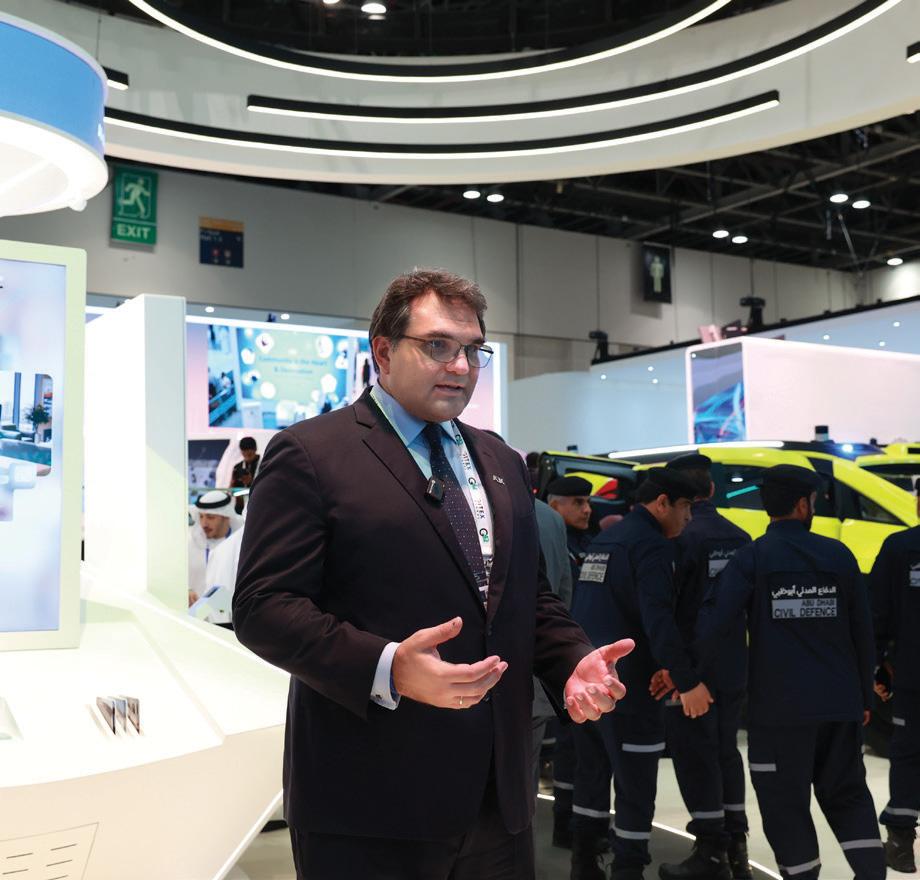
Abu Dhabi Securities Exchange (ADX) made a strong return to GITEX GLOBAL this year, underscoring its commitment to Abu Dhabi’s digital transformation goals. The exchange unveiled three major AI-driven solutions designed to simplify investor interactions, streamline internal operations, and enhance accessibility through the TAMM platform. In this conversation, Marios Kampouridis, chief technology and digital officer (CTDO) discusses how ADX is positioning itself as a digital-first exchange, balancing innovation with regulatory rigor, and embracing AI’s transformative potential.
It’s been great for ADX. We are very proud to announce three new AI initiatives that have come to the market. These initiatives are very much in sync with Abu Dhabi’s digital strategy. Our goal is to launch solutions for investors and issuers to make their lives easier and position the exchange as a digitalfirst, key hub.
You unveiled three specific AI solutions at the tech event. Can you run us through the key function of each of these tools?
We launched the three following tools that provide friendliness, ease of use, and more insightful detail for all stakeholders.
AI Financial Insights: This tool takes lengthy financial statements (sometimes more than 100 pages) and uses an AI agent to talk through the key points, highlighting specific references in the document. A major advantage is that you can pause the agent and ask any question, such as comparing net revenue across different years, cutting analysis time from hours to minutes.
I believe that in a very small number of years — single digits — we will see routine and mundane traditional jobs start to be done better through AI. This
will allow humans to focus on less mundane tasks, elevating business output.”
AI Court Order Agent: Used by our post-trade teams internally, this solution addresses the significant overhead of processing court orders. The agent can analyse the court order, take action, email the concerned party, and close the case in just five minutes, dramatically down from the usual 30 minutes.
TAMM for ADX Investors: We’re integrating with TAMM, Abu Dhabi’s unified government services platform. As an investor, you will be able to start trading, see your specific portfolio status and, in the longer term, subscribe to IPOs. Non-investors can also create an account. Crucially, you can query an AI agent within TAMM for an insightful knowledge base, comparing your portfolio versus the market or specific assets versus others.
TECHNOLOGY
As you roll out these powerful tools, how does ADX balance the need for rapid innovation with stringent security and regulatory considerations?
We are always very close with both the regulator and our security team. We use spring-based methodologies that ensure security is at the heart of everything we do daily. We do not leave the security assessment for the end; instead, we work with security at every milestone, allowing us to continuously improve and stay in line with the necessary standards.
As a CTDO, what is your perspective on how AI will change the landscape of traditional jobs and business in the coming years?
AI is here to stay, and I don’t believe this is a bubble like the early 2000s, as the technology is being proven daily with use cases that make a serious impact on productivity. I believe that in a very small number of years — single digits — we will see routine and mundane traditional jobs start to be done better through AI. This will allow humans to focus on less mundane tasks, elevating business output.
Where do you see the biggest challenges or negatives in the current deployment of AI for a financial institution?
One major challenge is that while AI can deliver something I might traditionally take a month to do in five minutes, it’s often “not mature enough” to deliver it exactly how I need it, especially concerning security and regulation. This creates significant overhead because it takes more time to “clean up” after it. We have to ‘babysit it’ to ensure the code quality is up to standard for financial applications.
What is your vision for helping ADX be seen as a digital-first exchange globally?
Our job remains finance and exchange, and we take great pride in our history and what we’ve achieved over the last 25 years. Over the last three years, we have brought ADX to the forefront using cutting-edge trading engines and platforms. My biggest focus now is to keep up with the traditional way of being in business while continuously putting in innovative and productive solutions to help my teams and the business produce better products in the coming years.
Finally, what is the one phrase that always brings you focus the pace of things gets frenetic?
Look at the foundation and remember the fundamentals — it always pays off.
25 YEARS AND COUNTING:
ADX ACHIEVES KEY MILESTONES
SINCE 2020, IPOS ON THE ADX HAVE RAISED ABOUT DHS59BN, SUPPORTED BY STRONG DEMAND AND STEADY ECONOMIC GROWTH
By Neesha Salian
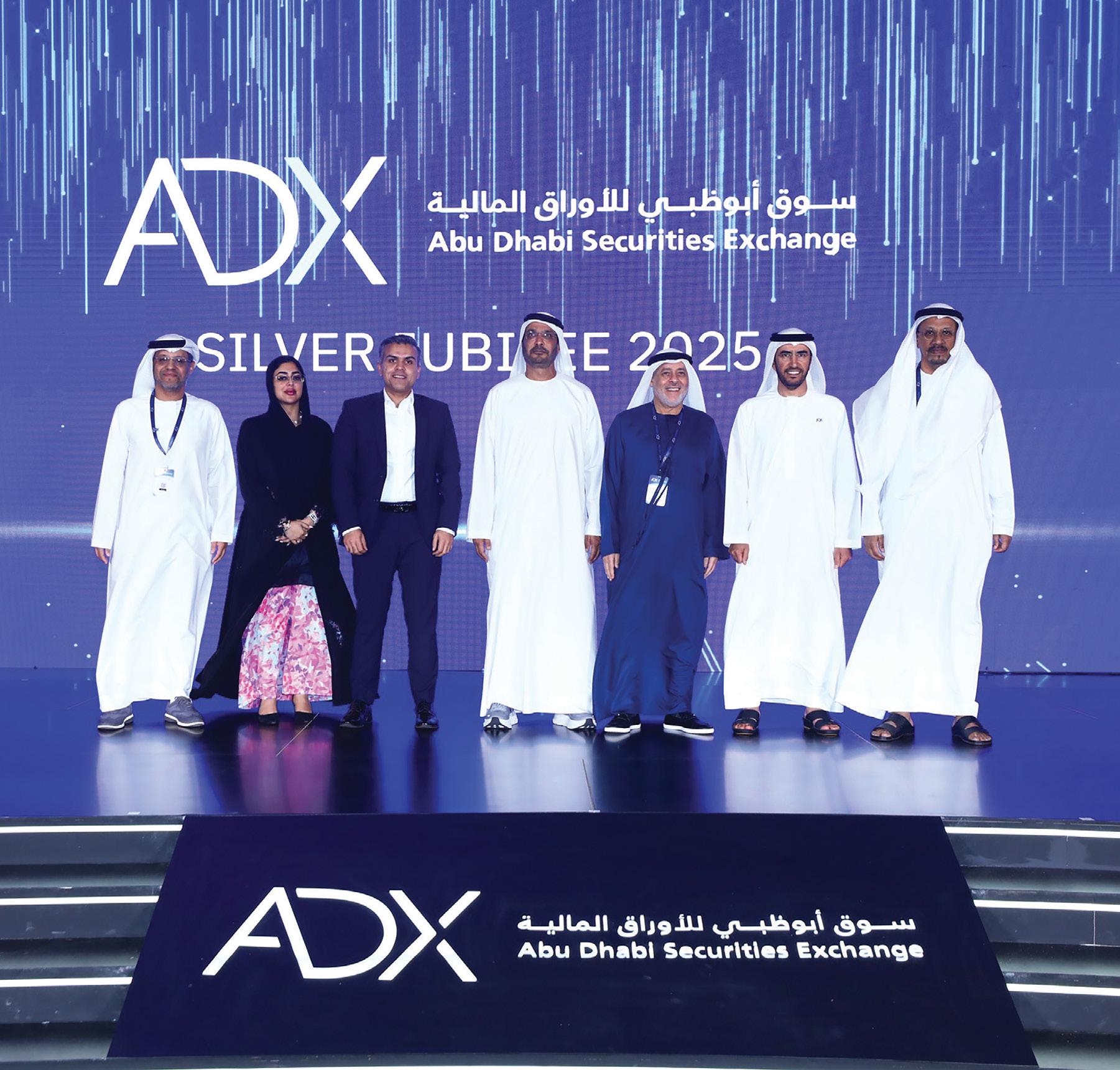
THE ABU DHABI Securities Exchange (ADX) marked its 25th anniversary recently, highlighting its transformation from a young domestic bourse into one of the world’s top 20 exchanges by market value. Founded in 2000, the ADX has expanded from 12 listings to more than 200 securities and now exceeds Dhs3tn in market capitalisation.
The exchange has 1.2 million investors from over 200 nationalities, reinforcing its role as a key entry point for global capital into the UAE.
Earlier this year, the exchange formed the ADX Group, bringing together Abu Dhabi Clear and the Abu Dhabi Central Securities Depository.
The move is intended to streamline post-trade services and support Abu Dhabi’s plans to build a deeper and more competitive financial ecosystem.
Marking the milestone, Ghannam Al Mazrouei, chairman, the ADX Group, said: “Since our establishment in 2000, the ADX has served as a cornerstone supporting Abu Dhabi’s ambitious vision for a diversified, sustainable, and knowledge-based economy. Our market’s evolution has been extraordinary as a young exchange and financial sector. I remember the buzz when the ADX went “live” in November 2000. The first trade, from just 12 listed companies with only local investors, the ADX is now home to over 200 listed securities, serving global investors over 200 nationalities, and turning around a trading value of more than Dhs1bn daily.”
“The past 25 years reflect a journey of resilience, innovation and progress,” group CEO Abdulla Salem Alnuaimi said. “Our focus now is to build on this foundation, expand products, deepen liquidity and embrace technology.” Abu Dhabi’s capital markets have accelerated sharply in recent years. Since 2020, IPOs on the ADX have raised about Dhs59bn, supported by strong demand and
Since our establishment in 2000, the ADX has served as a cornerstone supporting Abu Dhabi’s ambitious vision for a diversified, sustainable, and knowledge-based economy. Our market’s evolution has been extraordinary as a young exchange and financial sector.”
Dhs2.5tn
OVER THE SAME PERIOD, WITH FOREIGN INVESTORS EXCEEDING DHS1.2TN UAE NATIONALS HAVE
steady economic growth. In 2023 alone, proceeds reached around Dhs18bn, placing the market among the world’s most active.
Nearly Dhs12.8bn were raised in 2024.
Dividend payouts have also risen. Listed companies have distributed more than Dhs320bn in cash dividends since 2020, delivering a compound annual growth rate of more than 33 per cent.
ADX MARKS MILESTONE ANNIVERSARY
To mark its anniversary, the ADX plans to introduce the FTSE ADX Dividend Stars Index, designed to track companies with strong dividend records.
Foreign and institutional participation has grown steadily. Since joining the MSCI Emerging Markets Index in 2014, the exchange has attracted foreign net investment of more than Dhs134bn.
Between 2020 and 2025, institutional investors generated over Dhs3tn in trading activity, while net inflows topped Dhs40bn.
UAE nationals have traded more than Dhs2.5tn over the same period, with foreign investors exceeding Dhs1.2tn.
The financial exchange is also pushing regional connectivity. Its Tabadul platform links six Middle East markets, widening access for issuers and investors and strengthening Abu Dhabi’s position in cross-border capital flows.
Innovation remains a key pillar. The exchange has introduced several regional firsts, including ETFs, foreign sovereign bonds, blockchainenabled e-voting and a blockchain-based digital bond. It continues to invest in digital market infrastructure and trading technology as it prepares for its next phase of growth.
Alongside market development, the financial exchange is marking the anniversary with initiatives focused on financial literacy and sustainability. They include the launch of an Intelligence Lab at Liwa University, support for female investor programmes, and planting Ghaf trees to honour current and former staff and stakeholders.
The exchange said it will continue to broaden investment options, advance market infrastructure and reinforce governance standards as it moves into its next quarter-century.
INSIDE ABU DHABI’S POLO CLASSIC CUP
WHERE LUXURY, LEADERS, AND CAPITAL CONVERGE
WITH CURATED EXPERIENCES AND TOP-TIER MATCHES, THE POLO CLASSIC CUP UNDERSCORES ABU DHABI’S RISING INFLUENCE IN GLOBAL FINANCE, CULTURE, AND SPORT
By Nida Sohail
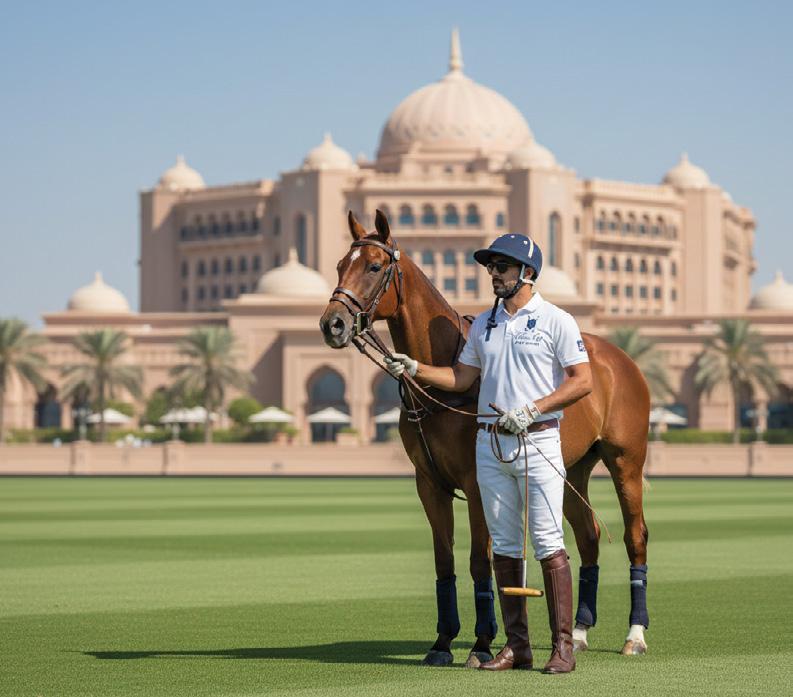
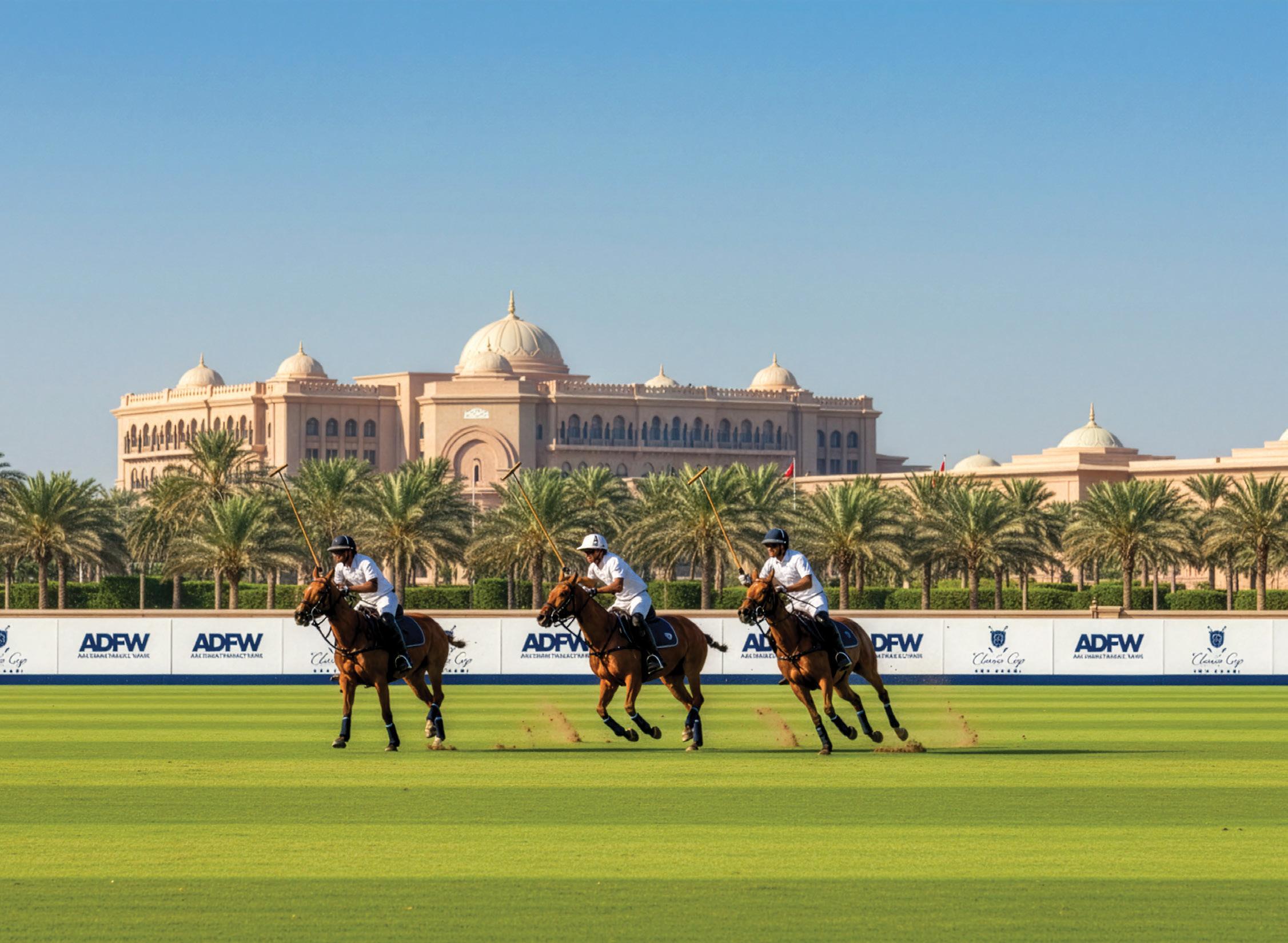
THIS DECEMBER, the inaugural Polo Classic Cup will make its debut at the Emirates Palace Mandarin Oriental, officially marking the Speakers’ Welcome for Abu Dhabi Finance Week (ADFW). Positioned at the intersection of sport, culture, and global business, the event is set to convene international leaders, investors, and family offices for a day designed to blend refined leisure with high-value networking.
Conceived as a relaxed yet sophisticated prelude to the intensive schedule of ADFW, the Polo Classic Cup aims to provide a distinctive environment for senior decisionmakers to connect before a week of financial discussions, strategic announcements, and deal-making set to influence the trajectory of global markets.
The choice of the Emirates Palace Mandarin Oriental, one of the region’s most iconic luxury destinations, reinforces Abu Dhabi’s ambition to elevate both its hospitality and business credentials on the world stage.
A REFINED PLATFORM FOR GLOBAL ENGAGEMENT
“We’re delighted to be working with the Abu Dhabi Finance Week team, Emirates Palace and Ghatnoot Polo Club and our incredible sponsors to deliver this world-class experience,” says Louise Karim, CMO of AIOKA. “The Polo Classic Cup is where business influence meets lifestyle elegance.” Hosted by AIOKA, the event reimagines polo as a contemporary platform for international collaboration and strategic engagement. Curated hospitality, cultural showcases, and world-class polo come together to create an atmosphere that celebrates both tradition and innovation, while reinforcing Abu Dhabi’s positioning as a nexus of global business and premium experiences.
“This is more than an event, it’s an opportunity to bring global leaders together in a way that
strengthens relationships and builds lasting value,” adds Max Palethrope, CEO of AIOKA.
“Together with our sponsors, who are eager to engage with this highly influential audience, we’re setting a new benchmark for luxury sporting experiences on the world stage.”
A SHOWCASE OF SPORT, STRATEGY, AND SOCIAL CAPITAL
Scheduled for December 7, the Polo Classic Cup sits at the heart of ADFW, complementing the event’s mission to connect global financial players with the UAE’s fast-growing economic landscape. Renowned for merging top-tier sport with exclusive hospitality and strategic networking, the gathering is expected to attract influential investors, business leaders, and polo enthusiasts from across the world.
At its core, the Polo Classic Cup is designed not merely as a tournament but as a platform for dialogue, an opportunity for finance and sports to intersect within a setting that reflects Abu Dhabi’s cultural depth and economic dynamism.
Attendees will witness elite polo matches played by top international teams, complemented by VIP access and fine dining experiences that highlight the grandeur and heritage of the Emirates Palace.
A KEY FIXTURE IN THE UAE’S EXPANDING POLO ECOSYSTEM
The tournament is part of the UAE’s broader and rapidly growing polo scene, which is overseen by the UAE Polo Federation and supported by prominent institutions such as Ghantoot Racing & Polo Club and Al Habtoor Polo Club. Within this ecosystem, the Polo Classic Cup distinguishes itself through its blend of sport, culture, and business networking, reinforcing Abu Dhabi’s influence in the global polo community. Alongside major tournaments such as the HH President of the UAE Polo Cup, the Polo Classic Cup contributes to an increasingly vibrant polo calendar in the capital. Its association with Abu Dhabi Finance Week further elevates its importance, making it a focal point for discussions that span international finance, investment strategy, and cross-border partnerships.
This is more than an event, it’s an opportunity to bring global leaders together in a way that strengthens relationships and builds lasting value.”
POSITIONING ABU DHABI AS A GLOBAL HUB
As an exclusive annual event curated by AIOKA, the Polo Classic Cup underscores Abu Dhabi’s reputation as a global center for both business and sport. By convening leaders, investors, and family offices in a setting that encourages meaningful conversation, the tournament supports the emirate’s broader ambition to strengthen its position within the global financial landscape while showcasing its commitment to cultural excellence and sporting prestige. Beyond the matches themselves, the event serves as a powerful symbol of Abu Dhabi’s ability to merge tradition with innovation, drawing an international audience and reinforcing the city’s status as a hub for equestrian excellence, luxury experiences, and global business leadership.
Pics: Supplied
“THE FUTURE IS HUMANS WITH AI, NOT HUMANS VS AI”
UNLIKE MOST AGENCIES
EXPERIMENTING WITH AI PLUGINS OR BOLT-ON TOOLS, HUM(AI)N ASSETS IS RE-ENGINEERING THE WORKFLOW ITSELF, REVEALS FOUNDER JEREMY LOPEZ
By Rajiv Pillai
HUM(AI)N ASSETS is emerging at a pivotal moment for the global creative sector, where brands and creators are under pressure to produce high-quality content at unprecedented speed. The UAE-based company, founded by former Everdome CEO Jeremy Lopez, is building what he describes as “a creative engine that removes the friction between imagination and execution.” By merging AI-driven scalability with human-led storytelling, the company is positioning itself as a new kind of creative infrastructure for an industry being reshaped by artificial intelligence.
For Lopez, Hum(AI)n Assets is not just another AI-content shop. It represents a structural rethinking of how creative work gets done. “Traditional studios excel at their craft but often move at a different pace. AI-content studios can generate volume but sometimes lack the refinement that makes content truly work,” he says. “We are building out the middle ground.”
This middle ground is built on a simple premise: AI is a tool, not a replacement. As Lopez puts it, “We know when to use AI, and when to go old school.” That pragmatism underpins Hum(AI)n Assets’ value proposition to brands
and creators who increasingly need speed without compromising substance.
FROM THE METAVERSE TO REAL-WORLD UTILITY
Lopez’s move from leading a metaverse venture to building an AI-driven creative infrastructure might seem like a pivot, but he sees it as an evolution shaped by hard-won experience. At Everdome, the team created “hyper-realistic virtual worlds that were technically brilliant and visually stunning,” yet the market wasn’t ready for mass adoption.
The takeaway, he says, was clear: futuristic bets need present-day utility. “The lesson wasn’t ‘don’t be ambitious.’ It was: plan and future proof for coming tech adoption, but be sure to build on today’s technology for today’s needs.” Unlike most agencies experimenting with AI plugins or bolt-on tools, Hum(AI)n Assets is re-engineering the workflow itself. That means understanding precisely where AI accelerates value and where human judgment determines quality.
AI contributes in three areas: speed, variation and raw material generation. But humans, Lopez stresses, lead on the parts that shape outcomes. “AI can’t tell you which shot captures the energy of an event. It can’t write copy that understands cultural nuance.”
SOLVING THE REAL GAP IN THE MARKET: EXECUTION
As organisations race to adopt AI, many assume the technology itself is the solution. Lopez argues the opposite. “The gap in the market is execution, not technology,” he says. Most agencies still operate in legacy production cycles built for pre-AI workflows, which creates cost and speed inefficiencies that brands can no longer afford.
Hum(AI)n Assets’ approach is built around an endto-end system that feeds AI “exactly what it needs to function—the right inputs, the right context, the right constraints.” This foundation is being shaped by a continuously learning infrastructure: every brief, edit and decision is fed into the company’s internal Agentic Asset Prediction Model, or AAPM.
Described by Lopez as “the beating heart of our platform,” the AAPM assigns tasks, manages velocity and optimises workflows as the system grows. Rather than promising fully autonomous production, Hum(AI)n Assets is building a model that evolves with human use—a futureproof asset for creators, enterprises and investors.
Lopez’s Web3 background also informs a distinct approach to community and payments. While Hum(AI)n Assets is not a Web3-native company, it has a dedicated sub-brand, Hum(AI)n Web3, built to serve blockchain projects and introduce optional token-based incentives.
He emphasises that participation is optional: “You don’t need to engage with Web3 or tokens to work with us.” Instead, blockchain offers speed, transparency and community engagement where relevant. “Token holders become advocates, testers, and community builders because they have a vested interest in the platform’s success.”
UAE AS THE LAUNCHPAD
The company’s decision to base operations in the UAE is strategic. Lopez notes that the country’s regulatory clarity
and government-backed AI agenda create a rare innovation environment. “The UAE is taking huge steps to become the Silicon Valley of AI,” he says. That translates into early-adopter clients, faster regulatory approvals, and a talent ecosystem comfortable experimenting with emerging technologies.
Hum(AI)n Assets challenges the idea that human involvement must reduce speed. Lopez believes speed comes from intelligent workflow design, not automation alone. “We don’t have humans reviewing every AI output just to check a box,” he says. Instead, they focus on the decision points that matter: brand alignment, emotional impact, strategic direction.
This is not “human-in-the-loop” as a slogan but as a genuine design philosophy. “The speed comes from removing unnecessary steps, not from removing human judgment,” he says.
THE NEXT TWO YEARS: CREATIVE INFRASTRUCTURE AT SCALE
Lopez envisions Hum(AI)n Assets becoming the default creative infrastructure for companies that need to move fast. That includes brands, agencies and emerging tech firms who want to integrate AI efficiently rather than reactively.
Looking at the industry broadly, he predicts a three-tier structure: premium human-only studios, AI-only volume producers, and hybrid systems like Hum(AI)n Assets that combine “speed and soul.”
His ultimate take is clear: “The future isn’t human vs. AI. It’s about humans with AI competing against humans without AI. And I know which side I’d bet on.”
Jeremy Lopez
THE GREAT SHIFT: HOW SCOREBOARD.AI IS REDEFINING SUSTAINABILITY IN SPORT
AS THE GLOBAL SPORTS INDUSTRY ENTERS ITS ‘WPP MOMENT’, SCOREBOARD.AI POSITIONS ITSELF AS THE NEW POWER PLAYER — TRANSFORMING SUSTAINABILITY FROM A COST CENTRE INTO COMMERCIAL PERFORMANCE
By Gulf Business
OR DECADES, sport operated on a familiar and comfortable playbook. Federations hired agencies, agencies crafted purpose-driven narratives, and brands signed off on glossy campaigns that ticked CSR boxes without ever proving measurable impact. Sustainability was a story — not a scoreboard. That era is ending.
A profound shift is reshaping the economics of global sport. Investors now demand guaranteed returns. Regulators insist on verifiable compliance. Sponsors — once content with virtue-signalling campaigns — want validated ESG outcomes, not warm-and-fuzzy messaging. The old model, built on narrative rather than numbers, is no longer fit for purpose.
Legacy agencies are struggling most. For years, they operated in an environment where sustainability lived in pitch decks, not in performance metrics. Today’s stakeholders, however, want accountability, transparency, and commercial uplift. The traditional consultancy toolkit simply cannot deliver the scale, speed, or accuracy required in a data-driven world.
This is the gap into which Scoreboard.ai steps — and the reason many in the industry describe this moment as sport’s equivalent of WPP’s rise in advertising: a structural reset powered by data, automation, and measurable outcomes. Founded by globally recognised sustainability specialists and sports-industry veterans, Scoreboard.ai blends more than 60 years of ESG expertise with 30 years of sports-management insight. The result is an automated sustainability engine designed specifically for the sports sector — a sector where compliance needs are rising fast, yet operational capacity remains thin.
The company’s model is built on three integrated components.
First, a data engine capable of crowdsourcing, validating, and structuring information at a level of rigour sports organisations rarely achieve alone.
Second, a commercial AI agent that turns this data into new revenue streams — from sponsor integration to performance-backed activation strategies.
Third, Scoreboard Capital, an investment arm that finances adoption and accelerates industry-wide uptake.
What previously required 90 days of manual work — often delivered by multiple agencies — can now be executed in 90 minutes. This automation is not just about efficiency; it is about transforming sustainability into a measurable, profitable asset.
The message is direct, according to Sean Morris, founder and CEO of Scoreboard.ai: “You invested in sustainability to compete — but your costs went up, not your revenues. Scoreboard makes sustainability profitable.”
“AI can and should be used to make sustainability measurable, profitable, and actionable,” says Morris.
As the industry recalibrates, Scoreboard.ai is positioning itself as the partner that turns ESG from obligation into opportunity. Fast, accurate, compliance-ready, and commercially focused, it reflects a new era where performance — not narrative — becomes the true measure of impact.
More information is available at www.myscoreboard.ai.
THIRD-PARTY RISK, BOARD OVERSIGHT AND CYBER RESILIENCE
THE FSRA’S FRAMEWORK IS AMBITIOUS, BUT IT’S ALSO ACHIEVABLE. WITH THE RIGHT STRATEGY, FIRMS CAN MEET THE JANUARY 2026 DEADLINE AND POSITION THEMSELVES AS LEADERS IN CYBERSECURITY RESILIENCE
By Clare Curtis
YBERSECURITY is now a central pillar of regulatory strategy in the UAE. With the Financial Action Task Force’s Mutual Evaluation approaching in 2026, national and sector-level regulators are sharpening their focus on how firms manage cyber risk.
Most recently, on July 29 earlier this year, the Financial Services Regulatory Authority (FSRA) of Abu Dhabi Global Market (ADGM) introduced a strengthened cybersecurity framework designed to elevate how financial firms manage cyber risk. These new rules are based on the guidance provided to firms and shaped by industry feedback from Consultation Paper No. 3 of 2025.
The new rules mark a shift: cybersecurity is no longer just a technical concern; it’s a strategic imperative.
With a compliance deadline of January 31, 2026, firms operating in or entering ADGM must act now. The FSRA’s expectations are clear, and the time to prepare is limited.
A FRAMEWORK THAT REFLECTS TODAY’S RISK LANDSCAPE
The cornerstone of the FSRA’s update is a documented, board-approved Cyber Risk Management Framework (CRMF). Firms’ investment exchanges and clearing houses regulated by the FSRA must implement a CRMF that is reviewed annually and tailored to the firm’s unique risk profile.
It is important to note that the FSRA intends to apply a risk-based approach that reflects the nature, scale, and complexity of the activities conducted by the regulated entities. Where applicable, it will take into account the cybersecurity controls implemented at the group level.
The CRMF must:
Identify and assess cyber risks across the organisation. Define clear roles and responsibilities, including incident response protocols.
Protect Information and Communication Technology (ICT) assets through proportionate controls.
Clare Curtis
Prepare the firm to respond effectively to cyber incidents.
The FSRA’s expectations go beyond basic compliance. Rather than offering a checklist of controls, the framework calls for a strategic, risk-based approach; one that enables firms to build resilient programs capable of adapting to evolving threats.
THIRD-PARTY RISK CREATES ACCOUNTABILITY BEYOND THE PERIMETER
One of the most notable shifts in the FSRA’s approach is its emphasis on third-party risk. This includes: Conducting due diligence and ongoing monitoring. Establishing contracts that require incident notification and cooperation. Maintaining an inventory of ICT providers and assessing their risk exposure.
This requirement aligns with a broader global shift in regulatory focus. Increasingly, regulators are holding firms accountable for the cybersecurity practices of their third-party providers.
CYBER RISK IN THE BOARDROOM
Governance matters. The FSRA’s framework places cybersecurity oversight squarely in the hands of senior leadership. Governing bodies and senior management must ensure that cyber
risks are identified, addressed, and managed by qualified individuals.
This shift highlights the growing role of cybersecurity in enterprise-wide risk management. It’s no longer confined to IT teams.
Cyber threats are now among the top risks facing financial institutions globally.
Boards must recognise that cybersecurity is not just a technical issue; it’s a business risk with direct implications for financial stability, reputation, and regulatory exposure. Effective oversight now requires active engagement from senior leadership and the board. Firms must demonstrate that their leaders are informed, accountable, and equipped to guide cyber risk strategies.
PROTECTING ICT ASSETS IS A LAYERED APPROACH
The FSRA outlines specific expectations for protecting ICT assets, including:
Anti-malware software and network security controls. Access management and multi-factor authentication. Encryption of data in transit, at rest, and at destruction. Physical access restrictions to data centres. Annual cybersecurity training for staff.
These controls are foundational, but their effectiveness depends on how they’re implemented, monitored, and tested. The FSRA requires resilience testing, including penetration testing and vulnerability assessments, regularly, with internet-facing systems tested at least once a year. Firms are expected to remediate any issues identified. Incident response requires speed, structure and transparency
Firms must establish and maintain a formal incident response plan that is tested and updated regularly. In the event of a material cyber incident, the FSRA must be notified within 24 hours of detection.
This requirement underscores the importance of preparedness. Firms must be able to detect, contain, and recover from incidents quickly, while maintaining transparency with regulators.
PREPARING FOR THE JANUARY 2026 DEADLINE
With the compliance deadline approaching, it’s recommended that firms take the following steps:
01 Conduct a gap analysis between current practices and FSRA requirements. Identify areas for improvement and develop a remediation plan.
02 Review third-party risk management frameworks, ensuring contracts include cybersecurity obligations and vendors are monitored appropriately.
03 Perform a cyber risk assessment, including penetration testing and vulnerability scans, to identify weaknesses.
04 Update and test the incident response plan, including tabletop exercises to ensure readiness for the FSRA’s 24-hour reporting requirement.
These steps go beyond regulatory compliance, and they help strengthen stakeholder confidence and reinforce a firm’s commitment to operational resilience in line with the FSRA’s risk-based approach.
COMPLIANCE AS A CATALYST FOR RESILIENCE
The FSRA’s framework arrives at a time when cyber threats are escalating in scale and sophistication, with attackers increasingly using AI-enhanced phishing and deepfake technology.
Ransomware attacks have also surged, targeting financial institutions and exploiting legacy systems and third-party vulnerabilities. These high-profile incidents are a wake-up call for boards and executive teams. Investors, regulators, and customers now expect firms to demonstrate cyber resilience.
ESG frameworks increasingly include cybersecurity as a governance metric, and global regulations such as the Digital Operational Resilience Act (DORA) and the Network and Information Security Directive 2 (NIS2) make board members personally accountable for cyber oversight. Cyber risk is no longer a siloed concern. It’s a key driver of stakeholder trust and enterprisewide governance.
The FSRA’s framework is ambitious, but it’s also achievable. With the right strategy, firms can meet the January 2026 deadline and position themselves as leaders in cybersecurity resilience.
Clare Curtis is head of ACA Effecta, a division of ACA Group specialising in tailored support for the UAE’s unique regulatory landscape.
KOREA’S HANWHA FINANCE STEPS ONTO THE MIDDLE EAST FINANCIAL STAGE AT ADFW 2025
BACKED BY $130BN IN GLOBAL ASSETS, HANWHA FINANCE USES ADFW 2025 TO SHOWCASE ITS EXPANDING INTERNATIONAL STRATEGY AND ITS GROWING ROLE AS A BRIDGE BETWEEN KOREA AND THE MIDDLE EAST
By Gulf Business
ANWHA FINANCE is strengthening its presence on the global financial stage — particularly in the Middle East — by participating as a Premier Partner at Abu Dhabi Finance Week (ADFW) 2025. Managing $130bn in assets across Korea, Southeast Asia, the United States, and the MENA, Hanwha Finance has joined the event as a leading representative of K-finance.
Hanwha Finance is the financial services division of Hanwha Group, one of South Korea’s most prominent and diversified conglomerates. Hanwha operates across aerospace and defence, energy, ocean and materials, finance, machinery, and retail and services. This broad industrial portfolio and global network provide a strong foundation for Hanwha Finance as it expands into international financial markets. Its financial portfolio spans life insurance, general insurance, asset management, securities and a nationwide financial advisory network. Its major affiliates include Hanwha Life, Hanwha General Insurance, Hanwha Asset Management, Hanwha Investment & Securities and Hanwha Life Financial Services. Among them, Hanwha Life, Hanwha Asset Management and Hanwha Investment & Securities are participating in ADFW 2025 to highlight each business unit’s expertise and global strategies.
Hanwha Life has established a full-fledged financial platform in Indonesia by securing all necessary licences to operate locally as a comprehensive financial group. In the US, the company has expanded into the highly specialised equity clearing and settlement sector — an area accessible to only a select number of global financial institutions — strengthening both credibility and market expertise. Hanwha Asset Management and Hanwha Investment & Securities are also advancing their strategic shift toward the future of finance, building infrastructure for digital assets and tokenized securities, further reinforcing the group’s capabilities to participate in an event of this scale. In addition, Hanwha Finance has expanded into Japan, Vietnam, and Singapore, further solidifying its position as a global financial group.
Hanwha Finance’s decision to choose the UAE and ADFW reflects the region’s unique pace of financial innovation and its open regulatory environment. The UAE has established world-class institutional and technological foundations in digital assets, blockchain, Web3 and fintech, making it one of the fastest-advancing markets in the convergence of traditional and digital finance. With global conversations on financial transformation concentrated in one place, ADFW serves as an ideal platform for Hanwha Finance to present its future financial strategy.
On the opening day, Dong-won Kim, CGO (chief global officer) of Hanwha Life, will deliver a special keynote at the Global Markets Summit, highlighting the strengthening economic and financial ties between Korea and the UAE. He is expected to underscore Hanwha Finance’s role as a strategic financial partner connecting the two regions. The address marks a significant milestone in Hanwha Finance’s further expansion onto the global financial stage.
Throughout ADFW, Hanwha Finance will participate in key sessions to discuss global capital-market trends, private-market and GP stakes themes, and the transition toward digital and onchain financial infrastructure alongside leading financial institutions.
Hyek Woong Kwon, vice chairman and CEO of Hanwha Life under Hanwha Finance, said, “Hanwha Finance will continue to foster trusted collaboration between Abu Dhabi and Korea, enabling both sides to share strengths and grow together. ADFW marks an important step in our deeper participation in the global financial ecosystem as a reliable partner.”
SPECIAL FOCUS: ANAX CAPITAL’S RISE AS A NEW FORCE IN UAE FINANCIAL MARKETS
ANAX CAPITAL FINANCIAL MARKETS IS RAPIDLY EMERGING AS ONE OF THE UAE’S FASTEST-GROWING, FULLY REGULATED TRADING FIRMS. WITH A CATEGORY 1 LICENCE, A DHS30M CAPITAL BASE, AND A TECHNOLOGY-DRIVEN, INVESTOR-PROTECTION MODEL, THE DUBAI-HEADQUARTERED BROKER IS POSITIONING ITSELF AS A TRANSPARENT AND GLOBALLY CONNECTED GATEWAY TO MULTI-ASSET MARKETS
By Gulf Business
NAX
CAPITAL FINANCIAL MARKETS
is one of the UAE’s fastest-growing, fully regulated financial trading firms, operating under a Category 1 Licence from the Securities and Commodities Authority (SCA), UAE. Backed by a solid capital base of Dhs30m, the Dubai-headquartered firm delivers secure, transparent, and technologically advanced access to global financial markets including forex, precious metals, CFDs, cash equities, futures, and options.
A“The future of trading will be defined by those who can combine trust with innovation. Building ANAX Capital has always been about setting a higher benchmark for integrity in financial markets. Our goal is to give every client not just access but assurance: assurance that their trading journey is supported by transparency, responsibility, and a platform they can truly rely on,” said Tabinda Sanpal, founder and chairperson, ANAX Capital.
With institutional-grade infrastructure and a clientfirst service model, ANAX Capital has quickly earned attention from both regional and international investors. Located on Sheikh Zayed Road, Dubai, the company provides a seamless multi-asset trading experience, built on governance, strong risk controls, and a commitment to investor protection.
ANAX Capital’s vision is rooted in empowering traders with clarity, education, and responsible financial decision-making, supported by ongoing webinars, market insights, and professional guidance. As a UAE-regulated Category 1 broker, ANAX continues to reinforce its mission of shaping a secure, transparent, and globally connected trading environment for the region.
“Our commitment goes beyond market access; we are here to raise the standard of what responsible trading should look like in the region.
“By combining robust governance with advanced infrastructure, we aim to give every trader a fair, transparent, and seamless experience across global markets,” concluded Mitul Kapadia, chief operating officer, ANAX Capital.
ANAX Capital Financial Markets L.L.C Category 1
Licensed Broker, Regulated by the Securities and Commodities Authority, UAE. Licence No: 20200000258
ADGM AT 10: A DECADE OF RECORD GROWTH AND GLOBAL FINANCIAL SCALE
FROM 2015 TO 2025, ABU DHABI GLOBAL MARKET TRANSFORMED INTO ONE OF THE WORLD’S FASTEST-GROWING FINANCIAL CENTRES, EXPANDING ASSETS, LICENCES, FUNDS, AND WORKFORCE AT MARKET-LEADING RATES WHILE ATTRACTING INSTITUTIONS MANAGING TRILLIONS WORLDWIDE
$28.6TN
in global AUM managed by firms with ADGM presence
36,000+
from 131 to 308
154 FUND AND ASSET MANAGERS AUM UP 42% YOY
overseeing 209 funds in H1 2025
REGULATORY LEADERSHIP
FRAMEWORKS
ESTABLISHED FOR:
Virtual assets
DLT foundations
Fiat-referenced tokenisation
Alternative
investment funds
Private credit
Sustainable finance & ESG
WORKFORCE ACROSS THE DISTRICT in AUM (2015–2024) in fund activity and number of asset managers in active licences to 11,128 (mid-2025)
One of world’s
Plus regulatory tools including RegLab, Fintech & Digital Sandbox, AML & CFT frameworks Jurisdiction expanded 10x, now spanning 14.3m sqm across Al Maryah & Al Reem Islands
Photograph by Yousef Al Harmoodi
Rivoli Marina Mall, Abu Dhabi
Painting by Faisal Abdul Qader
AIOKA delivers exceptional premium hospitality and brand experiences across the global Grand Prix calendar. With more than a decade of expertise, curating elevated hospitality, immersive brand activations, and strategic