An insight into the news and trends shaping the region with perceptive commentary and analysis
Circle of influence
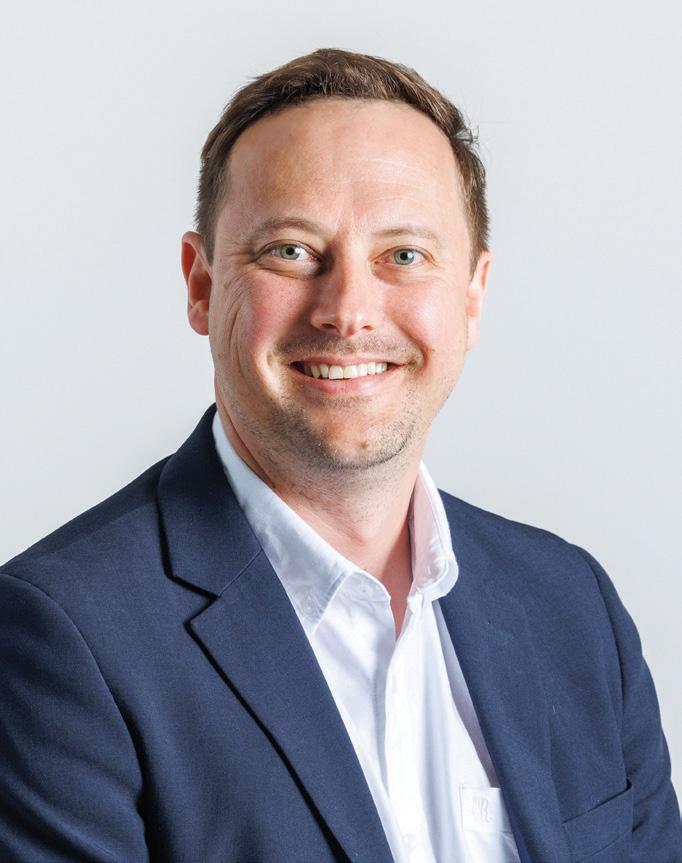
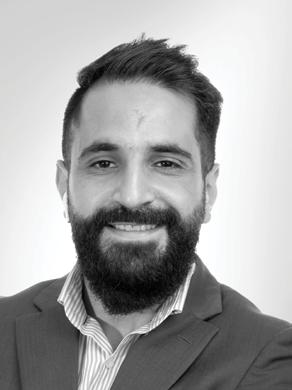
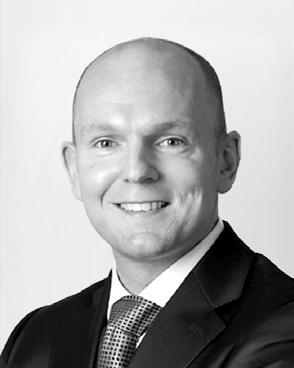
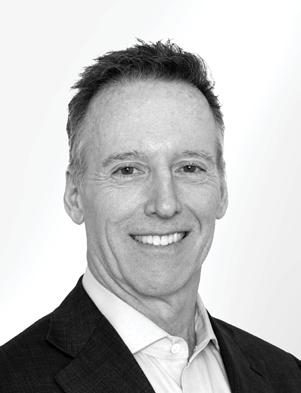
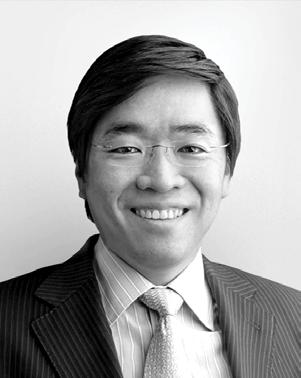
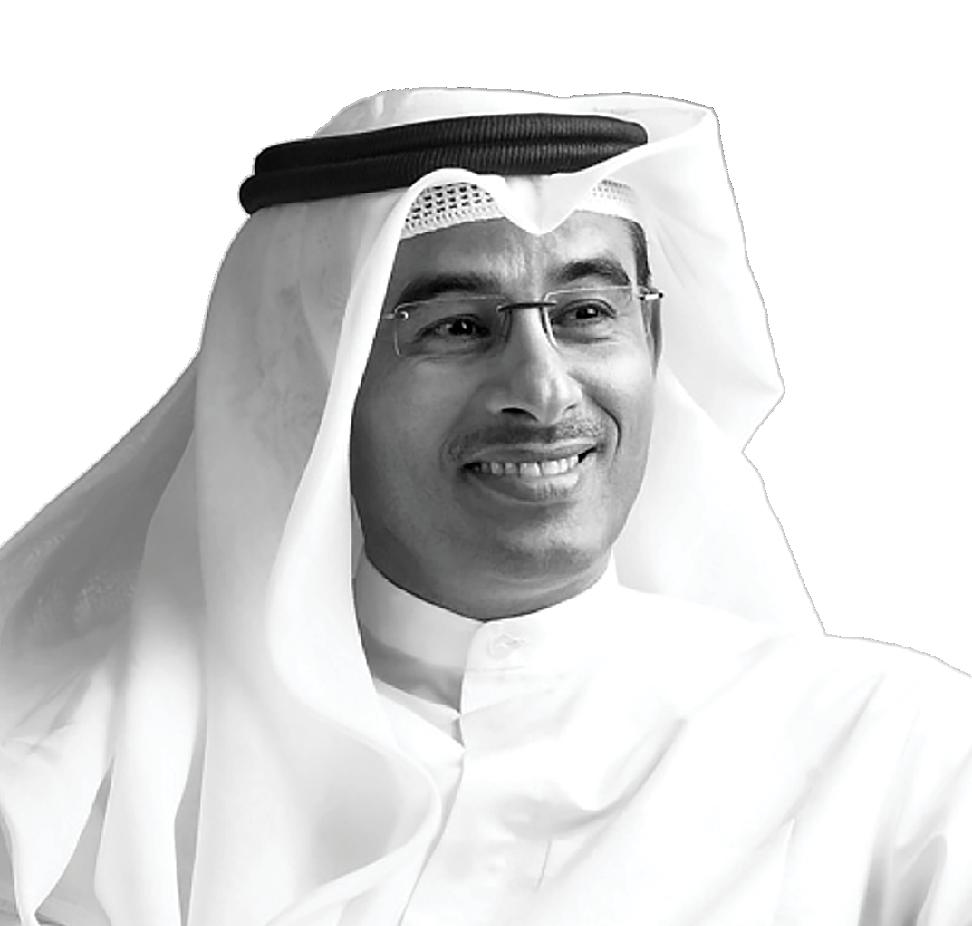
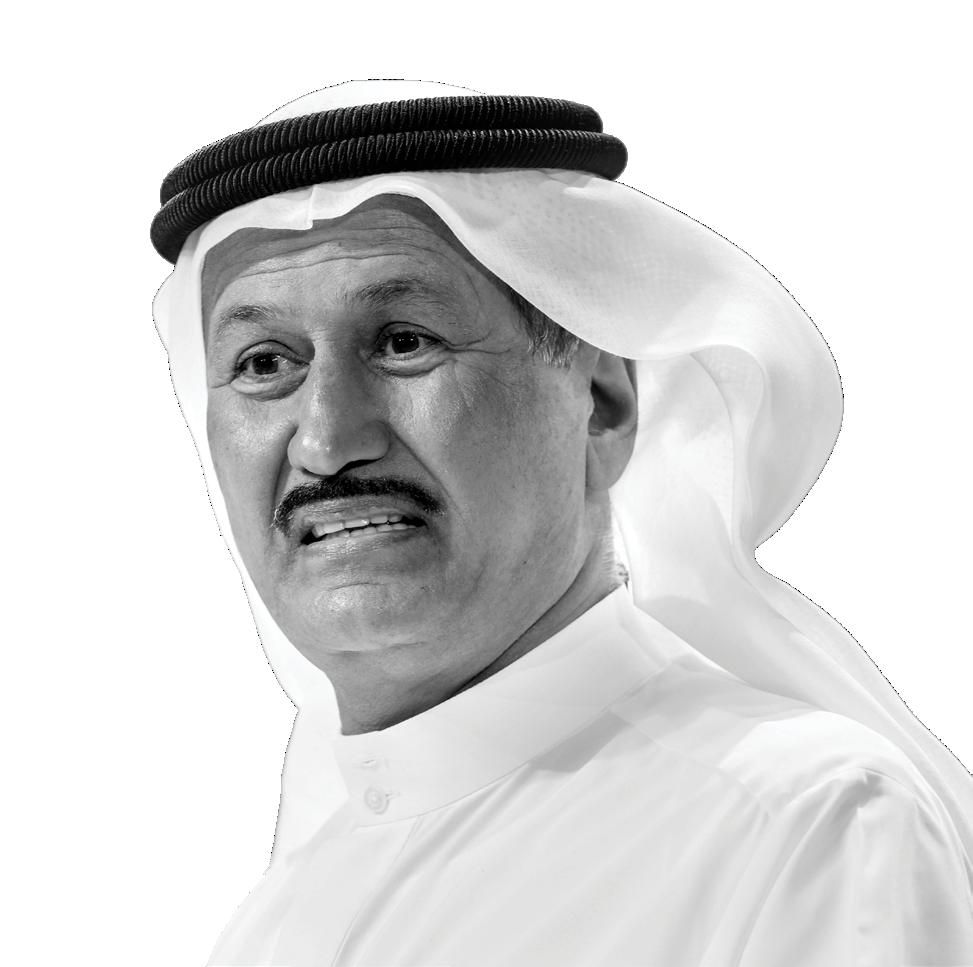
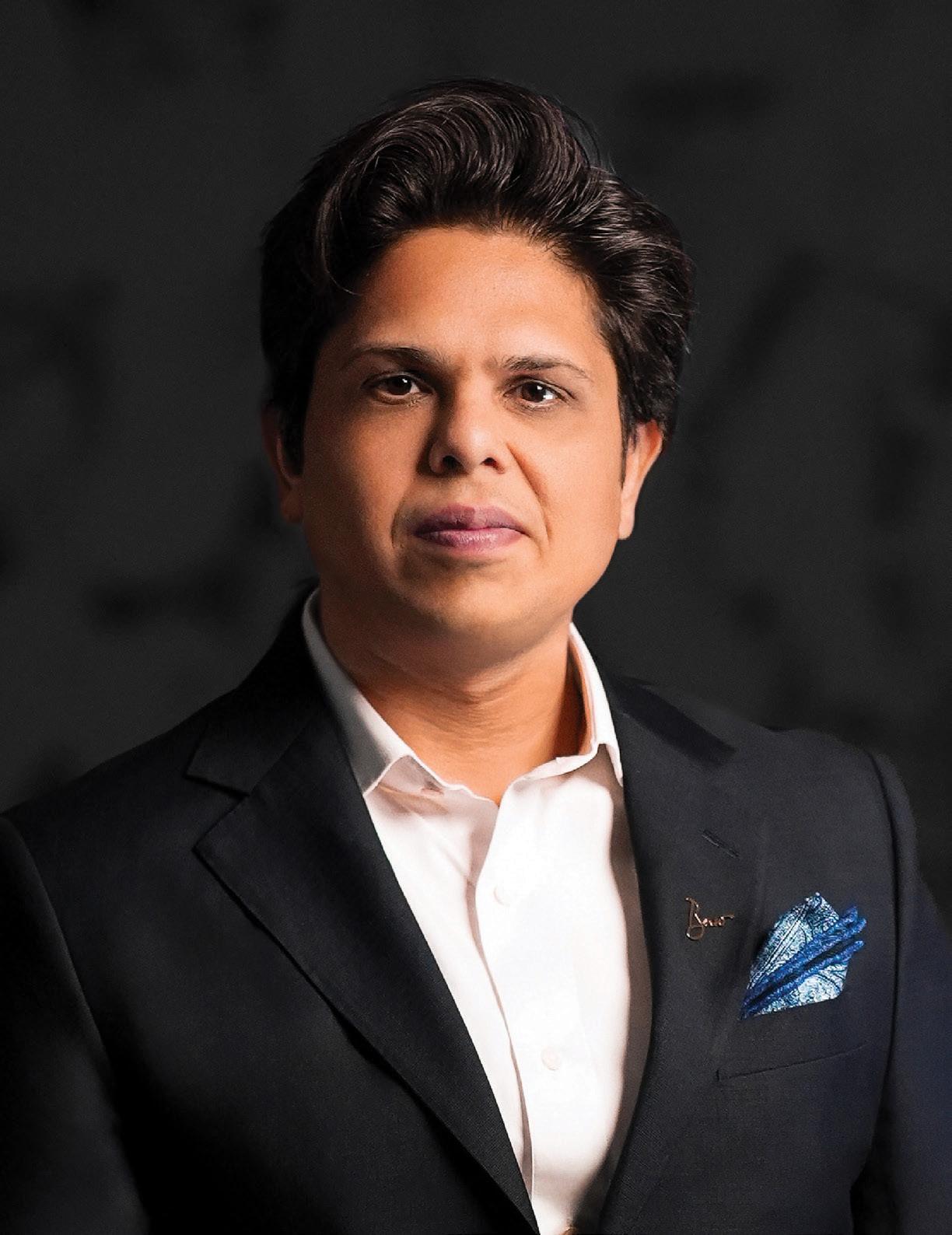
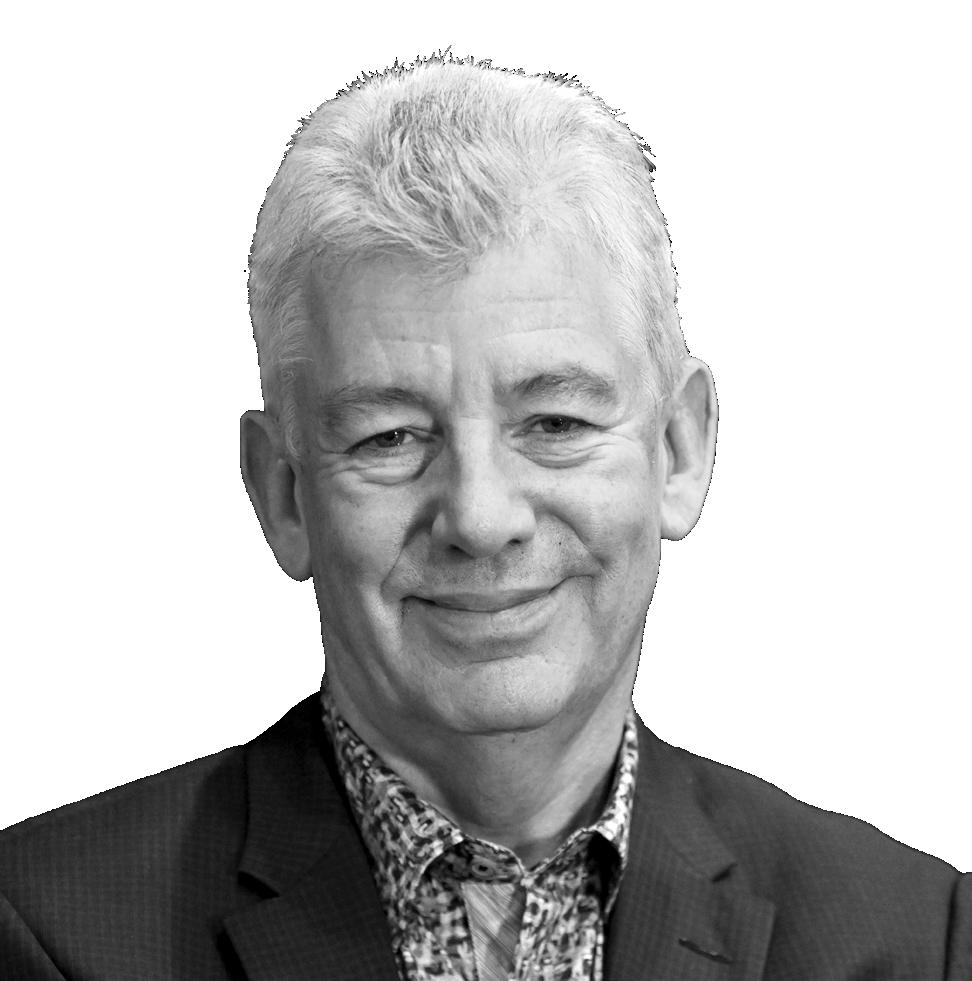
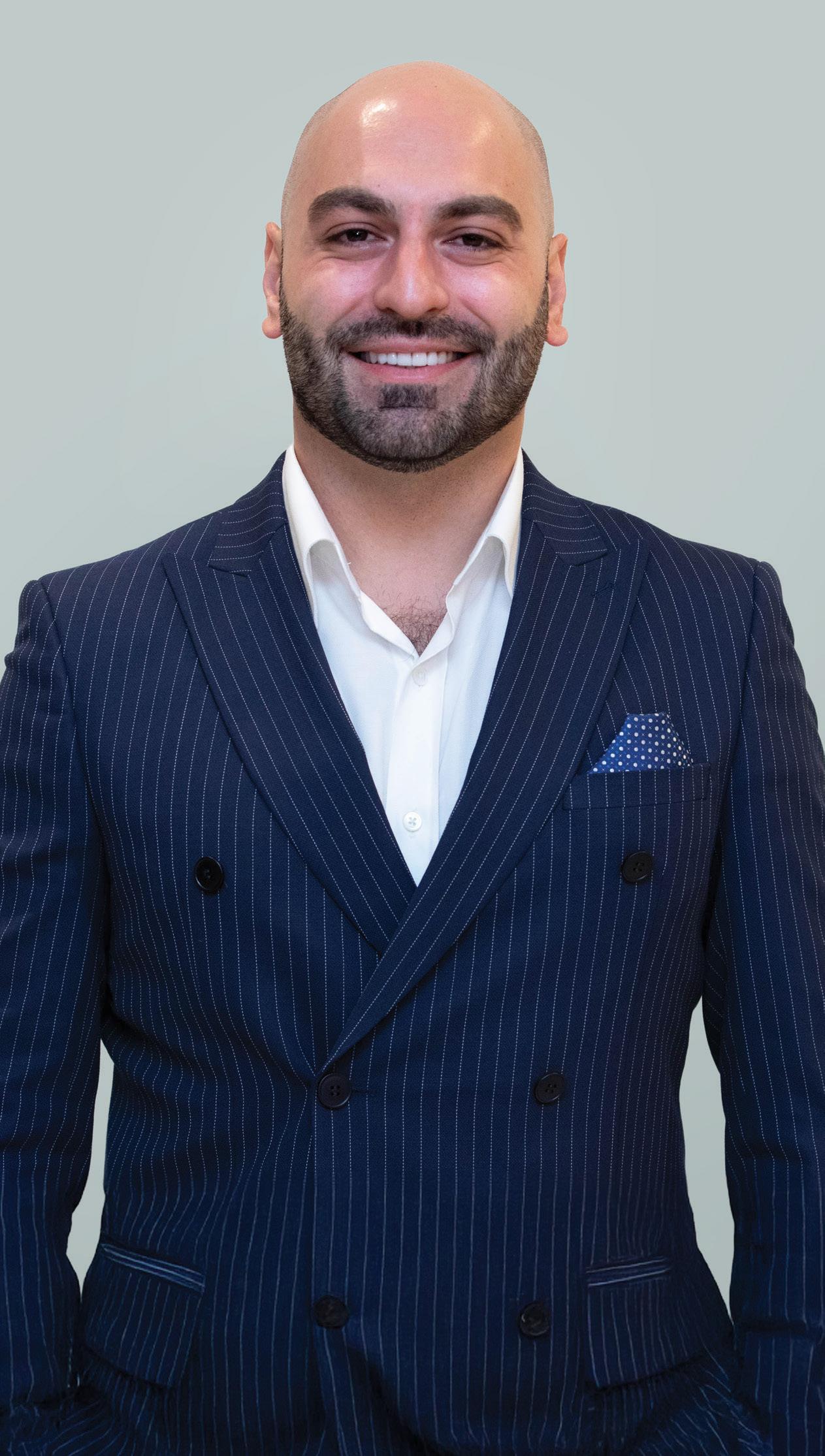
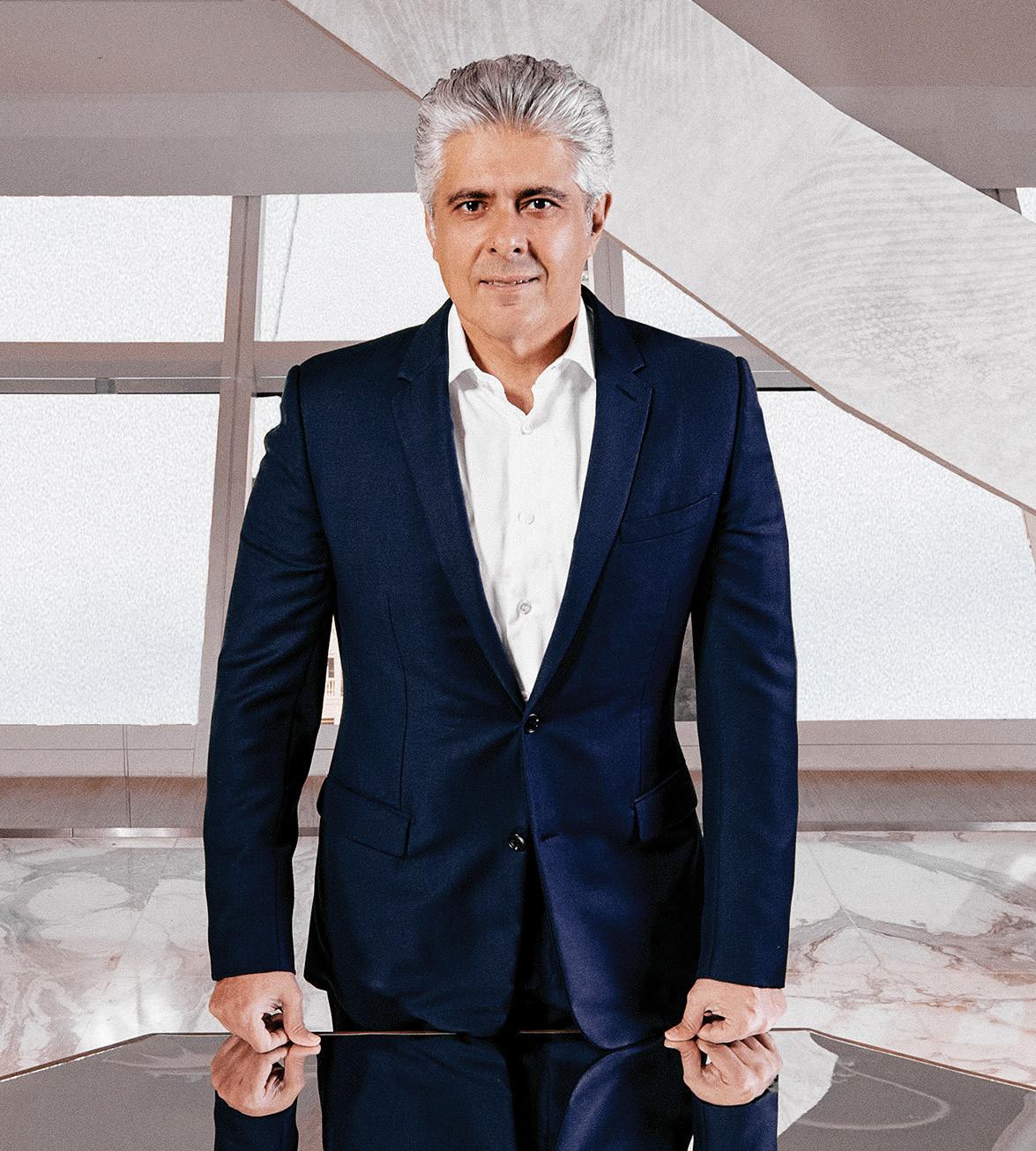
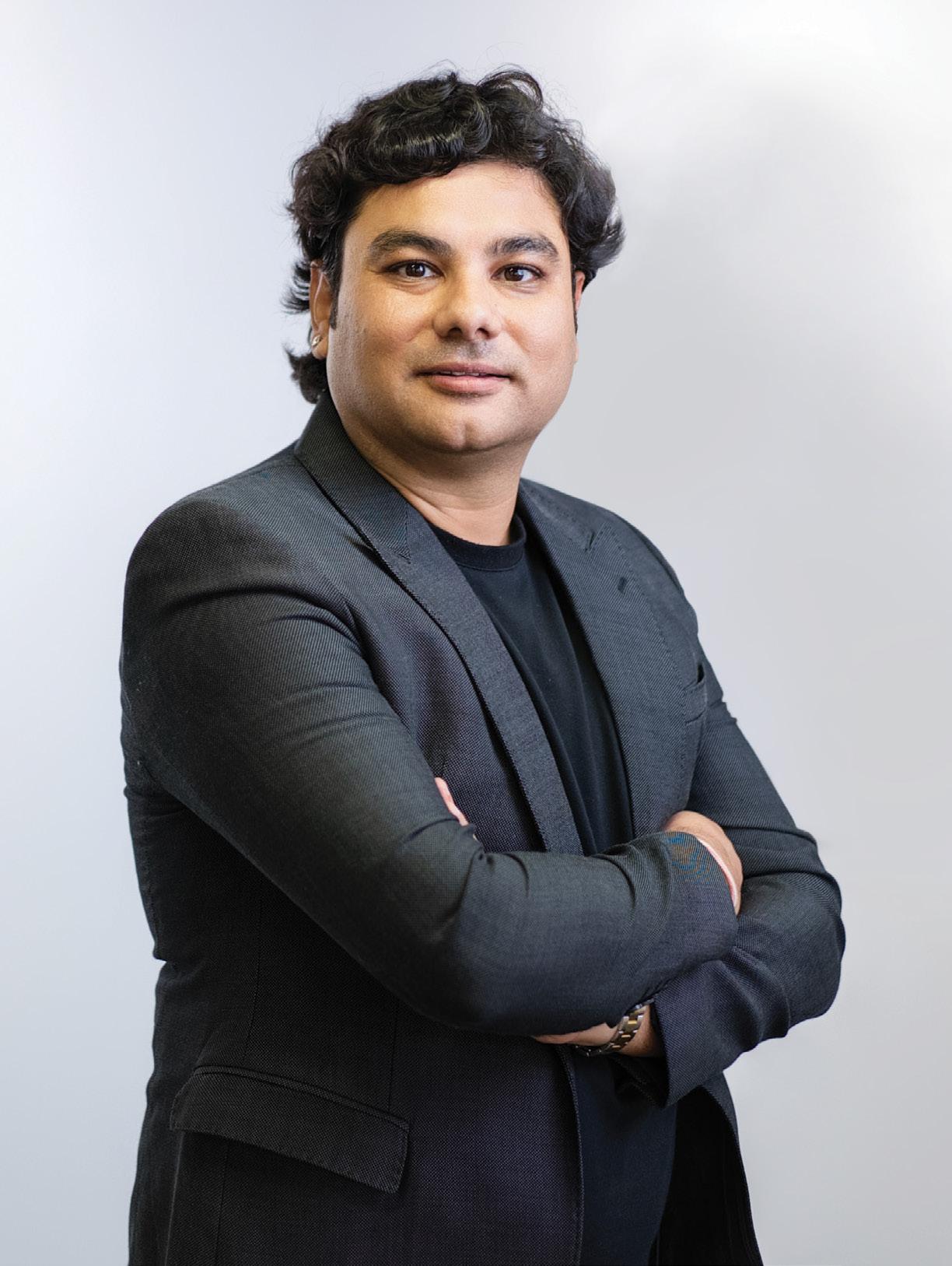
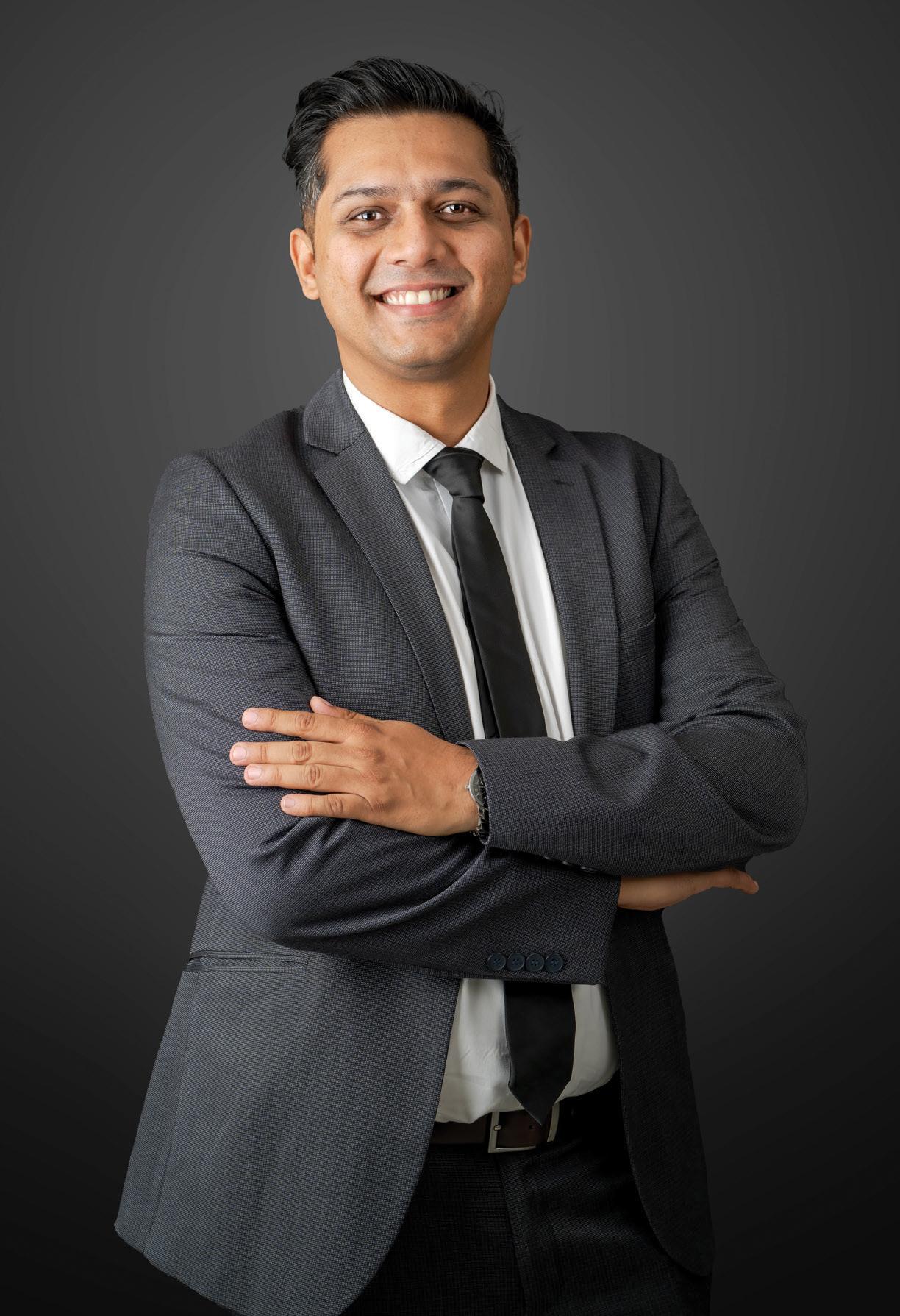
The most influential business leaders in the UAE you need to know
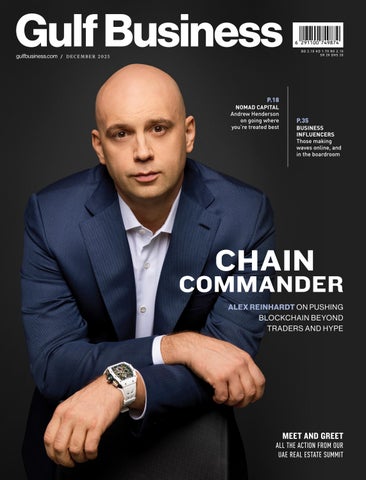
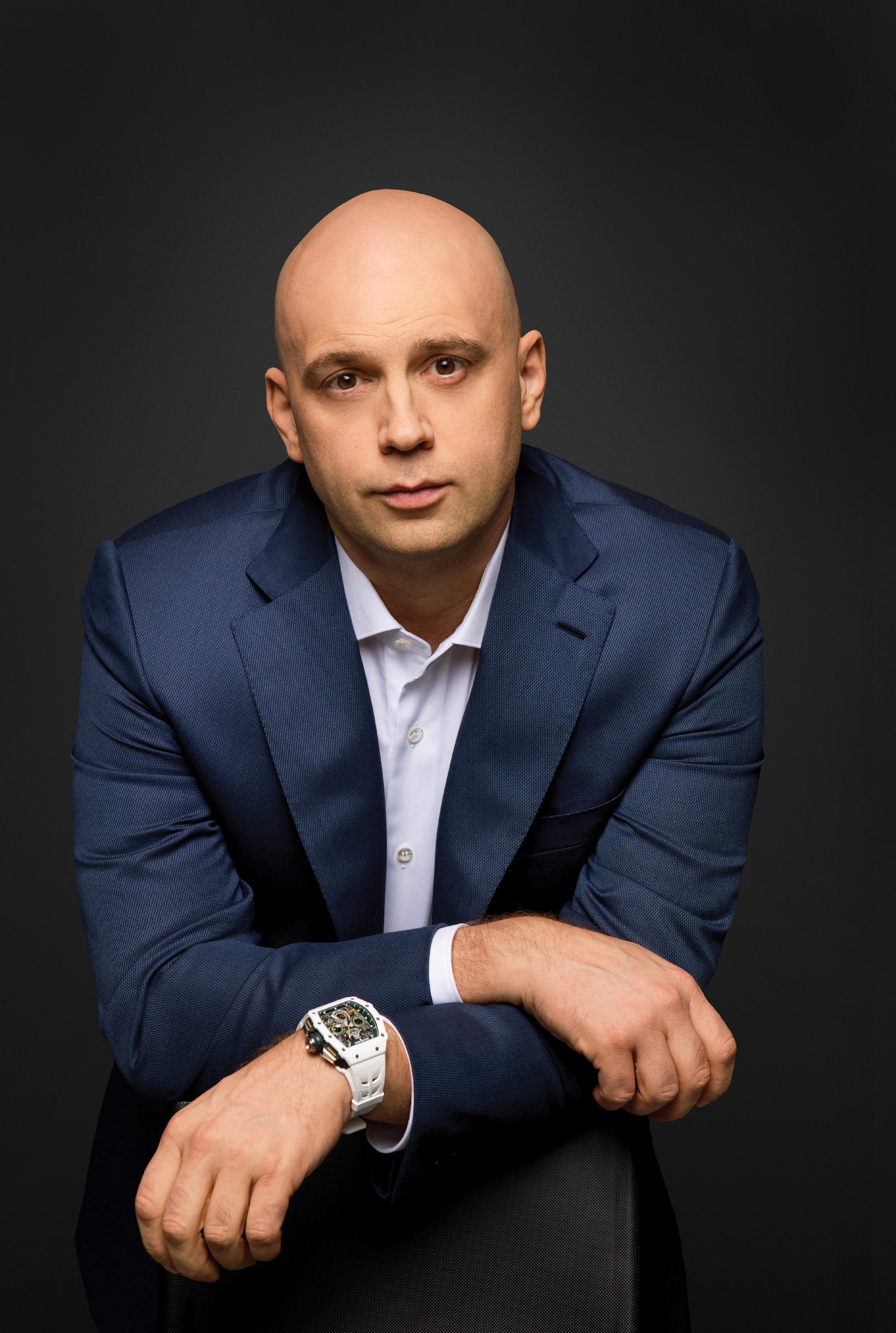
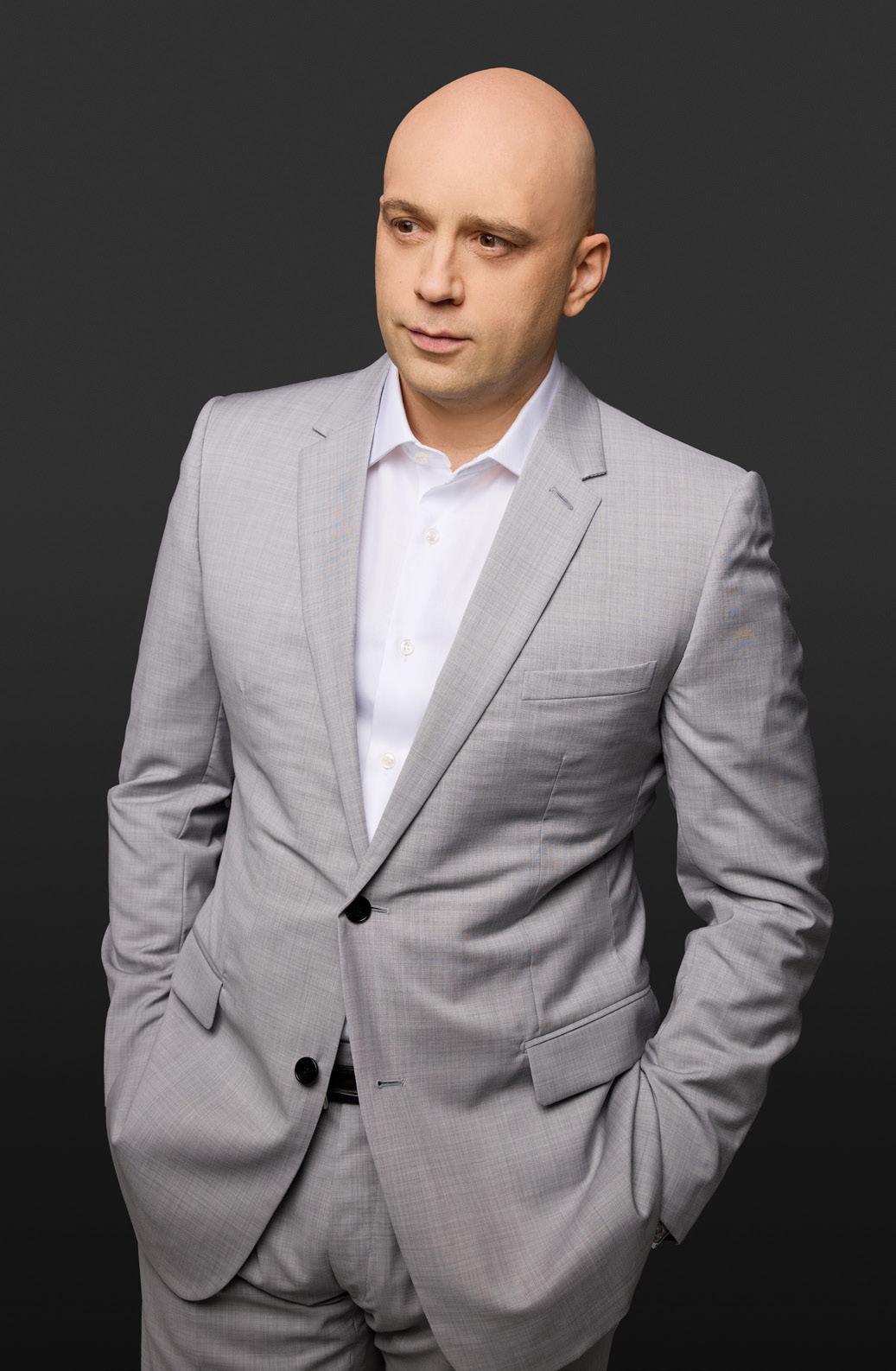
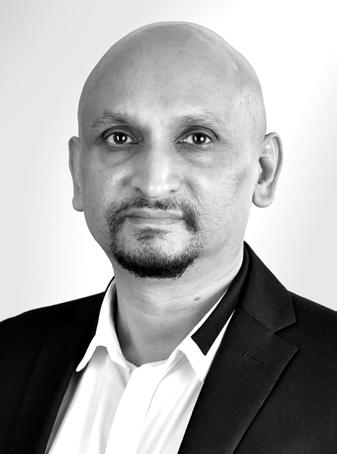
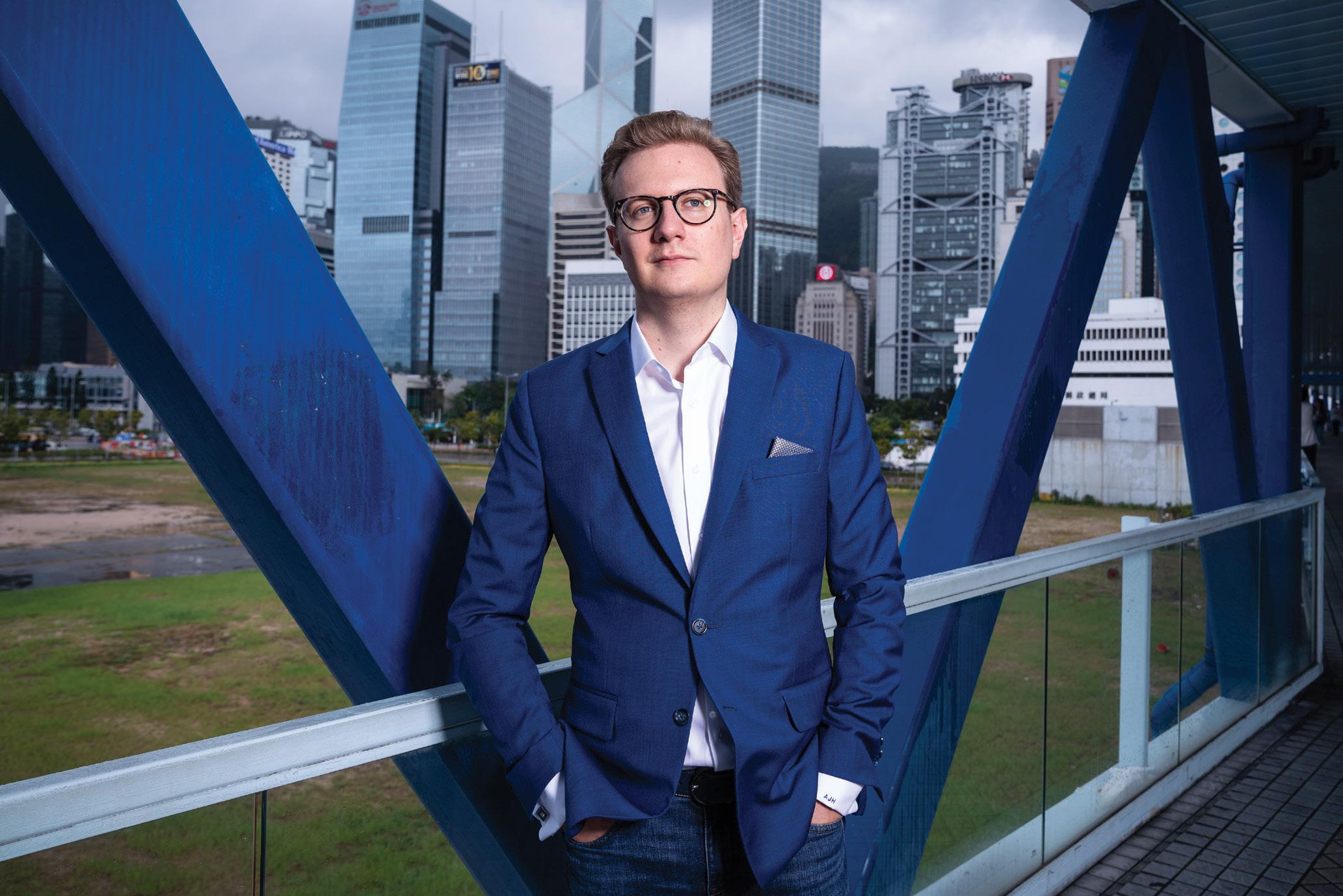
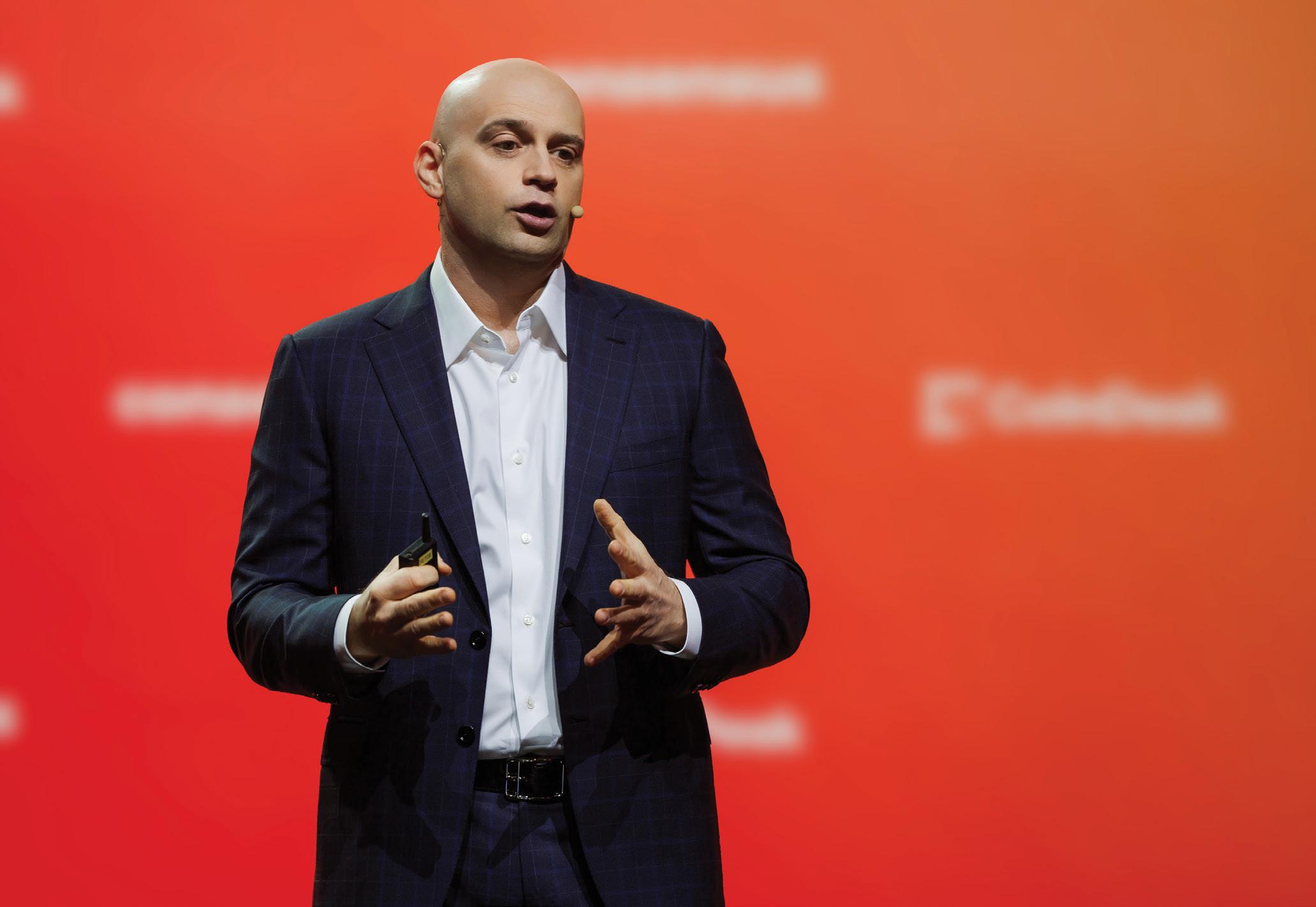
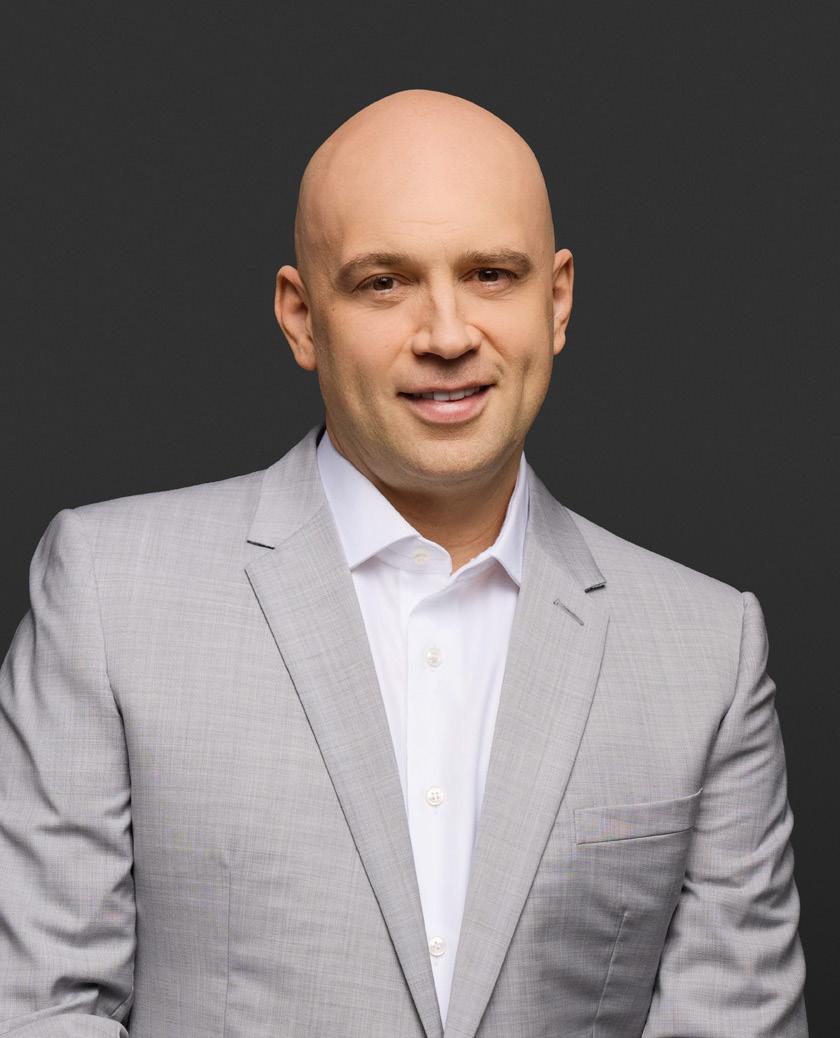
How Alex Reinhardt is pushing blockchain into new territory driven by disruption rather than tradition
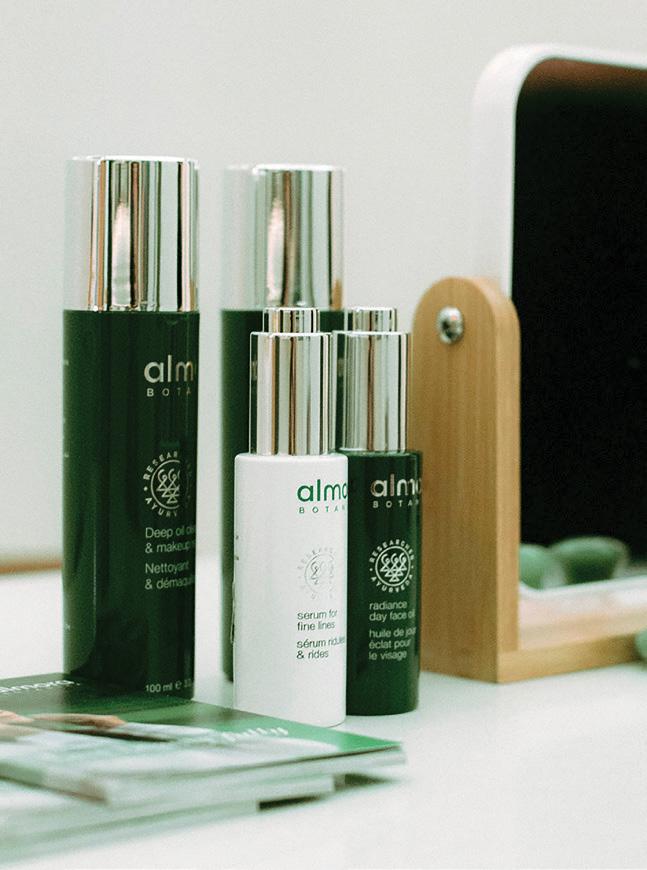
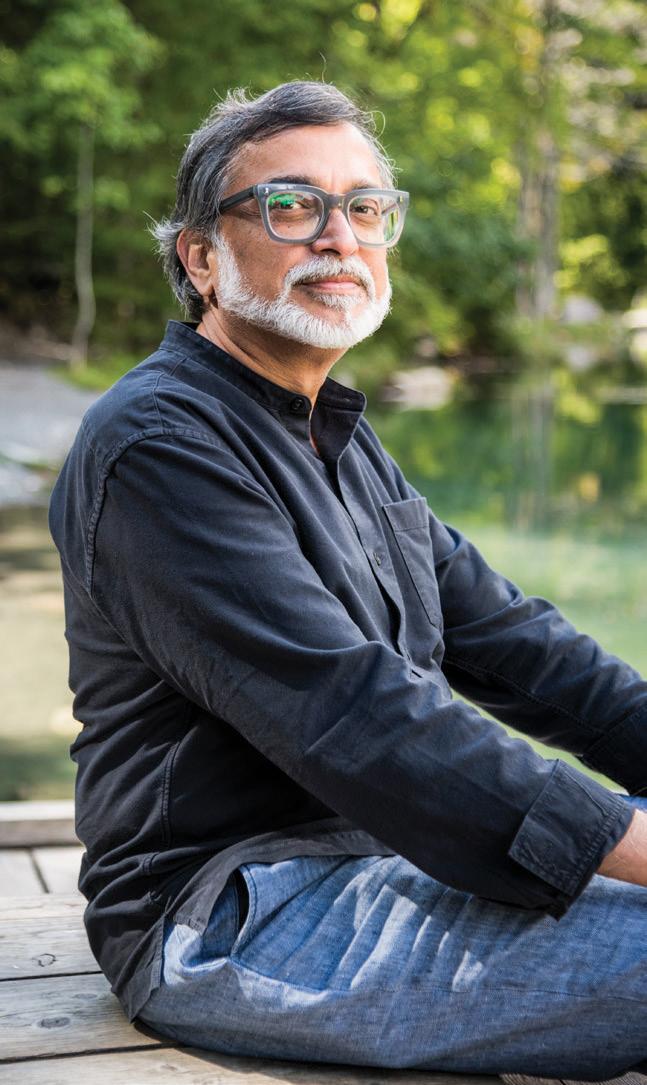
Where science meets ancient wisdom: How Almora Botanica is dismantling stereotypes around traditional wellness p.58
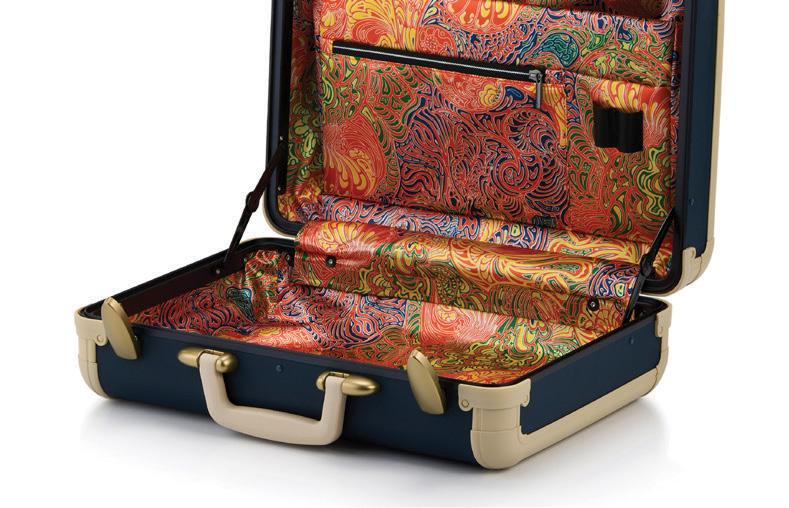
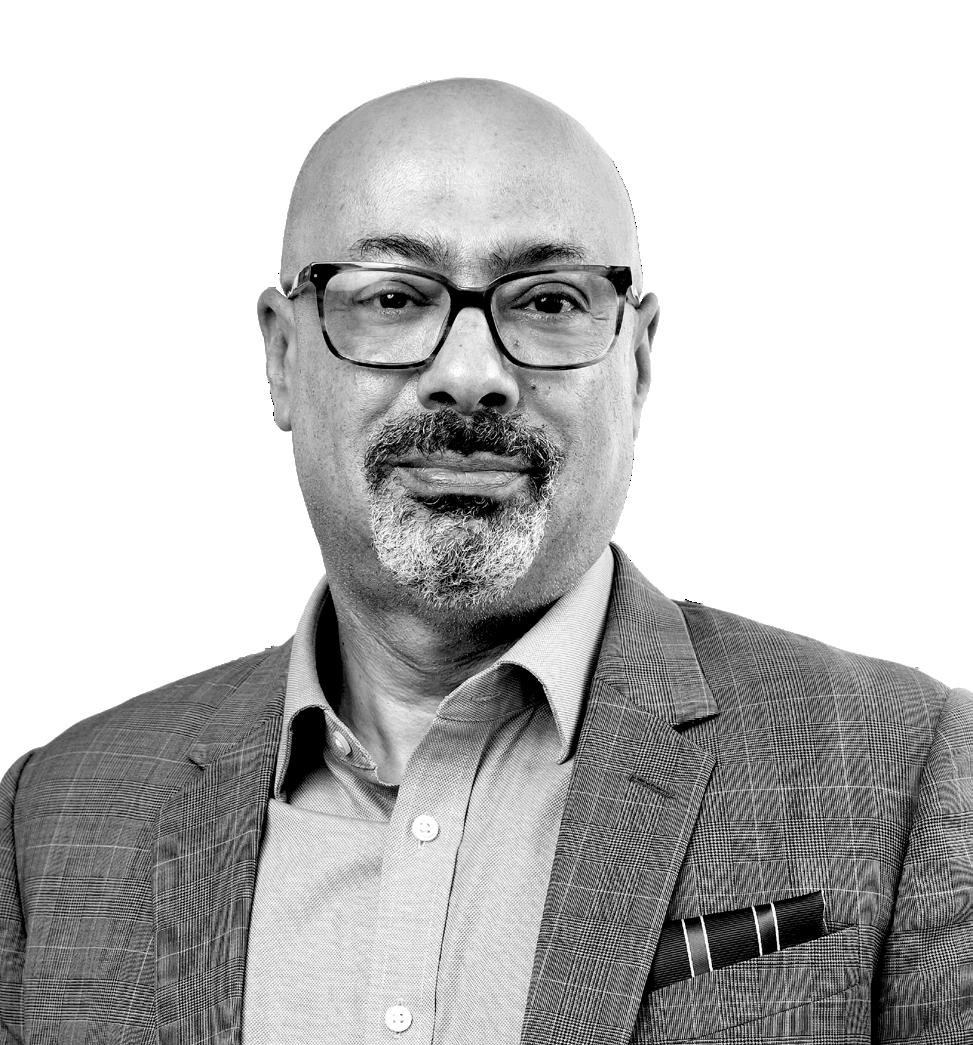
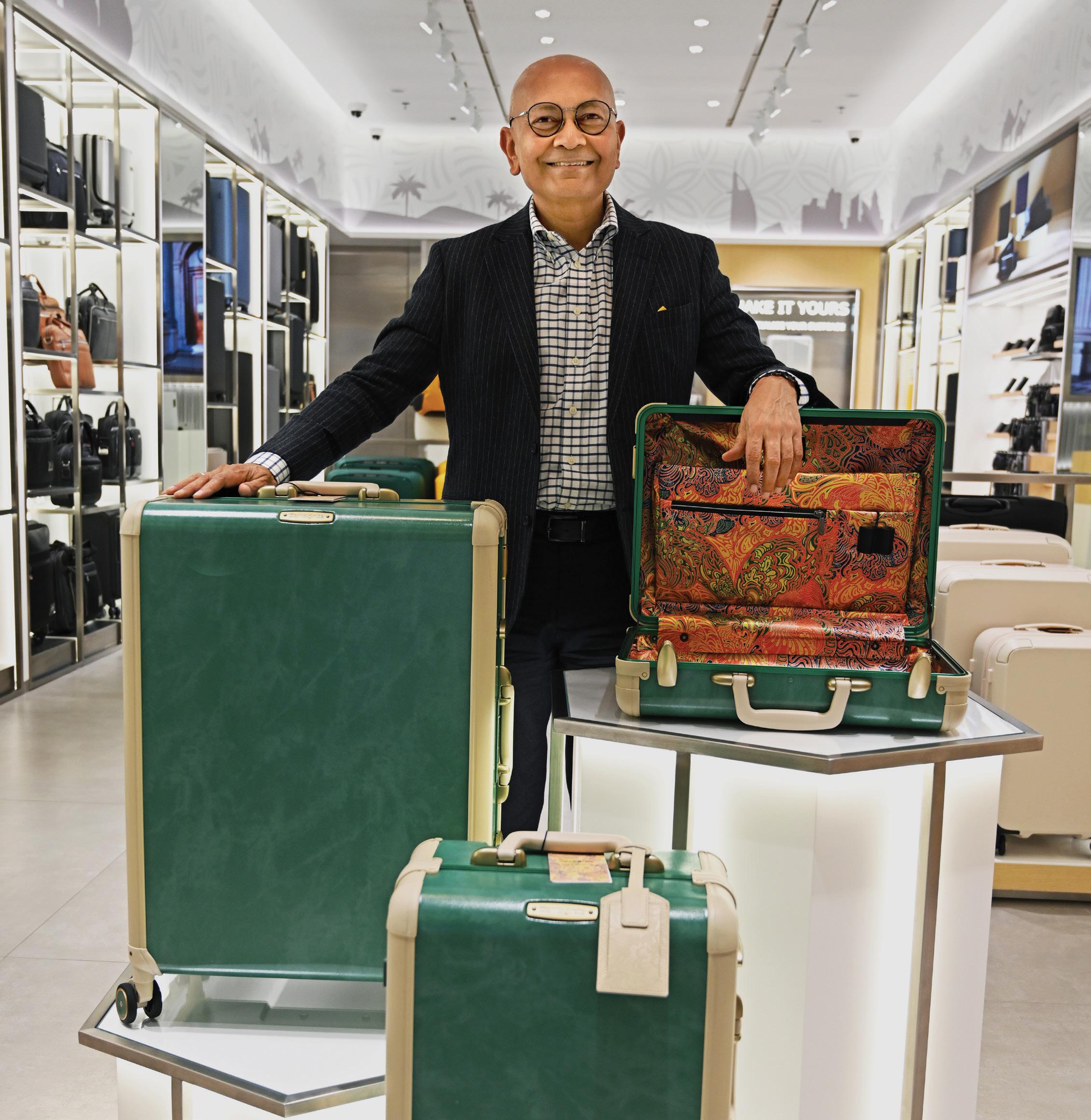
Stylish and sustainable : Samsonite’s Subrata Dutta shares how the 115-year-old company blends heritage with modernity p.60
“The approval by HH Sheikh Mohammed bin Rashid Al Maktoum of the biggest budget in Dubai’s history for the 2026-2028 cycle sends a clear message that Dubai’s journey of progress is driven by limitless ambition and a future-focused vision, and that the wellbeing and quality of life of Dubai’s residents remains the ultimate focus of all the government’s initiatives.”
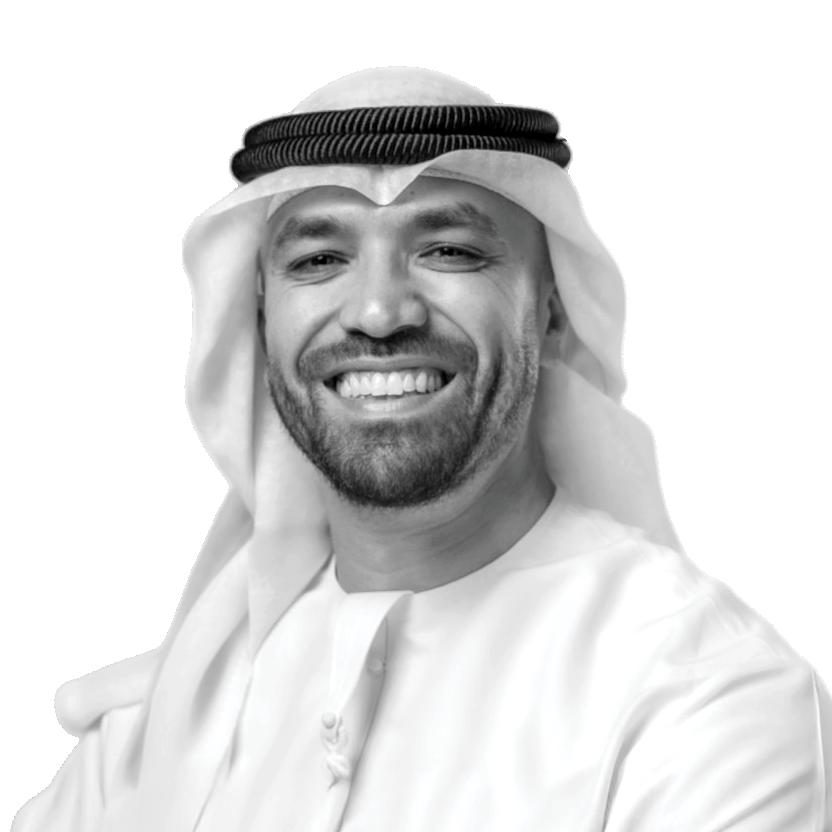
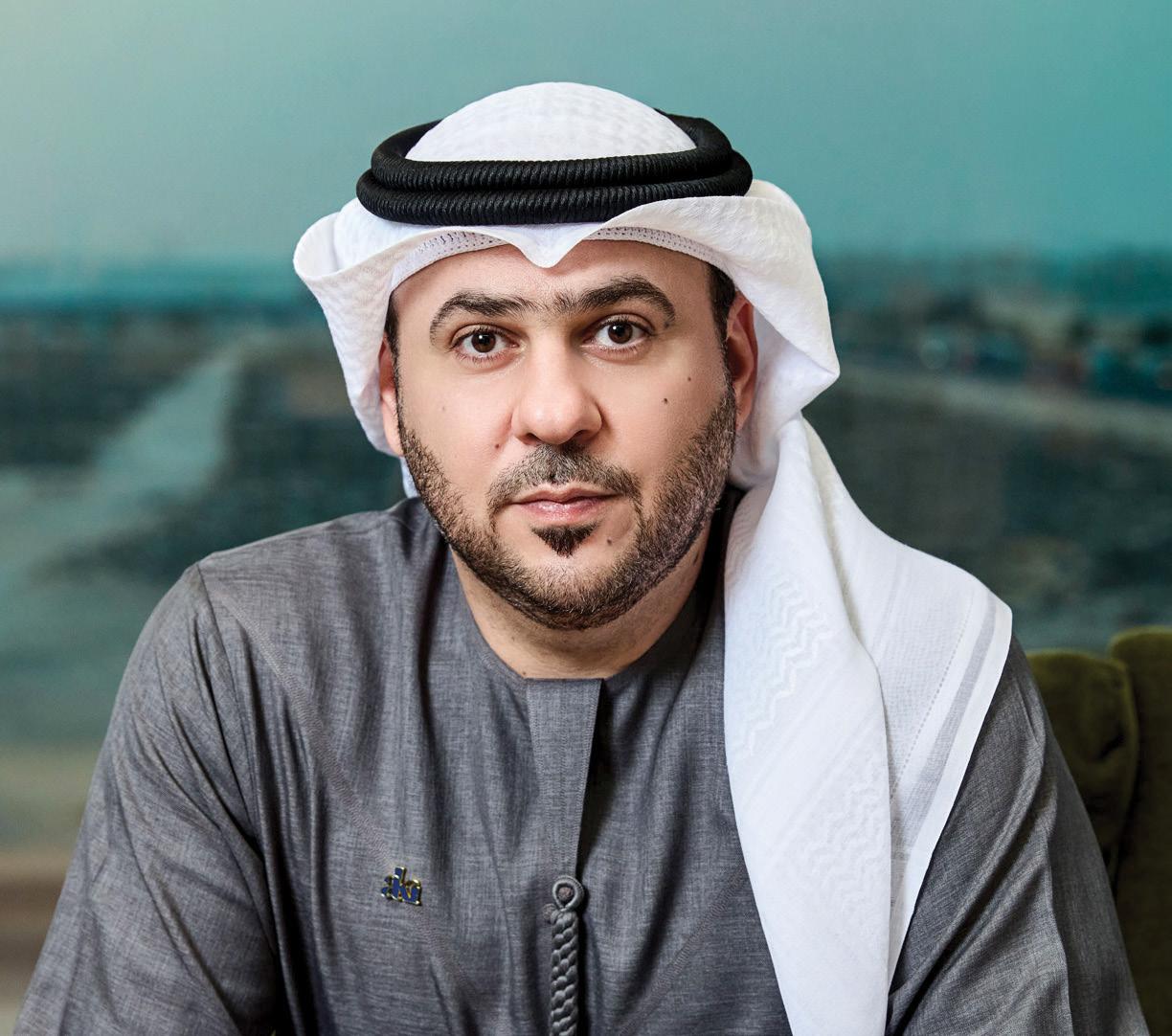
Sheikh Maktoum bin Mohammed bin Rashid Al Maktoum, First Deputy Ruler of Dubai, Deputy Prime Minister and Minister of Finance of the UAE
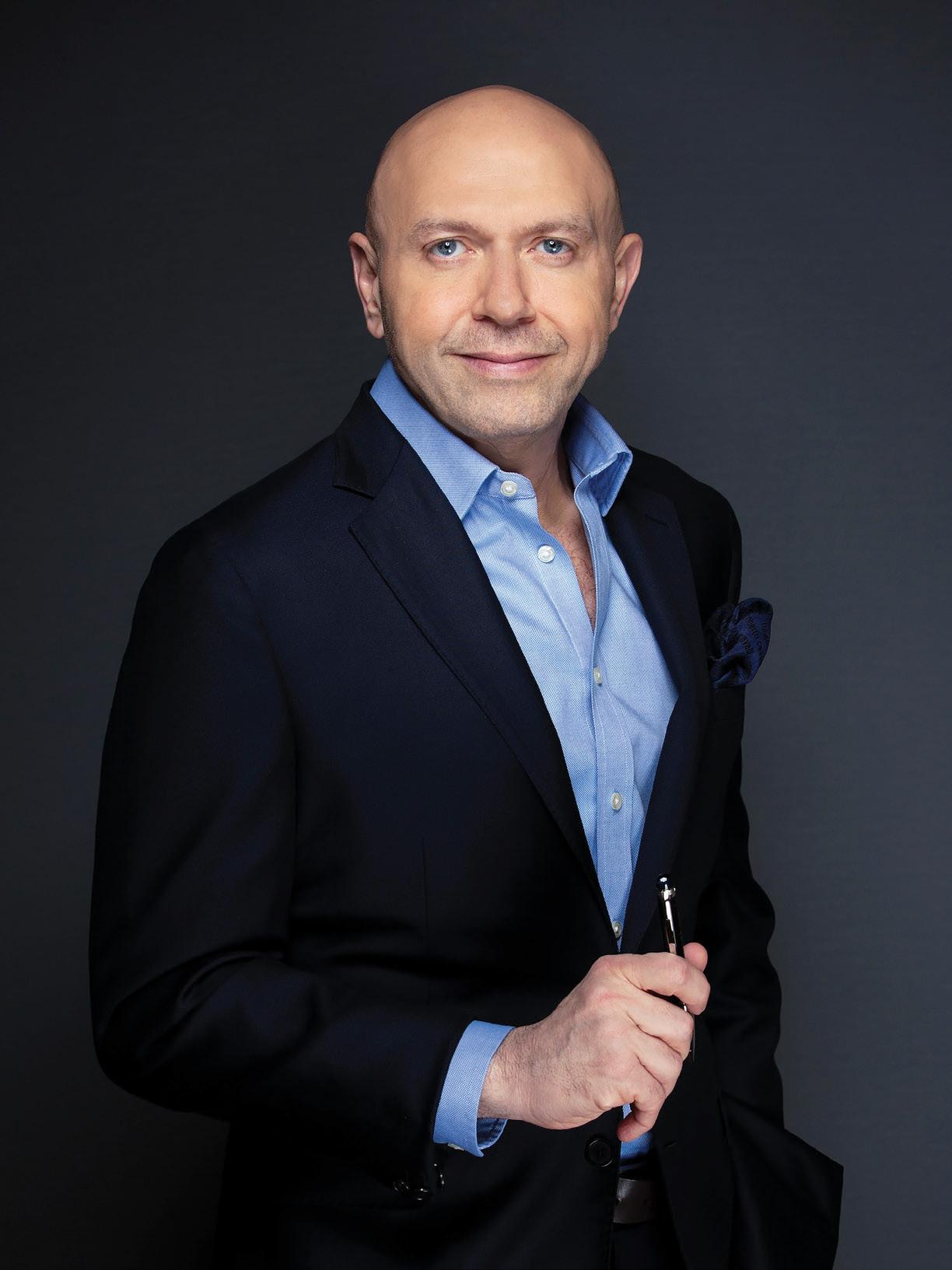
Editor-in-chief Obaid Humaid Al Tayer
Managing partner and group editor Ian Fairservice
Chief commercial officer Anthony Milne anthony@motivate.ae
Group content director Thomas Woodgate Thomas.Woodgate@motivate.ae
Publishing director Manish Chopra manish.chopra@motivate.ae
Group editor Gareth van Zyl Gareth.Vanzyl@motivate.ae
HEAD OFFICE: Media One Tower, Dubai Media City, PO Box 2331, Dubai, UAE, Tel: +971 4 427 3000, Fax: +971 4 428 2260, motivate@motivate.ae DUBAI MEDIA CITY: SD 2-94, 2nd Floor, Building 2, Dubai, UAE, Tel: +971 4 390 3550, Fax: +971 4 390 4845 ABU DHABI: PO Box 43072, UAE, Tel: +971 2 657 3490, Fax: +971 2 677 0124, motivate-adh@motivate.ae SAUDI ARABIA: Regus Offices No. 455 - 456, 4th Floor, Hamad Tower, King Fahad Road, Al Olaya, Riyadh, KSA, Tel: +966 11 834 3595 / +966 11 834 3596, motivate@motivate.ae LONDON: Acre House, 11/15 William Road, London NW1 3ER, UK, motivateuk@motivate.ae Follow us on social media: Linkedin: Gulf Business Facebook: GulfBusines X: @GulfBusiness Instagram: @GulfBusiness
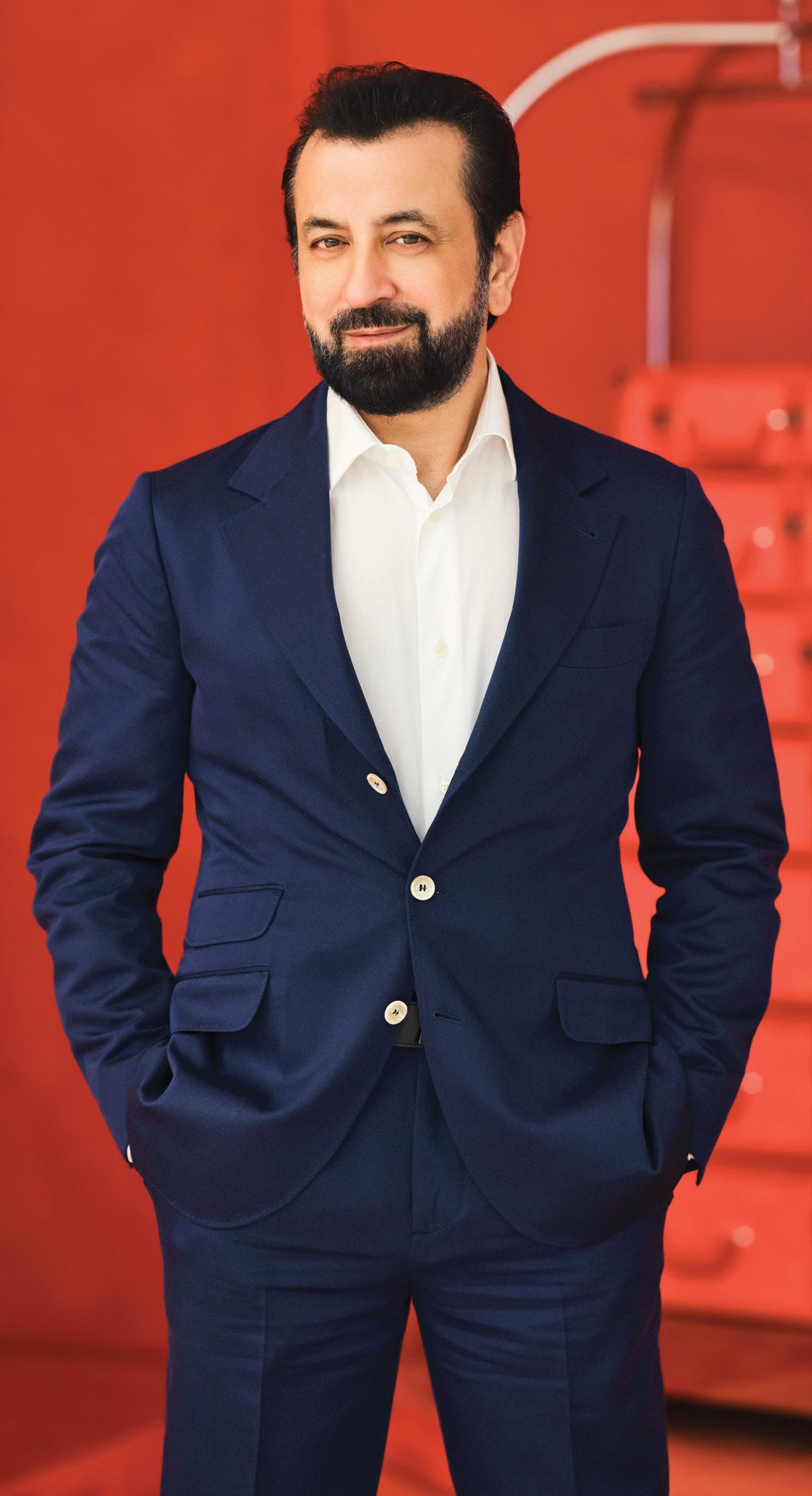
Cover: Freddie N Colinares
Gareth van Zyl, group editor
MENA IPO activity rises as 11 listings raise $700m in Q3
Saudi Arabia leads with 13 planned IPOs, including Almasar Alshamil Education Company and Al Romansiah Company
BY NEESHA SALIAN
The Middle East and North Africa (MENA) region recorded 11 initial public offerings (IPOs) raising a total of $700m in Q3 2025, up 120 per cent from a year earlier, according to the EY MENA IPO Eye Q3 2025 report.
The rise was driven largely by mid-market activity, with Saudi Arabia once again dominating regional listings. The kingdom accounted for eight of the 11 IPOs, raising $637m in proceeds. Dar Al Majed Real Estate Company led with the region’s largest IPO of the quarter at $336m, representing 45.5 per cent of total funds raised.
The other major listings on Saudi Arabia’s Tadawul Main Market included Marketing Home Group for Trading Co, which raised $109m, and Sport Clubs Company, which raised $69m.
The remaining IPOs launched on the Nomu parallel market collectively raised $124.1m, with activity spanning retail, healthcare, and industrial services.
Beyond the Gulf, Egypt saw the listings of Bonyan For Development & Trade SAE and National Printing Company (NPC), while Morocco’s Vicenne also debuted on the market, reflecting a widening base of issuers across the MENA region.
“The performance this past quarter reflects the increasing depth and maturity of MENA capital markets, supported by a steady pace of listings across multiple sectors and geographies,” said Brad Watson, EY-Parthenon MENA Leader. “Companies are becoming increasingly strategic with market timing,
carefully assessing investor sentiment and macroeconomic conditions before going public. With strong regulatory frameworks and a healthy pipeline leading into Q4 2025, the region is well-positioned for sustained, long-term growth likely to attract continued international participation.”
Regional equity performance remained strong, with the MSCI Emerging Markets Index gaining 25 per cent, followed by Egypt’s EGX 30 Index at 23.3 per cent and Kuwait’s Premier Market Index at 19.6 per cent.
Gregory Hughes, EY- Parthenon MENA IPO leader, said Saudi Arabia continued to drive regional listings despite lower oil prices, adding that “the sector focus for Saudi IPOs shifted from healthcare and mobility in Q2 2025 to real estate, hospitality, construction, and retail in Q3.”
MENA IPO PIPELINE
The IPO pipeline remains solid, with 19 companies and funds across MENA intending to list in the coming months.
Saudi Arabia leads with 13 planned IPOs, including Almasar Alshamil Education Company and Al Romansiah Company, both of which have received approval from the Capital Market Authority (CMA). In the UAE, ALEC Holdings listed on the Dubai Financial Market (DFM) on October 15.
Outside the GCC, Algeria’s Diar Dzair and Morocco’s Gharb Papier Et Carton SA have announced plans to go public, pending regulatory approval. EY noted that ongoing regulatory reforms continue to enhance the region’s capital markets. In the UAE, updated governance rules now permit the combination of board chair and CEO roles under defined conditions, while Saudi’s CMA has launched consultations on amendments to market-making regulations and foreign ownership limits to boost liquidity and transparency.
“The region’s IPO story continues to strengthen, underpinned by diversification, policy momentum, and growing focus on ESG integration,” EY said, adding that these trends are positioning MENA as a key hub for capital formation and investment in 2025 and beyond.
REGIONAL
EQUITY
PERFORMANCE
REMAINED STRONG, WITH THE MSCI EMERGING MARKETS INDEX GAINING 25 PER CENT, FOLLOWED BY EGYPT’S EGX 30 INDEX AT 23.3 PER CENT AND KUWAIT’S PREMIER MARKET INDEX AT 19.6 PER CENT.
CEO is a gender-neutral word
(Tell that to the board)
Women are rising through the GCC’s leadership ranks, slowly but unmistakably, and the question is no longer whether they belong in the boardroom but how fast they will reshape it
Across the GCC, the conversation about women in leadership is no longer a whisper; it is fast becoming a chorus.
Boardrooms that were once exclusively male are starting to open their doors, and female CEOs are proving not just that they belong at the table, but that they can redefine the table itself.
nterprises are looking for an economic case for women at the top, here are some: Gender equity in labour markets could boost GDP by 27 per cent in countries like India and by around 9 per cent in advanced economies like Japan. Global leaders like Christine Lagarde and Erna Solberg have been talking about these projections for a while now. The current vision of most GCC countries includes a focus on
diversity and innovation, which necessitates the elevation of women leaders to CEO roles to drive growth. Female workforce participation has been climbing steadily in the region. Saudi Arabia has seen over 36 per cent now as compared to 14 per cent a decade ago. This has already beaten their Vision 2030 goal on this! One of the highest ratios in the region is in Qatar and the UAE, where it stands at 60per cent and 55 per cent respectively. Yet when we look at leadership, the picture changes. As of January, women hold just 6.8 per cent of board seats in the GCC, up from 5.2 per cent the previous year. This progress is real but incremental and far below OECD averages. There is, however, a silver lining. Research consistently shows that companies with more women in senior leadership deliver better results. According to MSCI research, enterprises with strong female leadership generated ROE (returns on equity) of 10.1%, compared to 7.4 per cent otherwise. When economies are in a transition mode like that of the GCC, where the shift is happening in terms of less dependency on oil and gas, the stakes for growth are high. Therefore,
FEMALE
WORKFORCE PARTICIPATION
HAS BEEN CLIMBING STEADILY IN THE REGION. SAUDI ARABIA HAS SEEN OVER 36% NOW AS COMPARED TO 14% A DECADE AGO
increasing gender parity in workforce and leadership roles is desirable for every percentage point of growth.
Organisations should not consider women CEOs as a symbol of diversity and gender parity. There are many reasons why it is a good idea. First, women leaders tend to push for inclusive policies, such as hybrid and flexible work, maternity and childcare support, and mentoring initiatives that help continued careers for them. In GCC, this is a critical retention strategy since cultural sentiments tilt the decisions on women’s careers.
Second, women CEOs bring perspectives that align companies more closely with their customer bases. Across the GCC, women make the majority of household purchasing decisions, from financial products to healthcare and education. A woman CXO ensures that products and services are designed with real insight into such customers.
Third, when growth demands challenging established management practices, women leaders are the best to bring fresh perspectives. They bring more focus on collaborative efforts, sustainable practices, and stakeholder engagement, which are all critical qualities for global reach and disruptive innovation.
Despite the clear upside, barriers to their ascent remain. Women are still underrepresented in line management roles. Without that, they don’t get the shot at the corner office. Most women are not in the P&L roles but in support functions such as IR, PR, HR, or legal, while men dominate the line roles.
Bias, too, persists. Women face a “double bind”: too assertive, and they are labelled abrasive; too friendly, and they are dismissed as lightweight. A recent global study of performance reviews found that words like “abrasive” appeared frequently in reviews of women leaders but never once for men in similar roles. Then there is the prevalence of the pay gap, which is generally decided based on the previous salary rather than what is required for the roles.
Women CEOs have the power to break down barriers and establish opportunities for other women by utilizing the following levers:
Dr M Muneer is a startup investor and co-founder of the non-profit Medici Institute for Innovation
Mirror client demographics. Companies selling products and services to women, be it in healthcare, retail, or finance, should not have male-only R&D or sales teams. Women leaders can ensure client-facing teams reflect the realities of their customer base.
Insist on board diversity as a KPI. Board diversity is essential for today’s economy, so insist on more female representation. The Board Gender Index in the GCC shows improvement but requires more acceleration.
Implement fair hiring and promotion practices. Blind screenings, transparent evaluation criteria, and mandatory female candidates for executive roles will mitigate several biases. Embrace the “Rooney Rule”, which requires at least one minority applicant while filling up senior roles.
Redesign workplace culture. Address the everyday biases at workplaces against women, the two prominent ones being “manterruption” (men interrupting women in meetings) and “bropropriation” (male colleagues appropriating the ideas of women colleagues as their own).
Reset pay structures. Start with abandoning the practice of fixing salary based on prior package. Instead, offer equitable compensation for what a role demands, especially in industries where women have historically been underpaid.
Treat men as allies. Spot powerful male executives and persuade them to mentor high-potential women executives. Consider rewarding them for measurable impact on diversity.
The GCC is rewriting its growth story with women at the helm. Saudi Arabia is expanding childcare and flexible work, the UAE mandates women on boards, and Qatar and Bahrain encourage female entrepreneurs. The real change will come from boardrooms, where women CEOs can turn reform into results. Investors now see diversity as a strategy, not charity. When a woman leads, she inspires a generation. Just look at Kuwait, where 41 per cent of startups are women-led. As the region diversifies beyond oil, women leaders are its untapped competitive edge. When a female batchmate went on to become the first woman director of a conglomerate, everyone had said, “She broke the glass ceiling,” but I used to correct them with, “She didn’t break the glass ceiling— she built an elevator through it.” The future of the GCC isn’t powered by oil but by women who refuse to wait for permission.
How the CBUAE’s security mandate can boost bank resilience
The Central Bank of UAE’s push on security is an opportunity for banks to move past quick fixes and build long-term resilience
The Central Bank of the UAE’s (CBUAE) mandate requiring all financial institutions to adopt stronger authentication technologies has been designed to tackle growing and more sophisticated security threats. While the requirements are both timely and necessary, they have exposed significant challenges. Unfortunately, the response from many institutions has been to simply add more authentication steps to legacy systems, and this ‘add-on’ mindset is quickly becoming a business impediment – especially as the UAE positions itself as a global leader in banking innovation.
WHY INCREMENTAL SECURITY ISN’T ENOUGH
There can be no doubt that a more robust approach to securing UAE consumers was necessary. Fraud and scams rose 43 per cent year-on-year in the UAE with a Global Anti-Scam Alliance report finding that more than 40,000 victims had lost an average of $2,194 in 2023.
However, most UAE banks have responded to the regulatory deadline of phasing out one-tme passwords (OTPs) by March 2026 by bolting new layers of authentication onto existing processes. Typically, this means maintaining the familiar login and OTP steps, but adding in-app push notifications or additional verification screens as an extra layer of defense. While this approach allows rapid compliance, it creates several issues.
Firstly, it increases friction for customers. Every new verification step adds time, complexity, and
potential confusion, undermining the seamless digital banking journeys customers now expect. Secondly, it will often just mask the underlying vulnerabilities of legacy systems, creating opportunities for attackers to exploit weaknesses across channels. Finally, a quickfix option makes it challenging for banks to get the full benefit of new tools such as digital identity platforms, mobile biometrics, or risk-based authentication.
IMPORTANCE OF NOT IMPEDING PROGRESS
Banks operating with outdated core systems and rigid, decades-old technology stacks often struggle with slow and costly integrations, requiring additional skills and adding layers of complexity and risk. This can put technical and business leaders off adopting a more holistic solution. Customer education is also seen as a hurdle, with new authentication methods like passkeys or risk-based triggers remaining unfamiliar to many, making widespread adoption a challenge.
These dynamics have led to a patchwork of partial solutions that succeed in checking regulatory boxes, but fall short of delivering on the Central Bank’s bigger vision for digital innovation and a frictionless banking ecosystem.
THE CASE FOR HOLISTIC, RISK-BASED AND CONTEXT AWARE AUTHENTICATION
The answer lies in platforms that move from activitybased orchestration to use case orchestration, where the full customer journey is managed as a coherent, adaptable experience.
Rather than demanding the same authentication steps for every customer and every transaction, the best approach will use a rich blend of contextual signals, such as device fingerprints, behavioral analytics, or location data to assess risk in real time. For everyday transactions that fit a customer’s normal pattern, authentication can be fast and almost invisible. However, should something unusual occur, such as a new device, time, or location, the system automatically steps up security, requiring only information that’s truly necessary.
Arno van der Merwe is the group product manager at Entersekt, a financial authentication company
FRAUD AND SCAMS ROSE 43 PER CENT YEAR-ON-YEAR IN THE UAE WITH A GLOBAL ANTI-SCAM ALLIANCE REPORT FINDING THAT MORE THAN 40,000 VICTIMS HAD LOST AN AVERAGE OF $2,194 IN 2023
“THE UAE, AND THE CBUAE IN PARTICULAR, ARE CHARTING AN AMBITIOUS PATH FOR THE LOCAL BANKING INDUSTRY. BUT THIS REQUIRES BANKS AND THEIR CHANNEL PARTNERS TO MOVE BEYOND A QUICK-FIX MENTALITY.”
Not only does this produce a dramatically better customer experience, but it also means that banks are always focused on where threats are most likely to appear, making security both proactive and adaptive.
More importantly, this approach could easily incorporate digital identity solutions like the UAE Pass, creating seamless verification processes for everything from onboarding to password resets and high-risk payments.
What’s more, providing an orchestration layer that brings together all available tools such as passkeys, biometrics, risk scoring, and digital IDs, UAE banks can serve their customers securely, and in full compliance with UAE regulations, adding to the CBUAE’s drive to promote the county as a banking innovation leader.
BUILDING FOR RAPID DEPLOYMENT OF NEW OFFERINGS
Historically, rolling out new security functionality has meant months of heavy technical lifting, but leaning into a SaaS model underpinned by unified APIs and packaged SDKs, (including pre-built native UI modules), means banks can accelerate time-to-market, reducing deployment costs, and minimising risk.
The UAE, and the CBUAE in particular, are charting an ambitious path for the local banking industry. But this requires banks and their channel partners to move beyond a quick-fix mentality. A single, secure platform to combat fraud and friction that marries advanced authentication mechanisms with orchestrated, context-aware user journeys will give local banks the ability to meet regulatory requirements for years to come, while still delivering the best banking experience in the short term.
How grassroots Web3 communities are reshaping the Gulf’s digital future
Community-led meetups and hackathons are powering genuine Web3 adoption across the GCC
BY BINANCE
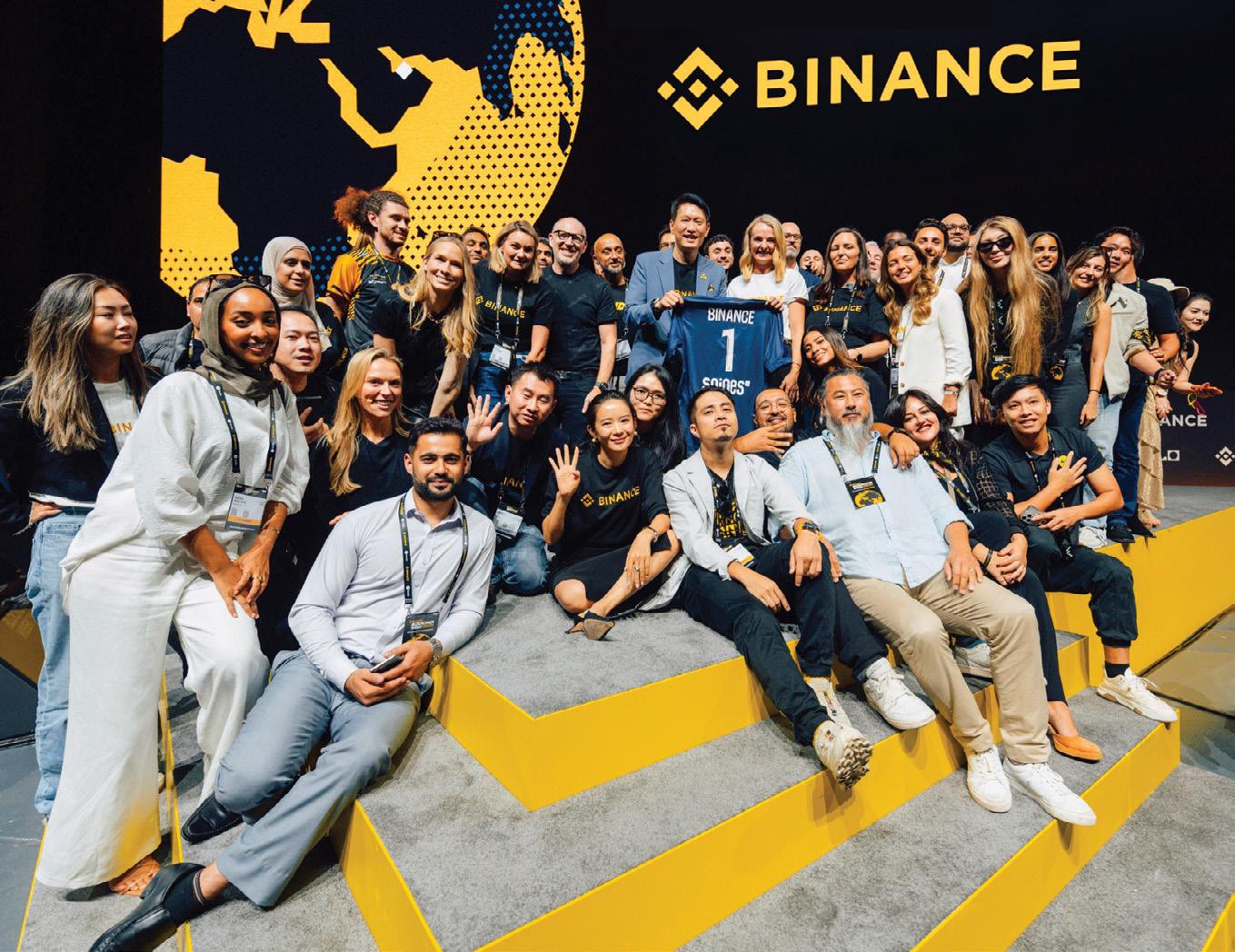
The story of Web3 in the Gulf is often told through regulation, investment, and government programmes. But look a little closer and you’ll see that some of the region’s real progress isn’t unfolding in boardrooms. It’s happening in cafés, co-working spaces, and community hubs across Dubai, Abu Dhabi, Riyadh, and Bahrain. Places where builders, founders, investors, and the crypto curious gather to learn, debate, and experiment together. These grassroots communities are becoming one of the Gulf’s most powerful catalysts for digital-asset adoption. What began as informal meetups has evolved into a movement that is shaping how the region understands, tests, and applies Web3 technologies in the real world.
DUBAI AS THE BEATING HEART
Dubai remains the region’s most active Web3 hub with an ever-full calendar of community gatherings across the city that cover everything from developer tutorials and security deep dives to open discussions about regulation and realworld use cases. On any given week, you’ll
find crypto community meetups in DIFC, alongside major global events like Binance Blockchain Week. What sets Dubai apart is the mix of people in the room: software engineers sitting alongside wealth managers, creators alongside corporate strategists. This diversity accelerates learning. The result is a city that doesn’t just talk about innovation, it practises it publicly, openly, and often.
ABU DHABI AS THE INSTITUTIONAL ANCHOR
Abu Dhabi’s Web3 community reflects its institutional and regulatory strengths. Events hosted at Hub71 and ADGM’s innovation spaces tend to attract a
What sets Dubai apart is the mix of people in the room: software engineers sitting alongside wealth managers, creators alongside corporate strategists.
different crowd: risk analysts, compliance specialists, treasury professionals, and founders exploring tokenisation or institutional-grade infrastructure. Here, workshops focus on real-world deployment: how digital assets can streamline settlement, how tokenised portfolios could change practices, and how regulated environments build institutional trust. It’s a scene that is rooted in depth over volume, laying the foundations for long-term confidence.
RIYADH AS THE YOUTH ENGINE
Riyadh’s Web3 momentum is powered by the region’s youngest and most ambitious populations. The rise of community-led events at places like The Garage, MiSK, and university innovation centres has created an energetic pipeline of developers, designers, and product thinkers. Hackathons now attract hundreds, many experimenting with real-world use cases, digital identity, and supply-chain tracking that align with the Kingdom’s digital transformation agenda.
Riyadh’s rapid growth is reshaping the regional talent map. It is becoming a place where ideas don’t just get discussed — they get built.
BAHRAIN AS THE FINTECH BRIDGE
Meanwhile, Bahrain offers one of the Gulf’s most integrated Web3 and fintech communities. Regular meetups at Bahrain’s FinTech Bay and across the central Manama start-up corridor bring developers, bankers, compliance experts, and founders into close proximity. The result is a rare balance: technical creativity grounded in financial discipline.
Discussions often bridge blockchain innovation and regulated finance, ensuring that new ideas are anchored in practical application, not just technical enthusiasm.
COMMUNITY POWER
Across the Gulf, a clear pattern is emerging: community events are reducing the barriers to entry. They demystify complex topics, encourage open dialogue, and create trust in an industry that has often struggled with it. For builders, they provide invaluable feedback loops to refine and create products that solve regional problems.
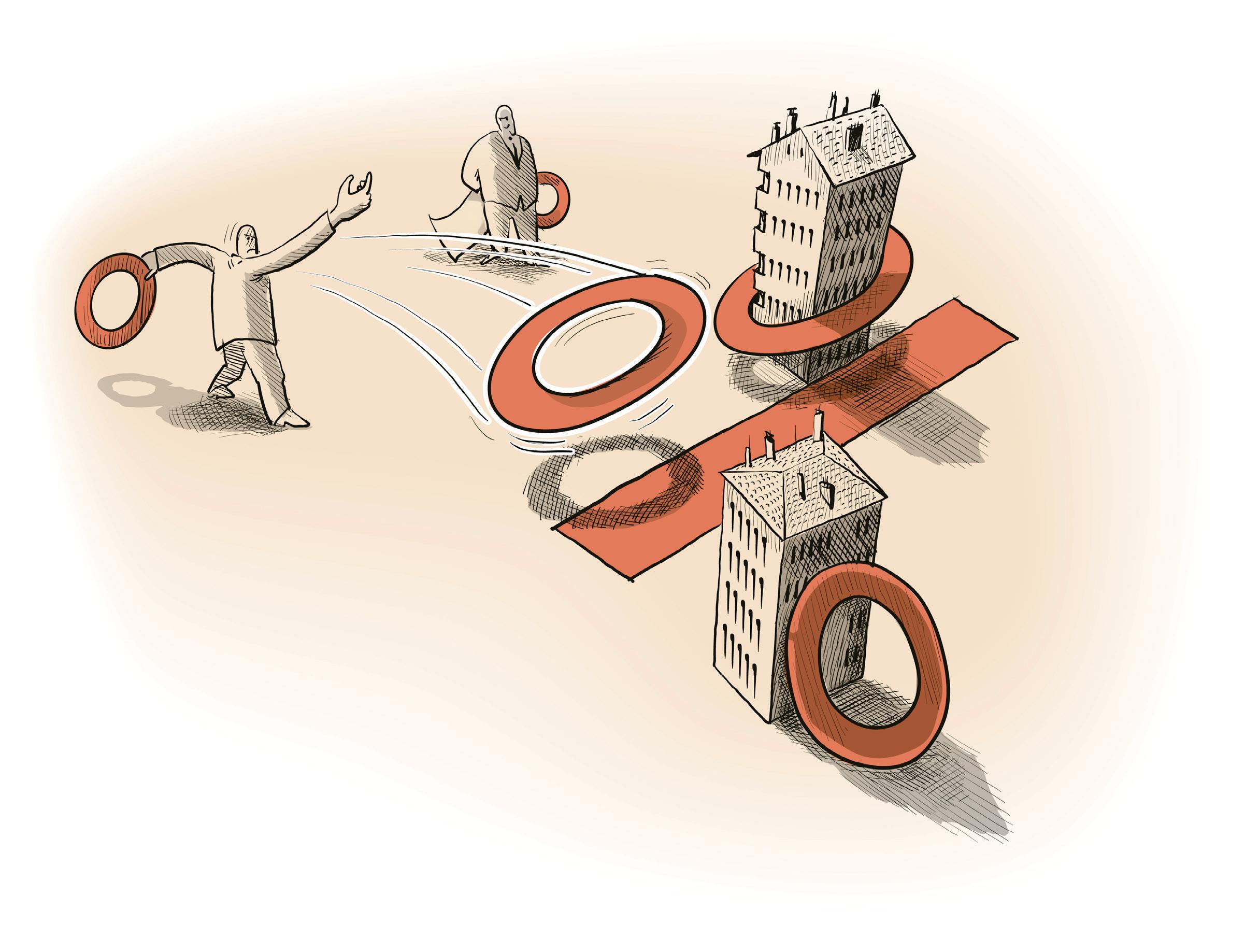
Dubai’s commercial real estate: The next big opportunity for investors
After years of residential dominance, commercial real estate is now where Dubai’s strongest returns and fastest momentum are emerging
In 2021 and 2022, residential real estate in Dubai experienced record-breaking growth. Prices surged, transaction volumes hit historic highs, and investors enjoyed the kind of returns we hadn’t seen in years.
Fast forward to today, and we’re witnessing a similar, although a more structured and sustainable momentum in commercial real estate. The fundamentals are stronger, the demand is deeper, and the returns are compelling.
In H1 2025 alone, prime commercial assets in Dubai appreciated over 60 per cent compared to the same period in 2024. That kind of growth was once the domain of residential real estate during the post-COVID recovery, but now, commercial is stealing the spotlight.
At The Opus – one of the most iconic buildings in Business Bay – units were transacting at around
Dhs3,800 per square foot just last year. Today, we’ve recorded multiple sales above Dhs7,000, with one recently crossing the Dhs9,000 per square foot mark. In Bay Square, which saw transactions around Dhs2,200 last year, we’ve sold several units this year at Dhs3,500.
And it’s not just Business Bay. In Jumeirah Lakes Towers, Almas Tower has jumped from Dhs3,000 per square foot to Dhs5,000 in less than 12 months. We’re seeing price movements in commercial real estate today that are reminiscent of the residential gold rush of 2021. But this time, they’re driven by real business activity, not speculation.
Even Grade B buildings, which traditionally have slower movement, have seen appreciation between 20 per cent to 27 per cent in the past six months alone.
RECORD OCCUPANCY, LIMITED SUPPLY
Occupancy across Grade A buildings in Dubai is currently at 98 per cent. In DIFC, almost all upcoming stock is pre-leased before delivery. Downtown and Business Bay are also seeing record occupancy rates above 90 per cent. The limited availability is driving competition among tenants,
while developers scramble to meet demand. Even with approximately 8–10 million square feet of commercial space planned for the next two to three years, it may not be enough.
Demand is outpacing supply in almost every segment — from offices to warehouses to retail. This is not a short-term trend; it’s a structural shift in the commercial market.
BUSINESS FORMATION AND FDI ON THE RISE
Dubai continues to break records for new business licenses issued. In the first half of 2025 alone, there’s been a double-digit increase in company registrations, driven by entrepreneurs, SMEs, and major multinationals setting up regional offices.
Thanks to visionary government policies, the D33 agenda and a favorable regulatory framework, this influx is creating a surge in demand for office, retail, and warehouse space. For the first time, we’ve seen over 10 off-plan commercial office projects launch in a single year – an unprecedented number in a market historically focused on residential.
Even traditionally residential developers are now entering the commercial space, sensing the shift in investor appetite.
INSTITUTIONAL INVESTMENT ENTERS THE FRAY
We’re now seeing significant institutional investment in Dubai’s commercial real estate, further strengthening the market’s credibility and long-term potential. A landmark example: Aldar Properties acquired a 40 storey commercial and retail tower in DIFC for Dhs2.3bn ($626m) from H&H Development in one of the district’s largest deals.
This strategic acquisition positions Aldar as the only UAE developer with commercial assets in both ADGM and DIFC. In addition to this, Aldar expanded its footprint in Dubai with the 6 Falak acquisition in
Mohammad
Alalami is the managing director, CBB, at Driven | Forbes Global Properties
“WE’RE SEEING PRICE MOVEMENTS IN COMMERCIAL REAL ESTATE TODAY THAT ARE REMINISCENT OF THE RESIDENTIAL GOLD RUSH OF 2021. BUT THIS TIME, THEY’RE DRIVEN BY REAL BUSINESS ACTIVITY, NOT SPECULATION.”
Dubai Internet City and other projects on Sheikh Zayed Road and Expo City.
Beyond developers, Abu Dhabi’s Lunate and Saudi Arabia’s Olayan Group acquired a 49 per cent stake in ICD Brookfield Place, arguably Dubai’s most prestigious commercial tower, home to tenants such as BlackRock and JP Morgan.
We have also observed many new players entering the market, acquiring buildings or buying full floors in new launches – clear evidence of institutional confidence in Dubai’s commercial sector.
WHY INVESTORS ARE PIVOTING
Investors are increasingly drawn to the distinct advantages of commercial real estate. For one, yields are significantly higher than residential. More importantly, tenants are more stable, often locking in three-to-five-year leases with built-in annual rent escalations.
Many leases are structured as ‘triple net’, meaning tenants cover service charges and operating expenses. For landlords, this results in lower overheads and more predictable returns.
Unlike residential, where tenant turnover is high, commercial provides stability and stronger cashflow. For sophisticated investors, the case is compelling.
THE ROAD AHEAD
The data is clear. The demand is real. And the shift is already underway.
Commercial real estate in Dubai is no longer the quiet, stable alternative to residential. It is now the primary engine of real estate growth, powered by real business activity, structural demand, and investor confidence.
What we’re seeing is not hype. It’s momentum backed by fundamentals – and it’s just the beginning.
How Gulf capital is reshaping global fund structures
We speak to global partners from Reed Smith’s funds on how Gulf investors are driving new fund structures, regulatory alignment, and fundraising dynamics across Europe, the US and the Middle East
BY NEESHA SALIAN
Gulf investors have become increasingly influential in global capital flows. How are their investment priorities shaping the fundraising landscape across key markets like Europe and the US?
Gulf investors are increasingly defining the tempo of global fundraising. With record liquidity and long-term mandates anchored in sovereign and family-office capital, they are reshaping allocation trends across Europe and the US toward real assets, technology, energy transition, and private credit. Their preference for co-investment rights, governance visibility, and bespoke structures is driving GPs/fund managers to offer more tailored vehicles (fund of one and club arrangements) and separate accounts.
Additionally, ESG alignment and strategic partnership models — rather than passive LP commitments — are now central to attracting Gulf capital. As Western
managers face tighter liquidity and higher fundraising competition, engagement with GCC institutional investors has become a strategic imperative, catalysing deeper capital-markets linkages between Riyadh, Abu Dhabi, London, and New York.
— Brendan Gallen (London) and Brian Farmer (US)
With private capital and sovereign wealth funds from the GCC taking a more active role in direct deals, how are fund structures and terms evolving to accommodate their growing influence?
Fund structures are evolving rapidly to reflect the assertive, partnership-driven approach of GCC sovereign and private capital. Traditional commingled blind-pool funds are increasingly being supplemented — or replaced — by bespoke vehicles such as co-investment platforms, funds of one, club arrangements, joint ventures, and managed accounts tailored to the strategic, risk, and governance preferences of Gulf investors. We observe shifts in fund terms including reduced management fees, performancelinked economics, performance hurdles, enhanced transparency, and investor consent rights on key decisions which increasingly are now common negotiation points. Managers are also accommodating Shariah overlays, regional tax sensitivities, and cross-border regulatory alignment (For eg, between DIFC and ADGM, and EU, US or Asia-based domiciles). The result is a more collaborative model, one where GCC investors act as strategic and cornerstone partners, shaping fund formation, governance, and deployment rather than passive LPs allocating to pre-set strategies.
—HanMingHo(Singapore)andBrianFarmer
What emerging trends are you seeing in cross-border fundraising, particularly around compliance, governance, and regulatory alignment between the Middle East and Western jurisdictions?
Cross-border fundraising is becoming markedly more institutionalised, with compliance and governance standards converging between Middle Eastern and Western jurisdictions. DIFC and ADGM fund frameworks now closely mirror EU AIFMD and US SEC regimes, enabling smoother passporting of global structures and facilitating parallel or feeder fund arrangements. Regulators are placing heightened emphasis on substance, AML/CTF compliance, ESG disclosure, and investor suitability, aligning the Gulf’s capital-raising standards with global best practice. Fund managers marketing into the GCC increasingly adopt dual-compliant governance models, independent boards, and transparent reporting protocols to meet expectations of both DFSA/FSRA and FCA/SEC oversight. This regulatory synchronisation is fostering greater
DIFC AND ADGM FUND FRAMEWORKS NOW CLOSELY MIRROR EU AIFMD AND US SEC REGIMES, ENABLING SMOOTHER PASSPORTING OF GLOBAL STRUCTURES AND FACILITATING PARALLEL OR FEEDER FUND ARRANGEMENTS.”
trust in Gulf-domiciled vehicles, positioning the region as a credible hub for cross-border capital formation and institutional co-investment alongside established Western fund centres.
— Adela Mues (UAE)
As regional fund managers mature, are you noticing a shift toward more sophisticated fund strategies, such as sector-focused or thematic funds, in the GCC?
Yes, a clear evolution is underway. As regional managers in the GCC move beyond traditional long-only and real estate-heavy mandates, we are witnessing growing sophistication in strategy design and capital deployment. Increasingly, fund sponsors are adopting sector-specific and thematic strategies — from energy transition, fintech, logistics, and healthcare to consumer conventional and Shariah-compliant private credit and venture capital. This shift is driven by institutionalisation of local asset managers, alignment with sovereign diversification agendas (For eg, Vision 2030 initiatives), and investor appetite for differentiated alpha sources.
Regulatory environments in DIFC and ADGM are also maturing, enabling complex fund structures, co-investment platforms, and cross-border feeder arrangements that mirror Luxembourg or Cayman practice. The GCC fund ecosystem is thus rapidly transitioning from opportunistic capital pools to globally benchmarked institutional strategies.
— Adela Mues
ESG and impact investing are gaining traction globally. How are Gulf investors approaching these themes, and is there still a gap between regional priorities and Western expectations?
GCC investors are increasingly embracing ESG and impact investing, but through a distinctly regional lens. Rather than adopting Western-style exclusionary screening, Gulf allocators are integrating sustainability into long-term value creation — focusing on energy
transition, water security, green infrastructure, and social development in alignment with national visions such as Saudi Vision 2030 and UAE Net Zero 2050 (perhaps driven by the regional preference for focusing on state-driven long-term outlook, unrestrained by short election-cycle priorities). Sovereign funds and major family offices are establishing internal ESG frameworks and joining global alliances (For eg, One Planet SWF), yet practical implementation often emphasises pragmatic transition finance over purely ethical mandates. The gap with Western expectations is narrowing, though differences persist in disclosure standards, carbon accounting, and governance metrics. Over time, as regulatory regimes in DIFC, ADGM, and the wider GCC codify ESG reporting, regional capital is expected to play a pivotal role in shaping a more contextually grounded, emerging-market model of sustainable investing.
— Adela Mues and Brendan Gallen
From your vantage point, what should global fund managers understand about working with Gulf investors today, and how might that dynamic evolve over the next few years?
Global fund managers must recognise that Gulf investors today are no longer passive allocators of surplus capital — they are sophisticated, strategic partners seeking alignment, influence, and transparency in their indirect investments. Relationships are built on trust, long-term engagement, and demonstrable value creation rather than transactional fundraising cycles. Managers must offer tailored structures — co-investments, separate accounts, or strategic joint ventures — and accommodate regional sensitivities, including Shariah compliance, governance visibility, and geopolitical context.
Decision-making processes are increasingly institutionalised within sovereign funds and large family offices, demanding board-level engagement and operational transparency. Over the next few years, this dynamic will deepen: Gulf investors will shape fund terms, drive ESG integration on their own terms, and increasingly export capital through home-domiciled vehicles, positioning the GCC as both a source and domicile of institutional capital within the global alternative investment ecosystem.
— Adela Mues and Han Ming Ho
FUND STRUCTURES ARE EVOLVING RAPIDLY TO REFLECT THE ASSERTIVE, PARTNERSHIP-DRIVEN APPROACH OF GCC SOVEREIGN AND PRIVATE CAPITAL.”
Brendan Gallen (London)
Brian Farmer (US)
Han Ming Ho (Singapore)
Adela Mues (UAE)
Inside Andrew Henderson’s global wealth playbook — and why it leads to the Gulf
BY GARETH VAN ZYL
For more than a decade, Andrew Henderson has been one of the most influential voices in global mobility and international wealth strategy. As the founder and CEO of Nomad Capitalist, he has built a worldwide following, including more than one million YouTube subscribers, through a philosophy distilled into what he calls five ‘magic words’: “Go where you’re treated best.”
Those words, given to him by his father when he was 12 years old, have since become the organising principle behind a global movement. “He told me that I did not have to stay in the country that I was born in out of loyalty,” Henderson recalls. “The
best way to have an impact on the world is to go where you’re treated best.” The concept resonated long before the rise of digital nomads, offshore optimisation and second citizenships — and today, it has become more relevant than ever.
THE GULF AS THE NEW “AMERICAN
DREAM”
Henderson argues that the West — once synonymous with freedom and upward mobility — has shifted dramatically. Entrepreneurial success, he says, no longer receives the admiration it once did. “The idea of being an individual contributor, starting a business, creating something, building wealth is now seen much more
negatively than it was back in the halcyon days,” he says, pointing to rising taxes, political polarisation and regulatory pressure across the US and Europe.
That, in his view, has created a global migration of talent and capital towards countries that still embrace ambition — chief among them, the UAE.
“Dubai is the place… where people now go to live the American dream because it’s okay to be successful,” he says. “People get to keep more of the money they earn. They’re part of a culture that incentivises success, not demonises it.”
Henderson’s firm builds the architecture that allows entrepreneurs and high-networth individuals to turn that aspiration
WHEN I WAS A US CITIZEN LIVING ABROAD, IT COST ME A LOT OF MONEY… AND THERE WAS A LOT OF FEAR. GETTING RID OF THAT BURDEN AND JUST SAYING, ‘I DON’T OWE ANYTHING,’ IS A GREAT FEELING.”
into reality. Clients work with Nomad Capitalist to acquire second passports, establish multi-jurisdictional companies, open international bank accounts and secure residencies across multiple continents. The goal is “sovereignty” — not tied to any one country, but diversified across many.
“Every place is good at something,” he explains. “We help successful families and entrepreneurs reclaim their sovereignty, not just in one place, but all over the world.”
While Dubai remains the epicentre of interest, Henderson stresses that the Gulf’s appeal extends beyond one city. He is “a big fan of Oman”, closely watching Saudi Arabia’s rapid transformation, and is personally exploring investments in Bahrain. The region, he says, has positioned itself as one of the world’s most compelling clusters for globally mobile wealth.
TAX EVOLUTION, COMPLIANCE BURDENS — AND THE GULF’S NEXT PHASE
The Gulf’s reputation as a tax-free haven is evolving. Oman is preparing to introduce income tax; the UAE has rolled out a 9 per cent corporate tax, with more countries expected to experiment with selective levies.
Henderson believes this shift is both inevitable and manageable—but only for those who structure intelligently.
He points out that many people dismissed the idea that the UAE would ever introduce corporate tax. “People would say that Andrew Henderson is wrong,” he says. “Andrew Henderson was actually correct that they introduced this 9 per cent tax and that anyone who made any kind of reasonable profit in their business was subject to it.” Still, he says the tax is “the price
of admission” for living in a global hub like Dubai. What matters more than the headline rate, however, is the complexity that comes with it.
“What people don’t talk about is the complexity,” he says. “When I was a US citizen living abroad, it cost me a lot of money… and there was a lot of fear. Getting rid of that burden and just saying, ‘I don’t owe anything,’ is a great feeling.”
If Gulf countries move toward 5–10 per cent personal income tax — modest by global standards — European alternatives may become unexpectedly competitive. “People with seven-figure incomes are going to look at Greece… Italy… Ireland or Cyprus,” he notes. For some, a flat annual lump-sum tax in Europe may ultimately be cheaper than a percentage-based regime in the Gulf. Still, he doesn’t believe taxation alone will slow the region’s rise. For many clients, the Gulf’s appeal is deeper: lifestyle, safety, mobility, and the sense of momentum that Dubai, Riyadh and others increasingly represent.
THE GLOBAL SOUTH STEPS FORWARD
One of Henderson’s core arguments is that the centre of global opportunity has shifted. The Global South — once dismissed by
Western investors — has become a network of thriving, welcoming mobility hubs.
“Would you move to Dubai 25 years ago? Would you have moved to Malaysia 35 years ago? Probably not,” he says. But as these countries modernised, they evolved into fully fledged alternatives to traditional Western power centres.
More importantly, Henderson argues, Global South countries tend to embrace newcomers rather than judge them.
“I’ve entered some of these countries with an African passport — they don’t bat an eyelash,” he says. “Try doing that in a legacy English-speaking Western country.”
He believes the UAE is the single most successful example of this shift. “If we look at passports by their global access… the UAE has probably been the greatest success story of them all,” he says, citing the country’s expanding list of visa-free agreements and investment channels across Asia and Africa.
The result is a powerful new form of mobility: one where entrepreneurs don’t just escape constraints — they run towards opportunity. It’s a philosophy Henderson lives personally. Splitting his time primarily between Malaysia and the UAE, he has acquired six passports with a seventh on the way. His next frontier, he says, is Africa — with Dubai serving as a practical, English-speaking launchpad for West, East and Southern African markets.
Yet for all the financial strategy, Henderson emphasises that his core message applies to life as much as wealth.
He recalls a man who attended Nomad Capitalist Live and later thanked him with unexpected emotion. “He said, ‘I took your advice. I moved to Latin America… I met the love of my life,’” Henderson shares. “Go where you’re treated best isn’t just about lowering your taxes — it can be better friendships, better relationships, a better life.” And that, he says, is the universal lesson. “You go to other places in the world, you can make loyal friends. It’s the same principle — you apply it in every part of your life.”
IT’S A PHILOSOPHY HENDERSON LIVES PERSONALLY. SPLITTING HIS TIME PRIMARILY BETWEEN MALAYSIA AND THE UAE, HE HAS ACQUIRED SIX PASSPORTS WITH A SEVENTH ON THE WAY
Andrew Henderson
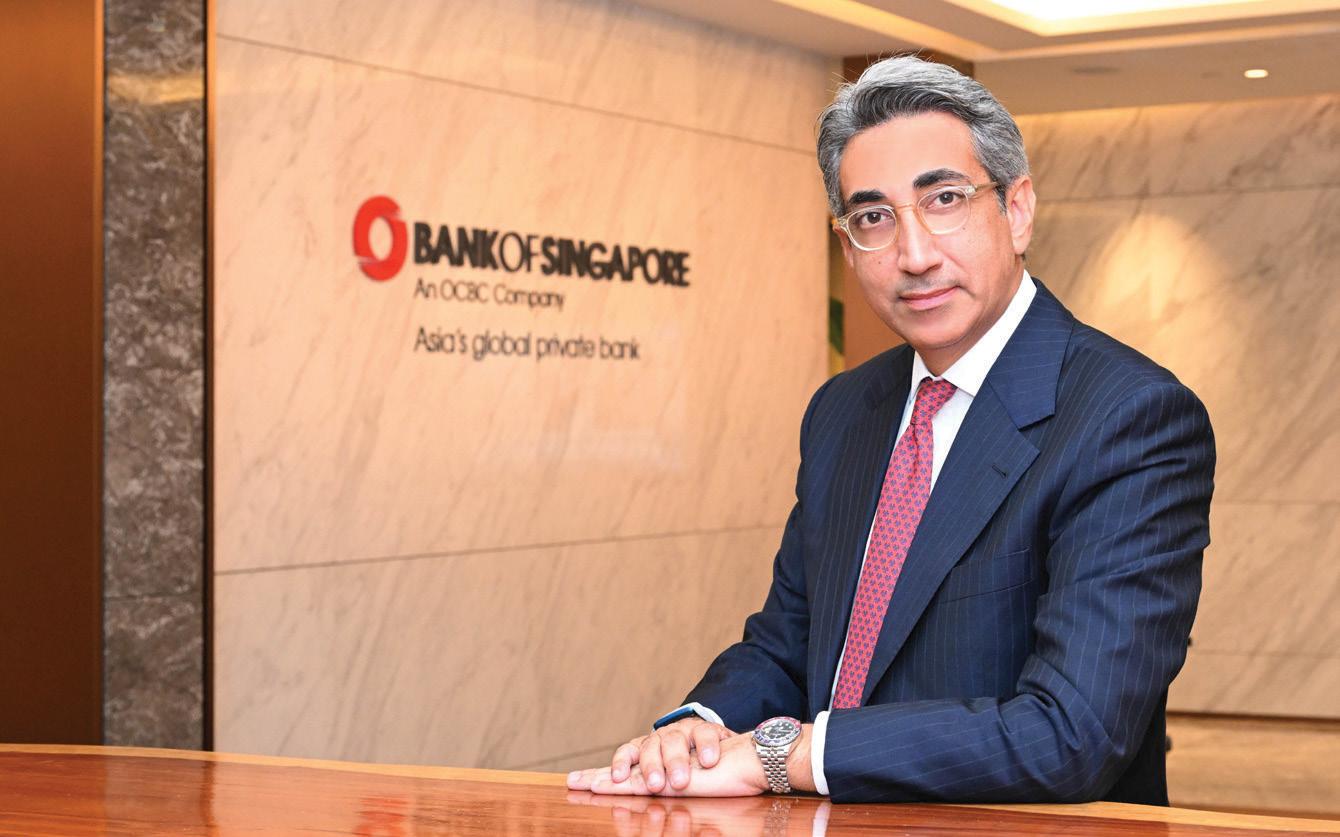
Ranjit Khanna, head of Private Banking Europe, Middle East and Global South Asia and chief executive, DIFC Branch, Bank of Singapore
NAVIGATING FAMILY WEALTH IN THE MIDDLE EAST
FROM VIRTUAL TO STRUCTURED FAMILY OFFICES
AS INVESTMENT STRATEGIES EVOLVE, FAMILIES IN THE REGION ARE STARTING TO FORMALISE THEIR WEALTH MANAGEMENT
Across the Middle East, wealth and enterprise have long been deeply intertwined. Many wealthy families preserve generational wealth through privately owned, tightly held businesses. Historically, they have relied on trusted insiders –such as CFOs or in-house legal counsels – to manage both business and personal wealth.
This informal approach reflects regional norms where trust is cultivated through close-knit relationships. These informal structures are known as virtual family offices (VFOs) and allow families to selectively outsource services such as investment, legal and succession planning advice on an as-needed basis. VFOs operate without dedicated licences, office spaces or large in-house teams. They leverage a network of trusted advisors, external specialists, and digital platforms to manage wealth.
While this approach has benefits like minimising fixed costs and streamlining administration, families increasingly recognise the need to institutionalise and professionalise their structures. This shift is driven in part by the adoption of diverse investment strategies that demand more robust governance.
In the region, families are moving beyond traditional sectors such as real estate and local businesses to explore global markets, private equity, venture capital, and sustainable investments, often also incorporating philanthropy into their plans. Evolving complexities and risks – including navigating crossborder regulations, managing volatile markets, addressing governance challenges, and ensuring effective succession planning amid shifting family dynamics – also highlight the importance of enhanced institutionalisation and professionalism.
THE SHIFT TOWARD SINGLE-FAMILY OFFICES
This is why many are now exploring the
establishment of dedicated single-family offices (SFOs) – structured entities that clearly separate personal wealth from businesses - establishing defined investment mandates and support generational transitions. SFOs consolidate reporting and risk oversight, implement governance frameworks, attract professional talent, and formalise wealth transition plans.
These structures also prompt families to take a more holistic view of the ownership of their assets, considering not only the jurisdictions where their assets, structures and investments are held, but also the underlying legal frameworks. Many families in the region are establishing trusts and foundations as part of their SFO structures, prompting them to think of succession planning from both an ownership and management perspective.
With a growing number of families across the Middle East embracing the future of wealth stewardship, our role as a private bank is to guide families through the journey towards building an enduring SFO with clarity, conviction, and purpose. This journey starts with conversations on:
Assessing readiness by evaluating the complexity of their wealth and identifying key drivers for institutionalisation. Defining objectives such as succession planning, governance frameworks, and investment mandates.
Designing scalable structures that balance tradition with modern best practices.
Connecting with experts including legal, tax, and operational specialists to build a tailored ecosystem.
Providing ongoing support through our dedicated family office advisory team, offering insights on global trends, risk management, and talent acquisition.
THESE INFORMAL STRUCTURES ARE KNOWN AS VIRTUAL FAMILY OFFICES (VFOS) AND ALLOW FAMILIES TO SELECTIVELY OUTSOURCE SERVICES SUCH AS INVESTMENT, LEGAL AND SUCCESSION PLANNING ADVICE ON AN AS-NEEDED BASIS.”
As Middle Eastern families continue to evolve, the rise of SFOs reflects a broader shift toward institutional-grade wealth management – without losing sight of the cultural values that underpin trust and legacy. Whether starting small or scaling up, the key lies in designing a wealth management structure that balances tradition with modern governance, ensuring resilience across generations.
Bank of Singapore Limited’s branch in the Dubai International Financial Centre (DIFC) is regulated by the DFSA.
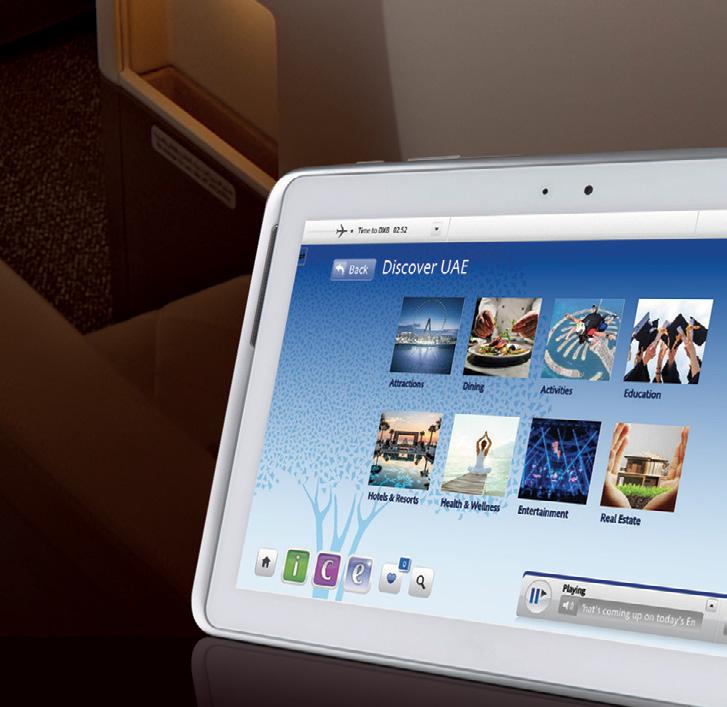
Attractions
Activities
Dining
Health
Education
Entertainment
Real
Hotels
Shopping
The
HOW ALEX REINHARDT IS REWRITING
THE RULES OF IN DUBAI BLOCKCHAIN
WE SAT DOWN WITH RENOWNED SERIAL ENTREPRENEUR ALEX REINHARDT TO UNPACK THE VISION BEHIND HIS “DIGITAL ECONOMIC HIGHWAY”: A BLOCKCHAIN ECOSYSTEM BUILT TO BE FAST, SIMPLE AND INVISIBLE TO EVERYDAY USERS. FROM ANXIETY-FREE UX TO REAL-WORLD PAYMENTS AND REWARDS, REINHARDT EXPLAINS WHY THE UAE IS THE IDEAL LAUNCHPAD FOR MASS ADOPTION. WHAT FOLLOWS IS AN IN-DEPTH Q&A ON TRUST, REGULATION, REAL UTILITY — AND THE FUTURE OF DECENTRALISED TECH.
WORDS: NIDA SOHAIL
For readers who use a smartphone every day but don’t follow blockchain at all: how do you personally explain what your current blockchain initiative is about — and what an ordinary person can actually do with it in daily life?
If I strip away all the jargon, I would say we are building a kind of digital economic highway that quietly runs in the background of everyday life. In my view, a good blockchain shouldn’t feel like “technology” at all. For an ordinary person it’s just a way to send assets across borders as easily as sending a message, to pay in a shop with a regular card while everything on the back end is settled automatically, to earn rewards for supporting the network or using certain apps, and to move value between different tools without friction.
From my own experience, when people first interact with what we build, they don’t say, “What a clever consensus algorithm.” They usually say, “It’s fast, it’s simple, and I feel in control.” For me, that is the real definition of a next-generation blockchain.
You’ve chosen the UAE, and Dubai in particular, as your home base. From your own experience building tech companies here, what does this region give you and your team that Europe or the US couldn’t?
I’ve lived and worked in different cities, from Germany to different European hubs, and I’ve learned that where you build can be just as important as what you build. Dubai, and the UAE more broadly, give us a combination that is very hard to find elsewhere. There is a real willingness from regulators to sit down, listen, and say, “Explain what you’re building and let’s find a responsible framework.” For a young and often misunderstood industry, that attitude is priceless.
I often say that a blockchain without an ecosystem is just an expensive database. Our strategy is to build what I call a virtuous cycle, where users, developers, merchants, and partners all reinforce each other.”
At the same time, the UAE is a natural bridge between Europe, Asia, and Africa. Our users, partners, and community members come from all of those regions, and this is one of the few places where their paths cross constantly. On top of that, the culture here is extremely entrepreneurial. As someone who spends a lot of time with founders and investors, and has been recognised in regional business rankings, I feel that energy every day, and it pushes our team to move faster and think bigger.
When you and your team design products, who do you really have in mind beyond traders and early blockchain enthusiasts? Can you share a couple of concrete stories from your own projects of how people or businesses already use your solutions in everyday life? I never wanted to build technology only for traders and early blockchain enthusiasts. In every project we start, we ask a simple question: how can this make life easier for as many people as possible? For me it’s about simplifying everyday payments, removing borders from the way value moves, and giving people additional ways to grow their capital in a disciplined and transparent way. If someone can send transactions, pay, save and get extra profit inside one clear system, then the technology is doing its job.
Today your ecosystem includes a non-custodial wallet, payment cards linked to digital assets, automated trading bots, and reward tools where users freeze tokens and receive rewards. From your point of view, which of these turned out to be the real “game changer” for mass adoption — and why?
When I explain what we are building, I usually describe it in layers. At the foundation there is the network itself, the chain that is responsible for security, consensus, transaction speed, and the economic rules of the system. On top of that sits what I call the blockchain utility layer: the non-custodial wallet in your pocket, payment cards that connect digital assets to the traditional payment world, and automated trading tools that let people participate in markets without staring at charts all day.
Above that there is the experience layer. This is where you find games, loyalty programmes, marketplaces and other applications that make the technology tangible. From my perspective, a well-designed tap-to-earn game or a very simple subscription product can teach more people about blockchain than a stack of whitepapers. Inside the team we constantly test how these layers interact. Can a reward earned in a game end up on a card? Can profit from a bot be used directly for everyday purchases? For me, this fluid movement of value between layers is where the real magic happens.
On the technical side, you work with delegated proof-of-stake, short block times and the ability to process thousands of transactions per second. In your own projects, how do you personally balance speed, security and decentralisation so that the system stays robust, but doesn’t become a black box for users?
My background is in economics rather than pure computer science, so I always look at technology through incentives and trade-offs. On the consensus side, we use a delegated model that allows the network to confirm blocks in a few seconds and process a very large number of transactions while consuming only a fraction of the energy that traditional mining would require.
Many people still think blockchain means high fees and a painful onboarding. Based on your team’s experience, what are the two or three concrete design decisions that actually made things simpler and cheaper for first-time users — for example, here in the UAE?
If I’m completely honest, the main user-experience problem in blockchain is not speed but anxiety. People are afraid of
pressing the wrong button, losing funds, or suddenly paying a fee they didn’t expect. That’s why inside our projects we treat UX almost like aviation safety. We try to minimise the number of critical decisions a user has to make, we reduce the amount of risky actions, and we build guardrails around fees and transactions.
You often say that without clear rules there is no mass adoption. How do you and your companies work with regulators, banks and payment partners in the region today?
And what were the toughest lessons for you personally on the regulatory side?
We operate at the intersection of digital technologies, data, and modern blockchain infrastructure, so regulation is simply part of the game.In our team we work with specialised legal partners in the region and internationally to make sure that what we do fits into existing frameworks.
In practice this means building proper KYC and AML flows where they are needed, clearly separating technology providers from regulated entities, and maintaining an ongoing dialogue with regulators as the rules evolve. I’ve learned that it is much easier to design products with compliance in mind from day one than it is to retrofit them later. It can slow you down in the short term, but in the long term it builds trust with users, institutions, and governments, and that trust becomes a real competitive advantage.
You’ve spoken about global fintech partnerships, merchant integrations, multi-token support, and an NFT marketplace. Which of these is your immediate priority, and how do you plan to scale adoption across the Middle East?
I often say that a blockchain without an ecosystem is just an expensive database. Our strategy is to build what I call a virtuous cycle, where users, developers, merchants, and partners all reinforce each other. On the one hand, we focus on payments and everyday utility: cards, merchant tools, and integrations that let people actually spend and receive value instead of just holding it. On the other hand, we develop automated trading tools, so that users can put their assets to work through structured strategies rather than emotional manual trading.
Around this core we grow developer and partner programmes that offer grants,
technical help, and go-to-market support to teams that decide to build with us. In the GCC, for example, I see particularly strong potential in remittances, travel, and solutions for small and medium-sized businesses. My view is that ecosystems grow fastest where they solve real, painful problems, not where they simply chase the latest narrative on social media.
You often talk about making blockchain understandable for ordinary people, not just developers. What are the biggest barriers to adoption from a community perspective — and how are you and your team addressing them through education and communication?
Education has never been a side activity for me. Long before this particular blockchain initiative, I spent years speaking and teaching in different countries, and that experience strongly shaped how I think about community today. Together with my team, we put a lot of effort into creating materials that make blockchain and its tools understandable for anyone — not only for people with a specialised professional background.
My philosophy is simple: if people don’t understand what they are using, they will not trust it. So we focus on very clear, human language, without unnecessary buzzwords. We produce guides, videos, live sessions and in-app explanations that show how things work step by step, and what the real benefits are in everyday life. We also rely heavily on local community leaders and ambassadors who know their culture, their language and their audience, and can adapt our message to their reality.
In my experience, the best promotion for this industry is not hype, but a well-informed community member who can
explain, in their own words, how this technology made something in their life simpler or more convenient.
The splitting technology (rewards model you use can offer rewards to users who freeze their assets) — very attractive in the short term. Many people, however, still associate blockchain rewards with energyhungry mining farms and environmental concerns. How do you make sure your approach to rewards remains sustainable from an energy and environmental perspective in the long run?
As an economist, I am naturally sceptical of any model that promises high rewards forever without a clear source of value.
Over the years I’ve seen several cycles where systems collapsed the moment the hype faded. That’s why, in our projects, we design rewards around a few principles that I always come back to.
First, over time the rewards have to be increasingly backed by real economic activity: transaction fees, services, spreads, and not just new tokens printed out of thin air. Second, the rules around supply need to be transparent and long-term, so people understand that today’s incentives are a trade-off with tomorrow’s. And third, we try to reward actions that genuinely strengthen the ecosystem, such as running infrastructure, providing liquidity, or using trading strategies responsibly. For me, a sustainable model is one that can survive a multi-year bear market without collapsing and where users feel they are helping to build something durable, not just chasing the flavour of the month.
What are your near-term goals for user growth, transaction volume, and merchant adoption? Can you share any current milestones or numbers that demonstrate momentum?
Price will always dominate headlines, but for me it is actually the least interesting metric. When I look at our internal dashboards, I’m much more focused on how many people are active every week across the different parts of the ecosystem, how quickly the number of accounts in the network is growing, how many smart contracts and tokens are being created and used, and how many independent teams choose this infrastructure for their own products. I also pay a lot of attention to the health of the ecosystem around us: how
If I had to put my vision into one sentence, I would say that I want blockchain to become invisible. In five years, I don’t want people to walk around saying, “I used a blockchain today.” I want them to say, “I sent transfer home instantly.”
INSIDE THE RISE OF ALEX REINHARDT
many independent teams are building products on top of this infrastructure, how many merchants decide to accept it in their daily operations, and how many developers choose to commit their time and creativity here. If, in five years, we can show that millions of people use this infrastructure every week without even thinking about it — they just pay, save, and run businesses — that will be a much bigger success in my eyes than any single price chart going vertical.
If we fast-forward five years, what would have to happen for you to say: “Yes, this was worth decades of work”? And what is, in your view, the single biggest obstacle between today’s blockchain industry and that future?
If I had to put my vision into one sentence, I would say that I want blockchain to become invisible. In five years, I don’t want people to walk around saying, “I used a blockchain today.” I want them to say, “I sent transfer home instantly,” or “I launched a product and got paid from three continents,” or “I joined a game and my in-game items really belong to me,” and only later discover that all of this was powered by decentralised infrastructure.
The biggest challenge, in my opinion, is rebuilding trust after the scandals and failures that the industry has gone through, while still moving quickly enough to stay relevant. That requires a very delicate balance between technological ambition, regulatory maturity, and a genuinely human-centred approach to product design. If my team and I can help show that this industry can be both bold and responsible at the same time, then I will feel that we’ve used this decade well.
Named among the top 10 most influential blockchain leaders worldwide.
Founded 20+ tech and fintech projects and helped launch hundreds of startups, with over €500m in capital raised.
Blockchain products used by millions of people in 120+ countries.
14+ years in blockchain , active in the industry since 2011.
Educator and author: 100+ seminars, 500,000+ participants, bestselling book “You Are Number One”.
“Blockchain Leader of the Year 2025” at the Best in Business Awards in Riyadh.
GULF BUSINESS REAL ESTATE SUMMIT: UAE MARKET BOOMS AMID TOKENISATION, OFF-PLAN TRENDS
THE EVENT OFFERED A PLATFORM TO DISCUSS PRESSING INDUSTRY ISSUES, SUCH AS REGULATORY CHANGES AND MARKET OPPORTUNITIES AMID RECORD-HIGH TRANSACTIONS
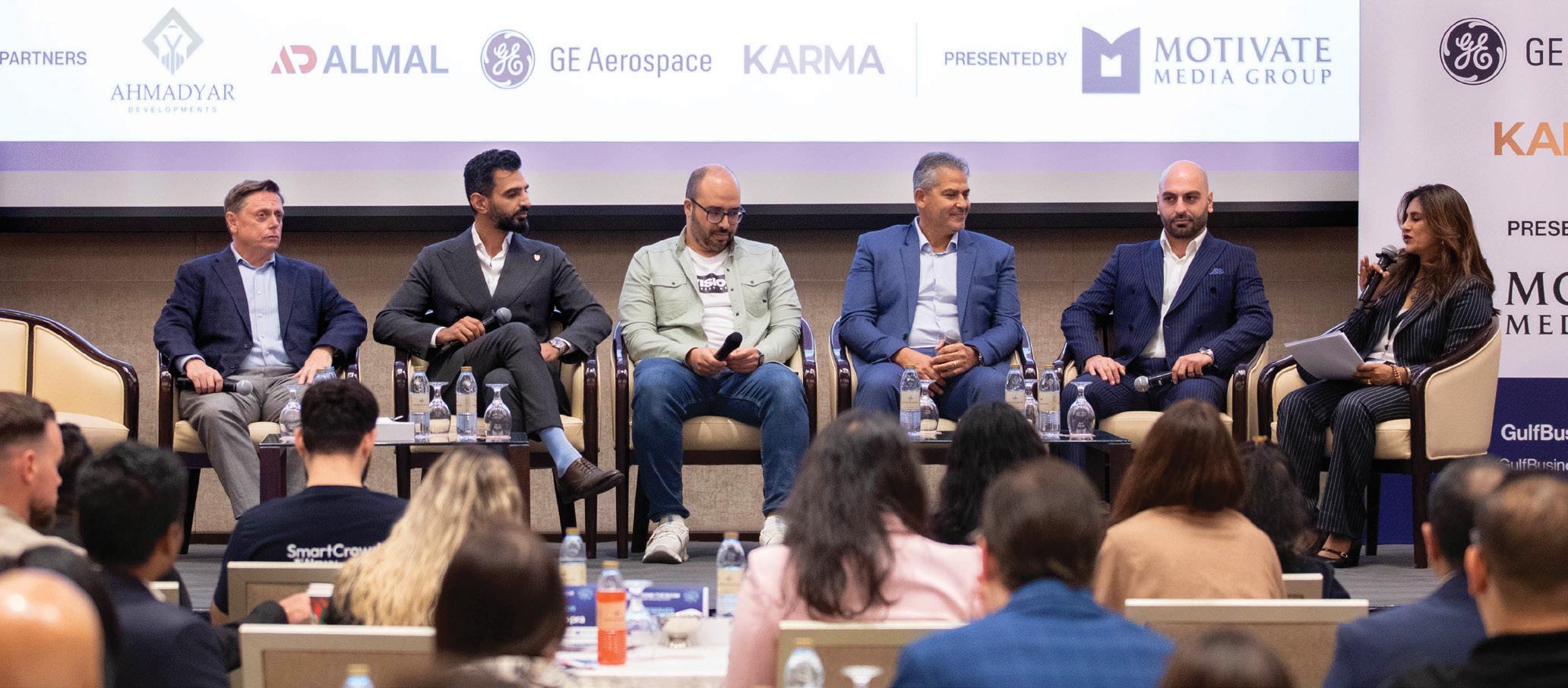
PANEL1
BY NIDA SOHAIL
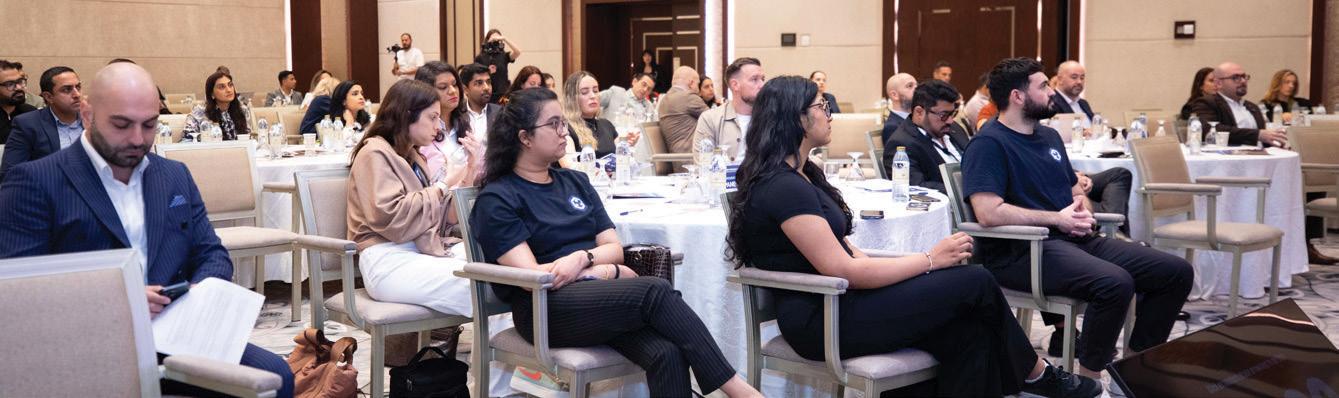
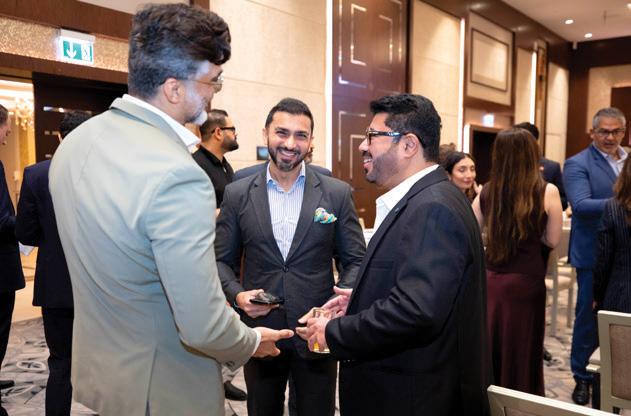
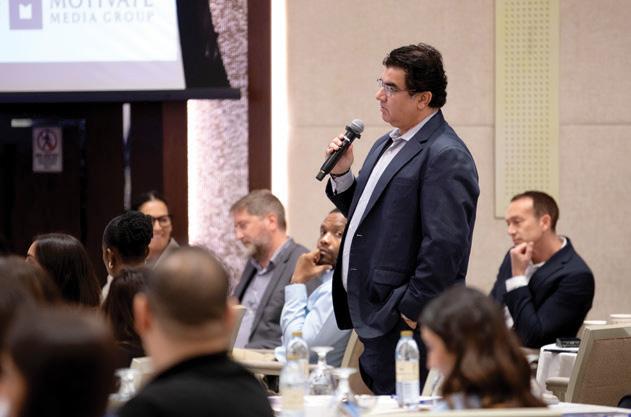
The Gulf Business Real Estate Summit took place in Dubai on November 25, bringing together top experts from finance, regulation, development, and brokerage to examine the future of the UAE real estate sector. The half-day event offered a platform to discuss pressing industry issues, including sustainability, regulatory changes, emerging technologies, and market opportunities amid record-high transactions and sales.
The summit addressed critical questions: How is tokenisation reshaping real estate investment? Will Dubai face a market correction in 2026? Where does value lie in off-plan properties, and how are evolving trends transforming the role of brokers in a rapidly changing market?
TOKENISING UAE REAL ESTATE: FROM CONCEPT TO MAINSTREAM
The first panel, “Tokenising UAE Real Estate – From Pilot to Mainstream”, examined how the industry is moving from concept-stage initiatives to scalable investment solutions. Moderated by Neesha Salian, editor at Gulf Business, the discussion featured industry leaders, including Cherif Sleiman (CRO, Property Finder), Scott
and founder,
Thiel (CEO
Tokinvest),
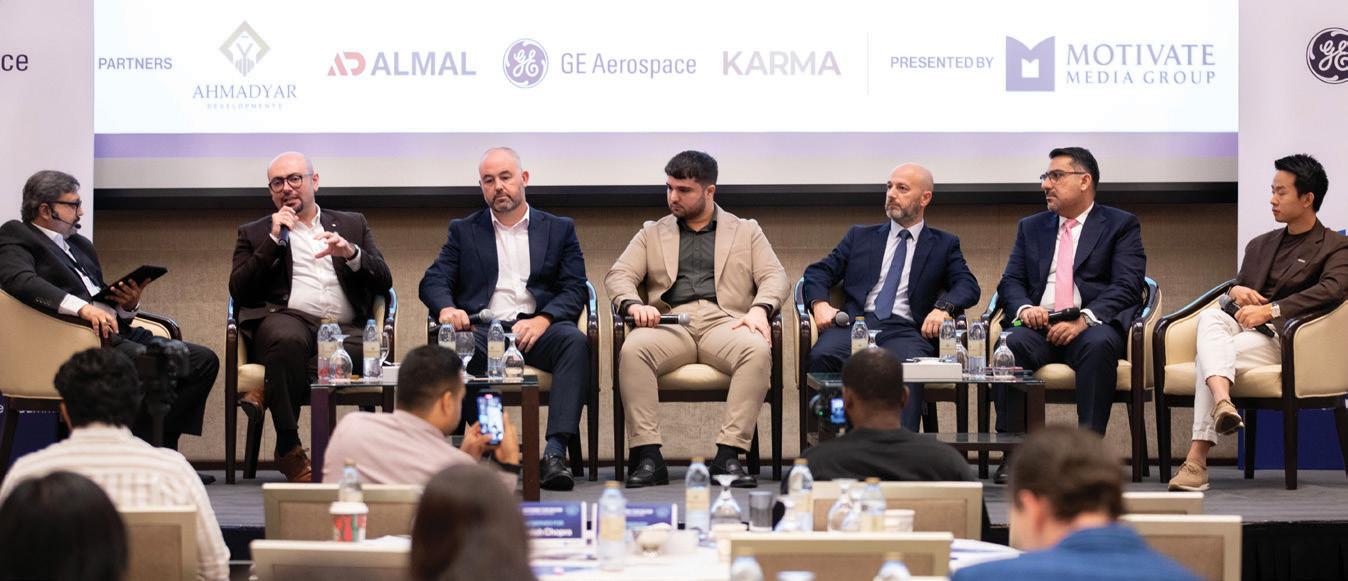
LEFT TO RIGHT: Scott Thiel (Tokinvest), Riz Ahmed (SmartCrowd), Fouad Bekkar (Coraly.ai), Cherif Sleiman (Property Finder), Feliks Vartanov (Black River Capital) and Neesha Salian (editor, Gulf Business)
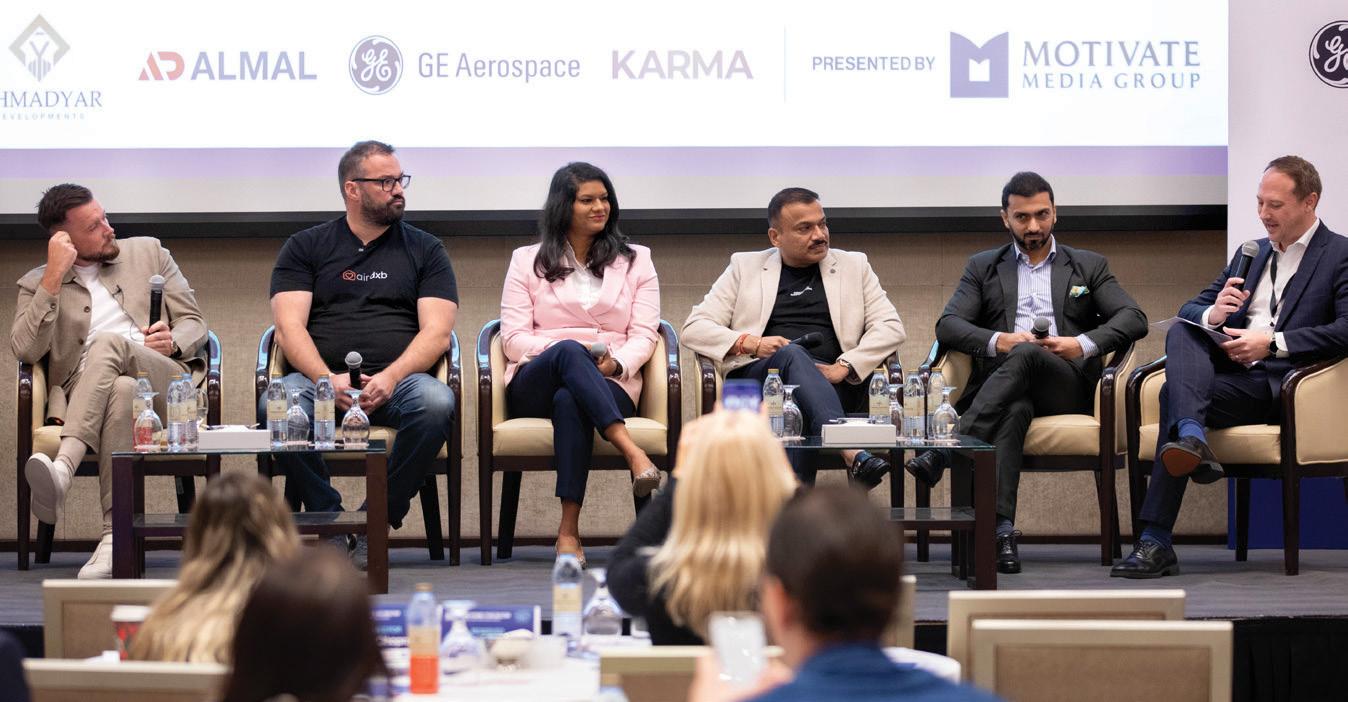
LEFT TO RIGHT: Lewis Allsopp (Allsopp & Allsopp), Gregory Lewis (AirDXB), Prathyusha Gurrapu (Cushman & Wakefield Core), Captain Pradeep Singh (Karma Developers), Saurabh Bhatia (Klay Capital) and Gareth van Zyl (Gulf Business)
PANEL 2
PANEL 3
LEFT TO RIGHT: Rajiv Pillai ( Gulf Business), Mohammad Khader (Almal Real Estate Development), Ben Crompton (Crompton Partners Estate Agents), Rashed Ahmadyar (Ahmadyar Developments), Ali Shahin (HAS Media), Mohamed Ali (GFH Partners) and Thomas Wan (Refine Development Management)
Riz Ahmed (CEO, SmartCrowd), Fouad Bekkar (CEO, Coraly.ai), and Feliks Vartanov (director, Black River Capital).
Cherif Sleiman emphasised the importance of trust and transparency. “The regulatory environment still requires maturation, and investors need confidence not only in the assets themselves but also in the entities responsible for custody and settlement,” he said. Sleiman added that although tokenisation technology has existed for over a decade, mainstream adoption requires seamless operation so consumers can transact without navigating complex protocols. Scott Thiel, CEO of Tokinvest, echoed these sentiments: “Mass adoption will depend on removing barriers, raising awareness, and ensuring investors can participate in an intuitive, accessible manner. The goal is to make investing in tokenised real estate as userfriendly as possible, even for those with limited technological familiarity.”
DUBAI MARKET CORRECTION: MYTH OR REALITY?
The second panel, “Is a Dubai Real Estate Correction Imminent?”, moderated by Gareth van Zyl, group editor at Gulf Business, examined potential risks in a market experiencing rapid growth.
Lewis Allsopp, chairman of Allsopp & Allsopp, rejected predictions of an imminent downturn, citing strong underlying fundamentals such as population growth, infrastructure expansion, and $700bn in investment commitments. “Dubai remains highly attractive to high-net-worth individuals, including Premier League footballers. Real-world demand contrasts sharply with short-term reports suggesting weakness,” he said. “It all depends on the location.
Take fully developed areas, for example, The Palm, we’ve seen prices absolutely skyrocket over the years. However, rental transactions are currently dropping in double digits. We are even seeing the launch of The Jebel Ali Palm now. So yes, Palm Jumeirah will, of course, hold its value to a degree and remains one of the go-to areas in Dubai, but there’s always something new on the horizon that can affect prices in the future,” said Gregory Lewis, founder and CEO of AirDXB.
Saurabh Bhatia, director at Klay Capital, added insights by segment:
Residential: Prime and luxury segments remain in high demand; midsegment properties may experience mild corrections.
Retail: Experiential and premium retail continue to thrive, while legacy retail may need reinvention.
Office and commercial: Grade A and luxury offices attract new businesses and international headquarters, with potential growth in manufacturing expected to boost demand.
Bhatia outlined four factors influencing market corrections: global economic shocks, external geopolitical events, oversupply (mainly in mid-segment
units), and government policy changes. He noted most upcoming handovers are pre-sold, cushioning potential price adjustments. “Even a 10–15 per cent correction would be healthy and create opportunities for new entrants,” he said.
OFF-PLAN UAE: WHERE VALUE STILL LIES
The final panel, “Off-Plan in the UAE –Where the Value Still Lies”, moderated by Rajiv Pillai, deputy editor at Gulf Business, focused on the growing off-plan market.
Mohammad Khader, head of Project Development at Almal Real Estate Developments, emphasised the need for developers to differentiate through strategic choices and high-quality products. “Investors seek control and clarity. At the end of the day, the key answer is simple: it all comes down to the product,” he said. Khader highlighted that buyers increasingly compare multiple options and that developers must equip them with the right tools and information for confident decision-making. Ben Crompton, managing partner at Crompton Partners Estate Agents, highlighted strong foreign interest, particularly from India, Tanzania, Russia, and Singapore, in luxury and waterfront properties. “Developers are offering premium units at record prices, and buyers are accepting these levels because they see strong long-term potential,” he said.
A TRANSFORMING LANDSCAPE WITH RESILIENT GROWTH DRIVERS
Insights from the summit underscore a UAE real estate sector that is evolving yet resilient. Strong economic fundamentals, robust investor confidence, and sustained demand across multiple segments continue to underpin growth. Emerging trends such as tokenisation and innovative investment models signal a market preparing for its next chapter.
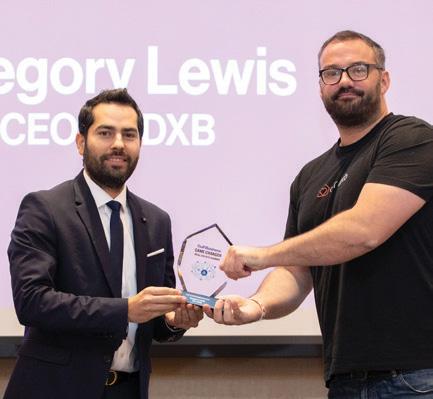
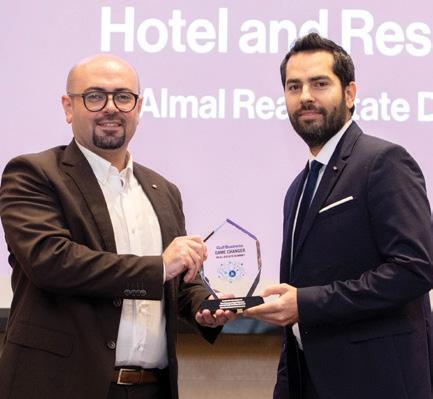
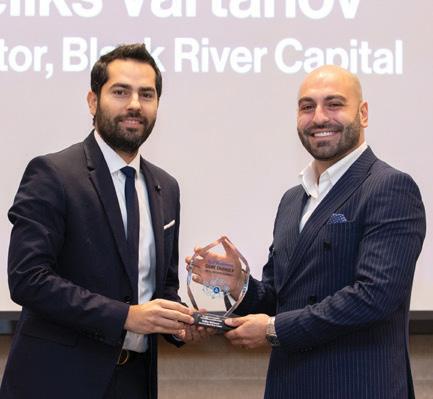
GAME CHANGER AWARDS (From left to right) Mario Saaiby, presents the awards to Gregory Lewis (Short-Let & Hospitality Innovation) , Mohammad Khader (Destination Development) and Feliks Vartanov (Excellence in Armenia-UAE Business Collaboration)
iSolution’s next phase: Scaling cloud innovation across the Middle East
Ahmed Eid, CEO and founder of iSolution, explains how the company grew from a one-person startup into a regional tech leader powering digital transformation across the Middle East
iSolution has grown significantly since its inception. Take us through the company’s journey: from the early days to the business you are leading today. Years ago, iSolution began as a small but ambitious startup with just one employee, me as the founder, driven by a bold vision to accelerate digital transformation across the region. We were among the first companies to leave meaningful footprints in the Middle East’s technology landscape, adopting cloud technologies at a time when the market was still in its early stages.
From that humble beginning, iSolution has evolved into a leading technology powerhouse, now home to more than 250 experts operating across Saudi Arabia, Qatar, the UAE, Bahrain, Kuwait, Oman, Jordan, and Egypt.
Our purpose from day one has been consistent: to be early adopters of transformative technologies, to lead the cloud movement in the region, and to empower organisations to innovate and grow through the right technology solutions. Over the years, we have supported enterprises, government entities, and SMBs, earning a strong reputation for delivering measurable business outcomes. The journey has not been easy, but every challenge became motivation to push harder and strengthen our market presence.
Digital transformation is a key driver of growth across the Middle East. What role is iSolution
playing in helping organisations modernise their IT infrastructure?
Digital transformation is not just about adopting technology, it’s about enabling agility, resilience, and continuous innovation. At iSolution, we help organisations achieve this by modernising their infrastructure, data, and applications through secure, scalable cloud solutions.
We have played a major role in moving enterprises from legacy systems to intelligent, cloud-native architectures that unlock better collaboration, advanced analytics, and AI-driven decision-making. What differentiates us is that we follow global best practices and act as advisors, providing tailored recommendations that ensure long-term success.
Vendor partnerships are central to your growth strategy. How have these collaborations shaped your competitive edge?
Partnerships are at the core of iSolution’s DNA. We were the first local partner for Google Cloud to achieve their highest level of partnership, reflecting our early cloud adoption and deep technical capabilities. Our rapid advancement with IBM further demonstrates the strength of our technical team. These relationships reinforce our
position as a trusted multi-vendor integrator and enable us to deliver world-class solutions designed for the region.
The IT workforce is evolving rapidly. How is iSolution developing its talent pool?
Our people are our greatest asset. We invest heavily in continuous learning and certifications, ensuring our engineers and consultants remain aligned with the latest cloud, AI, and cybersecurity advancements. Cross-functional collaboration enables our teams to deliver business-driven outcomes, not just technical solutions.
Saudi Arabia’s Vision 2030 places technology at the heart of diversification. How is iSolution aligning with the kingdom’s agenda?
We see Vision 2030 as both an inspiration and a roadmap. Our work helps organisations build smarter, more efficient digital ecosystems that align with national priorities, from AI enablement to data sovereignty.
Looking ahead, what’s next for iSolution?
The next chapter is centred on scale, innovation, and long-term regional impact. We are strengthening partnerships, expanding into new sectors such as fintech, and shaping how businesses operate in an AI-driven world. Our focus remains clear: empowering clients, enabling innovation, and delivering sustainable, measurable impact across the Middle East.
What differentiates us is that we follow global best practices and act as advisors, providing tailored recommendations that ensure long-term success.”
Ahmed Eid
Almal Real Estate Development’s next chapter: redefining luxury through experiential living
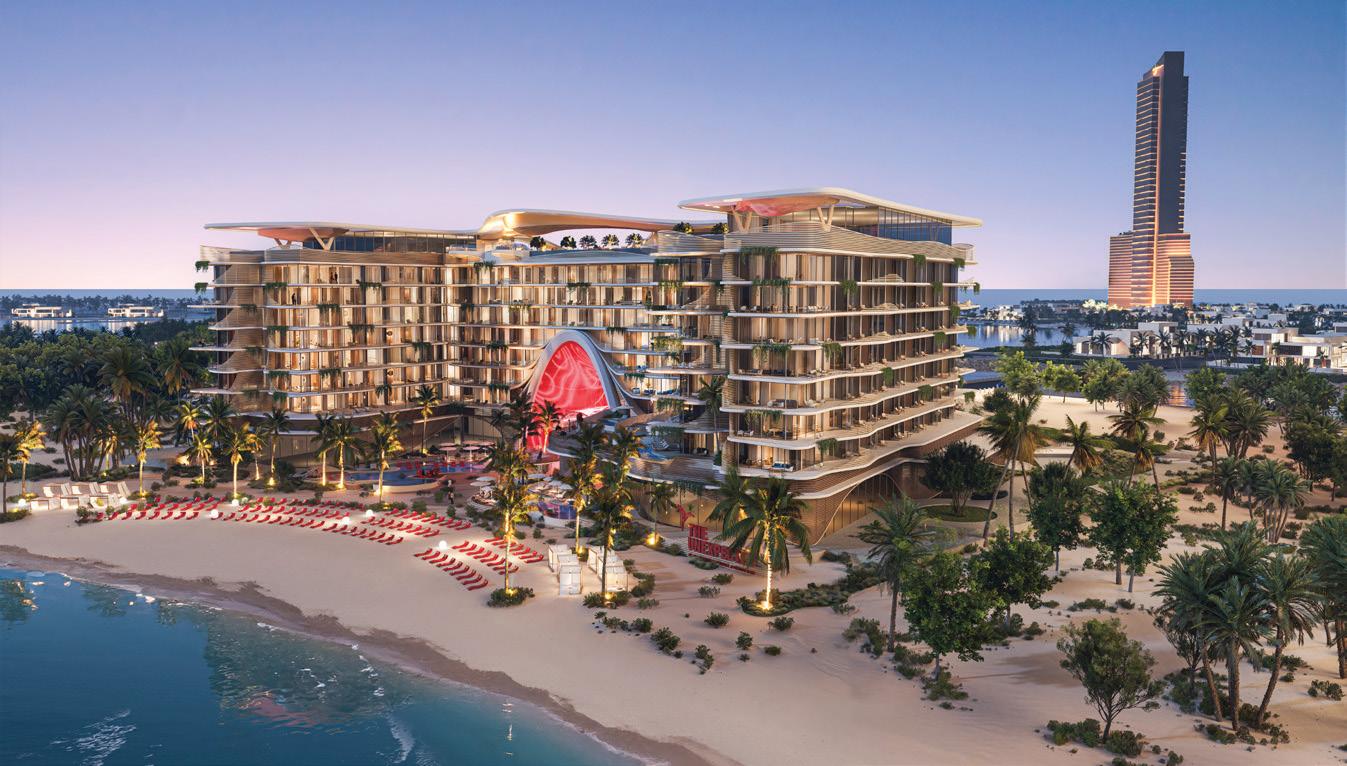
How is The Unexpected positioned for long-term investment growth given its proximity to the Wynn Casino and Al Marjan Island’s rapid rise?
Our location beside the Wynn resort creates a long-term demand. We’re building more than a hotel; we’re creating a lifestyle-led ecosystem. By combining experiential hospitality with branded, fully managed residences, we generate recurring revenue, stronger occupancy, and sustainable value appreciation for investors. The goal is simple: outperform market cycles by anchoring ourselves to a growing tourism and entertainment hub.
How will the project merge the Ibiza spirit with Palladium Hotel Group management?
Ushuaïa Ibiza Hotel or what is now known as The Unexpected Ibiza Hotel brings the cultural energy: the music, the day-to-night pulse, the bold design. Palladium brings the operational precision. Together, they create a hospitality model where iconic entertainment meets disciplined global management. Residents and guests get the best of both worlds: immersive experiences supported by robust performance systems.
What sets The One by Almal - Bali apart in Nusa Dua’s competitive development landscape?
The One by Almal in Bali is intentionally multi-segment. Private villas cater to capital-growth buyers, townhouses serve families and long-stay users, while resortmanaged apartments attract yield-driven investors. By diversifying the mix, we broaden our market reach and stabilise occupancy across seasons. It’s an ecosystem approach, not a singleproduct approach, and that’s what creates durable value.
How does The One Bali’s location and resort-style amenities enhance value?
Nusa Dua already performs exceptionally well as a luxury destination, and we amplify that with private pools, rooftop
dining, co-working lounges, and hospitality-led services. These amenities are not decorative, they’re revenue drivers. They help us capture premium nightly rates and attract hybrid travellers who stay longer and come back more often.
How will Almal balance its luxury reputation while entering commercial real estate through The Smart Space?
The Smart Space is a strategic brand extension. We’re applying our luxury design principles, smart technology and service ethos to a commercial product. It allows us to diversify without diluting our identity. The aim is to introduce a premium, flexible workspace model that complements our hospitality and residential portfolio while unlocking new growth channels.
How does The Smart Space align with Dubai’s 2040 Urban Master Plan?
The Smart Space is a strategic brand extension. We’re applying our luxury design principles, smart technology, and service ethos to a commercial product.”
Dubai’s 2040 vision is about sustainable, people-centered, tech-enabled urban development. Smart Space fits directly into that narrative. By placing flexible, smart workspaces in key urban hotspots, we support reduced commute times, higher efficiency, and adaptive business environments. It’s a commercial asset designed for the next generation of Dubai’s economy.
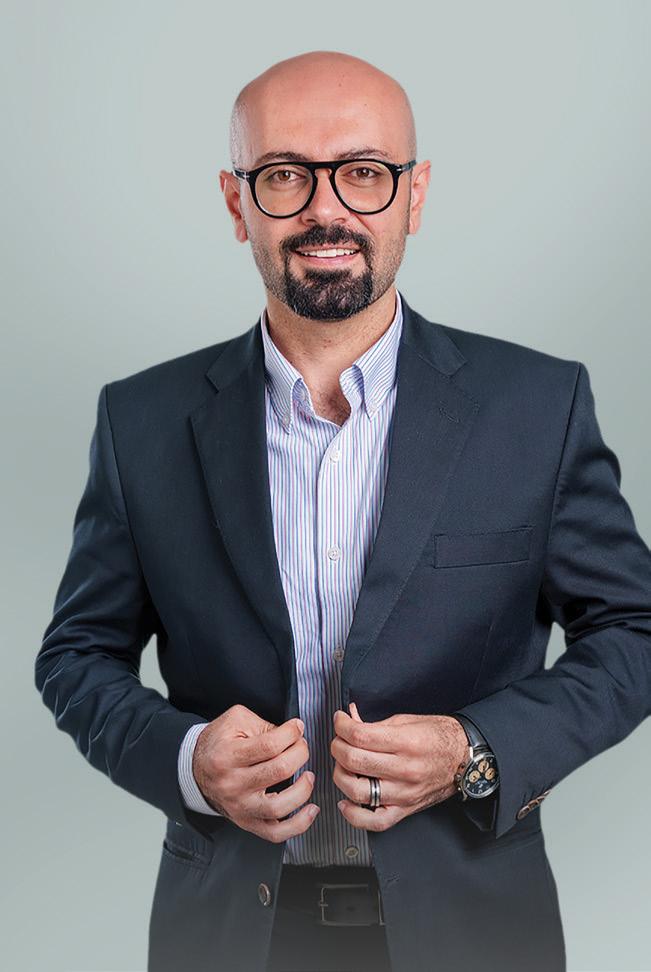
Mohammed Khader, chief development officer at Almal Real Estate Development, reveals how the company is expanding its global reach through experiential hospitality, premium residences and Dubai’s emerging smart-workspace market
Supplied
Supplied
Mohammed Khader
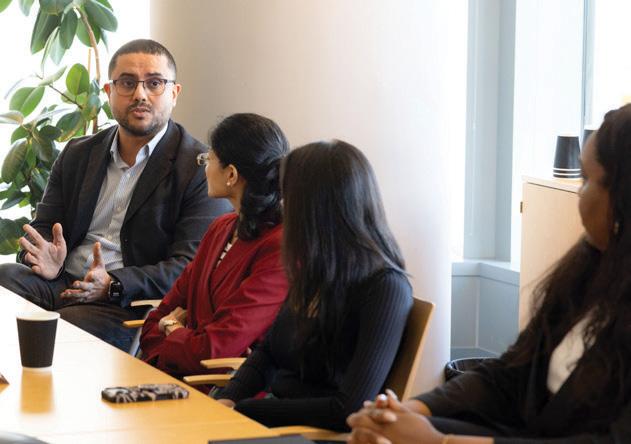
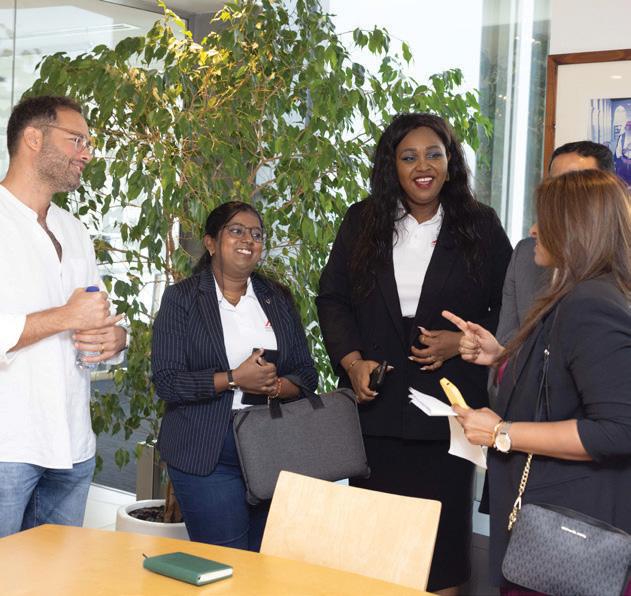
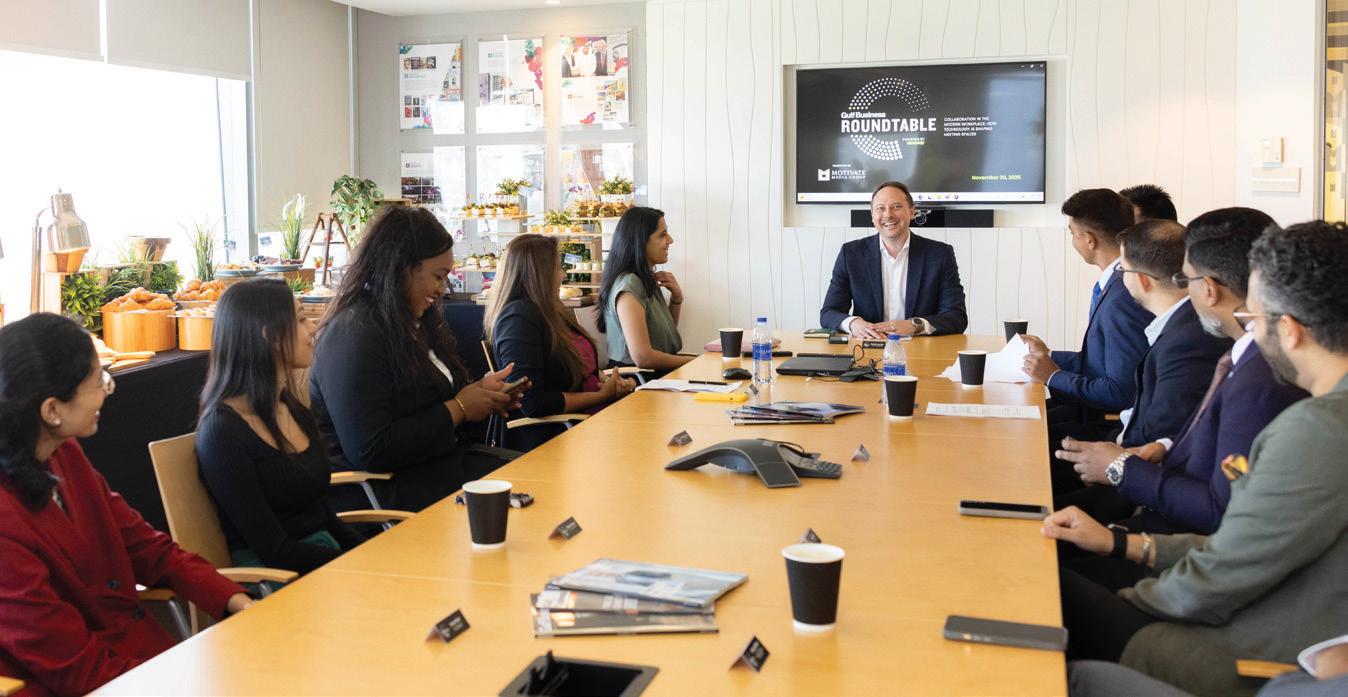
COLLABORATION IN THE MODERN WORKPLACE: HOW TECHNOLOGY IS RESHAPING MEETING SPACES
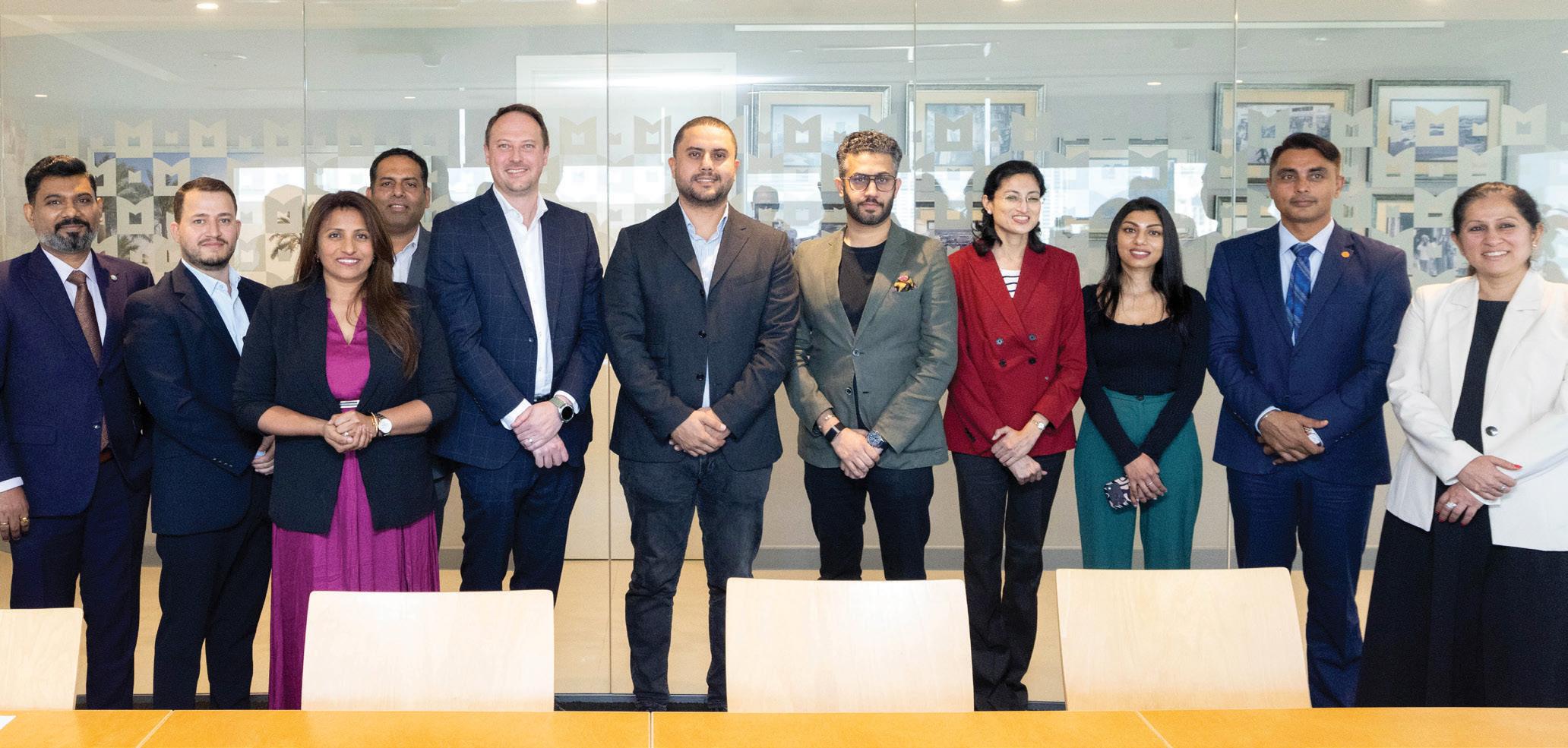
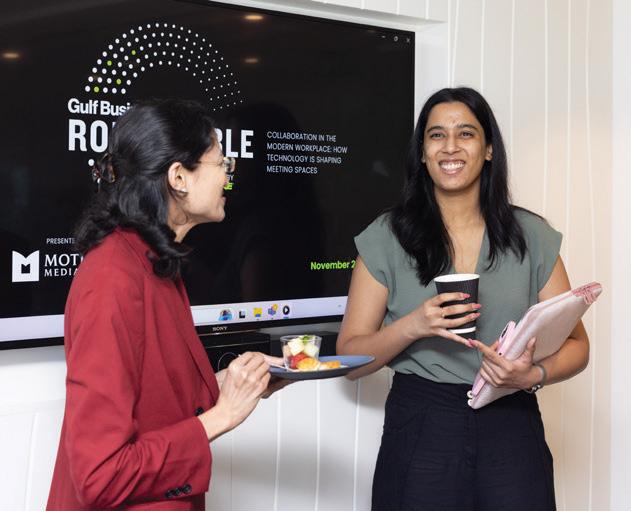
Held on November 20 at the Motivate Media Group boardroom in Dubai Media City, the latest Gulf Business Roundtable brought together technology, HR and AV leaders to explore how collaboration is changing inside modern workplaces — and why audio quality, room design and plug-and-play simplicity now define the next generation of meeting spaces.
BY GARETH VAN ZYL
On November 20, Gulf Business hosted an exclusive roundtable at the Motivate Media Group boardroom in Dubai Media City, bringing together senior technology, HR and AV specialists to examine a rapidly evolving question: How is modern collaboration reshaping meeting spaces?
The conversation centred on five key themes shaping the region’s workplaces: how IT decision makers are planning and implementing technology in larger rooms and auditoriums; the merging roles of AV and IT — with audio quality emerging as a true game-changer; the benefits and
challenges of end-to-end solutions versus multi-brand setups; the barriers to adoption, from budgets to user knowledge; and what the “ideal collaboration space” now looks like for organisations.
Opening the session, Yassine Mannai, associate director – sales and marketing, Shure MEA, said companies across the GCC are redesigning their meeting rooms to match new expectations.
“Spaces today need to be more dynamic and adaptable,” he explained. “Companies want areas that can shift from corporate events to trainings and wellness sessions — all while ensuring every participant, in
the room or online, enjoys the same clarity and engagement.”
For Shure, audio has become central to that shift. “Our goal is not just to sell hardware,” Mannai said. “It’s about creating inclusive, engaging spaces where collaboration works seamlessly. Previously you needed an audio engineer to configure everything. Now we’re building systems that guarantee high-quality audio while simplifying deployment for IT and facilities teams.”
He added that microphones, sensors and other capture devices now define the quality of modern collaboration. “If you’re
FROM LEFT TO RIGHT: Dr Mohan Babu Murugesan, group CEO of Bits Secure I.T Infrastructure; Algert Beollari, head of compliance and MLRO, Astero Falcon; Clarise Morris, HR manager – MEA & APAC, Leviton Middle East; George Simon, co-founder and CEO, Cornerstone Technology Solutions Global; Gareth van Zyl, group editor, Gulf Business; Yassine Mannai, associate director – sales and marketing, Shure MEA; Faisal Zaidi, president, Exscape; Anuja Shah, head of strategy and IT, Zurich Middle East; Shivani Saxena, chief of staff, RemotePass; Rishi Chahal, co-founder and CCO, IDCUBE; and Jannat Singh, founder and CEO, Talent Shark.
ROUNDTABLE SPEAKERS
Yassine Mannai
associate director – sales and marketing, Shure MEA
Shivani Saxena chief of staff, RemotePass
Anuja Shah head of strategy and IT, Zurich Middle East
Jannat Singh founder and CEO, Talent Shark
deploying AI or any advanced collaboration tools, you need high-quality input first. The hardware drives the experience that follows.”
Around the table, the broader transformation was equally clear. Anuja Shah, head of strategy and IT at Zurich Middle East, stressed that the best technology “stays in the background”, allowing people to focus on content rather than tools.
From the HR perspective, Clarise Morris, HR manager – MEA & APAC, Leviton Middle East, pointed to the challenge of uniting different generations and levels of digital fluency: “We talk about culture, engagement and inclusivity. If we don’t connect people properly, none of that works.”
We talk about culture, engagement and inclusivity. If we don’t connect people properly, none of that works.”
For organisations with distributed teams, simplicity has become non-negotiable. “When the experience fails, the impact fails,” said Shivani Saxena, chief of staff at RemotePass. “Remote employees need to feel as present as those in the room.”
Participants also debated the merits of end-to-end solutions versus multi-brand setups, a topic increasingly relevant as meeting spaces grow in size and complexity. Mannai noted that unified systems can reduce deployment challenges and create a more consistent user experience, while multi-brand configurations continue to serve specialised needs.
“People want systems that work the moment you walk into the room,” he
Faisal Zaidi president, Exscape
Algert Beollari head of compliance and MLRO, Astero Falcon
Rishi Chahal co-founder and CCO, IDCUBE
Clarise Morris
HR manager – MEA & APAC, Leviton Middle East
Reena Simon Roy HR leader – Middle East, Cognizant
George Simon co-founder and CEO, Cornerstone Technology Solutions Global
Dr Mohan Babu Murugesan, group CEO of Bits Secure I.T Infrastructure
said. “Plug-and-play has become a real expectation. When the setup is seamless, people collaborate better — and the technology stays where it should be: in the background.”
Across the session, one message emerged clearly: the modern workplace is no longer defined by desks or even buildings, but by the quality of connection between people. That connection depends on meeting spaces that feel natural, intuitive and equitable — whether someone is speaking from a boardroom table or joining from a laptop thousands of kilometres away.
As this Gulf Business roundtable showed, the future of collaboration will not be shaped by more technology, but by smarter, simpler, plug-and-play experiences that give teams the freedom to focus fully on the work: not the tools behind it.
Yassine Mannai, associate director for sales and marketing at Shure MEA (far left), adds his insight during the roundtable discussion.
Redefining hospitality at IHG Dubai Festival City
Thomas Schmelter, area general manager for IHG Hotels at Dubai Festival City and IHG Hotels & Resorts, Luxury & Lifestyle, UAE, discusses his three-decade journey in hospitality
With more than 30 years of experience across Asia, the Middle East, and Europe, Thomas Schmelter has witnessed hospitality evolve from service-driven operations to experience-led ecosystems. In this conversation, he reflects on his global journey, the growing sophistication of Dubai’s luxury hotel landscape, and how IHG Dubai Festival City continues to blend innovation, consistency, and authentic guest engagement.
You’ve been with IHG for more than three decades, across Asia, the Middle East, and Europe. What first drew you to hospitality, and how has your leadership style evolved over the years?
Hospitality has always been in my DNA. Both my parents worked in the industry, so from a young age I was fascinated by the energy behind the scenes: the teamwork, the attention to detail, and the joy of creating memorable experiences for guests. That early exposure, combined with a desire to travel and discover different cultures, made this a natural career choice.
Over the years, working across India, the Middle East, Europe, and Asia has shaped a leadership approach that balances empathy and empowerment. Today, I believe in leading through collaboration, encouraging diverse perspectives, and creating an environment where teams feel trusted and inspired to excel.
IHG Dubai Festival City is one of the largest hotel clusters in the region. What are the unique challenges of managing such a diverse portfolio, from InterContinental to Holiday Inn, and how do you ensure consistent guest experiences?
I wouldn’t call it a challenge; I see it as a
tremendous opportunity. Managing a cluster like Dubai Festival City allows us to cater to every type of traveller, from luxury-seeking guests at InterContinental Dubai Festival City and long-stay residents at InterContinental Residence Suites, to business and leisure guests at Crowne Plaza and Holiday Inn & Suites.
With 16 restaurants and bars: from Michelin star fine dining at Pierre’s TT by Chef Pierre Gagnaire to Belgian Café’s lively terrace and Anise’s international flavours: the diversity itself drives creativity. What unites it all is a shared commitment to excellence. Through consistent brand standards, crosstraining, and our cohesive service culture, we ensure every guest enjoys the same warmth and quality, regardless of the brand or outlet they experience.
The UAE is becoming more competitive in the luxury hospitality space. How do you balance innovation — from AI-driven personalisation to upgraded lobbies and F&B outlets — while staying true to the IHG brand promise? Innovation and authenticity go hand in hand. At IHG Dubai Festival City, we’ve integrated technology across the guest journey; from AI-enhanced reservation systems and digital check-ins to smart table management in restaurants. Our event spaces feature some of the most advanced AV systems in the region, including one of the largest LED screens in the region that transforms
how conferences and gala events are experienced.
But while technology enhances efficiency and personalisation, our focus remains on the human touch: creating genuine connections and memorable experiences that reflect IHG’s promise of ‘True Hospitality for Good’.
Looking ahead, what are your top priorities for IHG Dubai Festival City and the wider luxury and lifestyle portfolio you oversee in the UAE? Our focus remains on three pillars: people, experience, and legacy. We will continue investing in our colleagues’ growth, personalising guest experiences through innovation and genuine care, and building a long-term legacy that positions IHG Hotels at Dubai Festival City among the most respected and sought-after destinations in the region.
Ultimately, success in hospitality is about balance: between technology and warmth, business and community, local culture and global standards. That’s the journey we’re proud to continue.
With 16 restaurants and bars: from Michelin star fine dining at Pierre’s TT by Chef Pierre Gagnaire to Belgian Café’s lively terrace and Anise’s international flavours: the diversity itself drives creativity. What unites it all is a shared commitment to excellence.”
Thomas Schmelter
THE MOST INFLUENTIAL BUSINESS LEADERS YOU NEED TO KNOW
The region’s business landscape is being reshaped by a new kind of influence, one driven not only by boardroom decisions, market performance or company scale, but by the ability to build communities, spark conversations and move audiences at speed. In an era where social reach can amplify strategic vision, the region’s most dynamic founders, executives and creators now operate at the intersection of business leadership and digital impact.
In this special feature, Gulf Business spotlights a selection of the UAE’s most recognisable business voices, individuals who command sizeable followings, shape public perception and increasingly drive regional dialogue across sectors such as beauty, real estate, technology, retail, aviation and lifestyle. These picks have been ordered from biggest to smallest social media following, providing readers with a clear sense of the scale and reach each leader brings to the conversation.
Alongside these editorial picks, you will also find a series of extended full page profiles highlighting other key business personalities contributing to the evolution of the region’s economy. Together, they present a holistic view of influence in 2025, part entrepreneurial grit, part digital visibility and part strategic leadership.
This is not simply a list of who is popular. It is a look at who is shaping conversations, inspiring the next generation and driving the Gulf’s business narrative forward.
Huda Kattan
FOUNDER, HUDA BEAUTY
H57.5M FOLLOWERS (@HUDABEAUTY)
uda Kattan is the founder of Huda Beauty, one of the world’s most influential creator-led cosmetics brands. After launching her beauty blog in 2010 and the brand in 2013, she scaled it into a global powerhouse. A 2017 private-equity investment valued the company at over $1bn. In 2025, she bought back that stake, returning Huda Beauty to full founder ownership. Known for her product innovation, global impact and exceptional digital reach, Kattan remains one of the most powerful figures in modern beauty.
K8.5M FOLLOWERS
halid Al Ameri is an Emirati storyteller and entrepreneur whose uplifting and humorous videos have built one of the region’s largest digital communities. A Stanford MBA graduate, he left corporate life to pursue content creation full-time in 2016. His work, often centred on family, identity and everyday Gulf life, resonates across generations and cultures. With more than 15 million followers across platforms, he has become one of the Arab world’s most recognisable digital personalities and a leading voice shaping regional storytelling.
ADEL MARDINI
VISIONARY LEADER IN GLOBAL LUXURY AVIATION AND HOSPITALITY
Steering luxury aviation A
del Mardini is the founder and CEO of Jetex, a world-renowned name in ultra-luxury aviation and bespoke hospitality. Since launching Jetex in 2005, Mardini’s journey began with a bold vision: to fill the gap in premium hospitality services for discerning VIP clients. Under his leadership, Jetex has become the preferred brand for heads of state, UHNW individuals, celebrities, and global executives, offering seamless private jet services paired with tailored luxury hospitality.
Today, Jetex operates a global network of 38 private jet terminals worldwide, supported by a team of more than 1,000 aviation professionals.
In addition to leading Jetex, Mardini holds influential positions in the global aviation ecosystem. He is a board member of the Middle East and North Africa Business Aviation Association (MEBAA) and a respected participant in the World Economic Forum and Young Presidents’ Organization (YPO)— amplifying his voice among the world’s most forward-thinking leaders.
Mardini continues to shape the evolution of private aviation and experiential luxury hospitality. His unwavering customer-first philosophy drives Jetex’s commitment to delivering not just private jet hospitality services but elevated, immersive journeys that begin long before take-off and extend far beyond landing.
TODAY, JETEX OPERATES A GLOBAL NETWORK OF 38 PRIVATE JET TERMINALS WORLDWIDE, SUPPORTED BY A TEAM OF OVER 1,000 AVIATION PROFESSIONALS.
Karen Wazen
ENTREPRENEUR AND FASHION
PERSONALITY
8M FOLLOWERS (@KARENWAZEN)
Karen Wazen is a Dubai-based entrepreneur and fashion personality whose digital influence has evolved into a global lifestyle brand. After rising to prominence through blogging and social media, she launched Karen Wazen Eyewear in 2018, now stocked internationally and worn by global celebrities. Known for collaborations with leading luxury houses and her strong presence at fashion weeks, Wazen bridges regional creativity with global audiences. Her brand and content continue to expand across beauty, lifestyle and fashion, reinforcing her status as a top regional influencer-founder.
Hatem Dowidar GROUP CEO, E&
363K FOLLOWERS
Hatem Dowidar is group CEO of e&, where he is leading the transformation of the former Etisalat Group into a global technology and investment powerhouse. With over 30 years of leadership experience across Vodafone, Procter & Gamble and Daimler Benz, he oversees a portfolio spanning telecoms, digital services and technology ventures across more than 30 markets. His strategic focus on innovation and global partnerships has positioned e& as one of the most valuable tech brands from the region. He is also one of the UAE’s most-followed CEOs on LinkedIn.
HUSSAM BAGHDADI
COO, ARABIAN AUTOMOBILES, OPERATING UNDER AW ROSTAMANI GROUP
Shaping UAE’s automotive landscape
Hussam Baghdadi is the COO for Nissan, INFINITI, and Renault at Arabian Automobiles Company, the flagship automotive entity of the AW Rostamani Group. With over 30 years of experience in the UAE automotive sector, he has developed a comprehensive understanding of the industry and has contributed to multiple areas of the business throughout his career.
In his role at Arabian Automobiles Company, Baghdadi leads the strategic direction, operational performance, and growth of the organisation. He is leading the commercial expansion of AWR Automotive’s mobility footprint
HIS LEADERSHIP PHILOSOPHY EMPHASISES EMPOWERING PEOPLE, FOSTERING COLLABORATION, AND ENCOURAGING INNOVATION ACROSS ALL LEVELS OF THE ORGANISATION.
through JMMC, elevating the group’s capabilities in the rapidly growing commercial mobility sector while strengthening strategic initiatives across both new and used car segments. His responsibilities span key functions such as sales, aftersales, marketing, customer experience, and operations across the UAE. He is focused on nurturing sustainable, customer-centric, and performance-driven practices that support the long-term success of the organisation and its stakeholders.
To further strengthen his leadership capabilities, Baghdadi completed the Stanford Graduate School of Business LEAD Executive Program, an experience that enhanced his skills in innovation, strategic thinking, and effective decision-making. He remains committed to continuous learning and believes it is essential in navigating the evolving automotive landscape.
As part of the senior leadership team at Arabian Automobiles Company, Baghdadi has been involved in the collective efforts that have contributed to the organisation receiving awards including the Mohammed Bin Rashid Al Maktoum Business Award, the Dubai Quality Awards, the Dubai Service Excellence Awards, and various global recognitions from Nissan, INFINITI, and Renault.
Throughout his career, Hussam has supported several major initiatives across the organisation, including growth programmes, digital transformation efforts, expansion into new market segments, and improvements in operational efficiency. His leadership philosophy emphasises empowering people, fostering collaboration, and encouraging innovation across all levels of the organisation.
A dedicated and forward-thinking leader, Baghdadi is passionate about creating environments where teams can grow, adapt, and deliver meaningful results. He remains committed to supporting the continued progress and long-term success of Arabian Automobiles Company and the AW Rostamani Group.
Zeina Khoury
PRESIDENT AND CHIEF GROWTH OFFICER, ZED CAPITAL REAL ESTATE
Ghanim CEO, MAJID AL FUTTAIM LIFESTYLE
1.3M FOLLOWERS
Zeina Khoury is president and chief growth officer of Zed Capital Real Estate, a Dubai-based luxury property firm, and the founder of fashion platform I Am The Company. Her global profile grew through Netflix’s Dubai Bling , where she showcased her work as a real-estate strategist and entrepreneur. Beyond brokerage, she runs a successful short-term rental business and multiple consumer ventures. Khoury’s blend of media visibility, entrepreneurial drive and multi-sector expertise positions her as one of the UAE’s most recognisable female business leaders.
80K FOLLOWERS
Fahed Ghanim is CEO of Majid Al Futtaim Lifestyle, where he leads a portfolio of more than 100 stores and major global brands including lululemon, LEGO, Crate & Barrel and Shiseido. Under his leadership, the business has expanded significantly, driven by omnichannel innovation, brand experience and digital transformation. Previously CEO of L’azurde, where he delivered a major turnaround, Ghanim is regarded as one of the region’s most effective retail operators. His insights into consumer trends and brand building have made him a prominent voice within the UAE’s retail sector.
ZAID S AL KHAYYAT
MANAGING DIRECTOR AND BOARD MEMBER, AL KHAYYAT INVESTMENTS (AKI)
Meaningful Impact
aid S Al Khayyat is the MD of Al Khayyat Investments (AKI), leading the company through a transformative era that blends entrepreneurial legacy with bold innovation and a people-focused vision. As a trailblazer in advancing AKI’s role as one of the MENA region’s most influential family businesses, Al Khayyat is shaping a legacy of impact that transcends borders and industries. Founded in 1982 by Dr Saad F Al Khayyat, AKI’s chairman and Al Khayyat’s father, the company has grown to become synonymous with excellence, resilience, and innovation. From an early age, Al Khayyat was inspired by his father’s entrepreneurial spirit, instilling in him the ambition to uphold AKI’s values while reimagining its future.
ZVISIONARY LEADERSHIP DRIVING PURPOSEFUL GROWTH
In the past year, AKI has achieved a series of transformative milestones. Among the most notable is the launch of the AKI Fulfilment & Innovation Centre in Dubai, a state-of-the-art 1-million-square-ft facility that represents a leap in sustainable supply chain operations. By quadrupling AKI’s fulfilment capacity with minimal environmental impact, the facility sets a new benchmark for operational innovation in the UAE. This ambitious venture showcases Al Khayyat’s strategy of combining technological advancement with environmental stewardship. Furthering this vision, AKI Logistics was introduced this year as a new business unit offering world-class third-party logistics (3PL) services. This expansion enables AKI to provide end-to-end solutions across essential sectors like retail, healthcare, FMCG and more, elevating the region’s logistical infrastructure with innovative services such as cold chain storage, customs clearance, and last-mile delivery. Al Khayyat’s passion for creating thriving ecosystems has also led to the establishment
“OUR GREATEST INVESTMENT WILL ALWAYS BE IN PEOPLE. THEY ARE THE TRUE CREATORS OF IMPACT.”
of AKI Creates, an initiative supporting the UAE’s “Make it in the Emirates” strategy that fosters local manufacturing and builds national capabilities. This move underscores AKI’s commitment to advancing economic diversification and entrepreneurship within the UAE. A testament to AKI’s legacy of impact in the UAE, this year marked the 60th anniversary of BinSina Pharmacy, an AKI brand that has touched generations of families across the nation. The brand’s longevity reflects AKI’s ethos of care, community, and authenticity; values deeply embedded in Al Khayyat’s approach to leadership. Outside of the UAE, Al Khayyat spearheaded AKI’s expanded operations in Saudi Arabia and Oman through AKI Retail, Consumer, Healthcare, and Fitness, contributing to the company’s growth and bringing AKI’s people-first philosophy to a larger regional audience. This impact extends to the global stage, too. AKI recently signed Memorandum of Understanding’s with Cainiao Group, an Alibaba company, and BioBAY during the 8th China International Import Expo in Shanghai, with AKI’s participation aimed at enhancing sustainable trade, logistics, and life sciences innovation between the UAE and China. AKI’s growing international presence has also been seen in the company’s recent partnership with the World Economic Forum (WEF) as an Associated Partner.
PEOPLE-FIRST LEADERSHIP
Al Khayyat’s leadership is rooted in people, innovation, inclusivity, and opportunity. He has cultivated an entrepreneurial culture that empowers teams across AKI’s nine markets and strengthens the organisation’s long-term growth. His focus on developing talent, especially youth, reflects his belief that people are the driving force behind sustainable progress. He also brings a forward-looking approach to the region’s evolving landscape, advancing sustainable operations, embracing new technologies, and supporting ideas that contribute to national development and long-term growth.
Mohamed Alabbar
FOUNDER, EMAAR PROPERTIES
Hussain Sajwani
FOUNDER AND CHAIRMAN, DAMAC PROPERTIES
437K FOLLOWERS
Mohamed Alabbar is the founder of Emaar Properties, the developer behind some of Dubai’s most iconic landmarks including Burj Khalifa, Downtown Dubai and The Dubai Mall. A central figure in shaping the modern emirate, he also leads global developer Eagle Hills and chairs Americana Group. Alabbar is the founder of Noon.com, one of the Middle East’s leading e-commerce platforms, and continues to expand his footprint across real estate, digital ventures and consumer sectors. His influence spans decades, marking him as one of the region’s most prominent business visionaries.
178K FOLLOWERS (@HUSSAINSAJWANI)
Hussain Sajwani is the founder and chairman of DAMAC Properties, one of Dubai’s largest luxury real-estate developers. After early success in the catering industry, he launched DAMAC in 2002 as Dubai opened to international investment. The group has since delivered major golf-course communities, branded residences and international developments. More recently, DAMAC has expanded into hospitality and digital infrastructure, including significant investment in data centres. Sajwani remains a high-profile entrepreneur known for bold expansion, strategic partnerships and strong commercial instincts.
ANKUR AGGARWAL
CHAIRMAN AND FOUNDER, BNW DEVELOPMENTS
Building on a vision
Some leaders follow blueprints. A few redraw them. And then there is Ankur Aggarwal, the chairman and founder of BNW Developments, whose influence on the UAE’s luxury real estate landscape reads less like corporate growth and more like a decisive shift in the industry’s centre of gravity.
Aggarwal has created one of the UAE’s most assertive luxury real estate powerhouses, a company now commanding over Dhs32bn in gross development value, a scale that signals intent as much as achievement. Under the leadership of this CA-turned-real-estate mogul, BNW has been pushed into a rare category: a developer that builds at the intersection of design, brand power, and strategic foresight. His vision has positioned BNW as the largest private developer in Ras Al Khaimah and a rising influence across the UAE’s most competitive corridors. Every project moves with a clear thesis that architecture must provoke emotion, and luxury must deliver cultural relevance, not just visual appeal.
“A PROJECT IS SUCCESSFUL ONLY WHEN THE LIFE LIVED INSIDE IT IS BIGGER THAN THE BLUEPRINT IT STARTED FROM.”
His approach to brand partnerships has been equally distinctive. Collaborations with global icons like IHCL TAJ, FashionTV, Michel Adams, and Wyndham Hotels & Resorts reflect a leader who understands that the future of real estate isn’t just constructed, it’s curated. These alliances, combined with decisive moves such as the multi-billion-dirham collaboration with Masah’s MAN Construction, reveal a developer operating with both precision and daring intent.
Aggarwal’s presence across the industry is echoed in his recognition. He has been named Visionary of the Year at the Pillars of Real Estate Awards, honoured with the Icons of UAE Award for three consecutive years, and featured among the 50 World’s Most Elite Influential Individuals, distinctions that mirror both his impact and the momentum BNW continues to generate.
In an industry that often celebrates size, Aggarwal stands out for substance, a strategist whose clarity, confidence, and refusal to dilute ambition have turned BNW Developments into a creator of cultural and economic impact, shaping the next chapter of highvalue living across the UAE.
Paul Griffiths CEO, DUBAI
AIRPORTS
102K FOLLOWERS
Paul Griffiths has led Dubai Airports as CEO since 2007, overseeing Dubai International’s rise to become the world’s busiest airport for international passengers. Previously an executive at Virgin and Gatwick Airport, he is now guiding the next phase of Dubai’s aviation strategy through the development of the new Al Maktoum International Airport, designed to handle up to 260 million passengers per year. Griffiths’ leadership has been central to Dubai’s emergence as a global aviation hub and a cornerstone of the emirate’s long-term economic ambitions.
Mohamed Abdalla Al Zaabi GROUP CEO, MIRAL
42K FOLLOWERS (@ALZAABIOFFICIAL)
Mohamed Abdalla Al Zaabi is the group CEO of Miral, the developer behind Yas Island’s transformation into a global entertainment destination. Since joining in 2015, he has overseen major projects including Warner Bros. World Abu Dhabi, Ferrari World and SeaWorld Abu Dhabi, driving record visitation. In 2024, he secured one of the region’s most significant entertainment milestones: a long-term partnership with Disney to bring the Middle East’s first-ever Disney destination to Abu Dhabi. Al Zaabi continues to elevate the emirate’s tourism ambitions through largescale, globally recognised attractions.
ALEXANDER LOZBEN
IT ENTREPRENEUR AND FOUNDER, INTERHASH
Pioonering
strategic initiatives
lexander Lozben has spent more than a decade on the frontlines of digital transformation, moving from early crypto architecture to large-scale mining infrastructure long before the industry drew global attention. An IT entrepreneur, fintech specialist, and founder of INTERHASH, he stands among the early engineers of Europe and the CIS region’s mining ecosystem, shaping not only its growth, but its long-term economic logic.
AToday, from his base in Dubai, he is focused on much more than mining. His work spans sustainable digital infrastructure, blockchain analytics, Web3, robotics, and the AI-powered technologies that are rapidly rewriting the fundamentals of the global economy.
Lozben’s reach extends across the MENA region, Europe, and Central Asia, where he works actively with digital technology parks and regulatory hubs in the UAE, Qatar, Oman, Kazakhstan, and Saudi Arabia. His role goes beyond development. He consults closely on regulatory frameworks for digital assets, supports the evolution of Web3-enabled governmental processes, and contributes to policy formation around sustainable mining and next-generation fintech platforms. It has positioned him not just as a builder of technology, but as a contributor to the rule-sets that will determine how blockchain economies evolve over the next decade.
His presence at major global forums is a reflection of both that influence and his forward-thinking stance. A regular speaker at Blockchain Life and a frequent
DURING THE CRYPTO MARKET’S MOST AMORE THAN HALF OF ALL BITCOIN MINED IN RUSSIA ORIGINATED FROM INTERHASHCONNECTED CLIENTS.
voice in industry events from Dubai to Singapore, Hong Kong, and Europe, Lozben brings to stage a hands-on understanding of mining economics and Web3 realities — often speaking not from theory, but from scale-tested experience.
That experience crystallised into INTERHASH, a company he built to provide a full 360-degree suite of mining services. Under his leadership, the company has developed a sustainable operational model designed to keep pace with rapid technological shifts while remaining accessible to clients across different levels of expertise. INTERHASH’s growth has been equally notable. During the crypto market’s most accelerated phase, more than half of all Bitcoin mined in Russia originated from INTERHASH-connected clients. Today, the company’s total computing capacity contributes to roughly 7 per cent of the global Bitcoin network, placing it among the most influential mining service providers anywhere in the world.
For Lozben, the future of mining is inseparable from the future of energy. As systems scale, efficiency, sustainability, and resource optimisation will define longevity. His long-term strategy for INTERHASH prioritises automation, energyefficient infrastructure, global data-center expansion, advanced profitability analytics, and deeper international partnerships. The objective is straightforward: ensure that miners can operate reliably, transparently, and economically within an environment that continues to evolve.
He sees Dubai as the centre of that evolution. To him, the emirate represents more than geography — it is a launchpad for tech ecosystems built around digital assets, Web3-enabled government systems, logistics, robotics, digital identity, and AI-native architecture. As he succinctly puts it, “The future is freedom. And Dubai is its perfect platform.”
Confident, technical, and forward-looking, Lozben continues to operate with one guiding belief: that progress favours those who move early, build deeply, and stay ahead of the wave shaping the new digital economy.
Issam Kazim
CEO, DUBAI CORPORATION FOR TOURISM AND COMMERCE MARKETING
I36.8K FOLLOWERS
ssam Kazim has been central to strengthening Dubai’s standing as a leading global tourism destination. As CEO of DCTCM since 2014, he oversees the emirate’s international marketing and promotional strategy. Under his leadership, Dubai welcomed a record 18.72 million visitors in 2024, a 9 per cent rise on 2023 and well above pre-pandemic levels. The momentum aligns with the D33 agenda to double the city’s economy by 2033. His initiatives have broadened Dubai’s appeal across Asia, Africa and Eastern Europe, increased hotel occupancy to 78.2 per cent, and helped the city secure top honours at the World Travel Awards.
K1.5 MILLION FOLLOWERS
arim Gharbi, known as ‘K2’, is a Tunisian-French rapper, entrepreneur, and philanthropist based in Dubai. Emerging from Tunisia’s hip-hop scene, he built an international profile with collaborations alongside Snoop Dogg, DJ Khaled, and Fat Joe. With over 1.5 million Instagram followers, he is a leading entertainment figure across North Africa. As CEO of Dubai-based K2 Meta, he invests in blockchain, Web3, and emerging technologies with a focus on long-term, scalable growth. His philanthropic work includes renovating schools and providing medical aid in Tunisia. Once viewed as a ‘bad boy’, K2 has reinvented himself as a business leader.
Karim Gharbi
MUSICIAN
CAPT (DR) PRADEEP SINGH
FOUNDER AND CHAIRMAN, AETHON GROUP AND KARMA DEVELOPERS
Tactical leadership at the fore
aptain (Dr) Pradeep Singh has transitioned from commanding ships across oceans to managing multi-billion-dirham enterprises. He serves as founder and chairman of the Aethon Group and Karma Developers, overseeing a portfolio of ventures focused on sustainable and human-centred development. Under his leadership, Karma Developers has expanded its real estate operations across the UAE, Cyprus, the UK, Romania, and Australia, maintaining a multi-billion-dirham development pipeline. Alongside Karma, his enterprises, Aethon Group, Zena Properties, Spectrum Networks, and Silkleaf Capital, operate with integrated objectives spanning commerce, innovation, and environmental compliance.
Educated at T.S. Chanakya Maritime Academy, Captain Singh became one of the youngest captains in Indian maritime history. His experience at sea established principles of accountability, precision, and ethical clarity that continue to guide his business decisions. These principles were applied when he founded Aethon Marine
HIS EXPERIENCE AT SEA ESTABLISHED PRINCIPLES OF ACCOUNTABILITY, PRECISION, AND ETHICAL CLARITY THAT CONTINUE TO GUIDE HIS BUSINESS DECISIONS.
Services, an inspection and risk-management company, which achieved global market leadership within four years and established industry standards for safety and compliance in shipping. Capt. Singh’s leadership has been recognised through knighthoods by the Parte Guelfa of Florence and the Order of St. James of Holland. He has also been inducted into the Marquis Who’s Who Global Hall of Fame for lifetime contributions to enterprise and leadership.
He authored No Map, Just Vision, which provides a study of leadership under conditions of adversity. His forthcoming book, Asset Play, will examine strategic wealth creation and the evolving framework of modern capitalism, emphasising governance and responsibility.
Captain Singh holds an MBA, MSc, and LLM, in addition to a PhD in Economics and a DBA in Global Leadership. He completed the Harvard Business School Owner/President Management Program and is a Fellow of CIMA (UK) and CPA Australia. These qualifications support his ongoing engagement in research, education, and the development of business strategy.
He serves as Global Ambassador for the World Humanitarian Drive, Peace Ambassador for the Institute for Economics and Peace, and is a member of Chatham House and the Forbes Business Council. Captain Singh applies principles developed in maritime leadership to enterprise governance, ensuring that strategic vision, operational discipline, and ethical decision-making guide his businesses and initiatives. His approach links operational execution with long-term strategy, compliance, and global expansion. Across maritime and corporate environments, Captain Singh integrates accountability, precision, and risk management to guide decision-making and investment strategy.
Dariush Soudi
INVESTOR, AUTHOR AND SPEAKER
Dr Bu Abdullah (Yaqoub Mousa)
CHAIRMAN, BU ABDULLAH GROUP
3 MILLION FOLLOWERS
Dariush Soudi is a Dubai-based entrepreneur, author and global speaker. Having grown up in the UK after his family emigrated from Iran, he overcame dyslexia and early hardship to build a career in sales, marketing and a range of businesses. After suffering dramatic losses, including health issues and business setbacks, he rebuilt himself and now leads multiple ventures, including Be Unique Group, ARENA Capital and Gladiator Summit. Through his “Gladiator Mastery” programme and speaking engagements, Soudi aims to inspire entrepreneurs to achieve success in business and life — transforming adversity into opportunity.
50.7K FOLLOWERS
Dr Bu Abdullah (Yaqoub Mousa) is an Emirati entrepreneur, legal consultant and philanthropist, best known as chairman of Bu Abdullah Group, a diversified conglomerate with more than 270 companies across real estate, legal services, business consultancy, hospitality and investments. A trained legal professional, he has advised hundreds of regional and international firms, building a reputation for bridging global investors with UAE opportunities. Dr Abdullah is also recognised for his humanitarian work, including support for vulnerable communities during the pandemic. His blend of business leadership, social responsibility and international outreach has positioned him as an influential figure in the UAE’s private sector.
VIVEK ANAND OBEROI
MANAGING DIRECTOR AND CO-FOUNDER, BNW DEVELOPMENTS
An actorpreneur and philanthropist
Vivek Anand Oberoi is an accomplished actorpreneur, philanthropist, and future-focused business leader. Celebrated for his acclaimed body of work in Indian cinema, he has expanded his influence far beyond entertainment. Today, he stands as a driving force in global entrepreneurship, uniquely blending creativity with commercial strategy.
At BNW Developments, Oberoi brings a rare mix of creativity, strategic insight, and purpose-driven leadership. Under his guidance, the company has rapidly risen to prominence in the highly competitive UAE property market and achieved an exceptional milestone of Dhs32bn in gross development value. Known for crafting exclusive properties that embody architectural excellence, refined design, and unparalleled craftsmanship, BNW Developments continues to redefine modern luxury living. Oberoi’s vision is anchored in developing timeless
UNDER OBEROI'S GUIDANCE, THE COMPANY HAS RAPIDLY RISEN TO PROMINENCE IN THE HIGHLY COMPETITIVE UAE PROPERTY MARKET AND ACHIEVED AN EXCEPTIONAL MILESTONE OF DHS 32 BN IN GROSS DEVELOPMENT VALUE.
spaces that integrate innovation, sustainability, and a deep understanding of contemporary lifestyle aspirations, ensuring each project resonates with today’s evolving global clientele.
His entrepreneurial portfolio, however, extends far beyond real estate. With a keen interest in shaping the future of responsible business, Oberoi has invested in sectors such as sustainable luxury, agri-tech, ed-tech, impact marketing and alco-bev. Each venture reflects his commitment to championing ideas that hold the potential to create long-term value economically, socially, and environmentally, while fostering meaningful change across diverse industries.
Equally noteworthy is his longstanding dedication to philanthropy. Oberoi is actively involved with the Cancer Patients Aid Association, Project Devi, and numerous other humanitarian initiatives focused on healthcare, education, and community upliftment. His work in this space highlights his deep-rooted belief that true success is measured not only by professional accomplishments but by one’s ability to meaningfully impact lives and contribute to the betterment of society.
With an unwavering focus on purpose, innovation, and social responsibility, Oberoi continues to inspire as a multifaceted leader shaping the future across industries.
FELIKS VARTANOV
ENTREPRENEUR AND INVESTOR
Bold investments
Entrepreneur, investor, and Master of Economic Sciences - Feliks Vartanov - is the creator of the multi-sector ecosystem Black River Capital. He developed and executed the concept of AMANTIS, transforming acquired space into a Grade A+ business center spanning 26,447 sq ft in Emaar Square. Today, AMANTIS is valued at Dhs140m, while Feliks also manages commercial assets in The Opus valued at Dhs100m.
His investments in the UAE exceeded Dhs320m last year, with plans to invest over Dhs500m in the coming year.
Vartanov is the founder of UNICRYPT INC., active in 88 markets with over $1bn in trading volume, as well as UNICRYPT OTC serving institutional clients.
His Import Group supplies 1,200 tons of ingredients annually across the EAEU and Georgia.
Through BM Premium Trading, Vartanov is the exclusive distributor of Tonino Lamborghini products in the region, with a plan to open 15 branded coffee shops across the UAE.
Unicrypt Rent Car integrates blockchain technology into mobility services.
In Armenia, he develops digital financial infrastructure and is preparing U-TRADE for licensing by the Central Bank, including operations with cryptocurrency investment assets.
Coming from an Armenian immigrant family and with a background in competitive boxing, Vartanov chose the UAE for its respect for traditional values and the strong cultural environment in which he wants to raise his children.
HIS INVESTMENTS IN THE UAE EXCEEDED DHS320M LAST YEAR, WITH PLANS TO INVEST OVER DHS500M IN THE COMING YEAR.
KABIR MULCHANDANI
CHAIRMAN AND CHIEF EXECUTIVE, FIVE HOLDINGS
Focused on experiential luxury
nder the vision and leadership of chairman and chief executive Kabir Mulchandani, FIVE Holdings has evolved from a dynamic Dubai-born brand into a global force at the intersection of luxury hospitality, entertainment, and sustainable innovation. Today, with Dhs13bn in total assets, more than 1,700 keys, and a team of over 3,000 employees, the group stands as one of the world’s most influential experiential hospitality players. At the heart of this growth lies FIVE Hotels and Resorts — FIVE Palm Jumeirah, FIVE Jumeirah Village, FIVE LUXE JBR, and FIVE Zurich — each a high-energy social sanctuary defined by performance, music, design, and worldclass hospitality. This foundation set the stage for the Group’s bold 2023 acquisition of The Pacha Group for €303m, a landmark moment that united two of the world’s most iconic entertainment brands. The addition of Pacha Ibiza, Destino Five Ibiza, Pacha Hotel, ToyRoom, WooMoon Storytellers, and the global trademarks strengthened FIVE’s foothold in Europe while preserving Pacha’s free-spirited cultural legacy for a new generation.
UThe results have been transformative. By Q3 2025, FIVE Holdings reported quarterly revenues of $166.8m and EBITDA of $42.3m. Hospitality, the group’s strongest
TODAY, WITH DHS13BN IN TOTAL ASSETS, MORE THAN 1,700 KEYS, AND A TEAM OF OVER 3,000 EMPLOYEES, THE GROUP STANDS AS ONE OF THE WORLD’S MOST INFLUENTIAL EXPERIENTIAL HOSPITALITY PLAYERS.
vertical, delivered, $159.1m in Q3 revenue (+15 per cent YoY), contributing to a record-breaking nine-months with $395.9m in total revenue (+20 per cent YoY) and EBITDA of $139.9m (+18 per cent YoY). Dubai hotels alone generated $238.9m revenue in nine-months period ending 30th September (+18 per cent YoY), while Pacha Group delivered €118.8m (+16 per cent YoY) and EBITDA of €40.5m.
This unprecedented momentum enabled FIVE Holdings to secure a $460m revolving credit facility from leading financial institutions, empowering the group to invest over $500m in further expansion across Europe, the United States, Asia, and the UAE.
Mulchandani’s strategic blueprint is anchored by a pioneering “Global Sustainable Entertainment Ecosystem”, a vertically integrated model where hotels, nightlife, music, real estate, fashion, and digital innovation operate as a single creative and commercial engine.
This framework combines cultural relevance with environmental responsibility: proving that sustainability and profitability strengthen one another.
FIVE became the first hotel group in the UAE to run entirely on renewable electricity in 2022, a milestone now extended to Zurich, and Spain. With more than 1,500 LEED Platinum-certified keys and industry-leading projects like SENSORIA and Destino Five Ibiza, the Group continues to push the boundaries of regenerative luxury. Recognitions such as an ‘A’ ESG Rating from ISS, Forbes listings, and Gold Tier DST awards further underscore its global leadership.
Under Mulchandani’s stewardship, FIVE Holdings is not just shaping the future of experiential hospitality, it is setting the global standard for sustainable, culture-defining luxury.
RISHI KISHOR GUPTA
REGIONAL DIRECTOR, MIDDLE EAST & AFRICA, NOTHING
Driving tech exellence
Rishi Kishor Gupta is a highly recognised and celebrated leader in the consumer technology space, with more than two decades of impactful experience driving growth and steering market share across diverse markets. He currently leads business growth for Nothing Technology in the Middle East and Africa, where he was the first employee appointed to establish and launch the brand’s regional journey.
Most recently, Gupta led the high-profile regional launch of the Nothing Phone (3) and Headphone (1) at the iconic Museum of the Future — a significant milestone for the brand. The event also featured a special fireside chat between Rishi
and Abdulaziz AlJaziri, COO of the Dubai Future Foundation, where they discussed the future of consumer technology, the role of AI, and Dubai’s growing position as a global innovation hub.
A strategic driver of market expansion, Gupta spearheads business development and operations for Nothing across the region. With a proven track record in retail leadership and international consumer markets, he has been instrumental in building Nothing’s operations from the ground up and scaling its presence across key territories.
Before joining Nothing, Gupta held senior leadership roles with Huawei — including vice president and country manager for India — and contributed to the success of brands such as Sharaf DG, Reliance Digital. His contributions have earned him numerous accolades, including the ‘Long-Term Contribution Award’, ‘Advanced Individual Award’, ‘Huawei Quality Star’, and recognition as the ‘Young Retail Executive of the Year’ in both the Middle East and Asia–MEA markets. Most recently, he was awarded ‘CEO of the Year’ by UAE’s Next Mastermind, affirming his reputation as a forward-thinking, high-impact leader shaping the future of the industry. Rishi holds an MBA with a dual specialisation in Marketing and Finance, and has also completed a management development programme at the Indian Institute of Management.
MOST RECENTLY, HE WAS AWARDED CEO OF THE YEAR BY UAE’S NEXT MASTERMIND, AFFIRMING HIS REPUTATION AS A FORWARD-THINKING, HIGH-IMPACT LEADER SHAPING THE FUTURE OF THE INDUSTRY.
HARSHVARDHAN SINGH
HEAD OF STRATEGIC PARTNERSHIPS AND PR, AUTOMOTIVE DIVISION OF AA AL MOOSA ENTERPRISES
Inspiring teams
arshvardhan Singh is a growth-focused business leader known for turning ambitious ideas into scalable, highimpact realities. As head of strategic partnerships and PR for the Automotive Division of AA Al Moosa Enterprises, he has played a key role in reshaping the mobility ecosystem through data-driven strategy, commercial acumen, and an unwavering belief in building what others only conceptualise. Singh’s work fuses operational discipline with forward-looking innovation, consistently unlocking long-term value for customers, partners, and the organisation.
HACROSS HIS CAREER, HARSH HAS DRIVEN INITIATIVES THAT BALANCE STRATEGIC PRECISION WITH CREATIVE EXECUTION, FROM ECOSYSTEM PARTNERSHIPS TO COMPANY WIDE DIGITAL TRANSFORMATION MANDATES.
Expanding his entrepreneurial vision, Singh recently launched Cariva, a modern used-car brand under the group umbrella. Built on trust, transparency, and a tech-enabled customer journey, Cariva represents his conviction that businesses must evolve continuously adapting boldly to shifting market needs while staying rooted in purpose. He also leads the brand’s business operations, steering its growth with clarity and ambition. Across his career, Singh has driven initiatives that balance strategic precision with creative execution, from ecosystem partnerships to company wide digital transformation mandates. His leadership style is collaborative yet outcome driven, inspiring teams to think expansively and execute with speed and intelligence.
Singh holds a degree in engineering, a master’s in management, and was recently awarded an honorary doctrate. Beyond the numbers, he remains committed to enabling mobility, elevating customer experiences, and supporting communities through meaningful CSR efforts, continuing to shape the future with curiosity and conviction.
Beyond the skyline: How Umm Al Quwain is emerging as the UAE’s next growth frontier
From pristine coastlines to multi-billion-dollar masterplans, Umm Al Quwain is entering a transformative phase — one defined by sustainability, connectivity and rising investor demand
The UAE’s economic success story has been defined for decades by the rising skylines of Dubai and Abu Dhabi. Like the cities themselves, that narrative is quickly evolving, with a new chapter of growth being written across the Northern Emirates in recent months, underpinned by strategic investments, infrastructural expansion, and a deep commitment to
sustainability. Among them, Umm Al Quwain (UAQ) stands out as one of the UAE’s most promising frontiers. Rich in natural beauty and coastal charm, it is in the process of transforming into a new point of focus for long-term investors and homebuyers seeking serenity and value. With pristine beaches, an accessible location, and ambitious vision, UAQ is poised to become a key contributor to the UAE’s
next phase of economic growth. Umm Al Quwain’s evolution is no accident. Supported by forward-looking leadership and a growing focus on sustainable development, the emirate has quietly been setting the stage for large-scale transformation. Strategically connected to Dubai and other emirates by three major highways, UAQ offers excellent accessibility while maintaining a close connection with
nature, providing a rare blend of tranquility and opportunity. Here, property values remain significantly more accessible compared to other emirates, creating one of the most attractive entry points in the UAE’s property market. According to industry experts, prices in prime projects in UAQ such as Sobha Siniya Island have appreciated by up to 22 percent since launch, with rental yields reaching as high as 9 per cent; representing a strong indicator of both end-user demand and investor confidence. This momentum has been further accelerated by the involvement of one of the UAE’s most trusted developers, Sobha Realty.
Building on nearly five decades of excellence in real estate development, Sobha Realty has partnered with UAQ Properties to deliver two transformational projects: Sobha Siniya Island and Downtown UAQ | Sobha Realty. Together, they represent the cornerstone of Umm Al Quwain’s future growth. “Sobha Realty recognised the rare combination of accessibility and
Our journey here began in partnership with UAQ Properties with Sobha Siniya Island, a one-of-its-kind low-density development where nearly 60 per cent of the land remains as open space.”
untouched beauty in Umm Al Quwain early on,” said Francis Alfred, MD of Sobha Realty. “Our journey here began in partnership with UAQ Properties with Sobha Siniya Island, a one-of-its-kind low-density development where nearly 60 per cent of the land remains as open space. We are expanding that vision through Downtown
UAQ | Sobha Realty, designed as the UAE’s coastal skyline of the future.”
Sobha Siniya Island, the 23 million sqft masterplan, launched in 2024 with a value of development of around $8bn, is the embodiment of the company’s sustainable luxury focus.
The island’s design prioritises ecological balance – think dedicated wildlife corridors and generous open spaces that preserve the natural ecosystem. It offers residents a lifestyle immersed in nature, yet integrated with modern comfort and connectivity. If Sobha Siniya Island celebrates nature, Downtown UAQ | Sobha Realty redefines scale and ambition. Spanning 25 million sqft and designed to accommodate more than 150,000 residents, the $20bn master development represents one of the largest mixed-use projects in the Northern Emirates The coastal city extends along 11 kilometres of shoreline, including seven kilometres of uninterrupted beachfront, envisioned as a walkable, e-bike and pedestrianfriendly community.
Jogging trails, beach parks, and a vibrant retail and F&B boulevard link residential clusters with leisure zones, hotels, and commercial districts, creating a self-sustaining urban ecosystem where daily essentials are just steps away. Over 50 per cent of the land is dedicated to open green spaces and natural corridors, ensuring a balanced “Live, work, play” environment.
The first phase, comprising 5,000 residences, is scheduled for handover by mid-2028, with construction already underway. The success of Sobha Realty’s ventures in UAQ reflects a broader shift in the UAE’s real estate landscape. As major developers look beyond Dubai and Abu Dhabi, the Northern Emirates – and particularly Umm Al Quwain – is emerging as a powerful growth destination. The combination of competitive pricing, investor-friendly policies, and natural settings presents a compelling proposition for both regional and global investors. In this context, Downtown UAQ | Sobha Realty and Sobha Siniya Island are catalysts for the emirate’s transformation. Together, they mark the beginning of a new urban era for Umm Al Quwain, where progress and preservation coexist, and where luxury living meets sustainability and inclusivity.
Building sustainability into the Gulf’s next generation of infrastructure
GF has long emphasised sustainable water and building technologies. What sustainability goals are you prioritising in the Middle East as part of GF’s roadmap toward 2026?
GF sustainability priorities in the UAE focus on improving water efficiency, strengthening building energy performance and making sustainable technologies easier to implement across large and complex projects. The region is moving quickly towards stronger environmental standards, and we are supporting this shift by expanding our engineering capability, increasing local prefabrication capacity and investing in digital design tools that reduce waste and improve predictability. Our solutions for buildings, including hygienic piping systems and energy-efficient cooling technologies, are designed to deliver longterm resource savings and higher operational reliability. By 2026, our goal is to help the UAE scale sustainable building practices through systems that are practical, consistent and suitable for highrise and high-density urban development.
How is GF advancing its Building Flow Solutions portfolio to support stricter sustainability and efficiency standards such as LEED or Estidama? GF has strengthened its Building Flow
Solutions portfolio to align with the performance criteria required by LEED and Estidama. Solutions such as Instaflex, PE-Xa piping and advanced radiant and TABS cooling systems directly support targets related to energy efficiency, water safety and indoor environmental quality. These technologies are already deployed in several high-profile UAE projects where measurable performance improvements have been achieved. In parallel, we are investing in digital modelling and prefabrication so that compliance is built into the design from the beginning. Our engineering and training facilities in the UAE further support consultants and contractors through design validation, installation guidance and commissioning support. This integrated approach ensures that sustainable outcomes remain achievable even in fast-track or technically demanding projects.
With rising regulatory and customer expectations around sustainable building design, how prepared is the region and how is GF supporting this transition? The UAE is becoming increasingly prepared for the next stage of sustainable building development. Regulations are evolving, public and private developers are setting higher internal benchmarks, and customers are placing greater emphasis
on building performance and long-term operating efficiency. GF is supporting this transition by providing full lifecycle involvement, from early concept design to commissioning. This includes BIM modelling, prefabrication, technical training and local engineering support that help project teams deliver on performance expectations. We also work closely with authorities and master developers to anticipate emerging requirements and incorporate them into practical system solutions. This level of collaboration ensures that sustainability targets are met without slowing construction timelines or adding unnecessary complexity.
Looking ahead to 2026 and beyond, what sustainable building technology trends will most influence the Gulf’s infrastructure landscape, and how is GF positioning itself to lead?
Energy-efficient cooling, improved water hygiene, digitalisation of design processes and a stronger shift towards offsite construction are the trends that will shape the Gulf’s next phase of building development. Radiant and TABS cooling systems, already proven in UAE projects such as Jotun HQ and the Sheikh Zayed Desert Learning Centre, offer significant energy savings and superior comfort in local climate conditions. Highperformance piping systems are also becoming more important as buildings grow taller and more complex. GF is positioned to lead these developments through its integrated Building Flow Solutions portfolio, strong local engineering teams and expanding prefabrication capability. Our priority is to help the UAE deliver buildings that remain efficient, resilient and aligned with longterm sustainability ambitions.
Nizar Abdel Kader, commercial director for building technology at Georg Fischer (GF), outlines how the company is advancing sustainable building technologies across the UAE as part of its 2026 roadmap
Nizar Abdel Kader
WHERE SCIENCE MEETS ANCIENT WISDOM
HOW ALMORA BOTANICA IS DISMANTLING STEREOTYPES AROUND TRADITIONAL WELLNESS
BY NEESHA SALIAN
Ravi Prasad, founder of Almora Botanica, is reimagining Ayurveda through modern science, dismantling the perception that traditional wellness is incompatible with luxury skincare. Launched just over a year ago, the brand has already secured shelf space in Harrods, Printemps New York, and is expanding across airlines and the Middle East through Faces stores in Dubai. What sets Almora apart is rigorous scientific validation. Every formulation uses patented delivery technologies, clinical dermatological studies, and UK safety testing. Ingredients are sourced from Soil
Association-certified farms, validated against COSMOS NATURAL standards, and screened for impurities and synthetic additives. In a market plagued by greenwashing, Prasad argues true luxury now means transparency and efficacy. Almora positions skincare as a mindful ritual, integrating face yoga and gua sha techniques for enhanced absorption and lymphatic drainage.
In this conversation with Gulf Business, Prasad discusses why the Middle East is a strategic market, how he’s breaking Ayurvedic stereotypes, the imperative of sustainability, and the future of luxury skincare in the GCC.
Almora Botanica blends ancient Ayurvedic wisdom with modern science. What led you to create the brand and how do you make this tradition resonate with today’s global, luxuryminded consumer?
Ayurveda is my passion and my life’s commitment. Merging traditional knowledge and scientific rigour, I wanted to develop one of the cleanest and purest lines of skincare and wellness treatments. This led me to create Almora Botanica. To resonate with today’s global, efficacy and safety conscious consumer, Almora Botanica is revolutionising ayurveda through advanced, patented technologies. SAPTAComplex, our patented blend of seven oils acts as a base, allowing our products to be lightweight and fast-absorbing. The efficacy of skincare formulation depends on how effectively it can penetrate the skin. Our CERA-58 delivery system technology delivers actives into the skin deeper and more effectively. At Almora, we blend synergistically adaptogenic ingredients that are validated through clinical testing, efficacy studies by dermatologists, and safety studies carried out in the UK to ensure our skincare is well tolerated by everyone.
The beauty market is saturated with brands claiming to be “natural” or “clean”. From your perspective, what defines true authenticity in this space, and how does Almora uphold it? What is your definition of beauty?
True authenticity for Almora Botanica lies in full transparency, the most reliable certification, and a rigorous seed-to-shelf process validated by COSMOS NATURAL standards, ensuring ingredients are free from heavy metals, microbial and fungal impurities, contaminants, and synthetic additives. In addition, our ingredients are sustainably and ethically sourced from farms that are certified by Soil Association of the UK.
Almora enforces zero tolerance for harmful excipients and employs fewer ingredients than average, reducing bioburden and enhancing suitability for sensitive skin. This is what sets Almora apart.
The Middle East has become a major destination for luxury wellness and skincare. What drew you to this market, and how are you tailoring your
brand’s philosophy and formulations to regional preferences?
The Middle East represents a strategic growth market for Almora because the consumers are very evolved in wanting skincare that is validated for efficacy and safety and that has lightweight textures that do not feel heavy on the skin. Almora emphasises sensory experience and clinical validation in both our skincare formulations and rituals, which meet the regional expectations.
There’s a growing shift from beauty as a product to beauty as a ritual. How does Almora Botanica create experiences that feel mindful, sensorial and rooted in wellness rather than routine?
Almora Botanica transforms skincare into a mindful ritual by integrating our Face Yoga regimen and specially designed gua shas for product applications.
This helps enhance absorption, circulation and lymphatic drainage for visible, sculpted results.
Sustainability is no longer a buzzword but a business imperative. How does Almora ensure ethical sourcing, responsible packaging, and transparency across its value chain?
Sustainability is embedded in Almora’s value chain through green chemistry principles, our COSMOS certification for responsible packaging, and adherence to Good Agricultural and Collection Practices (GACP) and the Nagoya Protocol for ethical ingredient sourcing. From seed to shelf,
we ensure vegan, cruelty-free formulations, and minimised environmental impact. Our packaging follows eco-conscious standards, and the entire process is transparently validated by third-party certifications, reinforcing accountability and trust.
Ayurveda often carries the perception of being “traditional.” How do you communicate its sophistication and scientific credibility to a modern audience used to clinical-grade skincare? Traditional Ayurvedic formulations are oily, smelly and too heavy. We have broken that mold by creating light textured products with no added fragrance so that our skincare is ultra-light and gentle on the skin.
From your vantage point, what are the biggest trends shaping the future of luxury skincare and wellness—both
globally and within the GCC?
Transparency in the luxury skincare market is trending at the moment, and consumers are demanding clean, non-toxic, eco-conscious skincare. They’re calling out greenwashing and looking for skincare that is honest in their claims.
We’re also seeing more demand for precision skincare. Formulations that help target various skin concerns and personalized routines for each individual.
Looking ahead, what’s next for Almora Botanica in terms of innovation, expansion, or collaborations? Are there plans to deepen your presence in the Middle East through partnerships, boutiques, or spa experiences?
Definitely. We already have products for repair and restoration as well as prevention and preservation. In our pipeline, we have a variety of precision skincare products, tailored to perimenopausal women.
Even though we launched just over a year ago, we are already in Harrods and John, Bell and Croydon in London, Printemps at 1 Wall Street, New York, Isetan and Avenue on 3 in Singapore and in 13 airlines. Now, we have entered the Middle East through the chain of Faces stores, starting with Dubai.
We’re also working on spa collaborations, and strategic retail partnerships, to expand our presence here.
Tell us about bestsellers in the region. In the Middle East and globally, our bestsellers include Radiance Day Face Oil, and Serum for Fine Lines, both of which have won awards in the ‘Best Moisturiser’ and ‘Anti-Ageing’ categories respectively. They are also known for their lightweight textures and visible results. We also have the Purifying Gel Cleanser which has won the London Beauty Awards and is known for its gentle yet deep cleanse without stripping the skin of moisture.
“Almora Botanica transforms skincare into a mindful ritual by integrating our Face Yoga regimen and specially designed gua shas for product applications.”
Ravi Prasad
SAMSONITE AT 115: STAYING RELEVANT, STYLISH AND SUSTAINABLE
SUBRATA DUTTA, SAMSONITE’S PRESIDENT OF APAC AND MIDDLE EAST, SHARES HOW THE 115-YEAR-OLD COMPANY BLENDS HERITAGE WITH MODERNITY, WHILE FOCUSING ON INNOVATION
BY NEESHA SALIAN
For 115 years, Samsonite has been more than just luggage — it’s been a companion on journeys, a marker of personal style, and a quiet testament to innovation and durability. From metal trunks strapped with leather in the early 20th century to today’s ultra-light, sustainable, and stylish travel solutions, the brand has consistently anticipated the needs of travellers around the globe.
Here, Subrata Dutta, president of APAC and Middle East at Samsonite, tells Gulf Business editor Neesha Salian how the company is celebrating its 115th anniversary, blending heritage with modernity, and staying relevant in the fast-evolving Middle East market. From premium collections and digital acceleration to sustainability and collaborations that capture the zeitgeist, he offers a rare glimpse into the strategies and principles that have kept the brand young, agile, and connected to consumers for more than a century.
Samsonite is celebrating a major milestone this year. Tell us about it. Yes, it’s a big milestone. All of us at some point have owned, or do own, a Samsonite bag. We started 115 years ago, and our ongoing challenge has been, and we’ve successfully met it, to stay young for 115 years. We leverage this history by learning about markets and consumers every year and staying contemporary to their needs.
We are celebrating 115 years with several events, both big and small, internal and external. But more importantly, we’ve accumulated a huge amount of experience. From traveling with metal and wooden trunks strapped with leather, to introducing wheels, converting two-wheelers to four, and pioneering the use of plastic in luggage, it’s been a long journey.
Plastic, often criticised, has actually been indispensable in multi-use applications. It’s durable, versatile, moldable, and long-lasting. We’ve also pioneered responsible use of plastic, which now underpins our sustainability efforts.
I’m proud to have been part of the company during the 100-year celebration, and now, at 115, we continue to evolve, guided by our founder Jesse Shwayder’s principle: “Do unto others as you would have them do unto you”.
And as part of this milestone, you’ve launched the Streamlite collection.
How does this collection tie into the 115-year celebration?
Streamlite is a perfect way to celebrate our history while offering something fresh. We’ve taken inspiration from past collections and reimagined them in a modern style. It’s stylish, cool, and flying off the shelves.
The idea is to honor our legacy while giving consumers a fashionable, functional product — something they can travel with and feel proud to own.
Which brings us to strategy. Based on your experience in the Middle East and Africa, what has been the consistent strategy for this region, and how does it differ from others?
Travel goods combine functionality and lifestyle, and every market has its nuances. Culture, social setup, and generational shifts, especially with Asia-Pacific influences, all affect our approach.
In the Middle East, we combine innovation and sustainability with a regional product architecture that meets consumers’ needs.
The MENA region is diverse: Dubai behaves differently from Egypt or Kenya. Our strategy focuses on three pillars:
• Consumer-centric innovation
• Digital acceleration
• Regional relevance
Together, these pillars help us serve the growing appetite for immersive travel and brand experience in the Middle East.
When you mention digital, are you primarily referring to e-commerce and online shopping?
Yes. Traditionally, our strength has been
retail — our stores mimic luxury lifestyle experiences. But we know Middle Eastern consumers also value digital convenience. So, we’ve focused on creating a seamless omni-channel experience: experiencing the product in-store, then buying online, or vice versa.
Consumers in this region are affluent and fashion-conscious, so our focus on premium collections, personalisation, and sustainability resonates well. Price sensitivity varies, competition is high, and Gen Z and millennials make up around 60 per cent of our business today. They are discerning and conscious of sustainability, even asking about our sustainability strategy in recruitment interviews.
Speaking of sustainability and innovation, can you share Samsonite’s approach in these areas?
Sustainability is central to everything we do. In Jakarta, for example, we’ve used recycled plastic to create benches, chairs, desks, and even seesaws for schools. We’ve also experimented with paver blocks made from recycled material to pave pathways. Our long-term goal is a 360-degree recycling solution: consumers can return products to us, and we recycle them completely. Trade-in programmes exist today, though they cover only a small percentage of our business. It’s deeply satisfying and the right thing to do. Our board fully supports initiatives even if they cost 20 per cent more. That must be reassuring for customers too, knowing their luggage is treated responsibly.
Absolutely. Each bag carries stories : ribbons, stickers, personal touches. Travelling makes you notice how people treat their luggage. It’s all part of that journey.
Baggage weight is a major concern for travellers. How does Samsonite make bags lighter without compromising strength?
Weight is a huge consideration. Back in 2009, we created the lightest and strongest suitcase using polypropylene. It’s dense and strong. We transformed it into strings, wove them together, and pressed multiple sheets under very high pressure. The result was a sheet that’s still polypropylene, but stronger due to its woven orientation, technically biaxially oriented.
This innovation cut cabin bag weight from 4kg to 2kg — better for consumers and
“This innovation cut cabin bag weight from 4kg to 2kg — better for consumers and airlines. Imagine an A380 with 600 passengers each carrying a bag 50 per cent lighter — the reduction in fuel consumption per kilometer is significant.”
airlines. Imagine an A380 with 600 passengers each carrying a bag 50 per cent lighter — the reduction in fuel consumption per kilometer is significant.
That’s impressive, and environmentally beneficial too.
Exactly. And it was also the strongest bag we’d made. We even ran an ad showing a Samsonite Cosmolite bag at BMW’s crash test centre. The bag was placed in a car during an impact test, crushed, and then popped back to its original shape.
What are some of the latest innovations in materials and design?
After Cosmolite, we launched S’Cure, C-Lite, and Proxis. Proxis uses our proprietary Roxkin material — another leap forward in lightness and strength. We’re constantly innovating, and hopefully, in another year, we’ll have an even lighter and stronger bag to show.
Travel retail is significant for Samsonite. Can you elaborate?
Travel goods are top of mind while travelling — both impulse buying and practical need. In Doha Airport, we have two Samsonite stores and a TUMI store, and in Dubai, we’re about to open exclusive new stores for both brands. We also have strong airport retail in Singapore and other major hubs.
Do you see buying spikes during certain periods?
Holidays and festivals, like Dubai Shopping Festival, are key. Weddings drive purchases too. Student travel is also important — when students go abroad for graduation or higher studies, they buy luggage.
How has e-commerce impacted sales in this region?
Five years ago, online sales were in single digits. Today, they hover around 18–20 per cent and are growing. Over the next three years, we expect more omnichannel behavior — browsing online but buying in-store or vice versa. About 6–7 per cent of transactions will be this hybrid type, so we’re heavily investing in omni-channel capabilities.
How has travel behaviour changed since Covid-19, and what impact does that have on your products?
One major shift is short, frequent trips.
Millennials started it; Gen Z has taken it further. People now travel for two-day breaks — office on Friday straight into a weekend getaway. Carry-on bags that hold both business and leisure essentials are key.
Budget airlines are stricter with cabin baggage, so lighter bags that let you carry more are in demand. Aesthetic appeal is also critical. Many customers now own three or four carry-ons for different occasions. Travel itself is now part of the holiday experience. People want bags that are Instagrammable and conversationworthy. But while we focus on design, we never compromise on durability. It’s like designing a car — style cannot come at the expense of the engine.
Collaborations have become popular in fashion. How does Samsonite approach them?
Collaborations are more important today. In the Middle East, our aluminium luggage collaboration with BOSS has been a hit. We’ve partnered with Maison Kitsuné, New Balance, and, exclusively here, the Pelé Foundation — combining charity with a recognised name.
For American Tourister, we’ve done playful collaborations with Squid Game, Stranger Things, and even Chupa Chups. Each collaboration is chosen carefully so both brands bring something to the table, creating a win-win for consumers.
Beyond collaborations, what can we expect from Samsonite’s strategy in the Middle East?
There’s no need for a revolution; our DNA, ethos, and approach are solid. We focus on constant evolution. The real challenge is anticipating consumer needs before they feel them. We want to create “aha” moments: a product you didn’t know you wanted but now can’t live without.
FIVE YEARS AGO, ONLINE SALES WERE IN SINGLE DIGITS. TODAY, THEY HOVER AROUND 18–20 PER CENT AND ARE GROWING
Finally, what are your personal leadership principles?
First, always be there when a colleague needs me, regardless of my position. Second, give a person a task and leave them alone. Don’t micromanage, check back after a reasonable period. Third, never form a judgment with little information. Seek the facts quickly, then decide.
If I may add a fourth: always hire people smarter than you.
Saudi Arabia’s inaugural TOURISE Summit charts tourism’s next 50 years
The first-ever TOURISE Summit closed with landmark initiatives, cross-sector commitments and global partnerships that set a transformative agenda for the next chapter of tourism — with the second edition confirmed for March 2027
The inaugural TOURISE Summit, held under the patronage of HRH Prince Mohammed bin Salman bin Abdulaziz Al Saud, Crown Prince and Prime Minister came to a close on November 13, 2025 with landmark initiatives, cross-sector commitments and deals setting a bold agenda for the future of tourism.
Hosted by the Saudi Ministry of Tourism, TOURISE set the stage for tourism’s next chapter, highlighting how the sector will embrace both the opportunities and challenges to shape the next 50 years.
Unlike traditional conferences that silo discussions within sectors, TOURISE 2025 deliberately engineered sessions where government ministers, aviation innovators, hoteliers, architects, gaming moguls, private equity leaders, and media executives shared the stage, creating a fertile ground for innovation, allowing for the cross-pollination of ideas and the creation of solutions that would be impossible in single-sector events.
With 67 sessions across three stages, the summit fostered a truly global exchange of ideas and expertise, underscoring the event’s role as a catalyst for action. United by one shared vision for the future of tourism, TOURISE tackled the biggest issues facing the industry through the themes of; AI and Disruptive Technology, Bridges and Borders, The Race for Tomorrow’s Tourists, Driving Delight, and Engineering Tomorrow’s Destinations.
The summit featured a series of panels, discussions, immersive experiences and fireside chats, addressing tourism’s most
urgent challenges such as sustainability, innovation, skill gaps, digital transformation and global connectivity. Leaders and innovators shared forward-thinking strategies to build resilience, accelerate climate action, and harness technology for seamless, authentic travel, setting a bold new direction for global tourism.
Drawing the very first edition of TOURISE to a close, HE Ahmed Al-Khateeb, Minister of Tourism of Saudi Arabia and Chairman of the Board of TOURISE, reflected on the event’s groundbreaking achievements, sharing, “I would like to thank HRH Prince Mohammed bin Salman bin Abdulaziz Al Saud, Crown Prince and Prime Minister, for his patronage and wise leadership. TOURISE has demonstrated the power of collaboration and innovation in shaping a sustainable and inclusive future for tourism. It has brought together leaders, visionaries and changemakers to address the challenges and opportunities of our time. Together, we have laid the foundation for a new era of global tourism that prioritises people, planet and prosperity. TOURISE is not just a moment in time, it is the beginning of a legacy. Looking ahead, it will continue to serve as a year-round platform for bold ideas, transformative action and meaningful partnerships that will redefine the future of tourism for generations to come.”
The summit’s momentum was further amplified by landmark announcements and strategic initiatives including the launch of the Beyond Tourism partnership with the World Economic Forum; the TOURISE Destination Initiative (TDI); the
HE Ahmed Al-Khateeb
world’s first Agentic Tourism Initiative; and Visa by Profile. The first-ever TOURISE Awards were also presented during the Summit, celebrating visionary destinations that elevate art and culture into immersive experiences, push the frontiers of adventure, transform local produce into world-class culinary ecosystems, redefine retail as creative placemaking, and animate cityscapes with boundary-breaking entertainment. Setting a new global standard for innovation and unforgettable experiences, Tokyo, Japan, emerged as the night’s biggest winner, claiming Best Overall Destination along with top honors for both Food & Culinary and Entertainment. Additional accolades went to New York, USA for Best Arts & Culture Destination, Ancash, Peru for Best Adventure Destination, and Paris, France for Best Shopping Destination, spotlighting a diverse range of world-class travel experiences.
TOURISE 2025
The inaugural TOURISE Summit brought together an extraordinary gathering of: Close to 10,000 registrations from more than 100 countries
212 dignitaries
Almost 1000 VIPs
42 ministers
2040 CEOs, chairs and founders
434 media
137 speakers
67 sessions
3 stages
19 media partners
32 sponsors
9 Knowledge Partners
80 announcements and MoUs
SAVE THE DATE
Now a year-round platform, Knowledge Partners, cross-sector experts and industry leaders will continue to convene in 2026. Subscribe to TOURISE.com to stay up to date on future TOURISE initiatives and activations.
The TOURISE Summit will return March 23 – 25, 2027 for the second edition, fuelled by global partners and powered by ready to take the next Big Step Forward for the future of tourism.
Nestlé brings the Starbucks coffee to hotels and offices across MENA
Nestlé is bringing the premium Starbucks coffee experience directly into hotels and workplaces across MENA, allowing businesses to serve barista-quality beverages on-site
In today’s business landscape, delivering memorable, high-quality experiences is essential, whether for guests in a hotel or employees in the workplace. One critical touchpoint? The coffee experience. People now expect barista-quality beverages that match the same standards they’d find in their favourite cafés. And for many, that means S tarbucks . What many businesses don’t realise is that they can bring the S tarbucks coffee directly into their environment.
Through Nestlé Professional’s exclusive We Proudly Serve S tarbucks coffee programme, companies across MENA, from five-star hotels to corporate offices and co-working spaces, can now offer the globally recognised beverage menu under their own identity.
Whether it’s a bustling lobby lounge, workplace café, breakfast buffet or executive lounge, the programme provides both a ‘Self-Serve Solution’ for convenience and speed, and a ‘Served Solution’ for a full café-style offering.
FROM CLASSICS TO SIGNATURE FAVOURITES
This turnkey programme allows businesses to serve a wide range of S tarbuc ks beverages, from classics like the Cappuccino and Flat White to signature favourites such as the White Chocolate Mocha and Frappuccino blended beverages. All drinks are crafted using S tarbucks 100 per cent Arabica coffee beans, offered in both Blonde and Dark Roast blends to suit preferences, and prepared to the highest brand standards. Seasonal favourites, like the Toffee Nut Latte, keep menus fresh and exciting throughout the year. Beyond the beverages, the We Proudly Serve Starbucks coffee programme is designed for seamless integration into operations. Nestlé Professional provides end-to-end support: barista or operator training, equipment installation, machine servicing, quality control audits, seasonal menu updates and marketing assets. This ensures that businesses
can consistently deliver the S tarbucks experience with minimal complexity. Already adopted by leading businesses across the region, the We Proudly Serve S tarbucks coffee programme is redefining how organisations approach coffee service. It’s not just about a better cup of coffee. It’s about creating moments of familiarity, comfort and delight that reinforce a brand’s commitment to excellence.
THE FUTURE OF ISLAMIC LENDING
Fast, compliant and AI-ready
Fintech player Azentio is building a next-generation loan origination platform that embeds Shariah compliance into every decision, accelerates lending across the GCC, and uses AI and composable fintech to deliver speed, trust, and growth for banks and SMEs
BY NEESHA SALIAN
How does Azentio’s new product leverage fintech to address the specific challenges and opportunities within the Islamic finance sector?
Islamic finance operates with a dual responsibility. Customers expect the same fast, digital experiences they see everywhere else, but every decision also has to stand up to Shariah principles. That’s not a small task and it really requires looking at it from a lens of both innovation and discipline. What we’ve done with our new loan origination platform is make compliance part of the DNA. Every process, from onboarding to decisioning, is policy-driven, explainable, and auditable.
That gives institutions the confidence to innovate without having to trade speed for trust.
Fintech is most valuable in Islamic finance when it can do both: remove friction for the customer while ensuring full transparency for regulators and Shariah boards. The sector is already worth over $2tn globally, and much of its next wave of growth will come from digital channels. Platforms that can deliver trust at scale will be the ones shaping that future.
And when you look at artificial intelligence (AI), the same is true. AI only creates lasting value if it’s grounded in clean data, clear policies, and accountability. Used responsibly, it can bring
Sanjay Singh, CEO, Azentio Software
new capabilities like alternative data for inclusion, predictive analytics for risk, and personalised journeys for customers. That’s the promise, but it only works when governance comes first.
What makes this “next-gen” solution different from existing origination platforms, and how does it specifically accelerate growth in the GCC region? What sets this apart is how it addresses the three biggest pressures lenders face today: speed, flexibility, and compliance. On speed, banks don’t have to start from scratch. With built-in blueprints, lending journeys can go live in weeks rather than months. On flexibility, they can begin with ready-made flows to move fast, then extend or customise later without rebuilding. And on compliance, checks for AML, KYC, bureaus, and Shariah alignment are built in from day one. In practice, that means institutions can bring new lending products to
market faster, scale them responsibly, and adapt as regulations and customer expectations evolve. Growth becomes less about compromise and more about confidence. For lenders in highly competitive markets, that difference isn’t cosmetic, it’s the line between gaining market share or losing relevance. And as regional regulators open the door to more digital-first products, having a system designed for speed with governance is a real advantage.
Many recent developments in fintech seem centred around enhancing speed and efficiency. Would you say this is a key theme in the lending landscape in the region?
Speed and efficiency are absolutely central. Customers have grown used to services that give them an answer instantly, whether they’re ordering food or booking a taxi. They expect the same from financial services, a quick, clear response, without unnecessary delays.
The challenge for lenders is delivering that speed while staying in control. That’s where technology makes the difference. By orchestrating every step of the process, from onboarding and KYC to approvals and collections, you cut out the handoffs that create friction. Clean cases can move through quickly, while exceptions are reviewed with full accountability.
AI can take this further by automating routine decisions, but only if those decisions are explainable. Otherwise, speed becomes risk. What excites me is how AI will increasingly make speed invisible, customers won’t notice the technology, only the outcome. A faster “time-to-yes” becomes the new normal, and the banks that master this balance will be the ones customers trust most.
Trust is critical to both fintech and Islamic finance. What steps are being taken to ensure customer trust in digital Islamic finance platforms, particularly regarding data security and Shariah compliance?
Trust is the real currency of Islamic finance. Without it, customers simply
“THERE ARE TWO SIDES TO TRUST, AND THE FIRST IS SHARIAH COMPLIANCE. EVERY DECISION ON OUR PLATFORM IS POLICY-DRIVEN AND AUDITABLE, SO A BANK CAN SHOW EXACTLY HOW AN APPROVAL WAS REACHED. THAT LEVEL OF TRANSPARENCY IS WHAT GIVES CUSTOMERS AND SCHOLARS CONFIDENCE.”
won’t engage, no matter how fast or convenient the platform is.
There are two sides to trust, and the first is Shariah compliance. Every decision on our platform is policy-driven and auditable, so a bank can show exactly how an approval was reached. That level of transparency is what gives customers and scholars confidence.
The second is data security. People want to know their information is safe. We’ve built strict governance into the platform, encrypted integrations, secure workflows, audit logs, so that protection is there at every step.
And as AI becomes part of digital finance, these guardrails only become more important. AI must run on clean, well-governed data and produce decisions that can stand up to scrutiny. If we get this right, digital Islamic finance won’t just match conventional benchmarks for trust, it can set a higher standard for the whole industry.
With the rise of fintech, how are SMEs in the region leveraging innovative financial technologies for better loan application processes, quicker approvals, and improved access to credit?
SMEs are the backbone of the economy, but for years access to credit has been one of their biggest hurdles. Traditional processes were slow, paperwork-heavy, and not always designed with small businesses in mind.
Fintech is helping change that. With digital onboarding, automated checks, and smarter workflows, SMEs can apply for financing more easily and get decisions faster. For banks, it means they can serve a much larger segment efficiently, while still maintaining compliance.
AI can also play an important role here, especially for SMEs that don’t have
long credit histories. By responsibly incorporating alternative data, always within a policy-first framework, lenders can make more informed decisions and widen access. That shift is critical when you consider that SMEs contribute close to half of non-oil GDP in the region but historically receive less than 5 per cent of lending. Closing that gap is both an economic priority and a social one, and technology is the key enabler.
What’s in store for fintech in 2026 –what are the biggest trends you’re tracking ahead of the new year?
Here I really see three big shifts coming.
The first is AI moving from pilot projects to real production. Institutions will stop experimenting on the edges and start using AI to compress cycles, improve decision-making, and personalise services. But the only way it works is with governance, clean data, clear policies, and full explainability.
The second is composability. Banks won’t accept rigid systems anymore. They want platforms they can configure and extend quickly, without disruption. Flexibility will be the difference between keeping up and falling behind.
The third is inclusion. Fintech will continue to widen access, whether for SMEs, younger customers, or underserved communities. And Islamic finance, with its focus on ethics and fairness, will be at the heart of that expansion.
What excites me most is how these trends will converge. Imagine lending journeys that are instant for the customer, explainable for the regulator, and personalised by AI in ways that reflect not just risk, but opportunity. That’s not distant, it’s starting to happen, and the institutions that prepare now will be the ones shaping the market in 2026 and beyond.