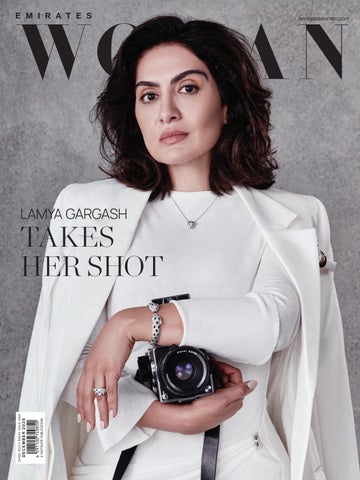
LAMYA GARGASH TAKES HER SHOT
EDITOR-IN-CHIEF
Obaid Humaid Al Tayer
MANAGING PARTNER AND GROUP EDITOR
Ian Fairservice
CHIEF COMMERCIAL OFFICER Anthony Milne
GROUP CONTENT DIRECTOR Thomas Woodgate
SENIOR EDITOR Jessica Michault jessica.michault@motivate.ae
SENIOR ART DIRECTOR Olga Petroff
SENIOR REPORTER Aminath Ifasa
DIGITAL STYLE EDITOR Sarah Joseph
FASHION EDITOR Camille Macawili DESIGNER Vibha Monteiro
EDITORIAL ASSISTANT Londresa Flores
GENERAL MANAGER PRODUCTION Sunil Kumar PRODUCTION MANAGER Binu Purandaran ASSISTANT PRODUCTION MANAGER Venita Pinto
GROUP SALES MANAGER
Chaitali Khimji chaitali.khimji@motivate.ae SALES MANAGER
Sarah Farhat sarah.farhat@motivate.ae
WEB DEVELOPER Firoz Kaladi
CONTRIBUTORS
Alia Al Shamsi, Alice Holtham-Pargin, Asma Al Bulooki, Ekaterina Shirshova, Mark Mathew, Morin Oluwole, Vama Kothari
HEAD OFFICE
Media One Tower, Dubai Media City, PO Box 2331, Dubai, UAE, Tel: (+971) 4 4273000, Fax: (+971) 4 4282261, E-mail: motivate@motivate.ae
DUBAI MEDIA CITY SD 2-94, 2nd Floor, Building 2, Dubai, UAE, Tel: (+971) 4 390 3550, Fax: (+971) 4 390 4845
ABU DHABI PO Box 43072, UAE, Tel: (+971) 2 677 2005, Fax: (+971) 2 677 0124, E-mail: motivate-adh@motivate.ae
SAUDI ARABIA Regus Offices No. 455 - 456, 4th Floor, Hamad Tower, King Fahad Road, Al Olaya, Riyadh, Kingdom of Saudi Arabia, Tel: (+966) 11 834 3595 / (+966) 11 834 3596, E-mail: motivate@motivate.ae
LONDON Acre House, 11/15 William Road, London NW1 3ER, UK, E-mail: motivateuk@motivate.ae
EDITOR’S LETTER
Claiming Space
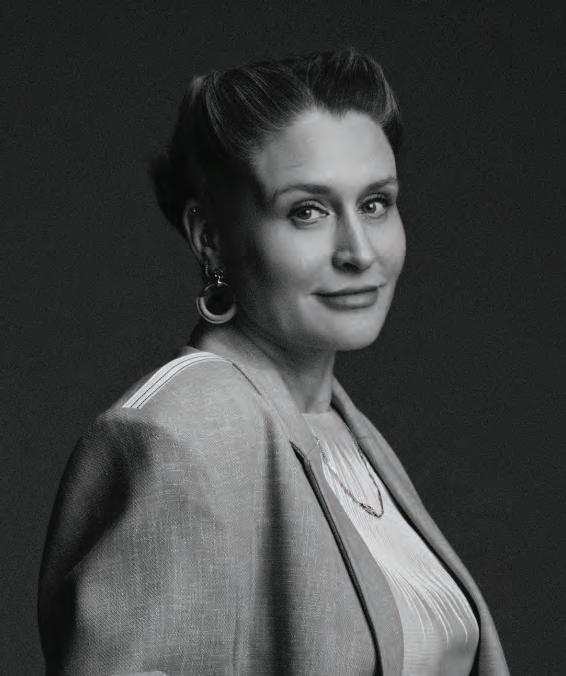
Throughout my career I have always felt most comfortable being the one asking the questions, shining a light on the success of others and telling the stories of those who had something important to say. Only recently, perhaps as my three daughters begin their own professional journeys, has a new impulse started to drive me. To begin to tell my story, share my accrued knowledge and basically take up a bit more space in the world.
It has been a realisation that while the work I do has value, it’s not the only valuable thing about me. I have something to offer that goes beyond the articles I write, my podcast interviews and the magazines I oversee. It is perhaps this reason that I resonate so deeply with our cover star, the renowned Emirati artist Lamya Gargash. After over two decades of honing her craft and preferring to let the work speak for her, she too has decided that it is time to step into the spotlight her oeuvre has created for her – to take agency over the narrative of her life. In A New Focus (page 40) Gargash delves deep into the motives behind her finally deciding that it was time to be seen.
But she is not the only woman spreading her wings in this issue. The nascent Emirati fashion designer Azza Al Suwaidi, who won the inaugural ADMAF x Dolce & Gabbana Design Award, shares her incredible story (page 86). As does the
American actress Maud Apatow, who opens up about directing her first film (page 64). And we can all be inspired in the way Aparna Kaushik found a renewed sense of purpose with her work as an architect and transformed her business into one courted by billionaires (page 82).
There is nothing more powerful than being seen. Perhaps this is why, even though I have been in my role for a relatively short time, I was so deeply inspired and moved by the winners (page 94) of this year’s Emirates Woman Awards. Taking time to celebrate the achievements of an impressive cross-section of women who call the GCC their home has only made me even more intentional with the profiles of the women I want to grace the pages of our magazine in 2026.
So, dear reader, please reach out to me and let me know about the women in your lives that merit recognition. I can’t wait to discover them and have the honour to tell their stories.
Enjoy the issue.

jessica.michault@motivate.ae

LUX LIFE
Rosalía is back with a genredefying fourth album called Lux (latin for light). And what a blinding musical light it is. The artist spent two years on the album, which beautifully showcases her versatility (she sings in 13 different languages) and her vitality.

WE THE PEOPLE
World famous documentarian Ken Burns is back with another historic deep dive. As next year is the 250th anniversary of the founding of the United States, his six-part, 12-hour series titled TheAmerican Revolution is an eye-opening education in what it takes to form a nation.

OUT OF THE BLUE
Now something of a holiday tradition is a trip to the cinema every few years to see what the Na'vi are up to. This month director James Cameron brings us the third instalment in his cinematic opus – Avatar: Fire and Ash And mark your calendars for December 2029 and 2031 for the final two features. I guess patience is a virtue.
EMIRATES
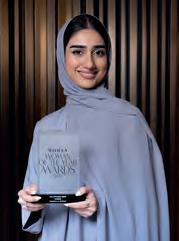
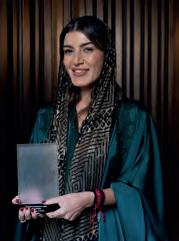
CONGRATULATIONS TO THE WINNERS


THE TRANQUILITY ISSUE






URSULA
CURATE
16 Monitor News
The latest winter-inspired launches and hero buys to know about this December
17 Social Listings
Your ultimate winter scroll with a curated list of comforting feeds and innovative creators to #follow this season
18
Out and About
Sleek pieces for a good night out
20 Sparkle & Shine
Dramatic finishing touches that take your eveningwear to the next level, from colourful chunky creations to statement pieces of art
22 Going Places
Expert purveyors of party power dressing, Riccardo Audisio and Yago Goicoechea of Taller Marmo discuss stepping out of your sartorial comfort zone and the inspiration behind their new Nocturne collection
24 The Wish List
The Emirates Woman team shares the most wanted gifts their coveting this year
32 The Vanguard
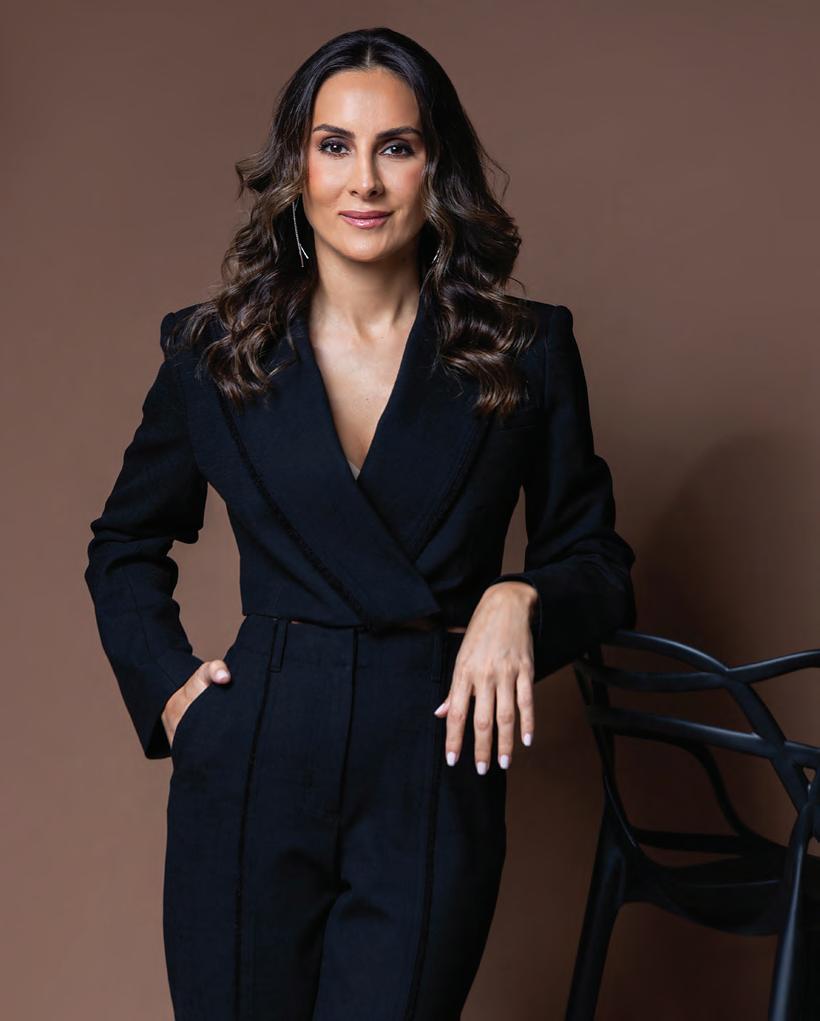
How Nayla Haddad, founder of clothing label One of a Kin, weaves family and wellness into wearable comfort
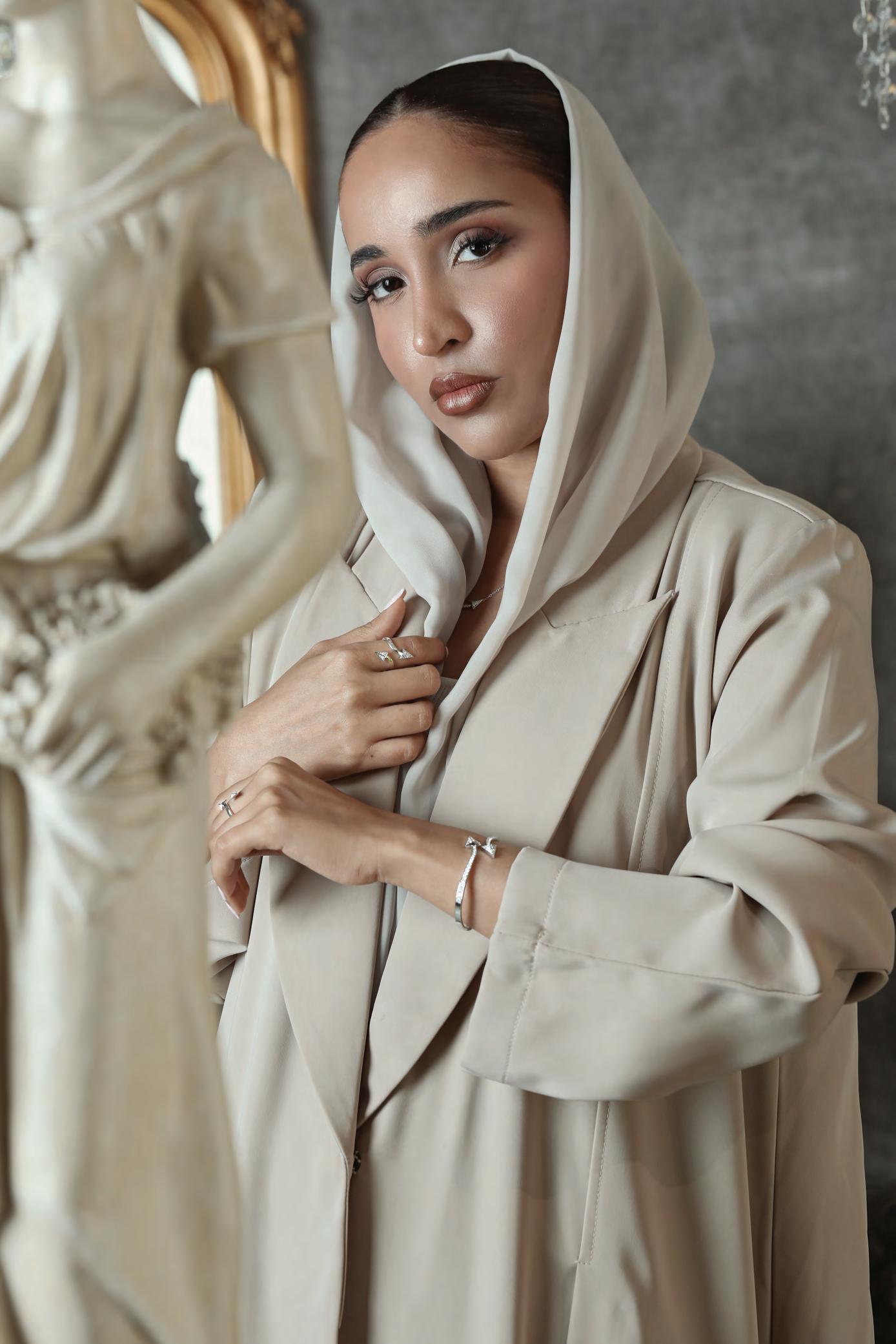
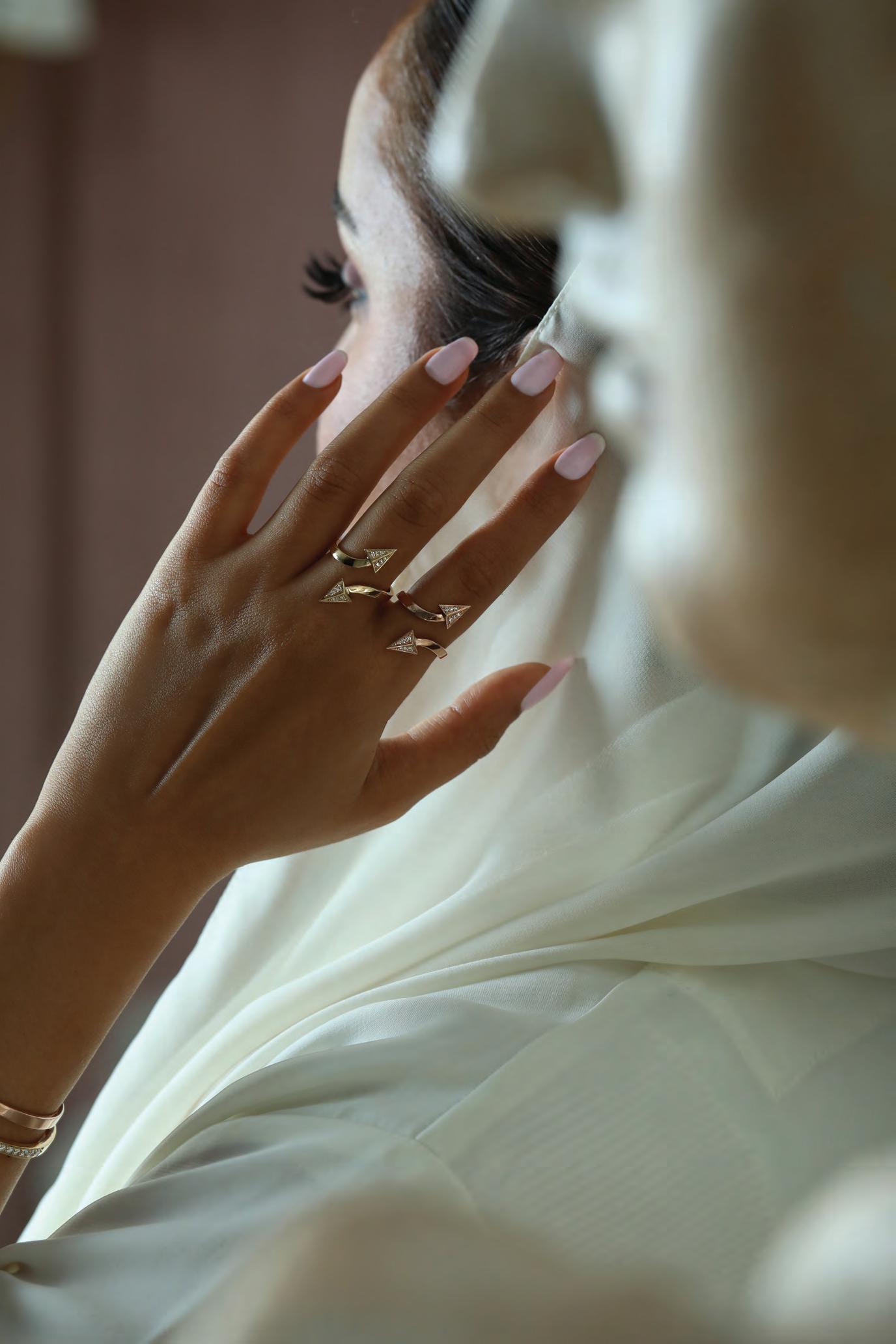
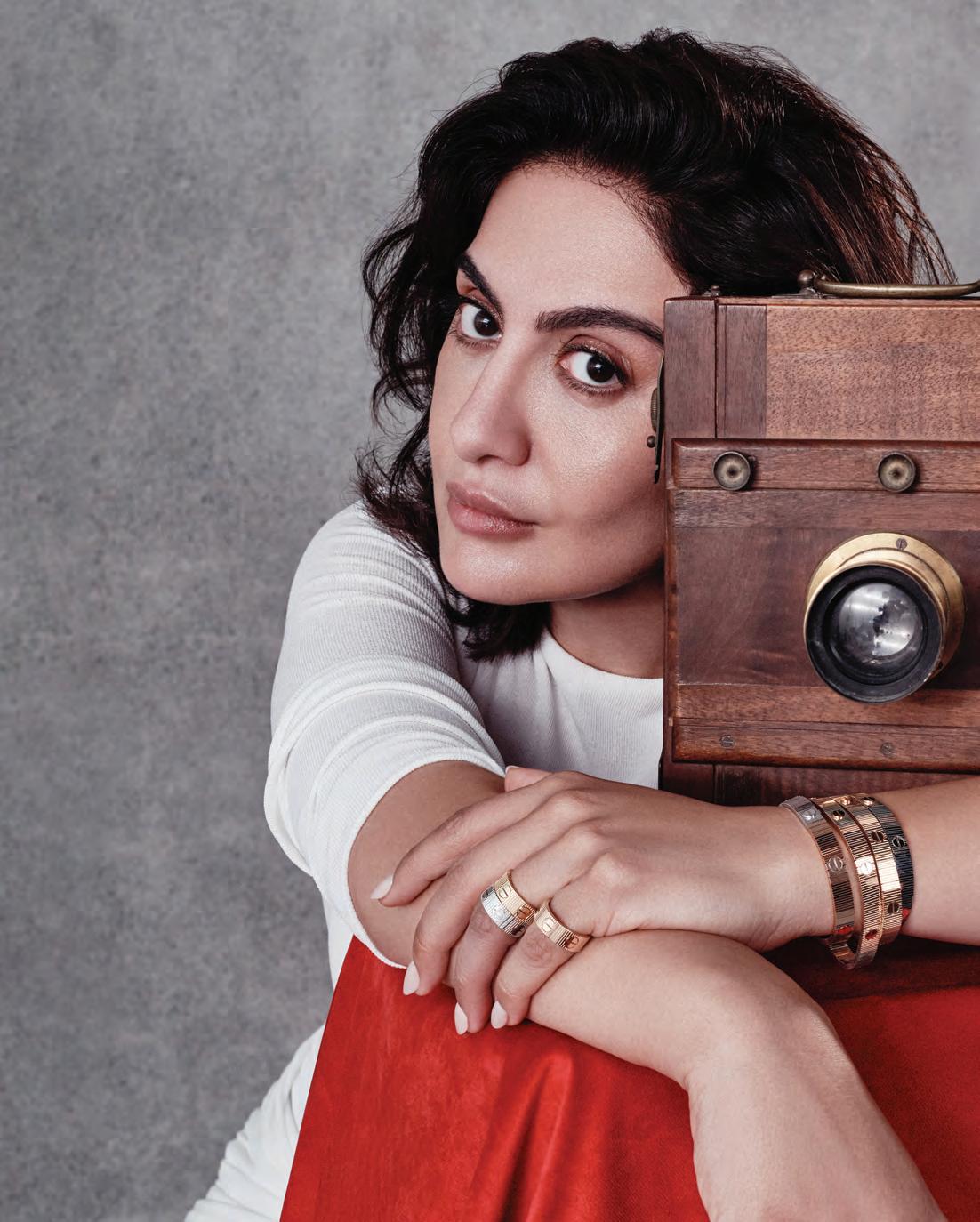
Love Unlimited ring, white gold; Love Unlimited ring, yellow gold; Love Unlimited ring, rose gold; Love Unlimited bracelet, yellow gold; Love Unlimited bracelets, rose gold; Love Unlimited bracelet, white gold; ALL CARTIER JEWELLERY

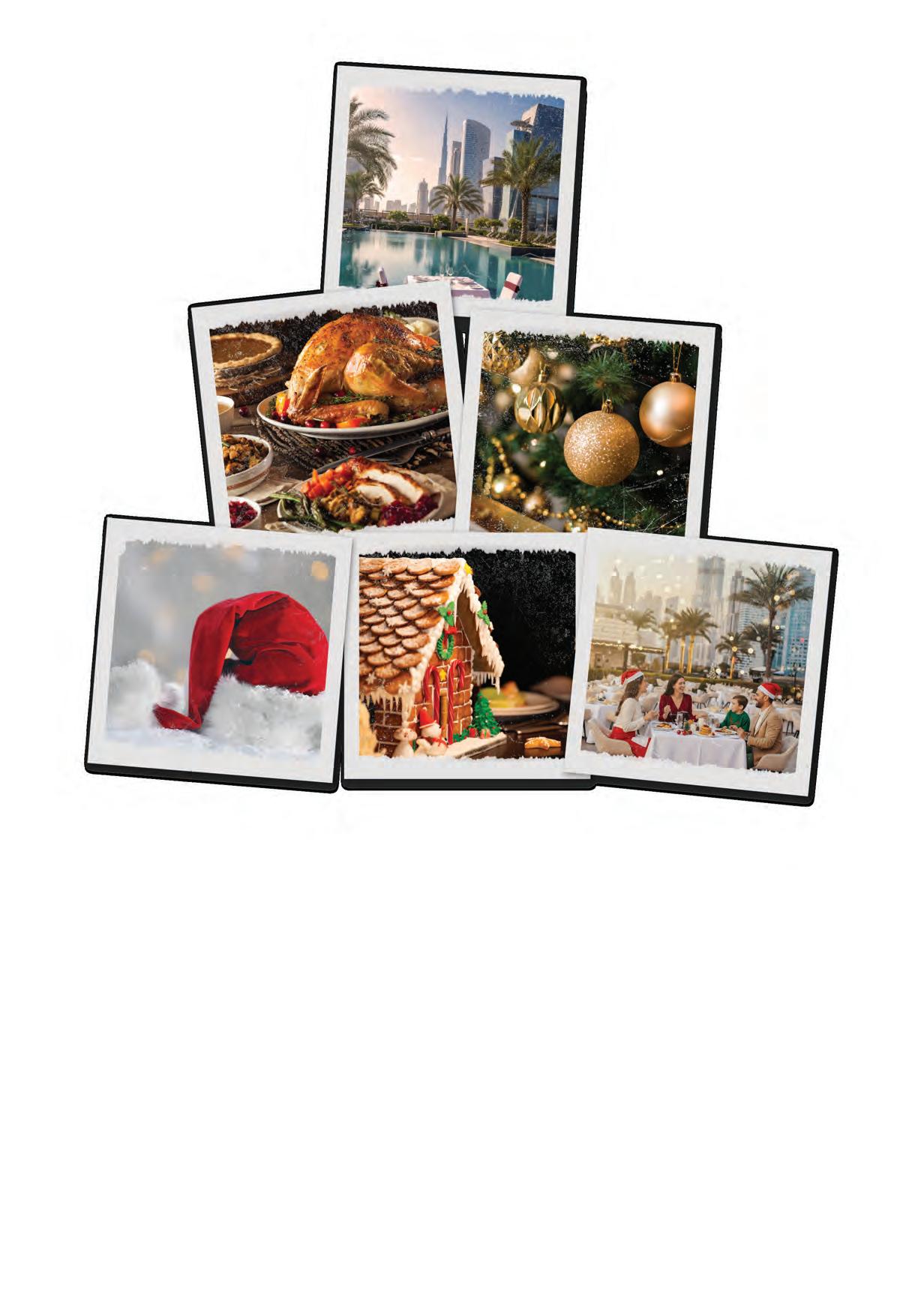
Bask in Dubai’s warm winter breeze with a poolside BBQ at Aqua. A festive outdoor bu et with views of Burj Khalifa, and live entertainment create the perfect setting to celebrate Christmas.
AED 695
Includes bubbly
AED 495
Includes house beverages AED 395 Includes soft beverages
Kids below 6 – complimentary 25 Dec | 1pm – 4pm
AED 195 Kids 6-12 years
64 Artistic Intentions
MODE
36 The Sartorial Storyteller
Dr. Reem El Mutwalli on archiving the UAE’s heritage with heart, history, and haute precision
40 A New Focus
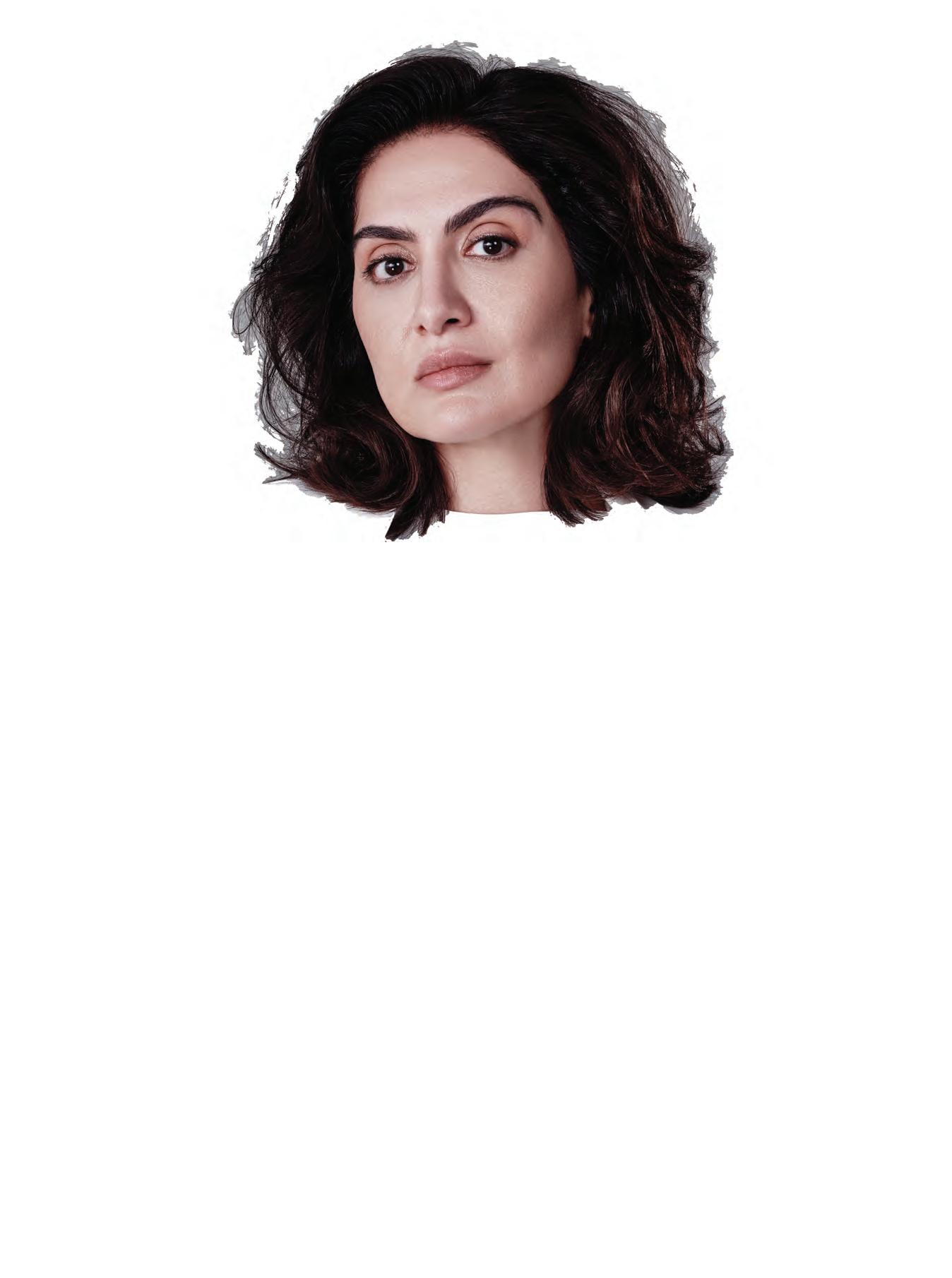
Renowned Emirati artist Lamya Gargash has finally decided it's time to step into the spotlight
50 Beyond the Abaya
From a traditional garment to a canvas of modern identity, the abaya is being redefined by a new generation navigating the fine line between self-expression and cultural reverence
54 Year End Attitude
When you’re looking fierce but would rather stay home
Actress Maude Apatow, who was recently given the Women in Film Max Mara Face of the Future Award, steps behind the camera for her directorial debut
68 Iced Out
APM Monaco’s Hiver Collection delivers serious sparkle for the festive season and beyond
VISION
78 Coming Together
As 2025 comes to an end, Asma Al Bulooki contemplates the importance of community in the UAE
80 Communal Creativity
Emirati artist Azza Al Qubaisi is all about creating pieces that draw the public into the process
82 World Builder
Architect and interior designer Aparna Kaushik is the woman that billionaires turn to when they want to come home
86 From the Souq to Sicily
The journey of Emirati fashion designer Azza Al Suwaidi is defined by her quiet insistence on bringing the abaya, and all it represents, directly into the heart of an Italian atelier
88
What Women Want
Anna Germanos, Meta’s Group Director for FMCG, Luxury, Retail and E-commerce across MENA, is working hard to help you find your heart’s desire
90 A Winter Perspective
As the days grow short, geography shapes our emotional landscapes and our deeply felt connections to the season by Alia Alshamsi
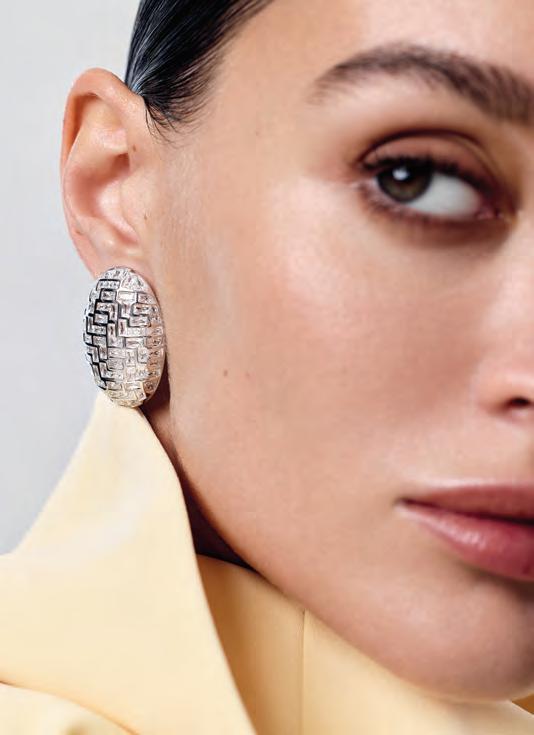
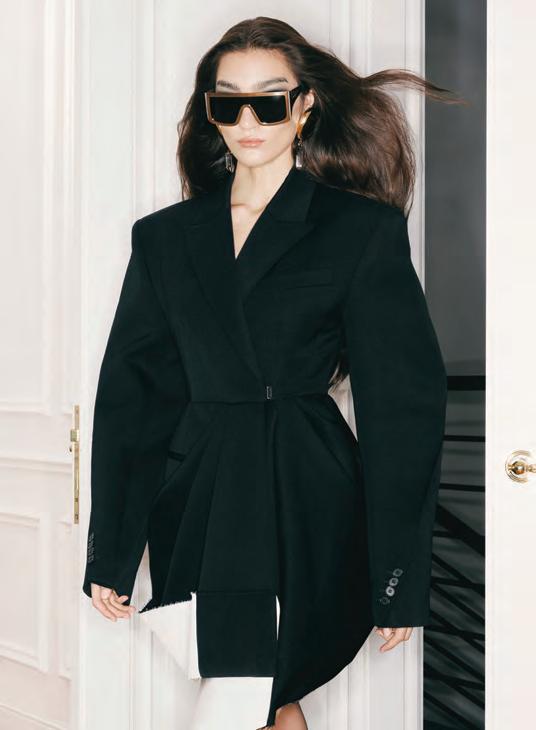
Top left: Hiver Ice Statement Earrings; APM Monaco; Dress: Jacquemus available at MYTHERESA; Top right: Givenchy by Sarah Burton

Premium Lingerie, Swimwear & Resortwear
CONTENTS
December 2025
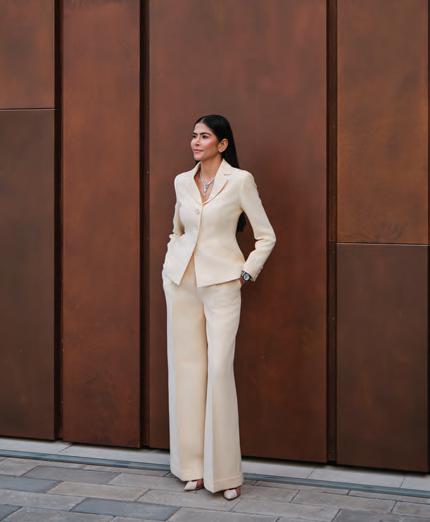
92 The Great Escape
Morin Oluwole, an International Luxury Business Leader who serves on the boards of Breitling, Rituals, and Biologique Recherche and the former Global Luxury Director at Meta, breaks down why taking time to disconnect can help bring clarity to both life and career
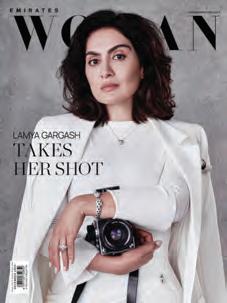
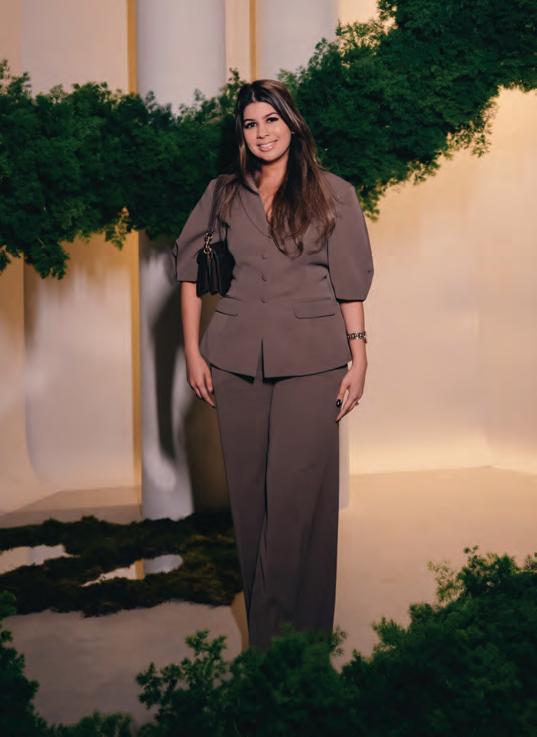
Talent: Lamya Gargash
Senior Editor: Jessica Michault
Photographer: Jeremy Zaessinger
Fashion Editor: Camille Macawili
Art Director: Yehia Badier; Makeup: Jean Kairouz; Hair: Loui Ferry; Videographer: Ekaterina Shirshova
Photography Assistant: Louis Pazurin; Set Design Assistant: Abdallah Adel
Location with thanks to Concrete, Al Serkal Avenue
On the cover: Panthère De Cartier necklace, white gold, emeralds, onyx and diamonds; Panthère De Cartier bracelet, white gold, emeralds, onyx, and diamonds; Panthère De Cartier ring, white gold, emeralds, onyx, and diamonds; ALL CARTIER JEWELLERY Coat and Dress: Lamya’s Own 82
94 Emirates Woman, Woman of the Year Awards 2025
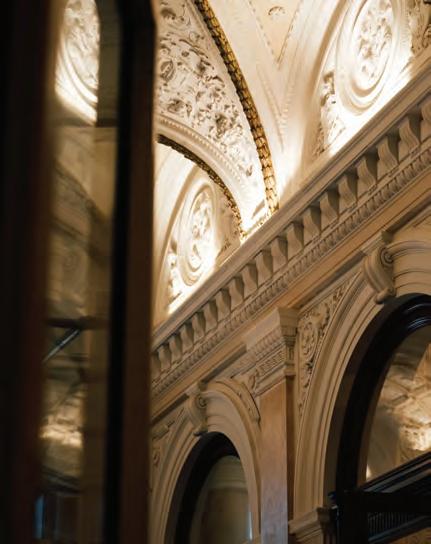
GLOW
104 Festive Gestures
An edit of the most exciting beautyfilled advent calendars of the season
106 Crowning Glory
With a career spanning close to half a century, the iconic hairstylist Sam McKnight is now focused on the essentials – creating great hair care products and caring for the next generation of artists who will one day take up the mane mantle
110 Beauty Shelf
Digital creator Diana Shekhany talks us through her must-have beauty staples
111 Musk Have Scents
The alluring fragrances crafted for winter nights and slow mornings
112 AM/PM Beauty
Founder of Livwell, Payal Shah, shares her morning to evening beauty routine
ABODE
116 Sky High Wellness
With its Alpine Spa, Bürgenstock Resort in Switzerland takes the idea of a restorative retreat to new heights
118
Vienna Waits for You
The beauty of Austria’s capital city has a quiet pull that warms the heart even in the depths of winter
MOST WANTED
122 A Fine Line
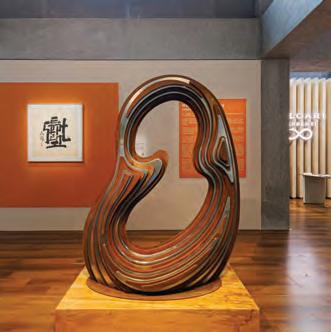
Unveiled at Dubai Watch Week, Bvlgari’s limited edition Mattar Bin Lahej x Octo Finissimo timepiece brings the beauty of the famed Emirati calligraphy artist to the wrist
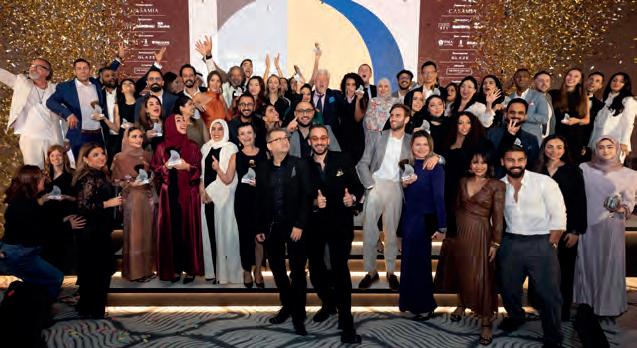
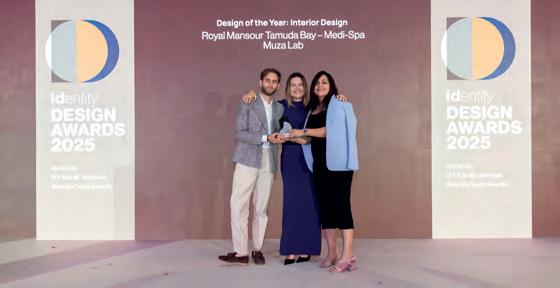


Design of the Year: Interior design
Royal Mansour Tamuda Bay – Medi-Spa Muza Lab
Design of the Year: Architecture Shebara Resort Killa Design
People’s Choice Award: Residential Mushrif villa
Masoomeh Hilal Design
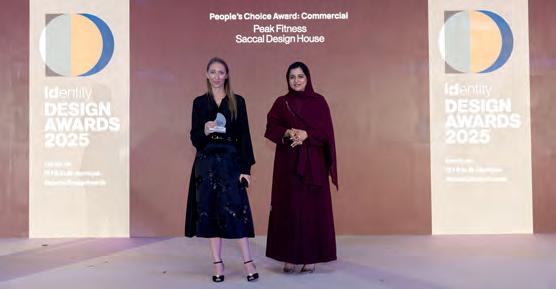
People’s Choice Award: Commercial Peak Fitness
Saccal Design House
THE ZAYED LEGACY
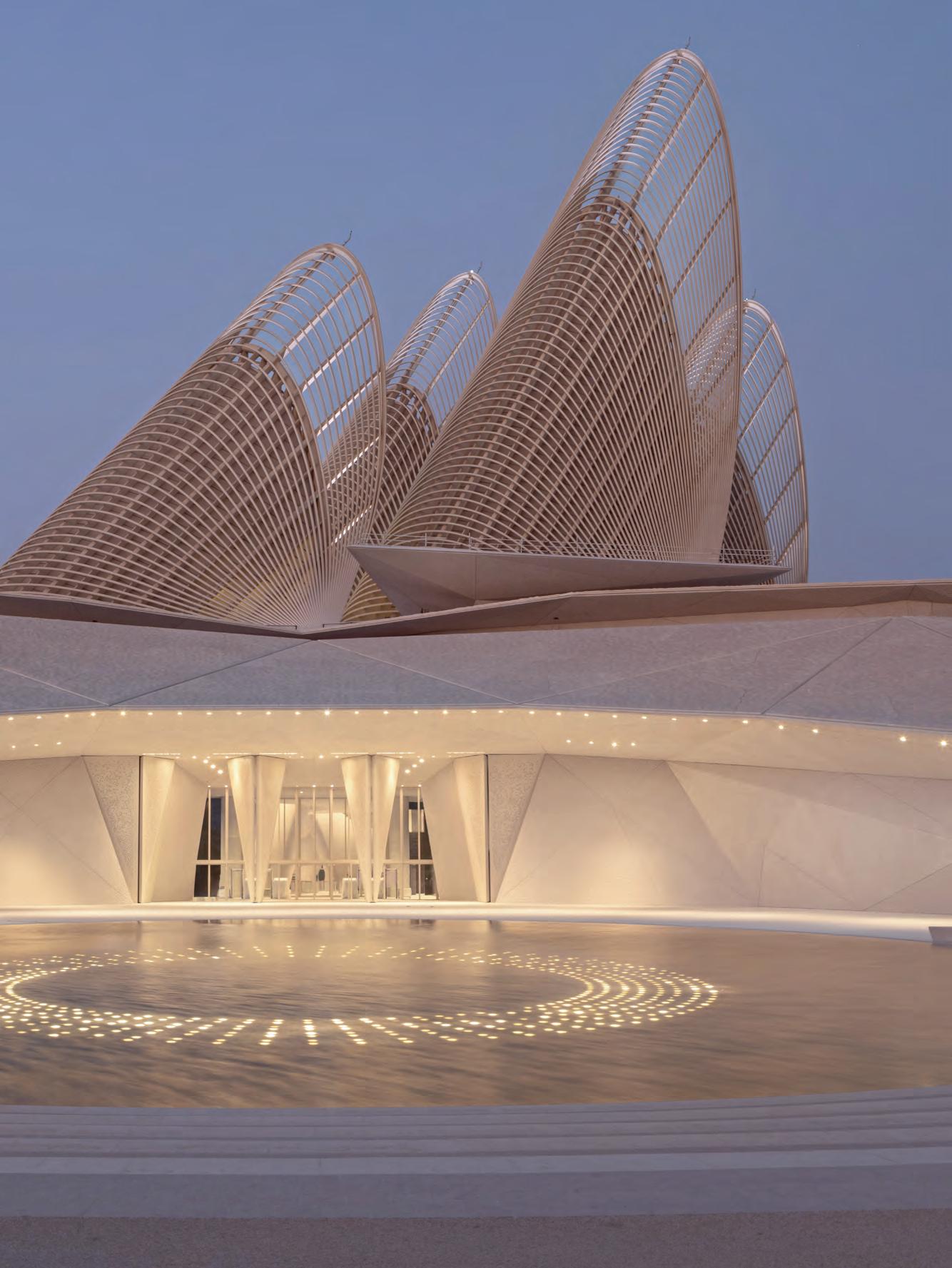
Rising from the heart of the Saadiyat Cultural District in Abu Dhabi, the Zayed National Museum opens its doors to the public on 3 December. The inauguration aligns with Eid Al Etihad and the enduring legacy of the UAE’s Founding Father, the late Sheikh Zayed bin Sultan Al Nahyan. Conceived by Lord Norman Foster, it is a physical manifestation of Sheikh Zayed’s own commitment to heritage, education, and identity. Its collection of over 3,000 pieces, with 1,500 carefully curated artefacts on display, invites visitors on a journey through the nation’s narrative. Etched in steel and story, the museum is a permanent sanctuary for our collective memory and a beacon guiding the nation’s journey forward.
CURATE
It’s time to celebrate…
– Evergreen icons
– Festive ensembles with attitude
– Jewellery designed to dazzle
– A designer duo that know how to light up the night – Objects of desire
– Feel good fashion

Festive Spirit
The latest winter-inspired launches and hero buys to know about this December
WORDS: SARAH JOSEPH
ENDURING ICONS
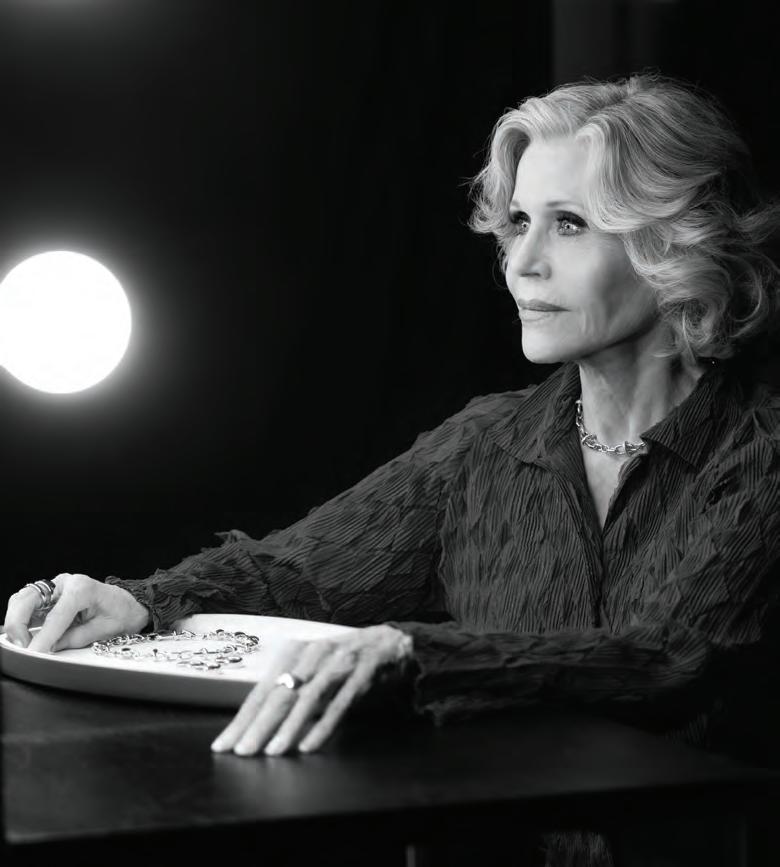
Honouring 50 years of Milanese artistry, Pomellato’s Iconica collection becomes the backdrop for a candid reflection on what makes a woman and a jewel truly iconic.


THE HERO BUYS

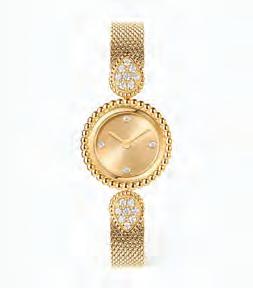
Serptent Bohème Diamond Braclet Watch in 18kt Gold, 23mm Dhs125,000 Boucheron

Small Casa con Colonne Lamp Base Dhs4,550 Fornasetti
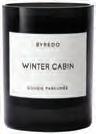
Winter Cabin Candle 240g Dhs325 Byredo
N°5 The White Gold Body Oil 250ml Dhs575 Chanel
Sierra in Clear w/tube crystal handles Dhs3,250 L’Afshar
Amelia 30 Patent-Leather Pumps Dhs3,125 Jimmy Choo
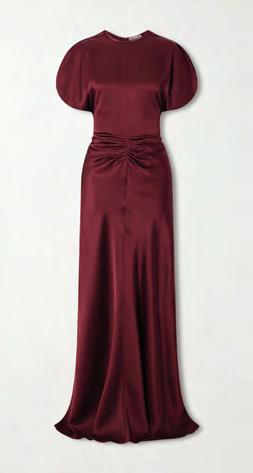
Gathered Satin Maxi Dress Dhs4,600 Victoria Beckham
@azzaalqubaisi
Emirati

@sammcknight1
The legendary hairstylist behind fashion’s most fabulous locks.
Newly
@onorithelabel
Sharifa Alsharif AlHashemi’s homegrown label focuses on modern tailoring.
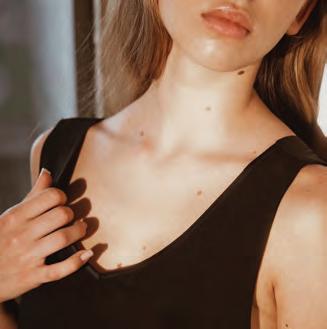
@one.of.a.kin
Dream softer with this brand’s sleepwear, where comfort meets conscience.
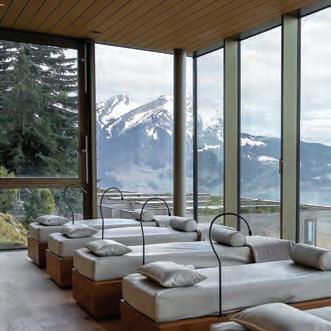
@burgenstockresort
Perched above Lake Lucerne, Swiss serenity meets sky-high luxury.
@lamajouniofficial
Empowering designs that fuse confidence and comfort.
@bayhealthclub
Redefining wellness with experiences that restore the body and mind.
@reemelmutwalli
The cultural curator who preserves the UAE’s past one stitch at a time.
Social Listings
A curated guide to Instagram accounts to #follow this month
COMPILED BY: SARAH JOSEPH
@talisespa
opened on Saadiyat Island, Talise Spa is a must-visit for a tranquil getaway.
artist Azza Al Qubaisi turns nature into art.
COMPILED BY: CAMILLE MACAWILI
OUT AND ABOUT
Sleek pieces for a good night out
Earrings Dhs119 Mango
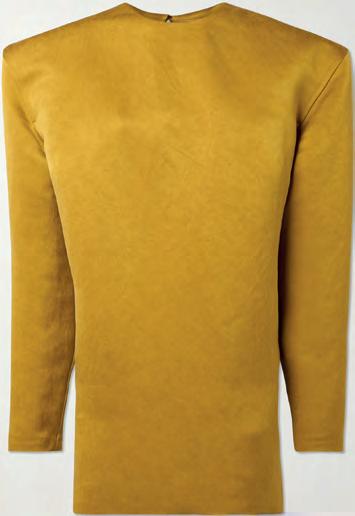
Dhs5,400
Paris Texas

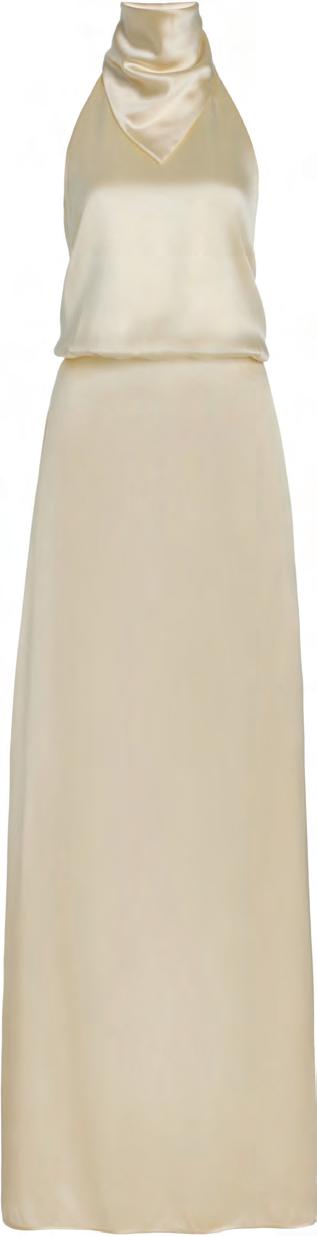


Hustka Scarf-Neck Dress Dhs3,050 Bevza
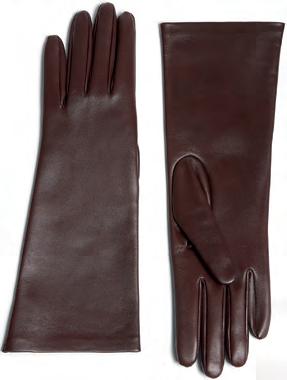
Remo Leather Gloves Dhs2,495 Khaite
Lidia Leather Metallic Mules Dhs3,100
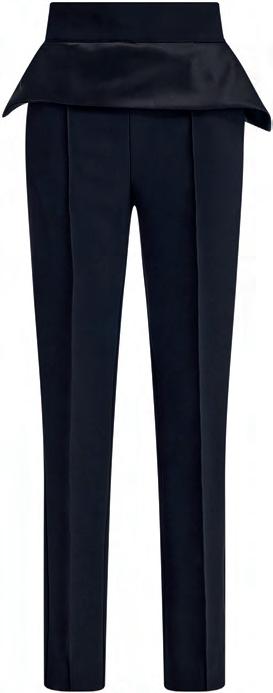
Relate Satin-Trim Trousers Dhs5,400 Maticevski available at Moda Operandi
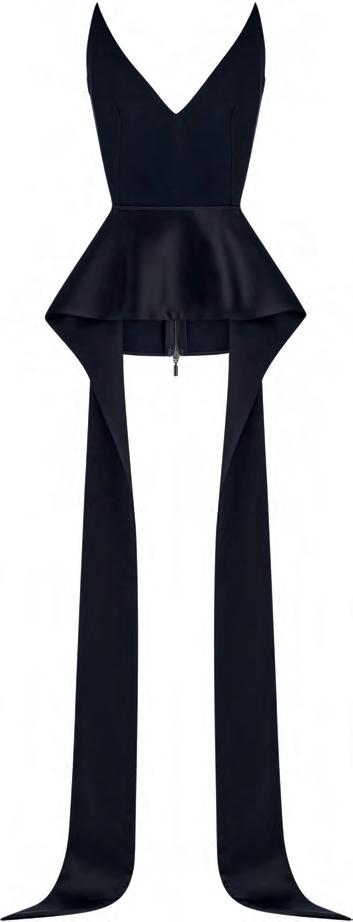
Frame Strapless Peplum Top
Maticevski available at Moda Operandi
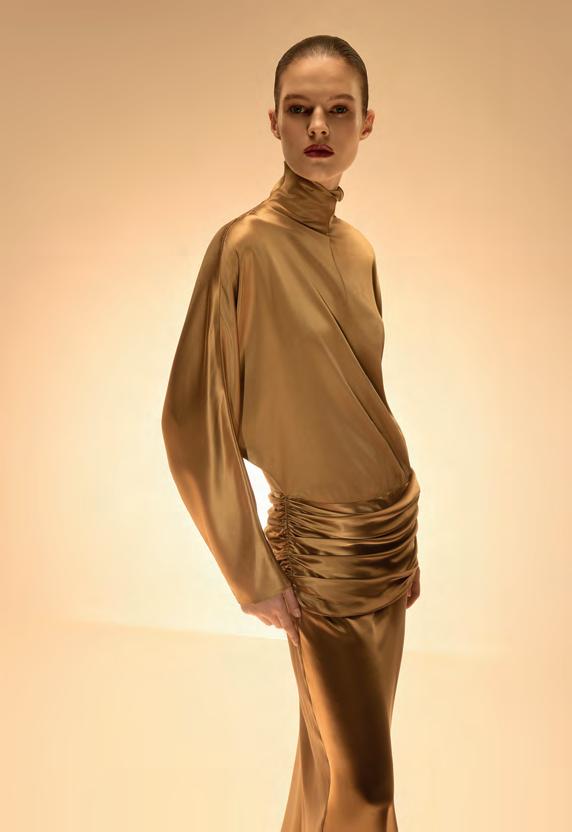
Mulberry Silk Dress Dhs2,900 12 Storeez
Silk Mini Dress Dhs16,850 Saint Laurent available at Net-a-Porter
Satin Box Clutch Dhs4,632 Toteme
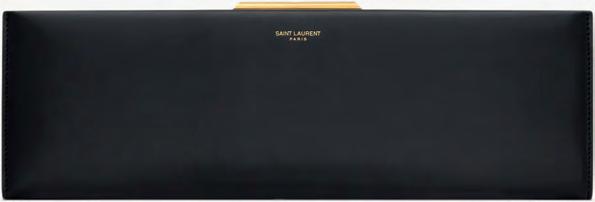
Midnight Large Leather Clutch Dhs8,350 Saint Laurent
Carré Earrings Dhs1,586 Jacquemus available at MYTHERESA
Sparkle & Shine
COMPILED BY: CAMILLE MACAWILI
Dramatic finishing touches that take your eveningwear to the next level, from colourful chunky creations to statement pieces of art
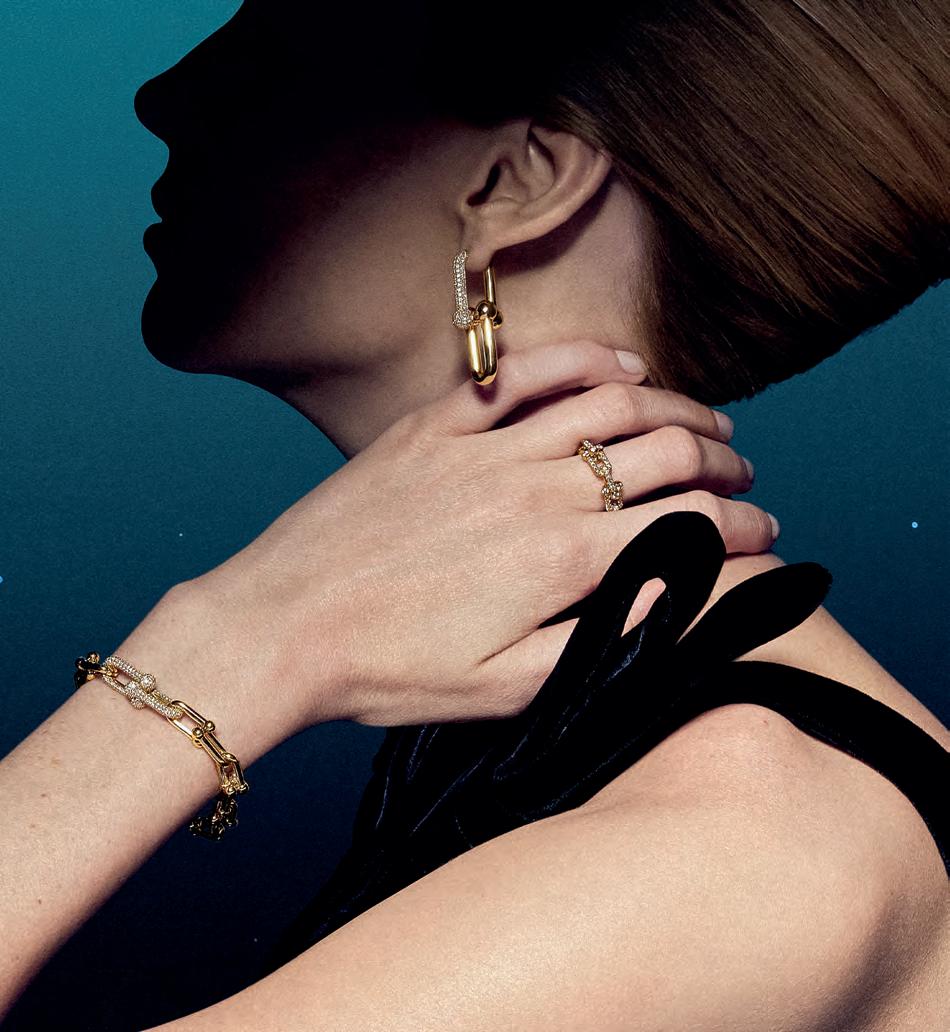
Tiffany HardWear large link bracelet with diamonds. Tiffany HardWear small link ring with diamonds; Tiffany HardWear large link earrings with pavé diamonds POA Tiffany & Co.
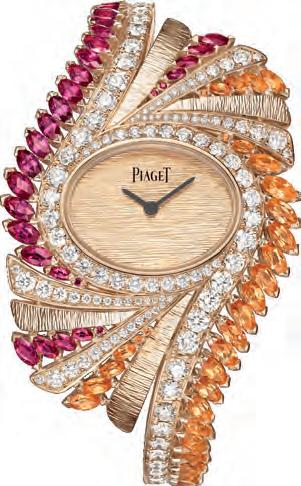
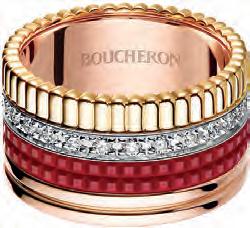
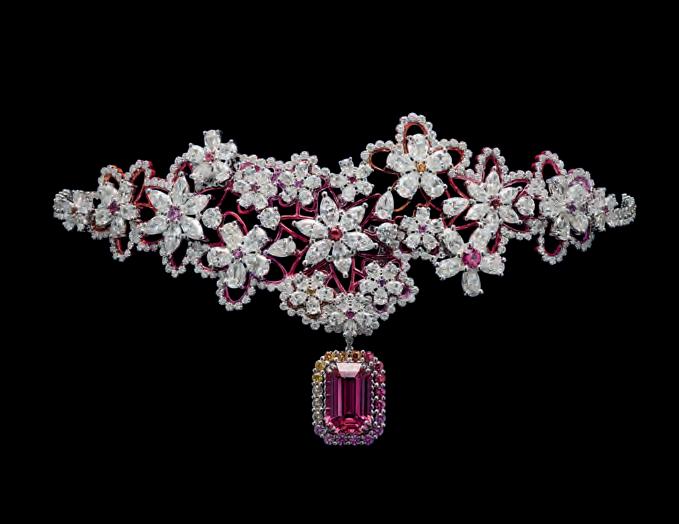
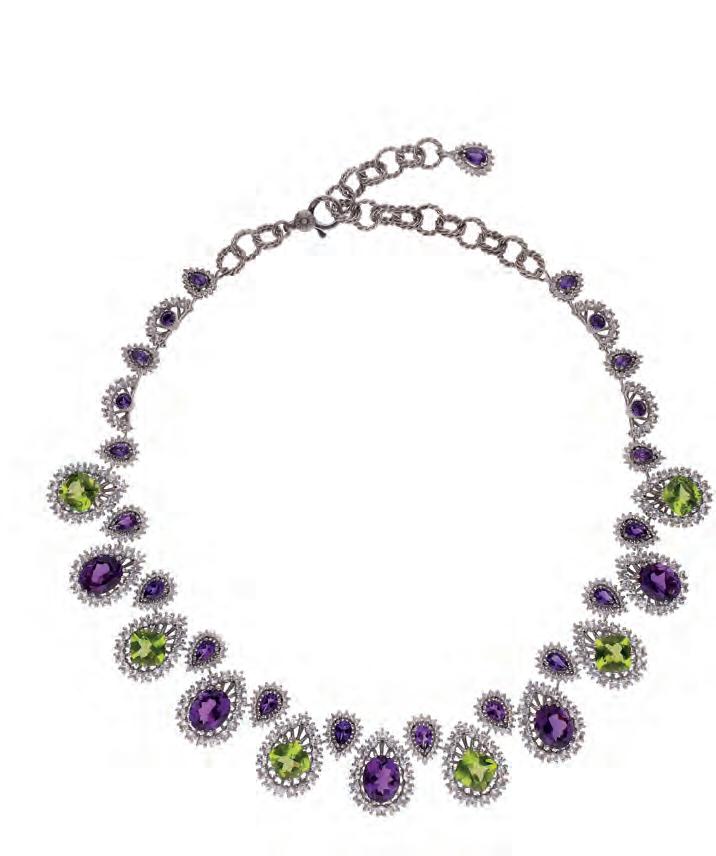
POA
Haute
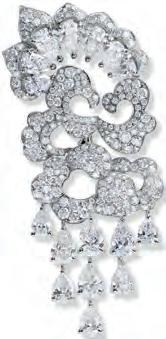


Eleganza Necklace POA Dolce & Gabbana
Quatre Red Edition Large Ring POA Boucheron
Diorexquis Bouquet
Milly Necklace POA Dior Haute Joaillerie
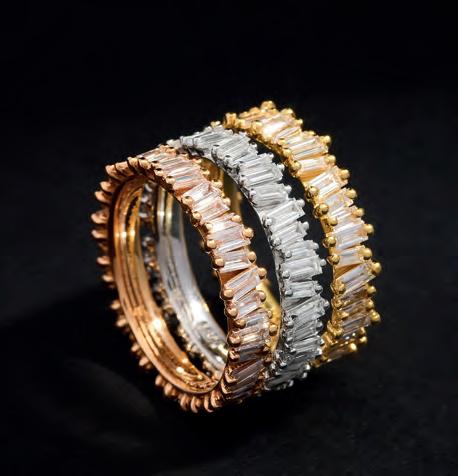
Baguette Eternity Rings POA Suzanne Kalan
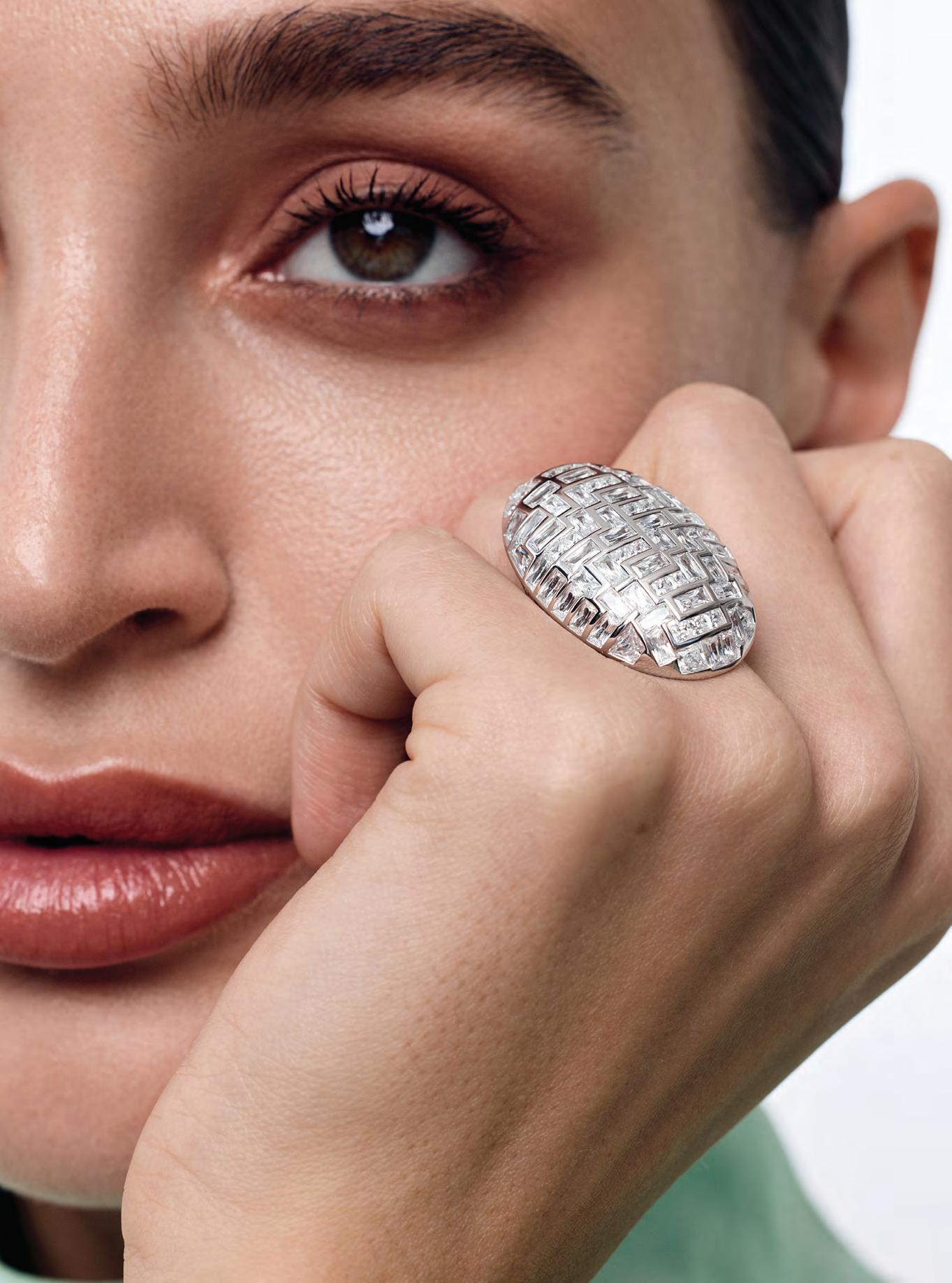
Blast Dome Ring POA Repossi
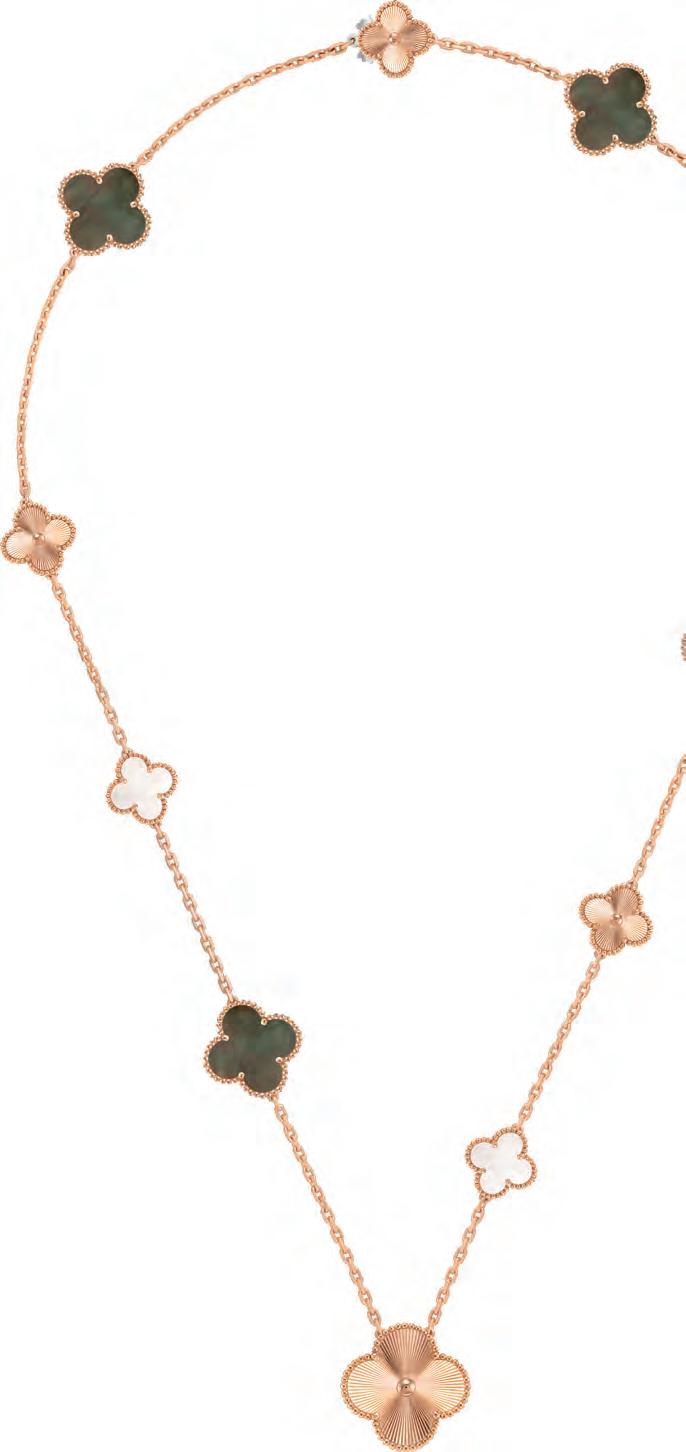
Magic Alhambra Transformable Long Necklace POA Van Cleef & Arpels
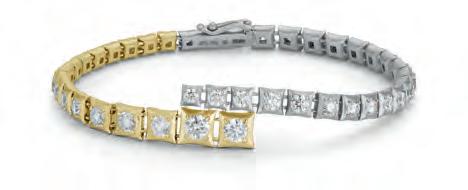
Harlow Two Tone Bracelet POA Jade Trau
18-carat Ethical White Gold with Pear-shaped and Brilliant-cut Diamond Earrings
Chopard
Joaillerie
Limelight Gala High Jewellery Watch POA Piaget
WORDS: CAMILLE MACAWILI
GOING PLACES D
Expert purveyors of party power dressing, Riccardo Audisio and Yago Goicoechea of Taller Marmo discuss stepping out of your sartorial comfort zone and the inspiration behind their new Nocturne collection
esigners Riccardo Audisio and Yago Goicoechea founded fashion label Taller Marmo in 2013. From evening soirées to the red carpet, the Italian brand’s day-to-night separates and cocktail dresses have become the go-to for discerning tastemakers looking to make an impression.
Chic and confident, Taller Marmo designs offer distinctive occasionwear with a nostalgic twist – clothes with quite the stories to tell the morning after. From mini dresses and matching sets to sequined tops and feather-trimmed maxi dresses, each collection consistently serves up decadence, opulence, and glamour in what feels like a sartorial breath of fresh air.
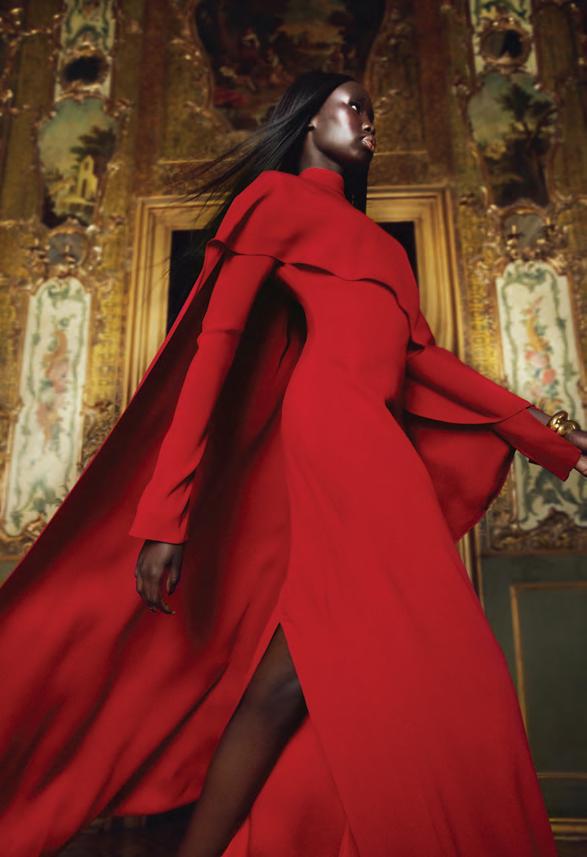
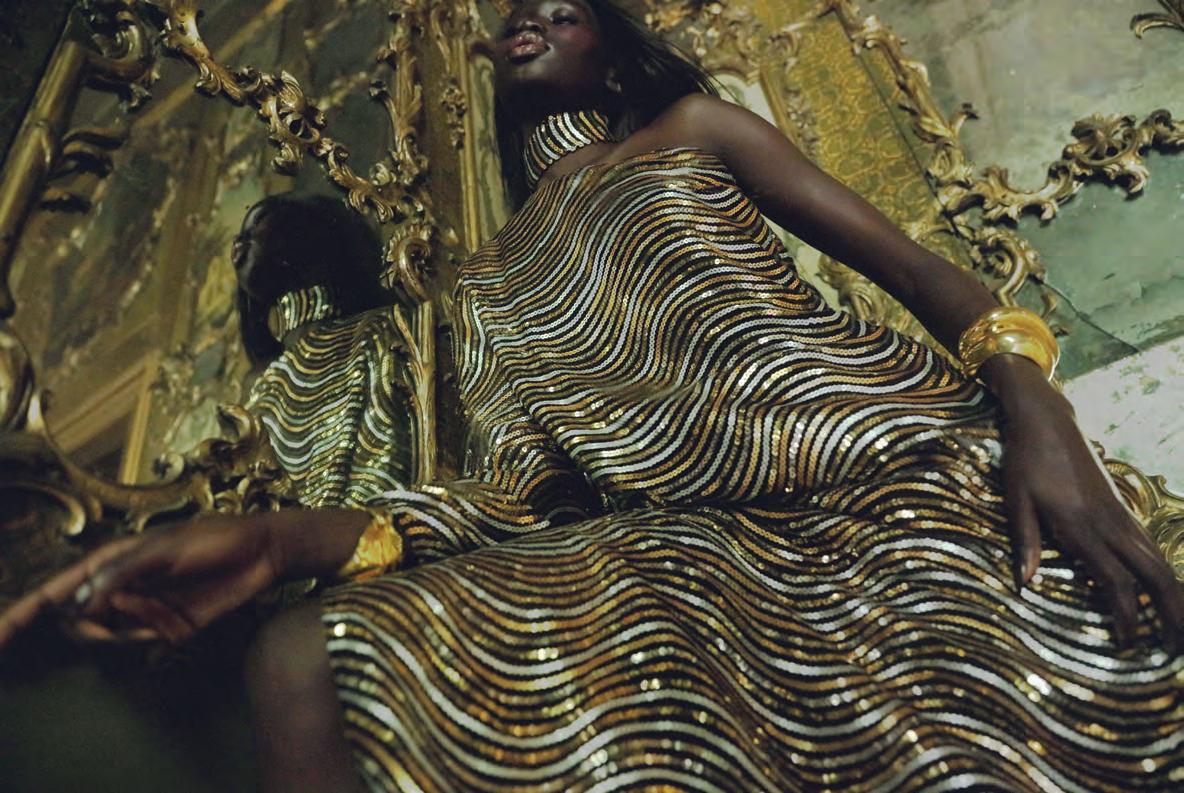
For the festive season, an imposing confidence takes hold of the brand with the Nocturne collection – an edit of power party ensembles marked by fluid fabrications and silhouettes in a technicolour palette. Uncomplicated, unfussy, and unboring, these pieces are the ultimate foundation for a great night out – which has always been the ethos behind Taller Marmo. Designers Goicoeachea and Audisio treat dressing up as a ritual and a way to shift how you move through a room. For this party collection that instinct is sharpened
“Comfort is underappreciated. Women think dressing up means being uncomfortable, but we work against that. Comfort leads to being confident, and that confidence leads to feeling empowered.”
by years of working between Dubai and Italy – where the former taught them scale and grandeur and the latter, precision. What anchors Taller Marmo is the kaftan, a piece they inherited from their formative years in Dubai. The duo have spent seasons refining it, stripping it back, shaping it again, and for Nocturne, they introduced sharper lines and micro lengths that carry the same ease and hold drama without weight, which has become their signature. It feels dressed without effort. Giocoechea explains it simply. “This is our party collection dedicated to the night. We started talking about interesting things that happened in the past during the night, or what was the most interesting decade in nightlife, and that is why we ended up touching the 20s and 30s and then the 80s.”
Those eras share a sense of performance that feels natural to the brand. “Comfort is underappreciated. Women think dressing up means being uncomfortable, but we work against that. Comfort leads to being confident, and that confidence leads to feeling empowered,” say Giocoechea. Yet everything is seen through the prism of a modern lens. “Even if we are talking about something in the 20s or 30s, it goes through that filter. How the modern woman will be fabulous.” he adds. The colours, textures, instinct, and discipline come together in this collection that feels alive in motion – clothes for a woman who enjoys the preparation, the entrance,
and the night that follows. Fabric acts as the creative spark that triggered this season. “This collection was inspired by one fabric, that multicoloured velvet devore with the flowers… This thing that is so old feels so fresh,” shares Giocoeachea. The pair built the palette around it, then pushed the cuts further. “We said we can go to more parties, more sexy, more colourful. We can amp things up.” Nocturne captures a brand that understands the pleasure of getting dressed and going out. While the designs seem grandiose, for the 12-year-old brand, the creative process remains relatively small. “There is no merchandising or analyst, or collection planner. There are just the two of us and two pattern makers,” Giocoeachea affirms. One begins with mood and broad ideas, the other edits with precision. “I arrive with an idea, a feeling. Ricardo shapes it. I get bored easily, and he is more detail-oriented,” he adds. Audisio, the more reserved of this creative dynamic duo, says, “What I like the most is going into the detail of things – and it can be very technical. It can be applied to everything I do, work and outside of work”.
“We fight like cats. Sometimes we have big fights about, maybe, a pocket!” Giocoeachea shares with a laugh. This candour is refreshing to see – and makes sense of their work. Taller Marmo’s carefree spirit and silhouettes feel deliberate and never overworked, but it’s their creative partnership that gives the clothes their structure.
WISHLIST THE
THE EMIRATES WOMAN TEAM
S H ARES THE MOST WANTED GIFTS THEY ’ RE COVETING THIS YEAR
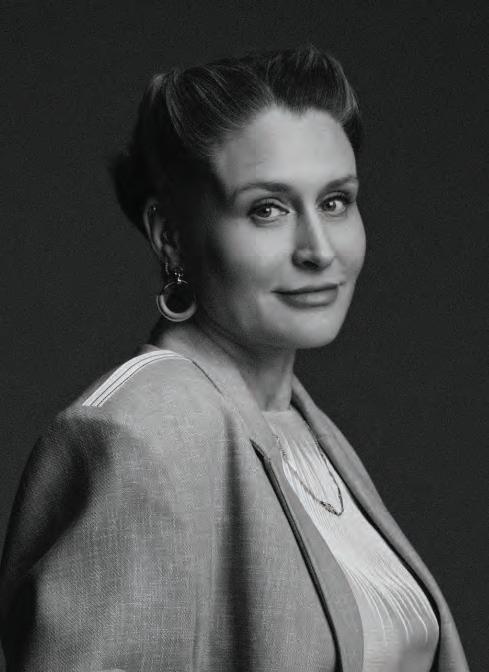
JESSICA MICHAULT SENIOR EDITOR
EMIRATES WOMAN & EMIRATES MAN
@jessicamichault
Your favourite/no-fail gift to give: Music is such a mood changer. It can penetrate the soul and convey a feeling – especially when you are at a loss for words. Today, with algorithms siloing our sonic experiences more and more, I feel a streaming version of a mixed tape is a great way to share your world with someone else on a deeper level. So a link to a curated Spotify playlist, with hopefully a few unexpected (but very much heartfelt) tunes is my go to gift in this digital age. Your favourite gift to the world: Words of encouragement. If you have spent any time with me you will know I am a big believer in positive reinforcement. It takes so little to say a kind word to someone, and the impact can often be profound. Life is hard enough, let’s be gentle to each other. You never know what someone is going through. And if a passing comment about how much you love their shoes, or the way they wear their hair, can create a moment of joy in someone’s day… well then, that’s made my day.
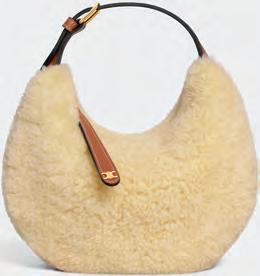
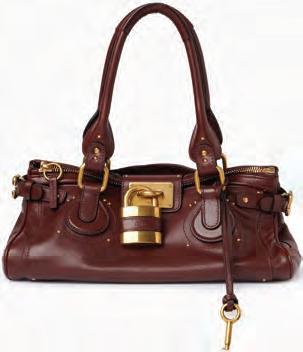


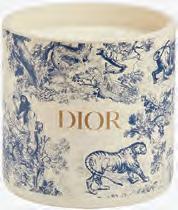
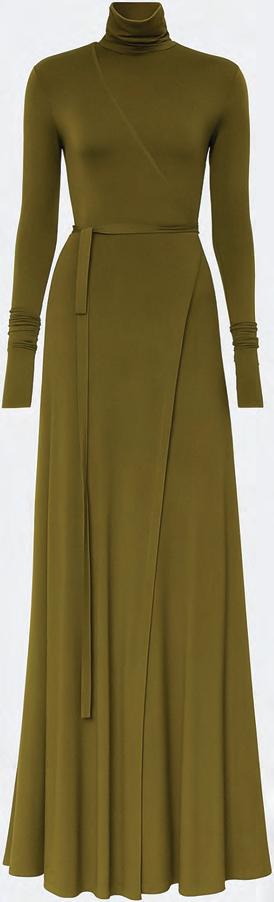
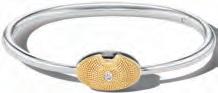
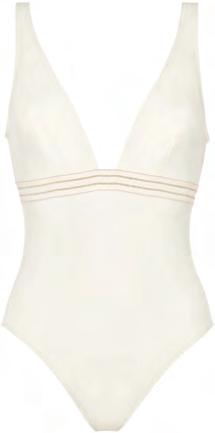
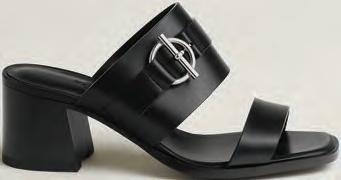
From top: Teen Celine Lulu in Shearling and Calfskin Dhs8,900 Celine; Paddington bag in grained leather Dhs9,900 Chloé; Jade Dress - Olive Green, Dhs2,300 Bouguessa; Double Bustier Belt in Calfskin and Goatskin Dhs7,238 Alaïa; Sillage plunge-neck swimsuit Dhs2,185 ERES; Wings Wide Bangle Dhs212,000 Tiffany & Co.; Oval Musgrave Bracelet in Mixed Metals Dhs10,811 Marla Aaron; Large Hortensia Scented Candle Dhs2,550 Dior; Kute 60 sandal Dhs5,285 Hermès
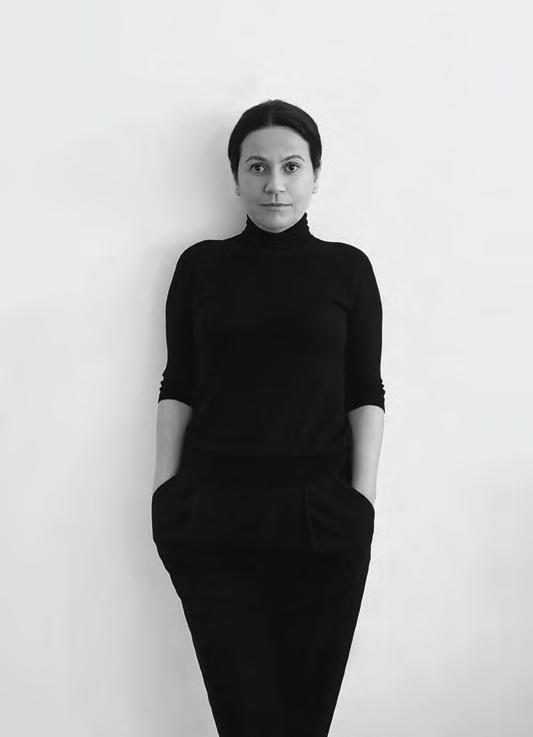
O LGA PETROFF
S ENIOR ART DIRECTOR E MIRATES WOMAN & EMIRATES MAN @olgapff
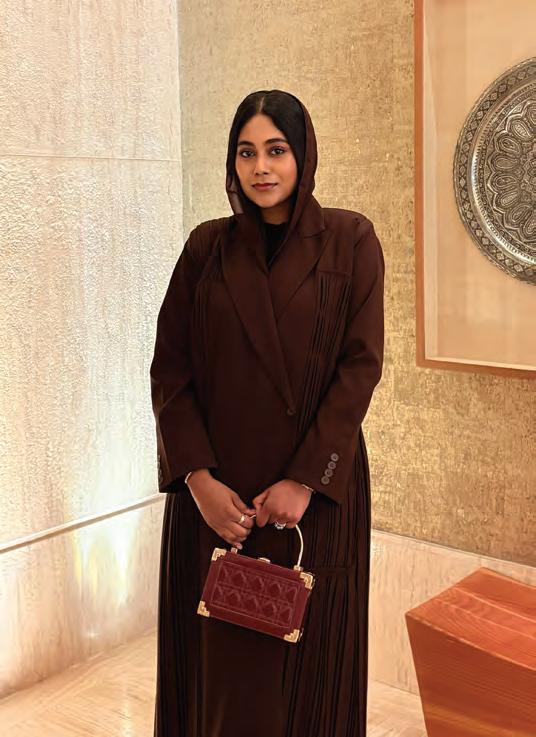
Your favourite/no-fail gift to give: I usually go for a book, a little plant, or one of my nature photos in a frame. Simple stuff, but it always feels personal and meaningful. Your favourite gift to the world: Kindness – the genuine, everyday moments that make life feel a little softer, like a smile, a helping hand, or a kind word when it’s needed most. I hope it reminds people to slow down, notice the small things, and appreciate what’s already around them. To me, it’s about embracing life more fully and always choosing love over harm.
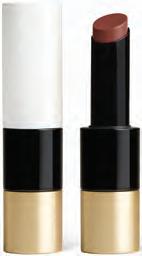




From top:
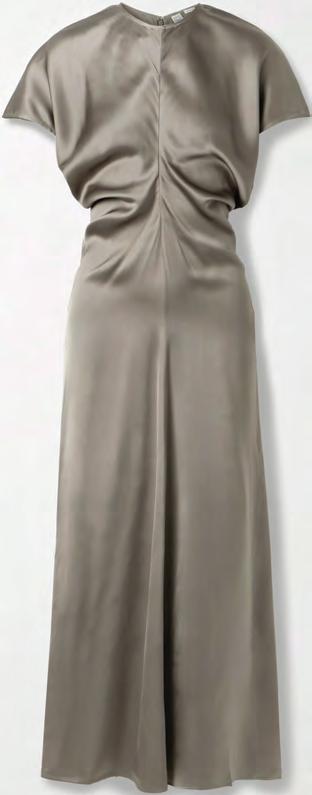
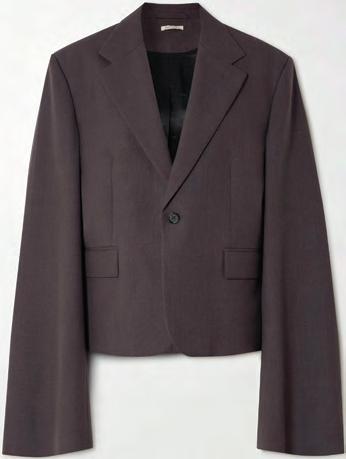
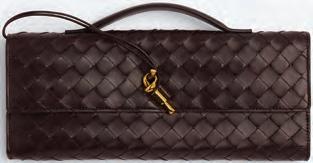
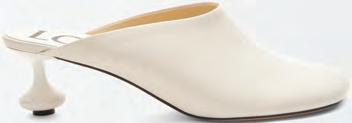
Wool-twill Blazer Dhs6,550 JW Anderson; 16 Beige Tan Rouge Hermès Silky Shine Lipstick 3.5g Dhs320 Hermès; Crystal Pearl Clip Earrings Dhs5,800 Givenchy; Draped Satin Maxi Dress Dhs2,900 TOTEME; Oud Voyager Eau de Parfum 50ml Dhs1,105 Tom Ford Beauty; Hand-Blown White Wine Glasses (Set of 2) Dhs1,359 River Valadez available at ABASK; Andiamo Clutch Dhs12,400 Bottega Veneta; Toy Mule Dhs3,800 Loewe
AMINATH IFASA
SENIOR REPORTER
EMIRATES WOMAN & EMIRATES MAN @ifasaa
Your favourite/no-fail gift to give:
My go-to is always a gift that feels like it was made for the person. I love finding something that taps into a specific passion, like a perfect sketchbook for an artist friend, and then adding a personal touch with an engraving. It’s my way of turning a great gift into a little artifact that says, “I get you.”
Your favourite gift to the world: It’s the simple, real companionship. It’s that rare, steady presence from a partner, a friend, or even the peace you build with yourself. It doesn’t make life perfect, but it’s the one thing that makes everything else, the good days and the hard ones, feel worthwhile.


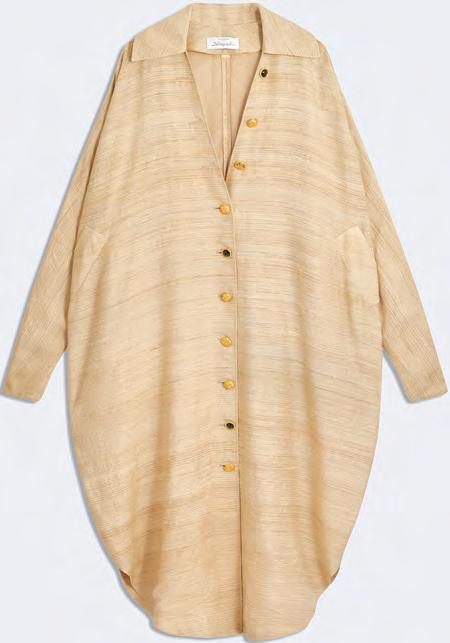
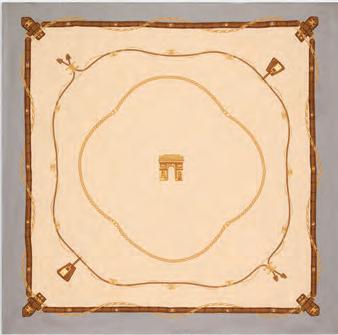
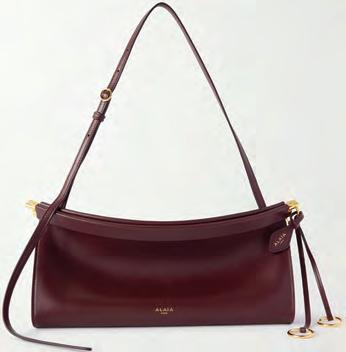
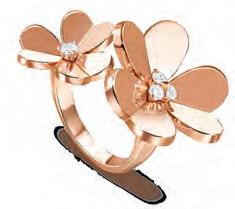
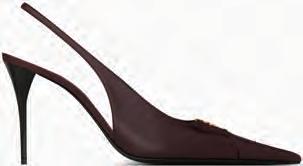
From top:
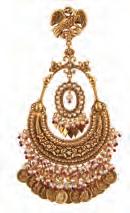
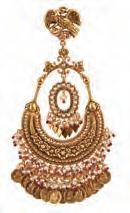
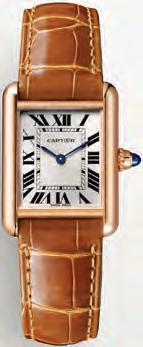
Brightening Saffron Serum & Kansa Wand Dhs885 Ranavat; The East Of Bengal Chandbalis Dhs55,600 Sabyasachi Jewellery; Square In Crocodile Silk Twill Dhs2,150 Celine; Tank Louis Cartier Watch Dhs48,700 Cartier; Bijoux Buttons Cape Dhs34,838 Schiaparelli; Click E/W Medium Leather Shoulder Bag Dhs11,500 Alaïa; Frivole Between the Finger ring Dhs25,000 Van Cleef & Arpels; Babylone Breteuil Slingback Pumps in Smooth Leather Dhs4,950 Saint Laurent

CAMILLE MACAWILI FASHION EDITOR
EMIRATES WOMAN & EMIRATES MAN @camillemacawili
Your favourite/no-fail gift to give: Adding a personalised touch makes for a thoughtful gift, from engraving to embroidery of initials. Your favourite gift to the world: Gift of presence. Spending quality time and enjoying moments with my loved ones is priceless.

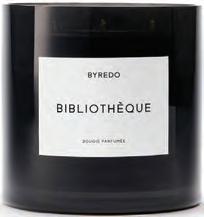

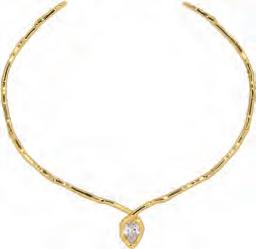
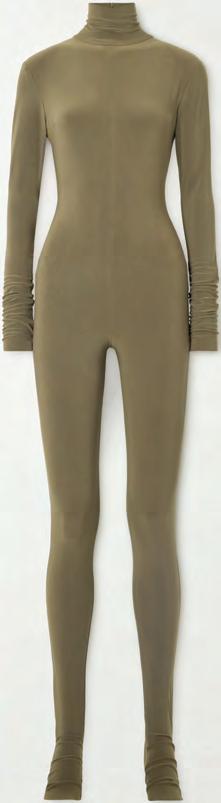
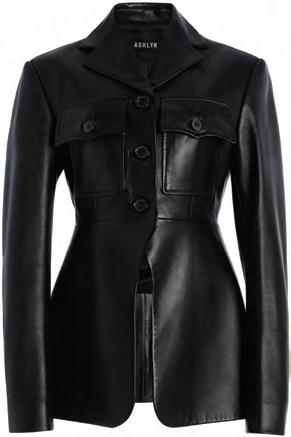
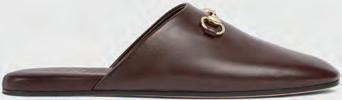
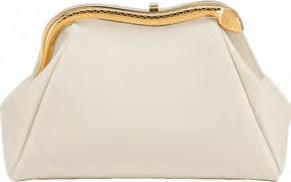
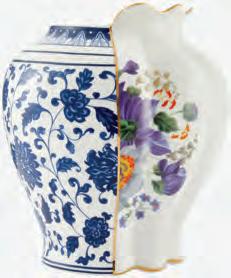
From top: Leather Box Clutch Dhs7,220 Victoria Beckham; Sotheby’s Cap Dhs900 Frame; Bibiliothèque Candle, 5kg Dhs1,487 Byredo; Asterales Necklace Dhs1,010 Alexis Bittar; Elizabeth Leather Jacket Dhs13,040 Ashlyn available at Moda Operandi; Turtleneck Jumpsuit Dhs740 Norma Kamali available at Net-a-Porter; Horsebit Mules Dhs3,600 Gucci; Serpentine Pouch Dhs11,700 Bvlgari; Hybrid Melania Porcelain Vase Dhs850 Seletti available at Mytheresa
SARAH JOSEPH
DIGITAL STYLE EDITOR EMIRATES WOMAN & EMIRATES MAN @thesarahjoseph
Your favourite/no-fail gift to give: A candle from Byredo or Le Labo, engraved and personalised, making it a special gift for any home. Your favourite gift to the world: Laughter, because therapy is expensive. Honestly, for me, laughter is the world’s most underrated wellness treatment. It’s an instant relief after a long day and even a few minutes of this gives anyone around strength to overcome the difficulties of daily life.


From top:
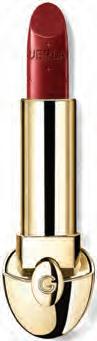
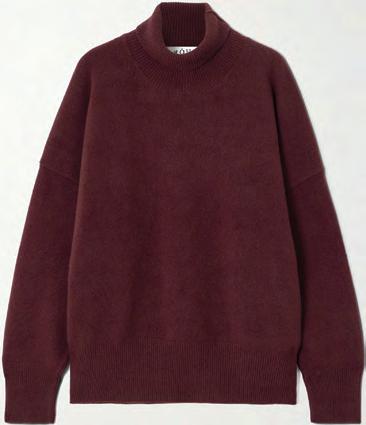
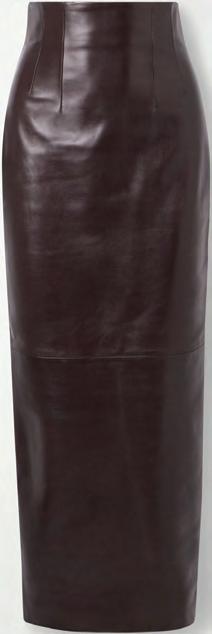
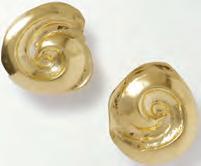
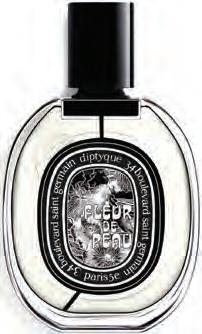
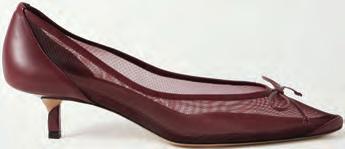
The Impossible Collection of Watches 2nd Edition Book Dhs5,400 Assouline available at Tanagra; Rouge G Ultra-Care Satin Lipstick Refill Dhs165 Guerlain; T-Lock Mini Textured Patent-Leather Clutch Dhs2,285 TOTEME; Wool-Blend Turtleneck Sweater Dhs2,035 Róhe; Loxley Leather Maxi Skirt Dhs15,700 available at NET-A-PORTER Khaite; Cote Gold-Plated Earrings Dhs1,300 YSSO; Fleur de Peau de Parfum 200ml Christmas Edition Dhs1,500 Diptyque; Tourni Bow-Detailed Leather-Trimmed Mesh Pumps Dhs2,885 Jacquemus
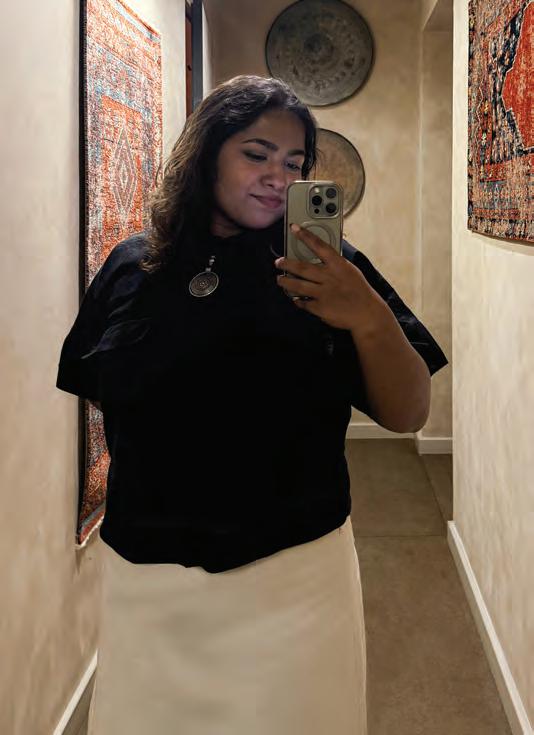
MONTEIRO DESIGNER
EMIRATES WOMAN & EMIRATES MAN @vibhamonteiro
Your favourite/no-fail gift to give: I feel you can never go wrong with home fragrances or holiday décor. Everyone I know loves receiving them! Your favourite gift to the world: I believe that being present is the greatest gift. We live in a world with multiple distractions and commitments and being able to make time and give someone our undivided attention is a quiet act of love.

VIBHA
From top:
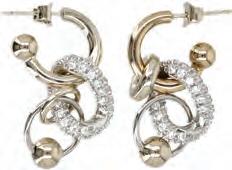
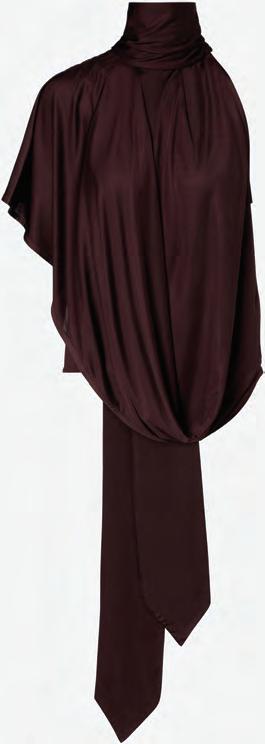
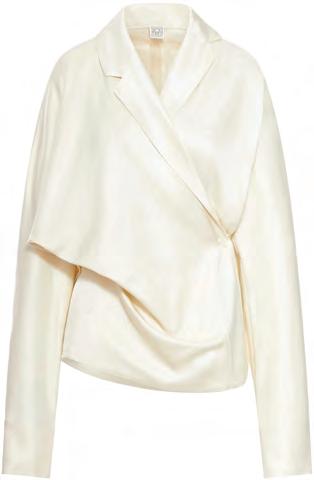
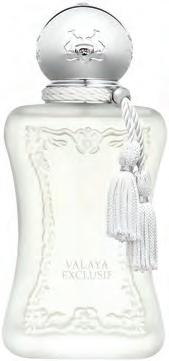
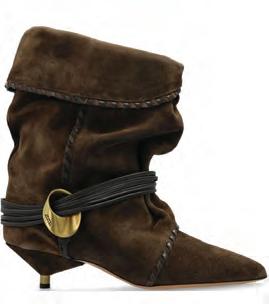
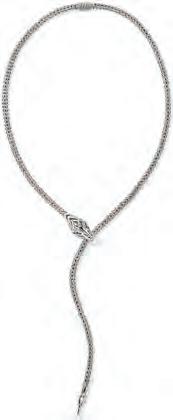
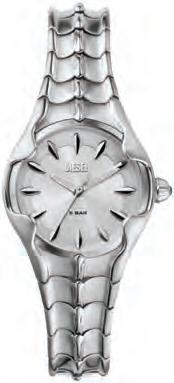
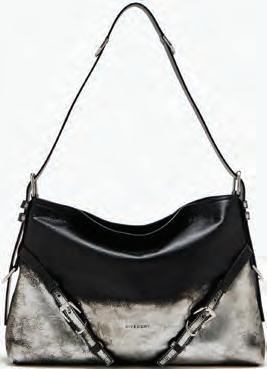
Lexie earrings Dhs866 Justine Clenquet; Asymmetric Wrap Shirt Dhs2,388 TOTEME; Scarf-detail draped satin top Dhs2,500 Dries Van Noten; Sterling Silver Naga Lariat blue saphire necklace Dhs11,646 John Hardy; Valaya Exclusif Parfum Dhs1,615 Parfums De Marly; Vert 32mm Dhs1,646 Diesel; Edrika Boots in Bronze Dhs6,206 Isabel Marant; Marla Cuff Dhs918 Julietta; Medium Voyou bag Dhs12,000 Givenchy
The FABRIC of BELONGING
WORDS: AMINATH IFASA
How Nayla Haddad, founder of clothing label One of a Kin, weaves family and wellness into wearable comfort
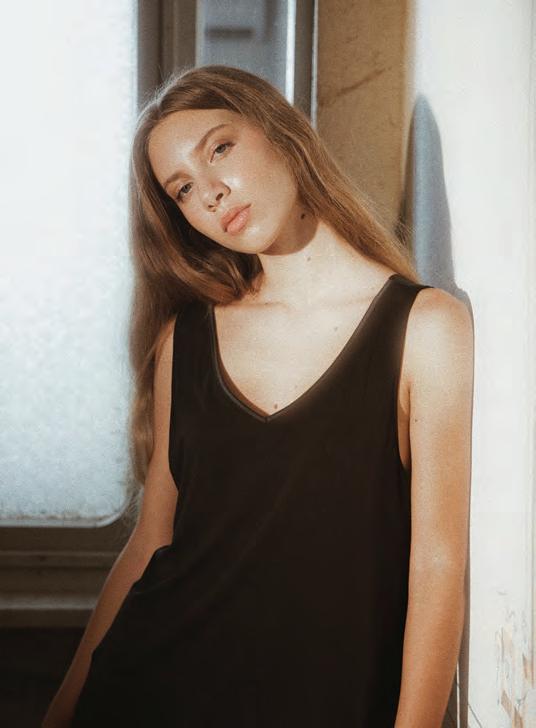
The origin of a brand can often be traced to a single, tangible moment of discovery. For Nayla Haddad, that moment was defined by a sensation, the unexpected comfort of a pair of pyjamas found in Portugal. The garment felt less like clothing and more like a second skin. It became a personal staple, its feel-good fabric creating a daily reluctance to part with it, even for a spin in the laundry. This hands-on experience, this intimate understanding of a material’s sensorial potential, sparked a question – why does something this comfortable not exist for everyone? That question became the foundation of One of a Kin. It launched Haddad on a year-long journey from the composition tag, which revealed the
fabric as Modal Micro, to the sustainable beech forests of Austria, through scientific claims and a global network of certified manufacturers. She was driven by a vision to share this discovery, first with her children, and then with the world.
The name itself is a piece of poetry that took three months to perfect. “It plays on ‘one of a kind,’ which is what our product is about,” Haddad explains. “But it carries three meanings.” She breaks them down with the clarity of a brand manager, which she once was. Kin, she says, as in family, because comfort begins with belonging. Kind, because they are kind on the skin and to the planet. And skin, as in closeness, what touches us most deeply. This triplelayered philosophy is the brand’s bedrock. In clothing where people are often preoccupied with the visual, One of a Kin is built on the
Nayla Haddad, Founder of One of a Kin
intangible – that alluring feeling of a second skin, the quiet ritual of sleep, and the sense of personal wellbeing that comes from what you wear when no one is watching. The Modal Micro fabric, derived from sustainably harvested beech trees, is more than a selling point. It acts as a scientific ally in rest, offering temperature regulation and a breathability that surpasses cotton.
This commitment to sustainability was both a philosophical and a business decision for Haddad. “I truly believe in the era we are in, we need to be conscious about fashion’s effect on the climate,” she states. Aligning with the UAE’s 2050 vision for net zero felt like a way to root her homegrown brand in the future of her home. “It was a sign,” she says. “That’s it. Go for it.” Going for it meant navigating the predictable turbulence of a new venture. The brand grew so quickly it doubled its revenue every quarter for its first year, a “great problem to have” that led to constant inventory chess games with a three-month fabric lead time. Then came the challenge of selling softness online. “Once you touch my product, there is no way you will not get it,” Haddad says. The proof is in a staggering metric, 40 to 50% of their monthly sales come from returning customers.
A pivotal nudge came from an unexpected place, the Dubai Shark Tank. Approached via a direct message that seemed “too random to be legit,” Haddad, a self-confessed Shark Tank devotee, saw an opportunity. At just eleven months old, her alreadyprofitable business faced the sharks. “It was the most challenging and stressful experience ever,” she recalls. Yet, her preparation and conviction were unwavering. In a rare outcome, she fought for and secured her exact terms. The appearance was a catalyst, propelling sales to heights she describes as “mind-blowing,” with revenue now five times what it was the previous year. This growth is anchored in Haddad’s vision of a holistic luxury experience. One of a Kin does not merely sell pyjamas. A QR code on each garment unlocks a curated sleep playlist through a partnership with the Calm app, extending the brand’s mission from skin-deep comfort to mental tranquility. They craft a dedicated ‘Sleep Body’ product from production off-cuts, with all its profits donated to Dubai Cares, weaving community support directly into the business model. This sense of family extends from the community back into her own home. For Haddad, being a “Tiger Mom” to her children, Mark and Lynn, is not separate from her role as an entrepreneur. The drive, care, and compassion are one and the same. Her children are her “why,” and they are fully immersed in the journey, even making a surprise appearance on Shark Tank. “For them to see that if you work hard, you can create something, make something big out of an idea… it’s a great example to give them.”
“I truly believe in the era we are in, we need to be conscious about fashion’s effect on the climate”
With plans for global expansion and new category launches, Haddad’s passion remains boundless. She envisions One of a Kin as a global name in the homewear space, a brand that covers every aspect of those most personal moments of rest, recharging and relaxation. She has built a world around a simple, profound desire for comfort. And her work redefines luxury, moving how it is benchmarked from external appearance to internal feeling. That deeply powerful sense of being comforted, cared for, and completely at home.
UNBRIDLED ARTISTRY
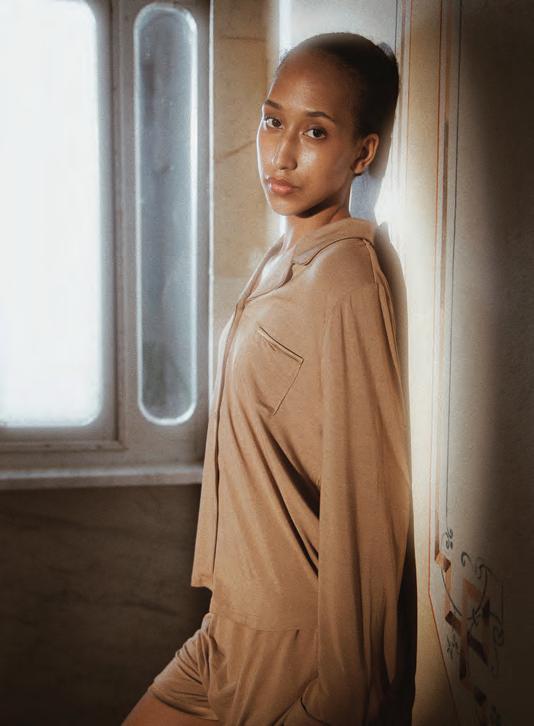
When Louis Vuitton gives iconic Japanese artist Takashi Murakami free rein to reimagine its most iconic handbags the result is nothing less than extraordinary. Unveiled at the most recent Art Basel Paris, Louis Vuitton's new Artycapucines collection is a feast for the eyes and a whimsical balm for the soul. Each limited edition bag in the 11-piece offering has its own unique character. But they all have the same core directive – to be colourful, vibrant and have a child-like joiedevivre that will bring a smile to your face. It will undoubtedly add a skip to the step of anyone lucky enough to snap one up.
MODE
Get inspired by…
– Exploring the GCC’s sartorial past
– Deciding to stand in the spotlight
– Redefining what the abaya represents
– Eye-catching style that’s giving attitude
– Stepping out of your comfort zone
– The power of white hot jewellery

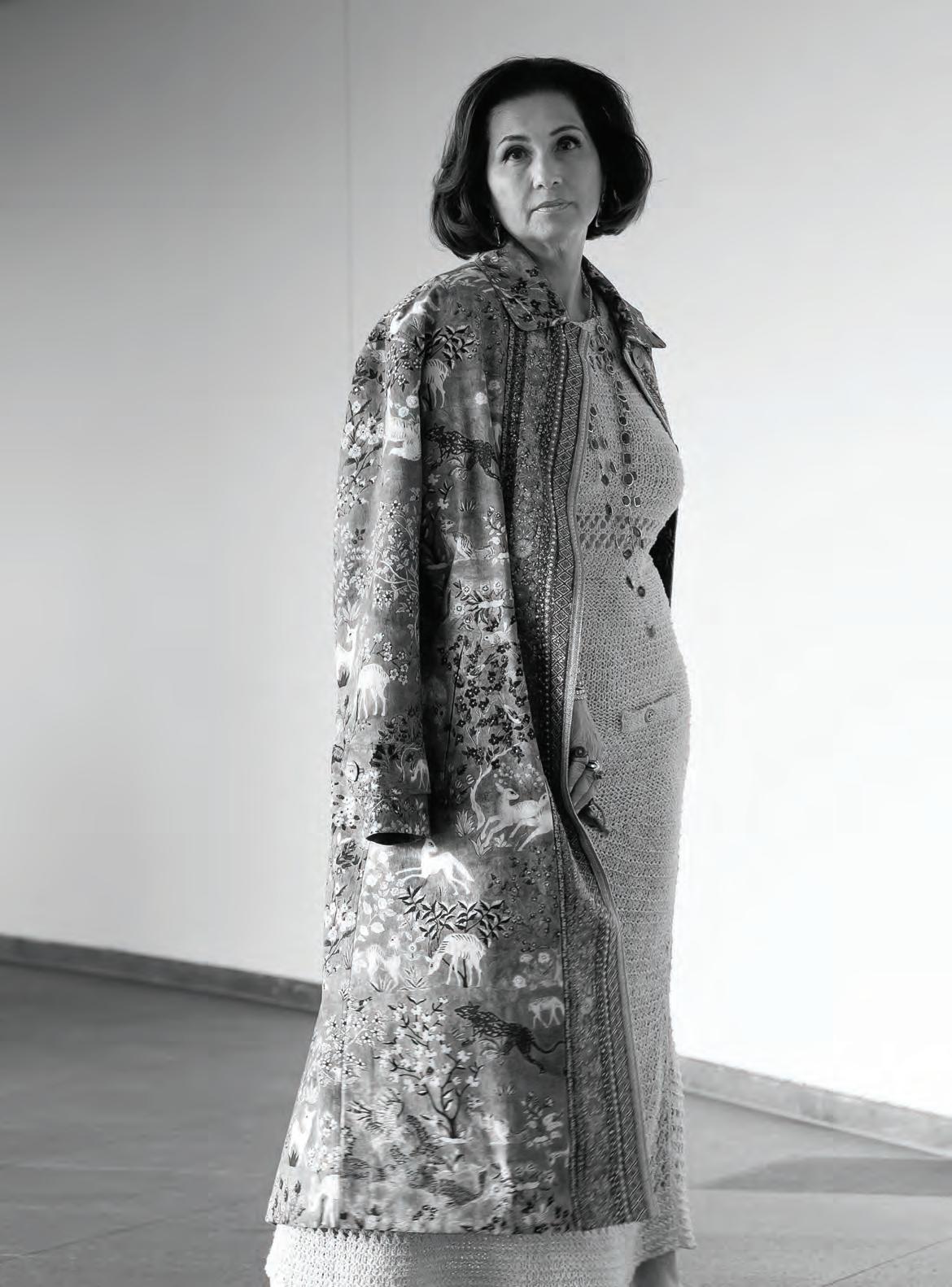
The SARTORIAL Storyteller
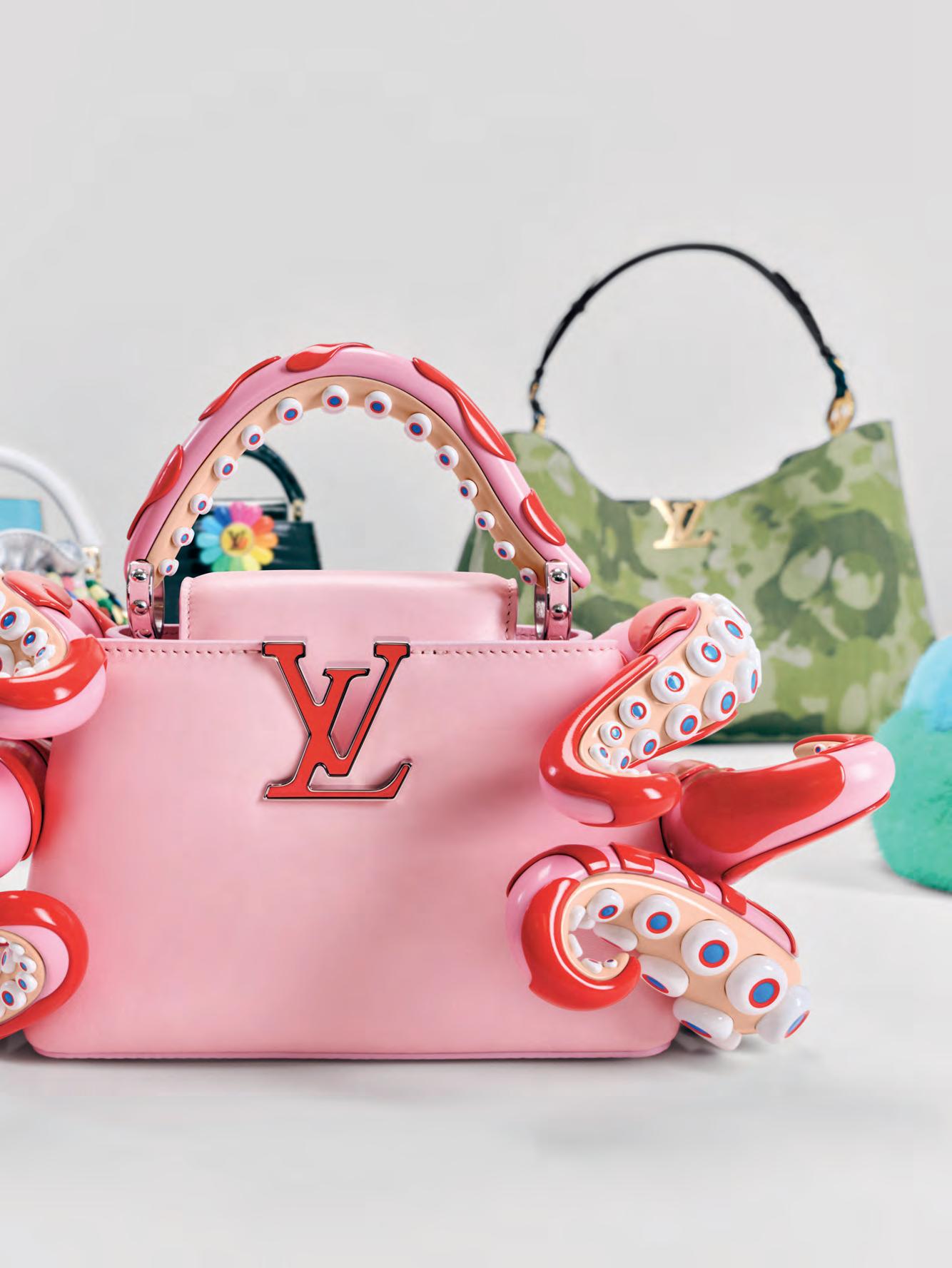
Dr. Reem El Mutwalli on archiving the UAE’s heritage with heart, history, and haute precision
WORDS: SARAH JOSEPH
Some stories are written in words, while others are stitched in silk, threaded in gold, and worn as an homage to cultural heritage. For Dr. Reem El Mutwalli, who’s an art historian, cultural scholar, and founder of The Zay Initiative, the story of the UAE lives in its fabric. Across four decades, she has documented and preserved the evolution of Emirati women’s dress with the precision of a scholar and the heart of a storyteller. Her mission is as poetic as it is purposeful: to record what is vanishing and reframe it for a new generation, one that lives at the crossroads of memory and modernity.
“When you live through transformation, you realise how fragile culture can be and how vital it is to record it before it disappears,” states Dr. El Mutwalli with conviction.
Born in Iraq and raised in Abu Dhabi, she grew up during the UAE’s nascent years, a time when the country’s foundations were still being built. Her father served as economic consultant to the late Sheikh Khalifa bin Zayed Al Nahyan, and her family’s world intertwined with the visionaries shaping the nation’s future. “I experienced the UAE’s formation,” she recalls. “As children, we witnessed the country grow from sand to skyline. That instilled in me a responsibility, to give something back to a place that gave me everything. And what better gift than to record its story?”
That sense of stewardship guided her path from early studies in interior design in the United States to postgraduate degrees in Islamic art and archaeology in the United Kingdom. But education was never separate from life. “My parents were collectors and intellectuals. Art and design
were part of daily existence, the way we lived, the way we saw beauty. I simply learned to look more deeply.”
Dr. El Mutwalli’s book, Sultani: Traditions Renewed; Changes in Women’s Traditional Dress in the United Arab Emirates During the Reign of the Late Sheikh Zayed bin Sultan Al Nahyan (1969–2004), is more than a record, it’s a visual time capsule. “My book goes far beyond the abaya alone,” she explains. “It explores the full spectrum of Emirati women’s dress during the late Sheikh Zayed’s era. While the abaya, also known as the abah, dafah, or sway’ yah, remains central, I wanted to trace the changes through the eyes of the women themselves.”
From hand-embroidered cloaks of the 1960s to today’s jewel-toned, stylised designs, Sultani captures the evolving relationship between tradition, identity, and artistry. “It became both a tribute to Emirati women – their dignity, creativity, and adaptability – and a scholarly record for future generations.” She describes each piece as “a portrait of the UAE in motion, a nation balancing continuity and change.”
When asked about the new wave of Emirati designers reinterpreting traditional dress, her tone brightens. “What excites me most is how young designers honour heritage while fearlessly experimenting with form, fabric, and symbolism,” she says. “Their work proves that heritage is not a limitation, it’s a source of endless inspiration. It’s deeply rewarding to see this generation express cultural ownership in its own contemporary voice.” For Dr. El Mutwalli, this interplay of past and present is what keeps culture alive. “Tradition must breathe. The abaya can carry centuries of meaning and still feel utterly modern when reimagined with intent.”
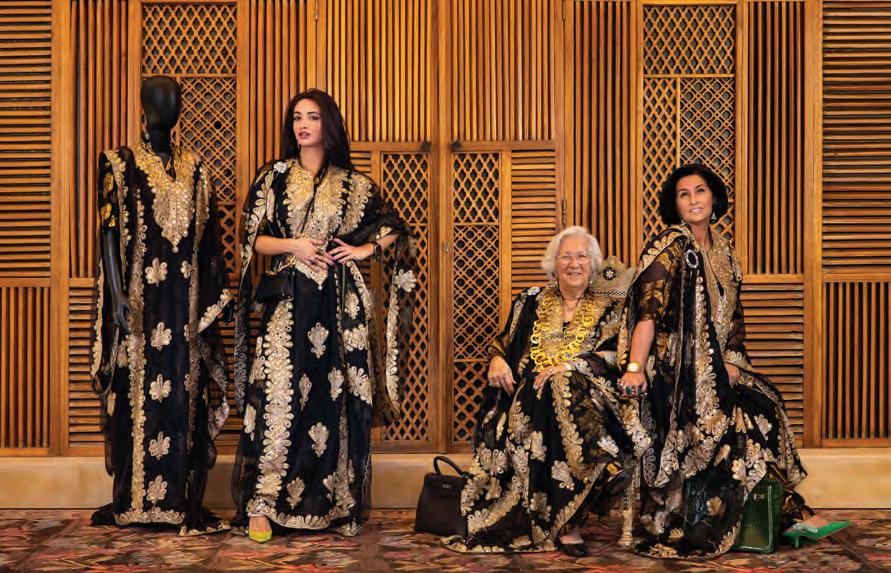
In 2019, she founded The Zay Initiative and its companion project, The Memory Closet, transforming her private archive into a digital museum for the Arab world. Her mission is succinctly expressed in The Zay Initiative’s guiding statement: ‘To collect the tangible, to narrate the intangible.’
“The idea stemmed from realising how vulnerable tangible heritage – including textiles, garments, oral histories – is to time and loss,” she explains. “By digitising these narratives, we ensure accessibility, longevity, and inclusivity. The Memory Closet allows individuals to contribute their own stories, turning personal memories into shared heritage.”
“Through digitalisation, we transcend geography,” she adds. “Anyone, anywhere, can explore Arab dress history, learn from it, and feel connected to it. It’s heritage without borders.” Beyond preservation, The Zay Initiative acts as a bridge between scholarship and creativity. “It’s a resource for academics and designers, but also for anyone curious about identity and material culture,” she says. “By placing Arab dress within a global context, we invite critical dialogue and cross-cultural understanding.”
The initiative’s open-access model has already influenced a new generation of historians and creatives. “When a young designer discovers the symbolism of a traditional weave or stitch, it changes how they design,” she notes. “They’re not just creating fashion, they’re continuing a lineage.” The author believes the intersection of technology and heritage is where the future lies. “Technology allows us to reimagine how we engage with history,” she says. “Through digitisation, AI, and immersive storytelling, we can archive and share our culture on an unprecedented scale. It turns static collections into living dialogues, accessible across borders, languages, and generations.” She views this shift not as replacement but
revival. “Translating something so tactile, so personal, into the digital world was emotional,” she admits. “Textiles carry the touch of their makers. I feared losing that intimacy. But I soon realised that digital storytelling expands empathy. It connects a global audience to the personal histories of Arab women. It transforms nostalgia into knowledge.” Having devoted her life to studying Arab women’s dress, Dr. Reem says the garments have taught her as much about humanity as about fashion. “You learn about dignity, perseverance, craftsmanship, love. You see how culture and identity shape one another,” she reflects. “These clothes were often made by men for women – so they tell stories of collaboration and care. Heritage, in the end, is a human legacy.”
The UAE’s creative landscape, she adds, continues to mature beautifully. “Our institutions and designers are engaging with heritage as a living resource. Preservation isn’t only about aesthetics, it’s about understanding, documenting, and educating. The balance between innovation and authenticity is still evolving, and that’s what makes it so exciting.” While speaking about the UAE today, her voice softens. “I’m part of what’s called Zayed’s generation, those who grew up during his reign,” she says. “I’ve witnessed a nation transform within a single lifetime. What began as modest ambition has become a sophisticated cultural ecosystem. Yet even amid the skyscrapers, I still see echoes of the desert, resilience, generosity, belonging.”
As she continues to build The Zay Initiative’s ever-expanding archive, her vision remains grounded in gratitude. “Culture is identity,” she says simply. “To know who you are and where you come from allows you to understand where you’re going. Preservation connects us across time, across borders and across generations.”
Above: What one began, the others continue – a legacy in fabric. Three generations: my mother, my daughter and I in a composite image wearing one timeless Iraqi over garment (Hashmi) – a heritage woven in every thread
“When you live through transformation, you realise how fragile culture can be and how vital it is to record it before it disappears”
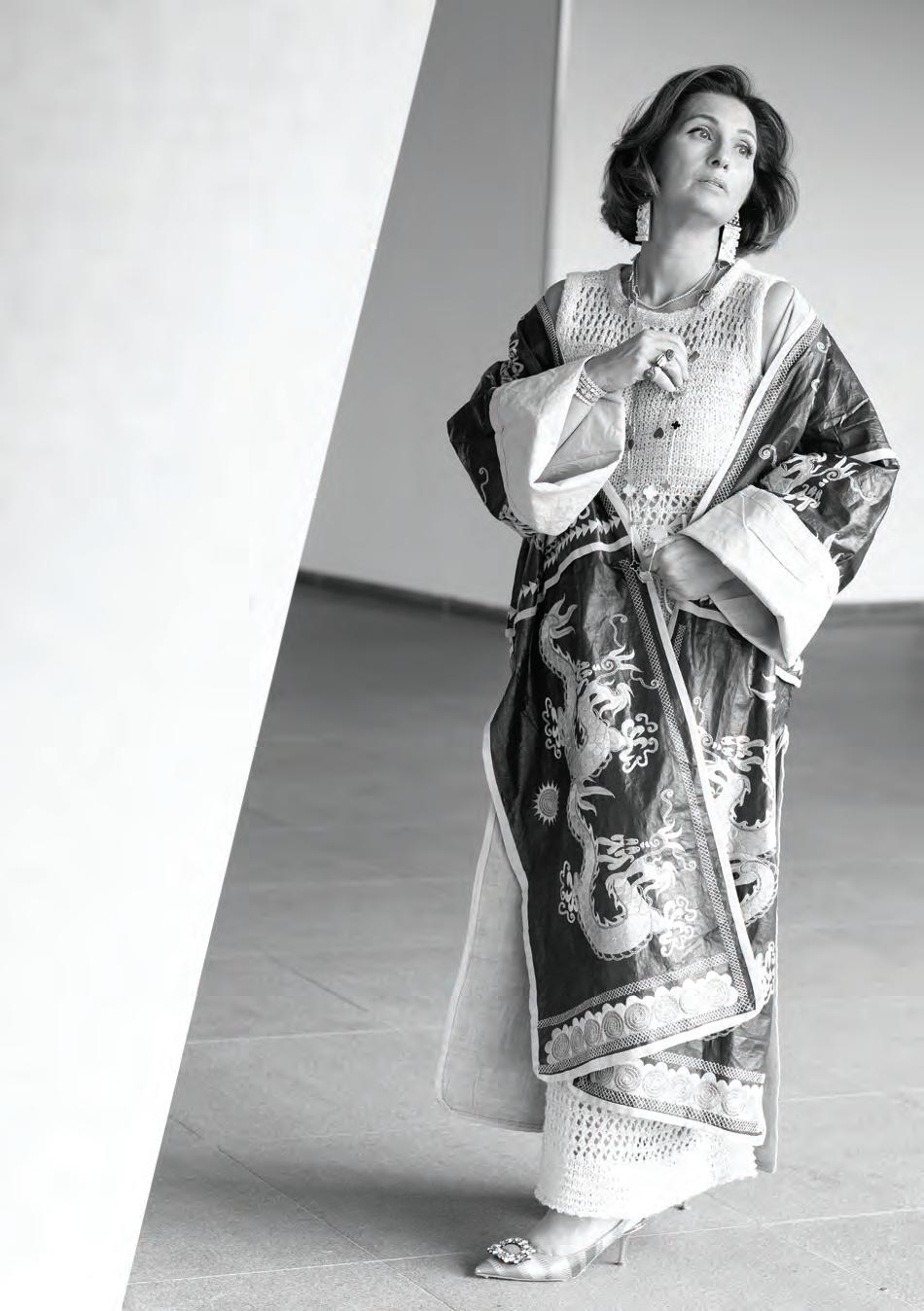
Renowned Emirati artist Lamya Gargash has finally decided
it’s time to step into the spotlight
A NEW FOCUS
WORDS: JESSICA MICHAULT
PHOTOGRAPHY:JEREMY ZAESSINGER
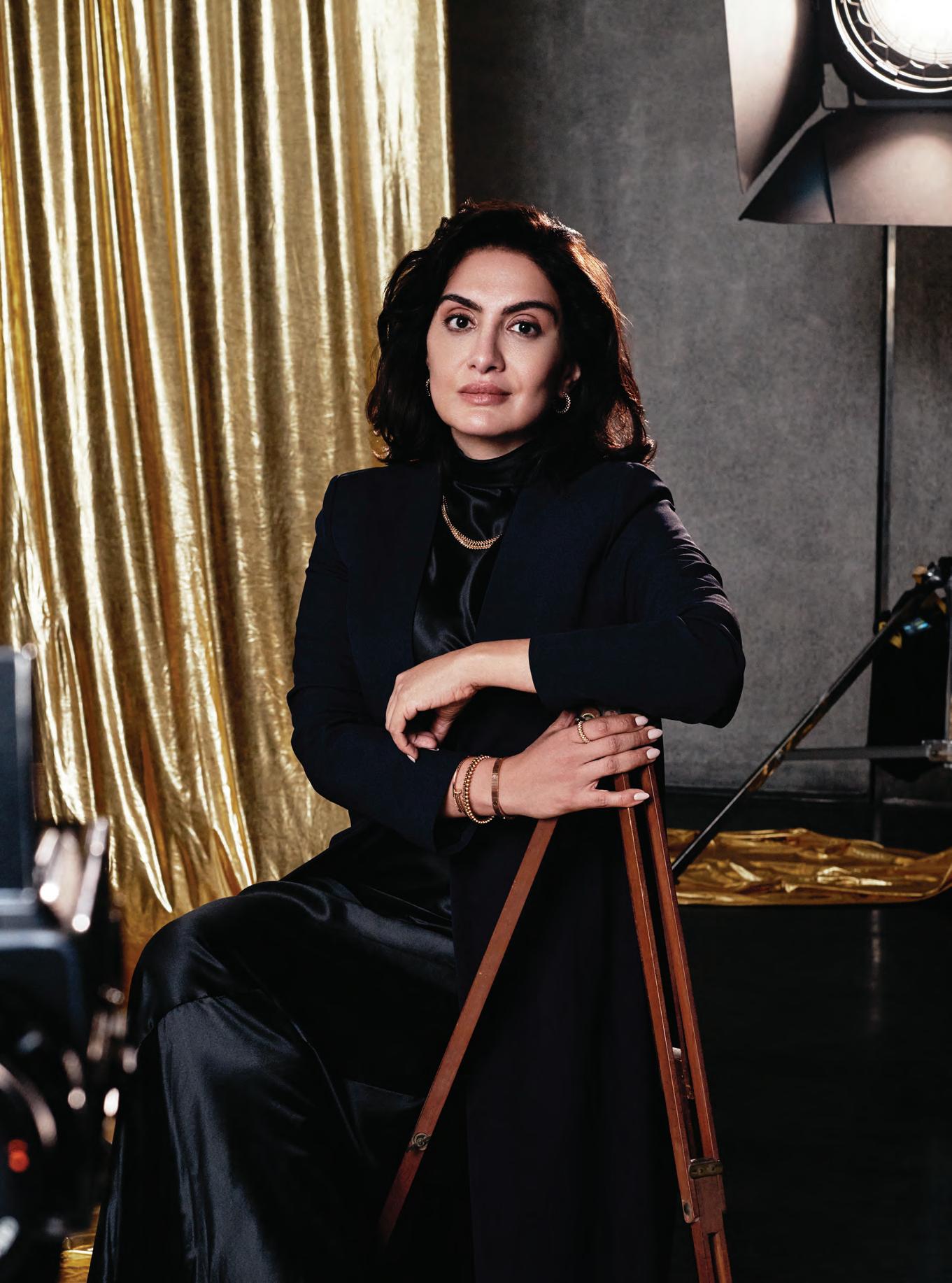
Clash De Cartier earrings, rose gold and diamonds; Clash De Cartier necklace, rose gold and diamonds; Clash De Cartier bracelet, rose gold; Love Unlimited bracelet, rose gold; Juste Un Clou bracelet, rose gold and diamonds; Clash De Cartier ring, rose gold and diamonds; ALL CARTIER JEWELLERY Coat: Bouguessa; Dress: Amiraé
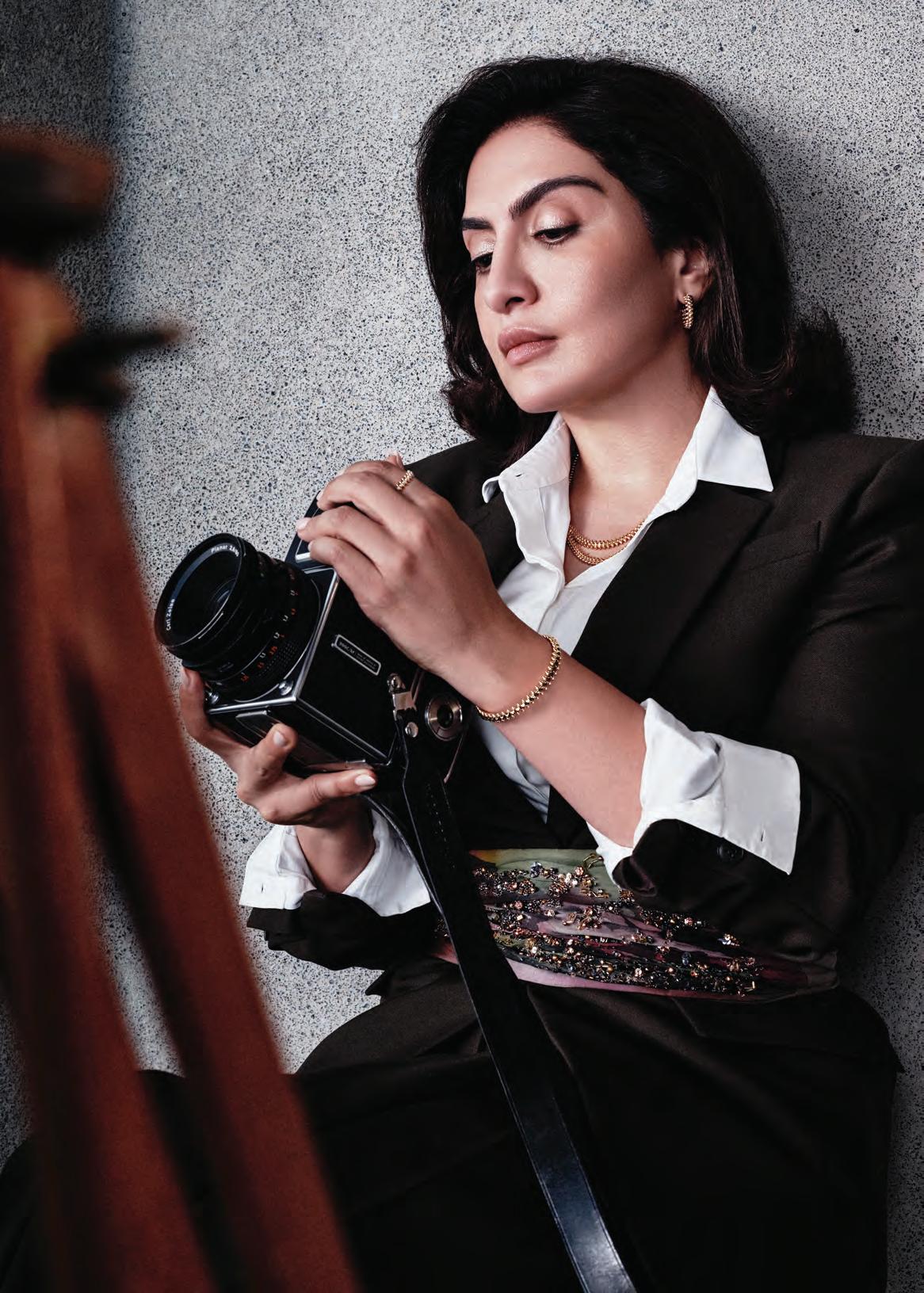
Left page: Clash De Cartier earrings, rose gold and diamonds; Clash De Cartier necklace, rose gold and diamonds; Clash De Cartier bracelet, rose gold; Clash De Cartier ring, rose gold and diamonds; ALL CARTIER JEWELLERY Blazer, Trousers, and Belt: Amiraé
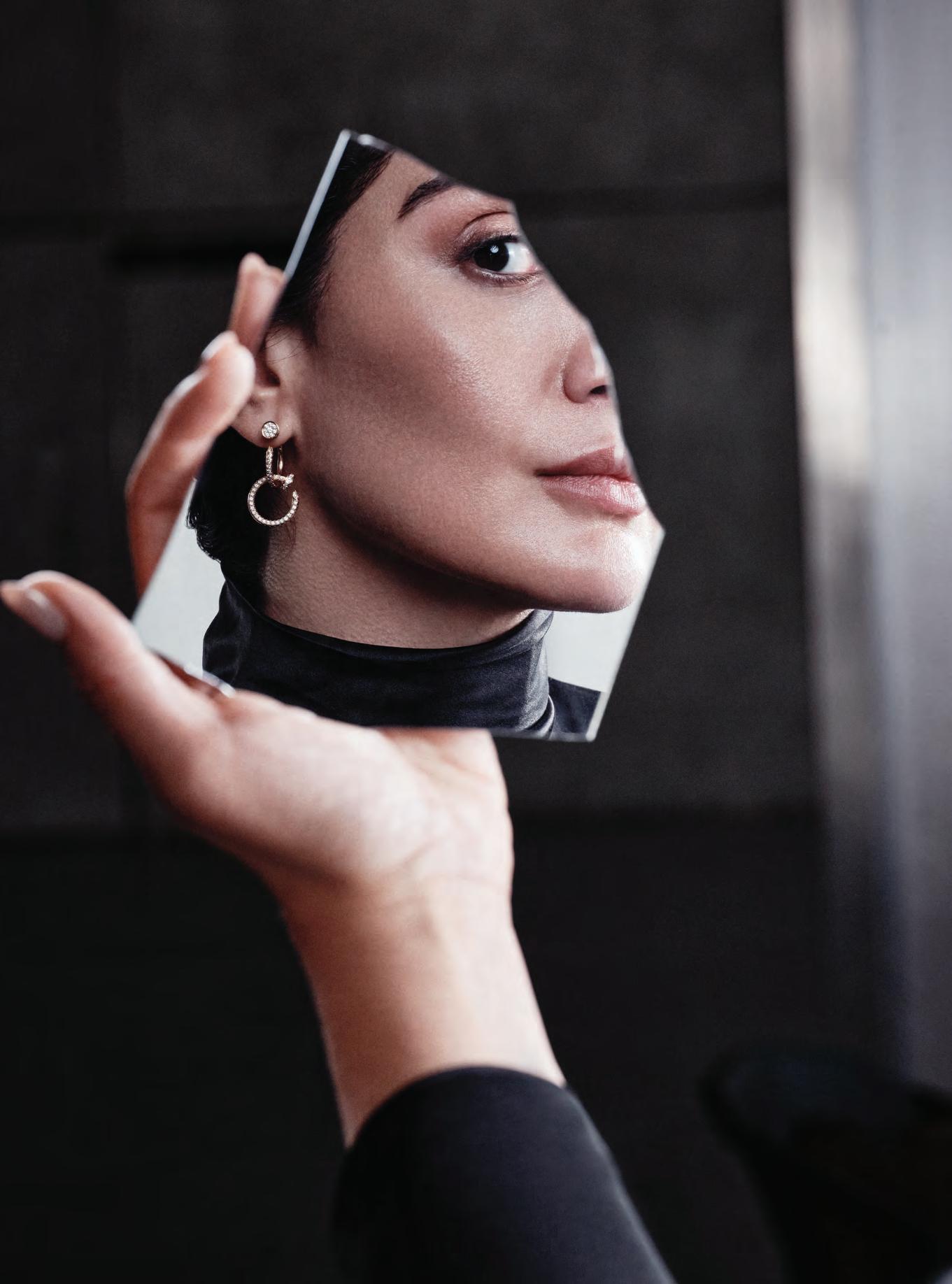
This page: Juste Un Clou earrings, rose gold and diamonds; ALL CARTIER JEWELLERY Dress: Amiraé
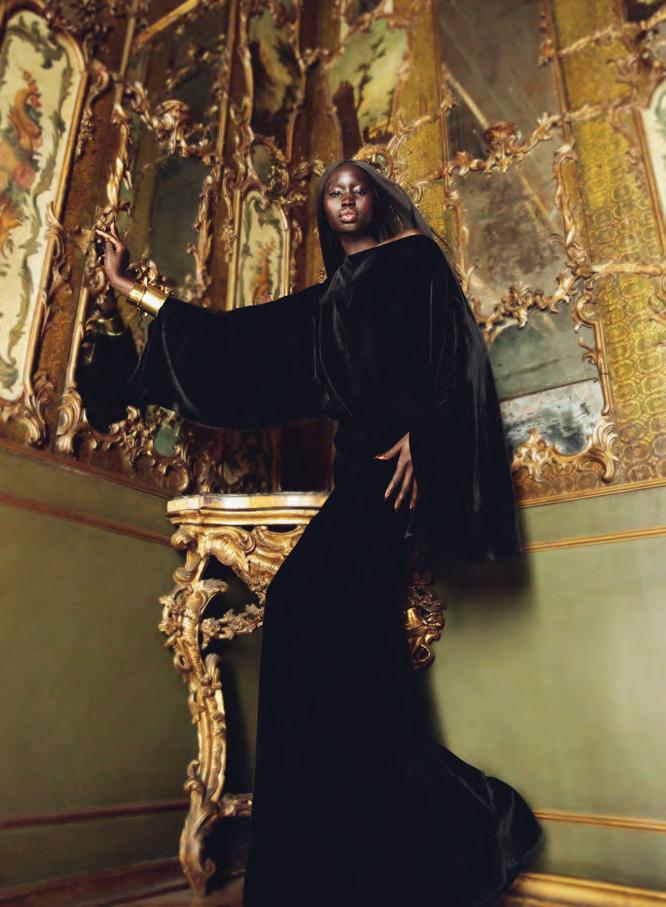
For nearly twenty years, Emirati artist Lamya Gargash has moved quietly through the world, observing its textures, listening to its subtle vibrations, and capturing the emotional residue of places most people forget to see. She has built an extraordinary global career by standing just outside the frame – behind her camera, the work and the conversation – letting her images speak for her. But now, after two decades of presence through absence, Gargash has begun a new chapter. “I’ve been doing art for 20 years now… and I thought, you know, why not celebrate myself and also get out of my comfort zone of being behind the camera.” It is a simple sentence, almost casual. But in it lives the quiet revolution of a woman deciding not only to create, but to be seen.
Her relationship with art was never obvious. She laughs when she remembers how photography was something her family assumed belonged to her sister. “My parents always said that my sister was better at taking pictures, and I didn’t initially understand this concept of photography as art.” Growing up, she had no blueprint for an artistic life. “I believed that art was just something you could do on the weekend. That you can have an office job and that it’s something you do in your spare time.” She tried to follow that script, graphic design, advertising, anything that sounded more acceptable as a traditional career path. But each attempt to conform would somehow lead her right back to the creative world. “Every time I tried to leave the arts or photography, I always found that it pulled me back.”
The decisive jolt came at Central Saint Martins. She enrolled intending to pursue digital design; instead, they placed her in photography. She tried to refuse, tried to transfer, tried to persuade her instructors that she didn’t belong in that discipline. But then one professor pulled her aside and said the words that changed everything: “I think the students here have a lot to learn from you.” She was twenty-three. “These are powerful words… I was very young… so I stayed.” Acceptance, however, took longer.
“I think I was in denial. I didn’t accept it. To be able to prosper, you need to be accepting of your destiny.”
Her destiny revealed itself slowly, the way a negative emerges on contact sheets. The emotional and conceptual vocabulary she sought ended up not being found in classrooms, but rather through an exploration of her roots, and more specifically her home. During a winter break, she visited her family’s former compound in Deira, a place where her extended family once lived together. The house stood empty, but when she entered, something in her shifted. “It was like a light bulb moment. I saw things very differently, with fresh eyes.” There were drawings on the walls, traces of childhood, the lingering warmth of a place that had once held a full life. “I kept taking pictures and I just couldn’t stop.”
That revelation became the foundation of her first book, Presence. It’s filled with images of empty spaces she photographed throughout the UAE. It’s a title that would define not only her work, but her world view. “It was talking about human presence in space and the culture of spaces.” Gargash realised she was not photographing architecture; she was photographing emotion and spaces that were slowly disappearing from her birthplace. Her photos were a medium of documentation – absence as evidence, emptiness as biography. “I want the audience to delve into the details, to sense a presence without an actual presence,” she shares. She wanted viewers to feel the spirit of a room, the aftertaste of memory on a windowsill, the quiet undercurrent left behind by lives no longer visible.
Her commitment to film photography deepened this sensibility. At a time when the world rushed to digital speed, Gargash embraced slowness, imperfection, and grace. “For most people… everything’s so instant. But I shoot on film.” She speaks of the meditative joy of waiting, of the way the manual process lets her breathe. “I love the idea of waiting, the anticipation and the happy accidents. Sometimes the film might be blank, and I’m okay with that.” Her longtime printer in the UK has become an almost spiritual collaborator at this point, part of a ritual that keeps her anchored. “I love the manual part, being one with the space.”
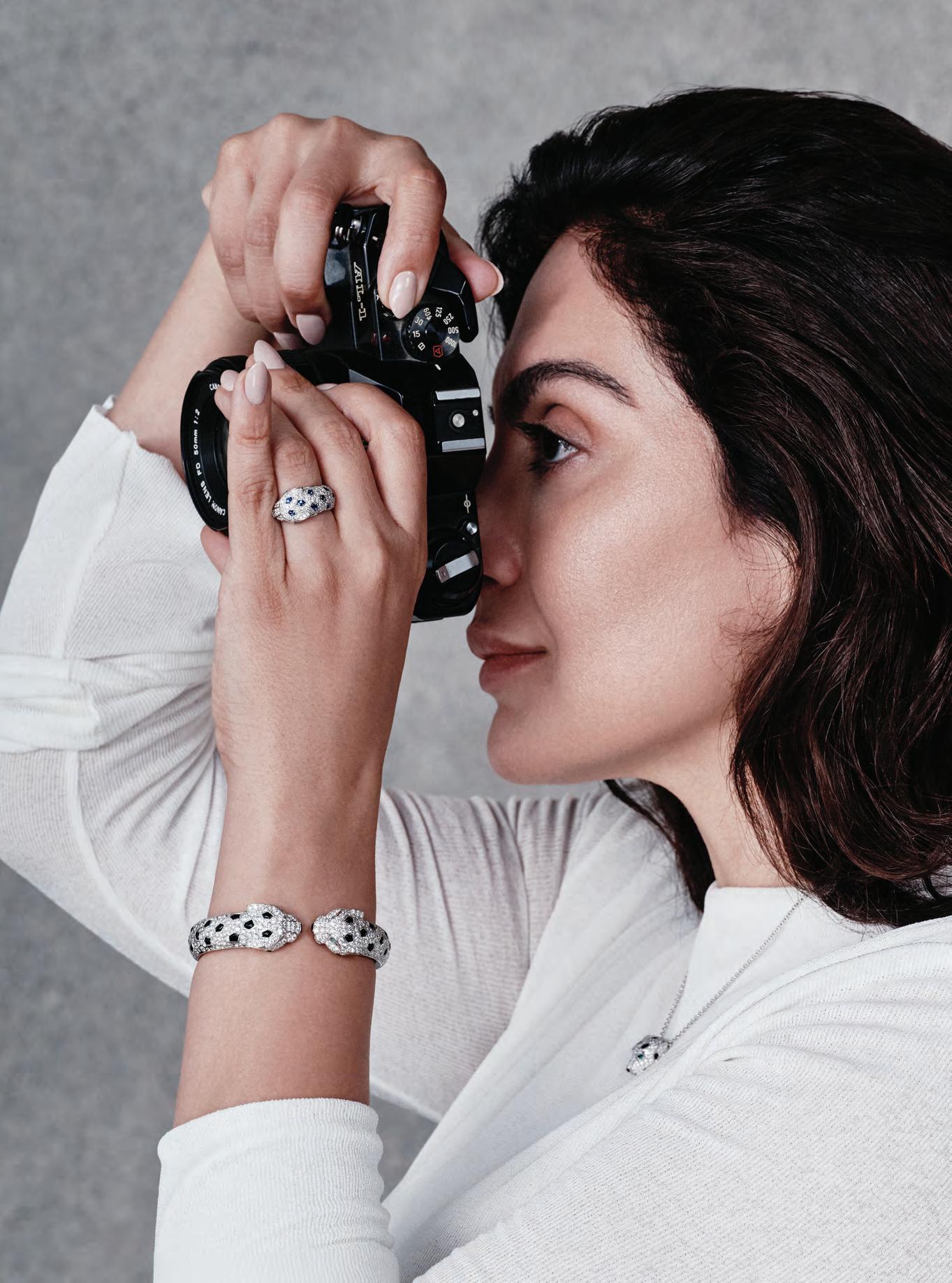
This page: Panthère De Cartier ring, white gold, emeralds, onyx, and diamonds; Panthère De Cartier bracelet, white gold, emeralds, onyx, and diamonds; Panthère De Cartier necklace, white gold, emeralds, onyx and diamonds; ALL CARTIER JEWELLERY Dress: Lamya’s Own
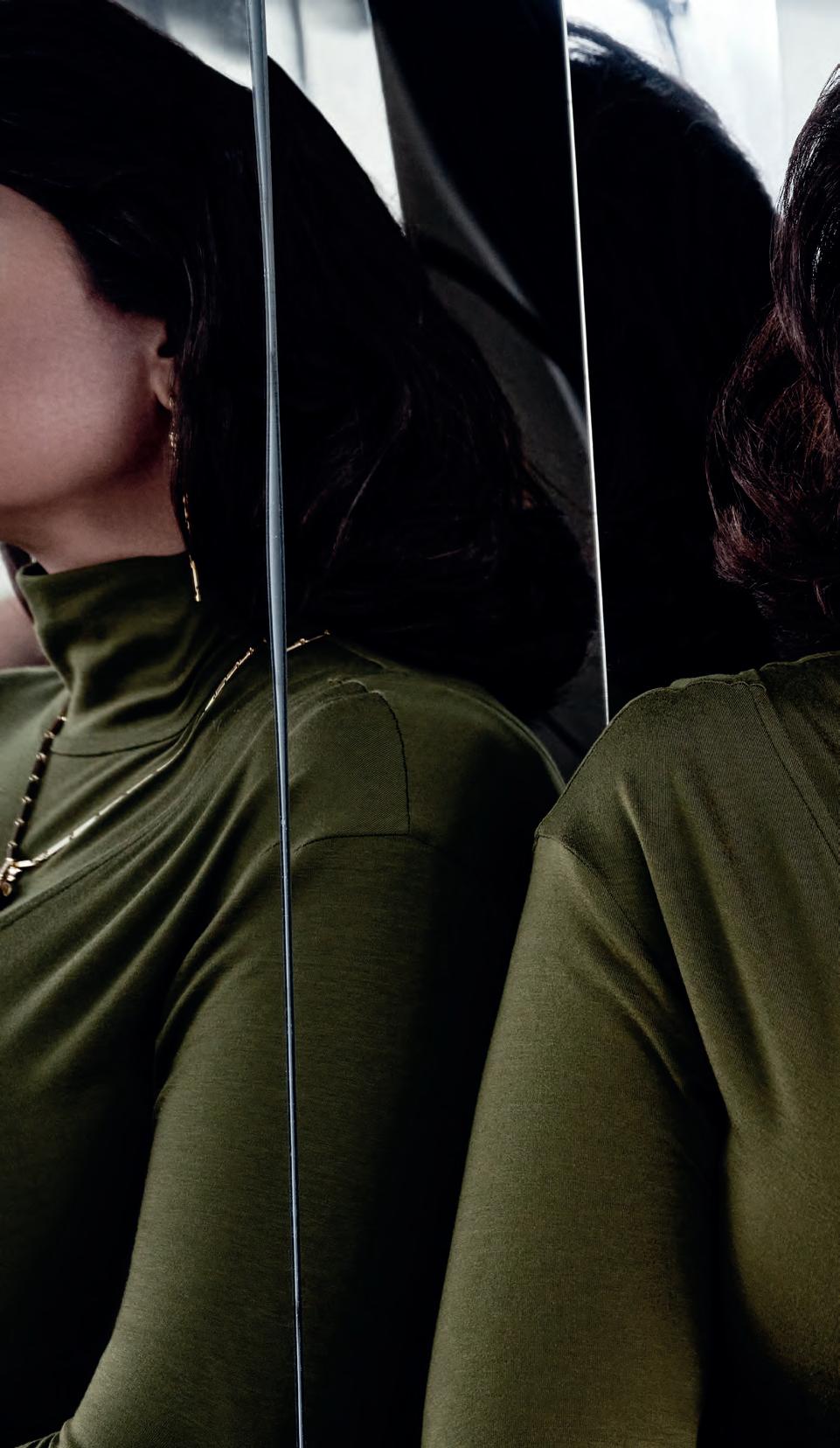
Right: Panthère De Cartier earrings, yellow gold, tsavorite garnets, onyx and diamonds; Panthère De Cartier necklace, yellow gold, emeralds, onyx and diamonds; ALL CARTIER JEWELLERY Dress: Bouguessa
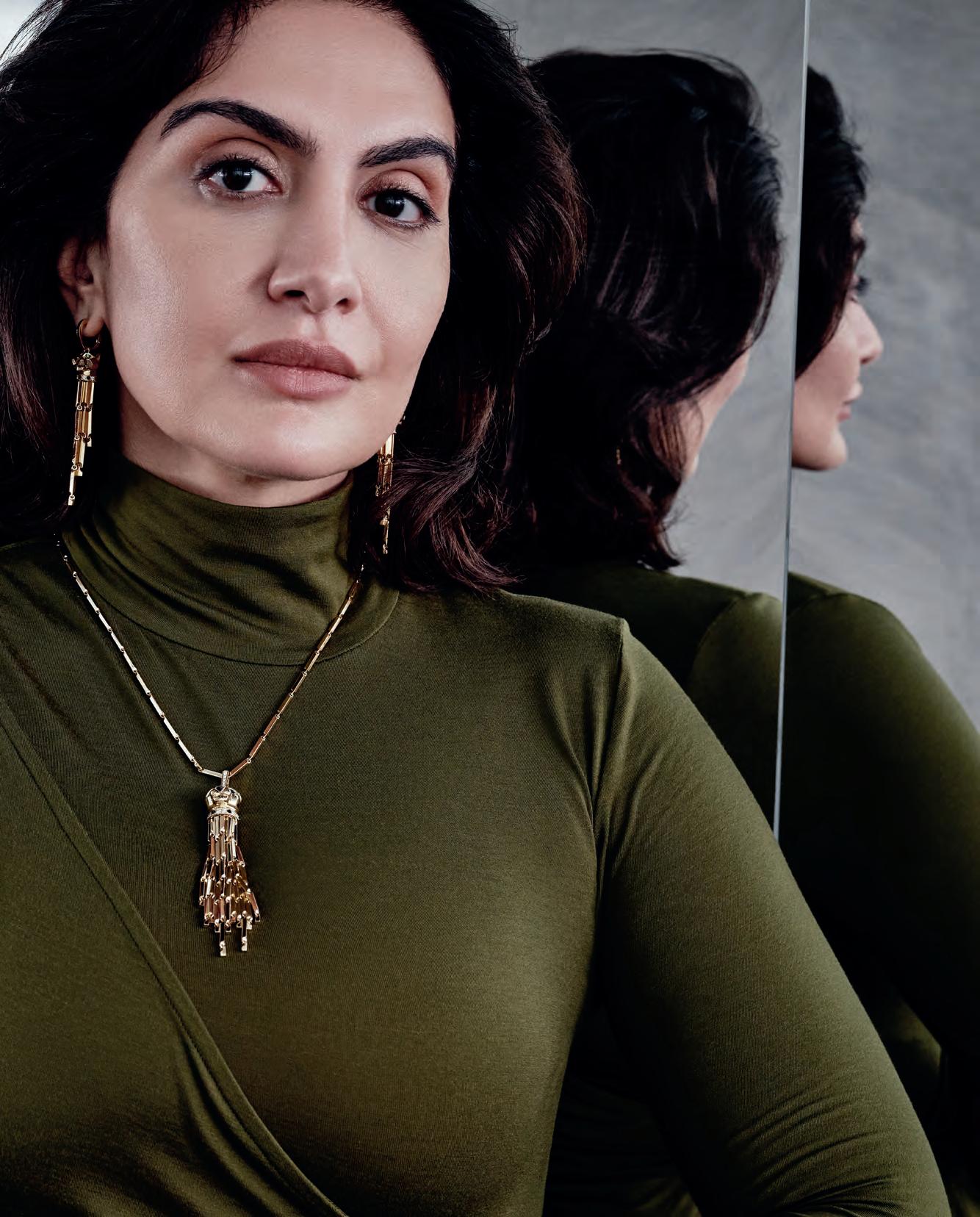
“Art is not for the faint-hearted. It’s challenging, but the fulfillment is everything.”
Through film, she found a rhythm that calmed the storm of information that often overwhelms her. “I have major anxiety… I can’t handle too much information. So when I get overwhelmed, I retreat.” However, retreating does not mean withdrawing, it means distilling. It means listening inward. It means sketching obsessively, filling notebooks with ideas, threads of concepts waiting to reveal themselves. “Even when I’m in a meeting, I sketch to focus my energy, later, they might manifest into actual works,” she shares.
Over time, her oeuvre expanded beyond photography into installation, sculpture, and mixed media. But all of it was anchored by one question: What does it mean to inhabit a space? Not physically, but emotionally, spiritually, culturally. Her exploration of that question took her to the Venice Biennale and Sharjah Biennale, where her works explored the layered, shifting identity of the UAE and the unseen narratives of everyday life. Ultimately, it led her to the spiritual culmination of her career so far: the KUN project.
“Kun in Arabic means ‘to be,’ a command by God. It’s about surrender and humanness.” For Gargash, KUN is not a photographic series, it is a state of being. It began as sketches about fourteen years ago, but she realised at the time she didn’t have a clear creative path to give the spark of an idea. “I had a sketch made years ago, but it wasn’t the right time.” When she returned to it, she understood why it had waited. “I knew I’d gone through a lot of growth myself, so it was finally the right time.”
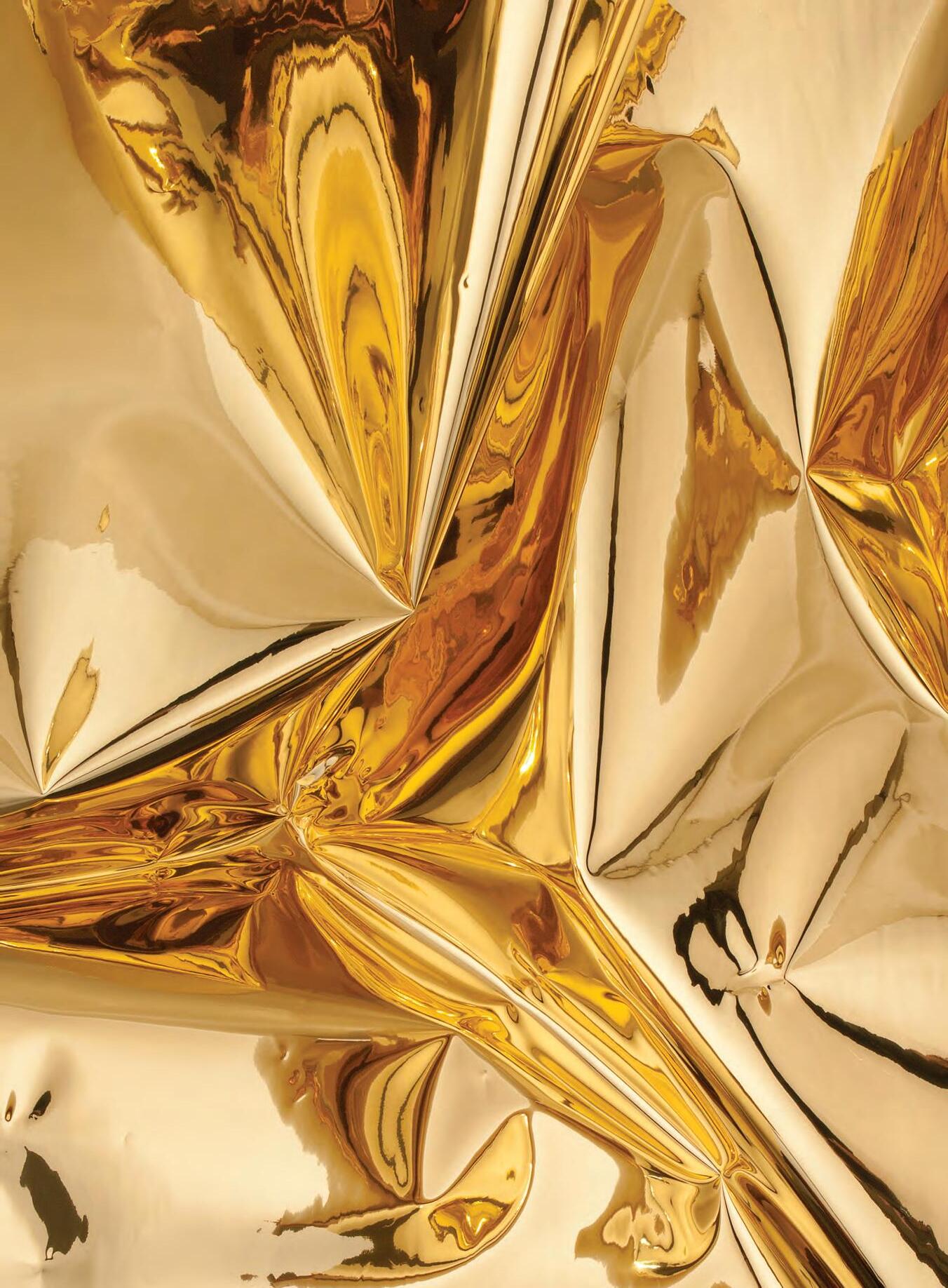
To bring Kun to life Gargash needed a material that could move like breath, reflect like spirit, and anchor the project across spaces and continents. She chose long swarths of gilded fabric. “It had that divine feel. It’s reflective, flowing, like a river of gold,” she says about her choice. She imagined it draped in Sharjah, unfurled in Abu Dhabi, flowing through London and Bath, revealing something mystical and universal about human connection. “I wanted to evoke the idea that you can have a spiritual, transient experience in any given space.” The gold fabric became a metaphor for our shared essence. “Even though we’re so different, there’s still that thread
that ties us together.” For an artist who once hesitated to call herself an artist, this was a kind of homecoming. “The process of learning and connecting, that is the work,” she says with feeling. Her faith in giving space for art to come to fruition, in intuition, in divine sequencing, remains unwavering. “The importance of allowing things to come, to manifest. Timing is everything,” says Gargash.
Yet the world often asked her to explain herself before it asked her to explain her art. “In the beginning, it used to frustrate me. I felt that who I was was more interesting to people than the work.” As one of the first Emirati women showing internationally, the weight of representation sometimes overshadowed the art. “Sometimes I get questions that have nothing to do with the work,” she confirms. But she has come to understand that having a sense of connection can be necessary. “Now I’ve learned to accept it. Sometimes people need to know me to know my work.”
And now, perhaps for the first time, she is allowing them to. “I didn’t grow up with a lot of confidence… I’m trying to make up for all of that.” Motherhood has played a part in this shift. “I think it’s important now because I’ve got kids… it’s good for them to see that they can be themselves.” Her growing presence in front of the camera is not vanity; it is visibility. It is an act of modelling courage, authenticity, and self-possession to her four young children.
“I’ve always been very much about being my authentic self… art stems from love and passion – and staying committed.”
Commitment, for Gargash, is not about output. It is about presence. It is about intention. It is about being brave enough to create in a world that doesn’t always understand the quiet artists, the gentle artists, the spiritual artists. “Art,” she confirms, “is not for the faint-hearted. It’s challenging, but the fulfillment is everything.”
Now Gargash’s children will grow up seeing her take up space in the world. See her tell her story and stand inside her own narrative. It is a legacy as profound as any of her poignant exhibitions. For two decades she has invited us to see the soul of spaces. Now, finally, she is inviting us to see hers.
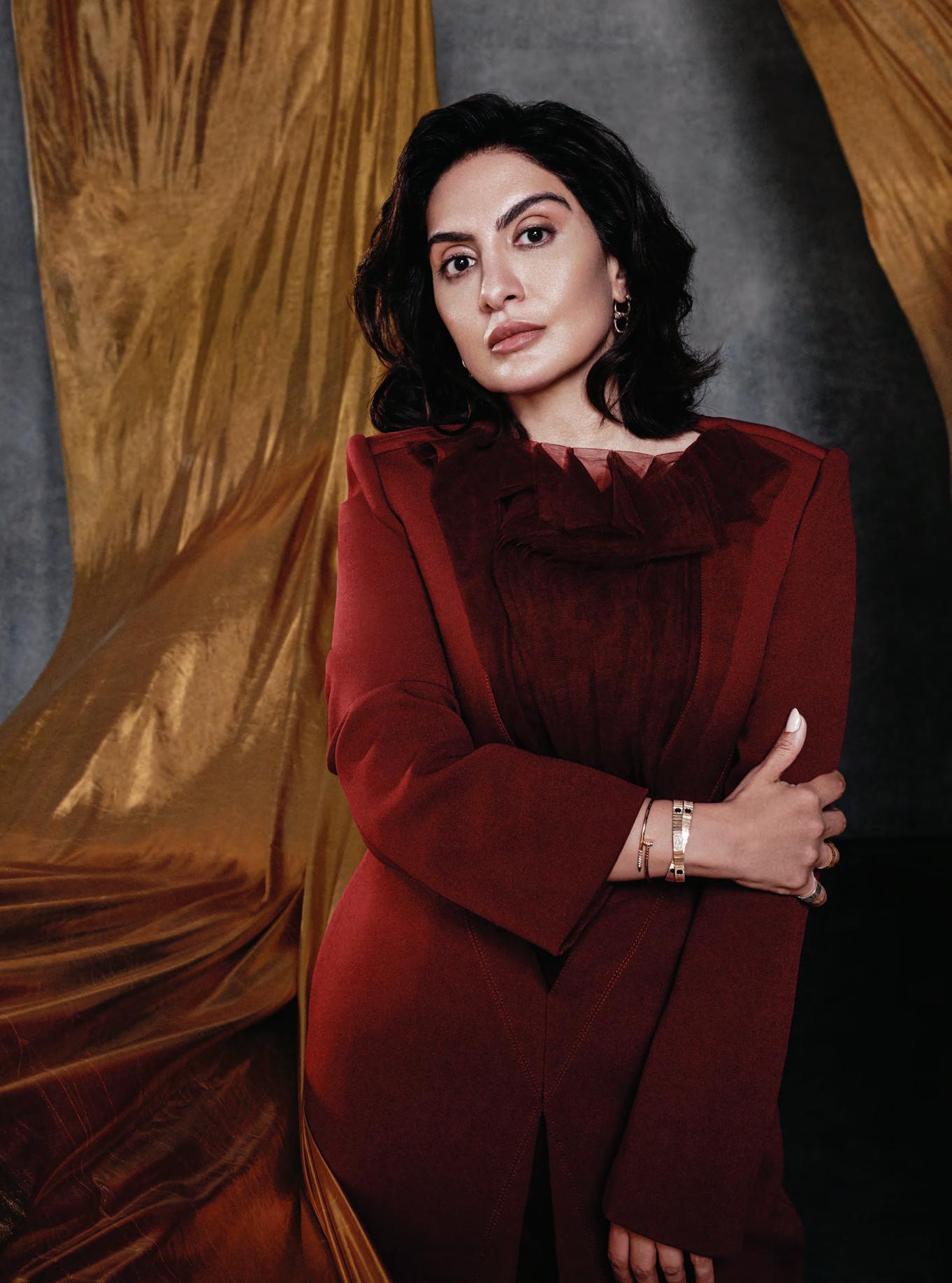
This page: Juste Un Clou earrings, rose gold and diamonds; Love Unlimited bracelet, yellow gold; Love Unlimited bracelet, rose gold; Juste Un Clou bracelet, rose gold and diamonds; Love Unlimited ring, white gold; Love Unlimited ring, rose gold; ALL CARTIER JEWELLERY Coat and Trousers:
Talent: Lamya Gargash; Senior Editor: Jessica Michault
Fashion Editor: Camille Macawili
Art Director: Yehia Badier
Makeup: Jean Kairouz; Hair: Loui Ferry
Videographer: Ekaterina Shirshova
Photography Assistant: Louis Pazurin
Set Design Assistant: Abdallah Adel
Location with thanks to Concrete, Al Serkal Avenue
Chats by C. Dam
BEYOND THE ABAYA
WORDS: AMINATH IFASA
From a traditional garment to a canvas of modern identity, the abaya is being redefined by a new generation navigating the fine line between self-expression and cultural reverence
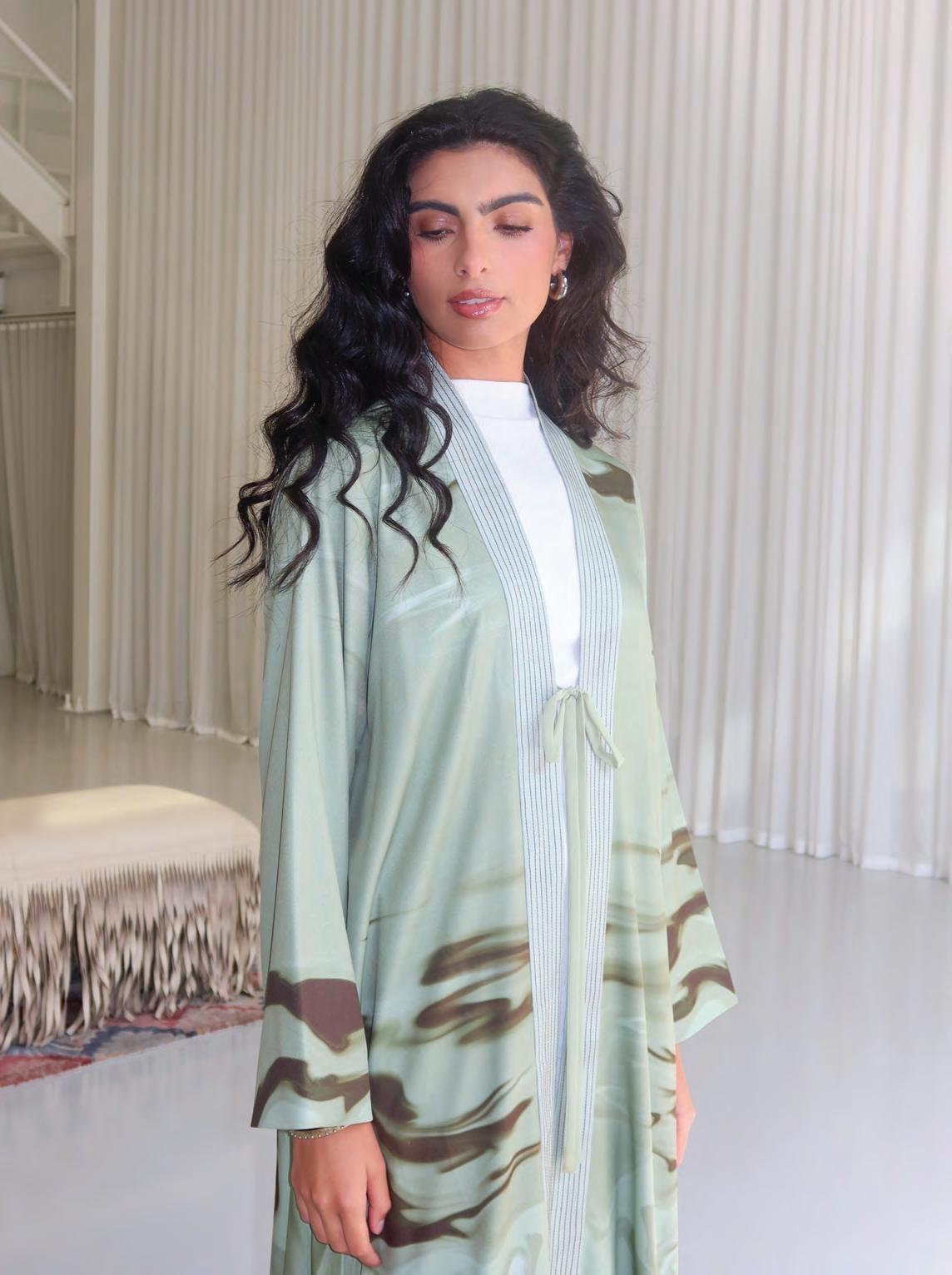
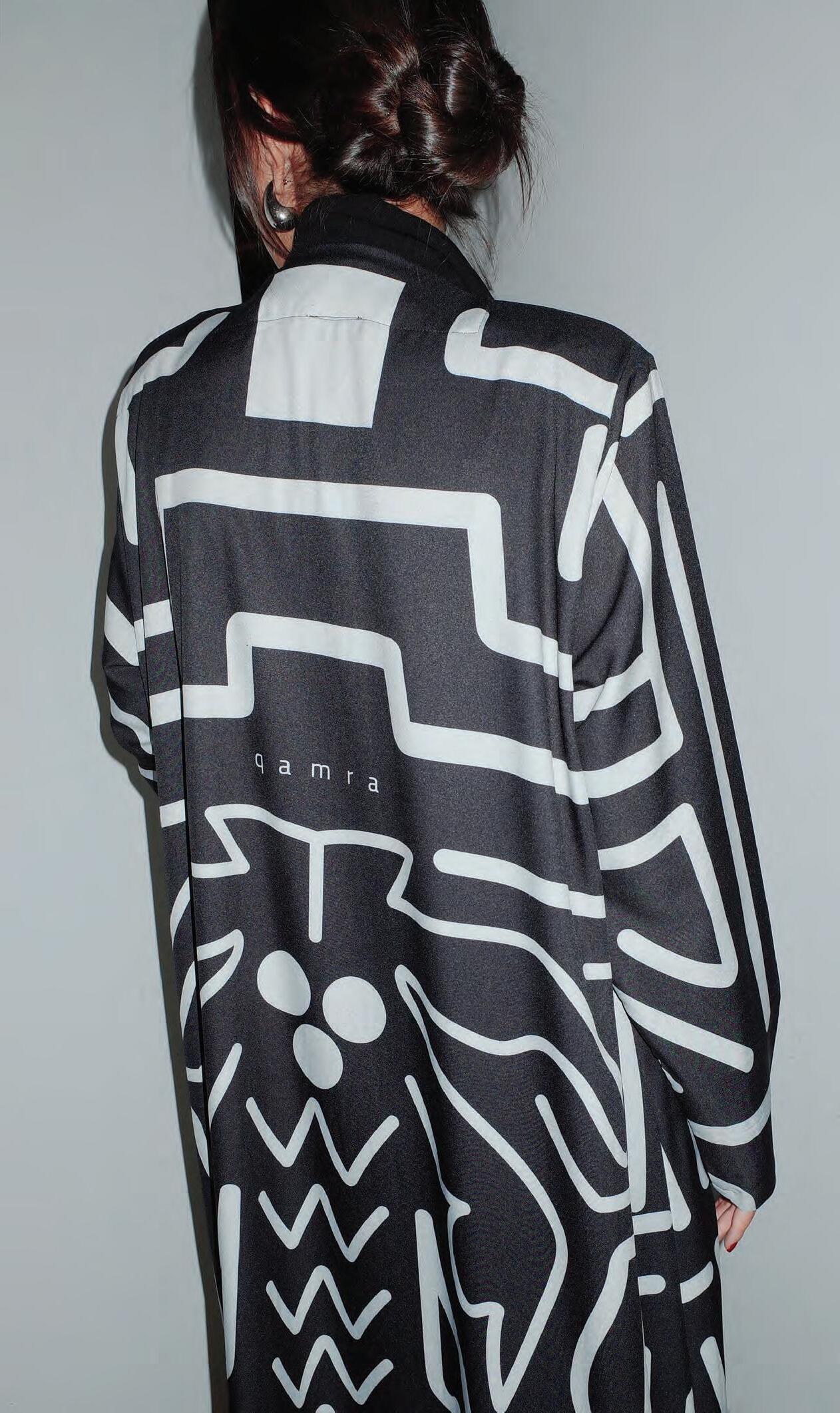
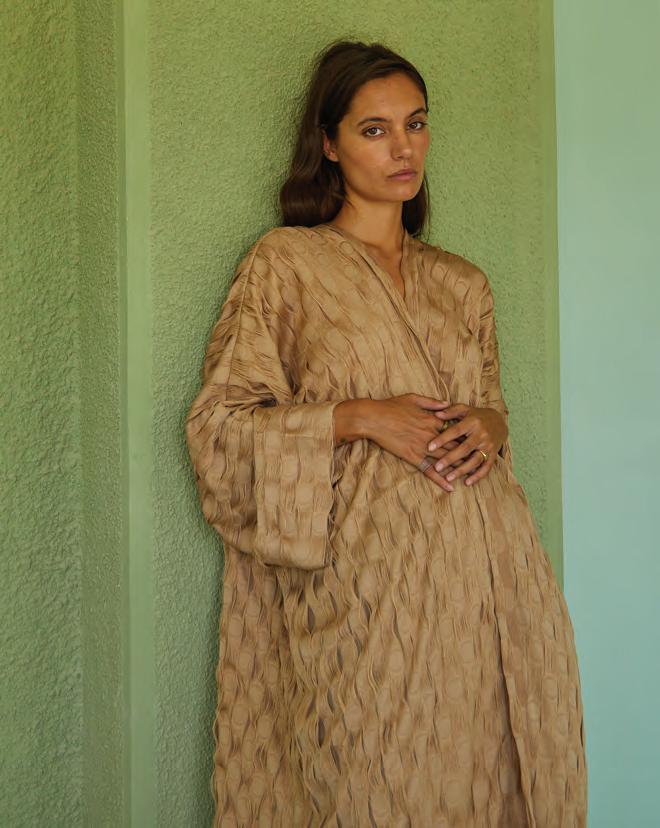
The abaya is a uniform of modesty. A flowing silhouette that speaks to deep cultural tradition and religious observance. It has a profound and constant sartorial presence in the Gulf region and is a touchpoint for Muslims across the globe. Its primary function is clear – to cover the body. Yet, a powerful evolution is unfolding within this continuity. The abaya is shedding its monolithic image to become a dynamic medium for self-expression, a style revolution led by a generation that honours its heritage while boldly asserting its individuality. This shift positions the modern abaya wearer as a pioneering force, actively shaping fashion from within a rich cultural context. This transformation represents an expansion of tradition’s vocabulary. The conversation now encompasses both wearing an abaya and curating it. As Alanoud Al Humaidi, the Qatari founder of the abaya label Qamra, observes, the modern approach is a delicate balance. “We like to play with silhouettes and cuts but still be on the black fabric,” she notes, highlighting a preference for structural innovation within a traditional palette. In the UAE, Rawdha Al Thani, founder of the contemporary fashion label illi, echoes this sentiment, framing the abaya as a means of personal storytelling. “It is something that is cultural, it is something that is modest, and it is also a way of expressing yourself,” she states. “I do think there’s a way for all of these things to exist within the same sentence.”
This fusion is powered by a new generation of consumers and a booming market. The global modestwear market, a category the modern abaya now squarely occupies, continues its robust growth. Recent analysis from The State of the Global Islamic Economy Report projects the sector will reach $697 billion by 2028, underscoring its long-term financial and cultural significance. While a market analysis done by Launchmetrics this year notes that media impact value (MIV®) for regional modest fashion brands, particularly in the UAE and Saudi Arabia, grew by over 40% in the first half of 2025 compared to the same period last year. This growth fuelled by social media campaigns and influencer collaborations. Consumer search behaviour underscores this surge, with Google Trends data showing a 60% increase in searches for “designer abaya” and “modern abaya styles” within the GCC from January to October 2025, compared to the same period in 2024. All these data points are strong indicators that a powerful cultural movement is underway and that the abaya is a vibrant, creative industry in its own right.
The style fluency of modern abaya wearers often rivals mainstream fashion in its creativity, as it involves mastering the art of styling a single, statement garment. Al Thani draws direct inspiration from the global runways, engaging in a sophisticated process of cultural and stylistic translation. “I always look into trends that are happening in fashion,” she explains. “I’m like, okay, how do I make this trend into an abaya?” This ethos has led her to interpret diverse movements, from the psychedelic prints of tie-dye to the opulent themes of Renaissance art. Her upcoming collection is a testament to this method. “I saw a lot on the runway, there were a lot of bandanas, a lot of bandana prints. I was like, we need to do a bandana print. So now we’re doing bandana prints for our next collection.” This proactive adaptation means the abaya is actively participating in the global fashion conversation, reinterpreting trends through its own unique lens.
This creative explosion also serves as a powerful counter-narrative to common stereotypes. The vibrant, fashion-literate abaya-
“It is something that is cultural, it is something that is modest, and it is also a way of expressing yourself”
wearing woman defies reductive perceptions. Al Humaidi directly challenges these assumptions. “The ideas from the Western world are very stereotypical,” she asserts. “When you come here, you will see a different world… we are very on trend with the world. We’re not like sitting under a rock.” The modern abaya, in all its diverse forms, from boldly printed to elegantly structured, is a statement of agency, proving that modesty and modernity are not mutually exclusive but can be seamlessly woven together.
For many women, however, the fear of societal judgment remains a powerful consideration. The question, “Is this too much?” lingers in dressing rooms and minds. Al Thani acknowledges this internal conflict, observing it even within her own circle. “A lot of my friends really think, ‘Oh, I’m going to wear this. This is a lot.’ Not everyone has that comfort level.” This apprehension often stems from a concern that a brightly coloured or intricately
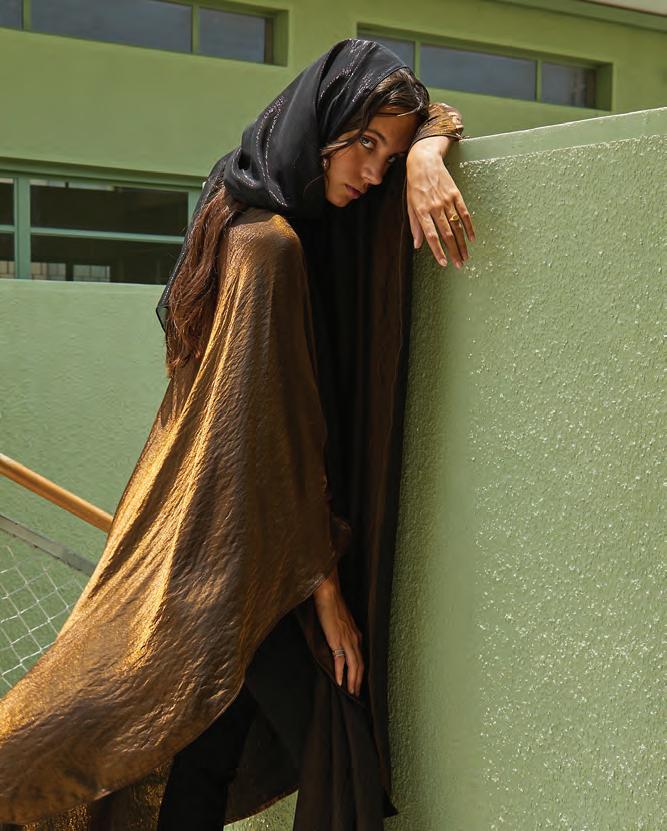
designed abaya could be perceived as drawing undue attention, thereby contradicting the modesty it is meant to embody.
This is where the designer’s role becomes as much about cultural navigation as it is about creativity. Al Thani draws a clear, nonnegotiable line in her designs, emphasising that the core intention of the garment must always be at its heart. “You have to respect the purpose of it, which is being modest. You have to respect the fact that you have to be covered in a certain way,” she asserts. For her, the line is crossed when the design itself, “defeats the purpose of modesty.” She points to “see-through abayas” or those “with cuts that defeat the purpose” as examples where the garment loses its foundational meaning. This highlights a crucial distinction in the modern abaya discourse: the debate is less about colour or print, and more about cut, fabric, and overall modesty compliance. A vibrant, full-
coverage abaya remains within the ethical framework, while a sheer or body-revealing one, regardless of its colour, steps outside of it. The personal journey towards wearing a bold abaya is often a slow evolution of confidence, a gradual rewriting of one’s own style rules. Al Thani uses the powerful example of her mother, a woman who once wore exclusively black. “She used to always say, ‘Oh, this is not for me. This is for girls your age,’” she recalls. But through exposure and shifting norms, her mother’s perspective transformed. “Now she feels more comfortable and more confident when she wears more colours, more prints.” This suggests the “fear” is often less about external judgment and more about an internal comfort zone, shaped by decades of style habit. As these comfort zones expand, so does the collective definition of what an abaya can be.
Ultimately, the journey of the abaya mirrors the journey of the women who wear it. It is a story of retaining core values while embracing evolution, a continuous dialogue between personal desire and public perception. The tension between expression and judgment signals a living, breathing culture actively engaging with its own future. It is a testament to the confidence of a generation that is thoughtfully redrawing the boundaries, taking a symbol of tradition and, without diminishing its sacred role, transforming it into a symbol of their own multifaceted lives. It is a garment that honors where they come from while giving them the freedom to express, with increasing courage, exactly who they are.
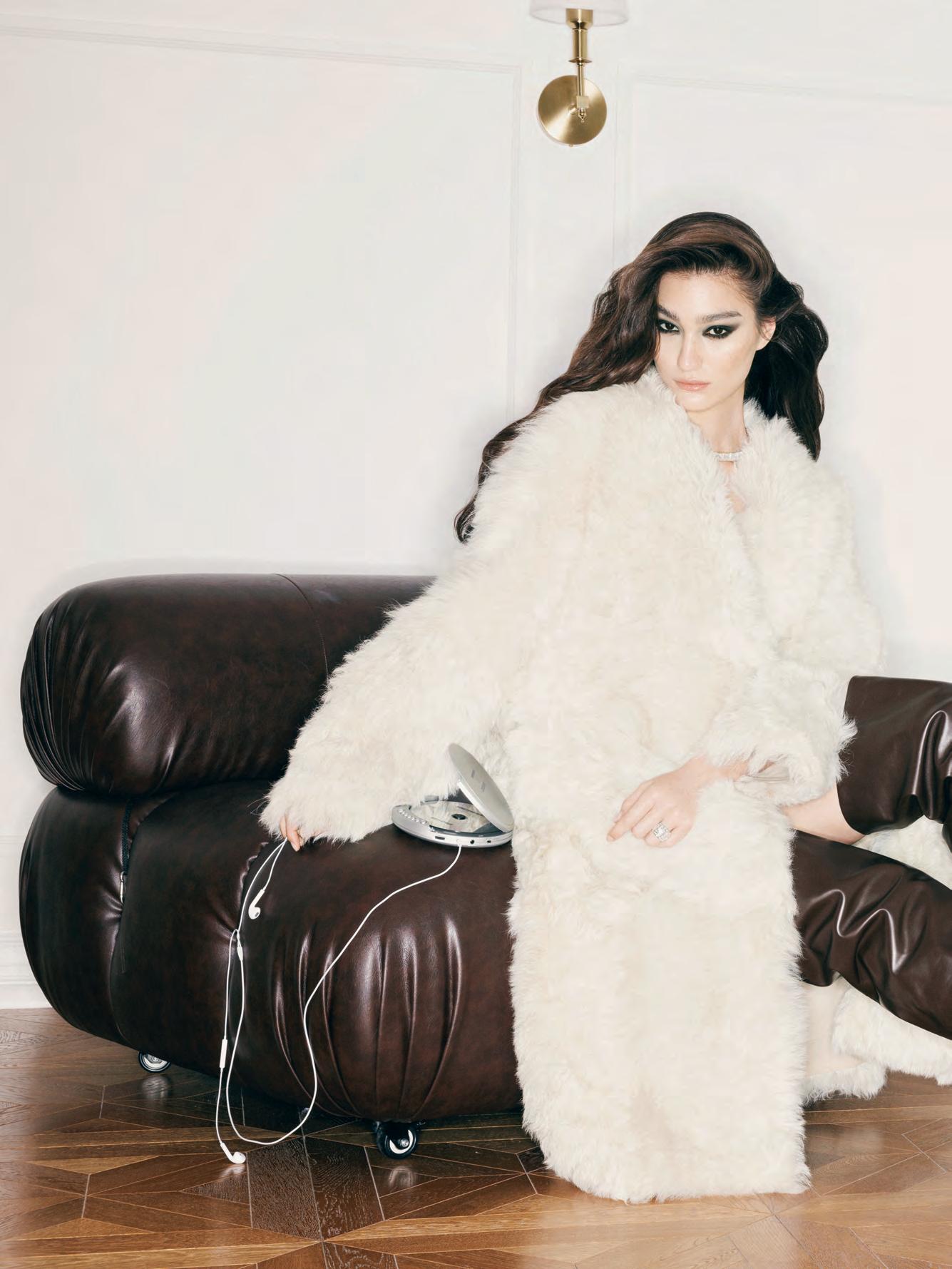
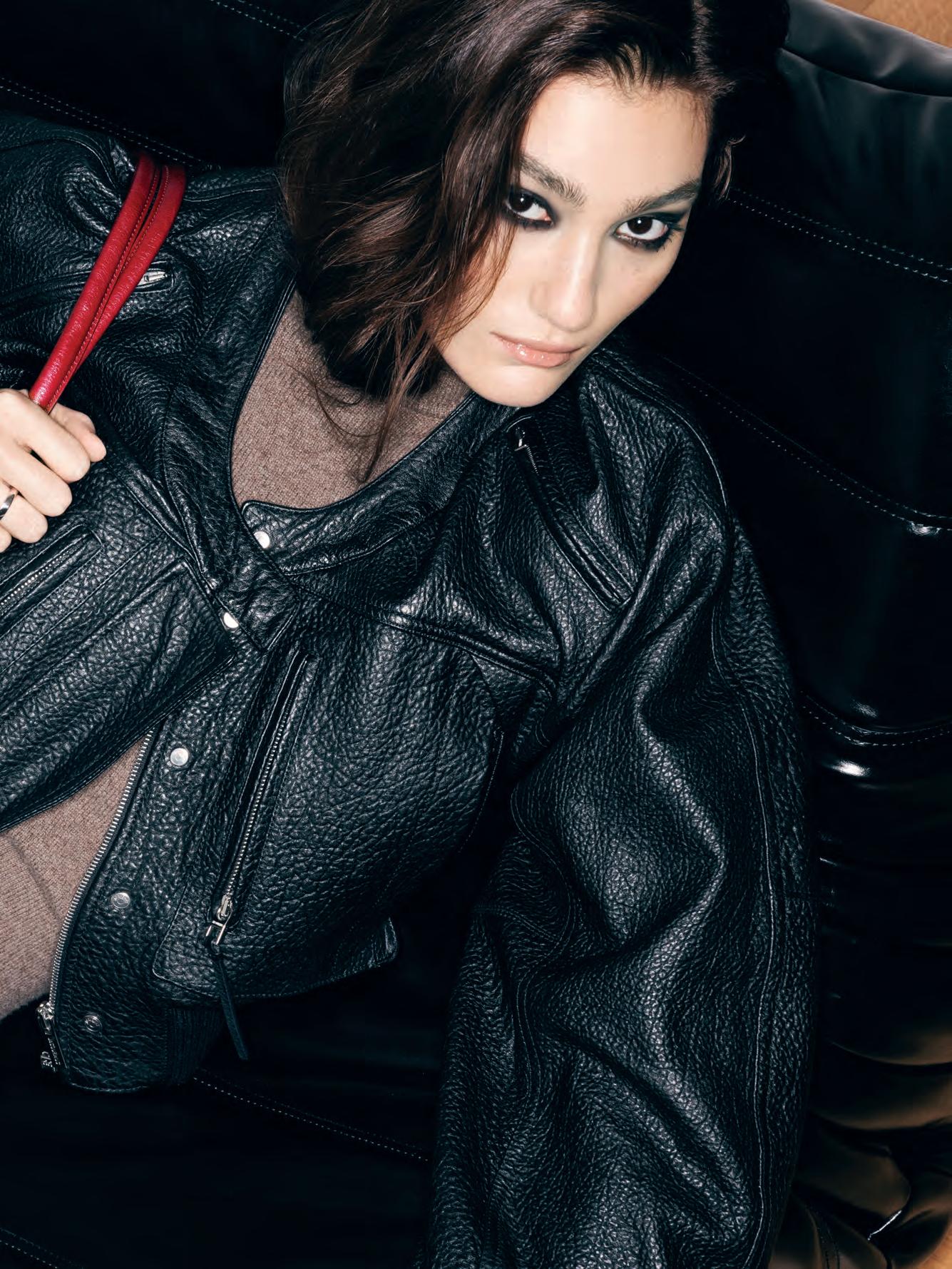
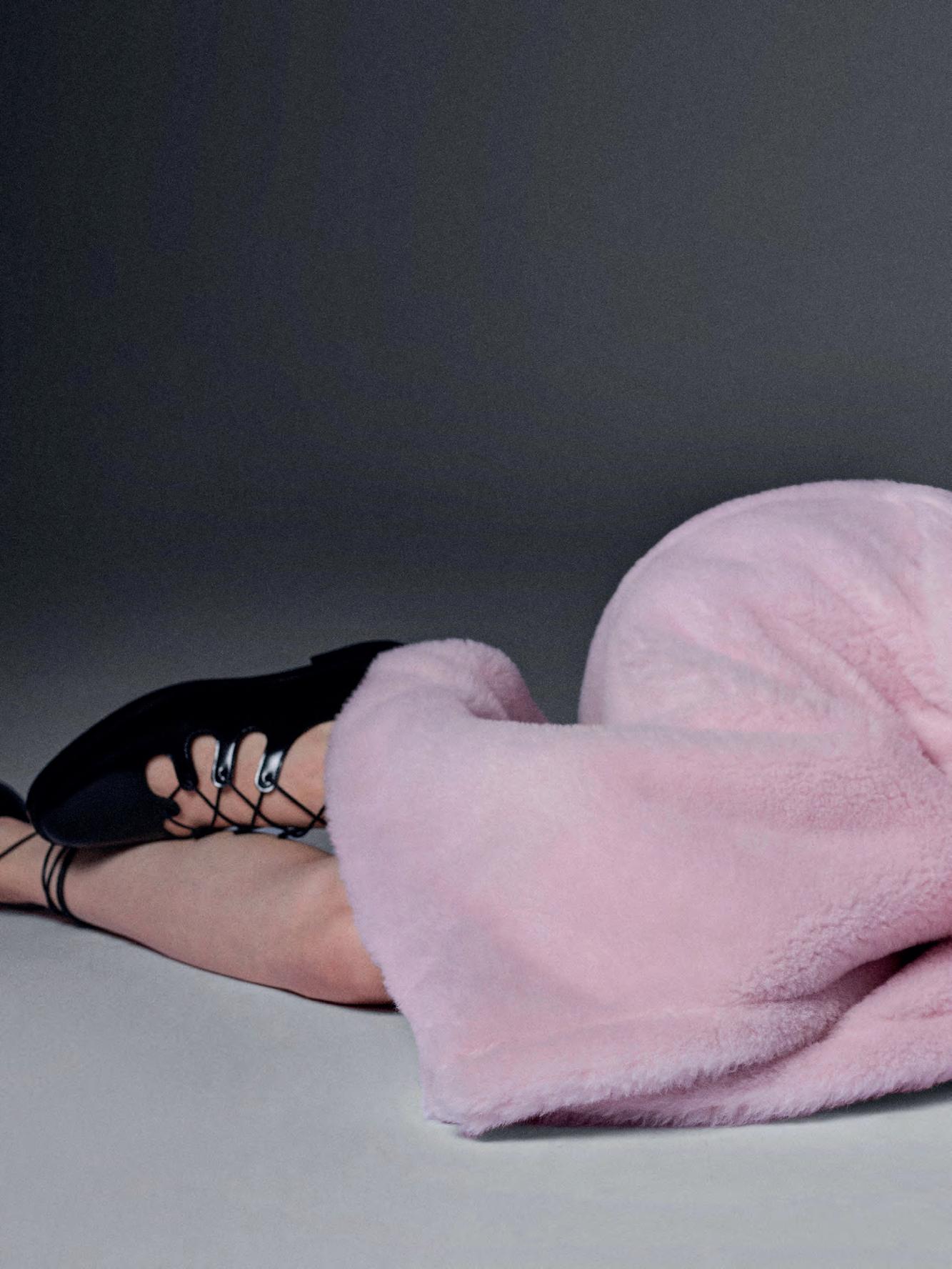
Coat COS; Boots Alaïa; Jewellery APM Monaco
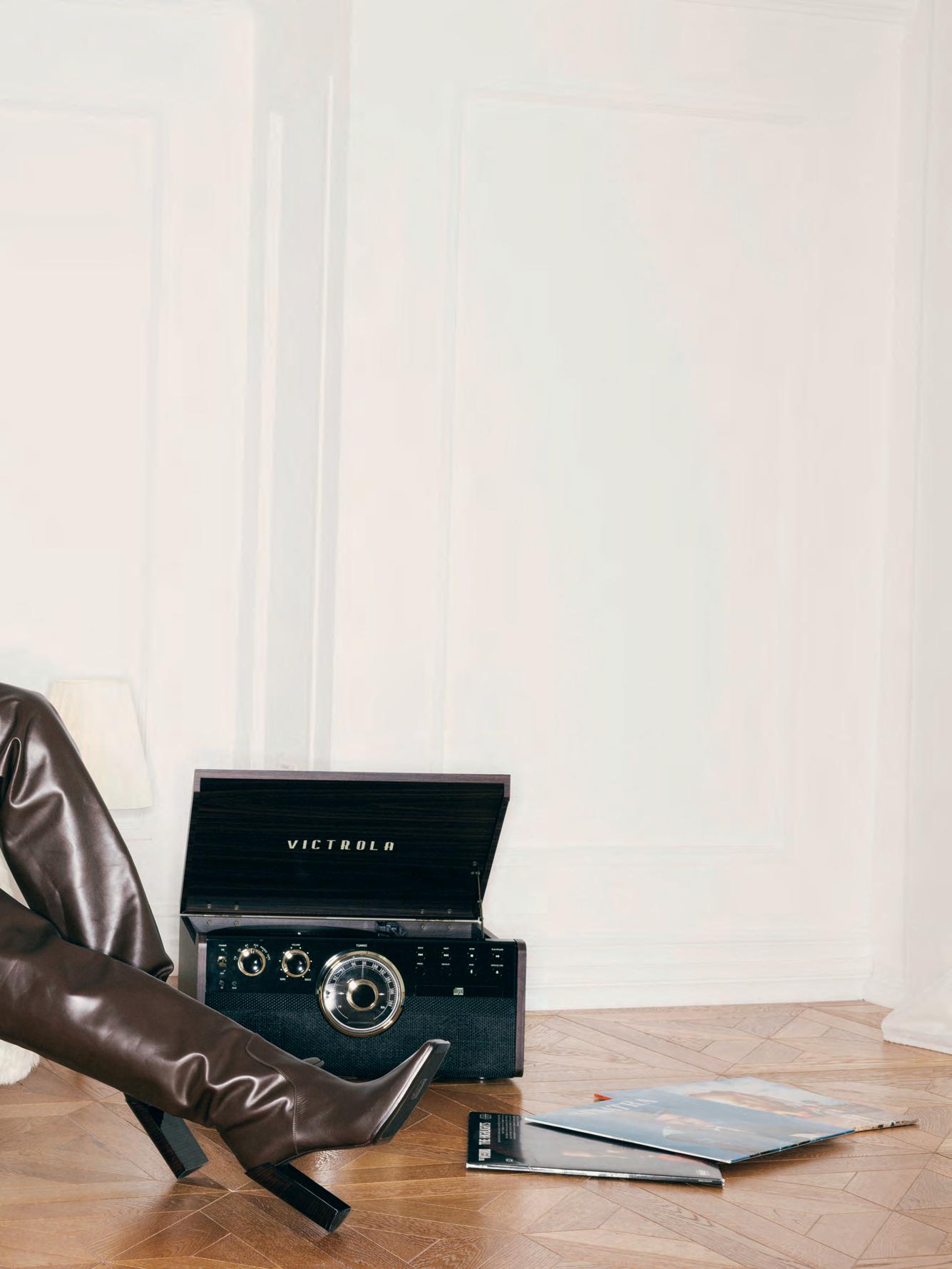
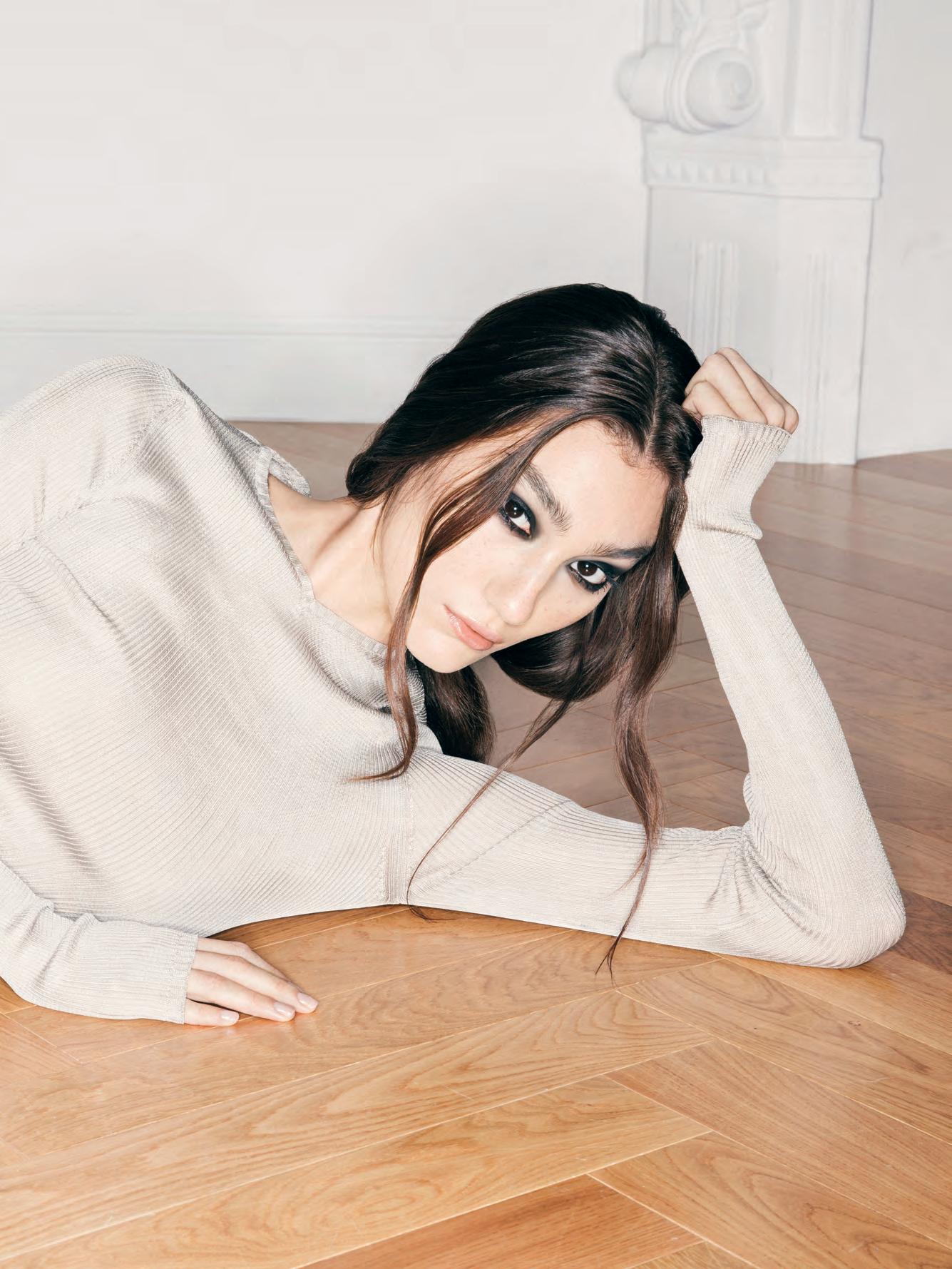
YEAR END ATTITUDE
WHEN YOU’RE LOOKING FIERCE BUT WOULD RATHER STAY HOME
SENIOR EDITOR: JESSICA MICHAULT
PHOTOGRAPHER AND PRODUCER: AMER MOHAMAD
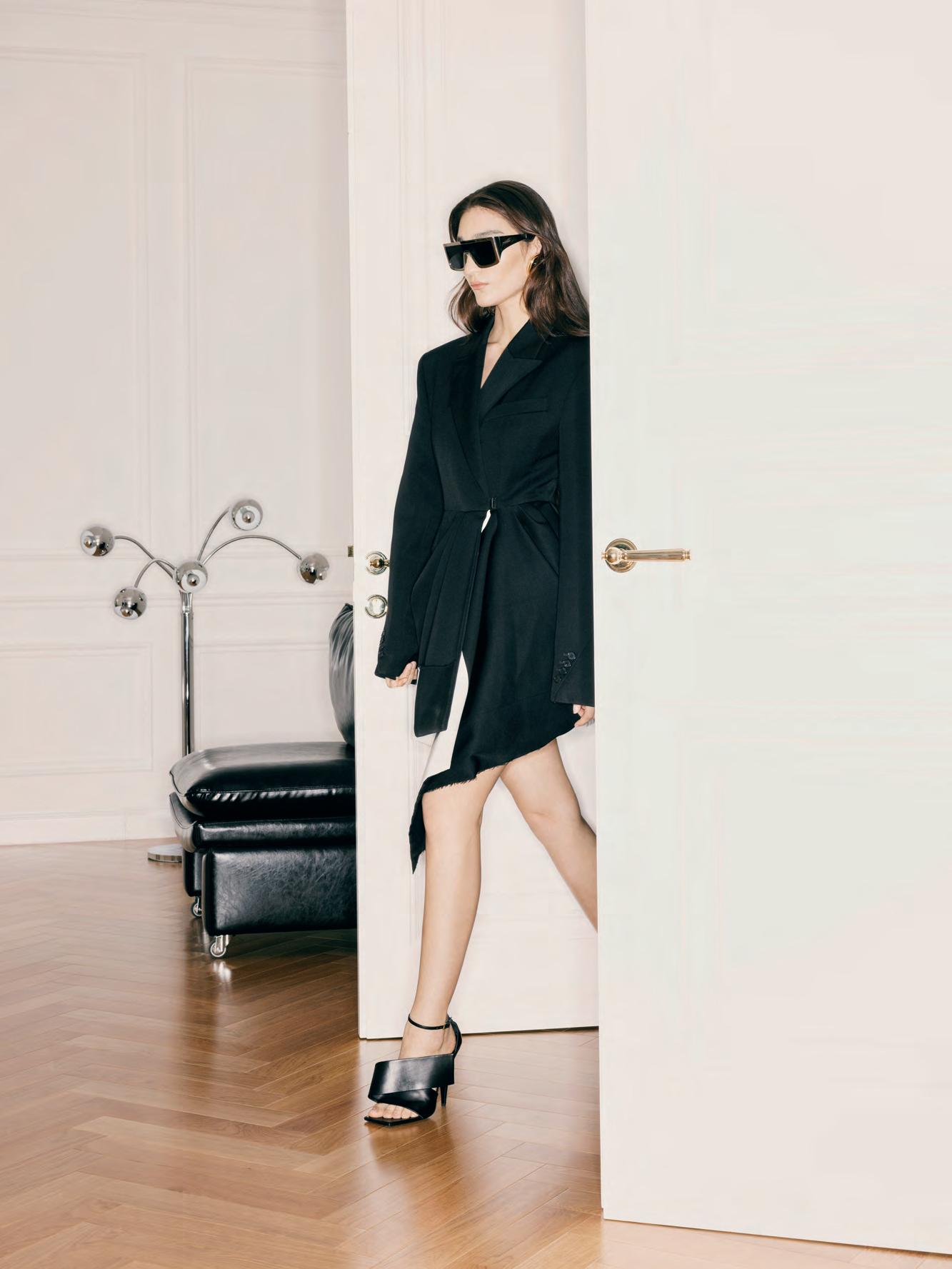
This page: Givenchy by Sarah Burton; Right page: Total
Look Hermès
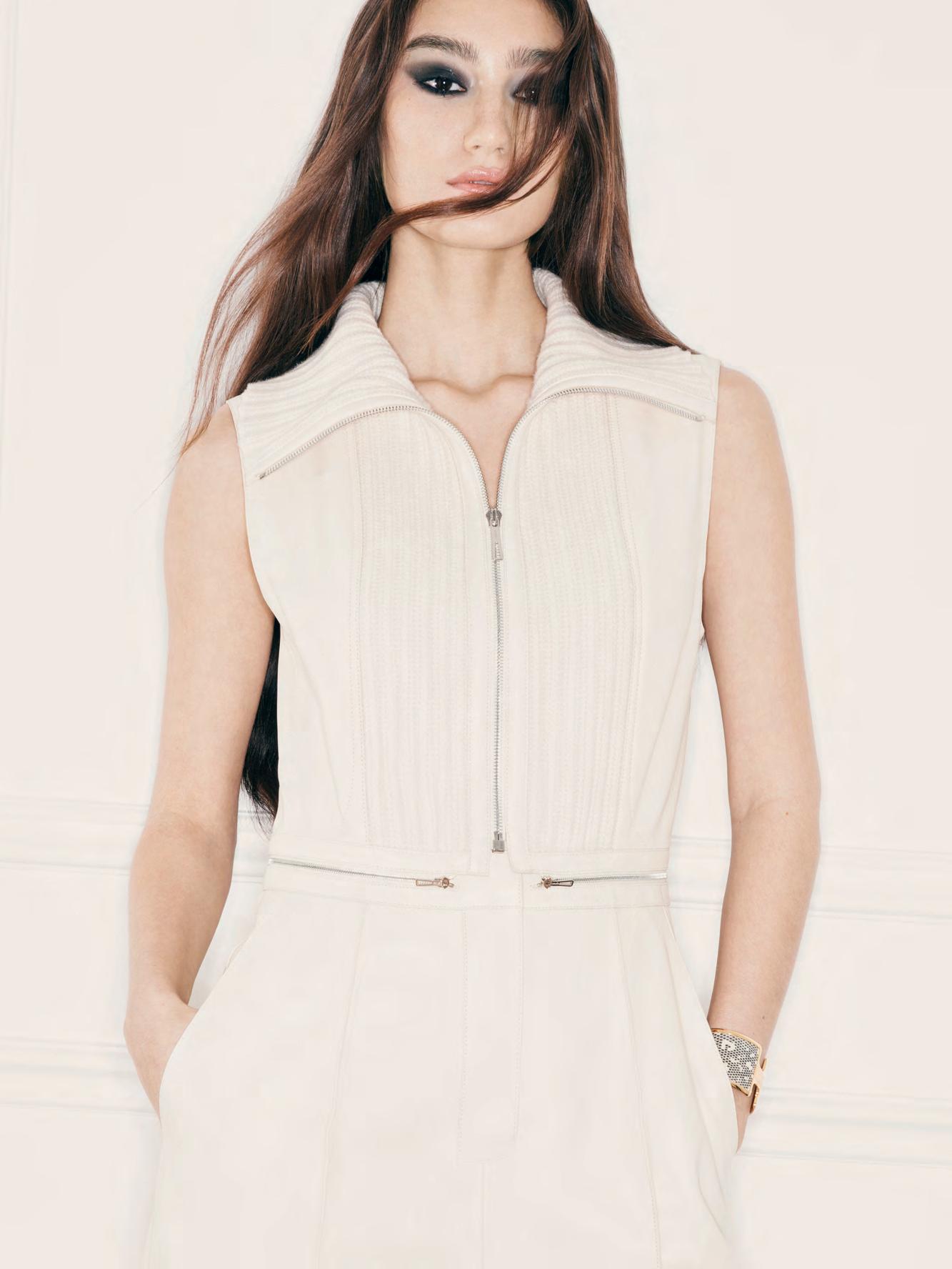
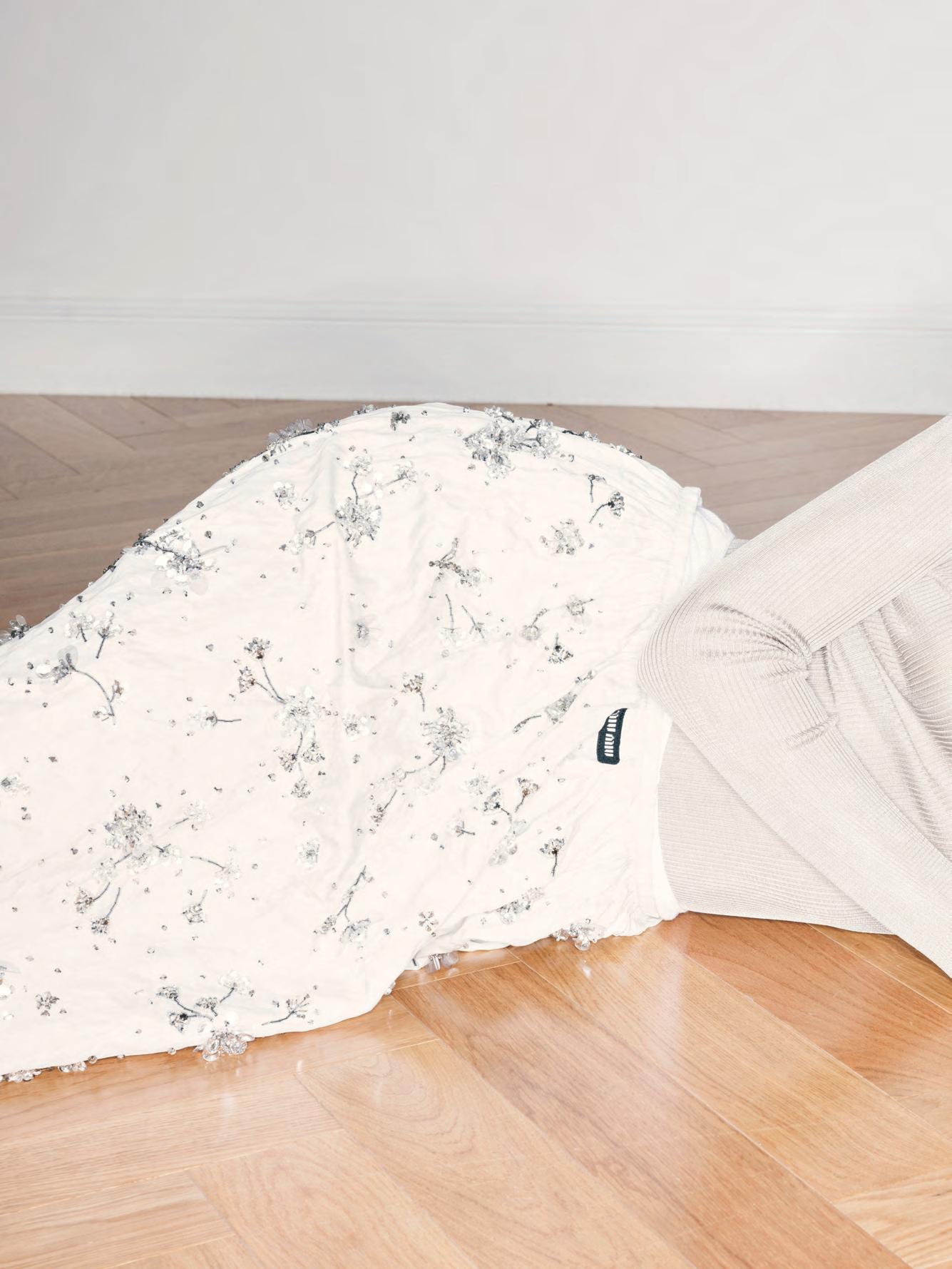


Left page: Suit Magda Bytrum; Bag Maison Margiela; This page: Total Look Alaïa
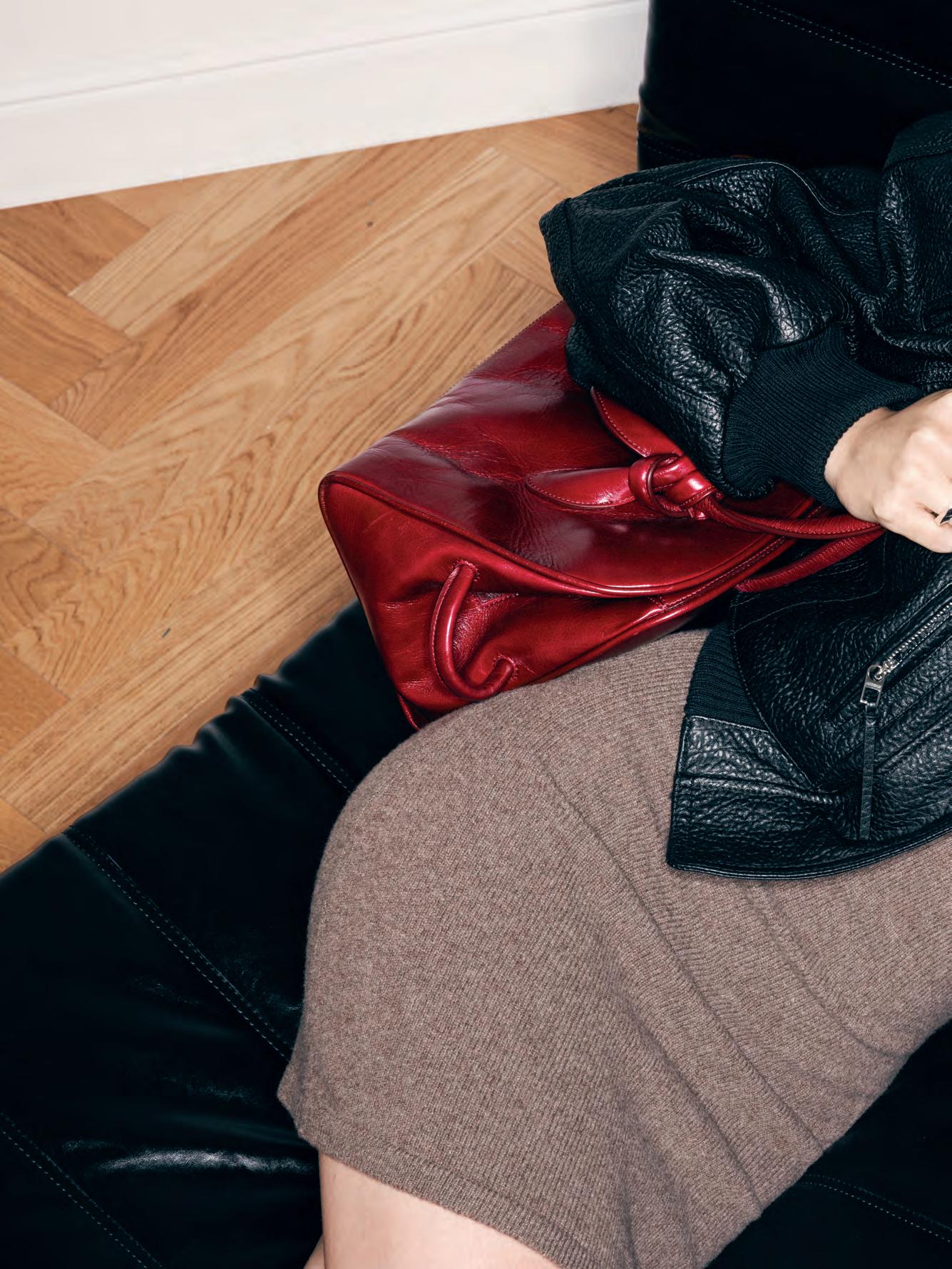
Total Look Jacquemus
Stylist: Sergi Padial; Makeup: Jade; Hair: Emil Ushakov; Photographer Assistant: Gabriel Sandu; Model: Vavi John
ARTISTIC INTENTIONS
Actress Maude Apatow, who was recently given the Women in Film Max Mara Face of the Future Award, steps behind the camera for her directorial debut
WORDS: JESSICA MICHAULT

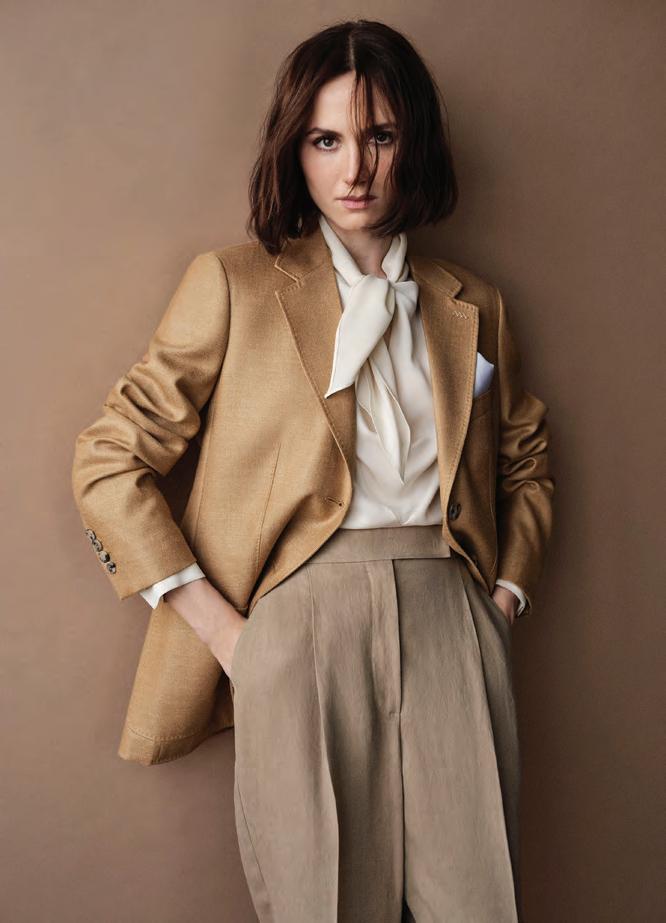
There are moments in a career that quietly shift everything, moments when promise transforms into purpose. For Maude Apatow, that moment arrived when she was recently honoured with the Women in Film Max Mara Face of the Future Award. The distinction, now in its twentieth year, celebrates actresses whose work embodies both artistic excellence and a commitment to empowering women across the industry. Past winners include Zoë Saldana, Yara Shahidi, Gemma Chan, Joey King and Lili Reinhart. For Apatow, it marked not just a recognition of talent, but a reflection of the thoughtful, deliberate path she’s been carving for herself.
“It’s such an honour,” she says, recalling the experience. “I have to think of it as aspirational, because I look up to all the women who’ve received it before me so much. To even be mentioned in the same sentence as them feels surreal.”
It’s easy to see why she was chosen. In the past few years, Apatow has emerged as one of Hollywood’s most compelling young voices, both in front of – and now behind – the camera. After captivating audiences with her nuanced performances in the series’ Euphoria and Hollywood, she has just made her directorial debut, a milestone that feels like the natural next step in her evolution as an artist. “I’ve always wanted to be a director,” she explains.
“Even as a teenager, I would watch how different directors communicated on set. I paid attention to how they treated people, how they made actors feel safe, and how they translated emotion into movement. I tried to take the best traits of all of them.”
Her first film, Poetic License, premiered at the Toronto International Film Festival in September and stars her mother, actress Leslie Mann. It felt like an extension of her artistic expression and an expansion of the sort of career she wants to curate for herself. “It was the greatest experience of my life,” she says. “My mom is my best friend, and working together was so natural. On set, it was like we were telepathic, she always knew what I was about to say.” Apatow’s curiosity about storytelling extends far beyond her own performances. She’s passionate about the collaborative energy that arises when women work together. “It’s just better when there are more women around,” she said. “Having someone in charge who’s kind and respectful sets the tone. It changes everything.”
That belief in creative sisterhood has shaped her perspective as both a filmmaker and a woman navigating Hollywood. “My first Assistant Director on my film was incredible – she was so strong and skilled, and she supported me completely. Having that kind of woman beside you, especially when you’re doing something for the first time, means the world. You feel protected and empowered at the same time.” And while her creative lineage includes the likes of her parents, filmmaker Judd Apatow and Mann, she’s quick to highlight the women who’ve expanded her imagination of what’s possible. “Seeing Lena Dunham create and star in Girls when I was a teenager was huge for me,” she says. “It showed me that you could be a young woman and lead something from every angle, writing, directing, producing, performing. She was so fearless. It opened me up to thinking that’s possible – otherwise I wouldn’t have even seen it.”
It’s fitting, then, that her partnership with Max Mara, the Italian fashion house synonymous with quiet power and understated elegance, feels so natural. “My grandma and my mom have always loved Max Mara,” shares Apatow. “They’re obsessed. I still borrow my mom’s coats all the time. They’re timeless, the kind of pieces that make you feel strong and beautiful.”
That sense of sartorial strength is something the artist also leans on when getting into a character she is playing. “Costume changes everything,” she explains. “It completely transforms how you move, how you think, even how you breathe. For me, putting on the wardrobe is always the final step in becoming a character.”
Over Zoom, Apatow exudes a quiet confidence. There’s no trace of the precocious child star or the Hollywood insider, which are both an undeniable part of the life she has lived in Los Angeles. She has ambition but is being intentional about her choices, and comes across as both thoughtful and grounded, qualities that put her in good stead for success. “There is still so much more work to be done, and I feel so early in my career, “ reflects Apatow. “I feel lucky that I’m being supported by fellow women in my industry and that they believe in me to keep going.”
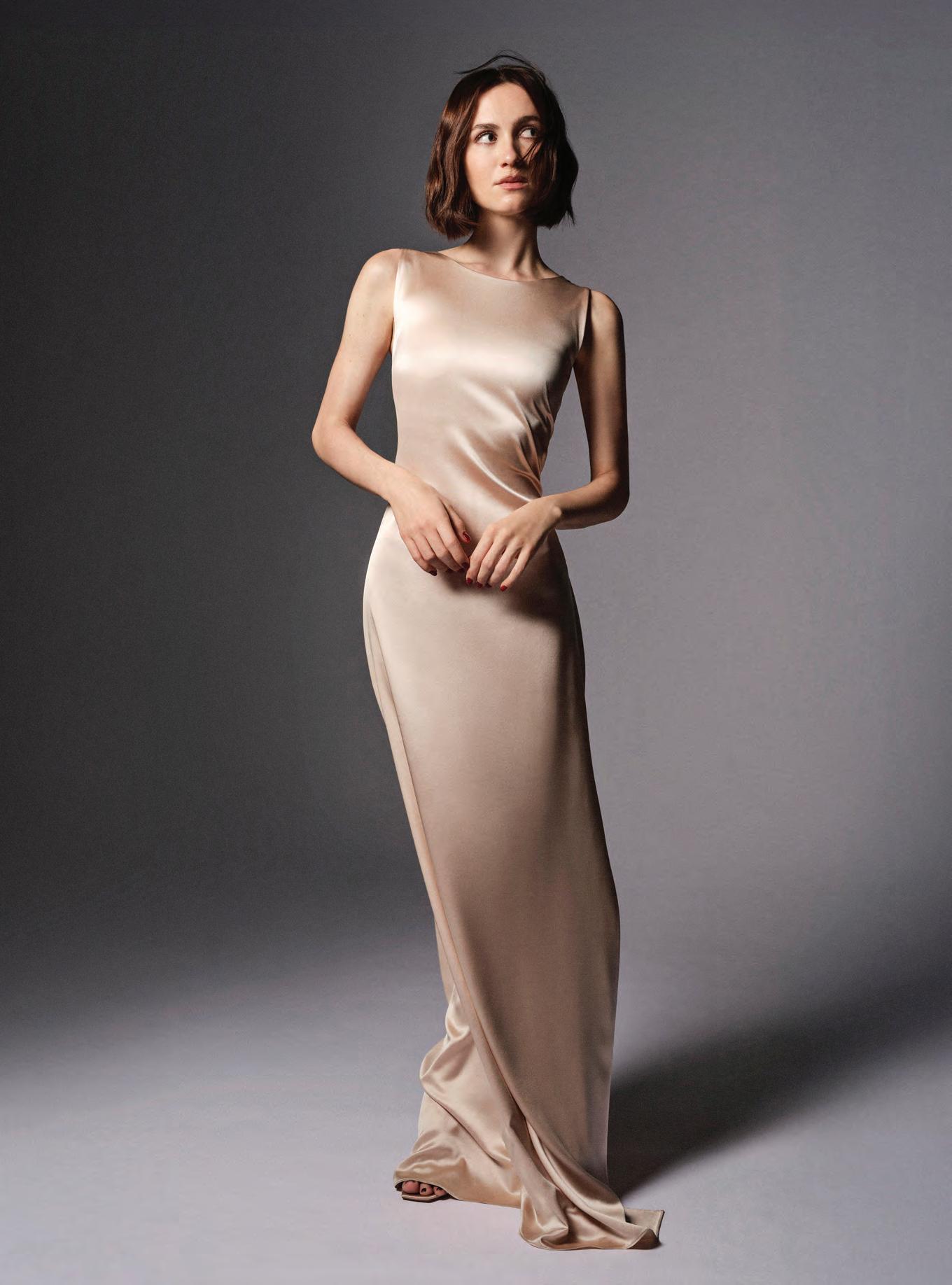
“I feel lucky that I’m being supported by fellow women in my industry and that they believe in me to keep going”
I C E
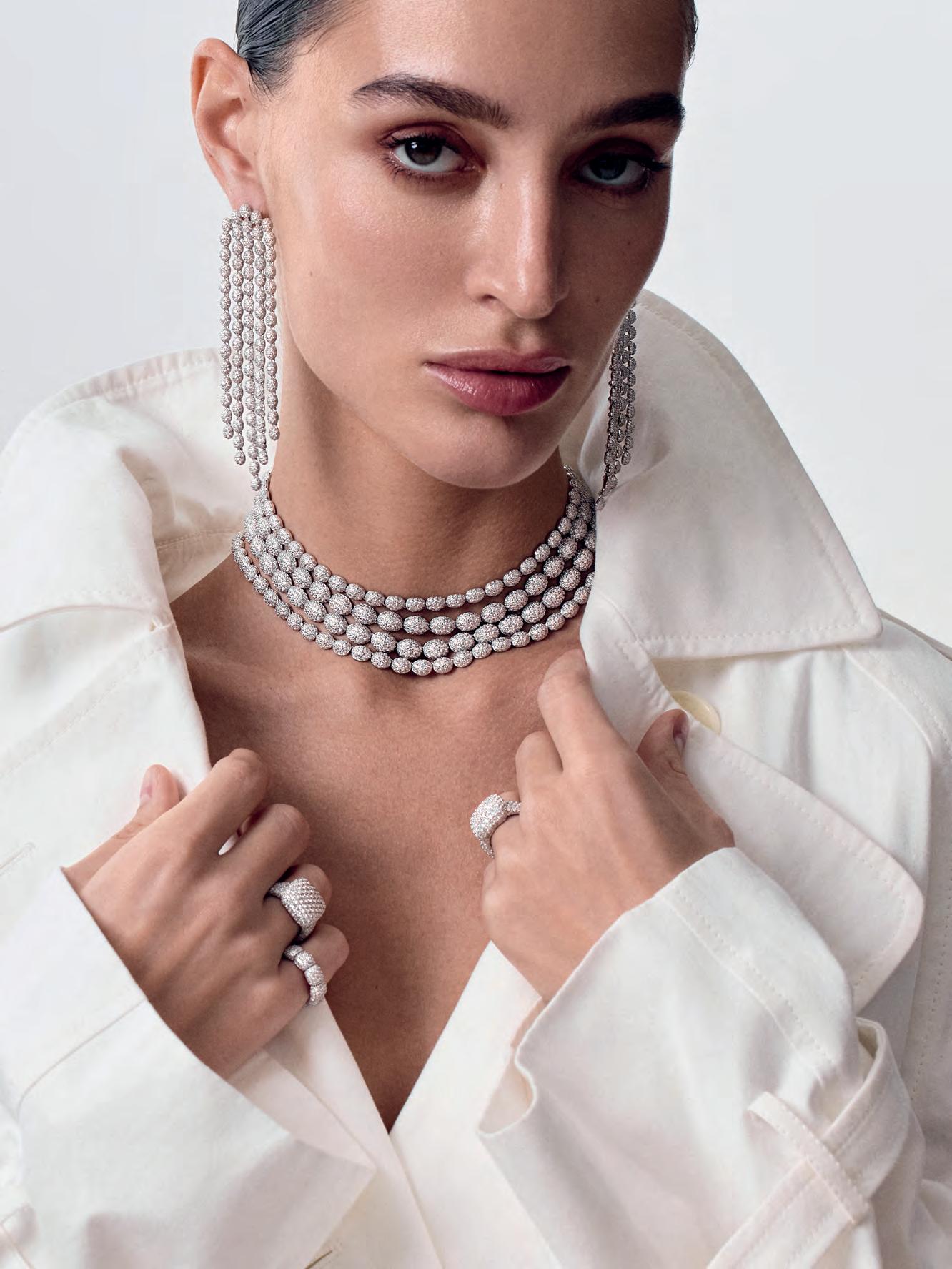
APM Monaco’s Hiver Collection delivers serious sparkle for the festive season and beyond
SENIOR EDITOR: JESSICA MICHAULT
PHOTOGRAPHER AND PRODUCER: AMER MOHAMAD
Hiver Snowflakes Flocons de Neige Cascade Earrings; Hiver Snowflakes Flocons de Neige Necklaces; Hiver Snowflakes Statement Flocons de Neige Rings; Hiver Snowflakes Flocons de Neige Ring; ALL APM MONACO; Coat: Magda Butrym
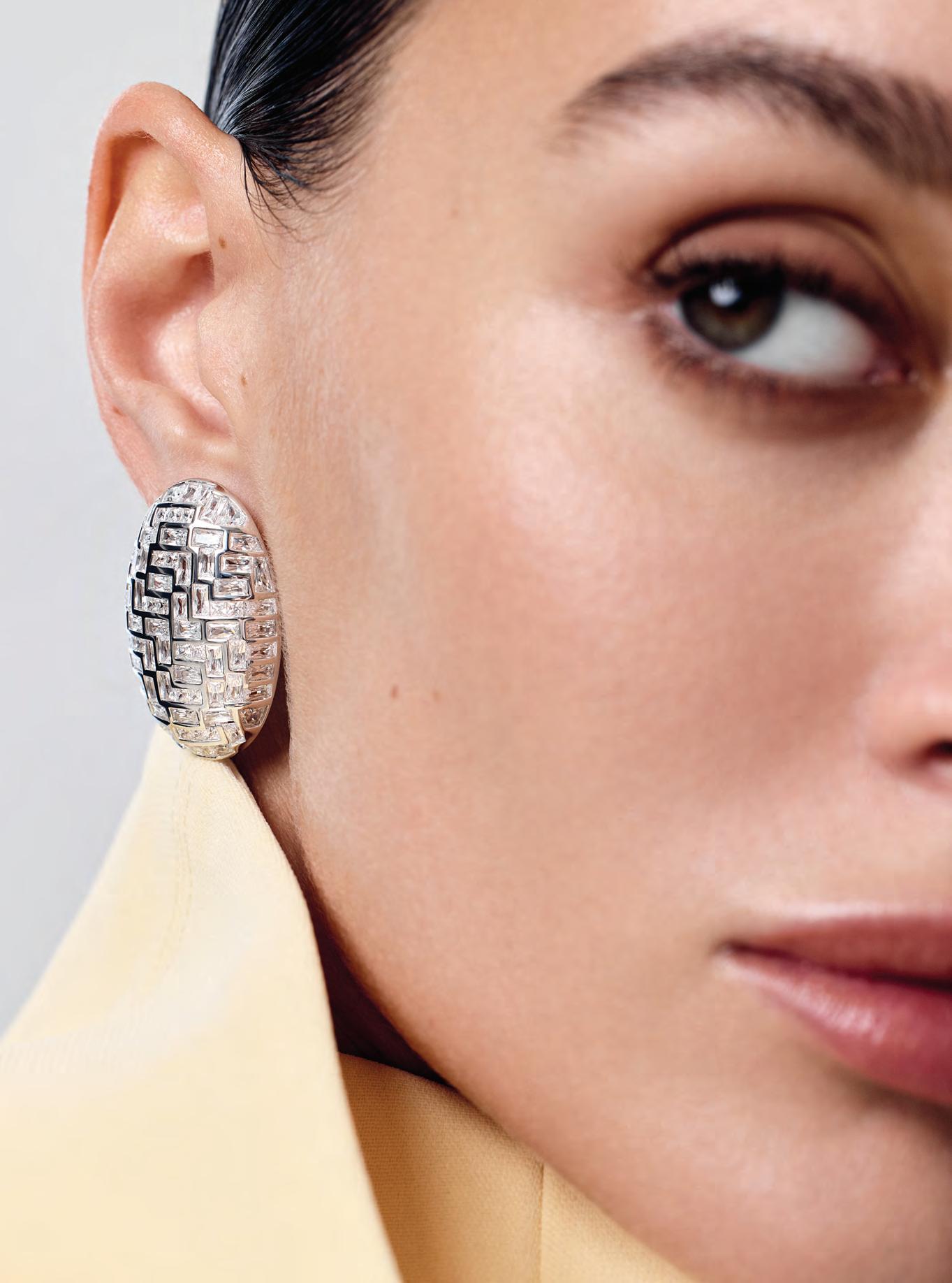
Left page: Hiver Ice Statement Earrings; APM MONACO; Dress: Jacquemus available at MYTHERESA
This page: Hiver Heart Statement Earrings; Hiver Heart Statement Necklace; Hiver Heart Statement Bracelet; Hiver Heart Statement Ring; ALL APM MONACO; Dress: Norma Kamali available at MYTHERESA
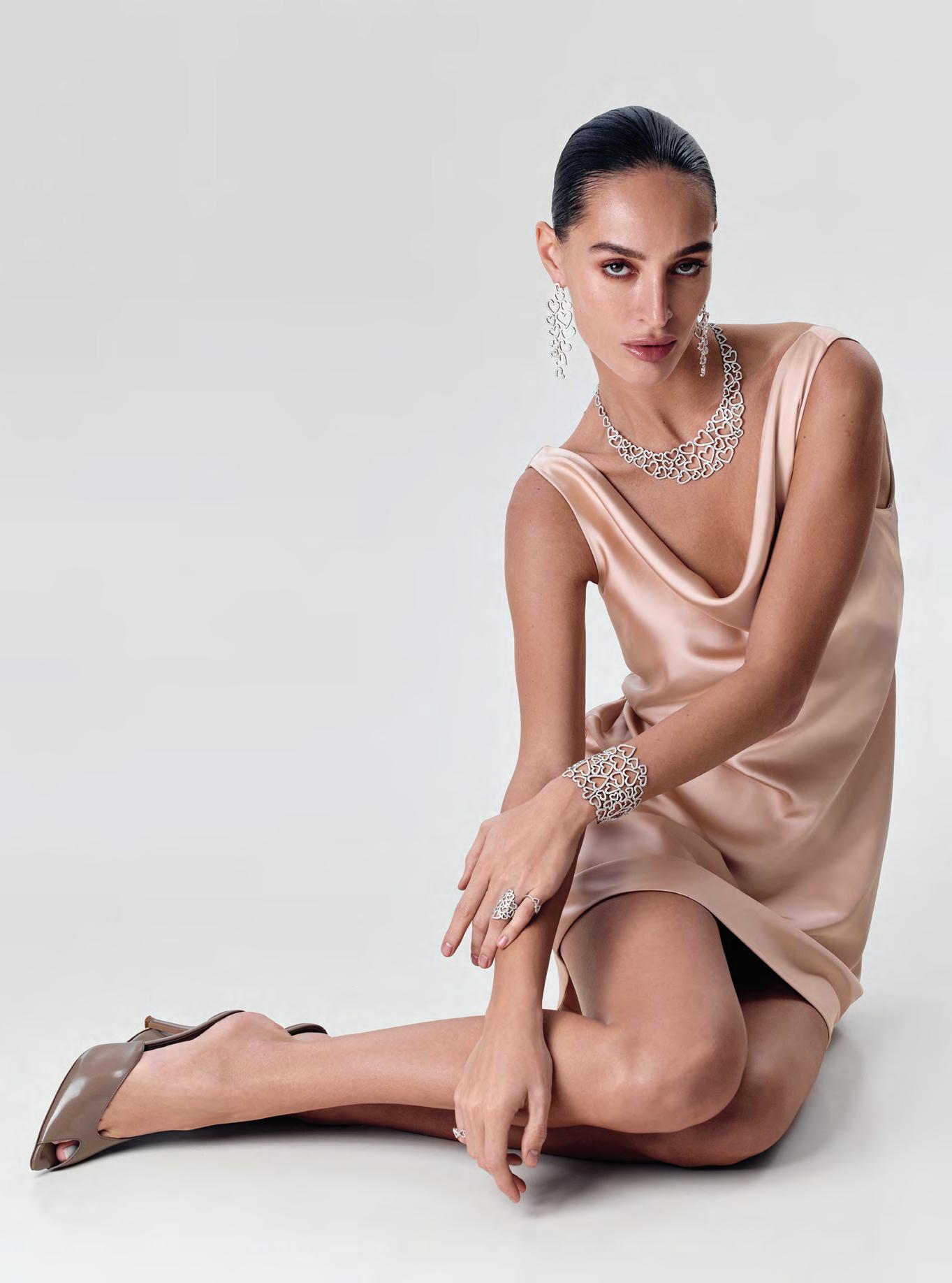
Statement
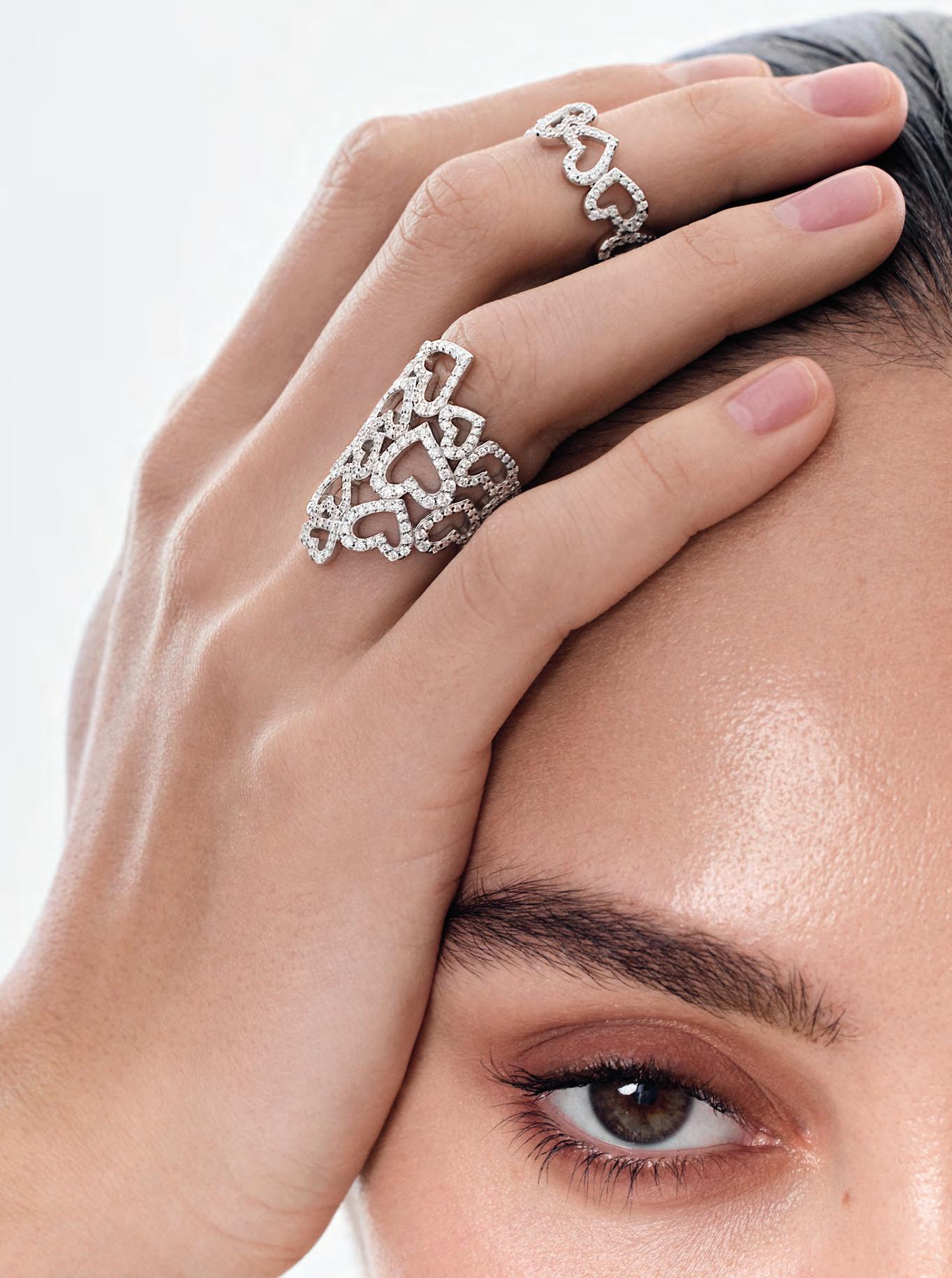
This page: Hiver Hearts
Ring; Hiver Heart Ring; ALL APM MONACO
Right page: Hiver Ice Chunky Ring; APM MONACO
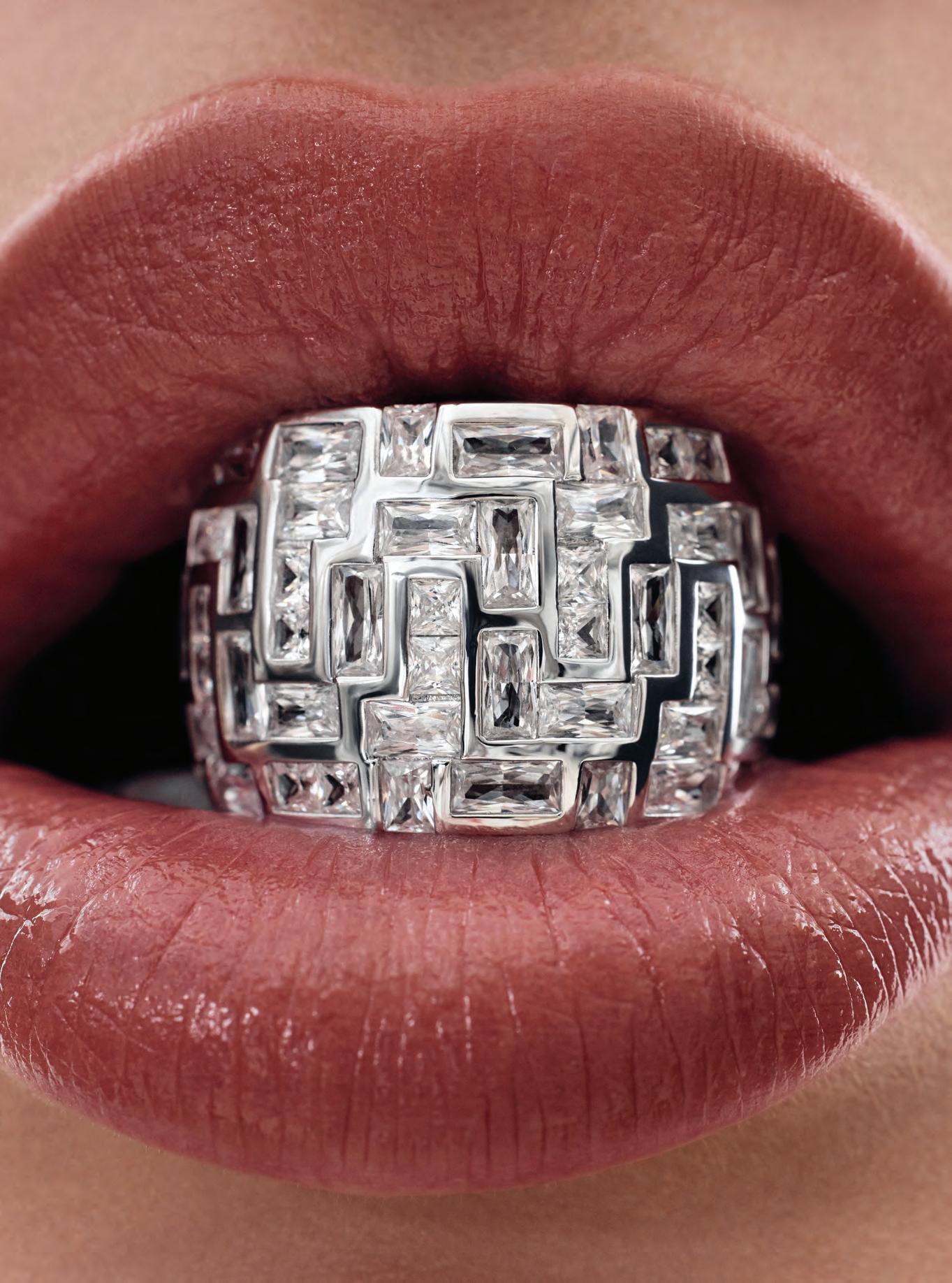
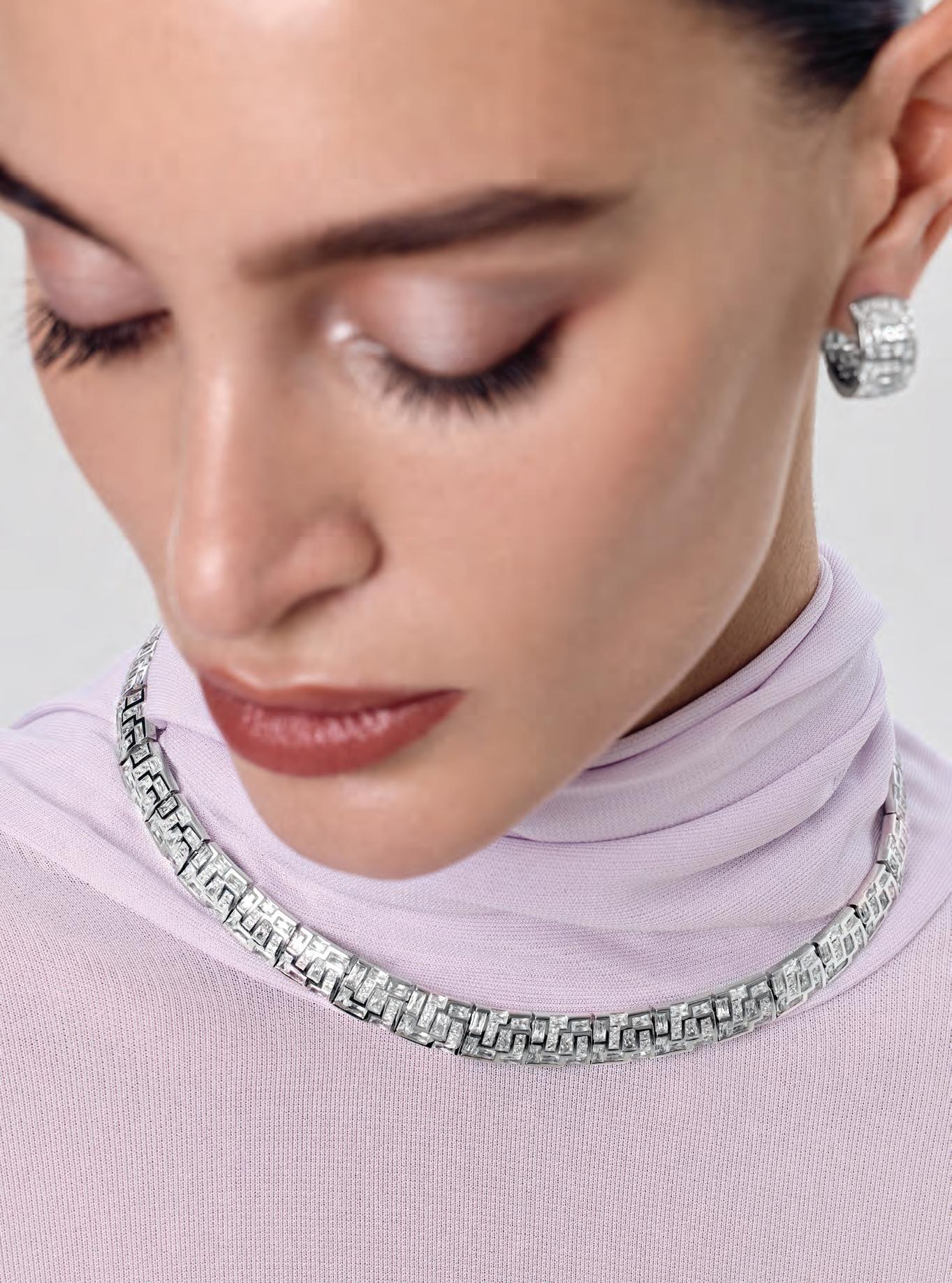
This page: Hiver Ice Hoop Earrings; Hiver Ice Necklace; ALL APM MONACO; Dress: Toteme available at MYTHERESA
Right page: Hiver Ice Statement Ring; APM MONACO
Fashion Editor: Camille Macawili; Makeup: Jean Kairouz; Hair: Osama Kazak
Videographer: Alex Suhorucov; Photographer Assistant: Gabriel Sandu Model: Margarita Shangina
MODERN HERITAGE
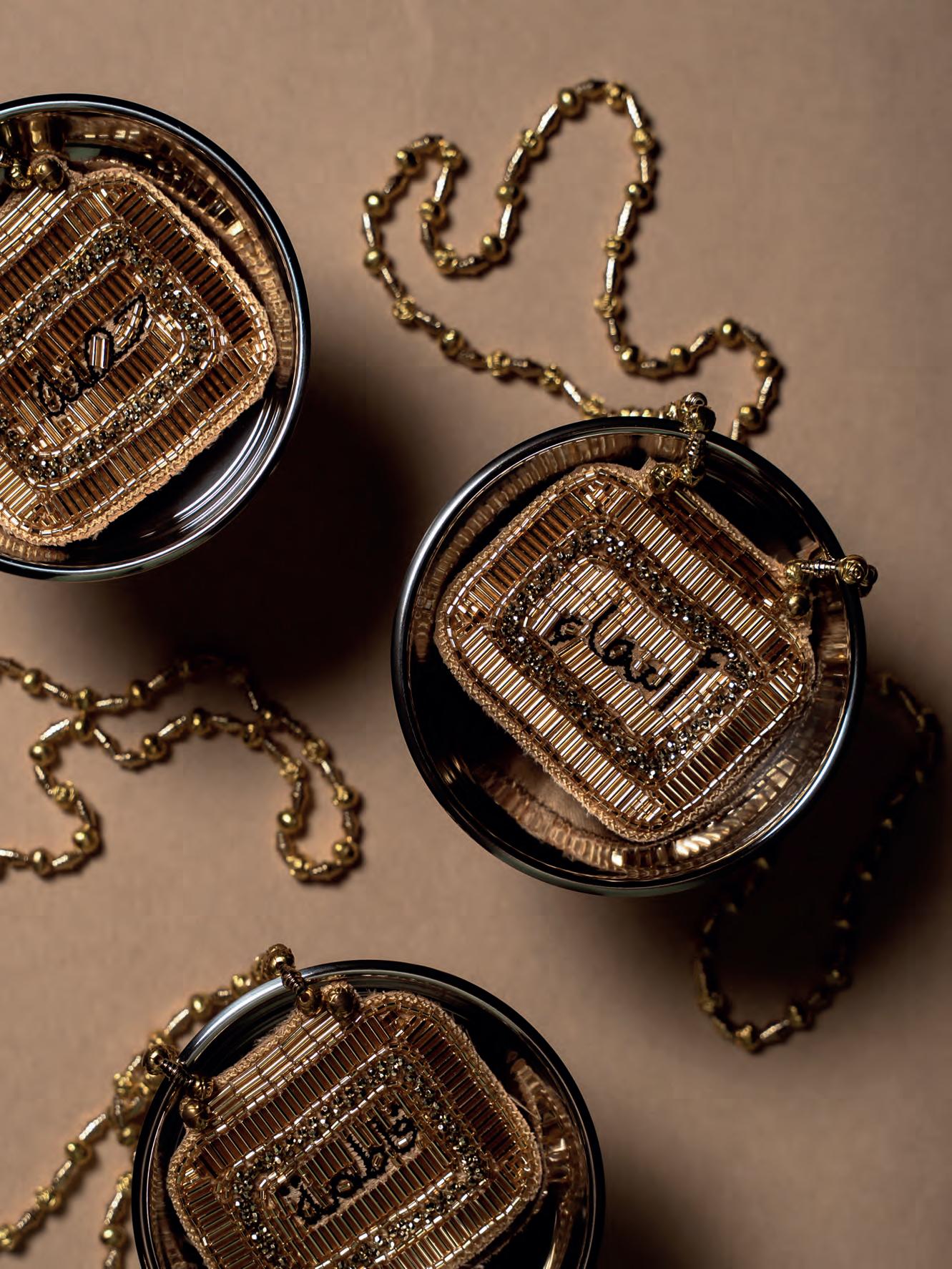
The new UAE Jewelry Movement line from C Concepts by Constant Catwalk takes the idea of traditional jewellery worn by Emirati on special occasions and gives it a modern reinterpretation. The brand transforms the classic gold Tabla necklace (which can be personalised with the owner’s name), and a pair of Mureye necklaces and crafts them from a fresh perspective. Realised from noble fabrics, gold thread and delicate beadwork, the jewellery instantly adapts to the rhythms of modern life. In this way the beloved Emirati traditions of adornment can be celebrated every day, with pieces rooted in the past but designed for the present.
VISION
Find direction by…
– Remembering the importance of community
– Taking an active role in art
– Learning about what moves you
– Following your inner voice
– Daring to dream big
– Exploring new environments
– Leaving room for stillness
– Celebrating life’s big moments
Coming TOGE
As 2025 comes to an end, Asma Al Bulooki contemplates the importance of community in the UAE
WORDS: ASMA AL BULOOKI
As the year draws to a close, I find myself sipping a warm cup of gahwa, reflecting on the word that has defined so much of my year – community. Afterall, 2025 was declared the Year of Community in the UAE, and somehow, it felt deeply personal. So, I did what I do best, I set the intention to celebrate it, live it and embody it the way I like to.
If you’ve followed my journey online or crossed paths with me at one of my gatherings, you’d know that community is not just a theme I speak about, it’s the heartbeat behind everything I do. I’ve always been the kind of woman who honours connection, who believes that the real beauty of life lies in how we come together, hold space for one another, and create meaning in shared moments.
In the Arab world, community isn’t a buzzword; it’s a way of being. It’s how we gather every weekend around the family table, how the scent of gahwa and cardamom fills a majlis as stories are shared, how laughter is the best musical background echoing from our majlis and how we check in on our family and friends before they even ask. It’s in the rhythm of our days, passed down through generations like an inheritance.
Here in the UAE, that sense of togetherness is woven into our national fabric. From the late Sheikh Zayed’s
THER
vision of unity that brought seven Emirates together, to the way modern-day communities form across art galleries, start-ups, and cultural events, the spirit remains the same: we rise higher when we rise together.
This past year, I found myself living that truth through every project, gathering, and conversation. Whether it was bringing women together through my biweekly CC Club – my inner circle that turned reflection into ritual – or creating a Ramadan majlis, every moment reminded me that community isn’t built in scale, it’s built in sincerity. What I found most meaningful was realising how easily connections unfold when we create the space for it. It didn’t matter where people came from or what they did, once we gathered, titles faded, and sincerity took its place and there is something deeply grounding to witness that kind of togetherness.
That’s when I realised: community is not about the number of people you reach; it’s about the depth of the connections you create.
We live in a world that often glorifies independence, where success is measured by how far one can go alone. But I’ve come to believe that true strength lies in interdependence, in knowing how to build bridges, not walls. And that is a value I hold deeply; to keep bringing the community together. The UAE embodies that balance
beautifully. We’re a nation that celebrates individuality yet thrives on unity. You see it during National Day, the flags adorning every balcony, the sound of children reciting poetry for their homeland, the pride in every smile. It’s a reminder that identity flourishes most in belonging. And so, as I look back at this year, one filled with collaborations, storytelling, and shared spaces, I feel a deep sense of gratitude. For every conversation that became a friendship. For every gathering that turned into a safe space. For every moment that reminded me why I do what I do.
Community, to me, is the art of showing up – again and again. It’s the woman who brings her friend to a majlis because she knows she needs it. It’s the unspoken bond between creatives who want to build something meaningful in the region. It’s the way we choose to see each other, with compassion, curiosity, and care.
As we step into a new year, I hope we continue to nurture the communities around us, to celebrate the big and the small, the familiar and the new. Because at the end of the day, community isn’t something we build once. It’s something we become.
Asma Al Bulooki is the founder of Constant Catwalk, a luxury brand strategist and creative storyteller based in the UAE. @constantcatwalk
COMMUNAL CREATIVITY
Emirati artist Azza Al Qubaisi is all about creating pieces that draw the public into the process
WORDS: JESSICA MICHAULT
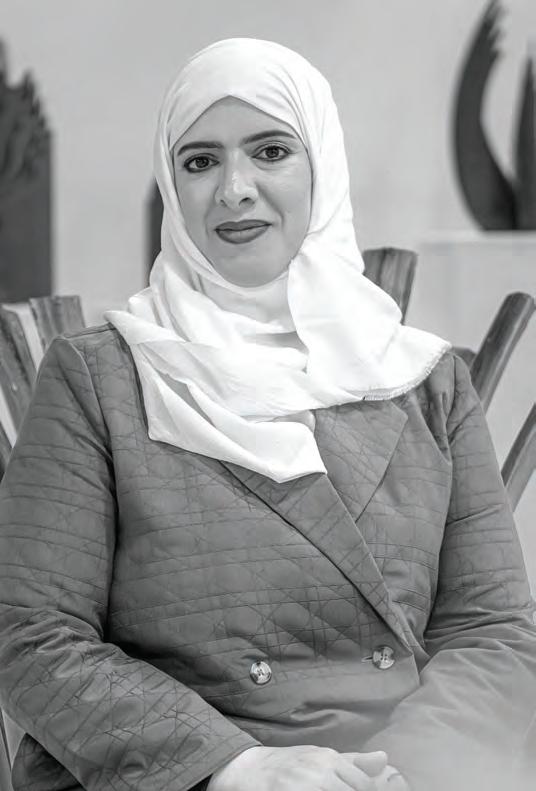
In the UAE’s fast-growing cultural landscape, Emirati artist Azza Al Qubaisi has become one of the most resonant voices translating heritage into contemporary form. Her latest project, which opened during the week-long Art in Motion event at Souk Madinat Jumeirah, is just the most recent example of her artistic ethos: collaborative, rooted in tradition, and deeply committed to community connections.
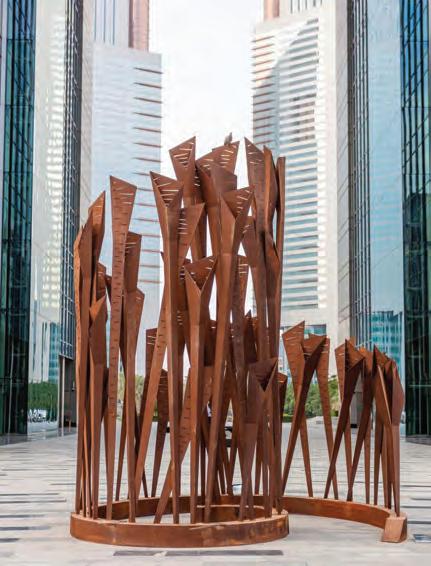
Al Qubaisi was invited to kick off the Art in Motion initiative with a workshop inspired by the symbolic Palm Eye, a gesture that perfectly reflects her long-standing fascination with the materi-
als and iconography of the region. “I proposed doing the workshop where the audience would be able to engage with the palm through the palm eye and express themselves,” she explains. Using sand, leaves, rope and thread participants were invited to add their personal touch to her collaborative installation. An artwork that will remain on display at the Souk through the Eid Al Etihad holiday this month.
For Al Qubaisi, who began her artistic career in 2002, projects like this represent the evolution of her creative journey as well as the evolution of the UAE’s art ecosystem. When Jumeirah approached her about the project, it immediately held a unique appeal. “I totally loved it,” she says, “because I don’t think I’ve ever run a workshop anywhere close to Madinat Jumeirah or the souk itself. So to me, it is a new audience, and it’s a unique audience as well.” The open-door nature of the event, free, unbooked, and spontaneous, was particularly meaningful. “We don’t usually get many events like that,” she admits. “It is open to the public to come and enjoy it as they please.”
That openness reflects a shift in her own practice over the past decade and a half. What began as a career rooted in jewellery and small-scale sculptural works has expanded into large public installations and art-making designed with interaction in mind. “Engaging with the community and allowing the community to be part of my artwork is something that has evolved in the past 15 years,” she explains. “I realised I enjoyed empowering the community to see themselves as creatives.”
This belief, that creativity is a shared space rather than a solitary endeavor, has become one of the defining threads in Al Qubaisi’s work. Her installations across the UAE often invite viewers to walk around, move through, or physically engage with the pieces. This approach, she notes, is tied to her background in jewellery. “The pieces are not made to be looked at, but are made to be worn,” she says. “So the touching, feeling, experiencing is something that I’ve carried forward in my practice.” Her workshop at Souk Madinat Jumeirah illustrates this tactile philosophy, but it also demonstrates her instinct to reinterpret heritage in unexpected ways. Instead of relying on familiar motifs, she challenges viewers to look again. “They always presume it’s another camel,” she says of tourists encountering Middle Eastern art. “With my piece, they have to think twice to understand what it is.” The materials, sand in five shades, palm fronds, rope, and the occasional flash of gold or silver leaf, reflect both simplicity and symbolism. “Having humble materials such as the sand and the palm fronds gives a different perspective,” she says, “and I love the impact that en-
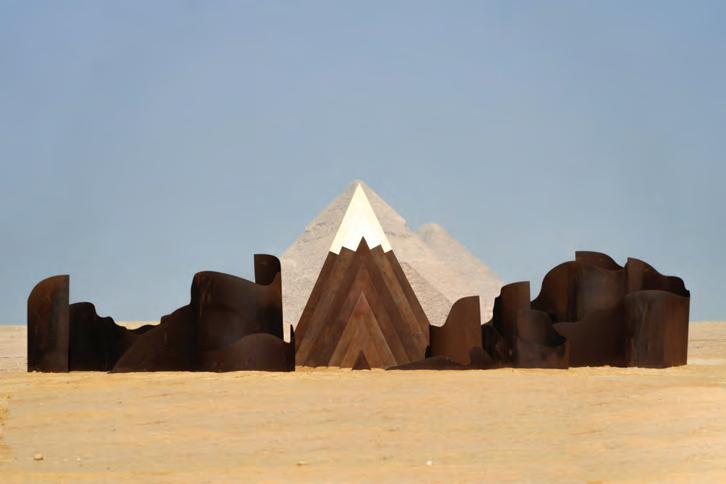
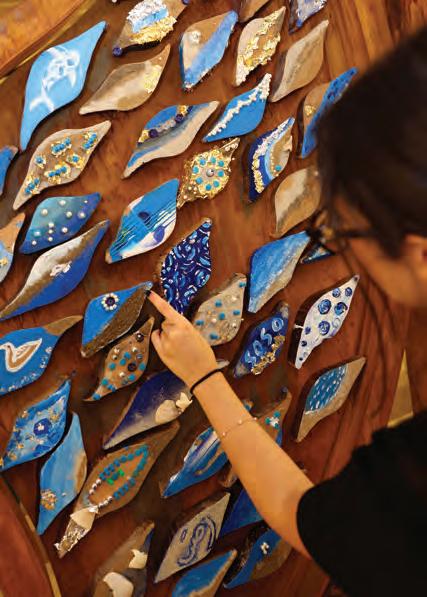
gaging with the art can have on people, it instantly makes it more personal and profound.” In many ways, Al Qubaisi’s practice mirrors the development of the UAE’s art world itself. When she began, opportunities were limited. Today, she sees extraordinary growth. “It is huge,” she says of the shift. “Art education in itself is available in the country in different universities… and from a perspective of grants, we never had grants back when I started. Now the grant system has been established, which is phenomenal.” She calls this moment “the golden period,” pointing to the rise of biennials, public art programs, commissions, and artist support structures that simply did not exist two decades ago. Her own career is a testament to this cultural momentum. She has created major public sculptures, including a large-scale work exhibited in Abu Dhabi and collaborated on projects with brands like Bvlgari. “Would I have dreamed of having so many different public pieces? Not really,” she admits. “I never even thought I’d be reaching that point.”
Her material language has strengthened over time as well. Palm fronds remain a pillar in her work but metals such as mild steel and stainless steel have also become key elements, particularly in her public pieces. The rusted finishes that appear across her large-scale works have become subtle signatures. And while she occasionally returns to gold and silver, these precious metals anchor her earlier jewelry practice more than her monumental sculptures. Still, whether working with steel or palm, Al Qubaisi’s art is always grounded in narrative. “I think it’s the story that my
pieces carry that people connect with,” she notes. Those stories often begin with heritage, but they expand outward to the idea of community, to place, to participation, to memory.
As she moves forward, Al Qubaisi is thinking increasingly about legacy. Not legacy in the traditional institutional sense, but legacy as a lived and shared experience. In the past four years, she has been building her own home in Abu Dhabi, designed with intention and purpose. “That space has become like my mini museum,” she says, describing its reimagined majlis. “I’ll probably be keeping it open for the public to come and see my work or visit me.” She is also planning on creating an artist residency within the space, hosting both local and international creatives. “Building that kind of connection is something I see as important,” she explains. This investment in connection runs parallel to her preparations for her next solo exhibition. “It would be a good way for me to focus again and create a new series of pieces,” she says, though the themes are still taking shape. For now, completing her home –and with it, the community space she envisions – is the priority. “My main focus is just finishing my house,” she notes, aiming for late 2025 or early 2026.
In many ways, the collaborative Palm Eye installation at Souk Madinat Jumeirah encapsulates the essence of Al Qubaisi’s evolving artistic identity. Yes it is grounded in heritage, but it is brought to life through conversation, participation, and shared creativity. It underscores her belief that art should not only be viewed, but experienced; not only admired, but contributed to; not only preserved, but lived with. After all, it’s how we interact with, and react to, art that can have powerful ripple effects across generations.
favourite, favourite subjects.” She would binge watch BBC specials on the topic. But she also knew that such a nomadic career path would be hard for her parents to get their heads around. “It was never really on the cards for me. So the next thing that lined up with archaeology was architecture, but I didn’t really have much information or knowledge about what it was.” Architecture, she says, became the only acceptable bridge between her scientific upbringing and her artistic curiosity. It was “the right mix of art and science.”
Still, it was not love at first sight. “By the end of my first year, I thought that I had made a mistake,” she admits. What kept her hooked was not the academic work, but the world beyond the classroom. The university encouraged travel and field study, and took students to Old Delhi, Hyderabad, Rajasthan, places where architecture lived, breathed, and aged with poetic grace. “When you see that architecture in real life, take measurements and do drawings of the old monuments… that actually made me interested,” she shares.
In every creative’s life there is that moment of recognition. Of understanding that theirs will be a more unconventional path, and instinct interrupts expectation. When something deep and intuitive whispers a truth that logic has not yet caught up to. For Indian architect and interior designer Aparna Kaushik, that moment arrived in a quiet clinic one morning as she prepared for what she thought would be her future in medicine. “I went to my aunt’s clinic… she opened it for me especially early in the morning to give me a medical certificate,” she recalls. But when Kaushik stepped inside and faced “a whole bunch of patients already waiting” something inside her snapped into focus. “I decided to myself, look, this is not my life… I’ll die before I do this.”
It was an unexpected pivot, from medicine to the world of architecture, but Kaushik insists she didn’t yet understand the significance of what she was stepping into. It's true she had grown up with a love for history, storytelling, and the romance of ancient worlds. And as a child she was mesmerised by “the excavation sites in Egypt and archeology. One of my
It was in these streets, and later in summer internships, where she found her footing. “Every summer vacation, I would join an office – that used to be the happiest part of my student years.” There, she wasn’t sheltered from reality, she was thrown into the thick of it. Kaushik was dealing with the day-to-day grind of what it takes to bring a project to life – like speaking with authorities for permits, negotiating with vendors, learning to read by-laws, taking minutes at client meetings – basically handling the gritty, unglamorous underbelly of the building world. “That taught me so much… so today I’m very confident in my knowledge across all aspects of this business.”
Her hands-on education would eventually become the foundation of her booming company: an architectural practice that is fully holistic, vertically integrated, and fiercely independent. “We do in-house architecture, right from excavation… interiors, fixed interior, soft interiors… in-house art curators, decor. So we really are not dependent on any outside agency.” She has learned, through experience, that too many voices can dilute a vision. “Too many cooks spoil the broth, which means the outcome is always a surprise.”
WORDS: JESSICA MICHAULT
WORLD BUILDER
Architect and interior designer Aparna
Kaushik is the woman that billionaires turn to when they want to come home
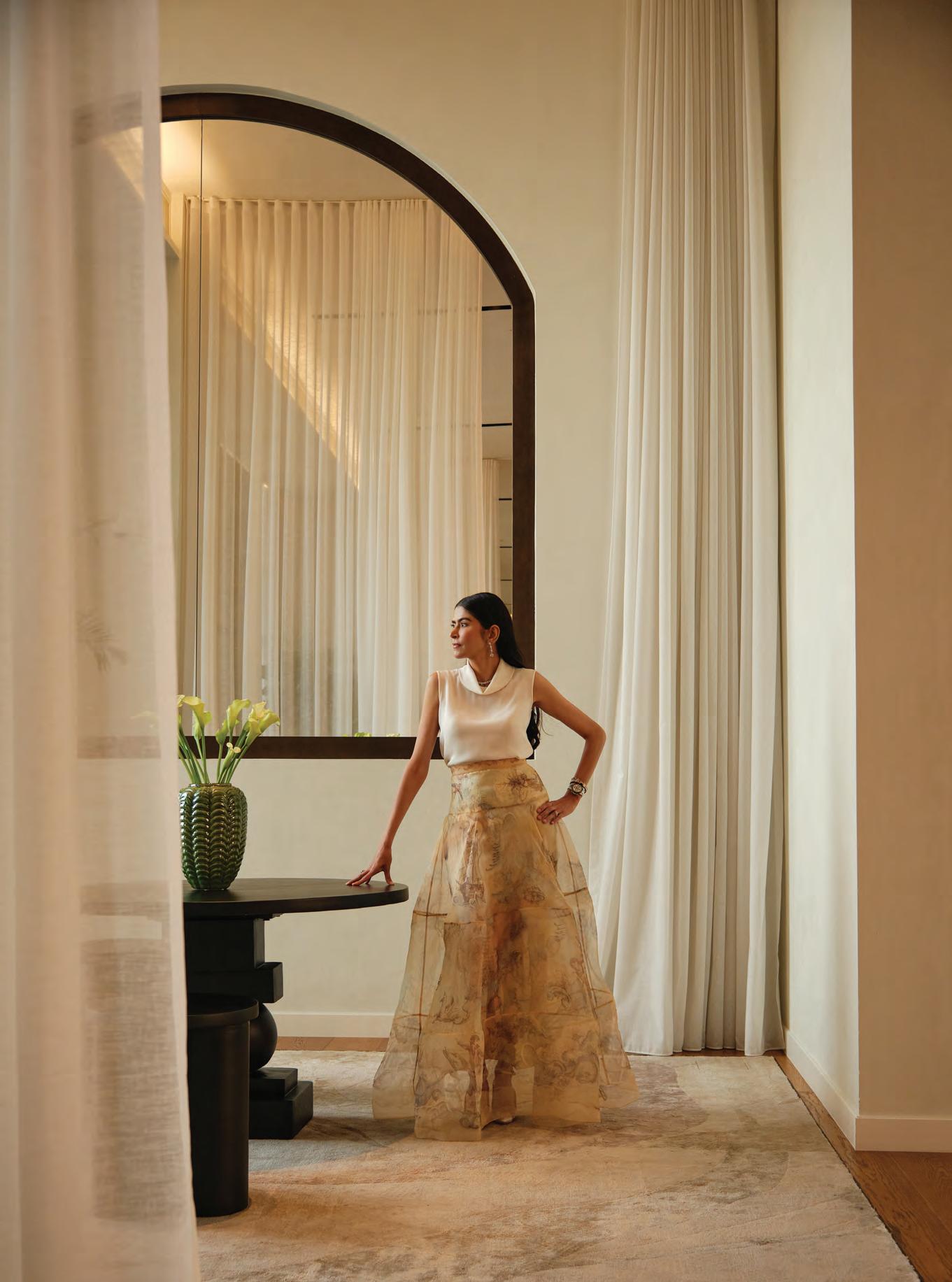
Top and Jewellery: Aparna’s Own, Skirt: Zimmermann
Her clients, meanwhile, want homes that feel like complete worlds, where architecture, interiors, landscaping, art, and objects speak the same language. She obliges them by controlling, through her company, the narrative from start to finish.
This creative autonomy and total ownership appear to suit her temperament beautifully. When asked how she navigates being one of the only women at her level in her field, often the only one on massive construction sites, she shrugs. “80% of the time I’m the only woman in the room.” But Kaushik doesn’t allow gender dynamics to shape her confidence. “I’ve never felt that I’m in a male-dominated world… I don’t want to play the woman card at
all.” In fact, she says, it may have even worked in her favour: “If at all, being a woman has helped me. When I made a mistake when I was first starting, I was not really shouted down.”
Her ease in these environments is rooted partly in personality. She has always been, by her own admission, abundant in energy. “My parents always used to say that I have so much energy.” But it also comes from a deeper clarity about who she is and how she wants to live. For years, she operated as what she describes as “a happy go lucky person,” someone who did four projects a year, ran a small team of seven or eight, and escaped often into the fantasy of fashion. “I love fashion… I would just go and sit in the tailor’s boutique, cut patterns.” Her world was charming, full, but contained.
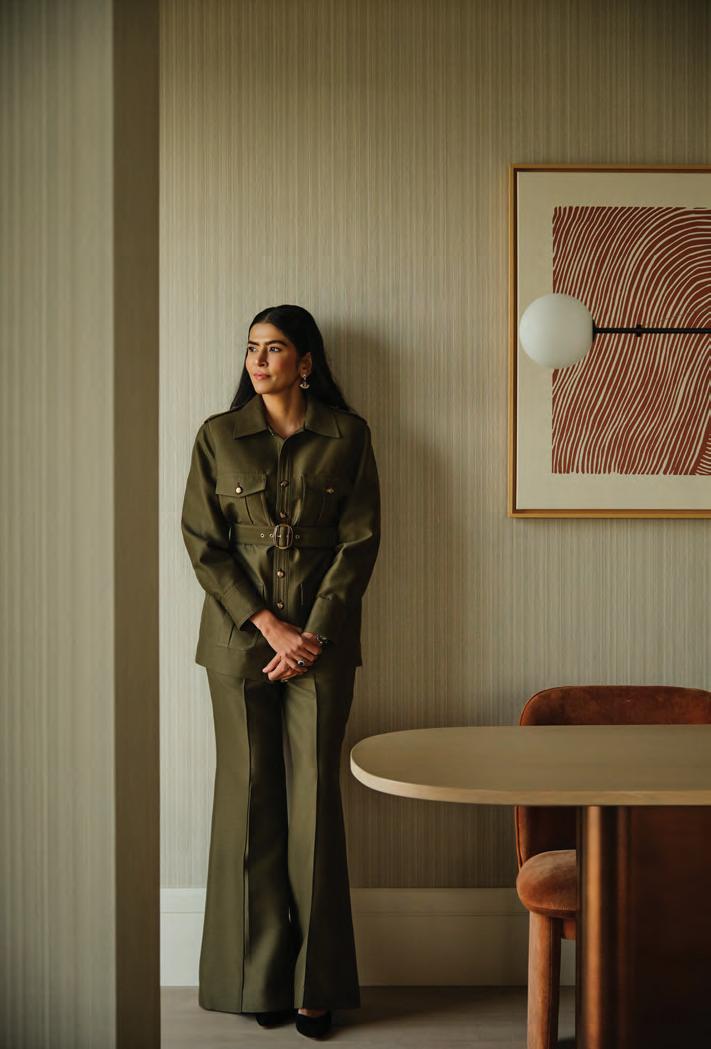
But then everything changed.
She met a mentor with an almost monastic view of life, who shook her awake. “He’s a very simple person… with zero, absolutely zero attachment.” During long conversations about life, purpose, and potential, she realised that ease had become a limitation. “I was wasting my potential… something needed to be done.” She learned, she says, that “you have to explore the last ounce of your potential… you can’t understand spirituality before exploring yourself completely.”
What followed was a creative and professional rebirth. Her company grew from a handful to nearly 100 people. Her clientele expanded from Delhi to 15 cities across India and into London and Dubai. Her projects evolved from conventional luxury to deeply bespoke, emotionally resonant, meticulously crafted homes.
And she chose, very intentionally, to do fewer projects, but at an unparalleled level. “If you want to do less work, the only way is that you do exclusive work… according to my own inherent personality, I don’t want to fight myself by doing volume I’m not cut out for.” Today, she takes on only seven to eight projects at a time for her 100-person team. This hyper-selectivity is what allows her to go all in: “I like to be involved in every aspect. I’m very detail oriented.”
Her style, which she describes as “countryside chic… contemporary, classic and chic” and her love of natural and organic materials reflect her passion for process and craft. If she needs a specific marble, she goes straight to the quarries. If she imagines a tapestry, she boards a flight to Chennai to spend three days in a workshop surrounded by artisans, golden threads, and embroidery
PHOTOGRAPHY:
MIHELČIČ; STYLING: CAMILLE MACAWILI; LOCATION WITH THANKS TO DELANO DUBAI Jacket and Trousers: Zimmermann, Jewellery:
frames. “Workshops are my heaven… I’m like a kid in the candy shop.”
One of her most memorable recent commissions for a client involved creating elaborate hand-embroidered banners representing exotic rescued animals. The piece required “10,000 hours of hand embroidery… 200 people working on it,” she shares. And she documented every step of the intricate process for posterity. Her delight in this world is palpable; it’s where she is most herself.
But beyond craft and aesthetics, Kaushik’s work is also shaped by the evolving psychology of what the home is meant to represent, particularly post-pandemic. “Covid unlocked something in people,” the architect confirms. She has seen Indian homeowners shift from a culture of saving to one of living, of prioritising wellness, experiential spaces, and private sanctuaries. “You can go to Morocco or Mexico… but why not create your own experience at home?” And increasingly, they do. Her sensitivity to cultural nuance allows her to adapt across geographies. Middle Eastern clients, she notes, value privacy and clear spatial distinctions; Indian families embrace openness and interconnection; London clients favour restraint, subtlety, refined curation. But beneath it all, she insists: “Fundamentally, human beings all over the world are the same. It’s about family and being connected.”
Perhaps it is this insight, this ability to read people, not just spaces, that makes Kaushik such a powerful collaborator. She approaches each project with empathy, curiosity, and the quiet confidence of someone who has spent years listening deeply to the needs of others and to her own inner voice and creative instincts.
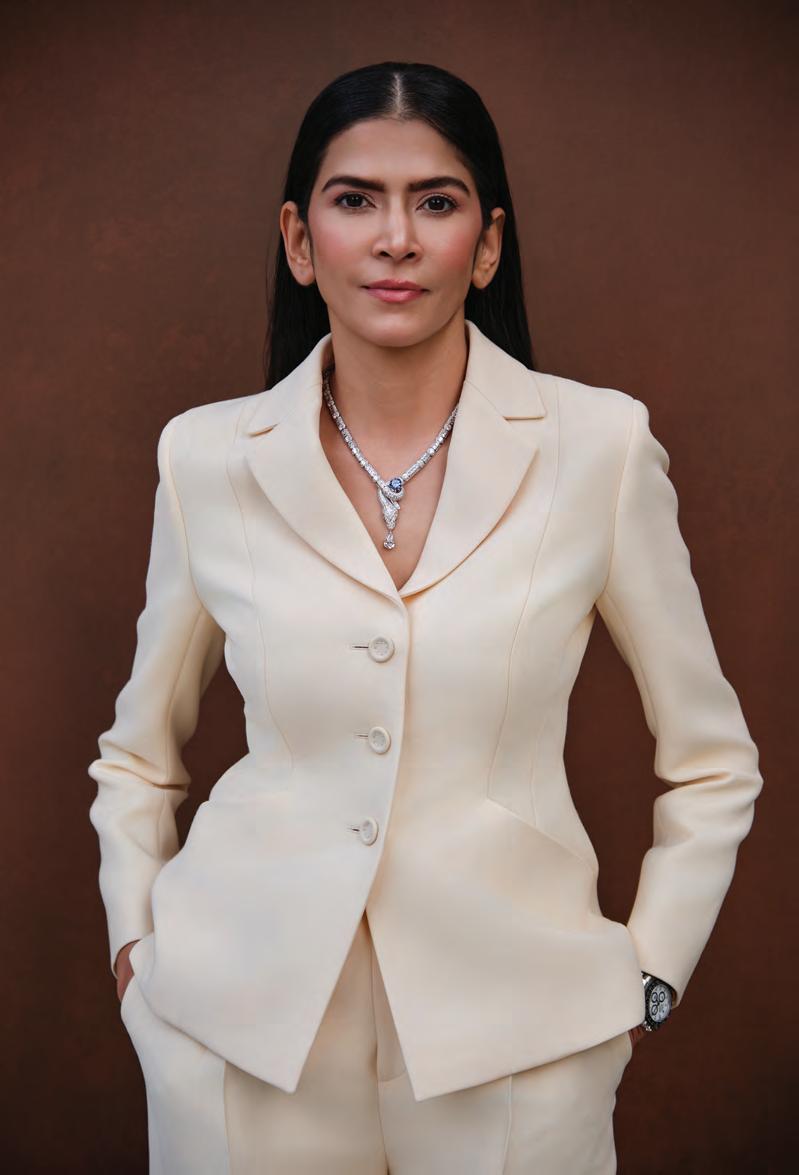
sorbing Africa, starting in the north. “I think I'll keep travelling,” she says, “because until you have fully found yourself, you need to continue to explore the world.”
She is also profoundly curious, a seeker in the truest sense. Creativity, she believes, requires stepping away from the familiar. “The key for me is to change my environment. To go somewhere new and stay there for an extended time, meet people, and get to know the area on a more profound level.” To that end, she doesn’t take quick trips; she often relocates temporarily to different cities around the world, immersing herself in the sensory fabric of a place. This year she spent 20 days in a coastal village near Bordeaux – “literally a cabin on the beach,” surrounded by oyster farmers. Next, she wants to spend two to three years slowly ab-
In the end, what sets Kaushik apart is the same instinct that pulled her away from medicine and toward design all those years ago: an unwavering commitment to listening to the truth within herself. She builds homes, but she also builds worlds, identities, and emotional landscapes. She builds with intention, with devotion, and with the courage to follow her curiosity wherever it leads. And she builds, most of all, from a place of clarity. “Ultimately, I have nothing to prove to anyone… you have to be content with yourself first.”
It’s a powerful philosophy that has helped her create not only extraordinary spaces, but an extraordinary life.
Blazer, Trousers, and Jewellery: Aparna’s Own
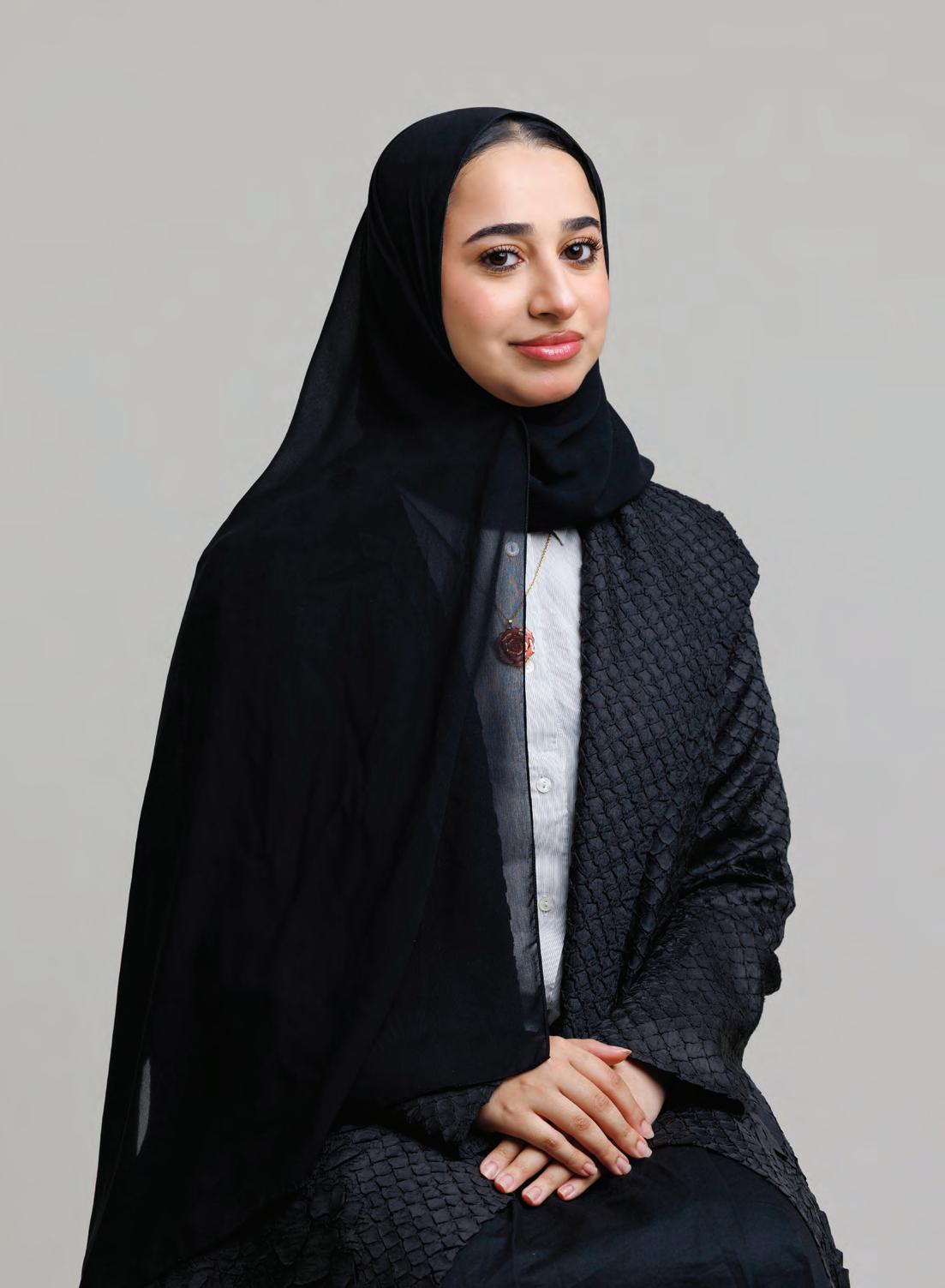
FROM THE SOUQ TO SICILY
The journey of Emirati fashion designer Azza Al Suwaidi is defined by her quiet insistence on bringing the abaya, and all it represents, directly into the heart of an Italian atelier
WORDS: AMINATH IFASA
The first time Azza Al Suwaidi saw her abaya displayed in a Dolce&Gabbana boutique in Abu Dhabi, she walked up to the sales associate and simply said, “This is mine.” It was a quiet claim of ownership for a monumental achievement.
Just a year earlier, the Emirati fashion student had won the inaugural Abu Dhabi Music and Arts Foundation x Dolce&Gabbana Design Award, a victory she discovered through a phone call after the email had been lost in her spam folder. “I applied on a time crunch, thinking at least I need to put myself out there,” she confesses with a soft laugh. “It was a passion project, something I did just for me.”
At 21, Al Suwaidi carries a thoughtful confidence, her words carefully chosen as she speaks about a journey that has taken her from the fabric stalls of old Dubai to a design studio in Italy. Her winning design, the abaya ‘Flourish,’ was inspired by bougainvillea, a plant known in Arabic as jahannamia, which roughly translates to ‘petals of fire’. She was drawn to its hardiness, its vibrant petals flourishing against the heat. Her research revealed a beautiful coincidence. The flower is found both in the UAE and in Sicily, the homeland of Domenico Dolce, co-founder of Dolce&Gabbana. This connection felt like a sign, a way to tie her Emirati identity to the brand’s own heritage. “It was the perfect bridge,” she notes. “It was something greater than just me; it needed to resonate with my identity, the identity of the Emirates, and also their identity.”
Her love for fashion is deeply personal, rooted in the rituals of her childhood and a keen awareness of her culture’s aesthetic. Her passion ignited around age 11, when she began wearing the hijab and started to explore modest dressing as a powerful form of self-expression. “My mother and aunt were my first inspirations,” she shares. “My mom would source clothes for me from all over the world.” She remembers one Eid, as a young girl, wearing a detailed Roberto Cavalli piece –
an early glimpse into the world of high design. Their frequent trips to Deira’s Naif Souq were foundational, where she would pick out sequins and stones to design her own Eid outfits, treating the occasion as her personal Met Gala. These experiences taught her that clothing is curated, it tells a story, and it holds memory.
‘Flourish’ is that philosophy rendered in fabric. She envisioned it for a lavish Emirati wedding, an event she describes as a space where women fully express their identity and femininity. The abaya is crafted from classic black silk organza, its silhouette brought to life with hand-pleated folds and a striking, asymmetrical sweep of pink that mirrors the bougainvillea’s untamed growth. “The pink is something fresh and bold,” she explains. “I wanted to show that we are not confined to anything. We are bold in the way we want to dress.” For Al Suwaidi, the abaya is a canvas for modern Emirati femininity. It is at once elegant and powerful, and seemingly always in motion. Her sixmonth internship in Italy was a whirlwind of new sounds and sights that profoundly shaped her perspective. She learned basic Italian, helped backstage at major fashion shows, and even had her own abaya admired by makeup legend Pat McGrath. Throughout it all, she wore her abaya daily, a conscious decision to represent her culture in a space where no one else looked like her. When colleagues asked about her comfort level during fittings, she was both pragmatic and principled. “I told them it’s a profession,” she says. “It’s like a doctor doing their job, we are looking at the clothes, not the person. I wanted them to understand that we’re very tolerant people.”
This ability to navigate different cultural spaces with grace and conviction defines her approach. Now, working on her final university collection, Al Suwaidi’s ambitions are clear and purposedriven. She dreams of starting her own label, but firmly outside the frantic, trend-driven pace of corporate fashion. “I never want to contribute to fast fashion,” she states. “This industry is the second largest pollutant in the world.” Instead, she is drawn to the concept of heirlooms, of creating keepsake pieces meant to last a lifetime, much like the cherished garments sourced from the souq. She speaks of “souk culture” with fondness, where clothing is designed for oneself and kept for a long time, a stark contrast to today’s disposable trends. Her ultimate goal extends beyond her own label; she wants to build a community. She plans to host an independent fashion show, creating a dynamic space she feels is missing from static university exhibitions. “You need to see the clothing on the body, you need to see it move,” she insists. “It gives it life and soul.” More importantly, she wants to bring together a community of young women, Emirati and otherwise, who want to create and feel beautiful in their own skin.
“I feel grateful for the platform Abu Dhabi Music and Arts Foundation gave me,” she reflects. “I want to show other young creatives that this industry isn’t as risky as it seems. My story shows the opportunity exists, but you have to put yourself out there first.”
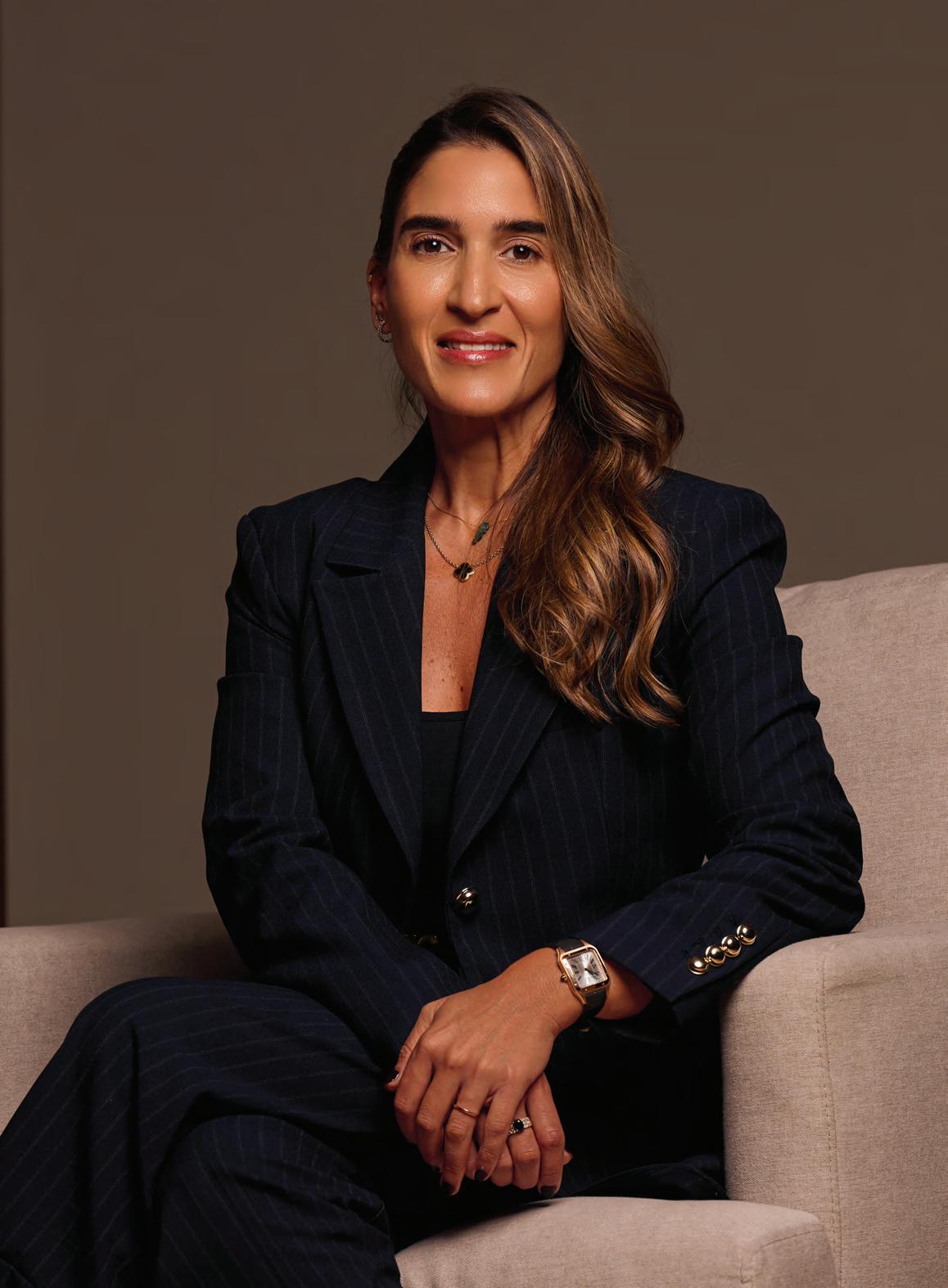
WHAT WOMEN WANT
Anna Germanos, Meta’s Group Director for FMCG, Luxury, Retail and E-commerce across MENA, is working hard to help you find your heart’s desire
WORDS: JESSICA MICHAULT
When Anna Germanos talks about the future of luxury and shopping in the Middle East, it’s with the kind of conviction that makes you rethink everything you thought you knew about the spending patterns of this region. Her presence, usually in a vibrant ensemble designed to energise herself and those around her, feels fitting, as the world she is helping to shape at Meta is anything but muted. “I love wearing colours,” she confesses with a smile, “it projects energy, passion, drive, and I think that’s part of my personality as well.”
As Meta’s Group Director for FMCG, Luxury, Retail and E-commerce across MENA, Germanos has a first hand view of one of the world’s fastest-evolving consumer landscapes. And she’s not watching passively. She’s on the front lines of forming it. “Discovery happens on Meta platforms… the product finds the consumer. It calls you,” she says. In a region where 70% of online shoppers discover products via Meta technologies, her words are less observation and more prognosis: discovery commerce isn’t the future, it’s the now. Born into a family where excellence was the norm, Germanos grew up surrounded by achievers, in an atmosphere of healthy ambition. “The drive that I have is not something I consciously put effort in. This is how I am. It’s natural, it’s innate.” As the third of four children, she learned early “to push through to make your way… to make your mark,” a philosophy that now shapes her ability to navigate, and often redefine, the high-speed world of tech-powered retail.
powered solutions have been so strong and almost all our advertisers are using at least one of our AI products to drive performance.”
Case in point: Meta’s Advantage+ suite of AI-powered ad solutions, which the company launched two years ago. From Fendi tripling purchases and Dior seeing five times more landing page views when adding catalogue items through Advantage+ creative, to Level Shoes getting a six-point uptick in overall return on ad spend and an increased purchase value of 24% by leveraging Meta’s tools to suggest high-ticket items to high-intent shoppers. For Germanos that data is undeniable, AI-driven personalisation is dramatically reshaping how luxury brands engage consumers across their journey. “Every single time we compare Advantage+ versus business as usual campaigns, Advantage+ is winning,” she explains, noting that she has seen around a 20% increase in effectiveness.
What happens after discovery is equally crucial. Germanos is unequivocal: “Business messaging is now king. WhatsApp is the most hyper-localised channel any brand can have with the consumer,” she shares. Once inspiration sparks on Instagram, the purchase pathway flows directly into a personalised, oneon-one exchange. “If you are able to engage with your consumers on WhatsApp, that’s the best channel… you can recommend, upsell, and have the transaction done.”
“The drive that I have is not something I consciously put effort in. This is how I am. It’s natural, it’s innate.”
But Germanos’ early career unfolded far from fashion runways or luxury flagships. “I was in financial software – try explaining that to someone over dinner,” she says with a laugh. Consulting was next: “You have to do the job, the deadline is always yesterday.” Those foundational years became the bedrock of her strategic superpower. “This is where I realised that you actually have to put yourself in the shoes of the person, understand their frustrations, motivations… what’s in it for them.” It’s a skill she uses daily at Meta. “This is a muscle I have trained,” she adds, one that lets her lead with both precision and empathy.
That consulting instinct also sparked her love affair with consumer behaviour. What drew her in was how she could place herself in the shoes of any consumer, no matter the category. That innate curiosity made her especially suited to the Middle East, a region she describes as “hungry for innovation… a lab for innovation,” where brands and audiences embrace digital transformation with an energy that “you don’t see in other regions.”
And today, that transformation is being defined by AI.
“AI is at the core of everything we do,” she says plainly. On the consumer side, “the content that you see on your feed is very different from the content that I see,” thanks to powerful recommendation systems that have led to “around a 6% increase of time spent on Instagram last quarter.” On the advertising side, she adds, “Our AI-
This seamless, human-centric flow is, in her view, where luxury service truly meets modern convenience. Despite her demanding role, Germanos is unwavering about her personal non-negotiables: “I outsource anything non-core… anything that is not related to my children.”
Exercise, she adds, is sacred: “I go three times a week at 7am to the gym… if I don’t do it at 7am, it’s never going to happen.” And on weekends, she says, “I have no issue keeping my phone in my room for like five, six hours.” But at work, she is exacting. “I may sound very nice, approachable… but I’m very strict on the quality of my team’s work.” She’s happy to explain something “10 times,” but “once you say ‘I got it,’ I don’t tolerate errors.” Integrity, she emphasises, is non-negotiable: “You’re earning a decent salary for doing your job. So do your job.”
Her leadership philosophy is anchored in transparency and trust. She shares her life, listens closely, and is continuously looking to create opportunities for her colleagues to shine, because she feels strongly that there is a reciprocality to good leadership: “When you lift your team, they lift you with them.” Germanos’ commitment to mentorship is equally fierce. “I usually mentor students… guiding them,” she says, because “I put myself in their shoes. I was there 25 years ago. If I’m able to bring a bit more clarity into their journey… it’s amazing.” She believes in “paying it forward,” in karma “a bit,” and in a future built through networks – something she nurtures intentionally. “All of my jobs have been referred through people in my network.”
Ultimately, her success comes down to one philosophy: be hungry, stay curious, and never cling to what you know. “You have to be comfortable with not knowing,” she says. “Access is there –there’s no excuse not to continue to educate yourself.”
A WINTER
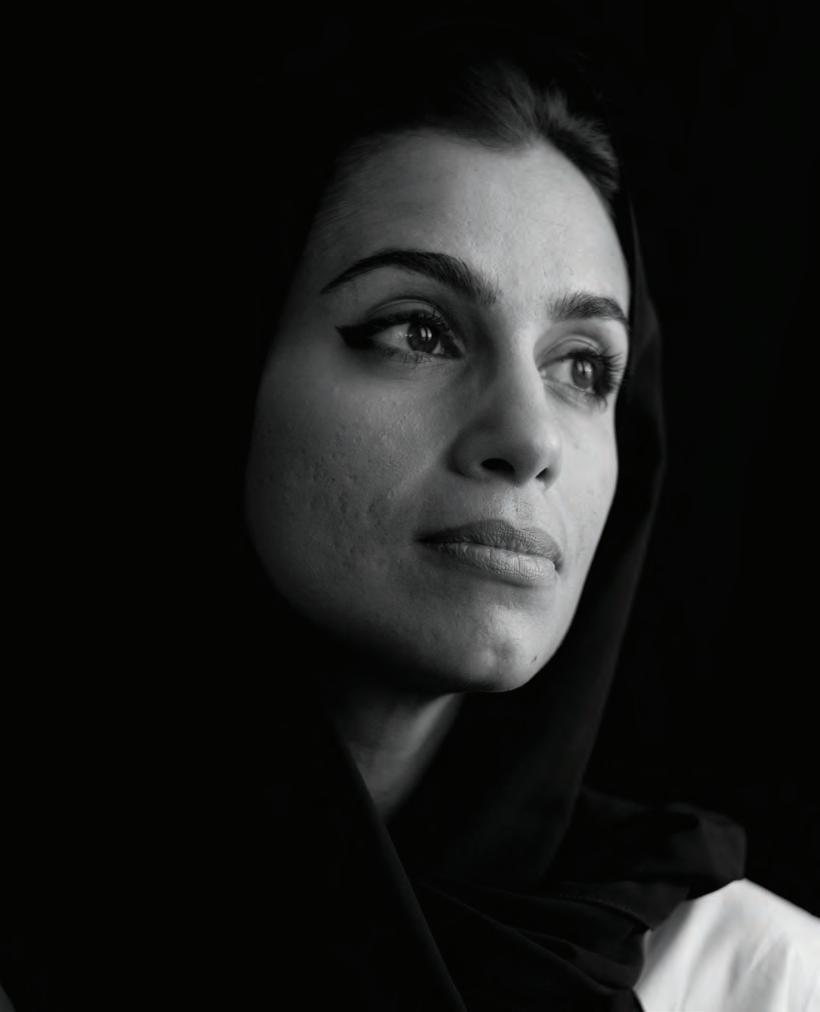
As the days grow short, geography shapes our emotional landscapes and our deeply felt connections to the season
PERSPECTIVE
breath of relief. A hand pressed beneath a layer of desert finds a sudden coolness marking not endings but beginnings. And snow, on miraculous and rare days, does fall on the Sahara too.
Across civilisations, winter has never been only a season; it has always been a story, and in some cultures, winter is the very time when people gather and stories are told.
WORDS: ALIA ALSHAMSI
MIn Greek mythology, winter begins the moment Persephone descends into the underworld. The earth mourns her absence, withdrawing its warmth and colour. For the Greeks, winter is the result of a mother’s grief, Demeter’s sorrow becoming frost, silence, and the long shadow of longing. Winter is loss, separation, and the suspended breath before reunion. It is a pause in life itself.
But in Arab mythology, winter belongs not to grief but to al-Sa d, the constellation of auspicious stars known collectively as al-Su d. Each Sa d star marked a phase of the season, guiding desert travellers from cold nights to the first hints of blooming life. The story is about Sa’d, who failed to listen to his father’s warnings to pack for the coming winter. Ignoring his father’s advice, Sa’d found himself in cold winter, and to keep himself alive, he killed his only camel: Sa d al-Dhab h. He then swallowed and ate the meat, symbolising the deepening of winter Sa d al-Bula , Sa d alSu d, the sun finally shone through and softened the winter. Sa d al-Akhbiyah as creatures came out from their caves and hiding places. Winter, in this worldview, is not a descent but an ascent, a journey through starlit stages toward renewal and rebirth.
y eye falls on a lone black bird perched upon a gate across a landscape blanketed with snow. I pause. There is motion in the scene, something brought into life by these shifting brushstrokes, yet the stillness of the first snowfall is always in silence.
Monet’s The Magpie carries a Western cultural reference to winter: death and desire for escape, yet it is also simultaneously the birth and the early beginning of a movement that would later be called Impressionism.
I begin with this painting anchored in European winter, where the season is so often a metaphor for isolation and at times melancholy. Yet, on this side of the world, winter is something entirely different. Here, it is the moment the city comes alive, a season to be lived to its fullest. The idea of escape becomes as subjective as art itself, just as magpies, sorrowful in one culture yet omens of joy and auspicious beginnings in another, remind us that geographies shape our emotional landscapes.
Winter in the Gulf does not arrive with snow but with scent, the appearance of Suhail in the night sky announcing the end of summer, with shifts of winds that carry the first
And so while the Greeks imagined winter as the sorrow of a mother losing her daughter to the darkness below, Arabs read winter in the sky as a sequence of perseverance and a journey towards renewal. The contrast is striking: one culture leans into the emotional quiet of winter, the other into its celestial generosity.
My own story of winter is a little girl in pigtails and a headband with a white feathered bird, who excitedly wore her cardigan to school today. She wore her shiny black MaryJane’s and thick stockings and ran under the umbrella, careful not to wet her little headband or get water on her shoes and into the car. The windshields ceaselessly shaking off the rain and with a smile she blows onto the cold glass, her tiny finger drawing a heart across a world turned into soft, watercolour art. aliaalshamsiartconsultancy.com
@aliaalshamsi
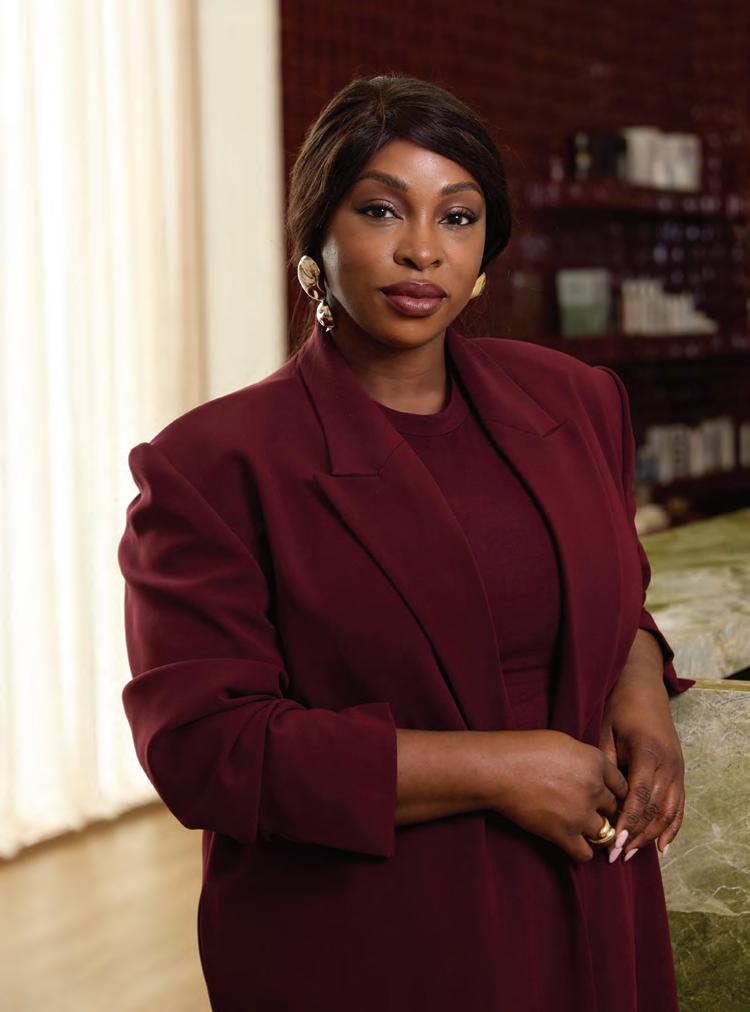
THE GREAT ESCAPE
WORDS: MORIN OLUWOLE
Morin Oluwole, an International Luxury Business Leader who serves on the boards of Breitling, Rituals, and Biologique Recherche and the former Global Luxury Director at Meta, breaks down why taking time to disconnect can help bring clarity to both life and career
There’s something about winter that invites us to slow down. As the days shorten and the business cycle winds down, life seems to whisper an ancient truth we too often forget, that more times than not renewal begins in stillness. It’s as if nature herself has given us permission to pause, to retreat inward, and to listen more deeply. Yet for many of us, this season of quiet arrives in stark contrast to our reality. The year closes in a blur of deadlines, events, and expectations. We chase completion, often mistaking motion for progress. In a world that glorifies activity, it can feel almost radical to step back – to disappear briefly, not out of fatigue, but out of intention. A “winter escape” today isn’t about indulgence or distance. It’s about clarity. It’s a conscious act of disconnection. Not to withdraw from the world, but to return to it more grounded, more present, and more whole.
The Paradox of Disconnecting
Modern life has made it almost impossible to truly go off the grid. Even our moments of rest are punctuated by notifications, our pauses filled with endless scrolling. The more connected we become, the more elusive stillness feels.
But I’ve learned that disconnection doesn’t mean absence. It’s an act of presence in its purest form. In leadership, in creativity, in life, the greatest insights often arrive when we finally stop trying to be everywhere at once.
There have been moments in my professional journey where the most transformative clarity came not from strategy meetings or late-night deadlines, but from space – from silence. I’ve realised that every decision, every pivot, every creative idea is sharper when it emerges from a place of rest rather than a place of reaction.
Stepping away, even briefly, allows perspective to breathe. It reorders what truly matters. And in that reordering, purpose finds its rightful place again.
A Modern Escape
Each year, as winter settles in and the world begins to quiet – when the emails start to slow, the LinkedIn notifications fade, and the noise of daily urgency softens (if just a bit) – I try to create my own moment of pause. Surrounded by family and stillness, I take this time to reflect and to write my vision for the year to come. It has become a personal ritual. I write the vision I want to bring to life: the goals that matter across every part of my world – personal, professional,
health, love, and finance – no more than one page. It seems like a daunting exercise but by breaking the vision down into themes, it’s easier and more palatable to write a vision of what I want the next year to bring. It’s both aspirational and pragmatic, an exercise that I learned from one of the women who has most inspired me (and moved me to take control of the direction of my life), Lisa McCarthy.
By the time the next December arrives, I look back on that vision – what unfolded as I hoped, what surprised me, what didn’t work as planned – and I’m reminded that growth is rarely linear, but always meaningful.
And no matter how the year turns out, I’ve come to understand that taking the time to sit alone, reflect, and imagine the life you want is already an accomplishment in itself.
The Power of Ritual and Reconnection
Of course, not every escape requires travel or solitude. Some of the most restorative moments can exist within our everyday routines – a slow morning before the world wakes up, a walk without headphones, a phone left behind during dinner. In a culture obsessed with optimisation, these small acts of stillness can feel countercultural. Yet they are essential. They remind us that rest is not the opposite of achievement; it is what sustains it. For women especially – those balancing leadership, ambition, and care – reclaiming time isn’t selfish. It’s strategic. It’s an act of preservation that allows us to lead with greater clarity and authenticity. True resilience is not about endurance; it’s about rhythm. It’s knowing when to act and when to pause, when to speak and when to listen, when to connect and when to simply be.
Redefining Reconnecting
As the year draws to a close, I find myself reflecting on what it means to live intentionally. The world may not slow down, but we can choose to. The real art of the winter escape lies not in where we go, but in how we choose to return: lighter, clearer, more centred.
This winter, perhaps the most powerful statement isn’t how much we do, but how gracefully we choose to stop. Because ultimately, the true strength of a modern woman lies not in her ability to do it all, but in her wisdom to know when to pause. Stillness, after all, is not the absence of movement. It is the quiet space where meaning gathers –waiting patiently to be heard.
morinoluwole.com
@morin
2025
For over four decades generations of women have grown up reading Emirates Woman magazine. They have turned to this publication to discover the amazing individuals shaping the GCC, be inspired by beautiful fashion shoots and delve into the latest news and issues that impact their lives. It has become a faithful friend women in the region can count on and a place where a community can come together to share their stories and be seen for who they truly are.
The annual Emirates Woman Awards is our way to pay homage to some of the most exceptional women working and living in the region. We highlight, with this annual gala event, individuals who excel at what they do and inspire those around them. Women who epitomise what this magazine
represents – integrity, ambition, excellence and determination. Our gratitude goes to the incomparable master of ceremonies, Rosemin Opgenhaffen for her exceptional stewardship on the night. And to our distinguished judges, Khadija Al Bastaki, Senior Vice President of Dubai Design District; Ingie Chalhoub, Founder and President of the Etoile Group; and Miral Youssef, the President of Kering Middle East & Africa, who took on their duties with with such commitment and conviction. Their presence elevated the evening, embodying the very essence of leadership and inspiration.
Today, more than ever, the Emirates Woman stands as a platform devoted to uplifting, celebrating, and championing the extraordinary women who continue to shape the cultural and creative landscape of the Middle East – and the world.
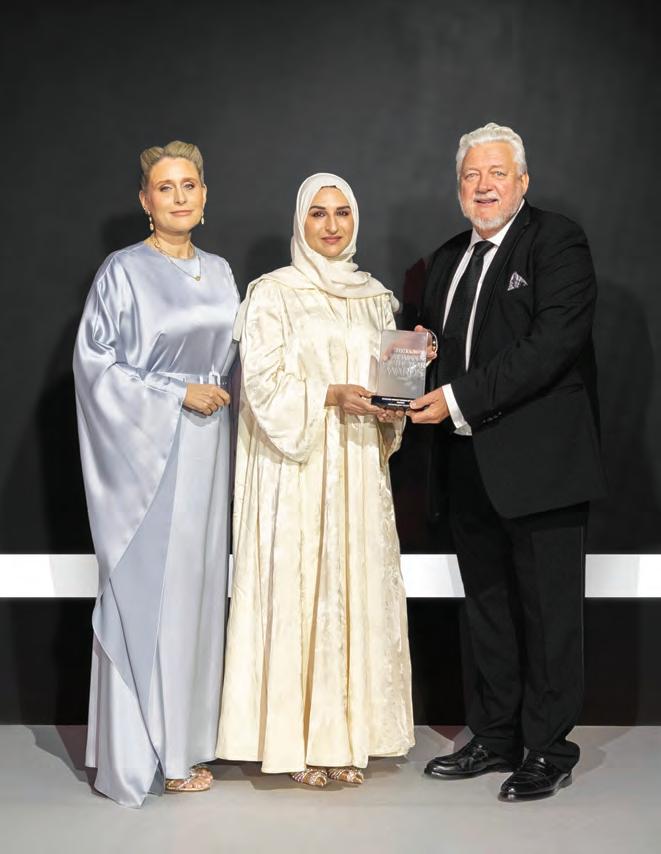
HER EXCELLENCY HALA BADRI EMIRATES WOMAN – WOMAN OF THE YEAR
“I stand here with really deep gratitude for the visionary leadership of the UAE, for their trust and for their inspiration, and I’m very thankful as well to all my mentors, colleagues, and amazing teams who shaped the journey that I have been on so far. And also to the communities that I have worked with, the clients I have worked with. If it wasn’t for them, I would not have been here. They say that behind every great man is a great woman, and I say behind every achieving woman is a whole tribe cheering her to the finish line. I’m blessed to have a great tribe in my family and my husband, who has supported me throughout my career. Thank you so much, from my heart.”
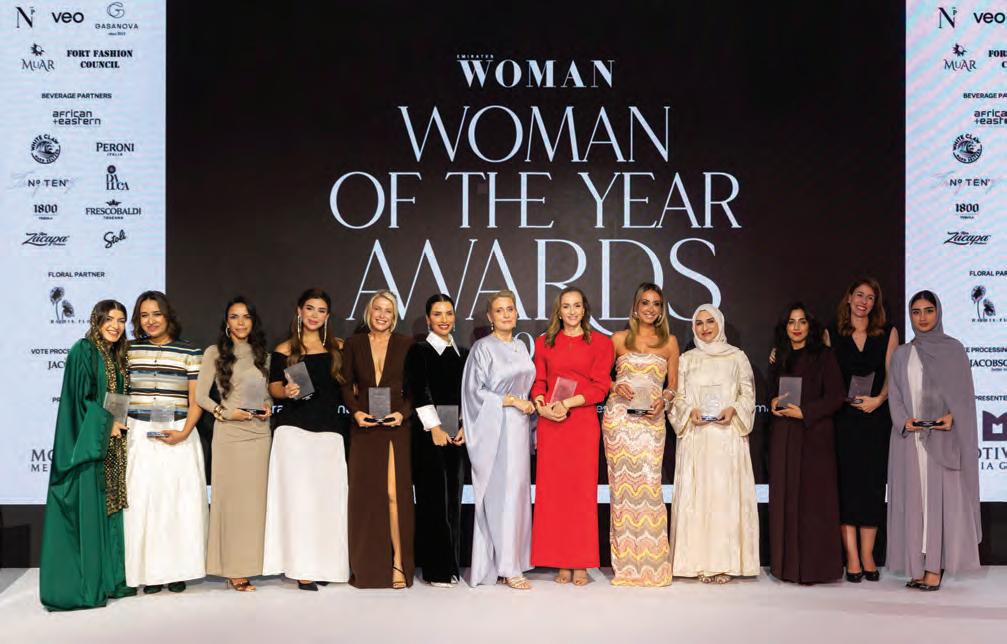
THE WINNERS
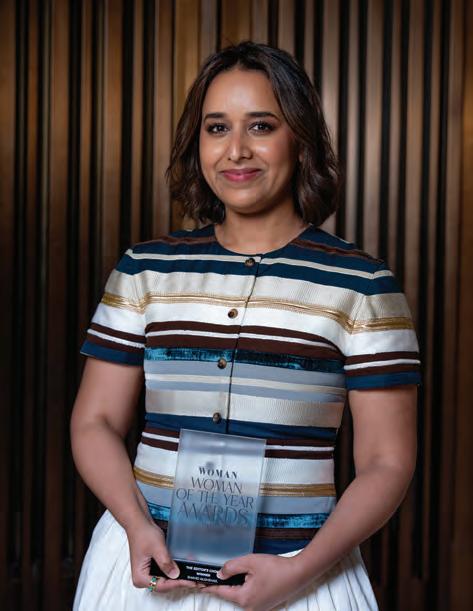
SHAHD ALSHEHAIL EDITOR’S CHOICE AWARD
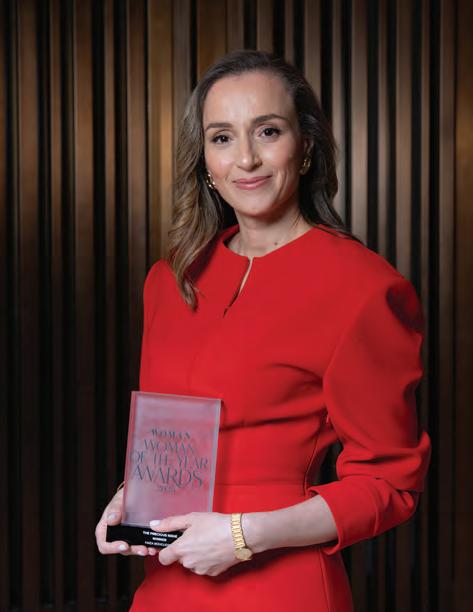
FAIZA BOUGUESSA THE PRECIOUS ISSUE
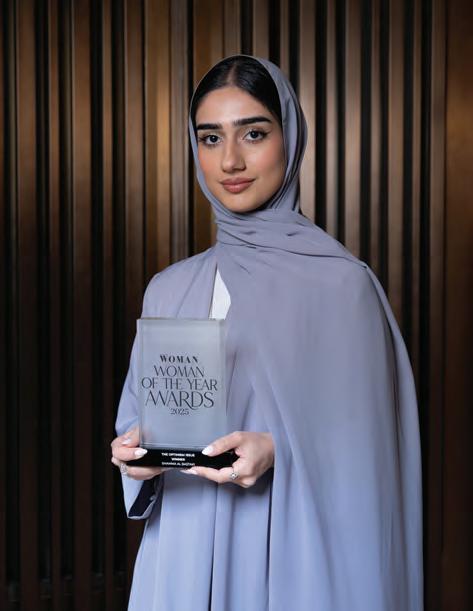
SHAMMA AL BASTAKI THE OPTIMISM ISSUE
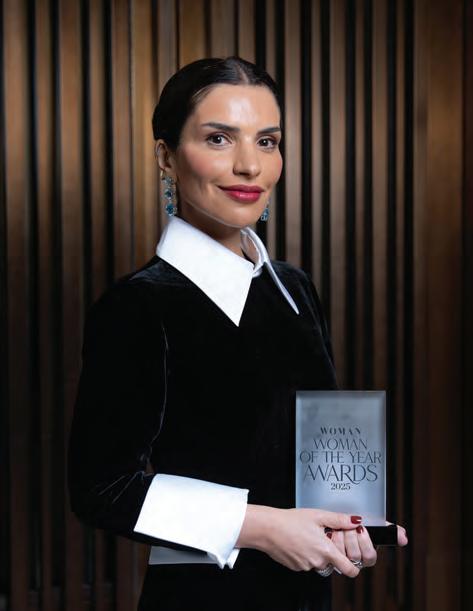
AMINA TAHER THE WINTER ESCAPE ISSUE
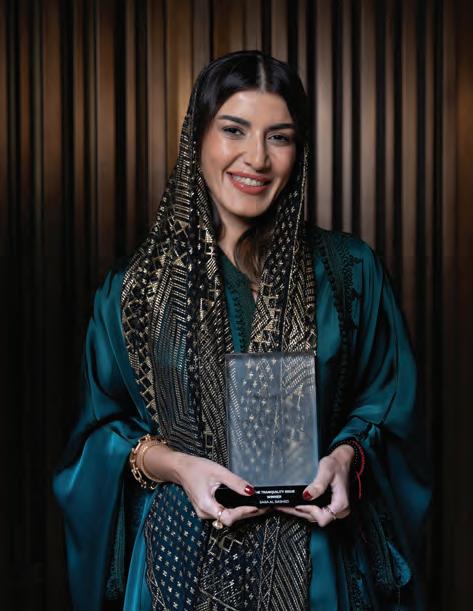
SARA AL RASHID THE TRANQUILITY ISSUE
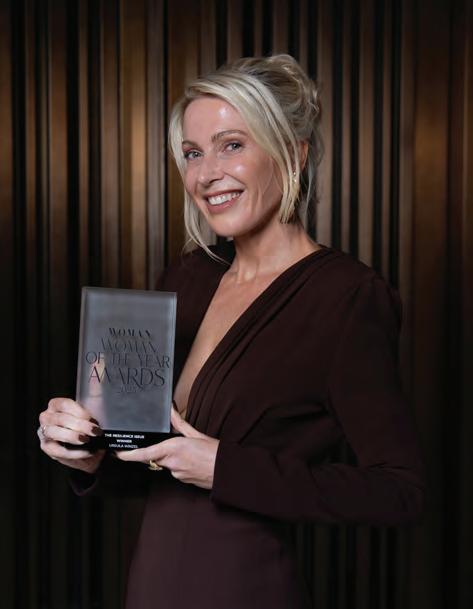
WINZEL THE RESILIENCE ISSUE
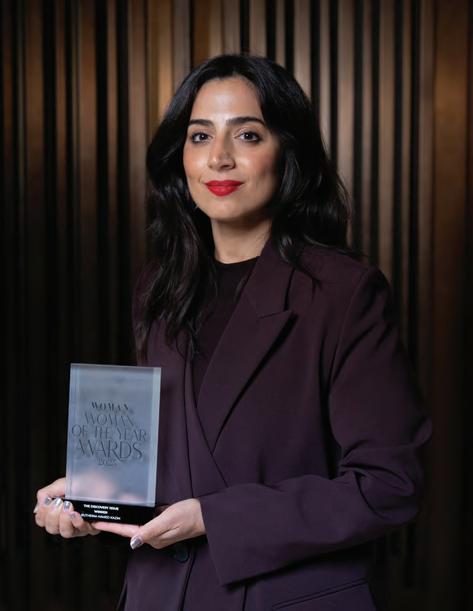
HAMED KAZIM THE DISCOVERY ISSUE
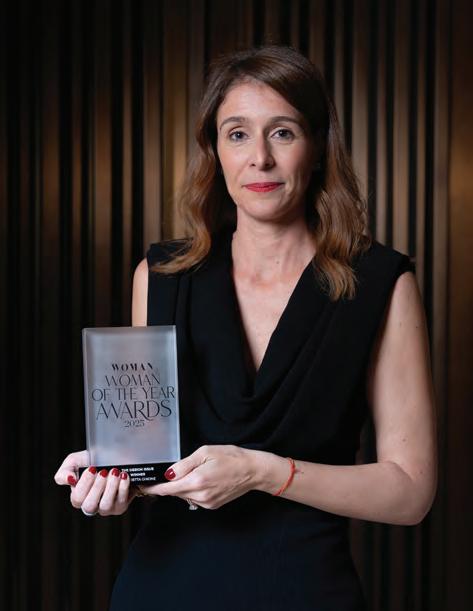
GHIONE THE DESIGN ISSUE
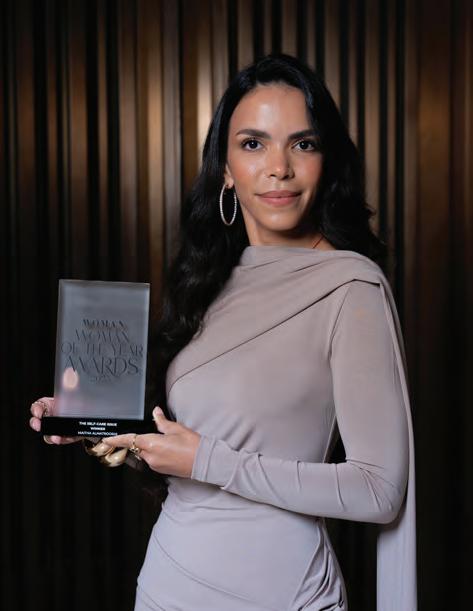
MAITHA AL MATROOSHI THE SELF-CARE ISSUE
URSULA
BUTHEINA
BENEDETTA
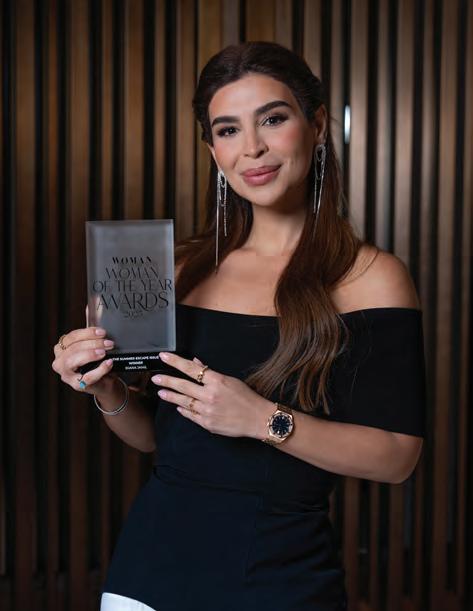
JOANA JAMIL THE SUMMER ESCAPE ISSUE
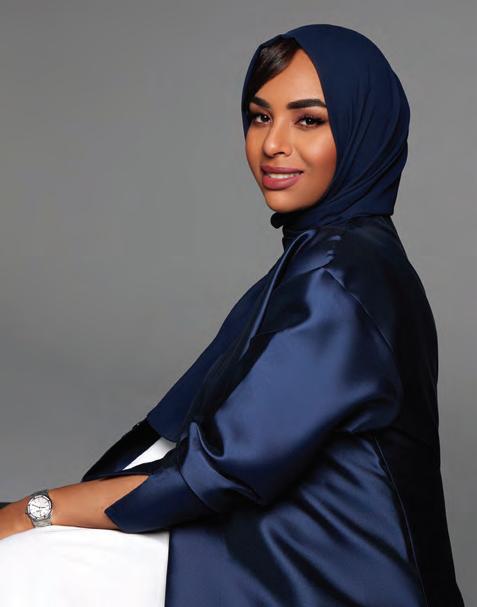
SHEIKHA AL MHEIRI THE MANIFESTATION ISSUE

NAZLI SONMEZ VALLEE THE HIGH SUMMER ISSUE
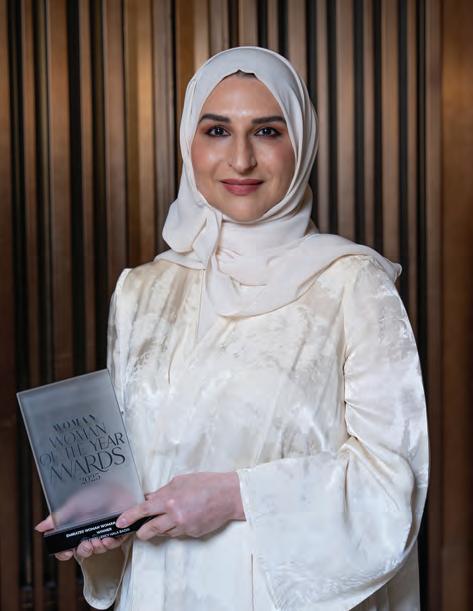
HER EXCELLENCY HALA BADRI THE STRENGTH ISSUE

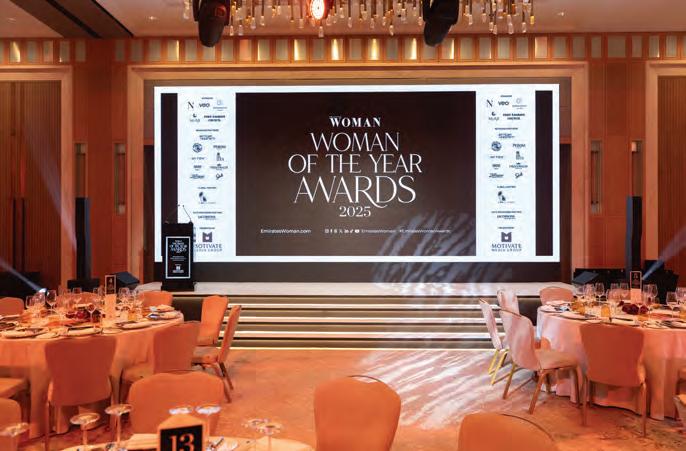
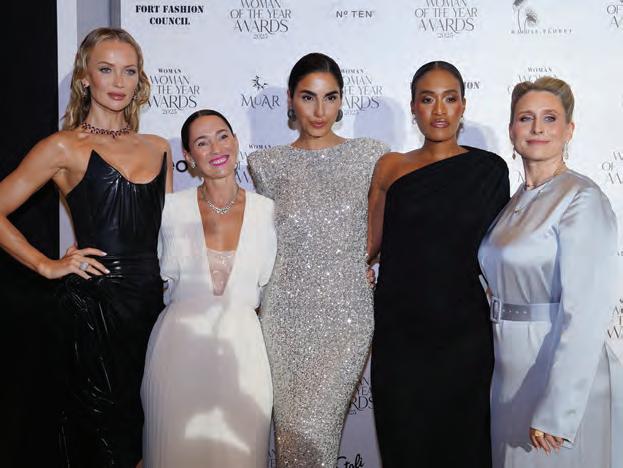
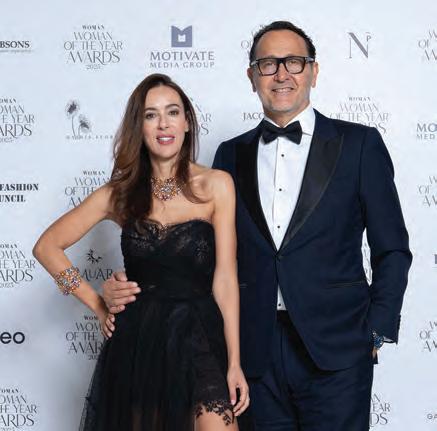
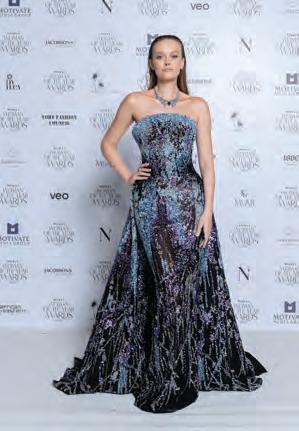
Patrick and Ingie Chalhoub with Ian Fairservice
Tatiana Korsakova, Ruth Bradley, Farnoush Hamidian, Adrienne Everett and Jessica Michault
Alessiya Merzlova
Kunal Nijhawan and Rumana NazimNezha Alaoui and Pierpaolo Taliento

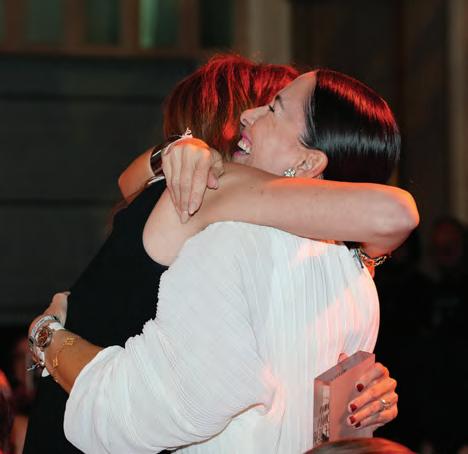
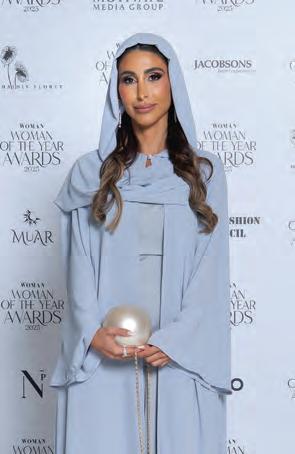
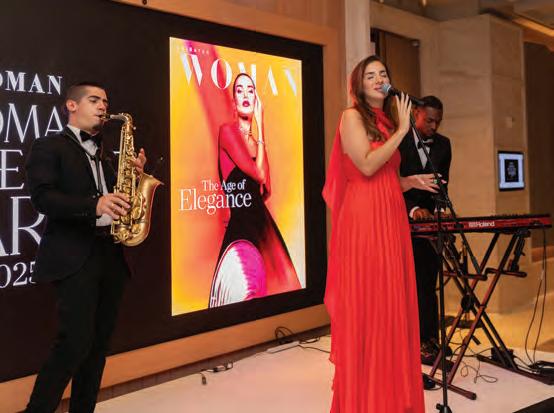
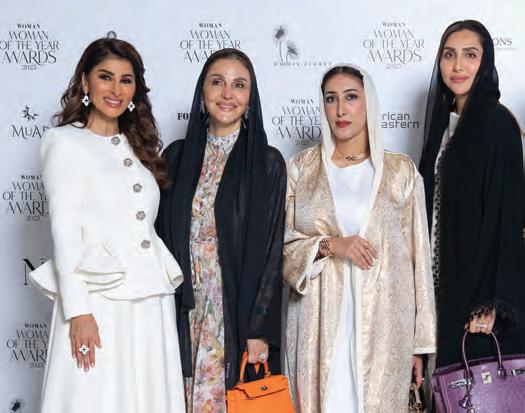
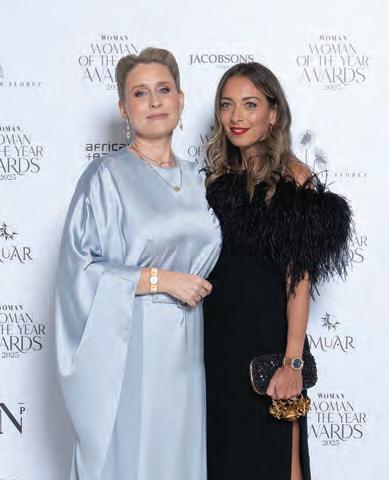
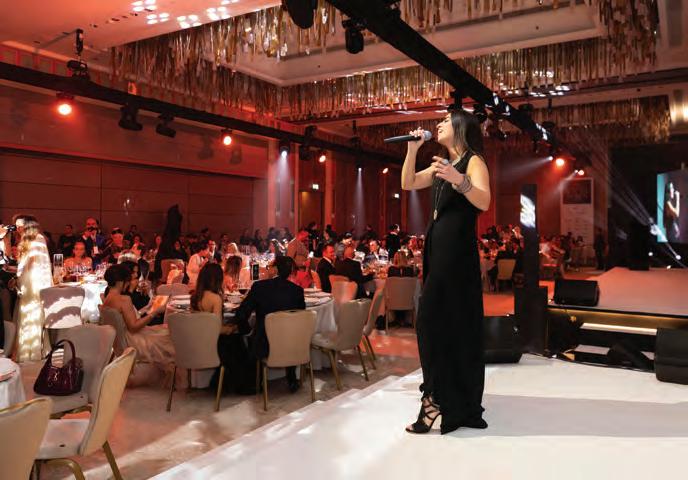
Rosemin M. Opgenhaffen, Diana Hamade, Khadija Al Bastaki and Nada AlGhurair
Jessica Michault and Miral Youssef
Abdellatif Adwan and Raha MoharrakBenedetta Ghione and Ruth Bradley
Sharifa Al Sharif Al Hashemi
Shargeeya performs on stage, kicking off the Emirates Woman Awards
Live music welcomes guests to the Emirates Woman Awards
NOMADIC NOTES
Dries Van Noten reimagines the art of fragrance on the move with the launch of its Nomadic Cases. They’re the perfect portable perfume companions that blend design, function, and whimsy. Reflecting the Maison’s flair for the unexpected, each 10ml refillable case brings together striking prints, architectural form, and collectible charm. They’re available in two curated sets, Floral and Woody. Each product invites wearers to layer, switch, and play with scents wherever they go. From the marbled rose of Soie Malaquais to the mystic depth of Rock the Myrrh, each creation captures the essence of “impossible combinations.” An indulgent companion for every journey, this fragrance is designed as wearable art, made to go wherever your next travel plans take you.
GLOW
Find beauty in…
– Small packages
– Hair that is always the mane attraction
– How to cultivate the perfect sun-kissed glow in winter
– The magnetism of musk scents
– A wellness regime worth following
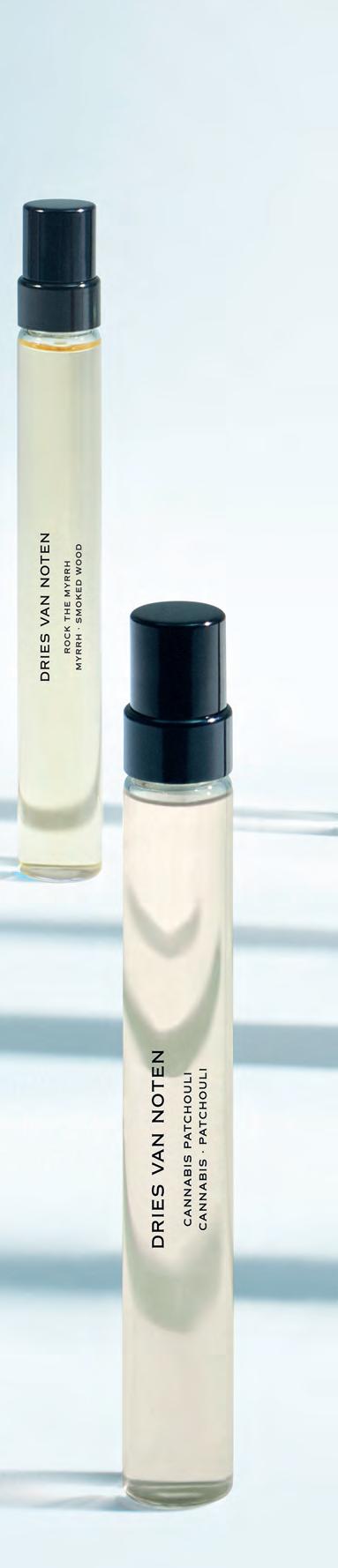
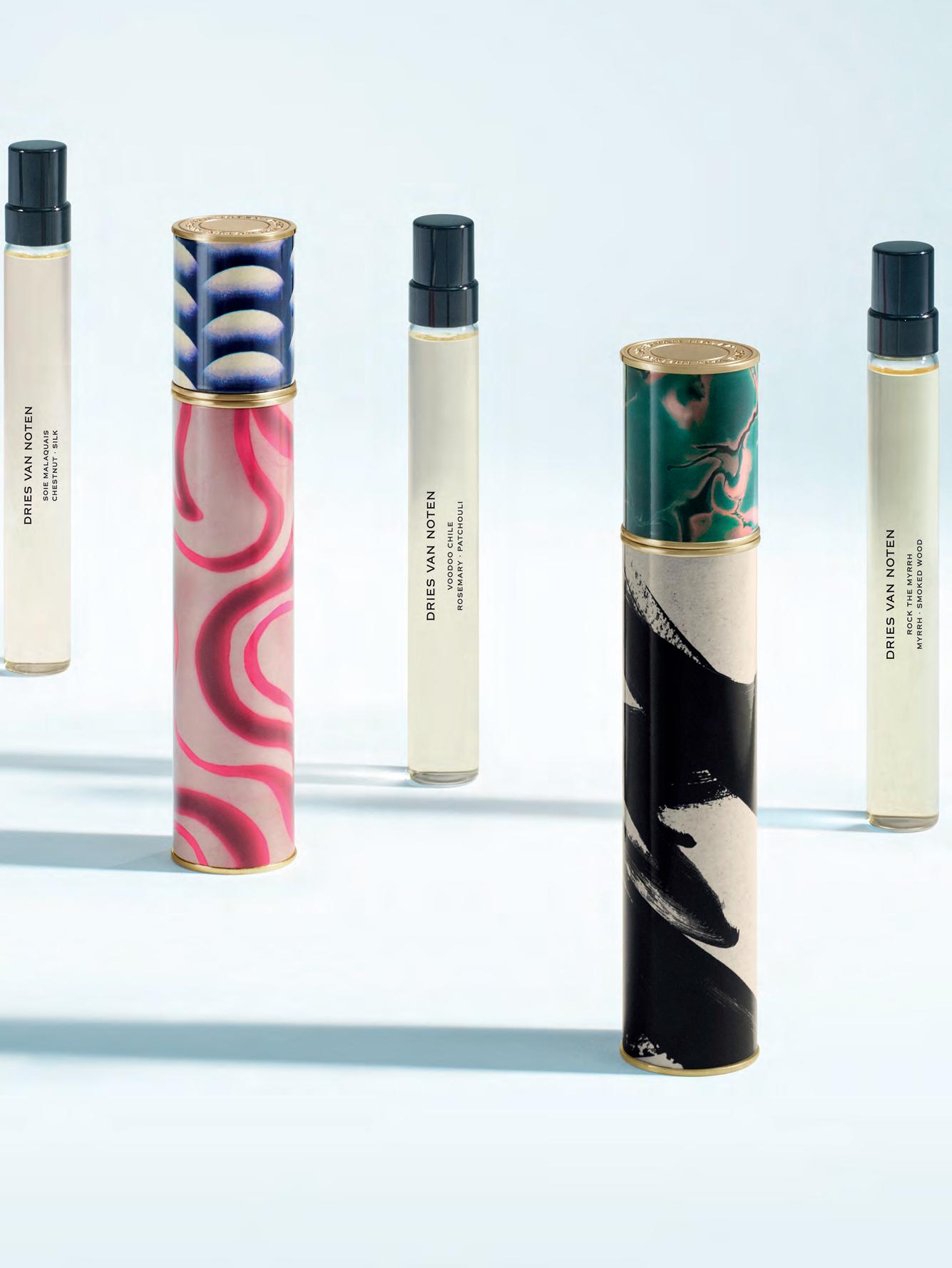
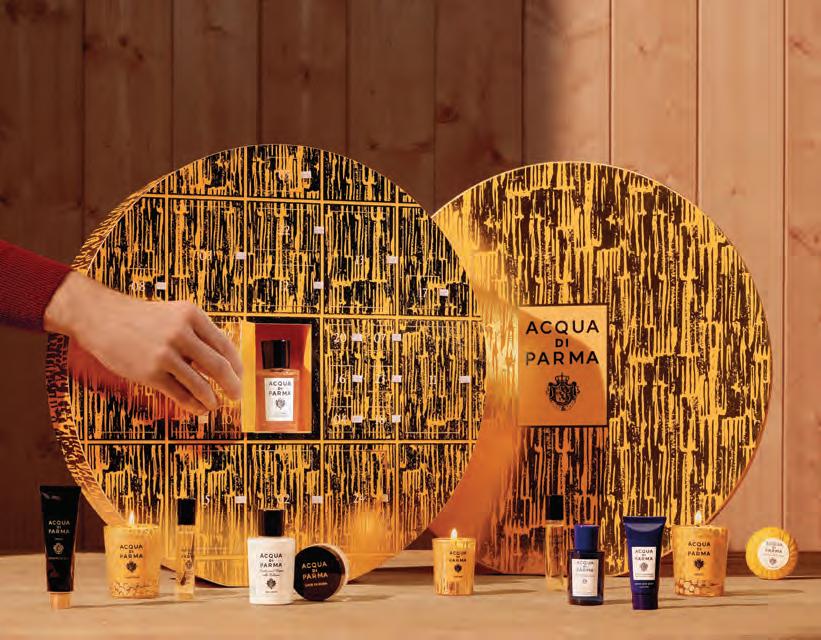
FESTIVE GESTURES
An edit of the most exciting beauty-filled advent calendars of the season
WORDS: CAMILLE MACAWILI
AUGUSTINUS BADER
Augustinus Bader focuses on performance and routine building. Housed in a Bader-blue box, the 12 Days of Bader Calendar gives you a clear path through the brand’s core formulas. You get The Cream, The Rich Cream, The Essence, The Serum, and other products that reflect the brand’s science-led approach. Travel sizes keep everything portable, so you can commit to the routine without changing your schedule The 12 Days of Bader Dhs2,194
ACQUA DI PARMA
Acqua di Parma journeys to the Dolomites for its Holiday 2025 collection. For the festive season, it introduces the Alpine Holiday Advent Calendar, presented in the Maison’s iconic hatbox, into a collector’s object of refined indulgence and Italian savoir-faire that opens to reveal a curated selection of exclusive gifts, including its signature scents, Colonia and Blu Mediterraneo, along with a selection of festive home fragrances. Alpine Holiday Advent Calendar Dhs2,211
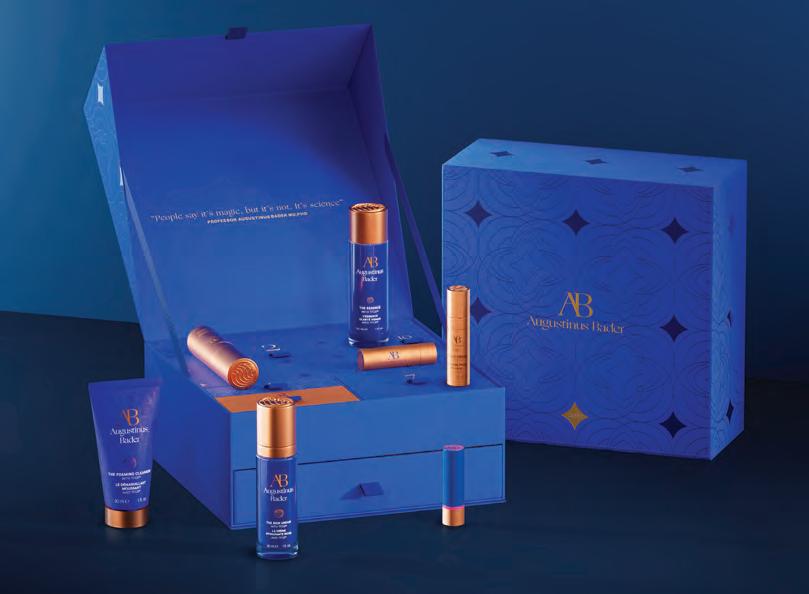
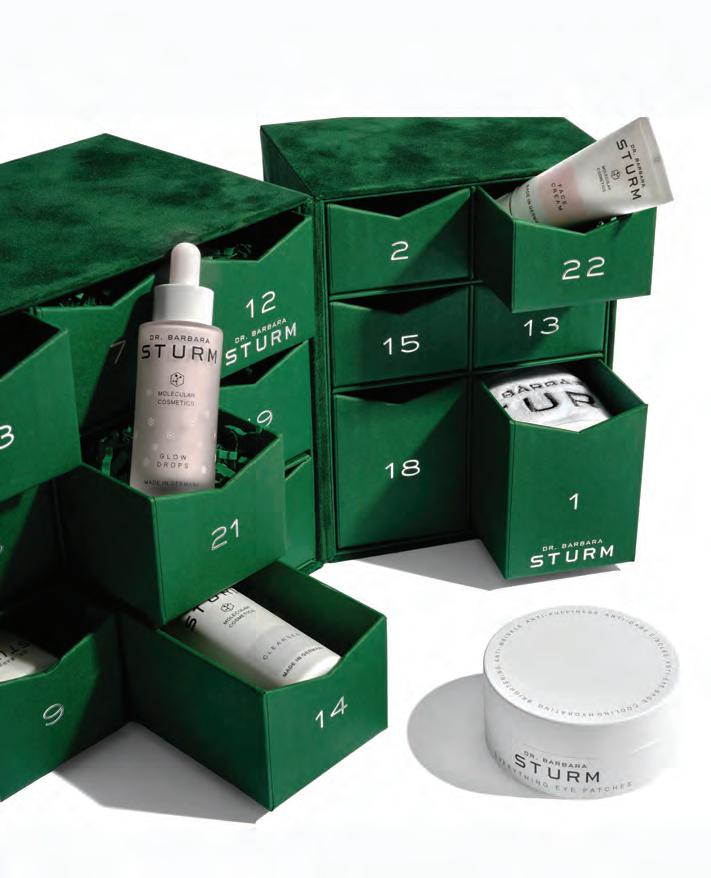
DR. BARBARA STURM
Dr. Barbara Sturm’s Advent Calendar features a green velvet case that opens to 24 products covering cleansing, exfoliation, hydration, and targeted care that help you test formulas before committing. The lineup includes the brand’s core essentials in full, deluxe, and travel sizes, such as The Hyaluronic Serum, The Face Cream, Brightening Serum, and The Enzyme Cleanser. If you are new to the brand, this is the most efficient way to understand its results. Advent Calendar Dhs1,860 available at Ounass
DIPTYQUE
Diptyque’s Advent Calendar arrives as a book-shaped case that opens into a detailed scene of a Parisian bookshop. Designed to be opened and explored, you get 25 products that show the full range of the house, from candles to fragrance and body care. Each item has a generous size that gives you enough to use multiple times, and it works if you enjoy home scents as much as personal fragrance. Advent Calendar Dhs4,566
MAISON FRANCIS KURKDJIAN
Maison Francis Kurkdjian’s Countdown Calendar offers a mix of fragrances, candles, and scented body products that reflect the identity of the house, including key scents such as Baccarat Rouge 540, Grand Soir, OUD Satin Mood, and more in miniature bottles. This calendar works for fragrance enthusiasts who want variety, as each day reveals an indulgent item that fits into everyday grooming or evening routines that will last beyond December. The Countdown Calendar Dhs4,650
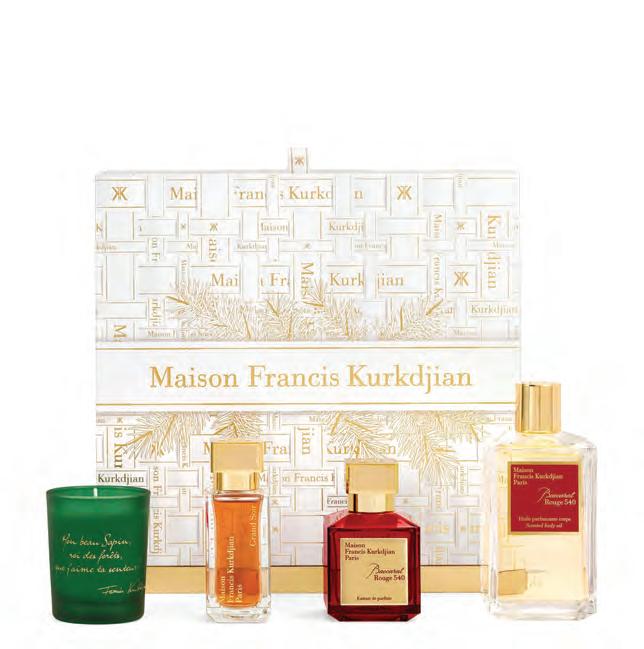
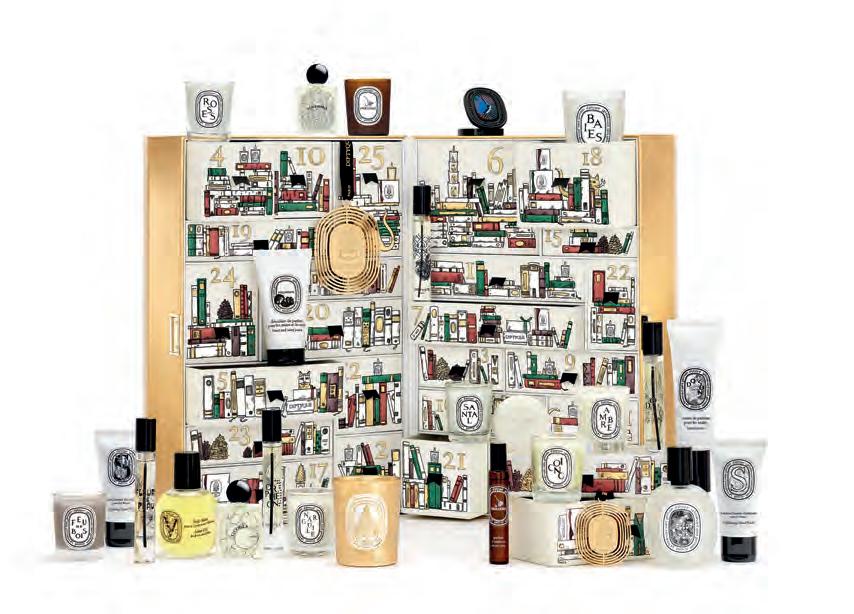
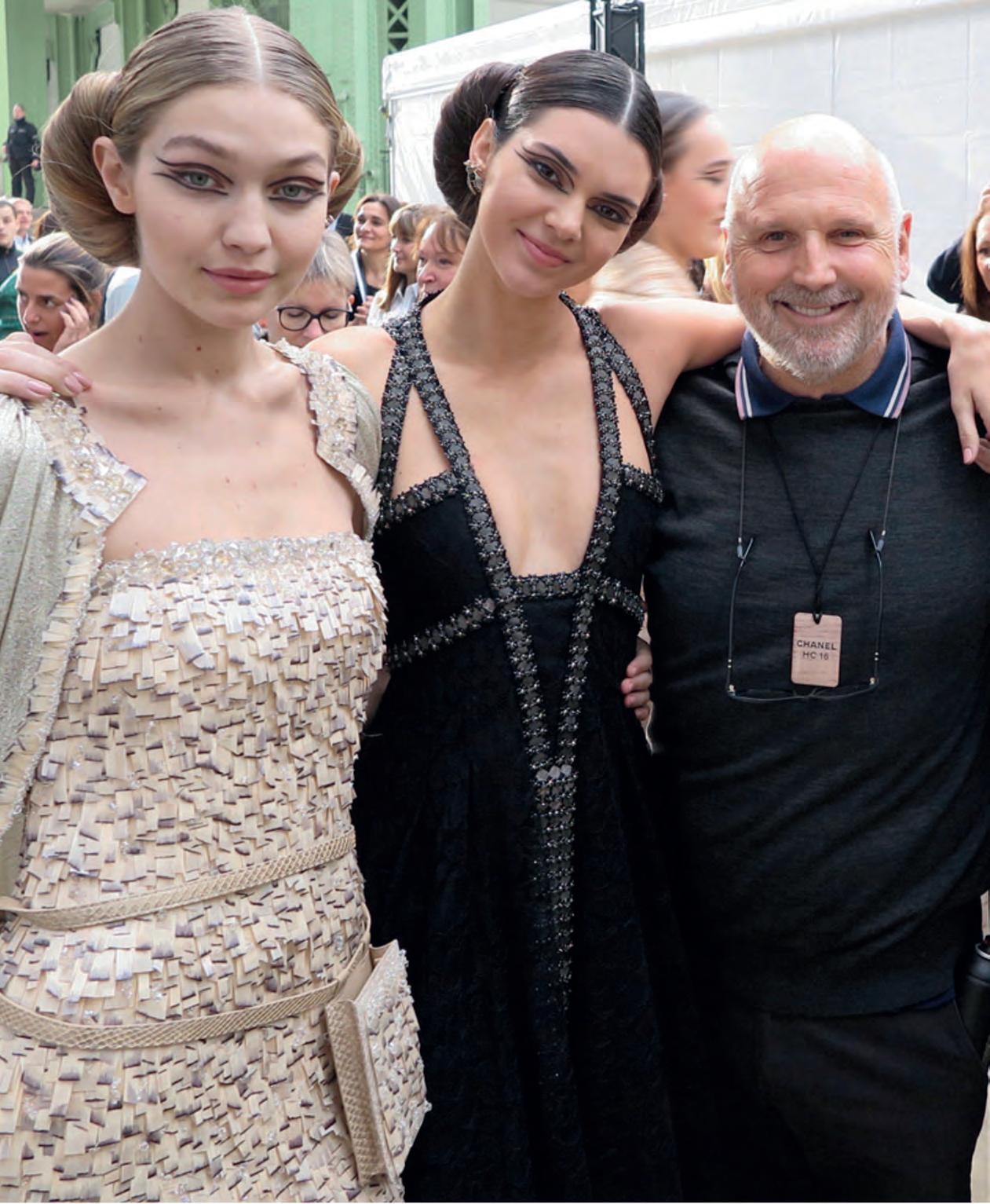
CROWNING GLORY
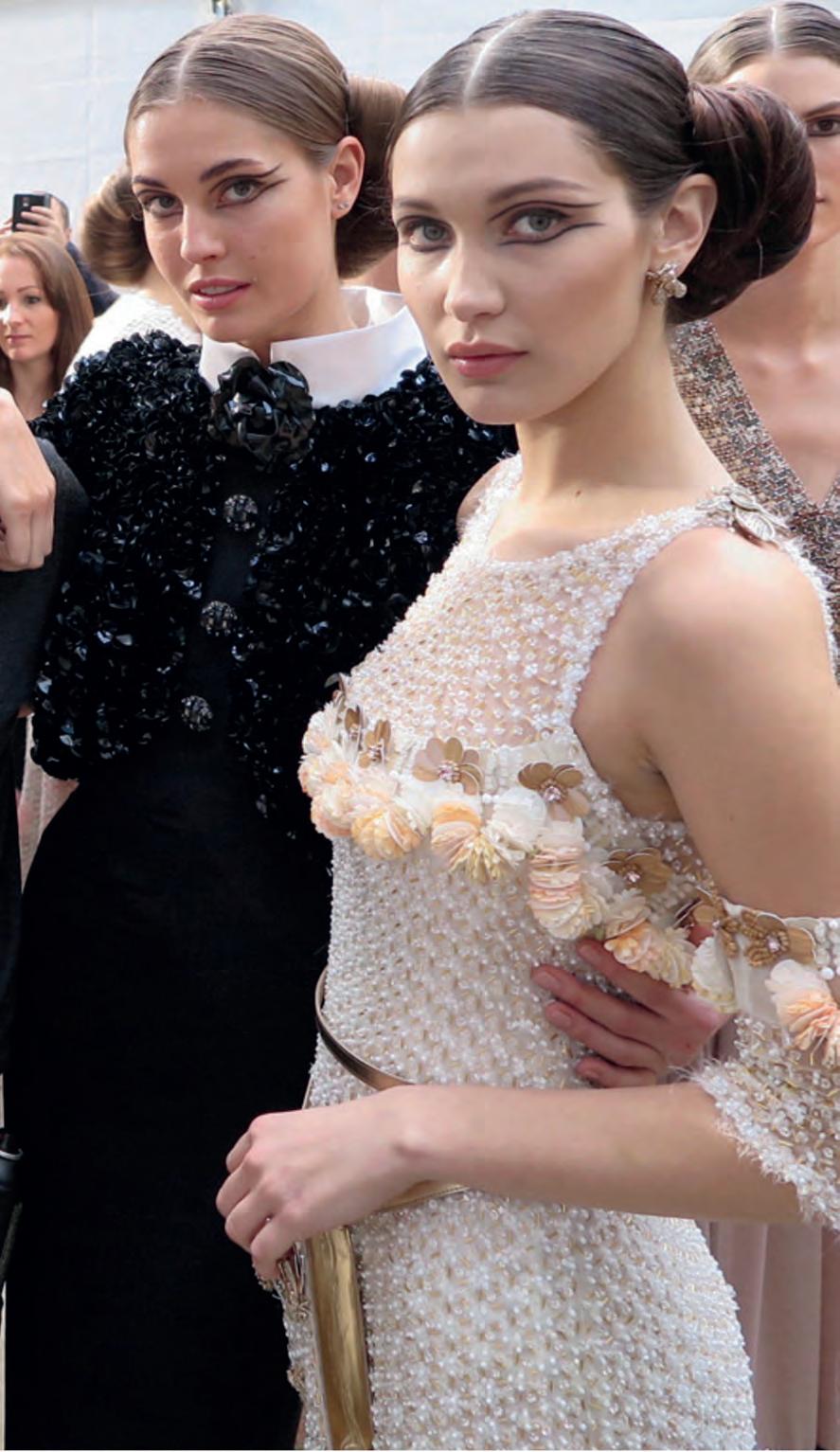
With a career spanning close to half a century, the iconic hairstylist Sam McKnight is now focused on the essentials – creating great hair care products and caring for the next generation of artists who will one day take up the mane mantle
WORDS: JESISCA MICHAULT
Sam McKnight has so many great fashion stories to tell. But he doesn’t romanticise the past. When he talks about it you can feel the electricity of a very different fashion world. The one where he worked with Alexander McQueen, John Galliano, Vivienne Westwood, Karl Lagerfeld, and a generation of supermodels who defined the very idea of cool. “I had the best, most amazing time… it was incredible working with Karl and with Vivienne and with Dries,” he says, effortlessly rattling off names that shaped entire eras of fashion. “When it was Lee and John and Karl… I’ll never forget some of those shows.” Then he adds, with the kind of blunt finality only someone who lived it can offer: “It was a golden age.”
He’s not being dramatic, he’s being honest. And McKnight has earned the right to tell the truth. From London and Paris to New York and Milan, he’s spent more than four decades inside fashion’s inner circle. But today, instead of chasing the next runway, he’s doing something far more disruptive, making sustainable hair care products designed for the needs of industry experts but available to all. And as luck would have it, his award-winning line, Hair by Sam McKnight, is now launching across the GCC, finally bringing his backstage secrets to a region that has major hair moments every day of the week. “Hair is taken very seriously here and there are so many different textures… and you have the humidity to deal with,” says McKnight about the locks landscape of the Middle East. His products, which are light, potent, and ready to take on the challenge of humidity, feel almost tailor-made for this part of the world. In the beginning, McKnight started by creating products that he felt were missing on set and backstage during countless fashion shows he worked on. “Everything on the market was really heavy,” he recalls. “People were using dry shampoo as texturizing spray, and that’s really bad.” He needed fast, clean, brushable results. Something models’ hair could withstand after weeks of abuse. So he made his own solutions. Cool Girl, now a global bestseller, was literally created to give Kate Moss her effortless volume. “Kate’s got that fine English hair, so to get that volume, it was a half-hour process,” he recounts. “So we did a super-light texturizer… we couldn’t call it Kate Moss, so we called it Cool Girl.” It became a cult classic almost immediately.
‘glam squad,’ I knew we were in trouble.” Budgets have gone up, but not for the artists. McKnight sees the respect for the work hair stylists do fading away. And he’s over it. “When I hear the stories of the younger generation… how they’re being treated, it’s not fair,” he says. He’s even backed the creation of a backstage union in the United Kingdom. “I’m being vocal because I can speak up… I don’t [care] if they don’t want to book me again.”

What worries him even more than budgets is AI. He has seen digital models, also called Digital twins, begin to pop up. Entire campaigns that no longer require living, breathing people. “As soon as I saw that, I saw the end,” he says flatly. “There’s gonna be no need for me. There’s gonna be no need for you either,” pointing to yours truly. He is convinced that real shoots will soon be a luxury experience. Rare, expensive, and reserved for the highest tiers of fashion. “Real life will become the luxury,” he predicts. However, McKnight isn’t scared. Not really. Because he’s doing something that energises him. “This brand has given me a lot of new energy,” he admits, and he has the pandemic to thank for it. “I was at home for six months and it was a period of reflection, and figuring out what am I gonna do now?” he shares. The answer was simple: focus on growing the brand he launched in 2017 into a global business. Afterall, there will always be events in need of the perfect up-do or bombshell blow out. His new expansion into the GCC makes perfect sense. The region demands high-performance haircare that fights frizz, withstands humidity, and supports thick, textured hair types. McKnight already has a line up of whimsically named products for that, from D-Frizz, Happy Endings, and Modern Hairspray, to Cool Girl, and Pure Genius Scalp Oil. And his partnership with Powder Beauty means he’s entering the region through a platform that understands ingredient-conscious, performance-first consumers.
“We’re very small, very independent… all developed by me and two other hairdressers,” shares McKnight. “We don’t go to a big company and say, what have you got? We go and say, ‘this is what we need.’” It’s a refreshing level of transparency in an industry filled with private-label shortcuts and marketing-first formulas.
But if McKnight has a gift for reinvention, he also has a sharp, unfiltered view of how fashion treats the people who keep it running. “Before, there were six or seven people on a shoot… now there’s 50 people,” he says. “As soon as they started calling us
For someone who helped create some of the most iconic hair moments in modern fashion, the latest chapter in McKnight’s career feels like a fitting evolution. He’s still working, still choosing projects he loves, still connected to the people who shaped him. But he’s no longer chasing. He’s building. He’s protecting the next generation. He’s thinking critically about the future. And he’s pouring four decades of backstage genius into products that make everyday hair feel effortless.
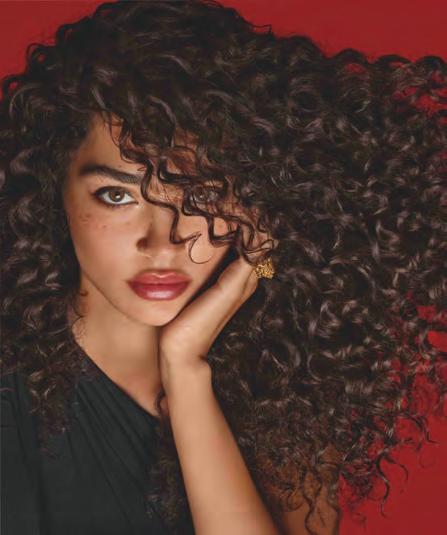
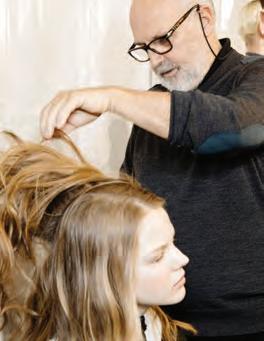
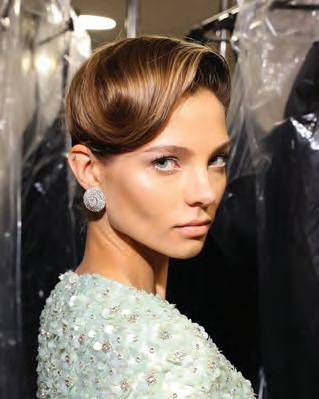

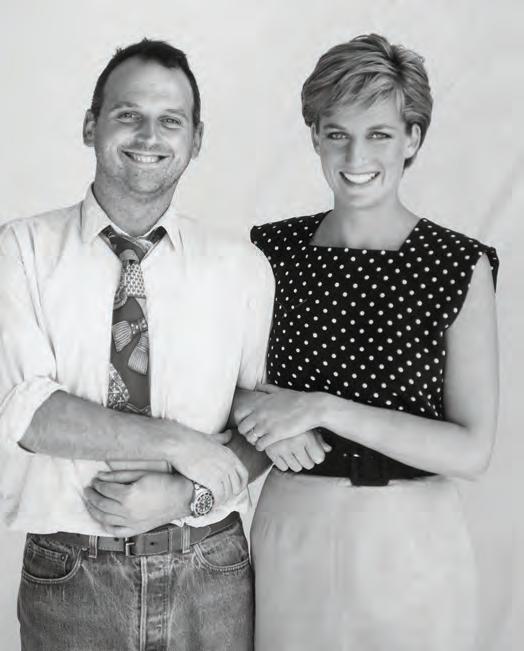

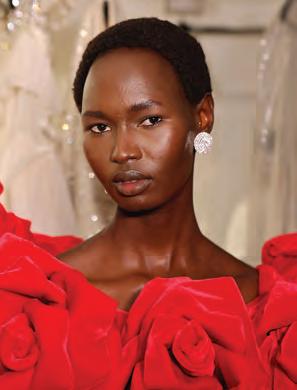
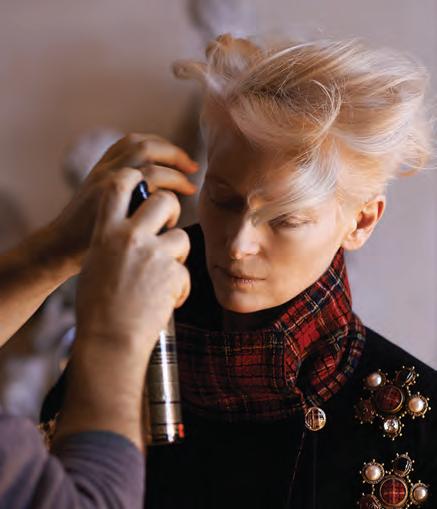
Previous spread:
Spring/Summer 2016 show
Saoirse Ronan
Hair by Sam McKnight, Curl Cleanse Cleansing Conditioner
Richard Quinn FW25
Backstage Milan Fashion Week
Richard Quinn FW25 Cool, chic updo inspired by Catherine Deneuve
Kate Moss for Skims
Sam with Princess Diana (1990)
Tilda Swinton
Gigi Hadid, Kendall Jenner, Bella Hadid, and Sam McKnight backstage at the Chanel Haute Couture
The Beauty Shelf
Digital creator Diana Shekhany talks us through her must-have beauty
staples
COMPILED BY: AMINATH IFASA

Les Beiges Healthy Glow
Bronzing Cream Dhs270 Chanel
As a bronzer lover, the Chanel bronzing cream gives my skin a sun-kissed glow with a brilliant blurring effect.
Ultimate Reset Extreme Repair
Hair Mask Dhs1,112 Shu Uemura
There is no hair mask like this one, it transforms my damaged hair into silky, healthy and voluminous locks after just one wash.
Lash Idôle Mascara Dhs130
Lancôme
I love this brown mascara as it gives my lashes a natural, soft definition that’s perfect for everyday wear and enhances the colour of my eyes.
Créme de La Mer 100ml
Dhs2,414 La Mer
This moisturiser is my go to skincare product, it leaves my skin feeling luxuriously soft, hydrated and glowing every day.
Hot Gossip Lip Cheat Lip Liner
Dhs120 Charlotte Tilbury
This is my ultimate everyday item, it glides on effortlessly and enhances my lips to give them the perfect shade.
The Eye Patches - Revitalizing Hydrogel Patches Dhs89
Augustinus Bader
Starting my days with a cooling eye patch in the morning is the definition of day-to-day luxury,
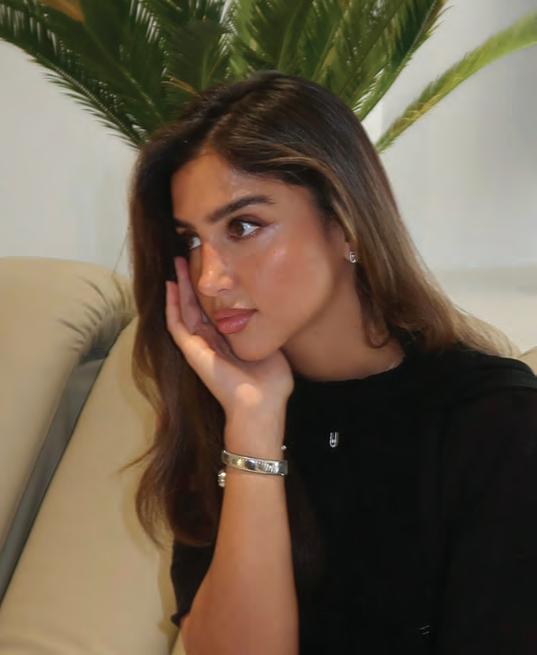
and with these hydrogel patches, I feel instantly elevated.
Hair Multi-Styler and Dryer F732
Dhs1,800 BORK
A bouncy blowout is my signature look and this hair styler has been a game changer for creat-


ing effortless, salon-perfect hair every time.
Lip Butter Balm Dhs123 Summer Fridays
With the Summer Fridays lip balm living rent free in my purse, I am guaranteed to have

soft, hydrated lips, even on the go. This means I am always ready, no matter the occasion.
Soleil Blanc - Rose Gold
Shimmering Body Oil Dhs450
Tom Ford
This shimmering body oil is a must on my beauty shelf, it gives my skin a glowy and healthy vacation feel.
Eyelash Curler Dhs124 Shiseido
For no makeup days or full glam night outs, my Shiseido Eyelash Curler is the one and only for long lasting, lifted lashes.
Lost in Paris Parfum Dhs4,445
ROJA
As a fragrance lover, the ROJA Lost in Paris is my “compliment getter”. It’s rich, flirty and leaves a lasting impression wherever I go.
1. Gentle Fluidity Gold Eau de Parfum 70ml Dhs905 Maison Francis Kurkdjian; 2.Casablanca Lily Night Veils Eau de Parfum 50ml Dhs1,345 Byredo; 3. Le Vestiaire Des Parfums – Tuxedo Sharp Patchouli 75ml Dhs995 YSL Beauty; 4. Privé Musc Shamal Eau de Parfum 100ml Dhs1,400 Armani; 5. Mûre et Musc de Toilette 100ml Dhs670 L’artisan Parfumeur; 6. By The Fireplace 100ml Dhs745 Maison Margiela; 7. Parisian Musc Eau de Parfum 50ml Dhs786 Matiere Premiere; 8. Pure Musc Eau de Parfum 50ml Dhs518 Narciso Rodriguez; 9. Brompton Immortals Eau de Parfum 100ml Dhs1,650 Ex Nihilo
MUSK HAVE SCENTS
The alluring fragrances crafted for winter nights and slow mornings
WORDS: SARAH JOSEPH
In the world of haute perfumery, musk is often used as the silent architect, enhancing complexity, adding depth, and elongating the wear of each note. Winter editions elevate this even further with rich accords like saffron, tonka, oud, and patchouli, creating a symphony of comforting ingredients that feel both modern and timeless. These fragrances tell a story, as winter means calming evenings lit by candlelight, slow rituals, soft textures, and understated elegance. The goal is to find a scent profile that feels indulgent – the ultimate expression of winter luxury. Here Emirates Woman has curated a guide of the most elegant fragrances for long nights and cooler weather.




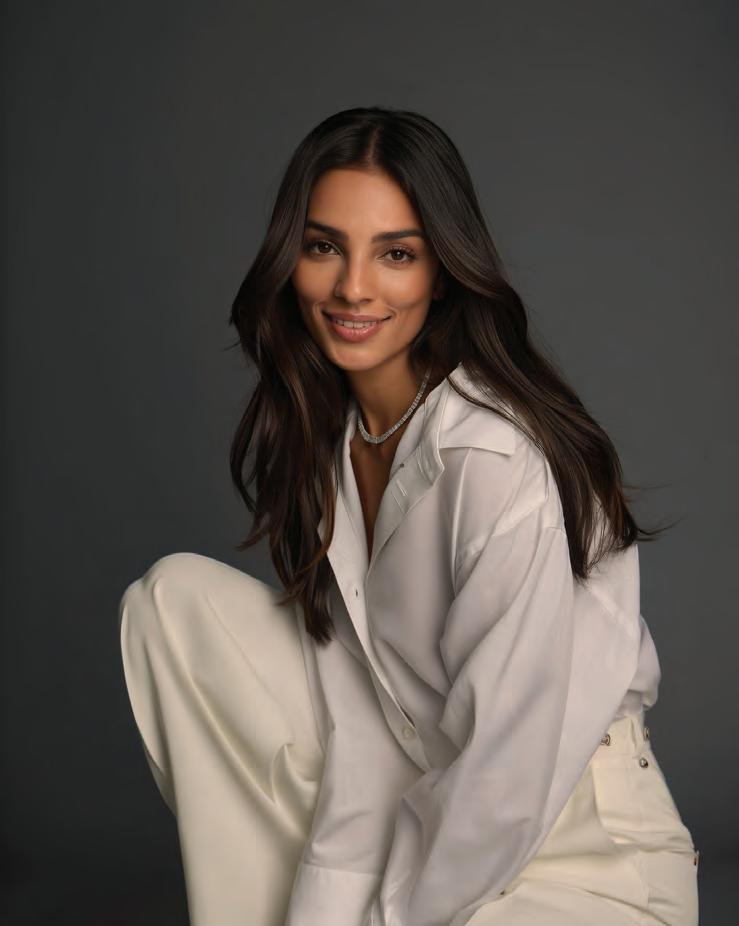
AM TO PM BEAUTY
Founder of Livwell, Payal Shah shares her morning to evening beauty routine
Talk us through your morning routine. My day starts with movement. I’m up before 7am, sip hot water with lemon, grab my electrolytes and head to the gym. HIIT, weights, tennis or a quick run wakes up my body and skin, and if there’s a sauna, I’m in, it’s my essential habit for recovery, clarity and that natural glow. After supplements, I go straight into hydrating skincare (Glow Recipe, TIRTIR or The Ordinary), RoC’s Vitamin C, an eye serum or cream, and sunscreen from La Roche-Posay or Supergoop, adding Paula’s Choice BHA when I need more clarity. I eat plant-forward and fibre-first earlier in the day, leaning on fer-
mented favourites for gut and skin health. How does your evening routine differ? My evenings are all about unwinding. I double cleanse, layer a hydrating or peptide serum, and seal everything in with a richer moisturiser. If it’s a hair-wash night, I always finish with cold water, it seals the cuticle, boosts shine and gives instant volume. Some nights I’ll use my red light therapy mask to soothe, calm and support collagen renewal. I track it all with my Oura ring, which keeps me honest about my sleep, stress and recovery. What are your go-to skincare products? My everyday staples are simple. I rotate be-
tween hydrating heroes like Glow Recipe’s Plum Plump, TIRTIR’s SOS Serum, The Ordinary Hyaluronic Acid and RoC’s Vitamin C, paired with Paula’s Choice 2% BHA for clarity and Beauty of Joseon’s Ginseng + Retinal Eye Serum or Kiss Red E for bright, rested eyes. For protection, it’s La Roche-Posay’s Toleriane UV Moisturizer SPF 30 or a Supergoop Glow Stick topup. I keep Subtle Energies’ Aura Protection Mist for an instant reset, Innisfree’s Rose Energy Mask for a quick glow, and a Medicube device to boost absorption. These are my non-negotiables, the products I trust, rely on and never leave behind.
WORDS: SARAH JOSEPH





Clockwise from top left: Champi Bond Repair Shampoo Dhs108 inde wild; Multi-Peptide Serum for Hair Density 60ml Dhs105 The Ordinary; Revive Eye Serum Ginsend + Retinal 30ml Dhs90 Beauty of Joseon; Glow Stick Sunscreen SPF50 Dhs115 Supergoop!; Skin Perfecting 2% BHA Facial Liquid Exfoliant 118ml Dhs116 Paula’s Choice; SOS Serum 50ml Dhs211 TirTir
Are you a fan of masks? Yes. Masks are one of my favourite ways to bring life back into my skin. Before big events, presentations or long days under lighting I use the Innisfree Rose Energy Sheet Mask. When I want deeper absorption I use my Medicube device with my serums. And at night, when I want something calming and reparative, I use my red light therapy mask. It brings down inflammation and gives me a really healthy glow.
How would you describe your approach to makeup? My makeup philosophy is simple: skin first, always. I keep my everyday look natural, fresh and minimal,
a transparent base, defined brows, lifted lashes and just enough concealer to look awake. I’m obsessed with lip colour because I’m constantly speaking, presenting and hosting, so my lips naturally become the focal point; the right shade can make me feel bold, soft or unstoppable. What can always be found in your makeup bag? Concealer, an eyebrow pencil and a lip liner. I never travel without a good lip color. Talk us through your hair routine. My hair routine is simple and rooted in consistency. I have been using the Inde Wild Champi Bond Repair Shampoo and Conditioner, which keep my hair soft and
lightweight. After washing I apply The Ordinary Multi-Peptide Serum for Hair Density to lift the roots and keep the scalp healthy. Oh, and my red light helmet is great for helping with hair growth. One of my favourite hacks is ending my shower with cold water, which makes my hair smoother. And from my Indian beauty traditions I continue to oil my hair before workouts so the heat can help it absorb deeper. What is the most unusual item in your makeup bag? My stain remover pen. It is not glamourous but it is extremely practical and especially if you get your make up on your clothes.
HOME ON THE RANGE
Opened less than a month, the One&Only Moonlight Basin resort offers luxury travellers the opportunity to explore the beauty of Big Sky Montana in the lap of luxury. Surrounded by pristine wilderness and some of the best ski slopes the United States has to offer, this hotel – with its panoramic vistas and world-class cuisine – is the perfect pairing of Mother Nature at her best and hospitality of the highest order. Several years in the making, this resort is the winter escape of the season, and most likely many seasons to come. Welcome to the new gold standard for those who like their festive season both comfortable and covered in snow.
ABODE
Go get lost…
– In a mountain-high wellness retreat in the Swiss Alps
– Exploring the bustling romantic streets of Vienna
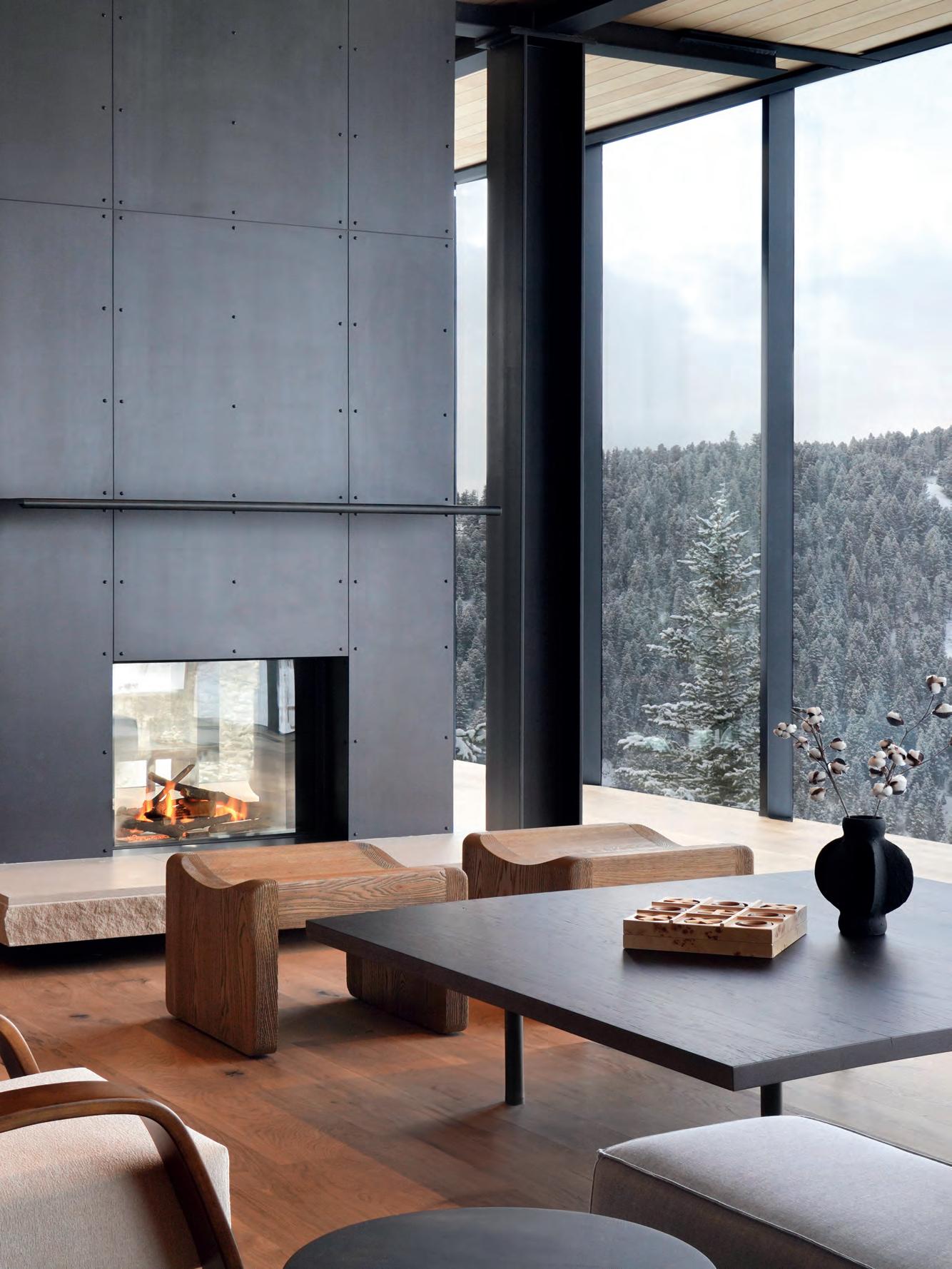
SKY HIGH WELLNESS
With its Alpine Spa, Bürgenstock Resort Lake Lucerne in Switzerland takes the idea of a restorative retreat to new heights
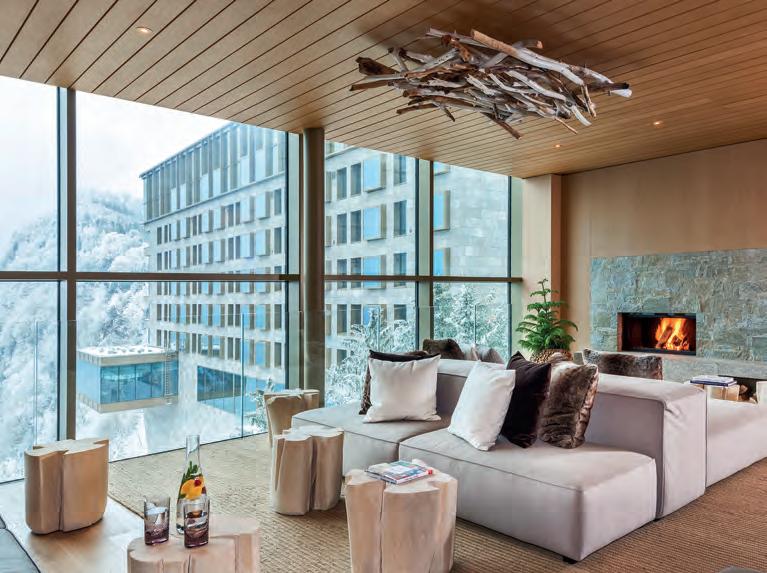
Gloriously perched high above Lake Lucerne, where the air is fresh and crisp and the clouds unfurl like silk draping the Swiss Alps, the famed Bürgenstock Resort has been offering guests a peaceful getaway for over 150 years. This mountaintop sanctuary has drawn many a marquee name to its door, including Audrey Hepburn and Sophia Loren who both took up residency at the property for years. But athletes, royals and dignitaries, all of them in pursuit of the same desire: stillness and inner peace.
Today, that promise is continuing to be fulfilled at the Bürgenstock Alpine Spa, where Mother Nature, state-of-the-art science, and the latest innovations in the health space come together to create one of the most rarified wellness destinations in the world. The resort elegantly honours its setting. Its vast windows are designed to frame the Swiss peaks while natural textures are used in the interior design to bring the landscape inside. Yet the experi-

ence here goes far beyond architectural beauty, it is deeply sensory, profoundly human. When the famed Michelin Guide introduced its inaugural Wellness Hotel Awards, Bürgenstock Resort was named “Best Wellness Hotel in the World.” More than a recognition of its impressive panoramic pools and impeccable service, this title highlights a deeper philosophy, one where all five of the senses are engaged in helping each guest holistically reconnect with themselves on a deeper level. And there is plenty of peace to be found on the 148 acre property, which features 360 hotel rooms and suites, plus an additional 17 residential suites. It could manifest itself on the hotel’s golf course or inside one of its 12 gourmet restaurants. Or maybe while watching a film in the resort’s private movie theater or by simply taking advantage of all the treatments on offer in-

side its 107,000-square-foot spa – a true temple of tranquility. At the Alpine Spa each treatment is meticulously customised. Light therapy, cryo-technology, and high-performance bio-formulas developed by Dr. Olivier Courtin are used to address the skin’s needs according to biological age and lifestyle. While the Hydrothermal Journeys, which are at the heart of Bürgenstock Alpine Spa’s philosophy, invite visitors to define the wellness experiences they crave, from relaxing and regenerative to something a bit more active. Then it’s time to sojourn through the resort’s saunas, cold plunges, herbal steam rooms, and enjoy its unforgettable panoramic pools. Not to be missed are the Sunday yoga classes, with the resort offering an inclusive Sky-High Yoga & Brunch Series that takes place on the open-air mountain deck. With the blue sky above, the lake below
and the mountains framing every move, this yoga experience is designed to transport guests getting into a healing flow state. And after the soul is nourished, it’s the body’s turn with a brunch at Brasserie Ritzcoffier, filled with healthy, locally sourced ingredients.
What sets Bürgenstock Resort apart from other luxury wellness retreats is not its facilities, but its philosophy. Every treatment, every view, every quiet moment is designed to remind guests of the essential fact that wellness is not something to check off a “to-do” list, nor a luxury to be scheduled between meetings, but a return to oneself. It’s about slowing down until all that remains is breath, presence, and the steady rhythm of one’s own heartbeat. The goal –to make wellness a way of life and not an escape from reality. To learn more, visit burgenstockresort.com.
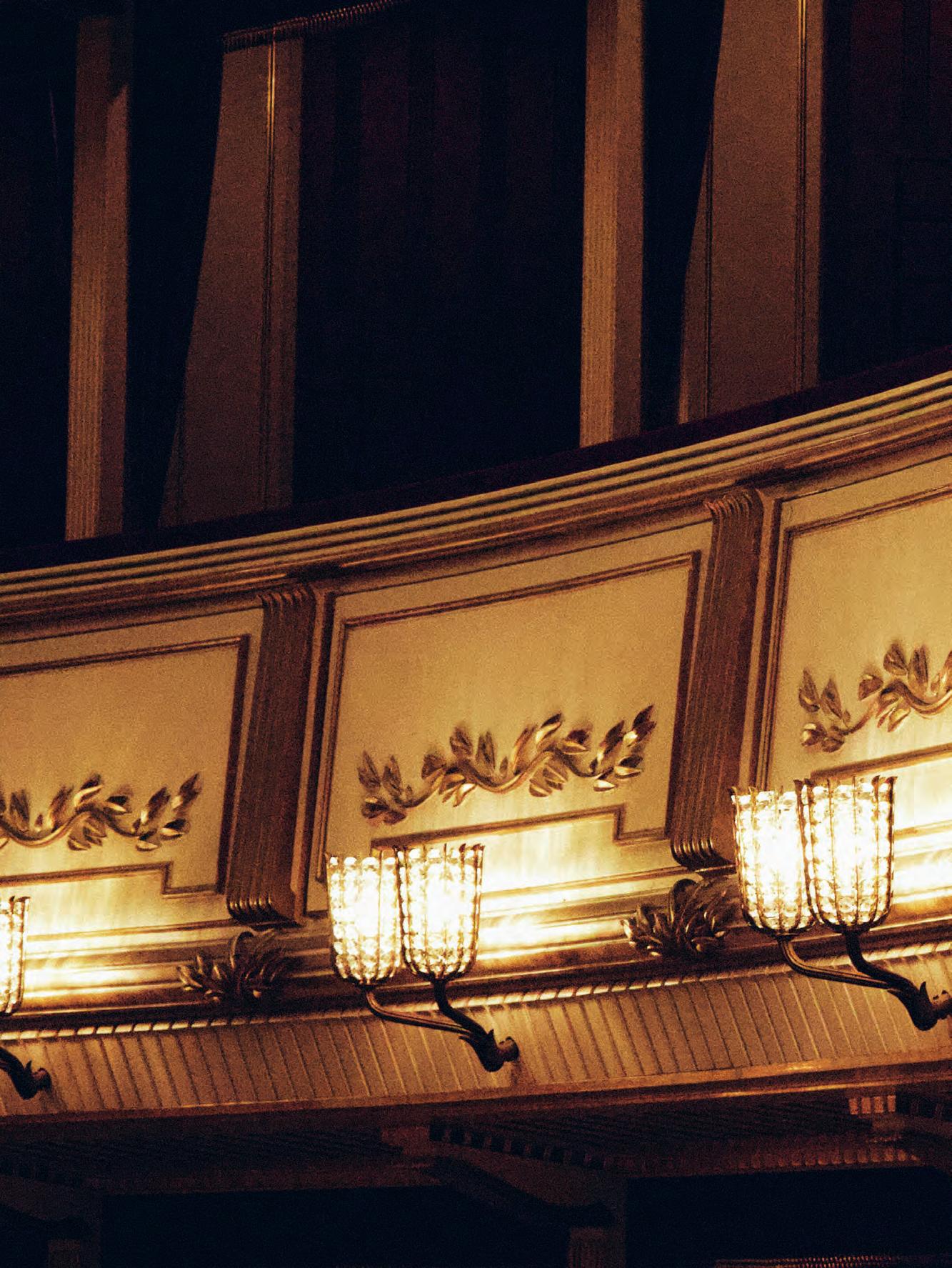
VIENNA WAITS FOR YOU
The beauty of Austria’s capital city has a quiet pull that warms the heart even in the depths of winter
WORDS: VAMA KOTHARI
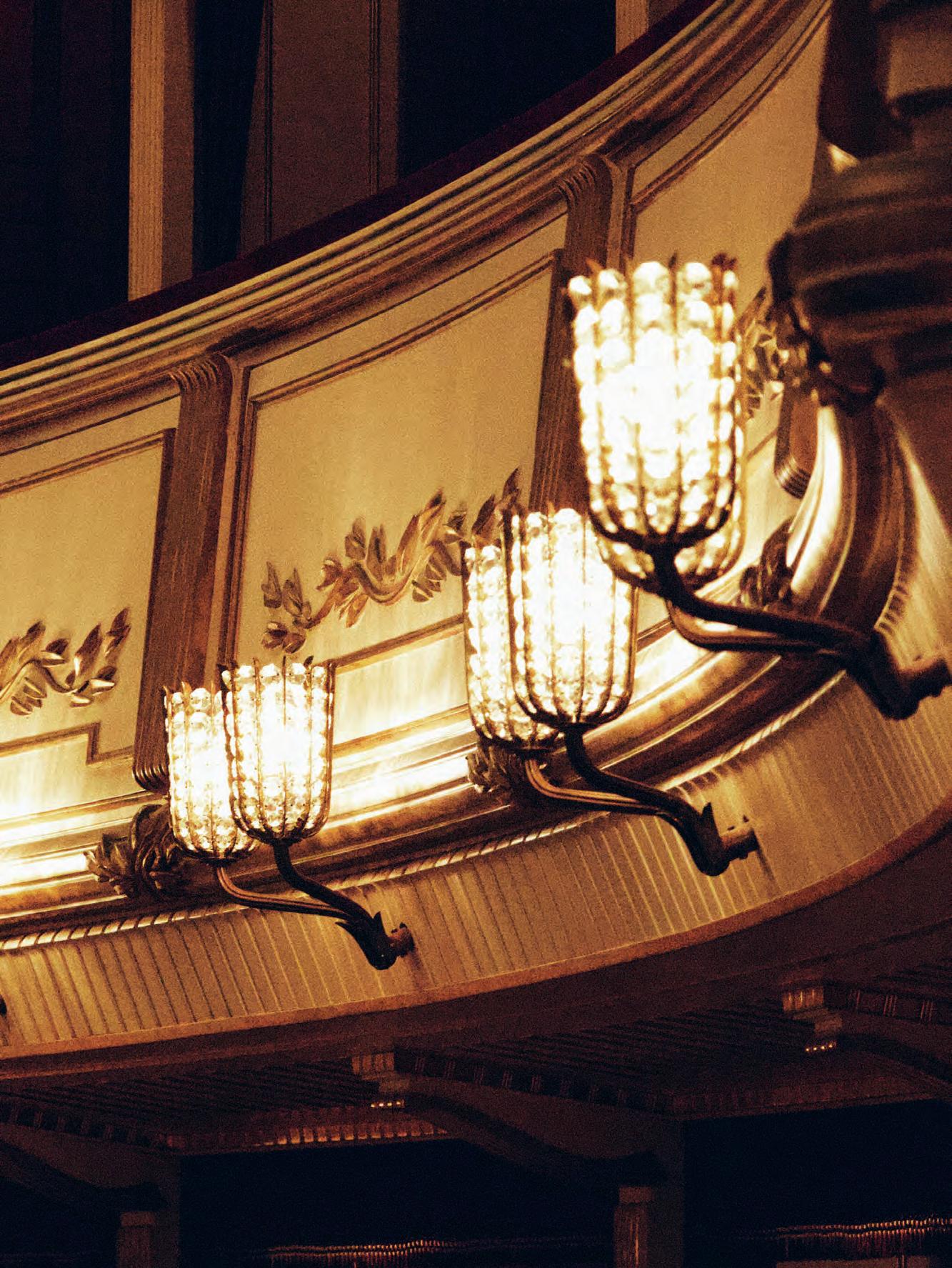
Vienna whispers at winter’s curtain call, asking you to slow down and let the city do what it does best: cast a quiet spell. This is a city where the tempo softens, the romance sticks and the Danube River can carry most worries away. It’s personal in small ways. Elegant without fuss. It’s like a Wes Anderson film scored by Billie Holiday: precise, a little nostalgic, and somehow warmer than the weather.
WHERE TO STAY
Vienna is a city best understood through its neighborhoods, each with its own tempo: the poised elegance of the Ringstrasse, the storybook charm of the Innere Stadt, the creative hum of Neubau. Most travellers gravitate to the historic first district, where the city’s greatest hits – the Vienna State Opera, St. Stephen’s Cathedral and the Hofburg –sit comfortably within strolling distance. And in names like Hotel Sacher and The Guesthouse, Vienna offers familiar luxury. But one address quietly outshines them with the confidence of a place that knows exactly who it is: Almanac Palais Vienna.
Set within the former Palais Henckel von Donnersmarck and Palais Leitenberger, the hotel feels less like a stay and more like slipping into a well-kept secret. These 19th-century residences once hosted aristocrats, artists and intellectuals; today, they welcome travellers who appreciate a dash
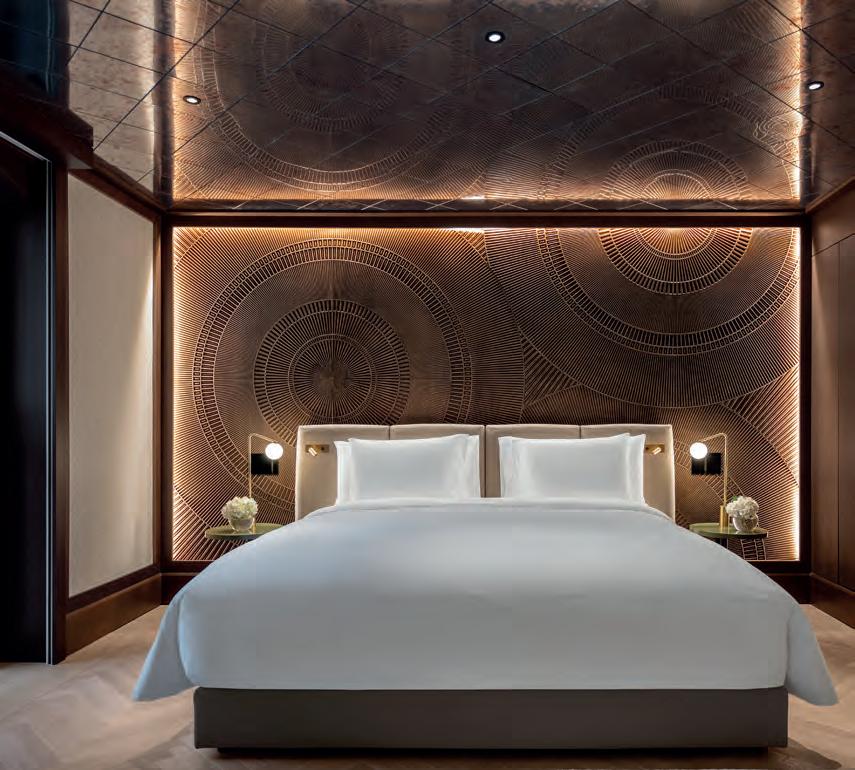
of grandeur without theatrics. Its location, just off the Ringstrasse, means visitors can wander through Stadtpark before breakfast and still make it to a gallery opening by noon. For a base that folds history, design and a quiet sense of theatre into one beau-
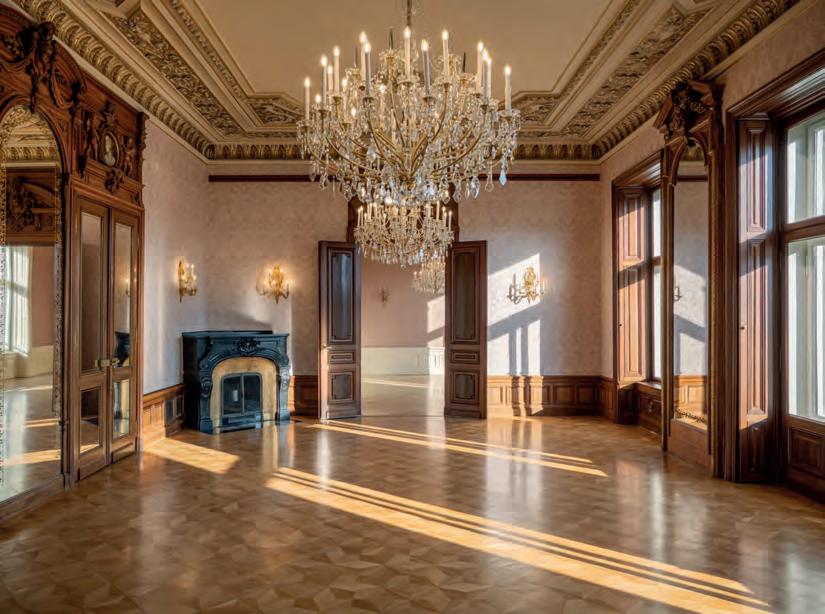
tifully restored ensemble, Almanac Palais is where the city’s past and present meet, and politely insist you stay a little longer.
WHERE TO PLAY
Vienna wears its art lightly. Locals like to joke that one in five people on the street is an artist, and it feels true when every few blocks reveal another museum, from razorsharp contemporary shows to salons devoted to the city’s gilded 1900s. After breakfast, wander to the MAK, the Museum of Applied Arts, where design is treated like a living language. Move from Josef Hoffmann’s elegant geometry to cutting edge installations and see how the city has always balanced utility with beauty. Don’t skip the Dorotheum, the grand old auction house where treasures change hands under crystal chandeliers. If you are lucky, you will catch a live sale with paddles flashing; if not, their online auctions offer a similar thrill.
As evening settles, book a concert and join Vienna’s true congregation. The Musikverein is the city’s acoustic cathedral, with the Golden Hall so perfectly tuned that even a whisper of strings seems to float in the air. Watch the musicians, many trained since childhood, and the audience faces lit with that familiar Vienna glow of recognition when a favorite passage lands noteperfect. Between visiting these cultural touchpoints make sure to take the time to
promenade, because Vienna rewards the flâneur. On foot you will discover quaint cafés with lace curtains and modest counters, and family bookshops that feel like they were shelved by a benevolent fairy. If you want company, take a fashion city walk with the Shopping with Lucie guide. She leads by curiosity, tracing routes through the rare and the well kept, and her tours reveal the city’s style secrets stitched into quiet courtyards. Explore the sparkle at Lobmeyr, the storied glassmaker whose pieces have lit
palaces and modern apartments with equal grace. Let the team guide you through chandeliers and hand cut crystal, and notice how the past feels distinctly present. Then step into A. E. Köchert, court jeweller to the Habsburgs and keeper of legends. The “Sisi stars” began here, and the walls read like a diary of imperial milestones. Even if you are not buying, you are browsing history. For something a bit more modern, drift to Michel Mayer’s boutique and meet the designer if she is in. Run your fingers across fluid
layers and clever drapes, and understand why Viennese minimalism often comes with a twist. As the day draws to a close, return to the main square for a final, unapologetic peruse at the Lindt shop. Pick out some indulgent cocoa truffles, a perfectly sweet souvenir from this enigmatic city.
WHERE TO DINE
Think of these as standout options to match your mood, not a sprint from lunch to last call: start with Wrenkh if you’re craving modern, plant-forward comfort –the Lucky Salad is a quiet showstopper, all silky rapeseed oil, bright feta, confetti-crisp buckwheat, and fried smoked tofu with a smoky wink – served in a bright, unfussy room with warm wood, open shelves, and the easy hum of a place that takes vegetables seriously. For vegetables as headliners, choose Lara, where regional, seasonal cooking stays generous and joyful, never austere; expect a candlelit, minimalist warmth. This means stoneware plates, linen touches, and an intimate buzz that makes even a Tuesday feel like a small celebration.
If you’re planning ahead, book &flora, where creative Head Chef Parvin Razavi composes spice-literate plates that feel precise yet welcoming; the space leans contemporary bistro with its clean lines, greenery, soft lighting, and a soundtrack that lets conversation breathe. But when only Italian will do, slip into Danielli, where the chefs turn dinner into a conversation. Tell them what you’re in the mood for and let memory-rich sauces do the rest. Set against a cosy, livedin Italian aesthetic with its tiled floors, chalkboard scrawls, soft clatter from an open kitchen, there is the comfortable sense that you’ve wandered into a neighborhood favourite. Pick one, maybe two, and linger; in Vienna, appetite is as much about atmosphere as it is about taste.
WHERE TO DANCE
From November to early March, Vienna’s ball season transforms the city into a waltzing salon with more than 400 balls and timehonoured rituals. These balls are known for their elegant atmosphere, classical music, and formal attire. They typically begin with a ceremonial opening by the young ladies’ and gentlemen’s committee, followed by waltzes and other dance styles. Stay near the Ringstrasse for easy access, hire white tie or a long gown, brush up on a simple waltz, arrive for the opening ceremony, and pace the night with schnitzel intervals and late-night pastries; begin with the Opera Ball for spectacle, the Philharmonic Ball for tradition, or a student ball for a gentler entry.
Previous spread: Vienna State Opera; Left page: Almanac Palais Vienna; This page (from top): Wrenkh; &flora
A FINE LINE
Unveiled at Dubai Watch Week, Bvlgari’s limited edition Mattar Bin Lahej x Octo Finissimo timepiece brings the beauty of the famed Emirati calligraphy artist to the wrist. The 40mm watch is born from a partnership founded in a shared love of craftsmanship and creativity, resulting in a piece that speaks to a bright future.
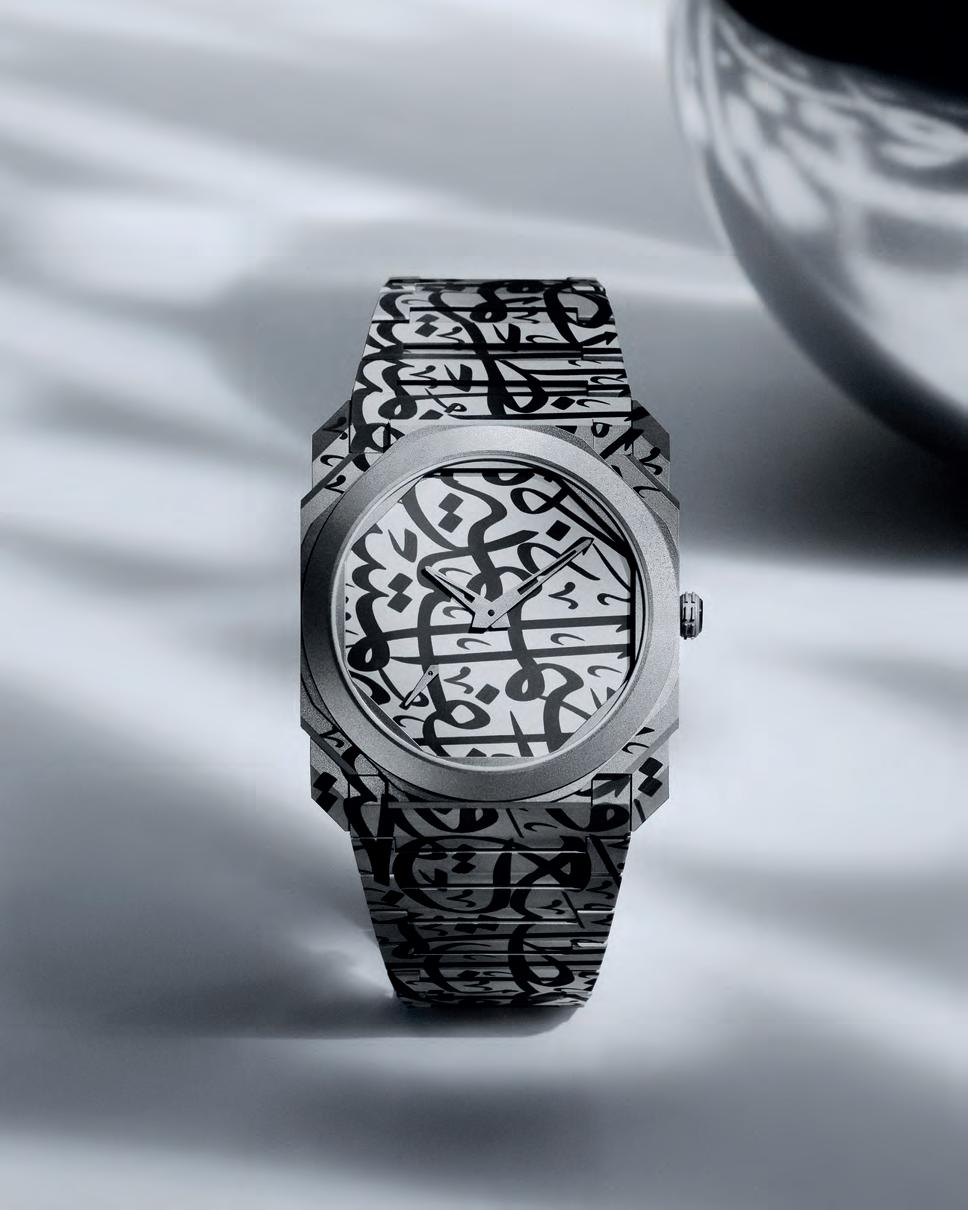
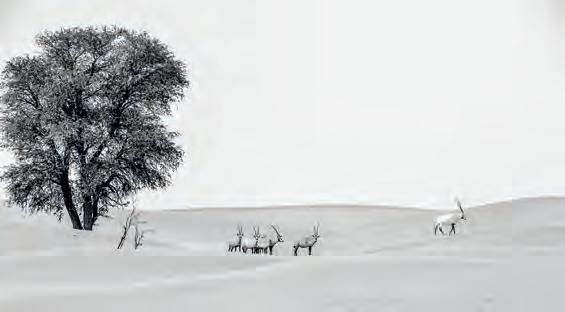
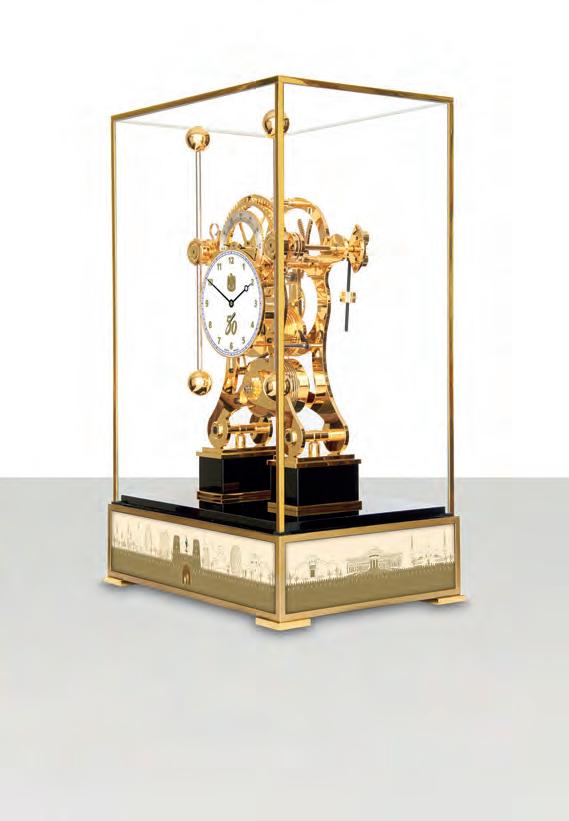
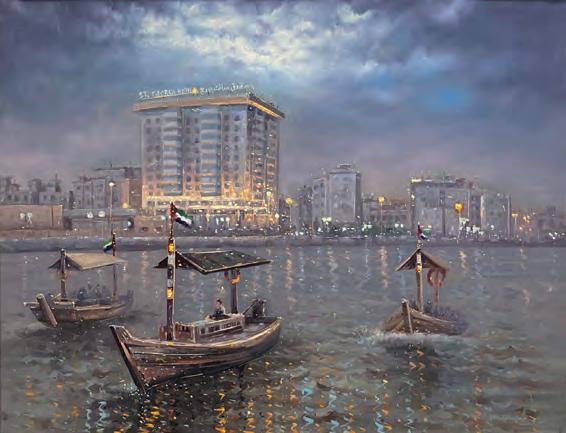

Photograph by Yousef Al Harmoodi
Painting by Faisal Abdul Qader
One invention at a time
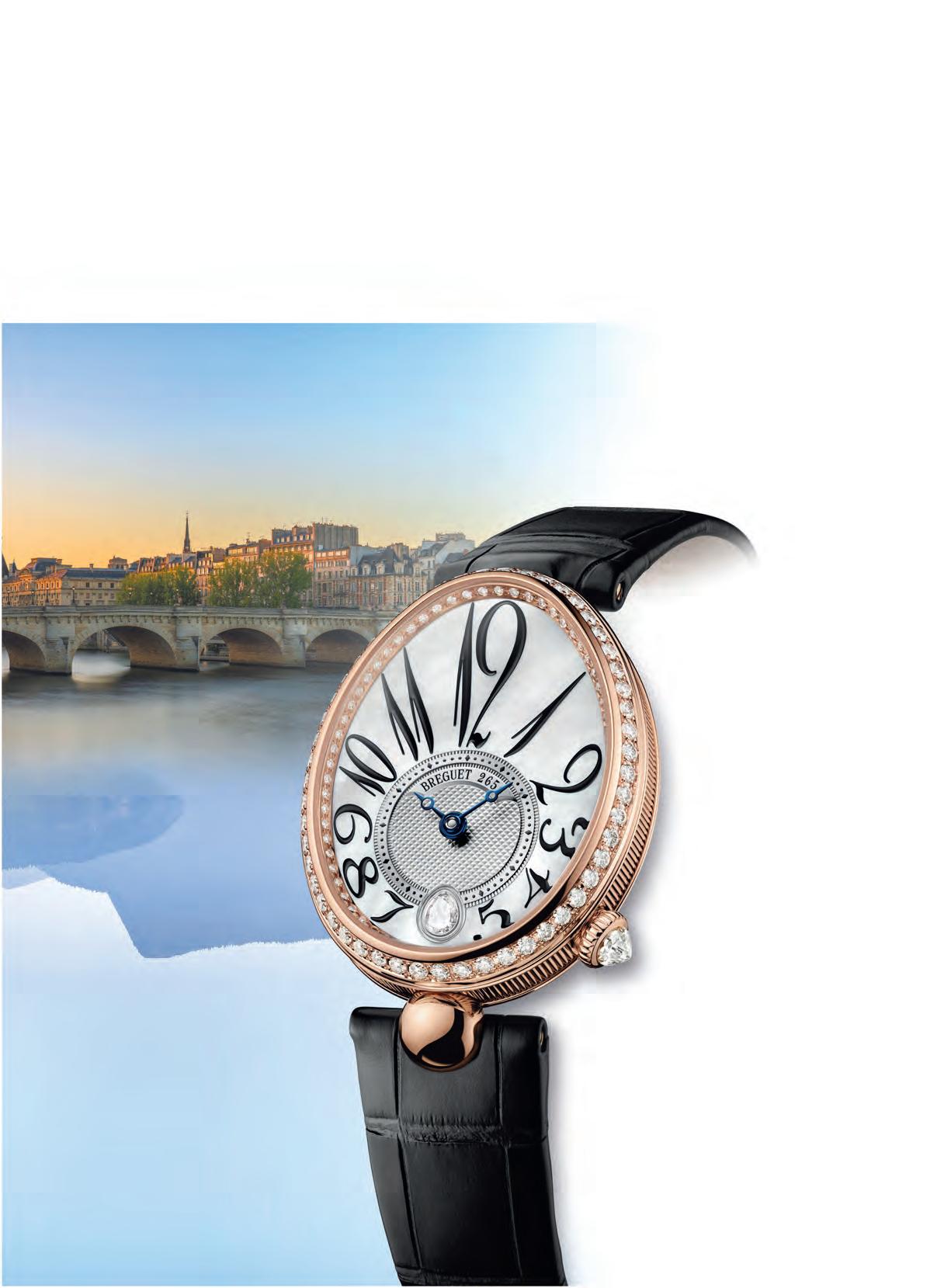
A.-L. Breguet redefined the art of horology with his inventions. His pursuit of perfection continues to inspire those shaping the future. The Reine de Naples 8918 celebrates this extraordinary legacy, paying tribute to the first wristwatch.