THIS OLD HOUSE
Jerry Hooker and Jacob Sudhoff embark on their biggest real estate challenge to date: restoring the 1909 Colonial Revival they now call home. BY ELIZABETH HARPER
As co-owner of Mirador Group and Casa Houston, Jerry Hooker and his husband, Douglas Elliman Texas CEO Jacob Sudhoff, are well versed in the art of home design. The revival of a historic property in Montrose, however, exceeded their expertise. Yet when they were introduced to a circa 1909 Colonial Revival, the pair threw caution to the wind, embarking on an extensive
renovation. “When we were first introduced to the neighborhood, I saw the house falling apart and overgrown,” Hooker says. “[But] I’m good at seeing something several years out and getting my mind set on something and figuring out a way to make it happen.” Soon they were hunting down the owners in an effort to secure the property. “It took several years, but finally we were able to buy it,” he says.
That was merely the beginning. Beyond historic preservation approvals—the home is on the state and national registries—were more practical concerns. “The first sentence on our inspection report when we got the house under contract was ‘imminent total failure,’” Hooker says. Undeterred, restorations were soon underway. First up was making the home CONTINUED…
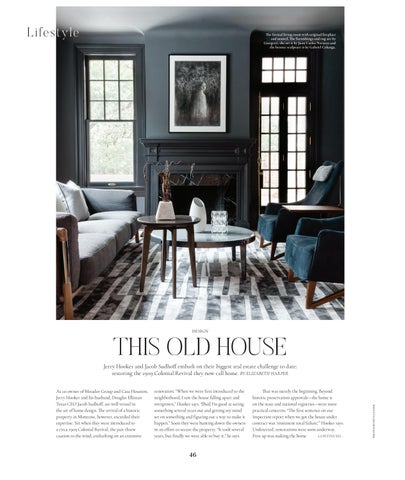
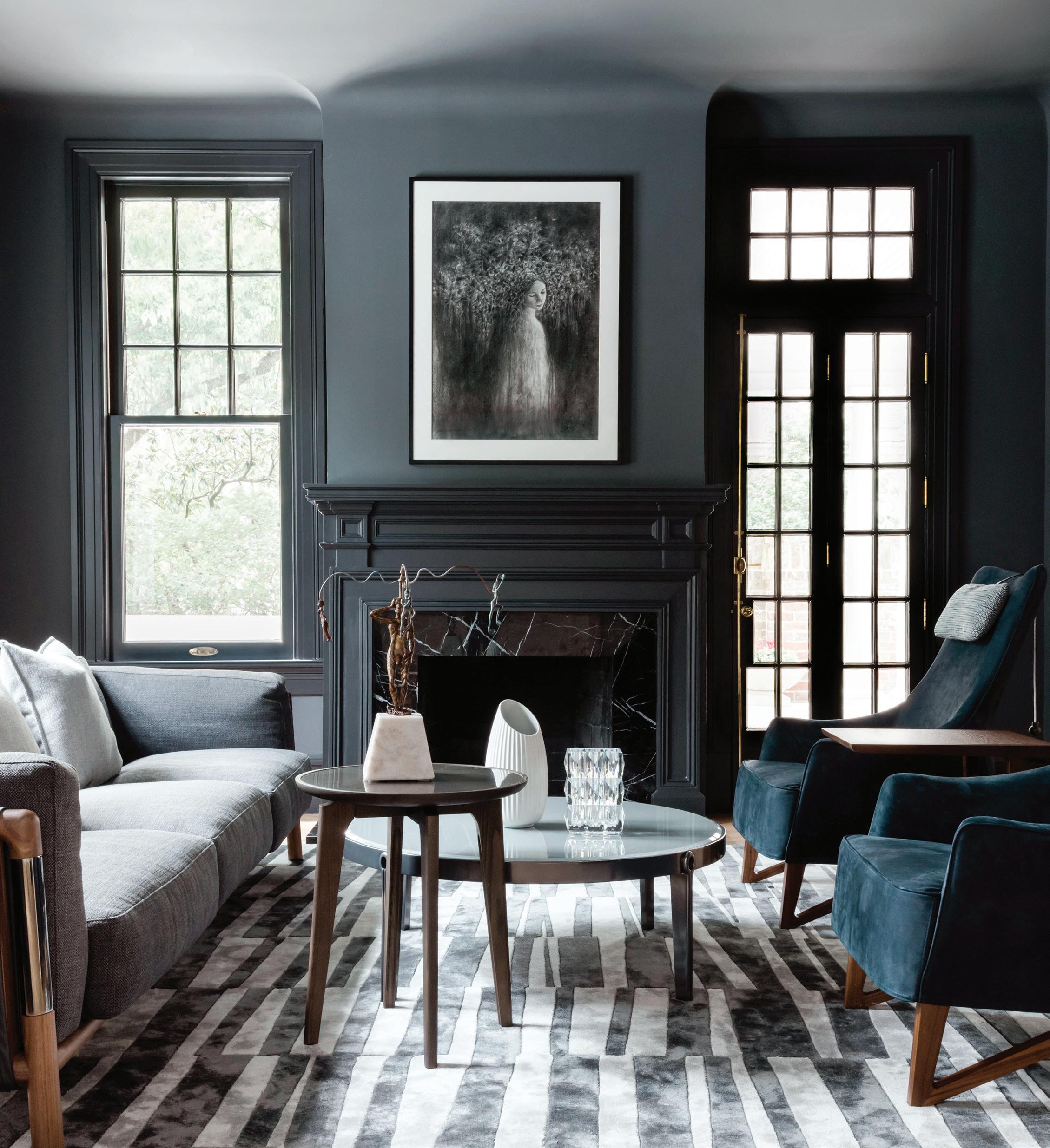
The formal living room with original fireplace and mantel. The furnishings and rug are by Giorgetti, the art is by Juan Carlos Navarro and the bronze sculpture is by Gabriel Colunga.
Lifestyle
...CONTINUED
inhabitable. “The first time I went in the house,” Hooker recalls, “I left with fleabites everywhere. It wasn’t in good shape to say the least.” Among the necessary projects were repairing the crumbling foundation, as well as updating wiring and plumbing indoors. From there, the house was gutted down to the studs.
While the interior now has all the bells and whistles of modern-day living— from luxurious soaking tubs to a smarthome system—every care was made to stay true to the original character. The mantels, fireplaces, staircase and balustrades were salvaged and the early 20th century windows—complete with the original pulley system for opening and closing—were expertly restored, but much of the plaster had been damaged beyond repair. Luckily for the homeowners, drawings from the architect provided a beautifully detailed account,
affording Hooker and Sudhoff the opportunity to re-create design touches, such as the crown moldings, throughout. “Although historic preservation in Houston doesn’t require you to do all that to the interior of the house,” Hooker says, “we wanted the soul of the house to have its root in history. We did all we could to keep it as it was originally.”
In fact, the only original structure that did not remain was the carriage house, which, according to the design mind (and the historic preservation boards), “was not a salvageable structure.” Hooker took advantage of the opportunity, building a pool house connected to the main house by a newly enclosed glass breezeway. Although the space is new, historic charm abounds: An original door and its hardware were repurposed and the carriage house nickname stuck, “which obviously means nothing now CONTINUED…
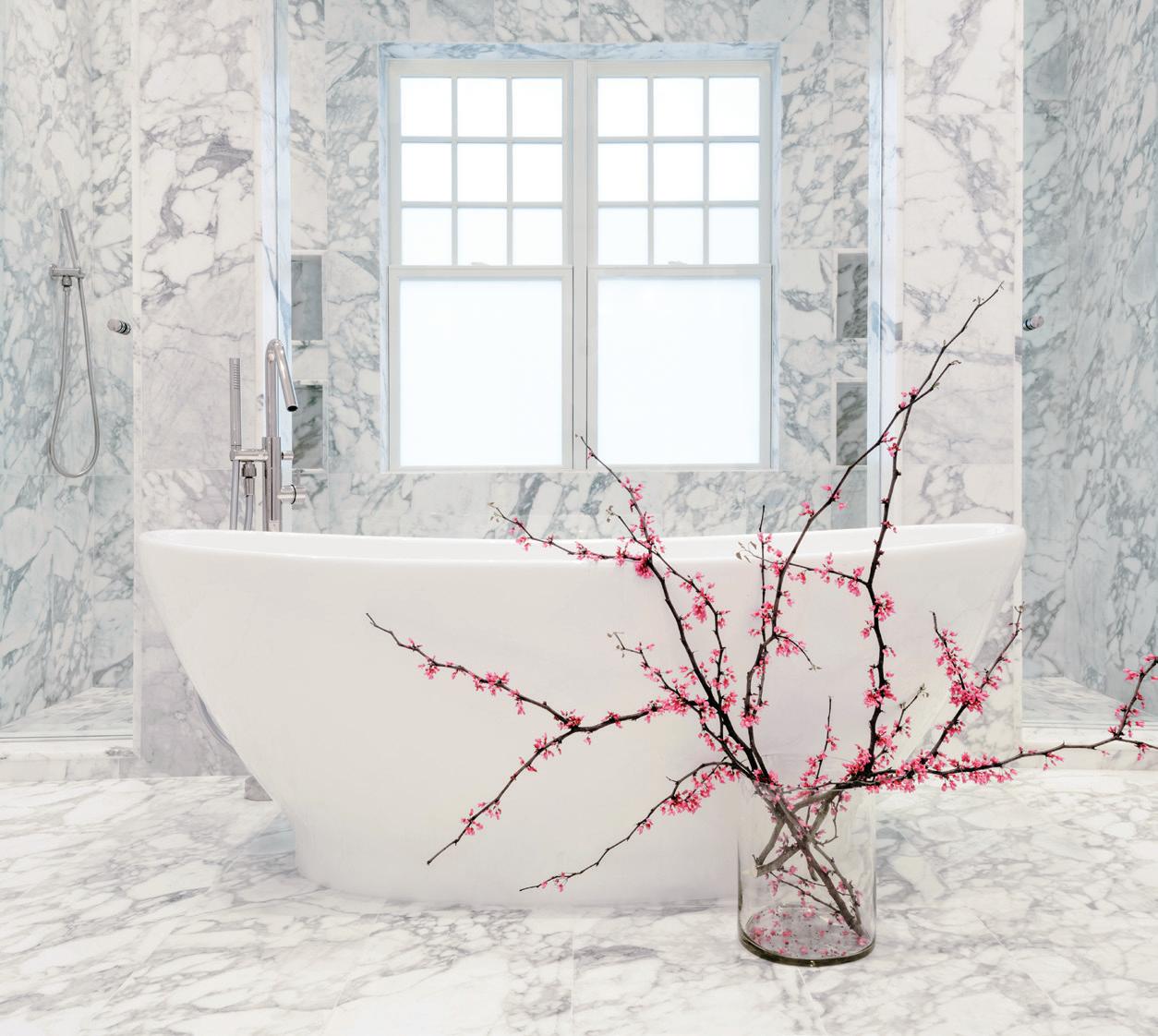
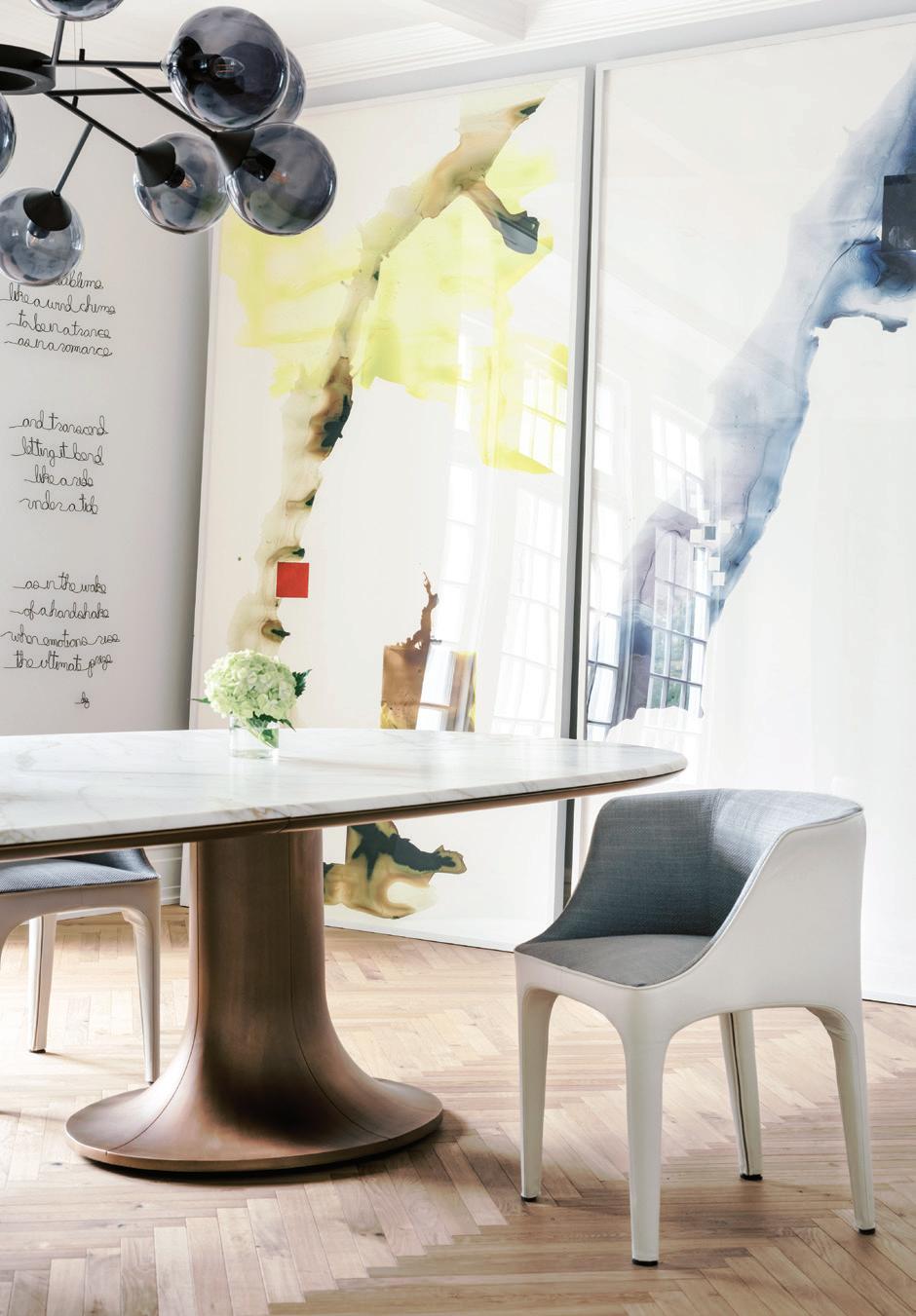
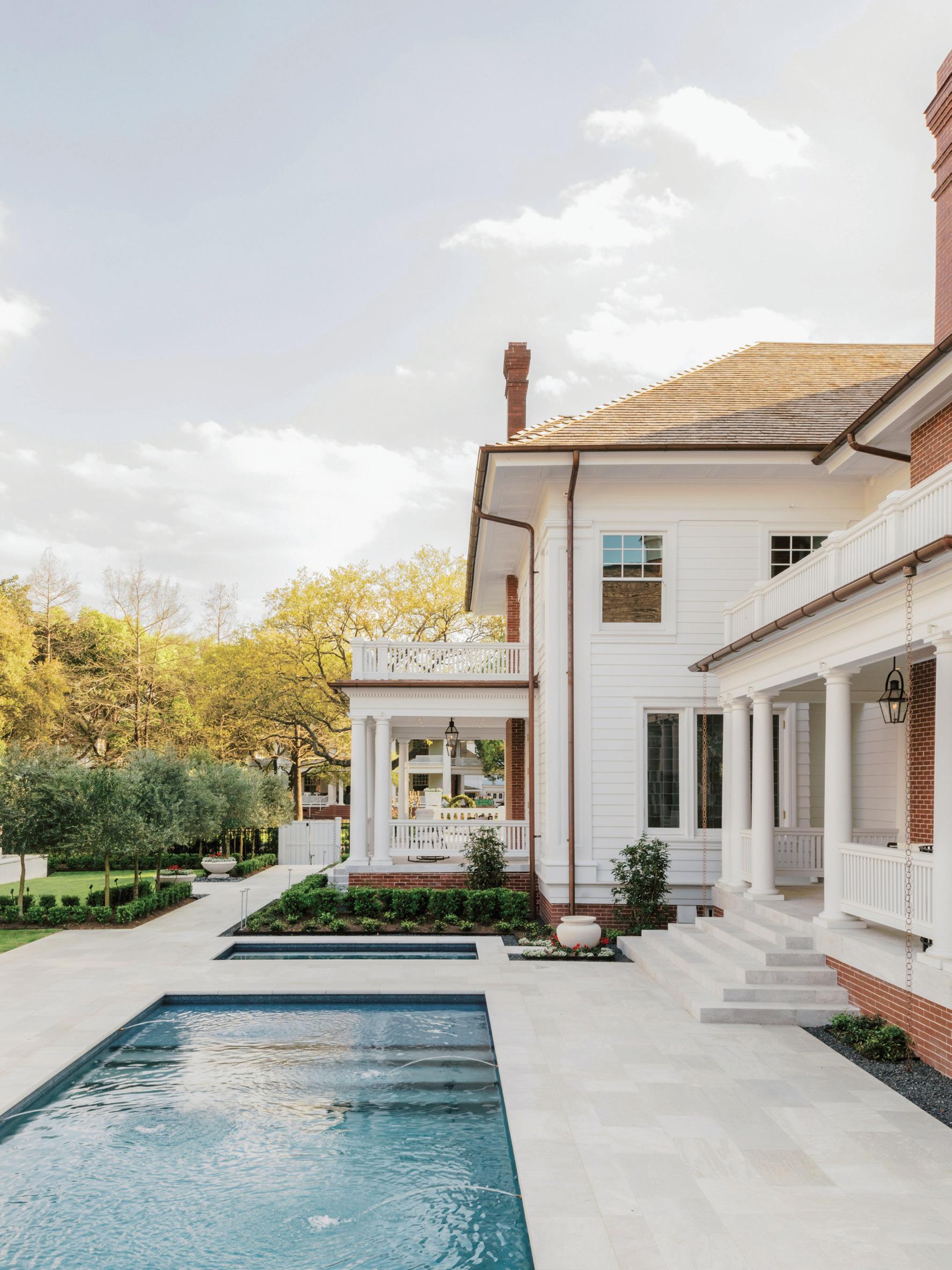
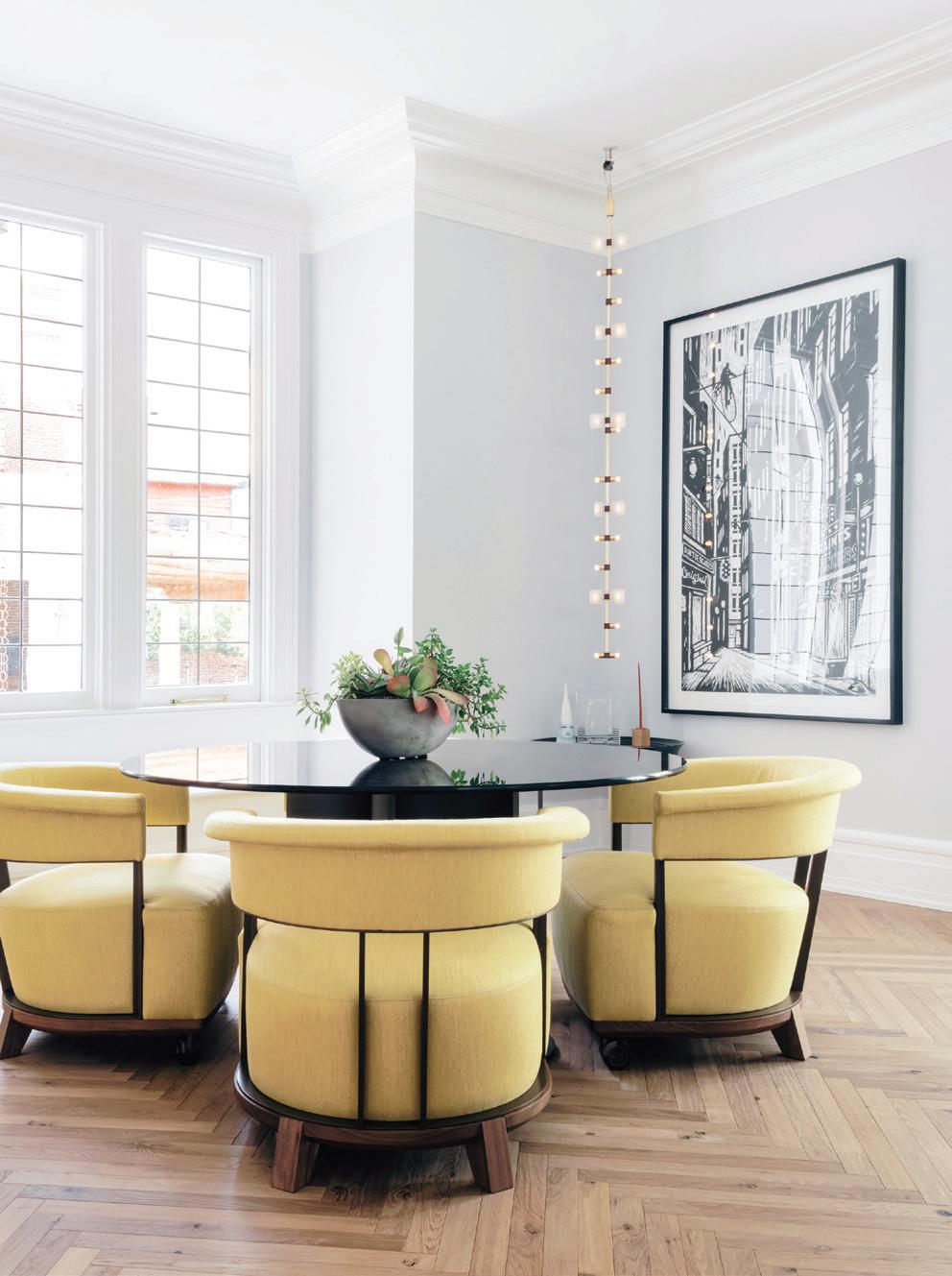
Clockwise from left: A dining room vignette showcases a custom table, dining chairs and chandelier from Giorgetti. The watercolor is by Cornelia White Swann, and the wired sculpture/poem on the wall is by David Zalben; the exterior was restored to match the original 1909 structure as closely as possible. White quartzite stone was used for all exterior surfaces and stairs, and the roof is cedar shake; the master bath features Italian Arabescato marble, and the tub is from MTI.
Lifestyle
...CONTINUED
because we’re not riding around in carriages,” he quips.
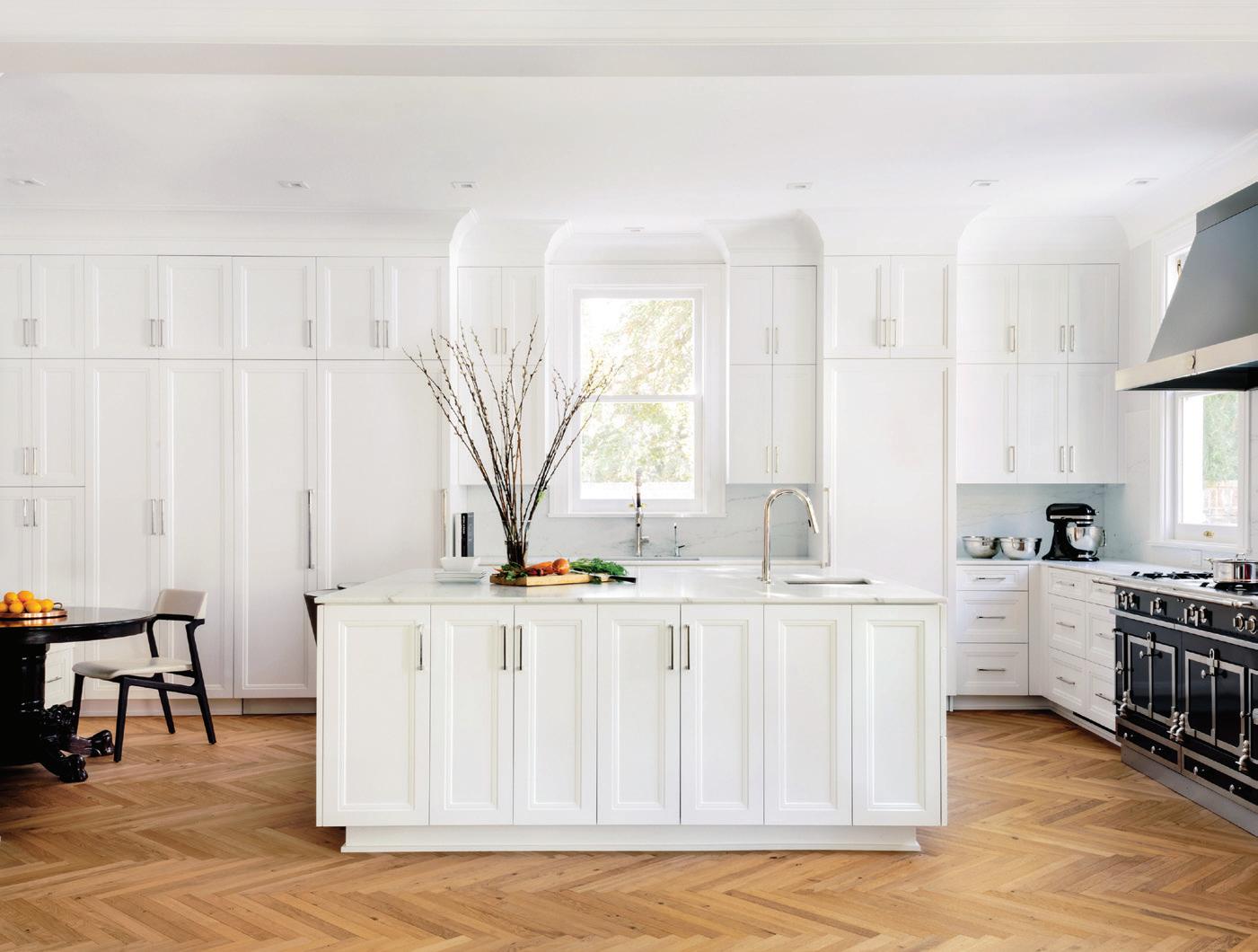
Elsewhere, a master suite was added, bringing the home to a total of seven bedrooms. Other areas of interest include the two—yes, two!—kitchens. In the main house, the kitchen was reworked within the original footprint with a more traditional aesthetic that nods to the classical exterior. “I was trying to express basic materials in beautiful, simple ways to express the natural beauty,” Hooker says. But in the carriage house, it’s an ode to sleek, wonderfully modern Italian kitchens with doors that retract to hide the inner workings when not in use.
Italian design, notably, plays a large role in the interiors. Where the architecture falls strictly within historical parameters, the decor draws on Hooker’s European design world connections he’s garnered through Casa Houston, including Giorgetti. Yet there’s not a disconnect between the traditional building and the more contemporary furnishings and artwork. “When you’re in Italy or Paris or Spain, you’re typically in century-old buildings, but when you think of Italian furniture, it’s typically more contemporary things,” Hooker says. “Yes, it’s contemporary art and either transitional or contemporary
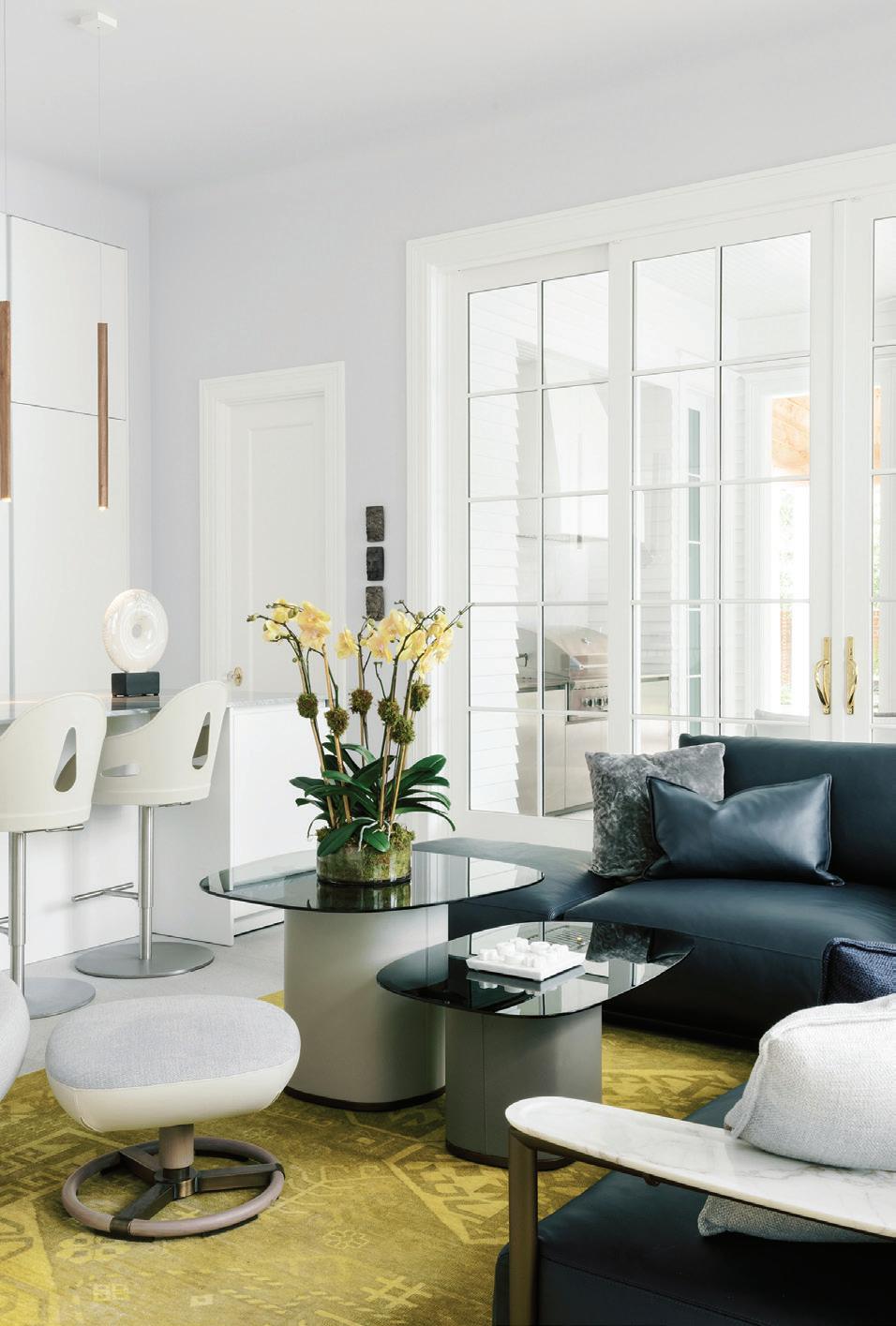
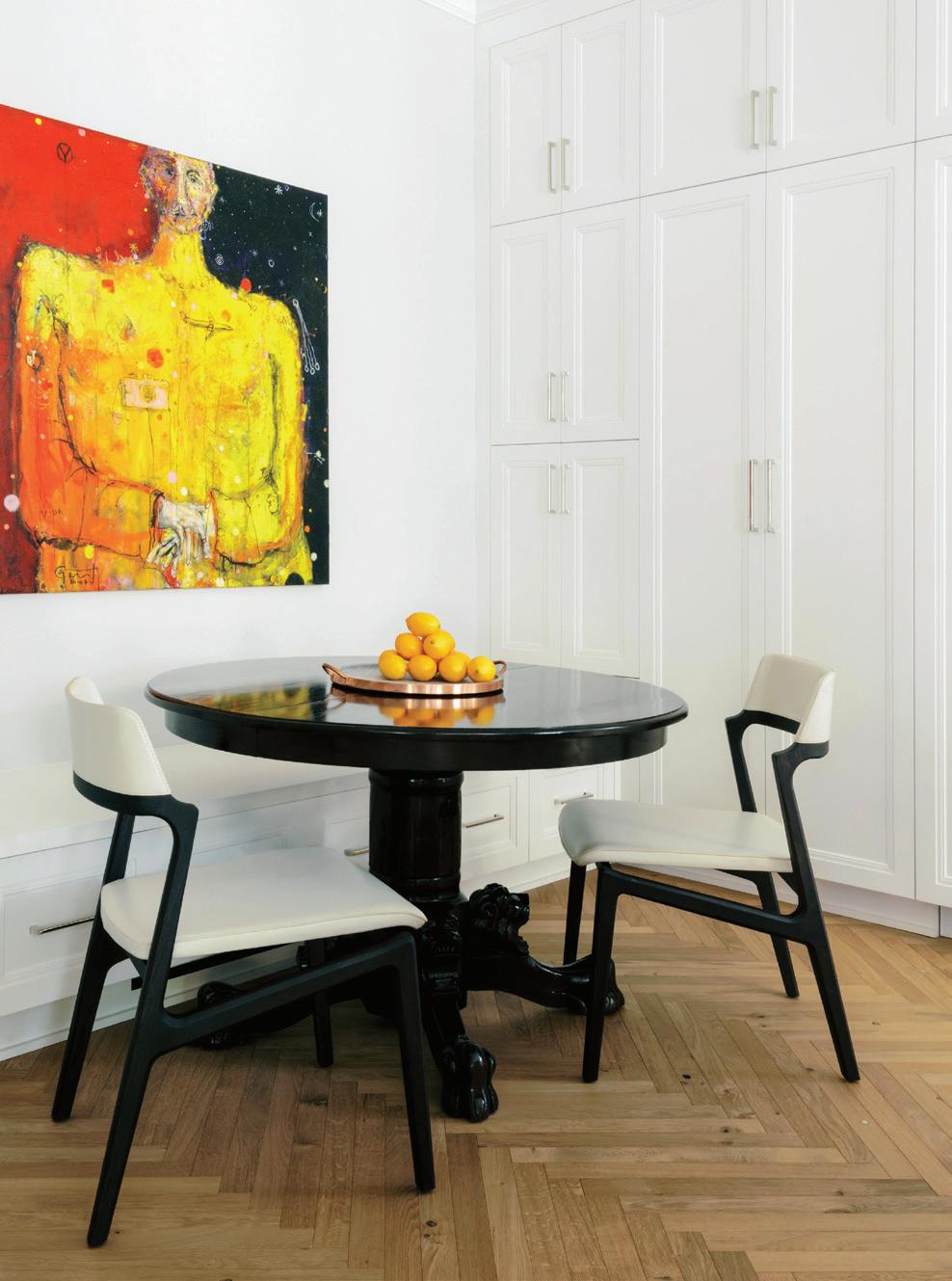
Clockwise from left: The seating area in the more casual main living room has plaster crown molding that was re-created to match the original. A Viabizzuno chandelier, table and chairs from Giorgetti and Marco Guerra art round out the decor; the carriage house living room with furnishings by Giorgetti and wool rug by Kymo. Although a new structure, the carriage house was built to match the historic property; the breakfast room was integrated into the kitchen. The antique table with dogs carved into the legs was left to Hooker when his grandfather passed. The art is “Yellow Traveler” by Yvan Genest; the custom cabinetry in the kitchen mimics the exterior roof soffit detail. The range is La Cornue and the herringbone floors were crafted by Listone Giordano.
furniture, but to me that’s what makes me feel at home because there’s history and depth of meaning behind the structure we’re in.”
In the living spaces—Hooker, Sudhoff and their young daughter spend much of their time in the main kitchen and a small den—Giorgetti furnishings meld with art from travels to Mexico, Europe and Indonesia. Everything has pride of place, but nothing feels too precious. “Furniture, art and lighting—that’s where things can change with style and taste. As the decades go on, those things should be fun and not thought of so seriously because the architecture of the home should be the timeless element,” Hooker says.
Now, after the saga of a failing foundation, original window and glass woes, and a budget gone to the wayside, you can’t help but wonder: Would the pair tackle such a project again? The answer, Hooker says, is yes. “Honestly, as much as I learned and how hard it was doing our project, I would do it again.” And true to his word, he already has two historic home projects on the docket for clients.