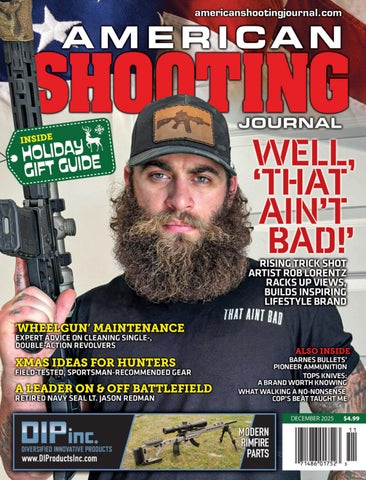
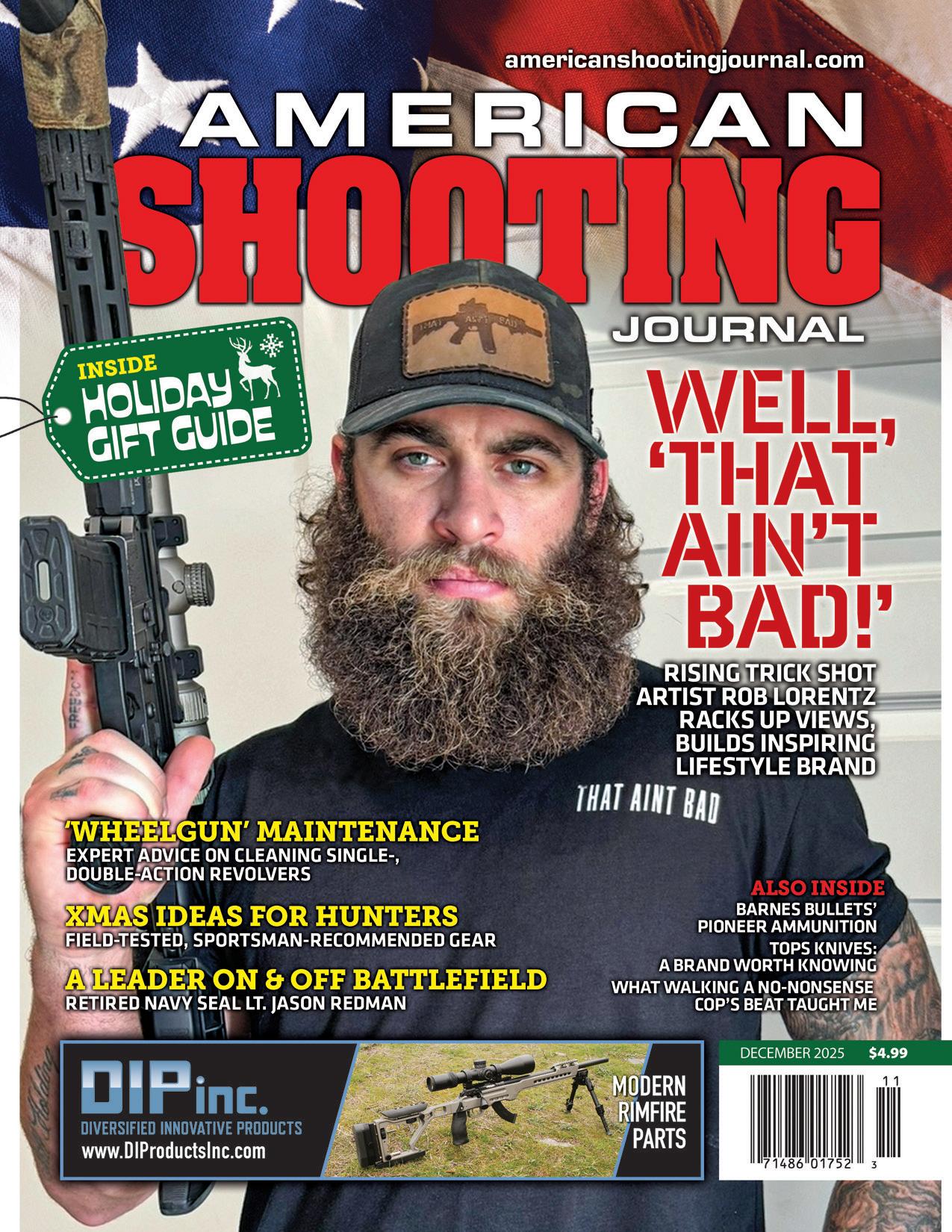
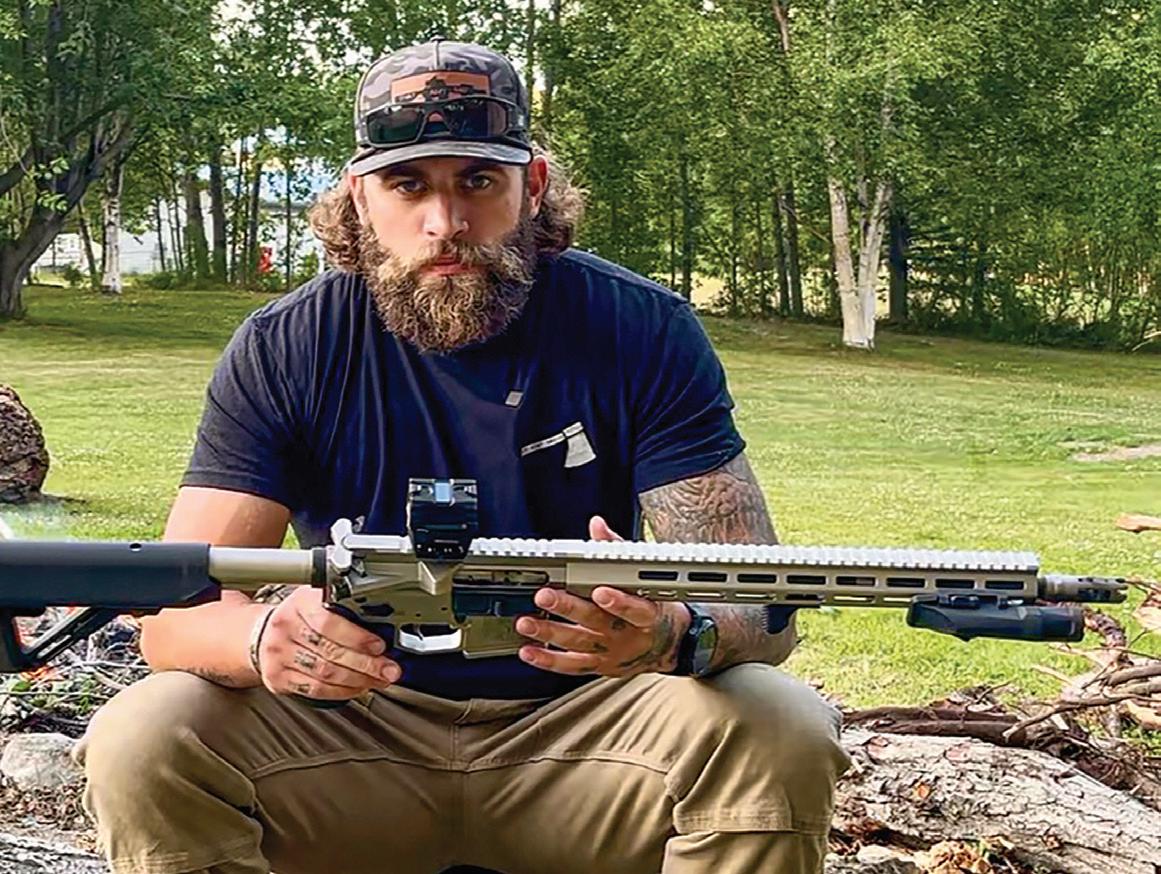
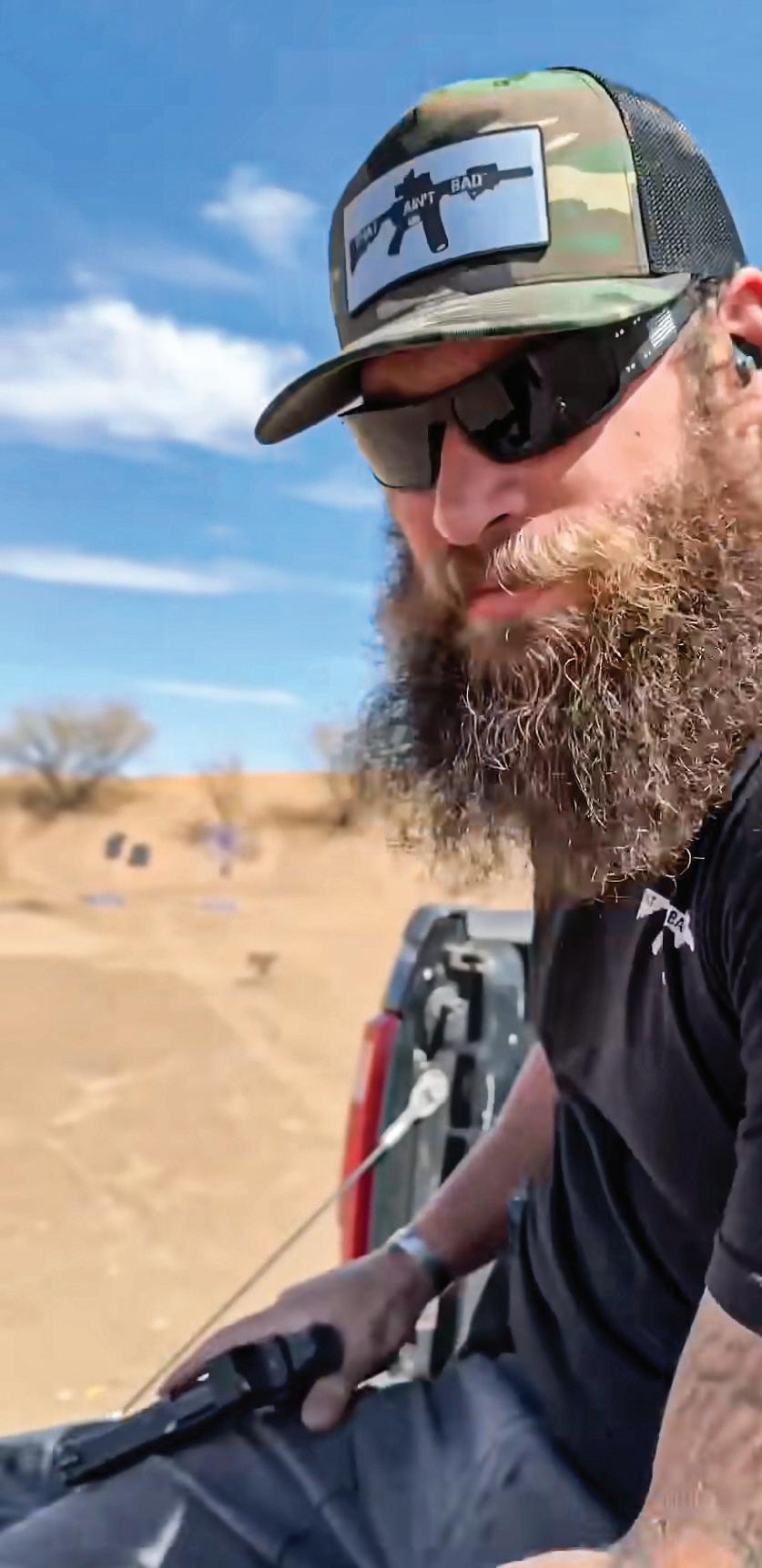
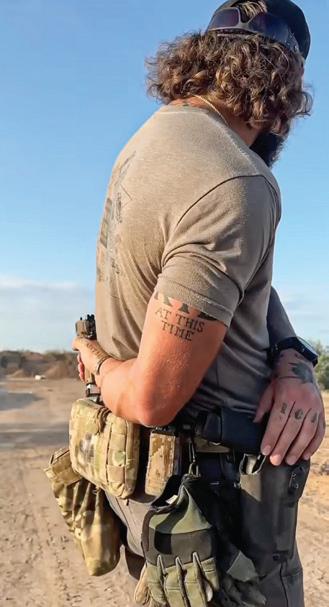
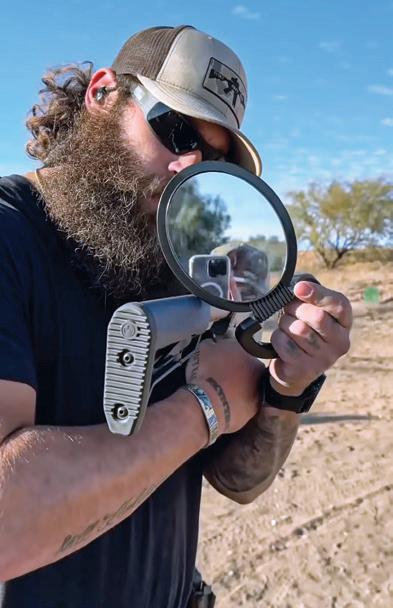
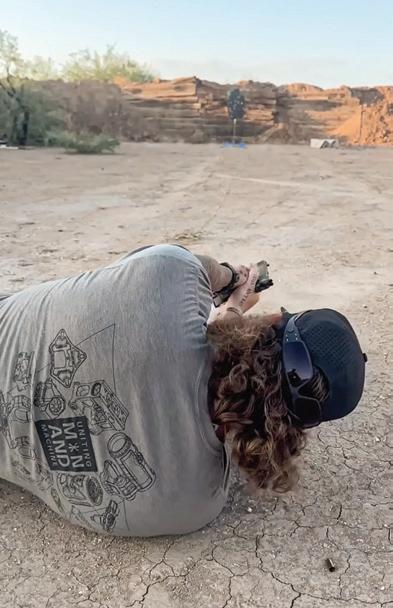
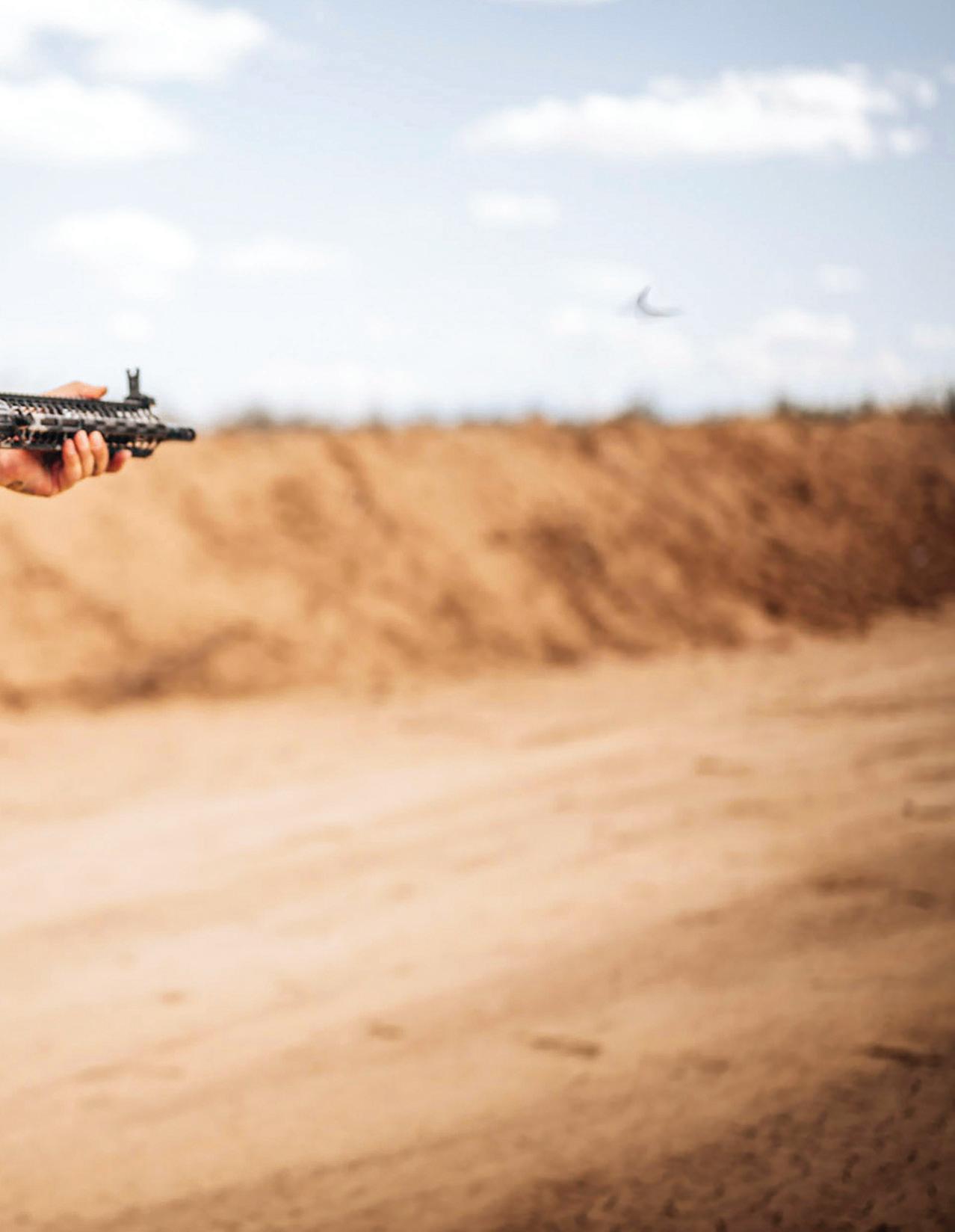
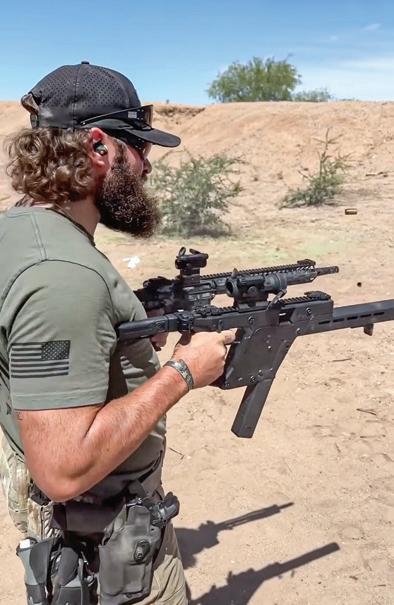
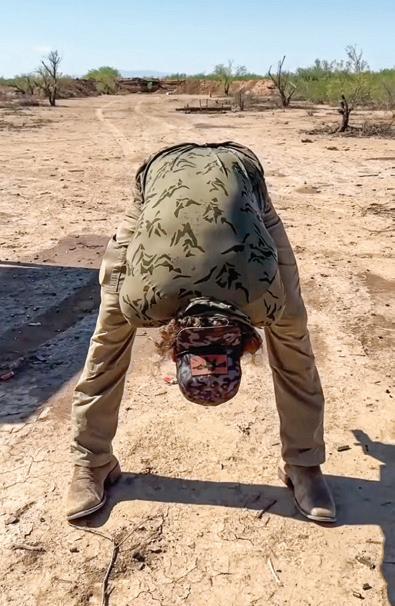
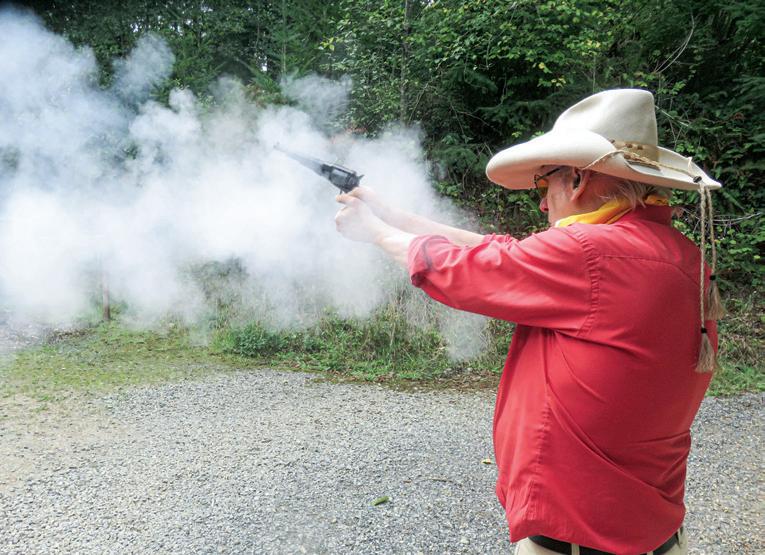
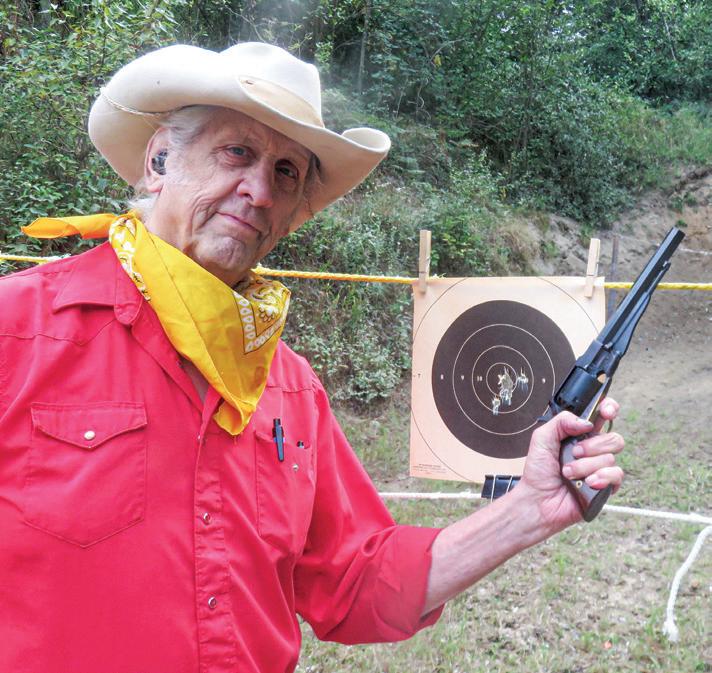
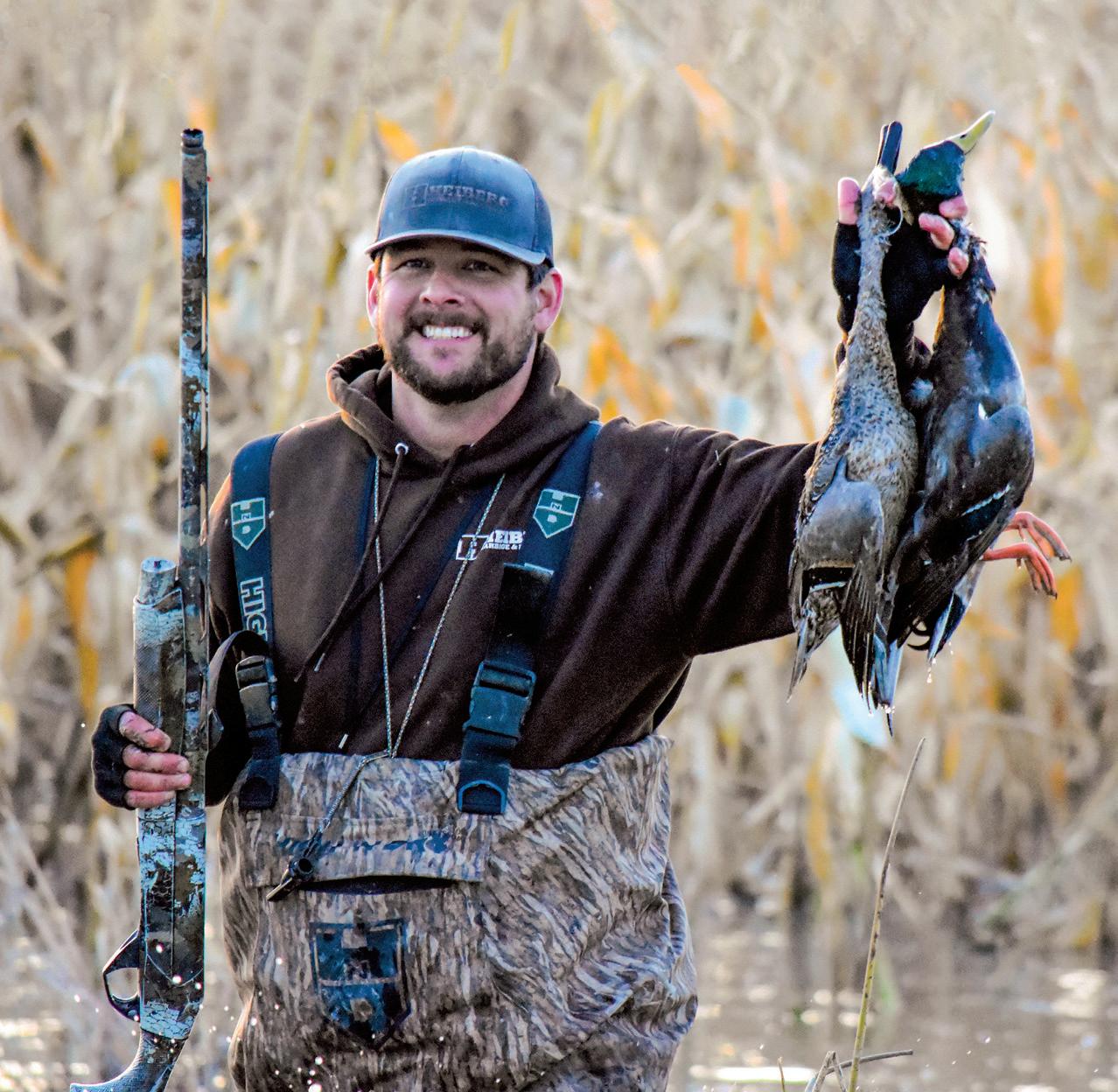
Not too shabby! Trick shot artist Rob Lorentz is racking up millions of views on his That Ain’t Bad YouTube Channel, fueling his growing lifestyle brand of the same name. Linda Pawela profiles Lorentz in this issue’s cover story. (ROB LORENTZ)
CLARIFICATION
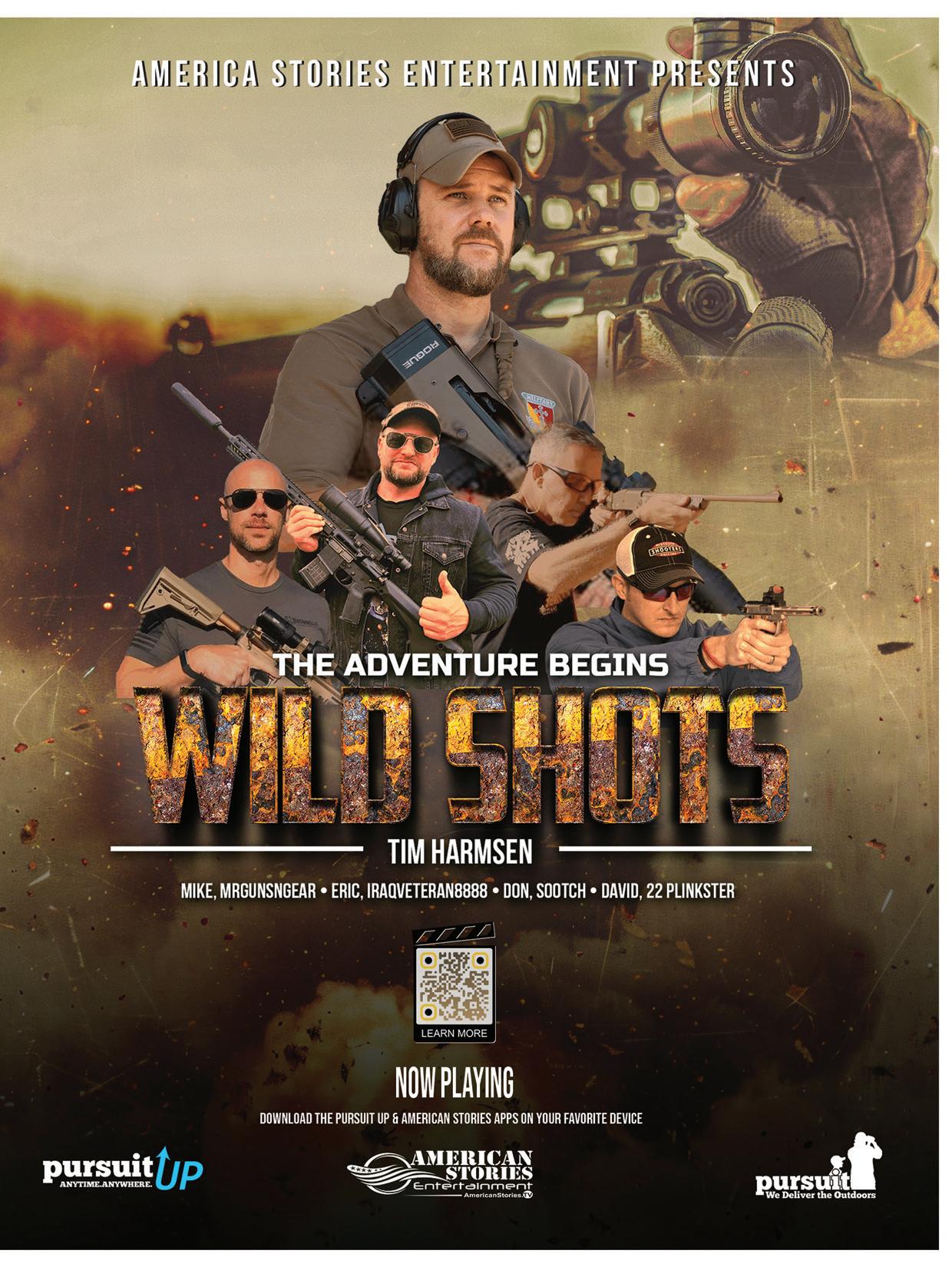
In last month’s cover story about Tim Harmsen, we used the term “Battlefield” in the headline. We want to clarify that Harmsen did not serve in any military battles. The word was used to highlight that he was in the military and that since his military career ended, he has taken to the “battlefield” of advocating for the Second Amendment. It also reflects on the new American Stories Entertainment show, Wild Shots, where on Harmsen’s 30-day journey, he visits historic battlefields.
MEDIA INDEX PUBLISHING GROUP 941 Powell Ave SW, Suite 120, Renton, WA 98057 (206) 382-9220 • (800) 332-1736 • Fax (206) 382-9437 media@media-inc.com • www.media-inc.com
HE’S GOT A GOOD THING GOING 24
Rob Lorentz has made a name for himself in the shooting world, and That Ain’t Bad – no, seriously, that’s it! Linda Pawela profiles the easy-going Alaska-born man who just likes to shoot and has a burgeoning YouTube channel and lifestyle brand.
38 ‘ WHEELGUN’
MAINTENANCE
Whether your revolver’s a single- or double-action model, it requires periodic maintenance to function at 100 percent. Few know that better than our wheelgun expert Dave Workman, who’s relied on his sixguns for safety across decades of backcountry adventures. Workman shares cleaning tutorials for both action styles.
46 BULLE T BULLETIN: PIONEERING NEW AND OLD GROUND
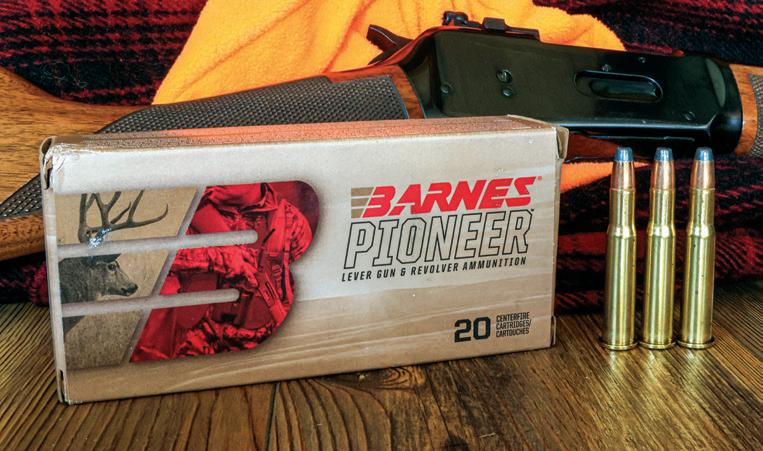
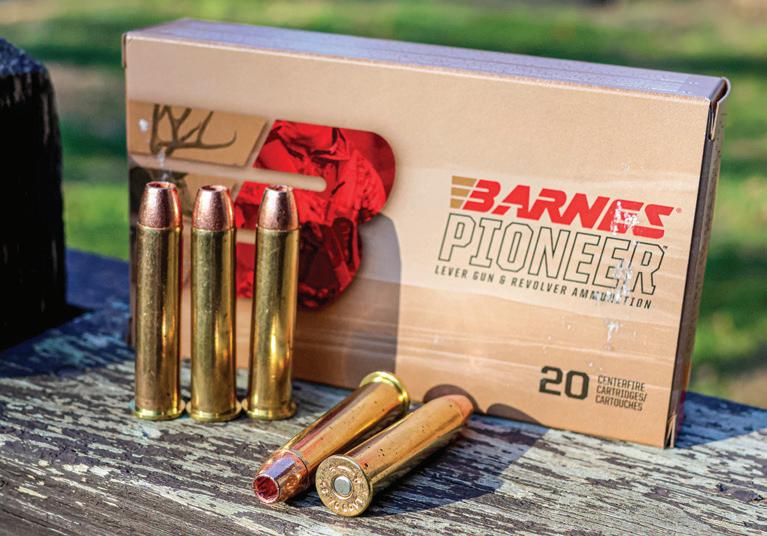
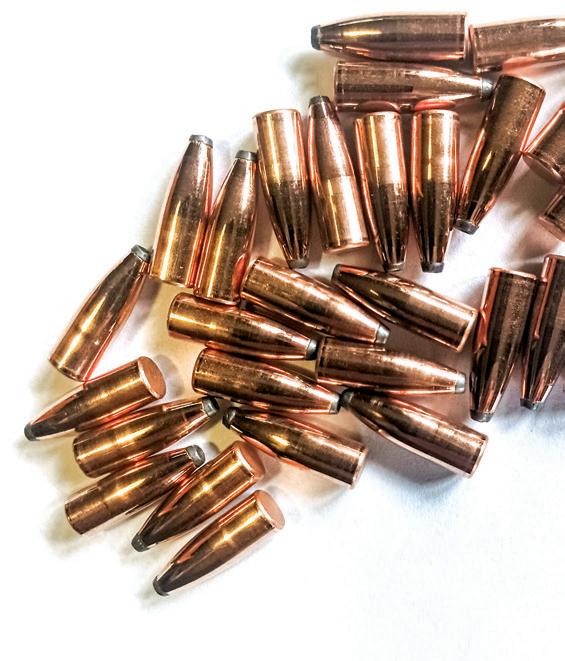
Classic projectile manufacturer Barnes has embraced bullets from throughout its history in their new Pioneer line of loaded ammunition, and Phil Massaro and his lever-guns are here for it. He details available offerings and how they add another dimension to a well-respected hunting bullet brand.
56 R OAD HUNTER: GIFT GUIDE FOR BIG GAME HUNTERS
Lord knows hunting gear isn’t cheap, so if you’re looking to gift something that will last a good long while to someone special, you might be interested in Scott Haugen’s advice. He details gear he field-tested while chasing deer, elk and bear and which would make good presents for sportsmen in your life.
(TIM HARMSEN)
(ROB LORENTZ)
30 BLACK POWDER: A ROUND WITH A COUPLE REVOLVERS
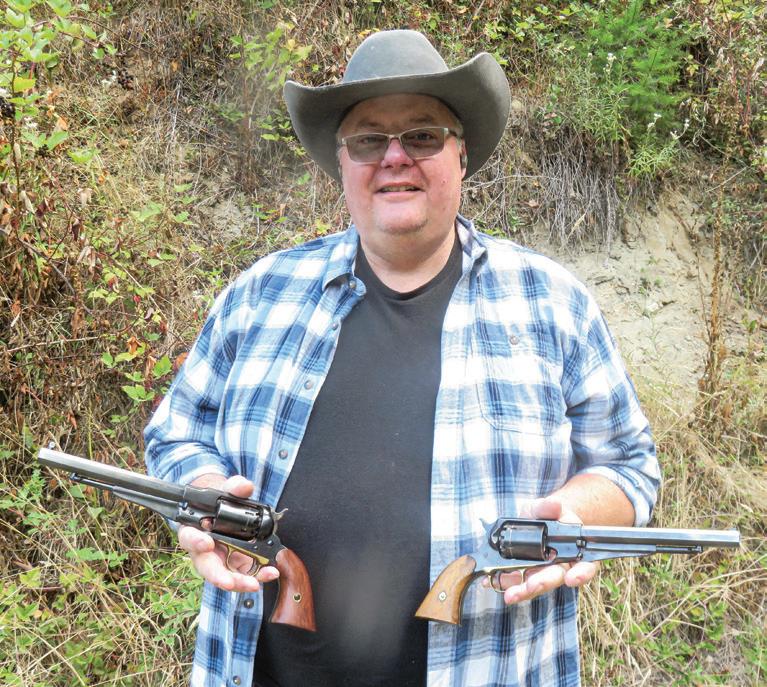
No doubt, Mike Nesbitt’s a big fan of Civil War-era .44-caliber pistols, and while his replica Colt Model 1860 Army, with its better hand fit, is his favorite, he also owns a Lyman edition of a Remington .44. Nesbitt shares how some unexpectedly sharp offhand shooting with the latter gun has him reevaluating it.
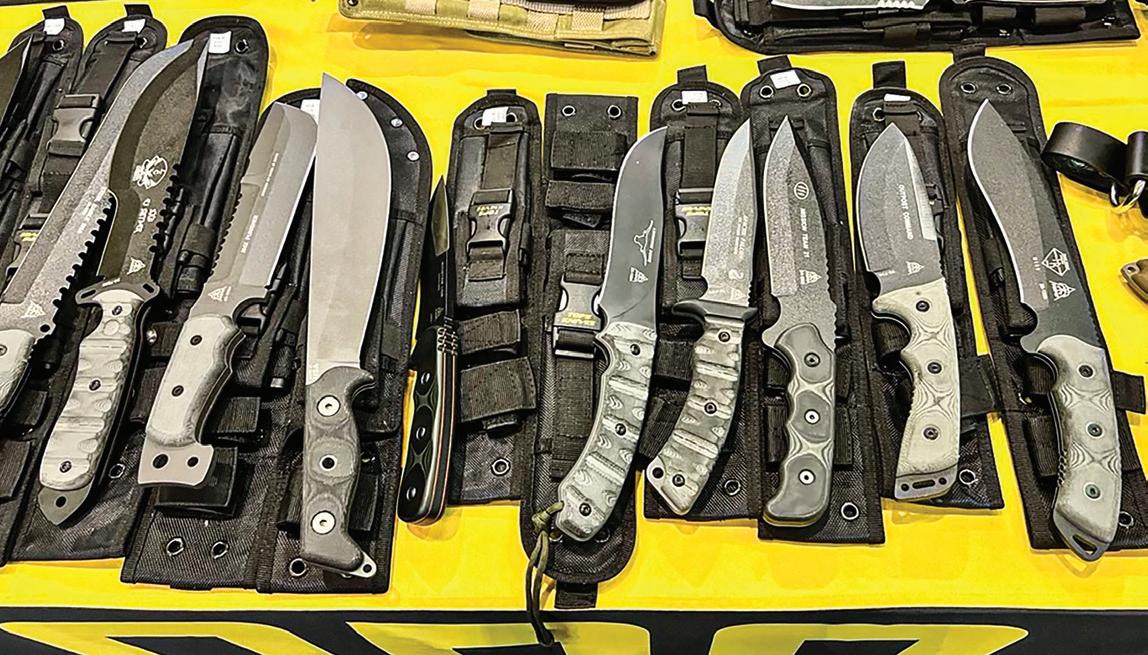
67 M AKING THE CUT: A KNIFE BRAND WORTH KNOWING What began in the 1990s with a focus on tactical blades has now spun into a manufacturer offering more than 200 different designs that span the gamut from military and EDC to hunting and clearing brush. Paul Pawela puts a fresh edge on the story of TOPS Knives, owner Leo Espinoza and their wares.
73 L AW ENFORCEMENT SPOTLIGHT: A MILE IN OFFICER HARRINGTON’S SHOES
Way back when Nick Perna was a rookie, he occasionally was assigned to walk the beat of Officer Harrington, a no-nonsense cop who kept his community safe and secure. Reflecting on what it taught him about policing, Perna shares an appreciation for his mentor and officers like him.
77 MILITARY SPOTLIGHT: A LEADER ON AND OFF BATTLEFIELD
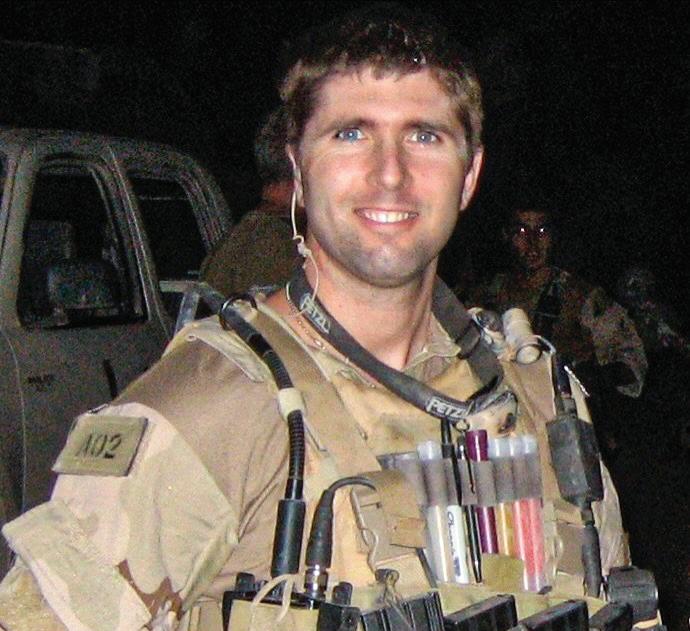
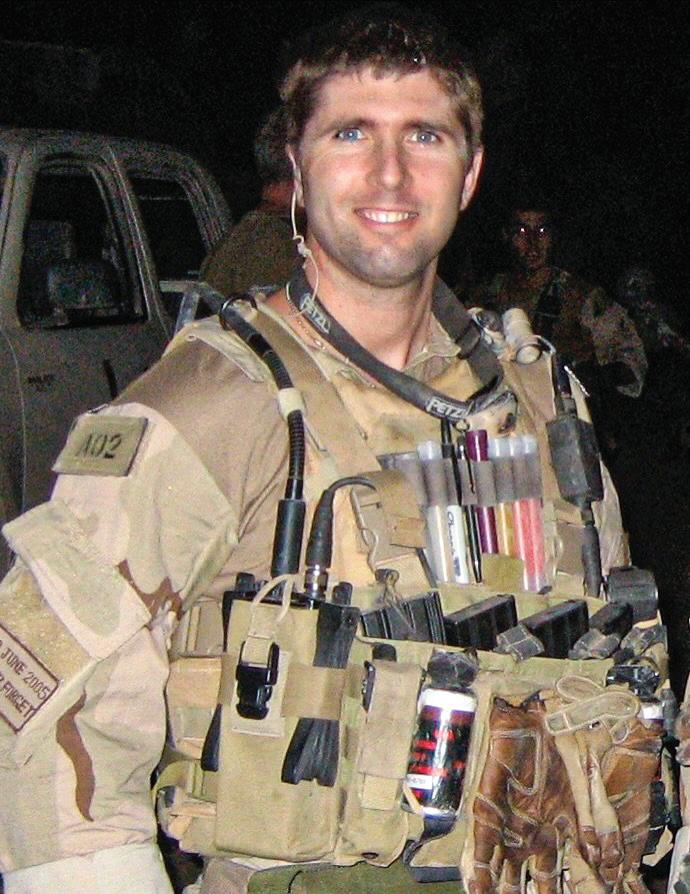
They say you can’t keep a good man down, and that certainly applies to retired Navy SEAL Jason Redman, who was severely wounded in Iraq. Even after 37 surgeries, he “continues to inspire people to overcome, to lead and to find purpose after adversity.” You gotta meet this guy!
(JASON REDMAN)
GUN SHOW CALENDAR
December
COMPETITION CALENDAR
USA Shooting usashooting.org
December 7-10
International Shooting Sport Federation Rifle and Pistol Judges Training Course Colorado Springs, Colo.
United States Practical Shooting Association uspsa.org
Glock Sport Shooting Foundation gssfonline.com
December 5-7
North Florida Section Championship New Smyrna Beach, Fla.
December 11-14
Winter Air Gun Championships Colorado Springs, Colo.
December 5-7
Texas Single Stack 1911 Championship Wallis, Texas
December 6-7
“Remember the Alamo” Ballistic Challenge Atascosa, Texas
Cowboy Mounted Shooting Association cmsaevents.com
International Defensive Pistol Association idpa.com
Colorado Mounted Thunder Jingle Bell Shoot Castle Rock, Colo.
December 12-13 Mid Mississippi Christmas Classic Raymond, Miss.
December 13
Indoor League Match Ashland, Va.
January 1-2
Florida Peacemakers New Years Shootout Statesboro, Ga.
December 10
IDPA Match at South Post Guns Streator, Ill.
To have your event highlighted here, send an email to kaumann@media-inc.com.
December 27
Caliber IDPA Match Waukegan, Ill.
MEET THE ‘THAT AIN’T BAD’ GUY
Rob Lorentz is a rising trick shot artist and shooting lifestyle icon.
STORY BY LINDA PAWELA • PHOTOS BY ROB LORENTZ
At this year’s NRA Annual Meeting, the bustling show floor was filled with the usual suspects: industry insiders, gear enthusiasts and serious shooters. But among the booths and buzz, a chance encounter at the Gatorz Eyewear display would turn into the discovery of one of the most exciting new faces in the firearms community.
While my husband, longtime trainer and American Shooting Journal contributor Paul Pawela, spoke with some vendors, I was speaking with other vendors. I was chatting with a representative at the Gatorz booth when a tall, sharp-looking bearded gentleman walked up and casually asked, “How do you get into a magazine?” That man was Rob Lorentz and as soon as I laid eyes on him, I knew he had something special. Before I could even finish the conversation, another gentleman at the booth pulled up Rob’s YouTube channel and showed me exactly what he could do. One quick look at his channel – filled with mind-blowing trick shots along with his signature tagline of “That Ain’t Bad” – and I knew he had to be in the magazine. I quickly called Paul over, introduced him to Rob and showed him the videos. He was convinced too. “This guy needs to be in the magazine,” Paul said. And since I was the one who “found” Rob, or maybe he found me, Paul told me, “You’re writing this one.” So here we are.
ROB LORENTZ DIDN’T start shooting for the spotlight; he did it for the love of the craft. He learned how to shoot in the woods near his home in Wasilla, Alaska. His father introduced him to firearms at the very young age of 4 years old, emphasizing the importance of safety. By 5, he was already shooting with a 9mm and was completely hooked.
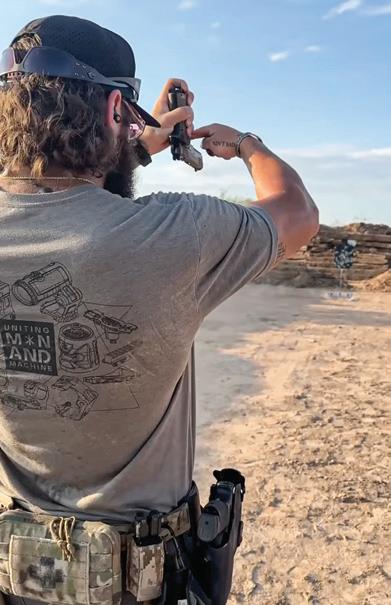
Lorentz performing one of his trick shots, holding the firearm upside down.
Rob Lorentz didn’t start shooting for the spotlight; rather, the spotlight found him. In videos on his That Ain’t Bad YouTube channel, Lorentz is recognizable by his full beard and Gatorz eyewear.
Lorentz uses the Arizona desert as a backdrop for most of his videos. In them, he tests firearms that are sent to him, along with performing various trick shots. Fiancée Megan, who has been filming Lorentz from the start, only used an iPhone for his videos.
His early years weren’t about Instagram fame or building a brand. It was just him, the open land and a relentless desire to challenge himself. He began tossing random objects such as golf balls, paint cans, spent brass, even a deck of cards, all while training himself to hit them midair. Over time, he mastered the art of the trick shot. But it was all about having fun – no film crew or cameras rolling, just fun.
And while most creators today invest in high-end cameras and flashy effects, Rob took a different
approach. It was his fiancée Megan who first suggested he post a video online. With just an iPhone and the Arizona desert as their backdrop, the two began uploading Rob’s unique shots to YouTube.
What happened next surprised even them: the videos went viral. Rob’s channel, That Ain’t Bad, quickly gained traction and a dedicated following across YouTube, Instagram and Facebook. After just 10 short months, That Ain’t Bad had 162,000 subscribers on YouTube and 15,400 followers on Instagram. Several of
Rob’s videos have over a million views. I guess you can say, “That Ain’t Bad!”
WHAT MAKES ROB stand out isn’t just his shooting skills; it’s the message behind them. “I don’t do it to impress anyone,” he says. “I do it for myself. It’s about the love of shooting.”
“I’m just a dude shooting a gun,” he adds. “I want to motivate others to get out there, shoot and enjoy it.”
Rob believes anyone can do it with a little practice. He wants others to just get out there and try it.
Occasionally he gets hate
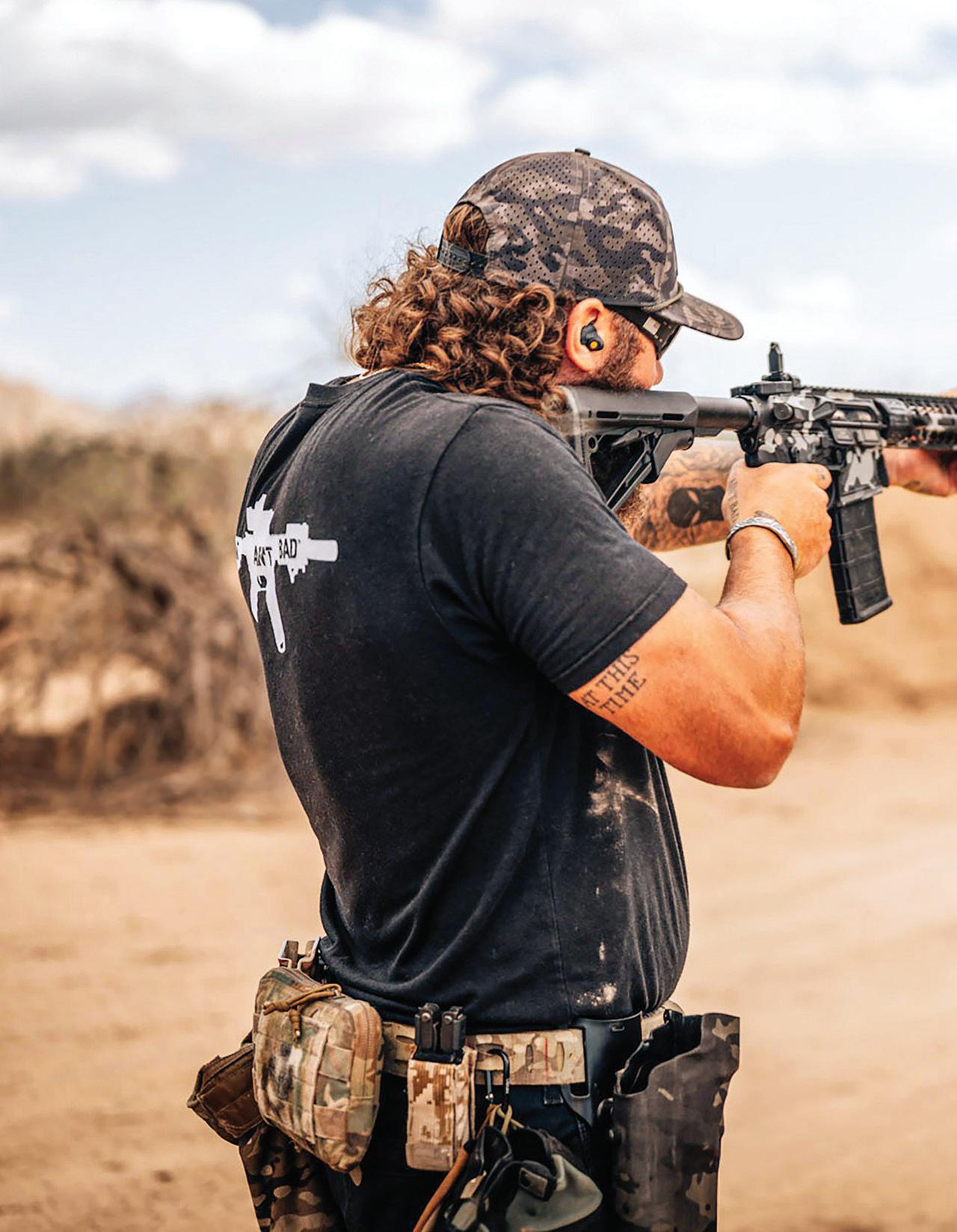
Some of the positions Lorentz is seen shooting from in his videos.
Out on the range, Lorentz is not trying to impress anyone, but only looking to have some fun. He thanks all of his family, friends and followers for their support as he keeps pushing his limits.
comments, but his philosophy is simple: he doesn’t care. “Everyone should do it for themselves and forget about the hate. You’re not trying to impress anyone.”
His advice? “Just have fun and enjoy the process; you too will see ‘That Ain’t Bad.’”
Rob’s trick shots include everything from spinning 360 degrees before firing to bending over and shooting upside down to hitting paperclips midair. He’s even developed a reputation for testing guns from major manufacturers, giving them brutally honest reviews – something his fans appreciate in an age of sponsored content and overhyped gear.
His go-to sidearm? The Springfield Echelon. His favorite rifle? Bravo Company Manufacturing (BCM). And while the gear helps, it’s Rob’s mindset that makes him magnetic.
The phrase “That Ain’t Bad” started as an inside joke with his friends – something Rob would say when things didn’t quite go right but weren’t all that bad either. Over time, the phrase became something deeper: a life philosophy. “It’s about attitude,” Rob explains. “If it doesn’t suck, ‘That Ain’t Bad.’ Keep going.”
TODAY,
“THAT AIN’T Bad” is more than just a catchphrase. It’s a trademarked brand, a growing online community and a way of life. Built on the pillars of personal growth, self-reliance and positive mindset, it resonates with shooters, outdoorsmen and anyone who embraces challenge without complaint.
Rob now sells That Ain’t Bad hats and shirts through his website, and dreams of turning the brand into a full-fledged lifestyle label – one that inspires others to push boundaries, ignore the critics and live authentically.
Outside of shooting, Rob lives a full and rugged life. He’s an avid Harley rider and enjoys golfing, hunting, snowboarding and hitting the gym. But at his core, he’s still that kid from Alaska who just loves to shoot.
And for those wondering, yes, he’s taken. Rob recently got engaged to Megan, the same woman who’s been behind the camera since day one. They’re planning to marry next year.
What you see on his social media isn’t a persona. Rob is as genuine in real life as he appears online: humble, hardworking and a true gentleman.
Rob isn’t chasing fame; he’s building a movement. His goal is to become the top firearms content creator on YouTube not by selling out or chasing trends, but by staying true to himself and encouraging others to do the same.
In a world flooded with overproduced content and paid personalities, Rob is a breath of fresh air: real, raw and ready to take on whatever comes next. All in all, “That Ain’t Bad.” ★
Editor’s note: For more on Rob Lorentz, visit thataintbad.net. Follow Rob on YouTube (That Ain’t Bad) and Instagram and Facebook (@thataintbad). Author Linda Pawela is a special education teacher who started shooting 15 years ago when she met her now husband Paul Pawela. Linda was once afraid of guns until she met Paul, who said, “If you are going to be around me, you are going to be around guns.” Linda now loves all things gun-related and enjoys assisting her husband with training others about guns and gun safety.
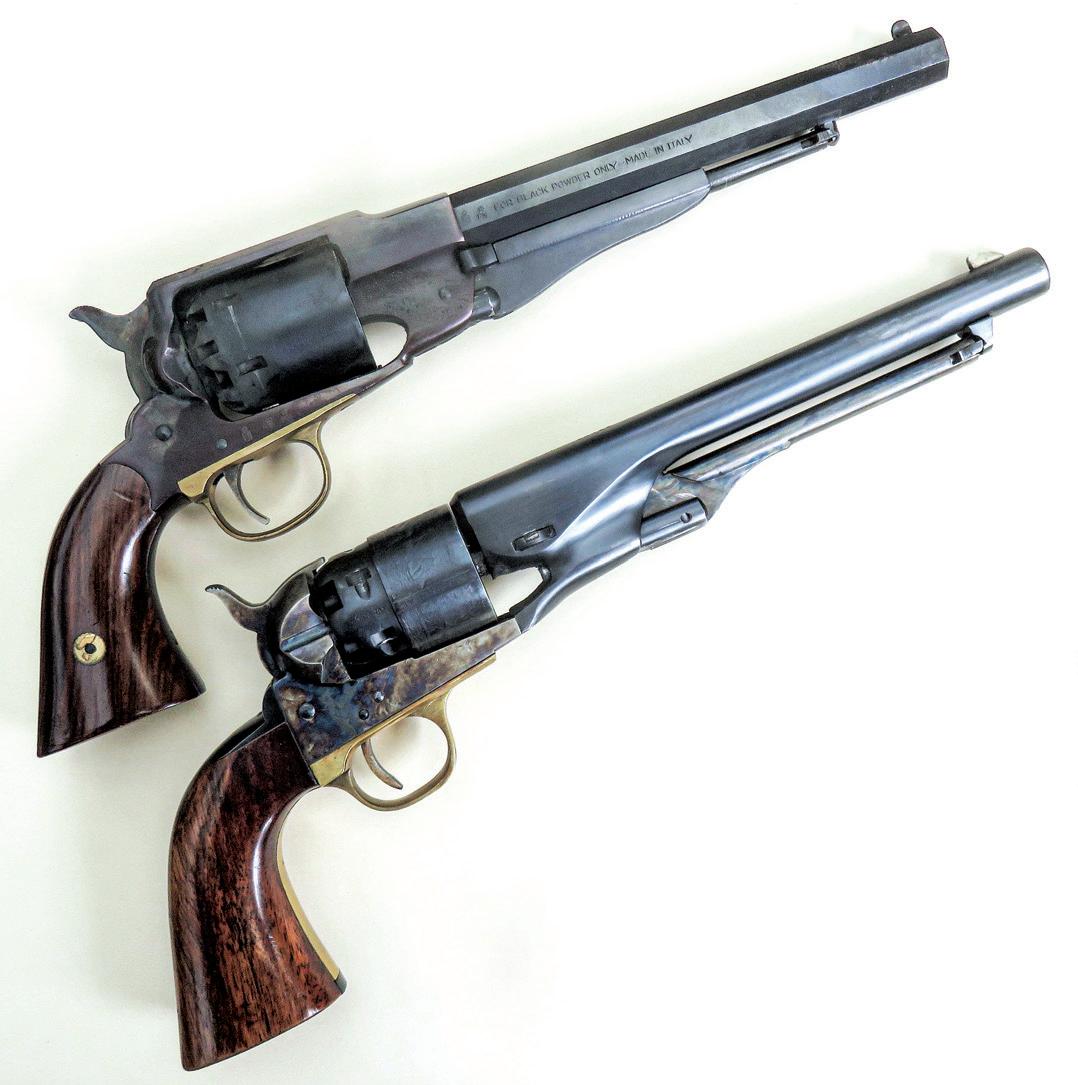
Tom Witt’s pair of replica Remington .44s.
BLACK POWDER
A ROUND WITH A COUPLE REVOLVERS
Fan of replica Colt Model 1860 Army takes a new shine to his Lyman Remington .44.
STORY AND PHOTOS BY MIKE NESBITT
According to Roy Marcot, author of The History of Remington Firearms, copies of the Remington .44 percussion revolver, which are most often labeled as the Model of 1858, should be correctly referred to as the New Model Army Revolver. That gun was introduced in 1862. There were earlier large-framed Remington revolvers – the Remington-Beals models, which were introduced in 1860. Beals patented the unique feature of having the cylinder’s base pin secured by the loading lever in
BLACK POWDER
1858, which is probably where the date came from. And the patent date of 1858 was included in the markings on the New Model revolvers’ barrels.
To give some good credit to the Lyman copy of the Remington revolver that I’ll be referring to (which is no longer offered on the market, although used guns can be found), on the left side of the octagon barrel is stamped “.44 Caliber New Model Army.”
But this is actually a rather informal comparison between the copies of the Remington revolver and the Colt Model 1860 Army revolver. Both of these cap-and-ball guns are .44 caliber. This story was initiated when a friend
asked which one he should buy.
FIRST OF ALL, comparing the grips, the Colt has a much better feel, especially because the 1860 Army has the larger/ longer grip. For me, that does make the Colt revolver easier and steadier to hold and provides a direct path toward better shooting.
Next, let’s mention the top strap. Having the revolver’s frame going over the top of the cylinder has obvious advantages. Strength is the
big difference. Another advantage of the top strap is that it is a natural place to have a rear sight – simply a groove in the top of the revolver’s frame. And along with strength we should mention stiffness because a Colt, with perhaps a loose wedge, can have some “barrel wobble,” which might not even be noticed by the shooter except by bullet placement on the target. The
Remington revolver could certainly be tighter; this could be noticed in the grouping of the shots. Having the top strap is simply a better foundation for good shooting.
A few words should be said about the Remington’s method of retaining the cylinder base pin. Having that pin locked into position by the loading lever was a great idea. That also gives the shooter easier access to the pin for removing the cylinder.
The Remington’s cylinder has some favorable characteristics. One of them is the “safety notches” that lay between each of the nipples, so the hammer can be lowered into one of those notches, locking the cylinder in place. This makes the gun safe to carry with all six chambers loaded and capped. The Colt-style revolvers have little “pins”
Comparing the Remington (top) to the Colt (lower).
BLACK POWDER
that the hammer is notched for, but the Remington’s “safety notch” is much sturdier. Another observation about the cylinder on this Remington replica is how the recesses for the nipples are shaped in a way that my Colt-style capper cannot be used. So the nipples must be capped just with fingertips, although a straight-line capper might do the job.
One feature that I really like about the Remington is the width of the trigger. That trigger is just as wide as the trigger guard, or almost, while the Colt trigger is usually very slender. The wide and comfortable trigger puts the Remington one step ahead of the Colt percussion revolvers.
SO, WITH POWDER in the flask, a box of Hornady .451-inch round balls, a new can of CCI percussion caps, and a can of Vigilante’s Patch Lube, as well as the gun and some targets, I headed to the range. A chronograph also went with me just to see how speedy the bullets might be.
When I popped some caps, to be sure the nipples were clear, I noticed the very hard trigger pull. I like to say how I’m too little to shoot a gun with such a stiff trigger pull, but for this bit
of shooting, I had to manage.
Then each of the chambers were loaded with 30 grains of powder and a .44-caliber ball. The balls were seated quite deep into the chambers, which
means there is plenty of room for more powder. Over each ball, some of the Vigilante grease was added, following my old habit of putting lube or grease over the bullets. Then, with a pistol target already posted at just 10 yards, the nipples were capped and I was ready to shoot.
At the very first shot, four of the caps on other chambers fell off. We can guess that those nipples were on the small side, perhaps made for No. 10 caps while I was using No. 11s. Then I broke one of my own rules: I replaced the caps just one at a time before firing the next shot. That meant I was shooting with uncapped nipples adjacent to the chamber being fired, which is an invitation to a chain-fire. But no chain-fire occurred.
The group was rather pleasing, although a bit high. I had been holding the sights at 6 o’clock on the target and my first shot was the highest one, out in the white. The other five shots all grouped quite nicely in the upper part of the black, with one more high shot
Witt with his brace of .44s.
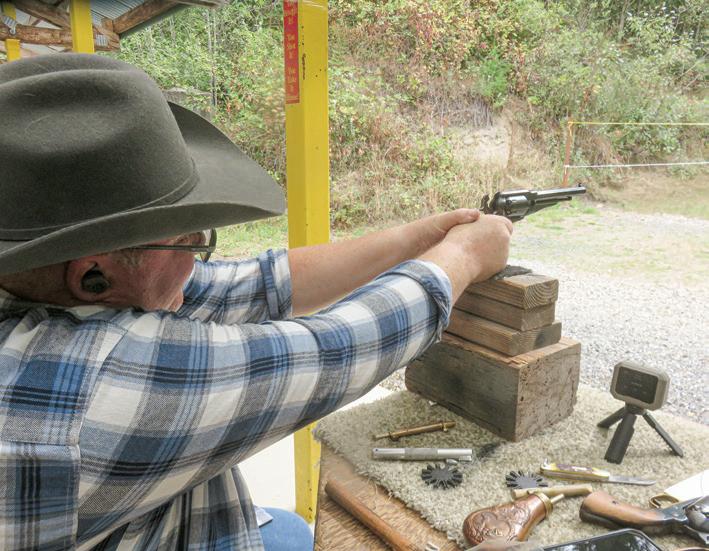
Aiming over a rest resulted in some good shots for Witt.
BLACK POWDER
just barely nicking the top of the 9-ring. Next, I loaded my 1860 Colt replica and shot two targets with that gun. My second target was the best. My reasoning for shooting the Colt was mainly to test the 30-grain loading in that gun, and it certainly worked very well. I held the sights for the middle of the black and the gun placed its bullets right where it was aimed.
MY SHOOTING WITH the two .44-caliber revolvers did remind me that I’m a Colt man. I do favor the Colt replicas; they just seem to fit my hand better. But the Remington-style gun did well, too, and with just a bit of attention, that trigger could be improved. I can see where others might favor the Remington, so to add a second opinion to this story, I invited Tom Witt to do some shooting. He quickly accepted my invitation and we met at the range a day later to do some good shooting.
Some other little things became obvious. Tom’s Remington .44 replicas have larger grips than my gun – not
just the wooden grips but the whole handle. Tom looked at my gun and said that he thinks my .44 has the same grip as his .36 Remington. In other words, smaller than the standard .44’s grip.
That added a new wrinkle to my brain. To me, the larger grip does feel better; it simply makes a nicer handful.
To give my gun another chance, a clean target was posted and I loaded the gun again with the 30-grain charges from my flask. With the gun loaded, greased and capped, I stepped forward of the shooting bench so I could “attack” the target while shooting offhand. Even though I had tried to pinch the caps to give them a tighter fit, at least three of them fell off when I fired the first shot. But, oh, what a shot. I had held the sights for a 6 o’clock hold and held as firmly as I could while squeezing that hard trigger, and when the gun fired, the bullet sailed right through the X-ring!
Comments were made – something like “Let’s see you do that again” – as I rolled the cylinder around to put a capped chamber in front of the hammer. With the second shot, I did it again! Then, after the third shot, I once more began shooting after putting a cap on the nipple, and that was done until the gun was empty. My score on that target was a delightful 60-4X for those six shots. I might have to reevaluate my opinion of the Remington revolver … ★
Author Mike Nesbitt fires the Remington offhand ...
... And hit an impressive 60-4X for six shots!
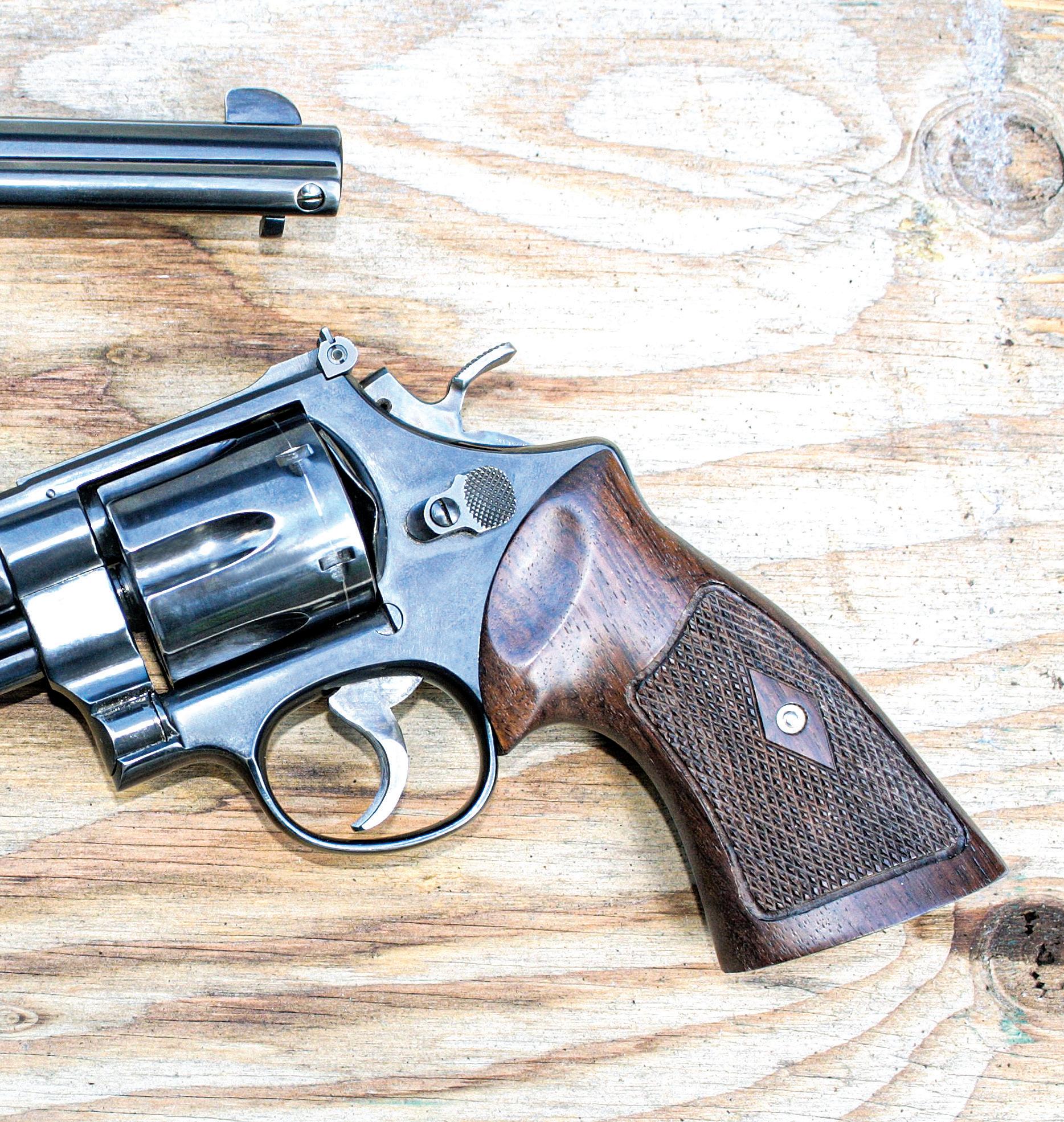
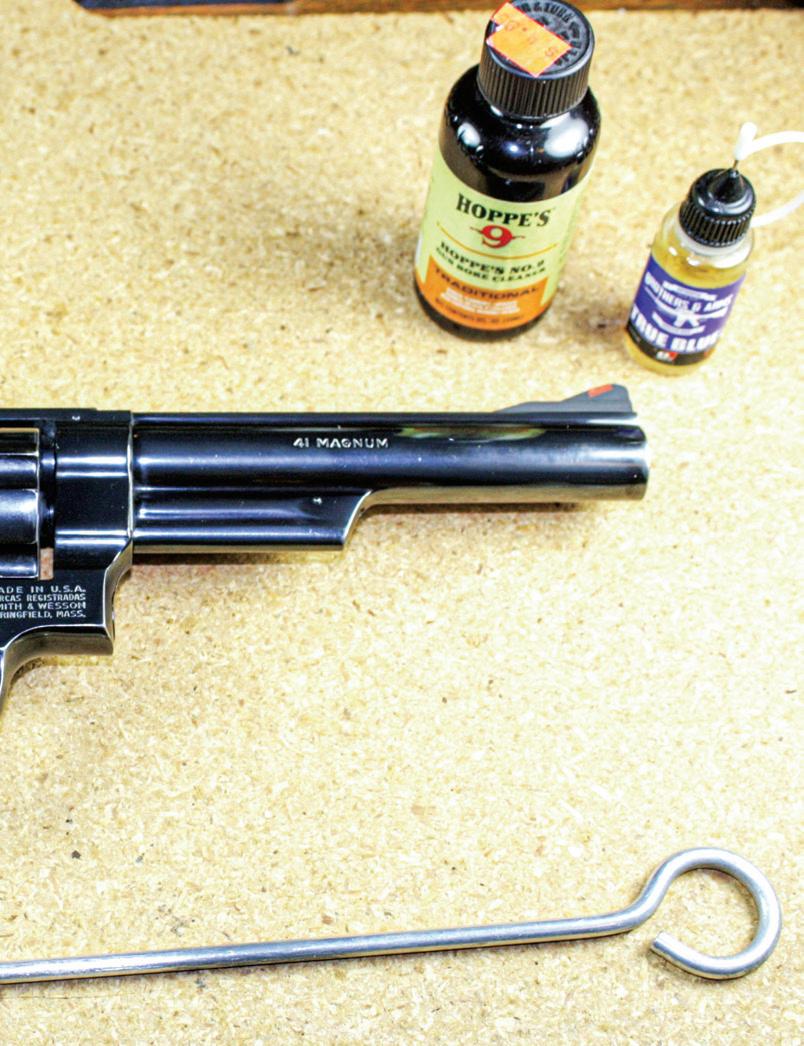
Whether a single-action or double-action revolver, your wheelgun requires periodic maintenance to function at 100 percent.
‘WHEELGUN’ MAINTENANCE
It’s more than a drop of oil here and there. A quick guide on keeping your revolvers ready to rock.
In a world dominated by semiauto pistols, I know some people who have never had any real experience with revolvers, either single- or double-action, and while shooting and carrying a “wheelgun” may be something of a dying art, the revolver might also be enjoying something of a resurgence.
That being the case, it’s a good idea to understand that in order to keep them functioning properly, revolvers require
maintenance the same as any other firearm. You just need to know where and how to pay attention.
I’ve been a revolver shooter since my teens, both oldstyle single-action models ranging from .22 Long Rifle up to the big bores. Likewise, the first magnum-caliber sixgun I owned was a Model 19 Smith & Wesson classic doubleaction that still runs like a champ and occupies a special place in my gun safe. I still have the original blue box with
STORY AND PHOTOS BY DAVE WORKMAN
the cleaning tools and the heavy paper in which the gun was wrapped, more than 50 years ago.
None of my revolvers would be functioning as well as they do after all these years of service, in all kinds of weather, had they not been routinely cleaned and cared for. To wit:
SINGLE-ACTION STEPS
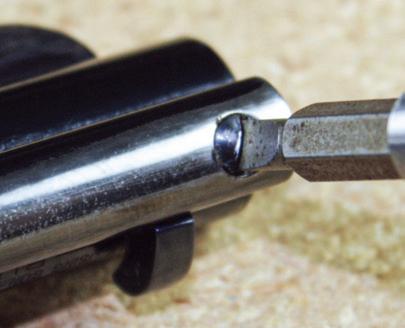
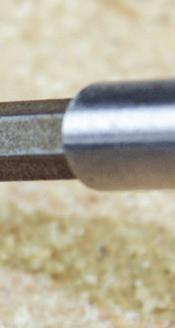
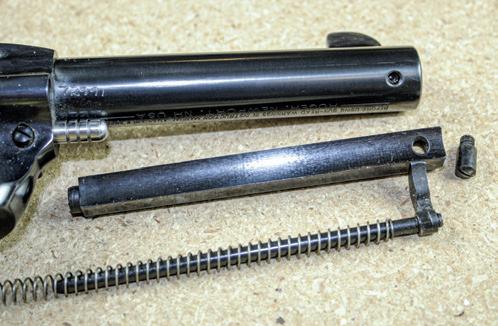
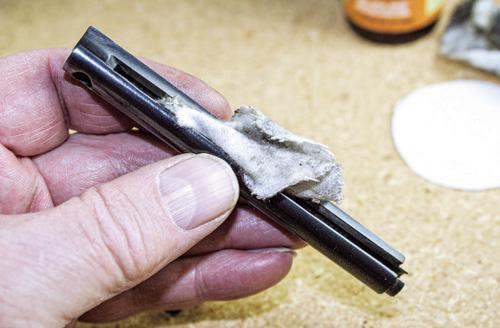
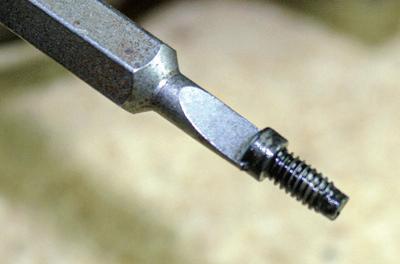
When cleaning your typical singleaction revolver – which has an ejector rod and housing mounted on the lower right surface of the barrel and held in place by a single screw, with the rear of the housing inserted into a ring on the frame – it’s a good idea to completely remove this part now and then to check the barrel for rust spots and wipe with a thin film of oil.
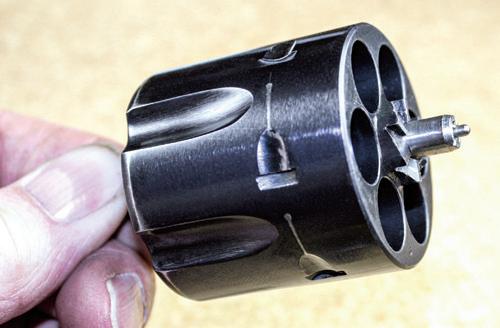
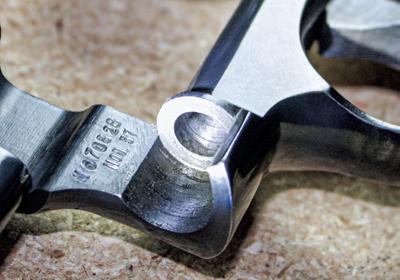
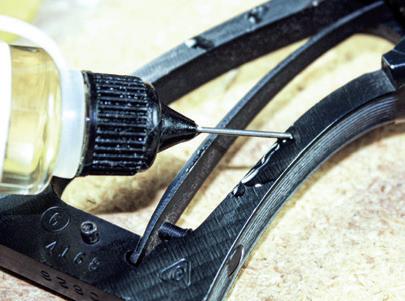
loading gate slot. Clean and lubricate the center shaft of the cylinder, same as you clean the individual chambers, whether there are five, six, seven or more (depending upon caliber). Also wipe the pin and relubricate.
In addition to cleaning and lubricating the cylinder and ejector rod housing, occasionally remove the grip panels and lubricate the mainspring, whether it is flat or coiled. Before remounting the grips, wipe a thin film of gun oil on the frame surface, both sides.
SINGLE-ACTION SERVICING
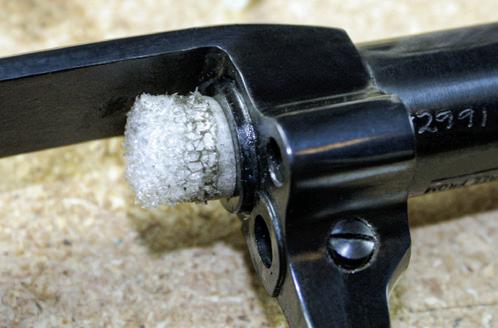
Remove the spring and ejector rod completely and use a Q-tip soaked with Hoppe’s No. 9 or some other solvent to clean out the channel. Wipe dry with a cleaning patch or second Q-tip and then apply a couple of drops of oil before reinserting the ejector rod and spring. Add a drop of oil to the retaining screw and tighten it securely. Always completely remove the cylinder by first withdrawing the pin around which it revolves, and then simply popping the cylinder out of the frame by tilting it out through the open
Finally, add a drop or two of oil into the action, down through the hammer slot, or into the action with the revolver inverted while the grips are removed. Likewise, a drop of oil down into the cylinder stop slot can protect the handgun’s innards. Aerosol sprays come in handy for this chore, incidentally.
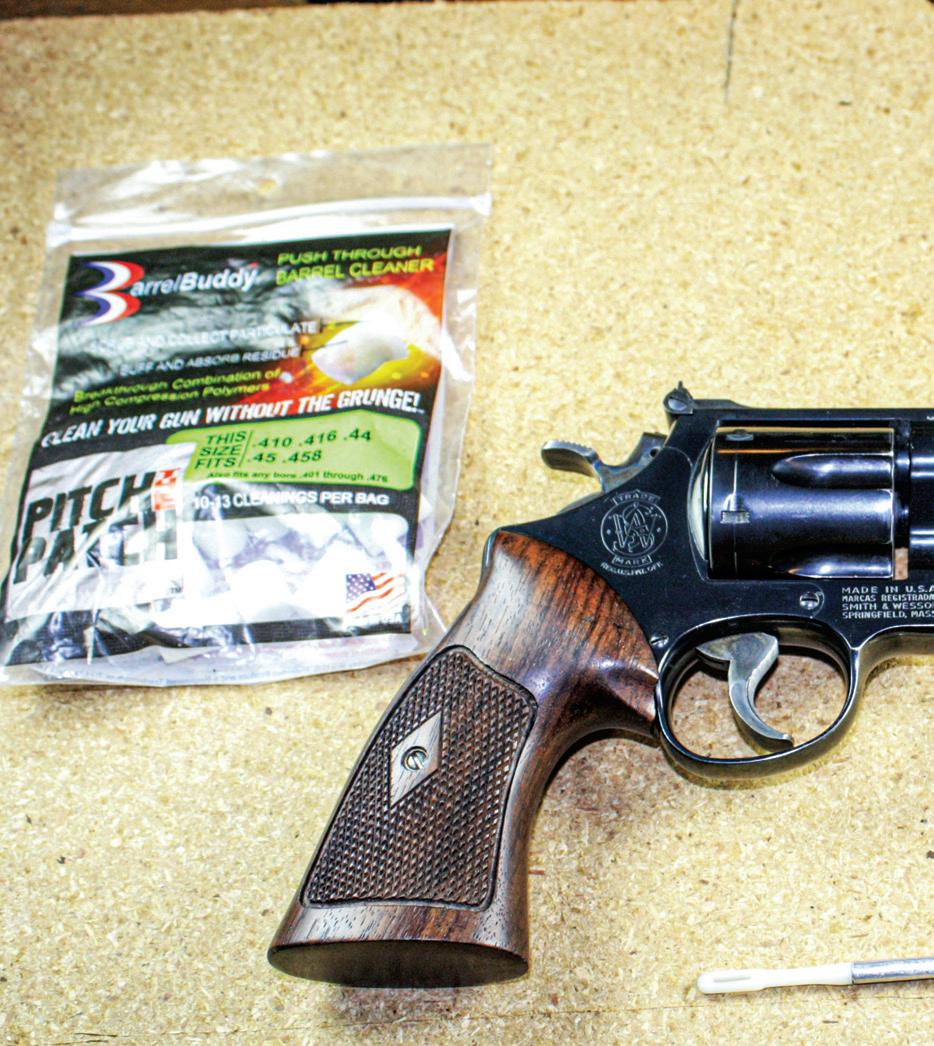
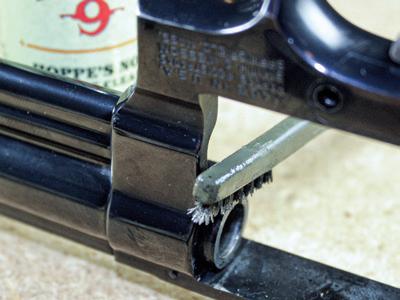
Important: Whether your revolver is a single- or double-action, always use an old toothbrush or a small cleaning brush to scrub around the barrel breech and forcing cone because these areas retain a lot of powder residue.
DOUBLE-ACTION CHALLENGE
It’s when one starts completely cleaning a double-action revolver that Disassembling
Remove the ejector rod housing of your singleaction sixgun by taking out the small retaining screws.
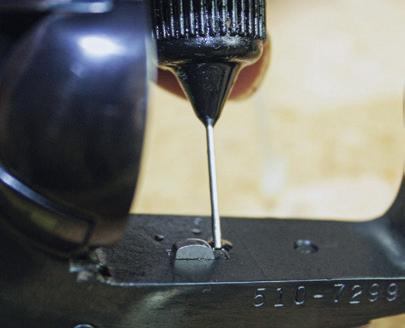
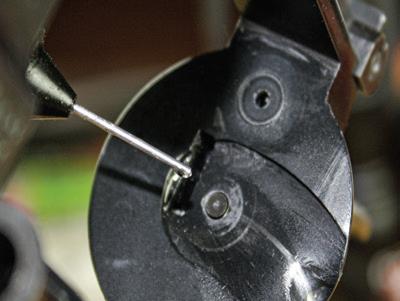
Add a couple of drops of oil down through the slot in the lower frame from which the cylinder block emerges.
the fun really begins.
Way beyond cleaning each chamber in the cylinder and running a brush and patches down the bore, you’ve got to pull the cylinder, disassemble it and lubricate, and also lubricate the action. On top of that, it’s always a good idea to add a couple of drops of oil into the frame shaft in which the arm of the crane – it’s that section that fits inside the lower frame, holding the crane assembly in place when the cylinder is opened – to lubricate and prevent rust and/or corrosion that can occur due to exposure to lots of moisture, or exposure to condensation. This is one of the problems associated with hunting camps and temperature changes in tents or even campers overnight.
SERVICING
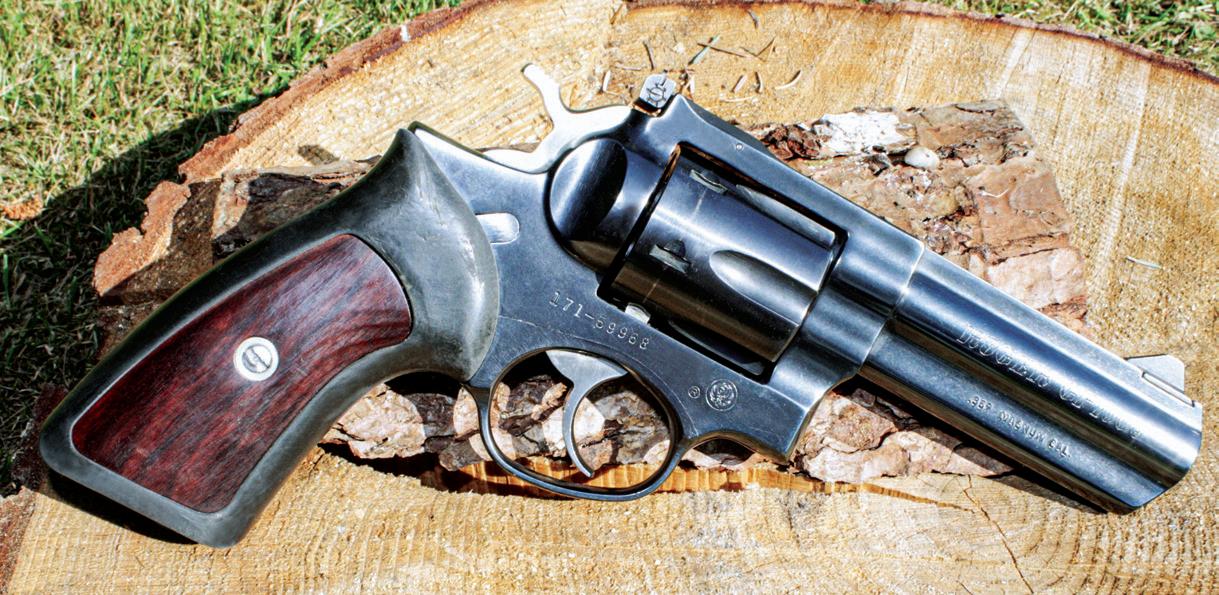
We’ll focus on Smith & Wesson and Colt revolvers, as cylinder removal is essentially the same process (and it works the same way on Taurus and Rossi models). The disassembly process is much different on Ruger double-action revolvers. In the case of Ruger double-actions, first remove the grips; use the pin which is found in a slot on the inside to hold the retracted mainspring in place for removal. Once that’s accomplished, tap out the hammer pivot and remove the hammer out through the top of the frame while holding the trigger in a rearward position. There’s a little pin/ plunger projecting rearward from the trigger guard assembly, and you can use a small screwdriver to pop that
forward and down, and out comes the trigger guard assembly.
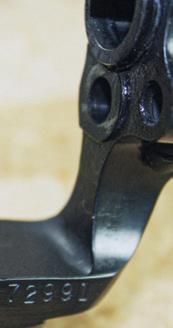
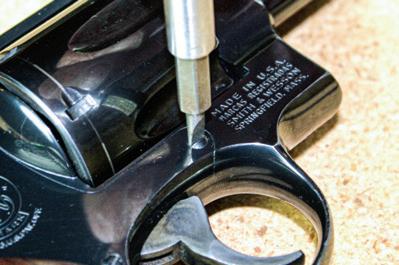
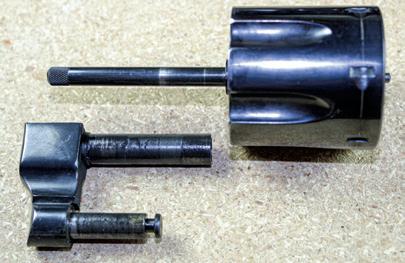
But back to S&W and Colt, and similar D/A revolvers. To remove the cylinder, one must first remove the crane, which is also called the “yoke,” from the frame. On S&W and Colt revolvers, this part is held in place by way of a screw on the right lower side of the frame, below the cylinder window. Be sure to keep this screw in a secure spot so it does not get lost.
I have a set of gunsmithing screwdrivers from Wheeler Engineering that are magnetized, and they come in handy for this purpose. Remove this screw and gently slide the crane/yoke out of the frame. The cylinder in a D/A revolver rotates
Completely disassemble by removing the ejector rod and spring.
Clean the inside of the ejector rod housing, first using Hoppe’s No. 9 or another solvent, and then wiping dry with a cloth or Q-tip.
Just like with a double-action revolver, clean the bore. Author Dave Workman uses a clever little product called the Barrel Buddy for this chore.
After adding a couple of drops of oil to the pin around which the cylinder rotates, the author spins the cylinder to evenly spread the oil.
DOUBLE-ACTION UPKEEP
around a pin, which is actually the ejector rod. When reloading, this rod is depressed and the ejector forces the empties out of all chambers simultaneously for speed in reloading. There is a spring inside which returns the ejector to its flush position with the rear of the cylinder. If you withdraw this pin, do it slowly so you don’t lose the interior spring! If your revolver is from Charter Arms, however, the process involves unscrewing the ejector rod, removing it and the spring slowly, and then gently
tapping the front of the cylinder to pop it loose and to the rear.
It is important to add a drop or two of oil in the central shaft of the cylinder to keep it from becoming sluggish. I recently had to do this with one of my revolvers, which – believe it or not – was slightly impaired by a buildup of residue from an extended shooting session. Hey, it happens even to veteran sixgunners!
In addition to cylinder maintenance, one must also add oil to the interior action via the hammer slot, again into the rear frame interior with the grips removed, and even
To remove the cylinder on a S&W, Colt or similar D/A revolver, unscrew this crane retention screw from the lower right side of the frame.
Workman uses a magnetic screwdriver to avoid losing the screws.
With the cylinder and crane removed, take the cylinder off the crane for complete lubrication.
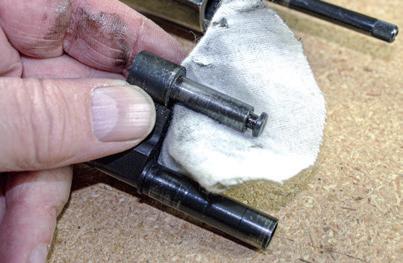
Use a cleaning patch to wipe off crud, with a bit of Hoppe’s No. 9.
Workman’s Model 57 S&W gets plenty of use throughout the year, so it also gets a thorough cleaning.
up through the trigger and from the rear of the frame into the slot where the hand – the lever that rotates the cylinder – comes up from the trigger. Just a couple of drops will suffice. Those who wish to be adventurous can remove the sideplate, but this is a step best done by an experienced gunsmith. Instead, I’d recommend using an aerosol lubricant to reach all of the moving parts inside.
Reassemble the cylinder and crane/yoke, reinstall and don’t forget to reinsert the retaining screw tightly. Give your revolver a wipe and put it away.
THE BEAUTY OF REVOLVERS
I’ve always preferred wheelguns for backcountry adventures because one only needs loose/spare ammunition to keep them running. A semiauto is essentially a twopiece handgun and if the magazine is lost or damaged, unless you have a spare, your pistol is pretty much out of action.
Having packed revolvers while hunting, hiking, fishing and for personal protection for more than 50 years, I’ve learned to take care of them so they take care of me. So far, we haven’t let each other down. ★
Don’t forget to lubricate the shaft in the frame where the base of the crane is housed and rotates.
Be sure to clean around the breech and forcing cone, where powder residue can accumulate.
Don’t overlook adding some oil to the frame. Remove the grip panels and rub the oil in with your fingers, both sides.
Add oil into the frame via the shaft where the hand comes up to rotate the cylinder.
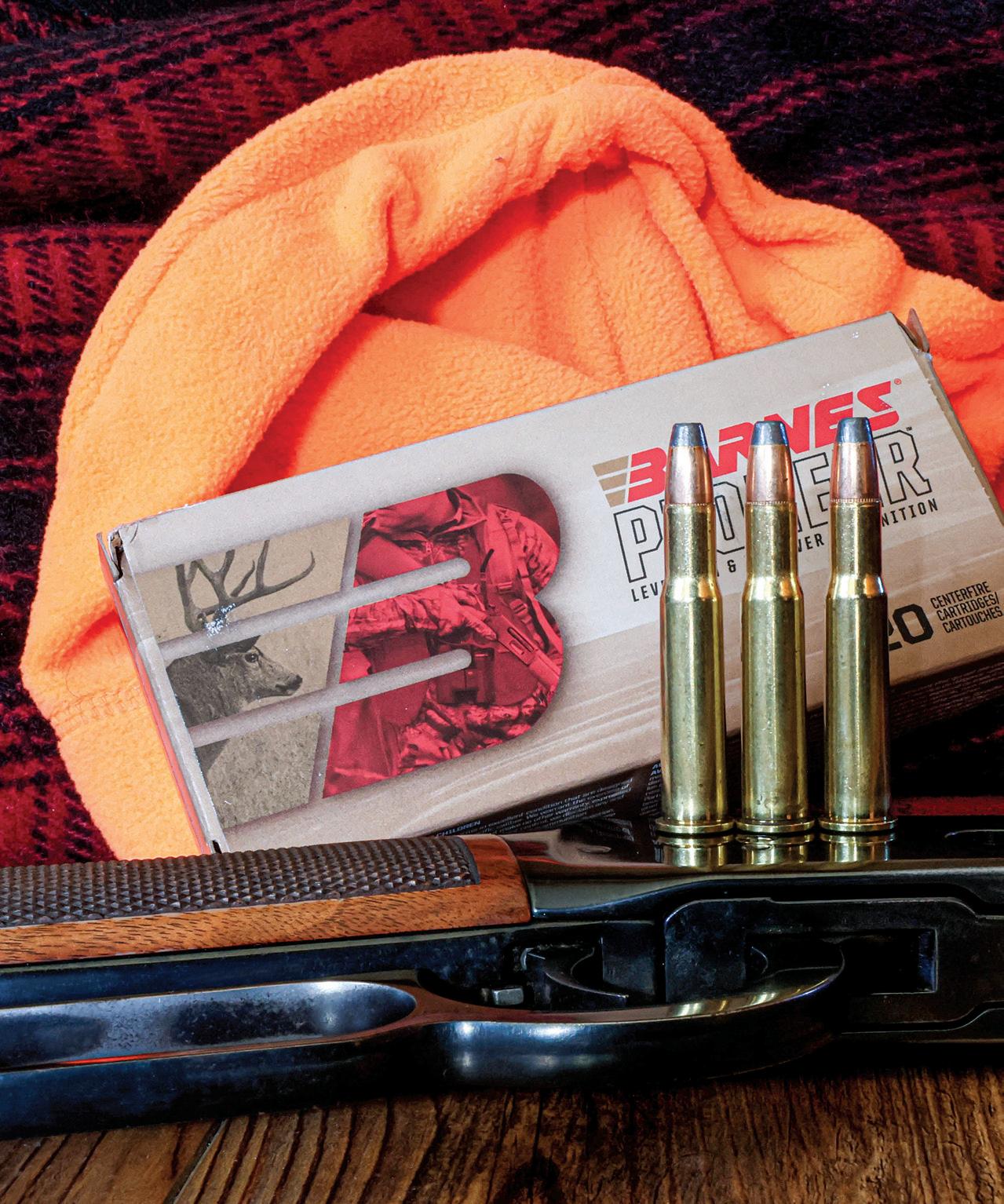
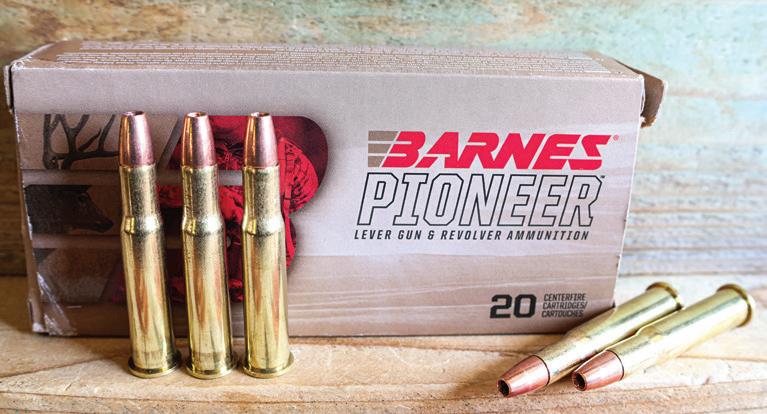
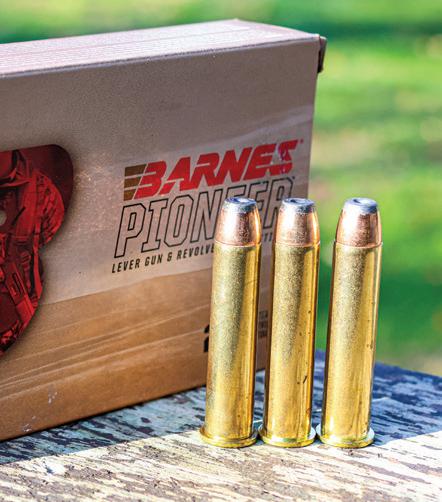
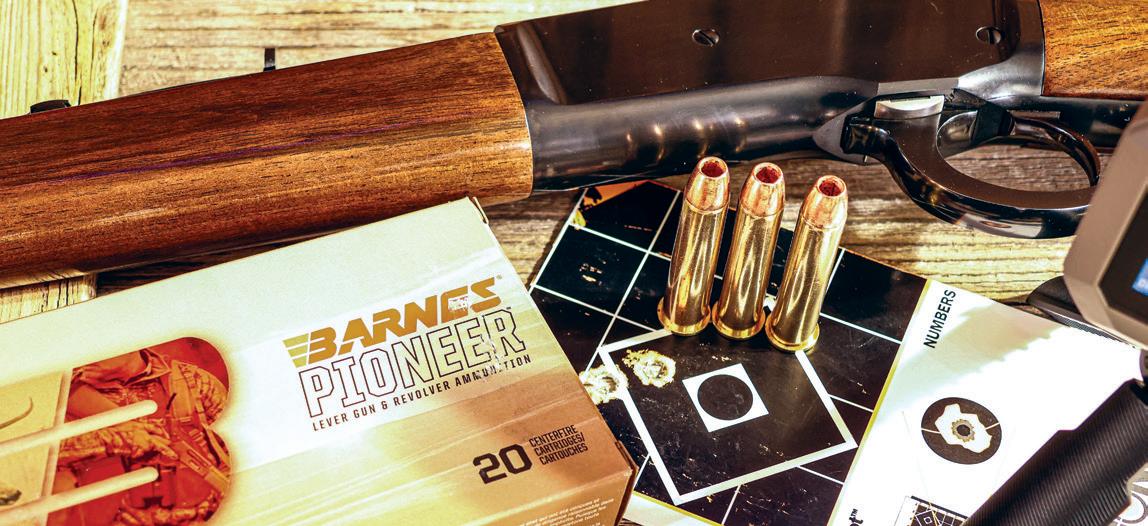
Barnes has embraced bullets from throughout its history in the new Pioneer line of ammunition.
PIONEERING NEW AND OLD GROUND BULLET BULLETIN
Classic bullet manufacturer Barnes opens the floodgates for the lever-gun crowd.
STORY BY PHIL MASSARO • PHOTOS BY MASSARO MEDIA GROUP
Mention Barnes Bullets to the average hunter, and you’ll hear stories of big game hunts where the ultimate penetration was required and where one-shot kills reigned supreme. Now, I won’t argue that the Barnes TSX makes one of the best dangerous game bullets – where a softpoint, or expanding, bullet is warranted – nor will I disagree that the Barnes TTSX or LRX makes a wonderful choice for an all-around bullet for nearly all of North America’s big game species. I will say that Barnes is not exactly a household name among the devotees of the lever-action rifle, but that might be changing due to their Pioneer ammo line.
heyday, but it never really became the dynamo that Speer or Hornady did.
In 1974, Fred sold his business to Randy Brooks, who breathed life into the company and then elevated it to stardom when he had the brilliant idea to remove the lead core of the classic jacketed bullet design, using only a copper alloy. The Barnes X bullet – so named because the expanded projectile looked like an “X” – certainly retained a huge portion of its original weight, but it gave me fits, as I couldn’t get them to deliver any sort of accuracy in my rifles and some of them failed to open reliably on game. But that is all in the past, as the TSX, TTSX, LRX and even the pistol variant XPB have all been tweaked and deliver excellent accuracy and terminal performance.
THE HISTORY OF Barnes bullets might actually suggest that the company – in its original iteration – isn’t all that far removed from the classic lever-gun community. Yes, Randy and Coni Brooks took the company and the name to new heights, but it was Fred Barnes who gave the company its identity. Fred was making component bullets in his basement workshop in Bayfield, Colorado, in the early 1930s, and his forte was a traditional cupand-core bullet, usually heavy for caliber. He would provide component projectiles for obscure cartridges (even then) and his little company had its
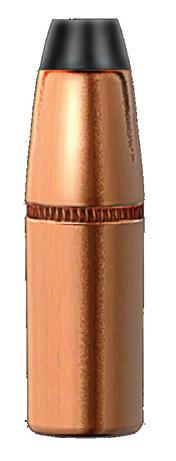
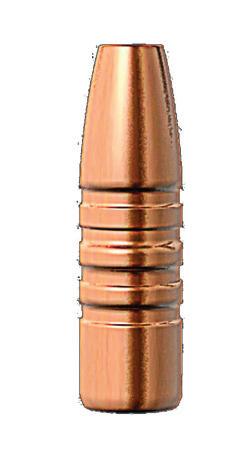
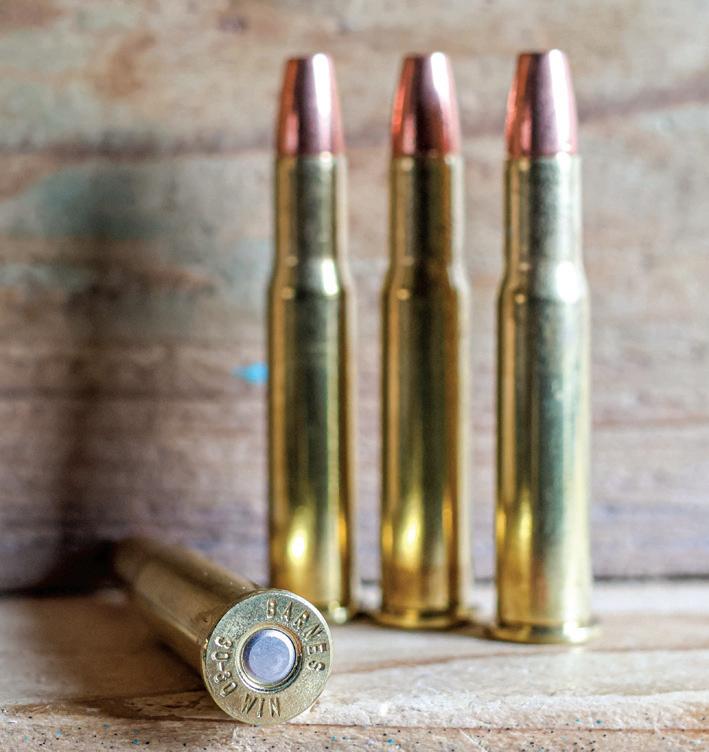
And while the Barnes name is certainly synonymous with lead-free projectiles, the spirit of Fred Barnes’ projectiles was always embraced. The Original series is alive and well in all of its copper jacket/lead core glory, though it is not as extensive as it once was. In the Pioneer ammo line, the Original bullets, the flatnose TSX, and the XPB bullets are offered. The product line is loaded in the excellent Starline brass cases with the *-* headstamp marking; this is a brand that reloaders have long enjoyed, and when you see this headstamp on factory ammo, understand you’ve got one of the best in your hands.
The Pioneer line offers two dedicated rifle cartridges and three
crossover handgun/rifle cartridges.
For the rifle cartridges, we see what I consider to be two of the most popular rimmed cartridges: the .30-30 Winchester and the .45-70 Government. For those crossover handgun/rifle cartridges, Barnes offers the .357 Remington Magnum, .44
Remington Magnum and the venerable 45 Colt. In each of these cartridges, there is a pair of bullet options – one of the Barnes monometals, be it the TSX (Triple Shock X) for the rifle cartridges or the XPB (X Pistol Bullet) for the handgun cartridges, and one of the lead core/copper jacket designs.
I TESTED THE .30-30 Winchester and .45-70 Government loads, each with both bullets available. For rifles, I grabbed my mid-1980svintage Winchester Model 94AE XTR equipped with a Skinner Sights peep for the .30-30 Winchester, and my dad’s old favorite, a centennial Browning 1886 in .45-70 Government. Both rifles are iron-sighted – as many lever-gun enthusiasts agree is the proper sighting system for this style of rifle – so I tested for accuracy at 50 yards. For velocity measurements, I used the excellent Garmin Xero C1 Pro. (As a side note, this little chronograph has been a game changer, as it fits easily in your range bag and doesn’t require the skyscreens or anything attached to your barrel.)
The .30-30 Winchester loads feature two bullets: the 150-grain flatnose TSX hollowpoint and the 190-grain flatnose Original lead-core bullet. Starting with the 150-grain load, we see an advertised muzzle velocity of 2,335 feet per second (my rifle came in a bit below that, with an average of 2,280 fps from the 20-inch barrel), generating 1,816 foot-pounds of energy at the muzzle, dropping off to just over 1,200 foot-pounds at 100 yards and retaining just 782 foot-pounds at 200 yards. With the common 100-yard zero, this bullet will drop 9 inches at 200 yards, so even with a decent optic
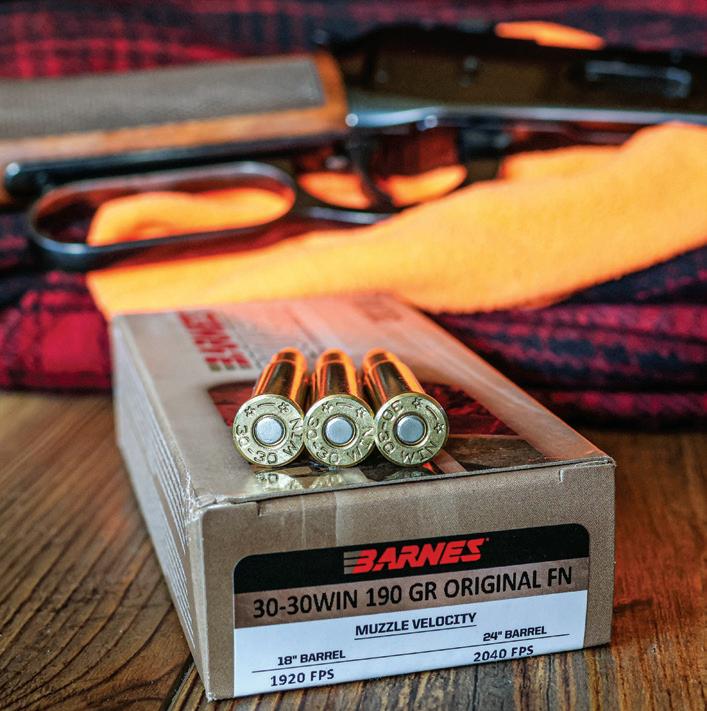
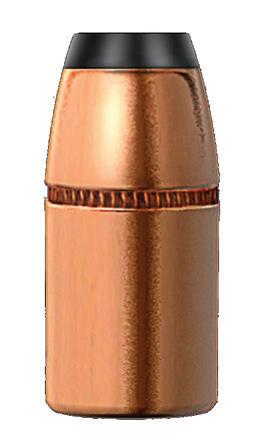
Barnes loads the Original 190-grain projectile in the excellent Starline brass cases.
If you like sectional density, the 190-grain Barnes Original in the .30-30 Winchester will make you happy. (BARNES BULLETS)
The 190-grain load in the Pioneer line gave just over 2,000 feet per second in author Phil Massaro’s Winchester 94AE XTR in .30-30 Winchester.
BULLET BULLETIN
on board, this load is probably best confined to shots of 150 yards and closer. At the 50-yard target, I could keep three shots inside of an inch, with the velocity spread under 30 fps.
The 190-grain Original has an advertised muzzle velocity of 2,040 fps, with my Winchester showing 2,005 fps, again presumably from a slightly shorter test barrel length. Though the heavier bullet starts out slower than the 150-grain load, it retains its energy values better. Giving 1,756 foot-pounds at the muzzle, the 190-grain Original will still have 1,350 foot-pounds of energy at 100 yards and 1,028 foot-pounds at 200 yards, for those who subscribe to the 1,000 footpound rule. With the 100-yard zero, the 190-grain load will drop 10 inches at 200 yards, and 34 inches at 300 yards. My rifle liked this load, putting three shots into a ¾-inch group at 50 yards.
The .45-70 Government loads consist of a 300-grain flatnosed TSX and a 400-grain Original hollowpoint. The Browning 1886 seemed to prefer the 400-grain load, as that gave the best accuracy – just over an inch at 50 yards – while the 300-grain TSX load didn’t quite make that mark, averaging just over 1½ inches for the threeshot group. While not hair-splitting, that accuracy level is still more than acceptable for hunting, especially at iron-sight distances. The 300-grain TSX has an advertised velocity of 1,925 fps, for 2,469 foot-pounds of
Topped with a Skinner Sights peep, the author’s Winchester 94 in .30-30 gave respectable groups at 50 yards.
The 150-grain flatnose TSX feeds great from a tubular magazine, and will retain a healthy portion of its original weight while offering dependable penetration. (BARNES BULLETS)
BULLET BULLETIN
energy at the muzzle. That energy figure drops off to 942 foot-pounds at 200 yards, where you’ll see that bullet drop 14½ inches. Take things to 300 yards, and you’ll have 54 inches of drop and just 676 foot-pounds of energy. The 400-grain Original has a muzzle velocity of 1,715 fps – that Browning gave 1,735 fps – and has a nearly identical trajectory to the lighter 300-grain TSX, though it retains energy much better. It comes in with 2,613 foot-pounds at the muzzle and retains 1,055 foot-pounds at the 300yard mark, though the vast majority of hunters wouldn’t attempt that shot on unwounded game with a .45-70.
THERE ARE THREE pistol cartridges loaded in the Pioneer line: the .357 Remington Magnum, the .44 Remington Magnum and the .45 Colt. These three have gained a bunch of popularity in lever-action carbines, as they make a
good choice for youngsters at woods distances (especially the .357 Magnum) and are solid choices for bear over bait. Barnes loads each of these with one of their XPB lead-free projectiles, and one of the flatnose Originals. The .357 Magnum is offered with a 140-grain XPB at a muzzle velocity of 1,695 fps
from a rifle barrel, delivering 893 footpounds of energy, and a 180-grain Original flatnose at 1,655 fps for 1,095 foot-pounds of muzzle energy. The .44 Remington Magnum sees a 225-grain XPB at 1,375 fps for 1,280 foot-pounds, and a 300-grain Original at 1,375 fps for 1,170 foot-pounds. The .45 Colt has a 200-grain XPB at 1,190 fps, giving 629 foot-pounds of energy, and a 250-grain Original at 1,095 fps, which yields 665 foot-pounds.
Looking at trajectory, the .357 drops about 19 to 20 inches at 200 yards, the .44 Magnum drops between 21 and 27 inches at 200 yards, and the .45 Colt drops 3 feet at 200; these are pretty much confined to 100 to 125 yards,
What’s
about a
to
The marriage of old and new is present in the Pioneer ammo line, as the 130-yearold .30-30 Winchester sees a 150-grain flatnose Barnes TSX lead-free bullet.
The Barnes Pioneer .30-30 load featuring the 150-grain TSX bullet was loaded in Barnes headstamped brass cases.
not
love
quality 400-grain hollowpoint in the venerable .45-70 Government? Barnes checks that box wonderfully.
before things drop off significantly.
While I only tested the two rifle cartridges, I can say that none of the four tested loads had any issues with loading, firing or ejecting. For the classic lever-gun experience with a lead-free projectile, the Pioneer ammunition line gives a great choice, as the TSX and XPB are proven designs and will, especially up close, give good expansion for a large wound channel and deep penetration
to get through thick hide and heavy bone. The Barnes Original series is a traditional design and Barnes wisely loads bullet weights from the middle of the range to the heavier side of things.
From their humble beginnings in Fred Barnes’ workshop, to the world spotlight under the Brooks family, to a recent acquisition by Sierra Bullets, the Barnes name is alive and well, and their loaded ammunition adds another great dimension to the brand. ★
Fred Barnes prided himself on his cup-andcore bullets, and Barnes continues that tradition in the Original line of projectiles.
(BARNES BULLETS)
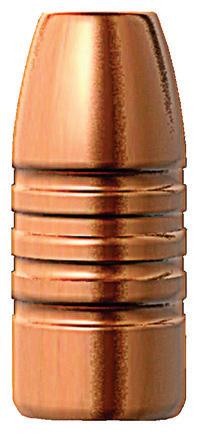
The copper alloy Barnes TSX is a sound solution for those areas that prohibit lead projectiles, and will give both good structural integrity and a large wound channel. (BARNES BULLETS)
The Browning 1886 Centennial digested the Barnes TSX just fine, with no feeding problems at all.
Barnes loads a 300-grain TSX flatnose copper bullet in the classic .45-70 Government at a muzzle velocity of 1,925 fps, making a perfect choice for medium game at relatively close distances.
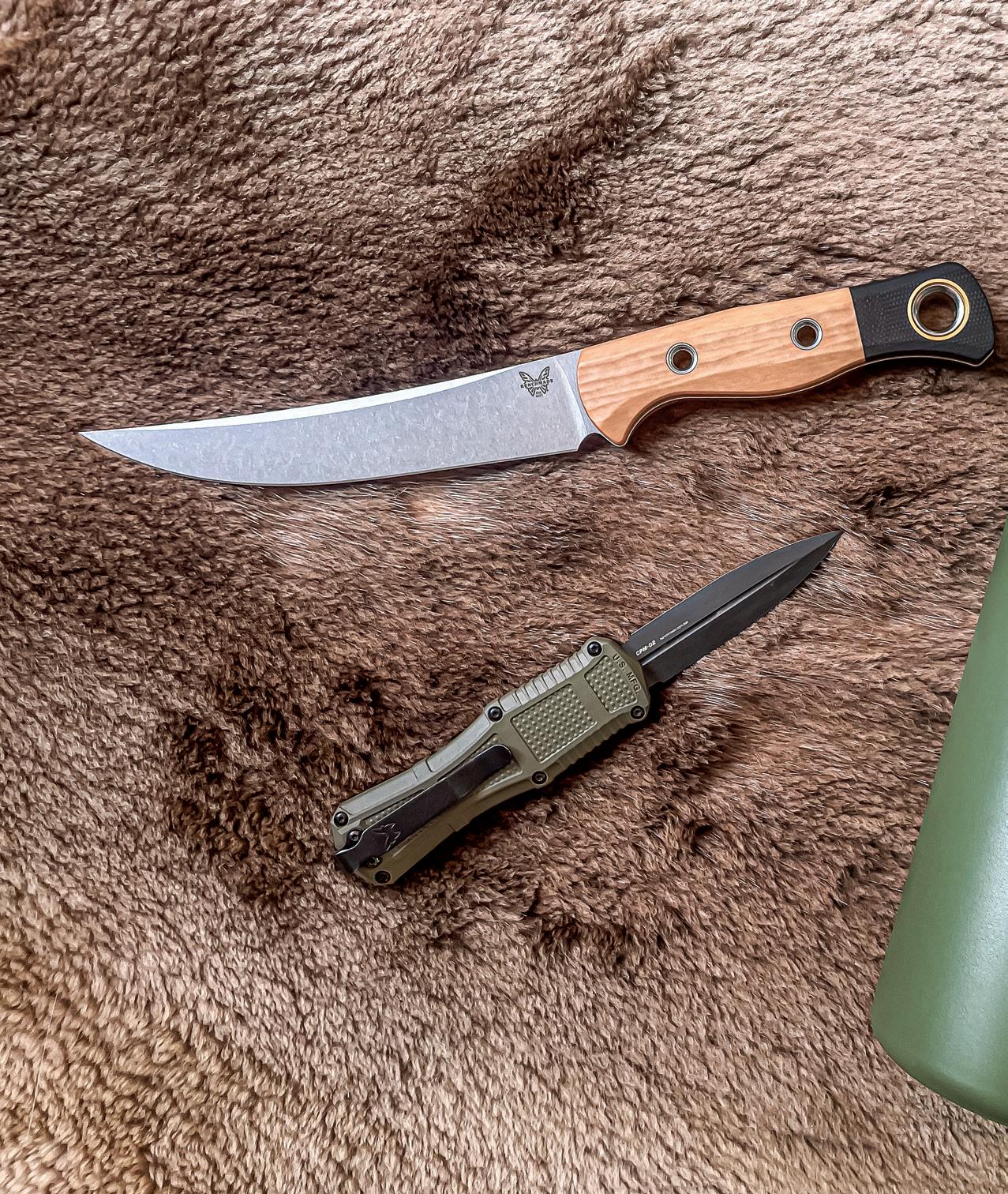
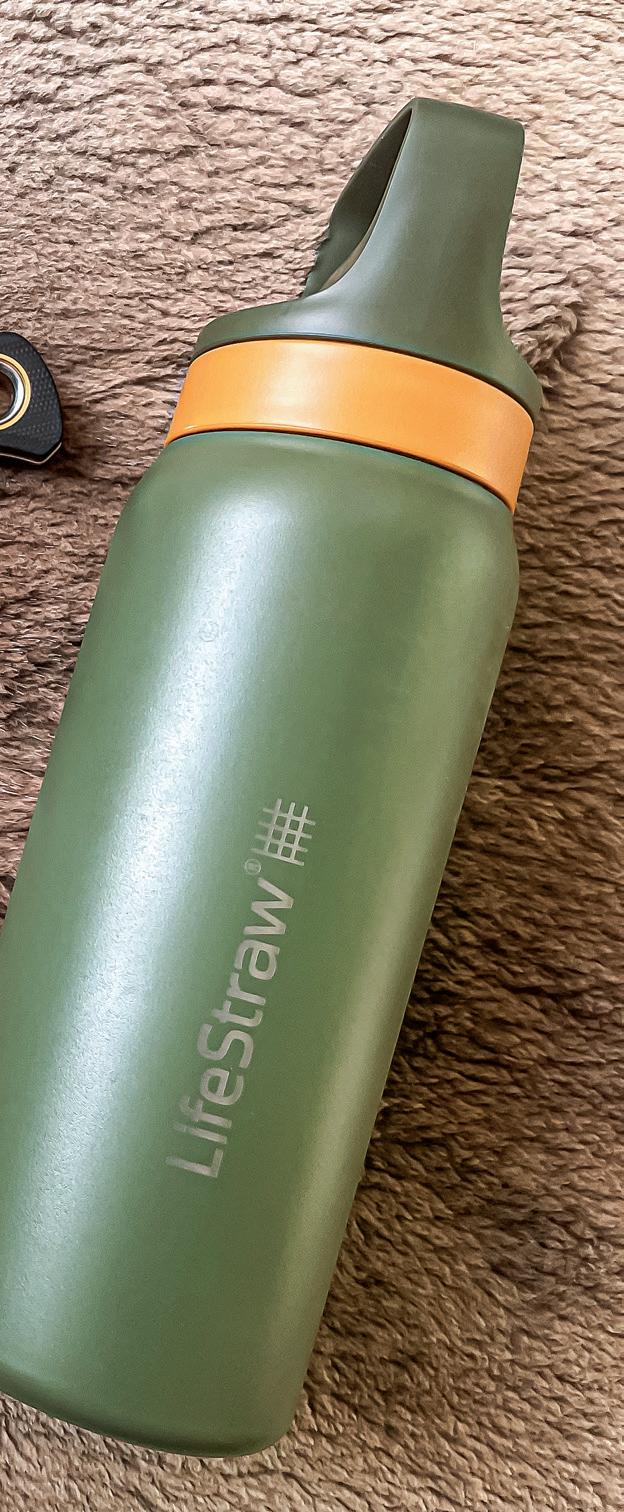
Benchmade’s Meatcrafter and Mini Claymore OTF knives, along with the new LifeStraw, are quality pieces of gear any hunter would appreciate.
ROAD HUNTER GIFT GUIDE FOR BIG GAME HUNTERS T
Field-tested gear that will make great presents.
his fall I spent numerous days chasing elk, deer and bear. While on hunts I got to test loads of gear in a range of settings and conditions. Some gear was great. Some was the opposite of great. Here’s a look at the great stuff, why I like it and why it should top the wishlist of hunters in search of the perfect holiday gift, be it for themselves or someone else.
BENCHMADE MEATCRAFTER AND MINI CLAYMORE OTF
Benchmade’s quality steel and their knives’ ability to hold and regain an edge make them very appealing to me. Enter their Meatcrafter. I broke down multiple deer at home and an entire bear in the field with this knife. I butchered several animals with it too. The fine trailing point made the blade easy to make precise cuts with, be it separating quarters, fileting backstraps and neck meat, or disarticulating muscle groups, including shanks. It’s sharp and smooth enough to cut perfect steaks. The Meatcrafter comes in three handle and three blade finish options.
Benchmade’s Mini Claymore OTF (Out the Front) quickly became my personal carry knife of choice. This doubleaction, low-profile knife is easy to operate with one hand, and durable so as to achieve countless tasks. It’s lightweight, holds firmly in any pocket, and the Grivory handle makes for easy gripping in the rain or when your hands are covered in blood. I used this knife on multiple hunts last fall, including two trips to Alaska. It achieved numerous jobs, including field dressing and caping big game. Info: benchmade.com.
LIFESTRAW GO SERIES WATER FILTER BOTTLE
I got the LifeStraw 24-ounce stainless-steel water filter bottle for a two-week trip to Alaska. I ended up using it on multiple big game and bird hunts throughout the West too. The double-wall-insulated, stainless-steel bottle keeps water cold all day and the integrated two-stage filter removes bacteria,
STORY AND PHOTOS BY SCOTT HAUGEN
ROAD HUNTER
parasites, microplastics, silt, sand, chlorine and odors. The water always tasted good. My wife used it on biking and camping trips, and she also loved it. Info: lifestraw.com.
LEUPOLD PRO GUIDE OPTICS
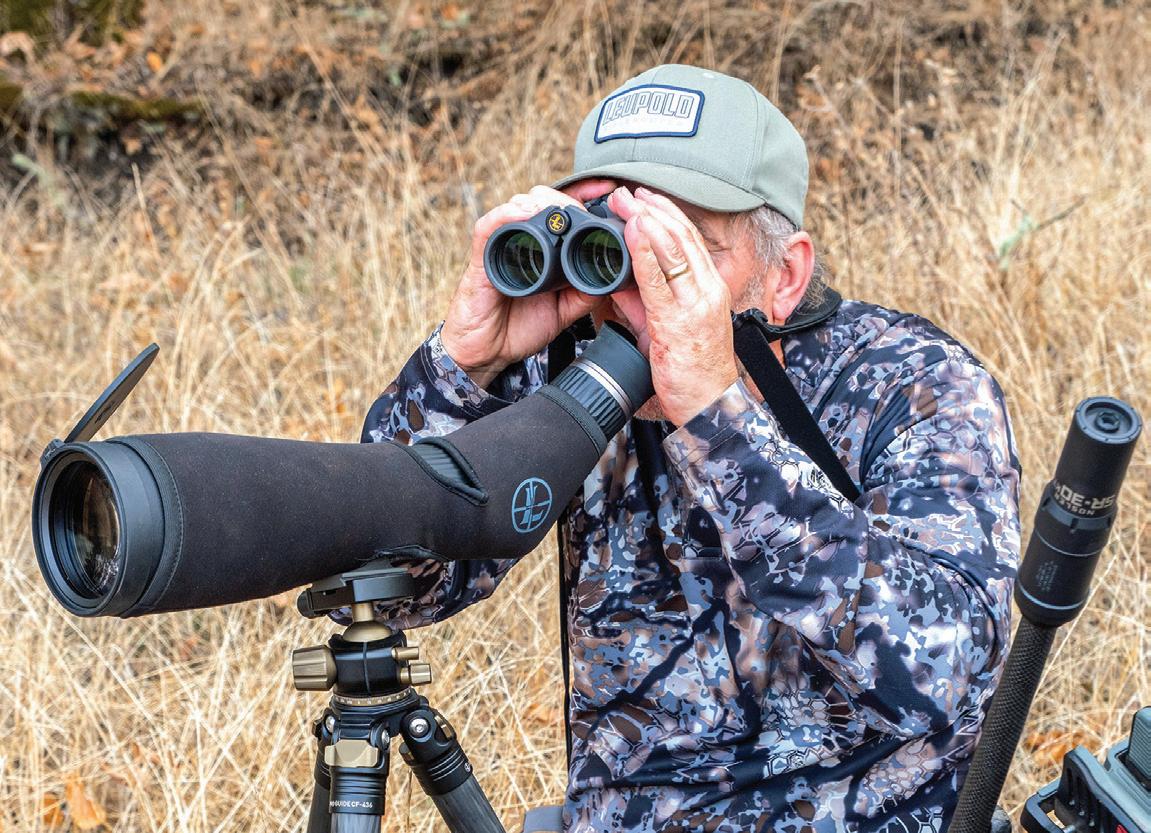
The best Leupold binoculars I’ve used are the BX-4 Pro Guide HD Gen 2 10x42s. They’re incredibly lightweight, the eye cups stay where you set them and are extremely comfortable, and the clarity of this glass puts them right up there with the elites. I spent countless hours looking through these in a 10x42, and put in a bit of time looking through the 12x42s of the same model, which are just as impressive.
Their best spotting scope I’ve gotten behind is the SX-4 Pro Guide HD. I have the 15-45x65, but also used a
buddy’s x85mm model on a week-long deer hunt. I used the bino and spotter combination on many deer, bear and elk hunts this fall, sometimes looking through them up to six hours a day. When they say HD, they mean it. No eye fatigue, exceptional clarity, and both products performed flawlessly in rain, high winds, blowing dust, and when the sun was low on the horizon, where glare is often an issue. Info: leupold.com.
MEINDL COMFORT FIT BOA SPEED HUNTER BOOTS
I had an emergency back surgery last spring. The surgeon said I’d be lucky to do any big game hunting in the fall. Four months after surgery I got the green light to start walking on uneven ground. I should mention, I also need foot surgery to rid a big
toe joint of bone spurs, arthritis and calcium buildup. I needed a shoe that offered room in the toe while putting my body in a position that didn’t pinch the new hardware in my back. Three brands later, I found Meindl’s Comfort Fit Power Walker 3.5. This shoe design naturally put my body in an upright position and instantly offered 100 percent pain relief with each step. The heel and midsole gave ample support, while the toe had plenty of room for my swollen joints. I hiked less than 10 miles in them before my next Meindl investment, their Comfort Fit Boa Speed Hunter Boots.
These were my go-to boots this fall. I’ve spent hundreds of hours in them from Alaska through multiple Western states. I’ve been a fan of Meindl boots for decades and have worn them on
Leupold’s new line of optics is a game changer, and worthy of serious consideration.
ROAD HUNTER
numerous big game hunts around the world. The Boa Speed Hunters put my body in a comfortable position, and they offer ideal heel and arch support and plenty of room in the toe box. The boots are light, and not a weight burden on my back. The Boa lacing system is top-notch. Their support, stability and comfort have impressed me. Gore-Texlined, 100-percent waterproof, and the lacing system is precise and easy to adjust. Info: meindlusa.com.
SITKA DEW POINT RAIN GEAR
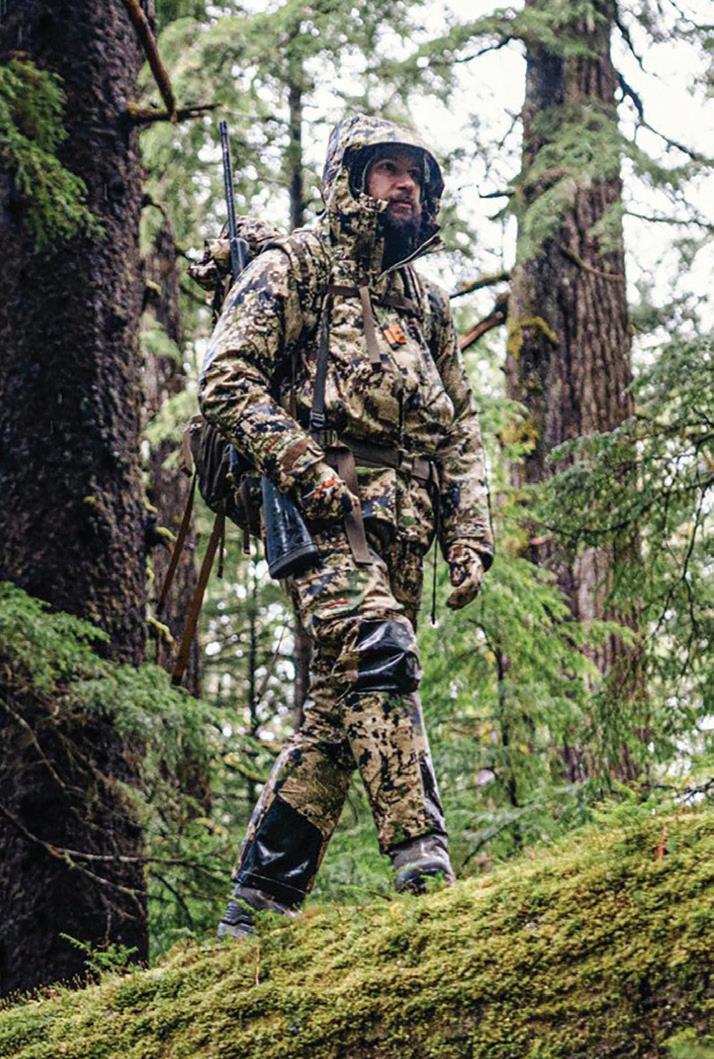
I’m a fan of Sitka’s Dew Point rain gear when hiking in the rain because it’s lightweight, ergonomic and fully functional. I wasn’t sure what to expect with their new Dew Point Pro series. What I found was a much-needed set of quality rain gear to withstand still hunting and sitting in driving rain for hours, day after day in the Pacific Northwest. This is their toughest rain gear yet.
The Dew Point Pro Pant offers ample legroom for layering. The reinforced knees are great for breaking down game and crawling on the ground. The bellowed pockets are a nice feature.
The design of the Dew Point Pro Jacket is long in the tail to maximize the shedding of rain, and the large hood is nice when layering. Uniquely designed pockets and zippers maximize space and temperature control. It’s easy to add too many layers under the Pro series, so go light if planning on hiking all day. Info: sitkagear.com.
WORK SHARP PROFESSIONAL PRECISION ADJUST ELITE KNIFE SHARPENER
The advancement of the sharpening systems Work Sharp continues to roll out never ceases to amaze me. And their new Professional Precision Adjust Elite Knife Sharpener is no exception. This system optimizes control and precision more than any home sharpener I’ve used. From field knives to butchering knives, and even my wife’s high-end Shun kitchen knives she uses daily, this sharpener handles them all. Gone are the days of sending knives back to the factory for sharpening once a year.
An array of features sets this sharpening system apart, but for me, the clamp stabilizing platform, precisely constructed metal frame and complete line of abrasive options stand out. I also love the small knife table, as it’s easy to insert and makes for accurate handling of small blades. The digital angle indicator is ingenious. I’m not gonna lie, the foam-molded carrying case is an added luxury both for transport and storage. So easy to set up and swap grits, this sharpener makes me feel like a pro, though I’m far from it. Info: worksharptools.com.
THERMACELL E65 RECHARGEABLE MOSQUITO REPELLER
Twenty years have passed since I first used a Thermacell repellent unit. I was one of two outdoor writers who got to test and help in their development, and did so for two years before they hit the market. Since then, I’ve used them
Rugged, quality rain gear designed for layering and taking on the toughest conditions – that’s what Sitka’s Dew Point Pro series achieves.
ROAD HUNTER
from Alaska to California and across the country. I’m still using them, and the new E65 has me excited.
The new E65 is a rechargeable repeller that’s great for early-season hunting camps out West. It takes only two hours to fully charge and runs for six and a half continuous hours, offering a 20-foot zone of protection. The repellent cartridge burns for 36 hours. The entire unit is airline travel safe, as there is no butane cartridge like in previous models. It works great for mosquitoes, no-see-ums and white socks. Info: thermacell.com.
NOSLER WHITETAIL COUNTRY BULLET AND SR-30KH SUPPRESSOR
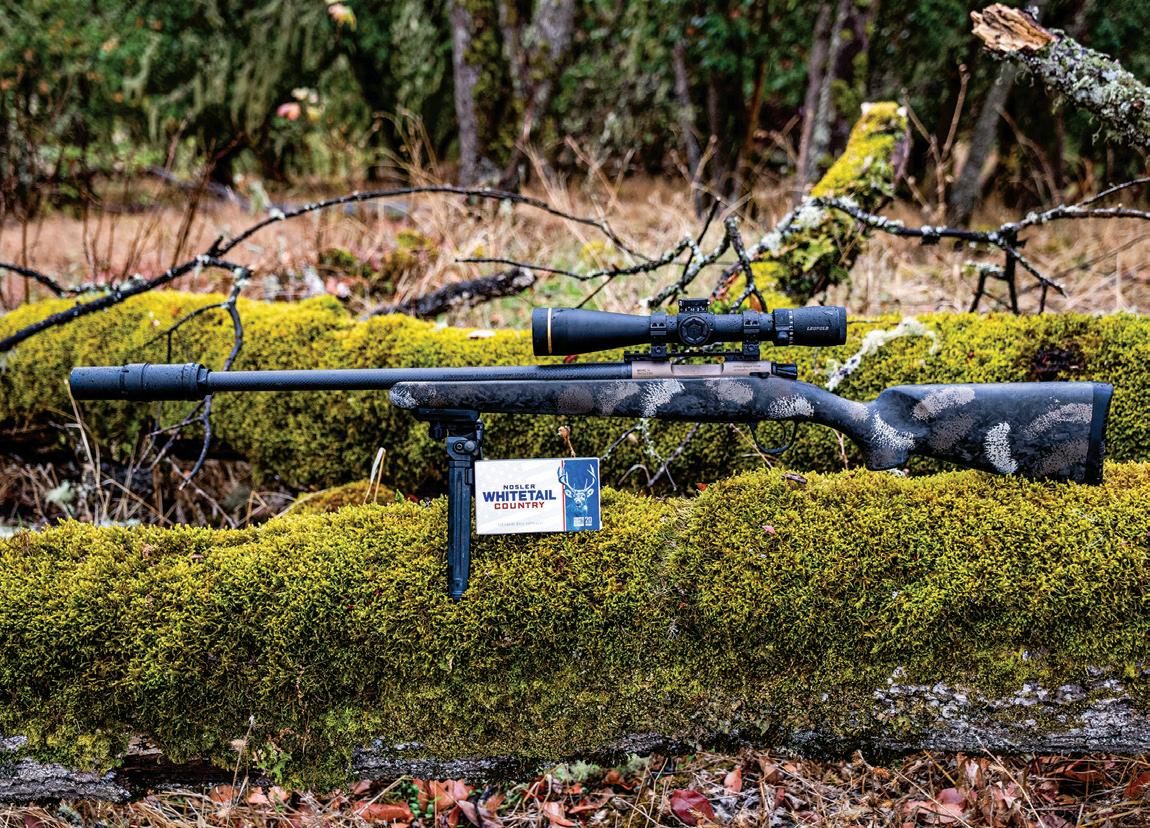
Nosler’s Whitetail Country 100-grain solid bullet is what I used on a hunt for Columbian whitetails this fall. With
this load, a buddy shot a buck that was quartering away. It performed perfectly, mushrooming in classic fashion on the opposite side, and the buck didn’t go far. My buck was standing broadside at 154 yards and I intentionally shot it high on the shoulder. The bullet passed through the near shoulder blade, exited the far one and dropped the buck on the spot – mission accomplished. There was less than a quarter pound of total meat loss. The rifle was a Christensen Arms Ridgeline FFT chambered in .243 with a 20-inch barrel. It was fitted with a Nosler SR-30KH suppressor. I’ve been an advocate of suppressors since first using them in Africa over 30 years ago. This one rounded out a compact build while delivering obvious noise reduction and less recoil, be it on a small bore. I’ll be investing in more of
YETI FOOD JAR AND FRENCH PRESS
Hot soup never tastes so good as when you’re on the hunt and it’s cold and wet. I used both sizes of Yeti’s new Insulate Food Jars – 8-ounce and loved them. They kept soups and stews hot and let me hunt all day, in comfort, rather than going back to camp for a snack. The double-walled vacuum insulation kept food hot all morning, and the two-piece lids are easy to clean. No leaks or drips inside the backpack either. I never drank coffee until one fall, 11 years ago, when I was stranded in brown bear camp and we ran out of food. It was cold and miserable, and all we had was coffee. Now, I’m a wannabe coffee snob. Enter Yeti’s new French Press. I got the 34-ounce version and love it. It’s
Nosler’s suppressors. Info: nosler.com.
Author Scott Haugen was impressed with the performance of Nosler’s Whitetail Country 100-grain ammunition and their SR-30KH suppressor.
ROAD HUNTER
tough, features a DuraSip ceramic lining and double-wall vacuum insulation, and made great coffee for a buddy and I on a recent fishing trip. Info: yeti.com.
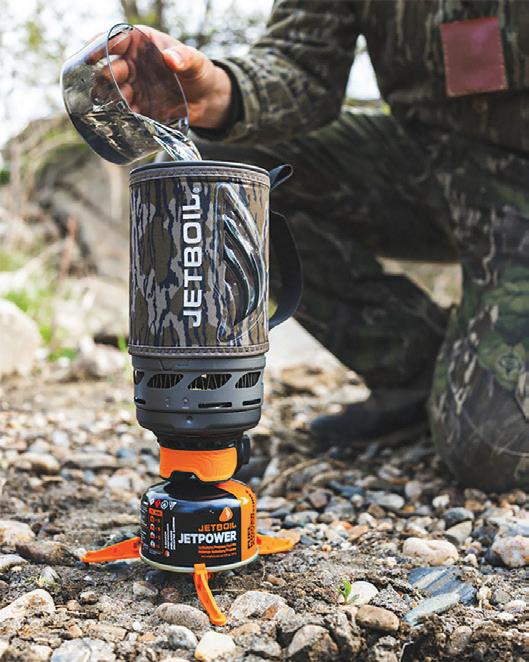
JETBOIL FLASH 1.0L FAST BOIL SYSTEM
It’s been over 15 years since I got my first Jetboil. When I saw the new Flash 1.0, I had to try it. The boasted fast boil time is for real, which made everyone happy in deer camp when the coffee was ready in a couple minutes, before they even rolled out of their sleeping bags. The turn-and-click igniter is a simple but much appreciated luxury, as are the colored grip zones that make handling easy in low-light conditions.
The drink-through lid and heat indicator made it nice for making hot drinks in the duck blind, as did the fitting limitededition Mossy Oak Bottomland camo pattern. The three locking points stepped up the pot-to-burner connection, making it safe and easy to handle. Next, the Flash 1.0 will be heading to elk camp with me. Info: jetboil.johnsonoutdoors.com.
QUALITY
GEAR ISN’T cheap these days. But it’s built to last and perform, day in and day out, year after year. Happy holidays, and happy hunting. ★
Editor’s note: For signed copies of Scott Haugen’s popular books, visit scotthaugen.com. Follow Scott on Instagram and Facebook.
The perfect gift for the hunter in your life!
Give them everything they need to turn their wild harvest into something unforgettable. Our Steak, Charcuterie, and Salumi kits are ideal gifts for hunters elevating their game meat this winter.
From searing venison to crafting game-forward boards or dry-curing salumi, these kits make the process as satisfying as the final bite.
Perfect for anyone who transforms wild game into something extraordinary. GIFT IDEAS
Shop complete kits and find the perfect gift fast—everything you need to elevate your next wild game!
MAKING THE CUT
A KNIFE BRAND WORTH KNOWING
TOPS blades span the gamut of uses, from tactical and EDC to hunting and clearing brush.
STORY BY PAUL PAWELA • PHOTOS BY TOPS KNIVES
hen serious shooters talk about “the right kit,” firearms dominate the conversation, as they should. But any seasoned range regular, hunter or tactical professional will tell you that a dependable blade belongs in the same conversation as a dependable rifle. For many, that blade carries four letters stamped into the steel: TOPS.
WTOPS Knives is an Idaho-based knife manufacturer known for producing
rugged, durable and purpose-driven blades for military, law enforcement, survivalists and outdoor enthusiasts. Since its founding in 1998, the company has built a strong reputation for highperformance tools designed to meet the demands of real-world operations and harsh environments.
The company was founded by Mike Fuller, a former Special Forces veteran, with the vision of creating durable, highquality knives for military personnel, first responders and outdoorsmen. The concept was born from discussions among Vietnam War-era veterans who were dissatisfied with the knives
issued during service. They sought to correct issues of strength and durability. Fuller’s background as a Special Forces veteran heavily influenced the company’s mission to design knives that could withstand extreme conditions and that military and law enforcement professionals could trust with their lives. The company’s early focus was on tactical fixed-blade knives.
In 2015, after Fuller retired from day-to-day operations, Leo Espinoza took over leadership and is now the owner of TOPS Knives. Espinoza started working with TOPS Knives in 1999 when he was a teenager. He
TOPS Knives offers more than 200 designs, several of which have become staples for shooters. Here is a sampling from SHOT Show. (PAUL PAWELA)
MAKING THE CUT
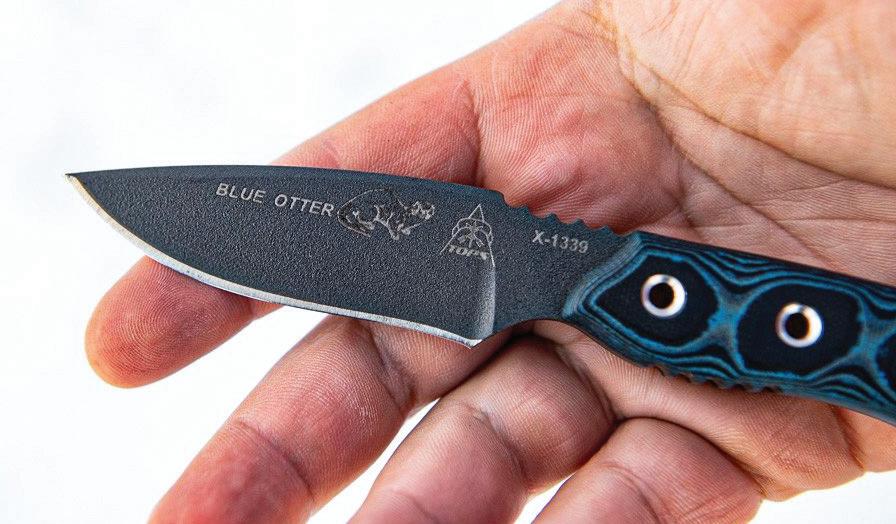
took a job cleaning the garage and the bathrooms to earn money while in high school. Over time, he taught himself the skills of knifemaking: grinding, sharpening, handle work and more. Espinoza’s commitment and talent didn’t go unnoticed. By 2006, he had designed his first knife for TOPS, called the Blue Otter. He took on increasing responsibility: shop management, operations and design. In 2010, he was promoted to vice president.
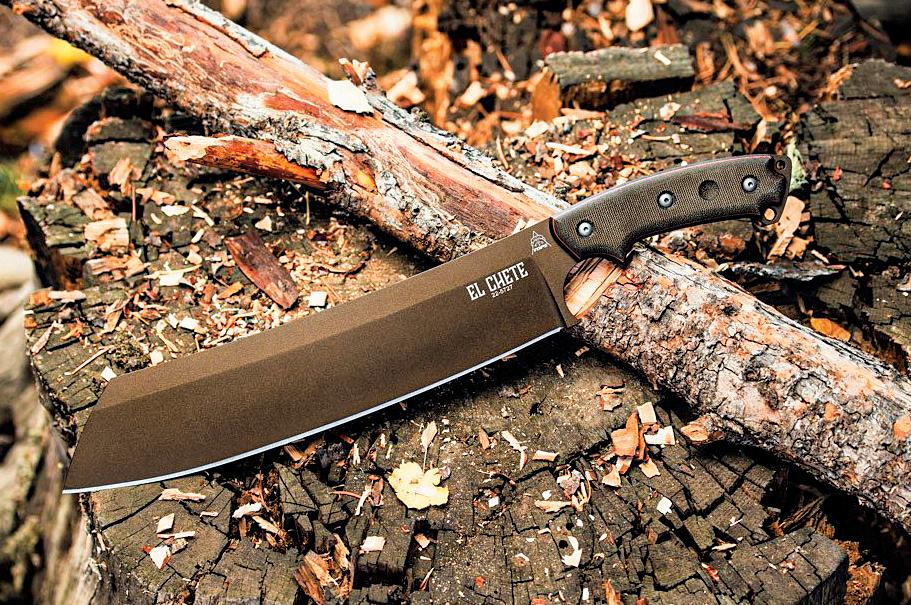
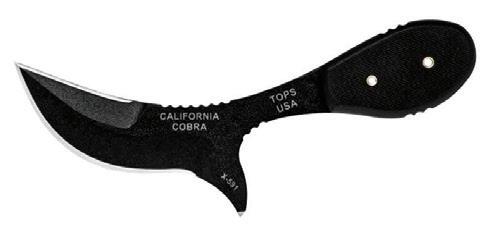
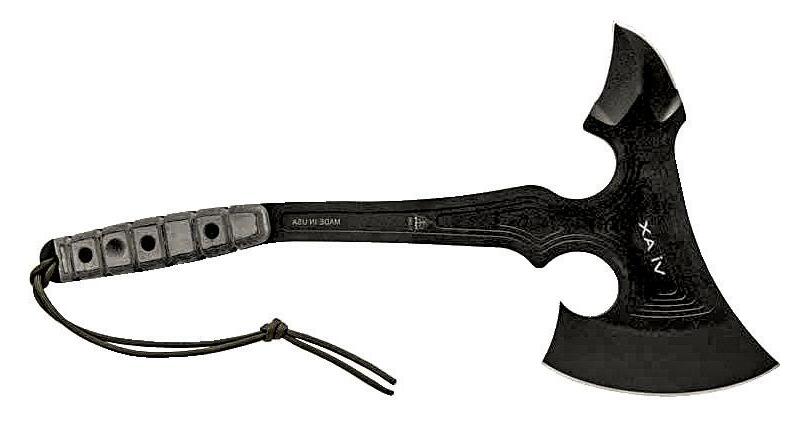
Espinoza isn’t just a business leader – he’s one of the company’s most prolific designers. He’s designed many of their well-known knives such as the El Chete, a large chopping/machete-
style knife; VI Ax, a Viking-style axe; and California Cobra, a self-defense/ utility blade.
ALL TOPS KNIVES are handcrafted in their facility in Idaho. Most feature 1095 high-carbon steel, favored for its toughness, ease of sharpening and reliability in the field. TOPS typically applies a protective finish (such as black traction coating) to enhance corrosion resistance. Nearly all models use full-tang designs, maximizing strength and making them more resistant to breakage. They also commonly feature canvas or linen Micarta, a tough, grippy, weather-
resistant material that performs well when wet or dirty. Each knife is sharpened and inspected by hand, contributing to TOPS’s reputation for consistency and build quality.
In the late 1990s and early 2000s, the company gained traction among military personnel deployed overseas, as well as law enforcement units seeking hard-use blades. Word-ofmouth and real-world use helped the brand grow quickly.
In addition, TOPS produces a wide range of blades geared toward specific applications, including survival, everyday carry and clearing brush and other heavy camp tasks, the last via
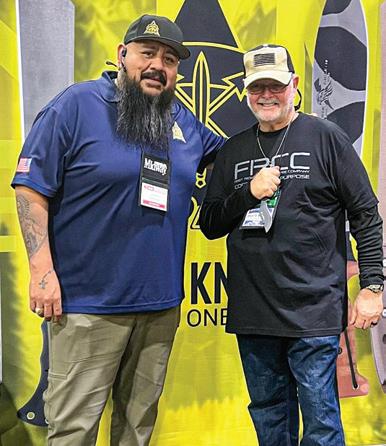
TOPS owner Leo Espinoza (left) with author Paul Pawela at SHOT Show. (PAUL PAWELA)
One of the first knives Espinoza designed, the Blue Otter.
Espinoza has also designed these popular knives (clockwise from left): the El Chete, California Cobra and VI Ax.
MAKING THE CUT
machetes and large choppers.
TOPS Knives stand out for their real-world design input, made-inUSA craftsmanship, high reliability in demanding environments, wide catalog with options for nearly any purpose and a strong emphasis on user safety and workable ergonomics. In particular, their “designed by users for users” approach has shaped the brand’s extensive lineup of hard-use blades.
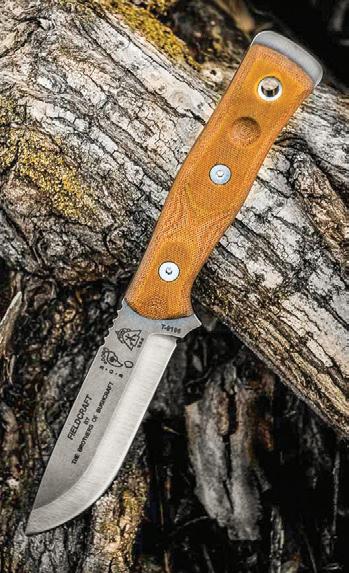
While TOPS offers more than 200 designs, several have become staples for shooters. One of these is the Fieldcraft by Brothers of Bushcraft, a near-perfect blend of field utility, survival features and carriable size. It’s become a favorite among outdoorsy riflemen and backcountry hunters.
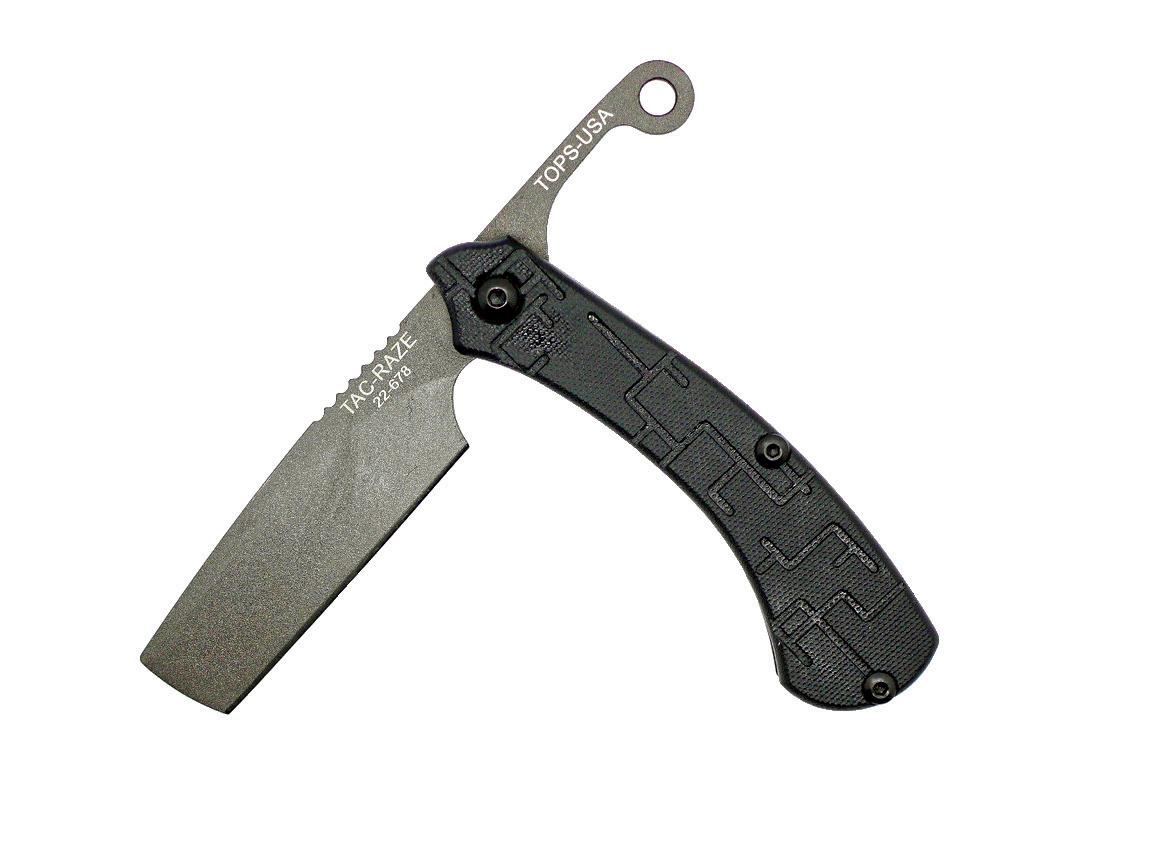
Inspired by tactical utility and combatives roles, the TOPS Tac-Raze and Tac-47 bring modern ergonomics to traditional formats. These knives are ideal for those running defensive carbines or participating in tactical training.
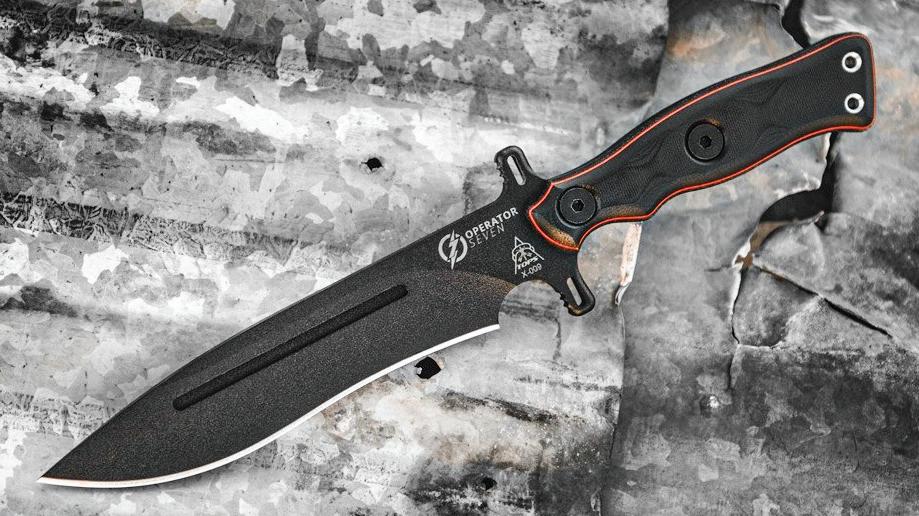
A massive, intimidating,
heavy-duty blade originally intended for military applications, the TOPS Operator 7 is often chosen by shooters who want a “do-everything, surviveanything” fixed blade for their range bag or vehicle.
Finally, the TOPS Mini Scandi is compact, comfortable and versatile – and excellent for shooters who want a small fixed-blade knife for general range-day tasks like cutting targets, opening ammo packaging or maintenance-related chores.
A FIREARM SOLVES
only certain problems. A blade solves different ones quietly, reliably and often faster. In the field, a TOPS knife becomes a multipurpose companion: clearing brush on a hog hunt, freeing snagged gear, cutting cordage, handling camp chores or acting as a backup defensive tool where legal. On the range, it’s perfect for target work, gear adjustments or emergency fixes. In everyday life, it’s a capable utility tool built to last.
What separates TOPS from many competitors is their commitment to producing tools that are trusted, not just bought. In a world crowded with flashy steel and Instagram aesthetics, TOPS remains unapologetically function-first, much like the best firearms.
For shooters who appreciate American manufacturing, real-world design and uncompromising durability, TOPS Knives is a brand worth knowing. Whether you’re building out your range kit, curating a go-bag or refining your hunting loadout, a TOPS blade offers the same thing your favorite rifle does:
Mike Fuller passed away in 2020, but his vision continues to shape the company’s philosophy and products. While Fuller was the driving force behind TOPS Knives’ creation, the company’s enduring success comes from a blend of his vision, veteran experience and the leadership of Leo Espinoza today. ★
Editor’s note: For more info on TOPS Knives, visit topsknives.com.
Pictured above is the Fieldcraft by Brothers of Bushcraft. This along with the Tac-Raze (right) and the Operator 7 (bottom) have become favorites for outdoorsy riflemen and backcountry hunters.
Cumberland’s Northwest Trappers Supply is your onestop trapping supply headquarters, featuring one of the largest inventories in the U.S. We are factory direct distributors on all brands of traps and equipment which allows us to offer competitive prices. Give us a try. Our fast, friendly service will keep you coming back.
We are the new home of “Trappers Hide Tanning Formula” in the bright orange bottle.
Retail & dealer inquiries are welcome.
If you are in the area, visit our store!
Place an order by phone, mail or on our website.
L.E. SPOTLIGHT
A MILE IN OFFICER HARRINGTON’S SHOES
No-nonsense beat cop kept his community safe and secure.
STORY BY NICK PERNA
when I was a newly minted police officer, I was assigned to a patrol team that consisted mainly of old salts, all cops with 20-plus years on the job.
This is a less-thanideal situation for a rookie. I spent a lot of my time taking reports while the veterans took extended lunches and breaks. When I wasn’t doing that,
I was filling in for them when they had court, vacation, sick days and so on. This meant I was constantly being shuffled around to work different beats in different parts of town.
When you work the beats typically patrolled by other officers, you soon realize that each officer’s unique personality and characteristics are projected on the citizens who reside there. If an officer has a permissive attitude towards bad behavior, it will show. (“I don’t know why you’re hassling
us; Officer So-and-so lets us drink our beers out in front of the store as long as we keep it in a paper bag.”) Or if they have a unique perspective on what they believe is owed to them. (“Your money’s no good here, sir. Officer What’s-hisname never pays for his lunch, so I guess you don’t have to pay either.”)
One officer in particular left a positive impression on me by the way he handled his beat. His name was Harrington, and he had a unique way of doing things. Officer Harrington was a
“When you work the beats typically patrolled by other officers, you soon realize that each officer’s unique personality and characteristics are projected on the citizens who reside there,” writes retired cop Nick Perna. (SHUTTERSTOCK)
L.E. SPOTLIGHT
throwback to a bygone era, when cops were blue-collar stiffs who hit the streets with the intent to enforce the law and keep the peace – everything else was secondary. He began his career at a time when cops weren’t used to having to say the same thing twice to crooks and any hearing problems on behalf of the criminally inclined were met swiftly and severely and did not always result in a trip to jail.
Harrington was known to maintain some of these old-school techniques when the situation merited it (enough said). Harrington had a strong dislike for crime and those who committed it. He worked in a part of town that, at the time, was infested with gang members, drug dealers and the like. Many officers avoided working there because of it. Harrington embraced it. He hit the streets every day with the intent of eliminating crime in his area of responsibility.
HARRINGTON LITERALLY NEVER took a day off. In a career spanning nearly 30 years he never called in sick, so it was pretty rare for me to get to work his beat. But, like every cop, he had the usual traffic court dates and jury trials to contend with, so I got to work his beat every now and again.
I noticed a distinct difference in his beat in comparison to other officers’ beats. Despite the fact that it was the most violent part of town, things were strangely quiet during the hours Harrington worked compared to other times of the day. The streets were empty and were void of the usual malcontents.
One day on Harrington’s beat, I saw a young gang member riding his bicycle in a particularly dangerous area. When he saw my police car, he took off at a high rate of speed. When I turned the car around and caught up with him, he immediately got off his bike and sat on the curb, without being told to do so. As I exited the car, he looked at me and was immediately relieved. He said, “Man, I thought you was Harrington!” When I asked the kid why he had immediately
complied with me, he said that he knew Harrington was a no-nonsense officer (he didn’t use those exact words) who would have found him sooner or later and there was no point in running from him. Pavlovian conditioning in its purest form!
Harrington knew everyone in his beat – crooks, bums, merchants and everyday law-abiding residents. In addition to his hard-charging approach to crime, he also took an interest in the community. He worked to provide better housing for the indigent and was always willing to lend a helping hand to the less fortunate. He dealt with nuisance issues and quality of life stuff as well (no one drank beer from paper bags in his beat).
What separated Harrington from a lot of the officers is that he treated his beat like it was his own neighborhood. He took it personally if someone ran afoul of the law there and did not tolerate any monkey business. Like any good neighbor, he would help anyone who asked for help, but make no mistake, he would not allow a dog to do its business on his lawn.
WHEN WORKING IN high-crime areas, we all need to be more like Officer Harrington. Every time you drive by a group of gangsters standing on the corner and you don’t get out and contact them, you just empowered them. Every time you let a crook slide for a minor violation, you just lost a little ground. That’s all it takes. Inch by inch, foot by foot, you can give up territory each day by not being proactive and aggressive.
Officers like Harrington fought for it, so the least we can do is maintain it. That means going out there every day and taking the fight to the enemy. It’s really as simple as that. I eventually took over Harrington’s old beat. One day, I was driving around in a patrol car when I passed a group of young gangsters. They looked into the car to see who was driving. I overheard one of them say, “Oh [expletive], it’s Perna!” They were gone by the time I turned
around to contact them. Welcome to my neighborhood. You can stay as long as you behave yourself.
I couldn’t find a picture of Officer Harrington to illustrate this month’s column. He retired in 2005, back when pictures were taken with cameras, not phones. Instead, above is a picture of me from around the same time. Since I feel that, in many ways, I’m a reflection of Harrington in terms of how to work the streets like a boss, it will have to do.
This is dedicated to Officer Harrington and all those like him who hit the street every day with the specific intent of fighting crime and making our communities a better place. We need more like him. ★
Editor’s note: Author Nick Perna served for more than 24 years with the Redwood City Police Department in Northern California before his recent retirement. He previously served as a paratrooper in the US Army and is a veteran of Operation Iraqi Freedom. He also has a master’s degree from the University of San Francisco. He is a frequent contributor to multiple print and online forums on topics related to law enforcement, firearms, tactics and veterans issues.
Perna when he first took over Officer Harrington’s beat. (NICK PERNA)
MILITARY SPOTLIGHT
A LEADER ON AND OFF BATTLEFIELD
Retired severely wounded SEAL Jason Redman 'continues to inspire people to overcome, to lead and to find purpose after adversity.'
STORY BY PAUL PAWELA PHOTOS BY JASON REDMAN
ason “Jay” Redman was born in Ohio, but due to his father’s duty stations, he lived in several places growing up, including North Carolina, Florida and the US Virgin Islands. His father was a US Army airborne instructor, following in the footsteps of his father who flew B-24 bombers in World War II. When Redman was just 11 years old, he decided that he wanted to become a US Navy SEAL. He became fascinated by what SEALs represented: the elite, secretive special operators.
JRedman enlisted in the Navy on September 11, 1992. He began his service as an intelligence specialist, working closely with Naval Special Warfare units. His sister also enlisted
in the US Air Force and his brother in the US Marine Corps.
In January 1995, Redman started BUD/S, or Basic Underwater Demolition/SEAL, training and graduated later that year with Class 202. Afterward, he served in various SEAL roles, including counter-narcotics missions in South America.
By 2000, he became an instructor, teaching marksmanship, reconnaissance and communications. He also met his now-wife, Erica. They have three children, a son and two daughters. Redman pursued higher education while serving. He was selected for the Seaman to Admiral program, went to Old Dominion University, graduated
Redman and wife Erica have been married 24 years. (WILL HAWKINS)
Retired after serving 21 years in the US Navy, mostly as a SEAL, Lieutenant Jason Redman earned a Bronze Star with Valor and a Purple Heart, among other medals.
MILITARY SPOTLIGHT
summa cum laude in business management, and was commissioned as a SEAL officer in May 2004.
He completed US Army Ranger School in May 2006. In his role as a SEAL officer, Redman deployed to both Afghanistan and Iraq, taking on leadership roles such as mobility force commander and assault force commander.
ON SEPTEMBER 13, 2007, while leading an assault team in Fallujah, Iraq, Redman’s unit came under intense machinegun and small-arms fire. He was shot multiple times, including in the face, and severely wounded.
During his recovery at Bethesda Naval Medical Center, Redman
authored a now-famous bright orange sign that he posted on his hospital door. The message read:
“Attention to all who enter here. If you are coming into this room with sorrow or to feel sorry for my wounds, go elsewhere. The wounds I received I got in a job I love, doing it for people I love, supporting the freedom of a country I deeply love. I am incredibly tough and will make a full recovery. What is full? That is the absolute utmost physically my body has the ability to recover. Then I will push that about 20 percent further through sheer mental tenacity. This room you are about to enter is a room of fun, optimism, and intense rapid regrowth. If you are not prepared for that,
go elsewhere.”
Redman didn’t want pity; he was determined to recover fully, pushing his limits physically and mentally. Over the course of his recovery, he underwent 37 surgeries.
Redman’s service was recognized with multiple honors, including a Purple Heart, a Bronze Star with Valor, two Combat Action Ribbons, a Navy Commendation Medal, a Defense Meritorious Service Medal, and several others. He retired from the Navy in 2013.
AFTER LEAVING THE
service, Redman founded Wounded Wear, a nonprofit that supports combat-wounded veterans through clothing adaptations, community and outreach. He also serves the veteran community as an ambassador with the Gary Sinise Foundation, where he advocates for wounded veterans, and as a board member for the Concussion Legacy Foundation, donating his brain posthumously to further research on brain trauma in the military.
Redman also started SOF Spoken, a coaching and speaking company. Redman’s message focuses heavily on resilience, leadership and overcoming adversity – lessons he learned both in
Redman is a highly sought-after motivational speaker and has also authored several books.
Deployed to both Afghanistan and Iraq, Redman was severely wounded in Fallujah.
MILITARY SPOTLIGHT
and out of combat. As a motivational speaker, he shares his story of “getting off the X,” a metaphor he uses for overcoming life’s setbacks.
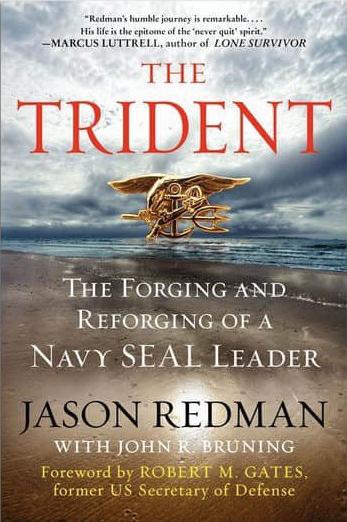
He is the author of several books, including The Trident: The Forging and Reforging of a Navy SEAL Leader; Overcome: Crush Adversity with the Leadership Techniques of America’s Toughest Warriors; and Pointman Planner, a planner/guide based on his leadership principles.
Redman exemplifies what many think of when they hear “elite warrior,” but his legacy goes beyond the battlefield. He’s a leader, a survivor and a voice for those who’ve also been through life-altering trauma. Through his books, his nonprofit work and his speaking, he continues to inspire people to overcome, to lead and to find purpose after adversity. ★
Editor’s note: For more info about Jason Redman, visit jasonredman.com.
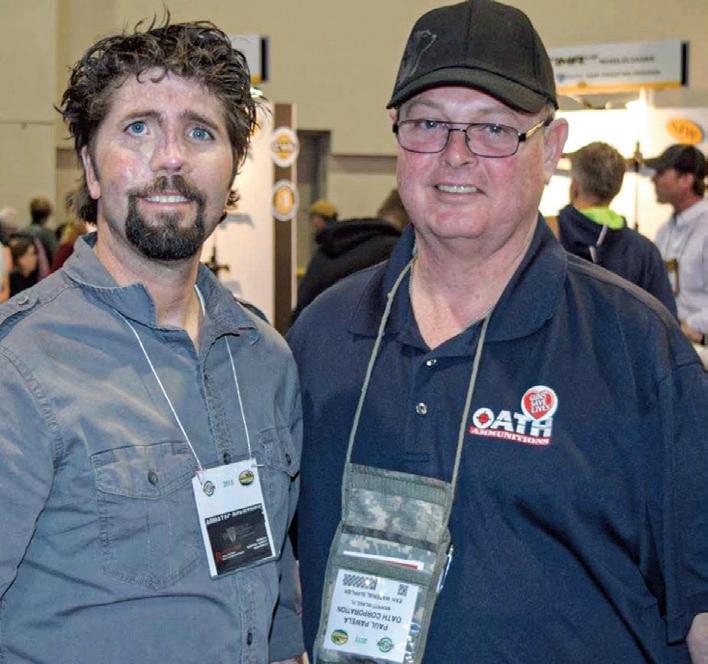
Author Paul Pawela had the opportunity to meet Redman, one of his heroes, at SHOT Show. (PAUL PAWELA)
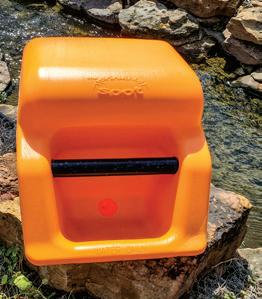
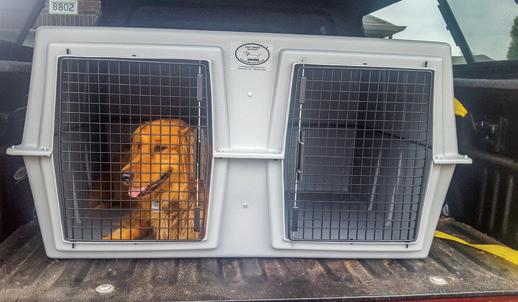
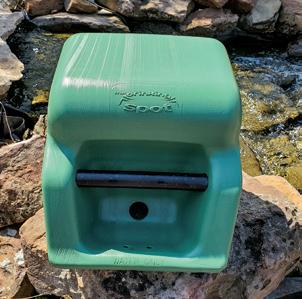
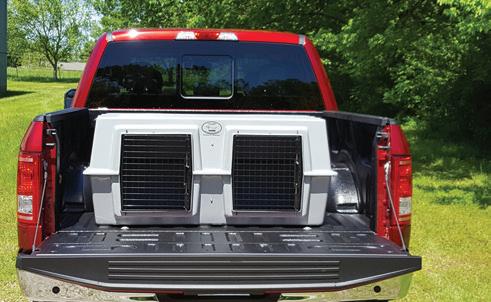
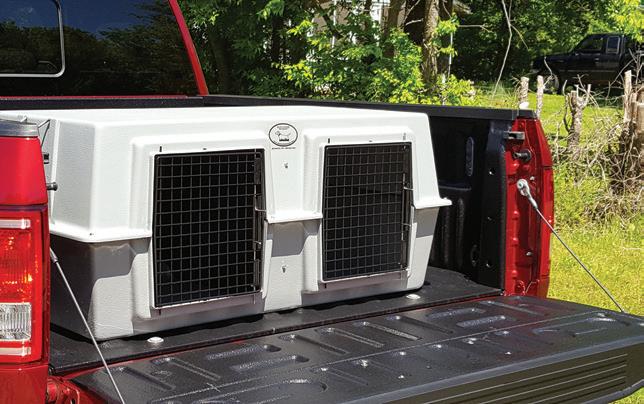
• EZ-XL accommodates 2 dogs over 65 lbs each
• Made from High Density Polyethylene with UV protection
• Easy Loader fits most full size pickups, SUVs & large UTVs
• Deuce fits smaller pickups, SUVs & UTVs
• EZ-XL is for larger breed dogs & full size vehicles
• Vents, cold weather door covers, insulated covers & custom kennel pads available
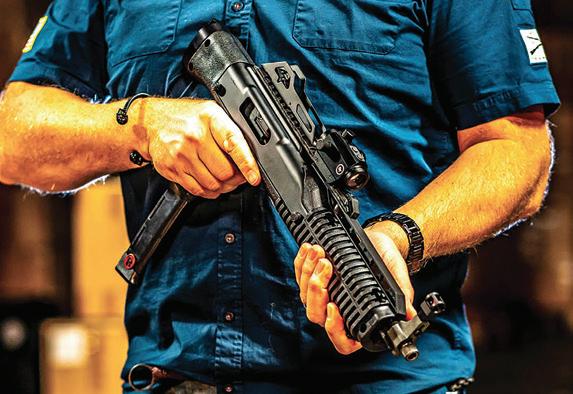
Hi-Point Firearms
hi-pointfirearms.com
Hi-Point Firearms offers some of the best value-priced firearms, and the 995, 1095P and 4595P fit perfectly into that position. Built as pistols, these firearms are more compact than the carbine counterparts and add more versatility in a smaller size, while offering the same legendary reliability and accuracy. Multiple configurations are available – find yours today at the above website.
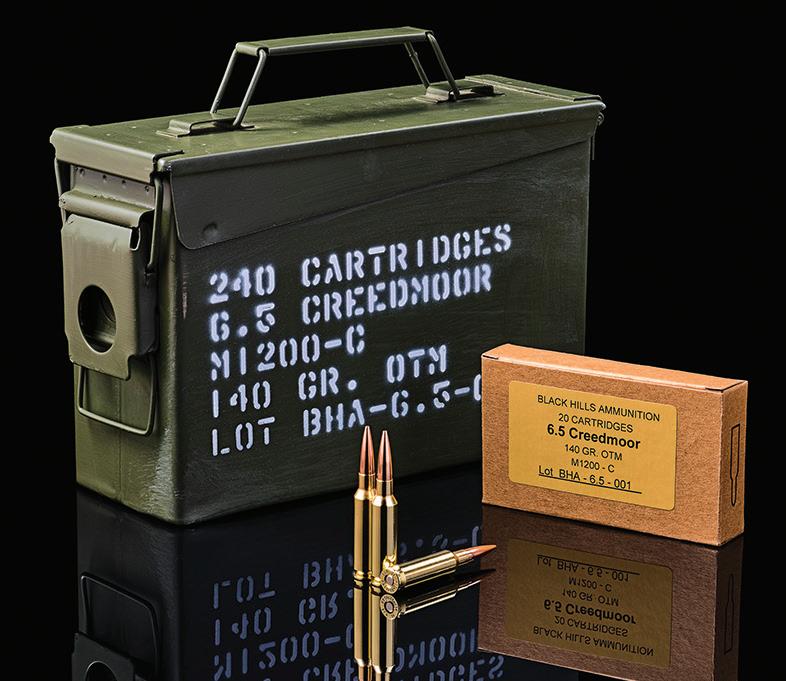
Black Hills Ammunition black-hills.com
The M1200 cartridge chambered in 6.5 Creedmoor is the designated ammunition for the US military’s MRGG-S (Mid-Range Gas Gun-Sniper) weapon system.
The Black Hills M1200-C (Commercial) version features a 140-grain OTM projectile loaded to 2,750 feet per second from a 22-inch barrel. The match primers are staked securely in the primer pocket to ensure flawless performance during suppressed semiauto fire. The propellant is selected for temperature stability to ensure reliability and avoid velocity variation in extreme environments. When accuracy, reliability and long-range external ballistics are required, the M1200-C from Black Hills is the answer.
PursuitUp is a premium on-demand streaming app built for outdoor enthusiasts. Watch your favorite hunting, fishing and adventure shows anytime, anywhere. For just $4.99/month or $49.99/year, enjoy unlimited access to exclusive content from the Pursuit Channel and top outdoor producers. Start your one-month free trial today – cancel anytime. Stream on your phone, tablet or smart TV and take the outdoors with you wherever you go.
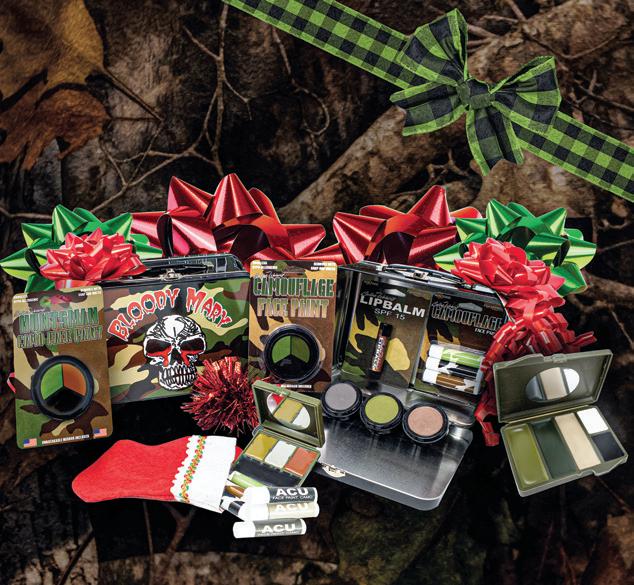
Camo Face Paint, Inc.
camofacepaint.com
Camo Face Paint, Inc. is the number one supplier of face paint to all branches of the US military. “Combat” is the newest tricolor compact in their line of face paint. They offer three-, four- and five-color compacts, as well as tubes in various camouflage colors including eye black. All face paint is made and packaged in the USA with quality ingredients that are hypoallergenic, odorless, nontoxic, wash off with soap and water, and have a five-year shelf life. Please visit the Camo Face Paint website to see their vast selection. They ship bulk or carded and blistered for store displays. They also offer private labeling.
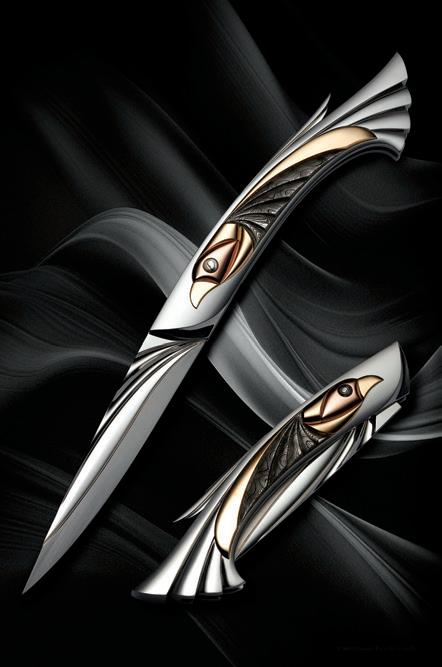
exquisiteknives.com
Exquisiteknives.com is one of the leaders in high-end custom knives. Dave Ellis, owner and American Bladesmith Society mastersmith, is a lifelong collector and sells some of the rarest and most beautiful pieces of edged art known to man. With names like Bob Loveless, Bill Moran and Michael Walker, their carefully curated collection meets the needs of any top-end knife aficionado. With friendships with top artists worldwide, Dave is able to procure those difficult and rare knives.
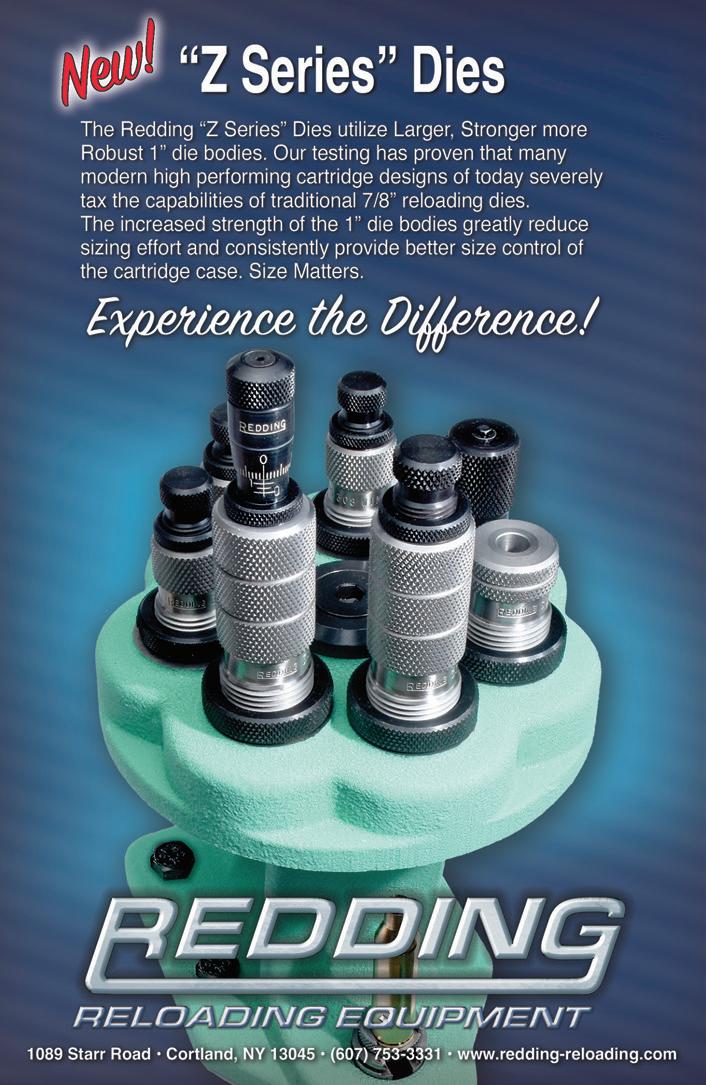
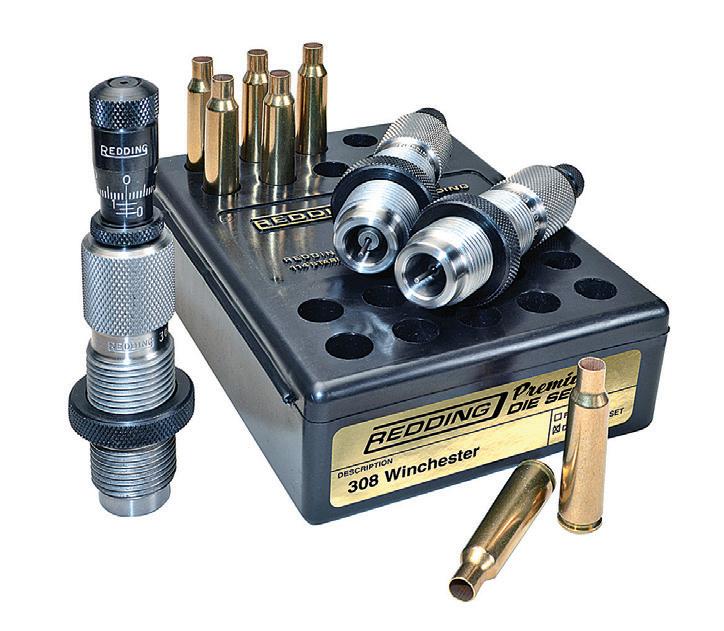
Redding Reloading Equipment
redding-reloading.com
A Redding Premium Die Set (available for over 100 cartridges) featuring a free-floating carbide expander button (allowing for self-centering in the case neck) makes inside neck sizing smoother, easier, without lubrication and improves overall concentricity. The micrometer-equipped seating stem allows for precise bullet seating depth and is also available with metric scale micrometers. Offers handloaders the convenience of fast and accurate changes in bullet seating depth in their measuring scale of preference. Makes it easier than ever to fine-tune your favorite loads or take the guesswork out of loading multiple bullet types with the same seating die.
(RICARDO VELARDE)
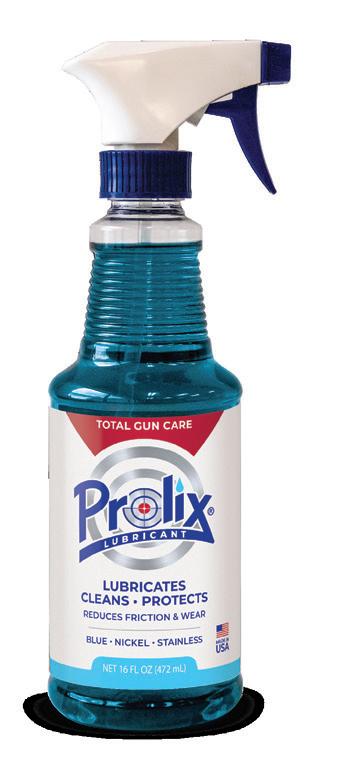
PrOlix
prolixlubricant.com
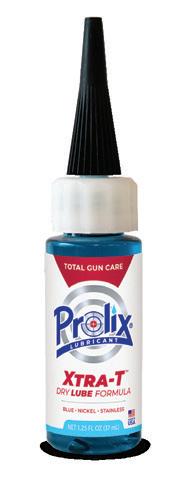
PrOlix is a penetrating solvent/dry lube product that was lab-developed and tested by law enforcement, military and commercial shooters over many years. The citrus-based biodegradable cleaner, pioneered in 1995, is the first successful “all in one” gun care product, now deemed “Bio-Technology.” Their recyclable (strain and reuse) products are made of 89 percent or greater renewable resources, a true commitment to sustainable practices and caring for the environment. As such, the USDA has listed PrOlix as a BioPreferred Product since 2012.
The solvent “goes on wet, cleans, bonds, and the lube turns dry to the touch.” It removes carbon, copper, lead, shotgun plastic residues and black powder. PrOlix will not damage wood, freeze or flash off, and it can be used for commercial and industrial applications as well.
To complement the PrOlix Cleaner/Lubricant (Dry Tech) line, shooters can use the equally superior “gun-oil and grease replacer” PrOlix Xtra-T Lube for a total care product.
HOLIDAY GIFT GUIDE
V-Line
vlineind.com
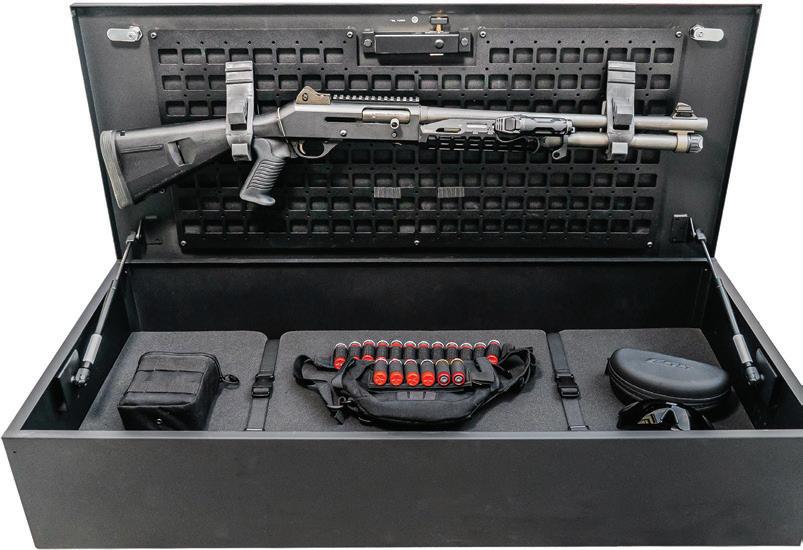
The Tactical Weapons Locker XD is designed for law enforcement, security and public safety. It is the ideal fit in most SUVs in the back trunk area between the wheel wells. The Tactical Weapons Locker XD is large enough to accommodate several firearms with accessories.
Specifications: 14-gauge steel door, 16-gauge steel body, weighs 55 pounds and measures 42.375 by 18.5 by 81.25 inches. Lock is a five-button Simplex lock with an internal lock cover.
Rocky Mountain Elk Ranch
rockymountainelkranch.com
This season, give the gift of an experience and memories that last a lifetime with Rocky Mountain Elk Ranch. Choose a three-day private hunt for either elk or bison. With meals, lodging and guide service included and a guaranteed trophy, you can’t go wrong. Scheduling is easy, as they take care of all the details so you don’t have to. Each hunter can also bring a non-hunting guest for free. So check off that bucket list, get your trophy and fill the freezer. It’s the perfect gift for the hard-to-buy-for.
Triple K triplek.com
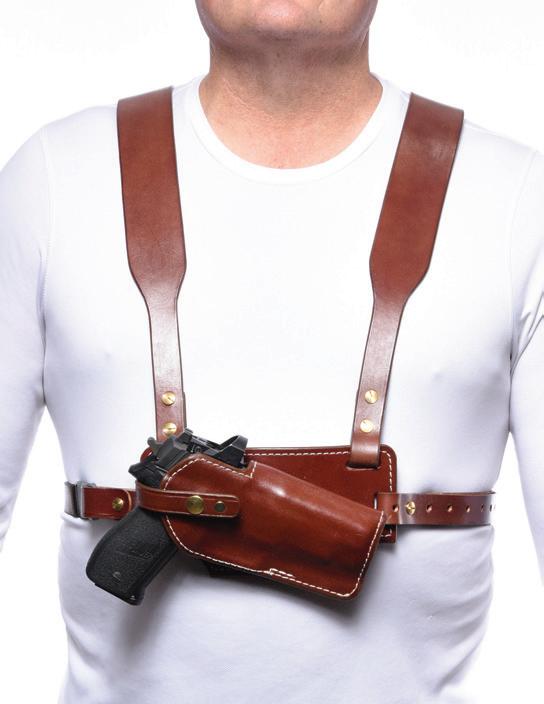
The #541 K-Max Chest holster features a dual over-theshoulders harness system that provides balance, comfort and maximum retention. Triple K’s innovative chest plate design allows for holster angle adjustment that best meets your style of carry. Adjustable holster angles allow for canted 45-degree, horizontal- or vertical-style carry. Rugged and reliable with easy-to-personalize adjustments for all torso sizes. Constructed of premium saddle-grade vegetable-tanned leather, solid brass rings and Chicago screws that are resistant to the most diverse elements. Havana brown color. MSRP: $310.
AlumaGrips
alumagrips.com
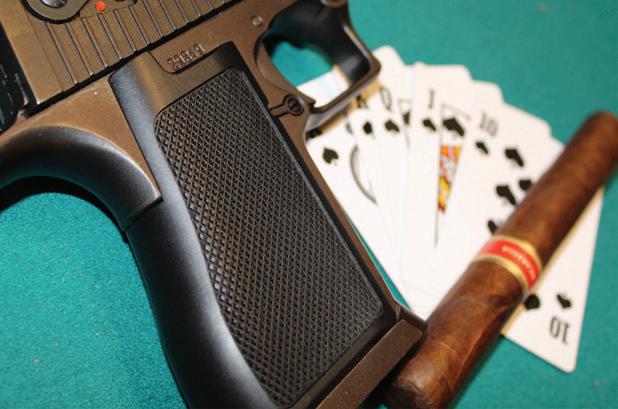
AlumaGrips’ Desert Eagle grips have undergone a redesign with improvements that are second to none. First, they removed almost 1/8 inch from the thickness of each grip, then they enlarged the radius on the back edge of the grip to reduce the overall circumference. Finally, they eliminated the need for two screws as well as the plastic insert that traditionally is needed for mounting the grips. Excellence in design and function, that is the goal of AlumaGrips.
Zermatt Arms
zermattarms.com
Zermatt Arms, based in Bennet, Nebraska, provides precision firearm components across multiple markets. They manufacture centerfire and rimfire bolt-action receivers as well as custom rifle chassis systems to provide users of many practices precisionmade components they can trust in a variety of environments. Check out their products on the above website for your next custom rifle for hunting, competition or general use.
HOLIDAY GIFT GUIDE
Easy Loader Kennels
easyloaderkennels.com
Easy Loader Kennels are the perfect solution for transporting multiple dogs in their two- and three-compartment kennels. They currently offer three different twocompartment kennels and one three-compartment kennel, each with available accessories. Easy Loader Kennels are made in the USA using USA-sourced materials, and are very durable, lightweight and versatile in many different vehicle configurations. Orders generally ship the same or next business day.
Meadow Creek Mounts
meadowcreekmounts.com
Meadow Creek Mounts makes red dot mounts for shotguns that clamp to the rib so that you don’t have to drill and tap your shotgun. Their mounts get your optic placed at the ideal distance to deliver an excellent natural field of view. By using an optic out on the rib, you’ll acquire the target more quickly and can easily shoot with both eyes open. The ease of installation will have you at the range or in the field in minutes.
Northern Precision
npcustombullets.com
At Northern Precision, they’ve been crafting high-quality custom swaged bullets since 1989 – and this holiday season, they make the perfect gift for the shooter or hunter in your life. What started with lighter .416-caliber bullets for deer-size game has grown into a worldwide brand known for accuracy and craftsmanship. Northern Precision now offers precision bullets from .228 to .500 caliber, with custom weights and styles available. Each bullet is handmade one at a time in Corbin dies under high pressure, carefully inspected, and packaged with pride. Give the gift of precision and performance this Christmas – give Northern Precision.
OffGrid
offgrid.co
The Essentials Kit from OffGrid is a complete mobile privacy setup that includes the Extract Faraday Bag to block all wireless signals – cellular, Wi-Fi, GPS, Bluetooth – keeping your device truly offline. The USB Data Blocker (made in USA) protects your device from data theft while charging. Completing the kit is the Backpack Pro: a rugged, weather-resistant backpack with hidden compartments and laptop protection. Built for those who value privacy, security and freedom of movement. Whether you’re commuting, traveling or going off-grid, this kit keeps your data protected and your gear ready for anything.
Freedom Meat Lockers freedommeatlockers.com
Freedom Meat Lockers is a full-service, family-owned and -operated butcher shop located in Freedom, California. The shop has been proudly serving the community for decades. At Freedom Meat Lockers, they embrace a traditional and old-school approach to butchery, but combine that mindset with modern tools and technology to ensure every product is perfect. Their commitment to excellence has earned them numerous state and national awards.
UMAi Dry
umaidry.com
True Blue truebluegunlube.com
True Blue has the most comprehensive line of firearms and suppressor care products in the industry. The smartest Gun Oil applicator caps. The only refillable Gun Grease syringe. Cleaner that is safe on all materials, metals, finishes and coatings used for firearms and suppressors. Tested. Proven. Trusted.
UMAi Dry brings together the best of old-world artisan meat tradition with sophisticated modern technology, making it easy for you to craft authentic dry-aged steak, charcuterie and salumi in the comfort of your own kitchen fridge. It’s “the ultimate dad gift.”
Gentry Custom, LLC gentrycustom.com
A family-owned business, Gentry Custom’s motto is “Where guns are not a hobby, but a way of life.” They believe in gun ownership and gun safety. Gentry Custom is known for the Quiet Muzzle Brake, which will make for a user-friendly rifle. The Quiet Muzzle Brake reduces recoil and muzzle jump so you can get that second shot off if needed, without the large increase of noise to the shooter. Many of the factory rifles have been threaded for a muzzle brake. Gentry Custom offers 5/8 x24 threads and many others. Call them today and they can provide the proper Quiet Muzzle Brake for your rifle. Gentry Custom also offers a threeposition safety for the Remington family of rifles and the Mauser 98.
HOLIDAY GIFT GUIDE
Luth-AR
luth-ar.com
The AR Globe Charging Handle is Luth-AR’s latest innovation. It uses a sculpted, tactile globe interface that naturally fits your finger to ensure smooth, reliable interaction with the bolt carrier group. Made from 7075 aluminum handle with Teflonimpregnated hardcoat for increased lubricity. It’s the kind of ergonomic upgrade that changes the way you instinctively manipulate your rifle – faster, cleaner and with more confidence. Luth-AR’s new AR Globe Charging Handle makes charging the rifle feel instinctive for shooters of all experience levels.
October Country Muzzleloading
octobercountry.com
Back in 1977 when the company was in its infancy, October Country Muzzleloading was a hunting bag. One product. Today, the northern-Idaho-based outfit offers a complete and thorough line of muzzleloaders and muzzleloading accessories, including ramrods, Pushing Daisies patches, Blue Thunder solvent, Bumblin’ Bear Grease, quality leather shooting bags, powder horns and hand-forged shooting tools. All exceptional quality goods for the hunter, shooter, collector and history reenactor enthusiast.
October Country products are made in the USA, and are designed and manufactured for muzzleloading, cowboy action and black powder cartridge shooters.
C. Sharps Arms Co.
csharpsarms.com
For 50 years, C. Sharps Arms Company has manufactured some of the finest single-shot rifles ever produced. Each rifle embodies American history, art and true craftsmanship, which transcends generations. No current or future owner of a C. Sharps Arms Old Reliable should live without the Scout and Tenderfoot Belt Buckle. Modeled after renowned artist Ralph Heinz’s painting of the same name, whether on the shelf or on the belt, this buckle projects an air of timelessness that few can match.
UltiMAK, Inc. ultimak.com
The UltiMAK AK optic mounting system is legendary for its rock-solid stability, and for offering the lowest rail height that allows for cowitnessing with some optics. There are several models to cover a wide variety of AK types and configurations. Featured here is the model M2-B, which is the most versatile of their AK mounts. If you have a standardlength, standard-barrel AKM, with or without a ported gas chamber, then your AK can use the UltiMAK M2-B. Update your AK to the 21st century with an UltiMAK mount and a quality red dot sight. UltiMAK also supports: M1 Garand, M14/M1A, Mini-14 and Mini Thirty, and M1 .30 Carbine.
Buffalo Arms
buffaloarms.com
For over 35 years, this family-owned and -operated business has been dedicated to sustaining your window to the Old West. Gift certificates available!
Sauvie Island Duck Club
siducks.com
Buy a day hunt before the season ends! Located in the heart of Sauvie Island, 10 miles northwest of Portland and nestled along the Pacific Flyway, Sauvie Island Duck Club is prime duck and goose hunting real estate. Their private hunting club is close to one of the largest state-run bird refuges offering waterfowl hunting.
CDNN Sports
cdnnsports.com
Comfortable on the range, in the field or on the ride home, Leupold Switchback sunglasses will quickly become a favorite addition to your everyday kit. Their ANSI Z87.1+ ballistic protection, lightweight comfort and unquestionable clarity gives you everything you need and nothing you don’t.
Features: ANSI Z87.1+, infused polarization, decentered and shatterproof lens, Guard-ion, Daylight Max and DiamondCoat.
B&T Industries, LLC
accu-shot.com
Accu-Shot and Atlas are product lines by B&T Industries, which is renowned for designing and manufacturing high-quality shooting accessories for enhanced stability and precision. Accu-Shot Monopods provide crucial rear support for rifles. They were introduced in 2000 as a lightweight, mechanical alternative to bulky sandbags, offering both gross and fine adjustments for stud- or railmount stocks. Atlas Bipods are the industry standard for front support. Available in various models with pan, cant, height adjustments and a signature 45-degree leg positioning, they are durable, versatile and even used in the United States Special Operations Command (USSOCOM) Precision Sniper Rifle Weapons System. Together they help shooters achieve superior marksmanship in hunting, competition and tactical applications.