SWoodlands County offers affordable land, strong energy and agriculture sectors, and modern planning tools that make investment fast, predictable, and
tretching across more than 7,600 square kilometres of forests, fields, river valleys, and vibrant rural communities,
Woodlands County is emerging as one of Alberta’s most promising regions for long-term growth. Located northwest of Edmonton and grounded in the traditions of Treaty 6 and Treaty 8 territories, the County offers a rare combination of natural beauty, economic opportunity, and an exceptional quality of life.
Boasting a modern transportation network, Woodlands County is highly connected and investment-ready. Highway 43 links the region directly to North America, while Highways 32 and 43 serve as a high-load energy corridor. The County also features a CN Rail line with multiple transload facilities and the CYZU Regional Airport. The population has grown from 4,558 in 2021 to 5,254 in 2025, clear proof that families and businesses are choosing Woodlands for long-term success.
A strategic vision for growth
“Guided by a clear mission to create exceptional opportunities for families, businesses, and industries with an open-for-business attitude, Woodlands County has taken significant steps to modernize our approach
to development,” says Reeve Dave Kusch. A new Municipal Development Plan (MDP) and Land Use Bylaw (LUB) streamline approvals, reduce red tape, and create a faster, more predictable path for investment.
The County’s Planning and Economic Development teams work closely to guide investors through a clear permitting process, delivering a true concierge experience. The LUB supports a wide range of industries, including energy production, resource processing, data centres, emerging technology, and agriculture.
The County works collaboratively with neighbouring municipalities, regional alliances, and provincial programs to strengthen economic resilience and respond to emerging rural trends.
Advancing energy, agriculture, and innovation
Economic diversification is planned for and encouraged. Woodlands County’s strengths in manufacturing, energy, agriculture, forestry, and tourism continue to evolve through innovation and sustainable development.
The region is home to renewable power generation at the Whitecourt Power Plant, strong geothermal potential, and an approved carbon sequestration license in the Athabasca
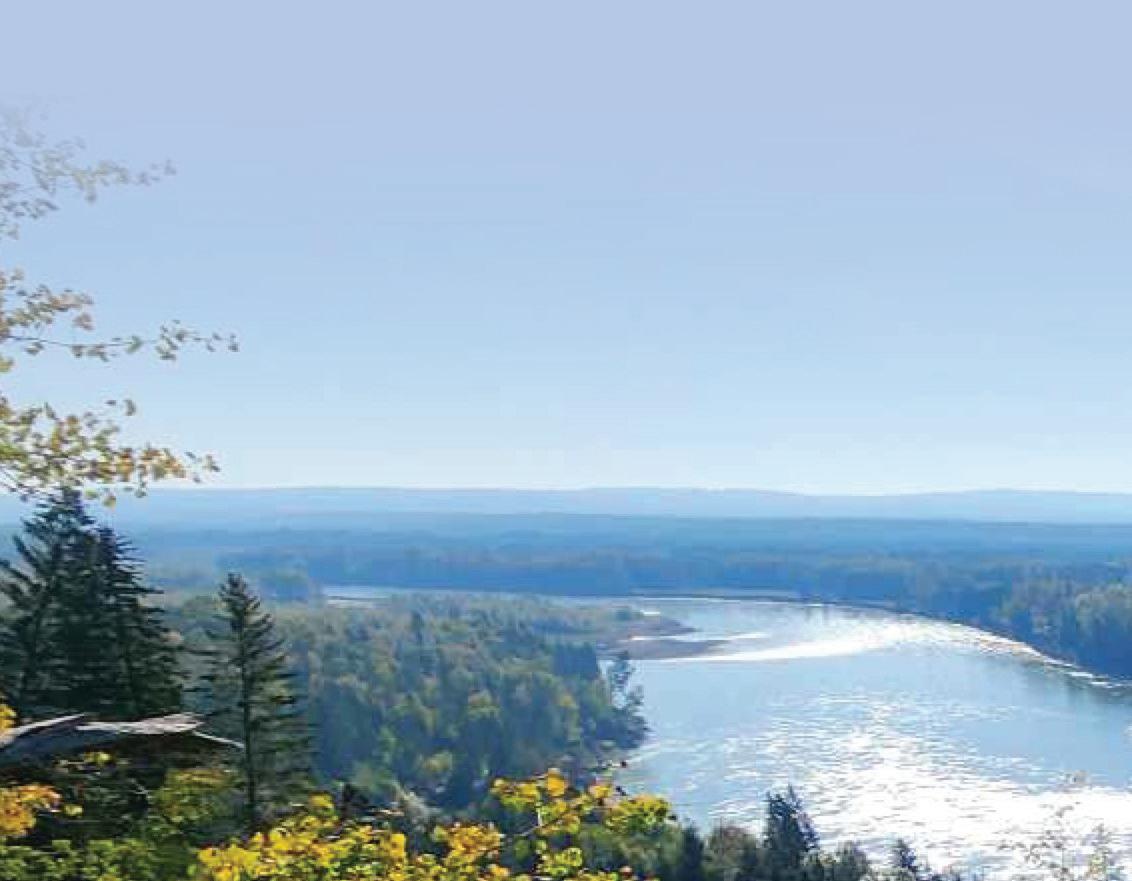
With a population of more than 24,000, Fort St. John is the largest city in northeastern BC and one of the fastest growing in northern BC. It’s a city full of energy, literally. It’s called BC’s Energy Capital, a resourcerich region that helps the community boast one of the country’s highest standards of living, with a median household income of over $101,000. Affordable homes, friendly neighbours, and more hours of sunshine than anywhere in BC are just some things you’ll love about Fort St. John. And what’s not to like about an average commute time of 16 minutes?
Banks area. Agriculture remains vital, with high-yield crops, cattle operations, and regenerative practices that improve soil health and reduce emissions.
Local businesses like Canfor integrate bioenergy solutions, while grid upgrades and AltaLink’s $26 million battery storage system ensure stable, modern infrastructure.
A place for builders, innovators, and digital nomads
Affordability remains one of Woodlands County’s greatest advantages. Inexpensive large land parcels, flexible zoning, and space for residential, agricultural, and industrial development create extraordinary value. Over a quarter of residents have moved to the region within the last decade, reflecting the County’s appeal.
With modern infrastructure, natural beauty, and growing partnerships with remote-work platforms like YOLO Nomads, the County offers a compelling lifestyle for digital workers seeking balance and opportunity.
Job opportunities abound in diverse sectors, including construction, energy, retail, healthcare, and food services. But it’s not all work and no play. Fort St. John is a place that’s easy to balance work and leisure. Located in the heart of the beautiful Peace River region, take advantage of four distinct seasons and access to endless outdoor recreation opportunities. Enjoy camping and lakeside fun in the summer then sledding, ice fishing and cross-country skiing in winter. With over 25 kilometers of trails that weave throughout the city and along the many parks and green spaces, there’s always something new waiting to be explored.
How One B.C. City Is Transforming Through Innovation and Business
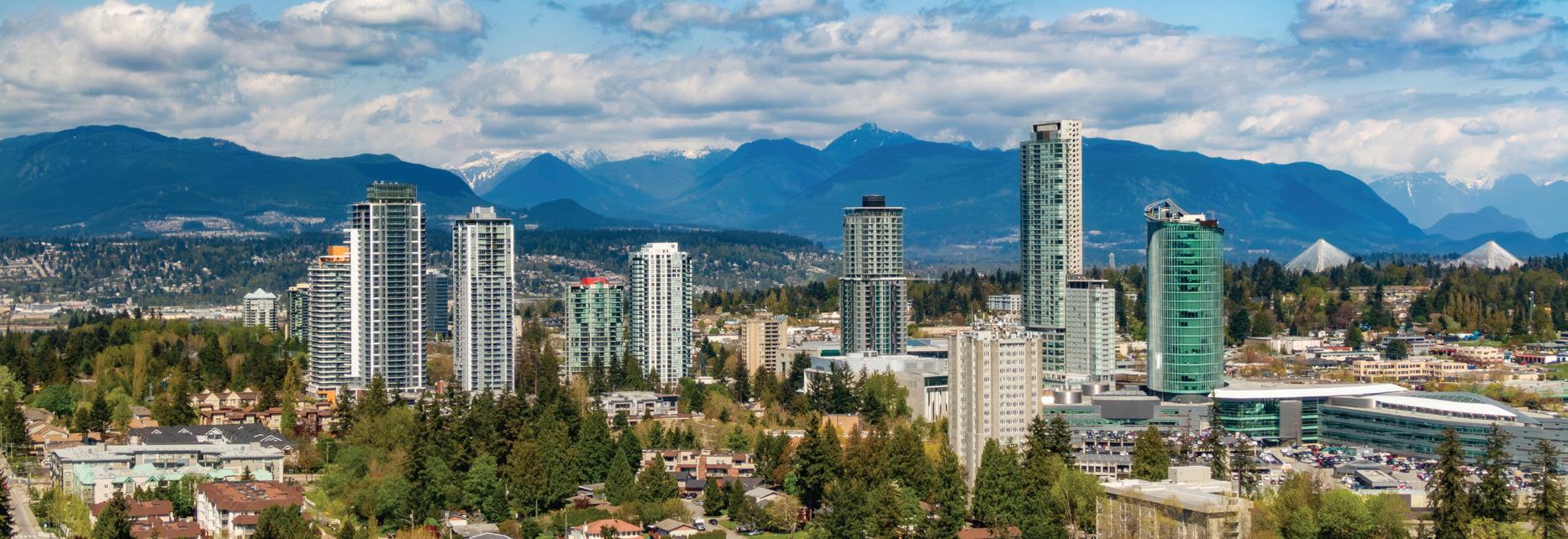
With a population of over 700,000, Surrey is one of British Columbia’s fastest-growing cities and is poised to surpass Vancouver as the province’s most populous. It’s a city with ambition, and its abundance of assets is accelerating the transformation, including a diverse, highly skilled local workforce and the largest share of Metro Vancouver’s industrial lands.
Education and innovation are driving transformation
Building a strong education hub is a key component of Surrey’s current and future vision. The city is home to campuses of major post-secondary institutions, including Kwantlen Polytechnic University (KPU), Simon Fraser University (SFU), and the upcoming University of British Columbia Surrey campus, with some programs already being taught at the Surrey Health and Technology District. SFU Surrey’s new School of Medicine will be the first in nearly 60 years in Western Canada. The first cohort of aspiring physicians and medical professionals is set to begin studies next year.
While UBC is consistently ranked as one of the world’s top universities, SFU is recognized as Canada’s top university for innovation and entrepreneurial spirit as per (WURI) 2025 rankings and KPU is recognized for its leadership in polytechnic training in Trades and Technology programming,
and for its industry-supporting assets such as the Applied Genomics Centre
It’s no surprise these universities have established a strong presence along Surrey’s Innovation Boulevard, an anchor of the city’s innovation ecosystem co-founded by the City of Surrey and SFU. This vibrant innovation platform of businesses, innovation labs, incubators, and university-industry research partnerships is unmatched in the Metro Vancouver region.
Where innovation, talent, and industry come together Entrepreneurs, businesses, and investors are connected to expertise, university researchers, academia and talent to prototype, pilot, commercialize, and scale solutions faster in high-impact sectors, including cleantech, agritech, smart cities, health tech, and advanced manufacturing. This is backed by Surrey’s unique strengths: access to top-tier talent and research (through Innovation Boulevard, businesses can access innovation and research labs across the city) industrial and commercial lands, trade-enabling infrastructure, and easy access to major transportation corridors.
These partnerships between industry, government agencies, post-secondary institutions, and the City of Surrey are helping to close Canada’s productivity gap while creating quality jobs and increasing national competitiveness.
1. DYNAMIC DEMOGRAPHICS
700,000+
residents (population of 1 million expected by 2050s)
25% of the population is under 19 years of age
65% of Surrey workers live and work in the city
36% of residents are working age (20-44)
100+ languages spoken
62% of the population aged 25-64 have a postsecondary certificate, diploma, or degree
With an already established industrial base, a thriving entrepreneurial ecosystem, and new sectors like fi lm, energy, and manufacturing coming on board, there is a wealth of opportunities to be had in this picturesque town east of the Rockies. Surrey
45% of population are immigrants
2. ACADEMIC AND INNOVATION LEADERSHIP
28,000 students are enrolled in Surrey’s post-secondary institutions
Access to high-tech research labs
Academic leaders in research and innovation, specializing in life sciences, engineering sciences, agriculture technologies, computer sciences.
Connecting Surrey to Major Population Centers across Canada and the U.S.
of Metro Vancouver’s industrial lands are in Surrey, largest inventory and new supply of industrial lands in the region
Town of Cochrane is Becoming a Launchpad for Entrepreneurs and Innovators
Offering business incentives and support, the Town of Cochrane is an attractive spot for startups, scale-ups, and established companies.
Anne Papmehl
The Town of Cochrane is one of the fastest growing communities in Canada. 2024 municipal Census data reports Cochrane’s population as just over 37,000, more than triple of that in 2001. Cochrane is poised for more growth in the years ahead and here’s why.
Cochrane’s proximity to Calgary, an international airport, and key transportation corridors, plus low barriers to entry and plenty of support, make it an ideal location for business and entrepreneurship.
It’s also a great place to live, with plenty of high paying jobs, beautiful scenery, quality schools, and a vibrant historic downtown.
Good things start in Cochrane While not top of mind as a strategic business location, Cochrane has been an industry and innovation hub for over 75 years. Many companies with local roots have gone on
to achieve international success, including Garmin Canada, a leading technology developer, known worldwide for its sports watches and wearables. Garmin’s choice to maintain and expand its headquarters in Cochrane speaks to the Town’s capacity to nurture entrepreneurial ventures at all stages.
Cochrane continues to support industry startups and entrepreneurs by creating a business-friendly economic environment which includes no business tax, competitive costs, and a skilled workforce. These efforts are paying off as Cochrane boasts a five-year average business retention rate of 93 per cent, with 2,361 active licenses and 460 new business launches as of July 2025.
From startup to scale
As part of its commitment to foster innovation and strengthen relationships with existing businesses, Cochrane is in the process of developing a new Economic Development Strategy for the next 10 to 15 years in alignment with Envision Cochrane 2050. Cochrane also has an array of new business programs designed to meet entrepreneurs where they’re at and support them in their journey — from idea to scale.
One is the SMARTstart entrepreneurial training and development program designed by Community Futures Centre West and delivered in partnership with the Municipality. SMARTstart is designed to help new entrepreneurs survive the crucial early years by providing mentorship, networking, online training, and in-person workshops with local experts.
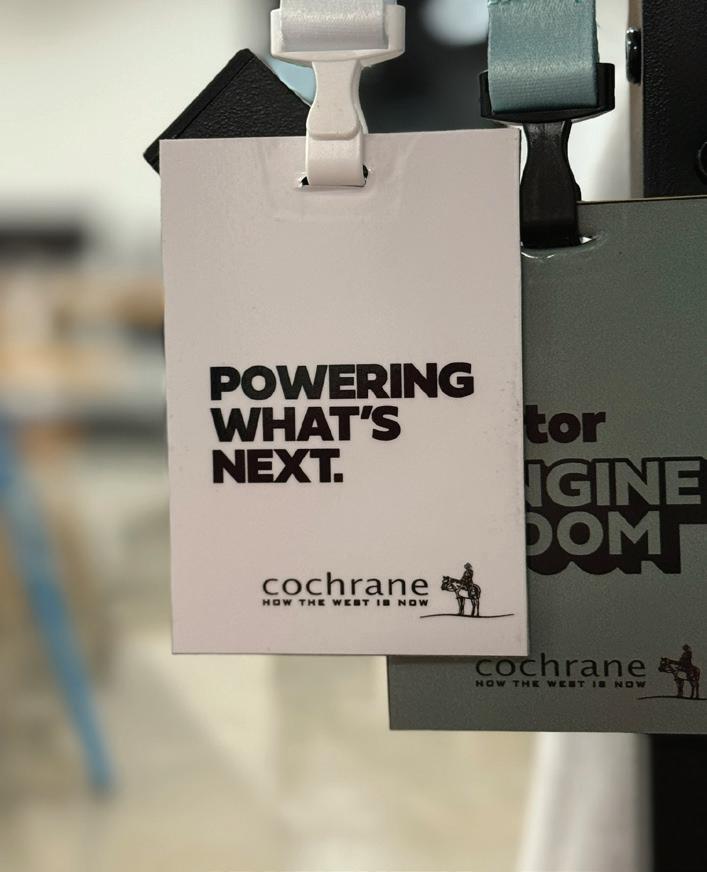
The other is The Engine Room, Cochrane’s Business Incubator for startups that are ready to grow and scale. The Engine Room connects entrepreneurs to experts and resources to help build, scale, and grow in Cochrane.
This article was sponsored by the Town of Cochrane
ALL EYES ARE ON INNISFIL
Innisfil’s Economic Edge
Innisfil’s unique approach to supporting businesses both big and small is redefining how Canadian communities grow, attract talent and welcome new industry.
Sandra MacGregor
Over the last few years, the town of Innisfil has been experiencing a remarkable evolution, quietly going from a sleepy lakeside community to one of the country’s most innovative, economically active regions. This transformation is no accident. It’s the hard-won result of future-looking policies, creative partnerships and a focus on sustainable economic development. Located just an hour north of Toronto, Innisfil is ideally situated along Highway 400 and is also connected to the Barrie Collingwood Railway, providing seamless connections to businesses and cities across Canada and the eastern United States. With so many assets, it’s no wonder this entrepreneurial hub is beginning to turn heads.
Embracing innovation
Innisfil has quickly garnered national attention for its willingness to do things differently. Over the past several years, the town has become a laboratory for public and private sector innovation, piloting partnerships with organizations like Uber, Rover, Coinberry, and Swap Robotics. These collaborations have reimagined everything from local transit to digital services, showcasing how even the most traditional municipal operations can benefit from the fresh perspective and energy of entrepreneurs.
“Many of the traditional services that municipalities provide could benefit from the insights of emerging entrepreneurs. The founders we tend to work with are often more comfortable with risk and foster a natural passion and curiosity for adapting new technologies to solve long-standing challenges,” says Laura Thompson, Innisfil’s Manager of Economic Development. The town’s enthusiasm for experimentation has not only improved service but led to major changes in how local government approaches economic growth. Recently the Town’s Innisfil Heights Investment Readiness Initiative was chosen as a finalist for the Economic Developers Council of Ontario Planning & Strategic Development Award of Excellence.
the acclaimed tech incubator to town. DMZ is a novel tech incubator that helps build, launch and scale tech companies that are just starting up. This community-driven initiative offers resources, mentorship, marketing guidance, workshops and more to companies looking to expand their reach.
Originally started with 16 founders, the program has grown exponentially to become one of the most successful iterations of DMZ’s global hubs. It’s now helped over 100 program graduates scale their businesses even as they continue to enjoy the advantages of a lakeside lifestyle.
What makes DMZ Innisfil’s program stand out is that, while it’s designed to serve the needs of more-rurally located innovators, the program also offers the top-tier support typically only found in an urban setting. Programs feature everything from networking events and bootcamps to connections with world-class mentors and participation in global events like Collision Tech Conference in Toronto. DMZ Innisfil has even hosted events connecting members with startup founders from around the world, including Brazil, China, Egypt, the Philippines, Sri Lanka, Turkey and Japan. Programs are carefully planned to ensure they meet the needs of entrepreneurs from all industries.
Innisfil not only met our specific location needs—including a strong technical workforce, excellent logistics, diverse housing options and proximity to key markets—but the town also demonstrated a highly client-oriented and businessfriendly approach. This gave us peace of mind that we were making a smart business decision.
ment of a 1.3 million-square-foot LEED-certified facility in Innisfil Heights, making full use of the location’s unparalleled highway access. This warehousing facility underscores the economic strength of Innisfil’s infrastructure and its appeal to global businesses.
A culture of innovation
A key component of the city’s entrepreneurial culture is DMZ Innisfil. In 2020, Innisfil embarked on a partnership with Toronto Metropolitan University to bring
Strategic and sustainable growth
Looking towards 2026, Innisfil’s economic growth spurt doesn’t show any signs of slowing. The town is set to grow 32 per cent, which is faster than the regional average and is expected to add 16,000 jobs by 2051—a testament to its productive, forward-thinking support for investment.
Innisfil’s Economic Development Office has many new projects in the works. For example, the new Innisfil Heights Investment Readiness Initiative is focused on positioning the Innisfil Heights Employment Area as an attractive development region offering 1,600 acres of land along Highway 400. The initiative’s aim is to encourage and simplify collaboration between municipal departments and businesses and provide white glove treatment to new site selectors, businesses, and investors.
Two major projects really highlight Innisfil’s entrepreneurial approach to promoting development. DSV Global Transport and Logistics just recently completed develop -
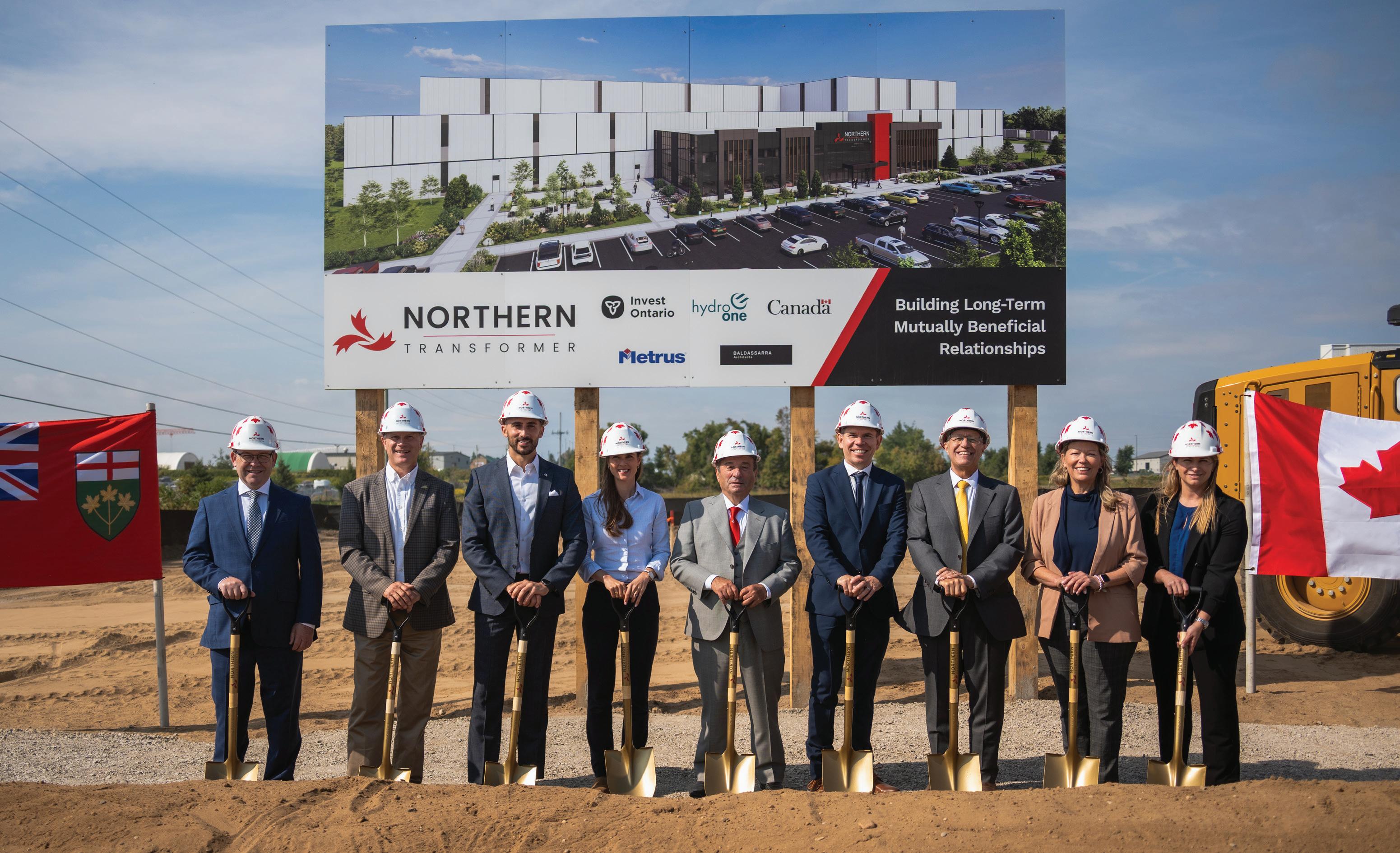
Northern Transformer Corporation’s $207 million investment in a new 180,000-square-foot manufacturing facility is another endorsement of the town’s commitment to creating a supportive environment for investment. The state-of-the-art facility will create 151 jobs and provide critical support to the province’s energy grid. “Innisfil not only met our specific location needs—including a strong technical workforce, excellent logistics, diverse housing option and proximity to key markets—but the town also demonstrated a highly client-oriented and business-friendly approach. This gave us peace of mind that we were making a smart business decision,” says Alexei Miecznikowski, CEO of Northern Transformer. “This investment is creating high skilled jobs, supporting our local suppliers, and building a future where Canadian-made solutions can power Canadians.” Innisfil is now setting its sites on complementary industries to support major anchors like Northern Transformer, including those in the advanced manufacturing sector and sub-sectors such as metal fabrication, electrical goods and general factory supplies.
Boasting a business-friendly council and a supportive community enthusiastic about promoting growth, jobs and innovation, Innisfil will continue to evolve as a thriving hub where investment, entrepreneurship and community building are powerfully intertwined.
sponsored by Town of Innisfil
Laura Thompson Manager of Economic Development, Town of Innisfil
Alexei Miecznikowski CEO, Northern Transformer
Innisfil recently hosted delegates from DMZ Japan and the Japan External Trade Organization
How a Community Built for Tomorrow Is Leading Today
Every growing community reaches moments that signal a shift. Milestones mark the point where a town moves from planning for the future — to building it.
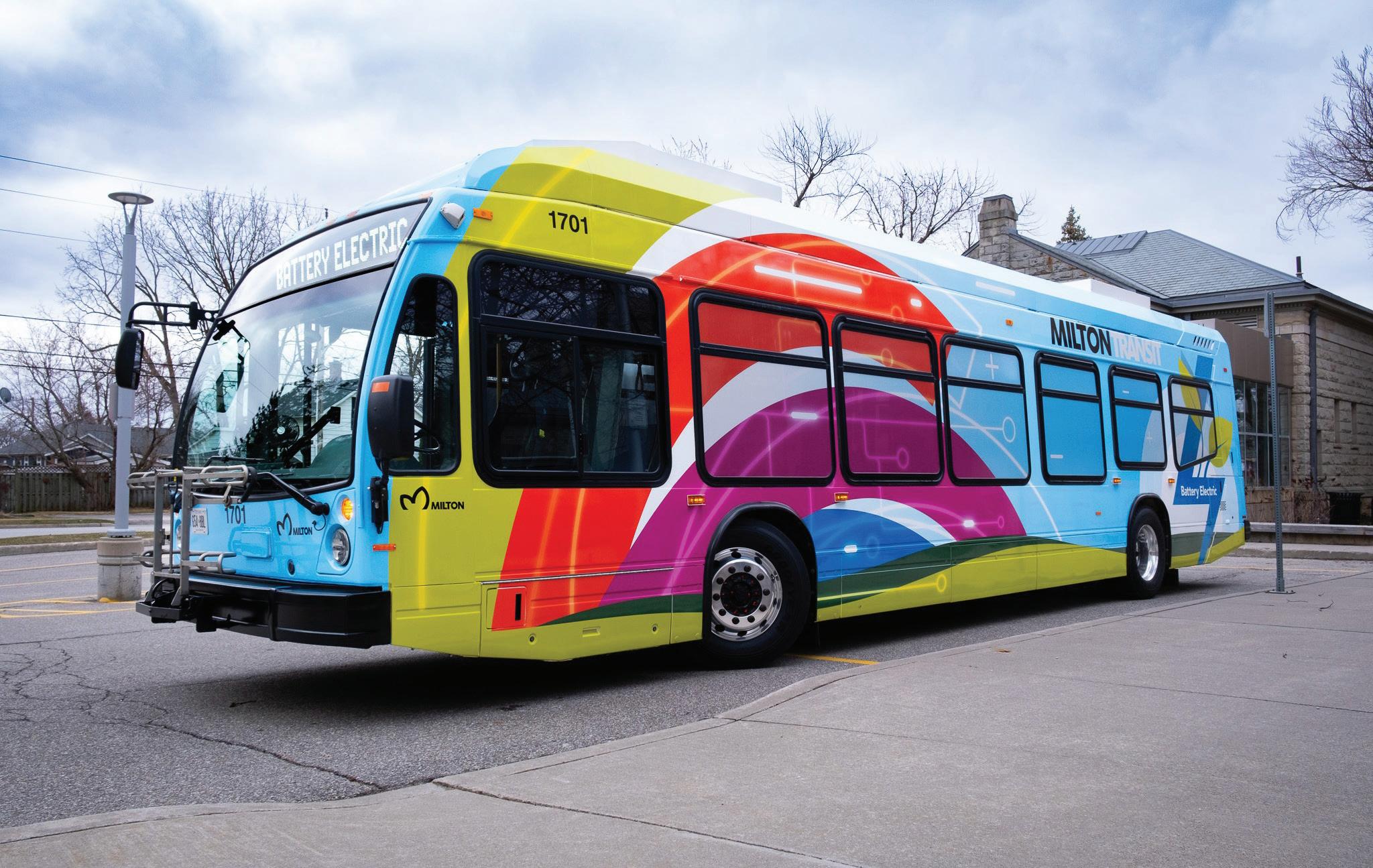
In Milton, one such moment arrived in the form of a blue-and-white transit bus pulling into the Milton GO Station loop.
Except this bus wasn’t ordinary at all.
This was Canada’s first mid-life diesel-to-electric bus conversion — a made-in-Milton innovation born from a partnership between Milton Transit and local business MTB Transit Solutions.
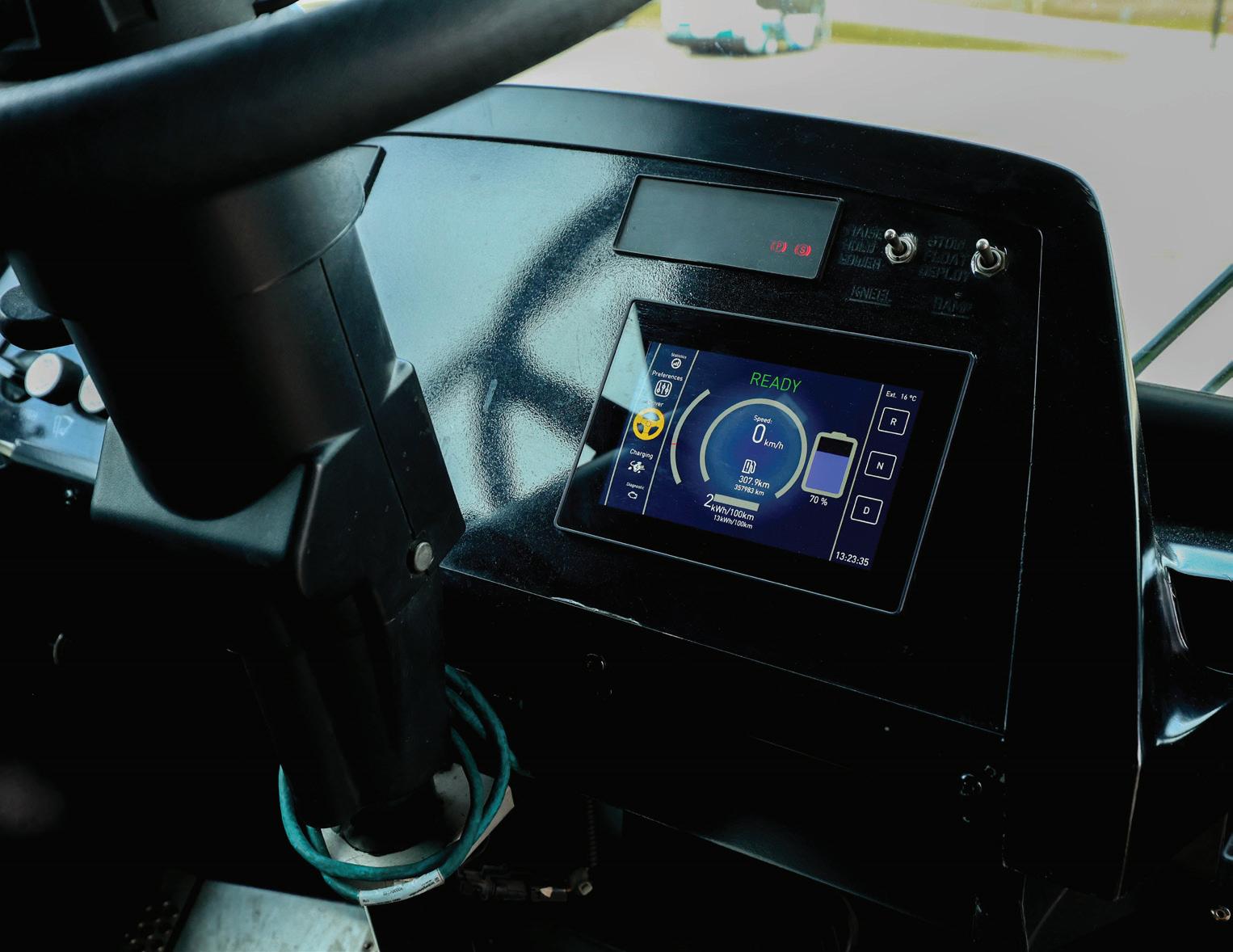
The goal was bold: Reimagine a diesel bus halfway through its life cycle, rather than retire it early or buy a costly new electric vehicle. The result? A bus powered by a new battery-electric system that’s quieter, cleaner, and crafted from local ingenuity.
It’s a model with global potential, and its first chapter is unfolding in Milton.
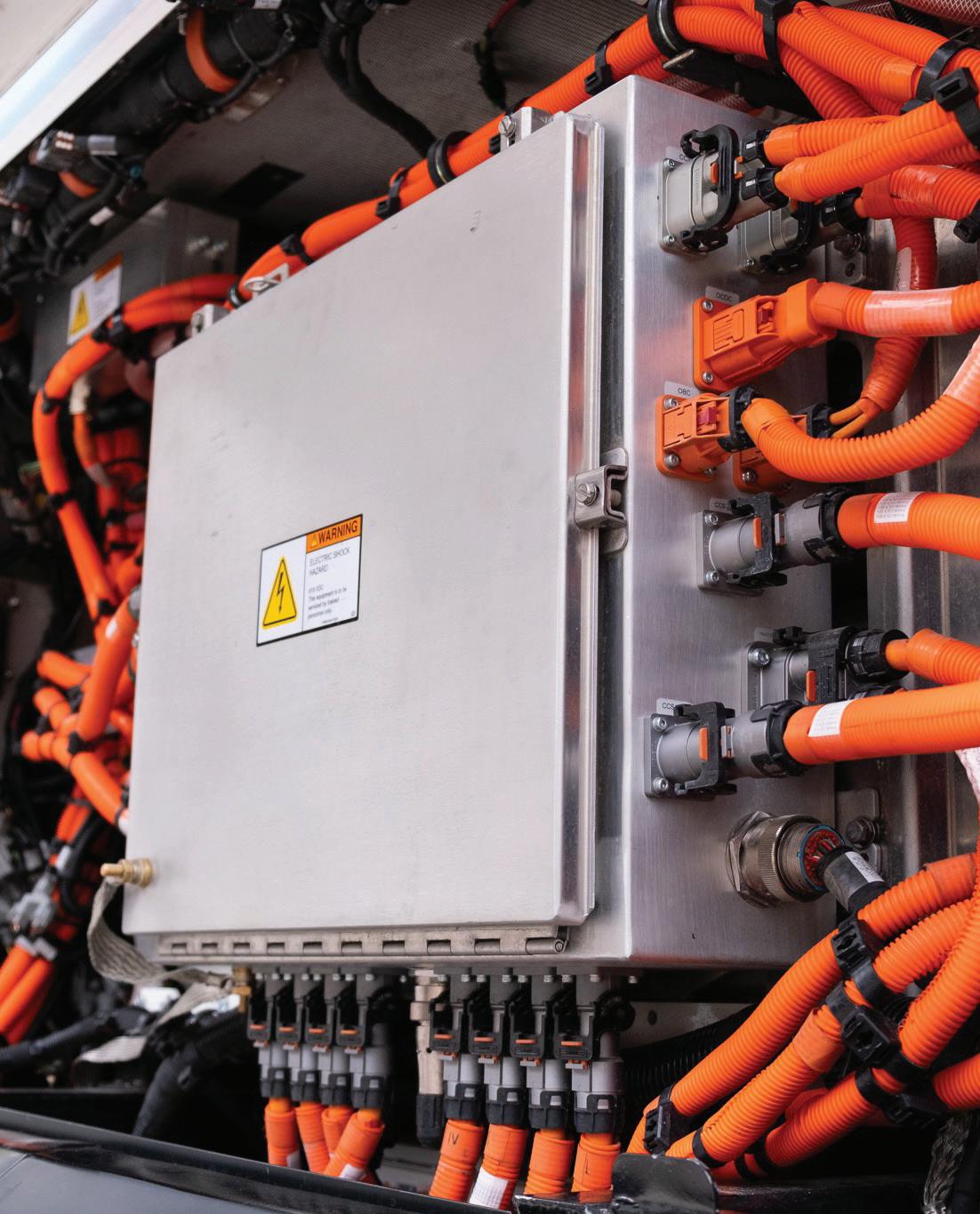
To make this happen, MTB Transit Solutions removed the diesel engine and other components and installed a fully electric powertrain. The back of the bus was taken apart, rebuilt, and engineered to run as a battery-electric vehicle, while maintaining its original shell.
Gara Hay, president of MTB Transit Solutions, described the converted bus as a made-in-Milton solution that shows what is possible when local expertise and municipal leadership come together. By choosing a local partner, the Town of Milton demonstrated forward-thinking innovation.
It’s a model with global potential, and its fi rst chapter is unfolding in Milton.
Smart growth. Local innovation.
As Milton continues to evolve into a more urban centre, it’s seeing strong residential and business growth. Global companies are setting up headquarters here, drawn by Milton’s location near Highways 401 and 407, its proximity to major markets, and its position in one of Canada’s strongest economic regions.
The electric bus isn’t Milton’s only innovation.
In local parks and public spaces, Milton is working with Evolution Data, a local tech company, to install smart sensors that notify staff when garbage bins are close to full. This pilot project shifts service from sched-
uled to on-demand pickups — helping to keep parks cleaner, reduce fuel use, and save staff time and money. It’s a small change with a big impact.
Innovation in Milton doesn’t have to be fl ashy. It just has to work.
Built by people, in partnership
Milton’s strength lies in its people — residents, businesses, and innovators who look at everyday challenges and ask, “How can we make this better?”
This mindset fuels the Town’s partnerships with local post-secondary institutions like Wilfrid Laurier University and Conestoga College. With both schools now offering programs in Milton, more opportunities for innovation and talent development are just around the corner.
Milton is a place of possibility — where new residents and businesses are welcomed, where connectivity and quality of life matter, and where public services grow alongside the community.
Projects like the electric bus conversion and bin sensor pilot are just the beginning. They hint at how practical partnerships and local expertise in Milton will continue to foster new approaches with measurable outcomes.
Together, they reflect a place built on a strong economic footing, open to new ideas, and committed to shaping the future with purpose.
How Fredericton’s Knowledge Economy Is Fuelling Canada’s Future
As Atlantic Canada’s Knowledge Capital, Fredericton, New Brunswick is powering the national shift toward a modern, innovation-driven economy
Tania Amardeil
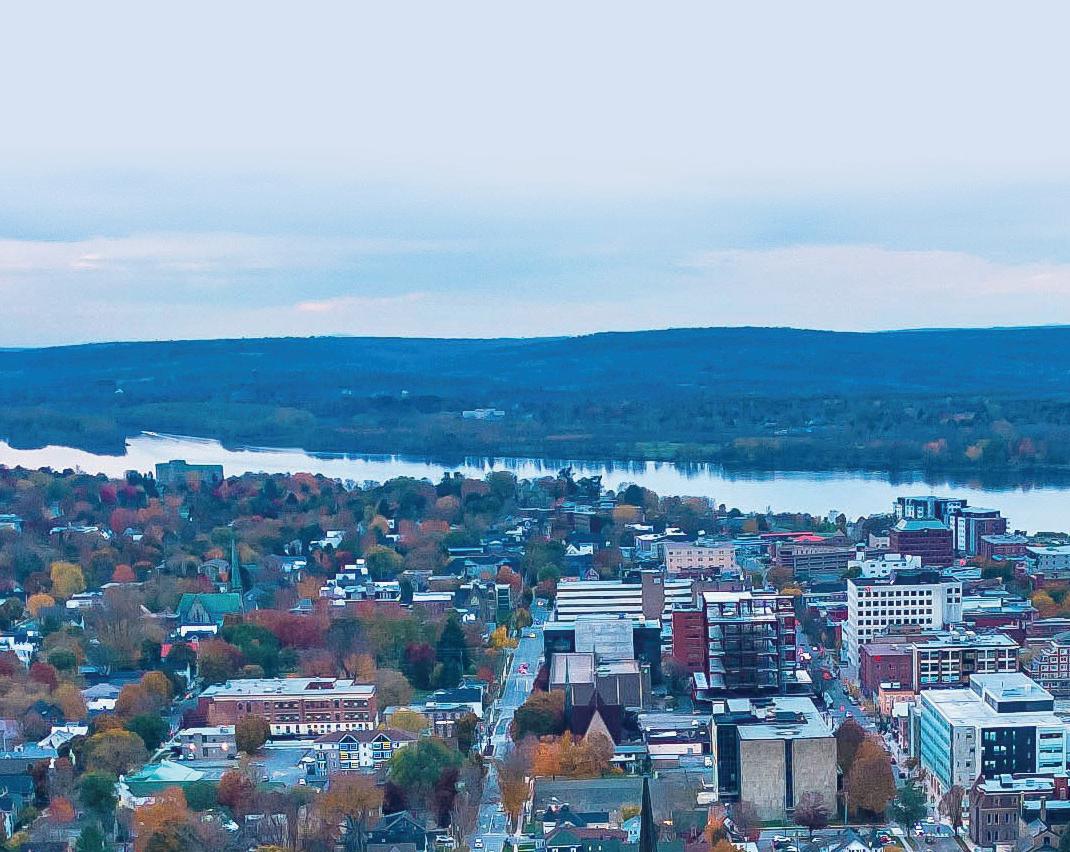
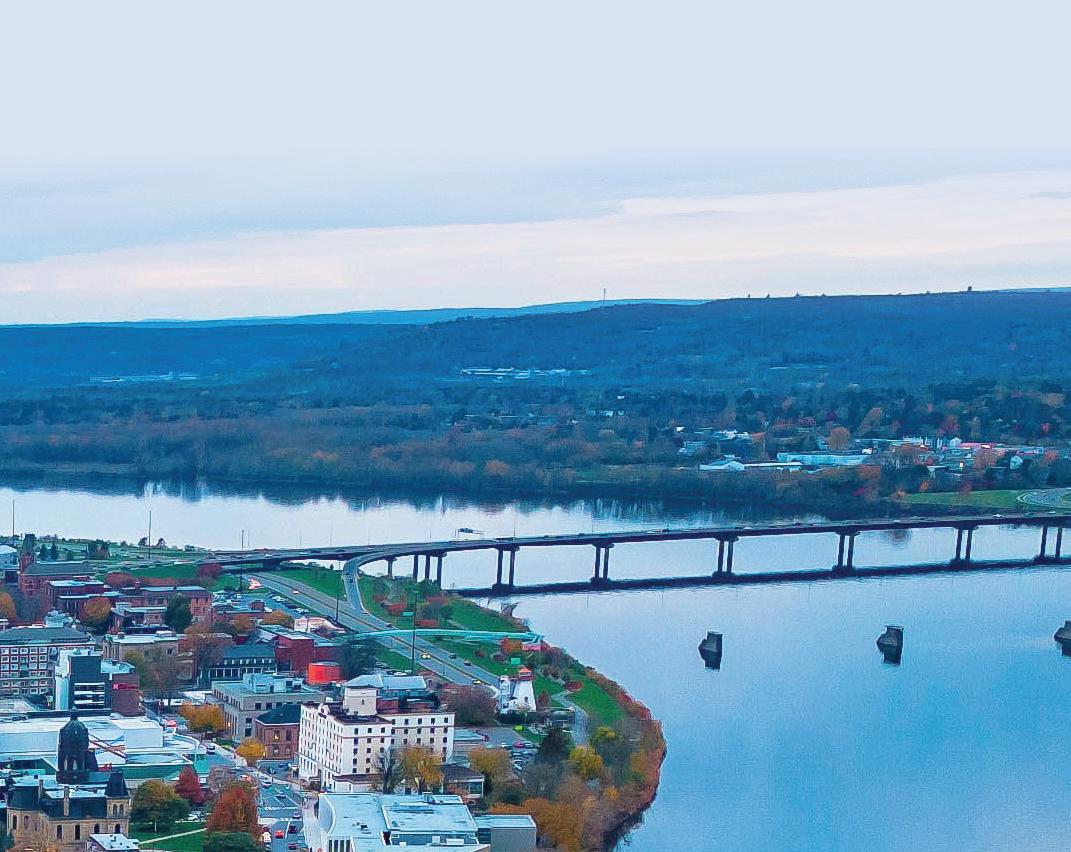
Fredericton, N.B., is an innovation hub that’s fuelling Canada’s nation-building projects and economic development priorities. Having seen its population grow by 35 per cent in the last decade — largely driven by young, educated people seeking opportunities in Fredericton’s research and tech sector, along with a better quality of life — the city is now home to over 2,700 knowledge-based businesses and Atlantic Canada’s largest concentration of knowledge workers. Fredericton also boasts over 60 leading R&D organizations within its Innovation District, anchored by Knowledge Park, the Cyber Centre, and numerous educational institutions, including the University of New Brunswick and its renowned McKenna Institute advancing digital transformation.
The city’s thriving knowledge ecosystem and public-private-university partnerships are driving growth across sectors like defence, construction and housing, natural resources, and technology, vitally contributing to Canada’s ambition of becoming a global leader in science and innovation.
Defence and cybersecurity:
Fredericton’s nation-building powerhouse
Fredericton is an engine for talent that’s driving Canada’s most important defence and cyber sectors. With defence readiness and cybersecurity elevated as national priorities, the city’s proximity to Canada’s largest military base (CFB Gagetown) and worldclass cyber ecosystem makes it a strategic national asset.
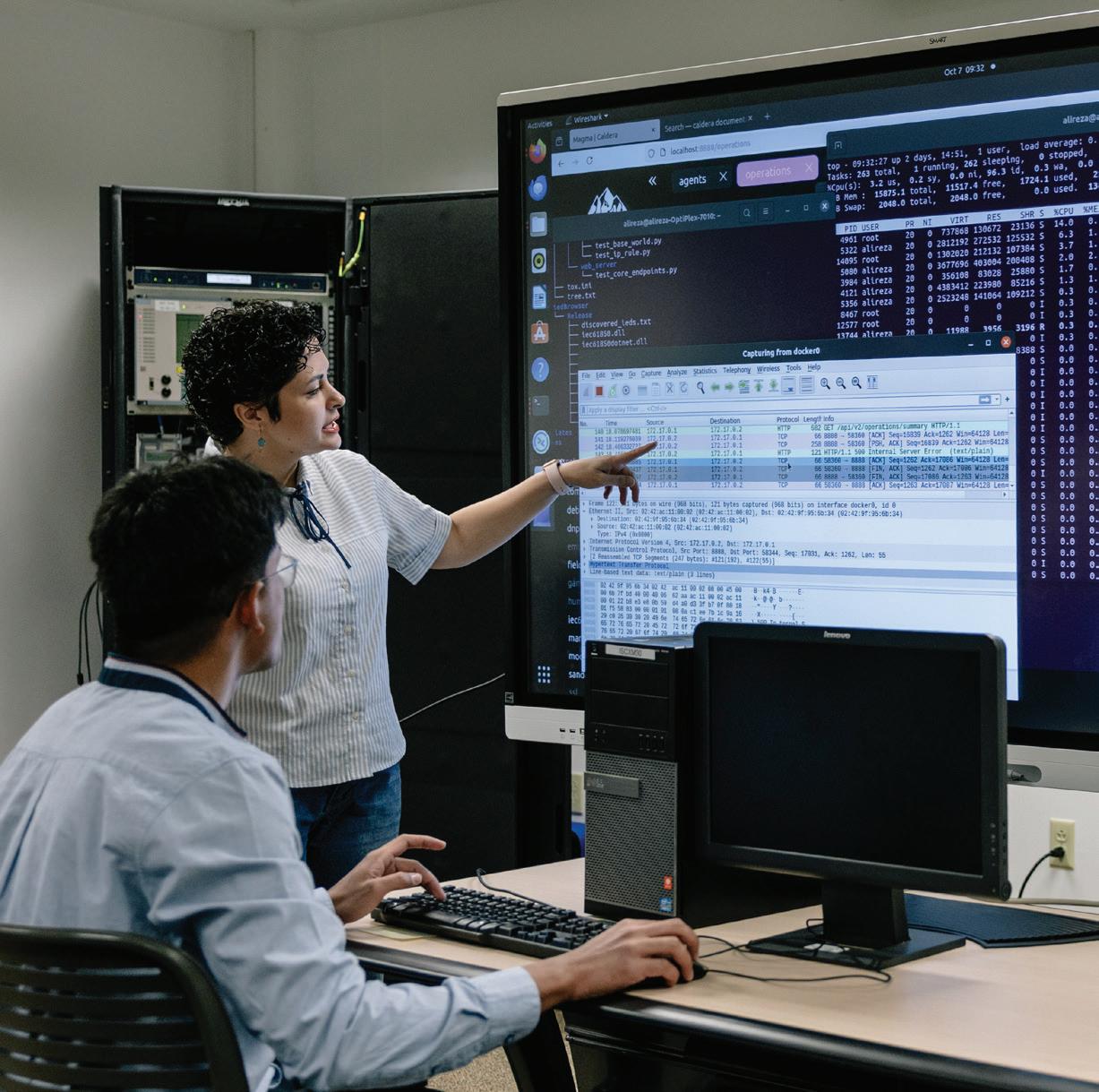
New Brunswick is proud of its position as the epicentre of Canada’s cybersecurity sector, and Fredericton’s Innovation District includes Cyber Centre (Canada’s most advanced networking and data fibre facility), the Canadian Institute for Cybersecurity, and world-leading cyber companies.
Recent success stories include Opportunities
NB attracting Thales Group’s Canadian National Digital Excellence Centre to the province (a first-of-its-kind in Canada research and talent development hub) and the achievements of local technology firms Beauceron Security and HotSpot, both of which were early adoptees from Boost Fredericton, the city’s living lab for civic innovation.
Critical minerals and Sisson Mine: fuel for Canada’s economy
Canada’s recent commitment to fasttrack projects of national significance aligns directly with the advancement of Sisson Mine, one of the region’s most important economic opportunities. Located about 60 kilometres northwest of Fredericton, Sisson Mine offers a world-class deposit of tungsten and molybdenum, two critical minerals used in everything from EV batteries and renewable energy technologies to aerospace, defence systems, and advanced manufacturing.
As the closest major city, Fredericton is Sisson Mine’s talent and services hub.
Housing innovation and off-site construction leadership
As the federal government invests in prefabricated and modular housing to double the rate of homebuilding, Fredericton’s expertise in off-site construction positions it as a key partner in solving Canada’s housing challenges. The city is home to one of the largest manufacturers of modular and off-site homes, Maple Leaf Homes, among others. By providing diverse, rapid, and repeatable housing options, manufactured housing is helping to address the housing crisis and supporting the federal government’s goal of 500,000 new homes per year over the next decade.
Fredericton is also home to the University of New Brunswick’s Off-Site Construction Research Centre, an innovation hub that aims to accelerate construction innovation through the improvement and adoption of off-site construction technologies and practices.
A growing destination for talent and innovation
Fredericton’s innovation-driven economy presents myriad opportunities for individuals and businesses alike, and it’s also just a really great place to live. The city is beautiful, welcoming, diverse, and affordable. Residents can enjoy a balanced lifestyle with abundant outdoor recreation opportunities (including 120 kilometres of maintained trails to walk, run, and bike) and a vibrant arts and culture scene.
“Fredericton is home to innovative research, business and community leaders delivering on national priorities in the cybersecurity, defence, natural resources, and construction sectors,” says Mayor Kate Rogers. “As a vibrant, affordable, smart city, Fredericton is ready to meet the moment."
Fredericton is ready to welcome innovators, builders, researchers, entrepreneurs, and skilled professionals looking to play a role in Canada’s next chapter. Learn more at fredericton.ca/knowledgecapital
FREDERICTON
AT A GLANCE
Atlantic Canada’s Knowledge Capital, with 2,700+ knowledgebased businesses
Home to Atlantic Canada’s largest concentration of knowledge workers
A thriving Innovation District featuring 60+ leading R&D organizations
Pipeline of highly educated and skilled talent
Recognized four times as one of the World’s Top Seven Intelligent Communities
Affordable, vibrant, and liveable
Some other resources to check out:
- Opportunities New Brunswick at onbcanada.ca
- Ignite Fredericton myignite.ca
- Fredericton Chamber of Commerce frederictonchamber.ca