













Discover how the Canadian Coalition for Green Health Care is helping hospitals and clinics reduce emissions, strengthen climate resilience, and deliver sustainable care.












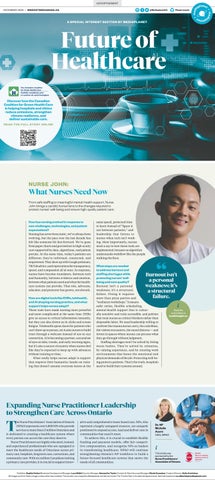
From safe staffing to meaningful mental-health support, Nurse John brings a candid, human lens to the changes required to protect nurses’ well-being and ensure high-quality patient care.
How has nursing evolved in response to new challenges, technologies, and patient expectations?
Nursing has never been static, we’ve always been evolving, but the pace over the last decade has felt like someone hit fast-forward. We’ve gone from paper charts and gut instinct to high-acuity care supported by data, algorithms, and patient portals. At the same time, today’s patients are different: they’re informed, connected, and empowered. They show up with Google printouts, TikTok advice, and expectations for transparency, speed, and compassion all at once. In response, nurses have become translators. Between tech and humanity, between evidence and emotion, between what patients need and what the healthcare system can provide. That role, advocate, educator, and protector has grown, not shrunk.
How are digital tools like EHRs, telehealth, and AI shaping nursing practice, and what support helps nurses adapt?
These tools have made nursing more powerful and more complicated at the same time. EHRs give us access to critical information instantly, but they can also drown us in clicks and screen fatigue. Telehealth opens doors for patients who can’t show up in person, yet it asks nurses to build trust through a webcam instead of eye-to-eye connection. AI is becoming a partner, a second set of eyes on labs, trends, and early warning signs, but it’s also a source of anxiety when nurses feel like they’re expected to keep up with advances without training or time.
What really helps nurses adapt is support that respects their humanity: hands-on training that doesn’t assume everyone learns at the
same speed, protected time to learn instead of “figure it out between patients,” and leadership that listens to nurses when tech isn’t working. Most importantly, nurses need a say in how these tools are implemented, because no algorithm understands workflow like the people walking the floor.
What steps are needed to address burnout and staffing shortages while protecting nurses’ wellbeing and care quality?

Burnout isn’t a personal weakness; it’s a structural failure. Fixing it requires more than pizza parties and “resilience workshops.” It means safer ratios, flexible scheduling, mental-health support that is culturally sensitive and truly accessible, and policies that treat nurses as critical thinkers rather than disposable labor. We need leadership willing to confront the trauma nurses carry, the code blues, the violent encounters, the moral distress — and invest in spaces where nurses can process what they go through without judgment.
Staffing shortages won’t be solved by hiring warm bodies. They’re solved by retention, by valuing experience, and by creating work environments that honor the emotional and physical demands of the job. Protecting well-being protects patients. That’s the truth, hospitals need to build their systems around.
The Nurse Practitioners’ Association of Ontario (NPAO) represents over 5,800 NPs who provide services to more than 13 million Ontarians and is dedicated to creating a healthcare system where every person can access the care they deserve. Nurse Practitioners are highly educated, trained, and experienced professionals who are equipped to meet the healthcare needs of Ontarians across primary care, hospitals, long term care, corrections, and community care. With six million Canadians lacking a primary care provider, it is crucial to support innov-
ative and comprehensive team-based care. NPs, who represent a largely untapped resource, are uniquely positioned to expand access, lead and deliver care in communities that need it most.
To achieve this, it is crucial to establish flexible funding and payment models, offer fair competitive compensation, and recognize NPs as leaders in transforming healthcare. NPAO will continue strengthening Ontario’s NP workforce to build a future-focused healthcare system that meets the needs of all communities.


A Canadian-led platform is exploring how just your smartphone and AI could solve some of the pain points in care delivery today.
Emily Hellam

Canada’s healthcare system continues to face deepening pressure, with wait times, staffing shortages, and rising chronic-disease risk shaping the daily experience of patients and clinicians alike. These realities have accelerated interest in preventative tools that help individuals understand potential health concerns earlier and more easily. One of the emerging technologies gaining traction is iSelfie, a Canadian-developed platform that analyzes facial biosignals through a smartphone scan to provide early indicators related to heart health, stress, energy and respiratory illness.
For founder and CEO Mohamed Sheta, the origins of the technology trace back to the early pandemic. “Almost every family had lost someone,” he says. “We wanted to understand whether the devices we all carry — our phones — could help identify risks earlier.” Early on, the idea of detecting physiological patterns through a selfie was unconventional, and Sheta recalls fielding skepticism from colleagues and researchers. “Any breakthrough technology looks impossible until the data proves otherwise,” he says.
The team moved ahead with clinical validation in late 2021 through a study at the University of Toronto, conducted at Kensington Eye Institute on more than 500 participants. The research compared iSelfie’s readings with FDA-approved anti-
gen and PCR tests. “When I was involved in this work during COVID, the phone-based screening performed as accurately — and in some cases more accurately — than the rapid antigen test,” says Dr. Allan Slomovic, one of the study’s clinical leads. “It makes the technology readily accessible. You can check your blood pressure, your pulse, your oxygen saturation. It really sits at the junction of AI and healthcare.”
While the platform first gained attention for respiratory illness detection, Sheta notes that the same underlying approach revealed much broader potential – especially in cardiovascular monitoring. “The eyes and the area around the eyes are incredibly rich in microvascular information,” he explains. “Changes in the tiny vessels, colour distribution, and subtle pulsation patterns can help us infer things about oxygenation, stress load, and heart function. When we talk about ‘heart age,’ it’s really about analyzing signals your face has been giving off all along.”
Subsequent studies at the University of Miami and 14 U.S. research sites validated the technology across Delta, Omicron and additional subvariants. A two-year study with the KSA's National Heart Centre and SEHA Virtual Hospital further reinforced its applicability in broader health screening. “The results were announced by the Ministry of Health,” Sheta notes. “iSelfie delivered similar accuracy to standard-ofcare medical devices.”
Leading national organization highlights trends in Canadian fertility, helping bridge the gap between knowledge and patient care. Sonya Friesen

Infertility affects one in six Canadians and fertility rates in Canada have reached their lowest on record. While data may show Canadians are having fewer children, addressing this challenge has become a critical step in Canada’s fertility journey.
The Canadian Fertility and Andrology Society (CFAS) is the leading national organization dedicated to furthering the field of reproductive medicine and is composed of all types of reproductive healthcare professionals from nurses and clinicians to researchers and counselors. The organization is responsible for disseminating up-to-date information to members and through this process, ensuring patients are kept informed of critical advancements in fertility.
With the negative economic and social impacts of a falling birthrate now known, CFAS spearheads research and practices that create a better, more holistic understanding of fertility care and patient needs. This includes playing a vital role in creating the professional standards and guidelines for practitioners and advising the government on best practices in the field and increased funding for family-building for all Canadians.
Driving a united approach
Dr. Prati Sharma, President of CFAS, explains that inclusive national funding that aims to reach all Canadians would represent the strongest message of support. “A nationally-coordinated system of support would address declining birthrates, ensure a younger population for the workforce, support national well-being and show Canadians we stand with them in terms of family building.”


These findings have real implications for consumers, particularly those living with chronic conditions or at risk of hypertension — an issue Sheta calls “the world’s secret killer.” He points out that three billion people globally live with high blood pressure, half of them unaware. “People can see signs of aging on their faces,” he says. “What they can’t see is accelerated aging of the heart.”
A consumer-facing version, iSelfie, will soon allow users to track indicators such as “heart age,” stress, oxygenation, and blood pressure from a simple smartphone scan. “All you need is your device and 30 seconds,” Sheta says. “Your eyes tell a story — our job is to decode it responsibly.”
At the healthcare-systems level, iSelfie’s performance during large-scale deployments has been closely watched. During the Hajj pilgrimage, three million visitors were monitored with support from iSelfie’s digital nurse-intake solution.
At Saudi hospitals and clinics, nurse intake times dropped from seven minutes to two, with annualized savings estimated at $5.5 million in one cluster. “It’s one example of how AI can relieve pressure on frontline staff,” Sheta says.
Looking ahead, Sheta believes Canada has the capacity to lead globally in AI-enabled health innovation — if it chooses to.
“Technology alone won’t transform healthcare,” he says. “What will transform it is the courage to use it.”
Under the leadership of Minister Marjorie Michel, Canada is advancing AI-enabled clinical tools and interoperable health records to deliver more accessible, secure and patient-centred care.
What role is your ministry playing in fostering partnerships that accelerate medtech innovation?
By supporting collaborations between the public and private sectors, we are working to improve healthcare delivery while also supporting new technology, innovation, and the scale-up of promising Canadian companies.
Health Canada works closely with federal partners such as Health Emergency Readiness Canada (HERC) to help grow the life sciences sector, which is made up of networks of researchers, pharmaceutical and biotech companies, investors, governments, and healthcare providers. The organization promotes scientific and industrial innovation to strengthen Canada's readiness to face the most pressing health emergency priorities.


Funding innovative research through grants is critical to advancing the rapidly developing field of Reproductive Medicine. CFAS works with clinics across Canada to support a pan-Canadian approach to IVF data collection and analysis to benefit all Canadians. “Data collection and analysis sets the foundation for evidence-based decision making. It is our commitment at CFAS to ensure Canadians, and the reproductive health care practitioners that care for them have access to this information,” shares Dr. Sharma. While infertility itself may feel like a personal journey, through the commitment of CFAS and its members, Canadians can experience the most promising and cutting-edge advancements the field has to offer.
Major federal investments include $47 million for the envisAGE Network; and $49 million for INOVAIT, to help scale and commercialize new health technologies, including AI-driven tools, for diagnostics and therapies.
The federal government has also invested more than $42 million since 2019 in The CAN Health Network, which connects healthcare providers with Canadian innovators to improve the deliver of care and strengthen the domestic health technology market.



What is your long-term vision for Canada’s digital health landscape, and how will you ensure future innovations remain inclusive and secure? Canadians deserve a modern, secure and inclusive health care system. Digital tools are a critical part of this.
So are partnerships, including with provinces and territories. Canada’s Federal, Provincial, and Territorial Ministers of Health met in Calgary last month, and highlighted the importance of continued collaboration in modernizing health care through improved health data and digital tools, in support of better health outcomes for people across Canada. That’s why we’re going to continue to invest in innovation and grow Canada’s capacity to develop and scale new health technologies, including AI, which is already transforming care – from early disease detection to personalized treatment, and workforce planning. But innovation isn’t just about technology — it’s about people. To help foster trust, we’re promoting transparency through shared pan-Canadian AI for Health Guiding Principles. These principles set out common expectations for responsible, transparent, and accountable use — so Canadians can have confidence in how AI is being used across health systems.

Got any travels planned in the near future? Make sure to consult your health care professional pre-departure for personalized travel protection.
Anne Papmehl
Planning ahead and planning smart
Passport, luggage, charging cables, a refillable water bottle, snacks for the plane — you’re all geared up for your next vacation, but might you be forgetting something?
Travellers often overlook the health risks they may come across abroad. “We don’t think about certain illnesses in Canada because we don’t encounter them,” says Dr. Alok Sood, a family physician and Medical Director of the Travel Clinic at the Albany Medical Clinic in Toronto. While malaria, chikungunya, or Japanese encephalitis may not be top of mind for Canadian travellers, these infections are responsible for hundreds of thousands of deaths each year. Fortunately, prevention is possible.
Understanding the risks
Dr. Sood recommends that travellers heading off to international destinations meet with their health care professional prior to departure for a custom consultation. “Travel health isn’t one size fits all,” he says. “A three-day business trip is very different from backpacking and adventure travel. It’s important to understand the destination, the activities planned, and the person’s underlying health. Our immune systems change over time, and age or chronic conditions can increase infection risk.”

A personalized approach takes individual factors — age, medical history, medications, immune status — into account to determine a traveller’s specific risk and what makes the most sense for them. “During a pre-travel consultation, I take a comprehensive look at a traveller’s overall health, review routine immunizations, check past medical records, and evaluate their itinerary to estimate their risk for various illnesses,” says Dr. Sood. “Some illnesses are less frequent but more severe, so I help patients understand both prevalence and severity to make informed decisions.”

Dr. Sood recommends planning your consultation well before you head out — four to six weeks prior is best. “Ideally, travellers should come one month or more before departure to give their immune system time to respond,” he says. That being said, he notes that there’s still value in coming even the day before your departure.
Increased global mobility, climate change, and emerging infectious diseases have created an environment that requires travellers to be proactive and informed about mosquito-borne diseases like chikungunya and Japanese encephalitis. At the same time, diarrhea caused by Enterotoxigenic E. coli is one of the most common issues when travelling, and anyone who has experienced this knows how it can disrupt a trip even when the destination seems low-risk. Preventive advice, food and water precautions, and a vaccine can help reduce the risk.

We don’t think about certain illnesses in Canada because we don’t encounter them.
“Global warming is expanding the range of mosquito species into more temperate zones,” explains Dr. Sood. “Chikungunya is now found in over 100 countries, with recent outbreaks in South America involving hundreds of thousands of cases. It can cause prolonged pain and disability. Japanese encephalitis isn’t extremely common, but it has a high mortality rate of around 20 to 30 per cent, with about 20,000 deaths annually.”
With the right immunizations in place, travellers can relax and enjoy a safe, worry-free trip.



Medication adherence packaging helps older adults, caregivers, and anyone juggling complex medication routines stay organized with support from their local pharmacist.
Jones Healthcare Group
For many Canadians, managing multiple medications is part of daily life — especially as we age or support loved ones who want to continue living safely at home. But staying on track isn’t always easy. Research shows that about half of people don’t take their medications exactly as prescribed, even with the best intentions, which can lead to preventable health issues, emergency room visits, and hospitalizations.
A simple tool that makes a big difference
Across the country, pharmacists are offering practical tools to make medication routines clearer, safer, and more manageable. One of the most effective options is medication adherence packaging — often called “blister packs” or “compliance packs.” These pre-organized cards separate medications by day and time, showing at a glance what to take and when. For older adults, busy caregivers, or anyone juggling several prescriptions, this simple visual structure can remove guesswork and reduce the risk of missed or doubled doses.
Canada has a remarkable legacy of leadership in this area. In the 1980s, Jones Healthcare Group co-developed the fi rst blister card








designed specifically for multi-medication regimens — a Canadian innovation that helped establish the adherence packaging standards pharmacists rely on today. Those early principles of safety, clarity, and usability continue to guide how pharmacies support patients now.
How pharmacists can help
Adherence packaging has been shown to improve medication-taking habits, particularly when it’s prepared by a pharmacy team that understands the patient’s full regimen. Pharmacists can synchronize refi lls, flag interactions, and adjust the pack when medications change — offering ongoing support that goes far beyond counting pills. For caregivers managing medications for parents, partners, or neighbours, these packs can ease the emotional load and provide confidence that nothing has been overlooked.
At the same time, adherence packaging supports Canadians who want to age at home. When medication routines become more complex, maintaining independence can feel harder. A clearly organized, pharmacy-prepared system can help individuals stay in control of their health, support daily habits, and reduce reliance on others for reminders.
The crisis in Canadian healthcare isn’t cost, rather the lack of value. Rebuilding the system starts with bringing innovation into everyday care.
Marianne Nakhla-Paulin
Canada’s healthcare system is standing at a breaking point.
We spent $399B this year ($9,626 per person), which is the highest share of GDP in our history, yet Canadians are not getting healthier. Instead, hospitals are overcrowded, and clinicians are burning out. Something simply isn’t adding up.

So we have to ask: What is “value” in healthcare? For decades, value has been confused with cost. Our health systems have been pushed to buy the lowest-priced products and cut budget wherever possible. But here’s the reality: Canada has spent years lowering costs without raising outcomes. Cheaper has made the healthcare more expensive. Value isn’t about spending less — it’s about achieving better outcomes for every dollar. Value-based healthcare invests in innovations
that improve patient recovery and optimize workflow — even if they cost more upfront.
Sustainable healthcare means moving from chasing the lowest price to investing in higher-value products that save money over time by improving care from the start.
Shaping the future of valuebased care
B. Braun advances value-based healthcare by designing products that strengthen patient outcomes both inside and outside the hospital. Its innovations prioritize patient safety, workflow efficiency, and complication reduction, allowing clinicians to have more time for patient care.
With a robust portfolio of homecare solutions for infusion therapy and wound management, patients can heal safely, comfortably, and with fewer hospital visits. Examples include Easypump®, which provides safe home infusions for patients while lightening hospital demand and saving the healthcare system nearly $5000 per patient. Introcan Safety® Deep Access helps improve first-attempt success. And Prontosan® prevents complications with effective wound cleansing. This is the future of value-based healthcare: high-quality solutions that improve patient outcomes while strengthening the sustainability of Canada’s healthcare system.












Talk to your pharmacist










Importantly, there’s no one-size-fits-all approach. Pharmacists may recommend weekly or monthly formats supported by clear visual cues, such as symbols and structured layouts, to help simplify complex regimens. They can also help determine whether adherence packaging is the right fit based on individual needs.


If you or someone you love is struggling to manage multiple medications, unsure whether doses were taken, or feeling overwhelmed by a changing regimen, talk to your pharmacist. These services are widely available across Canada, and pharmacists are uniquely equipped to tailor them to each person.
A small change in how medications are organized can make a meaningful difference in health, confidence, and peace of mind. Your pharmacist can help you take that step.
Talk to your pharmacist about medication adherence packaging, and visit adherence.joneshealthcaregroup.com to learn more.
























• You or a loved one takes multiple medications each day.
• Doses are sometimes missed, doubled, or taken at the wrong time.
• There is confusion after a recent medication change or hospital stay.
• A caregiver is managing medications for someone else and feels overwhelmed.
• Pill bottles and schedules are starting to feel unmanageable.
WHY THE FUTURE OF MEDICINE DEPENDS ON TRUST: A Conversation with Dr. Siobhan Deshauer
From combating online misinformation to redesigning workflows and embracing AI, Dr. Siobhan Deshauer explains the challenges facing today’s physicians — and the collective solutions needed to build a more resilient, equitable health-care system.
What are the biggest challenges physicians face today, and how are these shaping the future of medical practice?
One of the biggest challenges facing physicians today is the sheer volume of medical misinformation spreading on social media, and it’s already reshaping how we practise. Studies show that false or oversimplified medical claims tend to be more engaging and spread more quickly online than careful, evidence-based information. People really resonate with bold, confident statements like “X cures cancer” or “Y is a hoax”.
In contrast, when we acknowledge the nuance and uncertainty of medical science, people can find these answers less satisfying. The result is that some people come to trust unqualified online influencers more than public health organizations, and sometimes even more than their own physicians. This can place real strain on the physician-patient relationship, especially as we guide patients through high-stakes decisions.
Going forward, this reality means that being a good doctor will increasingly require being an expert communicator, particularly in situations where there are no easy answers. We need strategies to address misinformation directly and respectfully, to help patients sort through what they see online, and to explain complex evidence in

clear, accessible language. In many ways, the future of medical practice will depend not only on the science we have, but on how well we can earn and keep our patients’ trust.
What’s your vision for the future of medicine in Canada, and how can collaboration build a sustainable, equitable system? My hope is that Canada moves toward a future where the health of our population is treated as a shared priority, not just within hospitals and clinics, but across society as a whole. Health is shaped long before I meet someone in the clinic. It’s influenced by the neighbourhoods we design, the housing people can access, the food they can afford, and the supports available in their communities. We can’t expect a 15-minute medical appointment to solve problems that are rooted in broader social conditions.
A sustainable and equitable health-care system will require collaboration. Physicians play a role, but so do policymakers, community leaders, and patients themselves. By breaking down silos and working together, we can build a system that supports Canadians not only when they are sick, but throughout their lives.

Supporting AgeTech innovation improves aging outcomes and fuels Canada’s brain economy, paving the way for a stronger, more sustainable healthcare system.
The Centre for Aging + Brain Health Innovation, powered by Baycrest
Preparing for demographic shifts
Canada’s aging population is growing rapidly, with nearly 20 per cent of Canadians now aged 65 or older. As Canada ages, the prevalence of dementia increases: current estimates predict that by 2050, over 1.7 million Canadians will be living with dementia, with related economic impacts on the Canadian economy expected to increase to over $110 billion annually.
These sobering statistics underscore the urgent need to prepare Canada’s healthcare system to support older persons living healthier lives—especially with respect to brain health. Strengthening our brain economy, which is fueled by the cognitive, emotional, and social resources of our population, is essential. Brain health doesn’t just affect an individual’s well-being; it directly shapes our economic future.
“We must find ways to reduce the strain on our healthcare system while also helping older persons live their best possible lives,” says Dr. Allison Sekuler, President and Chief Scientist of CABHI and the Baycrest Academy for Research and Education. “Investing in promising AgeTech innovations is the key.”
Supporting innovation for sustainable healthcare
At the Centre for Aging + Brain Health Innovation (CABHI), powered by Baycrest, this mission underlies every program and partnership. By investing in Canadian innovators developing leading-edge solutions—AgeTech tools, BioTech breakthroughs, pharmaceutical therapies, and new approaches to care—CABHI drives the future of aging. Its Fuel program supports innovators developing solutions that meaningfully improve the lives of older persons and their caregivers and reduce the pressure on our healthcare system. With targeted funding and acceleration services through Fuel, innovators overcome barriers to market competitiveness, allowing them to address the challenges older persons face every day.
In 2025, the program allocated $2.8 million CAD to eight awardees.
“Innovative solutions supported by our Fuel program that promote dementia prevention, early intervention, remote care monitoring, and better management of chronic conditions can dramatically









improve people’s lives,” says Dr. Sekuler. “They also lead to a more sustainable and resilient healthcare system, and help build the Canadian economy.”
Accelerating solutions with critical insights Effective aging and brain health solutions must be grounded in the real world, with input from experts and people with lived experience. CABHI’s AgeTech Insights meets this need. As a national and global think tank, AgeTech Insights collaborates with ecosystem partners to inform scientists, researchers, innovators, entrepreneurs, and policymakers about the needs of older persons and the healthcare system.
Through programs and partnerships such as Fuel and AgeTech Insights, CABHI plays a key role in accelerating the development and adoption of transformative aging and brain health solutions. Its initiatives strengthen the brain economy, improve the lives of older persons and their caregivers, and enhance Canada’s healthcare system to ensure aging is supported with dignity, innovation, and care.














The expanded role of pharmacists improves patient access and increases healthcare capacity. OPA sees opportunities to expand that role even more.


Traditionally known as experts in medication management, Canadian pharmacists are playing an enhanced role in providing patient care. Over the past 15 years, their scope of practice has expanded to include administering vaccines, assessing and prescribing for minor ailments and, in some parts of Canada, helping with chronic disease management.
With some 5,000 community pharmacies across Ontario, where about one in five people are without a family doctor, this expanded scope closes some access gaps and creates capacity within the healthcare system. “Rather than going to the hospital emergency for lower acuity conditions like pink eye, patients can visit their local pharmacist who is usually just a short walk or ride away from their home,” says Jen Belcher, Vice-President, Strategic Initiatives, Ontario Pharmacists Association.
Comprhensive approach needed
While the role of pharmacy has expanded significantly across Canada, Ontario lags other provinces in letting pharmacists fully utilize their training and skills. Part of that has to do with the size of our province and



complexity of our healthcare system. “We need to ensure it can work within existing systems, but the result of this incremental, list-based approach is a slowdown of the rollout,” says Belcher. One example is immunization. “We started with just flu vaccines, then added some travel vaccines, and then COVID-19 once they became available,” she says. Each time a change is made, the government needs to go through the process of amending legislation or regulations, whereas a comprehensive approach that gets everything done at once would eliminate that need,” says Belcher.
OPA leading pharmacists in improving care
As the largest professional advocacy organization for Ontario pharmacy professionals, OPA supports the currently proposed regulatory changes that would authorize pharmacists, to assess and prescribe for more minor ailments, administer more public vaccines, and order lab tests. OPA are also advocating for some larger changes to the pharmacy scope of practice that would allow pharmacists to prescribe drug substitutions and vaccines. “Drug substitutions are common practice in collaborative care




settings like hospitals and a well-established area of pharmacy expertise,” says Belcher. “Giving pharmacists authority to substitute without a doctor’s authorization would help to speed up access to care, especially when there is a drug shortage. Similarly, being able to prescribe for vaccines that require a doctor’s prescription would alleviate another access barrier,” says Belcher. OPA is also advocating for pharmacists to play a more prominent role in chronic disease management. If you’re unsure of what your pharmacist can do for you, you may not be taking full advantage of the care you could be getting. Belcher recommends going in and having a chat to learn more. “One of the most important things we can do as individuals is to try to keep ourselves healthy and avoid putting additional strain on the healthcare system,” says Belcher. This holds especially true during respiratory season. “Your pharmacist is an excellent resource to educate people on how to protect against vaccine-preventable illnesses and on whether your vaccines are up to date,” says Belcher.
Your pharmacist is an excellent resource to educate on how to protect against vaccinepreventable illnesses and on whether your vaccines are up to date.


Jen
Belcher Vice-President, Strategic Initiatives, Ontario Pharmacists Association
Talk to your pharmacist about how to protect yourself against vaccine-preventable diseases.