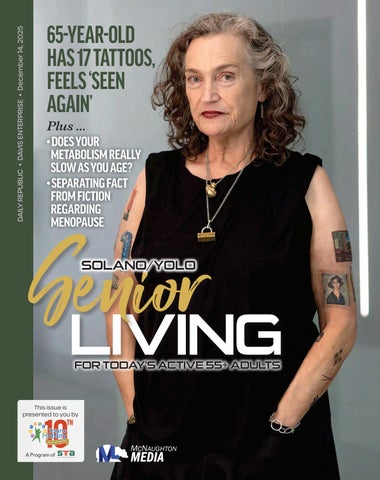
65-YEAR-OLD HAS 17 TATTOOS, FEELS ‘SEEN AGAIN’
Plus ...
• DOES YOUR METABOLISM REALLY SLOW AS YOU AGE?
• SEPARATING FACT FROM FICTION REGARDING MENOPAUSE

FOR TODAY’S ACTIVE 55+ ADULTS
Plus ...
• DOES YOUR METABOLISM REALLY SLOW AS YOU AGE?
• SEPARATING FACT FROM FICTION REGARDING MENOPAUSE
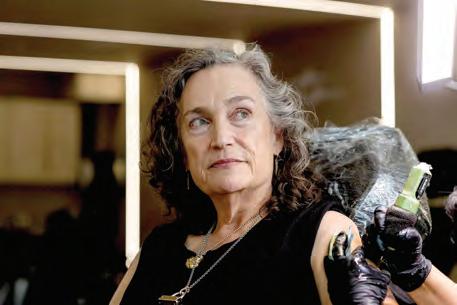
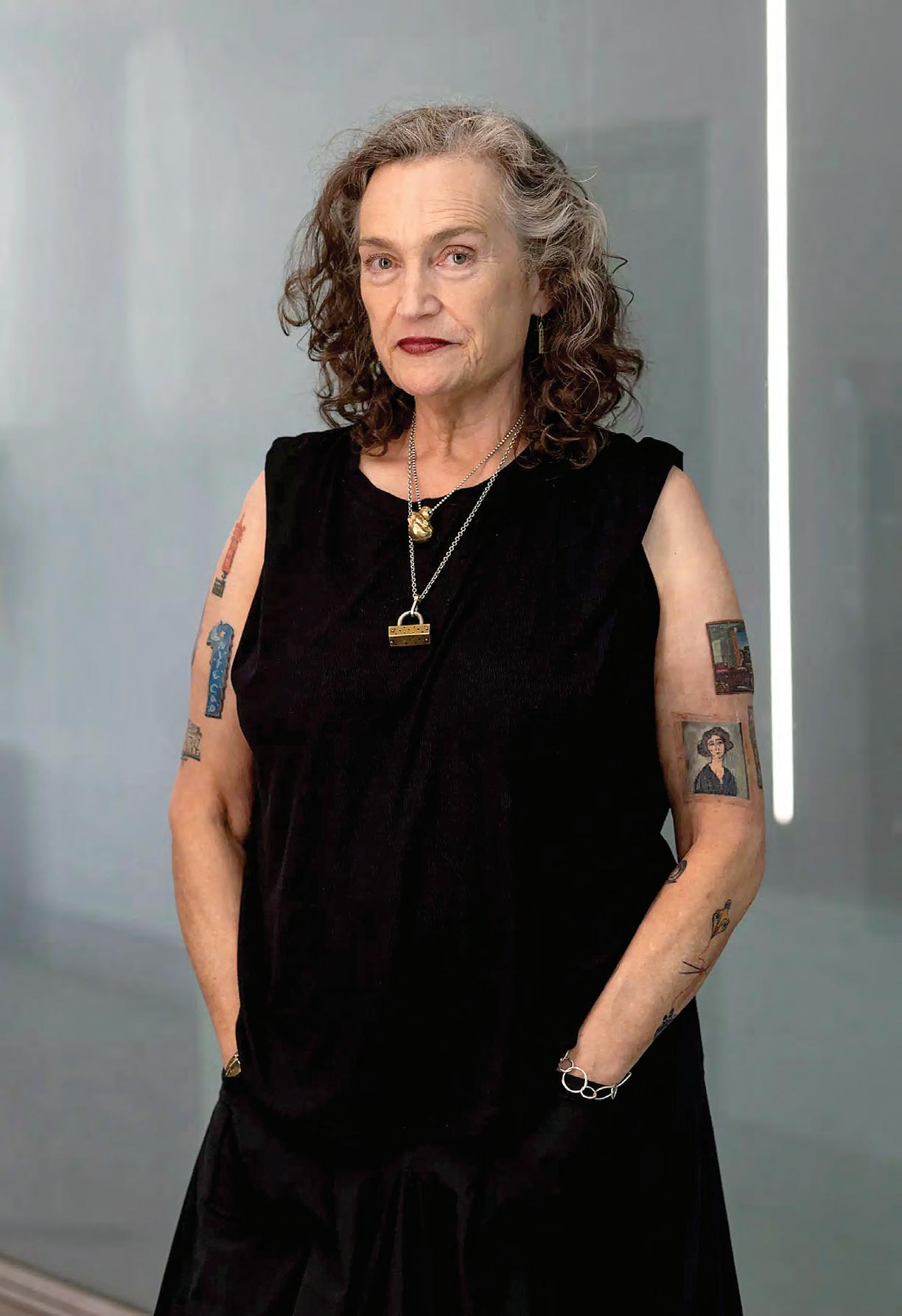
Sandee Althouse gets her 17th tattoo in five months, mostly of famous 20th century paintings or historically significant neon signs.
1st tattoo
Now she has 17 and feels ‘seen again’
DEBORAH
VANKIN
LOS ANGELES TIMES
Sandee Althouse walked into a Silver Lake gift shop dressed in an almost austere, simple black dress, her curly black hair graying at the temples. She carried herself like an older and accomplished, if somewhat serious, woman – but with a






































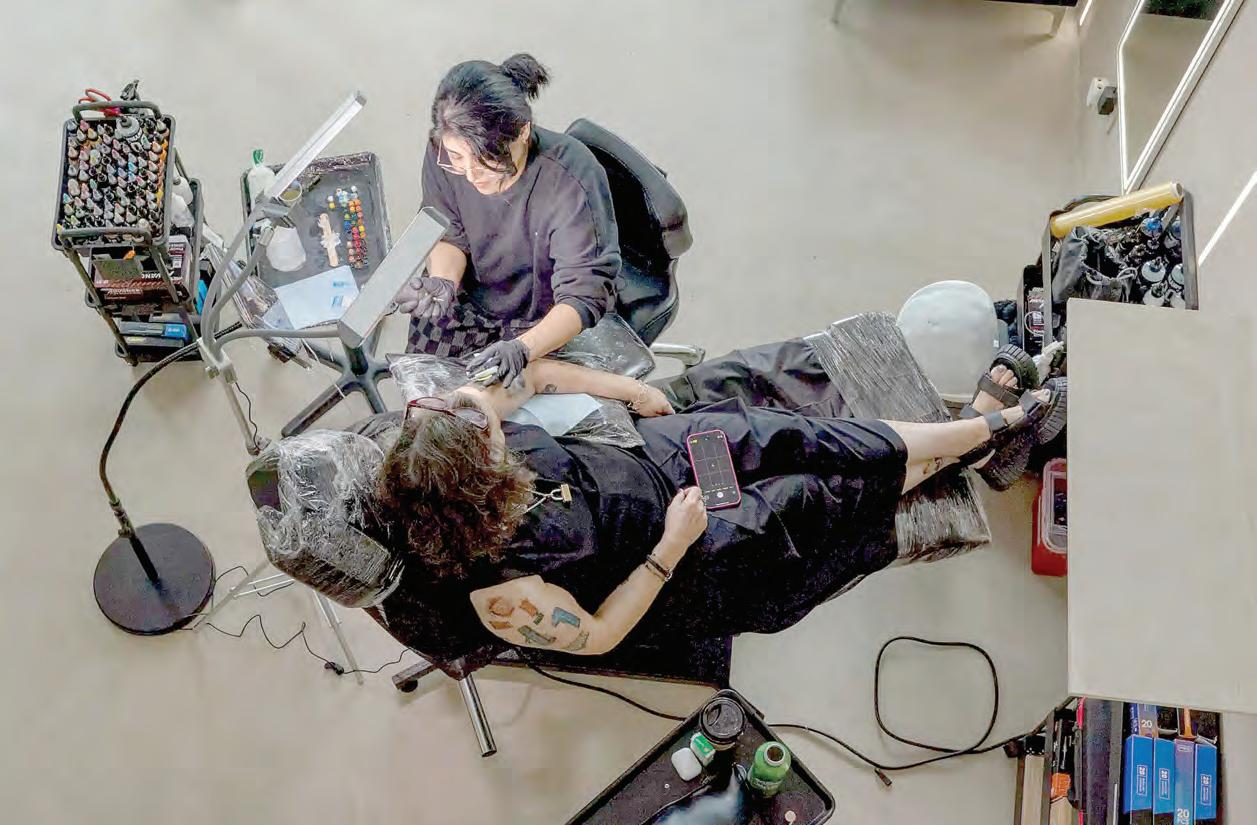
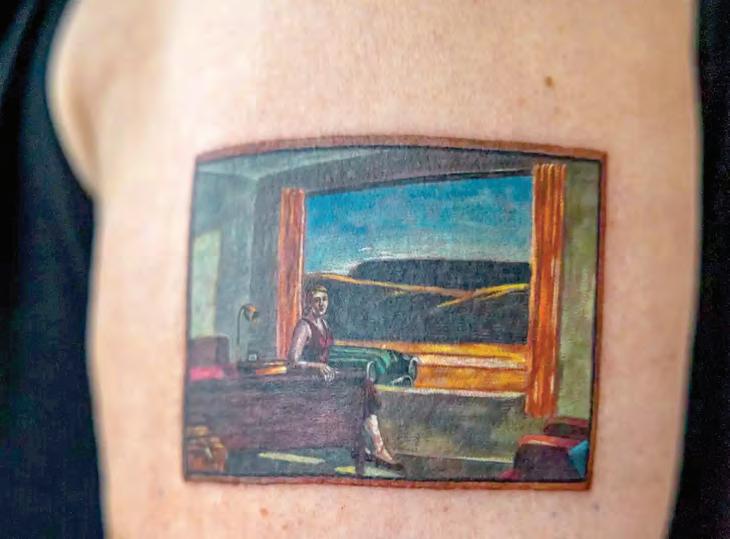
Sandee Althouse’s completed tattoo of Edward Hopper’s “Western Motel.”
JULIANA YAMADA/LOS ANGELES TIMES/TNS PHOTOS
twist. Both of her arms were covered in freshly-inked tattoos, her left arm still wrapped in glistening cellophane.
“Excuse me, but I have to ask: Are these your first tattoos?” I said of the colorful images spanning from the tops of her shoulders to her wrists.
“They are,” she said proudly. “I’ve gotten all of them since May.”
It was September.
“I’d love to know more,” I said, curious about what prompted so many tattoos, in such a short period of time, and all inked later in life.
It turns out that Althouse, who lives in the Bay Area, was on what she calls “a tattoo journey,” in what she describes as a deliberate act of self-care. She told me her husband of 35 years, Josh Wallace, had recently been diagnosed with a serious disease and Althouse, in addition to being heartbroken, had become his caretaker while also working fulltime as a radio announcer at KQED in San Francisco.
Getting tattooed is a way for Althouse to shift focus back onto herself, she explained to me, in order to remain strong and resilient – for herself and her family. Sitting in a tattoo studio chair and feeling the ongoing prick of the needle for up to seven hours is a repetitive, almost meditative act that helps ground her in the present moment, she said. According to Althouse, it helps excise the emotional pain, giving it physical form – a release of sorts.
“We’re dealing with a severe diagnosis,” Althouse said of her husband. “It’s a new part of life. Something new has changed him –and me – and I just feel like why not do something that will take me someplace new, a new adventure.”
The act of searching for tattoo
images online that she wants to emblazon on her body – mostly of famous 20th century paintings and historically significant neon signs –and deciding where they will go is a creative distraction during such difficult times, she explained.
And talking with the different tattoo artists while they work on her body has forged intimate personal relationships.
“There’s a sensual nature to it –human beings touching you,” Althouse said. “I don’t wear headphones; I like to have conversations. You meet someone new and they’re putting something permanent on you that will change you forever. It’s a very deep connection.”
The journey so far – 17 tattoos to date – has provided sustenance and even inspiration.
Althouse elaborated on all this during a chilly October afternoon, recently, while sitting in the chair at Ganga Tattoo Studio in West Hollywood. She frequently gets tattoos in the Bay Area, but also finds L.A. artists on Instagram that she admires and makes “tattoo excursions” here.
Today, she’s getting a tattoo of Edward Hopper’s 1957 painting, “Western Motel,” which the artist,

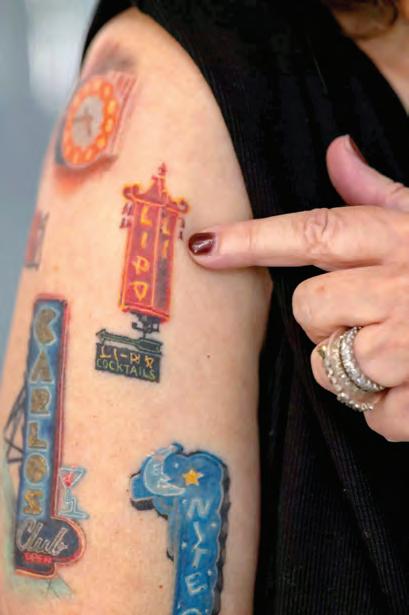
Sandee Althouse shows off her arm tattoos of historic neon signs.

Sandee Althouse displays her first tattoo, an old-timey radio microphone and “on air” sign.
May Soria, is putting the finishing touches on when I arrive. All of Althouse’s tattoos are done in the detailed, lifelike “micro-realism” style, and the Hopper image is eerily similar to the original work of art. In the oil painting, a young woman in a red dress sits on the edge of a motel bed, gripping the footboard tensely. Enormous windows look out onto a classic car and a vast, open western landscape of mountains.
“I just feel like this woman has a little bit of mystery and strength,” Althouse says, as Soria fine-tunes the woman’s leg. “She allows a lot of room for you to decide what she’s thinking and going to say.”
So does Althouse, who has a deep, sultry radio-announcer voice and often pauses momentarily to ruminate deeply before answering questions.
“I want to be stronger, and I want to be bolder, and I want to have wisdom – and I feel those things are kind of represented by this,” she said of her tattoos.
Althouse had never considered getting a tattoo until shortly before a trip to Italy this May with her husband and two sons, Ethan Wallace, 29, and Xander Wallace, 27. Ethan is heavily tattooed and had “hounded” her for years to get one, but she had zero desire. Then, several weeks before the trip, involved with caretaking responsibilities and trip-planning, the idea somehow, suddenly, made sense. She found an image of an “old timey” radio microphone and “on air” sign and brought
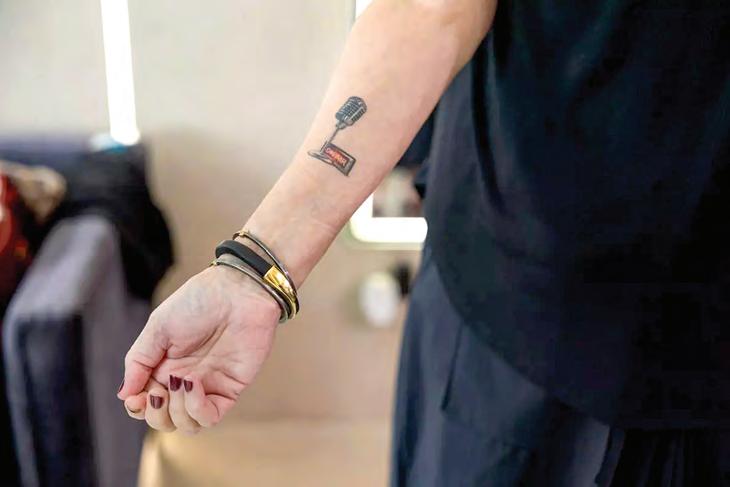
it to a tattoo studio in Rome she’d admired the work of online. The artist Giorgia Mastrosanti tattooed it onto the inside of her right forearm, a discreet but still noticeable spot.
“Last year I got into the Bay Area Radio Hall of Fame, which is a pretty big honor,” Althouse said. “I wanted to document how I spent a good portion of my life – and that was in radio.”
Her second tattoo, which she got from Mastrosanti the next day, was of the Carlos Club neon sign in San Carlos on her right upper arm. Several days later she got a ‘40s-era Bakelite radio image on the inside of her left forearm.
In addition to working in radio, Althouse is a fiber artist currently working on needlepoint. “I’m just really connected to art,” she said. “And this [tattoo journey] is a real ongoing art project.”
In late September, Althouse got tattoos of two other famous paintings on the same “gallery wall” that is her left arm: Amedeo Modigliani’s 1917
“Jeune femme (Totote de la gaîté)” and Gino Severini’s “Sea = Dancer.” She got the tattoos from Levi Elorreaga, an L.A. artist who was doing a residency at Black Serum, a studio in San Francisco at the time.
“I’ve never been taken by a painting as much as I was with [the Severini]. Just the vibrancy, there was so much movement to it – it almost sang,” she said.
Althouse’s right arm now features a smattering of historic neon signs –the Li Po Cocktail Lounge in San Francisco’s Chinatown and the View Alcatraz sign, among them. She’s drawn to the brightness and vibrant color of neon signs, adding that they’re “incredible and under-appreciated works of art.”
The process, itself, of designing the “art walls” on her arms is also healing – it provides joy and distraction. Althouse approaches that process as if she were a curator laying out a museum exhibition. She tapes maquettes – in this case, paper cut-outs of the paintings – to her
‘I want to be stronger, and I want to be bolder, and I want to have wisdom – and I feel those things are kind of represented by this.’
— SANDEE ALTHOUSE SAID OF HER TATTOOS
arm, fine tuning the layout. Then she gives her tattoo artist a digital image of the work.
During my visit, Soria worked off of an enlarged image of the Hopper painting on her iPad. As part of the tattoo, Soria designed a Midcentury Modern wooden frame for the painting. She placed stencils of the tattoo on Althouse’s arm before they got started that morning, tweaking the tattoo size and its placement.
“It actually doesn’t hurt that much,” Althouse said, as Soria pokes her arm with a needle that was just dipped into a pot of crimson ink. “Just a little ghost pain. You feel alive.”
Some people might look at her strangely when she’s in the tattoo chair – “what’s that old person doing?” she said. But turning aging tropes on their head is part of the joy of this journey.
“People who get [tattoos] understand,” Althouse said. “And I do think that maybe some people,
especially young people, think ‘she’s kinda badass.’ I like that. That’s OK with me.”
Making her way through the world, as a woman in midlife, feels differently now with tattoos.
“You get to middle age and you’re looked over more – you’re not noticed,” Althouse said. “And I feel like I am noticed now. I just like being seen again.”
Soria said she has several clients over 60. Getting tattoos later in life makes sense to her.
“You have more experience in life, so have more stories to tell [through tattoos],” she says. “You know what you want.”
As if on cue, an older man in a baseball cap and rain jacket walks by, leaning in to get a closer look at Althouse’s tattoo-in-progress.
“Stunning. Just stunning,” said Ames Beals, 70. He’s there to have one of his own tattoos, the image of a harmonica with wings, cleaned up. “Can I take a picture to show my
wife? I want her to get one.”
“See? It’s never too late to get a tattoo,” Althouse said.
Althouse is now running out of available “canvas” on her body, as she primarily wants tattoos on her arms and legs. She has room for about two or three more. Next up? a Marcel Duchamp painting and, possibly, a Mark Rothko or Ruth Asawa work.
As Althouse heads into hour five in Soria’s chair, the tattoo is nearly finished. It will end up costing $1,500, but is well worth it, Althouse said. (“That’s the other thing about getting them later in life, you have more money,” she added.)
She looks herself over in the mirror, a mix of pride and melancholy on her face.
“I just need to keep propping myself up,” she said. “I need to make myself strong. Because it’s only going to get harder. And this –”
She sweeps her hand over one arm.
“ – this reminds me to do that.”

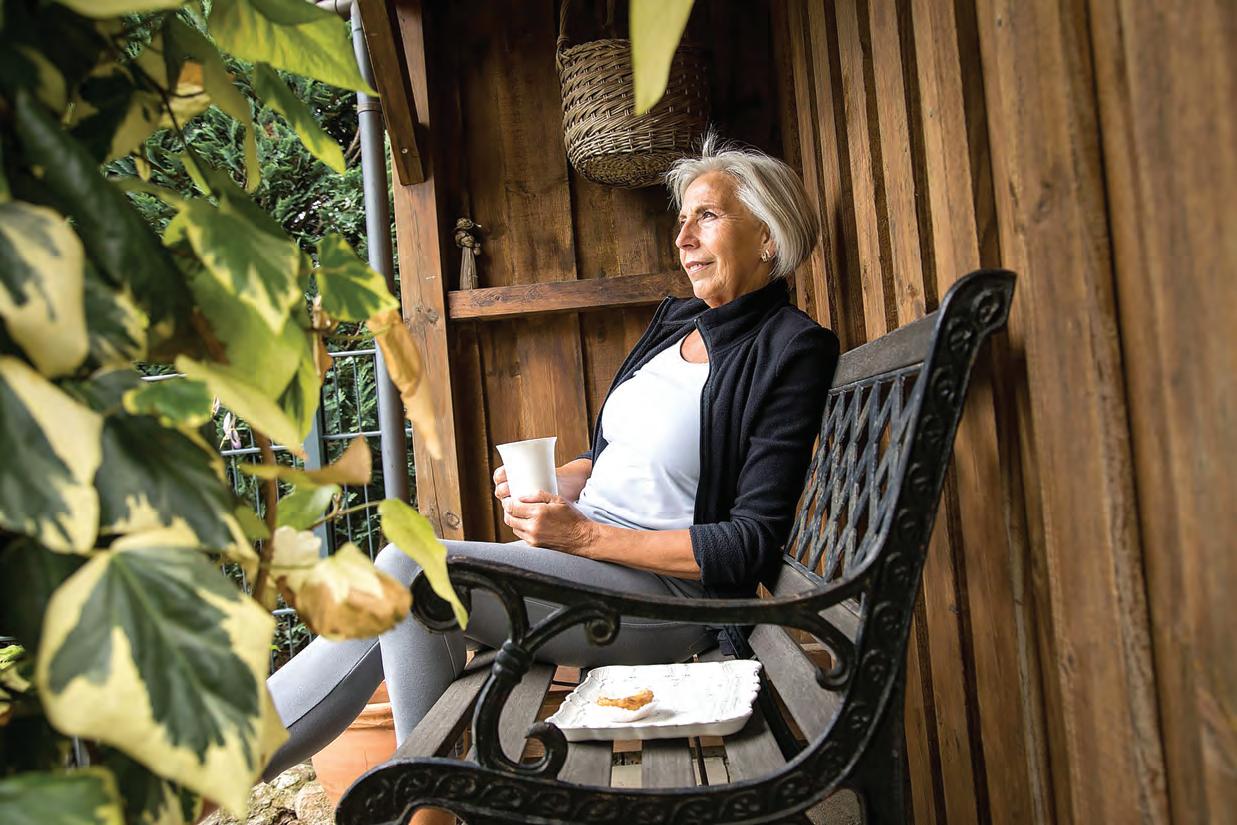
Ageing affects your metabolism, but lifestyle choices, like diet and exercise, also have a significant impact.
CAMILLA FORSTER, PA DPA
Many of us attribute gradual weight gain in middle age and beyond to a slow metabolism, but to what extent is this assumption true?
In a world flooded with health advice and ever-changing diet trends, we consulted Matyas Fehervari, consultant bariatric surgeon at Nuffield Health in the UK, who works extensively with metabolic issues, to cut through all the noise. He has helped demystify exactly what a metabolism is, how it can change with age and has also
identified some key ways we can maintain a healthy metabolism as we get older.
“Metabolism refers to the chemical processes that keep our bodies functioning – from converting food into energy to repairing cells and supporting organ function,” says Fehervari. “The metabolic rate is the amount of energy your body uses to maintain these vital processes.
“Even when you’re resting, your body is still working to keep your heart beating, lungs breathing, and brain active – this is known as your
basal metabolic rate (BMR).”
“One of the biggest myths is that people with a “fast” metabolism can eat whatever they like without gaining weight,” says Fehervari. “In reality, differences between individuals are usually modest.”
Another common misconception is that metabolism alone determines someone’s body weight.
“Weight regulation is shaped by a complex network of factors extending far beyond calorie burning,” explains Fehervari. “These include diet

















































‘The gut microbiome also plays a vital role, influencing how efficiently we extract energy from food, how bile acids are processed, and how our metabolism functions overall.’
— MATYAS FEHERVARI, CONSULTANT BARIATRIC SURGEON
muscle mass, sleep, and physical activity, but also deeper physiological mechanisms such as changes in bile flow, adjustments in stomach function and size, nerve (vagal) signaling, and the modulation of gut hormones.
“The gut microbiome also plays a vital role, influencing how efficiently we extract energy from food, how bile acids are processed, and how our metabolism functions overall.”
Furthermore, some people assume that metabolism steadily declines after early adulthood, however, Fehervari says “large, high-quality studies show it remains remarkably stable for decades before gradually slowing later in life.”
“Metabolism isn’t a straight downward curve,” says Fehervari. “A major study published in Science in 2021, involving over 6,000 people,


showed that energy expenditure peaks in infancy – when it can be over 50% higher than in adults – then gradually declines until around age 20.
“From the 20s through to around 60, metabolic rate remains remarkably stable when adjusted for body size and composition. After 60, there tends to be a slow but measurable decline.”
What are the reasons for the decline at 60 onward?
“After 60, metabolic rate typically decreases by about 0.7% per year,” says Fehervari. “The main reasons are loss of muscle mass (sarcopenia), reduced physical activity, and subtle hormonal shifts such as lower levels of growth hormone and sex hormones.
“Mitochondrial efficiency – the body’s energy-producing machinery –may also decline slightly with age. It’s not that your body “forgets” how to burn energy, rather it becomes a little less efficient at doing so.”








Several lifestyle habits can either support or slow metabolic function.
• Low muscle mass or inactivity
“Muscle tissue burns more energy than fat, even at rest,” explains Fehervari.
• Crash dieting
“Severe calorie restriction can temporarily suppress metabolic rate,” says Fehervari.
• Poor sleep
“Poor sleep can alter hunger and energy-regulating hormones such as leptin and ghrelin,” notes Fehervari.
• Chronic stress
“Elevated cortisol can promote fat storage and affect energy use,” says Fehervari.
• Smoking and excessive alcohol
“Smoking and excessive alcohol consumption can both impair cellular metabolism and hormone balance,” says Fehervari.
it
“There’s no magic pill or quick fix,” says Fehervari. “Temporary increases in energy expenditure can occur after exercise or with caffeine, but these are modest. The most effective, evidence-based way to maintain a healthy metabolism is to preserve muscle mass and stay active throughout life.”
• Stay active
“Combine aerobic activity like brisk walking or cycling with resistance training to maintain muscle,” recommends Fehervari.
• Prioritise protein
“Eat enough protein, especially in later life, to support muscle repair and prevent sarcopenia,” advises Fehervari.
• Avoid extreme diets

“Sustained, balanced nutrition keeps metabolic processes steady,” says Fehervari.
• Sleep well
“Aim for seven to nine hours to support hormonal and energy balance,” advises Fehervari.
• Manage stress
“Mindful activities and social connections reduce cortisol’s longterm effects,” says Fehervari.
• Regular check-ups
“Thyroid, vitamin D, and hormonal imbalances can all influence energy metabolism, so I would recommend regular check-ups,” says Fehervari.
In conclusion:
“Your metabolism does not inevitably “crash” with age, it remains stable for decades and only begins to slow slightly after around 60,” says Fehervari. “Much of that change is due to muscle loss and lifestyle, not age alone. By staying active, eating well, and maintaining strength, most people can keep their metabolism healthy well into later life.”














Motor vehicles have come a long way since the days of the Model T.
Safety features in particular have undergone significant enhancements over the last several decades. Improvements in airbags, structural modifications like crumple zones and technological features like automatic emergency braking have helped to make modern vehicles far safer than the cars and trucks of yesteryear.
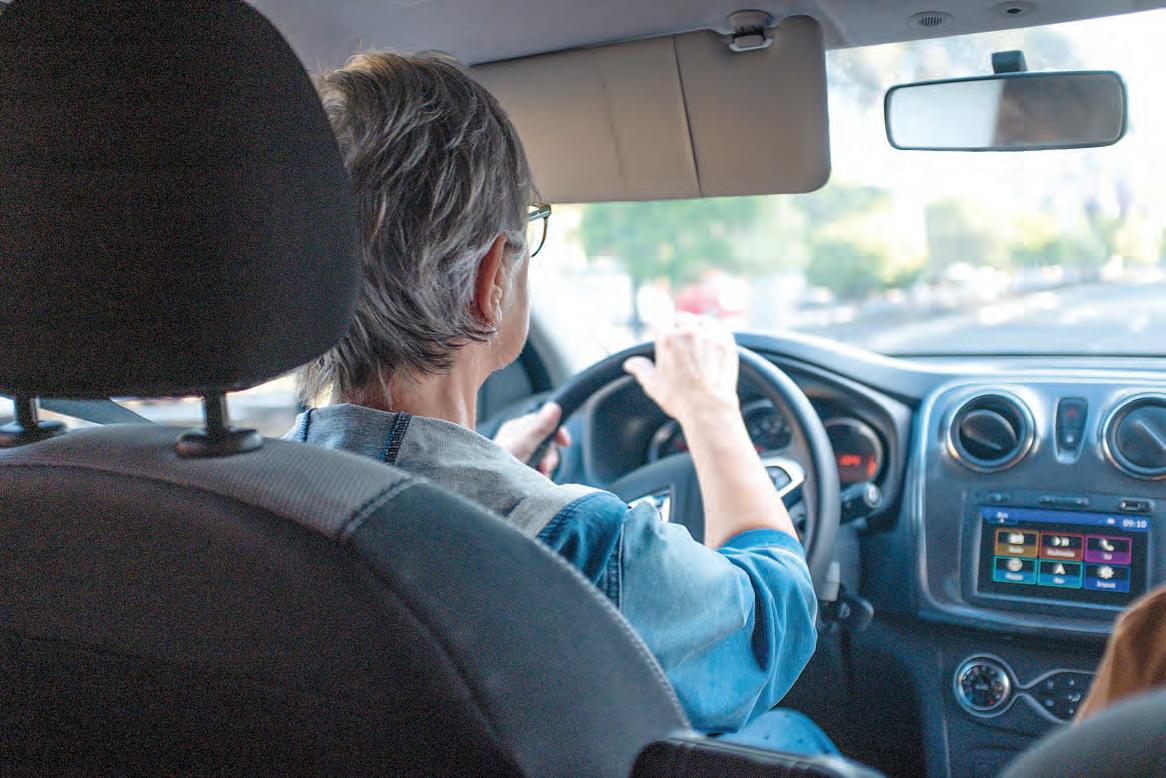
While there’s no denying that modern vehicles are safer than ever, the human element remains an unpredictable variable. Even in an era marked by vehicles with greatly enhanced safety features, distracted
or impaired drivers can compromise the well-being of everyone on the road. Age is another variable unique to each driver that merits consideration when considering road safety. The National Institute on Aging notes that certain conditions associated with aging, including increased stiffness of muscles and joints, can make it difficult for seniors to safely operate motor vehicles. Seniors who want to ensure they’re safe to drive can take various steps to ensure they are not compromising their own safety or the safety of others when getting behind the wheel.
• Have your driving skills assessed by a trained professional The NIA notes that the American Occupational Therapy Association maintains a database of driving
specialists who can help seniors assess their skills behind the wheel. These trained professionals may assess existing skills and offer advice about how to overcome any issues aging drivers might be having.
• Take a driving course. Safe driving courses can help drivers of all ages stay up-to-date on the latest safety protocols and advice on how to drive safely. Modern driving is vastly different than it was when many current seniors became licensed drivers. A safe driving course can refresh drivers’ memories about safety protocols, and some may even offer advice on how to navigate modern roadways, which may be marked by distracted drivers and feature vehicles with brighter headlights that can make it more difficult for older drivers
Speak with your physicians . A recent study from the U.S. Food and Drug Adminstration found that the average adult age 65 and older now uses roughly four medications. Medications produce side effects that can affect every area of a user’s life, including their ability to drive. Those effects might be heightened when taking more than one medication, and interactions also can lead to side effects that might not manifest if individuals were taking just one prescription. Aging drivers can maintain an honest and ongoing dialogue with their physicians to ensure they’re aware of the effects their medications might be having on their ability to drive safely. Report any new side effects the
Aging can compromise seniors’ ability to safely operate motor vehicles. But aging adults can employ various strategies to improve their

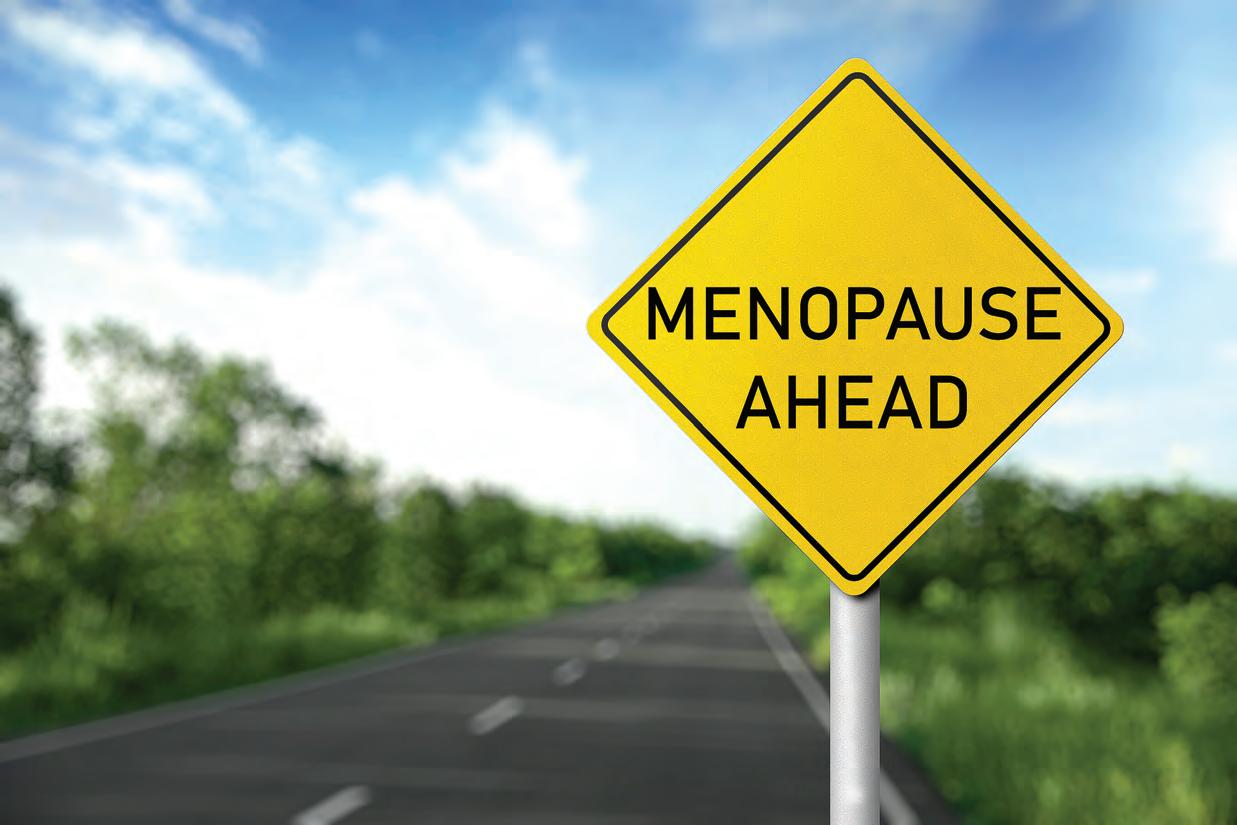
Menopause is a natural biological function that takes place in a woman’s life. Menopause marks the end of a woman’s reproductive years, meaning she will no longer be able to conceive children.
Menopause often is misunderstood, largely due to persisting myths. Separating the facts from fiction can help provide clarity regarding this stage in a woman’s life.
Fiction: Menopause happens suddenly on a specific date.
Fact: Menopause is a gradual process that begins with a stage known as perimenopause. This is the transitional phase leading up to menopause, which can last four to nine years. The North American Menopause Society says most women begin perimenopause in their mid- to late-40s and reach menopause around age 51 on average.
Fiction: You’ll know in advance when you’ve reached menopause.
Fact: Menopause will not be evident until after 12 consecutive months without a menstrual period.
Fiction: Hot flashes are the only
symptom of menopause to be concerned about.
Fact: Menopause (and perimenopause) can bring on a variety of symptoms. John’s Hopkins Medicine says approximately 75 to 80% of women will experience hot flashes during menopause. However, additional symptoms may include night sweats, sleep disturbances, mood swings, joint pain, and memory problems. The Mayo Clinic emphasizes that symptoms and their severity vary widely among women.
Fiction: Menopause is depressing and a sign of “getting old.”
Fact: Menopause is a natural life stage and not a sign of decline. Many women report feeling more confident after menopause has occurred and less stressed not having to keep track of menstrual periods. A 2023 survey from the American Association of Retired Persons found that 71% of women between the ages of 45 and 59 felt empowered to take charge of their health during menopause.
Fiction: Women just have to grin and bear the menopause transition.
Fact: Hormone replacement therapy (HRT) is safe and effective
for many women, particularly those under age 60 or within 10 years of the onset of menopause. A Women’s Health Initiative study in the early 2000s initially correlated HRT to increased risk of breast cancer, heart disease and stroke. Today, updated reviews from the National Institutes of Health clarify that these risks depend on individual factors. HRT remains the most effective treatment for hot flashes and vaginal dryness.
Fiction: Menopause will put an end to intimacy.
Fact: Some women report changes in libido and vaginal comfort after menopause takes place, but many women remain sexually active and happy. A study in Menopause, the official journal of the NAMS, found 60% of women between the ages of 50 and 79 reported being sexually active. Various products and treatments can support sexual health as women age.
Menopause is something most women will experience as they age, whether naturally or brought on by reproductive surgery. Getting past the myths to the real information can set minds at ease.














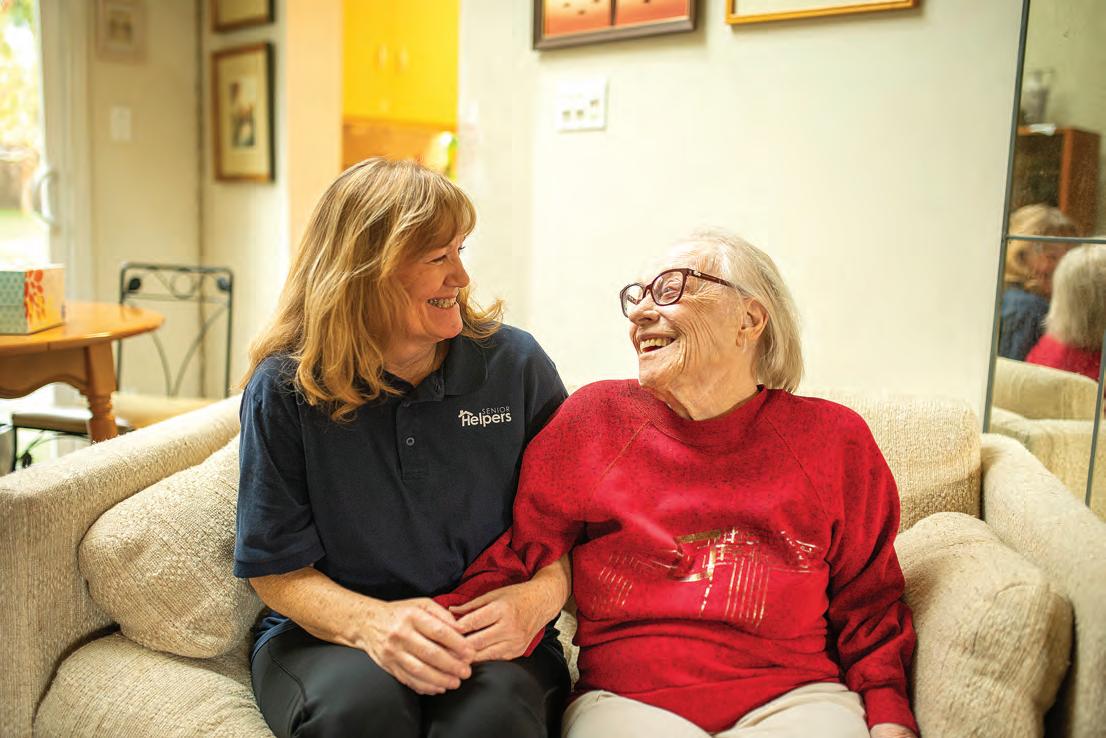
Senior Helpers Solano-Yolo, a leading provider of in-home senior care, proudly marks 16 years of service in the local community. Under the leadership of CEO Bob Nations, who has a personal passion for caring for seniors inspired by his own experience with his grandmother, the agency continues to prioritize compassionate and personalized care for its clients.
With a deep understanding of the desire among seniors to remain in their homes, Senior Helpers offers a range of essential services, including assistance with daily living activities such as bathing, dressing, medication reminders and transportation to medical appointments and social activities.
Bob emphasizes the importance of quality care, consistently asking his staff whether new projects will enhance their standing as the best
senior care company in the area.
“Our mission is to preserve the dignity and independence of seniors while providing them with the support they need,” says Director of Care, Connie Hamilton. “We believe that personalized care is key, and we are dedicated to matching caregivers with clients based on their unique needs and preferences.”
The agency is renowned for its rigorous hiring process, selecting caregivers based on their experience, professionalism and compassion. Each caregiver undergoes specialized training in managing conditions like Alzheimer’s and Parkinson’s, ensuring the highest quality of care.
In addition to personalized service, Senior Helpers utilizes the innovative LIFE Profile assessment tool to develop customized care plans that focus on safety, independence, medical condition management and
overall quality of life. This comprehensive approach has resulted in strong relationships with clients and families, with many considering their caregivers as part of the family.
Senior Helpers Solano-Yolo enjoys a stellar reputation within the community and collaborates closely with local healthcare professionals, including doctors and social workers, who regularly refer patients in need of assistance.
For more information about Senior Helpers Solano-Yolo and the services they provide, please visit senior helpers.com/ca/solano-yolo or contact our office at 707-251-1540.
Senior Helpers is dedicated to improving the quality of life for seniors and their families by offering compassionate and professional in-home care services. ❙
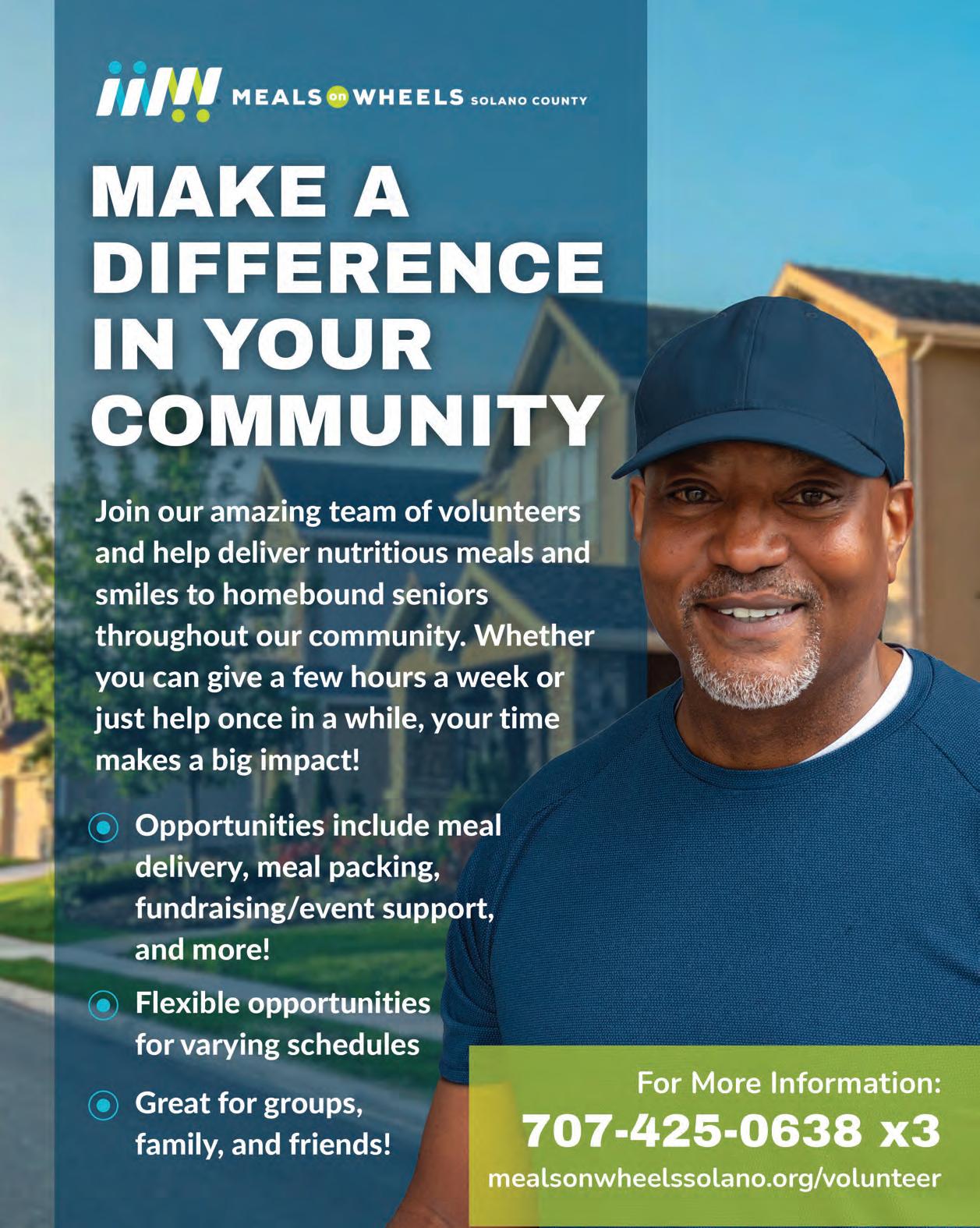
When we think about helping others, grand gestures often come to mind. Yet sometimes, the most meaningful difference is made in just one heartfelt knock at someone’s front door. At Meals on Wheels Solano County, our volunteers are doing just that – delivering nourishment, dignity, and a friendly face to homebound seniors across our community.
Beyond nutrition: More than just meals, your presence conveys compassion and human connection. Many clients eagerly await their delivery not just for the food, but for the chance to see someone caring about them.
Flexible roles: Whether you prefer active work or behind-thescenes support, there’s a volunteer role that fits your strengths and schedule. Options include the warmth of meal delivery, the precision of meal packing, the support of office assistance, and the energy of fundraising and event help. mealsonwheelssolano.org
Meaningful impact: Every hour you invest nurtures independence, combats isolation, and strengthens our local safety net.
Imagine: you sign up for a weekly delivery route. You step into a quiet neighborhood, knock on a client’s door, hand them a nutritious meal, and share a brief greeting. That brief exchange may brighten their entire

A volunteer prepares meals, which are to be frozen and distributed to seniors, at the Meals on Wheels office.
day. Meanwhile, in the kitchen, another volunteer is organizing bags for the next day, ensuring every client gets the regular, nourishing food they deserve.
Behind the scenes, in the office, volunteers help with administrative tasks, data entry, or calls that keep the program running efficiently. Others bring their energy to fundraising events, spreading awareness and support for this vital service.
It doesn’t take long to make a difference. Volunteers of all backgrounds and ages are welcome. mealsonwheelssolano.org/volunteer You choose what role suits you best and how much time you can give.
• Deliver Meals: Bring nutritious meals and compassion to seniors’ doorsteps
• Pack Meals & Produce: Help prepare shelf-stable and fresh produce bags
• Office Assistance: Support administrative and operational work
• Events & Fundraising: Assist with community outreach, events, and campaign efforts
Ready to step in? Apply today and join a community of caring volunteers who show up – sometimes with a meal, always with heart. Your dedication can change lives and uplift the spirits of those who need it most. Visit mealsonwheelssolano.org/ volunteer to learn more and sign up. ❙






















Interventional cardiologists at Kaiser Permanente are first in Northern California to insert the approved device, dramatically lowering risk during the procedure
When Kathryn Gallagher’s 13-year-old artificial heart valve started to fail, the oxygen-rich blood feeding her organs, tissues, and muscles slowed to a trickle.
The condition, known as aortic valve stenosis, brought everything she loved doing to a standstill.
The 80-year-old weightlifter and exercise junky could barely climb the stairs in her house without having to rest midway.
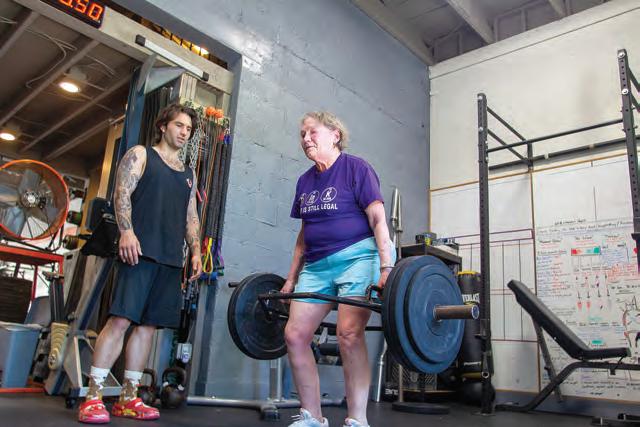
Kaiser Permanente member Kathryn Gallagher deadlifts 105 pounds with her CrossFit trainer, Tony Sangimino.
available to her before the device was approved.
“I had kind of resigned myself to having a bad heart,” said Gallagher. “But when they called me, I was so happy. I figured this was my chance to improve, and boy, oh boy, it really was. I’m back to doing my CrossFit workouts, and I can climb the stairs like a normal person.”
“It was just so hard to get up and start moving,” said Gallagher. “Anything strenuous was just exhausting.”
Thirteen years ago, she had open heart surgery to replace her aortic valve, but now that replacement valve was nearing the end of its life. The same operation to replace the first valve was deemed too risky because of her age. The only alternative would be a minimally invasive catheter valve replacement, which can be safer for older patients.
But Gallagher’s failing artificial heart valve posed the risk of blocking important arteries during the procedure, which could starve the heart muscle of blood.
That was until Kaiser Permanente began participating in a clinical trial to use a newly developed device that would make replacing an old one safer. And it could also be placed using a catheter through the groin, a safer option for older patients. While
Gallagher was not chosen for the clinical trial, as soon as the U.S. Food and Drug Administration approved the device, cardiologists at Kaiser Permanente San Francisco Medical Center called her.
In April, she was the first patient in Northern California to be treated with the approved device, an achievement based on Kaiser Permanente’s involvement in the clinical trial and surgical expertise in the area.
“I’m just so happy we were able to treat her, and she is able to feel better,” said Emily Perdoncin, MD, an interventional cardiologist at Kaiser Permanente San Francisco Medical Center who successfully placed a new aortic valve in Gallagher’s heart. “I have a particular interest in patients who don’t have great options in this area, so I am very happy about the outcome.”
Gallagher said she was keenly aware of those limited options
Jacob Mishell, MD, medical director of the Kaiser Permanente Northern California Structural Heart Program, helped recruit Dr. Perdoncin from Emory University Hospital in Atlanta specifically to do such procedures.
Previously, replacing an old artificial heart valve through an artery in the groin was considered potentially life threatening because a piece of the old one could block one or both coronary arteries during the procedure, causing cardiac arrest. That problem was eliminated with the newly approved device.
“Before this, there was no FDAapproved device to treat this,” said Dr. Mishell. “There was a procedure, but it was very risky. Dr. Perdoncin has brought her expertise to patients who have very poor options, and we’re very happy to have her.”
Today, Gallagher is back lifting weights and doing squats, something she started when she was 72.
“I feel so frisky after doing my workouts now, instead of feeling exhausted,” said Gallagher. “Just in general my life has improved.” ❙
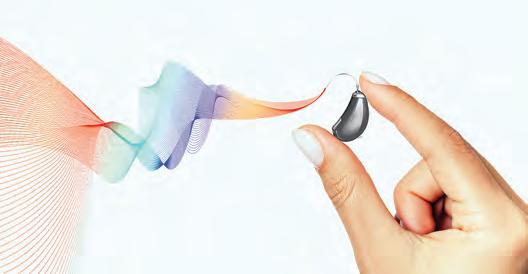
Kenwood Hearing Centers in Fairfield has been helping people in the North Bay improve their lives through better hearing for more than 60 years.
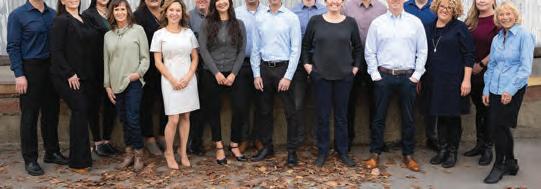
The company has six conveniently located offices with professionally trained audiologists and hearing specialists to provide customers with the very best care. Kenwood is family owned and operated and treats each patient as if they were family, too.

Kenwood Hearing Centers
• In Fairfield: 1261 Travis Blvd., Suite 140
• To schedule an appointment, call 707-766-0782.
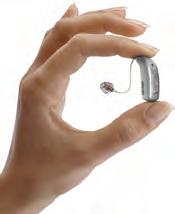
Kenwood Hearing Centers offers a complete suite of hearing care services, including hearing testing, hearing aids, repair, custom earplugs and more. If you need a hearing aid, how can you know which one is right for you? With Kenwood’s Hearing Aid Test Drive, you are able to try out different hearing aids at home, work, or wherever you go to make sure it’s the right fit before you commit.
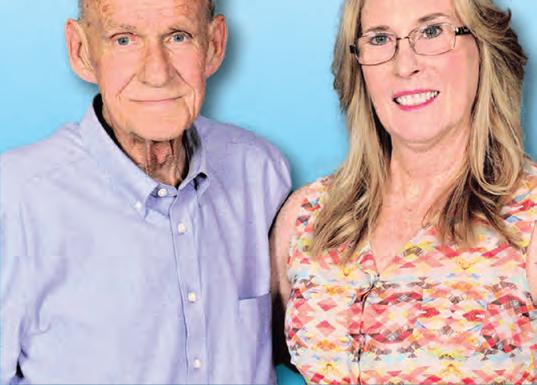
Visitors to the Fairfield office will see the smiling faces of Hearing Aid Dispenser Deb Davis and Patient Care Coordinator Tanya Drummond.
Davis has lived in Solano County for almost her entire life and loves the people and places of Northern California. She has a keen eye for design, a genuine love of people and a deep technical knowledge of the hearing aid fitting process.
With attention to detail and a desire to make a difference, people can be assured that they will feel comfortable with her expert advice. ❙
Launched in 2014, the Solano Transportation Authority’s Solano Mobility Call Center offers personalized travel assistance tailored to the diverse needs of Solano County residents. Through a network of 16 countywide programs and two local services, Solano Mobility delivers practical transportation solutions for older adults, people with disabilities, Veterans, students, commuters, and employers alike.
ADA Eligibility Program
This program determines eligibility for paratransit services under the Americans with Disabilities Act (ADA). Eligible individuals can access curb-to-curb rides and use the Intercity Taxi (ITX) Program.
Intercity Taxi Card (ITX) Program
ADA-certified individuals can purchase subsidized taxi fares through a prepaid debit card. Riders pay $40 for $100 in ride credits – or $20 if low income.
Medical Trip Concierge (GoGo Grandparent)
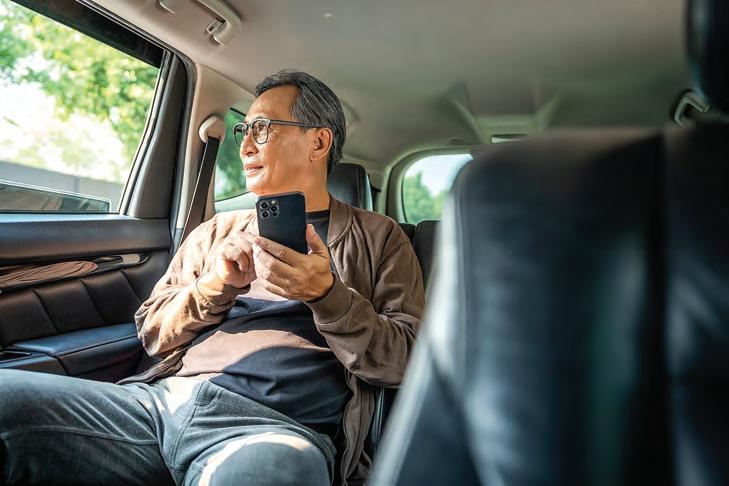
Seniors 60+ and ADA-eligible riders can receive up to 30 discounted Uber/Lyft rides per month to medical appointments. Riders pay 40% of the fare – or 20% if low income. Wheelchair-accessible vehicles are available.
Training
This free program teaches individuals how to use public transit independently. One-on-one and group sessions cover route planning, reading schedules, and fare payment.
medical facilities – including Travis AFB and Martinez VA – via the Medical Concierge or ITX programs. Wheelchair-accessible rides are available.
Local Transit Options
Solano Mobility provides support for everyday travel through services like:
• Transit Trip Planning & Info
• Travel Training
• Benicia & Suisun City Lyft Discounts
• Suisun City Microtransit
First/Last Mile Program
This program offers discounted Lyft rides between 12 transit hubs and home or work locations, helping commuters close the gap between public transportation and final destinations.
Guaranteed Ride Home (GRH) Program
If an emergency arises, registered commuters can use Uber, Lyft, or a taxi to get home. The GRH program covers up to six trips per year, limited to $100 per ride.
missed or canceled routes can use up to four Uber rides per month under this program to travel from one Solano Express bus to another.
Vanpool Options
• Traditional Vanpools: Form a group of 7-15 to share commute costs. Eligible vanpools may receive
• $200–$700 monthly subsidies.
• Solano Mobility Express
Vanpool: Luxury vans travel weekdays between Vacaville/ Dixon and Sacramento, driven by professionals.
Bucks for Bikes & Commute Rewards
The Bucks for Bikes program supports bike commuting, while the Commute Challenge rewards alternative travel with gift cards. Log your commutes at commuterinfo.net to start earning.
For help planning your commute or learning more about Solano Mobility’s services, visit www. solanomobility.org or call the Solano Mobility Call Center at 800-5356883, Monday-Friday, 8 a.m. to 5 p.m. ❙