The University of Arizona Press is the premier publisher of academic, regional, and literary works in the state of Arizona. We disseminate ideas and knowledge of lasting value that enrich understanding, inspire curiosity, and enlighten readers. We advance the University of Arizona’s mission by connecting scholarship and creative expression to readers worldwide.
CONTENTS
ANTHROPOLOGY, 10, 11, 12, 20, 21, 22, 23, 25
ARCHAEOLOGY, 23, 24, 25, 26
ARIZONA & THE SOUTHWEST, 1, 2, 3, 4, 9
BORDER STUDIES, 12, 17
ENVIRONMENT, 9
ETHNOBIOLOGY, 10, 22
GENDER & RACE, 13, 14, 16
HISTORY, 2, 19
LATIN AMERICAN STUDIES, 12, 16, 18, 19, 20, 21, 22
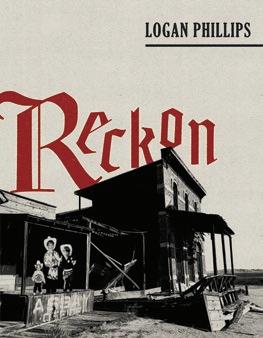
A visually stunning hybrid memoir questioning the mythology of the West
What’s it like to have been born in Tombstone, Arizona?
In Reckon, artist Logan Phillips returns to the fabled town to face the history he was raised on as a boy—gunfights, outlaws, and Hollywood cowboys— for a new, personal confrontation with the West’s foundational mythology. This hybrid memoir also explores sexuality, masculinity, parenting, and what it means to love a land rife with contradiction and “slathered in murder.”
ARIZONA & THE SOUTHWEST POETRY
February
172 pp.
7 x 9
187 b&w illustrations
Paperback
978-0-8165-5582-6 / $19.95 T Electronic edition available
As innovative as it is moving, this memoir is constructed of essays, photography, poetry, newspaper clippings from the Tombstone Epitaph Local Edition, and of course, movie screenplays. As he writes the characters of his past—including Youngfather and Teenme—Phillips finds the real history to be much more complex than the stories he was told. This is Tombstone in the 1980s and 90s, a century after the West’s most famous gunfight—a fifteen-second event still performed every day in historical reenactments— where Phillips’s father works as a historical exhibit designer at the Courthouse Museum and his uncle as a stuntman at Old Tucson Studios.
With an original, searing voice, Reckon is an essential answer to the tough questions of past and future, inheritance and reinvention, all from the perspective of a boy stuck in the middle.
LOGAN PHILLIPS is a poet and cultural worker in Tucson, Arizona, and is author of Sonoran Strange and the NoVoGRAFíAS series.
“A rip-roaring historama in the shadows of Tombstone, let Reckon be both guide and trickster. Ready, set, action!”
—Sophia Terazawa, author of Tetra Nova
“Flying through masculine silence, Reckon is the owl.”
—Sesshu Foster, author of City of the Future
“Logan Phillips collages a past both tender and troubled. These pages carry a cowboy’s wink, pero con mucho dolor, riding out those gunfight myths that cast a long shadow.”
—Melani Martinez, author of The Molino
“A full-throated consideration of the antecedent of sultry desert queerness—the cowboy. Phillips is in full bloom here.”
—Raquel Gutiérrez, author of Brown Neon
“Reckon implodes the braggadocio and myth of the gunslinging West.”
—Anthony Cody, Whiting Award winner
“Reckon illuminates all that tries to hide—and then, with love and determination, invites us all to help keep it in the light.”
—Javier Zamora, author of Solito: A Memoir
HISTORY
ARIZONA & THE SOUTHWEST
NATIVE AMERICAN & INDIGENOUS STUDIES
March
240 pp.
6 x 9
28 b&w photos, 1 map
Paperback
978-0-8165-5616-8 / $21.95 T
Electronic edition available
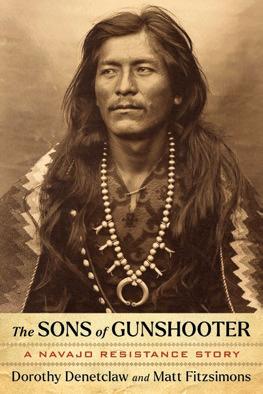
THE SONS OF GUNSHOOTER A NAVAJO RESISTANCE STORY
DOROTHY DENETCLAW AND MATT FITZSIMONS
A powerful account of one family’s resilience against colonization
In 1919, the brother of one of the West’s most famous Indian traders was shot to death in a remote corner of the Navajo Nation.
Part history, part true crime, The Sons of Gunshooter reexamines the killing and subsequent murder trial, while simultaneously embedding the story in a much larger saga of colonization and resistance. The result is a book that’s sweeping in its scope and surgical in its approach. Rewinding the clock to 1868, the authors follow the intertwining paths of two families to offer a riveting, deeply personal account that has been hailed as “a new way of doing historiography.”
One of the authors is a descendant of participants in the case; the other is an investigative journalist. By merging Diné oral traditions with archival evidence, they succeed in upending one false narrative after another. The Sons of Gunshooter is an inspiring new take on a history we thought we knew.
DOROTHY DENETCLAW is Tótsohnii born for Tł’ááschí’í and lives in Indian Wells, Arizona. She is a community organizer, activist, and interpreter, and enjoys researching her family history, a legacy for her children and grandchildren.
MATT FITZSIMONS is a former newspaper reporter and the author of The Counterfeiters of Bosque Redondo: Slavery, Silver, and the U.S. War Against the Navajo Nation. He lives in San Diego, California.
“The Sons of Gunshooter is an excellent example of a Dinébased narrative that honors Diné oral histories and showcases Diné resistance and resilience in the face of settler violence.”
—Jennifer Nez Denetdale, author of Reclaiming Diné History
“This story illustrates how the racism that plagues criminal justice in the United States today is baked into the system from its very origins, including settler conflicts with Indigenous peoples.”
—Klara Kelley, co-author of A Diné History of Navajoland
“Great story. I enjoyed reading it, and I learned quite a bit.”
—Raymond D. Austin, author of Navajo Courts and Navajo Common Law
“The Sons of Gunshooter is one of the best researched, best written histories I have ever read. And I read a lot of history.”
—Cindy Yurth, former reporter for the Navajo Times
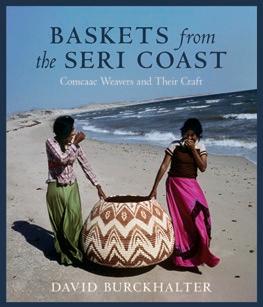
BASKETS FROM THE SERI COAST
COMCAAC WEAVERS AND THEIR CRAFT
DAVID BURCKHALTER
A captivating look at the artistry and heritage of Comcaac basketry
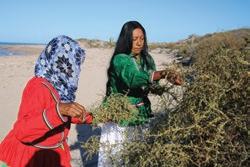
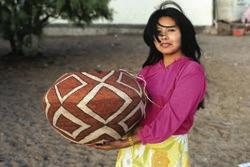
This stunning exploration of Seri (Comcaac) basket weaving reveals the resilience and creativity of the weavers as seen through the lens of documentary photographer David Burckhalter, who has spent five decades cultivating friendships and documenting Seri traditions, landscapes, and basketry in Sonora, Mexico.
ARIZONA & THE SOUTHWEST
April
208 pp.
9 x 10.5
28 b&w photos, 176 color photos, 2 maps
Paperback
978-0-8165-5637-3 / $35.00 T
Electronic edition available
Southwest Center Series
The Southwest Center Series publishes critical new books about the peoples, places, and landscapes of the southwestern United States, northwestern Mexico, and the U.S.Mexico borderlands.
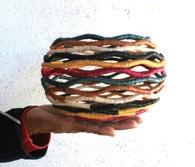
Blending striking photography with reflections from years as a trader and observer of Seri culture, Burckhalter traces the evolution of Seri basketry from a utilitarian craft to a celebrated art form. The book examines how Seri weavers have navigated the influences of the craft economy, outside forces like anthropologists, and changing traditions, while preserving their unique oral history and spiritual connections. With detailed insights into the artistry, labor, and legends surrounding Seri baskets, this work is a tribute to the resilience and creativity of Seri women, whose weaving continues to be passed on to future generations.
Featuring more than two hundred color photographs and historic images, Baskets from the Seri Coast: Comcaac Weavers and Their Craft offers readers a visual feast that celebrates the intricate craftsmanship and cultural significance of a timeless art and the people who make it.
DAVID BURCKHALTER is a photographer and research associate at the Southwest Center of the University of Arizona. The Tucson-based photographer is the author of Baja California Missions: In the Footsteps of the Padres and The Seris, also University of Arizona Press books.
“An authoritative, intimate account of baskets woven by the region’s most original and intriguing people. This volume is the definitive study of Seri baskets and their makers.”
—David Yetman, producer of In the Americas with David Yetman
“David Burckhalter’s history of Seri basketry is a visual treat, highlighting selections of the spectacular photographs he has taken that document his decades of involvement in the Comcaac craft trade.”
—Diane Dittemore, author of Woven from the Center
“Burckhalter’s beautiful photographs celebrate and amplify the considerable technical skill and aesthetic majesty of Comcaac basketry in a way that demands we all recognize Comcaac weavers as the innovative carriers of the venerable craft tradition that they are.”
—Edward A. Jolie, Arizona State Museum ethnologist
SPACE SCIENCE
March
Co-published with London Stereoscopic Company
208 pp.
9.61 x 12.44
180 color illustrations, 70 stereoscopic images
Printed Case
978-0-8165-5630-4 / $50.00 T
Electronic edition available North American sales only
Also of Interest
ISLANDS IN INFINITY GALAXIES 3-D
DEREK WARD-THOMPSON, BRIAN MAY, AND J-P METSÄVAINIO
Discover the universe in 3-D
This groundbreaking book brings the cosmos to life like never before. Featuring more than two hundred stunning color photographs from the world’s leading telescopes and eighty detailed diagrams, this large-format book offers a mesmerizing journey through the formation, nature, evolution, and classification of galaxies.
Highlights include:
• A look at the universe in three dimensions with Brian May’s patented 3-D viewer,
• Accessible science, offering a non-mathematical review of modern cosmology,
• An exploration of the chaotic beauty of colliding and merging galaxies,
• A reference section on historical galaxy catalogues, plus a comprehensive glossary and index.
Authored by renowned astrophysicist Derek Ward-Thompson and featuring contributions from Brian May and J-P Metsävainio, Islands in Infinity is a must-have for anyone fascinated by the night sky. Co-published with London Stereoscopic company, the University of Arizona Press is pleased to offer this title in North America.
DEREK WARD-THOMPSON (MA, PhD, FRAS) is director of the Jeremiah Horrocks Institute of Mathematics, Physics and Astronomy, and head of the School of Physical Sciences and Computing at the University of Lancashire. Ward-Thompson’s research interests lie in the fields of the formation of stars and planets, as well as in the environments surrounding black holes. He supervises undergraduate projects, as well as post-graduate MSc and PhD students. His textbook, An Introduction to Star Formation (Cambridge), won an Outstanding Academic Title of 2012 from the American Library Association magazine ‘Choice’.
SIR BRIAN MAY (CBE, PhD, ARCS, FRAS) is a founding member of the rock group Queen, a world-renowned guitarist, songwriter, producer, performer, 3-D photographic authority, author, publisher, and passionate campaigner for animal rights. A graduate of Imperial College London, May started a PhD in astrophysics but in 1974 music took over, and it was not until 2006 that he was able to complete his studies at Imperial and was awarded his PhD in 2007. Since then, he has co-written five astronomy books and has worked with NASA, ESA, and JAXA, providing 3-D imaging for numerous current space missions.
J-P METSÄVAINIO is a Finnish visual artist and impassioned astronomical photographer who uses scientific and computational tools and methods to reveal the nocturnal world of wonders. To satisfy his endless curiosity, he developed a method to turn any cosmic photograph into a realistic 3-D image. In his work, art meets science in a most beautiful way. He created the 3-D astronomical images for a previous collaboration with Brian May and David J. Eicher: Cosmic Clouds 3-D (2020).
LATINX LITERATURE POETRY
February
100 pp.
7 x 9
Paperback
978-0-8165-5577-2 / $18.00 T
Electronic edition available
Camino del Sol
As one of the first publishers to spotlight poetry, fiction, and essays from both emerging and established voices in Latinx literature, the University of Arizona Press and its critically acclaimed Camino del Sol series have provided a literary home for distinguished writers for nearly thirty years.
CITY OF EVES POEMS
SILVIA BONILLA
Richly evocative poetry set in coastal Ecuador
In City of Eves, Silvia Bonilla evokes the lives and longing of three young women who suspect the wider world is a ship on the verge of departure—and who are determined not to be stranded on shore.
Sonia and her two best friends grow up on the urban coast of Ecuador, sharing cigarettes, school uniforms, and a determination to overcome their circumstances even if the price to pay is exile. Full of fantasies and curiosity, the friends navigate hunger at home, absent parents, and religious pressures as they help each other through the pleasures and traumas of adolescence. As their desire for something greater changes from dreams into actions, they pursue escape routes that hover between choice and compulsion: forced marriages, early widowhood, and a death-haunted migration to the United States. Even in the throes of escape, the constraints of their reality always lie waiting.
Subtle and unsparing, Bonilla’s lyrical poems capture the wild inner horizons and vivid embodiment of youth as it shades into the reflective poignance of maturity marked by disappointment, compromise, and loss. Despite this, it is memories of deep friendship, bonded through shared understanding and aspiration, that lingers. Looking back on her life, Sonia recalls the courage and vitality of girls determined to shape their own futures: “We lifted Coca-Cola bottles to the / opened granadilla of our mouths.”
SILVIA BONILLA holds an MFA from the New School. She is the author of the chapbook An Animal Startled by the Mechanisms of Life.
“A stunning, lyrical meditation of self, history, human relation, and world.”
—Bianca Stone, author of What Is Otherwise Infinite
“Bonilla’s debut is brilliant, singular.”
—Eduardo C. Corral, author of Guillotine
“Sings deep truths and elicits ‘walking dreams.’”
—Gloria Muñoz, author of Danzirly
“Makes visceral the precarity and hardship that accompanies immigration from South America to the United States.”
—Brenda Cárdenas, author of Trace
“A book of haunting precision and simmering brilliance. Bonilla’s keen powers of observation, sense, and sound are just what we need right now.”
—Natalie Shapero, author of Popular Longing
CHAMORRITA SONG
DANIELLE P. WILLIAMS
A poetic union of Black and Chamorro storytelling traditions
here are the rules show up to the center of the village with a sharp tongue have your friends and family crowd you like graduation day identify your opponent be sure start first each round compose couplets yell quatrains four lines to expel against the forgiving sea
NATIVE AMERICAN & INDIGENOUS LITERATURE POETRY
January
92 pp.
7 x 9
Paperback
978-0-8165-5516-1 / $18.00 T
Electronic edition available
Sun Tracks
Launched in 1971, Sun Tracks was one of the first publishing programs to focus exclusively on the creative works of Native Americans. The series has included poetry, prose, art, and photography.
For poet and spoken-word artist Danielle P. Williams, Kantan Chamorrita is more than just the ancient craft of Chamorro folk song. It is also a return and a homecoming. This impromptu style of communal call-and-response performance art forms the spokes for Williams’s debut collection. Rooted in oral tradition, Chamorrita Song pays homage to Black and Chamorro cultures, honoring the artistic expressions that these communities have created to reconcile lifetimes of imposed trauma. Bearing witness to these many narratives, Williams intertwines spoken word poetry and gospel music with Chamorro storytelling, weaving together the nuanced histories of queer, Black, and Indigenous existence and literature. Here Williams reveals capacious contemporary forms that speak to the future as well as to the past and that further ground lineages in homelands, finding strength and beauty in collective pain and triumph. These poems transform and spread the messages of those long silenced. They act as song and prayer.
DANIELLE P. WILLIAMS is a Black and Chamorro poet, translator, essayist, and spoken-word artist from Columbia, South Carolina, who believes in the power words have to inspire, educate, and enact change.
“This collection is a profound and melodic song.” —Craig Santos Perez, author of Navigating CHamoru Poetry
“Williams teaches us to make song and politics out of fury, experience, and ancestral dreams. Chamorrita Song is a debut in avant-garde and spoken poetics.”
—Alan Pelaez Lopez, editor of When Language Broke Open: An Anthology of Queer and Trans Black Writers of Latin American Descent
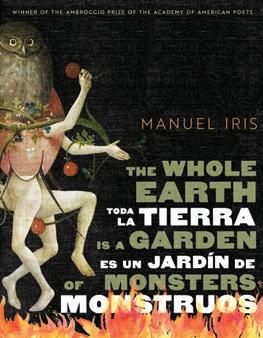
THE WHOLE EARTH IS A GARDEN OF MONSTERS / TODA LA TIERRA ES UN JARDÍN DE MONSTRUOS
MANUEL IRIS
TRANSLATED BY MANUEL IRIS AND KEVIN MCHUGH
Winner of the 2025 Ambroggio Prize
This award-winning bilingual collection intertwines the lives of a Renaissance painter and a modern migrant worker, offering a fresh perspective on art and migration.
In this highly imaginative work, the lives of the northern Renaissance painter Hieronymus Bosch (1450–1516) and an imagined contemporary migrant worker named Juan Coyoc, later known as Juan Domínguez, run in parallel as they mirror each other across languages, time, and continents.
LATINX LITERATURE POETRY
February
124 pp.
7 x 9
Paperback
978-0-8165-5603-8 / $18.00 T
Electronic edition available
Ambroggio Prize
The University of Arizona Press is pleased to publish the winner of the Academy of American Poets’ Ambroggio Prize. Established in 2017, the Ambroggio Prize is the only annual award of its kind in the United States that honors American poets whose first language is Spanish.
By comparing and at times intertwining these two poetic narratives, the book explores themes of art, migration, narco-violence, family, spirituality, and the idea that every human being represents all humanity at any moment in history. Both Hieronymus Bosch and Juan Domínguez become relatable and intimate figures, part of our own story.
Written in simple, sharp language, the book employs surprising imagery and a novel structure to blur the boundaries between reality and fiction, while examining the intricacies of the human condition—from the life of Saint Anthony to the violent acts of narcos across Central America and the U.S.Mexico border. With formal sophistication and philosophical depth, this work enriches the tradition of poetry about both migration and art, contributing to the literary heritage of Mexico and the United States over the past several decades.
MANUEL IRIS is a Mexican-born American poet who has served as poet laureate of Cincinnati, Ohio. Iris is the author of five poetry collections, including The Disguises of Fire [Los disfraces del fuego].
KEVIN MCHUGH is book editor and former writer and editor for international branding studios. He taught writing for thirty-one years.
“An imaginative, earnest, and timely depiction of the casualties of mass migrations to the United States from Latin America. Beautiful! The translation achieves fluidity and transparency, a dynamic duo of qualities that make for an engaging experience.”
—Giannina Braschi, author of Putinoika
“An aching lyric clarity, exploring where personal history meets collective grief.”
—José Angel Araguz, author of Rotura
“Every era feeds on times that have been lost in obscurity, until, say, a poem or a painting sheds light upon them and we discover again what links us to the people living in the past, like the ones who saw in their demons the very concrete terrors of today. This is the entanglement Manuel Iris reveals between the monsters of Hieronymus Bosch and the ones populating the world of our Juan Domínguez.”
—Yuri Herrera, author of Signs Preceding the End of the World
ARIZONA & THE SOUTHWEST ENVIRONMENT
March
240 pp.
5.5 x 8.5
15 b&w photos
Paperback
978-0-8165-5626-7 / $23.95 T
Electronic edition available
Also of Interest
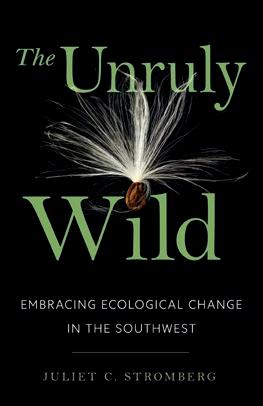
THE UNRULY WILD
EMBRACING ECOLOGICAL CHANGE IN THE SOUTHWEST
JULIET C. STROMBERG
Reimagining our relationship with the plant world
What is considered a beneficial plant? In this era of global change, The Unruly Wild is a timely and relevant look at plant conservation and the evolving plant communities of the American Southwest.
Challenging the traditional invasion biology paradigm, Juliet C. Stromberg invites readers to reconsider the “alien invader” narrative and explore the beneficial roles that newly arrived plants can play in our ecosystems. Drawing from her extensive experience as a plant and restoration ecologist, Stromberg introduces a cast of plant characters that includes longtimers as well as newcomers.
Through compelling stories and scientific insights, Stromberg explains why some plants are thriving while others are in decline. Stromberg’s engaging narrative, enriched with personal anecdotes and detailed vignettes, encourages readers to pause, reflect, and deepen their relationship with the plant world. By promoting a more nuanced and respectful dialogue about our natural surroundings, this book offers valuable insights into biodiversity, climate resilience, and ecosystem restoration. This book is a call to embrace a more inclusive and adaptive approach to wild plants.
JULIET C. STROMBERG is a plant ecologist who specializes in riparian ecosystems and a professor emeritus at Arizona State University. Her most recent book is Bringing Home the Wild: A Riparian Garden in a Southwest City.
“A sympathetic counterpoint to those who demonize ‘nonnative’ plants.”
—Walt Anderson, Professor Emeritus of Environmental Studies, Prescott College
“Stromberg has written a masterful treatise on why a knee-jerk response to eradicating nonnative plants is not just misguided but counterproductive for achieving our conservation goals.”
—Dov F. Sax, co-editor of Species Invasions: Insights into Ecology, Evolution, and Biogeography
“Julie Stromberg articulates, with personal knowledge and deep love, a new way to understand and care for a changing world.”
—Erick Lundgren, University of Alberta, Canada
“[An] erudite love story of nature in the American Southwest.”
—Fred Pearce, author of The New Wild: Why Invasive Species Will Be Nature’s Salvation
ANTHROPOLOGY ETHNOBIOLOGY
May
312 pp.
6 x 9
6 b&w illustrations
Paperback
978-0-8165-5676-2 / $32.00 S
Printed Case
978-0-8165-5677-9 / $100.00 S
Electronic edition available
Also of Interest
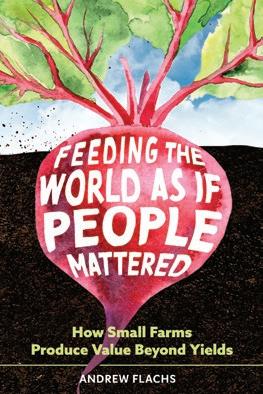
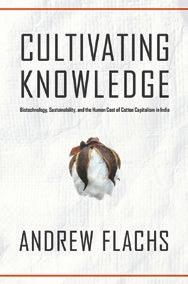
FEEDING THE WORLD AS IF PEOPLE MATTERED
HOW SMALL FARMS PRODUCE VALUE BEYOND YIELDS
ANDREW FLACHS
Showing the profound social and ecological benefits that farms offer life on Earth
Backyard gardens flush with cucumbers, tomatoes, and peppers where bees buzz and chickens scratch. Beyond, a forest filled with blackberries and jewelweed. Inspired by childhood memories of his grandmother’s overflowing backyard garden, author Andrew Flachs has embarked on a multi-continent, decades-long look at agriculture and its value.
The dominant view of agriculture has focused only on what we produce. It sees value in terms of capital gains or yield efficiency, masking how our global food system produces tremendous amounts of food commodities while failing to feed people, support rural communities, or enhance ecological well-being. Feeding the World as if People Mattered asks us to look more deeply and more humanely at what we perceive to be most valuable in our agricultural systems.
This book draws on fifteen years of anthropological research, taking readers to fields in South India, Eastern Europe, and North America, where people are already feeding the future amid global change. From these fields, Flachs shows us how a radical rethinking of the value of small farms and farmers is already happening. Bringing together conversations in agriculture, economics, anthropology, and the environmental humanities, Flachs deftly shows how small farms reproduce social and ecological relationships that are the only sustainable path forward.
For anyone who is curious about the food on their plate and the people who helped to get it there, Feeding the World as if People Mattered will offer a new way to find value in the food we grow and the people who grow it.
ANDREW FLACHS is an associate professor of anthropology at Purdue University, where he studies food and farming.
“With its engaged ethnography, sensitive portrayals, and sharp critique, Flachs’s book can be considered the twenty-first century’s transnational sequel to Walter Goldschmidt’s work that celebrated America’s small farms.”
—A.R. Vasavi, author of Shadow Space: Suicides and the Predicament of Rural India
“This wonderful new book shows that small-scale farming is critical to the face of a sustainable future. It will be essential reading for everyone who recognizes the peril facing our planet.”
—A. Haroon Akram-Lodhi, author of Hungry for Change: Farmers, Food Justice and the Agrarian Question
“This book is an exciting exploration of contemporary agriculture’s entangled webs of life, labor, and power. Flachs unveils how gardens and farms—whether in the Midwest, Bosnia, or Telangana—are not mere sites of production but vibrant places of creativity and resistance.”
—Jason W. Moore, author of Capitalism in the Web of Life
NATIVE AMERICAN & INDIGENOUS STUDIES ANTHROPOLOGY
February
272 pp.
6 x 9
21 b&w illustrations, 3 tables
Paperback
978-0-8165-5621-2 / $32.00 S
Printed Case
978-0-8165-5622-9 / $100.00 S
Electronic edition available
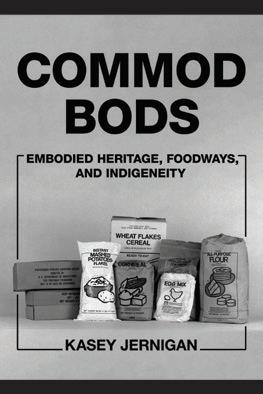
COMMOD BODS
EMBODIED HERITAGE, FOODWAYS, AND INDIGENEITY
KASEY JERNIGAN
How food programs reshape health and identity
The term “commod bod” is used with humor and affection. It also offers a critical way to describe bodies shaped by long-term reliance on U.S. federal commodity food programs.
In Commod Bods, Kasey Jernigan shares her ongoing collaborative research with Choctaw women and describes the ways that shifting patterns of participation in food and nutrition assistance programs (commodity foods) have shaped foodways; how these foodways are linked to bodies and health, particularly “obesity” and related conditions; and how foodways and bodies are intertwined with settler colonialism and experiences of structural violence, identity making, and heritage in the Choctaw Nation of Oklahoma.
Organized thematically, the book moves from a critical history of obesity and health in Indian Country to narratives of Choctaw women navigating food, memory, and belonging. Chapters such as “Food and Fellowship” and “Heritage, Embodied” center personal stories that show how food is not only sustenance but also a site of connection, resistance, and meaning making.
Food is critical to cultural survival and affirmation. For Choctaw people, the intentional demise of traditional foodways and dependence on federal food programs are specific experiences that inform part of what it means to be Choctaw today.
KASEY JERNIGAN is an assistant professor of American studies and anthropology at the University of Virginia, where she also co-directs the Black and Indigenous Feminist Futures Institute. She has received research support from the Ford Foundation, the Mellon Foundation, the USDA, and the Wenner-Gren Foundation. She is a citizen of the Choctaw Nation of Oklahoma.
“Jernigan’s eloquently written book offers wider insights into how the field of Indigenous studies has theorized the precarity of Indigenous women.”
—Jodi Byrd, author of Indigenomicon: American Indians, Video Games, and the Structures of Dispossession
“Jernigan fosters critical questioning of binaries and enters into a nuanced conversation about the intersections vital to understanding personal and embodied experience.”
—Juliet McMullin, author of The Healthy Ancestor: Embodied Inequality and the Revitalization of Native Hawaiian Health
BORDER STUDIES
ANTHROPOLOGY
LATINX STUDIES
LATIN AMERICAN STUDIES
March
392 pp.
6 x 9
15 b&w illustrations, 6 tables
Paperback
978-0-8165-5507-9 / $36.00 S
Printed Case
978-0-8165-5508-6 / $100.00 S
Electronic edition available
BorderVisions
BorderVisions engages the U.S.Mexico borderlands’ dynamic histories and cultures and expands our understanding of the borderlands beyond a site of geopolitical inquiry. The series seeks to foster an intellectual space that envisions and manifests a multitude of perspectives for understanding the borderlands through interdisciplinary humanities and humanistic social sciences scholarship.
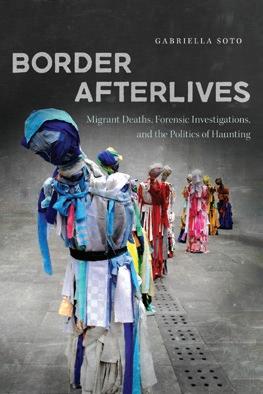
BORDER AFTERLIVES
MIGRANT DEATHS, FORENSIC INVESTIGATIONS, AND THE POLITICS OF HEALING
GABRIELLA SOTO
Recognizing the relationships between the living and the dead
Border Afterlives begins with the undocumented individuals who die crossing the U.S.-Mexico border—deaths that are both preventable and politically produced.
Drawing on over a decade of ethnographic, participatory, and communityengaged research, author Gabriella Soto examines the postmortem journeys of these migrants through the fragmented infrastructure of medicolegal death investigation in the U.S. Southwest. She reveals how government border policies not only generate death but also fail to provide adequate care for the dead. Soto argues that these deaths should be understood as structural homicides and that the forensic neglect they face is a form of ongoing violence.
Moving between the practical and the philosophical, Soto asks what it means to care for the dead and what society owes to those who die in its name. Through the lens of haunting, she explores how the dead continue to shape the living, not as objects of horror but as moral agents whose presence demands justice. Border Afterlives offers a border-scale comparative account of forensic practices, critiques the limits of “best practices” in under-resourced systems, and calls for a reimagining of forensic humanitarianism grounded in reciprocity and dignity, beyond human rights. This is a book that insists on remembering the dead.
GABRIELLA SOTO is an associate teaching professor at Arizona State University’s Barrett, The Honors College. Gabriella studies death investigation for undocumented people on the U.S.-Mexico border and the contemporary archaeology of militarized borders.
“Brings a unique perspective on the deaths of migrants along the U.S.Mexico border and the many agencies and organizations that attempt to care for the dead. Reveals that the way society treats the dead tells us much about whose lives are valued and why.”
—Christine M. Kovic, University of Houston–Clear Lake
“This book is a powerful account that draws from longitudinal and deeply embedded research in the medical examiner’s office in Arizona to understand the material realities and the political interests that explain the limited forensic infrastructure to respond to migrant deaths at the U.S.-Mexico border. Soto offers a clear pathway for policies and practices that could be implemented [. . .] effectively and humanely.”
—Alexandra Délano Alonso, author of From Here and There: Diaspora Policies, Integration, and Social Rights Beyond Borders
NATIVE AMERICAN & INDIGENOUS STUDIES
LATINX STUDIES
GENDER & RACE
March
272 pp.
6 x 9
19 color illustrations
Paperback
978-0-8165-5640-3 / $30.00 S
Electronic edition available
Latinx Pop Culture
The Latinx Pop Culture series sheds light on all aspects of Latinx cultural production and consumption as well as the Latinx presence globally in popular cultural phenomena in the late twentieth and early twenty-first centuries.
QUEER INDIGENOUS CINEMAS
SOVEREIGN GENDERS FROM SEVEN DIRECTIONS
GABRIEL S. ESTRADA
Exploring the intersection of Indigenous media and gender sovereignty
The seven Indigenous directions—east, south, west, north, up, down, and center—provide a map of understanding gender in media history.
In Queer Indigenous Cinemas, scholar Gabriel S. Estrada offers an analysis of queer Indigenous media from the Americas, the Pacific, and the Caribbean. This groundbreaking work uses Indigenous directional space and sovereign mapping methods to uncover the emotional, spiritual, and cultural dimensions of queer Indigenous lives. The book’s seven chapters—each one of the directions—look closely at media such as cinema and streaming videos that draw on Indigenous concepts from diverse nations such as Diné, Caxcan, Kanaka Maoli, and Nehiyawak. Estrada discusses how the cinema brings into focus the ways that many Indigenous genders do not conform with the male/female binary, genders and sexualities that may or may not overlap with contemporary constructions of gay, lesbian, bisexual, transgender, intersex, and two-spirit (LGBTQI2+) identities.
Highlighting the struggles and resistances of two-spirit peoples, Estrada’s analysis engages with films that represent the diverse and sovereign identities of queer Indigenous peoples. Estrada provides a framework for understanding how queer Indigenous media producers confront colonial trauma and reclaim space for the spiritual and bodily sovereignty of LGBTQI2+ peoples.
GABRIEL S. ESTRADA is a Caxcan/Xicanx professor in religious studies at California State University Long Beach, where ze teaches queer spirituality, Indigenous graduate classes, and Nahuatl literature.
“An outstanding accomplishment for its analysis and its ability to look at Indigenous cinematic formation across time and geographies.”
—Ellie D. Hernández, author of Postnationalism in Chicana/o Literature and Culture
“Queer Indigenous Cinemas makes an important contribution to both queer and film studies.”
—Lisa Tatonetti, co-editor of Written by the Body: Gender Expansiveness and Indigenous Non-Cis Masculinities
LATINX STUDIES
NATIVE AMERICAN & INDIGENOUS STUDIES
GENDER & RACE
April
336 pp.
6 x 9
10 b&w illustrations
Paperback
978-0-8165-5266-5 / $35.00 S
Printed Case
978-0-8165-5267-2 / $100.00 S
Electronic edition available
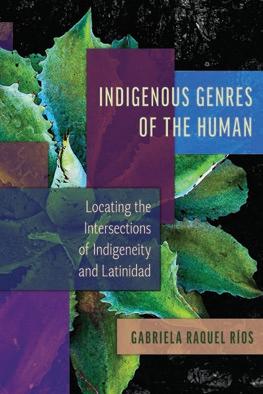
INDIGENOUS
GENRES OF THE HUMAN
LOCATING THE INTERSECTIONS OF INDIGENEITY AND LATINIDAD
GABRIELA RAQUEL RÍOS
Re-examining what it means to be human, Indigenous, and Chicanx
In this work, scholar Gabriela Raquel Ríos considers how Latina/o/x communities engage in the ethical reclamation of indigeneity. Through case studies that include testimonios and other Indigenous storytelling practices, Ríos reveals how cultural logics of colonization continue to shape—and often constrain— understandings of indigeneity across Latin America and in the United States.
Addressing different genres of human and what contemporary indigeneity and reclaiming indigeneity looks like across Latin American contexts, chapters in this work examine digital bruja poetry, Aymara women’s Lucha Libre in Bolivia, Raramuri dance in Mexico, and Indigenous Khipu in the Andes. The author weaves her own story of being from southern Texas and traveling to Mexico throughout the book.
Bridging Sylvia Wynter’s theory of “genres of the human” with critical Latinx indigeneity studies, Chicana/o/x studies, decolonial theory, and rhetorical new materialisms, this book challenges readers to rethink what it means to be human, Indigenous, and Chicanx in the wake of colonial violence. Rather than reinforcing binaries defined by settler colonialism, Ríos proposes a framework that centers community knowledge and grounded practices. Her work opens space for dialogue, listening, and healing, emphasizing that reclaiming indigeneity requires attention to the stories, movements, and rhetorical practices that emerge from within communities themselves.
GABRIELA RAQUEL RÍOS is an assistant professor with a joint appointment in the Program for Writing and Rhetoric and the English Department at the University of Colorado. Her work has appeared in Rhetoric Review and Rhetoric Society Quarterly, as well as several book collections.
“This book represents a refreshing reorientation of longstanding conversations in new materialisms, posthumanism, and cultural rhetorics and will energize scholars in those fields and beyond.”
—Christa
J. Olson, author of American Magnitude: Hemispheric Vision and Public Feeling in the United States
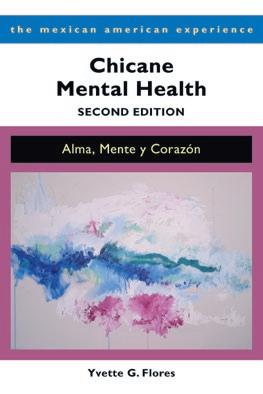
CHICANE MENTAL HEALTH, SECOND EDITION
ALMA, MENTE Y CORAZÓN
YVETTE G. FLORES
A new edition of a key text on mental health
Chicane Mental Health offers an intersectional and developmental framework for understanding and addressing the mental health needs of Chicane communities. Drawing on over four decades of clinical and academic experience, Yvette G. Flores addresses the entire lifespan from children and youth to emerging adults, adults, and elders.
Foregrounding cultural humility and an understanding of Chicane strengths and community cultural wealth, the author uses vivid vignettes and community-based insights to address how historical trauma, systemic oppression, and sociocultural dynamics shape mental well-being. Flores highlights the cultural strengths and protective factors that foster resilience.
March
328 pp.
6 x 9
Paperback
978-0-8165-5674-8 / $26.95 S
Electronic edition available
The Mexican American Experience
Also of Interest
This new edition expands on Flores’s influential work by integrating Indigenous healing practices, decolonial theory, and liberatory models of care. It challenges dominant Western paradigms and calls for culturally affirming, community-engaged approaches to mental health. With a focus on issues such as depression, substance use, intimate partner violence, and intergenerational trauma, the book provides practical tools for scholars, clinicians, and students committed to social justice and healing in Chicane and Latine communities.
YVETTE G. FLORES is a distinguished emerita professor at University of California, Davis, Department of Chicanx Studies.
“An essential resource for anyone seeking to understand the mental health challenges faced by Chicane and Latine communities.”
—Mónica Torreiro-Casal, co-author of Chicanx and Latinx Psychologies: Decolonial Approaches
“Real-world applications through vignettes to illustrate how the physical, mental, emotional, and relational challenges Chicane people face are rooted in the historical, political, developmental, and sociocultural contexts in which they are raised. Empowers Chicane individuals and communities to heal by balancing alma, mente y corazón at various stages throughout the lifespan.”
—Christy Teranishi Martinez, California State University Channel Islands
“This is a great addition to the Latine/Chicane scholarship in mental health. It is a very timely book that will benefit undergraduate and graduate training in health disciplines.”
—Alfonso Mercado, University of Texas Rio Grande Valley
LATINX STUDIES
GENDER & RACE
LATIN AMERICAN STUDIES
March
362 pp.
6 x 9
22 color illustrations
Paperback
978-0-8165-5618-2 / $35.00 S
Printed Case
978-0-8165-5619-9 / $100.00 S
Electronic edition available
Also of Interest
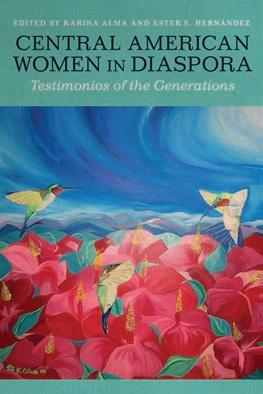
CENTRAL AMERICAN WOMEN IN DIASPORA
TESTIMONIOS OF THE GENERATIONS
EDITED BY KARINA ALMA AND ESTER E. HERNÁNDEZ
Celebrating solidarity, cultural memory, and healing
This collection centers Central American women’s voices within the growing narrative of the Central American diaspora. It provides a tapestry of testimonios—from grandmothers, mothers, daughters, and sisters—who explore what it means to be Central American women in the United States.
Through the practice of testimonio, contributors create intergenerational dialogues between mothers and daughters, engage with Indigenous oral traditions, and reflect on the violent histories of war in Guatemala, El Salvador, Honduras, and Nicaragua. The volume is organized around five themes: political histories, migration, gender and sexuality, navigating institutions, and healing. Within each theme contributors tackle a range of issues, including Central American political histories, healing, grief, Indigenous knowledge, memory, trauma, post-traumatic growth, organizing, creativity, and agency.
This anthology spans genres such as poetry, essay, and visual art to present diverse perspectives, including Indigenous, Afro-Indigenous, queer, and working-class voices. An intervention that centers gendered experiences and challenges oppressive structures, this volume celebrates the solidarity, cultural memory, and healing found within transnational ties.
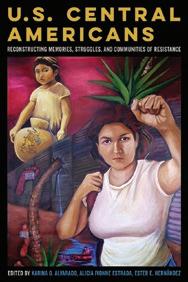
KARINA ALMA is an assistant professor in the Chicano/a and Central American Studies Department at University of California, Los Angeles. She is a published poet and a co-editor of U.S. Central Americans: Reconstructing Memories, Struggles, and Communities of Resistance.
ESTER E. HERNÁNDEZ is a professor of anthropology at California State University Los Angeles. She is co-editor of the anthology U.S. Central Americans: Reconstructing Memories, Struggles, and Communities of Resistance
“Provides a bountiful tapestry of voices—of grandmothers, mothers, daughters, and sisters—navigating what it means to be Central American women in the United States.”
—Georgina Guzmán, co-editor of Campus Service Workers Supporting First-Generation Students
“Central American Women in Diaspora offers a moving, intimate series of testimonio accounts of gendered life in the diaspora—on the Central American isthmus, up north in the United States, and in the imaginary between linking families and memories.”
—Ellen Moodie, author of El Salvador in the Aftermath of Peace
“This beautiful volume invites current and future generations to learn from, wrestle with, and add their own experiences to these and other histories of struggle.”
—Gilda L. Ochoa, author of Academic Profiling: Latinos, Asian Americans, and the Achievement Gap
LATINX STUDIES BORDER STUDIES
March
160 pp.
6 x 9
Paperback
978-0-8165-5461-4 / $30.00 S
Printed Case
978-0-8165-5462-1 / $100.00 S
Electronic edition available
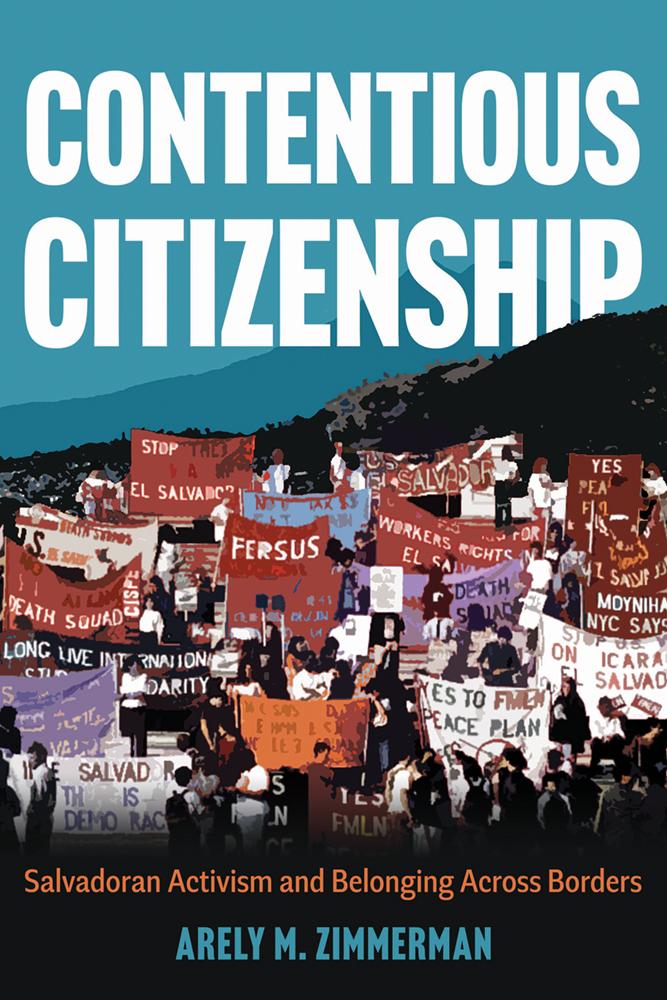
CONTENTIOUS CITIZENSHIP
SALVADORAN ACTIVISM AND BELONGING ACROSS BORDERS
ARELY M. ZIMMERMAN
Redefining citizenship through a transnational lens
Contentious Citizenship reshapes how we understand belonging, identity, and political participation in the context of migration. Drawing on decades of Salvadoran activism from the 1980s solidarity movement to the post–civil war era, Arely M. Zimmerman offers a powerful ethnographic account of how migrants challenge exclusionary state practices and redefine citizenship on their own terms using transnational networks and revolutionary politics that transcend borders.
Drawing on nearly fifty interviews with activists who fled El Salvador, Zimmerman traces how political refugees carried with them strategies of resistance and community organizing that shaped social justice movements in the United States. The book addresses the political turmoil and grassroots mobilizations in El Salvador, the sanctuary movement of the 1980s, contemporary activism, and the impact of women’s strategies and forms of resistance. Essential reading for scholars and students of migration, Central American studies, and political movements, Contentious Citizenship is a bold intervention into contemporary debates on identity, legality, and resistance. Zimmerman’s work honors the ingenuity and resilience of Salvadoran activists and invites readers to consider what it means to belong.
ARELY M. ZIMMERMAN is an associate professor in the Intercollegiate Department of Chicana/o-Latina/o Studies at Pomona College.
“The book brims with theoretical contributions and sharp analysis. Zimmerman’s brilliant engagement with the history of Salvadoran political activism offers a powerful intervention that will recast our knowledge of immigrant political mobilizations in multiple consequential ways.”
—Cecilia Menjívar, author of Enduring Violence: Ladina Women’s Lives in Guatemala
“Contentious Citizenship offers a refreshing, timely, and critical account of the Salvadoran diaspora’s political activities in the age of displacement.”
—Jorge E. Cuéllar, Dartmouth College
LATINX STUDIES
LATIN AMERICAN STUDIES
April
184 pp.
6 x 9
Paperback
978-0-8165-5473-7 / $32.00 S
Printed Case
978-0-8165-5474-4 / $100.00 S
Electronic edition available
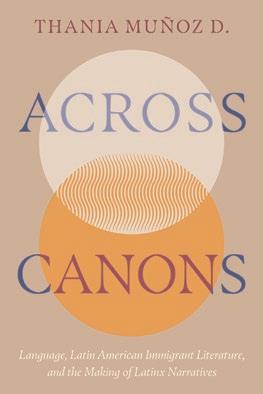
ACROSS CANONS
LANGUAGE, LATIN AMERICAN IMMIGRANT LITERATURE, AND THE MAKING OF LATINX NARRATIVES
THANIA MUÑOZ D.
A call for more inclusive and nuanced literary futures
Excavating narrative memories, Across Canons examines literary allusions to a classic Latin American canon that resurface in the work of Latin American writers who live and work in the United States. The immigrant literature of Edmundo Paz Soldán, Alberto Fuguet, and Cristina Rivera Garza from the late 1990s and early 2000s provides an important glimpse into representations of Latin America’s relationship with the United States and how immigration has shaped it.
Author Thania Muñoz D. looks at immigrant experiences impacted by a prism of social and political factors, including free trade agreements, drug trafficking, political violence, massive foreign debt, and economic dependency. The author examines why these writers refuse to identify as immigrants and reject stereotypical portrayals. Throughout, Muñoz D. makes the case for a new field within Latinx literature: Latin American immigrant writing in Spanish. She explains why this type of literary work is critical across Latin American, Latinx, and U.S. literature.
This book highlights the benefits of comparative, interdisciplinary interpretations that allow readers and scholars to grapple with the realities of a multilingual Latin American–origin literary present and future of the United States.
THANIA MUÑOZ D. is an immigrant educator, translator, poet, and scholar. Her writing and translations have appeared in Copihue, Fence, the Latin American Literary Review, and others. She immigrated from Jalisco, México, to Southern California in 1998 and has lived in Maryland since 2015. She is an associate professor of Latinx and Latin American literature, director of the MA Program in Intercultural Communication at UMBC, and the managing editor and founder of Latin@ Literatures
“Against the tendency to detain, imprison, or devalue the cultural contributions of Latin Americans, this book grapples with acclaimed and exciting new writing with special attention to their treatment of the alienating experience of immigrating to the United States.”
—Laura Lomas, author of Translating Empire: José Martí, Migrant Latino Subjects, and American Modernities
“Muñoz’s application of narrative memory in the analyses of the works of Paz Soldán, Fuguet, and Rivera Garza combines with the different manifestations of their characters’ immigration circumstances to provide an interesting and informative read.”
—Michele Shaul, author of A Survey of the Novels of Ana Castillo: A Contemporary Mexican American Writer
LATINX STUDIES
LATIN AMERICAN STUDIES
HISTORY March
320 pp.
6 x 9
48 b&w illustrations, 16 color illustrations
Paperback
978-0-8165-5346-4 / $35.00 S
Printed Case
978-0-8165-5611-3 / $100.00 S
Electronic edition available
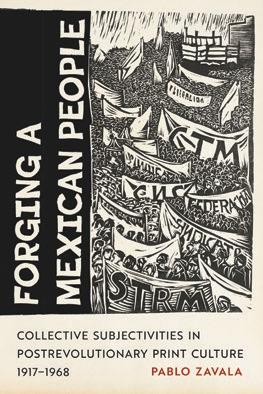
FORGING A MEXICAN PEOPLE
COLLECTIVE SUBJECTIVITIES IN POSTREVOLUTIONARY PRINT CULTURE, 1917–1968
PABLO ZAVALA
A new lens on conceptions of the Mexican state and people
Forging a Mexican People shows how illustrated print culture helped to construct and deconstruct versions of “a people” in postrevolutionary Mexico. Through meticulous research, Pablo Zavala uncovers the ways photographers, graphic artists, writers, and activists used print culture to challenge state-guided narratives and forge alternative collective subjectivities. This book offers a fresh perspective on the sociopolitical landscape of postrevolutionary Mexico, revealing the complexities and contradictions within the process of nation building. Zavala argues that printed cultural productions that circulated in the country and beyond after the Mexican Revolution constructed varieties of a people that challenged hegemonic conceptions of state-guided discourses.
Zavala discusses the legacy of Mexican graphic arts and their influence on the Mexico City student popular movement and the Chicano Movement in the United States, underscoring the transgenerational and transnational impact of these cultural productions. Based on in-depth archival research, the work includes primary sources that have never been digitized, offering readers unique insights into the visual manifestations of Mexico’s postrevolutionary identity and their enduring significance.
PABLO ZAVALA is an assistant professor of Spanish and Latin American Studies and director of the Center for Latin American and Latinx Studies (CLAXS) at Loyola University New Orleans. He was born in Ciudad Juárez and now resides in New Orleans.
“Opens a window on an aspect of Mexican cultural history that has not yet been thoroughly explained: the long tradition of the graphic press that confronted, evaded, and destabilized the state’s attempted capture of popular culture.”
—Joshua Lund, author of The Mestizo State: Reading Race in Modern Mexico
“Zavala demonstrates the key role of revolutionary printmakers in forging a popular discourse of el pueblo and its struggle, even as the Mexican state sought to control and contain popular resistance.”
—Enrique C. Ochoa, author of México Between Feast and Famine: Food, Corporate Power, and Inequality
ANTHROPOLOGY
LATIN AMERICAN STUDIES
April
400 pp.
6 x 9
24 b&w illustrations, 1 color map
Paperback
978-0-8165-5648-9 / $37.00 S Printed Case
978-0-8165-5649-6 / $100.00 S Electronic edition available
Also of Interest
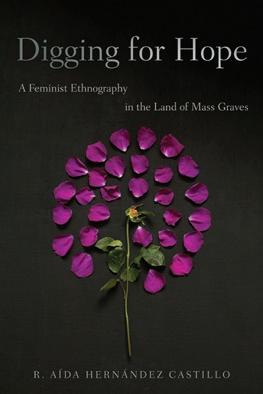
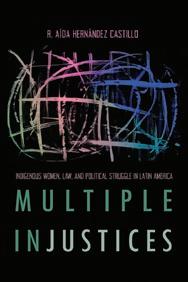
DIGGING FOR HOPE
A FEMINIST ETHNOGRAPHY IN THE LAND OF MASS GRAVES
R. AÍDA HERNÁNDEZ CASTILLO
Revealing how women in Mexico transform grief into resistance
In the shadow of Mexico’s ongoing human rights crisis, Digging for Hope offers a powerful feminist ethnography of resistance, care, and collective memory. Drawing on nearly a decade of fieldwork, R. Aída Hernández Castillo documents the courageous work of women-led search collectives who, in the face of extreme violence, search for their disappeared loved ones.
Through physical and spiritual practices such as exhumation, mourning, and poetic remembrance, these women reclaim dignity for the dead and challenge a society that has normalized disappearance. At the heart of this book is a profound exploration of what Hernández Castillo calls a “pedagogy of love”—a political and ethical framework rooted in care, solidarity, and the refusal to forget. These women are not only searching for bodies; they are building emotional communities, crafting new languages of justice, and offering a reimagining of what it means to resist violence. Their practices, often overlooked by traditional scholarship, restore humanity and dignify the disappeared.
Digging for Hope is essential reading for anyone seeking to understand the gendered dimensions of violence and the grassroots movements that rise in response. With clarity and compassion, Hernández Castillo brings readers into the intimate spaces of grief and resistance, offering a model for feminist ethnography that is both rigorous and deeply humane.
R. AÍDA HERNÁNDEZ CASTILLO is a professor and senior researcher at the CIESAS in Mexico City. Her academic work has promoted Indigenous and women’s rights in Latin America. She has published twenty-two books.
“Digging for Hope is a powerful ethnography revealing how women searching for their disappeared in Mexico craft a pedagogy of love to confront violence. [It] is a starting point for much-needed societal transformation.”
—Ana Villareal, author of The Two Faces of Fear: Violence and Inequality in the Mexican Metropolis
“Digging for Hope creates a picture of a powerful movement driven by love that seeks to remake the pedagogy of cruelty that has overtaken much of Mexico and many parts of the world.”
—Lynn Stephen, co-editor of Indigenous Women and Violence: Feminist Activist Research in Heightened States of Injustice
ANTHROPOLOGY
SPACE SCIENCE
LATIN AMERICAN STUDIES
February
280 pp.
6 x 9
21 b&w illustrations
Paperback
978-0-8165-5483-6 / $35.00 S
Printed Case
978-0-8165-5484-3 / $100.00 S
Electronic edition available
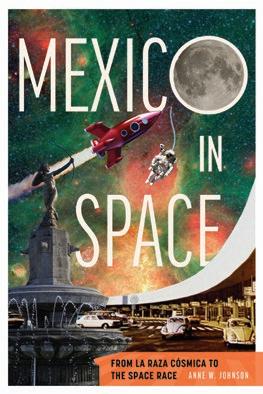
MEXICO IN SPACE FROM LA RAZA CÓSMICA TO THE SPACE RACE
ANNE W. JOHNSON
Providing a unique ethnography of human engagement with the cosmos
From Aztec sun stones to satellite launches, from muralist visions to dark sky parks, Mexico’s engagement with outer space is fundamental to its identity. Mexico in Space offers a groundbreaking look at how the country has navigated the tensions between technological dependence and sovereign dreams. Anthropologist Anne W. Johnson reveals Mexico’s unique relationship with outer space, describing Indigenous knowledge, nationalist projects, artistic visions, and community practices. Through rich ethnographic detail and historical insight, Johnson challenges the notion that space is for everyone and shows whose voices truly shape the world’s cosmic futures. Johnson introduces us to satellite engineers, community astronomers, space generation youth, and artists imagining Mars, each crafting alternative cosmic futures.
As space exploration increasingly becomes the domain of billionaires and superpowers, this book offers a compelling counternarrative, demonstrating how Mexican cosmic engagements suggest more just, inclusive ways of inhabiting Earth and beyond and providing vital lessons for reimagining humanity’s place in the cosmos.
ANNE W. JOHNSON is a professor in the graduate program in social anthropology in the Department of Social and Political Science at the Universidad Iberoamericana in Mexico City.
“This is a tour de force of thick description of Mexico and its history from pre-Hispanic times to the present day and its intimate and nuanced relationship to outer space. Firmly linked to terrestrial histories and experiences, it elegantly deploys historical tropes to think with and is an analytical model for researchers to aspire to for the wider understanding of society and outer space.”
—Victor Buchli, author of An
Archaeology of the Immaterial
ANTHROPOLOGY
NATIVE AMERICAN & INDIGENOUS STUDIES
LATIN AMERICAN STUDIES
ETHNOBIOLOGY May
424 pp.
6 x 9
61 b&w illustrations, 2 color illustrations, 5 tables
Paperback
978-0-8165-4606-0 / $35.00 S
Printed Case
978-0-8165-5693-9 / $100.00 S
Electronic edition available
Also of Interest
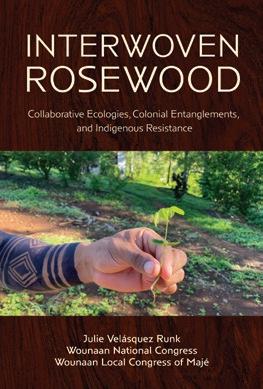
INTERWOVEN ROSEWOOD COLLABORATIVE ECOLOGIES, COLONIAL ENTANGLEMENTS, AND INDIGENOUS RESISTANCE
JULIE VELÁSQUEZ RUNK, THE WOUNAAN NATIONAL CONGRESS, AND THE WOUNAAN LOCAL CONGRESS OF MAJÉ
A collaborative, community-rooted exploration of the global rosewood trade
Interwoven Rosewood is a collaborative exploration of the global rosewood trade and its entanglements with Indigenous lifeways, colonial histories, and environmental crises. Co-authored by Julie Velásquez Runk and members of the Wounaan National Congress and its Local Congress of the Majé community, this book traces the story of cocobolo rosewood from Wounaan lands in Panama to international markets, revealing how centuries of settler colonialism and extractive capitalism continue to shape landscapes, livelihoods, and relationships. At its heart, the book is a meditation on well-being and belonging—how people live in relation to land, each other, and the morethan-human world.
Drawing on more than a decade of community-based research and six collaborative book workshops, the authors weave together first-person narratives, ecological analysis, historical context, and Indigenous knowledge. The result is a richly textured account that challenges dominant narratives of environmental degradation by centering Wounaan experiences of joy, resistance, and conviviality. The book’s structure reflects its method: interwoven chapters authored or spoken by Wounaan colleagues, grounded in consent protocols and shaped by ancestral storytelling traditions.
Accessibly written, Interwoven Rosewood is ideal for courses in environmental conservation, Indigenous studies, anthropology, Latin American studies, and political ecology. With its interdisciplinary reach and classroom-ready discussion questions, the book invites readers to reflect on the global forces behind environmental catastrophe—and the enduring power of Indigenous ways of knowing, being, and becoming.
JULIE VELÁSQUEZ RUNK is director, professor, and Weigl Fellow in Environment and Sustainability Studies at Wake Forest University and a research associate at the Smithsonian Tropical Research Institute. She fosters transdisciplinary research in collaboration.
“Relatively few scholarly books transcend the usual barriers that divide and exclude academic disciplines, audiences, and public interests. This book does so beautifully by inviting readers of all kinds to glimpse the Wounaan people of Panama through uplifting first-person narratives and no-nonsense accounts of their historical struggles involving rosewood trees.”
—James R. Welch, author of Persistence of Good Living: A’uwẽ Life Cycles and Well-Being in the Central Brazilian Cerrados
“In gathering global and Indigenous stories about life in the Panamanian forest and beyond, this book reminds us that histories of environmental depletion and care are inevitably open-ended.”
—Piergiorgio Di Giminiani, author of Sentient Lands: Indigeneity, Property, and Political Imagination in Neoliberal Chile
ARCHAEOLOGY ANTHROPOLOGY
April
280 pp.
6 x 9
39 b&w illustrations, 5 tables
Printed Case
978-0-8165-5276-4 / $75.00 S
Electronic edition available
Archaeology of Indigenous-Colonial Interactions in the Americas
This series highlights leading current research and scholarship focused on Indigenous-colonial processes and engagement throughout all regions of the Americas. Books incorporate a range of methodological approaches and theoretical frameworks and innovatively integrate holistic research on local, cultural, and historical complexities of colonial experiences and interactions among people and their material, social, and intellectual worlds.
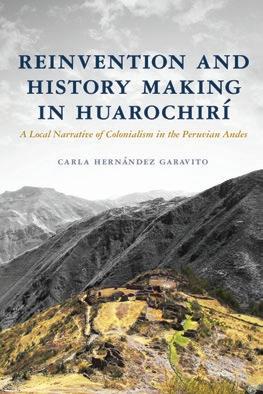
REINVENTION AND HISTORY MAKING IN HUAROCHIRÍ
A LOCAL NARRATIVE OF COLONIALISM IN THE PERUVIAN ANDES
CARLA HERNÁNDEZ GARAVITO
A powerful new approach for understanding colonial engagements in the Andes
Within just two generations, communities in the Peruvian Andes experienced conquest by the Indigenous Inka Empire (1450–1532 CE) and the European Spanish (1532–1821 CE), leading to three centuries of colonial subjugation. Reinvention and History Making in Huarochirí is an archaeological and historical rendering of the experience of the people of Huarochirí (Lima, Peru) and their interactions with successive waves of colonialism.
Using archaeological and historical datasets and spatial modeling, this book centers on local memory and experience throughout colonized landscapes as the thread that connects the long history of Indigenous engagement with expanding colonial empires and the emergent Peruvian nation. The author builds on Andean epistemological frameworks to argue that in the face of drastic sociopolitical changes, the people of Huarochirí turned to their own history. They created analogies and shared spaces between local and Inka landscapes and materiality and incorporated written representations and ideas of settled lives to validate their claims.
This exciting new work moves the field of Andean archaeology into conversations with decolonial and decolonizing methodologies and shows how Indigenous communities captured and made sense of their long history, reframing colonialism as a local experience.
CARLA HERNÁNDEZ
GARAVITO is a Peruvian archaeologist and an assistant professor in the anthropology department at the University of California, Santa Cruz.
“Drawing on diverse lines of evidence, this book offers a fascinating example of how local people in Huarochirí made sense of their experiences under Inka and Spanish colonialism.”
—Lee Panich, author of Narratives of Persistence: Indigenous Negotiations of Colonialism in Alta and Baja California
“An important intervention in the archaeology and history of the colonial Andes centering local Indigenous interactions, strategies, and perspectives. The result is a reconstruction of colonial Huarochirí life that is dynamic and varied.”
—Lisa
Overholtzer, McGill University
ARCHAEOLOGY
NATIVE AMERICAN & INDIGENOUS STUDIES
April
288 pp.
6 x 9
40 b&w illustrations, 14 tables
Printed Case
978-0-8165-5646-5 / $75.00 S
Electronic edition available
Amerind Studies in Anthropology
Amerind Studies in Anthropology is a series that publishes the results of the Amerind Seminars, annual professional symposia hosted by the Amerind Foundation in Dragoon, Arizona, and co-sponsored by the Society for American Archaeology (SAA). Series titles that emerge from these symposia focus on timely topics.
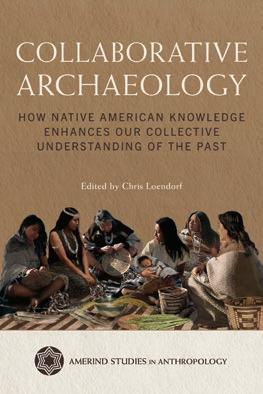
COLLABORATIVE ARCHAEOLOGY
HOW NATIVE AMERICAN KNOWLEDGE ENHANCES OUR COLLECTIVE UNDERSTANDING OF THE PAST
EDITED BY CHRIS LOENDORF
Bridging the divide between archaeology, history, and traditional knowledge
Collaborative Archaeology brings together a diverse group of scholars and tribal cultural resource professionals to showcase how Indigenous knowledge is transforming archaeological practice. Edited by Chris Loendorf, this volume features twelve case studies that highlight the power of partnership between Native American communities and archaeologists. These collaborations not only enrich our understanding of the past but also affirm Indigenous cultural continuity. From the establishment of Tribal Historic Preservation Offices to tribally led research initiatives, the book illustrates how Native voices are reshaping the field.
This timely collection bridges disciplinary divides between archaeology, history, and traditional knowledge, challenging outdated narratives that separate “prehistory” from living Indigenous communities. Contributors demonstrate how ethical, community-based research can lead to more accurate and respectful interpretations of the past. Collaborative Archaeology is essential reading for scholars, students, and practitioners committed to scientific understanding and cultural preservation.
CHRIS LOENDORF is the senior project manager at the Gila River Indian Community. His most recent book is Vapaki: Ancestral O’Odham Platform Mounds of the Sonoran Desert
“This book addresses the equal inclusion of descendant Indigenous communities in archaeological study. For far too long, archaeological study was formulated and initiated by universities, municipalities, and others considering only western science methods. . . . [This work shows] how tribes are now initiating archaeological study to affirm their stories of creation, traditional rituals, and harmonization with their environment.”
—Shane Anton, Tribal Historic Preservation Officer for the Salt River Pima-Maricopa Indian Community
Contributors
Nicole Armstrong-Best
Skylar Begay
Jennifer Bess
Hannah F. Chavez
Robert B. Ciaccio
Shannon Cowell
William H. Doelle
Karl A. Hoerig
Anabel Galindo
Barnaby V. Lewis
Chris Loendorf
Brian Medchill
Linda Morgan
Laurene G. Montero
Stephen E. Nash
Eloise Pedro
Glen E. Rice
Teresa Rodrigues
Hoski Schaafsma
Thomas E. Sheridan
Katrina Soke
Lindsey Vogel-Teeter
Anastasia Walhovd
Reylynne Williams
M. Kyle Woodson
Aaron M. Wright
ARCHAEOLOGY
NATIVE AMERICAN & INDIGENOUS STUDIES ANTHROPOLOGY
April
200 pp.
6 x 9
66 b&w illustrations
Paperback
978-0-8165-5634-2 / $35.00 S
Printed Case
978-0-8165-5635-9 / $100.00 S
Electronic edition available
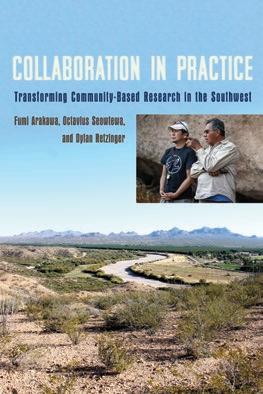
COLLABORATION IN PRACTICE
TRANSFORMING COMMUNITY-BASED RESEARCH IN THE SOUTHWEST
FUMI ARAKAWA, OCTAVIUS SEOWTEWA, AND DYLAN RETZINGER
Practical methods for centering Indigenous knowledge
Focusing on the Chavez Cave collections in Las Cruces, New Mexico, Collaboration in Practice presents a study of the partnership between New Mexico State University and the Zuni Cultural Resource Advisory Team (ZCRAT). Rather than centering on artifact analysis, the authors emphasize the collaborative process itself—visiting the site, curating an exhibition, and co-authoring this volume—as a model for ethical and respectful research.
The book situates this collaboration within the broader historical and political context of archaeology and museology. It critically explores how museums and academic institutions can shift from extractive practices to ones that prioritize Indigenous sovereignty, knowledge systems, and cultural continuity. Through personal narratives, historical context, and methodological insights, the authors highlight the challenges and transformative potential of working collaboratively. They show how true collaboration requires humility, mutual respect, and a commitment to shared authority in both research and representation.
Ultimately, this work charts a path forward for community-based research that centers Indigenous voices and values. It advocates for an archaeology that is not only more inclusive but also more meaningful to the communities whose histories are being studied. A vital resource for scholars, students, and practitioners, this work seeks to engage in ethical, reciprocal, and culturally grounded research in the Southwest and beyond.
FUMI ARAKAWA is an associate professor of anthropology at Indiana University Bloomington and serves as the associate director of research at the Indiana University Museum of Archaeology and Anthropology.
OCTAVIUS SEOWTEWA is the head medicine man for the Newekwe/Galazy medicine society and also a member of the Eagle Down medicine society. He is a supervisor for the Zuni Cultural Resources Advisory Team (ZCRAT).
DYLAN RETZINGER is an associate professor in the English Department at New Mexico State University.
“This is an excellent example of the collaborative paradigm in action. In championing mutually beneficial research practices, this book challenges how we think about, curate, and represent Indigenous cultural heritage.”
—Lindsay M. Montgomery, author of A History of Mobility in New Mexico: Mobile Landscapes and Persistent Places
“This work presents an accessible and interesting account of collaboration across archaeology, Indigenous knowledge, and museums. The authors’ critical, reflexive exploration of a previously neglected heritage site and artifact collection sets a new—and achievable—standard for collaborative heritage interpretation.”
—Kelley A. Hays-Gilpin, author of Ambiguous Images: Gender and Rock Art
ARCHAEOLOGY
NATIVE AMERICAN & INDIGENOUS STUDIES
April
340 pp.
6 x 9
28 b&w illustrations, 12 tables
Printed Case
978-0-8165-4884-2 / $75.00 S
Electronic edition available
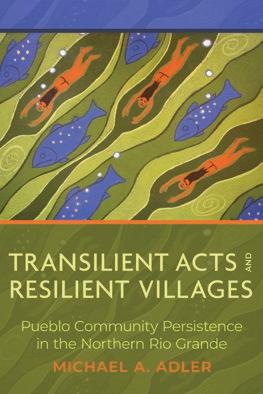
TRANSILIENT ACTS AND RESILIENT VILLAGES
PUEBLO COMMUNITY PERSISTENCE IN THE NORTHERN RIO GRANDE
MICHAEL A. ADLER
Rethinking resilience through the lens of Pueblo continuity
A powerful rethinking of resilience through the lens of Pueblo history, this work reveals how Tiwa communities in the Northern Rio Grande used culturally intentional strategies to adapt, transform, and endure across a millennium of change. Anthropologist Michael A. Adler introduces the concept of transilience—culturally intentional acts that address existential threats and enable transformation—as a framework for interpreting the long-term persistence of Tiwa communities.
Focusing on the Tiwa-speaking communities of Taos, Picuris, and Pot Creek Pueblos, Adler shows how social and ritual organization, architectural change, and sacred geographies were mobilized in response to disruption. He challenges conventional resilience theory, which emphasizes systemic stability, instead centering Indigenous agency, mobility, and sacred practice as key to understanding cultural endurance.
Grounded in decades of collaborative research with Pueblo communities, Transilient Acts and Resilient Villages is a vital contribution to southwestern archaeology. It offers a compelling model for how archaeology can respectfully engage with descendant communities and provides essential insights for scholars, students, and community members seeking to understand the complexities of cultural persistence in the face of change.
MICHAEL A. ADLER is an associate professor in the anthropology department at Southern Methodist University. He received his academic training at Princeton University and the University of Michigan.
“Readers will better understand the manner by which Picuris Pueblo has maintained its culture through the last thousand years.”
—Joe E. Watkins, author of Indigenizing Japan: Ainu Past, Present, and Future
“Michael Adler challenges long-held but sometimes thin notions of systemic resilience intended to maintain the status quo in favor of culturally intentional acts of transilience designed to protect the lives of those who move through inevitable disruptions and the lives of those who stay behind.”
—Jeff Boyer, USDA Natural Resources Conservation Service
978-0-8165-5653-3
978-0-8165-5706-6
978-0-8165-5705-9
978-0-8165-5703-5
978-0-8165-5660-1
978-0-8165-5671-7
978-0-8165-5716-5
978-0-8165-5700-4
978-0-8165-5670-0
978-0-8165-5655-7
978-0-8165-5656-4
978-0-8165-5665-6
978-0-8165-5657-1
978-0-8165-5661-8
RECENTLY PUBLISHED
978-1-941451-08-3 Jacketed Hardcover $75.00 T
978-1-941451-15-1 Paperback $24.95 T
978-0-8165-5576-5 Paperback
T
978-0-8165-5414-0 Paperback
T
978-0-8165-5615-1 Paperback $21.95 T
978-0-8165-4122-5 Paperback
978-0-8165-5459-1 Paperback $18.00 T
978-0-8165-5542-0 Paperback $18.00 T
978-0-8165-5592-5 Paperback $35.00 S
978-0-8165-5513-0 Paperback
$35.00 S
978-0-8165-4642-8 Paperback
$30.00 S
978-0-8165-5566-6 Paperback
$30.00 S
978-0-8165-5303-7 Paperback
$30.00 S
978-0-8165-5584-0 Paperback $30.00 S
978-0-8165-5570-3 Paperback
$35.00 S
978-0-8165-5456-0 Paperback $35.00 S
978-0-8165-5564-2 Paperback $35.00 S
978-0-8165-5416-4 Paperback $35.00 S
RECENTLY PUBLISHED
978-0-8165-5311-2
Paperback
$35.00 S
978-0-8165-5597-0
Paperback
$35.00 S
978-0-8165-5543-7
Paperback
$29.95 S
978-0-8165-5502-4 Paperback
$35.00 S
978-0-8165-3872-0 Printed Case $70.00 S
978-0-8165-5498-0 Paperback
$39.95 S
978-0-8165-5587-1 Paperback
$35.00 S
978-0-8165-5490-4 Paperback $24.95 S
978-0-8165-5545-1 Paperback
$35.00 S
RECENT BESTSELLERS
978-0-8165-4835-4 Paperback
$18.00 T
978-0-8165-0693-4 Paperback
$32.00 T
978-0-8165-2537-9 Paperback
$19.95 T
978-0-8165-3737-2 Paperback
$19.95 T
978-0-8165-5370-9 Paperback $24.95 T
978-0-8165-5430-0 Paperback
$17.95 T
978-0-8165-5217-7 Paperback $18.00 T
978-0-8165-5372-3 Paperback $24.95 T
978-0-8165-1728-2 Paperback $18.00 T
RECENT BESTSELLERS
978-0-8165-3652-8 Paperback $26.95 S
978-0-8165-4689-3 Paperback $21.95 T
978-0-8165-4078-5 Paperback $26.95 T
978-0-8165-3889-8 Paperback $24.95 T
978-0-8165-4099-0 Paperback $26.95 T
978-0-8165-2347-4 Paperback $24.95 T
978-1-941451-12-0 Jacketed Hardcover $35.00 T
978-0-8165-3011-3 Paperback $19.95 T
978-0-8165-5348-8 Paperback $35.00 S
RECENT BESTSELLERS
978-0-8165-0618-7 Paperback
$16.95 T
978-0-8165-2649-9 Paperback
$24.95 S
978-0-8165-3345-9 Paperback
$32.00 S
978-0-8165-5488-1 Paperback $17.95 T
978-0-8165-3402-9 Paperback $18.00 T
978-0-8165-3761-7 Paperback
$26.95 S
978-0-8165-5358-7 Paperback $17.95 T
978-0-8165-4863-7 Paperback $30.00 S
978-0-8165-2516-4 Paperback $22.95 T
RECENT BESTSELLERS
978-0-8165-2494-5 Paperback
$24.95 T
978-0-8165-0786-3 Paperback $15.95 T
978-0-8165-5328-0 Paperback
$24.95 T
978-0-8165-5221-4 Paperback $37.95 S
978-0-8165-2423-5 Paperback $26.95 S
978-0-8165-4004-4 Paperback $24.95 T
978-0-8165-3710-5 Paperback $32.00 S
978-0-8165-2956-8 Paperback $30.00 S
978-0-8165-2352-8 Paperback $24.95 S
RECENT BESTSELLERS
978-0-8165-3123-3 Paperback
$21.95 T
978-0-8165-5422-5 Paperback
$30.00 T
978-0-8165-2982-7 Paperback
$26.95 T
978-0-8165-5464-5 Paperback
$19.95 T
978-0-8165-2944-5 Paperback $24.95 S
978-0-8165-4267-3 Paperback
$19.95 S
978-0-8165-5361-7
Jacketed Hardcover $30.00 T
978-1-941451-14-4 Paperback $22.95 T
978-0-8165-1892-0 Paperback $13.95 T
SALES INFORMATION
OFFICES
1510 E. University Blvd., 5th Floor Tucson, AZ 85721
University of Arizona Press, Marketing and Sales Manager
Email: amogollon@uapress.arizona.edu
South Central
Bill McClung & Associates (214) 505-1501 (888) 311-8932 (fax)
Bill McClung (OK, LA, AR, TX) bmcclung@ix.netcom.com
Terri McClung tmcclung@ix.netcom.com
Canada
University of British Columbia Press c/o University of Toronto Press Distribution 5201 Dufferin St. Toronto, ON M3H 5T8 Canada (800) 565-9523 (800) 221-9985 (fax) utpbooks@utpress.utoronto.ca
UK, Continental Europe, Middle East & Africa, Asia, and Oceania
Mare Nostrum Group 39 East Parade
Harrogate North Yorkshire HG1 5LQ United Kingdom
Trade Orders & Inquiries
Email: trade@wiley.com Tel: +44 (0)1243 843291
Individual orders should be placed through your local bookstore, an online retailer, or via email: mng.csd@wiley.com.
Latin America & Caribbean
Catamount Content LLC
Ethan Atkin
Phone: 1-802-522-2701
E-mail: ethan.atkin@catamountcontent.com
RETURNS
University of Arizona Press c/o Chicago Distribution Center 11030 S. Langley Ave. Chicago, IL 60628
GENERAL INFORMATION
Prices, discounts, and publication dates are subject to change without notice. A price with “s” indicates short discount to booksellers. A complete statement of discount and return terms is available on request.
SUBSIDIARY RIGHTS
For information on reprint, foreign, book club, and audio rights, contact the sub rights department at 520-621-1441 or via e-mail at permissions@ uapress.arizona.edu
DESK AND EXAMINATION COPIES
For information on requesting a desk or examination copy of any title for text adoption, visit our website at www.uapress.arizona. edu/review.php.
E-BOOKS
Digital editions of many University of Arizona Press titles are available through a variety of retailers. Please visit your preferred venue directly.
WEBSITE
More information, as well as a complete list of books in print and secure electronic ordering, is available at www.uapress. arizona.edu.