
Louisiana State University Press Books for Spring 2026
CONTENTS
Subject
African American Studies / 3, 7, 17
Biography / 11, 15, 26
Brazil / 21
Caribbean Studies / 20
Civil War / 6, 7
Environmental History / 13
European History / 14
Fan Studies / 16
Foodways / 2, 25
Gender Studies / 26
Herbal Studies / 1
Humor / 18
Labor History / 12
Latin American History / 20
Literary Essays / 27
Literary Studies / 18 –19, 21–24
Louisiana / 1–2, 4, 6 –7
Media Studies / 16 –17
Native American Studies / 8
New Orleans / 5
Poetry / 28–35
Queer Studies / 4
Religion / 15
Slavery / 8
Southern History / 15
Southern Studies / 24 –25
Texas / 11
True Crime / 3
U.S. History / 3, 5, 9 –10, 12 –13, 15
World History / 10
World War II / 14
Author
Andrews, Shoe Workers in Hannibal, Missouri / 12
Bailey, Get It While It’s Hot / 25
Barger, Resurrection Pie / 31
Bathanti, Steady Daylight / 34
Beachy-Quick, Elements & Offerings / 29
Black, Between Novel and Network / 16
Bond, The Plural of Water / 28
Cade, Death or Victory / 7
Caron, Comic Belles Lettres / 18
Chitwood, A Day of It / 35
Daggett, Eugène and Eulalie / 5
Fialka, Rebels and Regimes / 10
Flanagan, From Occupation to Integration / 14
Gaskin, A Red Knock-Knocking like a Heart / 30
Grundmeier, Lutheranism and American Culture / 15
Hamm, Strangers and Kinsmen / 20
Haydel, Black Identities and Media in the Twenty-First Century / 17
Henley, Inquisition for Blood / 3
Ingram, Get It While It’s Hot / 25
Kayser, Get It While It’s Hot / 25
Martin, Louisiana Healing Garden / 1
Marxsen, Karen Blixen’s Search for Self / 22
McKinley, The Art of Looking Back / 23
McLarney, Rubble Masonry / 27
Motty, A Desperate Fight / 6
Noe, Abraham Lincoln and the Heroic Legend / 9
Obradović, Called by Distances / 32
Oertel, Seeking Freedom in Indian Country / 8
Palmquist, Café Lafitte in Exile / 4
Perez, Café Lafitte in Exile / 4
Ploskonka, The Bad Poor / 24
Priest, Offshore Oildom / 13
Przybycien, Black Beans and Diamonds / 21
Scheffler, So This Is What It Feels Like / 19
Sheehan-Dean, Rebels and Regimes / 10
Smith, David Paul, Henry Eustace McCulloch / 11
Smith, Eric C., Between Worlds / 15
Stamps, Black Identities and Media in the Twenty-First Century / 17
Valenti, Sophia Peabody Hawthorne / 26
Wells, Boudin / 2
Whitton, Wonder Wheel / 33 Front cover: Louisiana Marsh, Adobe Stock/Fotoluminate LLC

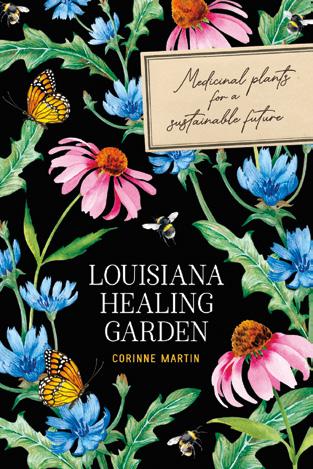
Louisiana Healing Garden
Medicinal Plants for a Sustainable Future
CORINNE MARTIN
“Through personal anecdotes and vivid vignettes, Corinne Martin sweeps you along to riverbanks, bayous, woods, cow pastures, and fields of Louisiana to meet the most amazing characters—the healing plants. Louisiana Healing Garden is packed with unforgettable scenes and information. You will learn the plants of Louisiana like never before.”—Tammany Baumgarten, founding president of the Native Plant Initiative of Greater New Orleans
“What some folks call a weed, the author sees as a gift, full of purpose, history, and healing. In Louisiana Healing Garden, Corinne Martin teaches about the many benefits of the plants around us. But she doesn’t just teach about the herbs; she gives them character, story, and soul. You’ll never look at the green world around you in the same way.”—Bayli Quick Brossette, curator of the Briarwood Nature Preserve
“In Louisiana Healing Garden, you will find both plants that feel familiar and plants that you’ve never encountered. With each plant story, you will deepen your understanding of the connection of nature to community and health. This book is a refuge, inviting you to discover your own healing garden where you will dig down into the earth and plant seeds.”
—Jennifer Blanchard, LSU instructor of horticulture
In this follow-up to Louisiana Herb Journal, herbalist Corinne Martin continues her exploration of Louisiana’s plants and their capacity to provide healing in a time of unprecedented change and uncertainty. As Louisiana struggles with increasingly severe storms, land subsidence, rising waters, saltwater intrusion, and the loss of iconic trees, Martin suggests that the recognition and careful use of medicinal plants may help to stabilize at-risk species and areas, reduce the use of toxic applications on aggressive weeds, and support everyday health. Louisiana Healing Garden is an herb book, a garden guide, and an introduction to the web of wild lives that make up our home state.
CORINNE MARTIN is a clinical herbalist and amateur naturalist who has worked with medicinal plants for more than forty years. A retired instructor of holistic and integrative health, she has a passionate love for nature and for the lush and threatened environment of her home ground of Louisiana. She is the author of Louisiana Herb Journal (LSU Press, 2022).
FEBRUARY 2026
344 pages, 6 x 9, 52 color images
978- 0- 8071- 8530- 8
Paperback $34.95, ebook available LSU Press Paperback Original Herbal Studies / Louisiana
Published with the assistance of the V. Ray Cardozier Fund
APRIL 2026
152 pages, 5 x 7, 10 color images, 3 halftones
978- 0- 8071- 8600- 8
Paperback $21.95, ebook available LSU Press Paperback Original Louisiana / Foodways
Published with the assistance of The Noland Fund
LOUISIANA TRUE
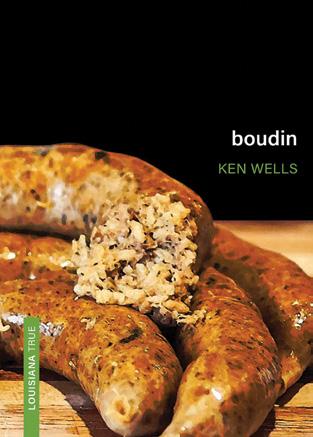
Boudin
KEN WELLS
978- 0- 8071- 8201-7
“Boudin is rich, rewarding, and compulsively readable. Why? Because Ken Wells has it all: a strong, singular voice, rocksolid reporting, an intimate knowledge of place, an unerring sense of pace and storytelling, and, always, flashes of insight and humor. This is a fabulous road trip of a book. And you will want to pack loose pants.”—Jane Lear, editor of Newsday’s Feed Me magazine and former senior articles editor for Gourmet
“Pooyie! I always enjoy reading anything Wells writes, and I especially enjoyed this. His book shows that boudin has come a long way since I first ate it at my grandfather’s farm in the 1940s. Armed with Ken’s book, I am ready for a boudin crawl through Louisiana, neighboring Texas, and yes, maybe Chicago.”—Marcelle Bienvenu, author of Who’s Your Mama, Are You Catholic, and Can You Make a Roux?
“A delicious deep dive into the culinary and cultural history of boudin, a savory Cajun/Creole comestible that is beloved in South Louisiana. Wells combines assiduous research with an accessible writing style that will make readers feel welcome—and hungry.” —Ben Sandmel, author, folklorist, and drummer/producer for the celebrated Cajun swing band the Hackberry Ramblers
Boudin follows Louisiana native and boudin hound Ken Wells on a lively travelogue through the aromatic precincts of the makers, sellers, and connoisseurs
of what one noted Louisiana chef calls the world’s most versatile sausage. Boudin may just be pork, rice, vegetables, and spices in a casing—but in the hands of creative chefs, it becomes a transformative dish, as delicious in tacos and eggrolls as it is as a standalone delicacy.
Wells examines the Continental French roots of Louisiana boudin and explains how a sausage cooked up in the humble rural kitchens of Cajun and Creole “maw-maws” and “paw-paws” has been reimagined into a national food sensation—creating boudinmaking dynasties along the way. Readers are then invited to follow Wells on a fun journey down the “Boudin Trail,” dropping in on the people and places that explain boudin’s soaring popularity.
KEN WELLS grew up on the bayous of South Louisiana, second of six sons of an alligator-hunting father and a Cajun French–speaking mother and gumbo chef extraordinaire. He’s a Pulitzer Prize finalist (Miami Herald), editor of two Pulitzer Prize–winning projects (Wall Street Journal), and the author of The Good Pirates of the Forgotten Bayous: Fighting to Save a Way of Life in the Wake of Hurricane Katrina and Gumbo Life: A Journey down the Roux Bayou, among others.
COWINNER OF THE 2026 JULES AND FRANCES LANDRY AWARD
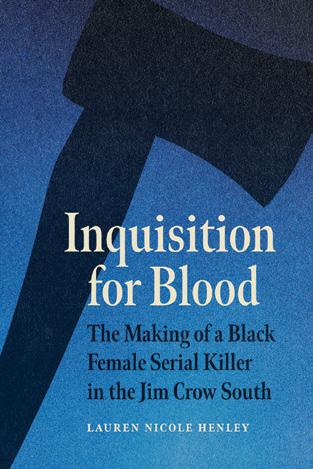
Inquisition for Blood
The Making of a Black Female Serial Killer in the Jim Crow South
LAUREN NICOLE HENLEY
“Lauren Nicole Henley has produced an absolute pageturner highlighting the female serial killer armed with an ax. Following the trail of blood that alarmed America in the early twentieth century, this book is a way-shower on true crime, fusing together multiple deaths with a hungry media, protective communities, religion, gender, and the making of a criminal in a powerful way.”—Sowande’ M. Mustakeem, author of Slavery at Sea: Terror, Sex, and Sickness in the Middle Passage
“Inquisition for Blood tells a riveting story. In this deeply researched book, Lauren Henley writes a compelling history about race, gender, and intraracial crime in the American South. Offering readers details about a series of brutal murders in Progressive-era Louisiana, Henley explains how white media accounts, state agents, and individual endeavors constructed gendered Black criminality. Inquisition for Blood is a must-read for those looking to understand the roots of Black female criminality.”—LaShawn Harris, author of Tell Her Story: Eleanor Bumpurs & the Police Killing That Galvanized New York City
“In Inquisition for Blood, Lauren Henley investigates a series of ax murders that took the lives of entire Black families in
the early Jim Crow period, as well as the life of the Black woman who confessed to several of the killings. Through extensive research that encompasses court and legislative records, regional and national newspapers, as well as archival records, Henley elucidates how crime, religion, the media, injustice, and incarceration were often shaped by white perceptions of race to such an extent that, very often, the truth was lost.”—Karen L. Cox, author of Goat Castle: A True Story of Murder, Race, and the Gothic South
“In this beautifully written work, Lauren Henley recovers the forgotten saga of the Ax Man and Clementine Barnabet. As it challenges historical understandings of the ‘serial killer,’ it asks us to confront our lingering fascination with spectacular acts of violence.” —K. Stephen Prince, author of The Ballad of Robert Charles: Searching for the New Orleans Riot of 1900
LAUREN NICOLE HENLEY is an assistant professor in the Jepson School of Leadership Studies at the University of Richmond. She earned her PhD in history from the University of Texas at Austin.
MARCH 2026
320 pages, 6 x 9, 6 halftones, 1 map
978- 0- 8071- 8618-3
Hardcover $34.95, ebook available
African American Studies / U.S. History / True Crime
Published with the assistance of the V. Ray Cardozier Fund
MARCH 2026
216 pages, 6 x 9, 22 halftones
978- 0- 8071- 8584-1
Hardcover $32.95, ebook available Louisiana / Queer Studies
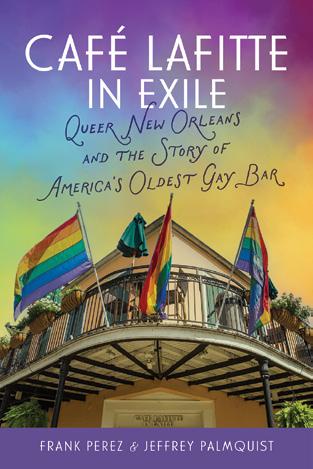
Café Lafitte in Exile
Queer
New Orleans and the Story of America’s Oldest Gay Bar
FRANK PEREZ and JEFFREY PALMQUIST
“Frank Perez and Jeffrey Palmquist’s new book, Café Lafitte in Exile, is a must-read for lovers of the Queer South. This deeply researched book is written in a conversational style, making it a study that can be enjoyed by folks with an interest in the LGBTQ+ South as well as by students and researchers across the country. I am excited for this latest work and can’t wait for the next one.”—Joshua Burford, co–executive director, Invisible Histories
“Frank Perez and Jeffrey Palmquist’s chronicle of the French Quarter gay community is indispensable for anyone who wants to understand New Orleans in its full complexity. . . . Books like this, and stalwarts of cultural heritage like Perez, allow us to have confidence that future knowledge of history will be well-informed, and that the many diverse cultures alive in our community today will continue to thrive.”—Daniel Hammer, president and CEO, The Historic New Orleans Collection
“Fascinating glimpses into Indigenous queerness, inspiring accounts of the gay men who worked tirelessly to preserve the French Quarter, and tales of arson, AIDS, and murder; of hurricanes, pandemics, and corrupt bar owners. Café Lafitte
in Exile is the story of an iconic bar that every gay man who lived in or visited New Orleans over the past seventyplus years will remember.”—Johnny Townsend, author of Inferno in the French Quarter: The UpStairs Lounge Fire
FRANK PEREZ is the executive director of the LGBT+ Archives Project of Louisiana. He is the editor of Ambush magazine, the founder of the Krewe de la Rue Royale Revelers, and author of several books and hundreds of articles on New Orleans’s queer history. He also served as co–Southern Decadence Grand Marshal XLIV.
JEFFREY PALMQUIST is a twenty-five-year resident of New Orleans and the French Quarter and a former bartender at Café Lafitte. He was co–Southern Decadence Grand Marshal XLII and Grand Reveler I. Originally from South Dakota and a graduate of Dakota Wesleyan University, Palmquist found his home in New Orleans, where he fell in love with the history, architecture, and soul of the city.
978- 0- 8071- 6953-7
Published with the assistance of the V. Ray Cardozier Fund
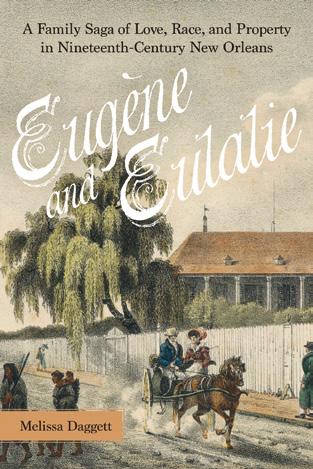
Eugène and Eulalie
A Family Saga of Love, Race, and Property in Nineteenth- Century New Orleans
MELISSA DAGGETT
“Melissa Daggett’s deeply researched and beautifully written Eugène and Eulalie is a stunningly original book. With a firm grasp of Louisiana’s complex past and a keen eye for detail, the author explores the intricate life of an extraordinary free woman of color in antebellum New Orleans. Along the way, the reader will gain fresh insight into Louisiana’s storied history of interracial relationships.”—Mark Charles Roudané, author of The New Orleans Tribune: An Introduction to America’s First Black Daily Newspaper
“Melissa Daggett recounts the captivating story of an interracial couple, Eugène Macarty and Eulalie Mandeville, with aplomb. Using a wide range of documents, she reveals the intricacies of family life within a unique Creole society during a time of shifting racial, class, and gender allegiances and legalities. This page-turner is rich and illuminating. Daggett knows how to make history come alive.”—Miki Pfeffer, editor of A New Orleans Author in Mark Twain’s Court: Letters from Grace King’s New England Sojourns
“Building on an impressive array of multilingual sources, Melissa Daggett adds an extraordinary new chapter to the city’s history. Her riveting study centers on a biracial couple, the offspring of prestigious Creole families. In the 1790s, they entered into a fifty-year, marriage-like relationship. After
Eugène Macarty died, Eulalie Mandeville defended her property from challenges of Macarty’s white relatives. Daggett brings fascinating details drawn from the legal proceedings to illuminate the political and social landscapes of antebellum New Orleans.”—Caryn Cossé Bell, author of Creole New Orleans in the Revolutionary Atlantic, 1775–1877
Melissa Daggett’s Eugène and Eulalie is an epic story of love, race, prosperity, and legal maneuvering. It chronicles for the first time in a comprehensive way the largely forgotten lives of Eulalie Mandeville, a free woman of color, and her white partner, Eugène Macarty. Mandeville and Macarty, both descendants of elite colonial families, began an interracial relationship in the 1790s that endured for more than half a century and produced five children. It also led to Mandeville’s phenomenal rise to the pinnacle of wealth and success within the unique tripartite racial structure of nineteenth-century New Orleans.
MELISSA DAGGETT is a former professor of history at San Jacinto College and the author of Spiritualism in Nineteenth-Century New Orleans: The Life and Times of Henry Louis Rey.
APRIL 2026
272 pages, 6 x 9, 15 halftones, 1 map 978- 0- 8071- 8590-2
Hardcover $39.95, ebook available New Orleans / U.S. History

FEBRUARY 2026
288 pages, 6 x 9, 10 halftones
978- 0- 8071- 8615-2
Hardcover $50.00s, ebook available Civil War / Louisiana
A Desperate Fight
The Lives of Louisiana’s Confederate Soldiers
HENRY B. MOTTY
ALSO OF INTEREST
978- 0- 8071- 8139-3
Hardcover $50.00s
“Motty offers an essential study of Confederate soldiers from Louisiana and their social relations. This work demonstrates the vital overlap between social history and military history, and scholars from both fields are sure to find this book insightful.”—J. Matthew Ward, author of Garden of Ruins: Occupied Louisiana in the Civil War
“With thoughtful precision, Henry B. Motty humanizes the unsettling drama of soldiering for the Confederacy.”—Andrew F. Lang, author of In the Wake of War: Military Occupation, Emancipation, and Civil War America
“A refreshingly comprehensive overview of the experiences of Louisiana Confederate soldiers from enlistment to surrender. Motty advances our understanding of the life challenges that confronted all classes of soldiers from across the state.”—Samuel C. Hyde Jr., author of Pistols and Politics: Feuds, Factions, and the Struggle for Order in Louisiana’s Florida Parishes, 1810–1935
“Motty’s well-researched study goes beyond the traditional division between war and society to reveal the complexity of
Louisiana’s Civil War experience. A Desperate Fight shows that soldiers and civilians found that the challenges and sacrifices of war did not diminish but instead strengthened and reinforced community ties. A valuable addition to our understanding of Civil War Louisiana.”—Harry S. Laver, author of A General Who Will Fight: The Leadership of Ulysses S. Grant
Henry B. Motty’s A Desperate Fight views Civil War Louisiana through the lens of its soldiers’ experiences—and interdependence—with civilians. Motty focuses on the relationships and interactions between soldiers and civilians and how these communal attachments kept most of the state’s soldiers fighting throughout the war.
HENRY B. MOTTY , a native of southwest Louisiana, received his PhD in American history from Louisiana State University.
COWINNER
OF THE 2026 JULES AND FRANCES LANDRY AWARD
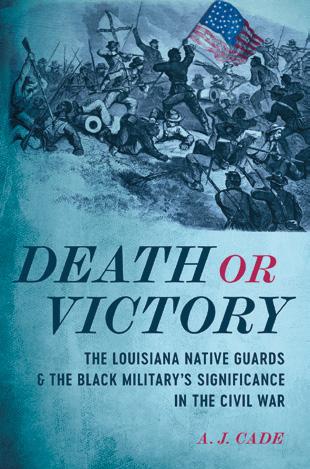
Death or Victory
The Louisiana Native Guards and the Black Military’s Significance in the Civil War
A. J. CADE
“By comparison to the Fifty-Fourth Massachusetts Infantry and the First South Carolina Regiment, the First Louisiana Native Guards have not attracted the level of scholarly attention they deserve. Until now. Based on an exceptional grounding in primary and secondary sources, Death or Victory makes for indispensable reading for historians and the general public alike. A superb, important book.”—Douglas R. Egerton, Lincoln Prize–winning author of Thunder at the Gates: The Black Civil War Regiments That Redeemed America
“Finally! The comprehensive treatment the Louisiana Native Guards deserve. A. J. Cade’s excellent narrative covers everything: how these Black heroes changed the national conversation about slavery and emancipation, protected Black women, liberated enslaved people, and were at the vanguard of Black troops in combat. With this book, Louisiana’s Black commissioned officers and unique enlisted men are restored to the prominence they achieved during the Civil War.” —Lorien Foote, author of The Gentlemen and the Roughs: Violence, Honor, and Manhood in the Union Army
“A. J. Cade’s Death or Victory, only the second book on the Louisiana Native Guards in over 150 years, fills a major
gap in the historiography of the Civil War. Well-written and exhaustively researched, it revolutionizes our understanding of some of the most important Black troops in American history.”—Keri Leigh Merritt, author of Masterless Men: Poor Whites and Slavery in the Antebellum South
“Taking a fresh look at an important topic, A. J. Cade provides the best study of the first important Black units raised to fight for freedom in the Civil War. Based on an array of primary sources and informed by a heightened awareness of the social, cultural, and martial aspects of this subject, Death or Victory gives us a gripping view of the ‘life and times’ of these regiments in the recesses of the Deep South and of their initiation by fire at Port Hudson. Cade’s book is a rare mix of passion and scholarship.”—Earl J. Hess, author of Civil War Cavalry: Waging Mounted Warfare in Nineteenth-Century America
A. J. CADE is a retired United States Marine and executive council member with the Association for the Study of African American Life and History. He is a professional military historian who holds a doctorate in history from George Washington University.
FEBRUARY 2026
416 pages, 6 ¹∕ 8 x 9 ¼, 49 halftones
978- 0- 8071- 8550- 6
Hardcover $49.95, ebook available
African American Studies / Civil War / Louisiana
JUNE 2026
248 pages, 6 x 9, 10 halftones, 4 maps
978- 0- 8071- 8573- 5
Hardcover $44.95, ebook available Native American Studies / Slavery Published
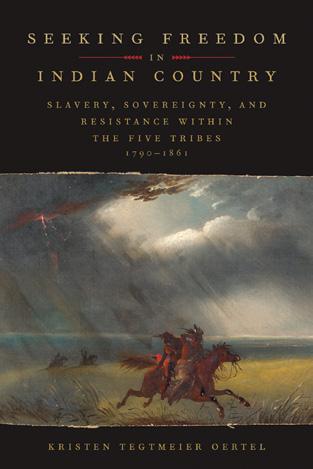
Seeking Freedom in Indian Country
Slavery, Sovereignty, and Resistance within the Five Tribes, 1790–1861
KRISTEN TEGTMEIER OERTEL
“Since her first book, Bleeding Borders, Kristen Tegtmeier Oertel has contributed innovative and informative scholarship that complicates our understandings of Black and Native life. In Seeking Freedom in Indian Country, she gives the fields of Native American, African American, and Civil War history—dare I say it—her best yet, with a comprehensive tome that examines the role Black freedom seekers, Native leaders and slaveholders, and white abolitionists played in shaping the nineteenth century.” —Alaina E. Roberts, author of I’ve Been Here All the While: Black Freedom on Native Land
“In this deeply researched and intellectually inventive study, Oertel argues that developments in ‘Indian country,’ particularly settler colonialism and slavery, are critical to an understanding of the sweep of nineteenth-century American history leading to the Civil War.” —R. J. M. Blackett, author of The Captive’s Quest for Freedom: Fugitive Slaves, the 1850 Fugitive Slave Law, and the Politics of Slavery
“Kristen Tegtmeier Oertel’s Seeking Freedom in Indian Country offers a fresh look at the debates surrounding slavery, westward expansion, and Indian expulsion. By analyzing western expansion alongside Native American removal, Oertel highlights the broader spatial and temporal context of the sectional conflict. Native Americans and enslaved people are
central to her study, which underscores their divergent roles and lived experiences. This insightful book helps to deepen our understanding of the road to the Civil War and its lasting legacy today.”—Lesley J. Gordon, author of Dread Danger: Cowardice and Combat in the American Civil War
Kristen Tegtmeier Oertel’s Seeking Freedom in Indian Country is the first comprehensive study of African chattel slavery within the Five Tribes: the Cherokee, Chickasaw, Choctaw, Muscogee (Creek), and Seminole Nations. Oertel examines how chattel slavery functioned among all Five Tribes before and during the removal process, how the tribes reconstituted slavery post-removal in Indian Territory, and how enslaved Black people promoted freedom-seeking strategies at each stage. Furthermore, her work considers how the conflict over slavery in Indian Territory contributed to the larger national debate over slavery’s fate on the eve of the Civil War.
KRISTEN TEGTMEIER OERTEL is Mary F. Barnard Professor of Nineteenth-Century American History at the University of Tulsa. She is most recently the author of Harriet Tubman: Slavery, the Civil War, and Civil Rights in the Nineteenth Century.
with the assistance of the V. Ray Cardozier Fund
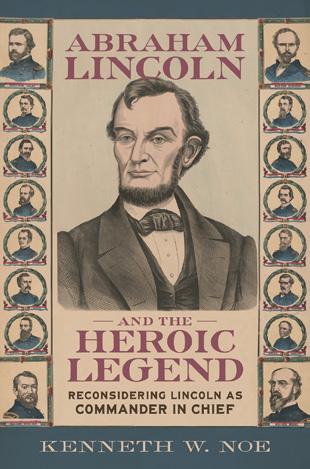
Abraham Lincoln and the Heroic Legend Reconsidering Lincoln as Commander in Chief
KENNETH W. NOE
“Abraham Lincoln and the Heroic Legend offers a fascinating narrative of how generations of writers and historians evaluated the sixteenth president’s reputation as commander in chief during the Civil War. Noe suggests that the admiring and uncritical depiction of Lincoln’s grasp of the military arts, which still largely prevails today, might be worthy of a more critical appraisal.” —Joan Waugh, author of U.S. Grant: American Hero, American Myth
“In Abraham Lincoln and the Heroic Legend, Kenneth W. Noe offers a sophisticated and probing analysis of Abraham Lincoln as a wartime commander in chief. He then presents a richly detailed account of how Lincoln’s contemporaries and later historians helped create the idea that Lincoln, the untutored amateur, turned into a military genius far superior to even his best generals. This forcefully argued work is a major contribution to our understanding of the evolution of Civil War military history.”—George C. Rable, author of Conflict of Command: George McClellan, Abraham Lincoln, and the Politics of War
“Kenneth W. Noe calls for spirited debate regarding Lincoln’s actions as commander in chief, and in Abraham Lincoln and the Heroic Legend, he delivers exactly that! Exploring history, historiography, memory, myth, and legend, Noe’s account is sure to stimulate lively discussion among scholars and enthu-
siasts about Lincoln’s wartime presidency.”—Jonathan W. White, Lincoln Prize–winning author of A House Built by Slaves: African American Visitors to the Lincoln White House
“This masterful summary of the literature on Abraham Lincoln as war chieftain is an essential contribution to the canon of Lincoln studies. It is a clarion call for an extensive reevaluation of Lincoln as commander in chief.”—Frank J. Wetta, coauthor of Abraham Lincoln and Women in Film: One Hundred Years of Hollywood Mythmaking
“In Abraham Lincoln and the Heroic Legend, Civil War historian Ken Noe boldly disputes the historiography that defines Lincoln as a great military genius above all his generals, especially McClellan. With a complex and fascinating analysis, Noe describes the processes by which historians and the public seek to canonize Lincoln. This dazzling examination of the interplay of legends and myth will surely generate much deliberation.”—Orville Vernon Burton, coeditor of Lincoln’s Unfinished Work: The New Birth of Freedom from Generation to Generation
KENNETH W. NOE is the Draughon Professor of Southern History Emeritus at Auburn University. He is most recently the author of The Howling Storm: Weather, Climate, and the American Civil War.
FEBRUARY 2026
416 pages, 6 ¹∕ 8 x 9 ¼, 10 halftones, 7 maps
978- 0- 8071- 8521- 6
Hardcover $49.95, ebook available Civil War / U.S. History
Conflicting Worlds: New Dimensions of the American Civil War
T. Michael Parrish, Series Editor
Published with the assistance of the V. Ray Cardozier Fund

MAY 2026
336 pages, 6 x 9, 12 maps
978- 0- 8071- 8574-2
Hardcover $50.00s, ebook available U.S. History / World History
Rebels and Regimes
The Nature of Violent Resistance in the Nineteenth Century
Edited by ANDREW FIALKA and AARON SHEEHAN-DEAN
ALSO OF INTEREST
978- 0- 8071-7147- 9
Hardcover $50.00s

“With rich detail and analytical verve, Rebels and Regimes provides readers with useful insights into ten conflicts across five continents. These essays demonstrate that the battle for sovereign control between recognized powers and dissenters was perhaps the defining feature of the long nineteenth century. Far from isolated, irregular or guerrilla fighting appears as a normal feature of nineteenth-century warfare. This is a must-read for any historian interested in military history or questions of power and resistance.”
—Brian Schoen, author of The Fragile Fabric of Union: Cotton, Federal Politics, and the Global Origins of the Civil War
“This expertly curated, globe-spanning essay collection reveals what the mid-nineteenth-century world looks like when war is placed at the center of the story. As guerrilla warfare proliferated, and as new racial categories hardened amidst unspeakable violence, war itself became the era’s dominant force, remaking new polities around the world and molding the global era that lay ahead. Required reading for all scholars of the U.S. Civil War.”—Jay Sexton, author of A Nation Forged by Crisis: A New American History
ANDREW FIALKA is associate professor of history at Middle Tennessee State University and the author of Hope Never to See It: A Graphic History of Guerrilla Violence During the American Civil War.
AARON SHEEHAN- DEAN is Fred C. Frey Professor of History at Louisiana State University and the author, most recently, of Reckoning with Rebellion: War and Sovereignty in the Nineteenth Century
CONTENTS
Military History, Global History, and the Mid-Nineteenth Century
Andrew Fialka and Aaron Sheehan-Dean
Little Wars and the Imperial Competition for Sovereignty in the Maroon Caribbean During the Age of Revolutions
Marcus Nevius
“War to the Knife?”: Spanish Guerrillas Reappraised
Charles Esdaile
The Complex Character of the Second Seminole War
Samuel Watson
On the March to Victory: Irregular Warfare and the Taiping Rebellion, 1851–1864
Zhenman Ye
The Word Is Not the Thing:
A Short Biography of “Irregular Warfare” in the American Civil War
Joseph Beilein
Colonial Warfare as Irregular Warfare: Conflict on the Imperial Russian Borderlands
During the Nineteenth Century
Ian Campbell
“The Surf That Marks the Edge and Advance of Civilization”: Frontier Wars in Colonial South Asia
Gavin Rand
The Campaign of Cordilleras in the War of the Triple Alliance, 1869–1870: Resistance or Suicide?
Vitor Izecksohn
“A Pretorian Guard of Savages”: African Troops and the Implementation of Formal and Informal Order in Nineteenth-Century Natal
Jacob Ivey
Harnessing Mobility for Colonial Counterinsurgency: The Case of the Dutch-Aceh War in Southeast Asia, 1873–1904
Josh Gedeacht
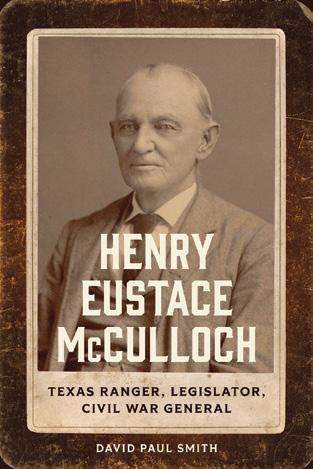
Henry Eustace McCulloch
Texas Ranger, Legislator, Civil War General
DAVID PAUL SMITH
“David Paul Smith’s biography of Henry Eustace McCulloch is that increasingly rare commodity: a book that genuinely needed to be written, authored by the one person best prepared by experience and previous work to take on the task. A legendary Texas Ranger, Confederate general, and state legislator, Henry McCulloch played a big part in the early history of Texas. But his story will not be a familiar one to modern readers. Smith writes history the way it should be written, with sufficient detail to satisfy scholars while managing to narrate a highly interesting story. Highly recommended.”—Edward T. Cotham Jr., author of Rockets, Tanks and Submarines: The Ingenuity of Civil War Texans
“This work is long overdue, focused as it is on a prominent but overlooked figure in Texas history. Henry E. McCulloch should be in the Texas Ranger Hall of Fame with his brother Ben. Until this book, he has not had a published biography worthy of his legacy. Based on good research, this lively study of Henry McCulloch and his times will inform and entertain anyone interested in a wide variety of Texas history topics from the Republic era through the Civil War and its aftermath.”—Richard B. McCaslin, author of Fighting Stock: John S. “Rip” Ford of Texas
“In the fervor of a heated political campaign in 1855, an opponent referred to Henry Eustace McCulloch as a ‘ranging, Indian- killing, beef- eating, rough sample of semicivilization.’ In this exhaustively researched biography, historian David Paul Smith refutes this simplified assessment, revealing McCulloch to have been not only, as another contemporary observed, ‘a star Indian and Mexican fighter,’ but a blend of civilization and savagery, or, as Smith would have it, ‘a kind, warm-hearted gentleman, toughened by life on the frontier.’ Smith’s narrative places McCulloch squarely in the context of the blood-soaked history of Texas from the days of the Republic through the early years of the twentieth century, examining in minute detail the many military and political campaigns in which he played a leading role. The life of Henry McCulloch is a saga of high adventure embedded in a life of personal sadness and frustration.” —Thomas W. Cutrer, author of Theater of a Separate War: The Civil War West of the Mississippi River, 1861–1865 and Ben McCulloch and the Frontier Military Tradition
DAVID PAUL SMITH is the author of Frontier Defense in the Civil War: Texas’ Rangers and Rebels.
MAY 2026
320 pages, 6 x 9, 9 halftones, 6 maps
978- 0- 8071- 8599- 5
Hardcover $49.95, ebook available Biography / Texas
Conflicting Worlds: New Dimensions of the American Civil War
T. Michael Parrish, Series Editor
Published with the assistance of the V. Ray Cardozier Fund

MAY 2026
264 pages, 6 x 9, 20 halftones
978- 0- 8071- 8583- 4
Hardcover $45.00s, ebook available
U.S. History / Labor History
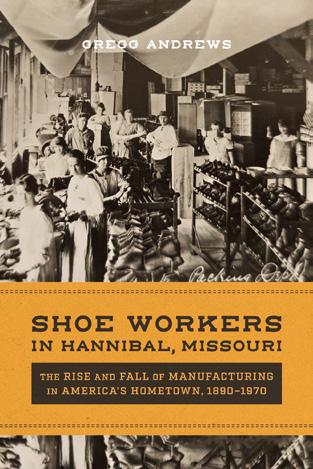
Shoe Workers in Hannibal, Missouri
The Rise and Fall of Manufacturing in America’s Hometown, 1890–1970
GREGG ANDREWS
978- 0- 8071- 8278- 9
“Gregg Andrews, a gifted historian of labor and transnationalism, gives us a stirring and timely history that lays bare the strategies of management and the varied responses of shoe workers in the river city put on the map by Mark Twain. Shoe Workers in Hannibal, Missouri shows how the largest shoe company in the early 1900s moved manufacturing outside the Midwest center of production in St. Louis for cheap labor, leaving governments and workers in the smaller cities to compete for investment and jobs. The strategy aimed to undermine the power of organized labor and community solidarity, but, as Andrews shows, it never extinguished the multiple forms of resistance by workers seeking better pay, safer conditions, and a thriving community.”—David Roediger, author of An Ordinary White: My Antiracist Education
“Gregg Andrews brings us another eye-opening account of working-class life: a David and Goliath story of the multigenerational struggles of shoe workers in Hannibal. Workers and their families battled a St. Louis shoe industry strategy designed to extract wealth from the rural hinterlands. Mark Twain would have been proud that Andrews restores his hometown’s shoe workers to the historical record. Richly
textured with a deep understanding of local, national, and global developments, Shoe Workers in Hannibal, Missouri will awaken readers to the massive battles that had to be waged just to get by, even in the glorified days of the New Deal.”—Rosemary Feurer, author of Radical Unionism in the Midwest, 1900–1950
“Shoe Workers in Hannibal, Missouri describes the industrial transformation of the American heartland not as the quiet workings of the marketplace but as an aggressive business plan by the shoe manufacturers in St. Louis who remade the largely rural communities into factory towns. Andrews’s study explores the experience of those who responded to the non-negotiable siren song of the factory whistle.”—Mark A. Lause, author of Free Labor: The Civil War and the Making of an American Working Class
GREGG ANDREWS is Distinguished Professor Emeritus of History at Texas State University and author, most recently, of Hard Times in an American Workhouse, 1853–1920.
Offshore Oildom
America’s
Energy Expansion into the Ocean
TYLER PRIEST
“A brilliant examination of the history of offshore oil cast in a crisply written narrative. Tyler Priest forces readers to think anew about the politics of industry, states’ rights, the environment, and American expansion, showing us why he’s one of our preeminent energy scholars.”—Jack E. Davis, Pulitzer Prize–winning author of The Gulf: The Making of an American Sea
“With both precision and breadth, Tyler Priest provides an engrossing account of the legal, social, and political events that shaped the rich federal oil kingdom off the U.S. coasts. He likens this oildom’s creation to ‘a smoldering political and legal potato, scorched from all sides’ by coastal states battling the feds in court and in Congress, a polarized battle that continues to this day.”—Jacqueline L. Weaver, professor emerita of law, University of Houston Law Center
“Tyler Priest, a noted historian of energy and the environment, explores how a single well drilled off a pier near Santa Barbara in 1898 gave rise to a major American industry— offshore oil and gas. In spirited prose, Priest demonstrates how this U.S. industry was created not only by innovation, creative engineering, and complex execution; it was also the result of fierce political battles.” —Daniel Yergin, Pulitzer Prize–winning author of The Prize: The Epic Quest for Oil,
Money, and Power and The New Map: Energy, Climate, and the Clash of Nations
“In writing Offshore Oildom, Tyler Priest has amassed a stunning amount of information on the emergence of U.S. offshore oil production, utilizing scores of oral interviews and extensive archival and official records scattered across the country. The result, more than two decades in the making, is a masterpiece in American energy history. No thoughtful discussion of energy resource development can ignore this deeply researched landmark study.” —Jay Hakes, author of The Presidents and the Planet: Climate Change Science and Politics from Eisenhower to Bush
TYLER PRIEST is associate professor of history at the University of Iowa. He is the author of the awardwinning book The Offshore Imperative: Shell Oil’s Search for Petroleum in Postwar America and has published in the Journal of American History, Environmental History, Enterprise & Society, the Wall Street Journal, Politico, and Science. In 2010 he served as a senior policy analyst on the President’s National Commission on the BP Deepwater Horizon Oil Spill and Offshore Drilling.

APRIL 2026
400 pages, 6 ¹∕ 8 x 9 ¼, 25 halftones, 3 maps, 3 graphs
978- 0- 8071- 8602-2
Hardcover $44.95, ebook available Environmental History / U.S. History


APRIL 2026
264 pages, 6 x 9, 2 maps
978- 0- 8071- 8678-7
Hardcover $45.00s, ebook available World War II / European History
From Occupation to Integration
Recivilizing the French Zone of Post- Nazi Germany, 1945–1955
DREW FLANAGAN
978- 0- 8071-7873-7
Hardcover $34.95

After the collapse of the National Socialist regime in May 1945, France became one of four principal occupying powers in a defeated Germany. Within their zone of occupation along the Upper and Middle Rhine, French occupiers participated in the Allied project to remake German society. In the process, they confronted the long history of Franco-German rivalry in the region and their country’s diminished power in the wake of World War II.
From Occupation to Integration explores how French ideas about civilization and the civilizing process shaped the practice of occupation in the French Zone and the early stages of European integration. The French Zone was set apart from the other Allied zones by the occupiers’ belief that Nazi “barbarism” was deeply rooted in German culture and history. In seeking to transform the Germans along their border into acceptable partners for France within a united western Europe, the French occupiers applied aspects of France’s universal “civilizing” mission, adapting strategies and practices developed in the country’s overseas colonies to fit a European population. Whether implementing counterinsurgency methods developed in French North Africa in the paci-
fication and control of their zone or attempting to address what they perceived as the deep-rooted flaws of German culture through reeducation and propaganda, the French applied their civilizational thinking, using that vision to justify and guide the first postwar attempts at cross-border economic integration. Through both conflicts and cooperation with the German population, the French in occupied Germany negotiated a shared vision of western European civilization that they hoped would ensure French leadership in Europe.
In this engaging study, Drew Flanagan deftly details and analyzes the entanglement between the Europeanization of the French Zone and decolonization in France’s empire, prompting readers to consider the continued impact of colonial and imperial ideas and practices on contemporary Europe and the European Union.
DREW FLANAGAN is assistant professor of history at the University of Pittsburgh at Bradford.
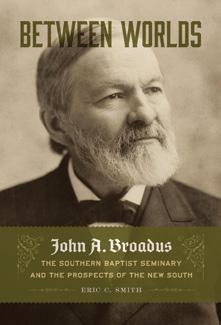
Between Worlds
John A. Broadus, the Southern Baptist Seminary, and the Prospects of the New South
ERIC C. SMITH
“This is an excellent, timely, and long-overdue biography of a fascinating individual whose life is something of a case study in the history of the American South, the Southern Baptist Convention, the Southern Baptist Theological Seminary, and a pivotal era in the life of the Republic.”
—Bill J. Leonard, author of A Sense of the Heart: Christian Religious Experience in the United States
“Well written and carefully researched, this work presents Broadus as one of America’s greatest preachers and a major shaper of the Baptist tradition. It is long to remain the definitive study.”—Timothy George, author of Galatians: The Christian Standard Commentary
John A. Broadus (1827–95) was a highly influential Southern Baptist leader, preacher, scholar, and educator during the latter half of the nineteenth century. He cofounded the Southern Baptist Theological Seminary, which today is among the largest seminaries in the world. Broadus’s enduring impact on American preaching stems in part from his 1870 homiletics manual, a widely adopted textbook that ministers continue to use today. A prominent southerner before and after the Civil War, Broadus actively shaped his region during the shift from the Old South to the New. Eric C. Smith’s Between Worlds—the first scholarly biography of Broadus—joins recent historical scholarship in reevaluating Broadus’s legacy.
ERIC C. SMITH is associate professor of church history at the Southern Baptist Theological Seminary and author of John Leland: A Jeffersonian Baptist in Early America.
FEBRUARY 2026 | 320 pages, 6 x 9, 15 halftones | 978- 0- 8071- 8522-3 Hardcover $49.95, ebook available | Biography / Southern History / Religion
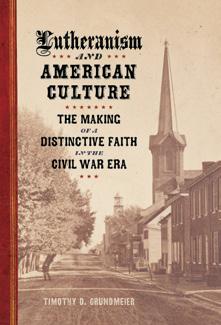
Lutheranism and American Culture
The Making of a Distinctive Faith in the Civil War Era
TIMOTHY D. GRUNDMEIER
“The book’s triumph lies in explaining how the Civil War accelerated a general Lutheran shift toward dogmatic confessionalism, strict churchstate separation, and social conservatism—but alongside an ardent embrace of American exceptionalism. All, whether Lutherans or not, who have long desired a thorough account of Lutheran history carefully situated in American history will greatly value this landmark volume.”—Mark A. Noll, author of America’s Book: The Rise and Decline of a Bible Civilization, 1794–1911
“With an expansive knowledge of the terrain and careful attention to unexpected deviations, Grundmeier adeptly charts the denomination’s theological and organizational history. The result serves not only as a valuable reference work but also as an important interpretive contribution.”—Alison Clark Efford, author of German Immigrants, Race, and Citizenship in the Civil War Era
“Lutheranism and American Culture fills a significant gap in nineteenth-century American religious history. Deeply researched, richly detailed, and forcefully argued, Grundmeier’s work explores the complex interactions between a confessional church in the Civil War era and the broader American culture, including the dilemmas posed by denominational separatism and political conservatism.” —George C. Rable, author of God’s Almost Chosen Peoples: A Religious History of the American Civil War
“As an immigrant group moving into nineteenth-century America, the Lutherans were somewhat religiously and culturally different. Timothy Grundmeier’s careful history of this dynamic is a fine addition to the history of Lutherans in America, and one that adds depth and complexity to the larger religious history of the United States.”—Mark Granquist, author of Lutherans in America: A New History
TIMOTHY D. GRUNDMEIER is professor of history at Martin Luther College, New Ulm, Minnesota.
JANUARY 2026 | 314 pages, 6 x 9 | 978- 0- 8071- 8520- 9
Hardcover $50.00s, ebook available | Religion / U.S. History
Conflicting Worlds: New Dimensions of the American Civil War / T. Michael Parrish, Series Editor
MAY 2026
240 pages, 6 x 9
978- 0- 8071- 8642- 8
Hardcover $45.00s, ebook available Fan Studies / Media Studies
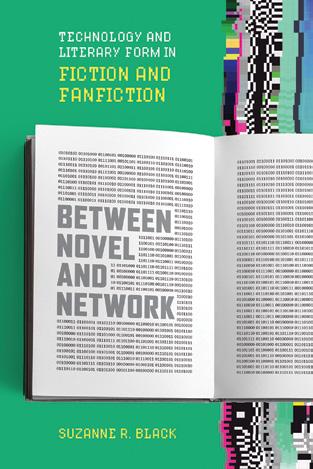
Between Novel and Network
Technology and Literary Form in Fiction and Fanfiction
SUZANNE R. BLACK
978- 0- 8071- 8027-3

“Suzanne R. Black makes engaging and provocative connections among a variety of networked literatures, moving skillfully between fanfiction, literary fiction, and genre fiction, including comic books, romance novels, and other commercial forms. The broad range of extremely well-chosen texts she discusses in this book makes it practically unique and a must-read for scholars working at the exciting intersection of digital fiction, fanfiction, and experimental fiction. This book feels like a glimpse into the future of literary study.”—Francesca Coppa, author of The Fanfiction Reader: Folk Tales for the Digital Age and Vidding: A History
“Between Novel and Network is a brilliant exploration of how literature circulates in a world defined by links, logs, and fandoms. Suzanne R. Black brings fresh insight to fanfiction and contemporary fiction alike, extending the concept of ‘archontic production’ to show how today’s narratives emerge from—and build—living, networked archives of cultural memory and creativity.”—Abigail De Kosnik, author of Rogue Archives: Digital Cultural Memory and Media Fandom
The internet has enabled new forms of literature and challenged older forms to reinvent themselves. Between Novel and Network selects texts that exemplify these digital transformations, arguing that networked
communication technologies have fundamentally altered the form and content of contemporary literature. The book begins by exploring digital fanfiction as a site of literary resistance and a form of literature that can only exist in the age of networked communications. Next it examines epistolary fiction, where networked digital literature offers a different mode of subjectivity than that associated with the traditional novel. Finally, the book addresses two novels that incorporate aspects of networked literatures (fanfiction and comic books) to stake a claim for their enduring primacy as a literary form.
Between Novel and Network adds to conversations about how networked communication technologies affect literary form, content, metaphors, and reception. Readers will trace how concepts such as authorship, originality, intertextuality, and literary value play out across the digital literary sphere. As well as building upon the place of fanfiction in the literary field, Suzanne R. Black also offers a reappraisal of the place and characteristics of the novel in the twentyfirst century as part of a larger literary ecosystem.
SUZANNE R. BLACK is a postdoctoral researcher at the University of Edinburgh.
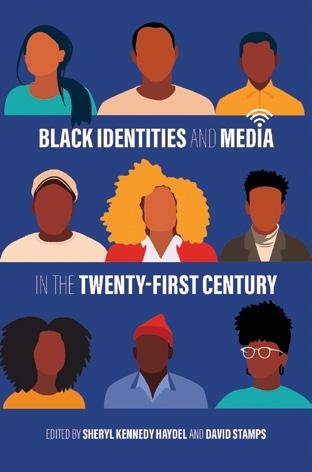
Black Identities and Media in the Twenty-First Century
Edited by SHERYL KENNEDY HAYDEL and DAVID STAMPS
Black Identities and Media in the Twenty-First Century presents original scholarly essays, drawn from a range of theory-based applications and methodologies, that analyze media representations, effects, and practices relating to Black communities and their varying identities, with particular attention to attributes such as gender, sexuality, class, and ability status. By surveying newsprint, television, social media, podcasts, and more, this innovative collection explores intersections of identities and perspectives while centering the role of Black media creators, including producers, journalists, and influencers, to highlight Black representation across genres of mass media.
With a commitment to elevating marginalized voices, Black Identities and Media in the TwentyFirst Century advocates for the historical, present, and future value of Black media creators as intellectuals, workers, innovators, thought brokers, and champions of change in the United States.
SHERYL KENNEDY HAYDEL is dean of the College of Music and Media at Loyola University New Orleans.
DAVID STAMPS is an assistant professor in the Department of Experience Design at Bentley University.
CONTENTS
PART 1. Black Identities in Traditional Media: News Coverage, Broadcast Television, and More Journalism, Protest News, and Black Perspectives
Danielle K. Brown
Staying with Black: How Black Identity and Representation
Shape News Coverage
Gheni Platenburg
How the Black Women of HBO’s Lovecraft Country Circumvent Stereotypes
Aisha Powell and Ashley Leveille
And the Category Is: The FX Series Pose, Intersectionality, and Black Trans Representation
David Stamps
Going Beyond Traditional Television: Black Millennials, Black Gen Z, and Netflix
Sharifa Simon-Roberts
Sexual Scripts, Politics of Pleasure, and Representations of Sexiness in Savage X Fenty
N’Dea I. Drayton
PART 2. Black Identities in Digital Media: Social Media, Podcasts, and More
Digital Wake Work
KáLyn “Kay” Coghill
If You Know, You Know: Black Digital Culture and the Right to Opacity
Jasmine Banks, Eden Harrison, and Pyar Seth
The Techno-Discourse of Kimberlé Crenshaw’s Intersectionality Matters Podcast
Rachel Grant
Digitized: The Visual Rhetoric of Black Feminist Storytellers on Instagram
Maurika Smutherman and Doris Wesley
#SayHerName: An Intersectional Analysis of Black Twitter in the Case of Jannie Ligons
Taryn K. Myers
Digital Nostalgia: Blackness, Beauty Culture, and Digital Feminized Labor on Instagram
Mel Monier
JUNE 2026
288 pages, 6 x 9
978- 0- 8071- 8611- 4, Hardcover $69.95
978- 0- 8071- 8619- 0, Paperback
Media and Public Affairs
Robert Mann, Series Editor

MARCH 2026
352 pages, 6 x 9, 3 halftones
978- 0- 8071- 8612-1
Hardcover $55.00s, ebook available Humor / Literary Studies
Explorations in American Humor
Judith Yaross Lee, Series Editor
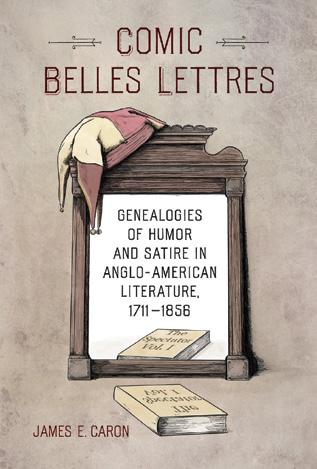
Comic Belles Lettres
Genealogies of Humor and Satire in Anglo-American Literature, 1711–1856
JAMES E. CARON
978- 0- 8071- 8493- 6 Paperback $29.95
Comic Belles Lettres presents a significant rethinking of standard categories in scholarship on antebellum American humor—such as Old Southwest humorists and literary comedians—to provide a richer analysis of the comic writers of the period. By introducing an alternative aesthetic category, “comic belles lettres,” and placing it in a transnational context, James E. Caron details a robust cross-cultural background that includes British and American conceptions of masculinity, the eighteenth-century cult of sensibility, and the “man of feeling” trope.
Caron’s analysis uncovers a genealogy of comic characters with fresh readings of Washington Irving’s Sketch Book, Nathaniel Hawthorne’s The Blithedale Romance, and Harriet Beecher Stowe’s Uncle Tom’s Cabin that not only sweeps up other contemporary authors—Donald Mitchell and Frederic Cozzens— but also includes Joseph Addison’s famous character Sir Roger de Coverly. In addition, the investigation moves beyond fictional texts to demonstrate the reach of comic belles lettres by discussing two well-known historical figures, Lewis Gaylord Clark and William
Thackeray, who embody the aesthetic’s signature figure, the Comic Gentleman. This segment delves into contemporary statements about the nature of comic art and comic laughter along with gendered concerns about the production of satire.
Comic Belles Lettres situates this unique mode of aesthetics within discursive practices of the 1850s— reviews, essays, and editorial decisions—that constitute important yet routinely overlooked aspects of the antebellum print archive, resulting in a new way of thinking about Anglo-American comic writing in the eighteenth and nineteenth centuries.
JAMES E. CARON is professor emeritus of English at the University of Hawai‘i, Mānoa, where he taught American literature for thirty-six years. He is currently copresident of the American Humor Studies Association (AHSA) and is a former senior associate editor of its journal, Studies in American Humor. In 2023 he received a lifetime achievement award from the AHSA.
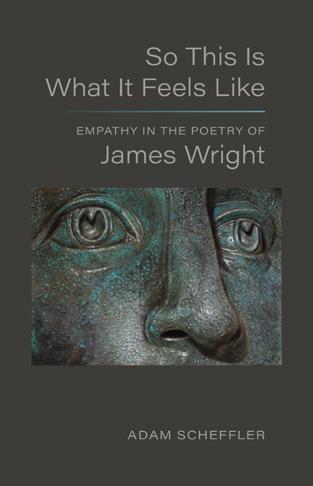
So This Is What It Feels Like
Empathy in the Poetry of James Wright
ADAM SCHEFFLER
“At a time when empathy itself has come into question, Adam Scheffler intervenes with a smart, perceptive, thorough, and wonderfully sympathetic account of James Wright’s highly empathic poetry, its formal inventiveness and human reach, and its stunningly American music. So this is what it feels like to read a marvelous young critic rethinking the work of a major American poet.”—Edward Hirsch, president, John Simon Guggenheim Memorial Foundation
“Scheffler’s writing is perspicacious, lucid, and original. I can think of few contemporary critics with his talent. What’s most impressive is the way his clarity of expression is endorsed at every turn by genuine and deep care for the work at hand. Scheffler’s grace of style derives from his formal talent as a prose writer, but also from true feeling.”—Peter Campion, author of Radical as Reality: Form and Freedom in American Poetry
James Wright (1927–80) was considered one of the major poets of his era, winning the Pulitzer Prize in 1972, even though the intense emotion of his work could prove divisive. So This Is What It Feels Like, a new critical study by poet and critic Adam Scheffler,
makes a renewed case for Wright’s importance by examining how his empathy for other people gives meaning to his poems.
Raised in the poor factory town of Martins Ferry, Ohio, during the Great Depression, Wright often wrote about struggling working-class Ohioans, as well as about suffering and marginalized people in Appalachia and the Midwest. Moving chronologically through Wright’s career, Scheffler reveals that the author’s intense empathy for these people challenged his poetic imagination in ways that often altered the form of a poem midway through, sometimes forcing him to invent a new style that would capture the resilient humanity of his subjects. So This Is What It Feels Like provides a renewed appreciation for Wright’s art and how it expands the social capabilities of lyric poetry.
ADAM SCHEFFLER is assistant professor of English and creative writing at Wichita State University and the author of two books of poetry, A Dog’s Life and Heartworm.
MAY 2026
208 pages, 5 1/2 x 8 1/2
978- 0- 8071- 8608- 4
Hardcover $40.00s, ebook available Literary Studies
JUNE 2026
264 pages, 6 x 9, 2 maps
978- 0- 8071- 8605-3
Hardcover $50.00s, ebook available Latin American History / Caribbean Studies
New Hispanisms: Cultural and Literary Studies
Anne J. Cruz, Series Editor
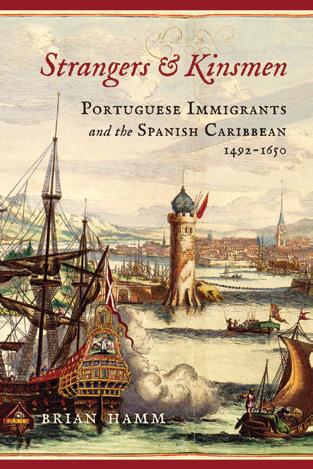
Strangers and Kinsmen
Portuguese Immigrants and the Spanish Caribbean, 1492–1650
BRIAN HAMM
“Offering a nuanced examination of the diverse and contradictory motives and identities that peninsular Spanish writers ascribed to Portuguese in Spanish America, Brian Hamm convincingly shows that Spanish anxieties paradoxically gave Portuguese migrants and merchants opportunities to showcase their loyalty to the Habsburg monarchs, their devotion to the Catholic Church, and their integration into Spanish Caribbean communities.”—David Wheat, author of Atlantic Africa and the Spanish Caribbean, 1570–1640
Within the global Spanish empire of the early modern era, the signifier portugués carried an expansive variety of associations. It could mean, depending on the observer, being either Spanish or foreign, Catholic or Jewish, useful or deleterious, loyal or treasonous. In Strangers and Kinsmen, historian Brian Hamm argues that discursive debates about what it meant to be “Portuguese,” to which Spaniards and Portuguese alike contributed, opened a wide range of Lusitanian potentialities that could either accelerate or hinder Portuguese integration within the Spanish Atlantic world. As a result, uncertainty followed Portuguese immigrants across the Atlantic and plagued Spanish officials who had to decide how to respond to an ever-increasing number of Portuguese arrivals. To find convincing answers, as Hamm shows, the Portuguese and Spanish looked to public behavior and
personal reputation. The most convincing proof of Portuguese loyalty, piety, and utility came from consistent performances of virtuous actions by the Portuguese themselves. At the same time, public behaviors deemed suspicious, heretical, or treasonous could have the opposite effect, confirming in the minds of Spanish observers that the Portuguese were dangerous foreigners, potentially engaged in conspiratorial activities, who should be excluded. Because of the interpretative significance placed on public patterns of behavior, Portuguese immigrants gained significant opportunities to negotiate a more secure and accepted place in colonial society.
Strangers and Kinsmen recovers the complexity and heterogeneity of Lusitanian immigration to the early modern Spanish Indies. Prioritizing Portuguese immigrants frequently overlooked in previous studies, including pilots, soldiers, priests, and spies, Hamm’s detailed analysis expands scholarly understanding of the thousands of Portuguese who collectively strengthened and threatened Spanish imperialism from within one of the most geopolitically vital regions of the world.
BRIAN HAMM is assistant professor of history at Samford University.
Black Beans and Diamonds
Brazil in the Work of Elizabeth Bishop
REGINA PRZYBYCIEN
Translated, with a New Preface, by
NEIL K. BESNER
“The great American poet Elizabeth Bishop spent two of the most productive decades of her life in Brazil, where she wrote some of her greatest poems and stories. Regina Przybycien’s FeijãoPreto e Diamantes was the first large-scale study of Bishop in Brazil by a Brazilian writer and one of the most incisive and moving books about the depth and complexity of her life and work in any language. This is an important book, and admirers of Bishop should be grateful that it is finally available in English, in this eloquent translation by Neil Besner.”—Lloyd Schwartz, Pulitzer Prize–winning critic, poet, and coeditor of Elizabeth Bishop and Her Art
“What does Bishop get right (and wrong) about Brazil, and how have Brazilian readers returned her endlessly curious, quizzical gaze? Przybycien provides a compelling account of Bishop’s most important elsewhere, in which we learn not just what Bishop thought of Brazil but also what Brazil thought of Bishop.” —Jonathan Ellis, coeditor of Elizabeth Bishop in Context
“Przybycien’s book conveys the knowledge of a Portuguesespeaking Brazilian insider familiar with the global scope of the cultural, linguistic, and poetic vectors that inform Brazil and Bishop’s writing there.” —Angus Cleghorn, editor of Elizabeth Bishop and the Music of Literature
“A pioneering study on Bishop and Brazil, this book offers a captivating contextual reading of the poet’s writings about the country. This is an important contribution to Bishop scholarship, in a careful and high-quality translation.”—Maria Lúcia Milléo Martins, author of Duas Artes: Carlos Drummond de Andrade e Elizabeth Bishop
“Przybycien shows how Brazilian culture, with which Bishop always had an ambiguous and conflicted relationship, influenced her writing, including how Bishop’s translations of Carlos Drummond de Andrade were crucial for her own late poems.”—Paulo Henriques Britto, member of the Brazilian Academy of Letters
REGINA PRZYBYCIEN , a retired Brazilian professor of American and comparative literature, recently translated into Portuguese a book of poetry by Lloyd Schwartz (from English) and three books by Wisława Szymborska (from Polish).
NEIL K. BESNER taught at the University of Winnipeg from 1987 until his retirement in 2017. His prizewinning translation of Carmen L. Oliviera’s Rare and Commonplace Flowers: The Story of Elizabeth Bishop and Lota de Macedo Soares provided a major source for the 2013 film Reaching for the Moon

JUNE 2026
208 pages, 5 1/2 x 8 1/2
978- 0- 8071- 8610-7
Hardcover $39.95, ebook available Literary Studies / Brazil
FEBRUARY 2026
224 pages, 5 1/2 x 8 1/2, 6 halftones 978- 0- 8071- 8607-7
Hardcover $39.95, ebook available Literary Studies
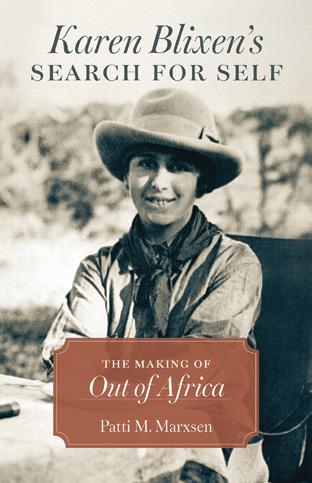
Karen Blixen’s Search for Self
The
Making of Out of Africa
PATTI M. MARXSEN
978- 0- 8071-7934- 5
$44.95

“Patti M. Marxsen takes us on a fascinating tour of the multiple aspects that have contributed to the creation and reception of Karen Blixen’s memoir. From the author’s original quest to record her experience of Africa, to our contemporary issues of postcolonialism, feminism, and the influence of Hollywood, Marxsen is a keen-eyed, surefooted guide, enriching our (re)reading experience at every turn.”—Alison Anderson, author of The Summer Guest
“In this thorough and insightful re-evaluation of Blixen and the afterlife of Out of Africa, Marxsen introduces the author to a new generation of potential readers. Marxsen’s enthusiasm for Blixen—balanced by judicious critique—makes for a highly readable as well as informative account of the Danish writer and her poignant memoir of colonial Kenya.”—Simon Lewis, author of White Women Writers and Their African Invention
“As Blixen deployed her selective memory and fervent, rebellious mind, she composed a myth of tenuous belonging that reveals as much about herself as about Africa. Those seeking a nuanced and fair reading of Out of Africa—one that confronts difficult political questions while honoring the evocative, feminist brilliance of its author—will find it in Marxsen’s singular analysis.”—Janet McIntosh, author of Unsettled: Denial and Belonging Among White Kenyans
“Marxsen’s excellent book on the making of Out of Africa reveals Blixen’s contradictory perspectives on topics such as colonialism, feminism, and racism. In so doing, Marxsen explores how the inclusion/exclusion arrangement and emphasis inherent in memoir writing underscore the complexities of Blixen’s character. In the end, the reader develops a deep admiration for Marxsen’s remarkable subject.” —Norman McMillan, author of Distant Son: An Alabama Boyhood
In Karen Blixen’s Search for Self, Patti M. Marxsen presents a twenty-first-century reconsideration of Blixen’s classic memoir Out of Africa (1937). Mixing scholarly research with personal reflection, Marxsen recounts an inspiring tale of a writer’s evolution, along with thoughtful analysis of the art and craft of memoir. This new study broadens understandings of Blixen’s complex self-realization, the skill of her literary art, and the book’s evolving afterlife.
PATTI M. MARXSEN is a biographer and independent scholar whose works have been published in the United States, Europe, and the Caribbean. Her books include Helene Schweitzer: A Life of Her Own and Jacques Roumain: A Life of Resistance
WINNER OF THE 2026 LEWIS P. SIMPSON AWARD
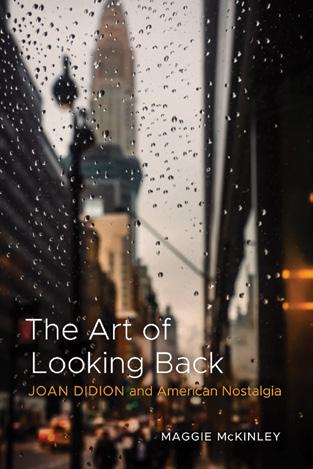
The Art of Looking Back
Joan Didion and American Nostalgia
MAGGIE McKINLEY
“This brilliant study lays bare Joan Didion’s wavering yet insistent wrestling with nostalgia, American style, over more than sixty years. Maggie McKinley’s incisive but subtle cross-examination of the pervasive wistfulness that suffuses Didion’s fiction and nonfiction will stand as definitive.”
—J. Michael Lennon, author of Norman Mailer: A Double Life
“No one else has used nostalgia theory so thoroughly and convincingly as a critical tool to enhance our understanding of Didion’s life and work. To date, this book is the clearest articulation of Didion’s prescience—of the ways, now more than ever, that our national myths serve the powerful, even as those myths (denying history and infantilizing the public) have such great impact on the lives, deaths, and difficult circumstances of others.”—Robert J. Begiebing, author of Norman Mailer at 100: Conversations, Correlations, Confrontations
“McKinley’s book is essential reading not just for Didion scholars but also for those interested in how memory studies offers a means of navigating the uncertain, constantly shifting terrain of longing in the modern imagination.” —Brian Cremins, author of Captain Marvel and the Art of Nostalgia
“McKinley’s examination of nostalgia as literary theme and sociohistorical concept resonates clearly with questions that
plague the political present, helping reveal the enduring importance of reading Didion in our times.”—Andy Connolly, author of Philip Roth and the American Liberal Tradition
In The Art of Looking Back, Maggie McKinley evaluates the complex nature of nostalgia in the canon of Joan Didion, a theme that has often been taken for granted, oversimplified, and misunderstood. In reassessing this fraught concept, McKinley emphasizes the productive rather than regressive or escapist qualities of nostalgia in Didion’s work, highlighting its role as a critical tool used to dissect cultural myths and understand individual identity. McKinley’s contextualized analysis offers a nuanced understanding of Didion’s views of American history, national rhetoric, hubris, gender politics, grief and loss, and more, underscoring why Didion’s writing remains deeply relevant as a cultural touchstone in the twenty-first century.
MAGGIE M c KINLEY is professor of English at Harper College. She is the author of Understanding Norman Mailer and Masculinity and the Paradox of Violence in American Fiction, 1950–75, and the editor of Norman Mailer in Context and Philip Roth in Context.
MAY 2026
224 pages, 6 x 9
978- 0- 8071- 8609-1
Hardcover $45.00s, ebook available Literary Studies
APRIL 2026
232 pages, 6 x 9
978- 0- 8071- 8588- 9
Hardcover $45.00s, ebook available Literary Studies / Southern Studies
Southern Literary Studies
Scott Romine, Series Editor
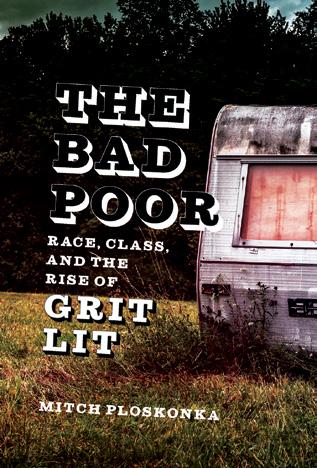
The Bad Poor Race, Class, and the Rise of Grit Lit
MITCH PLOSKONKA
“Mitch Ploskonka’s provocative meditation on poor whites and their shape-shifting roles in contemporary culture and politics offers deep insight and understanding for readers of the insurgent literary form known as Grit Lit. This is important work, and The Bad Poor does it with style.”—Matt Wray, author of Not Quite White: White Trash and the Boundaries of Whiteness
“The Bad Poor provides a fresh exploration of Grit Lit through the intersectional lenses of race, feminism, queerness, and disability studies. In this important contribution to southern studies, Ploskonka examines the evolution of Grit Lit, asking a series of urgent and provocative questions about the genre and its evolving forms.”—Sarah Robertson, author of Gothic Appalachian Literature
The Bad Poor examines the rise of Grit Lit, a movement in contemporary southern literature written by and about poor southern whites. Examining issues of genre, race, and culture, Mitch Ploskonka traces the emergence of this iconoclastic mode through its major authors to reveal a literary-cultural identity rooted in difference, marked by resistance to respectability and class performance, and shaped by reckoning with the legacies of whiteness and regional memory.
For those long dismissed as “white trash” and denied an active voice in their own representation, Grit Lit confronts the parallel concerns of finding a way to describe themselves and the means to communicate it appropriately. Beginning with Harry Crews and progressing chronologically to the present—including discussions of key works by Larry Brown, Dorothy Allison, Rick Bragg, and Tom Franklin, among others—Ploskonka examines how Grit Lit authors forge self-representations by experimenting with genres and engaging with identity politics. Through the ongoing search for a usable, unshameful identity, Grit Lit enacts a painful but heartening narrative of grappling with the realities of people and place by acknowledging difference.
As stories about the gritty or rough South proliferate across media, The Bad Poor relates an important story of literary self-fashioning by analyzing a body of literature that speaks to larger cultural discourses regarding racial identity, social justice, disability, and class divisions.
MITCH PLOSKONKA is assistant professor of English at the Ohio State University Agricultural Technical Institute (ATI). His research focuses on southern literature, disability studies, and popular culture.
Get It While It’s Hot
Gas Station, Roadside, and Convenience Cuisine in the U.S. South
Edited by SHELLEY INGRAM, CASEY KAYSER, and CONSTANCE BAILEY
Afterword
by
PSYCHE A. WILLIAMS-FORSON
“Get It While It’s Hot is the rare book that is at once both a monumental intellectual intervention and one of the greatest books on food and community I’ve read in decades. As a Black southern writer who was fed by the communities explored here, I’m thankful the editors made this offering possible.”—Kiese Laymon, author of Heavy: An American Memoir
“From personal narrative to literary analysis, from livermush to cinnamon rolls, this insightful collection positions gas stations, convenience stores, and cottage industry food sellers as important sites of resistance, community building, cultural assertion, and survival.”—Erica Abrams Locklear, author of Appalachia on the Table: Representing Mountain Food and People
“Get It While It’s Hot offers a compelling interdisciplinary engagement with the diverse ways southerners and folks passing through find sustenance in unexpected places. In those acts of cultural and somatic nourishment, contributors show how patrons of gas stations and other quick-service food retailers have come to experience those places as hubs of social and economic life. The rich range of material presented here demonstrates the multiple ways that roadside food establishments matter and function in the lives of proprietors, workers, long-time patrons, and weary pit-stoppers. A great companion for your next real or imagined road trip.”—Catarina Passidomo, associate professor of environmental studies, Washington and Lee University
SHELLEY INGRAM , professor of English and folklore at the University of Louisiana at Lafayette, is coauthor of Implied Nowhere: Absence in Folklore Studies and coeditor of Wait Five Minutes: Weatherlore in the Twenty-First Century.
CASEY KAYSER is associate professor of English and director of the Medical Humanities Program at the University of Arkansas. Her books include Marginalized: Southern Women Playwrights Confront Race, Region, and Gender and two coedited collections on the work of Carson McCullers.
CONSTANCE BAILE Y, assistant professor of English at Georgia State University, is the editor of Conversations with Kiese Laymon.
PSYCHE A. WILLIAMS- FORSON is professor and chair of the Department of American Studies at the University of Maryland, College Park. She is the author of Eating While Black: Food Shaming and Race in America, winner of a James Beard Media Award, and Building Houses out of Chicken Legs: Black Women, Food, and Power.

APRIL 2026
344 pages, 6 x 9, 21 halftones
978- 0- 8071- 8613- 8, Hardcover $54.95
978- 0- 8071- 8620- 6, Paperback $34.95 ebook available Foodways / Southern Studies
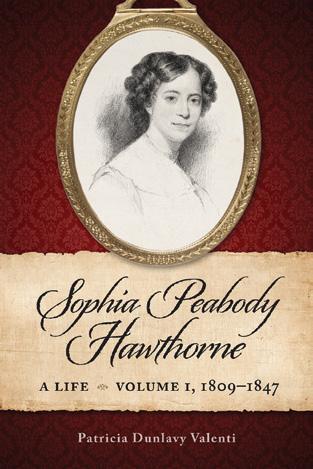
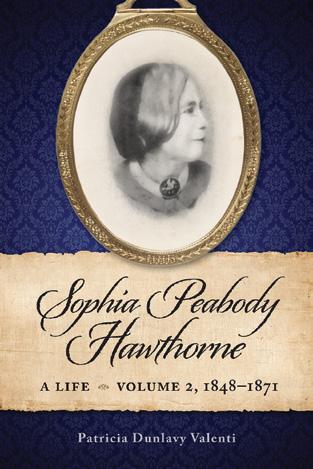
Sophia Peabody Hawthorne
A Life, Volume 1, 1809–1847 | A Life, Volume 2, 1848–1871
PATRICIA DUNLAVY VALENTI
“A critical piece of scholarship on American women artists and women’s contributions to transcendentalism, this book remains as relevant today as when it was first published.”
—Kate Culkin, author of Emerson’s Daughters: Ellen Tucker Emerson, Edith Emerson Forbes, and Their Family Legacy
“Patricia Dunlavy Valenti’s first volume of Sophia Peabody Hawthorne: A Life challenges the critical, cultural, and familial constructions of the wife of one of America’s greatest authors, while at the same time challenging our concept of biography itself.”—Andrea Knutson, associate professor, Department of English, Creative Writing and Film, Oakland University
“The second volume of Patricia Dunlavy Valenti’s elegantly written Sophia Peabody Hawthorne: A Life gives a fresh— often startling, always compelling—view of the endlessly fascinating mother, wife, artist, and political creature.”
—Diane Jacobs, author of Dear Abigail: The Intimate Lives and Revolutionary Ideas of Abigail Adams and Her Two Remarkable Sisters
“This is an engaging and meticulously researched biography of Sophia Peabody Hawthorne, focused on the second half of her life. Sophia’s relations with her husband, her children, and other significant people in their lives are thoroughly examined through the use of letters, journals, and other archival materials. Valenti provides astute accounts of Sophia’s contributions to her husband’s works, and she fills
MARCH 2026 | Volume 1, 322 pages, 6 x 9, 18 halftones
978- 0- 8071- 8540-7, Paperback $34.95, ebook available Biography / Gender Studies
in key background details about the contexts in which they were written and published.”
—Larry J. Reynolds, author of Devils and Rebels: The Making of Hawthorne’s Damned Politics
In Sophia Peabody Hawthorne: A Life, Patricia Dunlavy Valenti presents Nathaniel Hawthorne’s spouse on her own terms, situating her remarkable life within its own historical, philosophical, and cultural context, and freeing her from notions that Nathaniel constructed and that his biographers perpetuated. The first of this two-volume work recounts Sophia’s accomplishments as one of America’s first professional women artists, a transcendentalist thinker, and a prolific travel writer. The second volume explores Sophia’s abandonment of her artistic career— at Nathaniel’s urging—to adopt the roles of wife and mother, widow and impoverished guardian of her husband’s legacy, and, finally, expatriate.
PATRICIA DUNLAVY VALENTI is professor emerita of English at the University of North Carolina at Pembroke. An award-winning teacher who held visiting professorships at the U.S. Military Academy and the U.S. Air Force Academy, she is the author of five books and numerous articles on American literature and biography.
MARCH 2026 | Volume 2 , 364 pages, 6 x 9, 17 halftones
978- 0- 8071- 8539-1, Paperback $34.95, ebook available Biography / Gender Studies
Rubble Masonry
ROSE McLARNEY
“These compact and lyrical essays could have been written by no one save Rose McLarney. Her training in poetry— a pitch-perfect ear and metaphoric virtuosity—serves her investigation of expansive and braided topics in an original and fascinating book.”—Beth Ann Fennelly, author of Heating & Cooling: 52 Micro-Memoirs
“What a set list of musings in Rubble Masonry, with its peerless nuance and quirks! Peep the terrain of McLarney’s wide and mighty curiosity. Rubble Masonry is impressively splendid.”—Rodney Terich Leonard, author of Sweetgum & Lightning
“Reading Rubble Masonry, I was inundated by new possibility. I relearned, loving the new possibilities for the lyric ‘I,’ just as, like McLarney, I wondered, ‘What can I come closer to calling mine?’ A spellbinding read; I am full of praise.”—Sally Keith, author of Two of Everything
“This collection of startling, deeply original linked essays, with their lush, specific imagery and high-flying associative leaps, provides a meditation on the past in an attempt to understand the bewildering present. Rubble Masonry provides a space for contemplation—and, ultimately, for renewal.”—Charlotte Pence, author of Code
Rubble Masonry is a collection of lyric essays that takes its title from the practice of stone masons who, rather than using materials cut to ideal measurements, work with found rocks’ natural shapes. It combines the rich images and musical language of poetry with prose’s capacity to share personal narratives and information from wide-ranging sources. Diverse content and innovative form distinguish a book that explores the places in which its author, Rose McLarney, finds herself as a woman from the mountain South—in history, national dialogues, public spaces, the natural world, and lineages that extend beyond an individual’s life on earth.
ROSE M c LARNEY ’s collections of poems are Colorfast, Forage, Its Day Being Gone, and The Always Broken Plates of Mountains. She is coeditor of A Literary Field Guide to Southern Appalachia and the Southern Humanities Review. McLarney is Lanier Endowed Professor of Creative Writing at Auburn University.

MARCH 2026
192 pages, 5 1/2 x 8 1/2 978- 0- 8071- 8589- 6
Paperback $29.95, ebook available LSU Press Paperback Original Literary Essays
FEBRUARY 2026
174 pages, 6 x 9
978- 0- 8071- 8616- 9
Paperback $24.95, ebook available
LSU Press Paperback Original Poetry
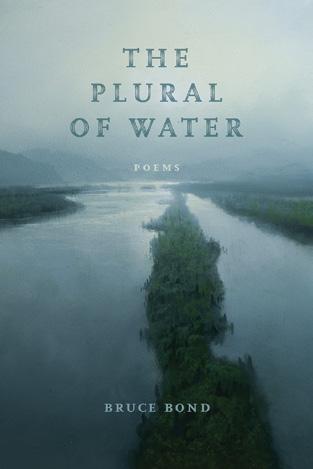
The Plural of Water Poems
BRUCE BOND
978- 0- 8071-7796- 9 Paperback $20.95
“In The Plural of Water, Bruce Bond composes a searching, open-field meditation on the fractured psyche, ecological precariousness, and the lyric’s capacity to hold the unrepresentable. Structured in three movements, this collection traverses trauma, memory, and planetary grief, engaging with suffering not as a subject to be resolved but as an epistemological and ontological problem. Here, the lyric is a porous body: vulnerable to the pressures of violence and silence, yet capacious enough to hold contradiction, fluidity, and recurrence. Bond’s poems unspool in an elliptical syntax that mirrors the fragmentary experience of consciousness itself, fusing philosophical inquiry with imagistic precision. At once somatic and cerebral, The Plural of Water asks how we perceive, what we inherit, and whether language—like water—can ever bear the full weight of what it is asked to carry.”—Kimberly Grey
Bruce Bond’s new book of poetry, The Plural of Water, offers a trilogy of sequences that explore the relation of the unconscious—our denials, affinities, passions, and self-divisions—to our ability to perceive and negotiate the crises of our contemporary moment. Through a series of lyrics, both personal and historical, the book’s sections constitute parts of an integrated whole that seeks a deeper understanding of the psychological roots of ethics: traumatic fracture, ecological holism, and the ineffable, multiple, communal dimensions of personhood, drawn to and from the dark of all we love, dread, and labor to transform.
BRUCE BOND is the author of thirty-seven books, including the recent prizewinning poetry collections Vault and The Dove of the Morning News. He teaches part-time as a Regents Emeritus Professor of English at the University of North Texas and performs jazz and classical guitar in the Dallas/Fort Worth area.
A beaten child will wear in time a newly beaten face.
It will ask, do you forgive yourself, and mean, do you forgive the others. And yes, I say, I do.
A surge of air will rise into the body of the older boy who takes me to his basement. He takes my child face.
He will tell me to undo my buckle, and his, to close my mouth.
The world will crumple into small and smaller pieces, turpentine, rags, the caged blue of the furnace fire, a sway of hammers on their hooks.
The wind against the walls upstairs will be my distraction, and so, in later years, my bridge.
My witness, no sooner there than torn away.
—from “Winter’s Apprentice”
Elements & Offerings Poems
DAN BEACHY-QUICK
“Dan Beachy-Quick’s poems bubble up from the ancient sources—the grand, deep sources—rich in antiquity and rendered in classical gravity. So how is it they glisten with such cutting-edge innovation, such true aliveness and invention? Beachy-Quick is one of our most erudite contemporary poets yet one of our most soulful. Such is the source of his wizardry. He knows that philosophy, rich and vital, is not just knowledge but a generative love of wisdom.”—David Baker
“In Elements & Offerings, it’s as if language had suddenly woken up to its own existence and found itself astonished to be—to be composed simultaneously of thinking and of singing. Beachy-Quick, one of the great philosophical lyric makers of our age, draws from the deeply ancient in an idiom that is at the same time thrillingly new.”—Bruce Beasley
The poet Paul Celan noted that, in his view of language, thinking and thanking are cognate, innately connected in their roots and connotations. Elements & Offerings, a new collection of poems by Dan Beachy-Quick, is a book-length poetic investigation of that hope—that to think is to learn to thank; that to thank is to learn to think. The first two sections seek a way to work toward poetic origins, taking inspiration from the alphabet, first philosophy, grammar, and prophecy; the last section offers poems composed over many years, simple gifts of gratitude to teachers and friends.
DAN BEACHY- QUICK is a poet, essayist, and translator. His work has been supported by the Monfort, Lannan, and Guggenheim Foundations, and longlisted for the National Book Award in Poetry. He teaches at Colorado State University, where he is a University Distinguished Teaching Scholar, and serves as interim chair of the English department.
I wanted to think about the universe. How it came to be.
How in it there are rabbits, stars, memories, children. I wanted to think about others thinking how thought is the blood around the human heart.
I found in myself old fears; only some of them were mine. What is thought about turns away from thinking. What is spoken about turns away from words. I wanted to find the proper invocation.
Not the goddess to sing wrath; not the god to sing power. Word that opens within itself an honest void.
A mind nest; a house of brooding.
—from “Library of —”
JANUARY 2026
96 pages, 6 x 9
978- 0- 8071- 8603- 9
Paperback $20.95, ebook available LSU Press Paperback Original Poetry

FEBRUARY 2026
90 pages, 6 x 9
978- 0- 8071- 8614- 5
Paperback $20.95, ebook available
LSU Press Paperback Original Poetry
A Red Knock-Knocking like a Heart Poems
KATE GASKIN
978- 0- 8071-7583- 5

“Kate Gaskin’s A Red KnockKnocking like a Heart depicts a heart breaking and repairing in slow motion, but the most striking thing is the quality of this book’s light—sadness and grief are as bright as the sun, a mass of nuclear fusion shining with excruciating brightness into all the hurt places, filling them with love. An extraordinary collection.”—Niina Pollari
“Entering this beautiful, heartbreaking book is like walking through a gallery dedicated to preserving the precious artifacts of a world of grievous loss. Though the poems meditate on the darkest realities, light suffuses the blackest corners of grief. These poems are given to us by a suffering yet resilient soul, whose understanding of our flowering world is generous and profound.”—Sidney Wade
“A Red KnockKnocking like a Heart is a gorgeous exploration of the complexities of parenting. It’s astonishing how much beauty and pain Gaskin distills into line and form. Through still lifes and landscapes she turns moments of life into ekphrastic art. Breathtaking in their tenderness and honesty, the poems remind us how love breaks and remakes us every season.”—Traci Brimhall
A Red Knock-Knocking like a Heart chronicles a mother’s harrowing journey through infant loss and a disastrous hospital birth, while also exploring the joyful complexities of raising a neurodivergent child. Using image and sound derived from the beauty of the natural world, Kate Gaskin’s poems sift through grief while tapping into the sublime state that underlies loss and love.
KATE GASKIN is the author of Forever War, winner of the Pamet River Prize. Her poems have appeared in American Poetry Review, Southern Review, and Ploughshares, among others. She directs Adroit Journal’s summer mentorship program and is an assistant editor for TRP: The University Press of SHSU.
Could it get any better, falling in love in September when even the air was honey, even the water was honey? Knowing now what I know about how things would go—the hospitals and doctors’ offices, the flickering fluorescent sorrow particular to rooms where diagnoses and babies are delivered, how death came and life too—well, what was there to do
that day except watch pink horses in their little pen under pines that stretched all the way, I swear, to something as awful, as luminous as heaven.
—from “Pastoral with Pink Horses”
Resurrection Pie Poems
JOHN WALL BARGER
“The poems in John Wall Barger’s Resurrection Pie are triumphal examples of the mystery that makes the lyric what it is. These are poems that are both easily apprehended and fathomless.”—Shane McCrae
“Resurrection Pie is deliciously full of event and detail. Barger, a poet of great affability, is also wonderfully unwilling to smooth over trouble or falsify reality.”—Daisy Fried
“Barger’s new collection shows the celebrated poet shimmying in the peaks of the contemporary lyric. The poems in Resurrection Pie gather and grieve and party hard with bighearted tenderness and a propulsively twisting imagination.” —Zach Savich
“Barger has an absurdist’s heart, and it’s a vast heart, full of grief, heartache, and enchantment. In these pages, you might find yourself in a duel with Elvis, or chatting with a ghost named Marcus Aurelius. There might be secrets buried in the yard, but Barger’s expansive imagination will illuminate each of those secrets, and you will be charmed and changed.”—Matthew Olzmann
A resurrection pie is defined as any dish made from yesterday’s leftovers—a meal that, in essence, rises from the dead. In this spirit, John Wall Barger’s new collection of poetry calls forth the past and its dead, describing a bardo-like psychic terrain in a language of fable and trauma. The poems move fast and strange: a man arrives at his ex-lover’s island of secrets; a mourner coughs up red flower petals; a
man walks backward across Philadelphia as bodies rise out of the ground; a boy watches his dead sister’s flea circus through a magnifying glass.
In language by turns vivid and destabilizing, Barger writes the odd, the marvelous, and the wounded with unguarded clarity. Resurrection Pie is a work of serious play: absurd, intimate, melancholic. Dispatches from inside the fever dream.
JOHN WALL BARGER is the author of six previous collections of poems and one collection of essays. He lives in Vermont and lectures in the Writing Program at Dartmouth College.
They say great stories have no secrets. But we humans fly several kites at once.
I eat while sleeping. I dance, work, love, sing while sleeping.
I hunt the goblins that live in the shadows of the Forest of Clichés while sleeping.
I fly several kites while sleeping.
—from “How I Learned to Sleepwalk”
MARCH 2026
96 pages, 6 x 9
978- 0- 8071- 8606- 0
Paperback $20.95, ebook available LSU Press Paperback Original Poetry
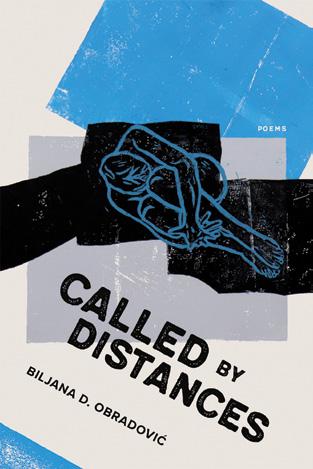
JANUARY 2026
102 pages, 6 x 9
978- 0- 8071- 8586- 5
Paperback $21.95, ebook available LSU Press Paperback Original Poetry
Called by Distances Poems
BILJANA D. OBRADOVIĆ
“Called by Distances travels through New Orleans and around the world in poems that gain their lyric impulse through narrative exactitude. ‘We had to wear masks, not for romance / but to protect ourselves from the invisible,’ writes Biljana D. Obradović, who commits to writing it as she sees it so we might see what is not there! This book is one of a kind.”
—Jericho Brown
“Driven by a brilliant worldliness, and by an urgency of witness, Obradović’s new poems are stunning in their uncanny ability to resurrect language itself from the mundane. These are ‘true’ poems in that old way, and fine.”—Bruce Weigl
“I have long admired Obradović’s poems for their frankness, their downright bluntness. She can see straight through hypocrisy and mass delusion, and she is never afraid to point it out. In this collection, for the first time, she turns her merciless eye upon herself and her adventures as a perpetual international wanderer, native of a country (Yugoslavia) that no longer exists. ‘Transform? Blend in? // That’s the last thing I want,’ she declares. She need not worry, for her distinct poetic voice stands out and makes for a compelling, refreshing read.”
—Julie Kane
978- 0- 8071- 8375- 5
Paperback $20.95
In Called by Distances, Biljana D. Obradović looks back at a life that includes surviving the demise of her native country of Yugoslavia, the loss of her parents in the same year, and displacement from Hurricane
Katrina. Her poetry encompasses loves and deaths, international travels and adjustments to American culture, often accompanied by a feeling of not belonging anywhere. What emerges from these richly evocative poems is a portrait of an artist who resists the call to assimilate, and instead carves her own unique path, continuing to dream.
BILJANA D. OBRADOVI Ć is a Serbian-American poet, translator, critic, and professor of English at Xavier University of Louisiana. She has published collections of original poems, including Little Disruptions, poetry translations, and anthologies of work by contemporary Serbian writers.
Can’t we look at life as it is now, open-minded, here, where some buffalo still stand in the wild by the highways like ghost figures?
I have passed them, smelled them, tasted them— giants. Nothing has changed, maybe, not even the cowgirl who says, “You have to be intuitive, or get broken. Welcome to the Wild West!”
—from “The Tamed West”
Southern Messenger Poets
Dave Smith, Series Editor
Wonder Wheel Poems
CHELSEA WHITTON
“Chelsea Whitton’s Wonder Wheel is wide-ranging formally, tender in its depictions of family, startling in the evocation of violence, and calming in its grasp of the world’s wideness.”
—Mark Jarman
“Whether grappling with the tumultuous relationship between past and future selves, the grotesqueries of how femininity is constructed and performed, or the complexities of loss, Wonder Wheel is self-observant, candid, quirky, and poignant, full of unexpected gestures around whose corners lie profound discoveries.”—Rebecca Lindenberg
“Whitton’s voice is virtuosic, knocking off poetic forms with a seemingly effortless bravado, while also slipping into the confessional intimacy of a late night on Brooklyn bar stools sharing clove cigarettes. This is a stunning debut that is profoundly joyful and deeply serious.” —Jason Schneiderman
“Full of spit and sass, contradiction and denial, the center of Whitton’s wickedly off- kilter poetry churns with desire, her mind’s maw swirling large as a sunflower’s corolla.”
—Cate Marvin
Chelsea Whitton’s debut poetry collection, Wonder Wheel, dexterously whirls in sonic circles, ruminating on themes of spiritual bestowal and terrestrial bequest, millennial identity, adult friendship, feminine desire, and the mythmaking at stake in family history. Disoriented speakers who nevertheless believe they know where they are going, and what they are doing, provide an occasion for lyric expansiveness and periodic bathos, including elegies for June Carter Cash, Patsy Cline, the author’s father, an ex-cat, and others. At the heart of the collection is a rhyming
sonnet crown that offers a wicked inversion of the book’s larger vision by constructing an apocalyptic mythology of matrilineal inheritance reliant on resistance, destruction, and martyrdom as much as on cycles of creation and healing.
CHELSEA WHITTON is a poet and essayist whose work has appeared in many print and online publications including Beloit Poetry Journal, Cream City Review, Copper Nickel, Cimarron Review, and Poetry Ireland, among others. She lives in southwestern Ohio and teaches at the Art Academy of Cincinnati.
Four Harbingers
Hecate of the crossroads and of undecidability, of no-moon nights that spoon-bend reason, acid laughter leaking from an awful place Athena of motherlessness and queer-born girlhood, of gray-eyed clapbacks, of upshots delivered, insight ripping from behind like owl talons
Demeter
of the bitter bargain, of the doubled-over grief of mothers granted hell-shaped mercy, of handbiters and blight-bringers, never quite the same
Hestia of forgotten labor, silent all-mother to legions of servants, of lives boiling over in back rooms, their hymns bleached of words yet humming still
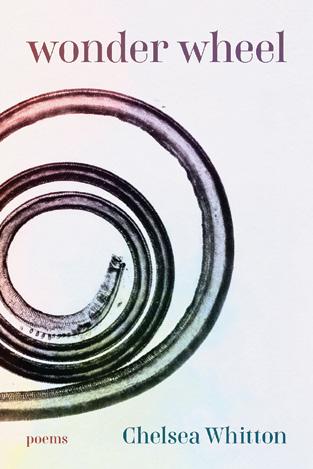
MARCH 2026
88 pages, 6 x 9
978- 0- 8071- 8587-2
Paperback $20.95, ebook available LSU Press Paperback Original Poetry
Sewanee Poetry
Wyatt Prunty and Leigh Anne Couch, Series Editors

FEBRUARY 2026
98 pages, 6 x 9
978- 0- 8071- 8585- 8
Paperback $20.95, ebook available
LSU Press Paperback Original Poetry
Steady Daylight Poems
JOSEPH BATHANTI
978- 0- 8071-7692- 4
Paperback $19.95

“Plainspoken, set on streets with names like Liberty and Prince, the poems in Joseph Bathanti’s Steady Daylight travel through time, taking us back to a midcentury Italian American childhood in Pittsburgh, a vanished world. Every memory feels alive here. Bathanti has a gift for making the past present, his poems like brief requiems for the living and the dead.”
—Jehanne Dubrow
“What you hold in your hands isn’t simply a collection of poems; what you hold is the song of a lifetime, a timeline drafted in verse, generations arriving, generations given to the earth, decades of history housed by Bathanti’s loving pen. He gives us the full arc of a life in these pages, and we are transported, augmented, filled with the spirit of it all.”—Brian Turner
“Bathanti’s wonderful new book of poems is filled with stunning recall, as if from an obsessed insomniac bearing a camera, revealing an old Pittsburgh, filled with ‘straphangers, cigarettes and slush / the bus finally [wheezing] to the curb,’ ever conscious of class and racial divides and annihilations that have existed from the start.”
—Judith Vollmer
Steady Daylight, the latest volume of poetry from Joseph Bathanti, returns to the place he grew up, the now-vanished neighborhood of East Liberty in Pittsburgh. The speaker traipses fearlessly between real and imagined realms, in the face of often conflicted sensibilities, secrets, and silence. While the physical touchstones of the “old” East Liberty have evanesced, Bathanti invents a world ample enough for
the dead and the living through incantatory language thrumming with hope and photographic integrity. Ultimately, Steady Daylight is an elegy and a praise song, a heartbreakingly beautiful requiem.
JOSEPH BATHANTI , author of more than twenty books, is the former North Carolina poet laureate (2012–14); recipient of the North Carolina Award in Literature, the state’s highest civilian honor; and an inductee of the North Carolina Literary Hall of Fame.
Today in Heaven, my father turned 105. Finally working steady daylight he’s got it knocked: eight to four, double-time-and-a-half— no asbestos, no shoveling slag on the open hearth; no depending from a boom crane, six degrees, in sleet; no boss— thirteen weeks vacation annually Kingdom Come.
The union up here takes zero shit.
—from “Steady Daylight”
A Day of It
Poems
MICHAEL CHITWOOD
“Michael Chitwood’s poetry honors inventive southern folk vernacular and converses with contemporary literary greats such as Stanford and Levine—in a flawless style all his own. Many poems look back, but to read them is ‘more like time being made, not passing’ and you’ll want to linger as long as you can in the observant stillness with which the book graces us.”—Rose McLarney
“There are few contemporary poets who have Chitwood’s generous thankfulness for the ordinary.”—Ron Smith
“This charming book is a love song for a rural world of selfsufficiency, good humor, hard work, and grace. Here is a poetry of solace and consolation, a dropperful of pennyroyal for our troubled times.”—Adrian Blevins
“The unassuming wisdom in A Day of It coaxes farm life into living experience and preserves the cultural history of the rural South. A barn becomes encapsulated time, knowledge to be attained, lineage, and the spirit of the backwoods sublime that only those who approach humbly and without expectation can witness in the seemingly mundane. Chitwood is one of the finest poets of our generation. He teaches without teaching.”—Adam Vines
Michael Chitwood’s ninth book of poems, A Day of It, is a celebration and homage to the people and places of his native Appalachia, acknowledging its history and the changes evident throughout the mountain region.
MICHAEL CHITWOOD ’s work has received the L. E. Phillabaum Award from LSU Press, the Chaffin Award for Appalachian Writing, and the Library of Virginia Literary Award for Poetry.
A Day of It
He’d put on a pot of beans and leave them to simmer then rake a pile of leaves from her old flowerbeds and get a smolder started. He’d cut a plug of Brown Mule and tuck it in his cheek then lean on the rake, shifting the pile now and then to let air to the fire, arranging the sparks and the afternoon, letting the wispy drift of smoke write a thin cursive note across the yard. Later, he’d go in to his beans and a baseball game on the radio, seeing the pitches and hits on the diamond in his mind.
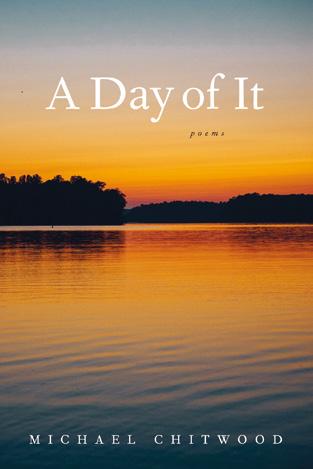
JANUARY 2026
96 pages, 6 x 9
978- 0- 8071- 8604- 6
Paperback $20.95, ebook available LSU Press Paperback Original Poetry
The Southern Review publishes the best contemporary fiction, nonfiction, poetry, and translation by established and emerging writers. Read original and translated prose from writers like Peter Orner, Choi Eunyoung, Ladee Hubbard, Mesha Maren, Yxta Maya Murray, Miroslav Penkov, and Debbie Urbanski, and many others.
Recent issues include poetry by luminaries such as David Wojahn, Marilyn Nelson, Sharon Olds, Denise Duhamel, Alice Friman, Kwame Dawes, and David St. John, accompanying an array of exciting work by the nation’s top new writers, among
them Maggie Smith, Erika Meitner, Amaud Jamaul Johnson, Jose Hernandez Diaz, Charles Rafferty, and Danusha Laméris.
Since its inception in 1935, The Southern Review has been a significant presence in the contemporary literary landscape. Notable writers who appeared in its pages early in their careers are now among the nation’s most distinguished and important voices.
www.thesouthernreview.org
email: southernreview@lsu.edu (225) 578- 6453 fax: (225) 578- 6461
INDIVIDUAL SUBSCRIPTION RATES:
Single Copy $15
One year (4 issues) $50
Two years (8 issues) $85
Three years (12 issues) $110
Digital Subscription, One year (4 issues) $30
Digital + Print Subscription, One year (4 issues) $60
INSTITUTIONAL SUBSCRIPTION RATES: Single Copy $30
One year (4 issues) $115
Two years (8 issues) $145
Three years (12 issues) $180
Please add $18 per year for international shipping.
The Southern Review is available electronically through Project Muse: http://muse.jhu.edu
Booksellers: Please contact The Southern Review to order ISSN 0038- 4534. Issues are published quarterly.
SALES INFORMATION
GENERAL INFORMATION
Requests for sales and discount information should be directed to our sales department (225-578-8282).
PRICES AND DISCOUNTS
Booksellers: Unless otherwise indicated, all books are subject to our trade discount schedule, a copy of which is available from our sales department. Books marked s are short-discount titles. For information regarding the LSU Press Agency Plan, please contact the sales department or a sales representative.
Libraries: Please contact our customer service department (800-848-6224) for the latest discount schedule. Prices, discounts, publication dates, and manufacturing specifications listed in this catalog are subject to change without notice.
LSU Press participates in the Cataloging-in-Publication Program of the Library of Congress.
SUBSIDIARY RIGHTS
Inquiries regarding subsidiary rights should be directed to McIntosh and Otis, 235 Main Street, Suite 318, White Plains, NY 10601
https://mcintoshandotis.com/ 212-687-7400 FAX 212-687-6894
SALES REPRESENTATIVES
DOMESTIC:
LSU Press is represented by Columbia University Press Sales Consortium.
Southeast: Catherine Hobbs
Phone: 804-690-8529 | Fax: 434-589-3411 Email: ch2714@columbia.edu
Northeast: Conor Broughan Phone: 917-826-7676 | Email: cb2476@columbia.edu
Midwest: Kevin Kurtz
Phone: 773-316-1116 | Fax: 773-489-2941
Email: kk2841@columbia.edu
West: William Gawronski
Phone: 310-488-9059 | Fax: 310-832-4717
Email: wgawronski@earthlink.net
SALES REPRESENTATIVES (CONTINUED)
FOREIGN:
Canada: Ampersand | Phone: 866-736-5620
Fax: 866-849-3819 | Online: www.ampersandinc.ca
Canada (Orders): UTP Distribution | Phone: 800-565-9523 Fax: 800-221-9985 | Online: www.utpdistribution.com
Europe and all other regions: Mare Nostrum Group Phone: +44 (0)1423 562232 | Online: https://marenostrumgroup.co.uk.
DIGITAL REVIEW COPIES
Digital review copies of select titles are available for a limited review period at: https://www.edelweiss.plus/ Contact our sales department for additional information on digital review copies: 225-578-8282.
DESK COPY POLICY
If your bookstore has already placed an order for 10 or more copies of a title, ONE (1) free desk copy will be provided. To order please include the name of the bookstore, the number of books ordered, the name of the course, and your daytime phone number. A desk copy should not be requested if an examination copy has already been received.
EXAMINATION COPY POLICY
Qualified instructors of appropriate courses may request examination copies of books they wish to consider for classroom use (only three titles per instructor per semester, please). Paperback books are available free of charge upon receipt of a $6.00 per title shipping and handling fee. We will extend a 20% professional discount on cloth editions.
Prepayment (check, money order, VISA, Master Card, Amex, or Discover) must accompany your request and must include a shipping and handling fee of $6.00 for the first book plus $1.00 for each additional book ordered.
Requests must be made on departmental letterhead or from a university email address and include the title of the book, the name of the course, projected enrollment, your mailing address, and your daytime phone number. Please allow 4 weeks for delivery. Please mail examination copy requests to: Longleaf Services, Inc., 116 S. Boundary St., Chapel Hill, NC 27514-3808, fax to (800) 272-6817, or email to orders@longleafservices.org.
CONTACT INFORMATION
Orders and Inquiries
Orders and inquiries regarding stock availability, accounts, invoices, and shipping should be directed to our customer service department (800-848-6224)
Orders