2025 Journal
Principal
Thank you to all members of the community for your efforts to contribute to the education of our students in our 40th year. I feel lucky that our children can be raised in an environment where the adults around them question, evaluate, discuss, and debate the moral and ethical compass that guides our thinking and actions.
We want our children to be kind, compassionate, curious, and unafraid to work hard and to struggle; we want them to be unafraid to fail. This can only happen if they see us doing just this. How do we cope when things are uncomfortable, uncertain, or unknown? Whether we show them explicitly or not, they see the answers in us.
The Steiner pedagogy and the IB Diploma Program both work together to help keep our students as broad as possible for as long as possible in their thoughts, feelings and thinking about the world. We congratulate our 4th cohort of IBDP students on their achievement and thank the staff and parents who have guided them.
As we bid farewell to our year 12’s, we also say goodbye to some of our staff who are moving on to new adventures. Kate Hood has given an incredible amount of energy to our community, as the Head of Wellbeing, caring for students and families, and previously as Head of Secondary, where she was instrumental in growing the Secondary school and the IBDP. Kate will take up the Assistant Principal role at Lauriston Howqua next year. Amy McMahon has taught across primary and secondary classes and, most recently, taught IB English and guided our current Year 8 class as co-Guardian and is relocating to the Adelaide Hills. Amy Burns departs Class 3 for adventures in motherhood, and we all hope to see her return after a period of leave. Serena Moring is headed for
the Jindabyne mountains, and we thank her for her expert guidance in music. Tania Neil is moving to Cape Byron Bay Steiner School to return to a full-time teacher role. We thank these staff for their commitment and dedication to the school and their students, and we wish the very best in their next chapter. Likewise, we extend our thanks and best wishes to the families and students who have departed throughout the year. We value the contributions of everyone who chooses to attend our school, and we hope that you have experienced and helped to build goodness, beauty, and truth in your life and the lives of others in your time here.
We have reflected this year on the work of so many people who, over our 40-year history, have helped the school to remain a place of values-based education. More than ever, we need to promote, build, contribute to, and protect institutions that have a sense of wonder and curiosity at their heart, and which promote the feeling within each of us that the world is an amazing and special place.
GLENN HOOD
40 YEARS OF MANSFIELD STEINER SCHOOL
FRAN CUMMINS
“We
did
it
for our own children. We weren’t thinking twenty years into the future!”
Margaret Wilson Co-founder of Maindample Steiner School.
Margaret made this statement when the school, formerly Maindample Steiner School, now Mansfield Steiner School, was celebrating its 21st birthday. Twenty years later, the school is celebrating 40 years since its inception. No one could have imagined that what began as a seed of an idea discussed between two Secondary teachers, planted and nourished in the fertile soils of Maindample with six students, could become a thriving Kindergarten to Year 12 school with an enrolment of over 255 students and a staff of 50.
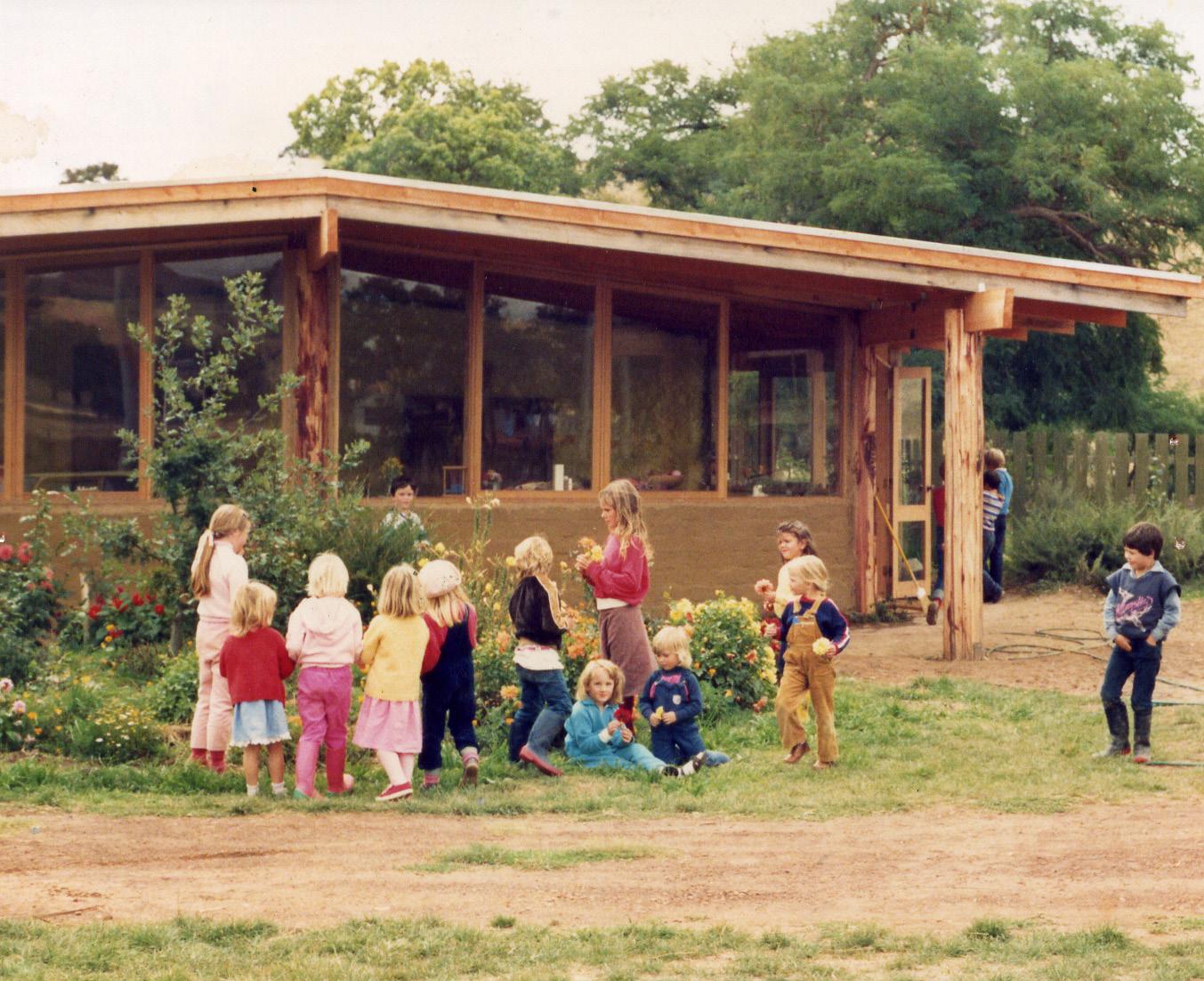
The school began life as a one-roomed mud brick building built by a handful of parents. The site was chosen at Maindample because it was equidistant between the homes of the founders Terri McMillan from Barjarg and Marg Wilson who lived at Merton. For over ten years, the school was an endeavour of human effort and cooperation that kept the fledgling school alive. According to Morag Huggins, founding parent and kindergarten teacher, “if you enrolled your child in the school, you enrolled your family”. Parents, friends, and teachers made an enormous contribution; parents paid minimal fees, and
teachers received minimal pay. Both cleaned the school, mowed the lawns, did the washing, nurtured gardens, organised events, and on the weekends, fundraised. The school’s foundations were embedded in passion, enthusiasm, determination, and high ideals. When the numbers grew to eleven in 1986, it was declared time for another room and another teacher. Families worked hard over the summer holidays, and by the start of the following year, two new classrooms were created.
Numbers fluctuated over time, and teachers and families came and went; such is the nature of a pioneering venture. Extremely passionate and determined teachers worked tirelessly and selflessly to keep the school afloat across some very turbulent waters. After the trials and tribulations involved with retaining teachers and students, the number of families steadily grew alongside the resolve of those involved.
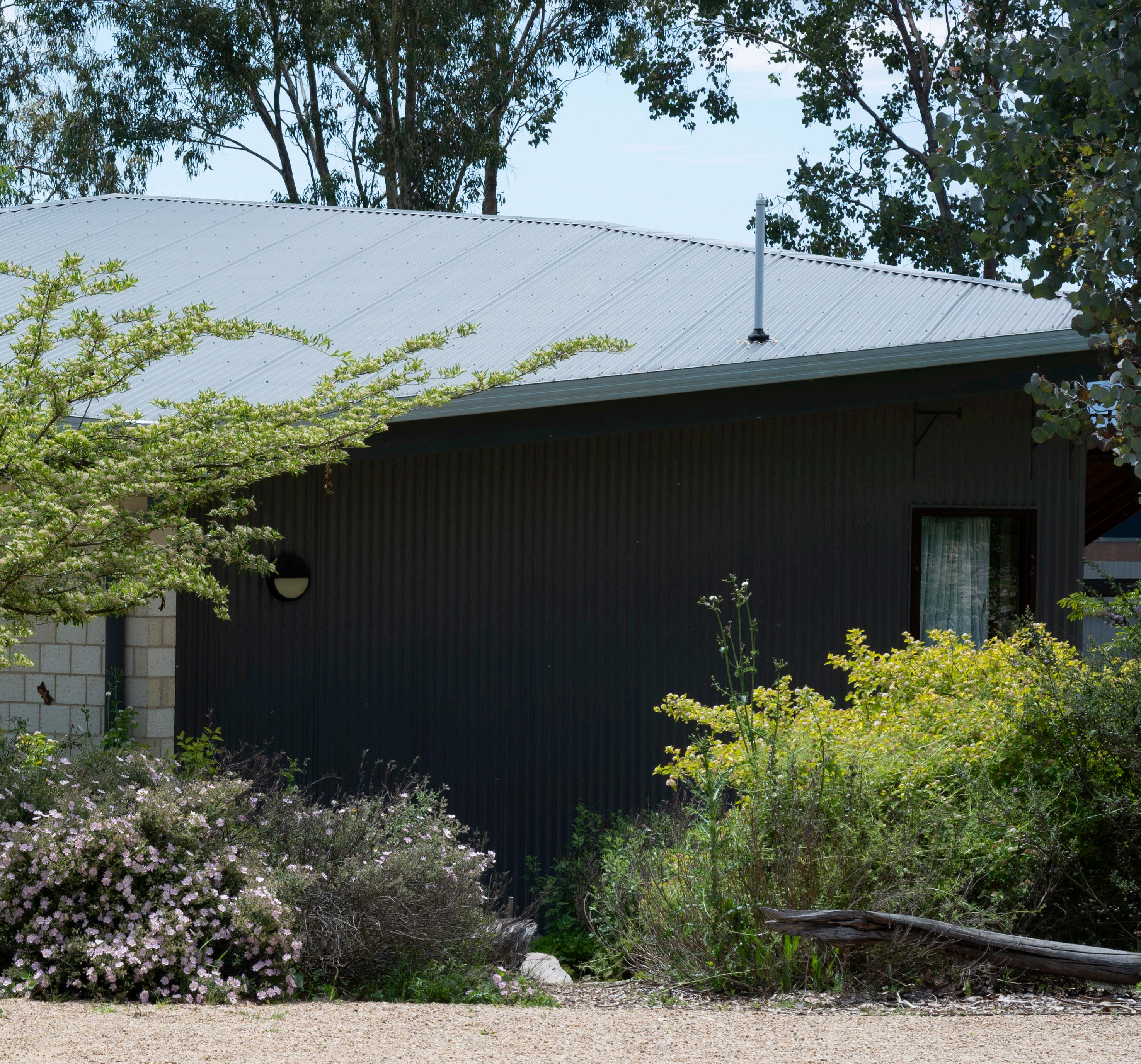
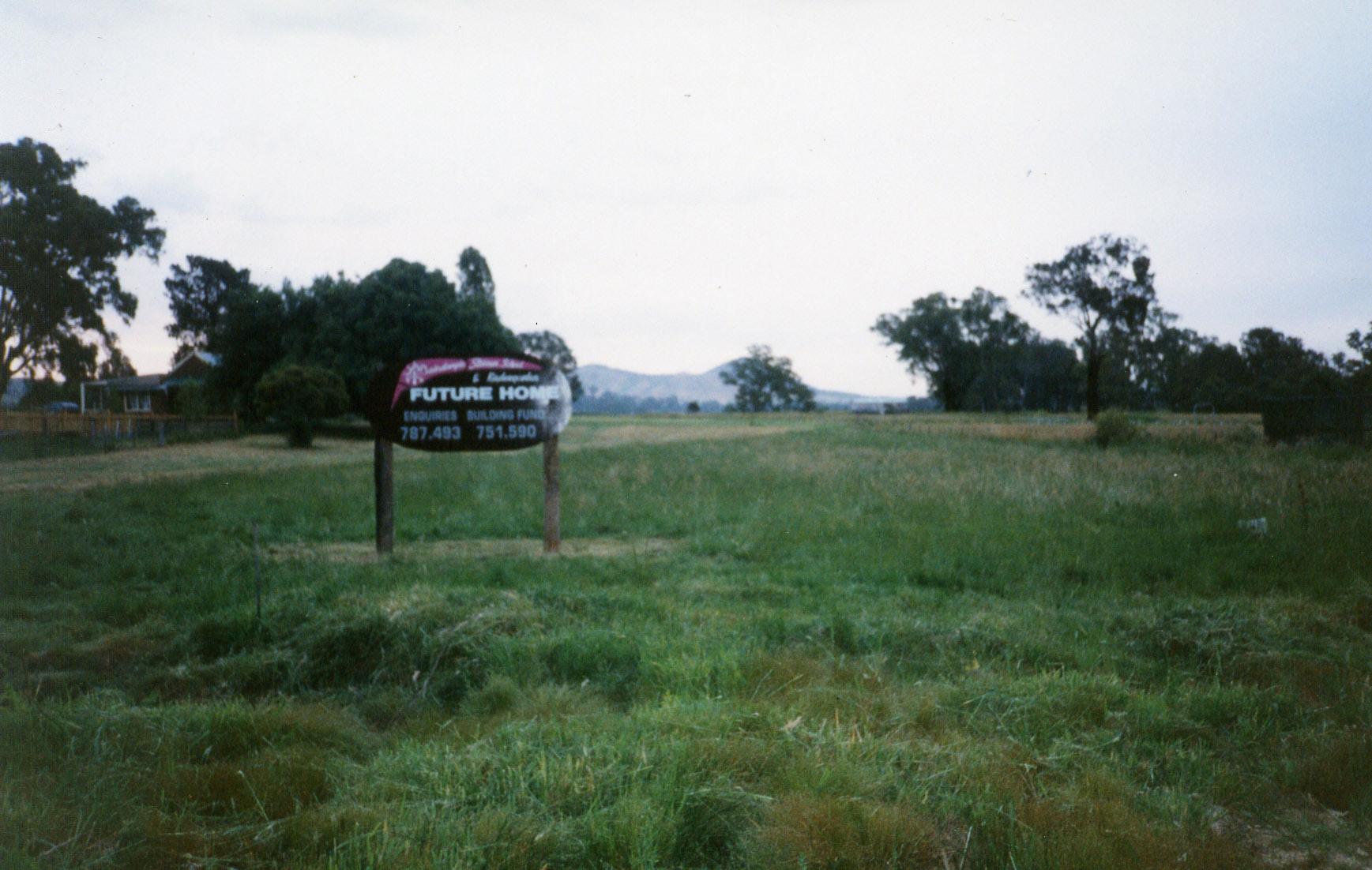
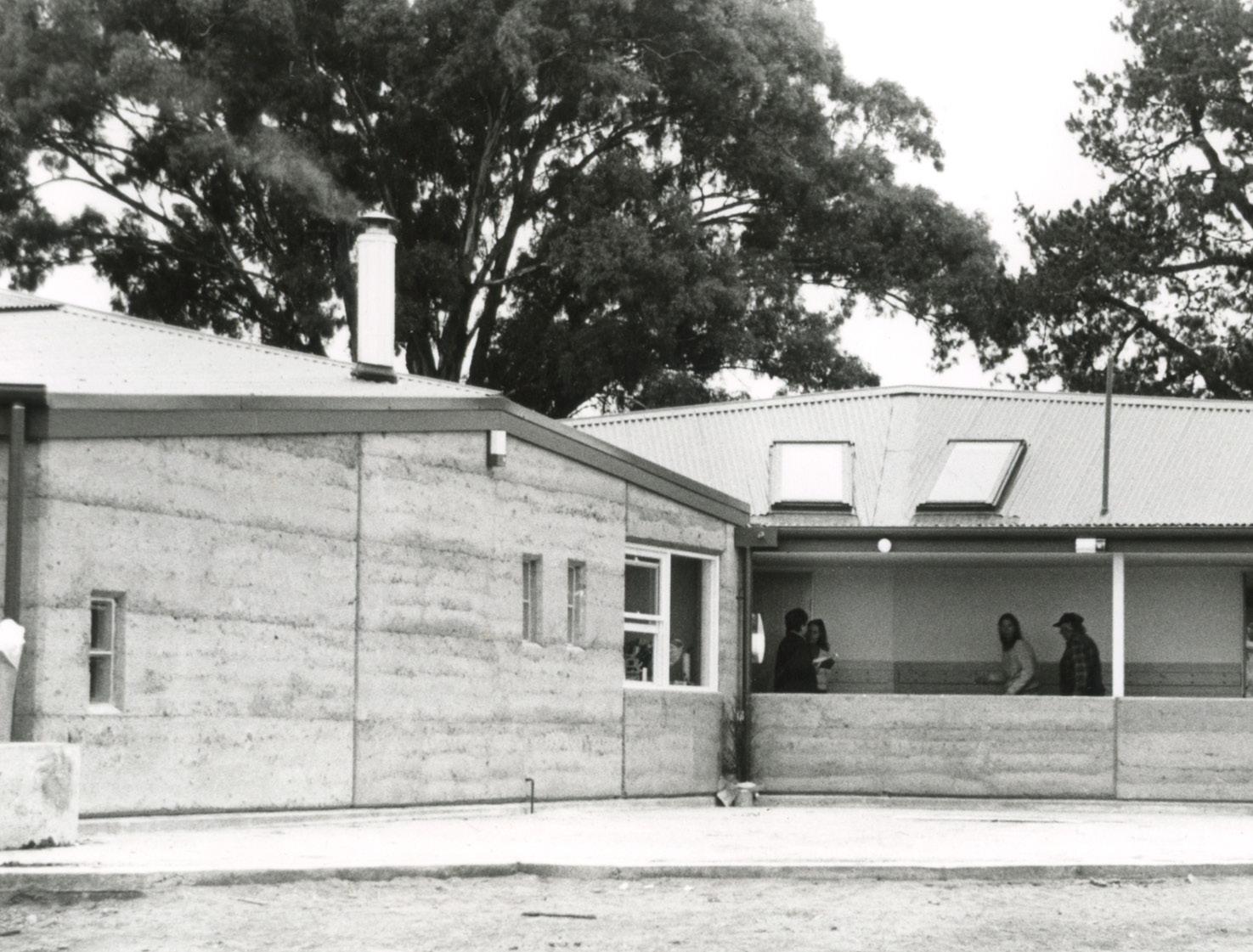
After a few years of consolidation, it was felt that the school would attract more enrolments and become a more significant part of the community if situated in Mansfield. In late 1993, after a great deal of trepidation, research, and convincing of the teachers, a site was purchased. This time, construction was a very different venture from parent-built rooms at Maindample. Architects, professional builders, project management teams, and bank finance helped to bring the vision to life. Maindample Steiner School was packed up by parents and relocated to the extensive
site it still occupies today at Highett St Mansfield – even the train carriage was moved. The new school was officially opened in 1996.
Festivals are an intrinsic part of the Steiner curriculum; they celebrate the connections with nature and, most importantly, bring the community together. It wasn’t long before the largest room could not accommodate a whole school event. With the retained determination and optimism from Maindample, a hall was obtained in Merton and made a remarkable odyssey on trucks across the Bonnie Doon bridge to Highett St where it has seen a long and happy life, most recently as the library.
The school grew, the small college of teachers developed into a staff comprising specialist teachers, more classrooms were added and even a science and art room. The gardens flourished, the trees spread their limbs, and the school established itself as a unique educational option in the Mansfield district. The Rosa Mundi and Morning Star kindergarten was built, and so too the Melliodora Hall. In 2008, slightly akin to the tale of the Fisherman’s Wife, the passionate and determined parents of the Class 6 students wanted more for their children. After much consideration, the school committed to expand its offering into Years 7 and 8.
The Australian Steiner Curriculum, approved by ACARA (Australian Curriculum, Assessment and Reporting Authority) is designed to meet the stages of development of the child. Each subject carefully
considers the needs of the age and inspires students to feel at home and capable in an everchanging world. Until 2016, the classes were all composite, and teachers were forever juggling the curriculum over two year levels. With increasing numbers and an expanding staff, the school could single-stream classes, which enabled the school to provide one of the key parts of Steiner education, a teacher who would remain with their class throughout the whole 6 years of their primary years. A new model of leadership was also introduced at this time, with the school’s first principal being appointed.
Being visionary requires optimism, creativity, resilience, and plenty of imagination to explore an opportunity. It takes copious amounts of passion to overcome the fear of failure and a healthy dash of pragmatism to acknowledge the risks involved. So, with the same grit and determination in 2017, the decision was taken to expand again, and the Year 9 outdoor education program was born, aiming to take students out of their comfort zone and into the High Country and beyond. The following year saw further expansion to year ten and an international student exchange to Slovenia. In 2018, Mansfield Steiner School commenced its candidacy to offer the two-year International Baccalaureate Diploma, and in 2021 the first group of Year 12 students graduated.
Forty years on, the school is thriving and is now an integral part of the educational landscape of Mansfield. It is truly a unique school in a unique country town.
Forty years of hard work, fortitude, and values-based education have led to 4 successful cohorts of Year 12 IBDP graduates. Many families and staff have come and gone over the years, and every individual has contributed to the creation of Mansfield Steiner School.
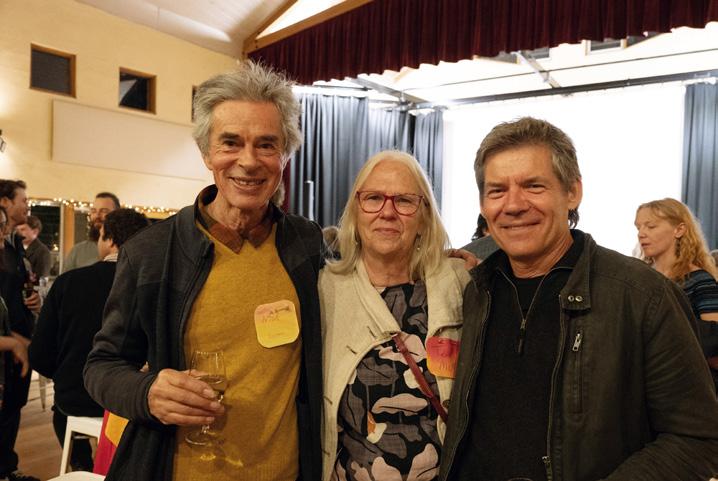
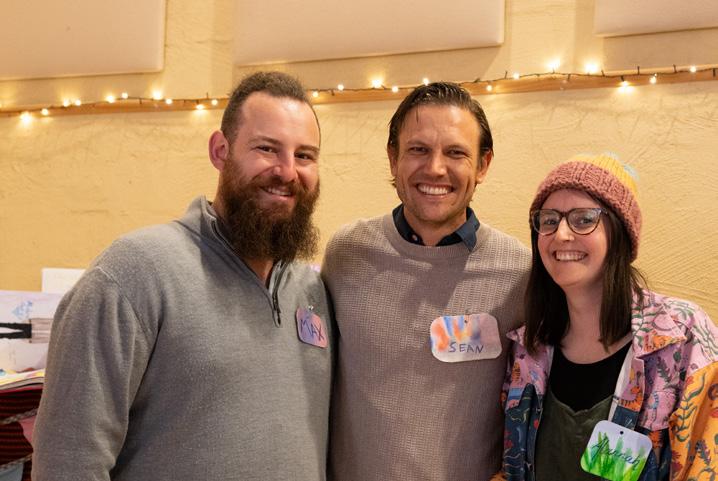
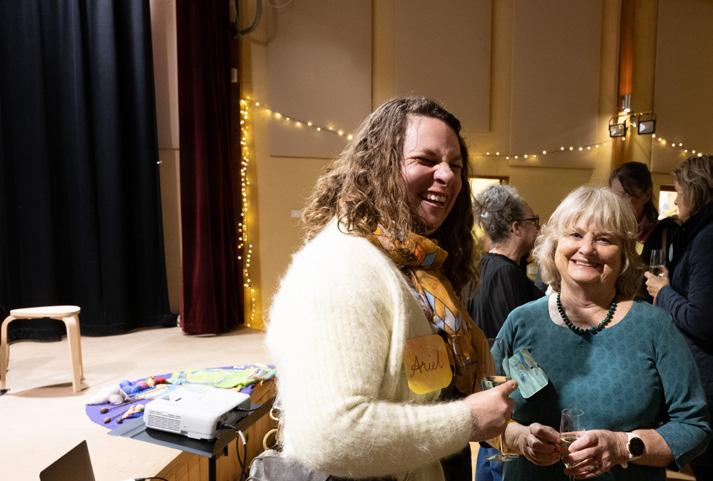
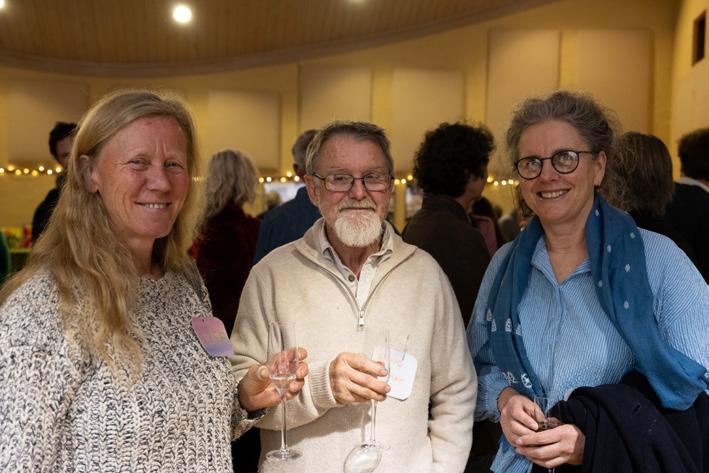
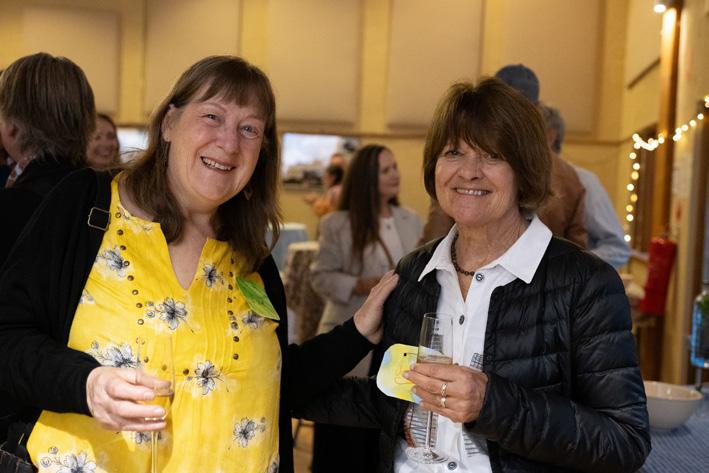
Alumni Celebration
Dreaming Drawala–
By Aria Sherman
The rivers flowing across the land
Songlines passed down from each person and hand
The beauty and birth of each water way
Bridging ancient lands to the modern day
The dreaming is a past and present bridge
Of the creation so old from river to ridge
Of a rainbow serpent protector of water
Told to each learning, young son and daughter
Our growing school on Taungurung land full of beauty
Each room the name of their people, a creation of unity
Dreaming on country, the great truth must be told
When we are one, stand with great stories of old
It is pain of the past, and freedom of future
That bridges our present, which we must nurture
An ancient land that will grow forever.
Festivals
KATE HOOD
Our festivals create a time stamp across the year. The children, teachers, parents and friends come together to mark a moment in time where we experience reverence, joy, celebration and reflection. Our children learn to hold a precious moment in time with a loving and caring community, and it is becoming somewhat unique within our society that they can sit in these moments with the self-regulation that the setting requires. Festivals help us to create a sense of ritual which a child feels deeply. Sometimes this can be confronting, but the overall power of love and care that is expressed from the community helps to hold our young people in that moment. Easter, Autumn, Reconciliation Week and Mabo Day, Winter, Spring, Advent and Christmas Festivals are all celebrated differently to meet the developmental age and stage of the children.
No matter the age of the students, the classes learn poetry
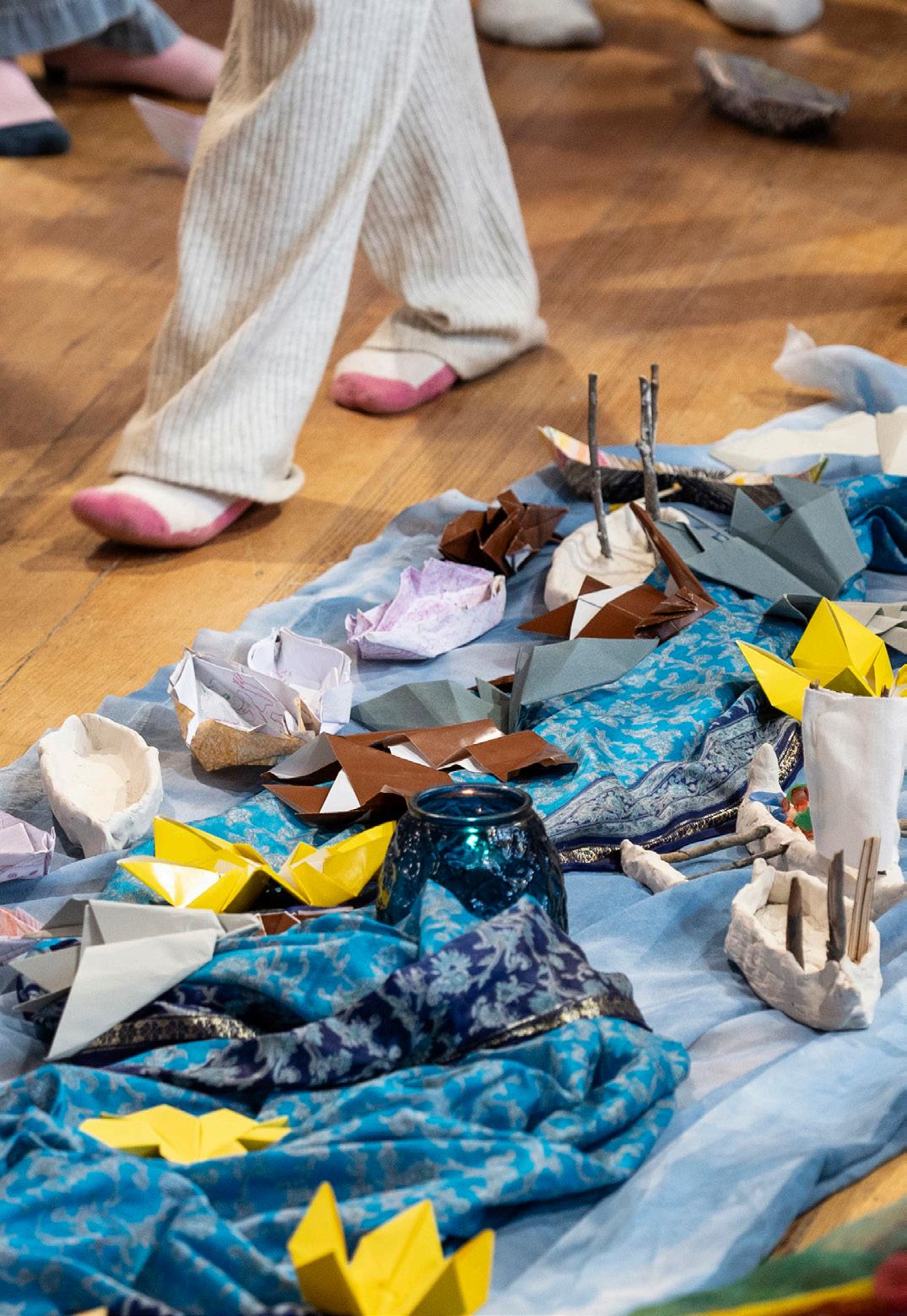
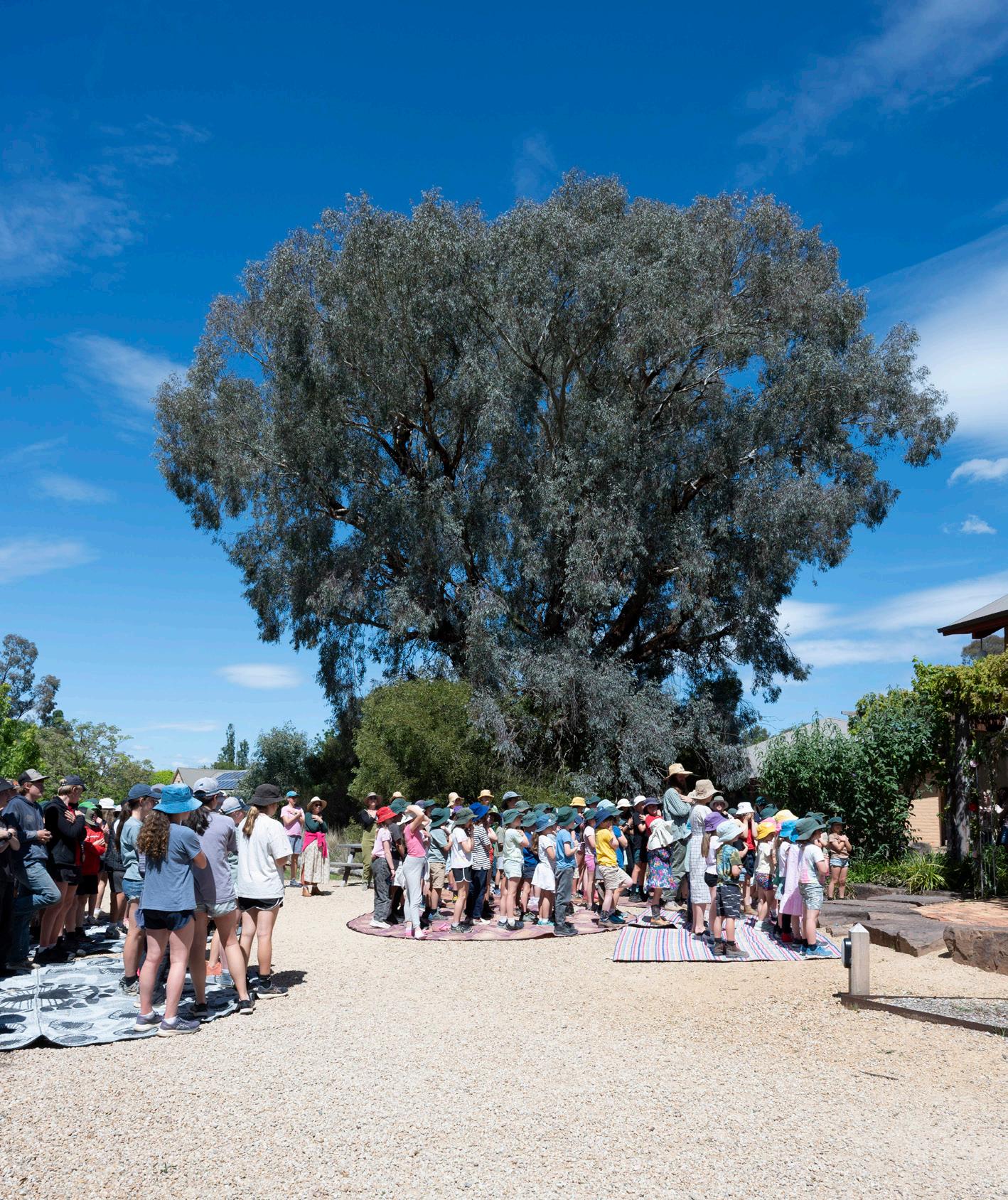
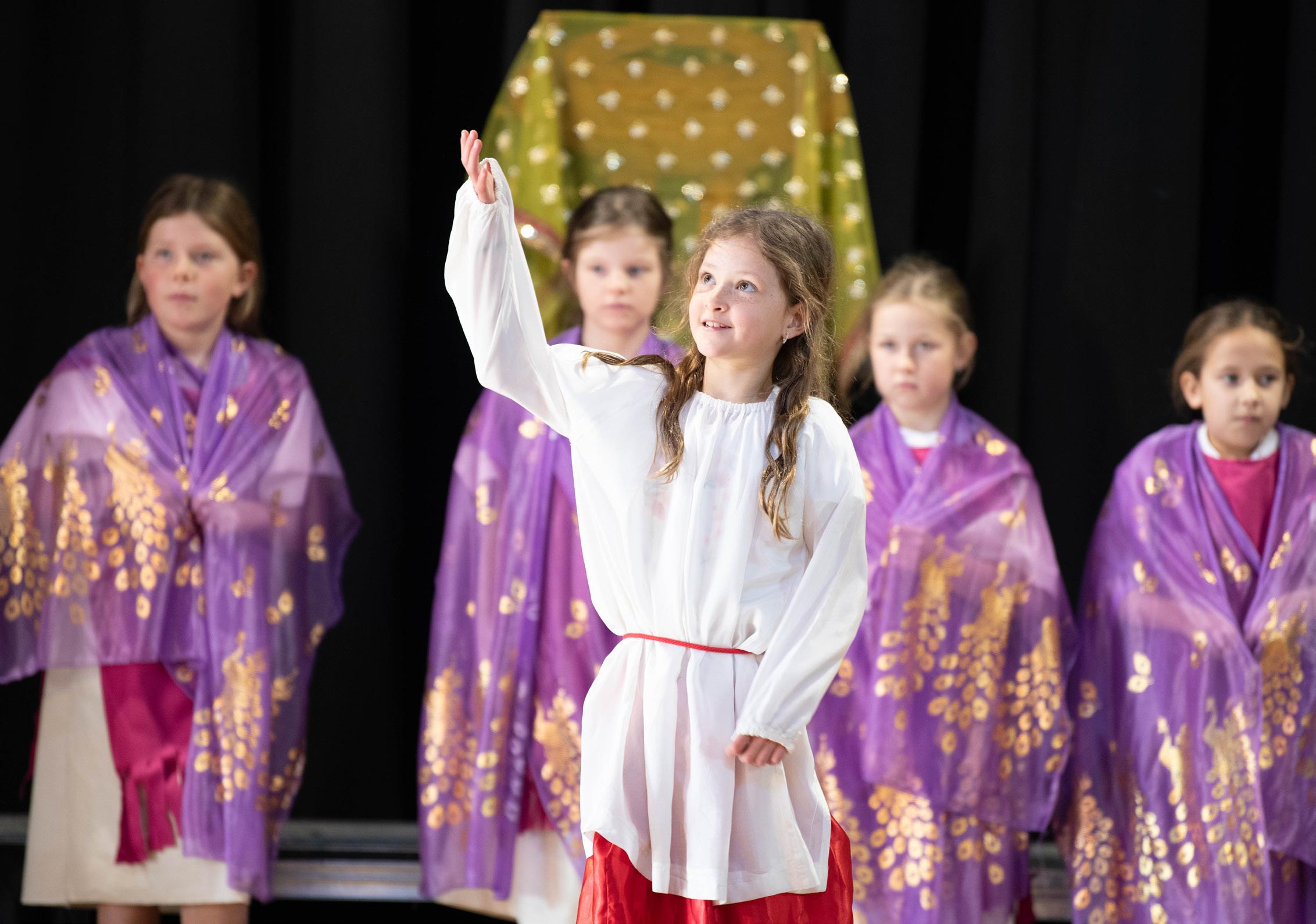
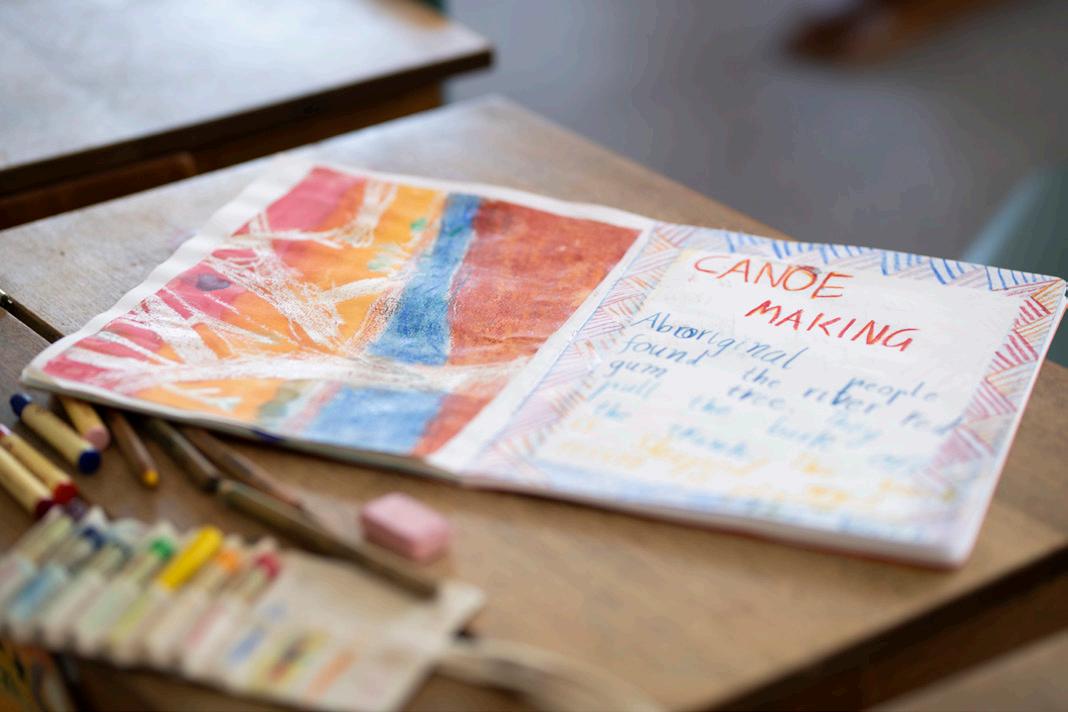
and song related to the festival and make handcrafts. In Autumn we make beautifully decorated lanterns, origami stars and snowflakes and candleholders in Winter, garlands in Spring, and Christmas cards and candle decorations through Advent. This year we had Aunty Angela join us for our Reconcilliation Action Week gathering where we brought to life the 2025 theme Bridging Now to Next. Class 4 recited from heart Adam Goodes book Somebody’s Land and all students made models of traditional canoes that they placed around our rainbow bridge in the centre of the hall. It was such a powerful festival and following it Aunty Angela sent us the following reflection:
“I was so honoured to be there. There were many times that I nearly cried. Starting with the river song – I thought of the ancestors, took the baby away. To all the children’s beautiful canoes in paper and clay, to the Adam Goodes book, the animals, birds…and then the grand finale of Aria’s poem which was gifted to me. I was very touched, moved, inspired to keep telling the Taungurung story even through the hatred. There was no hatred at your school – the complete opposite, love, understanding, the want to acknowledge and celebrate, the openness for truth telling is a true and meaningful, true way, of Reconciliation. Thank you Mansfield Steiner you have lifted my spirits. That was the quietest assembly I have ever been to, and the most profound.”
- Aunty Angela, Taungurung Elder
KITCHEN & GARDENS
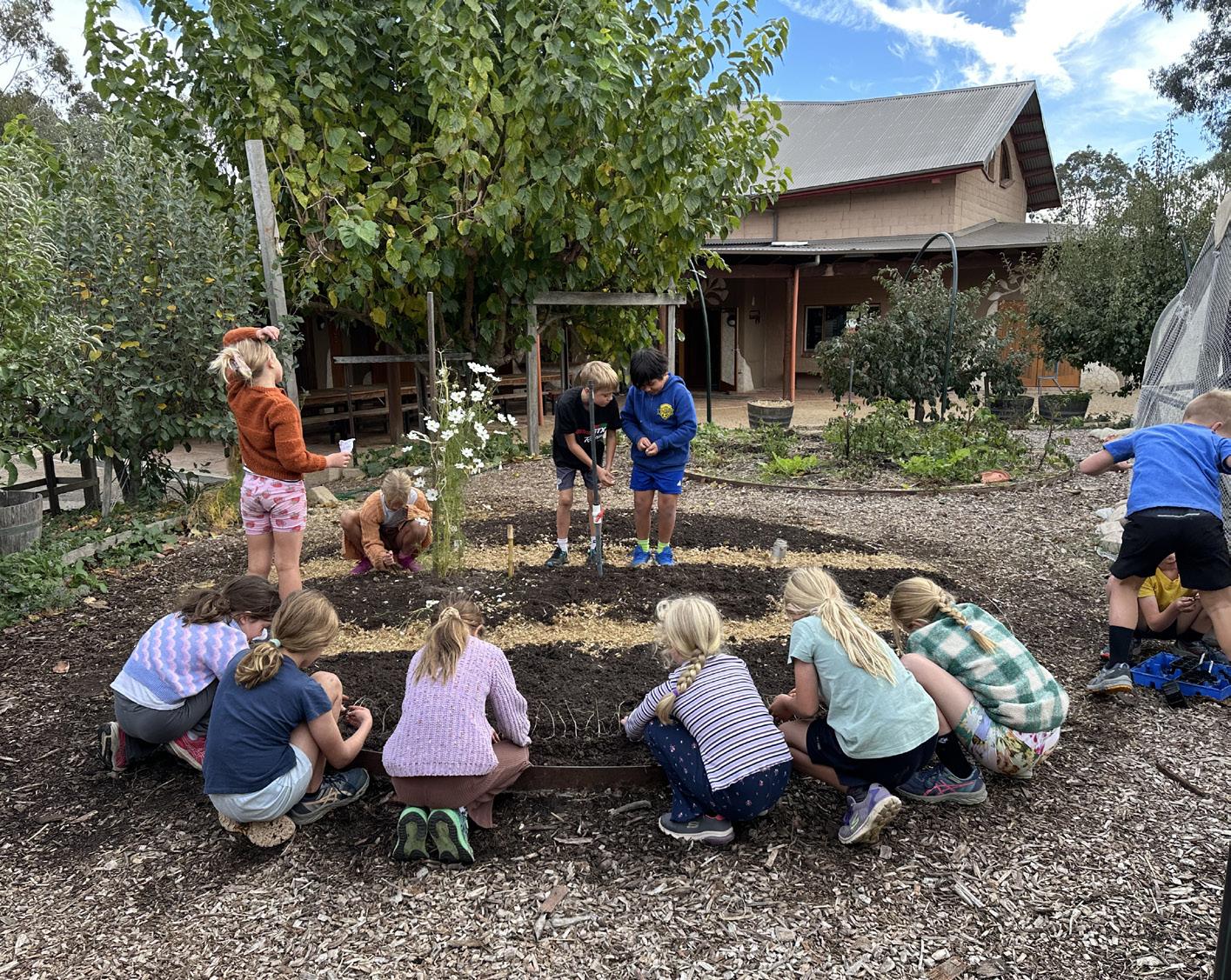
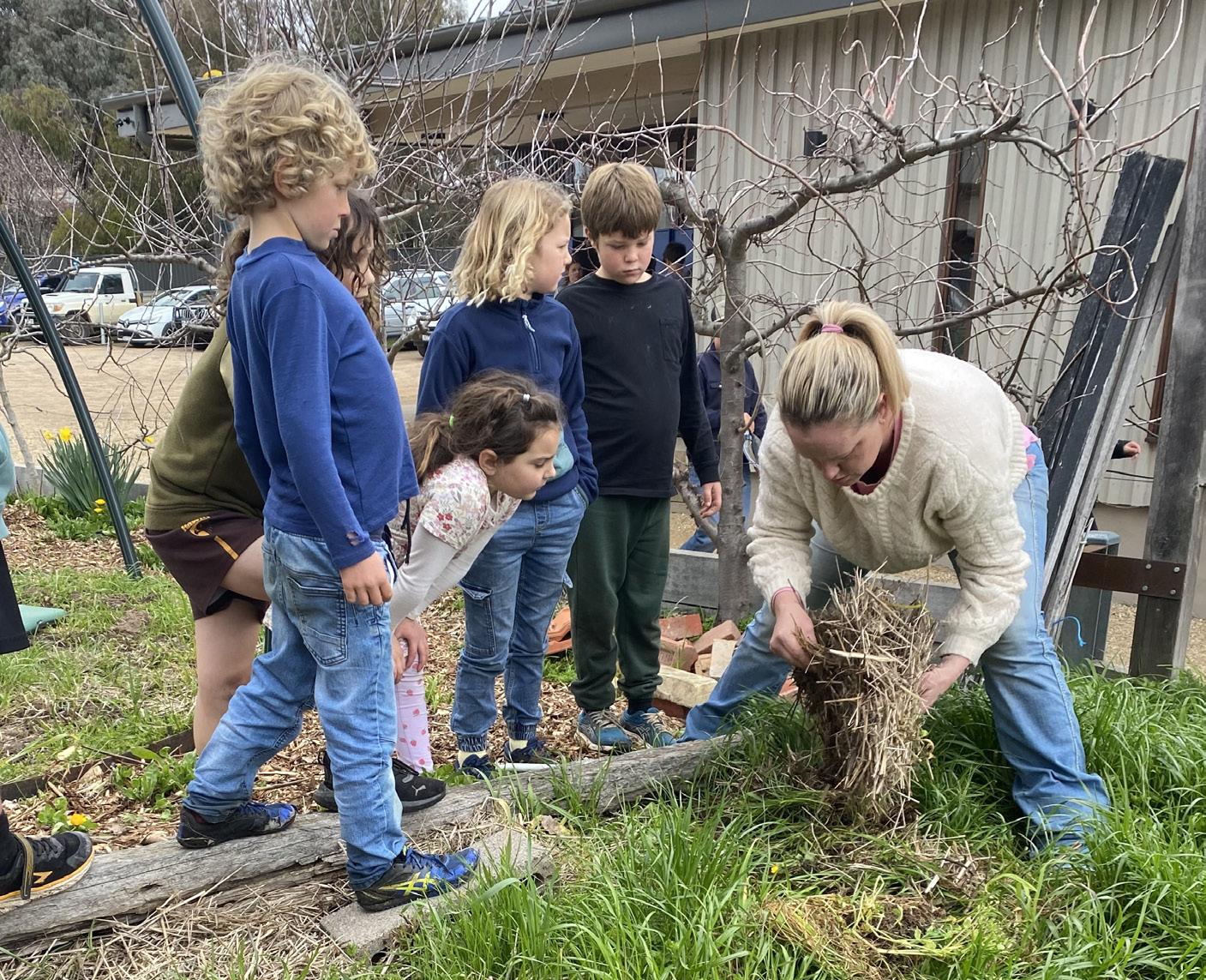
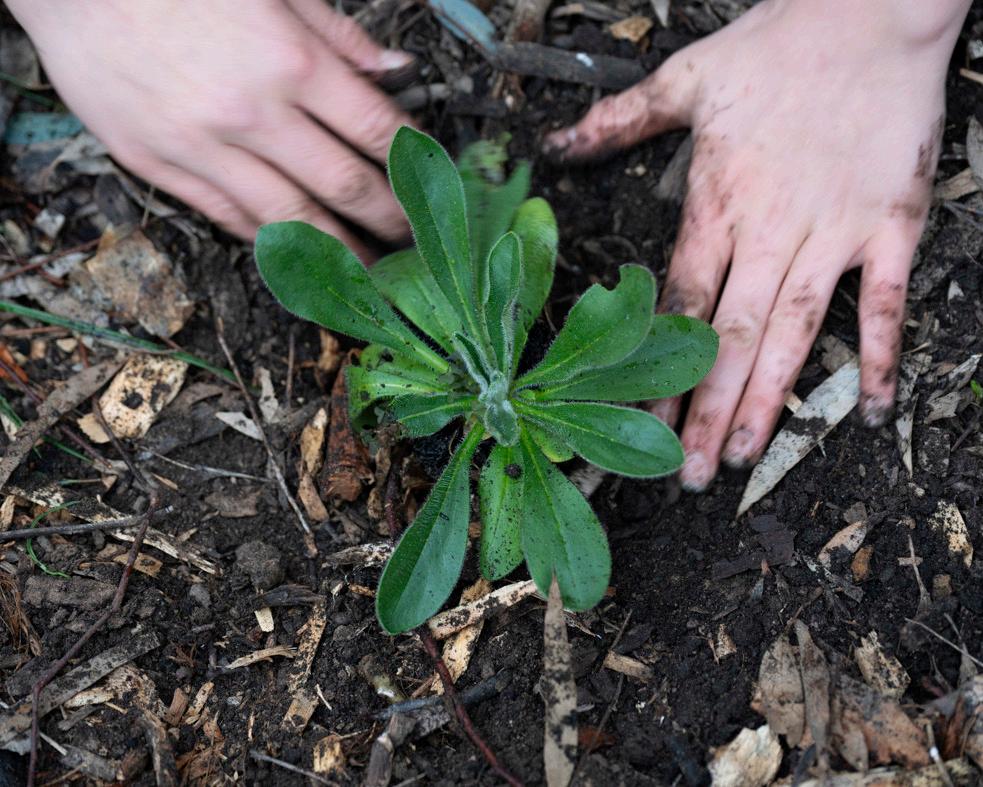
The year began with a welcomed restructure of the gardening program where we included and dedicated space to the high school students to have their own plots in order to grow seasonal produce along with the primary school.
With the extended period of summer at the beginning of the year the summer veggies seemed to go on forever, and our tomatoes allowed us to make enough passata to last us the whole year through, but in saying that, it made for a challenging start to the winter season.
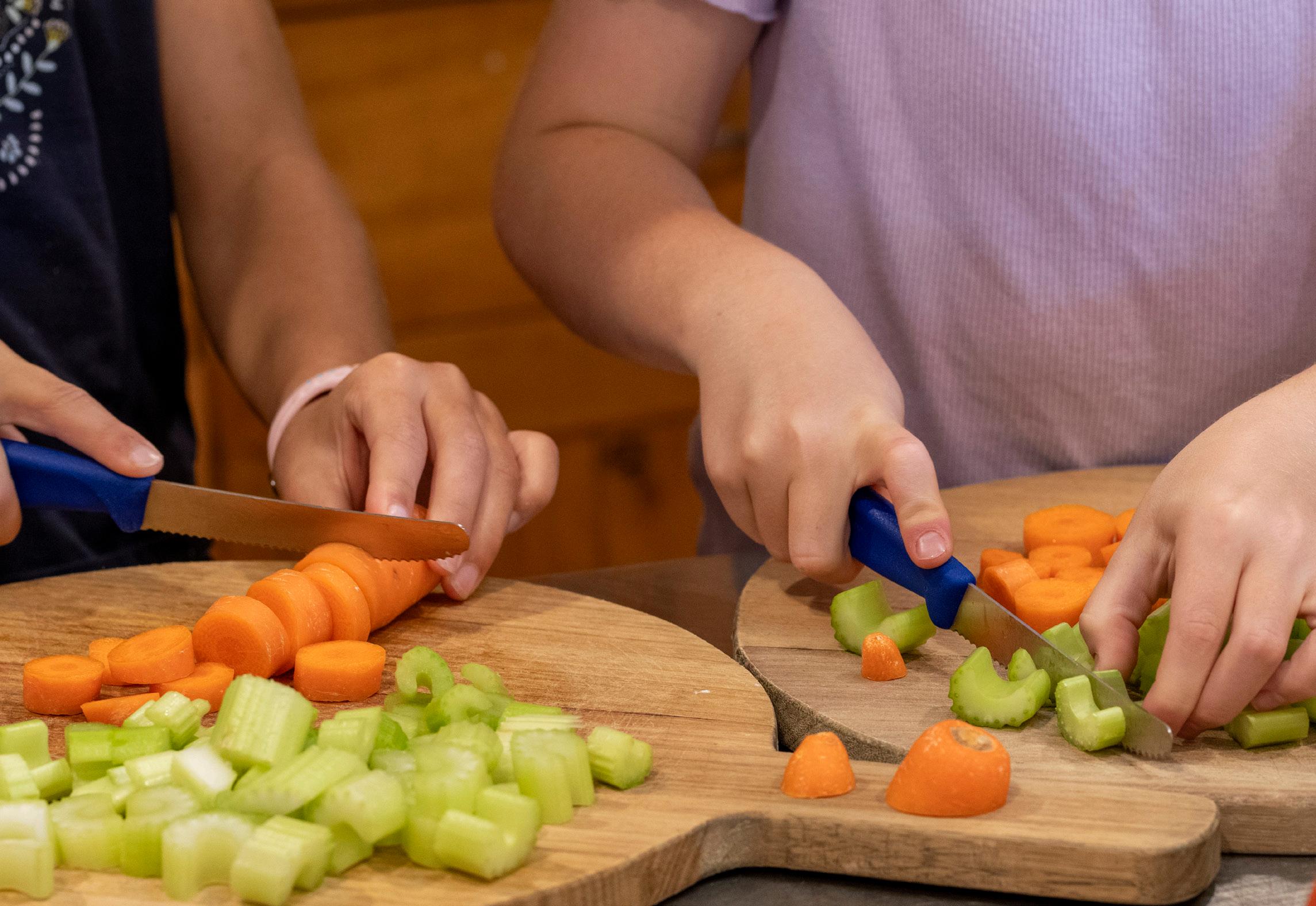
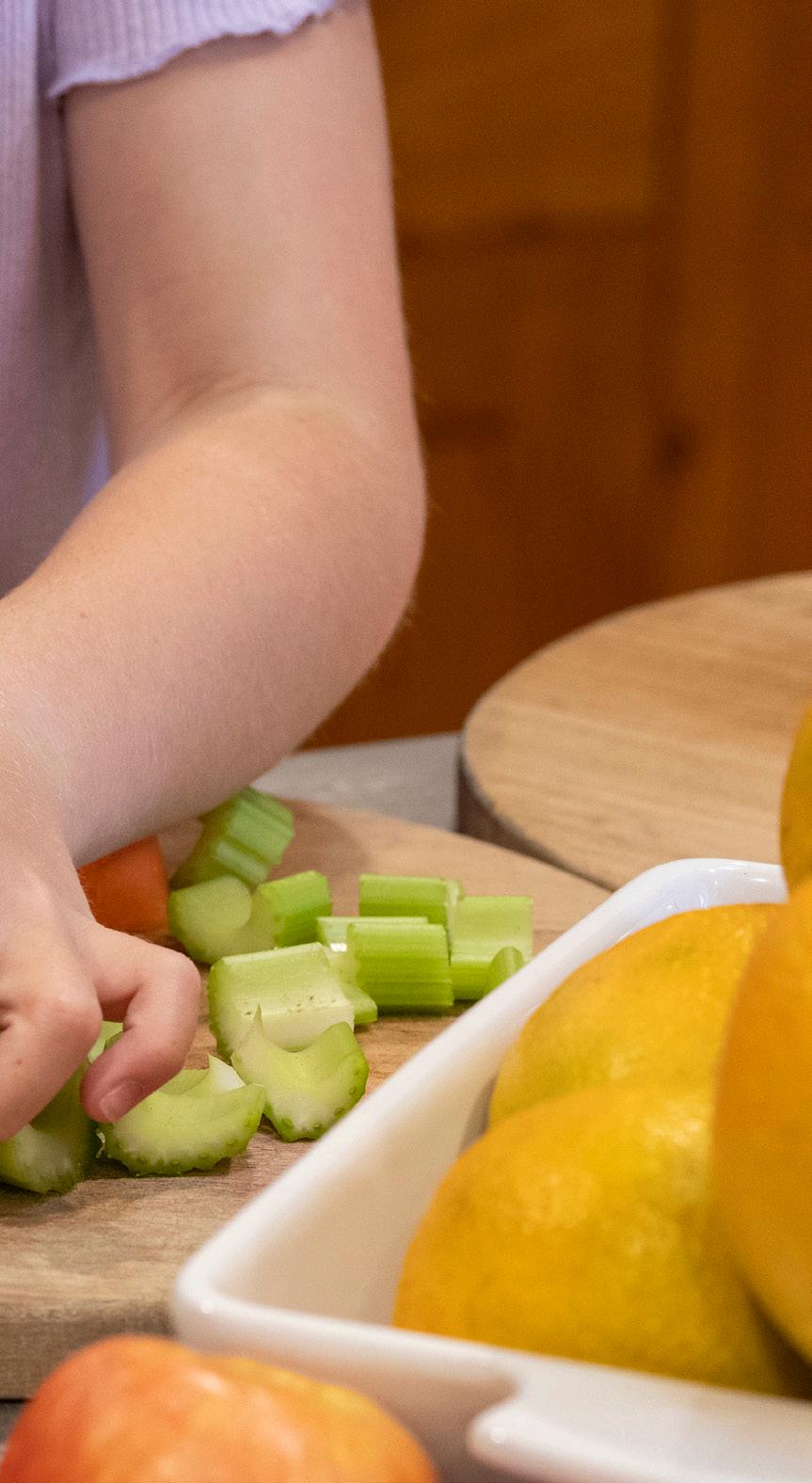
Depending on what the season and mother nature offer us, it is always a good lesson for the children to learn the challenges that come with working outdoors and relying on the rain and sun, or lack thereof. Once again the winter soups were a huge hit. The children gain confidence chopping up the veggies and enjoy tasting the different flavours each week and as the weather warms up they are eagerly anticipating some of the summer favourites.
It is always nice to reflect on the positive impact the program has on the children, and it is often reported back to me that their cooking day is their favourite day of the week. Here at the school, we are committed to embedding food education into everyday school life. We believe that the hands on experience fosters a healthy, active and inclusive program that promotes healthy habits, stronger connections to food, the environment and cultures, reinforcing our school’s health and wellbeing goals.
FINELLA WADGE
Craft
Why Handwork Matters
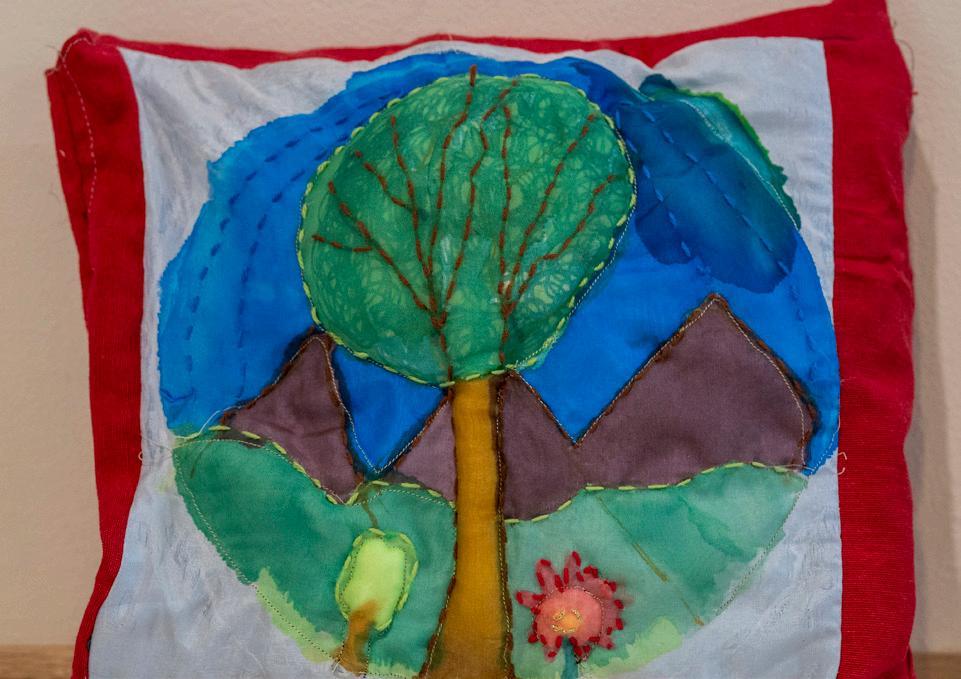
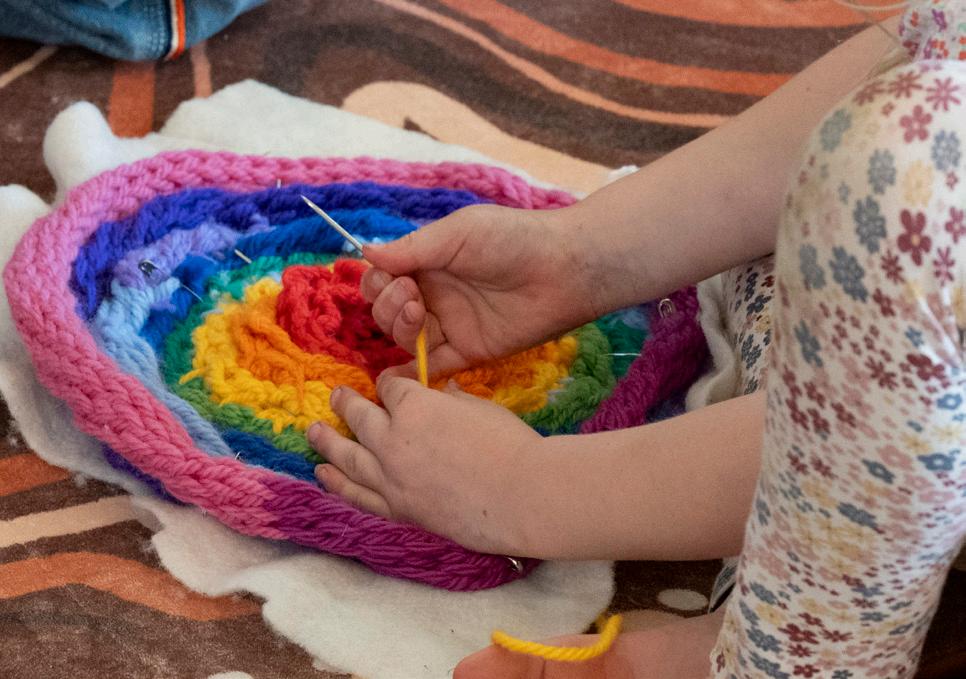
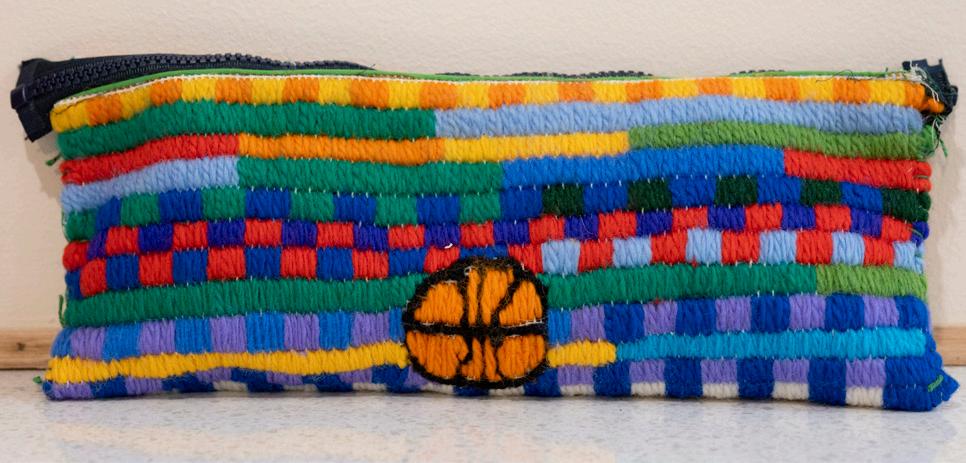
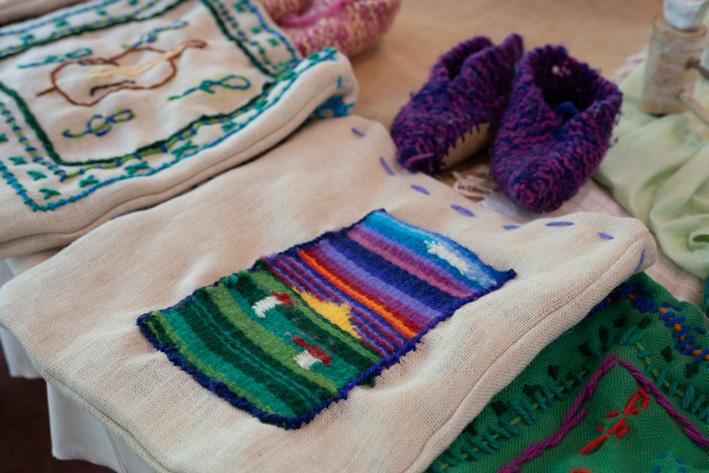
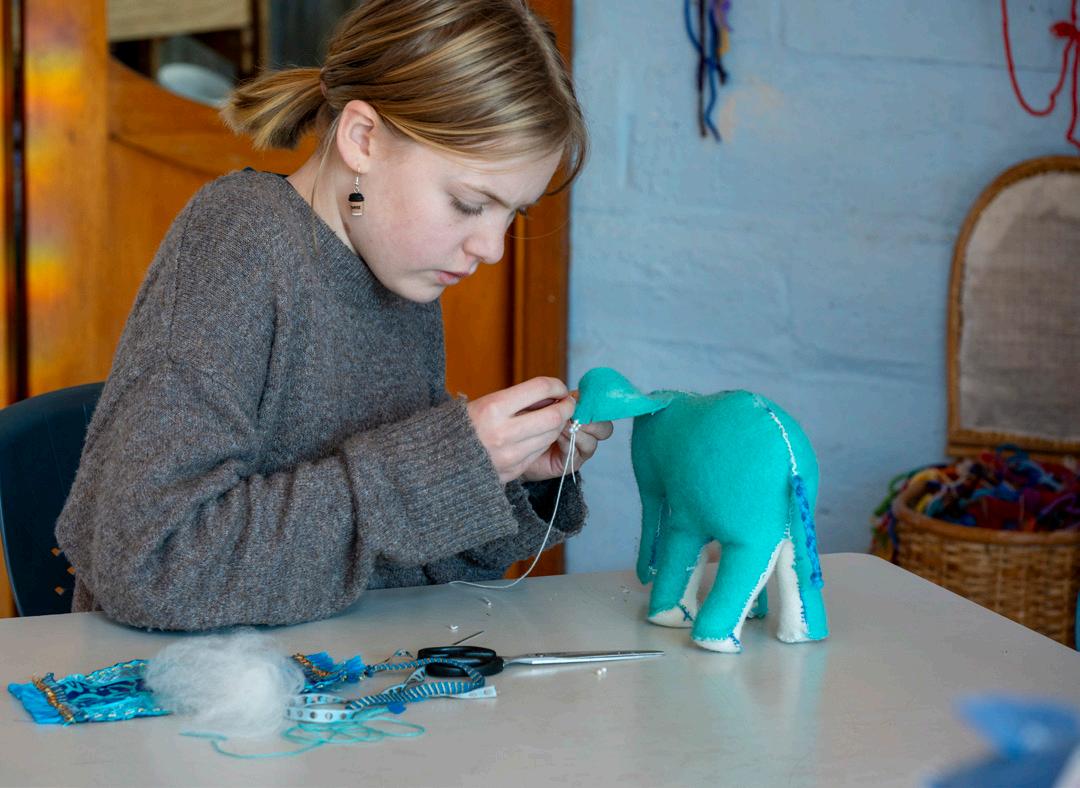
Handwork is more than a subject where we learn to knit, sew, or weave. It is central to gaining skills that help our students learn how to think, feel, and work in the world. In handwork classes students engage in each project with their head, heart and hands. When we knit a row of stitches, weave, crochet, or guide a needle through fabric, we’re doing much more than making something pretty. The fine movements of our fingers help develop important brain pathways that support thinking and learning. In fact, the coordination and concentration we use in handwork is akin to the skills needed to play a musical instrument.
Handwork also connects directly to our academic subjects. Counting stitches strengthens maths skills, following patterns builds spatial awareness, and planning a project encourages logical thinking. When we correct mistakes, like fixing a dropped stitch, we’re learning to problem-solve.
One of the best parts of handwork is the feeling of accomplishment that comes from finishing something the students have made themselves. Whether it’s a knitted hat or a hand-sewn pouch, each completed project gives them confidence and pride in their abilities.
Handwork also teaches patience. In a world where everything seems to move fast, creating something by hand takes time and perseverance. Many find the work calming. The steady rhythm of stitching or knitting helps students to focus and reduce anxiety.
Working with natural materials like wool, cotton, and wood helps students feel connected to
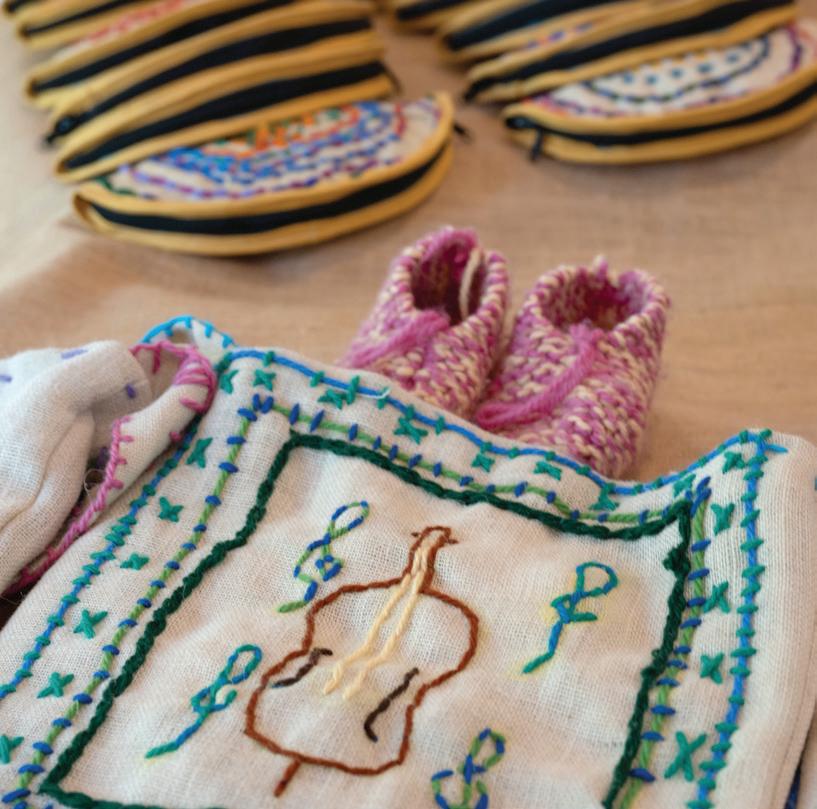
the natural world. They have an understanding where things come from, how they are made, and why it matters to care for these resources.
Handwork gives practical skills students will use throughout their lives and gain a deeper appreciation for the human effort and craftsmanship that go into the things we depend on. Handwork isn’t about training to become a craftsperson. It’s about shaping capable, balanced human beings who can think clearly, feel deeply, and work with purpose.
LOU JENKINS
Parents & Friends
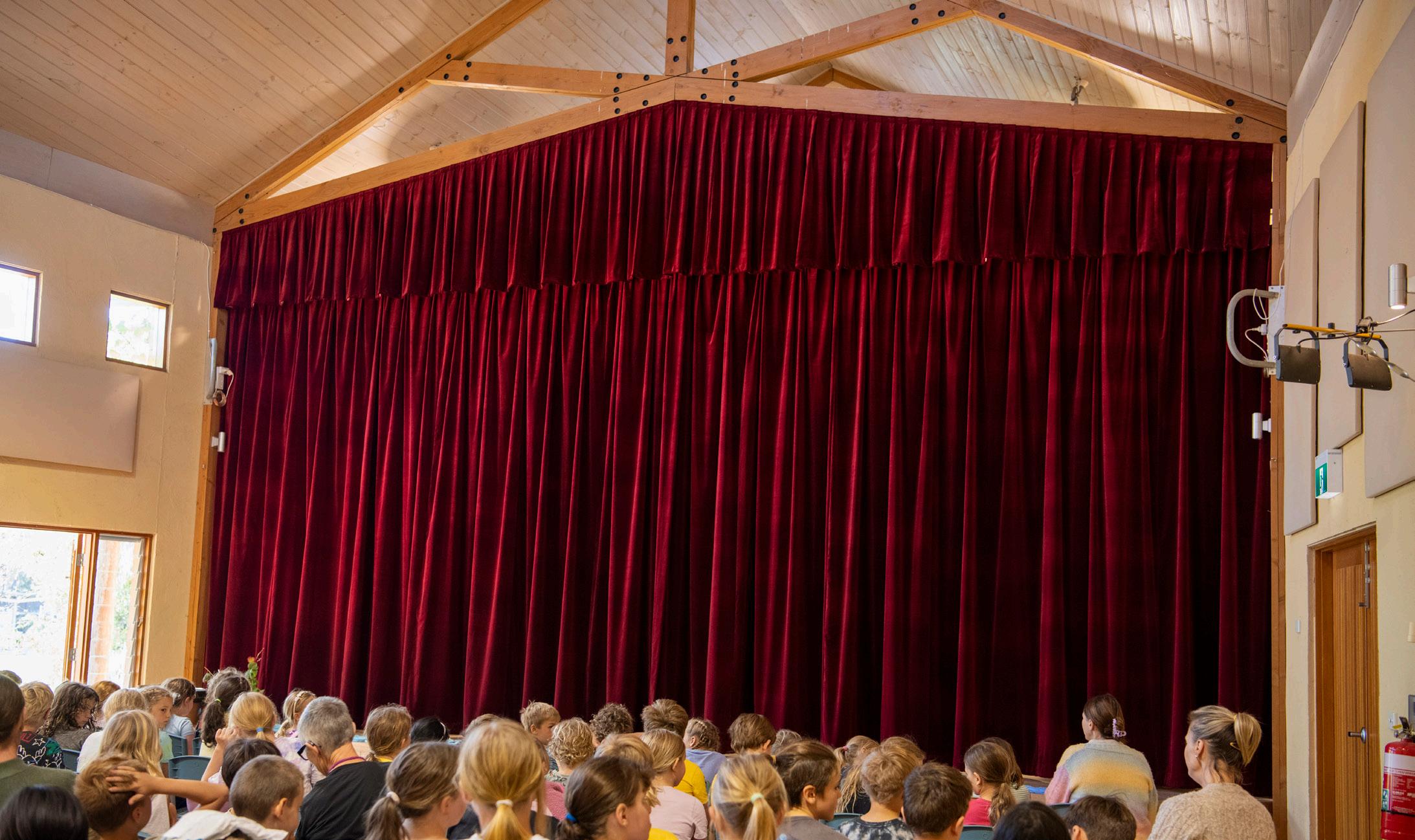
This year has been marked by meaningful fundraising efforts and a strong sense of community across the school, supported by the Parents and Friends Committee.
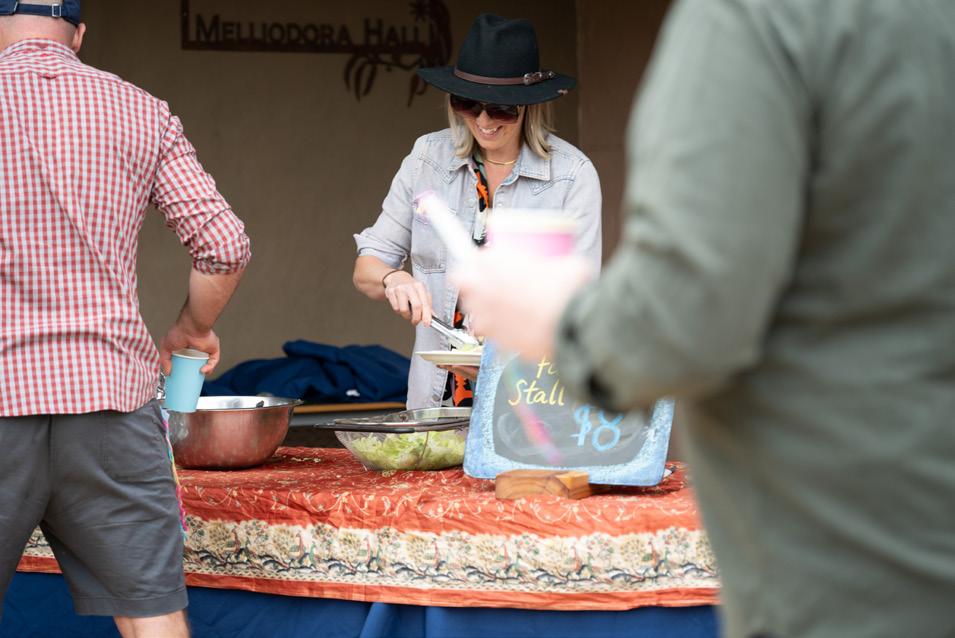
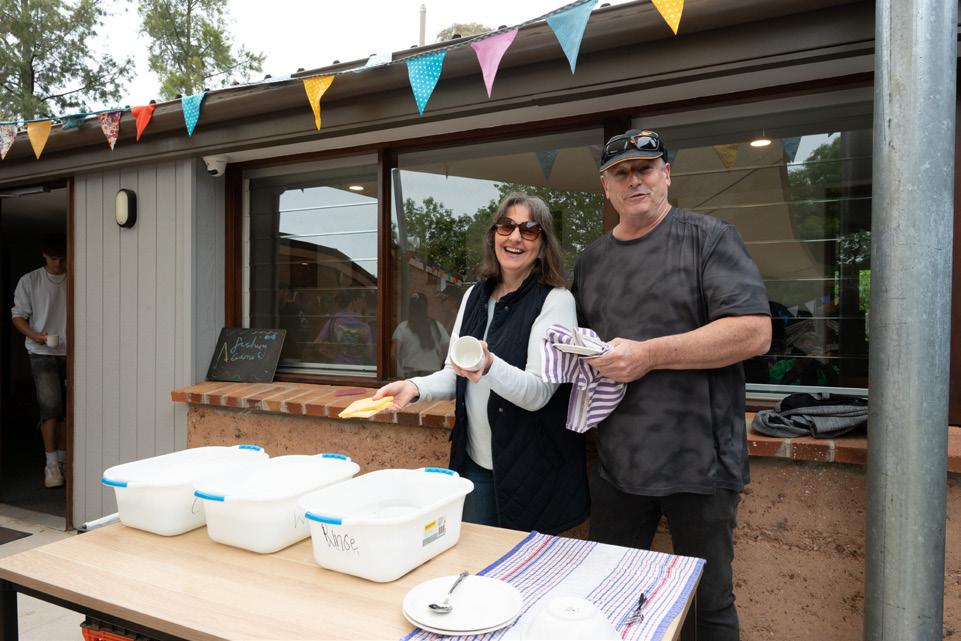
We were delighted to begin the year with a warm Welcome Morning Tea, giving new and returning families a chance to connect. Our loaded potatoes at the Strings on the Green event along with the beautiful music brought a relaxed atmosphere for families to enjoy together as well as assisted in our fundraising efforts. Trivia Night was a standout favourite, filled with friendly competition, laughter, and teamwork. We wrapped up our major events with the Spring Fair, where the joy and energy of our community truly shone, and raised the majority of our fundraising for 2025. Thank you to all the volunteers, families, and staff who helped make each event such a success. We look forward to your continued help and many new helpers in 2026.
AMBER WRIGHT
Music
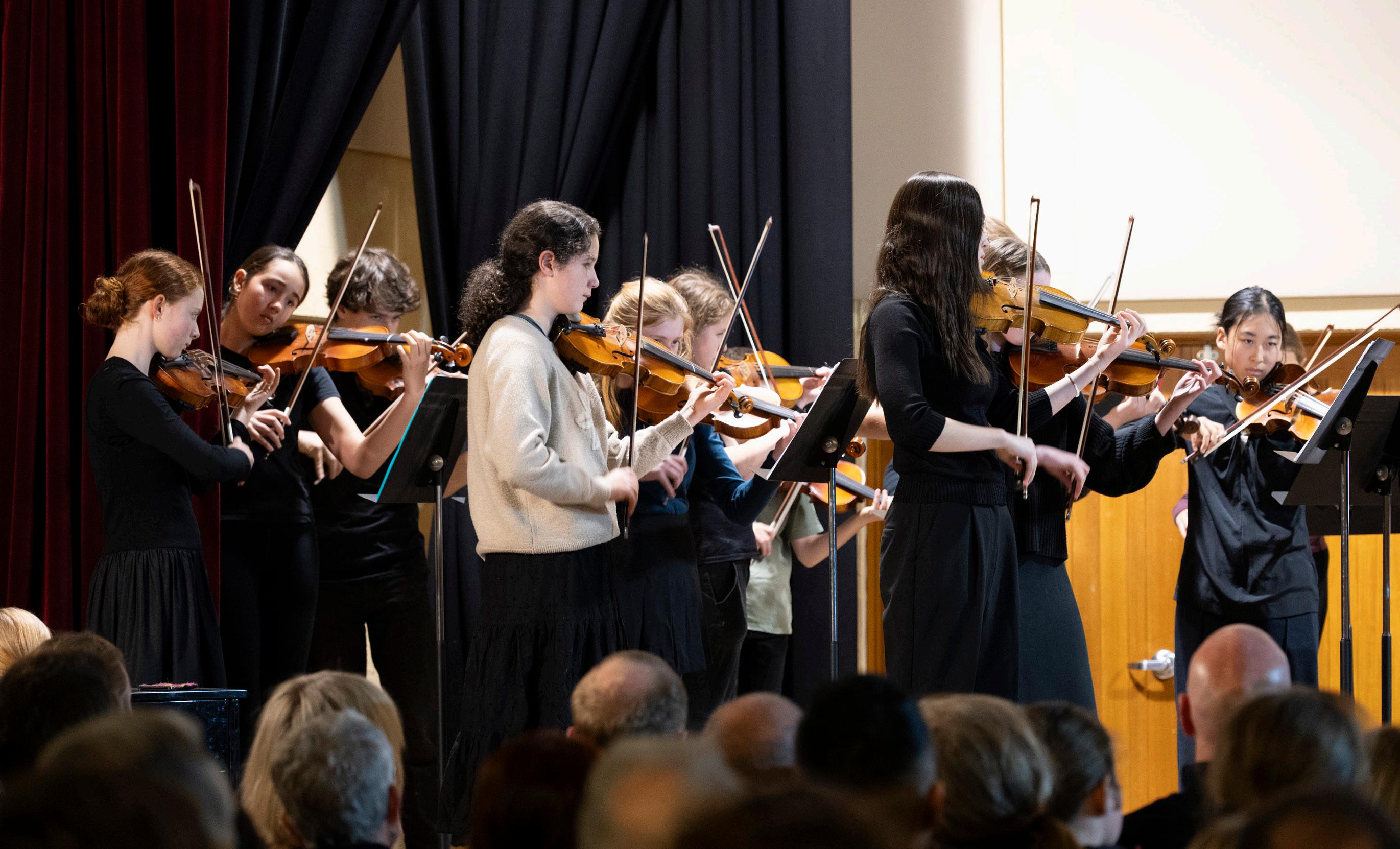
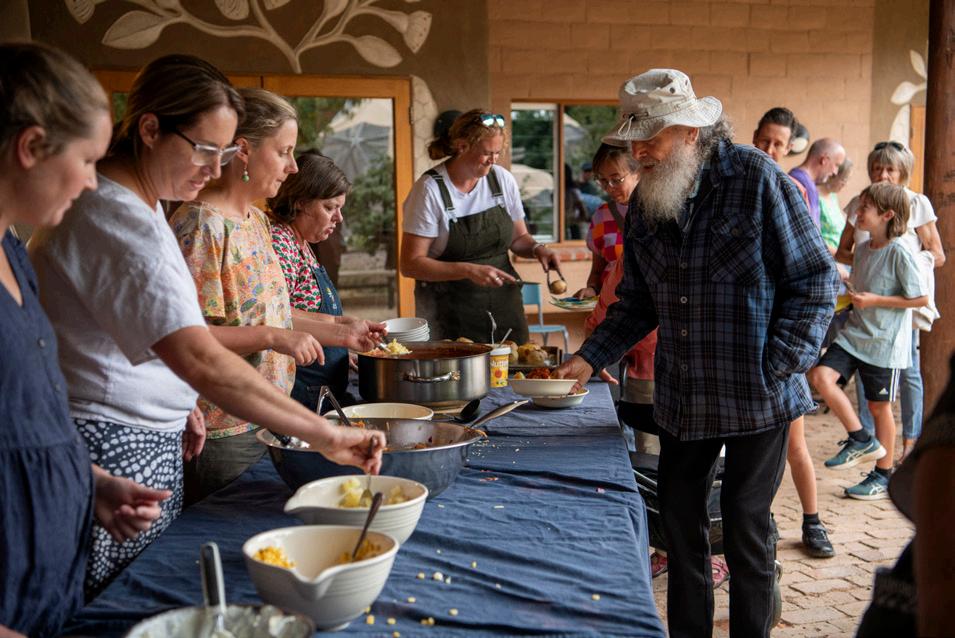
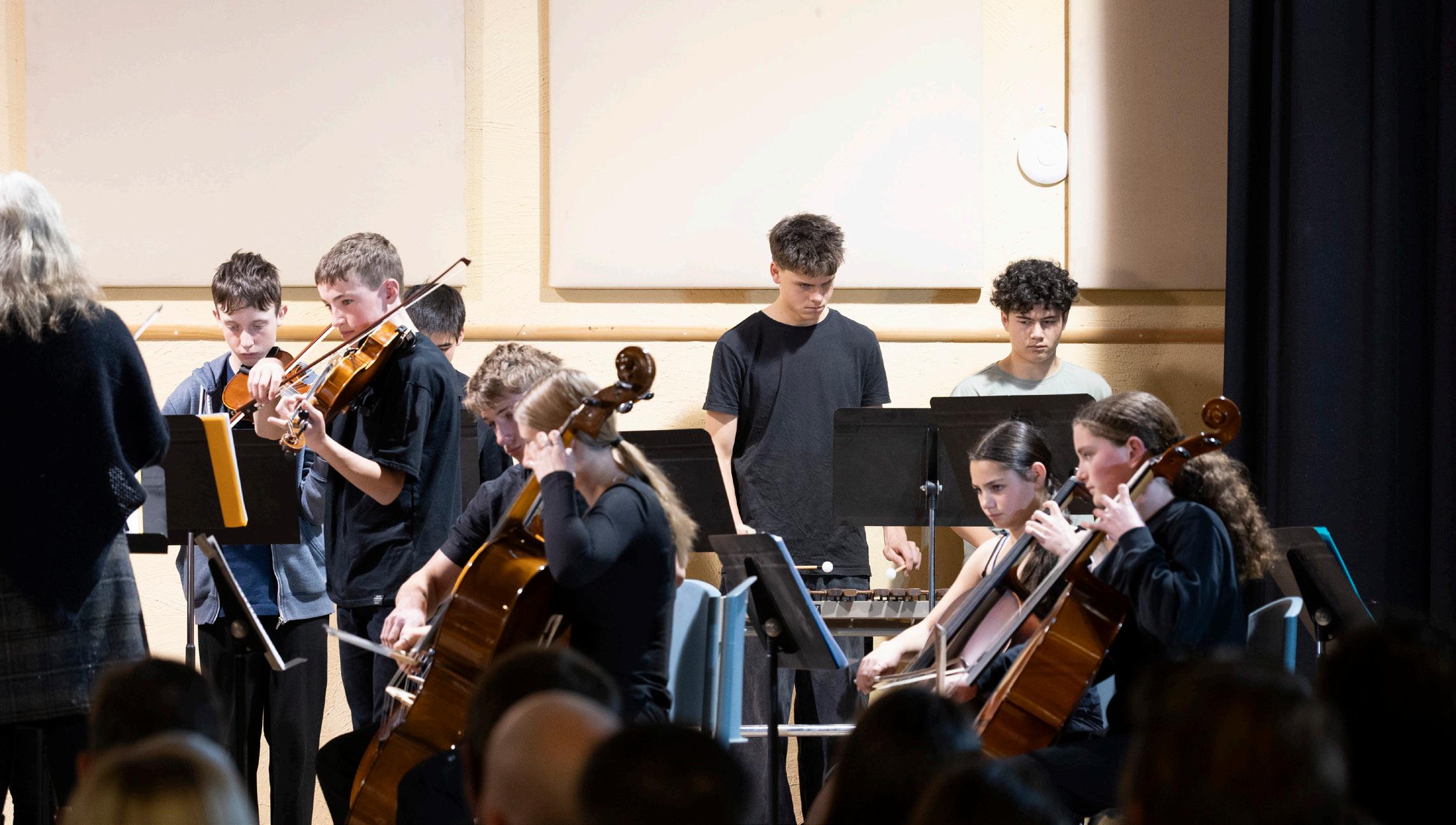
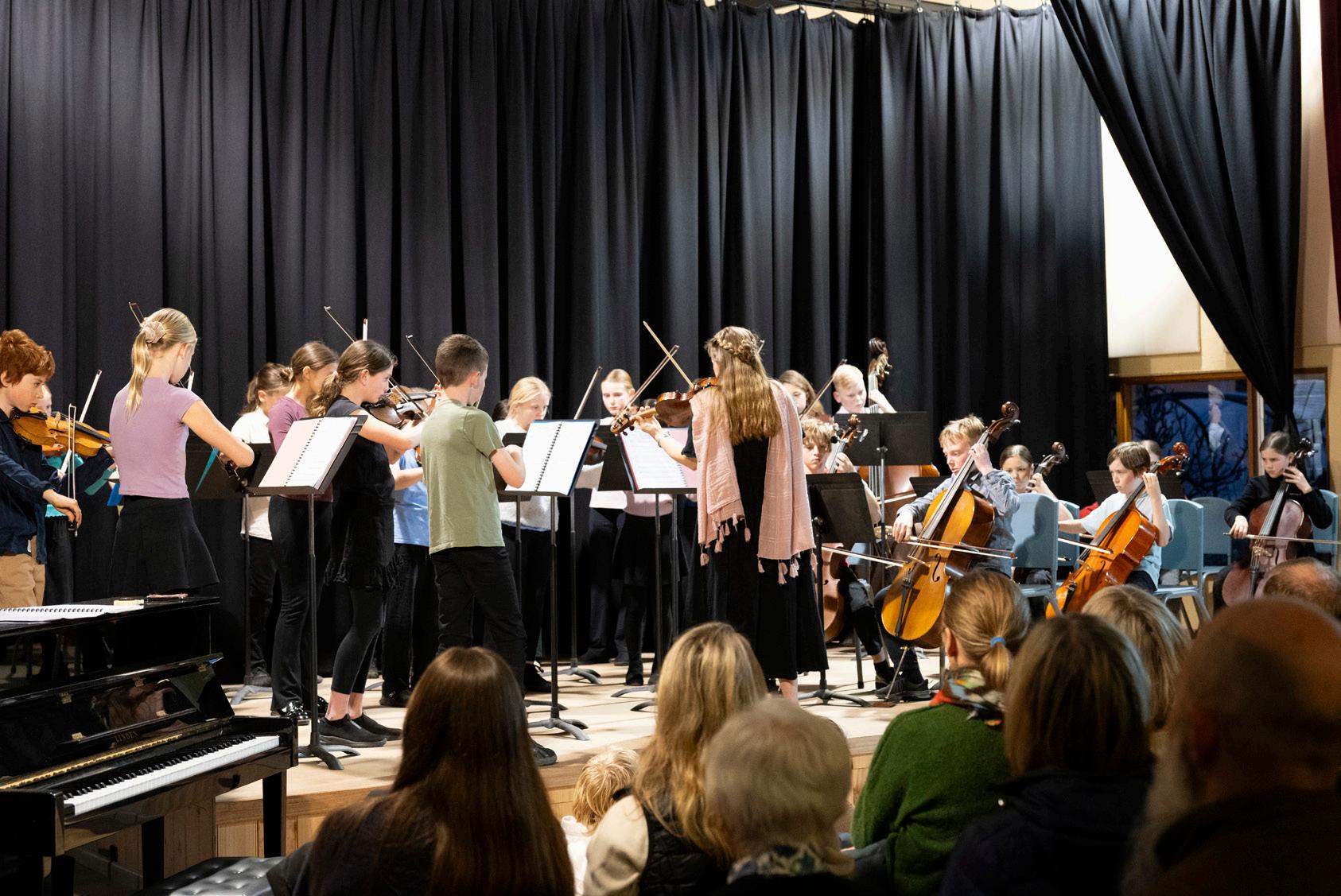
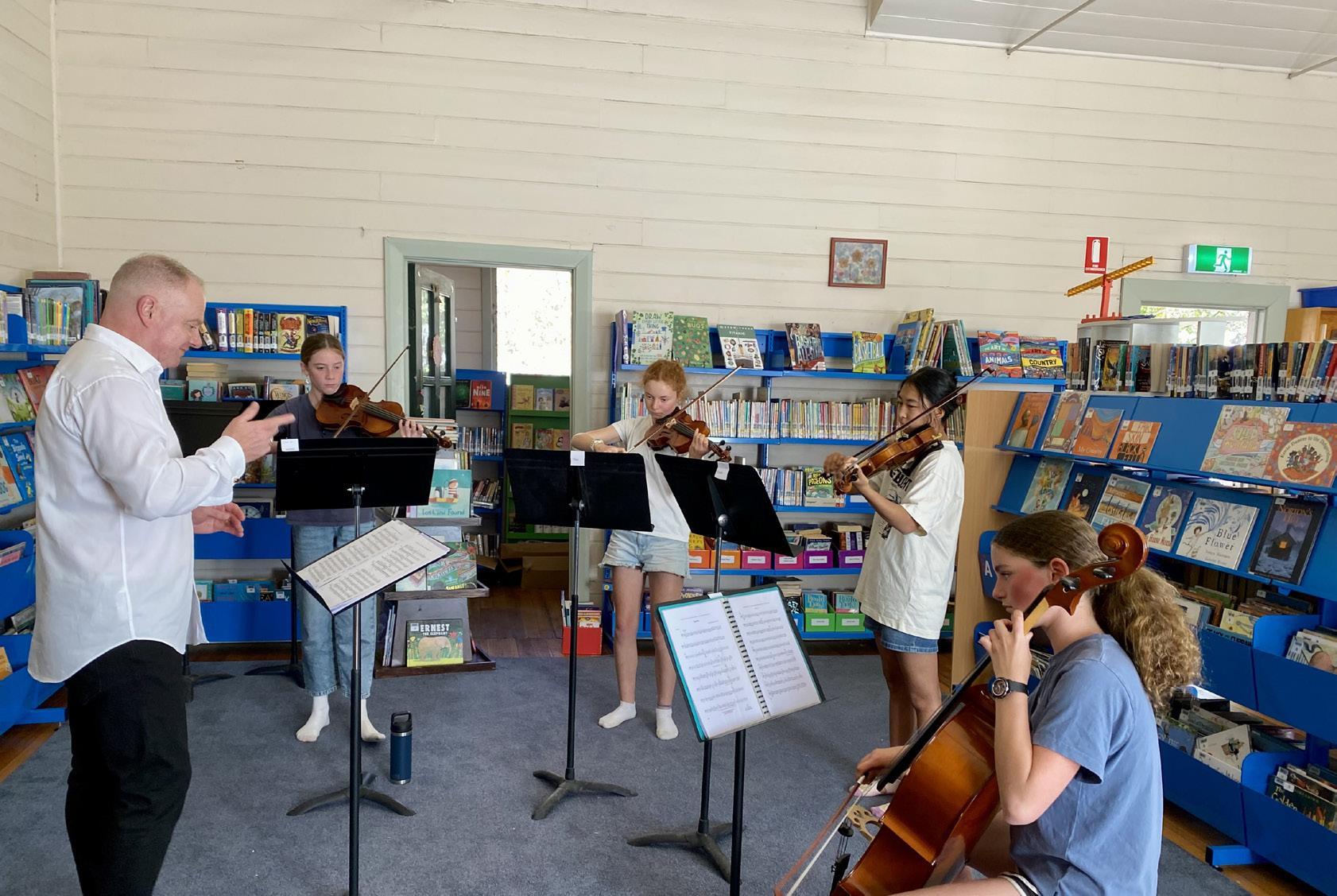
Music has yet again weaved its way through the daily life of the school. The rhythms and melodies of seasonal songs are cornerstones of both the classroom and our festivals. We began the year by renaming our extracurricular ensembles to reflect our natural surroundings, introducing Wattle, Melliodora, Candlebark, Snowgum and Lyrebird as new treasured names. These ensembles performed in many different events across the year including special concerts, Spring Fair, the Strings and Choral Concert and Strings on the Green.
Over 95 students were involved in extracurricular music, with students taking on the extra responsibilities of more practice, performances, and early morning
wakeups. It was particularly delightful for music staff to see the children dashing joyfully with instruments in hand, through hot winds or cold frost on their way to rehearsal in the early morning. The school is certainly thriving with life even before the official school day has begun. After school, the rock bands busily honed their craft preparing for their lunchtime performances and Battle of the Bands concerts.
Snowgum Strings took part in the Musica Viva Strike a Chord Competition. They were in the top 15 entries in the Australia wide competition and were highly commended, receiving wonderful feedback from the panel. The group were selected to take part in the Itet program which offers free ongoing professional mentorship, performance opportunities, collaboration for regional string groups from Victoria.
This year marked the official commencement of IBDP Music being offered as a subject. Students began the rewarding yet somewhat daunting task of undertaking the music course
which involves exploring the musical roles of Researcher, Creator and Performer. Developing their musicianship and musical thinking to higher levels whilst discovering a diverse range of repertoire from around the world and regularly performing has made for a busy first year for the students.
Solo concerts are the most special time on the music calendar, and this year did not fail to impress. Across five stupendous musical evenings, every student in the school performed solo in front of the school community. What bravery, focus, poise and musicality graced the stage. Not to mention the wonderful mix of musical repertoire. Never has Grieg, Bach, Metallica, The Foo Fighters, Luke Bryan, The Beatles and Traditional Irish and Scottish folk tunes shared the musical ticket before!
CELESTE CLEASON
Playgroup
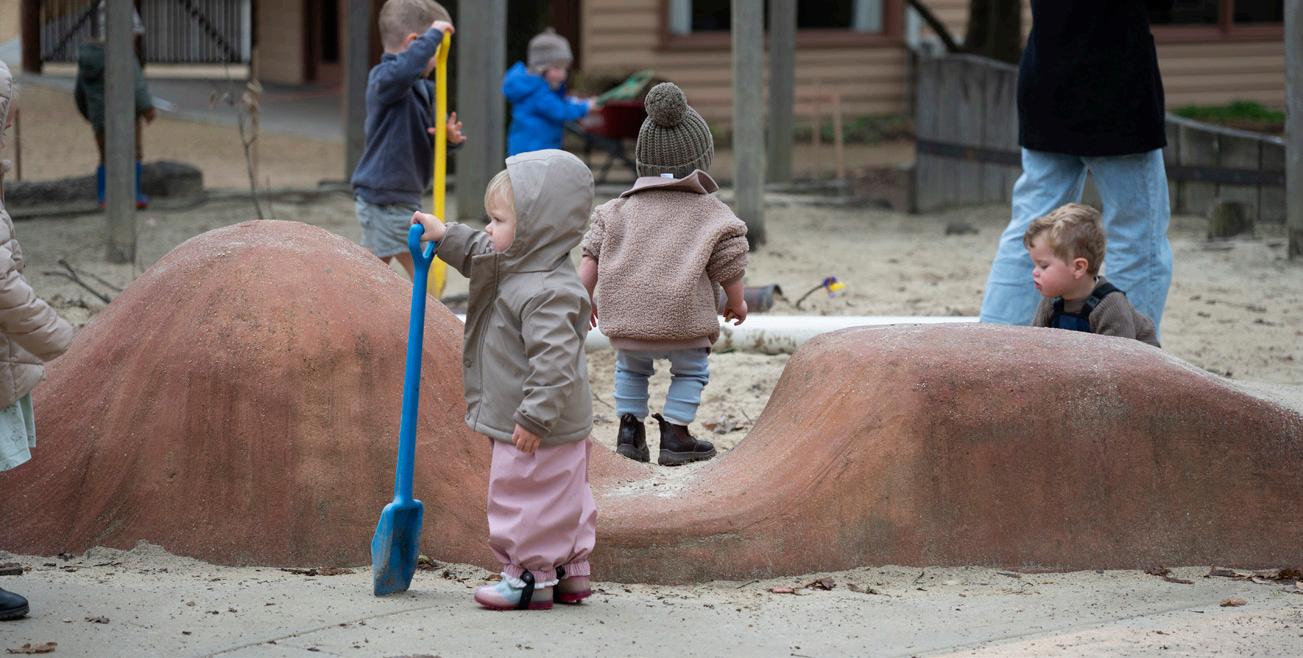
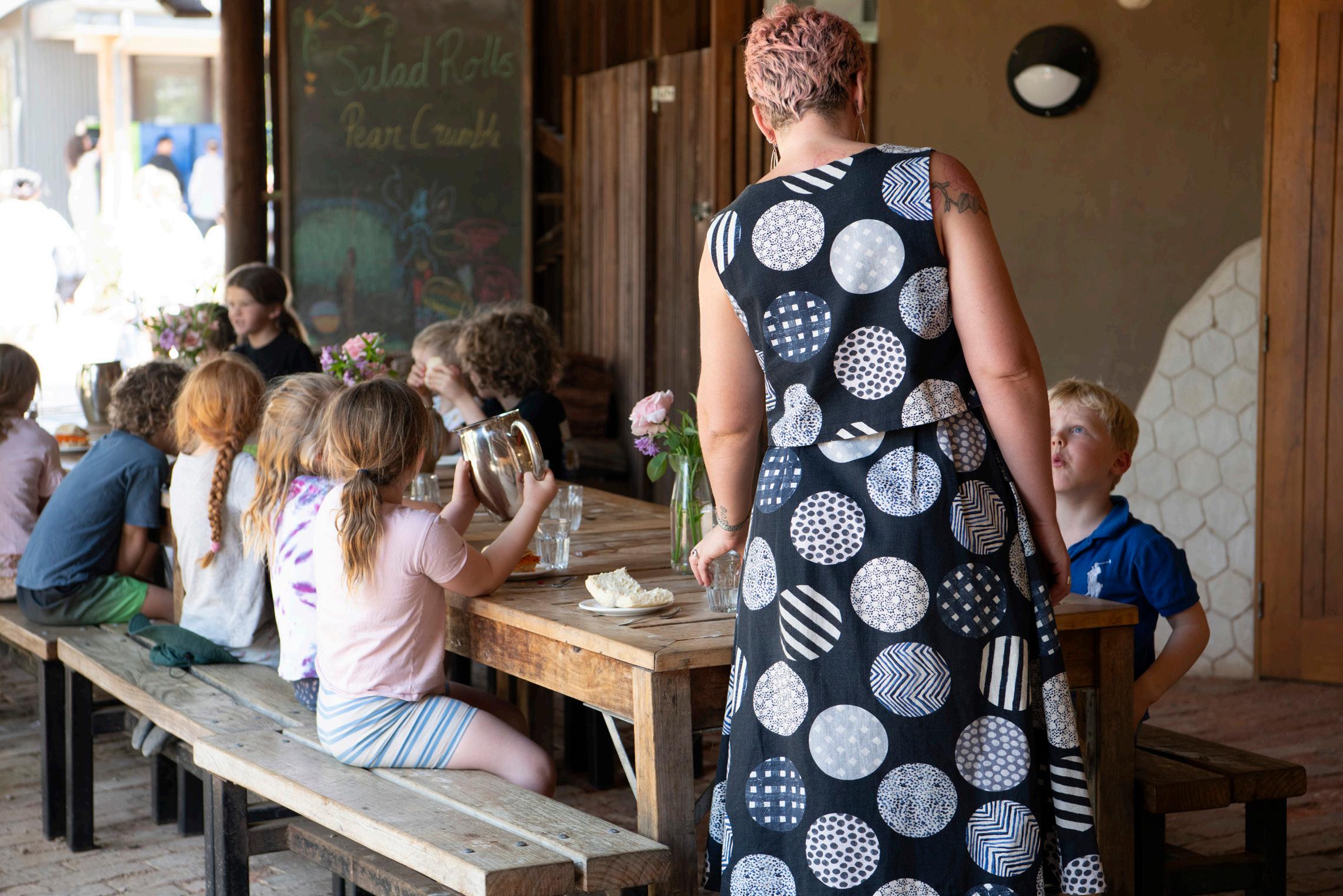
The journey into Morning Star Kindergarten begins in the Nelawon room, with the Little Robins Playgroup. Each week we welcome a gathering of families with a warm mug of chai for parents and caregivers, and some roly-poly dough to be kneaded into delicious sourdough buns by the children. Our bread is baked in our little magic oven and is always greatly anticipated by morning tea time, with the smell of warm, crunchy bread filling the room. Before long a favourite toy is found by each child, that will be part of their visit each week. Interactions between toddlers begin to take place, learning names, sharing toys and playing alongside one another. Older children that are attending will help with cutting fruit, wiping down and then setting the table with doilies and vases of fresh flowers.
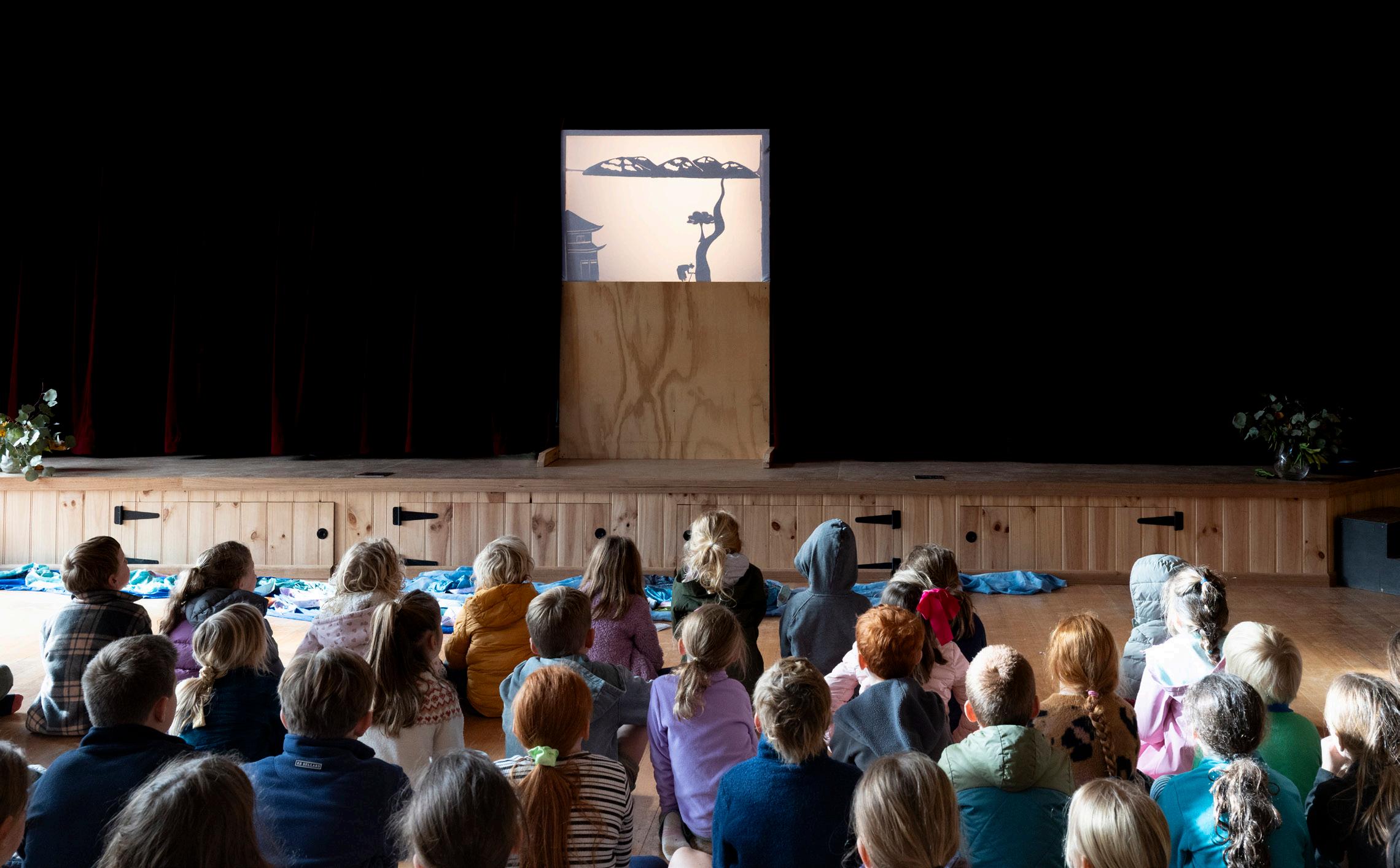
Parents and caregivers are always nearby as the warm, familiar thread that the children need to move into their morning at playgroup. We sing songs about the seasons in our Morning Circle and enjoy calling the Candle Fairy to join us for morning tea. The beautiful gardens, trees and sandpit in the ‘big school’ are always enjoyed during outside playtime, and we delight in the tiny treasures that Mother Nature offers us. We end our morning together with a told story and puppet play, which is always special and deeply reverent. It is a wonderous time for the little children as they learn to navigate and explore a new environment and predictable morning rhythm. The end of each term heralds a wonderful seasonal celebration, with our sweet little playgroup festivals. As we move through the seasons, the young children awaken slowly and naturally in a gentle, nurturing environment, growing into their kindergarten and school years here with ease.
‘Birds in the air, fishes in the sea. Stones on the land, I’m in safe hands.
Morning has come, night is away.
Rise with the sun and welcome the day.
Good morning everyone, and have a lovely day!’
LITTLE ROBINS SOURDOUGH BREAD ROLLS
Ingredients:
100g starter
600g baker’s flour
2tsp salt
1 ½ cups (360ml) water arrowroot flour (to stop bread sticking to tray)
Method:
(Complete steps 1- 3 in the early evening to then bake bread the following morning)
Add starter, water & salt into large mixing bowl and combine. Add baker’s flour and mix into shaggy dough. Leave to rest for 30min to an hour.
Stretch and fold dough once, then leave on the bench or in the fridge overnight with a damp tea towel covering the bowl.
(Next morning) Preheat oven to hot (roughly 240C – our little magic oven may cook differently to regular ovens!)
Roll dough out onto lightly floured surface and divide evenly into 16.
Roly-roly-roll the dough into round buns and place on baking tray with some arrowroot under each bun – that way they won’t stick to the tray.
Score each bun and pop into the oven to bake for roughly 45 mins. (Keep checking on your buns –but you’ll know they’re ready when they are golden brown on top and sound hollow when tapped on the bottom.)
Serve with slatherings of golden butter and sweet, gooey honey. Lovely!
LAURA HERRIDGE & RACHEL FINEGAN
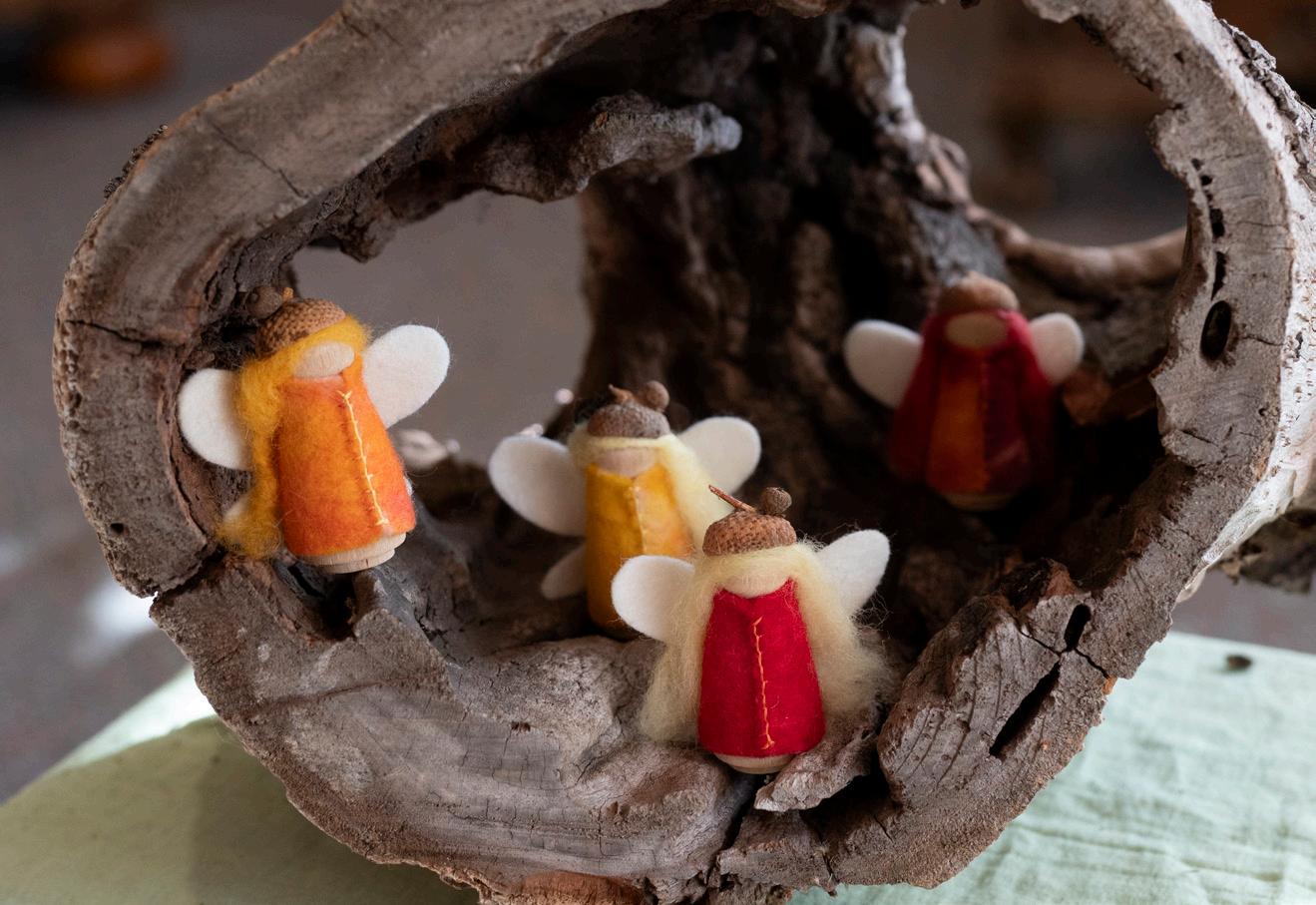
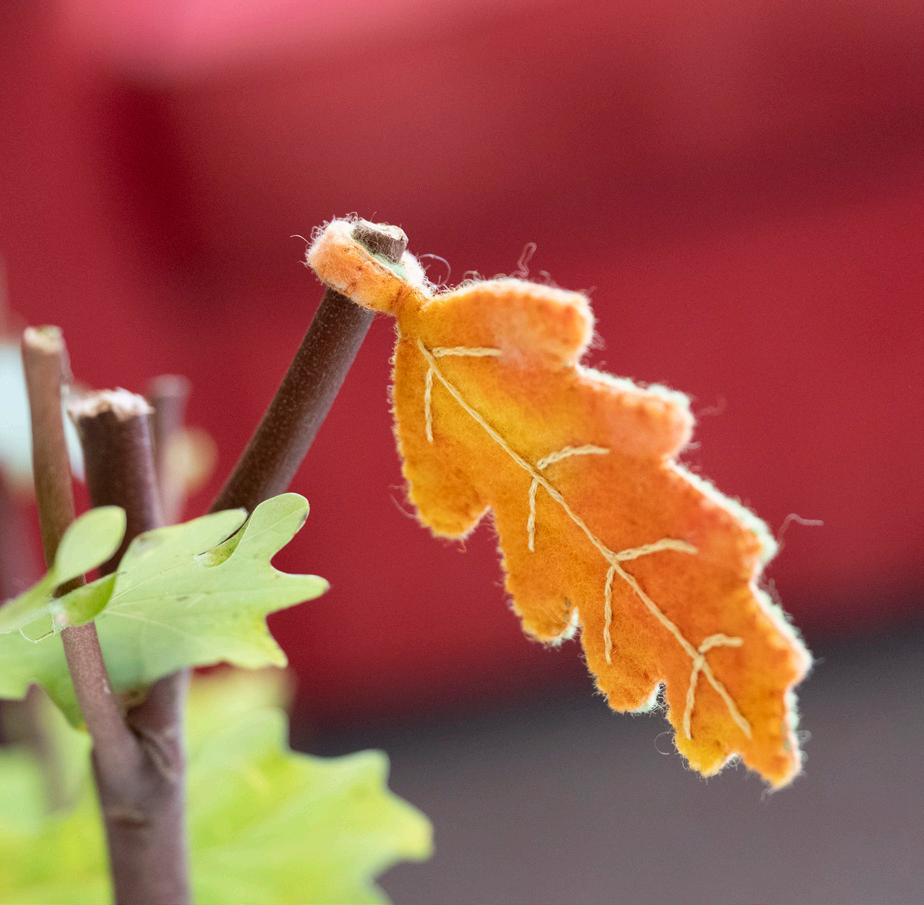
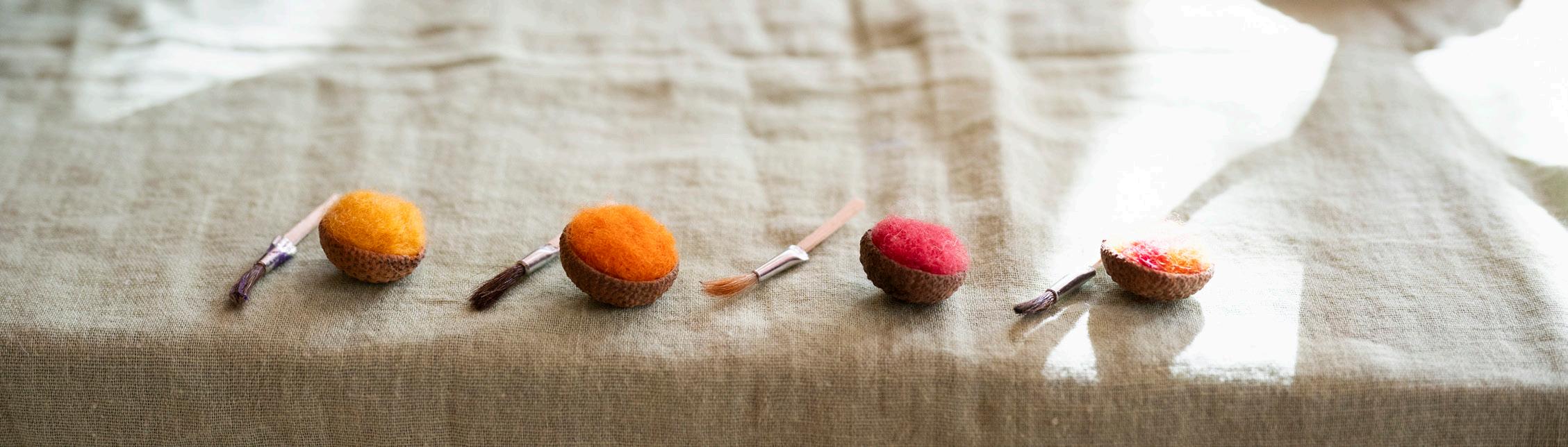
The Woven Thread of Morning Star
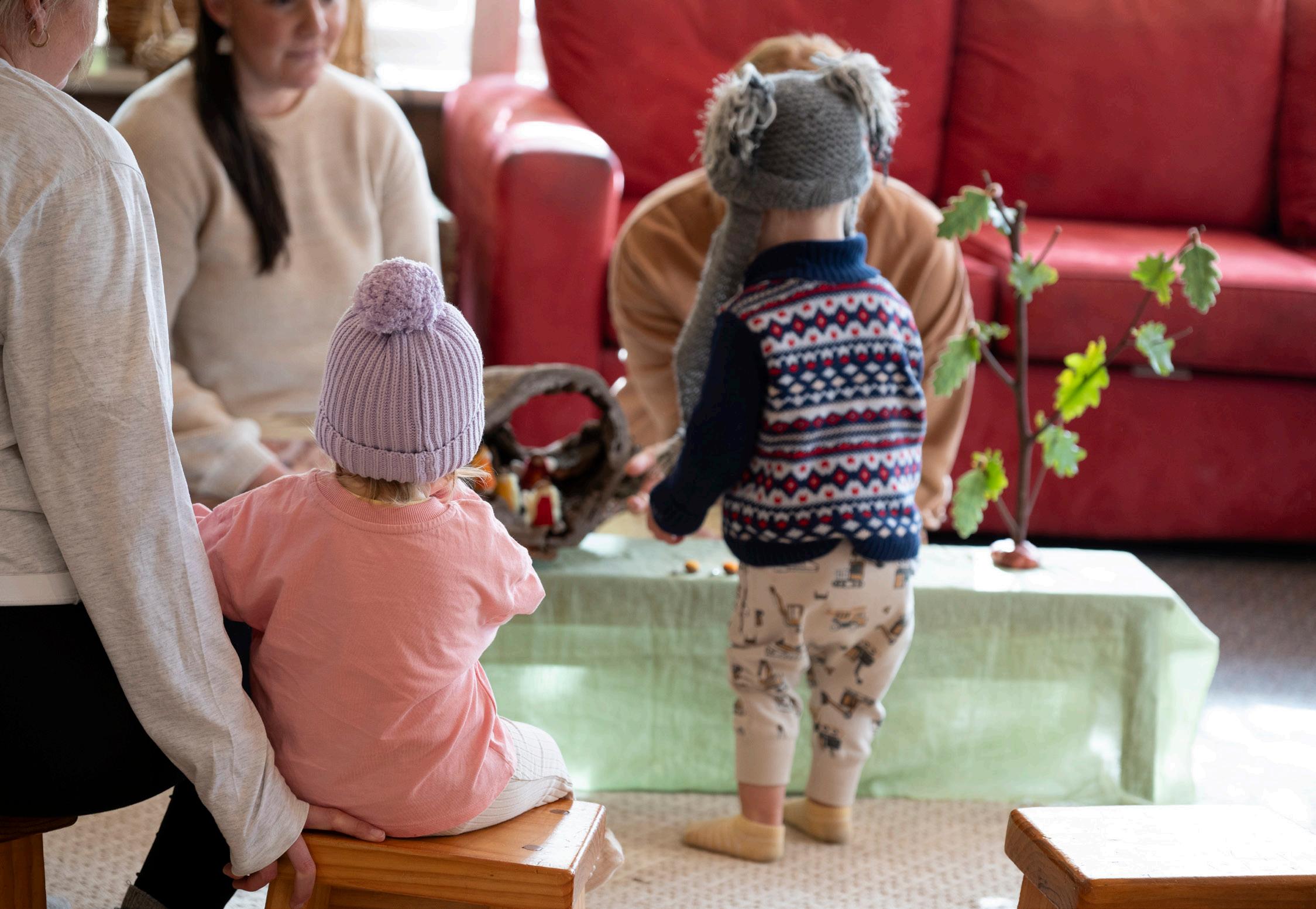
This year in Morning Star we combined our groups. The Honeybees and Echidnas became a composite group on Mondays, Tuesdays and Thursdays and the Echidnas had two days that they attended as the big 4-5 year olds on Wednesdays and Fridays.
The children moved into this model seamlessly. Having a strong rhythm each day that is predictable for the children, supported them and helped live into their weeks with us.
Our program wove throughout the year creating a rhythm that
engaged the seasons and nature that we see around us. We began by helping the children recognise the days of the week. Each morning, we gathered on the sunny seat, said our special ‘Acknowledgement of Country’ together and then talked about the day ahead of us. We use the colours, grains and activities of the day, to give the children a picture of what is ahead and what to expect.
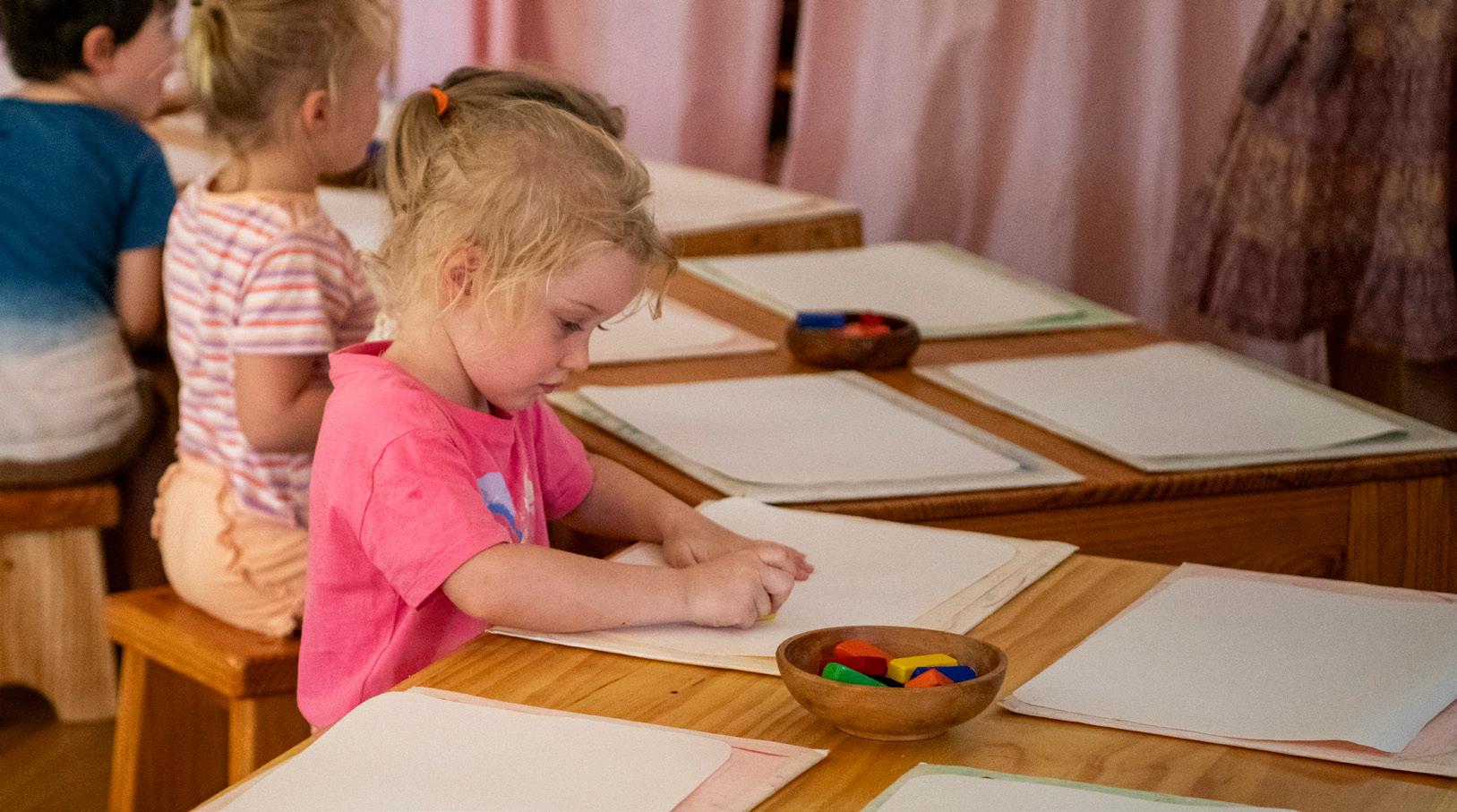
On Mondays we set our tables with blue cloths and cooked with rice. This is rice pudding day and drawing.
On Tuesdays we set out tables with pink cloths and baked with barley flour. This is muffin day and bees wax modelling.
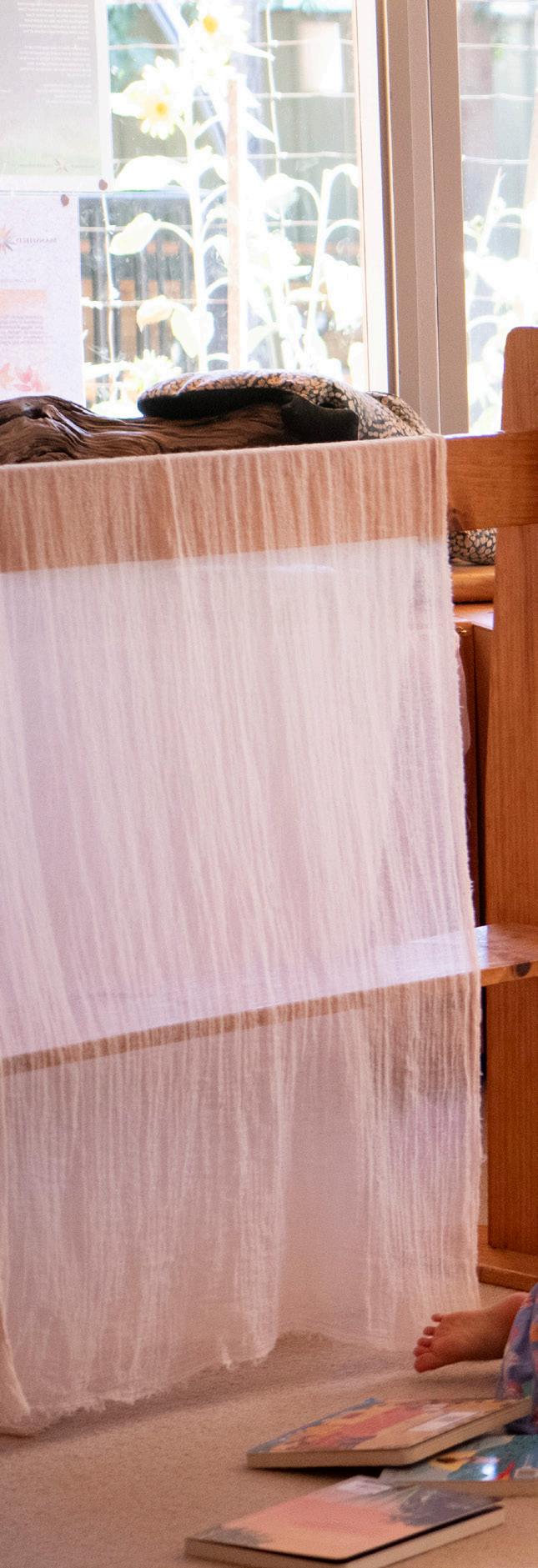
On Wednesdays we set our tables with Golden cloths and baked with millet flour. This is Echidna Bread Day and we painted with water colours.
On Thursdays we set our table with orange cloths and baked with Rye flour. This is Honeybee Bread Day, and we painted with water colours.
On Friday we stayed outdoors and enjoyed Nature. This is green day, and we cooked with oats. Apple crumble and honey cakes where enjoyed. We drew in our nature journals and modelled with beeswax.
Our weeks have been simple yet structured and the children learn through this rhythm.
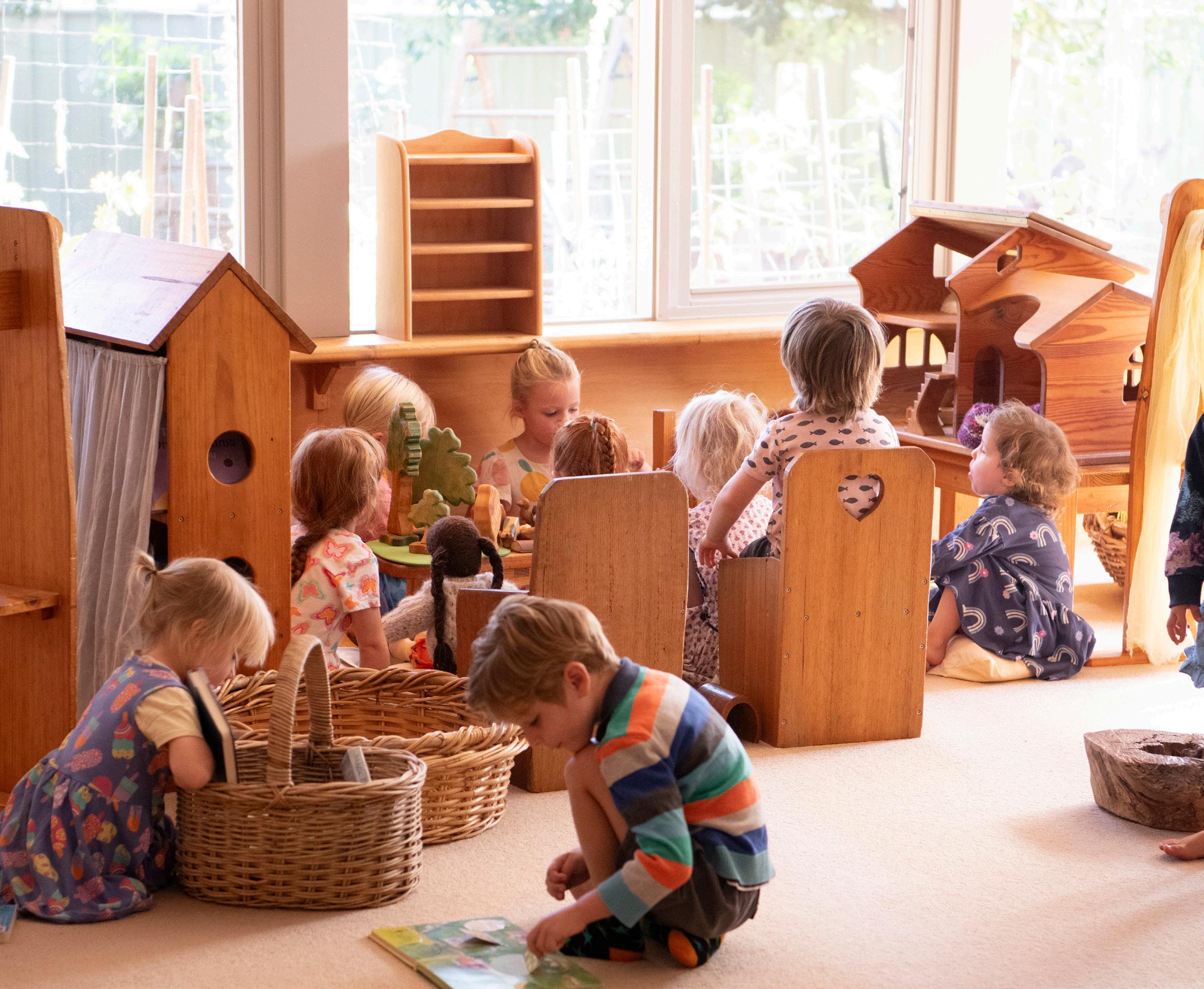
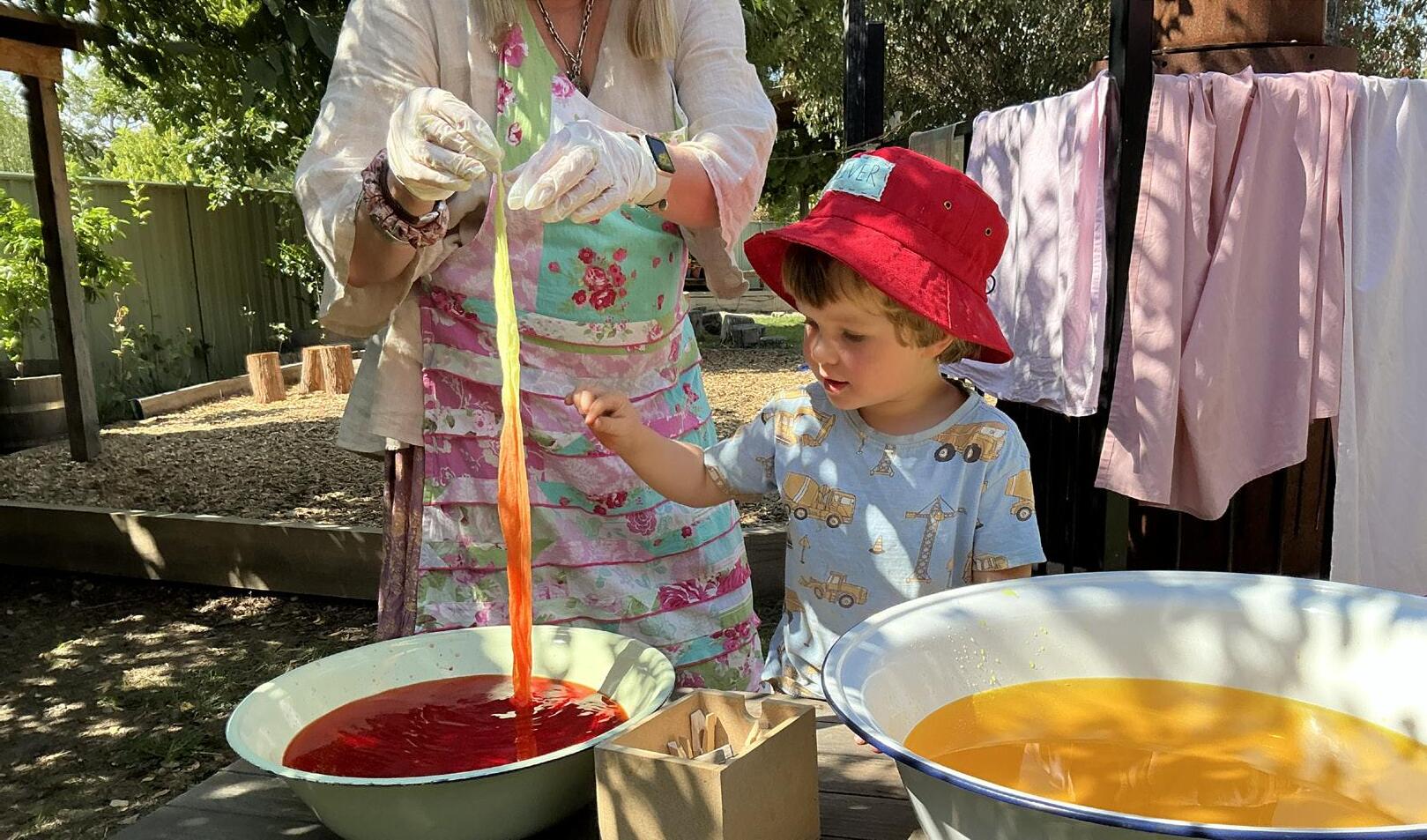
Within our days we have learned new handwork. The Honeybees and Echidnas worked on projects that all children have been able to take part in. We have made rainbow pom poms, many twisties with wool, used needles to sew diver dolphin stitches, made lanterns for our winter festival, learnt the art of origami and enjoyed dip dyeing singlets and t-shirts. Nature crafts have been explored, bug houses have been made, nature wind chimes have been woven, knot tying has been practiced with outdoor cubby building and other activities.
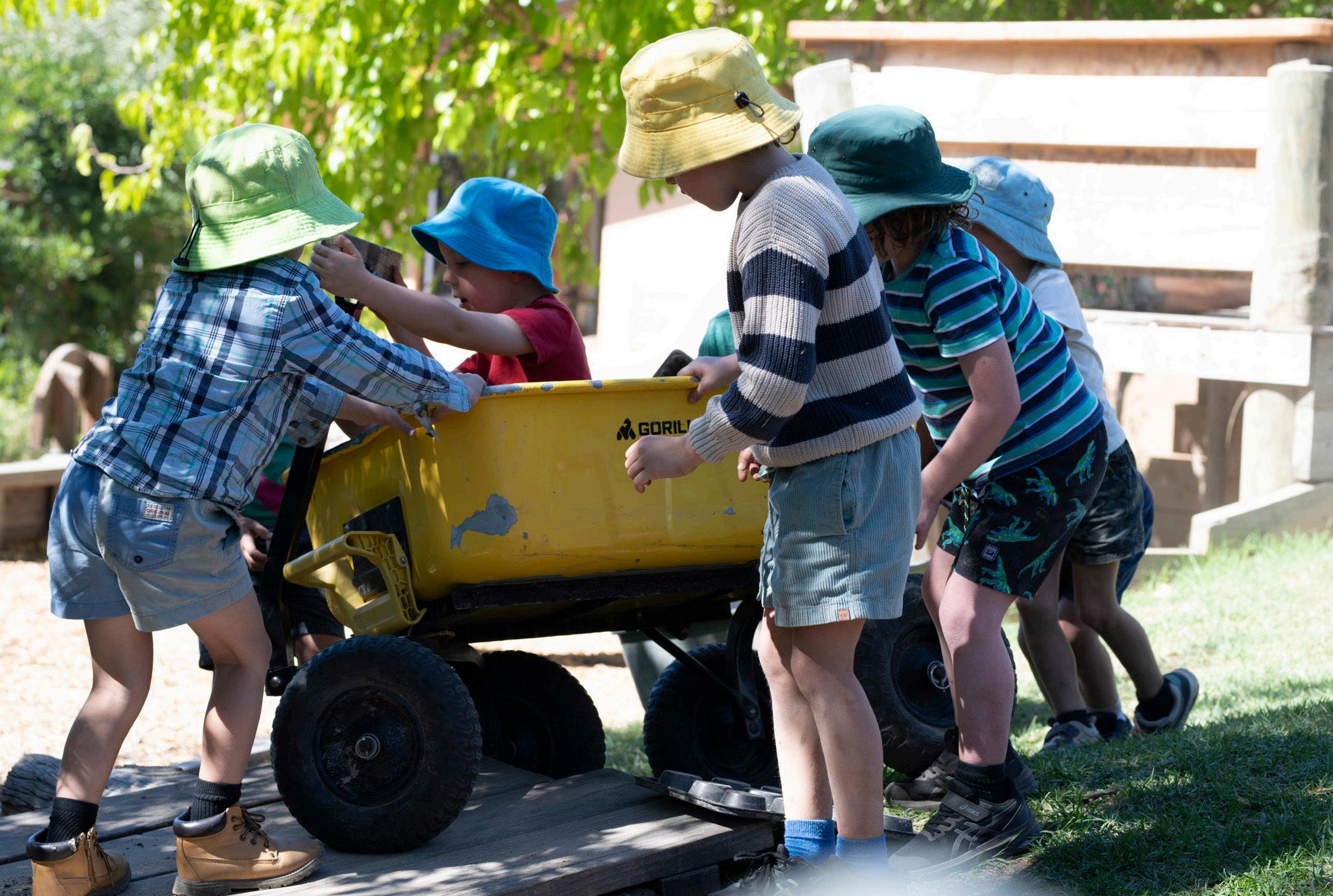
Our time outdoors is enjoyed in the sandpit building water structures, dams, villages, bridges and even shelters.
Our mud kitchen is the hive of busyness making pots of stew using petals, nuts, leaves and gathered nature pieces. We often have obstacle courses built by the children using wooden blocks, sticks, logs and incorporating our climbing frames to make risky play even more fun.
Our year in Morning Star has now come to an end. Transition time is here and we work together to make this all part of a new rhythm. The Echidna children become curious looking through the fence and into the prep yard. We visit the prep yard more regularly and remember the festivals we have shared over the year. The children become excited to move across and are ready to say goodbye to their
Honeybee friends, knowing that they will see them through the fence and at festivals again next year.
The Honeybee children continue the rhythm they have become so familiar with and as they arrive next year, they will feel like they are in their home away from home.
Stars all whisper softly, to all of us each night.
Like angels in the darkness, they guide us with their light.
No more work and no more play, all our toys are packed away. And ended is a lovely day.
SANDI VALERIO
Rosa Mundi Prep
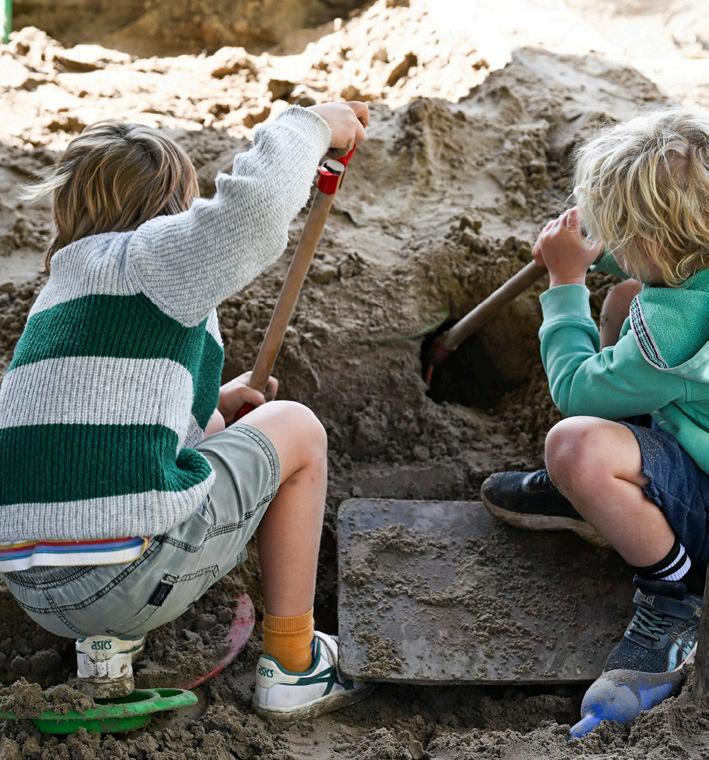
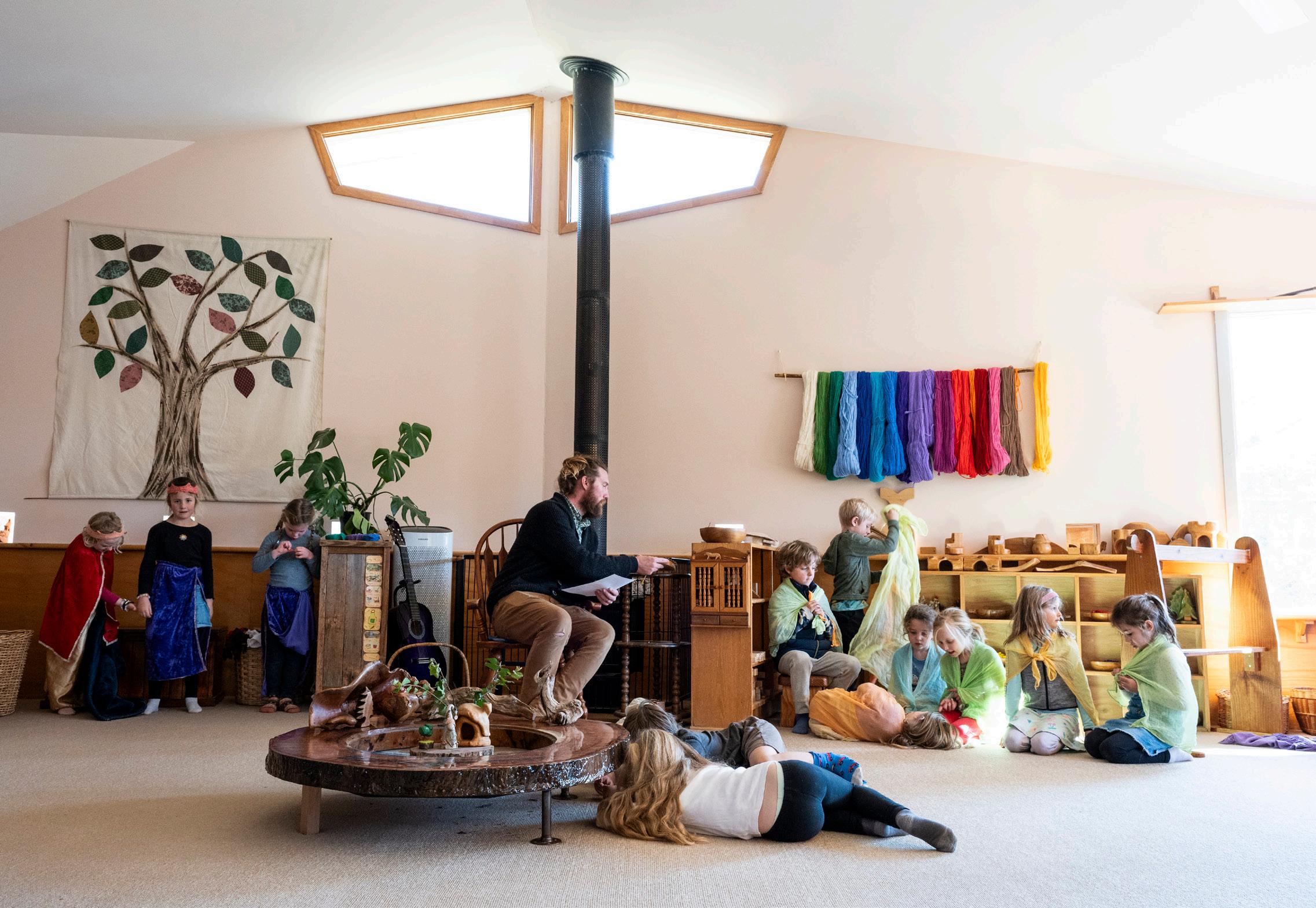
The Rosa Mundi year is about finding confidence in oneself and building a foundation of strength that can be added to throughout the primary years to come. The children have found their inner voice and experienced the world through play and experimentation with their peers, building not only a strong personal foundation but also a platform as a class group that will stay with them in the years ahead.
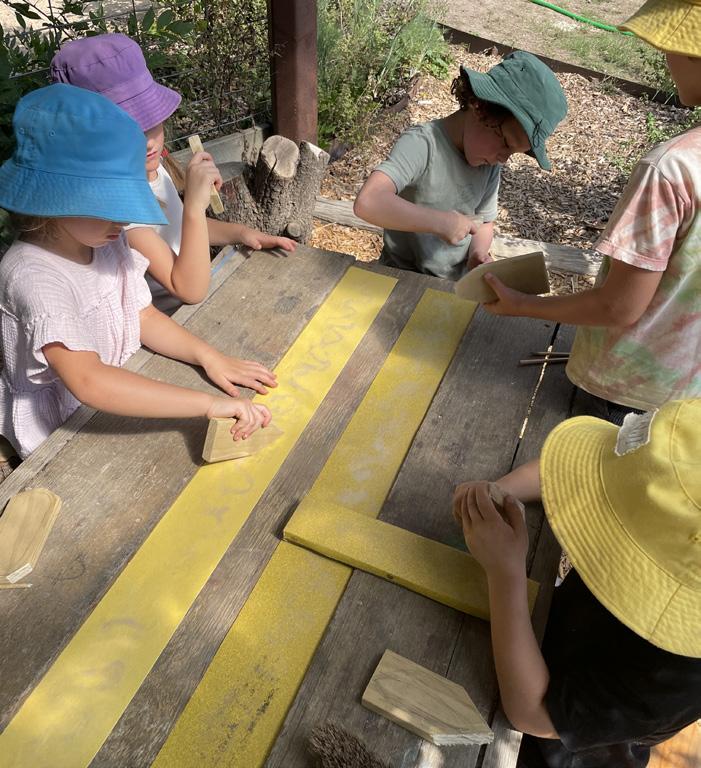
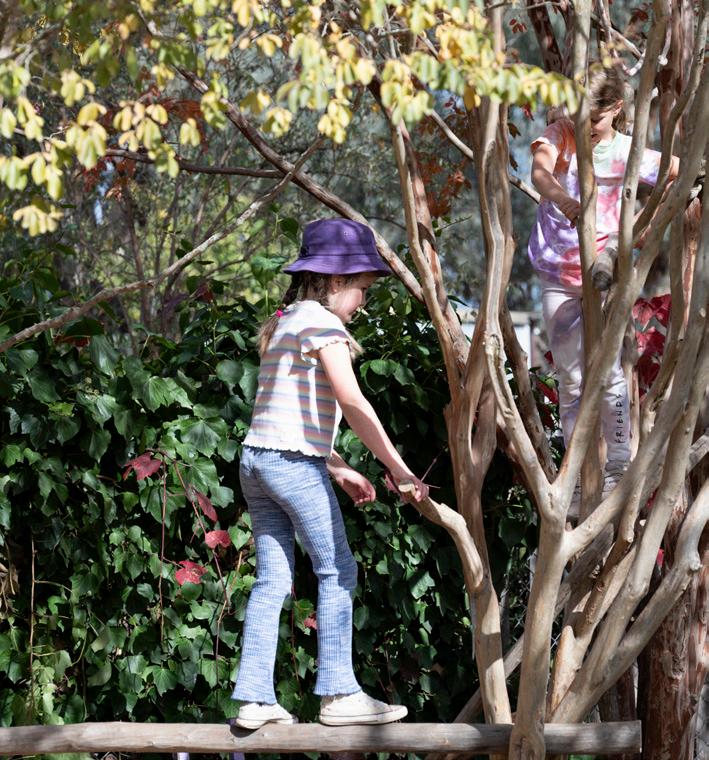
Summer saw the children start their journey in Rosa Mundi, forming new friendship groups and strengthening old ones with new and exciting possibilities both physically out in the yard and mentally through our specialist classes. The children explored and tested every nook and cranny out in the yard creating fairy gardens, tree houses and cubbies to bring their imagination to life. We spent time with our new specialist teachers creating pom-pom bunnies in Craft, beeswax models in Library and sung along with seasonal song and rhyme for Music. In woodwork we started
our toy boats using hand saws and drills. The new routine of Rosa Mundi was settling in with the children’s confidence running high.
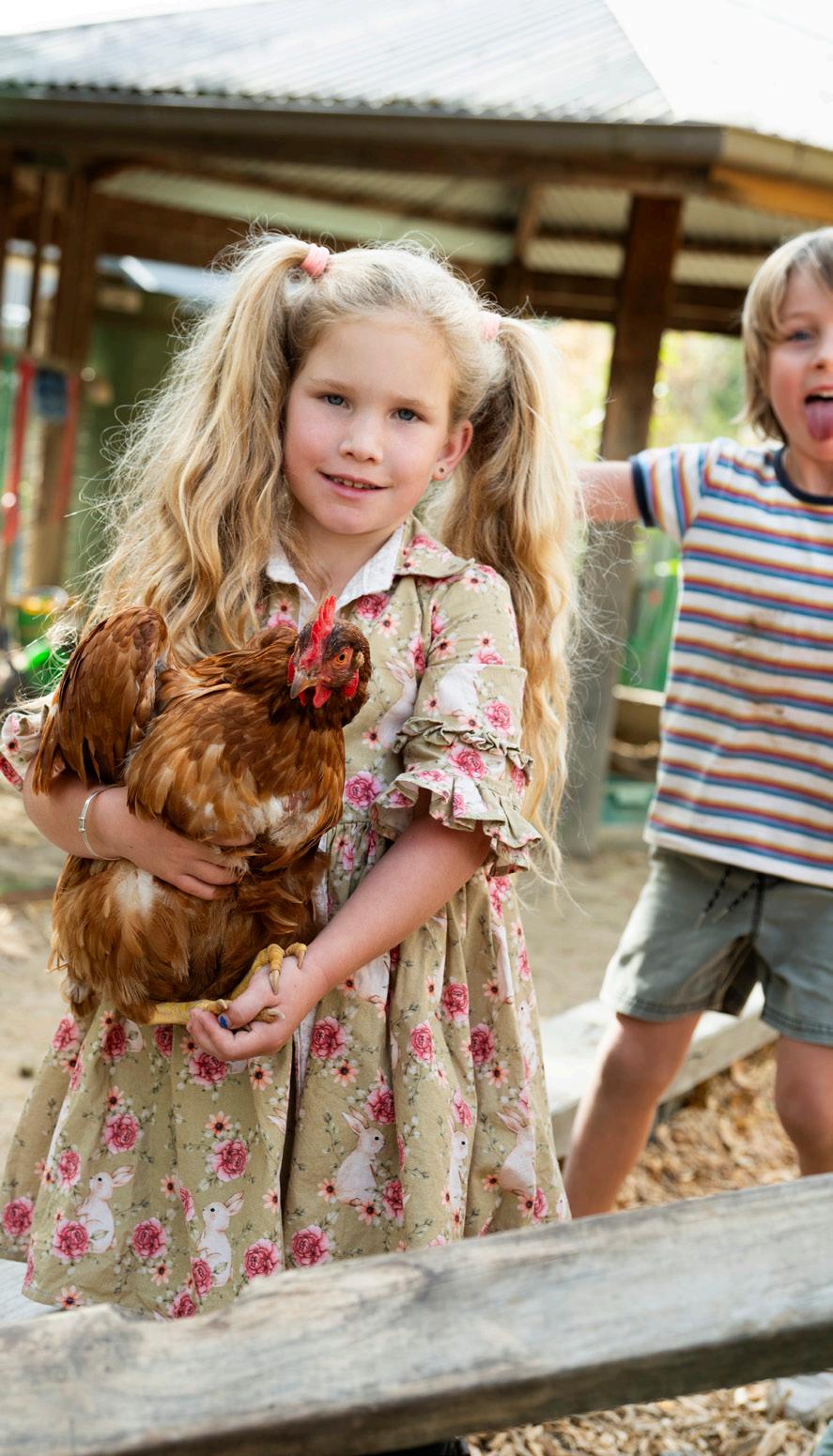
Autumn came soon after, with the changing of the leaves and cool breeze so too did our routine change. The children began to take on more responsibility both in the classroom and outside with the introduction of our class jobs. Bins, Chickens, Plants and Fish were just some of the new responsibilities that the children took on and with this showed how far they had come during Summer. The children worked hard at their new jobs and found great pride in taking on the responsibility. We also created our lanterns for Autumn Festival from paper-mache this year which the children loved.
As King Winter visited Rosa Mundi, we began to spend our days in by the fire, warming our bodies and hearts with porridge and soup. In Craft, we begun creating our library bags in anticipation for visiting the library. We learnt how to whittle sticks and finger knit to keep our hands busy and warm. We created paper boats for the kinder children and presented these for our reconciliation ceremony. Our class jobs also
changed to accommodate King Winter’s needs with the children helping with the firewood to keep our classroom warm. The Rosa Mundi children also started to challenge themselves as a class with cooperative games, helping to develop our social interactions and leadership skills.
In the lead up to Spring the children began work on their veggie gardens, weeding and turning over the soil to plant seeds. We watched as the Princess of Spring transformed our yard yet again and with this came a form of transformation within the children also. Many began losing their first teeth, standing up taller and coming into their bodies in a more confident and assertive manner.
Now we enter the fourth and final term and with this another transformation in our routine, the children have more responsibilities in their class jobs, we are venturing out into the big school and wider community and are beginning the transition process for next year. We cannot wait for Class 1 and all the new adventures, memories and experiences that await.
JACK FINNEGAN
Class 1
Children entering Class 1 have a voracious appetite for learning. They are engaged through the routine and rhythm and increasingly through the feelings, which are nurtured through story and imagination.
During this, their first year in the primary school, our Class 1 students leapt into making new friends and learning about the people and places within our school.
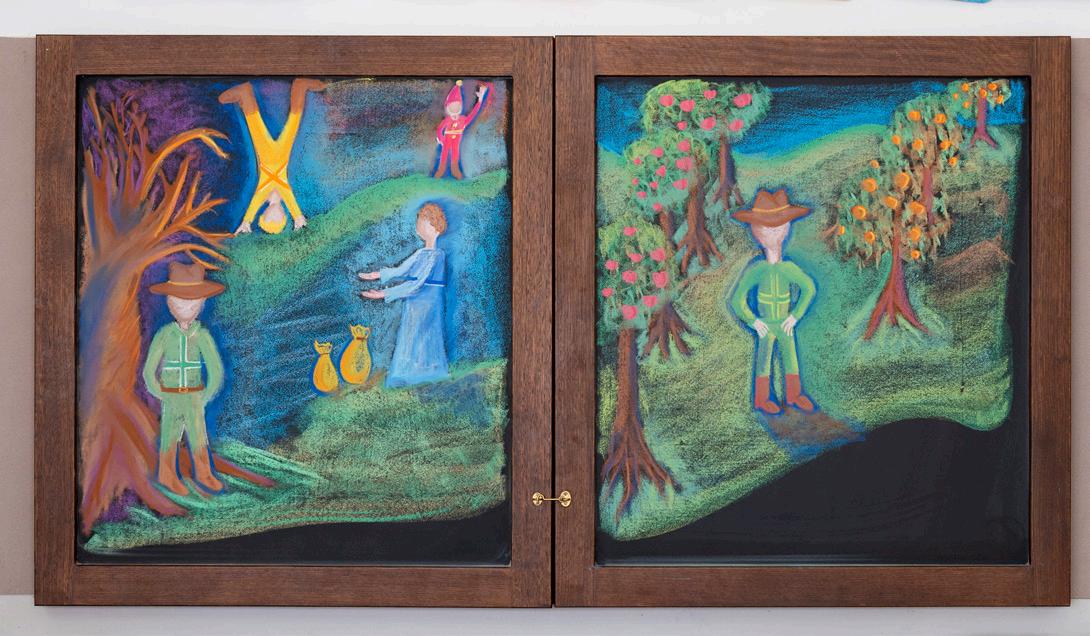
We began our academic learning when we set out on an imaginative adventure through the magical Australian bushland to discover that everything is made up of either a straight line, a curved line or a combination of both.
We ventured into the Land of Letters, where children experienced the twists and turns of the fairytales brought to them, and learned the name and sound of each letter as they artistically rendered their new understanding of the alphabet. Later, they used their knowledge of letters to write sentences to summarise
fairytales, dreamtime stories and world tales that they heard.
Class 1 visited and revisited the Land of Numbers. The children built a sense of numbers 1-12 through gesture, by building with concrete objects and the recitation of verses and songs. They developed their counting skills and increased their familiarity with larger numbers and mathematical processes.
challenge and pleasure of rehearsing and performing the play "The Animals of Timbertop". Together they worked hard; and their performance was charming.
The local surroundings have provided a beautiful backdrop for building scientific and geographic skills and knowledge. Students experienced our environment, enthralled by special plants and animals, and experiencing seasonal changes throughout the year. We had gorgeous, hot, summer days early in the year, so our walks to the swimming pool for lessons and a dip were welcomed. Students were rewarded for their hard work with exciting games at the whole school swimming sports event.
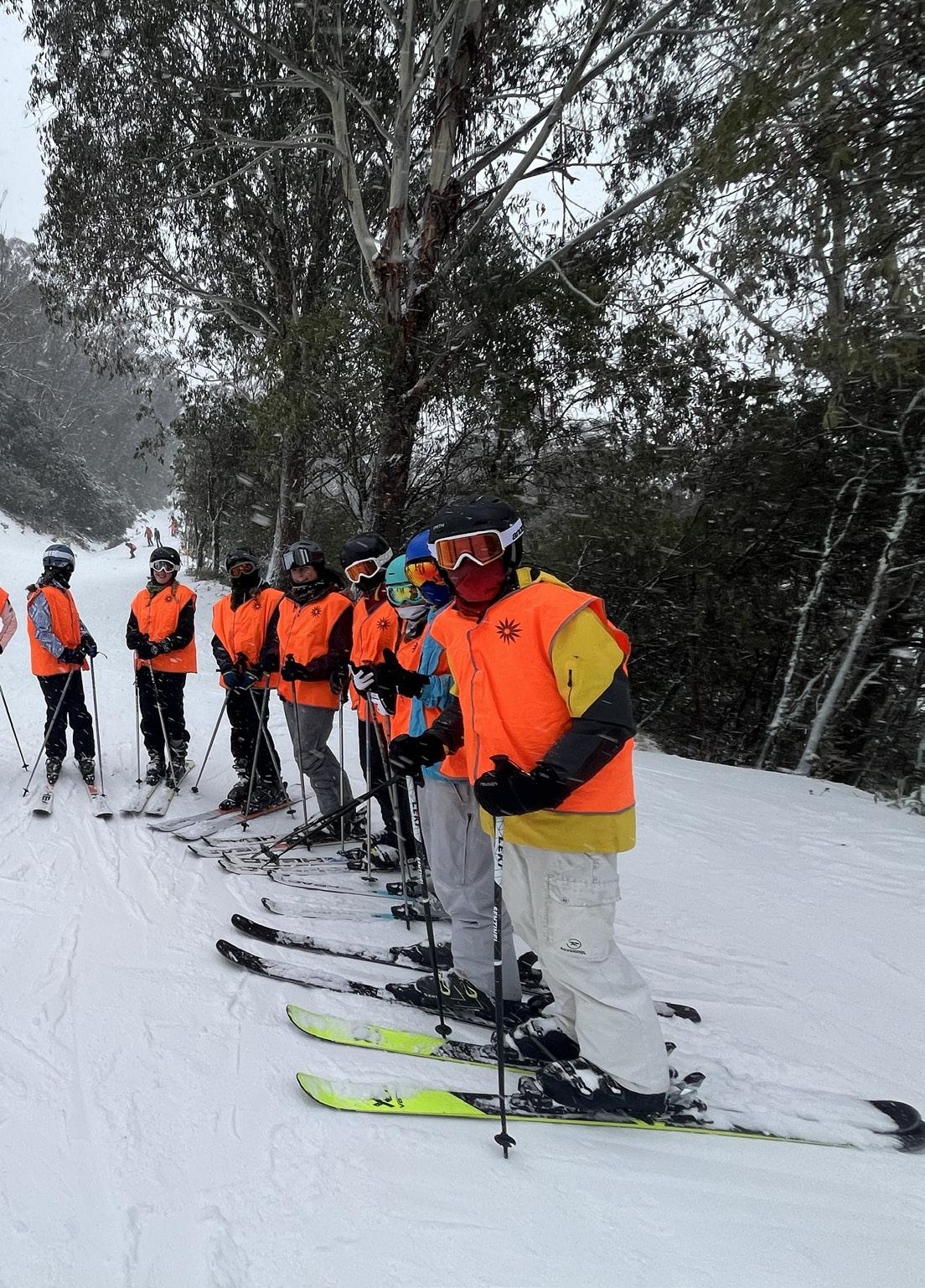
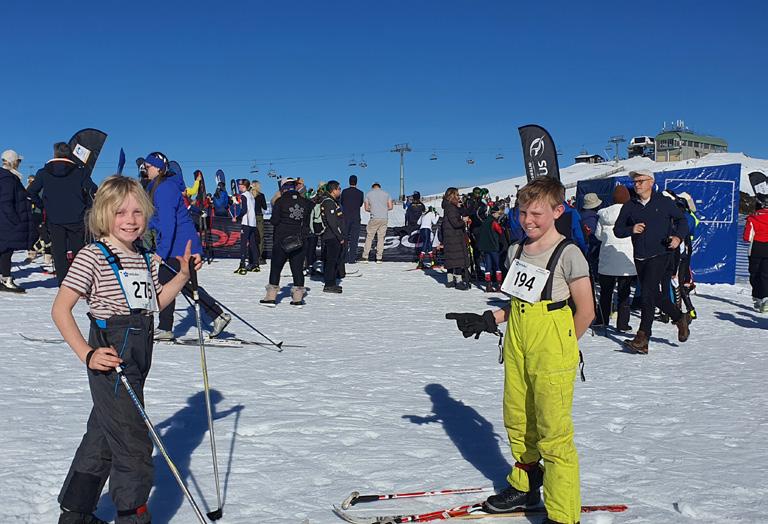
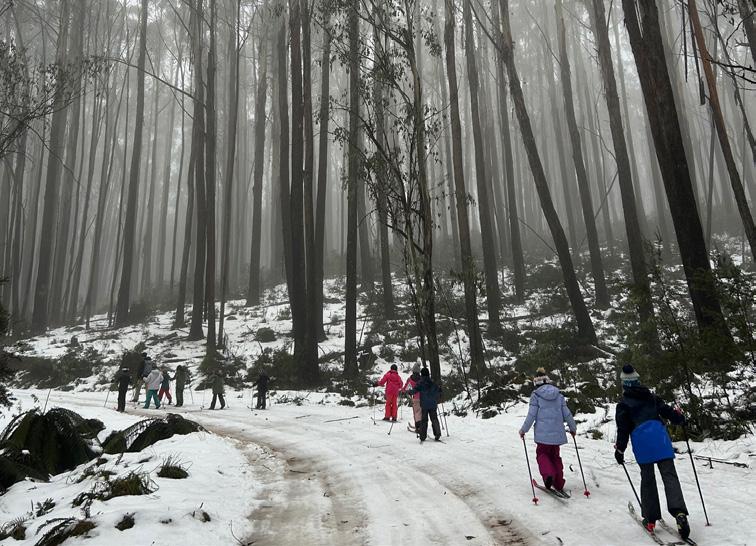
Skiing at Mt Stirling was a highlight of our winter. The children enjoyed the beautiful alpine surrounds and improved their skiing (and falling!) each week. We experienced the
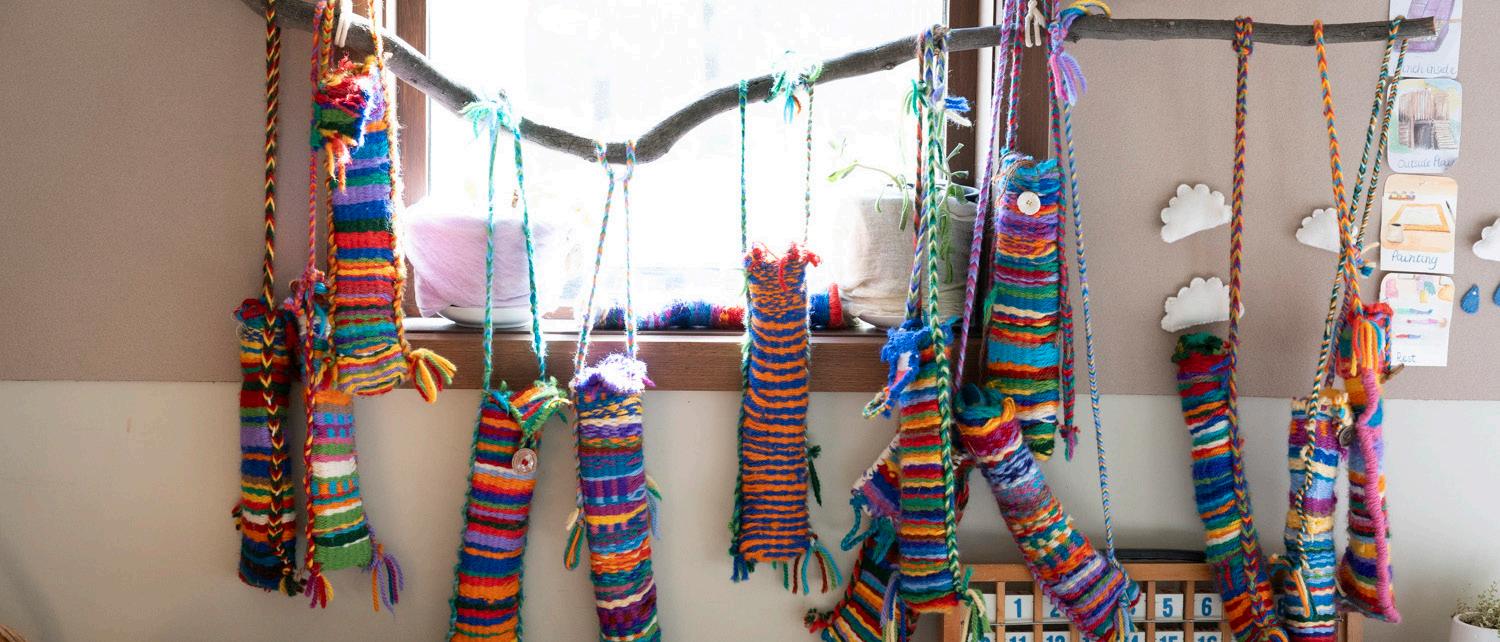
Fairy Fae gifted a recorder to each of the students much to their excitement. We have learnt how we hold, play and take care of our recorders, and are rejoicing in being able to use our recorder bags that hang beautifully in the classroom window.
The students have relished each moment of their very first year in primary school, their appetite for learning about and experiencing the world is nourished…but happily, not satiated.
SAMANTHA CHARLOTTE
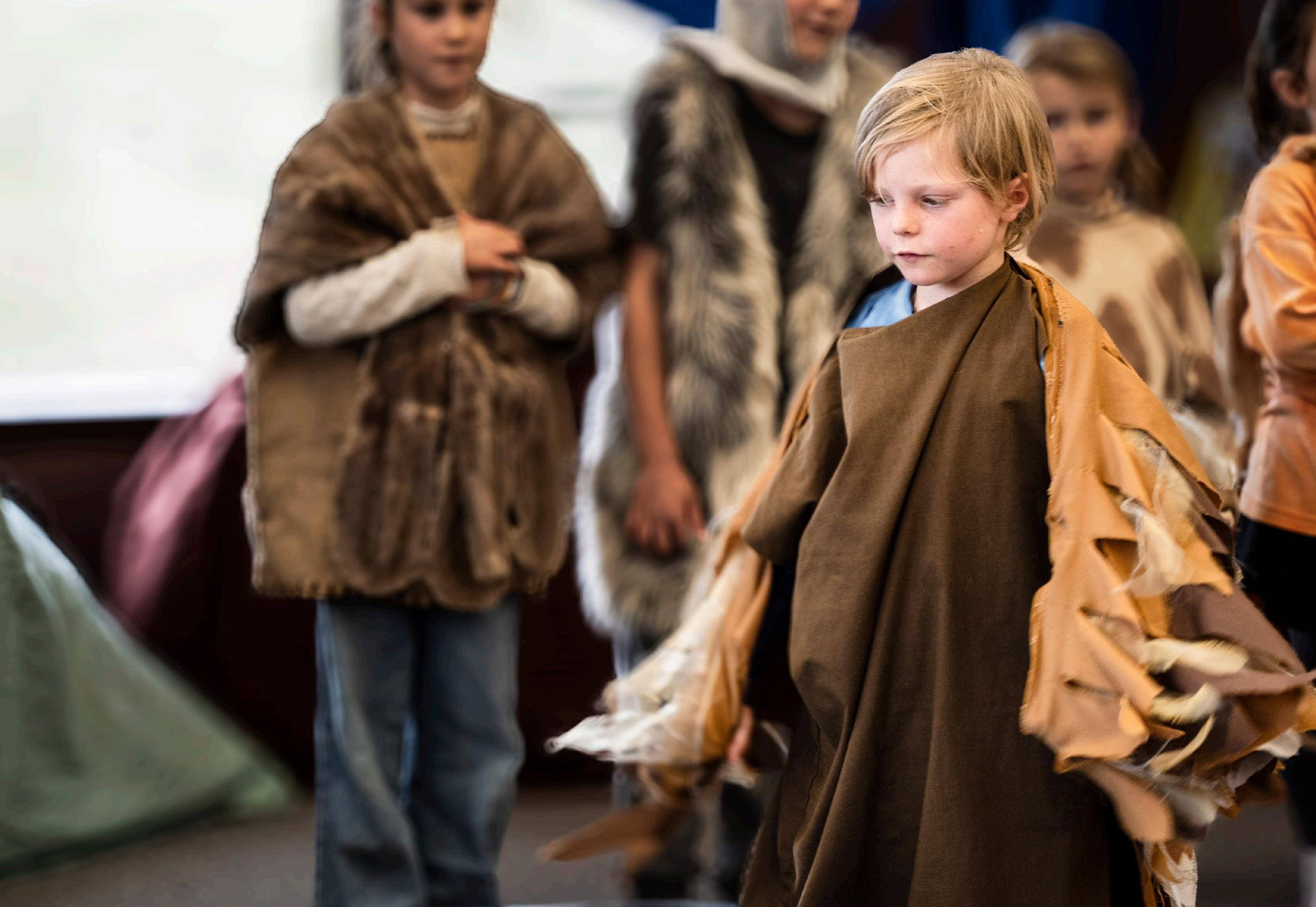
In Class Two, the second year of formal education, the children stand in a space between the dreamlike wonder of early childhood and the awakening individuality of the middle years. The children, usually seven turning eight, still live in rich imagination but begin to show the first glimmers of comparison, judgment, and moral discernment. They are immersed in story, rhythm, and repetition, yet are now ready to meet clear contrasts: light and shadow, good and mischief, courage and folly.
Class 2
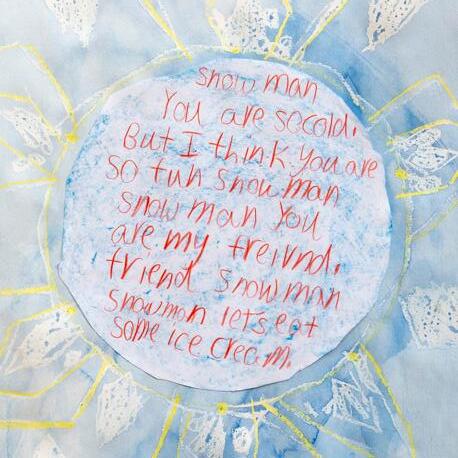
This developmental shift is mirrored in the curriculum. The imaginative life is nurtured through story, song, and the arts, while beginning to offer moral pictures that meet the child’s emerging sense of right and wrong. The fables and animal tales reflect the instinctual, sometimes impulsive side of human nature, while legends of saints and noble characters uncover the striving toward goodness. These contrasting tales are told, recalled and written as the children begin to recognise and explore the inner qualities of kindness, pride, patience, or cunning.
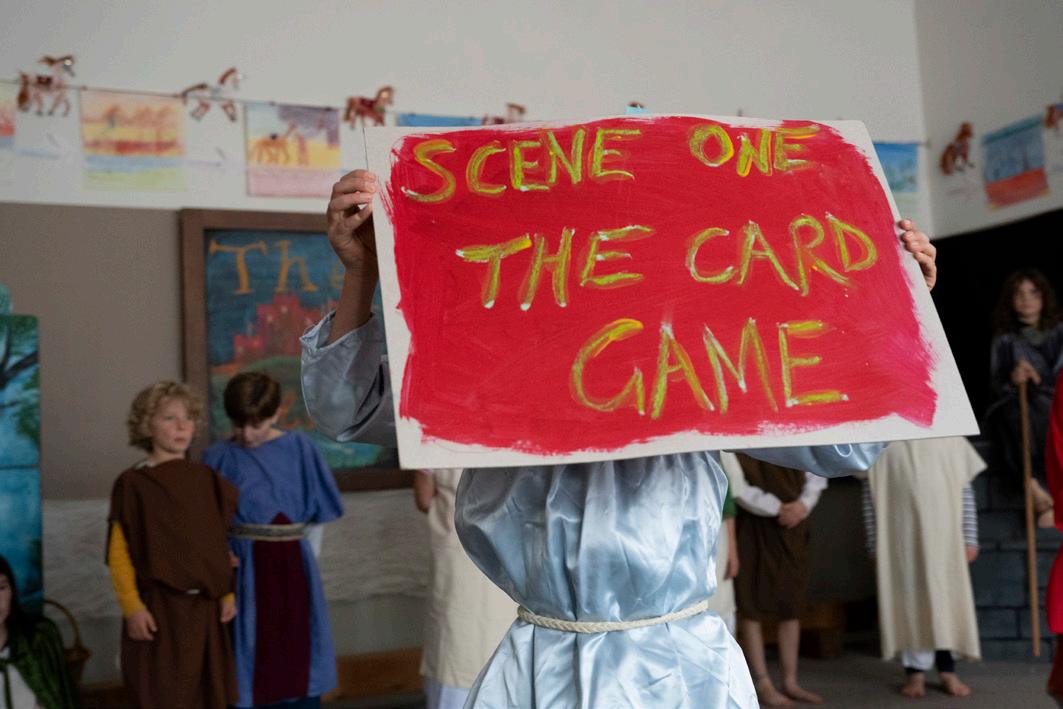
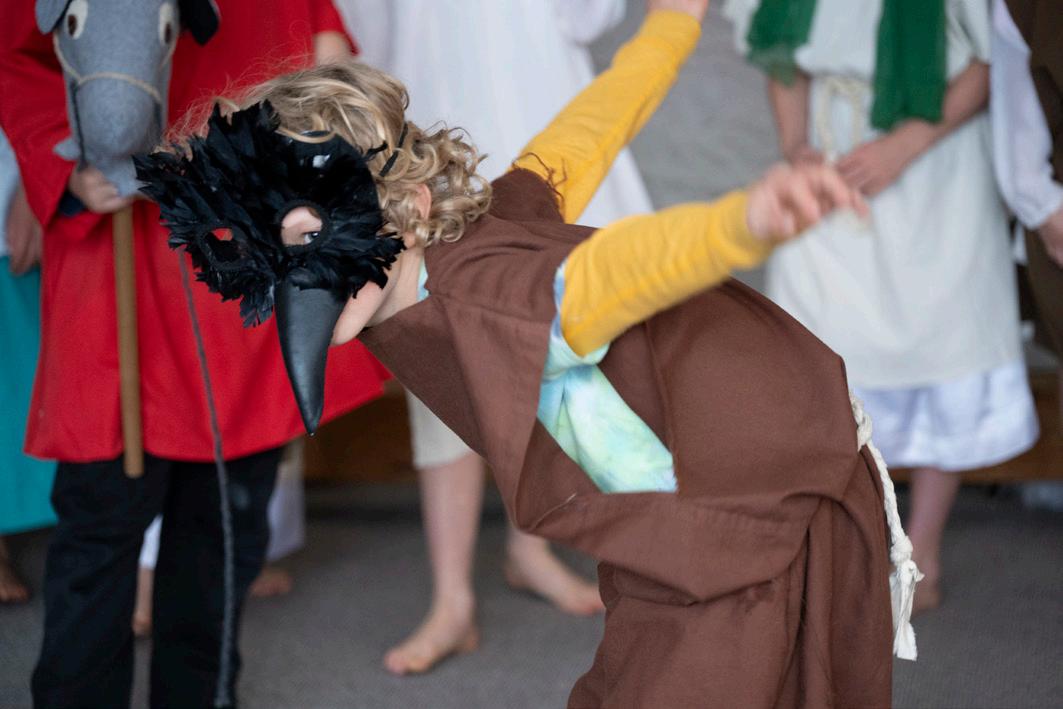
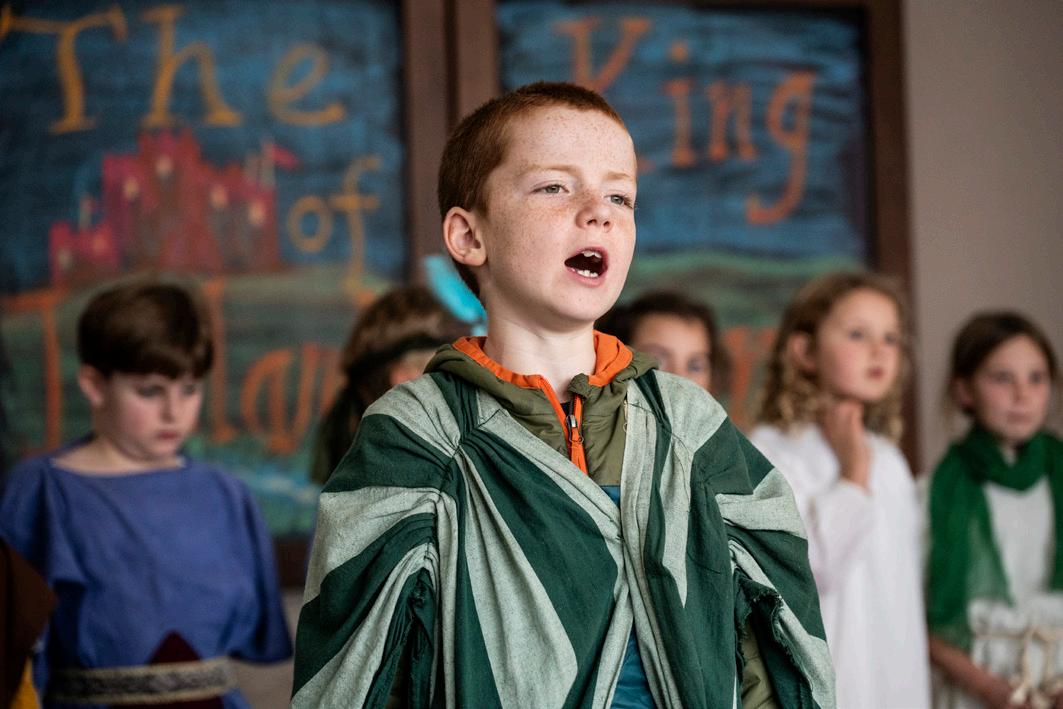
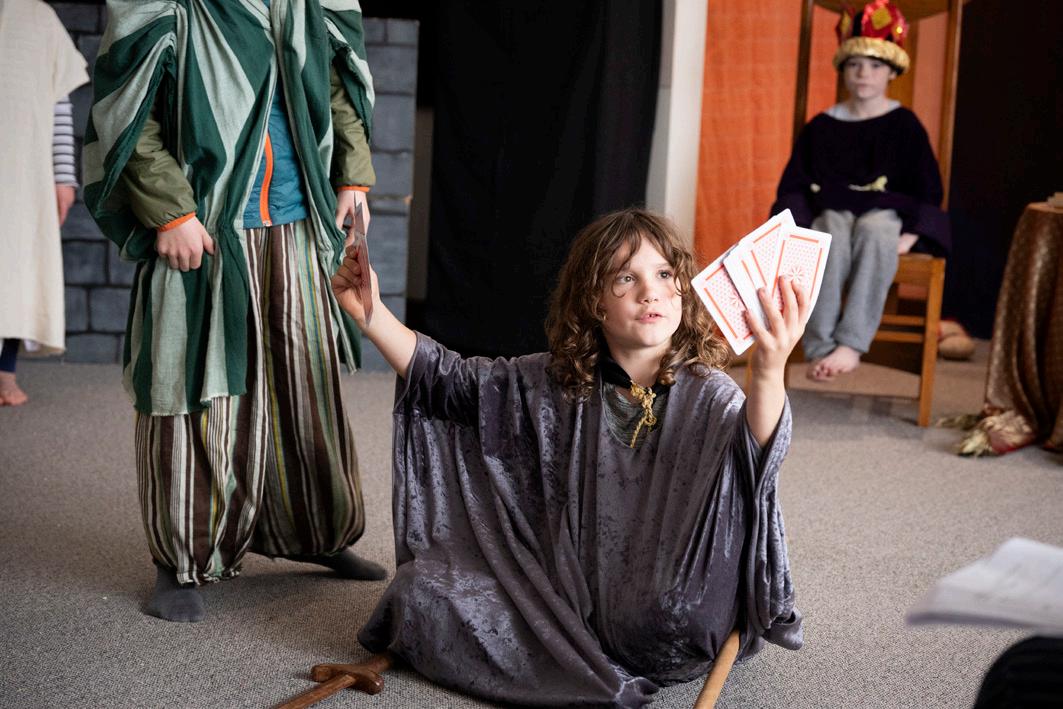
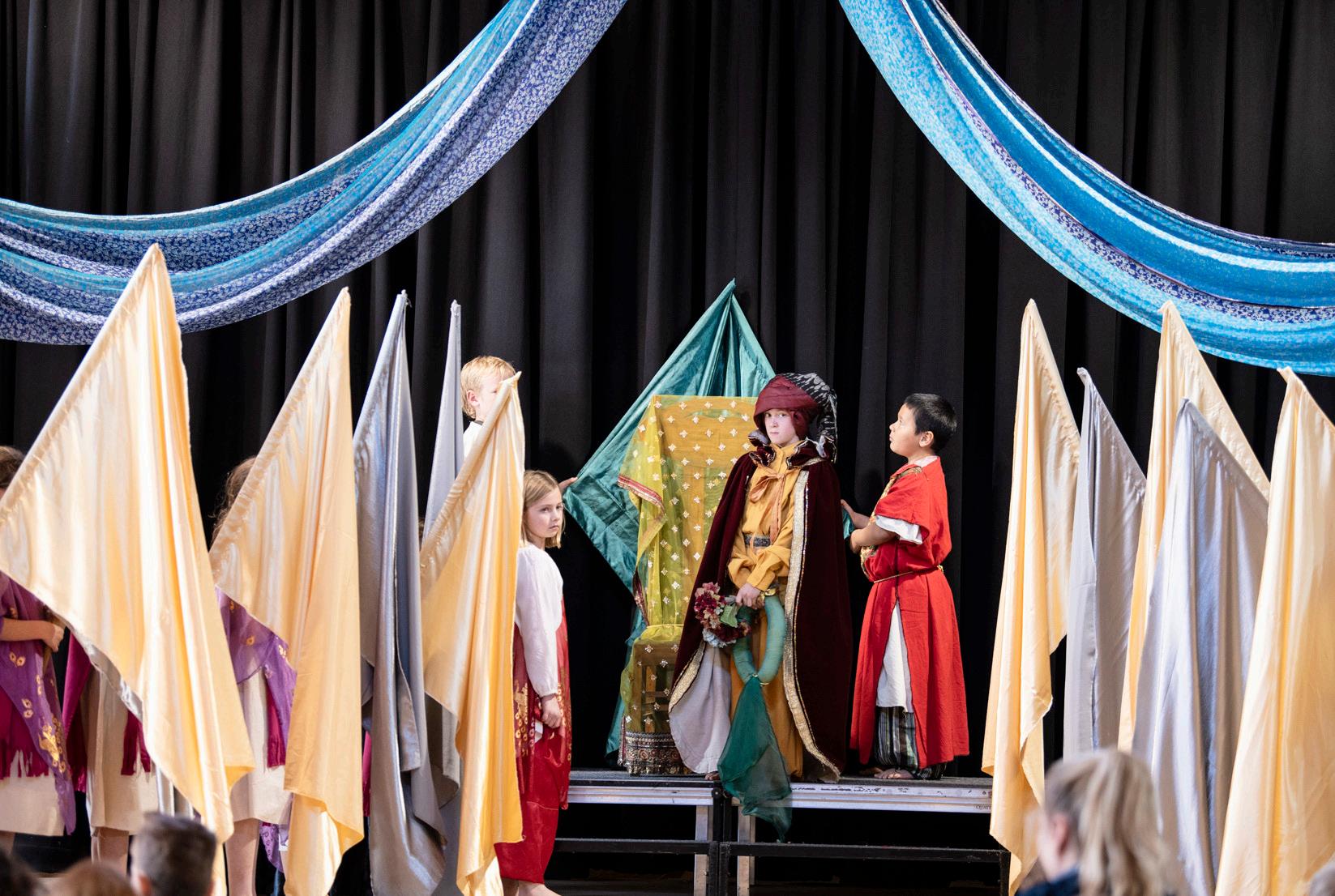
This exploration also finds a living place in the Class Play, ‘The King of Ireland’s Son which the whole class performed. The tale, with its riddles, courage, and quest for truth, allows the children to see beyond appearance toward moral choice. As the children rehearsed and then performed, they embodied the characters who stumble and rise again, who face challenges and find creative solutions. The process of undertaking a class play calls forth cooperation and perseverance along with giving opportunities for designing sets, choosing props, learning lines and most importantly working together.
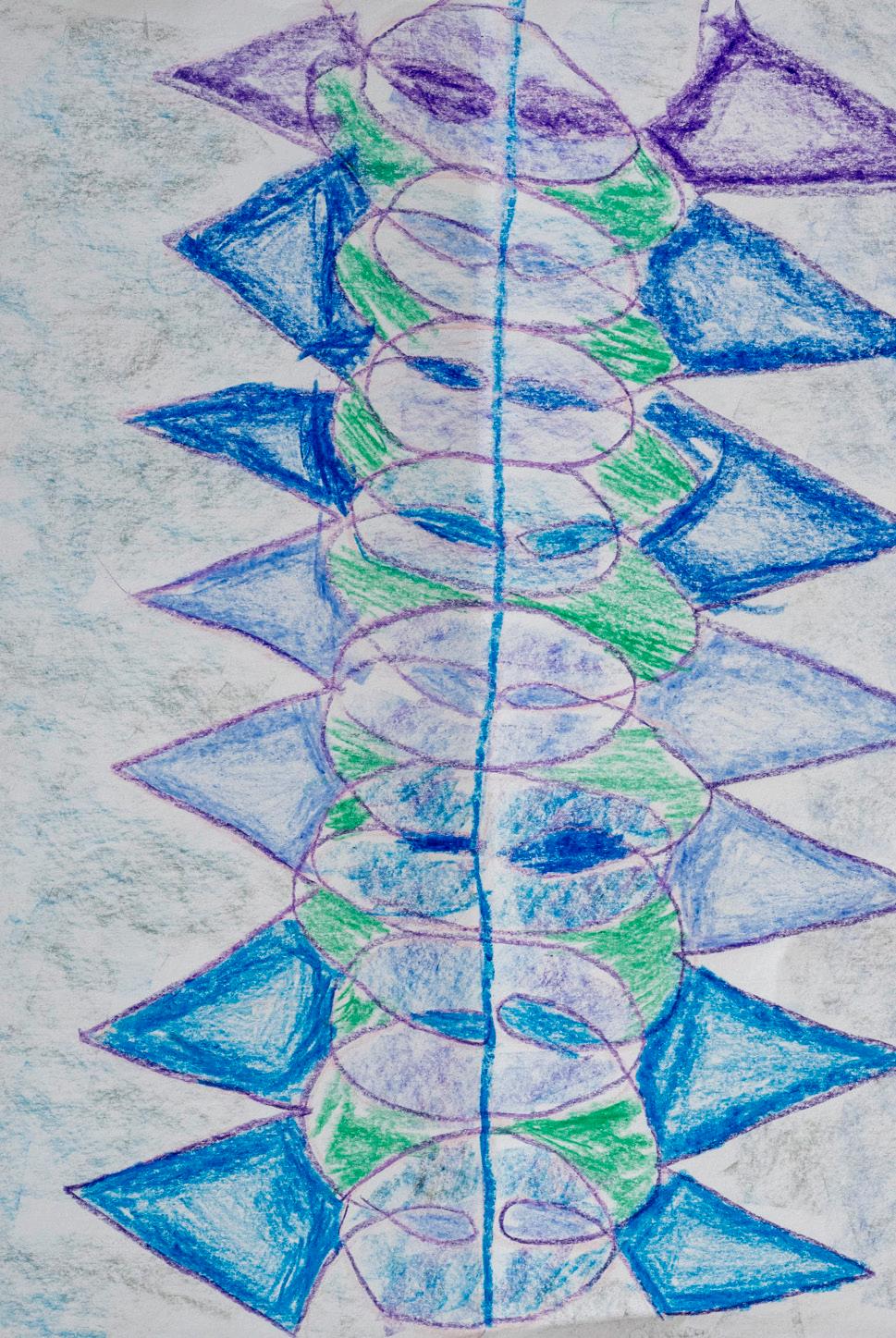
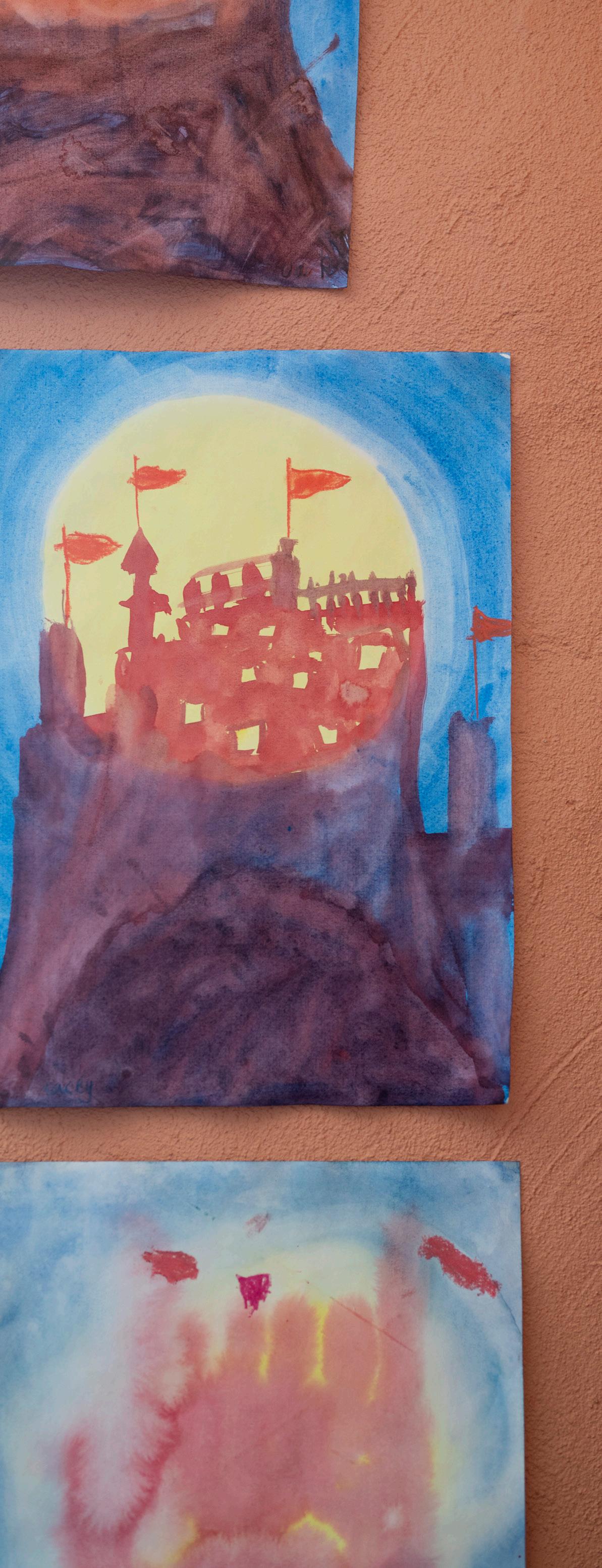
painting, drawing, modelling, and handcrafts—gives shape to inner feeling, helping the children bring harmony and order to their emerging individuality.
Class 2 is thus a year of gentle moral awakening. The world is still full of wonder, but the child begins to see that every story, and every person, contains both light and shadow. Through rhythm, story, and beauty, the curriculum meets this stage with grace and humanity, preparing the way for the child’s next step on the path of growing selfawareness.
LIZ MORRELL
Across the curriculum, learning remains rhythmic and artistic. In mathematics, the “magic” of numbers and patterns is discovered through movement, form, and story. Language lessons deepen through vivid imagery and colour, connecting phonics and grammar to the living word. Artistic work,
Class 3
As teachers in a Steiner school, we constantly seek to weave the learning of each child to occur through head (thinking), heart (feeling) and hands (willing). However, Class 3 distinctly breaks this mould and favours one mode of learning more than the others, being defined by a busy curriculum of working extensively with the hands and learning practical skills that foster a sense of independence and selfsufficiency.
The introduction of skills like measuring, telling time, using tools, growing crops, reading music and using money is met
by an insatiable eagerness to not only acquire, but master, these skills so they can quickly be made useful by the nine-year old child.
Having made their own 30cm rulers, students could soon be seen measuring anything remotely measurable around the classroom and comparing what was longer, shorter, taller or wider wherever they could. Having learned to read the time on the classroom clock, wrists became adorned with watches and I had to watch myself and keep to time in lessons, lest someone informed me that we were due for lunchtime! Having learned to count money and give change, many students appeared down in the main street with their instruments, keen to not only busk and share their music with others, but more importantly to count their collection of coins
that had been generously left in their instrument cases.
The proof, as they say, was really in the pudding, when I think back to the sense of self-efficacy I witnessed in the students throughout two large class endeavours: firstly, their work producing food and maintaining the vegetable garden and, secondly, performing their Class Play, with all of the responsibility and individual effort it involved.
Spanning two Main Lessons and many practice lessons in between, we spent a large portion of the year gardening, composting and working with the seasons. Students quickly learned to head off in small work parties around the garden, with the tools they needed and a job to get done, and often only within earshot of me (as
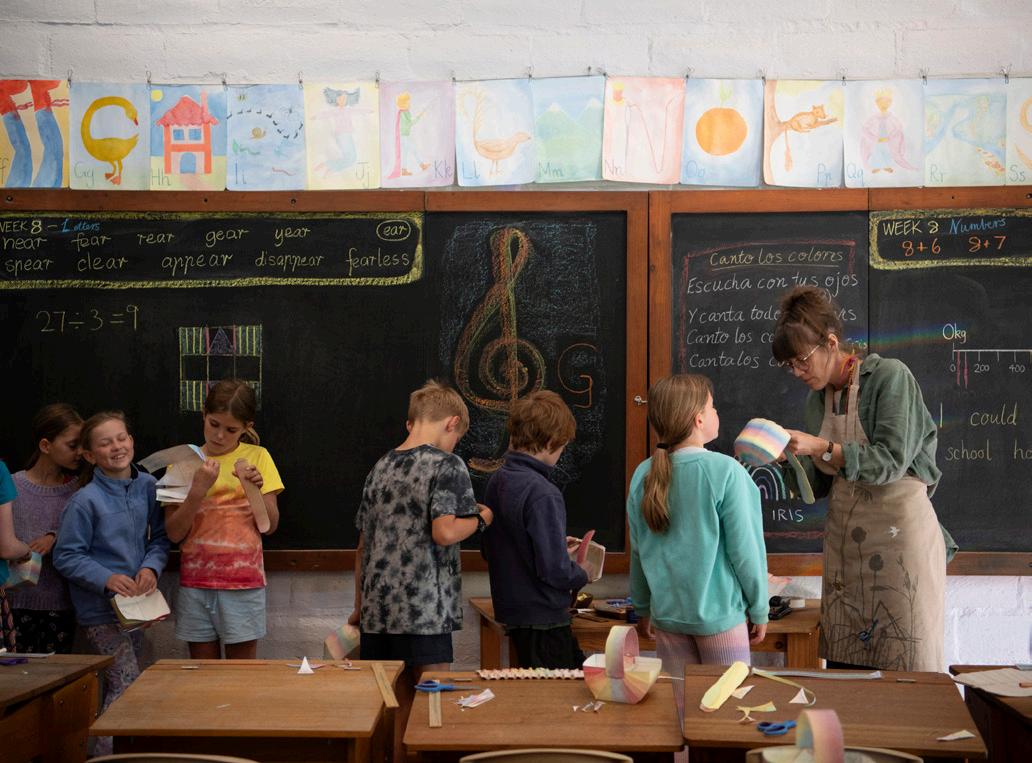
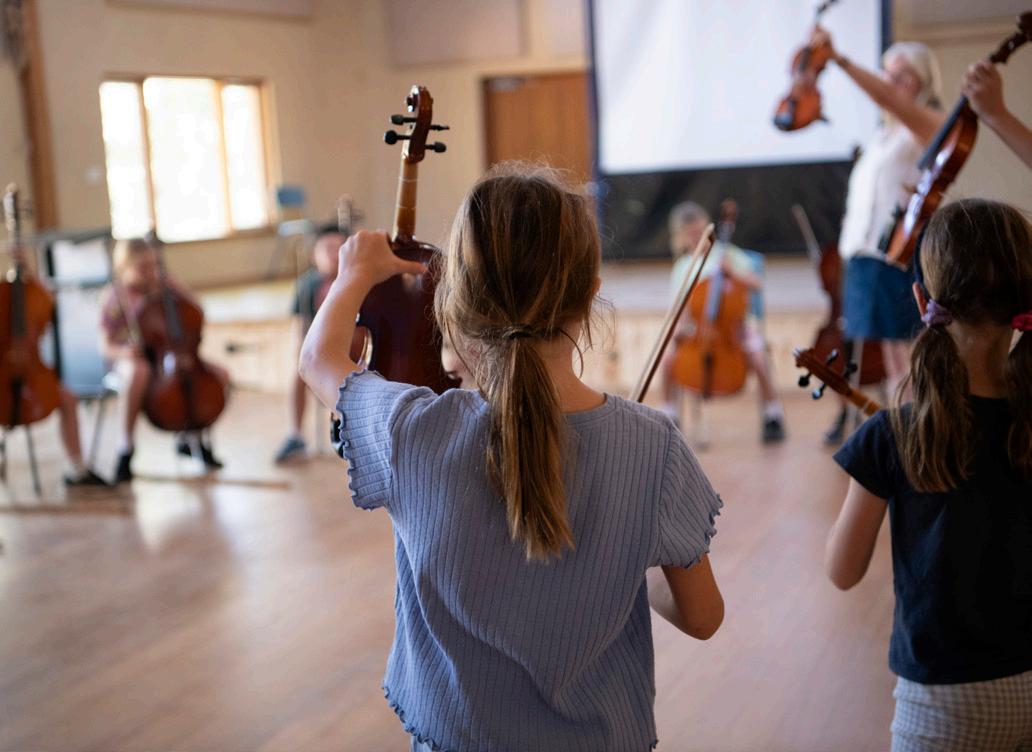
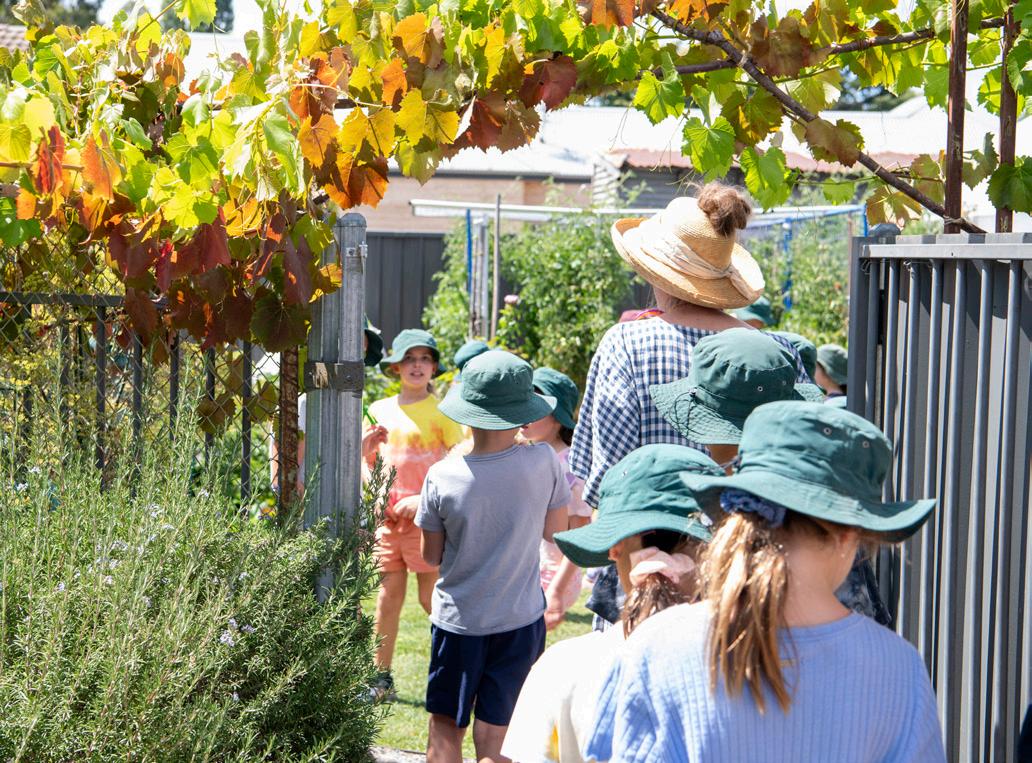
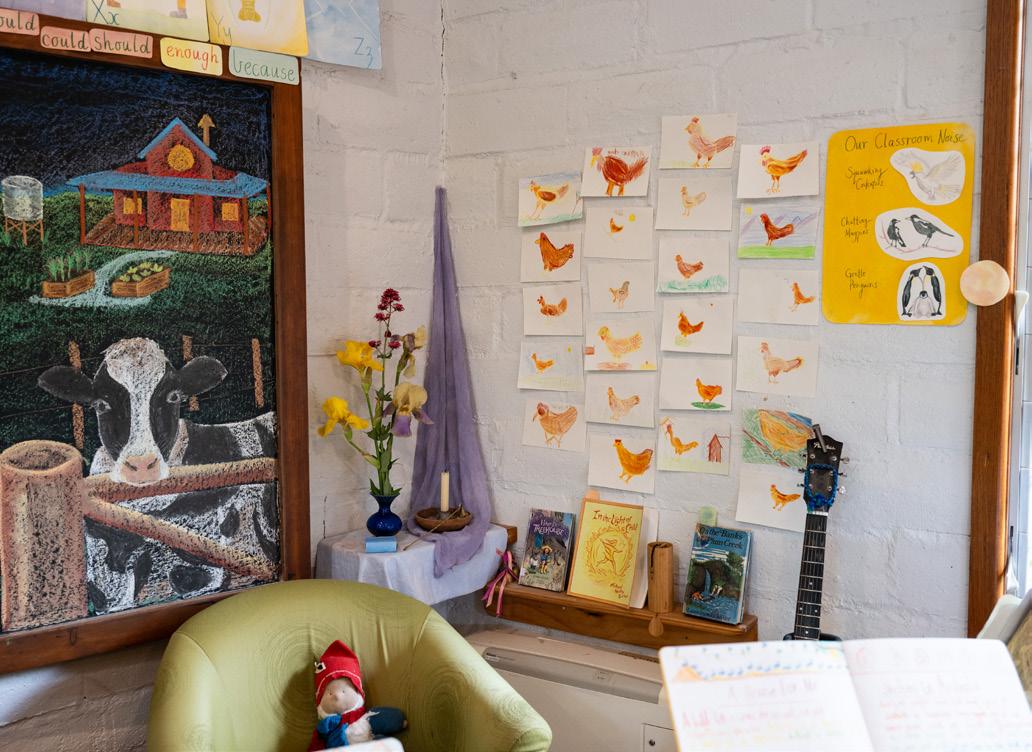
was their increasing preference for independence this year!) It was an absolute joy to hear laughter, singing and the sounds of negotiating coming from all corners of the garden on many a sunny afternoon. One particularly memorable trip to the garden, a group of children ran to me to show me the intact chook egg they’d found hiding in a pile of compost. They wanted to know if they could break it open and, after a little warning from me that it might not be what they expected, their howls of disgust and laughter could be heard across the school as they tossed it back into the compost and released the most truly rotten egg smell I’ve ever witnessed!
The Class Play grew from a story to be told into an extravaganza, led by the keenness of the children to take on more
responsibilities and have more roles and backstage jobs to do than they had in years gone by. Where, before, our plays had been held with the whole class present on the stage and many lines spoken in chorus, the children this year stood independently as their own characters for the first time. They coordinated themselves behind backstage curtains and managed props and many costume changes, many playing multiple roles and begging for more lines and responsibilities than we could physically create. They thrived in the mad rush of backstage, of remembering singing parts and choreography, and were so incredibly proud of themselves and what they had achieved. I was incredibly proud of them all, too.
AMY BURNS
Class 4
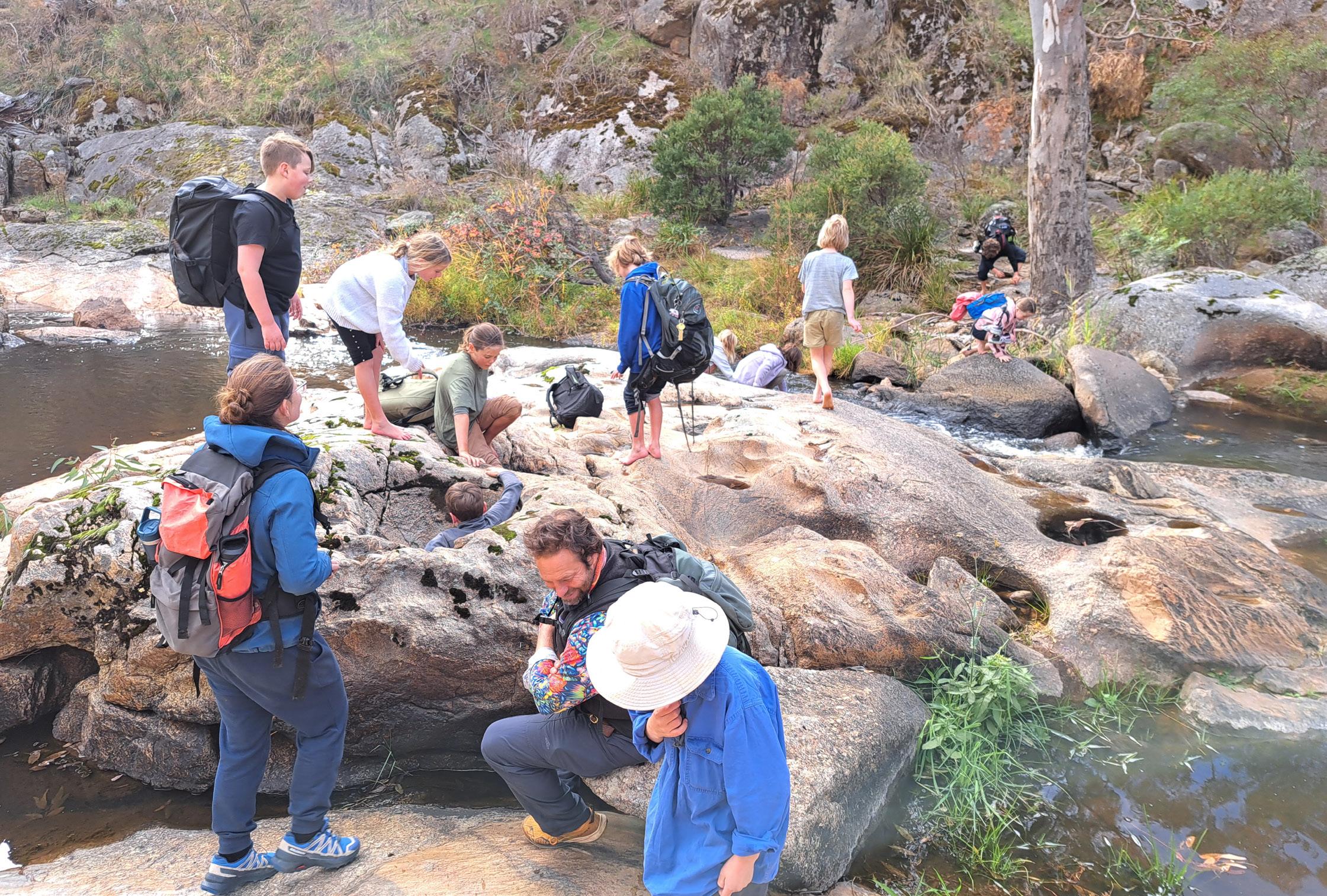
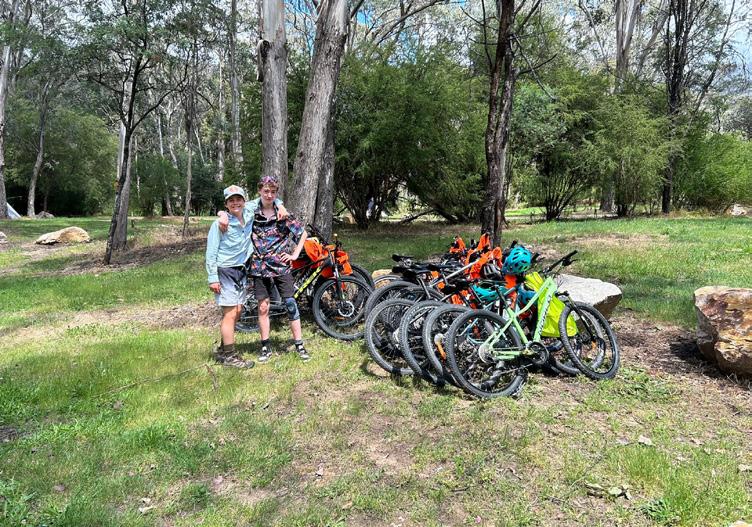
This year has been one of change, learning, and adventure for the Class 4 students. The hot and sunny beginning of the year started with Julie and Carol and was filled with swimming lessons and time spent outdoors, building both skill and confidence with athletics, cross country, and some students joining mountain biking. The class hiked to Gooram Falls, exploring the local landscape that surrounds Mansfield as part of Local Area Main Lesson. They spent weeks learning about indigenous culture including the seasons, stories, relationships, food and more. Back in the classroom, they learned to map their desks, classroom, and school grounds, developing spatial awareness and a deeper understanding of place.
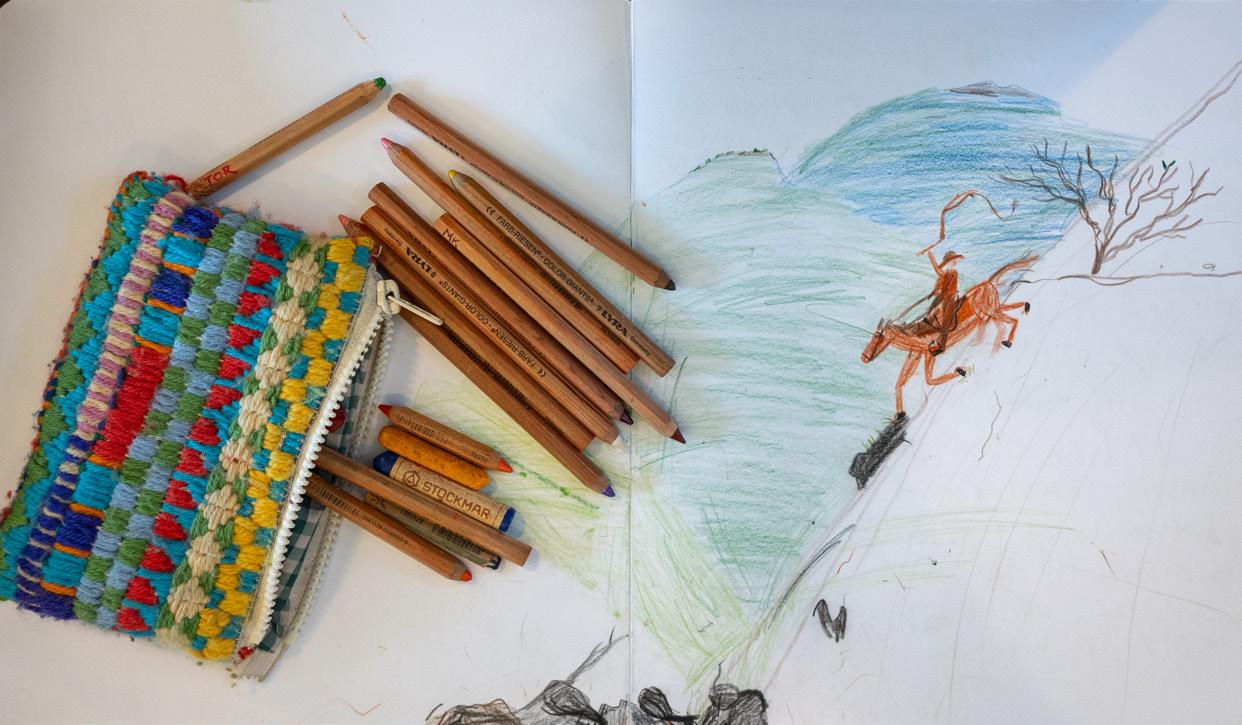
As the cooler days of Term 2 arrived, the class turned to the world of Norse Myths, discovering the lively tales of the gods Thor, Odin, Loki, Freya and many more. Their class play, “Thor and Freya’s Wedding,” was a joyful highlight — a chance to bring the stories to life through drama and teamwork.
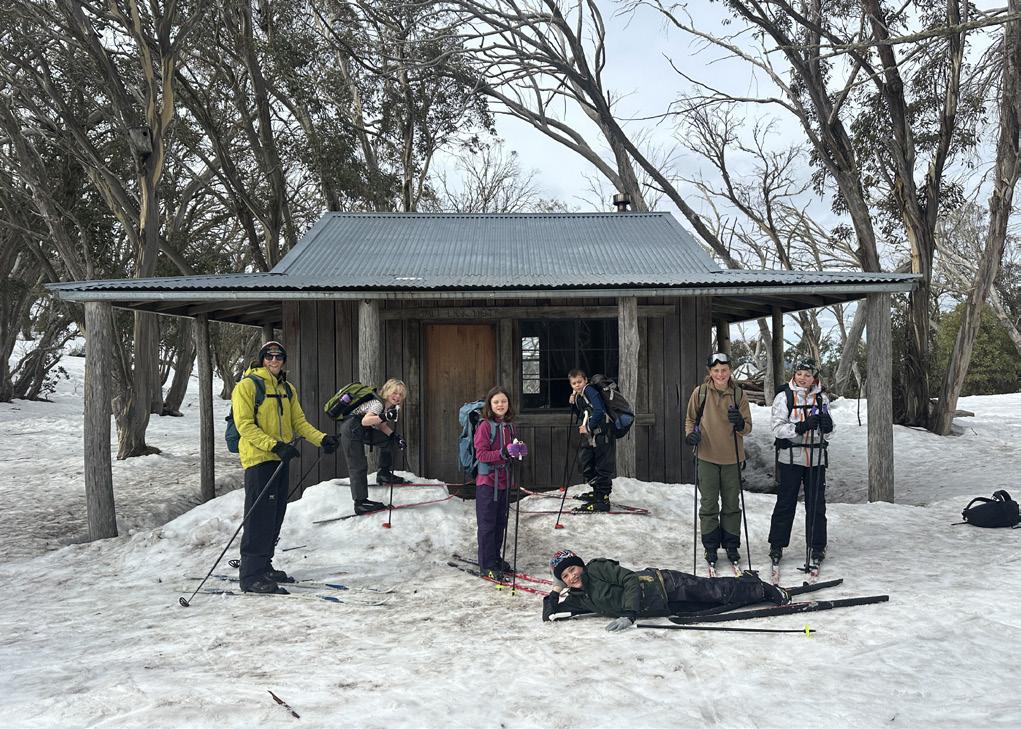
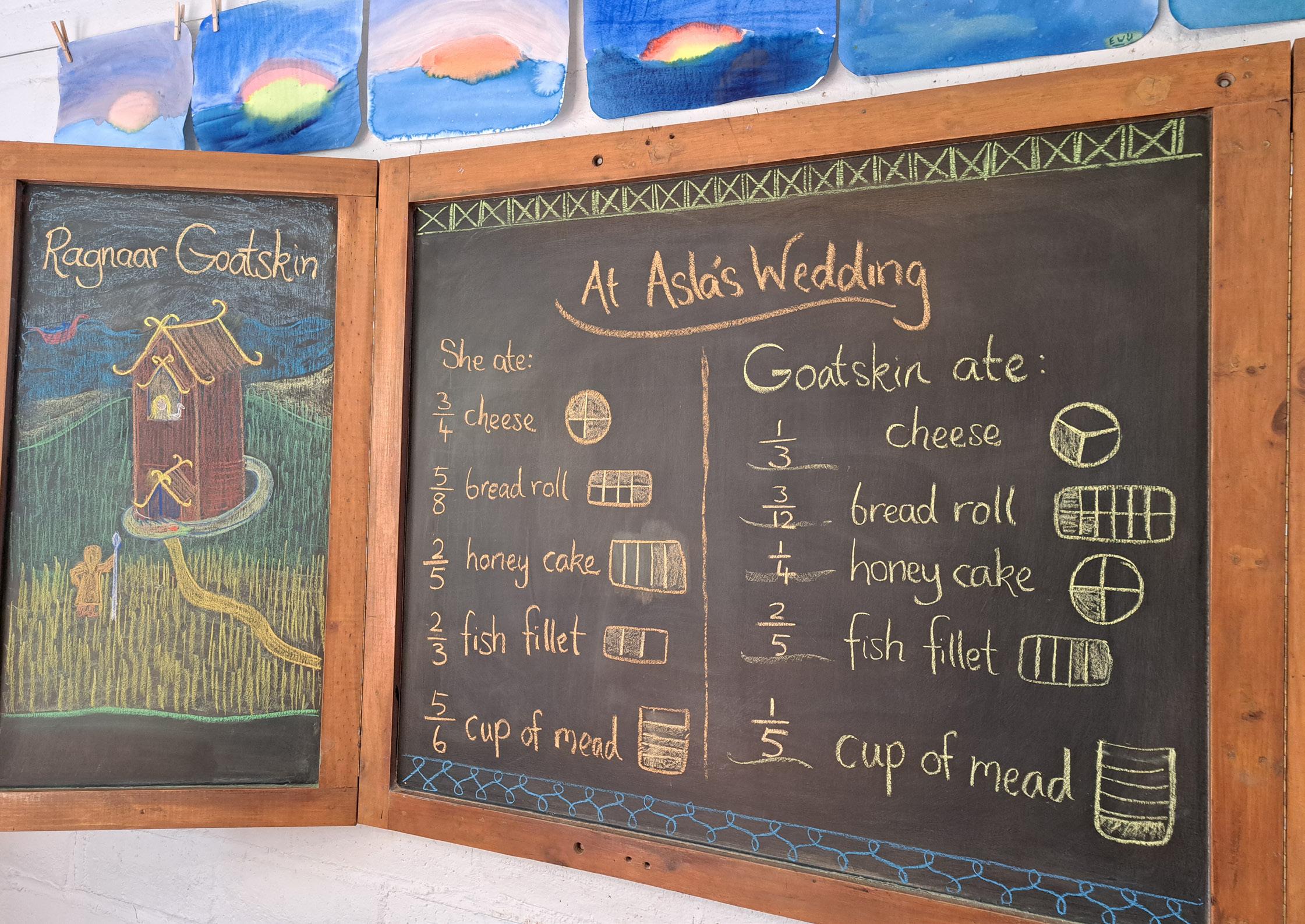
Term 3 began with Carol taking the class for two weeks. The students worked on their report of the mountain pygmy possum, started cross-country skiing, and performed the poem “The Brook” and the song Kookaburra (Dumugurra) in English and Anindilyakwa at assembly. Michael joined the class in Week 3, and together they delved into mathematics — exploring fractions, number patterns, and different strategies for working with numbers. They also enjoyed reading Roald Dahl’s Matilda, taking turns reading aloud to enhance skills and their confidence. The cross-country ski program was a great success, with many students reaching the summit from the Machinery Shed on the final day. Solo Concerts were a great achievement, with students bravely performing their chosen piece to Class 3 and 4 and their parents.
As the days warmed again in Term 4, the class began their Local Region Main Lesson, learning about the rivers, lakes, mountains, and history of Mansfield. They explored the region’s early industries — grazing, gold mining, logging, and tourism — through stories and excursions. The students then moved into their Human and Animal Main Lesson, comparing the special qualities of different creatures and how they relate to humans. Excursions to Healesville Sanctuary, Queenscliff Marine Discovery Centre, and Werribee Zoo deepened their understanding of the natural world.
The year closed with Christmas celebrations and a well-earned sense of pride. Class 4 now look forward to the adventures and discoveries that await them in Class 5.
MICHAEL BRITTAIN
Class 5
DISCIPLINE AND REPETITION
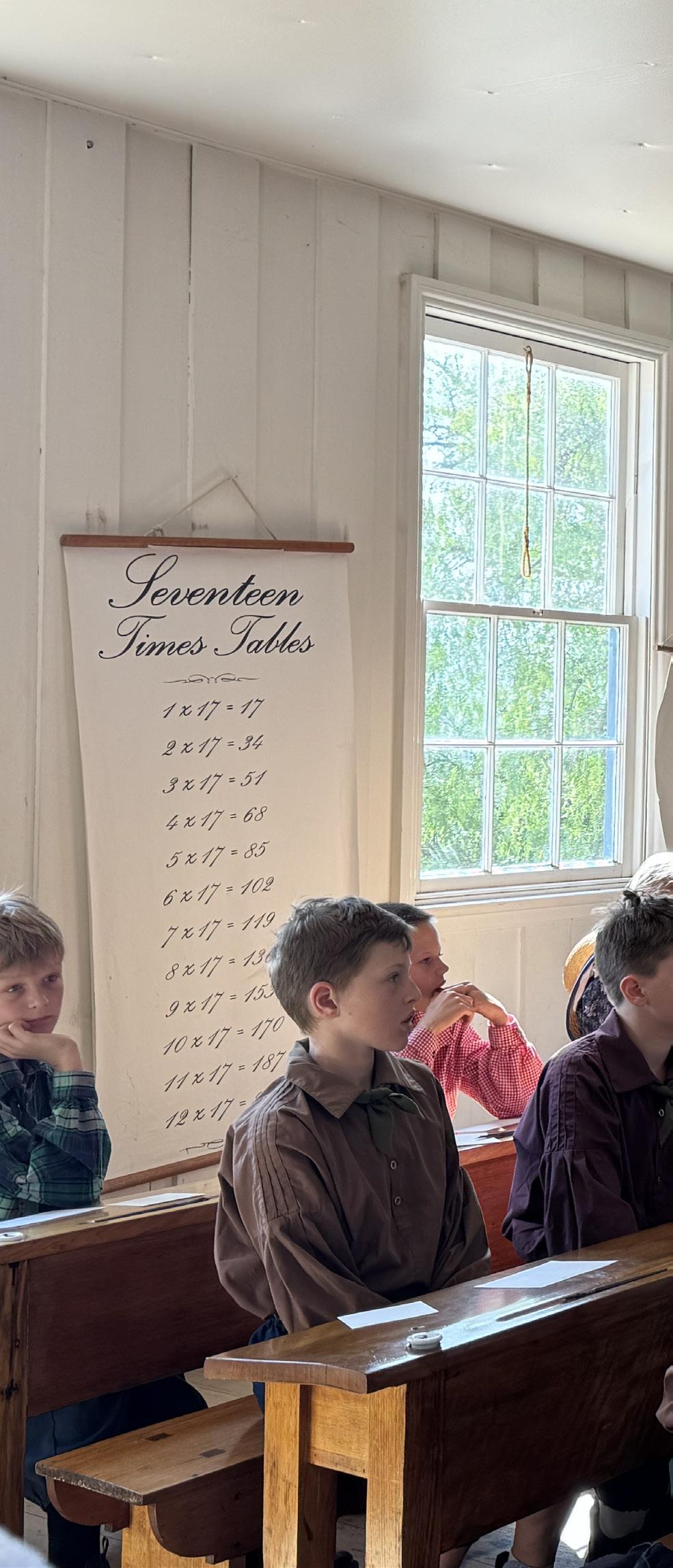
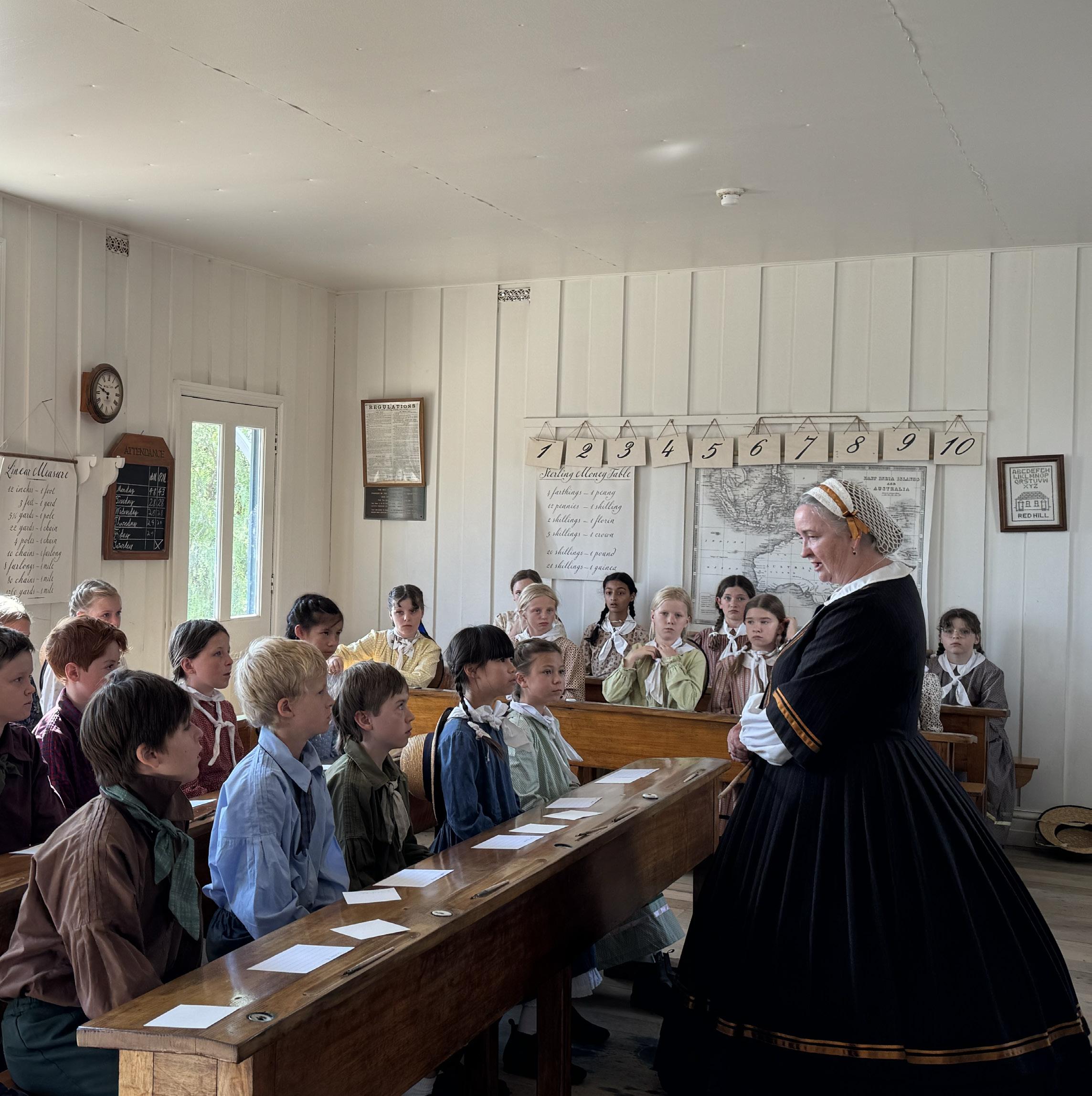
Maam was clear about education when she addressed the class in the second week of the year. Lining up neatly and most importantly, silently, the students were possibly breathless as they awaited her instructions. Sweltering under the 35-degree heat, a mirage of shimmering water rising off the dry ground, they desperately wanted the solace of the shaded schoolhouse. When she finally spoke, discipline and repetition echoed across the room.
And so began our school year, launching into our state history with a three-day camp at Sovereign Hill on the Ballarat Goldfields. It was not all 17 times tables and embroidery stitching, rope making and recitation. In between, we had time to prospect in the creek and swim in the pool at our accommodation. Highlights included a Chinese meal at the pub down the road and a fabulous tour with Hugo’s uncle Jarrod, a wonderful storyteller, who led us through the back streets to Bakery Hill where Peter Lalor famously rose the Eureka flag ahead of the rebellion.
Returning to school we looked at how the First Peoples came to this great southern
land, their interactions with sailors and explorers, and eventually the arrival of the first Europeans. This naturally led us with interest to our own family histories. How did we come to be here in Mansfield? The students picked up this challenge in earnest and the research began: phone calls to grandparents, great aunts and uncles, reading journals, newspapers and books, and studies of photo albums. The time and effort they took to discover their family histories was impressive and the stories they regaled to their classmates were colourful and often incredible. Terrific tales of adventure, cunning, perseverance, the fortunate and not so fortunate. Any which way, the bonding and forging of family connections made the process incredibly rich and rewarding.
As we know from Maam, discipline and repetition are at the heart of any good education so over the course of the year we investigated other family trees. Through our Class Play, Eklayva’s Sacrifice we discovered the Ancient Indian family tree of the Pandavas and Kauravas, in Ancient Egypt we found the family connections of Isis, Osiris and Horus plus a lineage of Pharaohs, and in our Ancient Greek studies we outlined the First Order, Second Order and Gods of Olympus. All with equally gripping tales and incredible stories that kept us on our toes. Maam would be impressed.
LOU PULLAR

Class 6
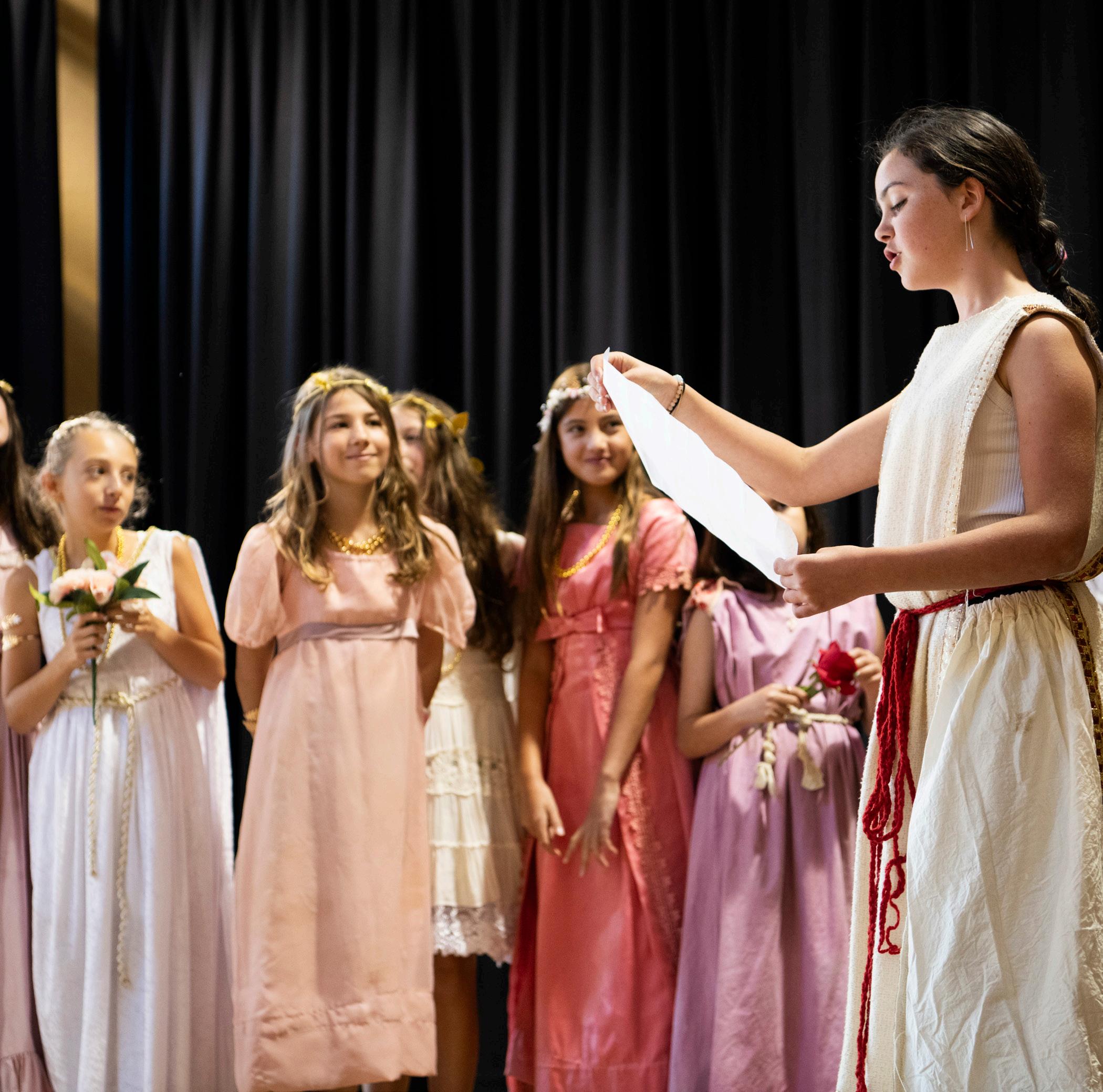
What a privilege it has been to spend six years with these students, soon to complete their primary years. Together we have learnt how to read each other’s moods, press each other’s buttons and evoke laughter when it is needed most. This journey has been half of their life but Rudolf Steiner makes clear that it is an important learning journey for the teacher too, who is always trying to improve their practice and develop as a person. Most of all I will always be grateful to the students and their families for embracing my journey into motherhood; their understanding, flexibility, baby cuddles, gifts and love.
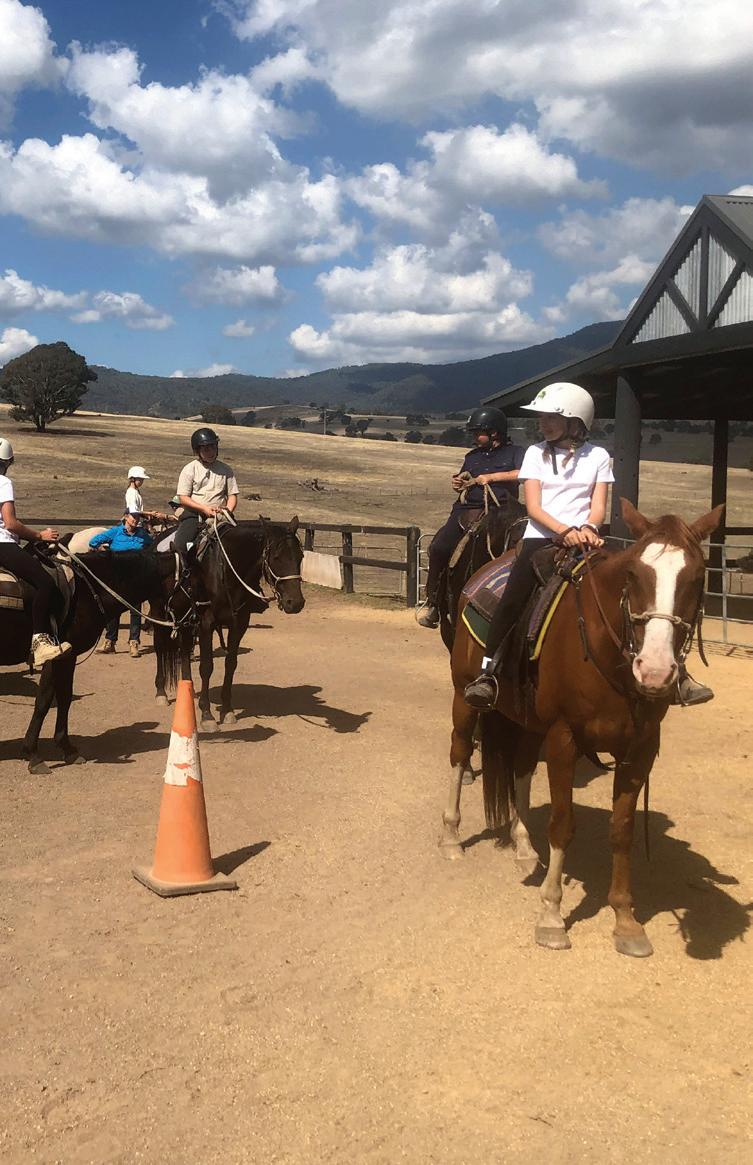
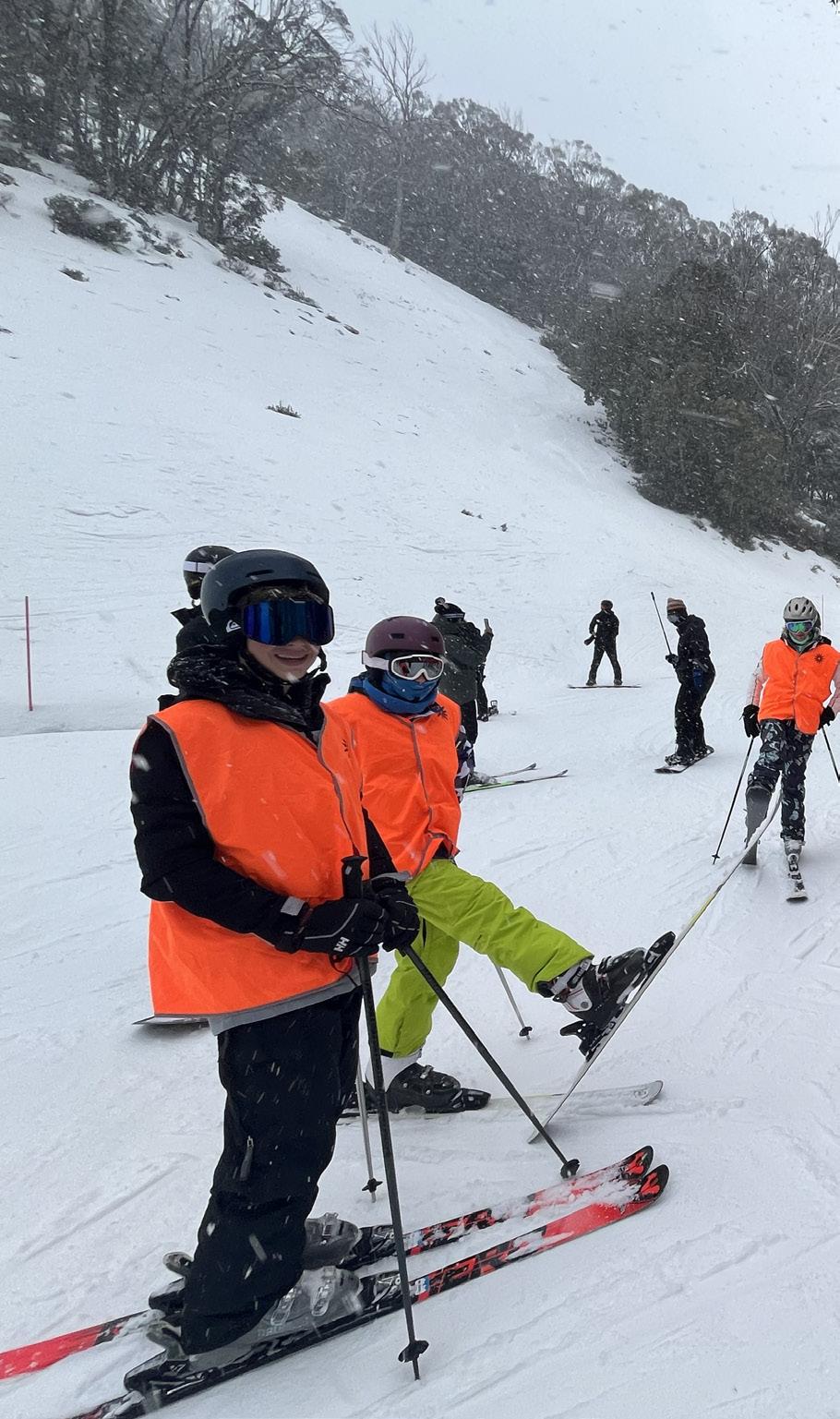
To teach Class 6 is a particular joy as students’ independent characters shine and we see a glimpse into their adulthood. This was particularly evident on our four camps: horse-riding camp, Mt. Stirling ski camp, Melbourne camp and our local Geology and Astronomy camp in which students were able to do so much for themselves and then help each other under testing conditions. Adventuring with purpose brings out the best in people and reveals what is actually important: kindness, determination and teamwork. In the classroom we worked hard to live into Ancient Rome through listening to stories of law-abiding citizens, drawing and constructing arches, completing a chosen project and singing Latin songs. We also presented the play of the Sabine Women which
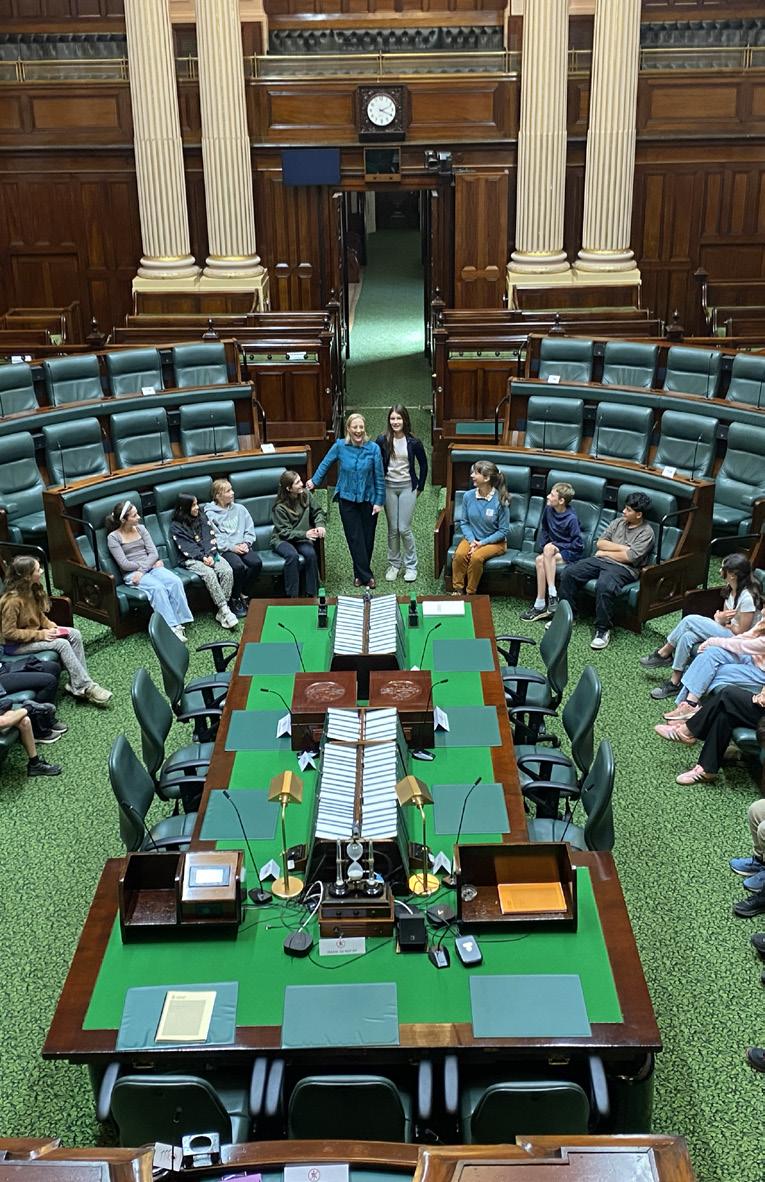
brought up many discussions about gender equality. We learnt about the beginning of democracy in Ancient Greece and how this was taken on by the Romans. Students learnt that they are a part of this system that is still in place today. We wrote letters to our local politicians and had a visit from Dr. Helen Haines and Cr. Tim Berenyi. We visited Cindy McLeish at Parliament House in Melbourne. We learnt to debate and write opinion pieces and that our voice does count.
An introduction into Physics provided a lot of hands-on fun in Class 6. Students experimented with temperature, light and sound before investigating magnetism and static electricity. We touched on circuit electricity causing movement, sound and heat from a battery or solar panel. We learnt how to write up a scientific report, which included a hypothesis and record of observations. We learnt to be objective. Other aspects of science that were covered throughout the year included Geology, Astronomy and gardening, all of which exercised our hands, heart and head.
The ’class teacher’ years are a gift to be treasured by students, teachers and parents and many memories have been formed that will stay with us all. I wish all the students well on the next chapter of their schooling and I will always be interested in their progress and welfare.
CLARE BENNETTS
Year 7
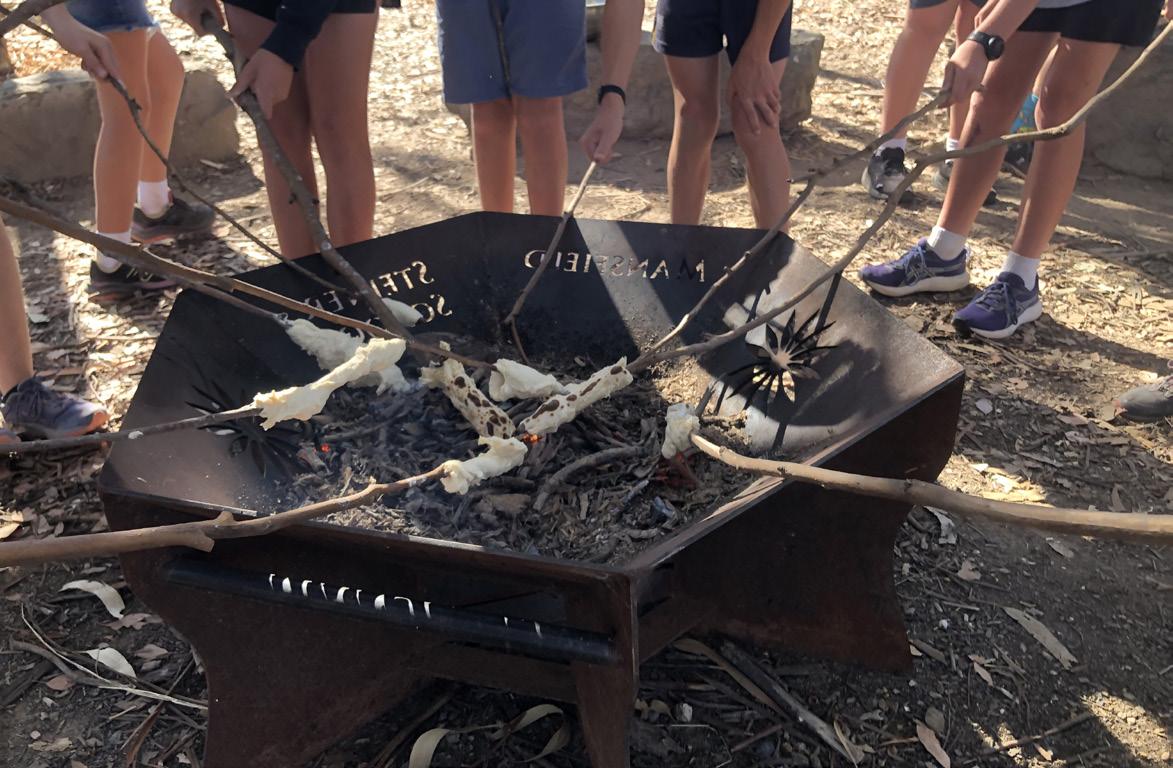
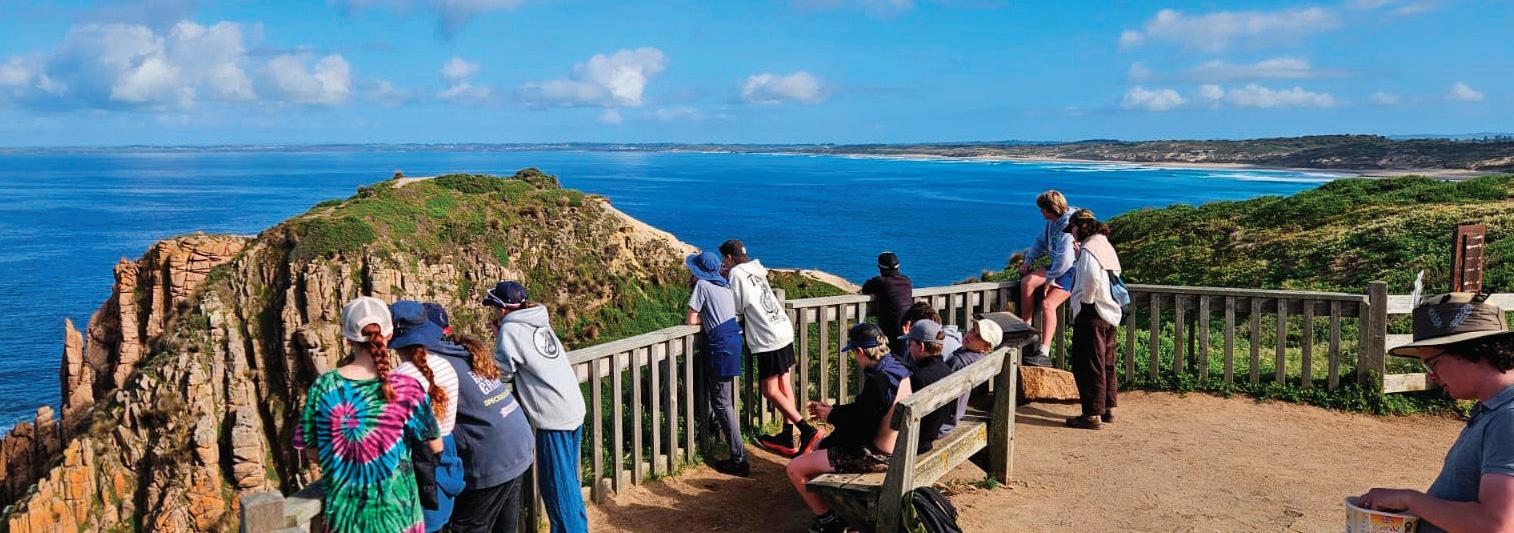
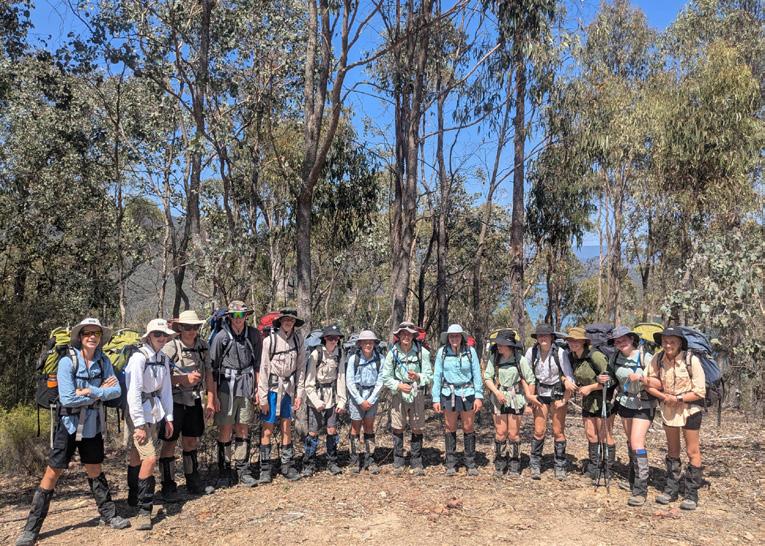
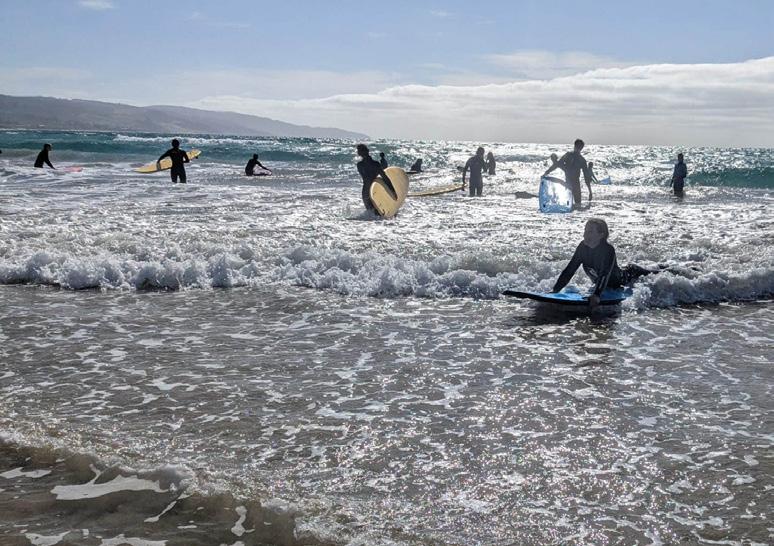
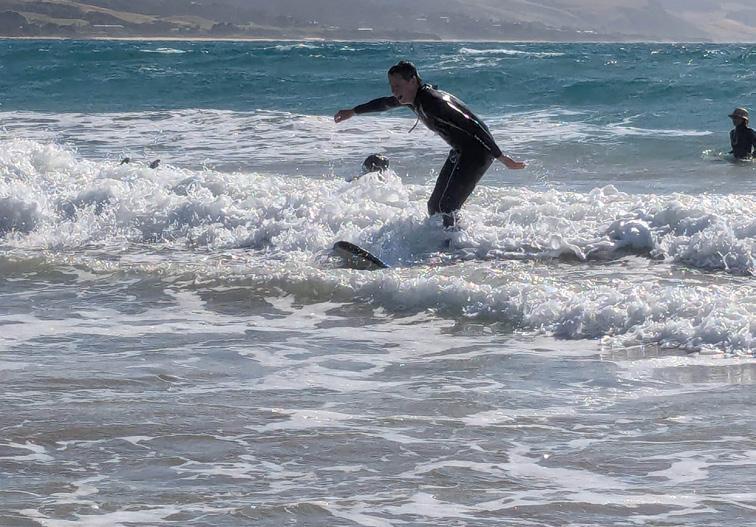
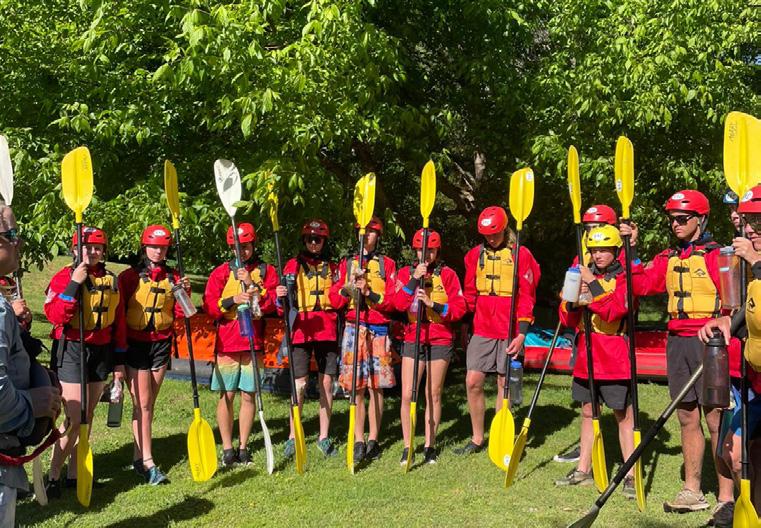
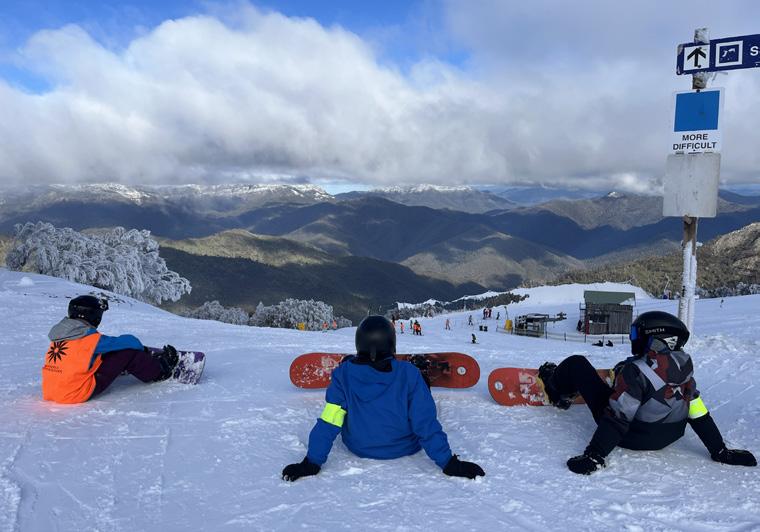
This year has bought another group of eager students into secondary school, and they have launched into each, and every challenge presented to them. Starting the year with an introductory camp in the Howqua Hills, Year 7s joined the Year 11s for a short welcome to secondary school. Walks, swimming, and a very vigorous game of capture the flag all made for a positive start to the year. It was not until much later in the year the students experienced a camp once more, joining the Year 8s up on Mount Buller for a three-day ski camp, and then off to Phillip Island for surf camp. Luckily, we managed to time our journey up the mountain for one of the best parts of the season, allowing for snowball fights, plenty of skiing, and a marvelous snow sculpture session. This camp saw the students starting to spend more time with the Year 8s and feel truly comfortable within the secondary school.
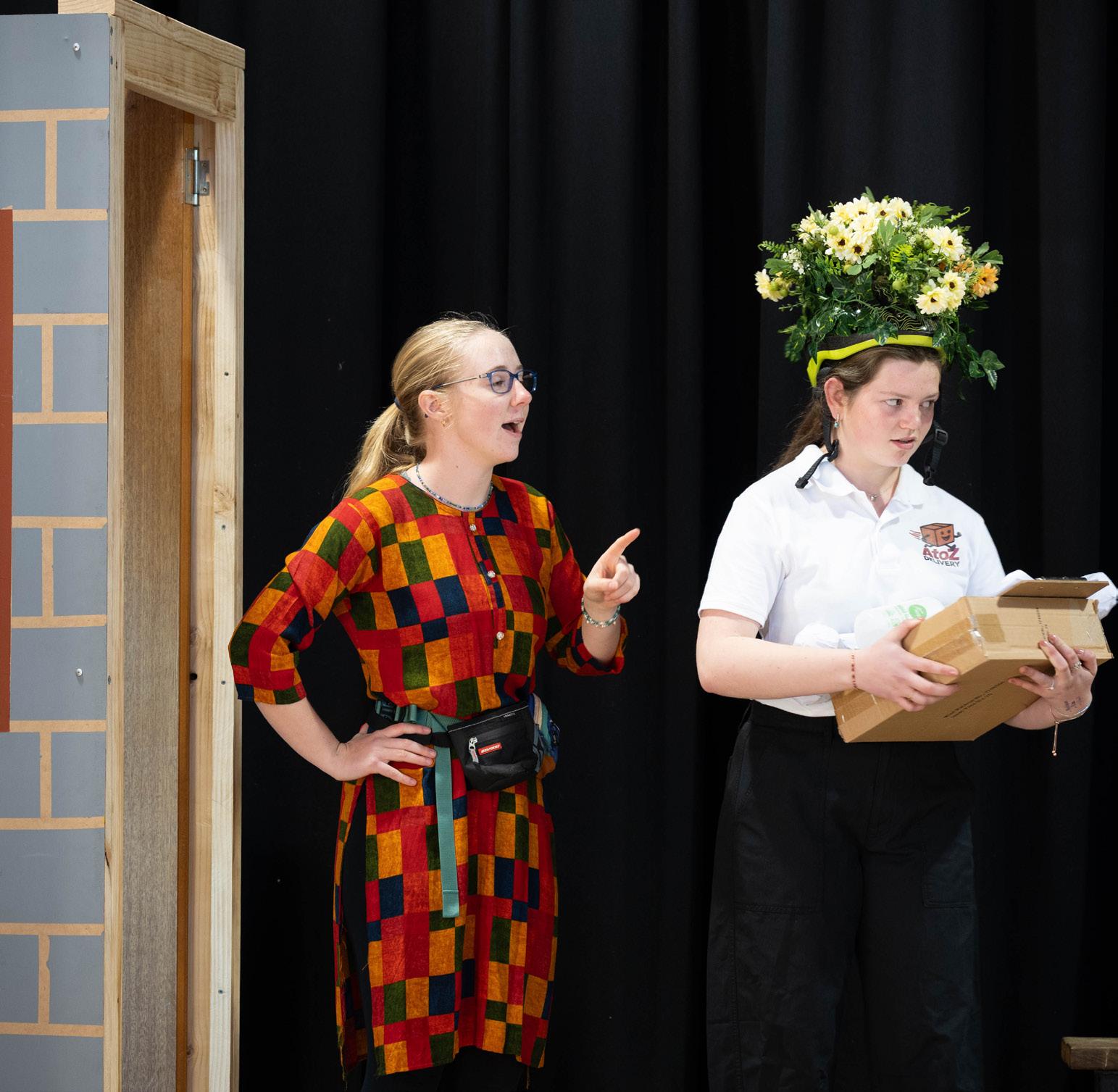
This year I was lucky enough to join the Year 7s on stage for their production of the Canterbury Tales, if only due to illness. By no means an easy play, this required each student to take on multiple characters, manage backstage, and music. Their work was displayed in their performance, and their enjoyment of this was visible to all.
One much anticipated event for this group has been the regular sports days. Joining with the rest of the secondary school and travelling to various locations around the district to engage in soccer, badminton, basketball, netball, table tennis, and dodgeball among others.
Newly added to the calendar for the year, was the French Café. Started by and managed by Andrew, and staffed with class, this was a highlight for many of the secondary school students, many of whom are asking for it to become a regular occurrence. A wonderful event, which demonstrated both the linguistic capacities of the Year 7s, and their deft cooking skill. The vibe on the day was rival to that of the bustling café culture of Melbourne.
Music is a significant part of the education throughout the school, and this year, in addition to the solo performances, and individual music lessons, several students have started or joined the various orchestras and bands. Getting at chance to display their new contemporary instrument or their skill of their stringed instrument.
It has been a year full of fun, adventure, risk-taking, team building and learning. A perfect beginning to a secondary education.
SEAMUS KAVANAGH
Year 8
2025 has seen our Year 8s grow steadily as a community, embracing the many opportunities for connection offered by a full year of camps, sporting events and musical performances.
Alongside this sense of belonging, students have also been navigating the journey of adolescence—seeking independence, exploring identity, and discovering who they are as individuals. A central part of this process has been the Year 8 Project: a challenging yet deeply rewarding undertaking that allowed students to immerse themselves in personal passions. From learning to fly a plane to crafting a violin case or shaping a surfboard, their interests inspired persistence and creativity. Students documented their goals, triumphs, and setbacks
while building meaningful working relationships with their mentors.
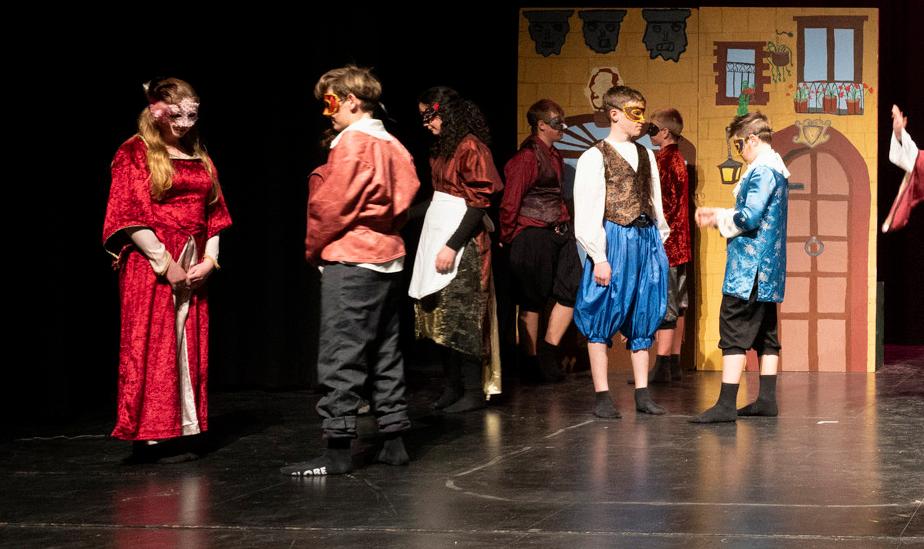
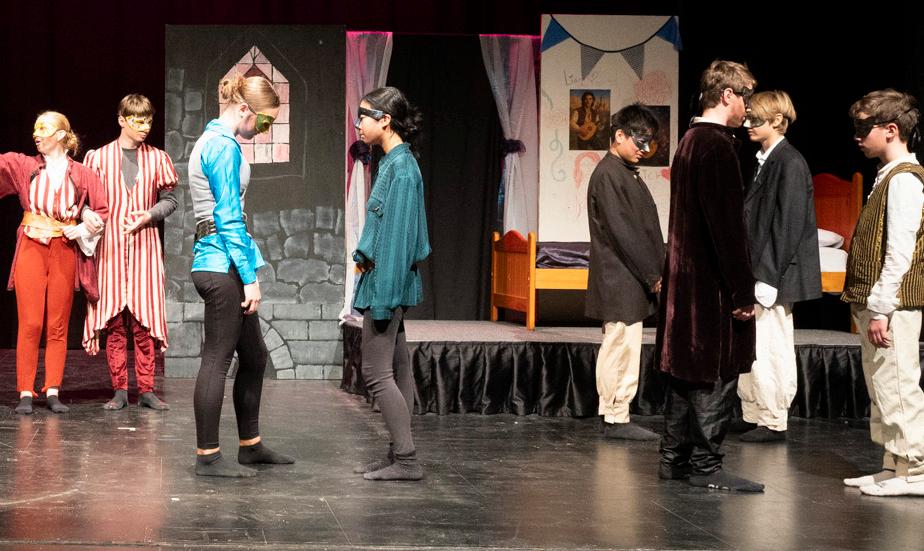
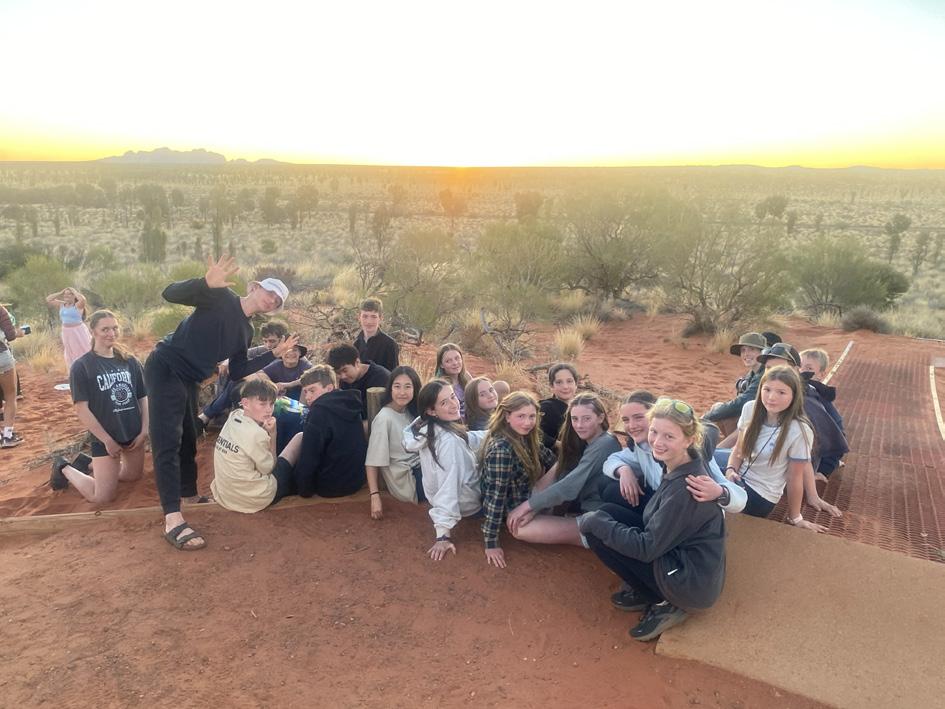
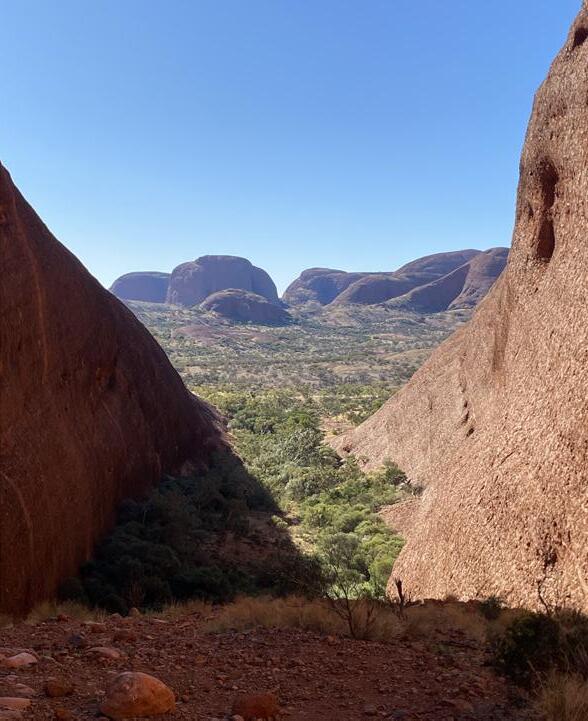
Semester 1 culminated with the Year 8 production of Shakespeare’s ‘Romeo and Juliet’, an experience which nurtured confidence and collaboration, with students embracing the emotional depth of their roles and collectively producing an excellent piece of theatre. Semester 2 began with the 7/8 Snow Camp and the Northern Territory trip. These camps fostered a newfound sense of resilience and supported students’ sense of belonging while also helping them to branch out and form new social connections. In small, mixed groups of Year 7s and 8s, students navigated the slopes of Mt. Buller on snowboards and skis, supporting each other and strengthening friendships. The journey out to the Red Centre complemented their main lesson ‘Earth; Origins, Processes and
Landforms’ and deepened their appreciation of both the land and each other—breaking down old barriers and forming new bonds.
Musically, students shone during the solo concerts, with performances that ranged from classical pieces to heavy metal, demonstrating courage and commitment on stage. Snowgum Strings enriched the IB Art exhibition with polished performances, while their engagement and participation in the pioneering iTET program extended their musicianship further. Folk dancing, once awkward and challenging, ultimately became a joyful practice of humour and lightness that brought the group closer together. This process was celebrated through a performance at secondary assembly at the end of Term 3. Academically, Year 8s engaged with many main lessons over the year, most notably the Age of Revolutions and the Industrial
Revolution, expanding their historical understanding and reflecting on the enduring values of liberty, fraternity, and equality. The Spring Fair is arguably one of the biggest events of the school year and it is an especially significant event for the Year 8s as they showcased their Year 8 Projects. The Year 8s also did a wonderful job of being a positive presence and showing pride in both their contributions to the Pizza food stall as well as showcasing their work. As the year draws to a close, it is clear that our Year 8 students have gained a stronger sense of togetherness, confidence, and purpose—qualities that will serve them well as they step into the social, academic, outdoor and personal challenges of Year 9.
AMY MCMAHON & OLIVER RAYMOND
Year 9
A class that rises to the challenge time and time again have met the Year 9 Program with a grace and skill beyond their years.
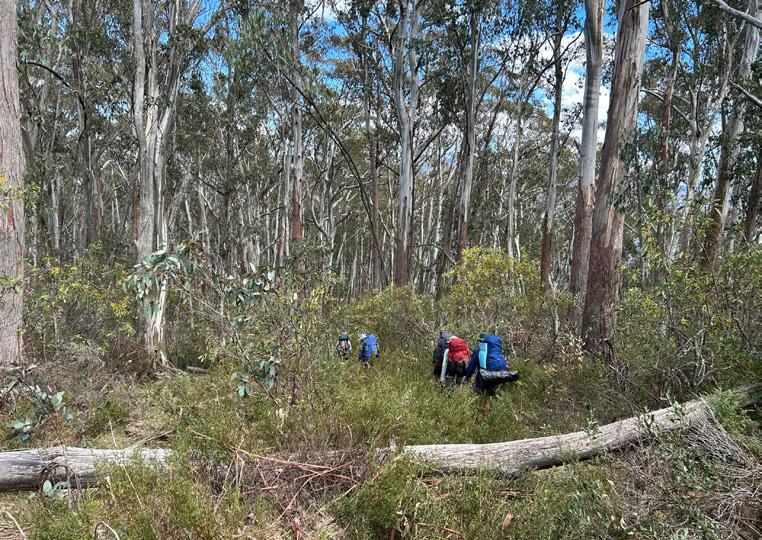
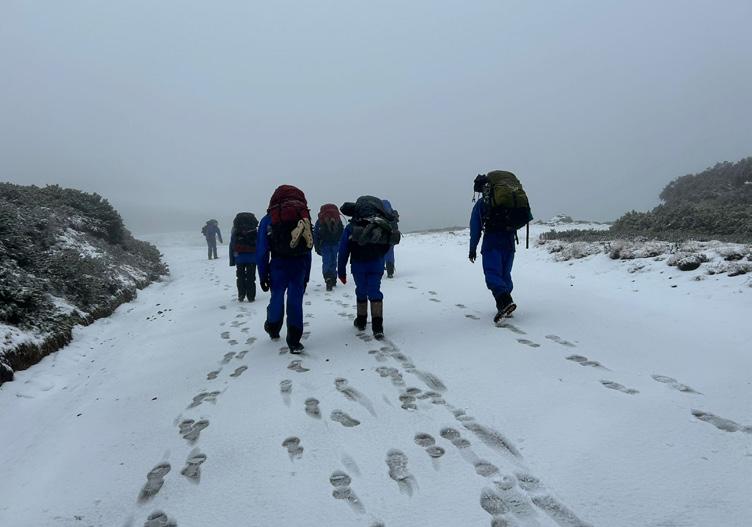
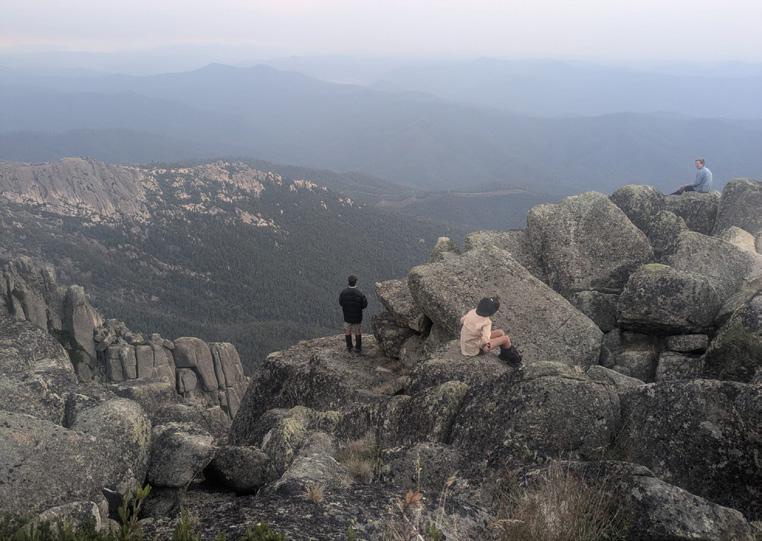
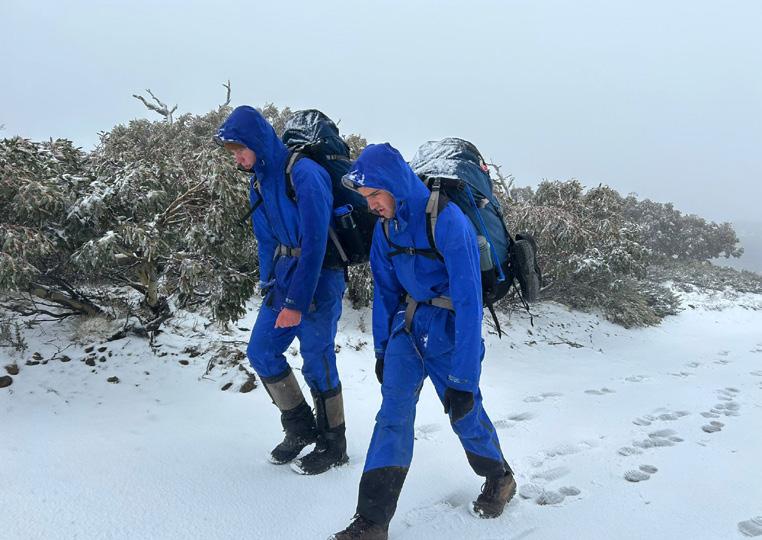
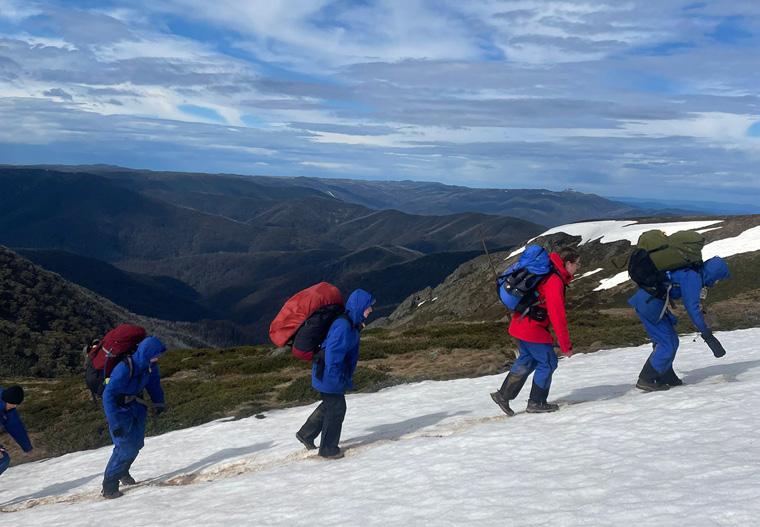
Looking back on this year, the group can be proud of the way they supported each other to always take the most rewarding, and sometimes difficult, path. This has been most evident in the awesomely challenging and stunning route for their Long Journey, and also through so many other endeavours.
Their two-week learning of the hilarious “Knock, knock” play, became an instant Mansfield Steiner School classic, with outstanding performances split across the school holidays. Lauded by one observer as “the best production I’ve ever seen at the Steiner school”, every member of the cast acted into characters and supported each other to do their best.
Continuing in the performance theme, we will be sure to look back fondly at the growth of the Class 9 band Petrichor, who gigged at lunchtimes, the Spring Fair, and represented themselves incredibly well at the Battle of the Bands. It is heartwarming not only to see the incredible talent of the people in the class but also the pride the others in the group take in coming to support and enjoy their efforts.
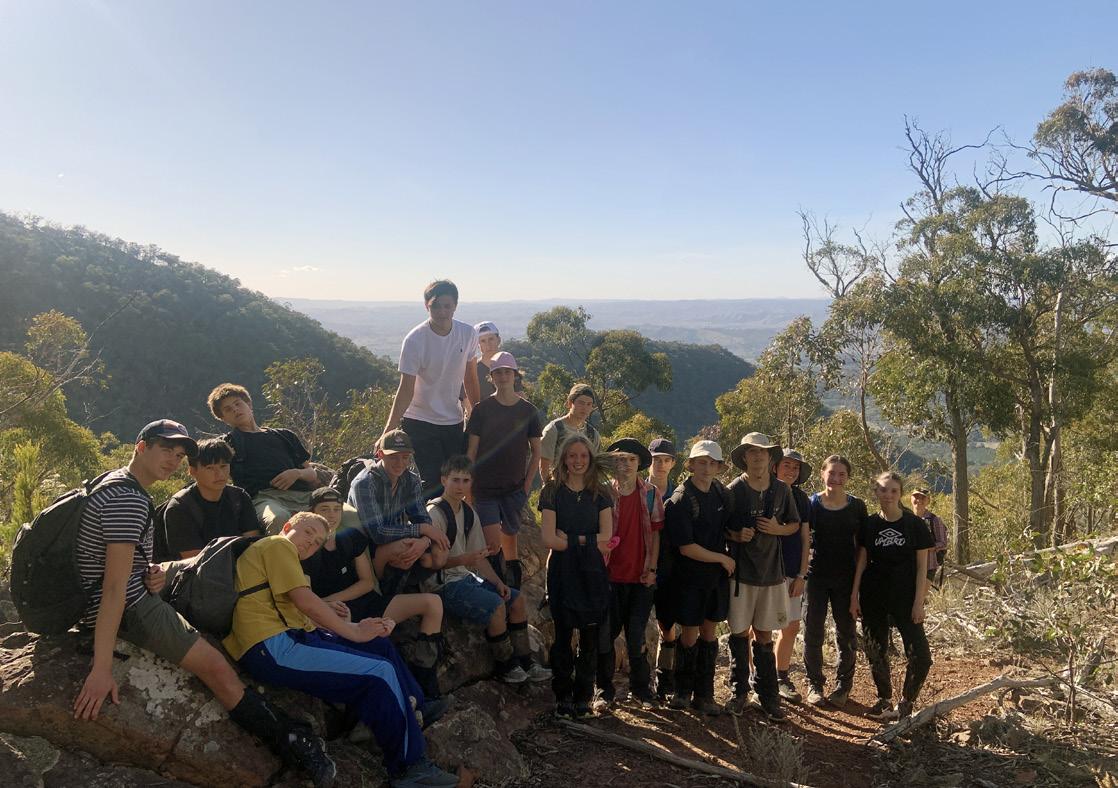
Throughout Term 1, the students main lesson learning weaved into their increasingly challenging exploration of the High country. With a focus on human and physical geography, students were able to grapple with the question of what has happened to make the world we move through the way it is?
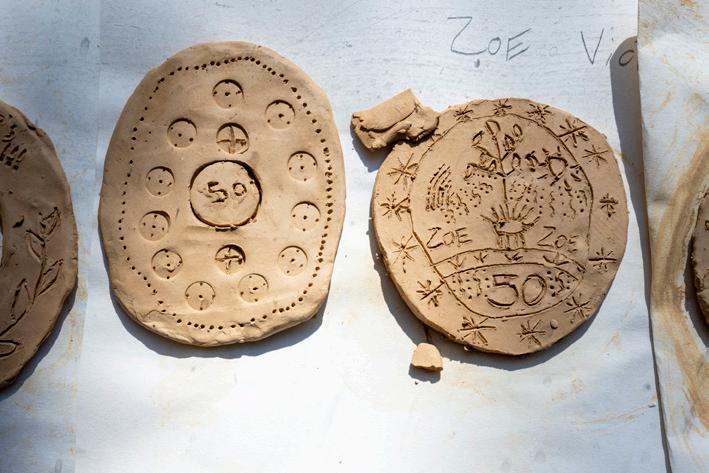
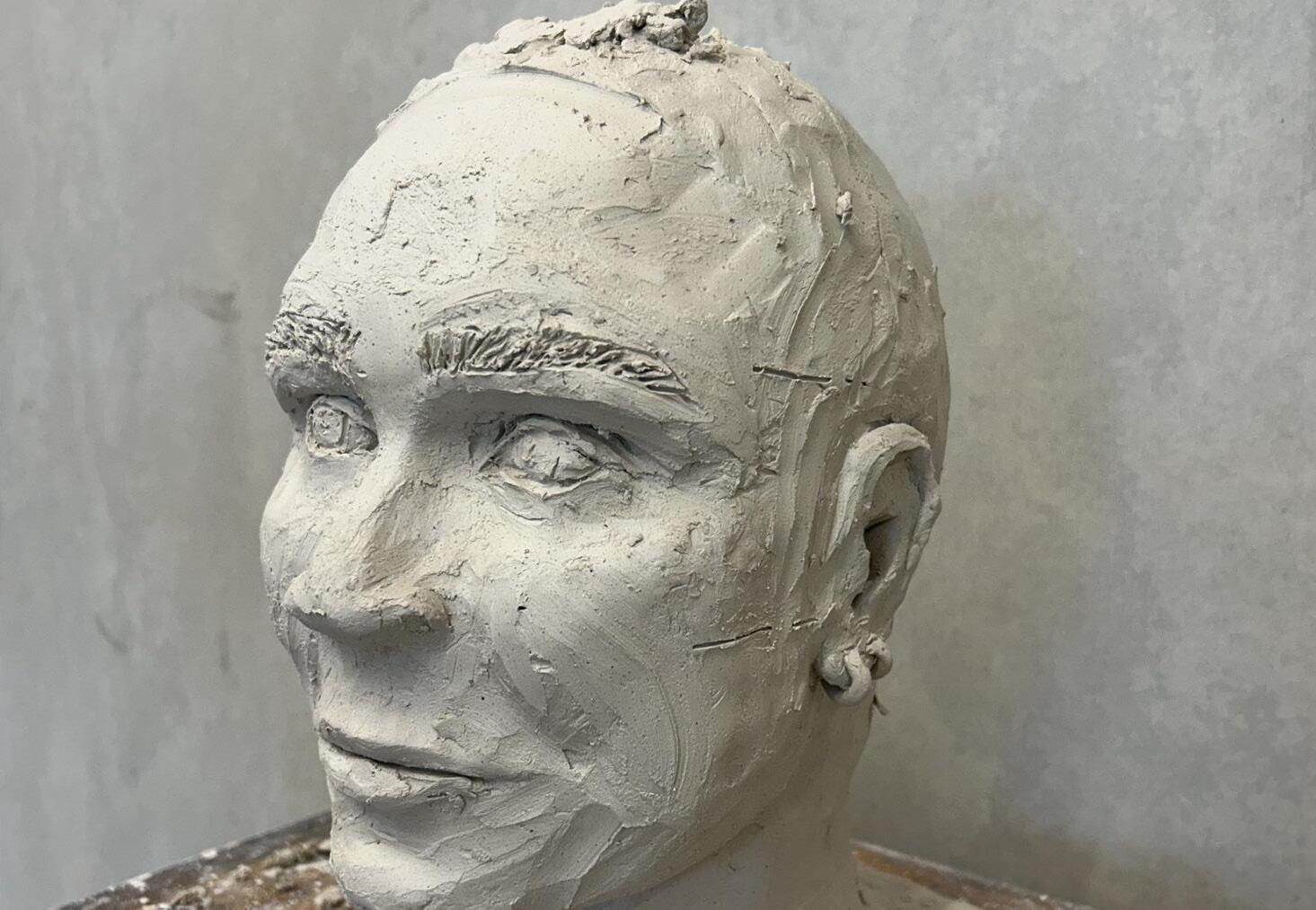
The focus then turned to themselves and their place in this world, through personal relationships, modelling themselves in clay and exploring the patterns in the world around us through equations.
As this class looks forward to Year 10, they stand confident in who they are in the group and the role they must play to support others and, at times, be supported. They are ready to use this knowledge as they push themselves academically in preparation for future pathways and to take on more individual adventures. Safe in knowing that they will always be cared for, they will begin to learn who they are at their core through the exchange or another challenge they take on, as they satisfy their ‘itchy feet’.
ANDREW RAFTERY
Year 10
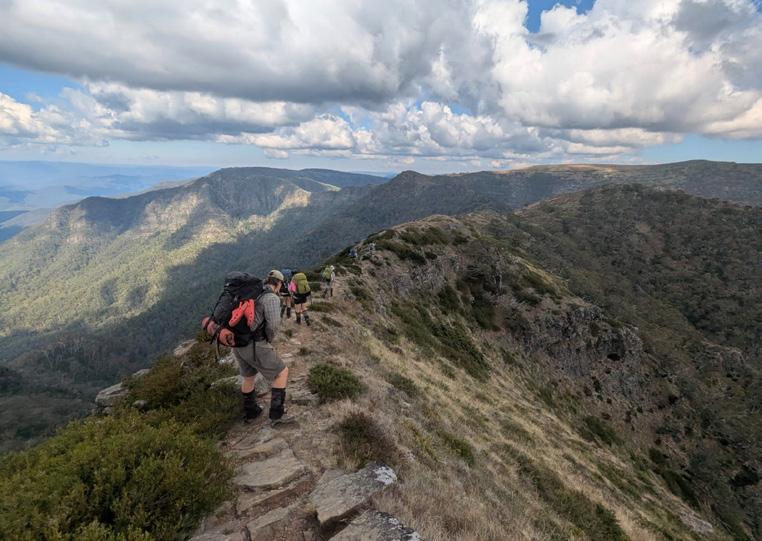
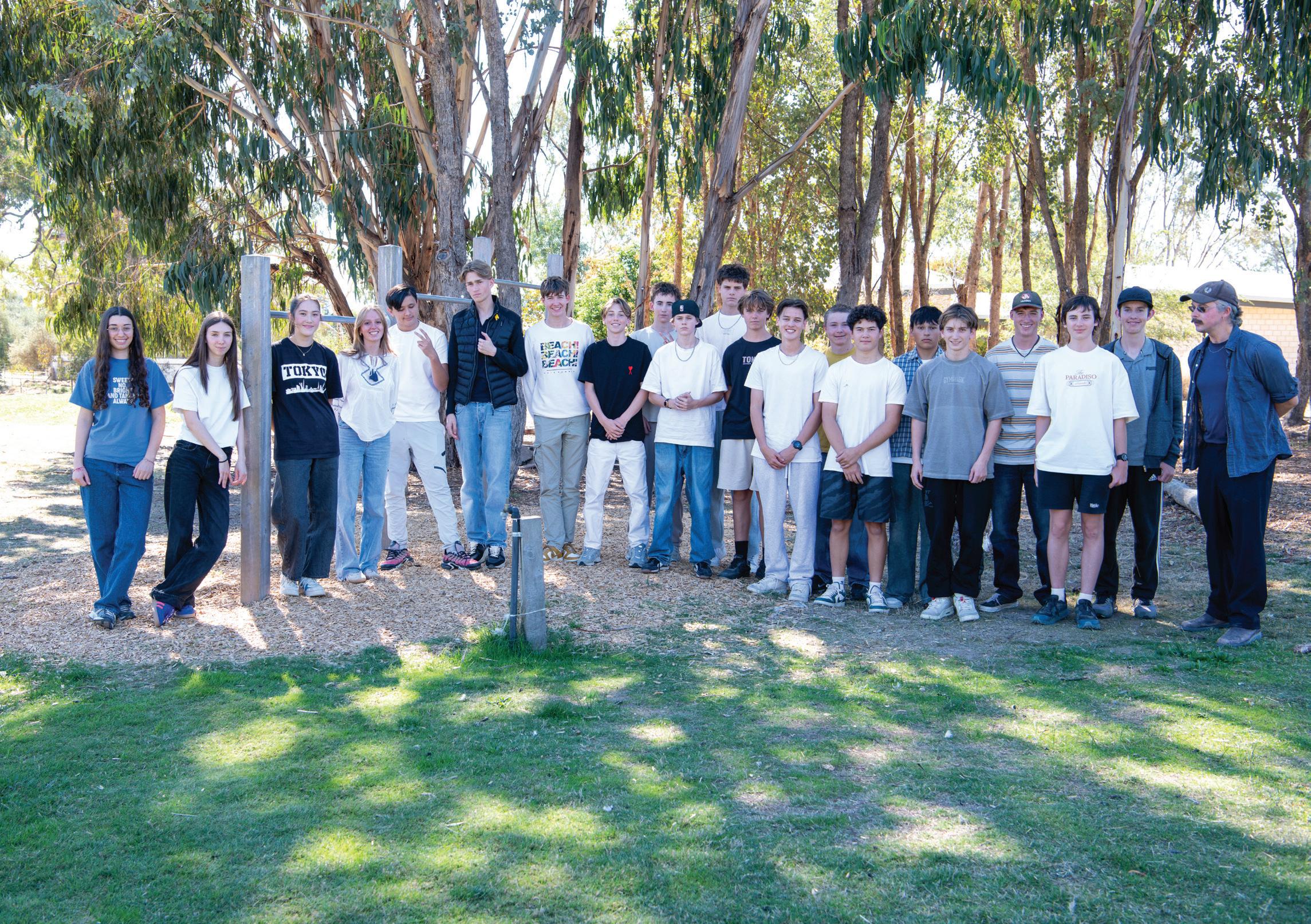
As the year draws to a close, so too does another significant chapter in our students’ school journey, moving from the Steiner curriculum now ready and prepared for the IBDP. This year has presented to them another round of challenges that they have faced, tackled, and overcome. In finishing Year 10, each of these teenagers now step firmly into the mantle of being a young adult and it has been truly fantastic to watch their growth throughout this period.
The year began with the weight of expectation firmly on their shoulders, as their effort and approach to academics was thrust into the spotlight, alongside their teachers will to entrench good study habits now, rather than scrambling for it further down the track. An emphasis on personal organisation was brought to the fore and it was interesting to watch the various systems that students chose to implement to stay on top of this.
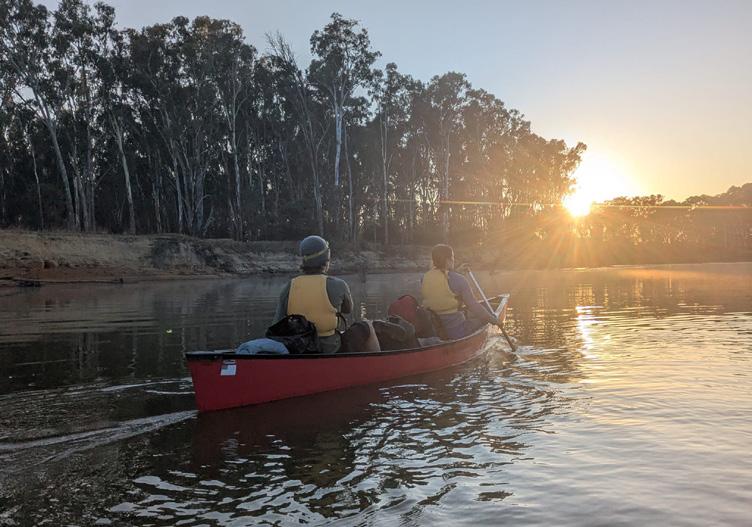
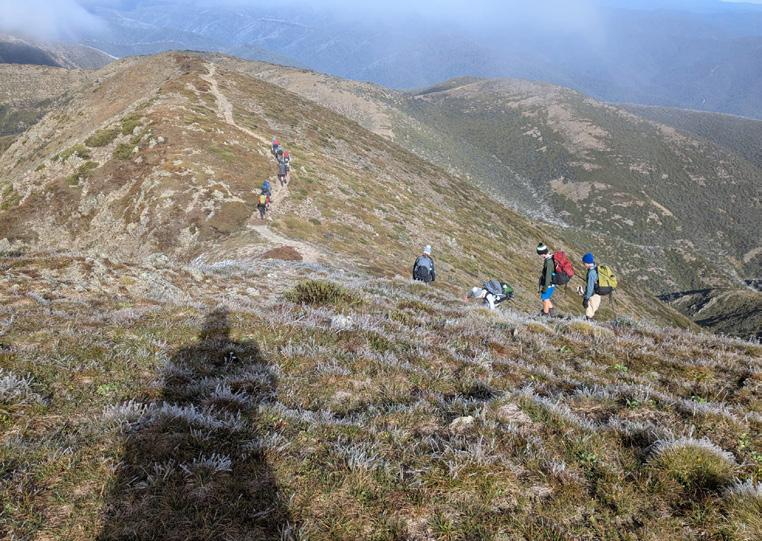
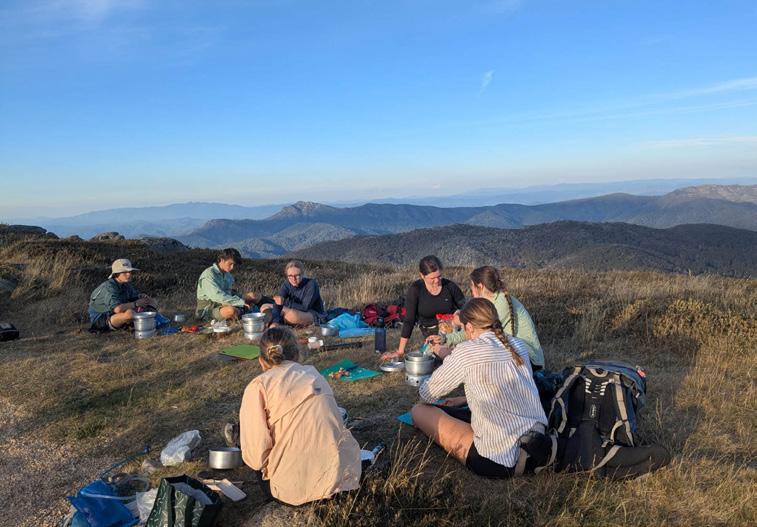
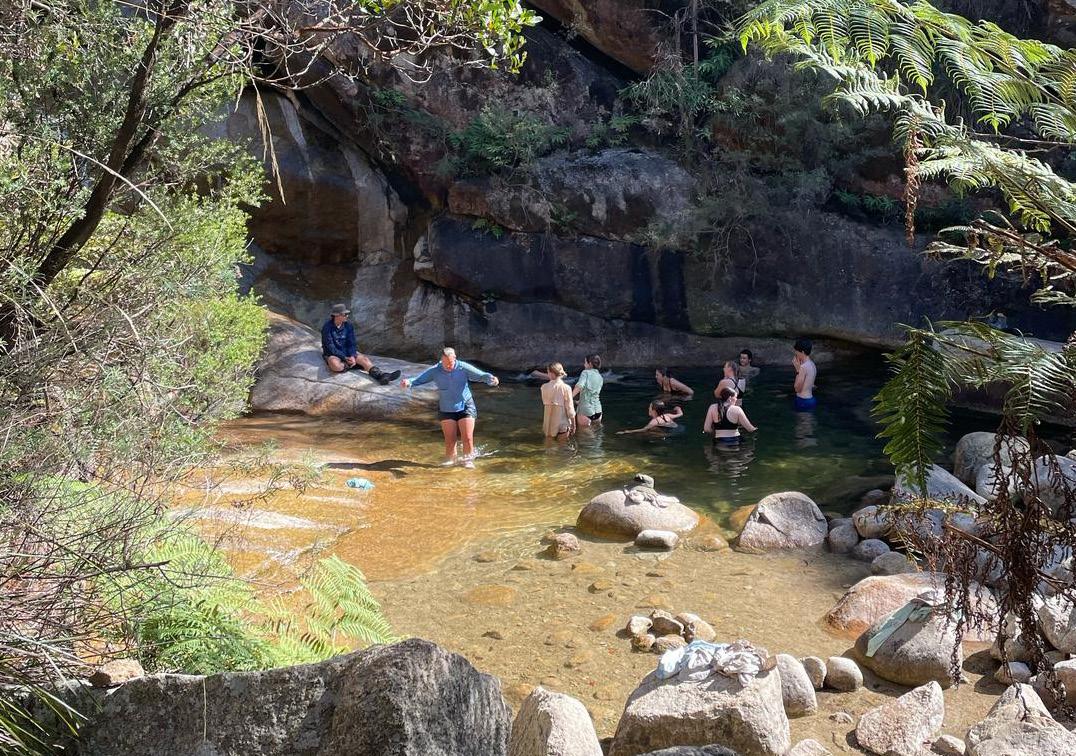
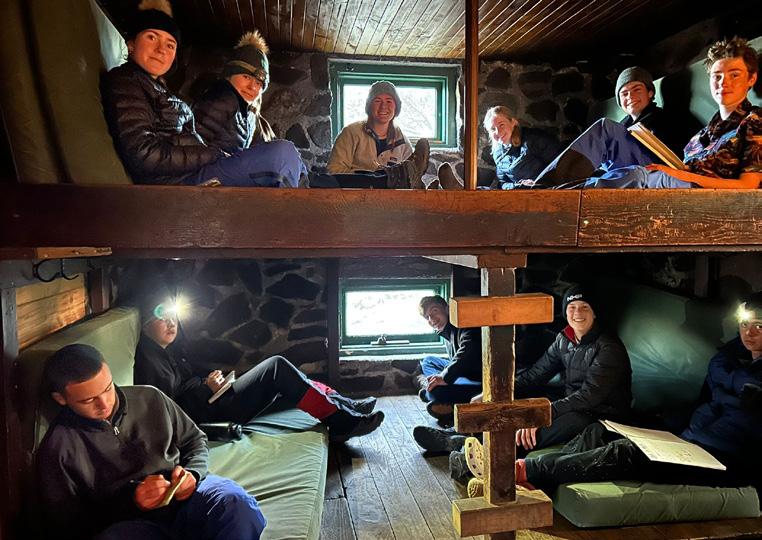
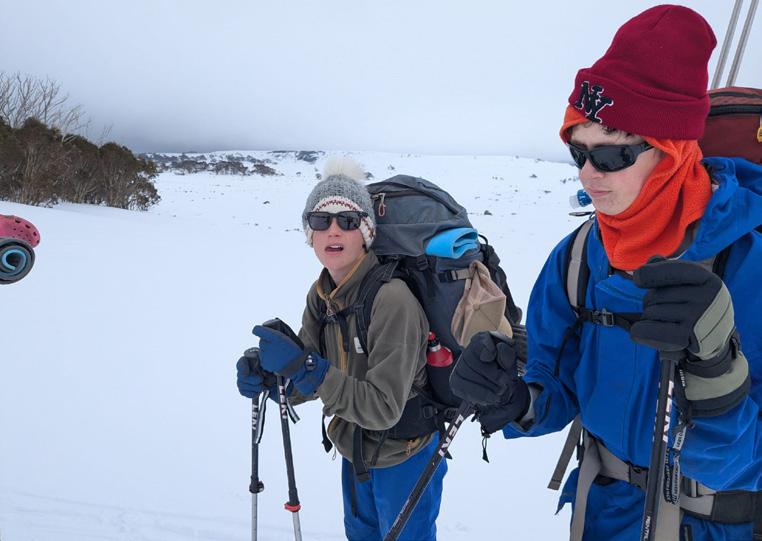
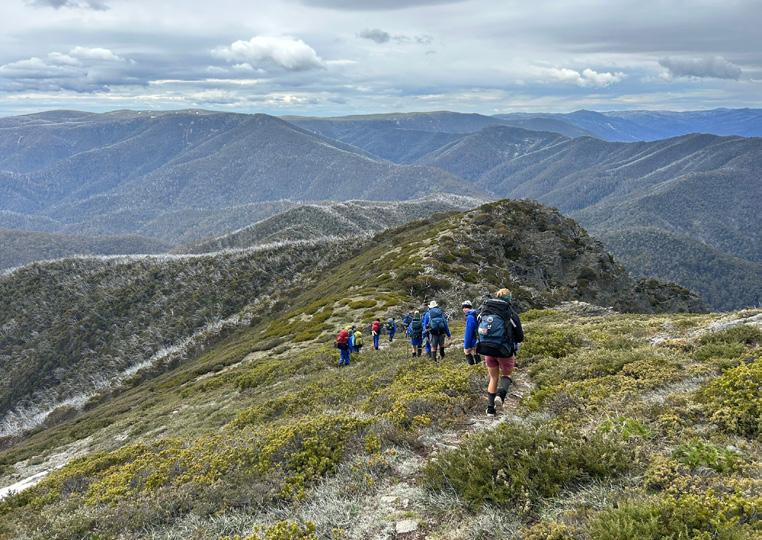
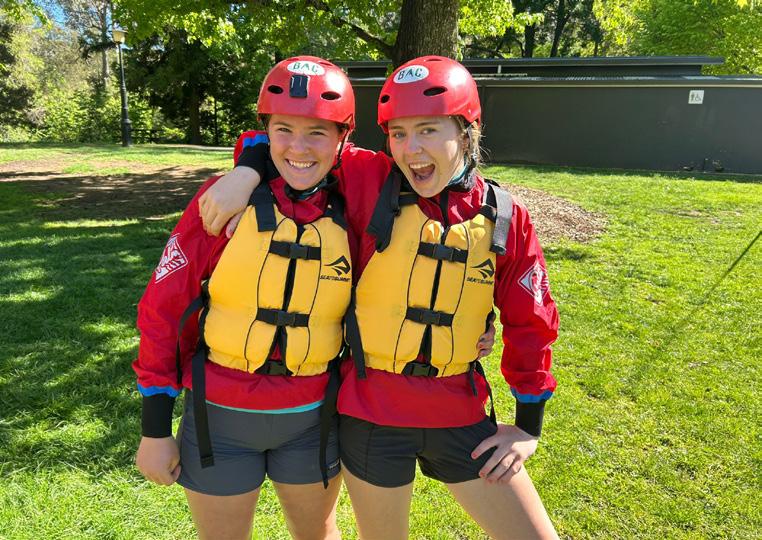
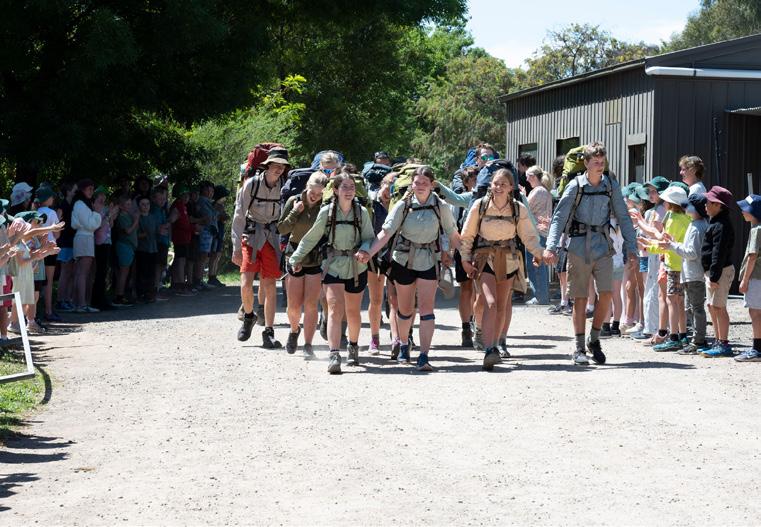
By far the biggest part of this year was the French exchange. In Term 2, students from across the other side of the globe landed in our small town and experienced a slice of our life and school through an Australian lens. Their arrival shook up the social dynamic of the cohort and forced communication when language was not wholly shared. The overnight camp in the Cathedral Ranges was certainly a highlight of their visit and gave the French students strong memories of the Australian bush. Not too long after their departure, our students set off on their
own adventures, which took many different forms. These experiences will stay with them forever and it was amazing to see how each of them had changed when they returned home.
Throughout all the sports, music, excursions, and performances, it has been great to see how tight-knit this group has been. These relationships will make a significant difference next year and can build the foundation for a positive and strong academic culture.
As always, we’re sad to say goodbye to families and students that have long been a part of our cohort and wish them well on their next set of adventures.
I hope you all have an enjoyable, safe, and refreshing holidays and I look forward to seeing you all again next year!
NICK KOSCHITZKE
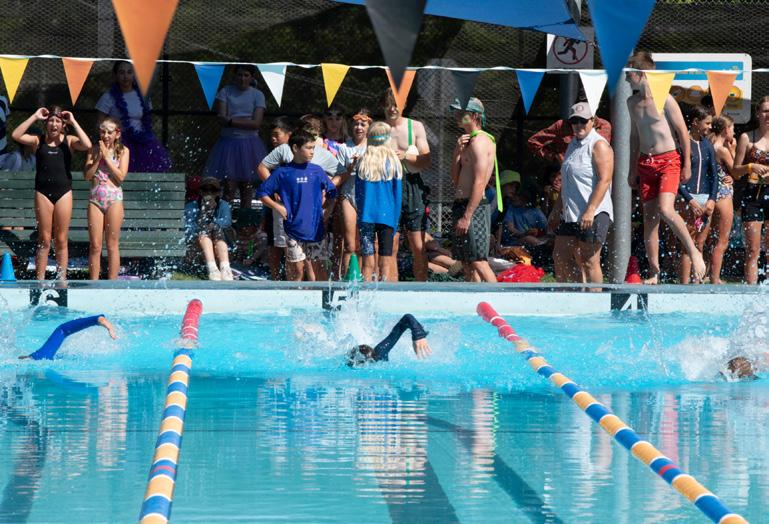
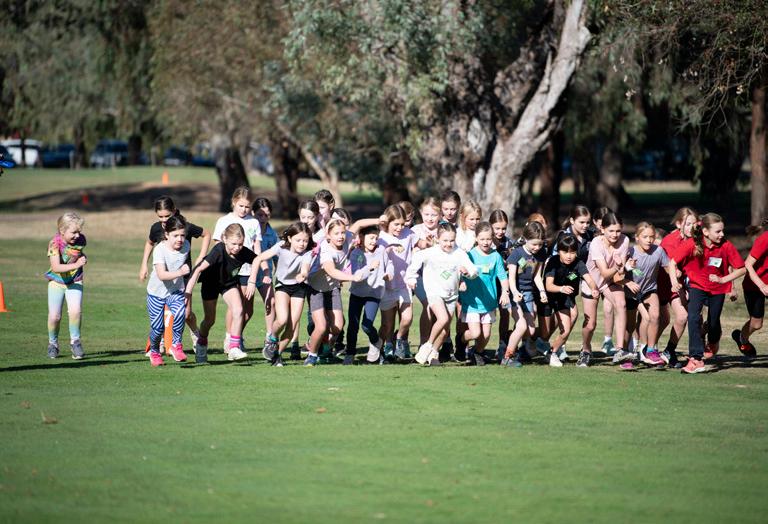
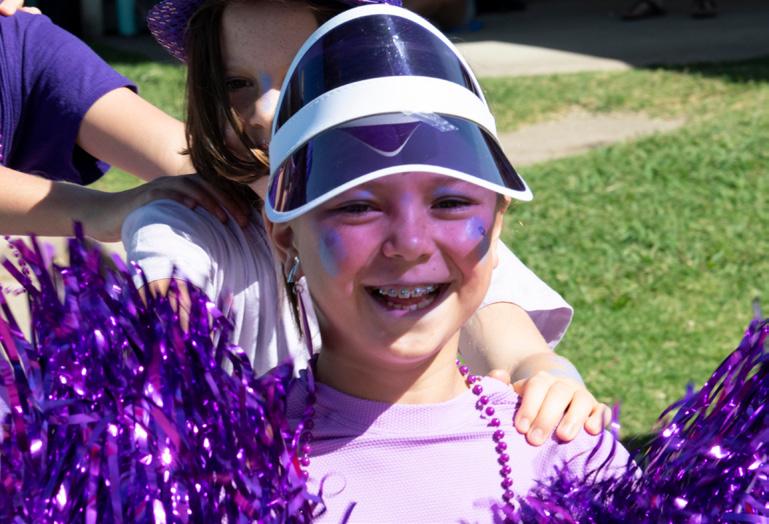
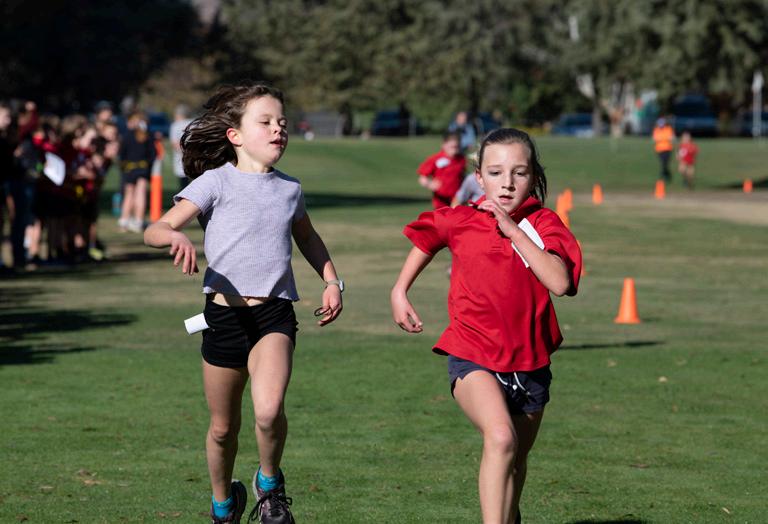
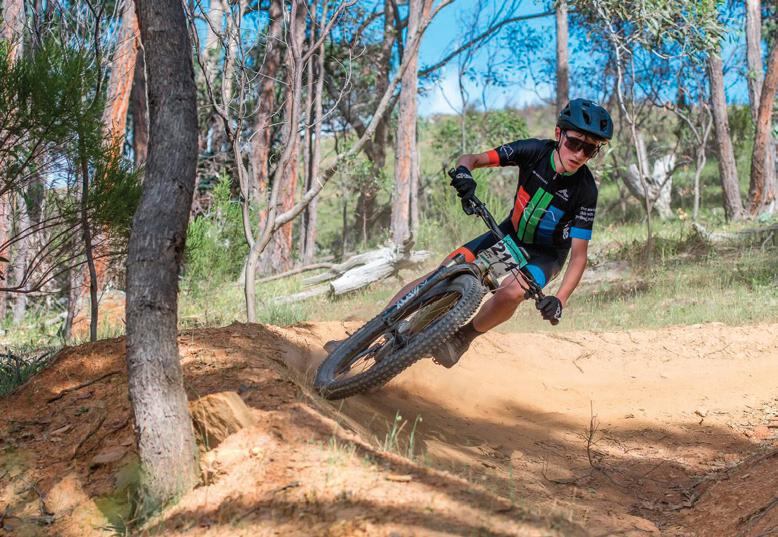
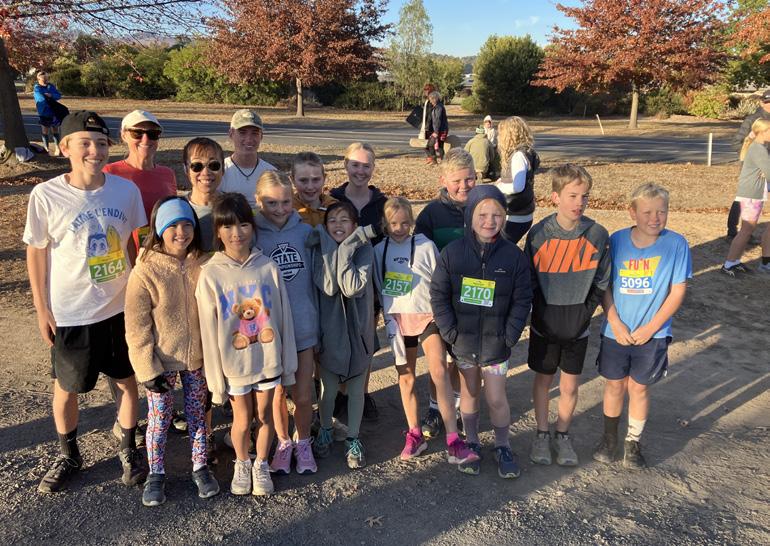
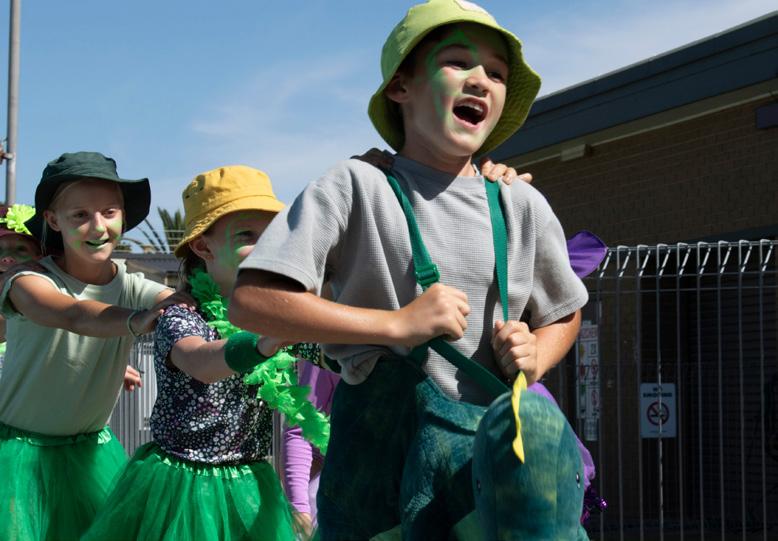
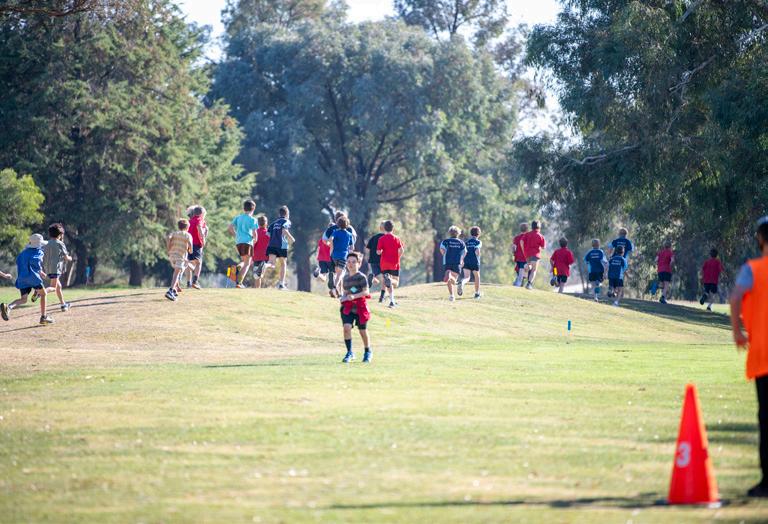
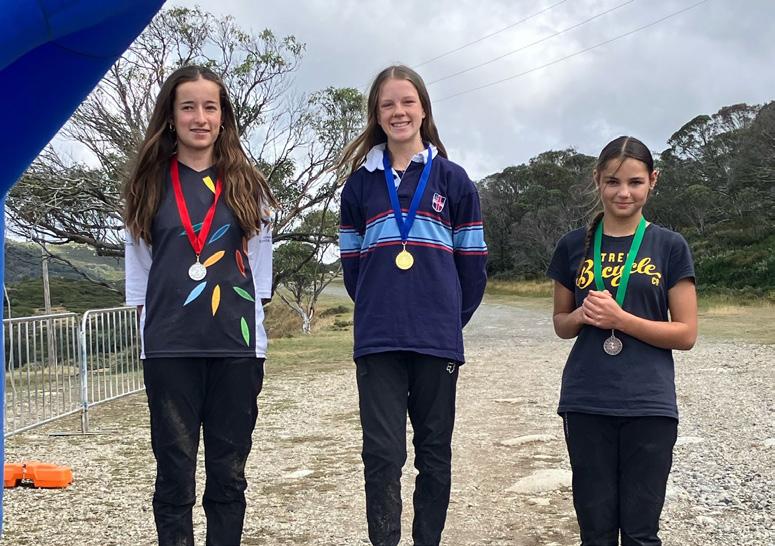
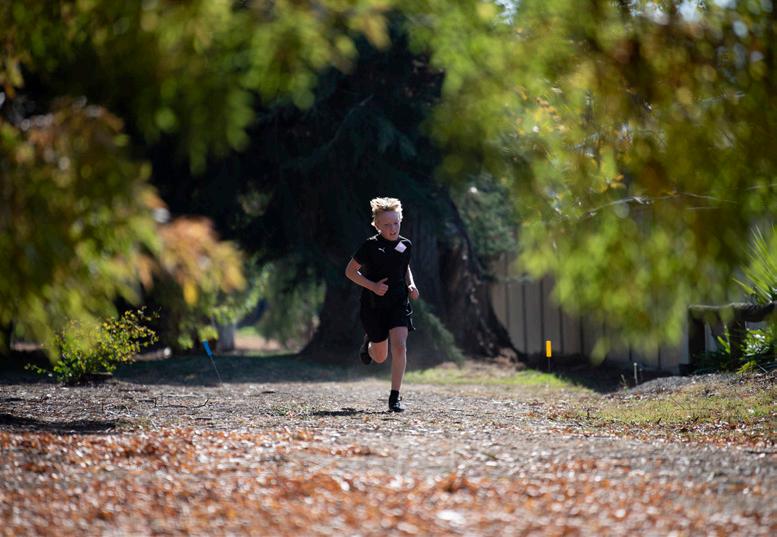
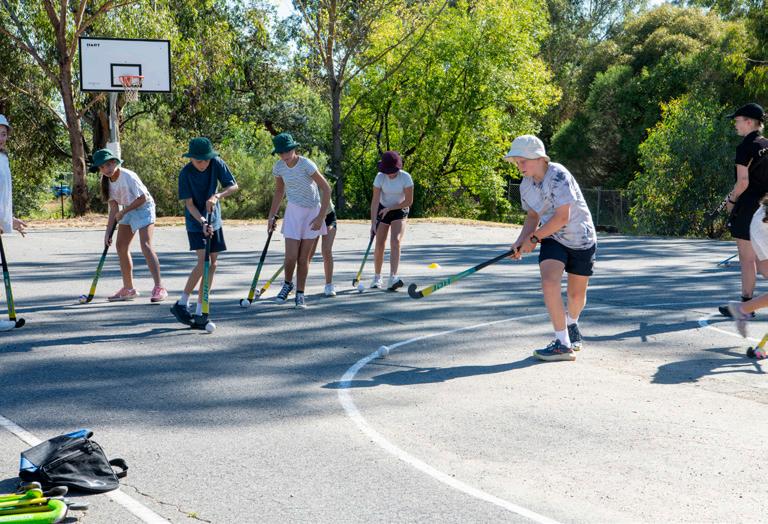
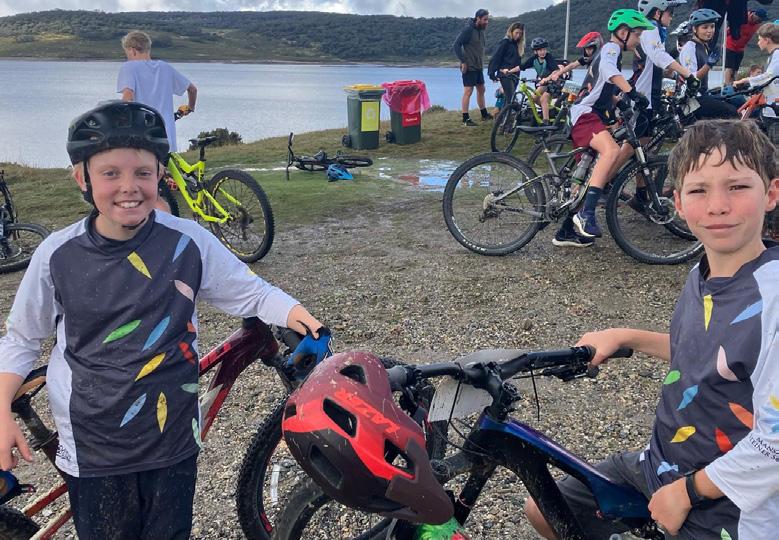
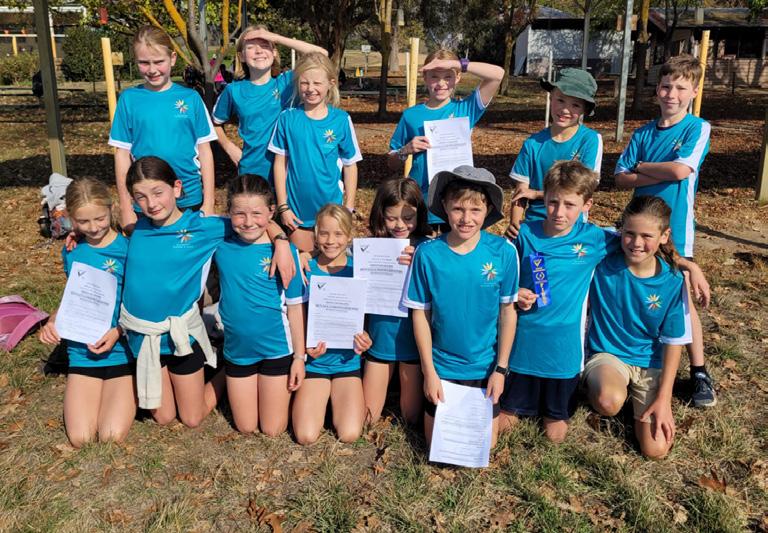
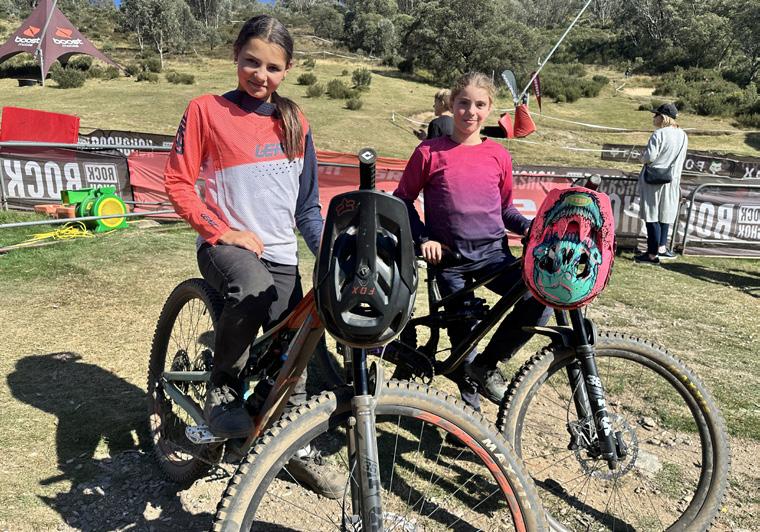
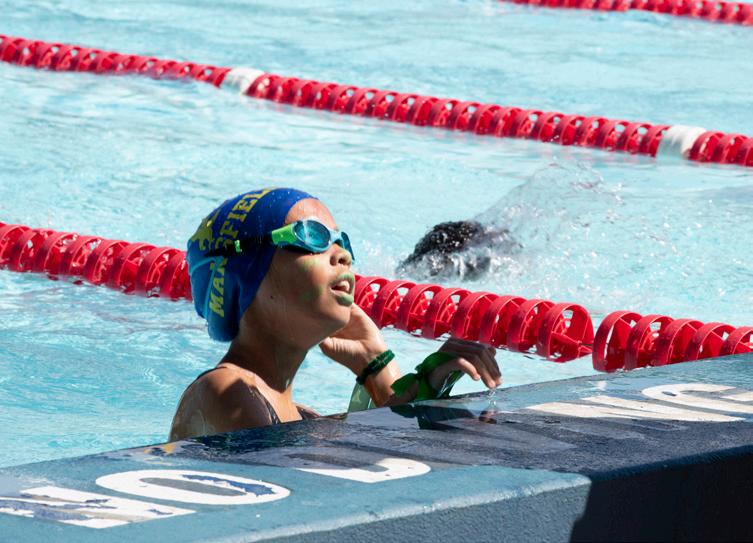
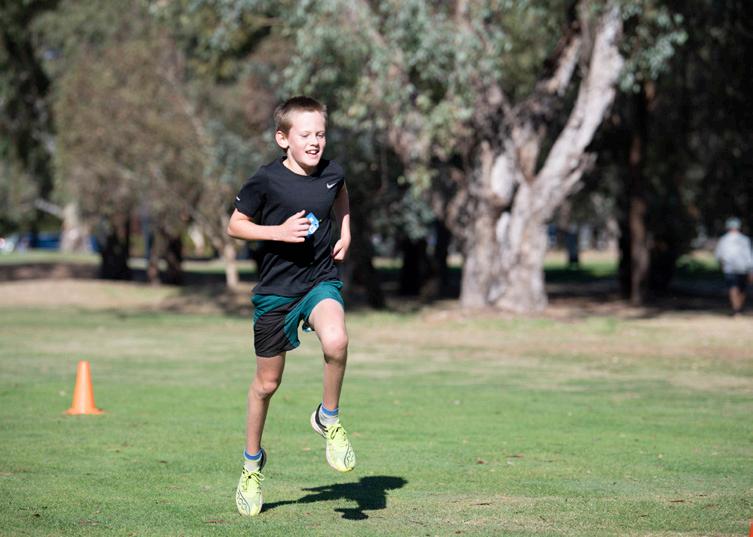
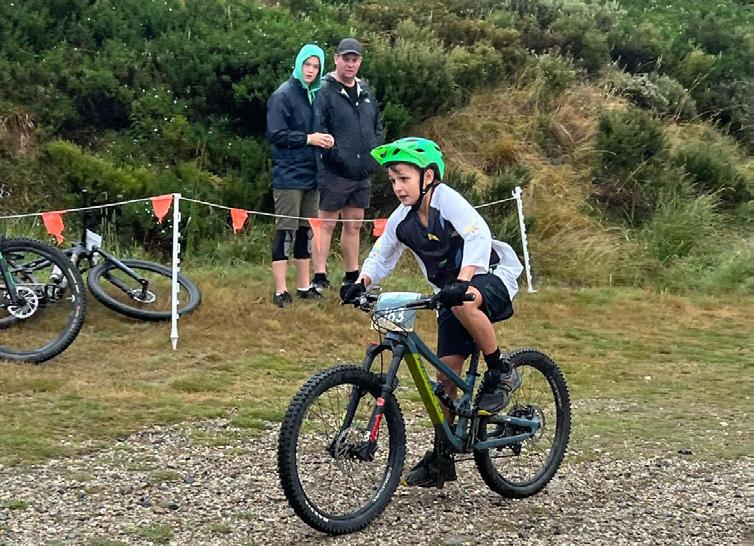
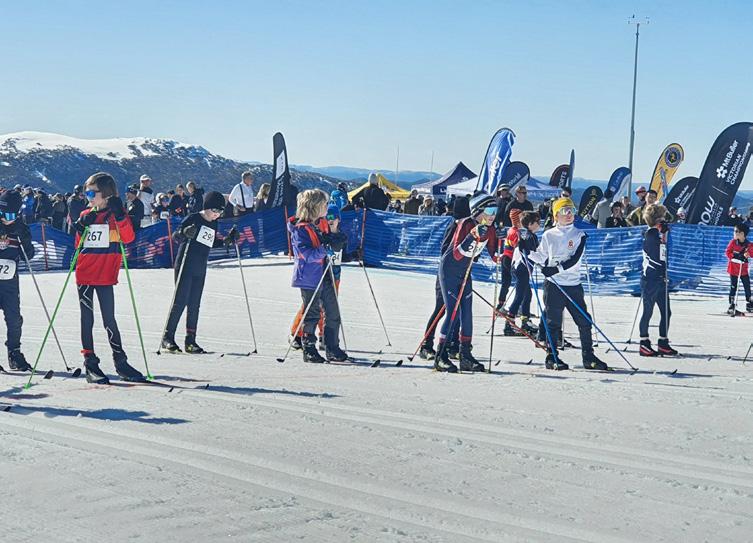
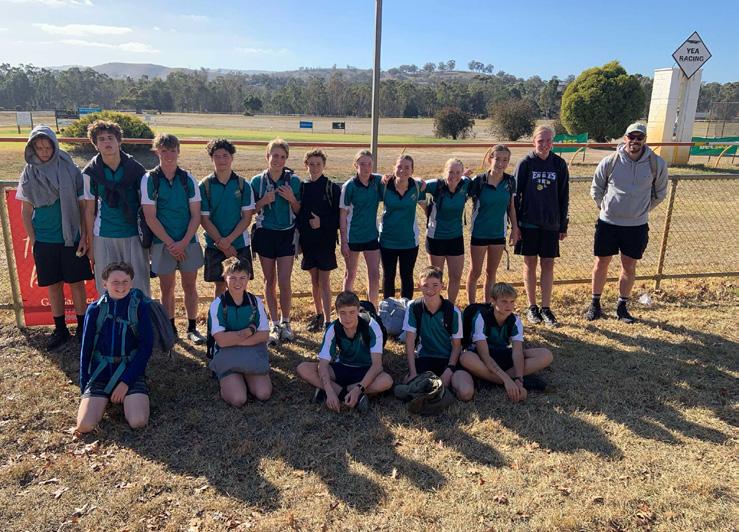
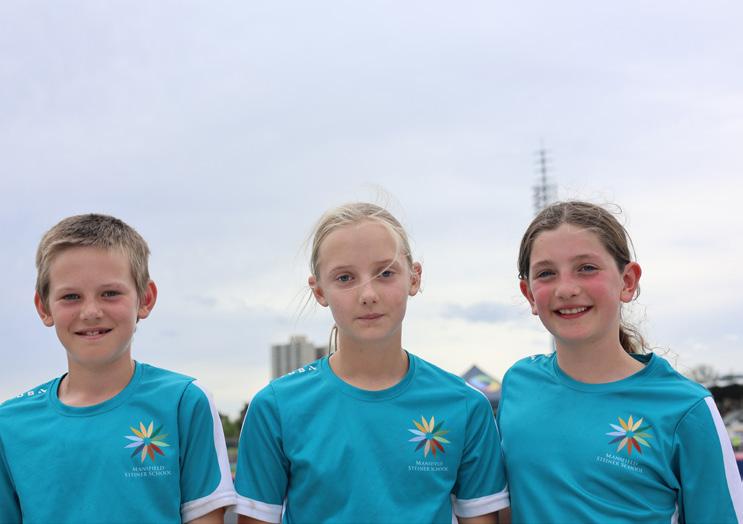
This year has seen a strong and growing presence from our students in School Sport Victoria events, with participation across Swimming, Athletics, Cross Country, and Secondary Round Robin days reaching impressive new levels. Both Primary and Secondary students have participated with enthusiasm, showing commitment and courage in every event.
Sport
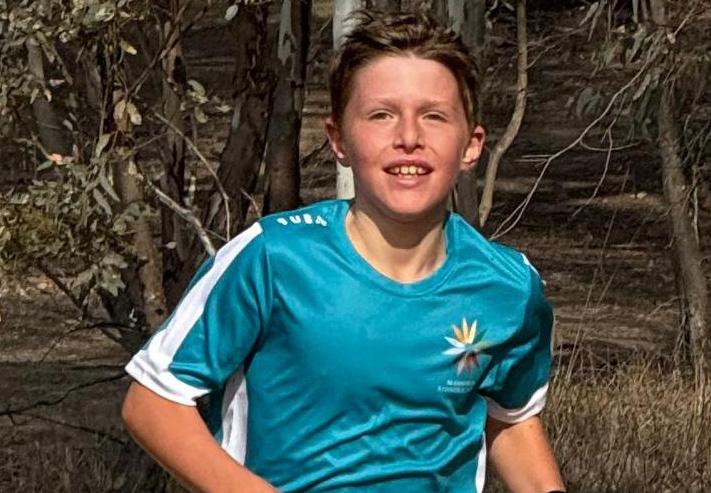
Our Swimming Carnival was a great start to the year, with students diving into competition and giving their best in every race. The Athletics Carnival followed with high energy and strong performances across track and field events. The Cross Country Carnival tested endurance and mental strength, especially in the wet and cold conditions, and our students rose to the challenge with determination. One of the most notable aspects of our involvement has been the way our students conduct themselves at these events. As staff attending these carnivals alongside other schools, we’ve consistently seen our students not only cheer for their own teammates but also support competitors from other schools. This level of sportsmanship and kindness is something we’re incredibly proud of and it reflects the values we aim to foster in our school community.
Our secondary students have also enjoyed participating in Round Robin sporting days and building connections with students from other schools. Sports included Dodgeball, Badminton, Soccer, Basketball and other team sports. These days have offered a great mix of competition, collaboration and fun.
In addition to strong participation, we have celebrated some outstanding individual achievements. Several students have qualified for State Championships in Swimming, Athletics, and Cross Country, an incredible accomplishment that highlights their effort and determination.
To every student who took part whether you competed, supported, or simply gave it a go, thank you! Your efforts have helped build a positive and inclusive sporting culture within our school. Well done to all on a fantastic year in sport!
AMY JEWSON
Secondary Art
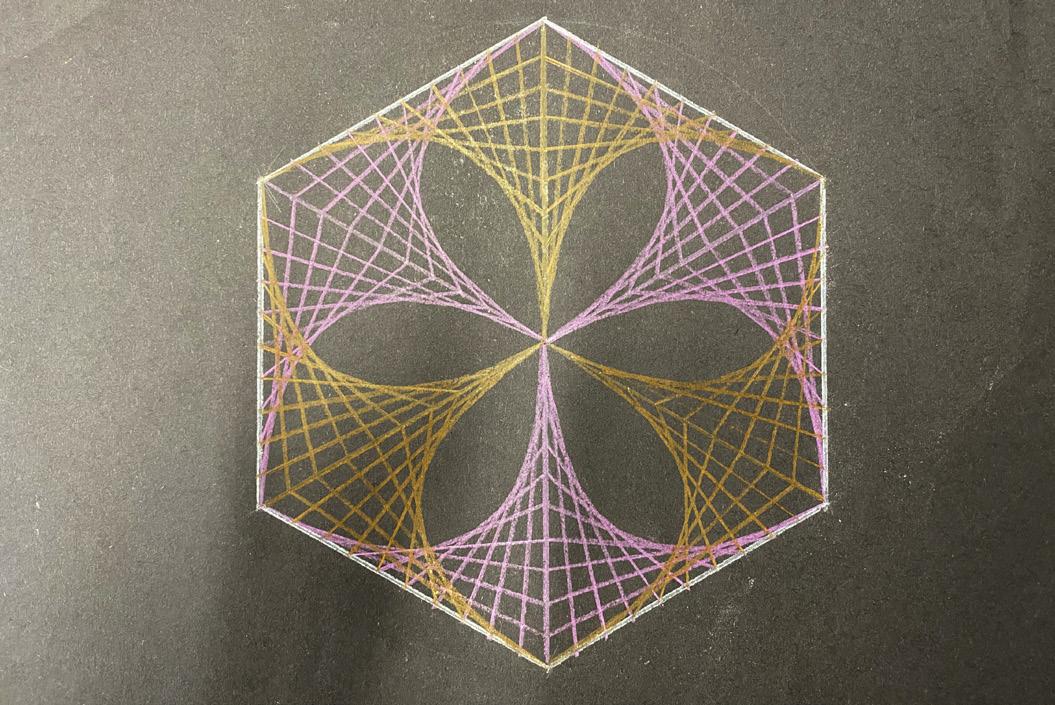
This year in the Visual Arts program, students from Years 7 to 10 explored their creativity through a wide range of materials, techniques, and themes.
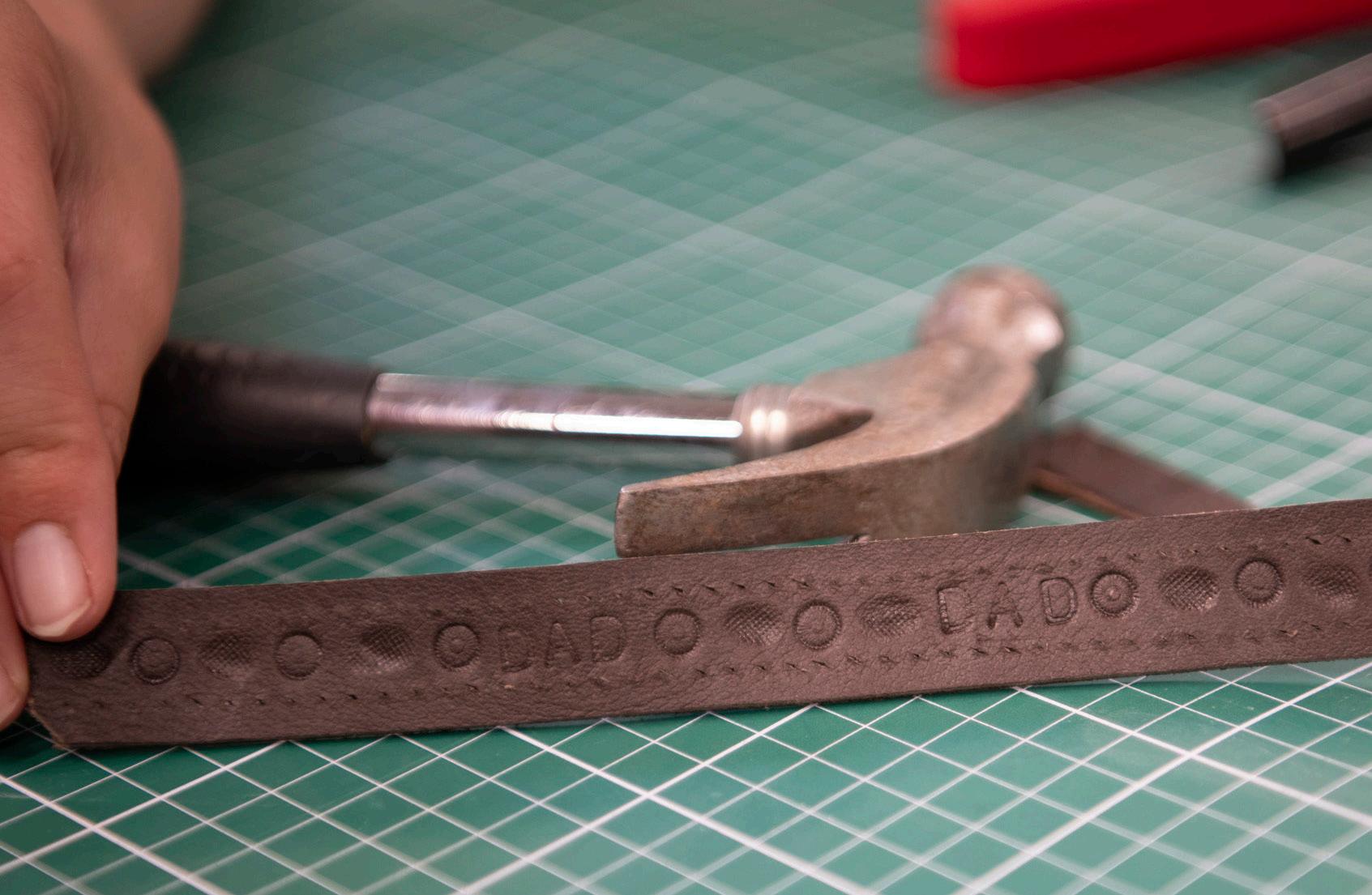
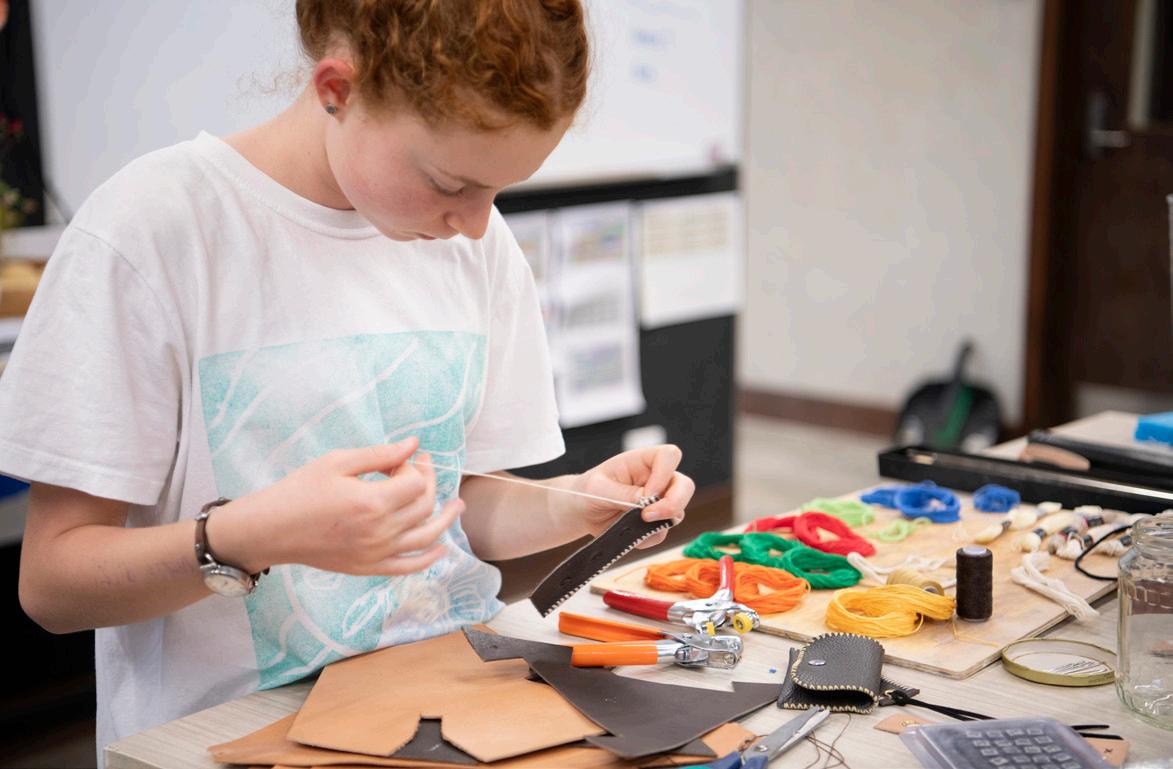
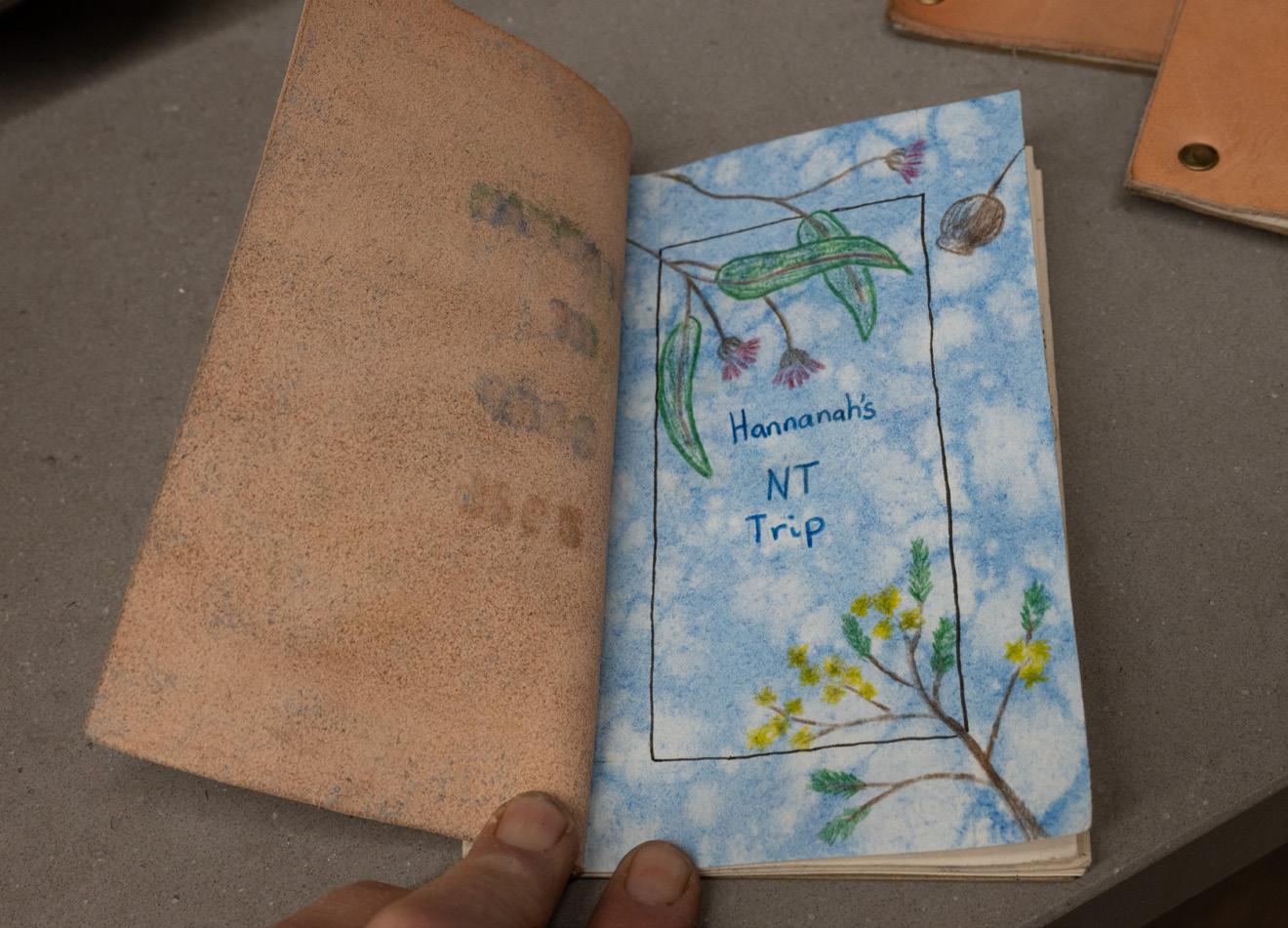
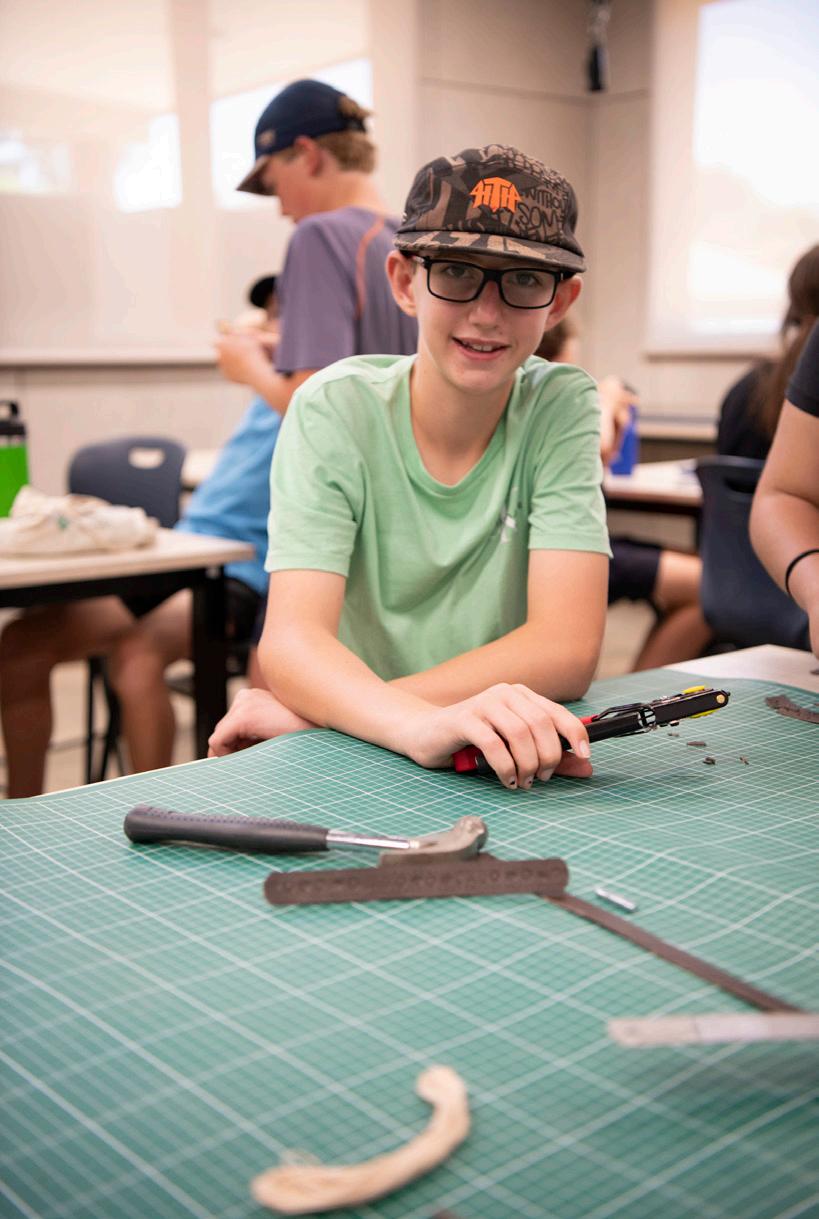
Year 7 students began by extending their primary school craft skills into leatherwork, creating embossed bookmarks and coin purses. They then explored 1 and 2-point perspective drawing and contributed to a collaborative bogong moth mural with Year 8s, using clay hand-building techniques. The theme of discovery continued with basrelief tiles of Renaissance architecture and 15th century vessels inspired by the Age of Exploration.
In Year 8, students deepened their sculptural and design skills,
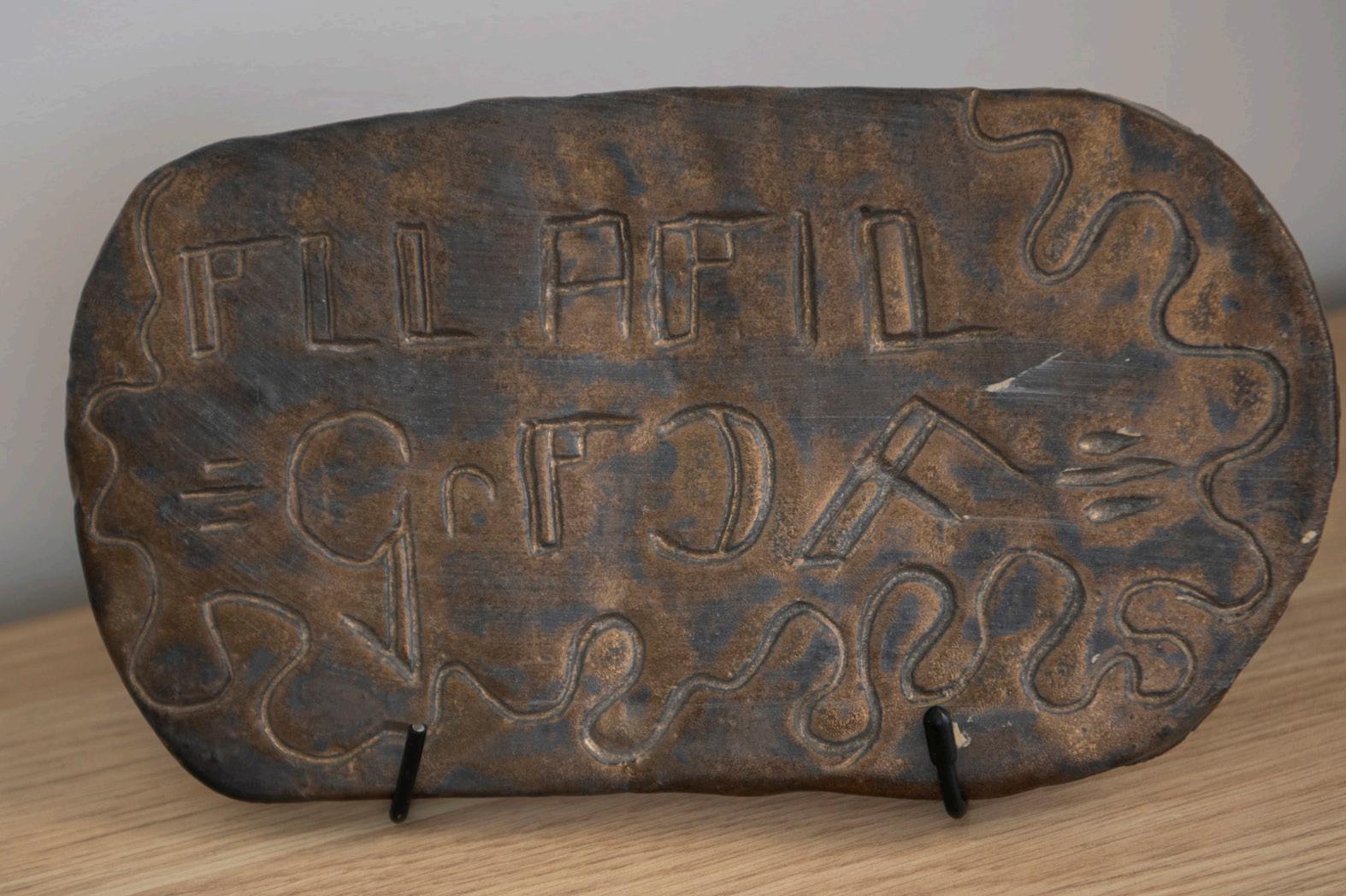
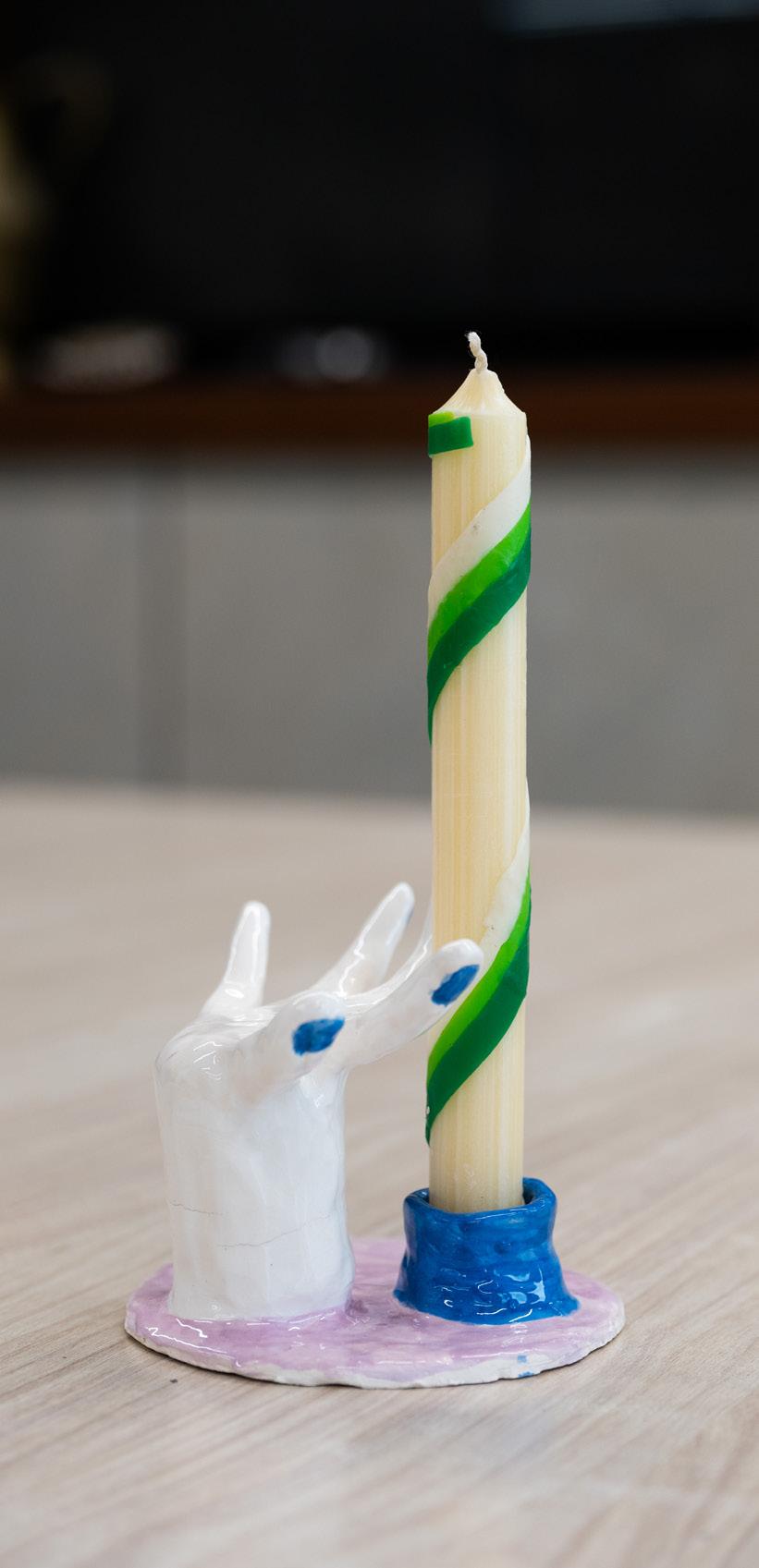
creating medieval beasts with wire and modroc and expressive clay candle holders. Their optical illusion drawings led into perspective geometry studies, and their embroidered, machinesewn dilly bags were made in preparation for next year’s Outdoor Education program. Their continued work on the bogong moth mural helped establish a permanent outdoor installation on the wall of our Darrendal classroom.
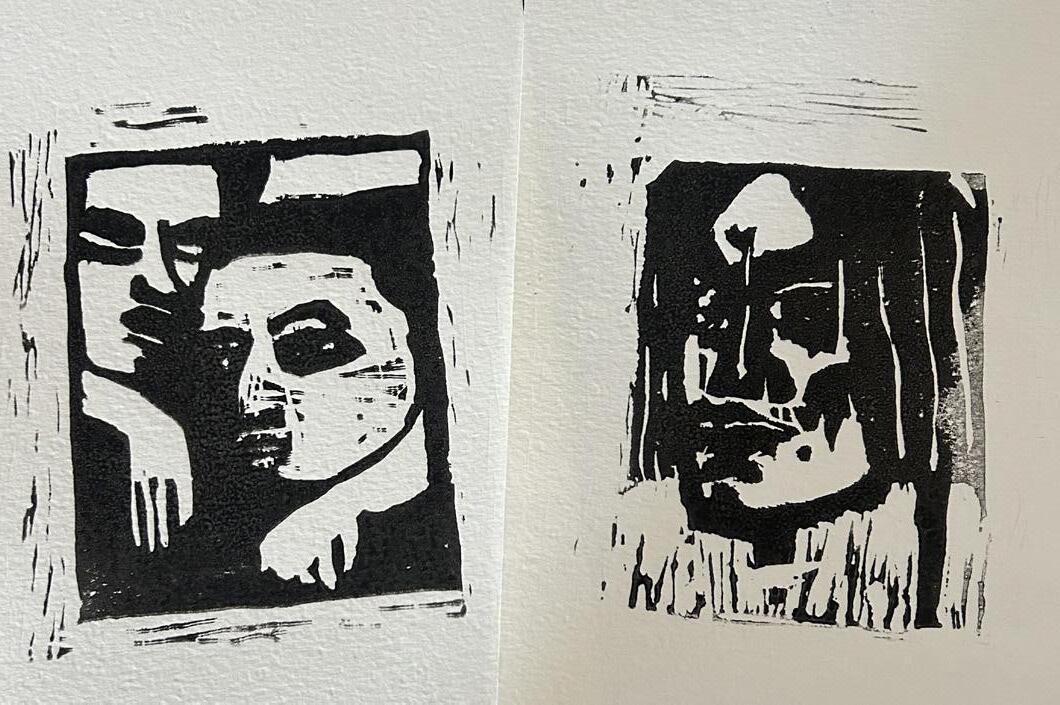
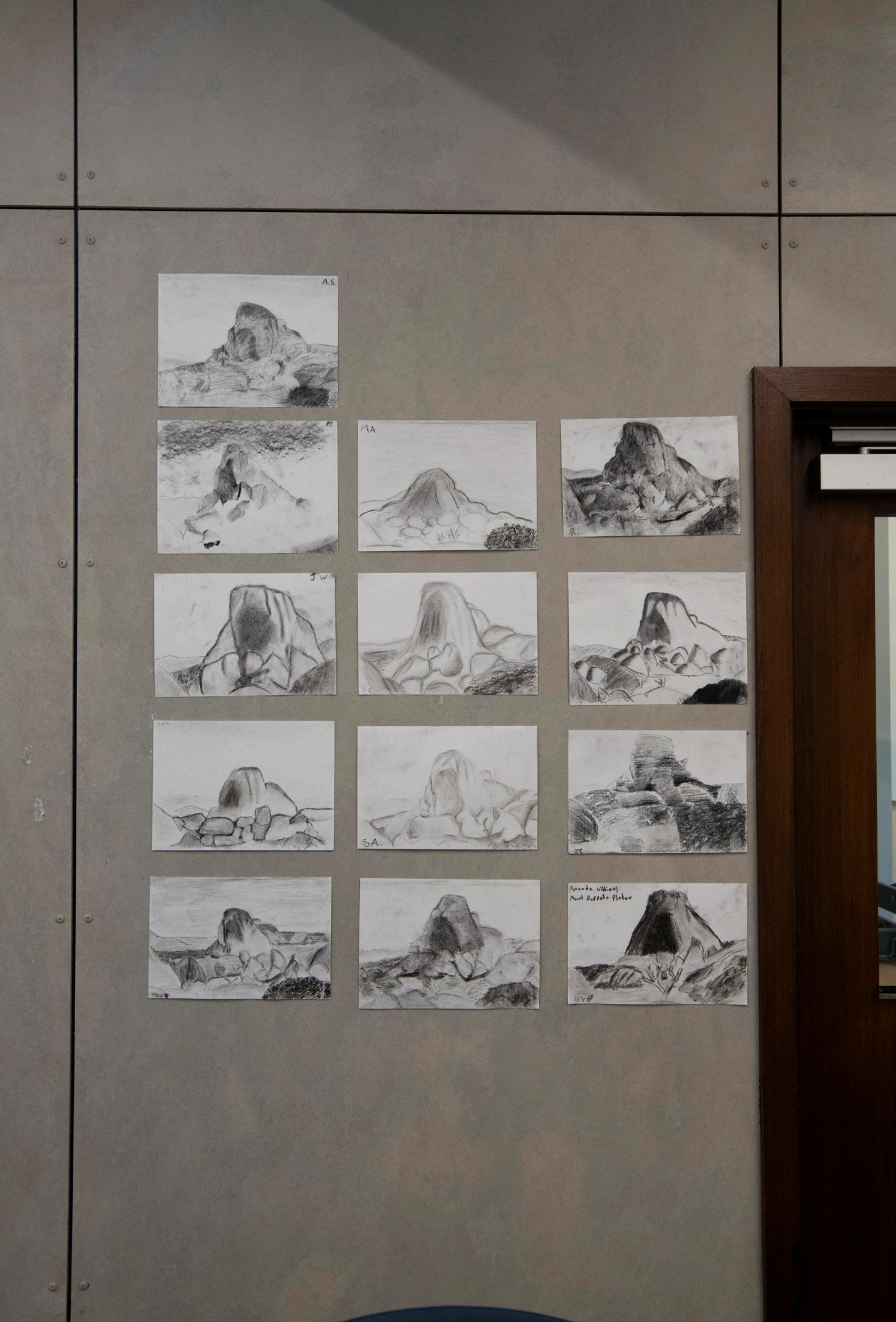
Year 9 students developed their technical skills, working on tonal charcoal drawings and lino printing inspired by historical techniques. The moth theme evolved into a soft sculpture produced collaboratively by the class, employing felting and machine-sewing methods. They also completed an art history research project, developing their artistic literacy, and learning about how different techniques
have precipitated new art movements.
Year 10 explored expressive colour through Goethe’s theory and abstract painting. They examined art movements across history, enriched by insights from our French exchange students regarding Impressionism and other 19th–20th century movements. In their Identity in Art unit, students reflected on personal expression within broader historical and cultural contexts.
This year, students have built new skills and explored art and art history in meaningful ways, helping them better understand themselves and the world through their creativity.
CHARLOTTE DAYMAN
IB Year 11
LEITH PIERCE
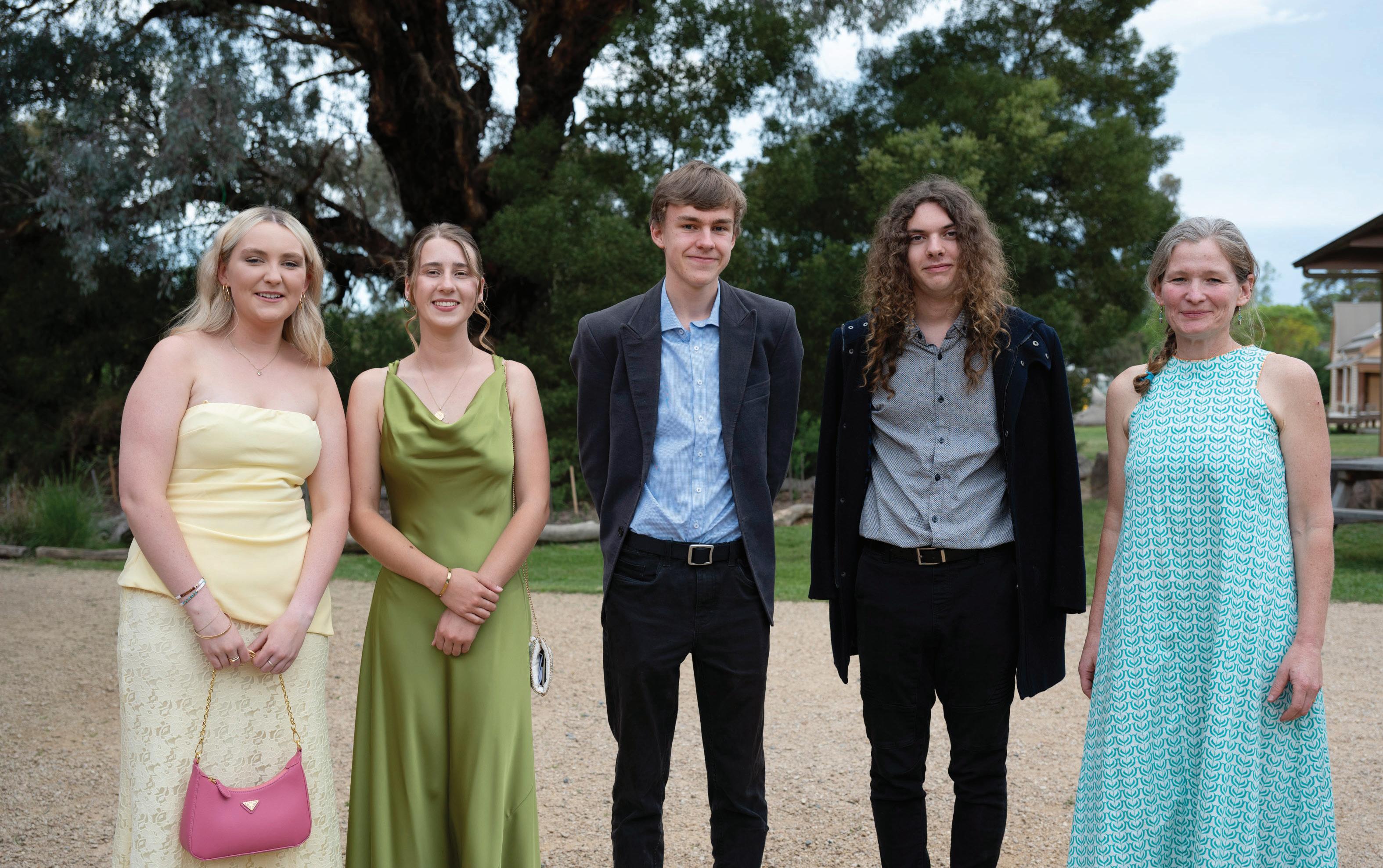
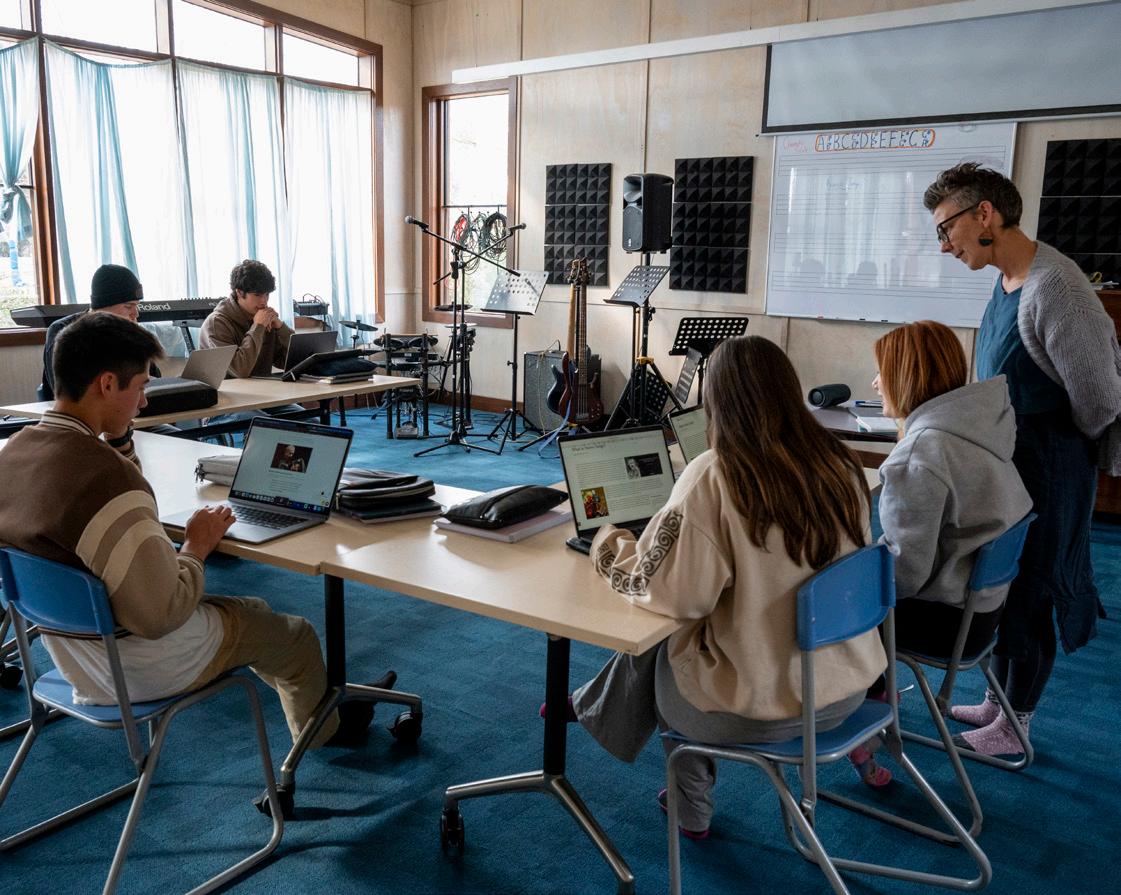
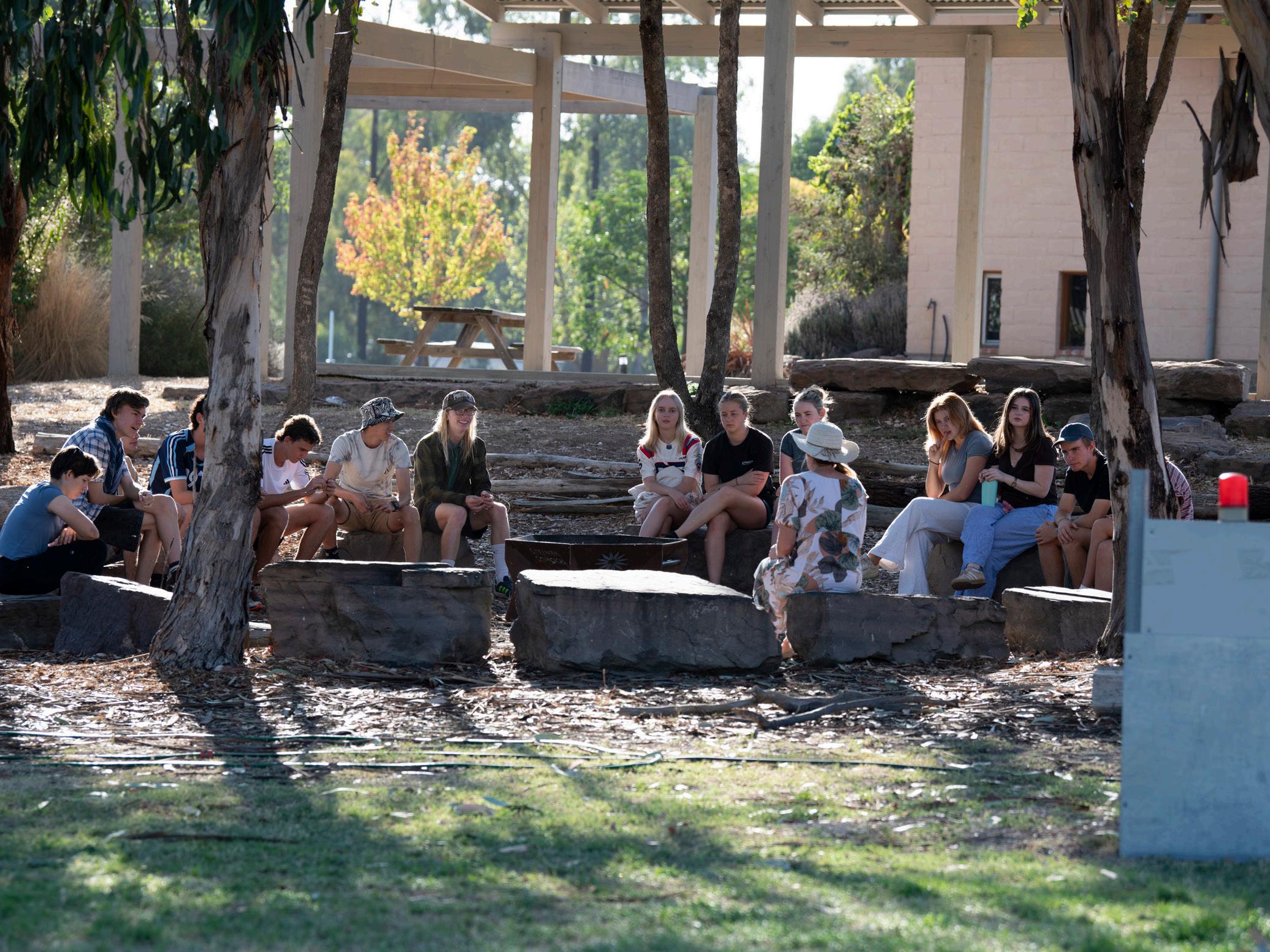
The 11s and 12s join together for many experiences and classes. Merging two year levels, combining individual efforts within a collective endeavour where we are all working towards the IB Diploma Program, provides great learning in how to work, learn and organise events with people that have not been part of your core class. This requires strong skills in listening and other aspects of communication; this calls for real empathy.
Through projects as part Creativity, Activity and Service (most projects involving all three), different texts and tasks, the 11s delve deep into the perspectives of others to explore where empathy arises from, and what questions we need ask to be able to arrive there.
This quality of empathy was woven into Anthropology ethnographies, in journeys told ancient Sufi poets where birds struggle to the top where ultimate wisdom will be found as told by Attar, and love and life is told as best described by Hafiz...
“Love sometimes wants to do us a great favor: hold us upside down and shake all the nonsense out.”
It was found in the celebration of candidness, colour and confidence shown by Congolese Dandy photographs by Victoire Douniama or Alice Mann.
It was provoked by Andy Warhol’s manipulations of celebrity portraits and thoughts his artwork raises about these ‘stars’ as real people that lived in the world.
It was heard through the Brazilian protest song from 1971, “Construção,” by Chico Buarque, that sounds the plight of ordinary working people amidst a time of prolonged political turmoil and oppression.
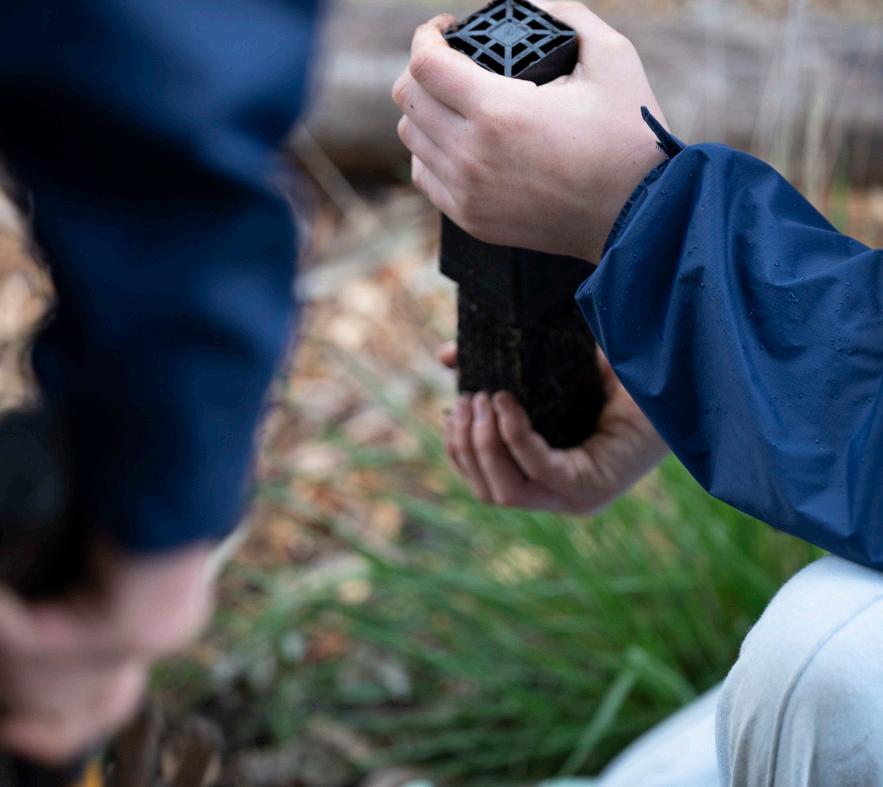
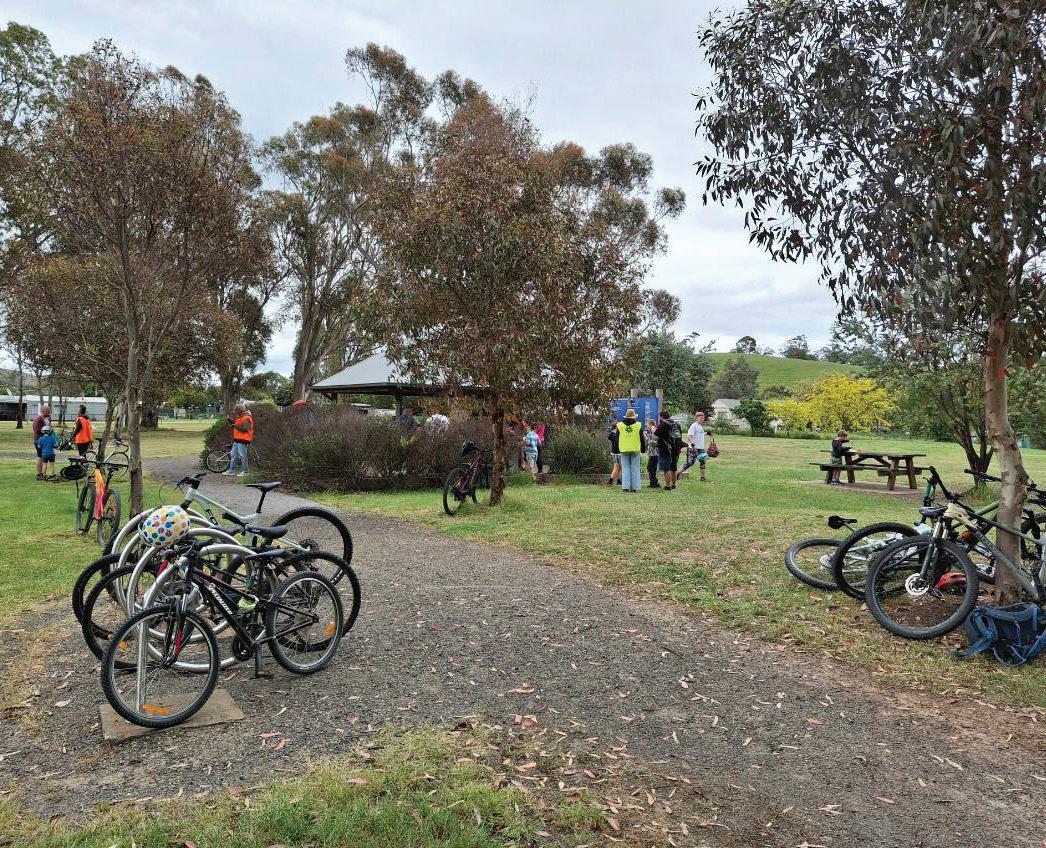
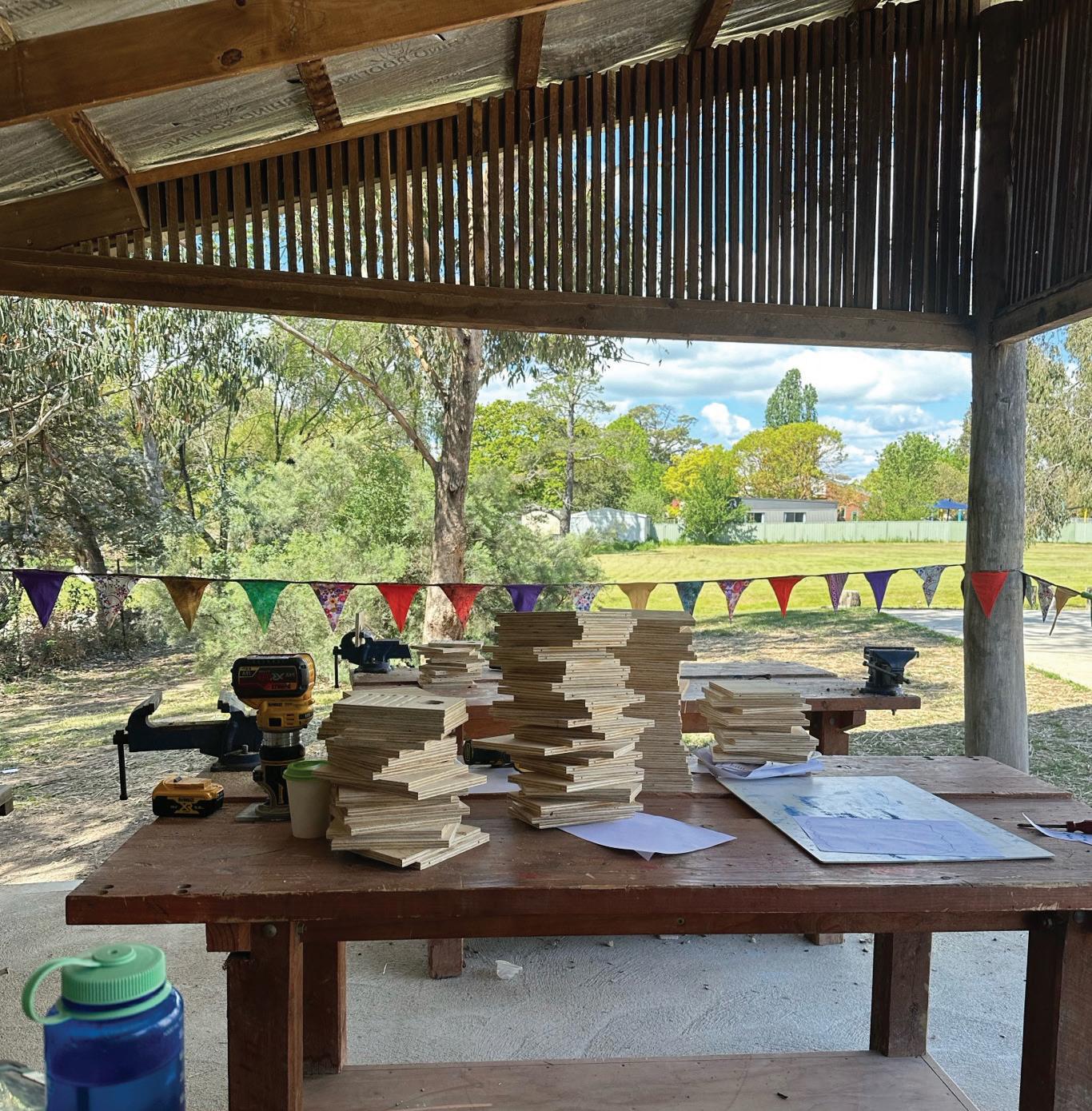
It was shown in the renewal of the bike-ride for our sister school in Venilale and in making bird boxes for wildlife in the region.
It was developed in the dozens of interviews that were conducted to find out about others’ beliefs for their anthropology research ...ghosts, race, gun licenses, careers, creativity and logic, music, the outdoors and our closest relationships.
It was made clear in deeper learnings about the need to protect ourselves and others from harmful chemicals we are exposed to every day during discussions of gases in chemistry class.
It was ever-present in the parallels between the anglophone and francophone world in French class, looking for and recognising the universal in the specific and vice versa.
And it was explored through their questions for the exhibition in Theory of Knowledge that will close their year: what is the relationship between personal experience and knowledge? or what role does imagination play in producing knowledge about the world? Helicopters and hot air balloons, ceramic vases and suitcases, jiu jitsu belts and the
periodic table all featured in efforts to see how much their understanding of the world matches with others.
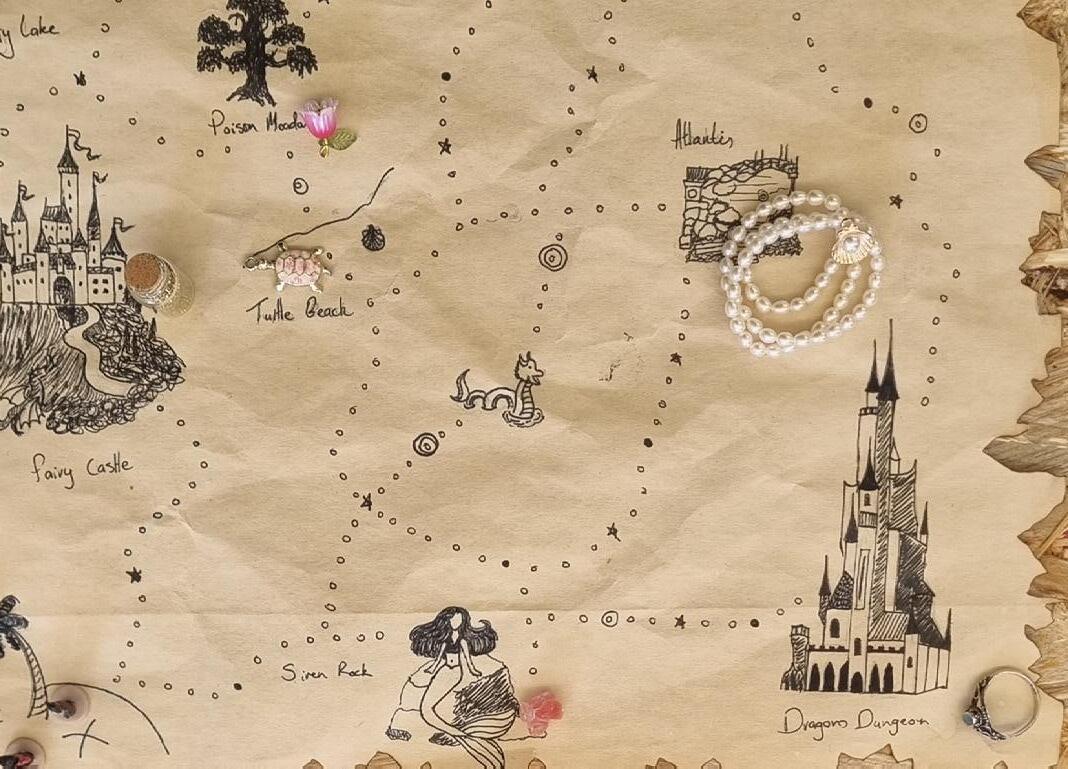
This quality perhaps shone most brightly when the Year 11s encouraged younger students with playing music in orchestra, enjoying Kinder’s Friday out among the trees around school, swimming across the pool, helping wash dishes, walking a river shape in commemorating Reconciliation, singing in assembly, aiding with maths questions, teaching French pronunciation and the creation of a treasure hunt around the school – poems included. That is, when they were out about the school with other younger students.
Or, maybe it was most present in meeting the large pet rabbit named Rocky at a park workout station, Western Sydney - a tiny moment of unplanned, genuine, good-natured curiosity in other peoples’ lives.
The 11s have contributed with and further developed their strengths, while also completing many, many things – small and large – that required them to step well outside their comfort zone, with their thinking, their actions and their connections with other people here at school and far beyond. In these efforts, I think Hafiz’ image of love for others and the world as an upsidedownness with all the nonsense shaken out fits very well.
“To truly know the world, look deeply within your own being; to truly know yourself, take real interest in the world.”
— Rudolf Steiner
IB Year 12
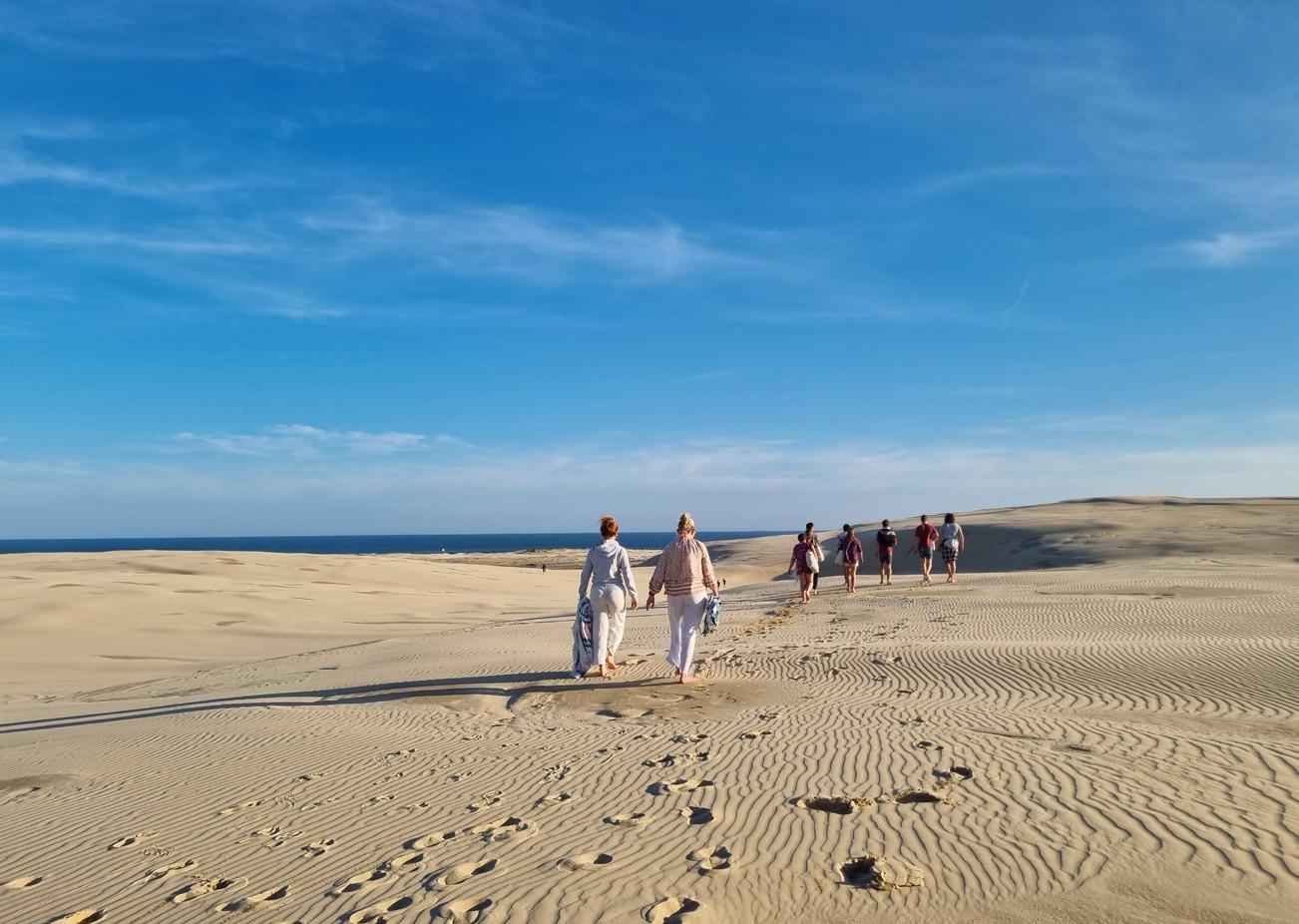
Walking the dunes at Worimi Conservation Lands near Port Stephens, NSW
Interest in the world, in ...
Its widest sense…
“When we do not have enough interest in the world around us, then we are thrown back into ourselves.”
Rudolf Steiner
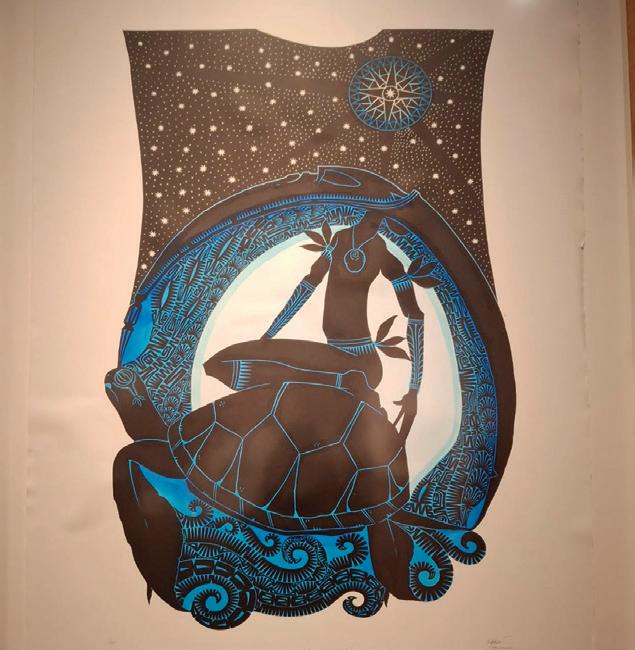
Glen Mackie’s ‘Kek’ (April Star’ marking the shift of the tradewinds that bring the Monsoon and New Year in the Torres Strait, from ‘65000 Years: A Short History of Australian Art’ from the Ian Potter Museum at Melbourne University
of our creek at the botanical gardens, and optional trips further afield to connect with other senior Steiner School students, when the Year 12s were asked to reflect on their year, they each revisited different assignments that together made up very significant parts of their learning across the course. In Term 1, they were working hard to complete their individual research project – their Extended Essay.
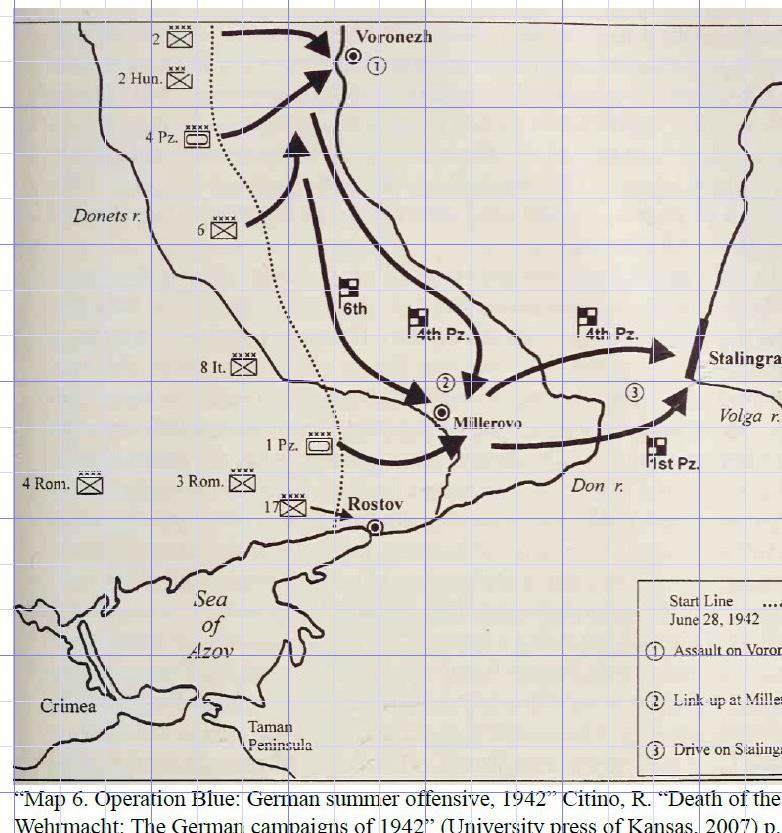
From Willow: “I found the Extended Essay to be the most enjoyable assignment … I had the opportunity to write on a chosen topic in the subject of history”, offering a real sense of independence. His topic: To what extent did Germany contribute to the failure of Fall Blau in the Caucasus during the summer of 1942?
explanation as to why we are the way we are in the modern world”; it explains “cause and effect”.
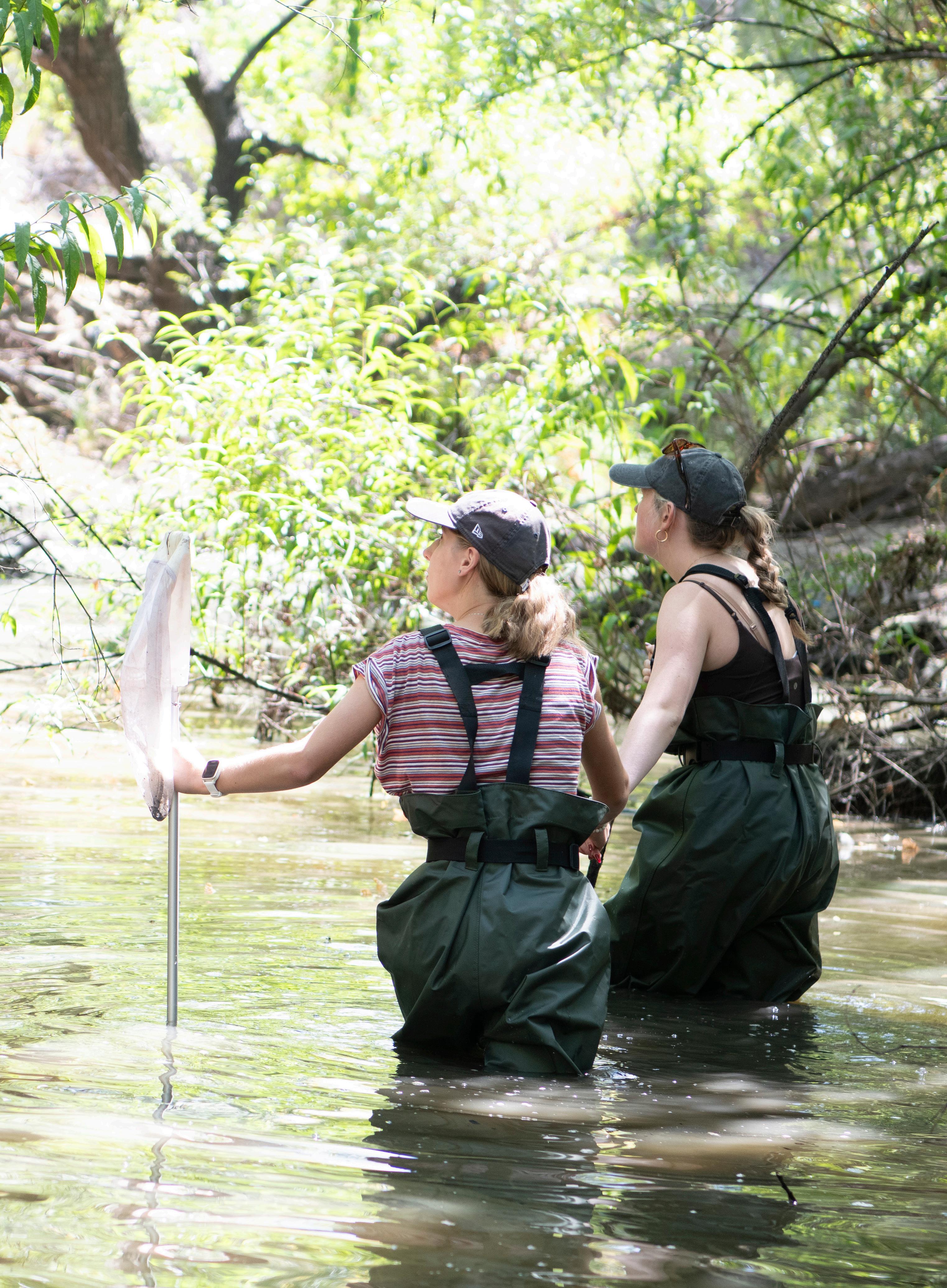
Punctuated by a play, jazz, and museums in Melbourne, an ecological health investigation
When I asked what really drew him in about the subject, he shared that history “offers an
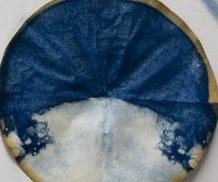
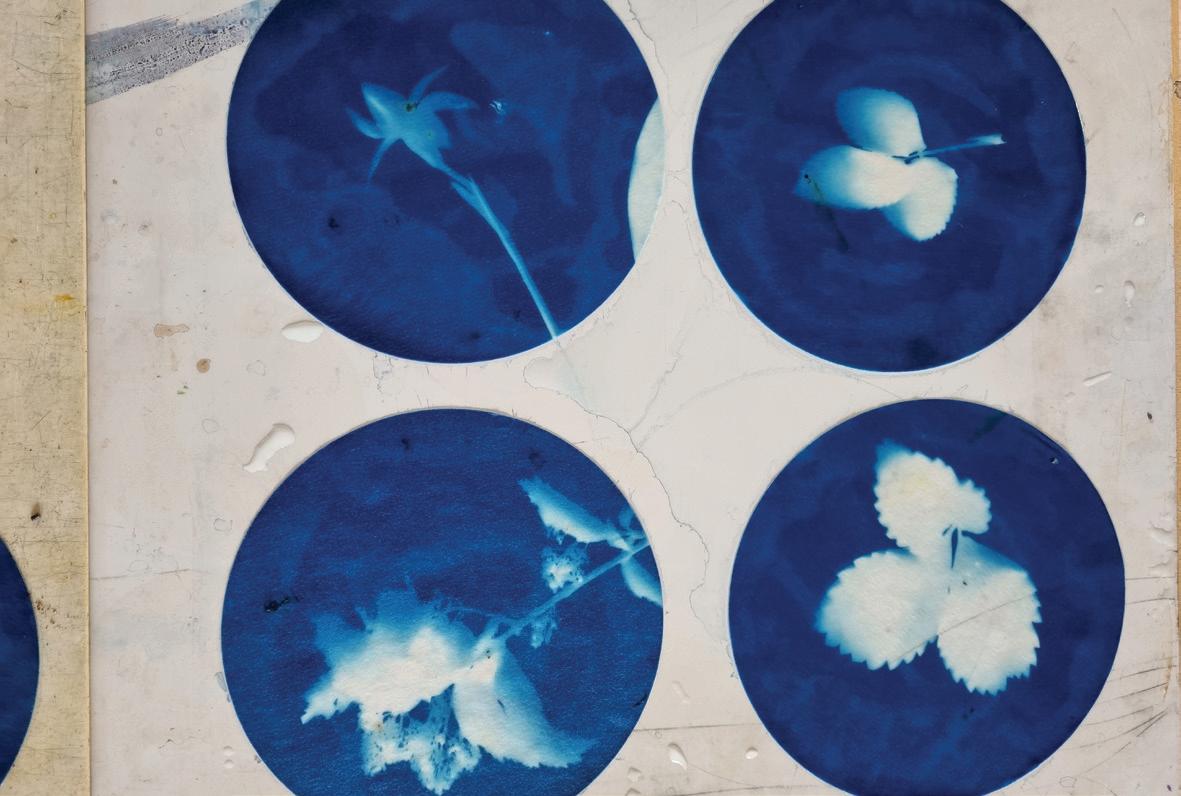
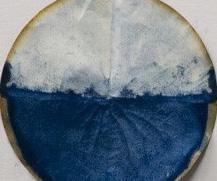
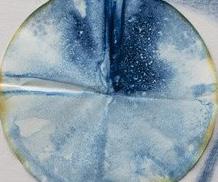
In Term 2, the Chemistry Internal Assignment (a self-devised lab experiment), was being processed. Molly’s extraction of world-famous in Waldorf circles Prussian Blue was an exercise in patience and nostalgia, with results she was able to take into art. Filter papers from this experiment made beautiful artefacts to respond to and create from.
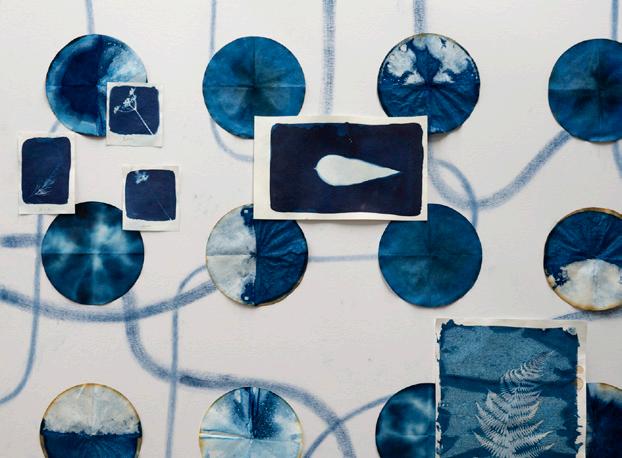
Filter papers from Molly’s exhibition piece ‘All Blue’
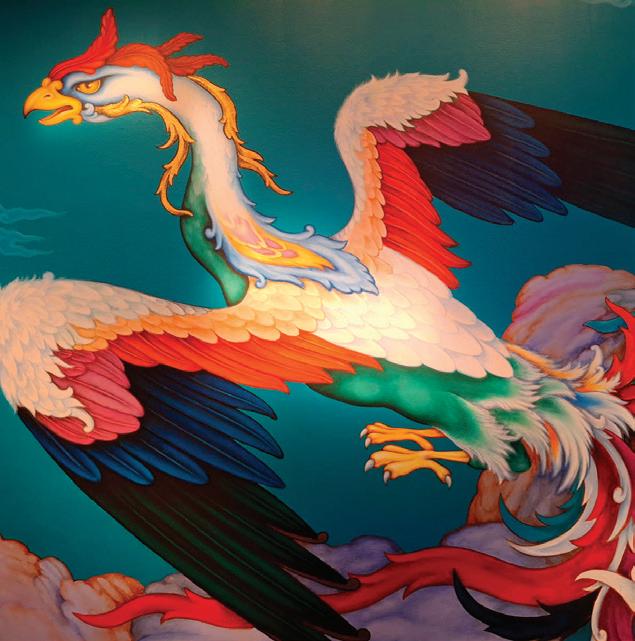
Rendition of the mythical Persian Simurgh from the ‘Joy’ exhibition at the Melbourne Immigration Museum
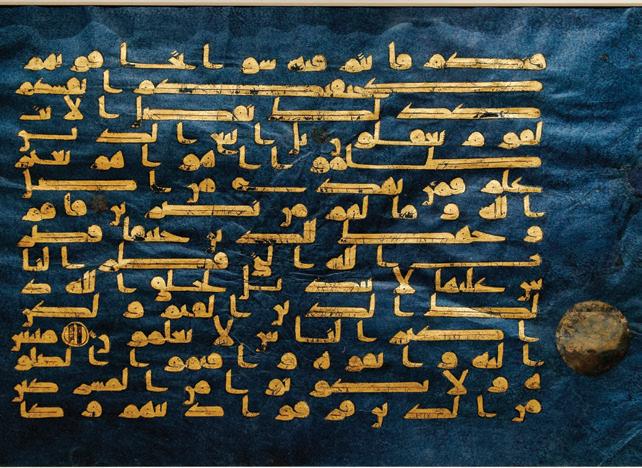
By Unknown author - Marie-Lan
Nguyen (2011), CC BY 2.5, https:// commons.wikimedia.org/w/index. php?curid=17956522
* following from the ancient Blue Quran kufi manuscript (right), covers of contemporary copies are usually blue; interestingly, from physics, blue light waves carry a higher energy than other colours
Ella shared a quote she came across that influenced her English
Oral development for early Term 3: someone speaking of a first experience with the Quran…“I opened the book and there was light coming out, I saw the truth.” The beliefs we come to and their different origins, were part of her exploration.
In Ella’s words, “being able to create thesis statements and arguments” helped “critically engage with the texts the ideas within them.”
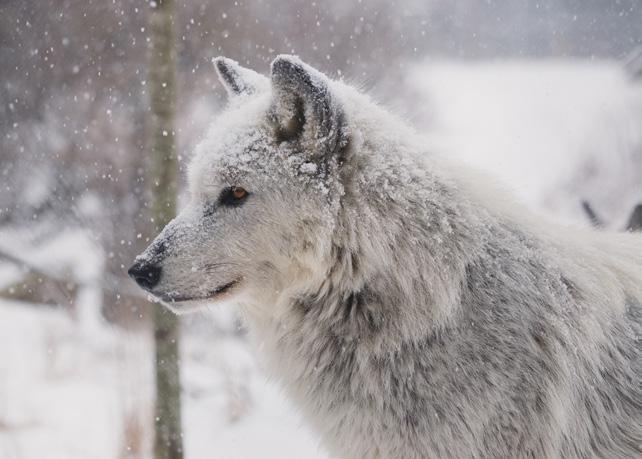
interested in, namely: ecology and genetics [exploring claims of Dire wolf re-creation]; linguistics and political science [exploring boundaries between words and languages –Turkish & Burmese, Spanish & English]”.
When I asked Oscar about his fascination with linguistics, especially etymology, he stated it was because “we need to look at what we take for granted in our every day and interrogate why”.
Blue is a connector I have drawn, from found histories, some of the minutia, meanings and expressions between the 12s’ reflections.
Spanish - Azul (from the Persian word for the blue stone: lapis lazuli)
Turkish - Mavi (from the Arabic māwiyy, meaning watery)
Burmese is
/ a pyaar (also a blue-grey cat breed)
English (Germanic origin, roots in Old English, Norse and French)
Steiner said “blue is the lustre of the soul”, that it draws us into free thinking and that
Darkness or obscurity seen through light is blue
Blue is like a flavour of thinking we have explored Year 12, illuminations that have come through reading deeply, making new things, wondering, wandering – on our own and as a group.
Its longest sense, (Latin for faculty of feeling; thought; meaning)
Its minutia, (Latin for smallness)
thrown, not back into ourselves, but out into the Big Blue.
The 12s are ready.
LEITH PIERCE
Oscar’s essay for Theory of Knowledge (a course that binds our program by asking: how do we know what we know?) submitted towards Term 3’s end was where…
“I worked to answer the question of the relationship between scope and method … by examining fields I was
Its connections of purpose ( combining Latin and Middle English: together; bind; unite)
And meanings carried within expressions of collective endeavour (meaning from the Germanic gemynd: memory, thought)
with interest in the world we are
Dire wolf. The undertone of their coats is blue.