
Mansfield Steiner School Spring Fair
TREES FOR SALE
s t alls
COMMON NAME
Columnar English Oak (Quercus robur 'Fastigiata')
25 October 2025 10AM - 3PM
Pin Oak (Quercus palustris)
Portugal Oak, Gall Oak (Quercus lusitanica)
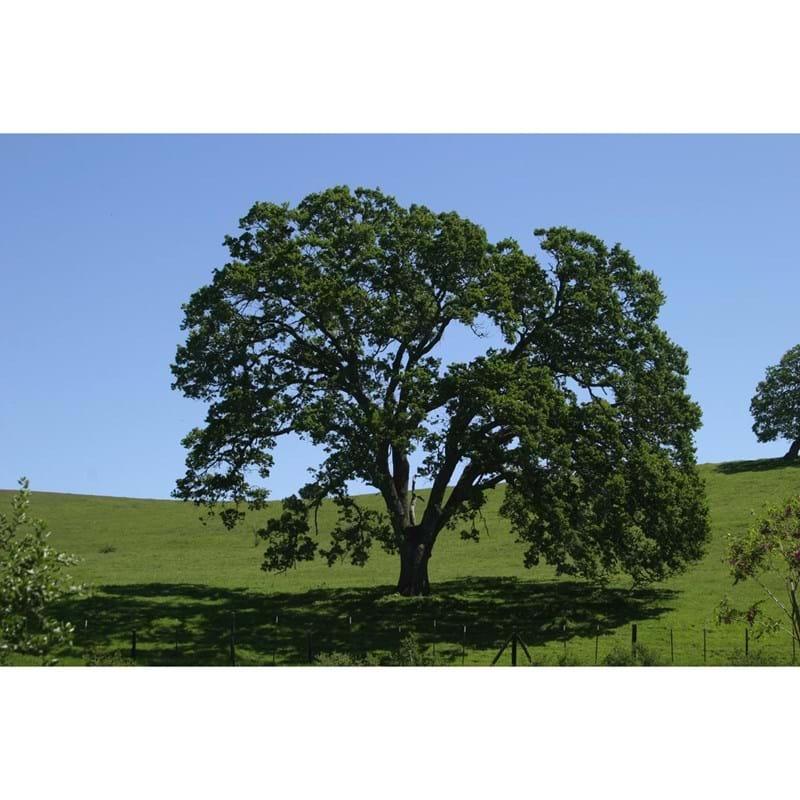
Californian White Oak (Quercus lobata)
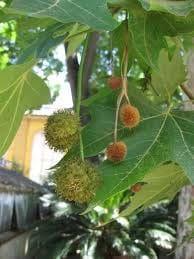
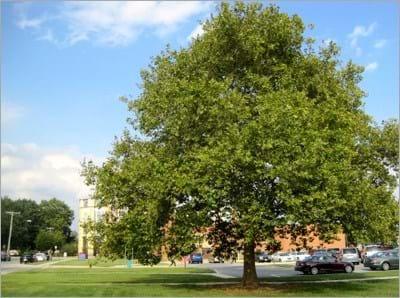
London Plane (Platanus acerifolia)
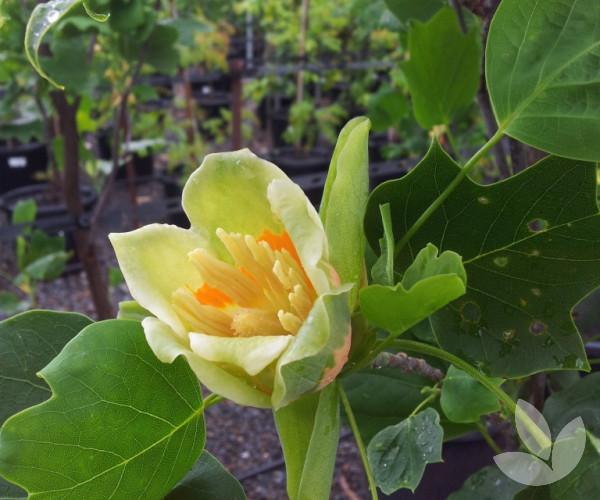
Tulip Tree (Liriodendron tulipifera)
Sweetgum (Liquidambar styraciflua)
Golden Rain Tree (Koelreuteria paniculata)
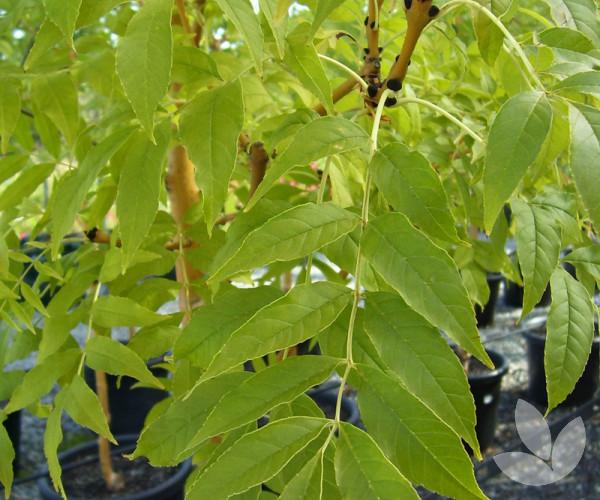
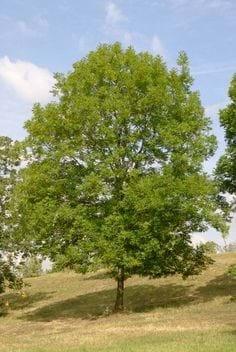
European Ash aka The Waiting Tree (Fraxinus excelsior)
Chinese Pistachio (Pistacia chinensis)
Indian Bean Tree (Catalpa bignonioides)
Italian Alder (Alnus cordata)
Indian Horse Chestnut Tree (Aesculus indica)
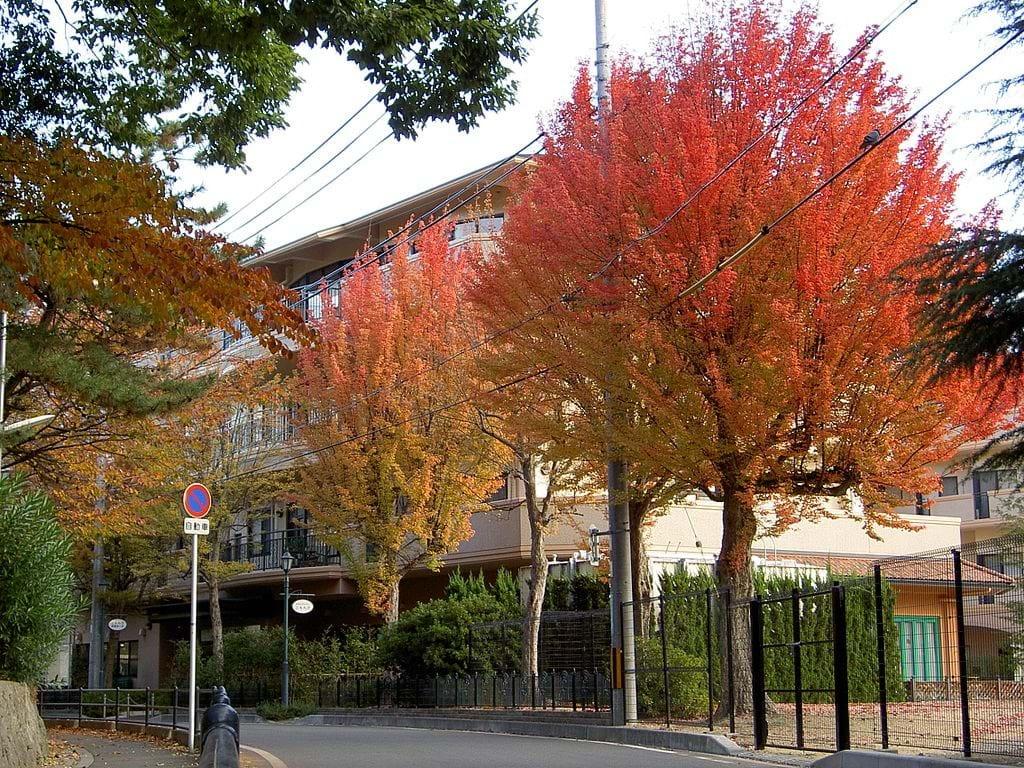
Canadian Maple Tree (Acer rubrum ‘Autumn Red’)
Sycamore Maple (Acer pseudoplatanus)
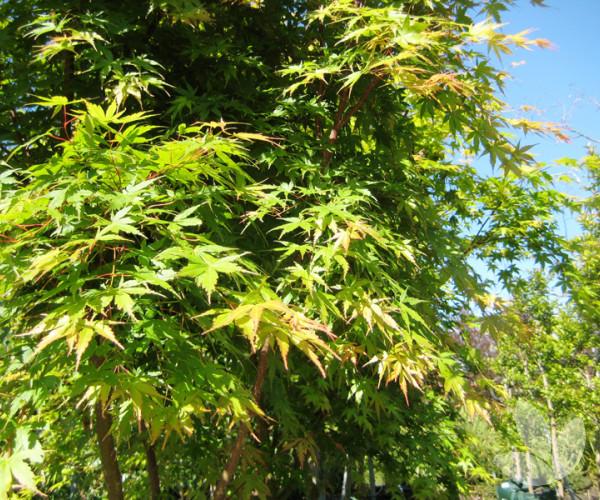
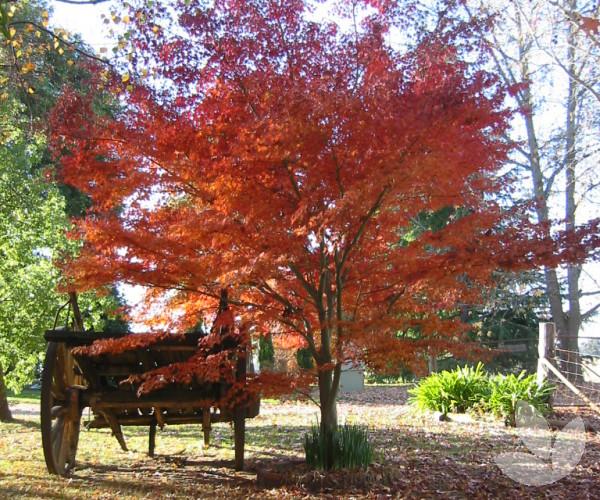
Japanese Maple (Acer palmatum)
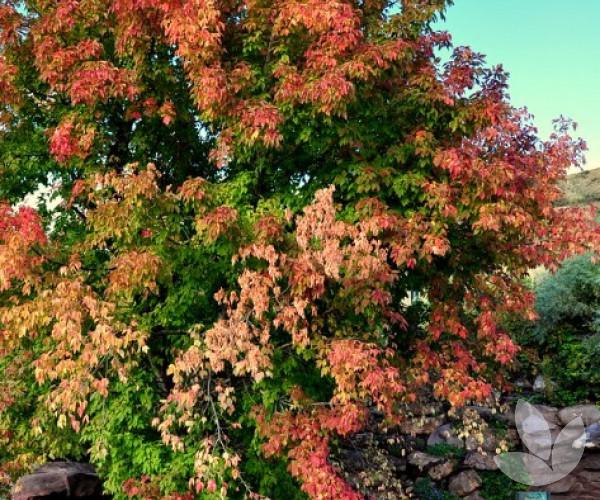
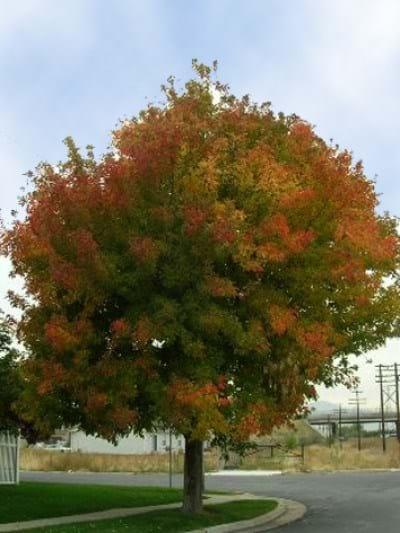
Sensation Box Elder Tree (Maple Tree) (Acer negundo ‘Sensation’)
Trident Maple Tree (Acer buergerianum)
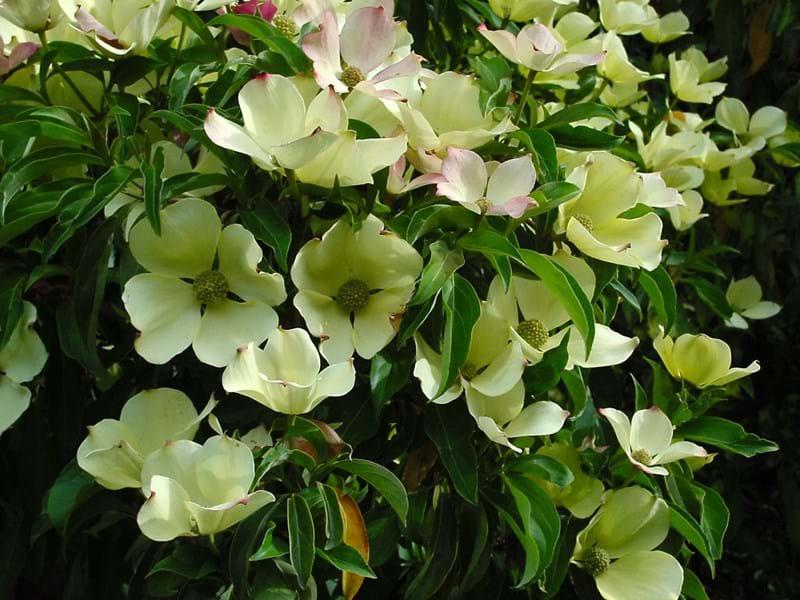
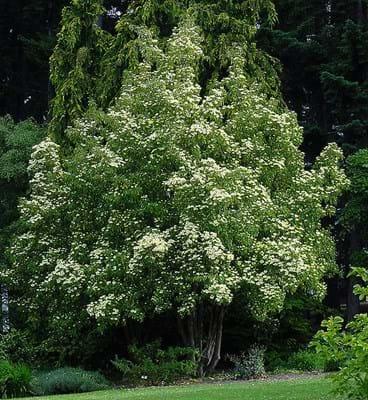
Himalayan Flowering Dogwood (Cornus capitata)
Quercus robur 'Fastigiata'
Common Name: Columnar English Oak
Description:
Quercus robur 'Fastigiata' is a deciduous, upright columnar cultivar of the English oak. It matures into a dense, elongated oval shape with a relatively short trunk, making it a striking and elegant specimen tree in landscapes. This moderately fast-growing oak reaches heights of 20–25 meters (50–60 feet) while maintaining a narrow spread of 3–5.5 meters (10–18 feet).
Originating from a wild discovery in Germany and propagated by grafting in 1783, this cultivar is prized for its architectural form and longevity.
Key Features:
• Height: 20–25 m (50–60 feet)
• Spread: 3–5.5 m (10–18 feet), narrow and columnar
• Growth Rate: Moderate
• Foliage: Dark green leaves 50–100 mm long and 25–50 mm wide, retaining color late into autumn before turning brown; often persist on the tree after browning
• Bark: Dark brown, deeply ridged and furrowed
• Fruit: One-inch acorns that persist throughout winter
• Form: Upright, columnar with a dense elongated oval canopy
Landscape Uses:
• Ideal for avenues, narrow spaces, and formal gardens
• Provides year-round architectural interest
• Suitable as a feature specimen or screening tree
Growing Conditions:
• Prefers full sun
• Thrives in well- drained soil
• Hardy and adaptable to urban environments
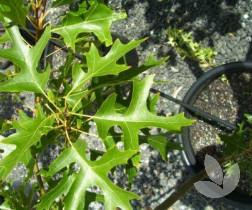
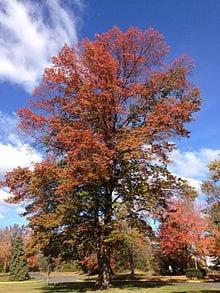
Quercus palustris
Common Name: Pin Oak
Description:
Quercus palustris is a fast-growing, deciduous tree recognized for its shiny, deeply lobed dark green leaves that turn bronze with occasional red hues in autumn. The foliage often remains attached to the tree through winter until new spring growth begins. Its natural conical shape features a strong central leader that develops into a loose, spreading canopy over time. Young bark is smooth, becoming more textured with age.
A distinctive feature of the Pin Oak is its branch structure: upper branches grow upward, middle branches extend horizontally, and lower branches droop. Additionally, pin oak branches often persist on the tree for many years, adding to its unique appearance.
Key Features:
• Mature Size: 15 m height x 8 m spread
• Foliage: Deciduous; dark green leaves turning bronze and red in autumn
• Form: Conical with horizontal branching
• Bark: Smooth when young, textured with maturity
• Branching Habit: Upper branches upright, middle horizontal, lower drooping
Landscape Uses:
• Ideal feature tree for large gardens and parks
• Excellent avenue tree due to striking autumn colour
• Provides seasonal interest and architectural form
Growing Conditions:
• Adaptable to most soils, from dry to wet
• Prefers acidic, well- drained, moist soils
• Thrives in full sun, tolerant of drought periods and air pollution
Quercus lusitanica
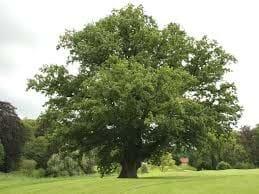
Common Names: Portugal Oak, Gall Oak
Description:
Quercus lusitanica is a broadly spreading, deciduous oak native to Portugal, Spain (Galicia and western Andalucía), and Morocco. Known for its elegant form and traditional uses, it is historically valued as the source of commercial nutgalls, formed by the insect Cynips gallae tinctoriae these galls are used in dyeing processes.
The tree has green foliage that turns yellow in autumn, accompanied by the production of acorns. Its name derives from "Lusitania," the Roman province that roughly corresponds to modern- day Portugal and parts of western Spain.
Key Features:
• Height: 25–30 m
• Spread: Broadly spreading
• Foliage: Deciduous; green turning yellow in autumn
• Form: Large, spreading crown
• Fruit: Acorns
• Notable Trait: Produces nutgalls used in dyeing
Landscape Uses:
• Ideal for parks, large gardens, and heritage plantings
• Provides autumn interest and shade
• Historically significant for traditional dye production
Growing Conditions:
• Prefers full sun
• Grows best in well- drained soil
• Tolerant of Mediterranean climates and drier conditions once established
Quercus lobata
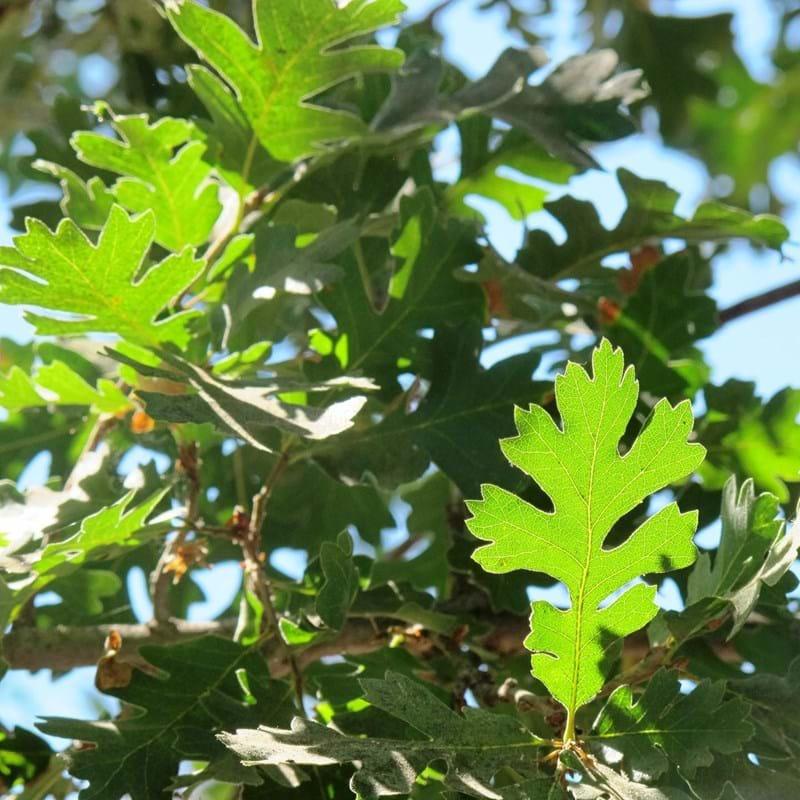
Common Name: Californian White Oak
Description:
Quercus lobata is a large, deciduous oak native to California, known for its open, rounded crown which can be erect, spreading, or occasionally weeping. It requires ample space to accommodate its wide canopy, which may take on oval, rounded, or umbrella shapes.
Key Features:
• Height: Up to 30 m (50–70 feet)
• Spread: Approximately 15 m (50 feet), open and rounded
• Growth Rate: 80–100 cm per year
• Longevity: Greater than 150 years
• Foliage: Obovate and lobed leaves, medium to dark green, turning bronze or gold in autumn
• Deciduous: Yes
• Flowers: Inconspicuous, blooming in spring; monoecious (separate male and female flowers on the same tree)
• Fruit: Prolific medium-sized brown acorns, ripening in autumn or winter
• Bark: Dark brown, light gray, or light green; blocky or furrowed texture
• Shading Capacity: Moderate, both in leaf and out of leaf
Landscape Uses:
• Suitable for large parks, open spaces, and restoration projects
• Provides moderate shade and wildlife habitat
• Ideal for long-lived, large-scale plantings requiring a substantial canopy
Growing Conditions:
• Prefers full sun
• Thrives in well- drained soils
• Requires ample space to accommodate wide spreading branches
Platanus acerifolia
Common Name: London Plane
Description:
Platanus acerifolia is a large, deciduous tree with a broadly columnar form, widely planted as a street and urban tree. It features light green foliage that turns yellow in autumn. The tree produces seeds in autumn and is valued for its hardiness and tolerance of urban conditions.
Key Features:
• Height: 30–35 m
• Spread: Broadly columnar
• Foliage: Deciduous; light green turning yellow in autumn
• Fruit: Seed production in autumn
• Uses: Excellent street and urban tree
Landscape Uses:
• Ideal for avenues, streets, and large parks
• Tolerant of pollution and urban stresses
• Provides shade and seasonal interest
Growing Conditions:
• Prefers full sun
• Tolerant of a wide range of soils, including compacted urban soils
• Hardy and adaptable
Liriodendron tulipifera
Common Name: Tulip Tree
Description:
Liriodendron tulipifera is a majestic, very large deciduous tree known for its distinctive, large leaves with smooth, soft textures and a unique shape. In spring, it produces striking orange-yellow flowers with flecks of green, which resemble tulips and appear singly at the very top of the tree’s branches, giving the tree its common name.
Key Features:
• Mature Size: 20 m tall x 8 m wide
• Foliage: Deciduous
• Form: Oval crown
• Flowers: Solitary, tulip -shaped orange-yellow flowers with green flecks in spring
Landscape Uses:
• Spectacular specimen tree for large lawns, parks, or open spaces
• Provides ornamental floral interest and impressive height
Growing Conditions:
• Prefers well- drained, fertile, slightly acidic soil
• Thrives in temperate climates
• Requires full sun; may occasionally suLer leaf scorch in intense sunlight
• Tolerates air pollution
• Adaptable to most soil types
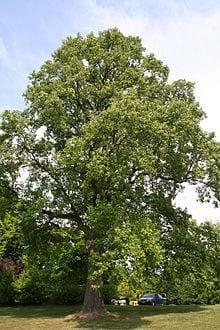
Liquidambar styraciflua
Common Name: Sweetgum
Description:
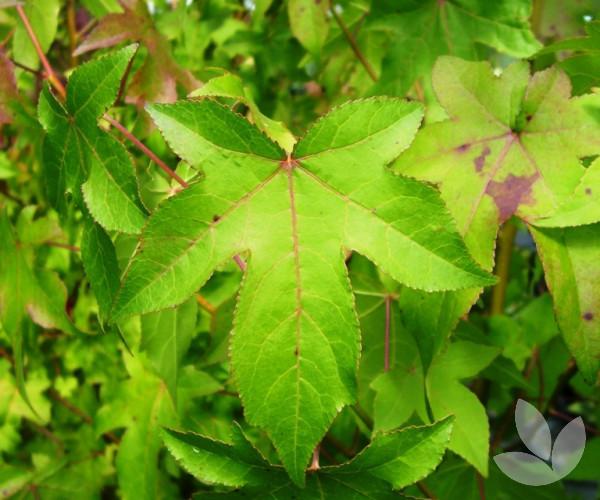
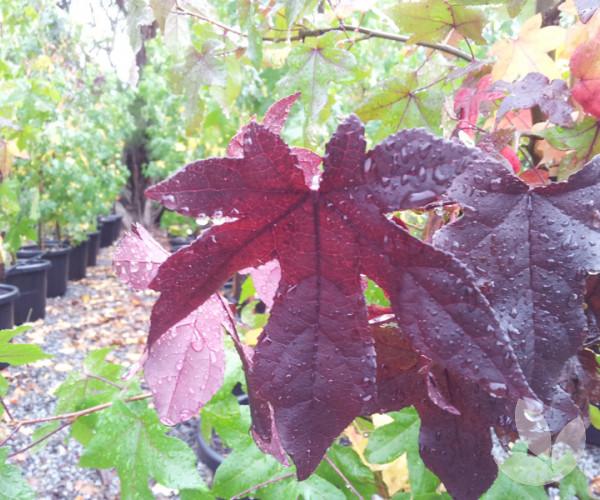
Liquidambar styraciflua is a large, deciduous tree with a broadly conical form, widely appreciated for its spectacular autumn foliage. The deeply lobed green leaves transform into brilliant shades of yellow, orange, red, and purple before falling in winter. This tree provides cool summer shade and allows sunlight to filter through during the dormant winter months
A bold, showy feature tree best suited to large gardens, parks, or avenue plantings, where its full size and vibrant seasonal colour can be appreciated.
Key Features:
• Height: 25–35 m
• Spread: Broadly conical
• Foliage: Deciduous; green turning yellow, orange, red, and purple in autumn
• Form: Upright, broadly conical canopy
• Growth Habit: Dense shade in summer; open and light-filled in winter
Landscape Uses:
• Excellent specimen tree for large gardens and public parks
• Suitable for avenue plantings and autumn colour displays
• Provides summer shade and winter sun access
Growing Conditions:
• Prefers full sun
• Grows well in moist, well- drained soils
• Tolerates a range of soil types including clay
• Adapts to both urban and rural environments
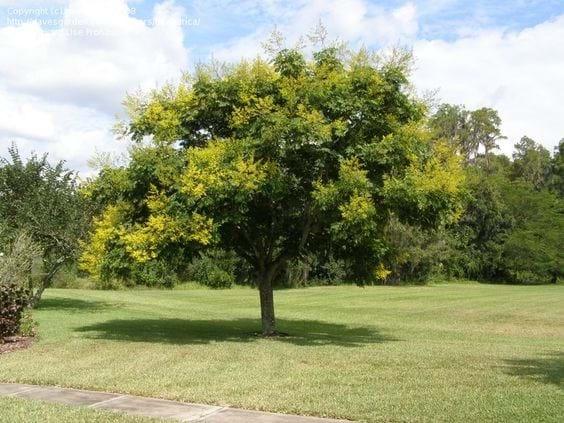
Koelreuteria paniculata
Common Name: Golden Rain Tree
Description:
Koelreuteria paniculata is a deciduous, broadly spreading tree known for its handsome, wide crown and vibrant seasonal displays. It thrives in full sun and rich soil with regular watering but also tolerates hot, dry conditions and alkaline soils. The tree grows at a moderate rate of approximately 60 cm per year.
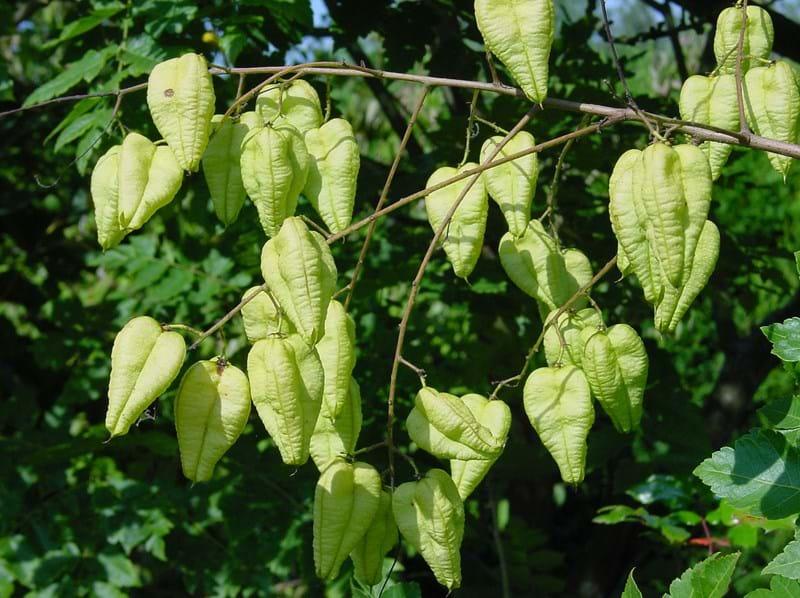
In summer, it produces large, showy sprays of deep yellow flowers that are followed by distinctive small, bladder-like seed pods in autumn. The green, heavily veined leaves turn brilliant shades of gold, yellow, and orange in the fall, providing excellent seasonal interest.
Key Features:
• Height: 5–10 m
• Spread: Broadly spreading
• Foliage: Deciduous; green leaves turning yellow and orange in autumn
• Flowers: Large, deep yellow sprays in summer
• Fruit: Small, bladder-like seed pods in autumn
• Growth Rate: Approximately 60 cm per year
• Tolerance: Drought tolerant; adapts well to alkaline soils
Landscape Uses:
• Ideal for parks, gardens, and streetscapes
• Provides excellent autumn colour and summer floral interest
• Suitable for drought-prone and alkaline soil conditions
Growing Conditions:
• Prefers full sun
• Thrives in rich, well- drained soil but tolerant of poorer soils
• Requires regular watering but withstands dry spells once established
Fraxinus excelsior
Common Name: European Ash aka The Waiting Tree
Description:
Fraxinus excelsior is a large, hardy deciduous tree native to Europe. It typically grows between 12 and 18 meters tall, but can reach exceptional heights up to 43 meters. The trunk can be up to 2 meters in diameter, occasionally reaching 3.5 meters. It has a tall, narrow crown that spreads broadly, making it a prominent landscape tree.
The bark on young trees is smooth and pale grey, gradually becoming thick and vertically fissured with age. Shoots are stout and greenish-grey, featuring distinctive jet black buds that set it apart from other ash species, which usually have grey or brown buds.
Key Features:
• Height: Typically 20m (commonly 12–18m, exceptionally up to 43m)
• Spread: Broadly spreading canopy
• Foliage: Deciduous
• Bark: Smooth pale grey on young trees; thick and fissured on mature trees
• Shoots: Stout, greenish-grey with distinctive jet black buds
Landscape Uses:
• Large shade and street tree
• Suitable for parks, woodlands, and large gardens
• Hardy and adaptable to various soils and climates
Growing Conditions:
• Prefers well- drained soils
• Tolerant of a range of soil types
• Hardy to cold climates
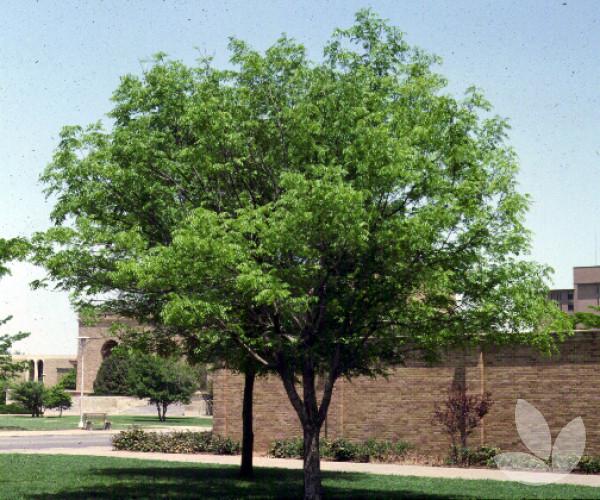
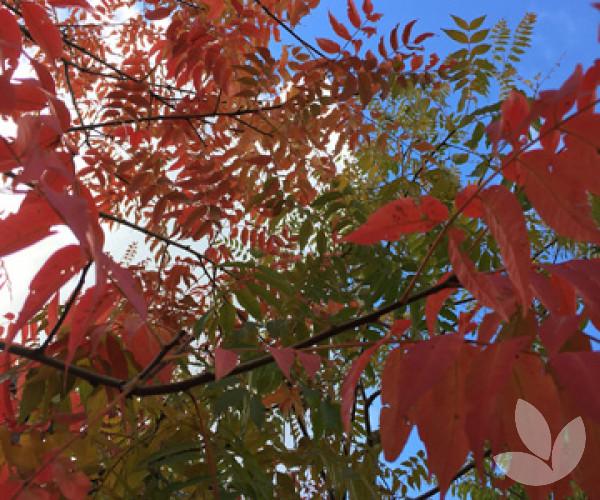
Pistacia chinensis
Common Name: Chinese Pistachio
Description:
A lovely small deciduous tree with a moderate growth rate and outstanding autumn foliage in shades of orange, yellow, and red. It features dark grey bark with shallow furrows and pinnate, leathery green leaves that provide interest throughout the growing season. In summer, small inconspicuous white flowers appear in clusters, followed by red drupes that mature to a deep blue.
Note: This is not the pistachio nut-producing tree.
Key Features:
• Mature Size: 8m tall × 6m wide
• Foliage: Deciduous
• Form: Rounded canopy
• Bark: Dark grey with shallow furrows
• Flowers: Small, white (inconspicuous), summer
• Fruit: Red drupes maturing to blue
Landscape Uses:
• Excellent feature tree for parks and gardens
• Ideal for street planting
• Provides filtered shade for underplanting
• Suitable for gardens of all sizes
• Prune to maintain shape, define a strong central leader, and develop good structure
Growing Conditions:
• Sunlight: Prefers full sun
• Soil: Tolerates most types; best in well- drained soil
• Water: Moderately drought-tolerant once established
• Hardiness: Capable of withstanding relatively harsh conditions
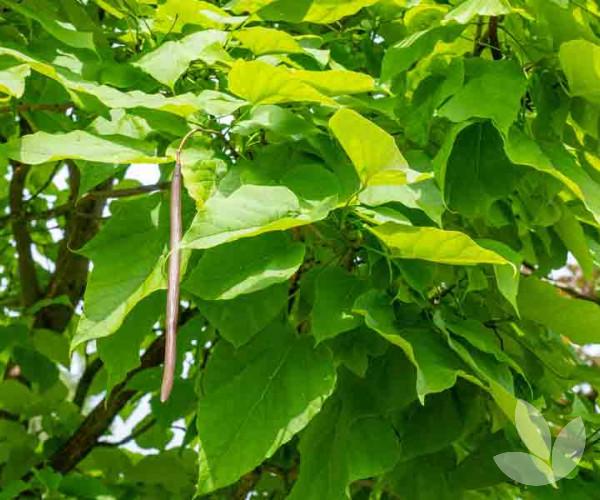
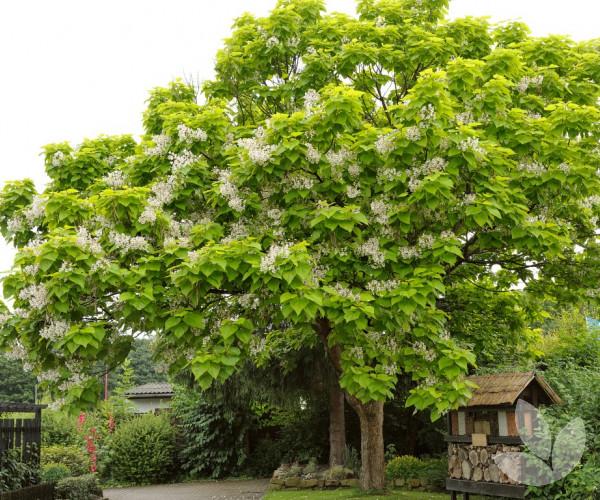
Catalpa bignonioides
Common Name: Indian Bean Tree
Description:
A large, attractive tree with a broad, dome-shaped canopy and long-stalked, lush green leaves. In summer, it produces showy, bell-shaped flowers in shades of white, pink, and soft apricot- orange. These are followed by clusters of long, pendulous, bean-like seed capsules the feature behind its common name.
Key Features:
• Mature Size: 15m tall × 12m wide
• Foliage: Deciduous
• Form: Broad- domed
• Growth Rate: Very fast growing
• Appearance: Tropical in character
Uses:
Ideal for parks, large gardens, and avenue planting due to its dramatic form and rapid growth.
Growing Conditions:
• Sunlight: Prefers full sun
• Soil: Thrives in rich, moist soils but can tolerate dry periods
• Positioning: Best suited to larger spaces
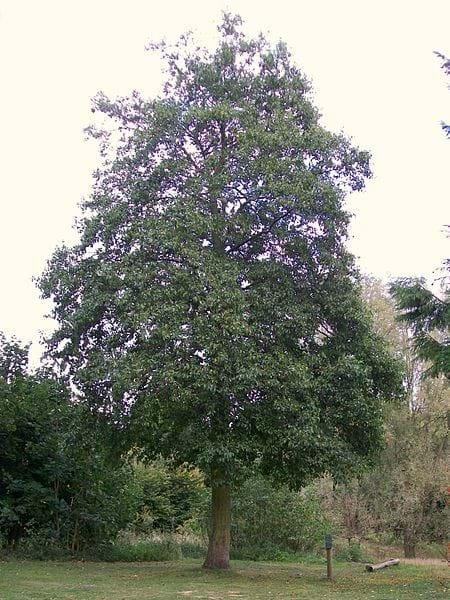
Alnus cordata
Common Name: Italian Alder
Description:
Alnus cordata is a fast-growing, deciduous tree with a broadly conical form, native to southern Italy and Corsica. It is highly valued as a windbreak and pioneer species, especially in maritime or exposed conditions. Known for its resilience, it establishes quickly even on poor soils and di>icult sites.
In field trials (e.g., Cornwall, UK), 5-year- old trees grown from seed have reached 4 metres in height and shown excellent resistance to wind-shaping, even in exposed coastal locations.
Key Features:
• Height: 9m
• Spread: Broadly conical
• Foliage: Deciduous; dark green turning yellow in autumn
• Growth Rate: Fast
• Nitrogen Fixation: Root bacteria fix nitrogen, enriching the surrounding soil
• Canopy: Heavy leaf cover contributes to humus formation
Ecological & Landscape Uses:
• Windbreak for coastal or exposed sites
• Pioneer species for re- establishing woodland on degraded or disused land
• Provides quick shelter for establishing slower-growing, long-lived trees
• Suitable for soil improvement through leaf litter and nitrogen-fixation
• Not competitive in shaded woodlands gradually phases out as canopy closes
Growing Conditions:
• Soil: Performs well in poor, low-fertility soils
• Sunlight: Prefers full sun; does not thrive in deep shade
• Climate: Tolerant of windy, coastal, and challenging sites
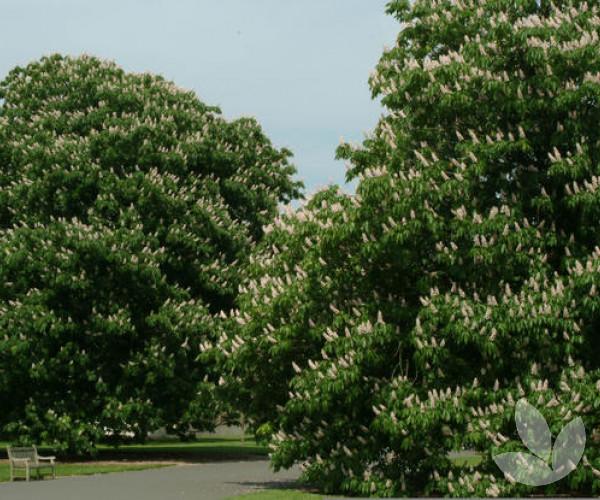
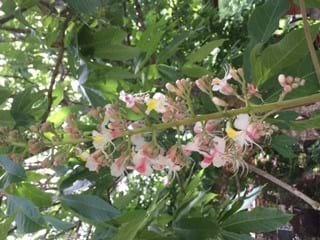
Aesculus indica
Common Name: Indian Horse Chestnut Tree
Description:
A striking ornamental tree native to the Himalayas and a close relative of the common horse chestnut. It features a spreading, oval-shaped crown and glossy, bronze-tinged young leaves that mature to a rich green. In early summer, it produces large, showy white flowers with a subtle pink flush. Compared to the common horse chestnut, its seeds are smaller.
Key Features:
• Mature Size: 8m tall × 5m wide
• Foliage: Deciduous
• Form: Oval
• Flowers: White with a pink tinge, early summer
• Leaves: Glossy, emerge bronze
Landscape Uses:
• Excellent as a specimen tree in gardens and parks
• Ornamental in temperate climates
• Adds early summer interest with its floral display
Growing Conditions:
• Sunlight: Prefers a sunny position
• Climate: Suitable for colder climates; tolerant of frost and light snow
• Soil: Performs well in a variety of well- drained soils
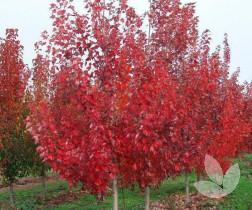
Acer rubrum 'Autumn Red'
Common Name: Canadian Maple Tree
(also known as 'October Glory' or 'April Splendour')
Description:
Acer rubrum 'Autumn Red' is a widely planted deciduous tree in North America, admired for its vibrant autumn colour and attractive form. When young, the tree has a V-shaped structure with ascending branches, eventually maturing into a broad, rounded canopy.
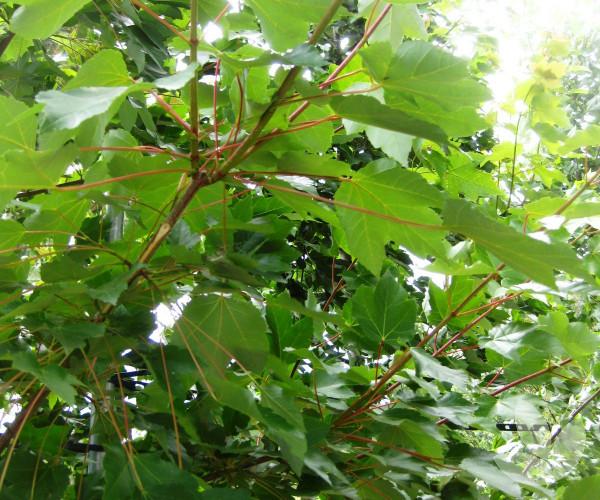
This variety stands out with its brilliant autumn foliage, transitioning from deep green to bright orange and lipstick red later than many other maples. Remarkably, many parts of the tree including the flowers, twigs, and seeds exhibit varying shades of red, adding seasonal interest even outside of autumn.
Key Features:
• Mature Size: 13 m tall x 9 m wide
• Foliage: Deciduous; green leaves turning bright orange to deep red in autumn
• Form: V-shaped when young, maturing to rounded canopy
• Other Features: Red flowers, twigs, and seeds
Landscape Uses:
• Ideal specimen or feature tree for parks, avenues, and larger gardens
• Excellent for autumn colour displays
• Well-suited to urban planting due to its adaptability
Growing Conditions:
• Light: Full sun to part shade
• Soil: Tolerates a wide range of conditions but prefers humus-rich, well- drained soil
• Moisture: Tolerates both dry and wet soils once established
Acer pseudoplatanus
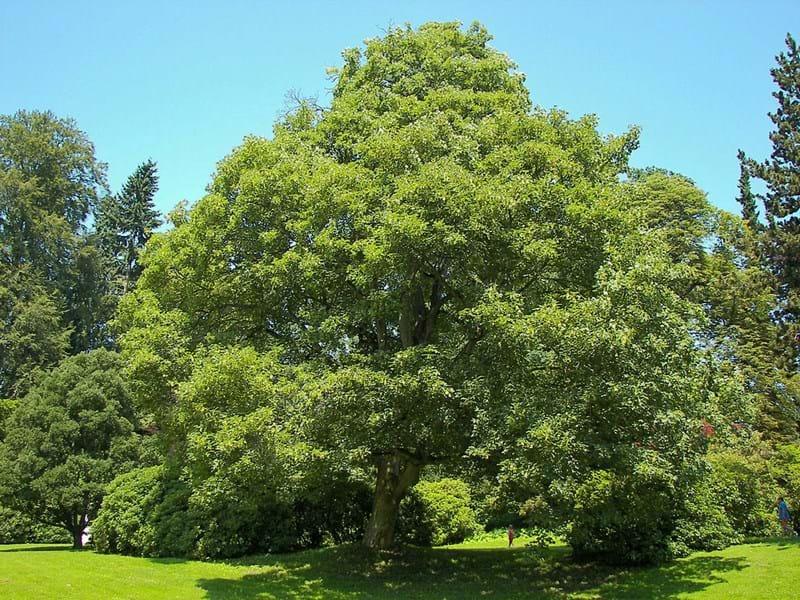
Common Name: Sycamore Maple
Description:
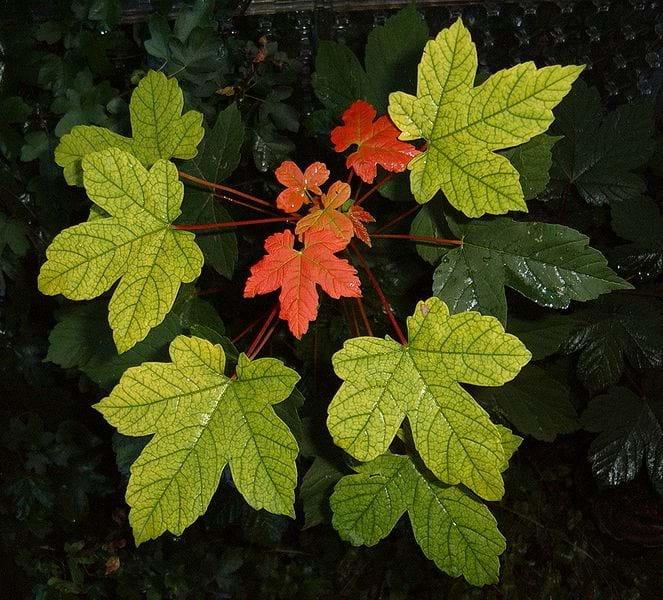
Acer pseudoplatanus is a large, fast-growing, deciduous tree native to northwestern and central Europe, Italy, and parts of western Asia. It features a broadly columnar form and dark green, lobed leaves that turn yellow in autumn. This species is widely planted as a street tree, particularly across Europe, and is well-tolerant of salt spray, pollution, and varied soils.
It is known for its ecological versatility, often self-seeding freely and colonising disturbed or disused land. This resilience makes it an excellent pioneer species for reforestation and shelterbelt planting in exposed or maritime areas. Over time, in established woodland, it tends to be replaced by native species but remains a useful early successional tree.
Key Features:
• Height: 25–30m
• Spread: Broadly columnar
• Foliage: Deciduous; dark green turning yellow in autumn
• Growth Rate: Fast
• Form: Upright, robust canopy
• Native Range: NW to Central Europe, Italy, Western Asia
Landscape & Practical Uses:
• Street tree or urban planting
• Windbreaks and shelterbelts, especially in coastal and exposed sites
• Pioneer species for woodland regeneration
• Leaves can be used to preserve apples and root crops
• Often the first species to colonise cleared or disused land
Growing Conditions:
• Tolerates: Salt, poor soils, wind, pollution
• Self-seeds freely – may require management in some landscapes
Acer palmatum
Common Name: Japanese Maple
Description:
Acer palmatum is a small, broadly spreading deciduous tree native to Japan, North Korea, South Korea, China, eastern Mongolia, and southeast Russia. Widely cultivated around the world, it is prized for its delicate, ornamental foliage and brilliant seasonal colour. Its green leaves turn vibrant shades of red and orange in autumn, making it a standout feature in any garden.
Key Features:
• Height: Up to 6m
• Spread: Broad, spreading canopy
• Foliage: Deciduous; green leaves turning red/orange in autumn
• Origin: East Asia (Japan, Korea, China, Mongolia, Russia)
Landscape Uses:
• Ideal for small gardens
• Attractive street tree
• Suitable for containers (ensure containers are large and well- draining)
• Excellent for Japanese or woodland-style gardens
Growing Conditions:
• Light: Prefers part shade or afternoon shade
• Avoid: Exposure to harsh afternoon sun (north or west-facing), and hot summer winds
• Soil: Thrives in well- drained, organic-rich soil
• Maintenance: Protect foliage from wind and excessive sun to prevent leaf scorch
Acer negundo ‘Sensation’
Common Name:
Sensation Box Elder Tree
(Maple Tree)
Description:
Acer negundo ‘Sensation’ is a small to medium-sized deciduous maple known for its symmetrical, upright V-shaped form. New foliage emerges with green to reddish tones, maturing to a brilliant autumn display of red, orange, and yellow. The bark is greyishbrown with contrasting green new growth, adding seasonal interest.
Key Features:
• Mature Size: 12m tall × 10m wide
• Foliage: Deciduous
• Form: Upright, V-shaped canopy
• Bark: Greyish-brown with green young branches
• Autumn Colour: Bright red, orange, and yellow
• Sterility: This cultivar is sterile and does not self-seed like typical Acer negundo
Landscape Uses:
• Excellent for avenue plantings
• Ideal for large residential gardens
• Provides strong seasonal colour and structure
Growing Conditions:
• Sunlight: Prefers full sun
• Soil: Tolerates a range of conditions moderately tolerant of both wet and dry soils
• Climate Tolerance: Very hardy; even suitable for coastal areas
Acer buergerianum
Common Name: Trident Maple Tree
Description:
Acer buergerianum is a small deciduous tree with an elegant structure, featuring ascending branches in its youth and maturing into a rounded canopy. The leaves are small, tri-lobed, and triangular, emerging bronzy-red in spring, turning dark green in summer, and transforming to vibrant shades of yellow, orange, and red in autumn. Its pale grey-brown to orange bark is scaly or flaky, o@ering additional seasonal interest. Flowers are green and inconspicuous.
Key Features:
• Mature Size: 9m tall × 6m wide
• Foliage: Deciduous
• Form: Upright with ascending branches
• Autumn Colour: Yellow, orange, and red
• Bark: Pale grey-brown/orange, scaly or flaky
• Flowers: Green, inconspicuous
Landscape Uses:
• Ideal for small landscapes and domestic gardens
• Excellent street tree when grown with a strong central leader
• Great autumn colour
• Suitable for urban plantings when properly trained
Cultivation Notes:
• Formative pruning is essential to develop a single central leader and avoid low branching
• Preferred Form: Purchase trees that have been trained as single-leader specimens
• Soil: Prefers humus-rich, well- drained soil
• Watering: Drought-tolerant but benefits from summer irrigation in dry regions (e.g., south- eastern Australia)
• Climate: Should be protected from hot winds
Note:
In Australia, nursery-grown Trident Maples often branch low and lack a defined central leader. To ensure good form and structure, formative pruning and careful selection at planting are essential
Cornus capitata
Common Names: Himalayan Flowering Dogwood
Description:
Cornus capitata is a striking evergreen, bushy tree or large shrub native to the lowelevation woodlands of the Himalayas, including regions of China, India, and surrounding countries. It has naturalised in parts of Australia and New Zealand, and is widely cultivated elsewhere as an ornamental tree.
This species produces gray-green leaves with a pale, fuzzy underside and showy white flowers in summer. After flowering, it forms red, strawberry-like aggregate fruits, 2–3 cm across. These are edible but may be somewhat bitter. Several varieties and hybrids are available for ornamental cultivation.
Key Features:
• Height: Typically 4m (can grow up to 12m in some regions)
• Spread: Bushy, evergreen form
• Foliage: Gray-green, evergreen; pale and fuzzy underneath
• Flowers: White, summer blooming
• Fruit: Red, fused aggregate fruits (strawberry-like), 2–3 cm across; edible but can be bitter
• Form: Tree or large shrub
Landscape Uses:
• Ornamental feature for gardens and landscapes
• Evergreen structure with seasonal interest
• Suitable for mild climates with adequate moisture
• Adds tropical or woodland character to plantings
Growing Conditions:
• Light: Prefers full sun to part shade
• Soil: Moist, well- drained soil preferred
• Climate: Performs best in temperate to subtropical climates
• Maintenance: Low; occasional pruning for shape
years est. 1985
Thank you to a very generous parent who has supplied the trees in this catalogue.
At $10 - $20 each these will not last long!
All trees are in pots and ready to plant. Get in early - Opens at 10am!
Mansfield Steiner School 91 Highett St Mansfield