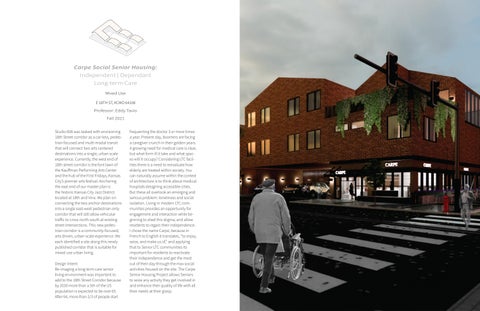
Carpe Social Senior Housing: Independent | Dependant Long-term Care
Mixed Use
E 18TH ST, KCMO 64108
Professor: Eddy Tavio Fall 2021
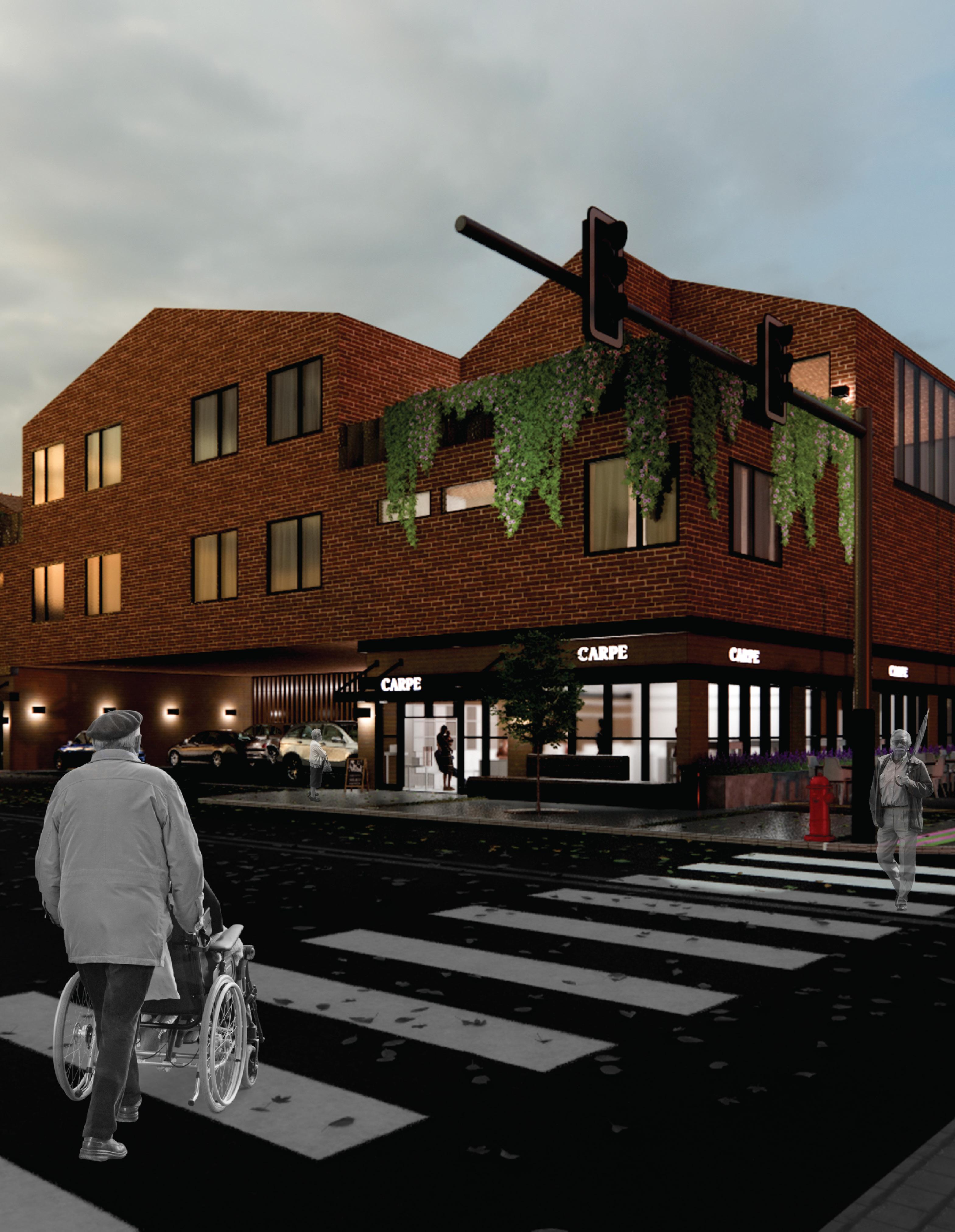
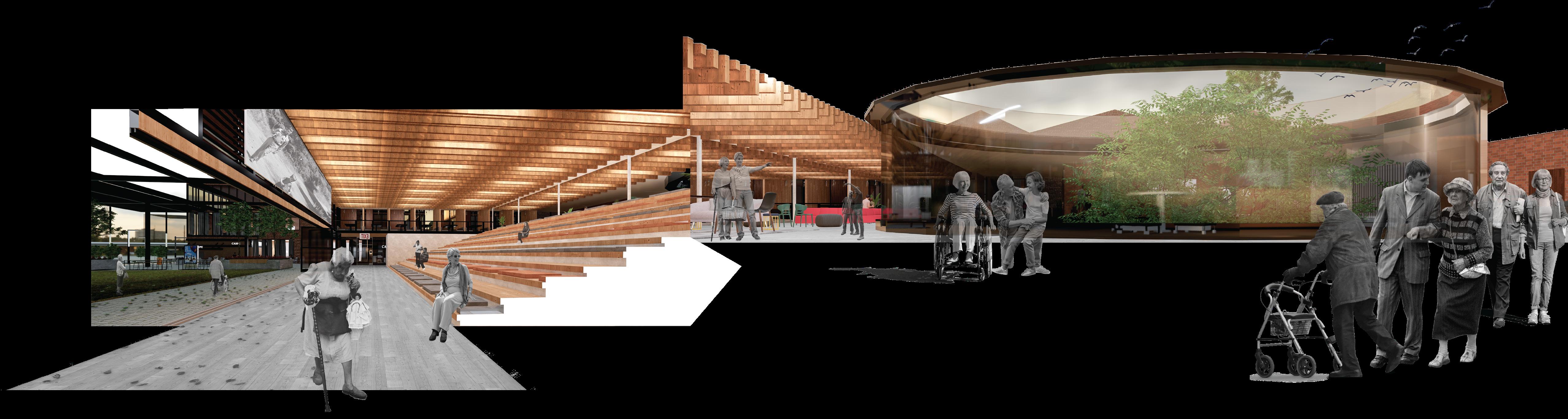
Studio 608 was tasked with envisioning 18th Street corridor as a car-less, pedestrian focused and multi-modal transit that will connect two arts centered destinations into a single, urban scale experience. Currently, the west end of 18th street corridor is the font lawn of the Kauffman Performing Arts Center and the hub of the First Fridays, Kansas City’s premier arts festival. Anchoring the east end of our master plan is the historic Kansas City Jazz District located at 18th and Vine. We plan on connecting the two anchor destinations into a single east-west pedestrian-only corridor that will still allow vehicular traffic to cross north-south at existing street intersections. This new pedestrian corridor is a community-focused, arts driven, urban-scale experience. We each identified a site along this newly published corridor that is suitable for mixed-use urban living.
Design Intent: Re-imaging a long term care senior living environment was important to add to the 18th Street Corridor because by 2030 more than a 5th of the US population is expected to be over 65. After 64, more than 2/3 of people start
frequenting the doctor 3 or more times a year. Present day, boomers are facing a caregiver crunch in their golden years.
A growing need for medical care is clear, but what form ill it take and what spaces will it occupy? Considering LTC facilities there is a need to reevaluate how elderly are treated within society. You can naturally assume within the context of architecture is to think about medical hospitals designing accessible cities. But these all overlook an emerging and serious problem: loneliness and social isolation. Living in modern LTC communities provides an opportunity for engagement and interaction while beginning to shed this stigma, and allow residents to regain their independence.
I chose the name Carpe, because in French to English it translates, “to enjoy, seize, and make us of,” and applying that to Senior LTC communities its important for residents to reactivate their independence and get the most out of their day through the max social activities housed on the site. The Carpe Senior Housing Project allows Seniors to seize any activity they get involved in and enhance their quality of life with all their needs at their grasp.
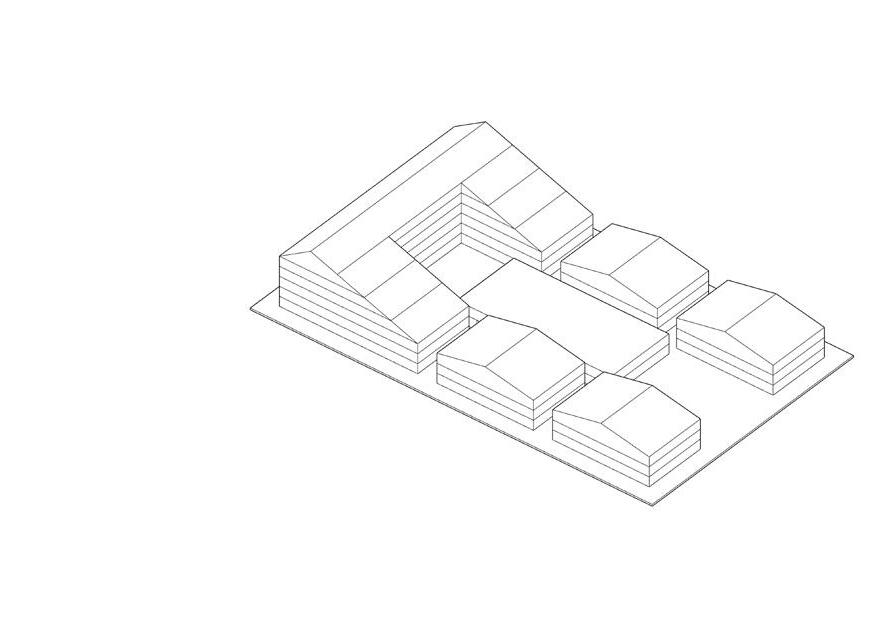
01 SELECT
Prime gateway location in need of senior healthcare
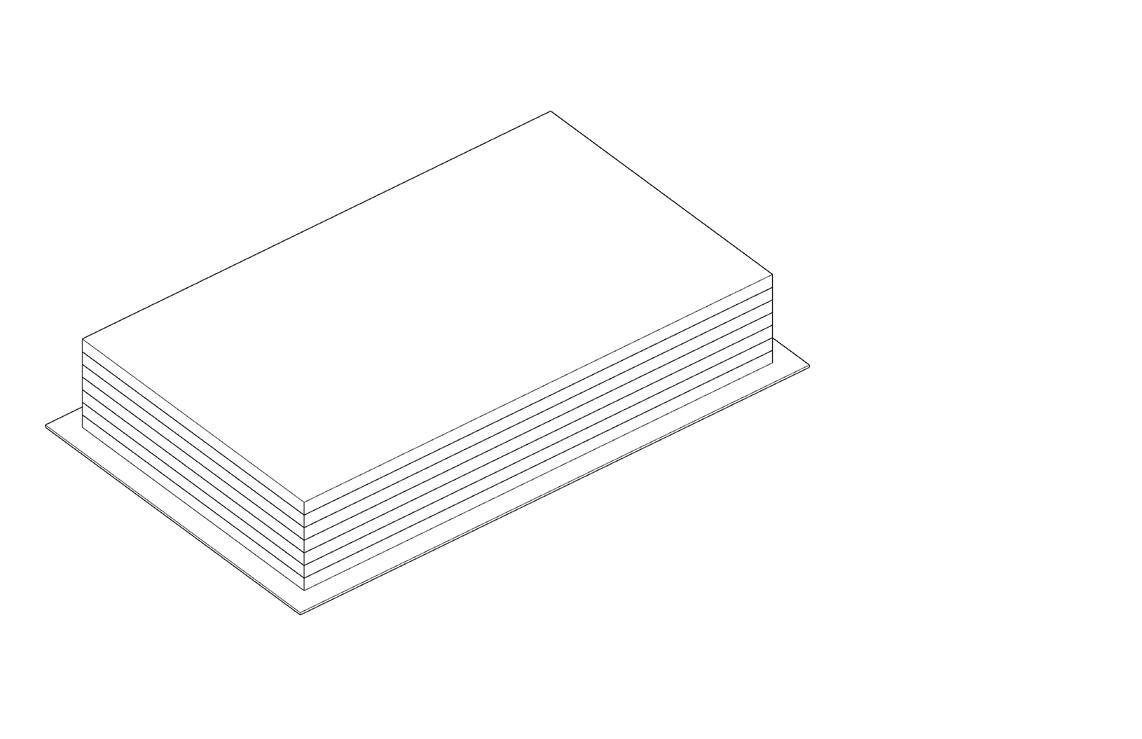
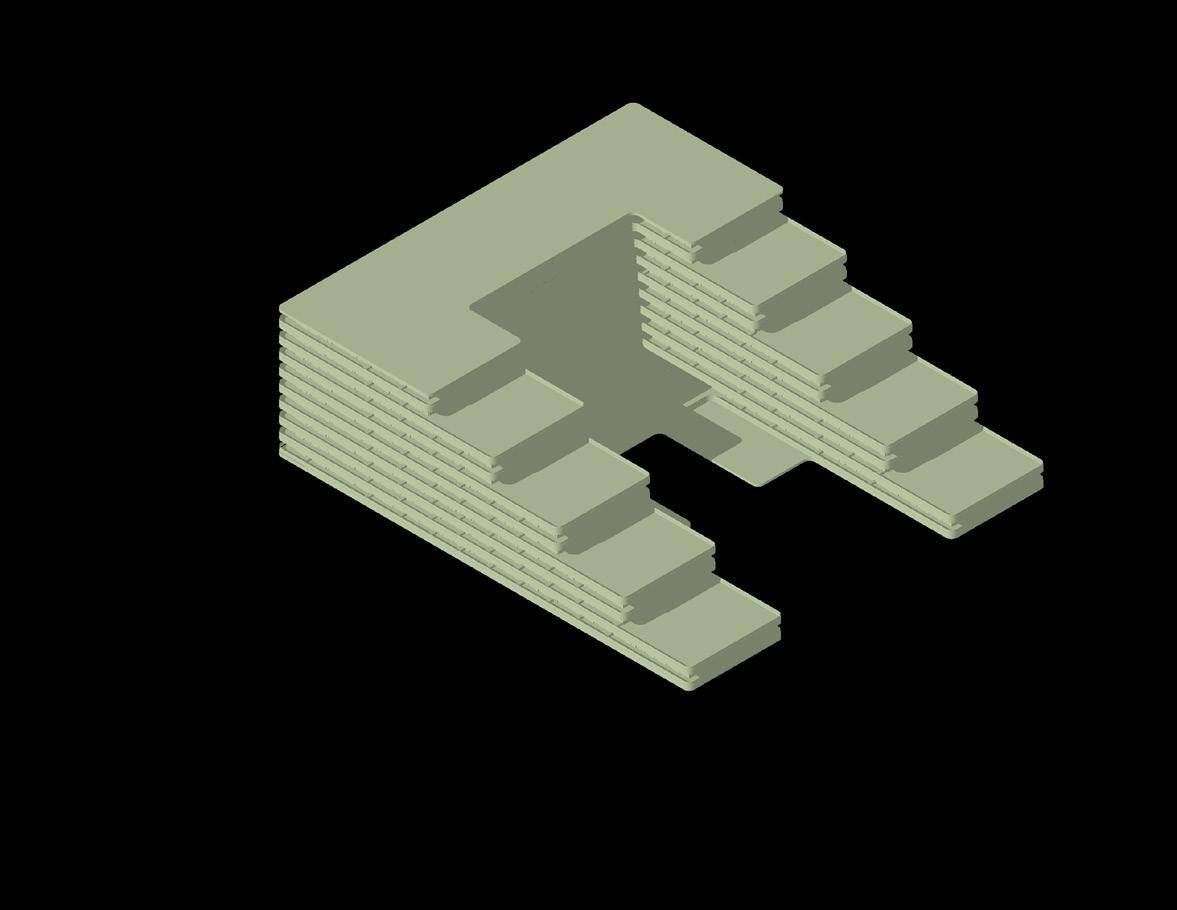
02 CARVE From building envelope




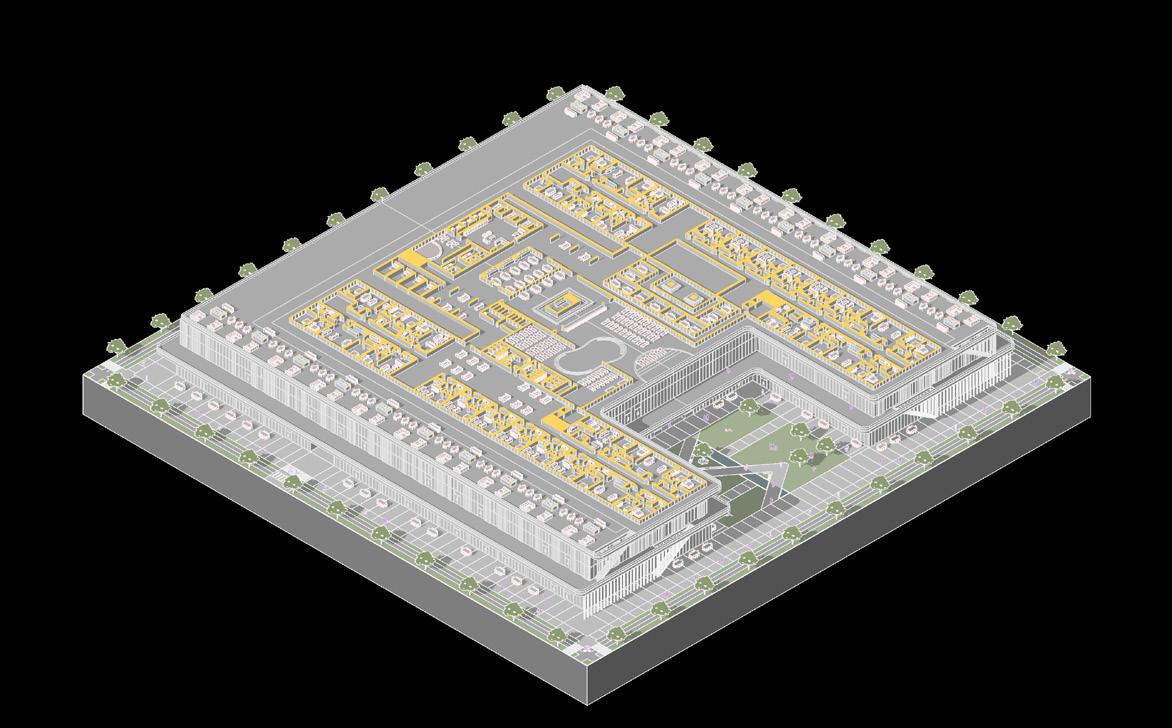
03 ACTIVATE
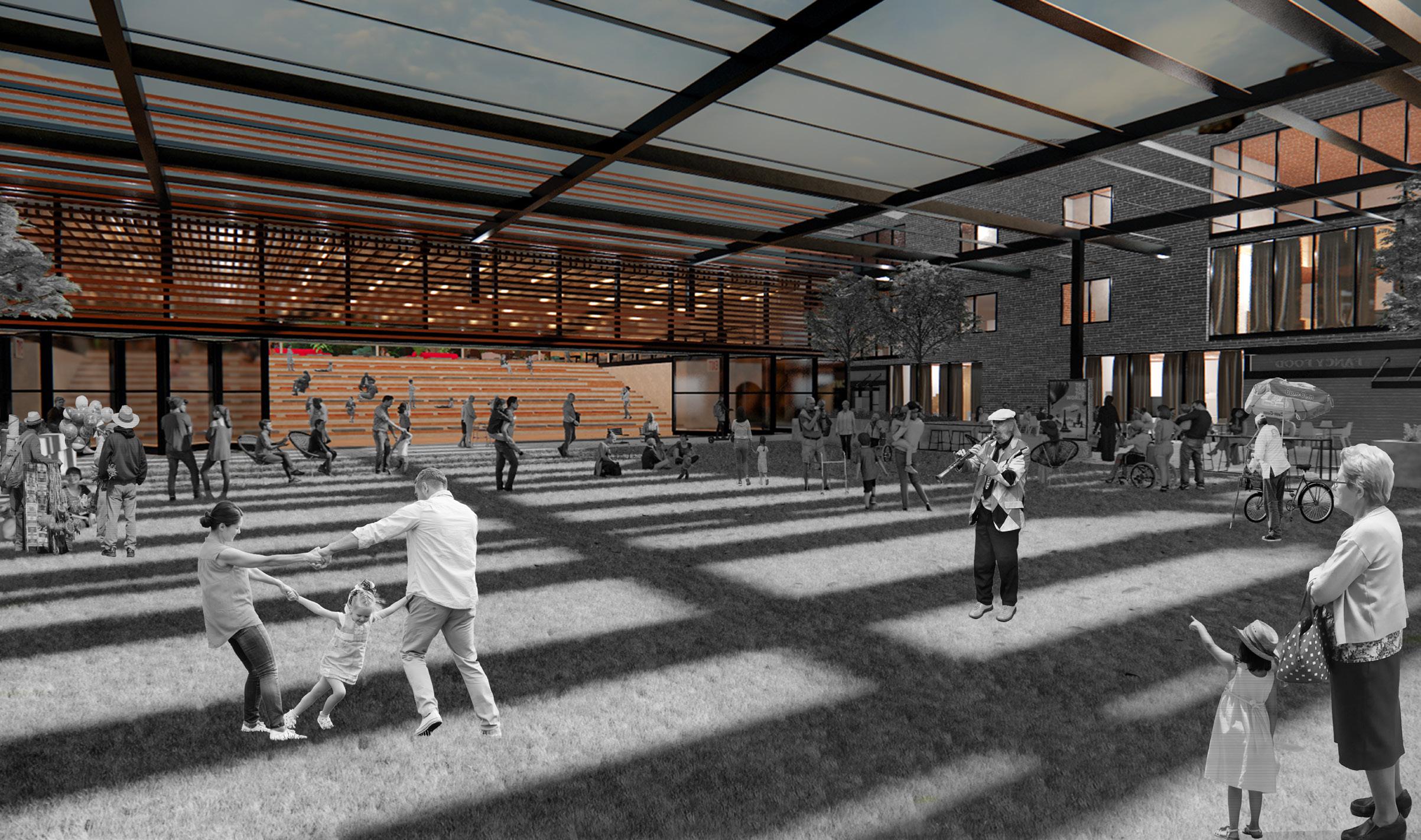
The street and courtyard with retail, food, and entertainment
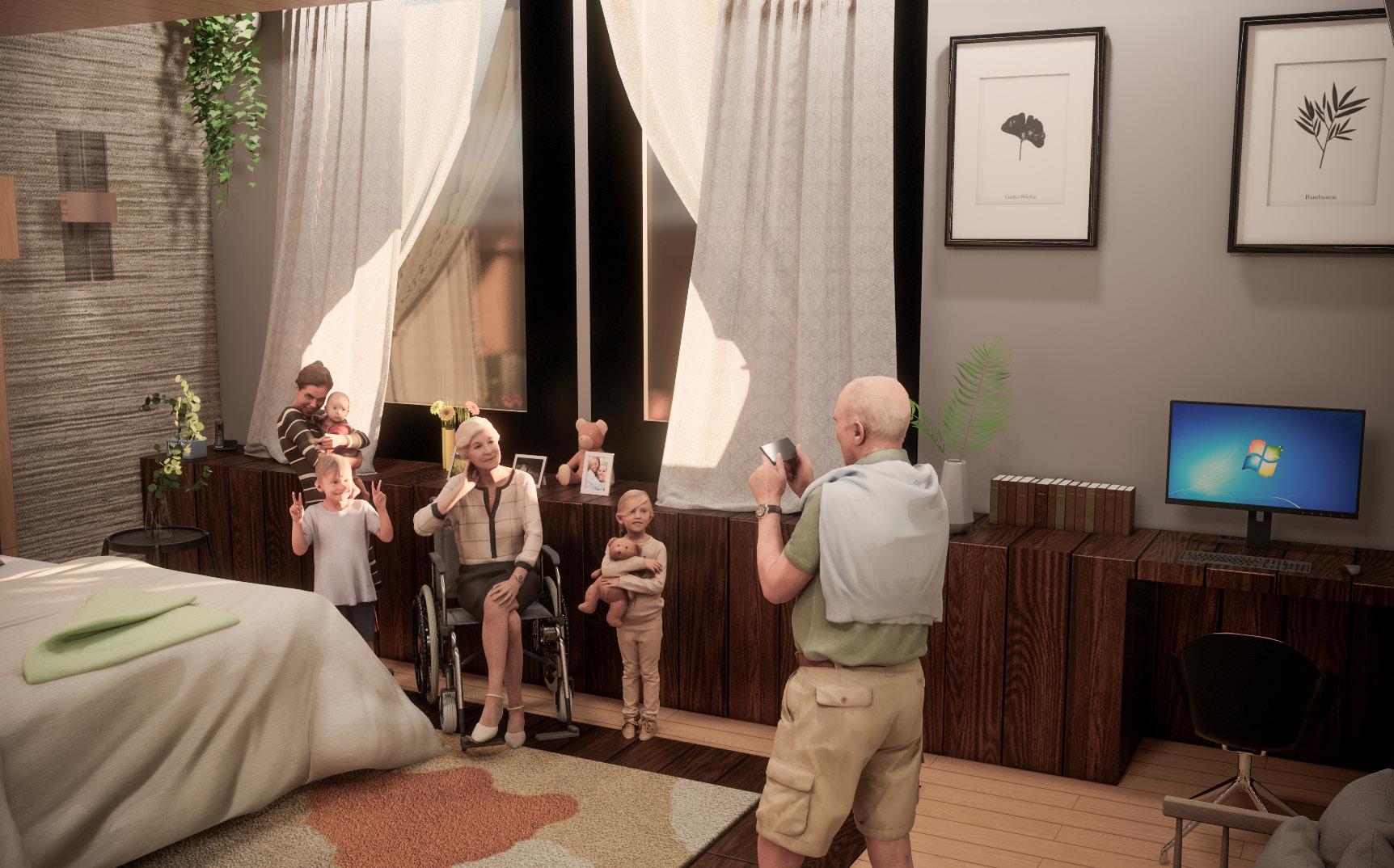
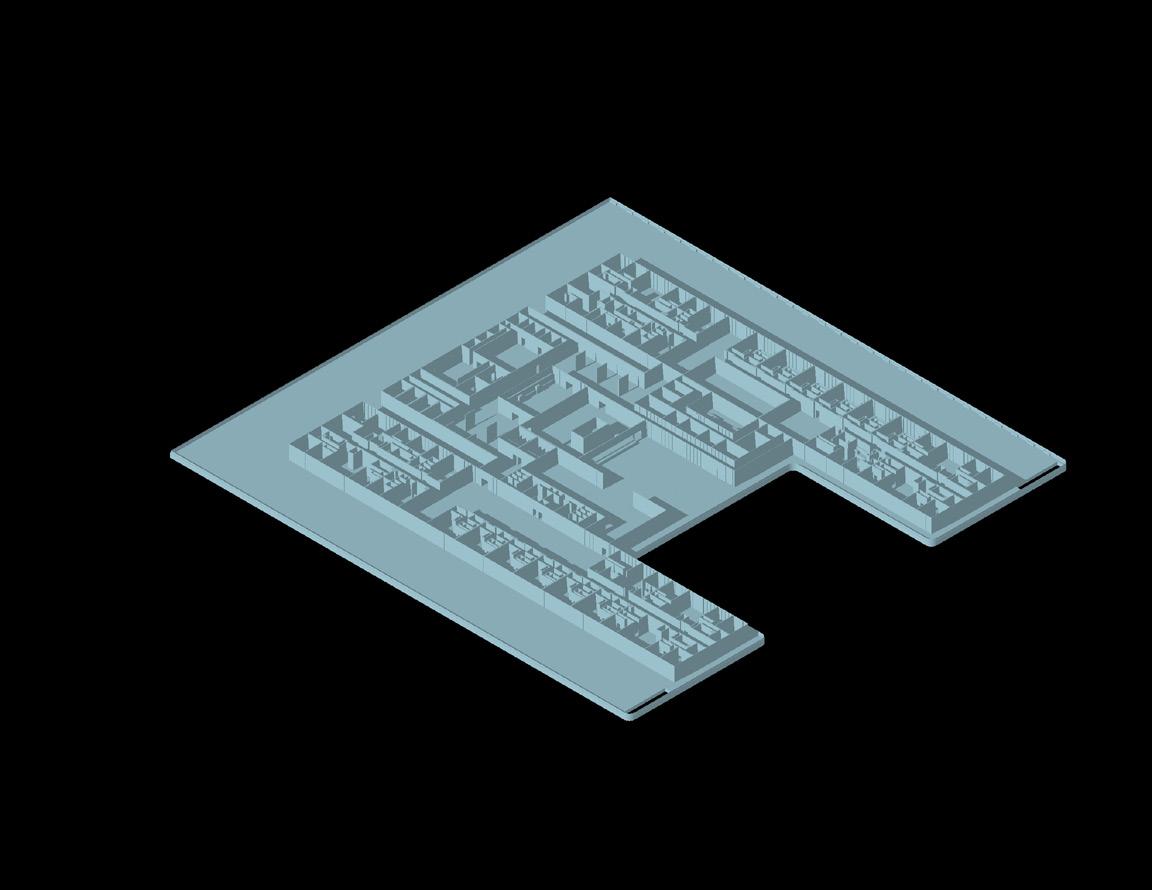
04 CREATE Residential design for LTC facility | non-institutional
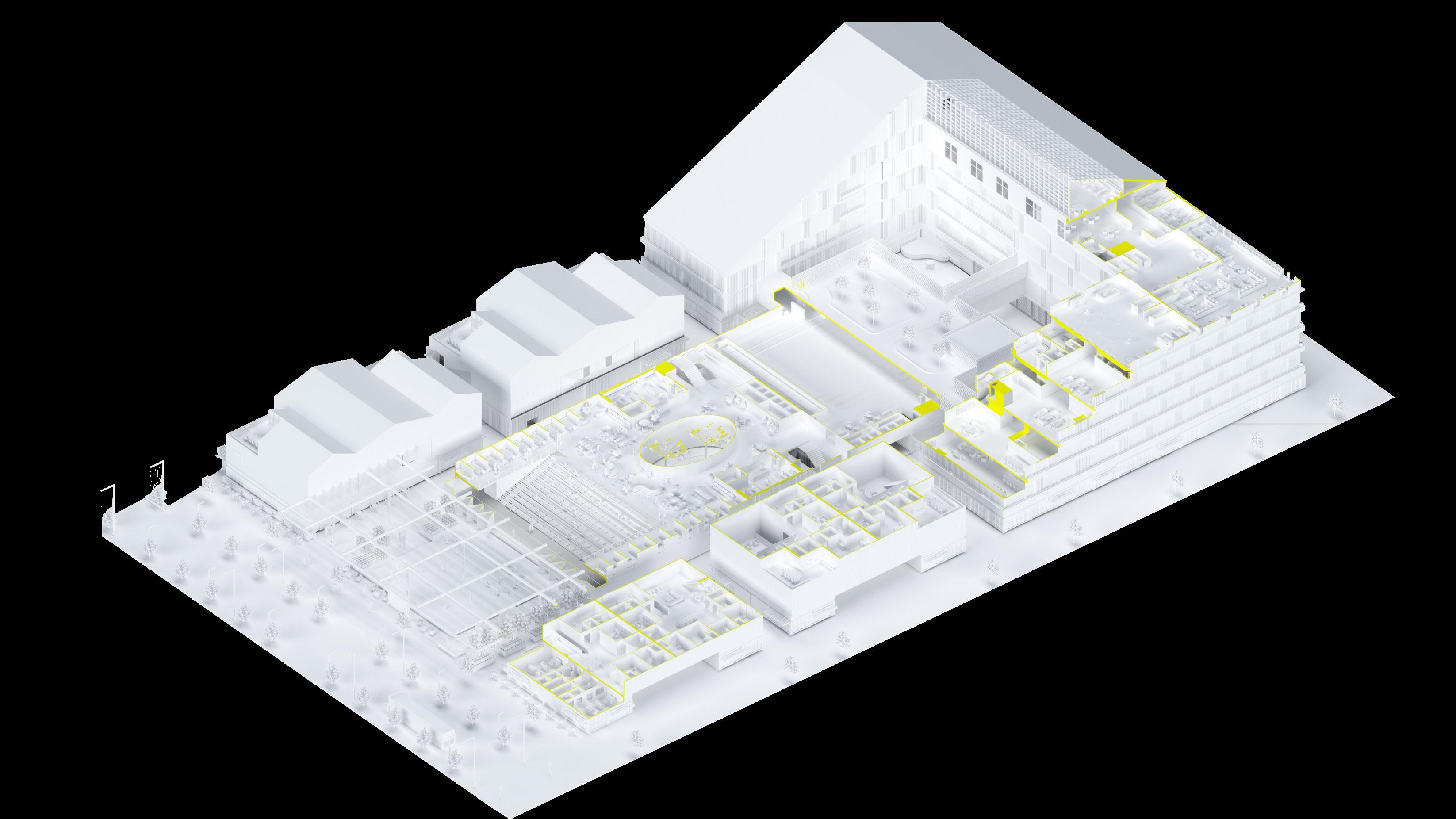
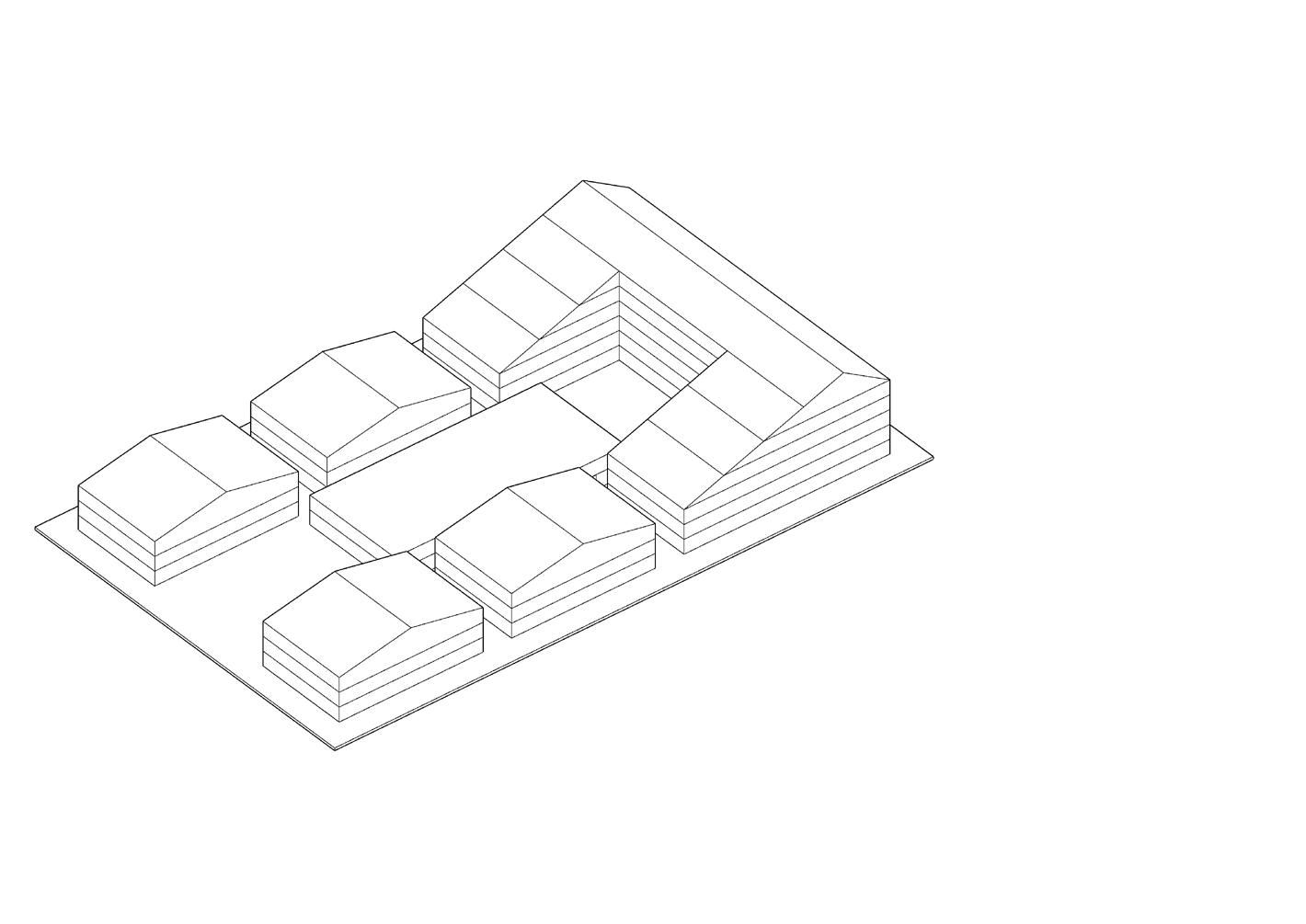
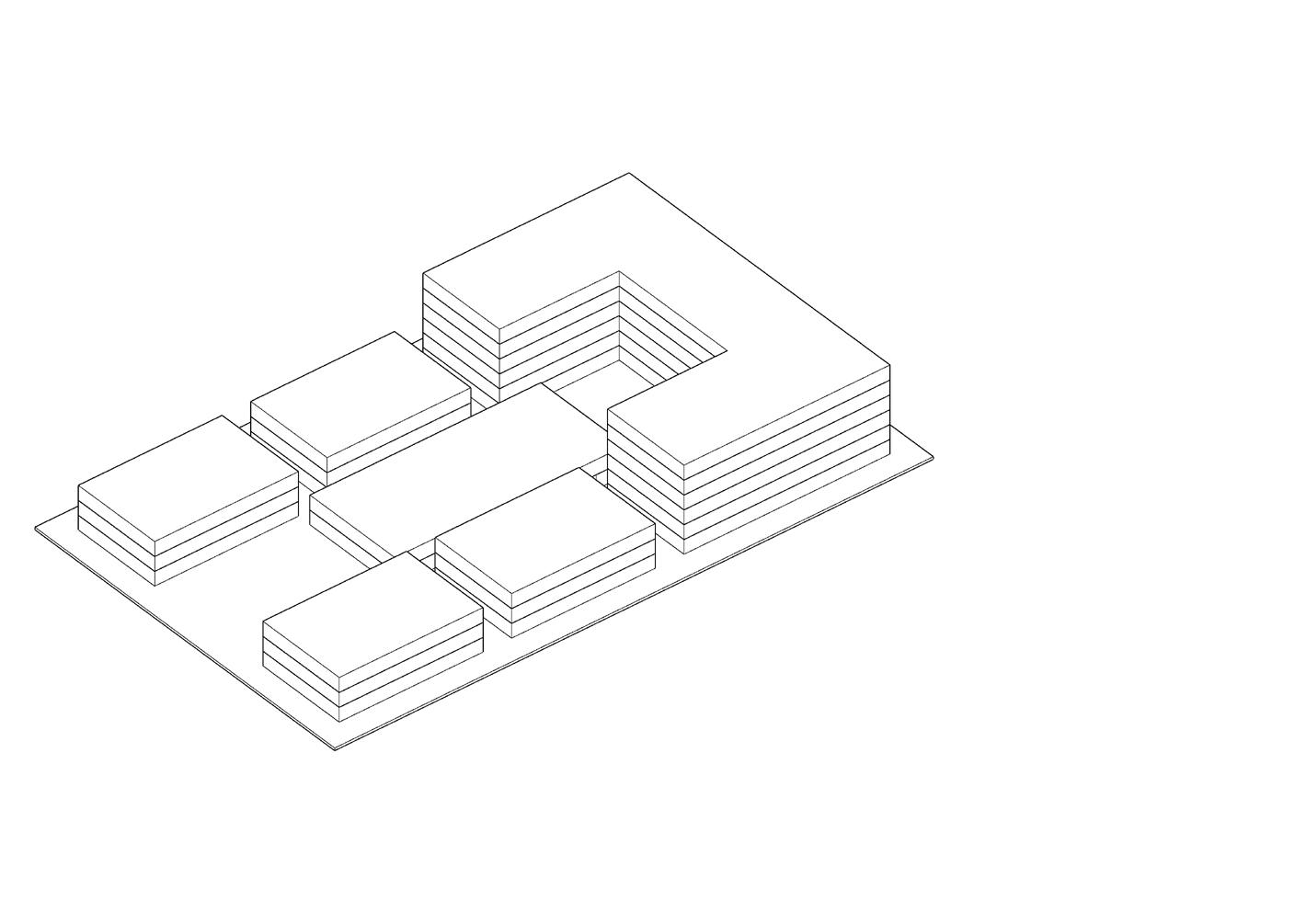
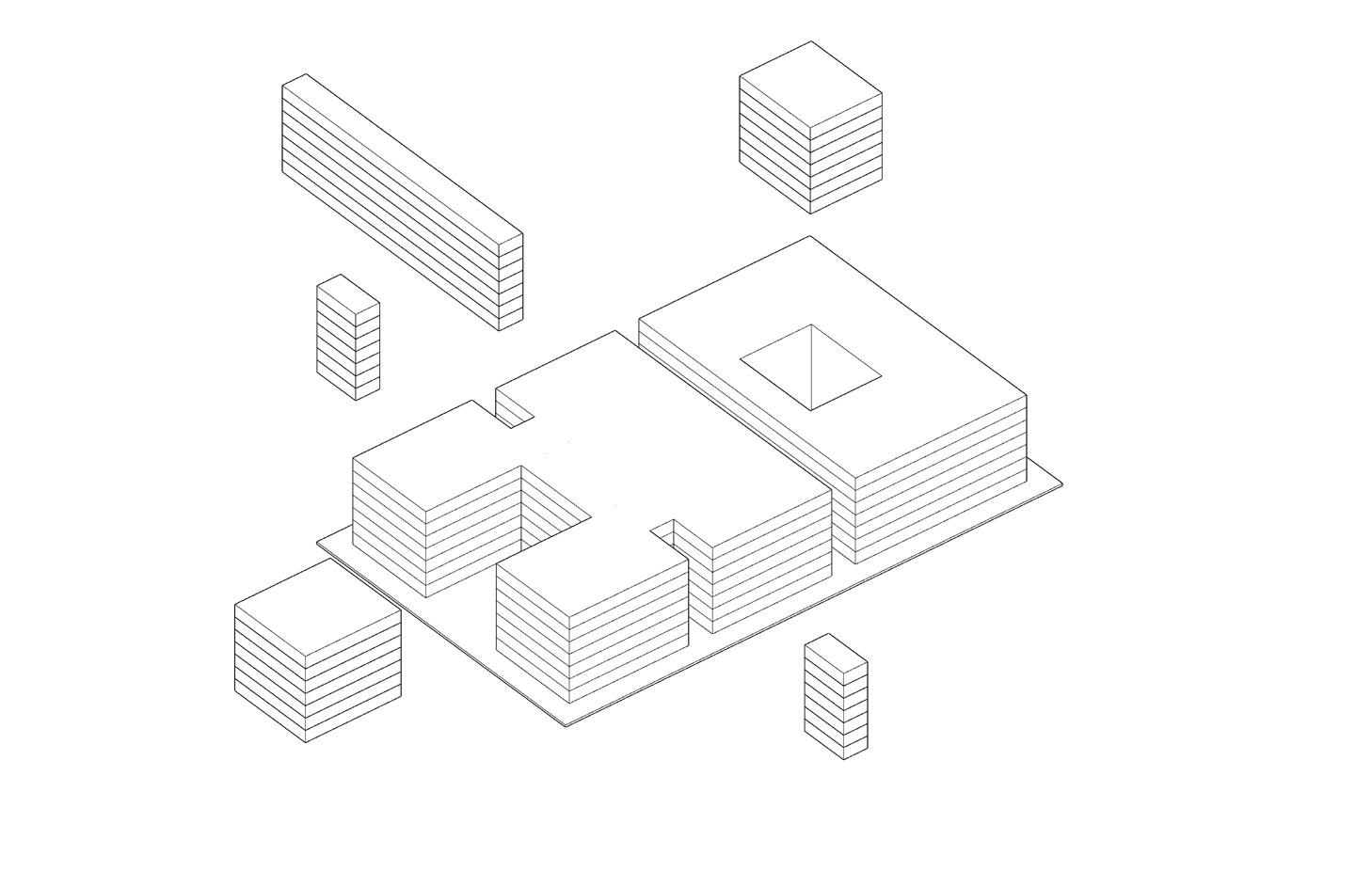
05 INVITE Passageway and social interaction
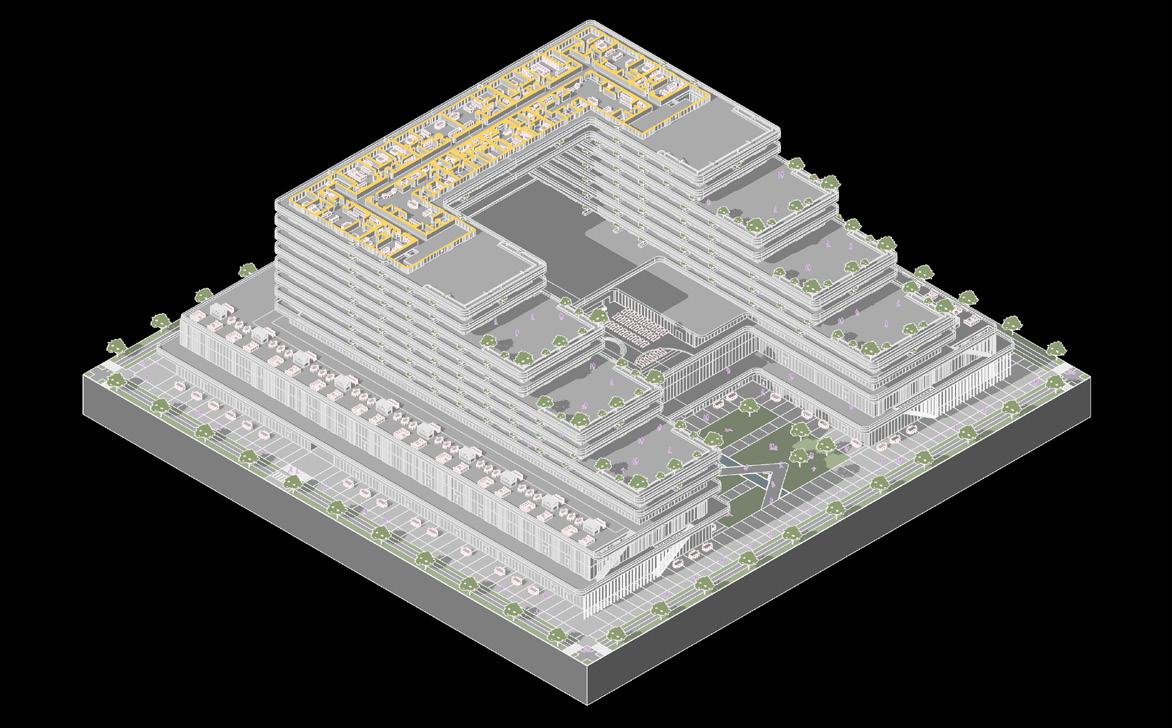
DEPENDANT LTC SENIOR LIVING
INDEPENDENT SENIOR CO-HOUSING
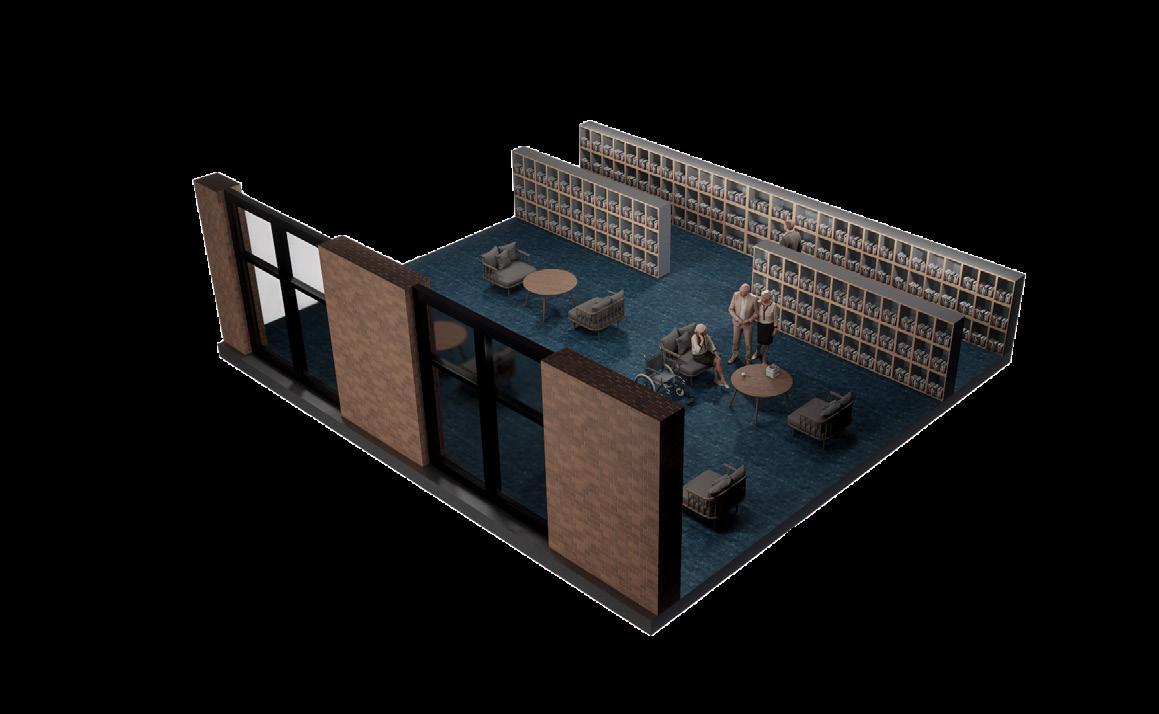
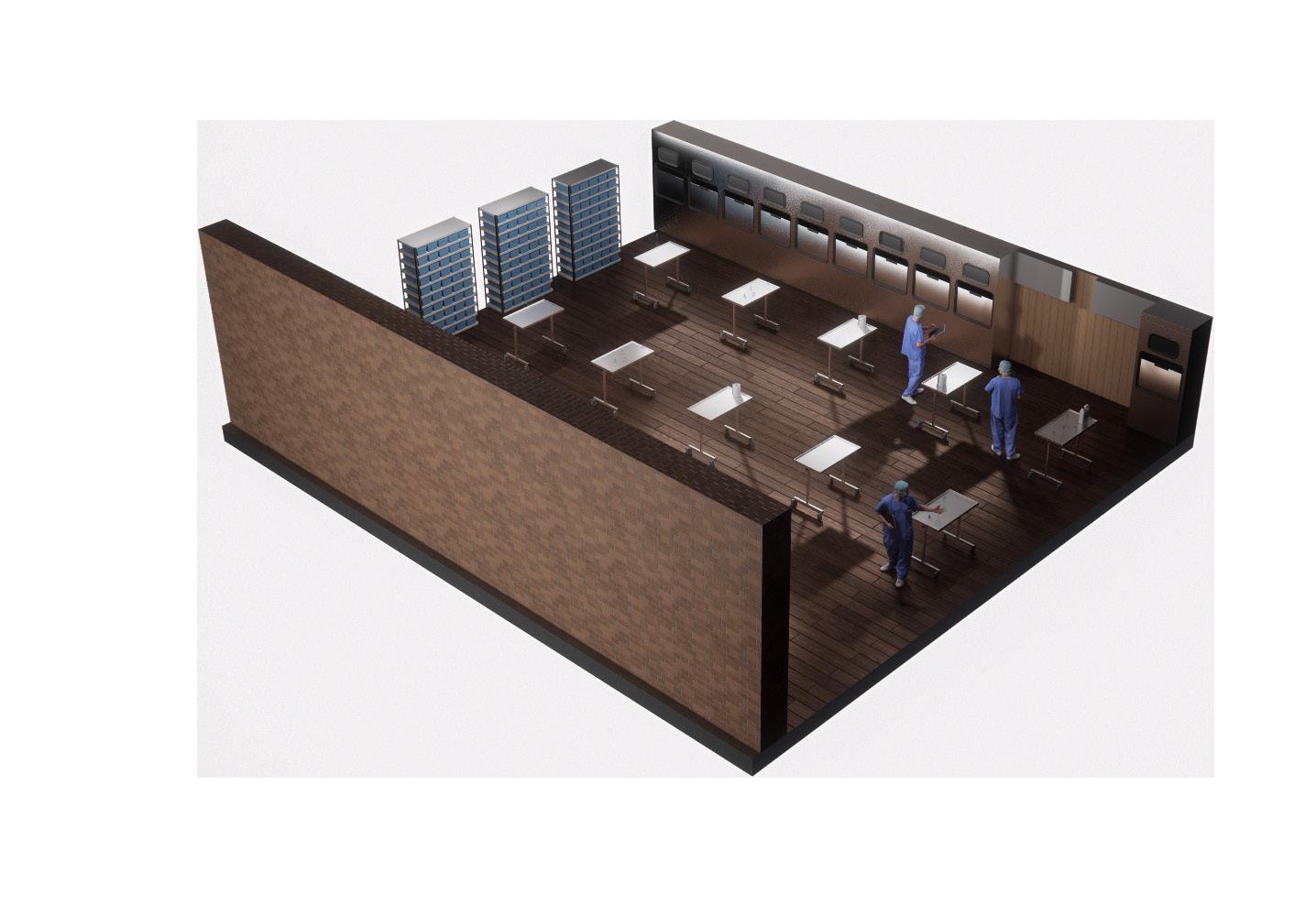
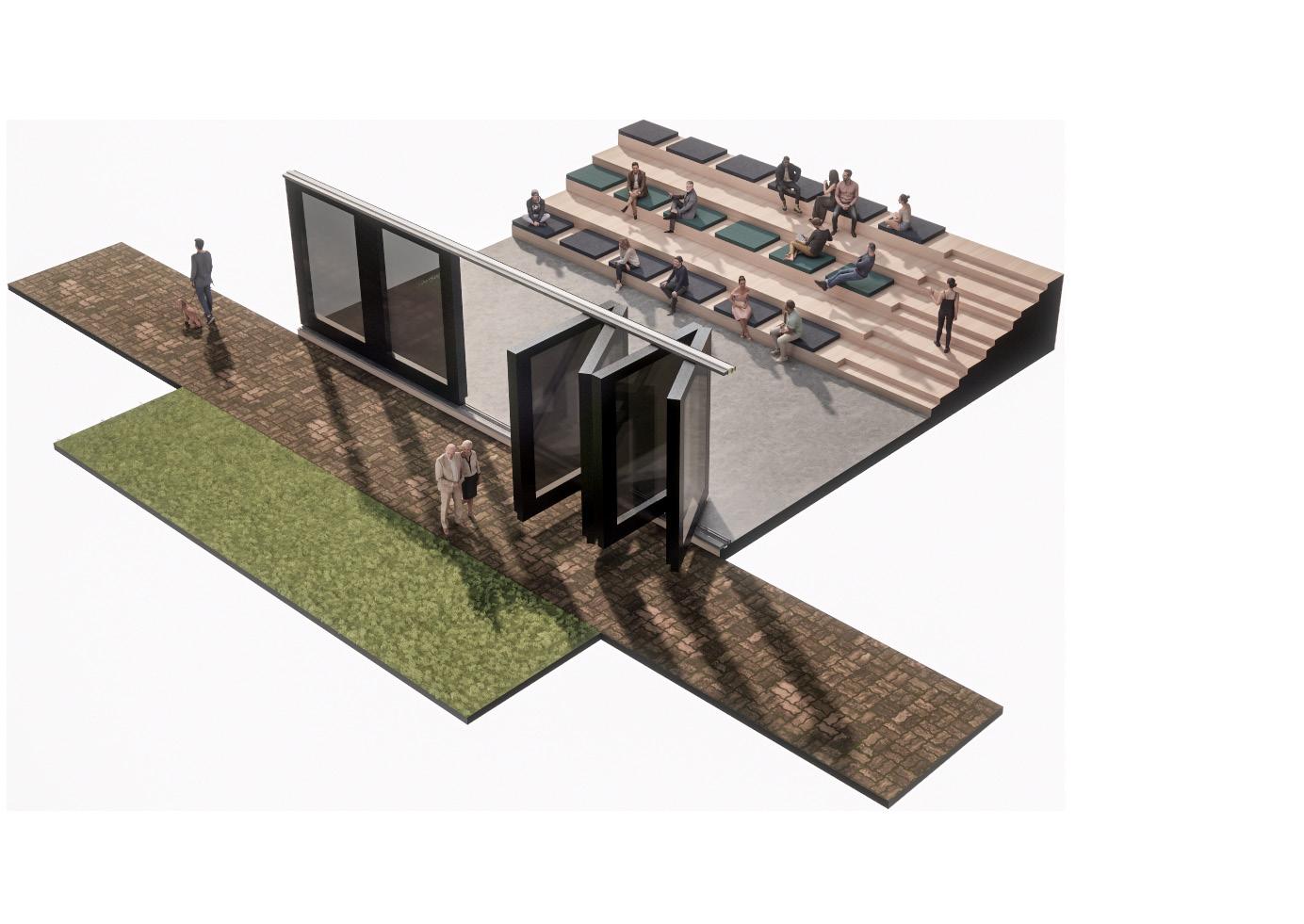
AXONOMETRIC SECTION SOCIAL HUB | COMMUNITY CENTER

PRIVATE
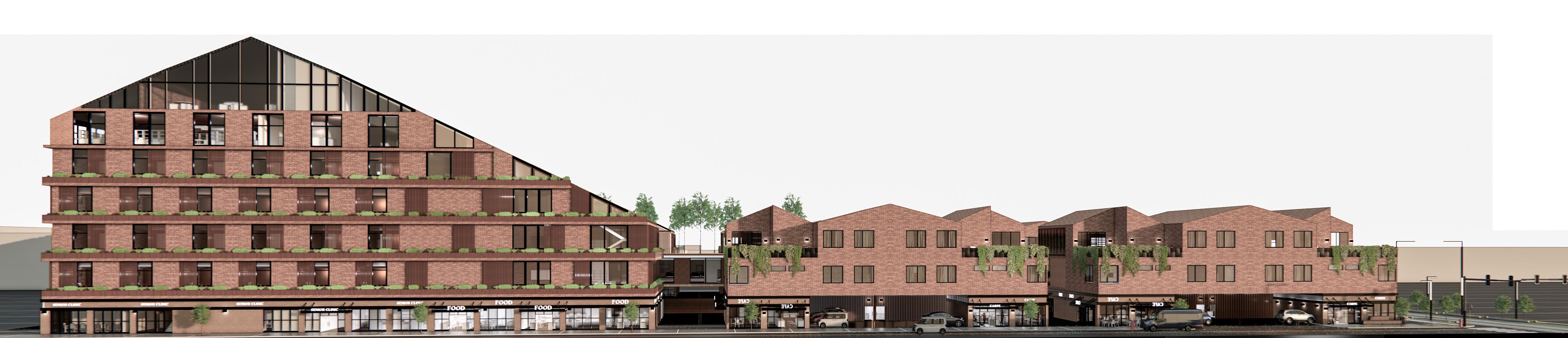
PUBLIC North Elevation E 18TH ST East Elevation Troost Ave
SEMI-PUBLIC
 Indoor Gathering Space
In
Patient Unit Design Outdoor Courtyard “Front Door” of Site
Aspen
School for the Blind
Education
26th & Roslyn Denver, Colorado
Professor: Nilou Vakil
Partner: Trina Mills Spring 2022
In 2015, the CDC claims that approximately 3.22 million people in the United States have vision impairment . Through 2050, the number of people with visual impairments are projected to steadily increase. Universal Design is important to implement in any built environment to accommodate people with different abilities. But how do you prepare and design navigation tools to a visually impaired demographic, that does not always have an environment that supports their autonomy?
Located on 26th and Roslyn in Denver, Colorado, Anchor Center for the Visually impaired, is a school that provides early intervention from birth to five years of age, to enhance the child’s quality of life and prepare them for a world that doesn’t always accommodate their disabilities. My partner,
Trina Mills, and I were tasked with designing a K-5 School for the Blind that compliments the Anchor Center Curriculum and provides an environment for students to meet their full potential in all aspects of their lives. The site is across the street from the Anchor Center and has direct connection for students transitioning from Pre-K to kindergarten with ease. Wayfinding from their previous school to the new one was an important aspect to give the student as much autonomy and confidence when navigating to a new space. A question we hoped to answer by the end of this project was, how can we design with sensitivity for a young demographic with visual impairment, while instilling confidence for them to navigate a world that does not facilitate universal design strategies?
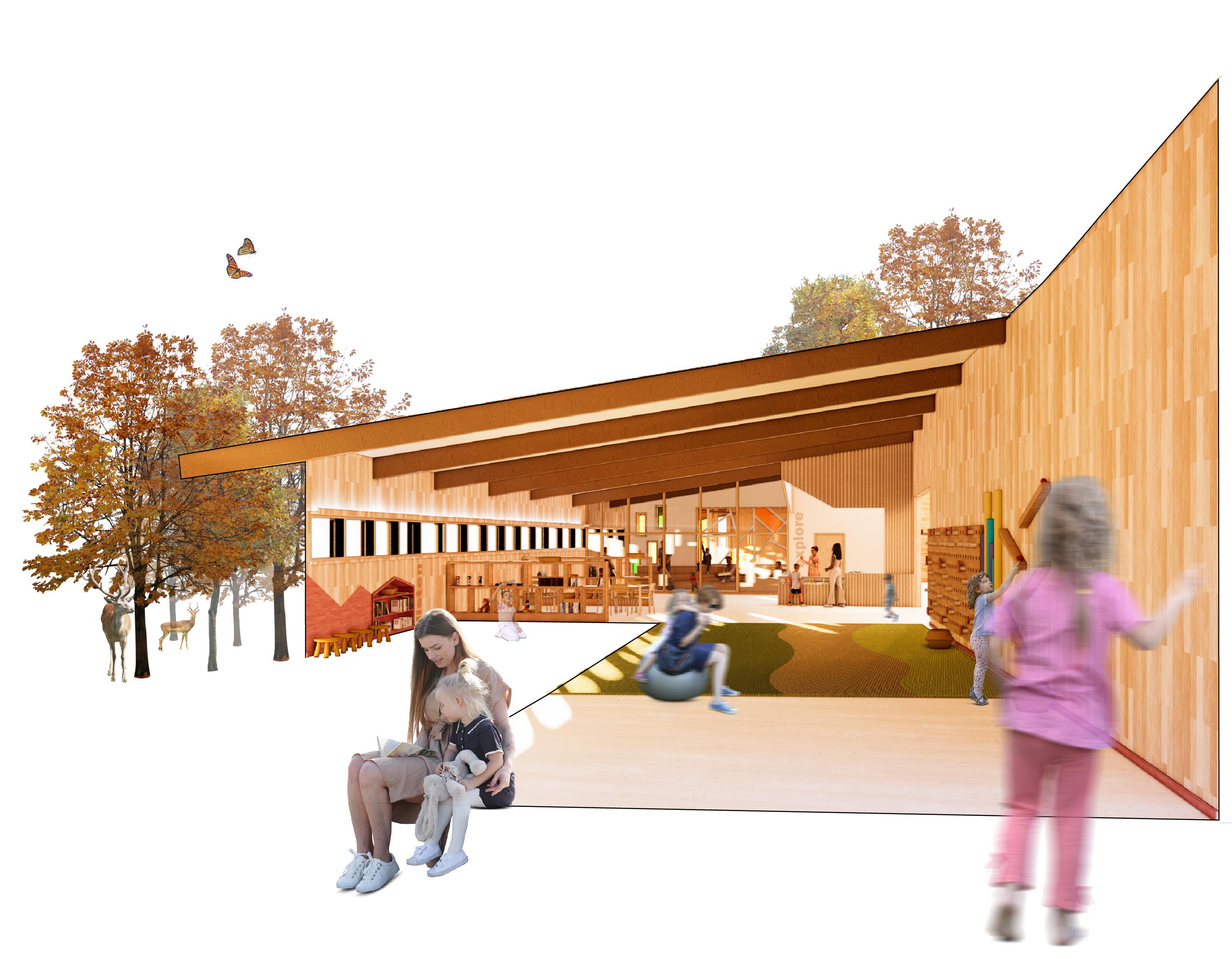
“How can we design with sensitivity for a young demographic with visual impairment, while instilling confidence for them to navigate a world that does not facilitate universal design strategies?”
Library Perspective
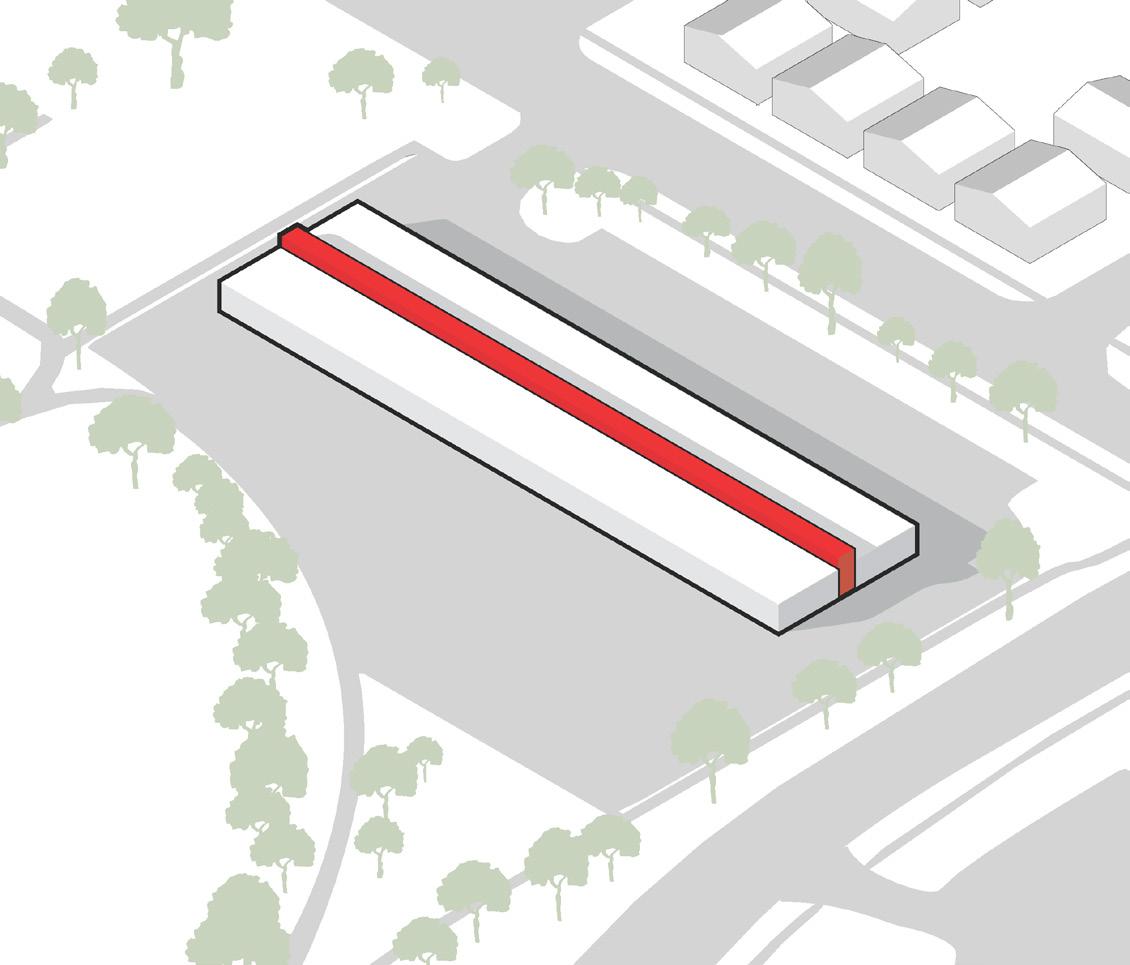
1. CENTRALIZE SPINE
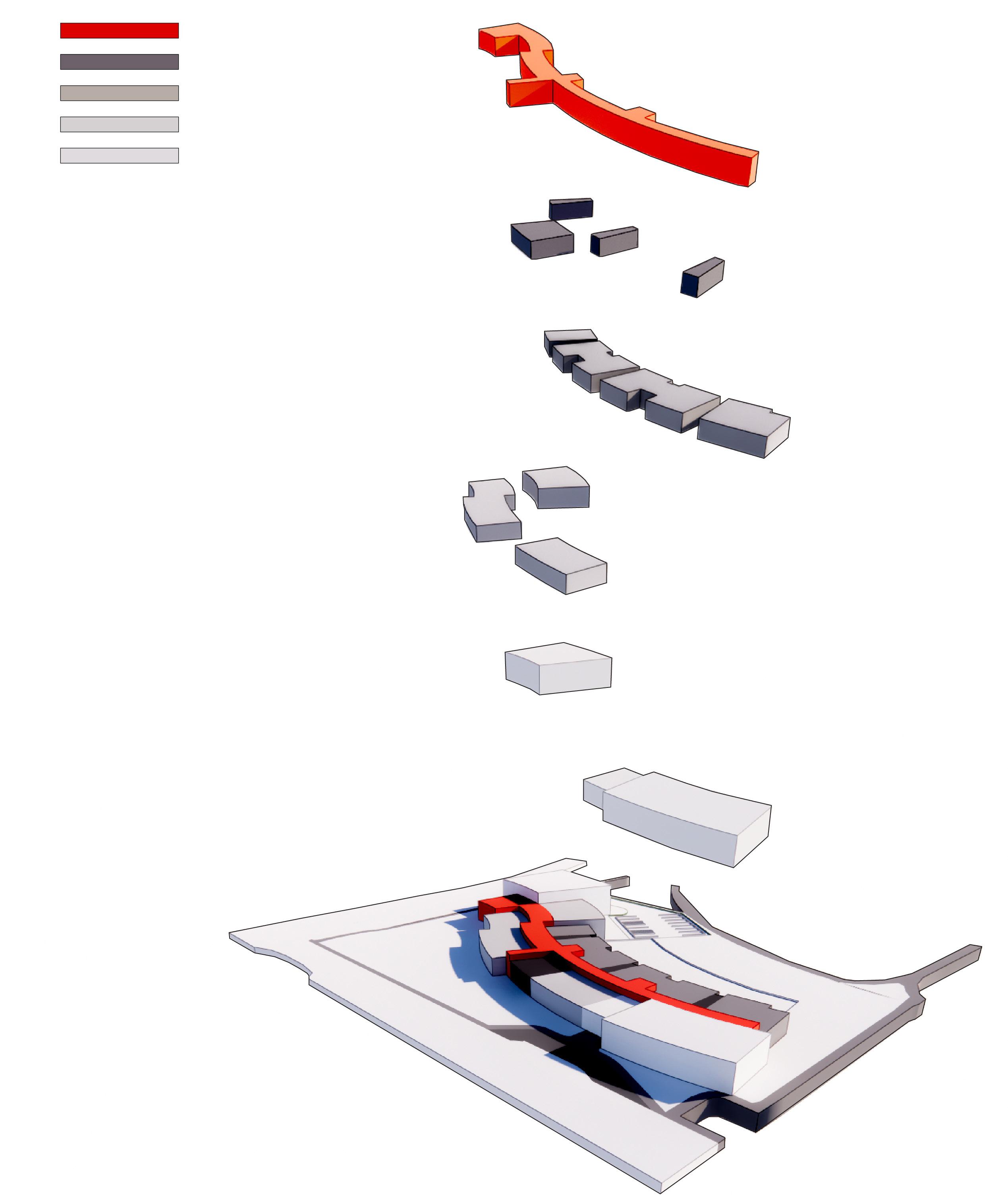
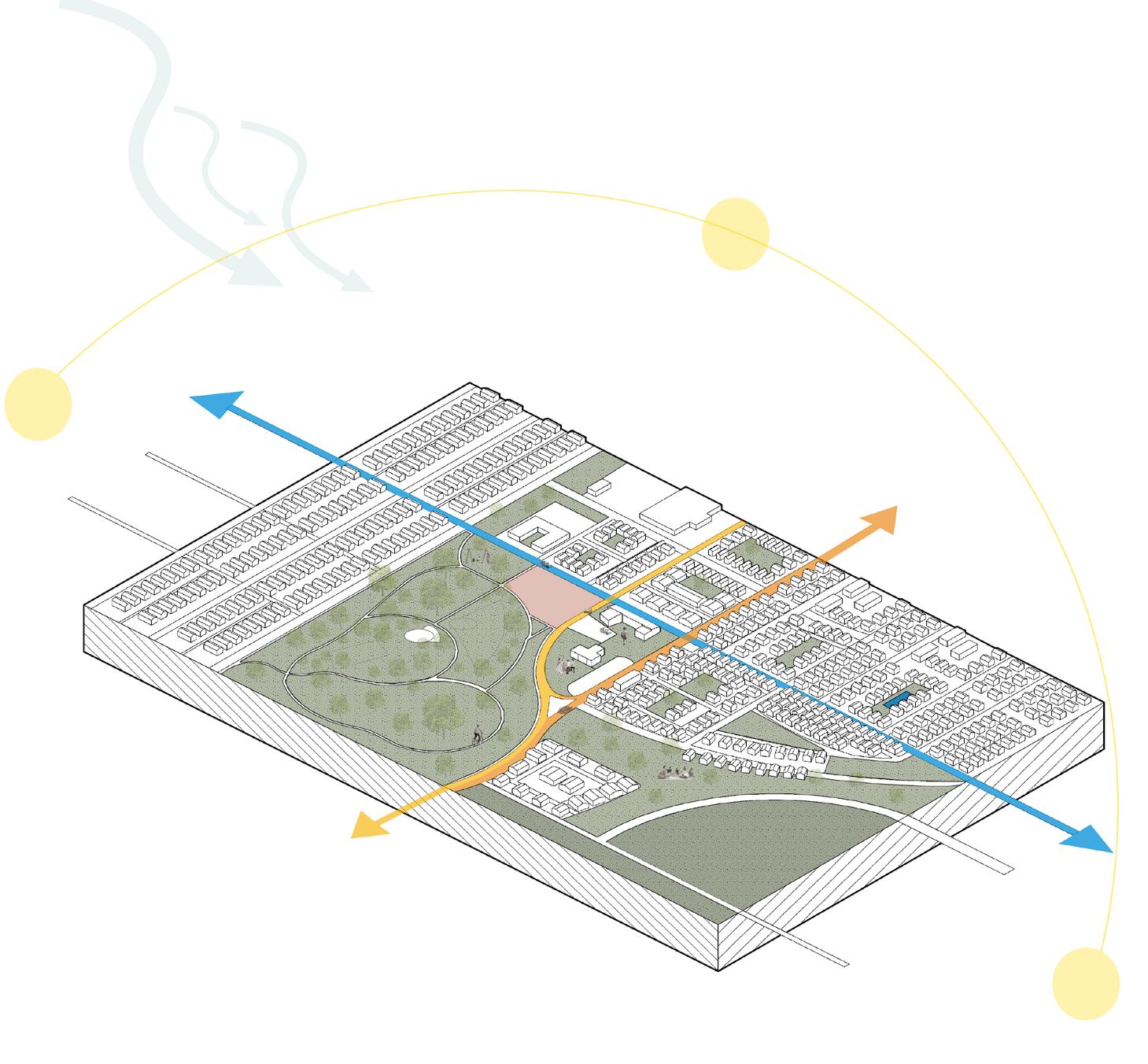
The form runs along a central circulation spine that creates a intuitive way-finding system. The Central spine was extruded from the other programs to allow controlled natural light navigation. The other programs facing the residential street, E 26th Ave, respond to existing roof line conditions.
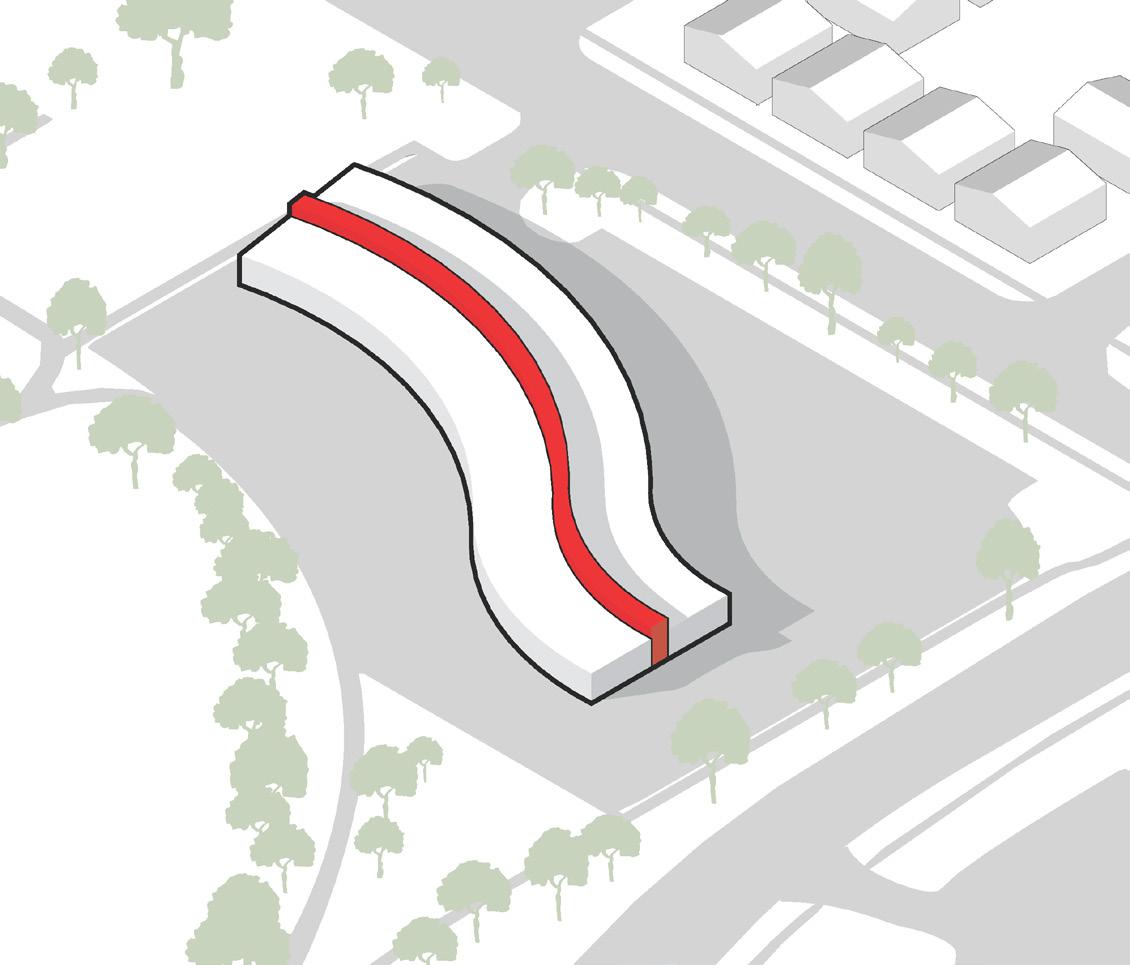
2. SNAKE THROUGH THE TREES
The centralized spine and the building was then curved to respond to the existing park datum lines and to allow the form to snake through some of the older existing foliage.
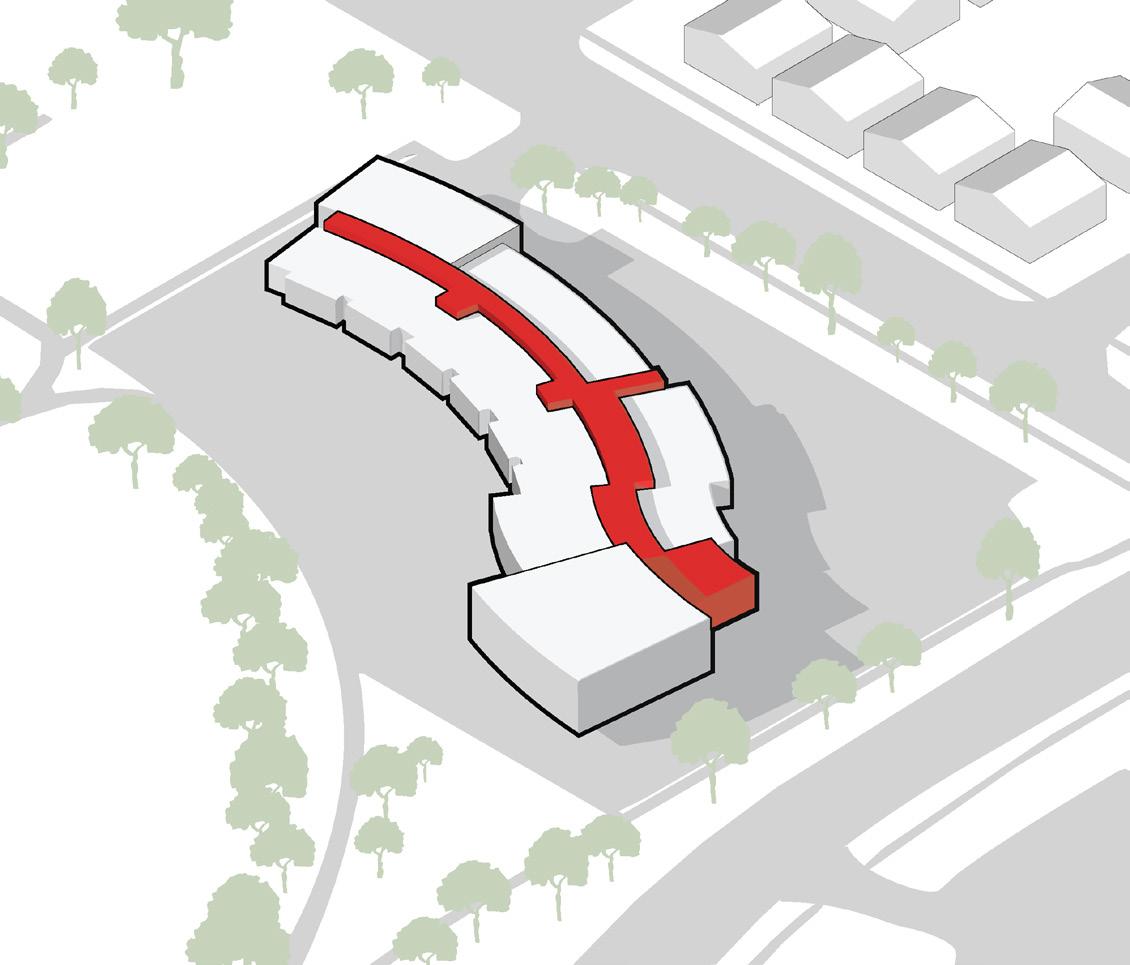
3. CELEBRATING RELIEF
To allow celebration of larger programs, the form push’s out more at key points from the spine. The pockets of relief naturally create important outdoor pockets filled with opportunity for student and staff.
Round-About Drop-off | Pick-Up Staff Parking Lot Playground RoslynSt E26thAve Circulation Service Space Service Private Space Semi-Public Public Space
Design Strategies
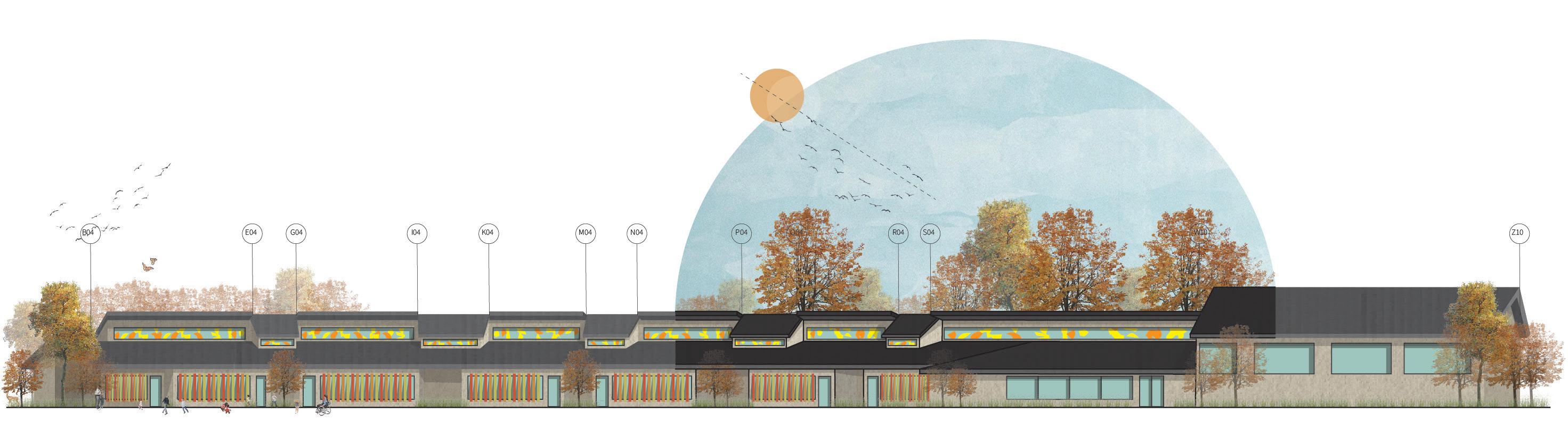
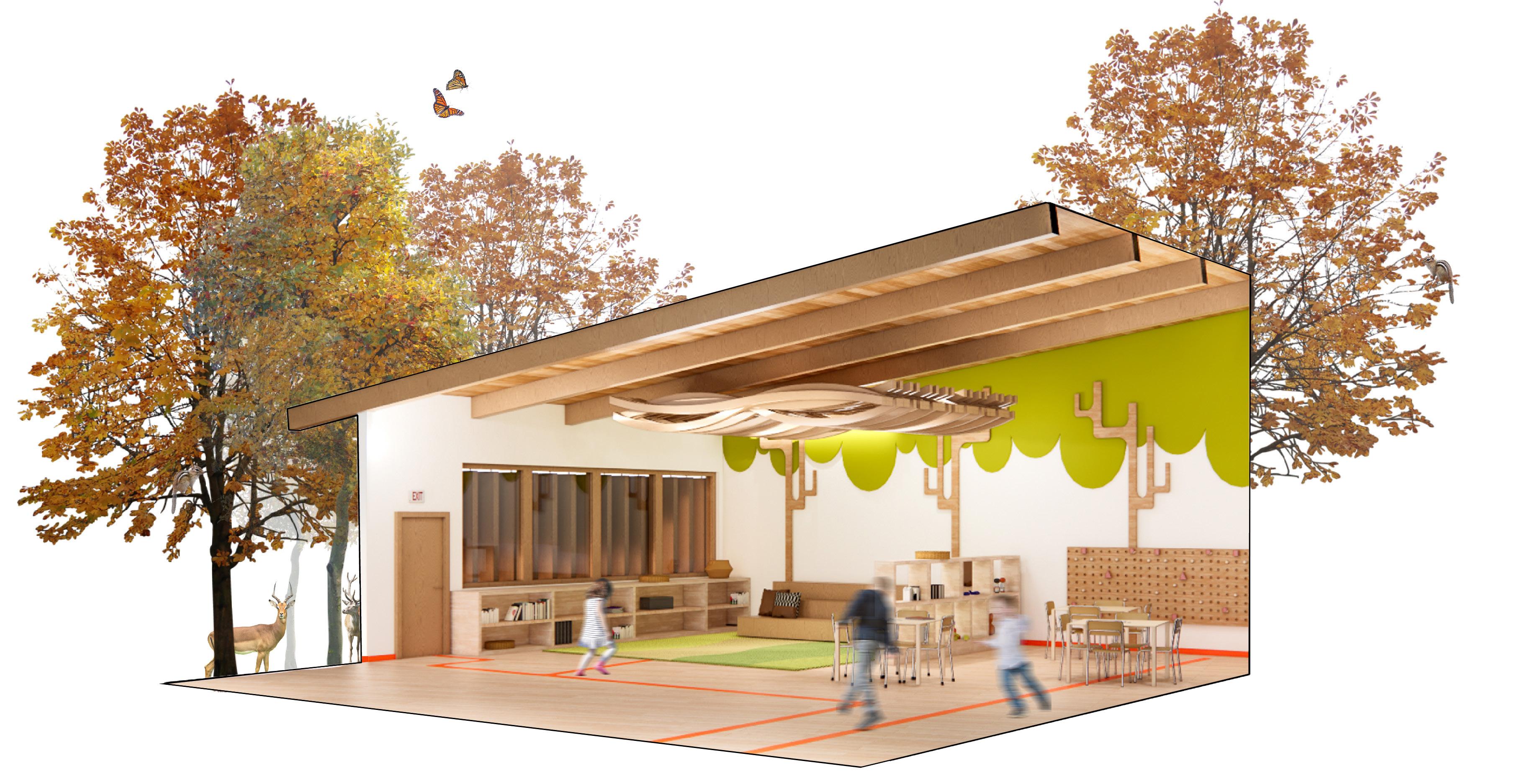
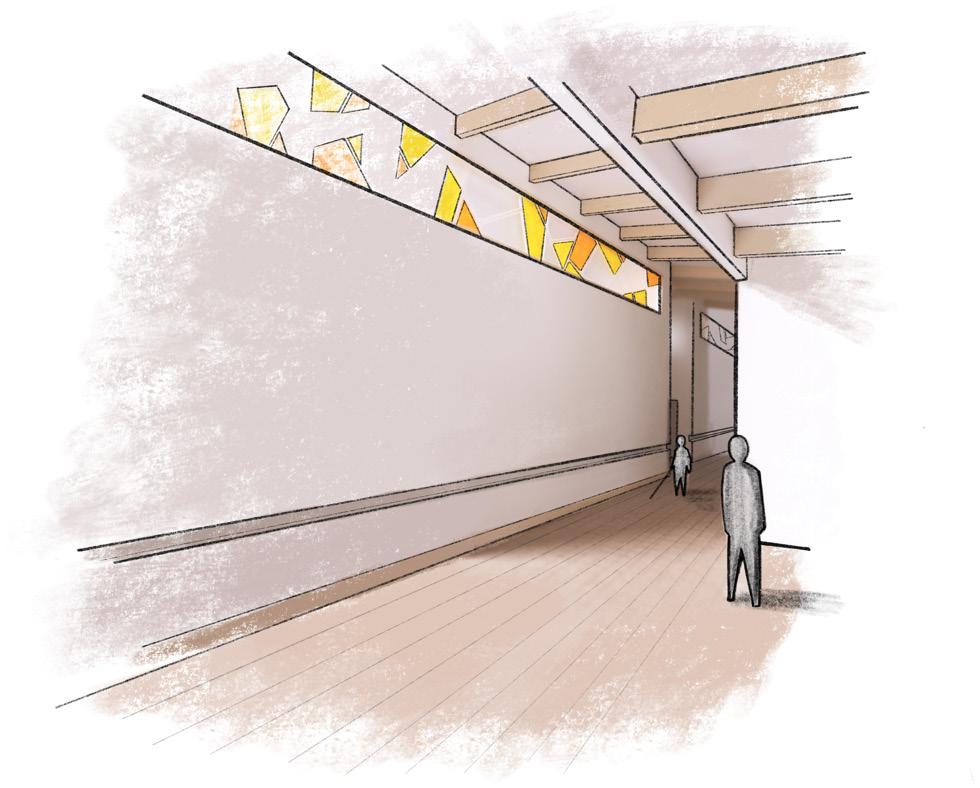
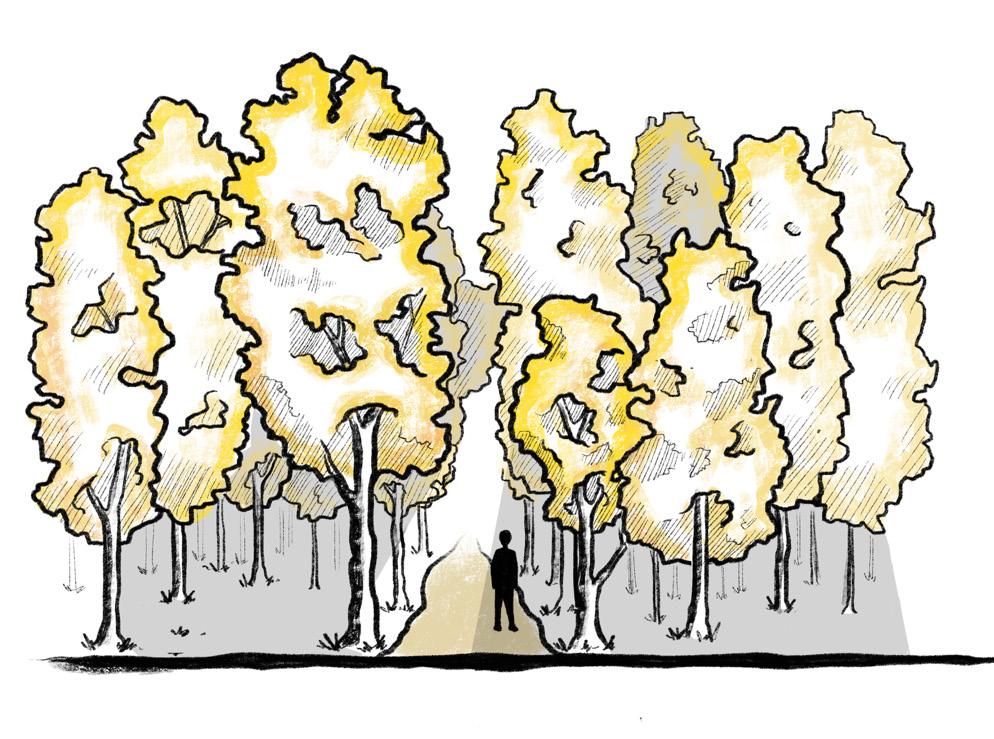
We started researching forests in Colorado and took note of the beautiful tree formations against the rocky mountain scenery. The month of September is an deal time to witness gilded aspen on a scenic drive in Colorado. We noticed the Aspen trees bloomed beautiful yellow, red, and orange leaves in the fall period. Envisioning a walk under the aspen trees, as the sun transmits the colors to the ground must be breathtaking. When considering this beautiful staple of Colorado into our project. We wanted our building to take our students and staff on a trail through the Colorado forest in the fall period. This style will be a new branch of universal design to accommodate and fit all user needs.
In regards to people with visual impairments, bright colors are generally the easiest to see due to their ability to reflect
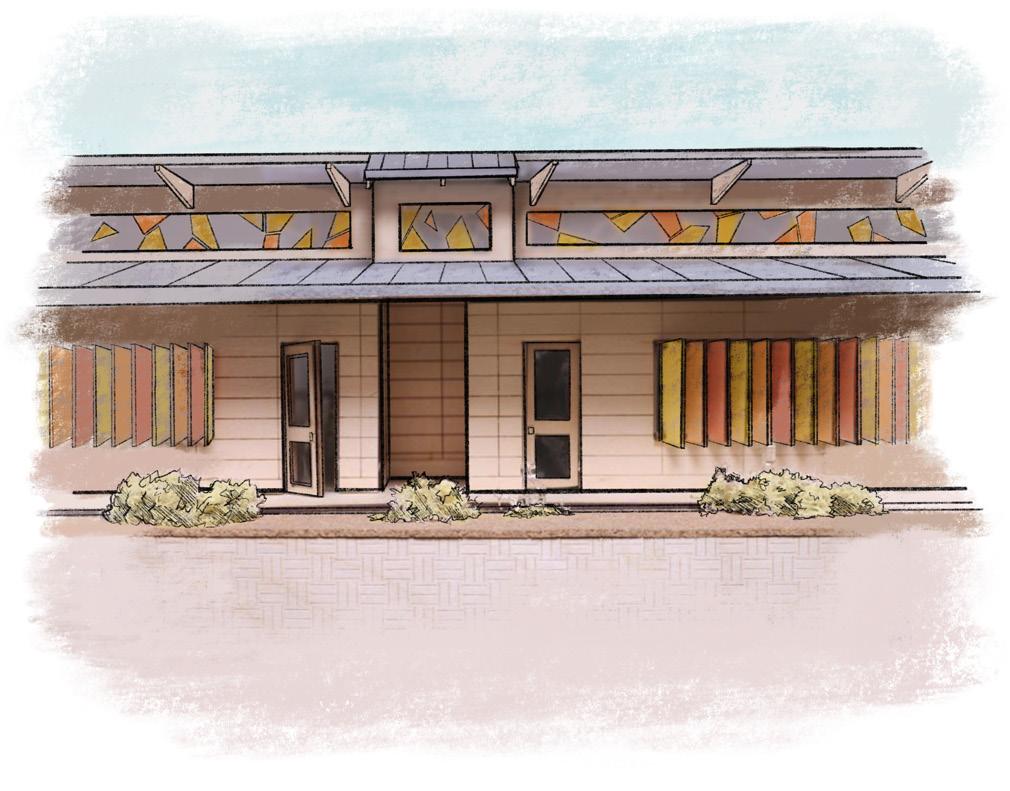
light. Lighting can influence the perception of color. Dim light can wash out some colors, while bright light can intensify others. Solid, bright colors, such as red, orange, and yellow are usually more visible than pastels. The connection of the fall aspen trees to the important color cues that support wayfinding for the students was a design strategy that we wanted to implement throughout the building. Stainglass has a similar effect of fall leaves and tree branches when the sun reflects the design to the ground. We implemented clerestories with stain-glass throughout the corridor to utilize bright colors as a navigation tool while also providing the illusion of being under the fall aspen trees.
Classroom Perspective Site Context
1/4”
1 A01 Pocket Parks
Proposed Development Anchor Center
Heading
South Elevation
= 1’-0”
Primrose School
One-Way Transportation
North | SITE
ANALYSIS |
Corridor
Exterior of Classrooms
1.1
Drawing completed by: Trina Mills Callout by: Trina Mills
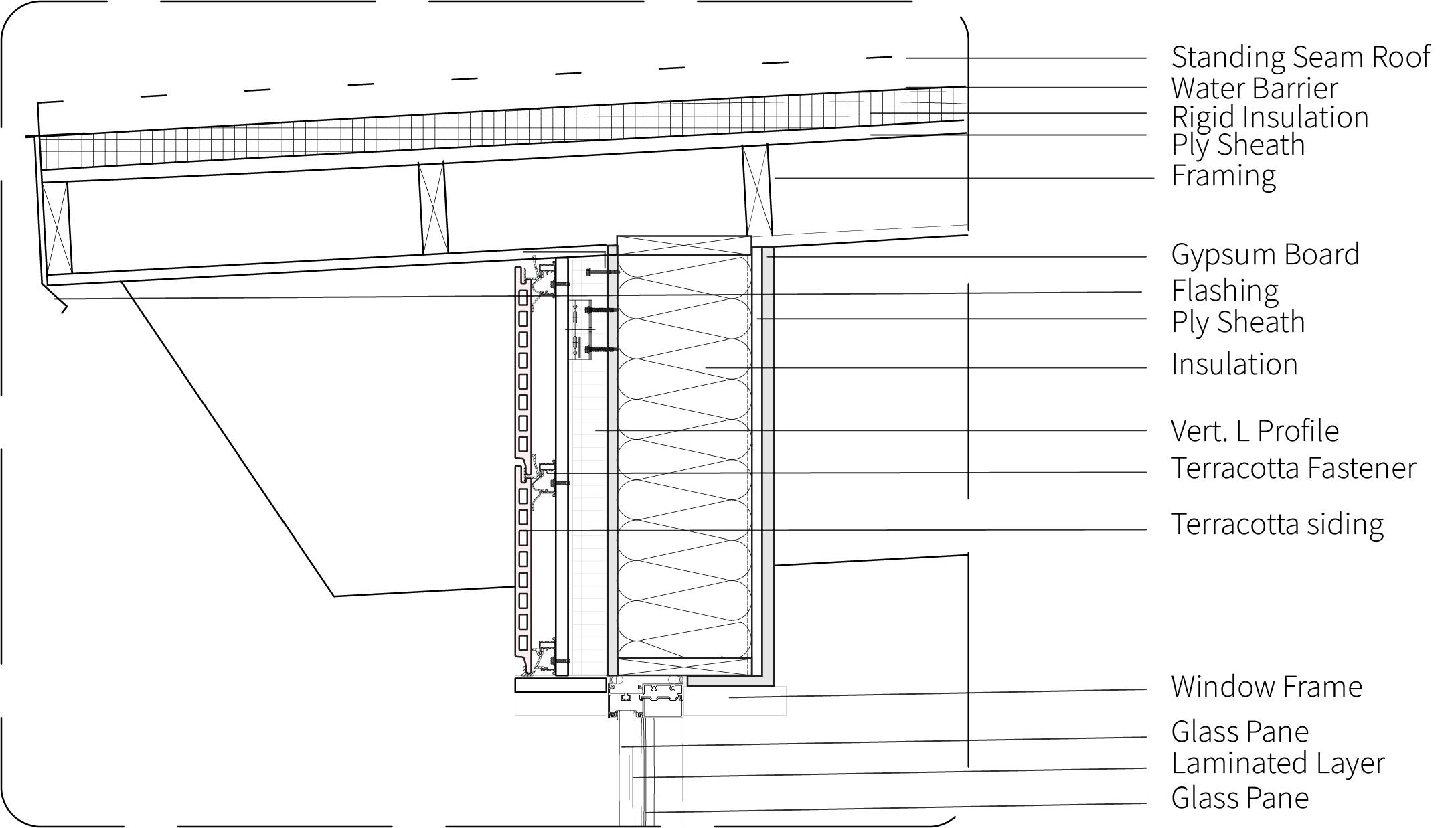
Footing Callout 1.1
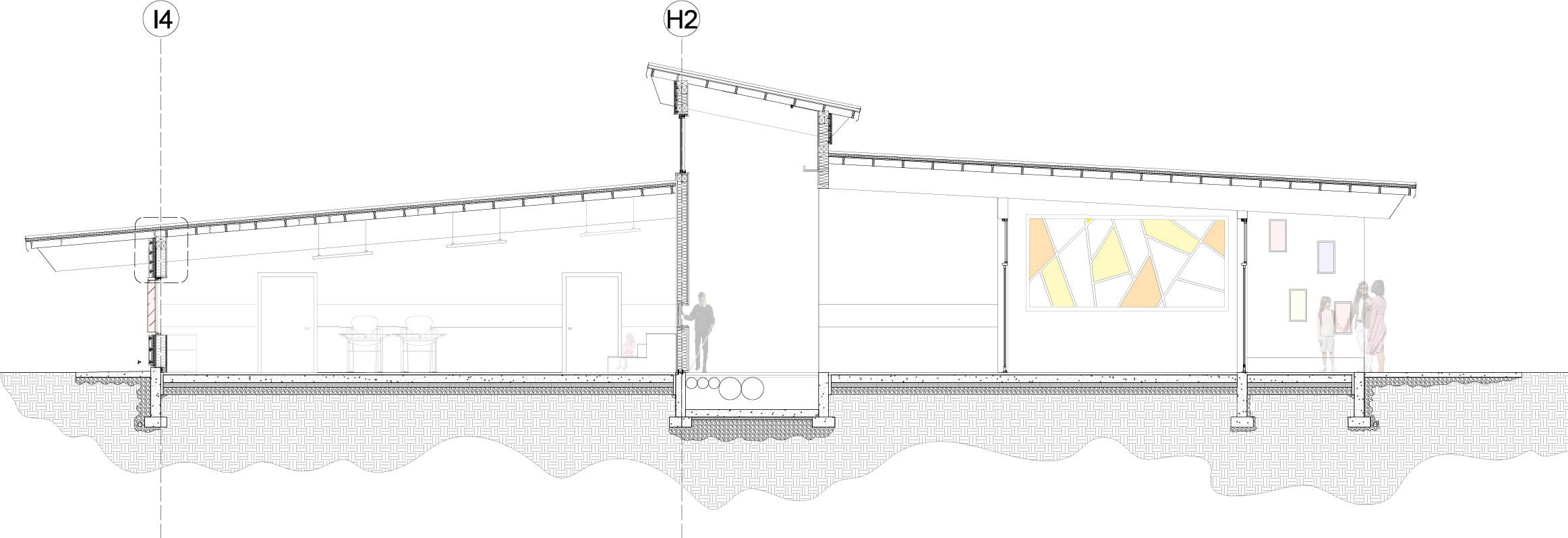
West Section 1/4” = 1’-0” 1 A01
Berkley Terraces
Mixed Use
River Front Rd, Kansas City, Missouri 64120


 Professor: Eddy Tavio Partner: Bridgett Espino Spring 2021
Studio 508 was tasked with creating a world class destination at the front door of Kansas City. The over arching question we needed to answer in the conceptual phase was, “What does it take to actually build places that have lasting cultural value?” The 60acre plot of land stretched along the Missouri River and consisted of mixed use, promotion of active lifestyles, sustainable design, entertainment, and planning for the next economy. My group specifically was tasked with designing a mixed use building in the center of the 60-acres. The objective is to have the medium rise building draw both residential and commercial density to the area and provide amenities in-line with top-tier cities across the United States.
Design Intent: Berkley Terraces fuses greenery and social interaction to create long lasting entertainment value. It consist of offices, retail, commercial, food, and a variety of housing types in a compact site footprint. This mixed use
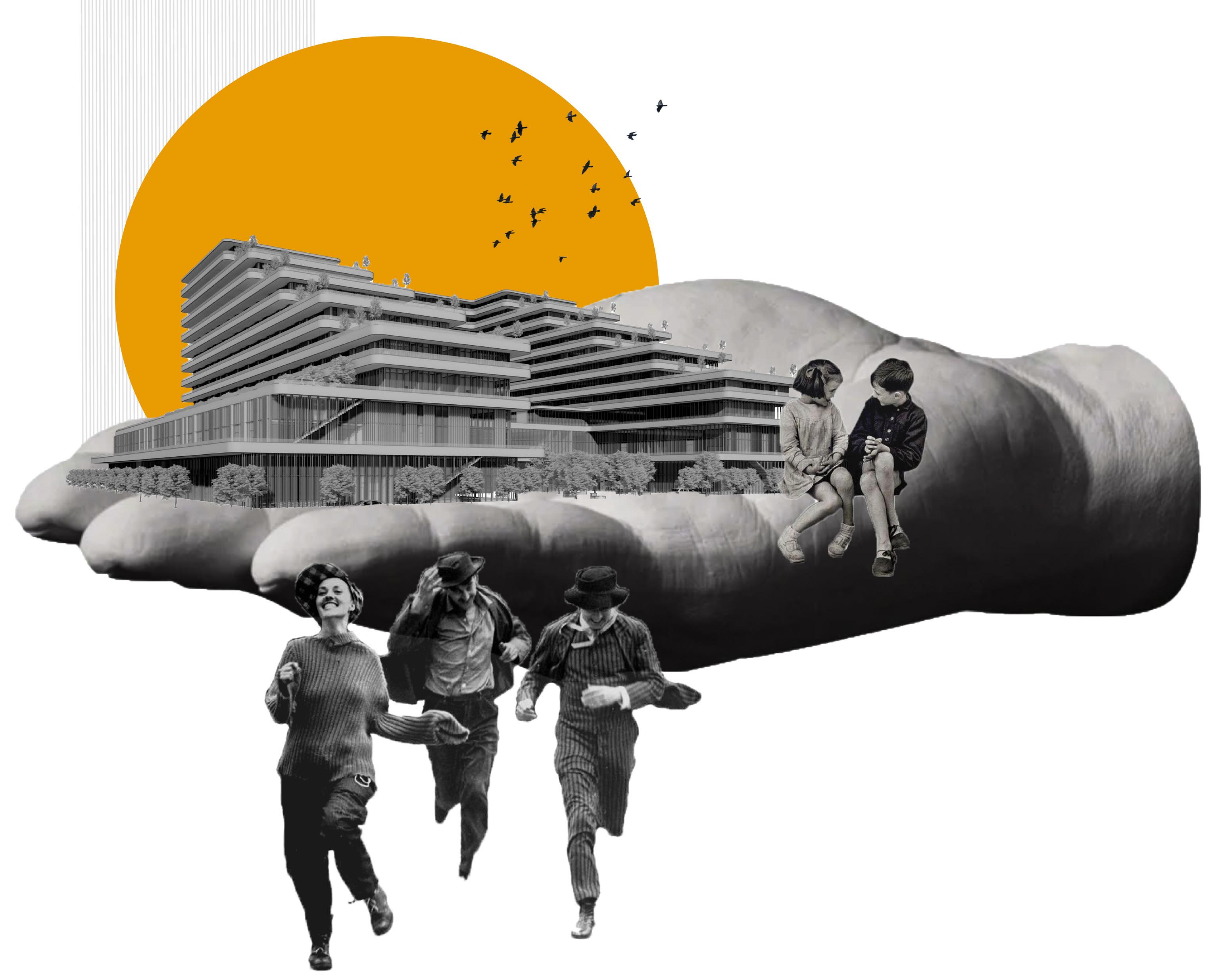
development optimizes views to the river, facing north and south, along with preserving views for the surrounding buildings and residences. Starting at the second level and leading up to the top floor, the balconies hug the form and maximize views and daylight all around the parcel. Vegetation is integrated throughout the resident floors to both create privacy and maintain the picturesque feel of the traditional town. In addition to privacy, wooden louvers were built into the residence floors and office levels to implement sun-shading.
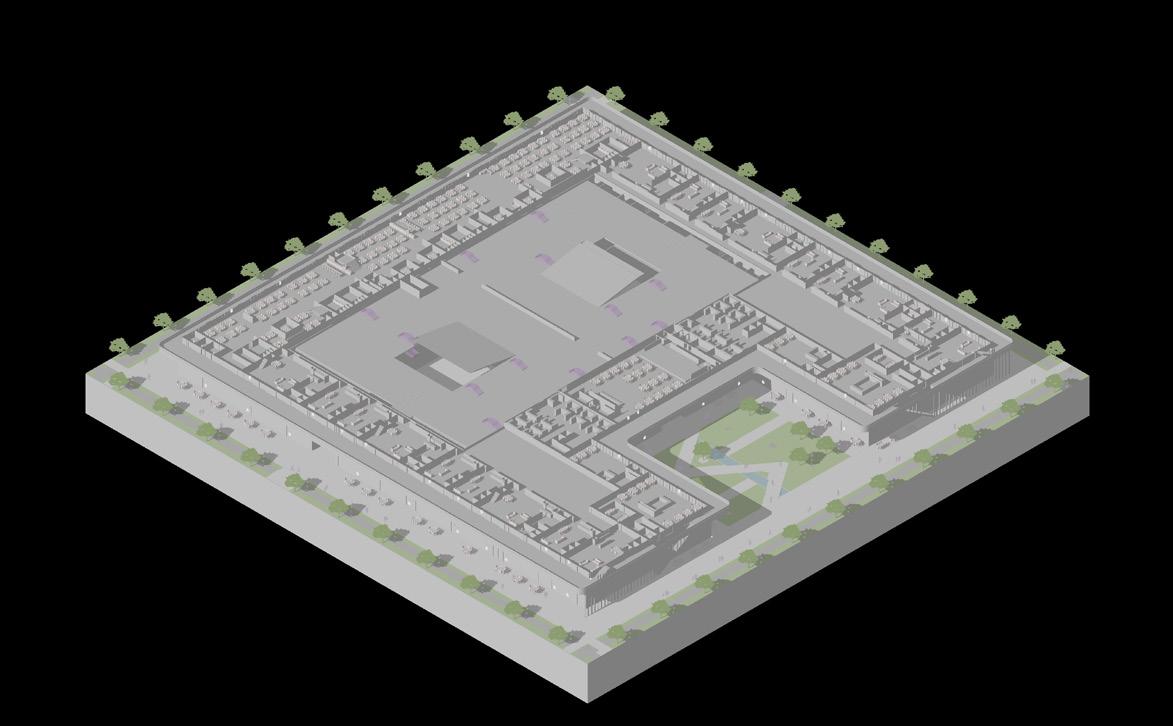
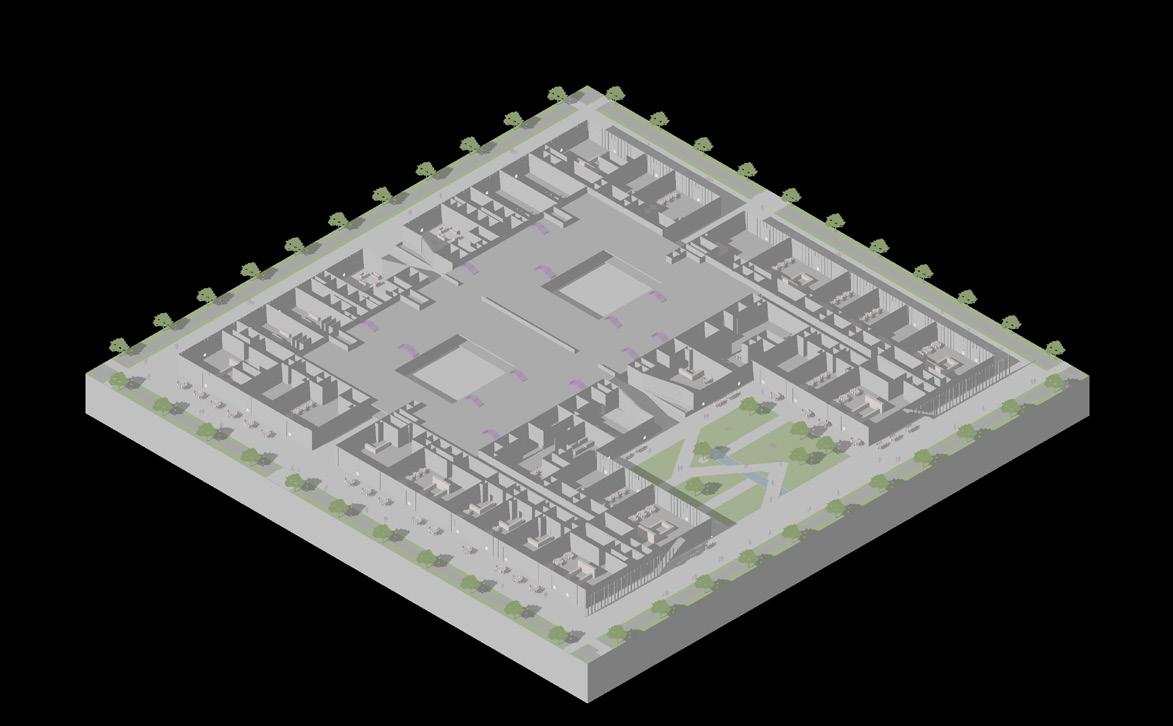
diagram illustrates the modified and added vehicle and pedestrian transportation routes, along with the new commercial and residential spaces to the Berkley Riverfront.
 North Perspective
This
North Perspective
This
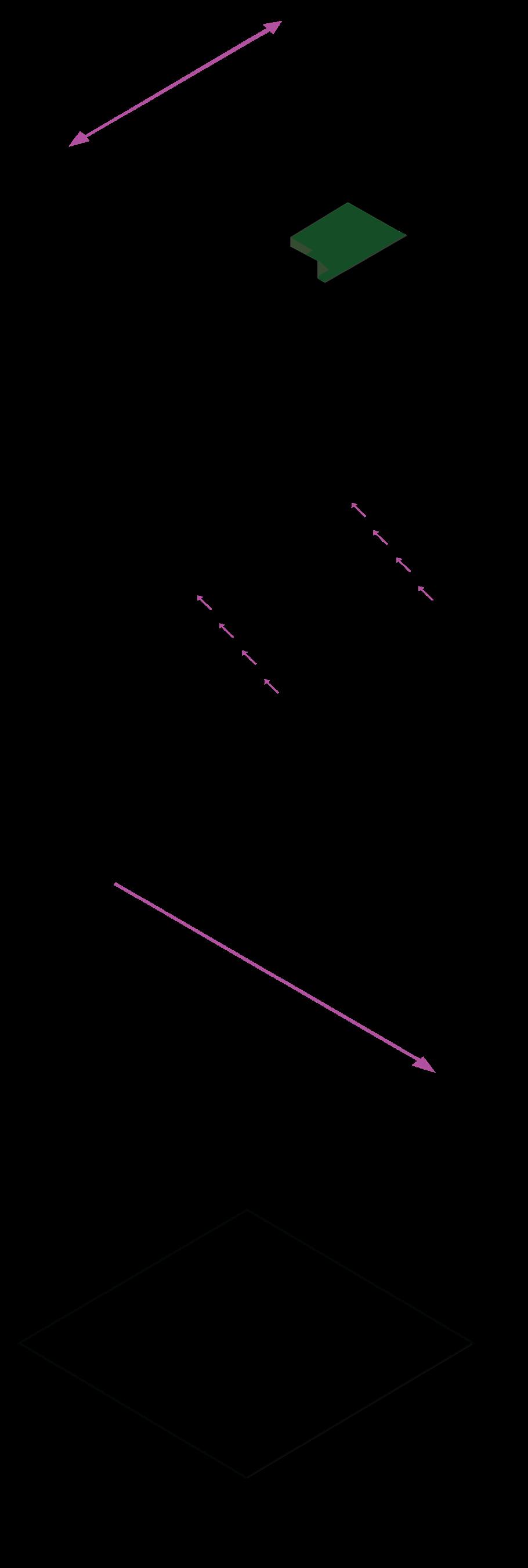
04. Create connections and open the courtyard to the park.
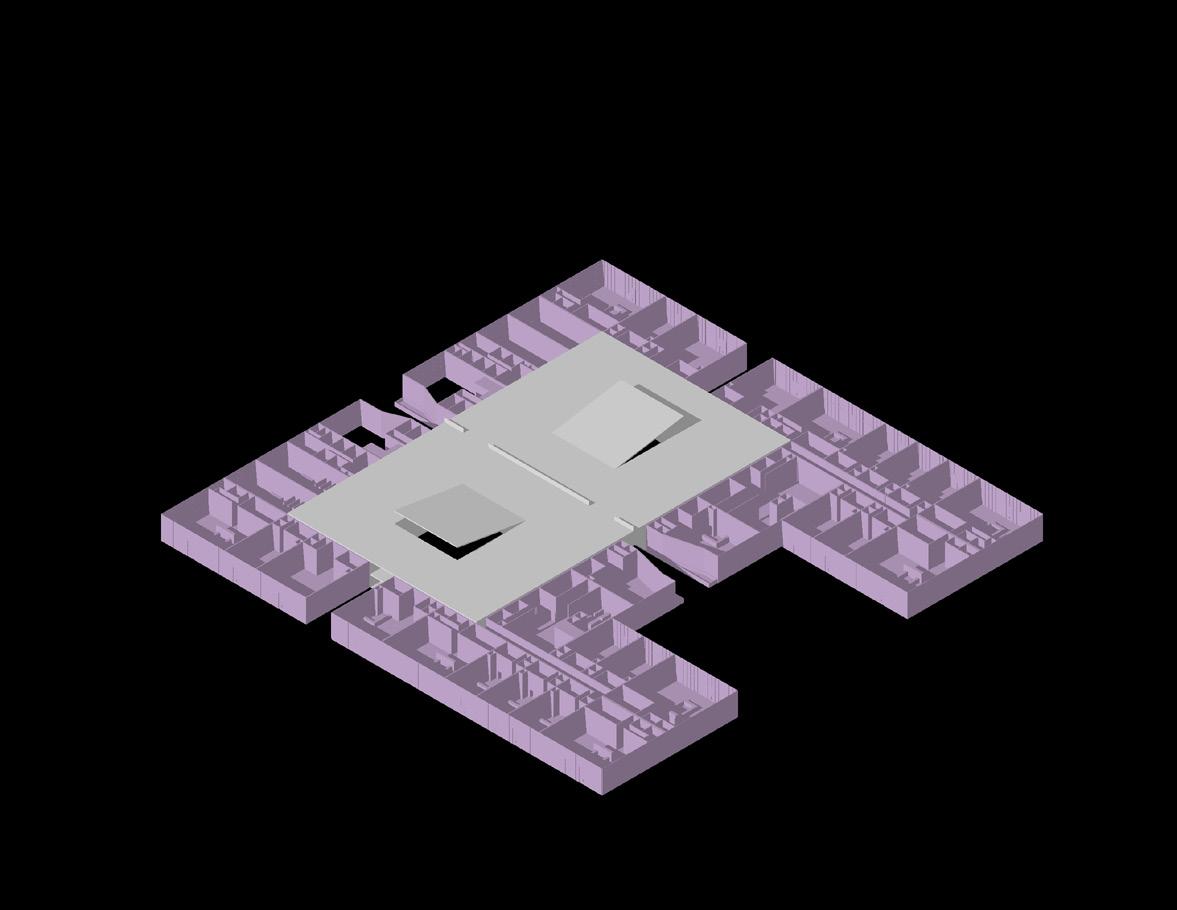
03. Create terraces to optimize views towards the park
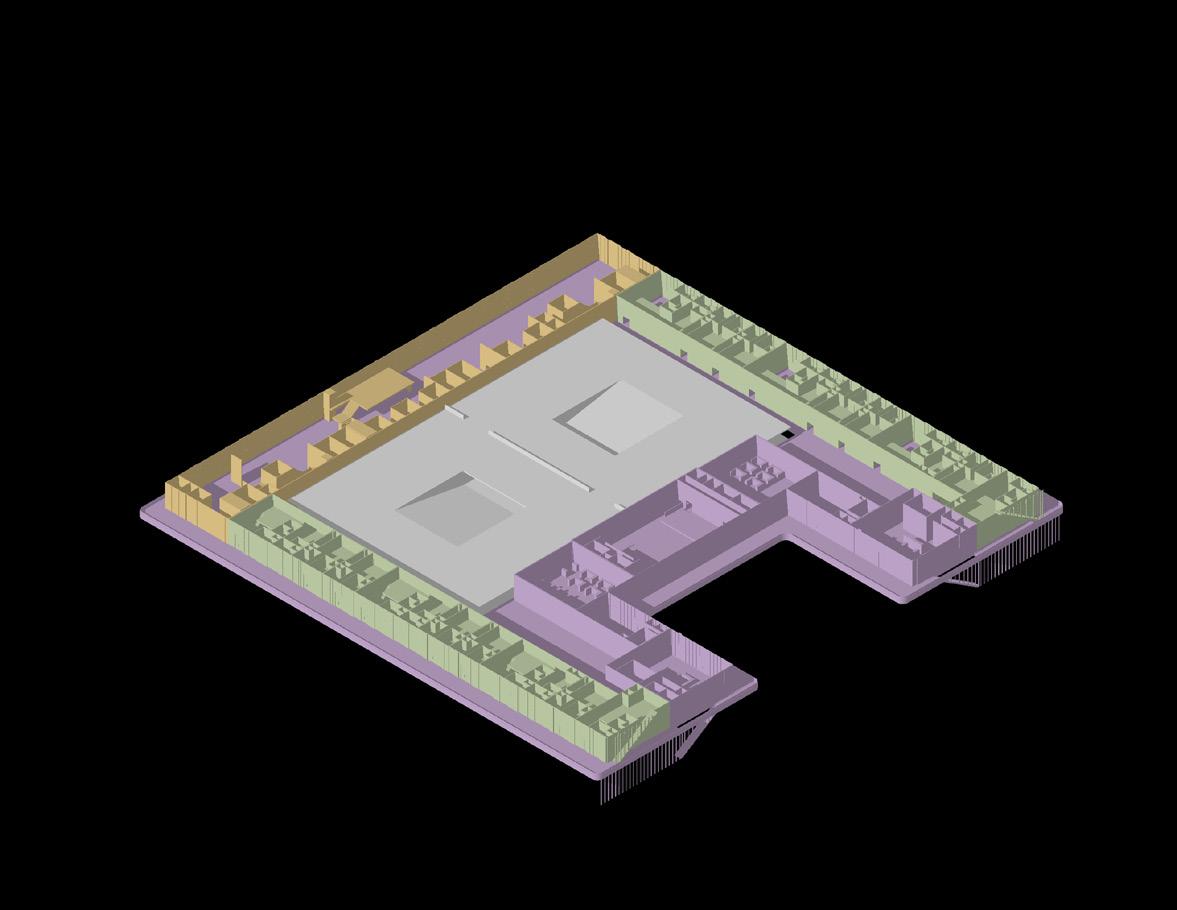
02. Orient buildings North-South to preserve views to surrounding buildings
01. Site
Level Four-Twelve Residential
Level Three Amenities Floor
Level Two Office Residential Commercial
Level One Commercial