by Khloe Dillman
POMEGRANATE PROGRESS
Logan Sanborn
THREE CHEERS FOR THE WINTER CARNIVAL
Berkeley Newell
NAVIGATING A FLAT BUDGET
Vivian Kiesow-Knudsen
LEARNING OVER LABELS
Mason Dean
SENIOR YEAR? OVERRATED
Isabel Gillespie
UNDERGROUND MUSIC CLUB: A NOT-SOUNDERGROUND FORCE AT LHS
Naomi Jespersen
STUDENTS OR STATISTICS: THE VOICES
ADVOCATING FOR EDUCATION POLICY
Chris Tao
TALES FROM THE FAST LANE
Ingrid Ready
2026 PREDICTIONS
Brielle Kolling & Ava Thompson
CHAOS FOR CHRISTMAS
Lily Osmundson
2025 BRAINROT CALENDAR
Alonso Ramirez & Will Van Schepen
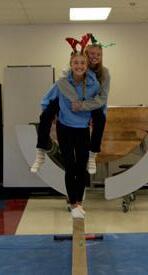
MEET THE LHS GYMNASTICS TEAM
Nadia Schneider
BASICS OF BOWLING
Alice Geraets
SEASONAL DEPRESSION: WHY SCHOOL FEELS HARDER IN WINTER
Soranje Phenias
NEW YEAR, NEW ME
TRADITIONAL
Ellie Boehrns
RING IN THE NEW
Dena Tarrell
SENIORITIS
Kinsley Ernster & Bethel Woche
Eloise Geraets
CAN 12 GRAPES CHANGE YOUR LIFE?
Ellie Quinn
PAPER EDITORS-IN-CHIEF:
Eloise Geraets, Naomi Jespersen, Vivian Kiesow-Knudsen, Ellie Quinn
ONLINE
EDITORS-IN-CHIEF: Nadia Schneider, Chris Tao
NEWS EDITORS:
Sam Barnett, Logan Sanborn
FEATURE EDITORS:
Kinsley Ernster, Berkeley Newell
SPORTS EDITORS: John Quello, Jacob Wessels
ENTERTAINMENT EDITORS:
Ellie Boehrns, Dena Tarrell
PERSPECTIVES
EDITORS: Will Hansen, Bethany Jespersen
PHOTOGRAPHY EDITOR: Mason Dean
SOCIAL MEDIA COORDINATORS: Lucy Hennies, Bethel Woche
STAFF WRITERS:
Khloe Dillman, Alice Geraets, Isabel Gillespie, Julia Hedrick, Ruby Hennies, Quinton Hollan, Hazel Hughes, Brielle Kolling, Lily Osmundson, Soranje Phenias, Ingrid Ready, Alonso Ramirez, Trey Raph, Ava Thompson, Will Van Schepen
ADVISER: Dr. Katie Kroeze 22 23 24 26 28 30 32 34 35
DRAWING WITH G Khloe Dillman 10
Founded in 2010 by co-owners Craig & Kristin Snyder, Pomegranate Market has long been a place dedicated to providing wholesome food options for Sioux Falls residents. They have an array of inventory, with a focus on clean, simple and local products. The founders envisioned a “west coast” esque grocery store, akin to that of Whole Foods. Their mission was simple: to fill the gap in health options for the Sioux Falls community and create a lifestyle for their employees and customers that focuses on food as nourishment for the mind, body and spirit. Their influence has even reached the LHS student body. LHS senior Ella Locke is an employee at
by Logan Sanborn
Pomegranate. She began her job there through her mother’s relationship with the owners.
“My mom actually was the interior designer for the new [location]. Her company designed the inside of the new one. She met the owners and said it would be a great place to work,” said Locke. “I figured I’d apply, and they just seem like really good people.”
Since its humble beginnings, Pomegranate Market has grown to become a local household name. Inside its walls, the grocery store strives to enrich the community with friendly staff, murals that reflect the store’s values and cozy interior design. This focus on wholesome eating and community is the reason
Pomegranate Market has been able to grow so much since its founding.
The shop’s popularity has prompted the owners to open a new location at Sherapa Place downtown, in hopes of expanding their reach and offering more quick-eat options.
Working alongside Locke’s mother, the vision of the owners was able to come to life. However, that is not to say there were not any setbacks. Like any construction project in Sioux Falls, the new site experienced delays.
Originally set to open sometime in the Fall of 2025, the new Pomegranate Market location finally opened on Dec. 12, 2025.
“It’s been a long time coming. We’ve been working on this for two years. There were a couple of delays along the way. We were hoping to open a little earlier this year, but we’re very excited to be open now,” said President and Co-owner of Pomegranate Market Jonah Snyder, according to Keloland. The new location is sprawling. With 20,000 square feet of space, the downtown destination focuses much more on the dine-in options of the brand. Offering a smoothie/
coffee bar, deli, more hot and cold grab-and-go food options as well as a much larger eating area. There are also new additions like the “Bloom Bar” that offers local flowers in a Pinterestesque display.
“It’s a place you want to come on a Saturday morning and grab coffee or juice or sit on your computer on a weekday and work on a project or have a meeting with your co-worker. Where most grocery stores you want to be in and out as fast as possible, we envision people spending an hour or two in the space,” said Jonah Snyder, according to Sioux Falls Business.
The new location of Pomegranate Market has long been anticipated by Sioux Falls residents. With its opening, it is set to be the hottest community center in downtown.
“I would encourage people to go there and check it out,” said Locke.
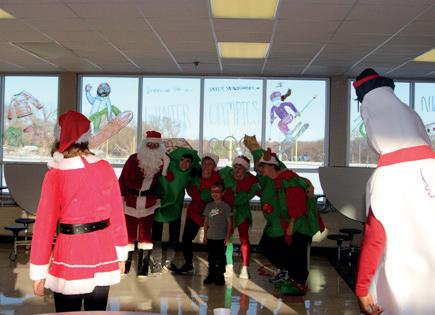
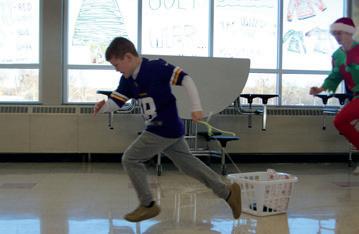
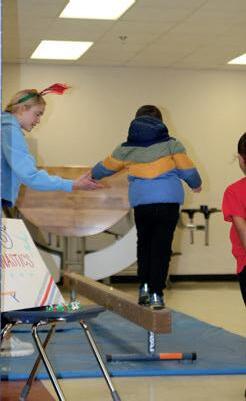
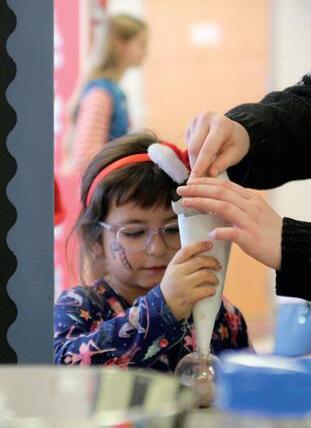
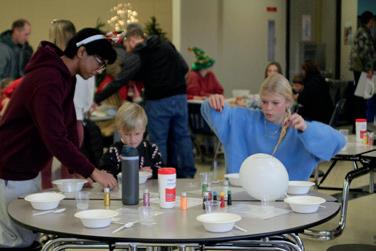
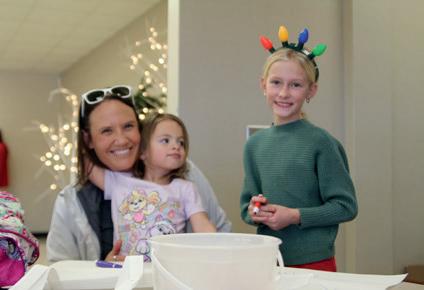
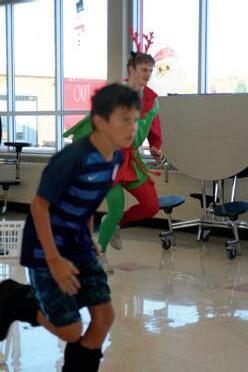
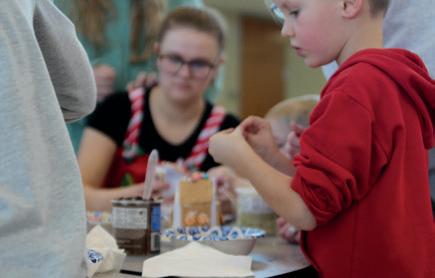
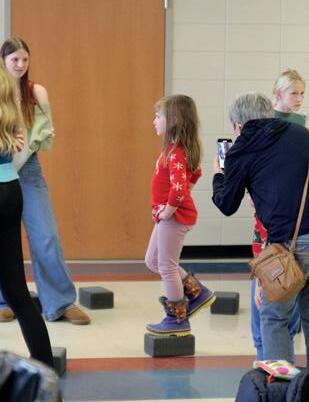
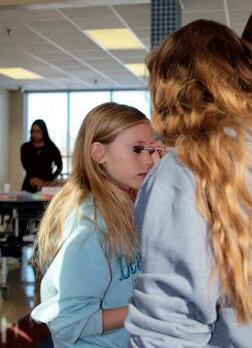
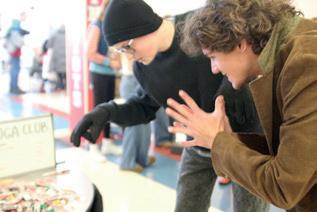
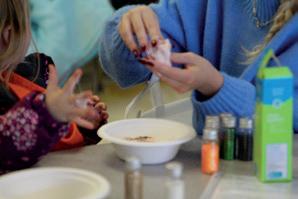
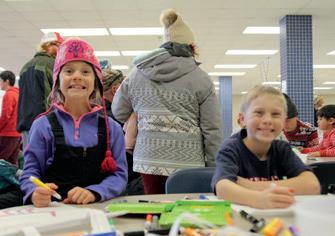
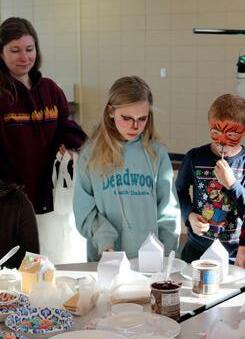
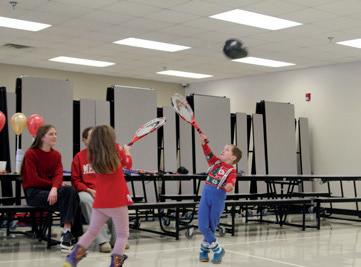
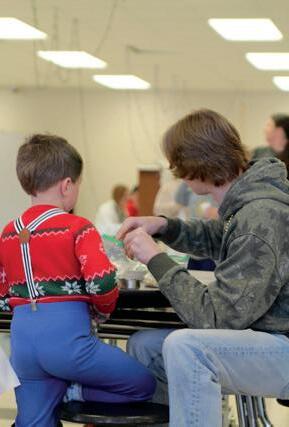
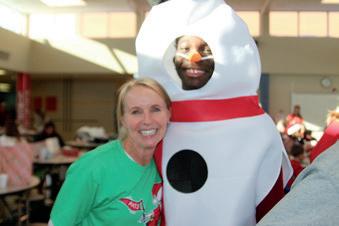
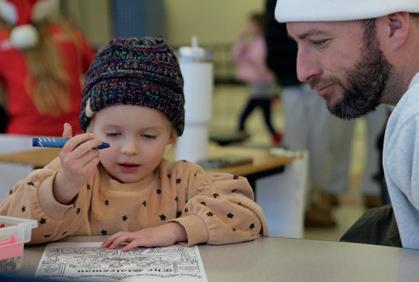
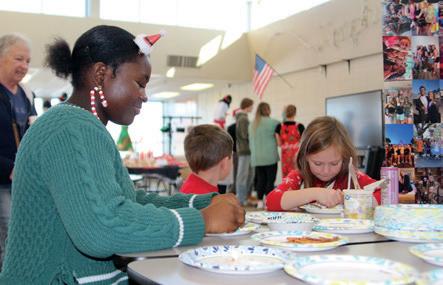
For the last two years, LHS has held the Winter Carnival, an event where all clubs at LHS put together booths designed to entertain area elementary schoolers. From paper snowflake making to meet-and-greets, there are numerous activities for kids to choose from. Largely organized by the Student Council (STUCO), the idea was championed by Jennifer DuBois.
“We got this idea at the LEAD Conference [a national student leadership conference] in Washington, D.C. three years ago,” said DuBois. “A school about our size did it, and we thought it would be fun to bring something like this to Lincoln High School.”
Putting together an event of this size is certainly a challenge; even though each group is in charge of creating its own activities, DuBois still has the challenge of making sure every club has what they need to make the carnival a success.
“The most difficult part is making sure each group has their ‘perfect’ location in the cafeteria based on their requests on what they need for their activity, such as outlets, view boards, open areas, long tables, round tables, etc.,” said DuBois.
Despite the challenges, the Winter Carnival has many benefits, both for LHS and the Sioux Falls community as a whole. In a school as large as LHS, it is important to find ways to achieve a schoolwide connection.
“It’s a way to showcase Lincoln High School and all of our amazing students. Sometimes our school becomes too big, and we get very individualized in our clubs, groups and activities. The winter carnival unifies us,” said DuBois. “The young kids who attend love it, and we get so much positive feedback from their parents. It’s a fun event celebrating the holiday season while giving back to our local community.”
Additionally, the event is a fundraiser; while admission is free, the donation of a new, unwrapped toy is recommended. These toys then get donated to the Banquet, where they are given out to their younger guests.
“This event is so awesome. It brings people from the community here, it’s a good fundraiser of toys and the kids love all the activities,” said Sam Anderson, the Patrick Henry Middle School band director and father to two elementary schoolers.
“The high school kids are doing an awesome job; so, well done everyone!”
His two kids are Azalea, who is eight, and Ivan, who is 11. Of the dozens of booths to choose from, they certainly had their favorites; Azalea loved the slime and Ivan had fun decorating Christmas cards.
The Winter Carnival is certainly an important part of the culture of LHS; it promotes schoolwide unity, provides elementary students and parents an entertaining way to spend a December afternoon and is a simple way to give back to the Sioux Falls community.
by berkeley newell
-Chief
tate law requires South Dakota education funding to increase annually at either 3% or the rate of inflation: whichever is less. By this statute, it should have increased at 2.54% for the incoming year.
Within his $7.44 billion state budget proposal, however, Gov. Larry Rhoden presented a 0% increase to education funding for the 2027 fiscal year, attributing the conservative spending to flat statewide revenues and a “declining public school enrollment.” It was not just education, though, that faced this flat funding. The budget typically afforded to health care providers, as well as state employees, also remained stagnant.
“If it stays at zero, it's truly not a zero,” said Sioux Falls School District (SFSD) Superintendent Jamie Nold. “Inflation was 2.54%, so we actually go backwards — it's a loss. The cost of all the things that we deal with go up in price, yet our funding stays flat.”
This proposal comes after $3 million worth of cuts last year within the SFSD.
“If it continues to go at a cycle like this where we don't even keep up the rate of inflation, we'll have to look at much more significant reductions, which we hate to do. In the SFSD, we pride ourselves on being able to offer our kids more than any other district,” said Nold. “And we want to continue to do that. If we continue to not get funded at an appropriate level, it makes it very difficult.”
According to Nold, the district is considering another $1 million in cuts for this year. And, when funding is limited, programs, materials and opportunities are soon to follow. Districts around the state are put on the defensive, forced to make decisions in order to conserve financially.
“My expenses have increased in order just to function at Lincoln, just to run a building,” said LHS Principal Laura Raeder. “So, I have no doubt that money has increased, but has it kept up with what I need?”
From the daily necessities like copy paper, programs like Freshman Academy or student financial aid opportunities for ACT or AP tests, a lack of funding threatens opportunities at all levels. Under this proposal, teacher salaries will also stay stagnant.
“I can say that, as a public school educator, I feel that fiscal pressure personally, and it has affected my classroom and my students,” said LHS AP Human Geography teacher Regan Meyer. “It also sends a shockwave of uncertainty throughout every level of our district and its employees. At the end of the day, all we want is to feel like we are valued and worth investing in, because we know that our jobs are essential to ensuring the educational and occupational well-being of future generations.”
South Dakota currently ranks 46th in the nation with an average teacher salary of roughly $56,000.
“We are very lucky here at Lincoln with our teaching staff, but it does weigh on you after a while,” said Raeder. “The nature of the profession is to try to figure out ways to help. But at some point, there's nothing else we can do. We have to continue to be funded in order to do our jobs. We’ve got to turn the lights on at some point in the day.”
According to Dr. Raeder, the number of students pursuing education following graduation is also dropping.
“I'm a third-generation teacher and pretty proud of that,” said Raeder. “But I'm not sure there'll be a fourth in my family, as much as we love it.”
In his proposal, Rhoden also outlined an increase in the percentage of funds allocated to the state’s reserve (a “rainy day fund”). This jump — from 10% to 12.5% — accounts for roughly $70 million. Last year, the state placed $63 million in the same reserve.
“They're saying, ‘These are tough times right now, we’re gonna have to give 0%.’ Well, this is maybe the time we should be drawing some of those dollars out,” said Nold. “It doesn't make sense to continue to pad all these reserve dollars and starve the public schools. And so the question comes in: when does it rain?”
While these types of conversations start in Pierre, it is not where they end. The SFSD has made efforts to get legislators involved at the actual schools, inviting them to experience and be a part of the work.
“Just go to your local school and tour. Go be with the kids and see what lunch looks like. See what recess looks like. Everyone is working really hard to help the kids — just come and witness it or be a part of it,” said Raeder.
“I still have faith that through the process in Pierre, we're going to get funded. I haven't given up hope yet.”
V iesow nudsen hief
by Khloe D
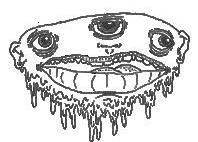
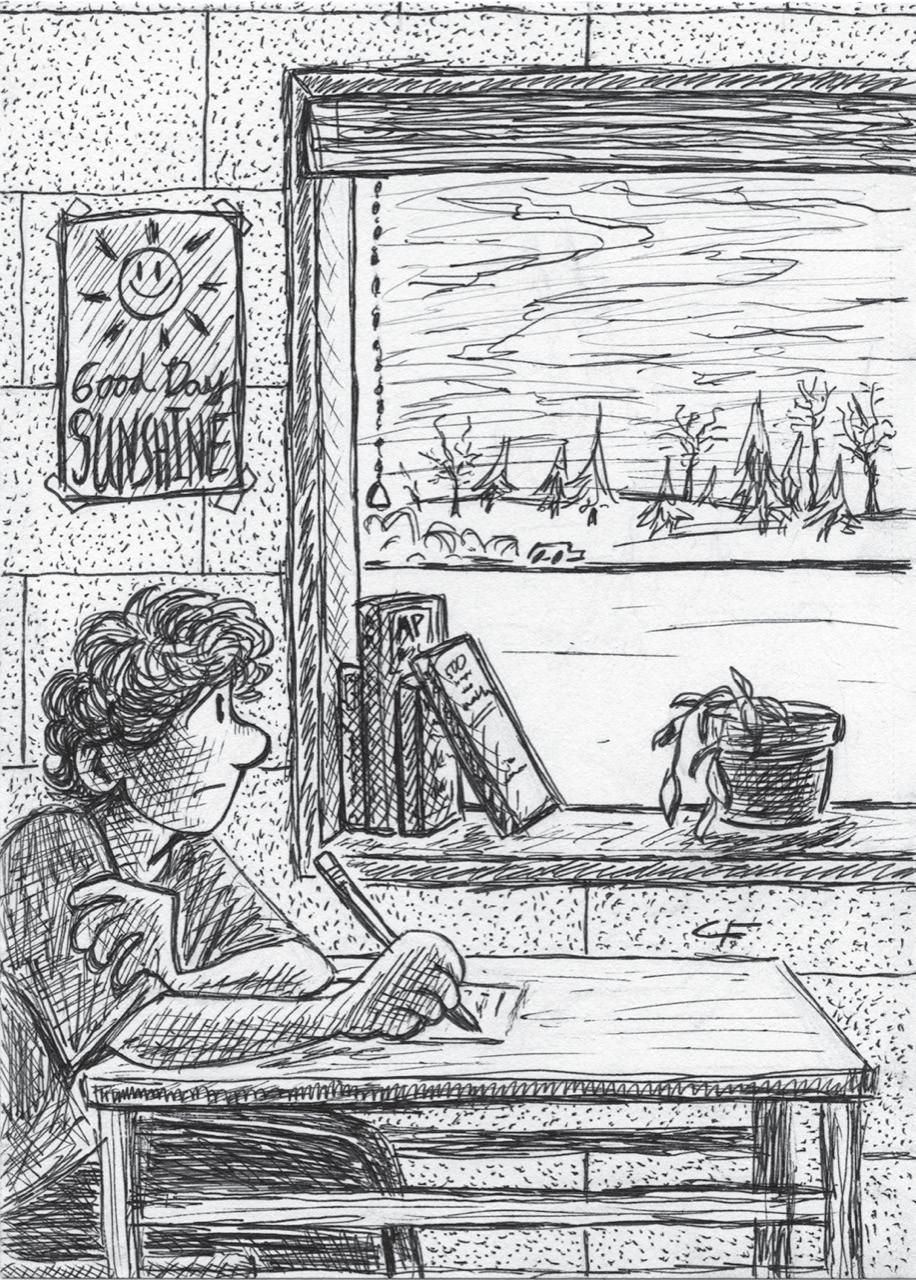
contains hundreds of talented teachers and students, but one sticks out in particular: Myles Gosmire. Not only is he one of LHS’s Special Education Teacher-Tier II but he also possesses a rather impressive
style of doodling as a result of the
Gosmire not only doodles for his own pleasure, but he takes it a step further on Instagram. On this platform, @_brainmachine, fans can purchase commissions of his artwork. He has obtained lots of experience, drawing for bands, restaurants and clients' personal wants.
Over time, Gosmire has developed a unique doodle style that is not only interesting but also intricate.
“I like to doodle to kill time, but it's fun to see what I can create,” said
Gosmire’s doodles easily stand out from others with their fun, captivating style, featuring unique references and an interesting
Gosmire draws on almost anything he can find, using any material; however, all of his doodles include intricate penmanship and detail fading away from color. Not only does he use paper and pencil, but Gosmire also doodles on his iPad using Procreate.
“I feel like I have started taking doodling seriously after I got my iPad and bought Procreate, [and I began] realizing I could actually
make money off of my doodles,” said Gosmire.
An average doodle takes Gosmire less than a minute and is almost always in black and white. While some doodles are harder than others, they all still contain his style and a touch of weirdness.
“I feel like I've been doodling my whole life,” said Gosmire. Gosmire is an extremely confident artist who has overcome art block, creating his own unique style in his doodles. Gosmire continues to cheer everybody up with his captivating, funny, detailed doodles, living by his favorite quote: “They don't think be like it is, but it do,” - Oscar Gamble.
Learning labels over
Sophomore Naveya Vostad and junior Olivia Boakai stand on either side of a viewboard in a windowless room in the E-wing. As the “Respective Genocides” title page of their presentation appears on the screen, the 30 or so people in the room fall silent. Their audience is almost wholly made up of sophomores. Making up the rest are some juniors, seniors and a lone teacher in the back who politely greets students and does no more — leaving all political discussion to the students.. They began the presentation with the nature and mechanics of genocide, then move on to specific examples of the Uyghurs in China, the Darfur in Sudan and the Rohingya in Myanmar. The seriousness of the presentation, filled with statistics of murder and rape, is contrasted with the informality of their tone. The room is casual; there does not seem to be any pressure on the two students to impress their listeners. Everyone is there to learn, and they do it with an amiability that sends formality out the door. When the presentation is finished, many stay and ask questions.
club up again, especially since the presidents last year were seniors. I knew I wanted to teach people what’s actually going on [in the world],” said sophomore Mettasebia Lamesgin.
For the few seniors in the club who have been members since their freshman year, such as Quinn and Vivian KiesowKnudsen, it is a big relief to know there are underclassmen to carry the club on.
“It’s been really cool to watch this class of sophomores take it into their own hands — they’ve done such a great job at keeping up with what we’ve always done while also turning it into something of their own. I think it just tells me that YPC means enough to stay relevant even after the seniors are gone — that it can be for the new members what it’s been for me,” said Kiesow-Knudsen. What has helped draw in such a large number of sophomores is YPC’s educational meetings which focus on current events and objectivity over political rhetoric.
Young Progressives Club (YPC) is one of LHS’s most popular clubs. The described meeting of around 30 students was the lowest attendance they have had this year — a big improvement from the last school year.
“One challenge that we faced, especially last year, was keeping regular attendance at meetings. Our attendance took a pretty massive dip last year, and it really showed in our relevance as a club and our underclassmen participation,” said senior and four-year member Ellie Quinn.
The biggest factor behind YPC’s recent popularity is the dedication of new members from the sophomore class.
“I wasn’t in the club last year, but my friends were, and they wanted to start the
“YPC [is] a club that helps our peers become more cognizant about what’s happening in our community, country and internationally,” said Lamesgin.
Each meeting consists of a presentation on a current issue in the world. That can be anything from genocides around the world to the 2025 government shutdown to the Epstein Files. The presentations are chosen by the officers and can be done by anyone, not just members; the club is dedicated to being open to all.
“I think the name ‘Young Progressives Club’ really scares people off. I think people would be surprised at what we’re willing to talk about. When we say ‘everyone is welcome’ it’s not just a saying; we really want to hear from you,” said Kiesow-Knudsen.
by Isabel GIllespIe
Cap in hand. Gown on. Diploma waiting. Step outside, and—wait—it is already time? It may seem unusual to graduate a half or full year early, but this is the reality for LHS students who are concluding their high school careers sooner than expected.
Early graduation is not a popular trend, with only about 3% of U.S. high school students annually, but it is on the rise. With the increased use of online classes, more students are opting for a different route than the traditional fouryear path. While it does have various benefits for students, such as a head start on their post-high school plans, each student must decide if it is worth saying goodbye to friends five months—or even a year—early.
Some students rush to get their diplomas to dive straight into the workforce,
while others plan to jumpstart a college career. For LHS senior Graci Sheriff, it is a little of both.
“I decided to graduate early because I was ready to be done with high school,” said Sheriff.
Sheriff wants to save up more money for college, and a semester off before getting higher education is a bonus. To get up to speed in classes, an option many students take advantage of is the work-for-credit system. This allows students to earn credits toward graduation by participating in approved real-world activities like part-time jobs or internships instead of traditional classes.
“I prepared to graduate [at semester] by working this whole summer to help save up and getting my elective credits by workfor-credit,” said Sheriff. She also decided to take
a few college courses that will help her transition into a university. She is academically prepared, but a hard part for all students in this situation is leaving friends.
“I am a little sad that I’m not going to be in school with my friends anymore,” said Sheriff.
For Sheriff, there are rewards and sacrifices to being an early graduate. She plans to get a full-time job after graduating and to attend the University of Northern Iowa in the fall, studying either pre-law or kinesiology.
Luna Baymiller is an LHS junior who is planning to skip her senior year entirely. This may seem drastic, but not to her.
“It just seemed like the right choice for me, and my counselor was really supportive,” said Baymiller. Being a year ahead with classes is quite a feat, so
having a counselor’s help is the only way it could be possible.
“I mainly did work-forcredit to get myself up to speed, and then I took a bunch of online classes to make up for the rest,” said Baymiller.
It was not as difficult as people think; she simply needed the required courses. As for the sacrifice of walking the stage without friends, Baymiller does not mind, as most of her friends are in the class above anyway. This includes some family; she is enthusiastic about graduating alongside her sister. For Baymiller, the disadvantages were not a dealbreaker, and she is content with her decision. After graduating, she plans to attend college at Minnesota State University, Mankato, and study criminal psychology.
do something like that, or we’ll have a slideshow…Like we did a Jeopardy one time. So, it’s just a fun game that we have for the main part. Then, if we have something else to show, like a song...we’ll do
Focusing on lesser-known music and artists, however, comes with natural challenges. Especially within the LHS student body, Travers and Eisenberg have found it difficult to cultivate a large interest in underground music.
“For example: our close friends. I’d say they represent a broad population of Lincoln. They hate the music we listen to; it’s loud, they critique it. It’s whatever. I mean, I respect it,” said Eisenberg. “But at the same time, it does make it challenging to get a foundation of people that will go to your club.”
Despite the difficulties of leading and growing UMC, Travers and Eisenberg have experienced significant personal fulfillment as a result of the club.
“I have met a lot more people,” said Eisenberg.
Beyond that, UMC is a source of respite during the school week; it is a place where friends and peers can come together and appreciate the music they truly enjoy.
“You know, it’s like…we need an ad break or something. It’s like we need a little break in the middle — like a 15 at your shift,” said Travers. “So, it gives you something to look forward to.”
by Naomi JesperseN, editor-iN-Chief
Federal education funding cuts do not stop with nationwide press releases and evocative editorials in Washington, D.C. Slashing billions of dollars allocated towards public education quickly trickles down into schools as lunch trays are pulled away from students, enrichment programs vanish and mental health crises consume school hallways. As policy debate evolves from legislation to classrooms, students—the ones who feel the effect of funding cuts sharpest—are rarely heard in the rooms where decisions are made. Public schools are right in the middle of this contentious conflict, managing the fallout and raising questions about whom education policy truly serves.
As federal budgeting negotiations for Fiscal Year 2026 intensify, the stakes have never been higher. In September 2024, $190 billion in federal COVID-19 relief funds (ESSER) expired, forcing districts to dismantle student support infrastructure created during the pandemic. Ongoing negotiations within the Trump Administration and the House of Representatives are proposing cuts of over 15% from the last fiscal year, which amounts to a nearly $12 billion decrease. These suggested cuts would exacerbate the already immense gap left by the expiring relief funds and pressure on already struggling schools. At this critical moment, amplifying the voices of students most affected by funding cuts is urgent.
“When you are seeing situations where education is largely defunded and having a quality education is hanging in the balance, you need the [students] who actually live through it: the ones who are going to school six hours each day, the ones who are [taking] the classes, the ones who need those funded programs,” said David Arowolo, the National Student Council President and a high school junior. “These situations need the [students]
who live through it to speak for themselves.”
In October 2025, during the government shutdown, the National Student Council, administered by the National Association of Secondary School Principals (NASSP), participated in a National Education Advocacy Summit, bringing together a group of high school leaders from around the nation on Capitol Hill to share student stories of the crucial role education funding plays in their lives.
“The importance of story and having that personal connection to verbalize can really resonate with decision-makers and present a perspective that helps them truly understand,” said Ann Postlewaite, the Director of Student Program Operations at NASSP.
President David Arrowolo and South Dakota Representative Shea Allen were two of the 29 high schoolers on Capitol Hill advocating for education policy.
Allen attends Lead-Deadwood High School in Lead, South Dakota, a town of fewer than 3,000 residents. She is one of the millions of students around the nation who attend a Title I school that heavily relies on federal education funding to meet students’ basic needs. Title I funding is in place to ensure a high-quality education at schools with high percentages of low-income students. In Lead-Deadwood, much of that money is allocated towards school lunches to alleviate financial strain for struggling families. As the student representative on her school board, she hears firsthand how funding decisions directly affect students’ well-being.
“There are always going to be overdrawn accounts here… that's just how it is,” said Allen. “With threats to Title I funding, [our school] was talking about needing to take families to court over school lunch to try and get that money because the school couldn’t
afford to not have it.”
Witnessing firsthand the essential role education funding plays has fueled Allen’s story, acting as the foundation of her advocacy.
“It shouldn't be happening at all: it’s not fair to students. We are a public school, and everyone should be given the same opportunities regardless of socioeconomic status,” said Allen.
Similar to Title I, Title IV funding, which supports school enrichment programs and student mental health resources, also faces substantial cuts.
“Mental health funding is also really important to me, coming from a school where…we've lost two students to suicide within the last three years,” said Allen. “Rural areas don't get enough attention as they should when it comes to mental health.”
On the opposite side of the United States, from Baltimore, Maryland, Arowolo focused on
important that the government understands the value that CTE schools hold in our society and the diversity in curriculum.”
As an immigrant and product of English for Speakers of Other Languages (ESOL) programs, Arowolo highlighted how this school infrastructure shaped his development into one of the nation’s brightest student leaders.
“I spoke about being an immigrant, understanding how critical the English language is to be learned, and how it plays a role in every single other sphere of life, like adapting to American culture. My life experiences are so closely connected to English language grants, and that was what I focused on conveying,” said Arowolo.
Believing that every student possesses inherent value and powerful stories worthy of amplification is what creates the foundation for effective advocacy.
As the cold winds blow and frost starts to bite, many wish for warmer weather, beaches, hot sun or to just get away. For some LHS students and families, this dream comes true during Christmas break.
For Christmas break, LHS freshman Elijah Vetter traveled 412 miles to Bismarck, North Dakota. The six-hour drive may seem treacherous, but since he moved to Sioux Falls just one and a half years ago, Vetter feels accustomed to the snow and icy roads, which he applauds the city for cleaning up so efficiently. With daily temperatures around 35 degrees and below, Bismarck, North Dakota is not so different from Sioux Falls during Christmas time.
“It’s a very fun week, and I look forward to it every year,” said Vetter.
Marrie Luther is an LHS junior and went to the Black Hills during Christmas break. She traveled six hours and 22 minutes to her grandparents’ house up in the mountains with her extended family. This special holiday was even better with gorgeous views of the spectacular mountains to see with her beloved family.
“My family is so important to me, so getting to be with them is my favorite,” said Luther.
Meta Ziebarth is an LHS senior and has lived in Sioux Falls her whole life, but flew 9,000 miles to Kuala Lumpur, Malaysia for Christmas break. Though the weather in Kuala Lumpur is unpleasant, with humidity making the air sticky, the cold in Sioux Falls is intolerable. Visiting family makes the long flight and heat worth it.
“I dislike the heat, but the Sioux Falls cold is unbearable,” said Ziebarth.
During Christmas break, LHS junior Kinsey Lovrien went to Costa Rica, a 3,000-mile trip, to carry on the biannual tradition of her grandparents bringing her family of 13 to a resort in a different country. To Lovrien, this trip is heartfelt, as it may be the last.
“It’s been a tradition since before I was born,” said Lovrien. “This trip is extra special because it will most likely be the last one due to my grandparents’ age and health.”
Abby Eastman is an LHS junior who traveled to sunny Arizona for Christmas break. The 1,414mile flight is special, as she used to live there. Arizona is a stark contrast with temperatures around 60 degrees to 80 degrees compared to the below-zero temperatures of South Dakota.
by Dena Tarrell
New Year’s is a celebration that has been around for many years. Beginning in ancient Mesopotamia around 2000 B.C., the tradition of celebrating the new year has changed with time. Modern day celebrations are surrounded by the idea of letting go of the past year and trying to become a better version of yourself. It has not always been such a worldwide celebration, as it was mostly located in southern Asia, but as people migrated, the tradition followed.
Originally, New Year’s was celebrated during the spring equinox and festivals were held to celebrate the victory of the sky god Marduk over the sea goddess Tiamat. In 1852, New Year’s Day was set as the first day of the year in the Gregorian calendar.
Since then, New Year’s traditions have changed drastically. Fireworks, noisemakers and the New Year’s ball drop in New York City are all iconic symbols of New Year’s in the U.S. Times Square fills with people as New Year’s Eve rolls around; everyone waits with anticipation for the ball to drop. Many people bear the freezing temperatures of New York City just to catch a glimpse of one of the most popular traditions. Another way people celebrate in the U.S. is by staying home and trying out different traditions to bring good luck in the coming year. These include eating grapes under a table, kissing a significant other, banging pots and pans and much more. Everyone has their own way of celebrating, and it is not just the U.S. that has their own twist on the New Year’s holiday. Other countries have developed their own traditions to make this day special.
Another well-known celebration is the Lunar New Year. This holiday is celebrated around the world, but mostly in East Asia and parts of the U.S. and Canada. The traditions surrounding Lunar New Year focus on bringing prosperity, luck and unity among families. Lunar New Year is celebrated during the first new moon of the new year, around late January to early February. The festivities last for 15 days. Like Gregorian New Year’s, fireworks and noisemakers are common celebrations. Another tradition is cleaning one’s home before New Year’s Day. This is done to wash away any bad luck from the past year. On the 15th day, there are many parades and festivals held to bring good fortune. These festivals consist of different dances, like the dragon dance. Along with dances, there is also a lantern festival where participants can release lanterns as a way to symbolize letting go of their past self. At home, families gather around a home-cooked meal of dumplings, fish and oranges. The elders in the family also give red envelopes to younger members with money of luck inside.
All over the world, there are different ways to celebrate New Year’s. Various cultures and countries celebrate differently, each with its own meaning behind the festivities. Whether it is eating certain foods, smashing plates or throwing a pickle into a giant jar, every tradition means something special to someone. Everyone wants their year to be the best it can be, so participating in these traditions helps them become closer to their goal.
Elijah Vetter spends Christmas time in Bismarck, North Dakota.
The Black Hills had snow glistening and trees reaching the blue sky.
Design by Dena Tarrell | arTwork by Dena Tarrell
As the first half of the school year comes to an end, LHS seniors start to check off their calendars, counting down the days till graduation. Skipping classes, lack of motivation for school work and simply feeling done are the first few symptoms of senioritis. Three students share about their infectious case of senioritis.
1) Are you sad or happy that half of your senior year is already over?
2) What are you going to miss most about LHS/your high school experience?
3) Do you have a plan for after graduation?
4) What is your favorite memory from this year so far?
5) What is your favorite memory from the last 4 years at LHS?
1) “I’m sad for the memories, but I’m glad because I won’t have to worry about homework and grades anymore.”
2) “Embry and Amundson are my favorite teachers because they help me with my work and are really lenient with attendance.”
3) “10 weeks at boot camp in North Carolina and Missouri. When I get back, I think it’s four years of drill once a month. I want to go to college, probably something in engineering, since they pay for tuition.”
4) “Definitely the football games. They were all good, but the state championship and the first football games were my favorite to go to.”
5) “Snow days. I like to spend the day in my bed.”
another year of high school. Some of the upperclassmen’s privileges have been nice. But there are things I am realizing I will miss once I graduate.”
2) “I am a pretty big part of the theater and choir communities here. I love both of the programs and some of the friends I have made within them, both upperclassmen who have graduated and the underclassmen who have come up behind me.”
3) “Yes, I am looking at a couple of the state colleges as well as a few Concordia’s. I want to major in education, specifically secondary, with a math emphasis.”
4) “I’ve been in theater since my freshman year. After strike, we go to Frying Pan, and it’s the most fun time ever.”
5) “Striking the set after “Big Fish” my freshman year. Striking the set is when you reset the theater, basically. I remember having the time of my life laughing with my friends.”
1) “Both, I want to be done with school, but it’s also kind of scary to not be in school anymore after going for 13 years.”
2) “My junior year, Ms. Harte was really nice; I really liked her class. Sophomore year, I also had Mr. Fluth. He was also really nice, and his class was fun. Liv Perry and Shiyen Abobakr are my closest friends, and I made more friends this year.”
3) “I am going to the University of Minnesota for college as a history major.”
4) “I’d say it was Homecoming because it was the first time I went to the pep rally and the game, and then I went to dinner with my friends after. It was pretty fun.”
5) “The last day of AP US History because we presented slideshows about random things, and I learned a lot and had a lot of fun.”
by IngrId ready
Being high school students, many have experienced some crazy and scary moments while on the road. These incidents range from spinning out, rear-ending someone or getting in a full-blown crash. Let us see some of the LHS students’ scariest driving experiences.
“I flipped and rolled my truck over twice on homecoming before the football game. I was supposed to play but I pinned my body under the truck, but [I] came back in three hours and watched the game.”
“I was stopped at a stop sign and was trying to leave my neighborhood. The street was icy, and there was a garbage truck turning into my neighborhood. I took my foot off of the break and onto the gas pedal as the garbage truck was turning into my neighborhood. Because the road was icy, my car started drifting while I was trying to turn. My car drifted so much I almost hit the garbage truck.”

“It was late July, and my brother and I were driving to Youth Group, which was about 30 minutes away. At a certain point, it was like we hit a wall of rain, and soon enough, literal walls of water were rising up on either side of our beat-up minivan when we went through a puddle. My brother and his loyal van perservered until we stalled out at an intersection with water up to our knees rushing around us. Our parents weren’t picking up when we called, and we had to wade through the street, which had turned into a river, and wait for several hours for someone to come pick us up. That same day, though, we saw the most amazing rainbow I have ever laid eyes on: a reminder of God’s faithfulness. P.S. The van did not make it. R.I.P.”

“I was driving down the interstate from Tea, and when I was taking the exit, a giant farm truck was swerving in my lane for a good minute. I was trying to get around him so he wouldn’t hit me, and as I was next to him he tried merging and almost ran me off the road.”

“My scariest driving experience was this year on the 2nd day of school for senior year (this was also my very first car accident). It was after my CTE class, I had my two friends, Petronaila Wychesit-Juarez and Angel Chitavong Noiheuan. We were on our way to Lincoln to pick up friends for lunch, so we turned into a street that is connected to Southeast Tech College. As we were driving we were about to come across a parking exit to CTE, and this truck pulled out of the parking lot. As we were about to pass it the guy pulled out and hit us, and his side of the truck hit the front of my car. The impact was so much that my car was totaled. It was the guy’s fault so we didn’t really have to pay, but since then I have not been on that street again.”

“Two years ago in the winter, I was driving home from Dick’s [Sporting Goods] and I took the exit ramp down to the highway, and it was super icy. My car spun out in a complete circle, and I remember staring at the SUV behind me when I was flipped around before I spun into the snow bank on the side of the highway.”
Roque Voll, 10
Bergen Stensland, 11
Kaleb Ricks, 12
Eden Hitchcock, 9
Izzy Boeve, 10
Kamimila Meng, 12
LiLy OsmundsOn
The holiday season brought many memories: joy, time with family and well-deserved rest and recovery. Unfortunately for many, the holidays do not always go to plan, and havoc can hit. LHS students shared their craziest, scariest and most absurd holiday moments.
“Two years ago, over Christmas, my whole family (grandparents, aunts, uncles, cousins) had planned to get on a flight early in the morning to Minneapolis, and then our connecting flight to the Dominican Republic. At about 11 p.m. the night before, we were told our first flight was delayed, and we would miss our connecting flight. So, at midnight in blizzard weather, we all had to drive ourselves to Minneapolis. The snow was so terrible that the streets were like a sheet of ice, and we couldn’t see out the windshield since the snow was like a wall. The most concerning part was that my grandparents, who are not very good drivers, were taking us. I thought it might be my last Christmas, but luckily we all made it there safely.”
-Kinsey Lovrien (11)
“Over Christmas, I was in Florida. My family always goes out to eat at this one restaurant. As my dad and I were finishing up dinner, everything seemed normal. On our way back, he said he had to use the bathroom, and I started laughing at him. Then he started running, and I was thinking, what’s going on? There must be something wrong. When I finally got back [to the house], the bathroom door was closed, and he was telling us no one could come in. Then he asked someone to get him new pants. Later, we had to clean off the walls, and it was a hazard in there.”
-Anonymous
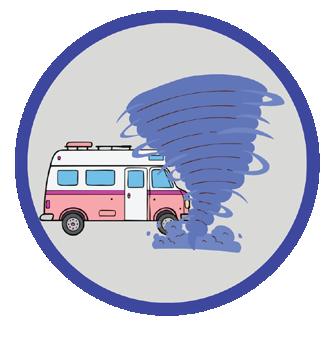
“Three years ago, on Dec. 27, my family was driving back home from Christmas at my grandma’s house in our RV. While watching TV before we left, we saw that there was a huge tornado really close to us, but we needed to be home, so we decided to drive anyway. My dad was tracking it on his phone, and we were taking different roads to avoid it. The rain was insane, and it was so windy that the camper was shaking. We made it back, but it was a little scary.”
-Julia Bauer (11)
“When I was 12, we had a cat named Leo. He, unfortunately, loves jumping in Christmas trees, and he thinks they are his own cat trees. This year, we tried out new globe lights that went around the tree. We came to find out they get really hot, and they break easily. It was the night of the 22nd, and we heard a mini forest and jingle bells hit the floor downstairs. I didn’t really think anything of it until my parents screamed “Leo” and started freaking out. The next thing I heard was for my dad to go grab water. I ran downstairs to the sight of our tree partially in flames, and tipped over. A few of the lights on the tree had shattered. Since they ran so hot, they lit the tree on fire. Our cat Leo had climbed the tree and had found a way to knock the whole thing over. He must’ve been playing with an ornament or one of the strings of lights. Luckily, none of our presents burned, but we had a minorly charred Christmas tree that year.”
-Anonymous
BRAIN ROT: Brain rot is internet slang for the cognitive dulling from consuming low-quality, trivial digital content, leading to shorter attention spans, impaired focus, and mental fatigue, but also refers to obsessive fandoms. -Oxford Dictionary
MARCH
JANUARY
EYE OF RAH
Honorable mentions: Chopped Chin, Property in Egypt
It all started with TikToker Rashad Bowens angrily reacting to a video of rubbing salt on a cucumber, but it soon developed into the final infinity stone to create the great meme trifecta. Bowens was photoshopped to have a cyclopean eye and one dread sticking straight up, and a gong audio accompanying the viral videos. When combined with the other two viral memes, “Chopped Chin” and “Property in Egypt,” the level of brain rot reached its pinnacle.
ASHTON HALL MORNING ROUTINE
Honorable mention: LeBron Songs Popular social media influencer Ashton Hall sent waves across social media with his amazing morning routine. Whether it was dunking your face in a bowl of Saratoga ice water or taking four minutes to hit the water after jumping from a diving board, we all loved watching Hall’s daily content.
FEBRUARY WHAT’S A FATHER?
Honorable mentions: Druski Dance, Friggin packet yo When asked in an interview if he had a relationship with his father, the late rapper XXXTentacion responded by saying, “What’s a father?” While this moment was meant to be emotional and heartbreaking, the internet instead made fun of his vulnerability and called it corny.
APRIL
“CHICKEN JOCKEY”
Honorable mention: Yo-gurt, 100 Men vs. 1 Gorilla
As soon as the “Minecraft” movie was released in early April 2025, millions rushed to the theaters to get a glance. In a scene, Steve, one of the movie’s main characters, played by Jack Black, yelled, “Chicken Jockey.” Thousands of videos of teens celebrating and throwing popcorn in the theater can be found online.
F STUDENTS ARE THE INVENTORS
Honorable mention: Hood Mr. Beast
This meme took the internet by storm when influencer Ben Azoulay made a post arguing F students were the smartest students and had their creativity hindered by school. This meme quickly developed into a social media storm of students clogging school toilets to flood the bathrooms and sticking lead in their Chromebooks to start them on fire.
JUNE
ITALIAN BRAIN ROT
Honorable mention: How I laugh In this phase of the year, we entered the great meme depression. After school ended, people decided it was time to lock in, and the abundance of memes died down. While it started in March, Italian brain rot continued to maintain relevance and provided internet users the scraps they needed to survive the depression. Tung Tung Tung Tung Tung Tung Tung Sahur.
AUGUST 67
Honorable mentions: Barbershop haircut, Adrian, describe our friendgroup
The 67 meme is widely considered 2025’s most notorious meme. The meme gained the most popularity after a clip of Maverick Trevillain was posted on March 31, 2025, where Trevillain yelled “67.” From there, the meme took off, permanently changing everyone’s reaction to the words “sixseven.”
JULY AURA FARMING BOAT KID
Honorable mention: Clankers The aura farming boat kid meme depicts an auraful young boy in Indonesia rhythmically dancing on the bow of a traditional racing boat during a festival. The trend inspired thousands of aura-less teens to recreate the dance and try to match the young boy’s aura.
SEPTEMBER BLUE COLLAR
SPONGEBOB
Honorable mentions: W speed, dudeman
Man, life is just so hard. We are all stuck in the matrix, working day and night. That is why we can relate to Blue Collar SpongeBob, an AI-generated image of a withered, downcast SpongeBob working at a construction site. His collar is blue, his neck is red and he has been working like a dog just to keep his family fed.
OCTOBER
MY MOM’S KINDA HOMELESS
Honorable mentions: Marlon fooled the internet, Doi doi doi
In 2021, influencer IShowSpeed live-streamed a Fortnite match against Acey Daddy, agreeing to buy the fan’s mother a house in Las Vegas if he won, as she was then living in a halfway house. During the match, Acey Daddy begged Speed to purposely throw the match so his mom could get a house by pleading, “Pleaseee Speed, I neeeeeed this. My mom is kind of homeless.” Speed then puckered up to avoid laughing and another player, Pew is Daddy, antagonized Speed, taunting, “Speed, I’m watching your stream. Why are you trying not to laugh, bruh?” In the end, Speed purposely lost and bought Acey Daddy’s mom a house. W Speed.
NOVEMBER
QUARTER-ZIPS
Honorable mentions: Fat JD Vance, Cassius Thundercock
“We don’t do Nike Tech, we don’t do coffee. It’s straight quarter zips and matchas around here.” We and I mean WE are all studious, academic weapons who day-trade on our macbooks at Starbies while drinking matchas and patronizing delinquent behavior.
DECEMBER
AI BABY
Honorable mentions: Gloving, Bird game
The AI Baby meme has taken over comment sections across social media. The meme is an AI-generated baby holding back laughter, often with the word “Son.” AI Baby is so tuff and niche.
by alonso ramirez & will van schepen
by Nadia SchNeider, editor-iN-chief
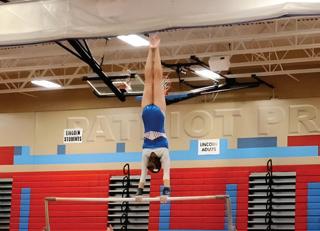
InSioux Falls, the sport of gymnastics has experienced many ups and downs. In 2023, district concerns put the sport at risk of being cut, but fortunately, it was saved until at least the 2026-27 academic year.
Although it is a sport known for being dangerous and posing a high risk of injury, gymnastics has remained a popular choice for many young girls. Consisting of four events, the sport requires athletes to develop and improve in a wide range of skills that they can showcase in different ways.
In women’s artistic gymnastics, the four events are beam, vault, uneven bars and floor. For the beam, the athlete must balance and perform flips and turns on a four-inch-wide, about 16-foot-long platform. For vault, gymnasts run up to and then jump off a springboard, landing their hands on a raised platform that they then use to help them twist and flip through the air. On the uneven bars, athletes must swing and turn themselves around the bars, shifting between the two throughout the routine, and then dismount to the floor with an impressive flip. The last event, the floor routine, allows the gymnasts’ personalities to shine through as they dance and tumble to music on a 1,600-square-foot sprung surface.
Practicing for two hours every school day and dedicating time to all four events is not easy, but the LHS gymnastics team does this as they strive to improve throughout the 2025-26 season. So far, this season is looking promising, as the team has many talented and dedicated young gymnasts who show up every day ready to work hard in practice and at meets. From December to February, the team will compete in 11 meets, leading up to the state meet on Feb. 13-14, where they will have the opportunity to claim a title.
1. I first started gymnastics when I was seven, and I did it because I saw the cool flips Olympians did on TV, and I wanted to learn how to do that too.
2. Floor is probably my favorite because it’s the event where you get to show off, have the most fun [and do] cool flips!
3. I think this season will be our best one yet; we’re all constantly getting new skills and improving our routines. Our coach believes we have the potential to be top three in the state this year, so we’re working really hard to achieve that goal. And no matter the outcome of the season, we’ll know we had fun and grew closer as a team.
4. I just love how it feels like home. Our team cares so much [about] each other, and I always look forward to practice at the end of each day. No matter how my day went, gymnastics gives me a chance to take a break from the busyness of life and just be present.
1. I started gymnastics when I was three years old. I was on a competitive club team for eight years, but this is my first year doing high school gymnastics.
2. My favorite event is floor because I enjoy tumbling and leaping. The best part is the routines; all the other events are less personal with just skills, but floor is where you really get to show your personality, and I always have a lot of fun with the choreography.
3. I think we’re going to have a really great season. We’ve already started well, taking first and second at our first two meets. We have a lot of talent on the team this year and a good shot at the state podium, which would be great for us. We also have a really young team and a lot of potential for growth, which is very exciting.
4. My favorite part is that it feels more like a family than a team. We all really care about the team; we love cheering each other on and helping each other get through things like mental blocks. Even though this sport is “solo,” having the support of your team is really a big thing, and I’m so grateful.
1. I started gymnastics in second grade when I was seven. This was around the time that the 2016 Summer Olympics were going on, and I couldn’t stop doing cartwheels in our living room as I watched Simone Biles. I begged my mom to put me in gymnastics classes and eventually got my wish.
2. My favorite event is bars. I may not be the best at it, but I have yet to get injured doing bars. Because I frequently dislocate my knee caps, it’s the safest event for me.
3. I think our team is going to thrive this year. Not only do we have strong and talented gymnasts, our team chemistry is the best it’s ever been. I look forward to spending my afternoons with each and every one of my teammates for the rest of this season.
4. My favorite part about the LHS gymnastics team is the people. The friendships I’ve made on this team have gotten me through the most difficult points in my life. I would be nowhere near the place I am without these girls.
1. When did you start gymnastics?
2. What is your favorite event and why?
3. How do you see this season going for you and the team?
4. What is your favorite part about the LHS gymnastics team?
1. I first got into gymnastics when I was seven years old and started doing rec classes, but I didn’t start competing until I was 11.
2. Bars [are my favorite], because it isn’t scary, and it feels free when you are swinging around.
3. I think it will be a great season for everyone. I think that we have good chances of placing high this year at state as long as there are no injuries.
4. I love how everyone is so supportive and kind, and it’s really great to see how everyone cheers others on. Even if you do a bad routine, your teammates will still be supportive and make you feel better. Also, it’s really great to have people to lean on and help you when you are going through a tough time or mental block because they have been there too and they know how to make you feel better.
1. I started with a friend at All American Gymnastics Academy in first grade.
2. Floor because it’s fun to smile and have fun while feeling powerful tumbling.
3. This season will be really good because we improved over the summer and gained some good gymnasts this year.
4. My favorite part is the people involved because we all support each other so much, and I even met my best friend on this team that I wouldn’t have met without this sport.
1. I got into gymnastics probably around the age of three because my preschool teacher said she had never had a three-year-old so good at the monkey bars.
2. My favorite event is beam because it takes the least amount of stamina and comes more easily [to me] than other events.
3. I think we have a really good chance at making the top three for state if we work really hard and keep focused.
4. My favorite part is the girls that I have met. They have become my best friends, and this team has really changed gymnastics for me.
1. I got into gymnastics because I tried ballet, and it was too slow for me. I started around when I was three.
2. Floor!!! It’s so fun to dance to the music and a great way to show off your moves with hype music with you.
3. It’s been going well so far. The second meet wasn’t what I wanted, but that’s only pushed me to work harder! The team is doing a great job of getting points, and I think we have a good chance at state!!
4. My teammates!! They are so supportive, and I like to be around them and work skills with them.
1. I started when I was around seven years old.
2. It changes a lot, but right now it’s beam because I’ve been doing well on it this season.
3. So far, the season has been going very well, and I think the team has great potential to continue improving and be a top team at state.
4. My favorite part about the team is seeing my teammates every day and becoming friends with new people through the sport.
1. I started gymnastics about eight years ago. I first got into it when one of my friends invited me to an open gym.
2. Bars is my favorite event because I find it easier than all the other events.
3. This season is going well.
4. My favorite part is all the things we get to do together.
For the 26th season in a row, the LHS gymnastics team is coached by the experienced Les Coin. Before coming to LHS, Coin coached in Rapid City for seven years. When he was young, he was introduced to gymnastics as an athlete, and then became a coach later in life. He enjoys being involved in LHS gymnastics for many reasons, which include the athletes, parents and his assistant coach, Rebecca Mager. He is excited to see what this season will bring for the team.
“I’m proud to coach this amazing group of gymnasts. I’m thinking they can be in the top three teams at state,” said Coin.
by Alice GerAets
Bowling is typically a fun date night, family activity or pastime; but, for students of LHS, it is their winter varsity sport. LHS’s bowling team has been around for several years, yet a multitude of the student body has no understanding of the strategy behind the game. There are many factors that contribute to the scoring and success of the sport.
Scoring for bowling follows a 25-point system. Each team has six bowlers, and matches are three against three. If the bowler wins their game, they are given one point. They can also gain another point if they have the higher series.
A series is where a bowler bowls three consecutive games. The team with the highest game is awarded three points, and four points to the team with the higher series. Both teams’
points should add up to 50.
If there is a tie, with both teams having 25 points, it will be broken by a pin count. A pin count is where players see how many total pins were knocked down. Although if this also ends in a tie, the match will end in a tie.
While bowling may seem easy, bowlers must perfect specific skills and have a strong mental game. With bowling, they have to stay focused on their score and nothing else; they have to stay focused not on their opponent’s score but on their own, and
staying concentrated on their next point and series.
Elsa Aarbo, captain of the LHS bowling team, is participating for her third year in a row. For Aarbo, her biggest struggle when it comes to competing is staying positive and in a focused mental state.
“I make sure I have a clear head [because] if I am thinking about other things, I do not [perform] as well as I know I could,” said Aarbo.
In bowling, there are many different strategies, such as the
style of bowling ball, the amount of speed and spin used and even what footwear is appropriate. One type of bowling ball that bowlers use is a strike ball; this type of ball is designed to curve, commonly known to bowlers as “hooking.” There is also a spare ball, which is a lighter ball designed to go straight. Bowlers tend to use this when they have trickier pin placements and they need a predictable path. Speed and spin help the ball have a larger curve and more power. To get a strike, one has to hit the side of the front center pin, so their ball must have a curve and hit that point perfectly. No matter what tips and tricks are used to perfect your bowling ability, it is an exciting activity that requires focus and fun.
WHY SCHOOL FEELS HARDER IN THE WINTER
WHAT IS SEASONAL DEPRESSION?
Seasonal depression, often called Seasonal Affective Disorder (SAD), is a type of depression that shows up more in the winter months. It can be linked to less sunlight and different changes in your daily routine. Signs can show as low energy, difficulty concentrating and a change in mood, which many students experience as school goes on. According to The Daily Campus, “Seasonal depression affects up to 20% of the world during the winter for many reasons.”
“The hardest part is getting yourself to class because it is freezing outside and you don’t have the motivation to get yourself out of your dorm,” said Taylor Lamothe (The Daily Campus).
adult and pediatric sleep coach, FDN-P. “Sunlight is our body’s cue to start our daytime circadian rhythm. The later the sun rises, the later our body wants to wake up,” according to Sleepoplis. Without the sunlight to kickstart your system and suppress melatonin (the sleeping hormone) while increasing cortisol (the alert hormone), getting up early can hinge on pure willpower.
people all day at school, and begin to isolate since it is the “easier” option. When students spend less time socializing, it can affect their mood, especially since it is colder out and the shorter days make it a little harder to stay connected.
by Soranje PheniaS
Whenwe arrive at school, we get there before the sun even rises. Winter makes school feel more difficult due to the cold temperatures. During the colder months, it is harder to get up; students feel more tired and less motivated than usual, so it makes it harder to concentrate on the school work and on the teacher who is teaching. Days seem longer since you are dragging to get up, and with less sunlight in the day, it makes the days shorter. Winter does not just change the weather; in a way, it changes the mindset and the attitudes we arrive with and changes how school feels.
Because it is colder, it seems like there is no getting warm until students make it to school. Especially if they don’t have the time to warm up the car in the morning, causing students to drive/ride in a cold car, making the morning even worse.
HOW DOES IT SHOW AT SCHOOL?
The winter weather can cause more absences and more sweeps due to the bad weather. If students are going through seasonal depression, they are more likely to notice it when in school. Many are more tired and even drained at school. They may struggle with keeping up and being able to focus on their schoolwork due to a lack of motivation. They are less likely to complete and turn in work because they are not fully “locked” in because they feel “separated” or withdrawn, and are less likely to participate in class work.
According to Sleepopolis, there are a few things working against us when it comes to winter wakeups, like lack of motivation, time changes and temperature drops.
“It’s definitely more challenging to wake up early in the winter, as there are fewer hours of daylight and the sun rises later,” says Kelly Murray, certified
Winter can also affect students socially. When school ends, sometimes they get lucky, and it is warmer outside than it was when they got there. Most of the time, it is colder when they leave, and sometimes even more snow has come down. So, students are more likely to just go home instead of making plans to hang out with friends.
After long school days, there is often a lot of homework, and constant yawning throughout the day. A hangout with friends always sounds fun, but can feel like more “work” they are going through instead of a fun time. Due to this, students start to feel lonelier even though they are around
Winter can make school feel harder, and unfortunately, some students go through SAD every year. But it is important to remember that as the days get longer and the sun shines more, energy and motivation will start to come back. Until then, students need to take things one at a time, and things will get better.
WAYS TO DECREASE S.A.D.:
LIGHT THERAPY
A special light box that you can look at within the first hour of each day. Light therapy mimics natural outdoor light and appears to cause a change in brain chemicals linked to mood.
PSYCHOTHERAPY
Also called talk therapy, psychotherapy known as cognitive behavioral therapy can help you with identifying negative thoughts and changing them, learning how to manage stress, and building healthy behaviors like increasing physical activity and sleep patterns.
MEDICATION
Some people with SAD can benefit from antidepressants, especially if their symptoms are severe. Some medication can take several weeks to show benefits, and it may take a few types of medication until you find what is right for you.
SELF-CARE
In addition to your treatment plan for seasonal affective disorder (SAD):
•Make your environment brighter.
•Get outside.
•Exercise regularly.
•Normalize sleep patterns.
by EloisE GEraEts, Editor-in-ChiEf


New year, new me. The saying that lingers as January begins. More than 45% of Americans create a New Year’s resolution to better themselves mentally or physically. The most common resolution is to have a healthier diet, workout routine or physique in general. But most people fail to make a plan that suits their lifestyle. When it comes to making a successful plan for a New Year’s resolution, the biggest mistake is choosing the exact same goal from years prior that has failed. More than 13% of Americans have reported a fall off less than a month into their resolution. With that, making sure to alter your plan slightly can end up making the biggest positive impact. Another tip for success in your resolution is to have friends or family keep you accountable for your goals. Focus on making your goal a habit. A 2009 study showed that it takes roughly 66 days to form a habit. So, continuing to be rigid in your schedule for those 66 days will be the hardest part, but the reward after will be insurmountable.
If you are choosing to set a New Year’s resolution, health officials suggest creating a SMART goal. This acronym stands for specific, measurable, achievable, relevant and timely. Setting resolutions with these tips in mind helps lead individuals to the best version of themselves. Growth isn’t always linear, so there will be challenges, but making sure to keep the end result in mind will continue to fuel one’s body. The most difficult hurdle to overcome is the second Friday in January, known as “Quitters Day.” Statistics have shown that most resolutions are eventually abandoned by the end of January. However, if you make it to the start of February, it’s smooth sailing from then on.
There are multiple students at LHS who set goals and aspirations for the new year. One in particular has her mind set on graduating in January of 2027. Isabelle Huffman is a strongly driven junior who plans to hold herself to such goals. “I am choosing to graduate early because I only have a few credits left and plan on going to tech school after college,” said Huffman. She plans to keep herself accountable over the 2026 summer by taking dual credit courses. Her strongest attribute is planning out her day in order to be successful. A scheduled lifestyle will help Huffman stay on track to graduate early, along with meeting mandatory deadlines. Huffman has tried out a resolution before but is determined to succeed for this year. “If I ever made a resolution, it was for a week and then I stopped. So, this will really be my first New Year’s resolution that I am going to get accomplished because I have the motivational mindset to do it,” said Huffman. Huffman believes the most important piece of advice she can give is to set designated time out of your day to complete your tasks. “At the end of the day, you are your own person and know the best choices for you, so be the person to set yourself up for success,” said Huffman. So, what will your resolution be?
dEsiGn by EloisE GEraEts
Howcould a tradition that emerged in the late 1800s still be relevant today? Eating 12 grapes on New Year’s Eve originated in Spain, with each grape representing one month of the upcoming year.
The relevance of this tradition does not come from the grapes themselves but instead from the intention behind eating each grape. Initiating a positive outlook on each month to come has been scientifically proven to benefit the mental health of those setting objectives, as well as create an overall successful year.
According to GeneSight, “Setting intentions can be positive for mental health by providing a flexible, adaptive approach to achieving what you desire. An intention is simply a statement, word or idea that serves as a guiding principle.”
As a society, we constantly strive to be a better version of what has come before. While we may not agree on what is better for the greater good or how to get there, at the core, all goals are set to end in improvement. With the new year being a universal marker of fresh beginnings, it is the peak time to design for change.
Using the grapes as a physical reminder of the resolutions we set for ourselves, consciously or subconsciously, can influence our point of view for the future. If a positive goal is set, it will be more likely that the goal will be achieved.
Eating 12 grapes alone is used to set positive motivations for the year, generally speaking, but if you eat 12 grapes under a table when the clock strikes midnight, the objective of this tradition shifts.
by ElliE Quinn, Editor-in-ChiEf
When eaten under a table, it is said that this twist brings love or a soulmate in the new year.
“I think it is an extra motivator to get what you want in the year, which is why most people find that [eating 12 grapes] works,” said a LHS student.
With the impact of social media and the broader pop culture, finding a ‘soulmate’ has been something people strive for continuously. Like with any change, people seek to grow in the new year and want a person to grow alongside. Especially in teenage culture, there can be a sort of pressure to ‘couple up.’ With events that center around having a date, it is normal to want a boyfriend or girlfriend, even if it was not something you were previously interested in.
Participating in trends, like eating 12 grapes, can bring motivation into the search for a relationship. While it is not guaranteed to work, by manifesting a relationship into your future, it will be more likely that your actions will attract what you desire.
While it may be obvious, results are not guaranteed when participating in such a fad; at LHS, of the students who have eaten the 12 grapes, 50% of them found themselves in a relationship, and only 50% of those students are still in their said relationship. Relying on trends alone will not bring what you desire into your life. It takes further motivation to work towards yourself and your personal goals to see them play out in the coming months. After all, “It is very hard to do; it was hard to eat 12 grapes in less than one minute,” said an LHS student.
dEsign by ElliE Quinn artwork usEd with pErmission by Canva