A collaboration Between Nature and Architecture...

A collaboration Between Nature and Architecture...

 SKN Popa Laura
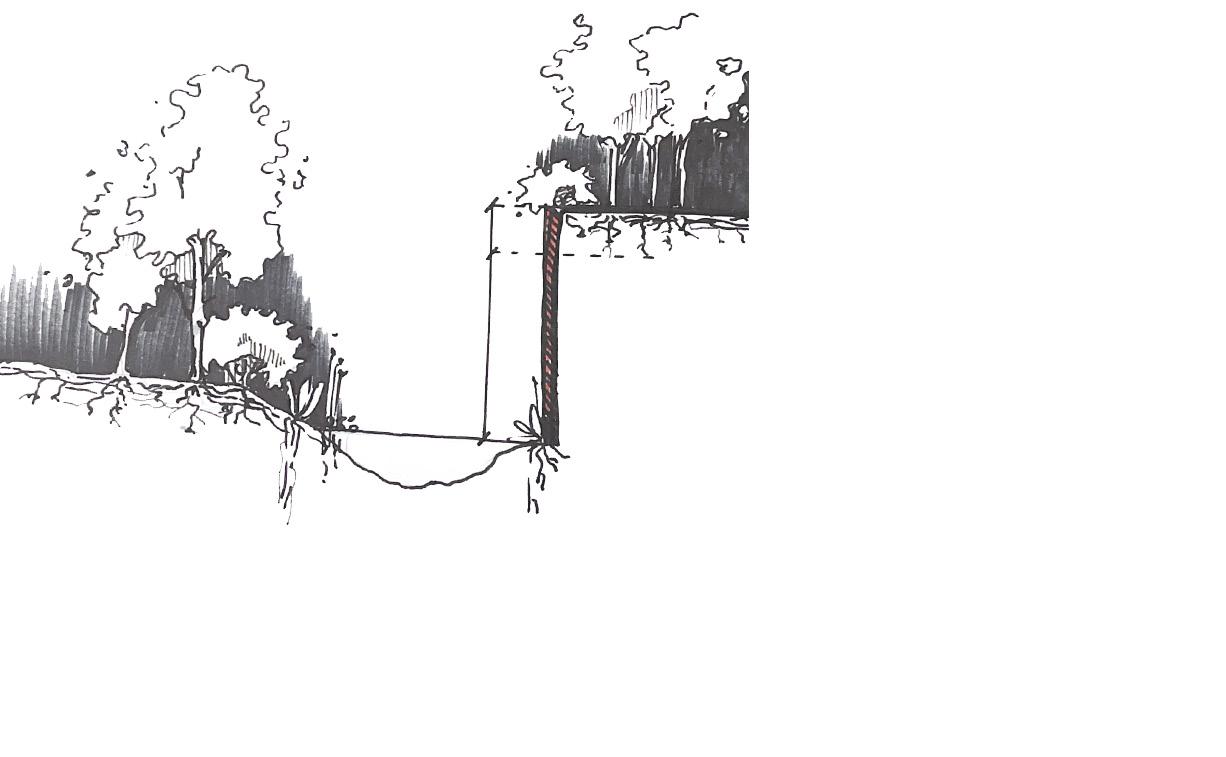
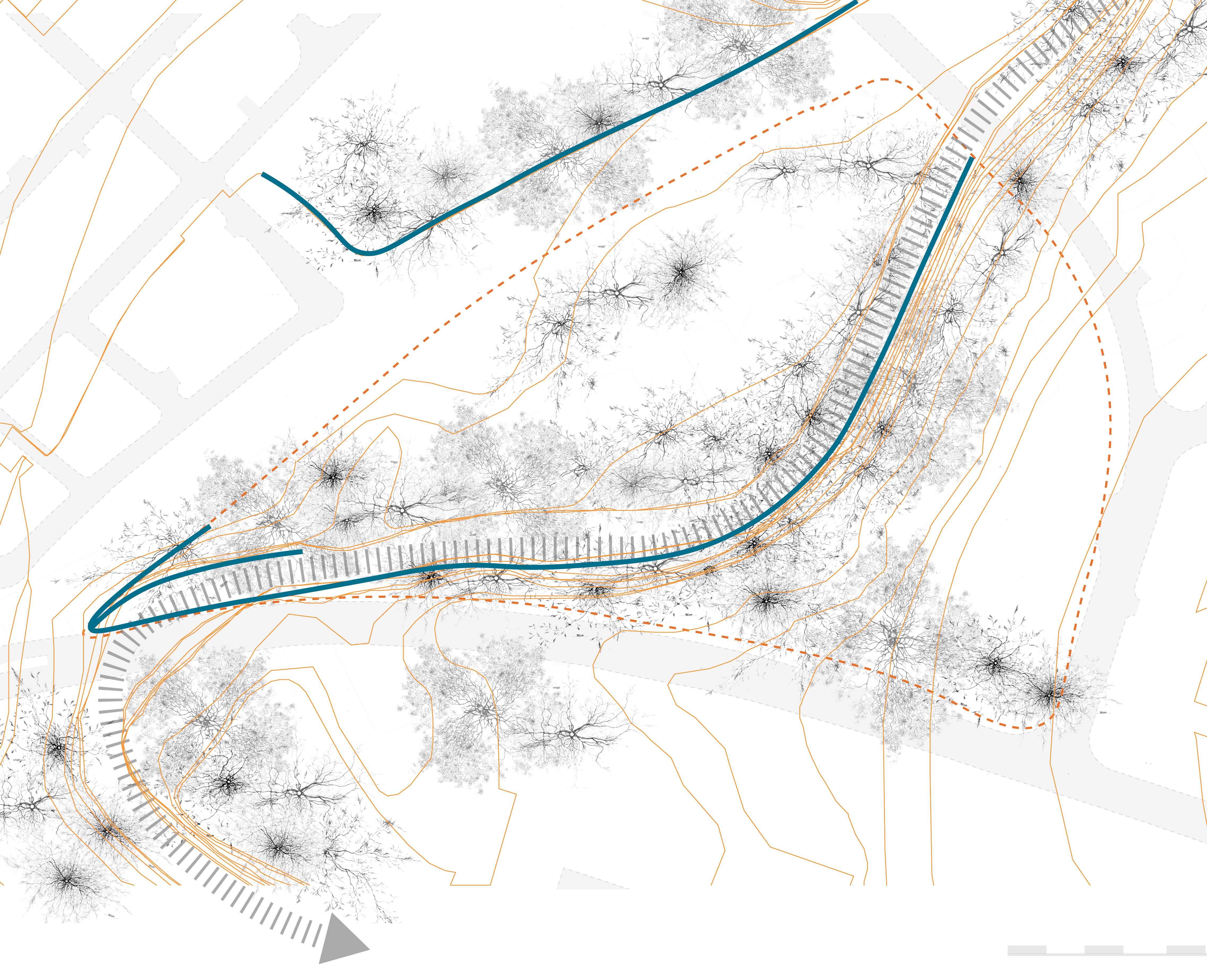
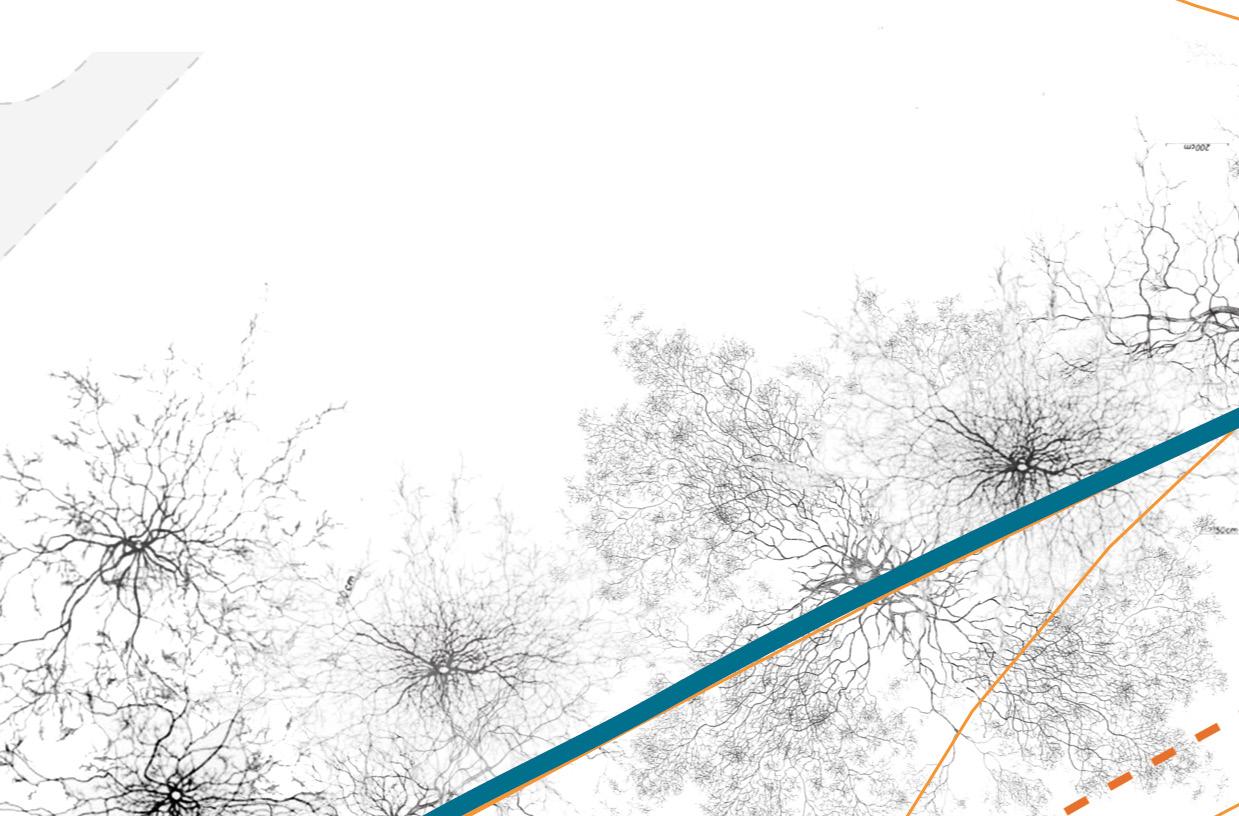
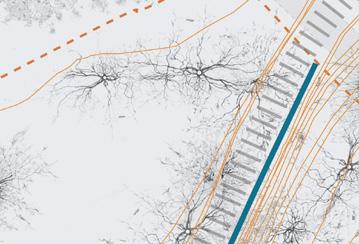
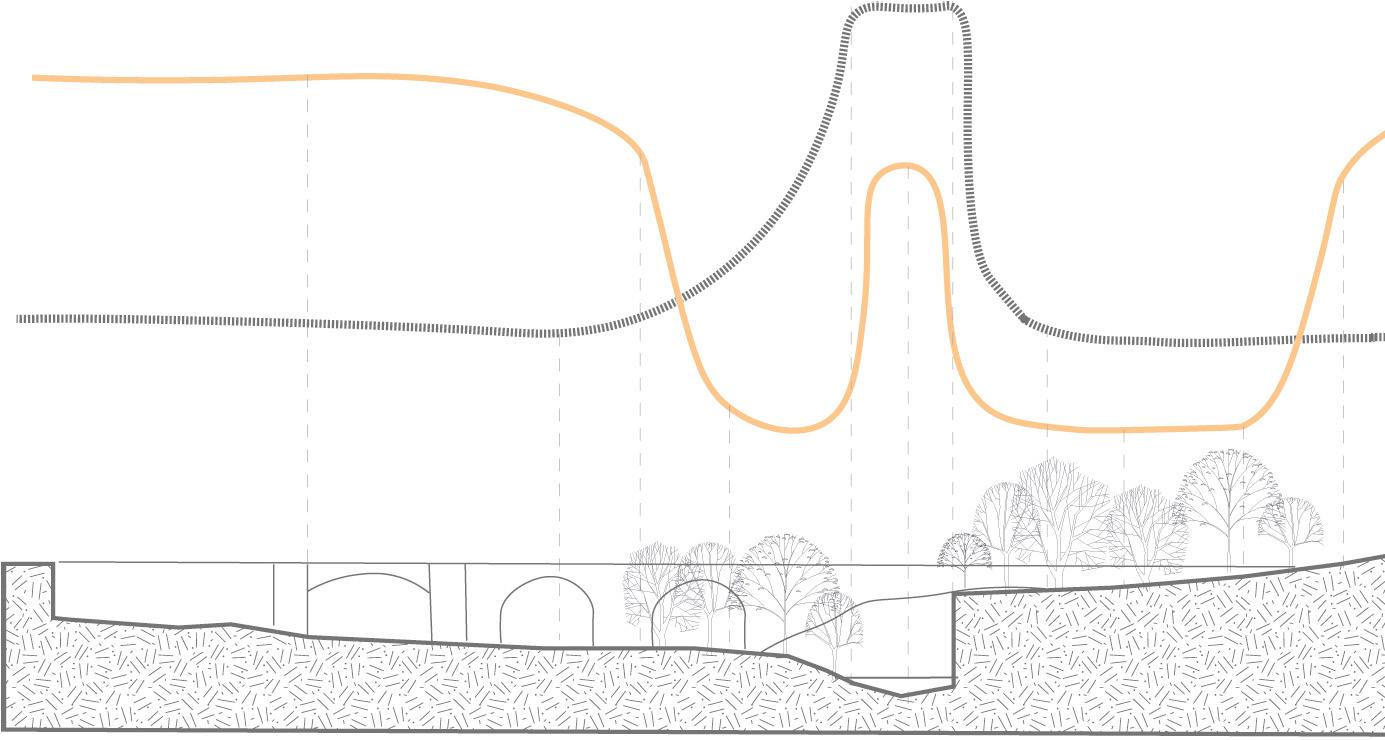
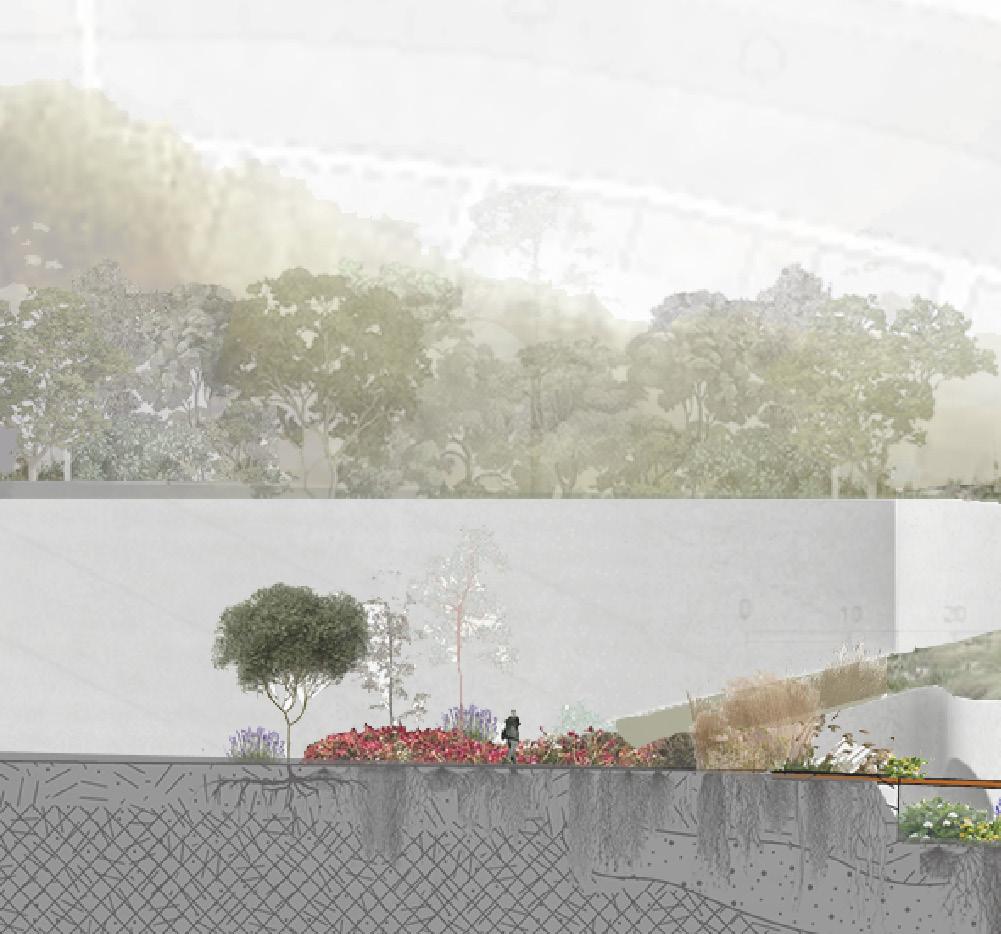
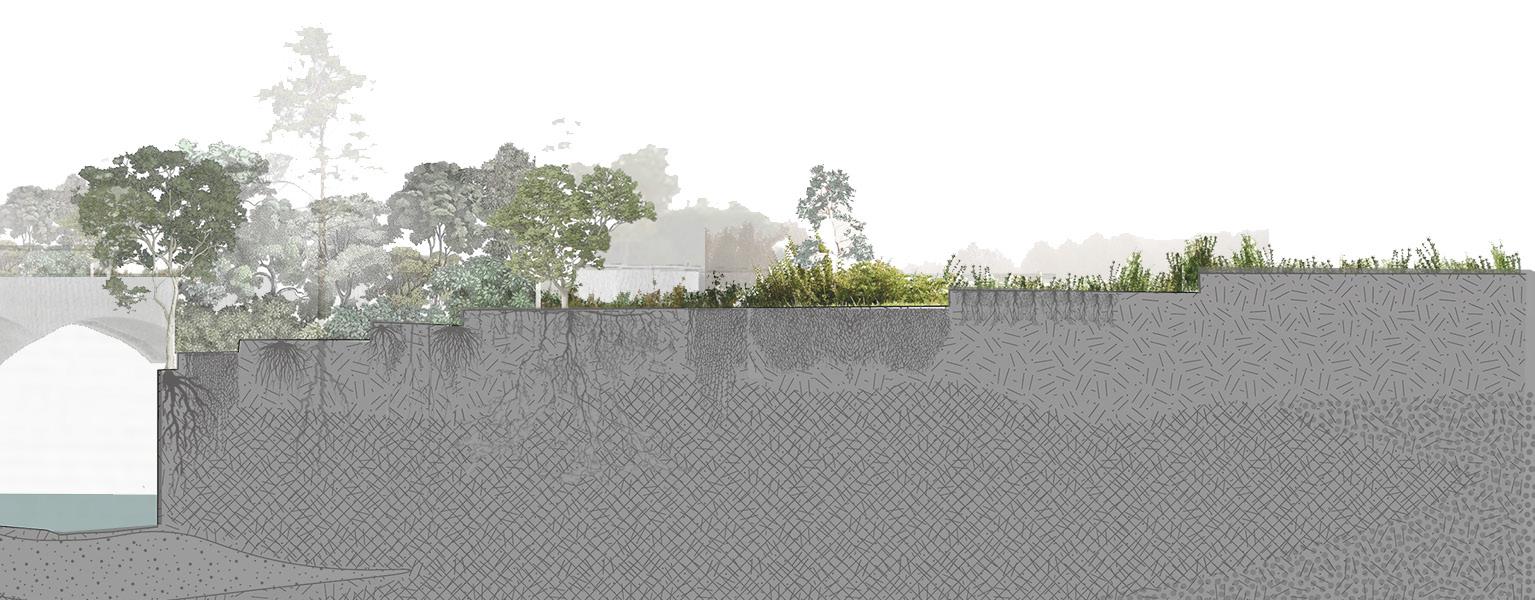
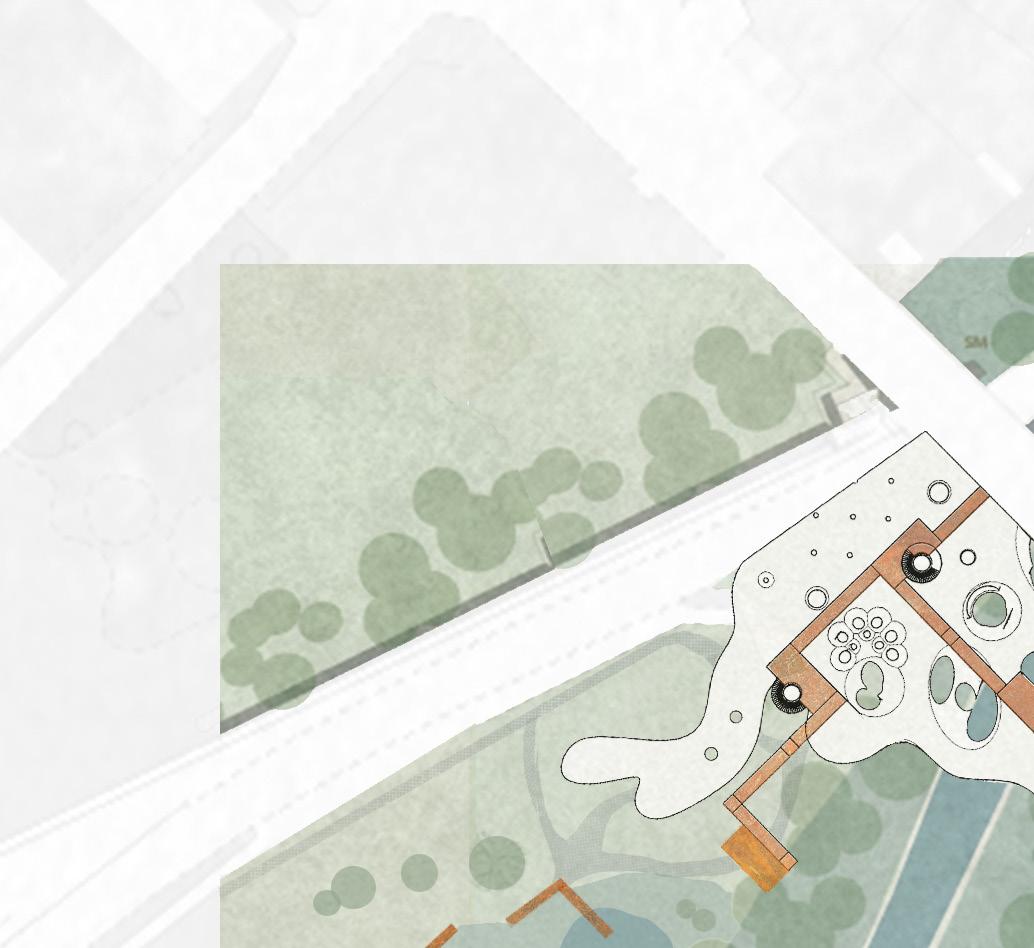
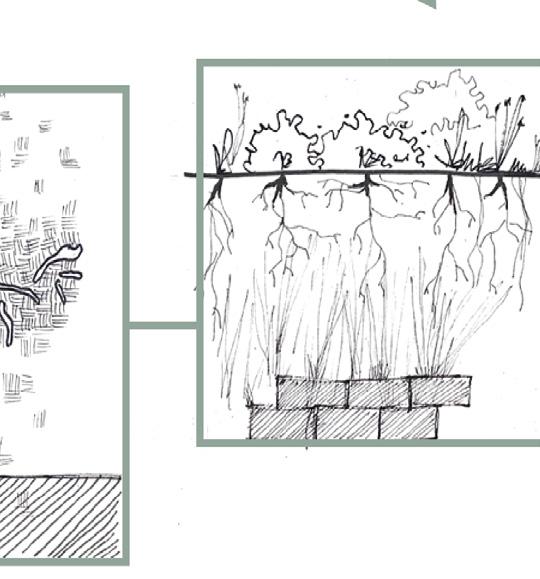
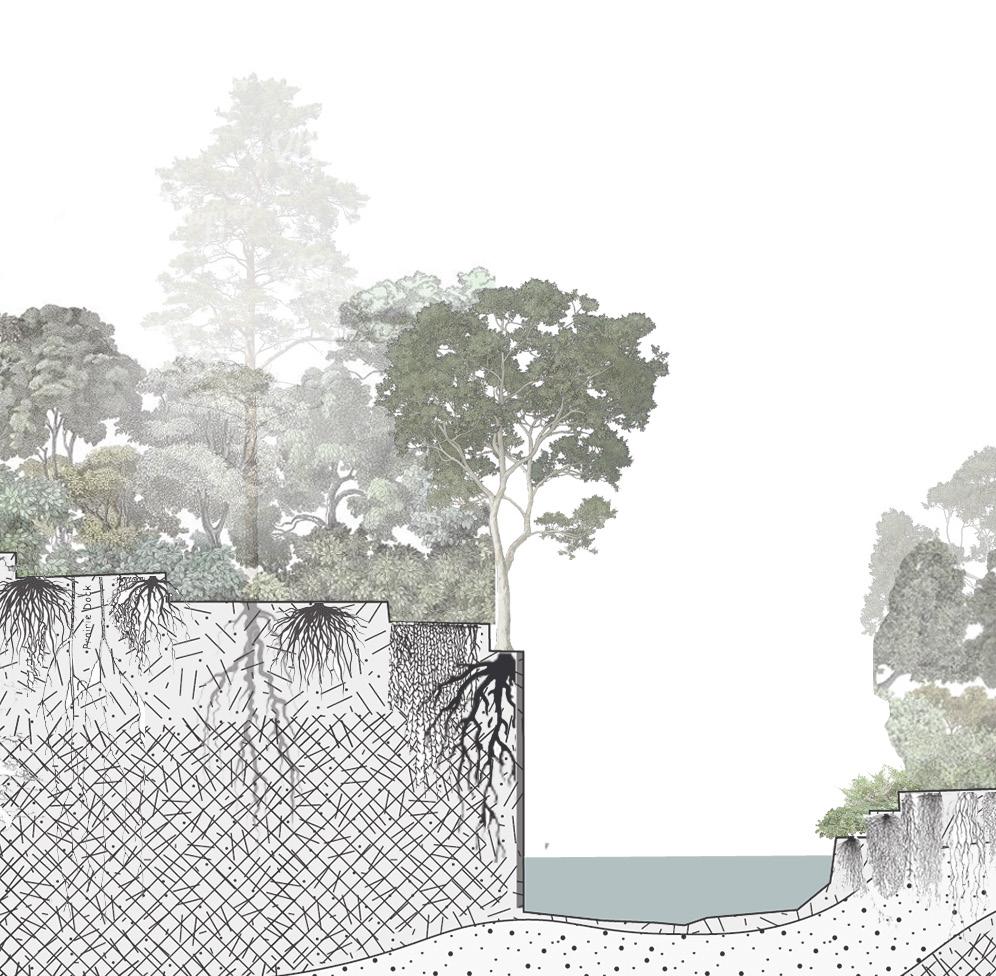
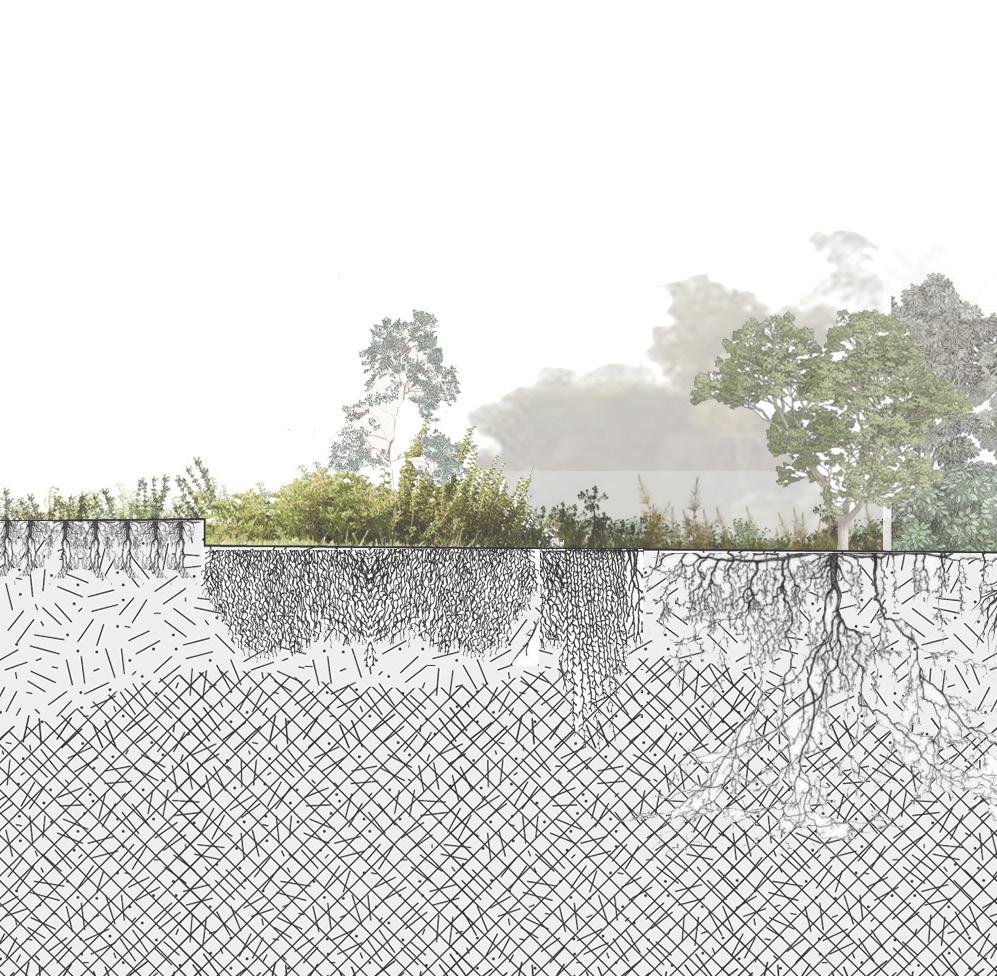
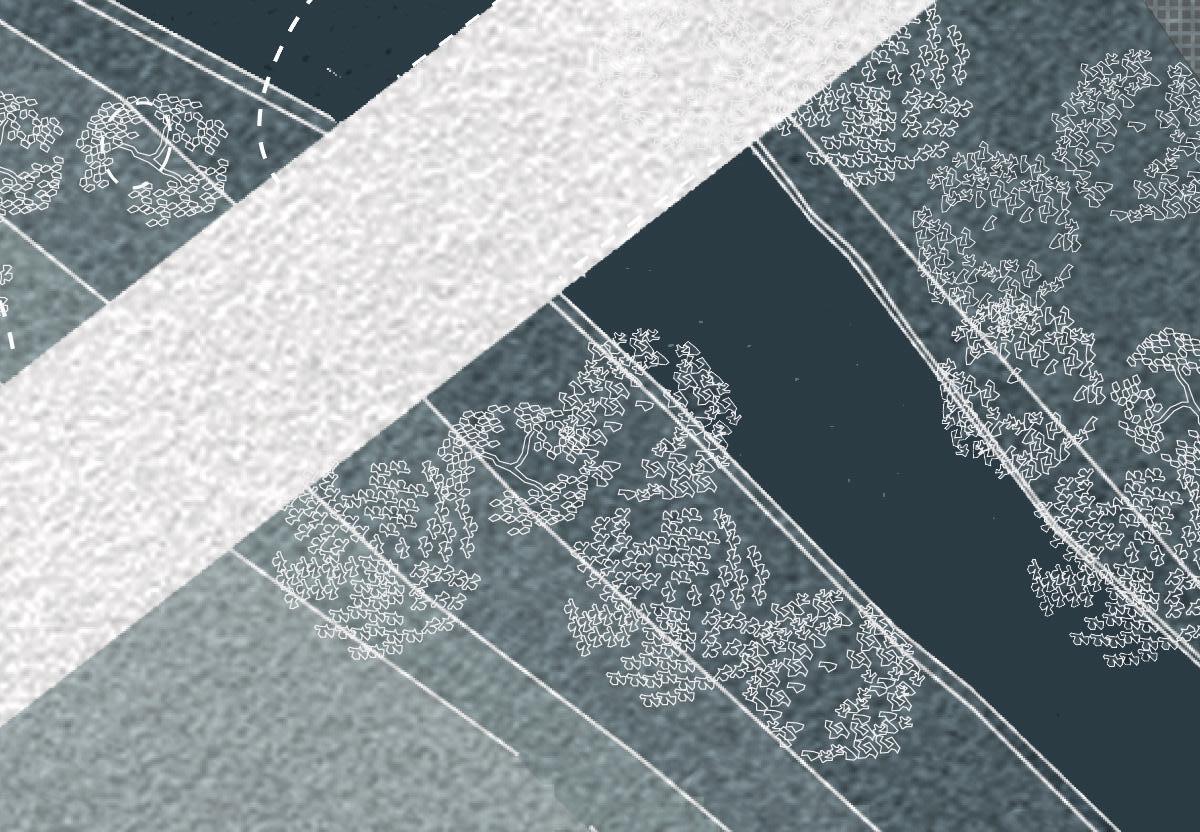
Several drastic level changes break the connection between root systems. The roots of the most common trees on site usually only go down up to 2m.


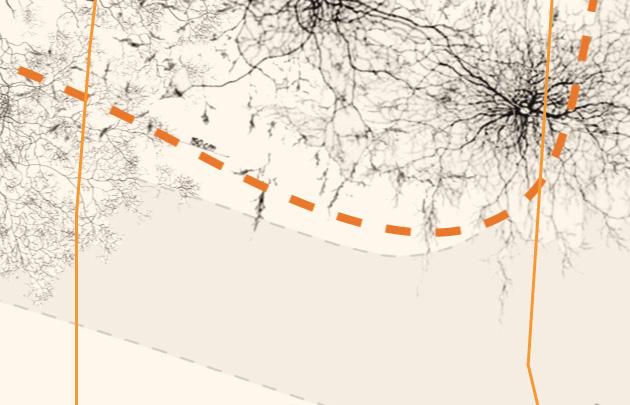
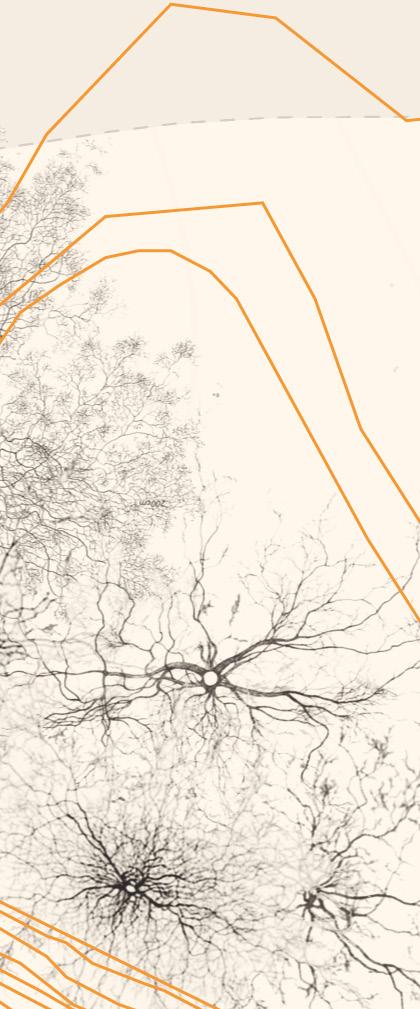
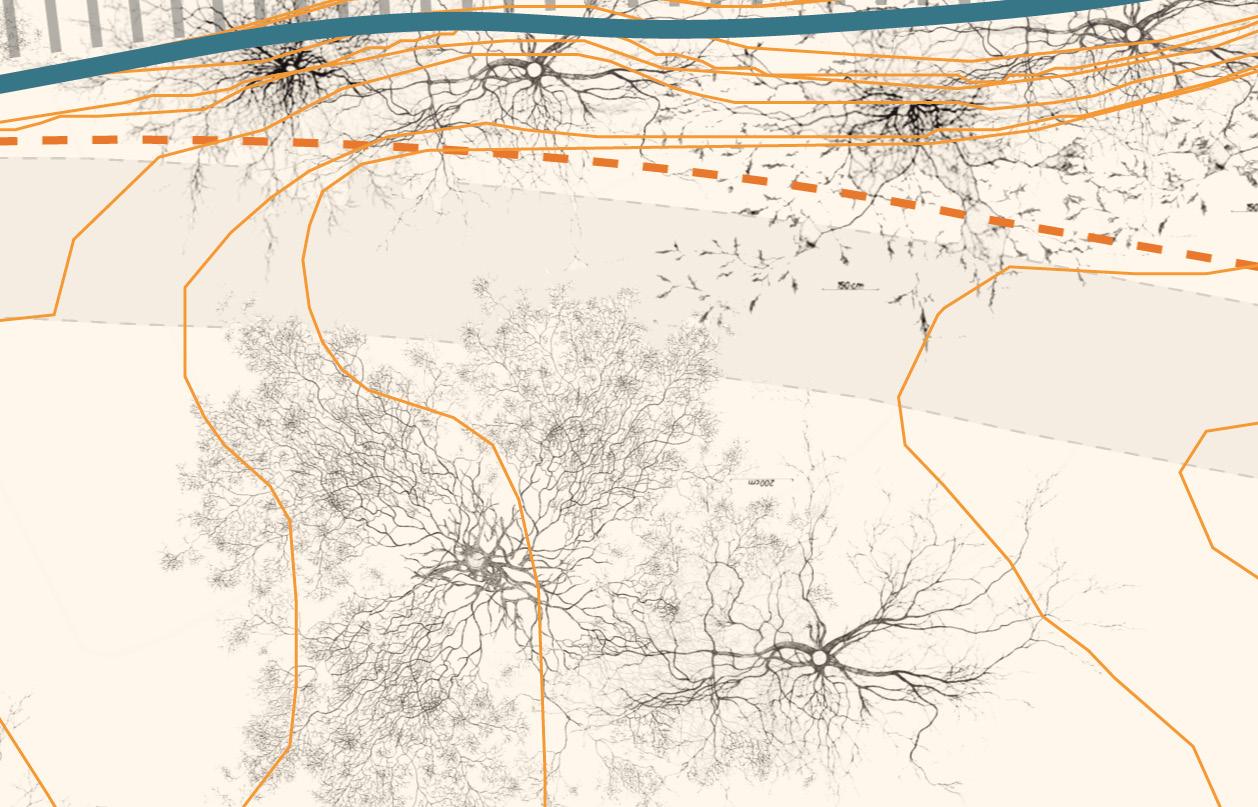
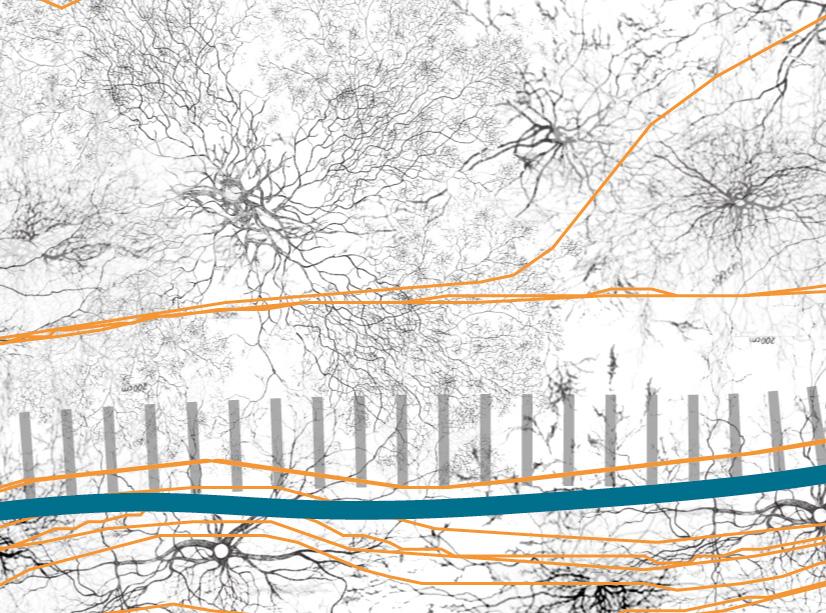



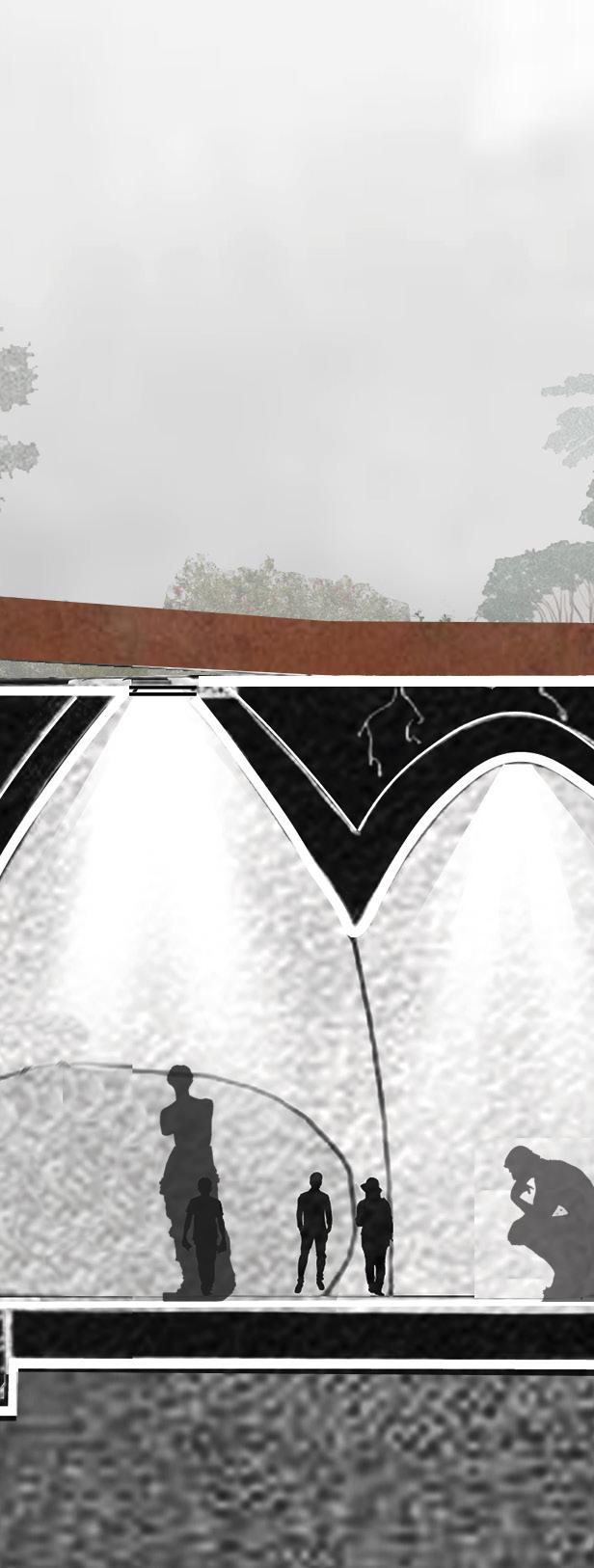
site
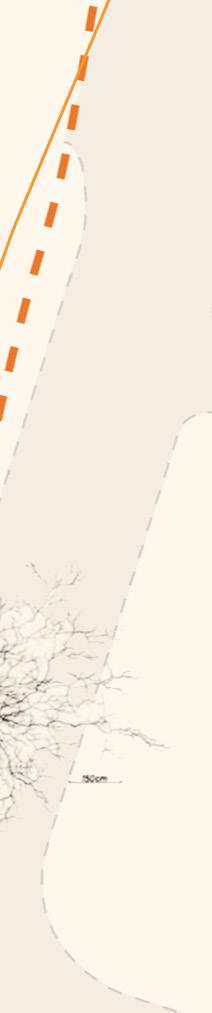

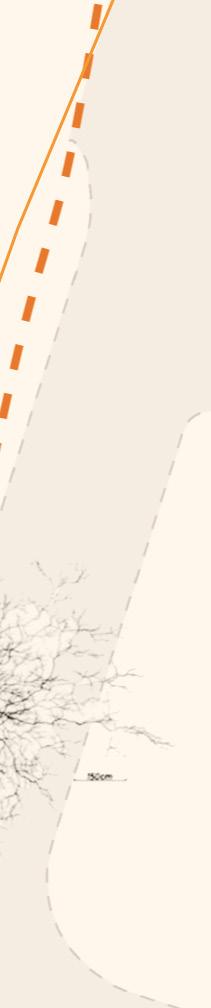

river
point of view in the sketch







mushrooms
presumed area of micelium

fence and drastic level changes
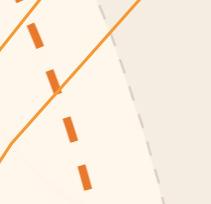
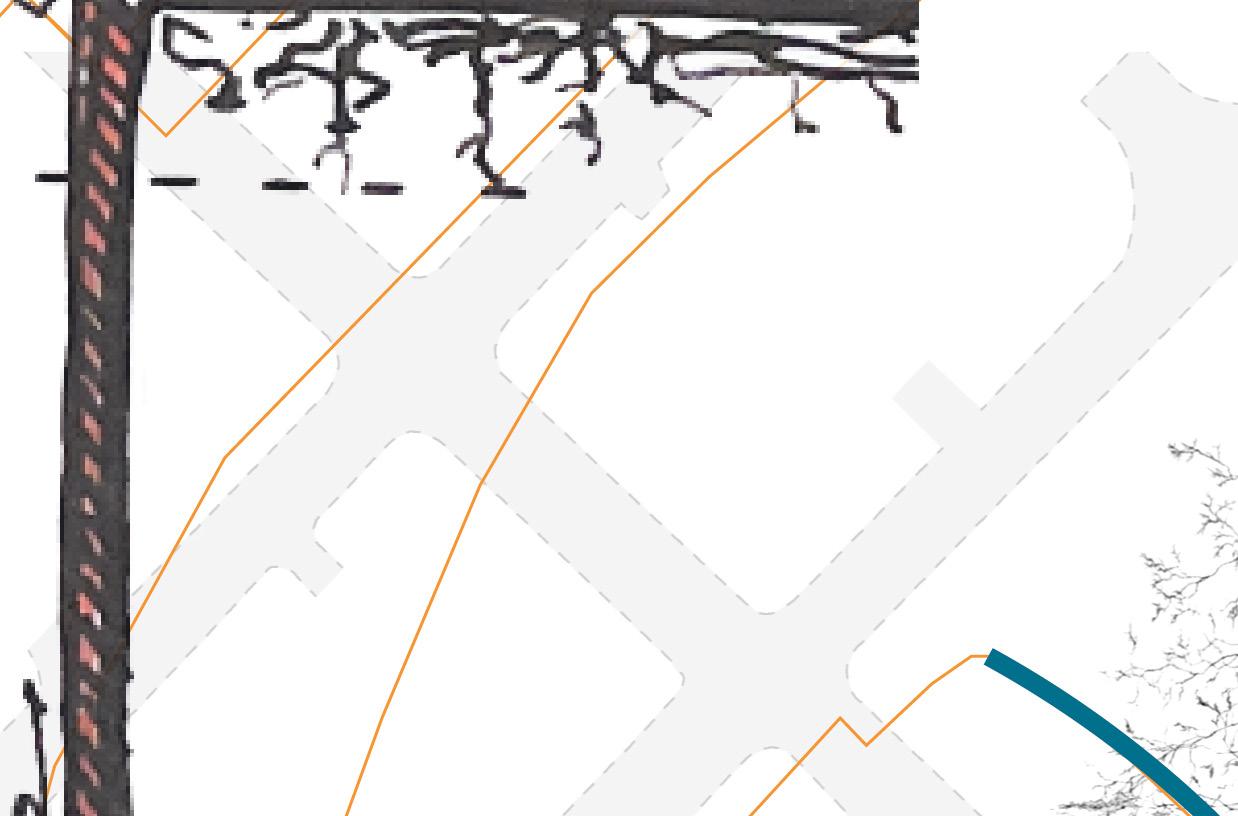
Brick fences not only separate levels of vegetation but the potential visitor from experiencing the site directly.
My motivation with this project is to create a symbiosis between the users; an architectural intervention that all life forms can benefit from; something that comes in the completion of nature, rather than against it. In doing so, I focused my research on four distinct groups:
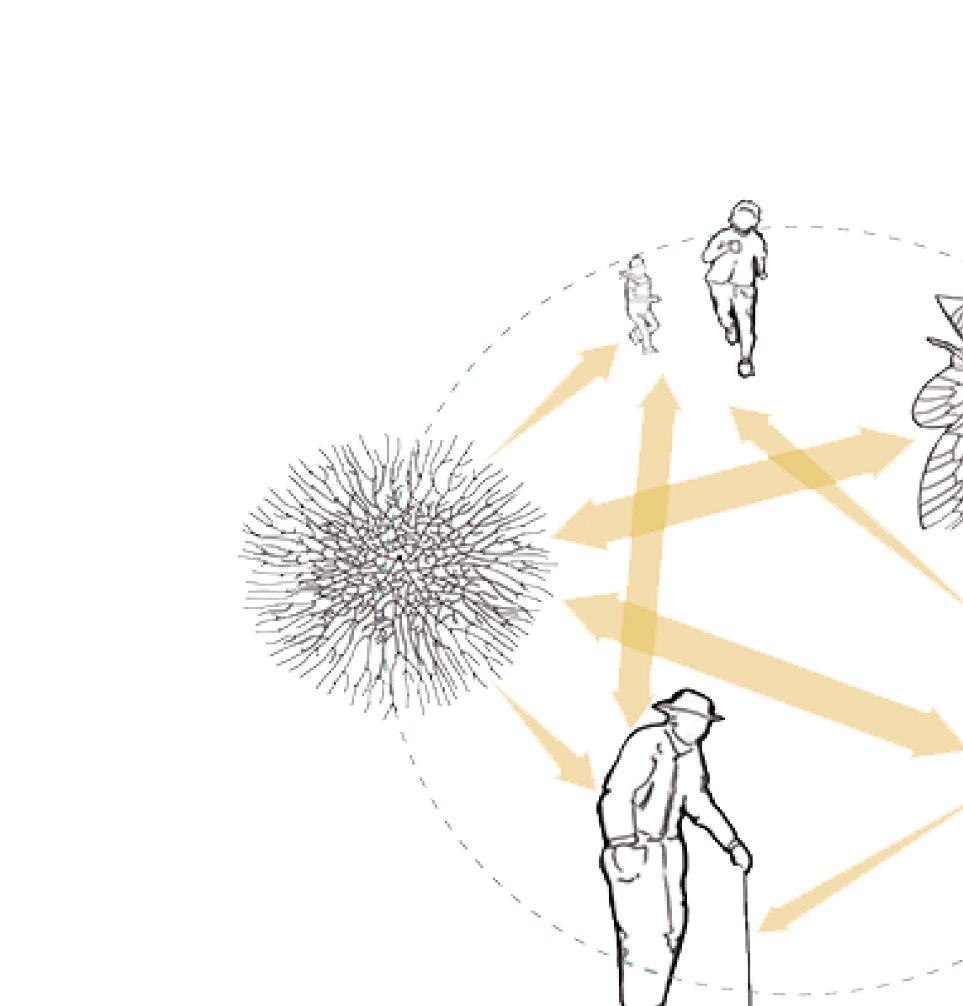
humans, fungi, flora and fauna (concentrating on insects as part of fauna). In this symbiosis humans will contribute with bio-based leftover products, in the shape of compost that will provide nutrientd for the mycelium in the colonisation stage.

My research pointed towards a strong mutually beneficial relationship between termites and mycelium. A ‘mycelium garden’ can be found in the centre of the colony/hive. It serves the purpose of an extra corporeal digestive system. The mycelium is being fed by the termites with pre-digested plant mater.
In return, the fungus not only provides food (mushrooms) for the larva (which can not yet digest more complex matter) but in doing so, it also cleans the nest by disposing of the faeces. This makes it the perfect building material when designing for insects.







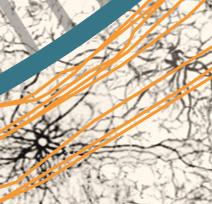
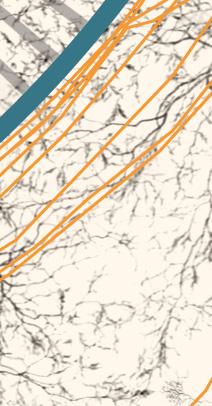
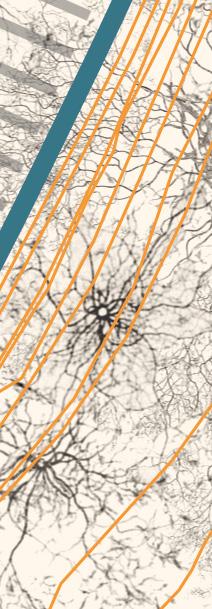
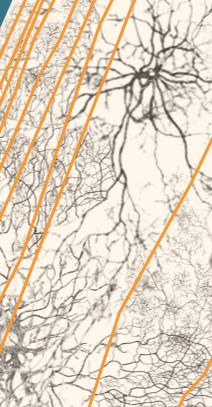
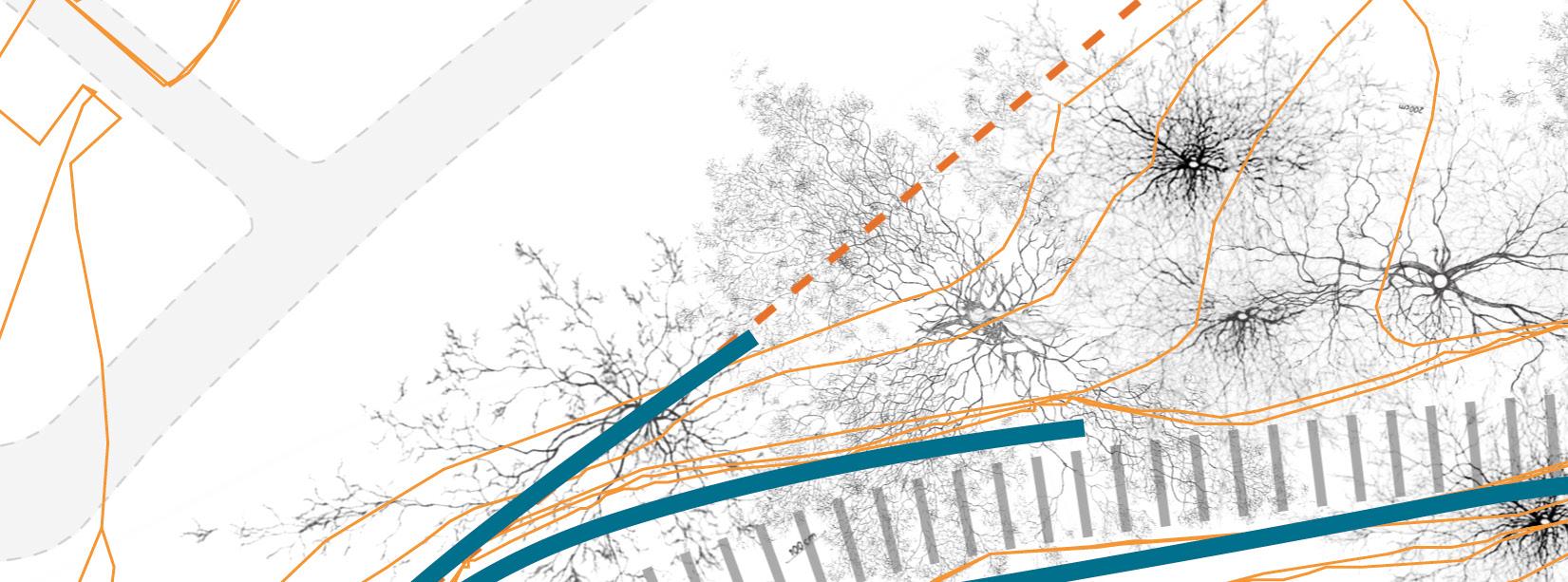
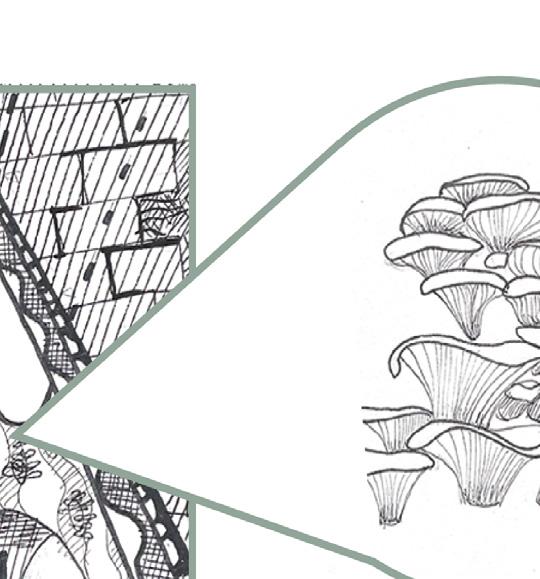
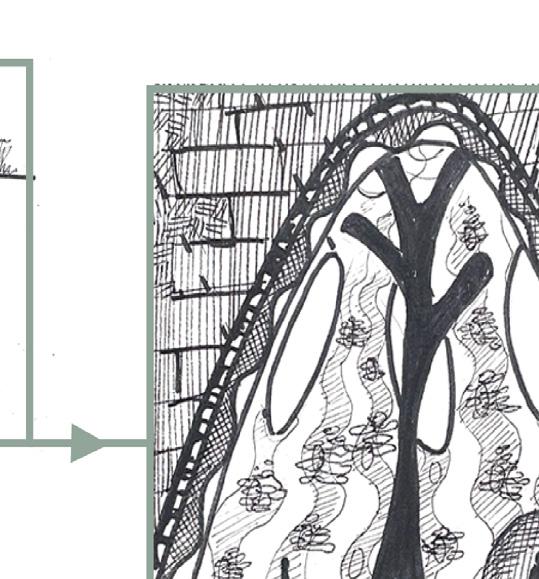
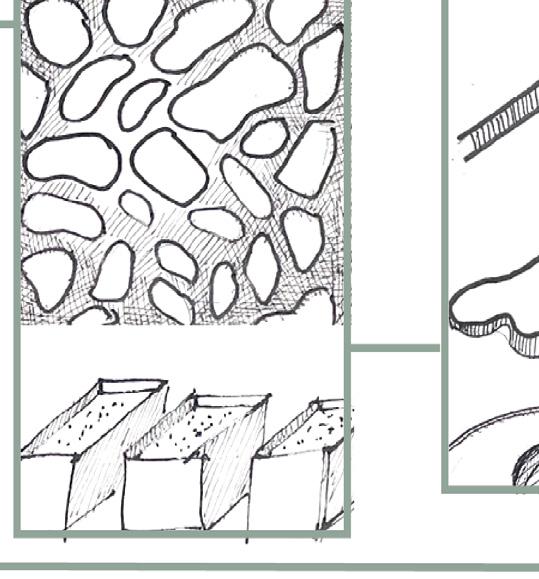
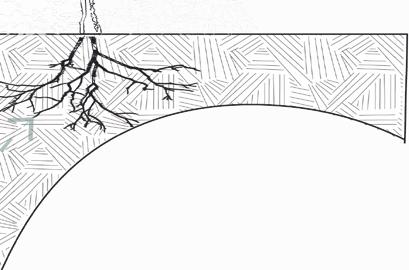
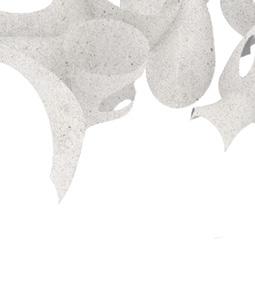
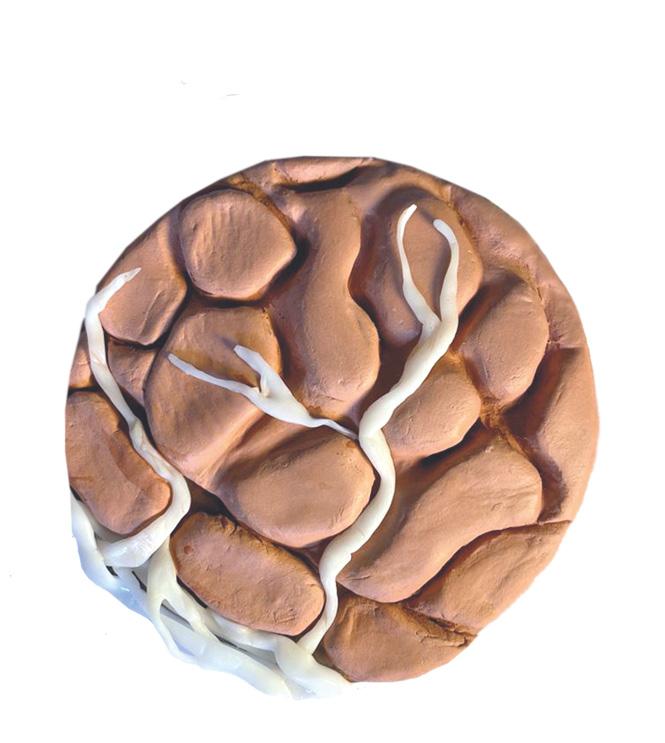
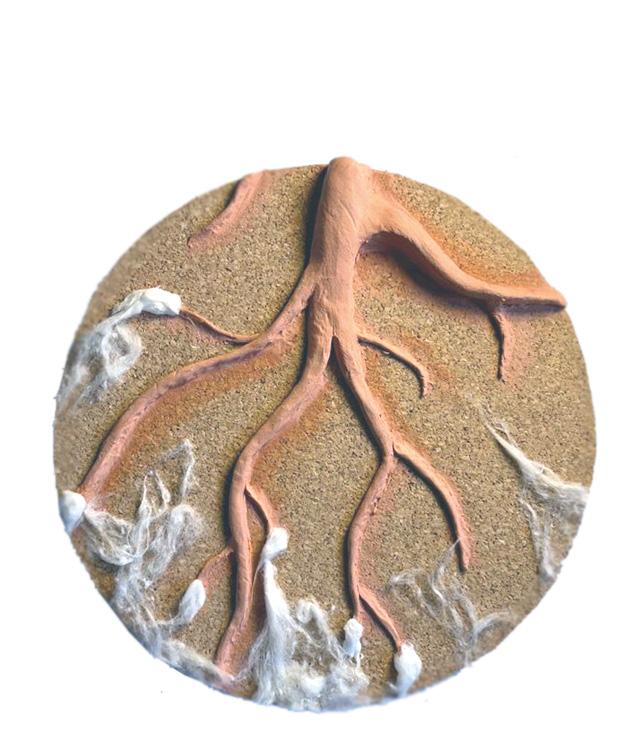
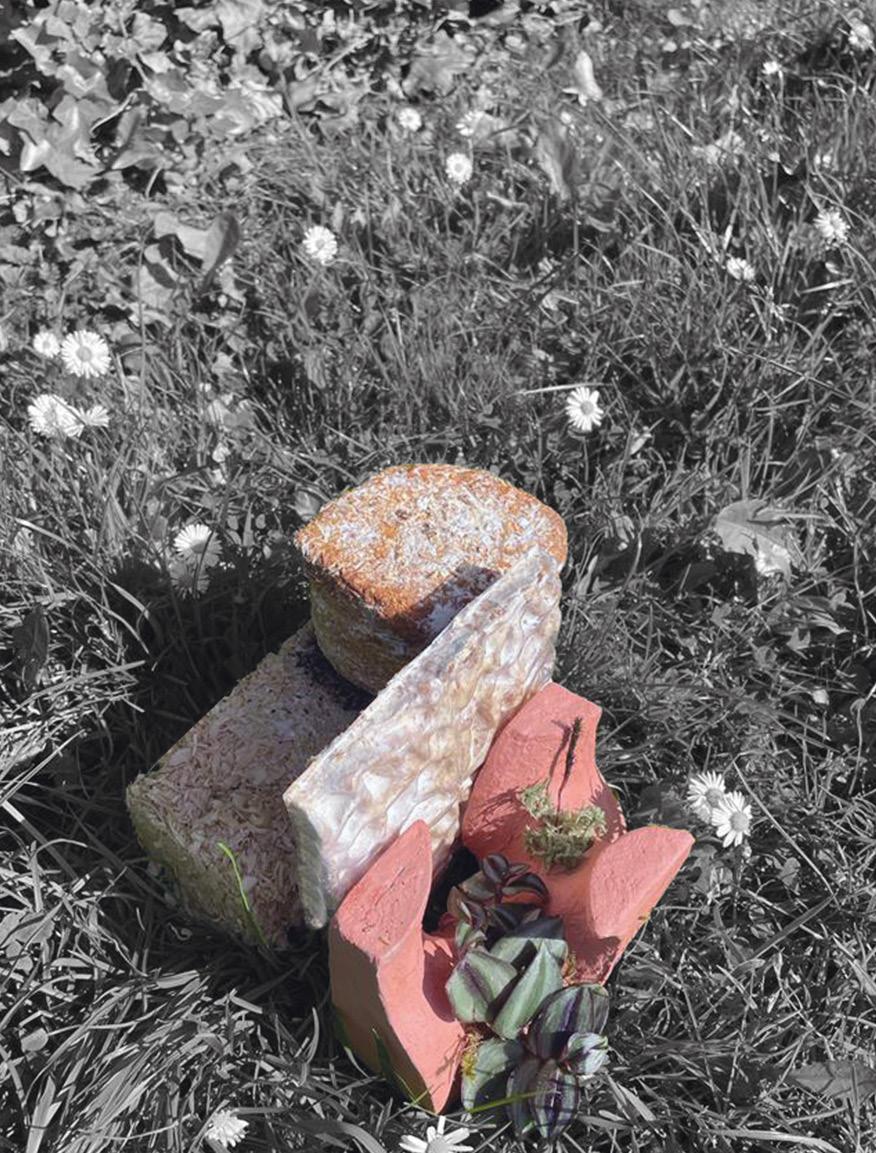
An ectomycorrhiza (img 1) is a form of symbiotic relationship that occurs between a fungal symbiont, and the roots of various plant species. While the mycelium receives nutrients and water, it gives back sugar and carbon. This exchange is crucial for the health of wide green areas. Furthermore, mycelium has been found to connect trees between each-other, facilitating the transfer of nutrients between element of flora.
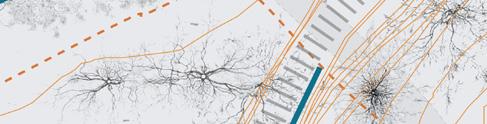




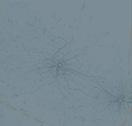

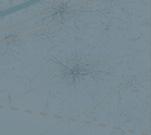



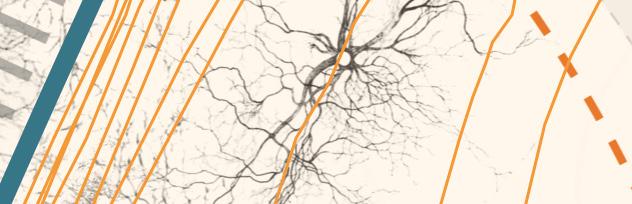
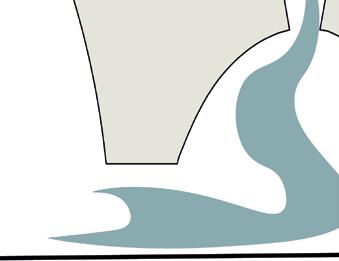
In this context, ‘mother trees’ (the older trees) play a massive role in helping seedlings develop into healthy trees, as the number of connections is directly proportional to the age of the tree. On the site, this connection is broken by an abrupt level change (blue line). My plan is to patch up this separation between the vegetation on site by creating a connecting system from above using mycelium.


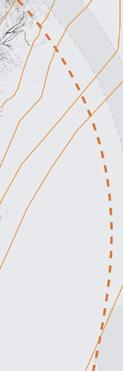
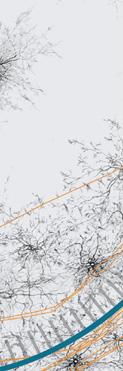


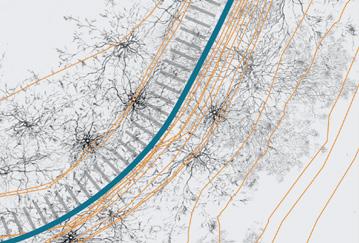
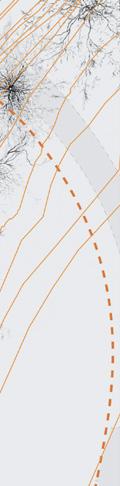






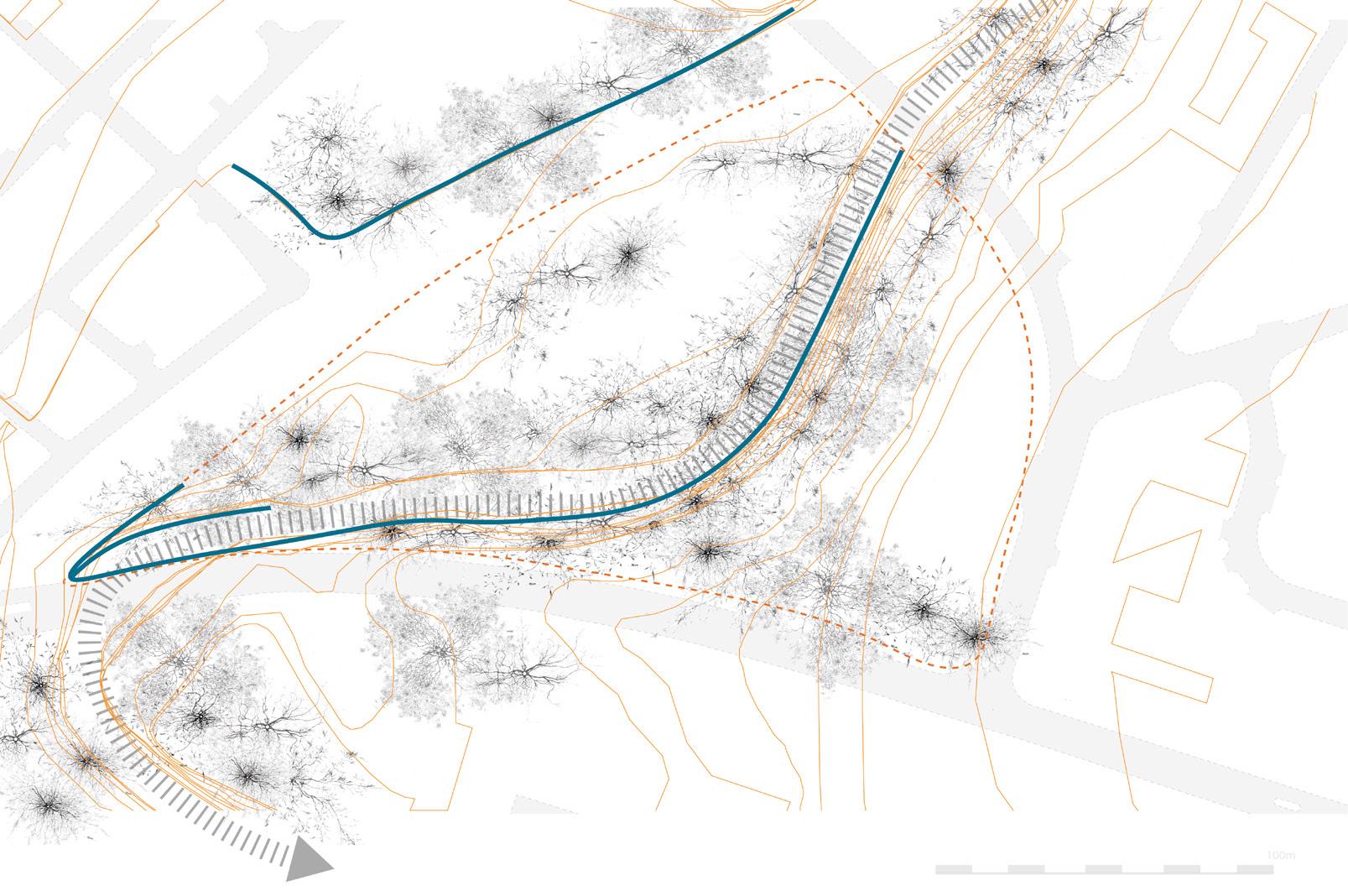


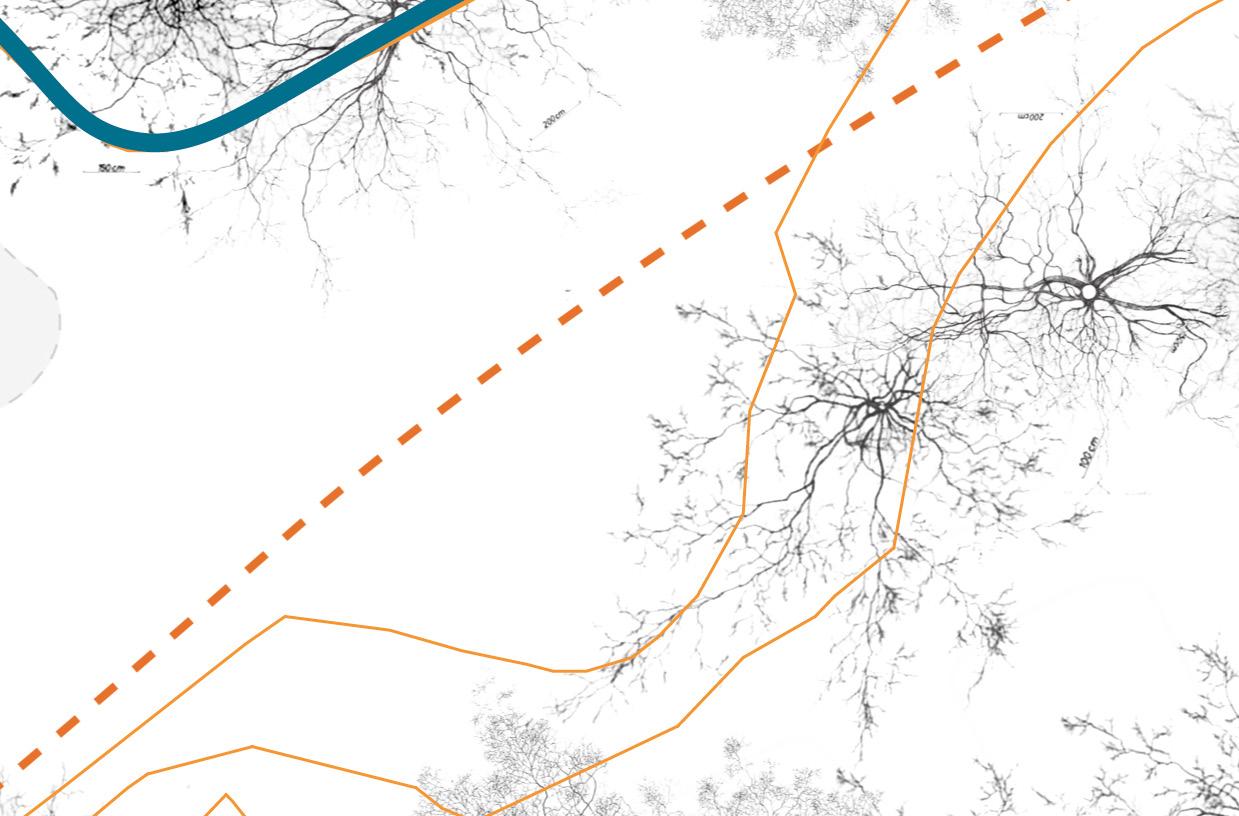
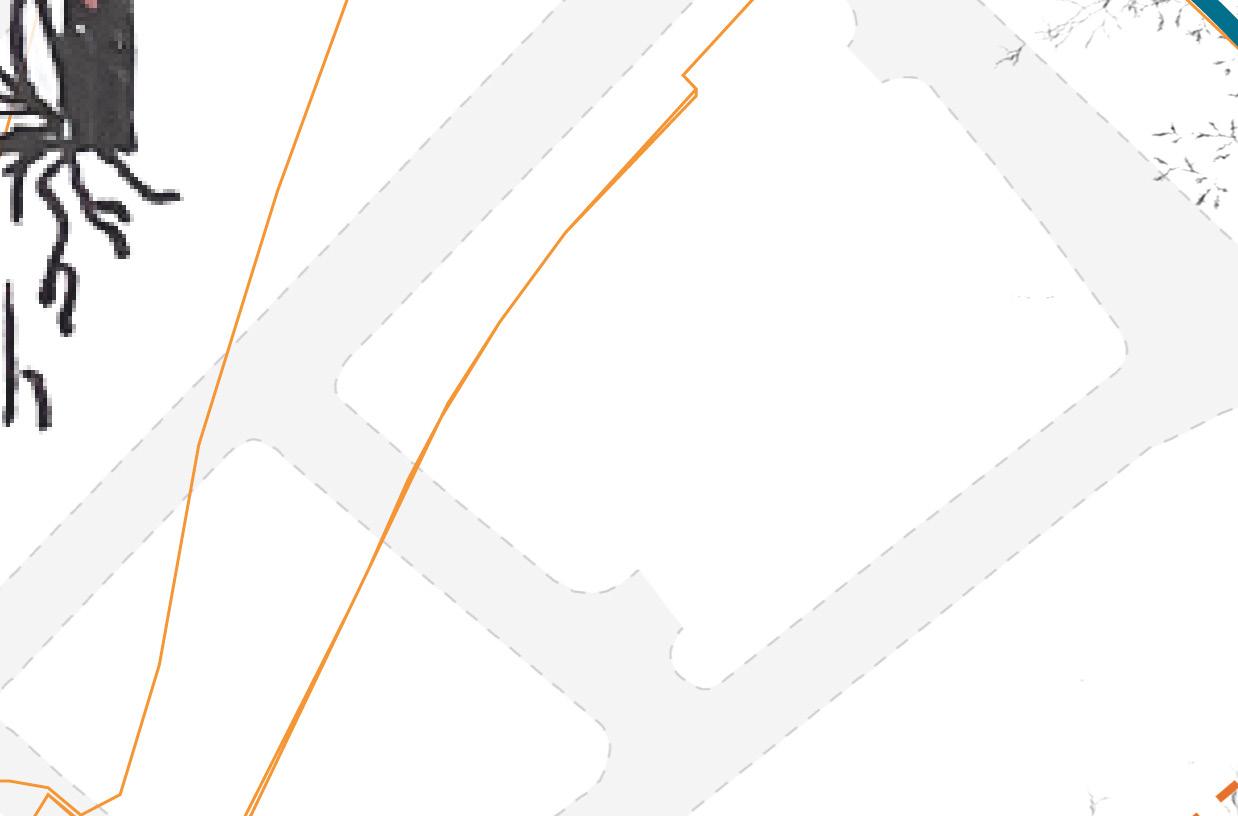
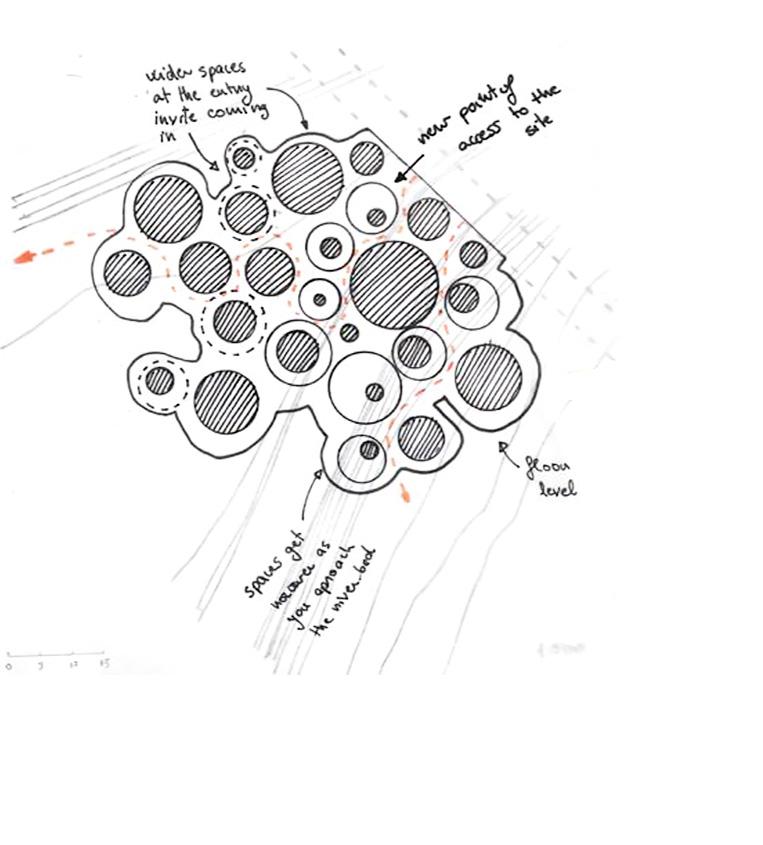
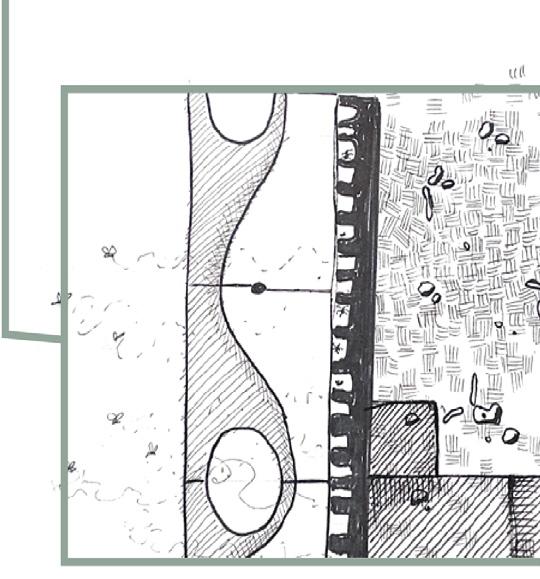
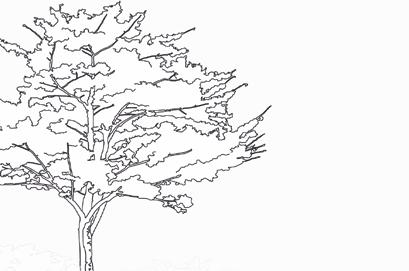
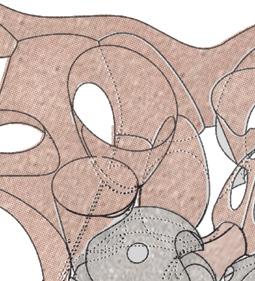
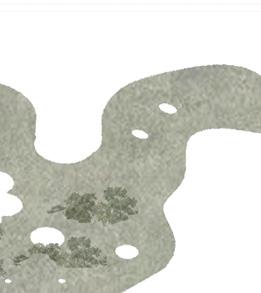
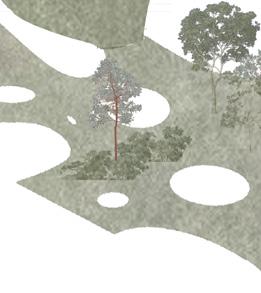
The Next step was to tackle the human experience. In doing so, my focus was on creating strong plays of light and challange scale in a way that produces a contemplative state for the user. I developed three types of spaces, in relation to the amount of sun and rain they allow through. They were then ‘arranged’ on site in accordance with the already existing conditions (mapped in img 2), as to disturb the vegetation as little as possible. The result created an environment in which humans can experience the site through the lens of non-humans. (in terms of climatic conditions)
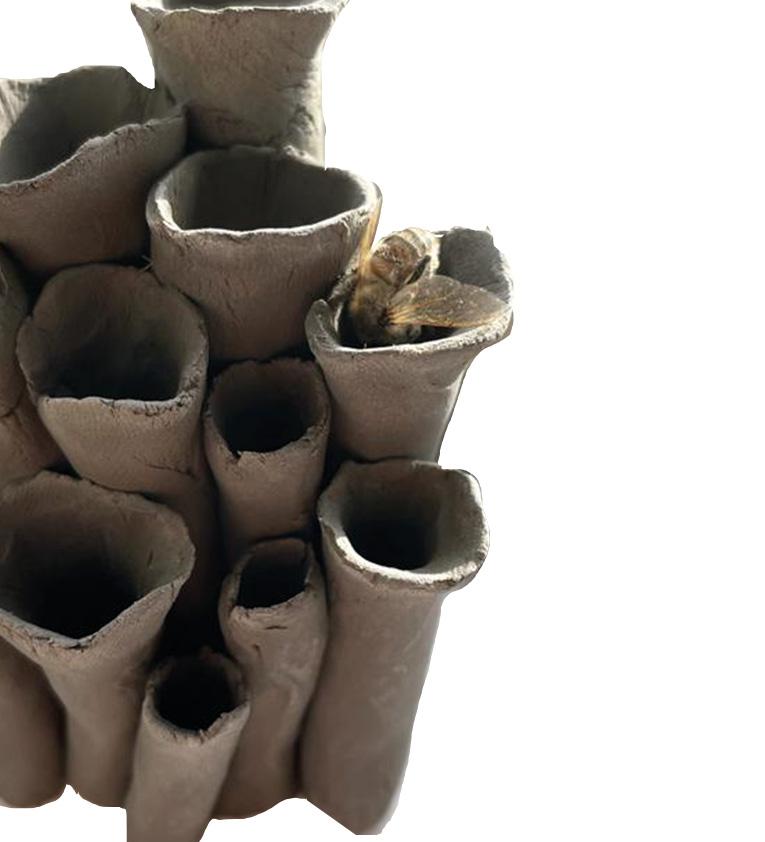
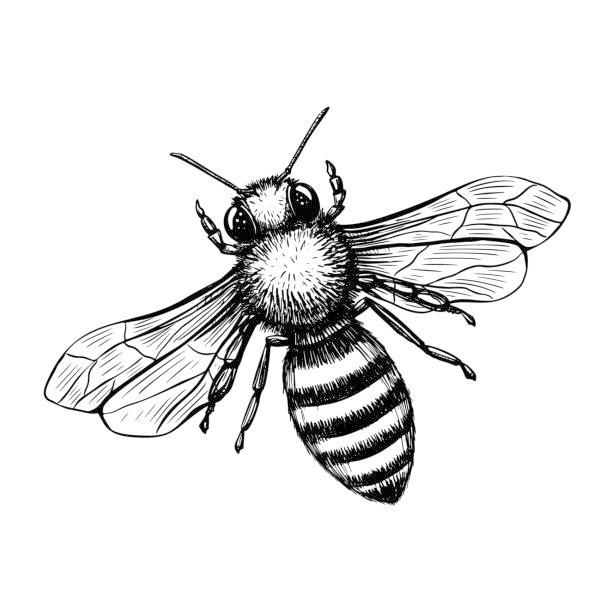
Solitary bees do not build hives but rather look for similar structures they can use. Straws or circular voids are frequently used as nest sites.


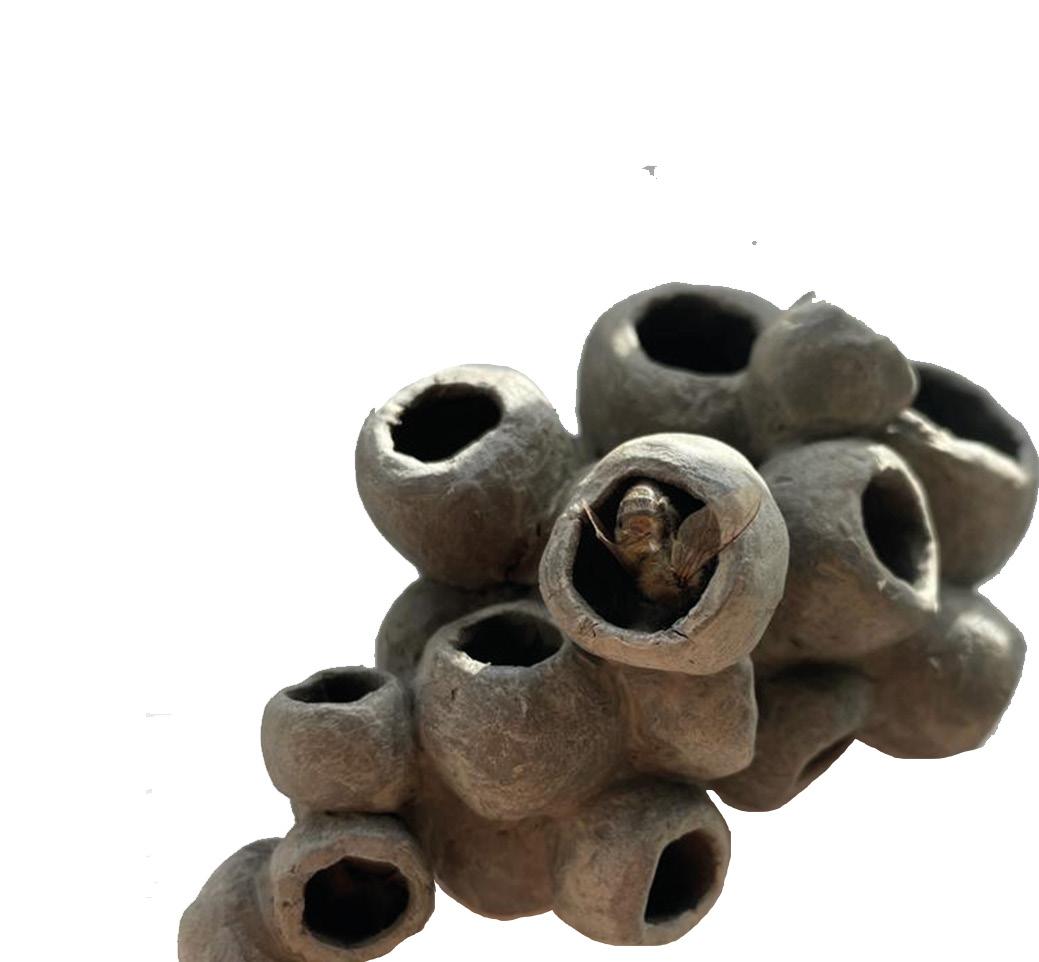

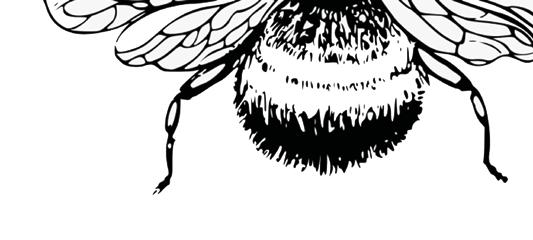
Bumblebees usually make use of old vole nests or those of wood-mice; they choose dry sites, and warmth is also essential.
Spiders are making use of all kids of ‘frame-like’ structures to build their nets on.







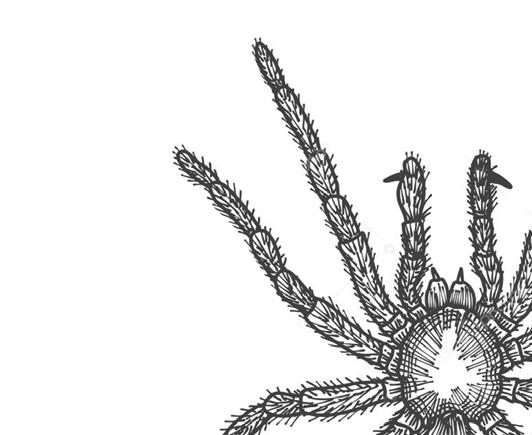
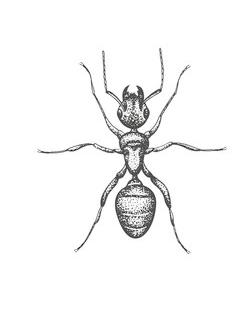
Ants have developed their nest-building techniques to create homes that maintain constant air-flow, repel rain water, generate heat from the sun and always be able to keep temperatures between 16°C and 24°C.

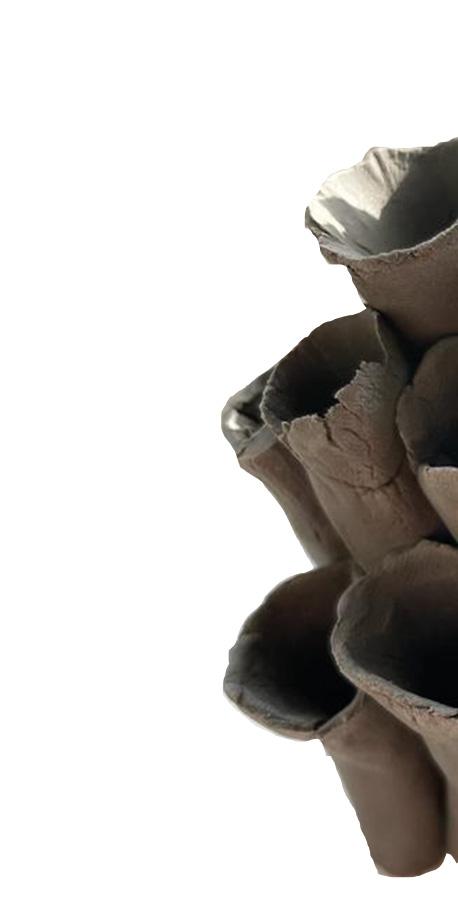

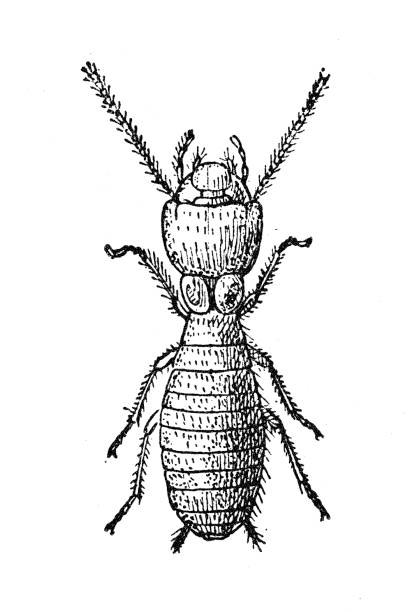
Termites have developed nests that can produce food for the hive, are self-cooling, self-ventilating, self-draining and self-cleaning.




I took this concept one step further in an attempt of creating a space that transports the human user into the world of the non-humans (mycelium). In order to amplify the feeling of entering another world, I am using the existing tunnel under the bridge as the main entry point ant start of journey, as it represends a strong threshold symbol.
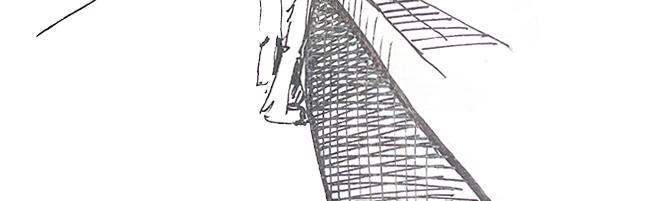
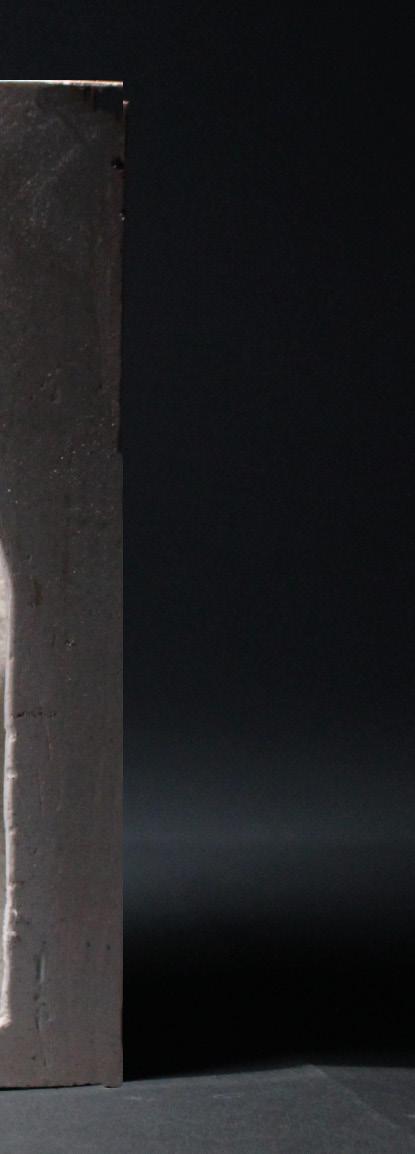
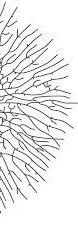
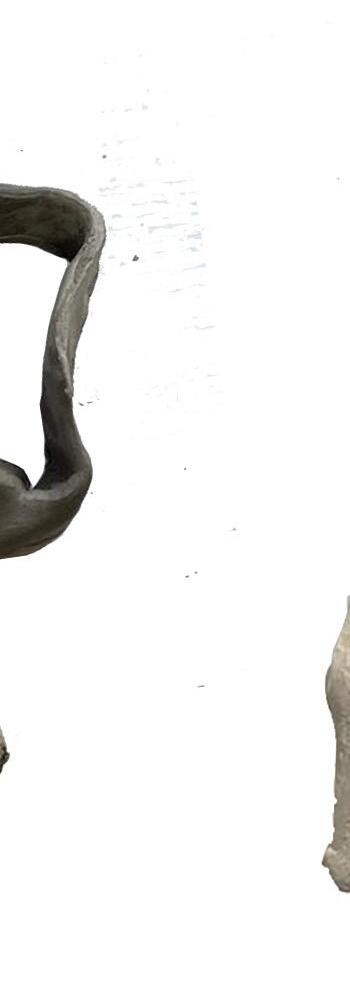
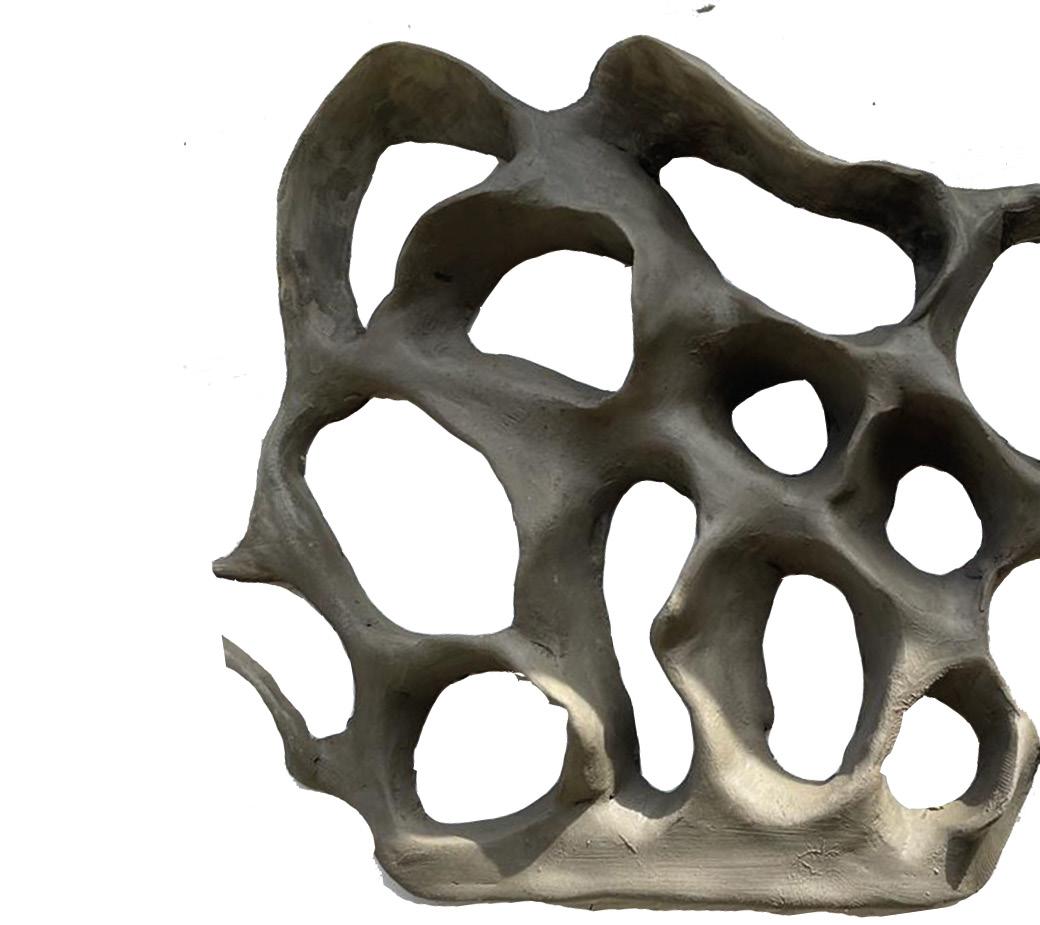
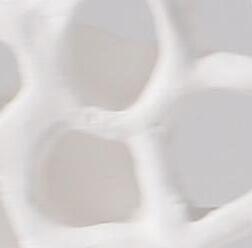
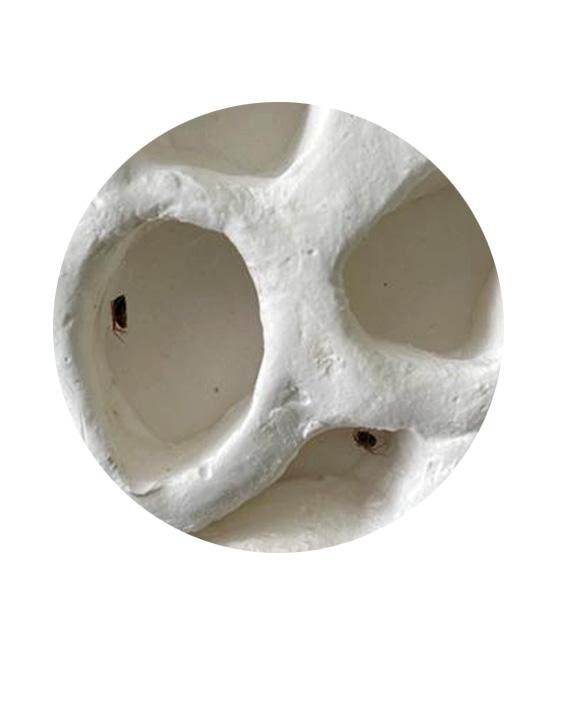
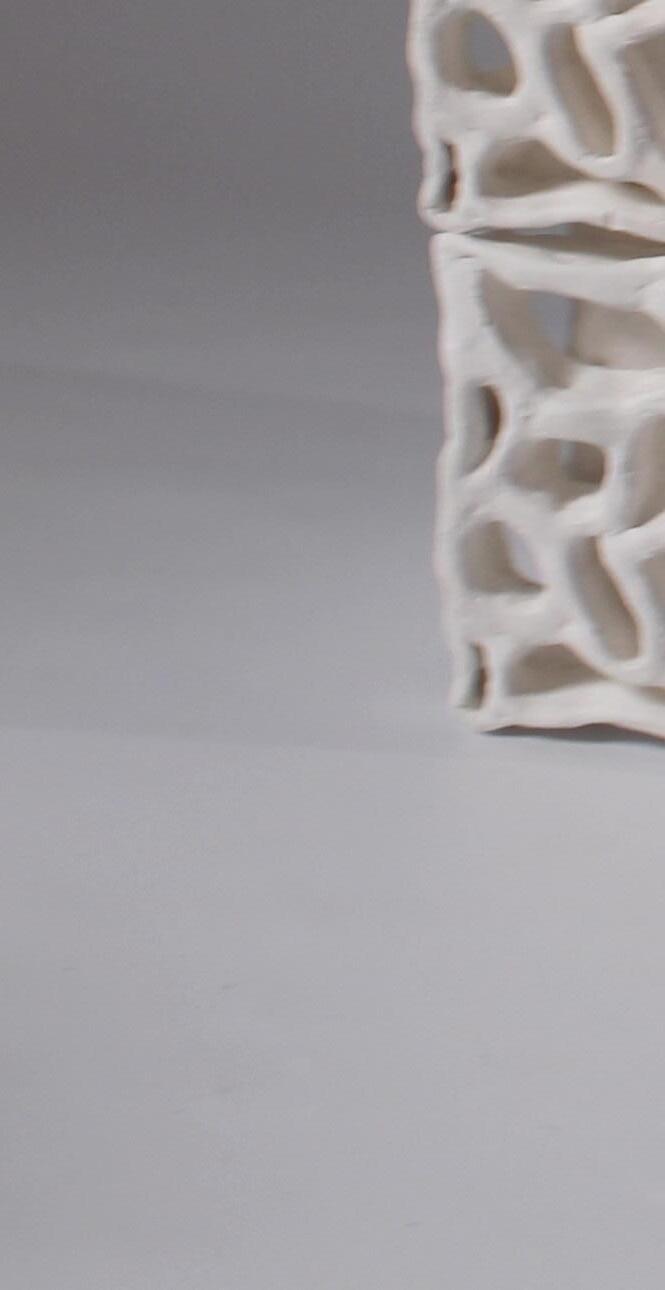
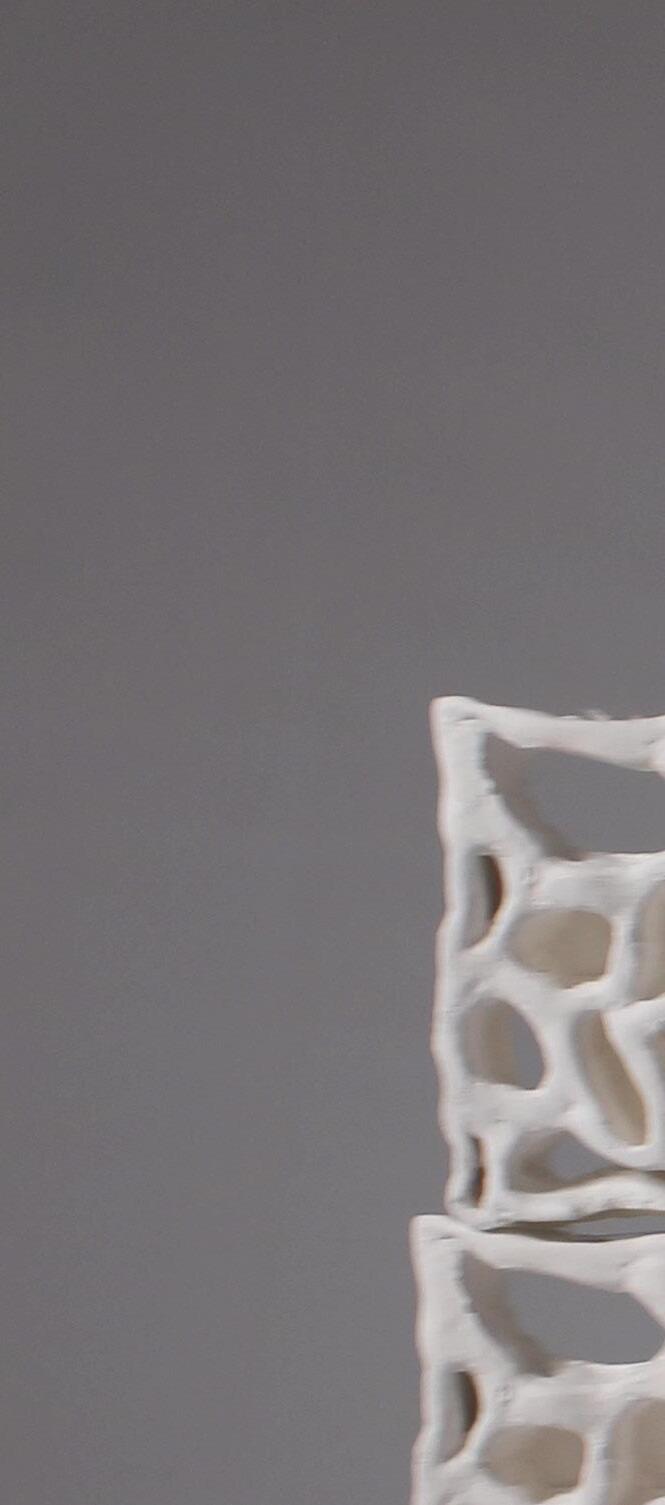
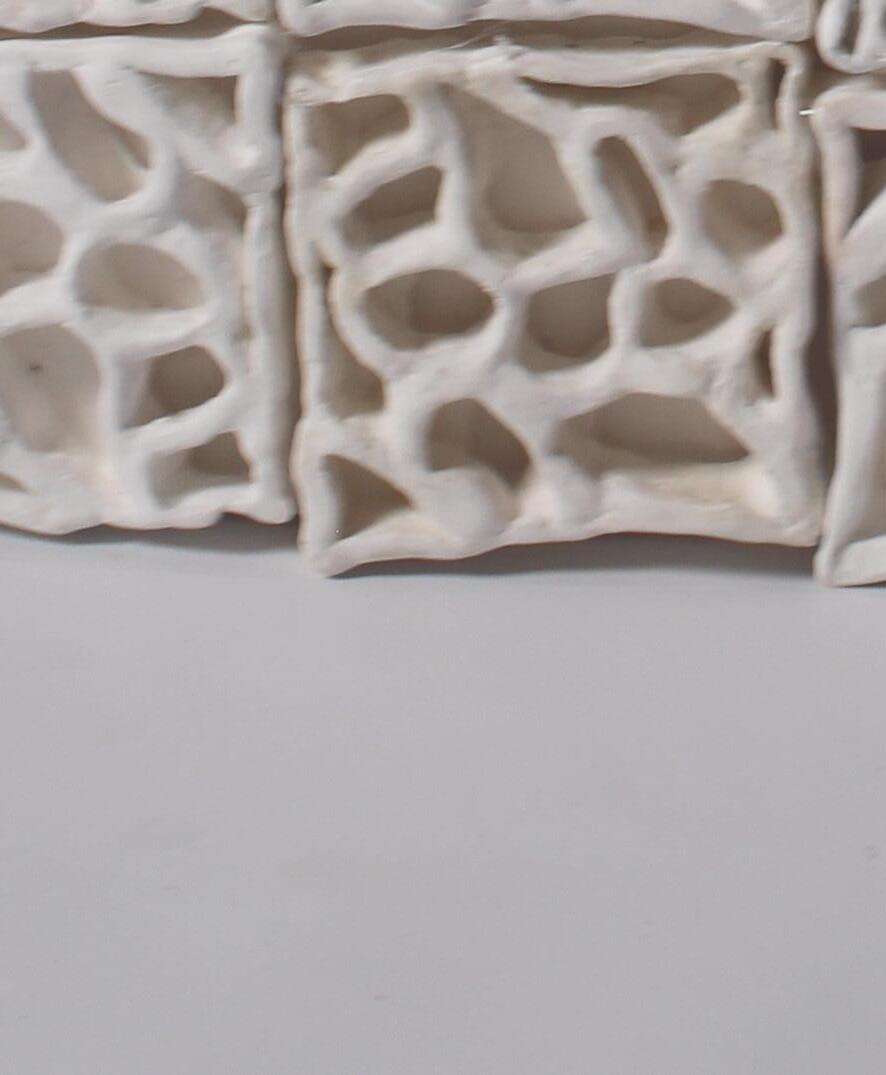
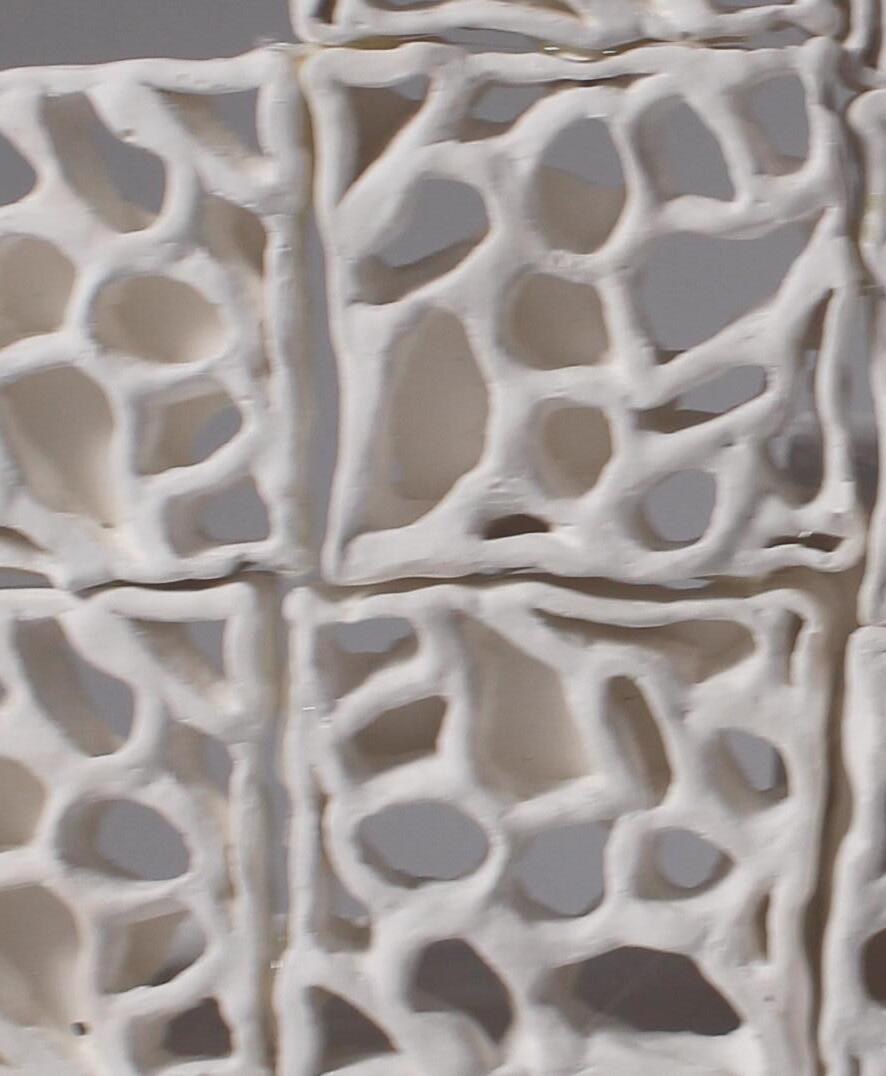
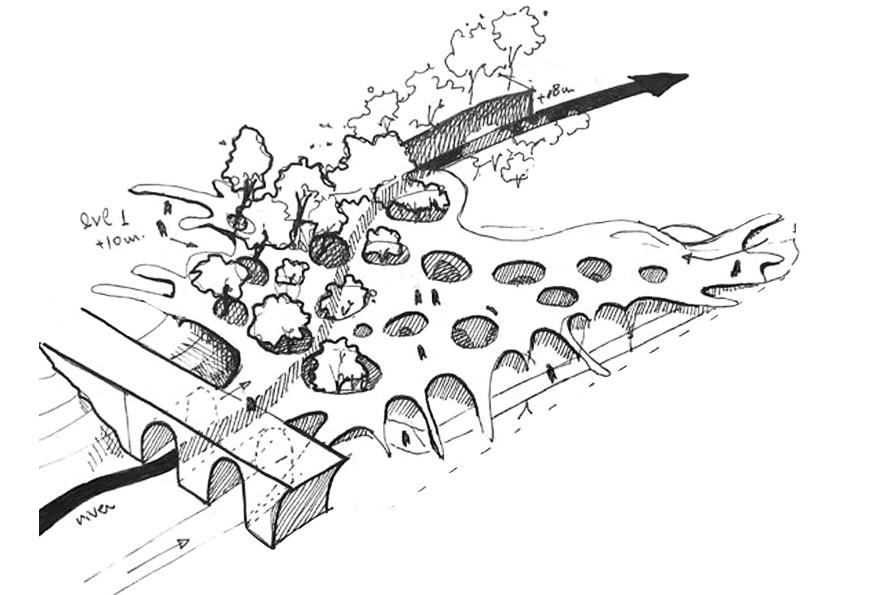
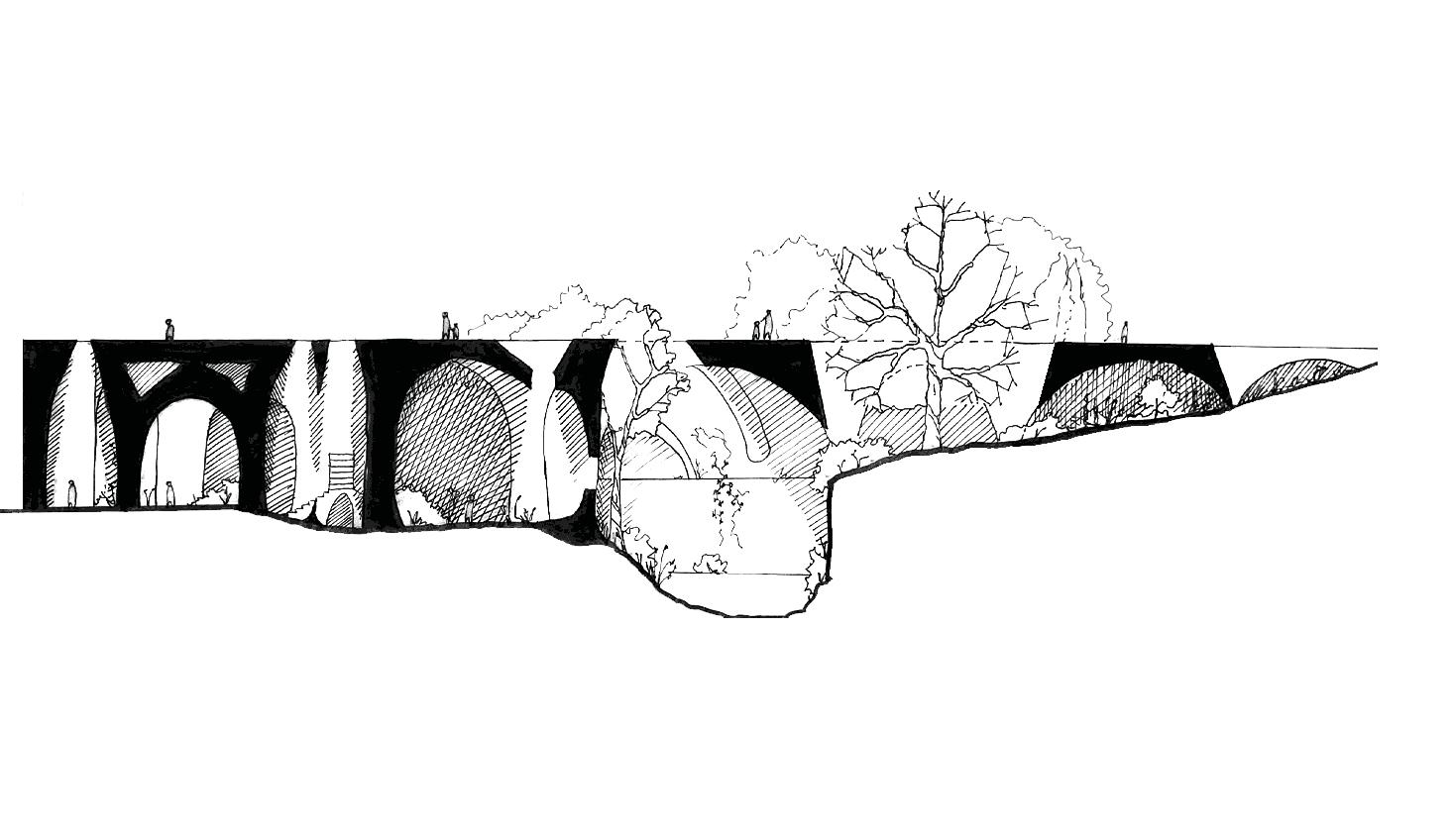
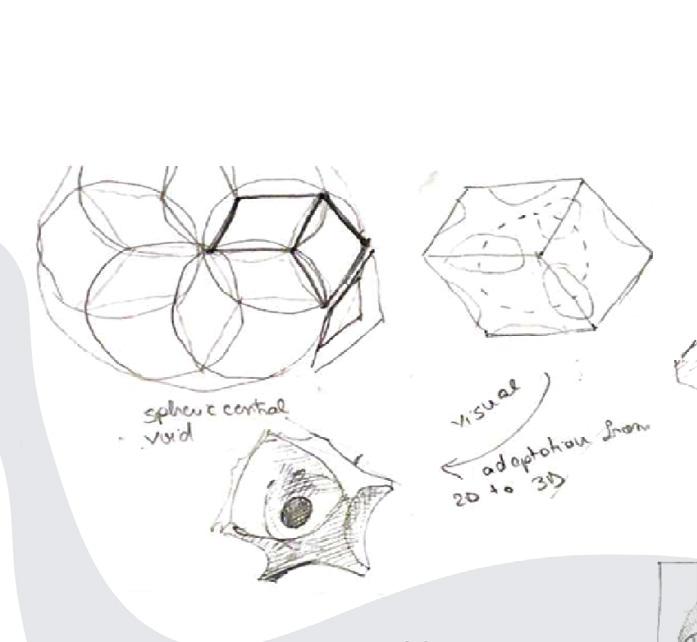
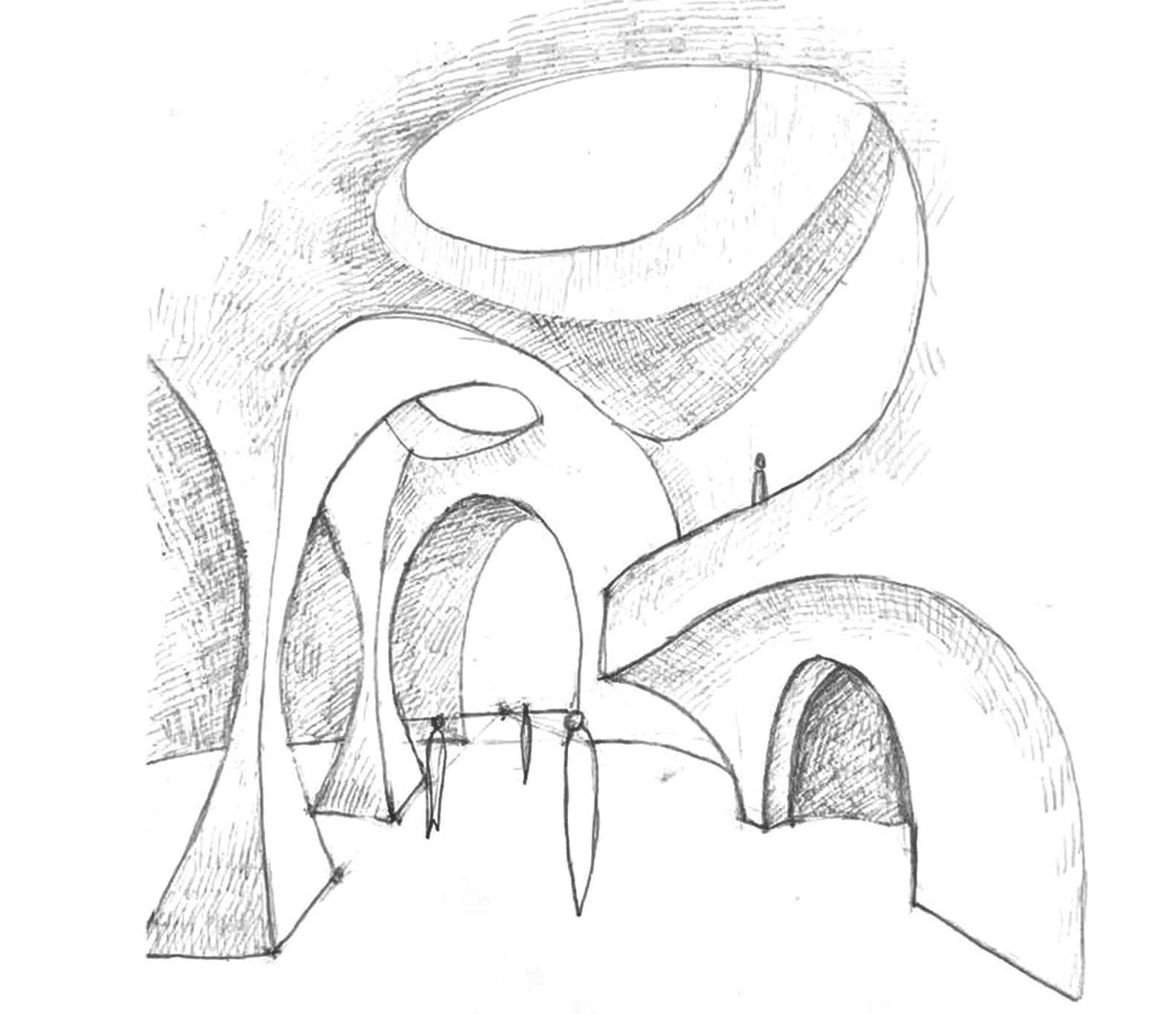
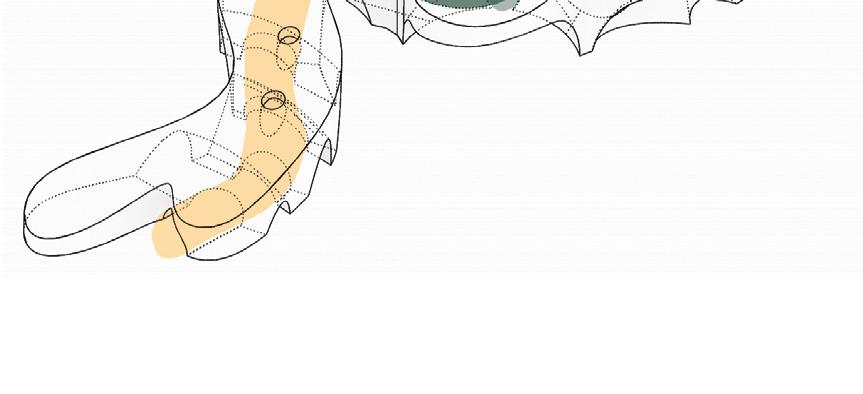
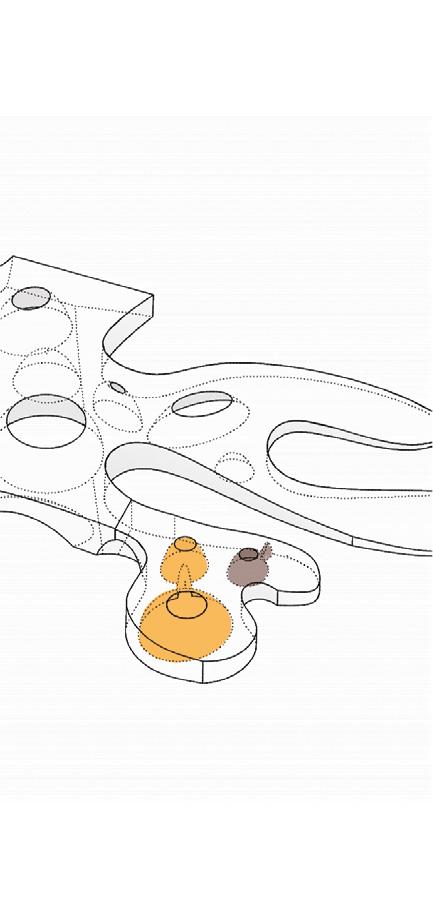
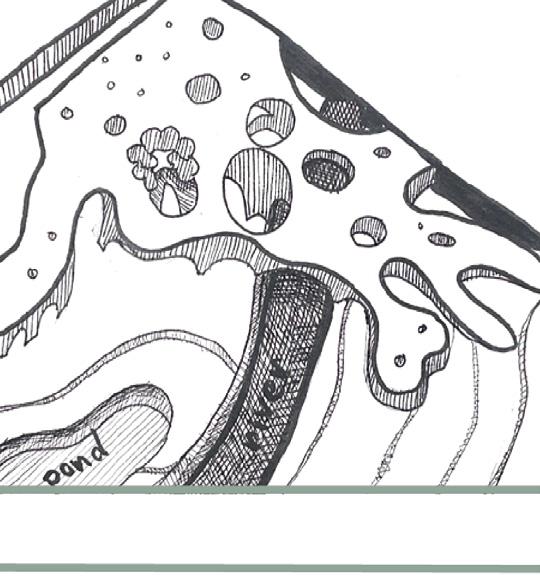
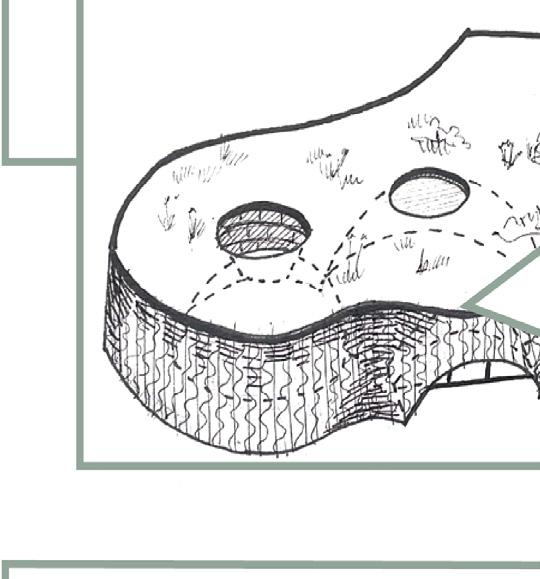
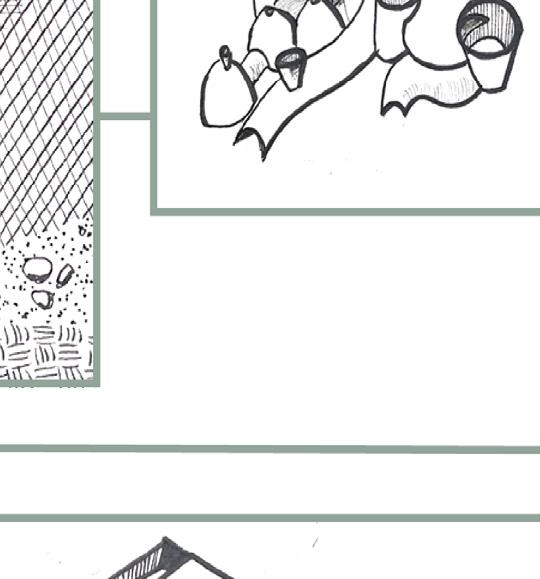
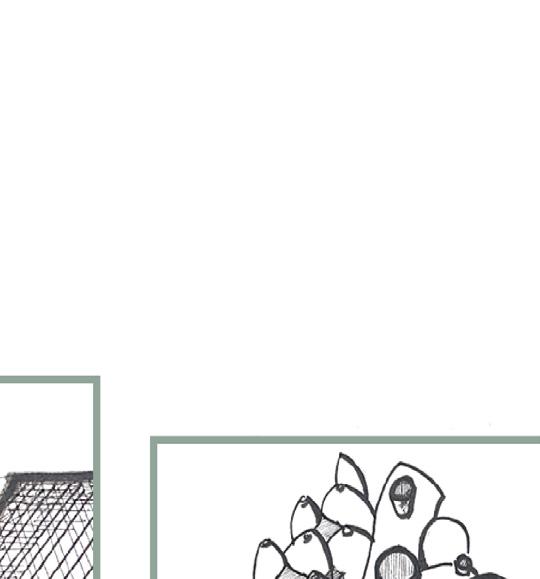
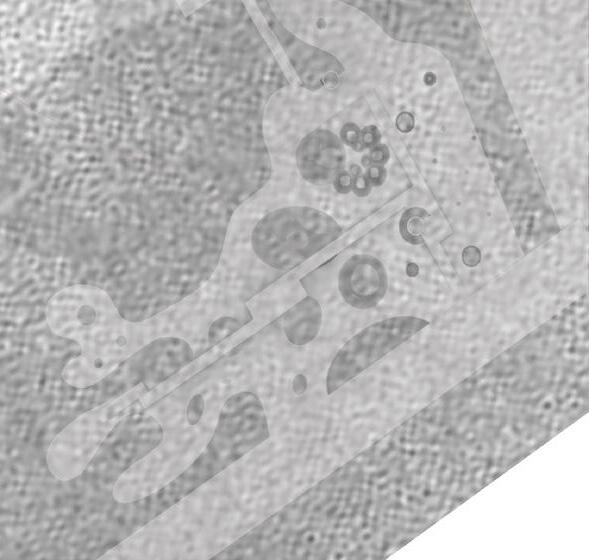
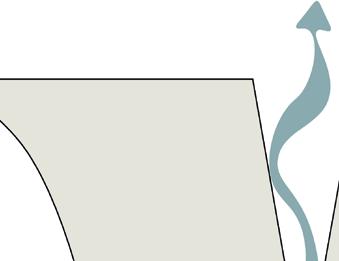
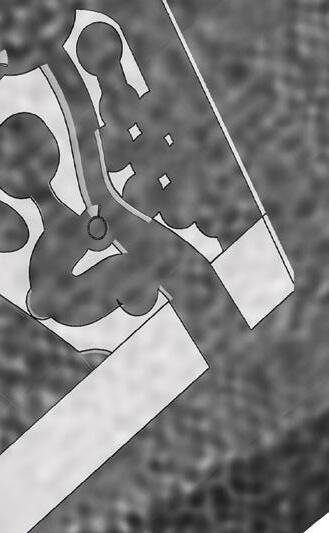
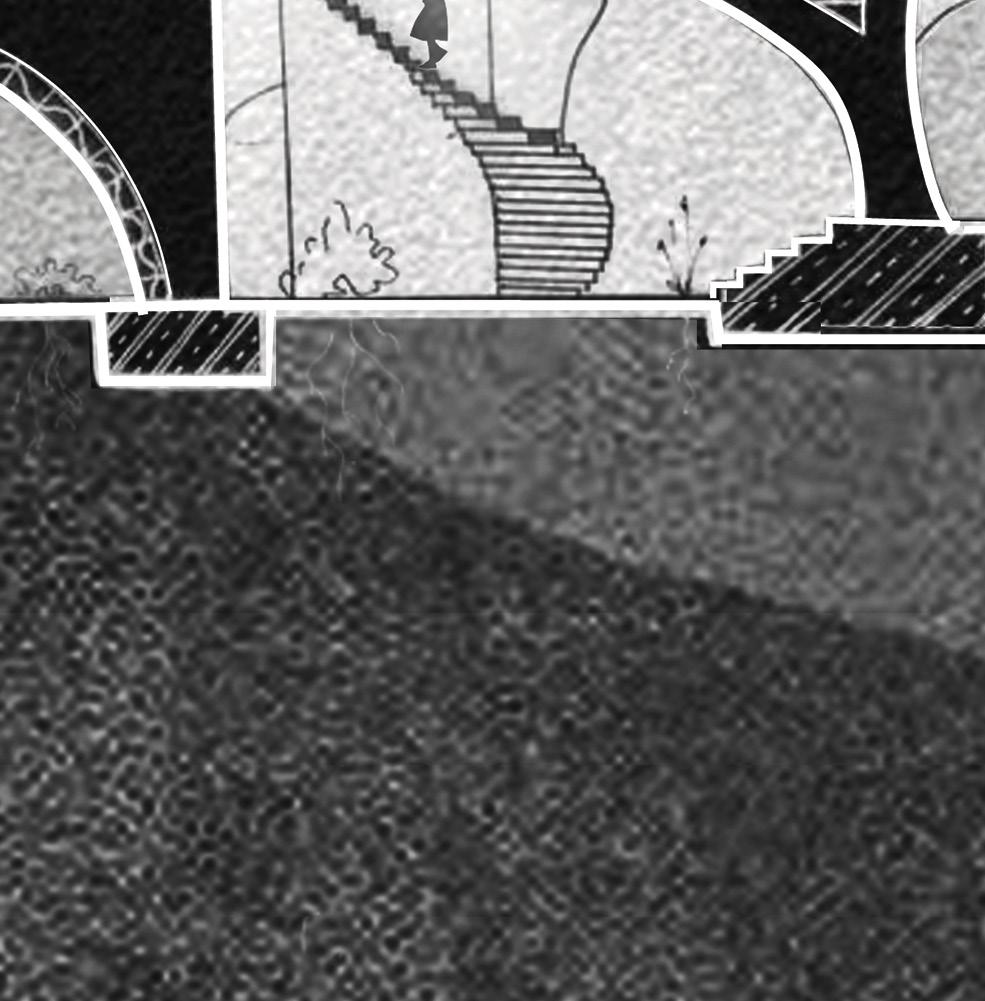
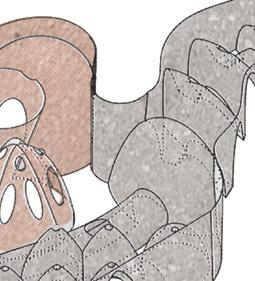
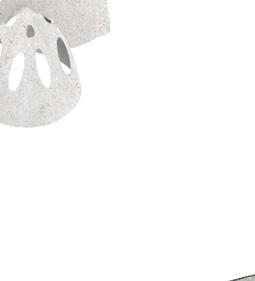
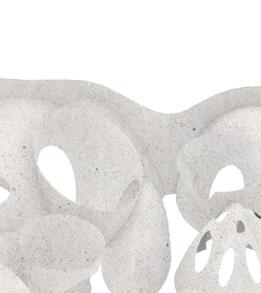
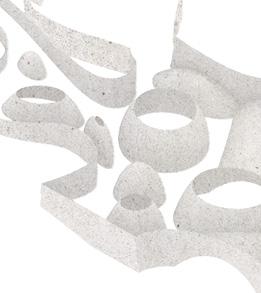
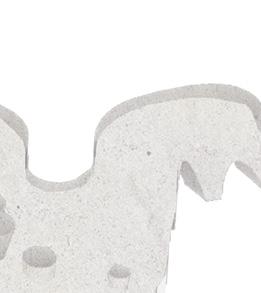
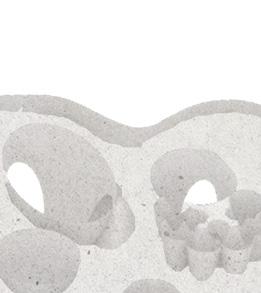
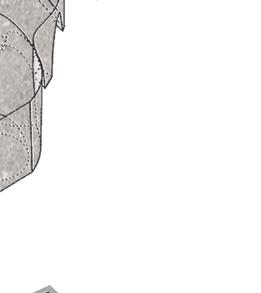
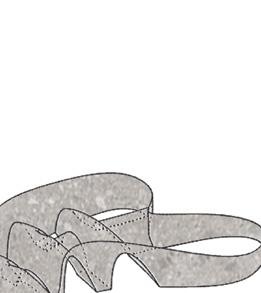
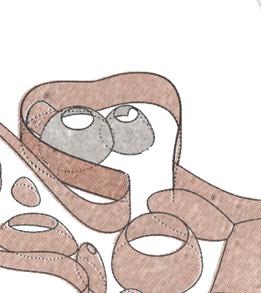
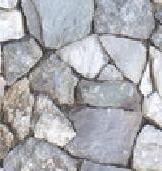
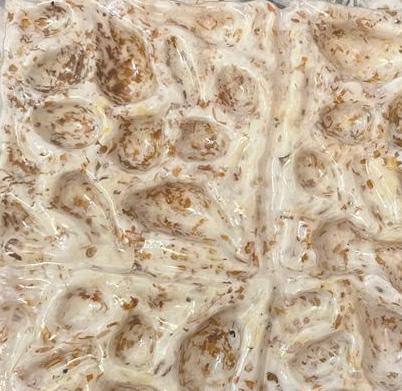
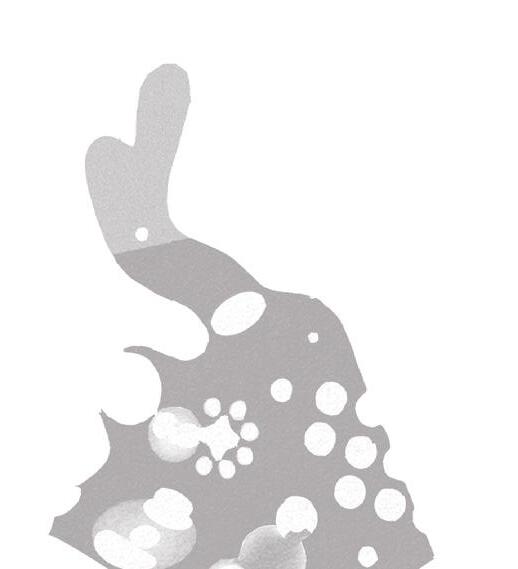
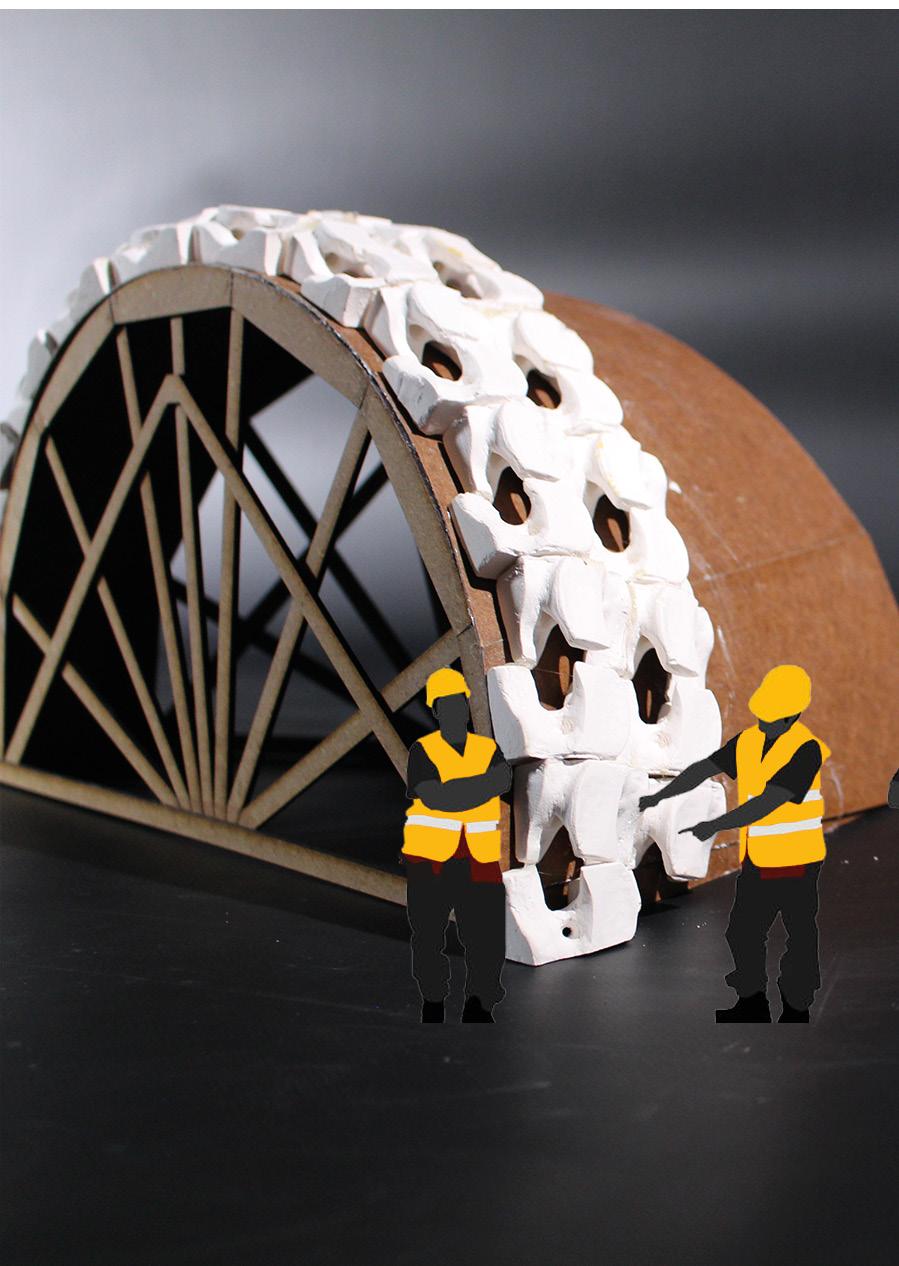
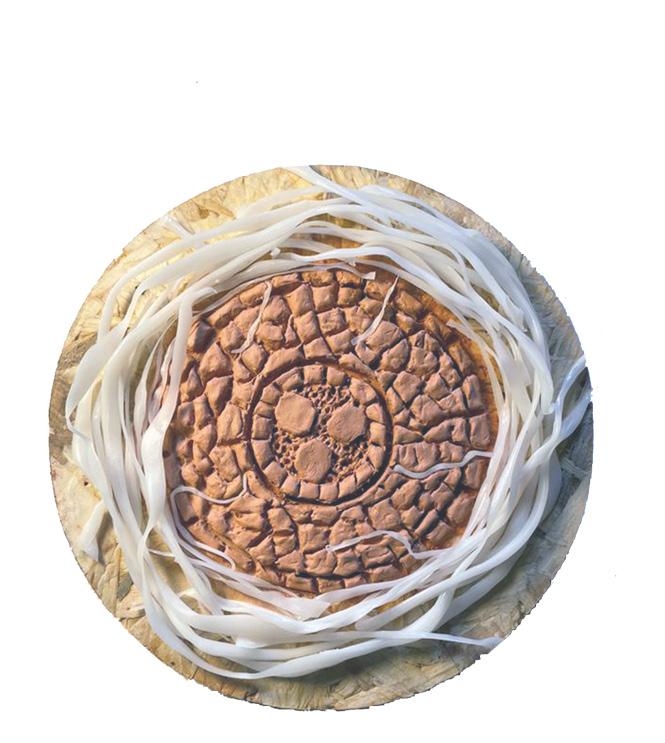
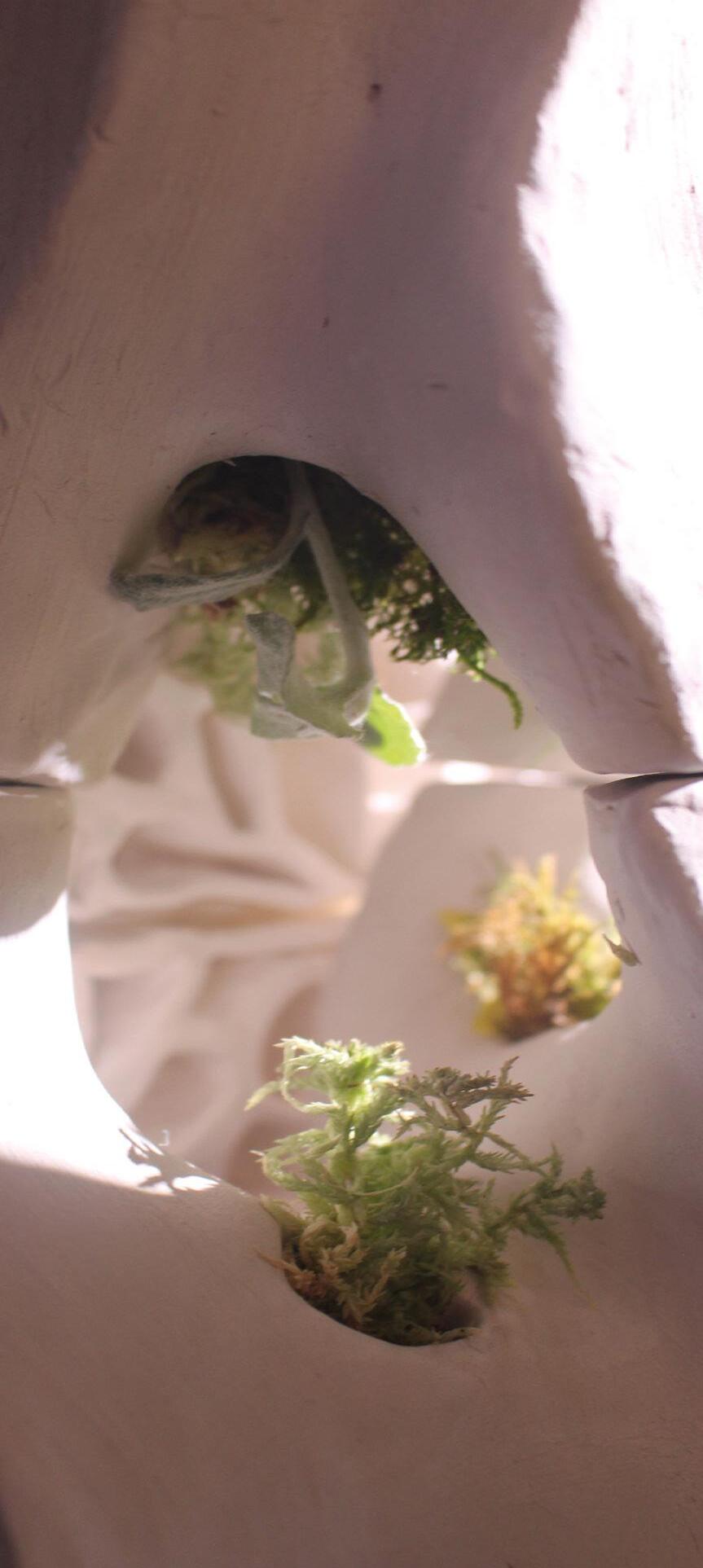
Therefore, after testing versions structures that would encourage insect occupation, and decided on one (img 3), I took inspiration from it in the general volume of my design (img 4), as well as from other micriscopic views of mycelium grupations and mushrooms.


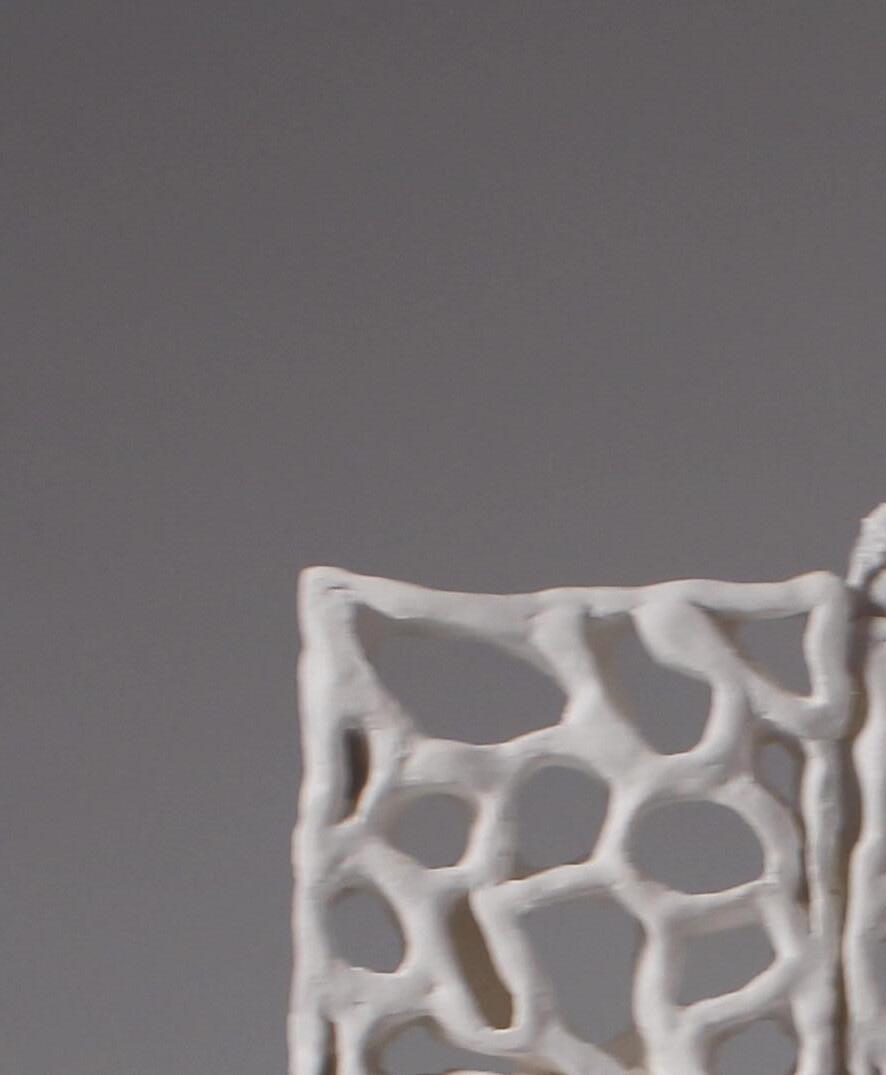

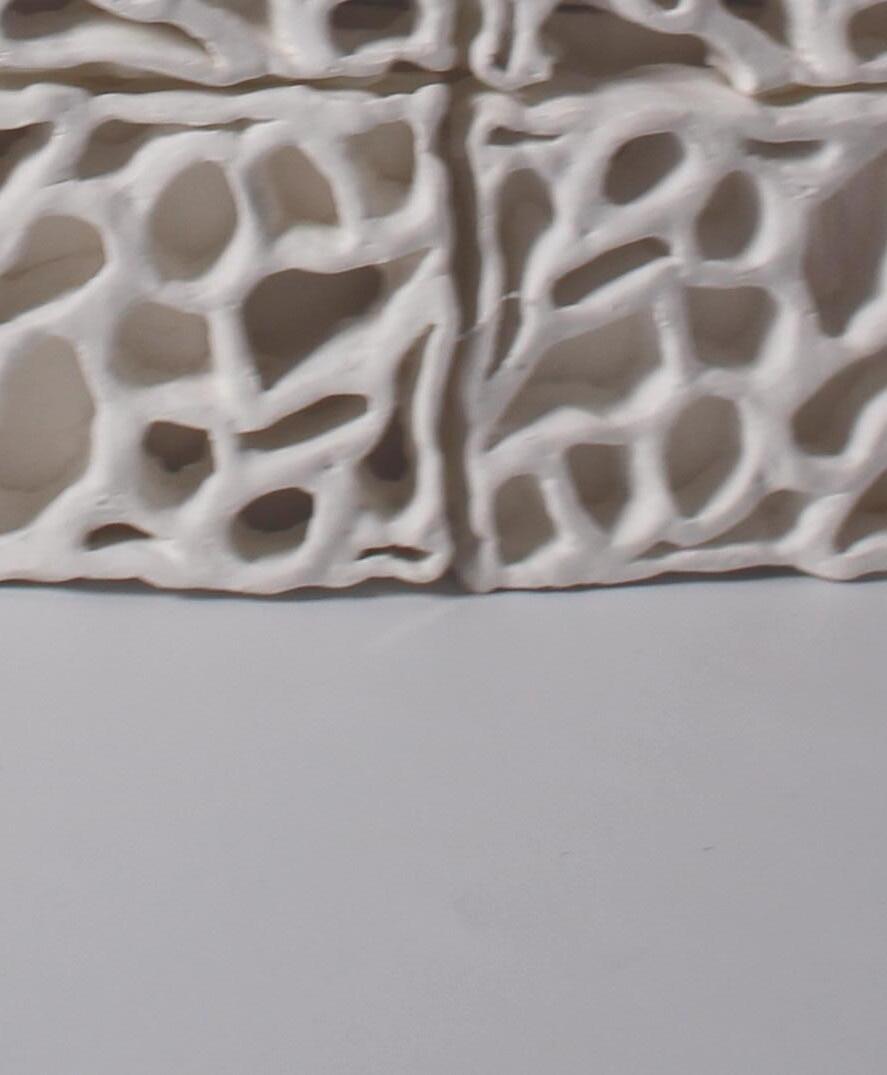
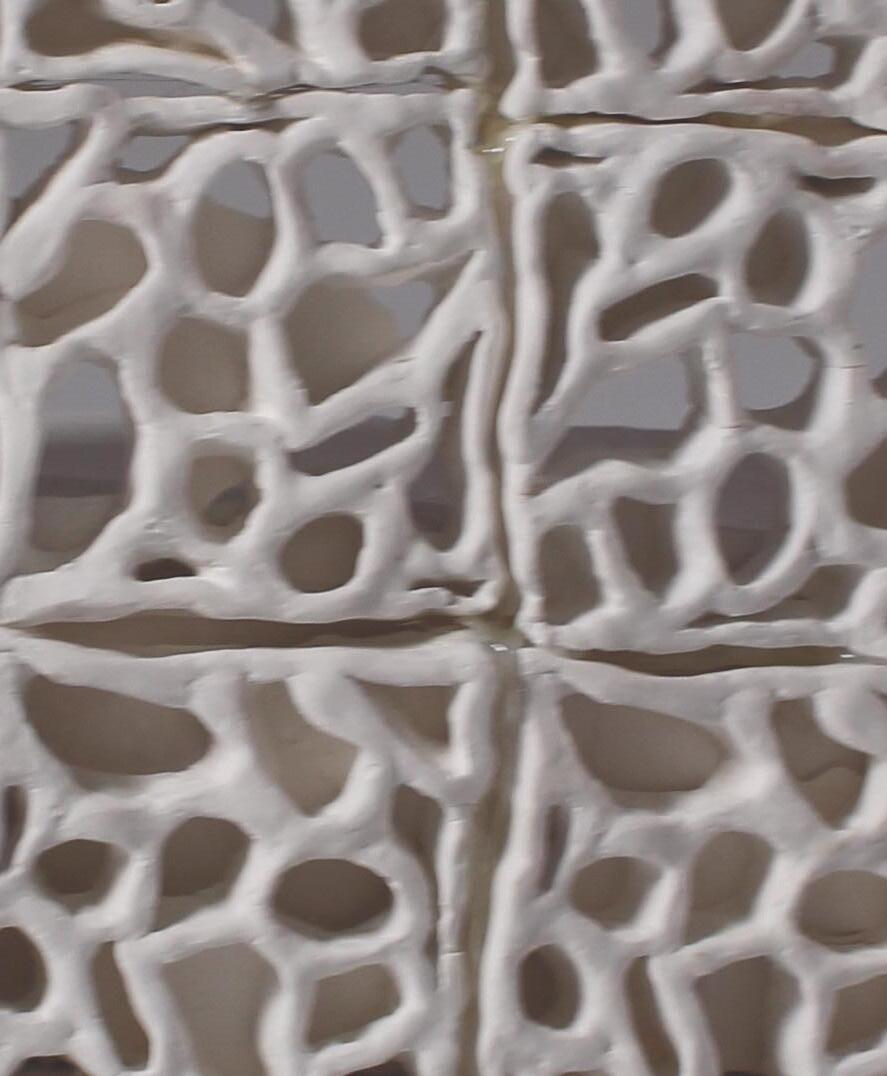
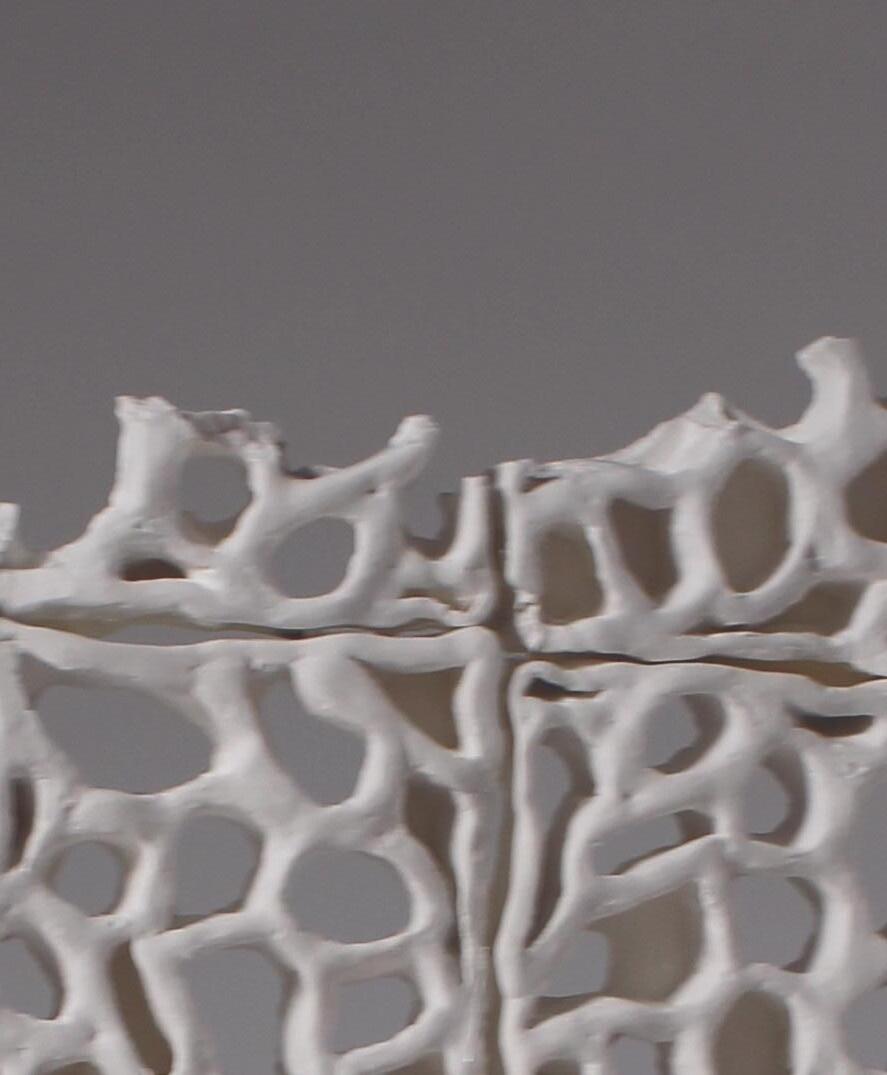

I further developed my concept at a scale of 1:500 by taking into account and trying to solve the accessibility issue existing between the drastic level changes found on site.

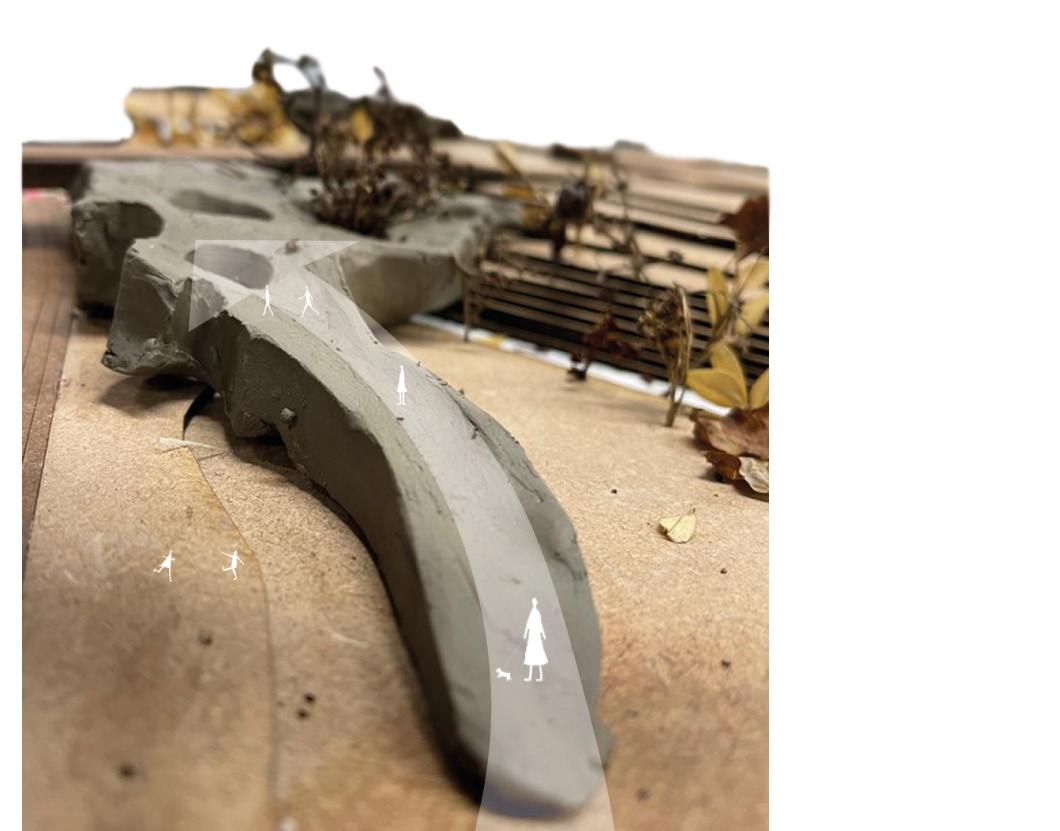
Imagining what a desire path would look like as a means of inviting people to approach the design .
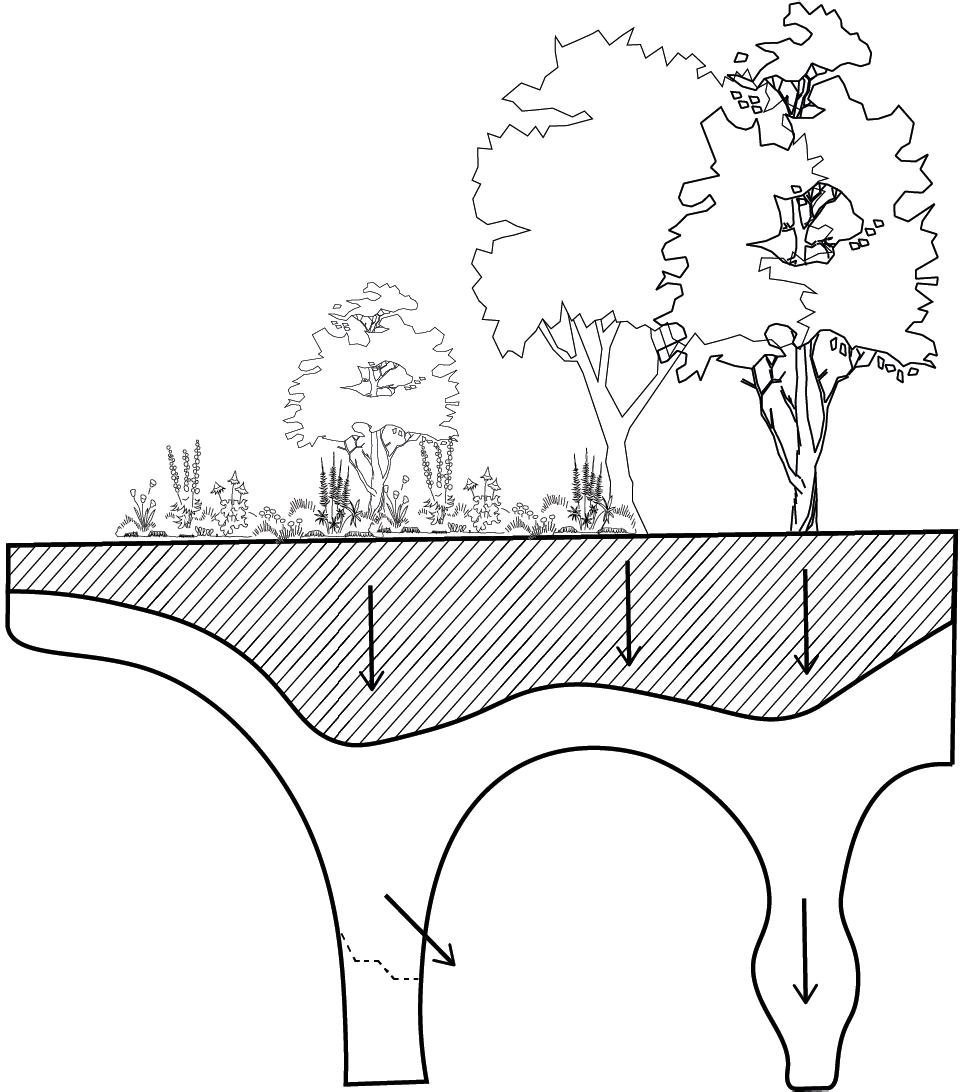
While mycelium is growing in popularity as a building material, it has only been used after being dried in ovens for a prolonged period of time. This process strengthens the mycelium but also kills it. My environmental strategy is based on the connections created between mycelium and other forms of life. This implies that the mycelium has to be kept alive
This brings upon a new challenge; creating an environment in which the mycelium is still alive but separated from humans, while still being accessible to insects. (Inhaling a large amount of spores is hazardous to human health)
Furthermore, the original plan of constructing the intervention fully out of mycelium is not realistic considering the heavy loads applied from the top. Even if the mycelium would have been dried, there are no compressive strength tests conducted under similar circumstances that would make this idea plausible.



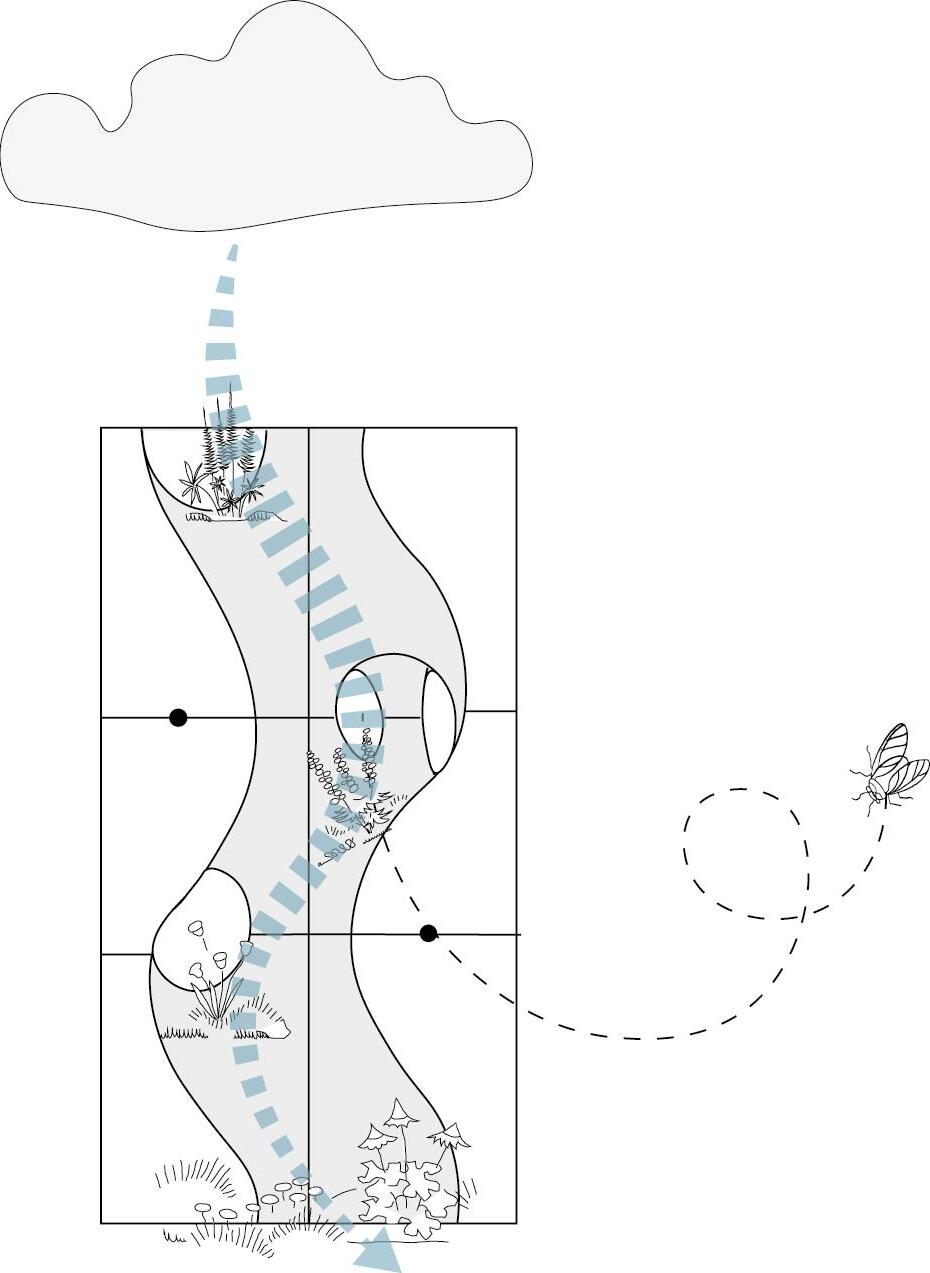
Given that the climate in Turkey is arid, a watering system had to be adopted.
Considering the precipitation frequency in Manchester, this is no longer needed. On the other hand, the precipitations imply the need of a different materiality, as exposed rammed earth would have longevity under these conditions.

Project owners: Fulya Özsel Akipek and Tuğrul Yazar, [POTplus] Design Research Group

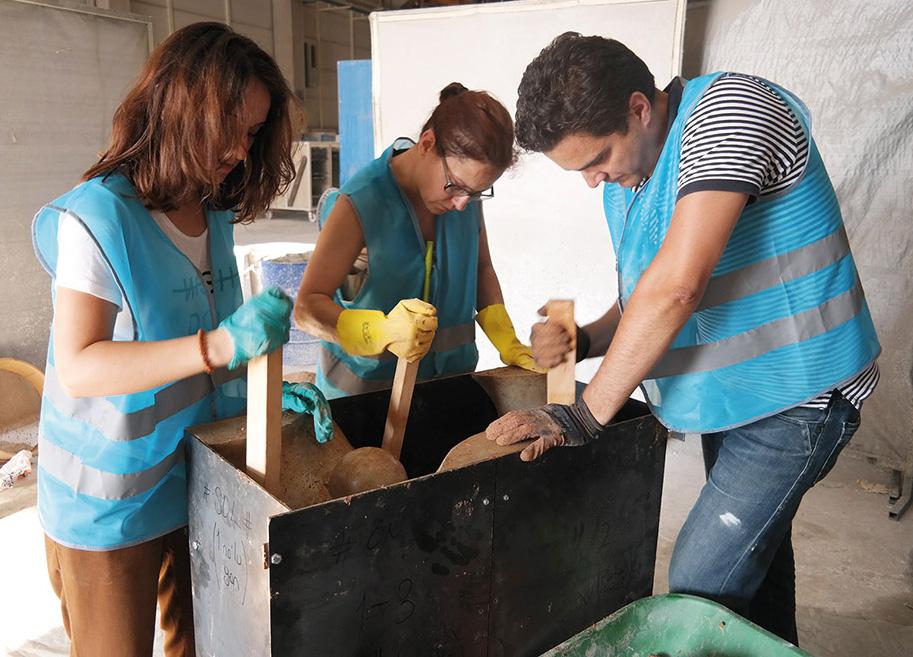
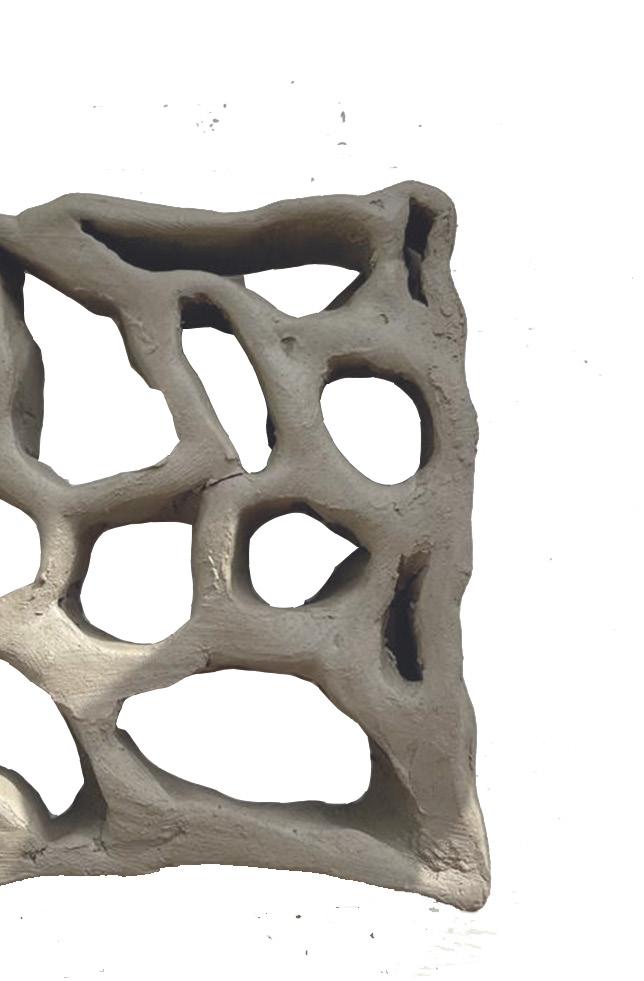
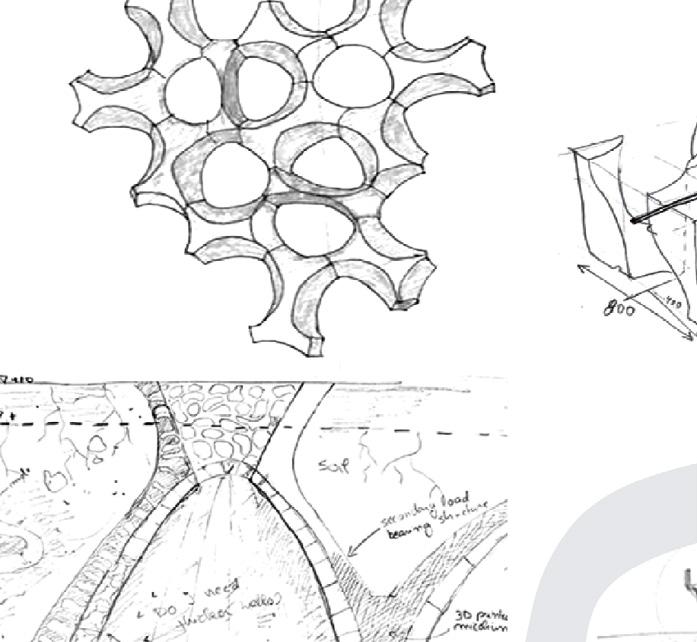
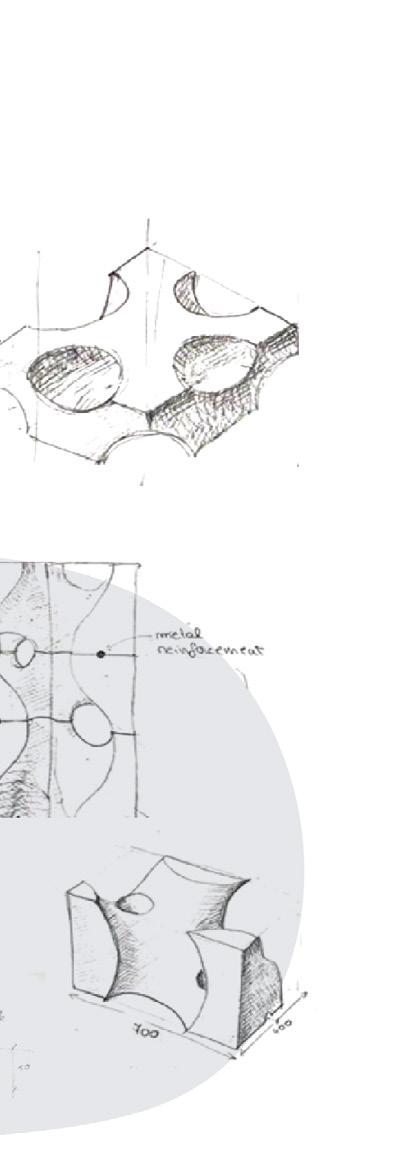
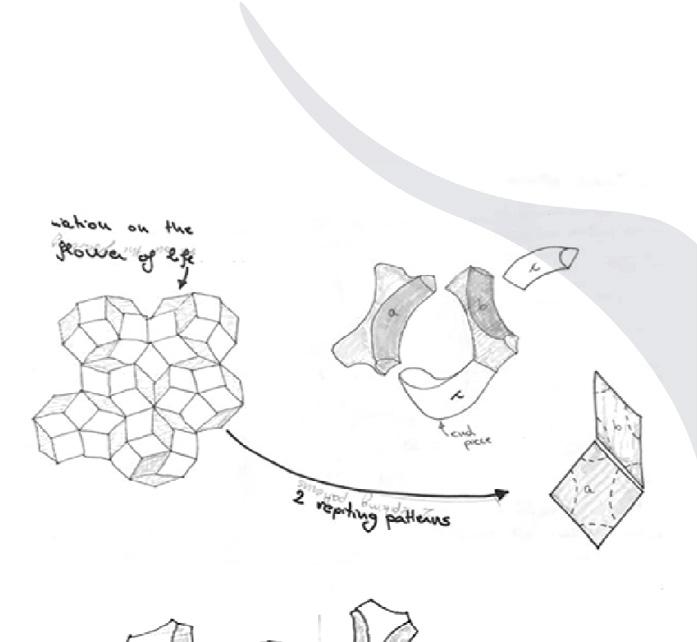
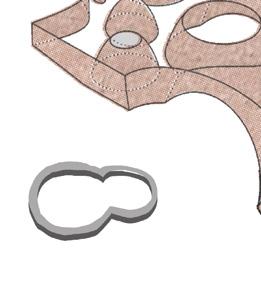
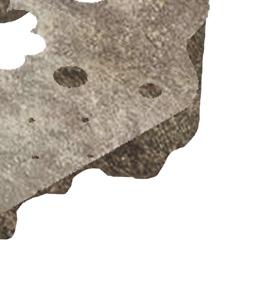
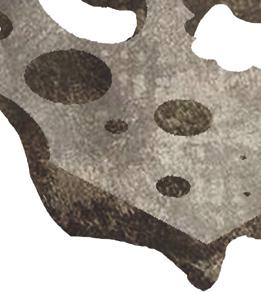
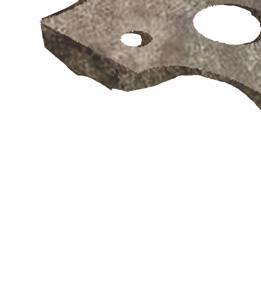
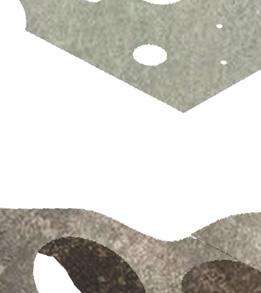
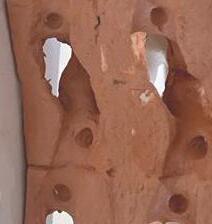
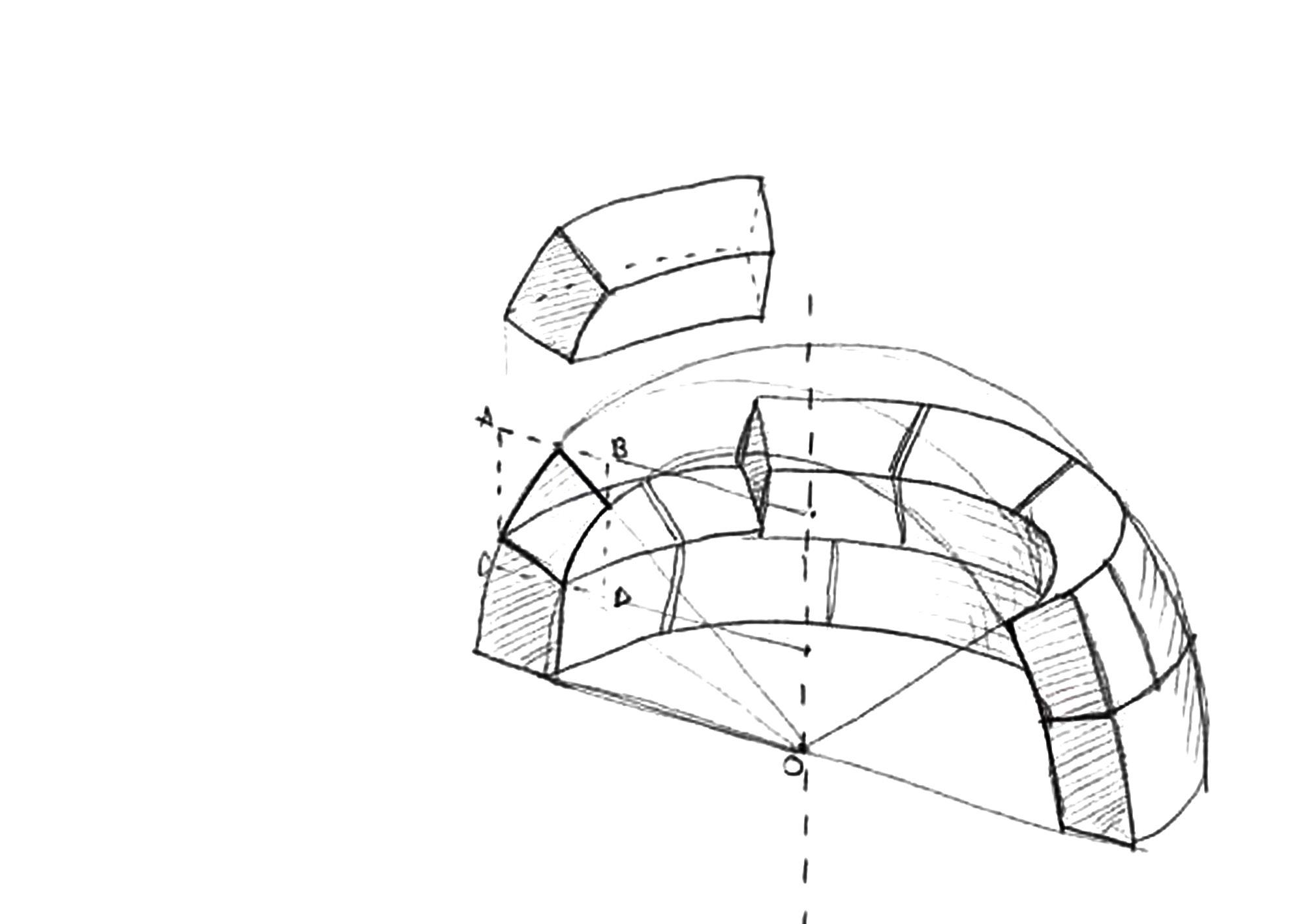
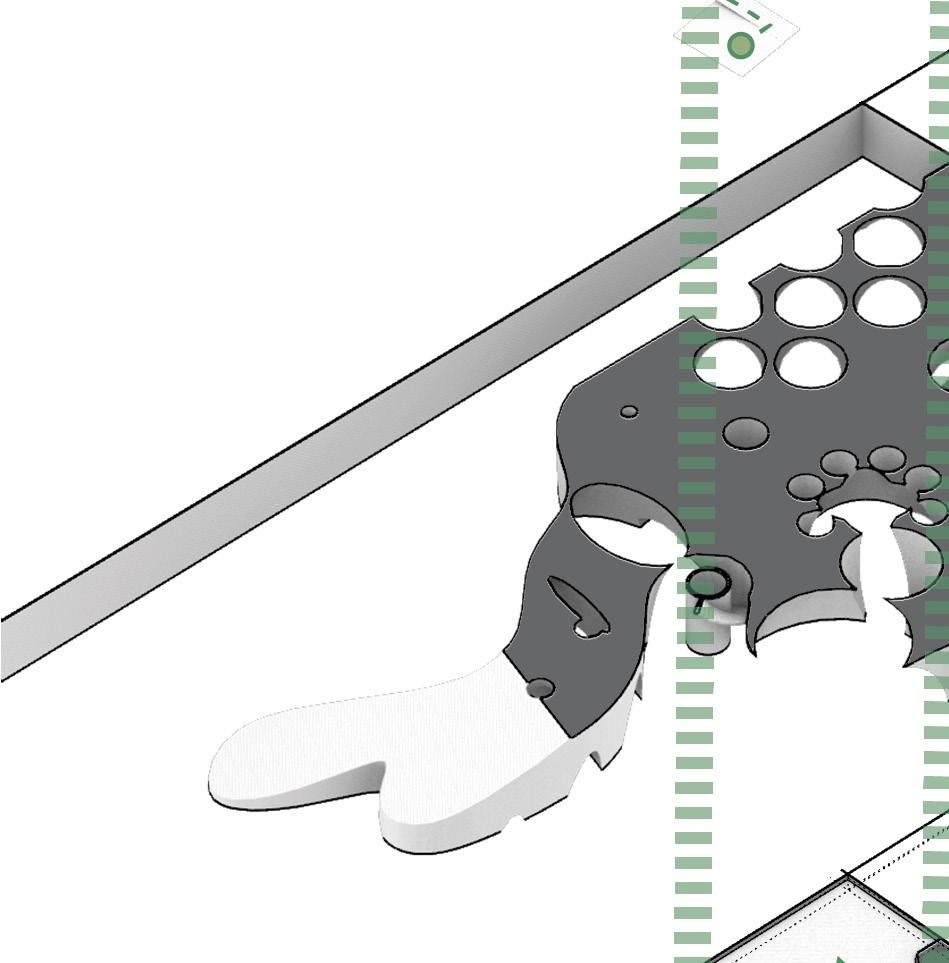
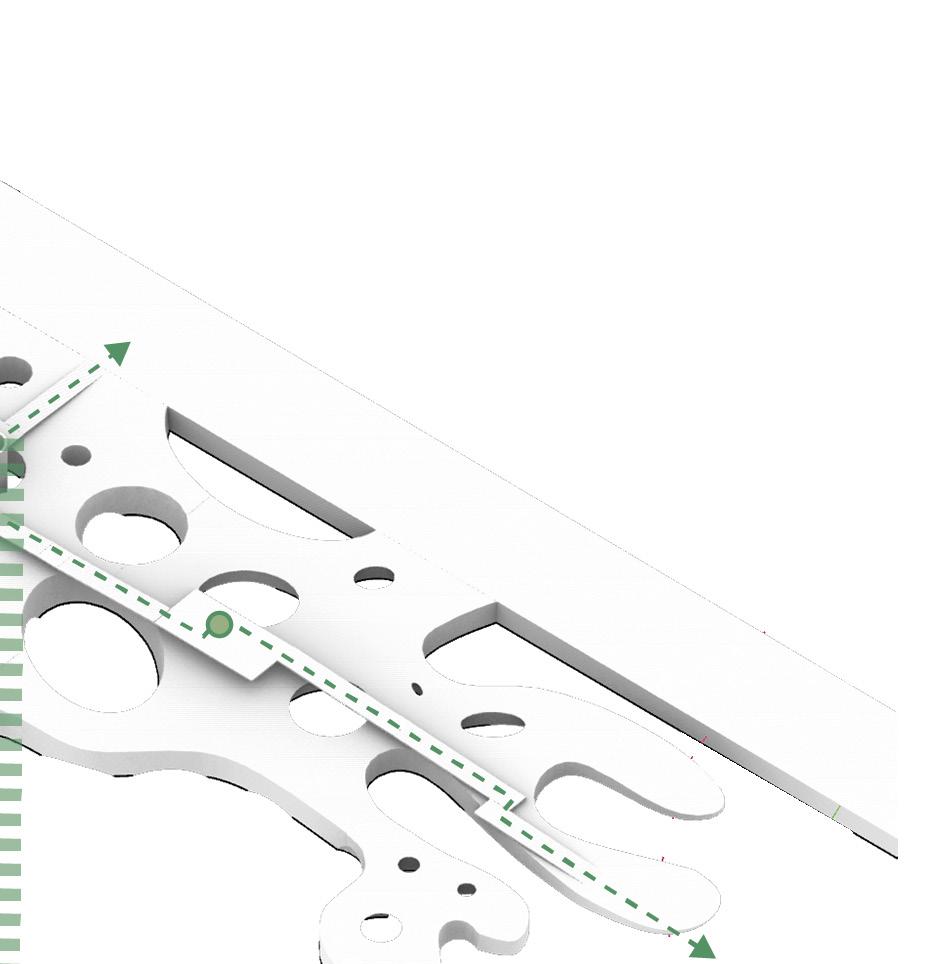
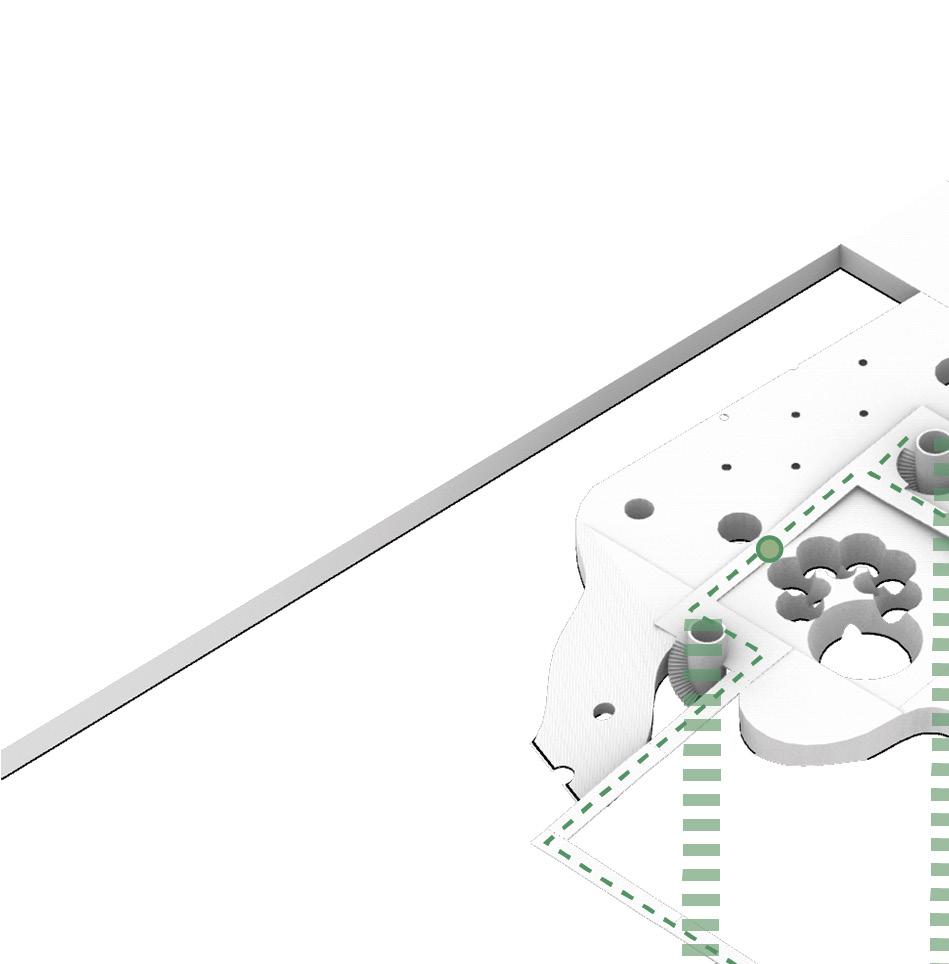
These structural rammed earth bricks have been presented as part of the 4th International Architecture Biennial of Antalya (IABA). They meet the requirements of my design by allowing access through for fauna, letting sun through (necessary for the flowering stage of the mycelium) separating humans from the mycelium and providing structural stability. In order to accommodate the voids necessary for plants to grow and have access to sunlight along with generating continuous surfaces to direct rainwater to plants, research on minimal surfaces had been done using digital modelling techniques. The bricks are manufactured from rammed earth using a mould.

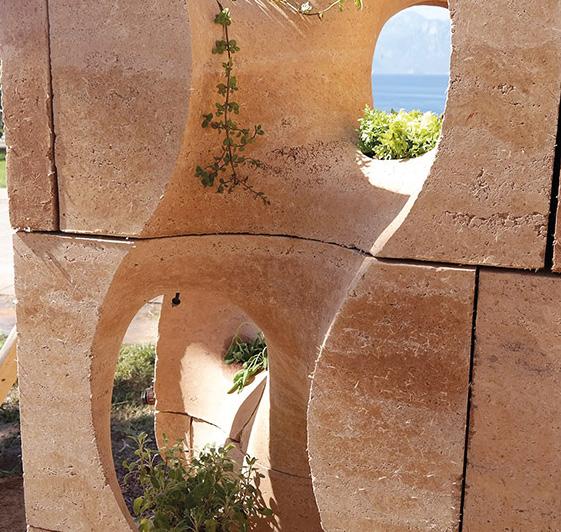
Instead, the bricks will be fabricated out of terracotta, making them water resistant, while also fitting in better with the aesthetic of the city. Furthermore, the original bricks were tested with no additional loads, this is why I opted for doubling the metal reinforcement and scaling down the bricks by a forth of the original size. While planting in the gaps of the bricks is not going to be done manually, but rather let into ‘the hands of nature’ the holes have been reduced in size.
While the required qualities of the bricks could have been achieved in simpler ways, I wanted to adopt the versatility and complexity of these bricks, that could not have been created without advanced knowledge of digital modelling.
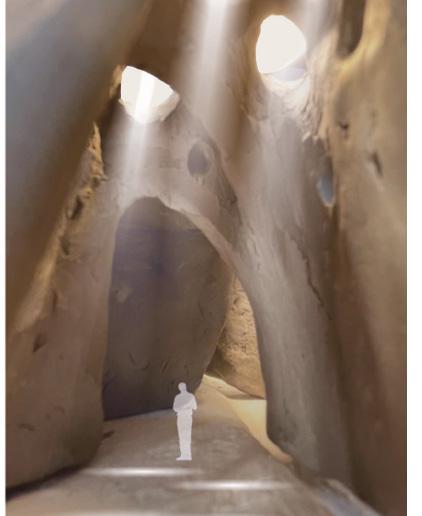
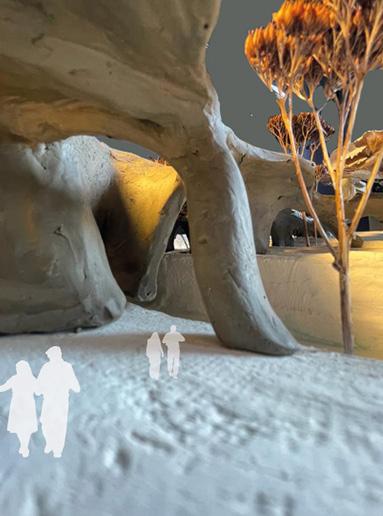
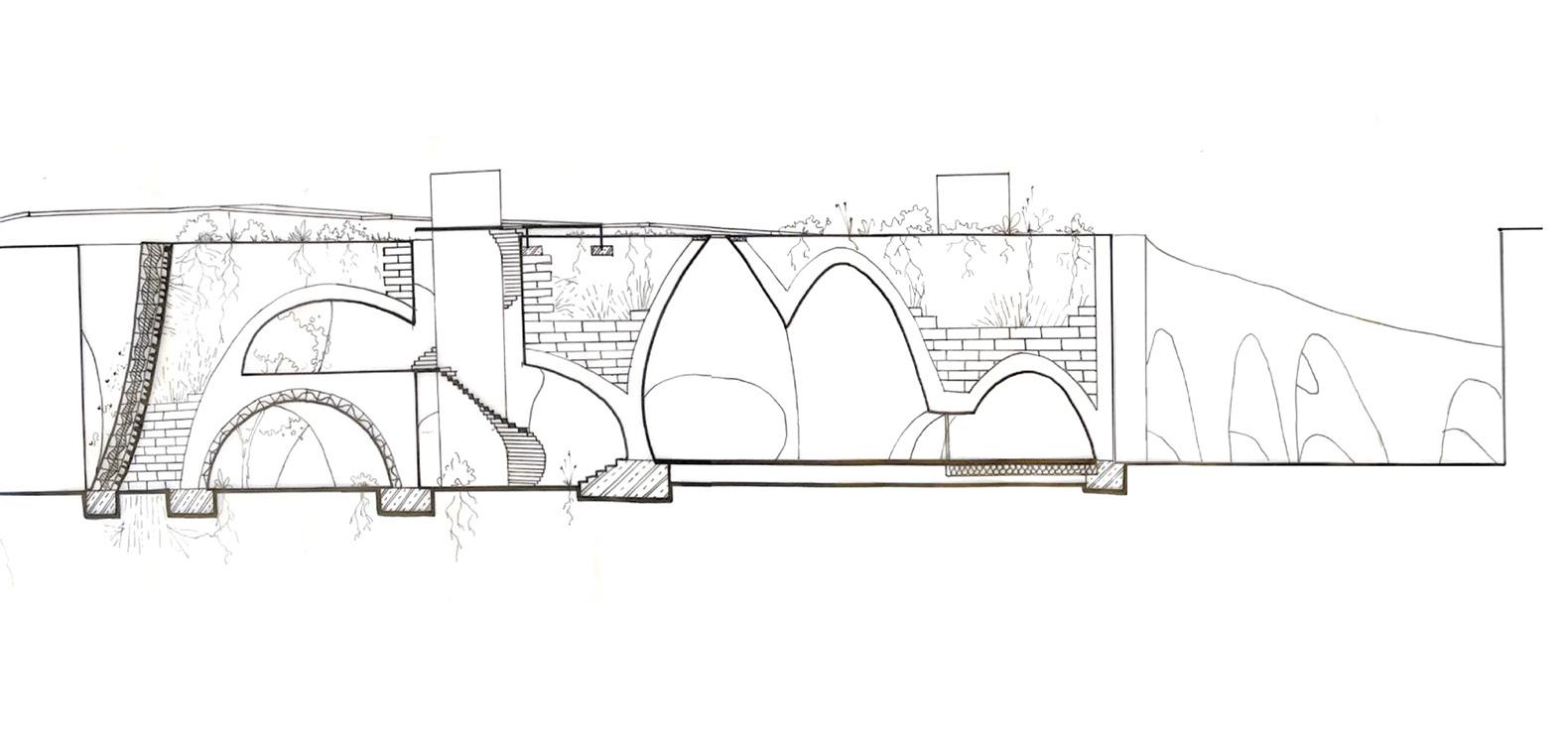
My intent with this design is to manufacture an awakening experience for the human user, and, maybe even to create a shift in the anthropocentric view held by so many. The scale of the spaces unfit for humans (going up to 9m in height) gives the feeling of being in the presence of something bigger than yourself. The worm-like tunnels and dim lighting emphasize the fact that you find yourself in the world of the non-human.
1. Entering the space through the tunnel under the bridge. I am using this pre-existing threshold as a tool in defining the passage into a different state of being.
2. Going through the exhibition spaces, where sculptures and artistic installations related to climate change awareness can be found
3. Walking through a winding dark path symbolic of the initiation journey the ‘hero’ has to go through in order to be worthy of finding ‘the truth’ but also himself
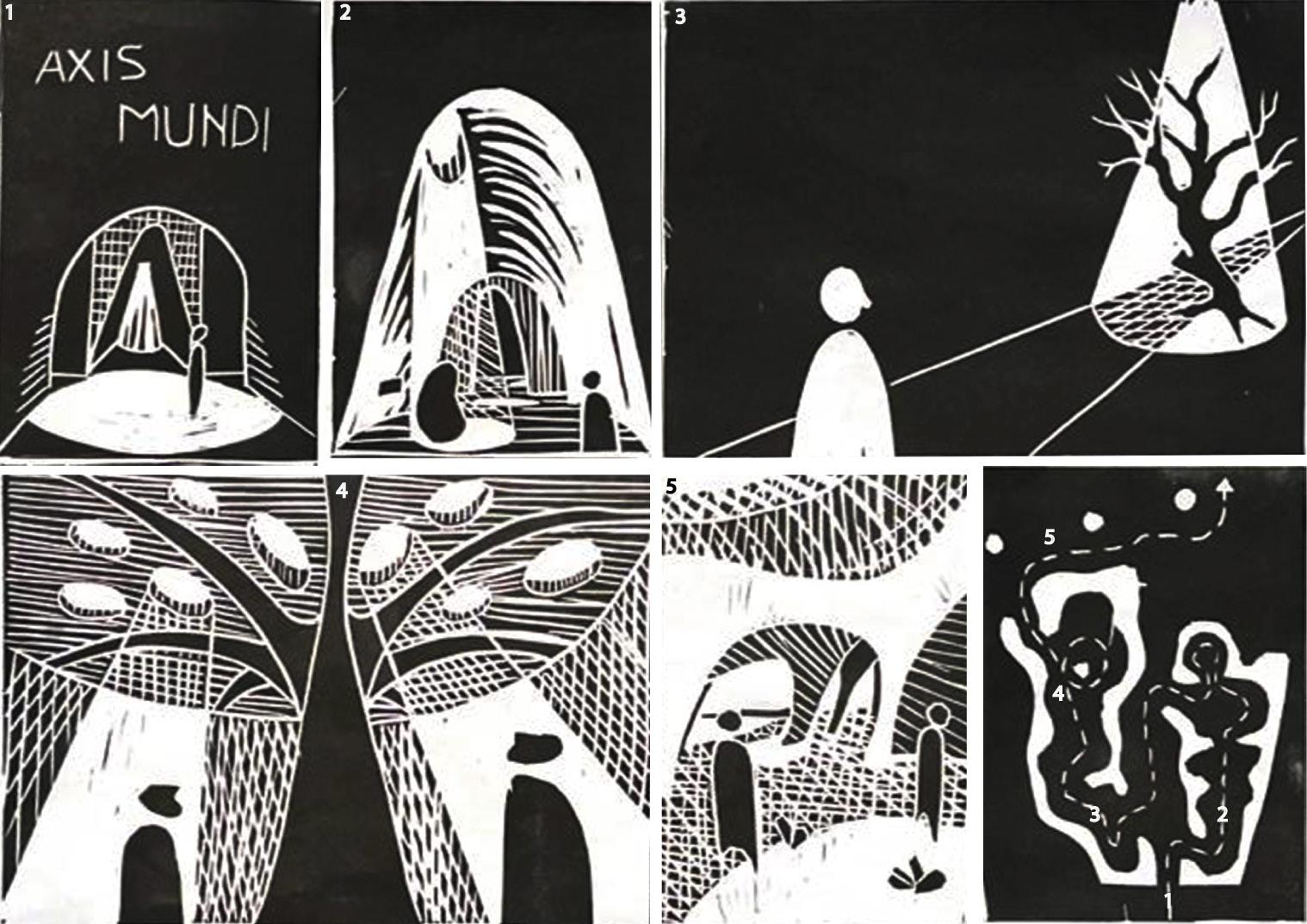
4. Spiritual space, the hearth of the architectural organism, (fact indicated by the central vertical pillar made out of mycelium) This space is bright yet solemn, creating the sense of spiritual awakening and contemplation alongside the realisation that mycelium is at the centre of the natural world.
5. Transitional space between inside and outside reachable through a waterfall (when raining), symbolic of rebirth
While the significance of each space is kept from 3.1, I decided to further develop the spacial qualities of the intervention, mainly for differentiating the exhibition spaces from the spiritual spaces and for amplifying the feeling of being in a different world than the one you came from.

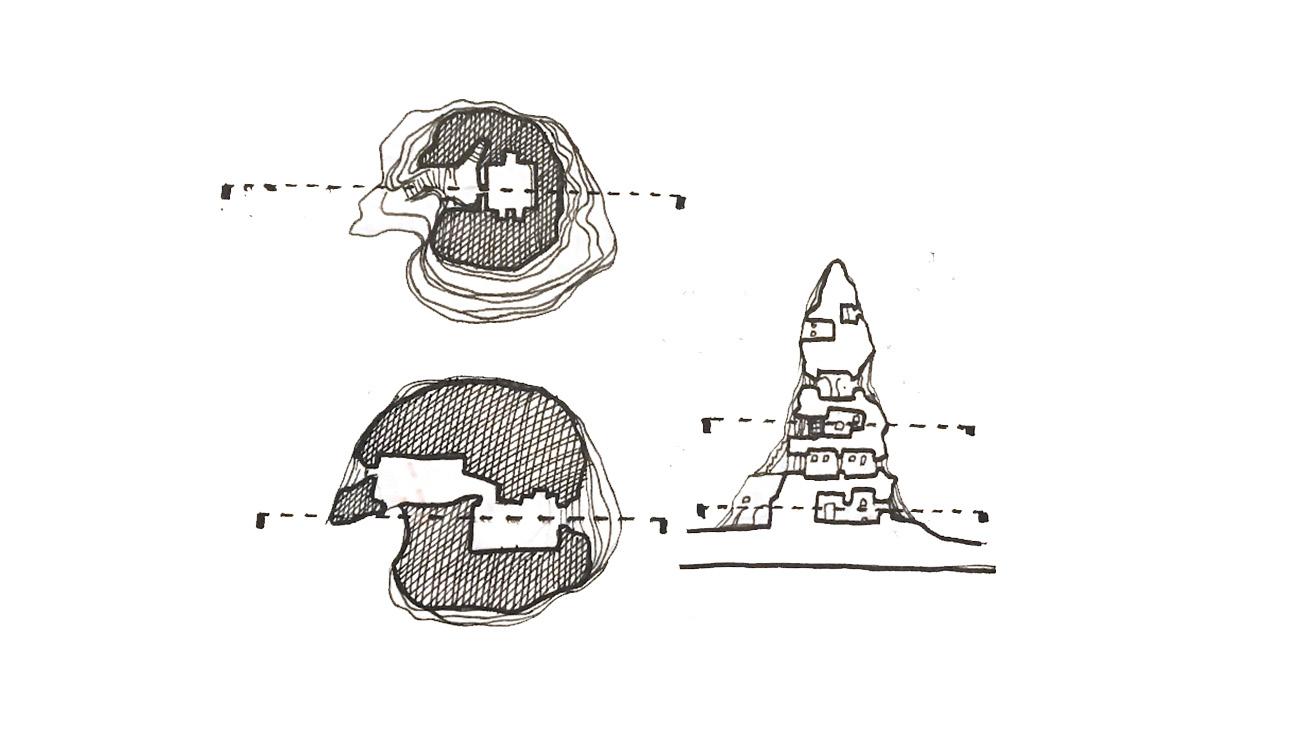
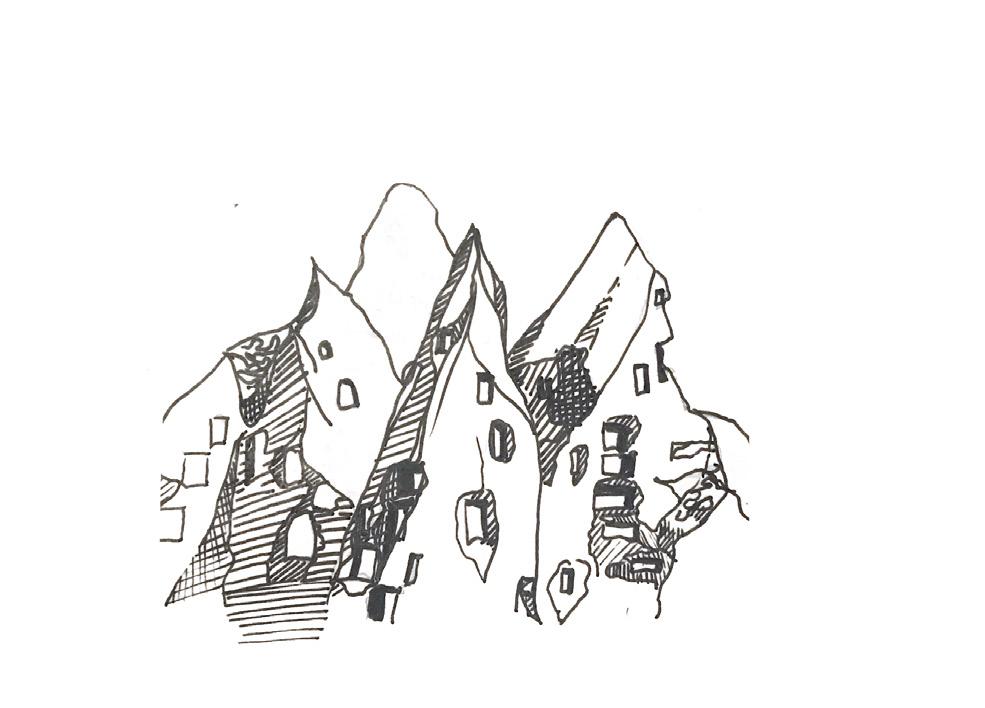
In the process of designing these spaces I took inspiration from Cappadocia, a historical region in Central Anatolia, Turkey, inhabited around 499 BC.
Cappadocia shows full villages carved within Mount Erciyes, with elaborate ventilation systems and vertical connections. What fascinated me about them is a certain ‘non-human’ quality of the spaces (amplified by the resemblance to an ant’s nest). This is something I tried to capture with my proposal by adopting the same method of design: subtraction.


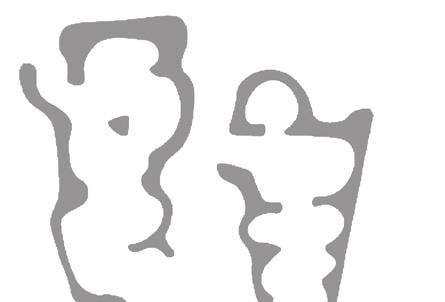
Considering possible construction methods and the new spatial qualities of the architectural intervention brought considerable changes in plan and section. The spaces became more regular in terms of geometry, yet maintained their complexity through the use of intersections and volume subtractions.







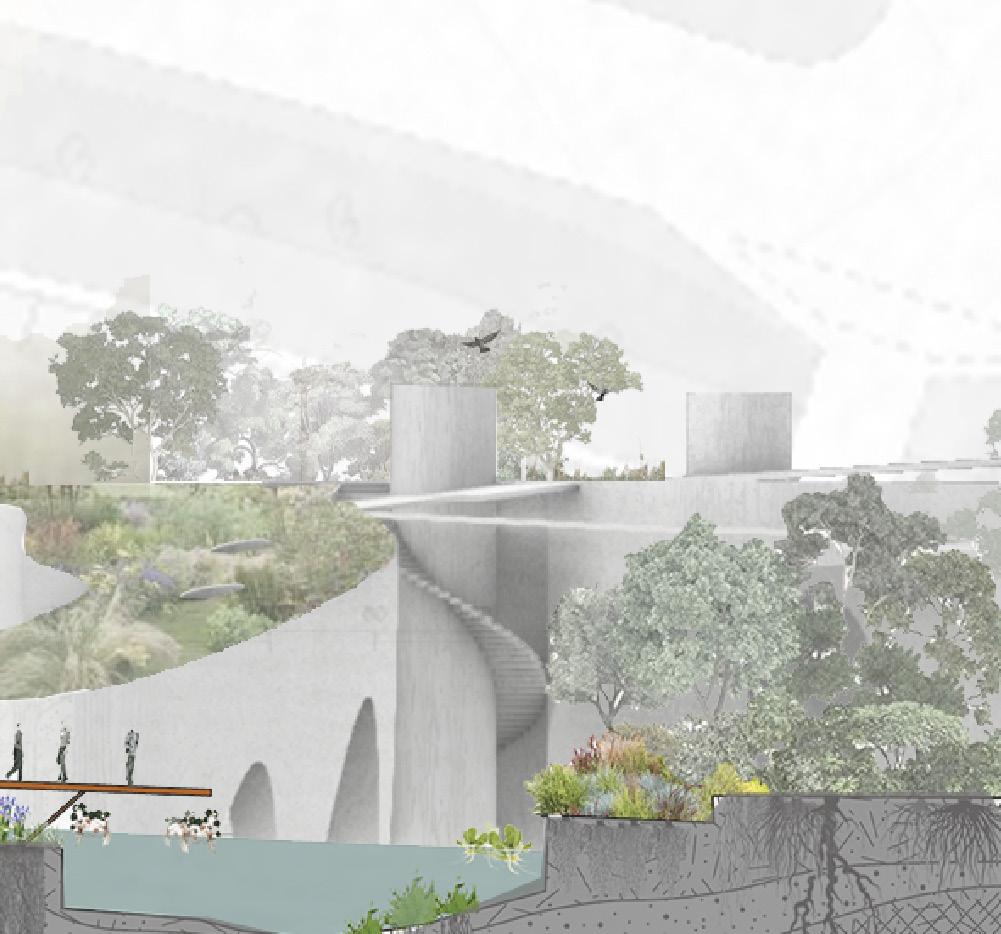
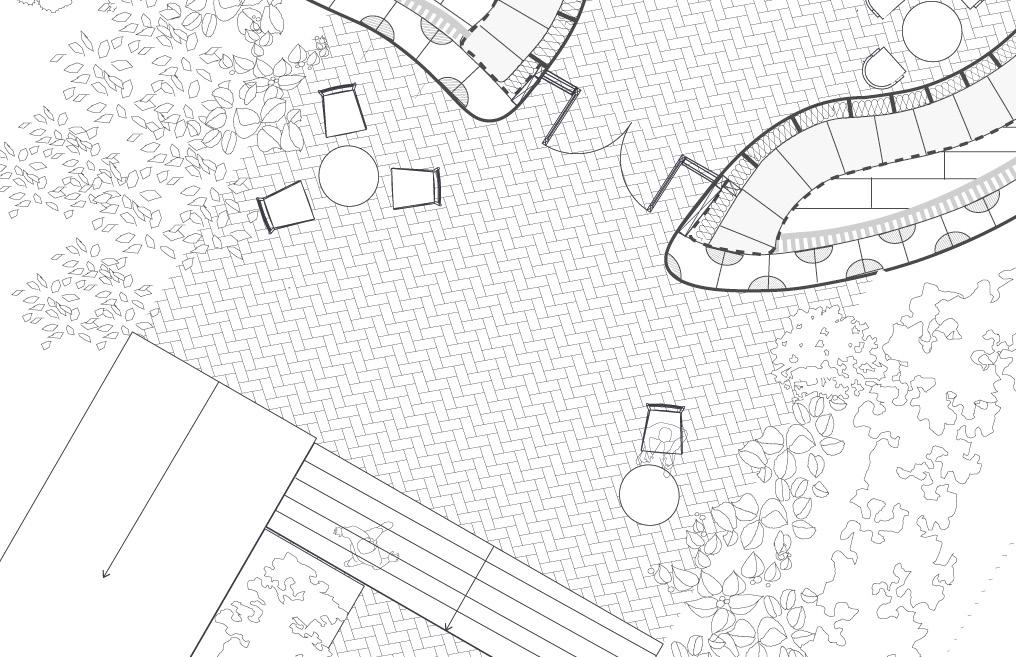
The design facilitates green and blue spaces for the local community, alongside spaces for social interaction, crucial for health and well-being.

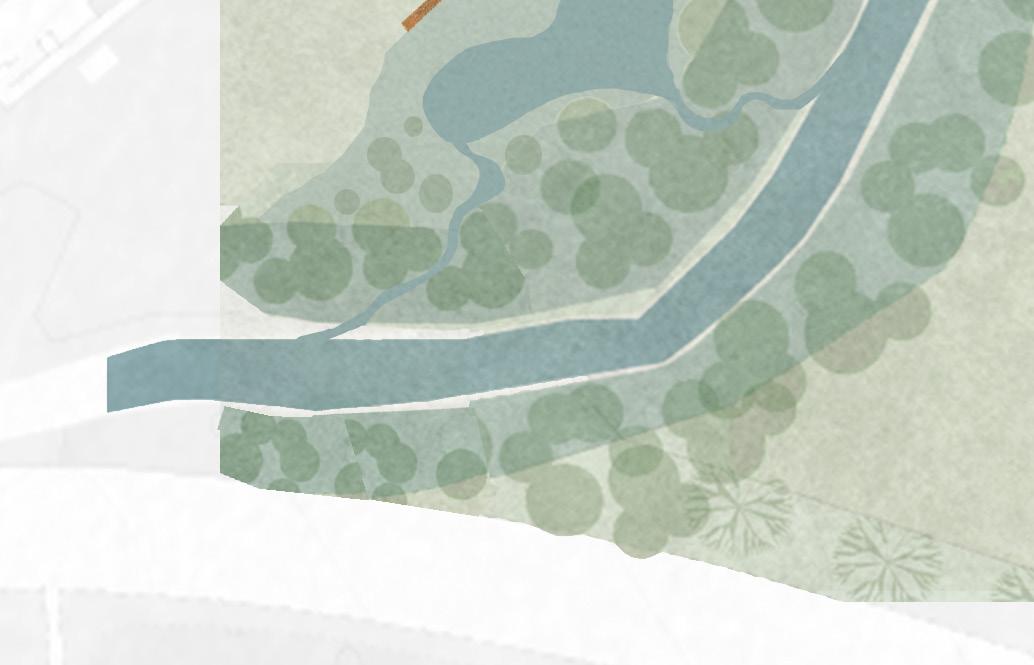
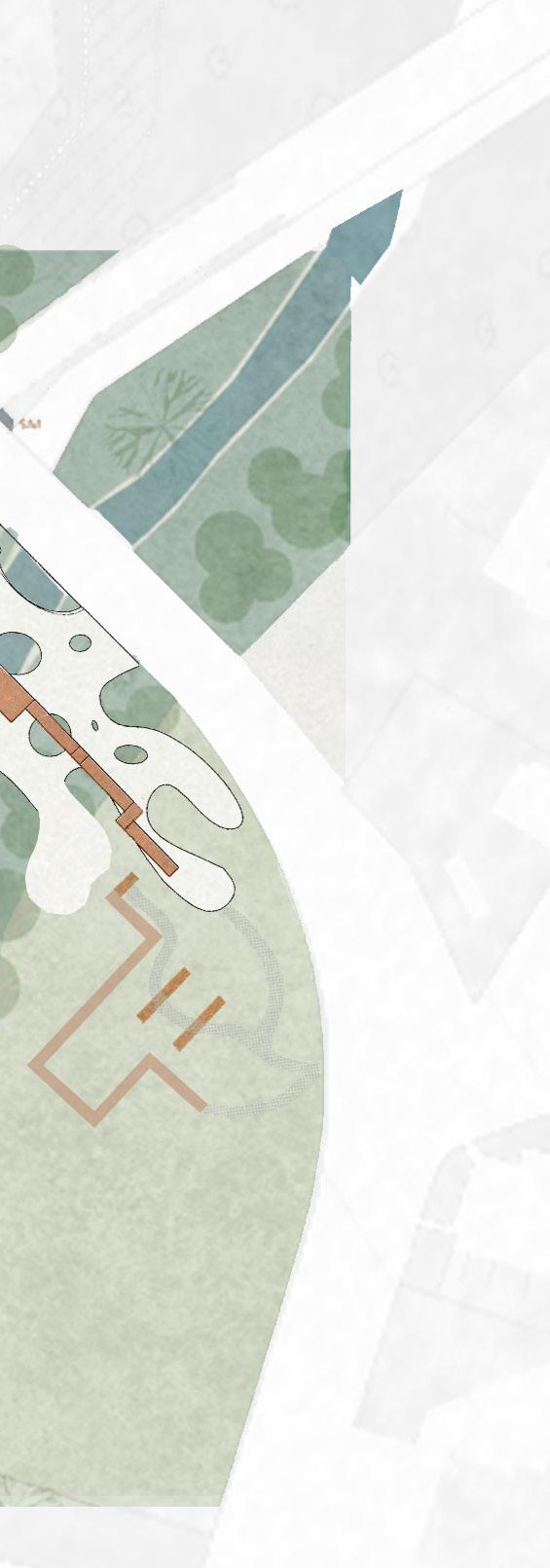
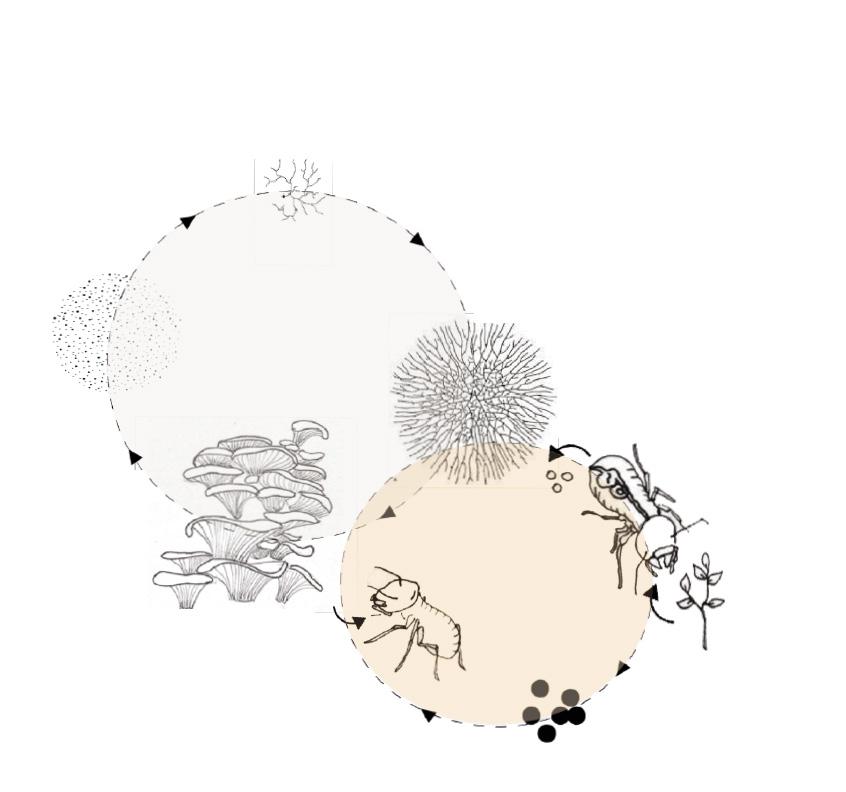
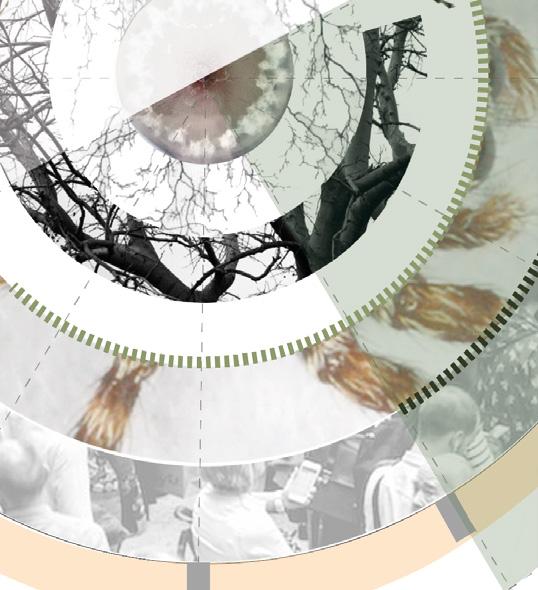
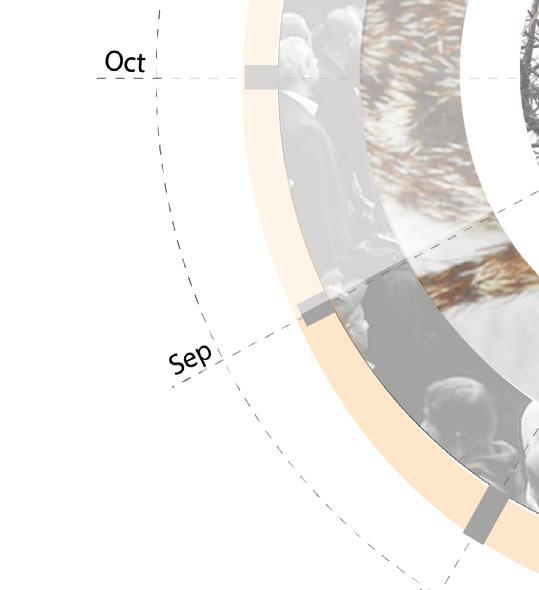
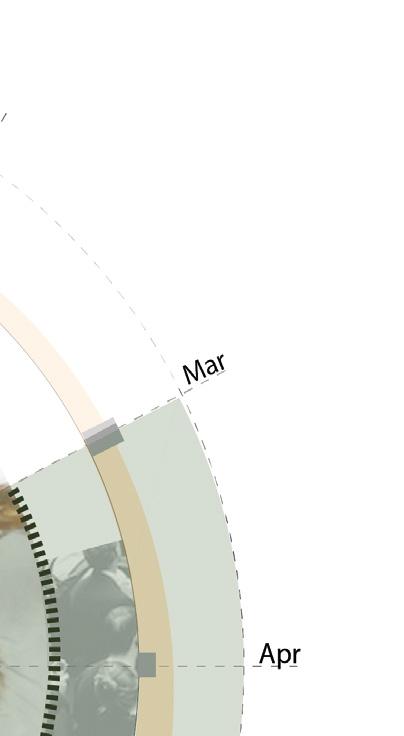
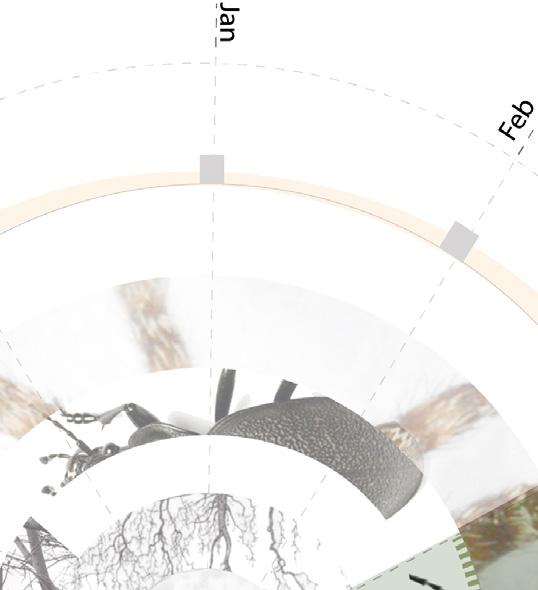
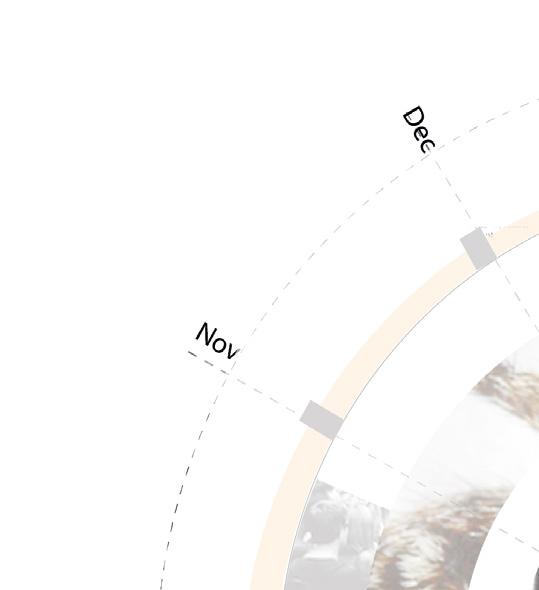
The circular timeline above shows when the building is utilised by the different users, as well as the climatic conditions that determine it.



Mycelium germinatio Mycelium fruiting
This indicates a high level of utilisation in spring, while the activity of the ‘living building’ is reduced in winter. regardless, even if the ‘methabolism’ of the intervention slows down, with mycelium, plants and insects being inactive, the proposal still offers a place of refuge for insects in diapause.

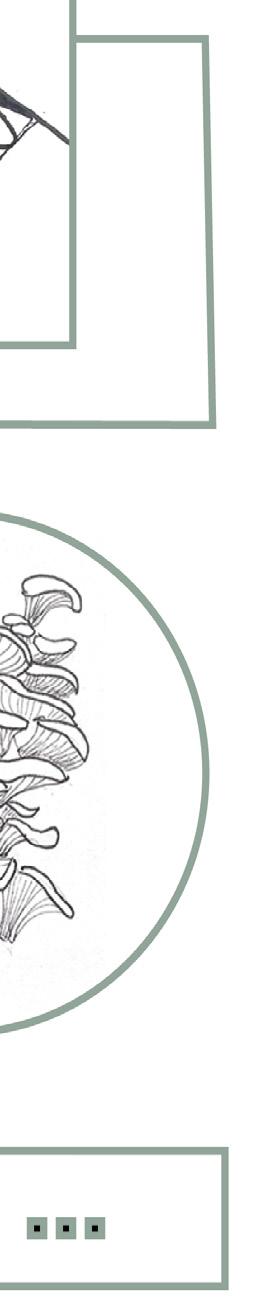
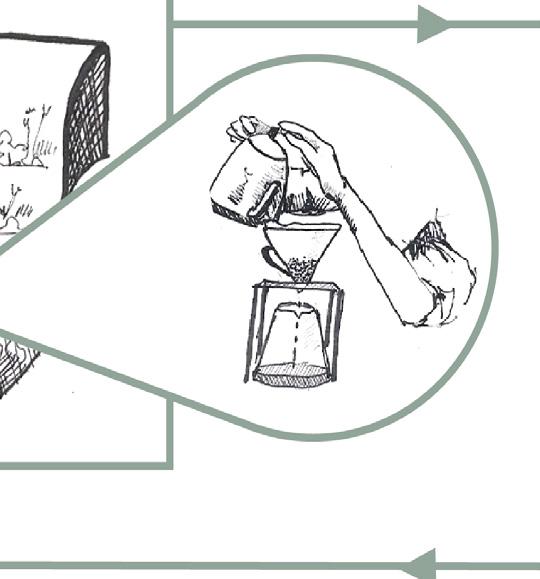
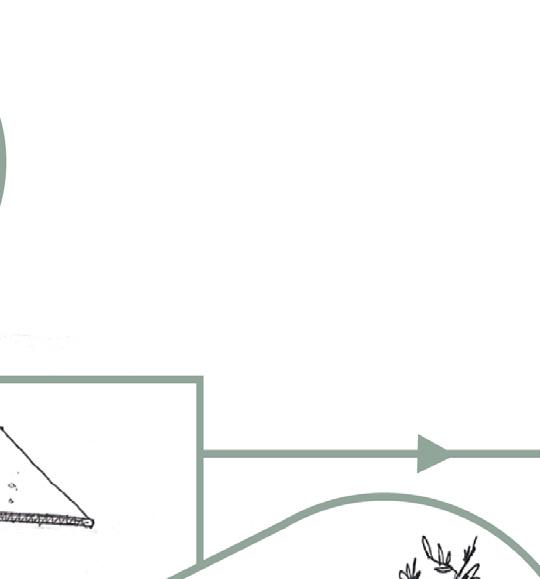
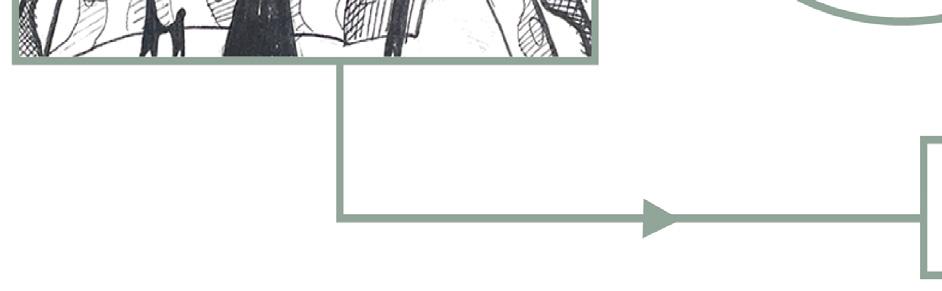

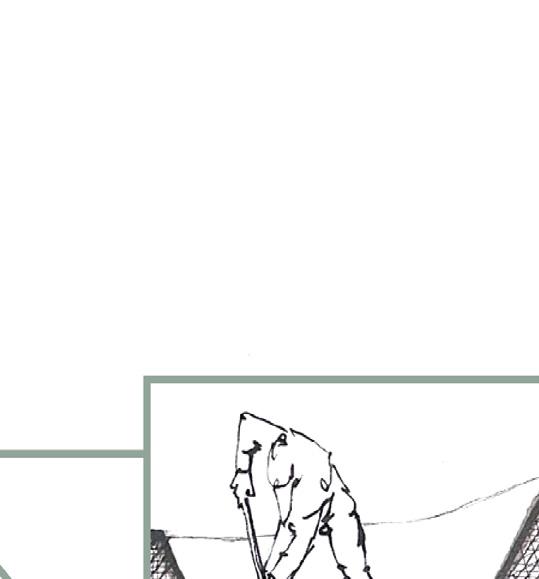
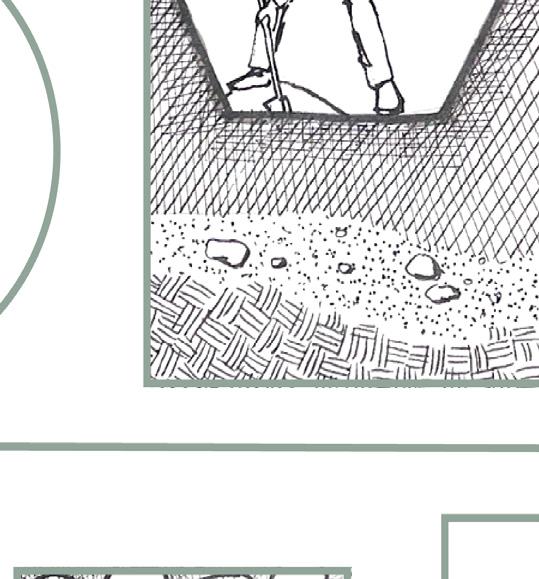
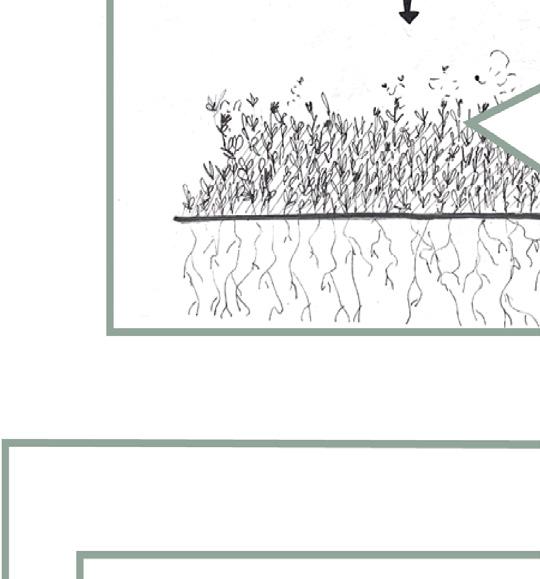
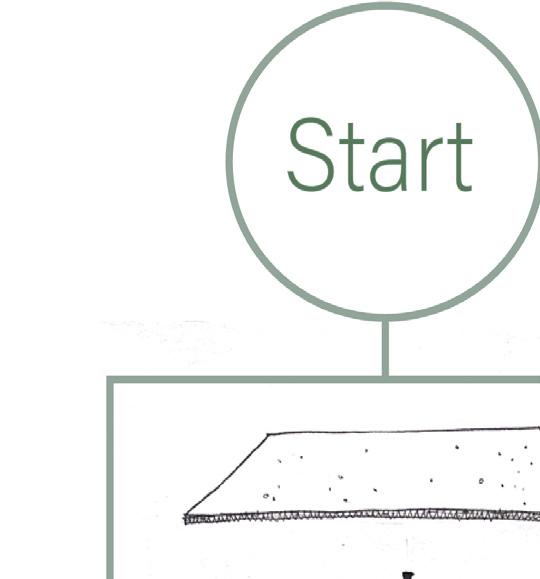
The construction process starts by carrying out sustainable remediation for site pollution. The concrete patch from the car park is removed and Alfalfa is being planted instead. Alfalfa contains triacontanol, a hormone which stimulates the growth of plant roots and enhances photosynthesis. Its high nitrogen content helps other organic material to decompose, therefore providing nutrients for other plants. The next step is to source the soil for the rammed earth and terracotta bricks. In doing so, the pond is formed. Following up the brick manufacturing on site, the structural element of the design is constructed with no local pollution from the development
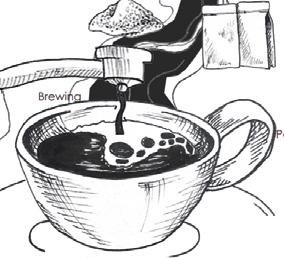
The cafe is finalised and starts operating, while collecting used coffee grounds and other compost, later to be used for the manufacture of the mycelium bricks. Next, the mycelium is placed on top of the earth bricks and then covered in soil. Wild vegetation is planted on top. Insects ‘move in’ and start feeding the mycelium. Next spring, the mycelium enters the germination and then the expansion phase, connecting the levels of vegetation and helping it develop. Finally, the mycelium is in the fruiting stage, when it produces mushrooms that can be consumed by the users ( both humans and non-humans). They are only accessible to humans in the spiritual area, area of intersection between humans and non-humans.

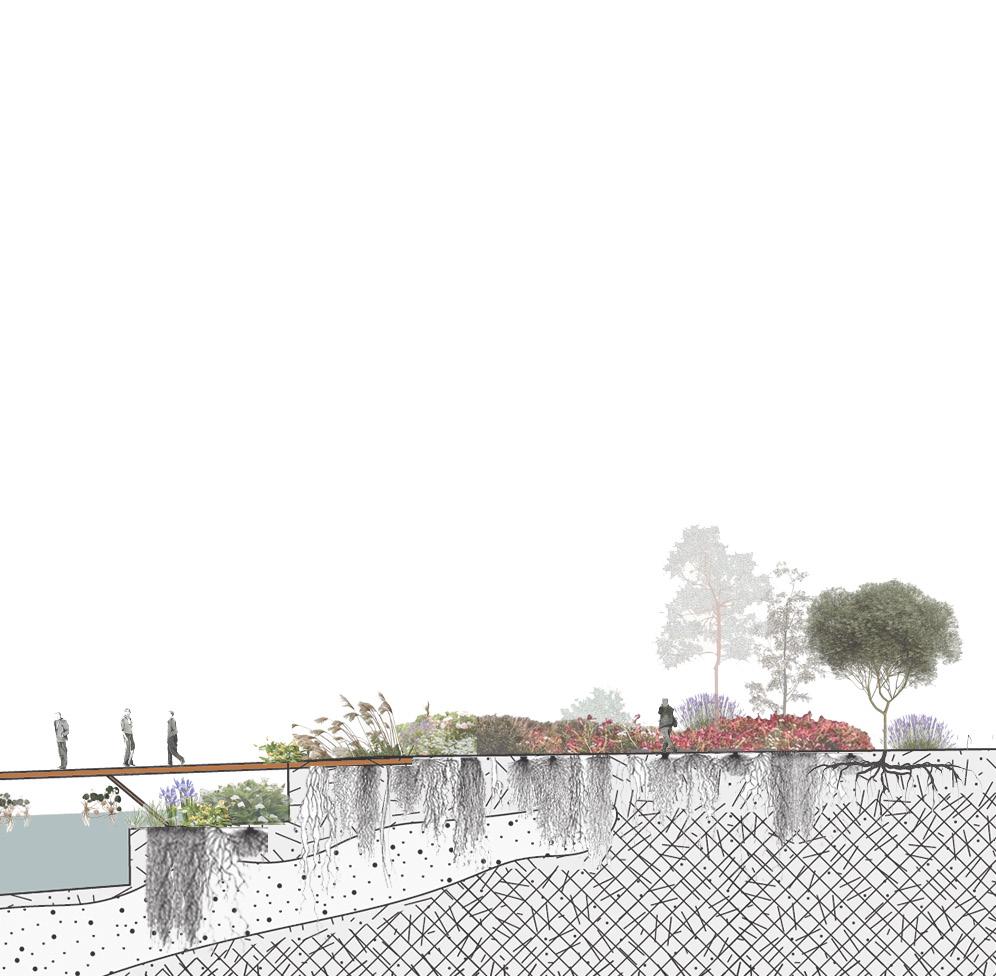
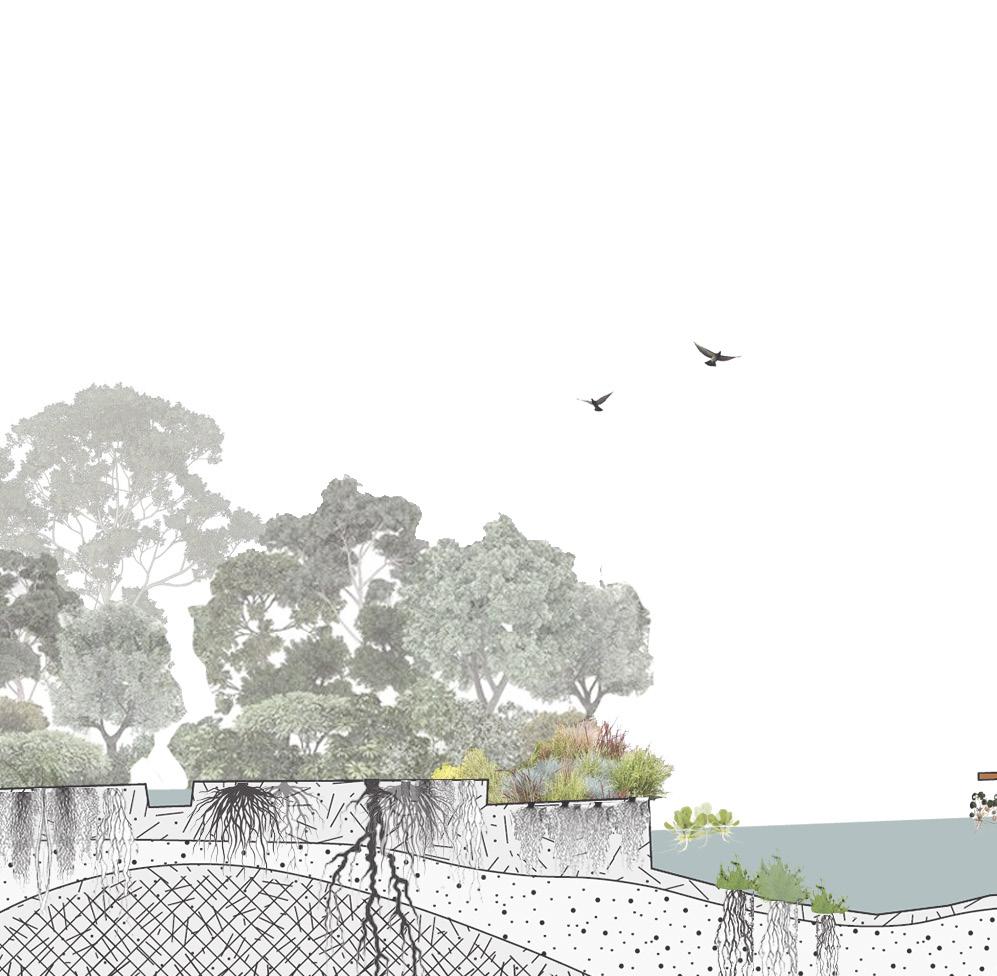
Submerged Floating Marginal (5 to 15cm) Marginal (5cm) Well drained
Callitriche hermaphroditica
Fontinalis antipyretica
Hydrocharis morsus-ranae

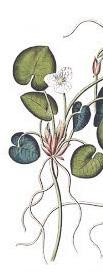
Nymphaeaceae


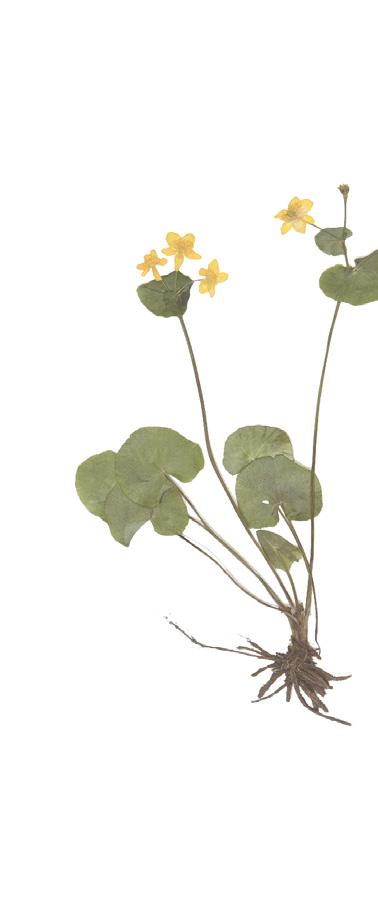

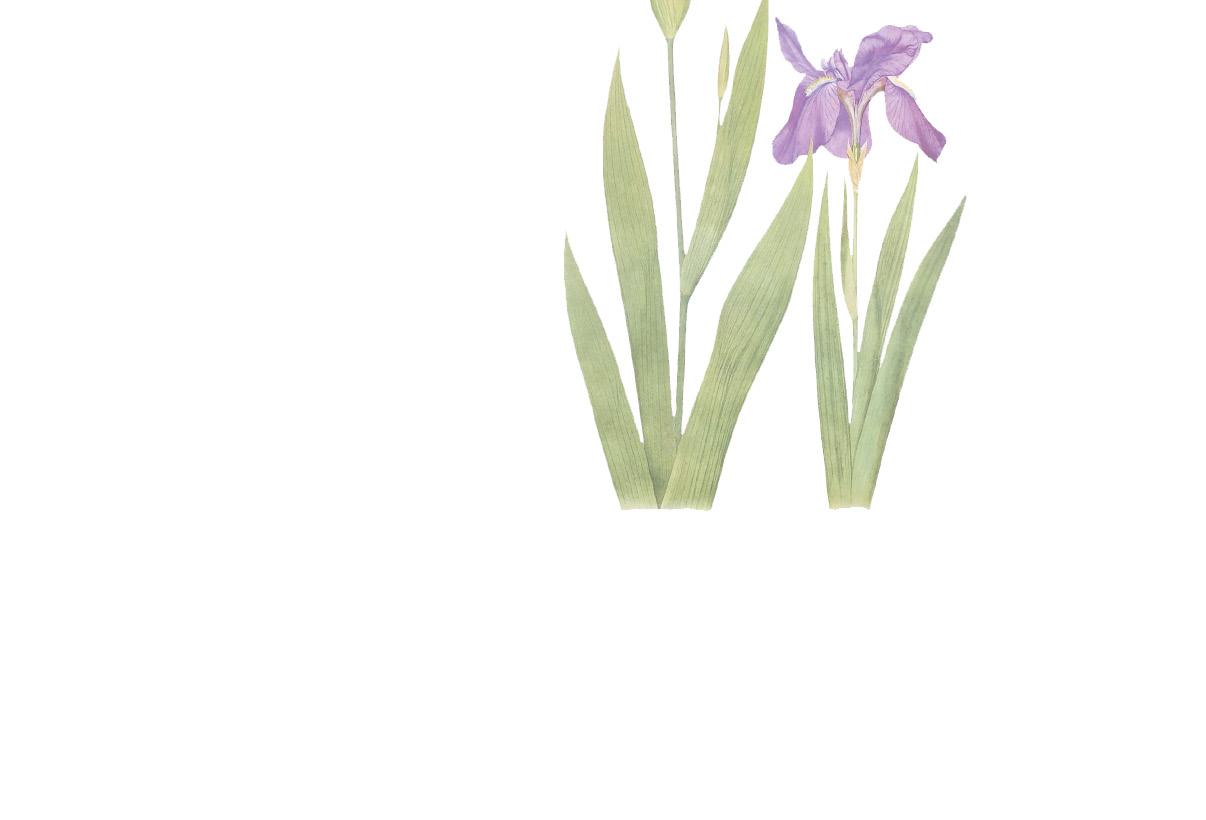
Iris pseudacorus

Acorus calamus
Calla palustris
Myosotis scorpioides
Carex pendula
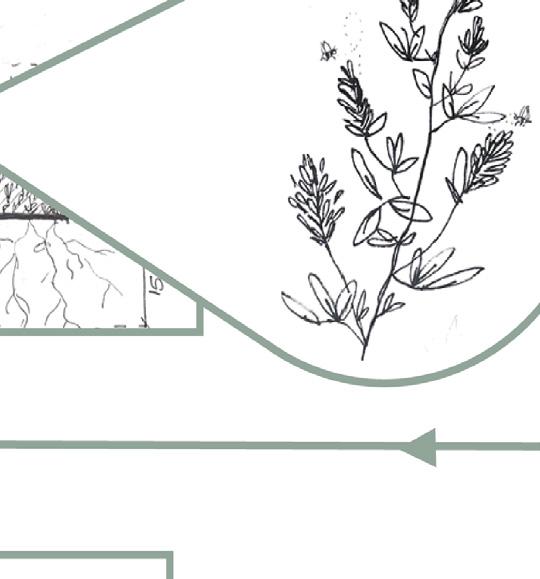
Lavandula angustifolia Alyssum Iberis Centaurea

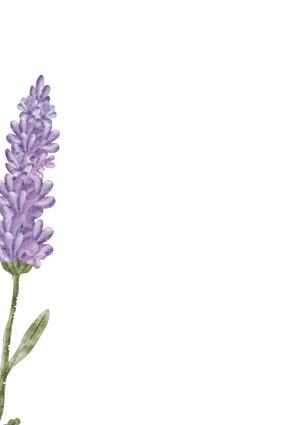
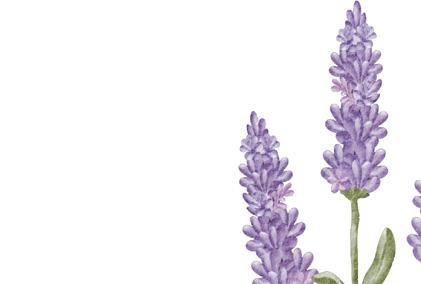
All selected plants except the ones from the ‘submerged’ chategory are characterised by bright flowers and a pleasant smell, and are known to attracting pollinators and provide good nesting conditions.
Furthermore, they are selected to flower at different times in the year, ensuring a constant source of nutrition for pollinator insects. The existing vegetation is being maintained.
(d) Existing trees






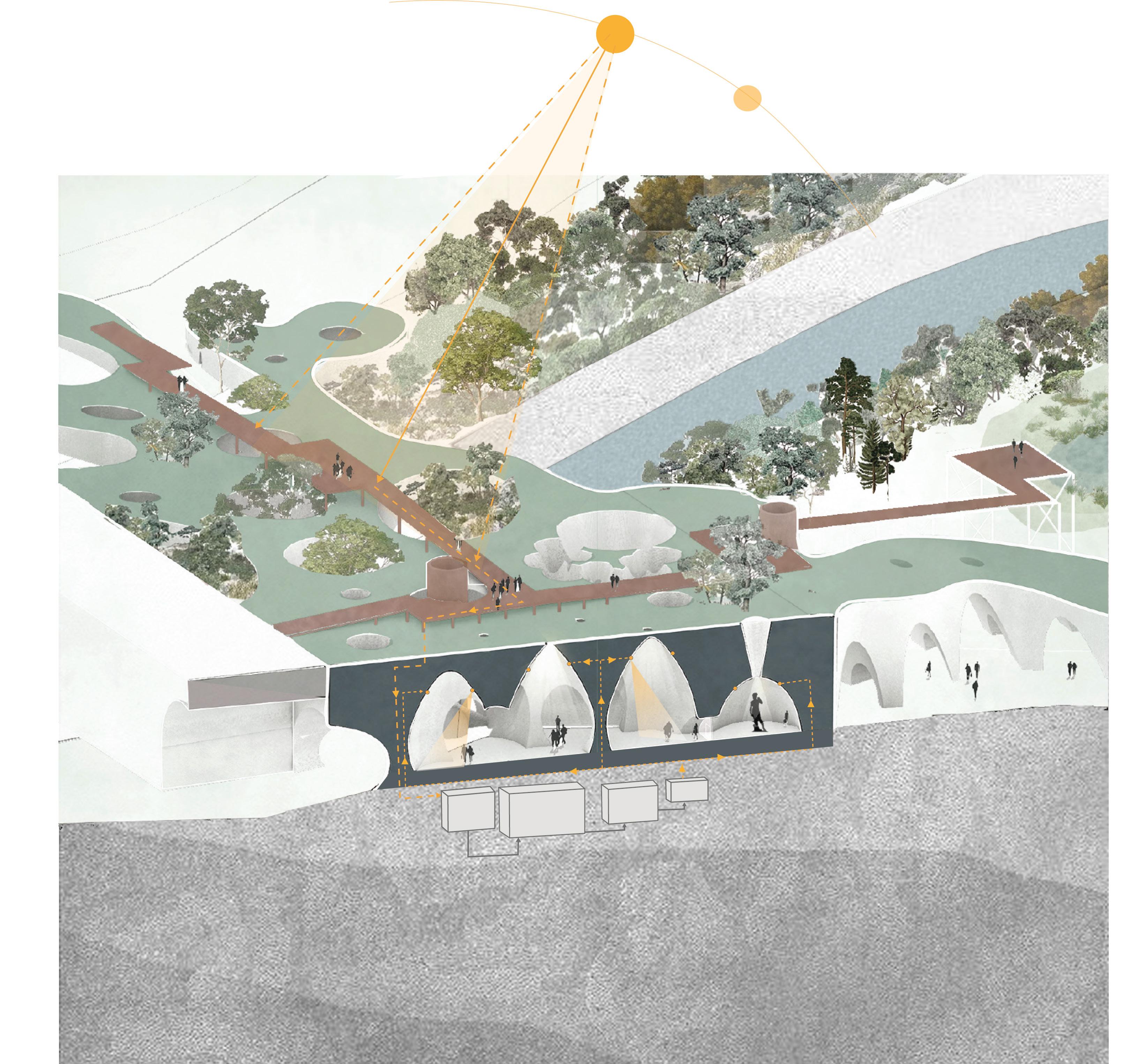
The specific skylights are directing the sun in the designed orientations. The white mycelium bricks paving the openings are reflecting the sun inside the construction.

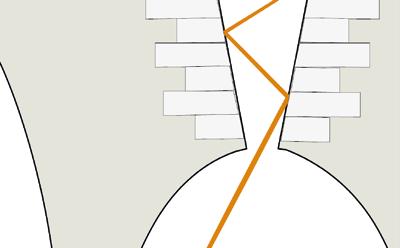
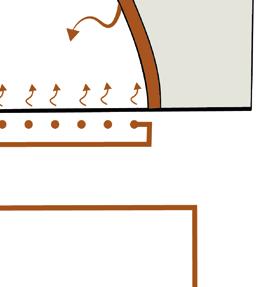
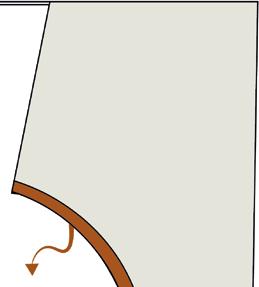
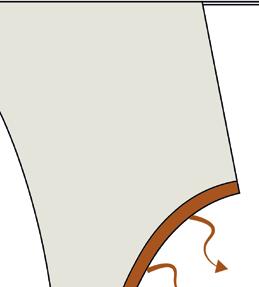
The opperable openings through the roof also serve an important role in facilitating passive ventilation. This will ensure a cool environment in summer and good heath retention in winter ( also due to the thermal mass of the construction)
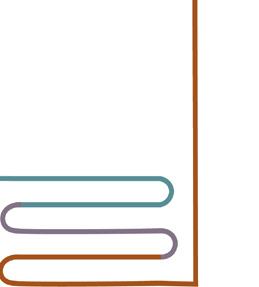
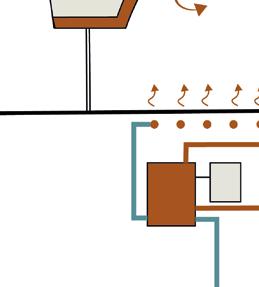
Using a ground source heat pipe in one of the exhibition spaces and in the cafe ensures a controlled thermal environment with very limited energy use. The thermal mass of the rammed earth bricks paving the spaces reduces the need for the pump to be operating.

The paths from the rooftop are paved with solar panels. They generate the power needed for the building to operate, while maintaining a discrete look.


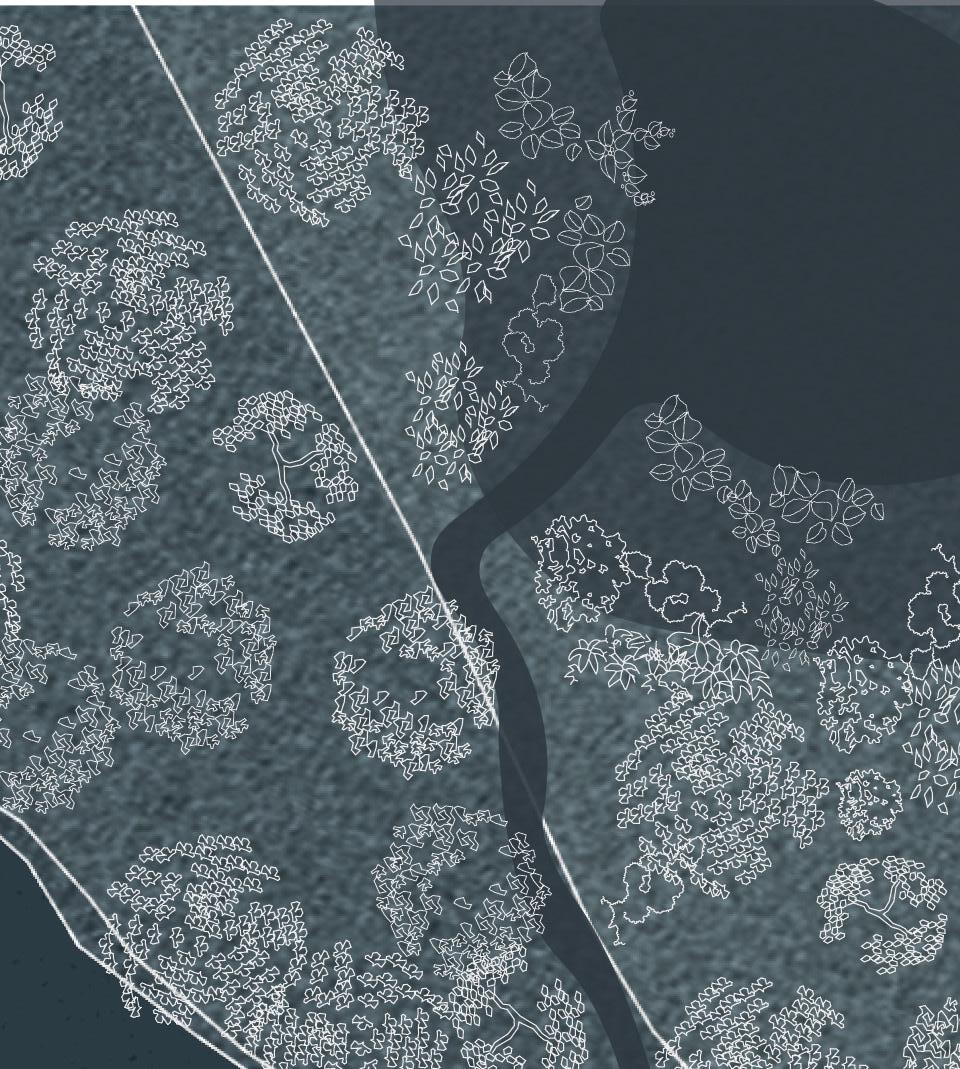
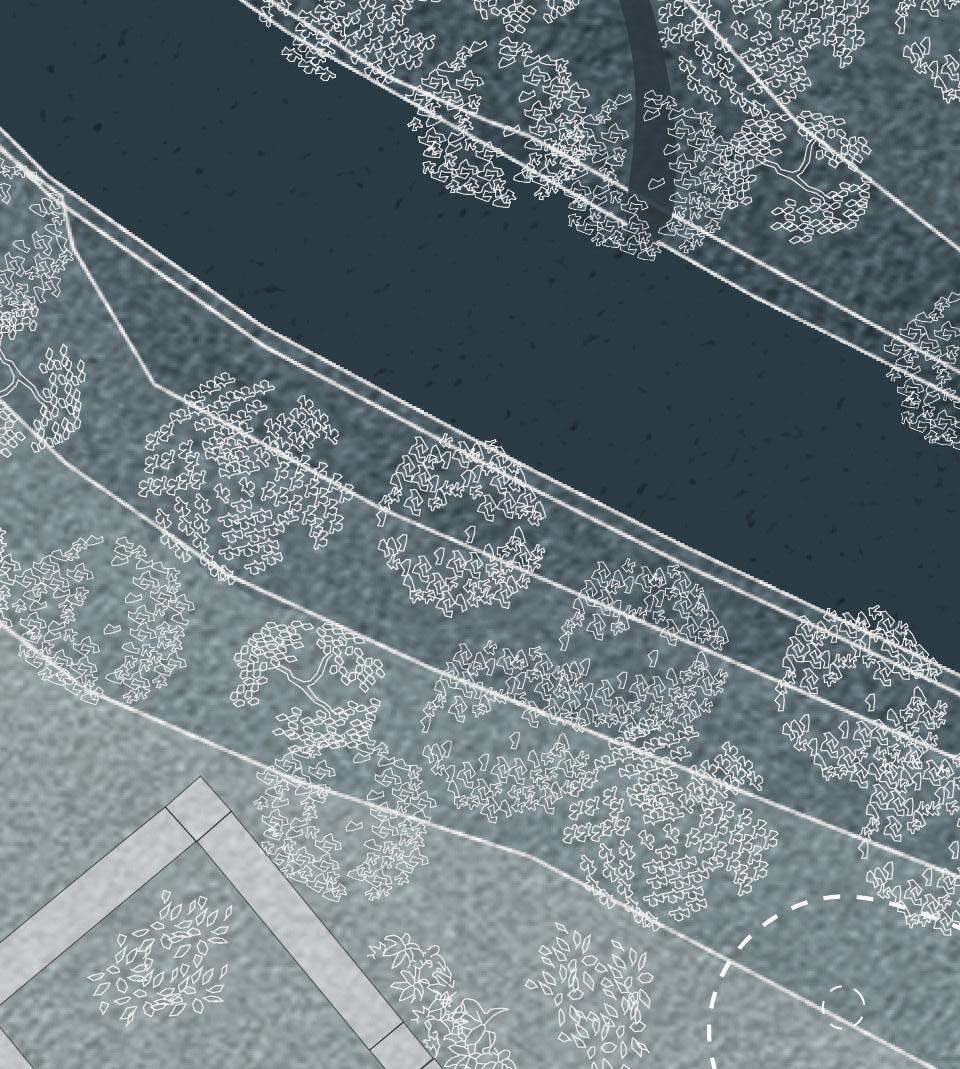
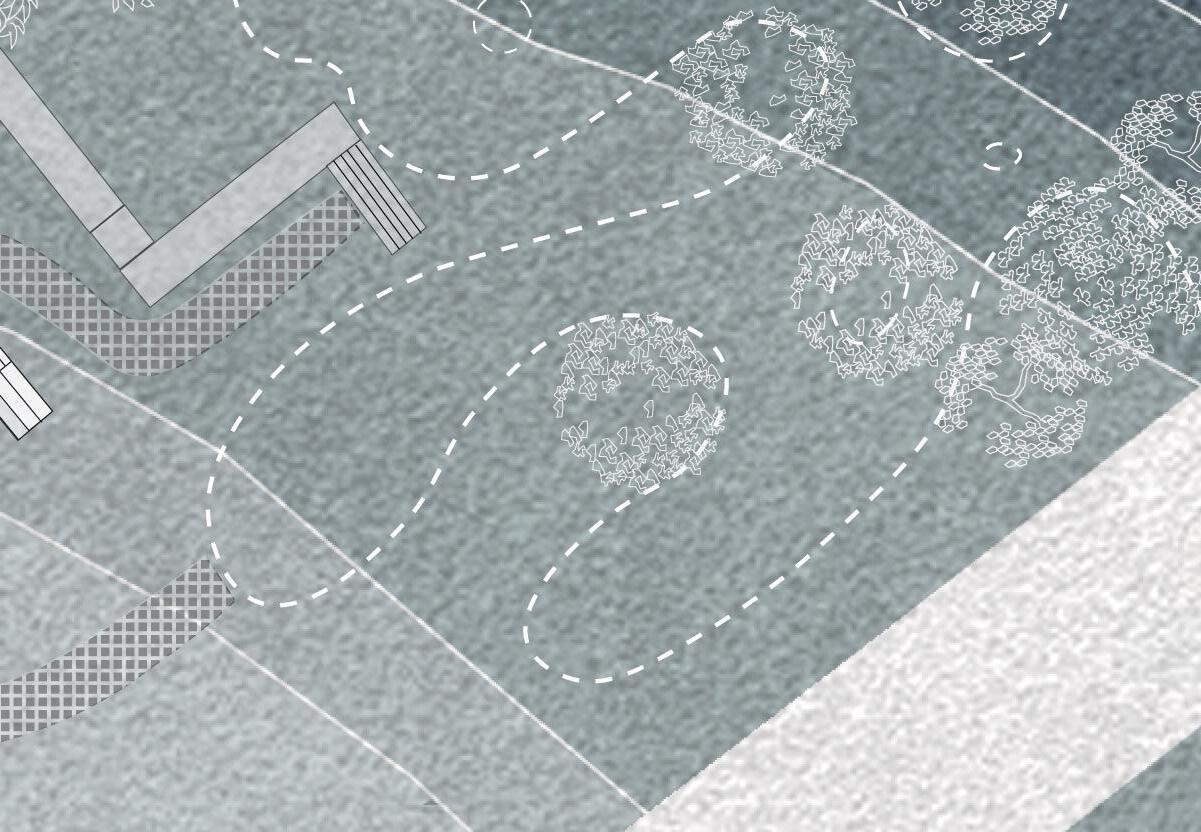
Vegetation
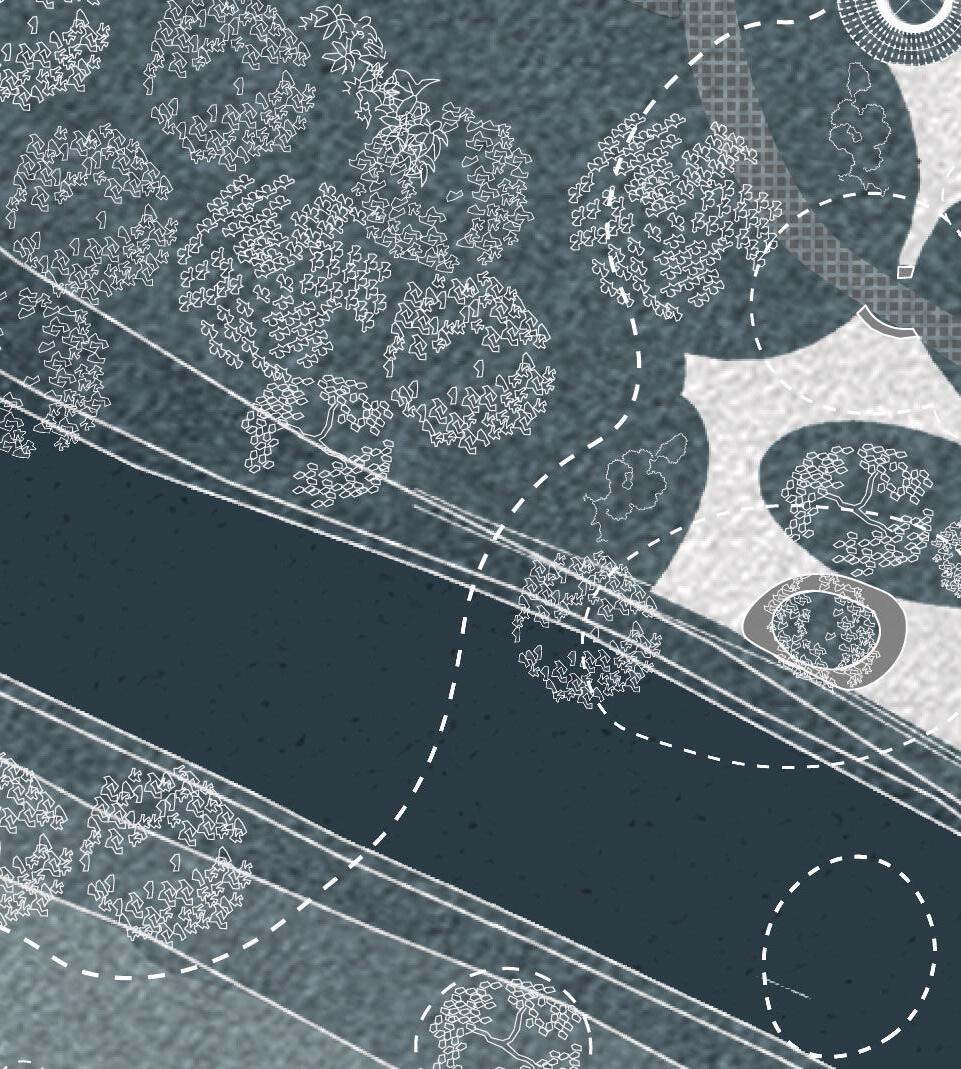
Terracotta tile path
Water
Projection
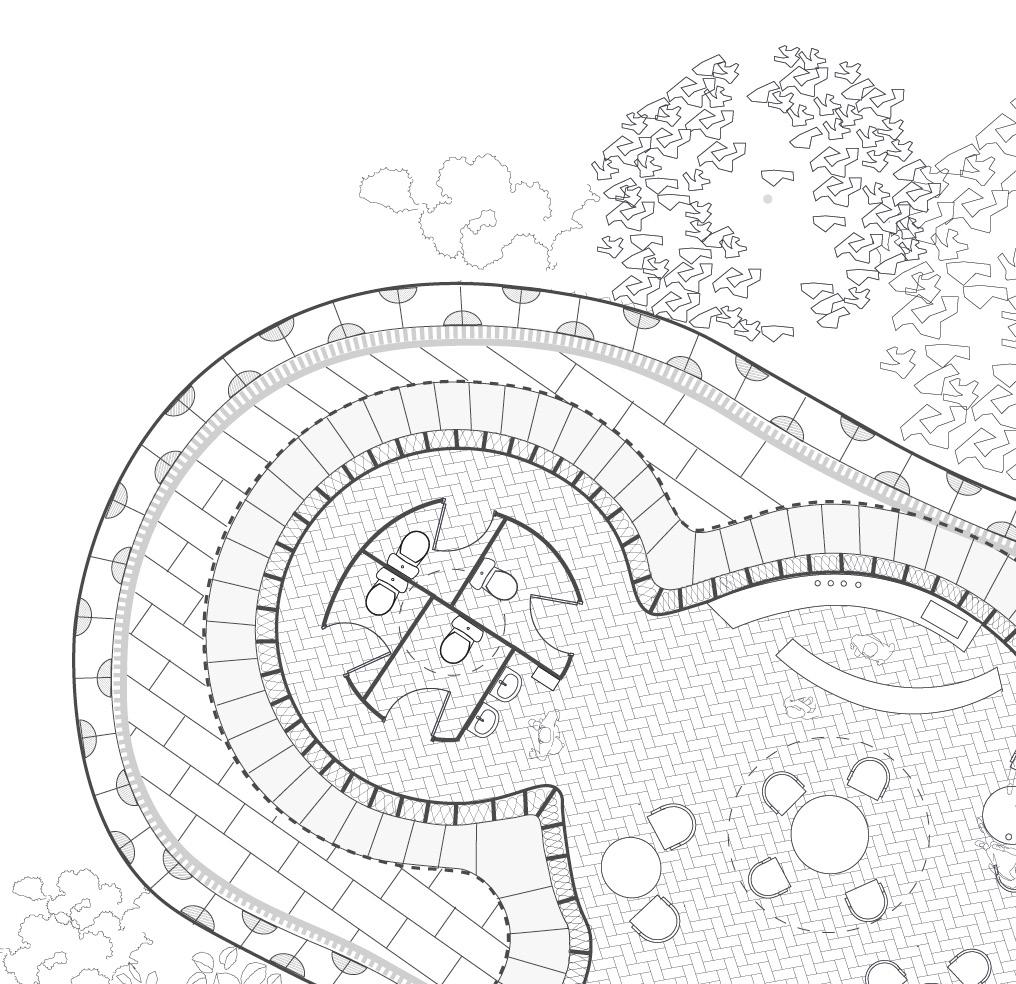
1. Spiritual space, metaphoric of the heart of the concept, containing live mycelium inhabited by insects

2. Dark corridor leading up to the spiritual space, metaphoric of the blind search for spiritual answers


3. Corridor maintaining the original path found on site
4. Series of exhibition spaces designed for outdoor sculpture
5. Enclosed exhibition space
6. Transitional space between ‘inside’ and ‘outside’, blurring the borders between the two
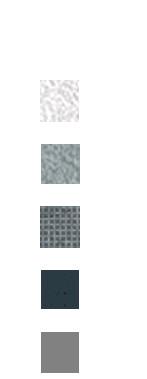



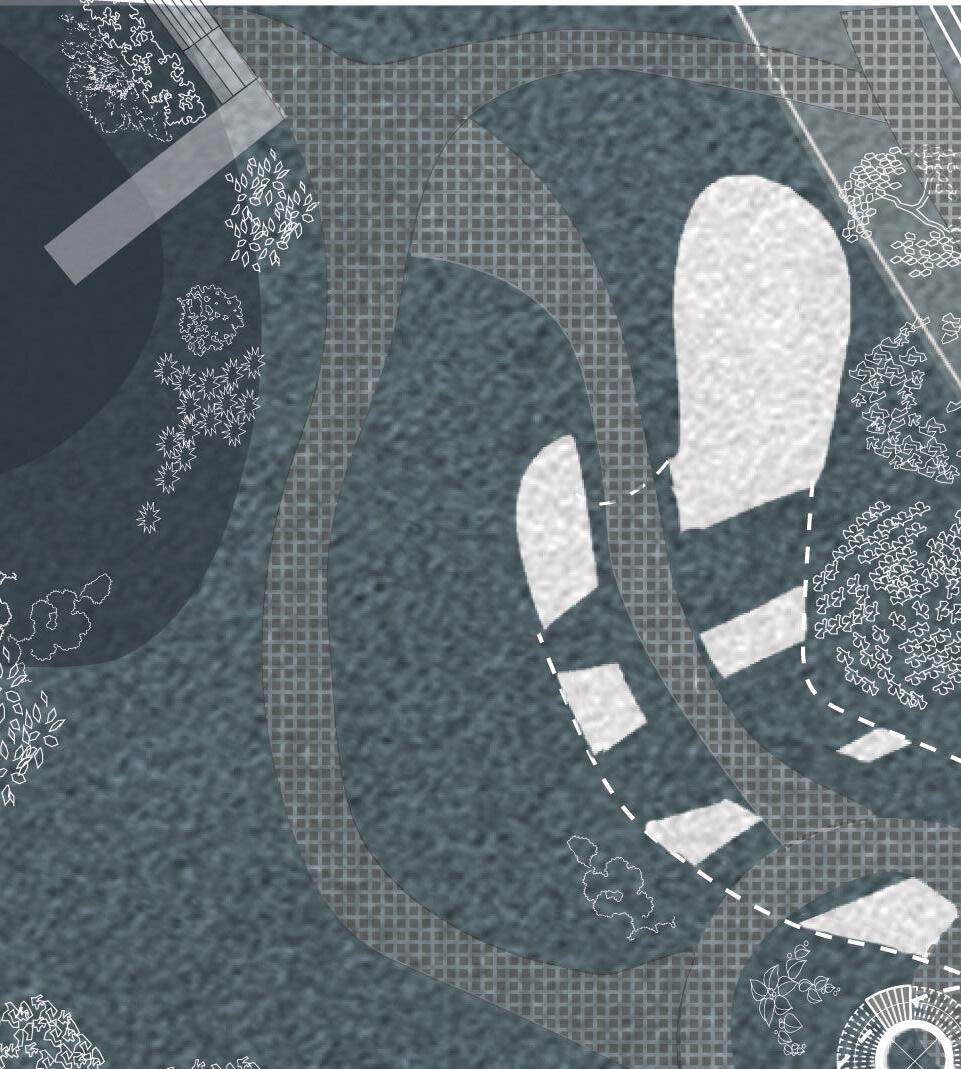
7. Transitional exit area from the spiritual space, that creates a waterfall effect when raining, metaphoric of a rebirth
8 Non-human designated area
9 Viewing pontoon
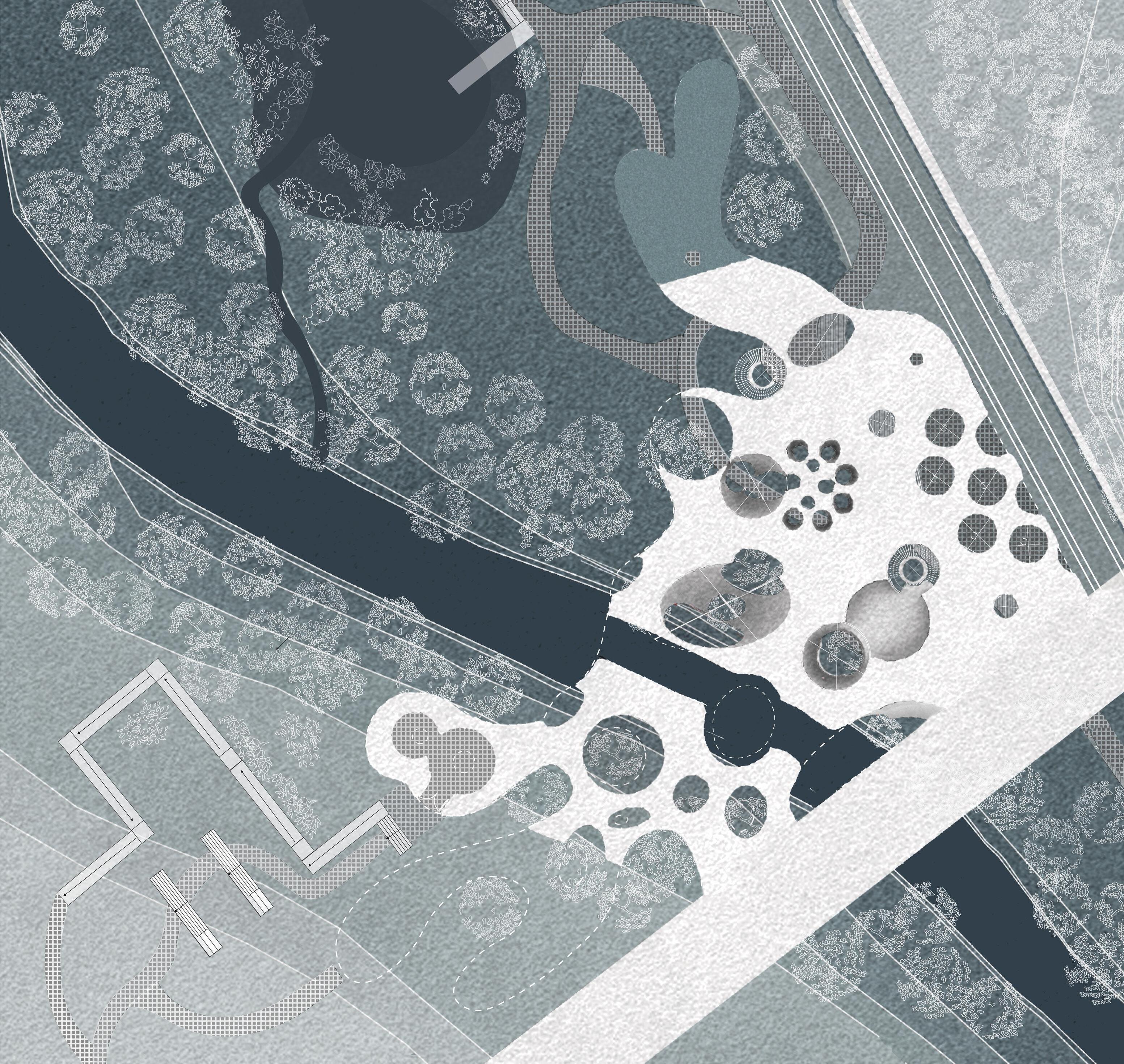









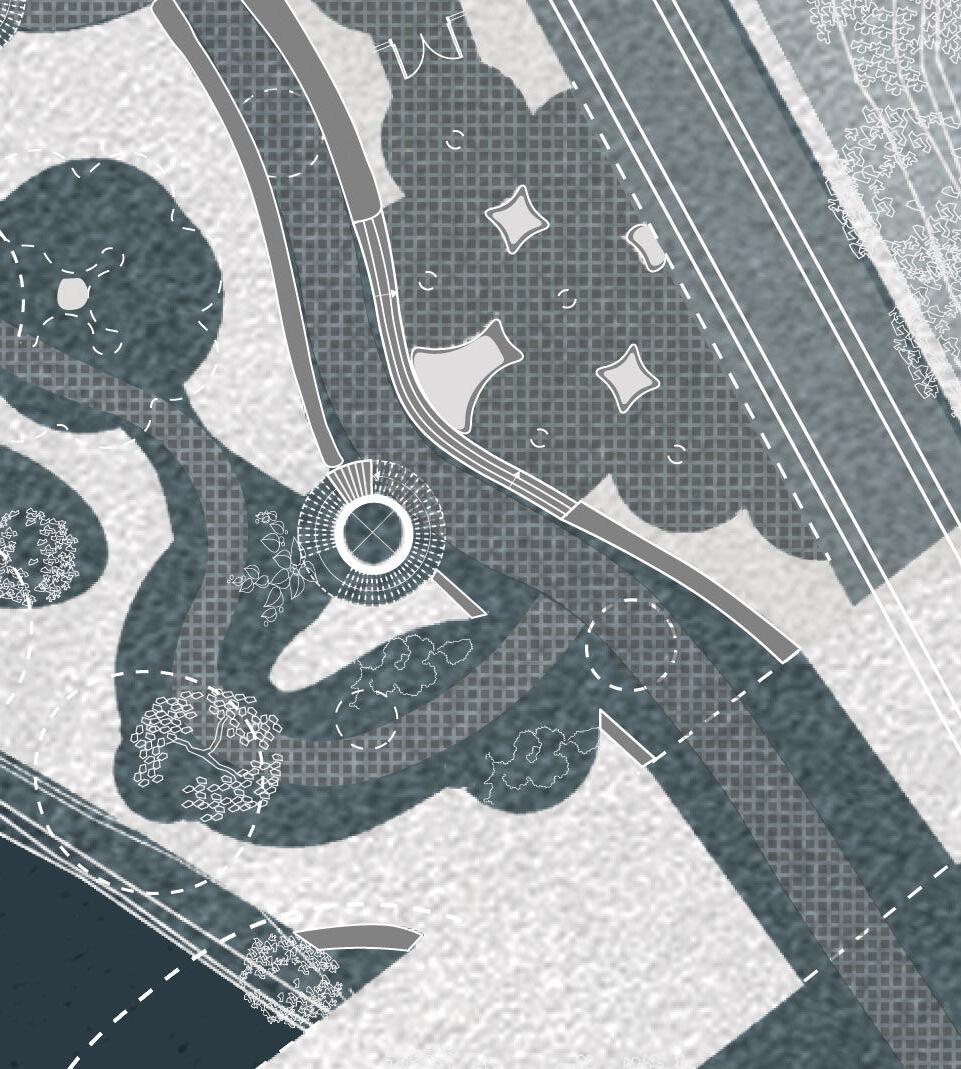
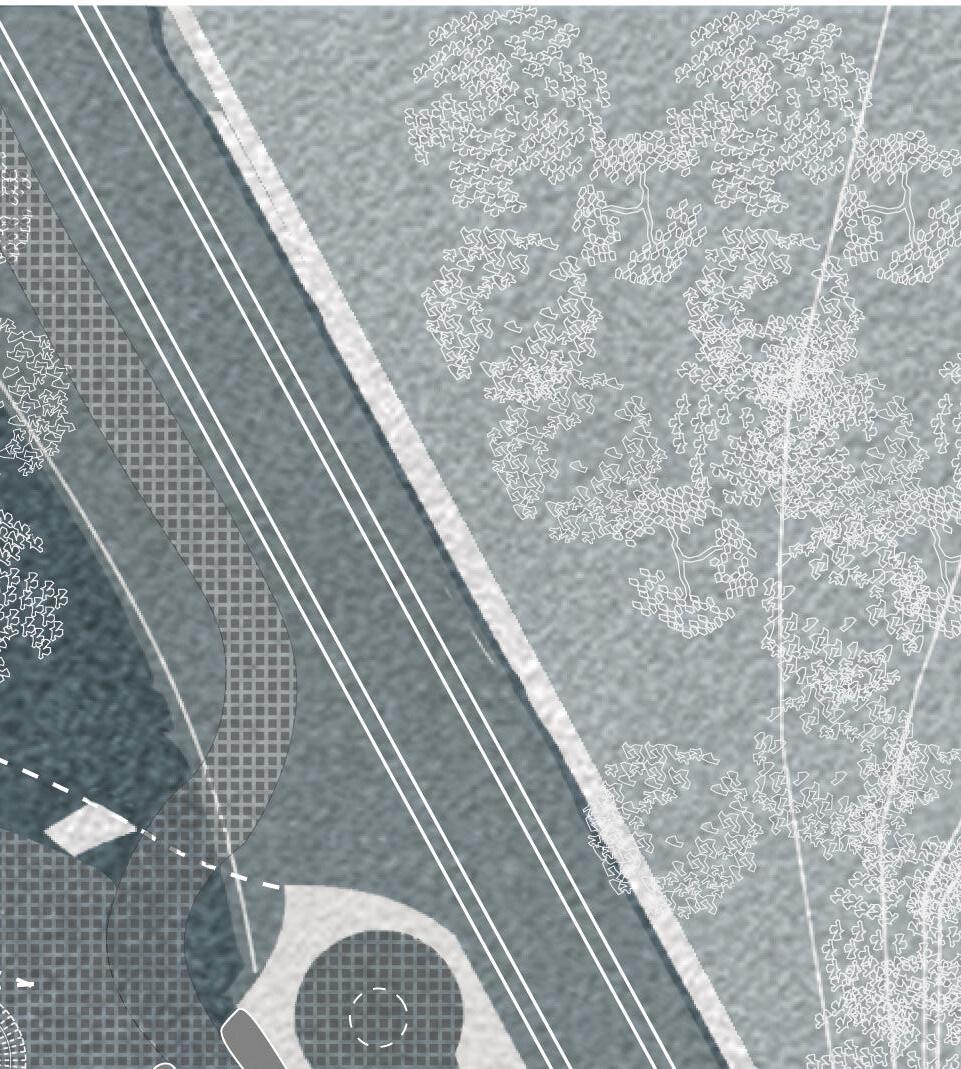
The proposal creates a new landscape, while ensuring the health of the new green areas by creating connections between it and the exising vegetation. Furthermore, the construction bridges the gap of connections existing on site (in terms of underground networks) while also linking insects and humans in this ‘designed’ cycle of nature.
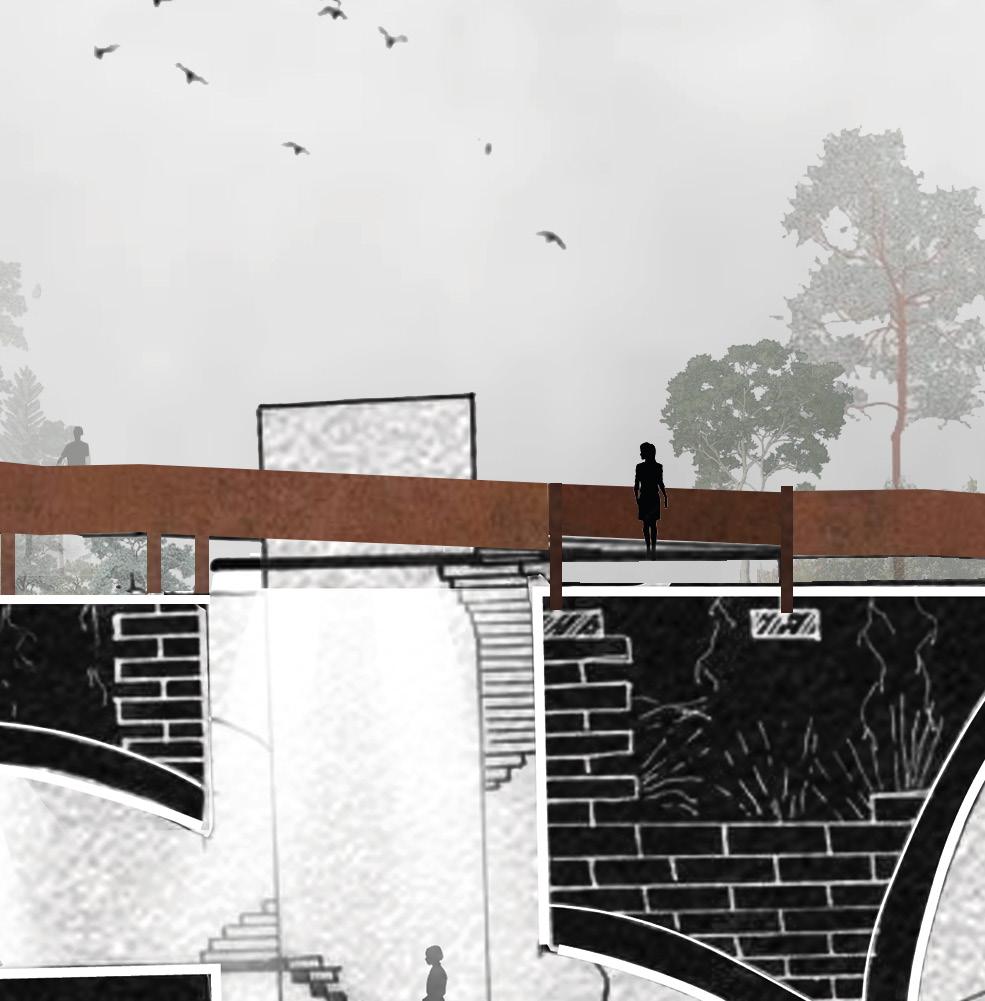
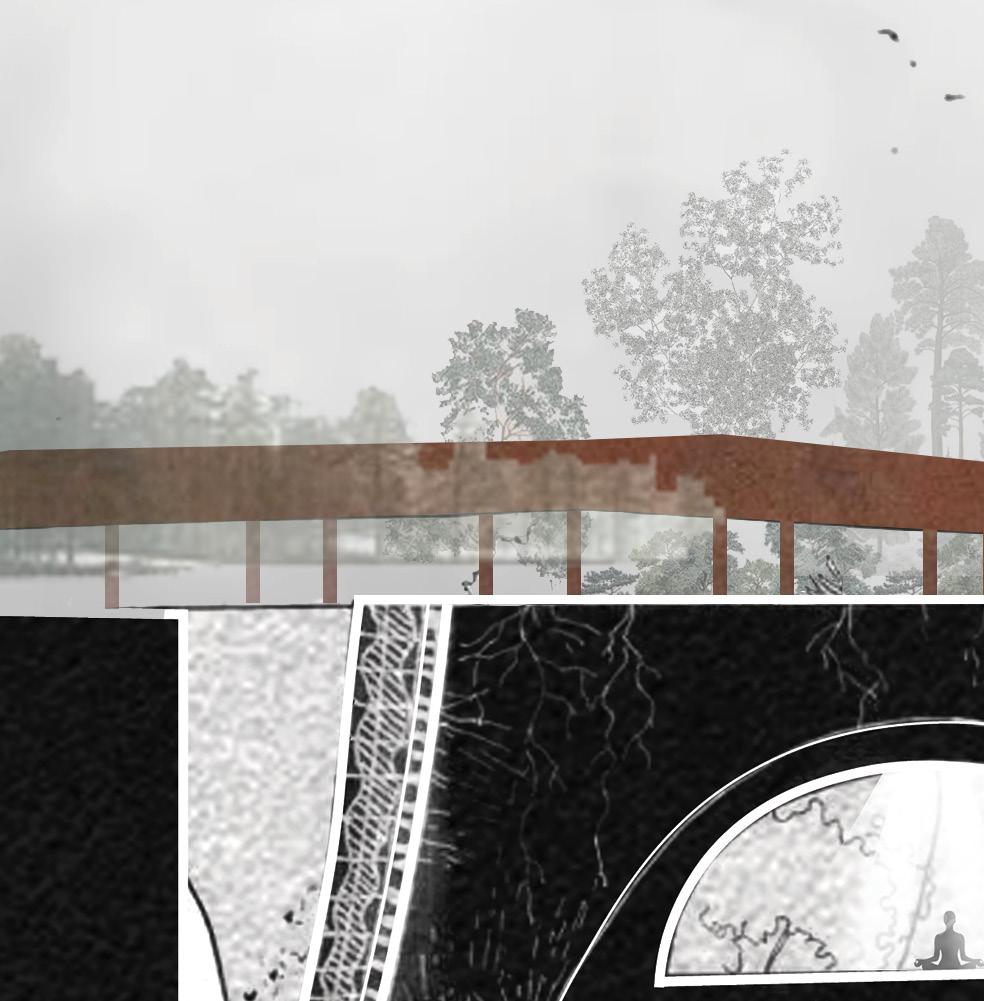
2. Corridor leading up to the spiritual space
3. Corridor through the building maintaining the original path found on site
4. Series of exhibition spaces designed for outdoor sculpture
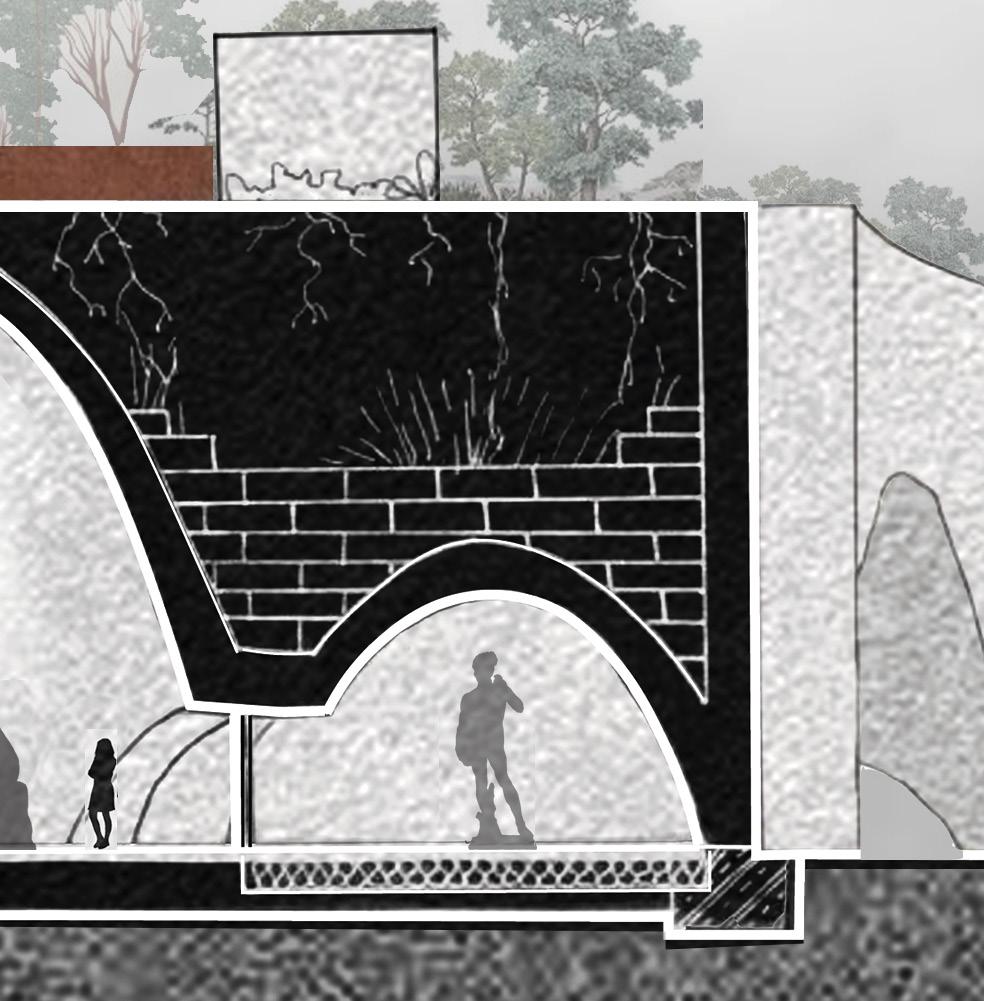
5. Enclosed exhibition space
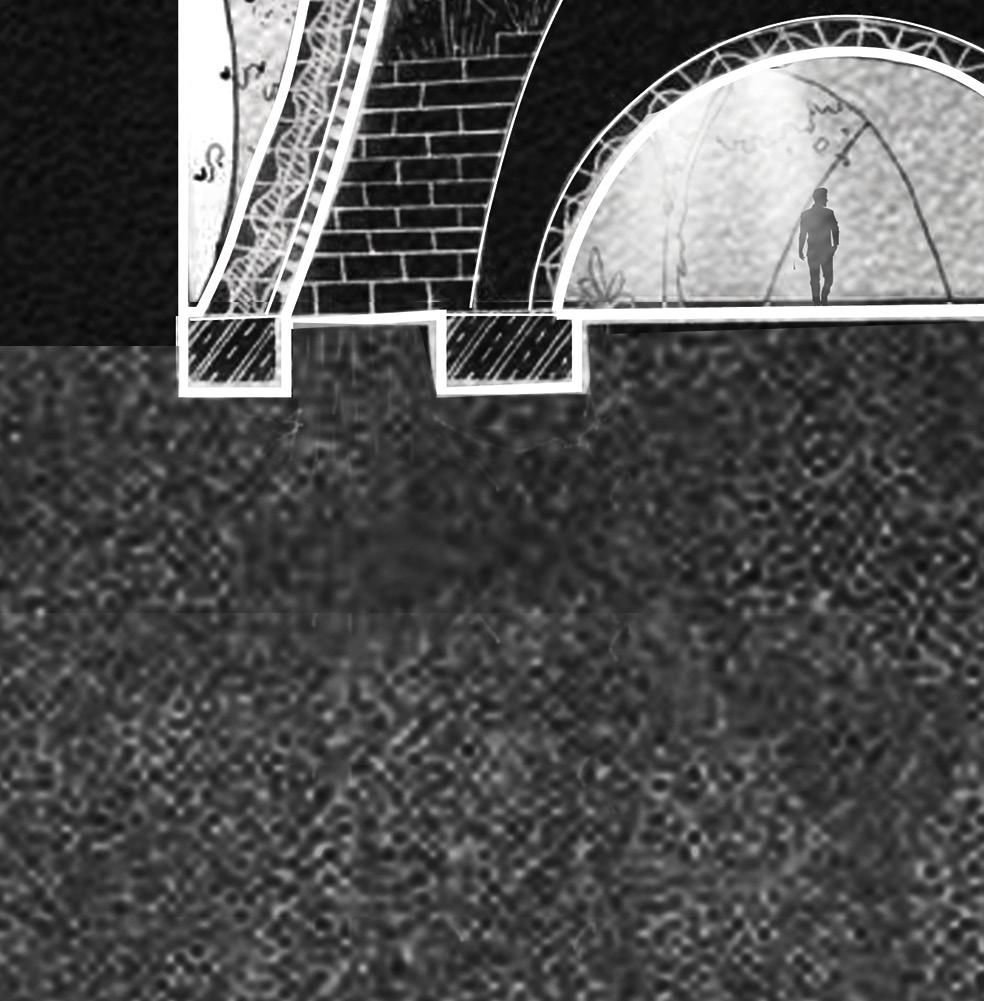
6. Suspended paths and gardens
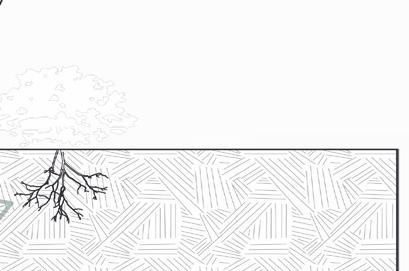
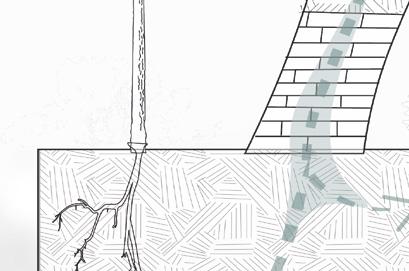
7. Ectomycorrhiza






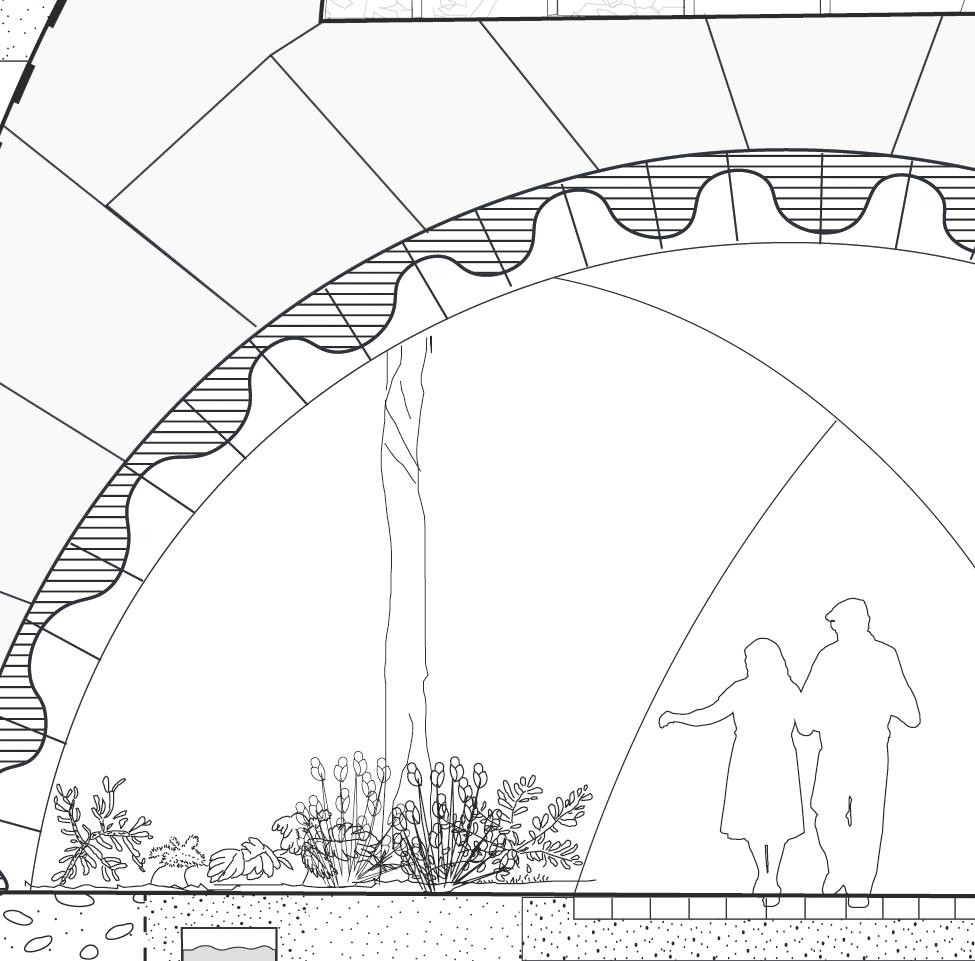

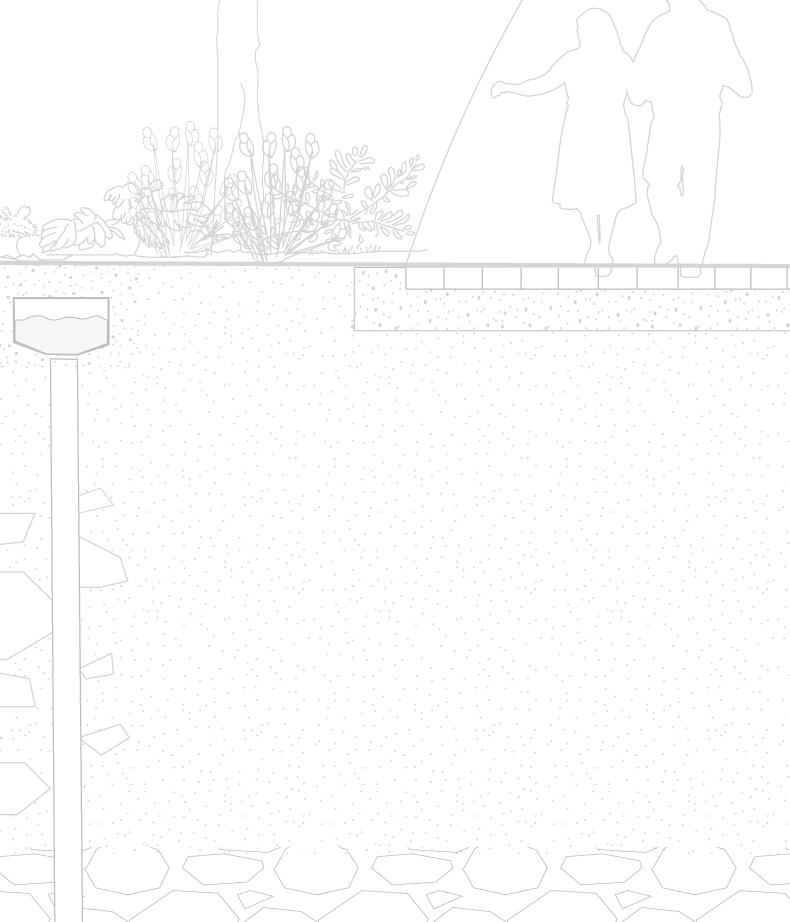
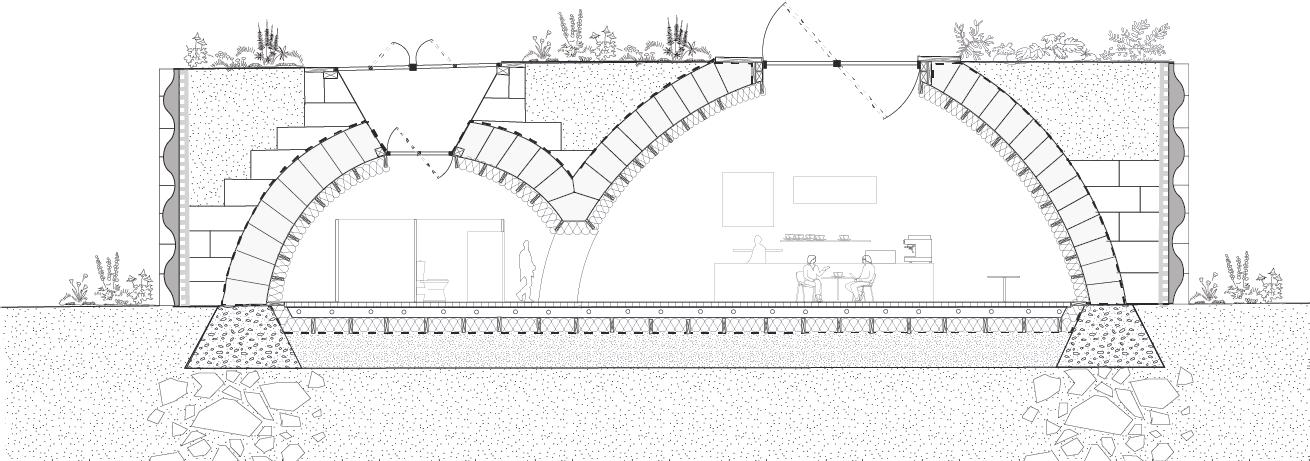
1) two layers of terracotta bricks with metal reinforcement
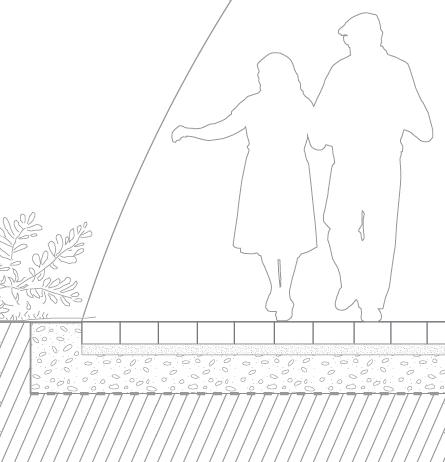
2) mycelium frame (insect homes)
3) soil
4) mycelium bricks (infill)
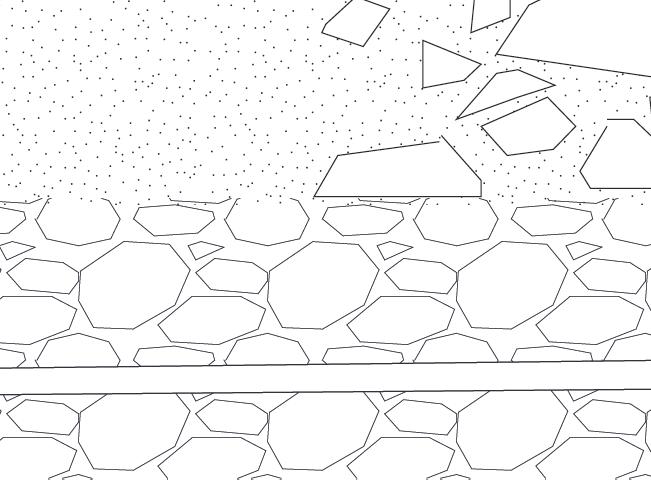
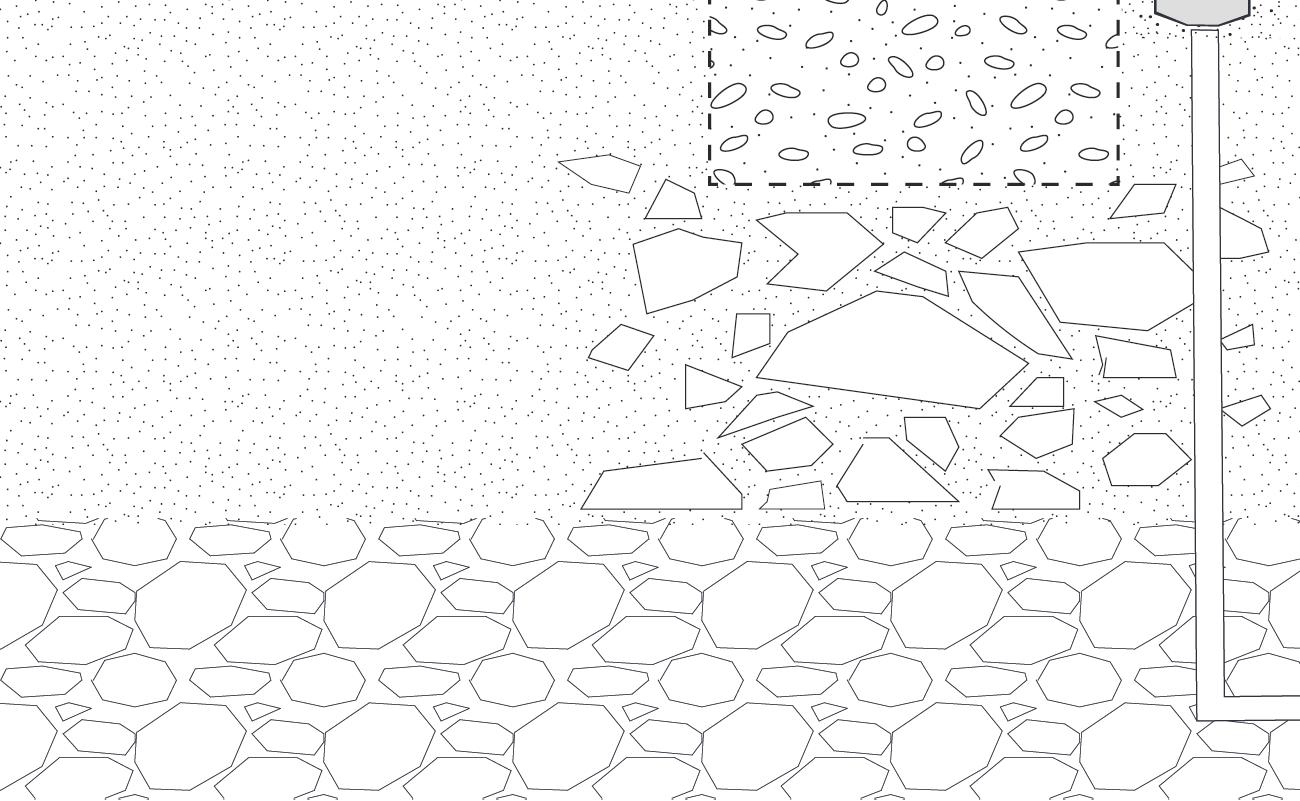
5) waterproof membrane


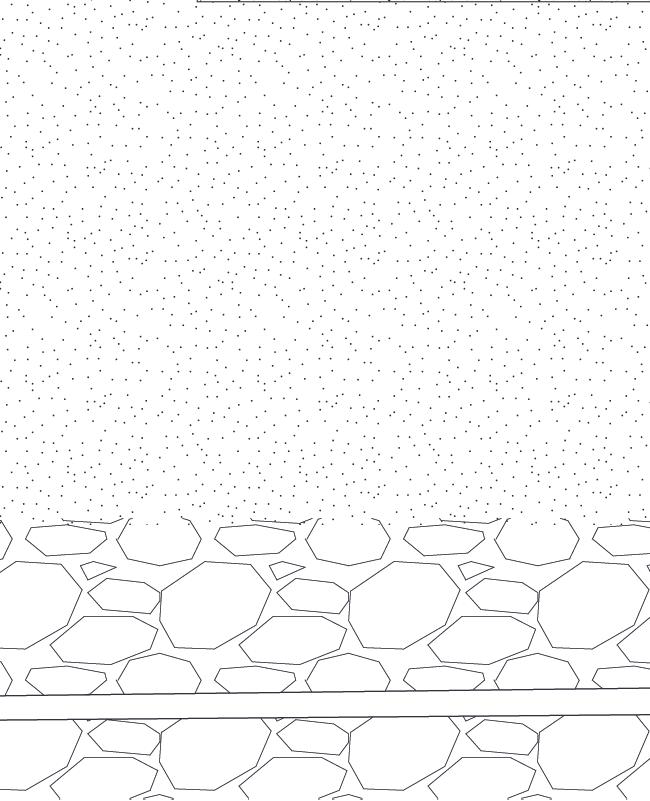
6) rammed earth bricks
7) one layer of terracotta bricks
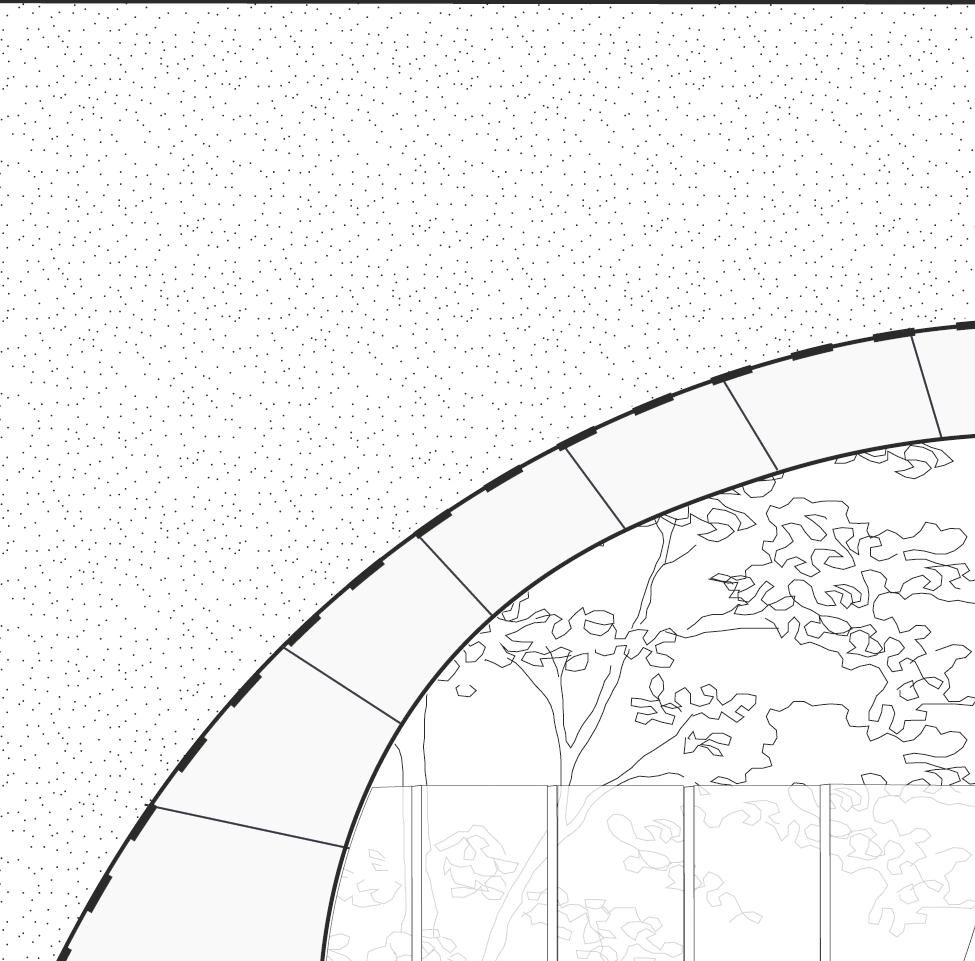
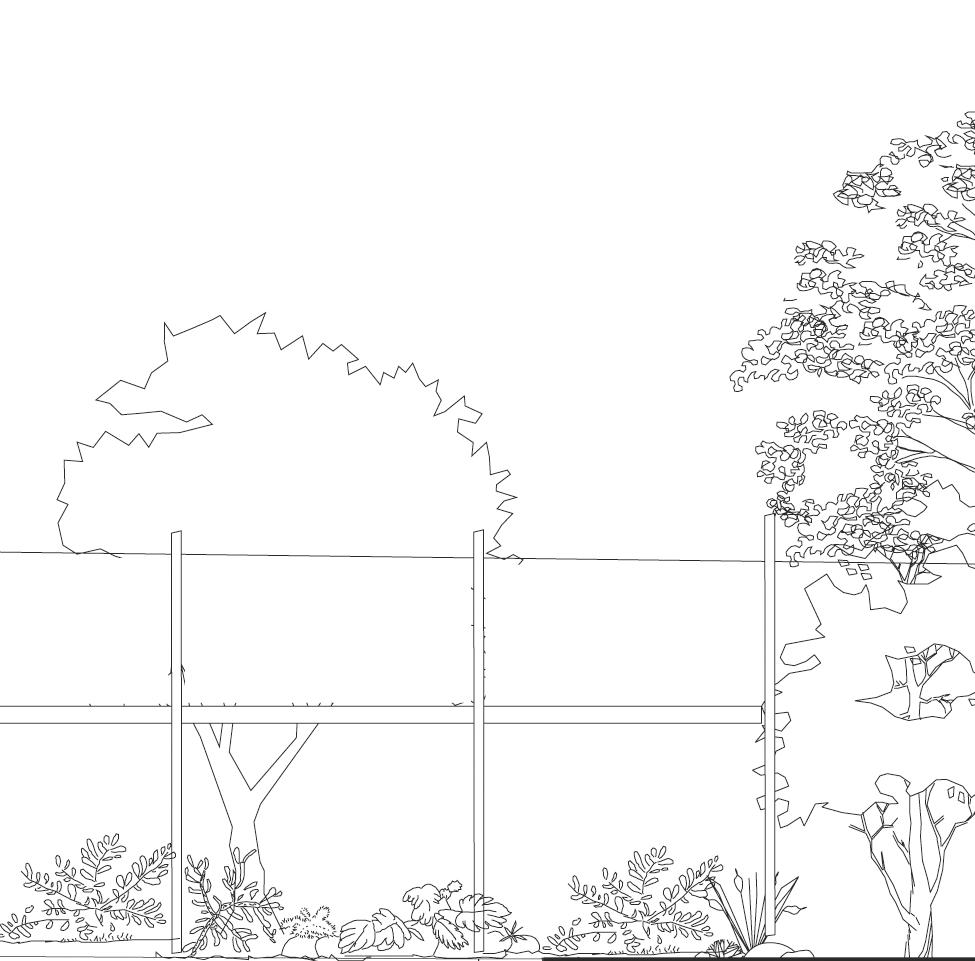
8) stone foundation in gabion basket
9) drainage system


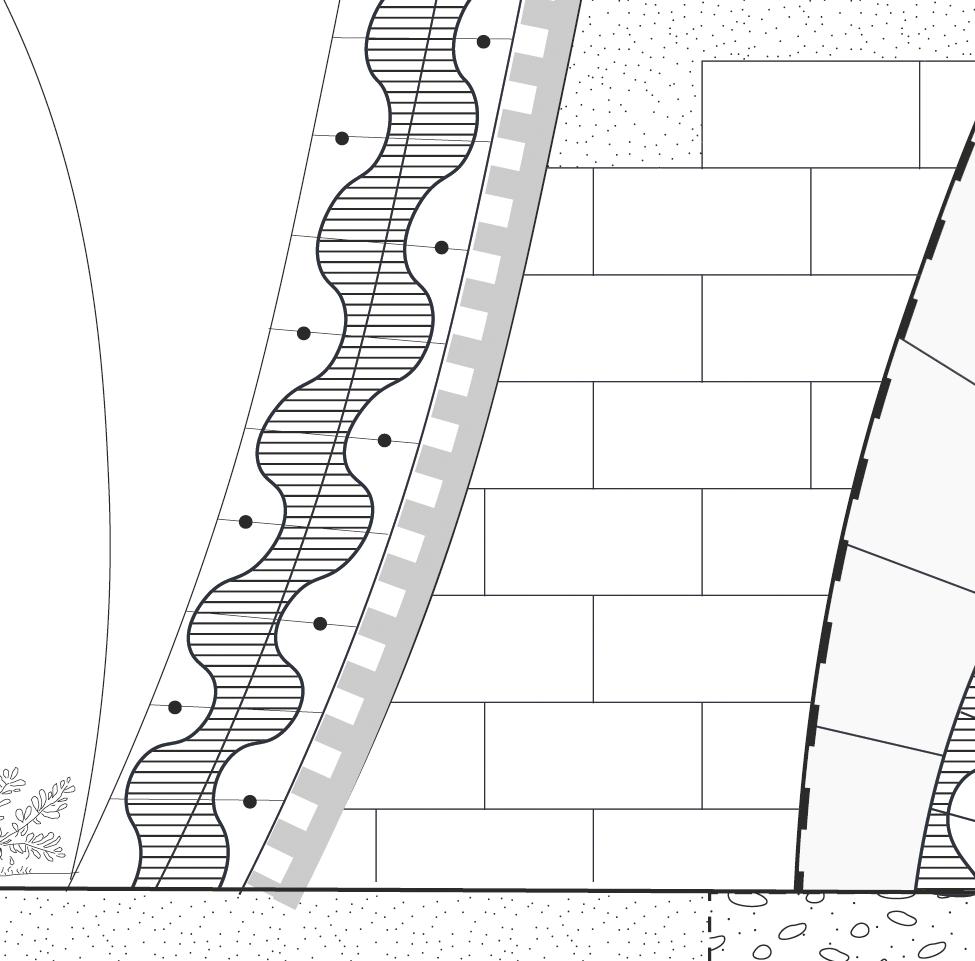
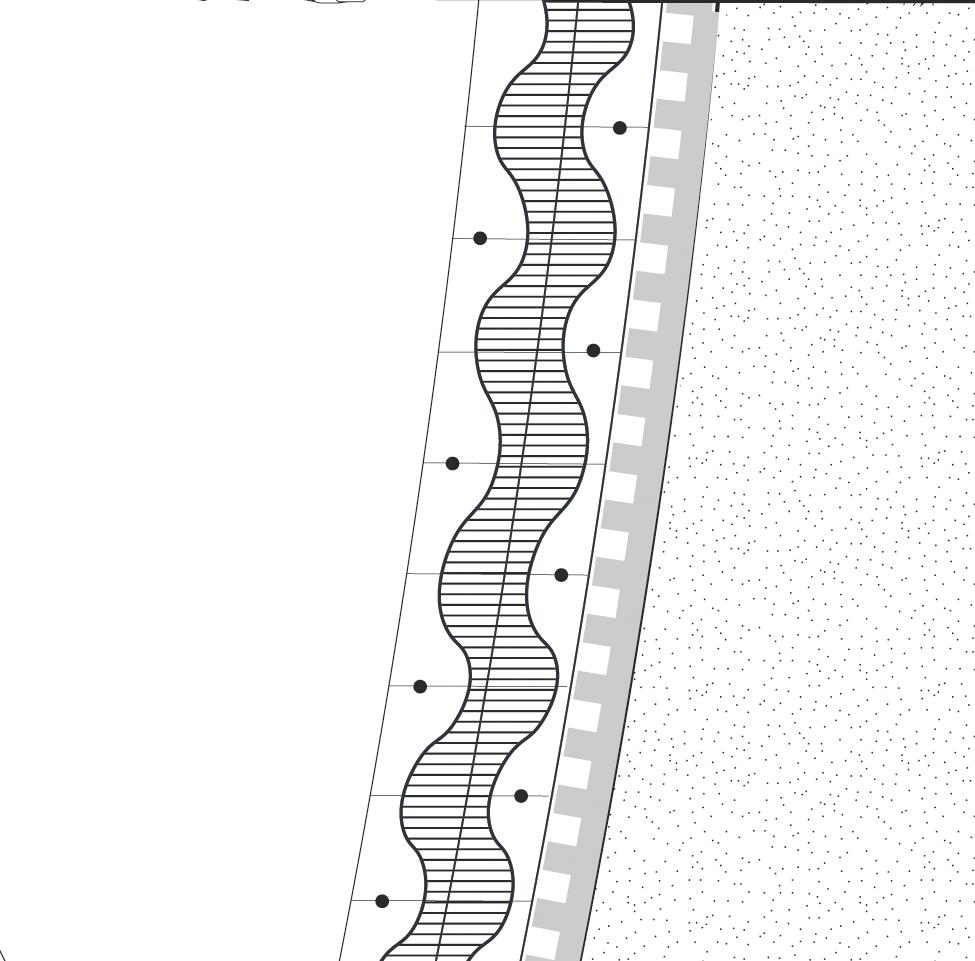
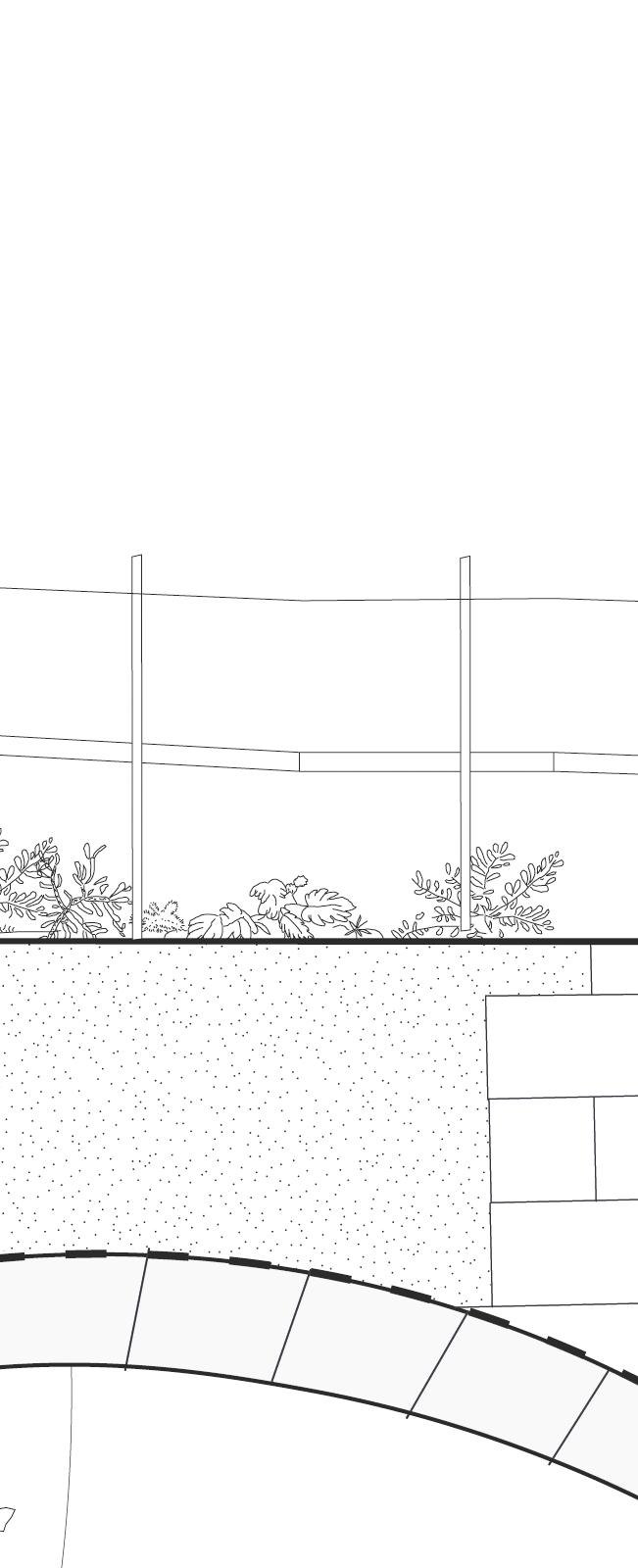

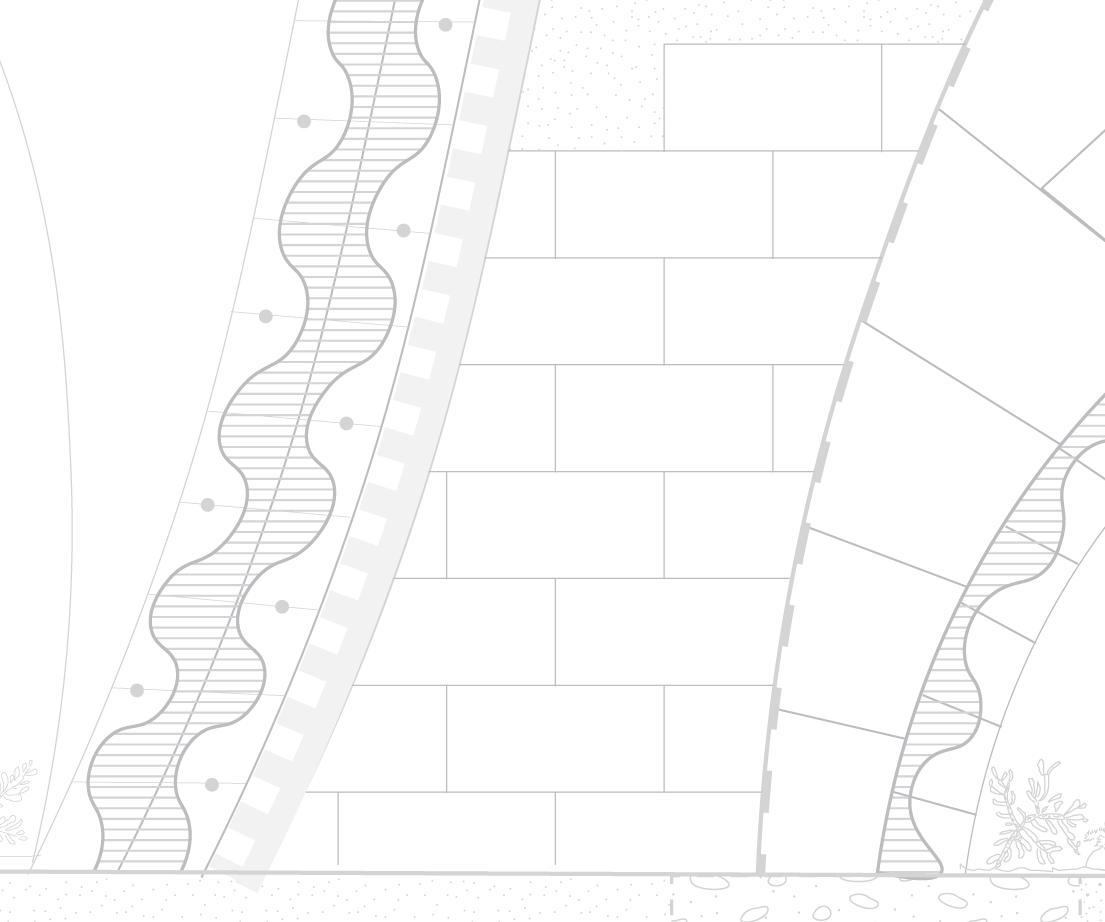
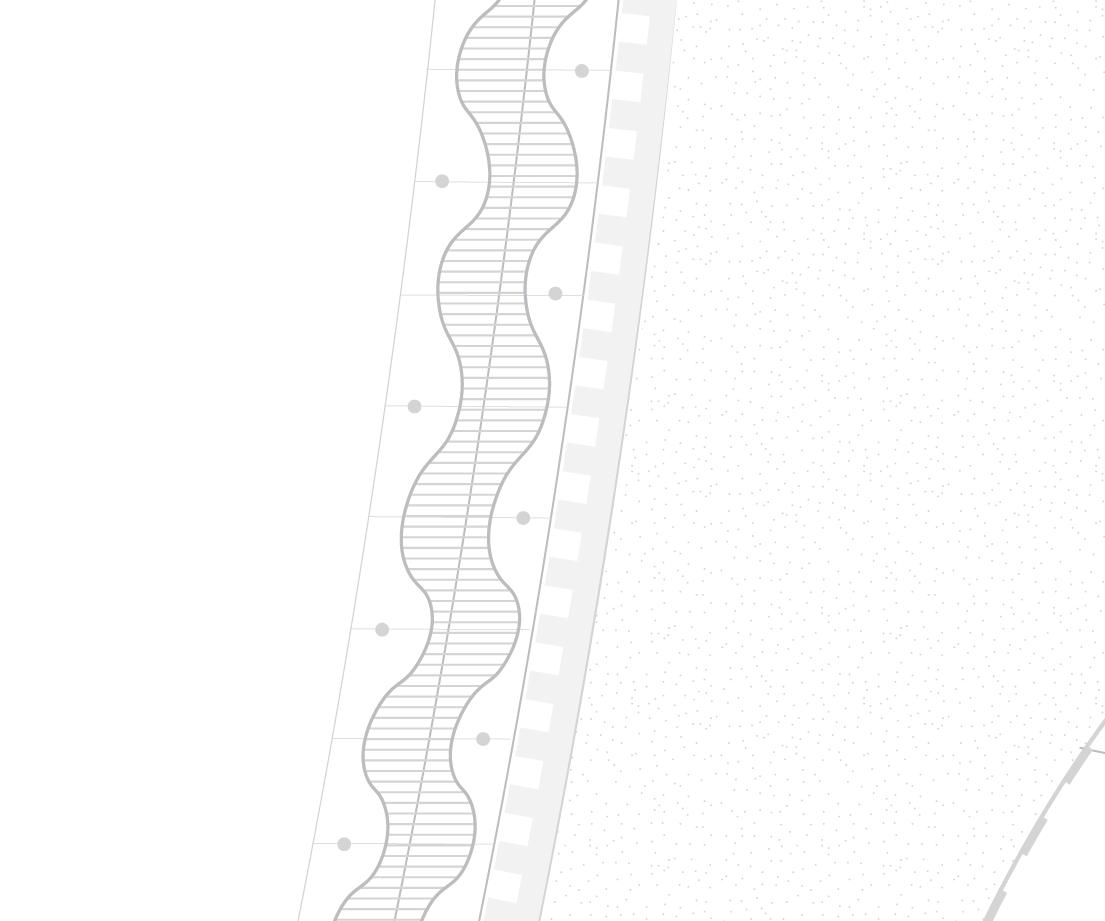
The interior terracotta bricks do not serve a structural role in this particular case. They are rather used with the intent of introducing the human user into the world of the insects and to create a different interior environment than theone in exhibition spaces.
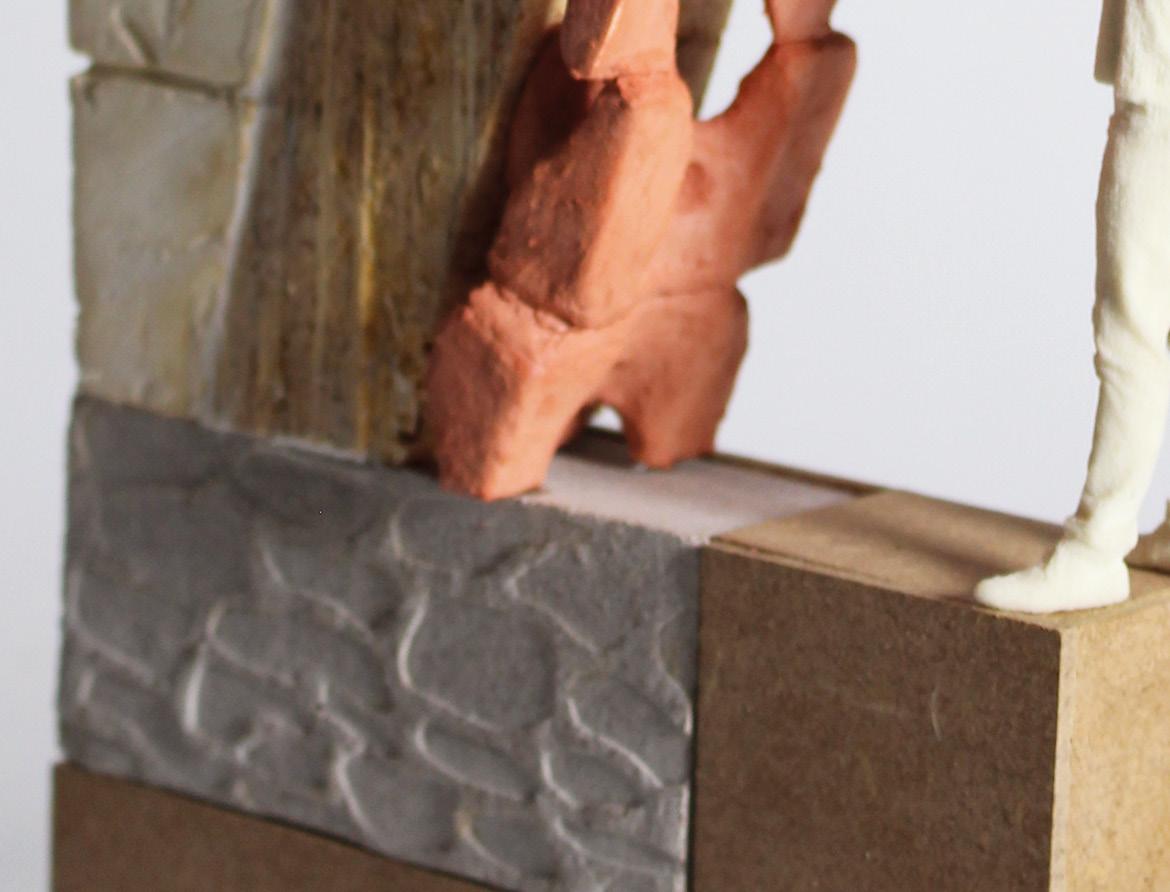
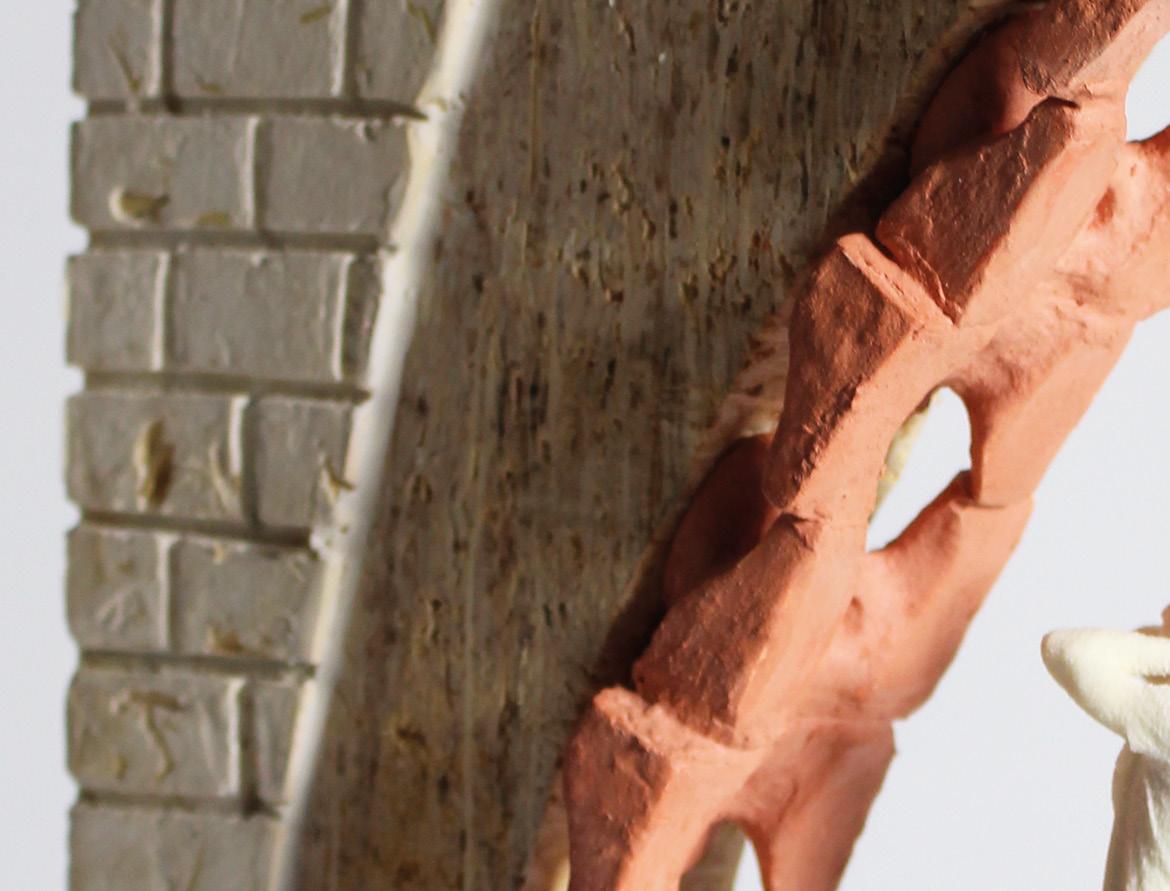
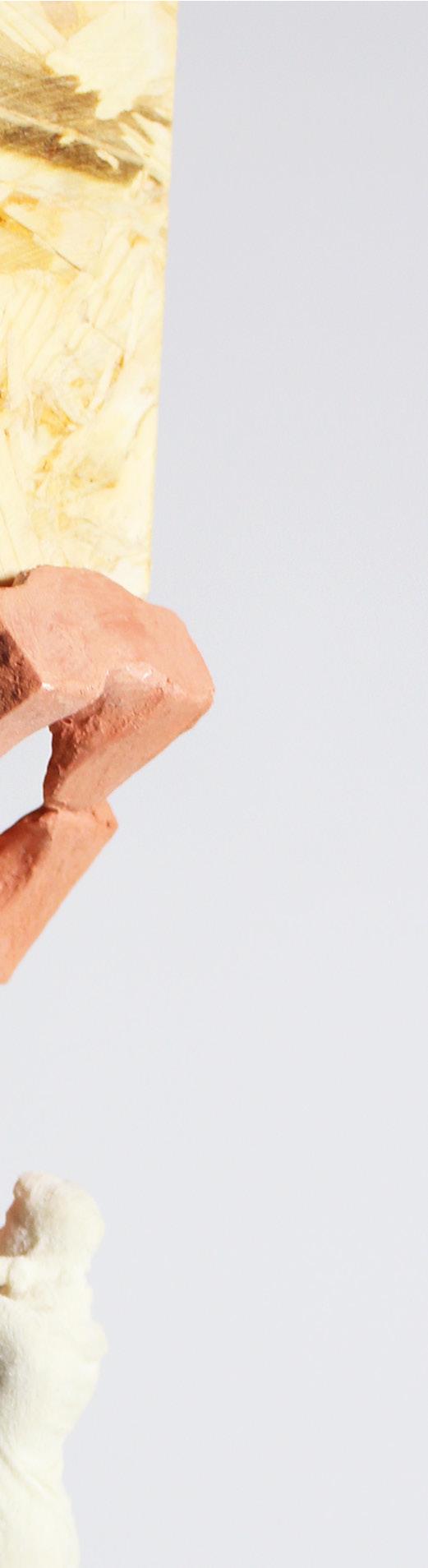
The terracotta bricks become structural at the end of the tunnel, in the spiritual space; the only interior space with the same buildup as the exterior walls

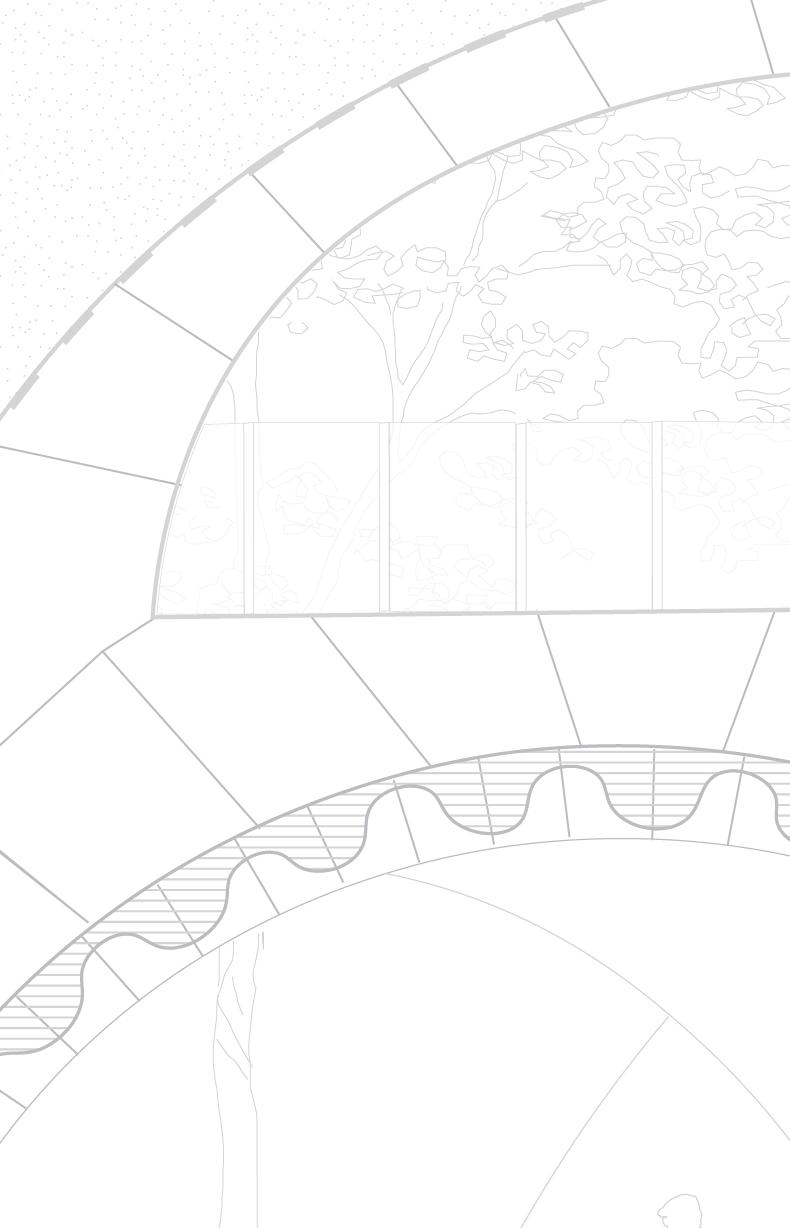
Therefore, the bricks in the tunnel also play the role of creating a smooth transition into the spiritual space, as humans are introduced little by little into the world of the small.
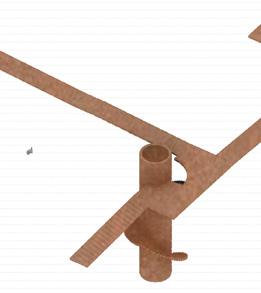
Step 7: Installing the corten paths













Step 6: Planting the layer of vegetation










Step 5: Filling up the structure until reaching an even layer with a mixture of soil and compost
Step 4: Adding the living mycelium bricks
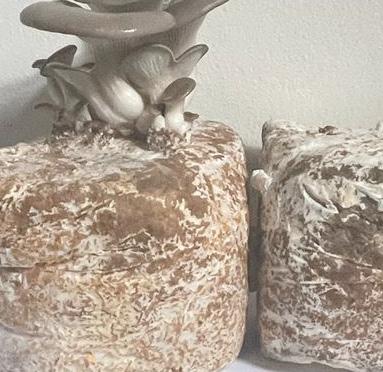

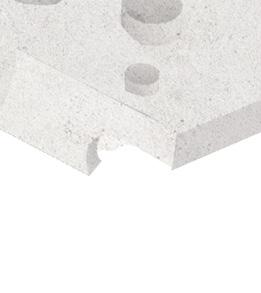
Step 3: Installing the mycelium frames for insects
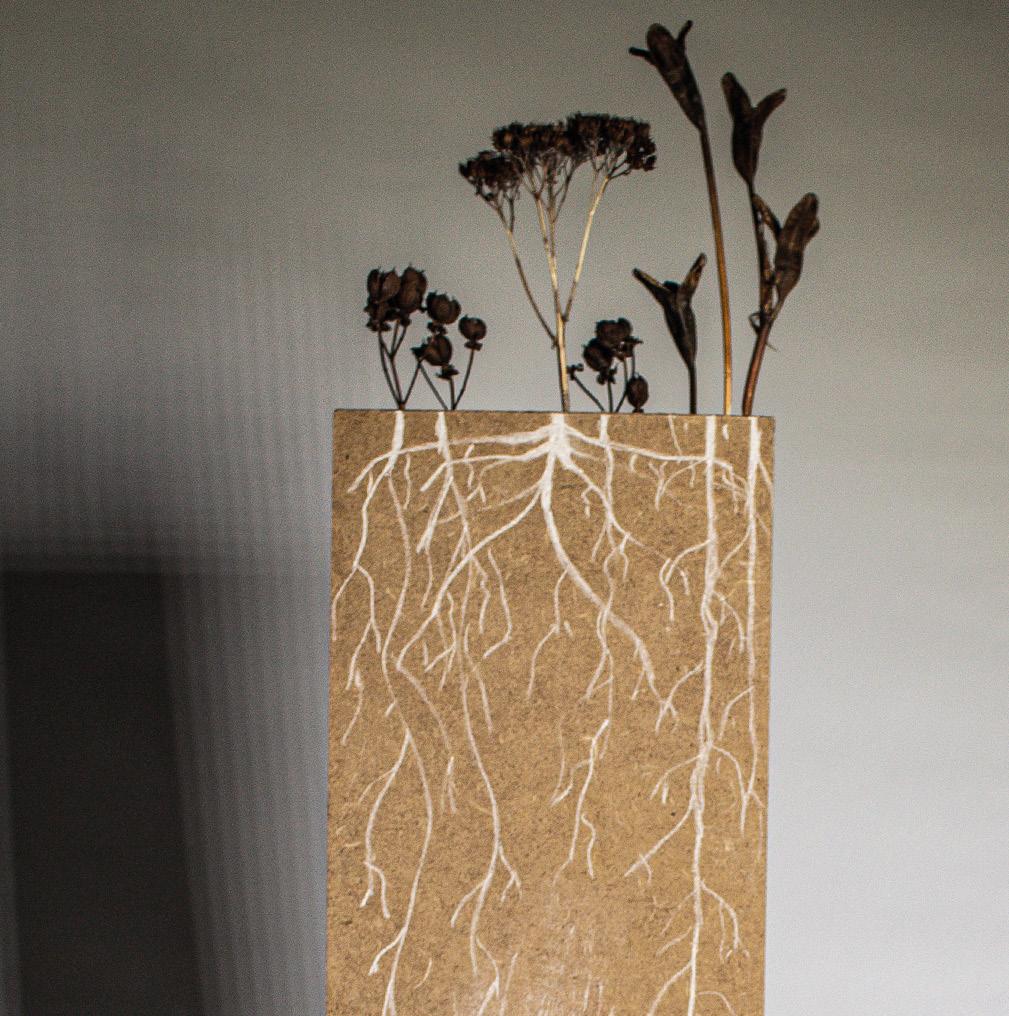
Step 2: fitting together the rammed earth bricks and terracotta bricks to create the structural frame


Step 1: placing the stone foundation and setting up the ground source heating system





 1. One layer of terracotta bricks
2. Mycelium frame for insects
3. Mycelium bricks (infill)
4. Waterproof membrane
5. Rammed earth bricks (75 cm)
1. One layer of terracotta bricks
2. Mycelium frame for insects
3. Mycelium bricks (infill)
4. Waterproof membrane
5. Rammed earth bricks (75 cm)
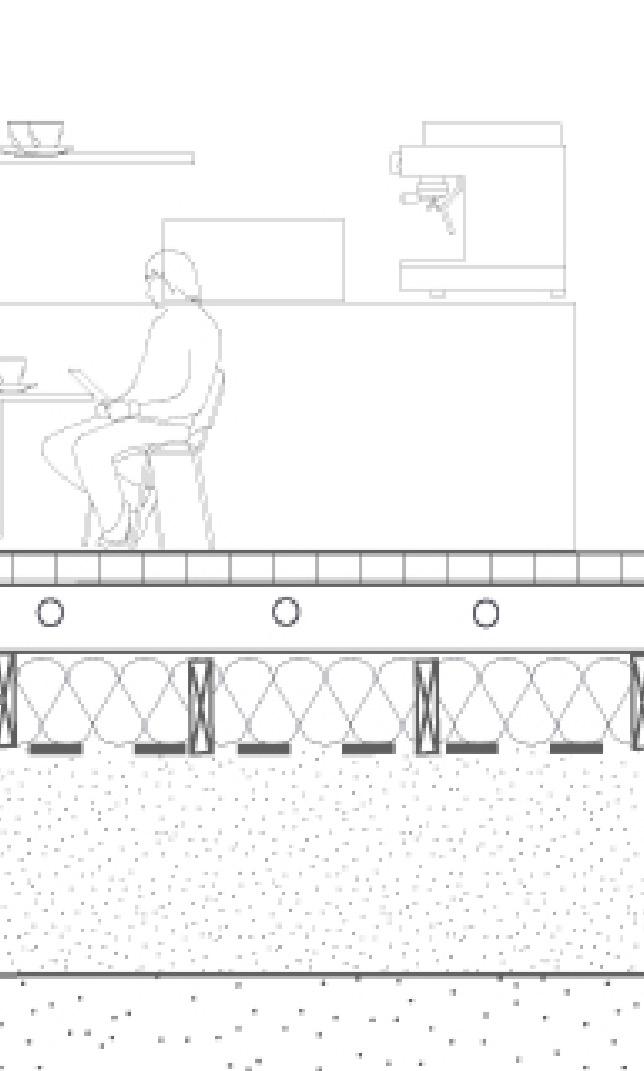
Terracotta tiles

Underfloor heating in concrete pad 30 cm
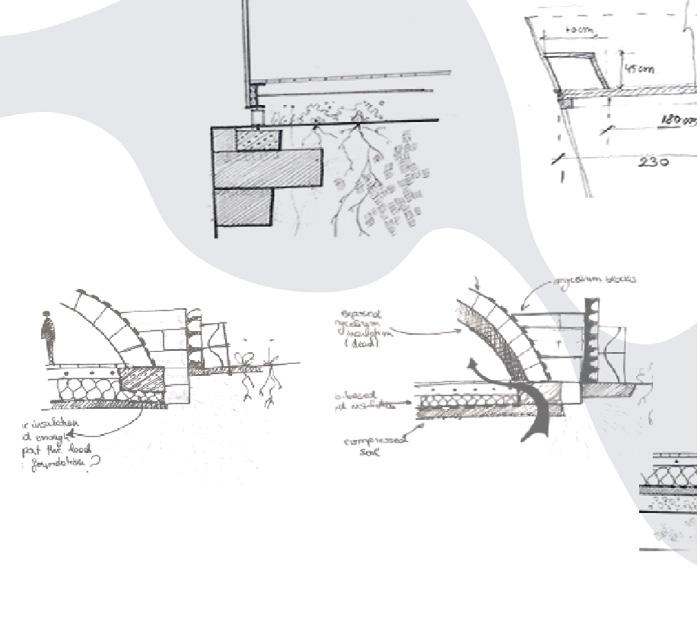
30 cm dead mycelium insulation Waterproof membrane Compacted





Modelled detail
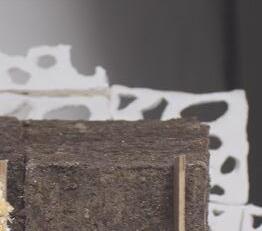
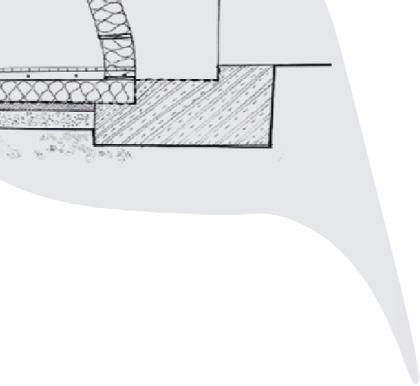
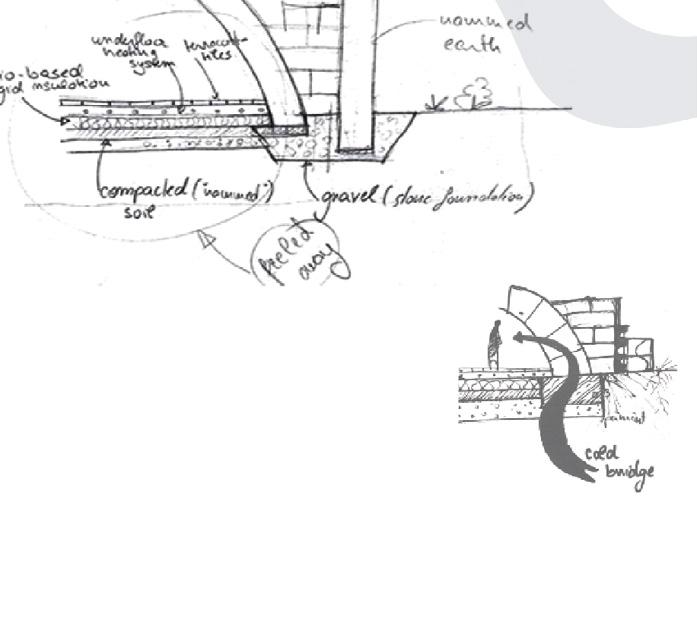
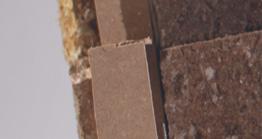
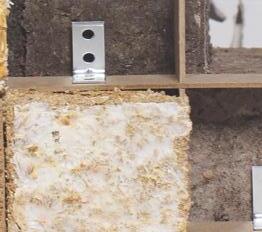
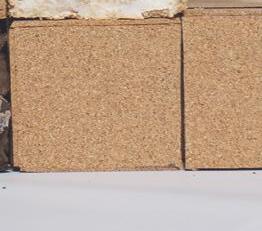
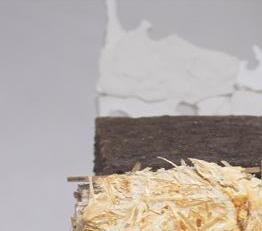
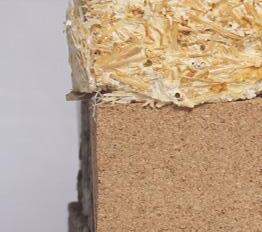
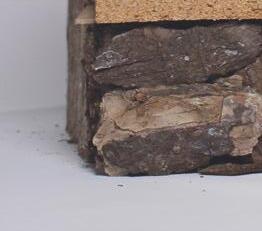
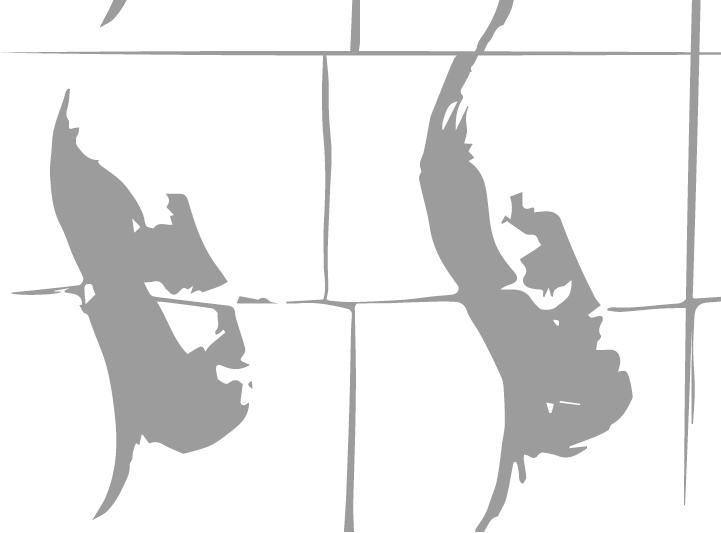
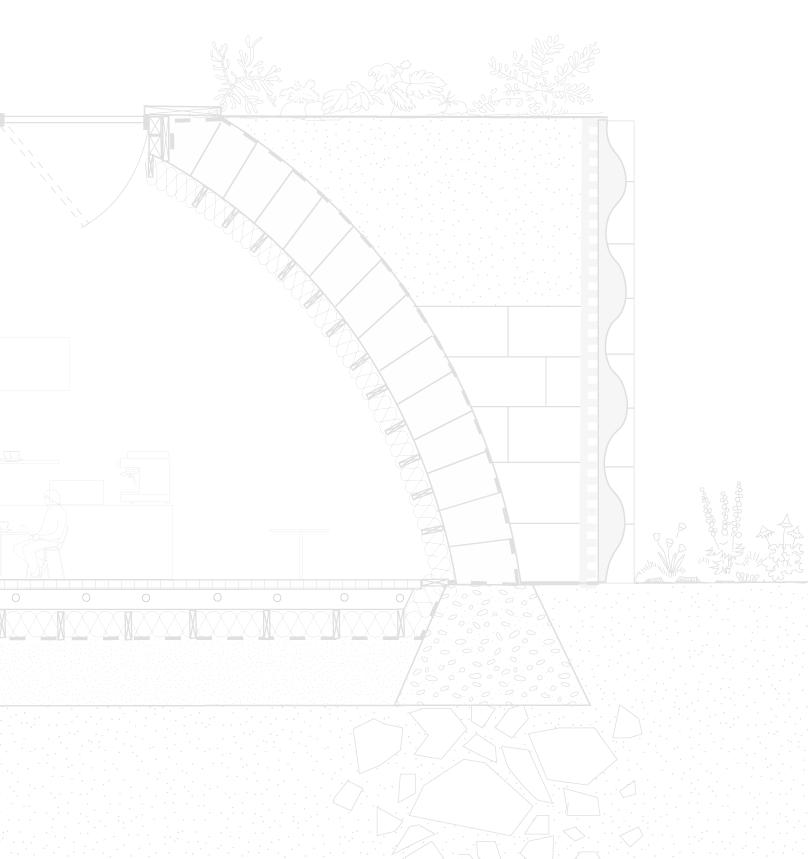
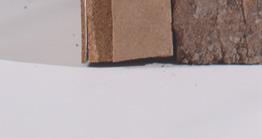
The only viable solution of creating a continuous insulation layer was to insulate on the inside of the structural element. Given that the insulation is now exposed, I am using this opportunity to create an exhibition of bio-based insulation alternatives. This includes cork, bark and dead mycelium. The U value of 75cm of rammed earth+30 cm of bark insulation is 0.19. In the case of cork, it is 0.1, and for the mycelium, it is 0.07. Given that at the base of the building contains ‘unintentional’ additional insulation (the living mycelium bricks), I am placing the insulation with the worst performance there (the bark), while the insulations with better performance will be placed higher up. This creates a mosaic effect for the interior of the cafe.
 Interior fi nish, insulation types
Wall build-up
Terracotta bricks elevation
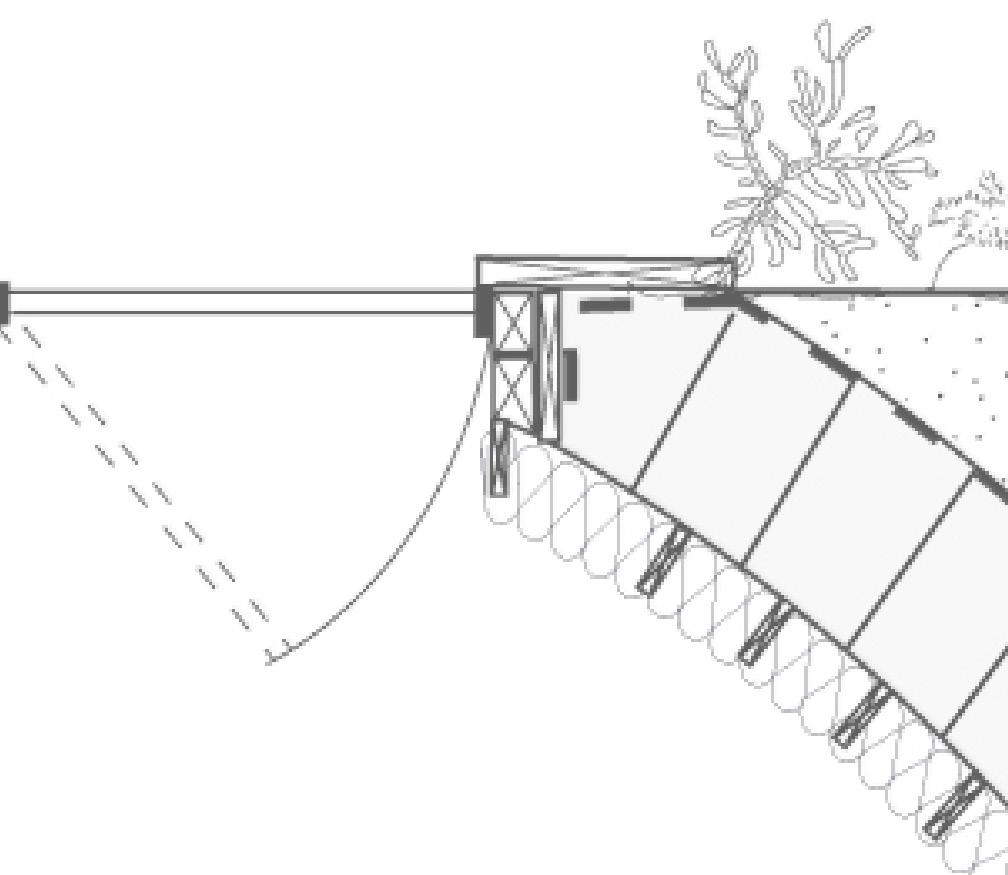
The frame of the operational window is fixed onto the rammed earth bricks by using a timber frame. This is then protected on the outside by a thin metal cover.
Interior fi nish, insulation types
Wall build-up
Terracotta bricks elevation
The frame of the operational window is fixed onto the rammed earth bricks by using a timber frame. This is then protected on the outside by a thin metal cover.




Step 1: For mass manufacturing the terracotta bricks, a mock brick needs to be carved out of clay first.




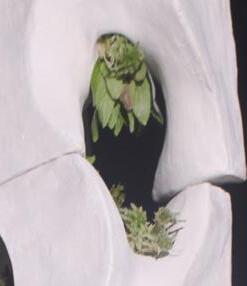









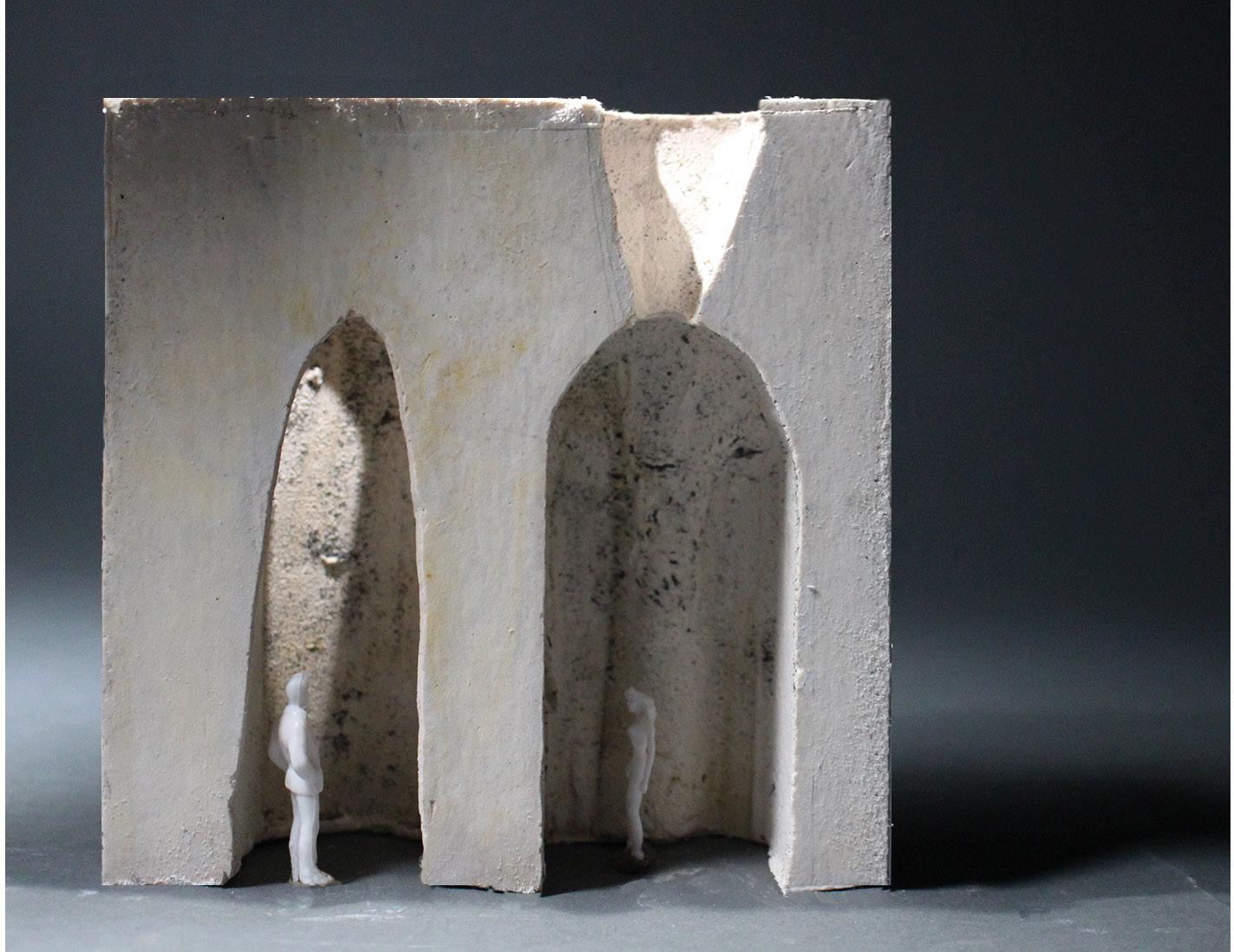
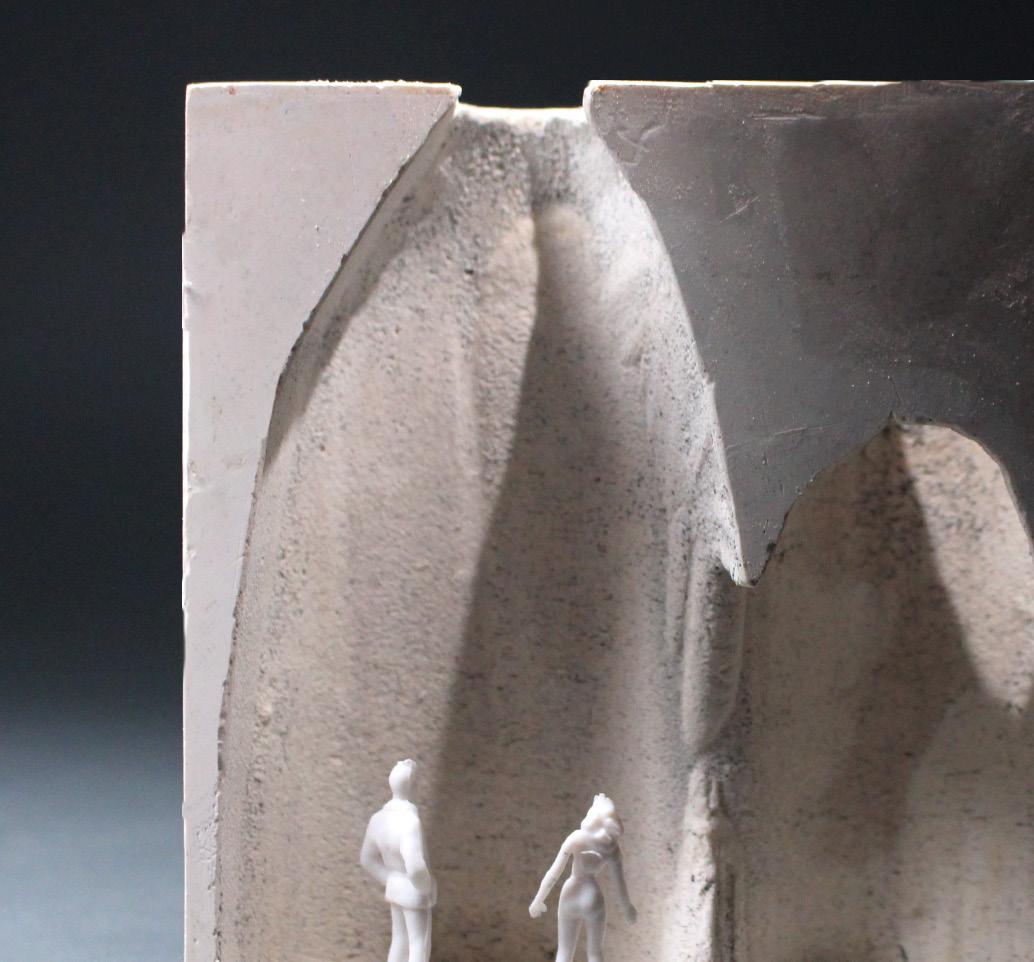
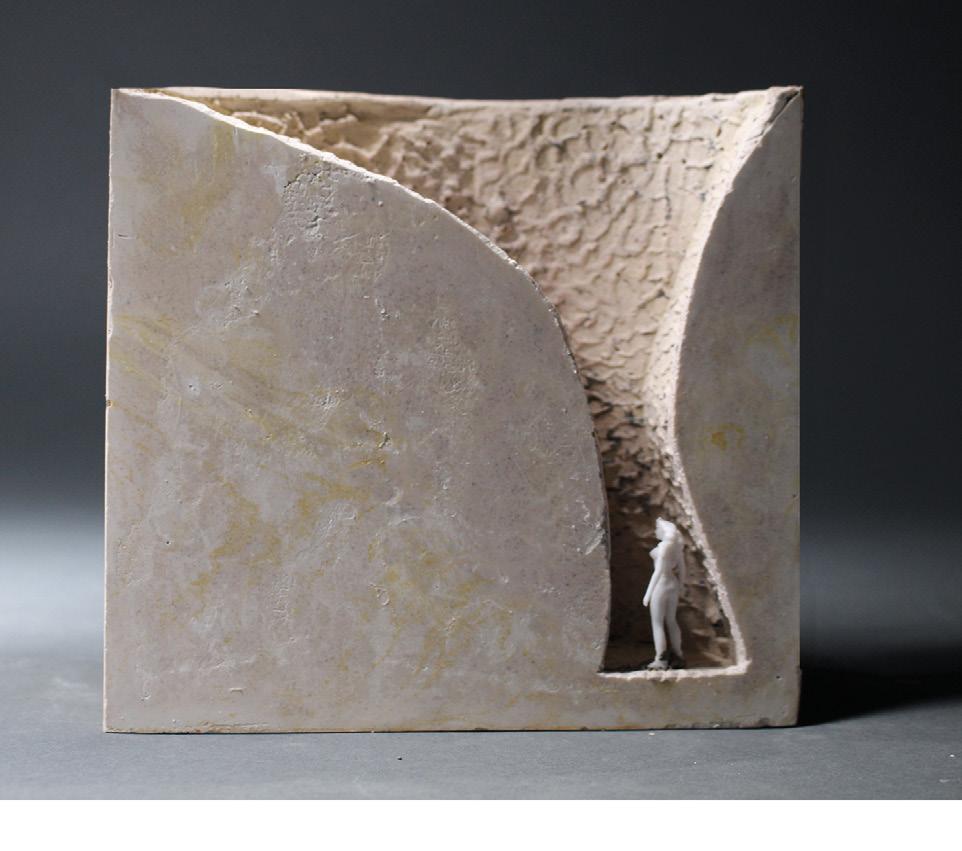
Step 2: The brick is then casted in plaster, in order to capture a negative volume of the original brick.

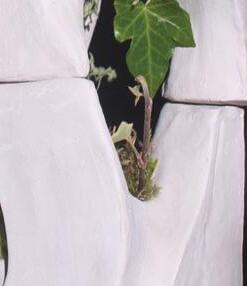
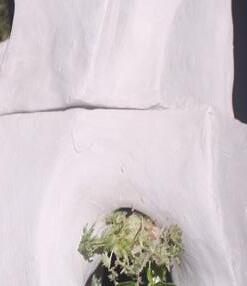



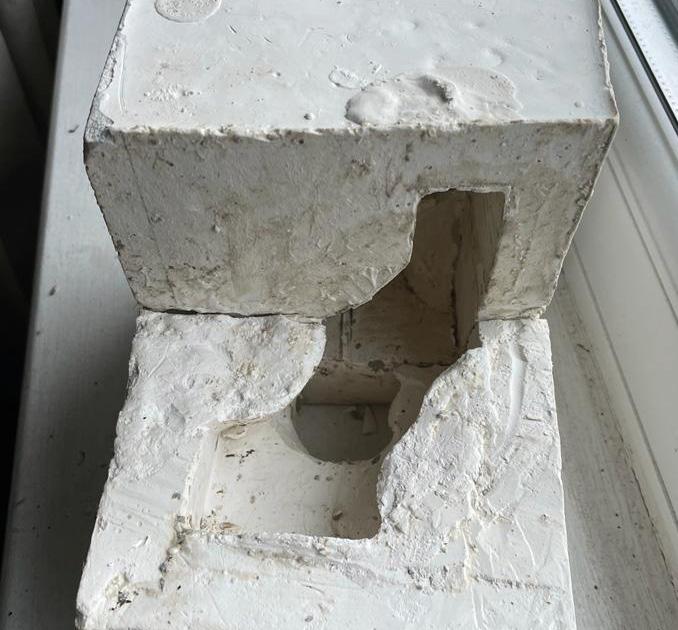
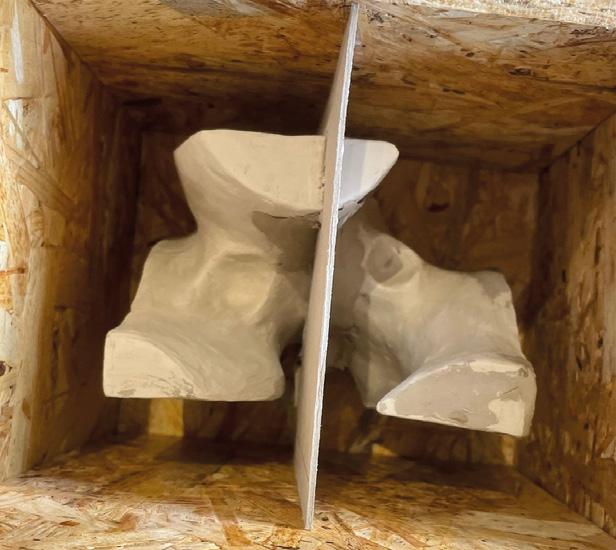
Step 3: Silt is poured into the mould and left to harden. The process is then repeated. The bricks are then burned in a temporary Furness built on site at 540C.
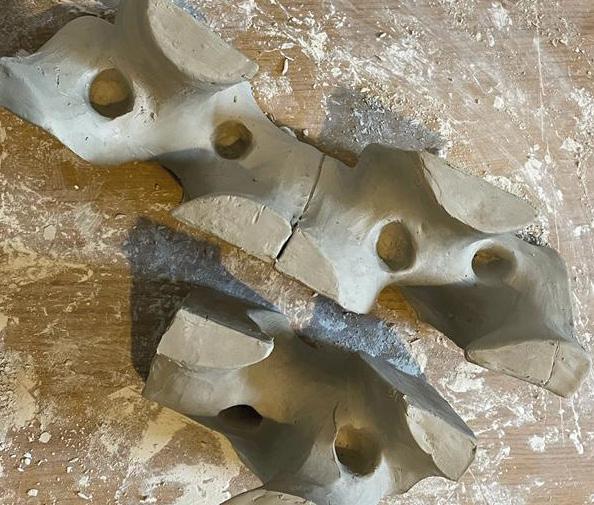
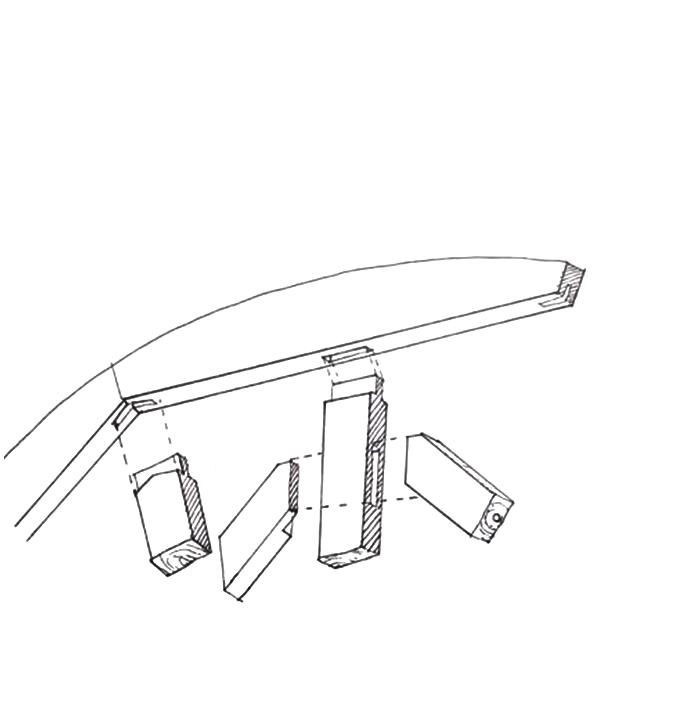

The timber used is sustainably sourced from the site. This means cutting down the trees between 5 and 15 years old that can be found where the architectural intervention is to be placed. All trees older then 15 years are protected and incorporated within the design, as they play a crucial role in helping new seedling develop.
The resulted bricks are formed into the desired shapes manually, with the use of a timber framework. The timber frame is constructed using traditional models of joinery.
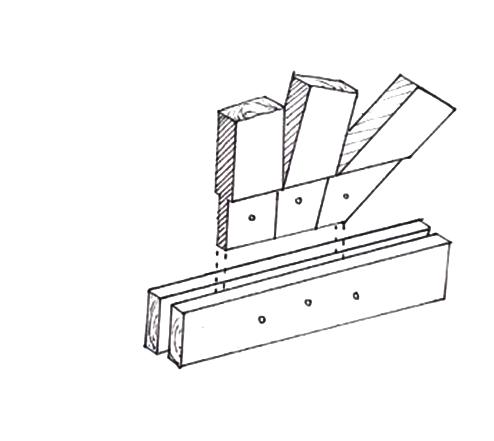
The timber is then reused for the joists supporting the insulation within the cafe and exhibition spaces.
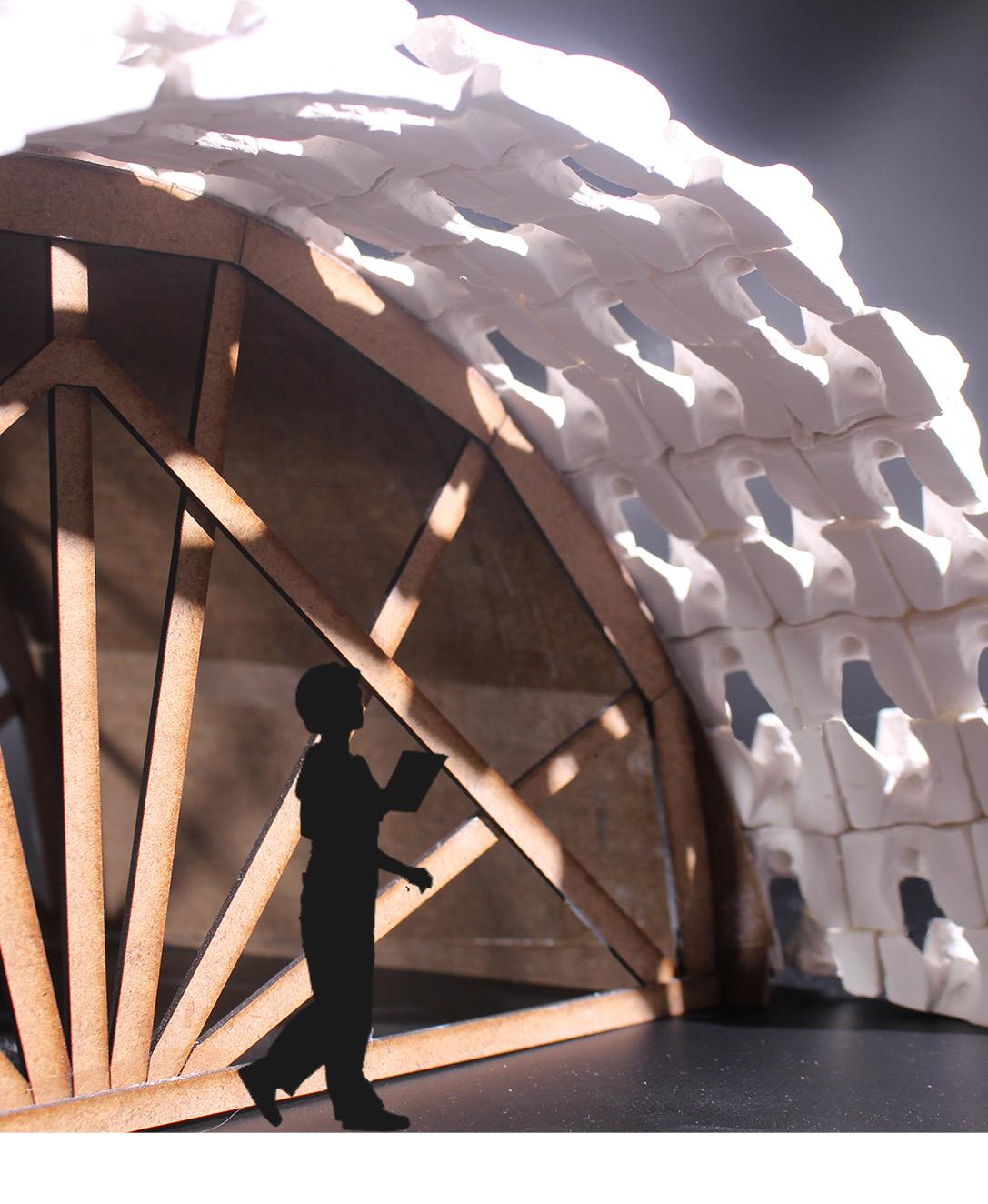
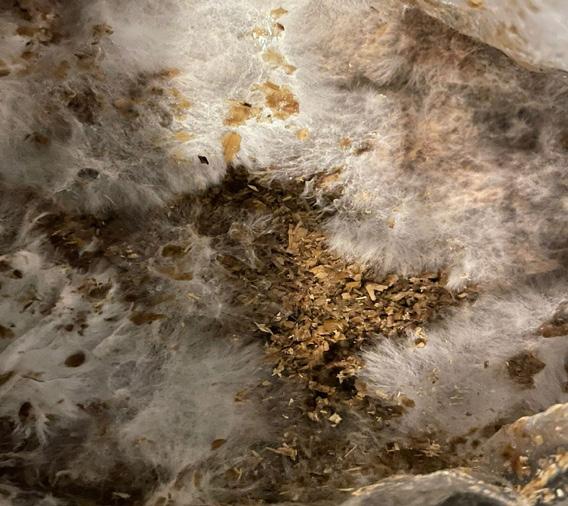
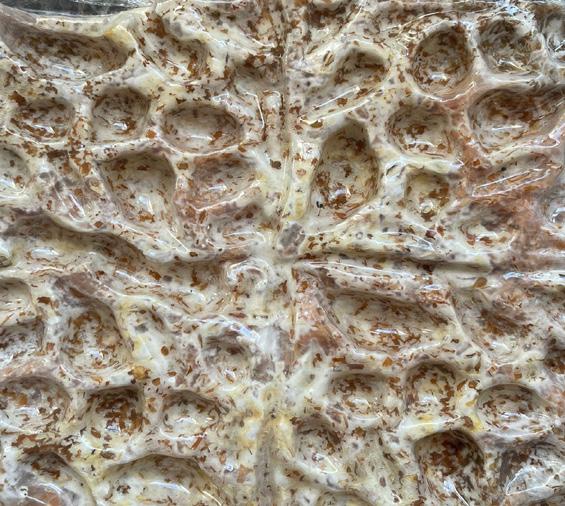
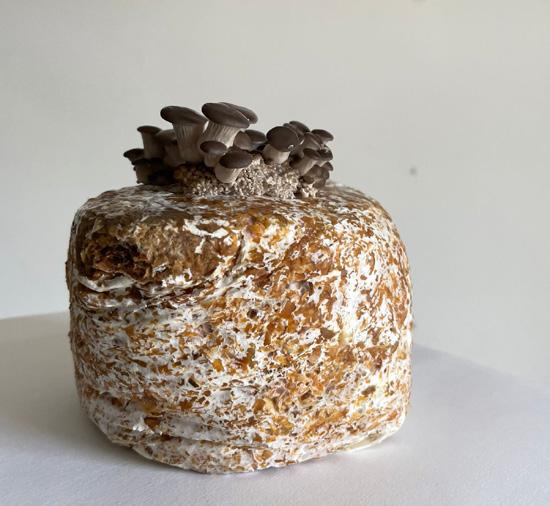
Mycelium is a carbon negative material and completely biodegradable. By storing and breaking down carbon into carbohydrates, which then act as nutrients for the soil, micelium acts as a natural recycler breaking down dead organic matter and reintroducing it into the life-cycle of the ecosystem. Further advantages of this material are it’s ability to self-heal, self-clean (of organic matter) and be fire retardant.
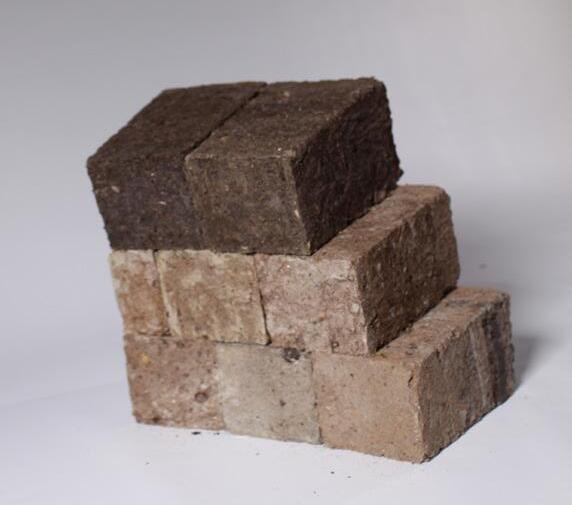
The many advantages of building with rammed earth include superior thermal mass, temperature and noise control, strength and durability, low maintenance, fire proofing and the fat that it is a carbon neutral material. The soil on site is rich in clay and sand (due to the river bed), making it a perfect source for the soil mixture needed for the brocks.
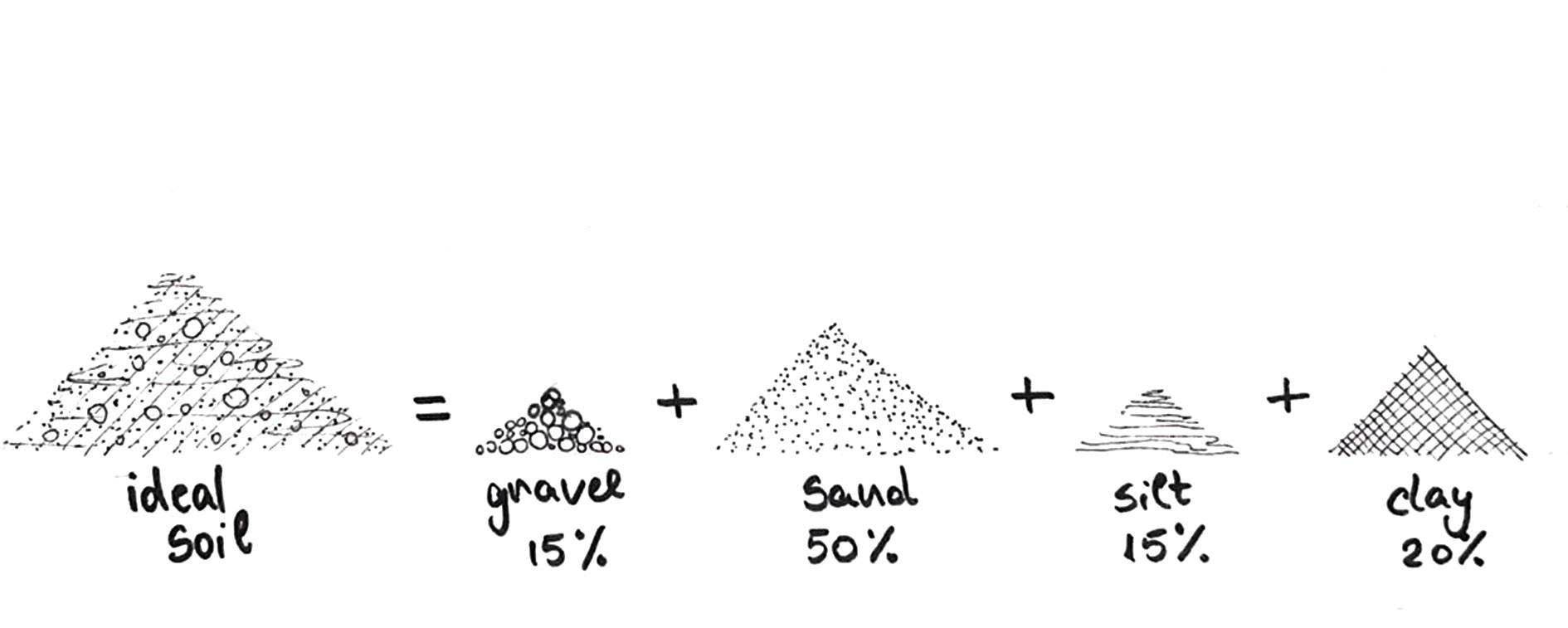
Step 1: The form-works are created out of scrap timber while the elements of the soil composition are collected from the site

Step 2: The mixture of soil is compacted into the frames layer by layer

Step 3: The moulds are opened after a couple of days, when the earth had dried
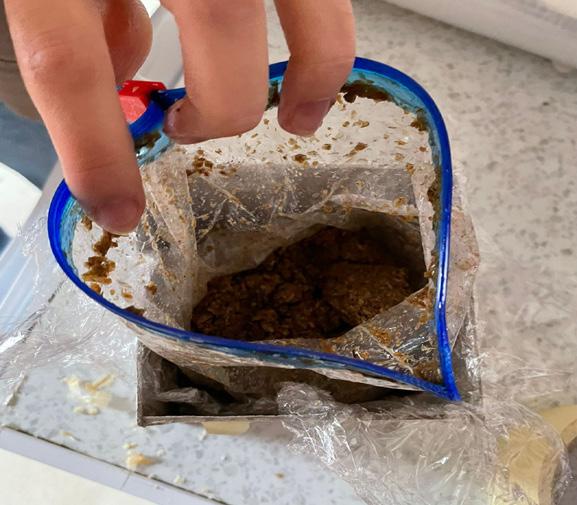
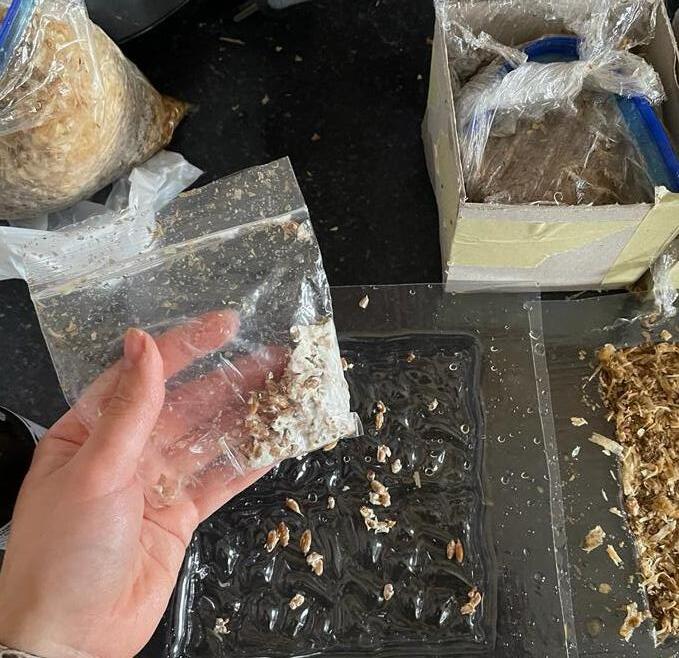
Step 1 :The chosen substrate is sterilised by the addition of boiling water to the mixture.
Step 2 :The spores are mixed into the substrate and added to the moulds. The inoculation starts
Step 3:The mould is closed in order to provide a humid environment and placed in a dark area at 24-30C, conditions necesary for germination. After 7 to 14 days, the mycelium is ready to be inhabited by insects.

Note: Creating the spaces from regular geometries, means that the bricks are repetitive. Therefore, only a limited number of moulds needs to be used. No framework is needed for the assembley.
















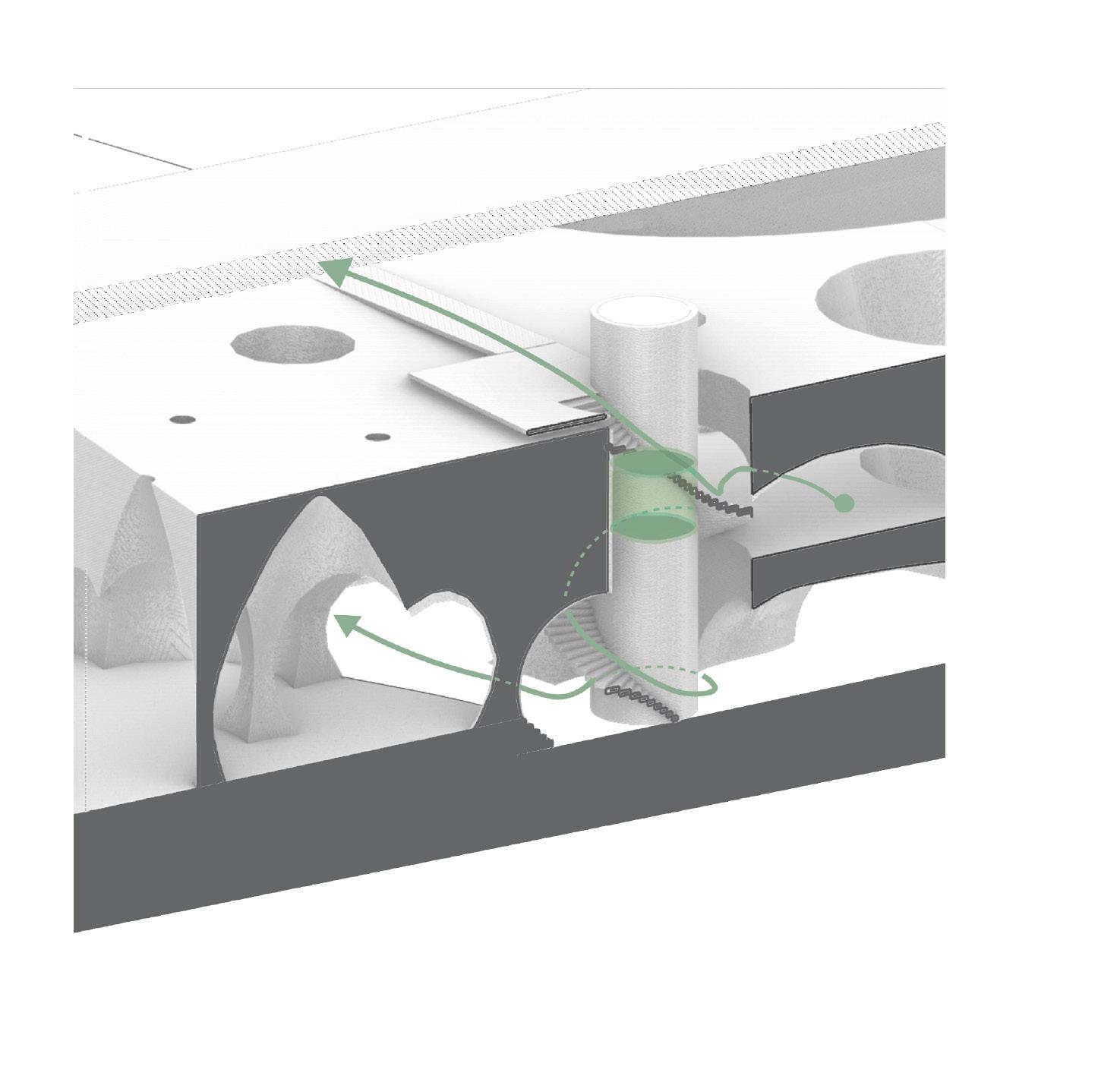
With the cafe being part of purpose group 4 (shop and commercial) and the exhibition spaces part of purpose group 5 (assembly and creation), the maximum travel distance to safety has to be 18m for one exit route and 45m for two exit routes.

The risk of fire is reduced by the materials used in the intervention (either fire-proof or fire retardant). This leaves dried vegetation as the only possible fuel for fire. Regular checks and clean-ups will take place to ensure that dried vegetation is not at risk of spontaneous combustion.

The meditation space offers two exit options (either above or below) depending on the source of fire, either under 45m from places of safety.
The paths on top offer access off in 4 points, the furthest points from an exit (marked in orange) being 38m away from either one of the staircases or an alternative exit.
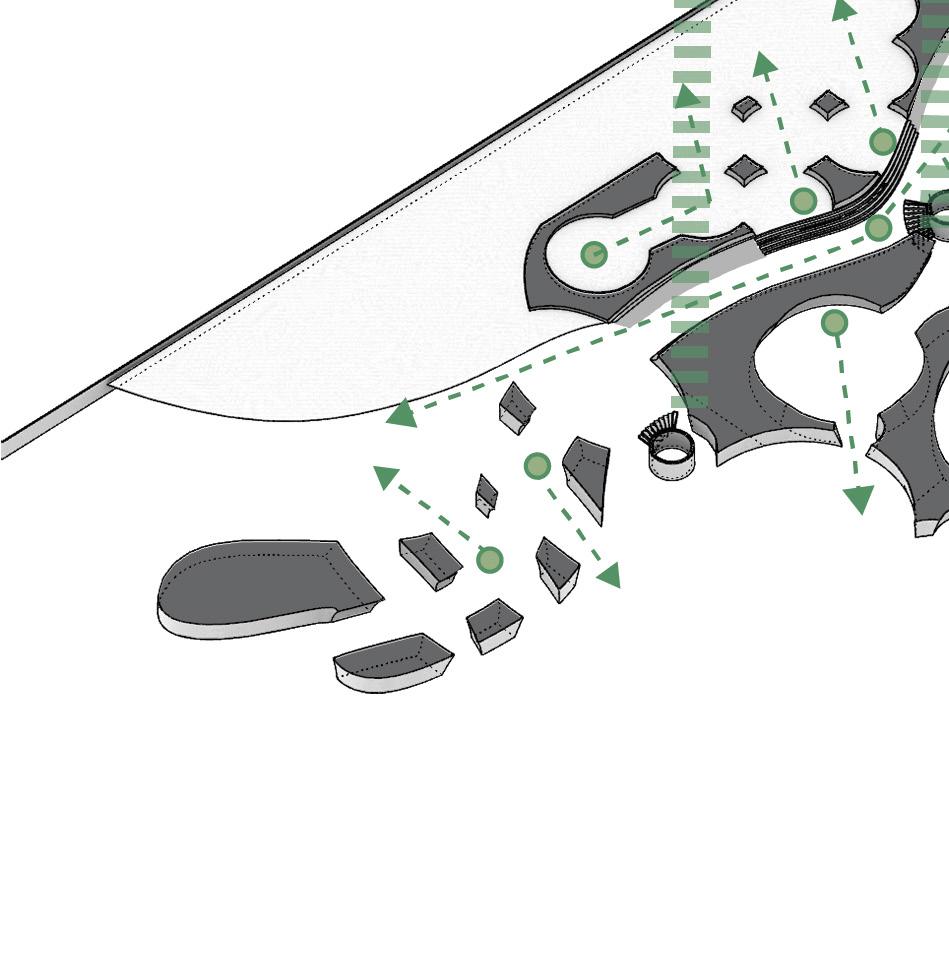

The cafe only offers one escape route (occupation < 60 people). From anywhere in the cafe you can reach safety within 15m or less
The ‘ground floor’ presents multiple possible escape routes, all under 45m in length and wider then 1800 m (the narrowest passage being 2.3 m wide)
The operable skylights (in the exhibition space) and the other openings to the roof insure good air circulation in case of fire.
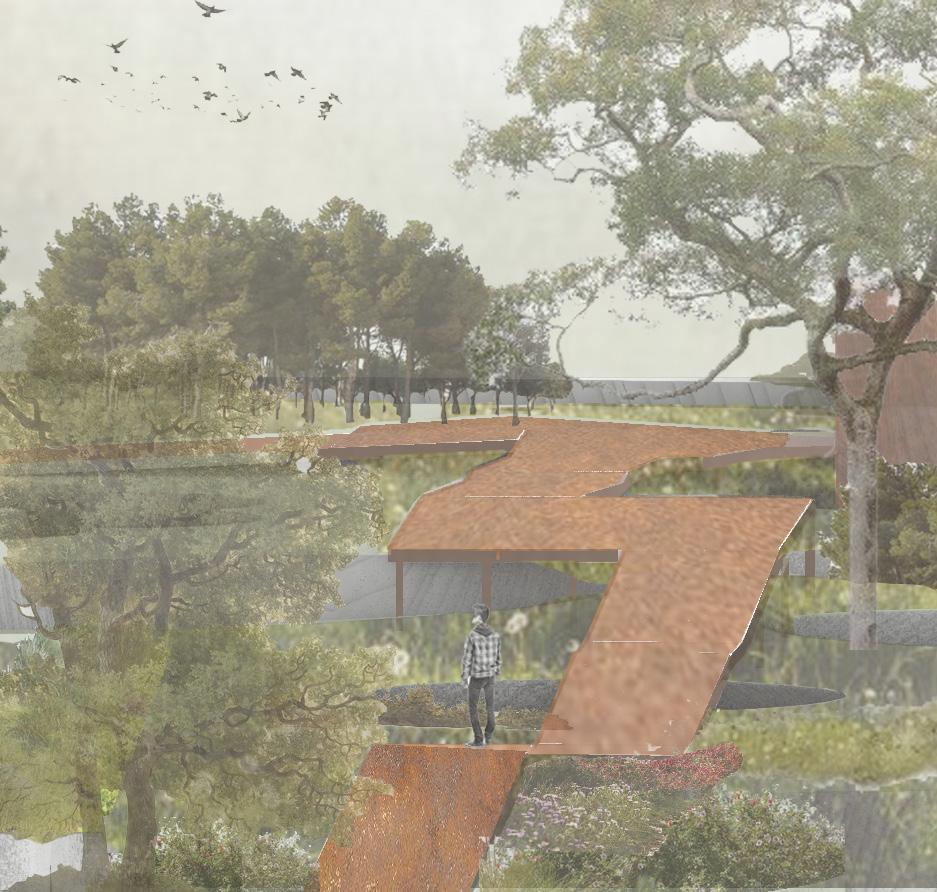
The paths on the rooftop have been designed with the accessibility regulations as a starting point. The slope of the inclined paths is 1:20, meaning that for each rise of 500mm, 10 000mm of ramp are required. Furthermore, a landing of 2000x2000mm can be found after every ramp, whit a change in orientation after two ramps.
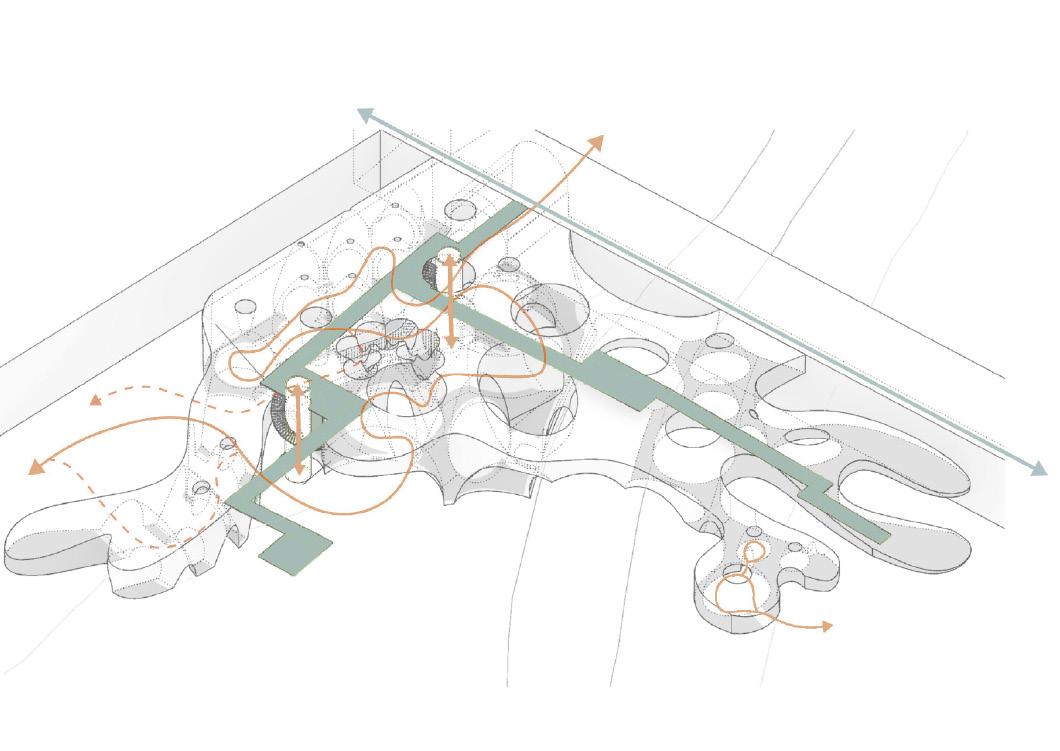
The paths are 2000mm wide, allowing easy access for wheelchair users. All paths on the ground floor, including the landscaping paths are at least 1100mm wide. (Serving max 220 people)
-handrails are 1000mm high


-lift dimensions r=1700mm
-accessible toilets 1500x2200mm
-door widths 1000mm
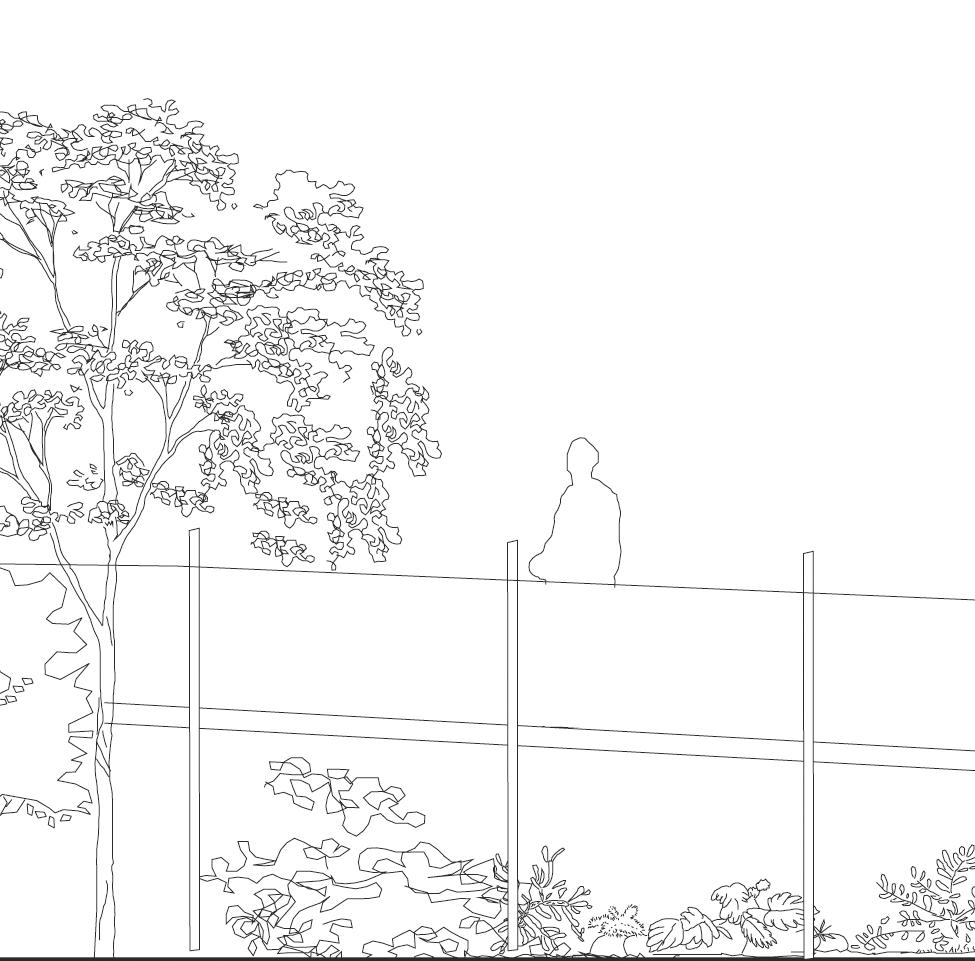
1) corten sheet on metal supports
2) solar panels on timber decking
3) timber supports
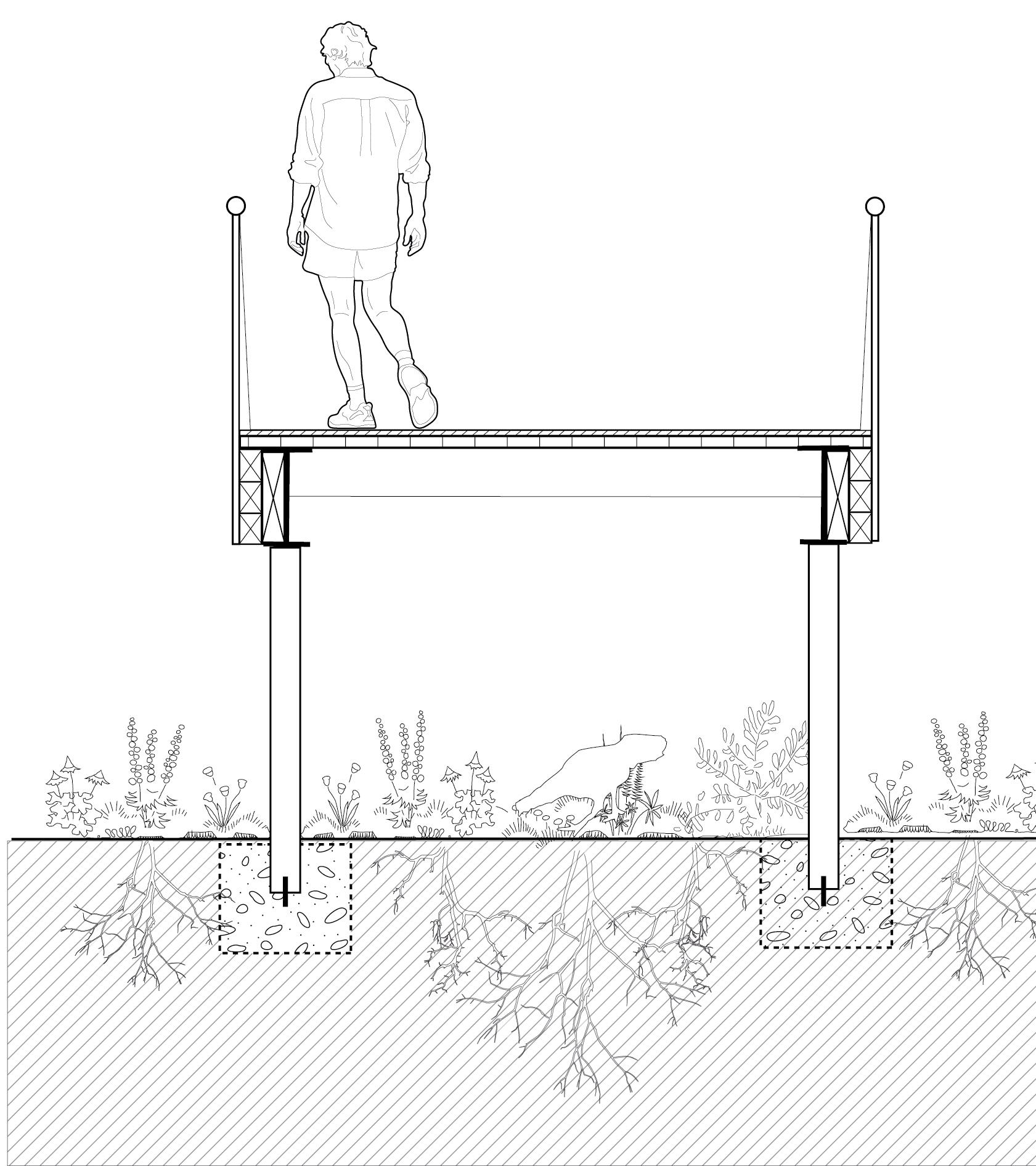
4) steel I beam 4500 mm
5) metal column with void for cables (from solar panels)
6) stone foundation in gabion basket
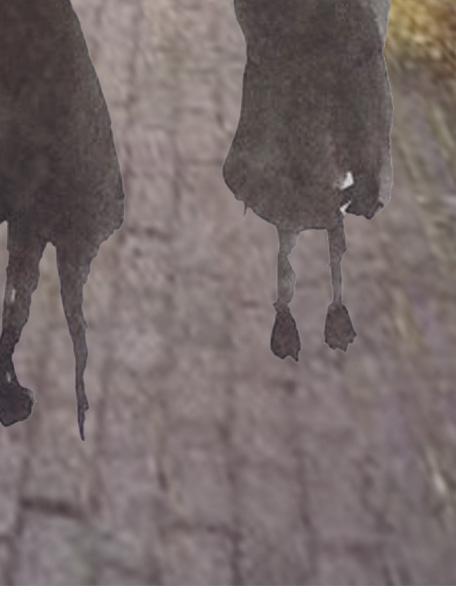


My intent with this design in terms of the experience created for the human users is to arouse a state of exploration within the them; to evoke feelings of wonder and contemplation, to frame nature in a new way and maybe make humans and nonhumans come a bit closer together.

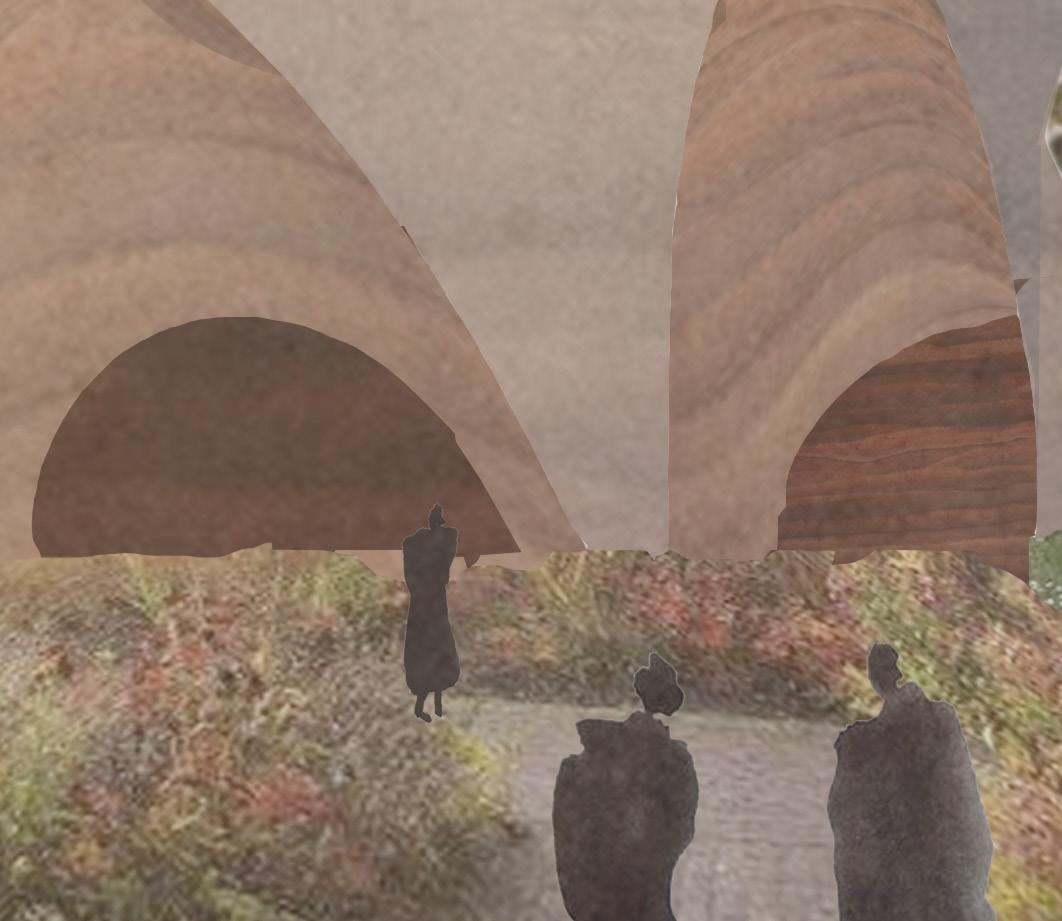
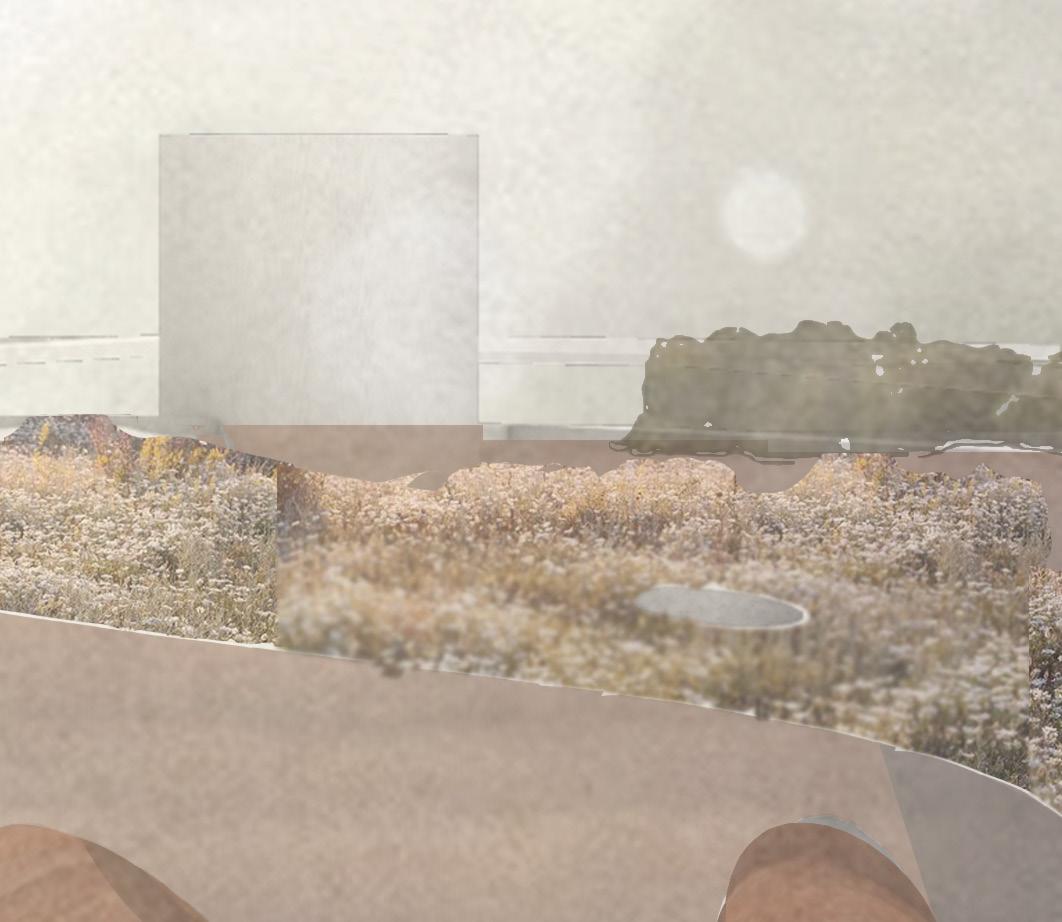
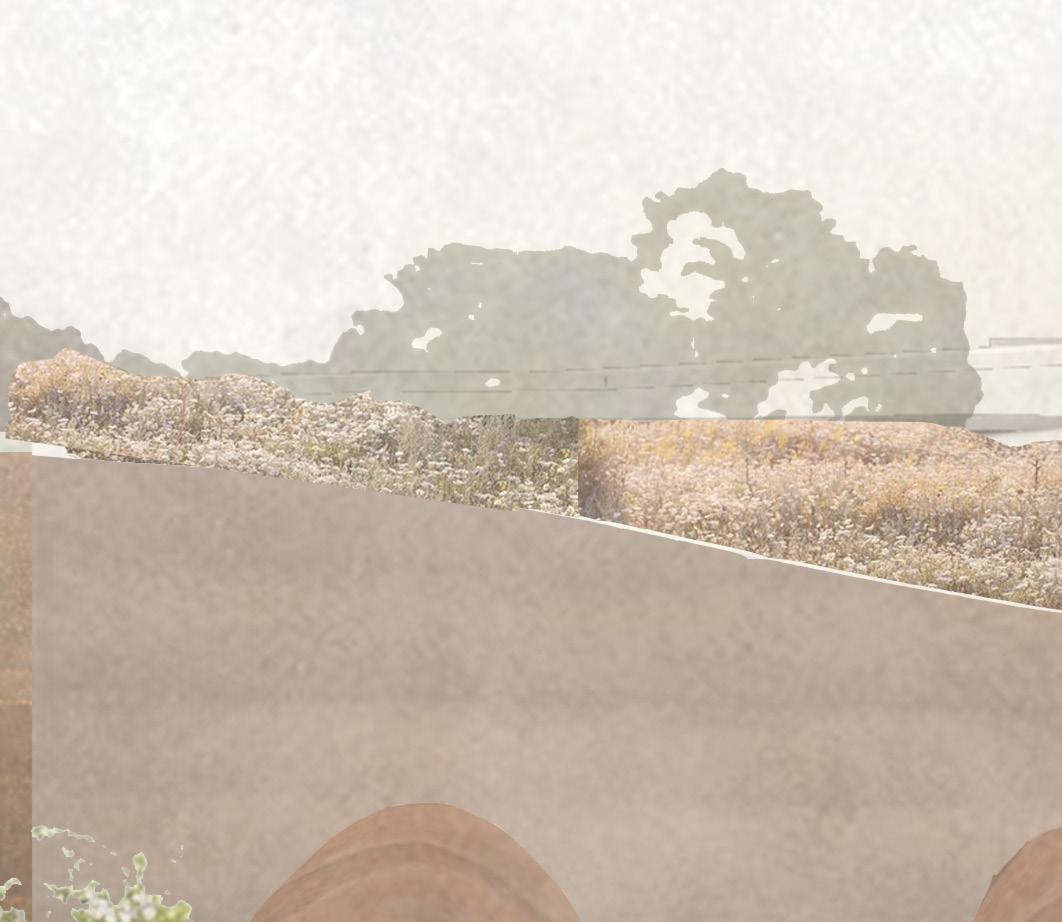
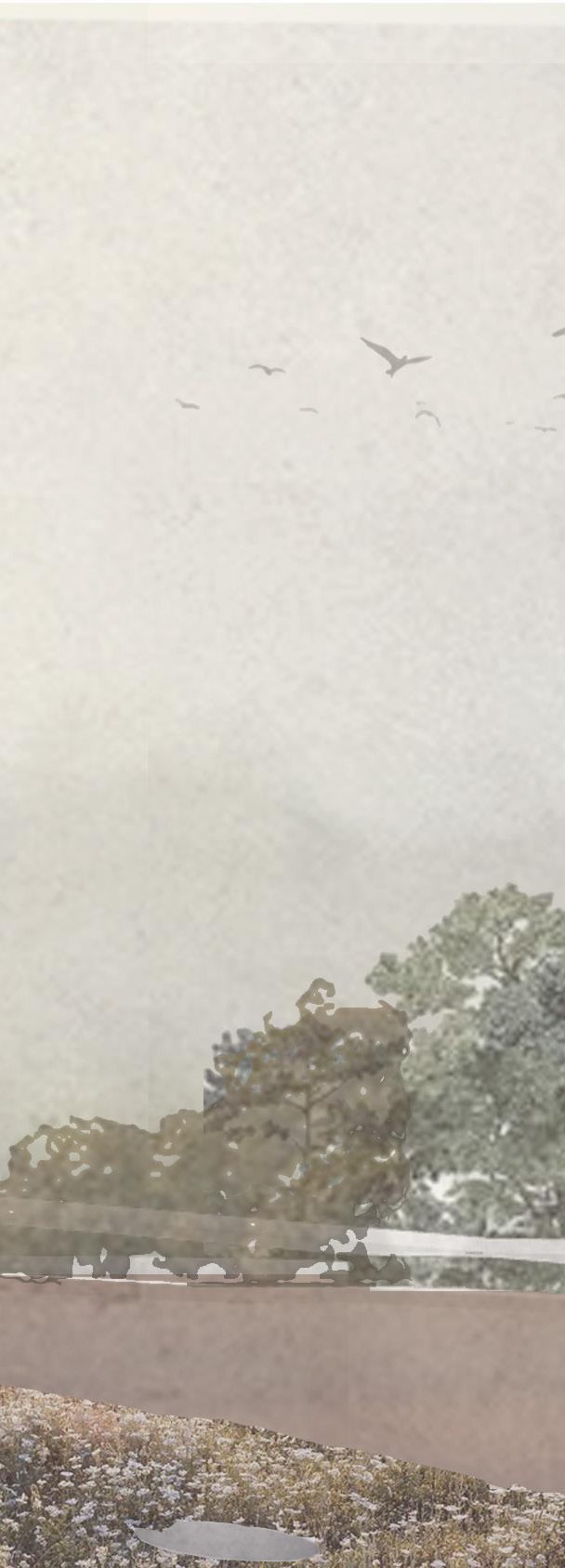
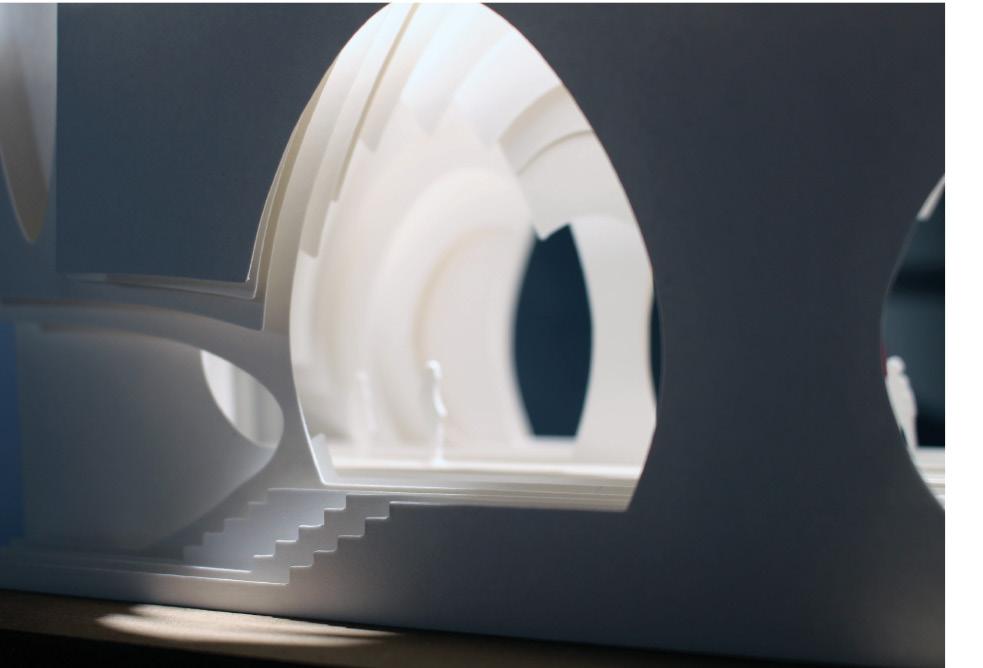
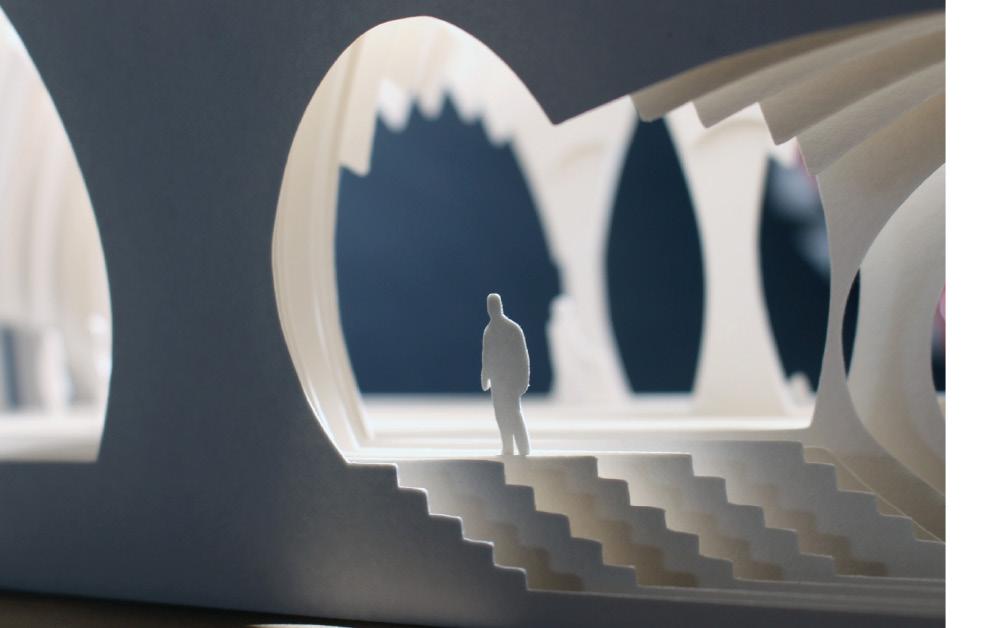
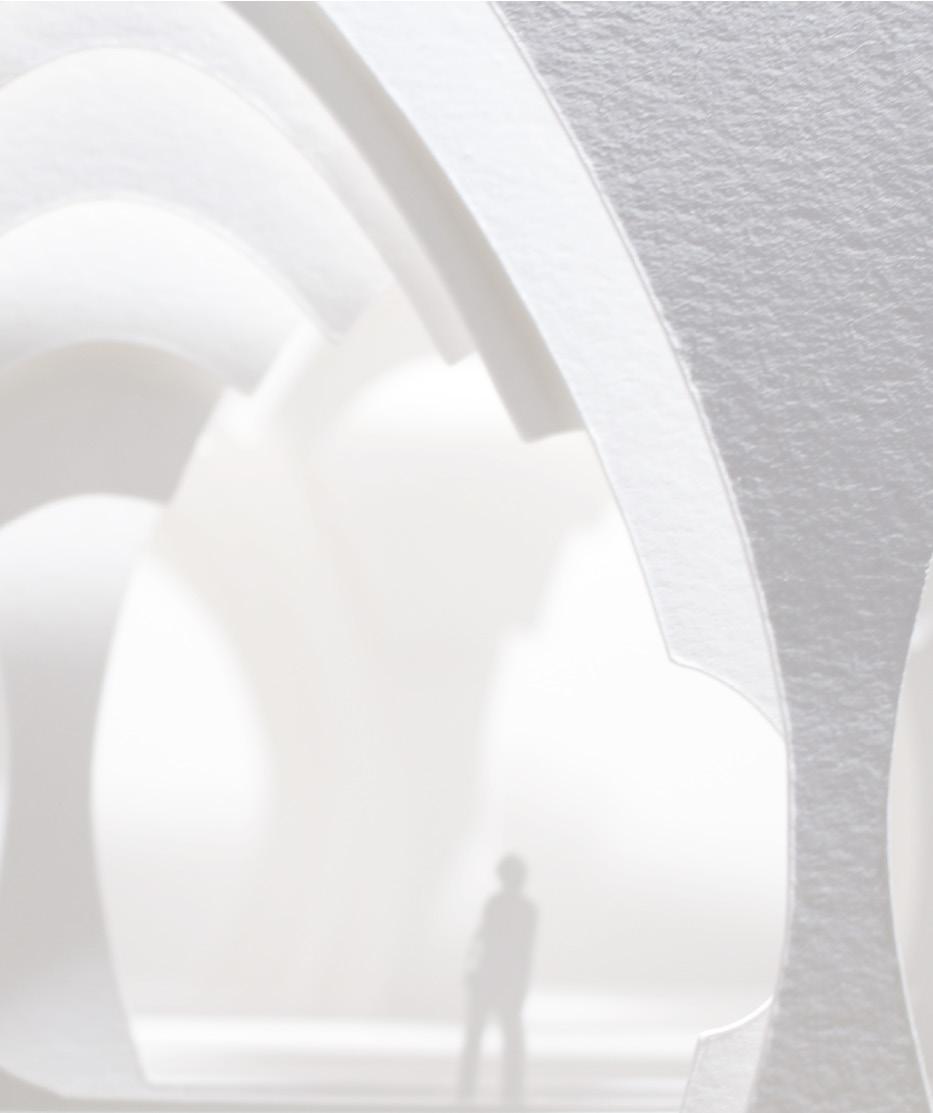
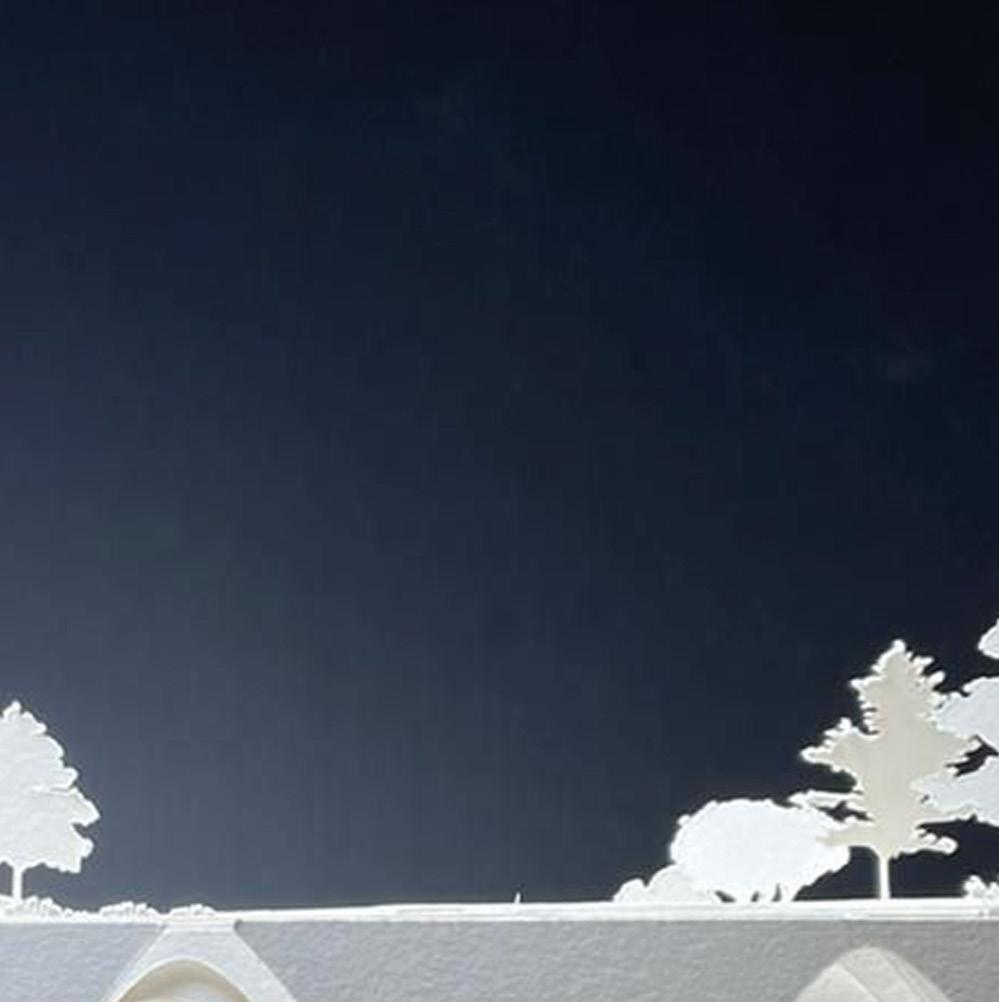
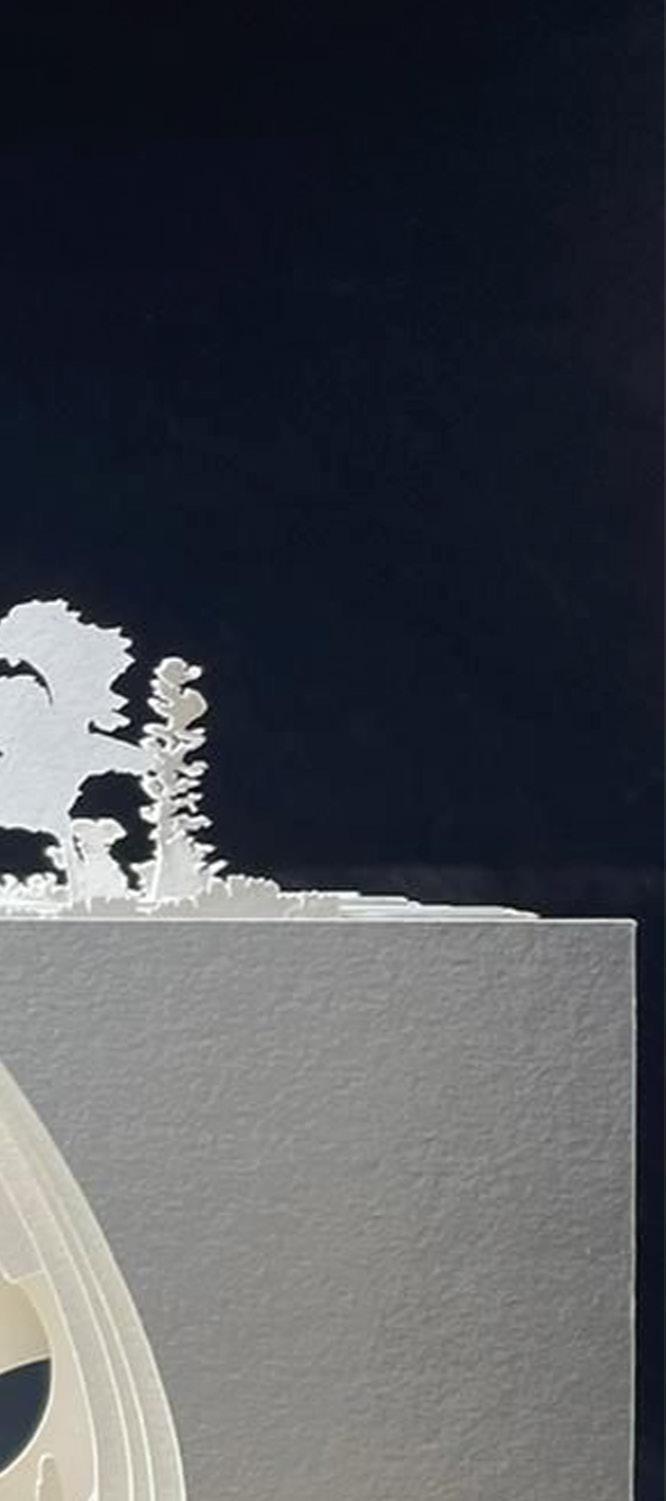
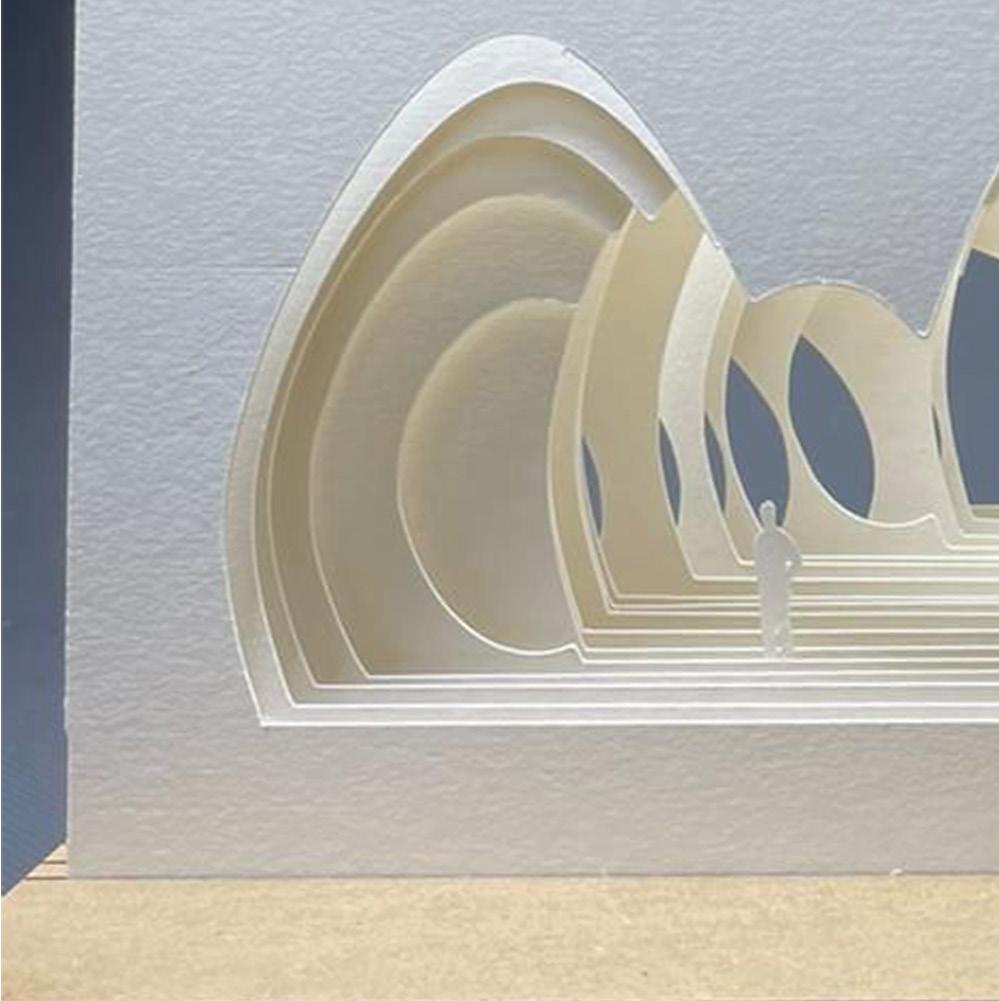
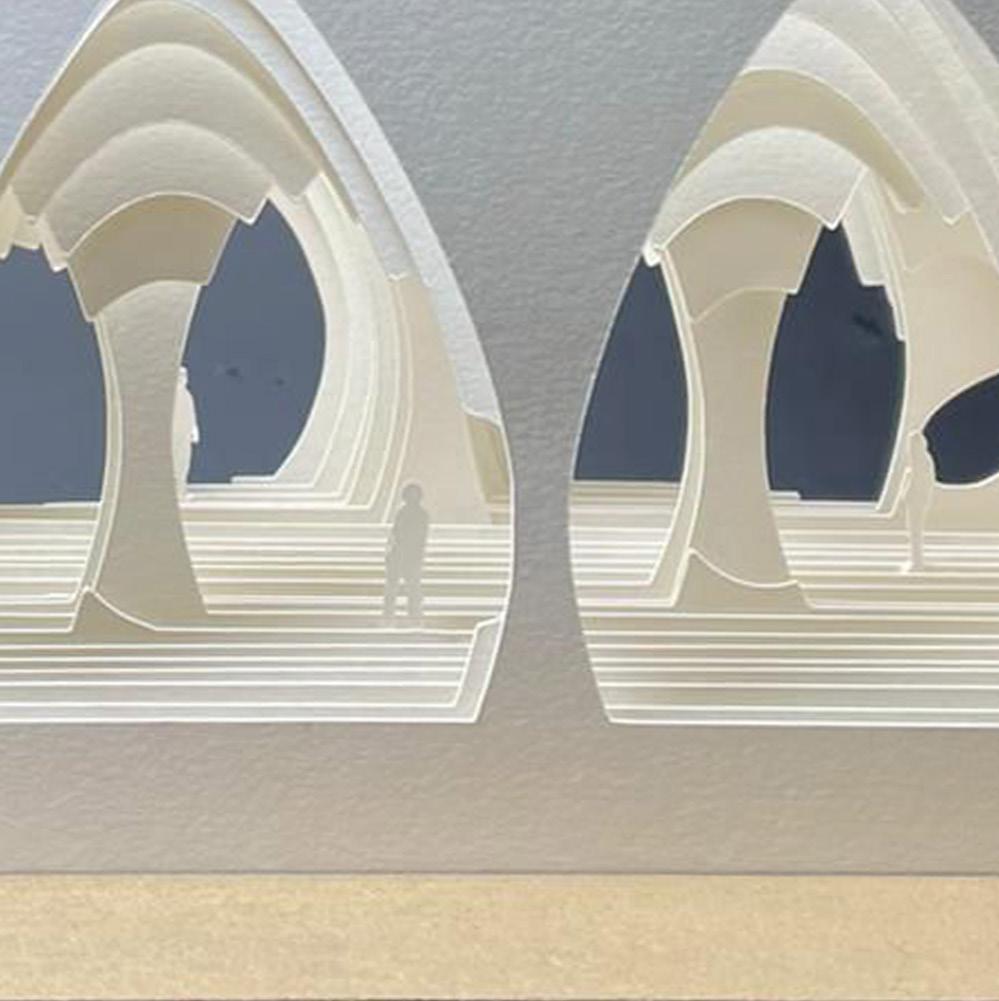
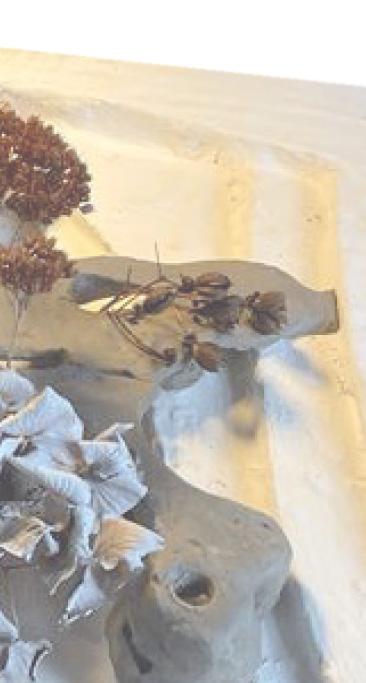
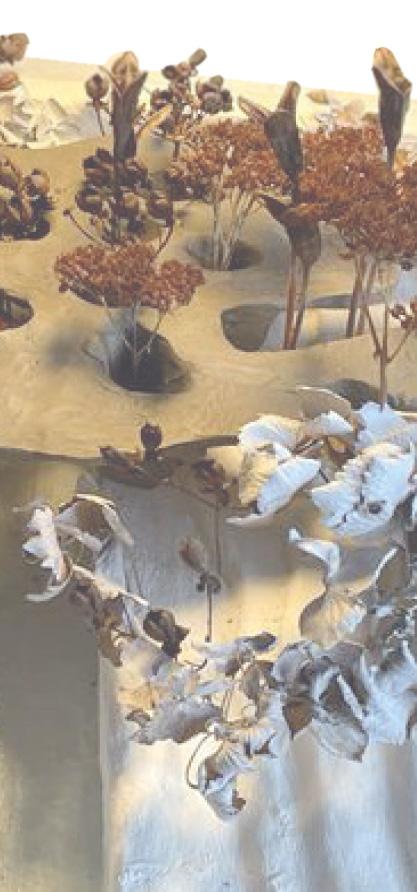
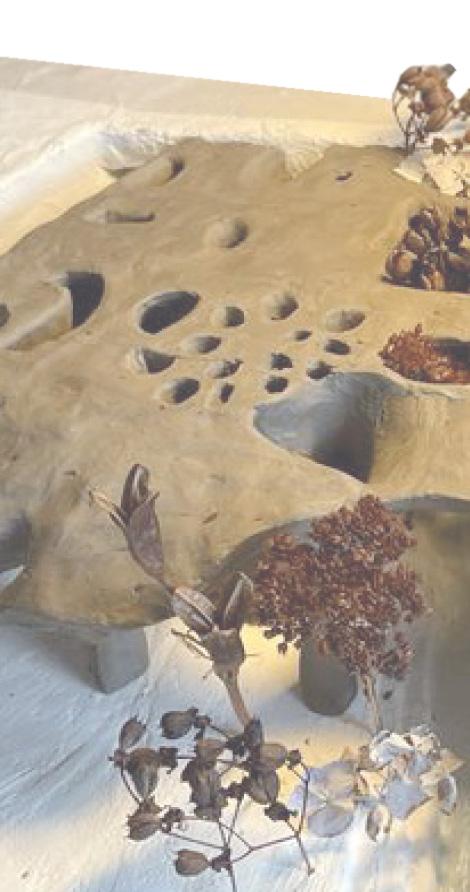
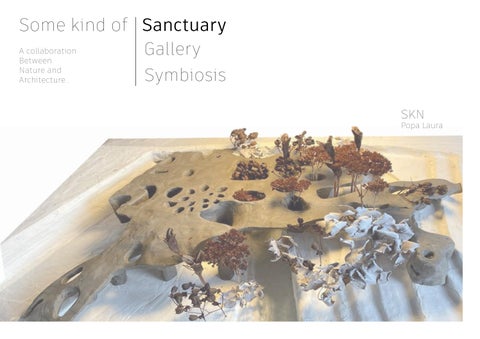
My exhibition piece focuses on transmitting the spatial qualities of the gallery space. Rather then displaying materiality or texture, my focus was on capturing the light and ambiance of the spaces.
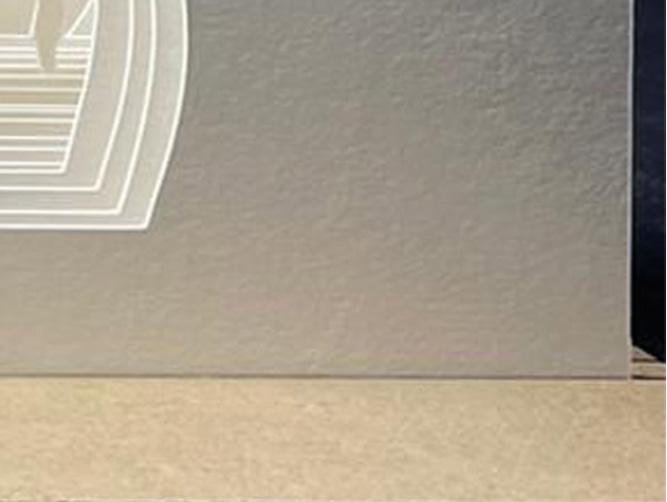
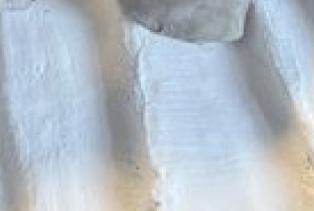
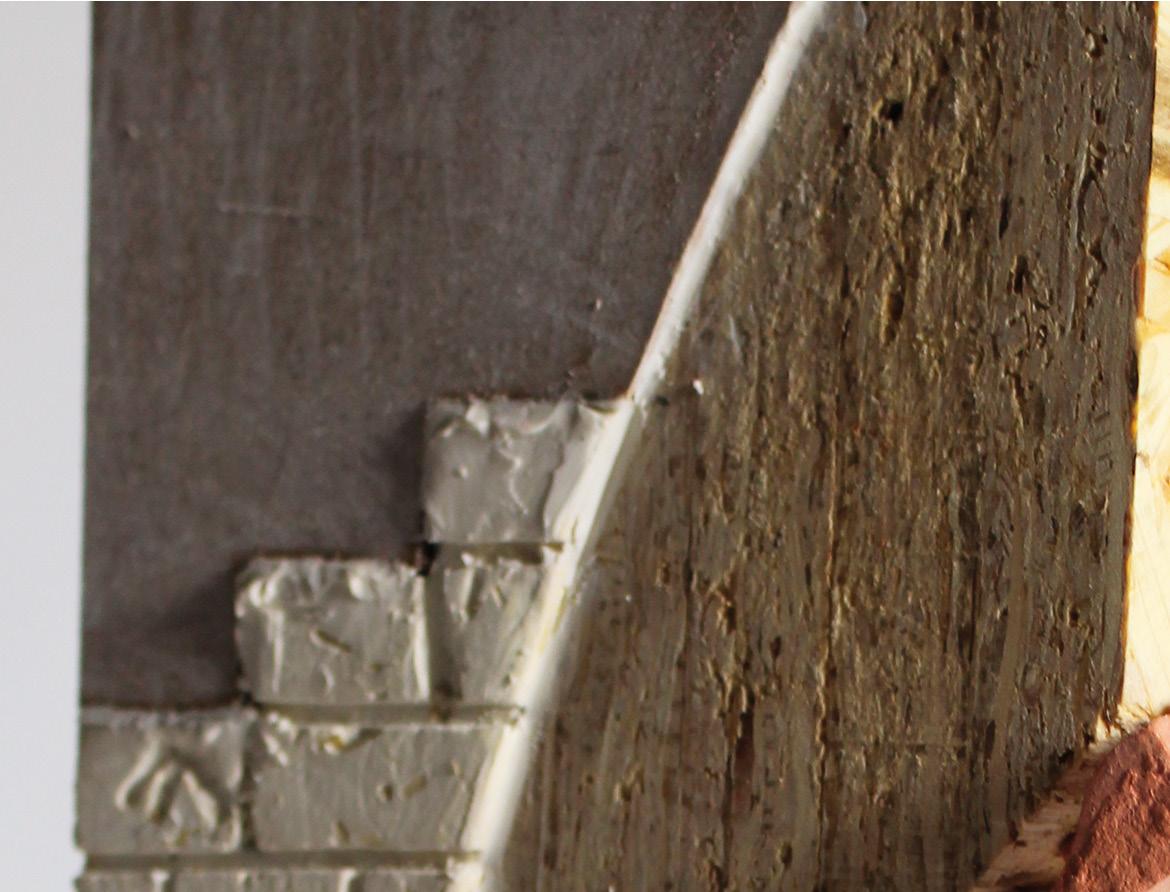
The model is composed of a series of 20 sections cut in paper and positioned 5mm apart, creating a 3D volume from 2D repetitive elements.