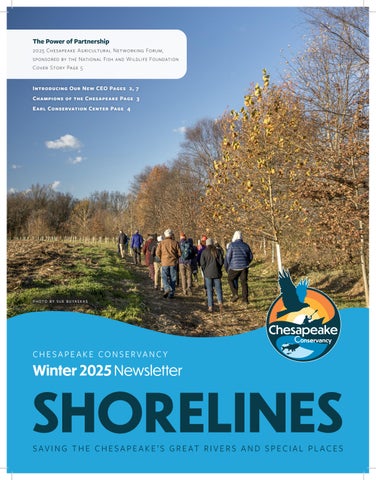
The Power of Partnership
2025 Chesapeake Agricultural Networking Forum, sponsored by the National Fish and Wildlife Foundation Cover Story Page 5
Introducing Our New CEO Pages 2, 7
Champions of the Chesapeake Page 3
Earl Conservation Center Page 4
The Power of Partnership
2025 Chesapeake Agricultural Networking Forum, sponsored by the National Fish and Wildlife Foundation Cover Story Page 5
Introducing Our New CEO Pages 2, 7
Champions of the Chesapeake Page 3
Earl Conservation Center Page 4
Stephanie Meeks, Chair
Ed Hatcher, Vice Chair
Jeffrey Sabot, Treasurer
Philip Tabas, Secretary
Daniel M. Ashe
Richard Batiuk
Astrid Caldas
Matthew Earl
Adam Gronski
Colin Harrington
Michelle Bailey
Hedgepeth
Randall W. Larrimore
Pamela D. Marks
Vibha Jain Miller
Scott Phillips
Michael T. Reynolds
Susan Shingledecker
Ava Shivers
Stephanie Vaughn
Honorary Member
Gilbert M. Grosvenor
Emeritus Directors
Patrick F. Noonan
Charles A. Stek
Susan Shingledecker, CEO
Michael Augustin, Communications & Outreach Specialist
Emily Beach, Director, Conservation Innovation Center
Sue Buyaskas, Project Manager
Jody Couser, Senior Vice President of Policy & Communications
Carly Dean, Director, Chesapeake Tributaries Initiative
J.T. Dean, Director of Individual & Major Gifts
Chase Douglas, Program Coordinator, Chesapeake Conservation Partnership
Michael Evans, Ph.D., Deputy Director, Conservation Innovation Center & Lead Data Scientist
Ellen Gardner, Senior Vice President of Finance & Chief Financial Officer
John Griffin, Senior Policy Advisor
Ryan Hill, Project Coordinator/Geospatial Analyst
Adrienne Hobbins, Program Manager
Louis Keddell, Operations Manager, Conservation Innovation Center
Aaron Knishkowy, Chesapeake Conservation & Climate Corps Member
Elliott Kurtz, Geospatial Data Engineer
Patrick McCabe, Senior Geospatial Analyst
Joseph McCauley, Chesapeake Fellow
Frank Rohrer, Restoration Project Advisor
Kathy Rohrer, Restoration Project Advisor
David Saavedra, Senior Geospatial Technical Lead
Alicia Sabatino, GIS Web Developer/Cartographer
Helen Sieracki, Human Resources Manager
Lisa Spallitta, Director of Finance & IT
Aleksandra Stankovic, Director of Institutional Giving
Logan Stenger, Project Manager
Susan Stephenson, Director of Federal Business Development
Shannon Thomas, Project Coordinator
Charlotte Weinstein, Senior Geospatial Analyst
As I write my first column as CEO of Chesapeake Conservancy, I am deeply grateful for the opportunity to serve this watershed and its communities, a place that has shaped my life and work in countless ways.
Since moving from the shores of Lake Ontario and the Niagara River to Washington, D.C., for college, the Chesapeake Bay has been a steady source of inspiration and connection to nature. Now, I’m proud to share that connection with my husband and our two sons. Through hiking, camping, sailing and exploring, the Bay and its landscapes have become the heart of our family’s adventures.
From hikes at Fort Monroe National Monument and Gettysburg National Military Park, where we reflected on courage and resilience as we admired the landscape, to sailing adventures on the Sassafras, Piankatank and Miles rivers, the Chesapeake’s great outdoors continues to shape our family’s story.
As summer wound down and I prepared for my new role, we took time for one last adventure before shifting into back-to-school mode. Sailing on the Magothy, Chester and Tred Avon rivers, we explored quiet coves and watched the sun shimmer across the water. Moments like these with our sons remind me that the Chesapeake is more than an estuary or a landscape. It is a community where we create memories and meaning.
Having previously served as vice president of programs at Chesapeake Conservancy, I know the Bay faces many serious challenges. Changing environmental conditions, development, habitat loss and political and funding uncertainties threaten this remarkable estuary. Yet, with your support, we can continue to safeguard our lands, waters and wildlife, and
ensure everyone has the chance to experience the wonders of the Chesapeake Bay.
Hope lies at the very heart of conservation. Every restored forest, protected wetland and conserved park is proof that collaboration and dedication make a difference. The Chesapeake calls on us to act, to care and to ensure it can be enjoyed by those who follow us. It inspires innovation, creativity and commitment, qualities we will need as we meet the pressing challenges ahead. These are the qualities that shine brightly through our 2025 Champions of the Chesapeake award winners (see page 3).
Since September, I have enjoyed meeting or reconnecting with many of our donors, partners and elected officials. I can say with confidence that the work is hard, the pace is fast, but the people and the mission inspire me and give me hope. I am grateful to lead this work alongside our staff, board, partners, volunteers and supporters like you.

chesapeake conservancy ceo


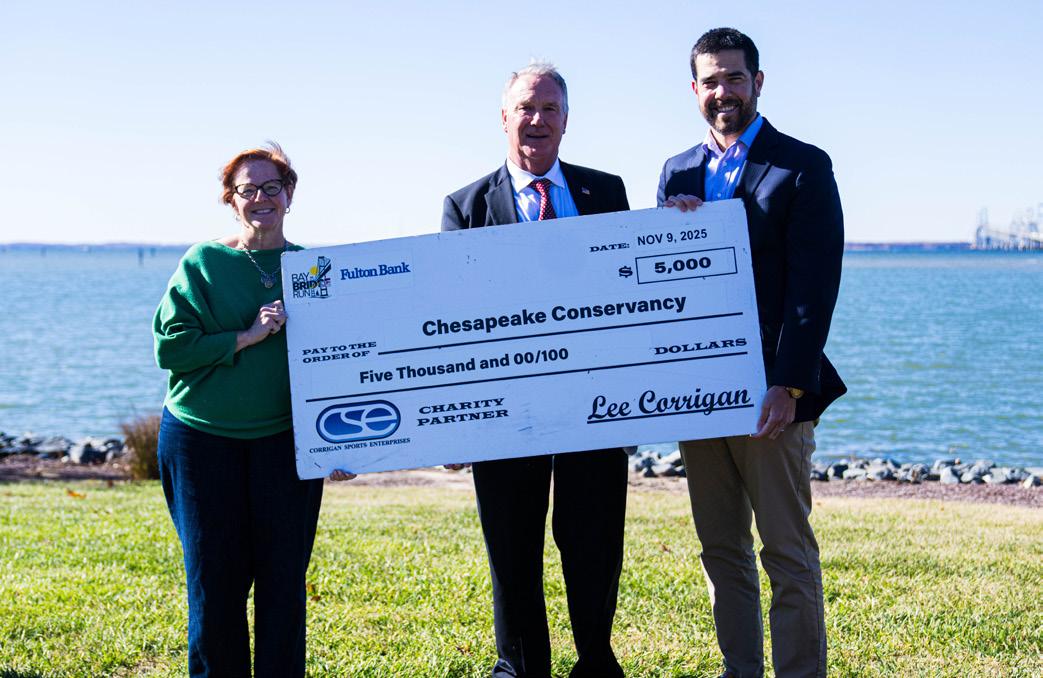
Cancellation of the 2025 Bay Bridge Run due to inclement weather did not dampen supporter enthusiasm for one of Chesapeake Conservancy’s favorite fundraising events of the year. Thanks to corporate sponsors M&T Bank and Beveridge & Diamond, as well as 160 contributors, our team of over 70 participants raised a total of $33,200 this year. Corrigan Sports Enterprises also donated $5,000 to Chesapeake Conservancy as an official charity partner of the race. Thank you to all our Bay Bridge Run team and supporters! We will see you on the Chesapeake Bay Bridge next year.


Chesapeake Conservancy has named three individuals as 2025 Champions of the Chesapeake in recognition of their achievements in strengthening the Bay and its watershed communities. Established in 2014, the award honors individuals or organizations for outstanding dedication to the conservation and preservation of the Chesapeake.
NATIONAL PARK SERVICE DIRECTOR
Robert G. Stanton
Robert G. “Bob” Stanton, the 15th director of the National Park Service (1997-2001) and a former senior advisor to the Secretary of the Interior, received the Lifetime Achievement Award for his distinguished career of nearly four decades in the National Park Service.
“The Chesapeake Bay is truly a national treasure which embodies some of our nation’s most rich and diverse natural and cultural resources. From my perspective and experiences, it can be said that, anchored in collaboration, partnerships and teamwork, the protection and enhancement of the environmental quality and historic integrity of the Chesapeake Bay is an exemplar of effective cooperative resource stewardship.”
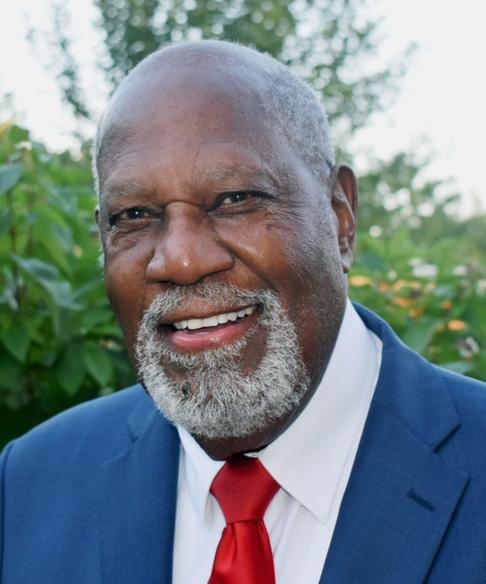
MARYLAND LAND PRESERVATION ADVOCATE
Ann Holmes Jones
Ann Holmes Jones is honored for more than 40 years of leadership in land preservation and her long-standing commitment to Maryland’s Program Open Space (POS), a state program that funds parks, protects habitat and preserves farmland. She is known for her expertise in tracking POS funding, working with partners to safeguard it and educating lawmakers and communities about its importance. She traces her passion to her childhood on her family’s dairy farm in Howard County, where she learned that healthy waterways depend on land. “You cannot separate the land from the water,” she said. While honored by the recognition, Jones emphasized that the award belongs to the legislators who created the program, the advocates who sustain it and the landowners who voluntarily protect their farms and forests.
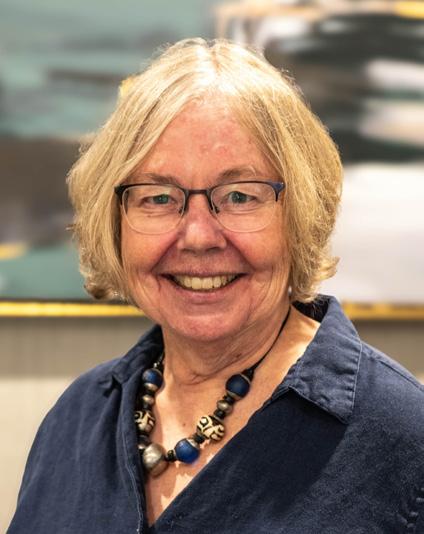
PENNSYLVANIA WATERSHED RESTORATION LEADER
Lysle S. Sherwin
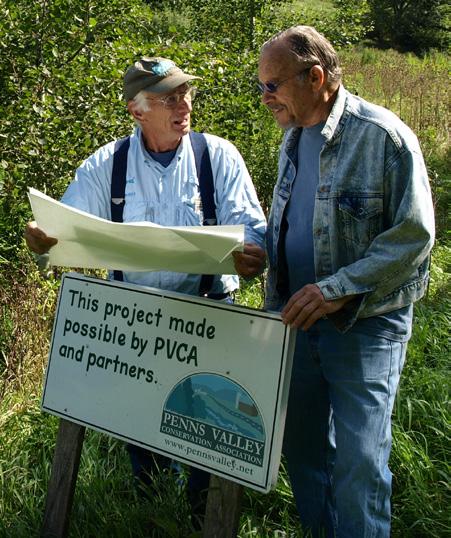
Lysle S. Sherwin is recognized for more than 50 years of leadership in watershed restoration and wildlife conservation. A retired Penn State University educator and former director of the Center for Watershed Stewardship, Sherwin has led projects to restore streams, protect wildlife habitat and improve water quality across the Chesapeake Bay watershed. Today, he continues this work as an affiliate biologist with the U.S. Fish and Wildlife Service Partners Program, collaborating with landowners and local organizations on stream and habitat restoration. Sherwin is a two-time recipient of the Pennsylvania Governor’s Award in 2001 and 2021.
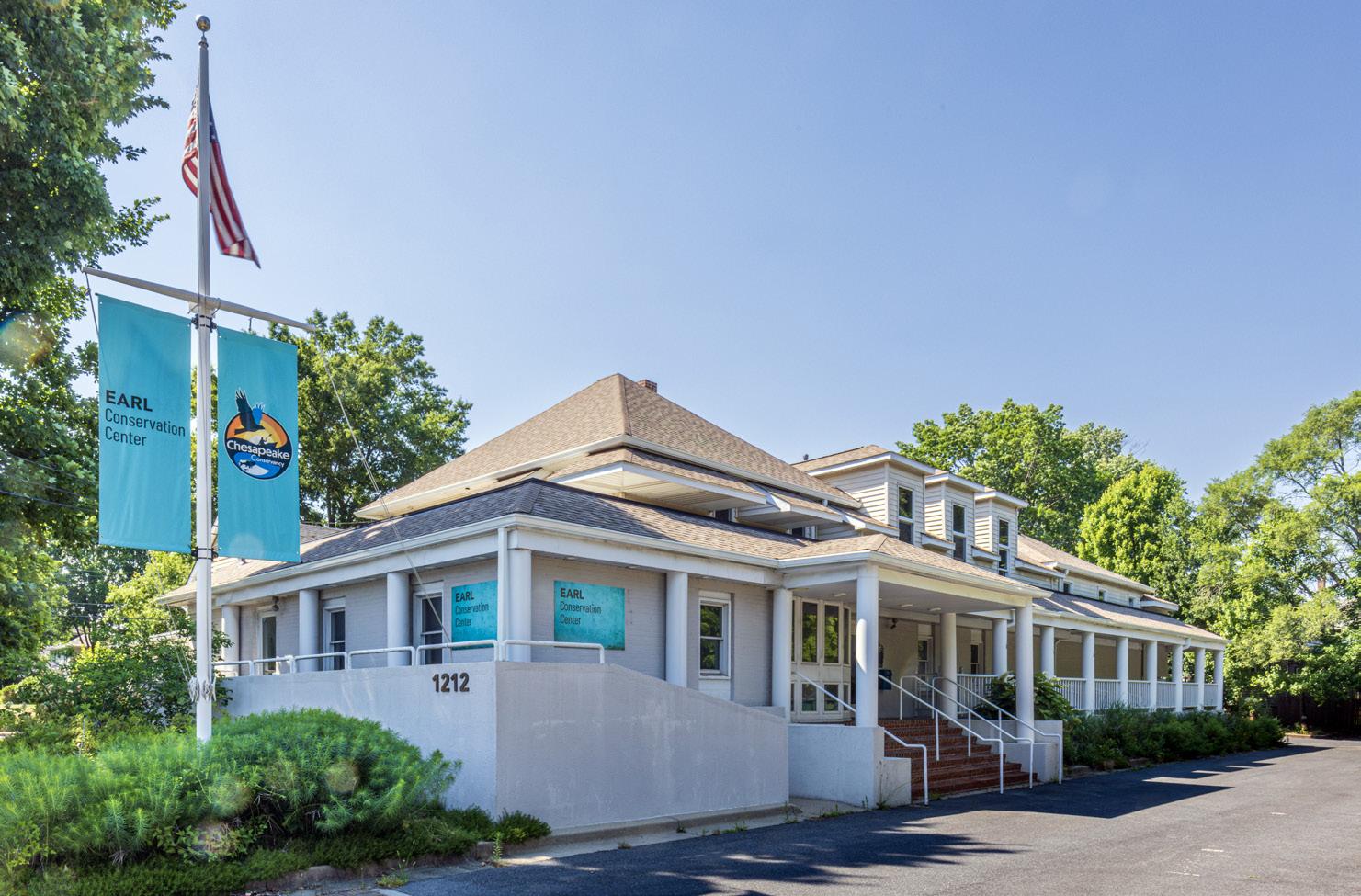
In December 2024 people gathered for an official ribbon-cutting to open the Earl Conservation Center, a shared workspace for environmental organizations in Annapolis, Maryland, made possible through the generosity of James and Sylvia Earl and their Helena Foundation.
The Earl Conservation Center serves as a base for Chesapeake Conservancy, as well as Blacks of the Chesapeake Foundation, Chesapeake Legal Alliance (CLA), The Conservation Fund’s Maryland office and the Maryland Association for Environmental and Outdoor Education (MAEOE). These independent organizations now work side by side in a modern space designed to foster connection, shared problem-solving and new opportunities for education and conservation across the Chesapeake Bay.
The collaborative spirit the Earls envisioned is taking root. For example, a casual hallway conversation between two tenants about a historic property recently turned into a joint site visit to explore the possibility of a conservation easement. Simply sharing space can spark new ideas, strengthen partnerships and create tangible outcomes to benefit the Chesapeake.
James and Sylvia Earl arrived in Anne Arundel County in 1995. James retired in 2000 after 35 years of teaching physics and astronomy at the University of Maryland. From the start, the couple became active supporters of the arts, education, health care and environmental stewardship. James passed away in March 2025, leaving a legacy through the family’s philanthropy. Together, their generosity created a permanent home for environmentally focused groups, easing the financial pressures of commercial office rent and providing organizations with a dedicated space to focus on their missions.
Each tenant brings a distinct focus to the center. MAEOE supports environmental literacy
Rent Our Conference Room
Earl Conservation Center 1212 West Street, Annapolis, MD 21401 details:
chesapeakeconservancy.org/ about-us/rent-our-conference-room
for educators
The Blacks of the Chesapeake Foundation documents and preserves the traditions and contributions of Black watermen and maritime communities. The Conservation Fund’s Maryland office brings decades of land protection experience, having helped conserve more than 173,000 acres statewide. CLA provides free legal services to individuals, communities and organizations addressing complex environmental challenges.
As reported in the previous edition of Shorelines, a 75-foot mural by Annapolis artist Gayle Mangan Kassal stretches along the first

floor, depicting iconic Bay landscapes and wildlife. Commissioned to inspire staff and visitors, the artwork celebrates the region’s ecological richness and the shared greater mission of the center’s tenants.
As the center wraps up its first year and final renovations near completion, the Earl Conservation Center is fulfilling the vision of its founders. It has become a collaborative space where organizations connect, share ideas and strengthen their collective impact for the Chesapeake Bay.


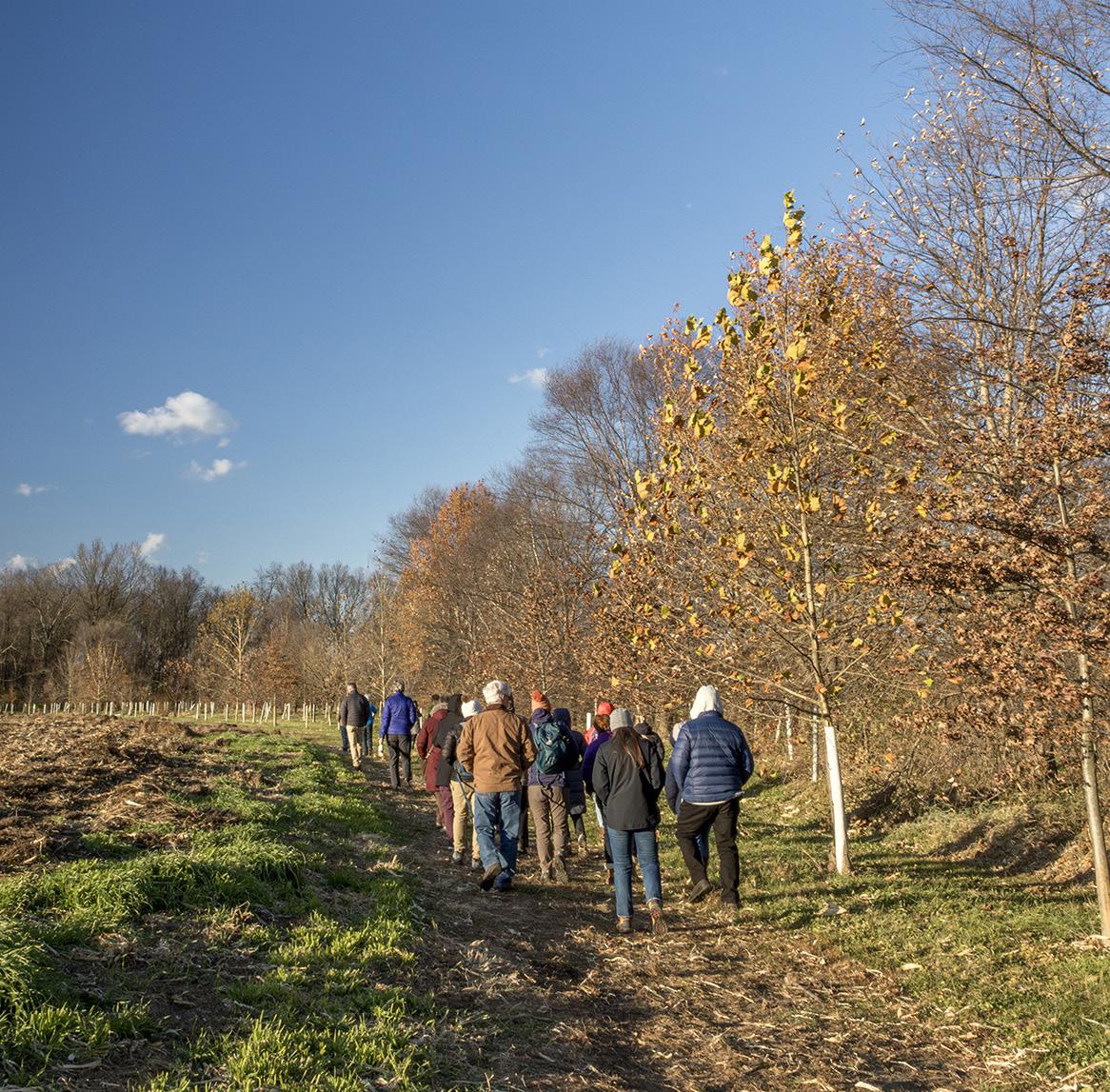
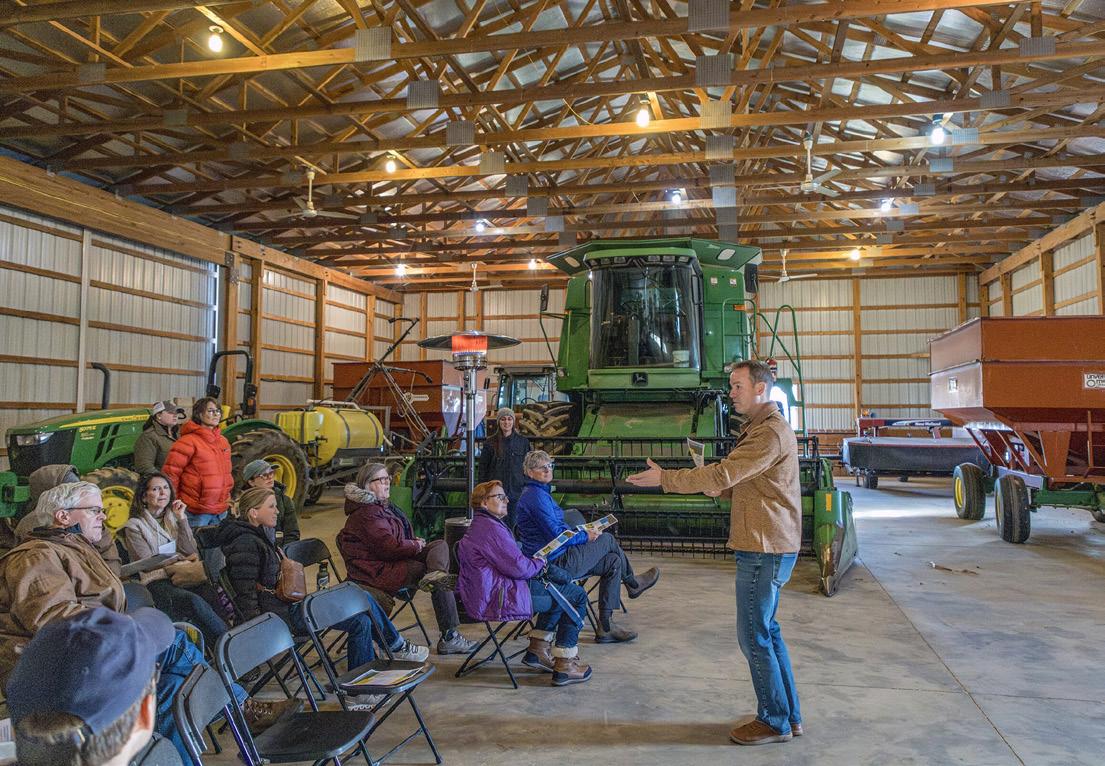
Chesapeake Conservancy was honored to help coordinate and present at the 2025 Chesapeake Agricultural Networking Forum, sponsored by the National Fish and Wildlife Foundation (NFWF). The event brought together farmers, conservation practitioners, researchers and agribusinesses to advance collaborative, data-driven, farmer-focused conservation across the Chesapeake Bay watershed.
Held in Hershey, Pennsylvania, the November forum highlighted the power of partnership to accelerate watershed recovery while supporting farmers’ bottom lines.
Showcasing NFWF’s long-running effort to expand collaborative models through the Innovative Nutrient and Sediment Reduction program, attendees learned how shared
planning and cross-sector coordination can drive outcomes for water quality, habitat, climate resilience and farm productivity.
Other topics included how farmer-led peer-to-peer networks strengthen trust and foster innovation. A panel on data and decision support tools highlighted the tracking of progress and encouraged conversation on how to better leverage data toward common goals.
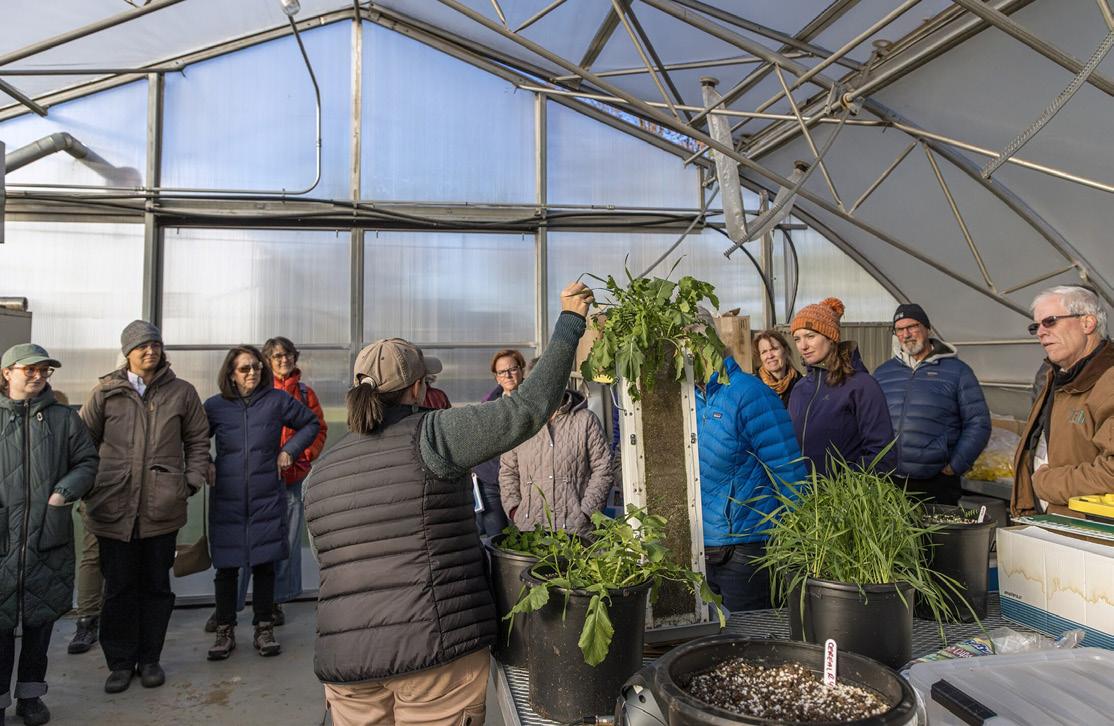
Afternoon farm tours highlighted focused, cross-sector work that is producing measurable stream health improvements in three small watersheds in Lancaster County, Pennsylvania. At farms in the Pequea Creek, Dellinger Run and Conewago Creek watersheds, participants saw real-world examples of new approaches to conservation.
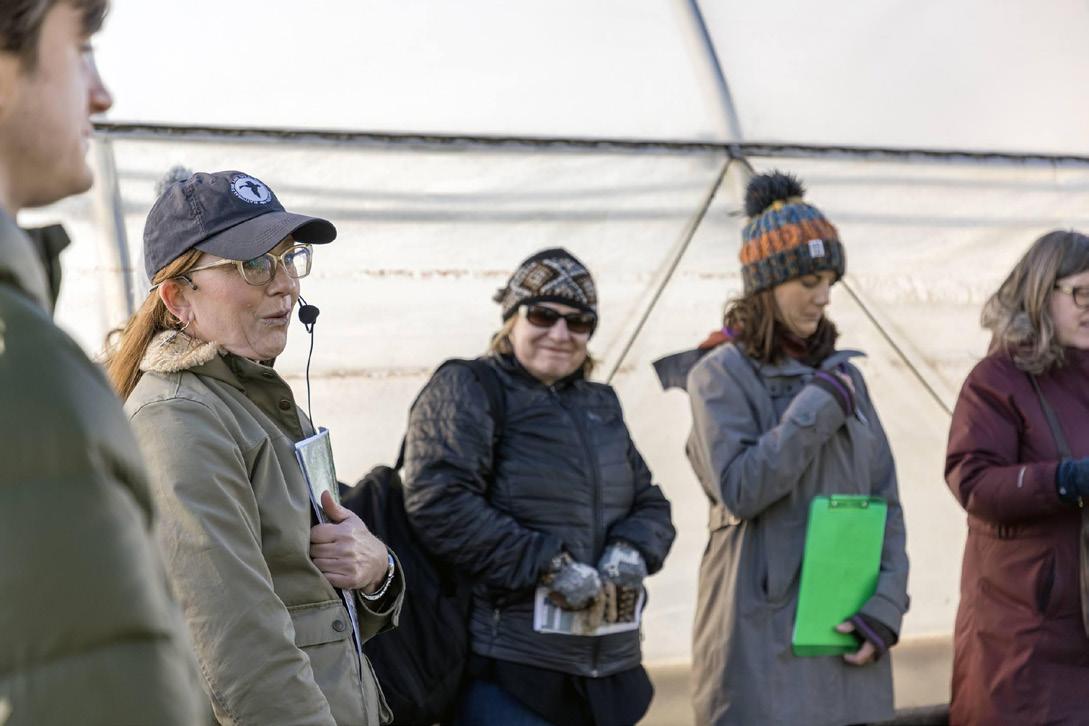
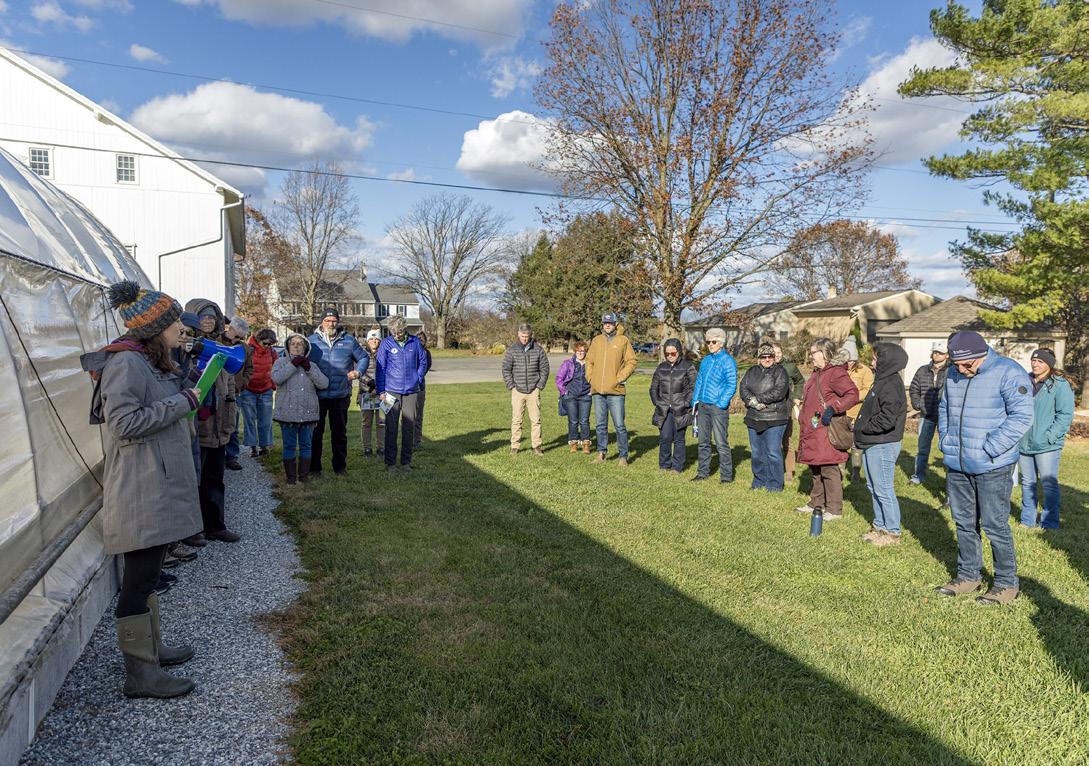
Together, the projects emphasized use of advanced technology to hone in on the most effective conservation opportunities and apply innovative soil health practices and stream monitoring techniques, all while staying grounded in the farmer’s goals. The tours shared practical strategies other communities could adapt to accelerate restoration across the Bay watershed.
Overall, the forum illustrated that when farmers, local organizations and conservation partners align around shared goals, measurable water-quality improvements for the Chesapeake Bay are not only possible—they are already underway and delivering results.
Chesapeake Conservancy’s Conservation Innovation Center (CIC) not only produces and shares the latest groundbreaking data, it also creates powerful tools and custom web applications for users to empower their conservation and restoration work.
Here’s a snapshot of examples that will roll out in the coming weeks.
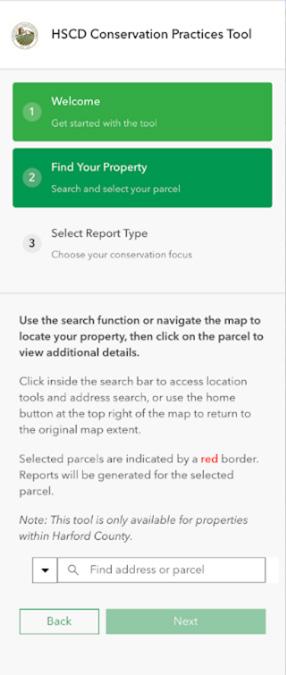
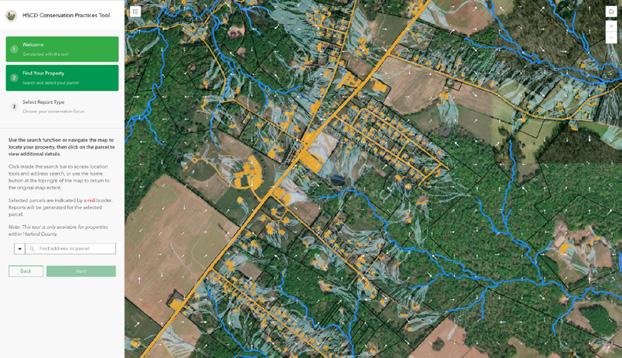
Landowners in Harford County, Maryland, now have a free powerful new resource to help them care for their property and the environment.
The Harford Soil Conservation District (HSCD) enlisted the services of CIC to create an interactive online tool that makes conservation simple, practical and tailored to each property.
HSCD wanted to deepen its outreach to landowners in urban and suburban settings, especially those with small farms or lots from one to 10 acres in size. To support this effort, CIC developed a platform where users can map their property, see key features like slope, vegetation and water resources and then get custom recommendations for improved land management actions.
Beyond mapping, the tool also includes a lawn savings calculator, a suite of informational pages about various conservation practices that users can implement on their property, and the ability to download or print a custom conservation plan.
“This tool puts practical site specific conservation guidance directly in the hands of landowners,” said HSCD Board Supervisor President Lee McDaniel. “Our hope is that it inspires more people to take action on their property and see the difference they can make for the Bay and their community.”
By helping residents connect with local conservation experts and providing actionable information, this platform empowers Harford County landowners to take stronger steps for protecting water quality, wildlife habitat and the health of the Chesapeake Bay.
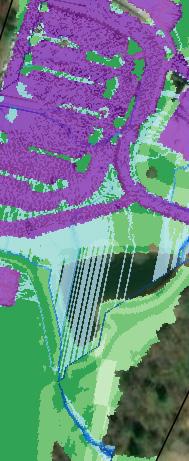
Interfaith Partners for the Chesapeake (IPC) works with the faith community to identify congregation properties in need of green stormwater infrastructure projects to reduce nutrient and sediment runoff with the goal of improving the health of the Chesapeake Bay and its waterways. IPC partnered with CIC to produce a decision support tool that will help identify and prioritize best candidate properties with restoration opportunities. The tool:
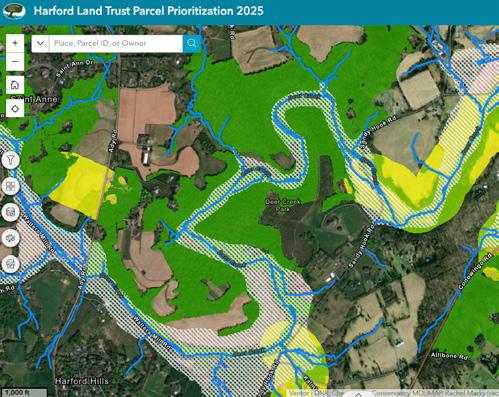
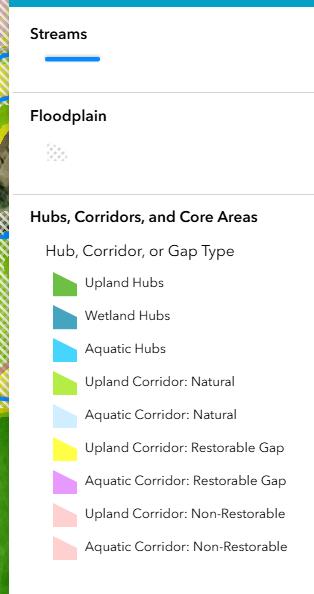
Harford Land Trust (HLT) in Maryland is making it easier than ever to protect Harford County’s most important lands. Partnering with Chesapeake Conservancy’s Conservation Innovation Center, HLT updated its parcel prioritization tool with the latest data, helping staff quickly identify high-impact conservation opportunities. The tool lets HLT:
• Rank parcels based on core conservation priorities
• Filter thousands of properties to find unprotected land with high habitat value or parcels larger than 10 acres
• See key stats and summaries by clicking on a parcel
• Print maps and tables for meetings and proposals
“This tool allows us to quickly assess, visualize and communicate our conservation priorities in a way that wasn’t possible before,” said HLT Land Programs Manager Jackie Koehn.
With this upgrade, HLT can make faster, data-driven decisions, focus on the lands that matter most and present a compelling case for protecting Harford County’s wildlife and communities, all without hiring additional GIS staff.
• Maps restoration suitability criteria for IPC’s congregation properties, including land cover, soil content and drainage characteristics
• Provides acreage statistics and suitability scores
• Visualizes runoff from impervious surfaces to help guide restoration implementation
• Filters priority criteria across thousands of congregation properties in Maryland and Lancaster County, Pennsylvania. With this resource, IPC can plan more effectively and develop proposals more efficiently with relevant visuals and statistics to create a more compelling case for funding. The resource also streamlines collaborative work with their restoration service providers and partners to get more green infrastructure projects in the ground where they are needed most. Streamlining project implementation benefits not only water quality, but also the local communities that are served by these projects.
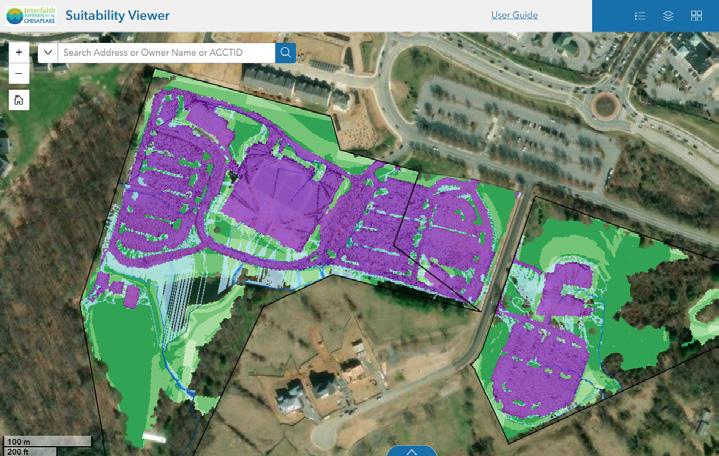
Shades of green indicate the level of restoration suitability on this property, overlaid with impervious surfaces (purple) and impervious surface runoff in light blue.
As a child, M&T Bank Senior Relationship Manager Jeremy Schneider spent countless hours exploring the Chesapeake Bay’s shores, rivers and tributaries. Those experiences shaped his lifelong connection to the region and inspired his commitment to protecting it. Today, Schneider volunteers with the Chesapeake Conservancy and helps guide M&T Bank’s support for environmental causes.
“Those experiences shaped who I am today,” Schneider says. “I want to do everything possible to ensure future generations have the same opportunities to connect with the Bay.”
The bank has invested $670.9 million in environmental finance initiatives, reduced its electricity use by 23 percent year over year and made significant progress toward its $1 billion commitment to renewable energy projects. The bank has contributed $1.1 million to support environmental causes.


M&T Bank has long been a committed partner in protecting the Bay and its watershed. Each year, M&T joins the Chesapeake Conservancy’s Bay Bridge Run Team, demonstrating its commitment to community engagement and conservation.
In 2025, M&T strengthened its partnership even further by adding the Chesapeake Conservancy to its corporate
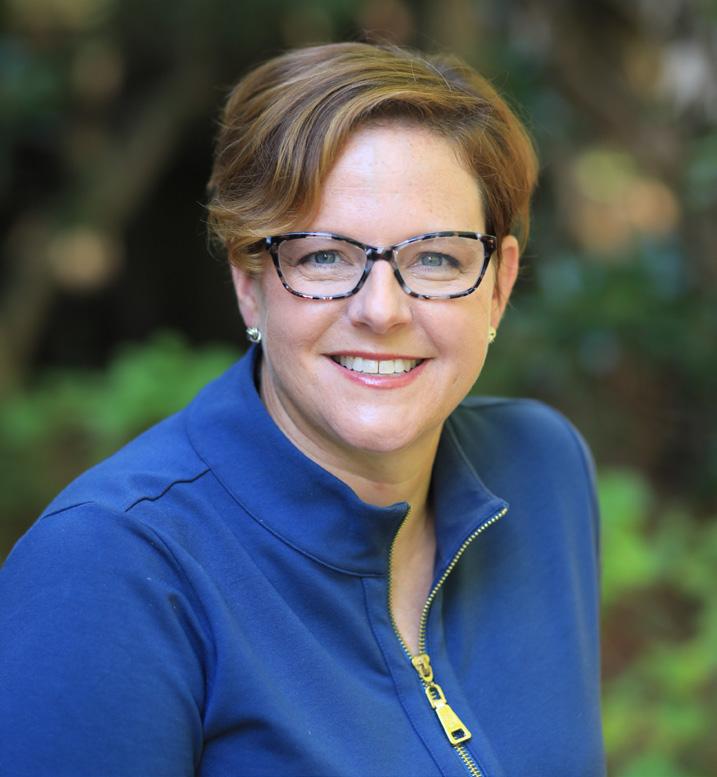
On September 8, 2025, Susan Shingledecker joined Chesapeake Conservancy as the new chief executive officer. She previously served as Chesapeake Conservancy’s vice president and director of programs from 2017 to 2020 and returns to lead the organization after serving as executive director of Earth Science Information Partners (ESIP). At ESIP, she brought together a national community of earth and climate science data professionals to advance datadriven environmental solutions in collaboration with NASA, NOAA and USGS.
“Susan’s return is a homecoming we are thrilled to celebrate,” said Chesapeake Conservancy Board Chair Stephanie Meeks. “Following a nationwide search, the board is confident that Susan brings the strategic leadership, nonprofit management experience and deep passion for the Chesapeake Bay that this role requires. She is uniquely positioned to build on our strong foundation and guide Chesapeake Conservancy into its next chapter.”
Shingledecker brings a wealth of experience from her previous roles at BoatU.S., the Maryland Energy Administration and the
employee matching program, doubling the impact of employees’ gifts.
Schneider first connected with Chesapeake Conservancy as an advisor to the Conservancy’s development committee. “Leadership, employees, philanthropists and volunteers bring tremendous energy and commitment to protecting the environment. Witnessing their passion firsthand inspired me to get more involved,” he said.
Through its investments, volunteer programs and community engagement, M&T Bank demonstrates how corporate leadership can make a real difference. Together with the Chesapeake Conservancy, the bank is helping to ensure the Bay’s waters, shores and tributaries remain vibrant, accessible and inspiring for generations to come.
Chesapeake Conservancy is deeply grateful to M&T Bank, which, along with Ad Hoc, LLC, is an inaugural member of the Chesapeake Conservancy’s new corporate partnership program.
To learn more about how your company can support our work
and gain visibility for your corporate commitment to the environment, please visit www.chesapeakeconservancy.org/ ways-to-give/corporate-partnerships or contact Aleksandra Stankovic, Chesapeake Conservancy’s director of institutional gifts, at astankovic@chesapeakeconservancy.org
National Governors Association, as well as service on numerous environmental and maritime policy committees.
“I’m honored to return to Chesapeake Conservancy and lead this incredible team working to protect the nation’s largest estuary,” said Shingledecker. “My experience at ESIP has deepened my appreciation for how data can empower conservation and amplify impact, and I’m excited to bring that perspective to our mission.”
Shingledecker lives in Severna Park, Maryland, with her husband and two sons where they enjoy sailing on the Chesapeake Bay.
In November, Board Member Pamela Marks and the environmental law firm where she is a principal, Beveridge & Diamond, hosted a reception at the firm’s Baltimore office to introduce or reconnect Shingledecker with Baltimore area professionals and Chesapeake Conservancy supporters.
Jody Couser will now oversee government relations in her new role as senior vice president of policy and communications.

Chesapeake Conservancy welcomes Aaron Knishkowy as the new Chesapeake Conservation and Climate Corps member. Through the corps, Chesapeake Conservancy partners with Chesapeake Bay Trust to select young adults for one-year hands-on environment and leadership training.
EJ Amyot, who served as chief operating officer and interim chief executive officer, has accepted a new position. We thank him for his service and wish him well on his next adventure.
Chesapeake Conservancy Earl Conservation Center 1212 West Street
Annapolis, Maryland 21401
443.321.3610
info@chesapeakeconservancy.org
chesapeakeconservancy.org
facebook.com/chesapeakeconservancy instagram.com/chesapeakeconservancy

linkedin.com/company/chesapeake-conservancy bsky.app/profile/chesconserv.bsky.social
The Chesapeake faces unprecedented challenges— changing environmental conditions, rollback of clean water protections, loss of public funding and growing development pressure on wildlife habitats. It can feel overwhelming.
But there is hope. Chesapeake Conservancy’s conservation efforts put safeguards on lands that will protect them for future generations.
With your gift today, we can protect thousands of acres of wildlife habitat, expand stream restoration programs and empower the Chesapeake conservation movement with the latest groundbreaking data.
Together, we can ensure the Chesapeake thrives for wildlife and for generations to come.

chesapeake conservancy relies on our many friends to protect and conserve the chesapeake’s great rivers and special places. your tax-deductible contribution of any amount is truly appreciated. chesapeake conservancy has a 4-star rating from charity navigator. our tax id number is 26-2271377. our cfc id number is 27293.