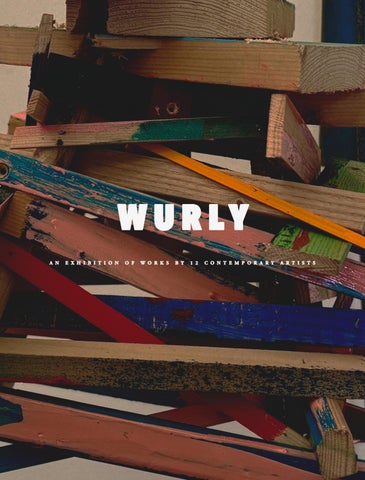
WURLY
AN EXHIBITION OF WORKS BY 12 CONTEMPORARY ARTISTS
JAN EXHIBITION OF WORKS BY 12 CONTEMPORARY ARTISTS
GM GALLERY PRESENTS Wurly an exhibition of smallscale works by twelve contemporary artists living and working in the United Kingdom.
The exhibition’s title, Wurly is a word which in northern English and Scottish dialects means something small, gnarled or knotted. For the exhibition’s curator, Ralph Anderson, ‘wurly’ conjures an image of an unshakable, squat and skeletal tree, weathering wind and rain in an otherwise barren, moorland landscape. These trees may appear small and imperfect compared to an ancient oak, however, within a landscape they can yield a sublime, often striking image. This context of a windswept world in which few other species thrive transforms the connotation of these trees from that of lowliness to one of majesty. This unlikely transformation brings the nature of beauty into question. Something that is modest and twisted can be an object of beauty depending on the lens it is viewed through, and in what circumstances.
Anderson argues that, in art, beauty is not so much defined by what an image is about (its content) but how it is made (its form). Culturally, an oak may be imbued with more potent symbolism than that attached to a wurly tree, however, the dense and twisted form of the latter has profound effects, meaning that it survives both elemental and temporal change. Anderson uses an example of Renaissance paintings that work from the same allegory but some of which are, perhaps, to be considered more beautiful than others. It is, in Anderson’s view, the materiality of the work – the visible brushstrokes, the play of colour, the texture of the painted surface, layering and line – which give way to meaning.
An interest in and investigation of the primacy of form connects the work of Wurly ’s exhibiting artists. There is a paradox that emerges, however, in the creation of hierarchies which give precedence to either form or content as the basis for beauty –a chicken-and-egg conundrum. While form may be, for some artists, their primary preoccupation, inevitably this interest is the result of a thought, idea or concept which becomes a theme that is then physically played out. Or, by working through an artwork
formally, an idea or concept is moved from the preconscious to the conscious in the artist’s mind. At this point, the theme of a work can be identified and named. These tensions describe the dialectic of form and content, which is a dynamic and reciprocal relationship. One of Wurly ’s exhibiting artists, ceramicist Tom Norris, locates this dialectic within his own practice, referencing the phenomenon, ‘pareidolia’, where he finds themes or images among innately abstract forms in the final stages before a work’s completion.
Wurly brings together artists who engage with a small-scale format in various ways. ‘Small’ works invite close viewing and consideration because of their scale. While small things instinctively may seem insignificant, the works in Wurly ask the viewer to think differently about construction, scale and context. Like particular landscapes give gravity to Anderson’s wurly tree, ‘small’ works can ooze gravity and richness. As Anderson writes, “It’s a great honour to bring together a selection of works by artists that have shown with JGM Gallery in the past. By concentrating on small works from each artist’s discipline, I hope to zone in on the essence of their practices whilst also giving the viewer a snapshot of the variety of different approaches to art and making in the gallery programme over the years. I came across the name, Wurly , unexpectedly when searching for a title and theme to bring such a varied selection of works together. It immediately jumped out, and with it’s emotive description of form and scale, it seemed ideal for my thoughts on the exhibition and ways of looking at the artworks. On further research, I discovered that ‘wurly’ is also the name for a temporary Indigenous Australian shelter, which felt incredibly serendipitous given JGM Gallery’s other programme as a home for First Nations art in London. I hope that the small scale of the artworks in Wurly can intensify and focus the experience, creativity and thought of these artists’ works, and show the economy of material use to great effect.”
Exhibiting artists: Karolina Albricht Tim Allen | Ralph Anderson | John Ball | Dominic Beattie | Juan Bolivar | Karen David | Benjamin Deakin | Olly Fathers | Daniel MacCarthy Tom Norris Alice Wilson.
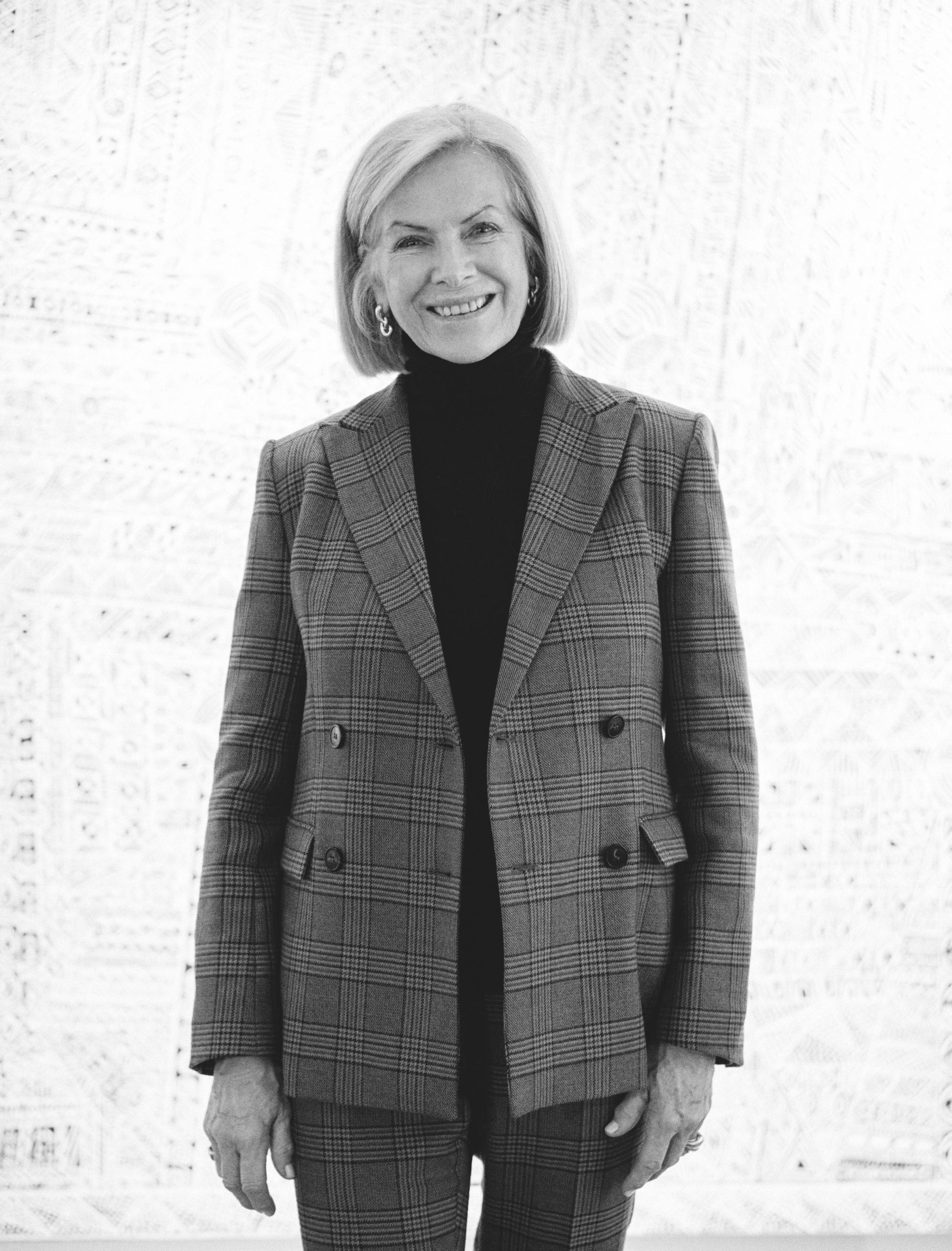
FOREWORD BY JENNIFER GUERRINI MARALDI
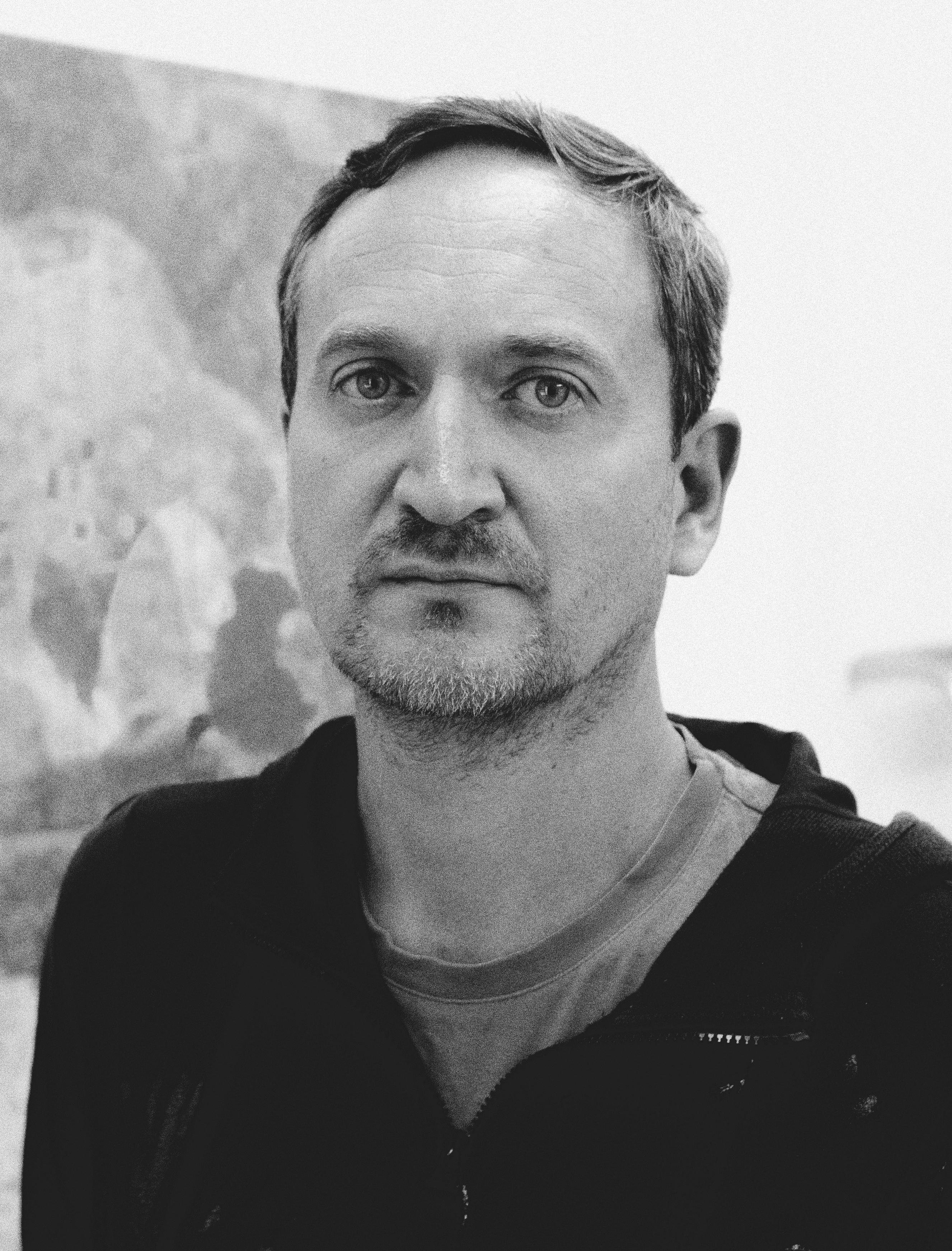
FOREWORD
BY JENNIFER GUERRINI MARALDI
THE TWELVE ARTISTS in this exhibition each represent a foundational stone for JGM Gallery that has contributed to our reputation and identity, built over the last nine years. I am eternally grateful for the part they have each played in this process, and the trust they have shown the gallery in exhibiting and actualising their creative projects.
During our initial conversations about this exhibition, Julius Killerby (Associate Director at JGM Gallery) and I decided to invite Ralph Anderson to become the exhibition ’ s curator. Ralph ’ s first show at the gallery, Lucent Umbra Paintings , was the first ever staged at 24 Howie Street. He has been an integral part of our gallery s growth, even well before its inception. Ralph has witnessed the gradual addition of these incredible artists to our roster, and no one is better positioned to select these works which, though small in scale, speak to artistic careers which have made a vast impact on London ’ s contemporary art scene. This year alone, Juan Bolivar was awarded the coveted research fellowship at The British School at Rome, and Alice Wilson has just received the Pack & Send Award at the 2025 London Sculpture Prize.
Just as a wurly tree stands strong in a harsh and unforgiving landscape, these artists − through their talent and dedication − have contributed to the stability and reputation that JGM Gallery enjoys today, and as testament to their artistic excellence, I can proudly say that our exhibition programme has flourished.
KAREN DAVID
Karen David is a London-based artist, writer and lecturer, recently exhibited in Bloomberg New Contemporaries 2024, ICA, and had a solo exhibition, The Restless Surge of the Liquid State , at SE8 Gallery, London.
David works with fiction as a catalyst for making and exploring how materials might hold personal narratives and myths, and in her studio, she imagines a fictional commune operating somewhere between art and craft, spirit and material, illusion and magic.
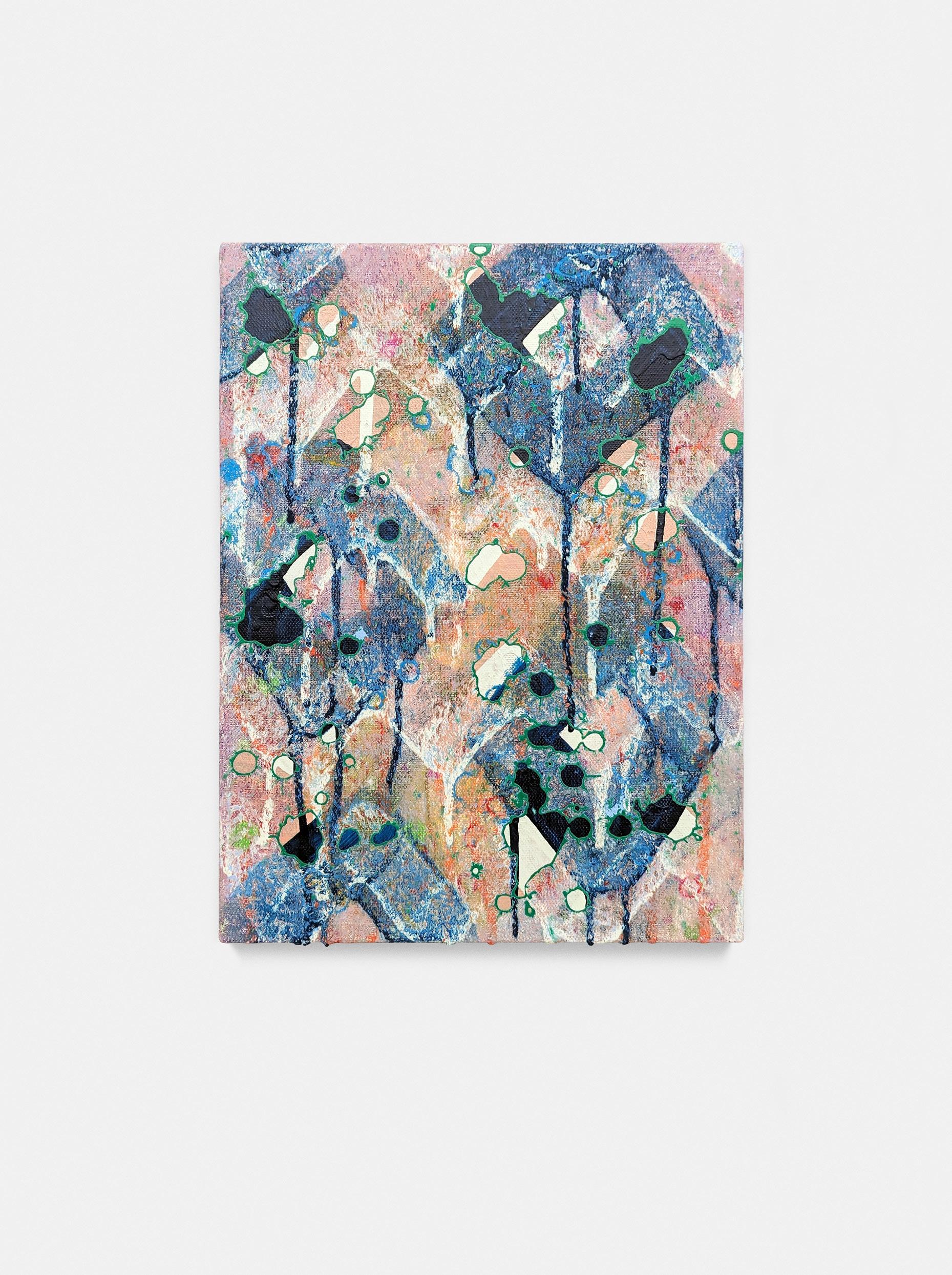
Her oil paintings also reside in an in-between space of artefact, fantasy and decoration; resembling delicate patisserie, abandoned bubble-gum, 80s iced gems, colourful seashells, and mushroom-like extrusions reclaiming objects in apocalyptic science fiction films.
Oil paintings are made using cake decorating techniques and dusted with neon, pearlescent and iridescent pigments. Psychedelic colours mix and swirl unpredictably as they are extruded. Occasionally, trapped air is released in a burst, revealing another colour underneath where we can glimpse the unknown forces, the fiction and the studio anxieties hidden beneath the surface.
All of David ’s works are titled after The X-Files episodes and take reference from pop culture, science fiction, stage magic and eco-communities, with a strong material bias ranging from oil painting, marbling, informational posters, readings, field recordings, tapestries, archives, road trips, photographs of family dinner tables, curation and storytelling.

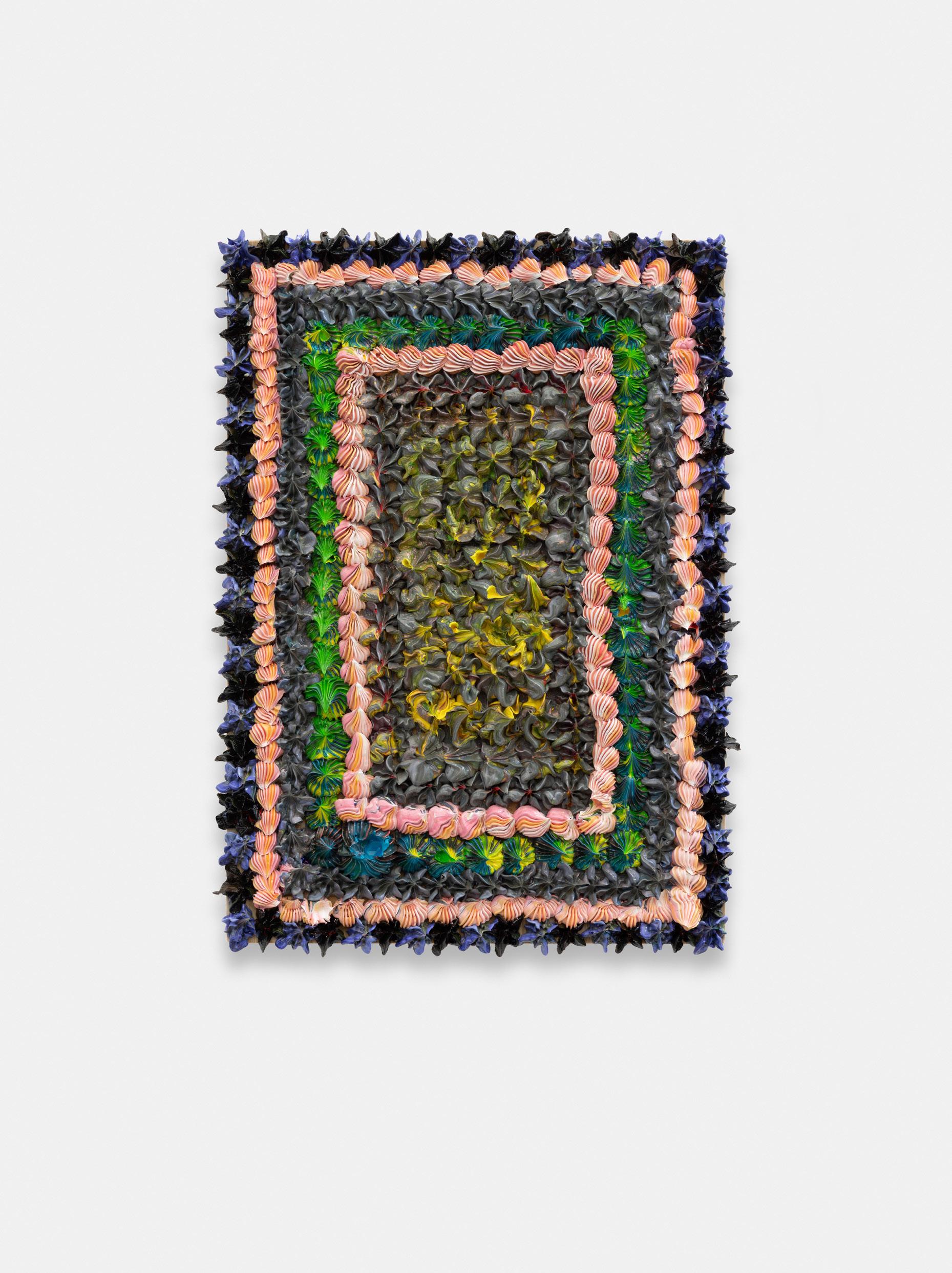
Karen David, Emily (Season 5, Episode 7), 2025, oil on board, 25cm x 20cm
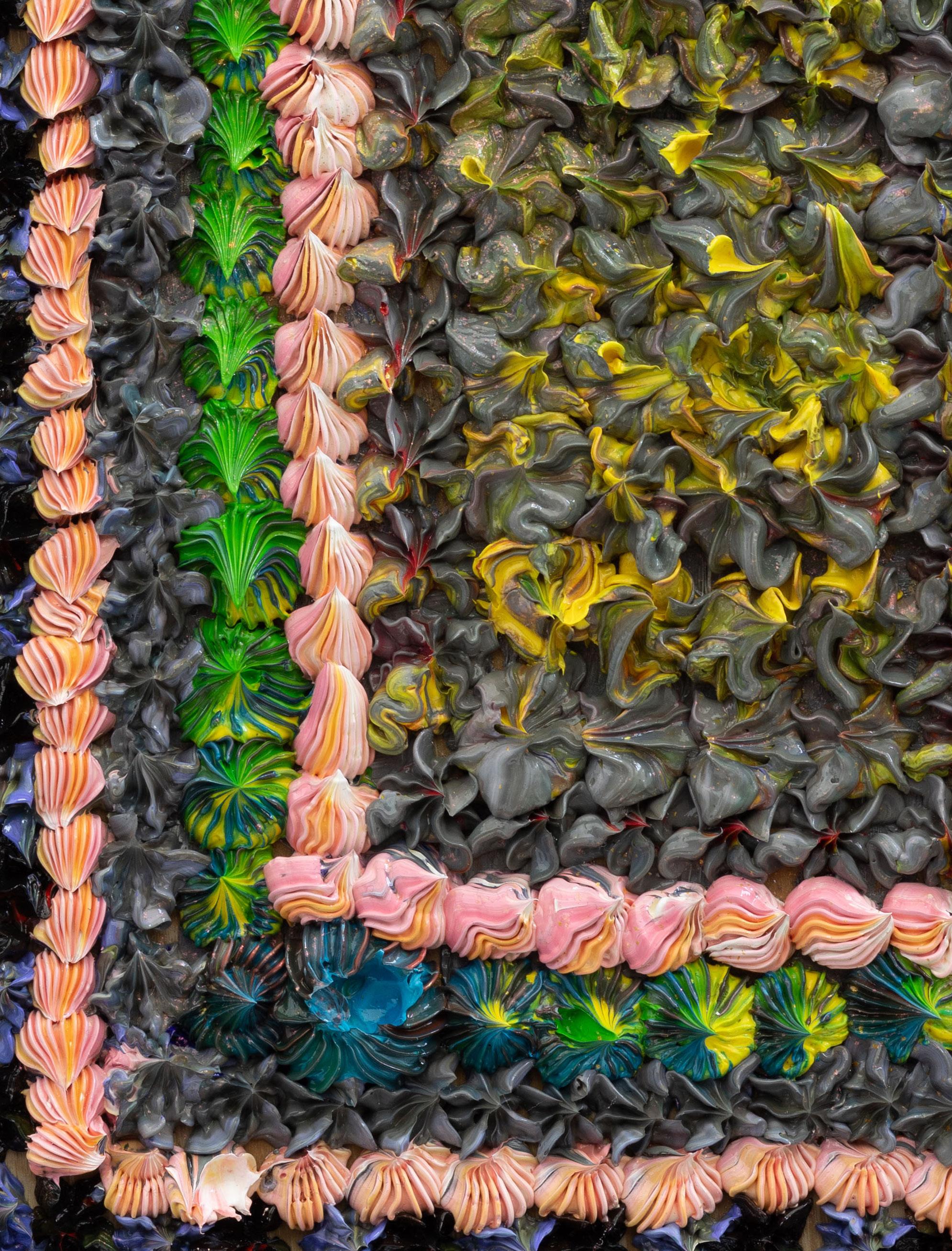
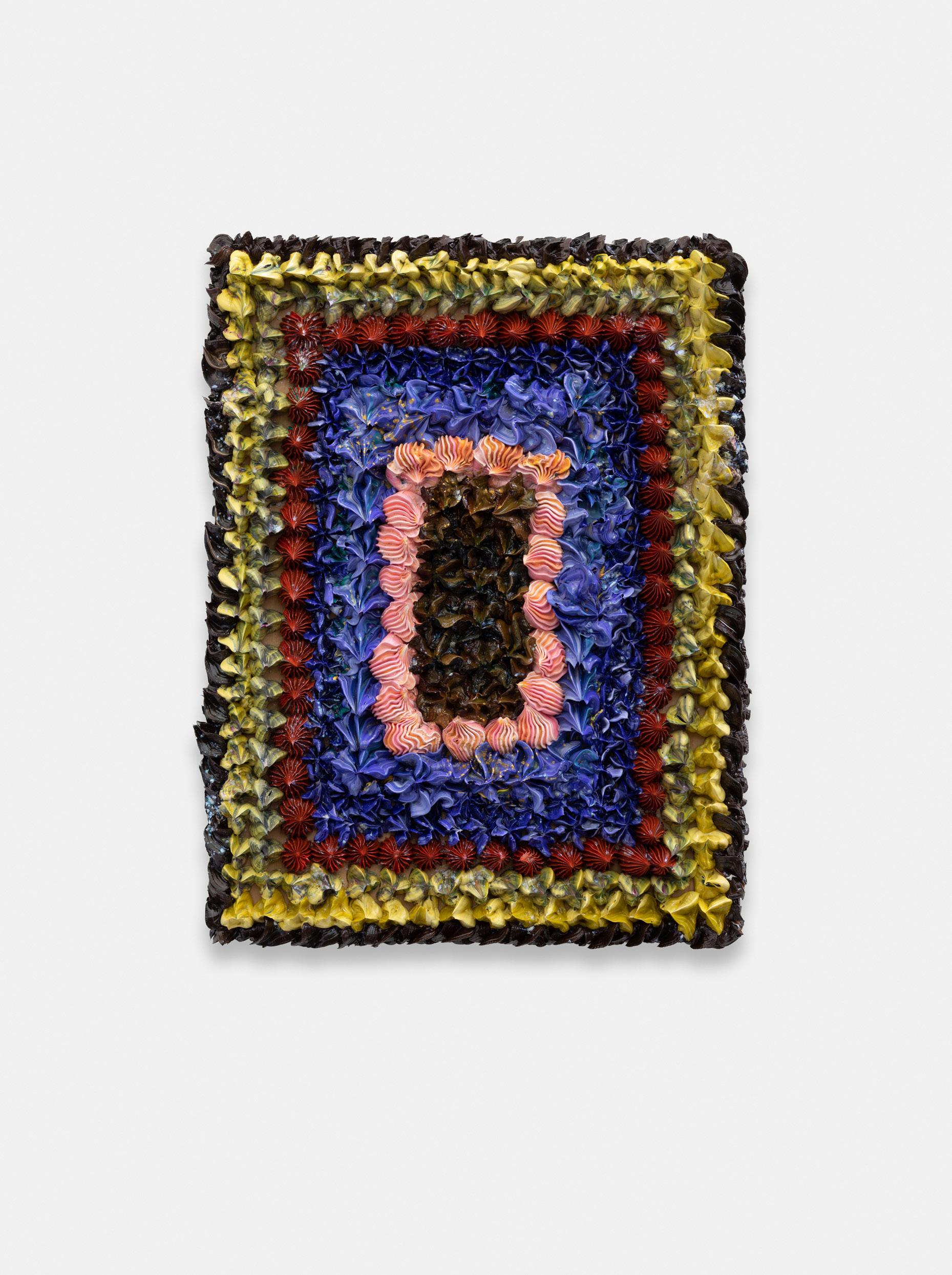
Karen David, Emily (Season 5, Episode 7) (detail), 2025, oil on board, 25cm x 20cm. Image courtesy of the artist s studio.
Karen David, Kill Switch (Season 5, Episode 11), 2025, oil and pigment on panel, 30cm x 24cm
JUAN BOLIVAR
Painting 17 and Painting 65 in this exhibition bring together several contexts for investigation and viewing of painting: Dansaekhwa monochrome painting and Sienese trecento painting.
Dansaekhwa is a retrospective term for a group of Korean artists from the 1970s responding to modernity by making works that hold meditative and contemplative qualities, such as Park Seo-bo (1931-2023) who made paintings through repetitive lines or single colours as a meditative practice rooted in Korean calligraphy and Buddhist and Taoist philosophies.
Sienese painting belongs to the early Rennaisance when artists such as Duccio (c. 1255 – c. 1319) and Simone Martini (1244 – 1344), from the city of Siena, made panel paintings. These works had a portable quality often conceived as small travel size icons or through the production of hinged altarpieces (triptychs and polyptychs). These transportable works were intended for domestic or mobile contexts for worship where physical proximity was as important as the visual experience.
The works’ full titles of Painting 17 (assisted monochrome) and Painting 65 (assisted monochrome) reference Marcel Duchamp’s assisted readymade series, where Duchamp brought together or adapted found objects, such as in Why Not Sneeze, Rose Sélavy? (1921/1964), consisting of 152 marble cubes, a thermometer and a cuttlefishbone in a birdcage.

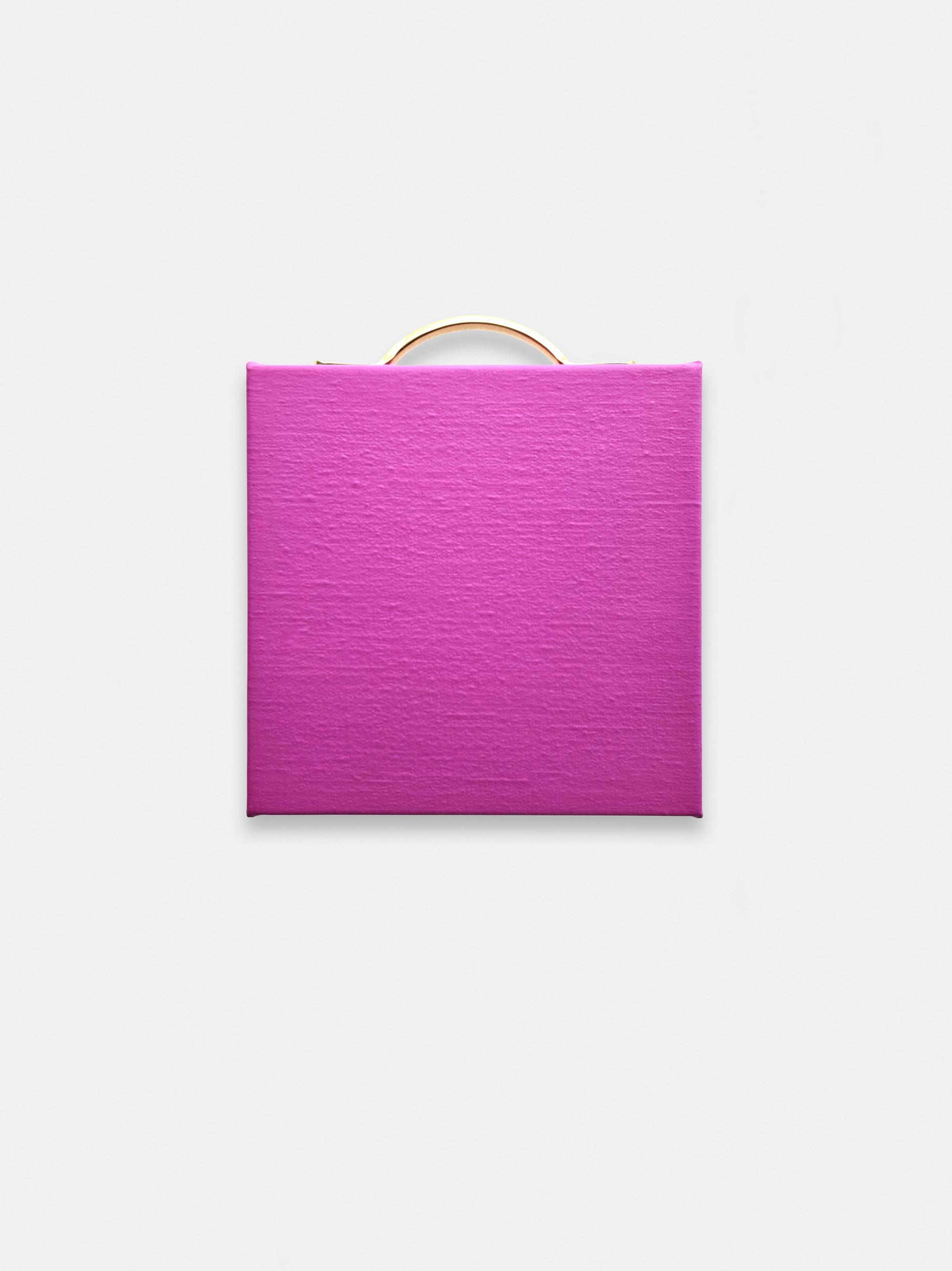
Juan Bolivar, Painting 65 (assisted monochrome), 2025, acrylic on canvas, 20cm x 20cm
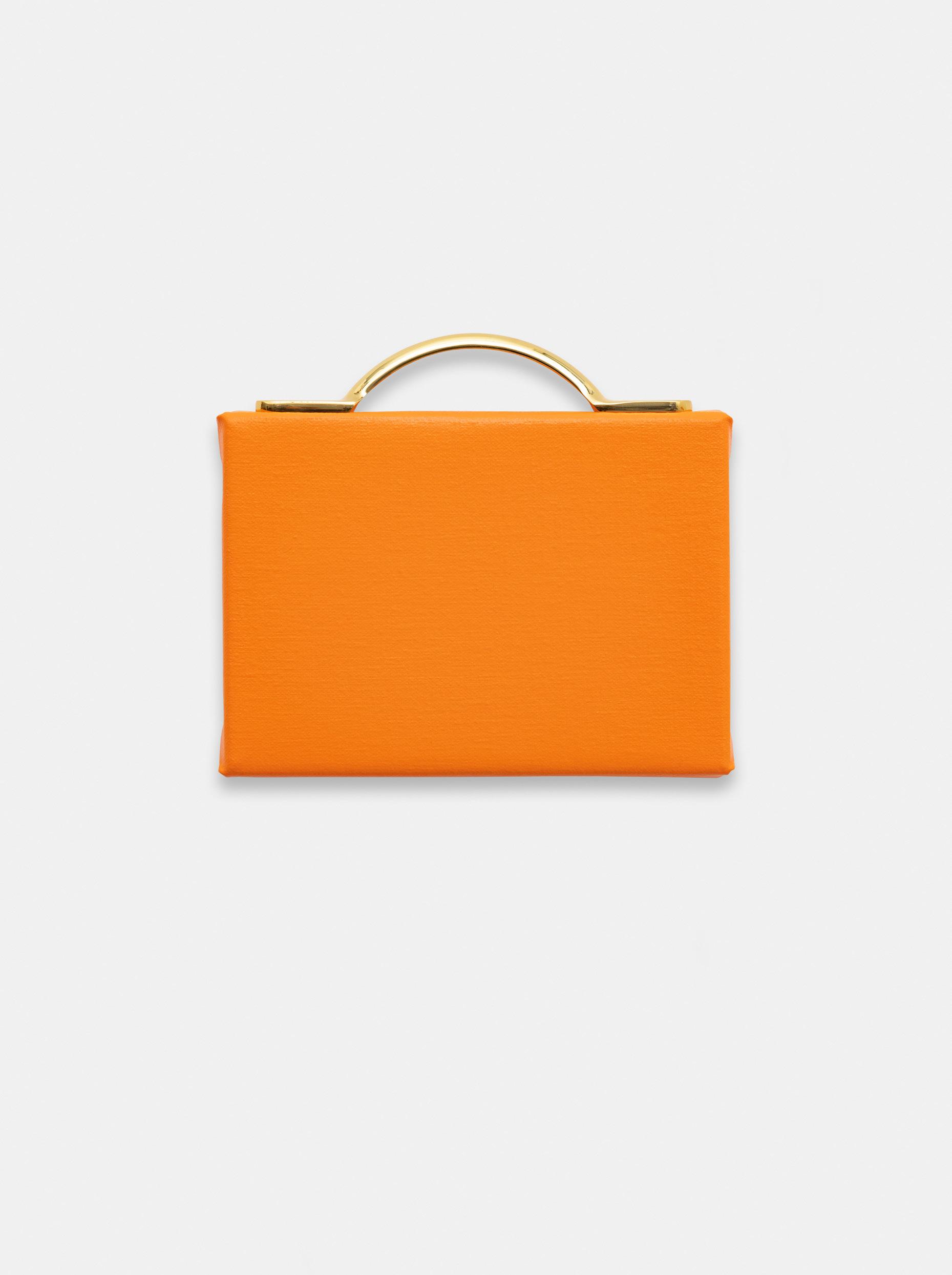
Juan Bolivar, Painting 17 (assisted monochrome), 2025, 13cm x 18cm
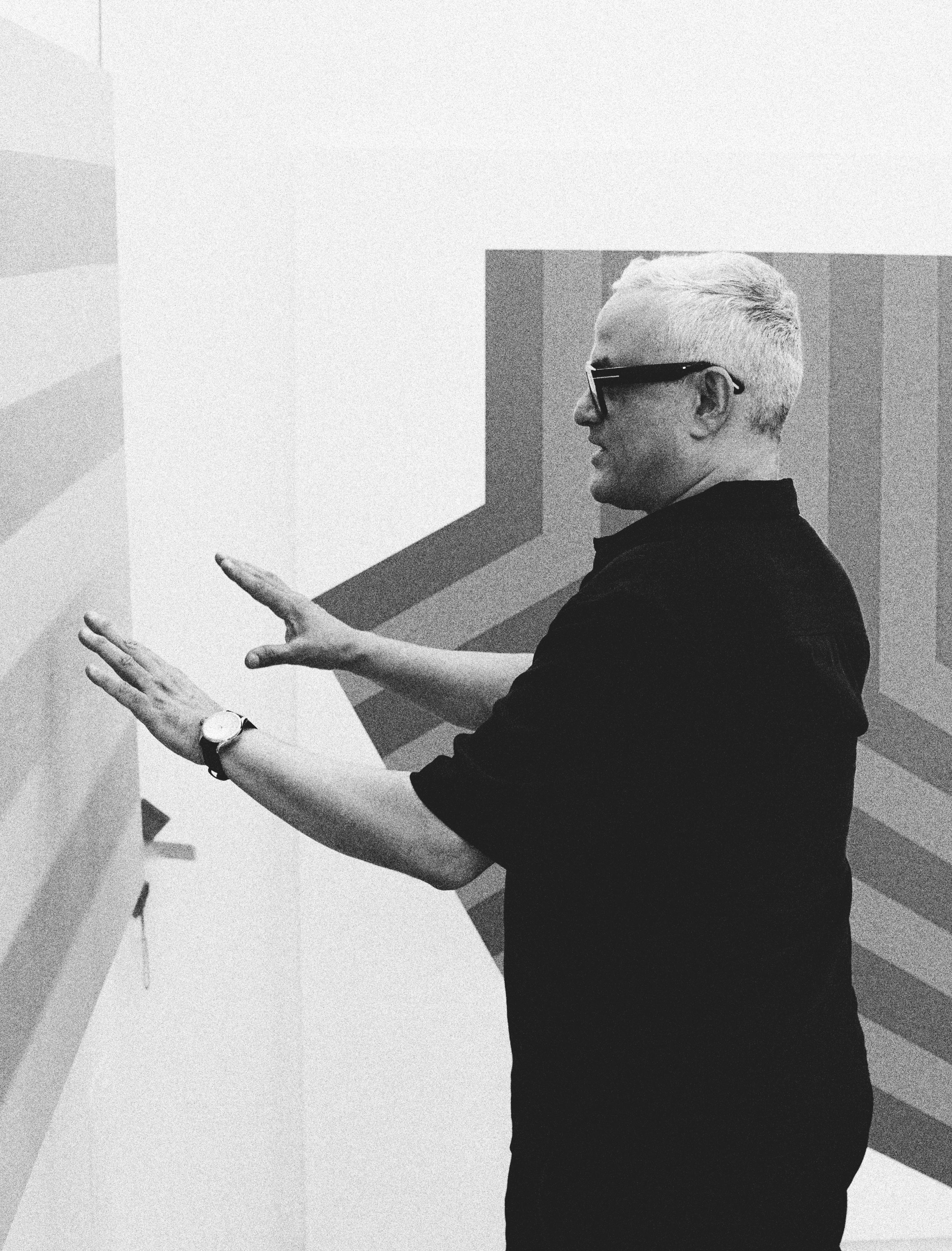
Juan Bolivar in his North London studio, 2023. Image courtesy of Julius Killerby.
DANIEL MACCARTHY
Stop The World, I Want To Get Off and The Dance position the carousel as an allegory for modern life, juxtaposing the joy and frivolity of the fair ground with a sense of horror, and anxiety. The work draws on the climactic carousel sequence of Hitchcock’s Strangers on a Train in which the carousel spins faster and faster as the protagonists fight to the death between stampeding horses and the children riding them. Vertiginous, accelerating, and fractured, repeated viewpoints articulate a world spinning out of control or at the whim of malevolent forces. The accelerated blur of Hitchcock’s scene finds a painterly analogue in the disorienting spatial overlaps and centrifugal brushwork across the panels. The vertical poles of the ride also echo the serried ranks of spears in Uccello’s Battle of San Romano as well as the white horse at its centre, rearing up in fright.

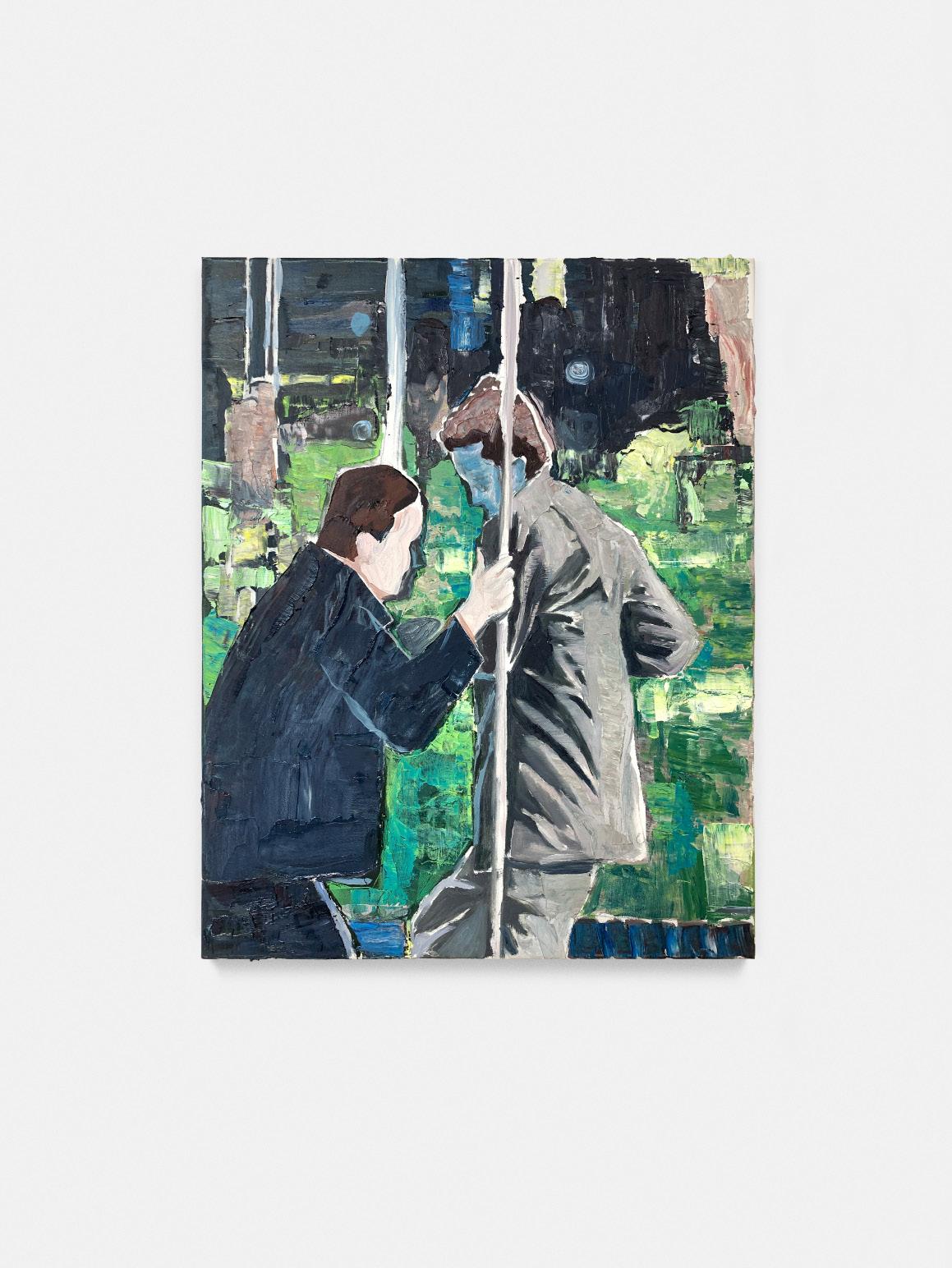
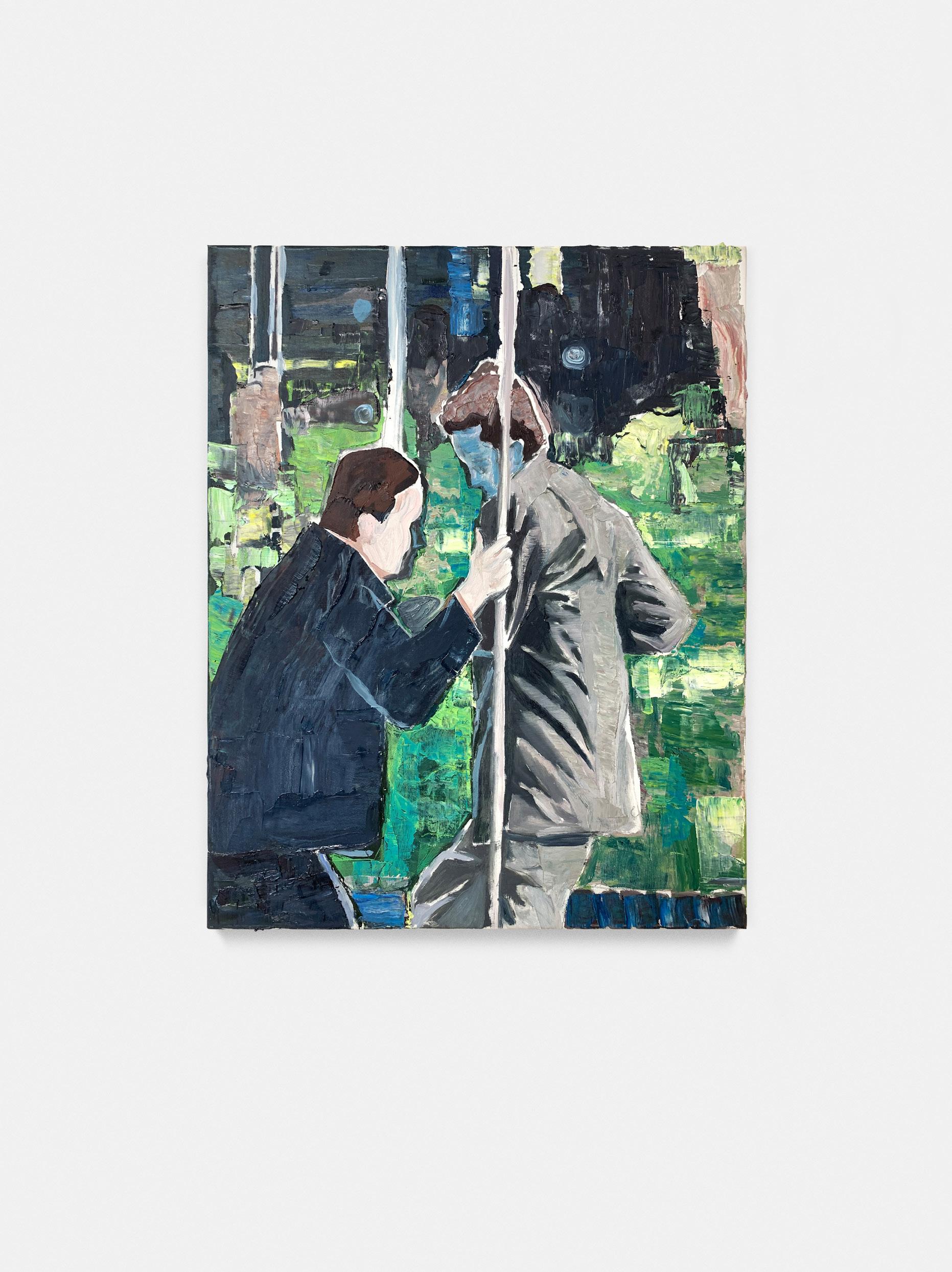
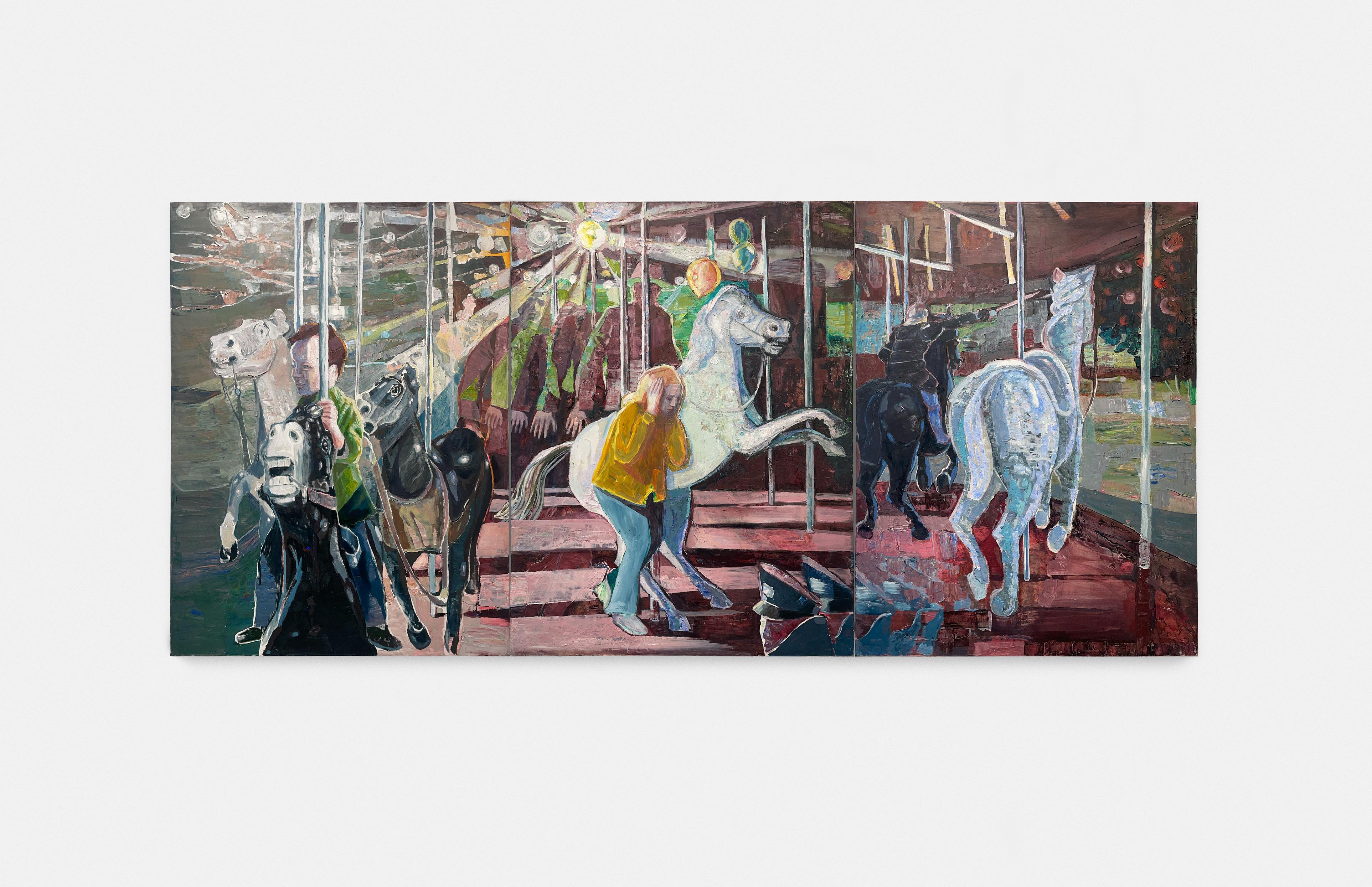
Daniel MacCarthy, Stop The World, I Want To Get Off, 2025, oil on canvas, 102cm x 230cm
DOMINIC BEATTIE
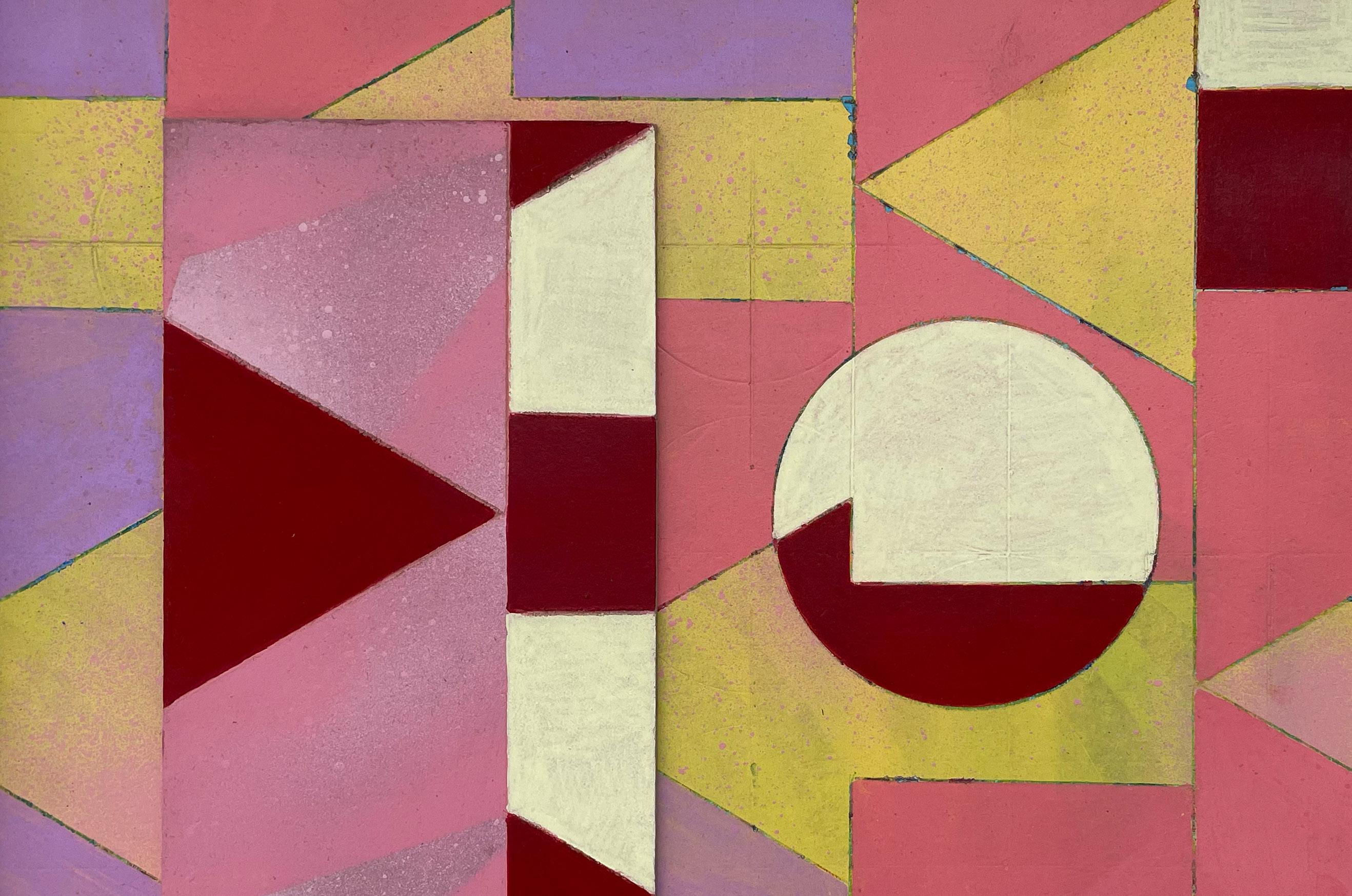
Dominic Beattie’s approach to painting draws on a broad spectrum of influences, including Constructivism, textile design, graffiti, and folk art.
The paintings in this series are the result of a deliberate, well-considered engagement with geometry and abstraction. The sharp clarity of hard-edge shapes merge seamlessly with the unpredictable, tactile nature of hand-crafted expression, illustrating Beattie’s command over both the formal and expressive elements of his practice. This balance between precision and spontaneity is no accident; rather, it is a reflection of the artist’s evolved understanding of his materials and techniques.
Utilising everyday materials such as industrial paints, markers, plywood, and hardboard, the series exemplifies Beattie’s commitment to a research-based practice. The artist’s choice of humble, utilitarian materials further reinforces his DIY ethic, an ethos that continues to be a guiding force in his work.

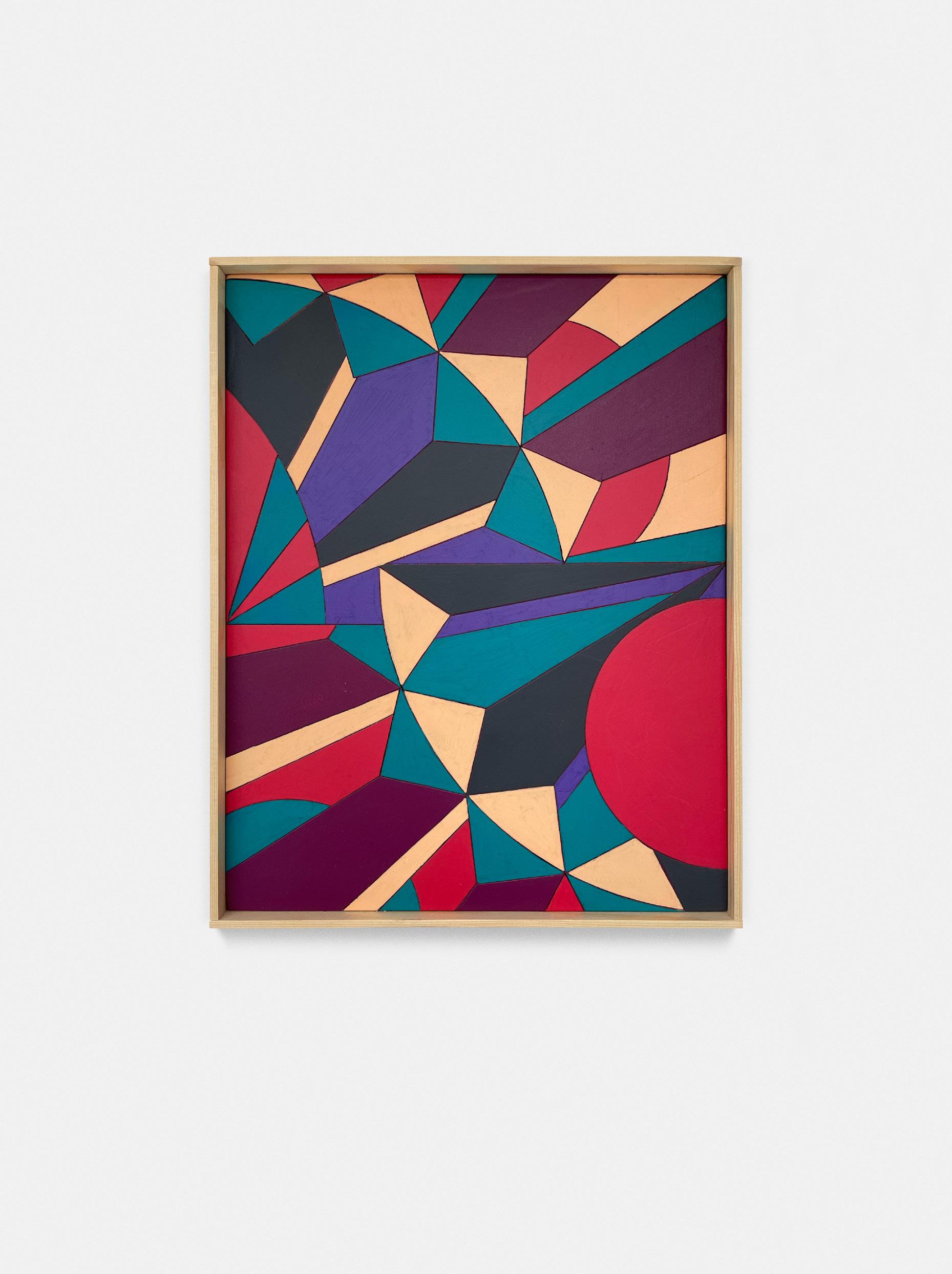
Dominic Beattie, Thrones, 2024, ink, spray paint and varnish on birch ply panel, 35cm x 29cm
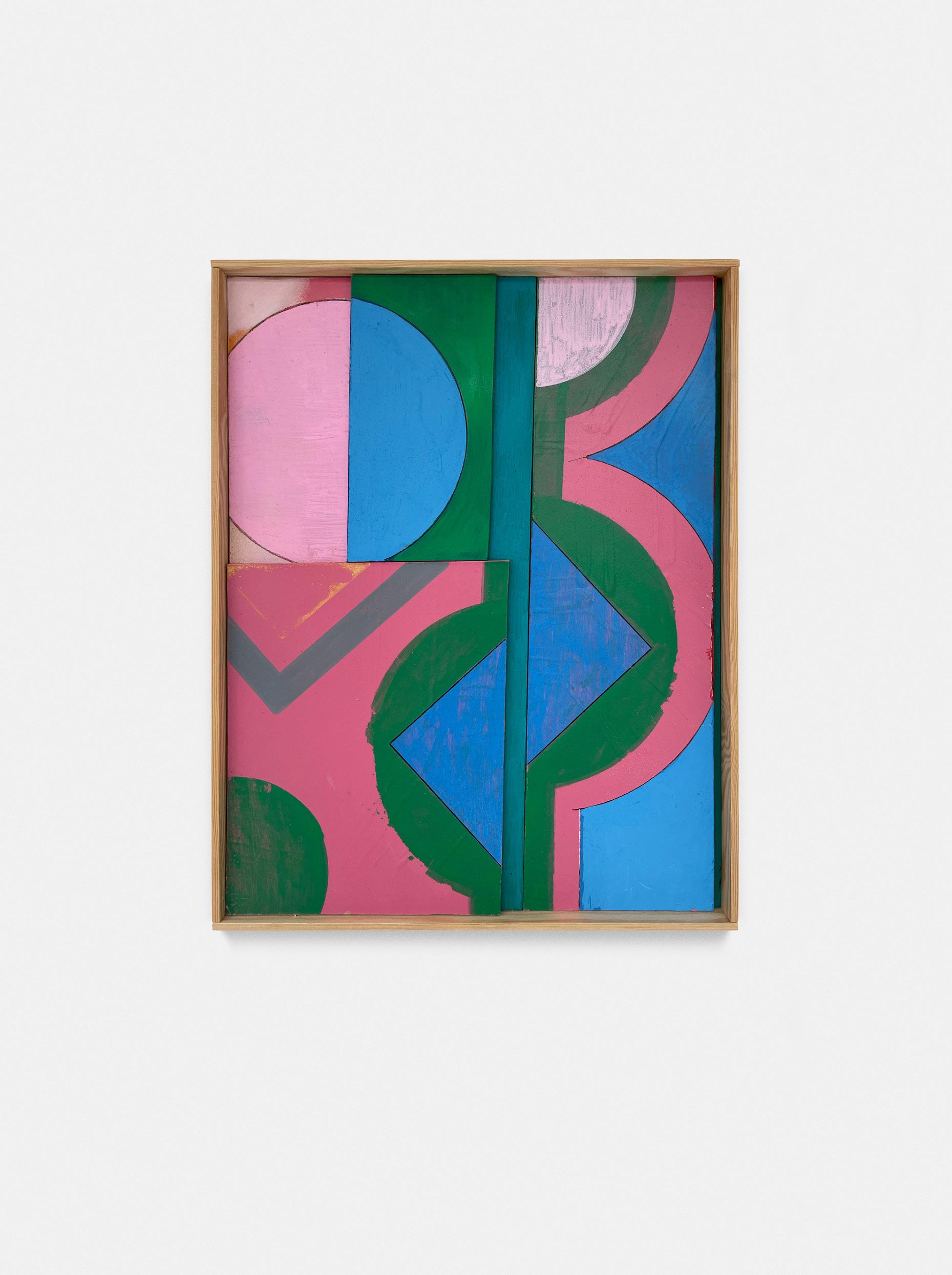
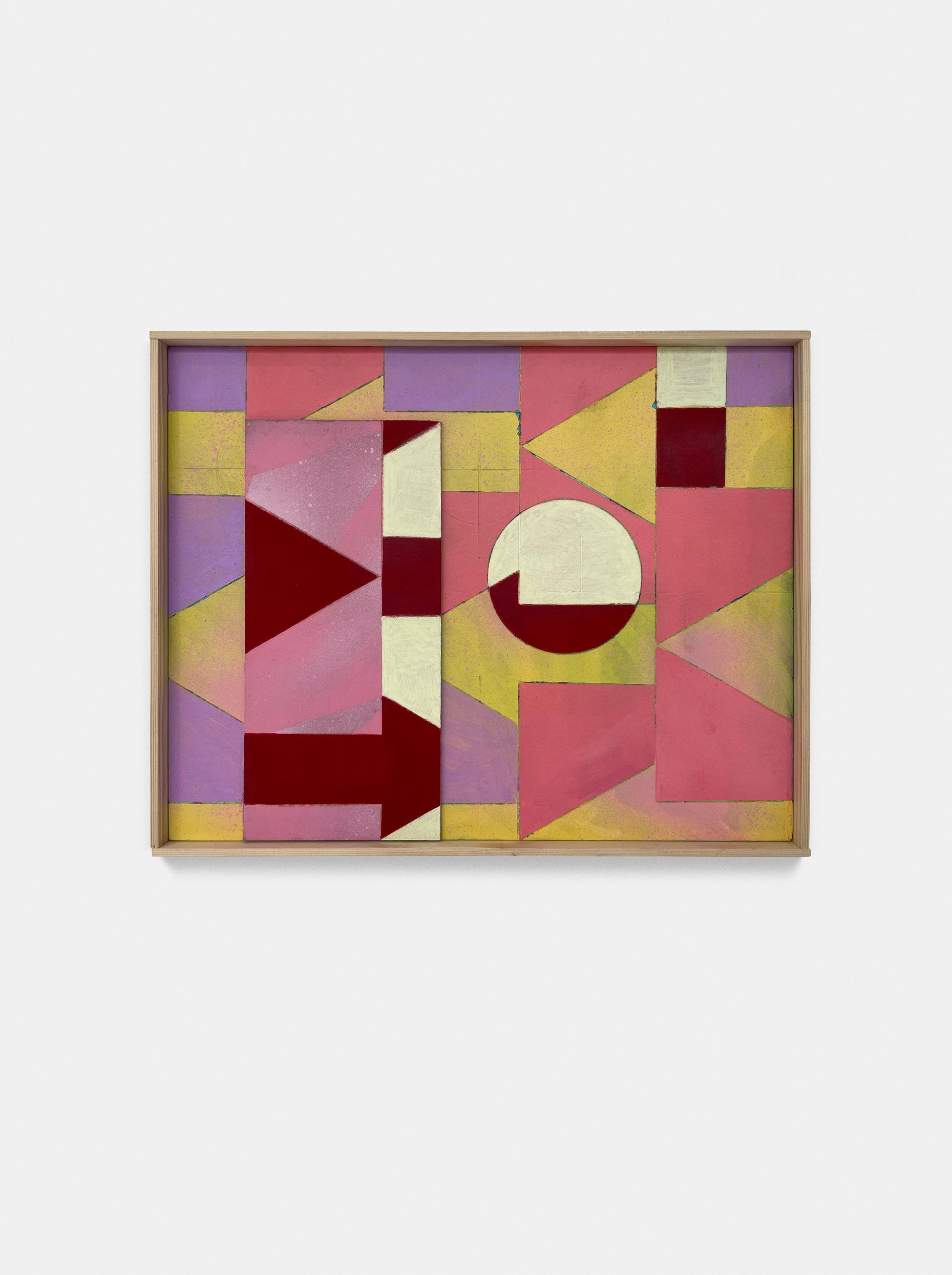
Dominic Beattie, Garden Window, 2024, ink, spray paint and varnish on birch ply panel, 35cm x 29cm
Dominic Beattie, The Way, 2024, ink, spray paint and varnish on birch ply panel, 29cm x 35cm
OLLY FATHERS
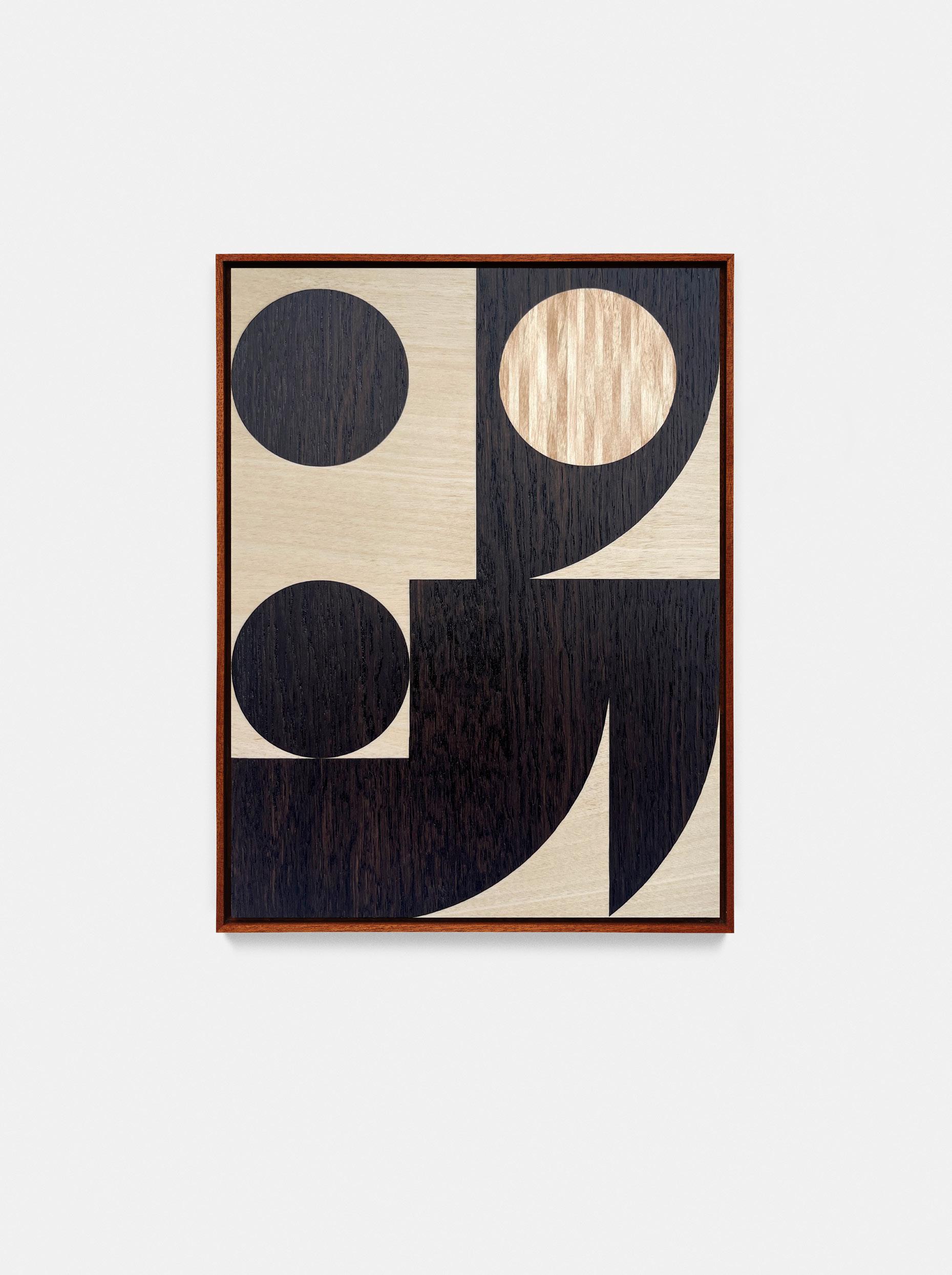
Using primary wood in his practice, Olly Fathers creates pieces using a range of different types and species. These pieces use incredibly intricately cut wood veneers brought together using self taught marquetry techniques. These works explore the visual language between simple forms and materials, working shapes into playful harmonies with one another to create this tranquil balance
These are the first works in a new series exploring the techniques of heat and sand shading wood veneer. A process first used in the 18th century, by heating the wood to a certain temperature it starts to change colour and would eventually burn. If this process is managed correctly you can achieve gentle gradients and tones. Fathers has looked to use these traditional methods in a way to add texture and pattern to elements of the artworks previously not possible.

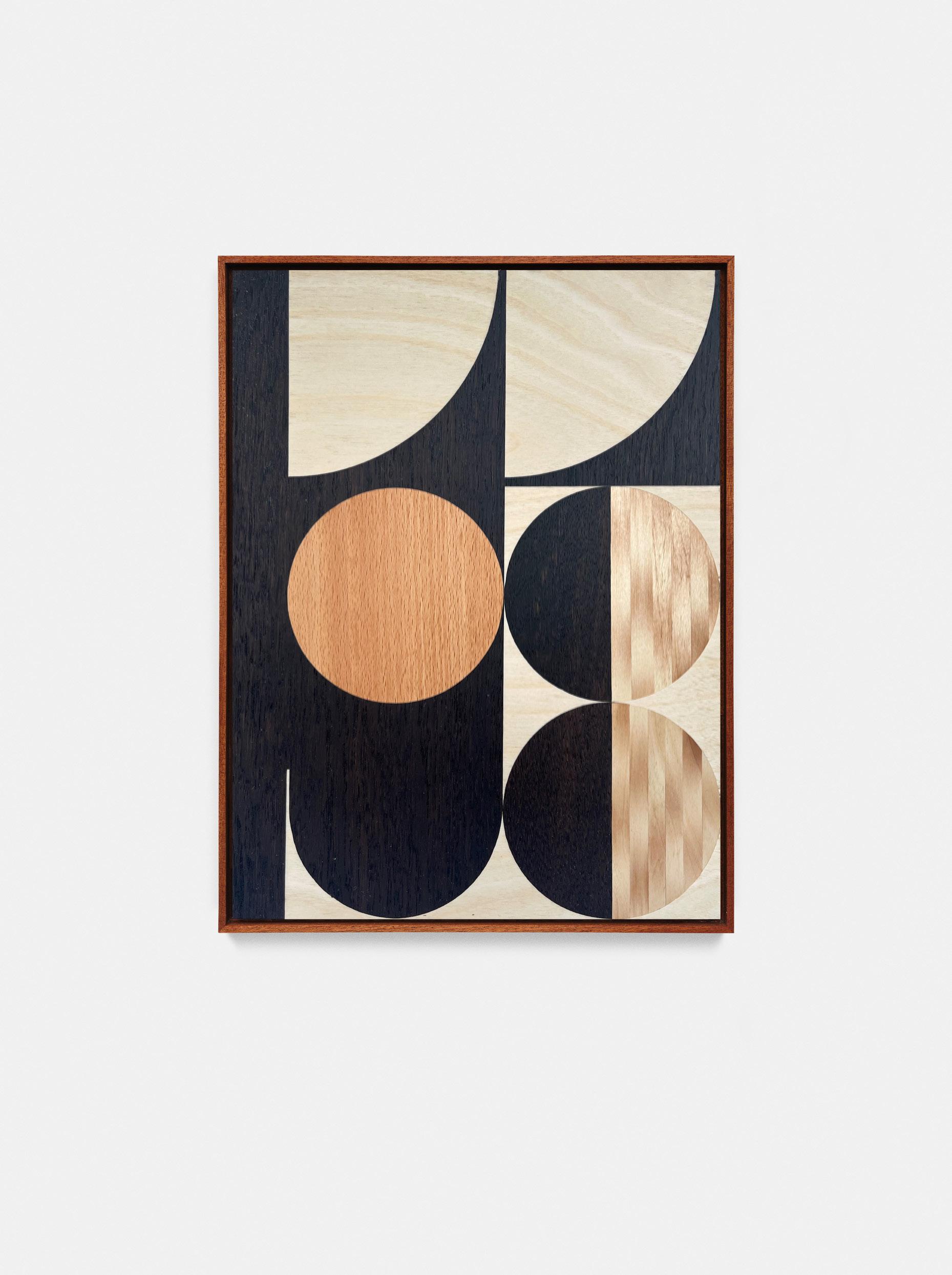
Olly Fathers, Mono Shade I, 2025, hand-cut fumed oak, birch, beech and heat shaded birch, 33cm x 25cm
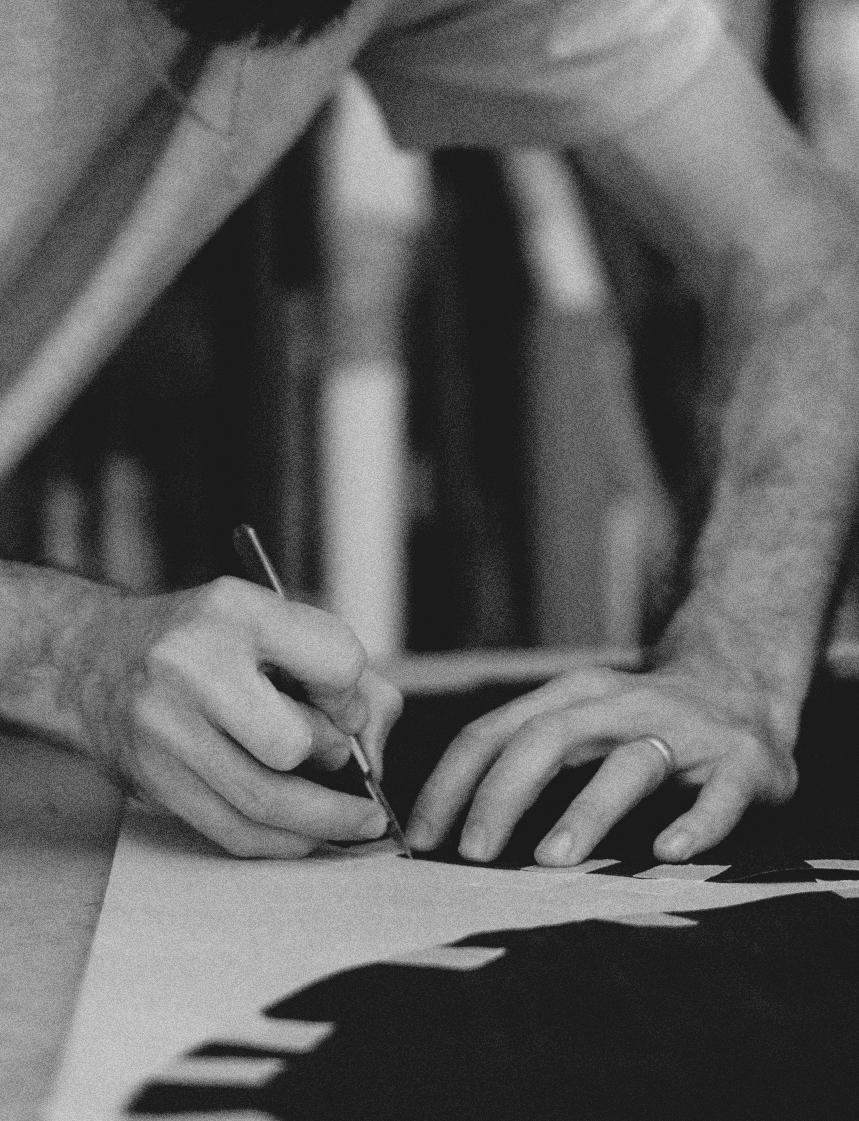
Olly Fathers in his South London studio, 2024. Image courtesy of Justyna Kulam.
Olly Fathers, Mono Shade II, 2025, hand-cut fumed oak, birch, beech and heat shaded birch, 33cm x 25cm
TIM ALLEN
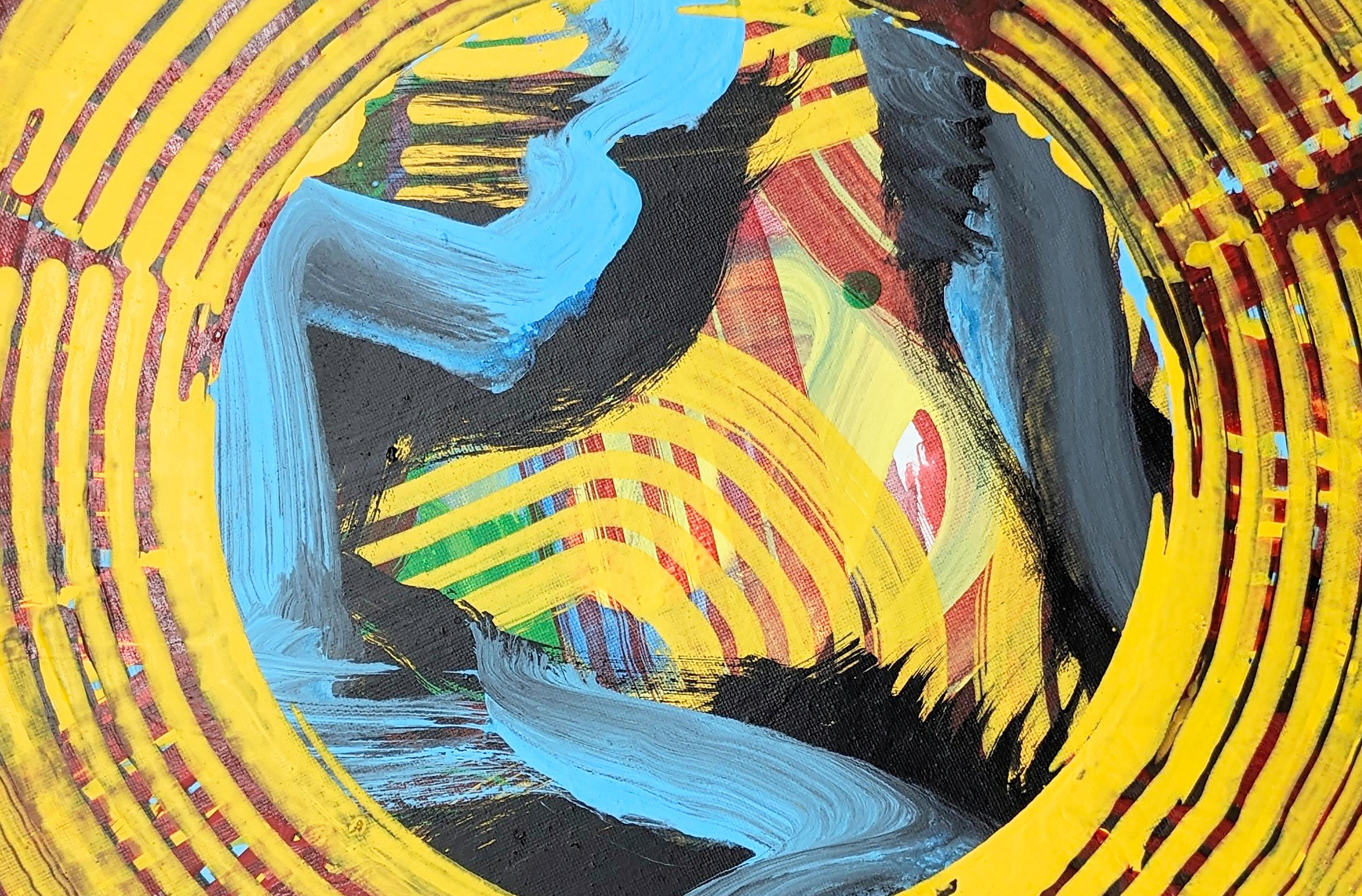
Voyage is one of the Disc Paintings, one of several related bodies of work I am making at the moment. They mostly employ a complex, expressively brushed interior surrounded by a grained or hatched framing device.
The relationship between the outside and the inside is propositional, sometimes referencing landscape or expressive abstraction, even sometimes human behaviour.
The relationship with the external framing device should be ambiguous and spatially complex or contradictory. This is to bring the paintings to life, generating a multitude of readings and meanings and enabling an entrance for the viewer to engage with the paintings on many levels.
Hopefully they will ignite the imagination and reward long viewing.

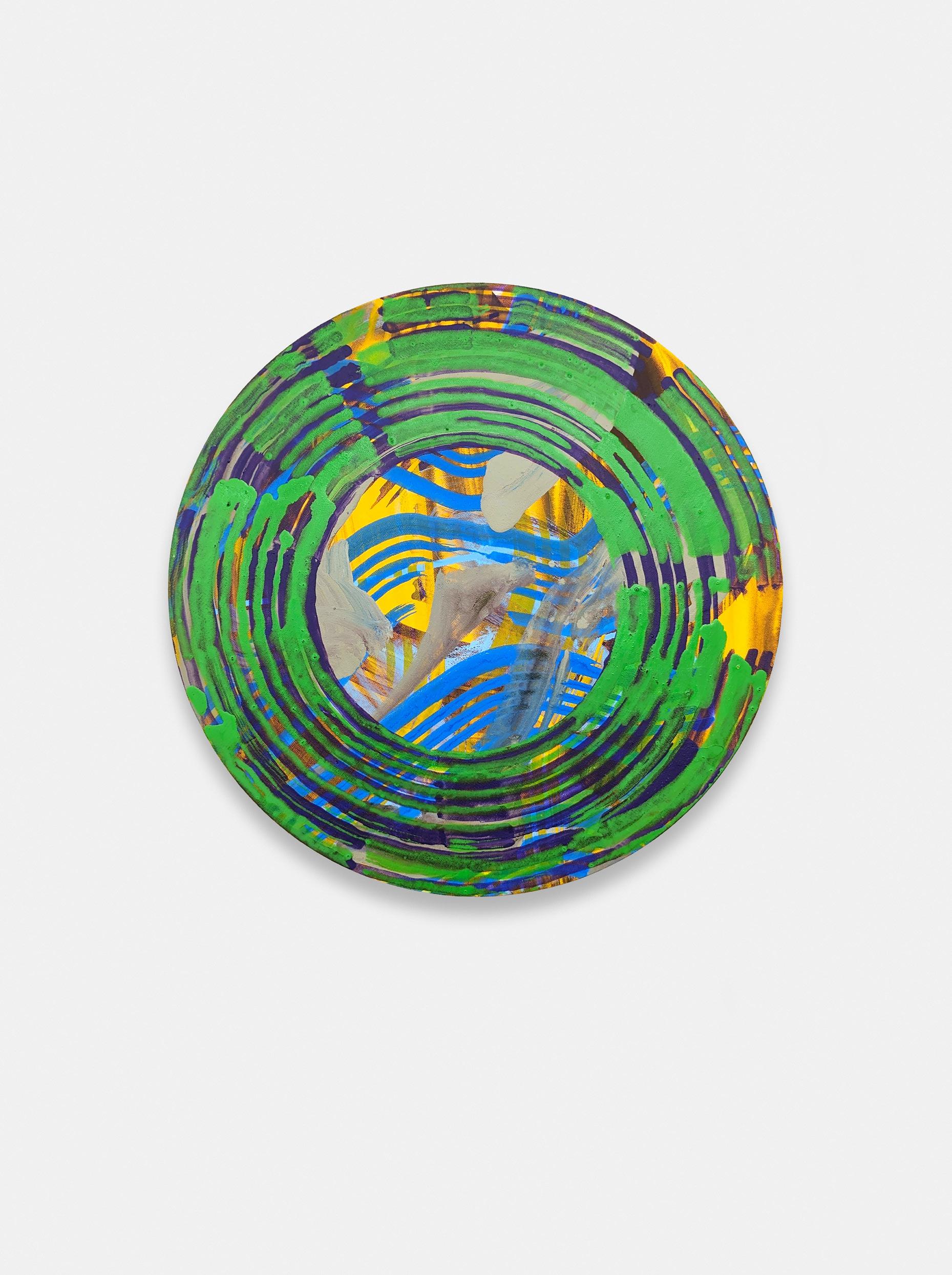
Tim Allen, Gate, 2025, acrylic on canvas, 40cm diameter
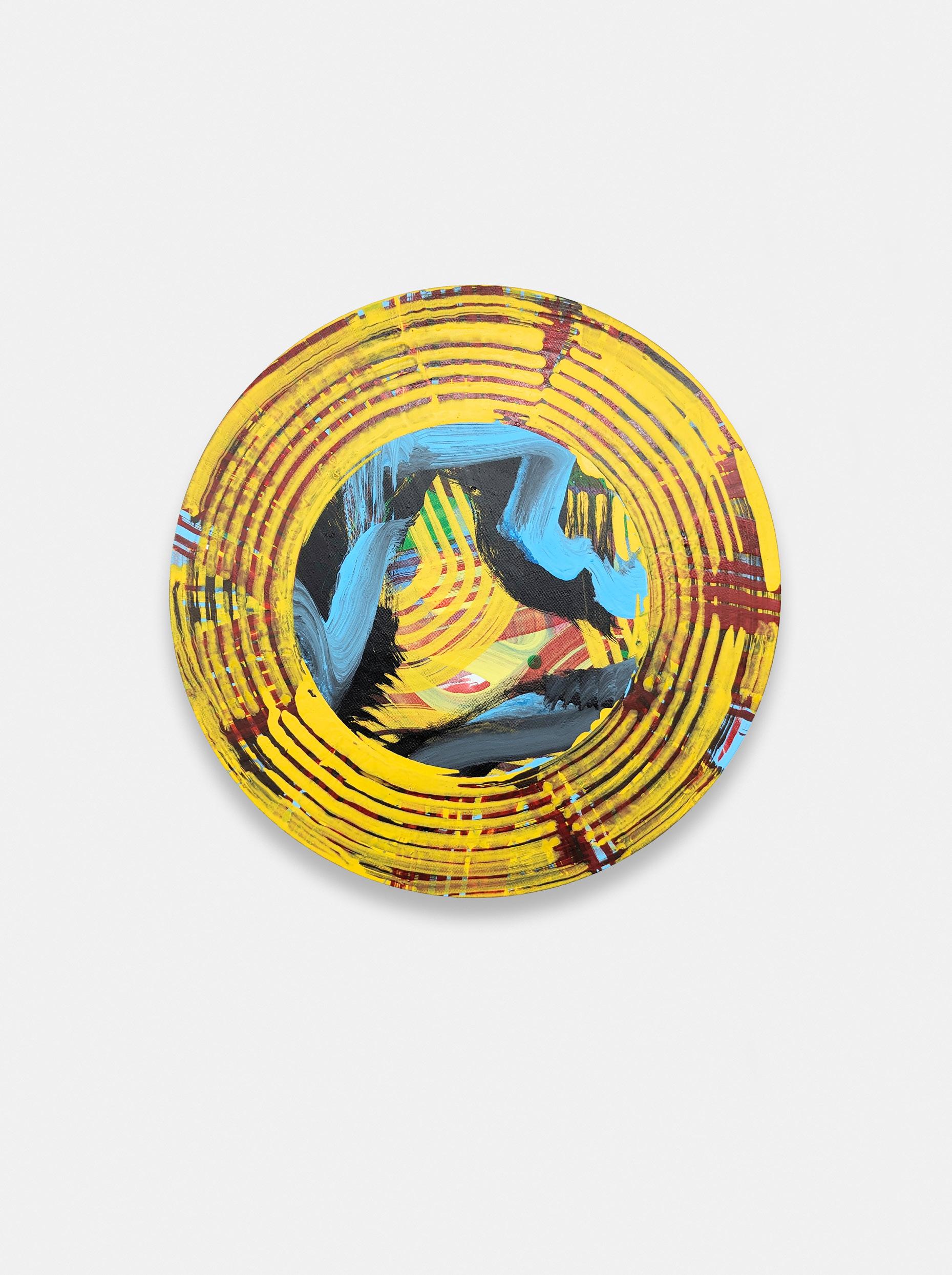
Tim Allen, Voyage, 2025, acrylic on canvas, 40cm diameter
ALICE WILSON
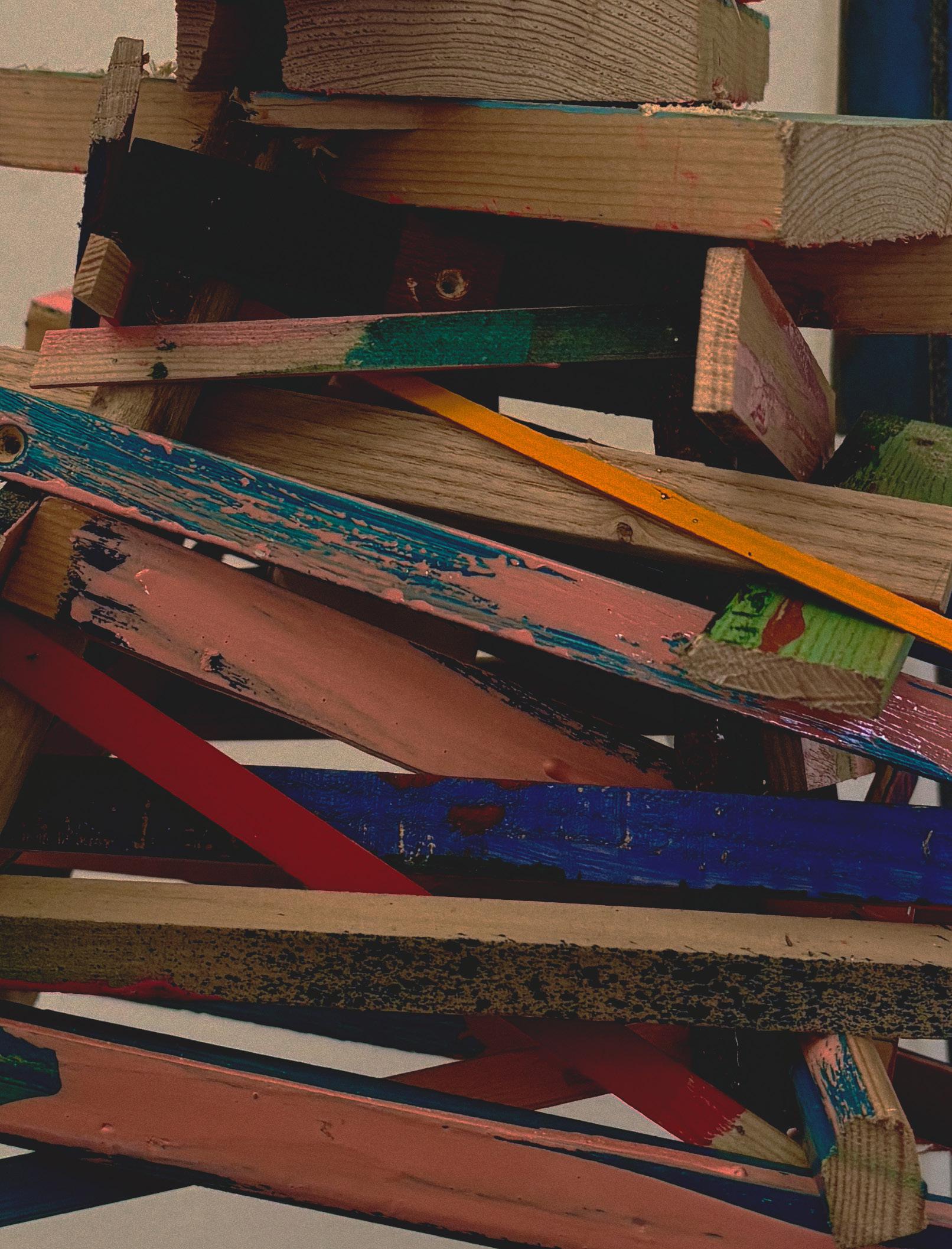
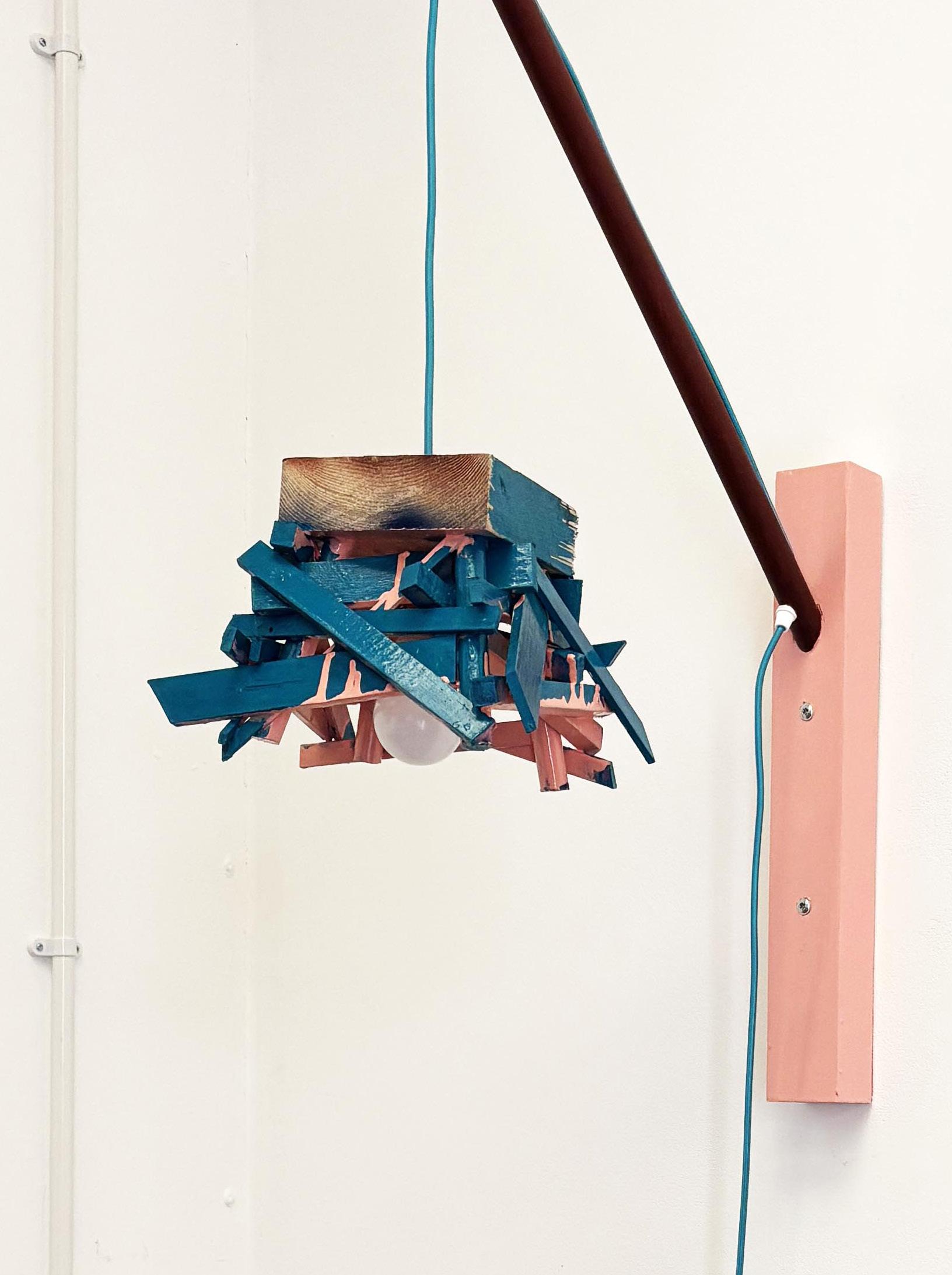
My light works came from an ambition to mimic basketry with small profile timbers. I was wondering if they could compete with the fluid forms of willow or cane. What resulted was a form, that to me, demanded to be activated by light.
A constant through my practice is working with the materials as they are, the painted marks, sawn lines and degradation of the surface presenting decisions from which to compose and sculpt colour and form. In this way the decisions as to which timber is fixed where is as much dictated by the marks of paint or plaster as it is the profile of the wood.
When invited to show works in Wurly it didn’t take long to settle on these. There forms felt suggestive of the very sound of the word, and their incorporation of the small remnants from other sculptural making felt apt in drawing attention to the physically smaller components from my material lexicon, bringing their significance to the fore.

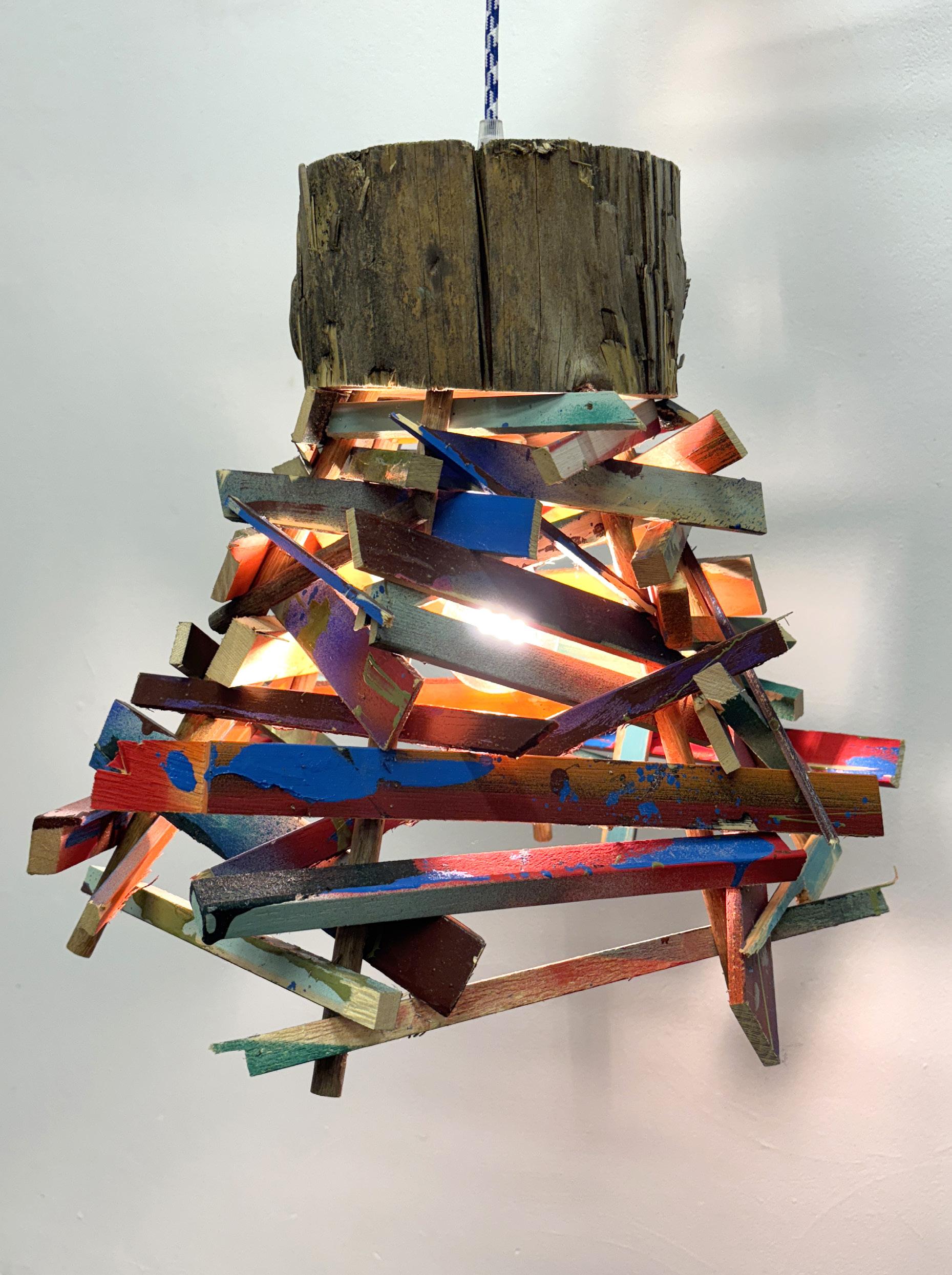
Alice Wilson, Bonfire, 2025, wood, dowel, log, lightbulb, cable, aluminium light fitting, 40cm x 45cm x 45cm
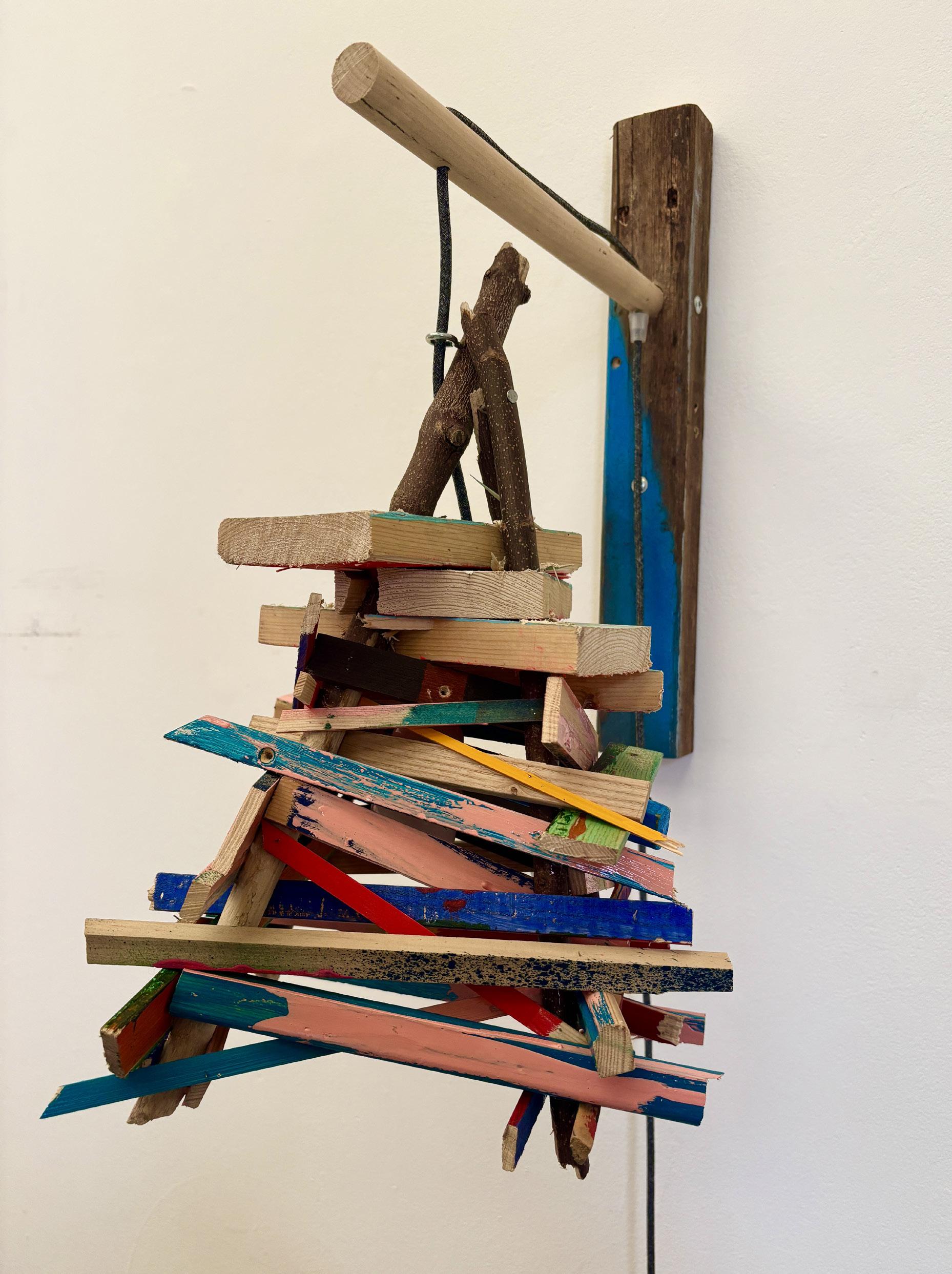
Alice Wilson, Wurly, 2025, wood, dowel, branch, lightbulb, cable, ceramic white light fitting, 70cm x 40cm x 50cm
Alice Wilson, Pink & Turquoise, 2025, wood, dowel, lightbulb, cable, aluminium light fitting, 80cm x 30cm x 60cm
KAROLINA ALBRICHT
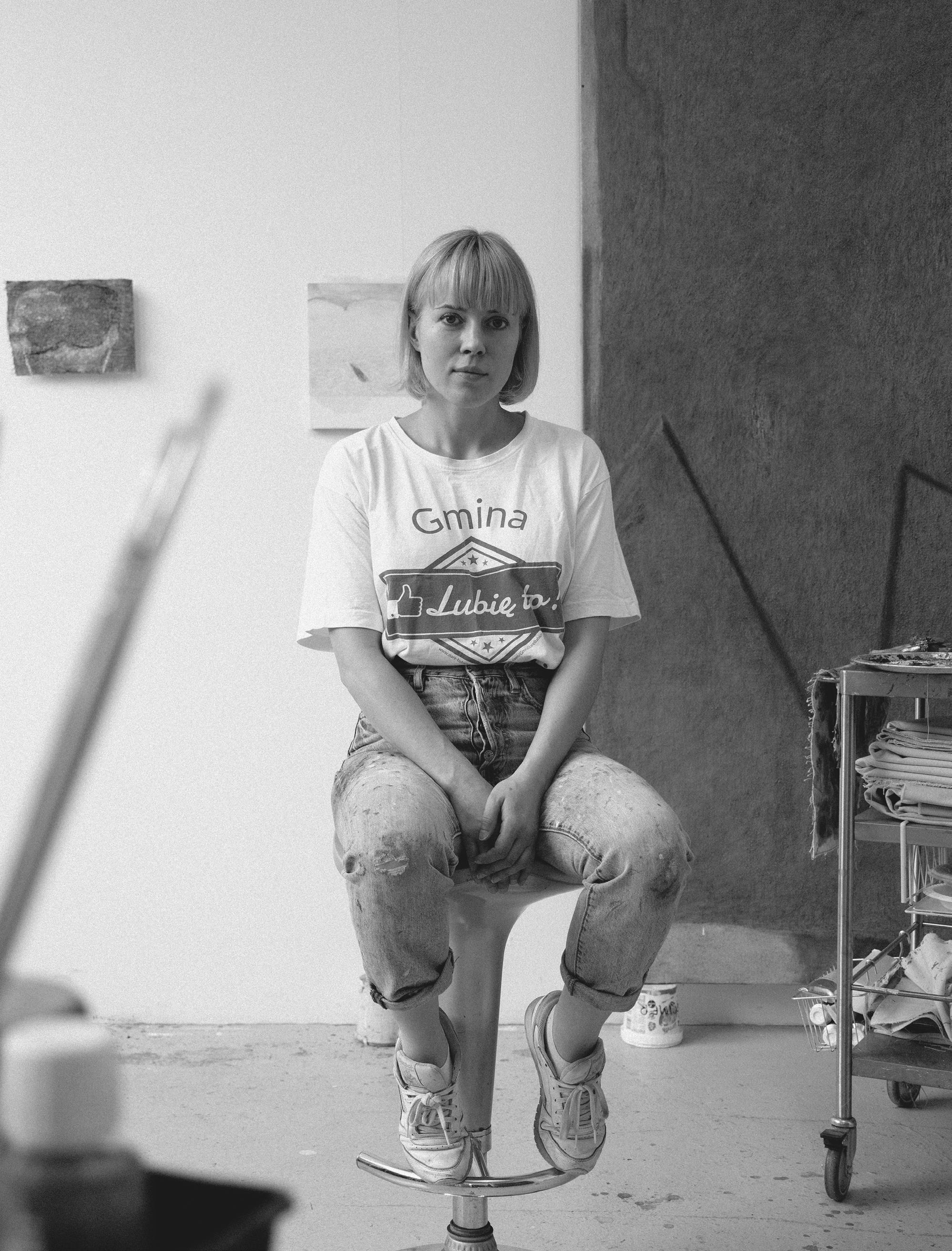
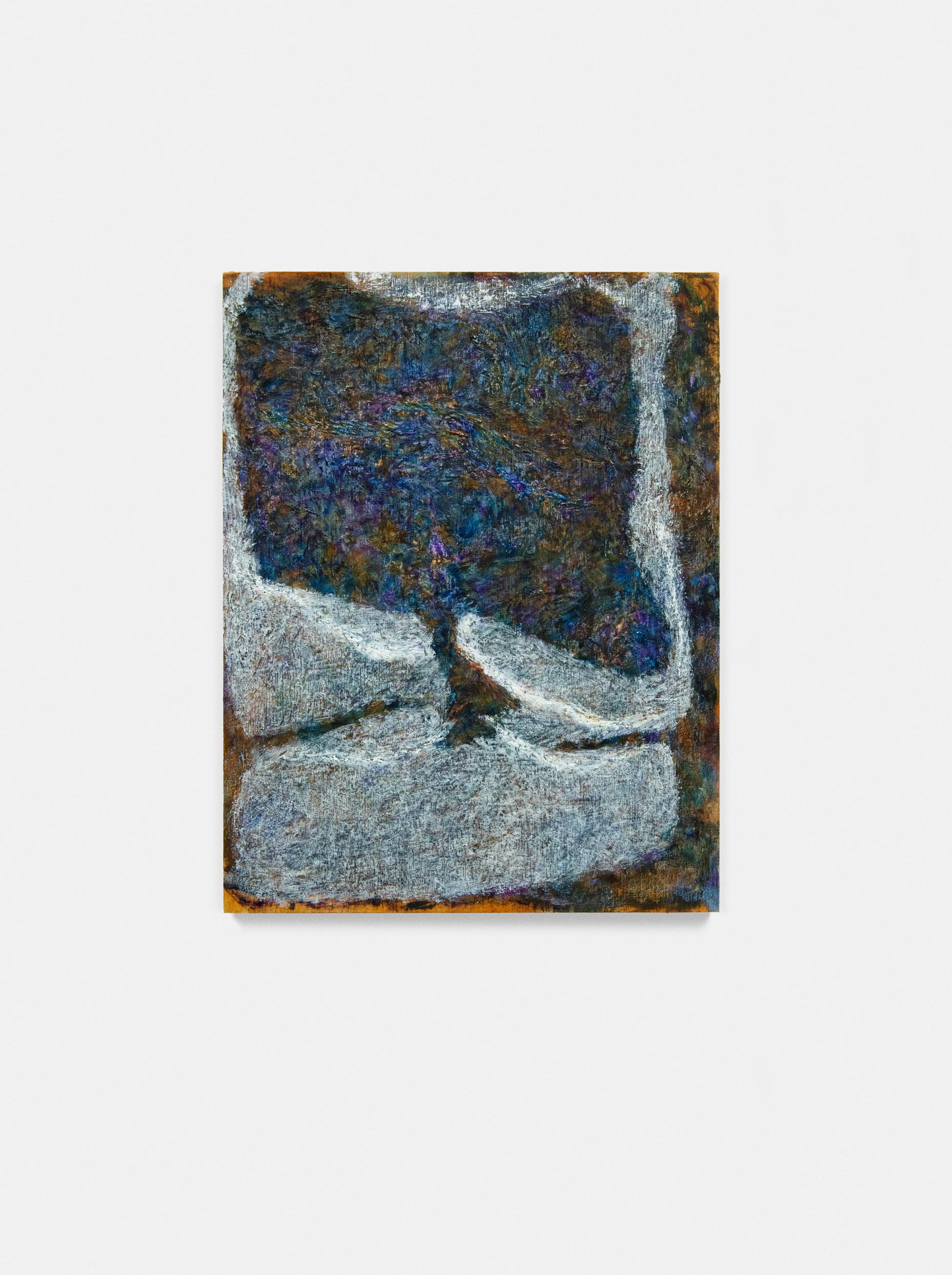
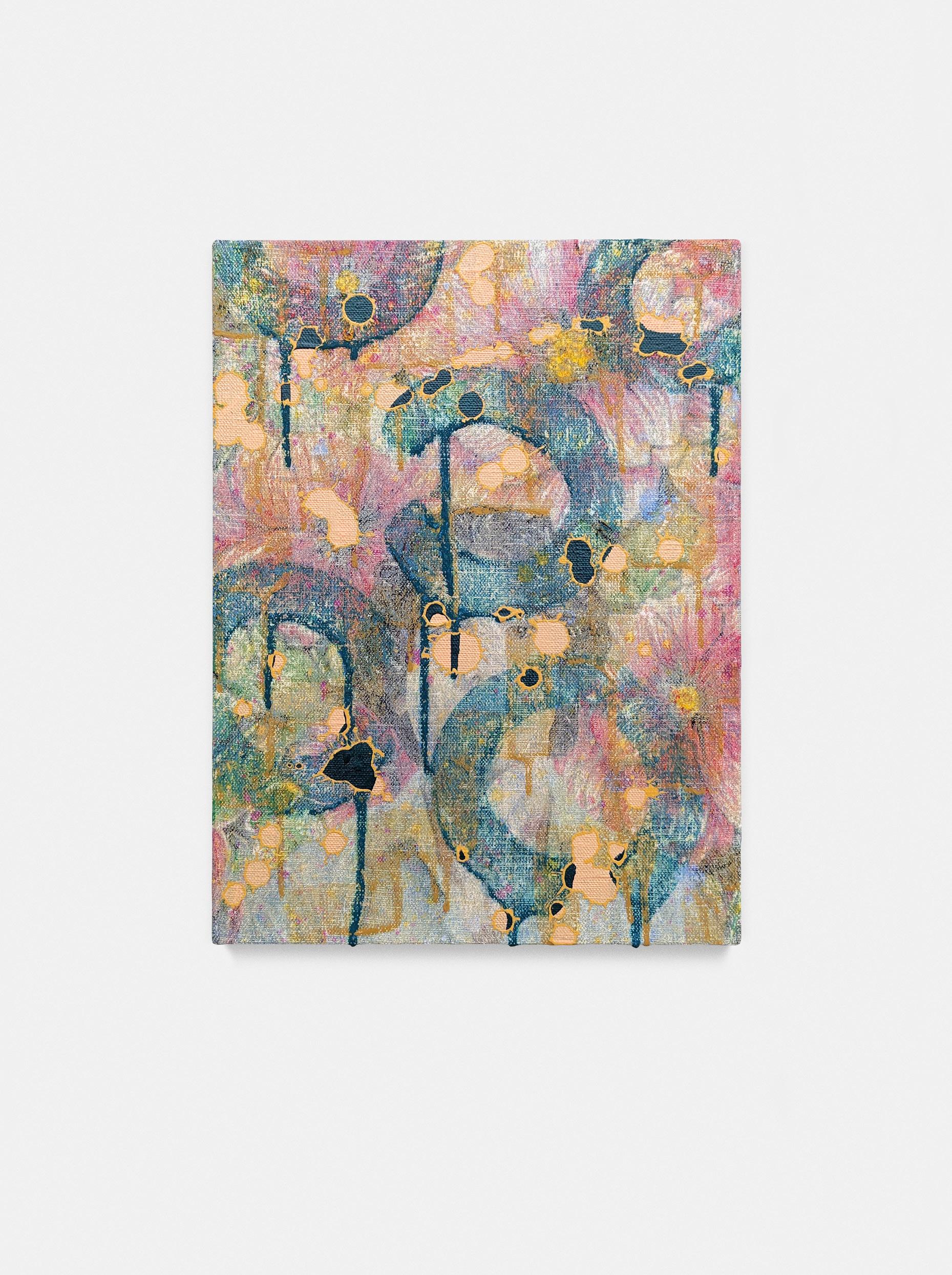
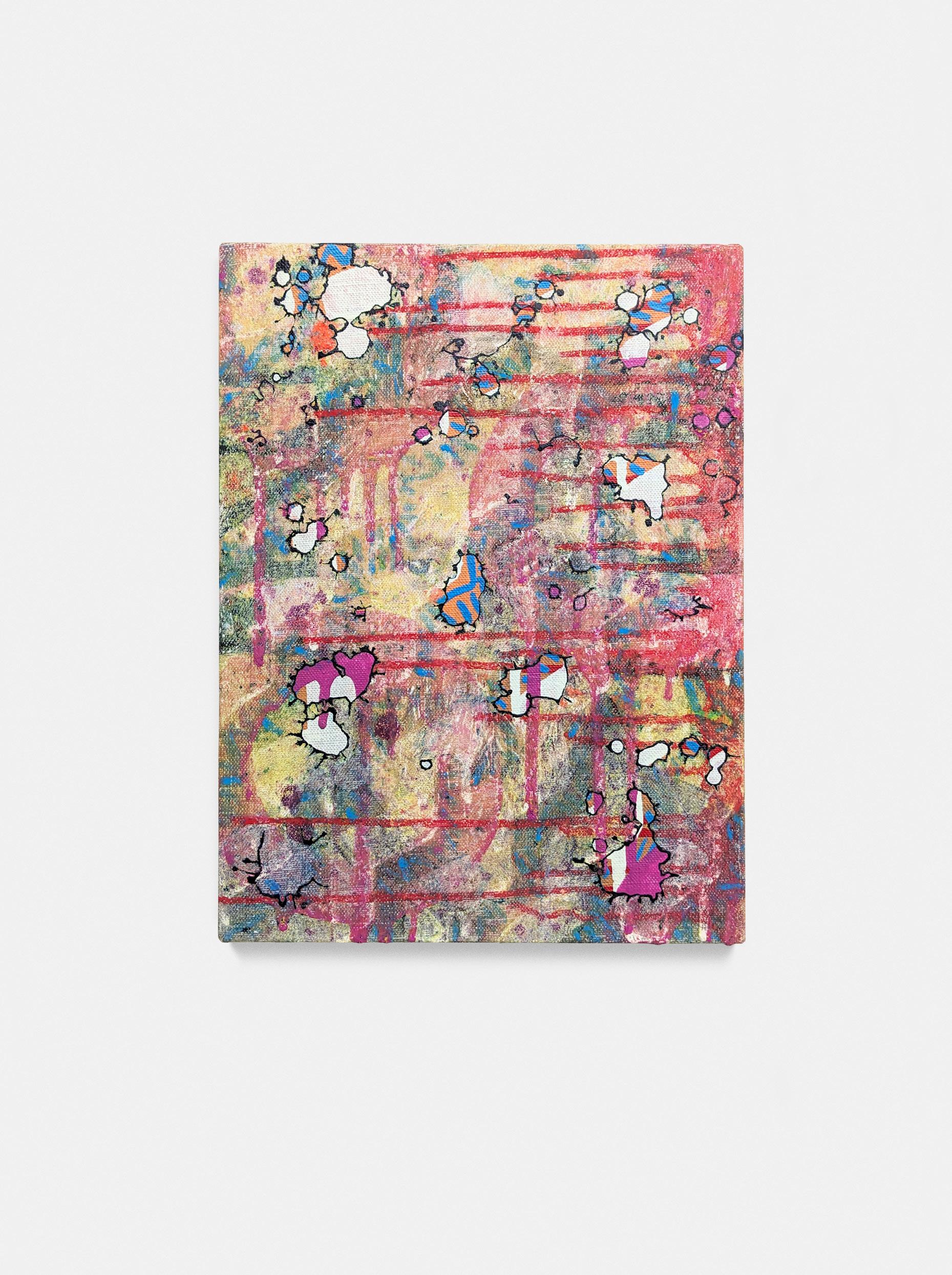
Karolina Albrich (b. Krakow, Poland) is a London-based artist working primarily in painting and drawing. She sees painting as an opening an access point to a world that can be felt and intuited. Albricht seeks to generate active spatial environments that engage both intellectual and sensory faculties what she understands as wholebody-intelligence.
Her paintings probe the reciprocity of colour, shape, line and surface: their responsiveness to one another and to the painting’s edges. She is interested in the interrelation of the body’s movement in space and time, and how these relationships can be translated to the pictorial plane. These concerns are also reflected in the varied scale of her paintings, which range from hand-sized panels to canvases larger than the frame of her body.
Albricht is driven by curiosity and the desire to see and, most importantly, to feel what is seen. A sense of potentiality is central to her practice, sustained by a continual process of posing and rephrasing questions about what is possible. She understands painting as a dislocation an interference of matter that generates vibration its own pulse.

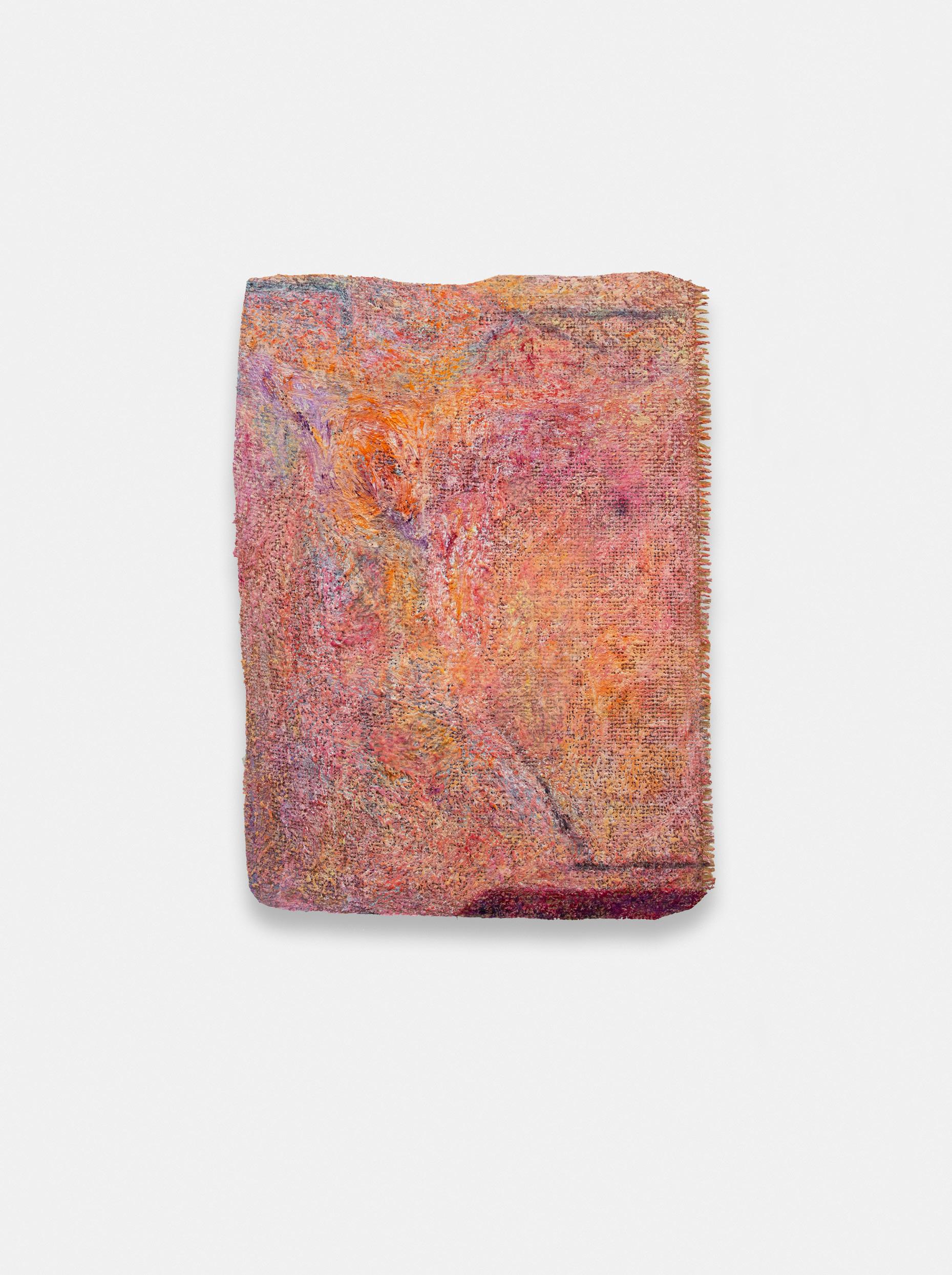
Karolina Albricht, Ideas of Aspect & Contour, 2025, oil on jute on panel, 23cm x 16cm
Karolina Albricht, No Space, No Something, 2025, 18cm x 14cm
Karolina Albricht in her South London studio, 2024. Image courtesy of Karolina Maria Dudek.
The paintings that I’ve included in Wurly are part of a larger body of work where the process and imagery are constantly confronting each other, resulting in works that fall between categorisation of abstract and representational, or painting and object. I like to leave a lot to chance and allow the process to dictate the outcome of the artwork. My work can be seen as a form of creation through destruction, building layers of paint until the original imagery is completely covered and transformed, and then meticulously sanding back through the layers, revealing a metamorphosis into a new object. The images that I have used as a starting point for these paintings are of AI generated figures, which I have begun to use as a further challenge to the content of an artwork. Does it matter if it is a real person or not that I’ve painted for the viewer to read it as such, or is it just the formal qualities that make an artwork resonate with the viewer?

Ralph Anderson, Javier, 2025, acrylic on linen, 41cm x 30.5cm
RALPH ANDERSON
Ralph Anderson, James, 2025, acrylic on linen, 41cm x 30.5cm
Ralph Anderson, Aditi, 2025, acrylic on linen, 41cm x 30.5cm
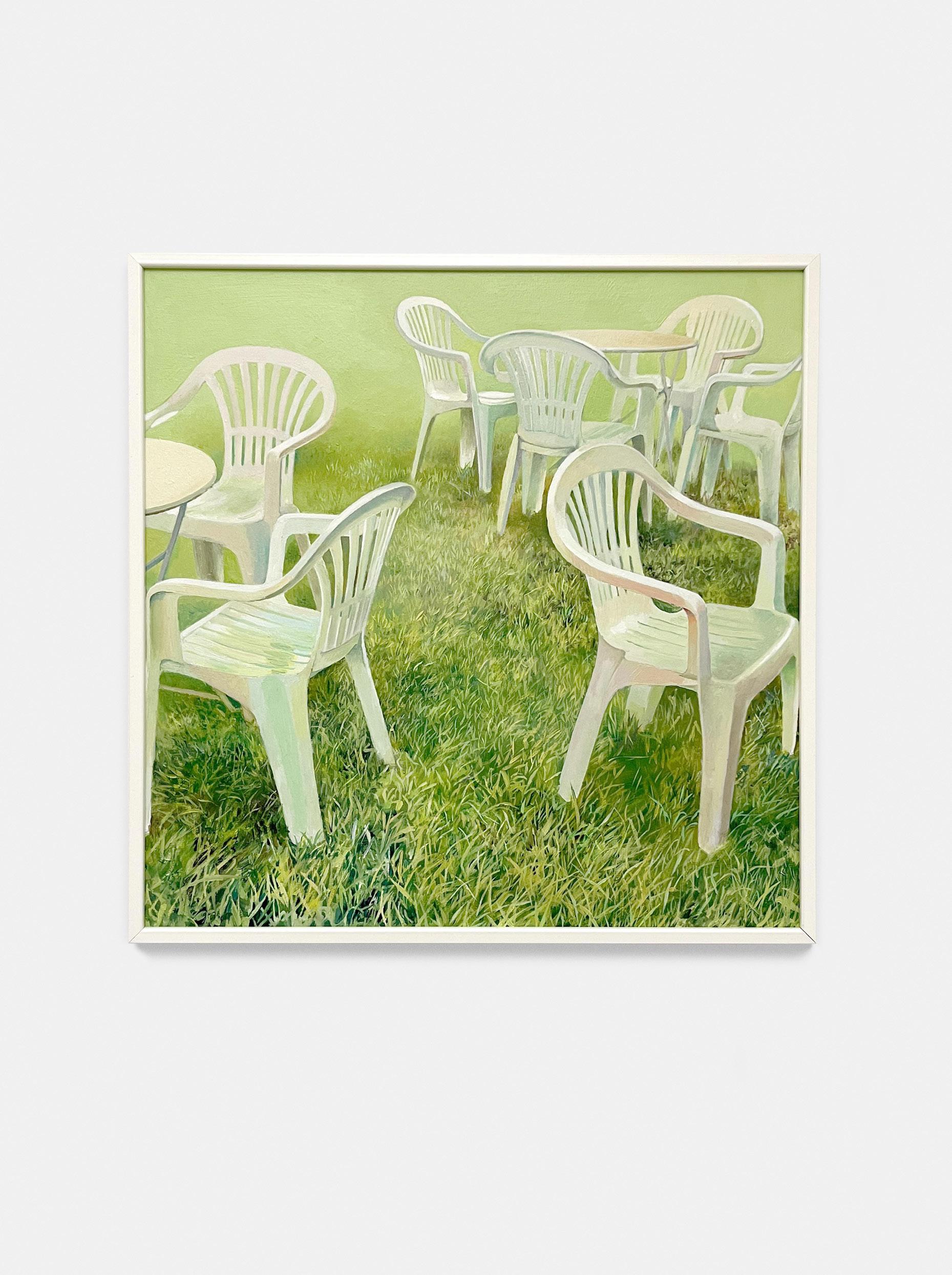
JOHN BALL
These works explore how familiar, mass-produced objects mediate our experience of space, memory, and social interaction. Plastic chairs temporary, utilitarian, and ubiquitous, stand as quiet witnesses to transience and impermanence. Their arrangement the residue of human activity: moments of conversation, gathering, and departure. Left empty, they evoke a sense of absence and the quiet persistence of memory. The paintings transform commonplace objects into sites of reflection, revealing how even the most banal forms of material culture can articulate the passage of time and the fragility of collective experience.

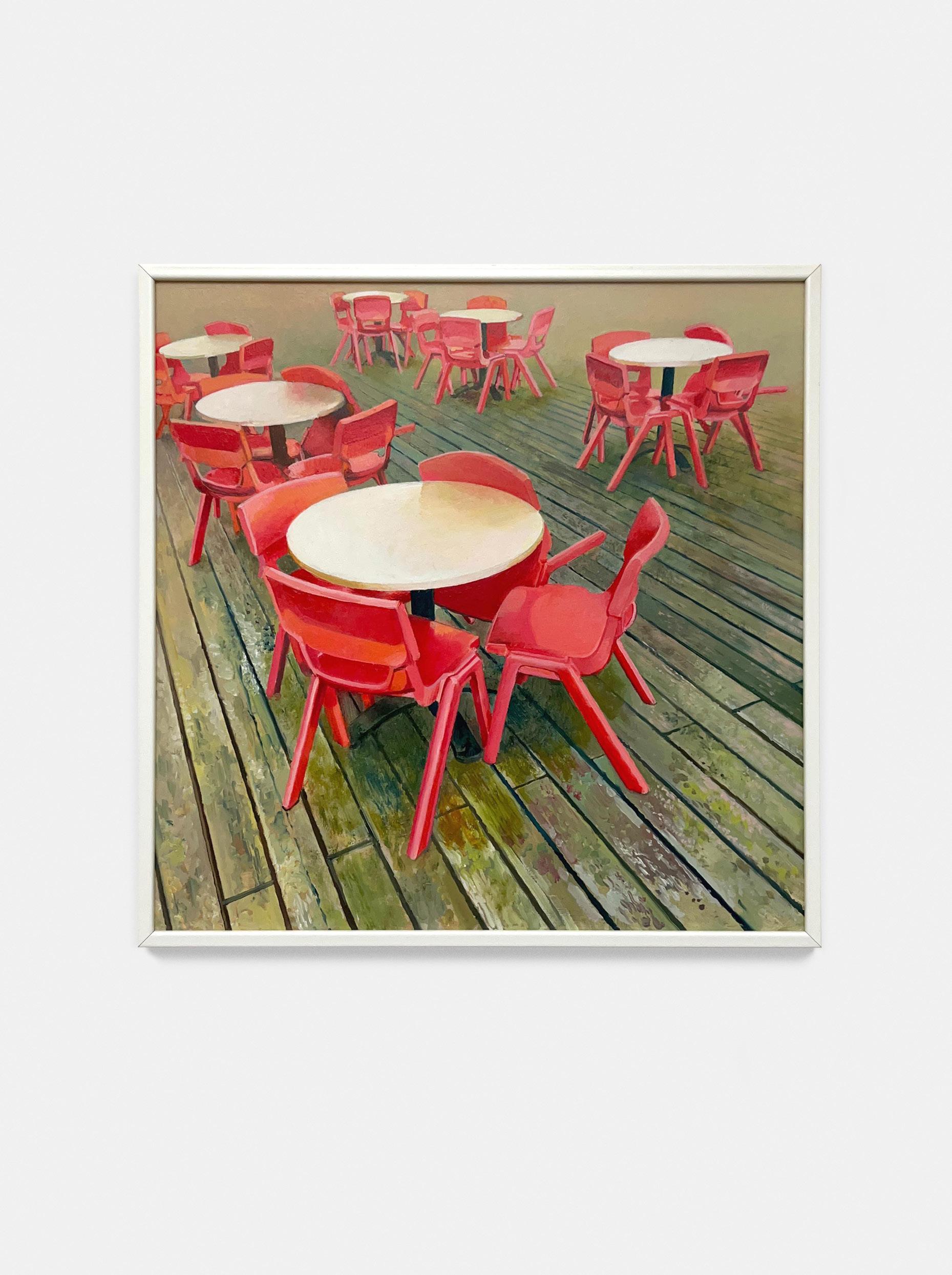
John Ball, Seating Arrangement II, 2025, oil on panel, 40cm x 40cm
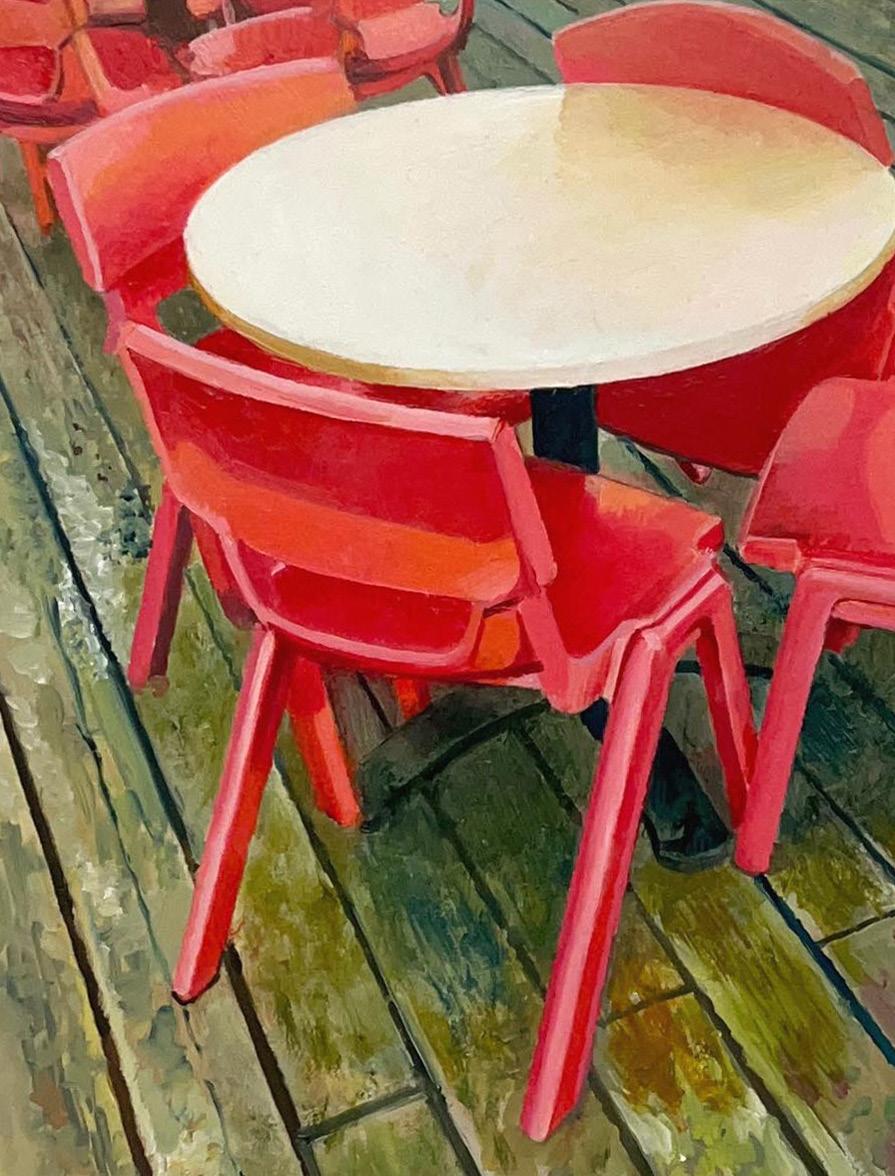
John Ball, Seating Arrangement II (detail), 2025, oil on panel, 40cm x 40cm. Image courtesy of the artist s studio.
John Ball, Seating Arrangement I, 2025, oil on panel, 40cm x 40cm
BENJAMIN DEAKIN
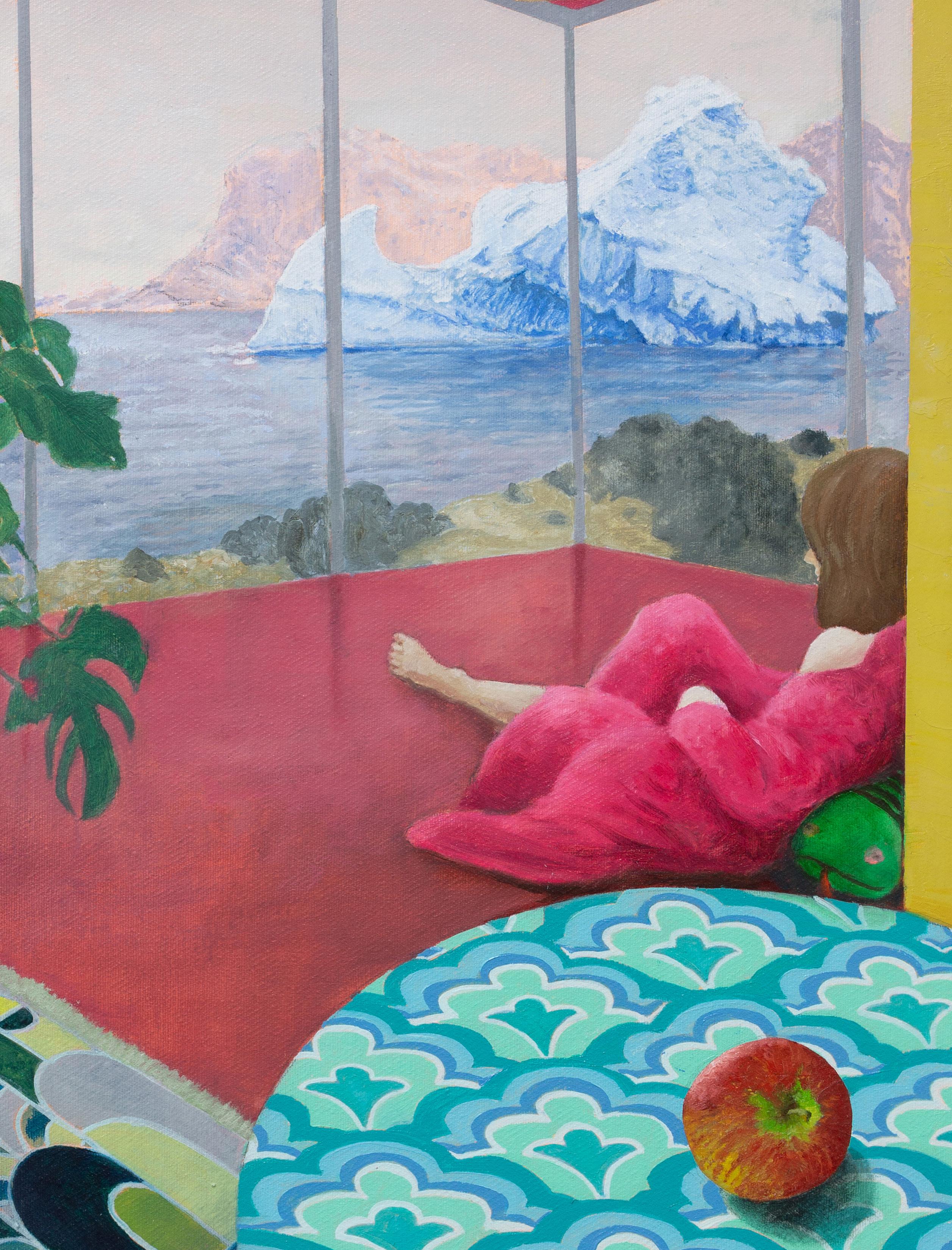
This new series of paintings was started on a residency I did in February of 2025. Writing and drawing was my initial starting point on the residency. One of the ideas which came out of this took the form of a short story or sketch for a film script. This imagined a scenario set in the near future in which the sudden break up of the arctic ice sheet has caused huge icebergs to drift southwards, causing huge disruption but also uncanny encounters with these migrating, icy apparitions. The paintings here depict two such encounters.

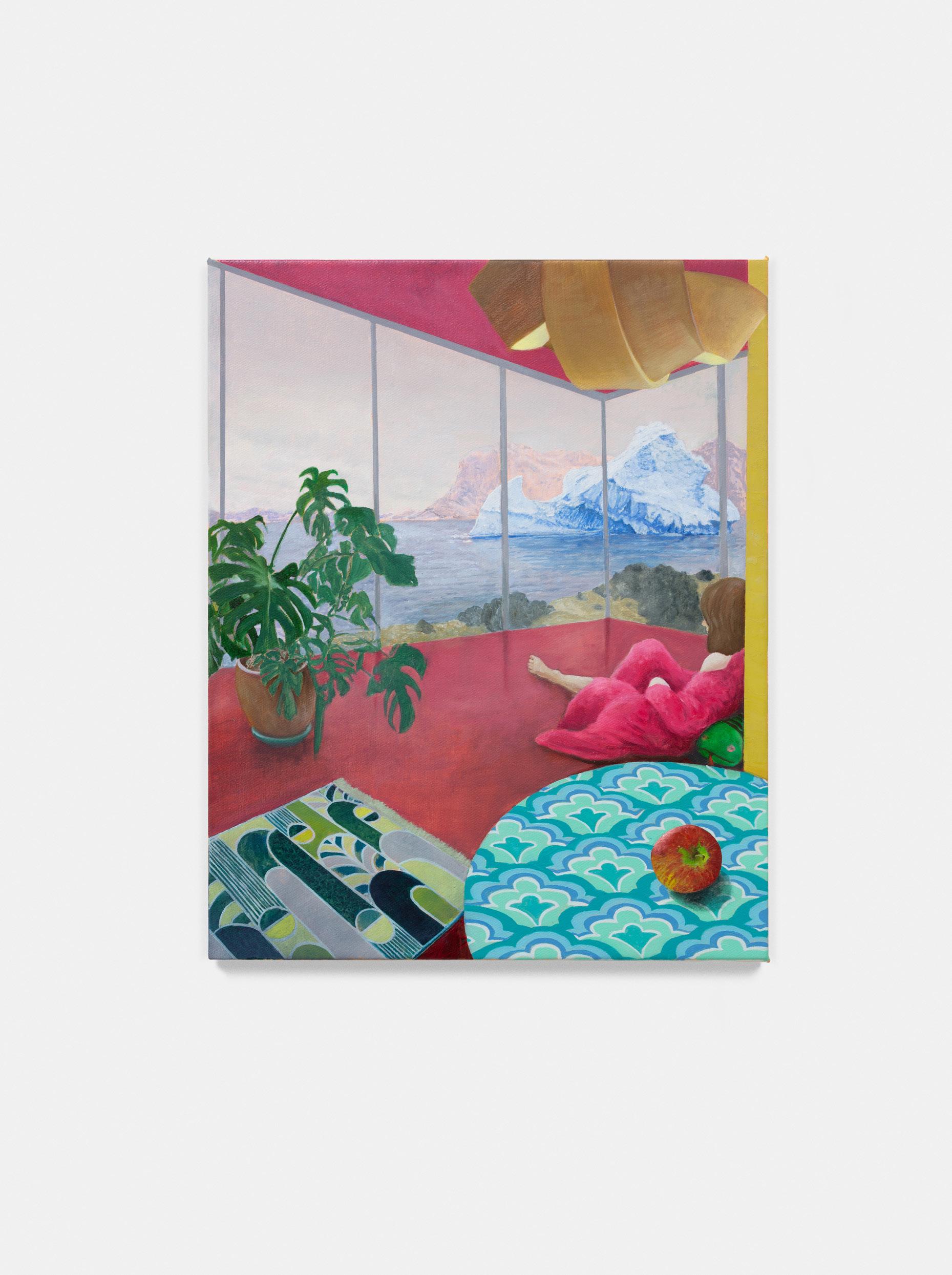
Benjamin Deakin, Emigrés I, 2025, oil on canvas, 51cm x 41cm
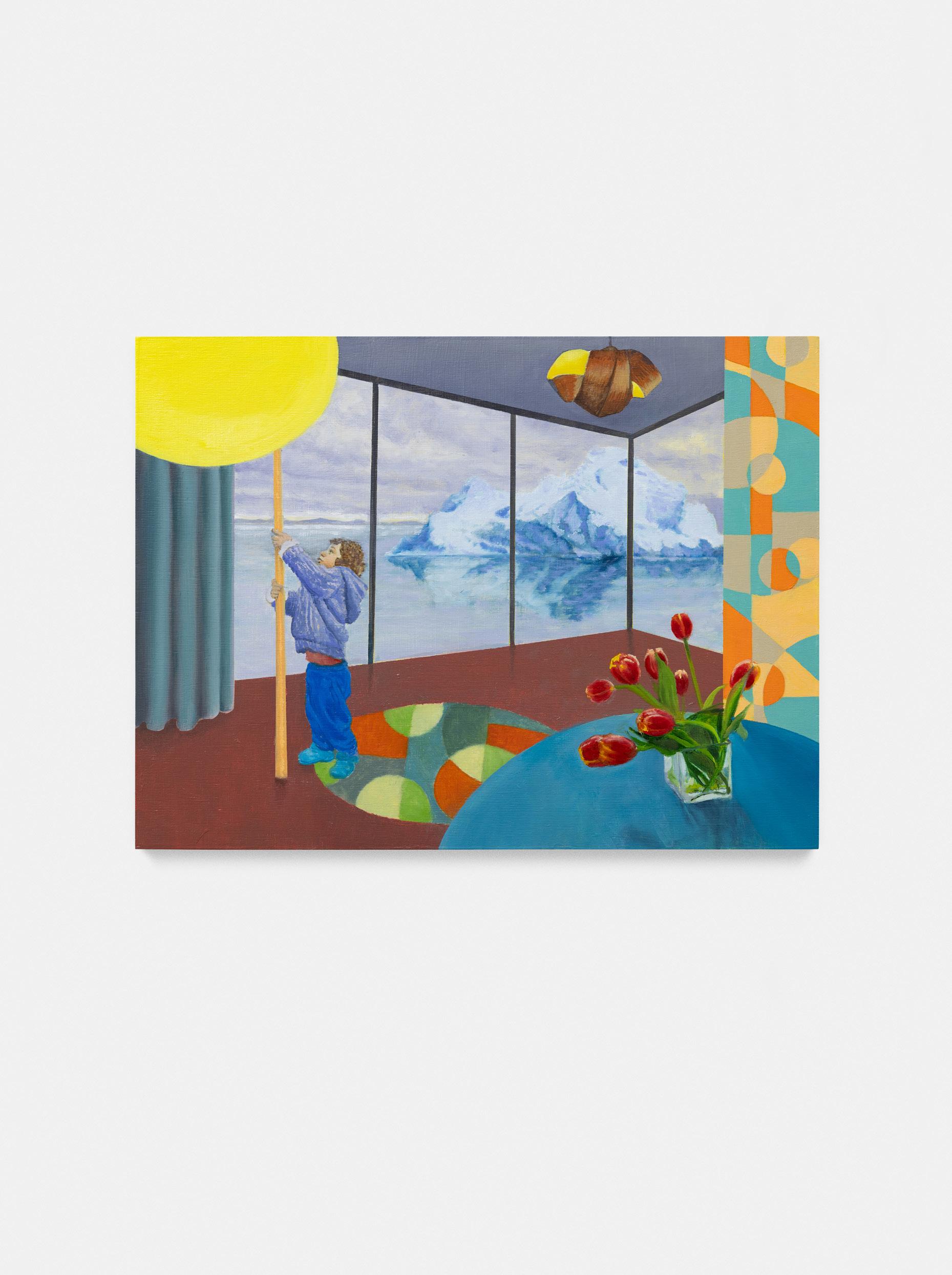
Benjamin Deakin, Emigrés II 2025, oil on canvas, 30cm x 40cm
Benjamin Deakin, Emigrés I (detail), 2025, oil on canvas, 51cm x 41cm. Image courtesy of the artist s studio.
TOM NORRIS
These vessels feel a little discontent and wild, a chimera of ideas. They mark a recent embarkation toward a more complex sculptural form where the images I wanted to see are given a platform amongst more familiar marks and gestures.
The forms grow with odd elaborations, colours richer and more honest, clinging to their relationship with the whole object.
I have wanted my vases to feel like collages for some time, and this allows that to happen in a physical sense with a broken single plane onto multiples. Awkwardness does not trouble me; it softens the seriousness without diminishing validity. These pieces embrace that tension, balancing playfulness with integrity, and allowing the work to remain both unruly and true.

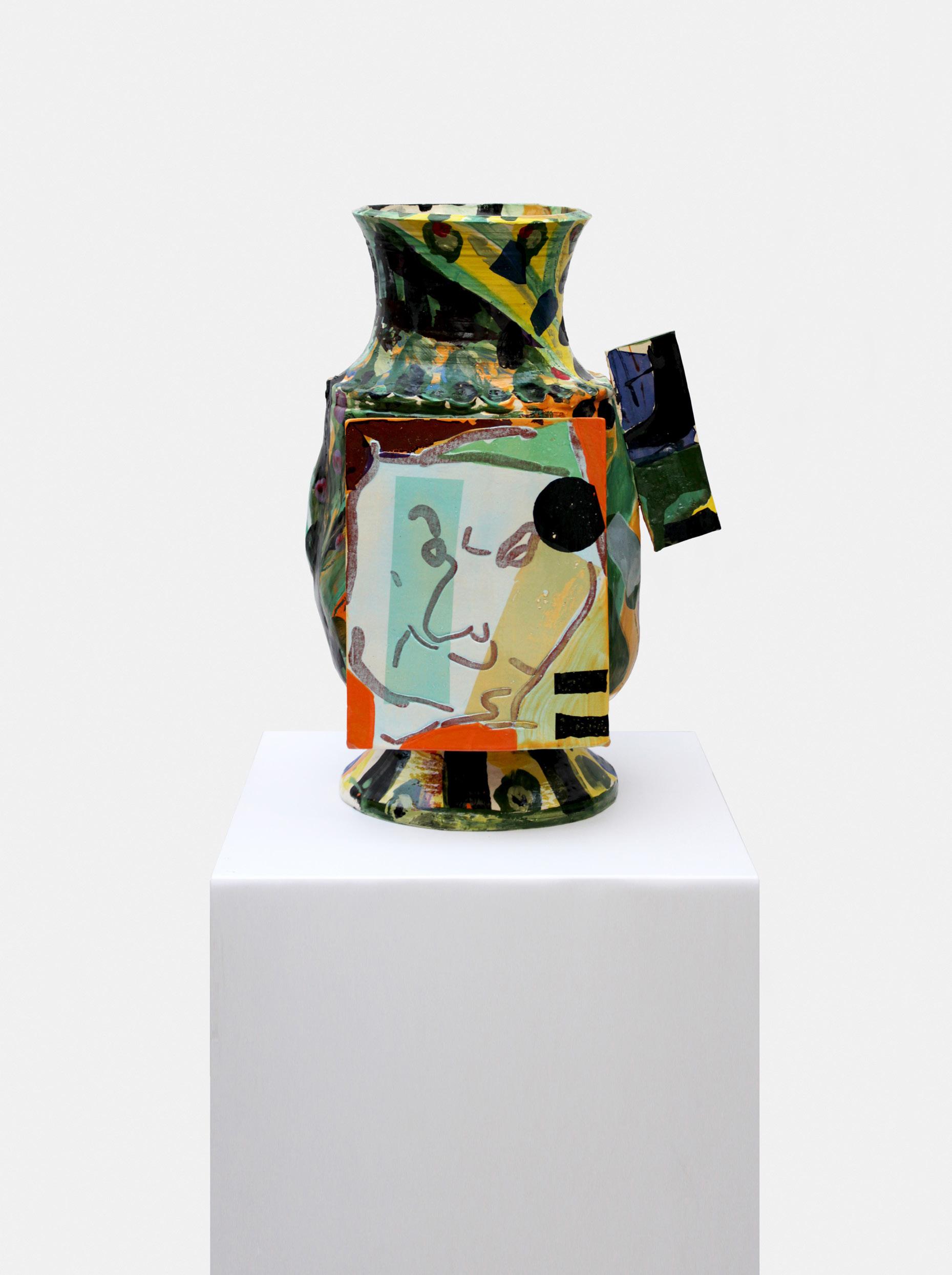
Tom Norris, Blunderbuss 2025, ceramic stoneware, 40cm x 30cm
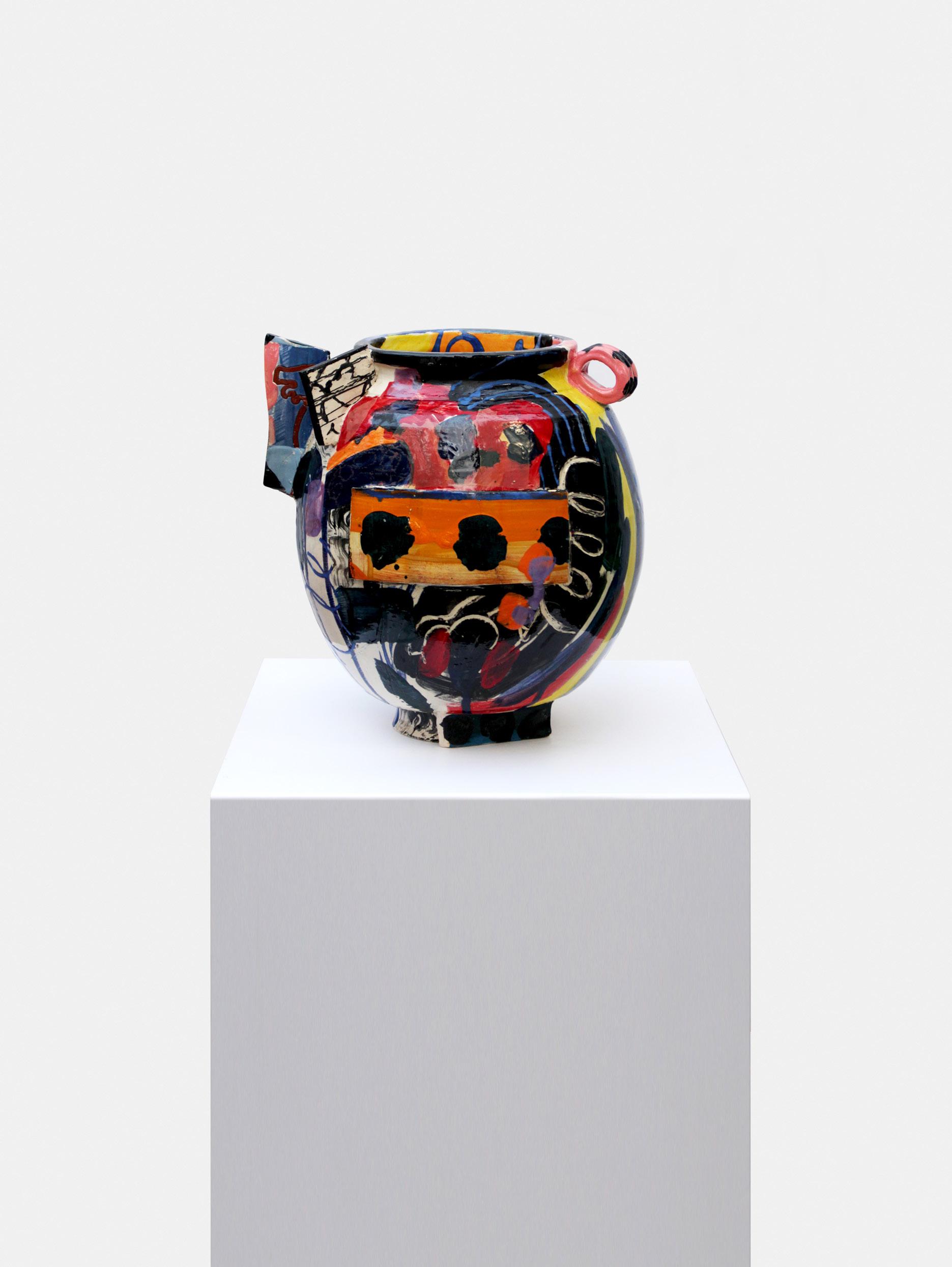
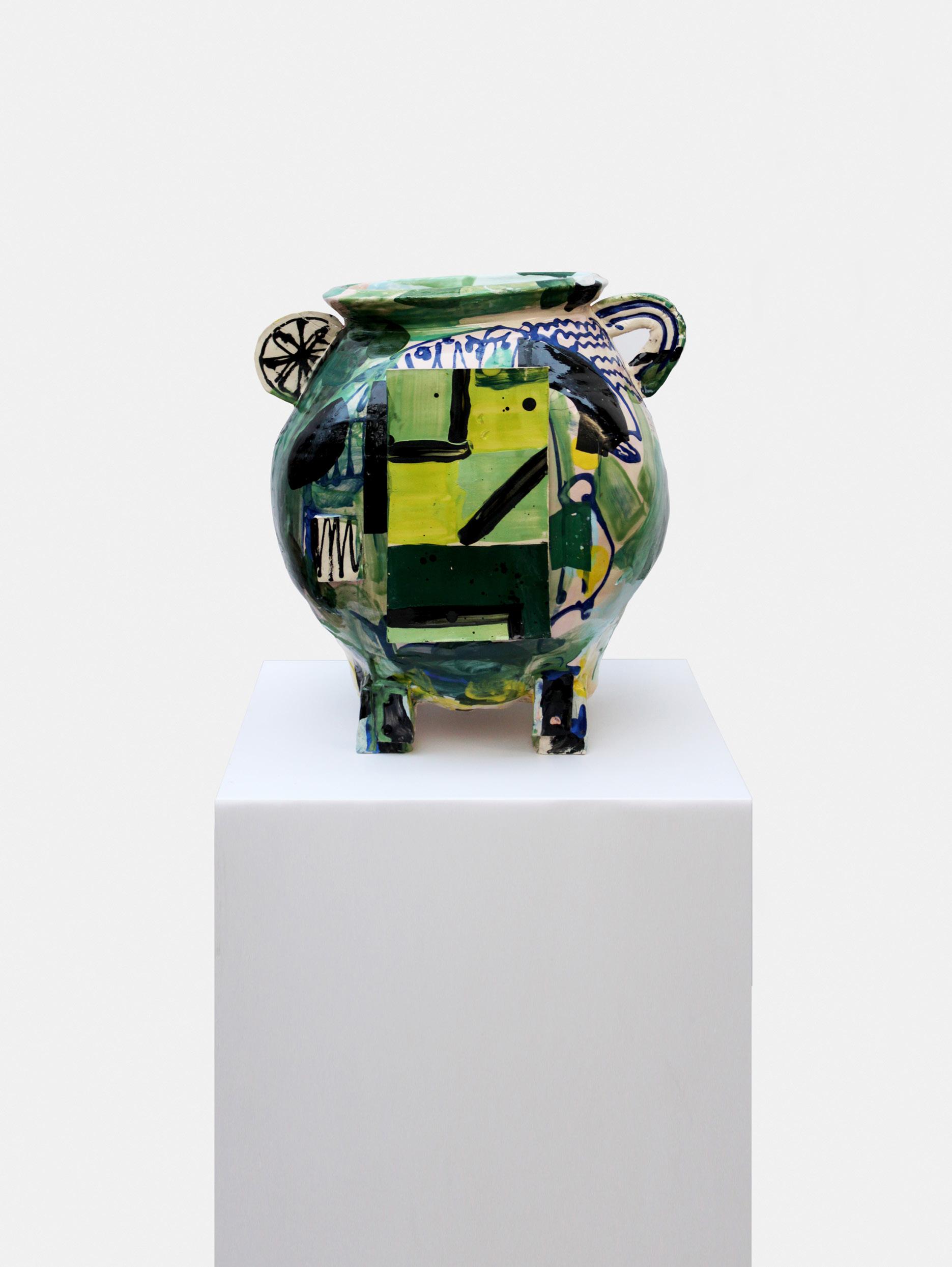
Tom Norris, All At Once, 2025, ceramic stoneware, 29cm x 28cm
Tom Norris, Ribbet, 2025, ceramic stoneware, 34cm x 34cm
Artwork
Editorial design: Julius Killerby.
Photography: Julius Killerby.
ISBN: 978-1-0682487-3-3
Front cover: Alice Wilson, Wurly (detail, darkened), 2025, wood, dowel, branch, lightbulb, cable, ceramic white light fitting, 70cm x 40cm x 50cm.
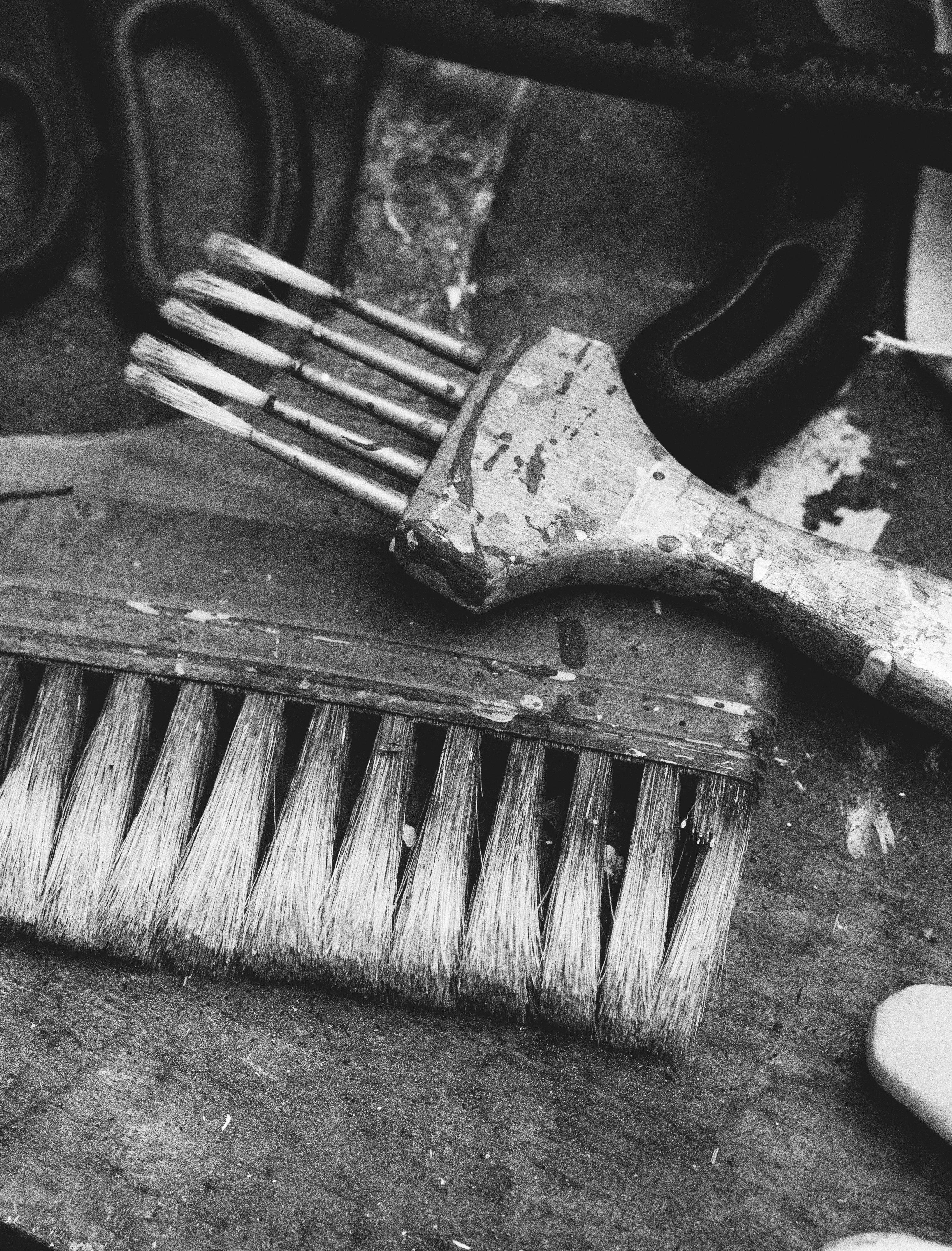
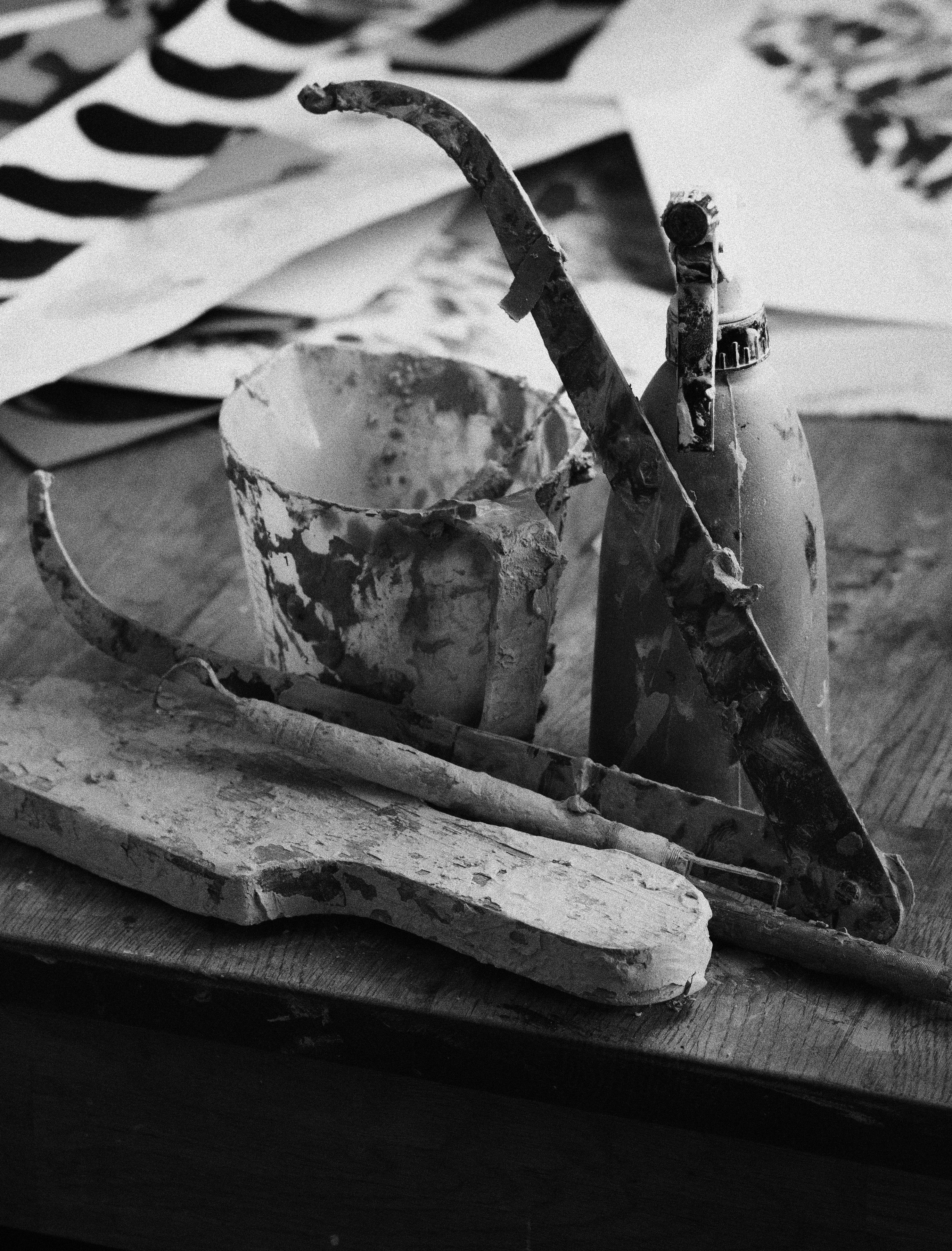
Back cover: Tom Norris’ tools (detail, darkened), 2023. Image courtesy of Julius Killerby.