
What Does the Church Teach about Immigration?
BY LEONARDO D. MENDOZA
Migration has been an enduring aspect of human history, and the Roman Catholic tradition has consistently recognized the dignity, rights, and humanity of migrants. From mid-20th-century teachings such as Exsul Familia (On the Spiritual Care of Emigrants) to the contemporary reflections of Pope Francis and Leo XIV, the church’s stance emphasizes both the moral obligations of host societies and its pastoral responsibilities. These documents collectively articulate a vision of migration rooted in the gospel, the exemplar of the holy family, and the imperatives of justice and solidarity.
POPE PIUS XII
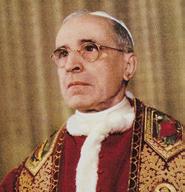
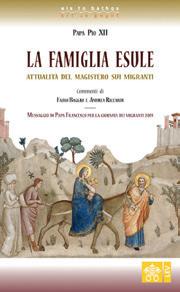
Pope Pius XII’s encyclical Exsul Familia, published in 1952, is frequently regarded as the foundational document of the church’s contemporary teaching on migration. The encyclical draws upon the image of the holy family—Joseph, Mary, and Jesus—and the forces that compelled them to flee into Egypt to escape violence. Pius presents the biblical story as both a theological model and a moral imperative. He presents the holy family as the “first exiles,” thereby establishing the church’s concern for migrants not in abstract principles but in the tangible experience of Christ himself.
As the encyclical underscores, the church must provide unwavering support to migrants in all circumstances, particularly when they encounter poverty, displacement, statelessness, or discrimination.
In Exsul Familia, the Catholic Church articulates several fundamental themes that remain pertinent in contemporary society:
• the right of individuals to relocate when they are unable to secure a dignified existence in their home country,
• the responsibility of nations to regulate migration with justice and compassion,
• and the church’s direct pastoral obligation to accompany migrants.
The comprehensive pastoral care laid out in this document includes advocating for migrants’ civil rights, ensuring their access to worship in their native languages, and providing practical assistance to families attempting to rebuild their lives.
Pope Pius XII clearly perceives migration as an area where the church offers solace to the afflicted while challenging structures that exacerbate inequality or engender forced displacement.
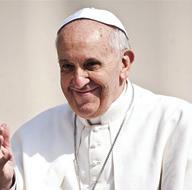
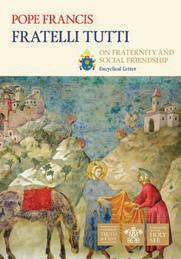
Seven decades later, Pope Francis expanded and deepened Pope Pius’ vision in his 2020 encyclical Fratelli Tutti (On Fraternity and Social Friendship). Although not exclusively focused on migration, the text repeatedly returns to this theme, as Francis acknowledges that global migration constitutes a pivotal moral issue in the 21st century.
POPE FRANCIS
Francis criticizes the “closed world” mentality that prioritizes national interests or cultural defensiveness over human solidarity. Migrants, he contends, are not threats or burdens but Catholics’ “brothers and sisters,” whose presence prompts societies to broaden their moral horizons.
In Fratelli Tutti, Francis asserts that migrants possess an inalienable dignity that must never be compromised by political calculations or economic apprehensions. He advocates for a “culture of encounter,” a social disposition that seeks dialogue, openness, and mutual transformation. This is directly opposed to what Francis describes as a “throwaway culture,” which discards human beings when they become inconvenient. For Francis, migration challenges Christians and nations to rediscover the biblical command to welcome the stranger, for in doing so, one welcomes Christ himself.
In Fratelli Tutti, Pope Francis emphasizes the structural dimensions of migration. He acknowledges that individuals often migrate not out of personal choice but due to pressing circumstances such as war, poverty, environmental degradation, or persecution.
“Migrants are not strangers but neighbors; not threats, but gifts.”
Consequently, genuine care for migrants extends beyond mere hospitality at borders. It includes efforts to create conducive environments that enable individuals to flourish in their home countries. However, until such conditions materialize, countries must prioritize ensuring safe passage, humane reception, and comprehensive social integration for those seeking a new life.
Francis’ pastoral perspective is further emphasized in a letter he wrote to the U.S. Conference of Catholic Bishops that addresses the escalating tensions surrounding immigration in the U.S. context. Francis urged the bishops to perceive the migration crisis not as a political issue but as a profoundly human and spiritual phenomenon. He encouraged them to support and guide migrants with closeness, humility, and compassion, particularly those who are separated from their families or face the threat of deportation.
Francis challenged the U.S. bishops to assume the role of courageous shepherds, actively defending the rights of migrants, denouncing injustices within immigration systems, and promoting unity among Catholics who may hold differing political viewpoints. He cautioned against ideological divisions that obscure the church’s unequivocal moral teachings.
For Francis, the credibility of the church’s witness hinges on its ability to stand with the vulnerable and uphold a consistent ethic of life that encompasses migrants and refugees.
POPE LEO XIV
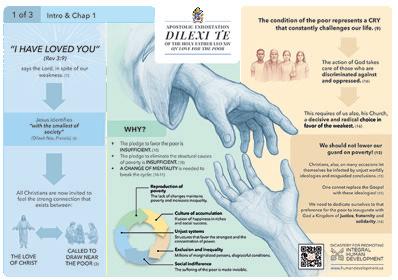
Pope Leo XIV’s recent apostolic exhortation, Dilexi Te (On Love for the Poor), further enriches the church’s reflection on migration. The document emphasizes that love for the poor, including migrants and refugees, is not a supplementary dimension of Christian life, but is at its core.
The exhortation explicitly recalls the migrant: “In every rejected migrant, it is Christ himself who knocks at the door of the community.” This reinforces the teaching found in earlier documents such as Exsul Familia and Fratelli Tutti, which assert that the stranger is not a burden but a neighbor.
The church and civil society alike must shift from indifference to encounter, from exclusion to integration. By elevating the migrant as a privileged place of encounter with Christ, Dilexi Te extends the call to recognize the dignity of every human person. It also urges the transformation of structures that cause displacement and exclusion and the construction of communities of solidarity rooted in the gospel.
ACROSS PAPACIES AND DOCUMENTS, SEVERAL CONSISTENT THEMES EMERGE:
• Migration is a profoundly Christian concern: It addresses human dignity, the preferential option for the impoverished, and the example of the holy family.
• Nations possess both the right to regulate borders and the obligation to do so in a manner that upholds fundamental human rights.
• The church must provide pastoral care to migrants while simultaneously addressing the structural causes of displacement.
• Christians must cultivate a spirit of hospitality, encounter, and solidarity that transcends political or cultural divisions.
In a world increasingly shaped by migration, the Roman Catholic tradition offers a rich and challenging vision. Migrants are not strangers but neighbors; not threats, but gifts. Caring for them entails adhering to the path of Christ himself.
Leonardo D. Mendoza is a doctoral student in integrative studies in ethics and theology at Loyola University Chicago.
Photo: