The Bittersweet Taste of Being an Immigrant—and the Homeland Without Borders
BY BISHOP EUSEBIO ELIZONDO, M.SP.S.
From the Ice Age to our own time, the people of the Earth have migrated in search of better living conditions— for themselves, their herds, or their crops. Before the creation of countries and legal borders, people eventually ceased to be nomads and settled into an ongoing struggle for survival in lands that so often yielded only thorns, only to pick up and move again in search of a better life.
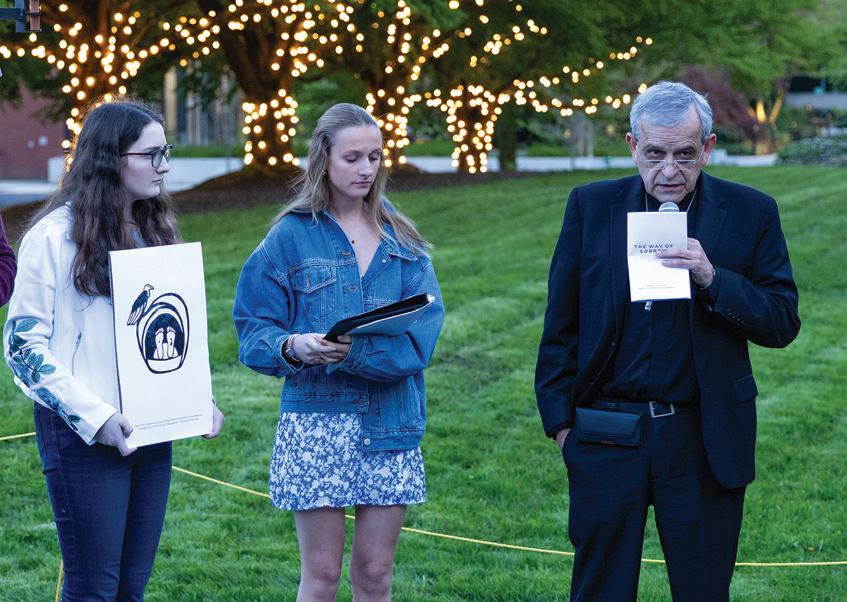
That common story of migration is my own story as well. By the decision of God, the giver of all life, I was born on Mexican soil. Of my 22 years as a priest of the Missionaries of the Holy Spirit, I have lived 20 of them in the United States. I have been privileged to carry out a ministry for the church and for my congregation as an immigrant among immigrants.
How many joys, dreams, and hopes come with arriving in a new land, experiencing a new culture, and learning a new language? Migration brings many beautiful surprises and lessons in every sense—from the way we eat to the way we praise God in the sacred liturgy. How beautiful it is to discover people of different races and languages striving to be faithful to Jesus’
command to evangelize all peoples and opening themselves to the possibility of loving one another as Christ loved us. In this way, we all become siblings, children of the same heavenly Creator of all.
“How beautiful it is to discover people of different races and languages striving to be faithful to Jesus’ command to evangelize all peoples and opening themselves to the possibility of loving one another as Christ loved us.”
And yet how painful it is to experience not being welcomed simply for having a different skin color, for not speaking perfect English, or for having an accent that reveals your foreign roots.
How sad it is to realize how short human memory can be—how it selects only those memories that confirm our own ideas about other people, and not the full story, with its light and shadows, laughter and tears, that together make up the fabric of our lives.
One of this country’s oldest and most beautiful traditions is Thanksgiving Day—a day when we remember the welcome extended by the Native peoples of this land to the first English settlers as they shared a peaceful meal. What began as friendly encounter soon turned into oppression and dispossession: Those people who had crossed the ocean quickly forgot that they were guests and made strangers of those people born on the land.
Over the years, great waves of Europeans fleeing poverty and hunger in their homelands arrived from Ireland, England, Italy, and Germany, full of energy and dreams, traditions, and faith. They quickly “Europeanized” these new territories—for better and for worse—without regard for the Indigenous peoples and their traditions, which were almost entirely wiped out.
Every country has the right to autonomy and to form its own laws to serve its citizens—to protect its economy, security, and stability. But hunger cannot wait months or years to be legalized; the hungry need bread today. This nation, so proud of being the most powerful in the world, was built through the hard work of immigrants—thousands of them Mexican. Latino/a immigration (not only Mexican) over the past 20 years has been extraordinary, reaching the enormous numbers we estimate today—some 12 million people, many of whom are undocumented. Far from causing economic recession, this has fueled growth in all areas of the economy—agricultural, industrial, and urban.
Over the past year, in my ministry as Auxiliary Bishop and Vicar for Hispanic Ministry in the Archdiocese of Seattle, I have personally witnessed the deep joy my Hispanic brothers and sisters feel upon discovering the support of a Hispanic bishop. Yet I have also felt firsthand the sting of racism, prejudice, and the preconceptions held against anyone who does not have light skin or blond hair or who does not speak English with a native accent—even within some of our parish communities and among members of the clergy.
I have spoken clearly and firmly about the Catholic Church’s position in favor of charity, justice, dignity, and respect for all our brothers and sisters who work tirelessly in jobs that citizens do not want to do, receiving wages far below what is just— simply because they lack official residency papers.
In collaboration with various Hispanic civil and ecumenical organizations, I have participated in massive marches through downtown Seattle to denounce the mistreatment, abuse, and even deaths suffered by undocumented immigrants and to promote laws that recognize, value, and support the enriching presence of immigrants, the majority of them Catholic.
The eternal Word of God became an immigrant to our world and to our human nature. As a child, Jesus lived as an immigrant in Egypt with his parents. In his own land, he suffered the oppression of a conquering empire—and above all, he experienced the desolation of not being understood, even as he sought to show through his life that we are all brothers and sisters, children of the same Father.
“The eternal Word of God became an immigrant to our world and to our human nature.”
In this world we are but pilgrims, journeying toward our true and eternal homeland—where our citizenship will be determined solely by how we have loved, in the way of Jesus. Until we reach that common homeland, let us continue to labor in this world, with that bittersweet taste of being immigrants. Yet even as I accompany others on this earthly pilgrimage, I recognize within myself another, more mysterious migration— the journey of an undocumented heart searching for its true home.
My heart has made me an undocumented missionary wherever I have not yet been recognized as a brother. I will remain a foreigner in this world until the day when the Creator of all and of everyone finally welcomes me into God’s heart— the same heart from which I once came forth to begin my pilgrimage.
I have spent my life trying to learn the universal language of humanity, stammering words of fraternity, justice, peace, freedom, dignity, and joy—and even now, at this stage of my life, I still cannot express myself clearly or fluently. I have not yet learned to master the rules of grammar inscribed deep within this human race in which I am immersed. I continue to make spelling mistakes in the text of my existence—mistakes that keep me from completing, with any real success, even the elementary school of life.
“ ... a homeland beyond the limits of political geography—a homeland whose riches I have slowly discovered with wonder. There, the common language is love, and we all speak it with our own particular accent, according to the gifts of each heart.”
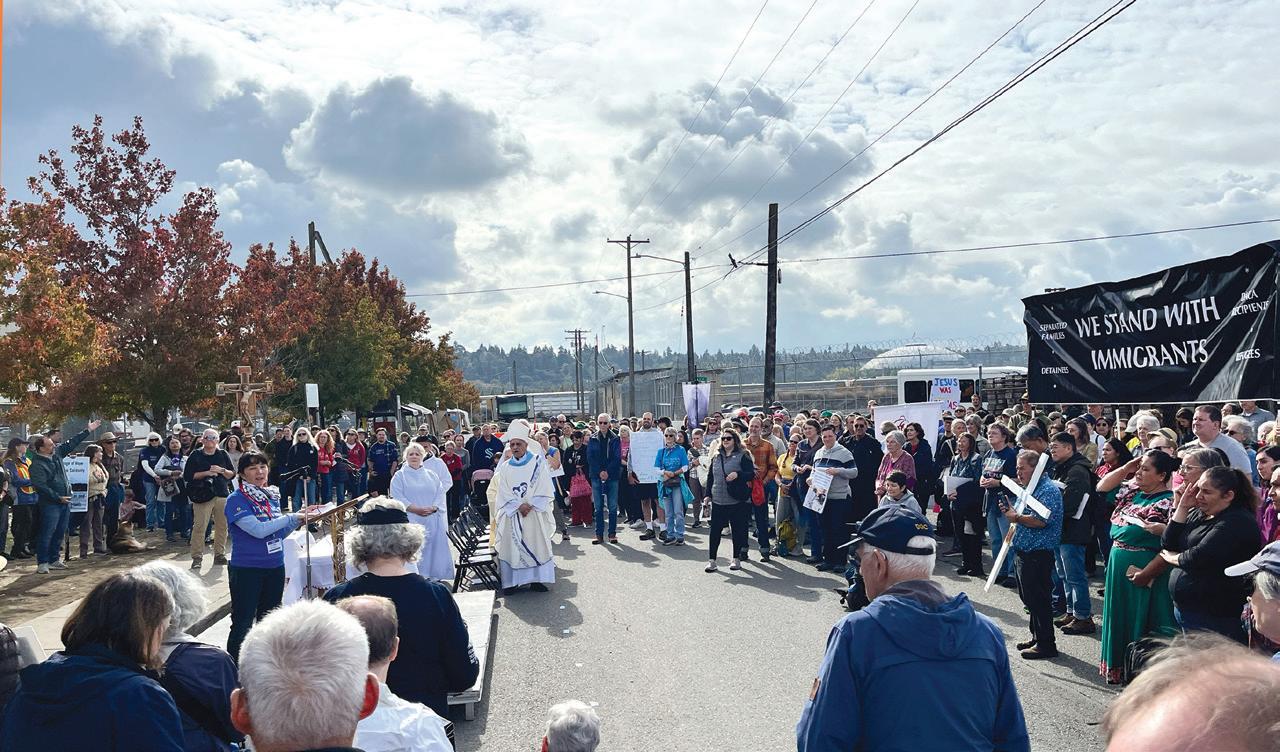
The faith of my parents granted me the rights of a homeland beyond the limits of political geography—a homeland whose riches I have slowly discovered with wonder. There, the common language is love, and we all speak it with our own particular accent, according to the gifts of each heart.
My longing is to one day obtain full citizenship in that universal nation. But first, I must pass the exam of humanity— until I understand that every person in this world shares a common origin and an even more common destiny.
The long process of citizenship in this ineffable homeland obliges us, the applicants, to joyfully promote its greatness. It moves us to proclaim that this homeland possesses a vast subsoil of forgiveness, capable of freeing countless millions
oppressed under the weight of their errors. It compels us to cry out that this enchanting nation has immense shores of justice, so deep that it continually draws from its depths treasures of human dignity previously unimagined.
Bishop Eusebio Elizondo, M.Sp.S. was appointed Auxiliary Bishop of Seattle in 2005. He was born in Monterrey, Mexico and previously chaired the USCCB Committee on Migration. Elizondo is the first Hispanic bishop in Seattle. He serves as the archdiocese's Vicar General, Vicar for Hispanic Ministries, and Vicar for Vocations.