Novembre / Dicembre
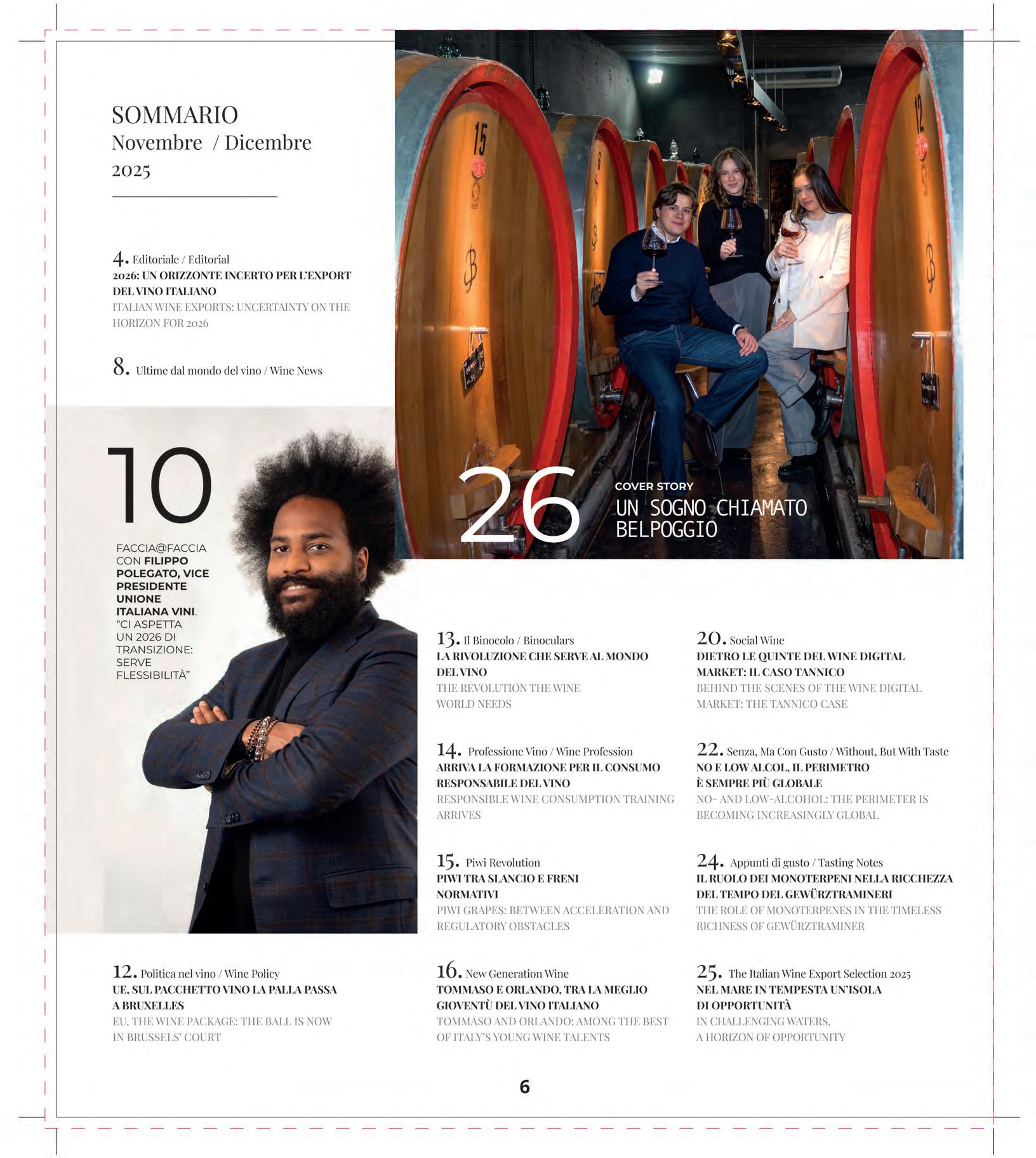
58. Food&beveragenda
65. Pellicole di gusto / Films of taste
THE LORD’S VINEYARDS, IL RUOLO SACRO DEL VINO
THE LORD’S VINEYARDS: THE SACRED ROLE OF WINE
66. Tendenze Sparkling / Sparkling Trends
67. Liquori e Distillati/ Liquor and Distillate
Olio Evo/Evo Oil
Birra / Beer
70. Vigna&Cantina
FENOMENI MICROBIOLOGICI L’INSTABILITÀ NEL VINO
72. Vigna&Cantina INNOVAZIONE
COLTIVARE LA SINERGIA TRA IL DATO E LA RADICE
76. Vigna&Cantina
TECNOLOGIA
CONTROLLO TERMICO: LO STRUMENTO INVISIBILE
86. Vigna&Cantina
L’IMMAGINE CHE CONTA L’ETICHETTA
N.
NOVEMBRE/DICEMBRE 2025
Anno XXI
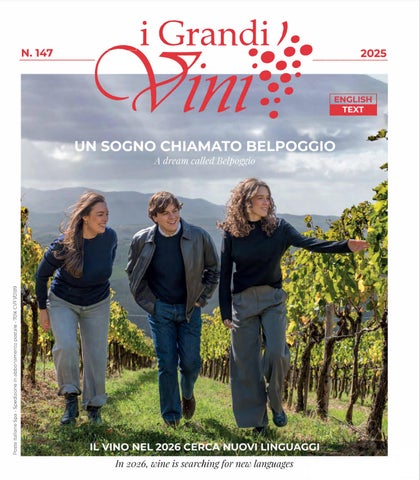
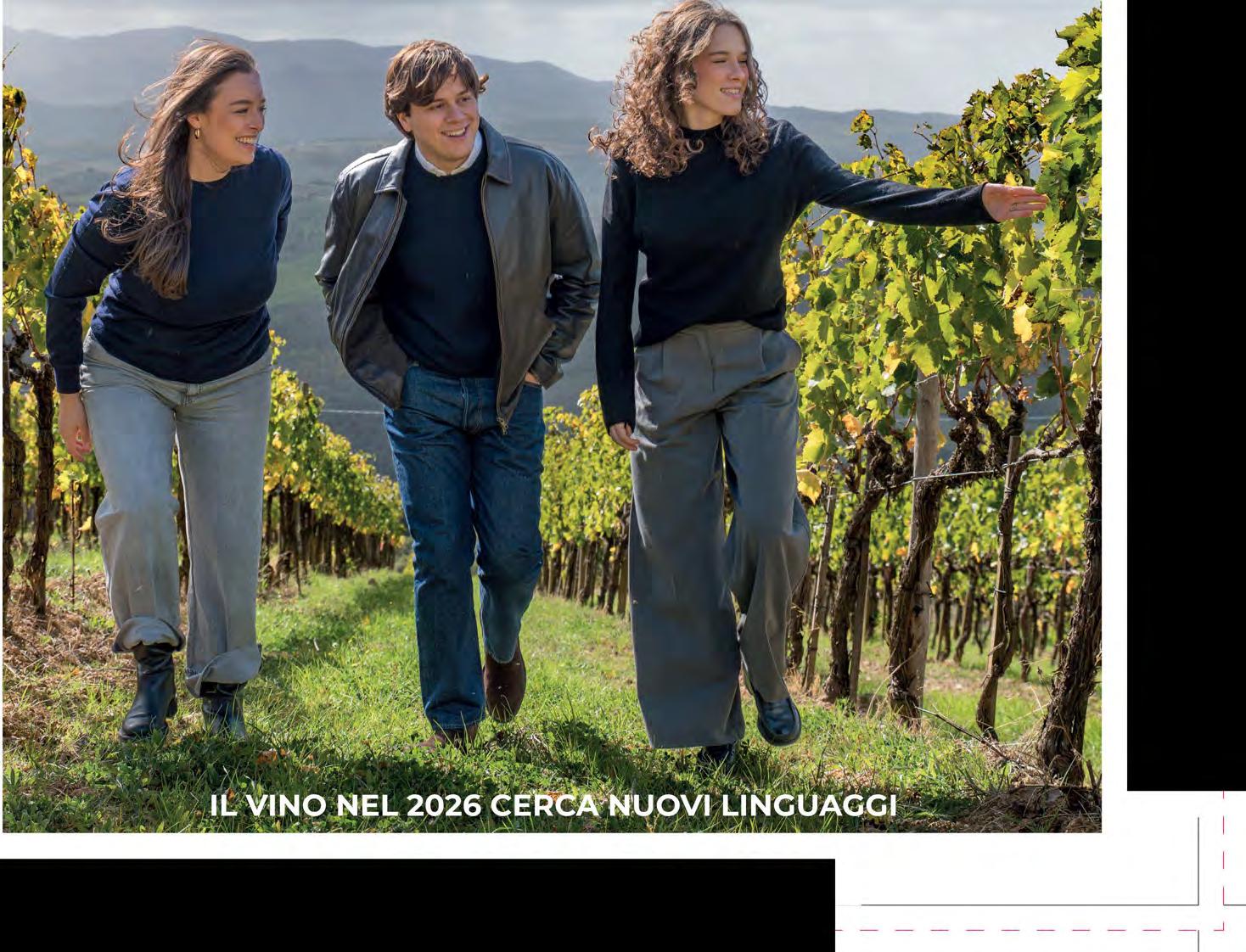
IN COPERTINA BELPOGGIO
EDITORE / Publisher Wom srl
Via Toscana 50/3 • 53035 Monteriggioni (SI) Tel. 0577 1606999 • info@womcom.it Registrazione Tribunale di Grosseto n° 9 del 02/11/2005
DIRETTORE RESPONSABILE / Editor-in-chief Giovanni Pellicci
DIRETTORE EDITORIALE / Editorial Director Fabrizio Barbagli
REDAZIONE / Editorial staff
Stefania Abbattista, Luca Barbagli, Elisa Berti, Lorenzo Bianciardi, Annarita Cacciamani, Giusy Carosella, Francesco Carrubba, Cristina Cerri, Cristina Degli Agli, Francesca Granelli, Alessia Manoli, Tommaso Nutarelli, Stefania Tacconi
ART DIRECTOR Linda Frosini
TRADUZIONI / Translations Wom Translations
SITO / Website W igrandivini.com
FACEBOOK https://www.facebook.com/rivistaigrandivini
PUBBLICITÀ / Advertising
Stefania Abbattista, Elisa Berti, Raul Gjyzeli, Francesca Granelli, Niccolò Haskaj, Valentina Migliaccio, Giulia Spolidoro
STAMPA / Printers
Petruzzi
Via Venturelli, 7 - Città di Castello (PG)
IL BINOCOLO / BINOCULARS
A CURA DI STEFANIA TACCONI
LA RIVOLUZIONE CHE SERVE AL MONDO DEL VINO
IL PUNTO DI VISTA DI ASIMOV PER AFFRONTARE LE SFIDE DEL MOMENTO
Per attrarre i giovani, i vini buoni
che lo circonda: senza pretese, non moralista, semplicemente parte del piacere di stare con gli amici. Questo è importante. Anche il prezzo è un fattore rilevante. I buoni vini devono essere resi più abbordabili. La colpa non è tanto ai produttori quanto dei ristoranti — soprattutto negli USA — che cercano di trarre profitti eccessivi dalle vendite di vino, in particolare al bicchiere. Se l’industria del cibo e del vino vuole attrarre i giovani, deve rendere il buon vino più accessibile”.
conciliare la necessità di abbassare i prezzi con i costi reali di una produzione di qualità? “Domanda complessa: i produttori sono sotto pressione e ridurre i prezzi non è semplice. Hanno puntato su un mercato che sembrava infinito, trascurando la fascia bassa. In Piemonte, ad esempio, molte uve dei vini quotidiani sono state sostituite con nebbiolo per alzare i prezzi. Ciò che serve sono buoni vini nella fascia più bassa, autentici e deliziosi, e non pallide imitazioni di vini più costosi”.
THE REVOLUTION THE WINE WORLD NEEDS
Eric Asimov’s perspective on how to face today’s most pressing challenges
pecially in the United States—that seek excessive profit margins on wine sales, particularly by the glass. If the food and wine industry wants to attract younger generations, it must make good wine more accessible.”
How can we overcome the snobbery that intimidates people and keeps them away from wine?
“Most Italian producers are already doing an excellent job. The problem often lies with shops and restaurants eager to showcase Italian wines as if placing them on a pedestal, treating them like museum pieces. Don’t try so hard! Present wines as wonderful with food, delightful to share with friends—always enjoyable, sometimes profound.”
Eric Asimov, giornalista del New York Times, ci parla di ciò che può esser fatto per affrontare le difficoltà che attualmente attanagliano il mondo del vino. Come si può rendere il vino italiano più accessibile ai giovani? “La domanda non riguarda solo i vini italiani. Vedo molti giovani bere vino, specialmente quello naturale. Non solo perché lo credano migliore per l’ambiente e per la salute, ma per l’etica
Come si può superare lo snobismo che circonda il vino e intimorisce le persone? “La maggior parte dei produttori italiani fa già un ottimo lavoro. Il problema sono i negozi e i ristoranti che cercano di venderlo, e vogliono dimostrare quanto siano buoni i vini italiani li mettono su un piedistallo come opere d’arte. Non sforzatevi troppo! Presentate i vini come eccellenti con il cibo, meravigliosi da condividere con gli amici, sempre deliziosi e talvolta profondi”.
Come possono i produttori italiani
Eric Asimov, wine critic for The New York Times, reflects on what can be done to address the difficulties currently gripping the wine industry.
How can Italian wine become more accessible to younger consumers?
“This question applies not only to Italian wines. I actually see many young people drinking wine, especially natural wine— not just because they believe it’s better for the environment or for their health, but because of the ethos surrounding it: unpretentious, non-moralistic, simply part of the pleasure of spending time with friends. That matters. Price is another crucial factor. Good wines must become more affordable. The fault lies less with producers than with restaurants—es-
How can Italian producers reconcile the need to lower prices with the real costs of quality production?
“A complex question: producers are under pressure, and lowering prices is not easy. Many have focused on a market that once seemed limitless, neglecting the lower end. In Piedmont, for instance, grapes destined for everyday wines were replaced with Nebbiolo to raise profit margins. What’s needed now are good wines in the lower price range—authentic, flavourful wines, not pale imitations of more expensive bottlings.”
“To attract younger drinkers, good wines must be made more affordable.”