
Course Descriptions: Economics
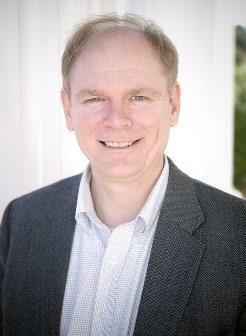
Dr. Jerry Fox is Associate Professor of Economics and Chair of the Department of Economics. He has many years of academic experience in teaching at the undergraduate and graduate levels. His academic fields include political macro-economy international economics, and quantitative methods. He has published articles in the Journal of Macroeconomics, Journal of conflict Resolution, and Applied Research in Economic Development. He has published two academic books on globalism and the political macro-economy. Dr. Fox has also presented research papers at numerous economic conferences.
Dr. Fox has done consulting work on economic impact analysis, including a major study on the economic impact of the furniture industry in North Carolina. He has international experience in teaching and living in England, France, Poland, Japan, and the Philippines.
ECO 2030. Principles of Macroeconomics. Demand and supply, free enterprise and capitalism, GDP and the business cycle, unemployment, inflation, fiscal and monetary policy, banking, international trade, and finance, and other related topics. The course helps students
understand current economic problems and policy debates. Four credits. [SOSCI]
ECO 2050. Principles of Microeconomics. Theories of consumer and producer behavior, including demand and supply, elasticity, and consumer utility theory. Introduction to pure competition, monopoly, and other market structures in which businesses operate. Discussion of issues such as mergers and antitrust policy, regulation, cost-benefit theory, externalities and public goods, resource markets, poverty and income inequality, and other applied microeconomic issues. Four credits. [SOSCI]
ECO 2881, 3881, 4881. Special Topics. Variable credit. May be repeated.
ECO 3030. Intermediate Microeconomics. A more indepth study of economic growth and the business cycle. Analyzes competing macroeconomic theories. Explores monetary and fiscal policies, and their effectiveness in targeting unemployment and inflation, in closed and open economics. Extensive use of mathematics and graph modeling. Prerequisites: ECO 2030 and ECO 2050. Four credits.
ECO 3035. Economic Growth. A study of standards of living and rates of economic growth in the long run
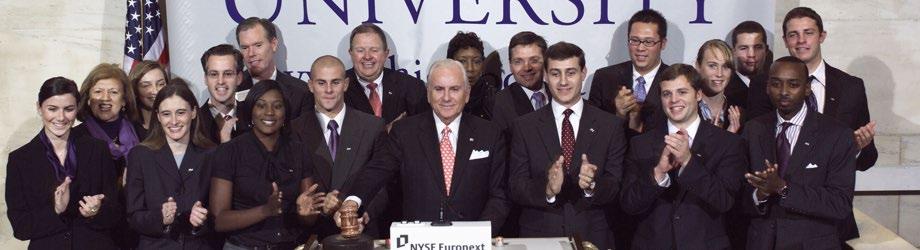
Ringing the Closing Bell of the NYSE
Dr. Jerry Fox
(decades, generations, or centuries). Why are some nations (such as the U.S., Germany, and Australia) so wealthy and others (like Somalia and Haiti) so poor? Some nations that were among the poorest in the world fifty years ago (like South Korea and Malaysia) are now some of the wealthiest. What did they do to make that happen, and can their experience be replicated elsewhere? Students will study the economic theories that have been proposed to answer these and similar questions. They will also analyze the evidence for these theories among appropriate analytical tools such as data visualization and basic statistics. Prerequisite: ECO 2030 or permission of the instructor. Four credits. [ITG]
ECO 3050. Intermediate Microeconomics. A more indepth study of how individual agents interact in an environment of ever-changing prices. Topics may include utility models, market structures, dealing with risk and uncertainty, and the government regularly environment. Extensive use of mathematics and graph modeling. Prerequisites: MTH 1310 or MTH 1410, ECO 2030, and ECO 2050. Four credits.
ECO 3110. Business Data Visualization with Tableau. An introductory tableau data visualization course that uses mock business information with a real company. Students will take on the role of a boutique consulting firm and focus on foundational Tableau functions and processes. Students will have the opportunity to take the Tableau Desktop Specialist Certification exam. Two credits.

“Coming from the corporate world, I am passionate about my role in higher education. My students will often hear me say that my main goal is for them to exit classes with the ability to think, write, and speak more confidently. I have enjoyed watching my students grow and seeing how they have developed more effective skills and confidence in both economics and in life. Many students have come to me with an interest to learn more about data science and financial advising since I have a strong working background in both fields before joining HPU. The energy and enthusiasm from both colleagues and students have been remarkable.”
and processes. Students will have the opportunity to take the SQL Certification exam. Two credits.
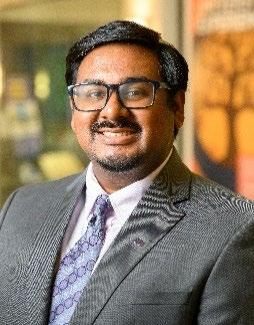
"I believe that an effective educator imparts knowledge while inspiring curiosity and independent exploration. My teaching philosophy is rooted in the idea that education is a transformative journey that empowers students to not only comprehend complex theories, but also develop critical thinking skills and discover practical applications that extend beyond the classroom. I create an inclusive and collaborative learning environment where students feel empowered to engage in active discussions, challenge assumptions, and develop their own analytical frameworks. I encourage my students to cultivate a growth mindset, and to be proud of how much they have learned and grown during our time together. Most of all, I stress to my students that they are all capable of academic excellence. "
ECO 3220. Labor Economics. A study of how wages and employment are determined in various types of labor markets. Topics will include labor-related issues such as the causes of unemployment, federal labor laws, unionization, immigration, and labor markets across the globe. Further, major government policies that affect labor markets such as the minimum wage and income and payroll taxes are also examined. Prerequisites: ECO 2030 and ECO 2050. Four credits.
ECO 3310. Money, Banking, and Financial Markets. A study of money, credit, and banking, with emphasis on the Federal Reserve System and current trends in monetary control. Students will gain a better understanding of the banking environment and bank managers’ strategies. Prerequisites: ECO 2030 and ECO 2050. Four credits.
ECO/GBS 3400. Free Enterprise and Capitalism. An analysis of the merits and ethical foundations of free enterprise and capitalism. The principles of free enterprise will be applied to a variety of historical current issues ranging from business regulation and labor markets to healthcare, economic development in the Third World, and the environment. Prerequisites: ECO 2030 and ECO 2050. Four credits.
ECO 3120. Business Analytics with SQL. An introductory Structured Query Language (SQL) and database course that uses mock business information from a real company. Students take on the role of a boutique consulting firm and focus on foundational SQL functions
ECO 3410. Environmental Economics. An economic analysis of issues involving environmental problems, management, and policies. Topics include resource scarcity and allocation, externalities, public goods, the tragedy of the commons and property rights. Regulatory versus market approaches as solutions to environmental problems will be examined and applied to current
Dr. Rivin Perinchery
Prof. Brandon Dragone
environmental policy issues. Prerequisites: ECO 2030 or ECO 2050. Four credits.
ECO/GBS 3460. International Economics. An overview of international trade and finance. Students will learn comparative advantage theories and practical lessons for exporting. Other topics will include national trade barriers and the WTO, trade deficits, exchange rates, and the debate about trade’s impact on labor and the natural environment. Prerequisites: ECO 2030 and junior standing or permission of the instructor. Four credits. [ITG]
ECO 4150. Econometrics. This course studies the application of quantitative methods to economic issues. Topics covered include simple and multiple linear regression, model resting and diagnostics, qualitative choice models, panel data, and models of volatility. Emphasis is placed on understanding and effectively communicating model results. Prerequisites: ECO 2030 or higher, and STS 2020 or higher. Four credits.
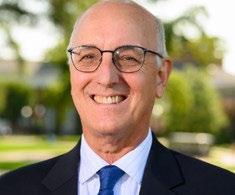
“My goal in teaching is to be an effective and accessible professor who inspires students to learn and to prepare themselves to make a difference in the world according to their own vision. I enjoy teaching. I particularly enjoy teaching rigorous classes with high levels of student engagement, and over time I have developed methods to create those types of classrooms.
A particular challenge is stimulating motivated students with new ideas and sophisticated interpretations of concepts while also keeping the materials accessible to all students. I attempt to do this using scaffolded lectures and by providing multiple opportunities to learn the material.
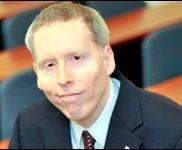
Dr. McCully is an Associate Professor of Economics and Director of the International Business Program. He has visited almost 20 countries, including professionally related travel to Spain, the United Kingdom, Germany, Poland, Mexico, Canada, and South Korea.
His research interests include cultural differences in business management, and the comparative macroeconomics of banking crises. He teaches several internationally oriented classes and has been honored with the Meredith Clark Slane Distinguished Teaching Award.
Dr. McCully enjoys coaching students on the multiple ways they can meet globalization’s opportunities and challenges and achieve personal success. He mentors students as they pursue study-abroad opportunities and prepare for local internships. And regardless of their ultimate career path, he is proud to help students become more informed and engaged citizens of the world.
ECO/GBS 4430. Comparative Economics. A comparison of capitalism and socialism, both in theory and practice. Students will gain an understanding of the economics and ways of doing business of the United States, Japan, Germany/EU, Russia, China, Mexico, and other representative countries. Prerequisites: ECO 2030 and senior standing. Four credits. [ITG]
ECO 4444. Independent Study. Admission by permission of Chair of Economics to undertake an assignment planned in advance. One to four credits.
ECO 4811. Internship for Credit. One to twelve credits.
Dr. Michael McCully
Dr. Chris de Bodisco