EDUCATION COMPENDIUM 2026


2026 will represent a significant step forward in our education program across both residential and home care.
The introduction of the Aged Care Act (2024) effective from 1 November 2025 bought with it enhanced quality standards and the support at home program. While baseline training occurred with staff in the lead up to 1 November last year, 2026 will see this new syllabus rolled out through our training programs for both new staff and refresher training for our existing staff. To complete these changes smoothly and deliver a new aged care landscape, now more than ever, education and training are key to ensuring our people feel confident, safe and secure in their roles. This will enable them to give industry leading care to those who chose to live in our homes.
To achieve this, we are making some key changes to our education framework. Complementing our long standing commitment to both classroom and bedside teaching, our new training syllabus sees a transition into digital learning, supported by the learning management system within our Dayforce human capital management system which is being rolled out early in 2026.
With the transition into the digital learning space, our educators then have increased capacity to provide additional training in key areas such as dementia care and palliative care – enhancing the standard of care that we deliver to our residents and clients. The new standards also bring the requirement to have competency based training in many key areas – I have been a long standing advocate for competency based assessments, and look forward to this requirement increasing staff competencies both within Hall & Prior, and across the aged care industry.
All these changes will require new systems and processes to flow through to the front line’s delivery of care which can only be met through diligent and
ongoing education and training sessions, delivered to the correct people in a timely and succinct manner.
I am proud to witness the ongoing training in the iCare Clinical Management system which has demonstrated great benefits to residents, optimising workflows, time management, data collection and information storage and accessibility. All these aspects lead to enhanced care outcomes for our residents.
Our Nutrition and Hydration teams will forge ahead to evolve the dining experience in our homes following the Dining & Meal Time Experience guidelines that have been delivered from ACQSC.
While client and resident care is our focus, we need to ensure that our staff can provide this care in a safe manner. I am pleased to support key initiatives in training in work health and safety, including manual handling that will be rolled out through the year.
Education for our staff is of paramount importance at Hall & Prior, and remains vital to the future growth and success of our business.
We are proud of the many options we provide for our people to learn and expand on their own career journey, as we continue to invest heavily in the ongoing growth of our staff.
GRAEME PRIOR AM Chief Executive Officer
The year 2025 has been a pivotal one for workforce education and professional development at Hall & Prior’s New South Wales homes. With the introduction of the Aged Care Act 2024 and the Strengthened Aged Care Quality Standards in November, the focus has remained on building capability, enhancing compliance, and supporting staff to deliver person-centred, safe, and evidence-based care. Education continues to be central to this, ensuring every team member is equipped with the knowledge and confidence to meet the evolving needs of our aged care residents.
This year marked a major step forward in how education is delivered across the organisation, with Hall & Prior expanding the use of ALI’s online learning platform and the Dementia Training Australia (DTA) online modules for all staff.
The ALI platform has streamlined education on the Strengthened Quality Standards, allowing staff to complete education at their own pace. This flexibility has made learning more accessible for shift workers, ensuring no one misses essential education due to rostered hours or location.
The Dementia Training Australia modules have also been integrated into the learning framework to strengthen knowledge and practical skills in dementia care. These evidence-based modules help staff understand communication strategies, behavioural support, and person-centred approaches to cognitive impairment. Virtual reality workshops are being rolled out in late 2025 and 2026.
Together, these platforms represent a new way forward in learning a blended model that combines digital education with face-to-face workshops and practical competency assessments. This approach promotes ongoing learning, reflection, and application in practice, ensuring staff not only learn but can demonstrate and sustain new skills in their daily work.
The Learning and Development (L&D) Team continues to play a vital role within Hall & Prior, leading education delivery, supporting clinical excellence, and maintaining high standards of care through structured learning programs.
Throughout 2025, the L&D team has run a comprehensive calendar of planned education sessions within homes and across regions, as well as targeted professional workshops such as Registered Nurse Days, Personal Care Worker (PCW) Days, and PCAP Education Days. These sessions provide opportunities for staff to engage with peers, refresh clinical skills, and discuss case-based learning relevant to their roles.
Recognising the importance of a strong start for every employee, Hall & Prior has expanded its orientation and onboarding program across NSW. Orientation is now delivered through three pathways, North, South, and Online to ensure every staff member receives consistent, high-quality induction regardless of their location. These sessions provide a comprehensive
introduction to the organisation’s values, standards, and expectations. They cover the Code of Conduct, Incident Management and SIRS, Person-Centred and Culturally Safe Care, and the Strengthened Quality Standards, setting new employees up for success from day one.
A key education priority this year has been preparing all staff for the implementation of the Strengthened Aged Care Quality Standards. The Learning and Development team has delivered targeted sessions and resources to help staff understand the Standards’ intent, particularly in areas such as governance, consumer dignity, clinical safety, and continuous improvement.
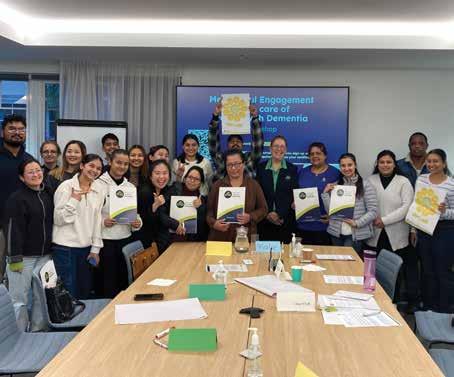
competency-based, ensuring that learning outcomes translate into safe, confident practice. Staff are assessed through observation, demonstration, and reflective discussion to verify skills and maintain professional standards.
Hall & Prior hosted a two-day Education Conference for Senior Management, to explore practical strategies for embedding the new Standards and leading teams through change. The conference reinforced the link between education, leadership, and quality care outcomes.
Hall & Prior’s education capacity has continued to expand in 2025 with the addition of new team members. Clinical Nurse Educator Bibek Thapa joined Liz Zhang in NSW, providing enhanced support and coverage across homes. Their combined clinical expertise and commitment to hands-on teaching have greatly strengthened learning delivery across the state.
The company has also welcomed new educators from Blue Haven and Lake Cathie, expanding regional capability and ensuring these homes have access to on-site educational support.
All education across Hall & Prior remains
Looking ahead, education in NSW will continue to evolve through:
• Expanding online learning opportunities and blended education models.
• Strengthening leadership and management development.
• Evaluating education outcomes to demonstrate measurable improvements in care quality.
In summary, 2025 has been a transformative year for education in NSW. With digital learning platforms like ALI and DTA enhancing accessibility, expanded orientation pathways, and a dedicated Learning and Development team leading workshops and professional days, Hall & Prior continues to invest deeply in its people.
Through innovation, collaboration, and commitment to the new Standards, Hall & Prior is not only meeting compliance expectations but also shaping a future where continuous learning is embedded in every aspect of care ensuring that residents receive the highest quality support, delivered by confident and capable staff.
If one word could define 2025 for Learning and Development, it would be change. This year brought sweeping reforms, bold innovations, and a renewed focus on excellence in aged care education.
With the New Aged Care Act and Strengthened Aged Care Quality Standards front and centre, planning and preparation were key. In November, the previous Core Training model was decommissioned and replaced with a comprehensive, reimagined program, led by Mina Varsani (Project Manager, Learning Academy) and WA & NSW L&D teams.
The new Core Training aligns with ACQSC compliance requirements and incorporates:
• ALIS Online Platform – Governmentprovided, easy-to-access learning
• Onsite Competency Assessments –Practical skills in real settings
• Education Onboarding Packs – A warm welcome for new employees
These changes will guide the organisations into 2026 with a focus on knowledge, competency, and compliance of our staff and ensure that our consumers receive the safe and high-quality person-centred care.
L&D-LED, FACILITATED, OR SUPPORTED TRAINING IN 2025: A SNAPSHOT
Core Training (General)
This mandatory training was delivered twice monthly at Karingal Green and Braemar
Cooinda, by the L&D Team. In total 173 hours of face-to-face learning was delivered to 619 staff.
Kitchen Core Training
A specialised version of Core Training for kitchen staff was created and delivered in collaboration with Kevin Fitzgerald and FF Team, the NHSP team, Director of Food Service, L&D at Fresh Fields, with 94 staff receiving in-person training in 2025.
PCAP - Personal Carer Advanced Practice
This four-day program continued throughout 2025, with 118 staff attending training days across metro and South-West regions. PCAP upskills carers by enhancing their clinical and care knowledge and skills. Special focus on:
• Vital signs Assessment
• Wound Care
• Dining Support
• Medication assistance/medication competency
Back to Basics
A six-weekly training day for White Oak Support at Home staff, held at Joondalup, with 63 support workers receiving training.
Specialist Training Days: Clinical Initiated and organised by WA Clinical Educator Pauline Watson, these sessions were designed to meet identified staff training needs through collaboration with Resource Team stakeholders. Each day featured multiple specialist trainers, engaging content, and interactive group activities:
• RN & EN Falls Prevention & Clinical Documentation Study Day - 7 Aug 2025 Presented by Clinical Educator, Physiotherapist, Pharmacy, Quality,
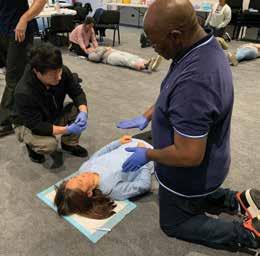
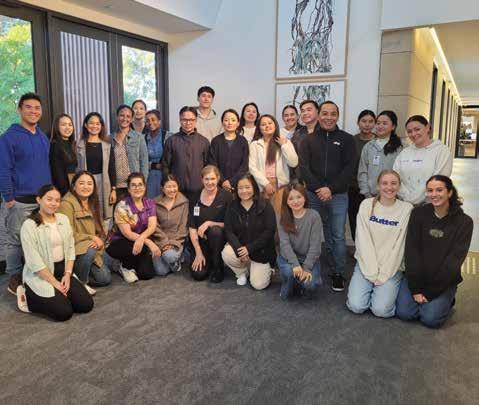
and CDT Team. Topics included falls risk identification, medication & falls, prevention planning, responding to a fall, and documentation.
• RN & EN Clinical Deterioration Study Day - 18 Sept 2025 Delivered by Clinical Educator, Pharmacy, CD Team, Quality Team, Speech Pathologist, Nurse Practitioner and MPaCCS. Covered identification, assessment, symptom management, clinical documentation, AN-ACC, palliative care, and NIKI pump training.
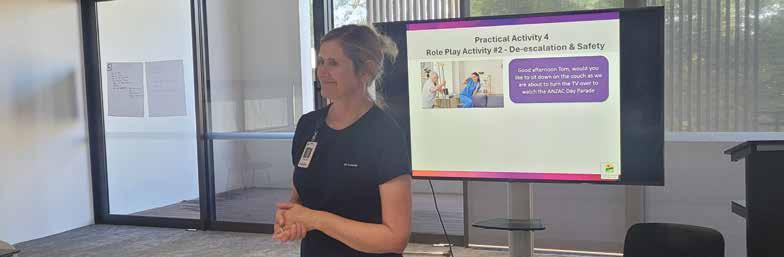
• Dementia Cognitive Impairment & Changed Behaviours Workshop - 28 July 2025 Presented by Clinical Educator and CD Team. Topics included dementia and the brain, cognitive changes, communication challenges, behaviour management, engagement strategies, depression/apathy, de-escalation & safety strategies, and documentation.
Specialist Training Days: Non-Clinical
Because every role matters:
• Cleaner Specialist Training Held four times a year providing cleaner staff with specialised information on scope and duties, hazard & incident reporting, dementia overview, chemical safety, and product knowledge (ECOLAB, Rubbermaid).
Placements are a solid investment in the future, giving students hands-on experience that bridges theory and practice. For us and
the industry, they bring fresh ideas, strengthen workforce pipelines, and ensure a steady flow of skilled, compassionate professionals ready to meet the growing demand for quality aged care.
In 2025 alone, we proudly supported over 500 student placements across our facilities - partnering with universities and Registered Training Organisations (RTOs) to nurture the next generation of aged care professionals.
After a successful trial, LinkedIn Learning is now officially available to Hall & Prior staff for those in corporate roles, management, and for team leaders (clinical and nonclinical), and ICT staff. This platform offers thousands of expert-led courses covering leadership, technology, communication, and professional development - helping our teams stay ahead, build new skills, and grow their careers.
2025 has been a year of innovation, collaboration, and impact. Together, we’ve built a stronger foundation for compliance and care excellence. Thank you to all teams and partners who contributed to these achievements. Here’s to an even brighter 2026!
The Learning and Development teams in NSW and WA are committed to delivering a unified approach to staff education, ensuring that each team member has access to the tools and resources they need to thrive. Our approach is centred on fostering continuous professional development across all areas of service delivery, with a strong emphasis on competency-based learning to ensure that skills and knowledge are developed in a way that aligns with both individual and organisational goals.
At the core of our educational approach is the adoption of a competency-based learning framework. This framework ensures that staff not only gain theoretical knowledge but are also able to demonstrate the practical skills required for their roles. By focusing on specific competencies - whether clinical, administrative, or operational - we can create a more structured and personalised learning journey for each team member. The benefits include:
• Clear Learning Outcomes: Staff know exactly what competencies they need to master, which helps them stay focused and motivated.
• Personalised Development: Tailoring training to individual competency levels ensures that each person progresses at their own pace, receiving the support they need at each stage.
• Improved Job Performance: Competencybased learning directly translates to enhanced performance, allowing staff to confidently apply new skills in their everyday roles.
• Ongoing Assessment: Regular competency
assessments help identify areas for improvement and ensure that learning is effective and relevant to the evolving needs of the aged care sector.
As we move forward, competency frameworks will continue to evolve, integrating both formal education and on-the-job learning to create a holistic development model.
We recognise that onboarding and orientation are critical moments in the employee journey, setting the stage for success and long-term engagement. As part of our commitment to best practice, we are continuously refining our onboarding processes to ensure they are as seamless, informative, and welcoming as possible.
Our onboarding program is designed to equip new staff with the essential knowledge, skills, and understanding they need to excel in their roles. It focuses not only on essential compliance training but also on:
• Introduction to Culture and Values : New employees are introduced to the organisation’s culture, values, and mission, helping them align their personal goals with the organisation’s overarching vision.
• Role-Specific Training: In addition to general orientation, staff will receive rolespecific training that addresses the unique responsibilities of their position and the skills required to perform their tasks effectively.
• Mentoring and Peer Support: To ease the transition into their new role, new staff members will be paired with a mentor or “buddy” who can provide ongoing guidance, answer questions, and help them integrate into the team.
• Clear Pathways for Progression: From day one, new employees will have visibility into their potential career pathways within the organisation, making it clear that professional growth is supported and encouraged.
As part of our ongoing commitment to best practice in professional development, we are transforming Core Training into an accessible online process through the ALIs platform. This platform offers staff a contemporary, flexible learning experience that is available anytime and anywhere, allowing them to complete their training in a way that fits their schedule.
The online platform will ensure that all training not only meets compliance requirements but also enhances staff skills in a way that is aligned with the Strengthened Aged Care Standards. With continuous updates and easy access to the most current information, the ALIs platform will be a central hub for:
• Mandatory Training: All staff will be able to complete required training modules on topics such as infection control, safeguarding, and privacy policies.
• Optional Skill Development: Staff will have access to a range of elective courses that enhance their knowledge and expertise in areas of personal interest or career development.
• Progress Tracking: Management/ Learning and Development teams and staff can easily track progress and completion of required courses, providing both accountability and motivation.
We will continue to offer a wide range of targeted educational opportunities designed to meet the unique needs of specific roles within the organisation. These include, but are not limited to:
• RN Days: Focused professional development for Registered Nurses, offering the latest insights and training on clinical practices, leadership, and patient care.
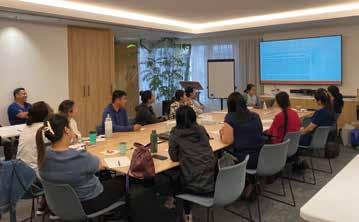
• PCAP Days: Targeted sessions for Personal Care Assistants, where staff can engage in practical workshops and role-specific skillbuilding activities.
• Chef and Kitchen Staff Sessions: Specialised training for kitchen and catering staff, with a focus on nutrition, food safety, and culinary skills tailored to aged care.
• Wellbeing and Allied Health Days for PCWs: Programs designed to support the wellbeing of Personal Care Workers, with an emphasis on mental health, stress management, and resilience.
• DTA online modules – Providing staff with best practice and knowledge and how to care for individuals with a cognitive impairment.
To keep all staff informed and engaged with emerging trends and essential topics, our “Thursday Thoughts” series will continue to deliver timely updates directly to home teams. These bite-sized pieces of information will cover Hall and Prior changes and updates, industry developments, new research, and best practices in aged care, ensuring that everyone stays on the cutting edge.
Together, we are building a future where professional development is seamless, relevant, and empowering. By focusing on competencybased learning, improving our onboarding processes, and embracing flexible training platforms, we are paving the way for ongoing growth and excellence in aged care.
Identification of Needs
Quality / MOA / Internal
Education Needs Survey
Audits / Data Analysis
Incident Analysis / Feedback & Complaints
All meetings
Performance Review
Annual Planner
Strategies
Orientation Program
Yearly Clinical Education Planner
Formal and informal group sessions
Education Days / as per Annual Calendar
HP Learn - E-Learning
Handover Education / Toolboxes
External Education
One to One discussions
Implementation
Monthly Calendar
Yearly Education Calendar
All Education Request to: Alison.Davis@hallprior.com.au
Evaluation
Evaluation of session / topic / forms
Benefits for Consumers
Changes in practice
Changes in policy
Discuss weekly by DON / DDON / CNM
And / or (if required) CQC
Learning and Development
Discuss weekly by DON / DDON / CNM And / or (if required) CQC and Learning and Development Manager
Date / time / number of staff
Attendance Form
Monthly Reports
Core Training Matrix ALL UPLOADED TO SHAREPOINT
Report Summary to Home Management Meeting
Education Needs Survey
1 2 3
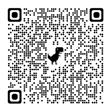
It is important that food handlers and their supervisors have the skills and knowledge to handle food properly so it is safe to eat. All employees should be trained in food safety and hygiene or have appropriate skills and knowledge before they start handling food. Food Handler Basics Training is To commence training either follow the link Food Handler Basics Training https://www.foodauthority. nsw.gov.au/training/foodhandler-basics-training or use the QR code
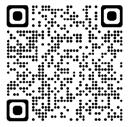
The training will take about an hour to complete. Knowledge will be assessed in a quiz at the end. You must answer all questions correctly and provide your email address to receive your certificate. Provide a copy of the certificate to your DON/ DDON/CNM.
an online training course that covers the basic knowledge requirements for food handlers in 3.2.A of the Food Standards Code. Participants are to work through 7 food safe handling modules, and an assessment at the end. A Certificate will be given once a score of 100% is achieved.
• Pre-requisite of employment that relevant applicant holds Food Handler Basics/Food Safety Certificate or is willing to undertake online training
• Link can be sent to applicant with onboarding paperwork to completed prior to commencement
• All roles that are involved in any Food Handling must complete online training during onboarding and annually. This includes:
• DON/DDON/CNM
• Chefs, cooks, kitchen hands
• RN, Team Leaders/ AIN
• Lifestyle Officers
• Maintenance Officers
• Staff to print and provide copy of certificate to DON/DDON/CNM
• Staff are to be paid for time to complete online course = 1 hour
• Administration staff to enter data onto My Roster
• All staff that are involved in Food Handling are required to complete online Food Handler Basic training annually
1. All learning resources are now able to be accessed via the HP Learn tile (see below). Bookings to education days can be made via the L&D Calendar & Booking icon.

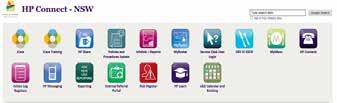



L&D Calendar & Booking Icon
2. Click on the relevant tile to access the learning resources that you require. Once you click on the tile, the items will appear at the bottom of the screen.


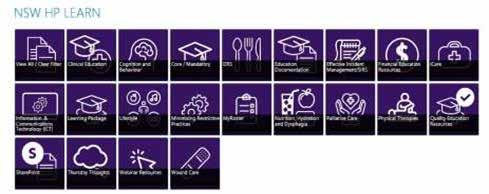


The Education Needs Survey is a tool that is used by the Learning and Development team to assess the skills and knowledge gaps of staff and identify where the training is needed.
The Annual Education Needs Survey is completed each October by staff to gain views on education held, topics of interest and opportunities to improve the education program.
This survey results report informs the program for 2026 and provides direction for the
development of the Education Compendium/ Calendars 2026.
The Education Needs Survey was developed and distributed to all staff within Hall & Prior via the Survey Monkey Platform and results were analysed following a two-week completion time frame.
The Learning and Development team seek staff evaluations at every education session. Micro adjustments can then be made for following sessions. Additionally, at any time staff can provide feedback via a feedback form via email.
PLEASE RANK IN ORDER FROM 1 TO 7 WHICH MODE OF EDUCATION SESSIONS YOU PREFER
In-person Live Workshops
Online - live presentations
Online - recorded video
E-learning (online)
Self-directed/paced learning
Toolbox Learning
Mentoring/Coaching
External Courses
WHICH LEARNING TOPICS DO YOU FEEL WOULD ENHANCE YOUR SKILLS AND KNOWLEDGE TO ASSIST YOU IN YOUR ROLE?
Specialist study day
Preventing Pressure Injuries
Wound Care
First Aid & CPR
Conflict Resolution
Managing my Outlook Mailbox
Palliative Care and End-of-life
Clinical Deterioration
Preventing Falls
Strengthened Standards
Bereavement Support
Mental Health Care
Clinical Documentation
Trauma aware & healing informed care Leadership
Dementia Care Time Management
LGBTQIA Awareness
Aboriginal and Torres
PLEASE INDICATE HOW YOU COMPLETED CORE TRAINING IN 2025
Face-to-face
Online
E-Learning (ALIS online) and face-to-face - Blended
E-Learning (ALIS online)
Self-Directed Learning Package (SDLP)
I did not complete Core Training this year
PLEASE INDICATE HOW YOU COMPLETED ORIENTATION IN 2025
Face-to-face
Online
E-Learning (ALIS online) and face-to-face - Blended
E-Learning (ALIS online)
Self-Directed Learning Package (SDLP)
I did not complete Core Training this year
• Core Training (General)
• Kitchen Core Training
• Personal Carer Advanced Practice PCAP
• Back to Basics - Support At Home
• Behaviour Support & Management
• Train the Trainer – Changed Behaviour workshop (DTA)
• Activities of Daily Living (ADLs)
• Clinical Deterioration Study Day
• Falls Prevention Management & Clinical Documentation Study Day
• Dementia, Cognitive Impairment, and Changed Behaviour Workshop
• Psychotropic Medication and Chemical Restraint Workshop
• Wound Education Days 1&2 (EN & RNs)
• Wound Education Days 1&2 (DDON & CNMs)
• Pressure Injury Awareness Day
• DRS Training
• Nutrition Support Training
• Dysphagia Screen Training
• MyFN Training
• iCare Basics, Medication & Advanced Sessions
• Monthly toolboxes
• Therapy Assistant Study Days
• Allied Health Study Days
• TCP Training
• MedPoint Training
• Fire Awareness & Equipment
• Fire Warden Training
• Wheelchair Restraint Training
• Cleaner Specialist Training
• Maintenance & Garden Training
• English Club Newsletter (English language support)
JANUARY 2026 - DECEMBER 2026
Monthly Toolbox Sessions
JANUARY
TOPICS
Dignity of Risk and Decision-Making
Customer Service
MARCH
TOPICS
Recognising Deterioration
Pain Management
Complaints and feedback management
MAY
TOPICS
Intimacy and Sexuality
Dementia & Understanding Behavioural Changes
Delirium
JULY
TOPICS
Antibiotics, Antimicrobial Resistant and Stewardship
Maintaining a Clean, Safe and Hygienic Environment
FEBRUARY
TOPICS
Communication
Consent to Treatment
Responding to medical emergencies
APRIL
TOPICS
Falls Prevention and Management
Wellness and Reablement Approach to Purposeful Ageing
JUNE
TOPICS
Psychotropic use
Minimising Restrictive Practices
Mandatory Reporting
AUGUST
TOPICS
Promoting Mental Health and Wellbeing
Loneliness and Social Isolation
Elder Abuse
SEPTEMBER
TOPICS
Bullying, Harassment and Discrimination
Open Disclosure and Apology
Privacy and Dignity
NOVEMBER
TOPICS
Choking Management
Fluid Balance
OCTOBER
TOPICS
Unplanned Weight Loss
Dysphagia and IDDSI Framework
DECEMBER
TOPICS
Quality of Life
Asthma and COPD
All sessions are conducted monthly as part of staff development program.
STRENGTHENED AGED CARE QUALITY STANDARDS
JANUARY
STANDARD 1 - THE INDIVIDUAL TOPICS
Consumer Cultural Safety/Person Centered Care/Meaningful Activities/Trauma informed care
Supported Decision-Making - understanding the roles, responsibilities and duties and how to apply the principles in day-today practice.
Presentation
Toolbox OPAN Webinar
STANDARD 3 - THE CARE AND SERVICES
TOPICS MODE OF DELIVERY
Creating effective Care Plans Toolbox/ Presentation
Recognising and responding to deterioration Toolbox/ Presentation
MAY
STANDARD 5 - CLINICAL CARE
TOPICS
Performing clean procedures and aseptic techniques
Monitoring and responding to pressure injuries and wounds
Continence management and minimising incontinence associated dermatitis
MODE OF DELIVERY
Presentation/ SDLP
Presentation/ Toolbox
Presentation/ Toolbox
FEBRUARY
STANDARD 2 - THE ORGANISATION
Management of Risk Toolbox
Feedback and Complaints Toolbox
Incident Management/Open Disclosure Toolbox
STANDARD 4 - THE ENVIRONMENT TOPICS
Identifying Environmental Risk Toolbox
How to identify and manage infections Toolbox
STANDARD 5 - CLINICAL CARE TOPICS
Safe administration of medications Toolbox
Psychotropic Medications Toolbox
Polypharmacy Toolbox
STANDARD 5 - CLINICAL CARE
TOPICS
Monitoring and reviewing falls and maximising mobility
Assessing pain - when the individual experiences communication challenges
MODE OF DELIVERY
Presentation/ Toolbox
Presentation/ Toolbox
Planning, monitoring and responding to individual’s needs for pain relief Toolbox
STANDARD 5 - CLINICAL CARE
TOPICS MODE OF DELIVERY
How to identify and respond to complex clinical needs for individuals with cognitive impairment
How to prevent and support changed behaviours in the older person with cognitive impairment
Communicating with individuals and families to develop behaviour support plans
Presentation/ Toolbox
Presentation/ Toolbox
Presentation/ Toolbox
STANDARD 6 - FOOD AND NUTRITION
TOPICS MODE OF DELIVERY
Partnering with older people on their food, nutrition and dining needs Toolbox
Recognising clinical changes that impact food intake and nutrition and how to support the older person
Toolbox
The dining experience Presentation
STANDARD 5 - CLINICAL CARE
TOPICS
MODE OF DELIVERY
Mental Health - Promoting and mental health and wellbeing Toolbox
Mental Health - recognising deterioration in mental health and responding to distress
Presentation/ Toolbox
Sensory Impairment - implementing strategies to maximise individual’s independence, function and quality of life Toolbox
STANDARD 5 - CLINICAL CARE
TOPICS
Recognise and preparing individuals for palliative care and end of life needs
Providing and supporting individuals and their families during end of life care
MODE OF DELIVERY
Presentation/ Toolbox
Presentation/ Toolbox
STANDARD 7 - THE RESIDENTIAL COMMUNITY
TOPICS
Minimising boredom and loneliness, enabling individuals to participate in the residential community
MODE OF DELIVERY
Presentation/ Toolbox
Transition in care - your role Toolbox
Across Western Australia’s vast coastal stretch from Joondalup to Bunbury, Hall & Prior is playing a crucial role in supporting older Australians as they move from hospital to home - or to their next stage of care. Through its highly regarded Transitional Care Program (TCP) and Time to Think (TtoT) Program, Hall & Prior provides a compassionate, clinically supported bridge between acute hospital care and long-term recovery.
With 117 dedicated transitional care beds across six residential locations and two community-based services, the organisation has emerged as a key partner in easing the pressure on WA’s hospital system. At a time when emergency departments face increasing demand and bed availability continues to tighten, Hall & Prior’s programs are helping to reduce overcrowding while ensuring that people have the time, space, and support they need to recover safely.
The Transitional Care Program (TCP) and Time to Think (TtoT) program are designed for people who are medically stable but not yet ready to return home safely. Instead of remaining in hospital and occupying acute care beds, clients enter a restorative, supportive environment where recovery is the priority.
Hall & Prior provides a comprehensive, person-centred approach that emphasises:
A strong clinical focus underpins both programs. Clients receive targeted, goaloriented rehabilitation aimed at improving strength, mobility, confidence, and functional independence. The aim is not only to recover but to thrive.
A multidisciplinary team ensures each person receives holistic care that supports both physical and emotional wellbeing. Services include:
• Physiotherapy: promoting mobility, balance, and strength.
• Occupational Therapy: supporting skills for daily living and independence.
• Social Work: helping with emotional support, planning and navigating future care options.
This collaborative model ensures each client’s recovery trajectory is supported from all angles.
The Time to Think Program (TtoT) is a distinctive Hall & Prior initiative that offers clients the opportunity to pause, reflect, and consider their long-term options after hospital discharge.
In a warm, safe, and compassionate environment, clients are supported to explore questions such as:
• Can I realistically return home?
• What support will I need to stay safe and independent?
• Would a different living arrangement better support my wellbeing?
Throughout their stay, each client receives individually tailored care that respects personal preferences, lifestyle, and goals. The emphasis is on client-centred decision-making, ensuring individuals feel informed, supported, and empowered.
While each person’s goals and circumstances differ, both TCP and TtoT hold a shared priority: supporting people to return home whenever possible.
The Hall & Prior team works closely with clients and their families to plan a safe, sustainable discharge. This may involve home modification recommendations, equipment provision, coordination with community services, and ongoing therapy referrals.
The result is a smoother transition, reduced readmissions, and greater long-term independence.
With demand for acute hospital beds rising statewide, Hall & Prior’s suite of transitional care services is
making a measurable impact. By providing 117 beds dedicated to recovery and reablement, the organisation is helping reduce hospital congestion, shorten lengths of stay, and improve flow across the healthcare network.
For individuals, the benefits are equally profound - more time to heal, personalised care, and a better chance of regaining independence.
What sets Hall & Prior apart is the balance between clinical excellence and compassionate care. Clients are welcomed into environments that feel safe, warm, and personal - far from the intensity of hospital wards. Staff take the time to listen, understand personal goals, and tailor support to each individual’s needs. Whether someone requires intensive physiotherapy, help planning for a move into
residential care, or simply a little confidence before returning home, the team ensures that every step is guided by dignity, respect, and kindness.
Hall & Prior’s Transitional Care and Time to Think programs represent an essential link in Western Australia’s care continuum. By blending rehabilitation, multidisciplinary support, and client-centred planning, the organisation is empowering people to rebuild their independence - while also relieving pressure on hospitals and strengthening community care pathways.
For many Western Australians, these programs are more than services - they are a vital second step toward recovery, choice, and a safer, more confident return to everyday life.
Documentation continues to be highlighted as a matter of importance in aged care especially with the new Aged Care Act and Strengthened Standards that took effect on 1st of November 2025.
Understanding how to navigate and use iCare is essential to ensure standardised and accurate documentation of clinical care.
The Clinical Documentation Team continue to deliver formalised education sessions. As promised, improvements have been made this year including education delivery, content, and practice scenarios.
Venues of education is now alternating per month between Braemar Cooinda and Karingal Green in WA and Georges Estate and Clover Lea in NSW which encourages face-to-face attendance for all our staff.
Full day RN/EN iCare education is delivered every First Tuesday of the month in WA, see calendar below for NSW dates.
Third Tuesdays of the month, we have 2 sessions of iCare Basic for care and therapy staff, and 1 session of iCare
medication and MedMobile for medication competent carers.
MS Teams attendance is available as well for all our regional homes.
Please reach out to James Aguirre/Rojina Sthapit directly for any specific in-home education requests for all Metro and Regional homes. On October 2025, we also welcomed members from the NSW Clinical Documentation Team in WA.
They attended WA iCare RN/EN education to help mould and standardise iCare education in NSW.
As always, the Clinical Documentation Team are always open to feedback so do not hesitate to reach out to James Aguirre (WA
Clinical Documentation Manager),Bishal Shrestha(NSW Clinical Documentation Manager) and Caroline McWhinnie (Director of Clinical Documentation).
The Allied Health team have been busy throughout 2025
Education & Training:
• 2 x Allied Health Study Days
• 2 x Therapy Assistant/PCW (Therapy) Study Days
• 1 x Remote Therapy Assistant/ PCW (Therapy) Study Day
• 2 x HDS-R training days for OTs
• Monthly Kitchen Core Training
• MMQA and My FN training across all sites
• Assisted with falls prevention and management study days
• Assisted with Stop Pressure Injury Day
• The whole AH team have attended requests across homes to strengthen RN, PCAP, care and therapy staff knowledge in food and nutrition, falls prevention, cognitive strategies, pressure care and seating prescription.
• Celebrated Speech Pathology Week, Malnutrition Week, World Social Work Day, World Physiotherapy Day, and Occupational Therapy Week
Conferences:
• Attended and exhibited at PT Career Connect at Curtin University
• Attended OT Australia’s CPD Empower - Applying the new Aged Care Quality Standards in Occupational Therapy Practice
• Attended DA symposium
On the 8th April 2025, we had our first Allied Health Study Day of 2025. This day is organised by the Allied Health Manager and is held twice a year for our Allied Health Team (Occupational Therapists, Physiotherapists, and Social Workers) and Nutrition Hydration Team (Speech Pathologists and Dietitians) that work across residential, wellness, transition care program and Home Care. The day consisted of a variety of presentations covering a broad range of topics that are current and relevant for the team. This included internal presentations by Daniel Hitchcock, Emily Preece, Caroline McWhinnie, and James Aguirre on the strengthened quality standards, corporate update and clinical documentation. As well as external presentations by Advocare, Unicare Health, Sleep Electric, and Parkinsons WA. A standout presentation was by Iris Barten (Social Worker) who presented on self-care and understanding grief and loss. Iris is a very engaging presenter who made a difficult topic very interesting and informative. Overall, the feedback from the day was positive and the team commented that they enjoyed the variety of presenters and
having the opportunity to learn with the whole Hall & Prior team.
On the 28th October 2025 (during Occupational Therapy Week), we had our second Allied Health Study Day. We had 40 staff attend with most of the presentations being delivered by external presenters. Some highlights include presentations on unpacking the support at Home Program (Lauren Hennesy – OT from Monash University), Vestibular Dysfunction in older adults (Chris Owens – A/Head of Department – Physiotherapy Armadale Kalamunda Group), Understanding styling and fashion with older adults (Liz Mudri – Social Worker), the role of Allied Health in Suicide Prevention (Iris Barten – Social Worker) and Showroom at Home (Unicare Health Team).
On the 29th and 30th July 2025, we had our annual Therapy Assistant/ Personal Care Worker (Therapy) Study Days. There were over 60 participants across the two days with attendees from all of our 25 aged care homes. Many topics were covered across the two days including IDDSI resources, recipe cookbook,
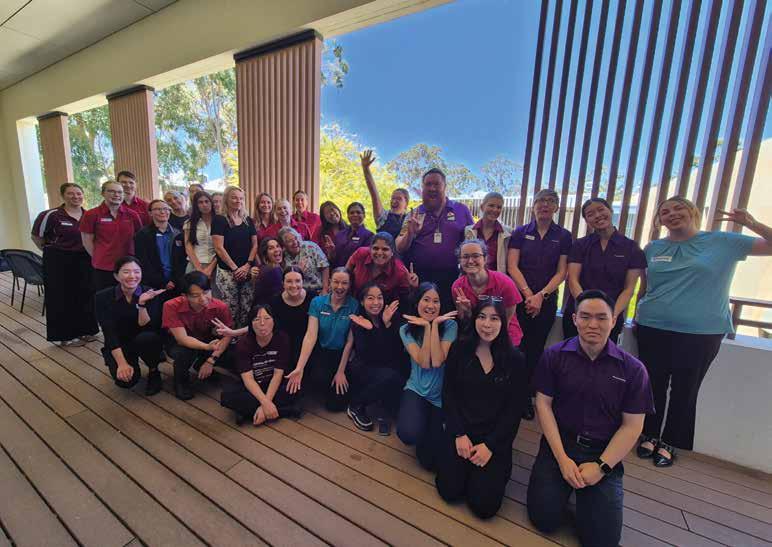
incorporating High Protein High Energy (HPHE) in group activities, cognitive stimulation therapy, strength exercises, beauty workshop, behaviours, activity charting, palliative and self-care. The team had positive feedback from the days and stated that they enjoy having the opportunity to continue learning and get together as a team. These days wouldn’t be possible without the support of the team members who presented (Kylie Choong (OT), Antonia Bicanic (OT), Isaac Gibbs (PT), Elliot Ashbil (Dietitian), Lekshna Balasubramaniam (SLP), and Pauline Watson (L&D)).
On the 29th October 2025, we held our first rural Therapy Assistant/ Personal Care
Worker (Therapy) Study Day. This was a repeat of the day held in Perth, however, designed to be presented over teams. This enabled the rural teams to interact directly with the presenter and be more involved. The feedback was positive, and we hope to have more team members attend in 2026.
The Occupational Therapists across WA and NSW attended training by Terrie Simpson on the Hierarchic Dementia Scale-Revised (HDS-R). This is a comprehensive assessment that measures 20 different cognitive functions rating each one on a hierarchy. The
assessment can be used across the entire course of dementia from diagnosis through to end-of-life care. A particular strength of the HDS-R is its use in creating person-centred care plans based on an individual’s particular strengths and limitations through the use of the Possibly Oriented Approach. The Occupational Therapists are carrying out these assessments throughout the organisation with a focus in Home Care for our clients who are receiving Cognitive Stimulation Therapy (CST).
The Nutrition and Hydration Team has worked closely with home-based clinical
and catering staff throughout the year to strengthen understanding of clinical nutrition processes, food and fluid provision, and the delivery of nutrition support when clinically indicated. Training has focused on key areas such as malnutrition, unintentional weight loss, dysphagia management, and the principles of safe and dignified mealtimes. The team has consistently reinforced the importance of a positive dining experience, safe meal-time delivery, and meeting consumers’ nutritional requirements - an effort shared by both dietitians and speech pathologists.
The strengthened Aged Care Quality Standards introduced a dedicated Food and Nutrition Standard (Standard 6), emphasising the importance of safe, appropriate, dignified and person-centred nutritional care. The annual MMQA is now a mandatory requirement for all residential aged care homes. Following each MMQA, the Dietetics and Speech Pathology teams delivered targeted, homespecific training to address the improvement areas identified in the audit.
Training topics included but not limited to:
• Clinical referral and screening
• Mealtime safety and assistance
• Menu, nutrition standards and portion sizes
• Mealtime Experience & Person-centred care
• Communication & Food Service systems
The implementation of MyFN, the dietary requirement system, has been a major achievement this year. MyFN replaces the former DRS and MyMenu systems, integrating both into a single platform that directly pulls information from the iCare clinical management system. This integration reduces duplication, improves accuracy, and saves significant administrative time for homes. The rollout was a largescale, multidisciplinary effort involving the Nutrition and Hydration Team, CDC Team, IT, Learning & Development, and staff from all homes. MyFN also positions us for future enhancements, enabling continuous improvement in documentation,
communication, and nutrition care delivery.
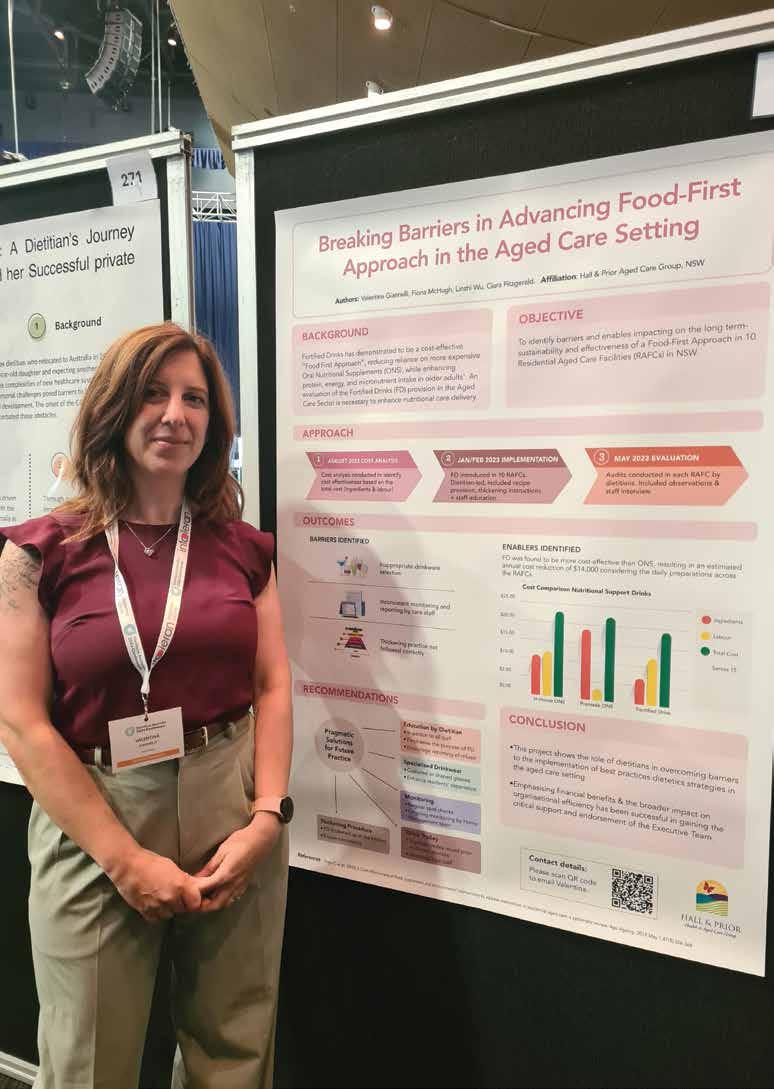
The Nutrition and Hydration Team developed comprehensive resources and delivered both video-based and home-based training on MyFN and the new Nutrition and Hydration Assessment form developed in iCare. Feedback from homes has been overwhelmingly positive. All 25 homes are now fully implemented and actively using the new system. There will be ongoing education and support from us. Throughout the year, the Nutrition and Hydration Team has responded to numerous requests across homes to strengthen RN, PCAP, and care staff capability in food, nutrition, and hydration care. The team also contributed to the development of practical toolbox resources aimed at improving staff knowledge and supporting consistent, high-quality nutritional care for residents.
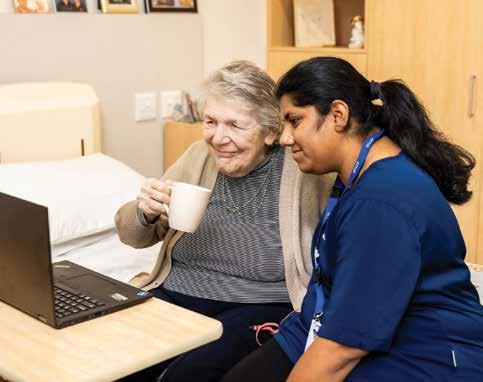
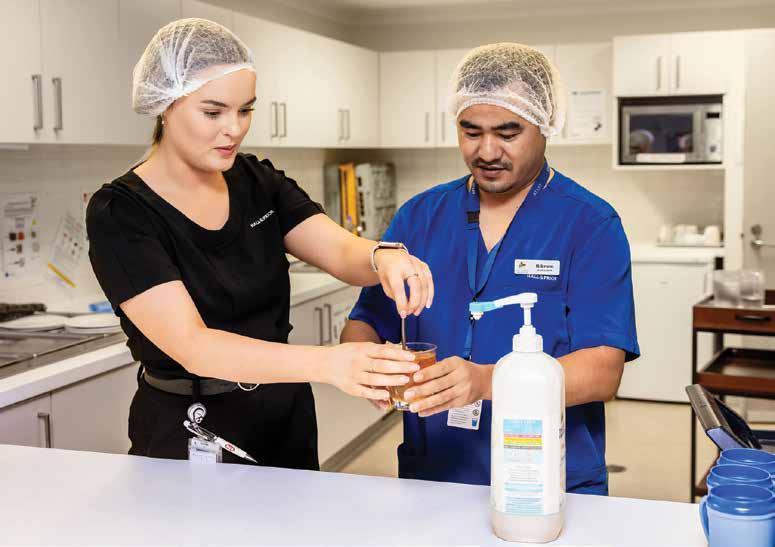
The Nutrition Hydration team plays a vital role in ensuring that the meals served to our consumers are not only nutritious but also safe, tailored to individual needs, and compliant with dietary standards. As part of their ongoing commitment to consumer safety and care, the Nutrition Hydration team has provided monthly training sessions for the kitchen staff during kitchen core training. These sessions focus on educating staff on how to identify and test modified meals, ensuring they meet the required safety standards before being served to consumers.
In addition to the safety protocols, the Speech Pathologist team also offers guidance on how to accommodate consumer preferences by providing recommendations that align with individual choices and needs. This aspect of the training emphasises the importance of maintaining a balance between individualised care and the safety of consumers when it comes to modified diets. The training sessions are designed to be interactive and engaging. For example, during in-person sessions, the Speech pathologist team would distribute meal tray cards to the kitchen staff and ask them to think critically
about what different food items should be served to consumers based on their diet requirements. This hands-on approach encourages active participation and a deeper understanding of the meal modification process. Looking ahead, we’re excited to introduce a new online training system as part of our evolving model. This shift will allow the training to be delivered virtually, ensuring that the kitchen staff can access the necessary education at their convenience, including the staff that aren’t based in metro Perth locations, while still maintaining the high standards of care and safety required for resident meals.
Physiotherapist Students:
Hall & Prior was successfully allocated final year
Physiotherapist students from Curtin University for the first time this year. This involved building the relationship with the university and developing orientation/education materials for the new students. We had 6 x final year and 10 x second year Physiotherapist students complete their placements under the supervision of Matt Tay, Corbin Mondy, Molly Crozier and Alison Blackburn.
Molly Crozier (Physiotherapist)
At Hamersley Aged Care Home, we were thrilled to have 2 final year Physiotherapy students complete their 5-week placements with us in 2025. This Aged Care placement gives the students an immersive look into how the role of Physiotherapists impacts those living in Residential Aged Care.
During this 5-week period, they were an integral part of our Allied Health Team, completing referrals and reviews and working autonomously with the wider clinical team and the residents. There were also opportunity’s to closely with residents, to provide one on one rehabilitation to support mobility or exercise goals. One of our residents, Lena, had a massive improvement moving from initially being assisted by 2 staff to stand to walking 50m with her walking aid within the 5 weeks. This demonstrates the important
I had the wonderful privilege of facilitating physiotherapy student placements this year, working with a total of five students throughout the year - two in their final year and three in their second year. It was an incredibly rewarding experience to be part of their journey toward becoming physiotherapists. I thoroughly enjoyed sharing my knowledge and expertise with them, helping them understand why we do what we do.
It was also a fantastic opportunity to highlight the unique rewards of working in aged care - showing how impactful it can be to make a difference in someone’s life during their later years. The students provided positive feedback, mentioning that they particularly appreciated the chance to enhance their
role Physiotherapists have within the Aged Care space and the value of having students to support both their learning and outcomes for the residents.
Feedback from one student shows the impact of these placements - “I’m very grateful for my time in Hamersley under the supervision of Molly - it was a valuable and memorable placement experience. The environment was incredibly supportive, welcoming and collaborative, with a strong interdisciplinary teamwork and generous staff. I appreciated the opportunity to work with a diverse range of consumers, conditions, and care needs, and to actively

communication skills with individuals with cognitive impairments. They also valued the hands-on experience with the lifting equipment commonly used in the facility.
Overall, being part of these students’ learning experience was incredibly fulfilling, and I’m proud to have contributed to their growth as future physiotherapists. It’s been exciting to watch them grow, and I’m confident they’ll bring great value to the profession as they move forward in their careers.

engage with the therapy team - a level of collaboration not often seen in other settings. I’ve provided positive feedback to Curtin and highly recommend Hall & Prior facilities for future placements. Thank you for the experience and the warm memories.”
• 10x 3rd OT students through the Intergenerational Service Learning (ISL) Placement across Emerald, Braemar House, Braemar Village, Braemar Cooinda and Mertome.
• 5x final year OT Curtin University Students across Windsor Park, Mertome, St Lukes, Villa Dalmacia, Karingal Green – supervisors Tracey Omaji, Kylie Choong, Roisin Colgan, KJ Yoong and Mika Lee.
• 3x second year OT ECU students across Agmaroy, Hocart and Tuia Lodge –supervisors Kim Chong and Brianna Davis. This was our first year hosting 3rd year OT students at a rural site.
• 2x South Korean OT Students organised through ECU that completed their placement at Concorde with support from Madelyne Glover and Emma Portlock. This was our first-year hosting exchange students from South Korea.
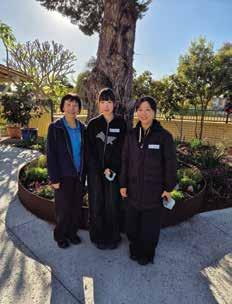

This year we had the pleasure of hosting two final year Occupational Therapy students at Karingal Green. The students always bring a positive energy, new perspectives, and an eagerness to learn that makes the experience so rewarding. Student placements are always such a great opportunity to showcase the impactful and meaningful work Occupational Therapists can contribute to someone’s life during their later years; and how crucial the role is in the aged care setting.
It’s been great to see them apply their academic knowledge into this unique practical setting, while also developing their skills in working with older adults with different needs. The students provided feedback that particularly enjoyed being able to work closely with consumers and understand their needs and problem solve to develop interventions that would enhance their quality of life.
It has been an invaluable experience to be part of the students’ journey into becoming Occupational Therapists.
The Dietitian team provided support and guidance to final year Curtin University students and ECU student volunteers in food service learning, menu analysis, and nutrition evaluation. Their work contributed to menu improvement. The students also supported sensory tasting activities for consumerdirected menu design which all of them enjoyed. The students appreciated the opportunity to further understand the Dietitian role in Residential Aged Care as well as expand their knowledge and experience in this area.
• Occupational Therapists: Tahlia Luhrs, Kathryn Southall, Ingrid Wood
• Physiotherapists: Beckie Birch-Faulkner, Darryl Tan, Jeannie Lee, Claire Engel
• Social Workers: Sharni Hague, Louise Schock
• Dietitians: Elliot Ashbil, Laura Hyma, Shontae Smith
• Speech Pathologists: Anastasija Trajcevska
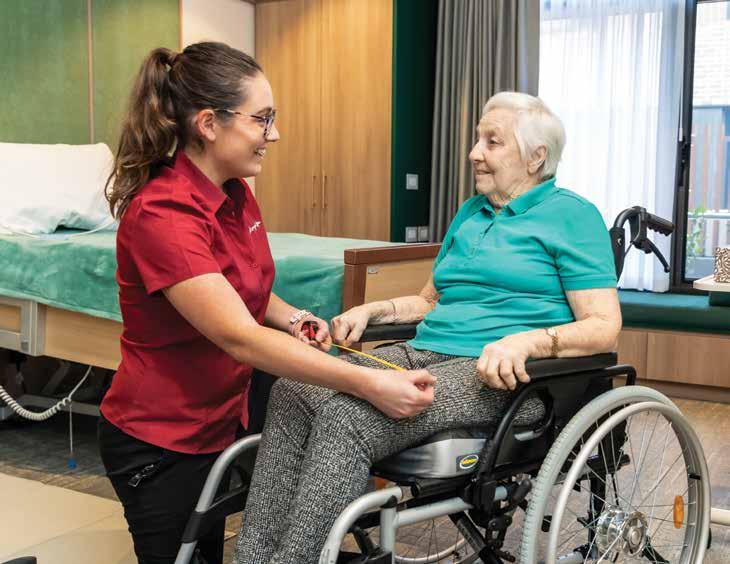
POSSIBILITIES
Acknowledging Hall & Prior’s primary values of professionalism and integrity, and our requirement as a Registered NDIS Provider to best equip our team to meet the people we support needs, whilst acknowledging the NDIS Practice Standards and Code of Conduct we strove to progress the learning, development and competency of our team.
The two modules Quality, safety and you, plus the new
worker NDIS induction modules are required to be completed prior to joining the Possibilities Disabilities Care team.
Additional two modules, supporting effective communication, and supporting safe and enjoyable meals are completed upon
joining the team. DSW’s receive a certificate of completion for each module.
More recently the NDIS Quality and Safeguards Commission released five
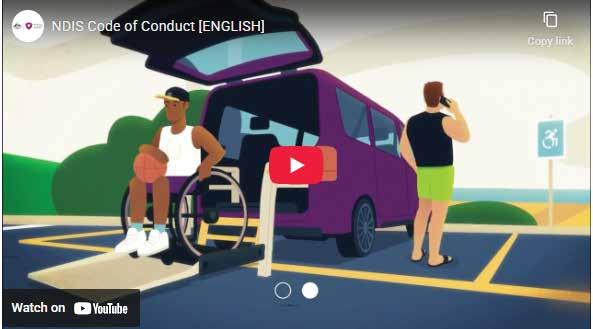
online educational videos, as a resource to help workers understand their obligations to meet the Code of Conduct. The videos are consistent with the NDIS Workforce Capability Framework, that describes the attitudes, skills and knowledge that is expected of our team. The NDIS Possibilities Team’s compliance with The Code of Conduct ensures our workers acknowledge and consider how they deliver supports and services.
In January 2025, we proceeded with the rollout of the DSC online eLearning training platform making it available to all Disability Support Workers (DSW) working across Supported Independent Living (SIL), Community Access and FH2H services.
Each NDIS DSW has their own H&P email address; they can utilise to gain access to the platform and complete the suite of training that is assigned to them.
The learning modules are interactive, provide case studies, questions and answers and accessible resources. A certificate is assigned to the team member at the completion of the module. The learning platform enables specific modules to be assigned to groups of learners, participation and live analysis of the completion of learning modules.
Topics include Quality and Safeguarding, NDIS
The NDIS Code of Conduct requires workers, key personnel and providers delivering NDIS supports and services to do the following in providing those supports and services:
1. Act with respect for individual rights to freedom of expression, self-determination and decisionmaking in accordance with applicable laws and conventions.
2. Respect the privacy of people with disability.
3. Provide supports and services in a safe and competent manner, with care and skill.
4. Act with integrity, honesty and transparency.
5. Promptly take steps to raise and act on concerns about matters that may impact the quality and safety of supports and services provided to people with disability.
6. Take all reasonable steps to prevent and respond to all forms of violence against, and exploitation, neglect and abuse of, people with disability.
7. Take all reasonable steps to prevent and respond to sexual misconduct.
8. Not engage in unfair pricing when supplying or promoting goods for NDIS participants.
Fundamentals, Support Work, High Intensity Support, Psychosocial Disability, Home and Living, plus many more.
• Continue the L&D Toolbox Review to ensure NDIS content is accurately included.
• Update NDIS content in the new staff Welcome Pack.
• Work with Dayforce lead project team to implement the storage, monitoring, and compliance of NDIS training records.
• Work with L&D and allocated project team member to redesign the NDIS online core training for new and existing (refresher) team members
Lynette
Rodriguez and Dr Jenny Prentice
Dr Jenny Prentice and Lynette Rodriguez NP have been supporting nursing staff at Hall and Prior in Western Australia through the Wound, Skin and Ostomy service. As part of this, wound education was conducted for Hall and Prior nursing staff throughout the year.
The demands on nursing staff time continue to increase and changes in the standards from the Aged Care Commission continue to challenge staff. Nursing staff need to be informed and competent in their wound assessment and management decisions for the benefit of our residents as well as their workflow practices and resource management.
The goal of the education provided was to reinforce prior knowledge, provide evidencebased information on wound management and reinforce key learnings with practical application. Small education sessions were also provided at some sites upon request.
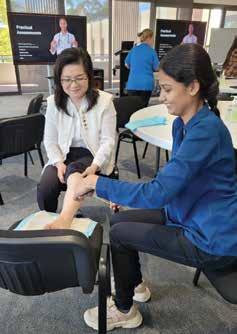
Two day wound education courses for Registered nurses were held in March, June and October. Course content included wound pathophysiology, wound assessment and management,
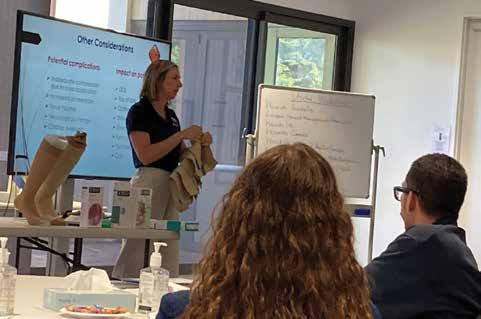
dressings on the Hall and Prior imprest list, lower leg assessment, limb compression therapy, topical negative pressure wound therapy, and burns management.
Clinical Nurse managers and Deputy directors of Nursing are key support for onsite clinicians in their daily practice, inclusive of wound management. In recognition of this an advanced, two-day education course on wound management was held for Clinical Nurse Managers and Deputy Directors of Nursing in November. This discussed topics such as Clinical Governance and inherent roles and responsibilities of CNMs/DDONs as it relates to clinical oversight of wounds within their respective facilities.
Also discussed were wound classification, Issues of Bariatric and Dementia care, Nutrition, Pharmacology, burns management, Debridement, Topical Negative pressure wound therapy, Malignant wounds and Myiasis management (Feral maggots).
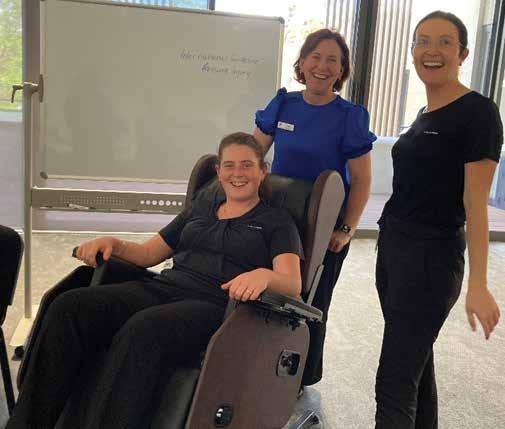
November is the month of International Stop Pressure Injury Day and an education day focusing on Prevention and Management of Pressure Injury was held. This was an interactive day that reviewed Pressure injury aetiology, prevention and management strategies, Nutrition and healing and Pressure Injury staging. The selection and use of support surfaces was discussed, and participants were able to try some of the surfaces themselves.
Visiting student nurses were also able to attend during the education, enhancing their practicum at Karingal Green. The Wound, Skin and Ostomy team would like to thank the learning and development team and members of the resource team that assisted in the provision of this education.
An interprofessional approach is essential to evidence based practice and elevates the standard of clinical care offered to Hall and Prior residents.
BUILDING EXCELLENCE THROUGH
INNOVATION AND PARTNERSHIP
The Learning Academy has progressed several key initiatives in 2025, improving how we deliver education and support our workforce across residential aged care (RAC) and Support at Home services.

In October 2025, we transitioned from face-to-face training to a digital platform using Commission LMS, with a focus on role-specific content. Training structures, guides for managers and staff, and platform education for administrators were completed and rolled out in November 2025.
Strategic direction: ALIS is an interim solution as we prepare for Dayforce HRIS-LMS integration (mid-late 2026). This will provide seamless, role-specific blended learning with SCORM content migration and Easygenerator for content development.
We’ve developed a comprehensive training approach that balances accessibility with quality:
• New staff & annual refreshers: ALIS Core Training structure
• Existing staff: Toolbox Education format
Competency assessment pilot: Three trial sites (Tuohy Nursing Home, Freshwater Bay, Hocart Lodge) are testing
our integrated competency observation record, supported by the Quality team. Insights will inform broader implementation in 2026.
Following ecaluation of providers, we’ve identified Charles Darwin University (CDU) as the preferred partner for the Aged Care Transition to Practice (ACTTP) Program. CDU’s hybrid model offers:
• Monthly webinars and selfplaced modules
• 2-day face-to-face workshop at our facilities
• VIPS person-centred care framework
• Mentor development program
Career pathways for nurses: Clear progression to Graduate Certificate and Master’s pathways in Older Person Nursing Care, with options to specialise as Nurse Practitioners.
Career pathways for mentors: Pathways to Graduate Certificate in Clinical Education.
We’re currently gathering workforce data from facilities to assess demand and readiness,
with the goal of launching our first cohort in early 2026 if we proceed. This would represent a significant investment in our nursing workforce, with dedicated mentor support creating a culture of learning and development across our organisation.
These initiatives have been developed with ongoing input from WA and NSW L&D teams, ensuring consistency and quality across our national operations.
• Refine competency assessment approach based on trial site feedback.
• Roll out Welcome Education packs and updated Core Training Matrix.
• Implement Dayforce HRIS-LMS integration for seamless learning ecosystem.
• Finalise ACTTP partnership and launch graduate nurse support program.
• Continue data-driven program optimisation.
Mee�ng Standard 2.9.6 – Implementa�on Journey 2025-2026
Three Dimensions Assessed:
KNOW Understanding & concepts
DO Skills & techniques
APPLY Consistent behaviour
Knowledge Training:
• ALIS Pla�orm (Commission-endorsed)
• H&P Toolbox Educa�on
Competency Assessment:
• Workplace observa�on checklists
• Prac�cal scenarios
• C/NYC ra�ng scale
Frequency:
• Ini�al: At induc�on
• Refresher: Annually
Framework Developed Comprehensive competency model
PILOT PHASE
3 Pilot Facili�es:
• Freshwater Bay
• Hocart Lodge • Tuohy
Assessment tools created Observa�on records and workbooks
Pilot Launched 3 facili�es tes�ng framework
Empowering nurses transitioning to aged care
A comprehensive, government-funded professional development program designed to build confidence, knowledge, and clinical skills for nurses working in aged care. Delivered over 10 months with live learning sessions, online modules, and dedicated mentorship support.
Enhance your aged care knowledge with FREE professional development! Equip Learning offers self-paced online modules developed by the University of Tasmania's Wicking Dementia Research and Education Centre.
High-quality aged care training modules available to all Hall & Prior staff
⏱ Each module takes approximately 10-15 minutes to complete.
This FREE package is ideal for new star ters in aged care, those seeking employment in the sector, volunteers, informal carers, and anyone with an interest in the care of older adults. It's also valuable for experienced staff to keep abreast of current trends in aged care and to maintain their continuing professional development
Enhance your aged care knowledge with FREE professional development! Equip Learning offers self-paced online modules developed by the University of Tasmania's Wicking Dementia Research and Education Centre.
⏱ Each module takes approximately 10-15 minutes to complete.
This FREE package is ideal for new star ters in aged care, those seeking employment in the sector, volunteers, informal carers, and anyone with an interest in the care of older adults. It's also valuable for experienced staff to keep abreast of current trends in aged care and to maintain their continuing professional development
Person-Centred Care
Support older people to be active partners in their care
Aboriginal & Torres Strait Islander Cultural Awareness
Person-Centred Care
Delivering culturally appropriate aged care services
Support older people to be active partners in their care
Promoting Mental Health & Wellbeing
Supporting mental health in older people
Aboriginal & Torres Strait Islander Cultural Awareness
Delivering culturally appropriate aged care services
Oral Health Promotion
Maintaining oral health and overall wellbeing
Promoting Mental Health & Wellbeing
Supporting mental health in older people
Support at Home
Helping older people live safely and independently at home
Oral Health Promotion
Maintaining oral health and overall wellbeing
Supporting People Living with Dementia Person-centred approaches to dementia care and wellbeing
Cross Cultural Awareness
Care tailored to diverse cultural backgrounds
Supporting People Living with Dementia Person-centred approaches to dementia care and wellbeing
Prevention of Falls
Cross Cultural Awareness
Working together to prevent falls and injuries
Care tailored to diverse cultural backgrounds
Hearing Health Supporting hearing health in older people
Prevention of Falls
Working together to prevent falls and injuries
Exploring the Role of Nurses, PCWs & Allied Health Understanding roles in community and residential aged care
Hearing Health Supporting hearing health in older people
Support at Home
Trauma-Informed Care
Understanding and addressing the impact of trauma
Palliative & End-of-Life Care
Supporting quality of life and dignified end-of-life care
Trauma-Informed Care
Understanding and addressing the impact of trauma
Wound Management & Pressure Injur y Prevention
Palliative & End-of-Life Care
Preventing and managing skin injuries
Supporting quality of life and dignified end-of-life care
The Aged Care Act (2024)
Understanding the foundation of aged care in Australia
Wound Management & Pressure Injur y Prevention
Preventing and managing skin injuries
The Aged Care Act (2024)
Understanding the foundation of aged care in Australia
Helping older people live safely and independently at home
Quick learning: 10-15 minutes per module
Evidence-based: Developed by leading researchers
Career development: Build aged care expertise
Exploring the Role of Nurses, PCWs & Allied Health Understanding roles in community and residential aged care
�� Earn credentials: Complete quizzes and receive certificates for each module you finish!
Quick learning: 10-15 minutes per module
Evidence-based: Developed by leading researchers
Career development: Build aged care expertise
�� Earn credentials: Complete quizzes and receive certificates for each module you finish!
Self-paced: Learn at your own speed, anytime
Engaging content: Interactive with quality infographics
Completely free: No cost to you
Self-paced: Learn at your own speed, anytime
Engaging content: Interactive with quality infographics
Completely free: No cost to you

ALis i s a free, web-based learning platform by the A ustralian Government , offering interactive education to support safe, high-quality aged care in line with the Aged Care Quality Standards.
Step 1:
Staff to self register in the portal by scanning this QR code
Step 2-0nce registered with ALis
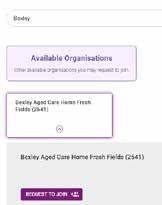
Login to page and Click the 'Find your organisation ' icon on the Homepage. Then Select your organisation from the list
1
1 and click Request to join'
Step 3-log in again and try to enrol (You don't have to pay)
Step 4- Once Approved. You must log in to your account and complete e ach module assigned to you.
•A certificate will be issued upon completion.
• Submit your certificate to your manager as proof.


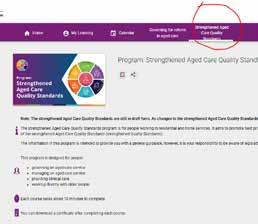
If you encounter any issues with the portal. please contact Alison. Liz. or Bibek for assistance.

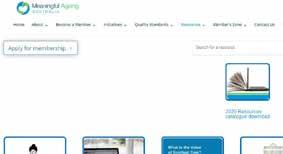
www.gfr.agedcarequality.gov.au/ Meaningful
www.meaningfulageing.org.au /resources/resources_quick/
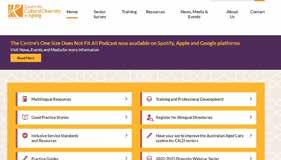
www.culturaldiversity.com.au
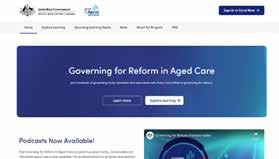
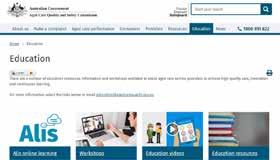
www.agedcarequality.gov.au/education
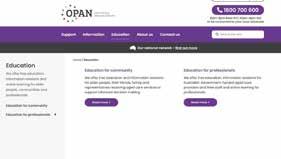
www.opan.org.au/education/
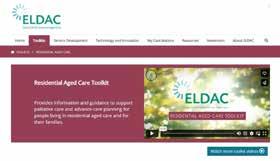
www.eldac.com.au/tabid/4901/
Coloplast
Wound resource
ELDAC
End of life directions for aged care
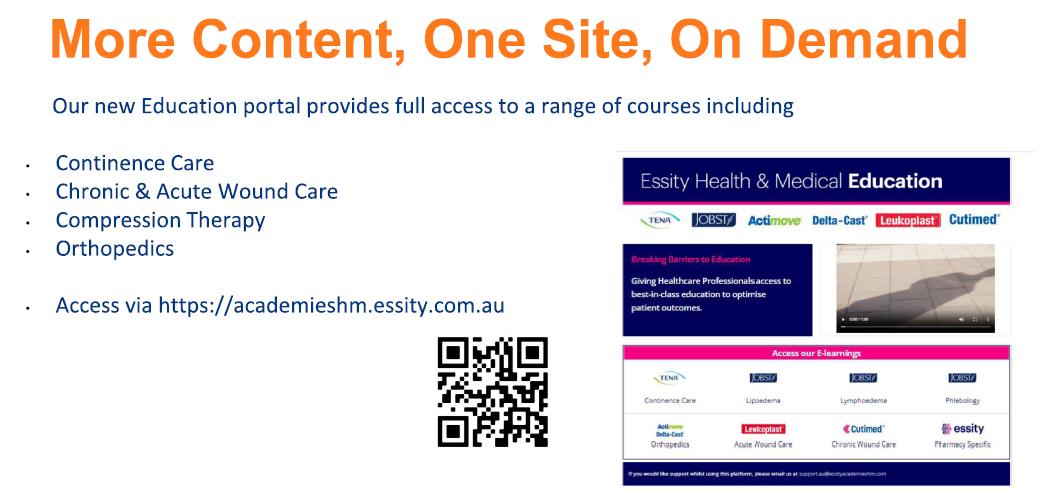
Essity Health
Medical online learning
Advanced Care Planning
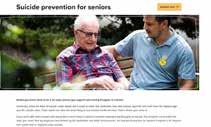
Suicide
Prevention for seniors
Free online learning
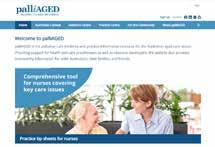
PalliAGED
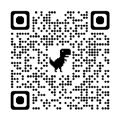
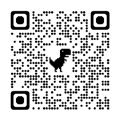
Dementia
Training Australia
End of life essentials
Sydney North Health Network
WICKING
Dementia Course
Urology network resources - catheterization

Learning and Development Officer
Phone: 0482 169 614
Email: pia.valeen@hallprior.com.au NSW Alison Davis
Learning and Development Manager
Phone: 0491 157 465
Email: alison.davis@hallprior.com.au