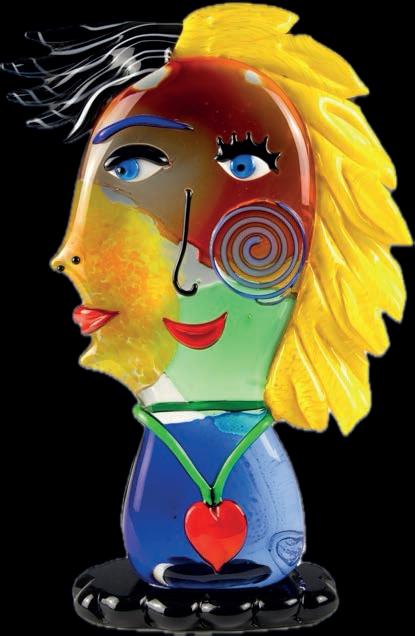
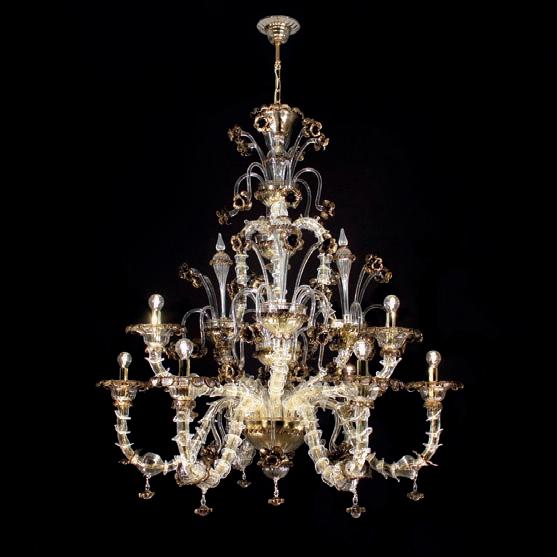
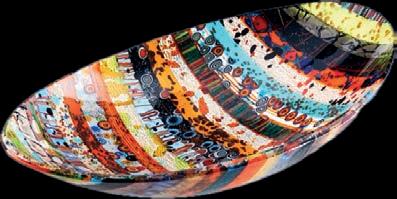
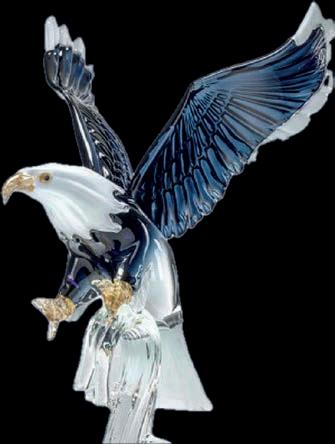
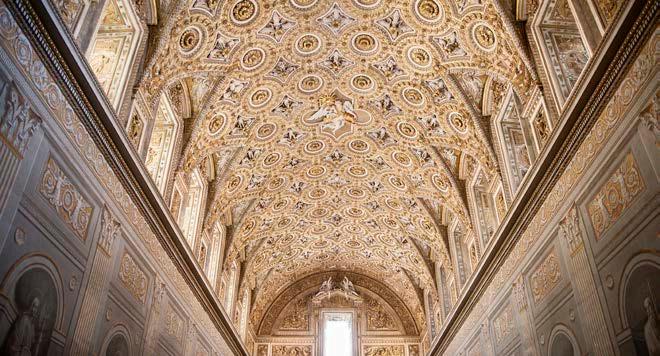
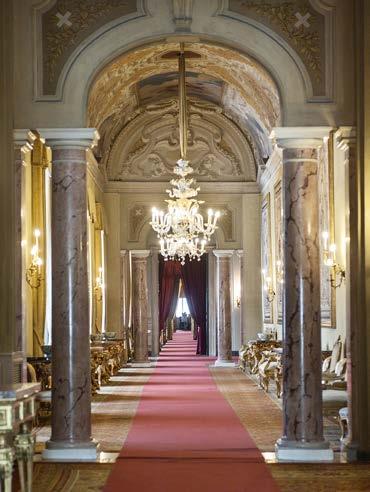
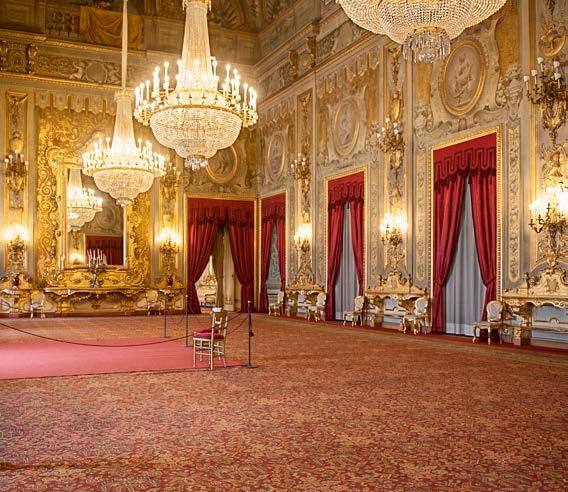
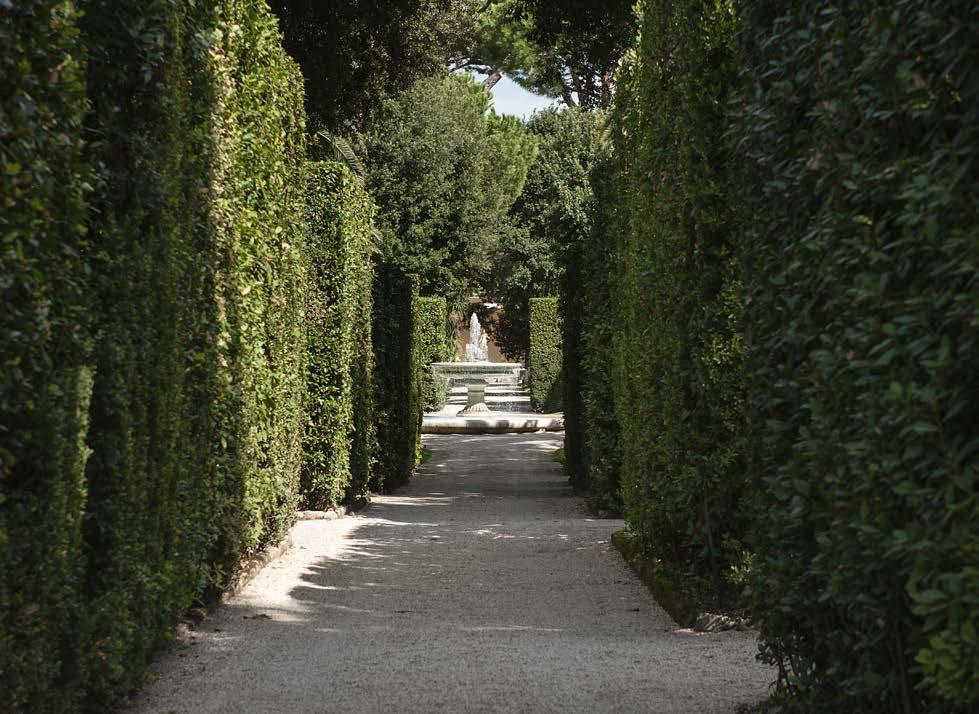
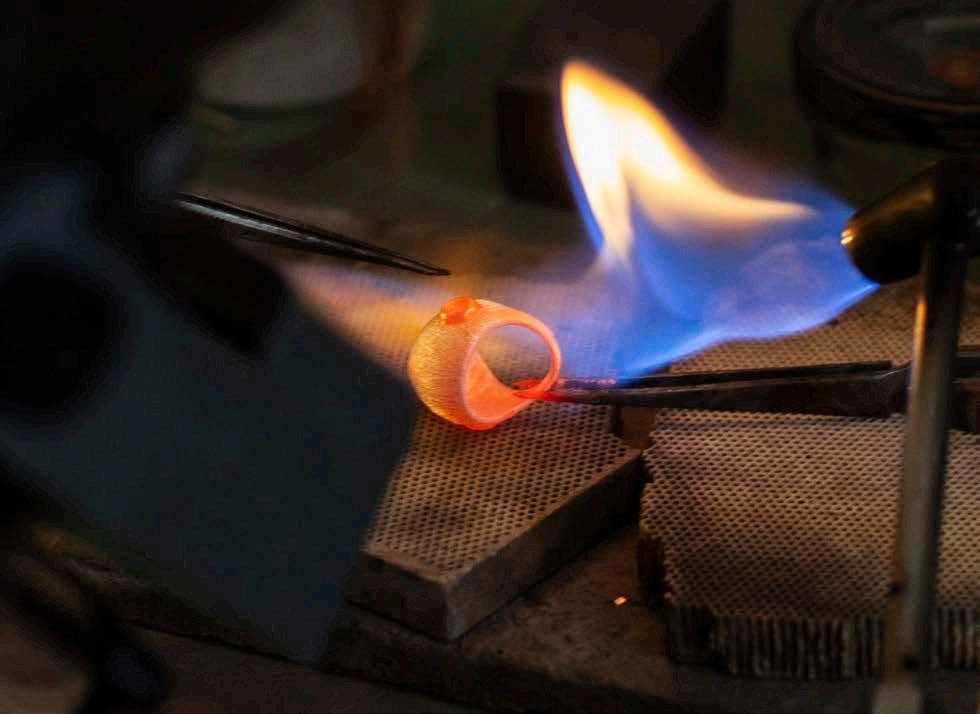
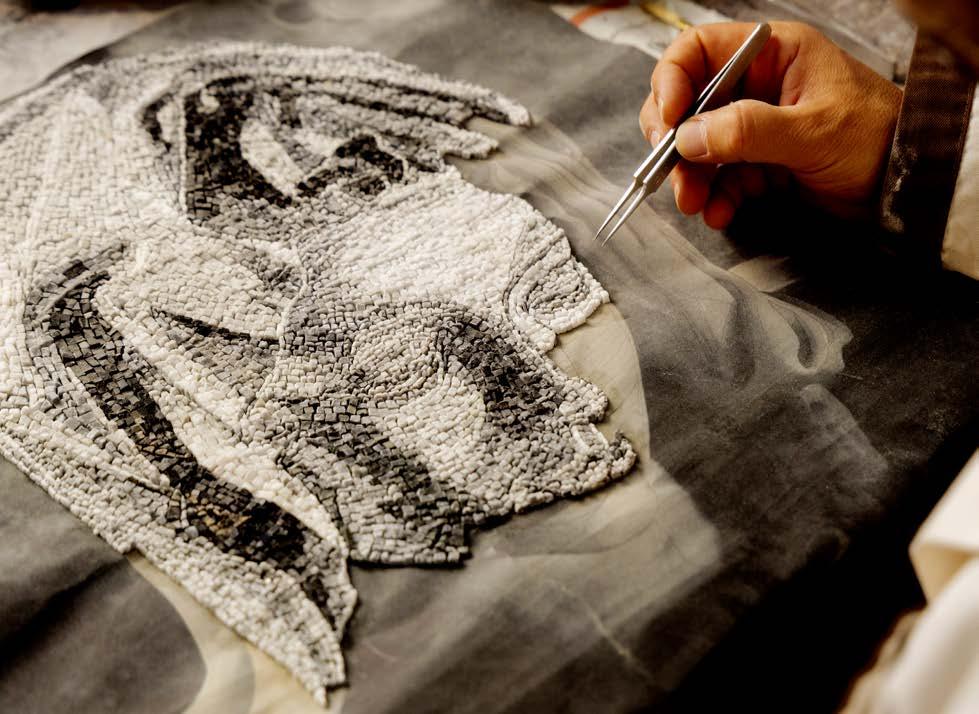
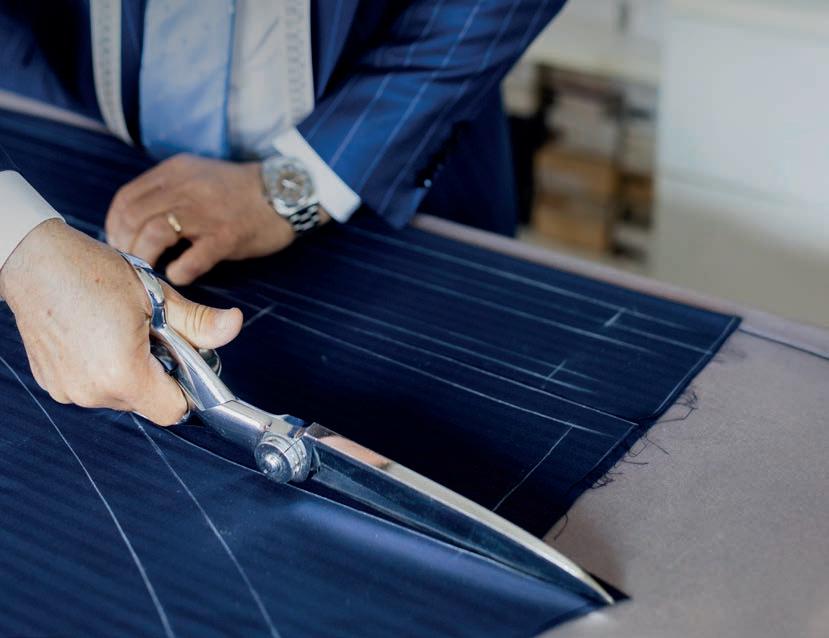
Merging artisanal tradition with timeless elegance, Murano Più has been a distinguished family enterprise specializing in the creation and distribution of Murano glass since 1958. Our extensive range encompasses everything from exquisite small souvenirs to grand chandeliers, showcasing a diverse selection of glassware, mirrors, vases, sculptures, jewelry, and fine furnishings.
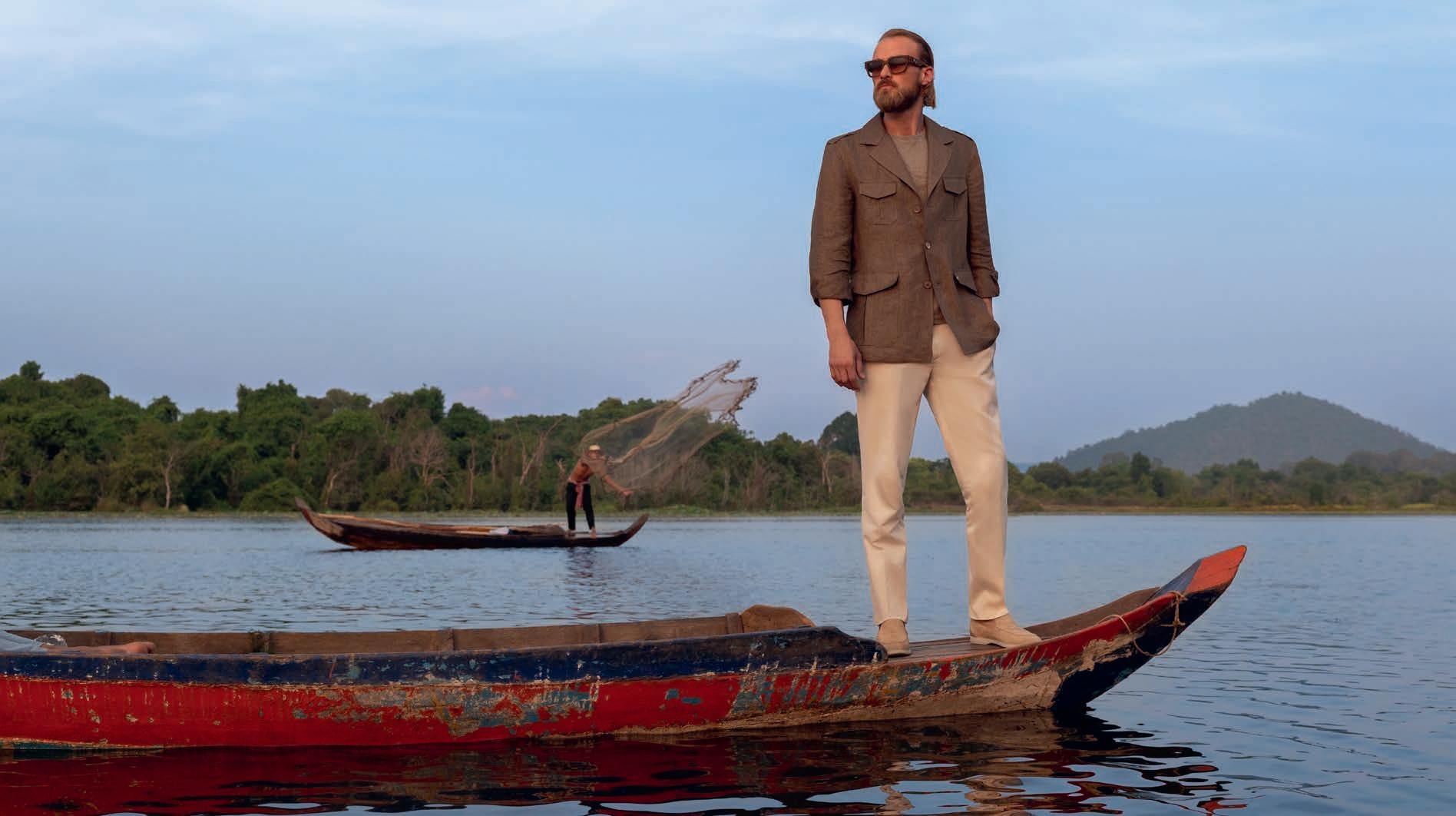
JACQUES MARIE MAGE | CHROME HEARTS
KUBORAUM | AHLEM | MATSUDA | CUTLER AND GROSS MYKITA | SATO | MR.GENTLEMAN
DIFFUSER TOKYO | MEO FUSCIUNI PARFUM
bi-monthly magazine
Official magazine of the Roman Association of Hotel Concierges “Les Clefs d’Or” www.romelesclefsdor.com
PRESIDENT
Alexandra Sardo
PUBLISHER
Alex Vitorio Lana & Mateo Parigi Bini
EDITOR IN CHIEF
Mateo Parigi Bini
MANAGING EDITOR
Martina Olivieri
EDITORIAL STAFF
Sabrina Bozzoni, Teresa Favi, Francesca Lombardi, Virginia Mammoli
COVER
Valentina Stefanelli
PHOTOGRAPHERS
Valentina Stefanelli, Dario Garofalo
ART EDITORS
Melania Branca, Clelia Giardina
TRANSLATIONS
Centotraduzioni, Tessa Conticelli
ADVERTISING AND MARKETING DIRECTOR
Alex Vitorio Lana
ADVERTISING
Nicola Brigandì, Pino di Persio, Emanuela Matioli, Alessandra Nardelli
Monica Offidani, Paola Pacioti, Anna Repellini
EDITORIAL OFFICE
Gruppo Editoriale via Cristoforo Landino, 2 - 50129 Firenze - Italy ph +39 055 0498097 - www.gruppoeditoriale.com
Rome Concierge Information is registered with the Court of Rome under n. 75/2024
TEXT Alexandra Sardo President of the Roman Association of Hotel Concierges “Les Clefs d’Or”
Dear Guest, On behalf of all the Golden Keys concierges, we wish you a very warm welcome to Rome. Rome Concierge Information is our concrete commitment to making your stay in our city a truly memorable experience.
In this magazine you will find all the information
you might need and, above all, our suggestions for the best things the city can offer during winter.
In this issue, you will find the highlights of events and most amusing exhibitions to atend in Rome, together with our restaurant guide to help you find a perfect dinner spot.
Among the events, we suggest the exhibition Treasures of the Pharaohs that is an extraordinary and unique event to admire exceptional works and artefacts, including some displayed for the first time in Italy.
We remain at your disposal at our hotels, delighted to receive your requests. We all wish you a wonderful and amazing stay!
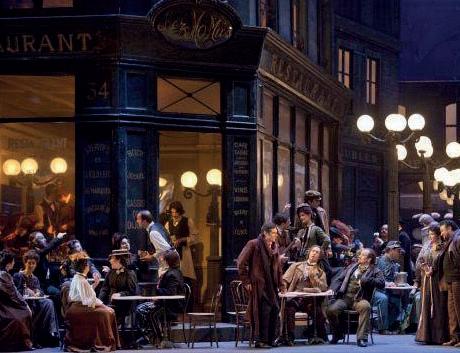
LA BOHÈME
From January 14 to 25, 2026
Teatro dell’Opera di Roma
Puccini’s La Bohème returns to the Teatro dell’Opera di Roma in David Livermore’s production, created with the Palau de les Arts in Valencia. Set in 19th-century Paris, the opera follows the loves and lives of Rodolfo, Mimì, Marcello, Museta and their bohemian friends. Livermore transforms the stage into an atelier inspired by French Impressionism.
SIX NATIONS RUGBY 2026
From February 7 to March 7
Stadio Olimpico
CHRISTMAS EVENTS
Until January 2026
Various locations
1 2 DATES FOR YOUR DIARY
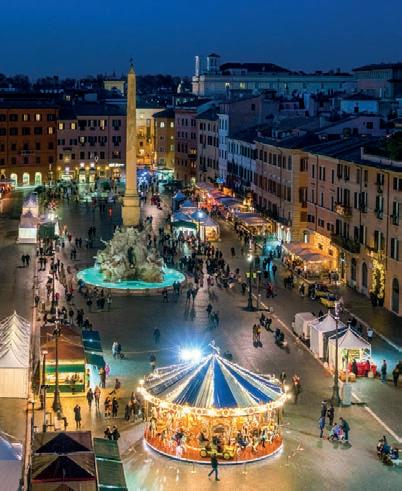
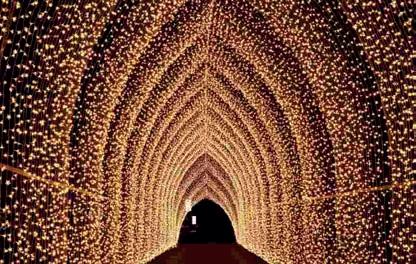
Rome lights up with Christmas magic, from markets to shows and dazzling displays. Piazza Navona hosts the Christmas village and Befana Festival, with crafs, sweets, and performances. Unmissable events include Christmas World at Villa Borghese (Nov 29–Jan 11), Cinecità World in holiday mode (Nov 8–Jan 6), and Trame di Luce at the Botanical Garden. At the Auditorium, enjoy the Roma Gospel Festival (Dec 20–31) and The Best of Disney Music concert (Dec 25).
The international rugby season is about to kick off. In the 2026 Guinness Six Nations, Rome hosts two key matches at the Stadio Olimpico: Italy vs Scotland on 7 February and Italy vs England on 7 March. Two unmissable home games that bring world-class rugby, passion and fan energy back to the Eternal City.
SERIE A MATCHES
January and February 2026
Stadio Olimpico
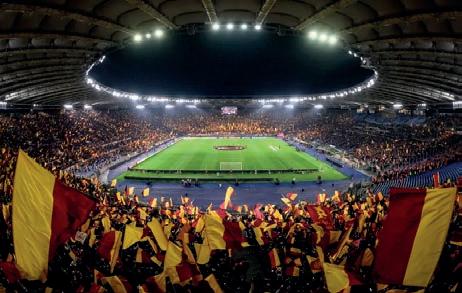
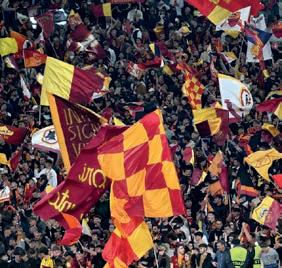
In January and February 2026, the Stadio Olimpico will host crucial matches for the two famous Serie A teams of the capital, Roma and Lazio. Roma will play at home against Sassuolo (January 10), Milan (January 25), Cagliari (February 8), and Cremonese (February 22). Lazio will face Como (January 19), Genoa (February 1), and Atalanta (February 15).
Key matches for the top ambitions of both teams.
18 January 2026
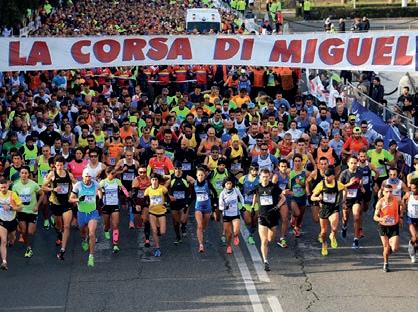
It is a 10 km race held in memory of Argentine poet and marathon runner Miguel Sánchez. The meeting point is at Pietro Mennea Stadio dei Marmi from 7:00 a.m. The race starts at 9:30 a.m. from Lungotevere Maresciallo Diaz, finishing inside Stadio Olimpico. The event also includes a 3 km anti-racism run, starting from Ponte della Musica and finishing at Stadio Olimpico.
MUSIC,
LA CORSA DI MIGUEL
Stadio dei Marmi Pietro Mennea
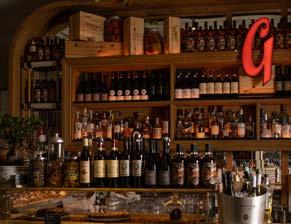
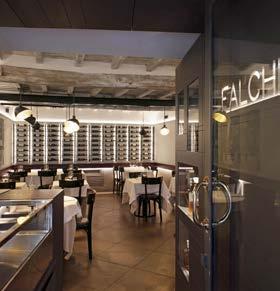
Incastonato fra le piazze più belle ed i vicoli più affascinanti di Roma, Il Falcheto propone una cucina curata, atenta alle materie prime. Nato alla fine dell’800 come distilleria, Il Falcheto è uno dei più antichi ristoranti di Roma e vanta il primato di “Antica Botega Storica”, onoreficenza riconosciutagli dal Comune di Roma per i suoi 100 anni di atività.
Via dei Montecatini, 12 - 00186 Roma | tel. 066791160 | ristoranteilfalchetto.it | IG: il_falchetto
ART APPOINTMENTS 1
IMPRESSIONISM AND BEYOND. MASTERPIECES FROM THE DETROIT INSTITUTE OF ARTS
Until 3 May 2026
Museo dell’Ara Pacis
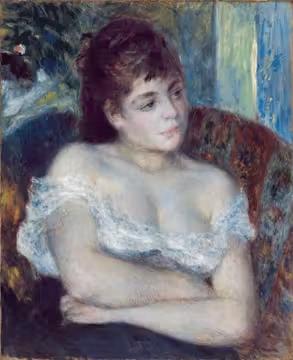
Fify-two masterpieces from the Detroit Institute of Arts are on display, offering an extraordinary opportunity to admire a unique selection of works by the great masters of European modern art between the 19th and 20th centuries. The exhibition, divided into four sections, takes visitors from the origins of Impressionism to the avant-garde of the early 20th century, presenting paintings by Courbet, Renoir, Degas, Cézanne, Van Gogh, Matisse, Picasso, Modigliani, Kandinsky, Beckmann and many other leading figures in European art.
GAUGUIN – THE DIARY OF NOA NOA AND OTHER ADVENTURES
Until January 25, 2026
2Historical Infantry Museum
ALPHONSE MUCHA. A TRIUMPH OF BEAUTY AND SEDUCTION
Until March 8, 2026
Palazzo Bonaparte
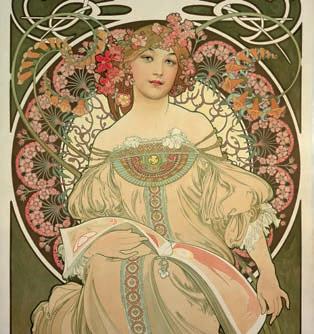
The exhibition devoted to Alphonse Mucha celebrates the Belle Époque and Art Nouveau universe. With famous masterpieces and works never shown before, the exhibition highlights the sinuous lines, floral motifs and timeless elegance of Mucha - a leading figure of the visual language that has influenced design, architecture and decorative arts - by exploring an era of creativity and modernity.
A journey through the Polynesian universe that inspired the master of post-impressionism. Over one hundred works, including woodcuts, lithographs, drawings and diary pages, reveal the artist’s intimate perspective on the myths and spirituality of Tahiti. The exhibition also features a rare monotype, some sculptures and Gauguin’s precious personal notebook, which testifies to his connections with Van Gogh, Bernard and the European avant-garde movement. 3
CARTIER E IL MITO AI MUSEI CAPITOLINI
Until 15 March 2026
Musei Capitolini
An important exhibition featuring some of the masterful creations of Cartier, mainly from the Herit-age collection. The exhibit examines the maison’s use of the classical Greek and Roman repertoire in its jewellery, and explores the mythological details that inspired Cartier imagery in the early 20th cen-tury. 5
TREASURES OF THE PHARAOHS
Until 3 May 2026
Scuderie del Quirinale
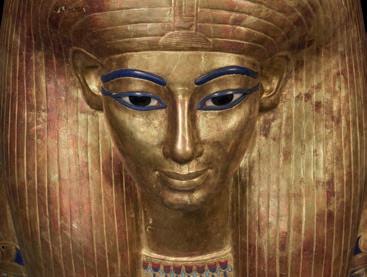
A major exhibition devoted to the Egyptian civilisation and curated by Tarek El Awady. In six themed sections, over 130 masterpieces from leading Egyptian museums – including Cairo and Luxor – speak of spirituality, society and the might of the pharaohs. Highlights of this extraordinary show, seen in Italy for the first time, include gold sarcophagi, monumental statues and royal jewels.
DALÍ. REVOLUTION AND TRADITION
Until 1 February 2026
Palazzo Cipolla
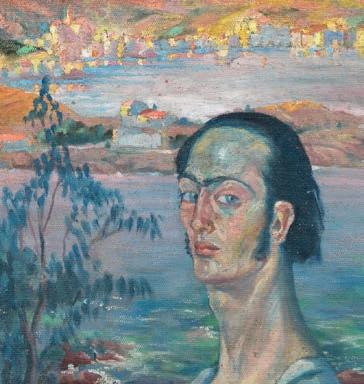
The exhibition Dalí. Revolution and Tradition presents a selection of over 60 works, including paintings and drawings, accompanied by photographic and audiovisual documents, which explore the artist’s creative universe and his profound relationship with the great masters of the past and of his own time.
FOR MORE DETAILS AND RESERVATIONS, ASK YOUR “LES CLEFS D’OR” CONCIERGE
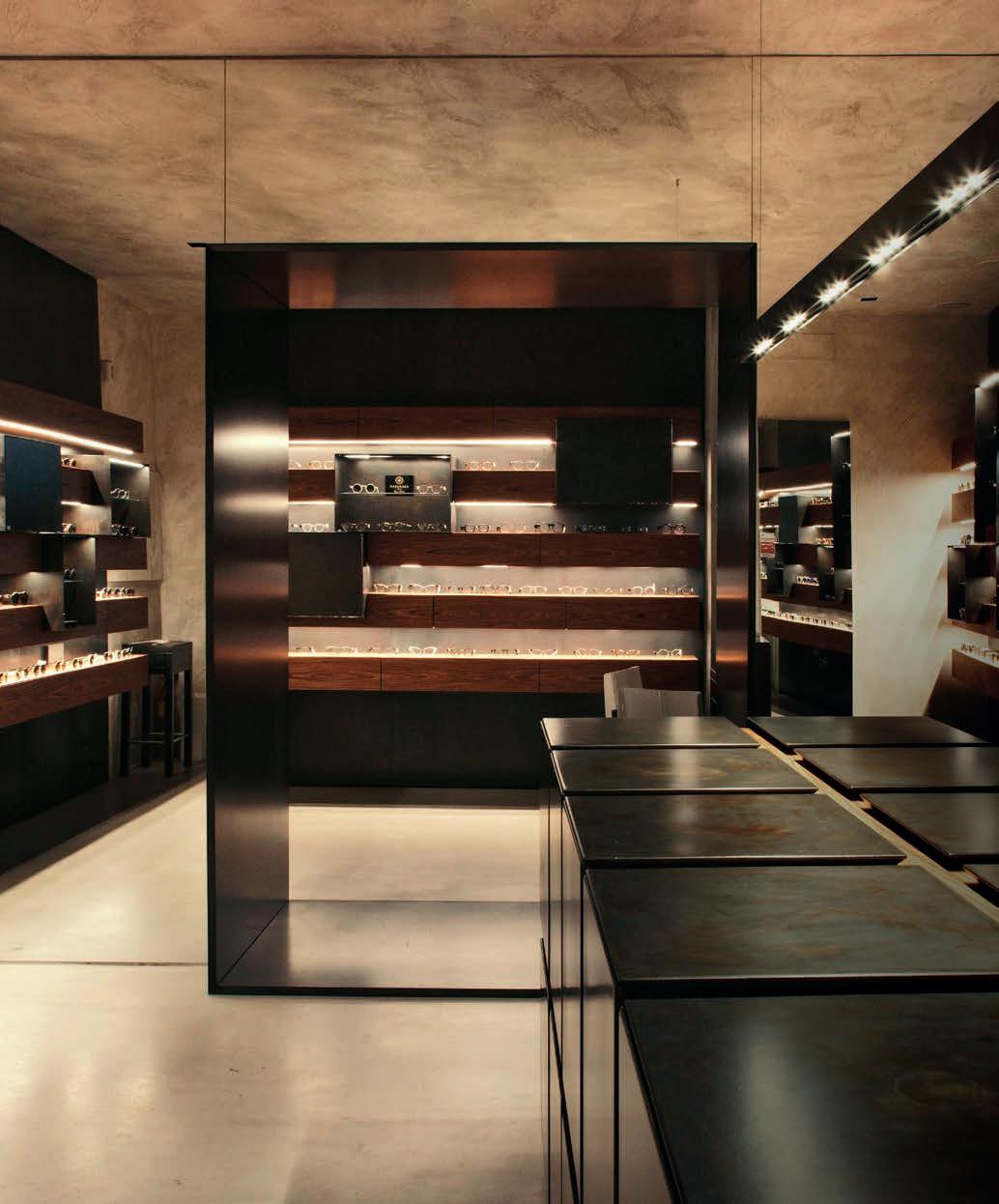
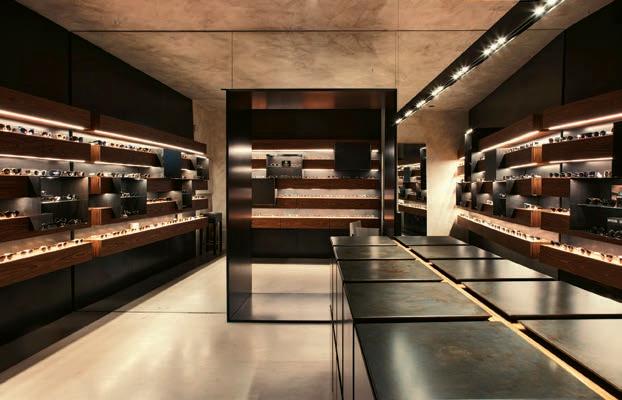
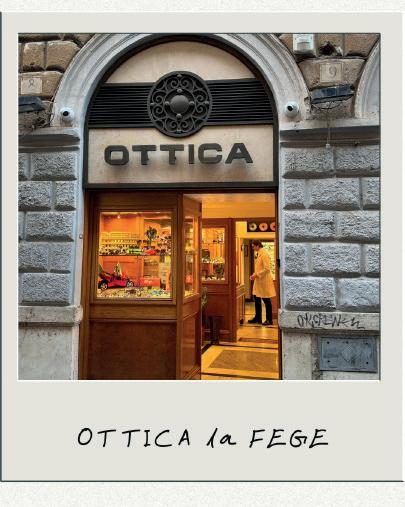
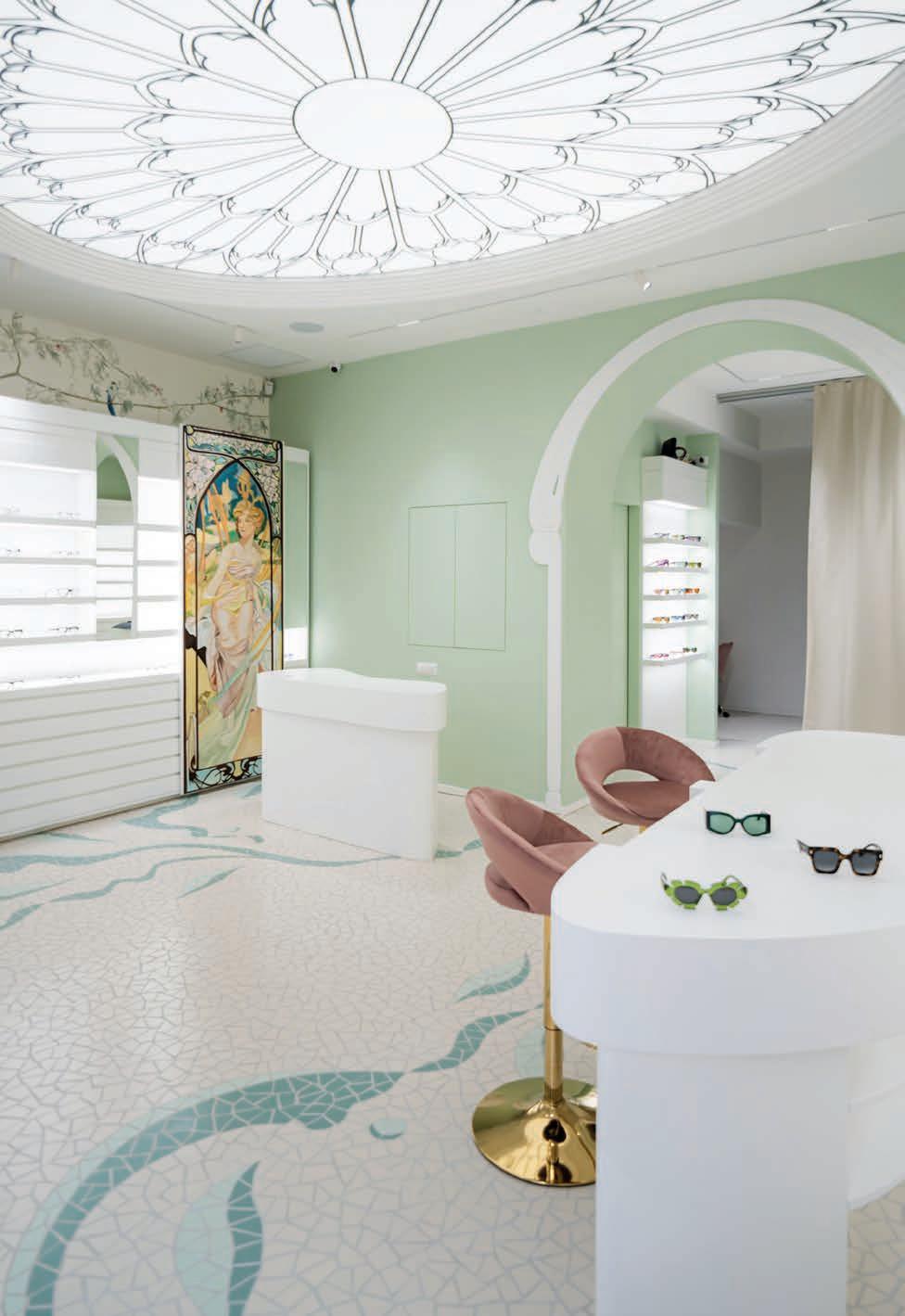
A stone’s throw from the Pantheon, Ottica la Fege combines the elegance of a boutique with the precision of an optical laboratory: new eyeglasses from top-tier brands crafted from the fnest methacrylates, titanium and precious metals, express tailor-made lenses and repairs. Rome, professionalism and Made in Italy in a single exclusive experience.
Since 1900
IL LUOGO DEI LUOGHI
ANGELA CAPUT - GIUGGIÙ angelacaputi.com
MAX MARA
Via dei Condotti, 17-18-18/A
Roma
Piazza di Spagna, 94-100
A PRESENT FOR HER
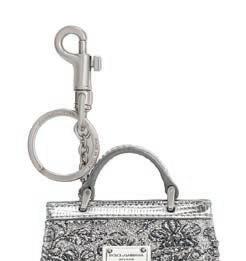
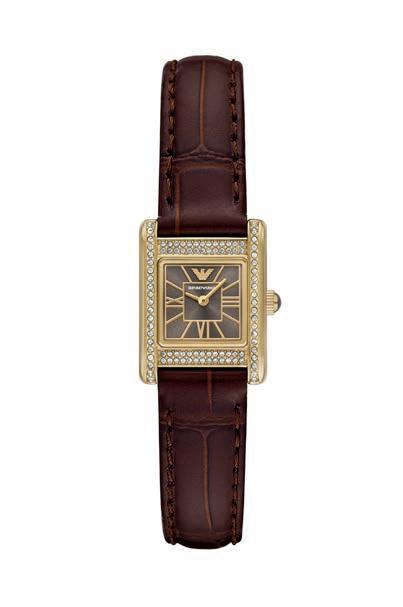
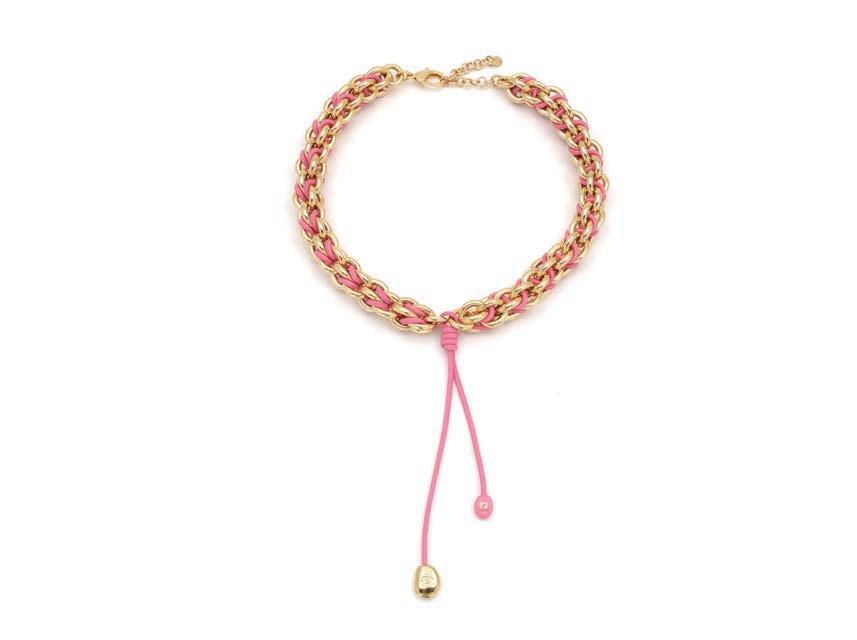
Litle things that mark the beginning of a new love or a long friendship
BY Francesca Lombardi
EMPORIO ARMANI
Via del Babuino, 140
Roma
Roma
FENDI
Largo Carlo Goldoni, 420
Fine Roman and Mediterranean Cuisine
25 YEARS OF EXCELLENCE
Ristorante Vattani for authentic traditional food
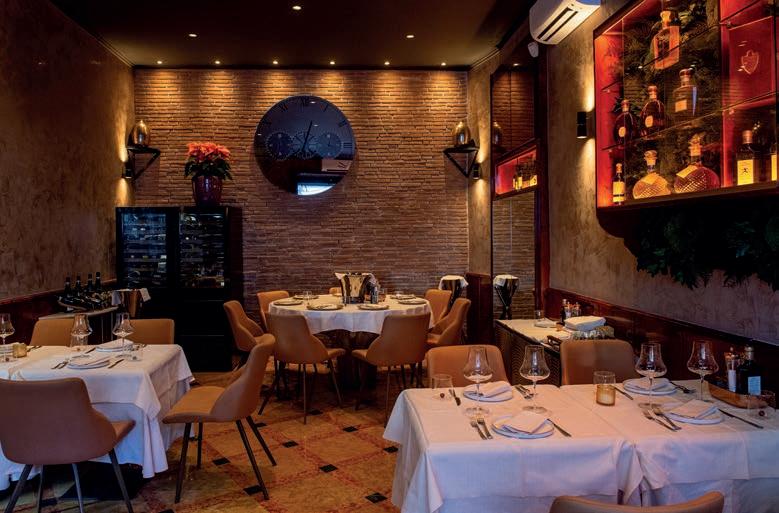
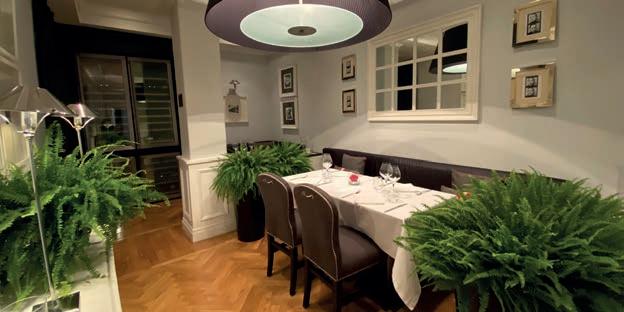
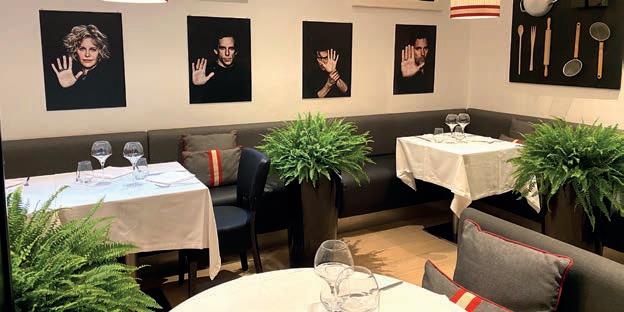
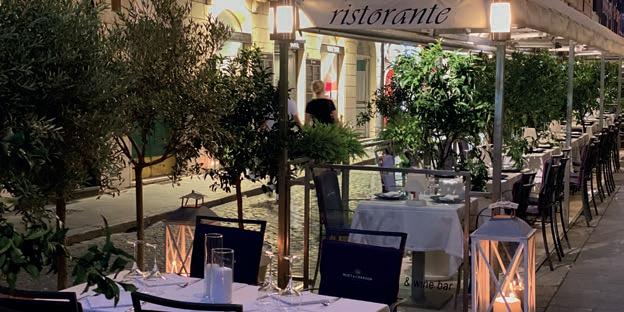
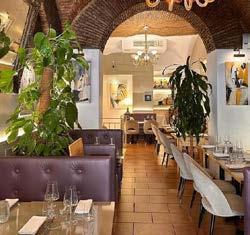
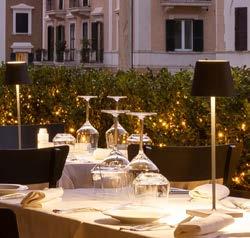
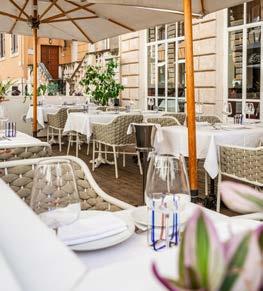
In the beating heart of Rome there’s a place that has been passionately serving authentic Roman food for over twenty years. This is Ristorante Vattani, a delightful and delicious place at Via del Viminale 2, welcoming guests with informal warmth and elegance since the year 2000. Here, every detail – from the attentive service to the choice of furnishings – is designed to make customers feel truly at home, pampered in simple yet beautifully curated surroundings. The icing on the cake is the delightful outdoor dining room, framed by a stunning array of plants; a green corner exuding freshness and harmony and the perfect place to enjoy traditional food under the Roman sky among natural scents and colours. The food is rooted in the most authentic Roman dishes such as carbonara, amatriciana and saltimbocca alla romana, but alongside the tradition, there’s plenty of room for creativity, with surprising new interpretations that never betray their origins, including cacio e pepe with crispy rocket, paccheri with prawn gricia or pennoni all’arrabbiata with fresh tuna and escarole. Main courses are a true homage to Roman lifestyle and fresh ingredients, from artichokes prepared Roman or Jewish style to roasted veal breast and fish of the day – oven-cooked or fried crisp – which arrives every morning to ensure superb quality. Completing the experience are delicious home-made desserts, a comprehensive wine list featuring a selection of prestigious labels and fabulous cocktails. Vattani is not only about great food; it’s an experience that combines flavour, atmosphere and hospitality, proudly telling its 25-year-old story of dedication, quality and love of good food.
A special thank you to our Lord and Savior Jesus Christ, without whom nothing would be possible. (Giovanni 15,5)
VIA DEL VIMINALE, 2 | TEL. 06 4818229
Open every day 11am - 12midnight. All credit cards accepted
Via
Roma
EXTRA-MAN
e, a pair of boots, a bag that breaks with convention create surprises
FENDI
Largo Carlo Goldoni, 420
Roma
Via del Babuino, 140
Roma
Via dei Condotti, 65
Roma
EMPORIO ARMANI
Via dei Condotti, 88-90
GUCCI
dei Condotti, 8
FERRAGAMO
Timeless
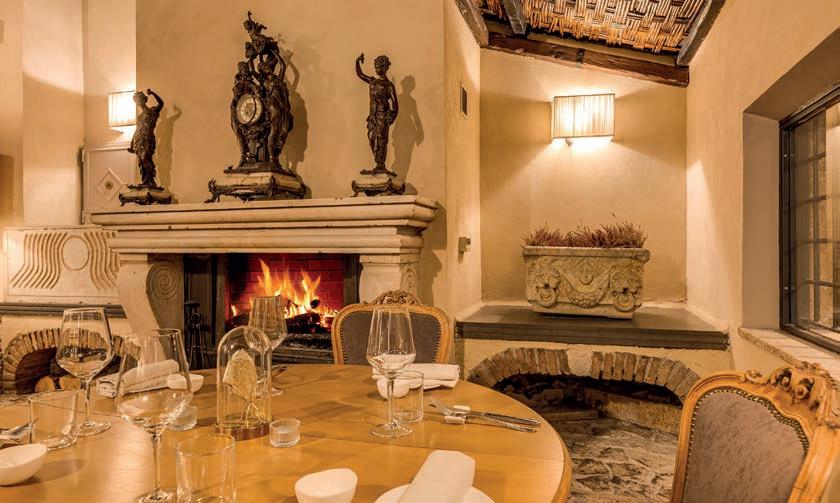
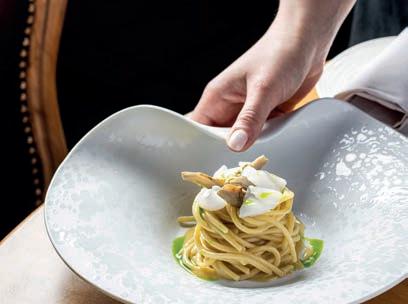
elegance… Restaurant L’Archeologia. Where innovation meets tradition. A unique experience to enjoy.
mercoledì - lunedì: 19.30 - 23.00
sabato e domenica: 12:00 - 15:00 / 19:30 - 23:00
martedì chiusi
EMPORIO ARMANI
DOLCE&GABBANA
Roma
ERMANNO SCERVINO
Via del Babuino, 140 Romar JUICY COUTURE juicycouture.com
Piazza di Spagna, 94-100
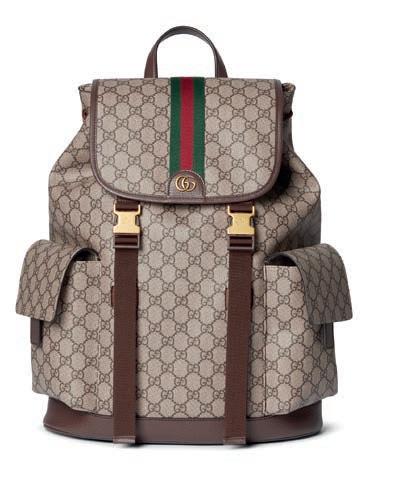
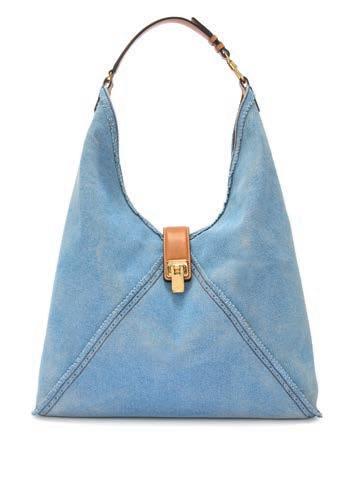
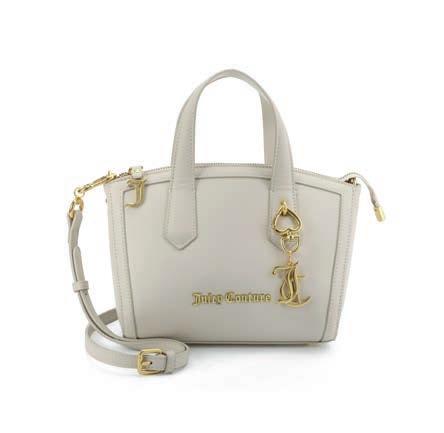
NEW SEASON NEW BAG
The desire for something new becomes a bag that anticipates Spring
Piazza di Spagna, 34
Roma bag
MAX MARA
Via dei Condotti, 17-18-18/A
Roma
ART NOUVEAU IN THE COPPEDÈ DISTRICT
An unusual corner of Rome and, just nearby, the magic of the Casina delle Civete
TEXT Teresa Favi PHOTO Valentina Stefanelli
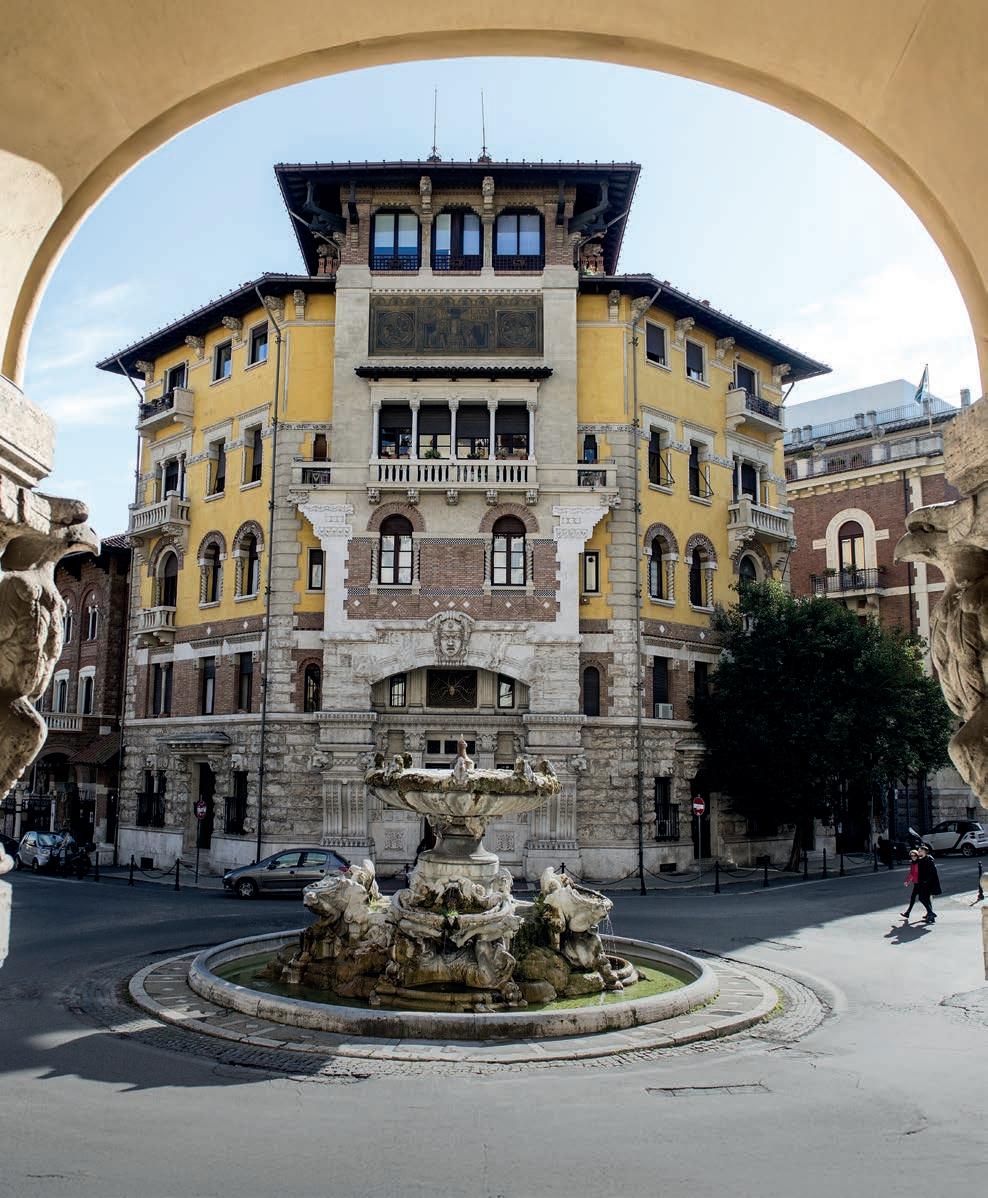
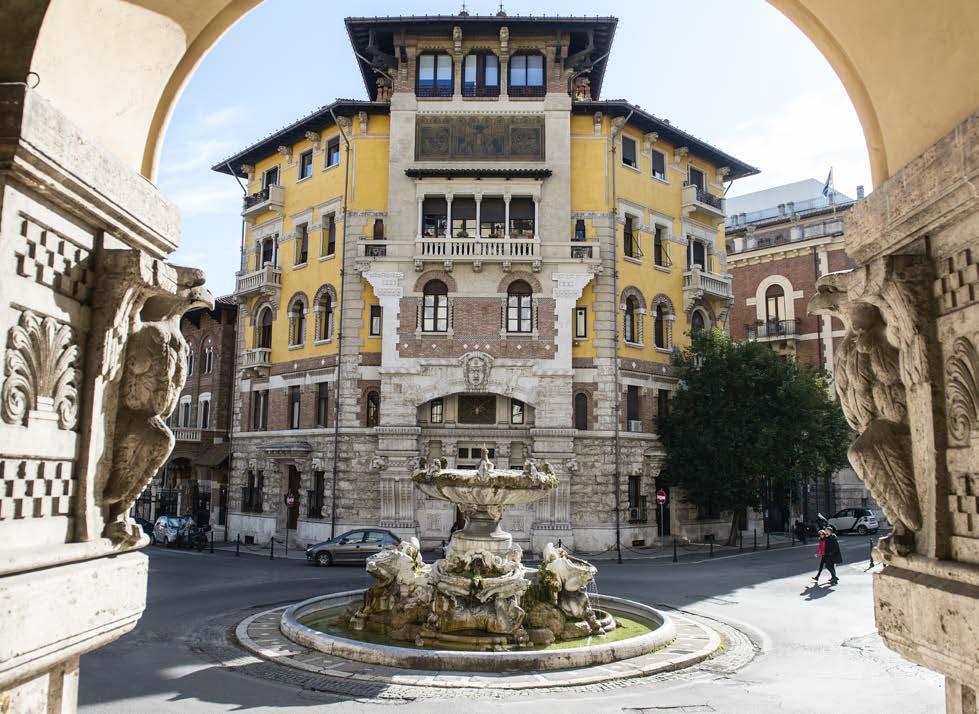
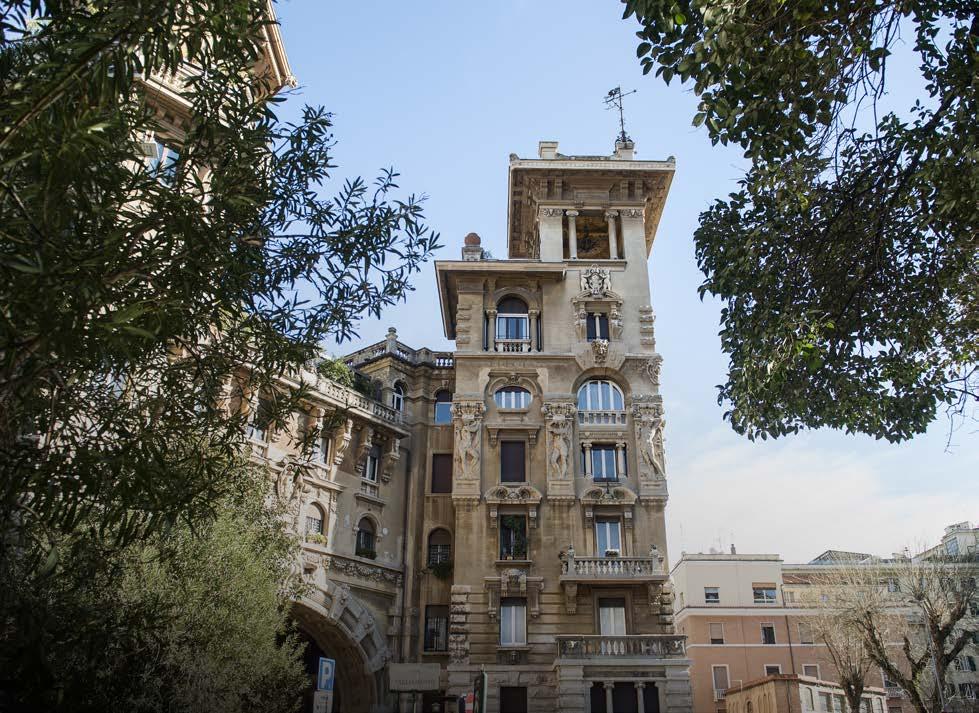
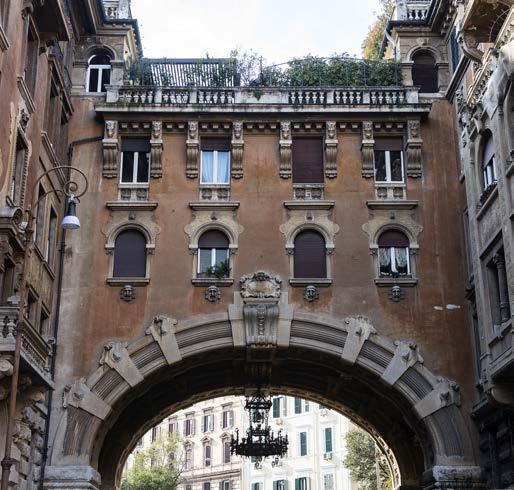
Above: main entrance ofCoppedèQuarter with its monumental arch
Below:PalazzodelRagno
THE ECCENTRIC ARCHITECT GINO COPPEDÈ
DESIGNED ONE OF THE QUIRKIEST AND
MOST
CURIOUS CORNERS OF ROME
CONCIERGE SUGGESTS
ConciergeAnantaraPalazzo Naiadi Hotel
GIULIA ROMAGNANI
Designed by the architect Gino Coppedè and his students between 1915 and 1927, the district is characterised by a series of buildings with unusual features. Elements of Roman classicism, such as columns and arches, are combined with imaginative shapes, and neo-Gothic towers and battlements coexist with allegorical and mysterious symbols. What I love most about this area is its impenetrable charm.To experience the magic of this area for yourself, I recommend taking a walk at sunset, when the warm light makes the iconic Palazzo del Ragno and Villini delle Fate even more fascinating.
Afew kilometres from Rome’s historic centre, hidden within the orderly fabric of the Trieste neighbourhood, lies a place suspended between fairy tale, exoticism, and gentle decay: the Coppedè district - or rather, that collection of extraordinary buildings designed by Gino Coppedè between 1913 and 1926, an architectural parenthesis as eccentric as it is captivating.
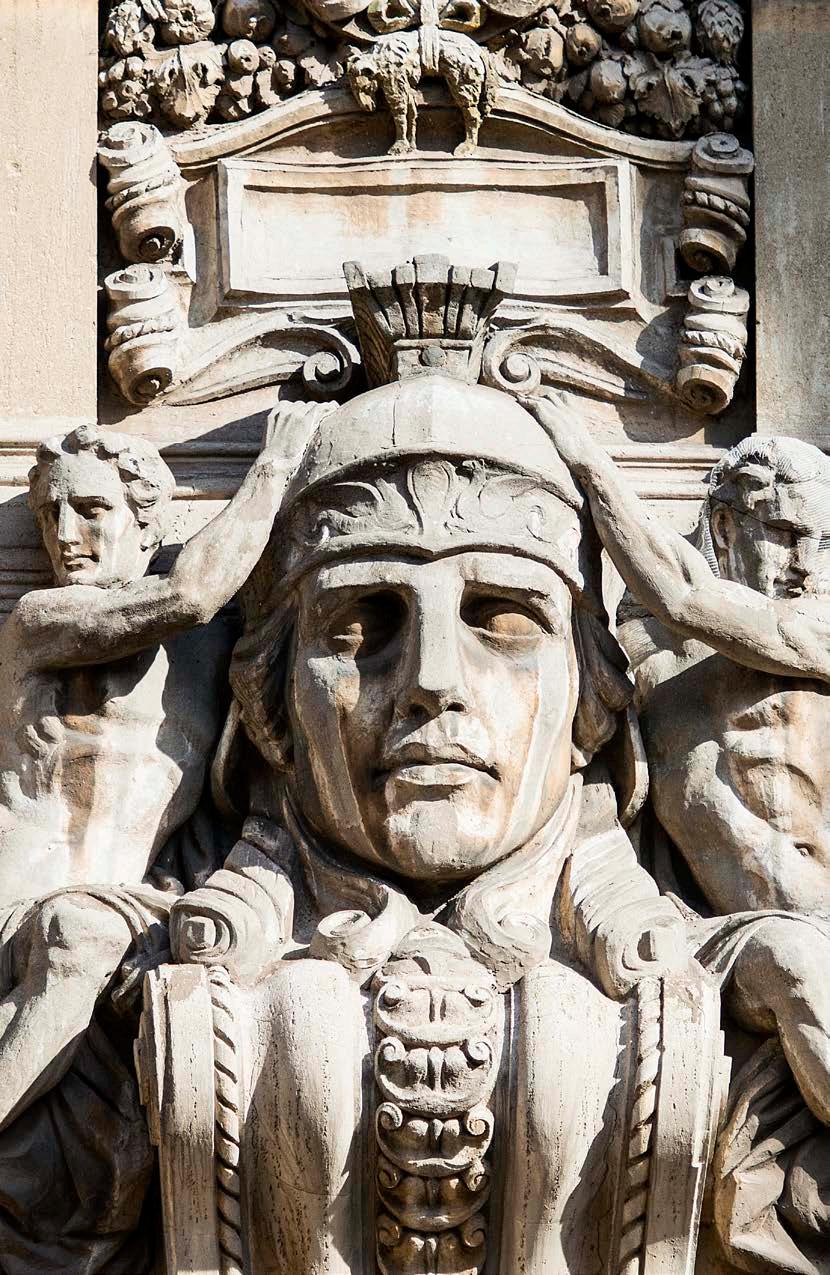
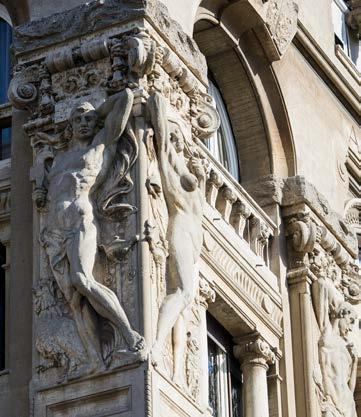
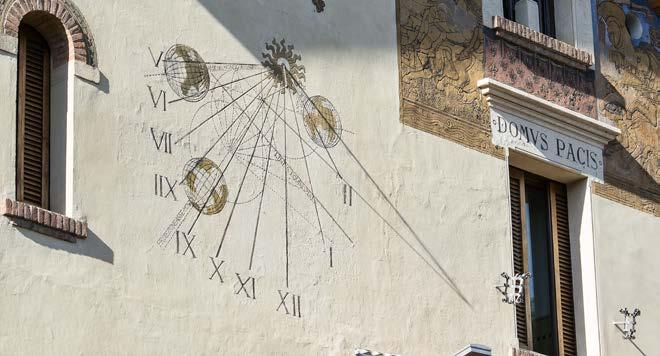
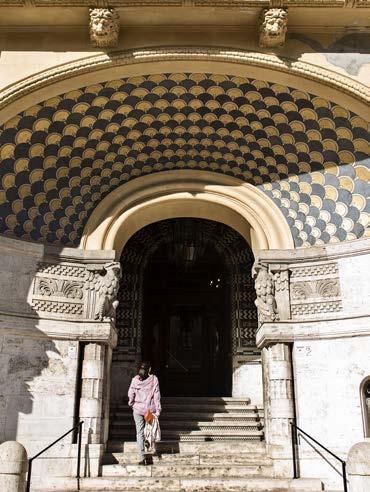
Not a true district but a surreal microcosm, Coppedè is a place where Italian Liberty style blends fearlessly with Art Deco, Gothic, Medieval, Baroque, and even Assyro-Babylonian influences. Here, anything seems possible: Tuscan turrets, Moorish arches, animal figures emerging from painted façades, and unexpected gardens where palm trees rise among marble and brickwork.
Strolling through its streets enchants both adults and children. You feel as if
you’ve stepped onto a movie set - and not by chance. The atmosphere is deliberately theatrical, slightly fané, like an elegant 1920s world preserved intact yet sofly worn, captured in a perpetual sunset. It is no surprise that horror master Dario Argento chose this natural set for two of his films: here beauty turns unsettling, the whimsical brushes against the dreamlike, and the shadows beneath the arches seem to whisper untold stories.
The main entrance on Via Tagliamento is a triumph of architectural imagination: a grand decorated arch linking the Palazzi degli Ambasciatori, crowned by a massive wrought-iron chandelier that looks as though it belongs in a Gothic film. Beyond the arch opens the delightful Piazza Mincio, the beating heart of the district.
At its centre stands the famous Fontana delle Rane, built in 1924: a double basin adorned with sixteen sculp-
One of those mixes of artistic and architectural styles that may seem random, yet are meant as a daring experiment, making the area one of the city's most distinctive, even if still little visite
Villa Torlonia
ted frogs spilling playful jets of water. It looks like something out of a whimsical fairy tale, yet it also carries a pop anecdote: legend has it that the Beatles jumped in fully clothed afer a concert at the nearby Piper Club. Around the square rise buildings so richly decorated they practically demand a camera and a keen eye.
Among them stand out the Palazzina del Ragno, with its iconic spider on the façade and its Assyro-Babylonian inspiration, dominated by the theme of labour - symbolised by the inscription 'labor'and the Villino delle Fate, an architectural fantasy without rules. Here, materials such as
travertine, marble, terracota and glass intertwine, while elegant references to Florence appear in inscriptions like
VILLA TORLONIA AND THE CASINA DELLE CIVETTE, AN ENCHANTING WORLD OF HISTORY,
ART AND ARCHITECTURE
'Fiorenza bella' and portraits of Dante and Boccaccio.
Afer leaving the district, a sweet pause at the histo-
ric Pasticceria Boni on Via Tagliamento is almost a must, before heading to another jewel of the area: the vast, verdant Villa Torlonia.
VILLA TORLONIA AND THE FAIRY TALE OF THE CASINA DELLE CIVETTE
Just over a kilometre from Coppedè, in the Nomentano district, stretches the splendid Villa Torlonia, sixteen hectares of lawns, monumental trees, ponds and winding paths - a perfect refuge from the city’s traffic.
Once the residence of the Torlonia family, the estate became Mussolini’s home in the 1920s, where he lived until 1943.
Today, open to the public
Villa Torlonia
and restored afer years of abandonment, the villa reveals - through the Casino Nobile and the nearby bunker - an unexpected layering of history.
But the truest gem, the most poetic and surprising, is the Casina delle Civete, perhaps the most magical place in the entire park. Born as a “Swiss Hut” in 1840 and gradually transformed until 1930 into an elaborate Art Nouveau retreat, it is an architectural creation that defies classification: part Alpine chalet, part Gothic castle, part enchanted cotage, adorned with coloured stained glass, ceramic tiles, turrets and sculptures inspired by
the plant and animal worlds.
Prince Alessandro Torlonia,
A SURREAL QUARTER
BLENDING LIBERTY, ART DECO, AND WHIMSICAL DETAILS: THE THEATRICAL CHARM OF COPPEDÈ
who loved solitude and the arts, conceived it as a creative refuge, personally overseeing
every detail. The magnificent stained-glass windows - now part of the Museum of Artistic Stained Glass - depict roses, garlands, swallows, vine tendrils, and above all owls: symbols of wisdom since Greco-Roman antiquity and animals associated with the goddess Athena.
Fitingly, the entire dwelling is populated with them, from windows to lamps to wallpaper.
The Casina fascinates adults but also enchants children, who perceive it as a real fairy-tale house. For them, Villa Torlonia also hosts Tecnotown, a technology museum designed to explore science through play.
Immaginate una casa elegante e un po’ fuori dal tempo.
La luce è accorta, i colori dosati dal tempo e dagli incontri. Libri, tanti. Qua e là indizi di bellezza e di arte contemporanea. Nell’aria un profumo di timo e di pane.
Try to imagine an elegant and timeless building, where the light is delicate, and the colours have been mixed by encounters and the passage of time.
You’ll fnd items of beauty and modern art dotted around here and there, and books aplenty. Te aroma of bread and thyme hang in the air.
BABETTE
Via Margutta 1d, 00187 Roma tel. +39 06 3211559 | babette@babetteristorante.it www.babetteristorante.it
A TREASURE BOX
The history of Italy in a Palace
TEXT Francesca Lombardi PHOTO Valentina Stefanelli
IT HAS BEEN HOME TO THIRTY POPES, FOUR KINGS OF ITALY, AND TWELVE PRESIDENTS
OF THE ITALIAN REPUBLIC
CONCIERGE SUGGESTS
ConciergeVillaAgrippina Grand Melià
ANDREA ALESSANDRONI
Hidden Gem near the Pantheon - Just steps from the Pantheon, the Church of Sant’Ignatius reveals a secret wonder. Andrea Pozzo’s baroque ceiling creates a “dome” that seems to rise into the sky. Stand at the center of the nave and witness the illusion unfold—a fleeting moment where art transforms space. Quiet, unexpected, and enchanting, this hidden gem offers a pause in the heart of Rome, perfect for those seeking beauty off the beaten path.
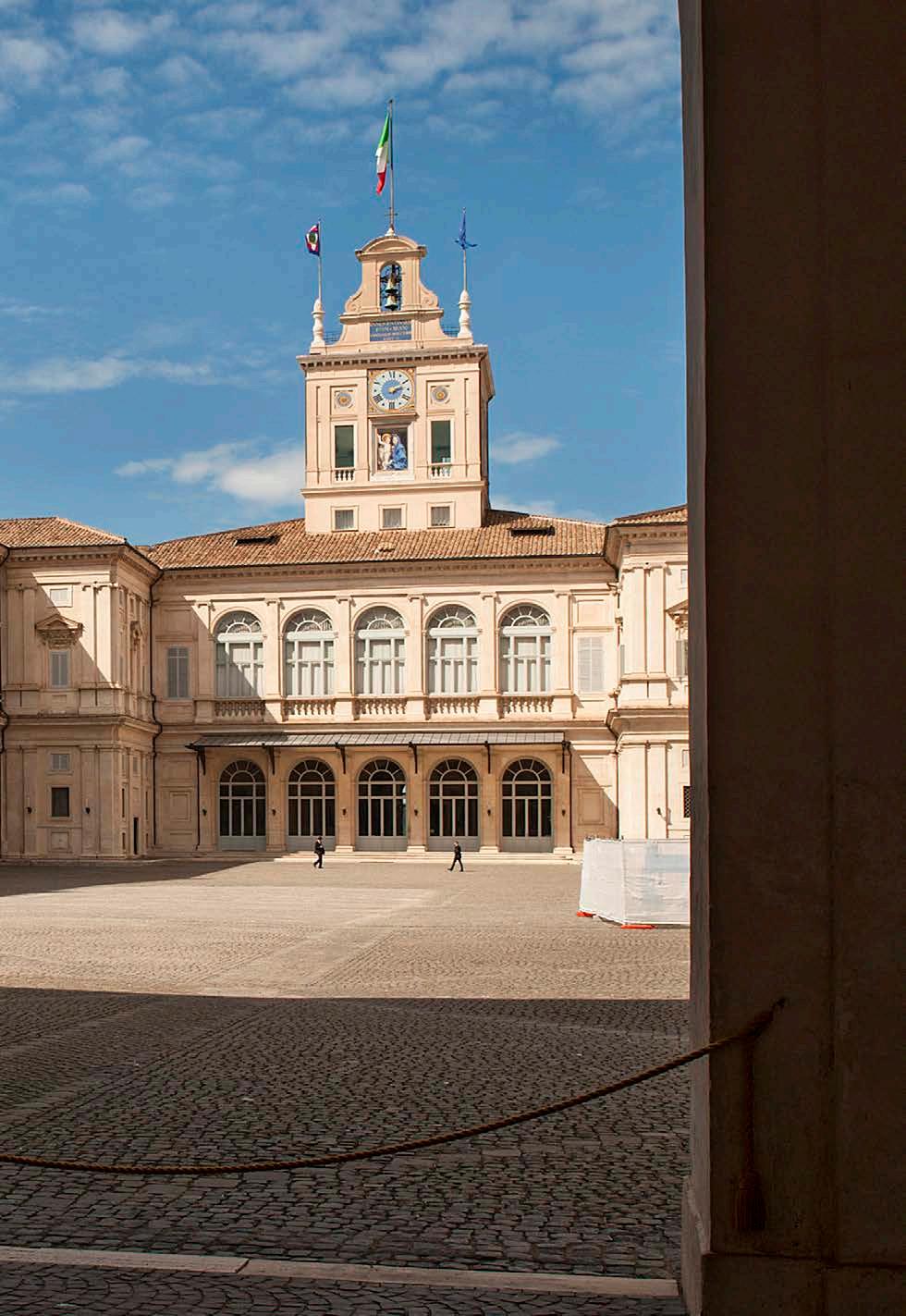
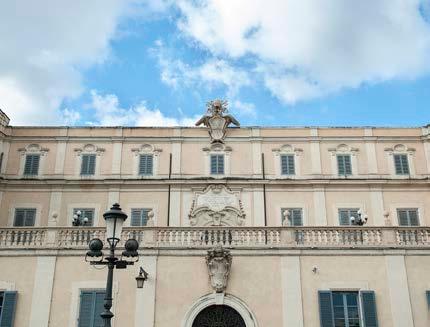
It has been home to thirty popes- from Gregory XIII in 1572 to Pius IX in 1870-, four kings of Italy- from Vitorio Emanuele II to Umberto II, who lef in 1946- , and twelve presidents of the Italian Republic: the first president was Enrico De Nicola, the current one is Sergio Matarella.
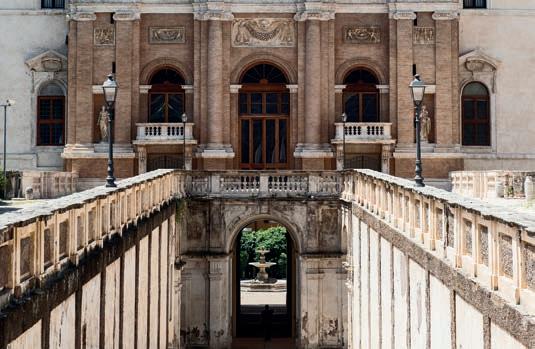
We are talking about the Quirinal Palace. In spring 2015, the President decided to open it to the public: “A way to make the Palace feel like everybody’s home” said Matarella, referring to an expression, the home of Italians, which former President Carlo Azeglio Ciampi had used for the first time. Therefore, the Palace is not a museum, although it has all characteristics you would expect of a museum, but a dynamic place which should bring citizens and the country’s highest office closer
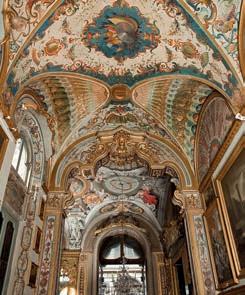
through art and history. And here we are talking History with a capital 'H': the halls, the corridors, the recently-restored frescoes, even the sumptuous and timeworn upholstery, everything speaks of the history of a country where power has been handed round- from the Church to the King to the State- but always side by side with art. We took you on a long guided tour - two and a half hours - during which we imagined the President siting down to lunch with Queen Elizabeth or George Bush, or Queen Margherita di Savoia wearing an evening gown and dancing, or we waited for the arrival of Napoleon, who actually never lived here… The evocative power of places and of the events which took place over the centuries and represent the Quirinal’s true heritage, in addition to its great artistic value.
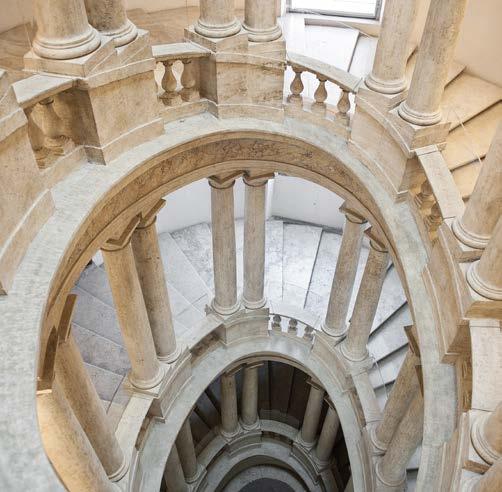
1. A view of the Scala del Mascarino
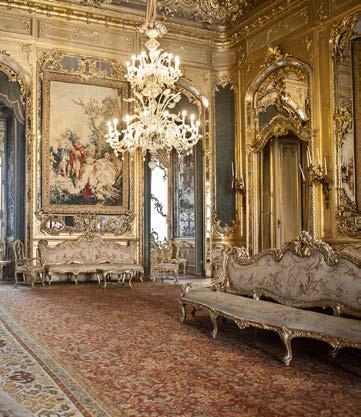
2. The Grand Ballroom
3. View of the Pauline Chapel
4. A passage of the Palace With its 110 thousand square meters, it is one of the world’s biggest palaces.
5. Lille Tapestry Room
THE QUIRINAL PALACE IS NOT A MUSEUM, BUT A DYNAMIC PLACE CONNECTING CITIZENS TO ART AND HISTORY
The Palace is located on the Quirinal Hill. Being Rome’s highest hill, the Quirinal has been used since ancient Roman times as the site for the construction of public and religious buildings. The temple to Quirinus, afer whom the hill was named, dates back to the 4th century B.C. The current building was built in 1583. Many masters of Italian art have contributed to the construction and decoration of the Palace over the centuries, including Pietro da Cortona, Domenico Fontana, Ferdinando Fuga, Carlo Maderno, Giovanni Paolo Pannini
VISITORS CAN ADMIRE 1,200 ROOMS DECORATED WITH FRESCOES AND STUCCOES, FROM THE GREAT HALL OF THE CUIRASSIERS TO THE PAULINE CHAPEL AND NAPOLEON’S SITTING ROOM
and Guido Reni. The Palace features 1,200 rooms and extends over an area of 110 thousand square meters. Therefore, visitors are led through an amazing suite of rooms decorated with breathtaking frescoes and stuccoes: the Great Hall of the Cuirassiers, the Piffetti Library, the Map of the World Hall, the Pauline Chapel- where Umberto II and Maria José got married soon afer the signing of the Lateran Pacts and which now houses chamber music concerts-, Napoleon’s siting room and the Mascarino Staircase, a sixteenth-century spiral stair-
The extensive Gardens which include the Rustic Fountain
CarriageHall case of rare beauty. And then comes the study of the first King of Italy, Vitorio Emanuele II, the frescoes by Pelagi, Queen Margherita’s room, featuring one of her silk gowns with silver and crystal embroideries dating back to the mid1800s. And the Hall of the Mirrors, still in use for institutional activities and, in the late 1800s, the heart of the Palace when, afer centuries of austere papal rule, the Quirinal became the scene of sumptuous parties and balls. And the sparkling rococo-style Grand Ballroom, where each newly-elected government is
THE QUIRINAL PALACE, ON ROME’S HIGHEST HILL, HAS HOSTED POPES, KINGS, AND PRESIDENTS, REFLECTING CENTURIES OF HISTORY
INTERTWINED WITH ITALIAN ART
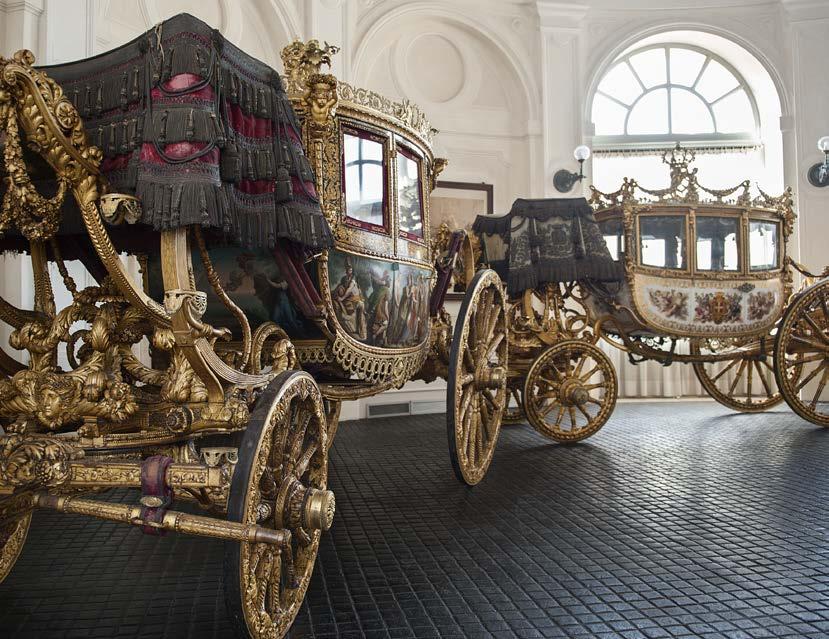
sworn into office. Of great interest is the suite of kitchens and rooms showcasing an impressive collection of plates, tableware and centrepieces- over 9 thousand pieces designed by Ginori and Meissen and Sevres ceramists- still used for formal receptions and parties. At the end of the indoor tour, visitors are taken through the sweet-smelling gardens with a look at the coach-house, filled with landau, brougham and magnificent hand-painted carriages, used by the Palace’s residents from the early 1800s to the 1940s.
Food is an integral part of Italian culture, and here at Alfredo alla Scrofa it’s also pride and pure happiness!
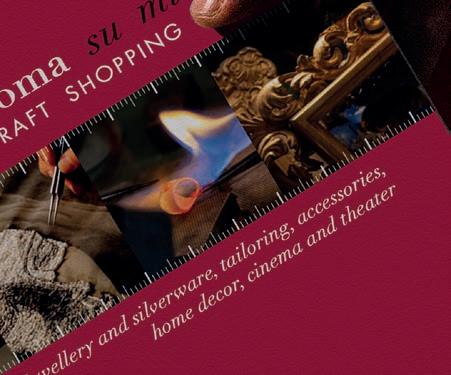
ROMA SU MISURA GUIDE
A fascinating journey through the excellence of Roman artistic crafsmanship
TEXT Virginia Mammoli PHOTO Dario Garofalo
Rome is proof that greatness is built in the details.
In mosaics composed of tiny tiles, in the veining of marble, in the draperies of sculptures: it is from these details that its disarming majesty takes shape.
A beauty born from a subtle harmony between grandeur and restraint, preserved and passed down by the skilled hands of its artisans.
Roma su misura. Craf Shopping Guide is designed precisely to tell this story: a journey into the industrious soul of the city, through
FIFTY ICONIC
MASTER CRAFTSMEN. AN IMMERSIVE EXPERIENCE AMONG HISTORIC WORKSHOPS AND CONTEMPORARY ATELIERS, ARTISTIC CRAFT GALLERIES, AND ANCIENT ARCHIVES
fify carefully selected master crafsmen who represent a treasure to be discovered and a source of pride to be shared, whose faces, stories and cult works are revealed here from a unique perspective. Publishing house Gruppo Editoriale returns with an exciting new chapter in its su misura series, which, after Milan, Florence, Venice, and Naples, could not fail to explore the timeless beauty of the Eternal City, where know-how has found fertile ground over the centuries. The city that, as Goethe wrote when reflecting on his trip to Rome in 1797, re-
Gaetano Aloisio Atelier
vealed “something new and marvelous every day.” Roma su misura. Craf Shopping Guide is an immersive experience among historic workshops and contemporary ateliers, artistic craf galleries, and ancient archives brimming with memories, captured by Dario Garofalo’s lens and collected in an elegant 240-page volume in two languages (Italian and English).
This small but invaluable guide is produced in collaboration with the Fondazione Cologni dei Mestieri d’Arte and with the support of Maison Cartier, a name
CLOTHES OF GREAT TAILORS AND BESPOKE FOOTWEAR THAT HAVE GRACED THE SILVER SCREEN, OSCAR-WINNING JEWELLERY, HATS, MOSAICS, CERAMICS, SCULPTURES...
synonymous with fine crafsmanship.
A must-have for lovers of beauty and the incredible traditions that still live on in these hotbeds of creativity, selected to showcase a city that continues to create beauty with the same passion as ever, through skills passed down, renewed, and reinvented here.
The guide becomes a poetic yet practical map, accompanying the reader in the discovery of Rome’s finest: the clothes of great tailors and bespoke footwear that have graced the silver screen and defined Italian
VincenzoPiovano&Figlie
elegance – worn by icons of the Dolce Vita like Audrey Hepburn, Elizabeth Taylor, and Marcello Mastroianni, as well as prominent figures in today’s entertainment and political worlds – the Oscar-winning jewellery and sacred art, nourished by a thousand-yearold tradition and a city that coexists with the heart of Christianity; and mosaics, an art form rooted in ancient Rome that still adorns monuments and contemporary creations, transformed into micro mosaics incorporated into exquisite jewellery and watches. And then there’s more: pic-
A MUST-HAVE FOR LOVERS OF BEAUTY AND THE INCREDIBLE TRADITIONS THAT STILL LIVE ON IN THESE HOTBEDS OF CREATIVITY, SELECTED TO SHOWCASE A CITY THAT CONTINUES TO CREATE BEAUTY
ture frames that are works of art in themselves, hats that frame the faces of international stars on and off set, delicate, gracefully crafed ceramics, wooden sculptures that preserve the poetry of living mater, and marble artefacts – the same marble that for millennia has given Rome its light, its solemnity, and that unmistakable profile recognized the entire world over.
Roma su misura. Craf Shopping Guide is available in Italy’s finest bookstores, on the website gruppoeditoriale.com, and in leading online bookshops.
EYEWEAR AT ITS MOST ELEGANT
The customized experience at Vidi Marguta, bespoke opticians
In Rome, there are places where aesthetic care meets technical expertise with rare ease. Vidi Marguta is one of them: an optical concept store where the customer’s choice of eyewear becomes a personal journey, tailored to each individual’s visual needs, physique, and style. The experience begins with a careful analysis, with thorough eye exams and state-of-the-art instruments that evaluate clarity, accommodation, posture, and focus in different lighting conditions. This approach allows not only the ideal prescription to be identified, but also the type of lens best suited to each individual’s daily routine, whether designed for computer work, driving, reading, or multipurpose use. The selection of frames is equally precise, with lightweight materials, next-generation bio-acetates,
titanium, and high-performance composites, along with handcrafed models chosen for their durability, comfort, and quality of finish. Shapes are determined as if in a bespoke optician’s, where proportions,
A PLACE FOR ATHLETES, WITH A SELECTION OF HIGHPERFORMANCE LENSES
facial contours, symmetries, and the natural angle of the gaze are studied; we evaluate how a certain geometry can enhance or balance a feature. The final fiting is then calibrated millimetre by millimetre, because perfect glasses are not just beautiful, they are
functional, stable, and harmonious. Technology, though present, never overwhelms the atmosphere: it integrates with a bright , intimate ambiance, designed to facilitate an easy, relaxed dialogue between client and consultant. The true luxury here is the time dedicated: atentive listening, the clarity with which possibilities and differences are explained, the sensitivity in understanding what a person is looking for, even when they struggle to express it. In a street endowed with a unique artistic legacy, Vidi Marguta reminds us that vision can also be a creative and conscious gesture: a way to choose how to look at the world and, above all, how we want to be looked at. An unexpected place also for athletes, with a selection of high-performance lenses that will allow them to reach new heights.
Caffè Doria
WINTER TREATS
The secret delights of an afernoon at the cafés
TEXT Martina Olivieri
IIn winter, the light in Rome changes, becoming sofer, almost filmic. At this time of year the city invites you to slow down and seek out intimate havens where time seems to expand. This is when coffee shops turn into small urban salons, redolent with the scent of freshly-ground coffee and with a warm cup in your hands. In the tangle of narrow streets, just step inside and find yourself surrounded by dark wood as the rustle of newspapers and the murmur of conversation fill the air. Places where winter afernoons take on their own rhythm as you watch rain falling steadily on stone, hear
IN WINTER, ROME SLOWS DOWN: INTIMATE CAFÉS BECOME URBAN HAVENS, FILLED WITH THE SCENT OF COFFEE, WARM CUPS IN HAND, NEWSPAPERS
RUSTLING AND SOFT LIGHT TURNING INTO MOMENTS OF CALM
the hurried footsteps of passers-by and find your focus restored. In other brighter and more contemporary areas of the city, austere spaces and minimalist style welcome a clientele in search of inspiration and calm.
Here, the café is a declaration of intent: curated extraction methods, creamy cappuccinos, cakes that taste of home and of lightly-made promises.
Wherever you go in this most poetic of Roman seasons, the coffee shop is a place of self-care, a place where you choose to pause, breathe and treat yourself to a slow afernoon. A simple way to live in the moment.
CAFÉ GINORI
Café Ginori at Rome’s Hotel de la Ville celebrates the timeless elegance of the Ginori 1735 brand, turning it into a real-life experience. Featuring iconic porcelain tableware and artisan details, this is a pleasantly lively place to gather, enjoy Italian food with a modern twist and relax in the ambience of exquisite design, history and conviviality. (Via Sistina, 69)
SANT’EUSTACHIO IL CAFFÈ
A coffee roastery founded in 1938 that continues to practise the art of coffee with undimmed passion. The house blend is 100% Arabica, organic and fair trade; it comes from South America. And the Ricci brothers preserve the ritual, making every cup a tribute to the quality of an all–Roman heritage. (Piazza Sant’ Eustachio, 82)
Victorian style meets Roman lightness, resulting in an atmosphere that’s somewhere between old-fashioned elegance and contemporary ceremony. Every tea blend is part of a story that remains to this day in the form of exceptional teas and a promise: to offer visitors quality and beauty and sustainability. (Piazza di Spagna, 23)
TAZZA D’ORO PANTHEON
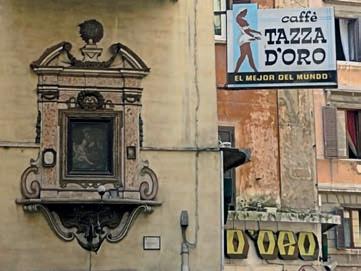
A Roman institution made of freshly-roasted coffee and living history. Here tradition meets artisan methods in fabulous blends, intense aromas and an almost ritual focus on quality. Among marble counters, sacks of coffee beans and a timeless atmosphere, every cup is a small foray into the city’s most authentic flavours. (Via degli Olmeti, 5B)
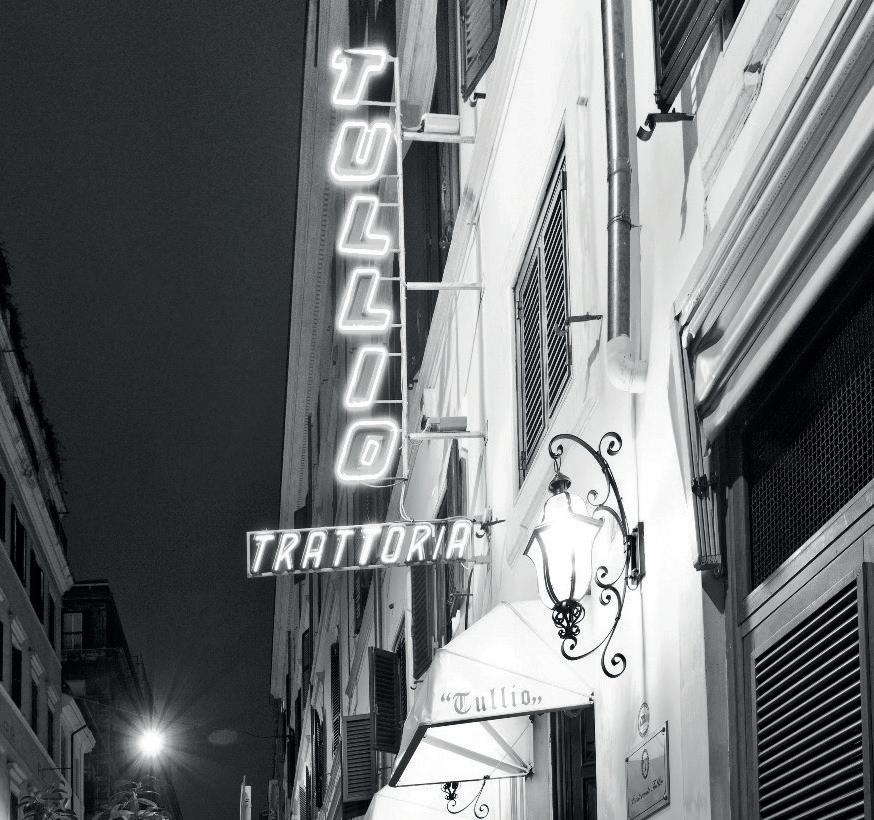
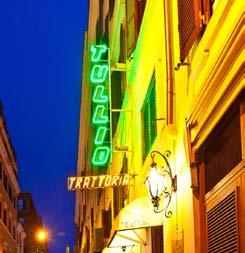
RISTORANTE TULLIO
Locale Storico di Roma fondato nel 1950 e gestito tuttora dalla famiglia da ben 3 generazioni
ILSOSTEGNO.IT
TEL. +39 06 6793842
VIA DELLE COLONNELLE, 5, 00186 ROMA
GIOLITTI
Gioliti has been a delicious Roman ritual ever since 1890, a place where gelato and pastry making have become an art form, handed carefully down the generations. Shiny marble, the fragrance of chocolate and Sicilian pistachios; here, every recipe speaks of family and tradition. Located close to the Pantheon, this is an iconic place to get a taste of true Italian excellence.
(Via Uffici del Vicario, 40)
FARO
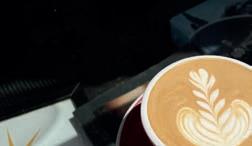
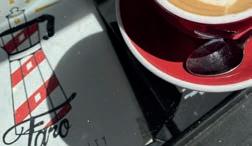
Faro is a modern-day haven where coffee becomes experience and contemplation. The bright, minimalist decor is an invitation to pause and enjoy fantastic blends and artisan pastries in a tranquil, thoughtfully designed space. Every coffee tells a story of flavour and care, turning a simple afernoon into a small urban ritual of pleasure and calm.
(Via Piave, 55)
CAFFÉ DORIA
Set in the splendid Palazzo Doria Pamphilj, this bistro and cocktail bar combines classic and contemporary style. In its cosy rooms and the secret garden in the cloisters, the menu, by chef Mazzota, is a celebration of comfort food to accompany every moment of the day – from breakfast to aperitifs – with a balance of tradition and innovation.
(Via della Gata 1, Palazzo Doria Pamphilj)
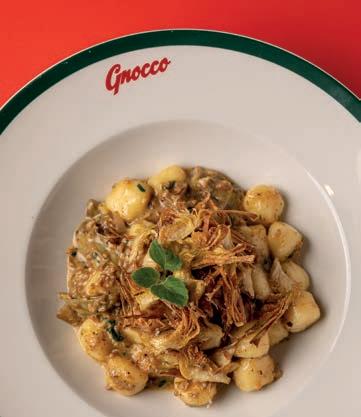
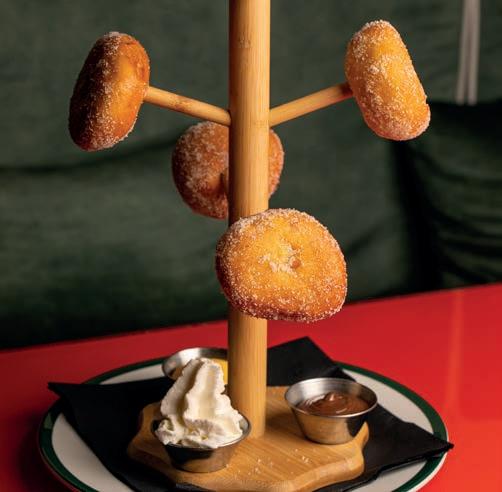
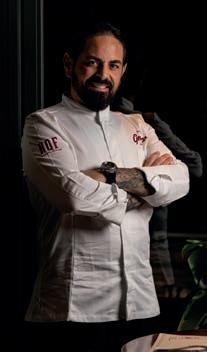
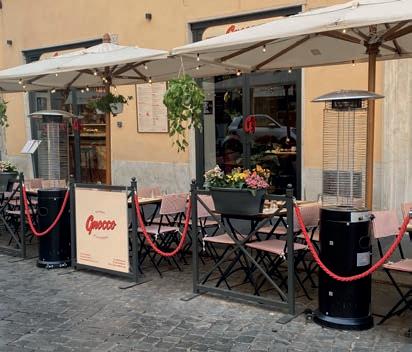
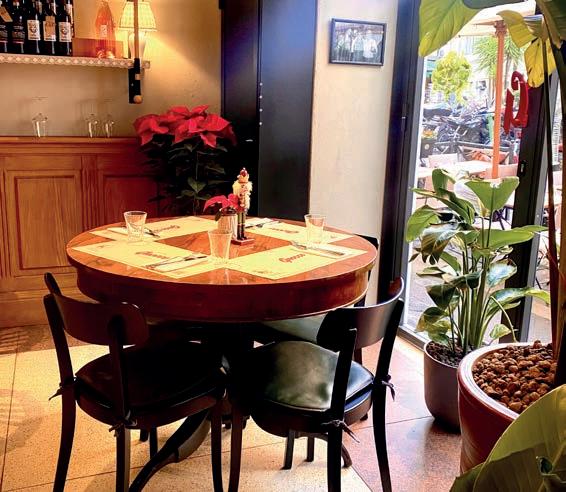
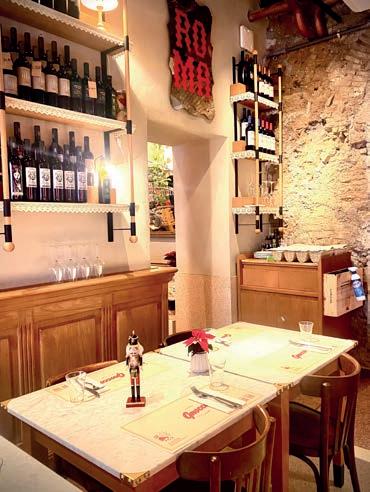
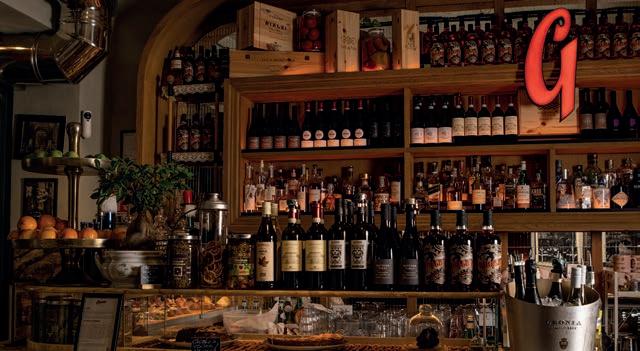
Under Roman chef Davide Cianetti,Gnoccoisanew restaurant in Via della Scrofa (closetothePantheon andPiazzaNavona)where customers can rediscover iconic dishesreinterpretedinafresh andcontemporarystyle
NEW FLAVOURS IN ROMAN CUISINE
Gnocco, the restaurant where Roman cuisine is reinvented with authenticity
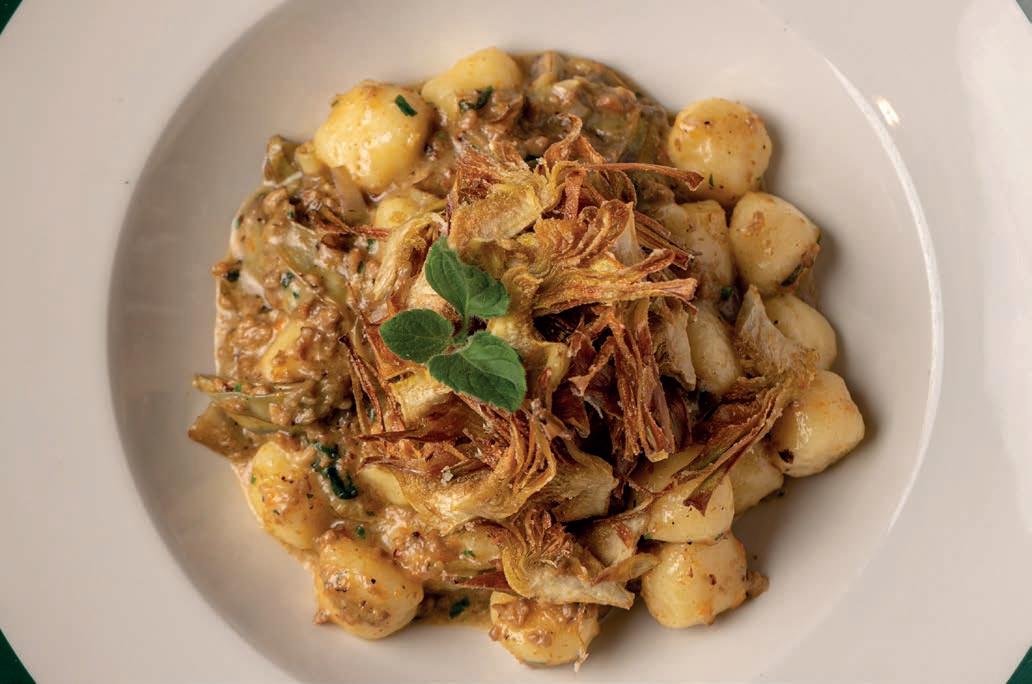
The true essence of Rome has always been associated with food, family stories, familiar scents and traditional gestures. This aspect of Rome is presented with a contemporary approach at Gnocco in Via della Scrofa where the restaurant turns an idea of cuisine into a blend of tradition, seasonality and research Here tradition is not simply imitated: it is rewriten. Food becomes a story which begins in the past with Rome’s culinary tradition and ends with a new version which is lighter, clearer and modern, but always authentic. From the potato and pecorino cheese gnocchi filled with lamb ragù, artichokes and mint, representing fresh pasta traditionally made in Roman houses to its tortellini in the 1990s way, Gnocco invites customers to
rediscover iconic dishes prepared in a fresher and more direct style.
The kitchen is overseen by Roman chef Davide Cianeti who offers an essential but refined menu. His dishes have profound roots in tradition with
AN IDEA OF CUISINE INTO A BLEND OF TRADITION, SEASONALITY AND RESEARCH
an eye to the future, turning simplicity into a value: essential techniques, seasonal ingredients and flavours which delight the palate. His cuisine embodies the universal idea of Rome, recognisable and
yet surprising. Every dish has a new story to tell, a link between memory and contemporaneity.
The restaurant’s menu includes also a selection of Italian and international wines and classic cocktails reinterpreted with a modern twist. Also its interiors, designed with great atention to detail offer the perfect balance between sophistication and informality: natural materials, sof lighting and eye-catching furniture pieces.
Between a glass of wine and a plate of pasta, Gnocco turns into a place for sociality and daily pleasures with great flavours and atmosphere to enjoy a convivial and engaging experience. Make a note of this address if you want to discover –or rediscover – the real soul of Rome: authentic, genuine and sophisticated.
ROME ON A PLATE
Il Falcheto tells the story of the city in its first courses
In Rome there are some places that do not seek atention; they achieve it through the quality that’s their trademark.
Il Falcheto belongs to this rare category: it’s a place where the cooking never boasts, and for that very reason it triumphs.
When winter comes, the menu reaches its natural richness.
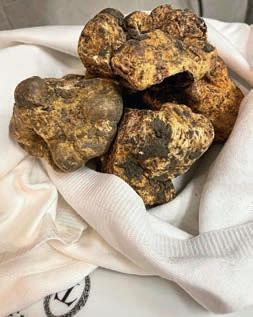
The Raviolo Assoluto, served with melted mountain buter and white truffle, is a declaration of identity: a clean, composed dish that excels in the precision of its puff pastry and the pure flavour of its dressing.
It has become one of the restaurant’s most popular dishes, almost an annual event.
Alongside this are the homemade tagliolini with white
truffle, which exude quiet luxury and a fragrance that’s enveloping but not excessive, leaving the delicate pasta as the main act.
Aside from seasonal specials, tradition raises its composed voice.
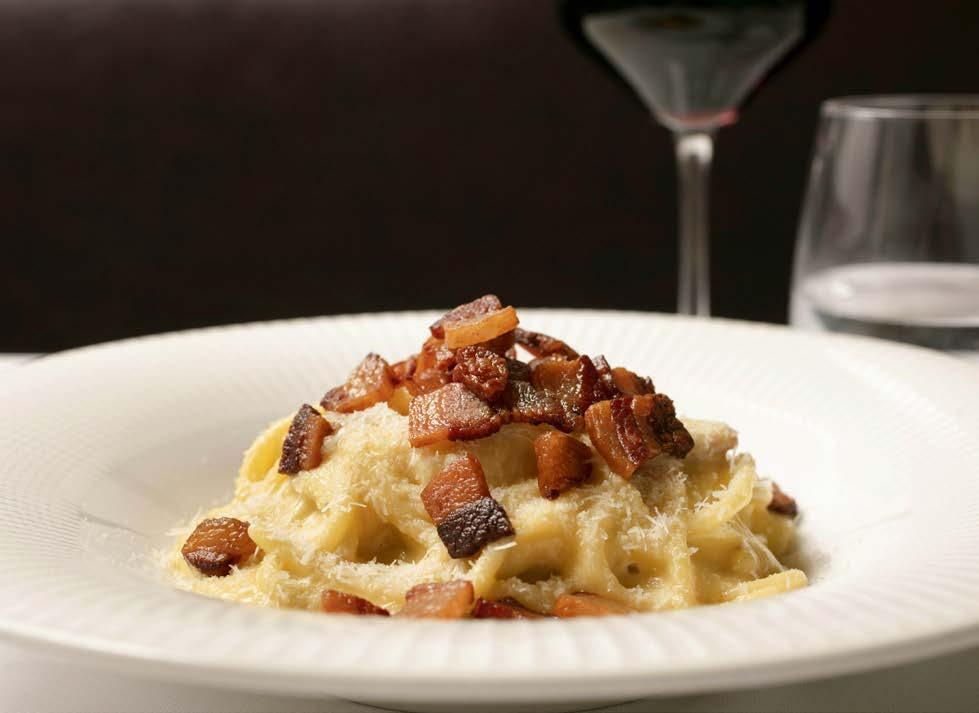
The carbonara is properly creamy, the perfect temperature, simply made.
The cacio e pepe atains an almost mathematical balance, a spiral of flavour and warmth.
The gricia – perhaps the most authentic of all – allows guanciale to meet pasta in an unfussy dialogue, with no shortcuts.
Bringing everything together is the choice of suppliers: a constellation of excellent local producers.
Livestock farmers who age meat the traditional way, dairies that preserve the
typical aromas of pecorino, olive mills producing oil that enhances a dish without masking its flavour.
Ingredients that don’t demand to be centre stage, but lend culinary substance.
Il Falcheto has that rare ability to make simplicity look like an accomplished form of elegance.
No theatrics, no special effects. Just a well-judged dining experience in which every detail is there to serve flavour.
The seting reflects this philosophy too: calm and minimalist, it’s designed to leave the focus on the food.
At the table, you understand why this food has a loyal following.
At Il Falcheto, tradition is not a burden; it flows.
And in its purest form it becomes style.
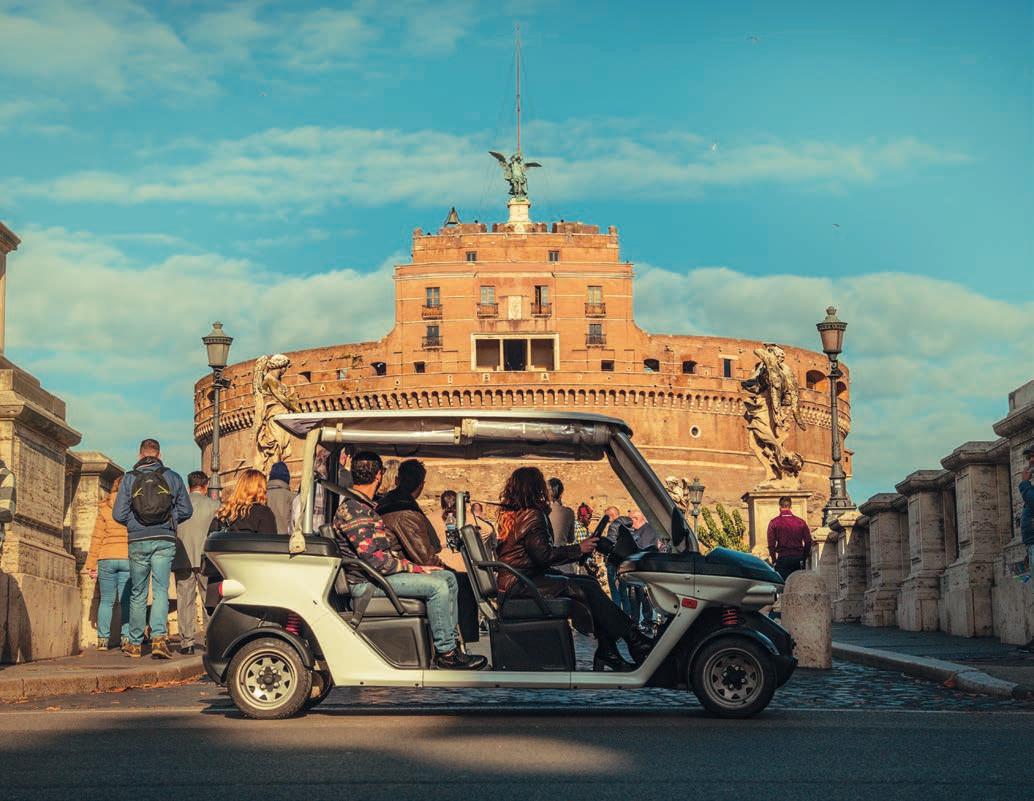
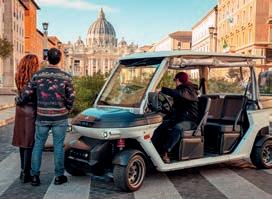
DISCOVER ROME WITH TURTLE TOURS PERSONALIZED, IMMERSIVE, AND UNFORGETTABLE.
At Turtle Tour Rome, we specialize in privately curated experiences designed to showcase the best of the Eternal City. Choose from our Eco-Friendly Golf Cart Tours, paired with an enticing selection of food tour options, for a styl-
ish way to relax and explore the stunning beauty of Rome. Enjoy the convenience of hotel pick-up and personalized itineraries designed specifically for your interests. Each tour package is customizable, ensuring a unique and enriching experience. With most of our guides born and raised in Rome, we guarantee an informative, engaging, and truly local perspective.
www.turtletourrome.com (find all our social media, review links, direct booking and more!) +393393806299 | info@turtletourrome.com
ROMAN STYLE
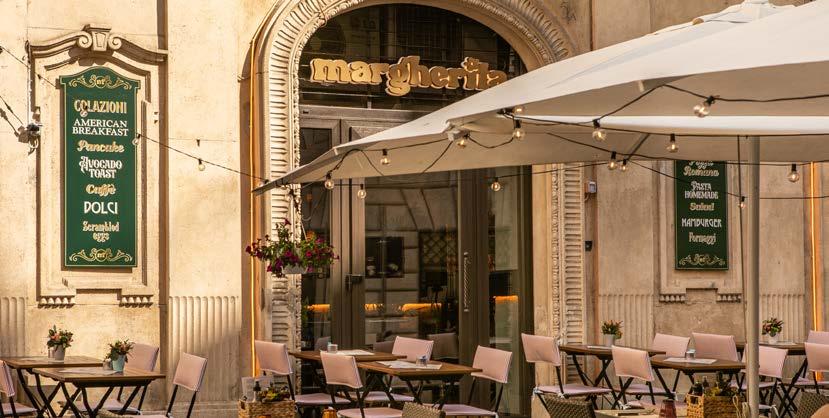
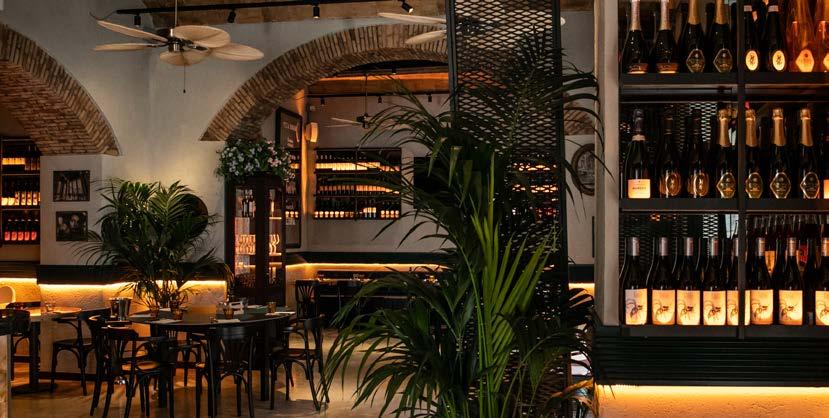
Margherita Osteria Pizzeria, the newest place to be for lovers of Roman pizza and traditional food
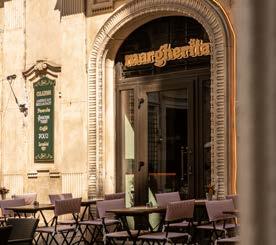
Right in the heart of Rome, in the intimacy of Piazza Cardelli, there’s an extraordinary place to visit every day and any time of day, from breakfast to midnight, an absolute must for anyone who loves traditional cuisine and Roman-style pizza, with its thin, crisp base. Opened this summer, this is the city’s latest addition to the Margherita Osteria Pizzeria chain, which already has branches in Via Praga and Viale Newton; the carefully curated modern decor retains the welcoming atmosphere typical of Margherita. The pizza dough is made from three different 100% Italian flours and is
proved for 24 hours, resulting in a light and fragrant base for the rigorously selected toppings. From timeless classics to original creations like the Nerano – courgete cream, provola, fried courgetes and gran padano wafers – and more down-to-earth options like fiordilate mozzarella, chicory and sausage. Alongside pizzas, the menu features home-made fried specialities including delicious supplì, potato and provola croquetes, fabulous hamburgers with home-baked bread, traditional starters and mains – from authentic carbonara to braised beef served with mashed potatoes – before coming to a sweet
conclusion with home-produced desserts ranging from tiramisù to warm apple pie with custard ice-cream. All accompanied by a wonderful wine list of over 100 labels. And then there’s the cocktail menu, offering creative, beautifully made reinterpretations of the classics. This lively and versatile restaurant is perfect if you’re looking for a genuine Roman place that moves with times, a place to go back to, and each time find a new reason to stay.
Museums, churches and all the atractions that you should not miss in city. Reservations are recommended in some museums, ask your ‘Les Clefs D’Or’ concierge
MUSEUMS AND ARCHAEOLOGICAL SITES
COLOSSEUM
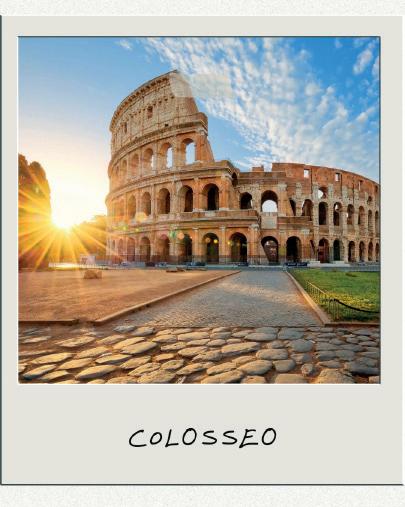
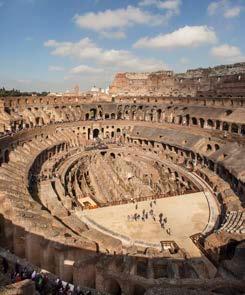
Designed to hold 50,00075,000 spectators coming to see the fights between gladiators and ferocious animals, the Colosseum is the largest amphitheatre from Antiquity, a symbol of Rome and one of the seven wonders of the world.
A water system fed various fountains and allowed for naumachiae, mock naval batles. Piazza del Colosseo, 1 ph. +39 06 39967700 colosseo.it
Closed: January 1, December 25
FOR0 AND PALATINO
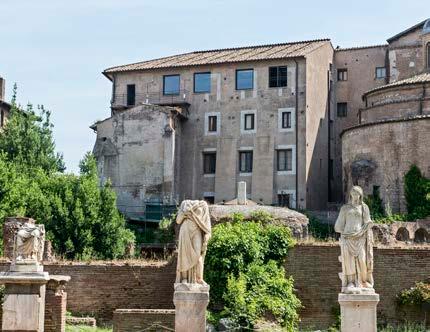
The Arch of Constantine links the Palatine Hill, adding to the houses of Livia and Augustus, and the Forums built along the Via Sacra and beyond the Arch of
Titus, up towards the Capotiline Hill and the Sacred Largo Argentina area, that is reopened and equipped for disabled people.
At the same time, the emperors paid homage to themselves by building their own squares, known as Fori.
Fori Imperiali | Foro Romano | Palatino: ticket office Piazza della Madonna di Loreto and Via della Salara Vecchia ph. +39 06 39967700 coopculture.it
Closed: January 1, December 25
THE BATHS OF CARACALLA
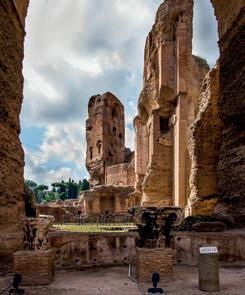
Inaugurated by Caracalla in 216 CE, they extended for 10 hectares, vaunted a sophisticated water system for its tepidarium, calidarium, frigidarium and two gymnasiums, and included a Mithraeum, the god venerated by young soldiers.
Priceless materials stripped from the structure were recycled to build Santa Maria in Trastevere.
Viale delle Terme di Caracalla, 52 ph. +39 06 39967702 coopculture.it
Closed: January 1, May 1, December 25
CATACOMBS
These underground cemeteries carved into tuff rock were decorated with Christian symbols and located, for reasons of hygiene, outside the city walls. Beginning in the 2nd century, martyrs, Christians and Jews were all buried in them. The most evocative, near the Appian Way, are the catacombs of Domitilla, Lucilla, Callixtus, St. Sebastian and the Ardeatine.
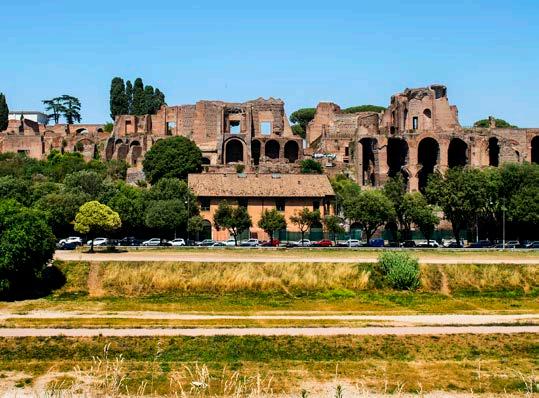
CIRCO MASSIMO
A portion of the area gives us an idea of the original purpose of this stadium, 120 metres wide and 620 metres long, likely the largest structure ever built to stage spectacles and able to seat 250,000 people. It was used for horse races and a market. This is also where the Rape of the Sabine Women occurred. Today, it is a popular place for hosting large events.
Via del Circo Massimo ph. +39 06 0608 sovraintendenzaroma.it
Closed: January 1, May 1 (variable), December 25
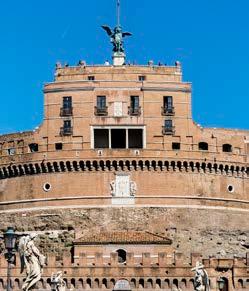
CASTEL SANT’ANGELO
The mausoleum of Emperor Hadrian, it later became Castel Sant’Angelo. Thanks to its secret passage connecting it to the Vatican, it was transformed into a fortress and refuge for popes. It was later a prison, barracks and museum. Inside, there are frescoes by Pinturicchio, while the bronze angel was made by Peter Anton von Verschaffelt in 1753. Lungotevere Castello, 50 ph. +39 06 6819111 castelsantangelo.beniculturali.it
Closed: January 1, May 1, December 25
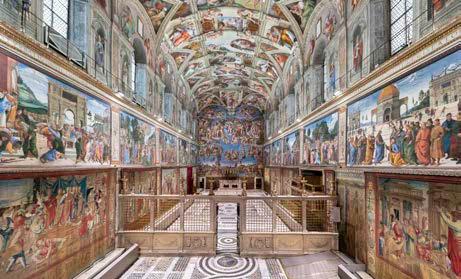
VATICAN MUSEUMS AND SISTINE CHAPEL
This collection of buildings houses one of the most impressive and visited art museums in the world.
Another highlight, in addition to the Gallery of Geographical Maps, is the Pinacoteca, which conserves artworks, including pieces by Leonardo, Gioto, Titian, Reni, Caravaggio and Raphael. The later’s
masterpiece, however, can be found in Julius II’s apartments, today known as the Raphael Rooms. Near there is the Pauline Chapel, which conserves frescoes by Michelangelo, and the Sistine Chapel. The walls were frescoed by Boticelli, Perugino and Signorelli, while the ceiling is Michelangelo’s triumphant. On the wall behind the altar, Last Judgement. Viale Vaticano ph. +39 06 69884676 museivaticani.va
Closed: Sunday (except for the last of the month), January 1, February 11, March 19, April 22, May 1, June 29, August 14 and 15, November 1, December 25 and 26
GALLERIA
BORGHESE
The gallery, adjacent to the villa that dominates the Pincian Hill, is considered the most important museum in the world for its collection of artworks by Bernini and Caravaggio, including the former’s Apollo and Daphne, the later’s Young Sick Bacchus and The Deposition by Raphael. Piazzale Scipione Borghese, 5 ph. + 39 06 8413979 galleriaborghese.beniculturali.it
Closed: January 1, December 25
MUSEI CAPITOLINI
Housed inside Palazzo dei Conservatori and Palazzo Nuovo, in the piazza redesigned by Michelangelo, the museums conserve artworks like the Capitoline Wolf, the original statue of Marcus Aurelius, the Dying Gaul, Bernini’s Medusa and The Fortune Teller by Caravaggio. A section of the museum is now in the Centrale Montemartini.
Piazza del Campidoglio, 1 ph. +39 06 0608 museicapitolini.org
Closed: January 1, May 1, December 25
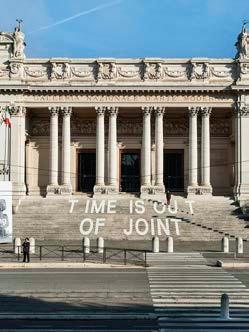
GNAM – GALLERIA
NAZIONALE DI ARTE MODERNA
Designed by architect, Cesare Bazzani, the National Gallery houses Italian masterpieces
from the 19th and 20th centuries. Divided into two sections, the exhibition space was built for the International Exhibition and showcases works by the Macchiaioli, Futurists (Boccioni and Balla), Chini, Modigliani, Gutuso and De Chirico, as well as Klimt, Monet, Cézanne, Mondrian, Kandinsky.
Viale delle Belle Arti, 131 ph. +39 06 32298221 lagallerianazionale.com
Closed: Monday, January 1, December 25
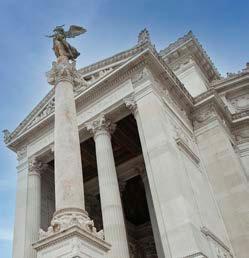
IL VITTORIANO
Named the Vitorio Emanuele II Monument at its inauguration, it is also known as the Altare della Patria (Altar of the Fatherland) and was built to commemorate Italian liberation. Built like a modern Roman Forum, it houses the Museum of the Risorgimento and the Tomb of the Unknown Soldier. Today, it houses temporary exhibitions and features a large terrace with a view of the city.
Il Vitoriano: Via di San Pietro in Carcere ph. +39 06 8715111 ilvitoriano.com
Museo centrale del Risorgimento al Vitoriano: Closed Easter, week of August 15, December 25 ; Timetable of temporary exhibitions on the site
PALAZZO BARBERINI AND GALLERIA CORSINI
The galleries housed here showcase artworks including gems like Raphael’s Portrait of a Young Woman and Holbein’s Portrait of Henry VIII, as well as pieces by Van Dyck, Tintoreto and Titian. Built by Maderno for Pope Urban VIII, features a salone with Barberini Power by Pietro da Cortona. Palazzo Barberini:
Via delle Quatro Fontane, 13 ph. +39 06 4814591
Closed: Monday, January 1, December 25
Galleria Corsini:
Via della Lungara, 10 ph. +39 06 68802323
Closed: Tuesday , January 1, December 25
barberinicorsini.org
SCUDERIE
DEL QUIRINALE
Up until 1938 it was used as a stables and carriage house, afer which it housed the Carriage Museum. Built on top of the ruins of the Roman temple of Serapis, the
building boasts a view from the highest point of Rome’s historic hills.
The Scuderie was restored by the international architect Gae Aulenti for the Jubilee in 2000 and is today one of the main sites for large exhibitions.
Via XXIV Maggio, 16 scuderiequirinale.it
Timetable of temporary exhibitions on the site.
GALLERIA
DORIA PAMPHILJ
Palazzo Doria Pamphilj is the biggest palace that still serves as a residence and is home to important private art collections. The gallery features works by Titian, Raphael, Caravaggio, Parmigianino, Lorrain, Sebastiano del Piombo, Bronzino and Bernini, as well as Vélazquez’s most famous
portrait. The palace apartments and private chapel can be accessed via the gallery. Via del Corso, 305 ph. +39 06 6797323
doriapamphilj.it
Closed: third Wednesday of the month, January 1, Easter, December 25
MAXXI
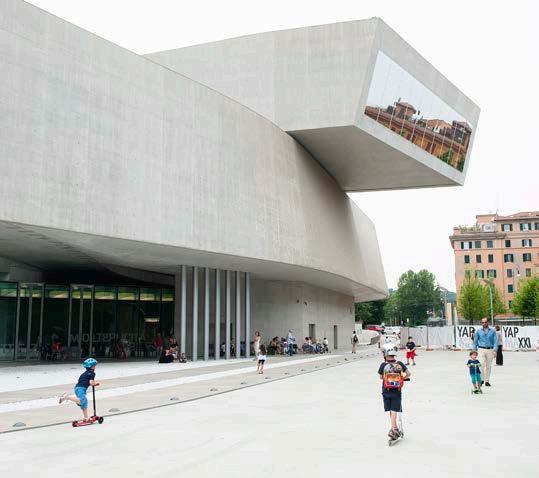
The museum features art from the 21st century and was built on the site of an old army barracks, the Caserma Montello, near the Auditorium Parco della Musica by Renzo Piano. The interior space is dedicated to international avant-garde movements and the first gallery of Contemporary Architecture.
Works on display include pieces by Boeti, De Dominicis, Kapoor, Richter and Catelan.
Via Guido Reni, 4A ph. +39 06 3201954 maxxi.art
Closed: Monday, May 1, December 25
MUSEO
DELL’ARA PACIS
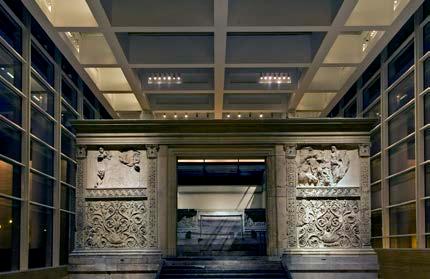
Intended to celebrate peace in Spain and Gaul, the Ara Pacis was consecrated in 9
BCE between via Flaminia and the Mausoleum of Augustus. Decorated with the achievements of Emperor Augustus and portraits of the Giulio-Claudia gens, it has been enclosed in a protective building made of steel and marble designed by Meier since 2006.
Lungotevere in Augusta (corner via Tomacelli) ph. +39 06 0608 arapacis.it
Closed: January 1, May 1, December 25
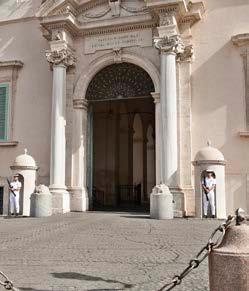
QUIRINALE
The hill, also called Cavallo (horse) because of the statues of the Dioscuri found in the square, has always been the home of powerful people. First
the popes from Gregory III to Pius IX, and then Napoleon. It was also the king’s home and finally the residence of the President of the Republic. The majestic walls of the palace preserve beautiful tapestries, antique clocks and porcelain, as well as the beautiful elliptical by Mascarino and the staircase of Honour.
Piazza del Quirinale ph. +39 06 3996 7557 palazzo.quirinale.it
FORUM STUDIOS
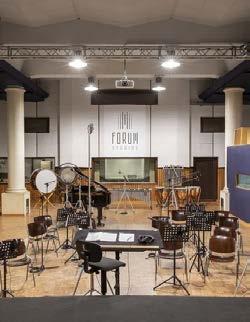
Founded in 1970 by Ennio Morricone, Forum Studios in Rome represent a landmark in music and cinema history. For the first time ever, the historic Studios will open their doors to guests with a number of customisable exclusive visits and experiences inside the most famous Italian recording studios in the world.
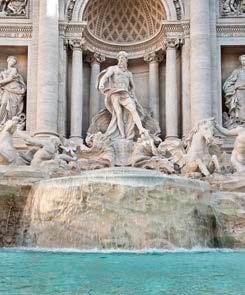
A cross between Baroque and Neoclassicism, the largest fountain in Rome reflects the story of the Augustus-era Aqua Virgo.
It was rebuilt multiple times in Antiquity and enlarged by Bernini but finished only in the late 18th century. Traditional says that if visitors to throw a coin into the fountain, they will return to the city one day.
Piazza di Trevi
SCALINATA
TRINITÀ DEI MONTI
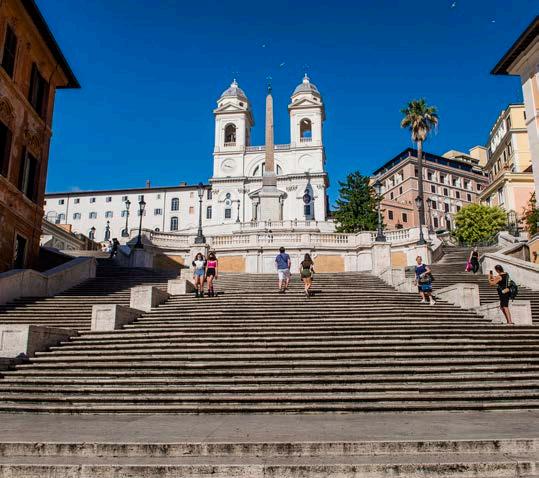
Imposing and scenic, its shape narrowing and widening as it climbs, it connects the Church of Trinità dei Monti to piazza di Spagna. Afer centuries of development, the stairway was built in 1726 based on a design by the architect Francesco De Sanctis.
Its beauty is exalted in the spring, when the flowers are in bloom.
Piazza di Spagna
COLONNA TRAIANA
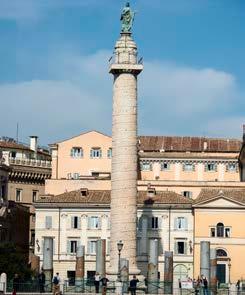
Ancient Roman at its finest, it is the first coclide column, erected in 113 to celebrate the victory over Dacia (today Romania), with scenes from the war depicted across a spiral, chronological frieze. Forty metres tall, it con-
serves the ashes of Trajan and is located in what was Trajan’s Forum. Sixtus V replaced the statue at the top with one of St. Peter.
Via dei Fori Imperiali
TEATRO MARCELLO
Begun by Caesar and located between the Tiber and the Capitoline Hill, it was completed and enlarged by Augustus. In the Middle Ages, it was used for houses and workshops. Restored in the 1920s, it is one of the few and
oldest theatres remaining, and over the centuries, it has been used as a model for theatres and amphitheatres.
Via del Teatro di Marcello
COLONNA
DI MARCO AURELIO
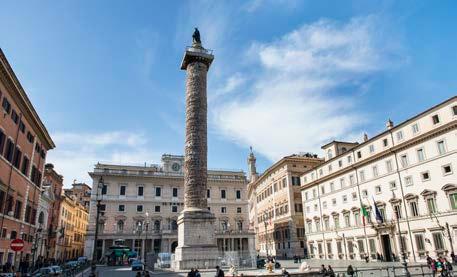
It’s located opposite Palazzo Chigi, in the exact spot where it was erected by Commodus in 190 to celebrate the victories of his father Marcus Aurelius over the Germanic people. Forty metres tall, the frieze winds for 110 metres and was inspired by Trajan’s Column. In 1589, Sixtus V replaced the Roman statue on top with an effigy of St. Paul.
Piazza Colonna
ARCO DI COSTANTINO
With its three arches, it is the largest triumphal arch in Rome and symbolically inaugurates via dei Fori. The Senate dedicated it to Emperor Constantine in 315. Recent studies have dated it to the era of Hadrian, however.
The decorations show a variety of styles, from classical to medieval: a veritable open-air “museum”.
Via di San Gregorio
PYRAMID
OF CAIUS CESTIUS
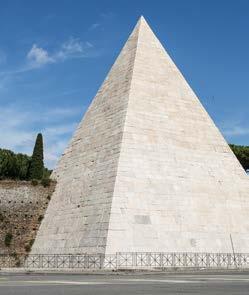
Gaius Cestius wrote in his will that the tomb must be built in only 330 days, lest his heirs be excluded from his rich patrimony.
Erected out in 18 BCE and 36 metres tall, it was covered in marble and inspired by the Pyramids of Giza.
Via Raffaele Persicheti
CHURCHES
BASILICA DI SAN PIETRO IN VATICANO
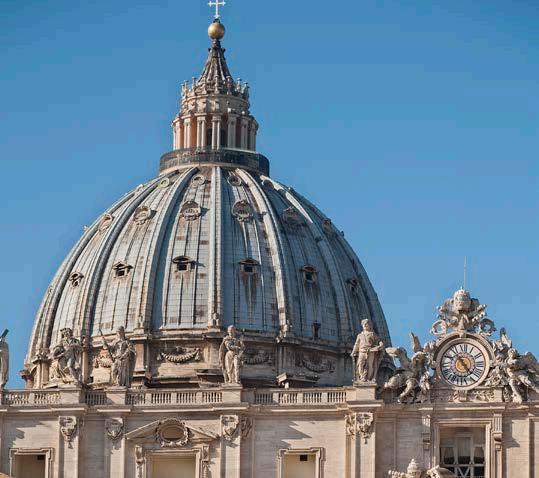
St. Peter’s Basilica is the most fascinating place in the world. In addition to priceless relics and interesting tombs, there are many masterpieces inside St. Peter’s, including the Pietà, sculpted and signed by young Michelangelo, and the lavish canopy by Bernini. The bronze
statue of the saint is by Arnolfo di Cambio, while the towering round dome is by Michelangelo, who was inspired by Brunelleschi’s dome in Florence.
Piazza San Pietro vatican.va
ARCIBASILICA
DI SAN GIOVANNI IN LATERANO
This is the city’s cathedral and the first of the four papal basilicas. Built by Constantine following the First Council of Nicaea in 325, this is where Pope Boniface VIII announced the first Jubilee in 1300. The Constantine-era mosaics, Cosmatesque floor and ciborium remain, while the incredible “rooms of light” by Borromini can still be seen today.
Piazza di S. Giovanni in Laterano, 4 vatican.va
BASILICA DI SAN PAOLO FUORI LE MURA
This was the cemetery where St. Paul was buried. The church, built by Constantine, is one of the four papal basilicas, the second largest afer St. Peter’s and also called Ostiense.
Vaunting an imposing colonnade, it was destroyed by a fire and rebuilt as it was. The ciborium by Arnolfo di Cambio is priceless, while the mosaic portraits of all the popes is a rare masterpiece.
Piazzale San Paolo, 1 basilicasanpaolo.org
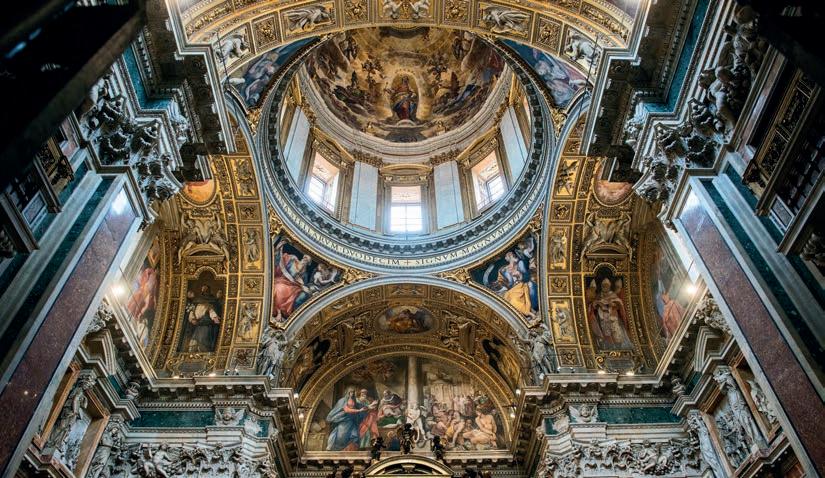
BASILICA DI SANTA MARIA MAGGIORE
The church, one of the four papal basilicas, maintains its original early-Christian structure and was built in the 4th century on the spot where snow is said to have fallen in the summer (commemorated every August 5). Inside also to the oldest Nativity, by Arnolfo di Cambio.
Piazza di S. Maria Maggiore, 42 vatican.va
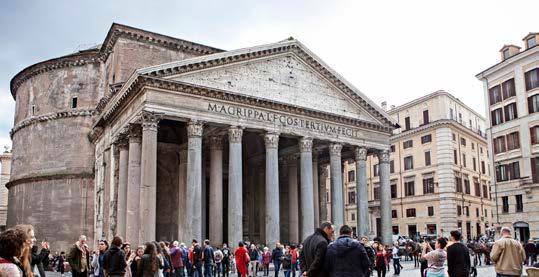
PANTHEON
BASILICA DI SANTA MARIA AD MARTYRES
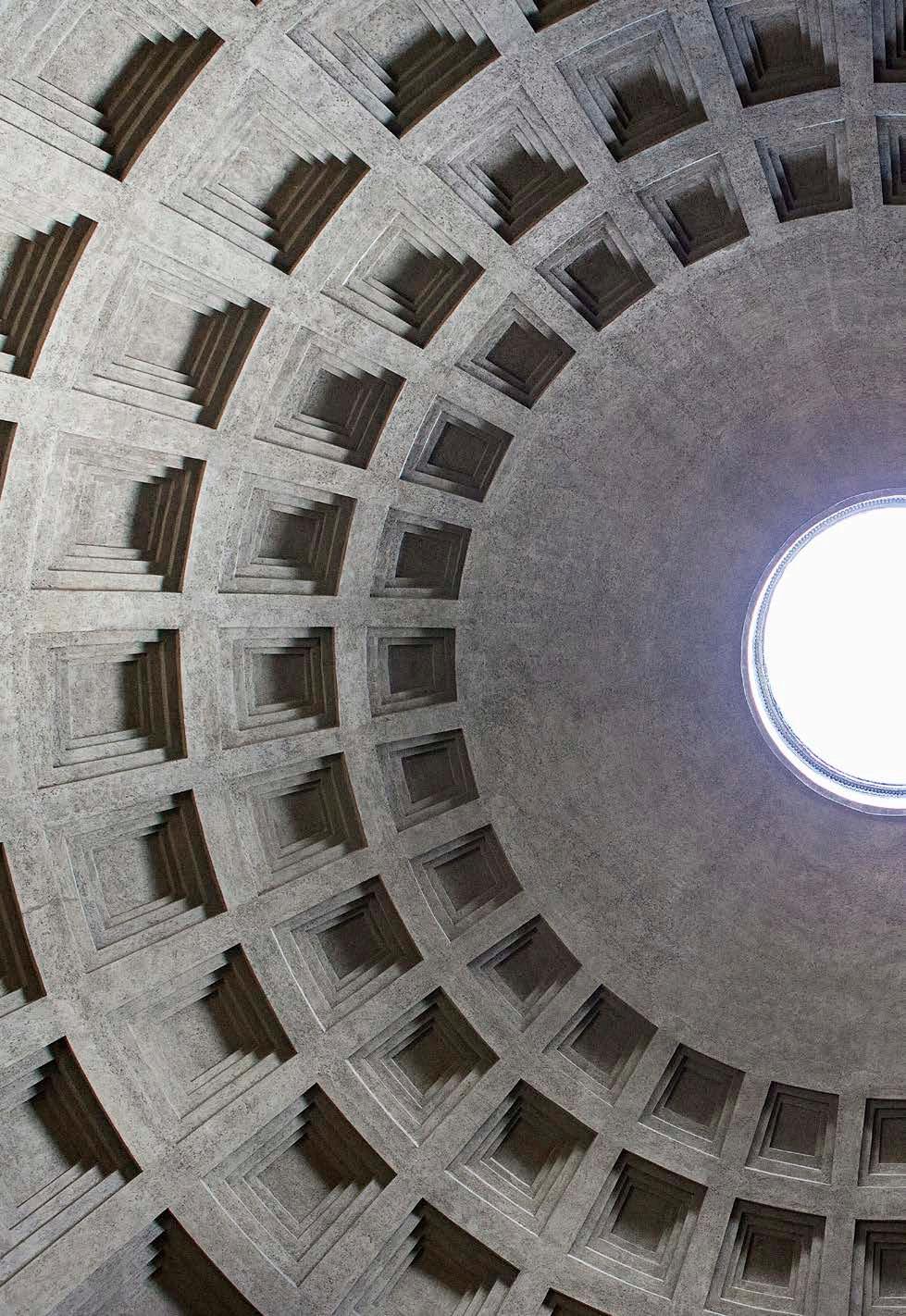
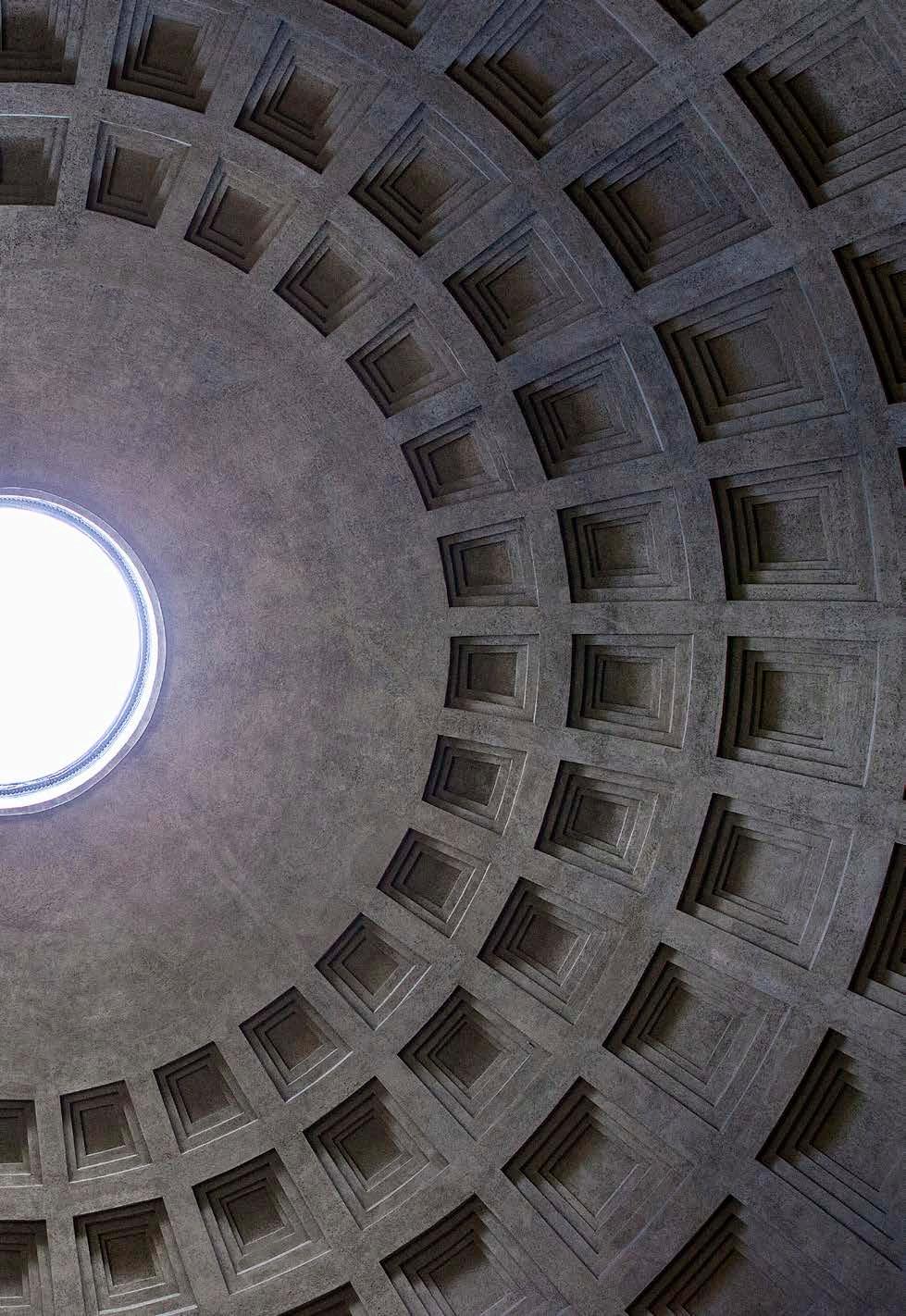
Dedicated to all the gods by general Marcus Vipsanius Agrippa, it was later rebuilt
by Emperor Hadrian. It is almost a perfect sphere, 43 metres in diameter and vaunting a concrete dome with an oculus. In addition to Raphael, Annibale Carracci, Perin del Vaga, Margherita di Savoia and kings Umberto I and Vittorio Emanuele II are all buried here.
Piazza della Rotonda pantheonroma.com
Closed: January 1, May 1, December 25
BASILICA DEI SANTI COSMA E DAMIANO
The basilica is of the first churches built atop ancient buildings, in this case the Forum of Vespasian and the Temple of Romulus, both still visible. The apse contains a 6th-century
mosaic depicting Saints Peter and Paul Presenting Cosmas, Damian, Theodorus, and Pope Felix IV to Christ. The 18th-century Nativity, which sets the scene in Rome, is worth a look. Via dei Fori Imperiali, 1 cosmadamiano.com
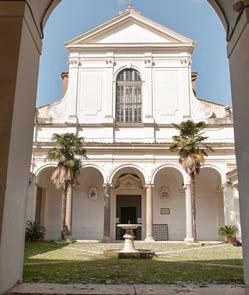
BASILICA
DI SAN CLEMENTE
One church atop another between Esquiline and Caelian hills: the first was transformed from an earlier mithraeum built on top of Roman houses. The second (4th century), conserves frescoes dedicated to St. Alexi-
us. In the upper basilica (12th century), frescoes by Masolino dedicated to St. Catherine of Alexandria.
Via Labicana, 95 basilicasanclemente.com
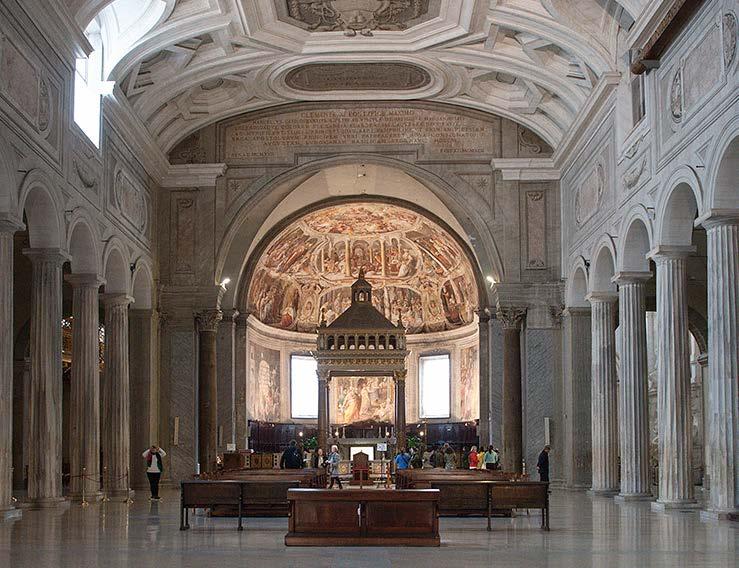
BASILICA DI SAN PIETRO IN VINCOLI
Nothing remains of the 5th century church, the Baths of Titus and the Neronian domus. Julius II is buried here, whose tomb was designed by Michelangelo and vaunts his imposing Moses. According to tradition, the church con-
serves some of the chains that bound St. Peter in the nearby Mamertine Prison, the oldest in Rome.
Piazza di San Pietro in Vicoli
BASILICA DI SANTA MARIA DEGLI ANGELI E DEI MARTIRI
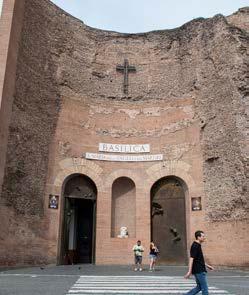
Built by Michelangelo, who recovered the building without destroying the Frigidarium from the Baths of Diocletian, this church is where official state ceremonies are held. It was completed by Giacomo del Duca and restored by Luigi Vanvitelli. Amongst the works of art conserved here, a modern Igor Mitoraj and a sundial built for the Jubilee.
Piazza della Repubblica santamariadegliangeliroma.it Closed on Saturdays
BASILICA DI SANTA MARIA DEL POPOLO
Built in 1099 with funds offered by the community (popolo in Italian, inspiring the church’s name), it was altered by Maderno, Raphael, Bramante and Bernini, and is decorated with masterpieces like the Crucifixion of St. Peter and the Conversion of St. Paul by Caravaggio in the transept. The Chigi Chapel is splendid, designed by Raphael and restored by Bernini.
Piazza del Popolo, 12 smariadelpopolo.com
BASILICA
DI SANTA MARIA IN TRASTEVERE
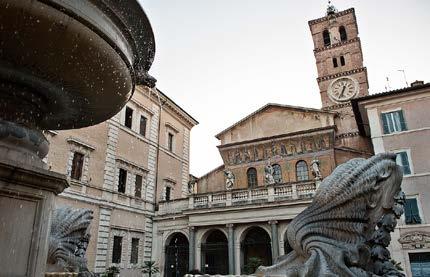
It is the oldest church dedicated to the Virgin Mary. It is said that the church was built where oil miraculously erupted from the ground. Rebuilt in the 12th century with materials taken from the Baths of Caracalla, it conserves a triumph of 13th-century mosaics, many of which are by Pietro Cavallini, as well as the historic Madonna Theotókos.
Piazza di Santa Maria in Trastevere
CHIESA DEL GESÙ
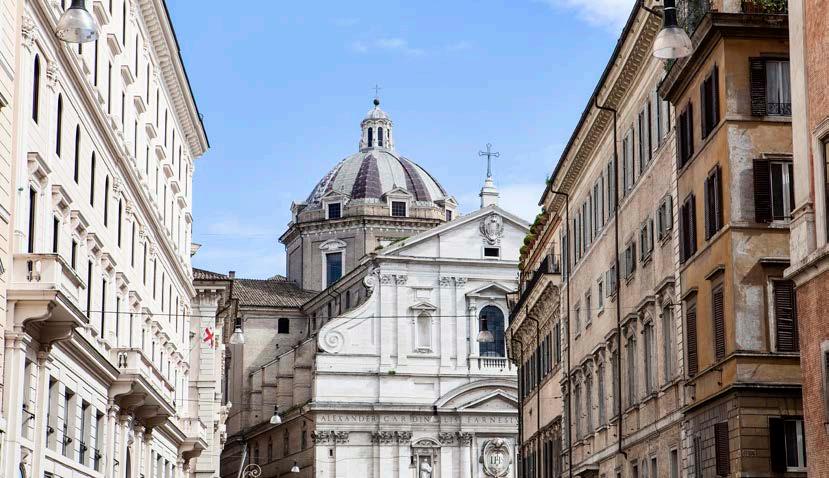
It is perhaps the first church built during the Counter-Reformation and was a model for all those that came later. Vaunting a single nave and a barrel vault, the church has a large side pulpit and a central altar. Desired by Ignatius of Loyola (with his breathtaking revolving altarpiece), it is also the mother church of the Society of Jesus.
Via degli Astalli, 16 chiesadelgesu.org
CHIESA DI SAN LUIGI
DEI FRANCESI
The church was completed in 1587 thanks to Catherine de’ Medici. The French church in Rome is famous for its paintings by Caravaggio, in the Contarelli Chapel, dedicated to St. Mathew with The Calling, The Inspiration and The Martyrdom. The church also conserves
frescoes by Domenichino and a copy of Raphael’s Saint Cecilia by Guido Reni. Piazza di S. Luigi de’ Francesi saintlouis-rome.net
CHIESA DI SAN PIETRO IN MONTORIO
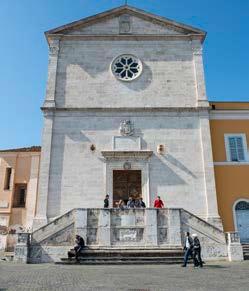
It is famous for the Tempieto designed by Bramante. Legend says that St. Peter was martyred here, and Beatrice Cenci has been buried here since her execution in 1599.
The Tempieto was commis-
sioned by the Spanish king Ferdinand II of Aragon in the early 16th century to dissolve a vow. Today, the former convent houses the Royal Spanish Academy.
Piazza S. Pietro in Mortorio, 2 sanpietroinmontorio.it
CHIESA
DI SANT’AGNESE IN AGONE
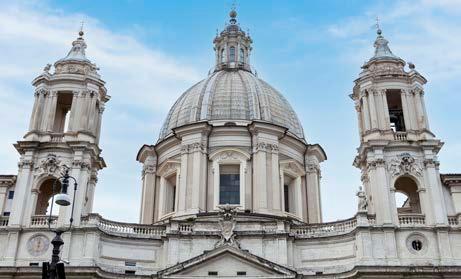
Built atop the Stadium of Domitian, the church is a masterpiece of Baroque architecture, replete with optical illusions.
Built according to a Greekcross plan, it was redesigned by Borromini, who created a concave façade and separated the two bell towers, making it
appear as if it were larger. Today, it is also an elegant venue for sacred music concerts.
Piazza Navona corner Via S.Maria dell’ Anima, 30/A santagneseinagone.org
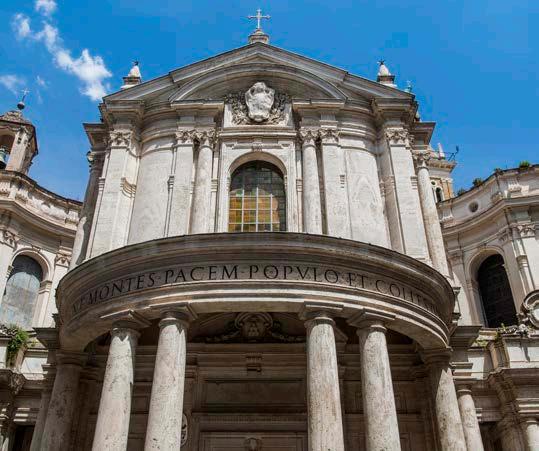
CHIESA DI SANTA
MARIA DELLA PACE
Commissioned Sixtus IV following the Pazzi Conspiracy in the hope for a period of peace, the church was altered in the 17th century by PietVia Flavia,
ro da Cortona. In the Chigi Chapel designed by Michelangelo, there are paintings by Raphael. The adjacent former convent conserves the Bramante cloister (an exhibition site today); the dome was added in 1524.
Arco della Pace, 5 CHIESA
DELLA SANTISSIMA TRINITÀ DEI MONTI
Overlooking the homonymous staircase by Domenico Fontana, the church vaunts a façade with two bell. Its style is between Baroque and Rococo. Inside frescoes by Daniela da Volterra, including a portrait of Michelangelo and Giovan Batista Naldini. In front of the church stands an obelisk that was in the Gardens of Sallust.
Piazza della Trinità dei Monti, 3
GARDENS AND PARKS
Villa Ada Savoia on via Salaria is one of the largest parks in Rome, while one of the most beautiful parks is the Villa Torlonia in Nomentano whith lakes and grotos, ex residence of Mussolini. Located in near the ancient Appian Way, the Aqueduct Park. The Rose Garden, at the base of the Palatine hill, is a must-see in the spring, while the Villa Borghese is a great classic.
PALACES
Many palaces are still inhabited by the same families who built them centuries ago, while others have become museums, embassies, government offices. But all of them are tied to the fortunes of popes who rebuilt the city beginning in the 15th century. From the Visconti to the Orsini, the Corsini to the Colonna to the Borgia, Piccolomini, Della Rovere, Farnese, Medici, Carafa, Borghese, Barberini, Pamphilj, Chigi and Rospigliosi, each family lef an enduring mark on the city. There’s Palazzo Doria Pamphilj on the busy via del Corso, decorated in the Baroque style and vaunting loggias and courtyards elegantly frescoed. Palazzo Spada in piazza Capodiferro is also impressive. Cardinal Bernardino commissioned its construction by
Borromini, the man behind the famous Galleria Prospettica. Since 1927, the building has housed the Council of State. Palazzo Farnese is nearby, in the homonymous piazza decorated with two Egyptian, granite tubs from the Baths of Caracalla. The palazzo, granted to France in 1939 for 99 years, it now serves as the French embassy and is open to the public on July 14. Palazzo Chigi in piazza Colonna was instead intended as a place to host elite parties. Bought by the Chigi family in the mid-17th century, it became the seat of the Austrian embassy in 1917, followed by the headquarters of the Ministry of the Colonies under Mussolini, then the Ministry of Foreign Affairs and, lastly, the Council of Ministers since 1961. The nearby Palazzo Montecitorio has been the seat of the Chamber of
Deputies since 1870. Palazzo Madama is seat of the Italian Senate since 1871, it was the Medici’s Roman residence until Cardinal Ferdinando bought Villa Medici on the Pincian Hill.
The villa is currently home to the French Academy in Rome. Palazzo del Quirinale was a papal residence and since 1946 it has been the official residence of the President of the Italian Republic. The Versailles-style 18th-century Palazzo Colonna is nearby, in piazza Santi Apostoli. Assigned to the university by Pope Eugene IV, the Renaissance Palazzo della Sapienza was later modified by Francesco Borromini, who added the Church of Sant’Ivo.
The building houses the State Archives today.
BEST FOOD EXPERIENCES
The best restaurants and cocktail bar in Rome. Reservation recommended, the ‘Les Clefs D’Or’ concierge is at your service
ALFREDO ALLA SCROFA
AMBASCIATA D’ABRUZZO
A passion for excellent food and high-quality produce, courtesy and atentiveness are the foundations at this storied restaurant in Rome’s Parioli neighbourhood; the perfect place to enjoy grilled meats, pasta dishes and the bold flavours of history and tradition.
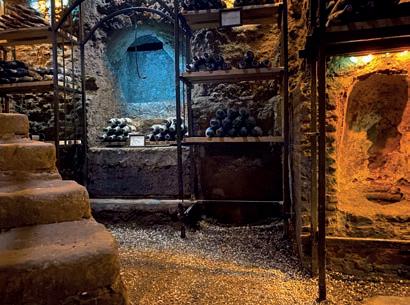
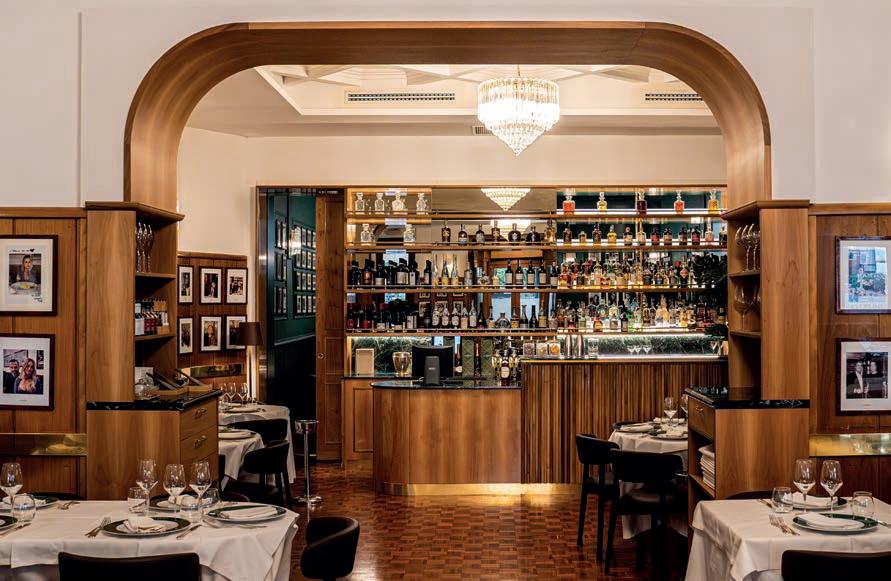
Alfredo alla Scrofa opened in 1914 in the heart of Rome, a stone’s throw from Piazza Navona. And it is here, with passion and artistry, that the legendary Fetuccine Alfredo were invented. To this day, the restaurant continues to preserve and celebrate tradition in the same spirit of dedication and authenticity, welcoming guests from all over the world. A place where luxury and tradition coexist in harmony, among exclusive dining rooms and the storied Roman wine cellar.
ALLEGRÌO
The visual and emotional experience of Allegrìo is complemented by food that celebrates Italy and its traditions. It begins in the morning with breakfast, and continues through business lunches and aperitifs to dinner and beyond, with a fascinating afer-dinner drinks list. Executive chef Daniele Creti offers a menu that ranges from the classics of Roman cuisine to more contemporary dishes, alongside the specialities of pizza masters Ivano Veccia and Peppe Aiello.
Via Pietro Tacchini, 26 ph. +39 06 8078256 ambasciatadiabruzzo.com
Via della Scrofa, 104/A ph. +39 06 68806163 alfredoallascrofa.com
Via Vittorio Veneto, 114 ph. +39 06 45543423 allegrio.com
Via di Monte d’Oro, 17 ph. +39 06 6865026
allaranciodoro.it
ALL’ARANCIO
D’ORO DA CIALFI
Located a stone’s throw from Piazza del Parlamento and Via del Corso, All’Arancio d’Oro da Cialfi was founded in 1986 and tells the story of the Cialfi family’s passion and commitment. The menu is inspired by authentic traditional flavours, ennobled by the use of superior quality ingredients and an excellent wine list. The restaurant’s informal, convivial atmosphere makes All’Arancio d’Oro da Cialfi a welcoming place where guests are assured of a unique culinary experience.
Via Margutta, 16 ph. +39 06 3211559 babetteristorante.it
BABETTE
Imagine dining in an elegant house, a lot of books and the scent of thyme and bread in the air. Babete is a combination of the skills and experiences of the owners, Flora and Silvia, who love pampering their guests every day with special atention. The menu changes depending on the availability of seasonal ingredients, following the creativity of the chef who ofen reinvents family recipes or traditional dishes.
CASA ROMA
Via Marche, 9 ph. +39 06 86218298
CARPACCIO BEEF RESTAURANT
Carpaccio Beef Restaurant, a Steak House Boutique located next to Via Veneto, is the tale of an all-Italian story, with an elegant venue, sof atmosphere, and modern cuisine that respects Italian tradition while bringing innovation and good taste since 1893. The focus on meat and culinary techniques are the highlights of the experience one can enjoy in this beautiful seting in the heart of Rome.
Casa Roma blends the warmth of home with the authentic flavors of Roman cuisine. At lunchtime, guests can enjoy a welcoming and refined atmosphere, while in the evening the experience is elevated by live piano bar performances, creating a unique fusion of music and gastronomy. The menu features traditional Roman specialties alongside classic Italian dishes, with an openness to international cuisine. Casa Roma is the perfect choice for a delicious lunch or for a lively evening.
Via Flavia, 73/A ph. + 39 06 69210757
Via di Monte Testaccio, 30
ph. +39 333 5855055
checchino-dal-1887.com
CHECCHINO DAL 1887
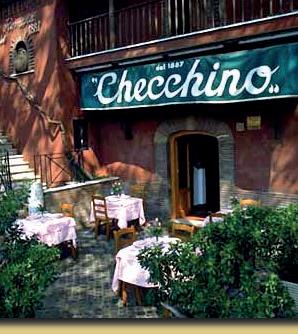
Six generations of the same family have been managing this restaurant which combines tradition and quality, providing a unique gastronomic experience. Every dish is a must-try: from the delicious calves’ feet salad to the traditional bucatini alla gricia and rigatoni with pajata, or the oxtail alla vaccinara and the famous padelloto alla macellara. Elio and Francesco Mariani, professional sommeliers, personally select the wines, while Marina is in charge of the desserts.
Via della Conciliazione, 4
ph. +39 06 68892774
choruscafe.it
Via Francesco Crispi, 19
ph. + 39 06 6785904
ristorantecrispi19.it
CHORUS
The outstanding thing about Chorus is the innovative cooking of chef Arcangelo Dandini, who showcases high-quality ingredients and impeccable presentation. A culinary experience to remember, made even more special by the creative ideas of mixology maestro Massimo D’Addezio.
CRISPI 19
Live an experience of gastronomic excellence at Crispi 19, just a few steps from the Trevi Fountain. Since 1873, we have been dedicated to creating unique dishes that blend Mediterranean cuisine with Italian haute cuisine, exalting the freshness of our fish, fine meat selections, and offering a curated wine list designed to enhance every pairing. The romantic and intimate atmosphere, ideal for anniversaries and important events, makes every visit an unforgetable moment.
DA FRANCESCO
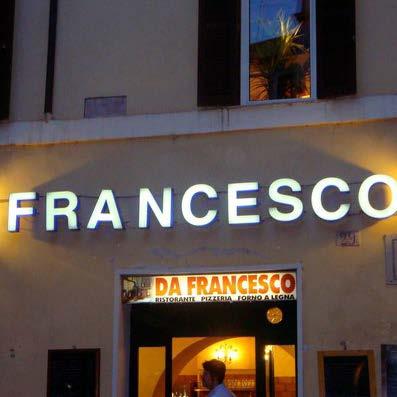
It was back in 1957 that Francesco Boni and Amalia Tognoloni took over this venue close to Piazza Navona and created a place that has become a landmark for authentic local food. Even today, with the third generation of the family, although there are some contemporary variations, the traditional Roman recipes are ever present.
DIANDRA
The Diandra restaurant is the place to go for those who love quality cuisine. Every day, you can try delicious seafood specialities such as mixed fried fish, spagheti with clams or Catalan-style lobster. There is more: the menu also includes Roman traditional dishes with iconic dishes such as the pasta carbonara or amatriciana. The chefs mix creativity with crafsmanship, offering a style cuisine that celebrates the sea and the history of Rome.
EMERALD’S INDEPENDENT BAR
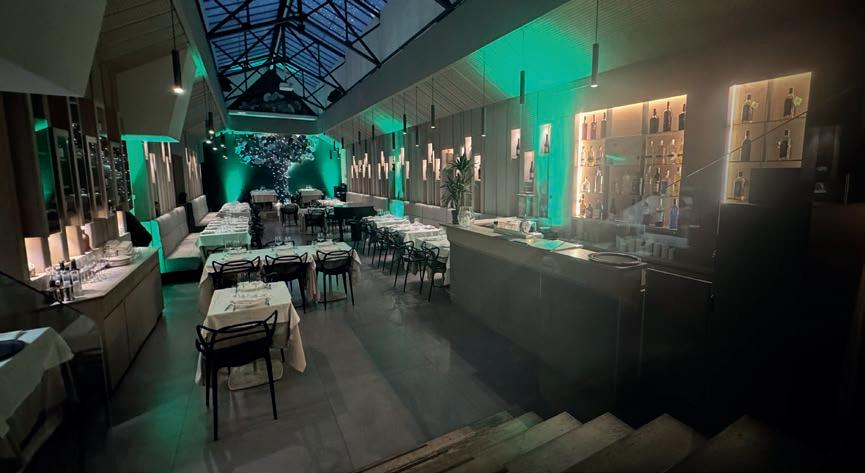
Born as a convivial lounge, Emerald’s Independent Bar is an elegant cocktail spot, perfect for starting the evening with an aperitif and staying late into the night. With expertly crafed drinks, a curated wine selection, and shareable kitchen bites, Emerald’s blends flavor and atmosphere, all set to a carefully selected musical backdrop. A nightime haven for those who love good drinks and good company.
Via Crescenzio, 91 ph. +39 06 88654275 emeraldsbar.it
Piazza del Fico, 29 ph. +39 06 6864009 dafrancesco.it
Via del Leoncino, 28-28A ph. +39 06 5415249 diandraristorante.com
FINGER’S ROMA
A luxury Japanese restaurant offering a fabulous culinary experience, thanks to the fusion creations of chef Roberto Okabe. Superb quality, excellent service and a beautiful seting, with generous sofa seating and sof lights creating a delicate, evanescent Japanese mood for a new eastern-style Dolce Vita. To round off the evening, Finger’s Roma has a spacious lounge area devoted to mixology, where you can sample innovative cocktails.
Via Francesco Carrara, 12-15 ph. +39 06 3234453 fingersrestaurants.com
GNOCCO
In the heart of Rome, Gnocco offers traditional dishes reinvented with light options, seasonality and research. Davide Cianeti’s cuisine blends tradition and contemporaneity to offer authentic and creative dishes, accompanied with a selection of modern wines and cocktails. A convivial and refined location where Roman style is presented with taste, simplicity and personality.
IMÀGO
Imàgo - image and magic - summarises in just one word the philosophy behind the restaurant at the Hassler in Rome: a location where the magnificent view of the Eternal City and the flavours come together to create a unique culinary experience. Andrea Antonini has since 2018 been Executive Chef, developing a vision that puts Italian and local recipes front and centre, deconstructing and reconstructing them with exquisite technique and creative flair.
Piazza Trinità dei Monti, 6 ph. +39 06 69934726 hotelhasslerroma.com
Via della Scrofa, 100 ph. +39 375 6788300 gnoccoroma.it
Piazza della Repubblica 46 ph. +39 06 489381 ineorestaurant.com
INEO
Ineo Restaurant, from the Latin “new beginning,” embodies the new culinary path undertaken by Anantara Palazzo Naiadi together with Executive Chef Heros De Agostinis. Located in Rome’s Piazza della Repubblica beneath the iconic travertine arches framing the famed Fountain of the Naiads, INEO is a true temple of contemporary taste. Awarded a Michelin star in the 2026 Michelin Guide.
Via dei Montecatini, 12 ph. +39 06 6791160 ristoranteilfalchetto.it
IL FALCHETTO
Tucked away among the city’s most delightful squares and narrow streets, Il Falcheto offers meticulous cooking with a strong focus on quality ingredients. The menu features all the classics of Roman cuisine, like pasta with cacio e pepe, amatriciana or carbonara, Jewish-style artichokes, oxtail alla Vaccinara and tripe. There’s also a huge variety of fish dishes. All are accompanied by superb wines, thanks to the list of more than 200 labels, to suit all tastes.
LA FONTANA DI VENERE
Via di Ripetta 250 ph. +39 06 93570160 ilportodiripetta.com
IL PORTO DI RIPETTA
From 2014, Il Porto di Ripeta is the perfect place for those looking for cuisine which combines innovation with a deep respect for tradition. Over the years, the staff have refined their unique style, delighting guests with original creations and authentic flavours. From the most creative seafood dishes to the most classic recipes, each course is designed to be a gastronomic experience that combines technique, creativity and respect for the ingredients.
In the beating heart of Rome, a stone’s throw from the Trevi Fountain but away from the tourist chaos, stands La Fontana di Venere, a quiet, informal restaurant where you can sample the most authentic flavours of Roman cuisine. From artichoke alla romana to carbonara, saltimbocca alla romana to poached sea bass all’acqua pazza, every dish here is a culinary experience to remember.
Vicolo dei Modelli, 56 ph. +39 06 85388054
Via Mario de’ Fiori, 98 ph. +39 06 97639976 lamenagere.it
LA MÉNAGÈRE
La Ménagère is a place where aesthetics, taste, and hospitality come together in a multisensory experience. In the new Roman location, envisioned by the Manfredi family, every detail – from fresh flowers to lighting, from seasonal cuisine to crafed cocktails – is designed to inspire emotion. A place to return to, always different, always special.
Via Boncompagni, 31-33 ph. +39 06 8543182 ormaroma.it
MARGHERITA OSTERIA PIZZERIA
An inviting modern restaurant that’s open all day every day, from breakfast time to midnight. Crisp, thin-based pizzas, fried specialities, hamburgers, traditional starters and mains, homemade desserts and a wine list featuring over 100 labels make for an authentic contemporary venue.
ORMA
A fine-dining restaurant with an international outlook in the historic Ludovisi neighbourhood. Orma’s architecture is visually stunning, and the food ranges from fine dining, with a chef’s table seating four, to the formula lunch at the bistro and a cocktail bar on the terrace for hot summer nights. Ingredients are brought straight from the Orto di Orma in the Lazio countryside.
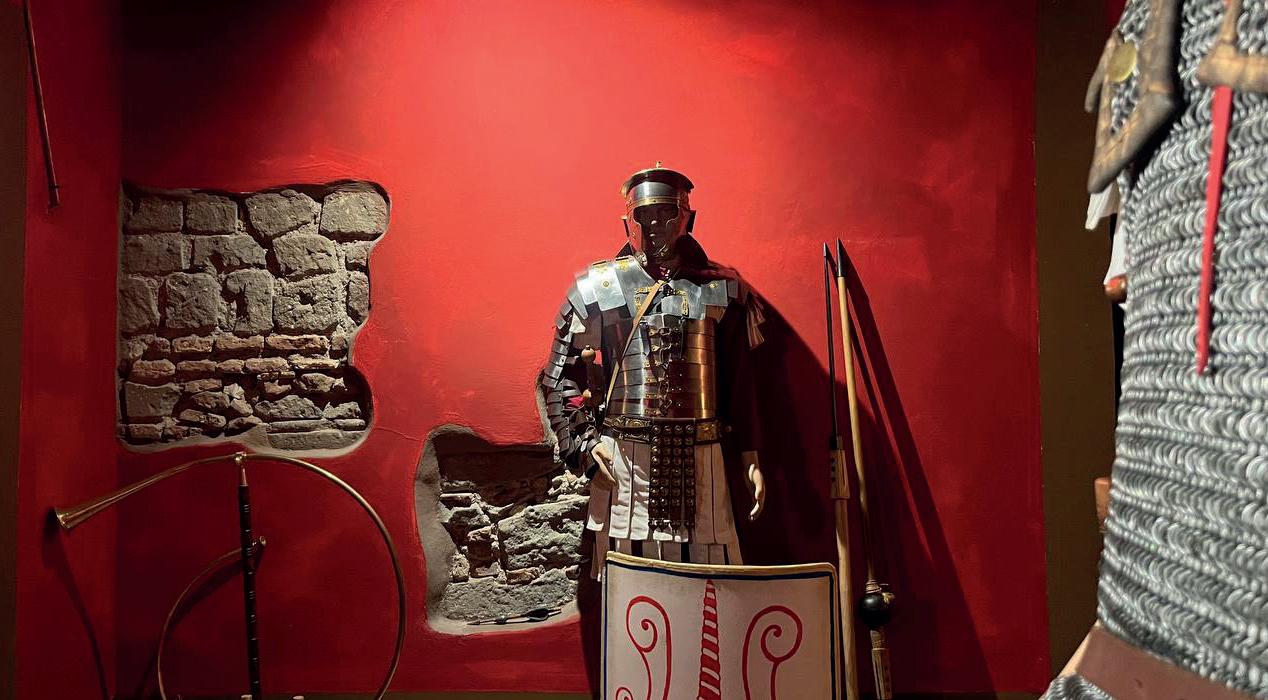
RES MILITARES
Te Roman Army Experience - Learn,Fight,Trow
book your tour on resmilitares.com
Via delle Colonnelle, 5
ph. +39 06 6793842
ilsostegno.it
OSTERIA DEL SOSTEGNO
Osteria del Sostegno arises from the passion of Marco Mazzoni, following in the footsteps of his father Setimio. The menu combines the great classics of Roman cuisine with seasonal specialities, always made using the freshest local ingredients. With just a handful of tables, the mood is intimate and welcoming. To complete the experience, the carefully curated cellar offers selected wines.
Via Aureliana, 44 ph. +39 06 42013318
osteriaquarantaquattro.com
OSTERIA QUARANTAQUATTRO
In the historic centre of Rome, there’s a place that interweaves traditional cooking with modern touches for an unforgetable dining experience. It’s the perfect seting for dinner with friends, a business lunch or a romantic evening. The menu combines mediterranean cuisine with an ongoing quest for new combinations, and the result is a triumph of flavour and tradition. Wines come in a broad range of aromas and styles for a pleasant and lasting memory.
PIRÒ
Viale Bruno Buozzi, 31/33
ph. +39 331 7443515 pescadoseafood.com
PESCADO SEAFOOD RESTAURANT
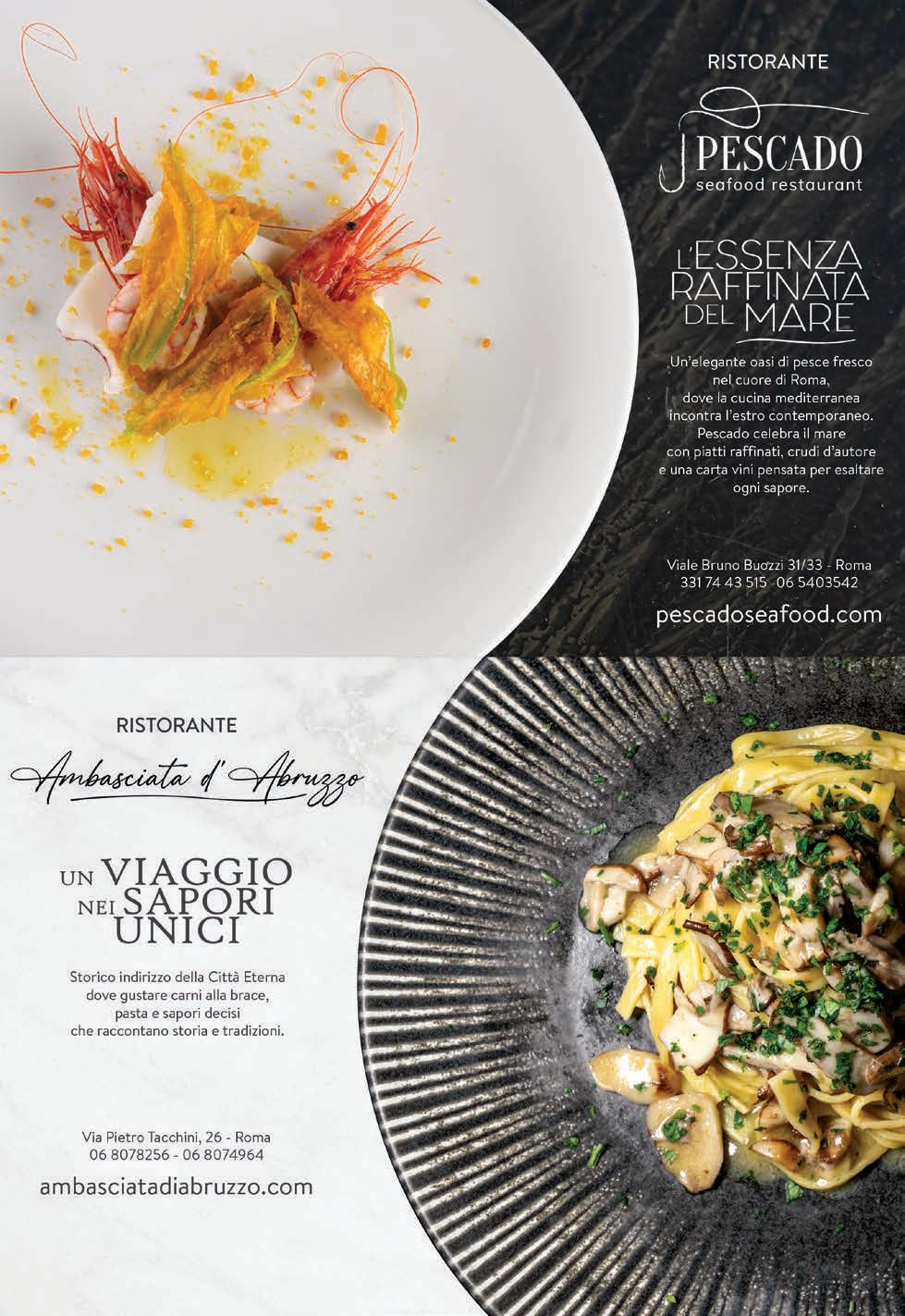
At this elegant fresh fish destination in the heart of Rome, mediterranean cuisine meets contemporary flair. Pescado celebrates the sea with sophisticated dishes, spectacular raw options and a wine list designed to bring out every flavour. A sensory seafood journey in an eclectic seting, with four beautiful dining rooms and a panoramic terrace.
Pirò opened in 2015 and today it’s a modern fish restaurant located in a historic palace built in the year 1000, very close to Piazza Navona. In this welcoming and meticulously designed seting, Pirò serves simple food that showcases the natural flavours of local fish, for an unforgetable culinary experience.
Vicolo della Cancelleria, 36 ph. +39 06 68803140 piroosteriadipesce.it
QUANTO BASTA
QB – Quanto Basta. Exceptional quality, vital goodness. Every carefully selected ingredient becomes the star of a unique sensory experience. International culinary techniques and extraordinary fusions come together in dishes where flavors guide you on a metaphysical journey of taste… Quanto Basta.
Via Padre Massaruti, 183/185 ph. + 39 06 91938937 quantobastaroma.it
RISTORANTE DA’MARE
RISTORANTE AI COCCI
At Ristorante Ai Cocci, our culinary story is the result of years of experience and passion, and guests are offered a genuine Roman food experience in a warm and welcoming atmosphere, where pasta is prepared the old-fashioned way, desserts are home-made and all ingredients are excellent quality. Every dish tells the story of the city and our love for its traditional cuisine.
RISTORANTE CLOTILDE
Via Luca della Robbia, 21-23 ph. +39 06 5743017 ristoranteaicocci.com
The owner Clemente Quaglia and his chef have devised a menu with an intense focus on sourcing ingredients. An enjoyable lunch venue, a place to take friends for a summer evening in Rome, or a perfect romantic dinner, sampling traditional dishes reinterpreted with a modern slant. A place to visit every day.
Piazza Cardelli, 5/A-5/B ph. +39 06 68805145
ristoranteclotilde.com
The restaurant just steps away from Via Veneto where the sea unveils its flavors in a refined yet informal atmosphere. Its cuisine of memories narrates the creativity of Chef Davide Cianeti with offerings of locally sourced seafood and a wine list boasting sought-afer and prestigious labels. The American bar serves tapas paired with cocktails that can be enjoyed both at the counter and in the outdoor seating area.
Via Sicilia, 47 ph. +39 06 5575012 damareroma.it
Via dell’Umiltà, 46/A ph. +39 06 6780226
RISTORANTE IL MIRAGGIO FONTANA DI TREVI
Located between the Trevi Fountain and Piazza Venezia, this restaurant since 1992 atracts gourmets with their Mediterranean cuisine served in an informal seting and in the pleasant outdoor space. To make your meal strictly Roman, order the Roman-style artichokes, Tonnarelli Cacio&Pepe, Carbonara and Saltimbocca alla romana. For authentic Sardinian taste, try the Fregola with Clams, Culurgiones ravioli and Sea Bream with Vermentino wine. Also on offer is Pinsa romana. Open daily from lunch to dinner, no stop. Gluten-free options are available, as the special home made tiramisu.
Via Appia Antica, 139 ph. +39 06 7880494 larcheologia.it
RISTORANTE L’ARCHEOLOGIA
Since 1804, Ristorante L’Archeologia has told the story of the city through its food, its wine cellar and its unique experience. New forms of expression are inspired by traditional regional food and wine culture, while respect for superb ingredients is always at the heart.
Via della Vite 28 ph. +39 06 69380948 ristorantelife.com
RISTORANTE LIFE
Opened 20 years ago in a quiet, elegant street near Piazza di Spagna, Ristorante Life offers high-quality dishes based on fresh fish, meat and white and black truffles. There’s a terrace garden with a huge variety of plants, and indoor dining rooms with beautiful cosy decor. A fantastic cellar of the best Italian wines.
RISTORANTE MIRABELLE
On the seventh floor of the elegant Hotel Splendide Royal, the Mirabelle restaurant offers a sensory experience on one of the most enchanting gourmet terraces in the city. Surrounded by a unique panorama, wonder and marvel intertwine amidst the Mediterranean flavors of refined cuisine and the elegance of unparalleled hospitality.
Via di Porta Pinciana, 14 ph. +39 06 42168838 robertonaldicollection.com
Via della Penna, 68 ph. +39 06 3610291 osteriastana.it
RISTORANTE ST. ANA
Storied restaurant, always a landmark in Rome for good food. Opened in 1968 by Elio Quagliarini and his wife Antonieta, it is now run by their son, Roberto. It is located in an evocative seting of rare beauty, in an historic building with medieval walls, close to Piazza del Popolo. Its ancient walls testify to the countless showbiz stars and illustrious figures who have dined here from the Sixties to today.
Via Pompeo Magno, 12/C ph. +39 06 24401661 theappuntamento.it
THE APPUNTAMENTO
Nestled in Rome’s elegant Prati district, just steps from Piazza del Popolo and Via Cola di Rienzo, this glamorous Italian bistrot and concept store is a harmonious blend of tradition and modernity. Here, classic cuisine meets floral artistry, fine ceramics, and curated design objects. Wandering among the chic armchairs and sophisticated wallpaper, it’s easy to imagine crossing paths with a ‘60s diva, as you savor an exquisite cocktail or indulge in signature creations by Executive Chef Marco Melati.
VATTANI RISTORANTE
Via San Nicola da Tolentino, 26 ph. +39 06 4745560 tullioristorante.it
TULLIO
Not far from Piazza Barberini and Via Veneto, Tullio has been run by the same family since 1950. It all began with a small grocery shop, and has become a landmark in the city. In this informal, convivial place you can sample typical Florentine dishes (the owners are originally from Tuscany) and seasonal specialities, accompanied by a superb range of wines.
A refined restaurant and cocktail bar right in the centre of Rome, with an elegant and exquisitely retro style, where diners can give themselves over to the pleasures of traditional Roman cooking and fresh Mediterranean and seafood dishes for an unforgetable culinary experience. Outdoor seating is available.
Via del Viminale, 2 ph. +39 06 4818229
TRATTORIAS
FELICE A TESTACCIO
Via Mastro Giorgio, 29 ph. +39 06 5746800 feliceatestaccio.com
HOSTARIA DA PIETRO
Via di Gesù e Maria, 18 ph. +39 06 3208816 hostariadapietro.it
MATRICIANELLA
Via del Leone, 4 ph. +39 06 6832100 matricianella.it
Via Lombardia, 47 ph. + 39 06 478021 setimoristorante.it
VICI BISTROT & RISTORANTE
Via Vitorio Veneto, 62 ph. + 39 06 42010788 rome.intercontinental.com
INFORMATION GETTING AROUND IN ROME AND THE SURROUNDING AREA
Everything you need to know to move in the city and further afield
TAXI E UBER
Rome’s taxis can be booked by calling +39 06 0609, Free Now app or you can catch one at the taxi stand.
Starting price from 6:00 to 22:00 on weekdays: €3,50. Starting price from 6:00 to 22:00, weekends and holidays: €5,00. Starting price at night from 22:00 to 6:00: €7,50.
Fixed rate from Rome city center to Fiumicino airport: €55,00. Fixed rate from Rome city center to Ciampino airport: €40,00.
Rome is also covered by Uber service with cars bookable through the Uber app.
CAR SHARING
The simple, sustainable shared vehicle solution. To
access the service you need to register with operators and download the Car Sharing Roma app. The fleets of vehicles include hybrid and electric options.
follow the instructions to register and activate the service. To hire bikes or scooters, choose one of the three operators Lime, Dot and Bird (until 2026). They can also be booked via the Uber app.
CITY BIKE AND SCOOTERS
In Rome it’s quick and easy to hire a shared bicycle or scooter: just choose an operator, download the app and
BUS
Rome boasts a total of 379 bus lines (including 29 night buses). The night buses replace the metro when it’s closed, and are essential for geting around the city afer midnight.
Urban lines (U) operate from 5:00 or 6:30, and the service ends at midnight. Night buses (N): operate when the metro is closed, between 00:00 and
DISTANCE FROM ROME TO:
CAPALBIO
KM
KM CIAMPINO
KM
KM
KM
KM NAPLES
KM
KM SPERLONGA
5:00 or 6:00. Bus tickets (like metro tickets) can be bought at metro stations, tobacco shops or newspaper kiosks, or on the ATAC ROMA app. A standard ticket is valid for 100 minutes from stamping, and covers one journey on ATAC public transport. The price is € 1.50. There are also day tickets (€ 7.00), 2-day tickets (€12.50), 3-day tickets (€18.00) and other options.
METRO
The metro is an alternative way to move around the city. There are 4 lines: A (Anagnina-Batistini), B (Laurentina-Rebibbia),
KM
B1 (Laurentina-Jonio) and C (Pantano-San Giovanni), and trains run at the weekends too.
From Sunday to Thursday, the first train is at 5:30 and the last at 23:30; on Friday and Saturday the first is at 5:30 and the last at 1:30. In August 2023, line A is partially closed for refurbishment.
TRAIN
Rome has 71 railway stations. The main one is Roma Termini in the city centre, Italy’s most important railway hub. The second-largest in terms of passenger numbers is Roma Tiburtina. Both are served by high-speed connections to the main Italian destinations. To reach the centre of Rome from Tiburtina, take the blue metro line B and get off at Colosseum.
AIRPORTS
Fiumicino international airport (IATA code FCO) is the largest of Rome’s airports. It is located 32 kilometres from the capital, and connected to Roma Termini by the Leonardo Express train and numerous shutle bus services. Ciampino airport is mainly used by low-cost airlines, and is 17 kilometres from the centre.
HOTELS
ANANTARA PALAZZO NAIADI
ROME HOTEL
Piazza della Repubblica, 48-49 ph. +39 06 489381 anantara.com
BAGLIONI HOTEL REGINA
Via Vitorio Veneto, 72 ph. +39 06 421111 rome.baglionihotels.com
HOTEL DE RUSSIE
Via del Babuino, 9 ph. +39 06 328881 roccofortehotels.com
HOTEL DE LA VILLE
Via Sistina, 69 ph. +39 06 977931 roccofortehotels.com
HOTEL D’INGHILTERRA ROMA
STARHOTELS COLLEZIONE
Via Bocca di Leone, 14 ph. +39 06 699811
collezione.starhotels.com
HOTEL EDEN
Via Ludovisi, 49 ph. +39 06 478121 dorchestercollection.com
HOTEL HASSLER
Piazza Trinita dei Monti, 6 ph. +39 06 699340 hotelhasslerroma.com
INTERCONTINENTAL
ROME AMBASCIATORI
PALACE
Via Vitorio Veneto, 62 ph. +39 06 47493 ihg.com
J.K.PLACE ROMA
Via di Monte d’Oro, 30 ph. +39 06 982634 jkroma.com
ORIENT EXPRESS LA MINERVA
Piazza della Minerva, 69 grandhoteldelaminerve.com
PALAZZO MANFREDI
Via Labicana, 125 ph. +39 06 77591380 manfredihotels.com
PARCO DEI PRINCIPI
GRAND HOTEL & SPA
Via Gerolamo Frescobaldi, 5 ph. +39 06 854421 robertonaldicollection.com
ROME CAVALIERI, A WALDORF ASTORIA HOTELS
Via Alberto Cadlolo 101 ph. +39 06 35091 romecavalieri.com
THE FIRST ROMA DOLCE
Via del Corso, 63 ph. +39 06 45427861 pavilionshotels.com