
Year 26 ∙ number 175
november-december 2025
gamberorosso.it

ITALIAN WINES 2026 IS OUT
THE EXCOMMUNICATION OF CREAM
UNDER THE RADAR SPARKLING WINES
Year 26 ∙ number 175
november-december 2025
gamberorosso.it
ITALIAN WINES 2026 IS OUT
THE EXCOMMUNICATION OF CREAM
UNDER THE RADAR SPARKLING WINES
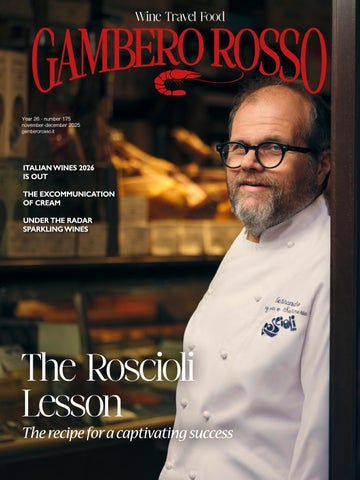
The recipe for a captivating success

There's no escaping flavour by Lorenzo Ruggeri
The Deli counter of Rome by Raffaele Mosca
36 >Wine
A Million tastings by Marco Sabellico, Gianni Fabrizio and Giuseppe Carrus
46. Italian Wine in… Food Lover’s Paradise by Marco Sabellico

34. Finalists on the lees by Marzio Taccetti
42. Gambero Rosso in the Far East by Marco Sabellico
44. Gambero Rosso returns to Seoul by Marco Sabellico
48. Hong Kong, Chengdu, Shanghai. A Chinese hat trick for Gambero Rosso by Marco Sabellico
57. End-of-Tour Celebration in São Paulo by Marco Sabellico
58 >Food
The excommunication of cream by Luca Cesari
66. Recipes from up and coming chefs. Alessandro Rinaldi
72 >Travel
The sea does not wash the shores of Cagliari by Giuseppe Carrus and Giulia Salis
Editor Gambero Rosso S.p.A. via Ottavio Gasparri, 13/17 - 00152 Roma +3906551121 - fax 0655112260 gambero@gamberorosso.it
Director Lorenzo Ruggeri
Editor-in-chief
Stefano Polacchi and Sonia Ricci
Editorial team Clara Barra, Mara Nocilla, Marco Sabellico (correspondent)
Translation Eleonora Baldwin
Graphic Project
Tina Berenato - TB design
Layout Maria Victoria Santiago, Chiara Buosi
Contributors
Giuseppe Carrus, Gianni Fabrizio, Andrea Marta, Marco Sabellico, Marzio Taccetti, Giulia Salis
Photos and drawings
Alberto Blasetti, Natalia Ghiani/Studionodo, Lido Vannucchi, Francesco Vignali, AdobeStock
Copyright © 2025 Gambero Rosso S.p.A. All rights reserved.
Administration via Ottavio Gasparri, 13/17 - 00152 Roma
Advertising Class Pubblicità S.p.A. via Marco Burigozzo, 5 - 20122 Milano +390258219522 - sbianchi@class.it
Gambero Rosso is a Registered Trademark
Copyright by GAMBERO ROSSO S.P.A. 2025
How to find us via Ottavio Gasparri, 13/17 00152 Roma +3906551121 gambero@gamberorosso.it www.gamberorosso.it filgamberorosso $gambero_rosso




Lorenzo Ruggeri
For some, trattorias still smack of poverty. Have you ever seen any major events hosted in a trattoria? The most important wine tastings, presentations, galas, award ceremonies and much of the media circus overlook a central part of our history and identity. We like it, we feel it is ours, but not completely. It is not cool enough to make us look better in our posts, in our digital lives. It doesn’t have that aura of exclusivity sought after by sponsors and communicators. And to give it new lustre, we prefer to give it a fresh label: voilà, it becomes a contemporary trattoria. Maybe by moving some chairs, adding a few more macerated wines in the cellar and a nostalgic sign.
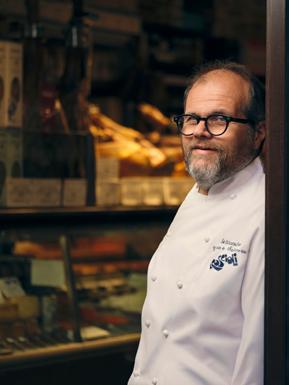
“Contemporary in what sense?” asks in Roman dialenct Alessandro Roscioli, to whom we have dedicated the cover. For him, a trattoria is above all else a state of mind, a way of being in the world: cooked dishes, not interpretations, a certain sense of openness. If a fork falls on the floor, no harm done: life goes on. And while fine dining increasingly draws on the simplicity of the trattoria, many trattorias are simply ceasing to exist. The figures are alarming, especially outside of the big cities. There is a lack of generational change, a scarcity of that emotional appeal capable of attracting new talent and professionals. While closures are affecting the countryside and small towns – which are becoming visibly depopulated –historic centres are not faring any better. And not just on the dining side.
For a Roman, walking through touristy Campo de’ Fiori today is a painful experience: difficult to recognise, tiring to live through. Yet here, a unique model such as Roscioli was born and continues to resist. The story of a family that has become an international brand without losing the logic and moderation of the neighborhood delicatessen or baker. The key to success? Having had the courage to extol the pleasure of good things without the typical superstructures of those in the restaurant business. Why are we ashamed to say that pizza and mortadella – if the former is sensational and the latter selected with love – can be the most delicious bite in the world? Why complicate everything when we enjoy a genuine artisan product, presented without filters, so much? In a context that allows Jeff Bezos to open a €10,000 bottle of wine, but also to stick with an authentic Lambrusco, with a label that borders on illegality. The long chat also yields a warning for all colleagues: be careful, we are drained, psychologically tired at the heart of the experience. We have lost the joy of telling stories, listening and sharing with customers, who have now become nothing more than a problem. And in the midst of these reflections, we also slip in our new Guide: the Restaurant of the Year is Trattoria La Madia in Brione, in the hills above Lake Iseo. Michele Valotti breaks the mould and revives it in an exemplary, surprising way. He brings dishes that have never been seen before, joyful dishes. Above all: delicious dishes. There’s no escaping flavour.
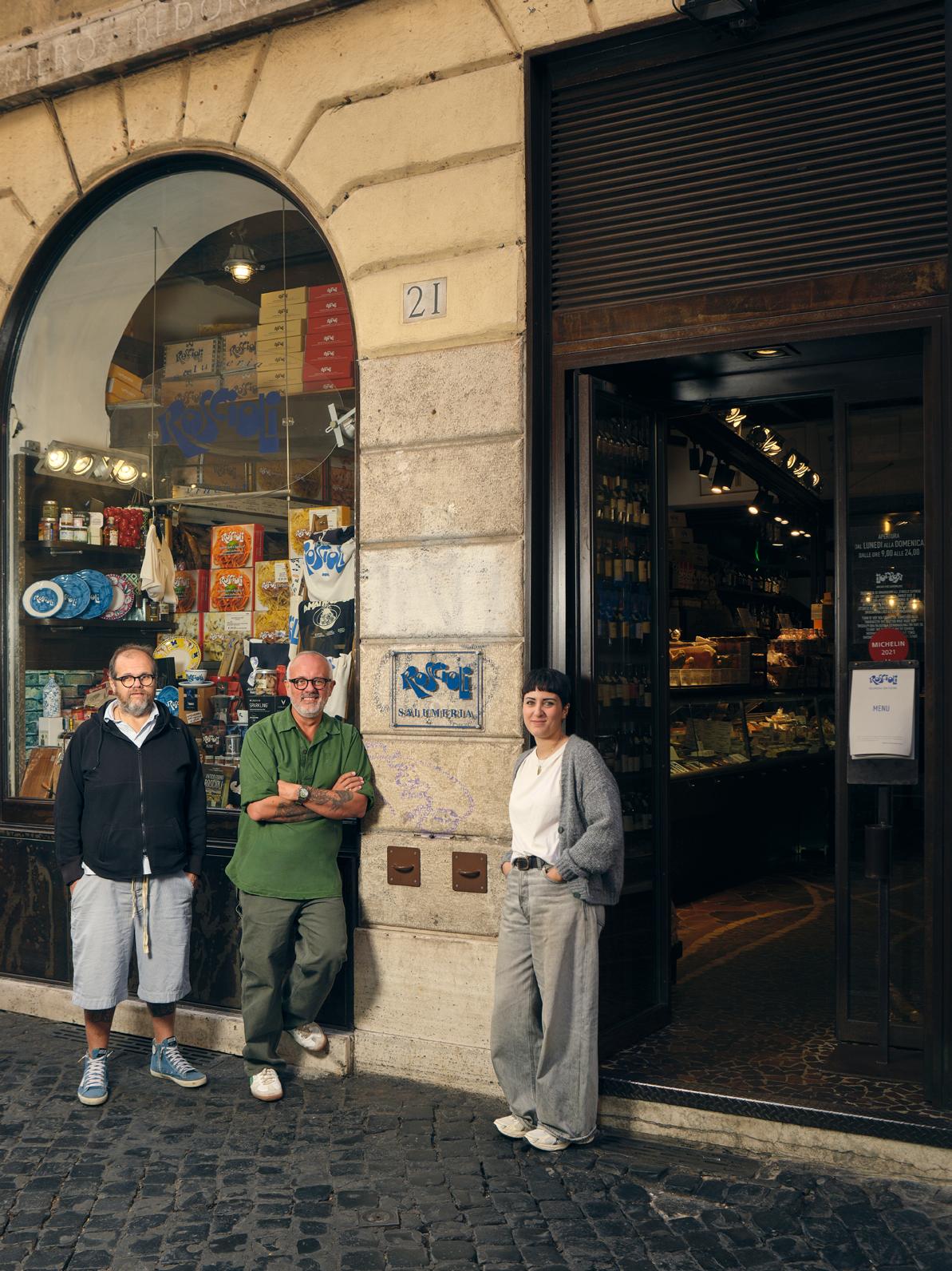
Ingredients, wine cellar, and plenty of fine food.
“The trattoria?
It’s a state of mind”
by Lorenzo Ruggeri
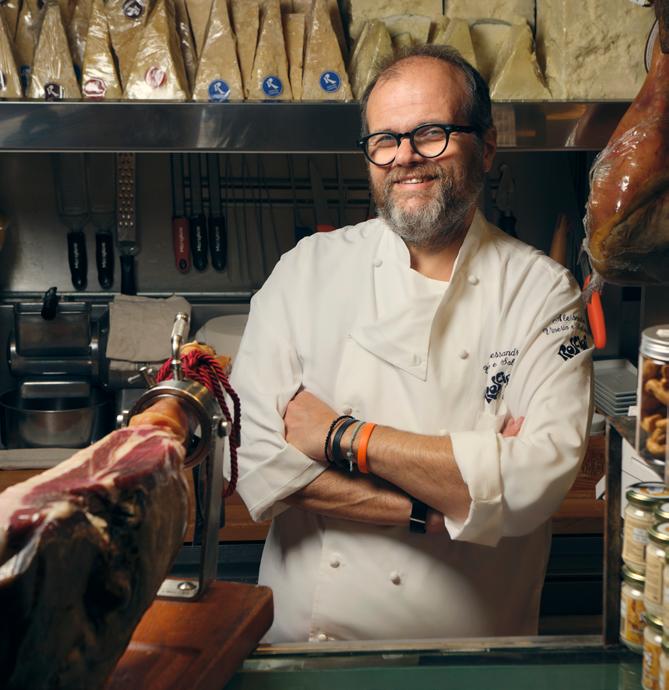
There is a unique case among Italian restaurant models: a deli with a kitchen that was born out of instinct and quickly became a symbol. Let’s return to the cobblestones of Via dei Giubbonari, where, between a large pothole and shops selling the same T-shirts for €5, a blue sign stands out: Roscioli. Alessandro, Maria Elena, and Pierluigi have transformed their family legacy into an international brand, complete with an opening in New York. There is the Salumeria, the Caffè, the Rimessa, and the historic Forno, with its guaranteed queue, where Romans mingle with Americans. The fresh pasta workshop has recently been inaugurated. We talk about it with Alessandro among thousands of bottles selected over time together with a great professional such as Maurizio Paparello. In a historic center that is nothing short of distorted, the most striking element of contrast is its authentic character. A pizza that is a manifesto, an extra slice, a forkful, a sip, and everything falls back into place. That’s where the measure lies: in pleasure, in not complicating what is simple, in the truth of an artisanal product that speaks for itself. A place where Philippe Starck goes crazy for a Lambrusco that is impossible to find and a restaurant splits a carbonara in two with a Burgundy. All comfortably seated in the same orderly chaos.
The beginnings?
It was December 16, 2002. My brother and I were arranging the shelves, which were still half empty.
Stefano Bonilli, who lived four doors down, passed by. He looked at us and said, “What are you doing? Open up right away, there’s a line outside.” In fact, it was he who opened our doors. And we haven’t closed since that day.sca. E da quel giorno non abbiamo più chiuso.
What was the plan?
What we had in mind was soft: we had to close at six, with very few cooked dishes. But then people stayed to drink, at eight o’clock they asked for a plate of pasta and they wouldn’t leave. We said to ourselves: let’s try it. That’s how it went, a series of fortunate coincidences.
Which led to a model.
At that time, many restaurants closed their kitchens at 2 a.m. We didn’t invent a damn thing. We just put together three things that were already there: the counter, the kitchen, and the wine. Quite unconsciously, we may have created the first international format in Rome.
Trattoria, wine bar: what is Roscioli?
One of the few places in the world where there is orderly chaos. Lou Reed wrote that in a dedication. We didn't even recognize him when he came to eat. Yes, Roscioli is a container of things, there's no empty space, if you put your hand down you risk knocking everything over.
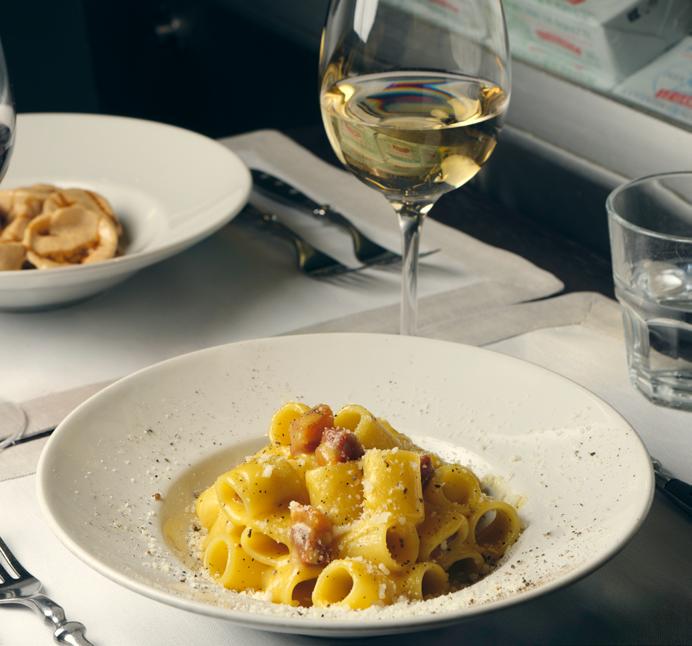
Did it all start with the deli counter?
At first, no one wanted to eat there. Six tables thrown in there, no one wanted them. Now everyone asks for the counter because they can see everything: who comes in, who goes out, what's going on behind the scenes. It's the most authentic, most democratic part. You can order a slice of white pizza for fifty cents or a bottle for 10,000 euros.
What was the turning point?
When we started serving mortadella at the table, they looked at me as if I had saved their child in the emergency room. We realized that we didn't need to do somersaults, but rather change the ingredients in the simplest and most beloved dishes. Remove a mediocre ingredient, add a genuine, refined product, and people look at you in amazement. Get rid of cheap butter, go for real butter, a great aged Parmigiano. A few elements and you're done.
Difficult customers?
They're the ones who make you grow. My father used to say: the day a customer bothers you, close up shop. Every morning at seven o'clock, I read the reviews. 80% of them are true. They have put us back on track more than any consultant. Many have become friends and have introduced us to incredible cheeses and cured meats from all over the world. “I thought of you, try this, if you're interested, here's the contact.”
Absurd requests?
One lady was obsessed with Dead Sea anchovies.
I swear. And I couldn't contradict her. I gave in: “You're right, ma'am, but we're out of them.” Then there are those who get upset because they order a Franciacorta and an Italian wine arrives. Or those who come back to complain about the Coda di Volpe on the bill: “I didn't eat fox last night!”
There’s no shortage of famous people. Philippe Starck came to dinner and fell in love with a Lambrusco, the truly artisanal one made by Professor Venturelli. He wanted to meet him right away. We were talking about Lou Reed: he came to the cash register to ask who chose the music. I only recognized him from the picture on the CD I was holding. “That's me.” Lebron James? A crowd of people started gathering to shake his hand. In the end, I asked, “Who is he?”
Difficult moments?
The first four or five years were really tough. We were totally incompetent when it came to dining, we had never done it before. It wasn't easy to switch from a deli to a bar either. We threw ourselves into it, without too much over-structure, partly because we knew we had room for error. This helped us, we did everything spontaneously.
Restaurant models: what do you think of the contemporary trattoria?
What does contemporary trattoria mean? If I go to a trattoria, I want a real trattoria, imperfect, noisy, where I feel at home. One of those places where if I drop my fork, I pick it up and continue eating. It's not
enough to change the chairs or tablecloths. Today, it seems that everyone has to interpret something, but a trattoria is not interpreted: it is cooked. I am interested in fifty traditional dishes, made well, not the individual interpretation of the chef and his ego. A trattoria is a human place, a state of mind, not a concept.
What about fine dining?
Let's always ask ourselves where fine dining comes from. Would fine dining exist without great products? I won't comment on the technical side, but I do know a thing or two about sourcing ingredients. There are some great places, but often fine dining doesn't have the superior ingredients you would expect; sometimes it's the last thing on the list of priorities. Often it is not a taste experience, but more an attitude, a ritual, a certain type of clothing to wear.
Excessive storytelling?
I can tell you all kinds of nonsense about cheese, but then you put it in your mouth and there's no escape, unless you have sandpaper instead of a palate. That's why I often let you taste it first and then tell you what it is.
It may be the economic context, but there is a certain weariness in the sector.
The truth is that we arrive at the customer psychologically drained. It is not talked about much, but it is a fundamental step, we are all mentally exhausted: chefs, restaurateurs. The system needs to be overhauled. We arrive at the table with a glazed look in our eyes, where has the joy of telling, explaining, sharing gone? Between bureaucracy, suppliers, and various issues, we have become sterile. And as my father used to say, when the customer becomes a nuisance, you might as well close down.
What percentage of your clientele is international?
Between 50 and 70% depending on the season.
And the risk of losing our identity is just around the corner. Considering the location as well. Quality has protected us from many things.
Compromises?
Never on ingredients. On everything else, yes. I would have liked to never close the kitchen, but you can't. However, I'm not going to swap the €17 guanciale for the €5 one. If I do that, I'm done
In New York too?
For months, they sent back up to thirty dishes a day because they found the cacio e pepe too salty, but we didn't change the recipe. It's very difficult to find
good quality products there; the guanciale is so fresh it can't even stand up. But we got creative.
As a Roman, it hurts to see how things have changed around here.
Campo de' Fiori has become an outlet, look there: three shops in a row next to us sell the same stuff for five euros. They fine you if a label is missing from the fridge on a product that is unique in the world, but outside they sell warm beer and junk food at three in the morning. Rome is no longer decadent: it is degraded. The hole in the paving in front of Roscioli is degradation. They've even removed the public toilets, a customer pointed out to me. And I hadn't even noticed. And at the market in the square, you find pastas that all look the same and fluorescent limoncello. There's very little quality left.
I have a dream: a trattoria inside a bocce club. Five dishes, ten euros per dish. If you eat an appetizer, first course, and second course, you get to use the bocce court for free. Grandparents playing, grandchildren running around, me cooking. That would be my perfect retirement. If I disappear one day, that's where you'll find me..

by
Giuseppe Carrus and Divina Vitale photos by Francesco Vignali
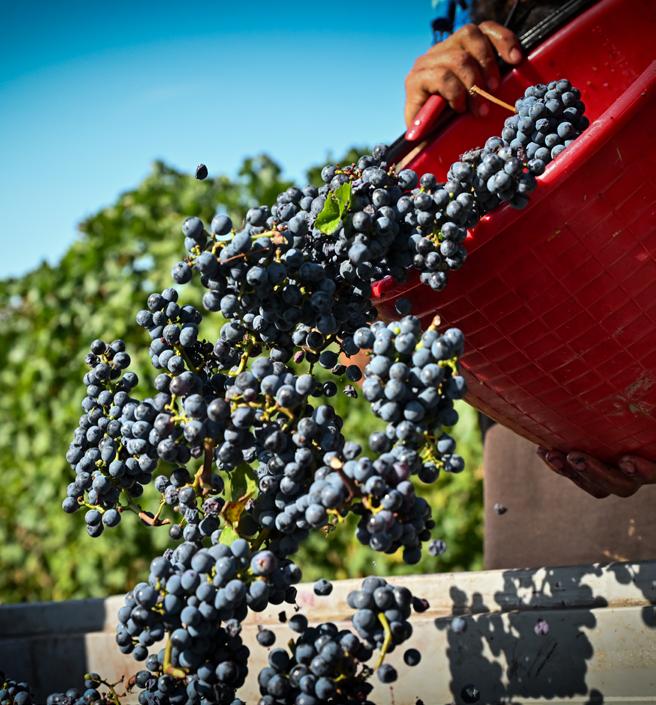
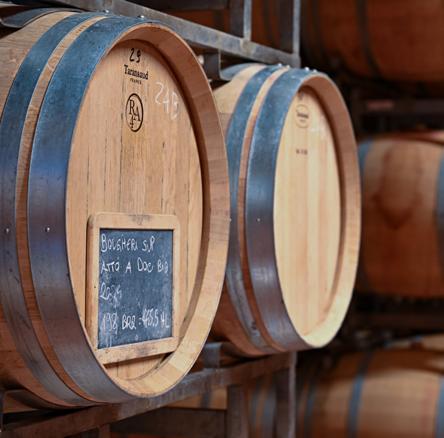
It was the late 1970s, and people were still wearing bell-bottoms, long hair, and John Lennon-style glasses. They were the children of free love and the universal peace and love movement. However, Italian wine was growing, establishing itself even in lesser-known areas and just outside the radar of large investors. And it was here that one of the most unique and rare phenomena in Italian viticulture took root. A gamble, a risk, desired by a few visionary minds who launched a wild territory of sea and scrubland, one of the greatest examples of entrepreneurship of the century.
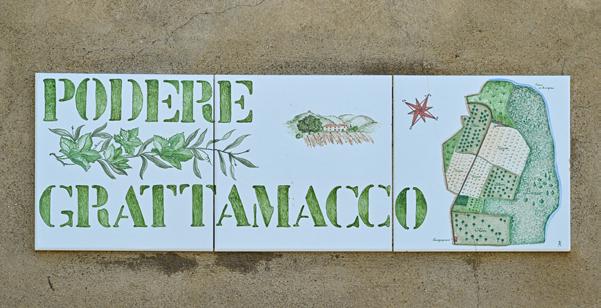
We are talking about Bolgheri. At the time, the Antinori family had started producing a Sangiovese Rosé, then Mario Incisa della Rocchetta, who was from Piedmont, decided, after a trip to Bordeaux, to try planting Cabernet Sauvignon on the hillside, whose stony soil reminded him so much of the famous Bordeaux ‘graves’. This was followed by a series of less renowned but very passionate artisans. This was the case of Pier Mario Melletti Cavallari, originally from Ferrara, adopted by Bergamo and finally transplanted to Tuscany, who in 1977 decided that Grattamacco would become a winery of the highest value, given its potential for high-quality production.
The rest is history. Another great insight was the decision to focus on the hill of Castagneto Carducci overlooking Bolgheri. It was rough terrain, little traveled at the time, where only the Castiglioncello di Bolgheri vineyard existed, where Sassicaia was born... Pier Mario Meletti Cavallari had already made up his mind,
The second winery in Bolgheri was founded 48 years ago: Pier Mario Meletti Cavallari fell in love with the rugged terrain, and it was here that Sassicaia was born. This marked the beginning of the era of Mediterranean Bordeaux wines
he had it all figured out. Grattamacco was the second winery to be established in Bolgheri, 48 years ago, even before the appellation was established. The first vintage, 1982, was classified as a table wine: a wine that made its debut when the wine-growing geography of the area was still to be written. With the introduction of the appellation, it found its natural place in Bolgheri Superiore, without ever renouncing the particular style that makes Grattamacco wines immediately recognizable.
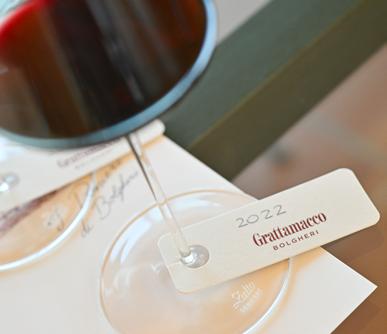
We would add that in 40 years, Grattamacco has remained a symbol of Bolgheri and of Italian winemaking as a whole. Very little has changed over the years, and what is most impressive is the pure craftsmanship that has always been carried out, resulting in a sincere, pure wine with an impeccable texture in terms of flavor, acidity, and tannins, and an enveloping, silky texture that caresses the palate but is also very, very flavorful. The first Tre Bicchieri came in 1985, in the first edition of the Guide, in 1988, and the last was awarded to the 2022 vintage, fresh from the latest publication, the 2026 Guide, which has just been presented. In between, there have been 22 awards, a real record, but it could not be otherwise given the wine that excites us every time it is poured into the glass. Here we present six vintages, from 1990 to 2022, which demonstrate - in addition to what has already been said - the wine’s incredible aging potential. The blend, the historic one that distinguishes Grattamacco, has remained virtually unchanged, with Cabernet Sauvignon as the protagonist, complemented by Merlot and 15% Sangiovese.
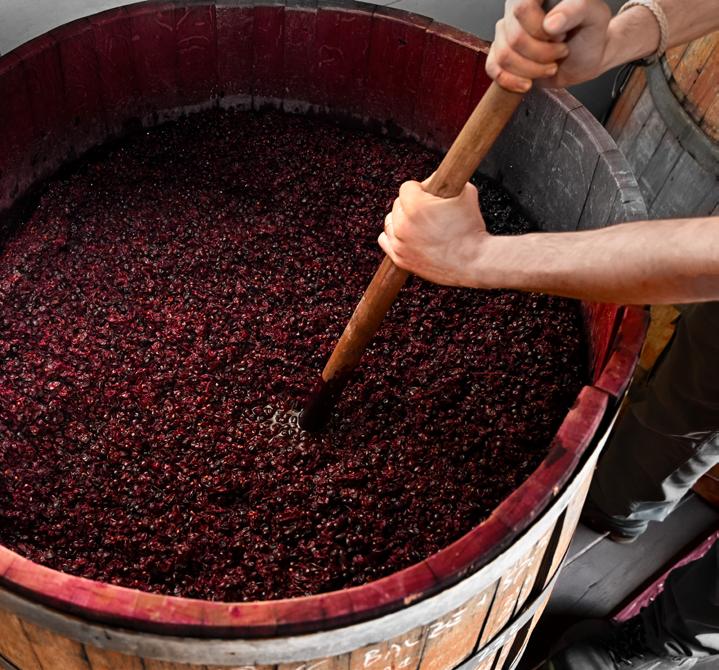
A documentary film celebrates Grattamacco’s 40 harvests. Voices and emotions encapsulate four decades of the company, which can undoubtedly be described as a pioneer in Bolgheri. This milestone deserved a dignified and profound narrative through cinema - the seventh art - with a documentary that traces the most significant stages from the late 1970s to the present day. Everyone is there, the first to believe in the territory, Piermario Meletti Cavallari with his wife Paola, Claudio Tipa who took over from Cavallari in 2002, Luca Marrone, the first and still loyal technical oenologist, with the contribution of Attilio Scienza and Maurizio Castelli
One of the most significant and emotional moments is when Meletti Cavallari reads the letter attesting to the progress made in the early years since the arrival of... the mare: «It was 1979 when a lovely mare arrived at the farm, chosen with the idea of going on nice trips in the surrounding area when we had the time.» He continues, referring to the first wine produced: «The first dry white wine with
a fruity character and the fresh, vinous red with 12.5% alcohol, so much so that we chose to bottle it. Don’t be surprised if you see the words ‘Vino da Tavola’ (table wine) on the label, as the farm is not in the DOC area, and this slightly infamous mention is required by law. Instead of hiding or camouflaging it, a symbol of a guilty conscience, we preferred to highlight it, convinced that we had made, if nothing else, an honest wine.»
The documentary film is directed by Giuseppe Tufarulo, author of productions for Sky Arte and Prime Video and director of the short film Baradar, selected for numerous international festivals and nominated for the 2020 David di Donatello Awards. Produced by TapelessFilm and written by Gabriele Scotti, the film traces the history of the estate and the territory through a choral narrative, entrusted to the voices that have marked its basic imprint and evolution. This is accompanied by a limited series of four original illustrations by Tug Rice, a New York artist who has interpreted the visual identity of the estate and its history with his iconic narrative and elegant style.
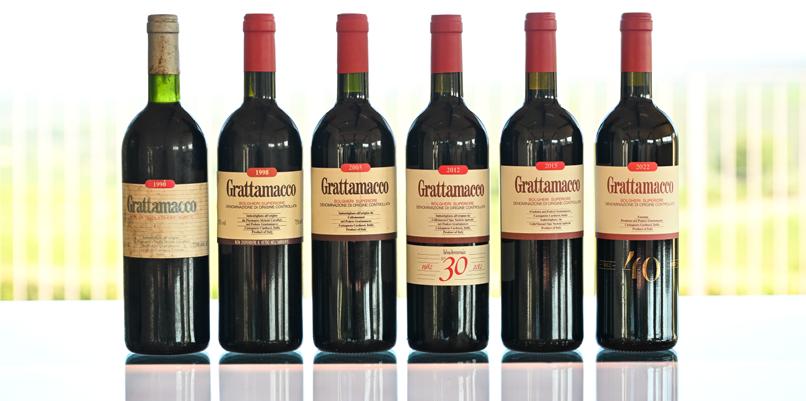
BOLGHERI SUPERIORE 2022
96
Despite its young age, this wine evokes emotions right from the aroma. Red fruit dominates the nose, followed by hints of fresh mint and blood orange. The palate is dense but very fresh and graceful, with extremely elegant tannins and well-integrated acidity. The finish is very long, savory, and deep. Already a wonderful bottle that can only improve.
BOLGHERI SUPERIORE 2015
94
Ten years after harvest, a slight touch of evolution begins to emerge, which is very nice because it adds complexity to the nose. The vintage was hot, but despite this, there are no traces of over-ripeness, rather hints of undergrowth, dry leaves, and noble resins. There is still a beautiful fruitiness that anticipates an almost spicy palate, salty in texture, with great body but always very harmonious and balanced.
BOLGHERI SUPERIORE 2012
97A truly beautiful bottle, in splendid form, younger than it appears, extremely elegant and incredibly refined. The nose has just the right touch of evolution, with hints of wilted roses, dry leaves, and dried tobacco. The red fruit is still iridescent, while the palate is slender, graceful, and fabulously structured. The finish has rhythm and progression thanks to light but present tannins, beautiful acidity, and a savory, very clean finish.
BOLGHERI SUPERIORE 2005
98As soon as it is opened, an austere nose immediately stands out, reluctant to give away too much. Gradually, it opens up and a carousel of aromas begins, each one better than the last. First chocolate blends with wild berries, then tobacco mingles with spices and mountain herbs. The palate is lively, fresh, and vibrant, with tannins that are still sharp but perfectly integrated into a beautiful structure. An incredible wine in terms of complexity and liveliness that seems to have no fear of aging.
BOLGHERI SUPERIORE 1998
95
A wine truly from another era, now in its twenty-seventh year and capable of offering beautiful tertiary aromas. Licorice, helichrysum, dried mint, rosemary, noble resins. Added to this is a slender, long, savory palate, slightly worn, but for this reason capable of offering an unconventional drinkability. Character right to the end thanks to a savory part that guarantees unparalleled depth.
96At the time, it was still marketed as a table wine, but the place where it was produced could be indicated, which is why Castagneto appeared on the label. The blend was composed of equal parts Sangiovese and Cabernet Sauvignon. The most incredible thing is the vitality it still shows. The nose is still “fruity,” we could say, aided by notes of hay, dry leaves, and balsamic touches. The tannins are still alive, impeccable in giving a nice strength to the sip, then the rest is gracefulness, delicacy, but also a lot of flavor. Beautiful.


Grattamacco
Castagneto Carducci (LI)
Loc. Lungagnano, 128 0565765069
grattamacco.it
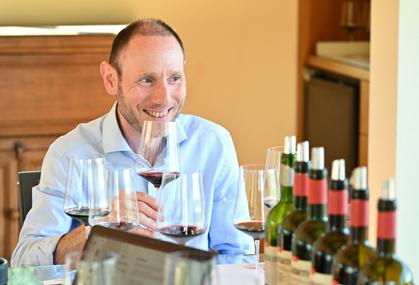
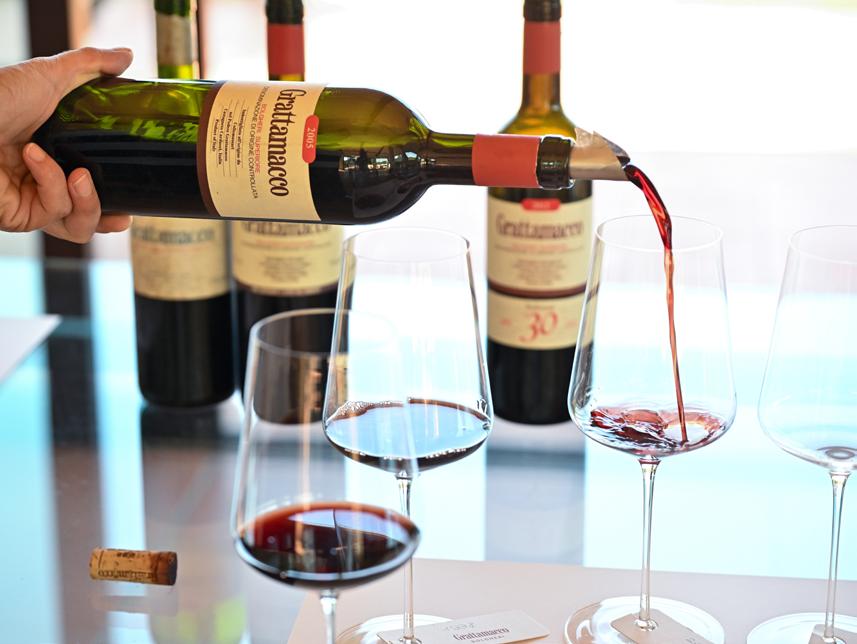
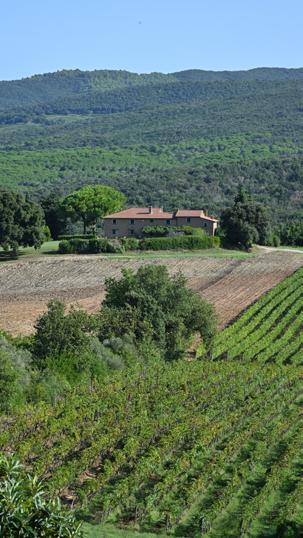
The great wealth of Italian wine told through the stories and choices of the new guide just presented by Marco Sabellico, Gianni Fabrizio, Giuseppe Carrus
One million tastings. Yes, you read that correctly: that is the figure that emerges when we add up all the tastings carried out by those who work and have worked at Vini d’Italia since its inception. Not to boast, but we are the only ones with such extensive experience in the sector: the guide we have just presented is the thirty-ninth edition. Over time, we have built up a historical record of modern Italian wine, a huge archive that bears witness to the tumultuous growth, in terms of quality and quantity, of this fundamental sector of our agricultural scene. This is thanks to the extraordinary passion that drives us all: especially in the summer months, we undergo a gruelling routine of travel and tastings. We do this to honour Gambero Rosso’s original mission: to offer an up-to-date, reliable and as objective as possible guide for wine enthusiasts and professionals. Without stylistic or ideological barriers, Vini d’Italia 2026 features both the most classic producers on the Italian wine scene, companies celebrating two or three-digit anniversaries, and brand new businesses that are now taking their first steps. Austere wines such as traditional Barolos stand alongside the most fascinating orange wines, macerated wines, spontaneously fermented wines and wines made from new-generation resistant grape varieties: everything that makes up the fascinating and complex mosaic of Italian viticulture. In short, it ranges from Baroque to Reggaeton or Neopunk, passing through Opera, singer-songwriter music, rock “n” roll and metal. There are no conceptual constraints in the guide, partly because we are increasingly aware that even our most passionate readers and consumers have none, and indeed move with ease from a macerated white wine made from native grapes to a great bottle of Chianti Classico. The only condition is that behind the label there must be something authentic, something true, that faithfully tells the story of a producer and a territory. So we act as guarantors of this authen-
ticity, rather than of compliance with standards and styles that perhaps no longer make sense in this historical climate. We offer reliable information and data on thousands of companies and wines. And if anyone objects that a few seconds of video are enough to tell a story, we believe that “our” stories, those of Italian producers who work hard every day in their vineyards and cellars, deserve much more than a commercial on social media! It is a mission we are committed to fulfilling, and one that has made Vini d’Italia del Gambero Rosso a working tool –thanks also to its various foreign-language editions – for thousands of professionals in the world of wine, in Italy and abroad. And there is no Artificial Intelligence that can produce – at least not yet – a product like this. It is no coincidence that the book has earned the nickname “the Italian Wine Bible”. We are very proud of this. The Guide has over 70 contributors, who have been selected over the years for their expertise and reliability. Our tastings, which are strictly blind, take place in every region, almost always at the Consorzi di Tutela (Protection Consortia), Chambers of Commerce or at the Città del Gusto in Rome, and involve a panel of three or four tasters for each geographical area. From the work of these sessions (about 50 throughout Italy), which last from April to July, the most interesting wines are selected and then sent to the Rome office for final tastings. Here, the three editors and the representative of the area make a further selection to choose the best wines. This year, around 2,300 samples were involved: the tasting sessions gave us the spectacular result of 508 wines awarded the Tre Bicchieri. With around 1,800 wines placing very close to the top list and, in the case of many wineries (we award only one wine per winery), worth as much as those on the podium. To get an idea of the commitment involved, it is worth remembering that we started with well over 40,000 samples from all over Italy: of these, only 12,300
>The guide
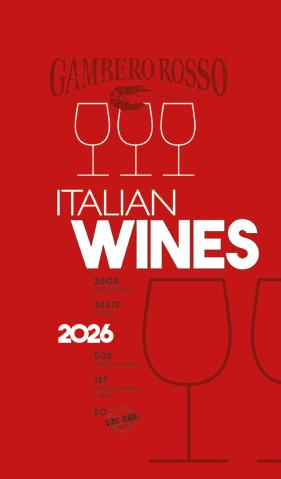
Italian Wines 2026 by Gambero Rosso pp. 1080 – euro 30 1080 pages – Euro 30 2.605 wineries and 24,315 wines evaluated, 508 Tre Bicchieri, 187 Tre Bicchieri Verdi and 50 rare wines
are included in Vini d’Italia. What picture of Italy’s wine industry emerges at the end of this work, which has taken us from the Alps to the heart of the Mediterranean? It is a complex and vibrant landscape: there have been excellent vintages in many of the classic areas, such as 2019, 2020 and 2021 for Tuscany and Piedmont, but also in other regions; our wineries continue to experiment and invest in modern technologies while reviving ancient traditions with a fresh perspective, as in the case of amphorae, cocciopesto, ceramic containers and new-generation concrete vats. In the vineyards, we are witnessing the continu-


























ous return of ancient grape varieties, but also the spread of new resistant varieties. And now there are many wineries that use satellite technology and drones to monitor the rows and protect them from disease, using treatments with minimal environmental impact: this is viticulture 4.0, where a different relationship with the environment is being restored in the name of sustainability and harmonious development, with wineries increasingly involved and participating in the policies and management of the territory.
As we like to say, the best way to fully understand our philosophy is to browse through the Special Awards, which we describe on these pages: these are the wines and winemakers that have particularly impressed us during these months of travelling, tasting and... re-tasting!
>Sparkler
C orte F ran C a (BS)
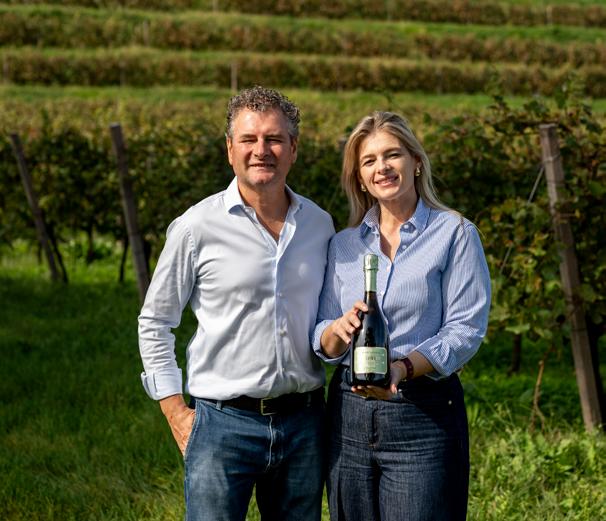
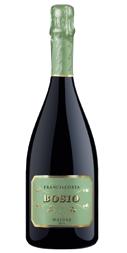
Cesare and Laura Bosio have given us an extraordinary version of Franciacorta Brut Nature with the ‘21 vintage. Made from Chardonnay with 30% Pinot Noir, it has a bright greenish-straw colour, enchanting and crisp aromas of white fruit, citrus and hawthorn with delicate hints of hazelnut. On the palate, it is harmonious and taut, savoury and elegant, creamy and deep. An extraordinary calling card for this appellation.
C
anale (C n )
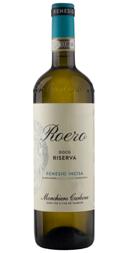
With this wine, Francesco Monchiero wanted to explore the potential for evolution of Arneis, through different vinification techniques and ageing containers. This modern research could only begin on the Renesio hill, whose history is so closely linked to Arneis that one of the many theories suggests that the name of the grape variety derives from the place name Renesio. Francesco Monchiero has succeeded in his endeavour, offering us a 2020 Arneis of great class and substance, capable of ageing well in the bottle.
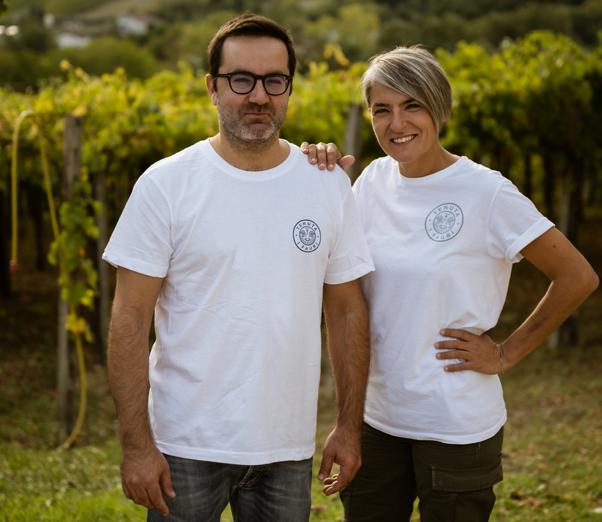
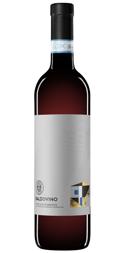
Fashion and modernity, two words that are similar, although they have different etymologies, but neither suits the wines of the Di Camillo family. For them, Cerasuolo is history and tradition, kept at a safe distance from the Provençal fashion for rosés that wink at whites. Baldovino always has a cherry colour and a firm body; it is a perfect Cerasuolo, full-bodied, savoury and well-structured: a great Italian-style “Rosé”.
M ontal C ino (S i )
B ar B ara ( an )
Stefano Antonucci lives and breathes his vineyard and winery with such deep involvement that he is much more than just a simple winemaker. His wines never fail to impress. This is the case with the extraordinary sweet wine, Lina, which he makes from Verdicchio grapes. It has a bouquet of admirable, fascinating complexity, and on the palate it is perfectly balanced between sweetness and tension, where it makes its way with an enchanting velvety texture and infinite persistence. A great wine. Rare.
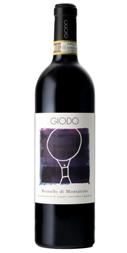
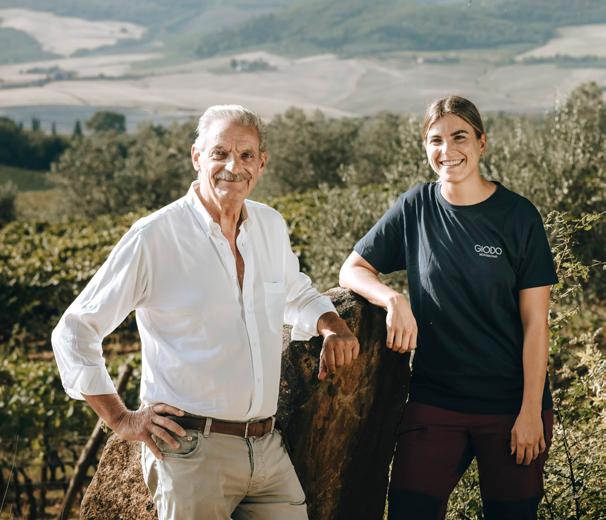
Carlo Ferrini has spent his professional life as a winemaker producing an impressive number of great wines in many regions of Italy. Brunello ‘20, made with his daughter Bianca in their beautiful little winery in Montalcino, is somewhat the culmination of his experience with Sangiovese grapes, his first love. Giodo ‘21 is a great red wine that will enchant you with its complex elegance of aromas and its rich, deep and authoritative body that seduces with its extreme harmony and finesse.
M al F a (M e )
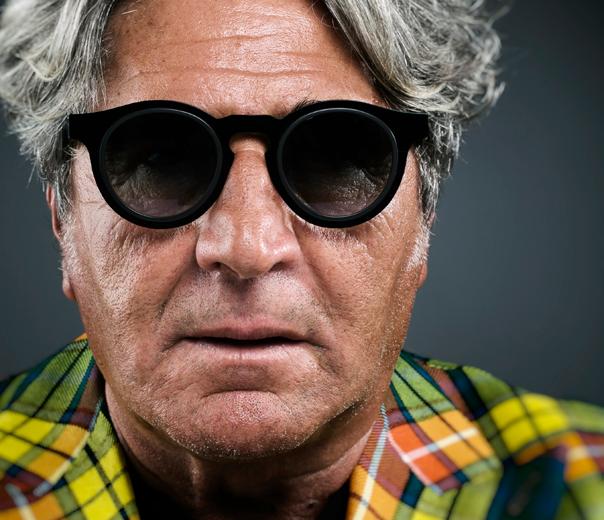
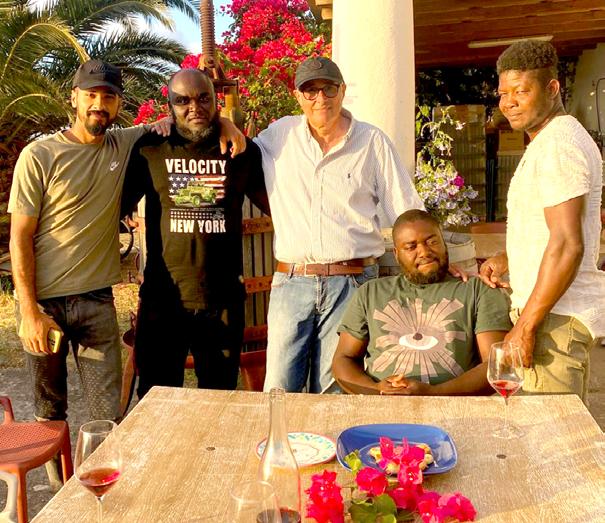
In Salina, Nino has demonstrated that the island is not only an extraordinary tourist destination, but also a place where viticulture is at risk due to a lack of labour. With the collaboration of the Don Bosco 2000 association, for some years now he has been training and hiring migrants from reception centres, offering them a new perspective on life and integration into the social fabric. Fortunately, this example is proving to be contagious.
V illa M agna (CH)
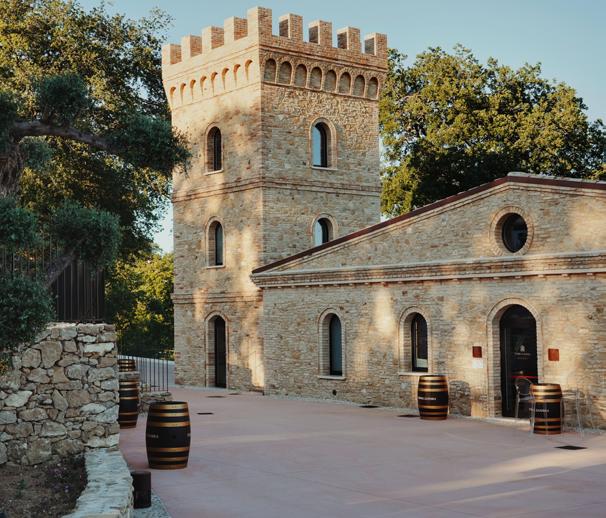
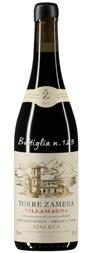
It is difficult to talk about an emerging winery when it was founded in 1961. The return of Federico De Cerchio, the fourth generation of the family, has brought about a total cataclysm; we are witnessing a true rebirth: a new winery with a restaurant and a few suites, but above all a new mentality entirely devoted to quality. This year, the wine that impressed us most is the Villamagna Riserva ‘22, a Montepulciano exuberant in its aromas of ripe black berries and portentous on the palate.
C irò M arina (K r )
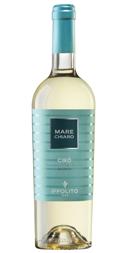
With 180 harvests behind them, the Ippolito family is celebrating its anniversary with a Tre Bicchieri award and a Special Prize! Their Cirò Bianco Mare Chiaro ‘24 is a wine of depth, with a delicious bouquet of jasmine and frangipani flowers and exotic fruit, complemented by iodine-rich marine notes and Mediterranean fragrances. On the palate, it is fresh, savoury and bold, and you can find it in wine shops for less than 10 Euro. So we can all celebrate the anniversary!
M onte F al C o (P g )
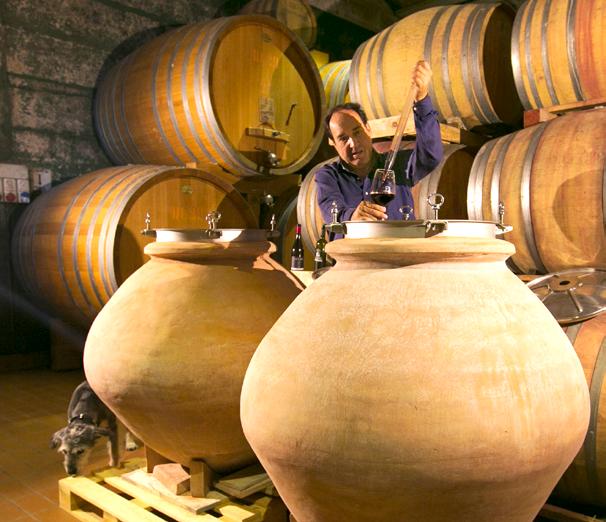
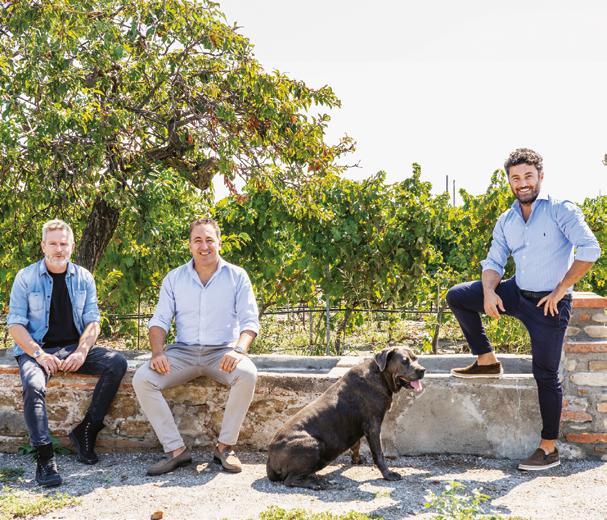
The company was founded in 1883, but it was thanks to Filippo’s drive that it achieved absolute excellence. His vineyards are surrounded by woods, and alongside viticulture, there are also cereals, olive trees and livestock farming. The entire company has been organic for years and is very attentive to sustainability (which is certified by Equalitas). It implements a virtuous policy of recycling processing waste, as well as producing its own fertilisers.
g iglio ( gr )
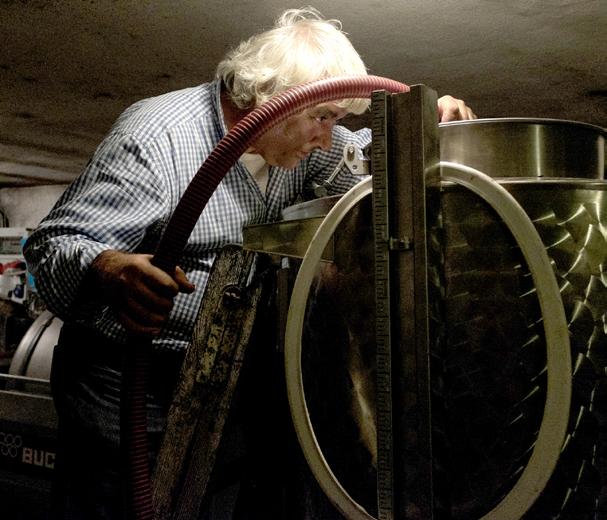
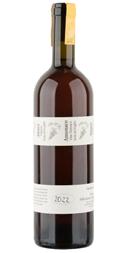
We met Francesco many years ago when he was taking his first steps as a winemaker, enamoured with this small island that he never wanted to leave after a holiday in the late 1980s. Here he started a family with Gabriella (also on holiday at the seaside) and, over many years, restored old abandoned vineyards on small terraces and dry stone walls in places where every operation in the vineyard and in the cellar can only be done by hand. His Ansonaca is a small ode to the millennial Mediterranean civilisation, and continues to fascinate us year after year.
B ona SS ola (SP)
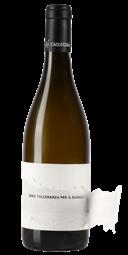
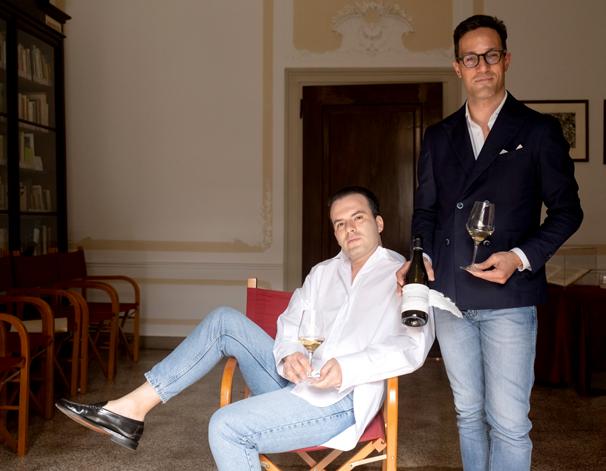
Cà du Ferrà is located in Bonassola, a small village in the province of La Spezia, on the Riviera di Levante, near the Cinque Terre National Park. Here, Giuseppe Luciano Aieta and Davide Zoppi, a couple in work and in life, have created a delightful relais and a small winery that vinifies the grapes from their five hectares of vineyards. Their Ruzzese is an extraordinary wine, made from a rare grape variety that was disappearing, and is of the highest quality. But their commitment to fighting all forms of discrimination is also extraordinary. The wine is called Zero Tolleranza per il Silenzio (Zero Tolerance for Silence). We are with you!
g uardia S an F ra M ondi (B n )
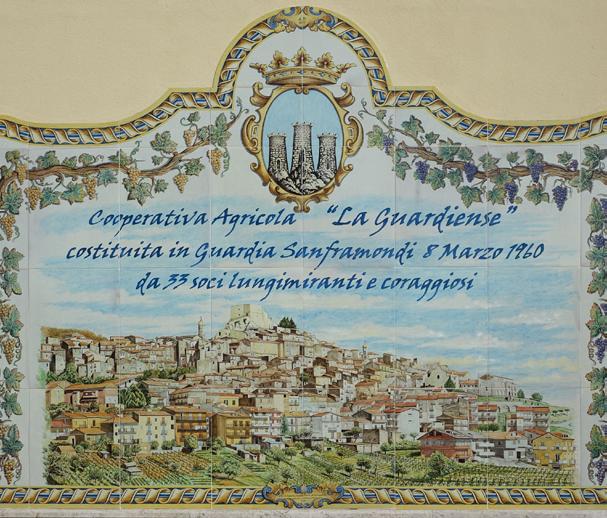
Over the last decade, the beautiful cooperative of Guardia Sanframodi has achieved a level of quality that has few equals in Italy, especially considering that it now has 1,000 members and 1,500 hectares of vineyards. Thanks to its highly skilled and passionate management, its wines are now among the finest expressions of Campania’s winemaking tradition and beyond. This is to the great satisfaction of its winegrowers and consumers around the world who appreciate its labels.
>Wine Venture of the Year
ABFV ltaly - Alejandro Bulgheroni Family Vineyards
t u SC any
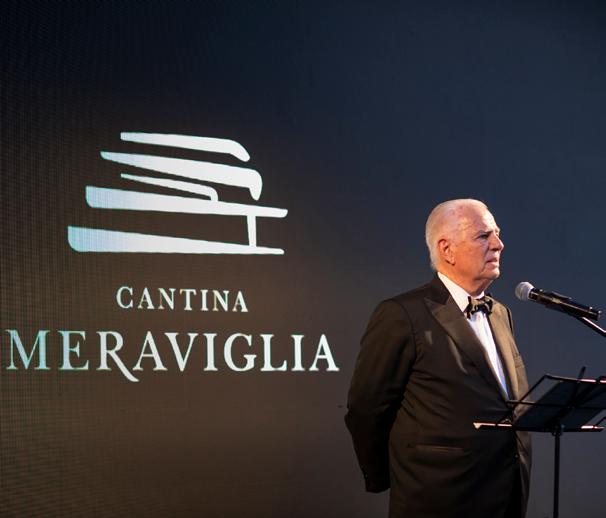
Being a tycoon with vast financial resources is not enough to make great wines. Alejandro Bulgheroni is someone who loves wine and knows it inside out, as he has demonstrated by creating prestigious wineries in the most beautiful wine-growing areas in the world. In Italy, or rather in Tuscany, there are five such wineries, and we would be unable to say which one is our favourite. Top-level management and technicians, an exceptional terroir and an extraordinarily well-curated range of wines make it our Winery of the Year.
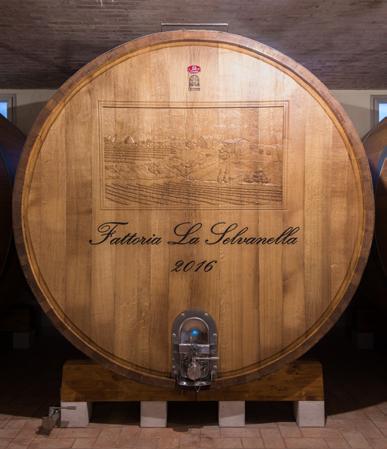
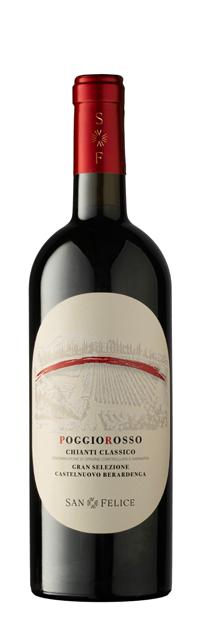
«The Selvanella hill was purchased in 1963. The potential of the area was immediately apparent: we are located between Radda and Panzano, close to the Chianti mountains in the highest hills of the Chianti Classico region.
Unique for the time, it was decided to plant 50 hectares, all of which were dedicated to Sangiovese Grosso, the result of a mass selection made from ancient vines already present on the estate. From this single vineyard, the first Chianti Classico cru was born. Since the first vintage in 1969, the name of the vineyard of origin has been printed on the label.»
These are the words of Alessandro Zanette, a Friulian-born oenologist who has been in Chianti for twenty years and has been in charge of La Selvanella for ten.
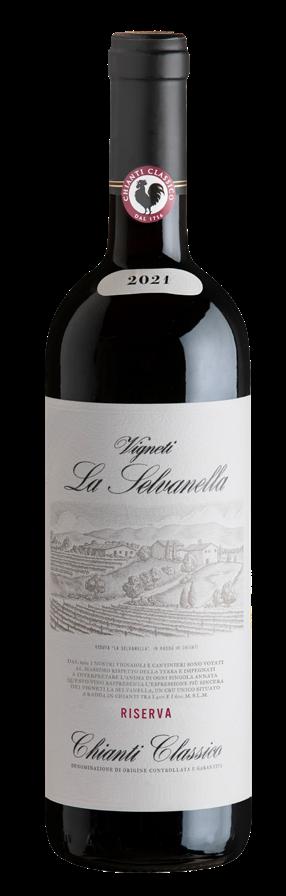
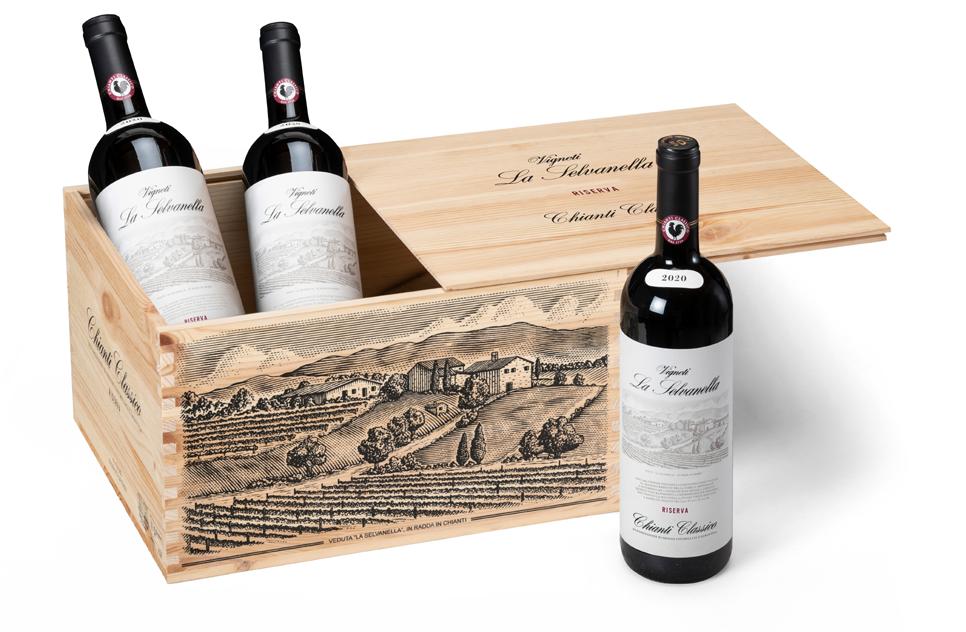
Here, they have always made a single wine «with which we want to represent the most sincere expression of each individual vintage», says Zanette. «It is released as a Riserva but has all the characteristics of a Gran Selezione: 100% Sangiovese Grosso, aged for three years in large barrels and one year in bottles, with grapes sourced exclusively from the La Selvanella hillside. This wine was already beyond the rules before the introduction of Gran Selezione. We choose to remain a Riserva for historical reasons: the history of Selvanella has always been linked to Riserva». The real strength lies in the terroir. The vineyards are
«We produce a single wine that represents the most sincere expression of each individual vintage.
Our Chianti Classico is a snapshot of the territory from which it originates»
located at an altitude of 600 metres, on rocky soils made up of marl, galestro, boulders and pietraforte.
‘The La Selvanella vineyard is one of the highest in the entire Chianti Classico area,’ explains Zanette. This is where fresh, crisp wines with natural acidity are produced, allowing for very long ageing.
«It is said that Radda wines are initially nervous. This is because they have lower pH levels and therefore a lot of acidity. They require more time to age in the cellar, but then patience is rewarded because they turn out to be very drinkable, always recognisable for their notes of small red fruits, Mediterranean scrub, flowers and mountain herbs. These are wines that impress with their elegance rather than their power: the altitude accentuates this character», assures Zanette.
His definition is accurate and effective: «They are wines with structure but they are not heavy wines.»
Today, the market is looking for this style of wine. «But this has not always been the case», explains the oenologist. «Until 20-25 years ago, when consumer tastes were different, being in Radda was an additional complication. Thanks in part to climate change, it is no longer a problem to ripen grapes at 600 metres; in fact, it is a huge advantage because we are better protected from drought and high temperatures».
The La Selvanella vineyard covers an entire hill where, throughout the summer, there is a guaranteed
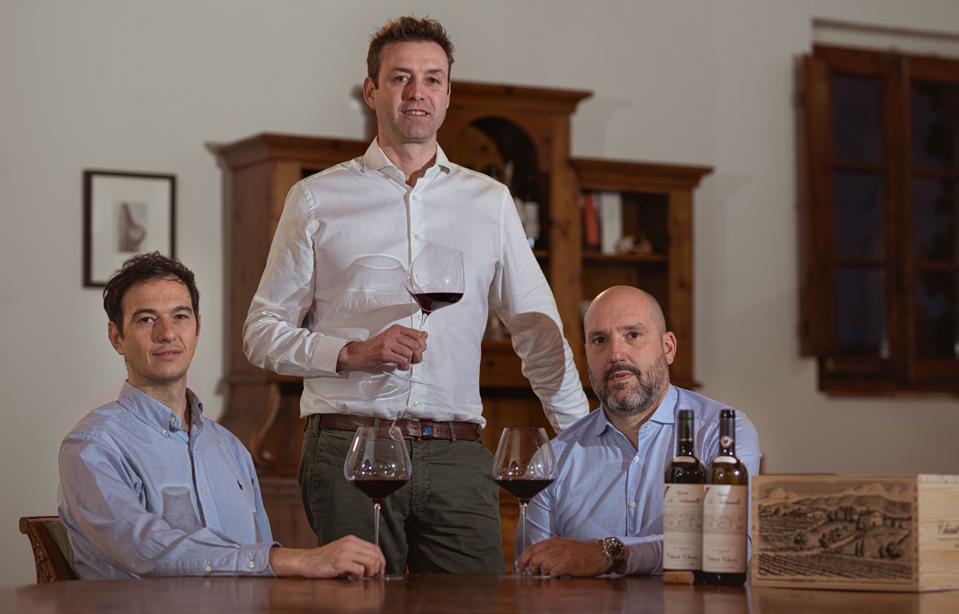
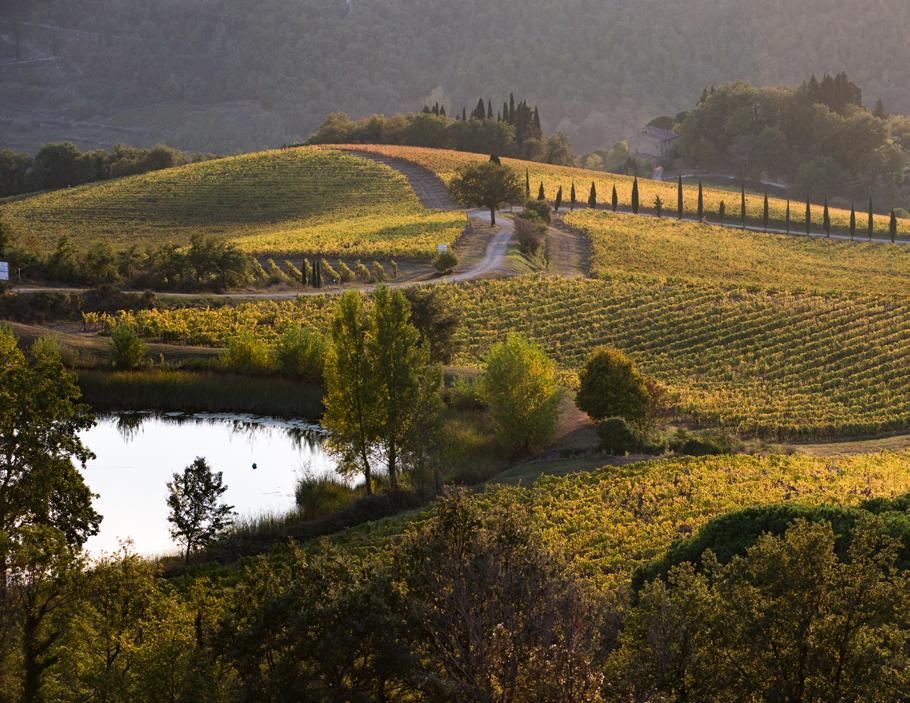
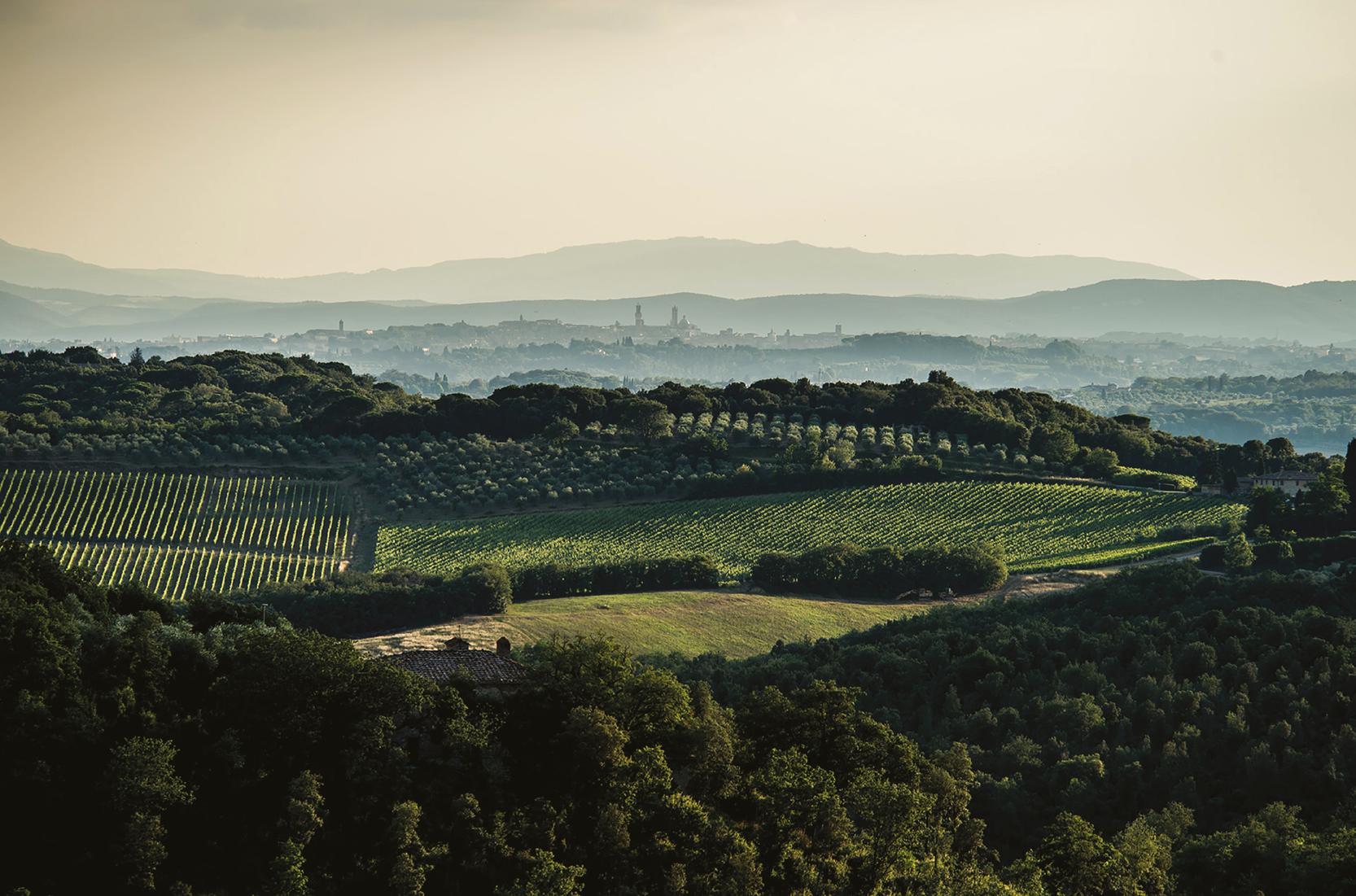
excellent temperature range between day and night. «At La Selvanella», says the Director, «there is always a breeze that comes from the Tyrrhenian Sea, crosses the first part of Tuscany and finally reaches the Chianti mountains. In the evening, the direction reverses: the air descends from the top of the hill towards the bottom of the valley. Another element that characterises us is the light: we are located on the highest hill and have no obstacles that cast shadows on the rows of vines. And then there is the forest that completely surrounds us, creating a very special microclimate. After all, the name Selvanella derives from the forest that embraces us in a natural balance».
And what are your plans for the future? Changes, other labels? «Out of respect for a unique history», smiles Zanette, «we have no plans for change whatsoever: in Chianti Classico, there is no other winery that produces a single wine, let alone a Riserva. We believe that ours is a unique estate. Three generations of technicians have passed through Selvanella, but no one has ever questioned this approach. All of us – myself and my colleagues, oenologist Francesco Bruni and agronomist Marco Viciani – have always been firmly convinced that La Selvanella is truly an extraordinary terroir for Sangiovese. And we work every day to preserve and enhance this terroir, together with all our colleagues who take care of the vineyard on a daily basis».
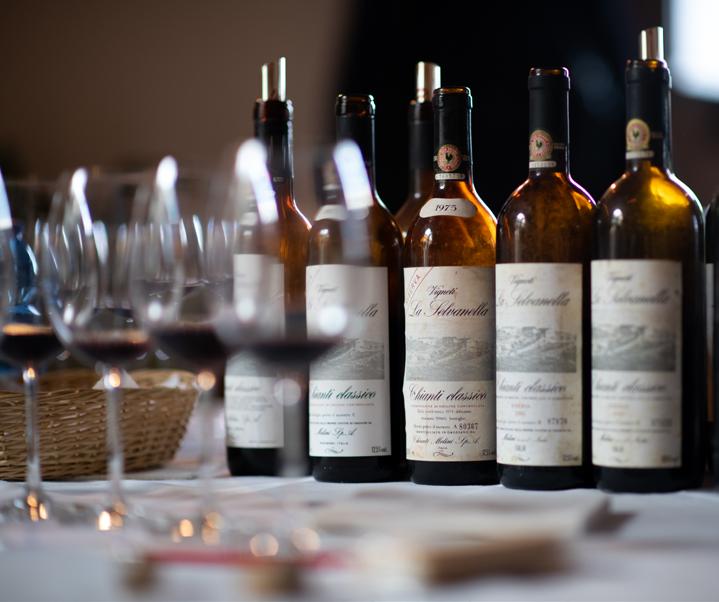
Just one wine, but one with astonishing depth. Alessandro Zanette reveals the existence of a vault where all of Radda’s memories are preserved. «We have all the vintages produced since 1969 in our cellar. Convinced of the extraordinary ageing potential of our Sangiovese, we have set aside 300-400 bottles for each vintage: a veritable library of Radda Sangiovese». A gem that will not leave wine enthusiasts and professionals indifferent.
The Chianti Classico Vigneti La Selvanella Riserva ‘21 is very good, according to the wine review in the new Gambero Rosso Vini d’Italia 2026 guide, which has just been presented. The wine presents itself in the glass with a wide range of aromas, from toasted tones to delicately herbaceous and earthy sensations. Hints of red and black fruits lead to a robust, articulate and continuous palate, with a firm tannic structure softened by woody notes on the finish.

Vigneti La Selvanella
Radda in Chianti (SI) fraz. Lucarelli
loc. La Selvanella 340 351 6998 vignetilaselvanella.it $laselvanella fgruppoitalianovini
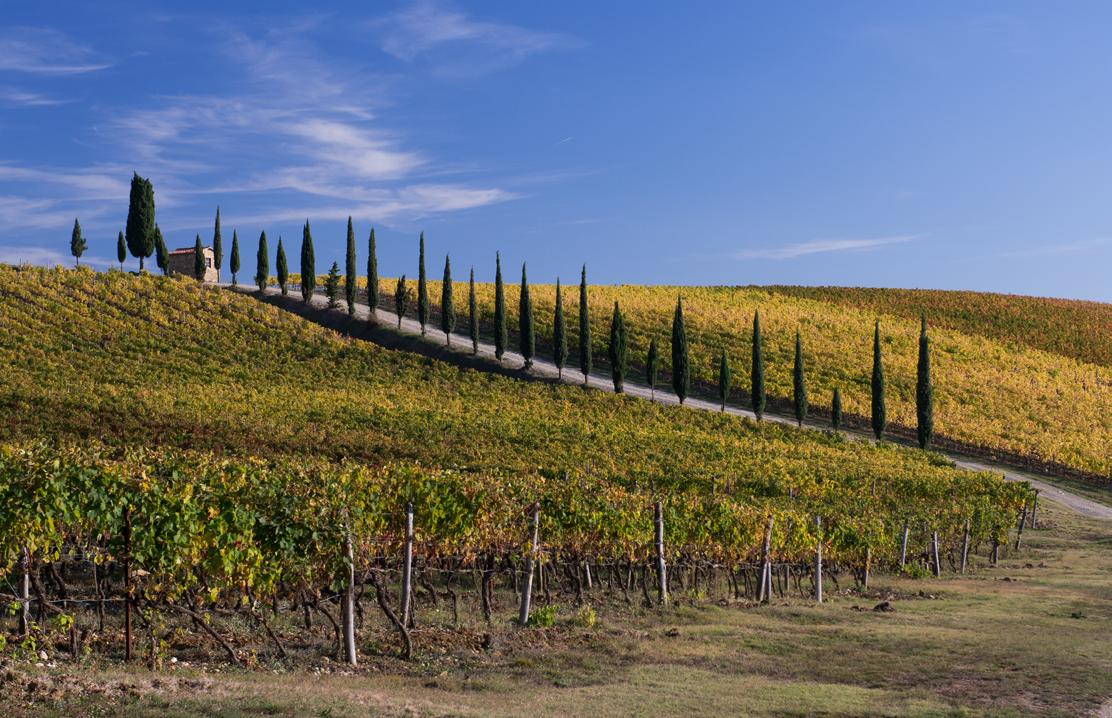
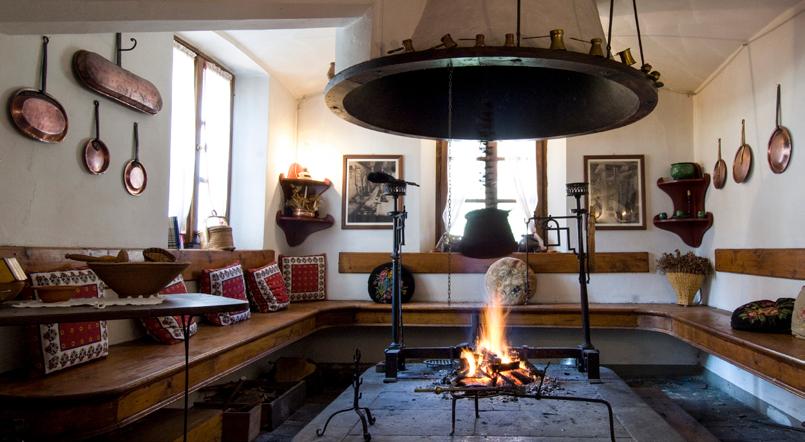
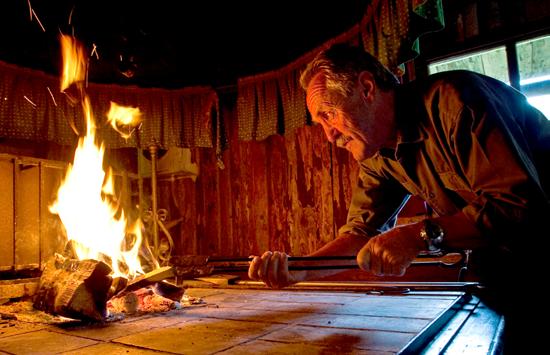
In Friuli Venezia Giulia, the fogolâr is not just athe fireplace, but rather a place of the soul. For centuries, the large hearth in the centre of the kitchen has been the beating heart of homes, especially in the mountain valleys and upper plains. Around that fire, people cooked, made decisions and passed on stories; it was a space for the family, but also for the community, so much a part of their identity that it became a symbol of belonging and gave its name to associations of Friulian emigrants around the world. Even today, the fogolâr is one of the most distinctive features of the far north-east, the one that best expresses the essence of Friulian hospitality: it can be found in homes, restaurants and farmhouses, which preserve it as a living memory, continuing to celebrate, around that fire, the flavours that have always defined the local gastronomic identity.
Discovering the fogolârs means travelling through the valleys of Carnia and the foothills of western Friuli, following a route that starts in Tolmezzo, the historic capital of Carnia and gateway to the north-eastern valleys. Here, the Michele Gortani Museum of Popular Arts offers a fascinating journey through domestic objects, furnishings and utensils that reconstruct life around the fire and
A picturesque itinerary through the Carnia valleys, along the Friulian Dolomites and the Eastern Pre-Alps, to discover the most authentic and convivial soul of a border territory.
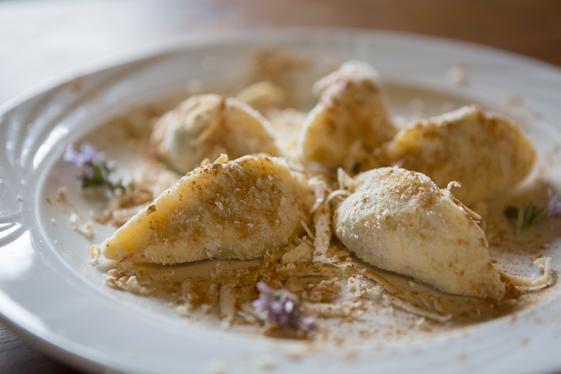
the atmosphere of Carnic kitchens of yesteryear. A few kilometres further on, in Verzegnis, the fogolâr returns to the forefront of the table, thanks to the numerous local restaurants offering recipes that are symbolic of the area. Here you can taste toç in braide, a sauce made from soft polenta, alpine cheese fondue, salami and morchia, but above all cjarsons, ravioli stuffed with ricotta and seasonal ingredients, with flavours ranging from sweet to strong. Created by the ingenuity of Carnic women, cjarsons were once prepared with spices brought by cramàrs, travelling merchants from the Friulian mountains, and even today, each valley has its own version of this dish, which reflects the identity and memory of an entire region.
Continuing westwards along the Tagliamento
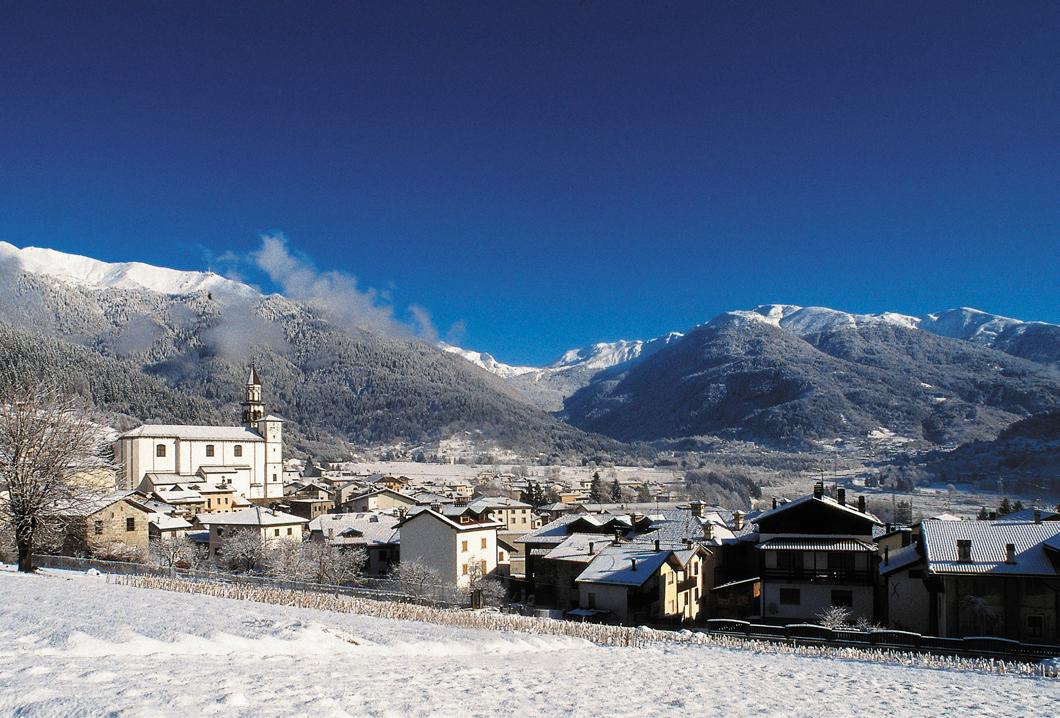
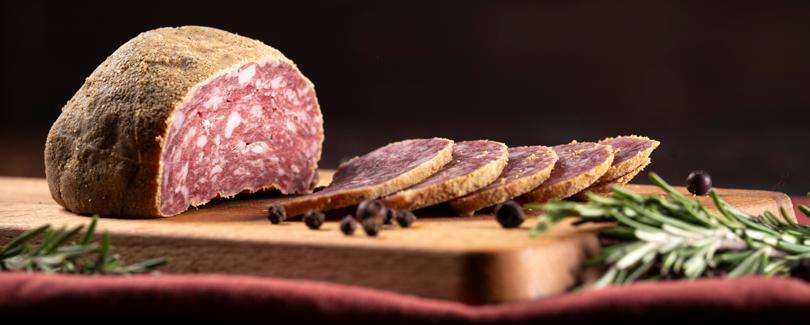
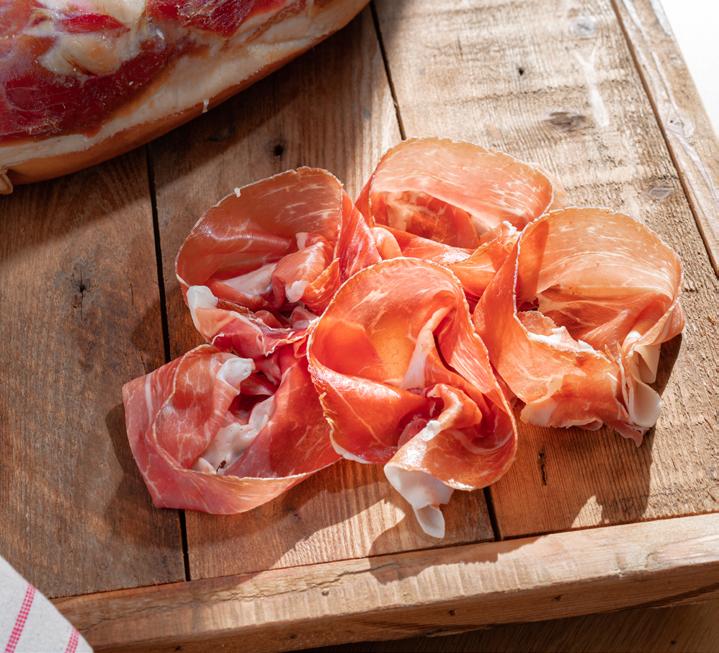
Valley, you will encounter villages such as Villa Santina, Enemonzo and Socchieve, guardians of a dairy production that tells the story of the mountain dairies, but also enchanted places that invite you to discover active tourism consisting of scenic outdoor activities in a magical winter landscape. Heading north, you reach Val Lumiei, which leads to Sauris, an alpine village suspended between Carnia and Cadore. Selected by the United Nations for Best Tourism Villages, Sauris is a virtuous example of tourism that preserves traditions and biodiversity. Two symbolic products of Friuli originate here: beer made at an altitude of 1,400 metres with home-grown cereals and the famous Sauris IGP ham, with its sweet and unmistakable taste, the result of an ancient tradition that combines Nordic smoking with beech wood and Latin salting. The village is also home to the Sauris Historical Centre - Museum of Sant’Osvaldo, which, in addition to the centuries-old history of the community, tells the extraordinary story of the survival of Saurano, a Germanic language still spoken today. And for those seeking adventure, there is no shortage of outdoor activities in a magical winter landscape.
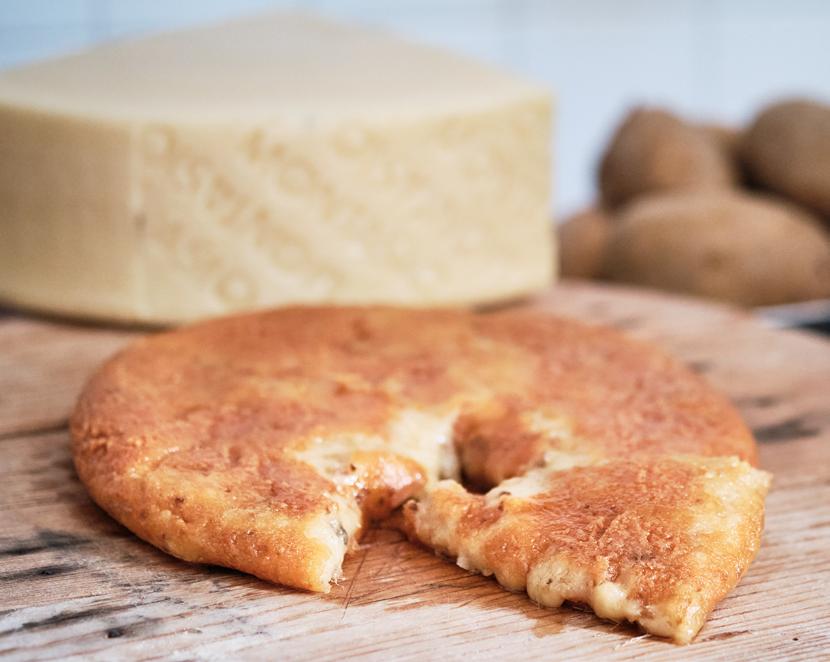
The journey continues along the But and Pontaiba valleys to Sutrio, a village famous for its wood carving tradition. It was here that the nativity scene donated to the Vatican for Christmas 2022 was created, bringing the best of Carnic art to Rome. From Sutrio, it is only a few kilometres to the Zoncolan ski slopes and the woods that surround them, where farmhouses and restaurants offer the great classics of Friulian cuisine, such as frico, a 15th-century recipe based on melted cheese enriched with potatoes. Continuing on, you arrive at Treppo Ligosullo, a surprising stop for art lovers. Here, the Enrico De Cillia Gallery houses over 150
works by Friulian and Italian artists from the 20th century to the present day. Around the village, there are also scenic nature trails..
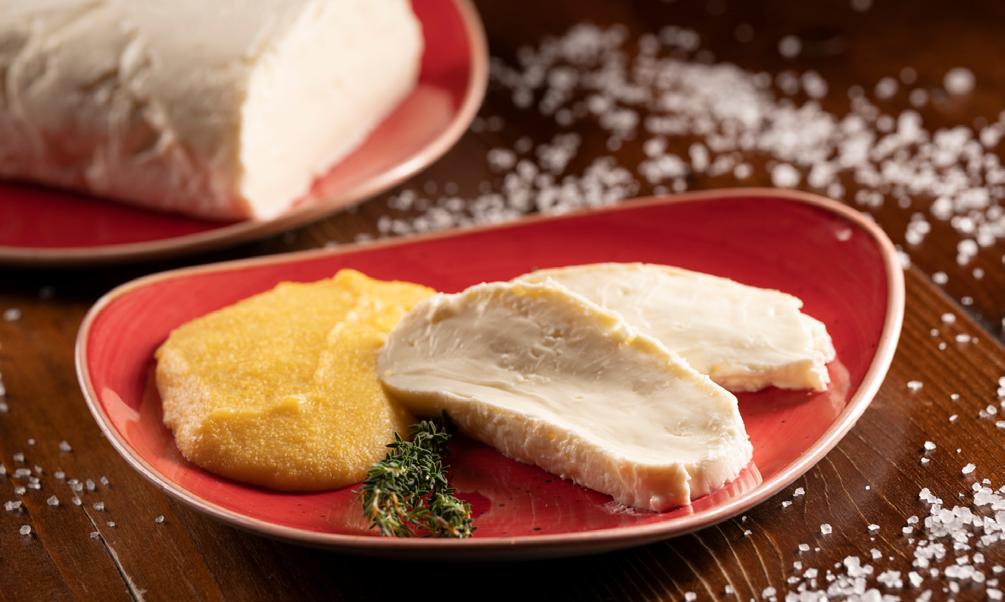
Moving to the western part of Friuli Venezia Giulia, along the foothills north of Pordenone, the journey is enriched with new gastronomic nuances experienced in local trattorias where the fogolâr is always present. This area, nestled between the Tagliamento and Meduna rivers, preserves a centuries-old dairy tradition. This is where the famous Formaggio Asìno cheese is made from cow’s milk. Its distinctive feature is that the cheese wheels are immersed in salmuerie, a mixture of milk, cream and salt, in large wooden vats. Available matured or fresh, Asìn has a savoury and slightly spicy flavour that goes perfectly with polenta or summer salads. The same area also produces Formadi tal Cit, a small masterpiece created by farmers with the aim of reusing leftovers or poor-quality cheese, which is ground and then stored in a stone jar (“cit” in Friulian).
Our journey concludes in the Friulian Dolomites, between Frisanco, Dardago and Piancavallo, with a taste of one of the most iconic products of western Friuli: pitina. This smoked meat product in the shape of a meatball – now a PGI and Slow Food Presidium product – was originally created as a method of preserving meat and is now made with game or minced sheep meat, flavoured with herbs and coated in polenta flour before smoking. Tasting one of its variations, alongside fogolâr, after a day spent hiking in the Dolomites, remains the most authentic way to rediscover the flavours and traditions that define the soul of Friuli Venezia Giulia.
PromoTurismo
Friuli Venezia Giulia
Trieste Airport
Ronchi dei Legionari (GO) via Aquileia, 46 0431 387111 turismofvg.it ffriuliveneziagiulia.turismo
$fvglive
VisitFVG
Among the outstanding products of the Italian wine production, sparkling wines of the highest quality stand out, and are accessible to all. We present a selection of the best sparkling wines tasted recently and which have reached the finals of Vini d’Italia 2026: from classic territories, but also surprising labels born in lesser-known areas, capable of telling the story of the most authentic Italy in every glass
by Marzio Taccetti
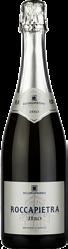
>Roccapietra Zero '19 94
Scuropasso
Pietra de’ Giorgi (PV)
What character, this Pinot Noir from Oltrepò Pavese! Roccapietra Zero entices the nose with intense and captivating aromas of pastries and red fruits. The palate is juicy and textured, but also tonic and very fresh, making it a complete and definitely a delicious wine. Perfect balance between maturity and tension: to drink and drink again.
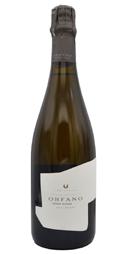
>Franciacorta Brut Nature Orfano Ris. 2015 94
Corte Fusia
Coccaglio (BS)
Corte Fusia wines are characterful and exuberant, just like Gigi Nembrini and Daniele Gentili, the two faces behind this winery. Riserva Orfano ‘15 Nature is a rich Franciacorta, with a fresh and floral nose, enriched with hints of vanilla and pastries. The palate is savoury and pulpy, with good intensity and consistency
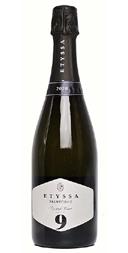
>Trento Extra Brut Cuvée N. 9 2020 94
Etyssa Trento (TN)
The Etyssa project has reached Cuvée Number 9, created by three young friends who became partners in the name of great Metodo Classico. The 2020 vintage has aromas of lime, white flowers and peach. The palate is crisp and fragrant, long in flavour, juicy and with good depth, and mineral nuances on the finish, which is smooth and long.
>Franciacorta
Brut Nature Secolo Novo Giovanni Biatta Ris. 2011 93
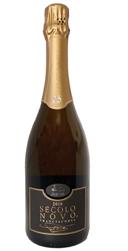
Le Marchesine Passirano (BS)
The fifth generation of the Biattas continues the family tradition with great personality. This Riserva is a truly elegant Franciacorta that ages well, with lively, rich and mature bubbles. Intensely fruity notes combined with spicy hints of liquorice and vanilla that linger in an almond finish.
93
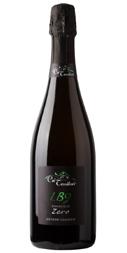
>OP Pinot Nero M. Cl. Pas Dosé LB9
Cà Tessitori Broni (PV)
The winery operates according to a non-interventionist philosophy and uses minimal sulphites. This results in wines with character, such as LB9, a substantial sparkling wine with aromas of citrus and wildflowers. It has depth on the palate, thanks in part to its fine, persistent bubbles and an airy, vertical mouthfeel that leads to a long, savoury and crisp finish.
>Alta Langa Pas Dosé 93
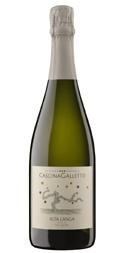
Cascina Galletto Santo Stefano Belbo (CN)
Pas Dosé ‘21 offers beautiful complexity and finesse on the nose, with floral and citrus notes enriched by hints of green tea and balsamic bursts of mint. The palate is creamy, thanks to fine, persistent bubbles that are not lacking in vigour. The finish plays on mineral and savoury notes that intersect with citrus accents and balsamic puffs.
93
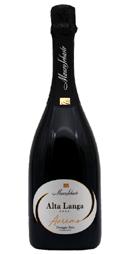
>Alta Langa Extra Brut Avremo ’21
Mauro Sebaste Alba (CN)
Avremo ‘21 opens on the nose with aromas of fresh citrus, crisp green apple, hints of hazelnut and toasted notes including yeast. On the palate it has a slender structure, thanks to a vibrant acidity and a persistent sapidity that lengthens the sip, giving balance and a decisive mouthfeel that closes with mineral notes and hints of fruit.
>Alta Langa Pas Dosé Rosé de Noirs 2020 93
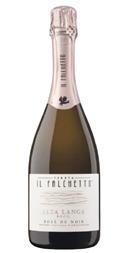
Tenuta il Falchetto Santo Stefano Belbo (CN)
The Forno brothers grow traditional and international grape varieties such as Chardonnay and Pinot Noir, the latter used for Alta Langa. The Rosé de Noirs 2020 has a pleasant, pulpy and dark mouthfeel, with aromas of ripe currants that give it good depth. The finish reveals a toasted hint and an almond sensation.
93
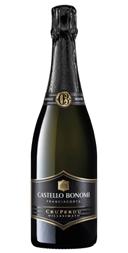
>Franciacorta Brut CruPerdu ’20
Castello Bonomi
Coccaglio (BS)
Castello Bonomi is located at the foot of Monte Orfano, in the municipality of Coccaglio, and has 32 hectares of vineyards enclosed by an ancient dry stone wall, reminiscent of a château beyond the Alps. Cruperdu ‘20 is characterised by a nose of yellow fruit and spices. It continues with an articulate and elegant palate and a very long finish.
93
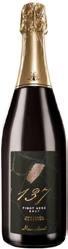
>137 Pinot Nero Brut M. Cl. ’20
Manuelina Santa Maria della Versa (PV)
The vines of vineyard no. 137 grow on suitable soil in the Santa Maria della Versa area. This Metodo Classico, made exclusively from Pinot Noir grapes, offers aromas of bread crust and ripe fruit, with hints of pear and sweet almond. On the palate, it is creamy and savoury, with a well-integrated structure and good persistence.
93
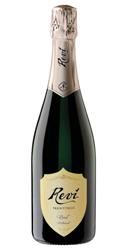
>Trento Brut 21
Revì Aldeno (TN)
The Brut ‘21, a blend of Chardonnay (80%) and Pinot Noir (20%), after 33 months on the lees, is very drinkable thanks to its delicate and persistent bubbles characterised by a lively overall freshness. It has intact fruit and a good balance between acidity and a touch of softness, with a pleasantly savoury finish.
93
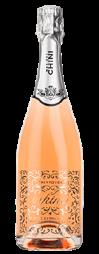
>Trento
Extra Brut Rosé Inkino ’21
Mas dei Chini Trento (TN)
The range of wines produced focuses on quality, with a particular emphasis on Trento sparkling wines. Among these, Rosé Inkino ‘21 has a fresh and subtle taste, characterised by elegance and salty notes. It has a raspberry aroma with mineral nuances and a finish consistent with the nose and good persistence.
>Trento Extra Brut 907 Ris. 2019 92
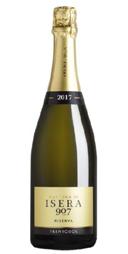
Cantina d’Isera Isera (TN)
A historic social enterprise founded in 1907, today managing around 200 hectares composed of over 150 members. This Riserva 907 stands out among the Trentodoc wines produced. It has a buttery mouthfeel, with hints of freshly baked bread, complemented by citrus and white peach notes. It finishes savoury, with slightly toasted and mineral nuances.
>Franciacorta Brut Casa delle Colonne Ris. 2015 92
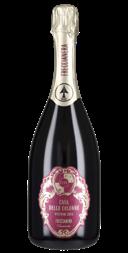
Freccianera - F.lli Berlucchi
Corte Franca (BS)
In the sixteenth-century Casa delle Colonne, Pia
Donata Berlucchi and her daughter Tilli run the family business. The Brut ‘15, named after the house, is creamy and vanilla-flavoured, fresh, savoury and elegant, harmonious and well-rounded overall. Creamy, vanilla-flavoured, fresh, fruity, savoury, elegant, harmonious, fresh, fruity, fine pulp, slightly sweet.
92
>Franciacorta Brut Essence 2020
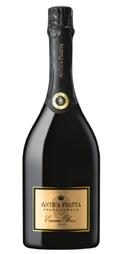
Antica Fratta Monticelli Brusati (BS) Franco Ziliani’s project, which began in 1979 in parallel with Berlucchi’s, perfectly represents the terroir of Monticelli Brusati. This is demonstrated by Essence Brut ‘20, with its complex nose of spices and ripe citrus fruits. The palate has a very fine perlage, accompanied by excellent minerality, depth and a clean finish.
>Alta Langa Pas Dosé Seicento 2020 92
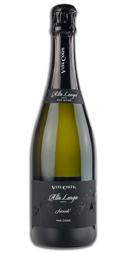
Vite Colte Barolo (CN)
Vite Colte is a cooperative winery founded in 1980, which today brings together 180 members and 300 hectares of vineyards working in unison in the name of quality. Alta Langa Pas Dosé Seicento ‘20, with notes of white flowers and plum with mineral and smoky nuances, has a palate that stands out for its fullness and a long, classy finish.
92
92
>Franciacorta
Pas Dosé ‘21
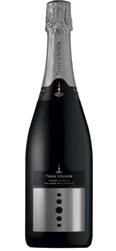
Terre d’Aenòr
Provaglio d’Iseo (BS)
Eleonora Bianchi passionately tends to approximately 45 hectares of vineyards, divided into over 20 plots in the heart of Franciacorta. Her Pas Dosé Millesimato 2021 best expresses the structure and depth of Pinot Noir, offering a tense, elegant and savoury sip, capable of combining character, precision and absolute finesse
>OP Pinot Nero M. Cl. Brut Io per Te 92
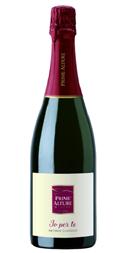
Prime Alture Casteggio (PV)
Io per Te already performed well in our tastings last year, but this year it is even better: it is a Classic Method Brut with personality, with a rich and ample bouquet that smells of pastries, star anise, aromatic herbs and small fruits, together with a full and dynamic sip that leads to a long finish.
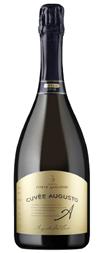
>Lessini Durello Brut Cuvée Augusto 10-10 Ris. 2013
Dal Cero Roncà (VR)
The roots of viticulture here are deeply embedded in a soil made up of expertise, hard work and tradition, but also foresight. This 2013 Cuvée stands out for its layered aromas, with notes of ripe fruit, candied citrus and spices. On the palate, it reveals a solid structure that combines power, balance and a long finish.
>OP Pinot Nero M. Cl. Pas Dosé I Ger 91
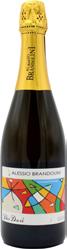
Alessio Brandolini San Damiano al Colle (PV)
The hills of the Oltrepò Pavese area are particularly suited to Pinot Noir vines, which are grown with rigour and respect by oenologist Alessio Brandolini. “I Ger” offers aromas of red fruit, spices and a hint of bread crust on the nose. On the palate, it has a sharp structure and a persistence that invites a second sip.
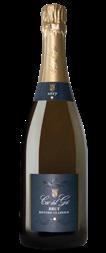
Ca’ del Gè
Montalto Pavese (PV)
The vineyards of Ca’ del Gè lie on the steep slopes of Oltrepò Pavese. This Pinot Noir on the nose shows off notes of ripe red fruit, candied citrus peel and a delicate toasted aroma. On the palate, it surprises with its agile yet solid structure, vibrant acidity and a long, savoury, fresh and deep finish.
>OP Pinot Nero M. Cl. Brut ‘18 91 91
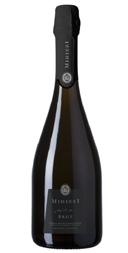
>Verdicchio dei C. di Jesi Extra Brut M. Cl. '68 Anno di Fondazione ’21
Montecappone - Mirizzi Jesi (AN)
From the Mirizzi family’s Montecappone winery, the Metodo Classico dedicated to the year the winery was founded in its 2021 version is a surprising sparkling wine: fully varietal on the nose, it offers a sip free of acidic edges and vegetal tones. The palate is flavourful and tasty, with well-integrated carbonation and a long, salty finish.
91
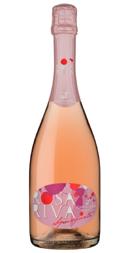
>Trento Brut Rosé Brezza Riva 2021
Cantina di Riva
Riva del Garda (TN)
The Alto Garda winery, founded in 1957 but only incorporated as a cooperative in the 2000s, now has around 300 members. Brezza Riva Rosé is a delicious, well-made sparkling wine with a vibrant and lively taste, with undertones of floral notes and crisp fruit, including pomegranate, raspberry and redcurrant.
91
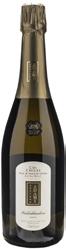
>Valdobbiadene Rive di Farra di Soligo Extra Brut Col Credas ’24
Adami Vidor (TV)
The vineyards are located in the heart of the appellation, with some of the most beautiful exposures in the entire area, such as in Farra di Soligo. Col Credas ‘24 already shows clarity and integrity on the nose. It smells of acacia and white fruit. The palate offers tension and savouriness for a smooth sip with good length.
>Cartizze 90
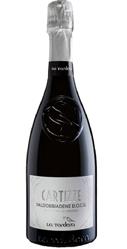
La Tordera Vidor (TV)
The winery was founded in the early 2000s, but the Vettoretti family’s connection to viticulture dates back to the postwar period. Cartizze ‘24 is made from vines planted by their great-grandfather, which today produce fruit of excellent quality. The aromas range from golden apple to flowers, while the palate is well balanced between fruit sweetness and acidity.
91
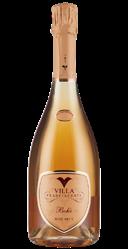
>Franciacorta Brut Rosé Bokè ‘21
Villa Franciacorta Monticelli Brusati (BS)
The winery founded by Alessandro Bianchi is now run by his daughter Roberta and her husband Paolo Pizziol. The 2021 Rosé Boké perfectly blends a complex bouquet with aromas of vanilla and red fruit. The palate continues with tension, richness and savouriness, resulting in a wine with energy and a clean finish.
>Valdobbiadene Rive di Refrontolo Extra Brut 90
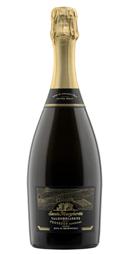
Santa Margherita Fossalta di Portogruaro (VE)
The Marzotto family’s involvement in the world of wine began with Santa Margherita and from there spread throughout the peninsula. On the sparkling wine front, Rive di Refrontolo ‘24 is a compelling Extra Brut with delicate aromas of white fruit that reverberate on the palate with a dry finish and exquisite harmony.
90
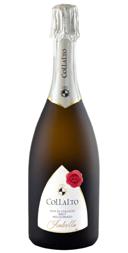
>Conegliano Valdobbiadene Rive di Collalto Brut Isabella ‘24
Conte Collalto Susegana (TV)
The ever-present Glera grape variety dominates the estate’s vineyards, but it is alternated with Bordeaux varieties and, above all, with the hybrids created by Professor Manzoni. Isabella ‘24 has a floral and fruity nose, with a joyful and fresh palate, endowed with good dynamism. The finish is clean and persistent, returning to the sensations of ripe fruit.
90
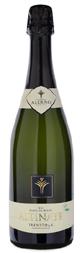
>Trento Brut Esclusivi Altinate ’20
Cantina di Aldeno Aldeno (TN)
Located on the right bank of the Adige River, this cooperative winery has evolved technologically over time while maintaining a traditional approach. Altinate ‘20 is a well-balanced sparkling wine, with notes of toasted bread mixed with juicy yellow fruits. On the palate, it offers a beautiful verticality, freshness and momentum.

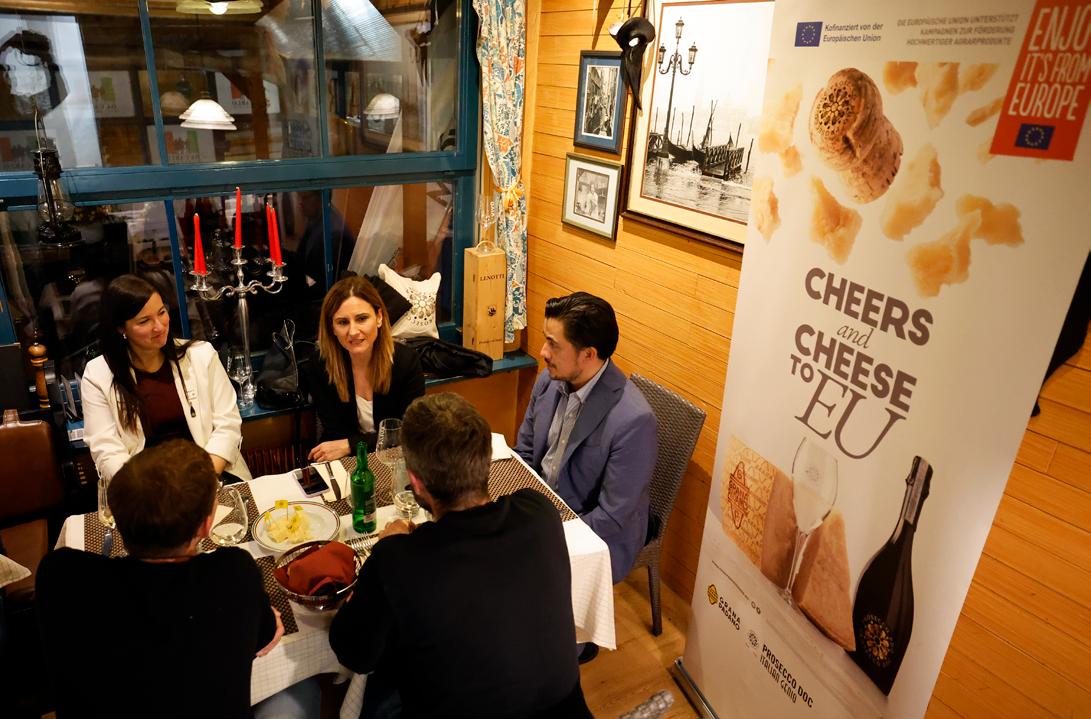
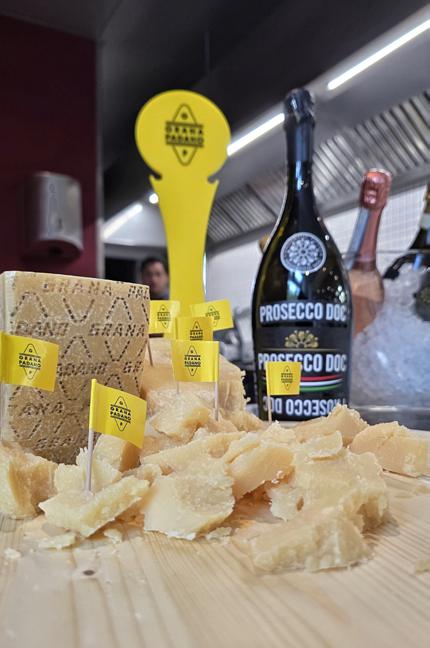
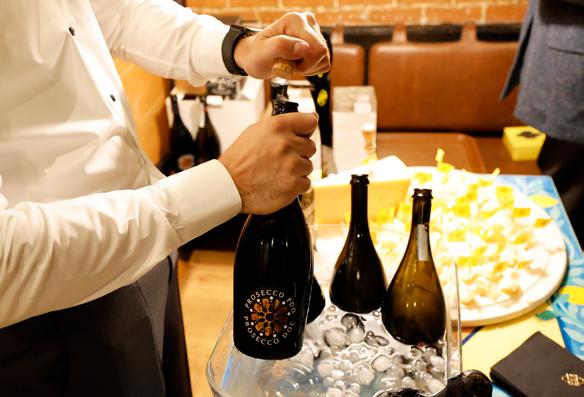
Wine and cheese-making are worlds that are only apparently distant, and when they come together they are able to create surprising harmony. This insight gave rise to the Cheers & Cheese to EU project, dedicated to celebrating two designations of excellence, Grana Padano PDO and Prosecco DOC, by narrating their history, culture and value.
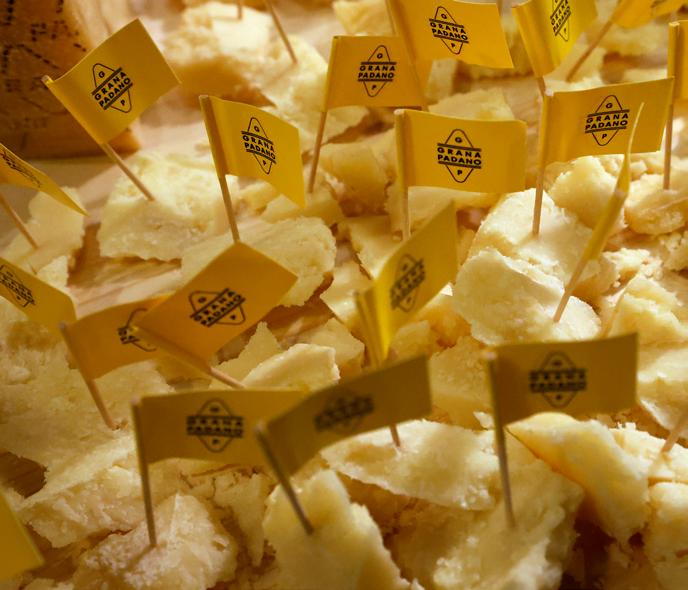
Grana Padano PDO speaks of rural landscapes, a thousand-year-old tradition and a slow pace of life, measured by the patience of the ageing process. Prosecco DOC, with its fresh and light bubbles, evokes conviviality and spontaneity. Together, these
two products become a ritual to be shared, a sensory experience that engages sight, taste and smell through natural and harmonious dialogue. The project was created with the aim of raising awareness and appreciation of these Italian icons by describing the quality, authenticity and the rigorous production methods that characterise them. Tastings, masterclasses and initiatives in restaurants thus become opportunities to discover what lies behind every flavour and every sip, inviting the public to embark on a cultural as well as gastronomic journey. The approach was experiential: not mere technical information, but a sensory journey in which aromas, textures and flavours are interwoven, allowing Grana Padano PDO and Prosecco DOC to express themselves through tastings and suggestions.
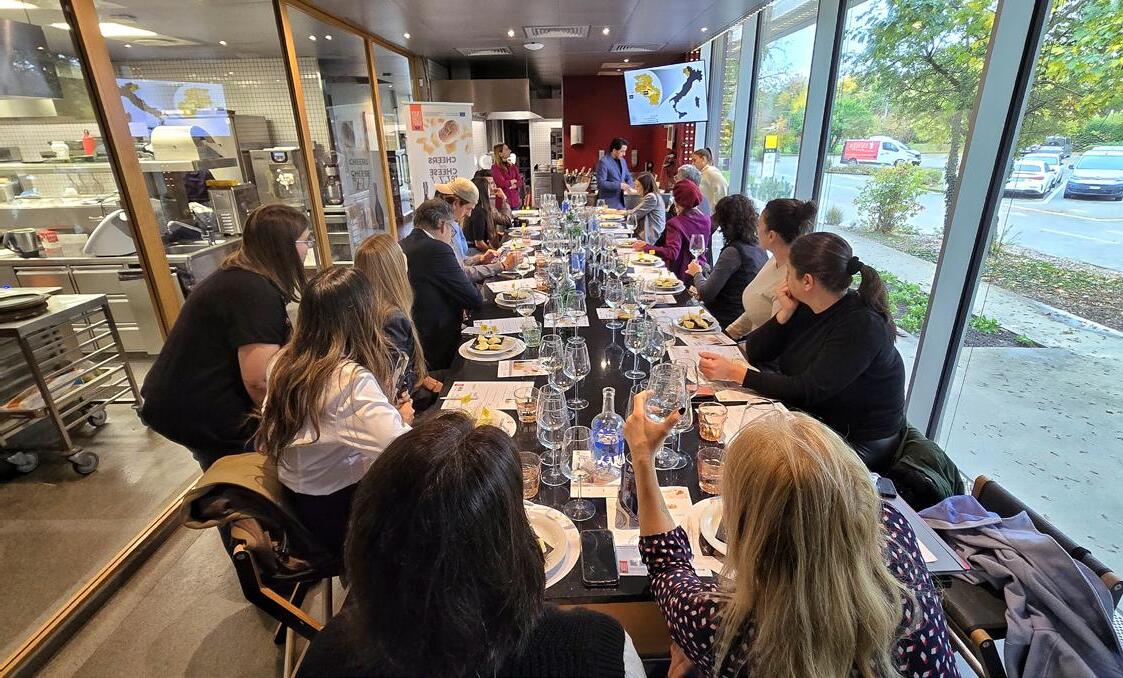
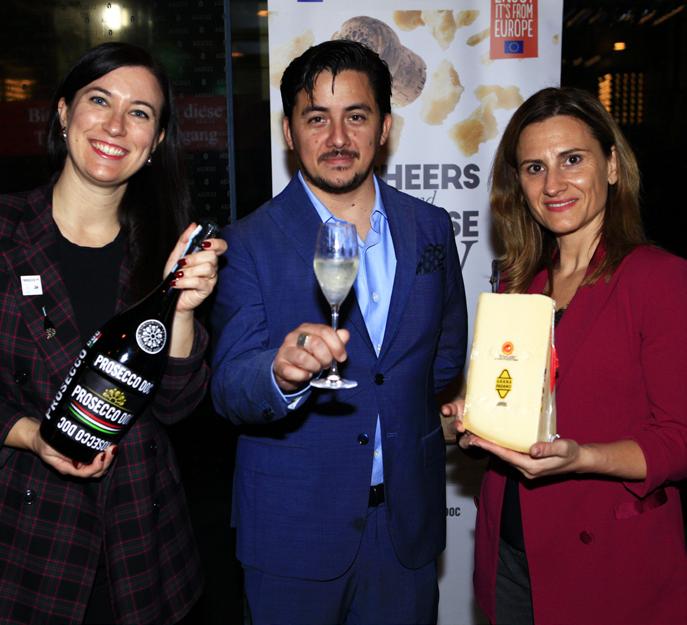
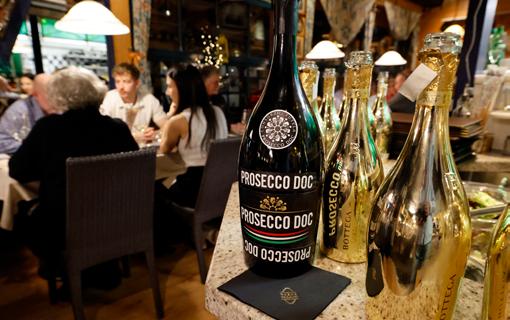
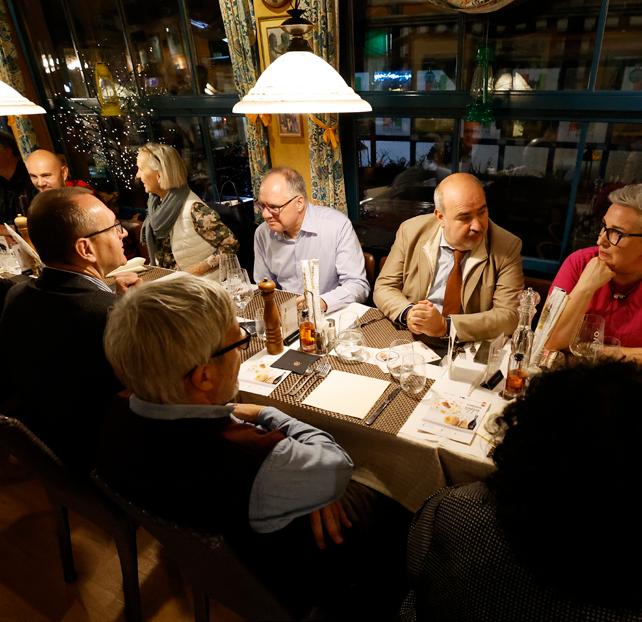
The project took shape in some of the best restaurants in Switzerland. In Zurich, the evening at Luigia restaurant, where Arianna Pizzolato, representative of Next Generation PRO for Prosecco, and Ilenia Martinotti, from the Grana Padano Consortium, together with Marzio Taccetti from Gambero Rosso, accompanied guests on a journey of discovery of the characteristics of the two products through a menu designed to showcase their flavours and potential.
Dishes such as courgette flan with 18-month Grana Padano DOP fondue accompanied by Prosecco DOC Extra Dry 2024 Anna Spinato, or fettuccine Alfredo with 24-month Grana Padano DOP Riserva paired with Prosecco DOC Biologico Brut 2024 Anna Spinato, guided guests on a journey that was as tasty as it was educational.
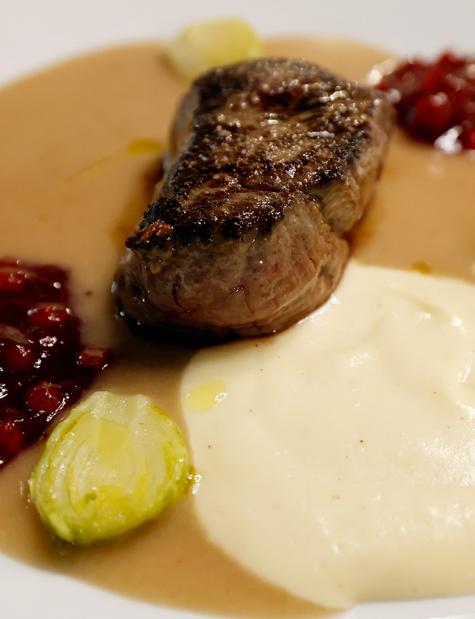
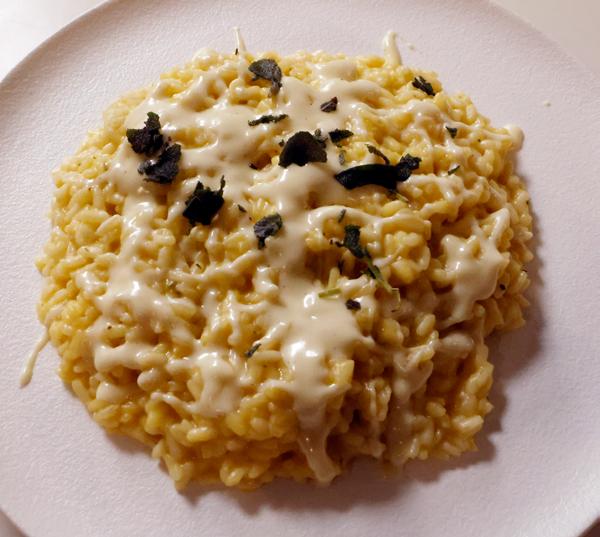
The journey continued in Bern , at Da Carlo restaurant, where a specially designed dinner offered combinations that enhanced the nuances of the two products, from the aroma of porcini mushrooms with 12-month Grana Padano PDO fondue and truffles, to the creaminess of pumpkin risotto with crispy sage, to the complexity of venison fillet
with blackcurrant sauce, all paired to Prosecco DOC Brut 2024 Bottega Gold.
The project then continued with the Restaurant Weeks : two weeks entirely dedicated to special menus designed and developed to showcase the two products. It was a valuable opportunity for a wider audience, who was able to experience the richness of these pairings first-hand and discover how versatile and complementary Grana Padano PDO and Prosecco DOC can be.
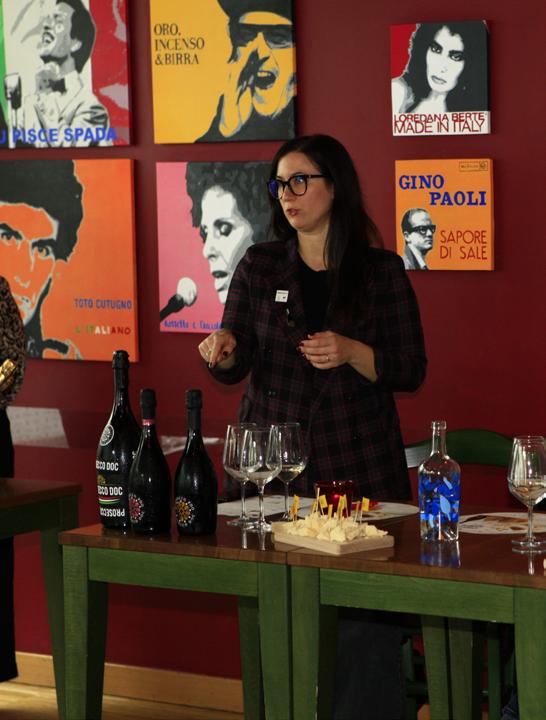
In parallel with the dinners, masterclasses were held in Zurich and Meyrin, at Luigia restaurant and Luigia Academy, led by Marzio Taccetti, editorial coordinator of Gambero Rosso’s Vini d’Italia guide. Journalists, influencers and enthusiasts were able to learn more about the production regulations, taste characteristics and possible uses of Grana Padano PDO and Prosecco DOC, enjoying an engaging and comprehensive educational experience.
Cheers & Cheese to EU thus becomes a journey of gastronomic and cultural discovery that places Switzerland at the centre of a story of excellence, offering a concrete insight into the supply chain and the endless possibilities for using two products that symbolise our food heritage.


Website: www.cheersandcheese.eu
Social Media channels:
Instagram:
@cheersandcheese.ch @granapadanode @proseccodoc_de
Facebook:
Cheers & Cheese CH
Prosecco DOC
Grana Padano
by Marco Sabellico
Three highly successful, content-rich events - packed with guests - proved pivotal in consolidating the presence of quality Italian wine in markets that are strategic for our exports.
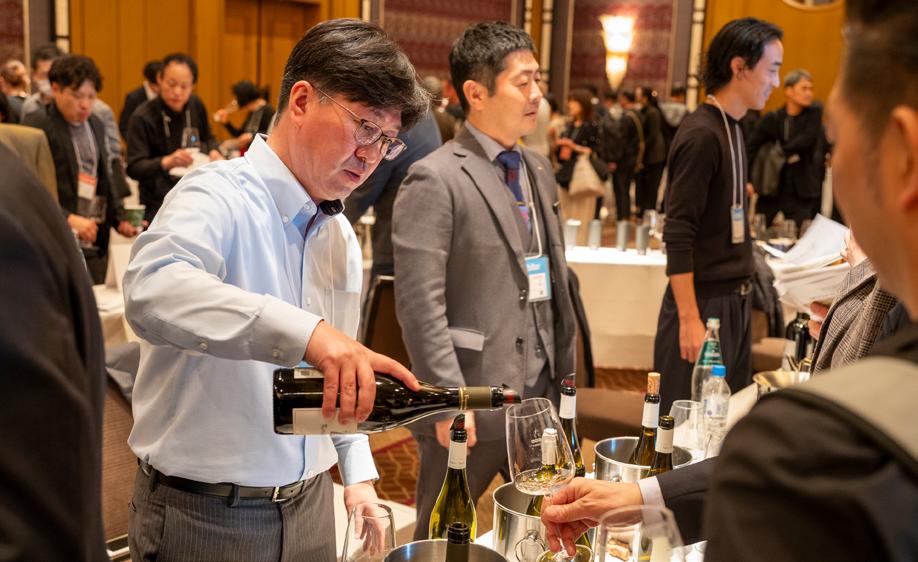
The tour kicked off in Tokyo on October 28 with Tre Bicchieri. At the iconic Ritz-Carlton in the Midtown Tower, right in the heart of Akasaka and buzzing for the occasion, producers met trade professionals, restaurateurs, the press, and, of course, enthusiasts. “Japan is one of the pillars of our wine exports in Asia,” said Anna Iele, head of the Agriculture sector at the Italian Embassy. “It’s a mature market that values quality. The weak
yen against the euro isn’t helping, but there’s always strong attention to Made in Italy here. Italian wine is gaining space on wine lists, thanks in part to a high-caliber and steadily growing Italian dining scene.” Our impressions - reinforced by visits to restaurants and wine shops - are that while volumes are holding steady, sparkling wines (starting with Prosecco DOC and DOCG Superiore), buoyed by a strong showing of Metodo Classico (with Franciacorta a household name, and growing openness to other areas from Alta Langa and Oltrepò to TrentoDoc), along with the super-premium segment, are enjoying a reassuring - if not spectacular - uptick. In short, for entry-level wines
there are fierce competitors such as Chile, Argentina, and Spain. But the allure of our top wines is undisputed.
We asked Master of Wine Kenichi Ohashi - who recently opened a superb wine shop, Intertwine, with his friend Motohiro Okoshi, an internationally renowned sommelier, and has begun importing directly - about current trends. “We offer over 1,000 labels from around the world, but Italy accounts for more than 20%, and that share is growing. I visit your country constantly. Right now it’s the most fascinating and dynamic wine land… We don’t just sell wine and sake - we share the culture of wine
and food. We guide guests through pairings, help them build a cellar, and keep their investment bottles in climate-controlled storage. Barolo, Brunello di Montalcino, and Amarone are beloved names here in Japan, but all great Italian wines are born to accompany cuisine - and that’s our mission: education in taste.”
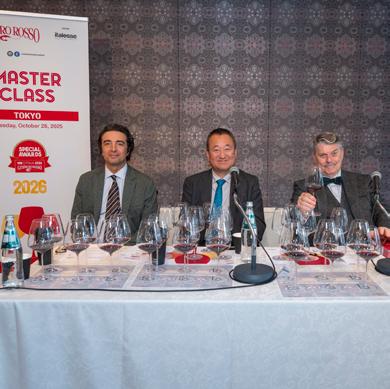
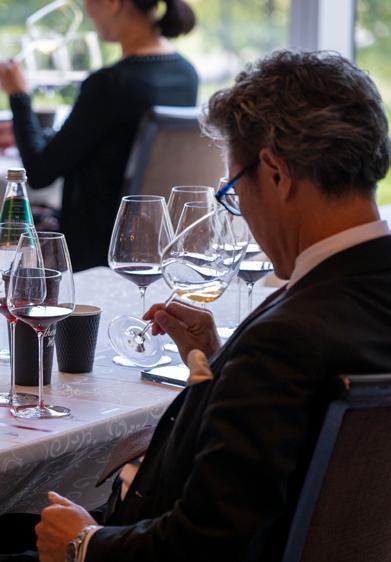
The day saw a steady flow of visitors from 11 a.m. to 6 p.m. The masterclasses led by Marco Sabellico and Isao Miyajima were, as always, sold out. “The tasting of the Special Awards in particular,” noted Isao, “is always eagerly awaited, and every year it manages to surprise with the
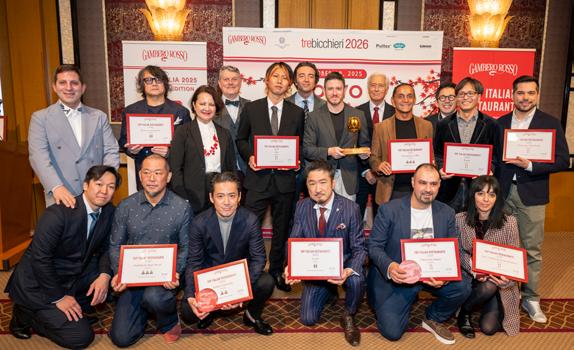
Italian dining in Japan continues its steady ascent, and the Award Ceremony for the Top Italian Restaurants in the World guide, which opened the day, told the story. Starting with Pizzerias: alongside Il Tamburello by Yoshihisa Otsubo (Two Slices), we have two Three Slices winners - the Pizza Bar on 38th at the Mandarin Oriental, helmed by Daniele Cason, and still at the summit Napoli sta’ ca’’ by Peppe Errichiello. In the Wine Bar category, Two Bottles went to the richly stocked Enoteca Implicito, where Satoshi Matsunaga showcases the best of Italian enology and beyond. The restaurant scene is vibrant and garnered numerous accolades. Many Japanese chefs now gain experience in Italy and return home to open their own places in Tokyo and beyond. One Fork went to Al Ceppo by Masahiro Imai, Aurelio by Yosuke Omoto, and Da Pepi by Ippei Nonaka, while Two Forks were awarded to Gucci Osteria by Massimo Bottura, led by Raffaella De Vita; to Faro by Hamamoto Hiroaky; and to Etruschi by Takashi Iwaki. The roll call continued with Trattoria dai Paesani by Davide Fabiano, while Il Ristorante - Niko Romito, led by Mauro Aloisio, in addition to earning Two Forks, also took home the coveted Best Italian Wine List by ITALESSE, which also sponsors our tours.
Two Forks, finally, to Nino Lentini, chef and owner of Da Nino - further confirmation that Japan’s gastronomic landscape is increasingly “tricolore.” “It’s a long-standing love,” confirms Keisuke Kuroda, owner of Kurodino in Ginza, “and it doesn’t fade with time - on the contrary, it grows. At the request of my clients I’ve begun importing Italian wine myself. It will be reserved for club members: aficionados who love great wines, want a well-curated cellar, and perhaps inspiration for a food-and-wine journey through the Bel Paese. One must constantly reinvent oneself - but quality remains at the center.”
Sponsors of the day were, beside ITALESSE wine tasting glasses, Pulltex Wine Accessories and the excellent mineral water Smeraldina from Sardinia.
guide’s spot-on - and often unexpected - choices.” No less impressive was the prestigious vertical tasting of Amarone Riserva Bosan by Cesari, with general manager Giovanni Lai also in attendance. “An audience this
attentive and passionate deserves our utmost care, and Japan is a market we’re delighted to invest in,” he remarked. The lineup was excellent, with six vintages from the current 2016 back to the outstanding 2000.
by Marco Sabellico
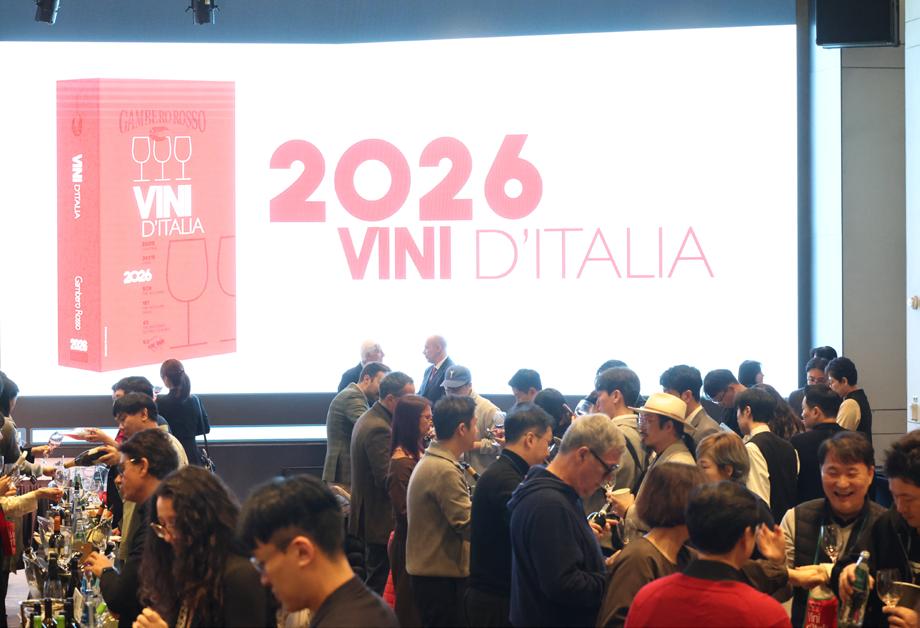
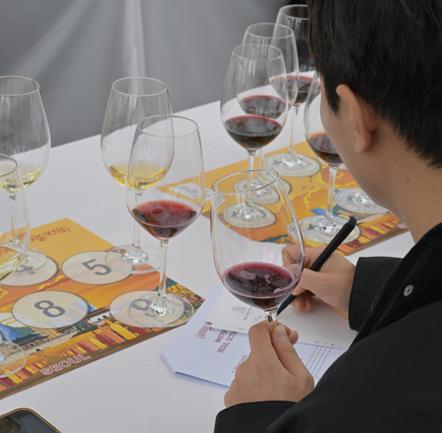
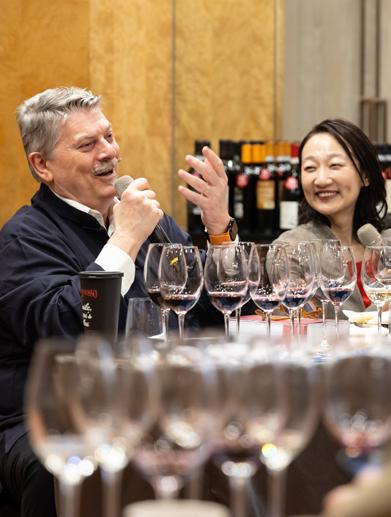
On October 30, Gambero Rosso and the Italian producers of the Top Italian Wines Roadshow welcomed enthusiasts and trade professionals to the halls of the Ambassador Pullman Hotel. The day began bright and early with the first of three Masterclasses at 10 a.m., tastings once again led by Marco Sabellico with the collaboration of Mi Yeun Hong, editor-in-chief of Wine21.com - Gambero Rosso’s partner again this year, marking the twelfth time in Korea. “It’s an important event for wine
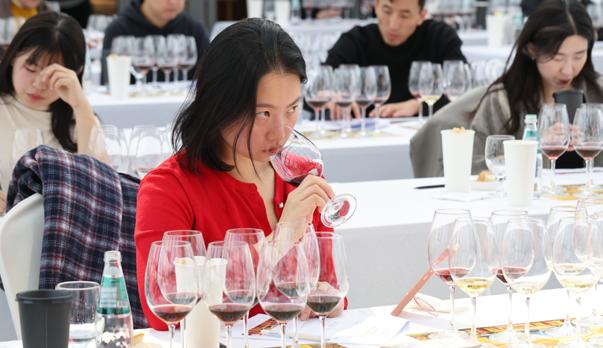
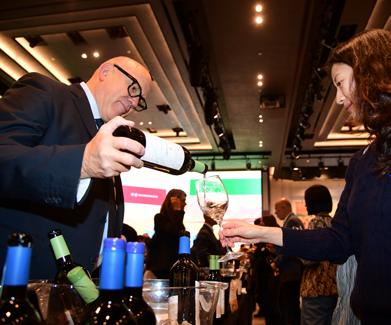
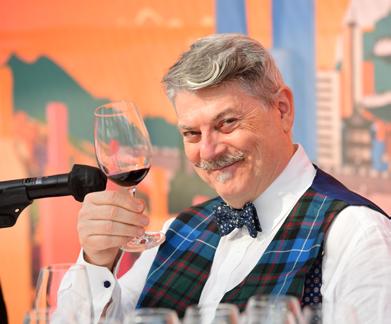
lovers,” Mi told us, “with people coming in from across the country. Italian wine and cuisine keep growing. We love Italy for its beauty, its art, music, fashion - and food and wine are the quintessence of Made in Italy.”
Those themes were echoed by the Italian Ambassador - speaking flawless Korean - in a much-applauded opening address. “The cultural and economic ties between our countries are stronger than ever, and the embassy promotes a rich annual program of meetings and cultural events that is delivering excellent results, with more to come.” Among the clearest signs: the rising success of Italian cuisine, with a wave of new Italian-inspired restaurants, pizzerias, and wine bars.
We close with a chat with our friend and colleague Jay Lee - “WineKing” on social media - tirelessly promoting wine culture across platforms
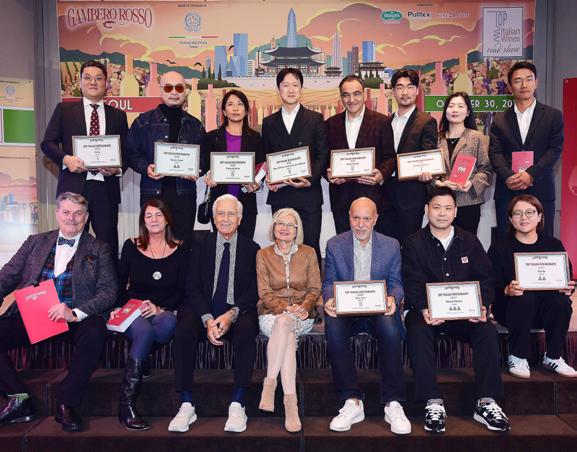
At the Top Italian Restaurants in the World Award Ceremony, nine venues were honored. Starting with the pizzerias: Due Spicchi went to Spacca Napoli by Giulio Lee and to Panello by Yung Seong Won, while the pizza at Marione, by Mario Kim in the fashionable Seoul Forest district, remains stratospherically good. Our latest visit confirms it: a true standout, among the very best (strictly Neapolitan!) in Asia. Three richly deserved Spicchi.
Among restaurants, Una Forchetta was awarded to Rialto by Hyang Hyun Lee and to Trattoria Romagna by “Claudio” Choi. Due Forchette recognized Borgo Hannam (a new entry) by Stefano Di Salvo, Ciuri Ciuri by Enrico Olivieri, chef Paolo De Maria’s eponymous restaurant, and Gucci Osteria Seoul led by the brilliant Hyunkyu Jun. These quality names prove you don’t have to be Italian to craft an outstanding pizza or perfectly executed Italian dishes. Study, travel, passion, and hard work are rewarding Korea’s talented chefs, too.
and beyond. “Prosecco DOC is spearheading the rise of Italian wine, which now ranks just behind French by value and volume - but it’s catching up fast. Young people travel, and they bring back a love for sparkling wines (Asti included) and white wines that were somewhat underrepresented here. Italian wine is delicious; it’s a world of terroirs, grapes, styles, and labels. There’s always a perfect Italian bottlesparkling or still, drier or softer, classic or skin-contact, leaner or fuller - for every dish, whether Korean, Italian, or international. In short, ‘Italy’ tastes good - on the plate and in the glass. And we want more.”
The Roadshow hits Taipei, the capital of the “Asian Little Dragon”.
A roaring economy fueled by microchips is driving a vibrant gastronomic scene where Italy has a place
by Marco Sabellico
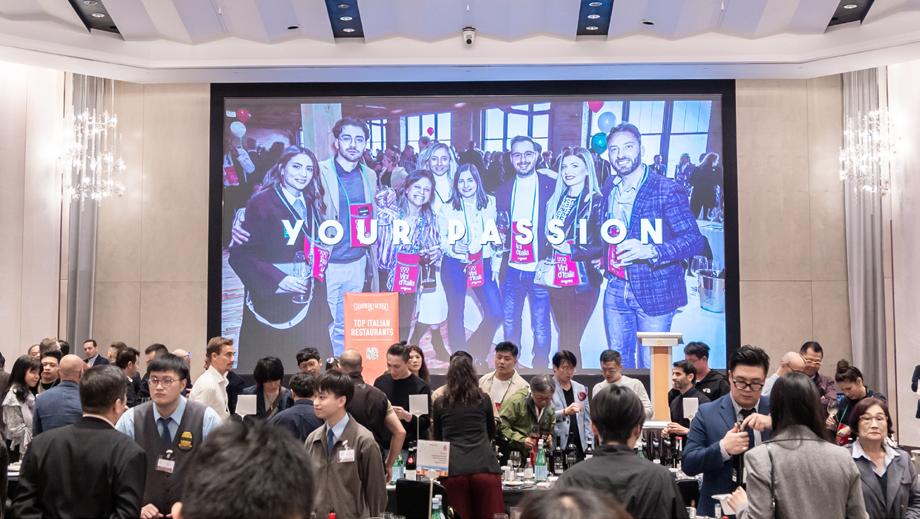
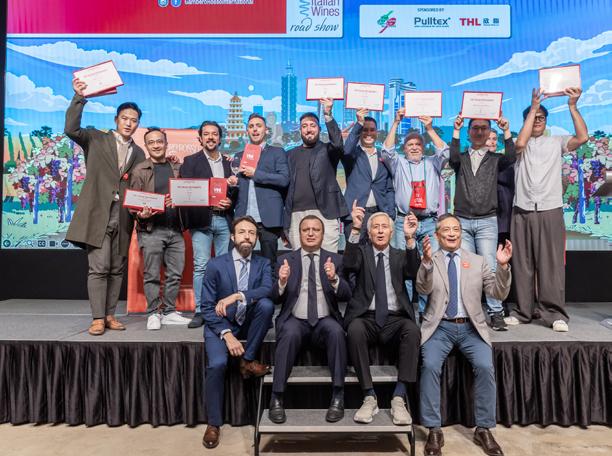
On November 3, after several years away - our last visit was before the pandemic - we returned to Taiwan, one of the most dynamic countries in the Far East, a region that never fails to fascinate us. Ten years had passed since our first trip. Expectations were sky-high for the arrival of the Top Italian Wine Roadshow, and judging by the extraordinary turnout from 2 p.m. to 6 p.m., Taipei’s Shangri-La Far Eastern Plaza was thronged with guests who certainly weren’t disappointed.
In recent years - something we sensed the moment we arrived, gazing at a skyline newly studded with skyscrapers - the country has climbed the global economic rankings. Today, Taiwan is the 13th richest country in the world by per capita GDP (for context, Italy ranks 30th), and the third in Asia after Singapore, the region’s financial capital, and Macao, China’s special administrative region and gaming mecca. Taiwan’s is a roaring economy, driven by world-class industries in microprocessors and computers, among others. It is solid
prosperity, despite the island’s modest size - just a touch larger than Sicilywith a population of over 23 million.
“Wine culture is growing in Taiwan,” says Xiaowen Huang, journalist and wine writer who knows Italian wine intimately - she’s the author of several successful books on the subject - and who joined Marco Sabellico to lead the event’s three packed masterclasses. “After strong expansion in recent years, in 2024 and the first half of 2025 we’ve seen demand cool somewhat. But imports of Italian wine
have grown in volume and now trail only France, which leads the rankings, with Spain level. That means more and more Italian corks are popping in Taiwan. Even though as many international wine lovers don’t get where exactly the Italian wine geography, I’d say the diversity and curiosity for Italian region and grapes are helpful and intriguing. And sparkling wines are now the aperitif par excellence, with Prosecco front and center. You Italians have an ace up your sleeve: Italian dining is booming here, from pizzerias to fine dining.
That means bringing more and more consumers into the Italian way of life, where wine is essential at the table. International political uncertainty over the past year hasn’t helped, but consumption has been picking up again in recent months, with new restaurant openings - reasons to be optimistic. We Taiwanese love to travel, and we bring home habits and flavors from our journeys. Wine is becoming important here, as extra-virgin olive oil will, too. It’s part of that ‘Made in Italy’ idea - a lifestyle we’re learning to love.”
Those ideas were echoed by Marco Lombardi, Head of the Italian Office for Economic, Commercial and Cultural Promotion (effectively Italy’s ambassador, as there is no formal embassy), during the opening ceremony in the Grand Ballroom of the Shangri-La. “Our countries share strong economic, but also cultural, ties. Italian gastronomy and wine are beloved, true ambassadors of our culture. Events like today’s are essential to strengthen these bonds and to promote Italy’s System in Taiwan, which is already a powerful trade partner for us - and will be even more so in the future.” Lombardi then presided over the Award Ceremony for the Top Italian Restaurants in the World guide, which bestowed a handsome array of honors.
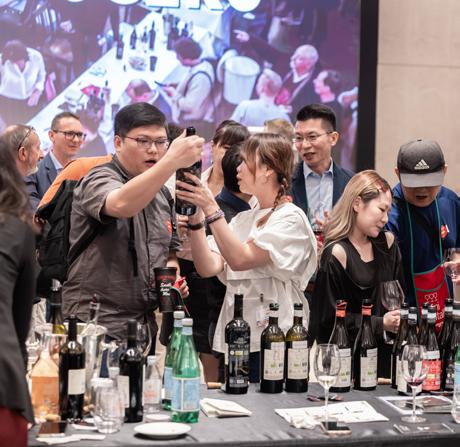
“When I arrived here in 1999,” recalls Giorgio Trevisan from Soave, patron of La Botega del Vin, “there were no other restaurants. Today we’re a small colony, about a thousand Italians - and many came here for the restaurant business. It’s a beautiful country; life is good here. I came for an experience and never left… Today my son Andrea is alongside me, running La Cantina di Gio, a breezy, fashion-forward spot that’s flying high. And I import and distribute wines and Italian specialty foods.”
Among pizzerias, Antico Forno by Augustin Wu and Salto by Rocco e Giovanni each earned one Spicchio, while Due Bottiglie went to Piccola Enoteca by Boris Wong. Among restaurants, one Forchetta was awarded to La Botega del Vin, Divino by Enrico Negrini, Reale Cucina Italiana, and La Mole by Simone Bussone. Two Forchette, finally, went to Frassi by Jacopo Frassi, a talented Tuscan chef offering refined fine dining built on farm-to-table ingredients - yet another confirmation of Taiwan’s dynamic food-and-wine scene, where Italy counts more and more and must be ever more actively represented. It was a nice wine-day in Food Lover’s Paradise!
Event sponsors: Pulltex; the Week of Italian Cuisine in the World; and THL, Taiwan Hsin Lin, importer and distributor of specialty foods from around the globe.
by Marco Sabellico
Three pivotal stops for Italian wine producers engaging with a market of 1.4 billion consumers - an unavoidable reality for an export-driven country like Italy. China is a powerhouse economy, the world’s second-largest after the United States, with a middle class of 400 million people poised to double, or nearly so, over the next decade. Most live in major cities, and many are only now beginning to discover the world of wine.
In China, the Tour touched down in Hong Kong on 5 November with a preview of the award-winning wines featured in the 2026 edition of Gambero Rosso’s
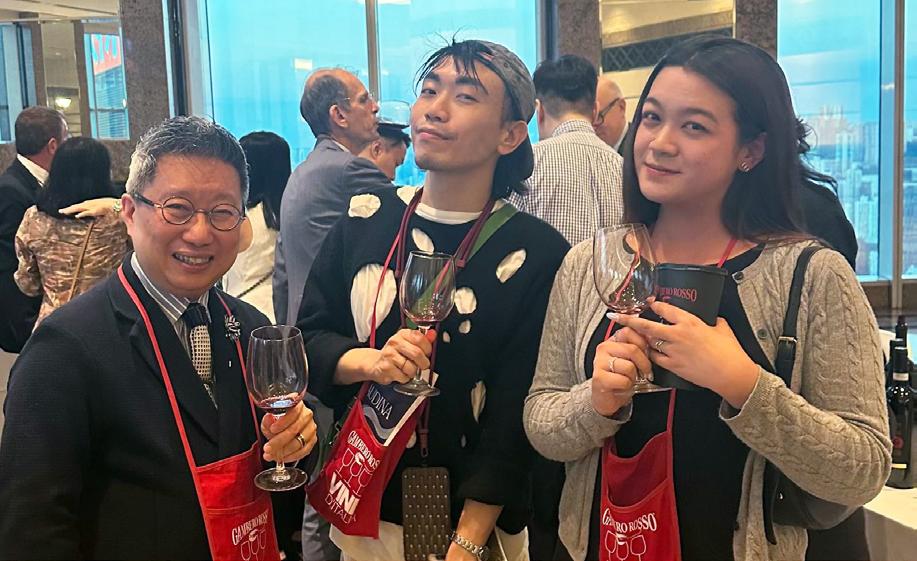
Vini d’Italia guide. The event unfolded in the atmospheric Sky Lobby on the 46th floor of Central Plaza in Wan Chai, the triangular skyscraper that ranks among the tallest on the city’s skyline. From here, the 360-degree view sweeps from Victoria Harbour across Hong Kong Island to the Kowloon Peninsula. From 2 pm to 8 pm, a steady stream of enthusiasts and trade professionals animated the producers’ stations. In the presence of Italy’s Consul General, Carmelo Ficarra, we hosted the awards ceremony for the Top Italian Restaurants in the World guide - no surprise in a city that boasts one of the highest concentrations of Italian restaurants in all of Asia.
Hong Kong today is in full transformation. If it has shed part of its old Anglo-colonial allure, the strong influx of new residents from mainland China is giving it a fresh and distinctive identity. You can see it in wine consumption too: collector auctions have thinned out, but corks are popping and glasses are being emptied in abundance. Consumption is more dynamic, with Gen Z and the expat community making their presence felt - less bound to the stereotypes of the grand classics and “much more curious and adventurous than in the past,” as our young colleague Vingi Ku of Taste Magazine tells us.
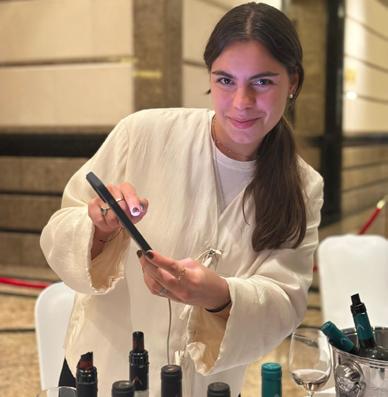
“Today more people are drinking, but they want to make their own discoveries - new regions, new grape varieties. And Italy has so much to offer with its richness and diversity. Today, for instance, I tasted a wine I didn’t know - Sussumaniello from Puglia - and I liked it a lot. I’ll buy it and bring it to the tastings we organize with friends. A great find!”
“It’s not easy doing business in Hong Kong; operating costs are sky-high,” says Emanuele Berselli, the author of the award-winning wine lists for Giandomenico Caprioli’s ‘Giando’ venues - now a major group with four restaurants and five specialty and wine shops, the ‘Mercato di Giando’. “But we import and distribute high-quality Italian products, which we supply to other Italian restaurants as well as consumers. Our quality-first strategy pays off, and we’re growing. We’re now direct importers of wine, too.”
“It’s a dynamic, fast-evolving landscape,” adds Enoch Won of Gourmet Lifestyle, “and while the past few years - pandemic, crises, political tensionshaven’t been easy, the mood is one of real openness, attention, and passion for this world. Fewer stuffy experts, many more enthusiasts without preconceptions. That’s today’s Hong Kong, where wine and cocktails are a social catalyst, a spark for conversation rather than the subject of learned lectures for specialists. And let’s not forget the Chinese wine scene, which is on the rise and turning out quality products. In this context, Italy projects an irresistible image of diversity and excellence that truly captivates.”
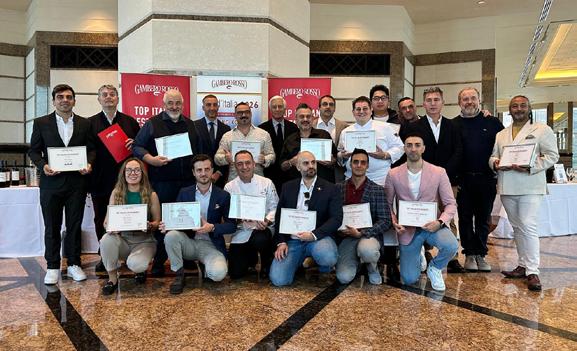
The Award Ceremony of Top Italian Restaurants in the World confirms it. Few cities on earth can match Hong Kong’s wealth of great Italian tables. The list of honorees is long and illustrious. Let’s start with Pizzerias: Uno Spicchio to Casa Don Alfonso in Macau; Due Spicchi to Little Napoli by Gavino Pilo and Jude Morales; and a full Tre Spicchi to Salvatore Fiata’s Fiata Pizza - one of the finest Neapolitan pies anywhere. Tre Coppe go to the phenomenal Bar Leone by the Roman talent Lorenzo Antinori, who has brought the spirit and specialties of the Capital to the heart of Asia (and we’ll meet him again later…). Then Tre Bottiglie for the outstanding wine list at Giando, crafted by the aforementioned Emanuele Berselli and Giandomenico Caprioli - by now an institution in the city.
And on to the restaurants: Una Forchetta to La Volta Pasta Bar by Jeffrey Mui, a financier with a passion for Italy - and pasta in particular. More Roman flavors and an Una Forchetta for AMA restaurant by Paolo Monti, aka “the Amatricianist.” Also recognized: Già Trattoria from the award-winning Caprioli team. We move to the Due Forchette: to Dedica (Caprioli again), with its breezy format and classic Italian options from breakfast through dinner; to the trendy Osteria Marzia from the talented Luca Marinelli, perfumed with Mediterranean aromas; and to LucAle – Tasting Italy by the excellent duo Alessandro Angelini and Luca De Berardinis, serving flavorful, authentic cuisine in a relaxed, informal setting. Another Due Forchette goes to Grissini at the Grand Hyatt, brilliantly led by Valerio Giuseppe Mandile; and then Octavium, an offshoot of the iconic Otto e Mezzo Bombana, which once again confirms itself at international summit level - and this year, too, clinches the Tre Forchette.
It shares top billing with three other stellar tricolore banners: Don Alfonso 1890 of the Iaccarino family, which does full justice to the mothership in Sant’Agata sui Due Golfi; Estro by Antimo Maria Merone, Neapolitan - one of the brightest Italian talents on the world stage; and finally Tosca by Angelo Aglianò, also - like its Taipei counterpart - housed in the Ritz-Carlton. Thirty years of great Italian cuisine (and more) around the world are evident here in every detail.
With this parade of exceptional addresses, we close our Hong Kong chapter, which once again proves itself an extraordinary gourmet destination for lovers of Italian cooking.
Two days later, on November 7,
we were in Chengdu - a beautiful city, capital of Sichuan province and homeland of the giant panda - with 2,000 years of history and a traditional cuisine, fiery and spice-laden, that has earned UNESCO recognition. Set in southwest China, Chengdu counts over 14 million residents and ranks among the nation’s foremost economic hubs. Our Tre Bicchieri event unfolded at one of the city’s iconic addresses, Tianfu Zanggui, where local flavors met great Italian wines to dazzling effect.
“Today the whites were a revelation for me,” says sommelier and communicator Victor Liu. “With our spicy, piquant cuisine, you need softer-cut, fruity wines served cool or cold. I tasted excellent Pinot Grigio, Chardonnay, and blends from Friuli and Alto Adige that pair beautifully with our flavors. But also reds with a youthful, breezy profile - fruit-driven and not too tannic - like Pinot Noir. And let’s not forget Primitivo: with its alcohol and spicy notes, it’s perfect for Sichuan cuisine.”
“There was strong interest in Friuli,” adds Riccardo Isetti of Monviert in Friuli, “and in our blend, Tricùr Riserva. Elegance, freshness, and complexity really resonate here!”
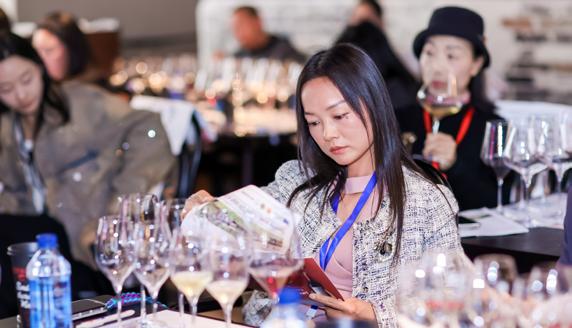
Beyond the Opening Ceremony, a highlight was the packed masterclass led by Marco Sabellico (with Victor Liu) for Unione Italiana Vini, special guest of the event - the oldest and most trusted organization in Italy’s wine industry, bringing together cooperatives, private wineries, agricultural bodies, bottlers, and consortia. “Taste the Difference” is a three-year, EU co-funded program that raises awareness of the system of protected designations of origin and the guarantees it offers consumers. Through a tasting of nine wines - white and red, from Alto Adige to Sicily - Chinese enthusiasts explored the nuances and differences among IGT, DOC, and DOCG (PGI and PDO). The dedicated tasting bar for the Taste the Difference producers - Franz Haas from Alto Adige, Tenuta Mara from Romagna, Torre Zambra from Abruzzo, Peri Peri from Sicily, and Masone Mannu from Sardinia - was an outstanding success. Sponsor of the day was Pulltex, the internationally minded maker of corkscrews and wine-service accessories.
In short, a pivotal stop that opens a market we’re confident will prove highly significant in the coming years for this city of art - rich in evocative landscapes, monuments, and beautiful venues - and a preferred destination for China’s sophisticated, gourmet travelers.
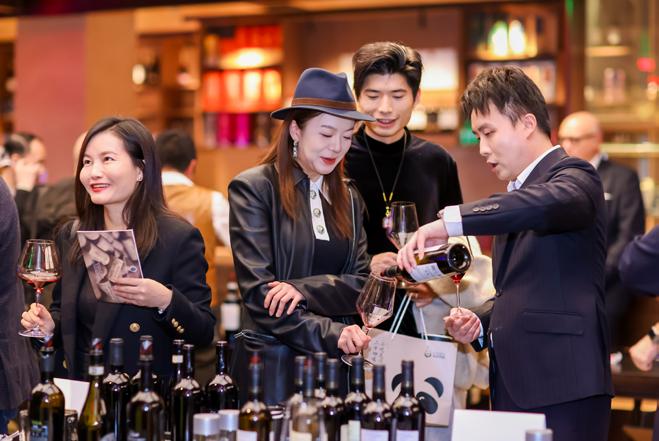
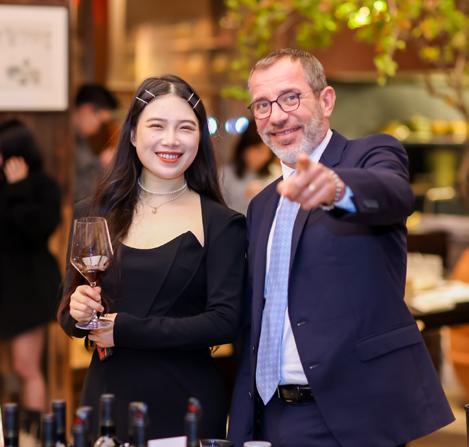
No Asian tour would be complete without the Pearl of the Orient. And so we wrapped up on November 11 in Shanghai, in the grand salons of the Regent on the Bund - the beautiful riverside hotel with sweeping views of Pudong’s futuristic skyline across the water. It was a full, high-octane day dedicated to the Tre Bicchieri 2026, opening at 11 am with the Award Ceremony for the Top Italian Restaurants in the World guide, which, eight years on, now features over 900 venues across five continents. Shanghai is one of China’s gastronomic capitals, and Italian dining here is expanding with real momentum. Here are this year’s honorees. As always, we begin with pizzerias: Uno Spicchio to Bella Vita by Samuele Rossi; and Tre Spicchi to Bottega and to Capri by Bottega, the ventures of brothers Paolo and Daniele Salvodynamic Campanian entrepreneurs with venues and new openings planned in other major cities. Repeating its Hong Kong triumph, the excellent Bar Leone by Lorenzo Antinori claims Tre Coppe,
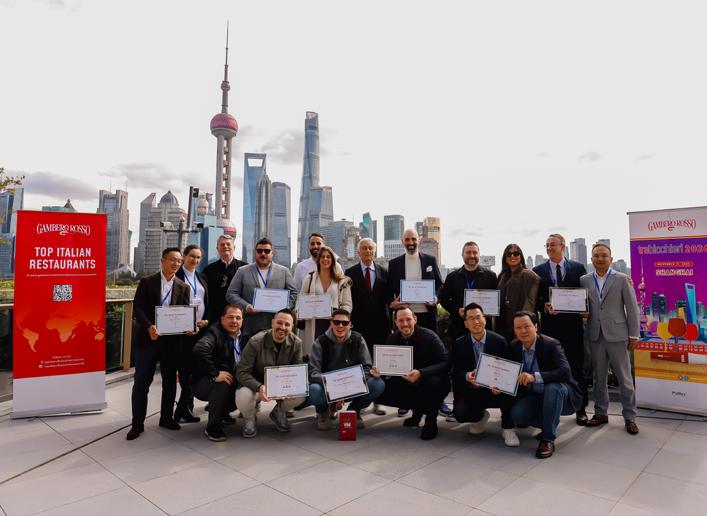
elevating the atmosphere of traditional Roman (indeed, Trastevere) bars to an international level.
Turning to restaurants: Una Forchetta goes to Trattoria Palatino, to Harmonia by Lorenzo Merolle, to Bella Vita Bistrot by Samuele Rossi, and to Da Marco by Marco Barbieri. Due Forchette are awarded to Cellar to Table, guided by the talented chef Francesco Bonvini (formerly of Da Vittorio) and celebrated for its superb cellar, and to Scena di Angelo by Sicilian chef Angelo Aglianò
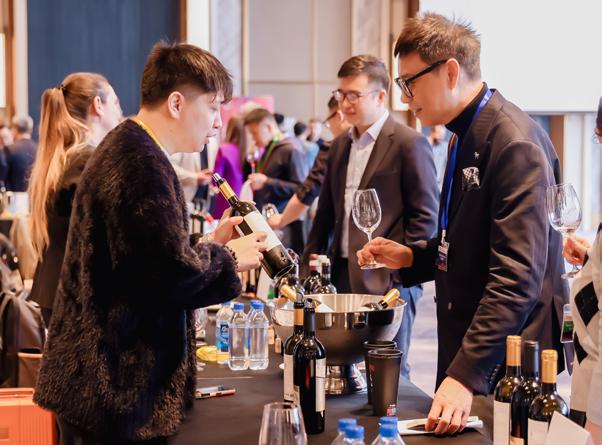
at the Ritz-Carlton. Following our visit, Due Forchette also go to Mi Shang Prada Rong Zhai, housed in an early 20th-century residence impeccably restored by the foundation of Miuccia Prada and Maurizio Bertelli in collaboration with famed director Wong Karwai. It’s a setting of refined elegance, where chef Riccardo La Perna crafts a sophisticated Italian menu with Eastern inflections - arguably the most exciting opening of the year in the city. No less notable is chef Nicolò Rotella, who presides over the Shanghai outpost of Umberto Bombana’s Otto e Mezzo; Bombana, a celebrated ambassador of Italian cuisine in Asia, has built a group of true international standing. And Il Ristorante – Niko Romito, another global standard-bearer of Italian gastronomy at the Bulgari Hotel, secures Due Forchette thanks to the talent of Luca Di Benedetto. We close with a name that needs no introduction: Da Vittorio of the Cerea family once again scales the summit with a richly deserved Tre Forchette, under the inspired stewardship of Leonardo Zambrino, a long-time collaborator of the family.
In short, Shanghai’s Italian dining scene is dynamic and electric. Even if these aren’t the


ZURICH - Switzerland
19 ZURICH - Switzerland
NAIROBI - Kenya
27 LAGOS - Nigeria
d'Italia 2026
Italian Wines Roadshow
Italian Wines Roadshow Extra
01 VANCOUVER - Canada trebicchieri 2026 13 SYDNEY - Australia Top Italian Wines Roadshow
BALI - Indonesia
BANGKOK - Thailand
BALI - Indonesia
-
BANGKOK - Thailand
11 PARIS - France trebicchieri & Vini Rari 2026 - Vinexpo Special
11 PARIS - France trebicchieri & Vini Rari 2026 - Vinexpo Special
24 LOS ANGELES - USA trebicchieri 2026
26 SAN FRANCISCO - USA trebicchieri 2026
03 CHICAGO - USA
NEW YORK - USA
03 CHICAGO - USA
05 NEW YORK - USA
DUSSELDORF - Germany 23 AMSTERDAM - Holland
14 DUSSELDORF - Germany
23 AMSTERDAM - Holland
trebicchieri 2026 Vini d'Italia 2026
Italian Wines Roadshow
HONG KONG - China Vini Rari 2026 25 LONDON - U.K. Vini d'Italia 2026
trebicchieri 2026
Italian Wines Roadshow
26 SAN FRANCISCO - USA trebicchieri 2026
LOS ANGELES - USA trebicchieri 2026 trebicchieri 2026
2026
trebicchieri 2026 - Prowein Special
trebicchieri 2026 - Prowein Special
trebicchieri 2026
- U.K. Vini d'Italia 2026
trebicchieri 2026
03 WARSAW - Poland Vini d'Italia 2026
STOCKHOLM - Sweden
d'Italia 2026
27 TOKYO - Japan trebicchieri 2027 29 SEOUL - South Korea trebicchieri 2027
2027
2027
03 TAIPEI - Taiwan trebicchieri 2027
- Taiwan
Italian Wines Roadshow 23 MEXICO CITY - Mexico
12 VERONA - Italy trebicchieri 2026 - Vinitaly Edition
29 TORONTO - Canada trebicchieri 2026 27 LAGOS - Nigeria
Italian Wines Roadshow 23 M
Italian Wines Roadshow
29 TORONTO - Canada trebicchieri 2026
2027
SHANGHAI - China trebicchieri 2027
- China
2027


simplest times, as Daniele Salvo of Bottega tells us: “The pandemic years were difficult, and then came a general economic slowdown that curbed consumption and investment. Not to mention the government’s moralizing clampdown: the ban on lavish gifts to public officials, coupled with a prohibition on those officials drinking alcohol in restaurants, has effectively penalized high-end wines. But we’re optimistic. We move forward and grow under the banner of quality. We’re bringing middle-class consumers into the world of wine - Italian wine in particular. We’re educating a new generation of enthusiasts in Italian taste and mindful consumption. And perhaps that’s for the best after the slightly crazy years of big bottles at stratospheric prices. From here, we’re setting off again toward steady, thoughtful growth.” All of this is unfolding thanks to a powerful synergy between fashion and Italian hospitality - a pairing that’s attracting significant Chinese investment. It’s a phenomenon that involves not only the marquee names of our dining scene but also many other talented chefs and new backers.” “It’s not an easy moment for anyone,” confirms Sophie Liu, wine expert and communicator, “not even for spirits. But in times like these, maintaining a strong presence in the market is essential. China’s potential is enormous; new generations are discovering wine, they’re open and curious, and Italian wine - with its diversity and singular character - holds immense appeal. Now is the time to invest: presence and promotion today are crucial to laying the groundwork for renewed growth. Keep fighting!”
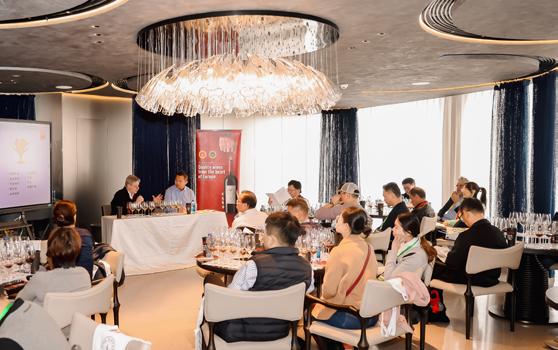
The Taste The Difference masterclass, organized with Unione Italiana Vinispecial guest of the event - was sold out in Shanghai as well. It explained the framework that safeguards Europe’s denominations of origin for wine and agricultural products, particularly Italy’s. As in Chengdu, through the tasting of nine fine labels - whites and reds from Alto Adige to Sicily - Chinese enthusiasts learned about the nuances and differences among IGT, DOC, and DOCG (PGI and PDO). The dedicated tasting station for the Taste The Difference producers - Franz Haas of Alto Adige, Tenuta Mara from Romagna, Torre Zambra from Abruzzo, Peri Peri from Sicily, and Masone Mannu from Sardinia - also drew an extraordinary crowd here.
Another high point of the day was a special masterclass featuring a vertical tasting of Cesari’s Amarone Bosan. Marco Sabellico for Gambero Rosso and Nicolò Maroni, the winery’s marketing manager, led attendees on a journey back in time, uncorking five vintages of the Bosan Riserva - the jewel of Valpolicella Classica - from the current-release 2016 to the remarkable 2000.
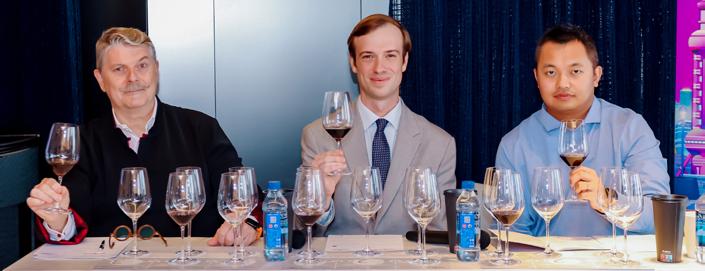
“Shanghai is a pivotal platform for penetrating the Chinese market, which remains one of the most promising growth horizons for our exports - and not only in food and wine,” confirms Italy’s Consul General, Tiziana D’Angelo. “Those investing in this market will soon reap significant rewards.” “Our projections point to signs of a rebound in wine imports starting in the early months of 2026, gathering even stronger momentum in 2027,” adds Philippe Chan, general manager for YouGov China and Hong Kong, the market research and data analytics firm, “and Italy has all it takes to make major gains - in wine and dining, and beyond.”
Sponsor of this closing day, once again: Pulltex, the internationally minded maker of corkscrews and wine-service accessories.
The largest Italian city outside Italy embraces Italian producers at the final stop of Gambero Rosso’s 2025 World Tour
by Marco Sabellico
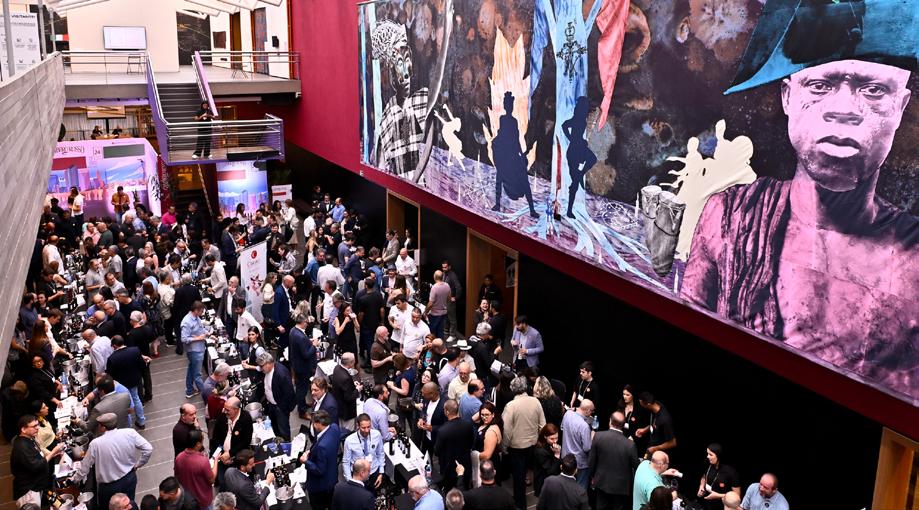
Yes, that’s right. We wrapped up the Tour year with a major Tre Bicchieri event in Brazil’s economic capital, São Paulo, on November 24. Fifty Italian producers met trade and enthusiasts at the Instituto Tomie Ohtake in Pinheiros.
The foundation hosts art exhibitions and is dedicated to the great Japanese-born, naturalized Brazilian artist Tomie Ohtake, a leading figure of informal abstraction, celebrated for her monumental sculptures and canvases. The building and museum were designed by her son, Rui, one of Brazil’s most eminent contemporary architects. In this spectacular setting, from 11 a.m. into the
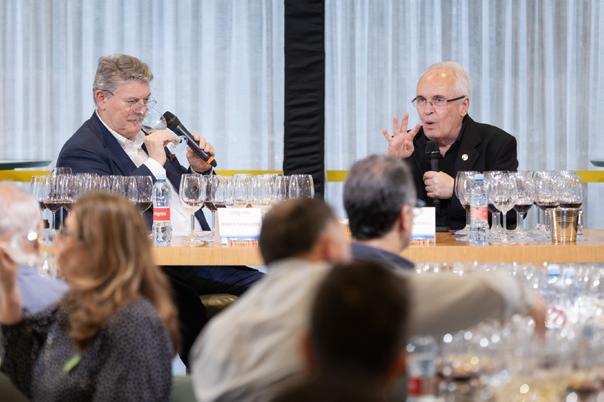
evening, a continuous flow of visitors highlighted the buoyant moment Italian exports are enjoying in Brazil. The country is in a growth phase, with unemployment at historic lows and, after years of decline, all indicators pointing upward. In our world, that translates into a flurry of new venues - many with an Italian theme - and a rebound in our wine exports.
It bears noting that São Paulo, with its 13 million residents (27 million across the greater metro area), is the most populous city in the Southern Hemisphere, and roughly a third of its inhabitants are of Italian descent. And while, for understandable fiscal reasons, Chilean and Argentine wines are the most popular (there’s free trade among Mercosur countries) and, for historical reasons, Portuguese wines follow, Italy’s labels are right on their heels. This is a situation that can only improve, given the allure of Made in Italy within the largest Italian community outside Italy, bolstered as well by the recent ratification of a historic free trade agreement between the EU and Mercosur to facilitate trade between the two blocs, which will eliminate most customs duties - even though its entry into force still awaits ratification due to complex political and environmental issues.
In short, South America’s strongest economy is becoming an important market for our wines, at a moment when average wages are rising and
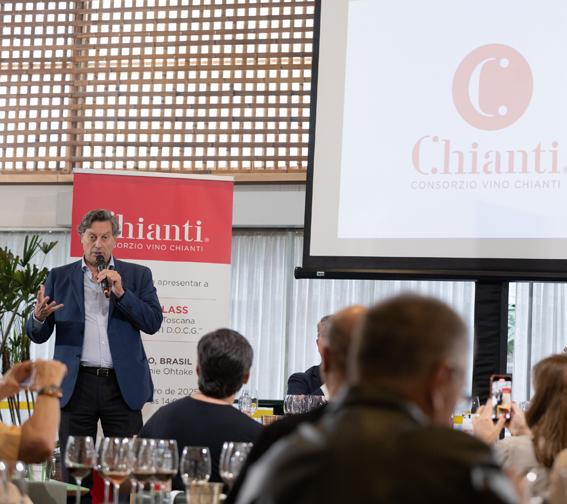
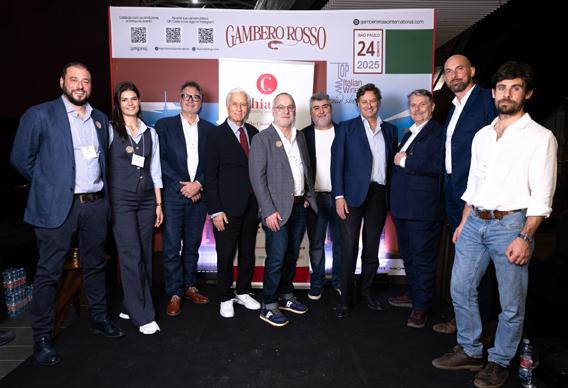
Guest of honor was the Chianti DOCG Consortium, which drew a crowded masterclass led by Sabellico and De Azevedo, covering the history, production techniques, and territories of the world’s most famous Tuscan wine. “It’s a complex moment,” Consortium president Giovanni Busi told us. “On the international stage, some countries are raising tariffs, like the U.S., while, for example, the Mercosur deal is moving forward and will open up new opportunities in Latin America. The Consortium is stepping up its marketing activity in this area, as in China, Canada, and the Far East. We’re confident this work - and today’s event proves it - will soon deliver excellent results for our denomination, which accounts for 100 million bottles a year, most of them destined for export.”
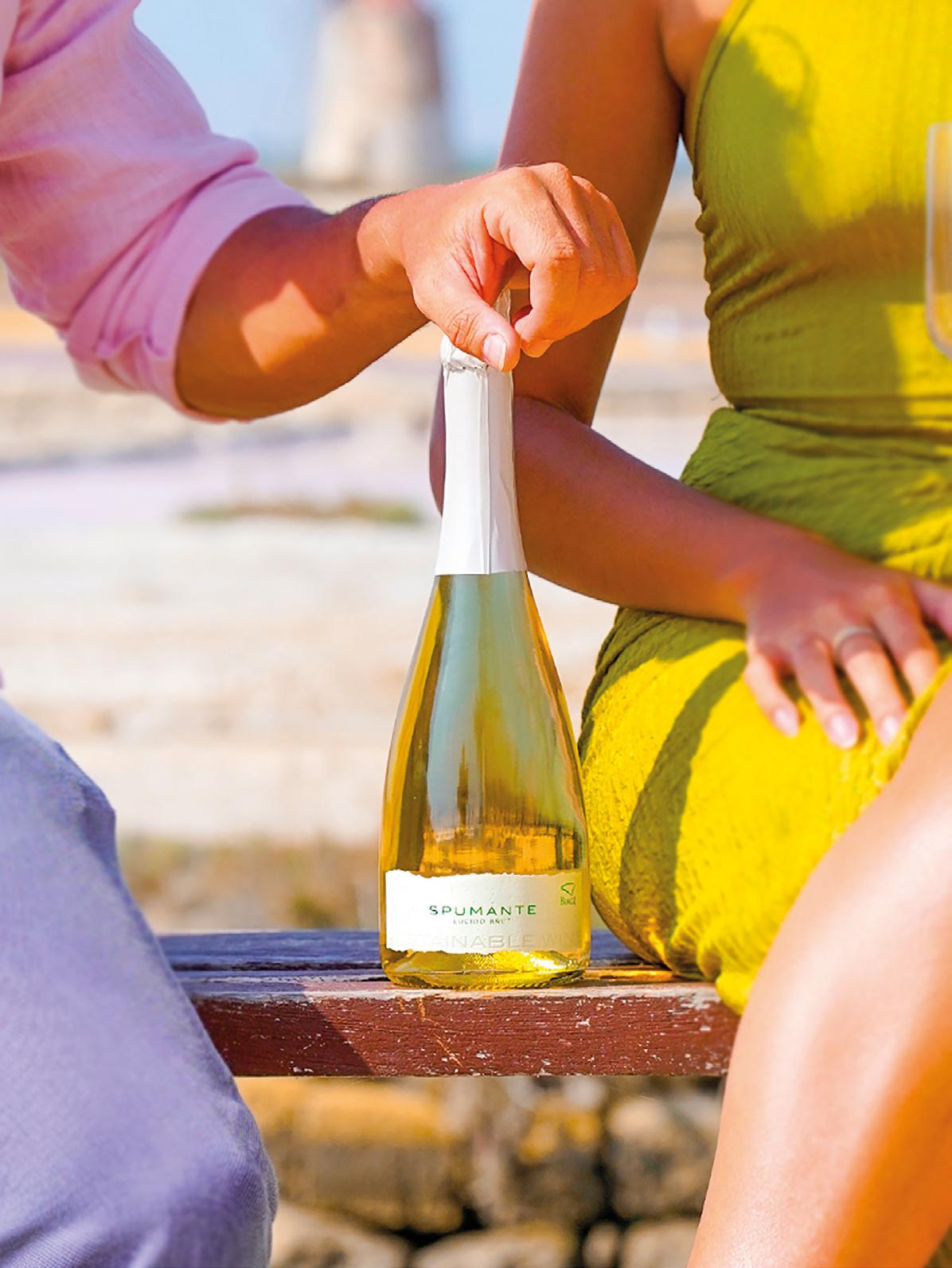
political stability prevails. The Tre Bicchieri event practically crackled with energy, drawing a crowd of aficionados eager to taste new vintages of Italian classics and to discover fresh territories, grape varieties, and labels. And the statistics back up the buzz: alongside moderate growth in still wines, it’s the sparklers - Prosecco above all - that are leading the charge, far outpacing both French and Spanish competitors in revenue and bottles sold.
The two masterclasses hosted by Marco Sabellico with Arthur Piccolomini De Azevedo were packed. De Azevedo is one of the most prestigious names in Brazilian wine journalism, former president of the Brazilian Sommelier Association - where he continues to hold senior roles - as well as a publisher, author of numerous wine books, and contributor to many Brazilian and international food and wine publications. “In Brazil there’s still huge room for growth in wine consumption,” says Suzana Barelli (Italian-Brazilian, with roots in Bologna), another leading voice in Brazilian food-and-wine media. “The most consumed beverage here is beer. It feels less intimidating. Wine often scares people off. But once they try it, they fall in love. The key to success is to put it in front of consumers and educate them. Chile, Argentina, and Portugal invest heavily in communication. Italy does a lot, but there’s ample room to grow. Successful events like today’s are essential! The Portuguese have figured this out… And Italy has the ace of its cuisine - it’s flying… But Italian wine is complex, and it needs to be explained! Fortunately, there’s no shortage of opportunities, especially in major cities like São Paulo.”
“During the pandemic, consumption increased thanks to e-commerce and social media,” echoes Arthur De Azevedo, “and the number of industry professionals is rising. But once again, those who invest most in this market will come out on top.”
In the end, Brazil and Italy share a beautiful love story - intensely reciprocated. See you in January, when we take to the skies again. First stop: Zurich.
At 4:30 p.m., the Top Italian Restaurants in the World guide held its Awards ceremony, attended by Italy’s Consul General, Domenico Fornara, which rallied the city’s large community of Italian restaurateurs. Among pizzerias, One Slice went to Unica Pizzeria, Two Slices to Temperani e Soffio, while Three Slices were awarded to the extraordinary pies at Leggera Pizza Napoletana by André Guidon and Fabio Muccio, with two locations in the Pompeia and Jardins neighborhoods. Wine bars in São Paulo are thriving, and two earned Two Bottles: Vinheria Percussi, run by Lamberto Percussi and his sister Silvia, and Tre Bicchieri, helmed by chef Rodrigo Queiroz.
On to the restaurants: six One Fork awards went to Zucco, Piselli Sud, Supra di Mauro Maia, Nino Cucina, Pasta Shihoma, and Santo Colomba. At the Two Forks level, we find Osteria Fame, the storied Fasano, Picchi, Simone, and Tappo Trattoria - stellar Paulistano addresses where Made in Italy is culture, with authentic Italian and local ingredients - along with two guests from Rio de Janeiro: Cipriani at the Copacabana Palace and, finally, Grado by chef Nello Garaventa. A brigade of passionate talents destined to grow even further. Sponsor of this closing day, once again: Pulltex, the internationally minded maker of corkscrews and wine-service accessories.
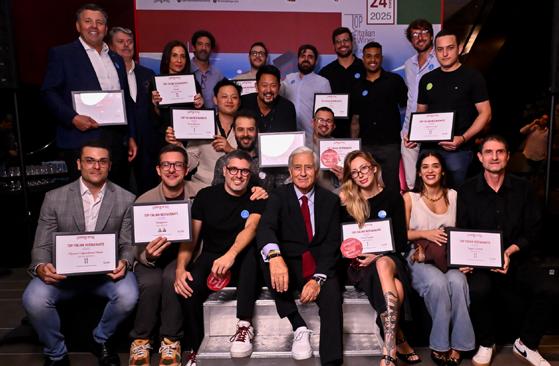
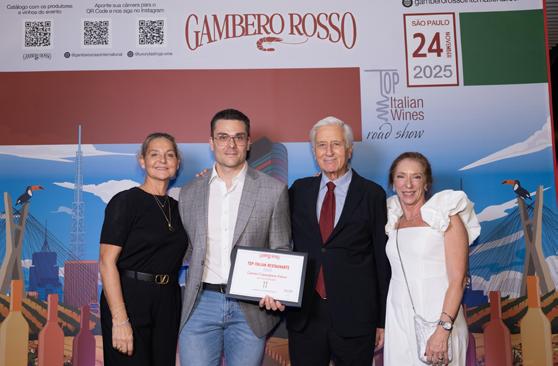
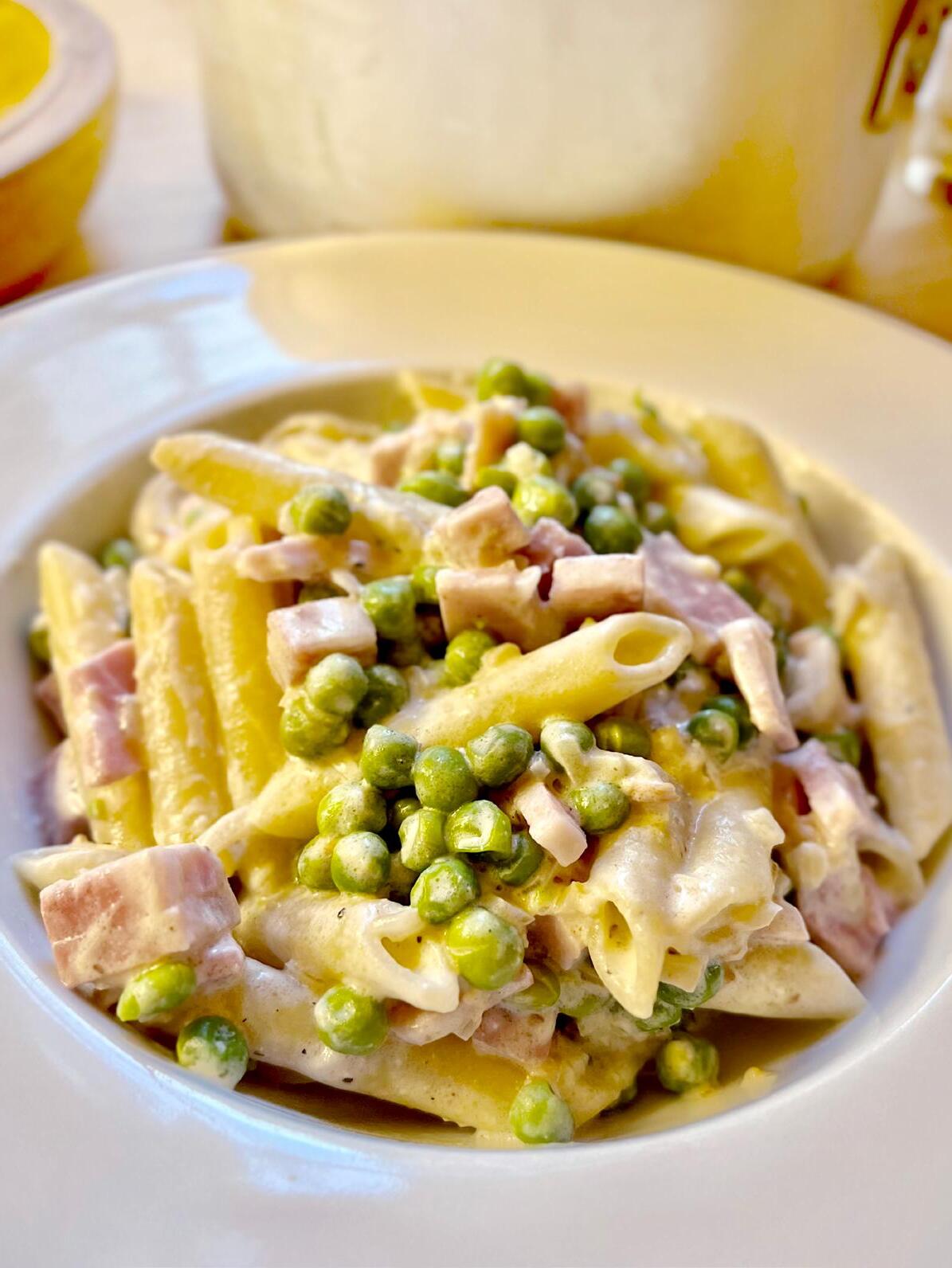
Yet “Tre P” pasta, as it was called in the 1980s, dressed with ham and peas, remains a true Italian tradition
by Luca Cesari
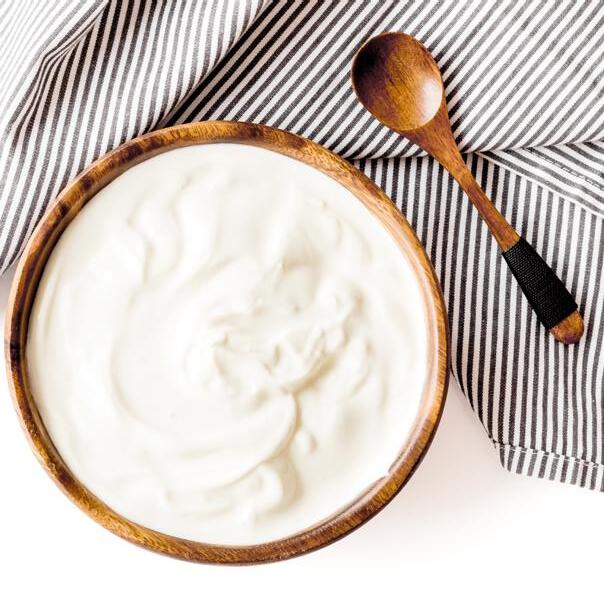
We associate dishes with heavy cream with 1980s cuisine, with its lights and shadows. They are usually dismissed as third-rate dishes, inventions of low cuisine, good for those who don't know how to hold a pan and, above all, for those who don't know how to eat. They are even denied Italian citizenship: they are considered French, corrupters of our culinary traditions, as if they had been secretly pouring cream into our dishes for decades. Finally, even its mere presence in kitchens is questioned because cream used to be a rich man's food and no one used it, forgetting that for the poorest, even macaroni was a luxury, although this did not prevent it from becoming a national dish. When cream ends up on pasta, especially on certain untouchable dishes such as carbonara and tortellini, accusations of heresy are levelled. In these cases, public stoning on social media is guaranteed, but even posting a simple gramigna with cream and sausage or penne alla vodka risks fierce criticism.
Cream began to be used frequently in Italian cuisine during the Renaissance, but it reached its peak in the 17th century, when dozens of soups, meat dishes, and savory pies were enriched with this creamy ingredient. It has been used in pasta dishes since the conception of modern “pastasciutta” (pasta with sauce) at the turn of the 18th and 19th centuries. Before then, pasta in broth or baked in the oven - in the form of timbales or pies - dominated the scene, while “dry” pasta was rarer and almost exclusively seasoned with butter and grated cheese. Vincenzo Agnoletti, in his 1803 book La nuova cucina economica (The New Economical Cuisine), captures this emerging trend when it was not yet called “pastasciutta.”
Under the heading ‘Maccaroni all'Italiana in più maniere’ (Italian macaroni in several ways), he describes the only four ways to eat it: with butter and Parmesan cheese, with stew sauce and Parmesan cheese (the ancestor of Neapolitan ragù), with capo or fiore di latte, and finally with
“That’s how I found the dedication to Caruso”
Samanta Cornaviera is a leading expert on 20th-century culinary history: she is credited with discovering the recipe for “Tagliolini alla Caruso,” which shed new light on the evolution of pasta served with cream, ham, and peas. How did she find this recipe? «One of the things that has always intrigued me are the recipes named after famous people that were popular in the early 20th century. Caruso was a very important figure to whom several recipes were dedicated, along with others such as Titta Ruffo, Rossini, Puccini, and so on. I found it curious that there was such a dedication in a recipe from the late 1950s, and when I looked into it, I discovered that it was a sauce with cream, ham, and peas.» What is the most fascinating thing about this research? «I really don’t know... I was born into a family of pastry chefs and bakers, and perhaps that has influenced me. I am interested in forgotten culinary figures such as Amedeo Pettini, who until the beginning of World War II was a celebrity comparable to today’s Massimo Bottura: great professionals who left an important mark on Italian cuisine and live on through cookbooks.»
béchamel sauce. Fior di latte and capo di latte are simply two types of cream: fior di latte is the cream that forms on the surface of raw milk, while capo di latte is the cream that rises to the surface after boiling.
The fashion for eating pasta drained and dressed with a sauce without further baking was entirely Italian, as revealed by the title of Agnoletti's recipe, but the myriad of sauces we know today had yet to be invented. Suffice it to say that the first “Vermicelli al pomodoro”
Here is the original recipe for Tagliolini alla Caruso, which first appeared in La Cucina Italiana in the July 1959 issue.
INGREDIENTS F o R 4 SERVINGS
800 g fresh pasta tagliolini
500 g fresh peas
300 g heavy cream
200 g ham
100 g butter
Parmigiano Reggiano, grated – salt - sugar
TIMING: APPR o X. ½ H o UR
Shell the peas, then boil them in water, without overcooking. Bring a large pot of salted water to a boil to cook the pasta. Using a very sharp knife, cut the ham into strips about 1 cm wide. Heat about 30 g of butter in a small pan, and as soon as it’s melted, add the peas, a pinch of sugar, stir and leave to cook over a moderate heat.
When the salted water comes to a boil, add the tagliolini and drain after one minute; they should be very al dente. Pour them into a bowl, add the peas with their sauce and about half of the remaining butter, stir, pour the pasta onto a serving dish and cover with the ham, making sure to arrange it nicely.
Bring the pasta to the table on which a small stove has been set up, place a large pan or, better still, a silver dish on top of it, add the remaining butter and, as soon as it has melted, place the pasta with the ham in the pan, stir and add all the cream a little at a time, stirring constantly. The tagliolini will not be very dry, so remove them from the heat and serve with grated Parmigiano Reggiano cheese, which can also be omitted.
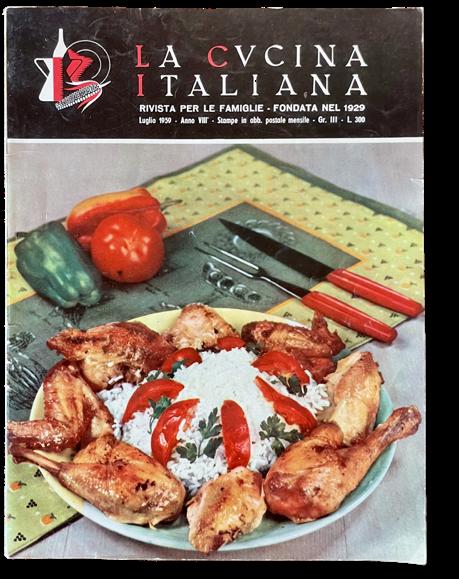
(vermicelli with tomato sauce) was described by the Neapolitan Ippolito Cavalcanti in 1837. Cream therefore precedes all modern condiments and marks the real debut of pasta dishes. Of course, macaroni and gnocchi had been seasoned with cream for decades, but only those intended to fill timbales to be cooked in the oven.
Starting with Agnoletti's Italian macaroni, pasta recipes with cream multiplied and became increasingly complex. An interesting example can be found in an English cookbook from 1846 with the curious title The Gastronomic Regenerator, which explains how to make “Sauce à la Milanaise”: macaroni is seasoned with cooked ham and mushrooms bound together with a “white sauce” (a béchamel sauce made with half broth and half milk), then creamed
La Cucina Italiana, 1959, where the recipe for Tagliolini alla Caruso was first published.
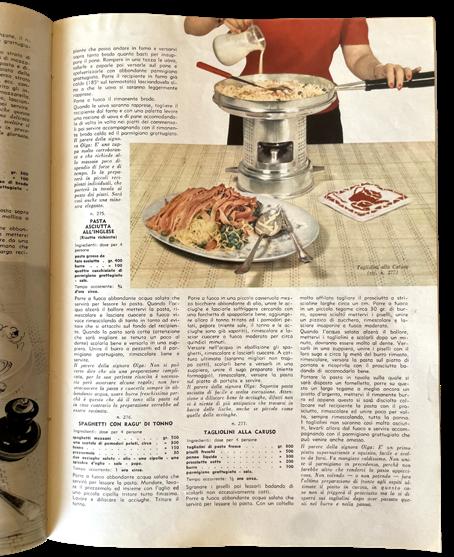
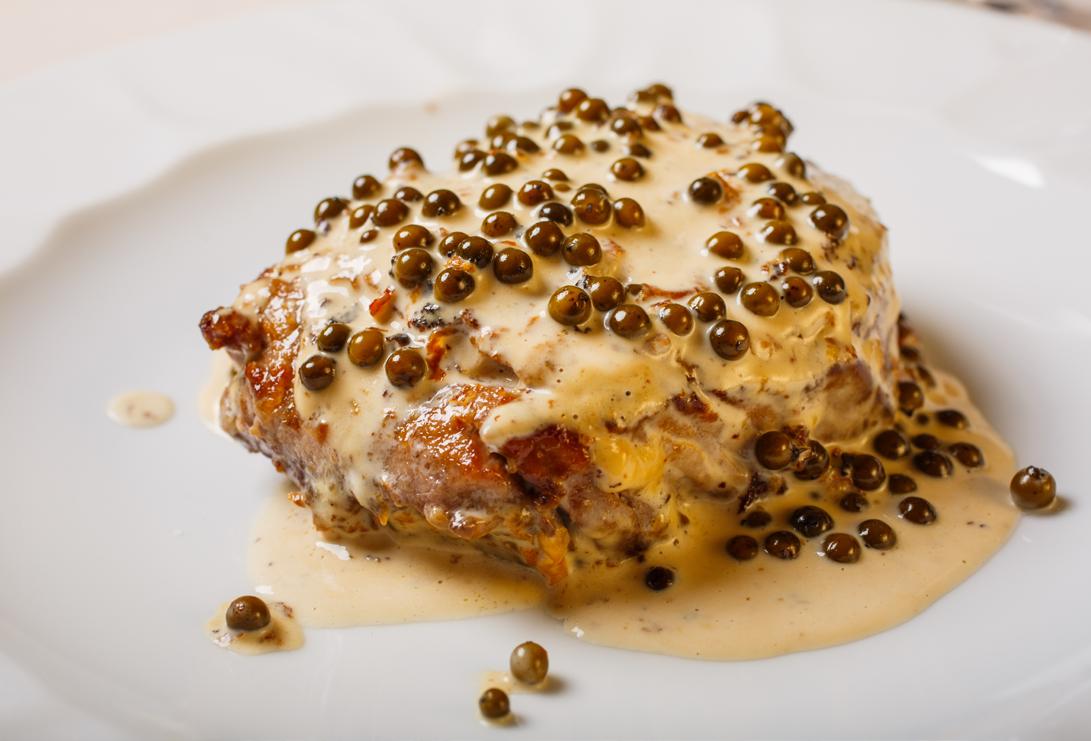
with grated Parmesan cheese and cream. This is an evolution of pasta with cream that was still unknown in Italy, although the author emphasizes its Milanese origin. Its use was also quite unusual: as the title suggests, it was an accompanying sauce used to complement stewed meat dishes such as fillet or beef tongue. Meanwhile, in Italy, slightly more sober recipes were recorded, such as that of “Maccheroni alla napolitana” with Lodi cheese, nutmeg, pepper, and cream described by Francesco Pagnoni in Il cuoco milanese e la cuciniera piemontese (The Milanese Cook and the Piedmontese Cook) in 1859. Even in 1933, the Puritas cookbook featured “Rigatoni conditi alla moda della nonna” (Rigatoni seasoned in the style of grandma), which reached “the height of exquisiteness” with a sauce made from butter, cream, cheese, and egg yolks.
It was in 1959 when the first recipe appeared for the magnificent trio of “cream, ham, and peas,” which would become hugely popular a couple of decades later. The method is extremely simple and consists of seasoning the pasta with fresh peas that have been blanched and sautéed in butter, cooked ham cut into strips, and plenty of liquid cream with the addition of Parmesan cheese (see box). The recipe appeared in the July issue of La Cucina Italiana under the title “Tagliolini alla Caruso,” which at first glance might seem like a fictional name, but it is not. The “alla Caruso” pasta sauce had been invented a few years earlier by an Italian emigrant in Uruguay and was enjoying great success. It was 1954 when Raimondo (Raymundo) Monti created this creamy sauce that was destined to become legendary.
Monti, a Piedmontese who emigrated to Uruguay in 1939, had invented an Italian-style recipe for his restaurant Mario y Alberto in Montevideo as a tribute to his homeland. The result was a rich sauce made with fresh cream, chopped cooked ham, and mushrooms sautéed in butter, all flavored with a spoonful of local meat extract (Liebig concentrate from Fray Bentos).
Monti used this sauce to dress local cappelletti pasta, inventing “Capeletis a la Caruso” in honor of the famous Neapolitan tenor Enrico Caruso, who was much loved in South America after his tours in the 1910s. The name itself suggested a strong connection with Italian culture: Caruso symbolized excellence in the world, and dedicating a pasta dish
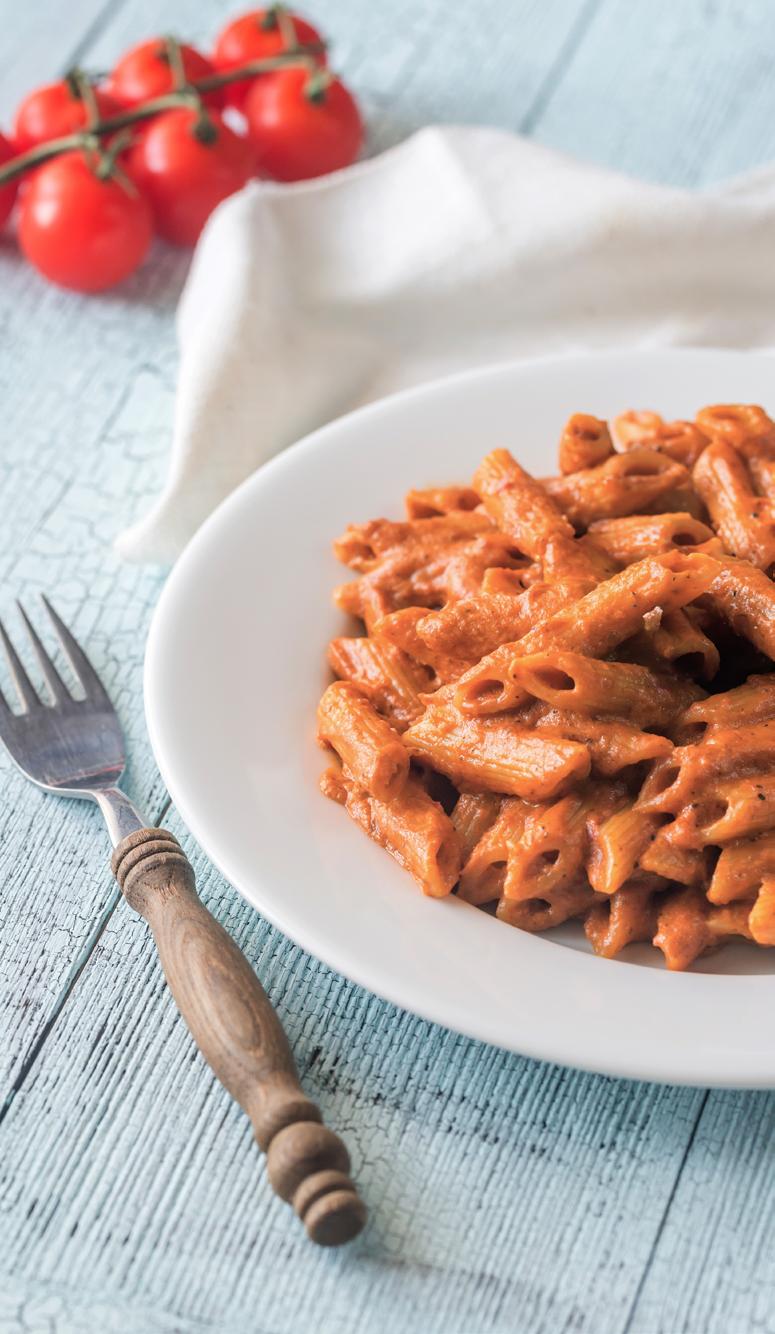
to him was a way of emphasizing the Italian roots of the creation. Many typical Uruguayan dishes are of Italian origin, such as “Milanesa” and ‘Fainà’ (cutlet and farinata, respectively), but they are also shared by other South American countries, while “Capeletis a la Caruso” was an original Uruguayan creation. They were an instant success and are still so popular that the Asociación Gastronómica de Uruguay declared them a “gastronomic heritage” of Uruguay in 2022.
If today we were to think of a pasta sauce that celebrates Italian identity abroad, Caruso sauce would probably not be at the top of the list, but this was not the case for Raimondo Monti. After all, as we have seen, cream was one of the first condiments for pasta, and recipes for macaroni “alla milanese” seasoned with cream, cooked ham, and mushrooms had been circulating in America for over a century. Raimondo Monti's Piedmontese origins certainly played a role, as for him the symbols of Italian cuisine were certainly not olive oil, tomatoes, or basil, as we tend to think today.
The early days of pasta with cream, ham, and peas in the 1950s passed somewhat unnoticed, but they paved the way for the revolution that would come a little later. Meanwhile, cream became increasingly popular in pasta dishes, such as the famous tortellini by Bolognese chef Cesarina Masi, or in “Penne alla vodka” invented by Roman chef Mario Zorzetto in 1970. Of course, even specialties considered “untouchable” were not immune: cream appeared in Carbonara recipes as early as the 1960s, accompanying this recipe for at least thirty years. Thanks also to Tetra Pak packaging technology, cream became increasingly available in supermarkets and its use entered the daily life of Italian families, facilitating the preparation of these creamy dishes. At the end of the 1970s, the cream trend exploded, literally invading every dish: from fillet with green pepper to tagliatelle with
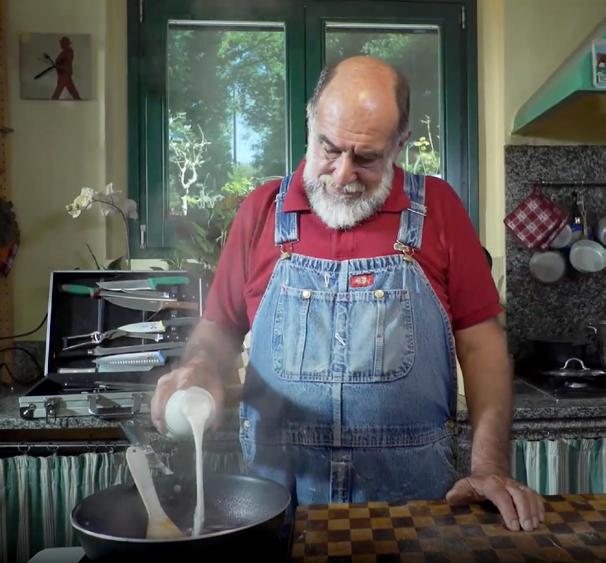
mushrooms. Finally, the moment had arrived for the great success of pasta with cream, ham, and peas, later renamed “3P,” and all its cousins. It is also worth mentioning ‘Penne 4P’: a variation in which tomato is added to create a creamy pink sauce (but there are up to 6 and more, adding other ingredients that begin with the letter ‘P’); “Pasta al baffo”: cream, cooked ham, and a little tomato sauce, so good you'll “lick your whiskers”; “Tortellini alla boscaiola” with cream, peas, mushrooms, and sometimes pancetta; and finally, “Maccheroncini al fumé,” invented in 1978 by chef “Maciste” Stefano Marzi with cream, smoked pancetta, tomato, and spices.
Between the 1950s and 1970s, cream was an ingredient used to enrich many dishes and mimicked the Frenchstyle cuisine that dominated the world of haute cuisine. It represented the achievement of a level of well-being that had been only dreamed of a few decades earlier and an escape from tomato-based pasta sauces. Rich, smooth, and sweet, it softened any dish
and corrected any flaws. In fact, cream's real enemy was its own success. Once it became popular and readily available, it literally invaded Italian kitchens, and throughout the 1980s, there was no escape. The transition from “touch of class” to “heavy embellishment” was short. Accused of standardizing flavors and flattening the identity of dishes, it began an inexorable decline: initially excluded from haute cuisine, then from trattorias, and finally even from homes.
Contributing to its decline were the growing reputation of olive oil, elevated to the main fat in Italian cuisine, and the search for lighter dishes, shifting towards a more “Mediterranean” taste. Many dishes in our cuisine have experienced a downward trajectory in the space of a generation or so, but no ingredient has gone from mad love to visceral hatred like cream. Today, it is considered a foreign body in Italian gastronomy, whereas it has always been a rightful part of it. Those who use cream today are looked upon with contempt as traitors to their country, and even students living away from home can no longer indulge in such “culinary atrocities” without feeling
We asked Giorgione for his opinion on the use of cream in pasta dishes: «I’ve always used it and I couldn’t care less about what’s fashionable. I make gnocchi al Sagrantino with cream, I make pasta alla norcina with cream: I mean, I wouldn’t put it in carbonara because I don’t need it, but everyone does as they please... Tortellini with ham, cream, and peas, Giorgione continues, are a classic: I remember them in Val Pusteria, where they made them with speck, but there’s nothing wrong with that. Let’s not demonize everything just for the sake of being counter-cultural or trendy.» And in these cases, is cream from a carton okay? «I prefer cream that has been allowed to rise to the surface, when I can find it. The milk is left to rest and the cream rises naturally, it doesn’t go through a centrifuge, it isn’t ruined, and it’s more delicate. In short, cream like this is a completely different story from ultra-pasteurized cream or, worse, fake cream. So let’s use good cream and do what we have to do, without demonizing anything.»
a shudder of horror. But someone has found a way to continue using it without risking public ridicule.
Those who did not demonize cream had to adapt to a world in which simply writing the word on a menu could result in a black mark. Various strategies were implemented, but they can be summarized in three categories. The first – and most courageous – is to continue using both cream and its name, but elevating the quality. Aware that the
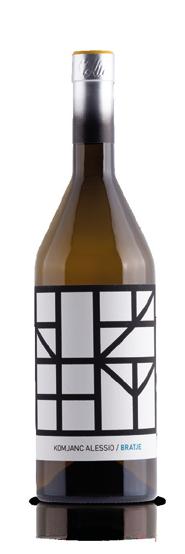
problem in the 1980s was not the ingredient itself, but its trivialization and poor quality, dishes have been created that enhance cream rather than undermine it. The most striking example is the tortellini with cream from Antica Osteria del Mirasole in San Giovanni in Persiceto (awarded several times as the best trattoria in Italy), where Franco Cimini and Anna Caretti use cream from their family dairy – which produces Parmigiano Reggiano – to dress their fantastic tortellini. The second method used is to continue using cream, but without mentioning it. A classic example is "crema di Parmigiano" (Parmigiano cream), where, apart from rare cases, the main ingredient is still cream. However, by referring to an excellence such as Parmigiano in the name, the sauce is rehabilitated in the eyes of the customer, who no longer wonders what makes the sauce so creamy. Finally, there are those who have chosen to replace cream with another product that contains it. It will not have escaped anyone's notice that all those burrata cheeses, whole or blended, placed on pizzas, spaghetti, and bruschetta contain a good percentage of cream. One of the reasons for burrata's popularity in cooking is its particular consistency, perfect for adding cream to dishes without even mentioning it. Mascarpone also belongs to this category: a product very similar to cream, which serves the same function but with a more marketable name. Fortunately, however, there is also a fourth way, that of the intrepid nostalgics who continue to eat penne with cream - strictly “cooking cream” squeezed from a cartonham, and peas, ignoring culinary fads. They resist, between nostalgia and indifference, waiting for a belated rehabilitation of cream: never mind if it never happens, it will still have been worth it.
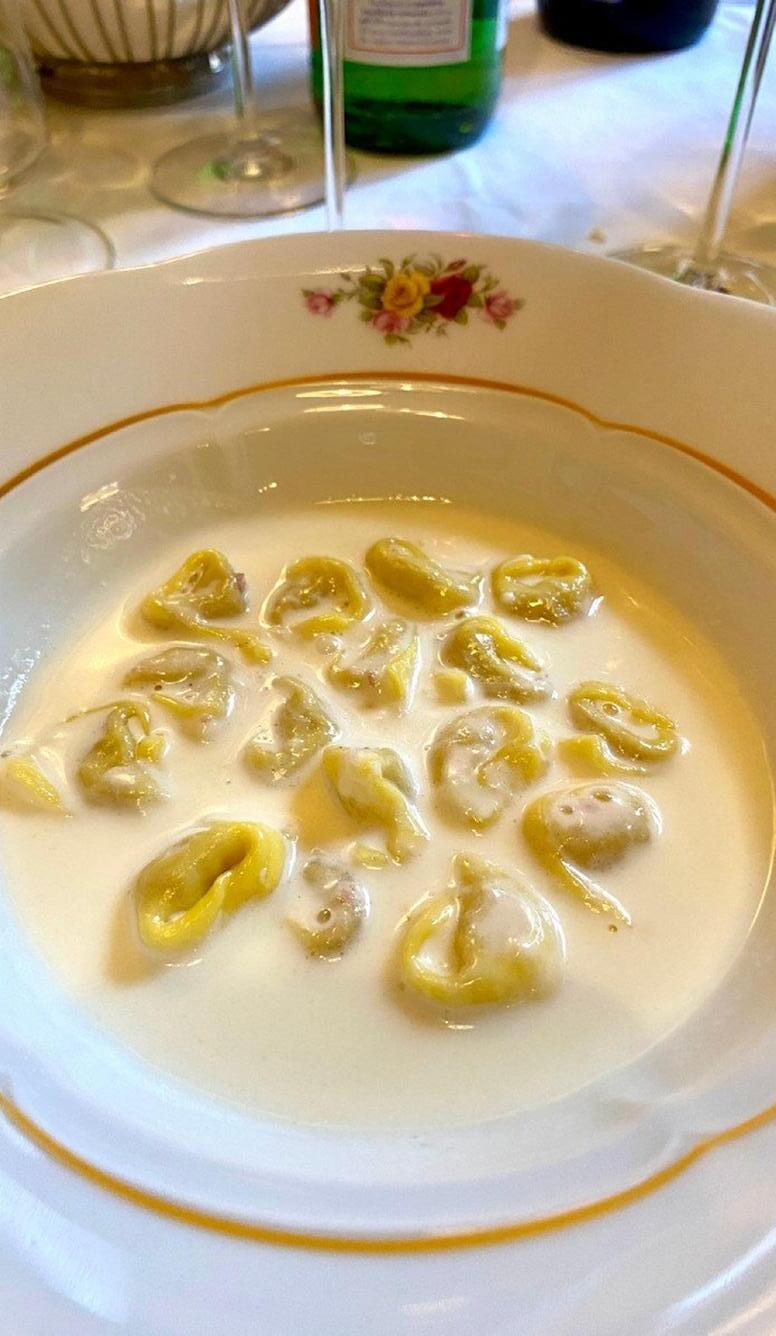
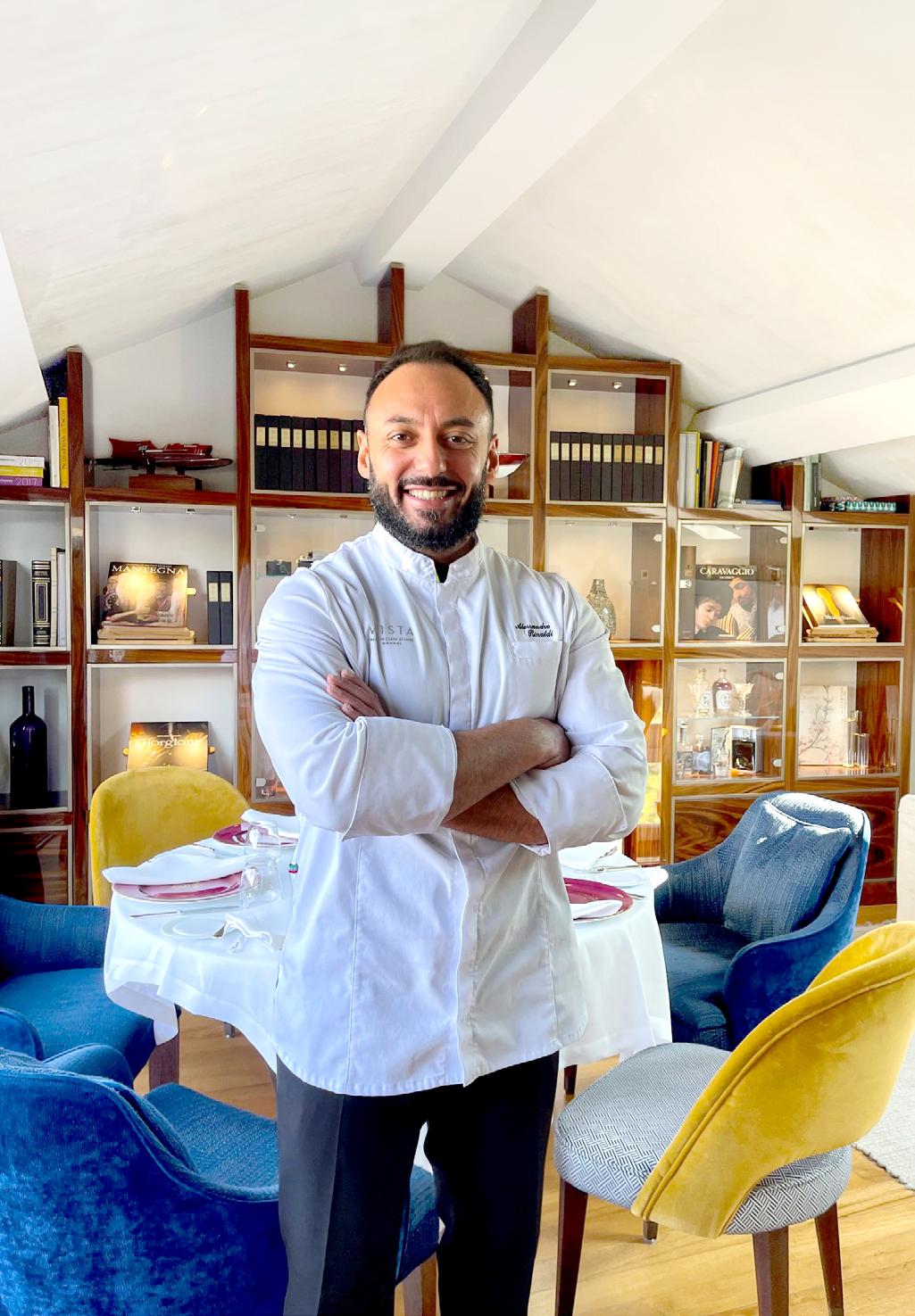
LAST ALBUM DOWNLOADED
Nero a metà by Pino Daniele
LAST BOOK READ
PH Lieviti- Giambattista Montanari
FAVOURITE INGREDIENT
Tomatoes
LEAST FAVOURITE INGREDIENT
Missoltino
THE DISH OF A LIFETIME
Aubergine parmigiana
GREAT MASTER I ADMIRE
Gaetano Trovato
MOST RESPECTED PEER COLLEAGUE
Alfonso Castellani
RESTAURANT NAME
RESTAURANT CONTACTS
Como
piazza Camillo Benso Conte di Cavour 24 031 5375241 vistapalazzo.com
SEATS
22
PREVIOUS EXPERIENCE AT Villa Passalacqua in Moltrasio
I Portici in Bologna
Villa Zarri in Bologna
Grand hotel Parco dei Principi
SOUS CHEF
Pietro Schifaudo
Giorgio Puleo
AGE 39 38
MY CUISINE PHILOSOPHY
Clean. Crisp. Decisive
MY FAVOURITE RESTAURANT
ABROAD
Mirazur (France)
ONE WINE ABOVE ALL OTHERS
Mareneve 2018 – Cantina Federico
Graziani (Randazzo sull’Etna)
HAD I NOT BEEN A CHEF…
Physician
DISHES
Memories – La Panzanella
Linguine with clams
Lobster and mozzarella
Peach and cardamom semifreddo
KITCHEN BRIGADE
Pietro Schifaudo
Giorgio Puleo
Ilaria Fazio
Marco Lusardi
Jacopo Faccioni
Shakib Bayati
DINING ROOM
Dario Munaretto
Valeria Sanduleac
Mirvana Harizi
Michelle Medrano
Yenifer Rivas
Bernadette Delos Reyes
Mohammed Sidibe
Ernest Nimako
Jeffrey Cruz
SOMMELIER
Valeria Sanduleac
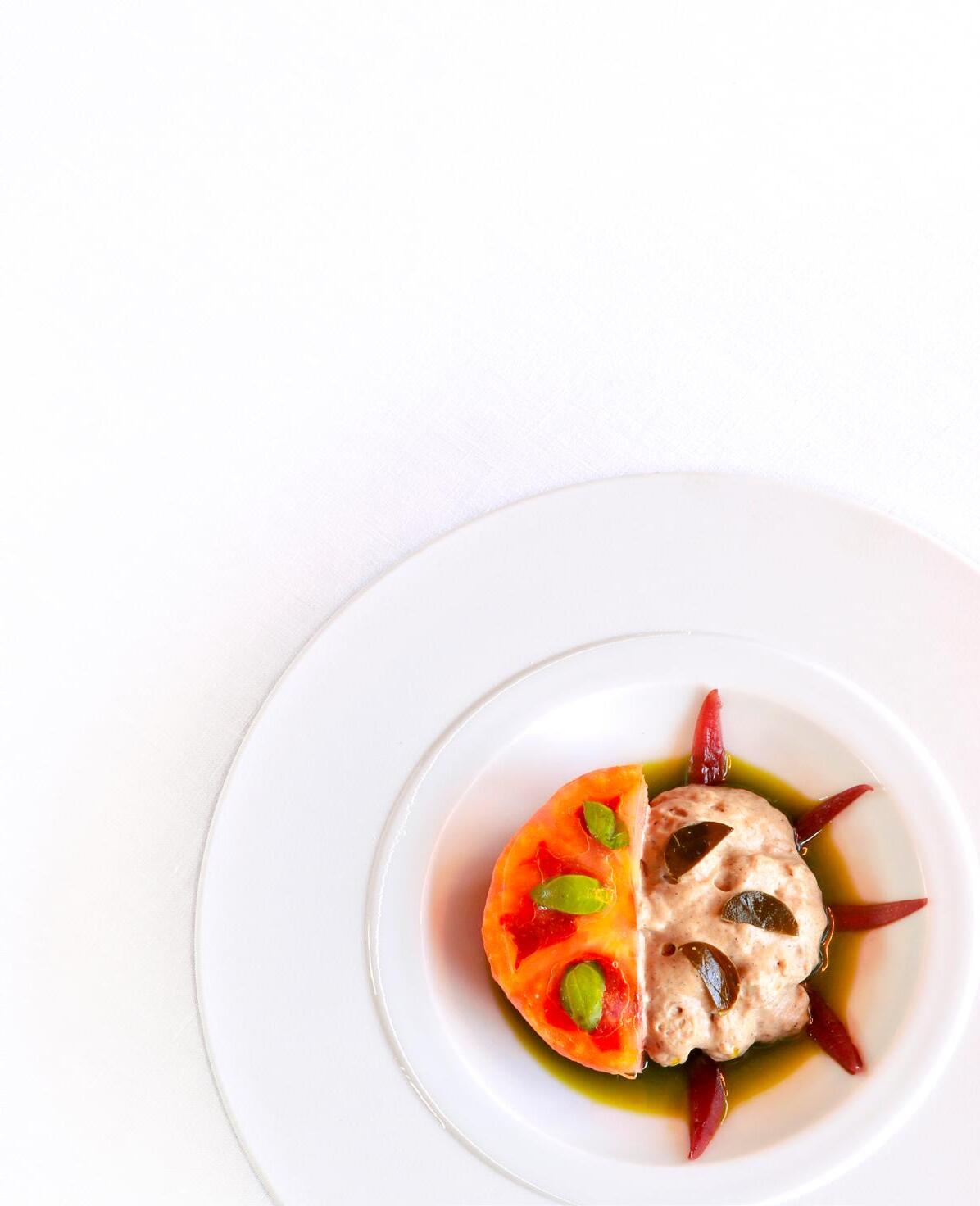
INGREDIENTS FOR 4
For the beefsteak tomatoes:
2 beefsteak or ox heart tomatoes
(Ø 7–8 cm)
2 sprigs of fresh thyme
2 cloves of purple garlic, crushed
Fresh basil
For the tomato filling:
Discarded pulp from the oxheart tomatoes
100 g semi-dry datterini tomatoes
50 g sun-dried San Marzano tomatoes
1 ripe oxheart tomato (pulp only, chopped with a knife)
Fresh basil
Salt and extra virgin olive oil
Cucumber:
1 carosello cucumber Salt
Bread foam (for siphon):
250 g stale bread, toasted in a pan
100 g tomato water
20 g white wine vinegar
Salt and pepper
Sweet and sour red onion with raspberries:
1 red Tropea onion
100 g red wine vinegar
60 g sugar
110 g water
5 fresh raspberries
Basil oil:
300 g fresh basil leaves
300 g grapeseed oil
To finish:
Baby basil leaves
Marinated capers, cut into half-moons
For low-temperature tomato confit: score the oxheart tomatoes with a cross on the underside. Blanch them for 30 seconds, then immediately transfer them to an ice water bath. Remove the skin, trim the ends, cut them in half horizontally and place them in a baking tray with thyme, garlic and basil. Dry in a convection oven at 60°C for 1 hour and 20 minutes.
For the tomato filling: using the discarded tomato pulp, prepare a mixture by combining the chopped oxheart tomatoes, sun-dried tomatoes, cherry tomatoes, basil, salt and extra virgin olive oil. Use this mixture to fill the natural holes in the tomato halves, adding a baby basil leaf to each one.
For the cucumber and base composition: peel the carosello cucumber and cut it into regular cubes of about 1.5 cm. Arrange on the plate next to the stuffed tomato halves.
For the bread foam (to be siphoned): blend the toasted bread with tomato water, vinegar, salt and pepper to obtain a smooth cream. Strain in a fine mesh, place in the siphon and charge with one capsule. Store in the refrigerator.
For the sweet and sour onion and raspberries: thinly slice the onion. Cook it in vinegar, sugar, water and raspberries until soft. Leave to cool. These will have a sour and fruity note that balances the richness of the mousse.
For the basil oil: blend the basil leaves with grapeseed oil in a thermomixer at 60°C for 10 minutes at speed 6. Strain first through a chinois and then through a fine muslin to obtain a bright green, aromatic oil.
Plating: place half a stuffed tomato in the centre of the plate. Place the cucumber cubes next to it. Using a siphon, distribute the bread foam over each cube. Arrange the sweet and sour onion slices around the foam. Finish with a few drops of basil oil. Complete with marinated caper leaves on top of the foam for an elegant salty note.
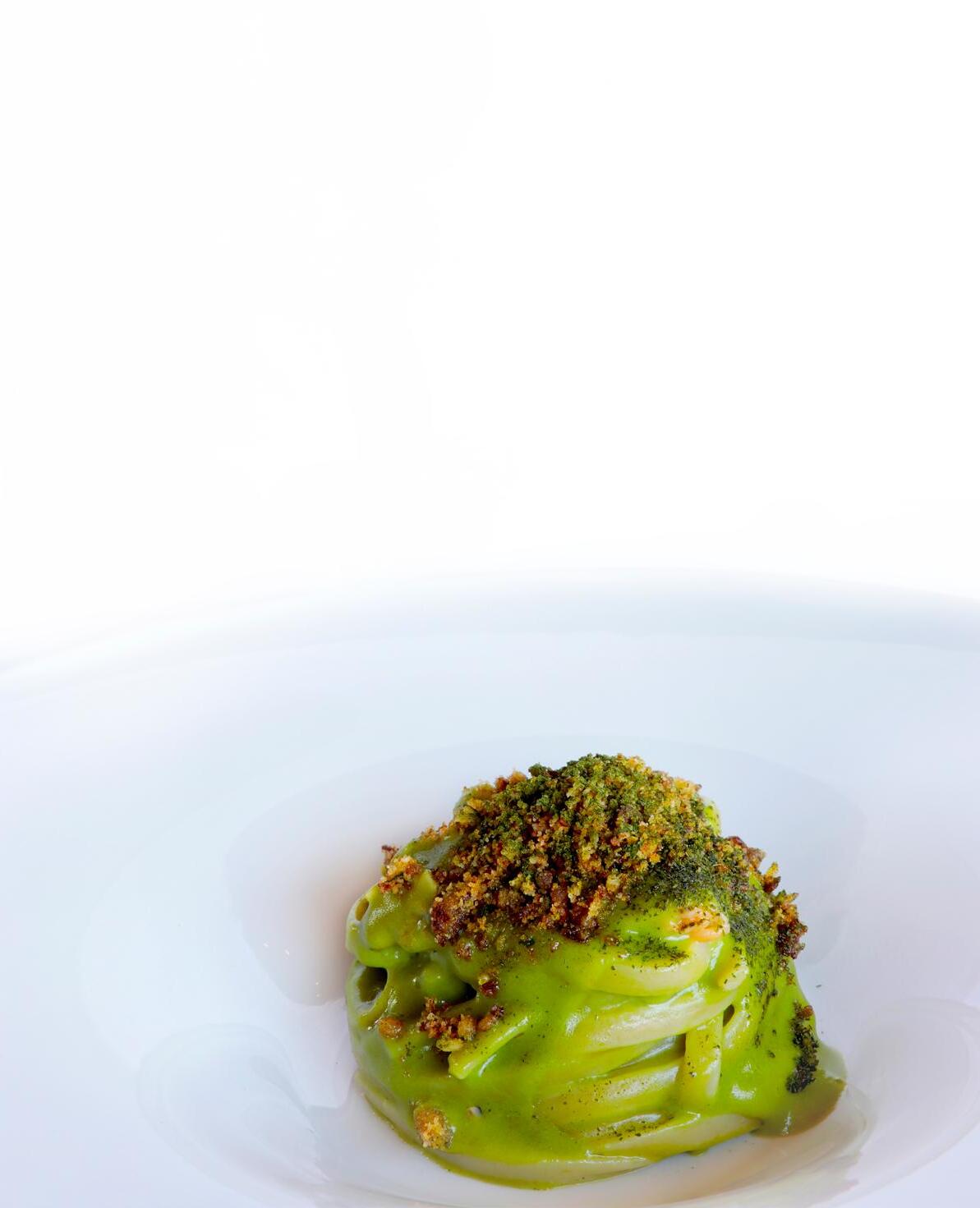
INGREDIENTS FOR 4
320 g linguini
500 g Adriatic lupini clams
500 g Sardinian ‘Cuore’ clams
Lupini emulsion:
Shelled lupini
100 ml lupini water (filtered)
Parsley cream:
100 g parsley leaves
100 g extra virgin olive oil
100 g sparkling water
Parsley stalks
Savoury bread:
1 kg sifted stale breadcrumbs
30 g white onion, finely chopped
1 garlic clove
50 g extra virgin olive oil
50 g extra virgin olive oil
3 Cetara anchovy fillets
1 tsp brown sugar
Zest of 1 Sorrento lemon
10 g sultanas, soaked and chopped
Finely chopped parsley
To finish:
Extra virgin olive oil
Zest of Sorrento lemon
Dehydrated parsley powder (made from blanched and then dried leaves)
20 g parsley cream, 5 g per serving
For the clams: Purge both varieties of clams in cold salted water for at least 2 hours. In a hot pan, open the lupini clams over high heat, a few at a time. As soon as they open, remove them immediately with tongs to preserve their softness. Repeat the process with the Cuore clams. Shell all the clams. Strain the cooking water through a fine mesh sieve and set aside.
For the lupini emulsion: in a thermomixer, blend the lupini pulp with some of their filtered water (released during opening) to obtain a smooth, creamy sauce. Set aside.
For the parsley cream: blanch the leaves for 2 minutes and 20 seconds in boiling salted water. Cool immediately in an ice water bath. Emulsify with olive oil and sparkling water (ratio 1:1:1, i.e. 100 g each). Blend to obtain a bright green, velvety sauce. Strain and store in a kitchen squeeze bottle.
For the parsley powder (optional): use any excess blanched leaves. Squeeze them well, dry them and place them on a baking tray. Dry in a convection oven at 60°C for 6 hours, with the valve open and the fan on low. Once dried, blend finely to obtain an aromatic powder.
For the savoury bread: in a frying pan, sauté the garlic, onion and anchovies in extra virgin olive oil. Add the chopped sultanas, stir in the sifted breadcrumbs. Toast over medium heat, stirring regularly. Once toasted (brown in colour), add brown sugar, lemon zest and chopped parsley. Spread on a baking tray and leave to cool and dry out of the oven.
Cooking the pasta: cook the linguini in the water from the lupini clams, adding water if necessary. After 9 minutes (out of a total of 11 minutes cooking time), start stirring in the pan: add the lupini emulsion, a drizzle of olive oil, 5 g of parsley cream per serving and some fresh, untreated lemon zest.
Plating: twirl the linguini into a nest in the centre of the plate. Place 7 Cuore clams per portion in the centre of the nest. Drizzle with the sauce obtained from the emulsifying process. Complete with the savoury crispy bread and a sprinkling of parsley powder.
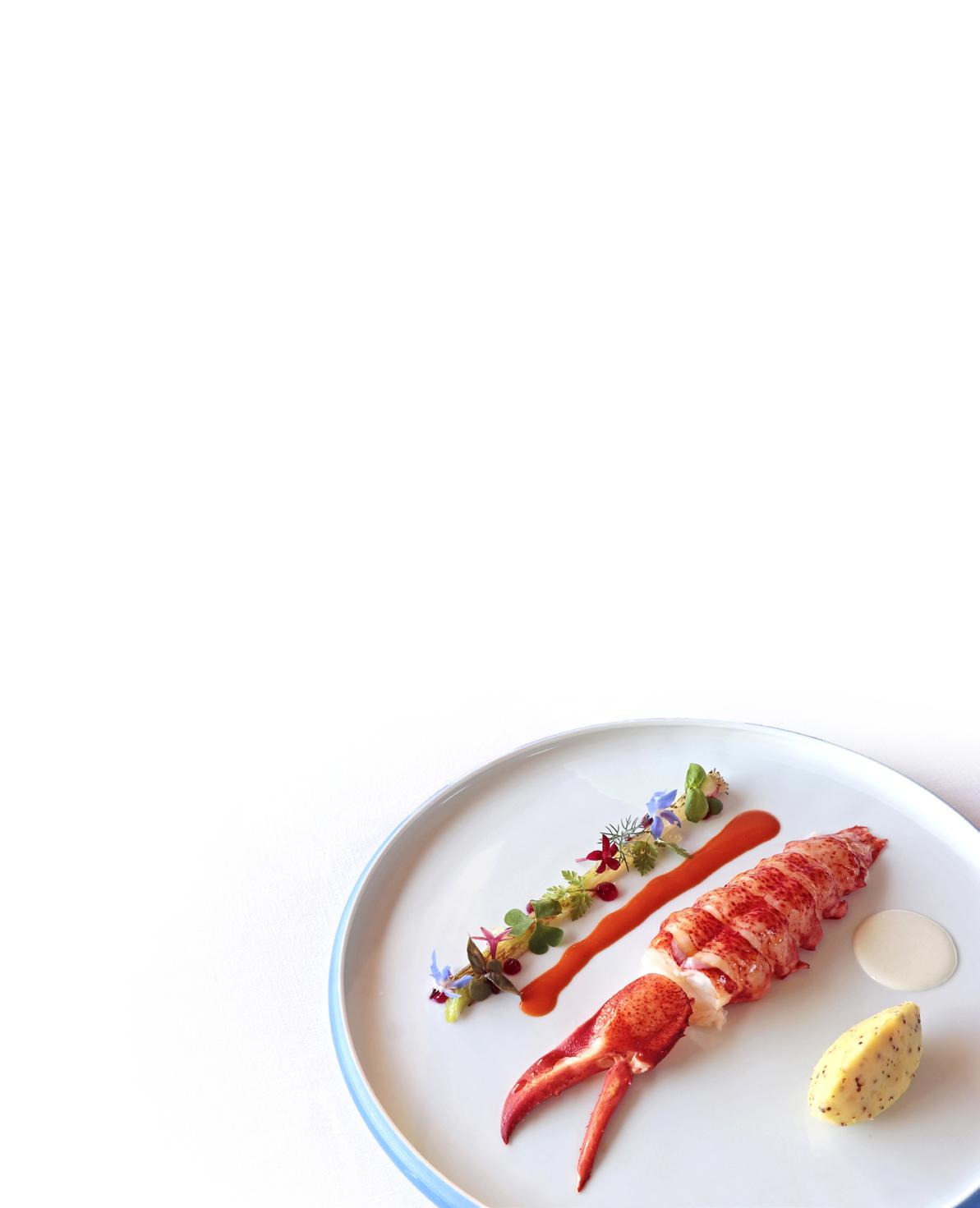
INGREDIENTS FOR 4
For the lobster:
4 lobsters weighing 350–400 g each
1 purple garlic clove
1 sprig of fresh thyme
Salted butter
For the mustard potatoes: 2 medium-sized potatoes
1 tsp of Dijon mustard
Lemon juice
Extra virgin olive oil
Salt and pepper
For the roasted spring onions: 4 fresh Nocerini spring onions Salt
Extra virgin olive oil
For the smoked mozzarella fondue:
250 g smoked mozzarella di bufala
500 ml fresh cream Salt
For the reduced lobster sauce:
Heads of the 4 lobsters, cut in half and eyes removed 1 celery stalk
1 clove of garlic
1 bay leaf
200 g datterini cherry tomatoes
Brandy
Ice (equal weight to heads and tomatoes)
For the finishing touch:
Baby mixed salad leaves
Extra virgin olive oil
For the lobster: separate the tails from the heads (which will be used for the sauce). Using scissors, carefully remove the shell, keeping the flesh intact. Insert a thin skewer into the tails to prevent them from curling during cooking. Cook in salted butter flavoured with purple garlic and thyme at 52°C for 12–13 minutes.
For the mustard potatoes: boil the potatoes in salted water. Once cooked, peel and mash them while still hot. Season with salt, pepper, lemon juice, extra virgin olive oil and mustard: mix until smooth and mouldable to form quenelles.
For the roasted spring onions: blanch the spring onions for 10 seconds in boiling salted water. Then cook them in a non-stick frying pan without fat until they are browned on the surface. Season with salt and a drizzle of olive oil.
For the reduced lobster sauce: in a saucepan, toast the lobster heads well with a drizzle of oil, deglaze with brandy, add celery, garlic, bay leaves, cherry tomatoes and ice in a 1:1:1 ratio to the heads and cook over low heat for about 25-30 minutes. Pass everything through a food mill, then filter through a finemesh chinois. Reduce the sauce to 50% of its initial volume.
For the smoked mozzarella fondue: in a thermomixer, combine the chopped smoked mozzarella with the fresh cream, previously reduced by 50%. Blend to obtain a smooth, well-emulsified fondue. Season with salt.
Plating: form a quenelle of mustard potatoes and place on the left side of the plate. In the centre, place the lobster tail and its open claw on the right. Place the roasted spring onion next to it. Complete with baby mixed salad leaves and finish with a few spoonfuls of reduced lobster sauce and the smoked mozzarella fondue poured in a thin stream or in droplets.
PS: With the other lobster claw and part of the reduced sauce, you can make a quick linguini dish, tossed in the lobster sauce, with the claw cut into small pieces and fresh basil to finish.
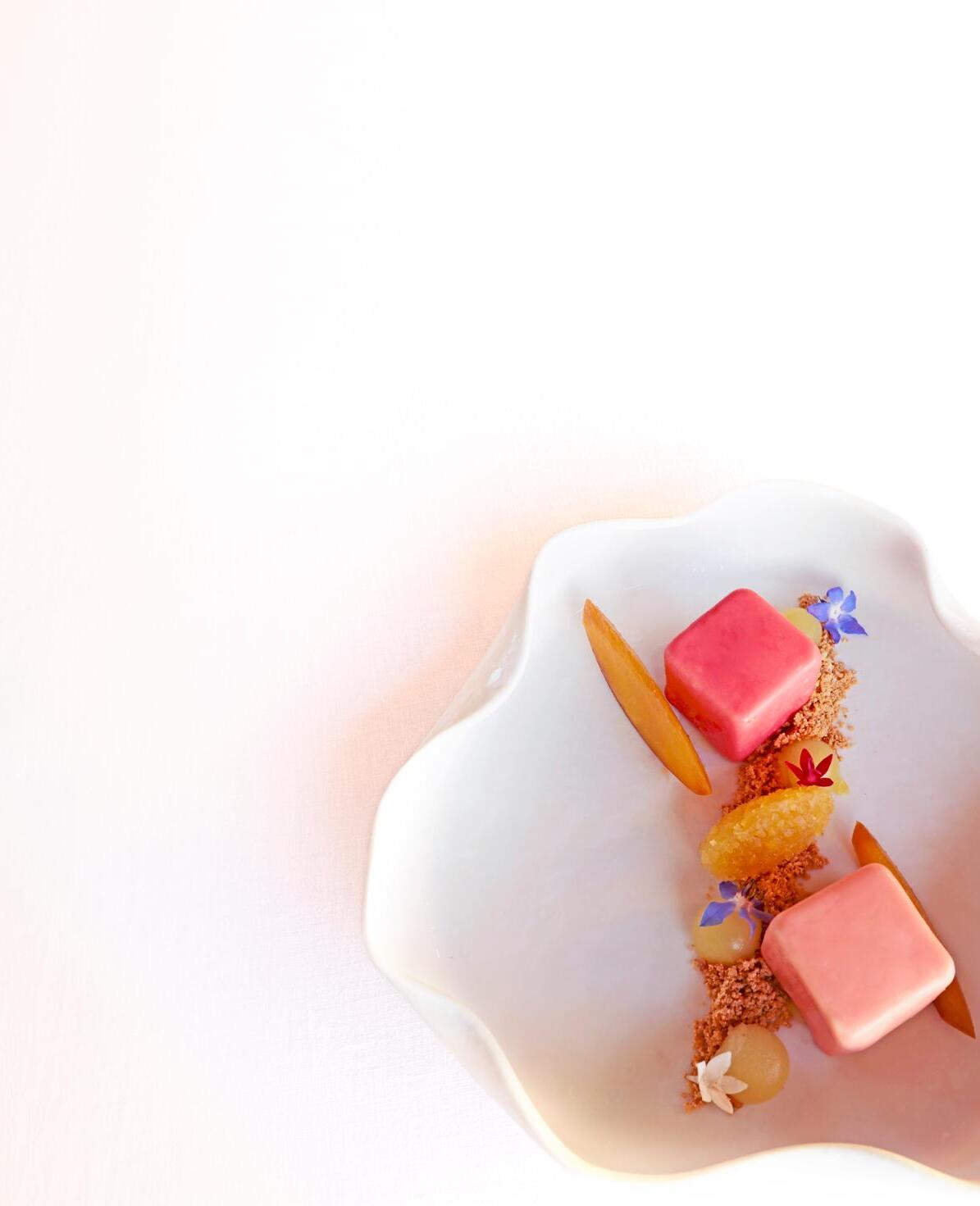
INGREDIENTS FOR 4
Peach and cardamom semifreddo:
100 g egg white
200 g caster sugar
500 g peach purée
Cardamom powder
280 g fresh cream
7 g gelatine
200 g white chocolate
40 g sunflower oil
Fat-soluble red food colouring (optional)
Almond and cardamom crumble:
100 g sugar
100 g butter
100 g all-purpose flour
100 g almond flour
Cardamom powder
Sautéed peaches:
2 fresh peaches
50 g sugar
10 g butter
Ginger in syrup:
200 g fresh ginger
100 g sugar
100 g water
Ginger jelly:
100 g ginger extract (obtained from a juicer or extractor)
10 g sugar
5 g gelatine
Semifreddo: make a Swiss meringue: in a bowl, combine the egg whites and sugar. Heat in the microwave to 70°C, stirring every 30 seconds. Whisk in a stand mixer or with an electric beater until completely cooled and stiff peaks form. Make the peach purée: blend the fresh peaches with 10% sugar and add cardamom to taste.
Prepare the gelatine: soak the gelatine sheets in cold water. Dissolve in a small amount of hot purée.
Add the ingredients: gradually add the peach purée (with the gelatine previously added) to the meringue, stirring gently so as not to break it down. Semi-whip the cream and fold it into the mixture.
Pour into the chosen moulds (preferably cube-shaped) and freeze for at least 24 hours.
Make the white chocolate glaze: melt the white chocolate, add seed oil and food colouring. Emulsify with a hand blender. Glaze the semifreddo cubes once they have been removed from the mould, while still frozen.
For the crumble: mix all the ingredients together and crumble the mixture onto a baking tray lined with baking paper. Bake at 160°C fan-assisted for 20 minutes, stirring and breaking up any lumps after the first 10 minutes. Leave to cool and store in a dry place.
For the pan-fried peaches: wash and cut into wedges. Melt butter in a pan, add the peaches and cook for 2 minutes. Add the sugar and cook over a high heat for another 2 minutes. Leave to cool.
For the ginger syrup: peel the ginger and cut into slices or sticks. Blanch for 10 minutes, drain and cool. Bring the water and sugar to the boil, add the ginger and cook for 3 minutes. Cool in the liquid.
For the ginger jelly: bring the ginger extract and sugar to the boil. Soak the gelatine in cold water. Remove from the heat, add the wellsqueezed gelatine and stir. Pour into hemispherical moulds and cool in the refrigerator or blast chill. Plating: sprinkle the almond and cardamom crumble in an S shape in the centre of the plate. Arrange two slightly offset glazed semifreddo cubes in the centre of the plate. Add two slices of panfried peach on one side of the semifreddo. Form a quenelle of ginger syrup and place it next to the peaches. Complete with a half sphere of ginger jelly, slightly off-centre. Optional, garnish with borage flowers or a sprinkling of cardamom.
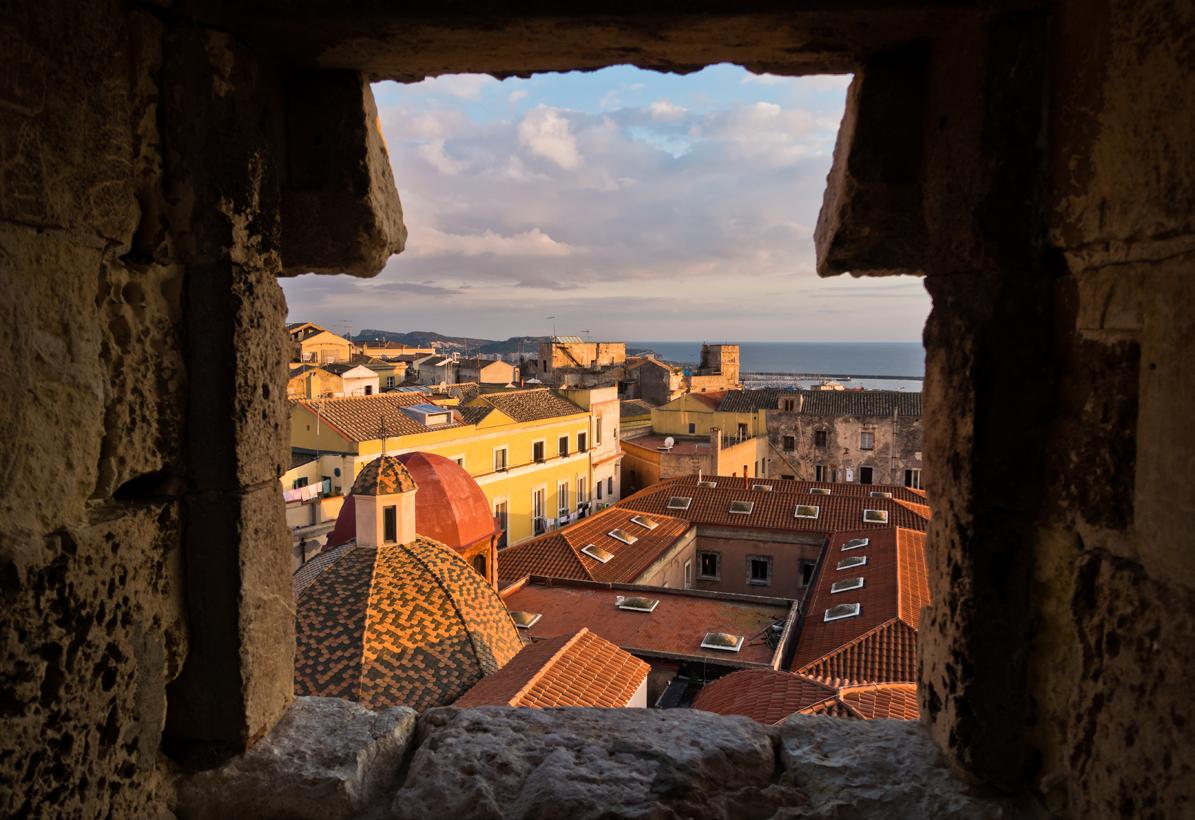
Suspended between land and water, the city is experiencing a powerful rebirth, strengthened by a tradition that propels it towards the world
by Giuseppe
Carrus and Giulia Salis with the collaboration of Andrea Marta
Seen from afar, Cagliari looks like a mosaic of pink roofs stretching all the way to the sea. At sunset, the city lights up, while flamingos trace their final trajectories above the salt pans. It is an image that perfectly captures the spirit of the Sardinian capital, which has always been suspended between sea and land, tradition and openness to the world.
After years of being considered merely a stopping point, today the city is experiencing a renaissance. Neighbourhoods are reclaiming their identity, historic buildings are undergoing a facelift, and new generations are betting on the future. And this transformation is happening above all at the table.
View over the rooftops of Cagliari towards the sea. Above, a dish by Luca Marini, chef at Nakoa, where he focuses heavily on the dry ageing of large fish
In fact, over the last two years, new venues have sprung up that reflect a new way of experiencing Cagliari. These range from signature restaurants that combine Sardinian and Mediterranean influences to hotel kitchens that have ceased to be places of passage and have been transformed into spaces of research and identity. There are bistros born out of a desire to return home after international experiences and which make sharing their philosophy, as well as young establishments that choose to showcase their kitchens to demonstrate transparency and process.
The city administration also echoes this forward-looking view. «Cagliari is a city undergoing lively transformation», explains Mayor Massimo Zedda. «In recent years, new and young entrepreneurs, including many women, have opened various businesses, many of which are related to catering and hospitality.
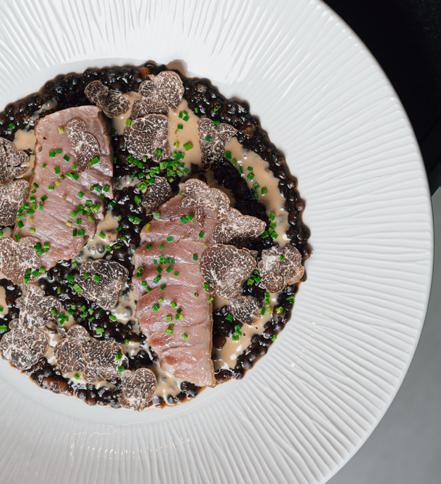
It’s the best way to discover Cagliari, from the Port to the Castle and back down to the Marina, amid history and cultural influences
Of the 2,000 active businesses, 49% are in the catering sector. These encouraging figures from the Chamber of Commerce encourage us to improve the city’s already well-established food and wine offering. Not to mention the historic establishments that carry on the culinary tradition of Cagliari. Added to this is the variety and freshness of the food on display in the city’s markets and small shops that resist large-scale distribution, keeping the “casteddaia” identity intact».
It is a city that can be discovered on foot, one step at a time, and this is how a culinary itinerary takes shape, crossing the historic districts, where you can find established establishments and new openings to keep an eye on, among the narrow streets of Castello, Marina, Stampace and Villanova and the never too frenetic comings
New Year's Eve celebrations: this is the formula devised by the City Council of Cagliari to welcome in the new year. Many different squares for many different audiences and tastes. For some years now, the stroke of midnight has not been marked by big names from the national and international music scene: the City Council has chosen to give a voice to artists, including emerging ones, who are able to offer different shows and truly satisfy everyone.
Before 31st December, however, the Christmas markets will also enliven various locations around the city. Piazza del Carmine will be the main venue for the Christmas markets in Cagliari. The market offers a range of artistic crafts linked to important Sardinian traditions (from ceramics to wrought iron and textiles) and local food products, with honey, nougat, dried fruit, cheese, walnuts, chestnuts and traditional sweets taking centre stage. In addition to the historic square, there are also stalls selling crafts and local produce in Piazza del Carmine, Corso Vittorio Emanuele and Piazza Yenne, one of the city's most important historic squares located at the end of Largo Carlo Felice in the Stampace district.
and goings of the districts built after the Second World War.
Let’s begin our walk among the low, colourful houses of Villanova, the youngest of the historic districts, which began as a settlement for the many farmers who arrived here from Campidano. Today, it has retained its unique atmosphere, with streets flooded with plants and flowers and pastel colours that give way to busy shopping streets and residential buildings that are home to authentic city life. Not far from San Benedetto, one of the largest indoor markets in Europe and currently undergoing restoration, we find Piazzetta Galilei: almost a district linked to flavour and the local area, with shops that have managed to breathe new life into a place that had lost its lustre for years. Starting with I Fenu , an ice cream parlour and pastry shop with extraordinary creativity: the creams are scented with Vernaccia, saffron meets ricotta, and the wafers are crisp and fragrant. It is a workshop that works with seasonal ingredients and small local producers, restoring the authentic soul of the island to ice cream. Creating a 90-degree angle is Cucina.eat , a contemporary bistro that tells the story of the local area starting from the market and its ingredients: a counter with an open kitchen, dishes that change every day depending on availability and a cuisine that reflects the simplicity of things done well, without resorting to distortions of tradition or special effects. Arriving at what was once the “promenade of the Cagliaritani”, Via Garibaldi with the Old Friend Bistrot , the realm of the unconventional Dario Torabi, who has created an intimate and unconventional gastronomic offering with dishes that blend creative journeys, forgotten cuts that
return to the forefront and tradition reinterpreted with a very personal twist. Even the drinks menu invites you to step outside your comfort zone and is perfectly in line with the philosophy of this place, which wants everything except the obviousness of commonplace things. But Cagliari also offers luxury hotels: just a few steps from Villanova, there are many establishments overlooking the courtyard of Palazzo Doglio, including bars that stay open late and trendy restaurants offering ethnic cuisine. Among these is Maiori , which has redefined the idea of pizza in Cagliari by bringing with it the Neapolitan soul: the quiet outdoor seating area, away from the traffic, welcomes a pizza with a high, perfectly honeycombed crust, fragrant and light, with a thin base ready to enhance quality ingredients, which already shine in the simplicity of the Margherita. Not far away is a very recent addition, the
Fried fish and yoghurt mayo at Bottiglieria del Popolo by Clara Gaias and Marco Angioni
Bottiglieria del Popolo , which was born from the return to Sardinia of Clara Gaias and Marco Angioni after ten years travelling around the world, with a bistro where food represents not a territory, but prospects for conviviality.
DStrong legs and good lung capacity will be essential to continue along the roads that lead to the Castello district, one of the seven hills on which the city is founded, and a fortified stronghold built by the Pisans in the 13th century. It is the district that dominates the entire historic centre from above, with its ancient walls, towers and terraces that suddenly open up onto the sea. Walk up the long staircase of the Bastion of St. Remy, catch your breath in front of the panorama that will stand out against it, and then let yourself be guided by your instincts and the labyrinthine structure that still remains. At a certain point, the smell of freshly baked bread will lead the way. Madriga is located opposite the University’s headquar -
While it is true that Cagliari is growing rapidly from a gastronomic point of view, with new establishments popping up here and there every day, it is also true that the mixology scene is taking a few steps forward, albeit timidly. This is demonstrated by the places mentioned above, but also by the first edition of Sardinia Cocktail Week, which last June put the spotlight on Cagliari's bars offering new drinking experiences. To be fair, however, it must be said that Cagliari had, in times that were truly unsuspecting not only for Sardinia, a great American bar that still exists and has never changed. We are talking about Il Biffi, which opened its doors in 1978 and changed hands only once, in 2006, when Ivan Mereu, the current owner, took it over from the founder. Today we would call it a speakeasy, but only because the fashion of the American 1930s is rampant: for all Cagliari residents, it is simply Il Biffi, a pure bar, elegant, cosy and intimate, where you go only after dinner (and until late at night) to drink great cocktails.
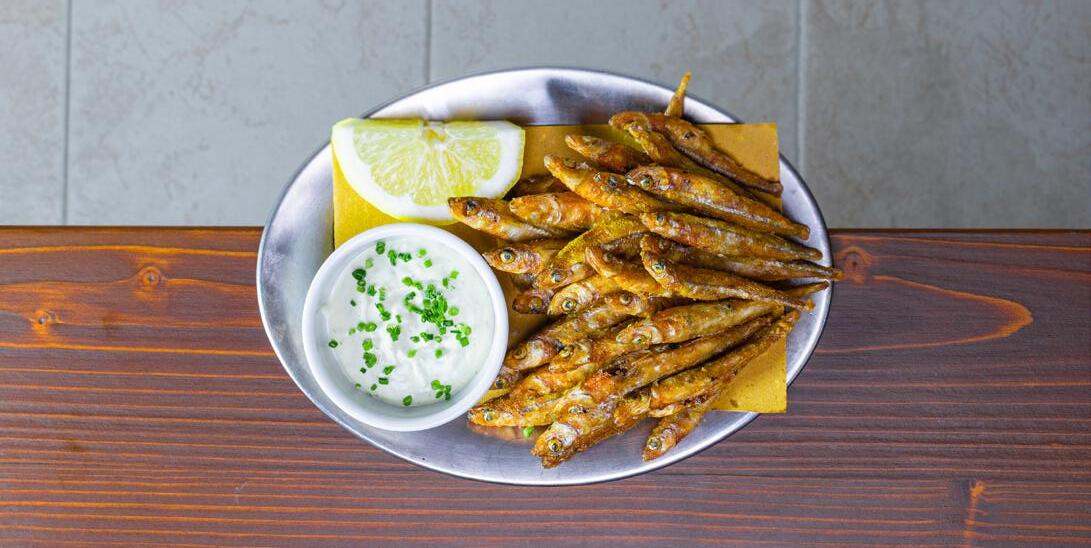
I Fenu gelateria
piazza G alileo G alilei , 35 070 465 5045 – ifenu it
Cucina.eat
piazza G alileo G alilei , 1 070 099 1098 – @ cucina eat
Old Friend Bistrot
ia Giuseppe abba, 51 070 464 7988
oldfriendcaGliari.it
Maiori Pizzeria
p alazzo d o G lio
vico l o G udoro , 1 070 804 6520 – @ maiorica G liari
Bottiglieria del Popolo
via G oceano , 1 331 390 4100
@ botti G lieriadelpopolo
Madriga Forno
via u niversità , 31 070 095 8464
@ madri G a forno
Gli Uffici Ristorante
p alazzo b oyl
via m ario de c andia , 5 331 213 0600 – ufficiboyl it
Libarium
via s anta c roce , 35 346 522 0212 – libarium it
Gemini American Bar
via s anta c roce , 13 320 448 0509 @ G emini americanbar
Terra Ristorante
piazza d effenu , 4 351 315 0260 ristoranteterraca G liari it
Amano Ristorante
via s idney s onnino , 68 349 856 9765 amanoristorante it
Nakoa Ristorante
via XX s ettembre , 51 379 223 8728 – nakoa it
Luigi Pomata Ristorante v le reGina marGherita, 18 070 672058 –luiGipomata.com
Sabores Bistrot
via l odovico b aylle , 6 070 653 216 @ saboresca G liari
Marina Pasta e Pane
via l odovico b aylle , 95 070 463 4464 @ marinapastaepane
Pizza&Vino
via t orino , 12 351 495 2971
@ pizza e vino viatorino
Pasticceria Ditrizio via f rancesco c rispi , 21 070 649 7742
Matrice
Pasticceria Agricola
piazza y enne , 6 070 093 1388 f matriceca G liari
Caffè dell’Arte via c aprera , 3 070 751 0594 caffedellarteca G liari com
Framento Pizzeria corso vittorio emanuele ii, 94 070 667 0370 – @ framento piz
Josto Ristorante
via s assari , 25 070 351 0722 @ josto ristorante
ChiaroScuro Ristorante corso v ittorio e manuele ii , 380 – 347 963 0924 –chiaroscuroca G liari it
Bar Ricicla, Riduci, Riusa corso vittorio emanuele ii, 156 - 346 606 5447 @bar riciclariduciriusa
Biffi American Bar
via s . G iovanni , 6
338 941 6591 – @ ilbiffi
Palazzo Doglio
vico l o G udoro , 1 070 64640
palazzodo G lio com
Palazzo Tirso
piazza d effenu , 4 070 762 2000
palazzotirsoca G liari com
Hotel Villa Fanny
via d on b osco , 8 070 858 7300
hotelvillafanny it
Casa Clat v le r e G ina m ar G herita , 55 070 1525 6371 – casaclat it
Mio Charming House
via v incenzo s ulis , 83
339 877 7496 –myoca G liari it
Crobi Museum and Suites
piazza y enne , 36
348 252 7481 – crobi it
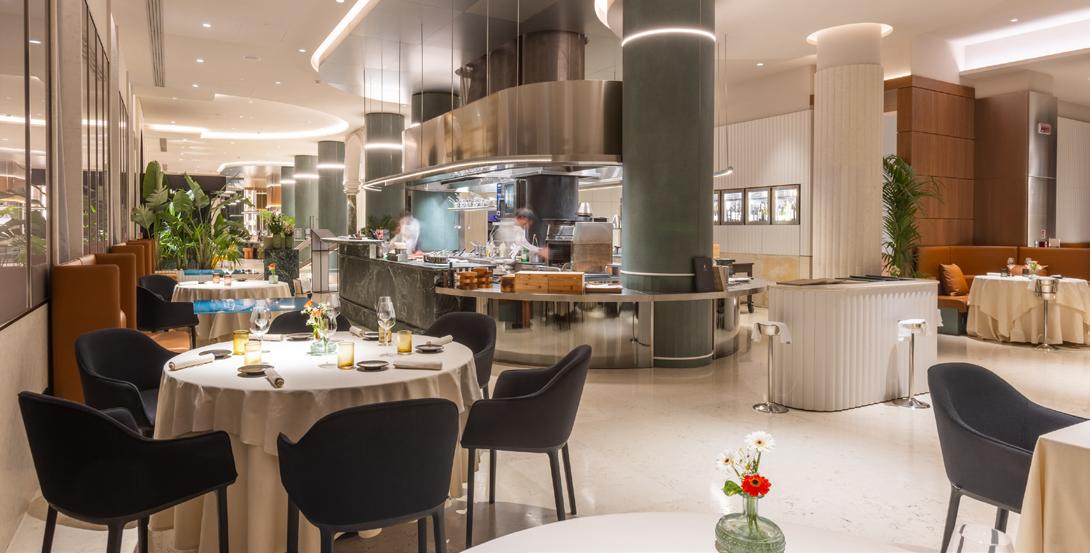
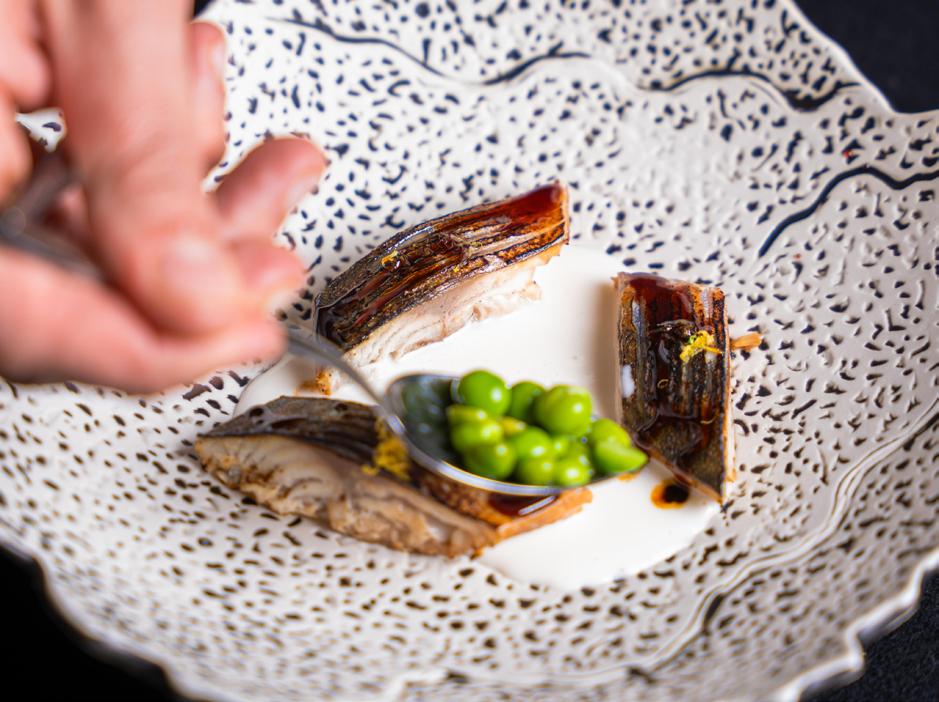
ters and is not a bakery like any other: it is research, it is territory and it is contemporary. Here, the ovens are lit in the morning and the neighbourhood is filled with the scent of wheat meeting heat. Every day there is a different bread, always faithful to sourdough and flour from small Sardinian mills.
Almost marking the boundary between the modern and old city stands the elegant Palazzo Boyl, a residence dating back to 1840. Here, on the second floor of the building, we find Gli Uffici, a restaurant run by Tommaso Sanguedolce from Puglia. In the dining room, with a view that embraces the sea and the lagoon, you enter a world where Sardinian flavours blend with those of the chef’s origins. And if there is one place that symbolises evenings in Castello, it is undoubtedly the Libarium , a terrace suspended above the city that has been one of Ca -
gliari’s drinking landmarks for years, as well as being the setting for panoramic breakfasts or lunches. For a perfectly crafted cocktail, pop into Gemini , an American bar under the Elephant Tower. Here you can enjoy a totally personalised experience with barmen who reinvent each drink to suit individual preferences, in a refined and relaxed setting.
From the sky, down towards the sea. Cagliari is a constant series of ascents and descents, and the Marina is also the place that has absorbed cosmopolitan influences and intrusions more than any other. Once a fishermen’s quarter, today it is a succession of bars and restaurants, with an identity that often changes face: the open expanse of the harbour, with its arcades and moored boats on one side, and the maze of narrow streets that enclose the tourist soul of the city. On the
Mackerel with peas and mint by Vincenzo Sorvillo at Amanõ. Opposite, the dining room at Terra: a young restaurant run by Alessio Signorino and Valerio Fermani
border between new and old, right by the sea, inside the luxury hotel Palazzo Tirso, is the restaurant Terra , which works with a young team led by Alessio Signorino and Valerio Fermani, in a story of Sardinia that passes through a cuisine that seeks to read between the lines of tradition but looks at it with new eyes. Not far away is Amanõ, a project by Vincenzo Sorvillo, a chef from Campania who chose Sardinia for love and now creates dishes that tell the story of his journey. The kitchen is open, the menu à la carte or with two tasting options, intertwining memories and technique, Italian roots and Sardinian accents.
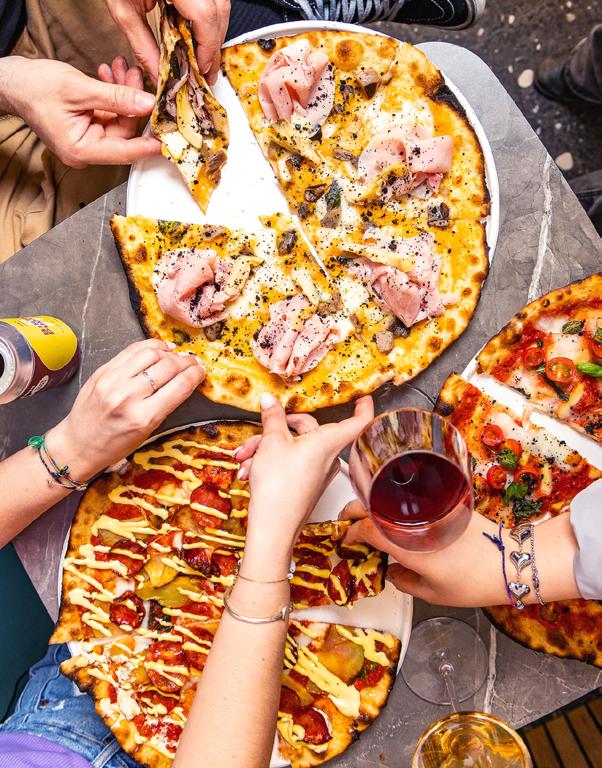
Pizza e Vino, near the Bastion of St. Remy: their pizzas can also be eaten in the surrounding restaurants
A few metres further on, we find ourselves at Nakoa, the venture of another young chef, Luca Marini, who decided to return to the city to open a small restaurant, where the open kitchen is a symbol of a pop philosophy, but one focused on the product and its transformation. The focus is on the maturation of fish, treated with technique and respect and without any fashionable pretensions. A few steps, an uphill road and we come to the restaurant of Luigi Pomata , for years one of the cornerstones of Cagliari cuisine. He is the man who “talks to tuna” and his cuisine is strongly rooted
in the local area, where the classic marries a confident and never predictable creativity. Those looking for a more immediate, convivial and fresh cuisine will find their favourite place at Sabores , a small restaurant overlooking the harbour, which started out as a shop and is now a bistro, with a cuisine accompanied by an intriguing and never predictable wine cellar, which starts with daily shopping and ends with playful dishes, but always firmly anchored in an imaginary bridge that connects Sardinia to other places.
Marina is a very touristy neighbourhood, but there are also those who are trying to restore its urban identity. Starting with bread . Marina Pasta e Pane , born from the Impasto pizzeria collective, wanted to revive the concept of the neighbourhood bakery, as it used to be, with an
Crisp, fragrant, moist, juicy: the pizzetta sfoglia is the emblem of the Cagliari breakfast. For “true” Cagliaritani, there is no coffee bar that doesn’t serve it, alongside a coffee or cappuccino. Two discs of puff pastry enclose tomato sauce with capers (and sometimes anchovies), in the “a sa casteddaia” version that smells of childhood mornings, family celebrations and impromptu snacks. It is a simple rustic dish, but one that is deeply rooted in identity: outside Cagliari, it is difficult to find really good ones, perhaps because its secret is also emotional.
In 2022, it was included among the PAT, traditional agri-food products, thanks to a group of pastry chefs and bakers who wanted to give it the recognition it deserves. It does not have a centuriesold history, but it has conquered a unique role in the city's imagination. Everyone prepares it in their own way, some reinterpret it, fill it or reinvent it: it remains there, solid and gentle, an emotional refuge capable of telling the story of the city in one bite.
artisan workshop that smells of flour and yeast. The focus is on bread, pasta and pizza: tonnarelli, tagliatelle, fregola. And then there’s the unmistakable civraxu, pan brioche, sliced bread, rich pizza slices and white focaccia. For lovers of scrocchiarella pizza, on the other hand, a visit to Pizza e Vino in Via Torino, in the shadow of the Bastione di St. Remy, is a must. A small but lively setting, with very few tables and a very young staff: here, pizza rhymes with sharing. In fact, the pizzas are served on paper plates so that they can also be eaten in the many nearby establishments, creating a sense of a small neighbourhood community built around food and cocktails. The wine list is fun, albeit small: few labels, but all carefully selected.
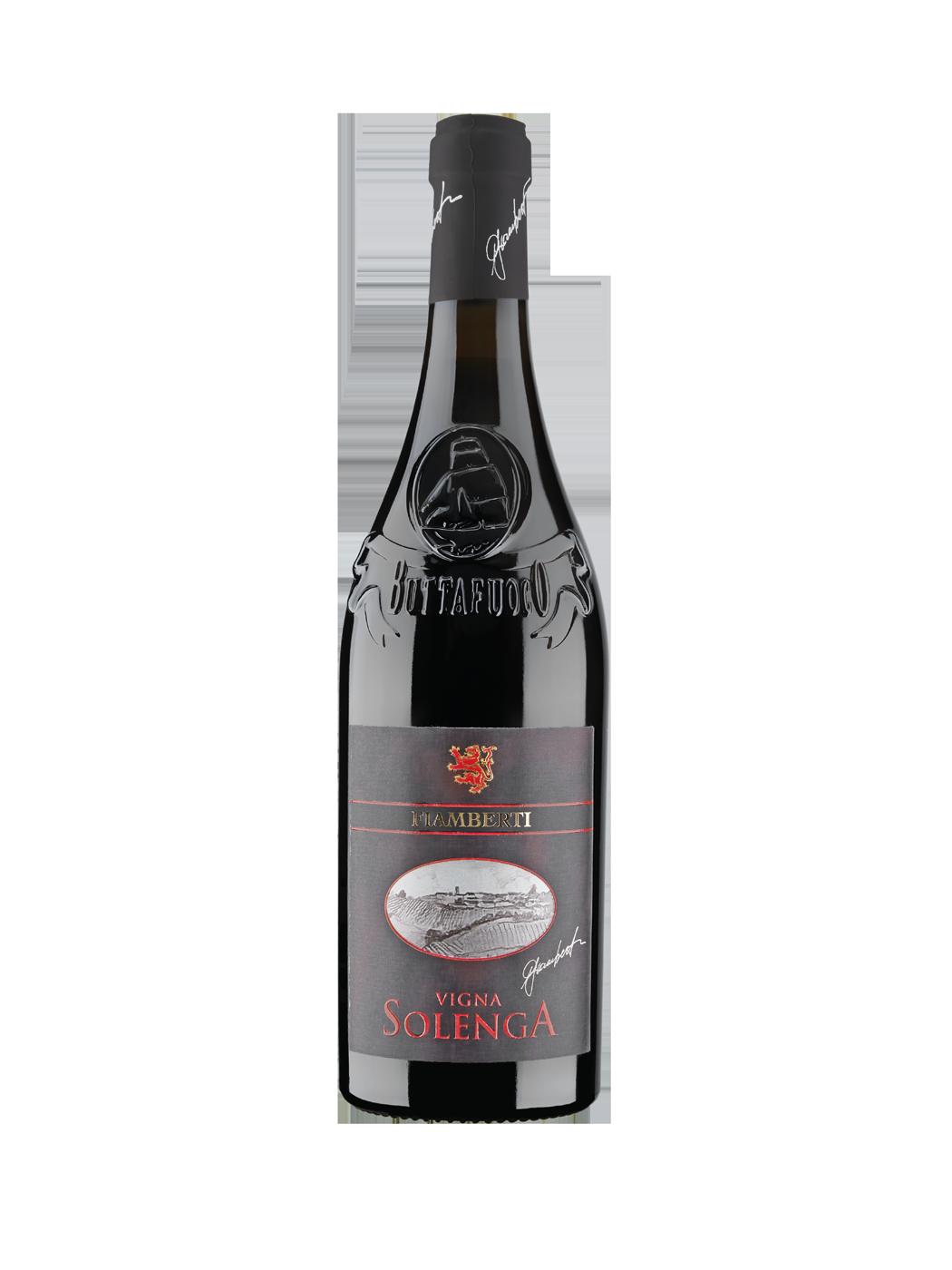
Talking about our wines means talking about our land, history and family. But it also means taking you on a journey of enthusiasm and passion. It means getting you into all the choices behind the creation of a new wine or the reinvention of our classics, from the initial inspiration to the final decision. In this process we always try to reach the perfect balance between man and land, tradition and change, our present and our visions of the future. We hope to tell you all this soon, sharing a

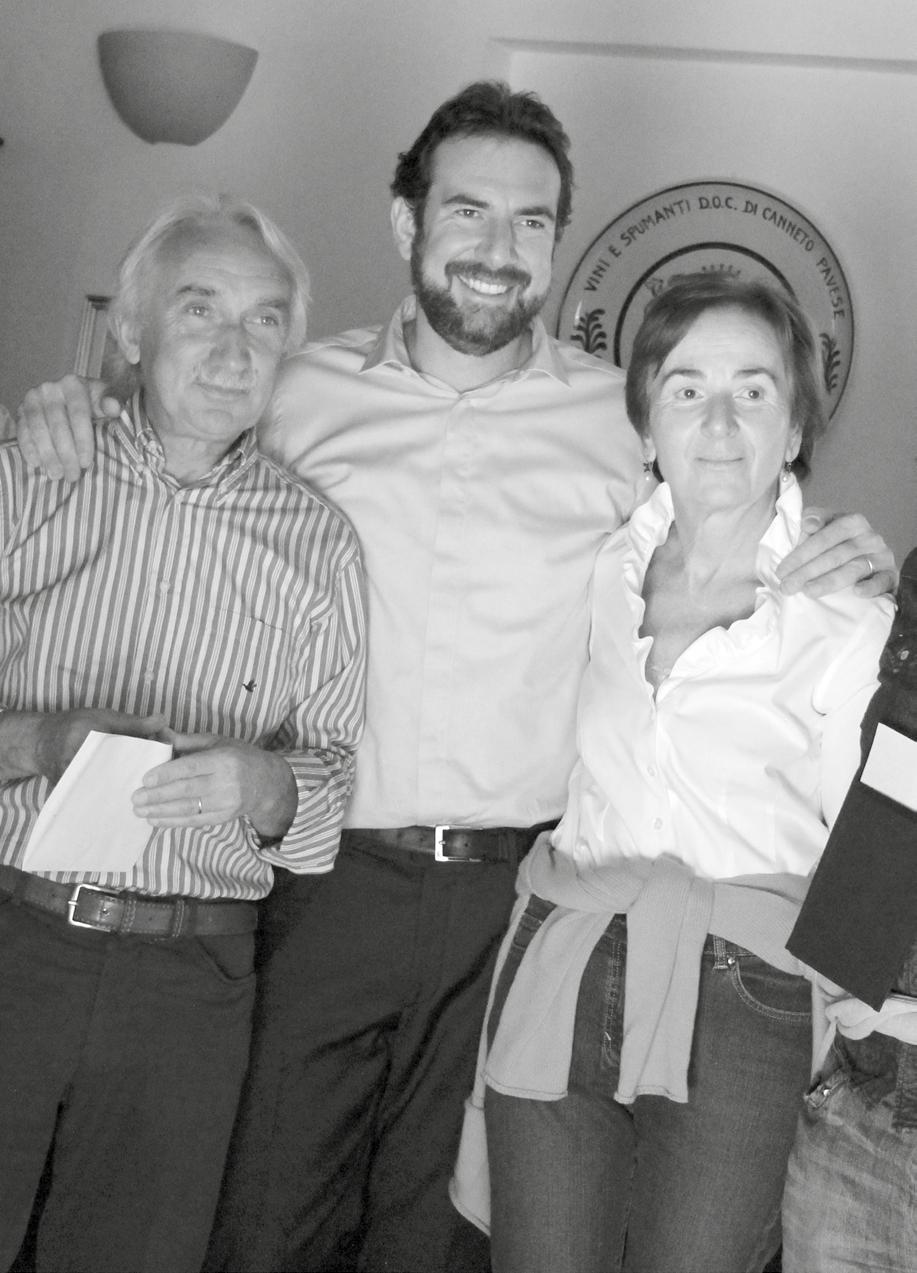
La One of many legends has it that the bodies of Cagliari residents found wandering within the castle walls after sunset were thrown from the Bastione di Santa Croce: “Rest in peace,” the executioners would say during the gruesome ritual. This may have given rise to the name Stampace, one of the oldest districts of Cagliari, which originated in the 13th century as a neighbourhood of artisans and workshops. Among Baroque churches, historic shops and traces of the ancient Roman amphitheatre, the neighbourhood is a maze of streets that tell stories of antique dealers and faith, with a community united around the rites of Sant’Efisio, the warrior martyr who freed Sardinia from the plague. Today, it is a lively neighbourhood, with many tourists and Cagliari residents meeting in its streets until late in the evening. To start the day off right, it is almost mandatory to stop at the Ditrizio pastry shop, a few steps from the monumental Palazzo Civico, which has become a landmark in Sardinia in just a few years. Welcoming, with an open kitchen that works tirelessly and offers sweet and savoury pastries that border on perfection. If you are a fan of a second breakfast, on the border between Stampace and Marina, in Piazza Yenne, where the statue of Carlo Felice remains one of the emblems of the city (and also of the football team), we find Matrice , an agricultural pastry shop, as it is defined for the link it has chosen to have with raw materials and the territory. It offers Tuscan specialities, like its owner Gabriele Giambastiani, as well as international ones. The world of coffee is also growing rapidly, perhaps thanks to the many foreigners who visit the city and are accustomed to less Italian-style selections and extractions that offer a different aromatic scale. Caffè dell’Arte has changed the rules, bringing the culture of specialty coffee to the city with a family project that starts with the selection of beans from small plantations and roasted on site, to the various extraction techniques: from espresso to V60, from Chemex to Cold Brew.
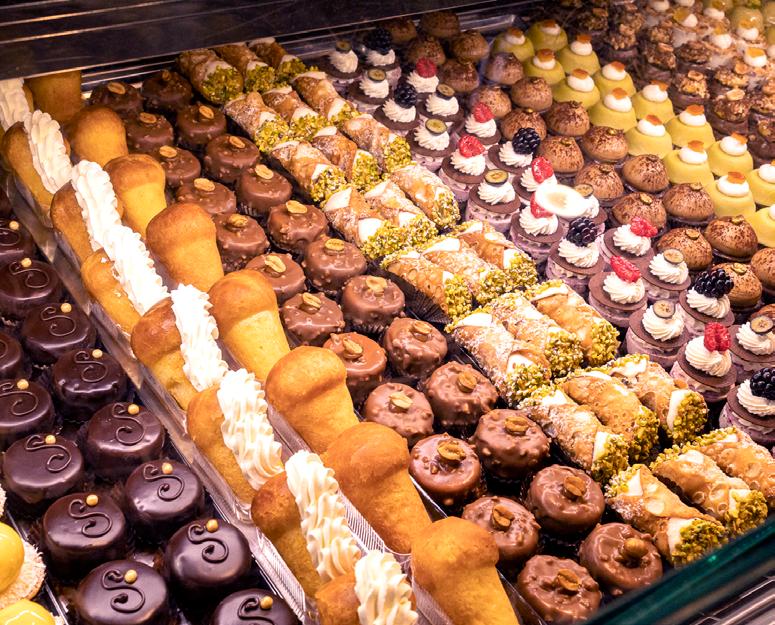
Let’s get back to pizza. Since it opened, Framento, owned by the Fais family, has represented a new way of understanding pizza in the city. Today, it has a new location on Corso Vittorio Emanuele, nestled between other tourist spots: a few seats at the counter, dough made with semolina, wholemeal flour and spelt, long rising times and crispy crusts that creatively welcome local ingredients. Along the same lines is Josto (owned by the same proprietors), a restaurant a few steps from Piazza del Carmine, where the post-industrial setting provides the backdrop for a cuisine that aims to give the island a new language: a simple menu, great attention to seasonality and ingredients sourced from small producers. Local creativity can also be found in the cuisine of Marina Ravarotto and her ChiaroScuro, a corner of Barbagia in the heart of Campidano. A few tables, an intimate atmosphere and handicrafts on the walls provide the backdrop for a gastronomic concept that recounts Nuoro’s origins with a contemporary
The counter at Pasticceria Ditrizio, a stone’s throw from the Palazzo Civico (photo by Natalia Ghiani/ Studionodo)
twist. The land is the absolute protagonist: from sheep tartare to broth with filindeu, an ancient and rare Sardinian pasta, or su pani frattau, a symbol of the pastoral diet of Barbagia. But in Stampace, we don’t just find food, we also find good drinks. Pop into Bar Ricicla, Riduci, Riusa, a fun, old-style bar also on Corso Vittorio Emanuele, born from the passion and madness of Magdalena Perria and Martina Gorgoni, also owners of the Sa Matracca pizzeria, who had the idea of reusing the pizzeria’s scraps and leftovers to create unusual cocktails.
This is how Cagliari presents itself today, with neighbourhoods echoing with ancient stories and signs that redesign its present. A living mosaic of kitchens, bakeries and pastry shops, which convey the image of a city finally aware of its gastronomic identity and ready to share it with the world.