


By MICHELLE WILSON News Editor
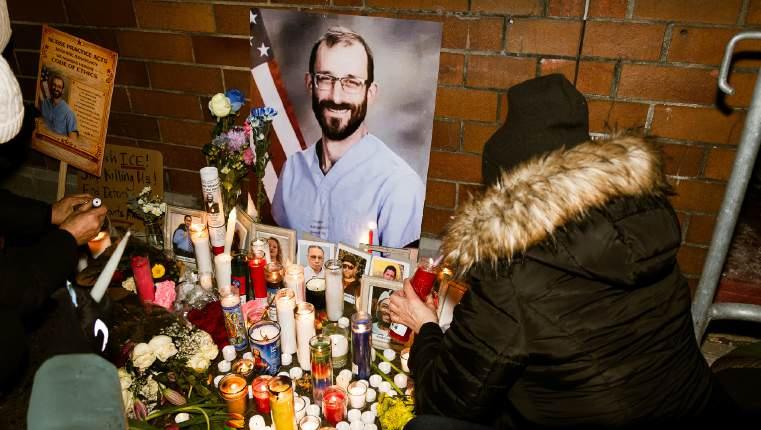
In the week following Alex Pretti’s fatal shooting by two Customs and Border Protection agents on Jan. 24 in Minneapolis, New Yorkers gathered in frigid temperatures to honor Pretti’s memory and demand “ICE Out.”
Pretti, a 37-year-old nurse for the United States Department of Veteran Affairs (VA), was seen filming the agents and standing between them and a fellow protestor who had been pushed to the ground. Pretti was then wrestled to the ground and shot. Homeland Security Secretary Kristi Noem said in a statement following the incident that Pretti had been “brandishing” a gun, which has been disproven by multiple eyewitness videos. Pretti was a legal gun carrier, and his weapon was removed by the agents before he was shot. The two agents involved have been placed on leave in an ongoing internal investigation by the Department of Homeland Security (DHS).
Pretti’s death follows almost a month of upheaval in Minnesota, including the death of Renee Good, a 37-year-old poet and mother of three, on Jan. 7, among several other violent altercations between citizens and CBP agents. Multiple other people have died in 2026 in Immigration and Customs Enforcement (ICE) custody and in detention centers. ICE’s aggressive conduct toward protestors, wrongful detainments of U.S. citizens and warrantless arrests have sparked backlash across the nation.
Pretti’s family released a statement in hopes of “get(ting) the truth out about (their) son,” who they called a “hero.”





By JANE ROCHE Editor-in-Chief
Fordham University administra-
tors hired an outside law firm to review faculty and university webpages, proposing changes to language related to teaching and research, without consulting faculty leadership.

On or before July 1, 2025, an unknown number of faculty received reports from senior administrators with suggestions for revising the content of their webpages, sparking concerns that the reviews infringed on academic freedom and bypassed shared
CORA COST Sports & Health Editor
Universal Dance Association (UDA) College Nationals is often referred to as the “Super Bowl of dance,” and this year, for the first time ever, the Fordham dance team made an appearance on the national stage in Florida.
The UDA Nationals are held every year in Orlando at the Walt Disney World Resort, where collegiate dance teams from across the country compete in several style categories, including Jazz, Hip-Hop, Pom and Game Day.
The Fordham dance team can be found on the sidelines of every Fordham football game and both
men’s and women’s basketball games, as well as several halftime performances every year. However, this year, the dancers on the Fordham squad took their talents to the national stage, which meant they had to train for the athletics games and their national routines in tandem.
In order to ensure that the squad had enough time to prepare for the inaugural debut at the UDA Nationals, the dancers came back early from their winter break to clean up and rehearse both their jazz and hiphop routines.




has not been identified, nor the proposed changes.
In response to the webpage reports, the Faculty Senate approved a resolution at a Dec. 19 meeting calling on the administration to publicly affirm protections for academic freedom (which consists of teaching, research, intramural speech and extramural speech), to disclose plans to resist federal funding pressures that could influence teaching or research, and to outline how they will support faculty and community members who face repercussions for exercising free speech or academic freedom, regardless of immigration or citizenship status.
The Faculty Senate expressed concern over the so-called “risk assessments” conducted by the law firm, warning that the process may conflict with protections outlined in university statutes and previous resolutions. Article four, chapter four of the University statutes on academic freedom states the following:
governance, according to the Fordham Faculty Senate. Shared governance is a collaborative decision-making model between Fordham’s administration and faculty leadership.
Members of the Faculty Senate said they have not seen the reports from the law firm, which
“It is the policy of Fordham University to encourage full freedom of teaching, discussing, research and publication and to protect any member of the instructional staff, whether tenured or non-tenured, against pressures and influences from within and without the University which would restrict the exercise of academic freedom.”
By LILI TANGHE Contributing Writer
The weather outside might be frightful, but Fordham students were able to escape the cold this Friday at Fordham Lincoln Center’s Pope Auditorium for the 12th annual Winterfest. Open to both Lincoln Center and Rose Hill students, the concert is a kickoff to the new semester as well as a rare occasion for all Fordham students to interact and enjoy some high-energy music. Doors opened at 5 p.m., with the music starting around 5:30 p.m. The standby line had already formed by then, with concertgoer


Jo Reyna, Fordham College at Rose Hill (FCRH) ’28, at the front of it. Reyna had encouraged her friends to buy tickets, but had not herself.
“They told me if I don’t get tickets, then I’m dead. So I decided to just show up early and secure my ticket,” Reyna said.
Reyna ended up waiting to be let into the show for about an hour and a half. The experience was not a total wash, however — people who had gotten in the standby line early were treated to the sight of the night’s guest act, Between Friends, examining the latest exhibition at the Ildiko Butler Gallery preperformance.


The United States’s extradition of Venezuela’s president has caused ardent discourse internationally
By MACKENZIE COOPER News Editor
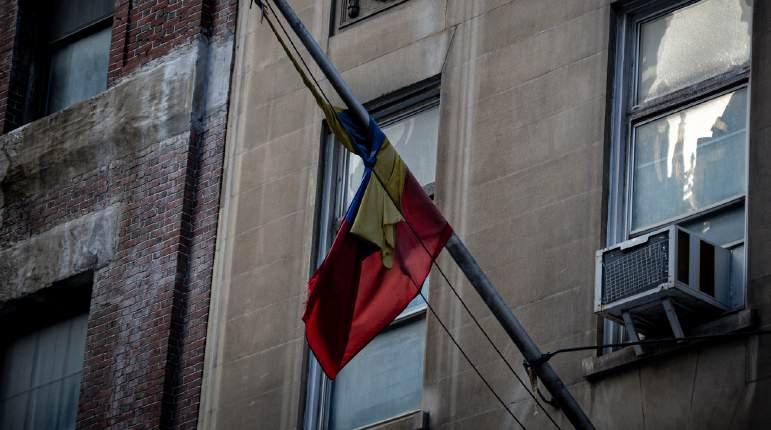
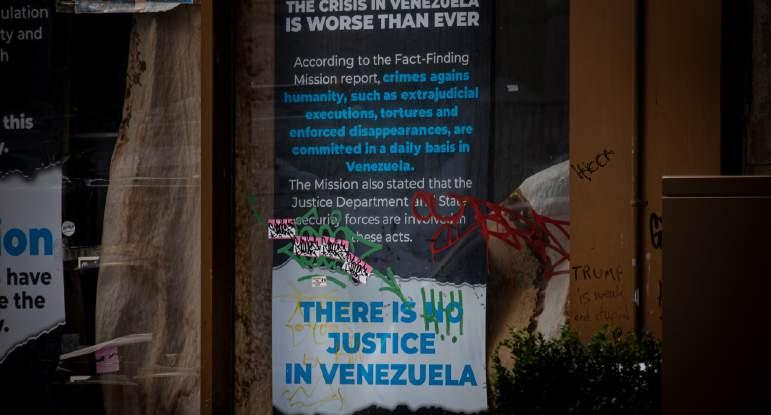
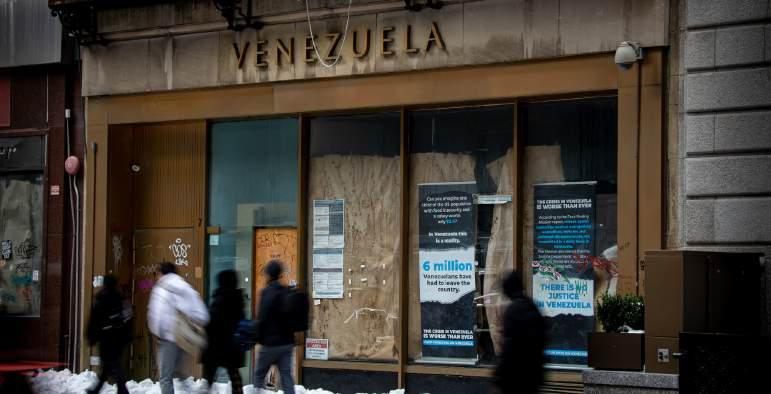
Venezuelan President Nicolás Maduro was extradited from his home in Venezuela on Jan. 3 to the Metropolitan Detention Center (MDC) in Brooklyn by the United States (U.S.) Army Delta Force and is facing charges for narcoterrorism, cocaine importation, conspiracy and weapons offenses.
The Trump administration’s actions have sparked dialogue among nations and the Fordham community about the future of Venezuela’s political structure, and what role the United States should play in shaping it.
Cilia Flores, Maduro’s wife, was arrested on the same charges. Flores is also being accused of collaborating with top Venezuelan officials in a drug trafficking network called “Cartel of the Suns” to move cocaine into the U.S.
U.S. Attorney General Pamela Bondi took to social media after Maduro and Flores were arrested to issue a statement saying that “Nicolas Maduro and his wife, Cilia Flores, have been indicted in the Southern District of New York,” and “they will soon face the full wrath of American justice on American soil in American courts.”
The U.S. District Court for the Southern District of New York will handle the case. Maduro and Flores pleaded not guilty during their initial court appearance on Jan. 5.
That same day, the Supreme Tribunal of Justice, the highest court in Venezuela, appointed Delcy Rodríguez, formerly vice president, as interim president. Rodríguez has previously held other governmental roles, including serving as minister of petroleum and minister of economy and finance. Article 234 of Venezuela’s Constitution states that, if a president is temporarily unable to serve, they shall be replaced by the executive vice president for a period up to 90 days, which can be extended to six months.
Carl Fischer, a professor of Spanish at Fordham specializing in contemporary Latin American literature, said that he questions whether the country’s new president can realistically navigate the conflicting domestic and international demands she may face.
“I’d just say that I’m skeptical that the new president of Venezuela, Delcy Rodríguez, can balance the different pressures that are on her over the long run: how is it possible to have policies that simultaneously satisfy the rightwing Trump administration and also the hard-left leadership that continues to be in power in Venezuela, alongside Rodríguez?” Fischer said.
The European Union (EU)
has raised concerns regarding Rodríguez as interim president.
Anitta Hipper, spokesperson for the EU, cited the country’s electoral process as being indicative of ae lack of respect towards democratization.
“We said that Delcy Rodríguez has been sworn in as the interim President. The Venezuelan authorities, however, draw their mandate from an electoral process that did not respect democratic change. So the European Union feels that the future of Venezuela must be based on inclusive dialogue that would include the participation of all actors working on behalf of democracy,” Hipper said.
On Jan. 30, Rodríguez announced an “amnesty law” for prisoners in Venezuela that could result in the release of hundreds of political prisoners. The U.S. Embassy for Venezuela released a statement on the same day saying that all U.S. citizens who were detained in Venezuela had been released, a claim that was difficult for some news organizations to confirm.
Rodríguez also announced that the El Helicoide Detention Center, a well-known prison facility in Caracas, will be shut down and converted into a center for sports and social services. El Helicoide was originally constructed to be a shopping mall, which was never completed. It was used during the Maduro administration for regular criminals and political prisoners. The facility is infamous for harsh conditions and human rights violations documented by various international human rights organizations.
Diego Henesy-Rodriguez, Fordham College at Lincoln Center ’28, is an American citizen who was born and raised in Panama. He is also the president of the Political Lens club, an organization that allows students to write about international foreign policy issues and grow their skills as writers.
Henesy-Rodriguez expressed skepticism regarding the sincerity of the interim president’s decisions, arguing that the prisoners’ releases should not be interpreted as a genuine act of democratization.
“It doesn’t take a lot of investigation to see that that’s almost like a tactic in a sense, like a way of making themselves be perceived as better and more free than the past,” Henesy-Rodriguez said.
Leaders from various Latin American countries have shared their reactions to Flores and Maduro’s extradition. Brazil, Chile, Colombia, Mexico and Uruguay released a joint statement, which was also signed by Spain.
“We express our deep concern and rejection of the military actions carried out unilaterally in
the territory of Venezuela, which contravene fundamental principles of international law. Such actions set an extremely dangerous precedent for regional peace and security and for the rulesbased international order, in addition to endangering the civilian population,” the statement said.
While many countries criticized the U.S.’s approach to the situation, there were some that praised the Trump administration’s actions, such as Israel and Argentina. Israeli Prime Minister Benjamin Netanyahu took to social media to congratulate Trump on his “bold and historic leadership on behalf of freedom and justice.” also writing, “I salute your decisive resolve and the brilliant action of your brave soldiers.”
The relationship between the U.S. and Venezuela has been complex for the last 26 years following former Venezuelan President Hugo Chávez’s election in 1999, after which he launched the
Bolivarian Revolution, a highly controversial socialist movement.
Chris Dietrich, a professor of history at Fordham who studies U.S. foreign relations, placed the current political moment within this broader history and said the U.S. intervention in Venezuela is an exercise of imperial power rather than isolated diplomatic action.
“The United States has a long history of intervening in Latin American and the Caribbean. Indeed, one way to think about inter-American history is through the concept of U.S. empire, and to ask precisely how different presidential administrations have limited other nations’ economic sovereignty and justified intervention,” Dietrich said. “Venezuela’s oil isn’t a justifiable target for intervention, not by a long shot. Risking war or the further aggrandizement of presidential power, for such a spurious reason or even less spurious ones, is illegitimate and dangerous.”
When discussing Venezuela’s political evolution, Fischer noted that the nation’s governance has grown increasingly repressive under Maduro.
“They’ve become even more authoritarian since the Chávez era, meaning that there’s been more repression and a smaller concentration of power in fewer hands. People really oppose the Maduro regime, particularly outside of Venezuela where opponents can express themselves more freely than within it, and some of those people clearly have the ear of Marco Rubio and Trump,” Fischer said.
Henesy-Rodriguez shared a similar perspective that Maduro’s administration was a continuation of Chávez’s authoritarian governing.
“I can tell you right now, Maduro is like the second iteration
of the authoritarian communism in Venezuela because the first was Chávez, and right now what we’re seeing is the disciple of Chávez continue on,” Henesy-Rodriguez said. “Tenure from Chávez to now has been the same sort of … benefit of the leadership at the sharp expense of the citizens including now a lot of oppressive anti-free speech.”
Venezuela is not the only country that the U.S currently has conflict with. In 2019, Trump first shared his desire to purchase Greenland, a proposition which was turned down by Denmark. Now, in his second term, Trump has increased his efforts to obtain the territory. Trump has threatened to increase tariffs on Denmark, Germany, France and the United Kingdom by 25% unless Denmark decides to sell Greenland to the U.S.
President Emmanuel Macron of France, Chancellor Friedrich Merz of Germany, Prime Minister Giorgia Meloni of Italy, Prime Minister Donald Tusk of Poland, Prime Minister Pedro Sánchez of Spain, Prime Minister Keir Starmer of the United Kingdom and Prime Minister Mette Frederiksen of Denmark have all issued a joint statement on Greenland.
“NATO has made clear that the Arctic region is a priority and European Allies are stepping up. We and many other Allies have increased our presence, activities and investments, to keep the Arctic safe and to deter adversaries. The Kingdom of Denmark –including Greenland – is part of NATO,” the statement said.
Maduro and Flores will make their next appearance in court on March 17, where defense attorneys will file motions challenging the legality of their arrest and pushing for immunity as former state officials.
Protests across New York City continue after another U.S. citizen was killed by ICE in Minneapolis
“We are heartbroken but also very angry. Alex was a kindhearted soul who cared deeply for his family and friends and also the American veterans whom he cared for as an ICU (intensive care unit) nurse at the Minneapolis VA (Veterans Affairs) hospital. … I do not throw around the hero term lightly. However his last thought and act was to protect a woman,” the statement said.
On Jan. 30 and 31, several student groups at the University of Minnesota led an “ICE Out of Everywhere National Day of Action,” involving student walkouts across the country. In New York City, thousands of students gathered in Foley Square on Jan. 30 and marched to Washington Square Park.
Francesca Williams, Fordham College at Lincoln Center ’28, attended the protest with some friends, fellow Fordham students. She grew up in Mexico, so the topic of immigration is “very close to (her) heart.” Williams said she has attended many similar demonstrations over the last month, but this one stood out to her because of the volume and youth of those in attendance.
“(This protest) just felt so much bigger. … The students being there was specifically what really got to me because they’re kids. They’re 13- to 17-year-old kids. They’re all very young, and seeing them chant as loud as they possibly can … they’re mad. You know when kids are mad about something, that something is wrong,” Williams said. “I cried a few times. I always do. I always feel very moved by community and solidarity.”
Maintaining morale through community was a sentiment widely shared by activists and organizers at various demonstrations. Ashley Gonzalez-Grissom, special projects coordinator at the Episcopal Diocese of New York, has been deeply engaged with migrant advocacy through her work organizing the Diocese’s public affairs work, and concurred. She was in Minneapolis — which she described as an “occupied city” — last week on behalf of the Diocese to show solidarity for demonstrators and support some local mutual aid programs. Gonzalez-Grissom said ICE’s presence has “seeped into every aspect of life” for the citizens of Minneapolis and that there is an “overall sense of heaviness” in the city.
“Kids aren’t going to school. Parents are patrolling schools during school hours in order to keep their kids safe. People have
been trapped in their homes for months because they’re scared to leave. I don’t think that there is one person in Minneapolis that’s not engaged in some way,”
Gonzalez-Grissom said. “There’s this looming sense of, ‘At what moment might I just see someone get ripped from their car?’”
The overall experience was, she said, “unlike anything (she had) ever experienced before.”
However, Gonzalez-Grissom added, she was “really impressed by the sense of neighborliness.”
While working with a mutual aid organization, she saw someone walk in every 10 minutes to offer donations, groceries and other necessities.
“Neighbors were just walking in constantly being like, ‘What do you need me to do? How can I help?’ and offering themselves up. That was really beautiful,” Gonzalez-Grissom said.
The day before the student walkout on Jan. 29, various labor unions, including those representing VA nurses like Pretti, organized a vigil in front of the Manhattan VA. Around 1,000 people showed up, many of whom were nurses wearing red hats and scarves marking them as part of the New York State Nurses Association. Many attendees bore signs with statements like “Defund ICE. Defund greed. Protect nurses,” “Care not Cages” and “ICE is Trump’s Gestapo.”
The organizers passed out hand warmers, whistles, glow sticks and candles for the hour-long evening vigil. A makeshift memorial was set up in front of the hospital with photos of ICE victims, flowers and hundreds of candles.
New York City Public Advocate Jumaane Williams, union leaders, healthcare workers and migrants’ rights activists delivered speeches about Pretti and the change they would like to see.
Michael Matos, a veteran and president of 5 Borough Veterans (an organization dedicated to supporting veterans and their families’ public voice), receives essential care from nurses at the Manhattan VA hospital. Matos said his experience serving in the U.S. Coast Guard — the only military branch under the DHS — informs his perspective on Pretti’s death and his view that there is a “better way forward” to reform the DHS and replace ICE raids with civil processes.
“(Nurses) are caretakers. They mean as much to us (veterans) as those who we stood shoulder to shoulder with when this nation called upon us to defend it. Alex Pretti was one of those caretakers. In his last moments, he chose to put himself in harm’s way at
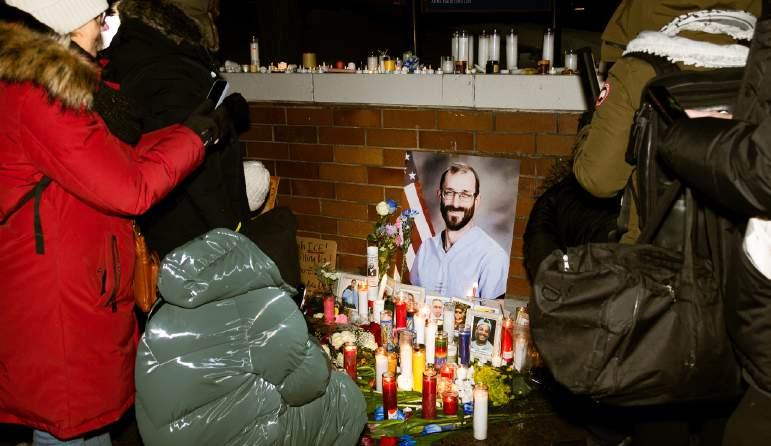
the defense of another. In our community, that is one of the most honorable things one can do in their life,” Matos said.
The crowd interrupted Matos’ speech, echoing his calls for justice with cries of “shame” and “murder,” as they would at several other points throughout the night.
“We veterans took an oath to support and defend the Constitution, and that Constitution belongs to each and every one of you: not a masked agent, not a government agency and not a sitting president,” Matos said. “But to survive as a constitutional nation, ICE must be shut down.”
Audrey Seeley, a nurse, union member and veteran of the U.S. Army Nurse Corps, followed Matos’ words. Seeley’s speech was emblematic of the shared sentiment of the night, which supported both immigrants and the ongoing New York City nurses’ strike. A study by the New York City Healthcare Department found that 47% of healthcare workers and technicians in the city are immigrants.
“Despite their service to their communities, they are under attack by the federal government.
Next week, almost 350,000 Haitians will lose their temporary protection status, including their means for caring for patients in this country,” Seeley said. “Tonight, we remember Alex, but tomorrow, we will organize; we will resist.”
Seeley referred to a decision made last year by the federal government to end Temporary Protected Status — an immigration status provided to those fleeing armed conflict or natural disasters — for countries including Haiti,
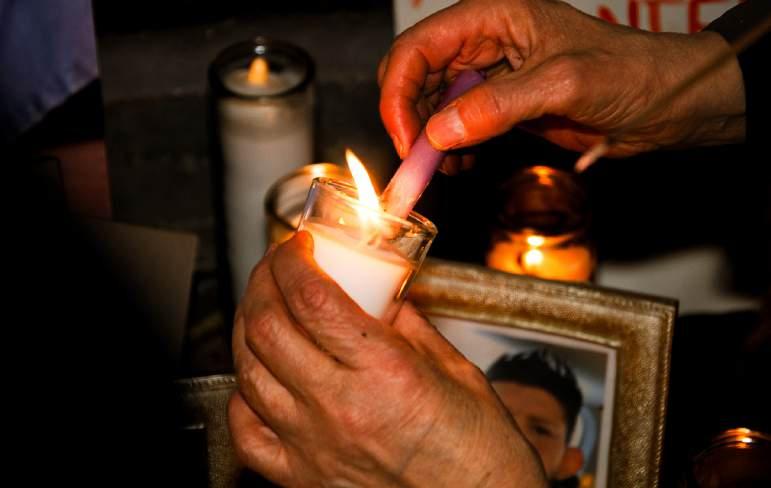

Venezuela and Afghanistan. Several healthcare workers have filed a lawsuit for Haitians to retain their protected status. The decision could result in the deportations of the approximately 50,000 migrants with protected status working in healthcare. The DHS has argued that this status, which is meant to be temporary but can be renewed if conditions in someone’s country of origin remain unsafe, has become an indefinite benefit. On Feb. 3, a federal judge ruled to halt the termination — which would’ve taken effect that day — while the lawsuit proceeds.
Meanwhile, even closer to Fordham, people from various faith-based organizations have been gathering every Monday from 5:30-6 p.m. at Columbus Circle to bear witness to what the group said they view as threats to democracy in America. Each week, 50-100 attendees sing songs, pray and receive a call to action.
Brennan Peacore-Brink is the director for Migrant Outreach at the Interfaith Center of New York, a secular nonprofit dedicated to connecting multifaith and civil organizations for grassroots advocacy. He helps organize the Monday vigils and said they have never “felt more important than in the last month.” A recent vigil on Jan. 26 specifically advocated against ICE in response to Pretti’s death and ICE’s other acts of violence. Attendees chanted statements like “Stop funding ICE.”
“Hey ICE, your ancestors are watching and they’re horrified. Hey ICE, take off your mask and be identified. Hey ICE, we people here are unified. We don’t want you. We don’t support you. Hey ICE, how will God forgive you?” said one song.
Despite the somber mood at the vigil, Peacore-Brink shared in a later interview that, at every demonstration he has attended,

the people he saw felt anger or “despair or righteous indignation or sadness, but the one unifying feeling — that every single person had at least a sliver of — was hope.”
“ICE has not historically been around for all that long. There will be classmates at Fordham who are older than ICE, and so it’s totally within our power to either abolish ICE or find a way for ICE to be an enforcement agency that acts with less cruelty,” Peacore-Brink said. “We need to look around at our communities, at our neighbors, and build strong, bottom-up people power. … The power we can build by doing that is profound and can stand up to the power (of the federal government).”
Since Pretti’s death, Gregory Bovino, the Border Patrol commander who was in charge of operations in Minneapolis, has been removed from the city and will be replaced by “border czar” Tom Hozman. Nonetheless, the Trump administration has continued to defend ICE’s actions in Minnesota, with a report by the DHS saying ICE has arrested over 10,000 “dangerous criminal aliens.”
Contention over DHS spending and restrictions on ICE caused the federal government to partially shut down this past weekend. It reopened on Feb. 3 after the House voted to pass a government spending plan providing funding for several major departments for the rest of the fiscal year, and a two-week measure to keep the DHS funded. Lawmakers in both chambers must agree on a deal by Feb. 13 to maintain DHS funding. This may prove difficult as disagreements continue over Democrats’ demands to require ICE agents to wear body cameras, identify themselves and obtain warrants for enforcement operations.



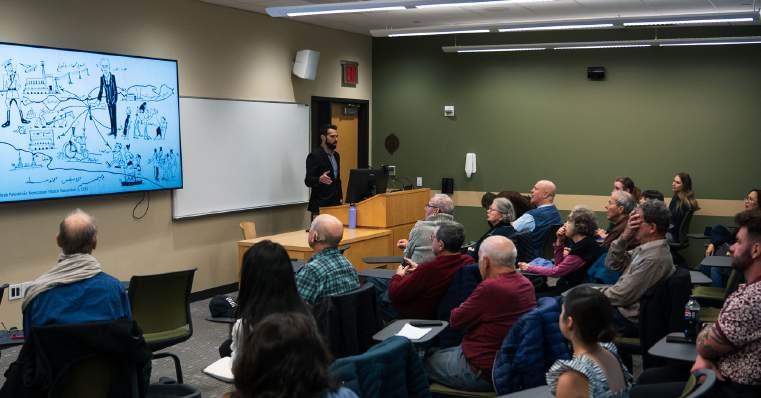
Bernard Wiseman discussed his humanitarian career and the future of aid organizations amid funding deficits
By ANNIE LANAHAN Staff Writer
On Jan. 28, the Institute of International Humanitarian Affairs (IIHA) hosted a discussion about humanitarian aid in conflict zones and the implications of funding cuts in Canisius Hall at the Rose Hill Campus.
Ruth Mukwana, director of Graduate Programs at the IIHA, moderated the discussion, which was part of the ongoing Conversations with Humanitarians series.
Bernard Wiseman, the international associative coordinator of Médecins Sans Frontières (MSF), or Doctors Without Borders, and an adjunct professor with the IIHA, discussed his time at MSF. MSF is an independent humanitarian organization that provides medical aid in over 70 countries, giving millions of people affected by conflict and disasters crucial access to healthcare.
The United States Agency for International Development (USAID) was shut down on July 1, 2025 after terminating funding for around 80% of its programs. The UK, Germany, Canada and other major international donors similarly reduced spending to foreign aid in the last year, presenting an ongoing challenge for humanitarian organizations.
Although around 95% of MSF’s funding comes from private donors, Wiseman explained how widespread aid cuts and shifting political attitudes toward foreign spending affect humanitarian work regardless of an organization’s financial status. He said that defunding these programs threatens the future effectiveness
By ALEENA SIDDIQUI Contributing Writer
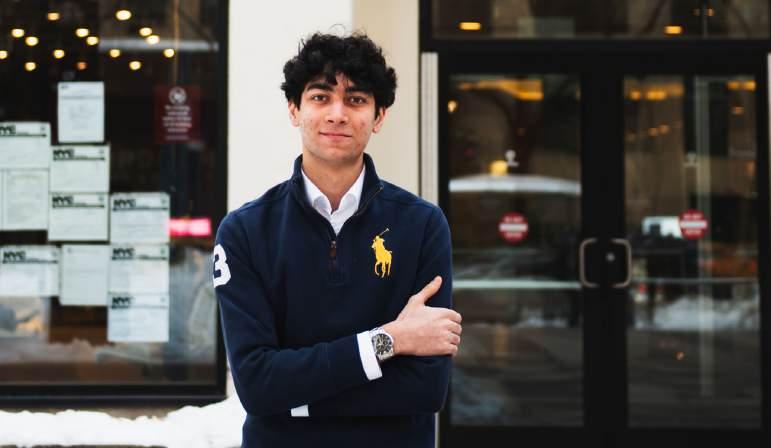
Four years ago, Borna ShayeiMousavi, Gabelli School of Business at Lincoln Center ’28, could not have imagined running a cafe in New York City. Today, he is the second student cafe executive officer (SCEO) of Fordham’s student-run cafe, Saxbys, while balancing the distance between him and his family and his drive for academic and career success.
ShayeiMousavi, a finance major on the pre-law track, started working for Saxbys as a team lead last semester. When campus recruiters reached out to encourage him to apply for the SCEO position, he recognized it as a rare opportunity.
“These kinds of opportunities are gold,” ShayeiMousavi said. After five rounds of interviews, he was selected for the position. Despite being a young SCEO and leading students older than himself, ShayeiMousavi says his age has not affected his approach to leadership.
“I try to keep a professional standard, regardless of my age, and every team member in the cafe does the same,” ShayeiMousavi said. “If you expect someone to hold a standard and you’re not holding that standard, then you shouldn’t be their leader.”
ShayeiMousavi’s approach toward leadership is rooted in experiences that extend beyond Fordham.
Before moving to the United States, ShayeiMousavi spent 16 years living in Iran. Though he excelled academically, he said that professional opportunities felt limited there. In high school, he relocated to Canada with his
of humanitarian work by causing it to lose “a lot of institutional memory” and “know-how,” which will make it difficult to rebuild aid programs and international trust.
In addition, Wiseman said he has observed a shift toward U.S. ambassadors abroad becoming less likely to advocate on behalf of MSF within the government, delaying the onset of critical projects. However, Wiseman acknowledged, MSF’s private funding and autonomous status differentiate it from programs funded by governments and the United Nations (UN), allowing its operations to remain stable despite cuts.
“ Instead of having to write grants and get funding and getting approval, we can pivot very quickly based upon what we see on the ground.”
Wiseman,
Bernard
coordinator at Médecins Sans Frontières
Wiseman explained that negotiating access to populations is the greatest challenge to providing help; financial independence helps aid organizations establish trust with governments and rebel groups in high-conflict zones. In South Sudan, for example, Wiseman described how MSF’s independence presented them as a neutral party, helping them negotiate with
local military intelligence in Juba and Wau to pass through armed checkpoints to reach villages cut off from medical aid.
“We try to distance ourselves from the UN system a little bit … to try to convince individuals that we’re a different organization, that we operate differently,” Wiseman said. “We’ve developed in some of these locations that community acceptance, so people recognize that we’re bringing good work.”
Wiseman also explained how MSF’s autonomy allows the organization to minimize the time between proposing a new aid program and executing it because they don’t need to wait for grants to be approved.
“Instead of having to write grants and get funding and getting approval, we can pivot very quickly based upon what we see on the ground, and it allows us to … act faster than corporate organizations, potentially, on some issues,” Wiseman said.
Wiseman also provided insight into his work with MSF in conflict zones, including Ukraine and South Sudan, where providing aid is challenging, yet critical.
He described his work in Ukraine after Russia’s invasion in 2022, where millions of people were displaced by the conflict. MSF sent urgent response teams composed of doctors, nurses and logisticians to set up mobile health clinics. According to Wiseman, Ukraine was able to maintain high-level surgical and operative care, so MSF directed its resources towards the areas of greatest need. In particular, a significant gap in mental health services led to MSF’s collaboration
with local teams of Ukrainian psychiatrists. Together, they established practices treating post-traumatic stress disorder that, although they have since been scaled back, remain in place today. MSF also targeted care toward people with chronic illnesses like hypertension who lost access to their medications.
While stationed in Ukraine, Wiseman’s team spent much of their time near the front lines in Kharkiv. Wiseman described how MSF had to be resourceful to convert existing infrastructure to quickly respond to the severely wounded, such as by setting up clinics in subway stations.
“We also did a program connecting the hospitals that were overwhelmed in eastern Ukraine to hospitals that could handle more stabilized care in the west. So we had a train that would convert into a hospital, even one car that would turn into an ICU
A sophomore SCEO will oversee Saxbys’ for the spring semester
mother and younger sister. This transition placed unexpected responsibilities on him at a young age. By 16, he was helping his family with navigating housing contracts, translating bills and managing financial logistics, experiences he said forced him to mature quickly.
“A 16-year-old shouldn’t have to worry about (those things),” ShayeiMousavi said. “But I knew that one day, I was going to get somewhere.”
After graduating as valedictorian, ShayeiMousavi set his sights on New York City, reasoning that “the best of the best are here.” Fordham offered him a scholarship, and he moved again. Due to travel restrictions tied to his Iranian passport, he has been
unable to see his family in person since starting university.
“I took that risk and I sacrificed all these things … because I know in my mind that one day, I’m going to be the best; I’m going to be successful,” ShayeiMousavi said.
“I want to make my parents and all my friends and family proud, (because) I owe it to them.”
That sense of sacrifice shaped ShayeiMousavi’s perspective toward the opportunity of being Saxbys’ SCEO.
“If you told me that I was going to be the CEO of an on-campus cafe and doing an interview for a newspaper, I wouldn’t have believed it,” Shayei Mousavi said. “My life has completely changed over these four years.”
Beyond daily operations,
ShayeiMousavi sees Saxbys as a community hub rather than just a business. Because it is student-run, he believes that it creates a different kind of environment than other on-campus dining locations.
“They’re happy to see their friends. They come back more often,” ShayeiMousavi said.
“We’re all students, and students are coming in (and) showing up for students.”
He hopes to strengthen that sense of connection through marketing initiatives and outreach efforts that can position Saxbys as a gathering place at Fordham. From tabling events to product launches, ShayeiMousavi said he wants the cafe to be a place where students feel valued and welcomed.
(intensive care unit), in order to make sure that we could get some war-wounded out of the cities in the east, free up some hospital beds closer towards some of the conflict, and get them towards hospitals that were a little more secure,” Wiseman said.
Wiseman concluded the discussion by encouraging students considering humanitarian careers to find organizations that fit their values.
“Look at mission and vision and really understand where money is coming from and how they use it. Pay attention to how much money is going towards operations versus your headquarters … and see if your values align with that organization or not,” Wiseman said.
The IIHA will be hosting the next iteration of the Conversations with Humanitarians series on March 26 at Canisius Hall at the Rose Hill Campus at 4 p.m.
Alongside those efforts, ShayeiMousavi credits his team for the cafe’s positive performance this semester, given that Fordham’s Saxbys is still in its first year of operation.
“We’re one of the top-performing cafes,” ShayeiMousavi said. “That doesn’t come from me being a good leader. That comes from my team being a good team.”
For ShayeiMousavi, leadership is defined by the ability to navigate hardships.
“Your maturity doesn’t come with age,” ShayeiMousavi said. “It comes from experience, from what you’ve gone through.”
Those experiences, he believes, influence how he manages his team and makes decisions.
ShayeiMousavi also carries a personal motivation for success. Years ago, he promised his mother that she would see him on the front page of a newspaper. He said that sitting down for his interview with the Fordham Observer felt like a step toward fulfilling a bigger promise of achievement.
“If she sees me as someone who’s being interviewed, maybe she’ll still miss me, but at least I’ll know I’ve made her a little bit proud,” ShayeiMousavi said.
Looking ahead, ShayeiMousavi sees his time at Saxbys working with guests and managing a team as preparation for a future in finance law.
“If I can come here, go through all of this and do something like this, then anyone can,” ShayeiMousavi said.
As Fordham’s Saxbys continues to navigate the demands of a student-run business, ShayeiMousavi plans to emphasize connection, both among the team running the cafe and the broader campus community they serve.

Faculty website assessments suggested language that sparked academic freedom concerns among faculty
The statutes are not publicly accessible via the Fordham website.
The Senate resolution goes on to criticize administrators for making decisions without consulting the Senate, calling the episode another “failure” in shared governance. It cited past instances where faculty oversight was bypassed, including the administration’s handling of the closure of the Graduate School of Religion and Religious Education.
The Senate outlined concrete demands. It called on the administration to provide a full archive of recommended and enacted website changes, a report explaining who initiated the review and why, and full disclosure of the risk assessment documents used in the process by Jan. 23. The Senate sought assurances that faculty will not be pressured to alter their teaching or research, and that professors will receive advance notice for and the right to an advisor at any meeting involving academic freedom or control over curricula.
Faculty Senate President Berish Rubin confirmed that the administration did not provide the requested materials at the Jan. 23 Senate meeting.
The Senate also called for stronger partnership with the university administration, including appointing the Faculty Senate president to University President Tania Tetlow’s leadership team and creating a joint process to ensure faculty consultation on initiatives that could affect teaching, research or academic freedom in the future.
Faculty Senate President Berish Rubin confirmed that the administration did not provide the requested materials at the Jan. 23 Senate meeting and that he has not been appointed to a position on Tetlow’s leadership team, as the resolution had requested.
The university provided no comment regarding whether Rubin was welcome in Tetlow’s leadership team and why the administration had not yet provided the Senate with the requested materials, and instead said the following:
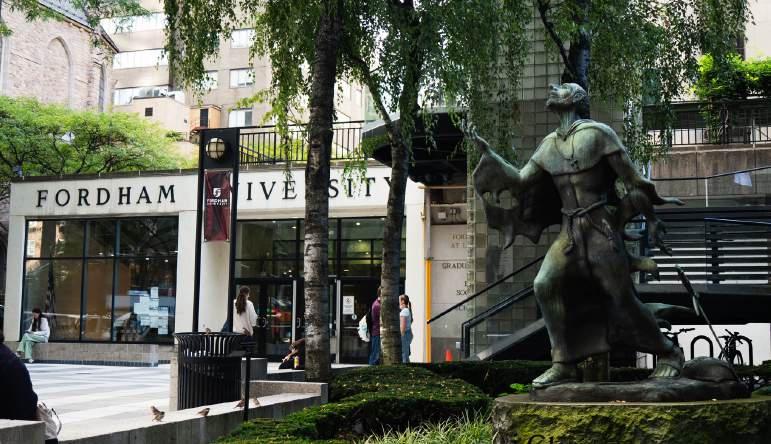
“We conducted an audit of Fordham’s website — which consists of more than 8,000 linked
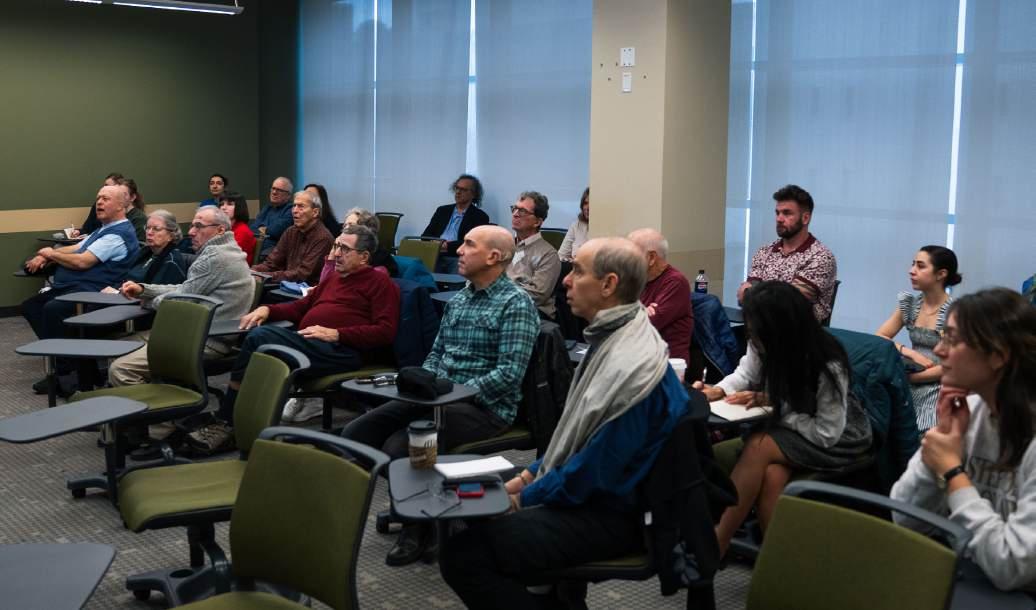
pages — with the goal of ensuring that it includes the most up-todate information and accurately reflects the values that we hold deeply. The University affirms its shared responsibility with the Faculty Senate to uphold academic freedom as an inviolable principle of our institution.”
The American Association of University Professors (AAUP) is a nationwide professional organization and union for all academic workers. The AAUP chapter at Fordham is an advocacy chapter that supports the priorities AAUP upholds, such as academic freedom and shared governance.
Tom Beaudoin, Fordham AAUP president and professor of religion, believes that the rollout of the assessment process was uneven based on varying cases in which faculty were presented with reports.
“The rollout happened through different offices on slightly different timetables, and with different expectations and instructions to different people,” Beaudoin said. “Then, once flags started to go up about it, it was re-centralized and handled with a greater deal of caution or circumspection.”
Associate Vice President of Equity and Inclusion James Felton told The Observer that his office did not lead the assessment process. The lack of transparency
about how this process began and was conducted has fueled faculty frustration.
“I’m furious at the violation and at the failure of the administration to acknowledge the stupidity and the gravity of what they did in hiring a consultant to comb through websites,” Anne Fernald, former Faculty Senate president and current professor of English, said.
In the resolution, the Faculty Senate emphasized its role as the elected representative of tenure-stream faculty, cited AAUP principles of tenure that safeguard teaching and research from external pressure and underscored tenure’s importance in protecting academic freedom.
“If faculty members can lose their positions for what they say in the classroom or for what they write in an article, they are unlikely to risk addressing controversial issues. The common good is not served when business, political, or other entities can threaten the livelihood of researchers and instructors, and thereby suppress the results of their work or modify their judgements,” the AAUP tenure webpage says.
Diane George, adjunct professor of sociology and anthropology and co-chair of Fordham Faculty United, said that the review has a chilling effect on non-ten-
ure-track faculty, who have little job security.
“ I’m
furious at the violation and at the failure of the administration to acknowledge the stupidity and the gravity of what they did in hiring a consultant to comb through websites. ”
“The knowledge that one can lose their job fairly easily tends to limit what contingent faculty are willing to say or do in the classroom,” George said. “I’ve been at Fordham for 10 years now. I have a two-year contract, which is the longest contract an adjunct can have, and I know for myself that I still censor what I say.”
In the resolution, the Senate reaffirmed solidarity with instructional staff, the Fordham AAUP and the broader university community and reiterated its commitment to shared governance and collective responsibility for protecting freedom of inquiry, a pillar of Fordham’s mission statement.
Since the start of President Trump’s second term, higher education has become a target.
The Trump administration has paired federal investigations with cuts to federal funding to pressure universities into preemptively policing teaching, research and speech, limiting academic freedom and effectively leveraging federal dollars to influence academic priorities.
Many universities nationwide have responded to the threats by rebranding diversity, equity and inclusion (DEI) programs, including Ohio State University and St. Louis University. Large research institutions like the University of Chicago have halted enrollment in certain graduate programs for fear of cuts to federal funding.
Texas A&M University cut its women’s and gender studies programs as part of an effort to eliminate DEI-related teaching.
In response to what kind of precedent an assessment like the one conducted by Fordham sets, George cited the “slippery slope” theory she learned in law school:
“Our government is heading in an authoritarian direction,” George said. “Once (Fordham) makes any concession to that authoritarian direction in higher ed — and higher ed has been one of President Trump’s targets — there is no telling where it stops.”
As a private institution, Fordham is not bound by the constraints of a government-funded public institution and therefore has the freedom to run the school the way it chooses to, George said. However, the webpage assessments conducted by the hired law firm raise alarms that Fordham is falling into the same trends as universities subject to the federal government’s ideals regarding how higher education should be conducted.
“The fact that (Fordham) was concerned enough to pay a consultant to come in and search through our websites and the things that we put online and strongly suggest that we scrub those things if they could run afoul of the (federal) administration's anti-DEI stance suggests that they might not stand up to the federal administration, should it pressure them to take more drastic action,” George said.
Until the university administration provides the transparency requested by the Faculty Senate, what triggered the content reviews and who was directly impacted remains unknown.
“I would hope we are an institution where anyone who is an academic worker at Fordham, and has questions about what they’re being asked to consider revising in the public presentation of their research or teaching, would feel able to raise a concern about that to the people for whom that concern ought to be raised,” Beaudoin said. “So by saying that, what I’m saying is, we don’t know how many people were affected by this and have chosen not to say anything.”
The next Faculty Senate meeting will be conducted on Feb. 27 at Rose Hill.
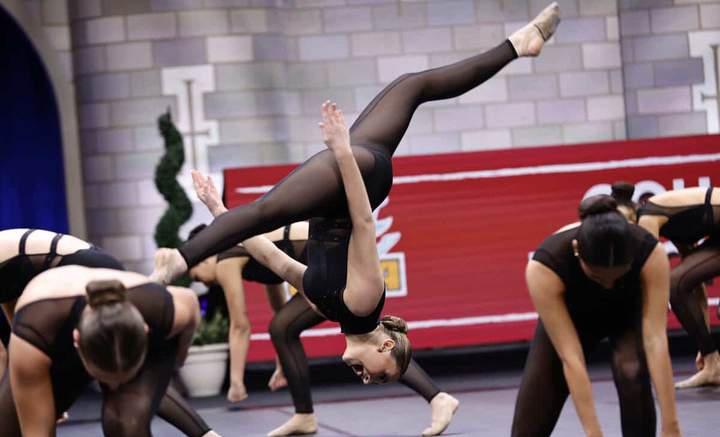
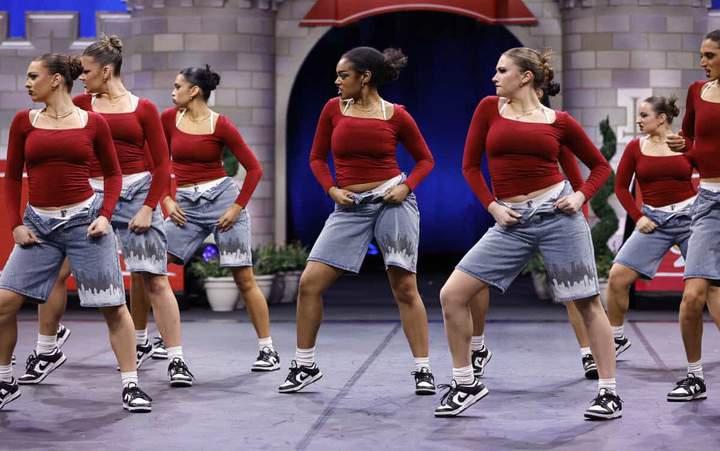
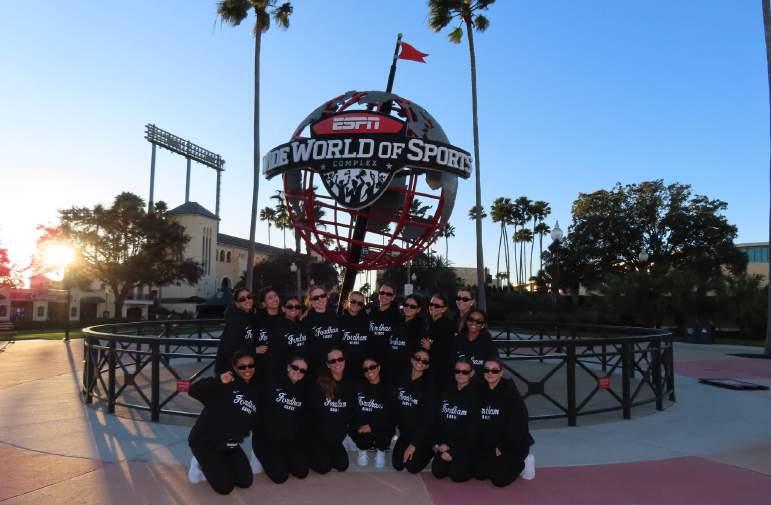
The Fordham dance team performed at Universal Dance Association College Nationals for the first time
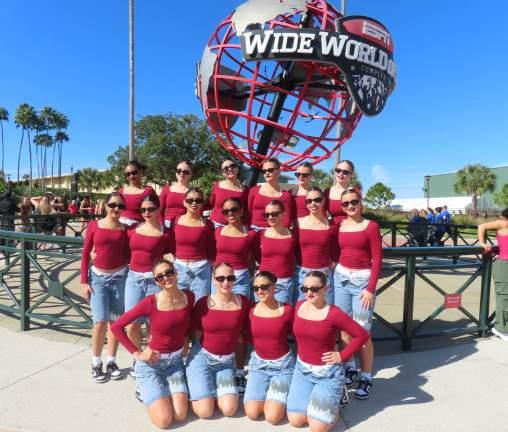
Jenna Stamps, who has been the head coach of the Fordham dance team since July 2024, has been a UDA staffer for the last decade and made it a goal for the Fordham dance team to make their debut. The squad succeeded in achieving this goal, performing two routines in front of Walt Disney World’s replica of Cinderella’s Castle, an iconic part of the UDA’s national stage.
“To see my team walk through the castle was a dream. My biggest goal for them was to go out there and be proud of what they leave on that stage. I wanted them to walk off that stage with no regrets,” Stamps said.
The 17 dancers on the Rams squad performed two routines throughout the weekend, including a jazz routine choreographed by Shannon Atkins, a world-renowned choreographer and teacher from Australia. The routine was a sassy, sleek, slightly flirty and very technical number choreographed by Atkins to “Closer” by Ne-Yo.
“ I would call our hiphop (routine) a love letter to New York.”
Sara Kumar FCLC ’27
The Rams’ hip-hop routine was choreographed by Jojo Brooks, who is a professional dancer and teacher at Brickhouse, where Stamps trains. Brooks choreographed the hip-hop routine to a mix of songs inspired by New York City — specifically the Bronx — like “Empire State of Mind” by Jay-Z and Alicia Keys, “Welcome To The Party” by Pop Smoke and “New York” by Ja Rule.
For Stamps, it was important to give her dancers not only the opportunity to learn routines choreographed by notable members of the industry, but also to ensure that her dancers were learning about the styles’ histories and contexts.
“I brought Jojo in because she doesn’t just teach the movement, but teaches the foundation and history of hip-hop styles, (which was) extremely important to me, especially at a collegiate level, to be educated in the styles we are performing in,” Stamps said.
Fordham dance’s first time at nationals was not the only unique occurrence from the weekend in Orlando, as Fordham was the only school from New York City competing. Representing New York City on the national stage was on the minds of many of the dancers, including Sara Kumar, Fordham College at Lincoln Center ’27.
“ Being able to be a part of the team that has brought Fordham’s name into this athletic and artistic space is such an honor.”
“I would call our hip-hop (routine) a love letter to New York, especially since Fordham is the only school from N(ew) Y(ork) C(ity) at nationals, and we wanted to represent this at our first time there,” Kumar said.
After their performances at the UDA Nationals, Fordham’s dance squad has now become a part of a four decade-long dance history, a moment that was not lost on Kumar, who has grown up dancing and has watched the UDA Nationals every year since she started.
“It’s hard to convey how surreal it was to transition from growing up watching it every year to actually being the one performing. Even when we were just practicing there, we would be surrounded by members from the teams we all looked up to when we were younger,” Kumar said.
“Being able to be a part of the team that has brought Fordham’s name into this athletic and artistic space is such an honor.”
The UDA Nationals is a cornerstone not only of collegiate dance, but of the entire national dance community. In recent years, the UDA Nationals has received a lot of attention on social media because of routines that have gone viral, including but not limited to that of the Louisiana State University’s “Tiger Girls,” Ohio State University and Minnesota University. These teams all compete in Division 1A, which is the top of the three divisions at the UDA Nationals. The interest
shown on social media for these teams highlight the incredible talent that is put on display every year on the UDA stage. The weight of the moment and opportunity to dance on the UDA stage was not lost on the members of the Fordham squad.
“After you perform, you get to watch your routine in playback backstage. After jazz, we all watched our playback and just started happy crying (because
of) how proud we were of all their hard work,” Stamps said.
“One of the dancers came up to me and said she never pictured herself ever performing on this stage. She was so happy to be able to walk through the castle and be proud of herself and the team.”
“ We are so excited to continue our growth and push ourselves to be even better next year. ”
Jenna Stamps Fordham dance’s
head coach
Fordham dance’s time at the UDA Nationals has continued to impact the Rams even after their return to the cold winter of New York City. Kumar reflected on how being able to both perform herself and watch some of the best collegiate dancers perform has inspired her own craft.
“I’ve continued to be inspired by the routines I saw there in the weeks following the competition. To have shared the practice spaces and the nationals stage itself with some of the most talented people in the country has really motivated me to push my limits,” Kumar said. “Some of these dancers look like they are actively defying physics all the time, and even though they are trained to hide the labor behind
it, I know how much blood, sweat and tears goes into perfecting these skills. The arts are so underappreciated largely in society, but sharing a space with the other collegiate dance teams reminded me that what we do matters.”
The Rams’ time on the UDA stage has not only inspired their own art forms, but has influenced how the program will develop in years to come. Stamps is hoping to make this year’s trip to Orlando a yearly visit. Since the Fordham dance team performed, they have received increased interest from dancers wanting to join the program and become a Ram.
“Bringing the Fordham name to the UDA stage is amazing in itself, but already, we have been getting so many more messages and questions about joining our team. As this event has grown, especially on social media, more and more people will recognize a program just from stepping foot on that stage,” Stamps said. “This was an incredible bonding experience for us as well. I can feel the trust and support growing even stronger this year. We are so excited to continue our growth and push ourselves to be even better next year.”
The talents of the Fordham dance team will continue to be on display at the women’s and men’s basketball game this semester, but the Ramily will have to wait until next year to see the Fordham dancers walk back through the Walt Disney Castle.

The Fordham goalkeeper signed with the historic professional team, which forms part of USL League One
BY CORA COST Sports & Health Editor
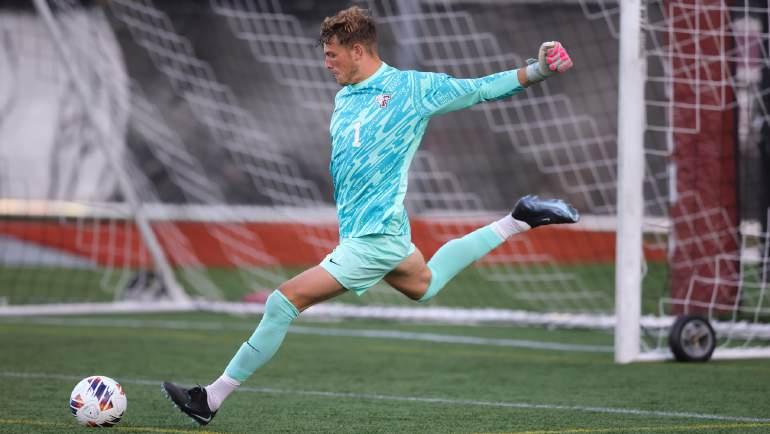
Since the age of three, Tristan Stephani has been on the field playing soccer. For two decades, he has played his way through recreational leagues, Major League Soccer academies, club teams and two collegiate squads; now, he is taking his talents to the professional level. On Jan. 20, it was announced that Stephani signed to play for the New York Cosmos of the United Soccer League (USL) League One.
Stephani, Gabelli Graduate School of Business at Rose Hill ’26, joined the Fordham men’s soccer squad this year after completing his undergraduate degree at College of the Holy Cross, where he played as a goalie for their Division I squad all four years.
“ It means the world to me. I’ve loved this sport since I was three years old, and I’ve been playing it for over 20 years now. ”
Tristan Stephani GGSBRH ’26
For Fordham Head Coach Carlo Acquista, when Stephani reached out about joining the Fordham program as a transfer graduate student, Stefani’s previous collegiate field experience made him an appealing
addition to the Rams’ squad.
“One of the things that stood out the most was his maturity and his willingness to integrate himself on a very good team,” Acquista said.
Along with Stephani’s previous collegiate seasoning, during his time at Holy Cross and during preseason with the Rams he proved to be a dynamic goalie, appearing in 14 games during his most recent season at Fordham.
“We felt his height, his length on making saves, his presence in the goal and the ability to make saves and take on crosses was great. He had a lot of it all and that’s what kept him on the field a lot longer than others,” Acquista said.
The Fordham men’s soccer team had an impressive season this year that unfortunately came to a close with their loss to Dayton University in the semi-finals of the Atlantic 10 Championships. After the end of the season, Stephani recalls feeling like he still had unfinished business on the field.
“I remember my parents and I went out to dinner after that last game, and they were like, ‘How do you feel?’ And I sort of looked at him and was like, ‘I don’t want it to be over. It feels like it shouldn’t be over yet,’” Stephani said.
After attending several combines after the close of the Fordham season in November, Stephani was offered a formal
contract at the start of the new year to continue to play soccer at the professional level by the New York Cosmos.
“It means the world to me. I’ve loved this sport since I was three years old, and I’ve been playing it for over 20 years now, so to continue that and not go into corporate life is quite nice, to say the least,” Stephani said.
Despite often playing in the front of the field growing up, early on in his career, Stephani found himself playing in goal. Experience playing both offense and in goal improved his distribution and abilities as a goalie. The goalie position is arguably one of the most high-pressure positions on a soccer field, but for Stephani
it is an opportunity to be a consistent team player.
“I’m helping the team in a way that is necessary, but it’s also a little bit behind the scenes, and I’m not front and center in the limelight, scoring the goals or game winners, and while that is nice every once in a while, I like staying back, serving my purpose and helping the team without all the glamour,” Stephani said.
In signing with the Cosmos, Stephani is joining a historic club. The New York Cosmos were launched in 1971 and have had iconic players grace their lineups, including legendary Brazilian forward, Pelé, who played for the Cosmos for three years.
“The Cosmos is a very historic club; it’s in the USL League One. The history behind the club is top notch. They had some of the most historic players back in the day playing for them, like Pelé, and that’s really what ultimately attracted me to the club,” Stephani said.
As a goalie and a new addition to Fordham’s squad this year, Stephani has shown his ability to integrate himself as a team player. With the Cosmos, Stephani hopes to be a part of their return to the professional circuit as a team.
“This is our first year as a Cosmo team coming back professionally … and it really is cool to be a part of such a legendary club trying to make a comeback back into the pro leagues. They have a ton of history, and they have a lot of supporters. … I’m just happy to be a part of it and help their mission to come back on the soccer scene,” Stephani said.
The Trump administration released new Dietary Guidelines for Americans at the start of the new year
BY CATHERINE RAIMONDI Staff Writer
At the start of the new year, the U.S. Department of Health and Human Services (HHS) released the Trump administration’s new dietary guidelines for 2025-30 with the U.S. Department of Agriculture. The new Dietary Guidelines for Americans have sparked much confusion as their advice contradicts the nutritional advice that has been consistent for years.
The new dietary guidelines feature an inverted food pyramid, which is reminiscent of the pyramid that many Americans grew up with. Released by HHS Secretary Robert F. Kennedy Jr., the new pyramid aligns with his position in the “Make America Healthy Again” movement.
The new guidelines, along with Kennedy’s public position of eating “real food,” urge Americans to prioritize whole foods. Whole foods are unprocessed, naturally made foods, including carbohydrates, fats, proteins, vitamins and minerals.
AHA responded to the new dietary guidelines concerned with the recommended intakeof red meat, sodium and whole-fat products.
Including whole foods in your daily diet is essential to ensure the body receives the macromolecules and supplements needed to support crucial physical functions.

The new inverted food pyramid depicts the key food groups that the Trump administration suggests Americans include in their diets.
The guidelines offer some useful insights into a healthier lifestyle. This includes the suggested five servings of fruit and vegetable consumption; ingesting unsaturated fats through avocados, seafoods, olive oil and nuts; and limiting highly processed foods, added sugars and refined carbohydrates.
While the previous guidelines for 2020-25 were 160 pages, including recommended meal plans and presented research, these guidelines keep it brief, at just 10 pages of direct advice. Accessible research is provided to back much of their information.
Though keeping it brief on the widely surfaced guidelines, they also released a 418-page research supplement called The Scientific Foundation for the Dietary Guidelines for Americans.
The staples pictured in the main pyramid in the new guidelines are all valuable parts of a nutritious diet; however, the suggested balance for consuming these foods is being questioned. Prominent health organizations such as the American Heart Association (AHA), Stanford Medicine and Harvard Public Health have responded to the new guidelines, demonstrating concern for
the ratio and emphasis on specific foods that contrast several decades of consistent nutritional advice for Americans.
There is a greater emphasis on saturated fats than in previous government guides. The inverted pyramid highlights a carton of milk, red meats, cheese and butter. The AHA recommends no more than 120 calories from saturated fats per day, making up only around 6% of the 2000 calories in the average daily diet.
The guideline suggests that saturated fat intake should not exceed 10%, with an emphasis on red meat. There is also a
suggestion to cook in butter and beef tallow. Given these new suggestions, the saturated fat content in one’s diet is at risk to pass suggested levels.
AHA responded to the new dietary guidelines concerned with the recommended intake of red meat, sodium and whole-fat products due to their negative effects on cardiac health.
The AHA felt the recommendations “could lead some consumers to exceed suggested limits for sodium and saturated fat, which are primary drivers of cardiovascular disease.”
Additionally, the guideline raises some concerns for vegans or vegetarians who choose not to consume meat or animal products, as there is a prioritization of animal-based protein, particularly over plant-based protein. This emphasis raises concern for susceptibility to cardiovascular disease.
The guidelines directly state that vegetarians and vegans “fall short” on many vitamins and need to pay attention to the “nutrient gaps” in their diet. The Physicians Committee for Responsible Medicine also responded to the fallacy of this nutrition gap, describing how one can build a wholly fueled and nutritious diet from grains, beans, vegetables and fruit, as well as a typical vitamin B12 supplement.
As some shifts in the new 202530 U.S. Dietary Guidelines have sparked disagreement among government officials and prominent health organizations, it is crucial to rely on evidence-based research and personal
mendations from health providers regarding nutritional plans.

SA: Hello and welcome to Off The Record, The Observer’s official podcast for fun and lighthearted topics. Today I am joined with…
LC: Lainey Collier.
MC: Margo Craven.
MS: Madeleine Signore.
NK: Nora Kinney.
SA: Do y’all want to tell (them) your positions in The Observer?
LC: Oh, yes. I’m the assistant arts and culture editor.
MC: I’m a head arts and culture editor.
MS: Another assistant arts and culture editor.
NK: I’m also a head arts and culture editor.
SA: And we’ll be talking about the 68th annual Grammy awards for 2026. This is our third video podcast. Clap. (Laughter, applause)
SA: We’ve come a long way. I want to start off strong on the major wins and awards of the Grammys. From best new artist — winner Olivia Dean — and the rest (of the) nominees: Katseye, The Marías, Addison Rae, Sombr, Leon Thomas, Alex Warren and Lola Young. What do you guys think? Was this deserved?
MC: I will say that I was hoping for an Addison Rae win. I think (that) based on vocal performance, I totally understand why Olivia Dean won, and she may not be my top artist, but I think she’s incredibly talented and I thought she gave a great performance.
NK: I was seeing, for the first time in my life, on the day of the Grammys, Twitter hate about Olivia Dean. Which I thought was crazy, because she seems like a really sweet, very musically talented woman.
SA: Why was Twitter hating?
NK: I was seeing that “she’s boring,” or that her performances were considered
MS: People were saying her disposition is optimistic, and people have a hard time (with that). Maybe that’s not resonant at this particular sociopolitical moment for everybody.
SA: They’re mad that she’s happy?
MS: To put it simply, yeah. I was pushing for Leon Thomas, actually, and sad not to have seen that happen. He was great.
SA: Didn’t he win a Grammy?
LC: Apparently he has actually won a lot in the past because he has written a lot of really popular songs and been very behind the scenes. And this is like, he’s just recently started putting out and singing his own music.
SA: Well, good for him.
MS: Oh, yeah. He actually won a couple, so you know what? Maybe we can spread the love.
SA: I personally wanted The Marías to win. The Marías, they have me. They’re on my playlist.
MC: The fact that this was, I believe, their first time being nominated is so … or maybe it wasn’t, but I just feel like they deserve their flowers. It’s taken way too long.
SA: Yeah, I mean, best new artist, and they’ve been in the game a while.
MC: That’s more what I meant. The fact that they’re just now nominated for best new artist, like, what do you mean? They’ve been around. Anyways.
NK: I did think that they lowkey got set up in the medley performance. I feel everybody brought a really high-energy song, and obviously you had Sabrina Carpenter out the gate with a really upbeat performance.
MC: With a whole set!
NK: And then The Marías, it slowed way down.
MC: It’s hard to follow that.
LC: I will say you
MC: That was an interesting choice.
MS: Dot dot dot.
MC: I wasn’t expecting that. I actually didn’t even recognize the song for the first couple of seconds because I had never heard it like that.
NK: I was not plugged in for the ascent of that song at all. I just wasn’t hearing it at all. My friend had to be like, you know, “Messy,” like the song “Messy.” And I was just like, “I don’t know.”
MC: I feel like it only existed on TikTok. The life and death of it was on TikTok.
SA: I’m not gonna lie, most of the music I consume is mainstream music.
MC: That’s okay, it’s popular for a reason!
SA: What did we think of Alex Warren and Sombr?
MC: Alex Warren’s performance was definitely interesting. You know, that must be an artist’s worst nightmare, to have your in-ears malfunctioning. And he did recover pretty well. I’m not a fan of hi(s), but …
SA: You did well on the Grammys stage, Alex Warren, congratulations. You deserve your taps.
NK: I honestly didn’t even really notice. I mean I noticed a little bit, but I didn’t think it was too egregious, like anything that was (a) disaster.
MS: He handled it well.
NK: He was up on that platform, like, okay.
MC: I wasn’t expecting him to shoot through the air like that. I was hoping he would start flying around like P!nk.
NK: It did feel a little mega-church-y.
MS: I just want to go to the root of the question, though, and highlight the fact that I wasn’t even aware of this man’s presence. So the fact that he was nominated for a Grammy took me completely by surprise. Perhaps my corner of the internet is so markedly far away from his, and that’s fine.
MC: Everyone’s using that as their wedding song, the song he performed, “Ordinary.” It’s super popular with the Mormons and Christians.
NK: It’s very Utah celebrity.
MC: Very Utah. Him and his wife, I think they’re pretty religious, is what I’ve heard.
SA: Sombr?
LC: I think conversely, Alex Warren went up, he came down (like a) human disco ball. Shining, very like, midriff out. It was an interesting choice, I think.
MC: It was very Benson Boone.
LC: Well, did you see that they panned to Benson Boone in the crowd? And he was not having it.
MC: He said, “You’re reheating my nachos right now. My nachos that I reheated from Harry Styles.”
MS: Who reheated (them) from Robyn, I think.
NK: Sombr, to me … well, I look at him and I just see Finn Wolfhard. I thought it was a little not fair that he got to have the voice modulator for his song.
LC: I didn’t even notice that.
MC: I just can’t take him seriously, either.
NK: That just seems like my peer, you know? He’s like, New York, and so young.
MC: It’s weird you know, young people, especially young men singing about love. I’m like, you’re a baby!
SA: Wait, how old is he?
MC: He’s like 20.
SA: Oh, wasn’t there that controversy where he was like, “I’m 20 years young.” He was asking his fans to bark onstage.
All: Ohhhh.
SA: Like, “I’m 20 years young, I just got here.” Sombr, I don’t actually hate you. That’s just what it reminded me of. I don’t think anything of it. But, Song of the year! Changing the conversation. “Abracadabra,” “Anxiety,” “APT.” — I thought they were nominated last year.
NK: No, I think that was a different Bruno Mars, that was the Bruno Mars Lady Gaga, “Die With a Smile.” Saved him from bankruptcy.
LC: Also, how did he get two performances this year? I wanna know that too.
MS: Well there’s some rumors floating around about his potential economic precarity.
SA: You mean in Las Vegas?
LC: He came back into music with a residency in Vegas, and I feel like you only do that if you gambled away all of your money.
MC: I didn’t know about this.
MS: Again, I didn’t know 80% of the things in this category and I’m not even trying to be pick-me. I just really didn’t. I have never heard this Billie Eilish song.
MC: There’s no way you haven’t heard it. You have.
NK: It did come out two years ago.
MC: I don’t understand how it’s nominated.
SA: Was this nominated last year? It was nominated last year.
NK: They might have re-released it.
MC: That’s what I thought because it came out so long ago.
SA: Wasn’t that the year she got like, no Grammys?
MS: A song from a couple years ago can be nominated for a Grammy if it is released as a new version or a live version. Okay, that still doesn’t really make sense.
MC: I was feeling very confused about that.
LC: I was too.
MS: Likewise.
SA: Well, the other nominees: “DtMF,” “Golden” —
NK: I’m going up, up, up!
SA: I haven’t watched “K-Pop Demon Hunters.” But the song is great, I do like it. Anyways, “luther” (by) Kendrick Lamar, “Manchild,” and then “Wildflower” won. What do we think of this?
MC: I just was so shocked by the fact that “Wildflower” was even there. I feel like I’ve lived so many lifetimes since that song came out. It just really threw me off.
NK: They seemed shocked as well.
MC: Yeah! I don’t know, I was kind of hoping for a Lady Gaga win.
LC: Well, she did. She won a few Grammys.
MC: For that award. For song of the year. Honestly, none of these songs are my favorite, but the only song I would really vouch for would be “Abracadabra” or “Manchild.”
NK: I think “luther” and “DtMF” ... MS: I will say that the team that worked on that project, the Kendrick project, is just a really talented team, and I feel like there’s been a lot of conversation about it for so long — and that’s exhausting, potentially for some people — but I’m just seeing like, Kamasi Washington on here now, I love his stuff independently. Didn’t even know he was part of this project. So, happy for all of these talented people still getting their flowers.
SA: “luther” did get a win: record of the
year! Nominees, “DtMF” (by) Bad Bunny, “Manchild,” “Anxiety,” “Wildflower,” “Abracadabra,” “The Subway” (by) Chappell Roan — loved her red carpet fit — “APT.” Again, I love “APT.” again. Winner: “luther.”
NK: I thought, deserved. The Cher announcement was tough.
LC: That was hard. All of it. Because she talked, and then she left, and then she came back.
NK: That’s one of those things where like, Cher can kind of do what she wants. And she did seem apologetic onstage.
SA: She was like, “I’m so sorry!” I could hear her.
NK: But it was like, no one briefed her? No one gave her the envelope?
SA: Oh yeah! When she was like, “The Grammy nominees are … ” and the envelope was in her hand.
MS: I wonder if there was some strange thing happening with the production behind the scenes, because I felt like a lot of people had difficulty reading the cue cards.
LC: Well, Chappell Roan, that was one thing where she looked so unhappy when she was presenting, and there are pictures of her squinting. And then she (looked) happy when they caught her in the audience every other time, so I wonder if it really was a production issue.
MC: That would make sense. And I really want to know what happened with Alex Warren, too. Who got fired for that?
SA. Honestly. Because Alex, if I were you, I’d be like “cut.”
MS: Is there a rival TikTok house? Like did the Hype House have a rival?
MC: Well, there was the Sway House.
MS: Maybe it was a Sway House agenda.
NK: We’re starting the rumor here.
MS: Yeah, TMZ, the Sway House planted a tech issue.
MC: Even though neither of those houses exist anymore.
SA: I mean, the beef is still there.
LC: You carry your frat with you for the rest of your life. Those are your brothers.
MS: Heavy on that.
(Laughter)
SA: Moving on to album of the year. Nominees: “Swag,” by Justin Bieber — I didn’t even know he released an album this year. I was very shocked when I saw him there. But I heard one song, a snippet of a song, I was like, okay, I actually know what it is.
MS: I’m here to pick up the slack in this department. And this is going to be a first, because evidently I have not listened to most of the things here. But I actually liked this album. I thought it was, maybe a little long, perhaps, because why were there like 47 songs on it?
SA: 47 songs on Justin Bieber’s “Swag” album?
MC: Something like that.
MS: It was something like that! But I will say, Dijon, if there’s any Dijon fans in the house, very intimately involved with that project. I love Dijon, and you could see his fingerprints all over it. That was awesome. There’s some hits.
MC: What did you think of Bieber’s performance?
SA: In his boxers?
NK: And socks. Boxers and socks.
NK: I was confused, to say the least.
LC: I didn’t get the attitude. He walked off, I guess forgot to turn off his loop, came back, still no “Thanks! Happy to be here.” Just fully out.
MC: I wasn’t expecting the one-man show of it all. The guitar on his back.
NK: And just the no clothing.
SA: I’m not surprised. This has been happening in American award shows for way too long. I love spectating American award shows because there’s always something going on. Shoutout America.
MC: Nice segue.
SA: Next on the nominees, “Man’s Best Friend” by Sabrina Carpenter, “Let God Sort Em Out” by Clipse, “Mayhem” by Lady Gaga, “GNX” (by) Kendrick Lamar, “Mutt” by Leon Thomas, “CHROMAKOPIA” by Tyler, The Creator. Winner was, oh my gosh, sorry, “DeBÍ TiRAR MáS FOToS” by Bad Bunny.
NK: You killed that. You kind of have to sing it when you say it.
MC: They wanted him to perform so bad.
NK: I was confused about that. Like he can’t because of the Super Bowl?
LC: I guess he was saying contractually, he can’t perform until that.
MC: Trevor Noah was trying his darnedest.
LC: I was getting a little angry.
MC: It was a little uncomfortable at certain points.
LC: It was very uncomfortable, and the fact that he kept bringing up Puerto Rico and everything. Just let — Bad Bunny is here to get his awards.
NK: His reaction to receiving the award was so earnest and so sweet. I was like, why is there no one with him?
LC: Yes! I was like, why is nobody hugging him or patting his back?
NK: I guess the whole team was preparing for the Super Bowl.
MC: Yeah, I don’t know. But I thought his speech was really beautiful.
SA: Yeah. I forgot to mention that when Billie Eilish won her award for “Wildflower,” she did go on stage and spoke out. What do you guys think about that?
MC: I think it’s important. I think obviously, we have certain expectations of celebrities and it’s easy to be like “yeah, as you should, (speak out).” But at the end of the day, that’s a scary thing to do, and there are repercussions. And maybe that’s like, champagne problems. But I think that’s a really real thing you have to consider as an artist. There were many artists that chose not to do that, so I do think it says something, especially as a
woman, and a young woman, to do that and to be willing to use your voice no matter what consequences may arise.
NK: I saw that clip of Jelly Roll, I think, was asked on the carpet like, “why haven’t you spoken out against ICE?” And he was like, “why do people want to hear it from me? I’m a country music star.”
MC: The classic excuse.
NK: I think it echoes that one clip or quote from Sydney Sweeney, I think earlier this week, was like, “I’m an artist. I don’t involve myself with politics. I just want to create art.”
MC: I don’t buy that.
MS: Art is political, fundamentally.
MC: Sydney Sweeney’s first role was as a child bride in “The Handmaid’s Tale.” An incredibly political role in an incredibly political show. You can’t separate those things.
NK: Yeah. I think that if you’re going to be representatives for politically charged stories that are saying something about our current moment, as an artist, I don’t understand how you couldn’t feel the impetus to also feel connected to that thing in the real world and to feel some sort of way about it and to feel confident in standing on your own two feet and able to express and articulate an opinion about it. Like, Jack Antonoff couldn’t come up for air. He had nothing. And he had the pin on.
MC: Yeah.
NK: What is the statement for if you don’t have a statement to actually make?
MS: Totally. I also appreciated Olivia Dean’s reference to being related to immigrants and the vitality of the immigrant community in the U.K. and the U.S. I respect them deeply for that.
SA: What did y’all think about Nicki Minaj not being there?
LC: I thought that was a kind of great way for Trevor Noah to kick off, because I usually find him to be one of the most unfunny and uncomfortable hosts alive.
SA: Serious? Oh, I love him.
MC: He can be pretty stale.
NK: Yeah, I think his routine has gotten a little stale.
LC: And also, a lot of the times the celebrities that he’s joking about don’t look like they think it’s funny at all. I get making jokes, but when they are at the expense of other people’s comfort level, when they’re on live television, I do think that it rubs me the wrong way. But that was a great joke, I really liked him saying (it). And I’m ready to see Nicki Minaj’s response, because I know that she’s going to have something to say about that.
SA: I’m surprised she hasn’t said something yet.
MC: She tweeted.
LC: Did she? Ooh, I missed it.
MC: I believe there was a Twitter rampage.
MS: Oh. Okay, not only Trevor Noah, but also Jay-Z ... Read more and listen at fordhamobserver.com
Unchecked human ego devoid of empathy is embodied by artificial intelligence

Certain milestone events possess a unique ability to embed themselves in our brains, never to be forgotten. National tragedies or triumphs often fit this bill, but the most recent event of this kind for me was the advent of mainstream artificial intelligence (AI) in November 2022, during my fifth-period high school physics class. At the time, it seemed like this was the beginning of the 21st-century technological revolution that was promised by sci-fi media from the late 1900s. Almost four years later, I’ve come to realize that AI is more of a mirror than a revolution, and that it uniquely reflects our anthropocentric tendencies, environmental apathy and self-obsession.
For those that are unfamiliar, anthropocentrism is defined by Britannica as a system of belief that regards humans as separate from and superior to nature, and as possessing inherent value in contrast to plants, animals, mineral resources and more, whose inferiority permits their exploitation for the benefit of mankind.
One can imagine the way in which this ideology has invaded almost every aspect of daily life, but on the most basic level, the way in which humanity has allowed greed to bring about the impending collapse of ecosystems finds its roots in anthropocentric thinking.
After all, if a human needs to buy petroleum-derived clothing made in sweatshops while driving around in gas-powered motor vehicles, then the rest of the planet just ought to prepare for unsustainable temperatures, heavy metals leaching into the soil, mass extinction and general ecological catastrophe.
It’s not like someone would regularly declare themselves an anthropocentrist, and we’re extremely unlikely to encounter the term in daily life, but that does nothing to change the way in which anthropocentric ideals have become so indelible in modern society.
At present, AI represents a new and alarmingly ubiquitous iteration of anthropocentrism’s unchecked expansion and serves as evidence of our misplaced priorities.
While many consider AI an inherently anti-human construction (an unethical data-scraping computer program), I invite you to consider the uproar and acclaim that have surrounded AI since its introduction in the media in the mid-20th century, all the way to its mass debut almost four years ago.
Its primary function is to pose as a

stand-in for rational human thought and cognitive processes. After all, while animals can be described as possessing degrees of intelligence, nobody really cares about making a realistic reproduction of the intellectual pathways of a dog.
While AI may be on the verge of making job-seeking even worse than it already is, that doesn’t change the fact AI is more alike to humans than many would even care to admit.
In true anthropocentric fashion, and in a stunning display of ego, scientists have determined that the single most revolutionary feat of the past 50 years has been a shoddy mock-up of human intelligence, because what could be greater than the human brain?
The connection doesn’t end here, however. Remember the ecological destruction that anthropocentrism justifies? AI stands poised to elevate that destruction to new heights; its development and operation require massive quantities of water that it renders temporarily unusable, despite global water shortages.
This disregard for non-human impact isn’t exactly a secret, nor is it

new. In fact, many people have taken the opportunity to critique the environmental ramifications of AI usage in recent years. However, they and other critics often choose to combat the AI craze by separating it from humanity and painting it as some kind of nebulous villain out to steal jobs. While AI may be on the verge of making job-seeking even worse than it already is, that doesn’t change the fact AI is more alike to humans than many would even care to admit. By acknowledging that, we can gain insight into the misplaced priorities of corporations and legislatures.
AI reflects the way that humanity can allow logical calculus to overpower moral instincts. It reflects the way that ego and self-importance allow us to neglect the melting glaciers and dying rainforests. On our phone screens, we watch anything from human beings getting shot in the head by federal agents to witnessing organized starvation for the sake of building luxury resorts, reflecting humankind’s capacity for apathy. This is not to say that humans are devoid of empathy, but rather, to highlight how systems built on efficiency and increasing profits often relegate moral judgments to be left by the wayside.
Recently, in my philosophical ethics course, my professor presented the class with the following thought experiment: If you were a disembodied soul who had to choose between living the life of a human or that of an oyster, what would you prefer?
Although some of the devil’s advocates in the class claimed they would prefer the simple nothingness of existence as an oyster, the majority of the class reached a consensus that human life would be preferable, regardless of the particular events. Most importantly, my peers and I all gravitated toward the same justification of a preference for human life, and it had nothing to do with our brain’s capacity to predict words accurately in sequence like large language models do and everything to do with our ability to feel the full spectrum of emotion and to have meaningful relationships with the world around us.
In that moment, I received a valuable reminder: For the most part, people know what matters, but for some reason continue to pour resources into technology that represents the opposite of that.
Yes, it is impressive that AI can construct intelligible sentences that sound like a human, even potentially mimicking our own thought or speech patterns, but it is also alarming to realize the kinds of accomplishments that are hailed as especially relevant to the progress of our species.
Instead of continuing in our anthropocentric ego trip and telling ourselves how important we all are by pouring hundreds of billions of dollars into something that serves corporate interests at the expense of the individual, we should be prioritizing meaningful developments that better the lives of the majority. When 55 million people are currently experiencing drought and as many as 700 million are estimated to be at risk of displacement due to water scarcity by 2030, logic would suggest that a water-guzzling technology that possesses no intrinsic value to the individual would not be the highest priority, but the astronomical profits that stand to be gained motivate those in power to turn a blind eye.
In sum, it is easy to criticize AI as something alien, robotic and environmentally destructive, but harder to admit that AI was a success in its goal to simulate humanity, devoid of empathy or nuance. AI is complicit in draining our planet of limited resources, but so are we, and the situation will only continue to worsen if we continue to act like a simulacrum of ourselves is our greatest accomplishment instead of an amplified reflection of our own failings.

ANA
Managing Editor
I enjoy hearing people discuss casual crushes, budding courtships, anniversary commemorations and even monumental breakups. However, one thing always bothers me about relationship talk — the way that people talk about cheating, blowing it up to be the single greatest offense one can do to another in a romantic relationship. This kind of thinking, I argue, is unproductive: We should have more empathy for cheaters. Everyone has the capacity to cheat, and recognizing that fact will lead us to become more appreciative of our relationships with others.
To get ahead of the critics, I’m not endorsing or excusing cheating on one’s partner, especially not in serious situations like marriage; instead, I’m advocating for reducing the taboo around infidelity. Cheating has been elevated to one of the greatest offenses one could ever commit in a relationship, when it’s really just another iteration of our fallibility as humans. Like it or not, the concept of infidelity exists precisely because we are all prone to making mistakes. We cannot pretend we are always capable of being perfect, or that every mistake that harms another makes a person automatically evil.
In order to have an honest conversation about cheating, it’s important to dissect exactly what the word evokes. Cheating is the conscious act of pursuing romantic or sexual contact with a person outside of a relationship, crossing the boundary of exclusivity one has agreed upon with their partner(s). This can be done malevolently — meaning that one actually does not care about their committed partner — or offhandedly, in a singular moment of carelessness or weakness.
Malevolent cheating would imply that someone is repeatedly cheating, or carrying on an affair, out of carelessness or hurtful intent towards their committed partner. The problem here is not a singular act of infidelity, but instead its repeated, intentional and abusive occurrences, which result in an inherently toxic relationship. I’m not trying to make a case for empathy in these situations, as that is obviously wrong. Rather, singular instances of infidelity, in which the perpetrators instantly realize they made a mistake, are what I’m interested in examining.
We’re told we must resist temptation when we’re in a committed, monogamous relationship; I agree. But I also don’t expect everyone to be perfect all the time. Nobody likes to admit it, but everyone has succumbed to temptation at some point in their lives. We cheat on games, tests, diets, personal resolutions — we know it’s bad, but we do it anyway. Is cheating really as unthinkable as we tell ourselves it is?
Sometimes, instant gratification is irresistible. Even if you haven’t had a single experience of infidelity from either perspective, you can understand the basic mechanisms at play when one is tempted to do something they shouldn’t. To state that you are too good to cheat is to pretend to be perfect, totally above temptation. To me, that seems like an awfully sanctimonious and unrealistic position to take. Cheating is feared because it


preys on people’s latent vulnerabilities about their relationship — the worry that one is not actually satisfactory to their partner, for instance. It’s also usually accompanied by acts of dishonesty to cover up the event of unfaithfulness. When one cheats, it is the betrayal of one’s previous promise and the betrayal of their partner’s trust; it reveals a temporary lapse in judgment.
The fact that cheating is so stigmatized might lead one to avoid telling their partner altogether, in the hopes that the incident will go unnoticed and the relationship can stay intact.
If people are worried about being immediately marked an evil person for a momentary transgression, they are less likely to want to do the right thing and fess up to their mistake, therefore making their
original offense worse and misleading their partner even further. This is the most obvious disadvantage of condemning cheating on such absolute and general terms.
Paradoxically, turning cheating into the most serious offense one can commit doesn’t lessen the amount of cheaters in the world, but instead increases the amount of lying that happens to cover up such an egregious mistake. Recognizing the fact that one of the risks of getting into a relationship is that we are liable as human beings to hurt each other shouldn’t encourage more people to be dishonest. It should instead foster a more understanding conversation regarding betrayals in relationships and ultimately lessen the pain caused by an instance of infidelity.

up. People are well within their rights to break up with their partner after being cheated on — but that doesn’t mean the cheating incident is the only thing to blame. Additionally, recognition of this fact might lead others to be able to work through the problems in their relationship exposed by the act of infidelity, if they so choose.
My aim is not to enable cheaters, nor is it to soothe guilty consciences. I’m also not trying to convince people to let their partners cheat on them. I’m also not saying that humans are incapable of being monogamous; just because everyone has the capacity to cheat doesn’t mean they ever will. What I advocate for is a more empathetic view of our partners; they aren’t perfect, and neither are we. That shouldn’t scare us off from commitment.
The most important part of a relationship is honesty, and I think that the moral outrage surrounding cheating is often performative and impedes frank discussions between couples. We fear our own fallibility, and we fear the possibility of being hurt by another person; this is what drives so many people to insist that they would never cheat, because they hope that their partner will also never cheat on them. To state such a definite claim is to be intentionally ignorant to the reality that we can all make mistakes at any point.
I don’t want to sound pessimistic by saying that we all have the capacity to hurt other people. My belief isn’t rooted in a pessimism about the human condition, but rather an optimism about how we are all united in our own imperfect natures. In her essay “Labor, Work, and Action,” Hannah Arendt wrote about the precariousness of life, which essentially exists as a network of human relationships and actions. Notably, she wrote: “The possible redemption from the predicament of irreversibility is the faculty of forgiving, and the remedy for unpredictability is contained in the faculty to make and keep promises.”
The defensive tirade against cheating also discourages an honest examination of what the act of cheating might evoke in the perpetrator. An occurrence of infidelity exposes a problem in a relationship — what did the cheater seek out in someone else that was missing in their partner? Do they, perhaps, appreciate their partner in a new way after making such an egregious mistake? If taken seriously, a discussion about cheating — an unfortunate occurrence — can be turned into a tool for useful introspection for a couple. A large part of the reason why people get so anxious about infidelity is because they believe the very act will forever taint a relationship. In reality, if an instance of cheating occurs, the conditions that allowed for that to happen would be the
I find myself thinking of this quote often in my daily life. It’s stressful to think that we can’t predict what another person might do to us, and that any transgression we commit is inherently irrevocable. We can’t erase our previous actions, and we can’t make others act the way we want them to. We can’t pretend that everyone will treat us perfectly, all the time; we also can’t lie to ourselves and say that we will never hurt another soul, intentionally or unintentionally. The solution? Forgiveness and commitment. These two concepts only exist precisely because we are fallible human beings, and we recognize that we don’t need to be perfect to be happy. Despite our shortcomings, we strive to create relationships with other people and build trust. We commit ourselves to the people we love, we live and make plans with our friends, we make promises to each other and strive to fulfill them. In the case we fall short, we ask for forgiveness; we recognize that we are all imperfect, and we forgive one another for our weaknesses. I’d say the most romantic thing you can do this Valentine’s Day is to tell your crush or your partner that you’re not perfect, and neither are they. Don’t allow fear, however, to stop you from pursuing an honest and empa-
relationship.


MATTHEW FARWELL Contributing Writer
It happens again. The dreaded elevator door opens to someone already standing inside. Our eyes meet with a sense of unexplored recognition. Our friends know each other. We’ve commiserated over the concerningly loud smoke alarm. We once talked in a class I ended up dropping. Now, we are headed down 10 stories together, with the only sound being the elevator slowly beeping through every floor, each tone signaling the light at the end of this unfortunate, agonizing tunnel.
After checking the weather app and pretending to scroll through my nonexistent notifications, a wave of relief envelops me as we step off the elevator and part ways. “Until next time,” I think to myself, knowing next time will likely be behind them in a Ram Café line or viewing their Instagram story later that night.
Throughout my time at Fordham Lincoln Center (FLC), a campus objectively full of expressive and creative students, I’ve had a great deal of warm and friendly encounters. Yet, I’ve also experienced a handful of immensely awkward moments.
Silence has become the default setting for many of us in uncomfortable social situations, both as FLC students and as a generation. While awkwardness itself is inevitable, leaning into these moments with courage and without self-judgment can create a stronger sense of community.
I’ve begun to wonder how many times I have pretended not to recognize someone for the sake of convenience. Choosing silence requires minimal effort, and there’s a guaranteed outcome of the scenario: nobody talks, so nobody’s at risk of embarrassing themselves or initiating an awkward moment. Vulnerability, regardless of the magnitude, is needed whenever we greet someone, and I believe harnessing that vulnerability can be daunting. The easiest choice I’ve found is to put in my AirPods and watch the elevator number descend. Realistically, it’s difficult to navigate a minute-long interaction with someone you barely know, especially when there is no clear script for how that interaction should go.
I don’t believe unease or discomfort are simply moral failures on our part. The structure of our university doesn’t always allow for total ease of connection. In fact, the small size of the FLC campus amplifies these sorts of interactions. With only a few hallways and limited on-campus dining options, there’s always someone I vaguely know “out in the wild.” Classes, most with no more than 30 students, allow for that brief connection between classmates for a semester, and once it’s over, it feels like there’s an uncharted area there. Eye contact and a hazy recollection of our eccentric professor are all that’s left if we didn’t form a lasting bond.
The campus is structured to move efficiently from point A to point B, and asking a friend about their weekend in a tunnel of wind isn’t my preferred mode of communication.
I’ve personally found that silence has become my comfortable default. Even though my friends would describe me as relatively outgoing and sociable, I often feel like a shell of my more authentic self when walking through the hallways
alone. I find that I’m typically in my head, preparing for the moment when I pass an acquaintance. I’ve noticed this pattern isn’t unique to my experience or even to students at FLC — it’s common among our entire generation. We exist in a time where the phrase “you don’t owe anyone anything” has made its way into our collective subconscious.
Drawing our boundaries and asserting independence is not inherently harmful. This mindset is understandable, as mental health and our finite energy are becoming more prioritized, especially within this generation. “Main character energy,” a term popularized through the internet, describes a self-assured demeanor, encouraging one to become the lead protagonist of their life as if it were a movie. I tend to channel this energy when listening to music on the way to Saxbys, dressed in a leather jacket and Doc Martens. I imagine I’m alone when in actuality I’m surrounded by a sea of students I may or may not know. When being the “main character” becomes hyperindividualistic and is combined with creating strict boundaries, there is a large risk that we begin closing ourselves off from others, assessing what people can offer us transactionally rather than engaging with them simply as human beings. There’s an emphasis on “protecting our peace,” but self-made isolation in the name of convenience begins to sever the veins of community. When we default to silence, we lose something integral to our existence as human beings — spontaneity and our sense of togetherness within it. There is value in low-stakes connections. These moments require effort, a willingness to reach out, a willingness to be rejected and a willingness to try again.
I’ve been working to change my natural silence with people I barely know, operating under the belief that I will gain more than I lose from an awkward interaction. Knowing I tried to reach out after a conversation that fell flat feels better than the unease and uncertainty of metaphorical crickets chirping around us. Everyone is navigating challenges we ourselves don’t know about, which only adds to the hesitation of starting a conversation while feeling unsure whether another person would even want to be engaged.
These small, mundane moments are what bond us as a Fordham community.
In many instances, I’ve been starting with compliments — as a conversational tactic, but also because I truly mean them. While that reads like a tutorial on small talk, complimenting anything from a piece of clothing to someone’s handwriting has led my conversations into lovely, unexpected places. Just by finding the courage to talk, I’ve learned fun facts about others like a classmate of mine who shared that they took up scuba diving and is using those skills in her internship with National Geographic, or some other classmates who performed Irish dances at high school assemblies.
For first-years, going to the events hosted by the resident

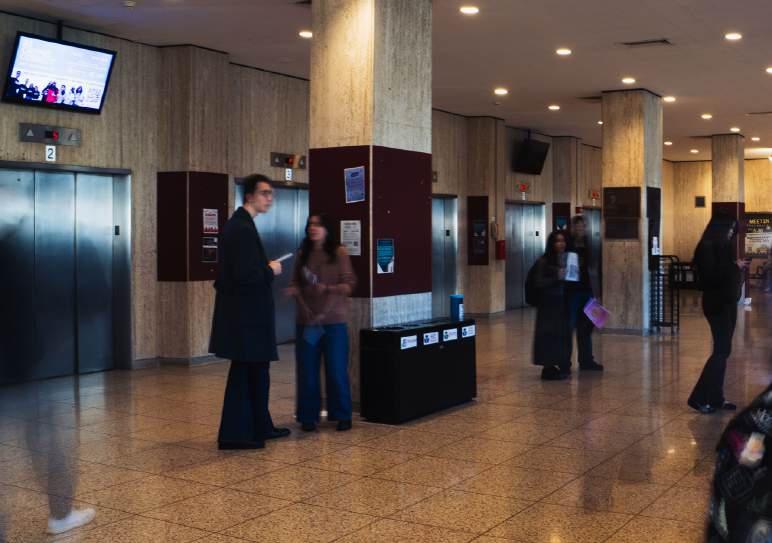
assistants is an extremely low-pressure way of breaking the ice, despite the sound of its cliché nature. Playing trivia or making vision boards has turned familiar faces into friendly ones. When we encounter each other now, there is a foundation of comfort between us. These small, mundane moments are what bond us as a Fordham community. The overarching concept is that we’re not shutting people out. A wave or a smile maintains those friendly
acquaintances, emphasizing that we can find comfort in those around us.
This is not to advocate for a future where everyone in the elevator participates in a group hug at 8 a.m. No world exists where everyone is extroverted, nor should it. Social fatigue is real, and not everyone wants to or needs to talk all the time. But this doesn’t mean our voluntary silence needs to be normalized.
Ultimately, awkwardness is a fact of life. In the same way,
a barista may make your drink wrong, it’s not always ideal, but there’s the decision of whether you accept it or ask for a change. Ungraceful moments filled with unease or tension aren’t going anywhere, but meeting them with courage and with less self-judgment may be the first step toward becoming more connected. Maybe next time the anticipated elevator door opens to someone standing inside, our eyes meet with recognition, we wave and we finally say hello.
The new tech-forward play starring Karan Brar gives an inside look at Silicon Valley
BY GRACE PAK Staff Writer
In a sleek Silicon Valley break room, two user experience designers speculate that their company’s mysterious, strictly-confidential new project may “streamline” their department, putting their jobs at risk of being automated.
Matthew Libby’s new play “Data,” directed by Tyne Rafaeli, speaks to fears that many have. Between the rise of artificial intelligence and an increasingly depressed job market, anxiety around job hunting is palpable. But for young engineers Maneesh (Karan Brar) and Jonah (Brandon Flynn), their fears stretch beyond the threat of having to find a gig at the local Apple store.
During the rhythmic, fast-paced dialogue that opens the play, Jonah tells his mentee Maneesh over ping-pong volleys that the level of secrecy around their latest assignment is abnormal, even for Athena Technologies, their employer that frequently bids for major tech projects. The ping-pong ball acts as a metronome, as the two steadily and continuously speak in time with each bounce. The play’s cold open puts audiences in a similar position to the characters — questioning exactly how much power this enigmatic tech giant has, and in what spheres.
Brar, known for his iconic Disney Channel roles like Ravi on “Jessie” and “Bunk’d,” or Chirag in “Diary of a Wimpy Kid,” balances Maneesh’s genius mind with

humility and thoughtfulness. He hesitates to reveal too much about the revolutionary predictive algorithm he created in college. After receiving offers from lobbyists and oil companies, Maneesh chose to hide the project away.
But the head of data analytics at Athena, Alex (Justin H. Min), has other plans for Maneesh’s algorithm. Conniving and manipulative, he persuades Maneesh to join his team, letting him in on the nature of the NDA-protected project. As Maneesh wrestles with questions of morality and complicity that arise from the assignment, Alex carefully calculates each of his moves and attempts to quell Maneesh’s doubts. Min thrives as Alex, bringing an authoritative, sinister air to the stage.
Rounding out the cast is Sophia Lillis as Riley, a convincingly distressed member of the data analytics team, and Flynn as Jonah, who embodies all the swagger and arrogance of a frat-boy-turned-tech-bro.
In addition to strong performances, costumes designed by Enver Chakartash allow all four actors to fully inhabit their characters. One of Jonah’s outfits, featuring a T-shirt, jeans and a crewneck sweatshirt draped over his shoulders, is taken straight from the fraternity textbook. Jonah’s youthful look contrasts that of Alex, who sports more formal collared shirts, often layered with a sweater or quarter-zip and paired with slacks.
Marsha Ginsberg’s intentionally bare set minimizes on-stage
distraction, emphasizing performances as the actors play against white windowless walls reminiscent of Apple TV’s workplace mystery “Severance.” The only set pieces are simple white desks, chairs, an occasional lamp and the ping pong table. Technical theatrical elements work to enhance the audience’s immersion in the tech-driven world of the play. Between each scene, techno music blares loud enough to make the audience jump as lights snap to blackout, which is especially impactful when following the reveal of another layer of Athena’s project. Daniel Kluger, sound designer and composer of the show’s original music, mirrors the structure of another of his successful projects, the Broadway hit
“Oh, Mary!”, while showcasing a completely different side of his musical talent.
Amith Chandrashaker’s lighting design cleverly leaves characters in the dark at points when they seek information, then fully illuminates the stage at critical moments when pieces drop into place. Some of Chandrashaker’s best work comes in these darker moments when characters are alone with technology. With actors lit in dim pools at the corners of the stage, their devices shining blue light on their faces, he draws attention to the way that technology can simultaneously give us insight into the world around us and keep us isolated.
During on-stage blackouts, Kluger and Chandrashaker’s designs are at the peak of their collaboration, giving the theatre a nightclub feel. Pipes of LED lights lining the stage’s proscenium flash and zip in time to the electronic music’s bumping bass, a pulse that vibrates all 2959 seats of the theater.
With such spectacle occupying every moment of downtime between scenes, “Data”’s impact does not fully set in until you step out onto the sidewalk afterward. The play leaves its audience to consider whether the story is a warning for the distant future or a window into the tech companies shaping society today.
Running 100 minutes with no intermission, “Data” plays at the Lucille Lortel Theatre off-Broadway until March 29.
The new documentary chronicles the grim reality of Putin’s Russia and challenges viewers to question their own relationship with their country
BY INDIRA BUSH Asst. Arts & Culture
In his 1955 book “Notes of a Native Son,” James Baldwin said, “I love America more than any other country in the world and, exactly for this reason, I insist on the right to criticize her perpetually.” Baldwin’s sentiments are echoed years later and from across the world in the new documentary “Mr. Nobody Against Putin.”
The film is an in-depth look into the eerie reality of the indoctrination of Russian children under President Vladimir Putin’s education system. More than that, however, it is about love for one’s country and the people in it, and what that means when a country becomes unrecognizable.
Documentary filmmaker Daven Borenstein and schoolteacher-turned-filmmaker Pavel Talenkin partnered up to create “Mr. Nobody Against Putin,” which premiered at the 2025 Sundance Film Festival and won the World Cinema Documentary Special Jury Award. It was released in select North American theaters Jan. 22 and is a 2026 Academy Award nominee for best documentary feature.
Structurally, the film is fairly simple. Only about 90 minutes long, it chronologically follows Talenkin’s heroic journey from beloved schoolteacher to exiled filmmaker. The movie’s power lies in the intimacy and haunting relatability of the footage; it’s proof that smiling school children pull at heartstrings universally.
Talenkin was the event coordinator and videographer at a primary school in Karabash, located
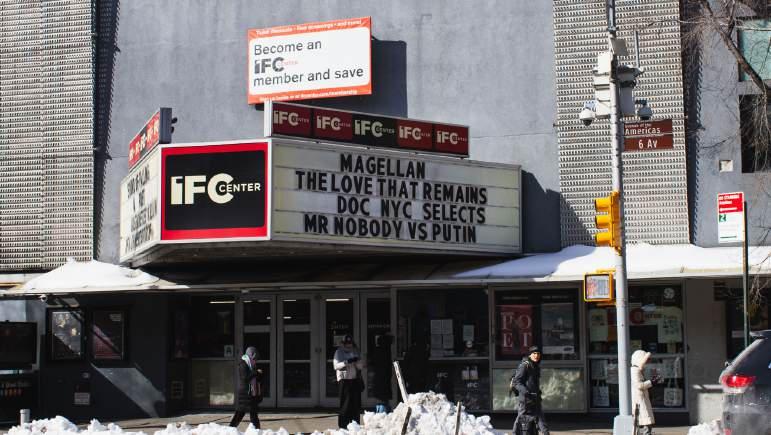
in the heavily industrialized Ural region of Russia. When the Russian military invaded Ukraine in February 2022, everything at the school changed. Under the new government’s “patriotic” curriculum, Talenkin’s job was to film lessons and upload them to a government database to prove the school’s compliance. His footage quickly changed from school celebrations to teachers stumbling over words in scripted lessons designed to teach students to support the war.
For Talenkin, the work was soul-crushing, leading him to resign.
“I love my job, but I don’t want to be a pawn of the regime,” he said.
Before he could officially leave the position, however, a chance to do something about the troubling experience presented itself. In his frustration, he had responded to an Instagram post asking for stories about how life in Russia had changed after the invasion. Borenstein saw Talenkin’s response and reached out, offering support and the opportunity to put his footage to use. Talenkin rescinded his resignation, and the creation of “Mr. Nobody Against Putin” began. Under the guise of government documentation, he secretly started to gather footage for the film.
The documentary opens on a haunting note. “Just be calm,”
says a woman’s voice instructing Talenkin on how to execute his escape. Talenkin walks across the dark woods holding a shovel and begins to dig. The screen cuts to black, then flashes back to two years prior before anything had changed. Not all of Talenkin’s footage is so grim. With endearing captions styled to look like handwritten notes, he introduces viewers to the characters of his world, like his mother (the school librarian), his gentle-mannered student named Masha (whose brother goes off to war) and Mr. Abdulmanov (a beloved teacher who preaches passionately in favor of Putin’s regime). Against the backdrop of bleak,
snowy mountains, Talenkin and Borenstein portray the confusion of life under Putin’s wartime government. Students stare blankly as they learn how to march. Seemingly happy birthday celebrations are underscored by the impending concern of being drafted into the war. Clips of Russian television propaganda are interspersed to provide political context — a rock musician plays his guitar and sings passionately, “Our nuclear missions are ready for battle.” Each clip feels more dystopian than the one before.
The intensity of the propaganda and the fear in the students’ eyes noticeably increase, but the compelling feature of “Mr. Nobody Against Putin,” is what remains the same: Talenkin’s insistence on his love for Russia. Even as he films the country illegally and admits he could face life in prison for doing so, he relentlessly declares his love for his nation and the people in it.
“I might love Russia much more than the regime supporters do,” he said.
The documentary ends with Talenkin back in the woods with his shovel, about to leave Russia for good. This time, we learn what he’s digging: a tree for the children to plant at the year’s graduation ceremony — a final act of love for the people of his home.
Altogether, “Mr. Nobody Against Putin” is an incredible case study of what it truly means to be patriotic.
“Love for your country is not about raising a flag or singing an anthem; it’s about being willing to say (that) ‘we have a problem,’” Talenkin said.
The indie-pop duo earned Fordham students’ ‘affection’ with an energetic performance WINTERFEST from page 1
Although the music didn’t start until 5:30 p.m., there was still plenty to do for ticketholders, with stations for hair tinsel, tooth gems and a photobooth by the entrance. People slowly trickled in over the course of the first hour, with the line growing until it eventually wrapped around the Lowenstein lobby to the vending machines.
Both opening acts were made up of Fordham students, giving campus talent the chance to perform in front of their peers. Tobias Urban, Fordham College at Lincoln Center (FCLC) ’27, kicked things off with an ’80s-inspired jazz-pop ensemble. The singer was joined onstage by Lucious Crawford, FCLC ’28, on the saxophone; Minjoo Kim, FCLC ’27, on the bass; Ethan Lin, FCRH ’26, on the trumpet; Alex Nam, Gabelli School of Business at Fordham Lincoln Center ’26, on the guitar; Daniel Kidd, FCLC ’26, on the drums; and John O’Neill, FCLC ‘26 playing the piano during certain parts of the set. With an upbeat mixture of both original songs and covers in a style reminiscent of Billy Joel and Elton John, Urban got the growing crowd excited. By the time the group played a cover of Maroon 5’s “This Love,” the crowd was not only much larger but much more energetic, shouting and dancing along to the lyrics.






With an upbeat mixture of both original songs and covers in a style reminiscent of Billy Joel and Elton John, Urban got the growing crowd excited. The first act of Winterfest, singer and songwriter Tobias Urban skillfully warmed up the crowd.
The second act was Mia Lorelei, FCLC ’26, who performed with a more bare-bones ensemble consisting of a drummer and bassist. Playing her own guitar in a more subdued performance, Lorelei was no less electrifying, performing a more shoegaze-inspired sound that called to mind performers such as Wisp and Stevie Nicks. Her set provided an opportunity for the crowd to relax into the music before Between Friends came onstage.
Playing her own guitar in a more subdued performance, Lorelei was no less electrifying, performing a more shoegaze-inspired sound that called to mind performers such as Wisp and Stevie Nicks.
After a few brief words from the Winterfest organizer, Mykaylah Moran, FCLC ’26, the stage was set for Between Friends, an indie-pop sibling duo consisting of Brandon and Savannah Hudson. Despite starting out with a more dreamy sound with their 2019 EP “we just need some time together,” their latest album embraces a more electronica-inspired sound, leading to an exhilarating show full of flashing lights and mesmerizing choreography. The duo played a mixture of singles off their previous two albums, as well as a couple of old favorites from their debut. Hits like “Affection”
and “Jam !” had the crowd jumping, giving a high-octane performance that will be hard for future acts to beat.
Mid-set, Brandon Hudson grabbed the mic and yelled to the crowd,
“We know times are super weird right now, so it means a lot that you guys are able to just be with us,” which captured the spirit of the evening well.
The mood was a constant surge
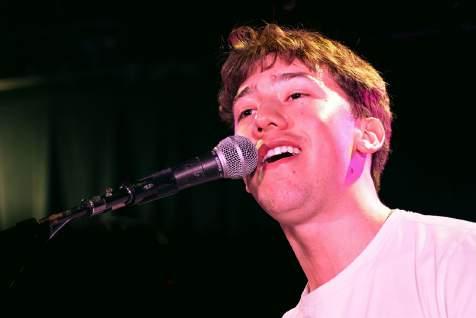
of energy, as if to offset the existential anxiety generated by current events. Mid-set, Brandon Hudson grabbed the mic and yelled to the crowd, “We know times are super weird right now, so it means a lot that you guys are able to just be with us,” which captured the spirit of the evening well. The show was about an hour long, just enough time to keep the crowd buzzing until the very end.
It was obvious after the show that Between Friends did not disappoint. Despite many students being unfamiliar with the duo before the performance, the Lowenstein lobby was packed with people gushing about their talent and energy when the show ended.
“Their energy were so cool. It wasn’t what I had expected at all. It was very camp. I loved it,” concertgoer Sophia Moran, FCLC ’28, said.
“The vibes were good. … They’re really good performers. It was very entertaining to watch,” fellow attendee Elizabeth Amicone, FCRH ’28, said.
The positive feelings were shared by the event organizers, who had been planning the concert since October.
“It was so fun to put this together and kind of insane that we were able to do all of this and make something this big happen,” opening act coordinator Mara Holzen, FCLC ’28, said. “It’s nice to take a breath after all that.”
Between Friends’ performance provided a welcome reprieve from the bleak cityscape just outside the Lowenstein Center doors. Revitalized by the “Jam !” session, students escaped into the night, ready for whatever the weekend might hold.
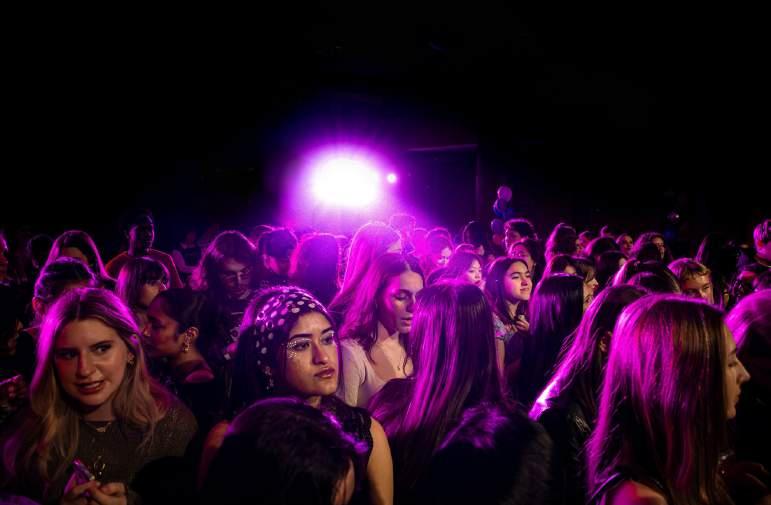

IFC Center
Jan.
Simón Mesa Soto’s latest film is a wry, quietly devastating portrait of curdling artistic ambition; following a struggling Colombian poet whose want for recognition begins to eclipse his better judgement.
For fans of: that guy who keeps calling himself a “visionary,” “The Rehearsal” Spanish with English subtitles
Film
Feb.
Traveling through southern Morocco, a father and son search for a daughter missing after a desert dance festival and their journey darkens into a stark test of grief and survival.
“... The sort of overwhelming cinematic experience and undeniable work of sound and vision that could be life-changing for those ready to receive it.” - David Fear, Rolling Stone
For fans of: spiritual vertigo, sensory overload, questioning everything on your walk home Spanish, French, Arabic with English subtitles
“THE LOVERS ON THE BRIDGE” DIR. LEOS CARAX (1991) Metrograph via Janus Films - Feb. 13 & 14
Leos Carax’s deliriously romantic masterpiece returns to the big screen, where it belongs. Equal parts swooning love story and apocalyptic fantasy, “The Lovers on the Bridge” is an emotional free fall.
For fans of: grand gestures, loving someone like it’s the end of the world, “Paris, Texas” French, Serbian with English Subtitles
“THE LOVE THAT REMAINS” DIR. HLYNUR PÁLMASON (2025) Film at Lincoln Center, IFC Center via Janus Films - Opens Jan. 30 Winner of the Cannes Film Festival’s Palm Dog Award, Hlynur Pálmason delivers a rigorous meditation on family, time and scattered emotion. Set over the course of a year amidst an Icelandic landscape, a couple navigates their separation.
“The landscape in which this family makes its domestic life is wild and lovely, and Palmason signals the changing of the seasons by showing us all of its beauty”Alissa Wilkinson, New York Times
For fans of: staring out a window for too long, “Scenes from a Marriage,” sprawling landscapes Finnish, Swedish, Icelandic with English Subtitles
“BY DESIGN” DIR. AMANDA KRAMER (2026) Quad Cinema via Music Box Films - Opens Jan. 30
Following its premiere at the 2025 Sundance Film Festival, Amanda Kramer’s surreal, deadpan comedy follows a woman who swaps bodies with a chair, only to discover she’s more appreciated as an object than she ever was as a person. For fans of: the concept of being perceived, Charlie Kaufman, thoughtful absurdity English
BY ANA WINSTON Managing Editor
The New York City natives debuted on Saturday Night Live to mixed reactions
Saturday Night Live (SNL) might be known for its ever-changing roster of comedians and weekly sketches riffing on politics and pop culture, but its musical guests are just as important a signifier of new cultural fixations. Brooklyn-born band Geese returned to their native city the weekend of Jan. 25 to make their SNL debut, giving the band a chance to perform to both an intimate crowd in the SNL studio and a sizable audience watching from their television screens.
Geese performed songs from their third and latest album, “Getting Killed,” which was released in September 2025. After being introduced by the guest of that week, Teyana Taylor, they opened with “Au Pays du Cocaine,” the most popular song off the album on Spotify with more than 4,000 videos using the sound on TikTok. They also performed the song “Trinidad,” which was the first single released in the lead-up to the album.
The band is made up of lead singer Cameron Winter, drummer Max Bassin, guitarist Emily Green and bassist Dominic DiGesu, all of whom are native New Yorkers who started playing music together during high school. Winter also has his own solo career, releasing his debut album “Heavy Metal” at the end of 2024.
The reaction to Geese was anything but lukewarm. The performance sparked polemical discussions on an SNL fan Reddit page contemplating whether or not Geese was one of the worst

performances in the show’s history. Perhaps the chorus of “there’s a bomb in my car,” repeated over cacophonous instrumentation in the song “Trinidad,” threw audiences off; maybe Winter’s reedy voice sounded grating to some. Undeniably, the spirited discussion surrounding the performance indicates interest in the band. Even negative attention contributes to fame.
Realistically, their performance could hardly be called the worst in SNL history. In 1986, the rock band The Replacements reportedly performed while noticeably inebriated, resulting in them getting banned from SNL’s home at 30 Rockefeller Plaza.
Geese, meanwhile, played their songs exactly how they sound on the recordings; the four bandmates seemed shy, but not nervous. Critiques of the performance are, subsequently, critiques of the band’s sound, not of any mistakes they made while performing.
SNL has served as a launching platform for many notable indie rock bands, such as The Strokes in 2002, who made it onto the show less than a year after the release of their debut album, “Is This It.” If Geese follows the trajectory of their fellow New York City-based band, the SNL performance could serve as a bridge from local indie fame to national notoriety. There is no better time for Geese to take
the helm of the alternative rock scene, as previous heavy-hitting bands have been taking a step back from performing.
London band Black Midi, another popular indie rock group, went on hiatus in 2024 after releasing three albums together. Although fellow British band Black Country, New Road just announced a North American tour — which, notably, does not include any dates in New York City — their former lead singer and founder Isaac Wood left the band in 2022, only days before the release of the group’s second album. These two bands, which had previously been acclaimed by American music journalism
publications such as Pitchfork, leave a space to be filled by an innovative band of the same caliber. Geese might just be the right group for the job. The fact that Geese performed on such a well-known stage solidifies the band’s burgeoning reputation as the new face of the alternative rock scene. “Getting Killed” was ranked No. 7 on Pitchfork’s best albums of 2025, and the song “Taxes” was ranked No. 10 on the list of 2025’s best songs. Winter’s solo work was also highly rated on the same lists: “Heavy Metal” ranked No. 3, and its leading single “Love Takes Miles” was ranked No. 1.
The fact that Geese performed on such a well-known stage solidifies the band’s burgeoning reputation as the new face of the alternative rock scene.
The band’s SNL debut sparked a range of reactions, but undeniably left an impression on those who watched it. As critics continue to debate their performance, Geese will be finishing the last legs of their international “Getting Killed” tour. Fordham community members can see the band when they return home to New York City for The Governor’s Ball Music Festival on June 7.
The exhibition is a journey through 250 years of literary history that explores the shaping of Jane Austen’s legacy
By MARGO CRAVEN Arts & Culture Editor
The Grolier Club exhibition “Paper Jane: 250 Years of Jane Austen” celebrates the 250th anniversary of Austen’s birth. The exhibition was curated by Mary Crawford, Sandra Clark and Janine Barchas, Chancellor’s Council Centennial Professor in the Book Arts at The University of Texas at Austin and author of several books on Austen. Her most recent book, “Paper Jane,” which shares the exhibition’s title, was co-written with Crawford and Clark.
Crawford, a retired financial services executive, began collecting Austen books and rare family items in 1980. Clark, a lifelong member of the Jane Austen Society of North America, has been collecting Austen editions for over 50 years. The exhibition is curated chronologically, with a mix of 110 items sourced solely from the curators’ personal collections. Organized in 50-year intervals (1825, 1875, 1925, 1975 and 2025), the collection includes an array of manuscripts, rare Austen first-editions, illustrations, playbills, movie posters and more. It also provides a glimpse into Austen’s familial relationships, their influence on her creative development and how they shaped her posthumous legacy.
At the time of her death in 1817 at just 41, Austen had only published four novels anonymously: “Sense and Sensibility,” “Pride and Prejudice,” “Mansfield Park” and “Emma.” Two more novels would be published after her passing, and her final novel, “Sanditon,” was left unfinished.
As the exhibition reveals, much of Austen’s literary legacy
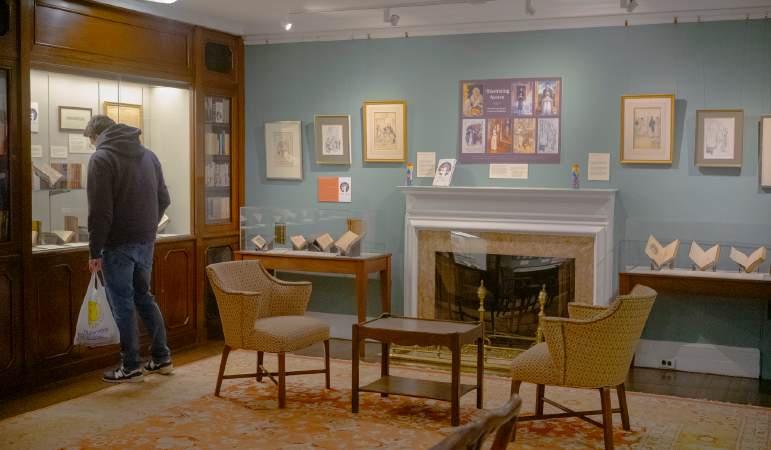
was shaped after her death by generations of Austen family descendants. It was her older brother, Henry Austen, who revealed her identity in a posthumous publication of her novels “Northanger Abbey” and “Persuasion.” During her life, Austen had published anonymously under the name “a Lady.”
The curators uncovered a large body of work from generations of the Austen family, who had attempted to complete Austen’s unfinished manuscripts they had inherited or create their own fiction based on her existing novels.
“Paper Jane” illustrates how Austen’s work increasingly spread to wider audiences in the decades following her death. As Barchas explained in a digital
tour of the exhibition that “suddenly, Jane Austen (was) no longer Jane of the elite readers,” as book prices decreased and working-class readers now had access to her work.
Beginning in the Victorian era, her readership diversified further as students were introduced to Austen at school, often receiving her books as a reward for good attendance or exemplary academic performance. During World War I, Austen’s books were sent to the front lines by the War Service Library.
A rare surviving copy of “Pride and Prejudice” that was read by soldiers during the war is available to view at The Grolier Club. Even after entering mainstream culture, Austen would not begin to receive academic recognition
or be considered a great English novelist until the 1940s.
“Paper Jane” explores how Austen’s work became gendered over time. It introduces the concept of “pinking” Austen in the ’50s and ’60s, which set the stage for her works to become known as “chick lit” largely associated with college-aged women, despite their popularity across gender, age and class.
The 1935 stage adaptation of “Pride and Prejudice” by Helen Jerome was a massive hit in London’s West End, and led to the production of the 1940 film version, starring Greer Garson as Elizabeth Bennet and Laurence Olivier as Mr. Darcy.
The final section of the exhibition features the last 50 years of Austen history and displays
posters from the many Austen screen adaptations, including the 1985 BBC “Pride and Prejudice” series starring Colin Firth and Jennifer Ehle, the 2005 film version starring Keira Knightley and Matthew Macfadyen and the 2020 film version of “Emma” starring Anya Taylor-Joy. It also displays Austen memorabilia such as Mr. Darcy paper dolls, comics, children’s books, various spoofs, parody books and even fan fiction.
“Paper Jane” celebrates the continued influence of Austen’s work on modern culture and art, honoring a legacy that has only grown stronger over 25 decades.
This section of “Paper Jane” is a testament to Austen’s continued cultural relevance — revealing that Austen’s novel “Emma” was the little-known inspiration behind the iconic 1995 film “Clueless,” which is a “pretty much perfect rendition, in a different time and geography, of Emma,” Crawford said.
“Paper Jane” celebrates the continued influence of Austen’s work on modern culture and art, honoring a legacy that has only grown stronger over 25 decades. It reveals how Austen’s family heavily shaped her personal and literary legacy, and it tracks an evolution of societal perception of her work spanning more than two centuries.



36. Suffer defeat, slangily (2 Wds.)
39. Partner of seek
40. Starting action in a game of tennis or volleyball
44. University doctors? (Abbr.)
45. Latvian capital
46. Diminish, as trust
47. ABBA’s “__ ____ the Music Speak” (2 Wds.)
48. Fresh starts
50. North Indian dish: ____ paneer
51. Bed in a hospital
52. Minnesotan medalists Suni or Stecklein, for two
53. Featured instrument in Vance Joy’s “Riptide” (Abbr.)
55. Bad start?
56. *International sporting symbol, or what the highlighted clues resemble (2 Wds.)
61. Words before “sight” and “mind” (2 Wds.)
BY JASMINE WHITE
19. Gymnastics coach Károlyi
20. Question after a joke falls flat (2 Wds.)
1. Prefix with “economic” and “cultural”
6. Once, once
10. One of the host cities for this year’s Winter Olympics
15. *Rare lunar occurrences
16. *Kind of ursid you should “fight back,” according to rhyme
17. *McCarthy era paranoia
18. “Well, golly!” (2 Wds.)
21. It may be dominant or recessive
22. Boston NBA player
24. Sinbad sailed seven of these, according to legend
25. Father figure? (2 Wds.)
27. Potato pancakes
29. *Soccer referee’s warning
30. *Common kind of casserole on Thanksgiving tables
31. Option when all else fails (2 Wds.)
BY JASMINE WHITE

63. Achievement for Rita Moreno, Viola Davis and others (Abbr.)
64. Defense in court
67. Rainbow fish
68. Given name for The Weeknd
69. Programming pro
70. Competes in luge
71. A bleach and ____
72. Adjust
1. Pollution portmanteau
2. ____ and aahed
3. French brandy
4. What a skier at the bottom of the mountain might say (4 Wds.)
5. Sugar suffix
6. Receded, as the tide
7. Fishing rod attachment
8. It’s spread on snowy sidewalks
9. Hiker’s path
10. New York Rangers’ venue (Abbr.)
11. Alysa Liu and Ilia Malinin, for two (2 Wds.)
12. Triangular sail
13. Operatic solos
14. Brooklyn ballers
22. Atlantic swimmers
23. Popular spot for spring breakers: ____ San Lucas
26. Spoiled kids
28. Brusque
32. Feat achieved by Canada’s Men’s Curling Team after their win at the Sochi Olympics
33. “How the Other Half Lives” photojournalist and reformer Jacob
34. Hudson Yards’ observation deck
35. Crush from “Finding Nemo,” for one (2 Wds.)

Ramses has an important job at this year’s Milano-Cortina Winter Olympics: delivering valentines to all of the athletes! Unfortunately, he lost his delivery log and can’t remember where each athlete is located and which message they should receive. Can you help him figure it out and save Valentine’s Day at the Olympics?
Use the clues below to match up each Olympian with their correct location and Valentine’s message. The first clue has been put in for you as an example — use “X” to cross out what’s incorrect and “✔” to denote the correct matches. Remember, no two Olympians are located in the same place or will receive the same message. After you have completed the puzzle, you can check your answers with the grid in the bottom corner!



41. Kind of assistance offered by the AAA
42. Feb. 14 celebration (Abbr.)
43. Brain scans (Abbr.)
48. “Shiny Happy People” band
49. Compete in a slalom
52. Alternatives to cabs
54. Pass, as legislation
57. Forte, in music
58. Nigerian language
59. Filmmaker Ethan or Joel
60. 2024 horror film: “I Saw the TV ____”

36. “Fortnite” developer: ____
37. Woody’s son, in folk music
38. Competing directly (3 Wds.)