If you're having trouble viewing this email, you can see it online.
Volume 27 Number 4
You can also read issues of the Sabal minor online here
Table of Contents
Letter from the Executive Director
Notes from the Editors Society News
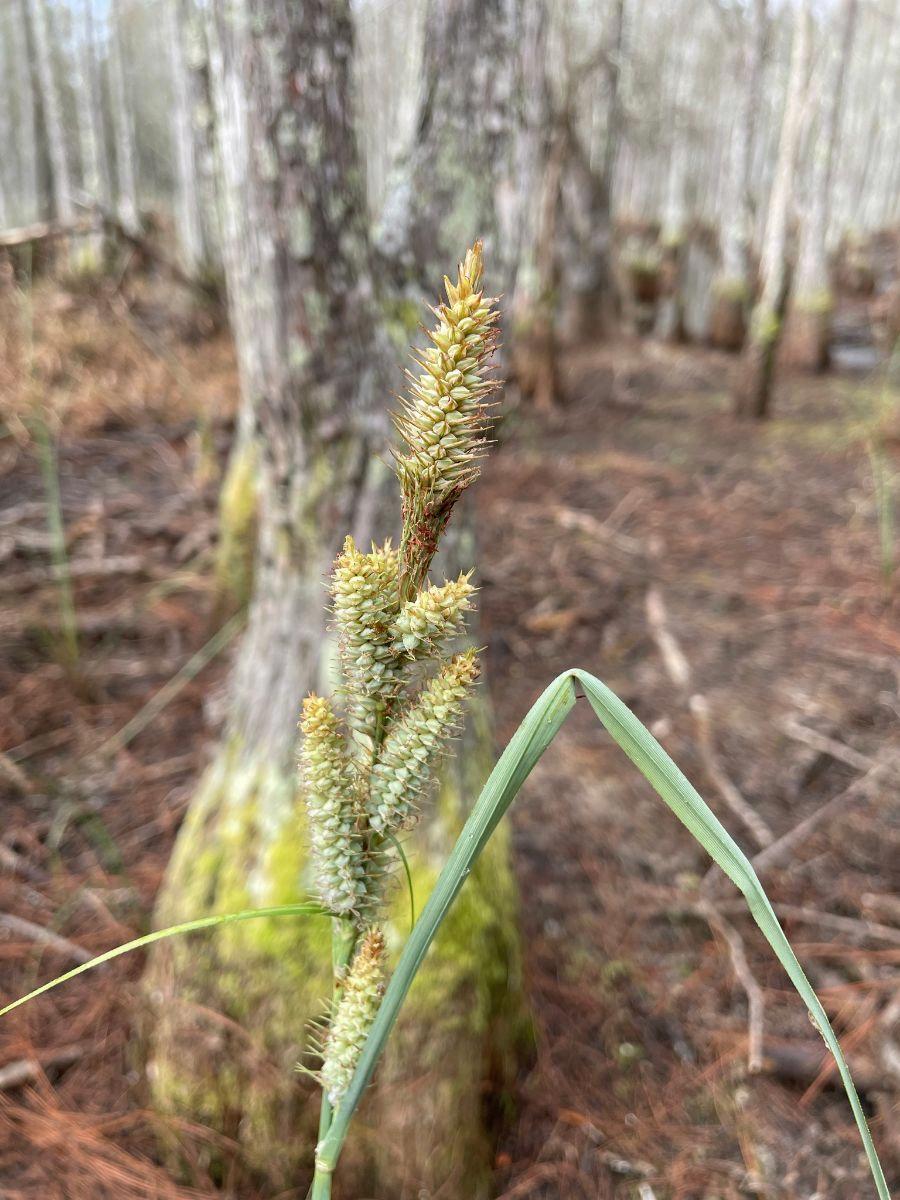
Above: Warty Sedge (Carex verrucosa) in Jennings State Forest, Clay County Photo byAdamArendell, December 2024
Laura Pitts of Ixia Chapter Profiled in Voyage Jacksonville
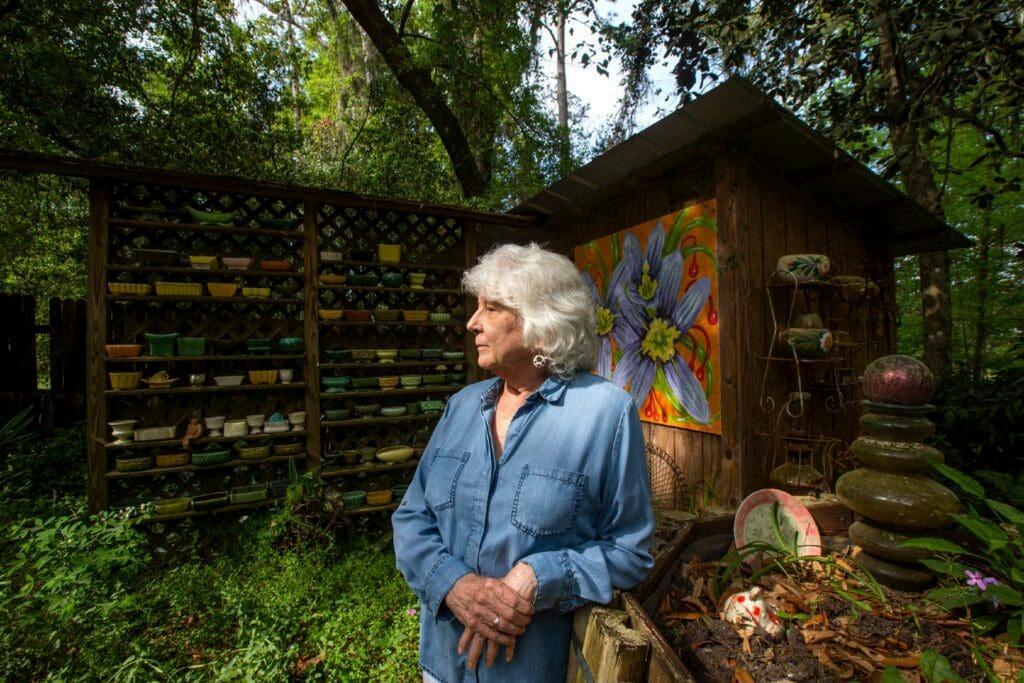
Eleanor Dietrich of Magnolia Chapter Featured in Flamingo Magazine
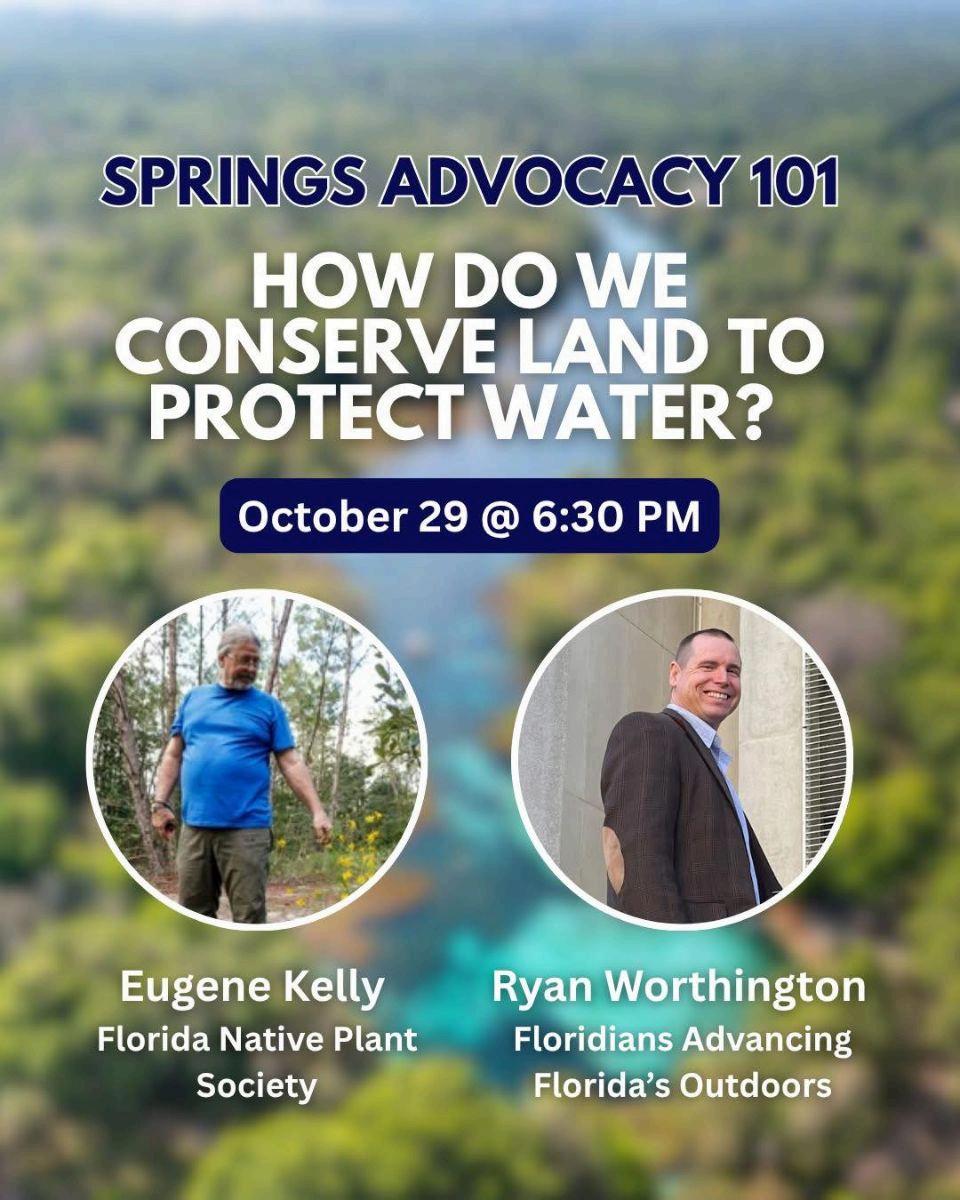
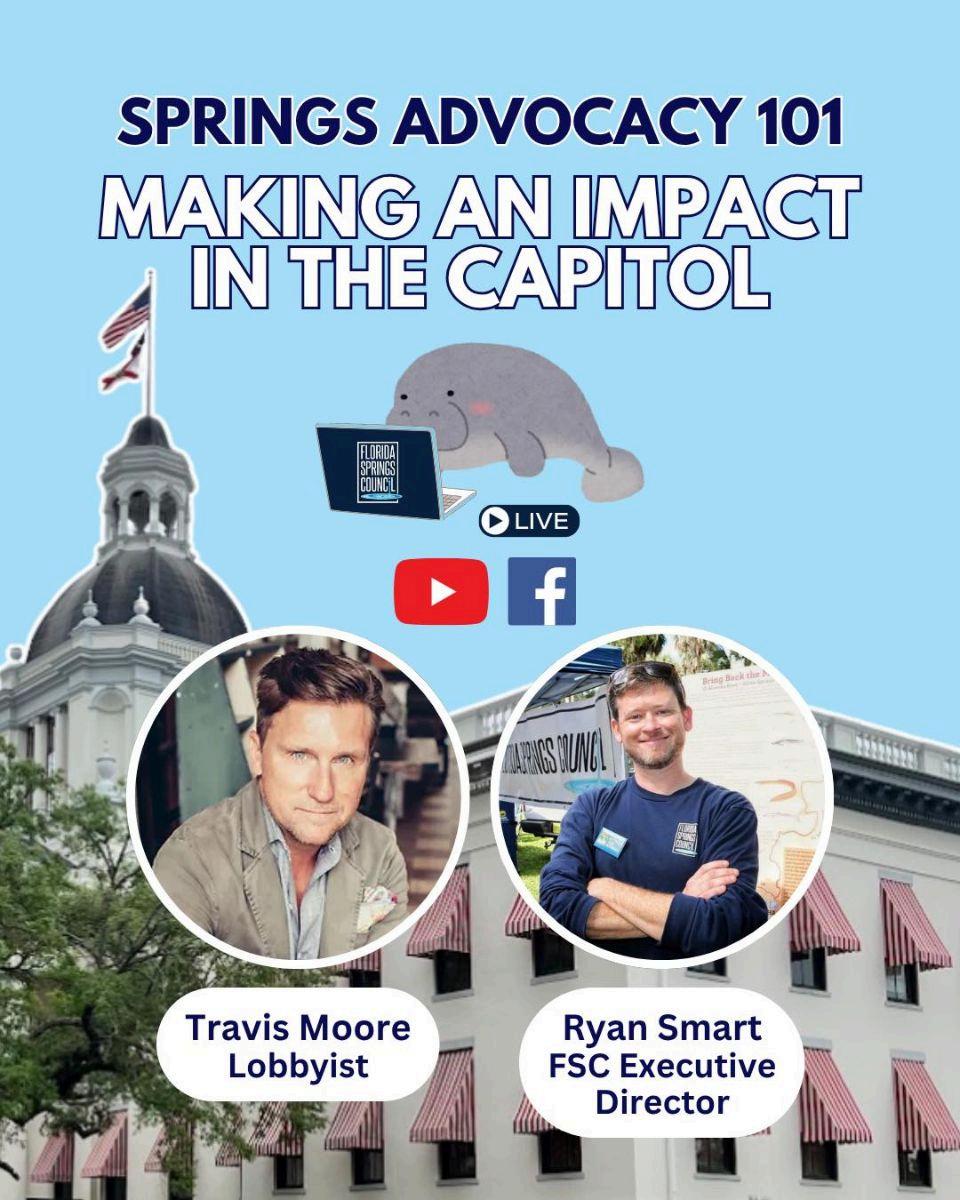
FNPS Leaders Featured on Florida Springs Council's Advocacy 101 Series
Special Meeting of FNPS Board of Directors Scheduled for 6:00 on Thursday, December 18
FNPS 2026 Endowment Grant Research Awards, Conservation Grant Awards, and the Dan Austin Award for Ethnobotany are open for submissions | Paul Schmalzer, PhD, Science Committee Chair Pinellas County Extension Funding Saved | David Perkey, Pinellas Chapter
Conference News! Save The Date! | Athena Philips, Conference Committee Chair
Features
Florida’s Conservation Crossroads: Why Florida Forever Matters Now More Than Ever | Susan Carr, PhD, President, Paynes Prairie Chapter and Past President, FNPS
I Did a Land Management Review! So could you! |Ann Redmond, Magnolia Chapter, FNPS President-Elect
A Journey Through Native Florida: The Florida National Scenic Trail in the Panhandle | Chelsey Stevens, Florida Trail Association
In Other News
FNPS Fun Fact: Founding Member Alyene Hays
Lunch and Learn and Terminology Tuesday archives
Letter from the Executive Director
Dear Members,
As we approach the close of the year, I find myself reflecting on how much the Florida Native Plant Society has accomplished thanks entirely to people like you who believe that Florida’s irreplaceable native plants and ecosystems deserve our protection. From advocacy wins in Tallahassee to hands-on restoration work across the state, every success is rooted in the shared commitment of our members, volunteers, and supporters. This season of giving is especially meaningful for us. Giving Tuesday and yearend contributions strengthen FNPS at a time when planning, fieldwork, and legislative preparation are already underway for the year ahead. Your gift whether large or small—directly fuels the programs that make a measurable difference: conserving rare species, restoring critical habitat, supporting
science-based management, and equipping our chapters with the tools they need to educate and engage their communities.
But financial gifts are only one way people help FNPS thrive, and I want to take a moment to honor the many creative, meaningful ways our community supports this mission. Some supporters choose to donate a vehicle or property, or name FNPS as a beneficiary on an account or through a donor-advised fund Others make us the recipient of an eBay sale, contribute artwork for our annual conference auction, or provide stories, photography, and science writing that enrich The Sabal Minor and the Palmetto. Many shop through our Bookshop.org storefront to support native plant education while also supporting independent bookstores. And across Florida, volunteers give their time and expertise leading chapters, planning outreach events, stewarding native gardens, and building the next generation of plant advocates.
All of these contributions every hour, every gift, every talent shared—allow FNPS to be more effective and more resilient. They help us respond more quickly to conservation threats, invest in stronger partnerships, and elevate the voices of native plant stewards statewide. They strengthen not only our organization, but the movement for Florida’s native plants.
If you are able, I invite you to include FNPS in your year-end giving plans or to join us on Giving Tuesday. However you choose to support this work, know that your generosity becomes action, advocacy, habitat saved, species protected, and newly inspired ambassadors for native plants.
Thank you for being a part of this mission and for helping ensure that Florida’s natural heritage continues to flourish. -Melissa Fernandez-de Cespedes
Letter from the Editors
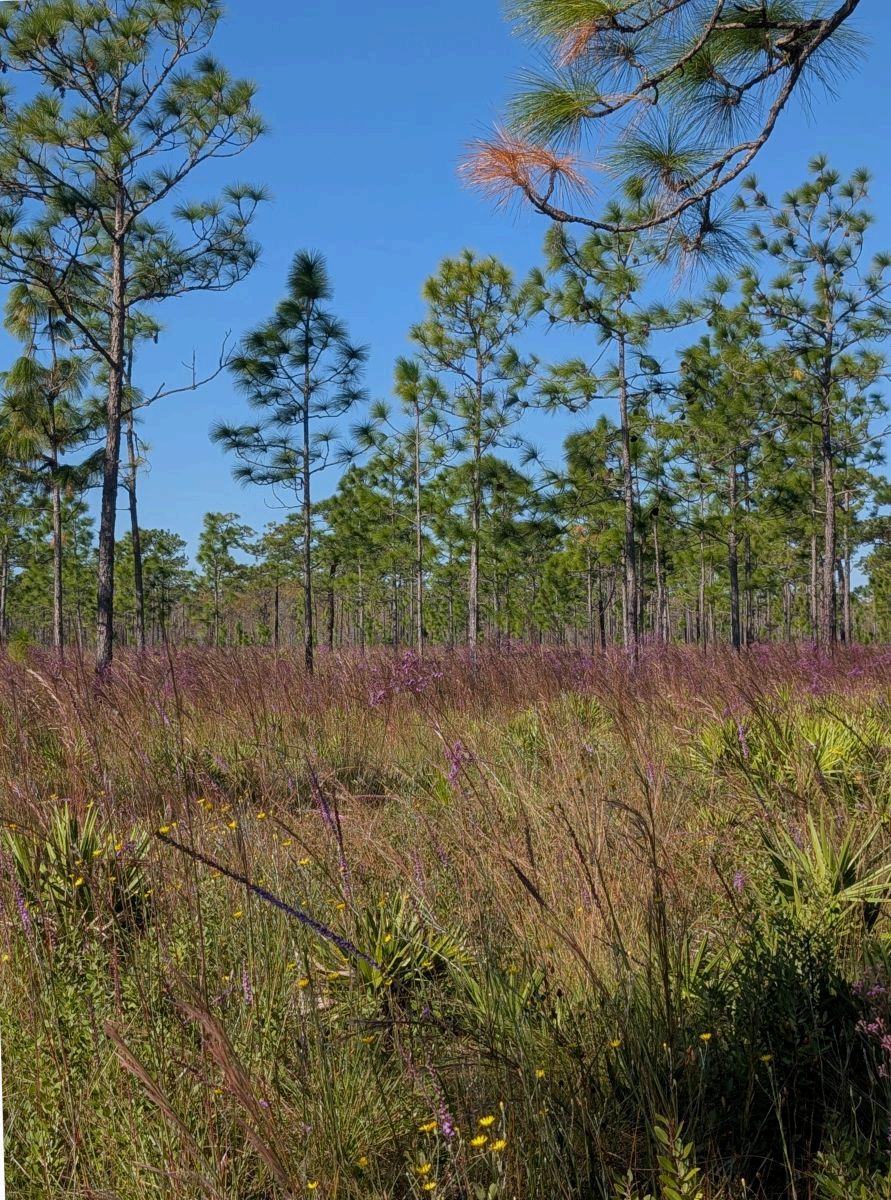
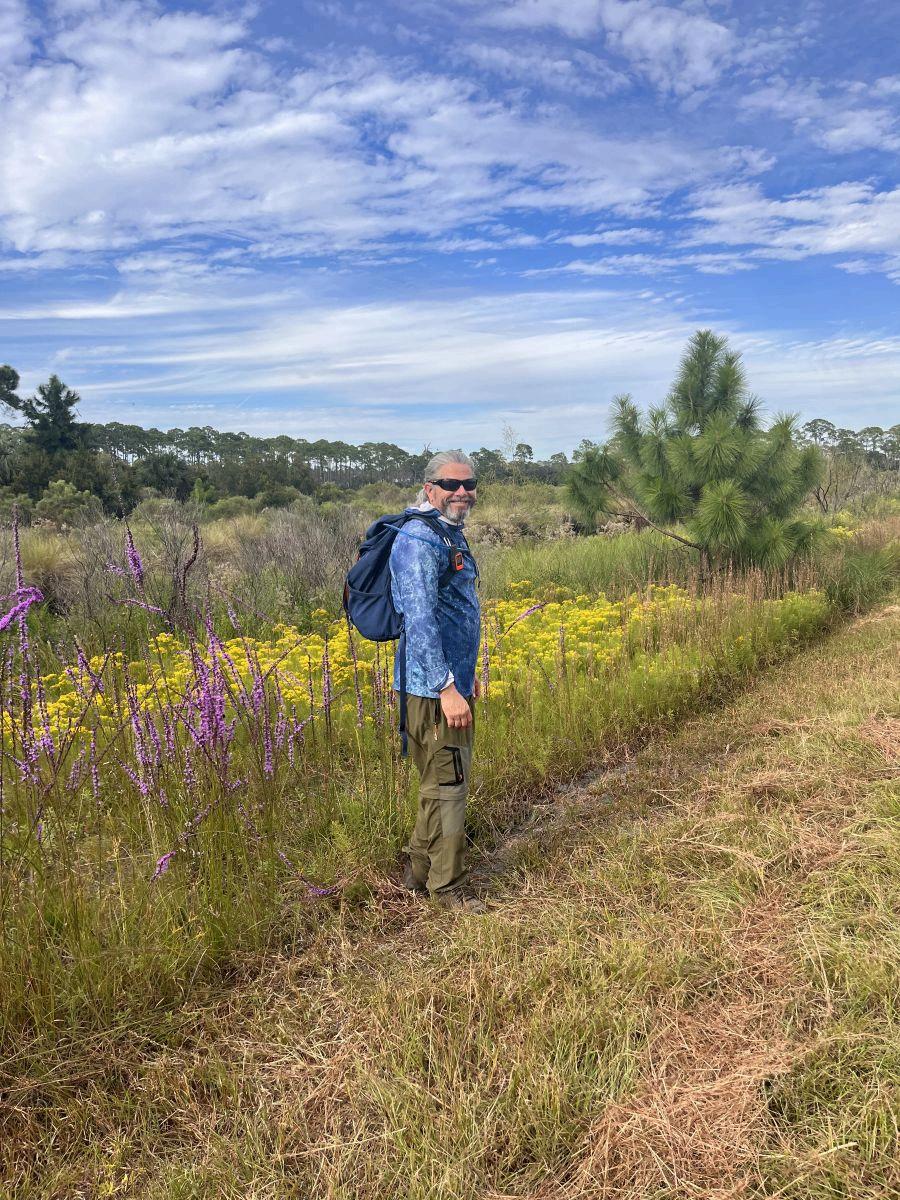
We're enjoying some beautiful weather as I write this after the Blazing Star superbloom (Liatrisspp.) we enjoyed this year (pictured below). We had a great in-person meeting of the Board and Council of Chapters in Kissimmee last month.
Photo Contest winners have been announced. Congratulations to all of the winners! Our inaugural writing contest in honor of founding member Peg Lantz has launched and is accepting submissions - learn more and submit the work of your pen here. - Valerie Anderson and Cherice Smithers
Beautiful field of Blazing Stars out at Disney Wilderness Preserve, Osceola County Photo by Valerie Anderson
Laura Pitts of Ixia Chapter Profiled in Voyage
Jacksonville
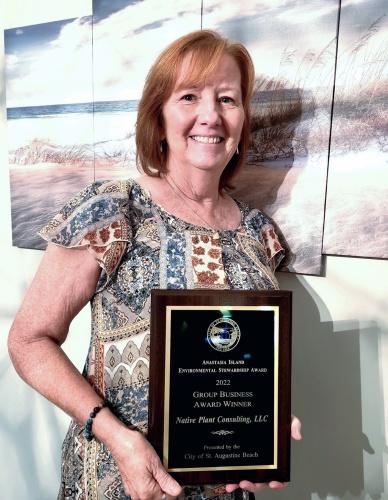
Ixia Chapter business member Laura Pitts was profiled in Voyage Jacksonville magazine about her laterin-life professional shift to native plant landscaping. We're inspired by her story and commitment to native plants and her business, Native Plant Consulting, is a critical resource for people in the rapidly-urbanizing St. Johns County. Their frequent newsletter is informative and thoughtful as is their social media content. Read the full piece here. Locals are working on restarting the local chapter in St. Johns County, if you're in the area please sign up for meeting notices here.
Eleanor Dietrich of Magnolia Chapter
Featured in Flamingo Magazine
Longtime Magnolia Chapter member Eleanor Dietrich was the driving force behind Florida's designated Wildflower Areas along state roads and worked for our partners the Florida Wildflower Federation as their liason to DOT. Read the full piece here.
FNPS President Eugene Kelly, Ryan Worthington of Floridians Advancing Florida's Outdoors, and Ryan Smart sat down for a roundtable discussion on conservation funding. Watch the recording here.
FNPS Government Affairs Advisor Travis Moore and Ryan Smart of FSC discussed how citizens can best make an impact at the state government level. Watch the recording here.
FNPS 2026 Endowment Grant Research Awards, Conservation Grant Awards, and the Dan Austin Award for Ethnobotany are open for submissions
byPaulSchmalzer, PhD, ScienceCommitteeChair
The Florida Native Plant Society maintains an Endowment Research Grant program for the purpose of funding research on native plants. These are small grants ($2500 or less), awarded for a 1-year period, and intended to support research that forwards the mission of the Florida Native Plant Society which is "to promote the preservation, conservation, and restoration of the native plants and native plant communities of Florida."
FNPS Conservation Grants support applied native plant conservation projects in Florida. These grants ($5000 or less) are awarded for a 1-year period. These projects promote the preservation, conservation, or restoration of rare or imperiled native plant taxa and rare or imperiled native plant communities. To qualify for a Conservation Grant, the proposed project must be sponsored by an FNPS Chapter.
The Dan Austin Award for Ethnobotany will provide up to $1500 to graduate or undergraduate students who are studying Florida ethnobotany – i.e., the study of the relationship between peoples or cultures with plants native to Florida or Florida ecosystems. These can be current uses or historic uses.
Application guidelines and details are on the FNPS Web site (www.fnps.org), click on ‘What We Do/Awards and Grants’ Questions regarding the grant programs should be sent to info@fnps.org.
Application deadline for the 2026 Awards is March 6, 2026. Awards will be announced in May 2026.
Special Meeting of FNPS Board of Directors
Scheduled for 6:00 on Thursday, December 18
The Board of Directors has scheduled a special session to discuss a proposal to terminate the membership of several members accused of violating the formally adopted policies, procedures and/or Code of Conduct of FNPS. The proceedings of this meeting will be closed to the general membership to maintain confidentiality. The session will begin at 6pm. It will be followed immediately by a regular business meeting of the Board at the regularly scheduled time.
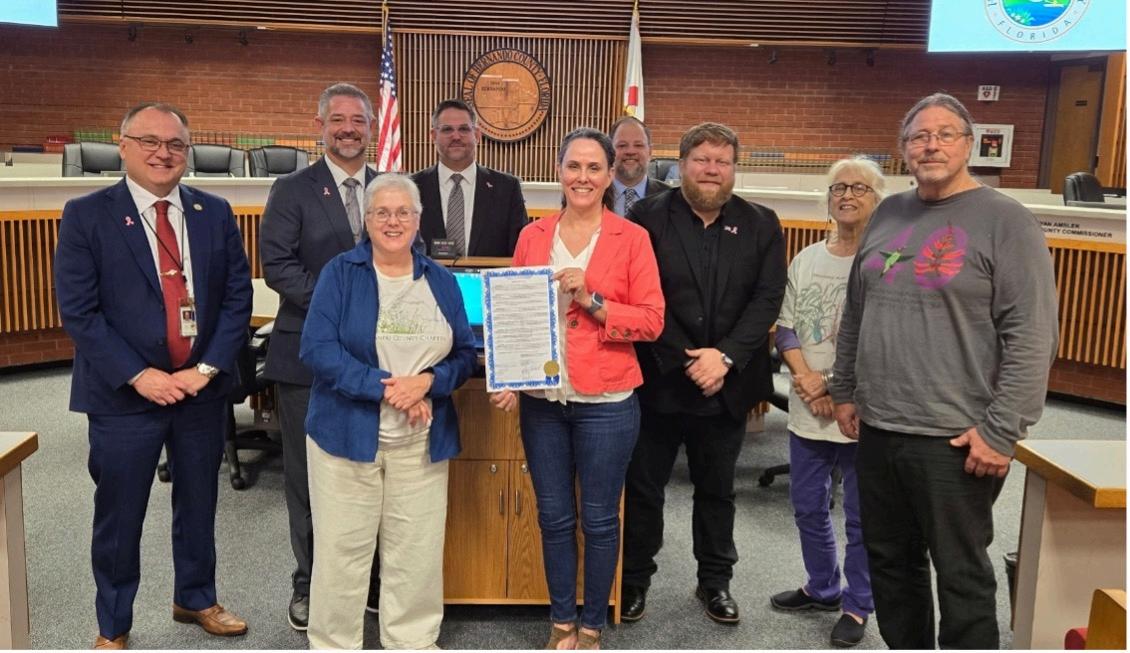
Florida Native Plant Month Proclaimed in Hernando and Lake Counties
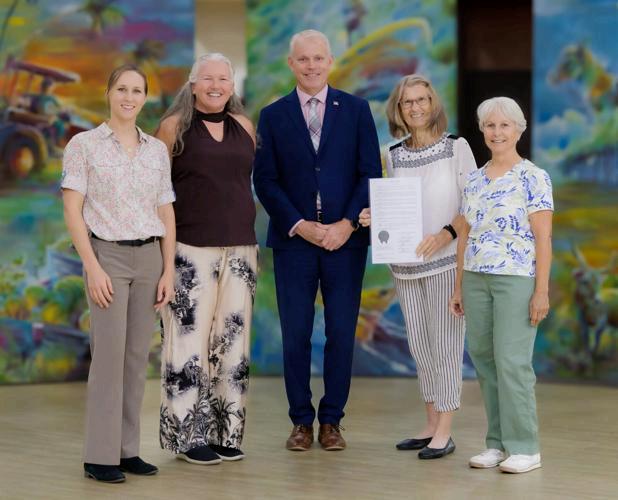
Thanks to the great work of our Hernando, Lake Beautyberry, and Passionflower Chapters, October was declared as Florida Native Plant Month in two counties this year! The Lake County proclamation was featured in the Triangle Sun.
Left: Lake County Commissioner Sean Parks with, from left, representatives of the Florida Native Plant Society's Passionflower Chapter Hillarie Burgess and Kirsten McKinley, and Lake Beautyberry Chapter Members Neta Villalobos-Bell and Jane Bullock Right: Hernando County Commissioners with Hernando Chapter representatives Janet Grabowski and Eugene Kelly.
Pinellas County Extension Funding Saved
byDavidPerkey, PinellasChapter
Extension services provided by UF/IFAS are under scrutiny in many Florida counties Pinellas was one such county and we rallied!
All 67 counties in Florida have an Extension service and Pinellas Extension has been providing valuable services for 100 years. Two main concerns of opposing commissioners revolved around the misconception that Extension largely addressed agriculture services no longer applicable to Pinellas and that the current services were duplicated by other organizations. One commissioner incorrectly expressed a concern that Extension had a DEI policy.
On November 18th, several Pinellas Chapter FNPS members along with UF/IFAS volunteers, garden clubs and residents convinced the commissioners in a 4-1 vote to continue funding the five-year Memorandum of Understanding (MOU) agreement for Extension services. The commissioners received emails, phone calls and listened to speakers as they outlined the many valuable services provided through this partnership It is the UF/IFAS agents that design, lead and implement programs to educate volunteers who in turn educate the public.
The Natural Resources Agent implements programs designed for professionals and residents to foster understanding and provide tools to protect and preserve Florida’s waters. These programs include the Florida Waters Stewardship Program, the Florida Microplastic Awareness Project and the Adopt-A-Drain program. Additionally, this staff leads educational programming at the Environmental Education Center and along with volunteers offer a variety of guided hikes and educational programs at the Weedon Island and Brooker Creek county preserves.
The Urban Horticulture Agent provides citizens with research-based, environmentally friendly information on horticulture and sustainable landscapes incorporating the Florida-Friendly LandscapingTM Nine principles. This position also oversees the lawn and garden help desk and the Master
Gardener Volunteer program. Pinellas County Master Gardener Volunteers have logged over 48,000 hours over the last 5 years valued at $1.4 million.
The Commercial Horticulture program provides education and training based on the latest research from the University of Florida. The Commercial Horticulture staff is available to help solve local problems, provide CEUs and run the Integrated Vegetation Management (IVM) program The IVM Program consists of an orientation and overview, as well as several state required CEU courses for pesticide applicators.
The agent for 4-H, the nation’s largest youth development organization, teaches skills in science, leadership and healthy living. The 4-H agent also coordinates the Pinellas Youth Advisory Committee which is a group of teenagers who work with the Pinellas County Commission to develop public service projects.
The community support in this effort was a success in preserving the UF/IFAS partnership with Pinellas County, showing that it pays to get involved and engage with leadership. A good example is one commissioner changed his vote after learning the extent of UF/IFAS involvement with our county.
Below: Pinellas Chapter Treasurer Jan Allyn delivers a speech defending Extension funding at the November 18th meeting of the Pinellas County BCC
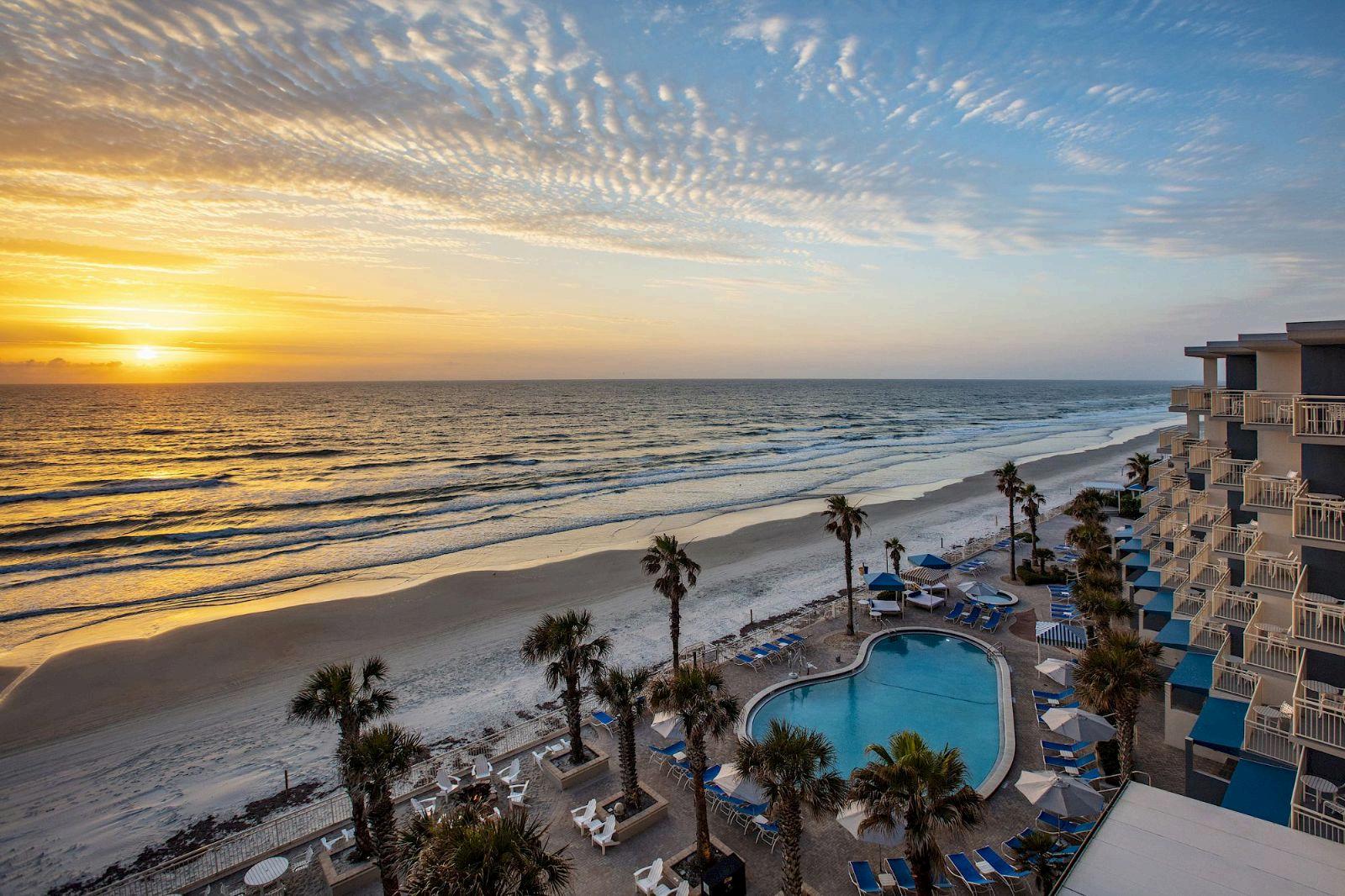
We are pleased to announce that the next Conference will be April 1-4, 2027, at the Shores Resort and Spa in Daytona, FL This oceanfront venue takes pride in their picturesque location and their commitment to environmental
responsibility. Volusia County offers a splendid mix of coastal communities, wetlands, and forests. From the springs on the mighty St Johns River to the scrubby Lyonia Preserve (a well-known refuge for Florida Scrub jays), we’ll have plenty of outdoor opportunities to explore.
Of course, we’ll need some help to get us there. Today, I’m putting out our first call for committee volunteers to help plan the event, for individuals interested in being presenters, and for an artist that could create our logo. As we begin the selection process for presentations, I will be happy to accept presentation submissions, or feel free to reach out if you think we should address a subject that needs more attention. Our Research Track will make a Call for Papers in late 2026.
Our committee consists of people from across the state, with a love for the Society’s Mission and who recognize the power of bringing people together. In addition to the general planning activities, we seek people who can help coordinate the different conference elements such as A/V, book signings, CEUs, field trips, the plant sale, photography, the digital program, registration, socials, sponsorships, vendors, volunteers, or youth programming. If you can assist with any of these valuable parts of our event, please let me know.
I hope you’ll join us in bringing the FNPS Conference to life!
You may reach Athena Philips at conferencechair@fnps.org for further information.
Florida’s native landscapes are among the most diverse in the nation, supporting nearly 4,000 plant species across ecosystems ranging from subtropical wetlands to temperate pine uplands. Thanks to decades of forwardthinking conservation policy and consistent public support, roughly one-third of the state is now in some form of conservation ownership. Yet in areas not protected, development proceeds rapidly as Florida’s population grows. Land protection remains the primary tool to conserve the natural Florida we value.
Floridians consistently support conservation across geographic and political lines. We value land for recreation, groundwater recharge, flood protection, wildlife habitat, and protection of working and natural lands. But how do the state’s land protection programs function, and are they keeping pace with today’s pressures? What new trends threaten their effectiveness, and what improvements are needed to protect Florida’s ecological future? What should we do to protect the health of natural Florida?
A Brief History of Florida’s Conservation programs
Florida has long been a national leader in securing land for conservation. The modern era began with the Conservation and Recreation Lands (CARL) program in the 1970s, followed by the groundbreaking Preservation 2000 initiative in the 1990s. In 2000, the Legislature created the Florida Forever program, which remains the state’s flagship conservation and recreation landacquisition program.
More than 2.6 million acres over a quarter of the state's conservation estate have been protected through Florida Forever and its predecessor programs. The initiative is notable for protecting some of Florida’s most botanically and ecologically important landscapes, including scrub, longleaf pine sandhills, calcareous hammocks, seepage slopes, and coastal upland habitats.
Florida Forever is widely recognized for its scientific credibility. Its methodology identifies lands that protect biodiversity, water resources, climate resilience, and ecological connectivity. Rather than focusing on isolated parcels, it targets the protection of natural systems and watershed-level corridors. Each year, the Acquisition & Restoration Council (ARC) evaluates nominated project areas and updates the Florida Forever Priority List. The program’s transparency, scientific rigor, and bipartisan support have been essential to its durability.
The Rural and Family Lands Protection Program (RFLPP), established in 2001 and managed by the Florida Department of Agriculture and Consumer Services, focuses on protecting working agricultural landscapes ranches, timberlands, and family farms through voluntary agricultural conservation easements. While Florida Forever seeks to protect ecologically sensitive lands, RFLPP prioritizes properties that support sustainable agricultural production. Conservation benefits are important but secondary. Both programs use conservation easements to limit development while keeping land in private ownership. However, only Florida Forever has the authority and mission to acquire land outright. This ability to secure fee-simple ownership is essential for expanding and connecting state parks, forests, and wildlife management areas. Many of Florida’s rarest plant communities occur on lands that are not suited for agriculture, making Florida Forever a critical mechanism for protecting habitats that RFLPP cannot address.
Voluntary Participation: A Foundation of State Conservation
Florida’s conservation programs are entirely voluntary. State agencies acquire land only from willing sellers, and they do not use eminent domain or compel participation. Priority lists identify the best opportunities for conservation, but actual acquisitions depend on the participation and supply of willing sellers. Finding and cultivating willing sellers requires years of consistent effort and relationships. Predictable funding and procedural consistency are crucial for maintaining an effective pipeline of viable conservation projects.
The Florida Wildlife Corridor: Florida’s conservation blueprint
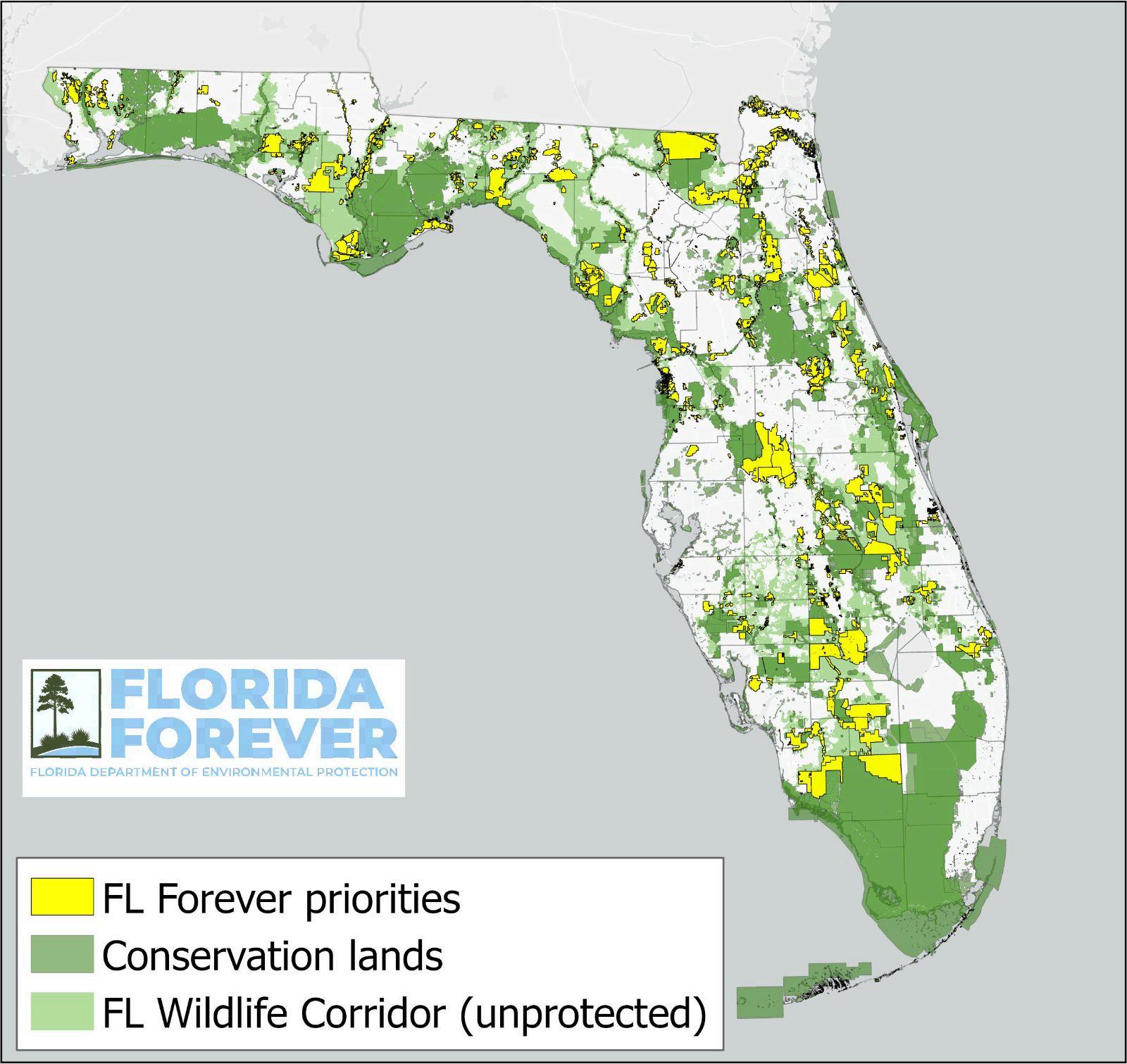
The Florida Wildlife Corridor is often mistaken for a land-acquisition program. Instead, it is an 18-million-acre vision designed to guide strategic conservation and maintain landscape connectivity across the state. The Florida Wildlife Corridor Act of 2021 greatly elevated public awareness of this effort, but the Act makes clear that Florida Forever is the primary tool for securing land to build the Corridor.
Roughly 8 million acres within the Corridor remain unprotected, many of which already overlap with Florida Forever project boundaries. The Corridor provides the blueprint; Florida Forever provides the mechanism.
The Florida Wildlife Corridor and Florida Forever priority conservation areas
Funding trends: Stability lost
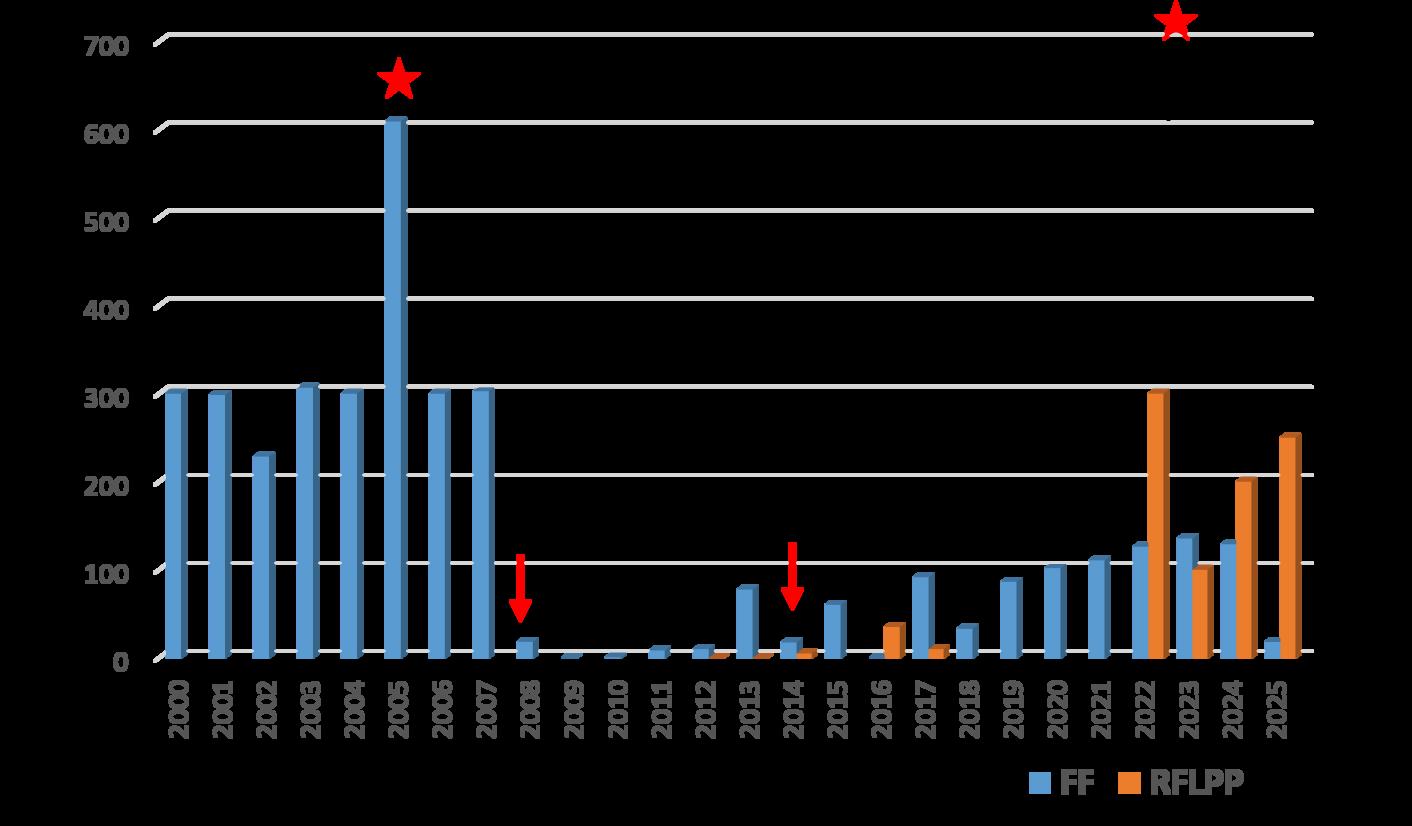
Before the 2008 recession, Florida Forever received consistent funding often more than $300 million per year. Following the recession, funding collapsed by more than 90%. In 2014, voters overwhelmingly approved the Water & Land Conservation Amendment with the expectation that it would restore Florida Forever’s funding through allocation of real estate transaction taxes to support the program. Unfortunately, that did not happen, and Florida Forever appropriations remained low.
Annual state budget appropriation for Florida Forever (FF) and Rural and Family Lands Protection Program (RFLPP) from 2000-present. *OnlyfirstyearofFiscalYearlisted
In recent years, annual appropriations have hovered around $100 million. In 2025, funding fell to just $18 million, one of the lowest levels in the program’s history, even as land prices and development pressures surged.
In 2023, the Legislature allocated $850 million in one-time funding for land protection in specific Wildlife Corridor regions. This special funding targeted two specific, and relatively small sections of the Florida Wildlife Corridor: the Ocala to Osceola Wildlife Corridor (O2O) in north Florida and the Caloosahatchee‑Big Cypress Corridor in southwest Florida. While transformative, this is not recurring support, and was not directly allocated to Florida Forever, and was made possible by temporary federal revenue during the Biden administration. It was not a structural solution.
RFLPP funding, meanwhile, has surged since 2022 after years of inactivity. While the program provides real benefits for protecting agricultural lands, it does not generally protect the natural communities most important for native plant conservation. Its primary focus is working lands, while natural area protection is secondary In 2025, the funding contrast between the two programs was striking: Florida Forever received $18 million, while RFLPP received $250 million.
Emerging Threats and Trends
Surplus sales and trades of existing conservation lands: Most readers are likely familiar with the recent proposals to sell or trade off State owned lands to developers, exemplified by the Guano River WMA proposal (which, thankfully, was withdrawn following public outcry). These threats to our beloved state
parks and refuges are serious, and ill-conceived proposals to swap or surplus state-owned lands are becoming too frequent.
Ad hoc land purchases that bypass Florida Forever: This troubling and growing trend involves “pork barrel” land purchases that bypass the Florida Forever program entirely - the very program that is designed to preclude partisan politics and favoritism out of the process. The most egregious example is the recent State approval to purchase four acres on a narrow coastal peninsula in Destin for the unbelievable price of $83 million. The price tag is mind-numbing itself, but even worse is the circumvention of the Florida Forever process, including required evaluations to ensure that state conservation dollars protect the highest-value ecological lands. The project did not go through ARC review, was not on the Florida Forever Priority List, and was not within the Florida Wildlife Corridor, yet was brought directly to the Governor and Cabinet for approval without public input. Unfortunately, this was not a one-off – we see more of these ad hoc land purchases on the horizon. These “off list” ad hoc deals set a precedent that weakens Florida’s long-standing land protection programs. Such practices undermine transparency and erode the integrity of the state’s science-based conservation framework.
Volatile funding and program instability: Volatility in annual funding weakens both Florida Forever and RFLPP. Large one-time infusions cannot compensate for multiple years of severe underfunding, nor can agencies maintain staff capacity or landowner engagement in the face of unpredictable appropriations. Program instability itself has become a significant barrier to effective conservation.
Imbalance between fee-simple natural land acquisition and agricultural easements: Florida Forever is the State’s primary mechanism for direct (feesimple) purchases of lands and conservation easements that protect natural areas. In contrast, RFLPP funds only the purchase of agricultural easements to protect working lands. Both programs are important. But with the increasing funding gap and decreasing Florida Forever appropriations, we are losing the ability to buy lands to expand and connect existing natural landscapes and public lands.
How is the relevant to native plants?
Rare plant conservation may be particularly affected by the erosion of the Florida Forever program. Habitat loss is the top threat to many rare and endemic Florida plants, particularly those that occur in areas susceptible to development. Many species (i.e. Lewton’s milkwort / Polygalalewtonii, Clasping warea / Wareaamplexifolia, Harper’s beauty / Harperocallisflava) exist only on lands targeted for protection by Florida Forever. Furthermore, Florida Forever is the primary tool for building the Florida Wildlife Corridor
the landscape network that protects ecological processes, wildlife and pollinator movement, and resilience to climate change, all of which are essential for the conservation of native flora. Florida Forever’s primary focus on protection of the high-quality natural communities that are home to many imperiled plants and diverse habitats is fundamental to the future success of native plant conservation.
What can we do?
We must continue to advocate for predictable and sustainable funding for both Florida Forever and the Rural and Family Lands Protection programs. Ideally, Florida Forever funding should return to historic levels of $300 million, or more! The two programs are complementary but very different in their purposes. State appropriations should support both.
But there is more to healthy land protection programs than the total “bottom line” funding number. We need to support balanced funding for conservation easements, AND for direct land acquisitions. Florida Forever is the primary tool for State acquisition of land, and we cannot lose that important conservation tool. Similarly, the Florida Forever conservation easement is an essential mechanism for protecting ecologically important lands in private ownership, including non-agricultural land uses.
The Florida Forever program is our best tool for protecting environmentally sensitive lands, building the Florida Wildlife Corridor and expanding existing parks and refuges. We must not allow Florida Forever to wither. Let’s rally to Save Florida Forever, our State’s premier science driven land protection program that has endured for 25 years and delivered success. We need to protect Florida Forever to protect our natural legacy.
I Did a Land Management Review! So could you!
byAnnRedmond,MagnoliaChapter, FNPSPresident-Elect
Did you know that FNPS often participates as the Conservation Organization member of the mandatory reviews of our state-owned lands’ management plans? I just participated in a land management review of the Alfred B Maclay Gardens State Park unit management plan. It was fun! AND interesting!
What are they?
Our state-owned lands all have “Unit Management Plans” (UMPs) that describe each property’s land management goals. Every 5 - 10 years (depending on property size) an on-site review is required of conservation and recreation lands owned by the state to determine (1) whether the lands are being managed
for the purposes for which they were acquired and (2) whether they are being managed in accordance with their land management plan.
https://www floridastateparks org/MaclayGardens
How it works
In conducting this review, a statutorily constructed review team needs to evaluate the extent to which the existing management plan provides sufficient protection to that property’s various natural and cultural features and how well the property’s management complies with the UMP.
The land management review teams are coordinated by FDEP’s Division of State Lands and includes representatives from the DEP Recreation and Parks, Florida Forest Service, Fish and Wildlife Conservation Commission, local government and DEP District where the property is located, local soil and water conservation or water management district, conservation organization member, and a local private land manager. FNPS often serves as the conservation organization member.
Prior to the team meetings, we each review the park’s UMP and the previous team’s review. These are provided by the team leader. The UMPs for all state parks are also available at Management Plans | Florida Department of Environmental Protection.
What happened in office and field
The team arrived on the appointed day having read the current UMP and most recent review team’s review. The Division of State Lands representative explained review our charge for this review and we heard initial descriptions of the main units at this park – the gardens, recreation area and trail system. Then off to the field for a complete behind-the-scenes tour of the park!
First, we visited the Florida Gem that is the Alfred B Maclay Gardens.
Originally planted over 100 years ago by New York financier Alfred Maclay, the gardens were donated to the state in 1953. The gardens are very well tended and as the original plantings age out, they are being replaced by a mix of native plants and specimen species from the original gardens, many of which are raised on site by seed. Integral to the garden for decades have been protected and charismatic native species such as Florida Torreya (Torreyataxifolia), mountain laurel (Kalmialatifolia), and Chapman’s rhododendron (Rhododendron chapmanii). FNPS’ Magnolia Chapter developed and has maintained a peaceful native plant arboretum on site since the late 1980’s
Next, we visited the recreation area which is located on Lake Hall. This is a wellloved, well-used area for rowing groups, picnics, kayakers, and birthday parties.
We reviewed the lake’s water quality testing and aquatic invasive species
control programs. The park owns a portion of the lake shoreline, so they maintain relationships with the homeowners around the lake.
Finally, we visited my favorite area, the extensive multi-use Overstreet trail system. The trails wind through upland hardwood and bottomland forests, passing some basin swamps and ravines as well as circling tranquil Lake Overstreet This north Florida forest has a full series of seasonal changes, from spring ephemeral wildflowers to lush green summer forest to golden and russet canopies in the fall. There are a series of historic ditches on site, dug by slaves during the plantation era, as well as archeological sites dating up to 2,000 to 3,000 years in age. An bald eagle nest was seen from across the lake.
Follow-up scoring event
The next day we met via an online meeting to discuss what we’d seen, heard, and observed. Then we scored two things.
First, how the existing management plan itself provides protection to threatened or endangered species, unique or important natural or physical features, geological or hydrological functions or archaeological features.
Second, we reviewed how well the land is being managed to fulfill the purposes for which it had been acquired as related to the adopted management plan.
An affirming part of this whole process was closing out this review with the team developing a series of Commendations about the exceptional work being done by the staff at this wonderful park. I left feeling very encouraged about this park and its bright future under its management team. I’m so glad I was able to be part of this team.
How to get involved?
FNPS Director of North Florida Programs Lilly Anderson-Messec is our liaison to this process Reach out to her at torreyakeepers@fnps org She’d love to bring you into the LMR fold, and you will love the experience!
A Journey Through Native Florida: The Florida
National Scenic Trail in the Panhandle
byChelseyStevens, FloridaTrailAssociation
The Panhandle section of the Florida National Scenic Trail is a favorite among plant lovers and hikers alike, celebrated for both its remarkable biodiversity and its exceptional elevation changes. Known for steep ravines, tannic rivers, and dramatic topography, this region offers a botanical journey that merges sandhills, pine flatwoods, and titi swamps with seepage slopes that harbor pitcher plants and terrestrial orchids. From St. Marks National Wildlife Refuge
to the Gulf Islands National Seashore, this section highlights some of the state’s rarest and most resilient native plants.
St Marks National Wildlife Refuge is a vast expanse of salt marsh, tidal flats, and pine islands along Florida’s Forgotten Coast. This section is particularly memorable for the water crossing at the St. Marks River, where hikers must arrange a boat shuttle or hitch a ride to continue The landscape here feels ethereal so much so that it served as the setting for Jeff VanderMeer’s Southern Reach Trilogy. With its still water, shifting light, and coastal winds, St. Marks carries a haunting beauty that stays with hikers long after they’ve passed through.
Apalachicola National Forest marks a major highlight along the Panhandle route. Home to an expansive mix of wet prairies, flatwoods, sandhills, and cypress swamps, this forest supports a striking array of flora. Here, hikers may spot Chapman’s butterwort (Pinguiculaplanifolia), yellow pitcher plants (Sarraceniaflava), and fringed orchids (Platantherasp.), as well as an abundance of bald cypress (Taxodium distichum) rising alongside blackwater creeks. The sheer diversity of plant communities in Apalachicola lends a sense of transition with every mile.
The Econfina Creek section plunges into ravines where wild azaleas (Rhododendroncanescens) cling to the slopes, their roots wrapped around exposed limestone. Suspension bridges span the rushing waters below, making this one of the most visually dramatic sections of the entire Florida Trail. The southernmost portion spans stunning sandhills dotted with lupines that produce showy blooms in early spring.
Further west, the trail crosses through Pine Log State Forest. Here, longleaf pines dominate the landscape, and hikers may spot native milkworts (Polygala sp.), orchids, and patches of blazing star (Liatrissp.) blooming along the trail’s sandy edges. The Chipola River section showcases Florida’s karst geology with limestone outcrops and shoals Spring and fall hikers are often treated to blooms of rain lilies (Zephyranthes atamasca) emerging in meadows and along riverbanks, adding a delicate contrast to the rugged terrain.
As the trail continues through Nokuse Plantation, hikers pass through a blend of upland and wetland ecosystems where rare white-topped pitcher plants (Sarracenialeucophylla), sundews (Droserasp.) can be found. Nokuse’s protected habitats serve as a wildlife corridor for many species that have struggled in surrounding areas.
Among the rugged terrain of Eglin Air Force Base, visitors encounter steephead ravines, titi swamps (Cyrillaracemiflora), and clear spring-fed creeks These hidden microclimates support delicate wildflowers like Florida flame azalea
(Rhododendronaustrinum) and mountain laurel (Kalmialatifolia), blooming in shady pockets that feel more Appalachian than Floridian.
The final stretch leads through Gulf Islands National Seashore, where the ecosystem transforms once again. Here, sand dunes, salt marshes, and coastal scrub dominate the horizon. Sea oats (Uniolapaniculata), beach elder (Iva imbricata), and coastal panicgrass (Panicumamarum) help anchor the dunes, providing essential habitat for coastal wildlife. Scattered sandhill milkweed (Asclepias humistrata) plays a vital role in supporting monarch butterflies. These fragile environments are especially vulnerable to disturbance, making trail stewardship and conservation education critical to their long-term protection.
The northern terminus of the Florida National Scenic Trail carries deep significance for many long-distance hikers. While some begin their journey here, the majority arrive at this spot after completing a long trek that began at Big Cypress National Preserve. For some, the journey segues north at Blackwater River State Forest, where they continue north along the Eastern Continental Trail, connecting footpaths that run all the way from Key West to Newfoundland, Canada.
The Panhandle Region stands as a reminder that Florida’s ecological diversity extends far beyond beaches and palms. With high points, hidden ravines, and unique vegetation, this section of the Florida Trail feels like a secret wildflower corridor traversing carpets of pine needles, pitcher plant bogs, and exposed limestone. For hikers who appreciate native plants and the changing rhythms of the land, the Panhandle offers a vibrant and varied finale on a northbound journey through Florida’s wild heart.
In Other News
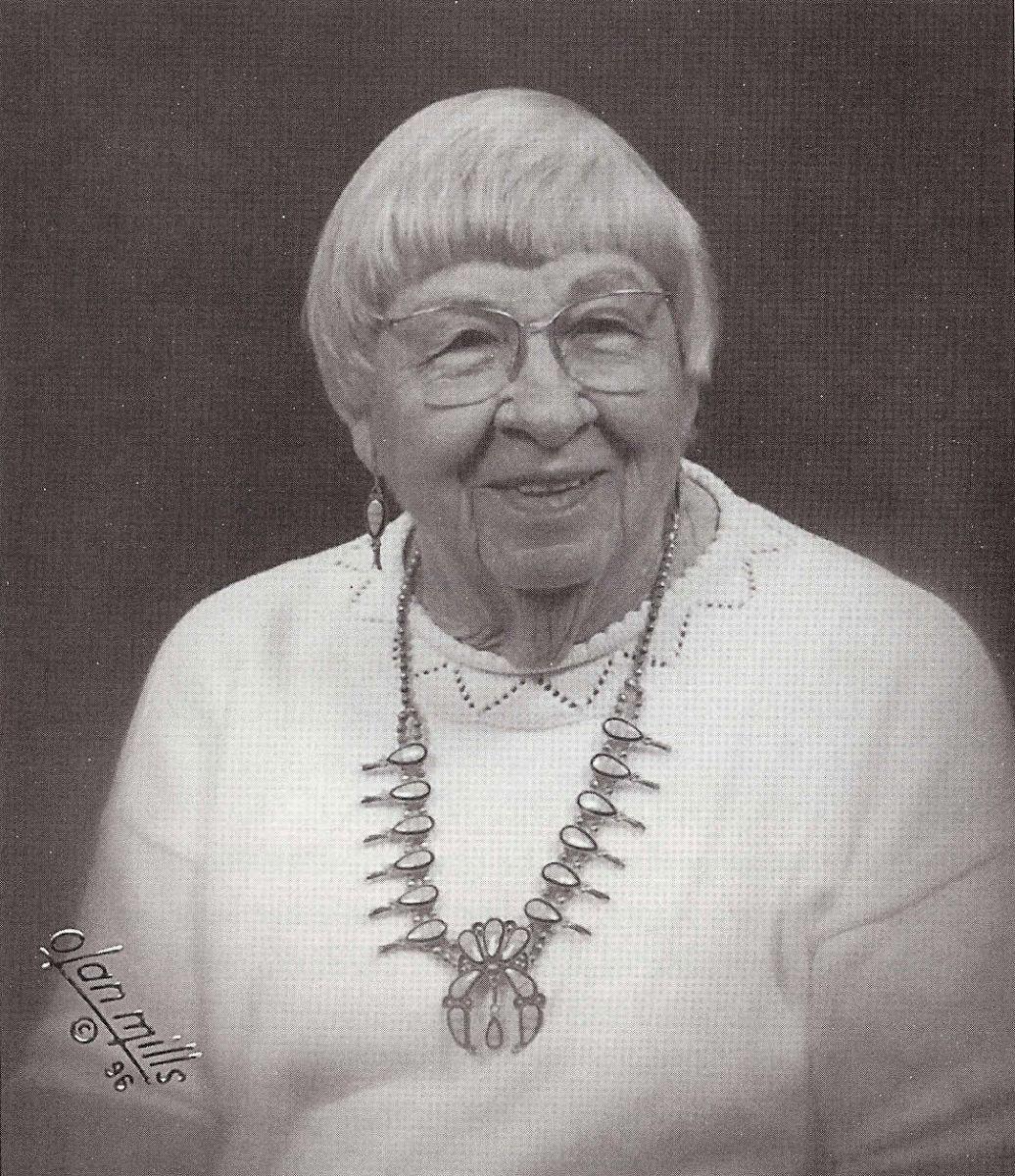
FNPS Fun Fact - Founding Member Aylene Anderson Hays, 1917-2014
FNPS founding memberAlyene Hays made the 1936 US National Hockey Team but her parents wouldn't let her go. Once in Orlando, she was known as the longest continuous resident of
Eola Heights, a historic neighborhood in downtown Orlando and regularly ran from her home in Orlando to Sandlando Springs (~11 miles along MillsAve). She also had a pet alligator and was the first president of theTarflower Chapter.
For more onAylene, read Don Lantz's profile of her (and other founding members) in the Palmetto Vol 20(2) p. 12 and her obituary
The FNPS Lunch and Learn archive of 124 programs is easily accessible via ourYouTube playlist. Our 61 shorterTerminology /TaxaTuesday videos are also available to review on their own playlist.
This email was sent to valerie@andersongeospatial.com. Click here to unsubscribe.