Florida Wildlife CorridorAdditions and Rare Plant Conservation | Willy the Losen, Putnam Land Conservancy
Passive Community Engagement in a Historic Jacksonville Neighborhood | Jolie Friedrich, Director at Large, Ixia Chapter
Upcoming Events
Check out these great events from our Chapters!
In Other News
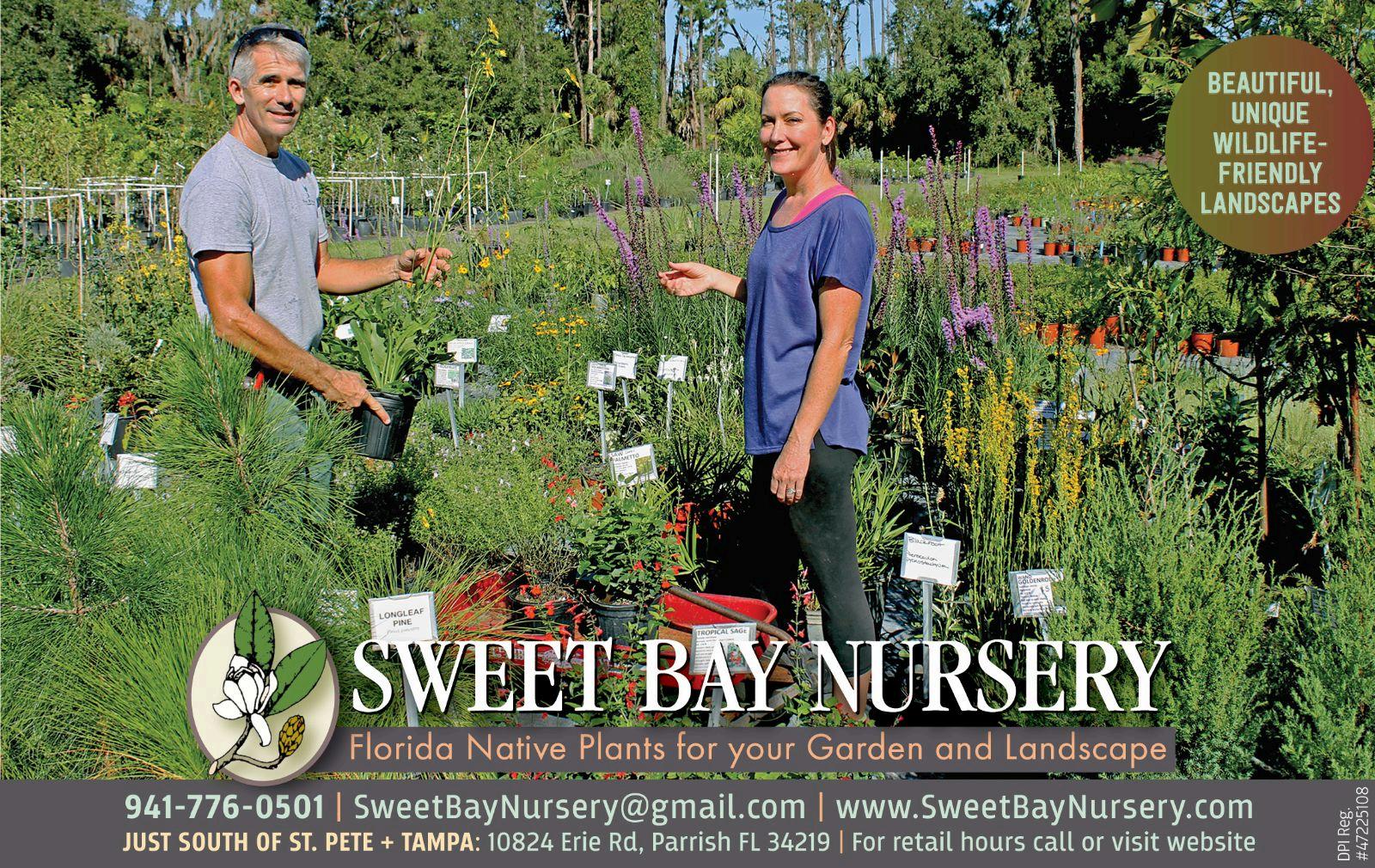
2025 Conference Sponsor highlight: Sweet Bay Nursery
Introducing the UF Invasive Species Survey Group
Carex of Central Florida is now available onAmazon 2025Annual Meeting recording
Lunch and Learn andTerminologyTuesday archives
Letter from the Executive Director
Dear Members,
October is a special month for all who cherish Florida’s habitats: it’s officially Florida Native Plant Month. This is our moment to pause, reflect, and celebrate the incredible diversity of native plants and their communities that help make our state unique.
Across Florida, autumn brings a brilliant show of wildflowers. From goldenrods and blazing stars to delicate asters and tickseeds, our trails, parks, and roadside edges are alive with color. I invite you to step outside and witness this beauty firsthand. Visit a local hiking trail, a chapter field trip, or simply explore your neighborhood and discover what is blooming; you may be surprised at the treasures you discover.
Plant communities are the foundation of Florida’s natural heritage, and they mirror thriving human communities. Each species, like each of us, has a role
in creating a balanced, resilient whole. By coming together to celebrate native plants and their communities, we strengthen our own sense of belonging and our shared purpose to conserve natural spaces.
This month, I encourage you to do more than admire from afar. Lace up your boots, bring a friend, and take action:
Join a chapter outing to botanize and share discoveries. Plant a patch of wildflowers in your yard, on your balcony or a community space.
Invite a neighbor or friend to attend a local chapter meeting or field trip. Photograph blooming natives and share them to grow awareness. Support conservation efforts to protect fragile and critical habitats.
Every action, no matter how small, helps grow plant communities and human communities who care for them.
Letter from the Editors
We're approaching the busiest time of year for FNPS: Florida Native Plant Month and the end of the year. In Kissimmee and Gainesville we've already felt the first breezes of fall causing the Gayfeather (Liatris spp.) flower stalks to wave about. We're celebrating the solid return back to in-person events: Athena Philips and the Conference Committee are already working on the 2027 Conference (locationTBD and they could use some help: conference@fnps.org if you can assist), the next Board / Council of Chapters meeting will be in Kissimmee on 10/11, and the calendar is filling up with Florida Native Plant Month events!
Since our Federal rare plant funding was cut, we need to rely on members to support our conservation work. There are many ways to support our work.
Donate your car with CarEasy They collect the car (RV, motorcycle, or boat) within a few days of your request and then sends funds to FNPS
Donate stock or direct a gift via a DonorAdvised Fund (contact Melissa) Make a bequest in your will (make one for free here)
Donate via credit card,ACH, or PayPal to our general fund (our website) Mail us a check to PO Box 5007, Gainesville, FL32627
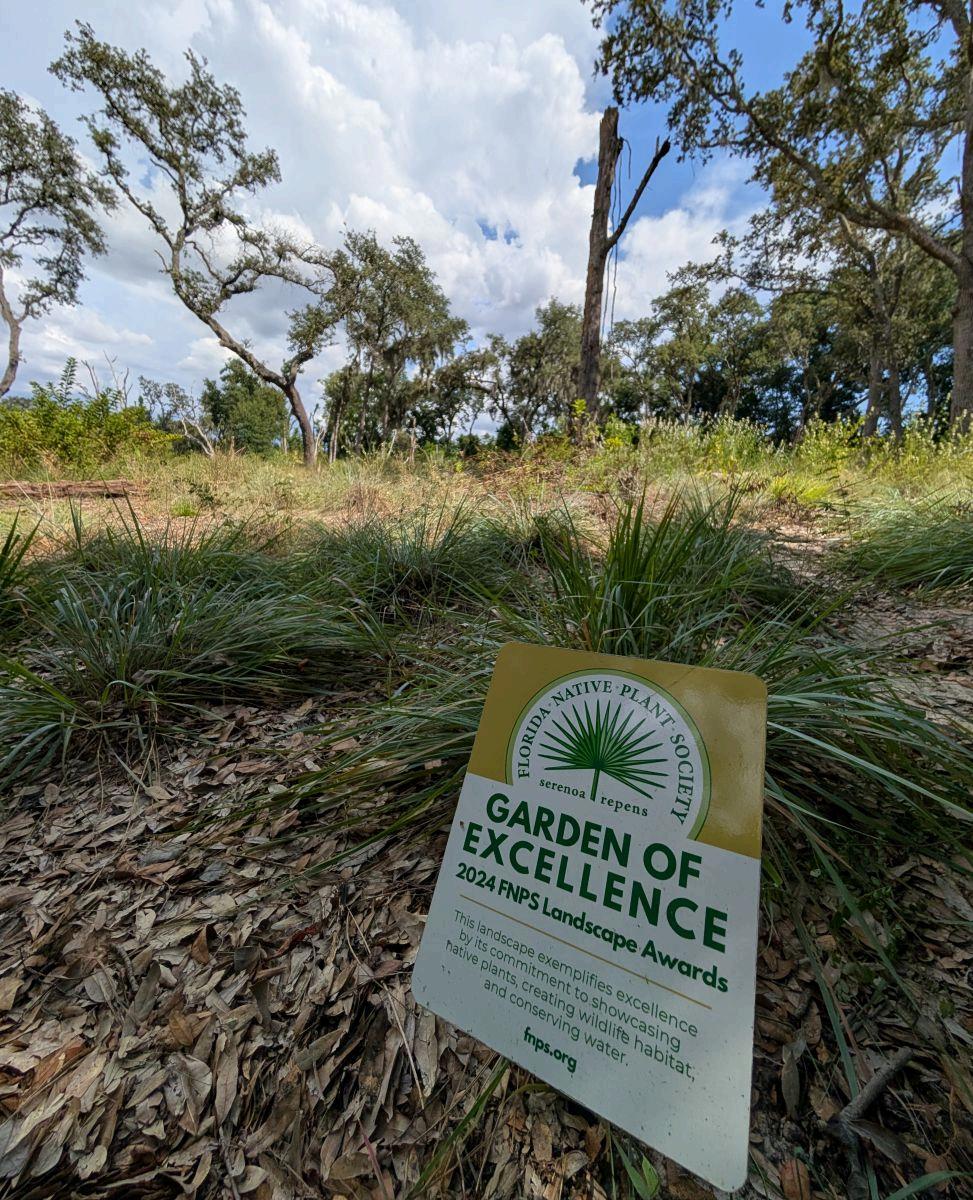
Two competitions closed recently: our long-running LandscapeAwards and Photo Contest. LandscapeAwards winners have been announced.The panel of judges for our revived Photo Contest is being assembled now.
Society News
Peg Lantz featured in the Orange Observer
One of FNPS's founding members, Silver Palmetto award winners, longtime Palmetto editor, and 2024 LandscapeAward winner Peg Lantz was featured in the Orange Observer for her interesting life and prolific bibliography. Read the full piece here.
Welcome to our new board members!
We're excited to welcome new leadership to FNPS! Rebekah Kaufman is our Council Chapr,Ann Redmond is our President-Elect, and Kim Zarillo is succeedingAnn as Vice President for Finance, and Melanie Trexler, Raelene Crandall, and Richard Hamann are our three newest Directors at Large.
Ann Redmond, President-Elect
Ann is a Certified Environmental Professional (CEP) and is the former SE US Water Resource Practice Lead for the all-things-water consulting firm Brown and Caldwell. She has degrees in botany (BS) and ecology (MS) from FSU and worked with watershed, wetland and landscape-level planning and regulatory issues throughout her career.
Ann worked as a water management district biologist, state wetland regulator, and private sector consultant. She especially enjoyed the challenges of integrating science and policy
Ann is a long-time member of FNPS fand served at the chapter level as a board member, chapter rep, and co-chair of the Maclay State Gardens' Native Plant GardenTeam. She served at the state level as VP forAdministration (2007-2008), Conservation Committee Chair (2009-2010), Society President (2010-2011) and VPof Finance (2021-2025) She was also engaged with Tarflower's Mead Botanical Garden Sandhill Native Restoration Gardens and Tortoise HabitatTeam (2020 to 2021).
Kim Zarillo,
Vice President for Finance
Kim Zarillo is an accomplished business professional with 36 years’ experience in the private and public sectors. She supervised financial management, public education programs, feasibility studies, policy analysis, and environmental projects. She has devoted the last 10 years to helping nonprofits manage their finances.
Kim has a lifelong passion for learning and sharing her knowledge of native plants and natural ecosystems. Ms. Zarillo teamed with faculty members of Community Colleges to develop a Web-CTonline Environmental Landscape course and instruct numerous environmental “Florida Friendly” courses. She conducted ecological assessments and management plans for land acquisition grants under the Florida Community Trust program. She volunteered her service as the FNPS President (2000-02) and Treasurer (2012-2015) and member of the Brevard County Environmentally Endangered Lands of the Selection and Management Committee and the Procedures Committee (1992-present). Kim was FNPS's bookkeeper until she was succeeded by Carrie Schultz earlier this year.Thank you Kim for your many years of dedicated service!
Ms. Zarillo earned a B.S. in Biology from the University of South Carolina and an M.S. in PolicyAnalysis and Management from the W.Averell Harriman School of Management and Policy at the State University of New York at Stony Brook.
Melanie Trexler, Director at Large
Melanie is the outgoing president of the Sarracenia Chapter for Wakulla and Franklin Counties. She was born and raised in Miami and enjoyed fishing and exploring the Everglades and Florida Keys as a child. Her parents were enthusiastic outdoors-people, cultivating Melanie's appreciation for native Florida.All bemoaned the losses of wild Florida environments.
Melanie graduated from Florida State University with a degree in Biology, taking every botany course offered. After leaving FSU, she worked as a biologist for FMRI and Pinellas County for a handful of years. In 1991, pursued a law degree at University of Miami focused on environmental law just in time to experience HurricaneAndrew! The job market for environmental law was dismal after her graduation from UM, so Melanie worked for theThird District Court ofAppeal. She was active with the Dade Chapter until moving to north Florida in 2021, where she connected with the Sarracenia chapter, and became president in 2023.
As Sarracenia’s president, Melanie worked with its dedicated board to enhance general meetings, find exciting speakers, and to encourage membership and participation.
Although she is stepping down as president, Melanie is helping Sarracenia's incoming president transition into the role. The mission of FNPS, both locally and statewide, remains very important.
Raelene Crandall, Director at Large
Raelene Crandall is anAssistant Professor of Fire Science at the University of Florida in Gainesville, FL. She uses ecological models to predict and test how fires will affect competitive interactions between species, plant and insect biodiversity, and demography of invasive species. She has worked in many ecosystems, but Rae's favorites are pine-hardwood forests of the Midwest and pine savannas of the southeast. For more information about Dr. Crandall, including a list of her publications, visit www.ecologyonfire.com
Richard Hamann, Director at Large
Until his retirement in 2015, Mr. Richard G. Hamann was a staff attorney for Center for Governmental Responsibility at the University of Florida's Levin College of Law. He conducted research and taught courses on water, wetlands, wildlife, watersheds and coastal law and policy. Mr. Hamann served on the Governing Board of the St Johns River Water Management District from 2009-2013 after serving the District as Chairman of the Orange Creek BasinAdvisory Council and as a member of the Ocklawaha Basin Board. Richard was Chairman of the Environmental and Land Use Law Section of The Florida Bar, President of Florida Defenders of the Environment and a member of the Bluebelt Commission and the Land and Water PlanningTask Force. He served as President of Three Rivers FNPC, a public charity that supports protection of the Ichetucknee River. Richard was a board member of the Florida Wildlife Federation, the Everglades Law Center andAlachua ConservationTrust.
Rebekah Kaufman, Council of Chapters Chair
Rebekah has been a member of FNPS for three years and currently serves as the President of the Palm Beach County Chapter. In her new role as Council of Chapters Chair, she is also assisting with the planning of leadership retreats. Her goal is to connect people and build community on a larger scale and make a bigger impact by helping bring members, Chapters, and the State organization closer together, around a shared love of native plants and conservation.Along with that energy and excitement for community-building, she brings a solid mix of practical skills and experience.
FNPS members awarded for Atlantic Beach yard transformation
Ixia Chapter membersAmy and Mike Franqui have received theAtlantic
Beach Environmental Stewardship Committee 2025 Residential Conservation Champ of the Year Award for the transformation of their Atlantic Beach yard from a typical grassy lawn to a landscape of native plants and a refuge for insects, pollinators, birds and other wildlife.
The transformation of their yard also lead to its designation as the first residential certified Florida-Friendly Landscaping™ Natural landscape in Duval County, joining Native Park inAvondale as the first City of Jacksonville Park to receive the “Natural” certification.
Amy is also a Duval County Master Gardener Volunteer. Read her UF/IFAS article about converting their yard into a ‘wildlife haven’on the IFAS blog
ViewAmy’s interview on WJCT’s First Coast Connect program
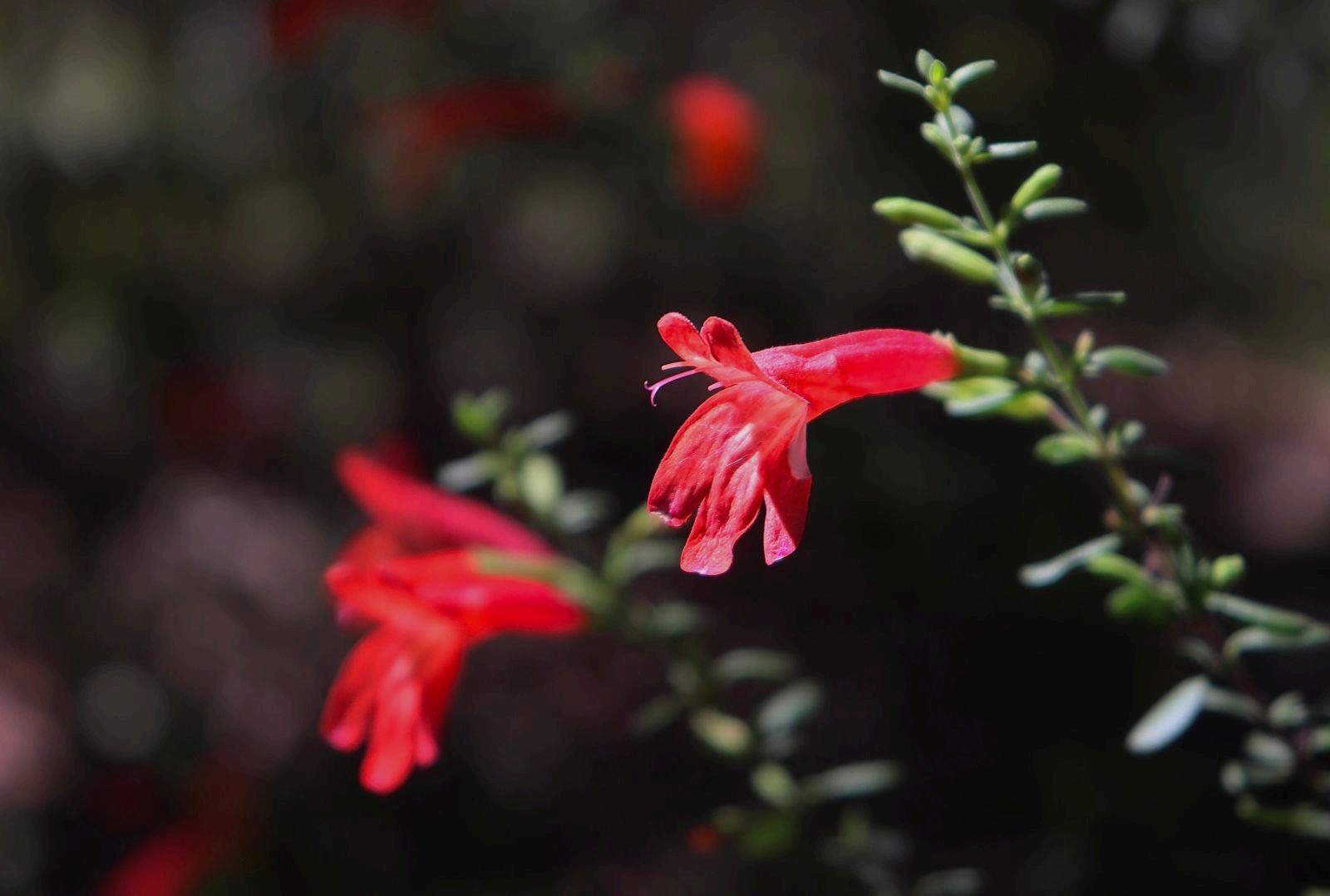
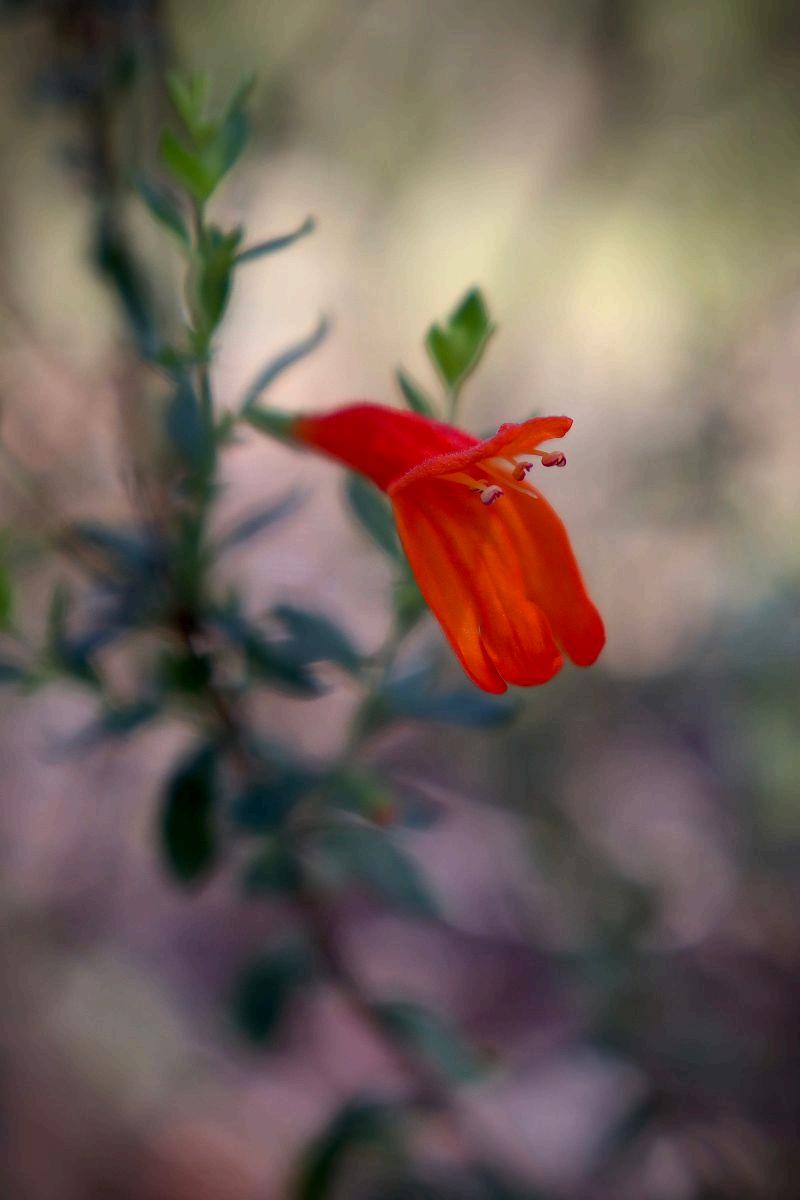
Features Clinopodiumcoccineum, Scarlet Calamint Lamiaceae
If you are near coastal ridges and sandhills in Central Florida or the Panhandle in late fall, keep your eyes peeled for the blazing red-orange blooms of Scarlet Calamint. This evergreen perennial blooms sporadically during the spring and summer but reaches its peak in late fall.
This is well timed for hummingbirds passing through on their southern migration. Hummingbirds and large butterflies are primary pollinators for this species. Both are capable of reaching the nectar at the base of calamint's long floral tube, and both hummingbirds and butterflies are also abundant in fall throughout C. coccineum's range.
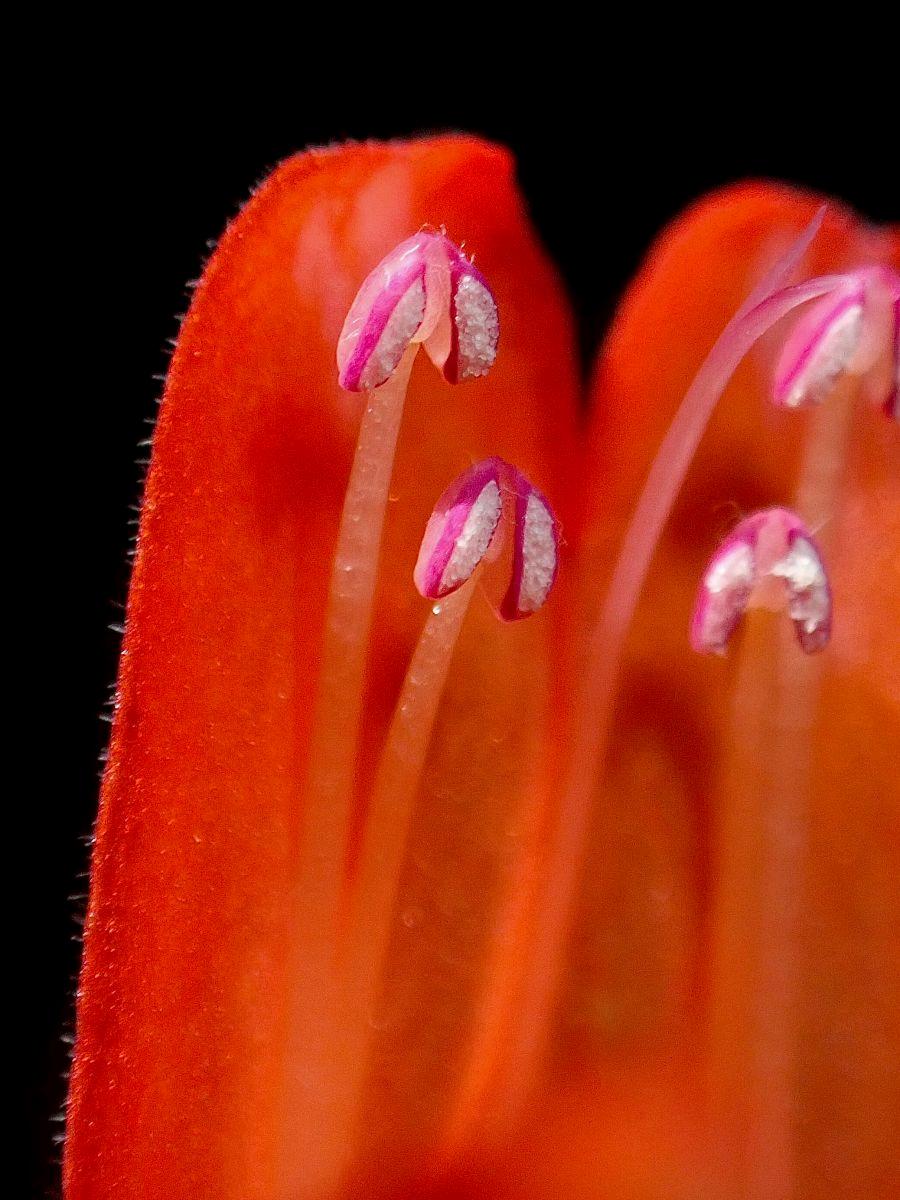
Like many members of the Lamiaceae family, the anthers have a clamshell shape which open as they ripen, releasing pollen onto visitors while they sip nectar After the pollen is released, the anthers fall off, and the forked stigma unfurls and becomes receptive.This sequence prevents self-fertilization of the flower.
Scarlet Calamint plants have a beautiful shape and branching structure: rounded in form with slender, dispersed branches.They are usually about 2-3
feet tall, with few leaves or branches near the base. These features are likely most attractive and convenient for their desired pollinators. The sparse foliage and the open arrangement of weak and brittle stems don’t allow for many predators to ambush pollinators (except spiders).
While this species is perennial, it is short-lived and relies on exposed, sandy soils to reseed and persist.Although uncommonly showy, it's not often available in the native plant trade - but it should be!
--LillyAnderson-Messec, FNPS Director of North Florida Programs and the TorreyaKeeper Project Manager
Florida Wildlife Corridor Additions and Rare Plant Conservation | Willy the Losen, Putnam Land Conservancy
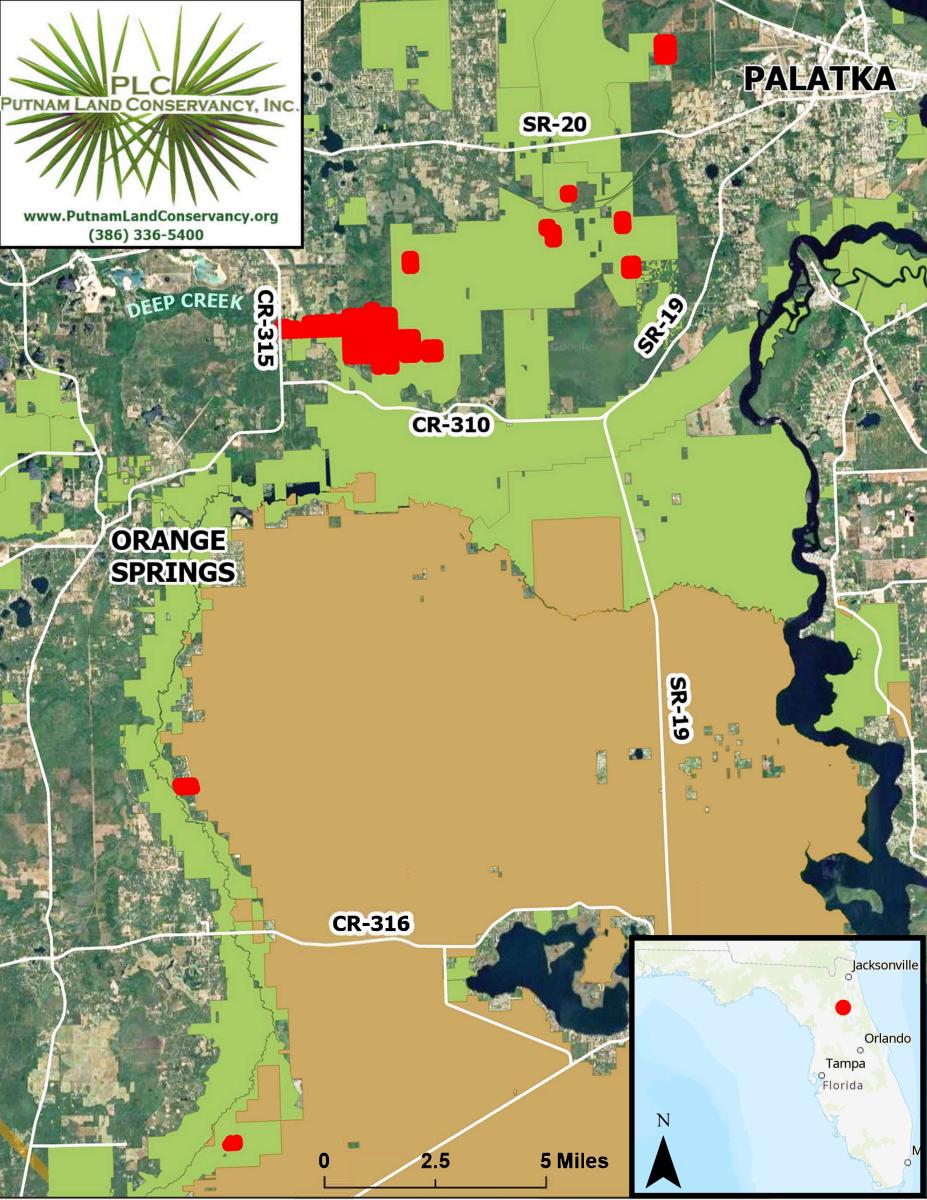
Protection of the Florida Wildlife Corridor is important for wide ranging wildlife species and Florida’s natural “green” infrastructure and as protection of rare plant species.The Putnam Land Conservancy (PLC) is working in two areas of the Ocala National Forest to Osceola National Forest (O2O) portion of the Florida Wildlife Corridor that is focused on all three of these protections. One area is the Marjorie Harris Carr Cross Florida Greenway (Greenway) and the other is the Etoniah Creek State Forest (ECSF).
Marjorie Harris Carr Cross Florida Greenway
The Greenway is a critical part of the O2O Wildlife Corridor at the northern end of the Ocala National Forest. In the last 2 1/2 years, PLC has facilitated the acquisition by the state of eight properties abutting and within the Greenway totaling 1,100 acres. The acquisitions range from 8 to 800 acres. These properties were acquired through the state’s Florida Forever conservation land acquisition program. Some of these properties are within the Greenway (inholdings) and some are perimeter additions to the Greenway. One particular addition, 200 acres along Deep Creek, is home to nine threatened and endangered plant species and numerous other rare plants. Deep Creek is a major tributary of the Ocklawaha River with international botanical significance, featuring a rare southern population of Atlantic white cedar (Chamaecyparis thyoides) and the stunning largeleaf grass-of-Parnassus (Parnassia grandifolia), as well as other listed plant species and several plant species at the southern extent of their ranges, including tulip tree (Liriodendron tulipifera), smooth alder (Alnus serrulata), and Florida willow (Salix floridana). TheAtlantic white cedar bogs along Deep Creek are unique biologically.The only other area of similar forest in the world is in the Ocala National Forest. Editor's Note: You can readAdamArendell's account of FNPS's Deep Creek bioblitz in the Sabal minor 24(2)
Six Greenway acquisitions facilitated by PLC are inholdings that are 30 acres or less.These parcels are significant because they protect wildlife habitat and natural communities and enhance the management of surrounding Greenway property and most importantly, eliminate incompatible uses within the Greenway.
These Greenway additions were possible due to robust state funding for land acquisition of this type in recent years.All-time high property values have made it very enticing for landowners to sell to the state for conservation. It is essential that state land conservation funding remain robust and consistent in order to protect the Florida Wildlife Corridor from accelerated development in Florida.
Etoniah State ForestAdditions
PLC is also focused on is a sparsely-developed 320-acre platted subdivision within the Etoniah Creek State Forest (ECSF). The federally endangered plant Etonia rosemary (Conradina etonia) is endemic to the ECSF and only exists in a few locations within the ECSF. One of the largest populations is within this sparsely developed subdivision. The state has acquired approximately 147 parcels within the subdivision and 52 parcels remain unprotected.The state is not currently funding acquisition of parcels within this subdivision; therefore PLC is privately fundraising for acquisition of the remaining parcels. PLC recently acquired, through donations in memory of Keith Schaan, a critical one-acre lot between two state owned lots.
Conservation of these lots is critical to the managers of the ECSF and they are grateful for our acquisition efforts. One of the managers relayed to us: “It is very touching the family wanted to make the memorial part of the conservation story on Etoniah Creek State Forest. It really is an important gap-filling purchase. It gives all the rosemary growing on the west side of Garden Drive protection on conservation land, and makes management much easier. Closing these gaps really helps to get good management work done and without you all looking it would be very hard to find an avenue in the state process to work on these.”
How to help
Advocate for Florida Forever funding. Let the governor and your state elected representatives know how important Florida Forever funding is for completion of the Florida Wildlife Corridor, protection of Florida’s essential natural “green” infrastructure, and conservation of rare, threatened and endangered species.
Donate toward the acquisition of lots within the Etoniah State Forest. Aoneacre lot costs about $15,000. Each lot protected makes a big difference for
protection of etonia rosemary. To find out more contact PLC at plc@PutnamLandConservancy.org or 386-336-5400.
Passive Community Engagement in a Historic Jacksonville Neighborhood | Jolie Friedrich, Director at Large, Ixia Chapter
Many people involved in the native plant community refer to invasive plants as a “pet peeve” of theirs- I am no exception. I have been removing invasive plants from my yard since I bought my quaint 1941 home in 2017. My corner lot has likely been plagued by invasive species for decades. Some of these plants were probably purchased from nearby garden centers because those species are said to be easy to grow or were shared by well-intentioned neighbors. Several species were clearly spreading from my neighbors’ yards.
With a mix of invasive plants and generic exotic species, my yard didn’t look much different from others in my historic Jacksonville neighborhood. Unless it was kept neat and tidy it actually looked pretty bad. Fighting the battle against the invasive plants in my yard felt impossible to win until my husband and a few friends joined the battle. My husband has removed over 50 bags of tuberous sword fern (Nephrolepis cordifolia) alone.Thankfully, most of the invasive plants have now been banished from my property.
In 2022 I joined the Ixia Chapter. With some influence from chapter meetings and fellow members’gardens, I began tearing out non-native ornamentals in my yard and replacing them with native species. In 2024 I finally was able to defeat a particular nemesis of mine when I hired a tree company to remove a massive camphor tree (Cinnamomum camphora) and sizable chinaberry tree (Melia azedarach).The removal of the camphor opened a large garden bed on the side of the yard. I soon removed the remaining non-native plants and installed swamp sunflower (Helianthus angustifolius), lanceleaf coreopsis
(Coreopsis lanceolata), chickasaw plums (Prunus angustifolia), and other native species.
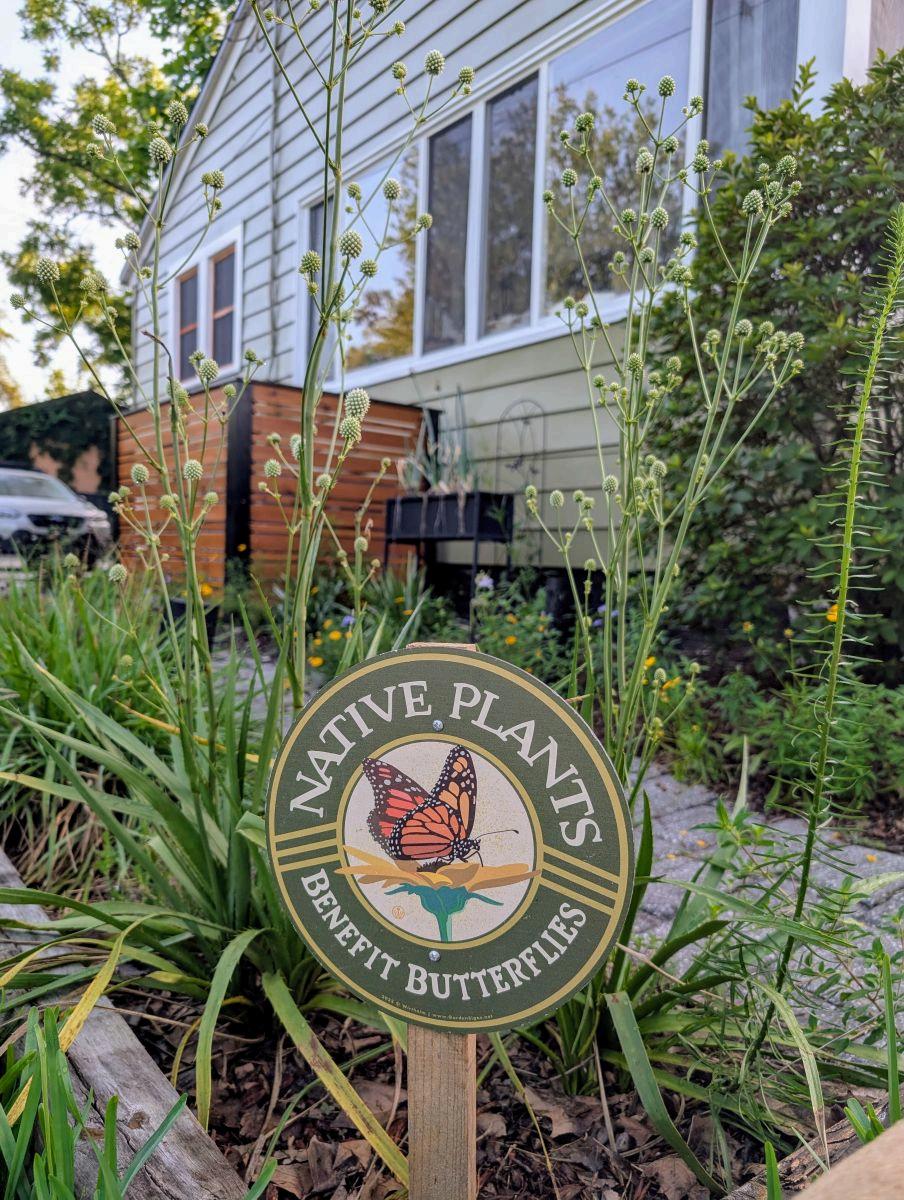
Once the native plants were established, something unexpected happened, my community loved it. My corner lot is frequently passed by dogwalkers and families. I try to manage my yard in ways that benefit wildlife. I must admit I had not thought too much about what the neighbors would think.As the native plants flourished, many of people began complimenting the yard. I made a new acquaintance at work. When she found out where I lived, she told me that a picture of my garden had been her cellphone background for months.
It is gratifying to receive complimentary feedback from my community. I recognized that the attention my yard is getting may be a useful tool for inspiring my neighbors to garden for wildlife too.
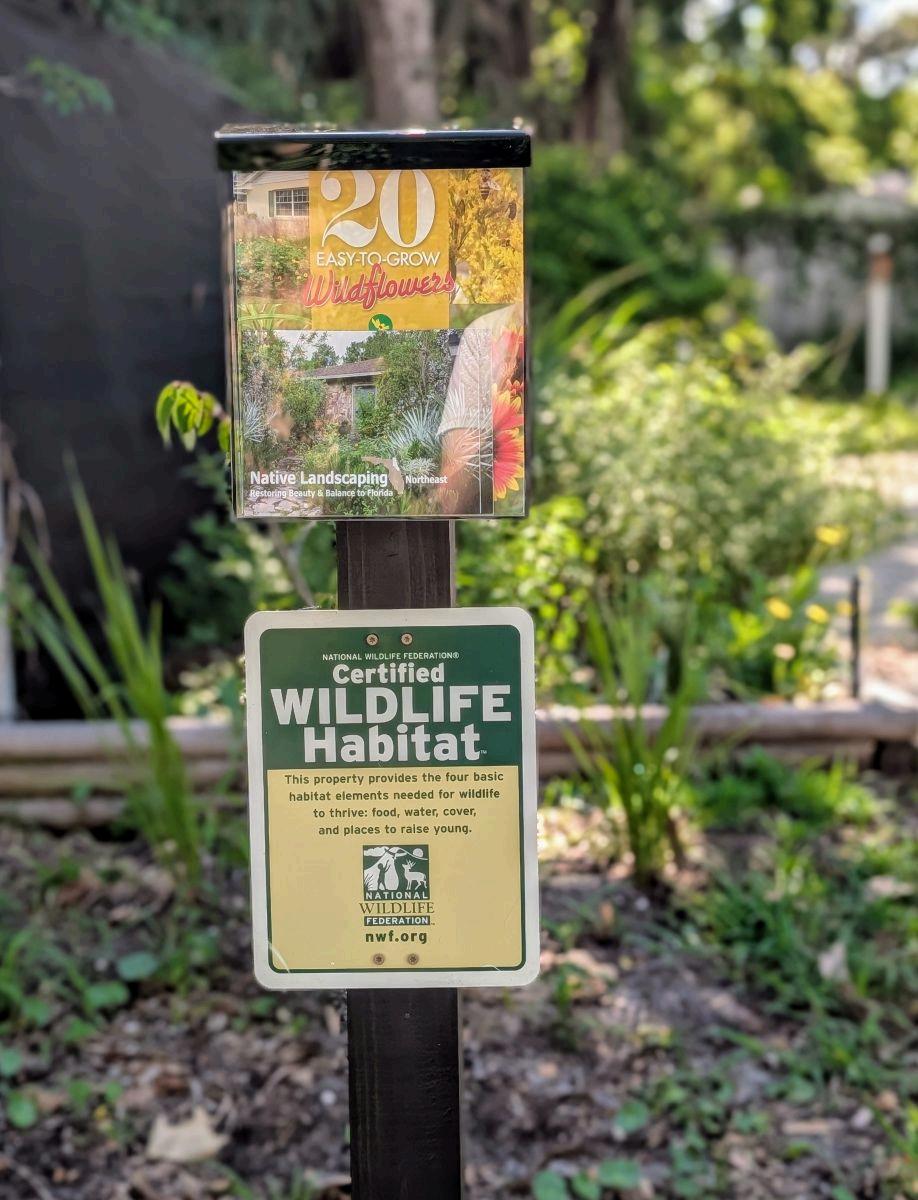
In 2025 I installed a brochure stand at the offering FNPS’s “Northeast Florida Native Landscaping” brochure and the Florida Wildflower Foundation’s “20 Easy to Grow Wildflowers” magazine. These were great for encouraging my neighbors to incorporate native plants. It made my day each time I saw someone stop and take a brochure. However, I soon realized I was missing some key information to make any native planting successful.
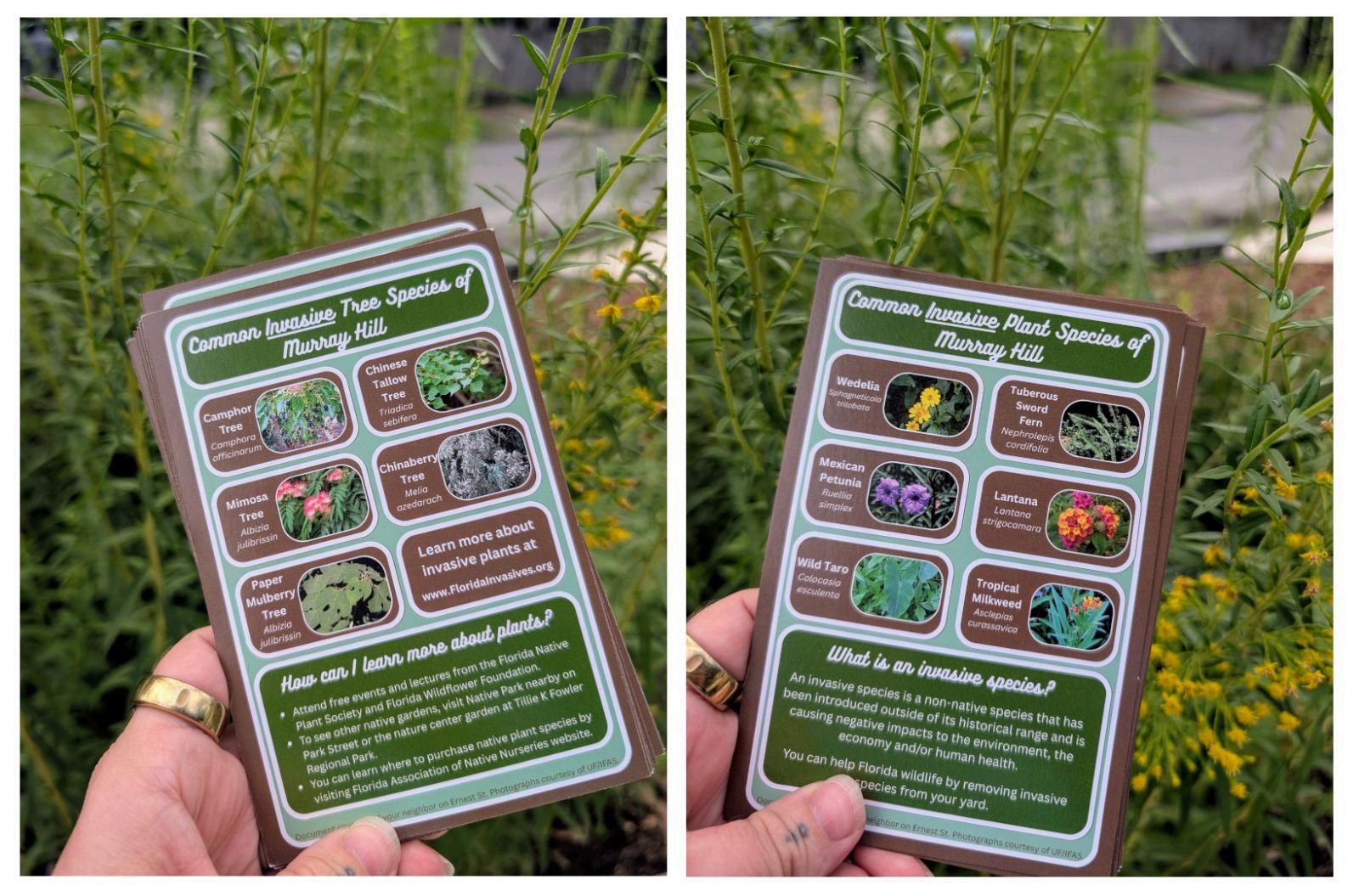
So, I made an invasive plant handout specific to my neighborhood. I included the most common forbs on one side and trees on the other. It cost me about $35 to print 100 small handouts. I will be thrilled if my community takes them all. Hopefully this will inspire a few dozen people to remove invasive plants from their yard. I may have won the battle against most of the invasive plants in my yard, but I hope my neighbors can help me win the war against invasive plants across our community
Upcoming Events
10/9 @ 9:00am - Fall Wildflower Walk with Nancy Dwyer of Half Moon WMARSVPrequired lavonsilvernell@gmail.com
10/11 @ 9:00am - FNPS in Kissimmee - Board and Council of Chapters InPerson Meeting
10/14 @ 9:00am - Hernando in Brooksville - Native Plant Month declaration by the Hernando Board of County Commissioners
10/18 @ 9:00am -Tarflower in Winter Park - Backyard Biodiversity Day
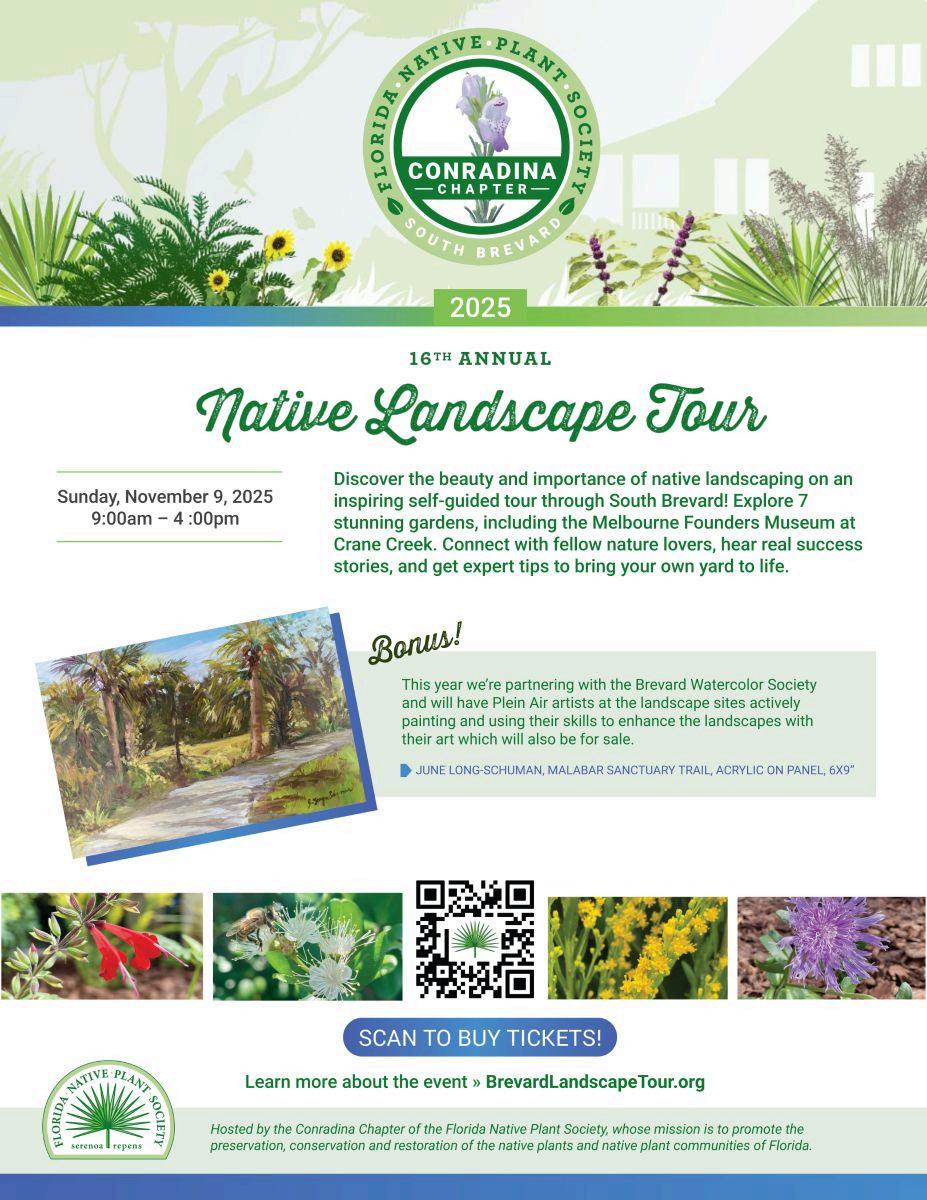
11/9 @ 9:00am - Conradina Chapter Landscaping Tour - tickets
11/28 @ 12:00pm - FNPS Lunch & Learn - Owen Schneider, iEcoLab at Temple University
2/7-8/2026 - FNPS in Lake Placid - Board and Council of Chapters Retreat at Archbold
In Other News
Sweet Bay Nursery is one of the premier Florida native plant nurseries located in northern Manatee County serving customers statewide since 1995. We specialize in native butterfly and wildlife plants, perennial wildflowers, shrubs, trees, ferns and grasses.
"Our mission is to help our customers sustain wildlife, conserve and improve water quality, and preserve our natural history with the use of Florida native plants."
We accomplish our mission through education, friendly customer service, and stocking a vast array of quality native plants from around the state. We offer a wealth of experience and expertise to our customers via our knowledgeable staff, helping them choose appropriate native plants for their project. We also provide educational resources, handouts, and classes that are free to the public.
Introducing
the UF
Invasive Species Survey Group: A Volunteer Opportunity for Applied Citizen Science
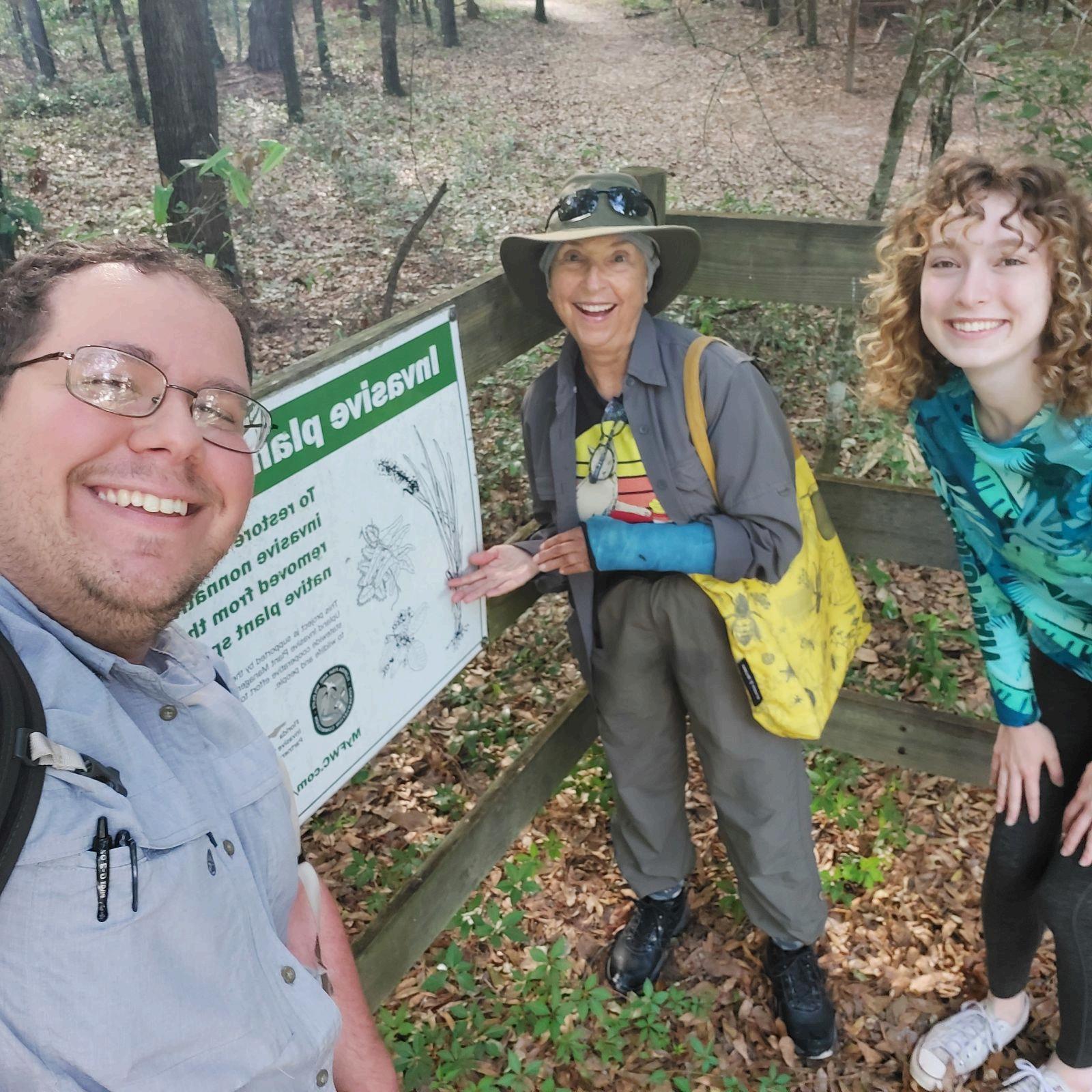
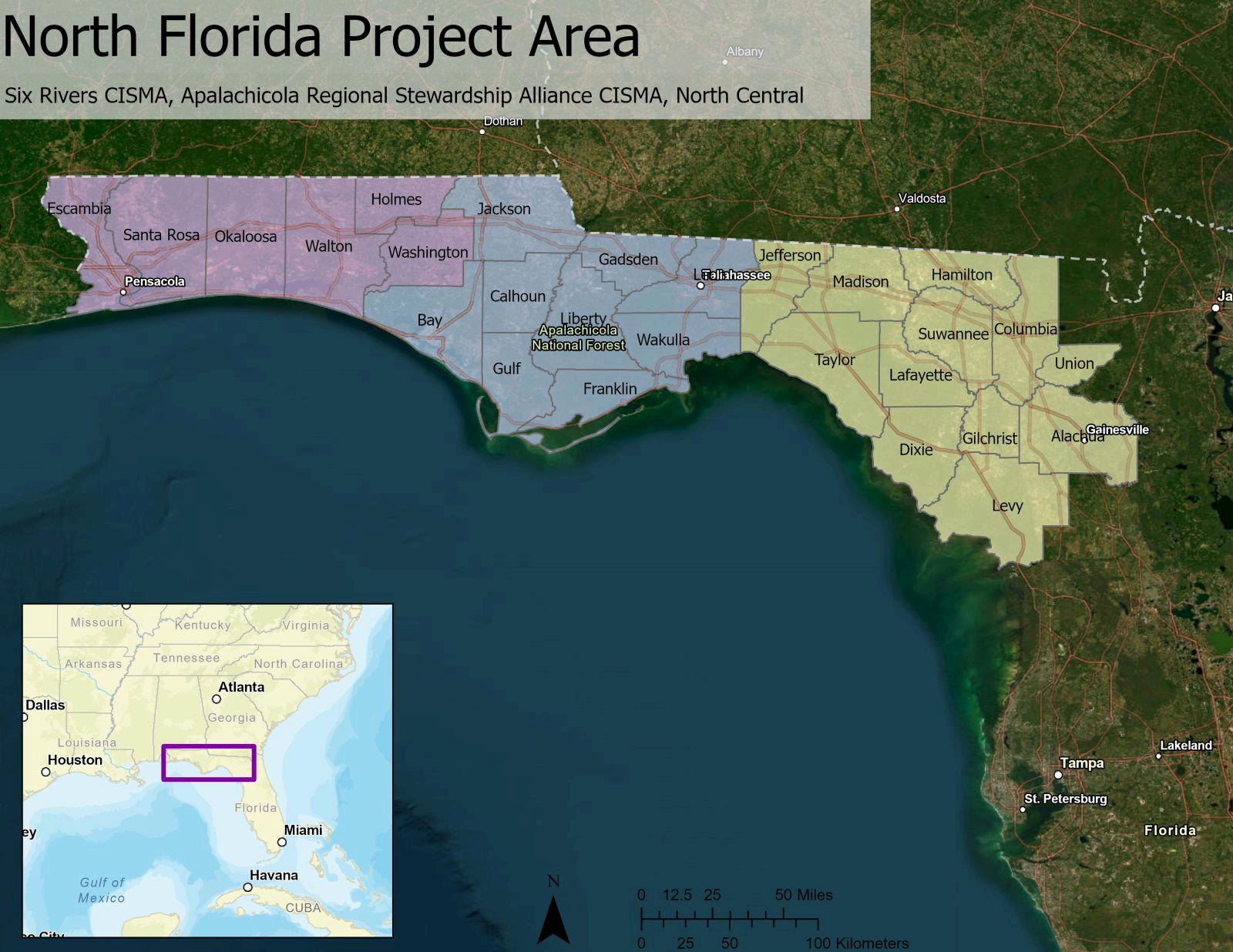
Looking for a new way to get involved in regional conservation and protect the wild lands that support our native species?Anew citizen science project at the University of Florida is looking for interested volunteers to help conduct
surveys for invasive plants in north Florida. The UF Invasive Species Survey Group offers free online training and then links up trained volunteers with land managers who need help managing invasive plants. While there are already a handful of ways you can report invasive species, we’re hoping to provide organizational support for citizen science to increase the impact of your reports. We’re also coordinating with federal and state land management agencies, as well as with private landowners, to identify those areas where surveying and monitoring for invasive plants is vital to successful management.There is no need for prior experience to join us. We will give you all the training you need.
As a volunteer, you would complete a free, online short course to introduce you terminology and issues around invasive plants, how to identify a dozen invasive common species in the region, and how to use the EDDMapS mobile application to collect data in the field. The short course is designed to be completed within 3 hours, providing a solid foundation and additional
resources to dig into specific topics, according to your interest.After training feel free to seek out and report invasive plants; though be sure to always have permission to be on the property you visit. Volunteers can join our listserv with notifications on field surveys where we document invasive plants as we encounter them. Volunteering is a great way to sharpen your plant ID skills, grow more familiar with field work, explore some fascinating natural areas and ecosystems in Florida and meet like-minded naturalists!
Visit our website to learn more about the Survey Group and submit a volunteer interest form so we can get you started!All volunteers who wish to join coordinated survey workdays must submit a UF Volunteer application and complete a Level 1 background check, initiated by UF HR after you submit your application. Please email the volunteer coordinator, Christian Wanamaker, at ISCVolunteerCoordinator@ifas.ufl.edu with any questions about the survey group!
Please note that while most of our coordinated activities and workdays are currently focused in the highlighted areas, we hope to expand this project statewide in coming years. If you’re outside of this area but you still want to get involved, please reach out to us so we know where we can grow next!
The 2025Annual Meeting recording is available on ourYouTube Channel for your viewing pleasure.The Florida Native Plant Society holds a members meeting once a year.All FNPS members are invited to participate. We provide a year in review and announce grant awards, PalmettoAwards for members and vote on new officers.
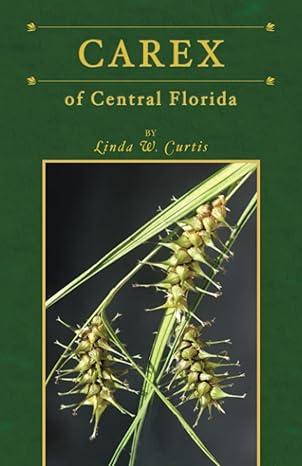
Carex of Central Florida by Citrus Chapter member Linda Curtis is available now onAmazon.
This book describes 45 species in Central Florida and also compares some to similar Panhandle and more northern species.TheAddendum has all Florida Carex.
Field research collection sites included northern counties of Gilchrist, Suwannee, LaFayette and Alachua. Easternmost was Lake County. West to the Gulf Coast were Marion, Dixie, Levy, Citrus, and Hernando Counties that had 35 of the 45 species.
The FNPS Lunch and Learn archive of 121 programs is easily accessible via ourYouTube playlist. Our 61 shorterTerminology /TaxaTuesday videos are also available to review on their own playlist