The Council of Ambulance Authorities (CAA) is a not-for-profit national charity and operates as the peak body for the Australian, New Zealand and Papua New Guinea ambulance sectors.
The CAA works tirelessly to collaborate on ambulance and pre-hospital issues of metropolitan, regional, national, and international significance. We stand alongside ambulance services, healthcare professionals and researchers to build community awareness and foster new thinking in patient centred care by ambulance healthcare services.
The CAA was set up in 1962 with the aim to provide ambulance service CEOs a networking opportunity to discuss issues, learnings and achievements current to the sector.
Today’s CAA takes the leading role in the Ambulance sector by advocating for continuous improvement in service delivery and patient outcomes. This is done by engaging stakeholders to ensure sustainable funding, providing forums for members to collaborate and share information, ideas and experiences and developing programmes to grow and develop the next generation of Ambulance Sector leaders.
Since our inception in 1962, the Council of Ambulance Authorities (CAA) has worked to strengthen ambulance services across Australasia and deliver better patient outcomes. The 2024–25 year has been no exception, marked by significant change and achievement.
The CAA is proud to be the unified voice of the Australasian ambulance sector. Across Australia, New Zealand and Papua New Guinea, reviews and redesigns of the health sector are reshaping how care is delivered. These changes have a direct impact on ambulance services and the profession of paramedicine.
Ambulance today is more than an emergency response. Our profession of paramedicine is evolving, with paramedics increasingly contributing across the health system, while our services employ an ever-growing range of health professionals. These changes bring both challenges and exciting opportunities — new models of care, stronger partnerships with the wider health and emergency sector, and new pathways for career development. The future of our sector lies in embracing this change and ensuring that collaboration, relationships, and innovation are at the heart of how we move forward.
Looking forward, the CAA Board remains focused on delivering our 2023–2028 Strategic Plan. By working closely with our members, partners, governments, and allied sectors, we will continue to champion excellence, innovation, and collaboration to ensure ambulance services remain a vital and valued part of the health system.
We extend our gratitude to Howard Wren for his time on our Board and his valued contributions. Howard’s retirement after an extraordinary 51-year career included serving as CAA Chair and contributing through many forums, leaving a legacy of wisdom and dedication.
On behalf of the Board, I thank all CAA member services, our partners, and the Secretariat team for their dedication to our shared mission. I encourage ambulance services and the CAA to continue to work collaboratively to support the knowledge, capability and research that will enhance our ability to provide the best contemporary patient care across all services.
Craig Emery Chair
The Council of Ambulance Authorities
Reflecting on 2024–25, I am reminded of the extraordinary work carried out by our ambulance services every day.
Across Australia, New Zealand, and Papua New Guinea, our people respond to millions of calls, travel vast distances by road and air, and care for patients under the most demanding circumstances—always with professionalism, compassion, and care.
The numbers tell the story of this demand and dedication:
27,516 salaried staff supported by 10,471 volunteers and first responders
1,818 stations and locations, operating 8,333 vehicles and 90 aircraft
More than 188 million kilometres travelled, and over 4.79 million patients cared for*
An exceptional 98% patient satisfaction rate
Behind these figures are the people of our member services, whose tireless work continues to set the standard for ambulance health worldwide.
Our CAA Groups, Committees, and Forums are central to supporting this work. Over the year, almost 40 meetings brought together colleagues to share insights, drive innovation, and strengthen our sector. But they do more than that. They provide networks, friendships, and support for those working in some of the most pressured and demanding roles in health. Whether through our Clinical and Patient Safety, Occupational Violence, Diversity and Inclusion, Aeromedical, Education, Fleet and Equipment, Emergency Management, Sustainability, or Data and Business Intelligence Groups and others, each contribution helps us grow stronger together. These connections and collaborations are truly valued by all.
It was a year of great achievements and successes for the Secretariat as we continued to deliver against the Board’s goals and our 2023–2028 Strategic Plan. In Melbourne, Congress 2024 brought together leaders, innovators, and partners to explore the future of our sector. Themes included Leadership Excellence, with challenging reflections on sexual harassment and misogyny in the UK NHS and the culture change required; International Collaboration, where we heard about support provided through KIWI C.A.R.E. in Ukraine and assistance following the Turkish earthquakes; Clinical Excellence, exploring the multidisciplinary evolution of ambulance services and the response to deteriorating patients; and Future Approaches to Disasters, with sobering lessons from the Christchurch mosque attacks and the White Island volcanic eruption, and insights into preparedness for CBRN events.
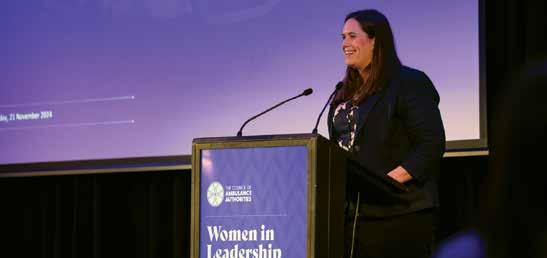
In Sydney, the Women in Leadership Symposium created an inspiring day of learning, discussion, and connection—with sessions on leadership, women’s health, domestic violence, and resilience, culminating in the announcement of our Women in Leadership Scholarship winner, Justine Fletcher from St John WA.
In October 2024, we proudly launched the Women in Leadership Development Program. This initiative, already receiving strong feedback, builds on CAA’s work in Women in Leadership and Women in Ambulance since 2018. Following great initiatives such as the Recognition Awards, Scholarships, Symposium, and sector-wide surveys, this new program represents the next step in supporting and developing the next generation of women leaders in ambulance.
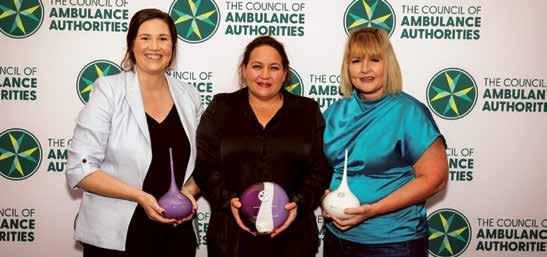
We celebrated innovation and excellence through the CAA Awards for Excellence. Congratulations to all category winners across Excellence in Technology, Clinical Practice, Staff Development, Patient Care, Leadership, and Mental Health, with a special mention to the 2024 Star Award winner, Queensland Ambulance Service.
This year saw the release of our Sustainability White Paper, a sector-first, capturing case studies and guidance to help services navigate their sustainability journey. Recognition at the SIM-PAC Awards was a proud moment for our Secretariat, underscoring the importance and value of this work.
We extend our sincere thanks to Jane Miller and Howard Wren for their service on the CAA Board and their valued contributions to the sector. Jane, as Chief Executive Officer of Ambulance Victoria, was a strong advocate for women in leadership and, through her role as Chair of the Women in Ambulance Forum, leaves a lasting legacy of empowerment and progress. Howard’s long-standing leadership and commitment greatly advanced CAA’s work in education, clinical excellence, and accreditation (PEPAS), and his guidance and insight will be warmly remembered.
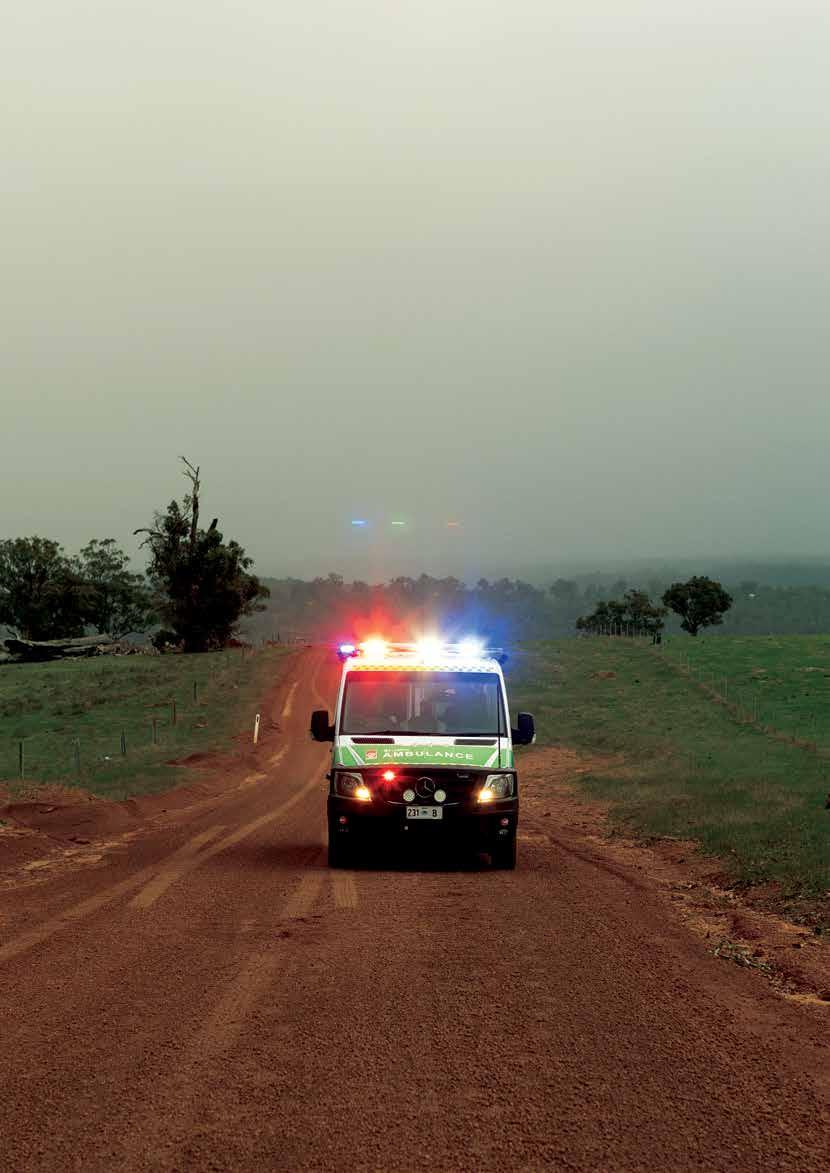
Finally, I want to close with heartfelt thanks. To our small but mighty Secretariat team, your commitment, creativity, and tireless work make everything possible. To our member services, for your trust and collaboration, and to our Board, for your guidance and leadership. When the red and blue lights rush past our Adelaide office, we are reminded of who we serve. It is a privilege to support you, and I thank you all.
Mojca Bizjak-Mikic Interim Chief Executive The Council of Ambulance Authorities
of Profit or Loss and other Comprehensive Income for the year ended 30 June 2025
Statement of Financial Position
as at 30 June 2025
Opinion
We have audited the financial report of The Council of Ambulance Authorities Inc (“the Association”), which comprises the statement of financial position as at 30 June 2025, the statement of profit or loss and other comprehensive income, the statement of changes in equity and the statement of cash flows for the year then ended, and notes to the financial statements, including material accounting policy information, and the Board Members declaration.
In our opinion, the financial report of the Association has been prepared in accordance with Division 60 of the Australian Charities and Not-for-profits Commission Act 2012, including:
(a) giving a true and fair view of the Association’s financial position as at 30 June 2025 and of its financial performance for the year ended; and
(b) complying with Australian Accounting Standards to the extent described in Note 1, and Division 60 of the Australian Charities and Not-for-profit Commission Regulation 2022
Basis for Opinion
We conducted our audit in accordance with Australian Auditing Standards. Our responsibilities under those standards are further described in the Auditor’s Responsibilities for the Audit of the Financial Report section of our report. We are independent of the Association in accordance with the auditor independence requirements of the Australian Charities and Not-for-profits Commission Act 2012 (ACNC Act) and the ethical requirements of the Accounting Professional and Ethical Standards Board’s APES 110 Code of Ethics for Professional Accountants (including Independence Standards) (the Code) that are relevant to our audit of the financial report in Australia. We have also fulfilled our other ethical responsibilities in accordance with the Code.
We believe that the audit evidence we have obtained is sufficient and appropriate to provide a basis for our opinion.
Emphasis of Matter - Basis of Accounting
We draw attention to Note 1 to the financial report, which describes the basis of accounting. The financial report has been prepared for the purpose of fulfilling the Association’s financial reporting responsibilities under the ACNC Act. As a result, the financial report may not be suitable for another purpose. Our opinion is not modified in respect of this matter.
Responsibilities of Board Members for the Financial Report
The Board Members of the Association are responsible for the preparation of the financial report that gives a true and fair view and have determined that the basis of preparation described in Note 1 to the financial report is appropriate to meet the requirements of the ACNC Act and the needs of the members. The Board Members’ responsibility also includes internal control as the directors determine is necessary to enable the preparation of the financial report that gives a true and fair view and is free from material misstatement, whether due to fraud or error.
In preparing the financial report, the Board Members are responsible for assessing the Association’s ability to continue as a going concern, disclosing, as applicable, matters related to going concern and using the going concern basis of accounting unless the Board Members either intend to liquidate the Association or to cease operations, or has no realistic alternative but to do so.
The Board Members of the Association are responsible for overseeing the Association’s financial reporting process.
Auditor’s Responsibilities for the Audit of the Financial Report
Our objectives are to obtain reasonable assurance about whether the financial report as a whole is free from material misstatement, whether due to fraud or error, and to issue an auditor’s report that includes our opinion. Reasonable assurance is a high level of assurance but is not a guarantee that an audit conducted in accordance with the Australian Auditing Standards will always detect a material misstatement when it exists. Misstatements can arise from fraud or error and are considered material if, individually or in the aggregate, they could reasonably be expected to influence the economic decisions of users taken on the basis of this financial report.
A further description of our responsibilities for the audit of the financial report is located at the Auditing and Assurance Standards Board website at: auasb.gov.au/auditors_responsibilities/ar4.pdf This description forms part of our auditor’s report.
Antonio de Souza Director- Audit and Assurance MOORE AUSTRALIA AUDIT (SA/NT) PTY
Adelaide, South Australia
10 November 2025
The CAA represents eleven statutory ambulance service providers throughout Australasia and actively engages with associations and partner organisations across the ambulance, emergency management, and broader health sectors.
The Council of Ambulance Authorities is the leading advocacy body representing paramedics, patient transfer officers, volunteers, communications personnel, corporate teams, students, and leaders. These highly skilled and world-class trained teams are dedicated to providing exceptional patient care across Australasia, ensuring the wellbeing of communities throughout the region.
27,516 Salaried Staff
10,471 Volunteers and First Responders
4.79 million Patients
98% Overall Patient Satisfaction
1,818 Ambulance Stations and Locations
8,333 Ambulances and Other Vehicles
90 Aircraft (excludes New Zealand)
188 million Kilometres Travelled
ACT Ambulance Service
After
an extraordinary 51 years of dedicated service, ACT Ambulance Service (ACTAS) bid a heartfelt farewell to former Chief Officer, Howard Wren as he entered retirement. Howard’s leadership, integrity, and unwavering commitment to ACTAS and the broader emergency services community have left an enduring legacy.
A warm welcome was extended to General Manager, Patrick Meere as the Interim Chief Officer whose experience and leadership was invaluable as he stepped into this important role. Patrick continued to focus on ACTAS’ high-quality care and service to the ACT community.
On 12 May 2025, David Dutton BM ASM officially commenced his role as Chief Officer of the ACT Ambulance Service, culminating a full-circle career that began as a student paramedic with ACTAS in 1993.
Following roles as Deputy Commissioner and Executive Director of Clinical Operations at NSW Ambulance he returned to Canberra in early 2025 as the Assistant Commissioner for Collaboration, Community Engagement, and Intelligence Support within the ACT Emergency Services Agency, prior to his appointment as Chief Officer.
In his statement, “I am honoured and humbled … to return to lead the service where my career started… The reason I became a paramedic was to help people during their time of need and I look forward to continuing to do so as Chief.”
The 2024–25 financial year was a significant period of progress and innovation for ACTAS. Several key initiatives were implemented to improve patient outcomes, staff wellbeing, and service delivery across the ACT.
ACTAS established its inaugural Consumer Advisory Group, bringing the voices of health consumers into the heart of ACTAS decision-making. Comprising representatives from the Health Care Consumers’ Association, ACT Mental Health Consumer Network, Asthma Australia, and others, the group ensures ACTAS initiatives and service models are informed by lived experience and community expectations. The group provides input into areas such as communication, website access, complex care planning, and service delivery design.
ACTAS Education experienced its busiest year to date, with over 15% of the workforce completing their Authority to Practice (ATP) across roles including Ambulance Paramedic, Intensive Care Paramedic, Call Taker, Dispatcher, and Patient Transport Officer. More than 600 simulations, 4000 hours of teaching, and 250 assessments were conducted.
Additional 2024–25 highlights included:
• The launch of Aboriginal artwork epaulettes and a servicespecific Acknowledgement of Country, now displayed at all ACTAS stations.
• Upgraded station stock rooms and a strengthened immunisation program as part of infection prevention initiatives.
• Full training and operationalisation of Clinical Support Officers, who now provide real-time assistance and clinical leadership during patient care.
ACTAS remains committed to trusted, patient-centred care, and continues to evolve to meet the growing and changing needs of the ACT community.
The Emergency Services Agency (ESA) completed the new Acton station, a multiagency facility that now houses both ACTAS and ACT Fire & Rescue. Strategically located to strengthen emergency response coverage across central Canberra, this state-of-the-art station provides modern infrastructure to support a contemporary, integrated emergency services workforce. The facility demonstrates ACTAS’s ongoing commitment to excellence in patient care and operational readiness.
Construction is scheduled to commence on the Molonglo station – another integrated ESA facility designed to support the rapidly growing Molonglo Valley.
Throughout 2024-25 Ambulance Tasmania released comprehensive geriatric assessment and clinical care practice guidelines, a suite of in-field referral pathways to alternate service providers and an extensive palliative care suite of clinical practice guidelines supporting palliative care patients remaining in the community.
The PACER program was expanded to Northern Tasmania in March 2025, now attending mental health crises seven days per week. In 2024-25, 287 patients were attended to with 69 per cent avoiding transport to hospital. Importantly, the northern program was implemented on the success and learnings of the existing co-response services established in the south in 2022 and north west in 2023.
In July 2024, Ambulance Tasmania expanded the GoodSAM platform, connecting trained community first responders with nearby patients experiencing out-of-hospital cardiac arrest. By alerting volunteers to cardiac arrest events in real-time, enabling early CPR and defibrillation before ambulance arrival, GoodSAM strengthens the chance of survival and increases the likelihood of positive outcomes.
In May 2025, Ambulance Tasmania launched its new Model Leader Standard – a framework that outlines the underpinning leadership attributes for all roles at Ambulance Tasmania.
Consultation commenced on the draft Ambulance Tasmania Sexual Harassment Prevention and Response Action Plan. The Action Plan describes unacceptable workplace behaviours, such as bullying, harassment and discrimination, and outlines the pathways for reporting these behaviours. The plan has been informed by extensive research about these issues and within the context of ambulance and emergency services and health care more broadly.
A new Employee Voluntary Transfer Procedure was released in June 2025. This procedure introduces a standardised process for the voluntary transfer of eligible employees. Importantly the procedure formalises the position that preference will be given to employees who are requesting a transfer due to compassionate reasons, including for reason of illness or injury or to support the care of a family member or member of their household.
In August 2024, the Raizer II lifting devices were introduced for use by Community Paramedics to enable lift assists within the community by a single responder. Since implementation, 195 patient lifts using the Raizer II lifting devices were undertaken with 91 per cent of patients safely lifted from the floor and 70 per cent safely discharged, treated, or referred on-scene.
During 2024-25, three new ambulance station builds were completed at Oatlands, Burnie and Glenorchy.
Looking forward to 2025-26, Ambulance Tasmania will be releasing a new significantly updated Volunteer Manual, implementing the first rural and remote Community Paramedics following extensive consultation this year, reducing the Transfer of Care Delay target from 60 minutes to 45 minutes, commencing construction of new stations in Bicheno and Legana and planning for new stations at King Island, Cygnet, Legana and Snug.
At Ambulance Victoria (AV), we are incredibly proud of the work of our people and the best care we provide to the Victorian community each and every day.
Our people are our greatest asset, and it is through them that we continue to lead the way in patient care including Australia’s best cardiac arrest survival rate, the third best in the world.
Paramedics and first responders, along with our people in communications centres across the state are working under enormous pressure responding to more than 1,000 critical Code 1 emergencies every day. Victoria has seen a 17.1 per cent increase in demand for emergency services (35.1 per cent increase in Code 1) over the past five years.
AV has been working with our health service partners to implement Victoria’s new Standards for Safe and Timely Ambulance and Emergency Care. This work is improving system-wide patient flow so patients arriving via ambulance can be transferred to hospital care in a consistent, safe and timely way, getting paramedics back on the road and responding to the community and saving lives.
To reduce demand, we progressed the use of alternate care pathways such as the Victorian Virtual Emergency Department (VVED) and celebrated the first anniversary of our Australasianfirst Video Assisted Triage to support our Secondary Triage. We also celebrated the 100,000th case milestone for our Medium Acuity Transport Service (MATS) crews, the teams dedicated for less-urgent calls. The advancement of the paramedic practitioner role was a first for Australia and aims to further support care within rural communities rather than hospital settings. We have also actively strengthened our partnerships including working closer with Triple Zero Victoria (TZV) and the Country Fire Authority (CFA) to implement the Fire Medical Response program.
In 2024-25 seven new state-of-the-art ambulance branches were completed in Paynesville, Avoca, Yarram, Euroa, Morwell, Foster and Manor Lakes, while an additional Mobile Stroke Unit also hit the road in Melbourne’s South East.
In May, 86 participants attended our inaugural Community Forum in Gippsland providing a valuable opportunity for locals to share their thoughts, lived experiences and ideas to help shape the future of ambulance care in the region and drive meaningful improvements. It was the first in a new series of community forums being rolled out across regional Victoria.
AV is also proudly at the forefront of clinical excellence, quality and innovation. The launch of our “Best Care, Everywhere” framework in April continues our commitment to provide timely, responsive, and equitable care that is safe, effective, personcentred, and connected. Our Centre for Research and Evaluation is a global leader in pre-hospital emergency care research, with the centre’s Director Dr Ziad Nehme receiving the prestigious Peter Doherty Investigator Grant Award, the first paramedic recipient in the award’s history.
We rolled out new iPads to all our crews making it faster for them to complete electronic patient care records, and started our digital radio upgrade in regional Victoria, the project expected to be complete by June 2026.
The new Enterprise Agreement for the majority of our operational employees was finalised which will deliver improved working conditions, in addition to increased pay and entitlements. Increased protections at end of shift to reduce overtime are being implemented as well as changes to rosters to roll out shorter night shifts and allow for more flexible working provisions.
On 30 June 2025, we welcomed widely respected healthcare leader Jordan Emery ASM as AV’s new Chief Executive Officer. We thank Interim CEO Andrew Crisp AM APM, who as of 1 July 2025 stepped into the role of AV Board Chair, and outgoing Chair Shelly Park for her outstanding dedication to our organisation. We thank all our people, working on the frontline delivering best care or supporting behind the scenes, for their commitment, resilience and passion.
Hato Hone St John: Strengthening Ambulance Services for tomorrow
The 2024–2025 year has been one of focus, progress, and partnership for Hato Hone St John. As Aotearoa New Zealand’s largest ambulance service, we’ve continued to evolve our model of care, enhance frontline performance, and invest in the people and platforms that make our service possible.
Delivering to strategy
This year we launched our new Ambulance Service Strategy 2025–2035, setting a clear direction for the next decade. Developed with our purchasers, the strategy outlines how we will evolve emergency and urgent care delivery, from improving triage and expanding care pathways, to increasing integration with health and social services.
It introduces our new Ambulance Services Delivery Model (ASDM), defining our core functions and paving the way for improved commissioning. Together, these changes position us to deliver smarter, more connected ambulance care for all New Zealanders.
Tackling critical risk
Violence and aggression remain our most significant operational risk. We’ve taken a comprehensive approach — combining data insights, public education, training and clinical support, alongside strong systems for incident reporting, follow-up, and staff wellbeing. Driving risk also remains a key focus area, with ongoing investment in vehicle safety, policy, and driver training to keep our people and patients safe.
Workforce development
Addressing high vacancy and attrition rates, particularly in Auckland, has remained a priority this year. We’ve re-established the fully funded Residential EMT (R-EMT) training pathway, designed to bring new entrants into the workforce quickly and effectively, while providing wraparound support through training, placement, and onboarding. We’re also growing our graduate recruitment pathway and investing in clinical leadership and onboarding support.
Volunteers and innovation
Our volunteers remain essential to our service, contributing over one million hours of care and support across the motu. This year we rolled out the Availability Messaging System (AMS), a key technology enabler that supports better dispatch and resource allocation, while also making volunteering more flexible and connected. AMS is helping us modernise how we support and engage our volunteer teams, ensuring their contribution is recognised and well integrated with frontline operations.
Integrated Operations Centre
This year we transitioned to our new Integrated Operations Centre (IOC) model, bringing together call taking, dispatch, clinical support and leadership functions into one cohesive, national operation. The model enables real-time oversight, easier escalation, and closer collaboration between teams, improving the consistency and quality of decision-making.
Driving performance and equity
Purple response performance, our highest acuity measure continues to improve, supported by better triage, smarter dispatch, and expanded clinical support options. We’ve also made equity a core part of service design, with a specific focus on reaching underserved populations and improving outcomes in areas like South Auckland.
As we look to the year ahead, we remain committed to building a resilient, modern ambulance service — grounded in partnership, powered by people, and focused on equitable outcomes for all.
NSW Ambulance continues to deliver against strategic objectives to improve service delivery
NSW Ambulance continued the implementation of the Strategic Workforce and Infrastructure Team (SWIFT) and Regional 500 programs during financial year 2024/25. Throughout the year, NSW Ambulance recruited 796 paramedics and 200 control centre staff. These enhancements have bettered rosters at over 60 stations across metropolitan and regional NSW.
On 6 February 2025, NSW Ambulance optimised its response grid through the effective implementation of a more clinically focused response grid. The revised response grid will support a further development of innovative care models and provide the opportunity to ensure ambulance resources are appropriately dispatched.
NSW Ambulance also published the Out-of-Hospital Cardiac Arrest Registry that captures key data to enable research, review and feedback on Out-of-Hospital Cardiac Arrest resuscitation. NSW Ambulance also celebrated the second anniversary of their engagement with GoodSAM, a volunteer program that helps save lives by empowering community members to respond when someone nearby goes into cardiac arrest. The program has saved more than 60 lives to date with over 10,700 registered responders and more than 4,750 AEDs registered.
Throughout the year, NSW Ambulance continued to expand its fleet and delivered eight Hazardous Area Rescue Ambulance vehicles and eight Inflatable Rescue Boats. This expansion boosts response capabilities during natural disasters, improving access to isolated communities.
NSW Ambulance completed its first mission of the Pilatus PC-24 Jet to Lord Howe Island, assisting a patient who required medical retrieval back to the mainland. This milestone mission showcases the enhanced reach and responsiveness of NSW Ambulance’s aeromedical capabilities.
Staff wellbeing and safety continues to be a focus. NSW Ambulance continues to strengthen workplace culture and respect at work by establishing a dedicated unit and delivering onboarding and trauma-informed investigation training.
NSW Ambulance also completed a trial of the On Duty Relief model. The model provides a mechanism to cover short term unplanned absences and minimise staff movements. The trial was conducted in Western Sydney Nepean Blue Mountains Sector and demonstrated a reduction in single staff movements, increased staff completing crib breaks, improved response times and shorter extension of shift overtime.
To close the financial year, NSW Ambulance successfully trialled drone technology through the Remotely Piloted Aeromedical Clinical System. This initiative reflects NSW Ambulance’s commitment to leveraging innovative technology to improve patient care, strengthen emergency response capabilities and reduce our carbon footprint.
Through the delivery of timely and patient-focused ambulance services, the Queensland Ambulance Service (QAS) forms an integral part of the primary healthcare sector in Queensland.
The QAS is accountable for the delivery of pre-hospital ambulance response services, emergency and non-emergency pre-hospital patient care and transport services, interfacility ambulance transports, aeromedical retrieval and transfer services, casualty room services, confidential health assessment and information services, and the planning and coordination of multi-casualty incidents and disasters.
The QAS delivers ambulance services from 313 response locations through eight regions and 17 districts, with districts being aligned to the state’s Hospital and Health Service boundaries. The QAS has eight operation centres located throughout Queensland that manage emergency call-taking, emergency operational deployment and dispatch, and the coordination of non-urgent patient transport services.
In addition, the QAS works in partnership with 135 active Local Ambulance Committees across the state, whose members volunteer their time to support our communities.
The following achievements are highlighted for the 2024-25 period.
• The expansion of the QAS Clinical Hub to operate 24/7, providing secondary triage and health care navigation for patients after they call Triple Zero (000).
• The expansion of the QAS Falls Co-Response Program, the QAS Complex and Frequent Presenter Program, and the QAS Mental Health Co-Response Program across the State, enabling the QAS to provide alternative care options outside of a hospital emergency department.
• Launch of the QAS Sexual Harassment and Sex and Genderbased Harassment Prevention Plan, as part of the QAS’s commitment to prioritising mental health and wellbeing.
• Launch of the QAS Wellbeing and Mental Health Plan 2025-2030, to support and understand the wellbeing impacts of individuals and groups within the QAS and provide a framework to protect and enhance both individual and organisational wellbeing.
• Continued implementation of the QAS Cardiac Arrest Plan within regions to support better patient outcomes.
• Continued implementation of culturally safe environments through the Indigenous Paramedic Program (IPP) initiative which is designed to enhance culture and belonging of Aboriginal and Torres Strait Islander peoples within the QAS workforce and Queensland communities.
• Continually driving organisational change, particularly with regard to equity, diversity, and inclusion across the state through the ongoing implementation of the QAS Equity, Diversity and Inclusion Action Plan 2023-28, including a significant recruitment to the QAS’s Fair and Inclusive Practice Network across the State.
• The continued delivery of ambulance services during severe weather events between January and March 2025, including severe thunderstorms and flooding affecting Northern, Western and Southern Queensland and ex-Tropical Cyclone Alfred impacting South East Queensland.
During the 2024-25 financial year, SA Ambulance Service (SAAS) reached significant milestones in its Operational Growth Plan targets, ePCR project, and National Safety Quality Health Service (NSQHS) Standards accreditation, while benefiting from the State Government’s renewed investment in aeromedical services.
SAAS continued to realise its Operational Growth Plan, with new metropolitan ambulance stations opening at Woodville, Norwood, Edwardstown, and Golden Grove. A further five new stations were opened in the pivotal country centres of Port Augusta, Hawker, Mount Barker, and Victor Harbor, each serving communities that have experienced significant recent population and/or service demand growth.
Considerable progress was made towards developing the Service’s first electronic Patient Care Record (ePCR), with Dedalus Australia being awarded the ePCR tender in December. In January, the full ePCR project team was in place and finalised the planning and design stage of the project in late June.
In April, SAAS achieved its third consecutive accreditation against the eight NSQHS Standards, comprehensively demonstrating its commitment to delivering the highest standards of safety and quality care to its patients.
Throughout the financial year, considerable investment in the aeromedical services used by SAAS MedSTAR and the Special Operations Team of rescue paramedics was announced. In October, a new 10-year, $509.4 million contract with the Royal Flying Doctor Service boosted operational capacity and staffing, and set new key performance indicators for faster medical retrieval times. An additional helicopter joined South Australia’s emergency aerial fleet in December, further boosting response times and operational capacity.
SAAS also launched its volunteer recruitment campaign ‘Join the team in green’ which attracted over 200 applications in a few short months. These new volunteers will help bolster country operations and ensure regional communities have access to the ambulance service, regardless of their location.
It has been an exceptional year of achievements for SAAS with many more to come.
System improvement and governance served as key focus areas in 2024-25 for the Northern Territory’s ambulance service.
As St John NT prepares to renew its ambulance service contract it has enhanced its clinical governance, introduced a new drug management system, a suite of disaster management plans and engaged two Medical Directors, while continuing to support its community.
MEDICS
The Medication Electronic Documentation and Inventory Control System (MEDICS) was implemented across the NT over a six-month period, transitioning the service from legacy procedures to a new electronic drug management system, enhancing medication management, efficiency, accuracy and regulatory compliance.
Project management design, testing and implementation was completed in-house across an integrated team including data analytics, quality and safety, clinical services, and our operational teams in collaboration with Health Care Software.
Emergency Management Plans and Systems
Operating in a region prone to natural disasters, this project included the launch of a suite of plans developed in conjunction with disaster response experts as well as NT Police, Fire and Emergency Services. The plans cover bushfire, heatwave, flood and cyclone, under the overarching Emergency Management Mass Casualty Incident Plan.
The project addressed responsibilities for staff and community safety while maintaining ambulance services, ensuring that all duties within the emergency plans are carried out effectively including risk assessment and regulatory compliance.
Independent Clinical Governance Review
Following an independent Clinical Governance Review, St John NT has been working closely with NT Health to make quality improvements, including enhancements to its clinical governance, leadership and credentialing systems. Key activities include the addition of the Patient Safety and Quality team and two part-time Medical Director positions, to be based in Darwin and Alice Springs.
Supporting our Community
St John NT continues to support its community through a range of major events including the V8 Super Cars, BASSINTHEGRASS, and the iconic Finke Desert Race.
Over three epic days of racing to Finke and back, the service responded to more than 50 incidents along the 223km track and transported over 30 patients to hospital. With a record number of competitors and spectators expected at next year’s 50th anniversary event, planning has already begun.
Looking Forward
St John NT has started negotiations with NT Health for the Emergency Road Ambulance Contract for the Northern Territory.
Negotiations will be focused on ensuring that the terms of the contract are flexible enough to allow for future requirements as demands on the service change. The service is dependent on the safety and wellbeing of its people while delivering a contemporary service, critical to achieving its mission of saving lives and building resilience, while delivering better health outcomes for all Territorians.
Building a Stronger Ambulance Service for Papua New Guinea
In the 2024–2025 financial year, the National St John Ambulance Papua New Guinea (NStJA) advanced key strategies to build its workforce and modernise its systems, ensuring stronger ambulance services for a nation where demand continues to rise each year.
Key Achievements:
• Incident Response: NStJA responded to 38,213 emergency incidents, a 7.1% increase from the previous financial year, highlighting the steady growth in demand.
• Special Operations: Partnered with the PNG National Emergency Medical Team and local authorities to establish an advanced care centre in Port Moresby and provide medical coverage for the Papal Visit, which drew over 35,000 people. NStJA also supported major sporting events, state visits, and international conferences.
• Infrastructure Development: Opened a new wing at the National Ambulance Education College, expanding training capacity by 50%.
• Technological Innovation: Rolled out Fleetio fleet management software under the 2024–2030 Fleet Strategy, boosting efficiency. Launched a Clinical Practice Guidelines app, made possible through Deloitte Australia & PNG and Hato Hone St John New Zealand.
Workforce training & Support:
• Growing Our Team: 19 new ambulance officers graduated, nine reservists were trained, and 33 individuals trained as first responders.
• New Volunteer Program: The Weekend Warrior Program launched, welcoming nine working professionals who volunteer during weekends and peak periods.
• Caring for Our People: NStJA introduced a six-year Staff Health Strategy, including a peer support program and a dedicated Staff Health Officer to make health care, counselling, and mental health support more accessible for staff.
Service Expansion
• Mt. Hagen: NStJA began operations in Mt. Hagen in August, with a team of a paramedic & clinicians deployed in partnership with the Australian Federal Police.
• Lae: A new ambulance station was opened in Lae through the PNG–Australia Policing Partnership, helping meet the community’s growing need for emergency care.
• PNG Health Sector Projects: NStJA assumed responsibility for implementing the PNG Snakebite Partnership and the Regional Emergency and Critical Care Systems Strengthening Initiative, expanding its role in national health projects beyond ambulance service delivery.
Community Engagement
• Building First Aid Skills: A total of 8,038 people received first aid training through school and community education programs, strengthening PNG’s capacity for emergency care. This included 109 participants from the pilot program offering free first aid training to taxi and bus drivers in Port Moresby.
• Youth Development: NStJA launched a new cadet program in partnership with the Motu Koita Assembly, the indigenous people of Port Moresby area, with support from the Sir Brian Bell Foundation.
Innovation under increasing demand: St John WA leads with care, capability and courage.
In 2024-25, St John WA experienced a rise in ambulance caseload while driving forward key innovations in care delivery, safety, and operational excellence.
Metropolitan ambulance activity increased across the board, with emergency incidents rising by almost 8 per cent. Response time performance declined slightly, reflecting broader system pressures and rising community demand.
Despite these challenges, St John WA’s State Control Centre (SCC) maintained exceptional performance, answering 97.4 per cent of Triple Zero (000) calls within 10 seconds — upholding national-leading standards for the second consecutive year. The SCC’s commitment to clinical triage, real-time dispatch, and caller reassurance ensured rapid responses and strong outcomes.
Further innovation came through St John WA’s co-location in the newly launched State Health Operations Centre (SHOC), creating a unified 24/7 clinical operations environment alongside WA Health, WACHS, and RFDS. Key teams — including the Secondary Triage Team, Acute Patient Transport Liaison, and WA Virtual Emergency Department (WAVED) navigators — now operate from SHOC, improving coordination and delivering the right care, at the right time, in the right place. A record 30.7 per cent of Triple Zero (000) calls were resolved without ambulance transport — the highest ever recorded.
The Extended Care Paramedic (ECP) program completed its first full year, with more than 70 per cent of the first 1000 patients safely treated in their homes. ECPs administered IV fluids, provided prescriptions, and coordinated follow-up care — demonstrating a safe, effective alternative to ED attendance.
Creating a safer place to work remained a strategic focus. St John WA’s Lost Time Injury Frequency Rate (LTIFR) fell by 30.2 per cent to 16.5, exceeding internal targets and sitting 56 per cent below the national benchmark — largely due to the Early Intervention Physiotherapy Program, which reduced LTIFR by 66 per cent since April 2024. Offering 24/7 triage and up to four physio sessions, the pilot supported 56 team members, with 39 returning to full duties. The initiative boosts safety, morale, and wellbeing while reducing workers compensation claims and unlocking future wellness investments.
Regionally, St John WA is reimagining volunteering to meet modern needs, with flexible pathways, training, and statewide opportunities. Innovations like the Passport Training Centre, voluntourism, and expanded scopes have engaged over 150 volunteers in upskilling, regional placements, and dualscope roles — strengthening care in remote WA and keeping volunteering impactful for the next generation.
Wellington Free Ambulance (WFA) continues to be the emergency ambulance provider for Greater Wellington and Wairarapa, providing services free of charge to the community.
Wairarapa Station Nearing Completion
Significant progress was made this year on the development of the new IL4-rated ambulance station in Masterton. The official opening of the Station is August 2025.
This fit-for-purpose facility will support more than 30 crew and multiple emergency vehicles, ensuring a strong and resilient emergency service for the region. The station is designed to remain operational during major seismic events and will serve as a critical hub in a civil defence emergency.
Key features include purpose-built rest and workspaces for staff, and the Lloyd Morrison Foundation Heartbeat Training Centre for community CPR education.
The $8.5 million fundraising goal has been surpassed, with $8,538,117 raised thanks to generous support of individuals, businesses, grant funders and the wider community of the region.
Expanding and Future - Proofing the Ambulance Fleet
Wellington Free Ambulance is adding 14 new van-style ambulances, fully funded by philanthropy. Two have arrived, with the rest to be delivered in stages throughout 2025. Built in Aotearoa New Zealand, the vans match traditional ambulances in capability but are lighter, more fuel-efficient, and better suited to narrow or hilly terrain. This upgrade supports the organisation’s goals for improved infrastructure and financial sustainability.
Enhanced Virtual Care Project
The Enhanced Virtual Care project expands Wellington Free Ambulance’s clinical hub capability to improve access to telehealth and community-based care. By increasing clinical desk capacity and enhancing the role of Clinical Paramedic Advisors, more 111 calls are being managed through ‘hear and treat’ pathways.
In March, 831 cases were resolved without ambulance dispatcha 48% increase from the previous year and 457 patients were supported with alternative care pathways, reducing unnecessary emergency department transport. Enhanced Virtual Care supports better resource deployment, improved patient outcomes, and progress towards the Strategy goals of sustainable, patient-centred care.
Ambulance Telestroke Becomes Standard Practice at Wellington Free Ambulance
Ambulance Telestroke has been successfully embedded as routine practice within Wellington Free Ambulance. When the neurology team is available, stroke patients are connected via video call from the ambulance directly to a neurologist, with paramedics actively participating in the consultation and neurological assessment. This early engagement accelerates diagnosis, streamlines preparation of the CT scanner, enables direct patient transfer to imaging and can trigger early notification of interventional radiology teams for potential clot retrieval. Research evaluating the service’s impact is currently underway.
Keeping Our People Safe
To help keep our crews safe, Wellington Free Ambulance has strengthened its High-Risk Address notification process. When violent or aggressive behaviour directed at our crew is reported at an address, an automated process updates the WFA dispatch system to flag the risk and make the information immediately available to other frontline staff. This ensures timely action, consistent monitoring, and safer responses for our staff.
The CAA fulfils a critical function by coordinating sector-wide efforts and representing the interests of the ambulance health sector.
The CAA demonstrates its commitment to continuous improvement by delivering education and professional development programs, and by fostering meaningful collaboration among ambulance services. Through its committees, working groups, and forums, the CAA makes a significant contribution to the formulation of policies, protocols, and standards that govern the ambulance health sector.
During 2024-2025, the groups, committees, and forums continued to coordinate efforts among CAA members towards advancing the ambulance sector’s interests, promoting best practices, and addressing key challenges facing the ambulance health sector.
Group Structure
CAA Board
CAA Research and Policy Department
The Research and Policy Department of the Council of Ambulance Authorities (CAA) continues to demonstrate a strong commitment to advancing and supporting the ambulance sector.
This commitment is realised through a broad-based approach that prioritises quality care, strives for excellence in emergency management, invests in the development of comprehensive education and training programs, and fosters ongoing professional development across the sector.
The CAA’s Research and Policy Department continued to lead initiatives that improve care quality, emergency management, sustainability, data integrity, and workforce development. The department’s work supports evidence-based decision-making and long-term sector growth.
In
August of 2024, the CAA proudly published the first edition of the ground-breaking Sustainability White Paper.
Intended as a ‘living document’ that will be added to over time, the CAA’s Policy & Research Manager, Associate Professor Shohreh Majd has curated a truly world-first publication for the ambulance health sector.
Sustainability in healthcare and ambulance services, including the implementation of practices and initiatives that reduce the negative impact of the sector on the environment, the Sustainability White Paper covers global warming, public health and healthcare, reducing the healthcare footprint, emergency healthcare and sustainability, and strategies for achieving sustainability in ambulance services.
Sustainable practices identified in the paper focus on reducing energy and water consumption, reducing waste generation, sustainable transport, promoting environmentally responsible procurement, and reducing greenhouse gas emissions.
The paper identifies that the implementation of sustainable practices in emergency services faces several challenges. These challenges include the lack of awareness and understanding of sustainable practices, the cost of implementing such practices, and the lack of regulatory incentives to promote them.
However, there are several opportunities for implementing sustainable practices, including the potential cost savings from energy and water efficiency measures, the positive public image associated with sustainable practices, and the potential for encouragement and recognition.
The Council of Ambulance Authorities (CAA) is taking a proactive approach to sustainability, and the CAA is aiming to develop a comprehensive strategy for achieving this goal. You can read the full report by visiting caa.net.au/sustainability
Building on the CAA’s commitment to sustainability, CAA’s Policy & Research Manager, Associate Professor Shohreh Majd, was invited to speak at the SIM-PAC 2024 conference, sharing the latest innovations in sustainability for healthcare and ambulance services.
SIM-PAC is a solutions-based conference, expo, and showcase that brings together technology, machinery, environmental design, and process engineering. Its mission is to unite the people, ideas, and innovations driving sustainable industrial transformation, with focus areas that include low-emissions technologies ready for deployment today, the circular economy and sustainable supply chains, and cross-sector collaboration among architects, engineers, policymakers, and industry leaders
The CAA presentation highlighted the challenges and opportunities of integrating environmentally sustainable practices into ambulance services, underscoring the sector’s role in reducing its environmental impact while maintaining high-quality care for communities.
A further achievement in the area of sustainability saw the CAA win the SIM-PAC Live Sustainability Award for Outstanding ESG/SDG/Zero Carbon Strategy, a significant accomplishment.
The work that led to this award was based around the ‘Sustainability White Paper’, a comprehensive white paper that laid out a strategic roadmap for implementing ESG (Environmental, Social, and Governance) initiatives, SDG (Sustainable Development Goals) alignment, and zero-carbon strategies within ambulance services.
As the peak body for statutory Ambulance Authorities, the CAA is responsible for collating a range of metrics on ambulance performance on behalf of the Productivity Commission.
The Productivity Commission is an independent advisory body of the Australian Government that plays a key role in shaping national policy by providing independent research and advice to the Australian Government on a wide range of economic, social, and environmental issues that affect the welfare of Australians.
Once again in 2024/2025, the CAA, with assistance and input from the Strategic Business Committee, completed this annual undertaking, with the reports released to the public in February.
To learn more about the latest about the Report on Government Services, visit caa.net.au/report-on-government-services
The Workforce and Gender Report is an annual data collection initiative within the ambulance health sector, focusing on monitoring and analysing workforce and gender trends.
As part of the CAA’s ongoing commitment to advancing gender equality and diversity in workforce participation, the 2025 Workforce and Gender Report data was released during the year.
The CAA Workforce and Gender Report sheds light on gender disparities within the Australasian ambulance workforce, fostering informed discussions and guiding strategic initiatives. It aims to promote a more inclusive and equitable future for all ambulance sector members.
To read the latest report, visit caa.net.au/reports
The CAA plays a central role in supporting and advocating for the ambulance sector. Through education, professional development, and collaboration, CAA supports and contributes to continuous improvement across services.
In 2024–2025, the CAA’s Committees, Working Groups, and Forums worked together to shape policies, standards, and protocols that strengthen the sector. These groups coordinated efforts to promote best practices, address challenges, and advance the interests of ambulance services.
Groups
Collaborative Efforts
The CAA continues to provide support and advocacy for the Australasian Ambulance Health Sector.
Collaboration and Impact – the DNA of the CAA and its member services
Since the CAA’s inception in 1962, Committees, Working Groups, and Forums convened by us on behalf of our eleven-member statutory ambulance authorities are the reason we exist, and the major platform and opportunity to share, learn, and plan for the future.
This collaborative, inclusive approach has enabled further professional development, knowledge sharing, and policy development, leading to improvements in sector operational efficiency, a relentless focus on improving patient outcomes, and stronger sector resilience.
The following pages provide greater detail on highlights and initiatives of the CAA’s Committees, Forums and Working Groups.
63,329+ flying hours
In 2023-24, Australian and Papua New Guinea ambulance services spent over 63,329 hours flying using fixed and rotary wing aircraft.
Aeromedical services provide critical assistance in demanding settings. including inaccessible rural and remote regions.
The skills and expertise of flight teams, including doctors, paramedics and pilots working in this field of paramedicine face unique challenges, and the Aeromedical Forum (AF) works to develop a comprehensive knowledge base of this area of paramedic practice, augmenting the work undertaken in various regions across Australia, New Zealand and Papua New Guinea.
This past year, the Aeromedical Forum covered a range of topics, from technology and innovation to workforce demand and jurisdiction-specific initiatives and opportunities with wider applications.
As in all aspects of the delivery of healthcare, aeromedical service is rapidly developing.
Aeromedical personnel operate in a unique and demanding environment, and amongst issues and initiatives shared by the Forum included discussions around the ideal level of experience required for paramedics to transition from a road-based role to an air-based one.
The role of using innovative technology in training people to perform in their airborne roles was also addressed, with advanced simulation, Virtual Reality, and underwater emergency training being used to further develop the skills of flight-based medical staff.
fixed and rotary aircraftwing
Including 74 Australian based aircraft, and 16 aircraft based in Papua New Guinea.
Over the course of the year, the forum shared their experiences and observations regarding drone technology, opportunities, limitations, and how aspects such as AI-integration and event live-streaming could all improve patient outcomes, and it is certainly an exciting development in aeromedical patient care.
Further review of technology applications and advancements in aeromedical that have been discussed in detail by the forum includes proactive steps in future-proofing cabin design for emerging technology, such as changes to ultrasound and CT hardware, with a strong emphasis on interoperability.
Individual jurisdictions were also able to share their experiences in updating specialist aeromedical equipment such as wetsuits and harnesses, blood fridges, ePCR integrations, integrating new aircraft into the fleet, and best practice scheduled maintenance.
As in all areas of ambulance health service, aeromedical is always evolving. In 2024/2025 the Aeromedical Forum once again worked hard to ensure CAA member services continue to deliver best-practice, future-proof and sustainable healthcare by fixed-wing aircraft, helicopter and even unmanned drones.
The
Ambulance Education Committee (AEC) has played an important role in the assessment and accreditation of ambulance education programs and professional practice.
The AEC continues to coordinate and improve information exchange on matters relevant to training and ongoing professional development of undergraduate programs, and looks with growing interest at the postgraduate education.
In 2024/2025, the AEC convened to review and discuss education, training, workforce development, accreditation, and strategic initiatives across the Australasian ambulance health sector. Of the many issues discussed, key themes included workforce planning, clinical placements, vocational pathways, cultural education, technology integration, and psychosocial safety of the ambulance workforce.
Workforce planning, that is, developing the workforce of today and considering the composition of the workplace of tomorrow was a recurring theme. Management of volunteers in the context of modern ambulance service delivery, graduate paramedic integration, mentoring and clinical support, the launch of the Indigenous Health Care Worker Cert IV, student placement management and the role of technology, simulation and Virtual Reality in ongoing training were all experiences and opportunities common across many member services.
When reviewing accreditation and education standards, the AEC continues to engage with universities and a focus on continuous improvement of the paramedicine curriculum, ensuring not only clinical excellence but proactive management of issues such as the integration of cultural safety training, the use of AI in assessments, and the need to educate students on situational awareness and occupational violence training. Like other professions that require student placement as part of the core curriculum, placement poverty remains a concern.
Unfortunately, within the ambulance health sector, there is an unacceptably high level of both verbal and physical violence as
paramedics and call takers go about their life-saving work. The AEC has spent some time in 2024/2025 sharing best practice Occupational Violence education and training materials and experiences, and many member services have now implemented clear withdrawal policies to protect staff.
Paramedicine is a demanding profession, and the AEC recognises the need to ensure that frontline staff are proactively supported with their mental health. Members agreed that any strategy should not only consider wellness and welfare tools and programs, but also education and support in harm reduction. The AEC also agreed that where possible, standardised materials across member services is highly desirable, and there was a commitment to a continual sharing of experiences and best practice in caring for the people who care for the community.
As the Australasian population ages and the sector becomes ever more integrated into the delivery of wider healthcare, the need to ensure that paramedics are trained in managing patients at end-of-life from both a clinical and personal perspective. During the year, Ambulance Tasmania undertook an innovative Palliative Care project, developing clinical guidelines, training and initiatives to support clinicians and any distress they may experience, which was shared with the AEC for further consideration and possible wider adoption.
The Clinical and Patient Safety Committee (CPSC) provides opportunities for CAA member services to share, discuss and consider clinical matters, research, service delivery and advancements in paramedicine and patient care.
A highlight of this year has been the CPSC’s development of the Sepsis Clinical Practice Guideline (CPG) for use in a paramedic setting. Sepsis is a condition where the body has an extreme response to an infection. A life-threatening condition, Sepsis needs immediate medical attention, and this initiative will improve patient outcomes. Still in draft form, the Sepsis CPG aims to standardise practices across member services, with a focus on screening tools, clinical assessment protocols, and management steps for different patient age groups. Consultation is now nearly complete, and a final CPG is expected to be published in 2025/2026.
In 2018, the SA Ambulance Service was accredited for the (Australian) National Safety and Quality Health Service (NSQHS) Standards, the first ambulance service in Australia to achieve this accreditation. In 2024, an ambulance-specific standard was published by the Australian Commission on Safety and Quality in Health Care, and the CPSC confirmed that many of the Australian-based services are exploring avenues to accreditation, further recognition of the CAA’s member’s commitment to excellence in patient care and positive clinical outcomes.
Patient safety monitoring for those patients receiving sedation remains a topic on which the CPSC is proactively assessing and sharing jurisdictional experiences. With different member services using different agents, the committee acknowledges that standardisation is a challenging long-term objective; however, it is practically exploring alternatives such as sedation checklists, a focus on education, and the development of guidelines to further assist paramedics in monitoring sedated patients.
The need to proactively support clinicians transitioning between roles, for example, from an aeromedical environment to a ground-based role, was addressed this year by the CPSC. Many paramedics transitioning between roles have advanced clinical skills that require credentialing and may not be practised in their new role to the same degree. Solutions that CAA members are exploring include micro-credentialing, competency-based frameworks that include holistic skill development, and the need to ensure that supporting policies include formal documentation of accomplishment.
Given the varying operating environments of all the CAA members across eleven jurisdictions and three countries, the challenges and opportunities in the management of medications was an area that the CPSC sought to address, seeking to share their experiences and challenges and share solutions and possible new ideas. Challenges such as temperature management, the introduction of new medications, packaging, storing and handling were all acknowledged as ongoing operational challenges, and while no specific solutions were identified, this remains an area that this committee will maintain its attention on.
The need to constantly assess emerging best practices in patient care in an ambulance setting, the CPSC reported many instances of clinical practice guides under review or launched during the year. Areas as diverse as obstetrics, community paramedicine, credentialing, palliative care, consent and capacity, and geriatric care assessments were all discussed and serve as good examples of the ever-changing nature of the ambulance health sector in Australasia.
The Diversity, Inclusion and Belonging Forum (DIBF) is responsible for providing employee support and advancing the development of diverse groups and their specific challenges and adversities, leading to a progressive and diverse Ambulance Health Sector workforce reflecting the communities CAA members serve.
Following last year’s inaugural meetings of this forum, in 2024/2025 the DIBF continued to work through the workplan established in the prior year.
The CAA’s Sexual Safety Member’s Charter was revisited, with additional member feedback incorporated and a submission subsequently made to the CAA Board. This important initiative is a firm forward step in supporting a safe and equitable workplace for all people who work for the CAA’s eleven member services.
An important element of any CAA group is the ability to learn from people and organisations outside of ambulance. This year, the DIBF was fortunate to learn more about the harmful impacts of gender stereotyping in a disaster from Gender and Disaster Australia. Forum members were presented with information, including the increased incidence of domestic violence following a natural disaster, and that men often feel the need to adopt a stricter gender role following a disaster, which can lead to selfharm. The DIBF will now take this information back to their respective services, seeking ways to integrate this learning into their emergency response planning.
During the year, many DIBF members reported that their services undertook staff surveys to measure baseline understanding of issues, experiences and current expectations. The results of these surveys have been used in creating training packages for staff, including one on unconscious bias for recruiting managers, action planning to improve the day-to-day experiences of staff, policy development, and support for identifying best practice in treating patients from multicultural and LQBTQI+ communities as well as those with disability.
Encouraging people from an indigenous background to come and work in the ambulance health sector is an initiative many members have reported on this year. Recruitment drives supporting the training, learning, and development for people to take up roles across Australasia, with recruitment strategies including workplace greater flexibility, placement grant funding and efforts to overcome language barriers, all being shared with the forum and indicative of the sector’s commitment to being inclusive and representative of the community.
transported 3,547,969 AUSTRALIA PATIENTS 2023-24
not transported 662,607
NEW GUINEA PATIENTS 2022-23 patients attended to 4,210,576
The Emergency Management Committee (EMC) provides advice to the CAA Board on issues including the impact on resources, national standards and technical advice related to emergency management.
The EMC seeks to ensure the implementation of lessons learned from significant incidents and works with other organisations to ensure that the ambulance health sector’s input is provided in emergency management planning and policy.
Three key themes emerged from the EMC across the year: the proactive steps in seasonal planning, a re-evaluation of the importance and value of conducting ‘lessons learned’ reviews following real-life or training emergency events, and the value of cross-border, crossjurisdictional, and cross-agency collaboration.
patients attended to 555,537
transported 401,030
not transported 154,507
ZEALAND PATIENTS 2022-23 patients attended to 26,957
transported 22,131
not transported 4,826
Recognising the increased frequency and severity of natural disasters, such as fires, floods, earthquakes, and other phenomena, each member service shared its plans for managing these emergencies. Examples shared by members included role definitions, new roles and structures, joint briefings with other agencies, policies, bespoke incident training and the testing and roll-out of new equipment specifically designed for use in extreme weather and conditions.
The CAA’s member services, as a matter of course and their commitment to clinical excellence, undertake regular training in emergency response to natural hazards and man-made incidents. Experience in reallife events such as bushfires, flooding, and responding to high-risk events where an armed offender may be present also tests our services in the most demanding of environments. In 2024/2025, the EMC members were able to share examples of ‘lessons learned’ from both simulated and real-world responses, which were eagerly received by other members. This formal process of post-event analysis, documentation and future planning is a positive step in keeping our people safe, providing patient care in a hostile environment, and ensuring equipment performs as required.
One further healthcare area that the committee investigated was protocols concerning visiting VIPs and dignitaries. The integration of paramedics into police and protection services operations, briefings on known health conditions, language barriers and cultural training were all emphasised as each jurisdiction seeks to provide patient care not only to their local communities, but overseas government officials, heads of state, and other high-profile individuals.
Total Australian Road Fleet 2023-24
184,049,598 km travelled
This is 32,675,139 km more than 2022-23
The Fleet and Equipment Forum (FEF) was established to provide a meeting point for services to address common challenges and seek harmonisation opportunities regarding the ongoing management of each member service’s fleet and equipment.
2024/2025 was again another year where this group collaborated on a wide and diverse range of topics, including the ever-changing road fleet, specialised vehicles and equipment, sustainability and renewables, shared product evaluations, and an on-site study.
Engine and battery technology improvements accelerate and alternatives to traditionally powered vehicles are becoming more widespread. The ambulance health sector continues to learn and adapt, with the member services shared their experiences with electric and hybrid-powered vehicles. During the year, members of the FEF discussed both the advantages and challenges associated with these new styles of vehicle across a number of applications. Issues like initial cost outlays and service range limitations are being assessed against longer-term cost savings, patient safety and comfort, use case scenarios, and sustainability. The FEF is working hard to ensure the fleet of the future continues to meet the needs of our members as they serve the millions of patients they care for each year.
As well as assessing new vehicles based on power source, the FEF reported on the increasing variety of types of vehicles in each fleet. The modern-day Australasian ambulance service in Australia truly does care for patients on the ground, on water and in the air, in a range of weather and climate conditions. The fleets of CAA members are fast evolving, with the forum sharing experiences with boats, snowmobiles, bariatric ambulances, 4WD’s, and flood rescue vehicles, as well as other vehicle types for specific use beyond the more familiar ambulance that many people may be used to seeing on roads.
Reflecting on the ongoing assessment and use of electric and hybrid technology for fleet vehicles, the forum continues to identify opportunities to improve sustainability practices.
Excellent examples shared by members included integrating solar power into both station design and vehicle build, identifying the importance of including end-of-life disposal as a consideration when assessing vendor submissions, recycling of uniforms to avoid landfill, and even increasing service intervals of the fleet under certain circumstances, reducing the use of consumables and parts.
A highlight of the year was the study tour, where the forum was given a guided tour of a specialist vehicle builder, test drive brand new electric vehicles, and hosted by a medical equipment manufacturer with a range of products that span numerous health sector applications beyond ambulance. These study tours are highly valued by our members and are a demonstration of the role of the forum in keeping informed of developments in technology, materials, and processes.
Networking Group
Through regular meetings, the Global Resuscitation Networking Group (GRANG) reports on program advancements that improve survival rates for patients who experience Out of Hospital Cardiac Arrest (OHCA).
This work includes sharing and contributing to research and building relationships with other agencies and peak bodies.
2024/2025 saw group members attending international conferences and study tours, including the Global Resuscitation Alliance (GRA) meeting in Geneva, the Seattle-based Resuscitation Academy, and EMS Europe.
Feedback from these events included the GRA’s interest in modernising the ’10 Step Program’, ensuring it is adaptable for international use whilst retaining its core principles, a further appreciation of the scale and differences in clinical practices between overseas ambulance services and our Australasian jurisdictions, and efforts to ensure close collaboration between bodies like the GRA and the World Health Organisation (WHO).
Efforts to improve OHCA rates using innovative new technologies such as phone apps were reported on. These apps enable appropriately trained members of the public to respond to a direct call to assist a patient while an ambulance is en route, identifying the closest Automated External Defibrillator (AED) location, and are beginning to show positive signs of improving patient outcomes.
Further considerations across the year included discussions around the rollout of new equipment and the clinical applications of existing ones. The group shared their experiences with the rollout of a range of life-saving Equipment, including new and replacement AEDs, and the value and best-practice use of mechanical CPR devices.
Over the past decade in Australia, OHCA witnessed by paramedics had an average survival rate of 48%, compared to 26% when paramedics were not present at onset.
NOTPRESENTATONSET
NOTPRESENTATONSET
In New Zealand, paramedic-witnessed cardiac arrests had a 47% average survival rate, compared to 26% when paramedics were not present.
The Infection Control and Prevention Group (ICPNG) is comprised of senior managers within CAA member services who work directly on infection control initiatives within their organisation.
The group assesses and evaluates current procedures and training used to manage and prevent infection-related incidents within the Ambulance Health sector areas of operation, provides expert advice and advocacy on infection prevention and control topics, and is a conduit for communication and information sharing between the CAA member services, relevant health agencies and governing bodies.
During the year, the group shared their various initiatives in aseptic technique to improve infection control with a focus on hand hygiene, noting that repeat training, heightened awareness, and continual reinforcement is a requisite for minimising the possibility of infection.
Reflecting the diversity of the modern workforce, each service shared their experiences and risk reduction strategies with infection control protocols in special cases where team members have facial hair for religious or cultural reasons or wear longer sleeves instead of the more standard shorter ones on their work uniforms.
Once again, supported by the group, the CAA took the opportunity to refresh and relaunch the ‘Take Five for Hand Hygiene’ campaign, promoting it via social media and with digital assets available to and used by member services for applications in a range of work locations, including station break rooms, member service intranets, and staff noticeboards.
Always interested in engaging with external experts, the group heard from Nicholas Taylor, Charles Sturt University, on a scoping review undertaken on infection control amongst paramedics. Based on findings from Europe, the US, Canada, Middle East and South Korea, the key takeaway was that three areas of focus for optimum aseptic technique are hand hygiene, Infection Prevention and Control (IPC) practices, and IPC guidelines. Research identified several opportunities for member services to develop best practice solutions with a renewed focus on these three areas.
Members also identified the need to reinforce staff awareness and training on occupational exposure, and the rise in zoonoses-related risks associated with a range of emerging incidents of viruses such as avian flu.
Mental Health and Wellbeing Forum
Good mental health and wellbeing is essential for a resilient workforce and a supportive workplace.
It has particular significance for first responders, including call takers and paramedics, who constantly contend with confronting and sometimes traumatic situations.
The Mental Health and Wellbeing Forum (MHWF) plays a critical role in ensuring the sector is kept well informed about the latest research, best practice and strategies to help deliver optimum support for services’ staff experiencing difficulties in their professional and private lives.
In 2024/2025, the forum took the opportunity to hear firsthand from researchers and other mental health practitioners on a range of subjects applicable to CAA members.
Guest presenters included Dr. Sam Harvey from the Black Dog Institute speaking on the limited long-term impact of mental health awareness campaigns, Jayden Sercombe and Coleen Leung from Stable Ground (The Matilda Centre) shared their digital portal offering confidential support for substance use and trauma-related stress, and Alexandra Shriane from CQU Appleton Institute presented new sleep hygiene guidelines tailored for shift workers.
Each member service took the opportunity to share a range initiatives, including the use of chaplaincy services and specialist staff, peer support programs, training tools, proactively ensuring family engagement is included in any supports, reviewing shift patterns, engaging with external specialists, and developing or updating mental health action plans.
The Occupational Violence Networking Group (OVNG) assesses and evaluates current training, procedures, tools, and tactics used to prevent and manage occupational violence, including developing contemporary and innovative solutions to combat this dynamic and complex issue.
During the year, the CAA published a white paper on occupational violence, providing an evidenced-informed sector overview. This ground-breaking initiative identifies causes, risk factors, and legislative frameworks surrounding occupational violence, and as a ‘living document’, will be updated regularly as further evidence, data, and insights are collated by member services.
Other issues and opportunities discussed over the past year included situational awareness and protection training, updating clinical practice guidelines on family violence, reviews into the use of body-worn devices such as vests, and continuous review of ways of working with other agencies, including police.
Group meetings are always an ideal opportunity to share best practices, and ACT Ambulance Service presented their PACER program, with its focus on proactive management of patients with mental health concerns and an evidence-based and well-supported approach to destigmatising mental health and de-escalating potentially harmful situations.
The Operations Committee (OpsC) serves as an Executive-level knowledge and networking forum with responsibility for sharing information and insights and identifying improvements leading to high-quality and efficient service delivery.
This committee seeks to identify opportunities where operational consistency, ways of working, and common approaches across services can be achieved, share information on current best practices in technology use and adoption in the Ambulance Health sector, and develop common specifications for equipment or other supplies where appropriate.
In 2024/2025, the collaborative ethos of the Operations Committee has been evident throughout the year, with regular meetings fostering cooperation and coordination among ambulance services.
The Committee covered a wide variety of topics and experiences during the year, including scheduling and rostering, technology adoption, virtual care, telehealth, new vehicles and infrastructure, workforce management and workforce safety, emergency preparedness, and cross-border collaboration in areas such as dispatch and training.
Several member services reported on major infrastructure projects either completed or underway, including communications centres, stations, and training and administration facilities. As modern ambulance services evolve, so too do the places where people learn and work, and the need to ensure facilities are fit for purpose, both relative to size, amenities, location, and digital infrastructure.
Ambulance fleets now operate on water, in the air, in the snow, and on the road, and the Operations Committee exchanged updates on changes to their fleet, including snowmobiles, emergency response heavy equipment, drones, boats and, of course, trialling and use of electric and hybrid vehicles for the road fleet.
A major focus for committee members has been workforce management, including ways to improve workplace flexibility, new scheduling and rostering models, psychosocial safety and mental health and wellbeing initiatives, sleep management, and on-shift nutrition all being covered by member services as each strives to ensure their team members work in a safe, sustainable environment that enables them to provide the highest level of patient care.
The committee were able to participate in a presentation from Lars Borup of Dedalus, who shared a detailed case study of the use of data integration in Denmark to manage patients at prehospital, hospital and post-hospital stages of their journey of care, including an innovative use of twelve key indicators that measure short to medium-term patient behaviours and readmission rates.
Ambulance Tasmania also shared ATOMS (Ambulance Tasmania Online Medication System), an electronically controlled drug management system replacing older-style drug tracking and tracing systems, which greatly assists with safety, security, product integrity and stock management.
97%
Australia overall satisfaction
96%
New Zealand overall satisfaction
The Quality Standards & Accreditation Forum (QSAF) is responsible for assisting CAA member services achieve accreditation with the National Safety and Quality Health Service (NSQHS) against the NSQHS Standards for Ambulance Health Services and NZS8156/ISO 9000.
The QSAF takes a leadership role in communicating and implementing best practices in Clinical Governance.
From amongst the CAA’s Australian-based member services, currently SA Ambulance Service is the only member to have achieved accreditation against the National Safety and Quality Health Service (NSQHS) Standards for Ambulance Health Services. However, many member services are now actively reviewing their accreditation status and moving into the pre-accreditation phase. During the year, the forum shared workplans, challenges and initiatives, including learnings to avoid duplication of effort, and the accreditation undertaking will come to be a major component of this forum’s work in the years to come.
Working with external partners is an integral part of what the CAA does, and in 2024/2025 the QSAF was able to learn more from Sonja Maria, Charles Sturt University, on the development of Clinical Practice Guidelines (CPGs), and their vital role in translating evidence into paramedic practice.
Professor Louise Reynolds, Safer Care Victoria, shared updates to the Victorian Clinical Governance Framework with the forum, which has been updated to reflect changes to legislation and health system demands, with a range of tools and resources available for member services.
Other discussions involved the use and value of Early Warning Scores (EWS) and monitoring adult deterioration detection systems, and updates on services who have - or areconsidering implementing consumer committees and consumer advisory groups.
The CAA’s Strategic Business Committee (SBC is an executive-level knowledge-sharing and networking forum with responsibility for oversight of the collective CAA strategic framework under direction from the Board.
The SBC leads the direction and development of business, resourcing, planning, reporting and operational matters within the Australasian Ambulance Health sector, promoting best practice methods of resource management by collating and disseminating information that includes reports on service demand, performance and benchmarking.
As the steering committee for several CAA forums and groups, in 2024/2025 the SBC received updates from and contributed to the work of Women in Ambulance and Diversity, Inclusion & Wellbeing Forums, as well as initiatives being undertaken by the Ambulance Sustainability Group.
The SBC also discussed initiatives from other committees across a range of subjects, including updates on patient transport services, accreditation project updates on the National Safety and Quality Health Service (NSQHS) Standards for Ambulance Health Services, the use of video integration in secondary triage, workplace industrial relations, occupational violence, and rural & remote models of care.
Areas of specific focus included infrastructure development and future planning, ‘ways of working’ including novel rostering initiatives, and the various member services’ response readiness to emergencies and major incidents such as fire and flood.
As the field of paramedicine and today’s ambulance health sector both continue to evolve, so too do the needs and skills of the workforce from each member service. This year, the SBC reviewed a range of programs underway from within the CAA’s membership designed to aid recruitment and retention and create a safer and healthier working environment.
Technology as an enabler to safely and securely manage patient information (with electronic patient records, for example) and call triaging, including opportunities to support patients with telehealth services, were further areas of interest discussed within the SBC during the year.
The efficient, sustainable use of resources is a challenge facing every organisation, and CAA members are no exception.
The Ambulance Sustainability Networking Group (ASNG) promotes the issue of sustainability in the Ambulance Health sector, shares sustainability information, identifies opportunities for common approaches, works on building a strong working relationship with governments and peak bodies, and collects, monitors, and responds to data regarding sustainability and related initiatives aligned with growing the sector’s knowledge, experience, and understanding.
With a large carbon footprint related to everyday operations, including medical consumables, energy and water, and vehicle emissions, the ambulance health sector is proactively investigating and investing in initiatives to reduce that footprint.
Without a doubt the landmark achievement has been the publication of the world first sustainability guide for ambulance. Authored by the CAA with the support of our member services, this unique and groundbreaking document lists many major and micro initiatives that our member services can explore further and, in many instances, implement in the short to medium term. Intended as a ‘living document’ that will be continuously added to as knowledge and experience from the ASNG grows. The whitepaper is freely available on the CAA website, caa.net.au.
Battery and charging technology for vehicles both large and small is rapidly advancing, and the ASNG has reported that nearly every member service either is, or plans to evaluate electric or hybrid vehicles as part of their ambulance fleet. This adoption, if successful, would not only reduce the carbon footprint of the sector, but provide potential longer-term financial savings related to maintenance and operational running costs.
Members of the ASNG also reported on how sustainability is rapidly becoming an important element of member services’ tender and procurement processes, with potential vendors required to demonstrate their sustainability credentials as part of their manufacturing and supply chain, as well as recycling and end-of-service-life initiatives to reduce waste and landfill.
In September 2024, the Australian Federal Government introduced mandatory climate reporting, with a phased introduction period from January 2025 for entities with 500 or more staff and $500M or more in revenue. Given the size of some CAA members in Australia, the ASNG has been made aware of this change and is working with their respective services to identify what data they may need to start collecting, assessing and reporting on in the future.
The ASNG has also reported that sustainability initiatives are beginning to be a part of service and operational environment design, and practical steps such as water reclamation, use of solar, use of LED lighting and other similar initiatives now a part of the design process.
During the year, the ASNG also reported that staff are becoming more aware and engaged with sustainability in general, with several members sharing that staff training includes carbon literacy and climate risk assessment, as well as building net zero plans, and changes to Environmental, Social, and Governance (ESG) reporting.
The link between climate change and health outcomes is understood, and as more evidence emerges and natural hazards such as fires and floods increase in size and frequency, the impact on the sector’s ability to respond in providing patient care will also need to evolve. This is an emerging topic for not only the ASNG, but across the sector in general and one this group is aware of.
CAA members are progressing at different rates in their sustainability journeys, and while financial and operational challenges persist, there is a shared commitment to environmental responsibility and compliance with evolving governance standards. The ASNG will continue to collaborate, share data, discuss initiatives, opportunities and key learnings from their undertakings as the sector works towards sustainability goals and reducing its carbon footprint.
The Women in Ambulance Forum (WIAF) is a space for women within CAA’s member ambulance services to discuss changes, challenges, and learnings with each other.
In a predominantly male profession, women need to have the opportunity to exchange their insights and share their views in a supportive environment.
The forum seeks to address the challenges and adversities for women in the pre-hospital sector by encouraging leadership development and mentoring, creating networking opportunities, and facilitating research and data collection to ensure a progressive and multi-faceted workforce.
This year, WIAF members reflected on the progress made over the past several six years, including initiatives like data collection, recognition awards, and personal storytelling symposiums, which have effectively showcased women’s contributions and served as platforms for inspiration.
Conversations stressed the importance of addressing unconscious biases, flexible work environments, and the role of male allies in advocating for change. Unique challenges faced by women in emergency services, such as the impact of menopause and the need for trauma-informed practices, were also discussed, advocating for cultural change to prioritise inclusivity and well-being.
In 2024/2025 the WIAF heard from Karen Stewert, St John WA, about the work being done by them regarding the ongoing management of menopause in the workplace and accreditation as a Menopause-friendly organisation, one of only a handful of such organisations in Australia to have done so.
Lisa Hobbs from Australian Catholic University presented preliminary results from a survey on the challenges female paramedics face regarding menstruation, hormonal contraception, and related health issues, along with suggested tools for workplace management and support.
During the year, another successful Women in Leadership Symposium was held, with over a hundred attendees gathering in Sydney to hear speakers across a range of subjects from women’s health to leadership and networking skills, and personal stories of courage and determination. The 2024 Symposium concluded with the announcement of this year’s Women in Leadership Scholarship, with Justine Flecther from St John WA winning a 12-month tailored coaching and mentoring program.
The CAA proudly launched the Women in Ambulance Development Program, a further initiative that brings together a representative from each CAA member service to undertake an intensive 12-month guided training program, covering a range of subjects as diverse as leadership, finance, and marketing, as well as one-on-one mentoring for each participant. The learnings of this program will now be applied to an initiative aimed to support existing senior leaders in much the same way, with further development opportunities in subject areas that they may not have been exposed to.
The Marketing, Communications and Events (MARCOMMS) team at the CAA are responsible for the creation of all outward-bound marketing campaigns, promotions and events.
Alongside these core pillars, the MARCOMMS team controls, creates and distributes all further information via social media and electronic direct mail (EDM) regularly while being the point of contact for media and marketing requirements from member services, partners and those alike.
2024-2025 was a period of continued success across the department with online audience growth and the execution of insightful and anticipated events both in person and digitally. The continuation of previous campaigns, as well as the implementation of new ones, has been beneficial to the CAA MARCOMMS team’s ability to engage with audiences across all spaces.
This year has seen three more issues of FIRST magazine collated, created and distributed to a global audience with significant growth in submission interest. Along with this in-house production, the MARCOMMS team executed three events, including the public-facing Restart a Heart Day and member-based Women in Leadership Symposium and the CAA Congress. By continuing these events and aiming to deliver better programs, presenters and opportunities, the CAA has continued to meet the needs of the Australasian Ambulance Sector by connecting businesses, colleagues and providing sector education in the process.
2024 Congress and Awards for Excellence
The
CAA Congress is the premier event for the ambulance health sector in Australasia, where top executives, decision-makers, and senior leaders from ambulance services, health, and emergency teams from Australia, New Zealand, Papua New Guinea, and beyond get together to connect, learn, and grow.
Melbourne, Victoria, was home to over 350 delegates for a few days, with attendees having the opportunity to network, celebrate, and learn from other services across a variety of events, including dedicated networking functions at the 2024 CAA Congress.
The ORH Welcome Function marked CAA Congress officially open. Here, attendees connect and unwind in a calm and classy environment. Hosted by Rivers Edge Events, this meeting creates a positive atmosphere before moving into the more formal CAA Congress events.
Marking the opening of Day 1 was former Ambulance Victoria Chief Executive Jane Miller, who warmly welcomed the audience from across Australasia and beyond.
CAA Congress provided two full days of insightful presentations, keynotes and conversations. Delegates heard from leaders in a variety of spaces, covering several key themes, including but not limited to Leadership Excellence and Clinical Excellence. Alongside powerful plenary sessions was the ability to explore a bustling expo hall full of industryleading vendors ready to showcase their latest sector innovations.
CAA Congress 2024 also held a range of concurrent sessions in breakout spaces with themes of their own. Shorter presentations aiming to get the most significant information across in a short time proved a point of interest for attendees, with excitement building around them.
Over the two days, 15 concurrent session presentations were held across three rooms covering a range of topics, including Sustainability in Ambulance Services to Strengthening Operator Resilience through Simulation Training.
Goldfields Theatre was the meeting ground for plenary sessions and panel discussions. Prominent leaders graced the stage and delivered powerful presentations to delegates, including then Ambulance Tasmania Chief Executive Jordan Emery who presented on The Heart of It All: Why Leading with Love Offers Hope for Culture Transformation and Anna Parry, Managing Director, Association of Ambulance Chief Executives (AACE) Reducing Misogyny and Improving Sexual Safety in Statutory UK Ambulance Services.
The biggest night on the CAA calendar, the Awards for Excellence were held in Goldfields Theatre at the MCEC. With close to 50 insightful submissions across the six categories, Queensland Ambulance Service were the winner of three categories and of the prized Star Award.
After 30 combined presentations and panel sessions, multiple events and a wonderful gala dinner celebrating sector innovation, we farewelled CAA Congress in Melbourne and announced that CAA Congress 2025 will be in Adelaide, South Australia, alongside the 2025 International Round Table on Community Paramedicine (IRCP).
In its 17th year, the prestigious Awards for Excellence remains the highlight of the CAA calendar, taking place on the opening night of CAA Congress.
After a thorough judging process of incredible sector-altering projects, Queensland Ambulance Service won three awards, including the Star Award. See all finalists and winners* below:
Star Award:
• The Queensland Ambulance Service Falls Co-Response Program
Queensland Ambulance Service*
Excellence in Technology
• Video Assisted Secondary Triage Ambulance Victoria
• FOCUS Analytical Dashboards Ambulance Victoria*
• ATOMS - Ambulance Tasmania Online Medication System Ambulance Tasmania
Excellence in Clinical Practice
• Blood Component Access Project Ambulance Victoria
• EMT Fentanyl Initiative
Hato Hone St John
• Full Implementation of the Clinical Hub
Queensland Ambulance Service*
Excellence in Staff Development
• Remote Triage
Hato Hone St John
• Leadership Capability
Development Framework
Queensland Ambulance Service*
• Low Acuity Response Medic Pathway to Paramedic St John WA
Excellence in Patient Care
• A Strategy to Enhance Cardiac Arrest Survival After the COVID-19 Pandemic Ambulance Victoria
• The Queensland Ambulance Service Falls Co-Response Program
Queensland Ambulance Service*
• State Obstetric Referral Call – STORC. Midwives Join Frontline Ambulance Crews to Improve Maternity Care for Women and their Families St John WA
Excellence in Leadership
• Working Flexibly at Ambulance Tasmania Ambulance Tasmania
• Tactical Commander Training Framework Hato Hone St John*
• Total Solar Eclipse 2023 St John WA
Excellence in Mental Health and Wellbeing
• Mental Health First Responder – A Real-time Virtual Mental Health Triage Service
NSW Ambulance
• Paramedic Telehealth Clinicians
– Mental Health
SA Ambulance Service
• Inclusive Flexible Workplace Arrangements (FWA) to Support Work-life Balance in Ambulance
St John WA*
Women in Leadership Symposium
The
Women in Leadership Symposium was created to provide attendees with practical skills, tools, perspectives and takeaway tips to help women take the next step in their careers.
The CAA acknowledges that the ambulance sector encompasses a significant pool of untapped talent, particularly among women who currently hold leadership positions or who aspire to such roles but may lack clarity on the pathways to progress in their careers.
The Women in Leadership Symposium is a one-day event held at the Novotel in Sydney, Australia. The symposium provides delegates with the opportunity to hear from a diverse range of speakers addressing a broad spectrum of leadership-related topics.
Alongside the presentations, the event marks the end of the Women in Leadership calendar campaign as the winner and runners-up of the coveted Women in Leadership Scholarships are revealed.
With a variety of presentations emphasising the importance of networking and relationship building, the Women in Leadership Symposium holds a networking event that entices delegates to apply skills and concepts learned earlier after the completion of the event program.
Thank you to SDSI, Belgravia eHealth, Titan, Corvanta and L’Oréal for partnering with the CAA for this year’s successful event.
Women in Leadership Scholarship
The Women in Leadership Scholarship was awarded for the third time in 2024.
This program was established to empower more women to step into leadership positions and to foster the growth of current women leaders within ambulance health services.
Initiated by the CAA Women in Ambulance Forum, the scholarship aims to address the challenges faced by women in the sector by promoting leadership development and creating opportunities for mentoring. The winner and two runners-up of the Women in Leadership Scholarship received twelve-month and sixmonth mentoring from Total Coaching Academy and OneWild Coaching.
This coveted scholarship is open to female team members across the CAA’s Australasian member services, including those who volunteer. This year, the CAA received over 60 applicants vying for the awards, demonstrating the talent and the need for more focus in this area.
After a rigorous judging process, ten finalists were chosen, with four emerging leaders from St John WA. Queensland Ambulance Service had three finalists, while the remainder were from NSW Ambulance, Ambulance Victoria and Hato Hone St John.
At the 2024 Women in Leadership Symposium, held at the Novotel in Sydney, Australia, Justine Fletcher (SJWA) was announced as the winner of the third Women in Leadership Scholarship, while Belinda Deebank (QAS) and Kristy Fraser (SJWA) were runners-up.
These scholarships were kindly donated by Julie Piantadosi of Total Coaching Academy and Dr Erica Kreismann of OneWild Coaching and sponsored by RAPP Australia.
Hosted by the CAA, Restart a Heart Day’s (RAHD) goal is to bring awareness to the community surrounding cardiac arrest and build confidence in CPR application and AED usage.
After a successful 2023 in Rundle Mall, the CAA continued their partnership with Adelaide City Council by holding it once again in the South Australian premier shopping district.
Alongside partnering organisations, Flinders University, St John SA, Surf Lifesaving SA, Zoll, The Heart Foundation and member service SA Ambulance Service, the event and its space served as a platform for workers and shoppers to stop, ask questions and learn about the importance of knowing what to do during a cardiac arrest emergency.
Across the Australasian CAA member services, several events took place, including a CPR familiarisation at a Parramatta Farmers Market with NSW Ambulance, as well as multiple events in Tasmania, including an activation at the University of Tasmania, teaching staff and students about CPR and AED usage.
Member services across the water in Papua New Guinea and New Zealand held their own events and activations, including the month-long Shocktober campaign by Hato Hone St John. The National St John Ambulance Service of Papua New Guinea provided free 1-hour CPR and AED awareness sessions to workplaces, and from the end of September to mid-November, over 10 workplaces accepted the opportunity.
The CAA MARCOMMS team updated and provided a Digital Media Kit for partnering organisations and member services to utilise throughout their events, communications and campaigns.
Continuing publication into 2024-2025, FIRST magazine has seen new heights of submission popularity.
FIRST Magazine has played a significant role in the 2024-2025 financial year calendar as an opportunity for current and emerging partners to showcase research, opinions and products periodically to a global audience.
This publication acts as a connecting link between services across Australasia and around the globe to assist in the distribution of stories, information and findings from across the global ambulance sector.
Throughout this period, the MARCOMMS team has pre-booked submissions for the coming issues depending on the topic and/or author of the piece. By learning this information, the MARCOMMS team could strategically place submissions to suit its audience, depending on whether it was a standard release or timed with an event.
During this past financial year, the editorial team have developed relationships with local and interstate printing companies to attempt to enable a strong printing network across the nation.
Since the beginning of the FY 2024, the editorial team has endeavoured to continue to widen publication readership by distributing more physical copies across the country to services as well as politicians to assist in policy and governance relations all while continuing the distribution of digital versions via social media platforms and Electronic Direct Mail (EDM).
Alongside the MARCOMMS team, the selling of advertisements and other aspects of the magazine by the sponsorship department as part of sponsorship agreements has also been crucial for further distribution and relationship building.
The Council of Ambulance Authorities have continued to manage multiple websites for CAA-related events, activities and information.
Alongside the CAA website, the CAA also manages a Restart a Heart Day website for events and cardiac arrest awareness.
The caa.net.au website remains the central platform for the dissemination of up-to-date information from the CAA offices, including official reports, media communications, recognition of award finalists and recipients, and resources supporting career advancement.
The MARCOMMS team has continued to use the CAA website as a hub for all CAA-related information, report publication and media publication. By continuing to utilise this platform as a base, the CAA team have continued to drive traffic from other forms of marketing to the website to inform those in search of information. Throughout the later stages of this period, the CAA team has also proceeded to update and archive expired information for member services as well as friendly organisations where appropriate.
Social media continues to be a driving force for audience engagement and the distribution of CAA information. The CAA currently has a Facebook, LinkedIn, X and YouTube account alongside other marketing-related accounts, e.g. Demio. LinkedIn continues to be the premier platform for audience engagement. By using social media accounts as the base level for released information, while further directing traffic to the appropriate website, we aim to continue to drive traffic to the appropriate platform, programs and/or event for the audience.
Compared to the previous period, the MARCOMMS team have opted to send less frequent editions of e:news out through Electronic Direct Mail (EDM) to attempt to retain subscribers, drive engagement and include only the most significant and relevant information.
The continued production of CAA Webinars has proven to be beneficial to registered service members.
Throughout the 2024-2025 period, the CAA has held three online webinars for service members and beyond to attend, while planning and booking more for the coming financial year.
Webinars during this period have proved popular with our colleagues. The Open Conversation About Menopause was a fantastic opportunity to gather women who work in and are interested in this space to speak with registrants about, but not only, symptoms, processes and menopause in the workplace. This powerful webinar featured Mitch Mullooly (Fire and Emergency New Zealand), Karen Stewart (St John WA), Julie Dutton (formerly Device Technologies) and Grace Molloy (Menopause Friendly Australia) and has since empowered the MARCOMMS team to organise further webinars in this area.
CAA webinars during this period have also included live Q&A sessions with speakers of the Women in Leadership Symposium and have fluctuated in popularity and attendance. Dr Erica Kreismann and Rebecca Lundy were the most popular webinars among registrations regarding this series. Again, the engagement in Dr Kreismann’s webinar has prompted a second webinar to come in the following financial year.
In comparison with the previous period, topics have been less clinical and have since demonstrated a difference in popularity, attendance and engagement. With positive feedback on these topics, the CAA MARCOMMS team has organised the continuation of the Women in Leadership Symposium Live Q&A series, among other requested topics throughout the year. The MARCOMMS team also aim to organise more clinical webinars to ensure continued participation to assist registered paramedics to claim their required CPD points.