
Workforce & Gender Report 2026
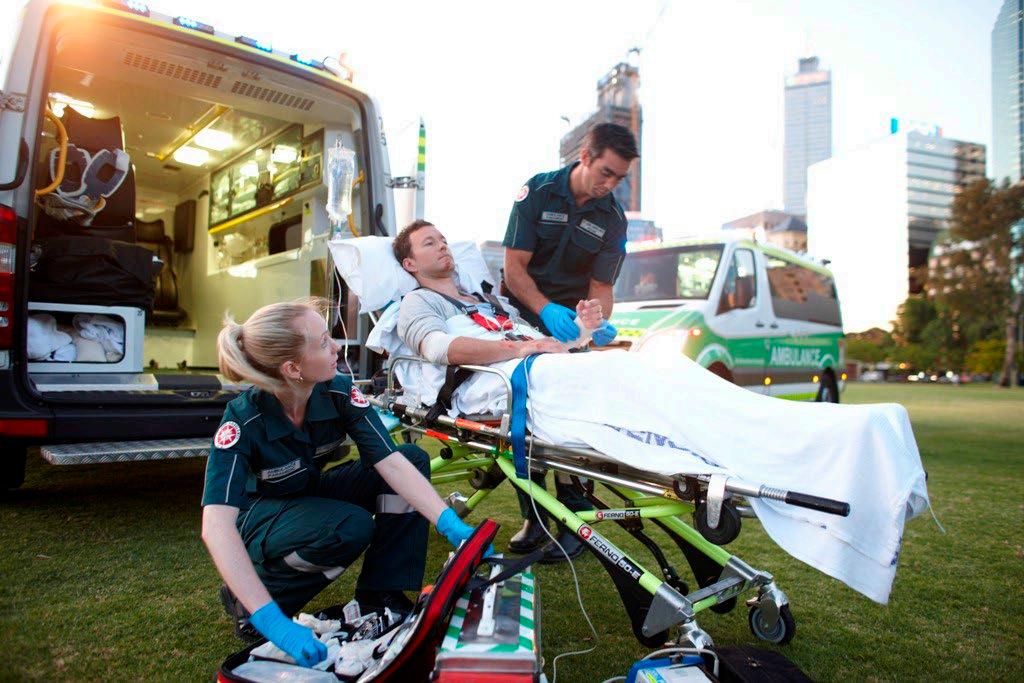

This annual report presents workforce dynamics and evolving gender representation trends in the ambulance sector. The Council of Ambulance Authorities (CAA) is committed to aligning its data collection efforts with its 2023-28 strategic priorities, particularly focusing on workforce diversity and inclusion. As part of the strategy, this report aims to enhance understanding of gender segmentation and diversity within the ambulance workforce, with a commitment to advancing equitable gender representation and promoting inclusion across all levels of the sector.
Conducted in 2025, with data from the 2024/25 financial year, this report integrates insights from CAA's 11-member ambulance services:
• NSW Ambulance (NSWA)
• Ambulance Victoria (AV)
• Queensland Ambulance Service (QAS)
• St John WA (SJWA)
• SA Ambulance Service (SAAS)
• Ambulance Tasmania (AT)
• ACT Ambulance Service (ACTAS)
• St John NT (SJNT)
• Hato Hone St John (HHSJ)
• Wellington Free Ambulance (WFA)
• St John Ambulance Papua New Guinea (SJPNG)
The “Overall Workforce and Gender Ratios Table” (2021–2025) highlights the evolving gender representation within the ambulance workforce. The data shows a steady increase in female representation, rising from 50.5% in 2021 to 55.3% in 2025. While this progress reflects ongoing efforts to promote inclusivity, the report also underscores persistent gender gaps in various dimensions.
Given that St John Ambulance Papua New Guinea (SJPNG) started participating in 2022, the 2021 data do not include SJPNG information, figures are available from 2022 onwards.
The CAA Workforce and Gender Report highlights some of the gender disparities within the ambulance workforce, encouraging thoughtful conversation and supporting initiatives that promote inclusivity. Its aim is to help create a more equitable and welcoming environment for all individuals in the sector.
To ensure consistency, the report follows a rounding rule: values are rounded down if the first decimal is below 5 and up if it is 5 or higher. Consequently, total proportions may not always sum exactly to 100%. Graphs exclude data from the ‘Other’ category, meaning totals may not reach 100% for services reporting in that category.
Data from 11 ambulance services shows that females comprised 55.3% of the workforce in 2025, a 0.2% increase from 55.1% in 2024. This figure includes all paid staff (full-time, part-time, casual) and volunteers involved in the delivery and support of ambulance services. In Australia, female representation reached 56% in 2025 up slightly from 55.1% in 2024, demonstrating sustained progress toward gender equity. New Zealand reported a 56.7% female workforce, marking a 0.1% increase compared to 2024. Papua New Guinea showed a decrease in female workforce representation, dropping from 30 7% in 2024 to 28 9% in 2025
In 2025, 0.58% of the workforce identified as 'other,' marking a decrease from the 0.64% reported in 2024. Australian ambulance services reported 0.22% of the workforce falling into the 'other' category, while New Zealand reported 2.34%. Papua New Guinea recorded 0% in this category.
Percentage of staff
Australian Workforce and Gender Ratios
New Zealand Workforce and Gender Ratios
In 2025, nine out of the ten Australian and New Zealand ambulance services continued to maintain female representation above 50%. St John WA (SJWA) led the region with 61.5% female representation, building further on its 2024 gains of 60.6%.
South Australia Ambulance Service (SAAS) followed at 58%, with Wellington Free Ambulance (WFA) close behind at 57.7%. Hato Hone St John (HHSJ) remained strong at 56.5%, while Queensland Ambulance Service (QAS), Ambulance Victoria (AV), and ACT Ambulance Service (ACTAS) reported 55.4%, 54.3%, and 53.3% respectively. New South Wales Ambulance (NSWA) also strengthened its workforce profile, recording 53.3% female representation, and Ambulance Tasmania (AT) stood at 52.2%. St John NT (SJNT), however, slipped slightly at 49.6%, after exceeding the 50% threshold in 2024.
St John Papua New Guinea (SJPNG) had a downward trend, declining to 28.9% female representation in 2025, down from 30.7% in 2024.
*Note: Previous years’ data for QAS was exclusive of operational volunteers. From 2024 onwards, calculations include both paid staff and operational
The 2025 workforce data highlights continued shifts in gender representation across age groups compared with previous years.
In the under-30 age group, female representation increased from 59% in 2021 to 66 9% in 2025, marking the widest gender gap of all age categories, while male representation declined from 40 8% in 2021 to 32.2% in 2025 The 30–39 age group also showed consistent growth, with female representation rising from 55% in 2021 to 57.5% in 2025, and male representation decreasing from 45.3% in 2021 to 41.8% in 2025. A similar trend was observed in the 40–49 category, where female representation strengthened from 49% in 2021 to 54.7% in 2025, while male representation fell from 51.1% in 2021 to 44.7% in 2025. In the 50–59 age group, female representation grew from 43% in 2021 to 48.8% in 2025, as compared to male representation, which declined from 57.5% to 50.8%.
For the 60+ age group, gender proportions remained male-dominated, but the gap narrowed considerably, with female representation increasing from 34% in 2021 to 41.5% in 2025, and male representation decreasing from 65.8% in 2021 to 58.2% in 2025.
In 2025, female representation increased further in full-time and casual positions, continuing the trend from previous years. In full-time employment, women represented 52.4% of the workforce compared to 51.2% in 2024, while male representation declined slightly from 48.8% in 2024 to 47.6% in 2025, reinforcing women’s majority in this category.
Part-time roles remained strongly female-dominated, with women accounting for 71.6% in 2025 of the workforce compared to 72.2% in 2024, while male representation rose slightly to 28.4% in 2025 from 27.8% in 2024. Casual employment showed slight growth in female participation, increasing from 57.1% in 2024 to 57.8% in 2025, while male representation witnessed slight variation from 42.9% (2024) to 43% (2025).
Volunteer roles marginally decreased, with women comprising 57.9% in 2025 compared to 58.4% in 2024, and men increasing slightly to 42.1% in 2025 from 41.6% in 2024.
Overall Gender Distribution by Employment Type
In 2025, female representation across employment categories showed both stability and some variation:
• Marketing, Finance, HR, IT, and Administration: Women accounted for 69.8% of the workforce, a slight decrease from 71.2% in 2024.
• Calltaker/Dispatcher positions: Remained strongly female-dominated, holding steady at 71.7%.
• Volunteers and First Responders: Women represented 57.9%, showing minimal variation from 2024 (57.8%).
• Supervisory roles: Recorded a small increase, rising from 52.1% in 2024 to 52.7% in 2025.
• Clinical and Infrastructure Support roles: Experienced a slight decrease from 51.3% in 2024 to 49.7% in 2025.
o Doctors, Nurses, Psychologists, and Pharmacists: Saw a modest increase in female participation, rising from 54.4% in 2024 to 56.7% in 2025.
o Qualified Ambulance Officers and Students: Improved slightly, moving from 52.2% in 2024 to 53.4% in 2025.
o Patient Transport Officers: Remained relatively balanced, increasing marginally from 47% in 2024 to 47.9% in 2025.
• Executives: Female representation declined from 43.7% in 2024 to 41.6% in 2025.
• Operational Managers: Recorded a small increase from 39.8% in 2024 to 40.8% in 2025.
• Medical Officers and Medical Directors: Experienced a more notable decrease in female representation, falling from 50% in 2024 to 32.1% in 2025, indicating a reduction in female participation at senior clinical levels.
Medical Officers/Medical Director
Female Male
Attrition rates in the ambulance sector have varied over the five-year period, with notable fluctuations between male and female employees. In 2025, the attrition rate for women declined to 3.1% from 3.5% in 2024, while male attrition also decreased slightly to 4.2% in 2025 from 4.5% in 2024. This represents an overall improvement from the peak levels recorded in 2023, when attrition reached 5.5% for women and 5.8% for men. The lowest attrition rates were observed in 2022, at 2.5% for women and 2.4% for men, highlighting the significant rise in 2023 before a gradual decline in the following years. Overall, female attrition has consistently remained slightly lower than male attrition since 2023, suggesting improving retention rates among women in the workforce.
Produced in November 2025
The Council of Ambulance Authorities
2/141 Sir Donald Bradman Drive
Hilton SA 5033
www.caa.net.au