
AWATERCRISISTHATREQUIRES STRUCTURALACTIONSFORAND INTHEAGRICULTURALSECTOR
2022wasEurope’shottestsummeronrecord,and2024itshottestyearoverall Climatechange is no longer a distant concept; its effects are being observed and are intensifying year after year.Inthiscrisis,agricultureisonthefrontline.Agriculturalecosystemsaregraduallylosing theiressentialfunctions:soilsaredryingout,andvegetationproductivityissteadilydeclining underthepressureofrecurrentdroughts
Europe'semblematiccrops-wheatandmaize-theverypillarsofEUfoodsecurityandtrade, are not spared by the crisis: over 30% of their areas can be classified as vulnerable, due to bothyieldsensitivitytosoilmoistureandlong-termsummersoildrying.
JRCestimatesaround€5billionperyearindrought-relatedagriculturallosses,andECscenario simulations suggest the EU could shift to a negative wheat trade balance in the coming decadesduetoclimaticchocs.
Despite all the warning signs, current responses remain insufficient. The resilience of agricultural ecosystems is eroding every year, and the only “adaptation” observed so far is a constrained shift of production northward. But this shift relocates the pressure instead of resolving it, deepens territorial imbalances, and ultimately amplifies the problem at the EU scale Leavingthemostvulnerableregionsbehindisnotanoption. Spain already shows that decline of agriculture in sensitive regions leads to: farmland abandonment, advancing desertification,ecosystemcollapse,andtheeconomicdeclineofentireregions.
Europe’swatercrisisisnotonlyaboutdeficits,itisalsoaboutexcess:extremeprecipitation andfloodingareprojectedtoincreaseacrossallEuropeanregions.The challenge is not only aboutquantity,butwaterregulation-thecapacityofagriculturalsystemstoabsorb,storeand releasewaterattherightmoment
European agriculture, which was already struggling to rely on uncertain markets, diverging consumer’sdemands,andambivalentinstitutions,isnowalsostrugglingtokeepthesupportof thenaturalsystemsonwhichitrelies
Yetagricultureispartofthesolution.HereliesEurope’sclimateparadox:theEUrecognizesthe sector’s unique potential in climate mitigation its capacity to capture CO₂ through photosynthesis, store carbon in soils, to provide biomass for the bioeconomy, regenerate ecosystems -butrecognitionhasnotyettranslatedintoaction Attheverymomentwhenthe EUneedstomobilizeitslivingsystemsitisstandingbyasitsproductivebaseiscollapsing.
Securing water resources for agriculture is an essential strategic foundation. Europe must investinbothnaturalandhuman-madeinfrastructure- healthy soils and irrigation systems, abletocapture,storeanddeliverwaterattherightmoment Irrigationmustbeconsideredasa strategic adaptation lever, provided that it is part of a sustainable approach: optimizing systemefficiency,collectiveandterritorializedmanagement,consistencywithresourcerenewal capacities,andcoordinationwithresilientagronomicpractices
Waterisnotanoption:itisthebasisofalllivingsystems. Securingwaterforagricultureis not a sectoral concern, but a prerequisite for ecological stability, food security, and EU resilience. The European Commission’s Water Resilience Strategy should become a crucial opportunitytoactfortheagriculturalsector.
ItisinthiscontextthatFarmEuropeislaunchinganinitiativetomappriorityactionsand investmentsforsustainablewatermanagementinagriculture,andtoidentifyhowthese actionscanbealignedwithexistingandfuturepublicpolicies.

FRAMEWORKDIRECTIVEENTEREDINTOFORCE,THEEU REMAINSOFF-TRACK: EUROPEANWATERSARESTILLUNDER SIGNIFICANTPRESSURE.
Despite more than twenty years of implementation, the Water Framework Directive (WFD)hasnotachieveditsobjectives.AccordingtothelatestEEAreport-datafrom 19 Member States - only 37% of surface waters were in good or high ecological statusin2021.
TheoverallqualityofEurope'swatersisnotimproving:only29%ofsurfacewater bodies are in good chemical status. Progress is limited by long-lasting pollutants (mercuryandBFRs) 77%ofgroundwaterbodyareaisingoodchemicalstatus.
Europe’sfreshwaterecosystemsarefacingabiodiversitycrisis,aspopulationsof amphibians,freshwaterfish,andwater-dependentbirdscontinuetodeclineacross thecontinent. MORETHANTWODECADESAFTERTHEWATER
“UnlessmajorchangesoccurinEuropean lifestylesandeconomicdevelopment, Europe'swaterresourcesandecosystems willcontinuetodeteriorate,acceleratedby theintensificationofclimatechange impacts” “Asituationlinkedtotheslow implementationoftheWFD,insufficient fundingandintegrationinsectoral policies” (EEAreport2024)

UWATERRESILIENCESTRATEGY:AFIRSTSTEP OWARDSAEUROPEANDEBATEONWATERUSEAND MANAGEMENT
The European Commission has given the first impulse to a European debate on wateruseandmanagementbyinsertingtheobjectivetoelaborateandimplement acomprehensiveWaterResilienceStrategyinitspoliticalguidelinesfor2024-2029.
The strategy aims to strengthen the EU’s capacity to manage water resources and adapttoclimatechange
For the agricultural sector, among the hardest hit by Europe’s growing water crisis,thisinitiativerepresentsamajoropportunitytoinitiatestructuralchanges and to redefine the long-term relationship between agriculture and water resources.Achievingthisfirstrequiresaccuratelyidentifyingthesector'sneeds, constraints,andprioritiesintermsofsustainablewatermanagement.
Through this study, Farm Europe seeks to identify the key needs, priorities, and actions required within the agricultural sector to help overcome Europe’s water crisisandcontributetobuildingamoreresilientandsustainablewaterfuture.

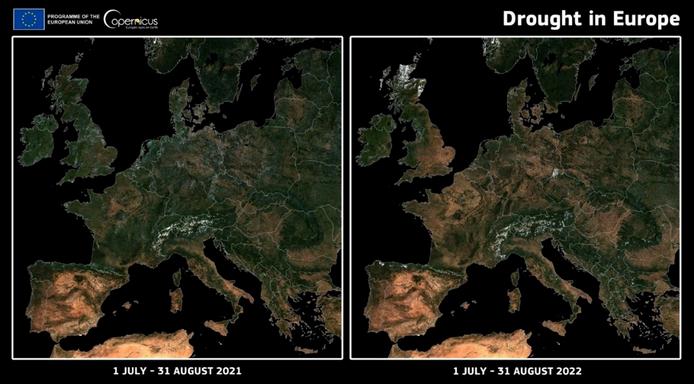
In2022,Europeexperiencedits hottestsummerandsecond warmestyearonrecord,and consequentlythelargest overalldroughtimpacted area:over630000km2(EEA).
CLIMATECHANGEANDAGRICULTURE:A GROWINGIMPACTTHATISERODINGEUROPE'S PRODUCTIVEBASE
In 2022, the area of agricultural land in the EU-27 with below-average crop productivity was over 410,000 km², representing more than one quarter of the EU’s agricultural area (EEA, Eurostats) In just two decades, the area of EU farmland suffering significant productivity lossesduetodroughthasbeenexpandingbyalmost+4,000km²eachyear.
According to the EEA, by mid-century, the frequency and intensity of heat waves and droughts are expected to increase in most parts of Europe In the EU, the share of the irrigated area in total agricultural area is 6 %. The vast majority of European farmland depends on rainfall, making European agriculture highly vulnerable to increasing climaticvariabilityandrecurrentdroughts(EPRS2019,Eurostat).
Trends show that drought and its impacts are no longer occasional hazards for agriculture, but are becoming structural challenges. The agricultural sector is experiencing a gradual degradation of its land’s productive functions. Implementing effectivemitigationandadaptationstrategiesisthereforeessentialtoprotectandrestore thenaturalfunctionsofEurope’sagriculturalland.
CLIMATECHANGEISREDRAWINGTHE MAPOFEUROPE'SAGRICULTURE
The expansion of drought-affected areas shows that climate change is no longer a distant risk but an immediate structural threat to European agroecosystems While all regions are affected by climate change, growing regional disparities are already reshaping Europe’s agro-climatic potential and will continue to redefine production conditions across the continent.
Southern Europe faces declining annual and summer precipitation, while northern regions maybecomewetter.Futureclimateprojectionssuggestthatthesetrendswillintensify.
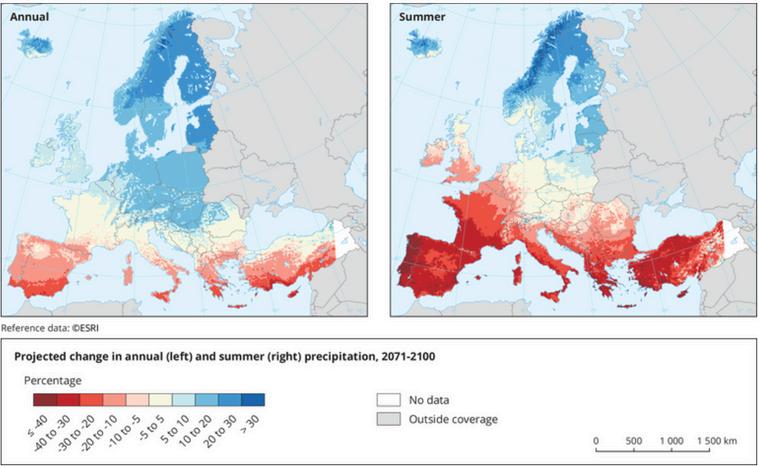
This uneven distribution of water resources is redrawingEurope’sagriculturalpotential. Overthepastdecades,studieshavedocumented a northward migration of Europe’s agro-climatic zones (JRC, EC, 2019). Under a 2°C warming scenario,allclimatemodelsimulationsagreethat agroclimatic zones in Europe will continue to shift northward.
Crops once confined to southern Europe such as wine grapes or maize are now expanding intocentralandnorthernregions,whiletraditional Mediterranean production areas are increasingly underpressure.Expectedclimatechangeislikely to promote greater northward expansion of crops adapted to warmer climates, but also reduce their suitability for cultivation in areas affected by increasingly high temperatures and morefrequentdroughts(JRC,EC,2019).
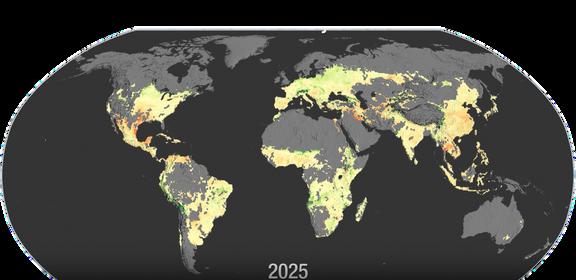
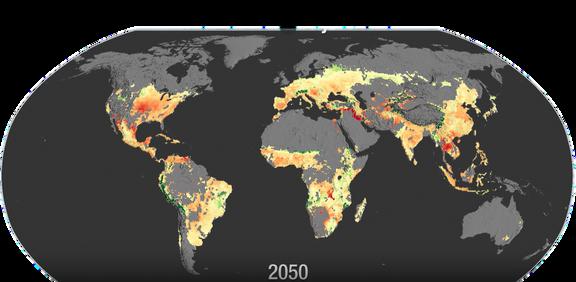
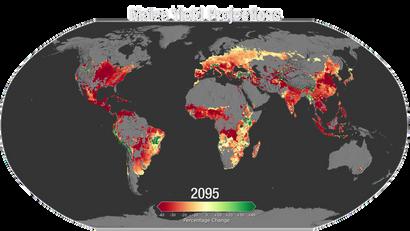

ClimatechangeisreshapingEurope’s,andworldwide,agriculturalpotential.The geographicshiftinproductioncallsforcarefulconsiderationandtargetedpolicyaction toensurethatcroppingsystemsremainresilientunderfutureclimaticconditions.
SHIFTINGEUROPEANAGRICULTURAL
PRODUCTION:MOVINGTHEPROBLEM, NOTSOLVINGIT
Relocating agricultural production may appear as a natural answer to climate change. But relocatingproductionmeansabandoningEurope’smostvulnerableregionswhileintensifying pressure elsewhere The UE risks relocating the problem, rather than building systemic resilience.
Without intervention, climate change and increasing droughts will continue to reduce the soil's abilitytoretainwater,promotingtheadvanceofdesertification.
LANDABANDONMENT:THEGATEWAYTO DESERTIFICATIONANDRURALDECLINE
While often associated with other continents, desertificationisanescalatingissuewithinthe EU During the 20th century, climatic factors were responsible for desertification mainly in the Mediterranean region. Almost half of the EU Member States have declared that part of their territoryisaffectedbydesertification,yetthereisnoEU-levelstrategytotacklethisproblem In 2017,morethan400,000km²oflandinsouthernEuropewashighlyorveryhighlysusceptibleto desertification.WhileSpainismostseverelythreatenedbydesertification,therearealsomajor concerns for large and expanding areas highly exposed to degradation in Greece, Bulgaria, Italy,Romania,andPortugal (EPRS2020)
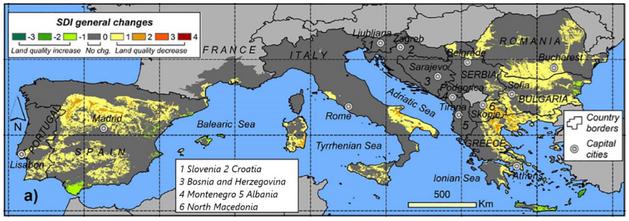
Desertification causes soil degradation, loss of vegetation and biodiversity, leading to the release of carbon into the atmosphere. This additional carbon fuels global warming, which in turn reinforces the processes of aridification. The result is aself-reinforcingdynamicinwhichareas threatened by desertification are expanding, now encroaching on territories previously considered safe (EPRS 2020) Desertificationisnotjustaregionalissue; negative climate feedbacks are impactingtheentireEuropeancontinent.
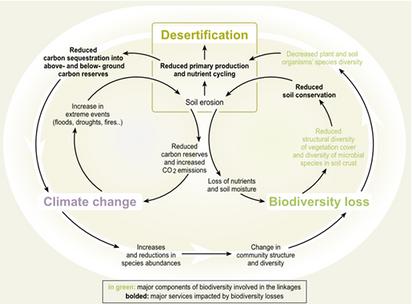
Thedisplacementofproductionandtheabandonmentofagriculturallandunderwater stressisnotjustaregionalproblem:itcontributestoworseningthewatercrisisand climatechangeinallEurope.Toavoidthisspiral,territorialresiliencemustbe strengthened,ratherthandisplacingvulnerability TheEUmustprioritizetheprotectionof itsmostclimate-vulnerableagriculturalregions. Healthyagrosystemsareanessentialdefenseagainstthemostextremeeffectsof climatechange.
AGRICULTURE:1STECONOMICSECTOR
AFFECTEDBYDROUGHTS
Economic losses related to droughts in Europe amount to €94 billion per year These economiclossesarehighestintheagriculturalsector:53%-orapproximately€5billionper year (JRC 2025). According to JRC projections, drought-related losses could rise to €45 billionperyearby2100,withagriculturallossesreachingaround€20billionannually-with the share of agricultural losses declining to around 44% because the economic weight of agricultureinEuropeanGDPisprojectedtoshrink.
Inactionhasacost.Investinginresilienceisoneofthemostcost-effective measuresEuropecantake.Europecaninvestinresiliencenow,orpaymuch morelaterinlostharvests,emergencysupportanddamagedruraleconomies.
MARKETIMPACTSOFEXTREME WEATHEREVENTS
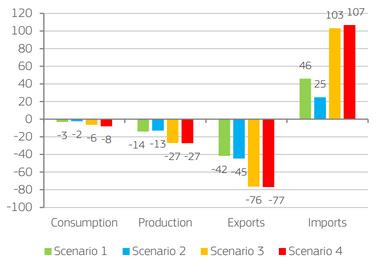
ECanalysesshowthatextremeweatherevents willdestabilizeagriculturalmarketsifno adaptationstrategyisimplemented. Regardlessofthescenarioconsidered, simulationsshowamarkeddeclineinyields andcerealproductionintheEU from-10%to -38%dependingontheintensityofclimate shocks accompaniedbyadeteriorationinthe tradebalance.
Inthemostseverescenarios,thiscontraction evenresultsinanegativetradebalancefor wheat,anunprecedentedsituationforthe EuropeanUnion
AbetterunderstandingofEuropeandynamics relatedtotheclimatecrisisandadaptation strategiesisessentialtostrengthenthe resilienceofEuropeanagriculturaltrade.
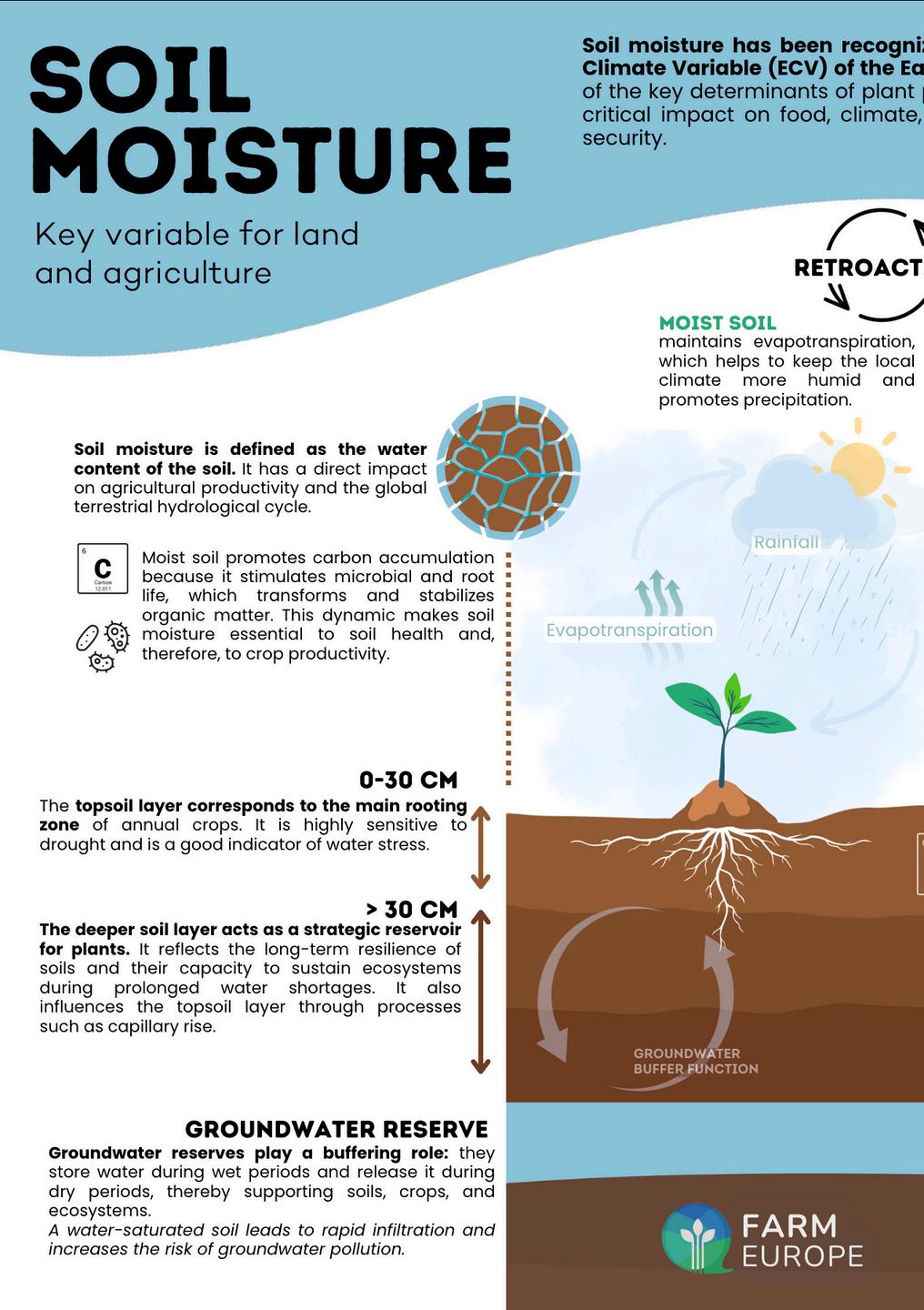
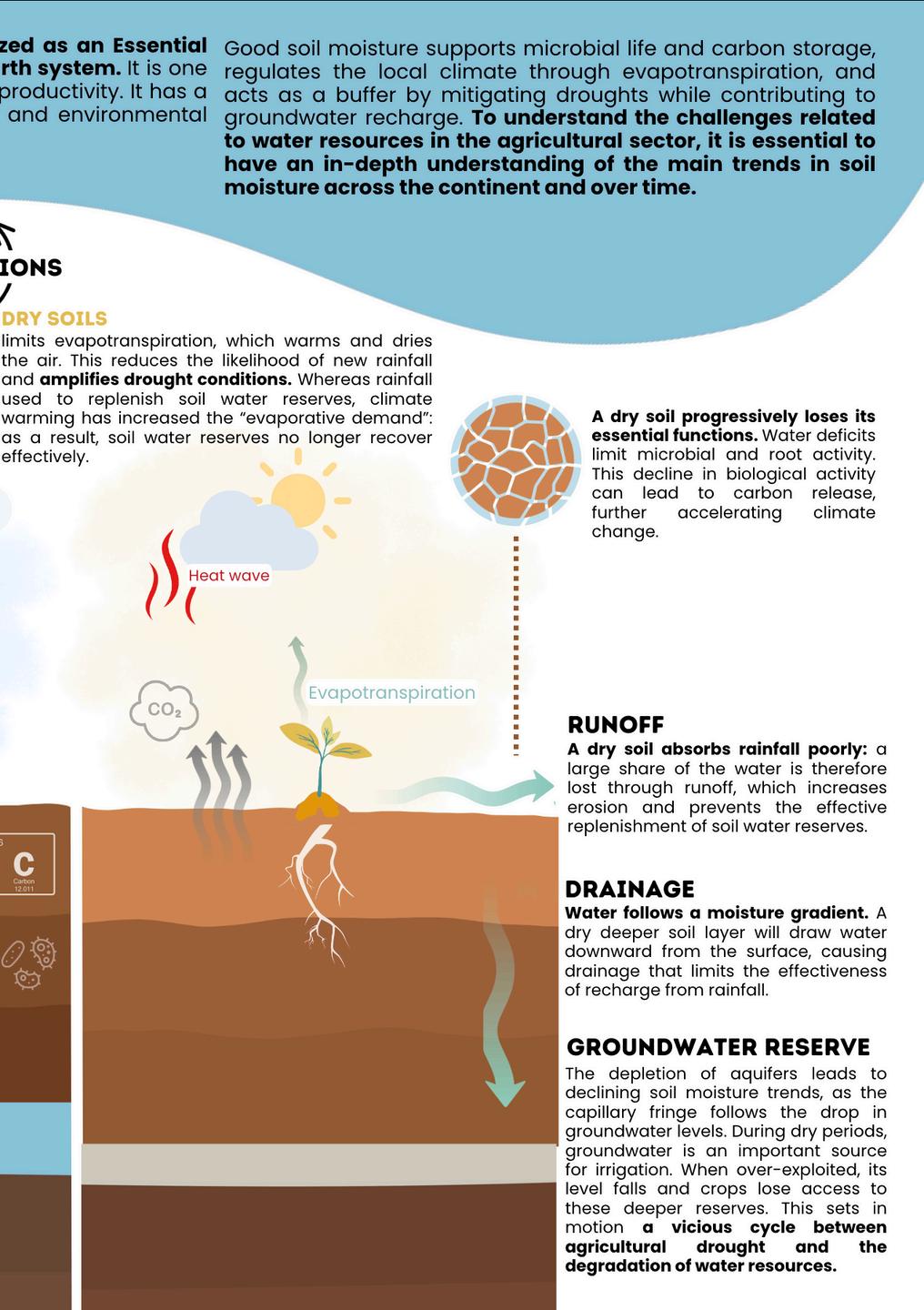
SOILMOISTURECONTENT:AKEYFACTORINTHE FUNCTIONSOFAGRICULTURALLAND
Astudy*hasmappedtheevolutionof availablesoilwatercontent(ASW)in Europeanagriculturalsoilssincethe1980s.
Availablewatercontentisameasureofthefraction ofsoilwaterthatisactuallyavailabletoplants Measuredinsummer(April-September),theASWof thetopsoilreflectsthewaterstressexperiencedby cropsatcriticalstagesofplantdevelopment
Theresultsshowthatsoilwater contenthasalreadyreached worryinglevelsinseveralregionsof Europe.Largeagriculturalareasin southern,eastern,andcentralEurope arealreadyexperiencingstructural waterstress.
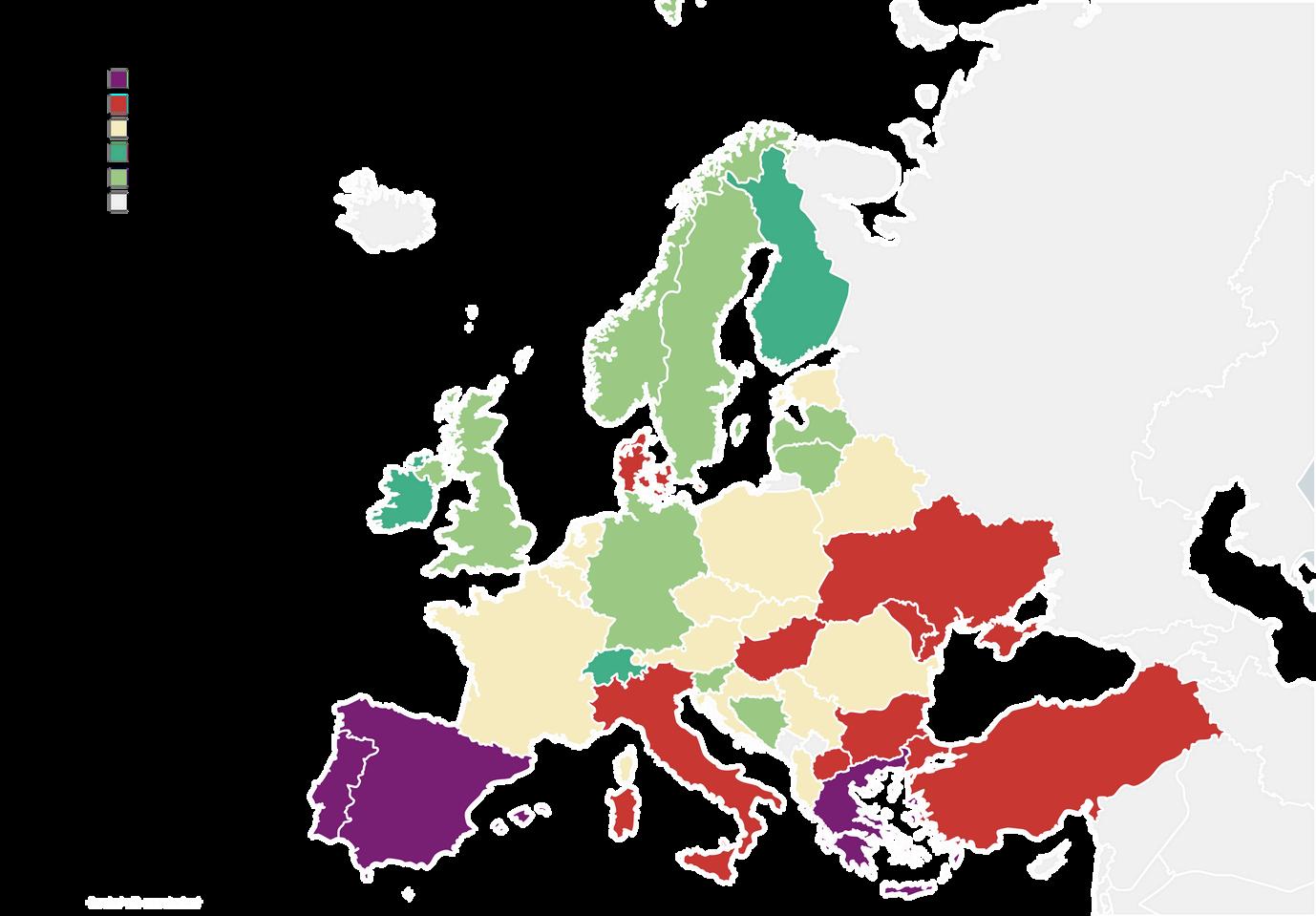
AWIDESPREADDRYINGOFEUROPEAN AGRICULTURALSOILS
Asignificantdecreaseinannualsoilwater(ASW)contenthasbeendetectedin27%of Europeancroplandsincethe1980s(0-28cm).Duringthesummermonths,availablewater contenthasdecreasedsignificantlyinnearly45%ofEuropeancropland.Themostsevere annualdeclineinASWoccurredinEasternEurope,where84%ofagriculturalland experiencedasignificantannualdecreaseinwatercontent,reaching96%insummer This dryingoutisevenmorepronouncedindeepersoillayers(28–100cm),whereavailablesoil waterhassignificantlydecreasedacross42%ofcroplandonanannualbasisandnearly 50%duringthesummer.Thispointstoastructuralandlong-termsoilwaterdeficit,raisinga warningsignalfortheresilienceofEuropeanagriculturalsystems.
Preservingsoilmoistureisacriticalleverforbothclimatechangeadaptationand mitigation.Itsongoingdeclineisanalarmingsignal,revealingthegrowingrisk thatagriculturemaynolongerbeabletorelyonnatureservices.
WATERCRISISANDVULNERABILITYOF EUROPE'SMAINPRODUCTIONS
Climatechangeandthedecliningavailabilityofwaterresourcesposeseriouschallenges forEuropeanagriculture.InEurope,summersoilmoisturehassignificantlydecreased acrossnearly50%ofcropland,threateningthereproductivestageofmajorEuropeancereal crops-acriticalperiodfortheiryields.
Astudy*measuredtheassociationsbetweenchangesinsoilwatercontentandtheyieldsof thetwomainEuropeancrops:wheatandmaize Whileavailablesoilwatercontentaffectsbothcrops,ithasaconsiderablystrongerimpact onmaizeyields.Asignificantdependenceofyieldsonsoilmoisturewasobservedacross nearly90%ofmaize-growingareas-comparedwith64%forwheat.Inotherwords,for maizecrops,wateravailabilityisamajordriverofproductivity—analarmingcorrelation inlightofthecontinuousdeclineinsoilwatercontentobservedinEurope,particularly duringtheplant’scriticaldevelopmentstages(July-August) Wheatcultivationshowsa lowerlevelofdependence Althoughitsyieldsareindeedstronglyinfluencedbyavailable water,otherfactorsalsocomeintoplay.
The analysis of spatial overlap between yield sensitivity and downward trends in soil moisture affects 32% of wheat areas and 35%ofcornareasinEurope.
In other words: respectively 32% and35%ofwheatandmaizeareas arevulnerablezones,wherecrops are sensitive to soil water availability and where this water is declining. These vulnerable areas affect the main European cereal-producing countries: France, Germany, Romania, Hungary,Spain,andUkraine
Thecoexistenceofthecropyielddependenceonsoilmoistureandthedecreasein availablesoilwatercontentposeaconsiderablethreattograinproduction stabilityoverextensiveregionsofEasternandWesternEurope.Thesewarning signscallforaneffectiveinterventiononbehalfofsoilwaterconservationin Europeancroplands.
EUROPEANBIOECONOMY:GROWING AMBITIONSUNDERINCREASING WATERSTRESS
The EU wants to transform its economy to make it more sustainable, circular, carbon neutral by 2050 and independent of fossil fuel imports These objectivesimplyagrowingneedforbiobasedagriculturalproductsforstrategic Europeansectors:
BIOFUELS → 14%renewableenergyin thetransportsector.Caponfirstgenerationbiofuels(7%)and advancedtargets(3.5%).
BIOGAS → targetofproducing35 billioncubicmetersofBiogasperyear by2030.
BIOPLASTICS → -20%offossil-based plasticsby2030and-100%by2050.
CHEMICALS → 20%oflubricantsfromplant molecules
BUILDINGS → Decarbonisingrenovation with30%bio-basedinsulationmaterials
Farm Europe has translated the EU's decarbonisation targets into estimates of additional agricultural biomass requirements for 2030 and 2050 Simulations have been carried out based on different assumptions, ensuring complementarity between sectors in order to ensure a comprehensive and consistent approach between the needs for primary products for multiple uses, residues and waste. The EU's ambitions for decarbonisation are translatingintonewdemandforagriculturalproducts:
TheEU'sdecarbonizationstrategywillrequireasignificantincreaseinbiomass mobilization,production,andproductivity.However,Europeanagroecosystemsare steadilyweakeningundertheacceleratingimpactsofclimatechange.Theclimate resilienceofagricultureandthesecurityofwaterresourcesarenotsectoral concerns,butfoundationalconditionsforallmajorpolicydomains—energy,climate, foodsystems,trade,economy,environment,etc....

IRRIGATION:ALEVERFORADAPTATION UNDERSUSTAINABILITYCONDITIONS
Against a backdrop of increasingly frequent droughtsandwidespreadsoildrying,irrigationis emerging as one of the main drivers of adaptationinEuropeanagriculture.
Natural water supplies, particularly summer rainfall and soil water recharge, are in sharp decline in many regions, weakening rain-fed agricultural systems and making them increasingly dependent on water that is artificially extracted, stored, or transferred via irrigation infrastructure.
InSpain,astudy*hasshownthatirrigationmakes it possible to locally decouple agricultural productivityfromsoilwatercrises.
In this region, wheat yields are highly dependent on soil moisture, with 77% of yield variations explained by fluctuations in water content This correlation reflects the structural vulnerability of Spanishwheatproductiontowatershortages.
However, this relationship has not been observed for corn, a crop that is structurally more sensitive towaterstress.ThemajorityofMediterraneancorn cultivation has shifted to irrigation in recent decades, alleviating stress on crops and maintainingproduction
The decoupling observed in Spain between water deficit and productivity illustrates the potential of irrigation to support production in the most vulnerable areas. However, irrigation cannot be consideredasolutionwithoutcaution.
Irrigated agriculture thrives only as long as its water sources rivers, reservoirs and groundwater can supply the volumes required. In Spain, irrigationhashelpedrelievewaterstressformaize production, but in its current form it still struggles to combine efficiency with long-term sustainability.
Numerous spanish groundwater reserves are chronically depleted, with some reaching critical levels, while salinization is spreading in several coastalbasins
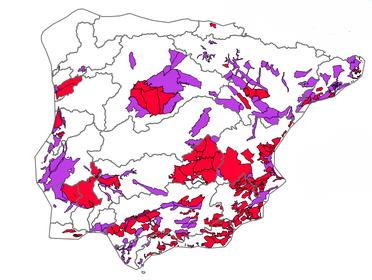
Irrigationcanhelpmitigateclimateshocksandensureproduction,butwithoutan integratedadaptationstrategy,itcompromisesthelong-termhydrological sustainabilityofregions.Irrigationisasolutionthatmustbethoughtofasan integratedtoolforterritorialresilience,adaptedtolocalrealities,contributingto themaintenanceoflivingsystemswhilepreservingresourcesinthelongterm.
EXCESSWATERANDFLOODING:THEOTHER
SIDEOFEUROPE'SAGRICULTURALWATERCRISIS
Droughts(54%),heavyrainfall(21%),frost(16%)andhail(9%)accountfor80%ofagricultural losses in the EU (EPRS, 2025). If drought and heat have caused by far the largest share of negative economic impacts to European agriculture, europe’s water crisis is not only about scarcity,climatechangeisalsoincreasingtheriskofexcesswaterandflooding.
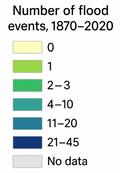
The last three decades have recorded the highest number of floods in the past 500 years IPCC AR6 further reports that extreme precipitation and flooding are projected to increase acrossallEuropeanregions(Copernicus2024).
DOUBLEWATERCRISIS:DOUBLE CHALLENGEFORAGRICULTURE
Onrecord,2024underwentthesecondhighestnumberofheatstressdaysandtropicalnights, and the most widespread flooding since 2013 (EPRS, 2025) Europe’s water crisis is now driven bybothextremesthatreinforceeachother:droughtsdryoutanddegradesoils,reducingtheir ability to absorb water, while increasingly intense rainfall produces rapid runoff instead of infiltration.Asaresult,landscapesfailtorecharge,droughtconditionsdeepen,andtheimpacts of floods become more severe. The challenge is not only water availability, but water regulation - the capacity of the agricultural system to absorb, store and release water at the rightmoment.
Agricultural soils should be considered as Europe's main agricultural water regulationinfrastructure. Healthy soils act as natural buffers that reduce both the riskofdrought(byincreasingwaterretention)andtheriskofflooding(byimproving infiltration). Conversely, degraded soils lose these functions. Restoringagricultural soil health is not only an agronomic measure, but a central element of the Europeanwatermanagementstrategy.
Irrigation must evolve beyond its traditional role as a drought-response tool The mainchallengetodayistiming:irrigationsystemsneedtobridgethetemporalgap by capturing excess water when it appears, storing it, and redistributing it during critical crop stages. Irrigation is not about using more water, but about water regulation turningperiodsofexcessintoaresourceforperiodsofneed.
Europe’swatercrisisisnotonlyaboutdeficits:itisalsoaboutexcess.Agriculturefaces adoublechallenge,wherethecoreissueiswaterregulation.Europemustinvestin bothnaturalandhuman-madeinfrastructure-healthysoilsandirrigationsystems, abletocapture,storeanddeliverwaterattherightmoment Europe'swaterresilience willdependonitsabilitytobringtogethernaturalecosystemservicesandhuman innovation.
AGRICULTURALWATERSTRATEGY:
AHOLISTICAPPROACHTHATSHOULD
SYSTEMSANDTERRITORIES
Europeanagriculturemustnotfollowandsuffertheeffectsofclimatechangethroughthe gradual relocation of its production and the abandonment of its most vulnerable agrosystems The EU must take action: preserve its living systems and strengthen the resilience of its agriculture to increasing water stress. This requires a holistic strategy thatcombinesmeasurestosecurewateravailability,strengthentheregulationofwater resources,andimprovethehydrologicalperformanceofagriculturalsystems.
MINIMISENEEDS-Actontheagriculturalsystem
Landscapes features
A key strategy is to reducewaterrequirementsthroughagronomiclevers to improve the resilience of the agricultural system to extreme weather events:theuseofgenotypesthataremoretoleranttowaterstress(through varietal selection or New Genomic Techniques (NGTs)), the adaptation of crop rotations and cultivation schedules to regional rainfall patterns, soil improvement for better retention and infiltration performance, and the restoration of landscape features (hedges, wetlands, grass strips) that contributetohydrologicalregulationanderosionreduction.
OPTIMISEINPUTS-Technology&innovation
Optimizing resources through better understanding and management of the cropping system. Decision support tools based on remote sensing technologies, in situ sensors, and agroclimatic modeling improve monitoring of soil and crop water requirements. Precision agriculture enablesashiftfromstaticmanagementtodynamicandadaptiveresource management
MINIMISEIMPACT-Integratedterritorialmanagement
Beyond the logic of mitigating impacts, agriculture, as a key link in the hydrologicalcycle,mustbedesignedasaregenerativesystemcapableof restoringthehydrologicalandecologicalfunctionsofterritories.
Temporary storage of winter surpluses, using nature-based solutions, should help mitigate summer deficits and stabilize water balances. Preserving the quality of surface and groundwater remains an essential conditionforthesustainabilityofthesystem
Thecombinationofagronomic,technological,andterritorialleversmustformthe foundationofanintegratedEuropeanstrategyforagriculturalwatermanagement. Whiletheseaxesrepresentkeyareasforaction,theireffectiveimplementation requiresarefinedunderstandingoflocalconstraintsandagroclimaticspecificities, inordertoestablishaninitialprioritizationofstrategicactionsandinvestment needsattheterritoriallevel.
Soil
REGIONALAGRICULTURAL“WATERNEEDS”
INDICATORS:GUIDINGACTIONS,INVESTMENTS, ANDPOLICY
Water is not optional for living systems, nor for agriculture. Faced with the ongoing degradation of water resources and the decline in the health of its agrosystems, the European Union must act quickly and provide the agricultural sector with the means to act in line with the services it can offer for water, the environment, the climate, and society
To act effectively, it is essential to have a clear vision of the needs and priorities at European level in terms of agricultural water management. With this in mind, Farm Europeisdevelopingregionalindicatorstoidentifywaterneeds,priorityactions,and thenecessaryinvestments.
This initial assessment will serve as a basis for estimating the scale of investment required,identifyingtheregulatoryleversthatcanbemobilized,andpreparingthelinks betweenexistingandfuturepolicies.
DIAGNOSE REGIONAL “WATER NEEDS”
A targeted assessment is being carried out in European regions to identify the specific climate, resource, and agricultural challenges theyface.Thisincludesassessingthemainagriculturalsystem,water availability,andvulnerability.
BIOECONOMY
Articulate the diagnosis with the EU's ambitions in terms of decarbonizationandtheneedforadditionalbiomassproduction.
DEFINE THE INVESTMENT ROADMAP
Basedontheneedsassessment,asetofpriorityguidelinesisdefined toguideacredibleinvestmentplantoachievetangibleresultsatboth theregionalandEuropeanlevels

ALIGN WITH EU INITIATIVES
Tomaximizebothimpactandbudgetefficiency,theproposedactions are aligned with existing and upcoming EU initiatives This includes integrating carbon farming strategies, precision agriculture technologies, etc, ensuring coherence with broader policy goals and leveragingsynergies.
AcoordinatedEuropeanvisionisrequiredtotriggeractionatthepoliticaland budgetarylevels,settingastrategicdirectionandsecuringtheresourcesnecessary tosupportadaptation.Oncethisframeworkisinplace,eachregionwillbeableto definethespecificmeasures,investmentneeds,andimplementationpathwaysthat bestreflectitslocalconstraintsandneeds.
EuropeanEnvironmentAgency(EEA),Europe'sstateofwater2024:theneedforimproved waterresilience,2024
EuropeanCommission(EC),Waterresiliencestrategy,2024.
Copernicus,DroughtinEurope,CopernicusimagesacquiredbySentinel2showing“Europe seen from space has changed between 1July and 31August2021(left) and 1July–31August2022(right)duetothehistoricdrought”Article«OBSERVER,2022
EuropeanEnvironmentAgency(EEA),DroughtimpactonecosystemsinEurope,2024
European Environment Agency (EEA), Projected change in annual and summer precipitation,2071–2100[Map],2022,Modified2024.
Ceglar, A., Zampieri, M., Toreti, A., & Dentener, F. (Joint Research Centre, European Commission),Observed northward migration of agroclimate zones in Europe will further accelerateunderclimatechange,2019
EuropeanParliamentaryResearchService(EPRS),Desertificationandagriculture,2020.
EuropeanParliamentaryResearchService(EPRS),IrrigationinEUagriculture,2019.
JointResearchCentre(JRC),GlobalwarminganddroughtimpactsintheEU,2025
European Commission (EC), EUAgricultural Outlook for Markets, Income and Environment20222032.
Pinke,Z.,Decsi,B.,Kardos,M.K.,Kern,Z.,Kozma,Z.,Pásztor,L.,&Ács,T.,Changingpatterns ofsoilwatercontentandrelationshipwithnationalwheatandmaizeproductioninEurope, 2022
European Parliamentary Research Service (EPRS), Climate change impacts on food securityintheEuropeanUnion,2025.
EarthSystemScienceData(ESSD),HANZE v2.1: an improved database of flood impacts in Europefrom1870to2020,2024
NASASVS,ImpactofClimateChangeonGlobalMaizeYields,2021
PerpiñaCastillo,C.,CollAliaga,E.,Lavalle,C.,&MartínezLlario,J.C., An Assessment and SpatialModellingofAgriculturalLandAbandonmentinSpain(2015–2030),2020.
European Environment Agency (EEA), Water and agriculture: towards sustainable solutions,2020
European Environment Agency (EEA), Water resources across Europe confronting waterstress:anupdatedassessment,2021