A N G U A G E A
Grade 8 ELA prepares learners to interpret complex texts, refine their writing through multiple drafts, and use evidence persuasively. There is a strong emphasis on voice, audience awareness, and collaborative discussions.
I S H L
Learning Structure
L
Understand: Close reading, annotation, vocabulary building. Explore: Discussion, thematic connections, rhetorical analysis. Materialize: Written essays, oral presentations, multimedia projects.
Content Areas
E N G
Literary genres: novels, drama, poetry. Informational texts and media literacy. Argumentative, narrative, and expository writing. Research projects with citations.
Competencies
Critical reading and interpretation.
Evidence-based reasoning and argument writing.
Speaking and listening in structured discussions.
Assessment and Student Work
Essays, analytical responses, research papers, oral presentations, and multimedia projects demonstrate mastery of both reading and writing standards.
Curriculum Alignment Snapshot
CCSS.ELA-LITERACY.RL.8.1–8.6; RI.8.1–8.6 (Reading)
CCSS.ELA-LITERACY.RL.8.1–8.6; RI.8.1–8.6 (Writing)
CCSS.ELA-LITERACY.SL.8.1–8.4 (Speaking and Listening)
CCSS.ELA-LITERACY.L.8.1–8.6 (Language)
Writing for clarity, precision, and impact. Scan the QR code to access the complete document for the English Language Arts Curriculum. Or click here.
P O R T U G U E S E L A N G U A G E
Curriculum Snapshot
Strengthens linguistic competence in Portuguese, focusing on grammar, textual production, and cultural interpretation.
Course Overview
The course balances technical aspects of the language with cultural and literary appreciation. Students refine their ability to write with cohesion and coherence while interpreting complex Brazilian and Portuguese literature.
Learning Structure
Each lesson follows Escola Concept’s three-phase model:
Understand: Grammar analysis and vocabulary expansion.
Explore: Textual analysis, authorial style, literary movements.
Materialize: Essays, debates, creative texts.
Content Areas
Grammar and orthographic conventions.
Literary analysis: from Romanticism to Contemporary literature.
Discursive genres: argumentative, expository, journalistic.
Language and identity in society.
Competencies
Mastery of grammar and orthography.
Interpret and analyze texts from multiple perspectives.
Develop clear, persuasive written discourse.
Critically reflect on cultural and social contexts of language.
Assessment and Student Work
Writing portfolios, grammar exercises, literary essays, debates, and oral expositions.
Curriculum Alignment Snapshot
BNCC: EF89LP01 a EF89LP05 (Leitura)
BNCC: EF89LP06 a EF89LP10 (Produção Textual)
BNCC: EF89LP12 a EF89LP14 (Oralidade)
BNCC: EF89LP11; EF89LP20 (Multiletramentos e Produção Multimidiática)
Curriculum Snapshot
Builds readiness for high school algebra and geometry with focus on linear relationships, transformations, systems of equations, and data literacy.
Course Overview
Students deepen their understanding of equations, functions, transformations, and irrational numbers, applying them to real-world and abstract problems.
Learning Structure
Understand: Engage with problems through discovery.
Explore: Model solutions using algebra, visuals, and technology.
Materialize: Apply through projects and structured tasks
Content Areas
Rigid transformations, congruence, and similarity. Linear relationships and systems of equations. Functions, volume, and irrational numbers. Exponents, scientific notation, and statistics
Competencies
Algebraic reasoning and functional thinking.
Geometric modeling and spatial reasoning.
Data literacy through scatter plots and trends.
Numerical fluency with rational and irrational numbers
Assessment and Student Work
Problem sets, collaborative projects, graphing tasks, end-of-unit investigations, and applied modeling challenges.
Curriculum
Alignment Snapshot
BBNCC EF08MA05, EF08MA06, EF08MA08 (Algebra and Equations)
BNCC EF08MA07, EF08MA11 (Functions and Relationships)
BNCC EF08MA12, EF08MA13 (Geometry and Transformations)
BNCC EF08MA02, EF08MA04 (Rational and Irrational Numbers)
BNCC EF08MA01, EF08MA03 (Exponents and Scientific Notation)
BNCC EF08MA14, EF08MA15 (Statistics and Probability)
N A T U R A L S C I E N C E S
Curriculum Snapshot
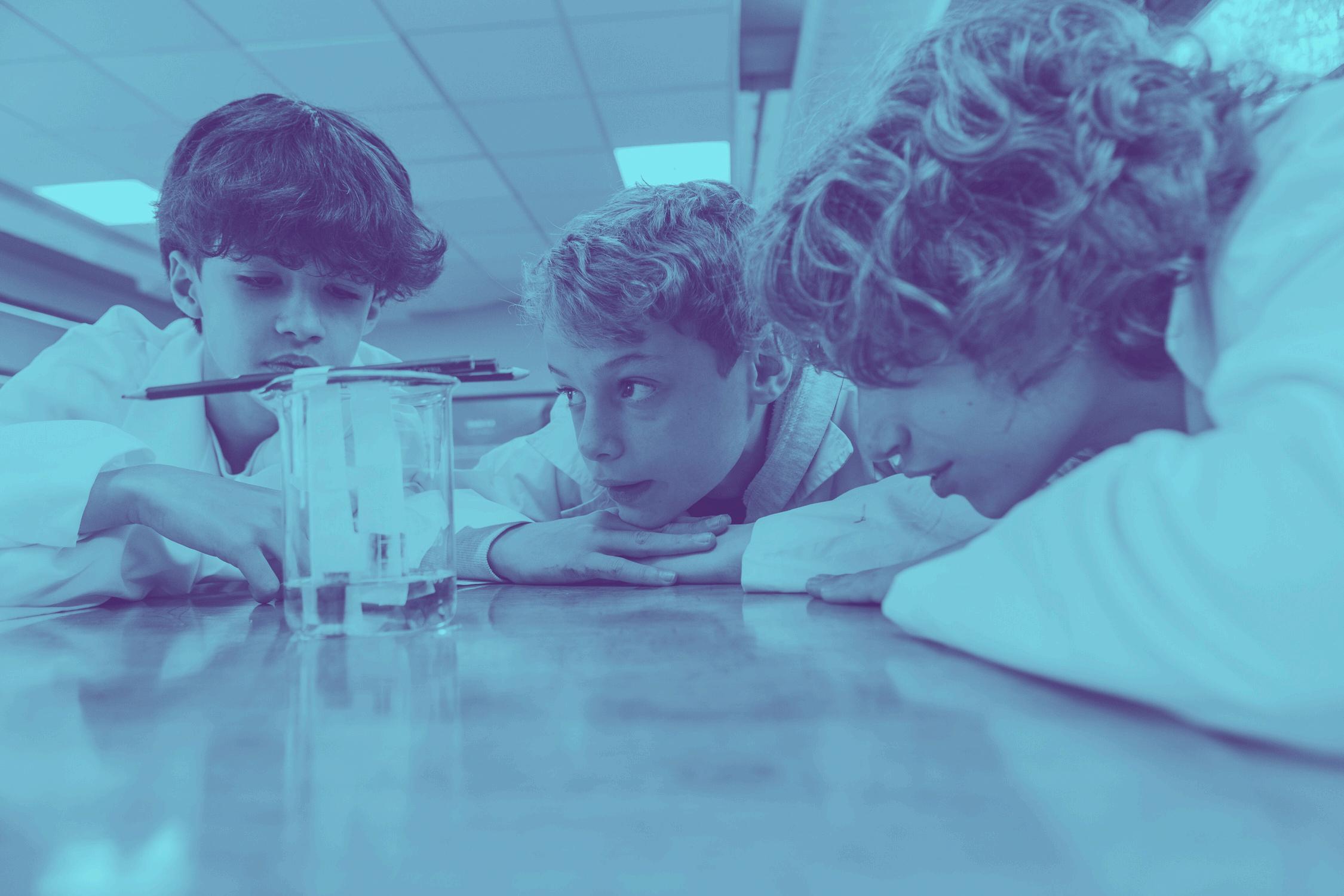
Integrates physics, chemistry, biology, and earth sciences, encouraging inquiry, experimentation, and sustainability awareness
Course Overview
Students investigate matter, energy, life systems, and Earth processes while applying scientific reasoning to societal and environmental challenges.
Learning Structure
Understand: Introduce key scientific principles.
Explore: Conduct experiments and analyze data.
Materialize: Apply through projects, labs, and case studies
Content Areas
Matter and transformations: thermodynamics, simple machines.
Earth & space: atmosphere, tectonics, climate change.
Life sciences: ecosystems, biodiversity, adaptations. Human health and environment: pollution, conservation, public health.
Competencies
Scientific inquiry and experimentation.
Critical thinking and problem-solving.
Communication and collaboration.
Ethical application of science
Assessment and Student Work
Lab reports, research projects, sustainability case studies, experimental design portfolios.
Curriculum Alignment Snapshot
BNCC EF08CI01, EF08CI02 (Scientific Inquiry & Investigation)
BNCC EF08CI03, EF08CI04 (Matter & Energy)
BNCC EF08CI07, EF08CI08 (Earth and Space Science)
BNCC EF08CI05, EF08CI06 (Life and Evolution)
BNCC EF08CI10, EF08CI11 (Scientific Communication & Collaboration)
Scan the QR code to access the complete document for the Natural Sciences Curriculum. Or click here.
S O C I A L S C I E N C E S
Curriculum Snapshot
Combines history, geography, civics, economics, and cultural studies for a global, interdisciplinary perspective
Course Overview
Explores historical developments from colonization to globalization, economic systems, political structures, and civic responsibilities.
Learning Structure
Understand: Guided inquiry into history, geography, and civics.
Explore: Case studies, debates, primary source analysis.
Materialize: Projects, simulations, policy proposals
Content Areas
History: colonization, independence, industrialization, global conflicts.
Geography: human geography, sustainability, urbanization.
Civics: democracy, governance, citizenship.
Economics: markets, trade, inequality, sustainable development
Competencies
Historical analysis and geographic literacy.
Critical thinking and ethical reasoning.
Collaboration and civic engagement.
Cultural and global awareness
Assessment and Student Work
Research projects, civic simulations, historical essays, map analysis, group presentations.
Curriculum Alignment Snapshot
BNCC EF08HI01–EF08HI16 (Historical Thinking)
NCSS ThemesII & VI – Time, Continuity & Civic Ideals
BNCC EF08GE01–EF08GE07 (Geographical Understanding)
NCSS Theme III – People, Places & Environments)
BNCC EF08CI01–EF08CI03 (Policy & Civic Literacy)
NCSS Themes V & X – Individuals & Civic Ideals)
BNCC EF08CI04 (Economic Understanding)
NCSS Theme VII – Production, Distribution & Consumption)
BNCC EF08HI05–EF08HI06 (Cultural and Global Awareness)
NCSS Theme I & IX – Culture & Global Connections
Scan the QR code to access the complete document for the Social Sciences Curriculum. Or click here.