
@energyncommerce Año 6 Edición 73 septiembre 2023 EXPOGAS San Luis Potosí 2023 AMPES ATIO Group Se une a ALTA Joins ALTA IEEE 2023 Cobertura Especial / Special Coverage Columnas / Columns Rubí Alvarado · Valeria Amezcua Diputado Manuel Rodríguez · Fulvio Ruiz Alonso de Llanes · Aldo Santillán Servicios Marítimos para la Industria Petrolera Infraestructura, leyes y regulaciones Maritime Services for the Oil Industry Infrastructure, laws and regulations DISFRUTA DE LAS EDICIONES DE E&C ESCANEANDO EL QR Proyecto de Modificación Transversal a la Normativa Estrategia regulatoria de la CNH $65.00 MXN / $5.00 USD
El mercado de minerales esenciales para el funcionamiento de vehículos eléctricos, turbinas eólicas, paneles solares y otras tecnologías clave para la transición hacia la energía limpia ha experimentado un crecimiento sin precedentes. Ha duplicando su tamaño en los últimos cinco años. Así lo revela un nuevo informe de la Agencia Internacional de Energía (IEA, por sus siglas en inglés).
El despliegue récord de tecnologías de energía limpia está impulsando una demanda masiva de minerales como el litio, cobalto, níquel y cobre. Entre 2017 y 2022, el sector energético fue el principal factor detrás de un aumento del 300% en la demanda total de litio, un salto del 70% en la demanda de cobalto y un aumento del 40% en la demanda de níquel. El mercado de minerales para la transición energética alcanzó los 320 mil millones de dólares en 2022 y se espera que continúe su rápido crecimiento.
En respuesta a esta demanda, la inversión en el desarrollo de minerales críticos aumentó un 30% el año pasado, después de haber aumentado un 20% en 2021. El litio experimentó el mayor aumento en inversión, con un salto del 50%, seguido por el cobre y el níquel.
Sin embargo, también aún persisten los desafíos. Existe la necesidad de garantizar cadenas de suministro seguras y sostenibles para estos minerales, así como su diversidad de procedencia. Muchos de los nuevos anuncios de proyectos provienen de países que ya dominan la producción. Además, aunque se han logrado avances en inversión comunitaria, seguridad laboral y equilibrio de género, las emisiones de gases de efecto invernadero siguen siendo altas.
Rubí Alvarado Directora General General Manager @soyrubialvarado

The market for minerals essential to operating electric vehicles, wind turbines, solar panels, and other critical technologies for the transition to clean energy has experienced unprecedented growth. It has doubled in size over the past five years. So reveals a new report from the International Energy Agency (IEA).
The record deployment of clean energy technologies drives massive demand for minerals such as lithium, cobalt, nickel, and copper. Between 2017 and 2022, the power sector was the main factor behind a 300% increase in total lithium demand, a 70% jump in cobalt demand, and a 40% increase in nickel demand. The energy transition minerals market reached $320 billion in 2022 and is expected to increase.
In response to this demand, investment in developing critical minerals increased by 30% last year after rising by 20% in 2021. Lithium experienced the most significant increase in investment, with a 50% jump, followed by copper and nickel.
Mientras el mundo avanza hacia un futuro más verde y sostenible, la demanda y la inversión en minerales críticos están en auge. Sin embargo, es esencial abordar los desafíos relacionados con la diversidad de suministro y la sostenibilidad para garantizar un futuro energético limpio y estable.
Demand and investment in critical minerals is booming as the world moves towards a greener, more sustainable future. However, it is essential to address challenges related to diversity of supply and sustainability to ensure a clean and stable energy future.
However, challenges also remain. There is a need to ensure secure and sustainable supply chains for these minerals and their diversity of provenance. Many of the new project announcements come from countries that already dominate production. In addition, although progress has been made in community investment, job security, and gender balance, greenhouse gas emissions remain high.
DIRECTORIO
Rubí Alvarado
Directora General
Aldo Santillán
Director Administrativo y Editorial
Alejandra Priego
Asistente de Dirección
Esteban Baeza
Asistente de Dirección
DISEÑO
Gonzalo Rivas
Diseñador Senior Ángel
Sánchez Pichardo
Desarrollo Web
COMERCIALIZACIÓN
Margarita Morales
Líder de Ventas
Sebastián Lara
Líder de Ventas
Américo Padilla
Líder de Ventas
Mayra Padilla
Desarrollo de Negocios
EDITORIAL
Efraín Mariano
Análisis y redacción
GRUPO AVANMEX / CAPITAL MEDIA GROUP
Rubí Alvarado
Presidente Ejecutivo
Aldo Santillán
Presidente Ejecutivo
EDICIÓN CERTIFICADA 10,000 EJEMPLARES
Tiraje, circulación, distribución, venta y perfil del lector certificado por la Asociación Interactiva para el Desarrollo Productivo A.C.
Edición 73, Año 6. Publicación mensual correspondiente a septiembre de 2023. Editada, diseñada y publicada por Avanmex Ediciones S.A. de C.V. en Miguel de Cervantes Saavedra 71, Col. Granada, Miguel Hidalgo, C.P. 11520, Ciudad de México. Editor Responsable: Aldo Santillán Alonso. Certificado de Reserva de Derechos otorgado por el Instituto Nacional del Derecho de Autor: 04-2022-01311422600-102. Número de Certificado de Licitud de Título y Contenido: 17022. Costo de suscripción: $750.00 (setecientos cincuenta pesos M.N.) Impresa el 5 de septiembre de 2023 por Gem Digital S.A. de C.V. en Hermenegildo Galeana 113 D, Col. Guadalupe del Moral, Iztapalapa, C.P. 09300, Ciudad de México. Distribuida por Servicio Postal Mexicano, ubicado en Ceylán 468, Col. Estación Pantaco, Azcapotzalco, C.P. 02520, Ciudad de México. Los artículos son responsabilidad de sus autores y no necesariamente representan el punto de vista u opinión de Grupo Avanmex.
2
Editorial
The demand for clean energy drives the unprecedented boom in the critical minerals market
Auge sin precedentes en el mercado de minerales críticos impulsado por la demanda de energía limpia
Soluciones energéticas
Reduzca sus costos energéticos desde la medición de valores hasta los usos energéticos.
En todos los sectores industriales pueden encontrarse circuitos de gas, vapor o agua que proporcionan formas específcas de energía para el proceso operativo. Por consiguiente, deben ser el objetivo de cualquier compañía el uso energético efciente y su monitorización, con el fn de reducir estos costes.
Ventajas
• Reduzca de un modo sostenible sus costes energéticos
• Implementación de un sistema de gestión energético según DIN EN ISO 50001

• Realice un seguimiento de su uso energético gracias a una tecnología de medición de precisión
• Generación automática y análisis de informes energéticos
• Optimice sus procesos de producción y mejore la efciencia de sus equipos
Si desea reducir sus costos energéticos escaneé el siguiente código QR: O visite: https://eh.digital/3p9vPXr
3
Informe del Mercado
Petrolero - Julio 2023
Oil Market Expectations 2023
Por / By: Aldo Santillán
Récord en la Demanda de Petróleo Record Oil Demand
Por / By: Diputado Manuel Rodríguez González
Repensar el sector petrolero
Por / By: Fluvio Ruíz Alarcón
Almacenamiento de energía: indispensable para integrar a las renovables variables Energy storage: essential to integrate variable renewables
Por / By: Guadalupe Paredes Aquino, WEN
El imperativo industrial: Impulsar la eficiencia energética en unacrisis climática
Por / By: Alonso Elí de Llanes
Long Ridge Energy muestra el uso exitoso de la energía limpia del hidrógeno
Una mujer que inspira: Violeta Segura España
A woman who inspires: Violeta Segura España
ATIO® Group se une a ALTA
Expogas San Luis Potosí 2023: Un encuentro esencial para el sector gasolinero
TotalEnergies, con estrategia ajustada en México TotalEnergies, with an adjusted strategy in Mexico
Innovaciones en seguridad informática para las Estaciones de Servicio Innovations in IT security for Fuel Service Stations
Por / By: Mario Coeto
Energía Naviera: modelo de éxito en la industria de servicios marítimos
Energía Naviera: a model of success in the maritime services industry
Por / By: Omar Reyes,
Motores de Vanguardia
State of the Art Engines
Fluidos de reservorio en la completación de agujeros abiertos para maximizar la producción en pozos
Reservoir fluids in open hole completions to maximize production in wells
Proyecto de Modificación Transversal a la Normativa Estrategia regulatoria de la CNH
Trion, el tercer mayor proyecto de aguas ultraprofundas del mundo Trion, the world’s third-largest ultra-deepwater project
Servicios Marítimos para las actividades petroleras en aguas someras Maritime Services for oil activities in shallow waters
Robótica Marina Marine Robotics
Los principales puertos marítimos de México Mexico’s main seaports
Seguridad en la industria petrolera marítima Safety in the offshore oil industry
CUMAR, el blindaje de las operaciones marítimas
CUMAR, the armoring of maritime operations
Infraestructura marítima para las actividades petroleras en el mar Maritime infrastructure for offshore oil activities
Una Nueva Era del Comercio Marítimo
Mexicano: Llega el Primer Buque de 400 m LOA
A New Era of Mexican Maritime Trade: First 400 m LOA Vessel Arrives
IEEE 2023
S&C Electric Mexicana: Innovando para una Distribución Eléctrica más Eficiente y Sostenible
S&C Electric Mexicana: Innovating for a More Efficient and Sustainable Electrical Distribution
Digitalización de la Energía Energy Digitalization
Hitachi Energy presenta tecnología avanzada en la reunión del IEEE 2023
Hitachi Energy presents advanced technology at IEEE 2023 meeting
Energy Exemplar: Proyección de mercados energéticos
Energy Exemplar: energy market projections
Baterías para la eliminación de la intermitencia en el suministro eléctrico Batteries for elimination of power supply intermittency
Las últimas innovaciones en la generación de hidrógeno verde The latest innovations in green hydrogen generation
La digitalización y el control en la infraestructura de alta tensión Digitization of systems and control in highvoltage infrastructure
Industrial Transformation: The Future is Now
Cómo realizar un análisis de estrés en tuberías en 5 pasos
How to perform a pipe stress analysis in 5 steps
4 Índice
WHY DOES IT MATTER?
Por / By Aldo Santillán
Informe del Mercado Petrolero - Julio 2023
De acuerdo al
Sin embargo, los persistentes vientos en contra macroeconómicos, evidentes en una profunda recesión manufacturera, han llevado a revisar a la baja la estimación de crecimiento para 2023 por primera vez este año, en 220 kb/d. Impulsado por el creciente uso petroquímico, China representará el 70% de las ganancias globales, mientras que el consumo de la OCDE sigue siendo anémico. El crecimiento se desacelerará a 1.1 mb/d en 2024.

El suministro mundial de petróleo aumentó 480 kb/d a 101.8 mb/d en junio, pero se espera que caiga drásticamente este mes, ya que Arabia Saudita realiza un drástico recorte voluntario de 1 mb/d en su producción. Para 2023, se prevé que la producción global aumente en 1.6 mb/d a 101.5 mb/d, mientras que para 2024, se espera que el suministro global aumente en 1.2 mb/d, alcanzando un nuevo récord de 102.8 mb/d.
Las exportaciones de petróleo ruso cayeron 600 kb/d a 7.3 mb/d en junio, su nivel más bajo desde marzo de 2021. Se estima que los ingresos por exportaciones cayeron en $1.5 mil millones a $11.8 mil millones, casi la mitad de los niveles del año anterior.
Un aumento sustancial de 44.2 mb en los países no pertenecientes a la OCDE, liderado por un aumento en China, llevó a que los inventarios globales de petróleo observados aumentaran en 19.4 mb en mayo, el nivel más alto desde septiembre de 2021.
En medio de un comercio limitado, los futuros del ICE Brent cayeron $1/bbl m-o-m en junio a $75/bbl, ya que las políticas bancarias restrictivas continuaron afectando el sentimiento de los inversores.
China representa el 70% de las ganancias globales en demanda de petróleo. Habrá recortes en la producción y cambios en la demanda, lo que genera la posibilidad de una una nueva era de volatilidad en el mercado petrolero.
According to the International Energy Agency’s (IEA) Oil Market Report (OMR), global oil demand will increase by 2.2 mb/d in 2023, reaching a new record of 102.1 mb/d.
Oil Market Expectations 2023
According to the International Energy Agency’s (IEA) Oil Market Report (OMR), global oil demand will increase by 2.2 mb/d in 2023, reaching a new record of 102.1 mb/d.


However, persistent macroeconomic headwinds, evident in a deep manufacturing recession, have led to a downward revision of the 2023 growth estimate for the first time this year by 220 kb/d. China will account for 70% of global gains driven by growing petrochemical use, while OECD consumption remains anemic. Growth will slow to 1.1 mb/d in 2024.
Global oil supply rose 480 kb/d to 101.8 mb/d in June but is expected to fall sharply this month as Saudi Arabia makes a drastic voluntary 1 mb/d cut in production. By 2023, global production is forecast to rise by 1.6 mb/d to 101.5 mb/d, while by 2024, global supply is expected to increase by 1.2 mb/d, reaching a new record high of 102.8 mb/d.
Russian oil exports fell 600 kb/d to 7.3 mb/d in June, their lowest level since March 2021. Export revenues are estimated to have fallen by $1.5 billion to $11.8 billion, almost half the previous year’s.
A substantial 44.2 mb increase in non-OECD countries, led by a surge in China, observed global oil inventories rose by 19.4 mb in May, the highest level since September 2021.
Amid limited trading, ICE Brent futures fell $1/bbl m-o-m in June to $75/bbl, as tight banking policies continued to affect investor sentiment.
6
Columna Aldo Santillán es Managing Director & Editor in Chief de Energy & Commerce, Industry News Mx, Mining México y Energy Capital para México y Estados Unidos. Forma parte de la junta directiva de Capital Media Group LLC y Grupo Avanmex. Ha sido periodista, comunicador, consultor y capacitador durante 24 años. Aldo Santillan is Managing Director & Editor in Chief at Energy & Commerce, Mining México, and Energy Capital for Mexico and USA. He is a member of the board of directors at Capital Media Group LLC and Avanmex Group. For the last 24 years, he has been journalist, communicator, consultant, and trainer.
Informe del Mercado Petrolero (OMR) de la Agencia Internacional de Energía (IEA), se proyecta que la demanda mundial de petróleo aumentará en 2.2 mb/d en 2023, alcanzando un nuevo récord de 102.1 mb/d.




 Por / By: Diputado Manuel Rodríguez González
Récord en la Demanda de Petróleo
De acuerdo al Informe del mercado del petróleo-agosto de 2023 de la Agencia Internacional de la Energía (IEA), en el mes de julio se estableció una nueva marca mundial de 103 millones de barriles diarios (mb/d) y en agosto podría aumentar. Durante el presente año, proyecta que la demanda se expanda en 2.2 mb/d para situarse en 102.2 mb/d, su nivel anual más alto.
Quedan atrás las proyecciones de consultoras como la noruega Rystad Energy, que en 2020 sostenían que, por efectos de la pandemia y otros elementos como el costo de capital y la transición energética, aproximadamente 282 mil millones de barriles de petróleo crudo equivalente, cantidad similar a las reservas comprobadas de Arabia Saudita, quedarían sin extraerse.
Con base en los datos de la IEA, los países de la Organización para la Cooperación y el Desarrollo Económicos (OCDE), registraron un aumento de su demanda petrolera en los meses de mayo y junio. Y el consumo general volvió a crecer en segundo trimestre del presente año, después de dos trimestres de contracción, contribuyendo China con el 70% de esta expansión.
Sin embargo, la agencia energética estima que, tomando en cuenta que el repunte posterior a la pandemia se está agotando, las condiciones económicas mediocres y a medida que la transición energética se acelere, el crecimiento de la demanda se reducirá a 1 mb/d en 2024.
También prevé que los precios continúen subiendo ante la extensión de los recortes de suministro hasta septiembre por parte de Arabia Saudita y Rusia. Con esta tendencia podrán disminuir 2.2 mb/d en el tercer trimestre y 1.2 mb/d en el cuarto trimestres.
Habría que recuperar la memoria histórica del lunes negro de 2020, donde la OPEP y Rusia se enfrascaron en una lucha que termino inundando los inventarios petroleros. Para que nos quede claro, en estos tiempos turbulentos, lo único seguro en el mercado global de los hidrocarburos es la incertidumbre.
Manuel Rodríguez González Diputado
 Presidente
Record Oil Demand
Three and a half years after the Black Monday of March 9, 2020, where oil prices recorded negative quotes, global oil demand is reaching record levels.
According to the International Energy Agency’s (IEA) Oil Market ReportAugust 2023, a new world record of 103 million barrels per day (mb/d) was set in July and could increase in August. During the current year, it projects that demand will expand by 2.2 mb/d to 102.2 mb/d, its highest annual level.
The projections of consultancy firms such as Norway’s Rystad Energy, which in 2020, due to the effects of the pandemic and other elements such as the cost of capital and the energy transition, stated that approximately 282 billion barrels of crude oil equivalent, an amount similar to the proven reserves of Saudi Arabia, would not be extracted, are now a thing of the past.
Based on IEA data, the Organization for Economic Cooperation and Development (OECD) countries recorded an increase in their oil demand in May and June. And general consumption returned to growth
in the second quarter of this year, after two-quarters of contraction, with China contributing 70% of this expansion.
However, the energy agency estimates that taking into account that the post-pandemic upturn is running out of steam, lackluster economic conditions, and as the energy transition accelerates, demand growth will slow to 1 mb/d by 2024.
It also expects prices to continue to rise in the face of extended supply cuts through September by Saudi Arabia and Russia. With this trend, they may decline by 2.2 mb/d in the third quarter and 1.2 mb/d in the fourth quarter.
It would be necessary to recover the historical memory of Black Monday 2020, where OPEC and Russia engaged in a fight that flooded oil inventories. To make it clear, in these turbulent times, the only sure thing in the global hydrocarbon market is uncertainty.
8
Columna
Federal
de la Comisión de Energía de la LXV Legislatura de la Cámara de Diputados del H. Congreso de la Unión www.manuelrodriguez.mx
Las opiniones expresadas por los columnistas son independientes y no reflejan necesariamente el punto de vista de E&C.
A tres años y medio del lunes negro del 9 de marzo de 2020, donde los precios del petróleo registraron cotizaciones negativas, la demanda mundial del petróleo está alcanzando niveles récord.

 Por / By Fluvio Ruíz Alarcón
Repensar el sector petrolero
Durante el primer semestre del presente año, Petróleos Mexicanos obtuvo un rendimiento neto positivo por 82,159 millones de pesos. Este rendimiento fue 66.8% inferior al obtenido en el mismo lapso de 2022 (247,649 millones de pesos). Esta severa disminución se originó principalmente en la evolución, en comparación con el mismo período de 2022, del precio promedio de la Mezcla Mexicana de Exportación (MME), que pasó de un promedio de 97.17 dólares por barril en el primer semestre de 2022, a 65.63 en el de 2023 (-32.5%). Los ingresos totales entre ambos semestres cayeron prácticamente en la misma proporción, pasando de 1.237 billones de pesos a 832,596 millones de pesos (-32.7%).
Además, se registró un gran incremento del deterioro de pozos, ductos, propiedades, plantas y equipo, el cual pasó de una reversa de 64,128 millones de pesos a un deterioro de 66,084 millones de pesos. Por su parte, los ingresos por la vía de los incentivos a los combustibles
automotrices, pasaron de 75,055 a solo 19 millones de pesos. Finalmente, el costo de ventas solo cayó en 20.8% por lo que la proporción de este en los ingresos totales subió de 64.6% a 76%.
Al analizar los resultados del primer semestre de 2023, observamos también que el rendimiento neto positivo se sustenta de manera fundamental en una variable estrictamente contable y exógena a nuestra petrolera: la utilidad cambiaria. En efecto, la utilidad cambiaria ascendió a 230,676 millones de pesos: 183.2% superior a la registrada en el primer semestre de 2022 (81,450 millones de pesos). De hecho, la utilidad cambiaria del semestre es mayor al EBITDA (utilidades antes de intereses, impuestos, depreciación y amortización) del mismo período (223,553 millones de pesos). Pareciera obvio que nunca será saludable ni sostenible que los resultados financieros de Pemex dependan de una variable sobre la que no tiene control alguno.
En los resultados de Petróleos Mexicanos, también influye el apoyo gubernamental. En el primer trimestre de 2023, Pemex recibió apoyos de parte del gobierno federal por un total de 17,700 millones de pesos, a través de aportaciones de capital. De esta cantidad, 10,500
millones se utilizaron para mejorar el Sistema Nacional de Refinación; 6,000 millones de pesos para la construcción de la refinería de Dos Bocas y 1,200 millones de pesos en el fortalecimiento de su cadena de fertilizantes. De abril a junio del presente año, Petróleos Mexicanos no recibió aportaciones de capital ni apoyos del Ejecutivo Federal para hacer frente a sus obligaciones financieras. Los resultados de Pemex en el semestre, nos muestran que no basta con la clara voluntad política de apoyar a Petróleos Mexicanos cuando las circunstancias específicas lo requieran. Pareciera ser hora de reflejar esa voluntad en una nueva arquitectura institucional del sector, una adecuación de la estructura organizativa y la visión de negocios de la petrolera, con vistas a convertirse en una empresa energética; así como un cambio en su régimen fiscal que haga económicamente viable estas mutaciones. Como país, necesitamos construir el mayor acuerdo posible en torno al tipo de sector petrolero que deseamos y al papel que deben jugar Pemex y la inversión privada complementaria en él. Buena parte de la posibilidad de un desarrollo equitativo, sustentable y sostenible para nuestro país se juega en este empeño.
10 Conoce y lee más de nuestro columnista Fluvio Ruiz / Find out and read more about our columnist Fluvio Ruiz Columna
La mejor protección anticorrosiva con certificaciones internacionales


Almacenamiento de energía: indispensable para integrar a las renovables variables
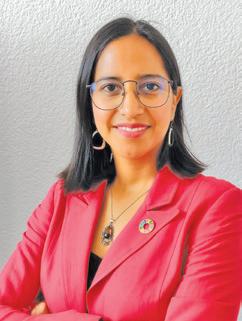
La década pasada presenciamos el fortalecimiento de las energías renovables (solar y eólica principalmente). Su integración acelerada modificó la forma de operar los sistemas eléctricos. Esta década es sin duda, la década del almacenamiento de energía, precisamente por su capacidad de contribuir a integrar más generación renovable.
 Por / By: Valeria Amezcua Santillán
Yes que, para mitigar la variabilidad de las renovables (disponibilidad), existen tecnologías de rápida respuesta como las baterías electroquímicas y los volantes de inercia. Además, para desplazar grandes cantidades de generación solar a la noche (time shifting), existen tecnologías ya maduras como el almacenamiento de calor (solar o de otra fuente), y las que absorben o generan electricidad mediante el movimento de objetos como son el agua (hidroeléctricas de bombeo) o bloques (energía gravitacional).
Ahora bien, para comercializar estas soluciones y aumentar su oferta, se requiere que los mercados eléctricos reconozcan estas nuevas “habilidades” y su valor para los operadores de la red. Desde la creación de los mercados eléctricos a finales del siglo pasado, se diseñaron los servicios conexos, aquellos que permiten atender las problemáticas de balanceo de la red, basados en las tecnologías de la época.
Así, si bien ya existen tecnologías maduras de almacenamiento, resulta indispensable adaptar las reglas de los mercados eléctricos; se requieren nuevos servicios conexos que reconozcan la calidad y velocidad que las tecnologías actuales pueden brindar. Y sobre todo, que reflejen la necesidad de incorporarlas como herramientas clave para atender uno de los retos más grandes del siglo XXI: la descarbonización del sector energético.
Energy storage: essential to integrate variable renewables

Over the past decade, we witnessed the strengthening of renewables (mainly solar and wind); their accelerated integration has transformed how power systems operate. This decade is undoubtedly the era of energy storage, precisely due to its capacity to contribute to integrating more renewable generation.
Nowadays, to mitigate the variability of renewables (availability), we have rapid-response technologies such as electrochemical batteries and flywheels. Moreover, to shift large amounts of solar generation to nighttime (time shifting), we have mature technologies such as heat storage (from solar or other sources), as well as those used to absorb or generate electricity through the movement of objects, such as water (pumped hydropower) or blocks (gravitational energy).
However, to commercialize these solutions and increase their availability in electricity markets, electricity markets must recognize these new “abilities” and their value to the
grid operators. Since the creation of electricity markets at the end of the last century, ancillary services have been designed to address grid balancing issues and developed based on available technologies.
Therefore, even though mature storage technologies already exist, it is essential to adapt to the rules of electricity markets; it is necessary to have new ancillary services that acknowledge the quality and speed of current technologies. Above all, they should reflect the necessity of incorporating storage as a crucial tool to address one of the most significant challenges of the 21st century: the decarbonization of the energy sector.
12
Women’s Energy Network (WEN) México
Columna
Las opiniones expresadas por los columnistas son independientes y no reflejan necesariamente el punto de vista de E&C.
Valeria Amezcua Santillán es Ingeniera Química con Maestría en Energía y Sustentabilidad. Con 8 años en el sector eléctrico, se ha especializado en aspectos regulatorios para la integración de renovables variables y recursos distribuidos. Es co-fundadora de Reverso Consultores, donde desarrolla estrategias de economía circular y aprovechamiento de recursos.
Valeria Amezcua is a Chemical Engineer and MSc in Energy and Sustainability. With 8 years in the electricity sector, she has specialized in the regulatory aspects to integrate variable renewables and distributed resources. Valeria is now the co-founder of Reverso Consulting, where she develops strategies on circularity and efficient use of resources.
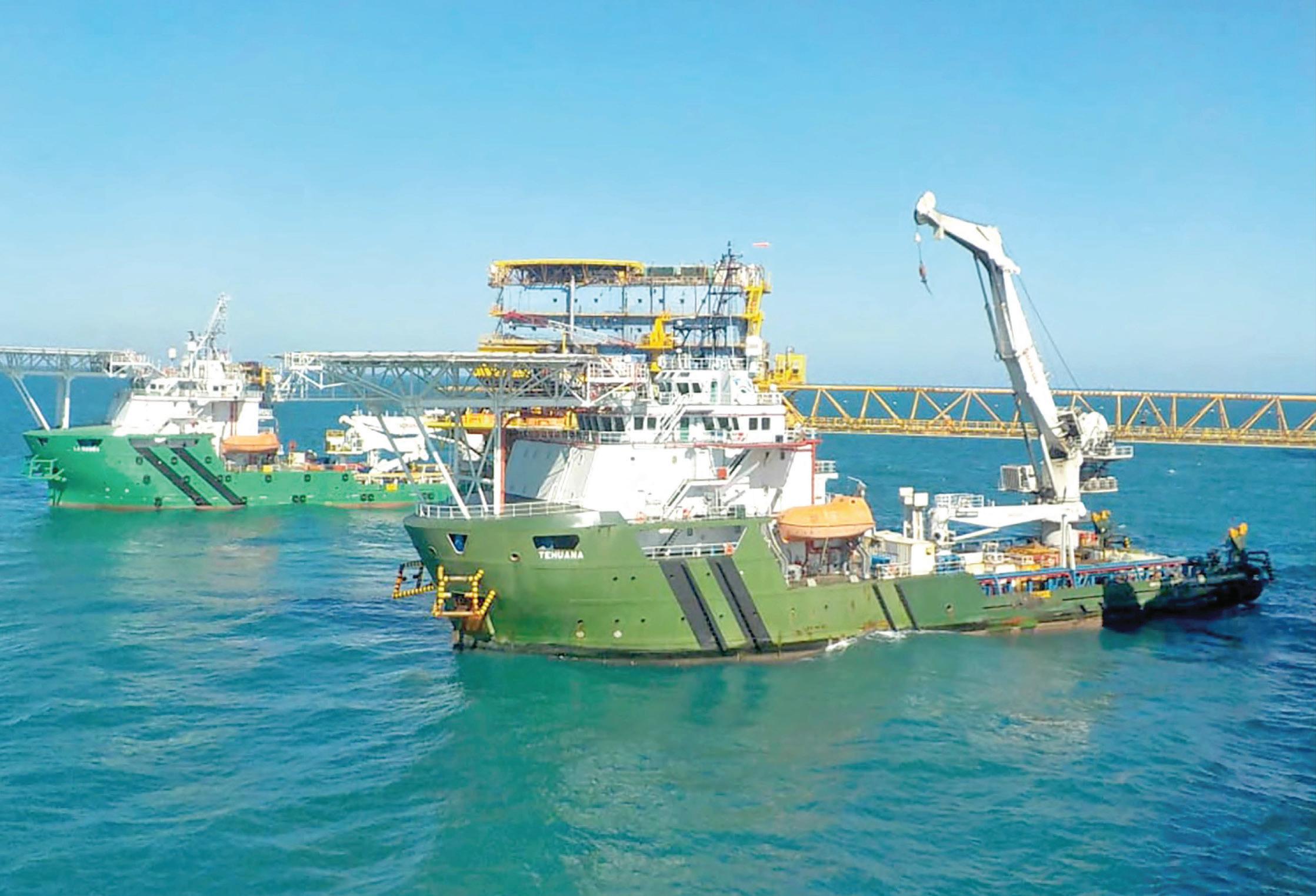
Embarcaciones: Izquierda a a a de Derecha ehua a de
ENERGÍA NAVIERA Y FINESTRAENERGÍA, somos empresas mexicanas orientadas al servicio al cliente, comprometidas conlos más altos estándares de calidad y seguridad.Expertos en ofrecer soluciones integrales de fletamento de embarcaciones y servicios marítimos especializados.











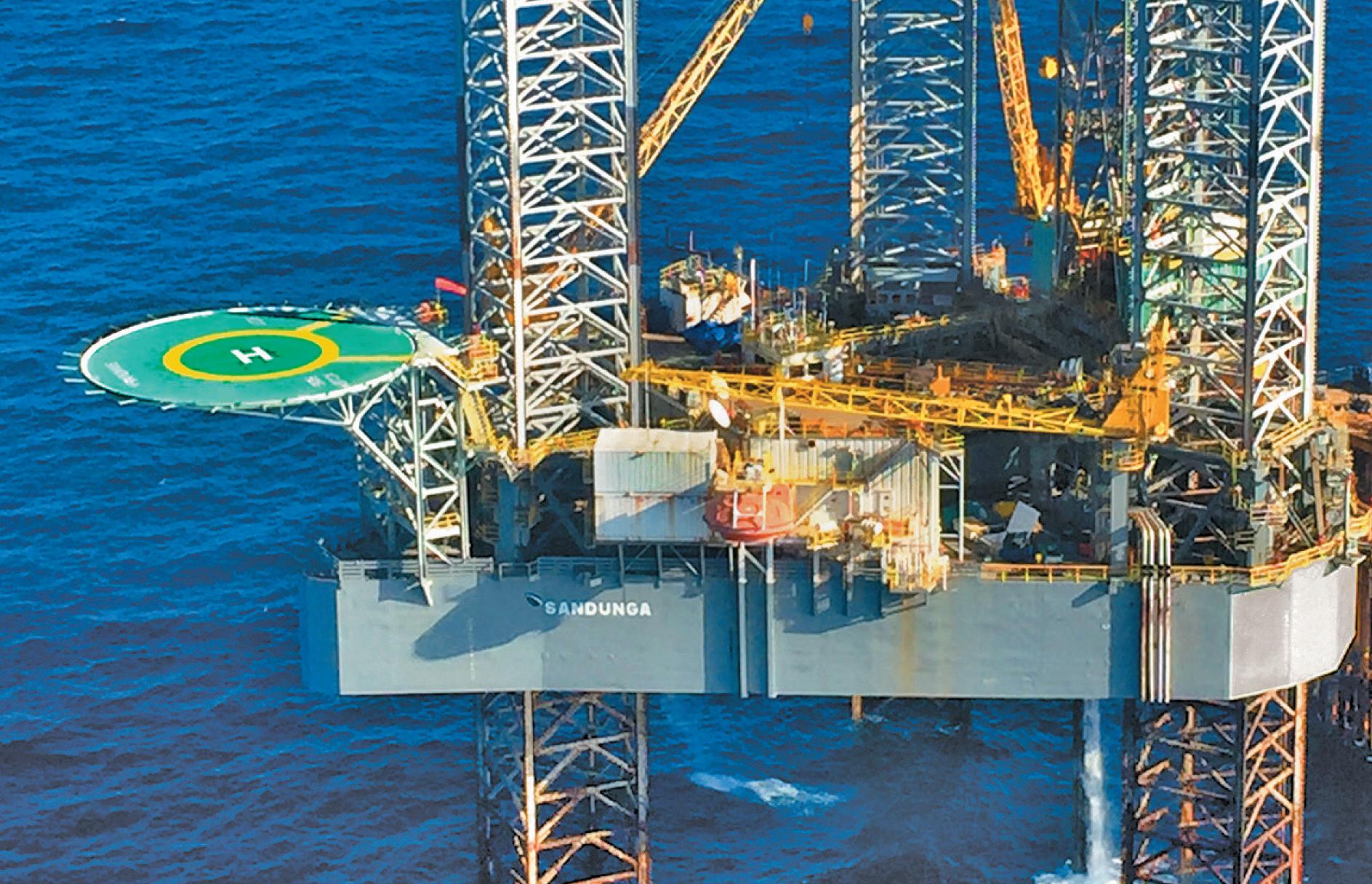
Plataforma: Jack Up Sandungade 350ft.
















13
Oficinas Corporativas: Rio Lerma 120 C, Col. Miravalle, Monterrey, N.L. Tel. +52 81 8378 4990 Ext 6 Oficinas Operativas: Calle 67 No.10, Col. PlayaNorte, Cd.del Carmen,Campeche. Tel. +52 938 112 3511 info@enernav.mxwww.enernav.mx
El imperativo industrial: Impulsar la eficiencia energética en una crisis climática
En los consejos de administración y los despachos de los directivos de las industrias de todo el mundo está surgiendo un mandato crítico en medio de la urgencia de la crisis climática: el imperativo de defender la eficiencia energética. Como gerentes y directores, tenemos a nuestro alcance el poder de dirigir nuestras empresas hacia un futuro sostenible. Es hora de reconocer que la eficiencia energética no es sólo una iniciativa para sentirse bien; es un imperativo estratégico que puede fortalecer nuestros resultados y desempeñar un papel fundamental en la mitigación de la catástrofe climática.
En una era de imprevisibilidad climática, los criterios convencionales de éxito ya no son válidos. La rentabilidad, que antes era el único indicador de los logros, debe replantearse ahora en el contexto de la sostenibilidad. La ineficacia energética es un centro de costes ignorado que carcome los beneficios al tiempo que agrava la crisis medioambiental. Pero aquí está el resquicio de esperanza: cada unidad de energía ahorrada refuerza directamente la cuenta de resultados, convirtiendo la eficiencia energética en un movimiento estratégico con doble beneficio.


El plan para la revisión de la eficiencia
1. Auditorías energéticas con propósito: Emprenda auditorías energéticas exhaustivas que vayan más allá de la superficie. Identifique las ineficiencias y cuantifique su coste económico. A partir de ahí, elabore un plan estratégico que describa los pasos necesarios para transformar el despilfarro en ahorro.
2. Aprovechar la inteligencia de datos: La revolución digital nos ha dotado de una capacidad de análisis de datos sin parangón. Implemente sistemas inteligentes que supervisen el consumo de energía en tiempo real. Este enfoque basado en datos no solo revela el desperdicio oculto, sino que también le permite tomar decisiones informadas para optimizar las operaciones.

3. Invertir para ganar a largo plazo: Las perspectivas financieras a corto plazo pueden
impedirnos ver las ventajas a largo plazo de invertir en tecnologías energéticamente eficientes. Las fuentes de energía renovables, los sistemas avanzados de climatización y la automatización inteligente no son meros gastos: son inversiones que producirán beneficios constantes gracias a la reducción de las facturas de energía y la mejora de la eficiencia operativa.
4. Cultive una cultura de la eficiencia: El cambio en todo el sector empieza por su equipo. Fomente una cultura que valore la eficiencia como un valor fundamental. Capacite a los empleados de todos los niveles para identificar y aplicar medidas de ahorro energético. El reconocimiento y los incentivos pueden suscitar un compromiso colectivo con la causa.
La eficiencia energética no es un compromiso, sino una convergencia de intereses. La necesidad de reducir las emisiones de carbono y el afán de maximizar los beneficios no son objetivos mutuamente excluyentes. De hecho, están entrelazados en una relación simbiótica. Un menor consumo de energía se traduce directamente en una reducción de los costes operativos, lo que permite asignar los recursos donde más importan: innovación, crecimiento y resistencia.
La transición a un paradigma de mayor eficiencia energética requiere sutileza estratégica. Requiere inversión de capital, voluntad de adaptación y dedicación para redefinir los parámetros del éxito. Pero consideremos lo siguiente: cada paso hacia la eficiencia energética es un paso para alejarnos de la degradación medioambiental y avanzar hacia un futuro en el que nuestras industrias no sólo sobrevivan, sino que prosperen.
Las decisiones que tomen hoy los gerentes y directores conformarán el legado de nuestras industrias para las generaciones venideras. La crisis climática puede ser un adversario desalentador, pero también es un toque de clarín para la transformación. Aprovechando el poder de la eficiencia energética, podemos demostrar nuestro liderazgo en el ámbito empresarial y, al mismo tiempo, cumplir con nuestra obligación moral de salvaguardar nuestro planeta.
À votre avis ?
14
Columna
Por / By Alonso Elí de Llanes
EN COLOR VERDE IN GREEN COLOR
Las opiniones expresadas por los columnistas son independientes y no reflejan necesariamente el punto de vista de E&C.
Alonso de Llanes es Abogado con formación de posgrado en el sector energético. Dentro de sus 8 años de experiencia en el sector energético ha sido consultor para el sector privado así como asesor de la Comisión de Energía en la H. Cámara de Diputados del Congreso de la Unión. Actualmente es el Coordinador de asuntos energéticos de la Federación Franco Mexicana. Alonso de Llanes is a lawyer with postgraduate education in the energy sector. During his 8-year experience in the energy sector, he has been a consultant for the private sector, as well as an advisor to the Energy Commission in the Chamber of Deputies of the Congress of the Union. He is currently the Coordinator of Energy Affairs in the Franco-Mexican Federation.
Long Ridge Energy muestra el uso exitoso de la energía limpia del hidrógeno
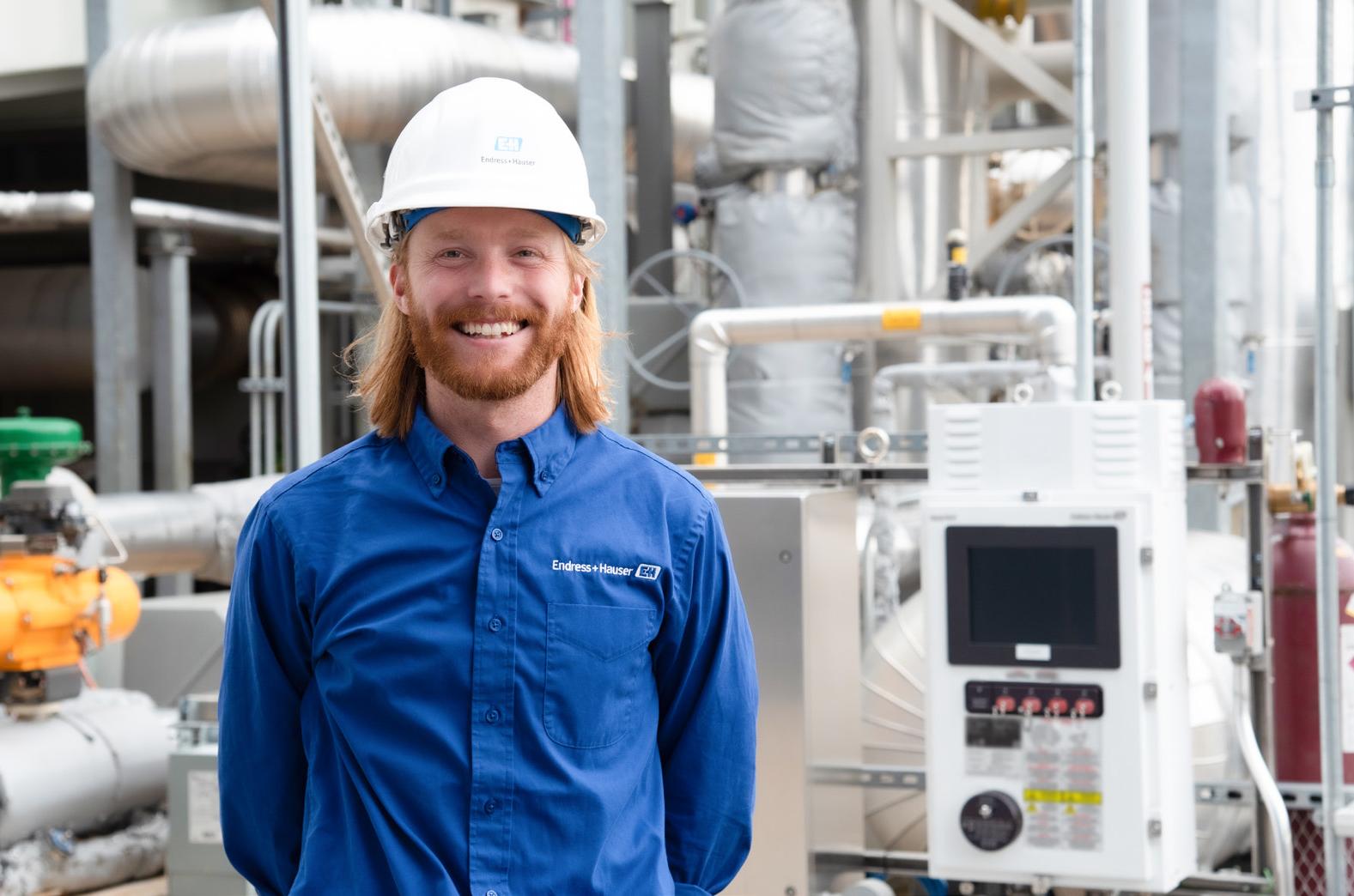
Con la ayuda de las soluciones de medición de procesos de Endress+Hauser, una nueva central eléctrica de Long Ridge Energy (LRE) está mostrando con éxito la viabilidad del hidrógeno limpio en la industria global de energía y energía.
¿Quieres saber más? ¡Echa un vistazo a nuestro video y estudio de caso completo!

VER AQUÍ
Se encuentra una solución con instrumentación fiable LRE ha completado cuatro pruebas exhaustivas y exitosas de inyección y control de mezclas de hidrógeno del 5% en gas natural hasta la fecha. Al obtener su hidrógeno para inyección del subproducto de un fabricante químico local y confiar en la experiencia en automatización de procesos de su socio tecnológico Endress+Hauser, LRE
Amedida que el mundo lidia con el cambio climático y las limitaciones de los recursos naturales, los gobiernos, las empresas y las comunidades están invirtiendo fuertemente en la evaluación de diversas soluciones de energía renovable. Las fuentes renovables de hidrógeno están creciendo en importancia como un medio alternativo de almacenamiento de energía porque pueden convertirse en calor y electricidad mediante celdas de combustible o turbinas de gas en cualquier momento.
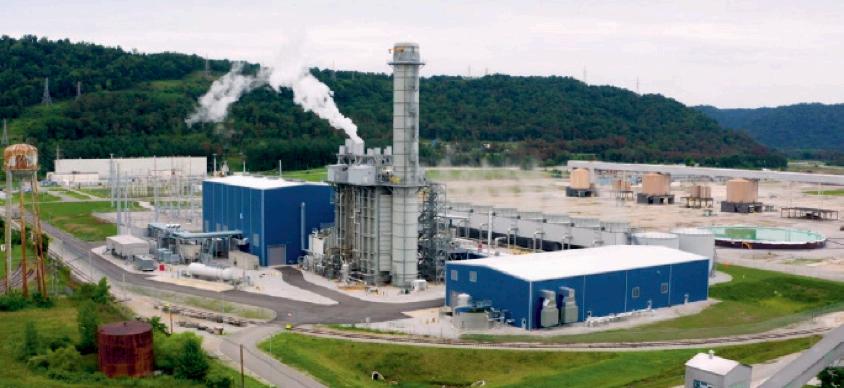
La turbina en las instalaciones de LRE en Hannibal, Ohio, EE.UU., acepta gas natural como materia prima. Aunque es mejor para el medio ambiente que el carbón, el gas natural es un combustible fósil que lo somete al escrutinio de los organismos reguladores y las comunidades locales. El hidrógeno se quema más limpio, proporcionando un camino para descarbonizar parcialmente la fuente de combustible.
Los desafíos que se avecinan
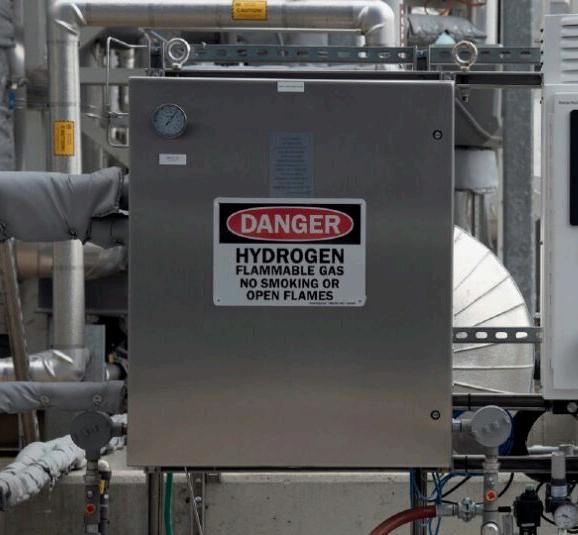
La mezcla de hidrógeno con gas natural plantea un mayor riesgo de explosión, manejo de incendios e impacto ambiental. Antes de inyectar hidrógeno en su infraestructura de red de gas natural existente, LRE, tuvo que mitigar cuidadosamente estos riesgos.
Por lo tanto, al inicio del proyecto, la compañía estableció estrictos requisitos de combustión de hidrógeno, que incluyen:
• Un sistema preciso de inyección de hidrógeno con validación de mezclas
• La capacidad de escalar las operaciones de manera fácil y eficiente
• Tecnología de medición moderna e inteligente
• Garantías de seguridad de máxima prioridad
Industria
Central de energía Long Ridge Energy en Hannibal, Ohio, EE. UU.
pudo lograr sus objetivos principales. Las partes interesadas de la empresa se asociaron con Endress+Hauser para proporcionar servicios de consultoría e instrumentación de medición fiable para controlar de forma segura la sensible mezcla de hidrógeno y gas natural.
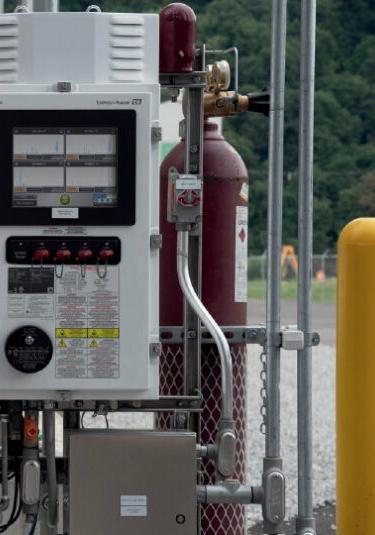
La instalación estaba equipada con un medidor de flujo Coriolis y un analizador basado en espectroscopia Raman para medir y validar la mezcla de hidrógeno, además de un medidor de flujo de combustible principal aguas abajo del punto de inyección de hidrógeno.
El analizador de procesos Raman Rxn5 valida la mezcla de gas, recortando el control de dopaje impulsado por medidor Coriolis y evitando el exceso de hidrógeno.
Medición multivariable precisa
El caudalímetro Proline Promass Q Coriolis de Endress+Hauser fue seleccionado para su uso en el punto de inyección de hidrógeno para mezclarse con el sistema de combustible. Aguas abajo del punto de inyección, se instaló un medidor de flujo Proline Promass F Coriolis para monitorear el flujo de gas de la línea principal. Los dos caudalímetros Endress+Hauser en el sitio de instalación se utilizan de acuerdo con los estándares de flujo de combustible de la EPA
El analizador Raman Rxn5
“Aquí en Long Ridge, tuvimos un primer logro en el mundo mezclando hidrógeno en nuestro combustible, trabajando hacia la energía sostenible”. Mark Berry, gerente de programas, Long Ridge Energy
para calcular las emisiones, incluidas las emisiones ajustadas después de introducir hidrógeno.
Medición de la composición química en tiempo real
El equipo también agregó un Raman Rxn5 al proceso para realizar la validación de la mezcla con el fin de mitigar las consecuencias de una mezcla de gases fuera de balance, especialmente una con un alto contenido de hidrógeno.
La energía limpia del hidrógeno proporciona renovación económica local Además de ayudar a reducir la huella mundial de gases de efecto invernadero, otro resultado positivo de las iniciativas de energía renovable de LRE es la reactivación de la comunidad económica circundante. La nueva planta de energía ha ayudado a restaurar la estabilidad económica en el área, recuperando cientos de empleos perdidos debido al cierre en 2013 de una fundición de aluminio de 50 años de antigüedad en el mismo lugar.
Para obtener más información sobre cómo Endress+Hauser ha ayudado a LRE a allanar el camino para un futuro más sostenible, lea el caso práctico completo.

Industria
Una mujer que inspira: Violeta Segura España
La industria petrolera, tradicionalmente dominada por hombres, ha sido testigo de una transformación significativa en las últimas décadas. Testigo de este cambio es Violeta Segura España, Engineer Leader & Business Development en GICSA-MX. En conversación con Energy & Commerce, Violeta compartió sus experiencias y reflexiones sobre la creciente presencia femenina en el sector.
“
La evolución de la mujer en la industria ha sido exponencial”, comenta Violeta. “Las empresas están apostando más por la inclusión de las mujeres. Cuando estudié ingeniería, solo seis mujeres, incluyéndome, nos graduamos en mi generación, en comparación con un aproximado de 50 hombres”. Esta disparidad no solo se reflejaba en las aulas, sino también en el campo laboral. Sin embargo, el dominio de otro idioma, como el inglés, le abrió a Violeta las puertas de una compañía global.
La falta de modelos a seguir en la industria fue uno de los principales desafíos que enfrentó. “Aunque había mujeres en la industria, la mayoría ocupaban puestos administrativos. No tenía una figura en campo para seguir”, recuerda. Sin embargo, con determinación y esfuerzo, Violeta se convirtió en una pionera, abriendo el camino para muchas otras mujeres.
“Ser pionera fue un camino largo, pero hoy por hoy, orgullosamente te puedo decir que cada día el sendero se vuelve más grande y cada vez hay más mujeres que vamos de la mano trabajando en esta industria. Otra cosa que también me costó un poco fue encontrar el equilibrio entre entre la familia y el trabajo para dar tiempos de calidad. Ser mamá, por ejemplo, fue algo complicado en este medio. Sin embargo, con mucha dedicación, pero sobre todo con mucha disciplina, he logrado caminar muy bien con estos temas”, relata y comparte Violeta.
Al preguntarle sobre los desafíos específicos que enfrentó como mujer en la industria, Violeta menciona la dificultad de encontrar sinergia con sus colegas masculinos y la falta de modelos a seguir. Sin embargo, destaca que el panorama ha cambiado positivamente. “Hoy en día, la discriminación vive en una minoría. Estoy convencida de que no debe existir una división de géneros. Tanto hombres como mujeres debemos trabajar juntos con los mismos objetivos”, afirma.
En GICSA-MX, las políticas de igualdad de género han tenido un impacto “impresionantemente positivo”. Violeta señala que una
A woman who inspires: Violeta Segura España

“
The evolution of women in the industry has been exponential,” comments Violeta. “Companies are betting more on the inclusion of women. Only six women, including myself, graduated in my generation when I studied engineering, compared to approximately 50 men.” This disparity was not only reflected in the classroom but also the workplace. However, mastering another language, such as English, opened the doors to a global company for Violeta.
The lack of role models in the industry was one of her main challenges. “Although there were women in the industry, most were in administrative positions. I didn’t have a figurehead in the field to follow,” she recalls. However, with determination and effort, Violeta became a pioneer, paving the way for many other women.
“Being a pioneer was a long road, but today, I can proudly say that every day the path gets bigger, and more and more women are working hand in hand in this industry. Another thing that also cost me a little was finding the balance between family and work to give me quality time. Being a mom, for example, was something complicated in this environment. However, with a lot of dedication, but above all with a lot of discipline, I have managed to walk very well with these issues”, Violeta shares.
When asked about her challenges as a woman in the industry, Violeta mentions the difficulty of finding synergy with her male colleagues and the lack of role models. However, she stresses that the landscape has changed positively. “Today, discrimination lives in the minority. I am convinced that there should be no gender divide. Both men and women must work together with the same goals,” she says.
At GICSA-MX, gender
18 en la Industria
Traditionally dominated by men, the oil industry has witnessed a significant transformation in recent decades. Seeing this change is Violeta Segura España, Engineer Leader & Business Development at GICSA-MX. In conversation with Energy & Commerce, Violeta shared her experiences and reflections on the growing female presence in the sector.
gran proporción de la plantilla está compuesta por mujeres, muchas de las cuales ocupan puestos de liderazgo. Además, la empresa ha implementado programas e iniciativas específicas para fomentar la participación femenina en áreas técnicas y directivas.
Para las mujeres jóvenes que aspiran a ingresar a la industria petrolera, Violeta tiene un consejo claro: “Trabajen fuerte, luchen por sus metas y no tengan miedo de ir tras ellas. El trabajo arduo es la clave. La preparación y los estudios continuos son esenciales para avanzar en cualquier industria”.
Concluyendo la entrevista, Violeta reflexiona sobre su trayectoria de 15 años en la industria.
“No ha sido fácil, pero sí se puede. Entre más preparación y estudios tengamos, avanzaremos más”. Su historia es un testimonio de perseverancia, dedicación y pasión, y sirve como inspiración para las futuras generaciones de mujeres en la industria petrolera.
equality policies have had an “impressively positive” impact. Violeta notes that a large proportion of the workforce comprises women, many of whom are in leadership positions. In addition, the company has implemented specific programs and initiatives to encourage female participation in technical and managerial areas.
Violeta has straightforward advice for young women aspiring to enter the oil industry:
“Work hard, fight for your goals, and don’t be afraid to go after them. Hard work is the key. Preparation and continuous studies are essential to advance in any industry.” Concluding the interview,
Para las mujeres jóvenes que aspiran a ingresar a la industria petrolera, Violeta tiene un consejo claro: “Trabajen fuerte, luchen por sus metas y no tengan miedo de ir tras ellas. El trabajo arduo es la clave. La preparación y los estudios continuos son esenciales para avanzar en cualquier industria”.
Violeta has straightforward advice for young women aspiring to enter the oil industry: “Work hard, fight for your goals, and don’t be afraid to go after them. Hard work is the key. Preparation and continuous studies are essential to advance in any industry.”
Violeta reflects on her 15-year journey in the industry. “It hasn’t been easy, but it can be done. The more preparation and studies we have, the more we advance.” Her story is a testimony of perseverance, dedication, and passion and inspires future generations of women in the oil industry.

19 en la Industria
ATIO® Group se une a ALTA
La Asociación Latinoamericana y del Caribe de Transporte Aéreo (ALTA) se complace en anunciar que ATIO® Group, empresa de tecnologías para la automatización y control del suministro de combustible en América Latina, se une como miembro afiliado.
Con casi 30 años de trayectoria, ATIO® Group ofrece cobertura en toda América Latina desde sus corporativos en la Ciudad de México, sus oficinas regionales de Miami, Buenos Aires y una red de 20 distribuidores autorizados en toda la región.
ATIO® Group ofrece servicio automatización de abastecimiento de combustible a aeronaves con su producto FuelGATE, instalado en más de 60 aeropuertos en México y más de 25 en Suramérica. En torno a FuelGATE, ATIO® Group está construyendo un ecosistema que permite el intercambio de información con las aerolíneas, brindando información instantánea para su operación.
de beneficios para aeropuertos y aerolíneas, como los que ya disfrutan nuestros clientes en México, Colombia y Perú, brindando calidad y eficiencia con un desarrollo tecnológico propio en español. Como expertos en la provisión de tecnología para la automatización y control del suministro de toda la cadena de combustibles, estamos seguros de que continuaremos creciendo en América Latina, tanto en aeropuertos públicos como privados,” señaló Pablo César Gualdi, Presidente, CEO y fundador de ATIO® Group.
FuelGATE® en acción
FuelGATE® es el primer y único sistema de gestión de combustible aeronáutico diseñado específicamente para América Latina, para ofrecer eficiencia y precisión en el abasto del suministro de combustible en los aeropuertos de la región. Este software está diseñado para cubrir todos los requerimientos del suministro de combustibles a pie de avión, desarrollado íntegramente en español y completamente adaptable a las necesidades únicas de cada aeropuerto.

de combustible donde el sistema permite el control de los instrumentos de medición. Cada transacción queda registrada en el sistema de FuelGATE y en un ticket, sin posibilidad de alterarse, y puede administrarse para reportes como mejor convenga a cada cliente. La solución tecnológica ganó en 2011 una licitación de Aeropuertos y Servicios Auxiliares (ASA) en México, también miembro de ALTA, ofreciendo una solución que registra en forma automática y en tiempo real los servicios de suministro de combustible, conectándose a los sistemas centrales para calcular tarifas e impuestos vigentes, eliminando la intervención manual y los errores que ello conlleva. Luego de la instalación y operación en los 3 aeropuertos previstos por la licitación (Ciudad de México, Toluca y Mérida), se decidió su implementación en los restantes aeropuertos, completando así en 2013 la automatización de los 61 aeropuertos del país.
“Como líderes en nuestra región nos enorgullece integrarnos a ALTA, prestigiosa asociación que nos permitirá mejorar la comunicación y sinergias en Latinoamérica para nuestro producto FuelGATE® en la búsqueda constante
El sistema permite gestionar el combustible, desde la recepción en la planta de combustibles hasta el suministro a cada aeronave dentro de los aeropuertos, registrando la cantidad de combustible exacta, fecha y hora del servicio, ya que esta interconectada con los medidores electrónicos, y mediante su interfase puede conocer anticipadamente tipo de aeronave, matricula, tarifas y aerolínea abastecida.
FuelGATE se instala en los vehículos de suministro y en las líneas de entrada y salida
“Estamos muy complacidos con la llegada de ATIO® Group a ALTA, pues estamos convencidos de que la tecnología es un pilar fundamental para seguir generando eficiencias, mejorando procesos y haciendo de la aviación el medio de transporte más seguro y eficiente. Poder registrar información en tiempo real, conectar esa información con las partes interesadas y ayudar en el procesamiento de datos es clave para agilizar procesos, reducir errores y costos asociados, así como aprovechar mejor los recursos. Aviación es un ecosistema que no para y la tecnología va de la mano”, comenta Jose Ricardo Botelho, Director Ejecutivo & CEO de ALTA.
Oil & Gas 20
Expogas San Luis Potosí 2023: Un encuentro esencial para el sector gasolinero
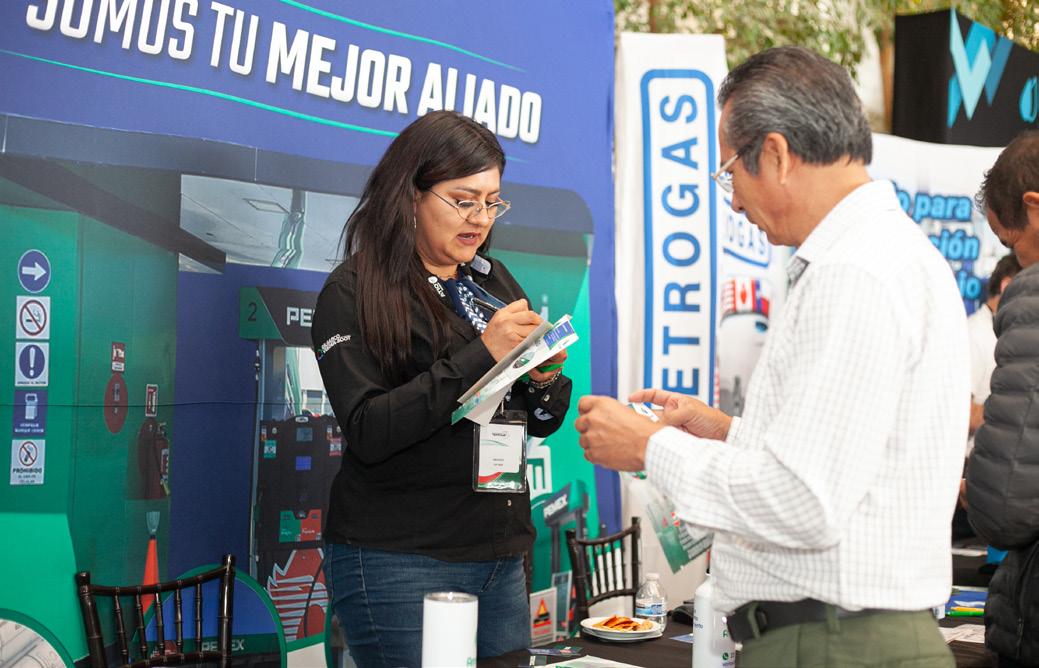
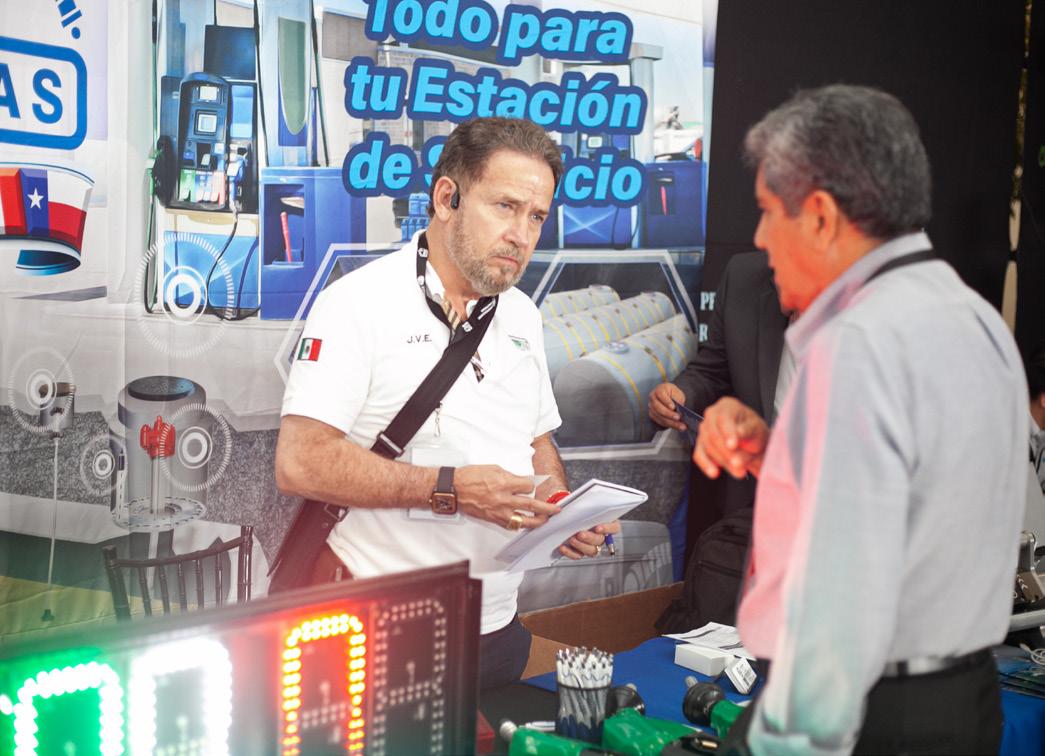
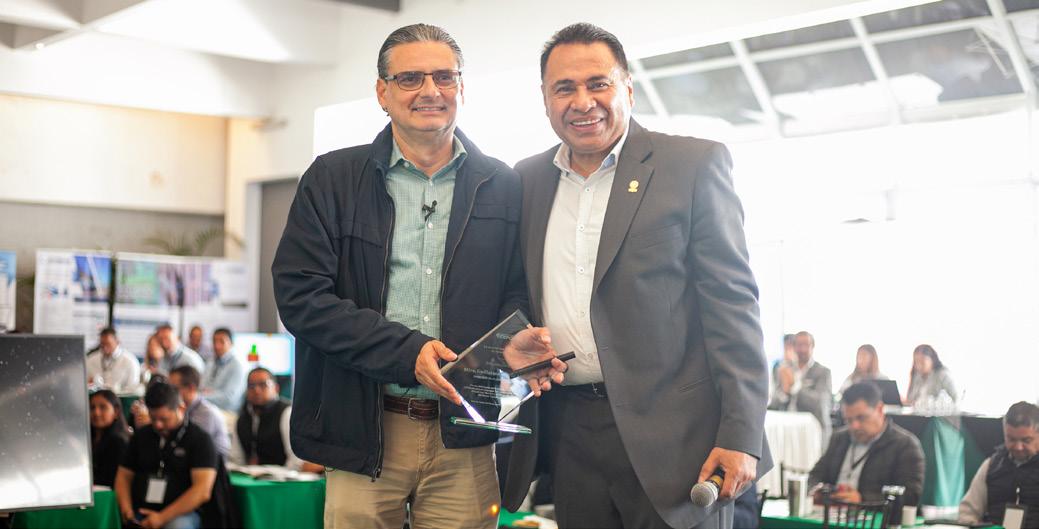
En el marco de Expogas San Luis Potosí 2023, el presidente de la Asociación Mexicana de Proveedores de Estaciones de Servicio (AMPES), Mario Zamudio, dio la bienvenida a todos los asistentes, destacando la importancia de este encuentro técnico y de negocios para el sector gasolinero.
Zamudio resaltó que Expogas, organizado por AMPES, representa una oportunidad única para que los empresarios gasolineros y sus colaboradores se actualicen sobre las últimas tendencias del mercado, conozcan las innovaciones tecnológicas y establezcan nuevas alianzas comerciales.
Durante su intervención, presentó a los representantes de las organizaciones que acompañan el evento, entre ellos, el Ing. Horacio Tobías Gómez, Presidente de la Unión de Estaciones de Servicio de Petróleos Mexicanos de San Luis Potosí, A.C.; el Ing. Jesús Edilberto Herbert Lara, Presidente de la Unión de Gasolineros de la Zona Huasteca y Media Potosina, A.C.; y el Ing. Raúl Mario Torres, Director Estatal de Energía. Zamudio agradeció su presencia y la de todos los expositores, patrocinadores y asistentes.
El programa incluyó conferencias y paneles sobre temas de gran relevancia para el sector, como la evolución del mercado de hidrocarburos en México; las tendencias actuales de la industria gasolinera; las nuevas tecnologías aplicadas a las estaciones de servicio; la calibración y cambio
de tanques; y la responsabilidad de los controles volumétricos.
Además, se llevarán a cabo conferencias especializadas como “Calidad de combustibles y sus afectaciones en el mercado gasolinero”, “El mapa de estaciones de servicio del país”, “El nicho de la electromovilidad, oportunidad para el sector” y “Negocios alternativos para tu estación de servicio”. También se realizaron paneles de expertos sobre temas como mantenimiento de tanques, sistemas de gestión de medición y el impacto de los controles volumétricos.
Entre los conferencistas se encontraron Andrés Gutiérrez Torres, CEO de CIEFSA; Bernardo Cardona Lira, líder en sustentabilidad para Latinoamérica en EY México; Mario Coeto Guevara, Gerente General de Software en ATIO Group; y Guillermo I. García Alcocer, Director de Planeación para el ITAM; entre muchos otros.
Expogas San Luis Potosí 2023 fue un evento esencial para todos aquellos involucrados en el sector gasolinero, ofreciendo actualizaciones, conocimientos y oportunidades de negocio invaluables.
Estaciones de Servicio 21
TotalEnergies, con estrategia ajustada en México
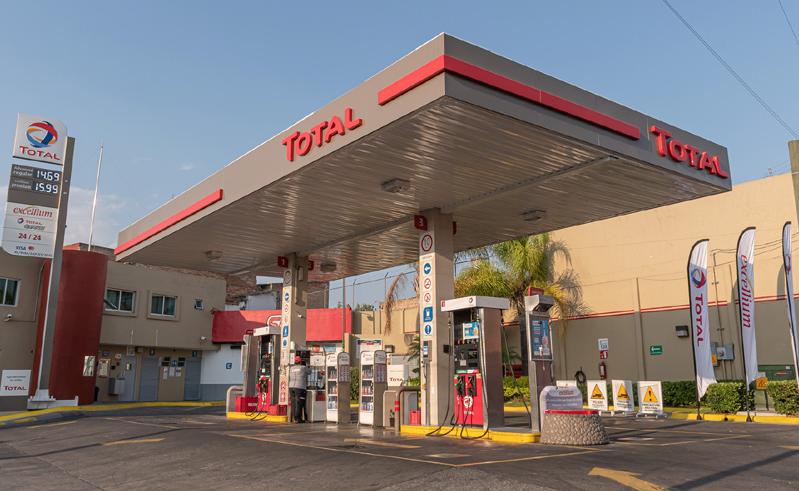
A pesar de la reconfiguración del sector gasolinero del país, la firma de energía francesa mantiene vigente sus operaciones en sus 200 estaciones de servicio en México.
TotalEnrgies, la cuarta firma de energía más importante del mundo, tiene presencia en 150 países. En México cuenta con más de 5,000 empleados y tiene presencia desde 1982. Actualmente cuenta con participación en bloques petroleros en aguas someras en el Golfo de México; así como en los rubros de lubricantes y estaciones de servicio.
En octubre de 2017, la petrolera se asoció con el grupo mexicano Gasored para desarrollar una red de estaciones de servicio en la Ciudad de México y la región central del país. A partir del 2019, esta empresa tenía el objetivo de importar combustible desde la refinería Port Arthur en Texas, a través de su filial Total Atlantic Trading México. La meta de la empresa era tener 400 gasolineras de su marca en el país en el largo plazo.
Sin embargo, la reconfiguración del sector energético global, por el impacto de la pandemia y la necesidad de nuevas alternativas de combustible, llevaron a la compañía a ajustar su estrategia de negocios y expansión, incluyendo un cambio de nombre en la marca. La cual pasó de “Total” a “TotalEnergies” en mayo de 2021, como un “paso claro” de su transformación energética.
Ajusta su estrategia en México
Como resultado del ajuste global de negocios, la firma de energía modificó su estrategia de expansión en México. A finales del año pasado, la compañía tomó la decisión de dejar de operar de forma directa 11 estaciones y tiendas Bonjour.
TotalEnergies aclaró que las estaciones señaladas no cerrarían y continuarían operando bajo un nuevo esquema con otras empresas, mientras que el resto de las estaciones de la red operadas por sus “dealers” continuarían funcionando con toda normalidad.
En el comunicado enviado a proveedores y firmada por el director RED Totalenergies México, Farid Benyahia, se señaló que el esquema de negocio con el que la empresa llegó al país se tuvo que adaptar a distintas situaciones del mercado.
Actualmente cuenta con un aproximado de 200 estaciones de servicio en las cuales ofrece los siguientes tipos de gasolina: Total Advanced y Total Excellium.
Total Advanced es gasolina regular y cuenta con 87 octanos. Mientras Total Excellium es una gasolina premium de 91 octanos que reduce hasta un 93% de las impurezas en el combustible y contribuye con el medio ambiente con disminución de las emisiones de Dióxido de Carbono CO2
Los investigadores de la petrolera francesa han desarrollado el Total Excellium. El objetivo es dar respuesta a las exigencias del un mercado competido, y de sus clientes, quienes buscan garantizar un mejor desempeño del motor de su vehículo y, al mismo tiempo, cuidan del medio ambiente.
La petrolera francesa también cuenta con una línea de tres tipos de lubricantes: Fuel Economy; Biolubricantes y Lubricantes de Baja Emisión, enfocados en ofrecer más kilometraje, menor costo, mayor compatibilidad ambiental, menores emisiones de CO2, más protección y menos desgaste.
TotalEnergies, with an adjusted strategy in Mexico
Despite reconfiguring the country’s gas sector, the French energy firm maintains its operations in its 200 service stations in Mexico.
TotalEnrgies, the fourth largest energy company in the world, is present in 150 countries. In Mexico, it has more than 5,000 employees and has been present since 1982. It currently has interests in shallow water oil blocks in the Gulf of Mexico, as well as in lubricants and service stations.
In October 2017, the oil company partnered with the Mexican group Gasored to develop a network of service stations in Mexico City and the country’s central region. Starting in 2019, this company aimed to import fuel from the Port Arthur refinery in Texas through its subsidiary Total Atlantic Trading Mexico. The company’s goal was to have 400 gas stations of its brand in the country in the long term.
However, due to the pandemic’s impact and the need for new fuel alternatives, the reconfiguration of the global energy sector led the company to adjust its business and expansion strategy, including a brand name change. It changed from “Total” to “TotalEnergies” in May 2021 as a “clear step” in its energy transformation.
Adjusts its strategy in Mexico
As a result of the global business adjustment, the energy firm modified its expansion strategy in Mexico. At last year’s end, the company stopped directly operating 11 Bonjour stations and stores.
TotalEnergies clarified that these stations would not close and would continue to operate
under a new scheme with other companies. In contrast, the rest of the stations in the network used by its dealers would continue to operate normally.
In the communiqué sent to suppliers and signed by the director of RED Totalenergies Mexico, Farid Benyahia, it was pointed out that the business scheme with which the company arrived in the country had to adapt to different market situations.
It currently has approximately 200 service stations in which it offers the following types of gasoline: Total Advanced and Total Excellium.
Total Advanced is regular gasoline and has 87 octane. At the same time, Total Excellium is a 91-octane premium gasoline that reduces up to 93% of impurities in the fuel and contributes to the environment by reducing CO2 carbon dioxide emissions.
Researchers at the French oil company have developed Total Excellium. The objective is to respond to the demands of a competitive market and its customers, who seek to ensure better performance of their vehicle’s engine and, simultaneously, take care of the environment.
The French oil company also has three types of lubricants: Fuel Economy, bio lubricants, and Low Emission Lubricants, focused on offering more mileage, lower cost, more excellent environmental compatibility, lower CO2 emissions, more protection, and less wear.
Estaciones de Servicio 22

Innovaciones en seguridad informática para las Estaciones de Servicio
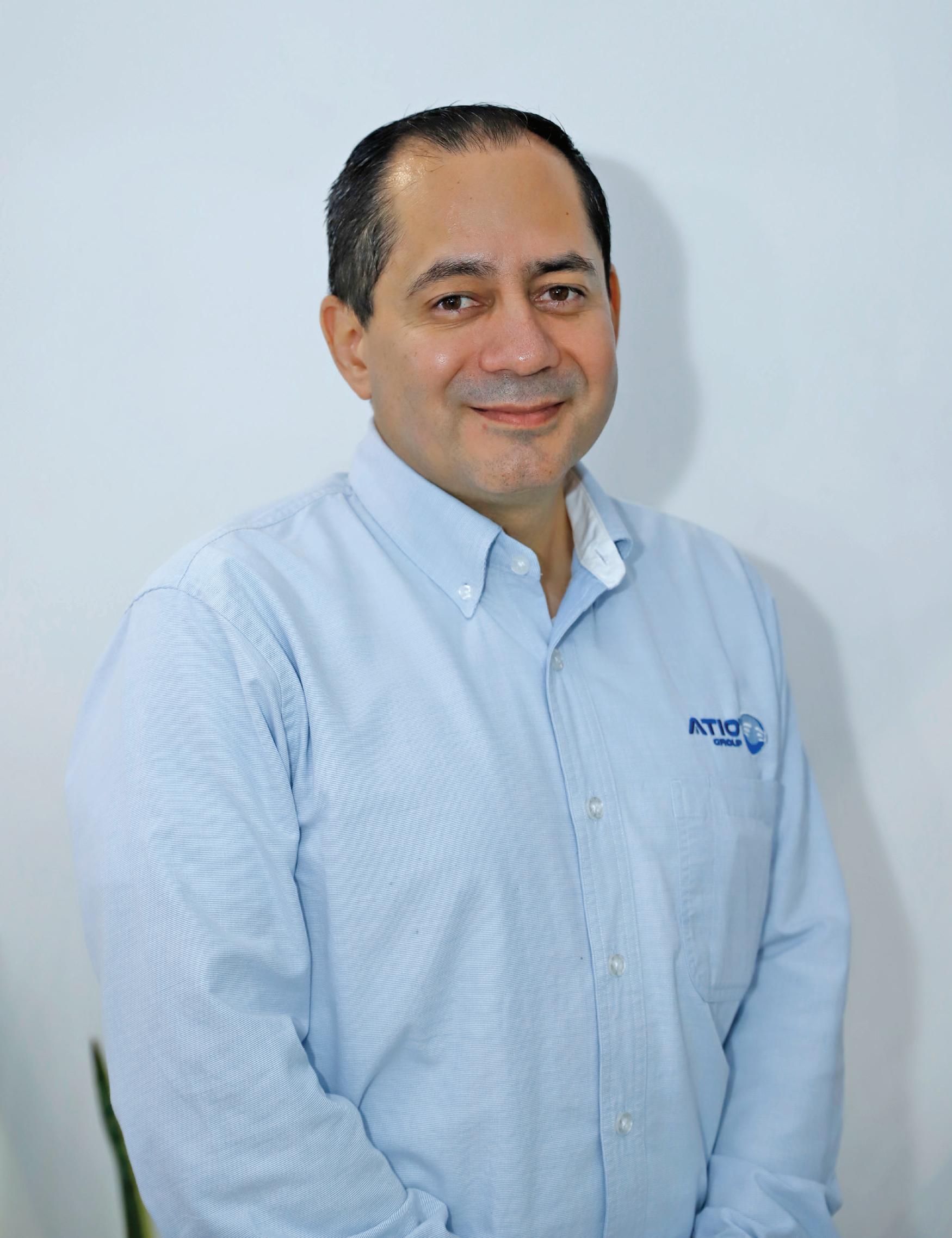
En un mundo donde la tecnología avanza a pasos agigantados, la seguridad informática se ha convertido en una prioridad para las empresas del sector de combustibles. Mario Coeto, Gerente General de la División Software de ATIO® Group, nos comparte las últimas innovaciones en este campo, con un enfoque especial en el control de flotillas y la autenticación biométrica.
Por / By: Aldo Santillán
Mario Coeto destacó la importancia de la doble autenticación en la carga de combustible. “Hemos adaptado sistemas similares a los portales bancarios, donde además de una contraseña, se solicita una clave única. Ahora, estamos llevando esta tecnología al control de flotillas”, explicó. La idea es que el chofer, al momento de cargar combustible, se autentique mediante la tecnología B-FY, un método biométrico, ya sea su huella digital, reconocimiento facial o una contraseña.
Este sistema no solo garantiza la autenticidad de la transacción, sino que también brinda mayor seguridad tanto a la empresa de flotillas como al empresario gasolinero.
“Al realizar la carga, se identifica el vehículo y el chofer escanea un código único. Luego, con su huella digital, autoriza la transacción”, detalló Coeto.
Pero, ¿cómo se garantiza que la tecnología se adapte a las necesidades del chofer? Mario nos cuenta que, al instalar la aplicación, se configura el teléfono celular y el correo del usuario. “Nos adecuamos a la tecnología que tenga el chofer en su dispositivo. Si su celular soporta huella dactilar, lo haremos por ese modo. Si soporta cámara, tomaremos una foto del rostro”, afirmó.
Innovations in IT security for Fuel Service Stations
Mario Coeto highlighted the importance of dual authentication in fuel loading. “We have adapted systems similar to banking portals, where a unique key is requested in addition to a password. Now, we are taking this technology to fleet control,” he explained. The idea is that the driver, when refueling, authenticates himself using the B-FY technology, a biometric method, either his fingerprint, facial recognition, or a password.
This system guarantees the authenticity of the transaction and provides
Mario Coeto invita a los empresarios a acercarse a ATIO® Group, especialmente considerando los plazos de cumplimiento del anexo 30. “Una implementación de seguridad informática no es de un día para otro. Puede llevar hasta 30 días implementar todo y generar los archivos”.
Mario Coeto invites entrepreneurs to approach ATIO® Group, especially considering the deadlines for compliance with Annex 30. “An IT security implementation is not overnight. It can take up to 30 days to implement everything and generate the files.”

greater security for both the fleet company and the gas station owner. “When loading, the vehicle is identified, and the driver scans a unique code. Then, he authorizes the transaction with his fingerprint,” Coeto explained.
But how do you ensure that the technology adapts to the driver’s needs? Mario tells us that the user’s cell phone and email address are configured when the application is installed. “We adapt to the technology that the driver has in his device. If their cell
24
In a world where technology is advancing by leaps and bounds, IT security has become a priority for companies in the fuel sector. Mario Coeto, General Manager of ATIO® Group’s Software Division, shares the latest innovations in this field, focusing on fleet control and biometric authentication.
Entrevista E&C
Al ser cuestionado sobre las ventajas competitivas de esta innovación, Mario Coeto resaltó que es la primera solución de este tipo a nivel nacional. Además, mencionó que ATIO® Group siempre ha estado a la vanguardia, incorporando nuevas tecnologías y soluciones para diversos sectores.
La recepción de esta nueva solución en México ha sido positiva. “Ha causado mucha atención por parte de los empresarios. Con simplemente una validación biométrica del chofer, sabemos que alguien de su compañía autorizó esa transacción”, señaló.
En cuanto al cumplimiento regulatorio del anexo 30, Coeto enfatizó la importancia de la seguridad perimetral y las pruebas de penetración para garantizar la seguridad de los sitios. “El control volumétrico busca llegar al sistema de medición, al programa informático y, adicionalmente, a la seguridad informática. Es una parte nueva para muchos empresarios gasolineros en México”, explicó.
Finalmente, Mario Coeto invita a los empresarios a acercarse a ATIO® Group, especialmente considerando los plazos de cumplimiento del anexo 30. “Una implementación de seguridad informática no es de un día para otro. Puede llevar hasta 30 días implementar todo y generar los archivos”, advirtió.
La conversación con Mario Coeto nos dejó claro que la seguridad informática es esencial en la era digital. Las innovaciones presentadas por ATIO® Group prometen revolucionar el sector y brindar mayor seguridad y confianza a los empresarios y choferes en México.
phone supports fingerprint, we will do it that way. If it supports a camera, we will take a photo of the face,” he said.
When questioned about the competitive advantages of this innovation, Mario Coeto highlighted that it is the first solution of this type at the national level. He also mentioned that ATIO® Group has always been at the forefront, incorporating new technologies and solutions for different sectors.
The reception of this new solution in Mexico has been positive. “It has caused a lot of attention from entrepreneurs. With just a biometric validation of the driver, we know that someone from their company authorized that transaction,” he said.
As for regulatory compliance with Annex 30, Coeto emphasized the importance of perimeter security and
penetration testing to ensure site security. “Volumetric control seeks to reach the metering system, the software, and IT security. It is a new part for many gas station entrepreneurs in Mexico,” he explained.
Finally, Mario Coeto invites the business owners to approach ATIO® Group, especially considering the deadlines for compliance with Annex 30. It can take up to 30 days to implement everything and generate the files,” he warned.
The conversation with Mario Coeto made it clear that IT security is essential in the digital age. The innovations presented by ATIO® Group promise to revolutionize the sector and provide greater security and confidence to business owners and drivers in Mexico.
25
Entrevista E&C
Energía Naviera: modelo de éxito en la industria de servicios marítimos
Energía Naviera, una prominente empresa mexicana en el sector de servicios marítimos, ha logrado marcar una notable diferencia con sus competidores. Omar Reyes, CFO de la empresa, profundiza en su estrategia y da a conocer sus perspectivas de crecimiento en el sector.
Omar expresó con entusiasmo el crecimiento constante que Energía Naviera ha experimentado año tras año. “Nos encanta ver cómo va progresando la empresa”, afirmó. “Hemos querido crecer hacia un segmento de barcos aún más grandes... más especializados y, por lo tanto, el mercado es más pequeño”, indicó. La decisión de concentrarse en un nicho puede parecer contraintuitiva para algunos, pero ha demostrado ser un elemento diferenciador clave para ellos.
Energía Naviera: a model of success in the maritime services industry
itself at the forefront of its competition. The secret lies in its ability to keep its vessels running 365 days a year. “The average utilization of vessels worldwide in this segment is 86%... our vessels are working all year round, 365 days,” said Omar Reyes. This remarkable availability allows its customers to generate revenue at all times.
Empresa a la vanguardia
La empresa ha logrado posicionarse a la vanguardia de su competencia. El secreto radica en su capacidad para mantener sus embarcaciones en funcionamiento durante los 365 días del año. “El promedio de utilización de los barcos a nivel mundial de este segmento es del 86%... nuestros barcos están trabajando todo el año, 365 días”, dijo Omar Reyes. Esta notable disponibilidad permite a sus clientes generar ingresos en todo momento.
El éxito de Energía Naviera también depende del enfoque de la empresa en la calidad de los servicios. “Nos hemos despegado del
Omar enthusiastically expressed the steady growth that Energía Naviera has experienced year after year. “We love to see how the company is progressing,” he said. “We have wanted to grow into an even larger segment of ships...more specialized and, therefore, the market is smaller,” he said. Focusing on a niche may seem counterintuitive to some, but it has proven to be a key differentiator for them.
Company at the forefront
The company has managed to position
Energía Naviera’s success also depends on the company’s focus on service quality. “We have taken off from the rest of our competitors because of the constancy in staying with a good administration, a good management of resources and, therefore, leads us to perform good maintenance,” he stressed. Competition in this sector comes not only from domestic companies but also from foreign companies. However, Omar affirmed that being a Mexican company has not limited them at all, highlighting the highly competitive culture of Monterrey, the company’s home city.
Challenges in the post-COVID era
At Energía Naviera, they have explored the challenges facing the maritime industry in the post-COVID era. Omar points to three main challenges that lie ahead in this crucial sector. One of the most pressing is the problem of economic solvency. “We are in Mexico,
24
Energía Naviera, a prominent Mexican maritime service company, has made a notable difference from its competitors. Omar Reyes, the company’s CFO, elaborates on its strategy and discusses its growth prospects in the sector.
Entrevista E&C
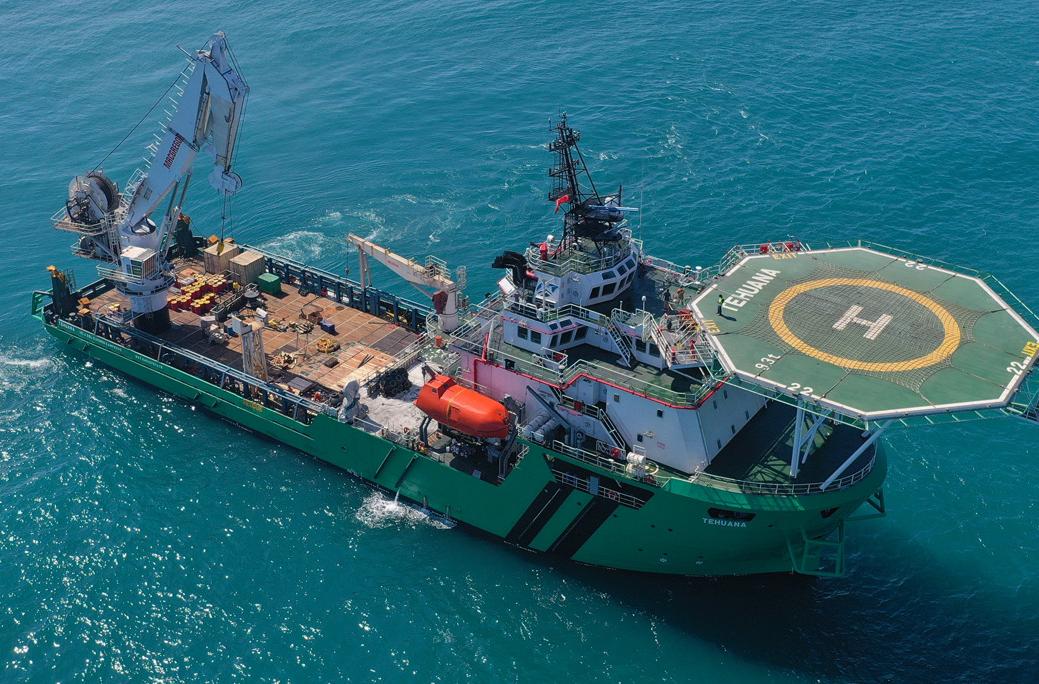
Energía Naviera opera con embarcaciones gemelas conocidas como La Bamba y Tehua. Estos barcos, equipados con 200 camas y grúas articuladas de 100 toneladas, son la fuerza detrás de su éxito.
Energía Naviera operates twin vessels known as La Bamba and Tehua. These vessels, equipped with 200 berths and 100-ton articulating cranes, are the force behind their success.
resto de nuestros competidores, por la constancia en permanecer con una buena administración, un buen manejo de los recursos y, por lo tanto, nos lleva a realizar un buen mantenimiento”, subrayó.
La competencia en este sector no solo proviene de empresas nacionales, sino también de empresas extranjeras. Sin embargo, Omar afirmó que ser una empresa mexicana no los ha limitado en absoluto, destacando la cultura de alta competitividad de Monterrey, ciudad origen de la empresa.

Retos en la era post-COVID
En Energía Naviera han podido explorar los desafíos a los que se enfrenta la industria marítima en la era post-COVID. Omar señala tres retos principales que se avecinan en este crucial sector.
Uno de los más acuciantes, es el problema de la solvencia económica. “Estamos en México y la gran mayoría de las embarcaciones operan para Pemex”. Si la empresa estatal está con dificultades para cubrir pagos a proveedores, afecta a toda la cadena. “Todo parece indicar que va a ser este año y el que viene”, afirma Omar Reyes.
Un segundo desafío se encuentra en la falta de sistemas de gestión de negocio eficientes y adecuados. Por último, destaca el envejecimiento de las embarcaciones como un problema generalizado en la industria, sumado al alto desgaste que sufren los navíos en el ambiente marítimo.
El futura de la industria de servicios marítimos
Sin embargo, Omar Reyes permanece optimista ante el futuro, a pesar de las dificultades. Hace hincapié en la importancia de la buena administración y de contar con un respaldo financiero sólido para superar estos desafíos. “Confiamos en salir victoriosos de esta situación, porque sin duda, los servicios marítimos se requieren en la industria petrolera. Necesitamos de barcos para poder llegar a donde está petróleo”. A pesar de los desafíos sin precedentes, está claro que Energía Naviera sigue como una empresa resiliente, que se adapta y evoluciona como un competidor clave en el sector marítimo global.
Tener un fuerte brazo financiero y la implementación de sistemas automatizados, con información en tiempo real, le ha permitido a Energía Naviera tomar decisiones basadas en datos, anticipándose a situaciones de flujo de efectivo, rendimientos y control de costos.
Having a solid financial arm and implementing automated systems with real-time information has allowed Energía Naviera to make data-driven decisions, anticipating cash flow situations, yields, and cost control.
and most vessels operate for Pemex.” If the state-owned company is having difficulties covering suppliers’ payments, it affects the entire chain. “Everything seems to indicate that it is going to be this year and next,” says Omar Reyes. The lack of efficient and adequate business management systems is a second challenge. Finally, he highlights the aging of vessels as a generalized problem in the industry, adding to the high wear and tear suffered by
The future of the maritime services industry
However, Omar Reyes remains optimistic about the future, despite the difficulties. He stresses the importance of good management and solid financial backing to overcome these challenges. “We are confident that we will emerge victorious from this situation because, without a doubt, maritime services are required in the oil industry. We need ships to get to where the oil is.”
Despite the unprecedented challenges, it is clear that Energía Naviera remains a resilient company, adapting and evolving as a key competitor in the global maritime sector.
25
ships in the maritime environment.
Entrevista E&C
Motores de Vanguardia
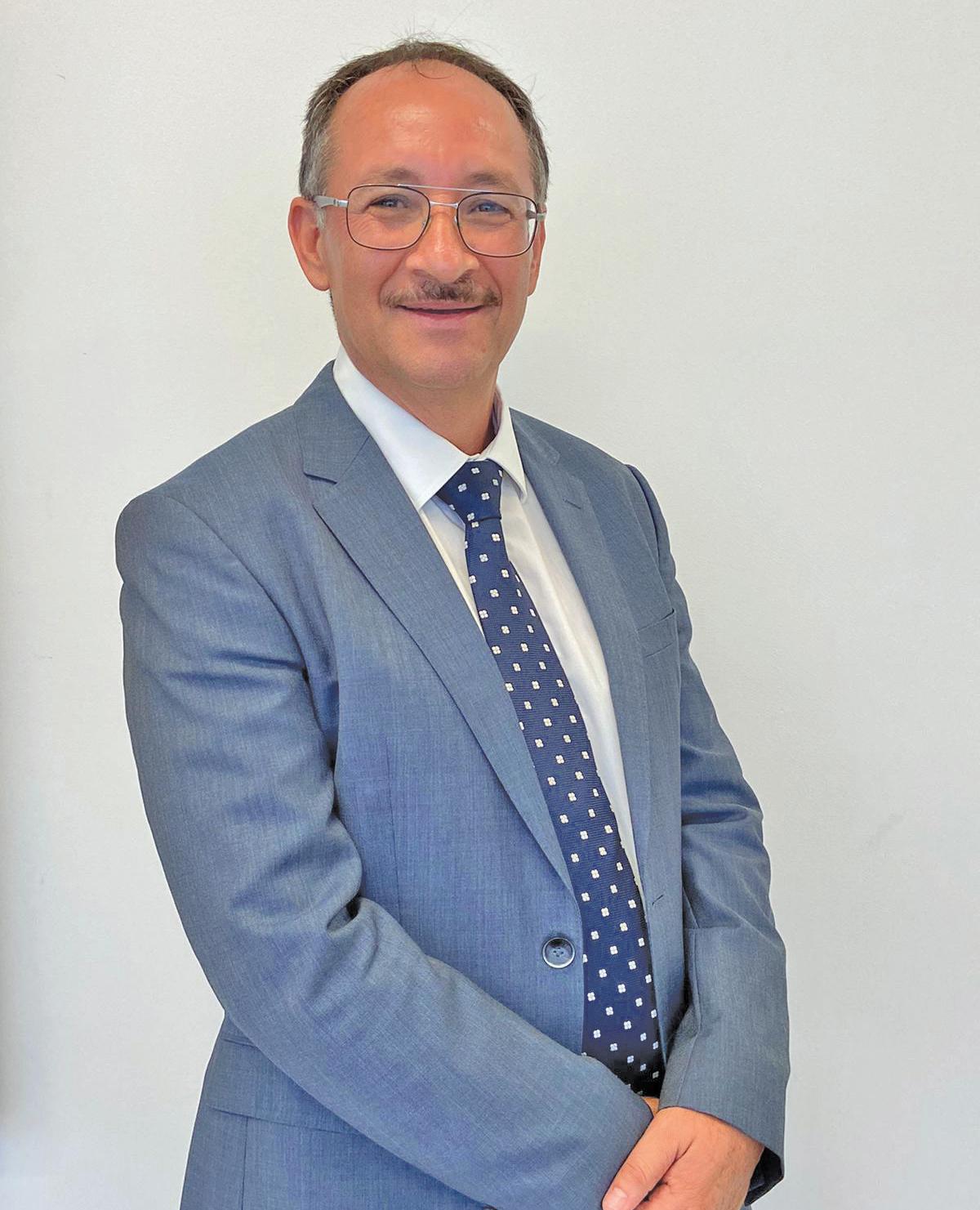
En un mundo donde la innovación y la tecnología avanzan a pasos agigantados, es esencial conocer sobre los adelantos que marcan diferencia. Durante una reciente plática con el Ingeniero Martín Soto, Gerente de Ventas en Motores fuera de carretera en Alesso - Cummins, nos adentramos en las opciones que tiene Cummins en el mercado de Oil &Gas.
State of the Art Engines
In a world where innovation and technology are advancing by leaps and bounds, knowing about the advances that make a difference is essential. During a recent conversation with Martin Soto, Sales Manager for Off-Highway Engines at Alesso - Cummins, we took a closer look at Cummins’ options in the Oil & Gas market.
Cummins has developed a variety of industrial natural gas engines designed to work continuously, that is, “24 hours a day and 365 days a year”. But what sets these engines apart is their ability to adapt to each customer’s requirements. “Our engines are a tailor-made suit,” emphasizes Mr. Soto.
In terms of technology, the evolution is palpable. While mechanical engines were previously predominant, the company has moved towards electronic ones. The latter promises to be more efcient and comply with stricter emissions regulations. Martín Soto points out that “technology has evolved towards electronic engines.” These changes are not merely aesthetic or branding; they impact engine efciency and performance.
Cummins ha desarrollado una variedad de motores industriales a gas natural, diseñados para trabajar de forma continua, es decir, “24 horas al día y 365 días al año”. Pero lo que realmente distingue a estos motores es su capacidad para adaptarse a los requerimientos específcos de cada cliente. “Nuestros motores son un traje a la medida”, resalta el Ingeniero Soto.
En cuanto a tecnología, la evolución es palpable. Mientras anteriormente predominaban los motores mecánicos, ahora la empresa ha avanzado hacia los electrónicos. Estos últimos no solo prometen ser más efcientes, sino que además, cumplen con normativas de emisiones más estrictas. Como apunta Martín Soto, “la tecnología ha evolucionado hacia los motores
A clear example of innovation is the Engine Integrated Control System, known as EICS (MURPHY).
El Sistema de Control Integrado al Motor, conocido como EICS (MURPHY) es una tecnología que optimiza automáticamente la mezcla aire-combustible, logrando una mayor eficiencia en el consumo de combustible y brindando a los usuarios diagnósticos avanzados.
The Integrated Engine Control System, or EICS (MURPHY), is a technology that automatically optimizes the air-fuel mixture, achieving greater fuel efficiency and providing users with advanced diagnostics.
This technology optimizes the air-fuel mixture, achieving greater fuel efciency and providing users with advanced diagnostics. Customers can now monitor many more variables than with older mechanical engines.
Commitment to sustainability and environmental protection is also a pillar for Cummins. The company ensures that its engines comply with the latest environmental regulations and has also implemented catalytic converters to improve exhaust gas quality.
Among the variety of products Cummins ofers, the engines designed for pumping stand out for their versatility. They come ready to operate and attach to the pump without requiring additional adjustments.
Of course, maintaining this equipment is no easy task, especially in extreme operating conditions. Aware of these challenges, Cummins
Oil & Gas 30
electrónicos”. Estos cambios no son meramente estéticos o de marca, tienen un impacto real en la efciencia y el rendimiento del motor.
Un claro ejemplo de innovación es el Sistema de Control Integrado al Motor, conocido como EICS (MURPHY). Esta tecnología optimiza automáticamente la mezcla aire-combustible, logrando una mayor efciencia en el consumo de combustible y brindando a los usuarios diagnósticos avanzados. Ahora, los clientes pueden monitorear muchas más variables que con los antiguos motores mecánicos.
El compromiso con la sostenibilidad y la protección ambiental también es un pilar para Cummins. La empresa asegura que sus motores cumplen con las regulaciones medioambientales más recientes, y además, han implementado el uso de catalizadores para mejorar la calidad de los gases de escape.
Dentro de la variedad de productos que ofrece Cummins, los motores diseñados para bombeo resaltan por su versatilidad. Vienen listos para operar y acoplarse a la bomba sin requerir ningún ajuste adicional.
Por supuesto, mantener estos equipos no es tarea sencilla, en especial en condiciones extremas de operación. Cummins, consciente de estos desafíos, selecciona y adapta cada motor según las necesidades del cliente. La empresa destaca la importancia de seguir las recomendaciones del manual del fabricante para asegurar el correcto mantenimiento de los equipos.
Finalmente, no podemos pasar por alto el excelente servicio post venta que ofrece Cummins. Con acceso a su base de datos, soporte técnico directo y capacitación continua para su personal, la empresa garantiza una “respuesta rápida ante cualquier necesidad de nuestro cliente”, enfatiza el Ingeniero Soto.
Con la mirada siempre puesta en la innovación y la adaptabilidad a las necesidades de cada cliente, Cummins se establece como un referente en el mercado de motores fuera de carretera. La combinación de tecnología de vanguardia, compromiso medioambiental y un sólido servicio post venta hace de esta empresa un socio esencial para quienes buscan efciencia y rendimiento.
selects and adapts each engine according to the customer’s needs. The company stresses the importance of following the manufacturer’s manual recommendations to ensure proper equipment maintenance. Finally, we cannot overlook the excellent after-sales service ofered by Cummins. With access to its database, direct technical support, and continuous training for its personnel, the company guarantees a “rapid response to any of

our customer’s needs,” emphasizes Mr. Soto.
With a constant focus on innovation and adaptability to the needs of each customer, Cummins has established itself as a benchmark in the of-highway engine market. The combination of cutting-edge technology, environmental commitment, and solid after-sales service makes this company an essential partner for those seeking efciency and performance.


Oil & Gas 31
Fluidos de reservorio en la completación de agujeros abiertos para maximizar la producción en pozos
La decisión de cómo perforar un reservorio es crítica para el éxito de la producción del pozo, debido a que el tipo de fluido de perforación seleccionado puede impactar la terminación del pozo y en algunos casos tener efectos adversos en la producción.
Déntro de los métodos disponibles para completar un pozo, un procedimiento no muy común son las terminaciones de pozos en agujero abierto. Estas ofrecen múltiples beneficios, tales como la exposición completa del reservorio, la minimización del daño a la formación y la mejora del desempeño del reservorio debido a una mayor área de influjo; además de que no requieren trabajos de cementación o cañoneo.
Los fluidos de perforación de reservorio son los fluidos preferidos para este tipo de terminaciones.
Reser voir f luids in open hole completions to ma ximize p r odu c ti on i n wells
The decision of how to perforate a reservoir is critical to the success of well production because the type of perforating fluid selected can impact well completion and, in some cases, have adverse effects on production.
Within the methods available to complete a well, one uncommon procedure is openhole well completions. These offer multiple benefits, such as complete reservoir exposure, minimized formation damage, and improved reservoir performance due to a larger inflow area, and they do not require cementing or perforating.
Reservoir Drill-In Fluids (RDF) are the preferred fluids for this type of completion.
The difference between a reservoir drill-in fluid and a conventional drilling fluid is that RDF contains components that, during the well completion, can be removed through a conventional wellbore cleanup job. This allows the RDF components to be removed and the formation to return to a state similar to the original, with as minor damage as possible.
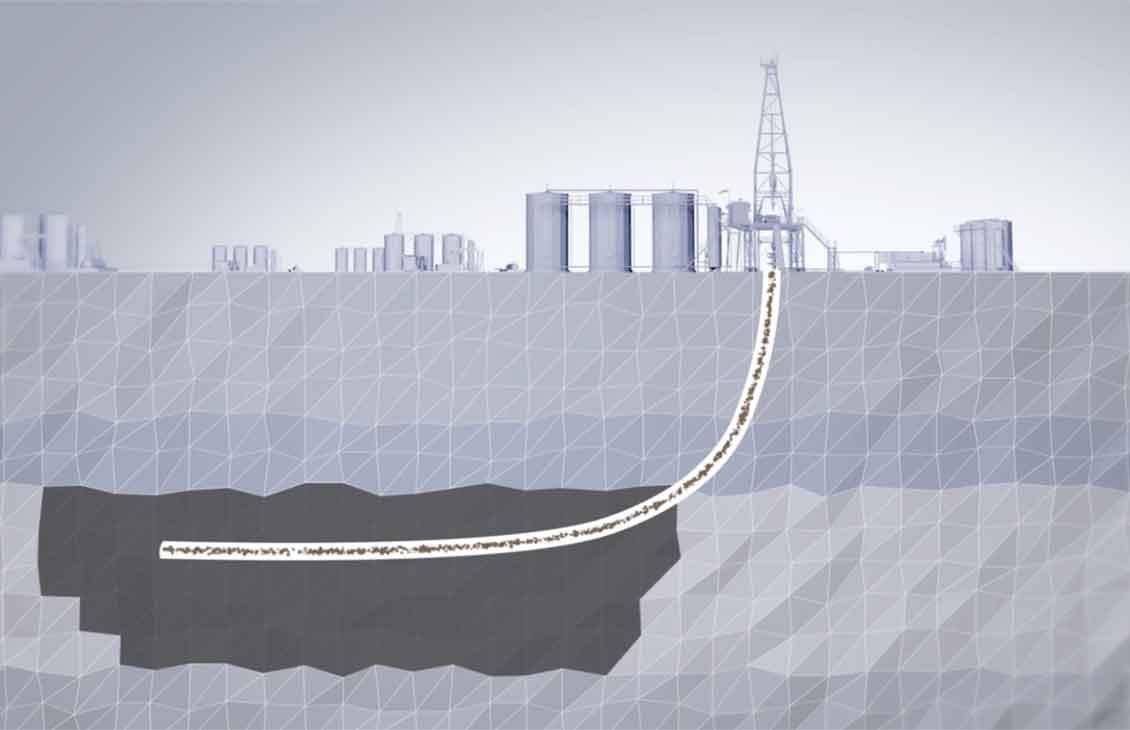
There is a diverse variety of these fluids, some are water-based systems and others are oil-based systems. The selection of the fluid depends on the type of formation, the formation drill-in fluid composition, the damage mechanism, and the method of completion of the well. Most wells drilled with reservoir drill-in fluids are completed without the need to cement and perforating a casing through the producing zone.
Once the formation evaluation process is done, the next step is the selection of the appropriate reservoir drill-in fluids, and this fluid must meet some of the following characteristics:
Formation damage control:
- The RDF should not contain clays or acid-insoluble weight materials, as these can migrate into the formation and plug pores.
- Filtrate control should be achieved with bridging agents that allow efficient removal.
32 Oil & Gas
Foto 1. Imagen de un pozo horizontal en agujero abierto / Image of an open-hole horizontal well.
La diferencia entre fluido de perforación de reservorio y un fluido de perforación convencional reside en que el fluido de reservorio contiene componentes que durante la terminación del pozo pueden ser removidos a través de un trabajo de limpieza de agujero convencional. Esto permite que los componentes del enjarre sean eliminados y que la formación regrese a un estado similar al original, presentando el menor daño posible.
Existe una variedad diversa de este tipo de fluidos, algunos sistemas son a base de agua y otros a base de aceite. La selección del fluido depende del tipo de formación, de la composición del fluido de formación, del mecanismo de daño y del método de terminación del pozo. La mayoría de los pozos que se perforan con fluidos de reservorio son completados sin la necesidad de cementar y perforar la tubería de revestimiento asentada en la zona productora.
Una vez que se realiza el proceso de evaluación de la formación, el siguiente paso es la selección del fluido de reservorio adecuado, y este fluido debe cumplir con algunas de las siguientes características:
Control de daño a la formación:
• El fluido de reservorio no debe de contener arcillas o materiales densificantes que sean insolubles en ácidos, ya que estos pueden migran dentro de la formación y bloquear los poros.
• El control de filtrado se debe lograr con agentes de puenteo que permitan una remoción eficiente.
• El filtrado no debe de formar emulsiones con los fluidos de la formación y bloquear el reservorio.
Perforabilidad:
• El fluido de reservorio debe proveer buena capacidad de suspensión y acarreo de recortes, así como lubricidad e inhibición.
• Debe de minimizar el ensanchamiento del agujero y proveer estabilidad en zonas reactivas. Compatibilidad con los equipos de terminación de pozo y procedimientos:
• Las partículas en el fluido de reservorio deben de tener el tamaño ideal para puentear la formación. A su vez, tienen que ser lo suficientemente pequeños para pasar a través del equipo de terminación.
• El fluido debe ser formulado con materiales solubles en ácido, agua, oxidantes o solventes, que no causen precipitados o emulsiones.
• Los rompedores de enjarre deben ser compatibles con los fluidos de formación y el filtrado del RDF.
Si bien el método de terminación en agujero abierto no es el más común por ciertas limitaciones que ofrece el método, es un procedimiento que, si se ejecuta de manera adecuada, puede maximizar la producción de un reservorio. Se debe contar con un conocimiento detallado de la formación, permeabilidad, presión de poro, mineralogía y composición de los fluidos de formación para realizar la selección adecuada del fluido de reservorio. Una mala selección y aplicación de estos fluidos puede mermar la capacidad de producción máxima de los pozos.
- Filtrate should not form emulsions with formation fluids and block the reservoir.
Performability:
- The reservoir fluid should provide good cuttings suspension and carrying capacity, as well as lubricity and inhibition.
- It should minimize hole enlargement and provide stability in reactive zones.
Compatibility with completion equipment and procedures:
- Particles in the reservoir drill-in fluid must be the ideal size to bridge the formation. They must be small enough to pass through the completion equipment.
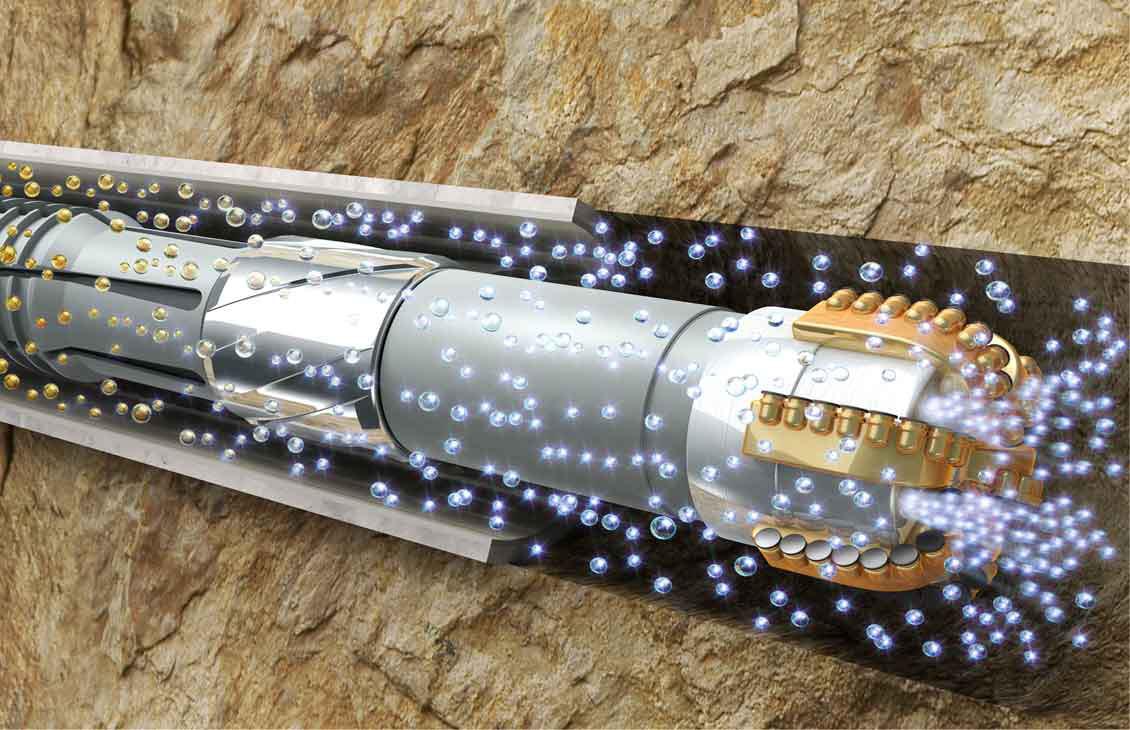
- The fluid should be formulated with acid-, water-, oxidizer- or
solvent-soluble materials that do not cause precipitates or emulsions.
- The completion breakers must be compatible with the RDF formation fluids and filtrate.
Although the open-hole completion method is not the most common because of certain limitations offered by the method, it is a procedure that, if properly executed, can maximize production from a reservoir. A detailed knowledge of the formation, permeability, pore pressure, mineralogy, and composition of the formation fluids is necessary to select the proper reservoir fluid. A lousy selection and application of these fluids can reduce the maximum production capacity of the wells.
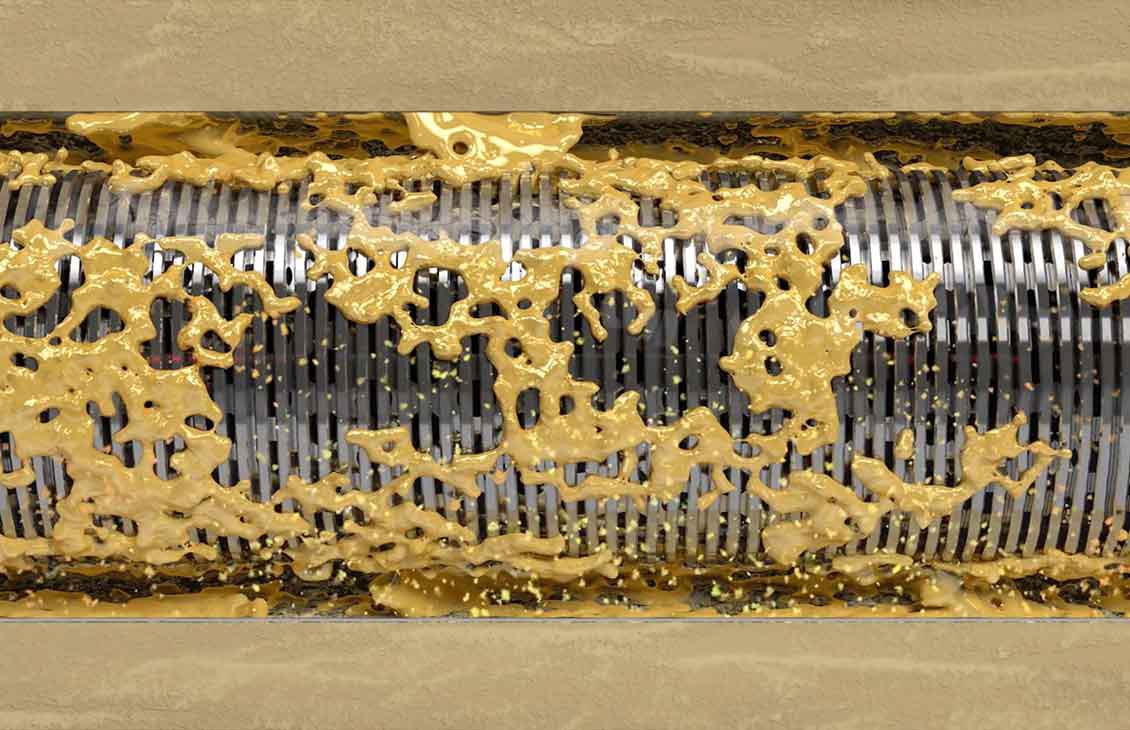
33
Oil & Gas
Foto 2. Imagen de perforación usando fluido de reservorio. / Image of drilling using a Drill-In Fluid.
Foto 3. Completación en un agujero abierto con un dispositivo de control de arena / Open-hole completion with a sand control device.
Proyecto de Modificación Transversal a la Normativa Estrategia regulatoria de la CNH
Con la finalidad de impulsar el desarrollo del sector energético en nuestro país, mediante una regulación cada vez más eficiente, confiable, flexible y más ágil, integrantes del Órgano de Gobierno de la Comisión Nacional de Hidrocarburos (CNH) se reunieron con representantes de la Mesa Directiva de la Asociación Mexicana de Empresas de Hidrocarburos (AMEXHI).
Durante la reunión informativa de trabajo, el Comisionado Presidente de la CNH, Agustín Díaz Lastra, detalló los principales aspectos del Proyecto de Modificación Transversal a la Normativa, el cual forma parte de la estrategia regulatoria de la CNH. Comentó que el objetivo es la maximización del valor de los hidrocarburos a partir de los Lineamientos de Planes como eje central, los cuales se encuentran en proceso de consulta pública en la Comisión Nacional de Mejora Regulatoria (CONAMER).
En la sesión estuvieron presentes los Comisionados Agustín Díaz Lastra, Néstor Martínez Romero, Héctor Moreira Rodríguez, y Salvador Ortuño Arzate,
junto con el Secretario Ejecutivo y los Titulares de Unidad de la CNH. Por parte de la AMEXHI asistieron Andrés Brügmann, Vicepresidente; Warren Levy, Tesorero; y David Cotera, Secretario; entre otros representantes de la asociación.
El Comisionado Presidente explicó que la estrategia hace una revisión integral de los Lineamientos involucrados en la cadena de valor de los hidrocarburos: Perforación de Pozos, Reservas, Medición, así como de las Disposiciones para el Aprovechamiento de Gas. El objeto es evitar duplicidades en requerimientos y simplificar trámites, manteniendo su rigurosidad. Todo lo anterior para hacer una regulación eficiente, confiable y flexible.
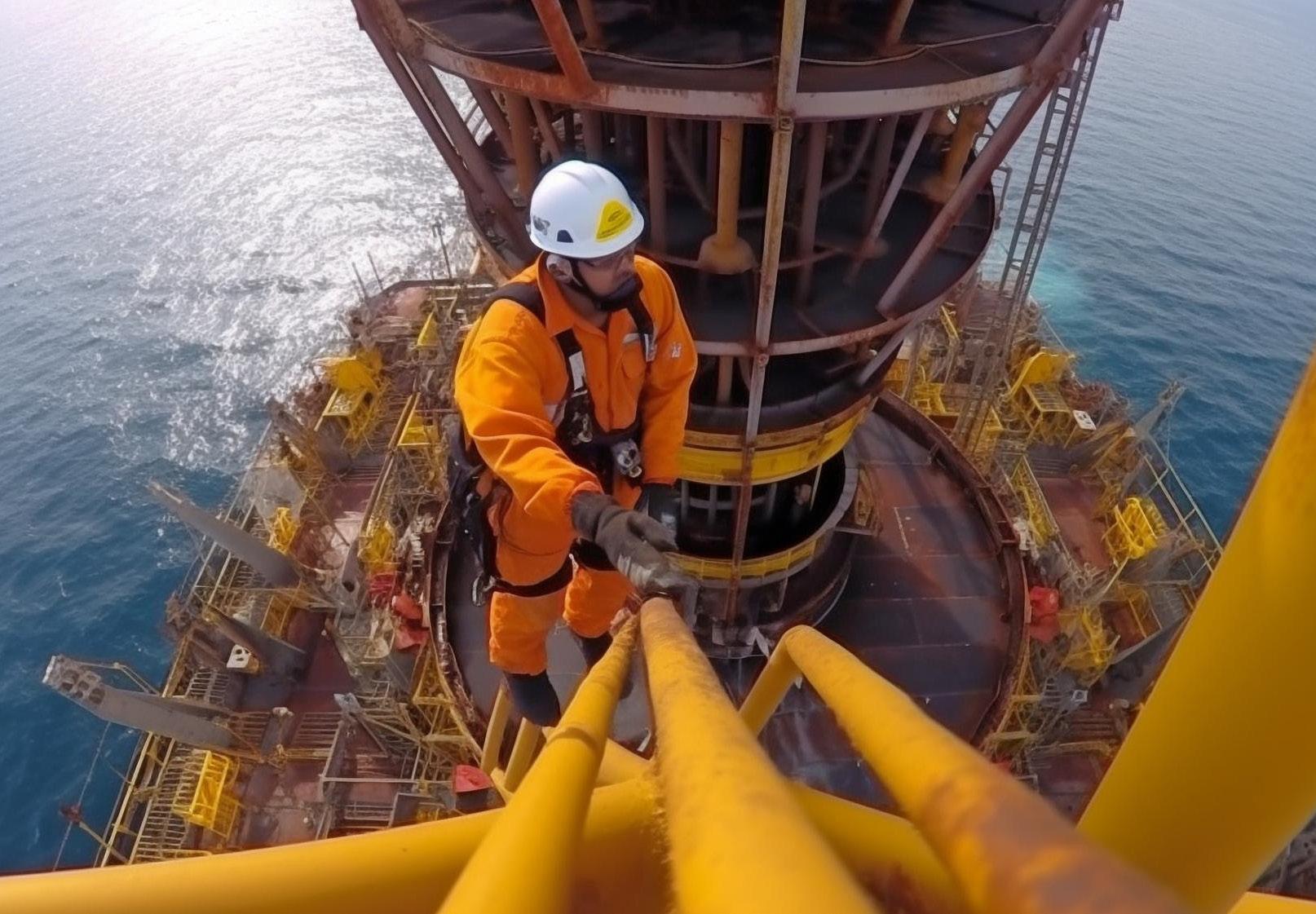
Por su parte, a nombre de la Mesa Directiva de AMEXHI, Andrés Brügmann destacó el compromiso de seguir invirtiendo en México. Warren Levy comentó que “el proceso de simplificación de la normativa ha sido bienvenido. La industria quiere tener regulaciones que sean exigentes, pero con reglas justas y claras. Este proceso, propuesto por la CNH, ayudará a que los documentos preparados por las operadoras contengan únicamente material relevante, sin que llevan una carga administrativa innecesaria tanto para las empresas como para la Comisión”.
El también representante de la empresa Jaguar, expresó que
34 Oil & Gas
en su opinión, el valor más importante en este momento es la señal hacia el mercado en general. “Existe una escasez de capital para la industria de petróleo y gas en este momento, y el hecho de que la CNH quiera buscar formas de optimizar la regulación es valioso para atraer el interés de inversionistas nacionales e internacionales. Cualquier acción que contribuya a reducir el costo de capital para la industria en México es positiva para Pemex y para todas las operadoras”, detalló.

Warren Levy hizo hincapié en que la inversión será incentivada, ya que las medidas son un indicador de la intensión de la CNH por seguir evolucionando para convertirse en un regulador más eficiente por medio del trabajo colaborativo. La simplificación de los procesos, también propician el poder invertir mayor tiempo en espacios de diálogo y en la realización de revisiones con enfoques más estratégicos y proactivos. “Creo que éste es un proceso de aprendizaje y evolución constante. Seguramente vamos a encontrar aspectos que puedan ser modificados para mejorar la eficiencia de la industria, y mediante esta eficiencia podremos dedicar mayor inversión a la mejora de la producción del país”.
Para adaptarse a estos cambios regulatorios comentó que la evolución de las operaciones en México ha sido un proceso constante durante los últimos seis o siete años. “AMEXHI ayuda en coordinar los esfuerzos de la industria y en asegurar que existan espacios en donde las operadoras puedan compartir las mejores prácticas y así poder maximizar oportunidades, compartir experiencias y ser cada vez más eficientes”, especificó Warren Levy.
Por su parte, Sergio Limardo, representante de Repsol aseguró que la simplificación regulatoria en el sector de hidrocarburos ofrece una serie de ventajas significativas para las empresas privadas que operan en este ámbito. Uno de los principales beneficios de esta simplificación es la certidumbre que da a la relación contractual con el Estado, la cual tiene un impacto directo en la toma de decisiones estratégicas y en la planificación a largo plazo de las compañías.

“En el caso de Repsol, como muchas otras compañías internacionales de energía, nuestra casa matriz está fuera de México y este tipo de noticias nos ayudan a afianzar la idea de que aquí se cuenta con un ambiente de inversión propicio.
La simplificación regulatoria nos brinda una mayor visibilidad sobre las condiciones en las que opera la filial en el país anfitrión, lo que a su vez mejora la comunicación y la coordinación entre la sede central y la operación local. Además, la certeza regulatoria nos da a las empresas internacionales un entorno donde se pueden anticipar los riesgos y pronosticar los retornos de inversión de manera confiable”.
También especificó que dicha certidumbre, también reduce la carga administrativa y el tiempo dedicado al cumplimiento de regulaciones complejas y redundantes, lo cual en paralelo disminuye los costos asociados a su adaptación. Lo anterior, se traduce en una mejora de la rentabilidad y competitividad de las empresas.
Explicó que los beneficios de la simplificación van más allá del cumplimiento regulatorio y la certeza legal y financiera. Al bajar la carga administrativa, también se fomenta la innovación, pues
las empresas tienen más libertad para enfocarse en mejoras a la operación, soluciones tecnológicas para reducir emisiones y nuevas formas para crear valor, maximizando los recursos y reservas del país, en vez de la destinación de tiempo y recursos en el cumplimiento de cambios regulatorios disruptivos.
“En resumen, la simplificación regulatoria en el sector de hidrocarburos ofrece un conjunto de beneficios considerables para las empresas privadas. La certidumbre regulatoria que resulta de esta simplificación impacta en la toma de decisiones estratégicas, fortalece las relaciones con las casas matrices, mejora la eficiencia operativa, atrae inversión, reduce costos y promueve la innovación”, puntualizó.
“Sin duda, la Comisión Nacional de Hidrocarburos entiende los beneficios y apuesta por un entorno eficiente y sostenible que aplaudimos y asumimos con gran responsabilidad”, finalizó Sergio Limardo.
35
Oil & Gas
Trion, el tercer mayor proyecto de aguas ultraprofundas del mundo
El proyecto Trion se encuentra a 2,500 metros de profundidad, aproximadamente a 180 km de la costa mexicana. Woodside Energy es el operador con una participación del 60% y Pemex posee el 40% restante.
Hacia finales de junio, Woodside Energy tomó la decisión de desarrollar los recursos de Trion, el proyecto de aguas ultraprofundas más importante de México.
El desarrollo del proyecto Trion está sujeto a la aprobación de la alianza entre Woodside y Pemex, la cual está prácticamente acordada. Igualmente, está condicionado a la autorización regulatoria del plan de desarrollo para la extracción del campo (PDE), la cual está prevista para el cuarto trimestre de 2023. La primera producción de petróleo está contemplada hasta 2028.
120,000 barriles diarios, estimación inicial de producción del proyecto Trion
120,000 barrels per day, the initial production estimate for the Trion project.
Trion, the world’s third-largest ultra-deepwater project

The Trion project is located at a depth of 2,500 meters, approximately 180 km off the Mexican coast. Woodside Energy is the operator with a 60% interest, and Pemex owns the remaining 40%.
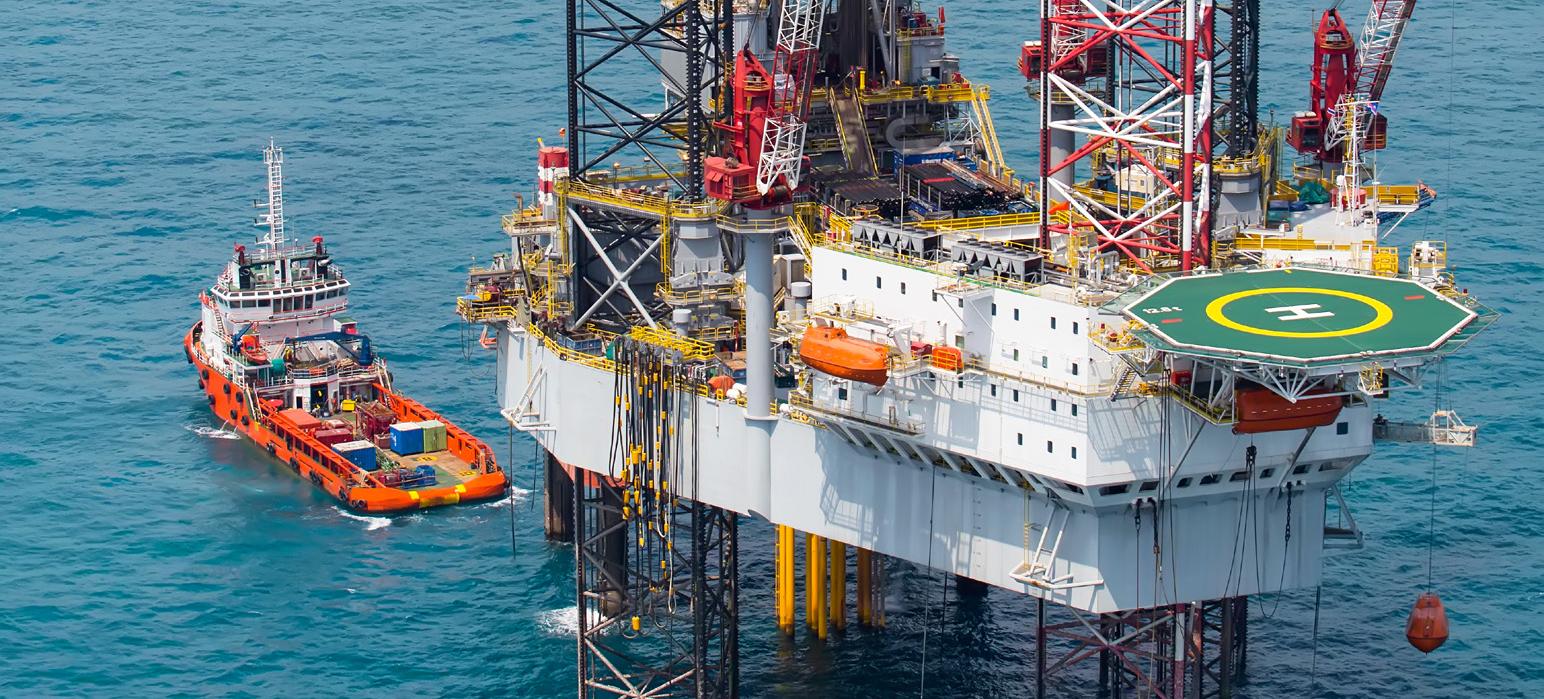
Towards the end of June, Woodside Energy decided to develop the Trion resources, Mexico’s most crucial ultra-deepwater project.
The development of the Trion project is subject to the approval of the alliance between Woodside and Pemex, which is practically agreed upon. It is also subject to regulatory approval of the field development plan (PDE), which is expected in the fourth quarter of 2023. First, oil production is contemplated until 2028.
The total planned investment amounts to US$7.2 billion. The project’s development is expected to generate solid returns for Woodside’s shareholders and economic and
36 Oil & Gas


La inversión total prevista asciende a 7,200 millones de dólares. Se espera que el desarrollo del proyecto genere rendimientos sólidos a los accionistas de Woodside, así como beneficios económicos y sociales para México.
Trión, que tiene una extensión de 1,285 kilómetros cuadrados, se calcula que podría contener recursos por 480 millones de barriles de petróleo crudo equivalente. La estimación inicial apunta a una producción de 120,000 barriles diarios.
El subsuelo ha sido objeto de una evaluación exhaustiva, con la perforación de seis pozos a lo largo del yacimiento. Lo que ha aportado información a Woodside Energy para un mayor entendimiento de este gran recurso convencional de alta calidad.
Meg O’Neill, CEO de Woodside, declaró que Trion
social benefits for Mexico.
Trion, which covers an area of 1,285 square kilometers, is estimated to contain resources of 480 million barrels of crude oil equivalent. The initial estimate points to a production of 120,000 barrels per day. The subsurface has been extensively evaluated, with six wells drilled throughout the reservoir. This has provided Woodside Energy with information to better understand this extensive, highquality conventional resource.
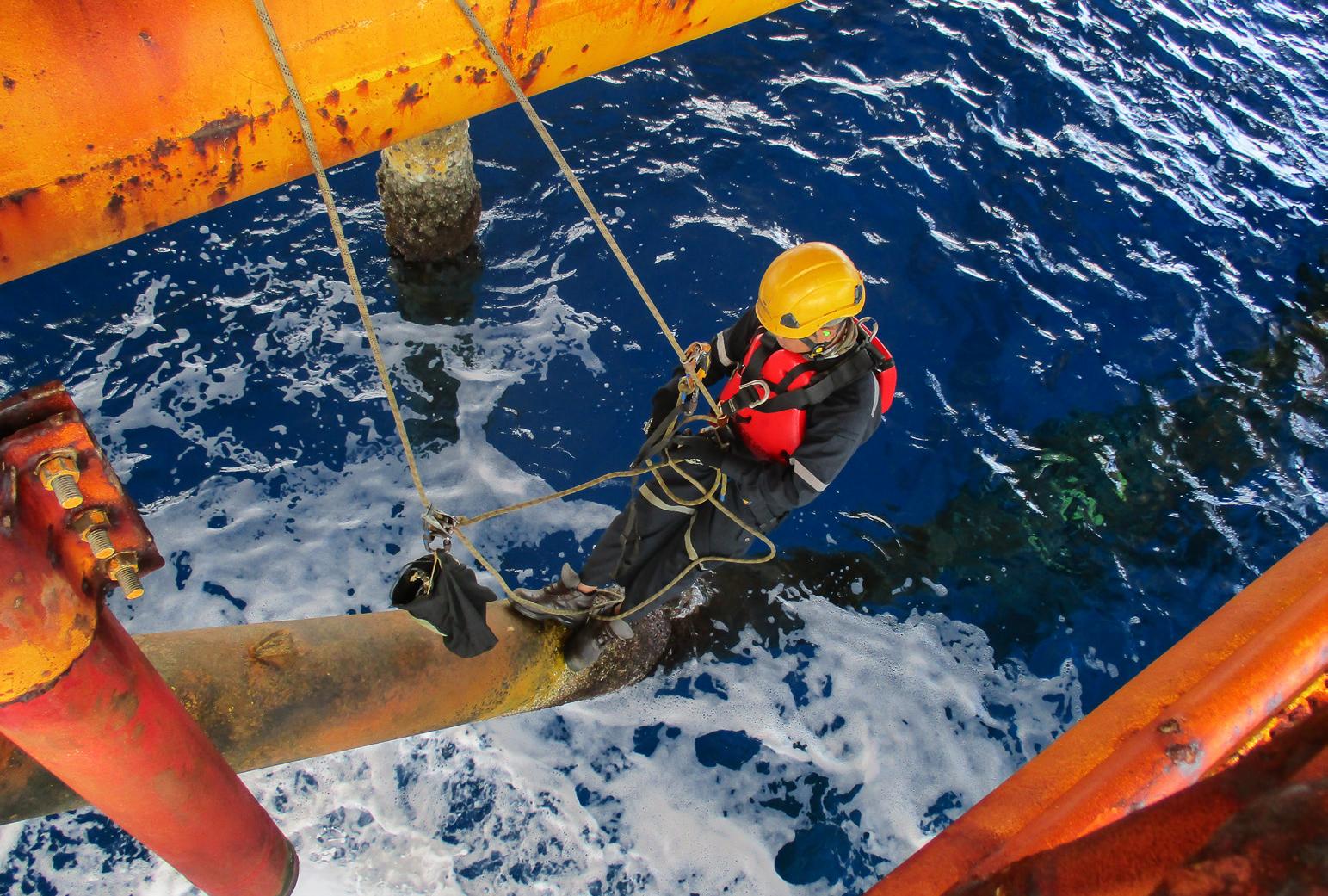
Meg O’Neill, CEO of Woodside, stated that Trion is an attractive addition to Woodside’s portfolio of high-quality producing assets. “Trion is a valuable resource with a mature development concept. Our strong balance sheet and disciplined approach allow us to invest in opportunities such as Trion, expanding our global portfolio and delivering long-term value,” he highlighted.
For Sandra Patricia Coleman, Woodside Energy’s deputy chief commercial officer, the Trion project will make history in Mexico. “We have a fully aligned vision of Trion’s development. I can tell you that Trion will make history. It will be the first ultra-deepwater project in Mexico and the third largest worldwide,” he confirmed.
Trion will include the installation of a floating production unit (FPU), a floating storage and offloading vessel
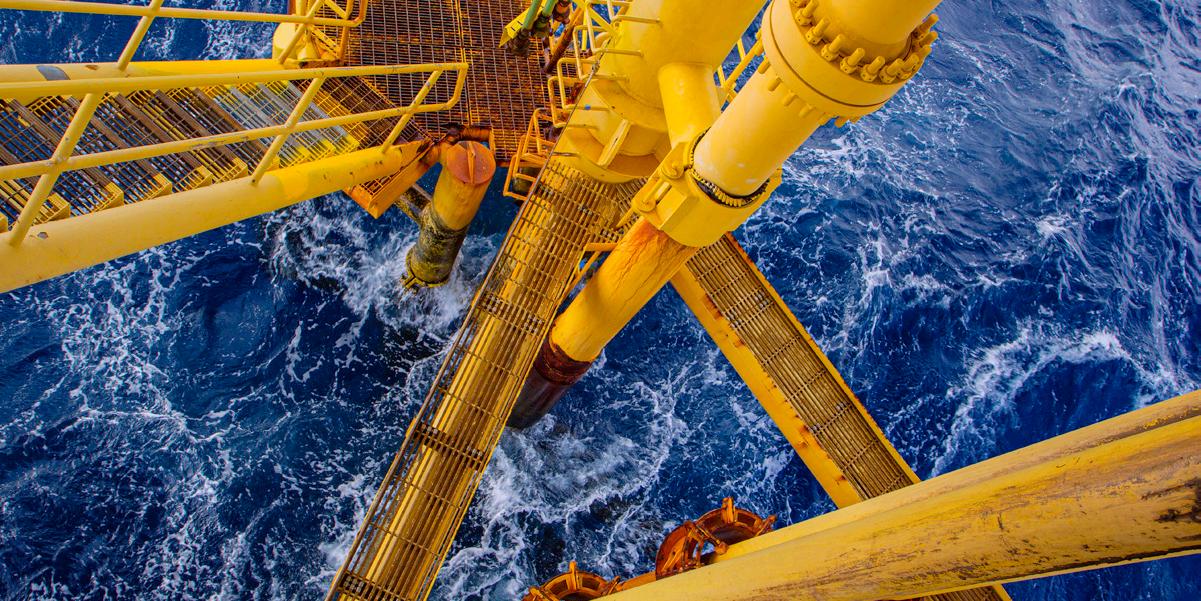
38
Oil & Gas
es una incorporación atractiva a la cartera de activos productores de alta calidad de Woodside. “Trion es un recurso valioso con un concepto de desarrollo maduro. Nuestro sólido balance general y nuestro enfoque disciplinado nos permiten invertir en oportunidades como Trion, ampliando nuestra cartera global y aportando valor a largo plazo”, resaltó.
Para Sandra Patricia Coleman, subdirectora comercial de Woodside Energy, el proyecto Trion hará historia en México. “Tenemos una visión totalmente alineada de lo que será el desarrollo de Trion. Les puedo adelantar que Trion hará historia. Será el primer proyecto en aguas ultraprofundas en Mexico y el tercero más grande a nivel mundial”, ratificó.
Trion incluirá la instalación de una unidad de producción flotante (FPU), un buque flotante de almacenamiento y descarga (FSO) y 18 pozos (9 productores, 7 inyectores de agua y 2 inyectores de gas) perforados en la fase inicial. Con un total de 24 pozos perforados durante la vida del proyecto. La unidad de producción flotante (FPU) tendrá una capacidad de producción de petróleo de 100,000 a 120,000 barriles diarios. Será del tamaño de un estadio de futbol y será dos veces más grande que la plataforma Shenzi (50 mil vs 25 mil toneladas) de Woodside Energy.
La FPU estará conectada a un buque flotante de almacenamiento y descarga (FSO) con capacidad para almacenar 950,000 barriles de petróleo.
The Trion field was discovered in 2012 by Pemex. Subsequently, BHP Petroleum acquired a stake in 2017, becoming part of Woodside’s portfolio in 2022.
(FSO), and 18 wells (9 producers, seven water injectors, and two gas injectors) drilled in the initial phase, with a total of 24 wells drilled during the life of the project. The floating production unit (FPU) will have an oil production capacity of 100,000 to 120,000 barrels daily. It will be the size of a soccer stadium and twice that of Woodside Energy’s Shenzi platform (50,000 vs. 25,000 tons).


The FPU will be connected to a floating storage and offloading vessel (FSO) with the capacity to store 950,000 barrels of oil.
COOL, POWERFUL, QUIET BUT COST SAVING
39
Oil & Gas
Po w er foi l® X4 ventasbaf@toyota-tsusho.mx taiamerica.com English, Spanish, Japanese available TTM Ofcial Distributor
English · Spanish 812-355-6667 Japanese 818-704-3675
Nuestros ventiladores, además de refrescar y ventilar el espacio, son silenciosos y ahorrativos en consumo de energía.
El yacimiento Trion fue descubierto en 2012 por Pemex. Posteriormente, BHP Petroleum adquirió una participación en 2017 la cual pasó a formar parte de la cartera de Woodside en 2022.
Servicios Marítimos para las actividades petroleras en aguas someras
El mundo petrolero es vasto y complejo, y su operación en aguas someras no es la excepción. Las actividades petroleras en estas zonas requieren de una serie de servicios marítimos especializados que garantizan la eficiencia, seguridad y sostenibilidad de las operaciones.
Plataformas de Perforación: En aguas someras son estructuras flotantes o fijas que permiten la perforación submarina para acceder a los yacimientos de petróleo. Estas plataformas están diseñadas para resistir condiciones adversas del mar y garantizar la seguridad de los trabajadores.
Barcos de Apoyo: Desempeñan funciones vitales, como el transporte de personal, equipos y suministros desde y hacia las plataformas. Además, algunos están equipados con tecnología avanzada para la detección y respuesta a derrames de petróleo.
Buques Tanque: Una vez que el petróleo es extraído, se requiere de buques tanque para su transporte. Estos están diseñados para llevar grandes cantidades de crudo de manera segura a refinerías o terminales de almacenamiento.
Servicios de Mantenimiento y Reparación: Las operaciones en aguas someras requieren de mantenimiento constante. Empresas especializadas ofrecen servicios de inspección, mantenimiento y reparación de infraestructuras submarinas, garantizando su óptimo funcionamiento.
Servicios de Seguridad: La seguridad es primordial en la industria petrolera. Por ello, existen servicios dedicados a la protección y vigilancia de las instalaciones, así como a la formación y capacitación del personal en protocolos de seguridad.
Servicios Ambientales: La sostenibilidad y el cuidado del medio ambiente son esenciales en la actualidad. Existen empresas especializadas en ofrecer servicios de monitoreo ambiental, evaluación de impacto y planes de respuesta a contingencias, asegurando que las operaciones se realicen con el menor impacto posible.
Maritime Services for oil activities in shallow waters
The oil world is vast and complex, and its operation in shallow waters is no exception. Oil activities in these areas require specialized maritime services that guarantee operations’ efficiency, safety, and sustainability.
Drilling Platforms: In shallow waters, floating or fixed structures allow underwater drilling to access oil reservoirs. These platforms are designed to withstand adverse sea conditions and ensure the safety of workers.
Las actividades petroleras en aguas someras requieren de una serie de servicios marítimos especializados que garantizan la eficiencia, seguridad y sostenibilidad de las operaciones.
Oil activities in shallow waters require specialized maritime services that guarantee operations’ efficiency, safety, and sustainability.
Investigación y Desarrollo: La constante búsqueda de eficiencia y sostenibilidad ha llevado a la industria petrolera a invertir en investigación y desarrollo para innovar en tecnologías y métodos que permitan una extracción más eficiente y amigable con el medio ambiente.
Las actividades petroleras en aguas someras no solo se centran en la extracción de crudo. Requieren de una amplia gama de servicios marítimos que garantizan que esta tarea se realice de manera segura, eficiente y sostenible. Estos servicios, que van desde la perforación hasta la investigación, son el pilar fundamental para el éxito y la sostenibilidad de la industria petrolera en aguas someras.
Support Vessels: They perform vital functions, such as transporting personnel, equipment, and supplies to and from the platforms. In addition, some are equipped with advanced oil spill detection and response technology.
Tankers: Once the oil is extracted, tankers are required for transportation. These are designed to safely carry large
quantities of crude to refineries or storage terminals.
Maintenance and Repair Services: Shallow water operations require constant maintenance. Specialized companies offer inspection, maintenance, and repair services for subsea infrastructures, guaranteeing optimal operation. Safety Services: Safety is paramount in the oil industry. For this reason, there are services dedicated to the protection and surveillance of the facilities and the training of personnel in safety protocols.
Environmental Services: Sustainability and care for the environment are essential nowadays. Some companies specialize in offering environmental monitoring services, impact assessment, and contingency response plans, ensuring that operations are carried out with the least possible impact.
Research and Development: The constant search for efficiency and sustainability has led the oil industry to invest in research and development to innovate technologies and methods for more efficient and environmentally friendly extraction.
Oil activities in shallow waters focus more than just extracting crude oil. They require a wide range of maritime services to ensure this task is carried out safely, efficiently, and sustainably. These services, ranging from drilling to research, are the cornerstone for the success and sustainability of the shallow-water oil industry.
40 Oil & Gas
La robótica marina ha emergido como una herramienta esencial en la industria petrolera, especialmente en la exploración y explotación de yacimientos en aguas profundas. La evolución de estas aplicaciones robóticas no solo promete avances en campos ecológicos y arqueológicos, sino que también abre un horizonte prometedor para la explotación petrolera en el Golfo de México. Estos avances reducen significativamente los riesgos asociados y garantizan un retorno de inversión más seguro.
Robótica Marina U
no de los desarrollos más innovadores son los Vehículos Remotamente Operados (ROV) con capacidades para soportar la inmensa presión del agua en profundidades superiores a los 3,000 metros. Equipados con cámaras de visión estereoscópica y dos brazos de alta precisión, este tipo de ROVs permiten a los operadores crear modelos 3D del terreno submarino y manipular objetos con una precisión sin precedentes. Además, gracias a la realidad virtual, los operadores pueden controlar el robot desde cualquier parte del mundo, lo que representa un avance significativo en la tecnología de exploración petrolera.
La presencia remota en aguas ultraprofundas no solo facilita la logística y reduce los costos, sino que también elimina los riesgos de seguridad que enfrentan las tripulaciones en alta mar. El hardware desarrollado para estos robots es potente y permite procesar datos en tiempo real, convirtiendo imágenes 2D en mapas 3D. Esta capacidad es esencial para tareas como girar válvulas en paneles submarinos, que anteriormente se realizaban manualmente con grandes riesgos y costos asociados.
Por ejemplo, en el caso de México, los recursos prospectivos en yacimientos de aguas profundas representan el 56% del total del recurso en el país, y su explotación depende en gran medida de los avances tecnológicos en robótica marina.
Marine Robotics
Marine robotics has emerged as an essential tool in the oil industry, especially in exploring and exploiting deepwater reservoirs. The evolution of these robotic applications promises advances in ecological and archaeological fields and opens a promising horizon for oil exploitation in the Gulf of Mexico. These advances significantly reduce the associated risks and guarantee a safer return on investment.
Oneof the most innovative developments is Remotely Operated Vehicles (ROVs), which can withstand immense water pressure at depths of more than 3,000 meters. Equipped with stereoscopic vision cameras and two high-precision arms, these ROVs allow operators to create 3D models of the underwater
Uno de los desarrollos más innovadores son los Vehículos Remotamente Operados (ROV) con capacidades para soportar la inmensa presión del agua en profundidades superiores a los 3,000 metros.
One of the most innovative developments is Remotely Operated Vehicles (ROVs), which can withstand immense water pressure at depths exceeding 3,000 meters.
La robótica marina está revolucionando la forma en que se explora y explota el petróleo en aguas profundas. Con desarrollos como los ROVs y la integración de la realidad virtual, la industria petrolera está preparada para enfrentar los desafíos del futuro con innovación y seguridad.
terrain and manipulate objects with unprecedented precision. In addition, virtual reality lets operators control the robot from anywhere in
the world, representing a significant advance in oil exploration technology. Remote presence in ultra-deepwater facilitates logistics, reduces costs, and eliminates the safety risks offshore crews face. The hardware developed for these robots is powerful and allows real-time data processing, converting 2D images into 3D maps. This capability is essential for tasks such as turning valves on subsea panels, previously performed manually, with high risks and associated costs.
For example, in the case of Mexico, prospective resources in deepwater reservoirs represent 56% of the total resource in the country, and their exploitation depends largely on technological advances in marine robotics.
Marine robotics is revolutionizing the way deepwater oil is explored and exploited. With developments such as ROVs and the integration of virtual reality, the oil industry is poised to meet future challenges with innovation and safety.
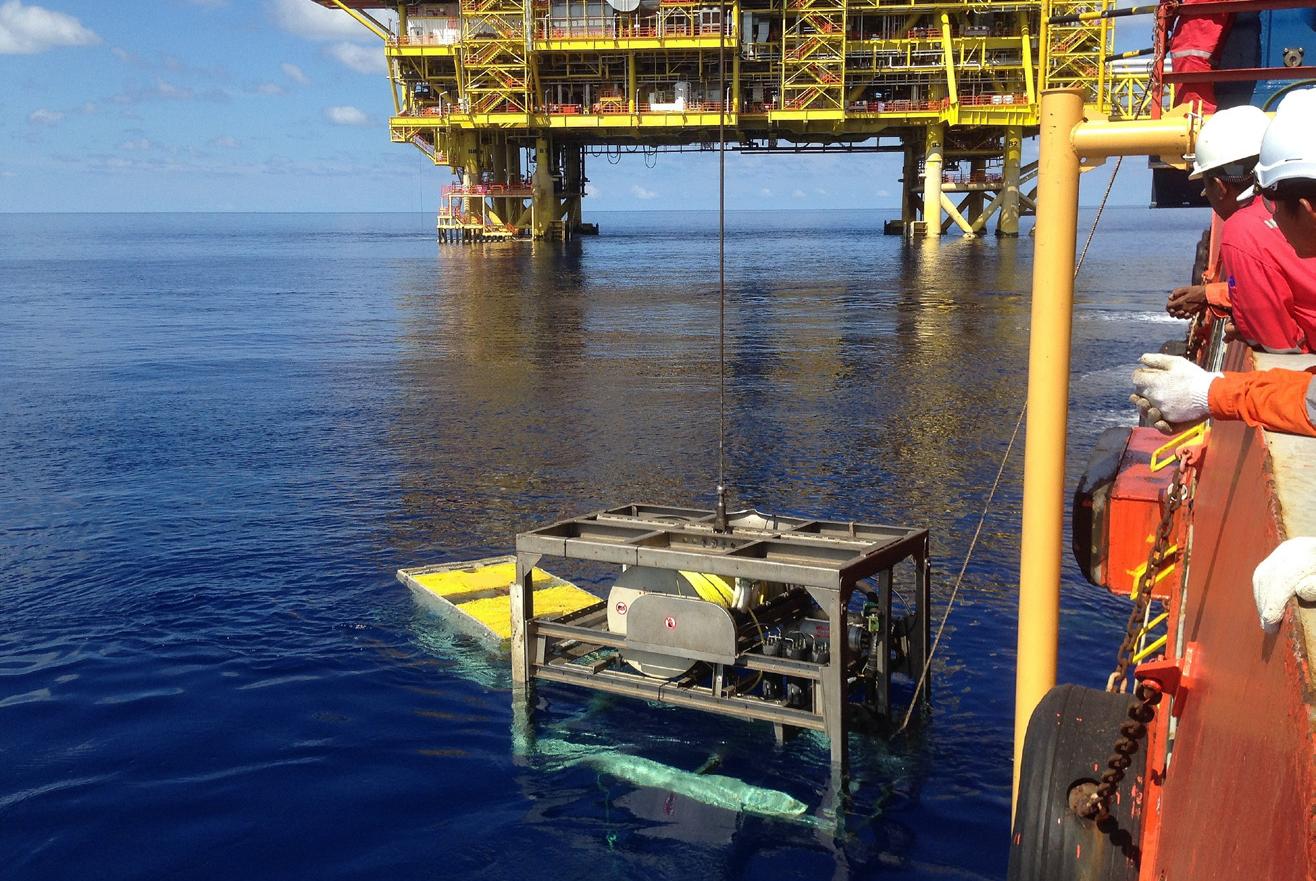
41 Oil & Gas
Los principales puertos marítimos de México
México cuenta con una larga historia de comercio marítimo, que se remonta a la época de los aztecas. Hoy en día, México tiene 117 puertos marítimos, de los cuales 65 son de uso comercial. Los puertos marítimos de México son de vital importancia para la economía del país, ya que representan una importante fuente de ingresos y empleo.
Los principales puertos marítimos de México son:
• Veracruz es el puerto más grande de México y el más importante del Golfo de México. Se encuentra ubicado a orillas del río Jamapa. Veracruz es un puerto de aguas profundas, lo que lo hace ideal para el atraque de grandes buques. Se ocupa principalmente del comercio de contenedores, petróleo y productos agrícolas.
• Coatzacoalcos es el segundo puerto más grande, también localizado en el Golfo de México, a orillas del río Coatzacoalcos en Veracruz. Es un puerto de aguas profundas y se ocupa principalmente del comercio de petróleo y productos químicos.
• Manzanillo es el tercer puerto más grande y el más importante del Pacífico. Se encuentra ubicado en el estado de Colima. Manzanillo es un puerto de aguas profundas, se ocupa principalmente del comercio de contenedores, automóviles y productos agrícolas.
• Guaymas es el cuarto puerto más grande de México, ubicado en el estado de Sonora, a orillas del océano Pacífico. Se ocupa principalmente del comercio de petróleo y productos químicos.
Mexico’s main seaports
Mexico has a long history of maritime trade, dating back to Aztec times. Today, Mexico has 117 seaports, of which 65 are for commercial use. Mexico’s seaports are vital to the country’s economy, representing an important source of income and employment.
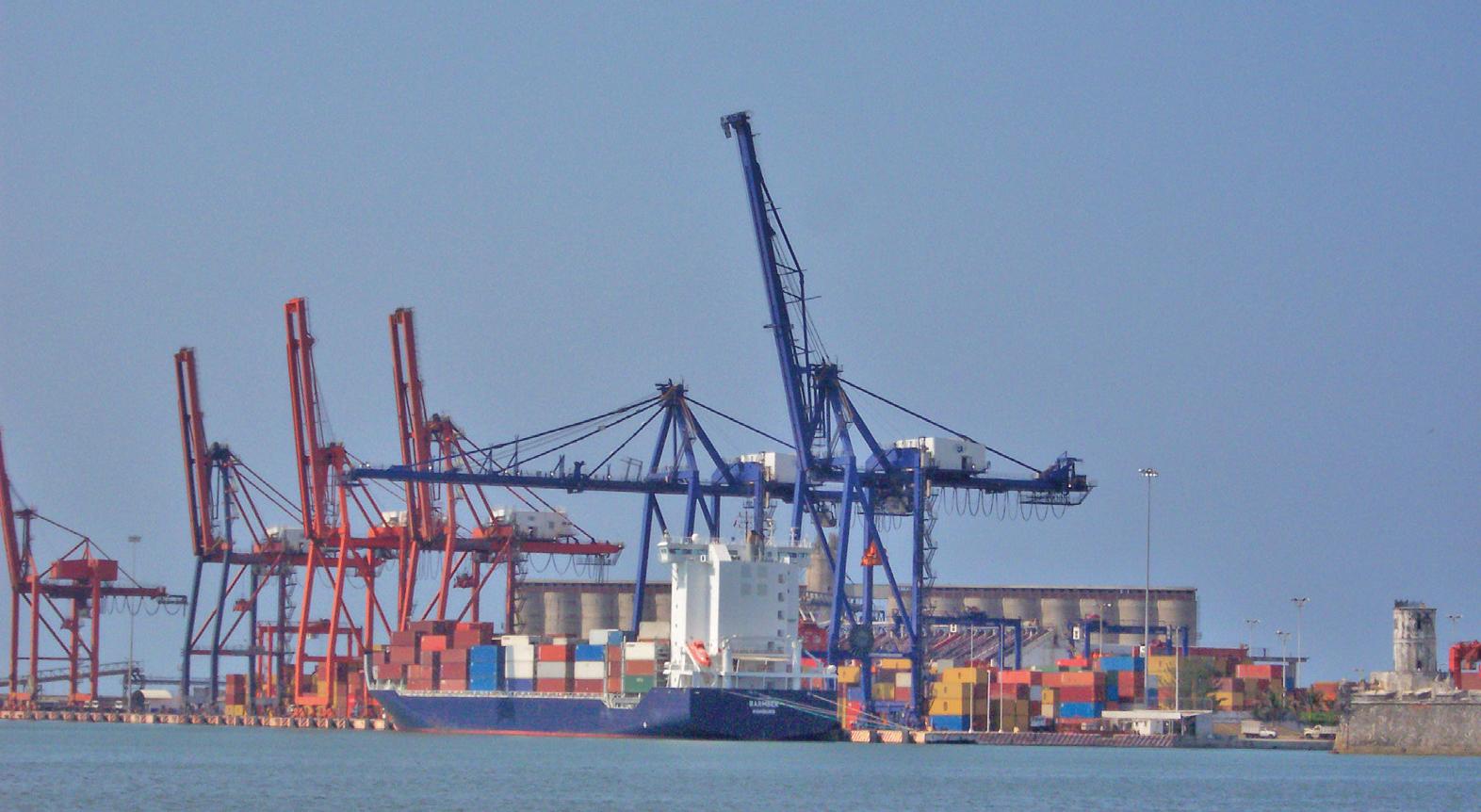
Mexico’s main seaports are:
· Veracruz is Mexico’s largest port and the most important in the Gulf of Mexico. It is located on the banks of the Jamapa River. Veracruz is a deep-water port, making it ideal for berthing large ships. It is mainly involved in trading containers, oil, and agricultural products.
· Coatzacoalcos is the second largest port, also located on the
Gulf of Mexico, on the banks of the Coatzacoalcos River in Veracruz. It is a deep-water port primarily involved in the oil and chemical trade.
· Manzanillo is the third largest and most important port in the Pacific. It is located in the state of Colima. Manzanillo is a deep water port mainly involved in the container, automobile, and agricultural products trade.
· Guaymas is the fourth largest port in Mexico, located in the state of Sonora on the shores of the Pacific Ocean. It is mainly involved in the petroleum and chemical products trade.
· Lázaro Cárdenas is the fifth largest port in the country, located in the state of Michoacán. Due to its location, it focuses
42 Oil & Gas
• Lázaro Cárdenas es el quinto puerto más grande del país, ubicado en el estado de Michoacán. Por su localización, se enfoca principalmente del comercio de contenedores, automóviles y productos agrícolas.
Puertos marítimos utilizados en las actividades petroleras de México México, en su preponderante papel de productor de petróleo y gas natural, requiere de una gran infraestructura portuaria. En este sentido, los puertos marítimos juegan un papel fundamental en el transporte de estos recursos. Los principales sitios usados en las actividades petroleras son:
• Coatzacoalcos: cuenta con una terminal de petróleo crudo que puede manejar hasta 2 millones de barriles de petróleo por día.
• Tuxpan: tiene la capacidad de manejar hasta 1 millón de barriles de petróleo por día.
• Progreso: ubicado en el estado de Yucatán, a orillas del golfo de México, es capaz de manejar hasta 500 mil barriles de petróleo por día.
Mexico’s predominant oil and natural gas producer role requires an extensive port infrastructure.
Los puertos marítimos de México son una parte importante de la economía del país. Representan una importante fuente de ingresos y empleo. Los puertos marítimos también juegan un papel fundamental en el transporte de petróleo y gas natural, dos de los recursos naturales más importantes de México.
mainly on the trade of containers, automobiles, and agricultural products.

Seaports used in Mexico’s petroleum activities
Mexico’s predominant oil and natural gas producer role requires an extensive port infrastructure. In this sense, seaports play a fundamental role in transporting these resources. The main sites used for oil activities are:
· Coatzacoalcos: has a crude oil terminal that can handle up to 2 million barrels of oil daily.
· Tuxpan: can handle up to 1 million barrels of oil daily.
· Progreso: located in the state of Yucatan, on the shores of the Gulf of Mexico, it can handle up to 500 thousand barrels of oil per day.
Mexico’s seaports are an essential part of the country’s economy. They represent an important source of income and employment. Seaports also play a vital role in the transportation of oil and natural gas, two of Mexico’s most important natural resources.
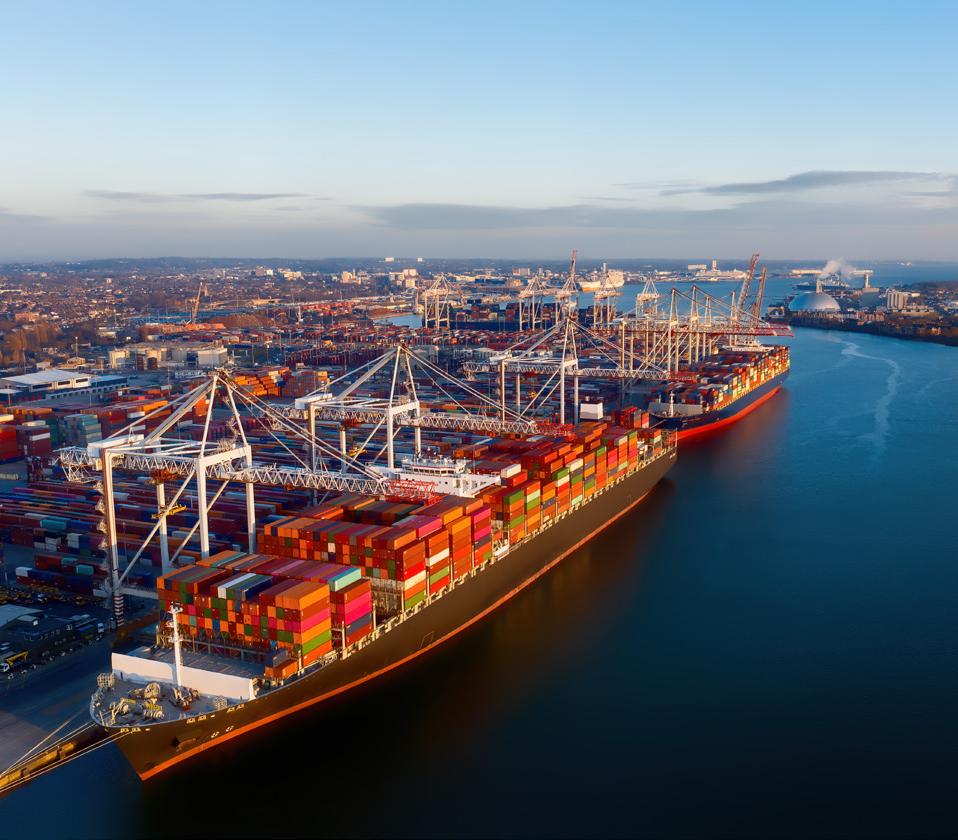
43
Oil & Gas
México, en su preponderante papel de productor de petróleo y gas natural, requiere de una gran infraestructura portuaria.
Seguridad en la industria petrolera marítima
Para mitigar estos riesgos, las empresas petroleras implementan una serie de medidas de seguridad.
• Equipos de seguridad personal (EPP): cascos, ropa y calzado especial, chalecos salvavidas y máscaras de gas.
• Entrenamiento en seguridad: deben saber cómo identificar y mitigar los riesgos.
• Procedimientos de seguridad: se deben tener para que los trabajadores sepan qué hacer en caso de un accidente o incidente.
• Sistemas de monitoreo: para detectar y prevenir problemas.
Ante los latentes riesgos y la posibilidad de accidentes, las empresas petroleras continúan invirtiendo en seguridad.
Algunos de los riesgos más comunes en la industria petrolera marítima incluyen:
• Accidentes: pueden ser causados por una variedad de factores, como errores humanos, fallas mecánicas y mal tiempo.
• Incendios: chispas eléctricas, fugas de combustible y explosiones.
• Derrames de petróleo: accidentes, fugas de tuberías y colisiones.
Estos riesgos pueden tener un impacto devastador en las personas, el medio ambiente y la economía. Por eso ello las certificaciones en la industria son de las más exigentes que existen a nivel mundial.
Por otra parte, la industria petrolera
Safety in the offshore oil industry
The offshore oil industry is one of the most important in the world but also involves risks. The activities of this industry are exposed to accidents, fires, and oil spills.
To mitigate these risks, oil companies implement a series of safety measures.
· Personal safety equipment (PPE): helmets, unique clothing and footwear, life jackets, and gas masks.
· Safety training: they must know
how to identify and mitigate risks.
· Safety procedures: must be in place so that workers know what to do in the event of an accident or incident.
· Monitoring systems: to detect and prevent problems.
Faced with latent risks and possible accidents, oil companies continue to invest in safety.

Some of the most common risks in the offshore oil industry include:

· Accidents: can be caused by various factors, such as human error, mechanical failure, and bad weather.
· Fires: electrical sparks, fuel leaks, and explosions.
· Oil spills: accidents, pipeline leaks, and collisions.
These risks can have a devastating impact on people, the
44 Oil & Gas
La industria petrolera marítima es una de las más importantes del mundo, pero también conlleva riesgos. Las actividades de esta industria están expuestas a accidentes, incendios y derrames de petróleo.
To mitigate these risks, oil companies implement a series of security measures.
marítima es un objetivo atractivo para los ataques piratas. Las plataformas petroleras y las embarcaciones que transportan petróleo son valiosas, y los piratas pueden obtener grandes ganancias robando petróleo, equipo o rehenes.
Para proteger a las plataformas petroleras y las embarcaciones de los ataques piratas, las empresas petroleras han implementado una serie de medidas, y con el apoyo y vigilancia de los gobiernos, este problema es menor en los países donde han tomado acción.
• Sistemas de seguridad física: barreras, cámaras de seguridad y guardias armados.
• Sistemas de seguridad electrónica: alarmas, sistemas de rastreo y sistemas de identificación automática.
• Operaciones de seguridad marítima: trabajo conjunto con las autoridades marítimas.
• Mantener la conciencia de la situación: La tripulación de las plataformas petroleras y las embarcaciones debe estar al tanto de su entorno y estar preparada para cualquier amenaza potencial.
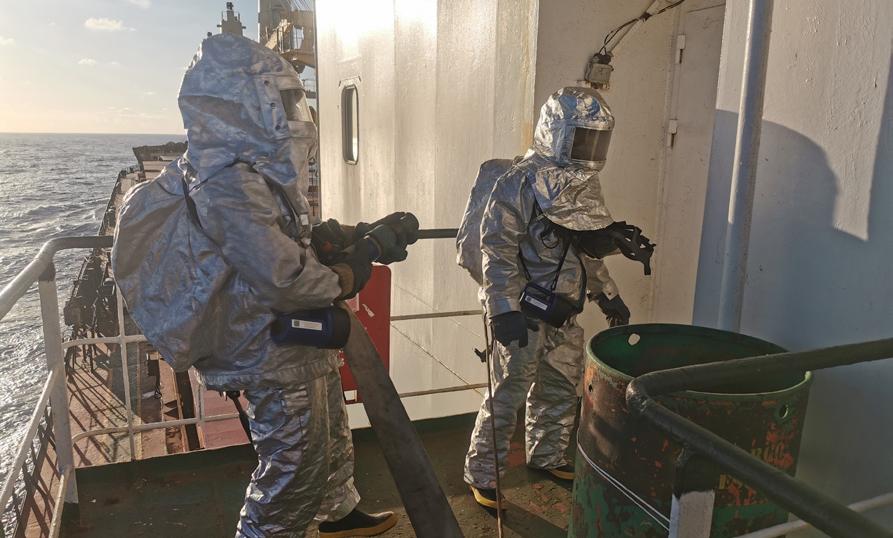
• Seguir los protocolos y procedimientos de seguridad.
• Reportar cualquier actividad sospechosa a las autoridades marítimas.
environment, and the economy. That is why certifications in the industry are among the most demanding in the world.
Moreover, the offshore oil industry is an attractive target for pirate attacks. Oil rigs and vessels transporting oil are valuable, and pirates can make large profits by stealing oil, equipment, or hostages.
Oil companies have implemented several measures to protect oil platforms and vessels from pirate attacks. With the support and vigilance of governments, this problem is less of a problem in countries

where they have taken action.
· Physical security systems: barriers, security cameras, and armed guards.
· Electronic security systems: alarms, tracking, and automatic identification systems.
· Maritime security operations: joint work with maritime authorities.
· Maintaining situational awareness: Oil rig and vessel crews must be aware of their surroundings and prepared for potential threats.
- Follow security protocols and procedures.
- Report any suspicious activity to maritime authorities.
45
Oil & Gas
Para mitigar estos riesgos, las empresas petroleras implementan una serie de medidas de seguridad.
CUMAR, el blindaje de las operaciones marítimas
La Secretaría de Marina-Armada de México (Semar) presentó el reglamento que regulará las actividades del Centro Unificado para la Protección Marítima y Portuaria (Cumar). El organismo se hará cargo de la administración, operación y servicios de las actividades marítimas y portuarias. El Cumar tiene la función de coadyuvar en el cumplimiento de los tratados o convenios internacionales en los que el Estado mexicano sea parte en materia de Protección Marítima y Portuaria.
Igualmente, funge como instancia coordinadora de las acciones que realicen las autoridades de los tres órdenes de gobierno en materia de Protección Marítima y Portuaria. Además debe coordinar a las autoridades y personas relacionadas con la operación y protección del Puerto, Marinas, Instalaciones Portuarias y Terminales, tales como administradores portuarios integrales, agentes navieros, agentes aduanales, empresas navieras, prestadores de servicios portuarios, titulares de terminales.
Asimismo, coordinará las acciones necesarias para evitar que cualquier embarcación o artefacto naval ingrese sin autorización o permiso correspondiente a una zona restringida a la navegación interior. De igual forma, podrá solicitar a la capitanía de puerto que ordene la reubicación de cualquier persona, embarcación, artefacto naval, artículo, mercancía
CUMAR, the armoring of maritime operations
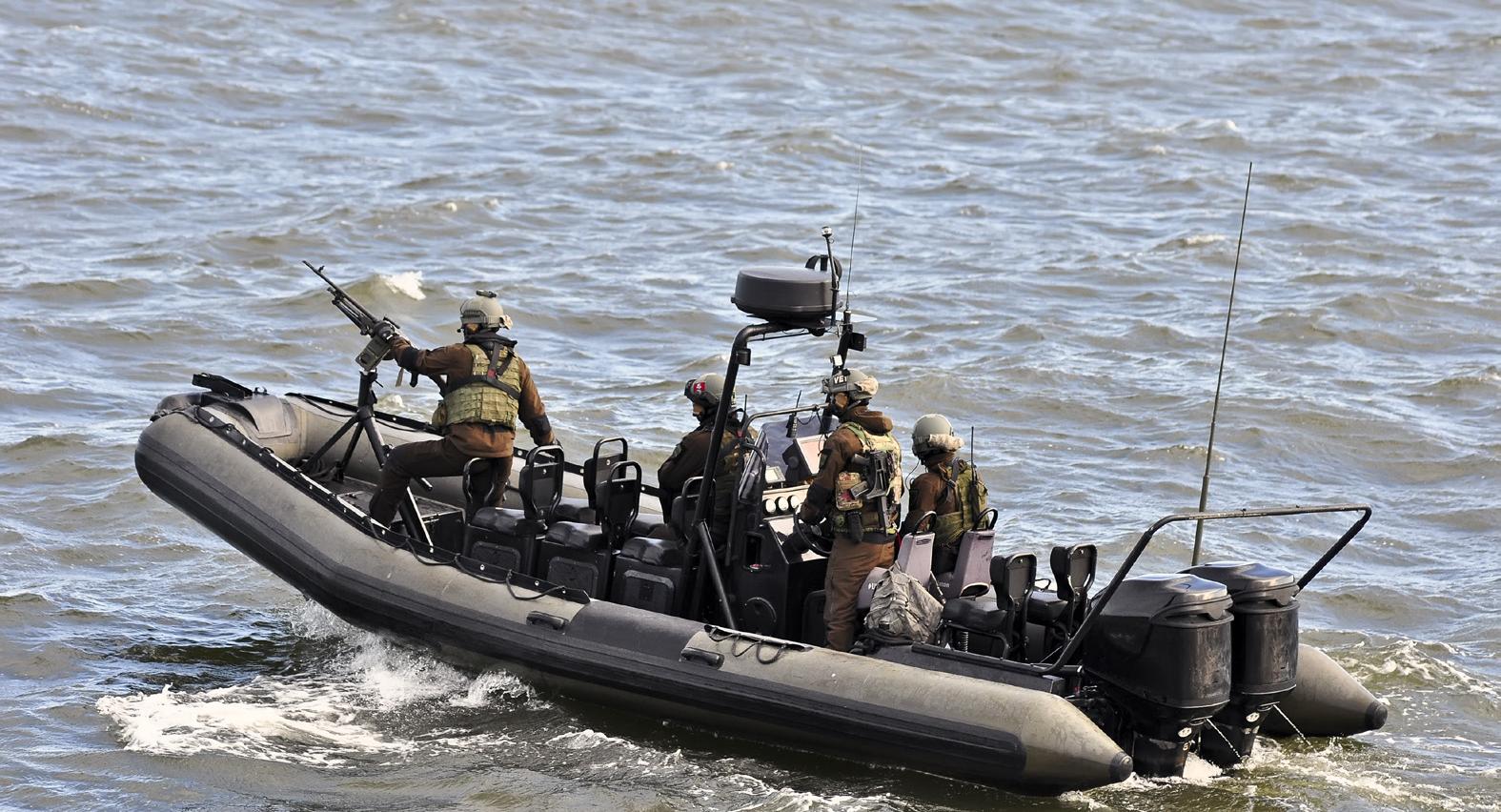
The Regulation of the Unified Center for Maritime and Port Security was published to strengthen maritime and port security.
The Secretariat of the NavyMexican Navy (Semar) presented the regulations that will govern the activities of the Unified Center for Maritime and Port Protection (Cumar). The agency will oversee the administration, operation, and services of maritime and port activities. Cumar assists in the compliance of international treaties or agreements to which the Mexican State is a party in matters of Maritime and Port Protection. Likewise, it acts as a coordinating body for the actions carried out by the authorities of the three
levels of government in matters of Maritime and Port Protection. It must also coordinate the officers and persons related to the operation and protection of the Port, Marinas, Port Facilities, and Terminals, such as integral port administrators, shipping agents, customs agents, shipping companies, port service providers, and terminal owners. Likewise, it will coordinate the necessary actions to prevent any vessel or naval artifact from entering an area restricted to inland navigation without the corresponding authorization or permit. Likewise,
46 Oil & Gas
Con el objetivo de fortalecer la protección marítima y portuaria, se publicó el Reglamento del Centro Unificado para la Protección Marítima y Portuaria.
o bien mueble que no cuente con autorización o permiso, para que sea trasladado fuera de una zona restringida a la navegación interior.
En general, el Cumar busca garantizar un nivel de riesgo aceptable en los puertos, terminales marinas e instalaciones portuarias, así como atender eficazmente los incidentes marítimos y portuarios en términos de la Ley de Puertos, la Ley de Navegación y Comercio Marítimos, los instrumentos internacionales en esta materia y demás disposiciones jurídicas aplicables.
Cabe señalar que el establecimiento de un Cumar en puertos distintos a los de navegación de altura, se llevará a cabo dependiendo del nivel de riesgo que pudiera presentarse en el puerto. Asimismo, la Semar apoyará con una Unidad Naval de Protección Marítima y Portuaria, a través del Mando Naval de cada jurisdicción, para prevenir y dar respuesta inmediata a los actos contra buques en las zonas marinas mexicanas e instalaciones portuarias.
En el marco de ese reglamento, la Semar pondrá a disposición de las personas integrantes del Cumar, a través de una página electrónica, una base de datos que contenga las embarcaciones matriculadas mexicanas, conforme a las disposiciones jurídicas aplicables. La base de datos será actualizada cada tres meses por la Semar.
it may request the port captaincy to relocate any person, vessel, naval artifact, article, merchandise, or movable property that does not have authorization or permit to be moved out of an area restricted to inland navigation.
80% of the world’s trade volume is carried out through maritime routes.
Cabe señalar que la planeación de Cumar viene desde septiembre de 2007, con la firma de un convenio de colaboración entre la Semar y la SCT, signado por sus entonces titulares, Mariano Francisco Saynez y Luis Téllez, respectivamente.
In general, the Cumar seeks to guarantee an acceptable level of risk in ports, marine terminals, and port facilities, as well as to effectively address maritime and port incidents in terms of the Ports Law, the Maritime Navigation and Commerce Law, international instruments in this area and other applicable legal provisions.
It should be noted that establishing a Cumar in ports other than those of
deep-sea navigation will be carried out depending on the level of risk that may arise in the harbor. Likewise, the Semar will support a Naval Unit of Maritime and Port Protection through the Naval Command of each jurisdiction to prevent and give immediate response to acts against ships in Mexican marine areas and port facilities.

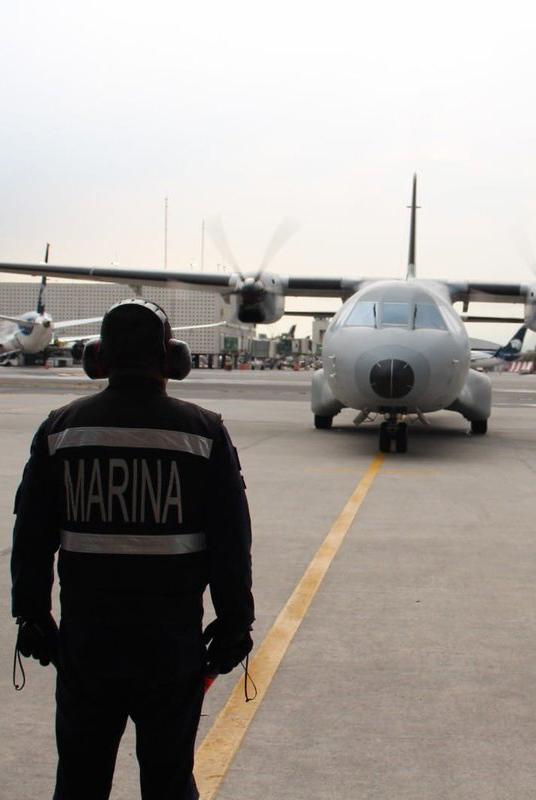
Within the framework of these regulations, the Semar will make available to Cumar members, through an electronic page, a database containing Mexican registered vessels by the applicable legal provisions. The database will be updated every three months by the Semar.
It should be noted that the planning of Cumar dates back to September 2007, with the signing of a collaboration agreement between the Semar and the SCT, signed by their then heads, Mariano Francisco Saynez and Luis Tellez, respectively.
47
Oil & Gas
El 80% del volumen del comercio mundial se realiza a través de las vías marítimas.
Infraestructura marítima para las actividades petroleras en el mar
La demanda de petróleo ha sido una constante en la historia moderna. Para satisfacerla, la industria petrolera ha tenido que innovar y expandirse más allá de los límites terrestres, explorando las profundidades del océano en busca de reservas de crudo. Esta búsqueda ha llevado al desarrollo y evolución de las plataformas petrolíferas en alta mar, estructuras gigantescas diseñadas para extraer petróleo y gas natural de yacimientos submarinos.
Historia y evolución
Hace cinco siglos, la demanda de petróleo superaba ampliamente la oferta. Con el tiempo y la tecnología, las empresas petroleras, en su afán de satisfacer esta demanda, comenzaron a explorar más allá de los pozos terrestres, desarrollando capacidades de perforación submarina. Las actividades en el Golfo de México fueron pioneras en la perforación en aguas abiertas.
Exploración
en alta mar
A diferencia de perforación en tierra, las plataformas petroleras en alta mar no requieren terrenos, tienen tecnologías especializadas para prevenir fugas o explosiones, y pueden ser remolcadas a diferentes ubicaciones según sea necesario.
Una plataforma petrolera es una estructura flotante de gran envergadura. Está equipada con todo el equipo técnico necesario para la extracción de petróleo y gas, y también proporciona alojamiento para el personal que la opera. Estas plataformas se construyen con tecnologías avanzadas para resistir las condiciones adversas del mar. Se estima que hay varios cientos de plataformas activas en todo el mundo.
Tipos de Plataformas Petrolíferas
Las plataformas pueden ser fijas o flotantes. Las fijas descansan directamente sobre el lecho marino, mientras que las flotantes utilizan el principio de Arquímedes para mantenerse a flote. Las estructuras fijas son adecuadas para aguas poco profundas. Por otro lado, las estructuras flotantes se utilizan en aguas de mayor profundidad.
Maritime infrastructure for offshore oil activities
The oil demand has been a constant in modern history. To fulfill this demand, the oil industry has had to innovate and expand beyond land boundaries, exploring the ocean’s depths in search of crude oil reserves. This quest has led to the development and evolution of offshore oil platforms, giant structures designed to extract oil and natural gas from subsea reservoirs.
History and evolution
Five centuries ago, demand for oil far outstripped supply. With time and technology, oil companies, eager to meet this demand, began exploring beyond land-based wells, developing subsea drilling capabilities. Activities in the Gulf of Mexico pioneered open-water drilling.
Offshore exploration
Unlike onshore drilling, offshore oil platforms do not require land, have specialized technologies to prevent leaks or blowouts, and can be towed to different locations.
An oil rig is a large floating structure. It is equipped with all the technical equipment necessary for oil and gas extraction and also provides accommodation for the personnel who operate it. These platforms are built with advanced technologies to withstand adverse sea conditions. It is estimated that there are several hundred active platforms worldwide.
Types of Oil Platforms
Platforms can be fixed or floating. Fixed platforms rest directly on the seabed while floating platforms use the Archimedes principle to stay afloat. Fixed structures are suitable for shallow waters. On the other hand, floating structures are used in deeper waters.

48 Oil & Gas
Era del Comercio
Marítimo Mexicano: Llega el Primer Buque de 400 m LOA
El horizonte marítimo de México ha sido testigo de un acontecimiento sin precedentes. El CMA CGM Alexander Von Humboldt, un buque de 400 metros de eslora total (LOA), ha hecho su debut en Latinoamérica, marcando el inicio de una nueva era en el comercio marítimo de la región.
Esta monumental embarcación, que es testimonio de la innovación y el progreso, ha sido recibida por Contecon Manzanillo, una subsidiaria del Grupo ICTSI. Este evento no solo destaca la capacidad de la terminal TEC-II de Contecon para manejar buques de tal magnitud, sino que también refuerza el compromiso de México con el crecimiento y la eficiencia en el ámbito del comercio mundial.
El CMA CGM Alexander Von Humboldt no es solo un buque; es un símbolo de la disposición de México para recibir embarcaciones más grandes, potenciando las economías de escala y optimizando costos. “Nos hemos preparado para este momento los últimos años”, afirmó José Antonio Contreras, director ejecutivo de Contecon Manzanillo. “Es nuestra obligación asegurarnos que el comercio exterior mexicano dispone de una logística marítima competitiva y eficiente”.
El Almirante Salvador Gómez Meillón, Director General de ASIPONA Manzanillo, también expresó su entusiasmo: “Hoy el Puerto de Manzanillo abre una etapa en el transporte marítimo mexicano. Enhorabuena a todos”.
El viaje del CMA CGM Alexander Von Humboldt es una muestra de la destreza de México como epicentro del comercio mundial.
Con escalas en puertos clave como Chiwan, Hong Kong, Kaohsiung, Ningbo y Shanghái, este buque pionero forja enlaces comerciales esenciales entre continentes.
Además de su tamaño, el buque cuenta con una capacidad de 16,020 TEU, lo que amplía el potencial de cadenas de suministro eficientes. Con una eslora equivalente a cuatro campos de fútbol y una manga de 53,6 metros, este buque es un testimonio del poder de la ingeniería innovadora.
Esta ocasión resuena más allá de Manzanillo, solidificando la posición de México en el comercio internacional. “La llegada del CMA CGM Alexander Von Humboldt refleja el compromiso de Contecon Manzanillo con la economía nacional”, concluyó Contreras.
A New Era of Mexican Maritime Trade: First 400 m
LOA Vessel Arrives
Mexico’s maritime horizon has witnessed an unprecedented event. The CMA CGM Alexander Von Humboldt, a 400-meter length overall (LOA) vessel, has debuted in Latin America, marking the beginning of a
for this moment for the past few years,” said José Antonio Contreras, CEO of Contecon Manzanillo. “We must ensure that Mexican foreign trade has competitive and efficient maritime logistics.”
Admiral Salvador Gómez Meillón, General Director of ASIPONA Manzanillo, also expressed his enthusiasm: “Today, the Port of Manzanillo opens a new stage in Mexican maritime transportation. Congratulations to all.
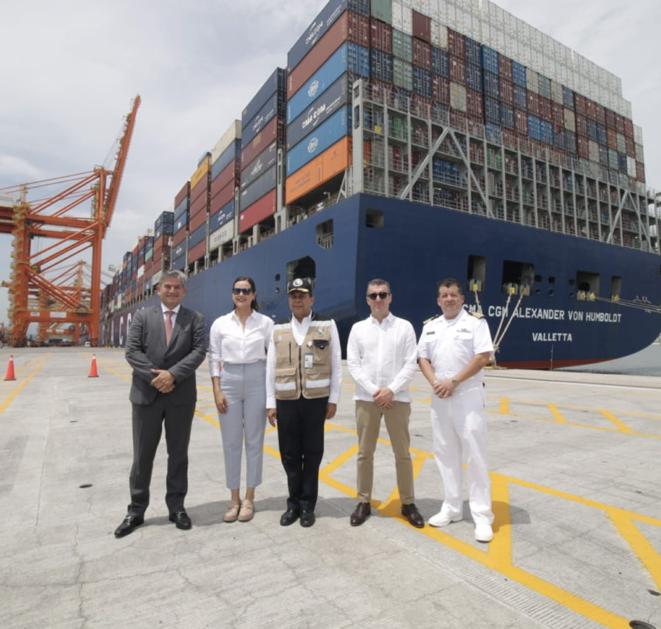
This monumental vessel, which is a testament to innovation and progress, has been welcomed by Contecon Manzanillo, a subsidiary of ICTSI Group. This event highlights the capacity of Contecon’s TEC-II terminal to handle vessels of such magnitude and reinforces Mexico’s commitment to growth and efficiency in the global trade arena.
The CMA CGM Alexander Von Humboldt is not just a vessel; it symbolizes Mexico’s readiness to receive larger ships, enhancing economies of scale and optimizing costs. “We have been preparing
The voyage of the CMA CGM Alexander Von Humboldt is a showcase of Mexico’s prowess as an epicenter of global trade. This pioneering vessel forges essential trade links between continents with calls at key ports such as Chiwan, Hong Kong, Kaohsiung, Ningbo, and Shanghai.
In addition to its size, the vessel boasts a capacity of 16,020 TEU, expanding the potential for efficient supply chains. With a length equivalent to four soccer fields and a beam of 53.6 meters, this vessel is a testament to the power of innovative engineering.
This occasion resonates beyond Manzanillo, solidifying Mexico’s position in international trade. “The arrival of the CMA CGM Alexander Von Humboldt reflects Contecon Manzanillo’s commitment to the national economy,” concluded Contreras.
49 Oil & Gas Una Nueva
IEEE 2023
Este evento, que tuvo lugar en el Centro de Convenciones de Palacio Mundo Imperial, Rivera Diamante, es una muestra clara de la relevancia que tiene la ingeniería en la generación, transmisión y distribución de electricidad.
Plataforma de conocimientos
La Reunión de Verano de Potencia 2023, también conocida como RVP-AI/ROCC&C 2023, no es solo un evento académico, sino una plataforma de intercambio de conocimientos, experiencias y avances tecnológicos en el ámbito eléctrico y electrónico. La participación de CIGRE México, una organización dedicada a la promoción y difusión de conocimientos técnicos en el sector eléctrico, fue notable. CIGRE México estuvo presente a través de charlas y la exposición industrial, reafirmando su compromiso con la industria eléctrica mexicana.

Durante el evento se abordaron temas relacionados con la potencia eléctrica, aplicaciones industriales, comunicaciones, computación, electrónica, automatización y robótica. Estos temas son esenciales para el desarrollo y avance de la tecnología en México y en el mundo. La presencia de expertos y profesionales del sector en este evento garantiza un intercambio de
IEEE 2023
The world of electrical and electronic engineering congregated in Acapulco, Guerrero, from August 6-10, 2023, to participate in the International Summer Meeting on Power, Industrial Applications and the International Fall Meeting on Communications, Computing, Electronics, Automation and Robotics 2023, organized by the IEEE Mexico Section.
This event, which took place at the Palacio Mundo Imperial Convention Center, Rivera Diamante, clearly demonstrates the relevance of engineering in generating, transmitting, and distributing electricity.
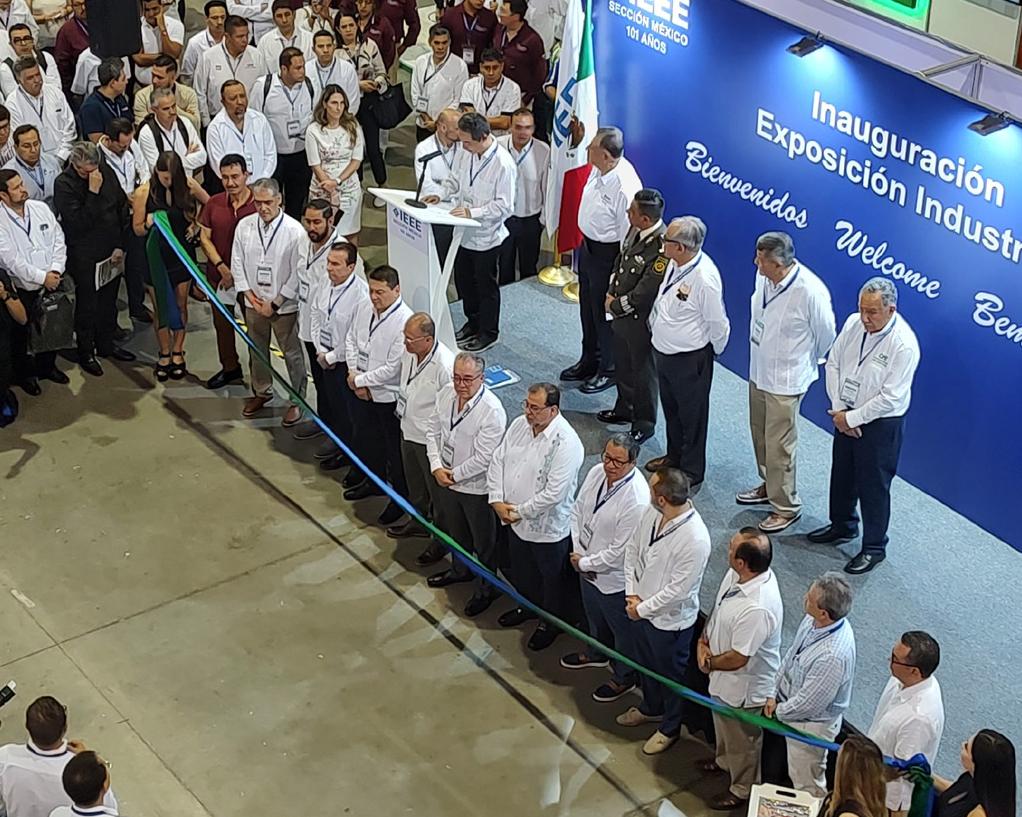
Knowledge Platform
The Power Summer Meeting 2023, also known as RVP-AI/ROCC&C 2023, is an academic event and a platform for exchanging knowledge, experiences, and technological advances in the electrical and electronic fields. The participation of CIGRE Mexico, an organization dedicated to promoting and disseminating technical knowledge in the electrical sector, was noteworthy. CIGRE Mexico was present through lectures and the industrial exhibition, reaffirming its commitment to the Mexican electrical industry. The event addressed electrical power, industrial applications, communications, computing, electronics, automation, and robotics topics. These topics are essential for the development and advancement of technology in Mexico and the world. The presence of experts and professionals in the sector in this event guarantees a high-level
La CFE aportará el 52% de la energía que se genera en el país para 2024; un avance sin precedentes en la construcción de centrales generadoras en una sola administración.
The CFE will contribute 52% of the energy generated in the country by 2024, an unprecedented advance in developing plant construction in a single administration.
exchange of knowledge, which contributes to the development and strengthening of the electrical and electronics industry in the country.
50
El mundo de la ingeniería eléctrica y electrónica se congregó en Acapulco, Guerrero, del 6 al 10 de agosto de 2023, para participar en la Reunión Internacional de Verano de Potencia, Aplicaciones Industriales y la Reunión Internacional de Otoño de Comunicaciones, Computación, Electrónica, Automatización y Robótica 2023, organizada por el IEEE Sección México.
conocimientos de alto nivel, lo que contribuye al desarrollo y fortalecimiento de la industria eléctrica y electrónica en el país.
En el acto inaugural, Manuel Bartlett Díaz, director general de la Comisión Federal de Electricidad, resaltó que CFE está fortalecida y pujante, con finanzas sanas y proyectos redituables. También recordó los principales retos que ha enfrentado la CFE y las perspectivas a futuro de la empresa.
Comentó que pese al proceso sistemático de más de 30 años que buscó desaparecer a la CFE, se ha logrado frenar su deterioro progresivo. Asimismo, reconoció el esfuerzo de sus más de 90 mil trabajadores, que “con el liderazgo y apoyo del presidente han logrado reconstruir a la empresa”. Señaló que, dentro de las acciones de fortalecimiento de la CFE, se ejecutan 33 proyectos de generación. Como la modernización y equipamiento de 16 centrales hidroeléctricas y la construcción de una más. Así como la construcción de la central fotovoltaica en Puerto Peñasco, por mencionar algunas.
Con esta contribución, la CFE aportará el 52% de la energía que se genera en el país para 2024; un avance sin precedentes en la construcción de centrales generadoras en una sola administración. Adicionalmente, Bartlett Díaz reconoció que con las filiales CFEnergía y CFE Internacional, la empresa se consolida como líder en el sector de comercialización de combustibles. Proveyendo de insumos baratos a sus propias plantas, pero también al sector privado del país. Adicionalmente, la CFE exportará gas natural, para colocarse como una empresa con gran liderazgo internacional.
Igualmente, la CFE participa en los proyectos prioritarios de la actual administración, como el Tren Maya, el Corredor Interoceánico, los Bancos del Bienestar. Así como en el proyecto social más importante de esta administración, Internet para Todos. La CFE ha instalado más de 80 mil puntos de internet gratuito con tecnología 4G, Satelital y ADSL, a lo largo y ancho del país. Adicionalmente, ya se encuentran en operación más de mil torres de telecomunicaciones. Mientras que casi 3 mil 500 más se encuentran en construcción para comunicar a las comunidades más remotas del país.
La Reunión de Verano de Potencia 2023 en Acapulco es una clara muestra de la importancia que tiene México en el ámbito de la ingeniería eléctrica y electrónica. La organización de eventos de esta magnitud en territorio mexicano refuerza la posición del país como líder en la región en temas de innovación y desarrollo tecnológico.
Además, la participación de organizaciones como CIGRE México demuestra el compromiso que tiene el sector con la formación y actualización de profesionales en el área. Sin duda, este evento es un referente para todos aquellos interesados en la ingeniería eléctrica y electrónica, y esperamos que en ediciones futuras continúe siendo un espacio de aprendizaje e intercambio de conocimientos.
At the opening ceremony, Manuel Bartlett Díaz, General Director of the Federal Electricity Commission, emphasized that CFE is strong and thriving, with healthy finances and profitable projects. He also recalled the main challenges that CFE has faced and the company’s prospects.
He commented that despite the systematic process of more than 30 years that sought to eliminate the CFE, it has managed to halt its progressive deterioration. He also acknowledged the efforts of its more than 90 thousand workers, who “with the leadership and support of the President have managed to rebuild the company.” He pointed out that, as part of the actions to strengthen the CFE, 33 generation projects are being carried out, such as the modernization and equipping of 16 hydroelectric power plants and the construction of one more. The construction of the photovoltaic plant in Puerto Peñasco is an example.
With this contribution, the CFE will contribute 52% of the energy generated in the country by 2024, an unprecedented advance in the construction of generating plants in a single administration. Additionally, Bartlett Díaz acknowledged that with the subsidiaries CFEnergía and CFE Internacional, the company is consolidating its position as a leader in the fuel commercialization sector. It provides cheap inputs to its own plants and the country’s private sector. Additionally, CFE will export natural gas to position itself as a company with significant international leadership.
Likewise, the CFE participates in the priority projects of the current administration, such as the Mayan Train, the Inter-Oceanic Corridor, and the Welfare Banks—this administration’s most important social task, the Internet for All. The CFE has installed over 80 thousand free internet points with 4G, satellite, and ADSL technology throughout the country. In addition, more than 1,000 telecommunications towers are already in operation. At the same time, almost 3,500 more are under construction to communicate with the most remote communities in the country.
The Power Summer Meeting 2023 in Acapulco is a clear example of Mexico’s importance in electrical and electronic engineering. The organization of events of this magnitude in Mexican territory reinforces the country’s position as a regional leader in innovation and technological development.
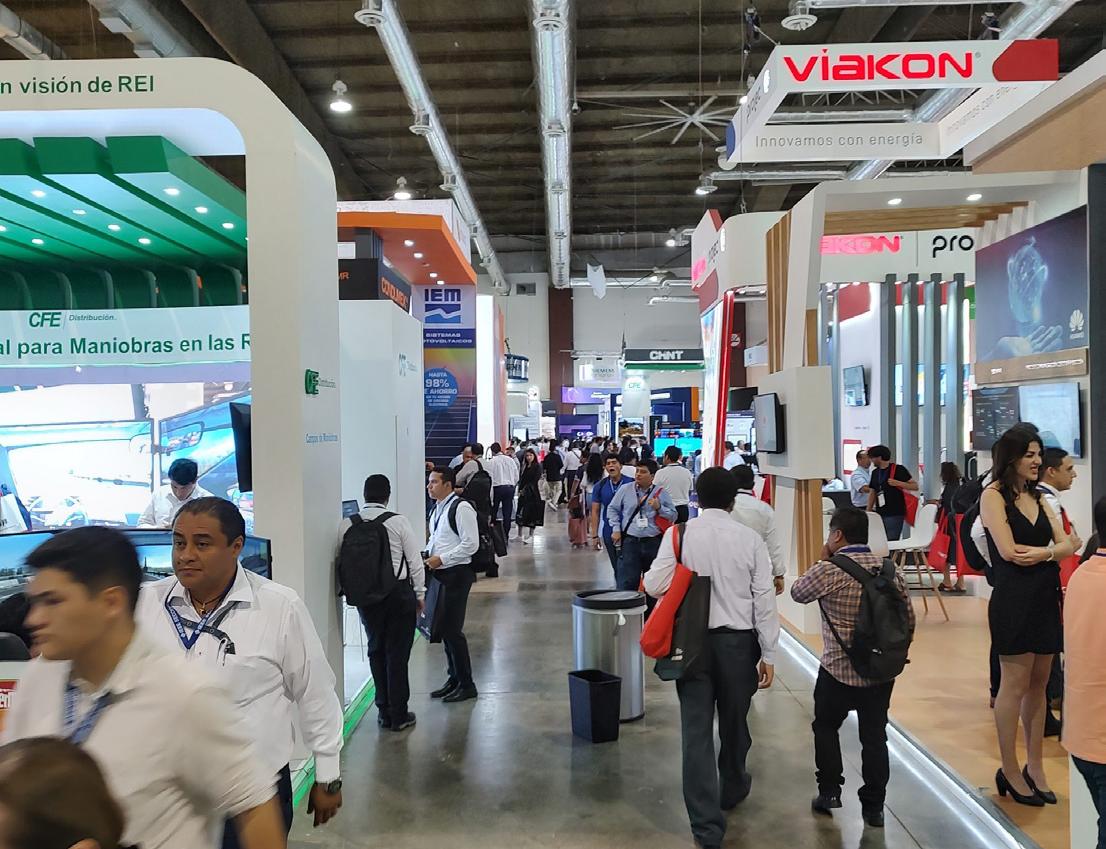
In addition, the participation of organizations such as CIGRE Mexico demonstrates the sector’s commitment to training and updating professionals in the area. Undoubtedly, this event is a reference for all those interested in electrical and electronic engineering, and we hope that it will continue to be a space for learning and knowledge exchange in future editions.
51
S&C Electric Mexicana: Innovando para una Distribución Eléctrica más Eficiente y Sostenible
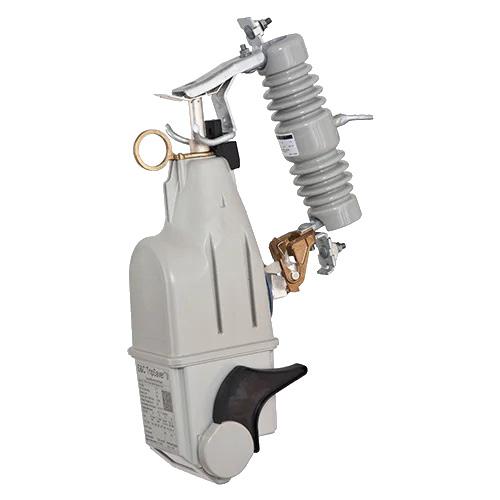
El evento anual del Instituto de Ingenieros Eléctricos y Electrónicos, Sección México, (IEEE por sus siglas en inglés), es de gran relevancia para la industria de generación eléctrica. Durante su realización, conversamos con Alfredo Castellanos, Director Comercial de S&C Electric Mexicana. Platicamos sobre su participación en la edición 101 y acerca de la “Solución Integral para Mitigar el Impacto de Fallas Transitorias en la Red General de Distribución”.
En este sentido, Alfredo comentó que la reunión anual de la IEEE “es muy importante para nosotros, porque es la oportunidad de contactar a cada uno de nuestros clientes principales”.
El Impacto de las Fallas Transitorias
Uno de los retos más significativos para los clientes es el impacto de las fallas transitorias, lo cual representa entre “el 70 al 80 por ciento de los problemas que se presentan en la red aérea de media tensión”. Ante este desafío, S&C Electric Mexicana propone soluciones integrales destinadas a mitigar el impacto que estas fallas pueden representar en usuarios y en la compañía suministradora.
La empresa ofrece equipamiento estratégicamente colocado a lo largo de la red de distribución, desde la salida de la subestación hasta el extremo final de la red de media tensión. Pero, ¿qué hace a estas soluciones destacar entre otras? Alfredo enfatizó tres aspectos: “Nuestro diferenciar principal va desde el capital humano, la calidad con la que están hechos los equipos y el servicio posventa que brindamos”.
Una característica a resaltar de las soluciones de S&C Electric es su capacidad de adaptación. No sólo se integran fácilmente a la infraestructura existente de la red de distribución, sino que también se adaptan a las necesidades de diferentes clientes, ofreciendo personalizaciones según requerimientos específicos.
Resultados Tangibles y Sostenibles Castellanos compartió que los clientes han visto mejoras notables en la confia bilidad de sus redes. Además, resaltó que la inversión en sus equipos se re cupera en un plazo de uno a dos años, satisfaciendo tanto criterios técnicos como financieros.
En términos de sostenibilidad, es tas soluciones reducen la necesidad de enviar cuadrillas para restablecer el servicio, lo que significa menos vehículos en las calles y, por ende, menos emisiones de CO2. “Con esto, lógicamente se está contribuyendo a no estar emitiendo CO2 al medio ambiente”, agregó.
S&C Electric Mexicana: Innovating for a More Efficient and Sustainable Electrical Distribution
The Institute of Electrical and Electronics Engineers, Mexico Section (IEEE) annual event is relevant to the power generation industry. We spoke with Alfredo Castellanos, Commercial Director of S&C Electric Mexicana, during the event. We discussed his participation in the 101st edition and the “Integral Solution to Mitigate the Impact of Transient Faults in the General Distribution Network.”
In this sense, Alfredo commented that the IEEE annual meeting “is crucial because it is the opportunity to contact each of our main customers.”
The Impact of Transient Faults
One of the most significant challenges for customers is the impact of transient faults, which account for “70 to 80 percent of the problems
Una característica a resaltar de las soluciones de S&C Electric es su capacidad de adaptación. No sólo se integran fácilmente a la infraestructura existente de la red de distribución, sino que también se adaptan a las necesidades de diferentes clientes, ofreciendo personalizaciones según requerimientos específicos.
One characteristic to highlight of S&C Electric’s solutions is their adaptability. Not only do they integrate easily into the existing distribution network infrastructure, but they also adapt to the needs of different customers, offering customization according to specific requirements.
52
Visión a Futuro
La visión de S&C Electric Mexicana no se detiene ahí. De acuerdo con Alfredo Castellanos, la empresa tiene el objetivo de “ser líderes del sector”, por lo cual está invirtiendo constantemente en la innovación y desarrollo de nuevos productos.
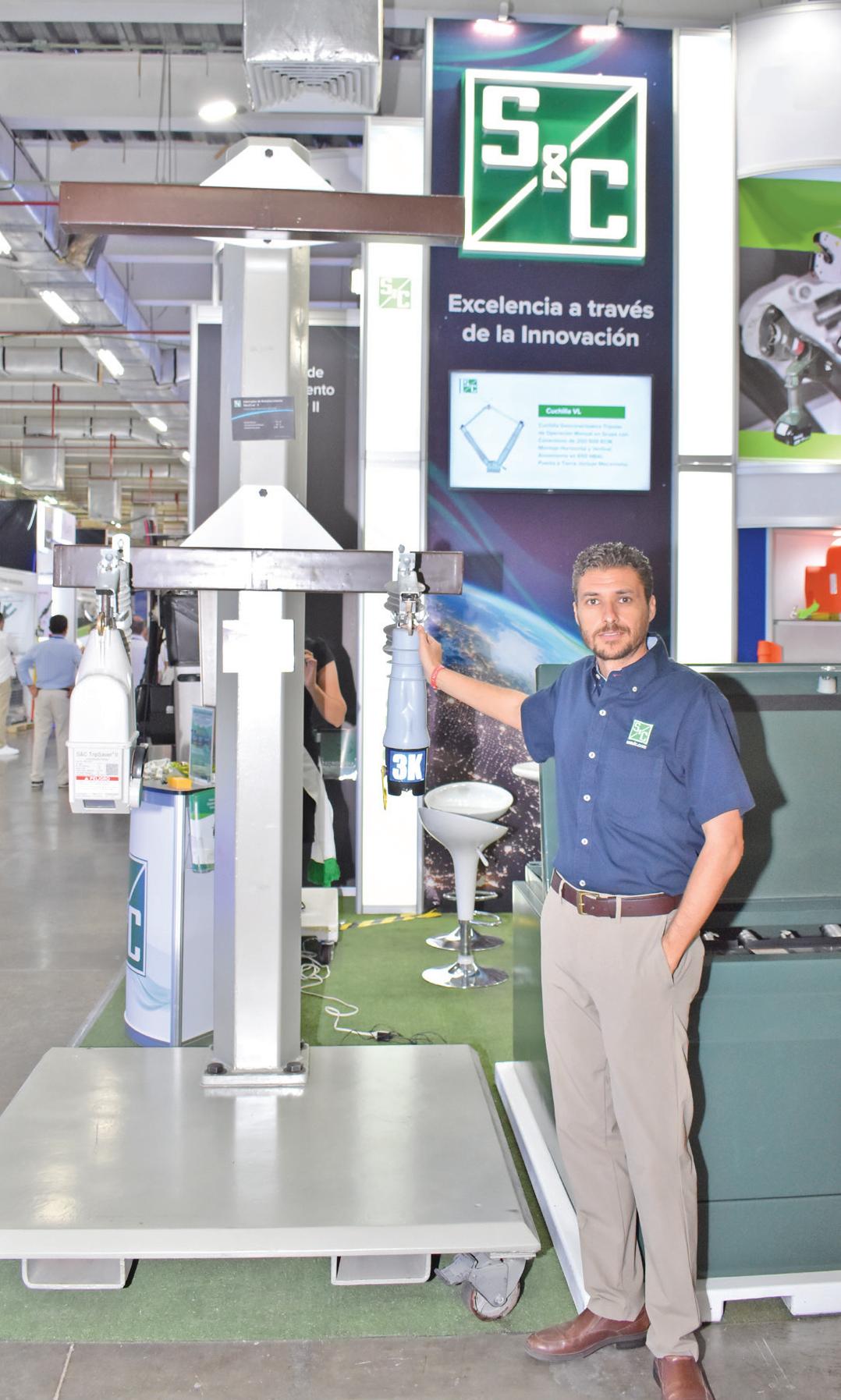
“Constantemente estaremos lanzando nuevas soluciones enfocadas a mitigar el impacto que tienen los transitorios en esta parte de la red de media atención”, afirmó.
Con más de 100 años de presencia en el mercado y 60 años en México, S&C Electric Mexicana continúa siendo un actor fundamental en la industria, impulsando soluciones que revolucionan la forma en que concebimos la distribución eléctrica.
that occur on the medium-voltage overhead network.” Faced with this challenge, S&C Electric Mexicana proposes integral solutions to mitigate the impact these faults can have on users and the utility company.
The company offers equipment strategically placed along the distribution network, from the substation exit to the end of the medium voltage network. But what makes these solutions stand out from others? Alfredo emphasized three aspects: “Our main differentiator is our human capital, the equipment quality, and the after-sales service we provide.”
One characteristic to highlight of S&C Electric’s solutions is their adaptability. Not only do they integrate easily into the existing distribution network infrastructure, but they also adapt to the needs of different customers, offering customization according to specific requirements.
Tangible and Sustainable Results
Castellanos shared that customers have seen remarkable improvements in the reliability of their networks. In addition, he highlighted that the investment in their equipment is recovered within one to two years, satisfying both technical and financial criteria.
In terms of sustainability, these solutions reduce the need to send crews to restore service, which means fewer vehicles on the streets and, therefore, fewer CO2 emissions. “With this, logically, we are contributing to not emitting CO2 into the environment,” he added.
Vision for the Future
S&C Electric Mexicana’s vision continues beyond there.
According to Alfredo Castellanos, the company aims to “be leaders in the sector,” so it constantly invests in innovation and develops new products. “We will constantly be launching new solutions focused on mitigating the impact that transients have on this part of the medium care network,” he said.
With over 100 years of presence in the market and 60 years in Mexico, S&C Electric Mexicana continues to be a key player in the industry, driving solutions that revolutionize how we conceive electrical distribution.
53
Digitalización de la Energía
Durante la realización de la IEEE, el evento más importante sobre generación de electricidad en México, platicamos con Marco Cosío, Vicepresidente de Infraestructura Inteligente de Siemens para México, Latinoamérica y el Caribe. Marco nos aportó detalles sobre la relevancia de la digitalización energética y el compromiso de Siemens con la sostenibilidad y eficiencia.
SIVACON y la digitalización
“SIVACON es una solución en baja tensión para distribución de energía”, explicó Marco Cosío. Mientras que las líneas de transmisión de alta tensión son esenciales, es la transformación y distribución de la baja tensión lo que realmente impacta nuestra vida cotidiana. Y con la digitalización, ha llegado una nueva era de administración de energía, dándole a los equipos la capacidad de tomar decisiones inteligentes.
Esta capacidad de toma de decisiones es revolucionaria, porque permite a los usuarios elegir, por ejemplo, entre fuentes de energía fotovoltaica, transmisión o baterías de respaldo, especialmente durante horarios punta, donde el coste puede dispararse. Sin embargo, los beneficios van más allá de lo económico. “La sostenibilidad es fundamental en nuestro actuar y vivir”, especificó Marco.
Esta capacidad de elección se traduce en significativos ahorros económicos y avances hacia una operación más verde. Pero, ¿qué supone esta innovación en términos de financiamiento y retorno de inversión? Marco Cosío es claro al respecto: “Vemos esto como una inversión. Muchas de las soluciones que ofrecemos incluso las financiamos, porque sabemos que reditúan. La eficiencia energética tiene un ‘payback’ y siempre es posible”.
En su participación en IEEE, Siemens no solo presentó soluciones técnicas, sino una visión, en la cual la digitalización y sustentabilidad se entrelazan, ofreciendo un panorama energético más eficiente, verde y seguro. “Hoy, más que nunca, tenemos que actuar rápido. No tenemos tiempo de seguir pensando y planeando. Estamos comprometidos con combinar el mundo real con el digital, y en esa combinación creamos soluciones competitivas para nuestros clientes”, aseguró.
130 años en México
Marco Cosío enfatizó el compromiso de Siemens con México, señalando que la empresa está cerca de celebrar 130 años en el país. Esta longevidad brinda un nivel de confianza a sus clientes, asegurándoles que Siemens está aquí para quedarse y brindar apoyo constante.
Energy Digitalization
During the IEEE, the most crucial event on electricity generation in Mexico, we spoke with Marco Cosío, Siemens’ Vice President of Intelligent Infrastructure for Mexico, Latin America, and the Caribbean. Marco gave us details about the relevance of energy digitalization and Siemens’ commitment to sustainability and efficiency.
SIVACON and digitalization
“SIVACON is a low-voltage solution for power distribution,” explained Marco Cosío. While high-voltage transmission lines are essential, the transformation and distribution of low-voltage impacts our daily lives. And with digitalization, a new era of energy management has arrived, allowing equipment to make intelligent decisions.
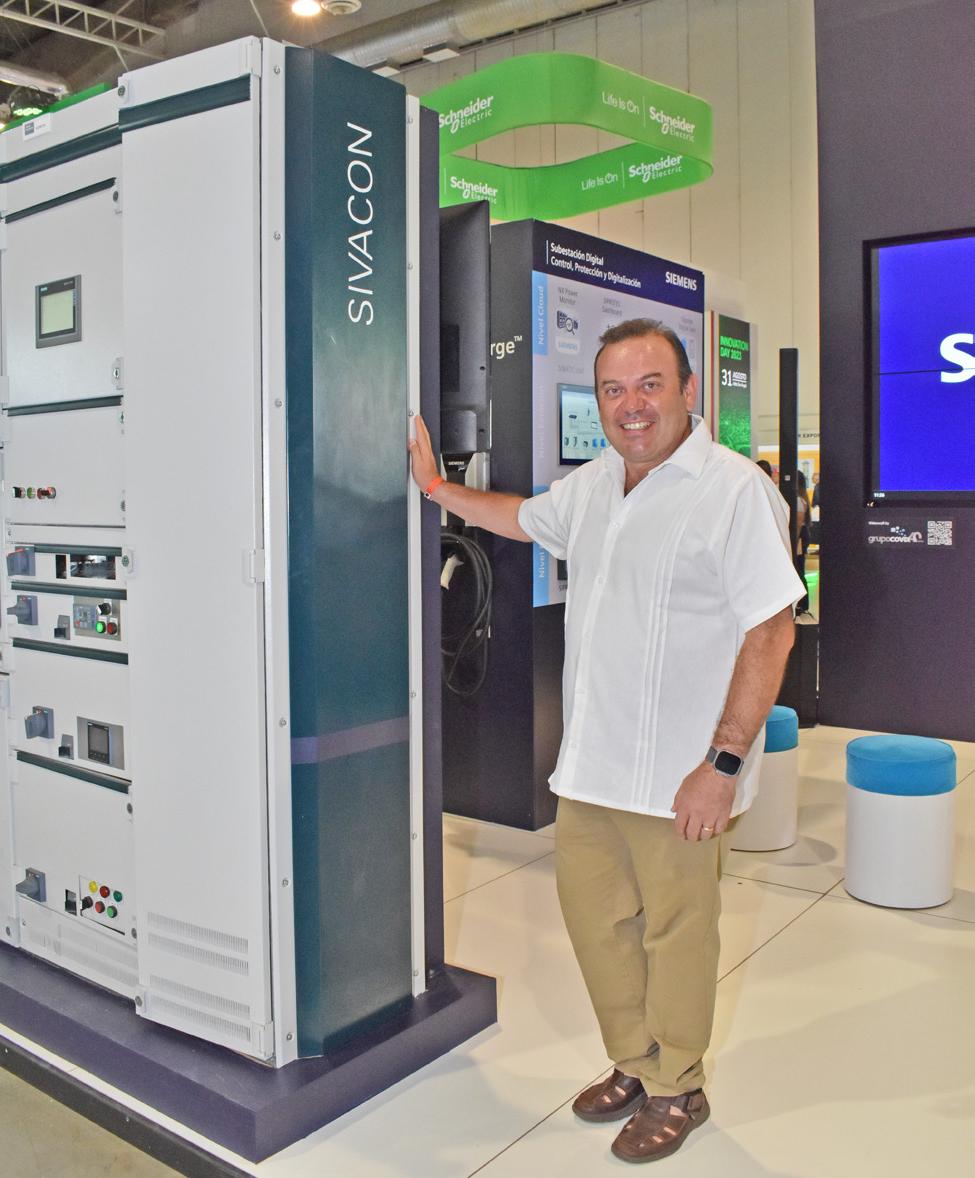
This decision-making capability is revolutionary because it allows users to choose, for example, between photovoltaic, transmission,
or battery backup power sources, especially during peak times, when the cost can skyrocket. However, the benefits go beyond economics.
“Sustainability is fundamental to how we act and live,” Marco specified.
This ability to choose translates into significant economic savings and progress toward a greener operation. But what does this innovation mean regarding financing and return on investment? Marco Cosío is clear: “We see this as an investment. Many of the solutions we offer are even financed because we know that
54
Además, la empresa está invirtiendo más en México, expandiendo plantas y promoviendo el desarrollo técnico y tecnológico.
“Nos comprometemos con la eficiencia y sostenibilidad”, compartió. Al mismo tiempo, anunció que Siemens tiene el objetivo de ser carbono neutral en toda su operación para 2030. Lo anterior también incluye en su totalidad a la cadena de suministro para 2050.
Digitalización: El Futuro de la Energía
El mundo está adoptando rápidamente la digitalización y la energía eléctrica no es la excepción. Siemens utiliza “gemelos digitales” para realizar pruebas de equipos, acelerando significativamente los tiempos de instalación. “Estamos combinando el mundo real con el mundo digital”, afirmó Marco Cosío, creando soluciones que brindan ventajas competitivas.
Ciberseguridad: una prioridad
Dada la creciente preocupación por los ataques cibernéticos, la ciberseguridad es una prioridad para Siemens. Marco reconoció que, al digitalizar y comunicar más, aumenta la exposición a posibles amenazas. “Estamos ofreciendo soluciones de ciberseguridad para nuestros clientes. En un mundo donde cada vez estás más expuesto, es fundamental garantizar la protección adecuada”, sostiene al asegurar las garantías que pueden entregar a sus clientes.
they pay off. Energy efficiency has a ‘payback,’ and it is always possible”.
In its participation in IEEE, Siemens presented technical solutions and a vision in which digitalization and sustainability are intertwined, offering a more efficient, green, and secure energy landscape. “Today, more than ever, we have to act fast. We don’t have time to keep thinking and planning. We are committed to combining the real world with the digital world; in that combination, we create competitive solutions for our customers,” he assured.
130 years in Mexico
Marco Cosío emphasized Siemens’ commitment to Mexico, noting that the company is close to celebrating 130 years in the country. This longevity provides confidence to its customers, assuring them that Siemens is here to stay and provide constant support. In addition, the company is investing more in Mexico, expanding plants, and promoting technical and technological development.
“We are committed to efficiency
and sustainability,” he shared. At the same time, he announced that Siemens aims to be carbon neutral across its entire operation by 2030. The above also includes the whole supply chain by 2050.
Digitalization: The Future of Energy
The world is rapidly embracing digitalization, and electric power is no exception. Siemens uses “digital twins” to perform equipment testing, significantly speeding up installation times. “We are combining the real world with the digital world,” said Marco Cosío, creating solutions that provide competitive advantages.

Cybersecurity: a priority
Given the growing concern about cyber attacks, cybersecurity is a priority for Siemens. Marco acknowledged that exposure to potential threats increases as we digitize and communicate more. “We are providing cybersecurity solutions for our customers. In a world where you are increasingly exposed, it is essential to ensure adequate protection,” he says, assuring the guarantees they can deliver to their customers.
55
Hitachi Energy presenta tecnología avanzada en la reunión del IEEE 2023
Durante
la reciente reunión de verano del IEEE, platicamos con Ignacio Pérez Fabelo, especialista en marketing y desarrollo de negocios de Hitachi Energy Sweden. Con 25 años en el grupo, Ignacio nos introdujo a la innovadora tecnología que la empresa está promocionando: los cambiadores de toma bajo carga con ruptores en vacío.
El cambiador de toma bajo carga es un dispositivo esencial que se utiliza para cambiar la conexión del tap del bobinado de un transformador mientras está en operación. “Tradicionalmente, estos dispositivos requerían mantenimiento cada 80 a 100 mil conmutaciones, aproximadamente cada siete años. Esta rutina llevaba a que el usuario final, en este caso la Comisión Federal de Electricidad (CFE), detuviera el transformador, revisara el desgaste de los contactos y reenergizará el equipo cada 80-100 mil conmutaciones”, explica el especialista.
Sin embargo, con la nueva tecnología que incorpora interruptores de vacío, el intervalo de mantenimiento se extiende notablemente. En lugar de siete años, el mantenimiento se realiza cada 300 mil conmutaciones, duplicando la disponibilidad de estos equipos.
Un valor agregado significativo es la compatibilidad con fluidos vegetales, lo que reduce el riesgo de incendios en el transformador. Además, esta nueva tecnología es completamente intercambiable con la convencional. Por lo tanto, si la CFE tiene transformadores que han estado en servicio durante una década o más, puede optar por actualizar solo el conmutador
Hitachi Energy presents advanced technology at IEEE 2023 meeting
During the recent IEEE summer meeting, we spoke with Ignacio Perez Fabelo, marketing and business development specialist at Hitachi Energy Sweden. With 25 years in the group, Ignacio introduced us to the innovative technology the company is promoting: on-load tap
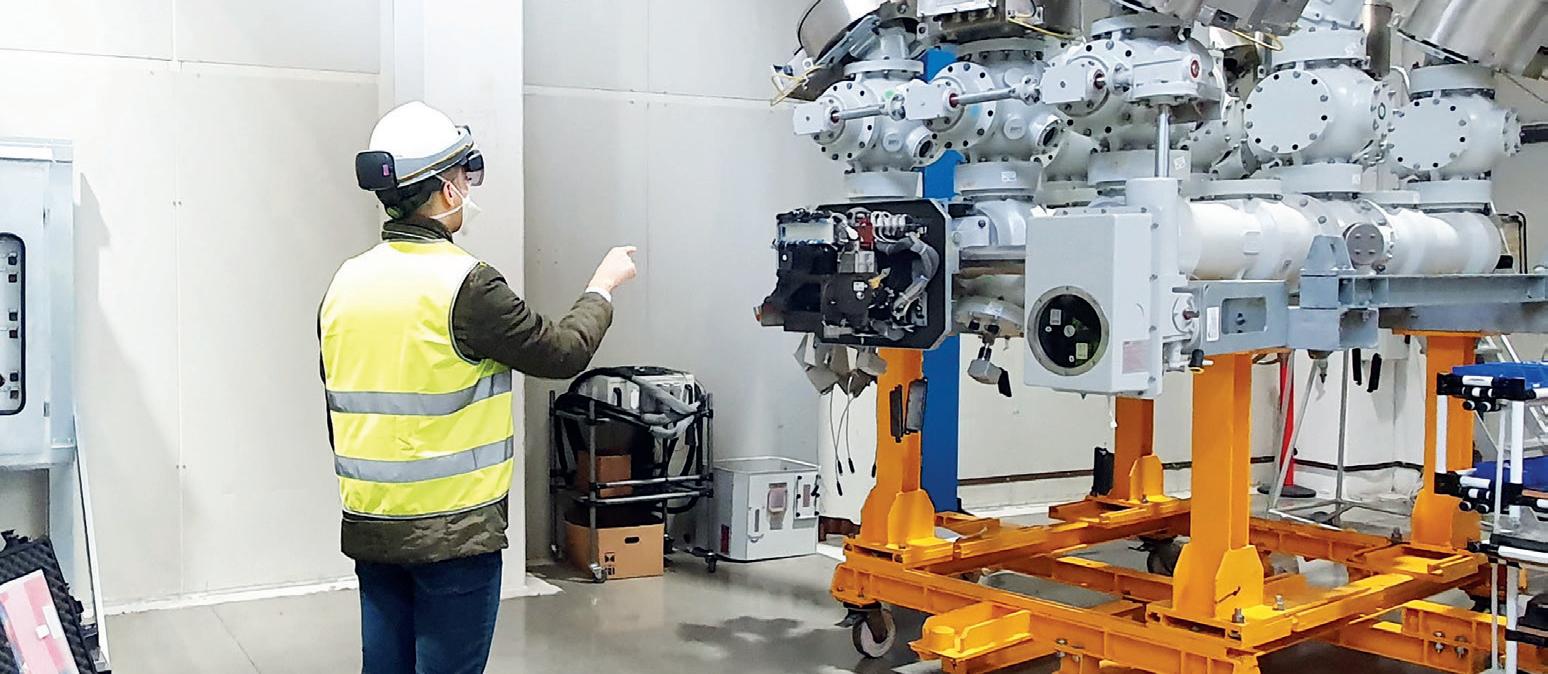
Theon-load tap changer is essential to change the tap connection of a transformer winding in operation. “Traditionally, these devices required maintenance every 80 to 100 thousand switchings, approximately every seven years. This routine led the end user, in this case, the Federal Electricity Commission (CFE), to stop the transformer, check the wear of the contacts, and
re-energize the equipment every 80-100 thousand switchings,” explains the specialist.
However, the maintenance interval is significantly extended with the new technology that incorporates vacuum interrupters. Instead of seven years, maintenance is performed every 300,000 switchings, doubling the availability of this equipment.
56
Con la nueva tecnología que incorpora interruptores de vacío, el intervalo de mantenimiento se extiende notablemente. En lugar de siete años, el mantenimiento se realiza cada 300 mil conmutaciones, duplicando la disponibilidad de estos equipos.
With new technology incorporating vacuum interrupters, the maintenance interval is significantly extended. Instead of seven years, maintenance is performed every 300,000 switchings, doubling the availability of this equipment.
del cambiador de toma bajo carga en lugar de todo el equipo, todo en aproximadamente 2 horas.
Desde una perspectiva económica, los beneficios son claros. “La intervención menos frecuente se traduce en costos más bajos, menor interrupción del servicio, reducción en pérdida de ingresos, así como una prolongación considerable de la vida útil del transformador”, detalla Ignacio Pérez.
En cuanto a mantenimiento, Ignacio señaló que, aunque no es necesario sacar el transformador de servicio durante esas 300 mil conmutaciones, sí se requieren inspecciones anuales. Estas revisiones incluyen comprobaciones visuales y análisis de aceite para asegurar su correcto funcionamiento.
Además, en línea con el creciente enfoque de Hitachi con relación a la sustentabilidad, esta tecnología también contribuye a operaciones más eficientes y seguras. La intervención menos frecuente reduce los riesgos asociados con la instalación y el acceso a equipos de alta tensión, y el uso de aceites vegetales es beneficioso tanto para el medio ambiente como para la protección del transformador.
Respecto a las ventajas competitivas de esta solución de Hitachi Energy, Ignacio destacó su diseño único, el cual permite no desmantelar el sistema de flechas, manteniendo la sincronización entre el cambiador de tomas y el mando motor, evitando problemas y costos adicionales en campo.
Adicionalmente, Hitachi Energy presentó una serie de tecnologías e innovaciones durante la reunión de verano del IEEE, mostrando su compromiso con la innovación, eficiencia y sustentabilidad en el campo de la energía. La empresa destacó los productos de realidad virtual y aumentada para el soporte remoto de las instalaciones de alto voltaje.
En este sentido, su “Digital Kit” es una solución de soporte remoto inmersiva para el servicio en productos de alta tensión. Gracias a esta herramienta de realidad aumentada, los técnicos, sin importar su ubicación en el mundo, pueden ver en tiempo real lo que sus pares observan en el lugar real, facilitando la colaboración y solución efectiva de problemas.
A significant added value is the compatibility with plant fluids, which reduces the risk of transformer fires. In addition, this new technology is entirely interchangeable with conventional technology. Therefore, if the CFE has transformers in service for a decade or more, it can choose to upgrade only the on-load tap changer switchgear instead of the entire equipment, all in about 2 hours.
From an economic perspective, the benefits are clear. “Less frequent intervention translates into lower costs, less service interruption, reduction in lost revenue, and a considerable prolongation of transformer life,” detailed Ignacio Perez.
In terms of maintenance, Ignacio pointed out that annual inspections are required, although it is not necessary to take the transformer out of service during those 300,000 switchings. These reviews include visual checks and oil analysis to ensure proper operation.
Furthermore, in line with Hitachi’s increasing focus on sustainability, this technology contributes to more efficient and safer operations. Less frequent intervention reduces the
risks associated with installation and access to high-voltage equipment, and using vegetable oils benefits both the environment and transformer protection.
Regarding the competitive advantages of this Hitachi Energy solution, Ignacio highlighted its unique design, which allows not dismantling the shaft system, maintaining the synchronization between the tap changer and the motor drive, and avoiding additional problems and costs in the field.
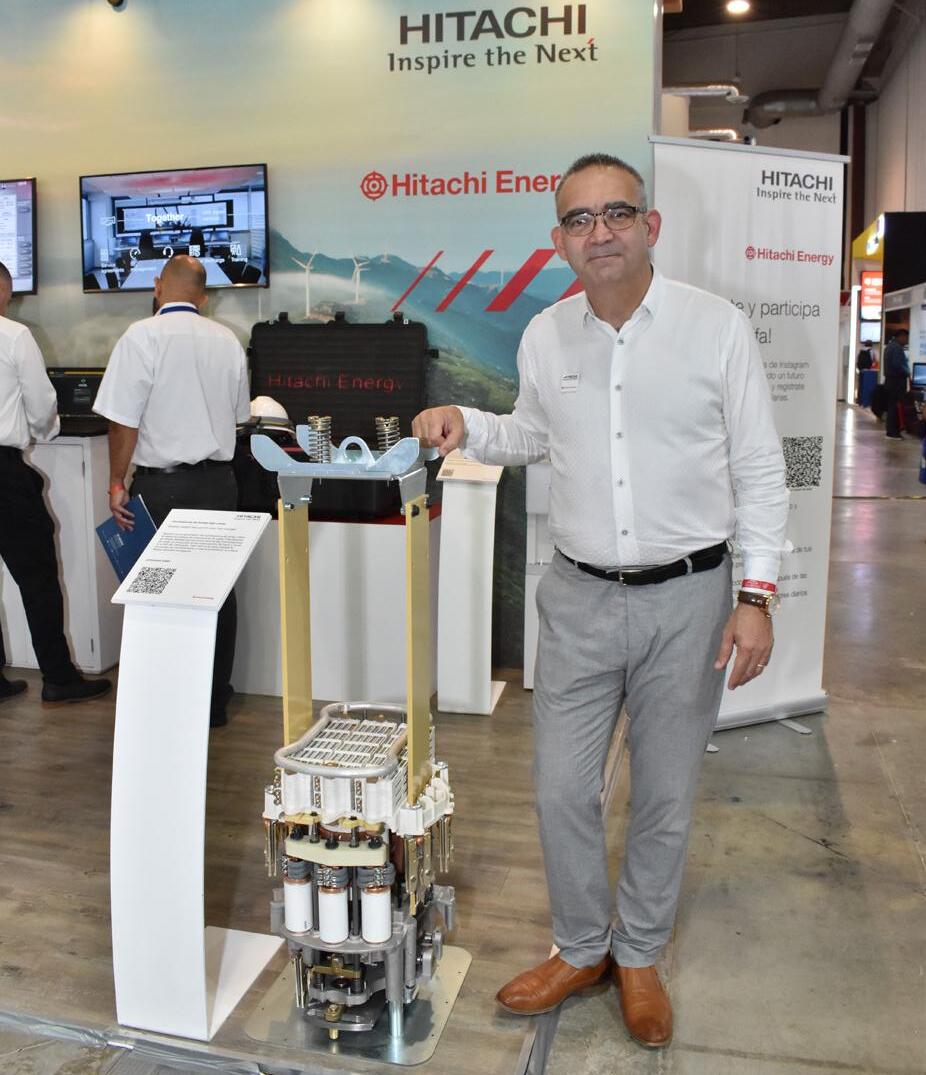
In addition, Hitachi Energy presented several technologies and innovations during the IEEE summer meeting, demonstrating its commitment to innovation, efficiency, and sustainability in the energy field. The company highlighted virtual and augmented reality products for remote support of high-voltage installations.
In this regard, its “Digital Kit” is an immersive remote support solution for service in high-voltage products. Thanks to this augmented reality tool, technicians, regardless of their location in the world, can see what their peers observe at the actual site in real time, facilitating collaboration and effective troubleshooting.
57
Energy Exemplar: Proyección de mercados energéticos
En entrevista con Carlos Romero y Felipe Valdebenito, ambos Principal Solutions Engineers de Energy Exemplar, explicaron a fondo sobre esta herramienta revolucionaria. “PLEXOS es un producto para simulación de mercados que no toma atajos. Realiza una simulación intentando replicar la misma formulación que utiliza la operación del mercado”. Esta precisión permite una predicción de precios, evaluación del impacto en nueva regulación, así como analizar el avance de tecnologías como energías renovables y retiro de combustibles fósiles.
El diferencial de PLEXOS consiste en que no solo se centra en mercado eléctrico. Carlos Romero aclara: “Cuando hablamos de energía, nos referimos a toda la cadena energética, desde la exploración de petróleo y gas hasta la generación eléctrica y el consumo energético”. De esta manera, abarca temas tan variados como la electrificación del transporte, programas de generación distribuida y hasta la conversión de agua en hidrógeno.
Durante la conferencia presentada en la reunión de verano del IEEE, Felipe Valdebenito expuso una conferencia sobre los sistemas de hidrógeno y su impacto futuro en la transición energética. “Vamos a recurrir a muchos tipos de energía”, señala por su parte Carlos Romero, resaltando la limitada capacidad de almacenamiento de las baterías actuales y cómo el hidrógeno podría representar una solución para el almacenamiento de energía producida por renovables. Ambos especialistas recalcan la capacidad de PLEXOS para visualizar el impacto en toda la matriz energética, no solamente en un segmento. “Puedes ver el impacto en la confiabilidad del sistema, en los precios o en la sostenibilidad”.
¿Qué hace de PLEXOS un producto único en el mercado? “Nadie tiene un producto que pueda manejar todos estos ‘commodities’ en una sola aplicación”, sostiene Carlos Romero. Además, PLEXOS se adapta a distintos horizontes de planificación, desde los siguientes segundos hasta los próximos 50 años.
Energy Exemplar: energy market projections
The simulation and forecasting of energy markets have been pillars in the evolution of vital sectors such as the energy sector. Energy Exemplar, a company specializing in simulation software for this sector, has emerged as a world reference thanks to its PLEXOS software.
In an interview with Carlos Romero and Felipe Valdebenito, Principal Solutions Engineers at Energy Exemplar, they explained in depth about this revolutionary tool. “PLEXOS is a market simulation product that does not take shortcuts. It performs a simulation to replicate the same formulation the market operation uses.” This accuracy allows for price prediction, evaluation of
the impact of new regulations, as well as analysis of the progress of technologies such as renewable energy and fossil fuel retirement.
The differential of PLEXOS is that it does not only focus on the electricity market. Carlos Romero clarifies: “When we talk about energy, we refer to the entire energy chain, from oil and gas exploration to
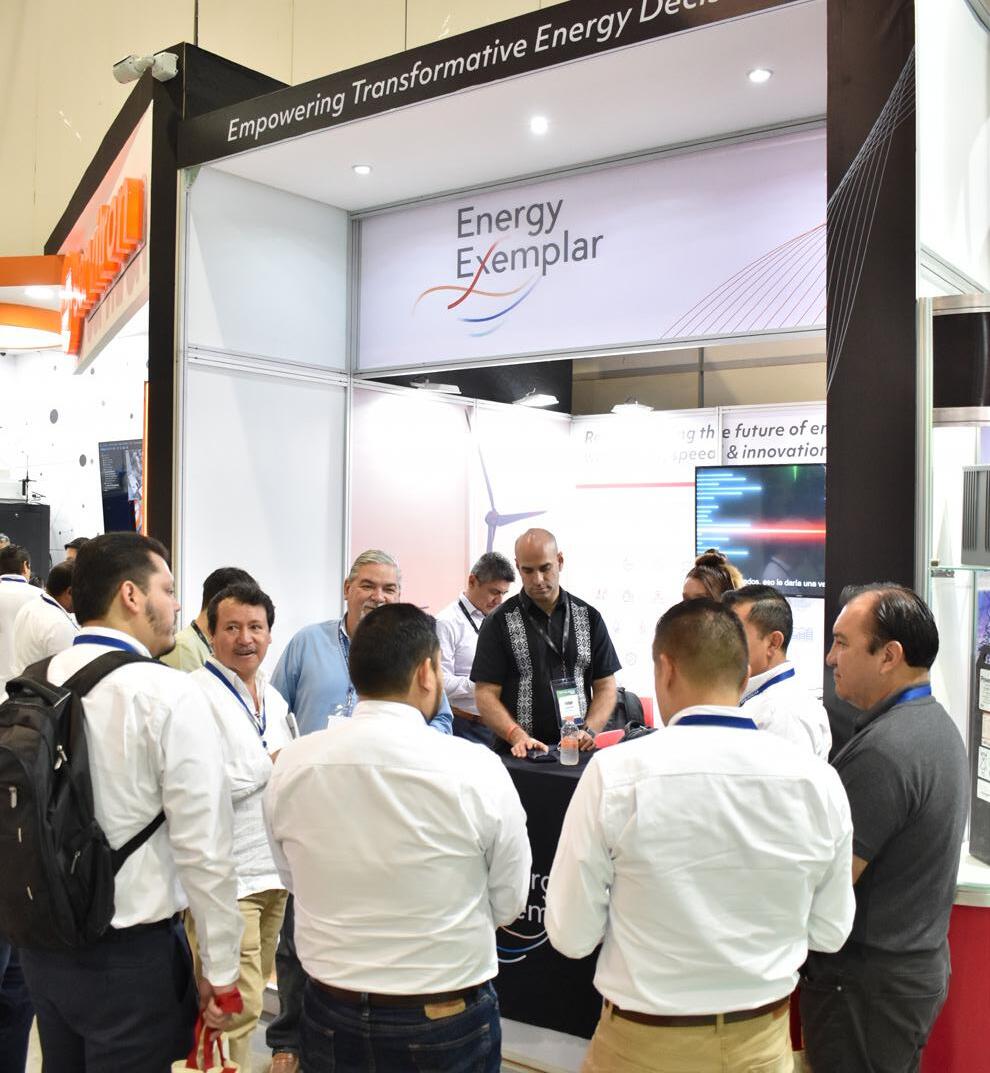
58
La simulación y pronósticos de mercados energéticos han sido pilares en la evolución de sectores tan vitales como el energético. Energy Exemplar, empresa especializada en software de simulación para este sector, ha emergido como un referente mundial gracias a su software PLEXOS.
En cuanto al tipo de empresas u organismos beneficiados por sus soluciones, Energy Exemplar no se limita a un nicho. Desde operadores de mercado, entidades regulatorias, hasta bancos de renombre y fabricantes de vehículos, todos ven valor en la solución que ofrece PLEXOS. Incluso las universidades y entidades de investigación y desarrollo encuentran una gran utilidad.
Al platicar sobre el contexto mexicano, los especialistas destacan que, aunque CFE y CENACE son los actores principales, hay otras entidades y empresas en ambos sectores que también se benefician de PLEXOS. Por ejemplo, en el caso de los fabricantes de vehículos, ellos emplean PLEXOS tanto para prever la adopción de vehículos eléctricos como para garantizar la seguridad energética en sus plantas.
Energy Exemplar, a través de PLEXOS, no solo visualiza el presente del sector energético, sino que visualiza y predice todos los escenarios posibles para el futuro de este sector, apostando por una gestión más eficiente, sostenible y global.
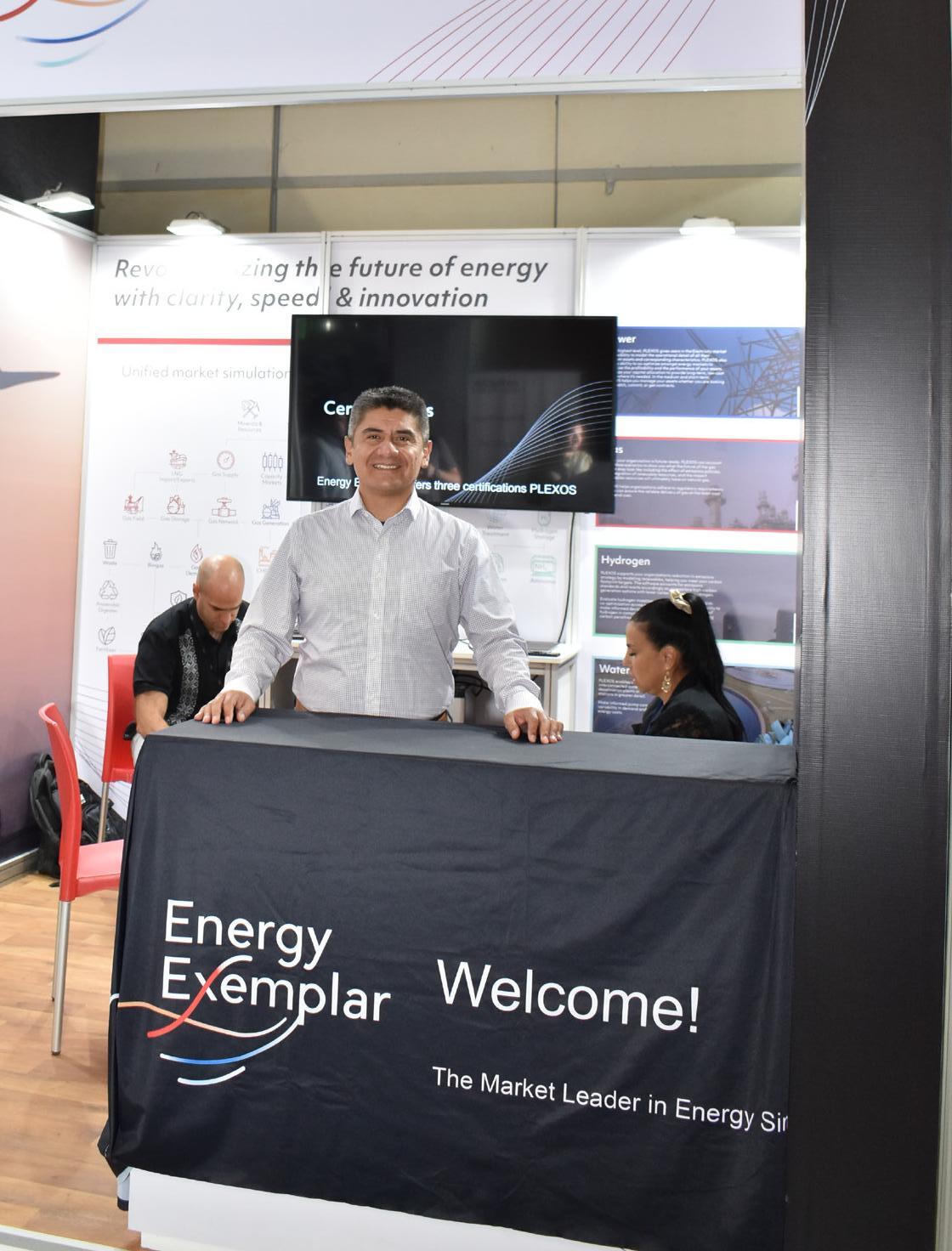
electricity generation and energy consumption. In this way, it covers topics as varied as the electrification of transportation, distributed generation programs, and even the conversion of water into hydrogen.
During the IEEE summer meeting lecture, Felipe Valdebenito delivered a speech on hydrogen systems and their future impact on the energy transition. “We are going to resort to many types of energy,” said Carlos Romero, highlighting the limited storage capacity of current batteries and how hydrogen could represent a solution for storing energy produced by renewables. Both specialists stress the ability of PLEXOS to visualize the impact on the entire energy matrix, not just one segment.
“You can see the impact on system reliability, prices, or sustainability.”
What makes PLEXOS unique in the market? “No one has a product that can handle all these ‘commodities’ in a single application,” Carlos Romero maintains. Moreover, PLEXOS adapts to different planning horizons, from the next few seconds to the next 50 years.
As for the type of companies or organizations that benefit from its solutions, Energy Exemplar is not limited to a niche. From market operators and regulatory bodies to well-known banks and vehicle manufacturers, all see value in the solution offered by PLEXOS. Even universities and research and development entities find great utility.
When discussing the Mexican context, the specialists point out that although CFE and CENACE are the leading players, other entities and companies in both sectors also benefit from PLEXOS. For example, in the case of vehicle manufacturers, they use PLEXOS both to anticipate the adoption of electric vehicles and to ensure energy security in their plants.
Energy Exemplar, through PLEXOS, not only visualizes the present of the energy sector but also visualizes and predicts all possible scenarios for the future of this sector, aiming for more efficient, sustainable, and global management.
59
Nadie tiene un producto que pueda manejar todos estos ‘commodities’ en una sola aplicación”,
“No one has a product that can handle all these commodities in a single application,”
Carlos Romero, Principal Solutions Engineer, Energy Exemplar.
Baterías para la eliminación de la intermitencia en el suministro eléctrico
El cambio climático y la necesidad de reducir las emisiones de gases de efecto invernadero han impulsado la transición hacia fuentes de energía renovables. Sin embargo, a pesar de los avances en la generación de energía a partir de fuentes como el sol y el viento, existe un desafío significativo: la intermitencia.
Las energías renovables, por su naturaleza, no son constantes. Esta variabilidad en la generación de energía puede llevar a interrupciones en el suministro eléctrico, lo que plantea la necesidad de soluciones de almacenamiento eficientes. Las baterías emergen como una solución clave para este desafío. Estos dispositivos permiten almacenar el exceso de energía generada durante los picos de producción y liberarla cuando la generación es baja. De esta manera, las baterías actúan como un amortiguador, garantizando un suministro eléctrico constante y fiable.
La Barrera de la Batería
El almacenamiento de energía es esencial para la transición hacia un futuro energético limpio. Sin embargo, la implementación de soluciones de almacenamiento enfrenta obstáculos técnicos y económicos, conocidos como la “barrera de las baterías”. Aunque la tecnología de baterías ha avanzado, aún existen limitaciones en su capacidad y vida útil. Además, los materiales utilizados en las baterías pueden tener impactos medioambientales.
Para aprovechar al máximo las energías renovables, es crucial superar las limitaciones actuales de las baterías. Al mejorar la capacidad de almacenamiento y reducir los costes, las baterías pueden desempeñar un papel esencial en la integración de fuentes de energía renovables. Además, al almacenar el exceso de energía, se pueden mitigar los problemas de intermitencia y reducir la dependencia de centrales térmicas basadas en combustibles fósiles.
El futuro del almacenamiento de energía
El almacenamiento de energía es la clave para un futuro energético sostenible. Con la investigación y el desarrollo continuos, se espera que las tecnologías de baterías evolucionen, ofreciendo soluciones más eficientes y sostenibles. Al integrar estas soluciones en la red eléctrica, se puede garantizar un suministro constante, reduciendo la dependencia de los combustibles fósiles y avanzando hacia un futuro energético limpio y resiliente.
Batteries for elimination of power supply intermittency
Climate change and the need to reduce greenhouse gas emissions have driven the transition to renewable energy sources. However, despite advances in power generation from sources such as the sun and wind, intermittency is a significant challenge.
Renewable energies, by their nature, are not constant. This variability in power generation can lead to interruptions in electricity supply, which raises the need for efficient storage solutions. Batteries emerge as a critical solution to this challenge. These devices allow for storing excess energy generated during production peaks and releasing it when generation is low. This way, batteries act as a buffer, ensuring a constant and reliable power supply.
The Battery Barrier
Energy storage is essential for the transition to a clean energy future. However, the implementation of storage solutions faces technical and economic hurdles, known as the “battery barrier.” Although battery technology has advanced, there are still limitations in battery capacity and lifetime. In addition, the materials used in batteries can
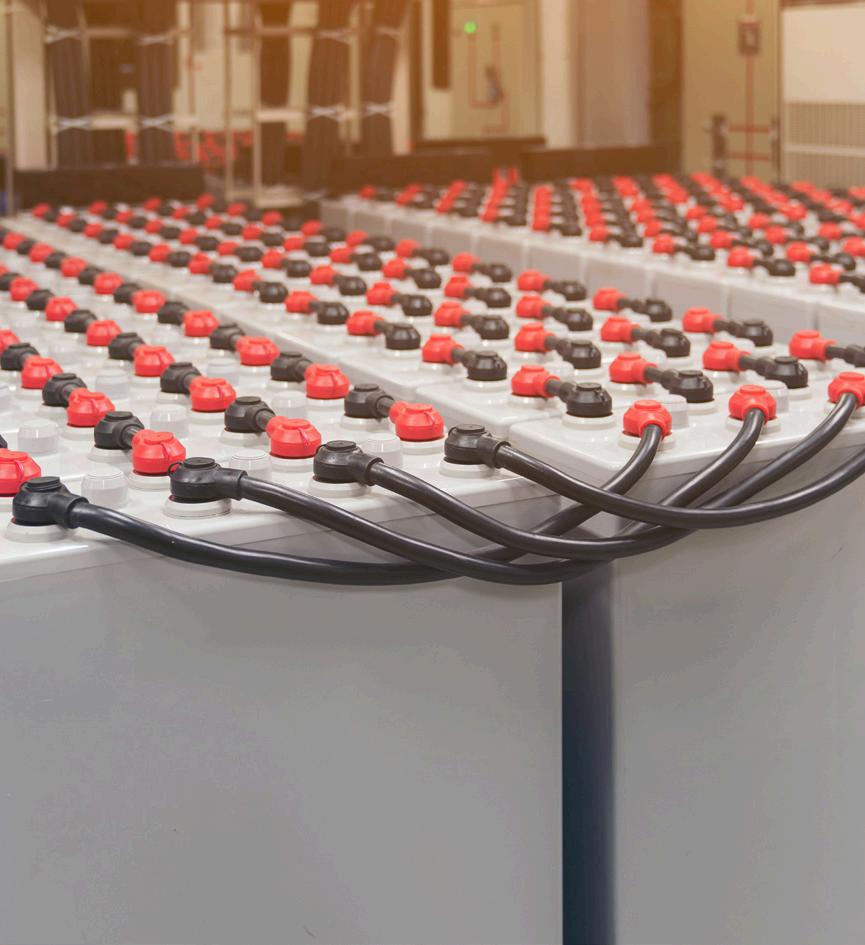
have environmental impacts. It is crucial to overcome current battery limitations to take full advantage of renewable energy. Batteries can play an essential role in integrating renewable energy sources by improving storage capacity and reducing costs. In addition, by storing excess energy, intermittency problems can be mitigated, and dependence on fossil fuel-based thermal power plants can be reduced.
The future of energy storage
Energy storage is the key to a sustainable energy future. With continued research and development, battery technologies are expected to evolve, offering more efficient and sustainable solutions. Integrating these solutions into the power grid guarantees a constant supply, reducing dependence on fossil fuels and moving towards a clean and resilient energy future.
Power Industry 60
Las últimas innovaciones en la generación de hidrógeno verde
The latest innovations in green hydrogen generation
Green hydrogen is a clean, renewable fuel that has the potential to revolutionize the way we generate and consume energy. However, green hydrogen is still relatively expensive to produce, which has limited its large-scale adoption.
In recent years, significant advances have been made in green hydrogen generation technology, making it more affordable and competitive. These innovations include:
reducing greenhouse gas emissions. This fuel can power vehicles, generate electricity, and even heat buildings. Its use in place of fossil fuels would help reduce air pollution and climate change.
En los últimos años, se han realizado importantes avances en la tecnología de generación de hidrógeno verde, lo que ha hecho que sea más asequible y competitivo. Estas innovaciones incluyen:
• El desarrollo de nuevos electrolizadores más eficientes, que utilizan menos energía para separar el hidrógeno del agua.
• El uso de fuentes de energía renovable, como la energía solar y eólica, para alimentar los electrolizadores.
• La mejora de las tecnologías de almacenamiento de hidrógeno, lo que hace que sea más fácil almacenar y transportar el combustible.
Como resultado de estos avances, el costo de producción de hidrógeno verde ha disminuido significativamente en los últimos años. Se estima que el costo de producción de hidrógeno verde podría reducirse a la mitad en la próxima década, lo que lo haría más competitivo con los combustibles fósiles.
El desarrollo de hidrógeno verde tiene el potencial de tener un impacto significativo en la reducción de las emisiones de gases de efecto invernadero. Este combustible puede utilizarse para alimentar vehículos, generar electricidad e incluso para calentar edificios. Su uso en lugar de combustibles fósiles ayudaría a reducir la contaminación del aire y al cambio climático.
El hidrógeno verde aún se encuentra en sus primeras etapas de desarrollo, pero tiene el potencial de revolucionar la forma en que generamos y consumimos energía. Con el continuo desarrollo de la tecnología, se convertirá en una parte cada vez más importante del sistema energético mundial.
Como ejemplos, en Alemania, el gobierno está invirtiendo en una planta de electrólisis que utilizará energía solar para producir hidrógeno para el transporte y la generación de electricidad. En Estados Unidos, la empresa Plug Power está construyendo una planta de producción en California, la cual se basará en energía eólica para producir este combustible para vehículos eléctricos. En Japón, una planta de electrólisis usará energía geotérmica para producir hidrógeno para la industria química.
• The development of new, more efficient electrolyzers, which use less energy to separate hydrogen from water.
• Using renewable energy sources, such as solar and wind power, to power electrolyzers.
• Improved hydrogen storage technologies, which make it easier to store and transport the fuel.
Green hydrogen is still in its early stages of development, but it can potentially revolutionize how we generate and consume energy. With continued development of the technology, it will become an increasingly important part of the world’s energy system.

For example, in Germany, the government is investing in an elec-
As a result of these advances, the cost of producing green hydrogen has decreased significantly in recent years. The cost of producing green hydrogen could be cut in half within the next decade, making it more competitive with fossil fuels.
The development of green hydrogen has the potential to have a significant impact on
trolysis plant that will use solar energy to produce hydrogen for transportation and electricity generation. In the United States, Plug Power is building a production plant in California that will rely on wind power to produce this fuel for electric vehicles. In Japan, an electrolysis plant will use geothermal energy to produce hydrogen for the chemical industry.
Power Industry 61
El hidrógeno verde es un combustible limpio y renovable que tiene el potencial de revolucionar la forma en que generamos y consumimos energía. Sin embargo, la producción de hidrógeno verde aún es relativamente cara, lo que ha limitado su adopción a gran escala.
La digitalización de los sistemas y el control en la infraestructura de alta tensión
es vulnerable a fallos y averías.
La digitalización de los sistemas y el control en la infraestructura de alta tensión puede ayudar a mejorar la seguridad, la eficiencia y la fiabilidad de la red eléctrica. La digitalización permite a los operadores de la red monitorizar y controlar la red en tiempo real, lo que puede ayudar a identificar y corregir problemas antes de que causen fallos. La digitalización también puede ayudar a mejorar la eficiencia de la red, permitiendo a los operadores optimizar el flujo de energía y reducir las pérdidas.
Hay una serie de tecnologías que se están utilizando para digitalizar la infraestructura de alta tensión, incluyendo:
• Sensores: para recopilar datos sobre la red eléctrica, como la tensión, la corriente y la temperatura. Así se monitorea el estado de la red y se identifican problemas potenciales.
• Software: para analizar los datos recopilados por los sensores y para tomar decisiones sobre cómo operar la red. De esta manera, los operadores a identificar y corregir problemas
Digitization of systems and control in highvoltage infrastructure
High-voltage infrastructure is essential to the functioning of modern society. It supplies electricity to homes, businesses, and industries and is responsible for transporting electrical energy over long distances. However, high-voltage infrastructure is also vulnerable to failures and breakdowns.
Digitization of systems and control in the high-voltage infrastructure can improve the power grid’s safety, efficiency, and reliability. Digitization allows grid operators to monitor and control the grid in real-time, which can help identify and correct problems before
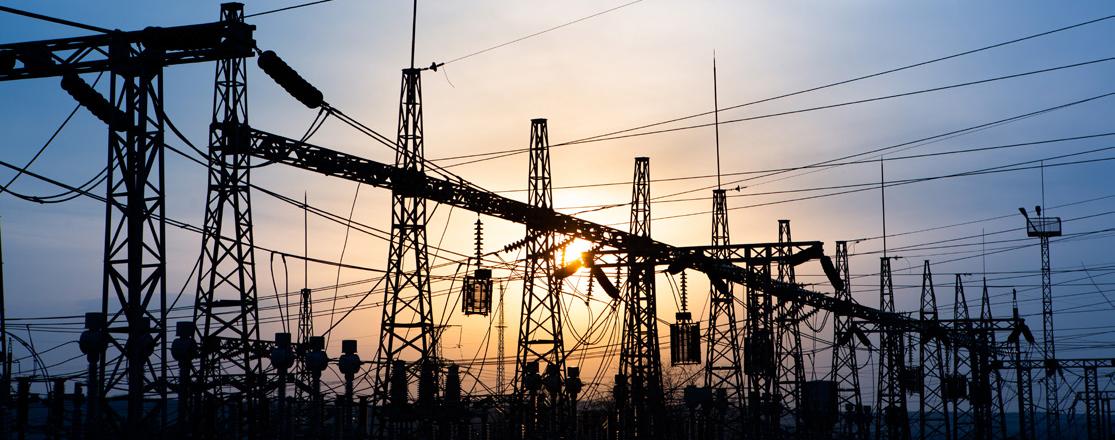

they cause failures. Digitization can also help improve grid efficiency, allowing operators to optimize power flow and reduce losses.
Several technologies are being used to digitize high-voltage infrastructure, including:
- Sensors: to collect data about the power grid, such as voltage, current, and temperature. This monitors the state of the grid and identifies potential problems.
- Software: to analyze the data collected by the sensors and to make decisions on how to operate the grid. This way, operators can identify and correct problems before they cause failures. It also helps to optimize energy flow.
- Communications networks: to transmit the data collected.
The digitization of systems
Power Industry 62
La infraestructura de alta tensión es esencial para el funcionamiento de la sociedad moderna. Abastece de electricidad a los hogares, las empresas y las industrias, y es responsable de transportar la energía eléctrica a largas distancias. Sin embargo, la infraestructura de alta tensión también
antes de que causen fallos. También contribuye a optimizar el flujo de energía.
• Redes de comunicaciones: para transmitir los datos recopilados.
La digitalización de los sistemas y el control en la infraestructura de alta tensión es un proceso en curso. Sin embargo, ya está teniendo un impacto positivo en la seguridad, la eficiencia y la fiabilidad de la red eléctrica. A medida que la digitalización continúe, se espera que tenga un impacto aún mayor en la red eléctrica.
Beneficios de la digitalización de la infraestructura de alta tensión
La digitalización de la infraestructura de alta tensión ofrece una serie de beneficios, entre ellos:
• Mejora de la seguridad: permite a los operadores monitorear y controlar la red en tiempo real, con ello es posible identificar y corregir problemas antes de que causen fallos.
• Aumento de la eficiencia: mejora la eficiencia de la red, permitiendo a los operadores optimizar el flujo de energía y reducir las pérdidas.
• Mejor fiabilidad: reduce la probabilidad de fallos y averías.
• Reducción de costos: de operación y mantenimiento de la red.
• Mejora de la sostenibilidad: permite optimizar el uso de la energía y reducir las emisiones de gases de efecto invernadero.
Retos de la digitalización de la infraestructura de alta tensión
La digitalización de la infraestructura de alta tensión también presenta algunos retos, entre ellos los costos, especialmente en aquellas redes eléctricas con infraestructura más antigua. La complejidad en su operación es mayor. Y se incrementan los riesgos a recibir ciberataques.
La digitalización de la infraestructura de alta tensión es una tendencia importante que está teniendo un impacto positivo en la seguridad, la eficiencia y la fiabilidad de la red eléctrica. Sin embargo, también presenta algunos retos, como el costo, la complejidad y la seguridad. A medida que la digitalización continúe, se espera que estos retos se aborden y que la digitalización se convierta en una parte aún más integral de la red eléctrica.
The digitization of high-voltage infrastructure is a significant trend that positively impacts the power grid’s safety, efficiency, and reliability. However, it also presents challenges like cost, complexity, and security. As digitization continues, these challenges are expected to be addressed, and digitization will become an even more integral part of the power grid.
and control in high-voltage infrastructure is an ongoing process. However, it is already positively impacting the power grid’s safety, efficiency, and reliability. As digitization continues, it is expected to have an even more significant impact on the power grid.
Benefits of digitization of the high-voltage infrastructure Digitization of the high-voltage infrastructure offers several benefits, including:
- Improved safety: allows operators to monitor and control the grid in real-time, thereby making it possible to identify and correct problems before they cause failures.

- Increased efficiency: improves network efficiency, allowing operators to optimize energy flow and reduce losses.
- Improved reliability: reduces the probability of failures and breakdowns.
- Reduced costs for operation and maintenance of the grid.
- Improved sustainability: optimizes energy use and reduces greenhouse gas emissions.
Challenges of high-voltage infrastructure digitization
The digitization of high-voltage infrastructure also presents some challenges, including costs, especially in power grids with older infrastructure. The complexity of their operation is more significant. And the risks of cyber-attacks increase.

Power Industry 63
Industrial Transformation: The Future is Now
La transformación industrial no es solo una tendencia, es una realidad que está redefiniendo la forma en que las industrias operan, innovan y crecen. Con la rápida evolución de la tecnología y la creciente demanda de soluciones sostenibles, es imperativo que las empresas se adapten y evolucionen. Y no hay mejor lugar para presenciar esta revolución en acción que
evento
Industrial Transformation Mexico 2023
Conecta con la Industria del Mañana
Bajo el lema “ITM: Creemos la Industria del Mañana”, el evento se llevará a cabo del 4 al 6 de octubre de 2023 en el Poliforum León, Guanajuato. Aquí, los asistentes tendrán la oportunidad de sumergirse en lo último en innovaciones industriales, desde tecnologías emergentes hasta soluciones sostenibles que están configurando el futuro de la industria.

Acceso Gratuito con Preregistro
Hasta el 29 de septiembre de 2023, los interesados pueden preinscribirse y obtener una admisión gratuita al evento. A partir del 30 de septiembre, el costo de entrada será de $300 MXN. Esta es una oportunidad inigualable para conectarse con líderes de la industria, patrocinadores de platino, socios de contenido y aliados estratégicos, todo bajo un mismo techo.
Una Plataforma Internacional
Con contactos tanto en México y América Latina como a nivel internacional, Industrial Transformation Mexico 2023 es verdaderamente una plataforma global. Ya sea que esté buscando expandir su red de contactos, aprender de los expertos o descubrir las últimas tendencias, este es el lugar para estar. La transformación industrial es más que una palabra de moda; es una llamada a la acción. Es un recordatorio de que, en un mundo en constante cambio, las empresas que se adaptan, innovan y evolucionan son las que prosperarán. Industrial Transformation Mexico 2023 ofrece una oportunidad única para ser parte de esta revolución, para aprender, conectar y crecer. Así que, si está listo para ser testigo y protagonista de la industria del mañana, ¡regístrese ahora y asegure su lugar en este evento imperdible!
La transformación industrial es más que una palabra de moda; es una llamada a la acción. Es un recordatorio de que, en un mundo en constante cambio, las empresas que se adaptan, innovan y evolucionan son las que prosperarán.
Industrial transformation is more than a buzzword; it’s a call to action. It is a reminder that, in an ever-changing world, the companies that adapt, innovate, and evolve are the ones that will thrive.
Industrial Transformation: The Future is Now

Industrial transformation is not just a trend; it is a reality redefining how industries operate, innovate, and grow. Companies must adapt and evolve with the rapid evolution of technology and the increasing demand for sustainable solutions. And there is no better place to witness this revolution than at the Industrial Transformation Mexico 2023 event.
Industrial Transformation Mexico 2023
Connect with the Industry of Tomorrow
Under the theme “ITM: Let’s Create Tomorrow’s Industry,” the event will occur October 4-6, 2023, at the Poliforum León, Guanajuato. Here, attendees will have the opportunity to immerse themselves in the latest industrial innovations, from emerging technologies to sustainable solutions that are shaping the industry’s future.
Free Access with Pre-Registration
Until September 29, 2023, interested parties can pre-register and gain free admission to the event. As of September 30, the entrance fee will be MXN 300. This is an unparalleled opportunity to connect with industry leaders, platinum sponsors, content partners, and strategic allies under one roof.
An International Platform
Industrial Transformation Mexico 2023 is truly a global platform with contacts in Mexico, Latin America, and internationally. Whether you want to expand your network, learn from the experts, or discover the latest trends, this is the place to be.
Industrial transformation is more than a buzzword; it’s a call to action. It is a reminder that, in an ever-changing world, the companies that adapt, innovate, and evolve are the ones that will thrive.
Industrial Transformation
Mexico 2023 offers a unique opportunity to join this revolution, learn, connect, and grow. So, if you are ready to be a witness and protagonist of tomorrow’s industry, register now and secure your place in this unmissable event!.
64
en el
“Industrial Transformation Mexico 2023”
Conoce más: REGISTRO GRATUITO







HASTA EL 29 DE SEPTIEMBRE

Cómo realizar un análisis de estrés en tuberías en 5 pasos
1.- Recopila toda la información relevante sobre el sistema de tuberías, incluyendo especificaciones de diseño, dimensiones de las tuberías, propiedades de los materiales, condiciones de operación (presión, temperatura, tipo de fluido, etc.), tolerancias y condiciones de soporte. Estos datos serán la base de todo el análisis.
2.- Crea un modelo detallado en 3D del sistema de tuberías utilizando software especializado en análisis de estrés en tuberías. Representa la disposición real, conexiones y soportes con la mayor precisión posible. Considera los efectos de la fricción en los soportes. Incluye todos los componentes como tuberías, accesorios, válvulas, bridas y soportes.
3.- Define las condiciones de frontera y las cargas aplicadas en el sistema. Esto incluye puntos de interconexión, puntos de anclaje y restricciones para los soportes, así como cargas de presión, térmicas y mecánicas. Considera tanto cargas estáticas como dinámicas, así como posibles eventos transitorios.
4.- Utiliza el software de análisis de estrés en tuberías para simular el comportamiento del sistema de tuberías bajo las cargas y condiciones especificadas. El software calculará el estrés, desplazamiento, cargas y otros parámetros relevantes en diferentes puntos del sistema de tuberías.
5.- Revisa los resultados obtenidos del análisis de estrés. Compara el estrés y desplazamientos calculados con los límites permitidos establecidos por códigos y normas relevantes (por ejemplo, ASME B31.3 para tuberías de proceso). Verifica áreas de preocupación, como condiciones de alto estrés, cargas en equipos y restricciones, o desplazamientos más allá de los límites aceptables.
El análisis de estrés en tuberías requiere una cuidadosa consideración de los detalles específicos del sistema y puede implicar pasos y evaluaciones más complejas. Siempre busca el consejo de expertos para sistemas críticos o aplicaciones desafiantes.
How to perform a pipe stress analysis in 5 steps
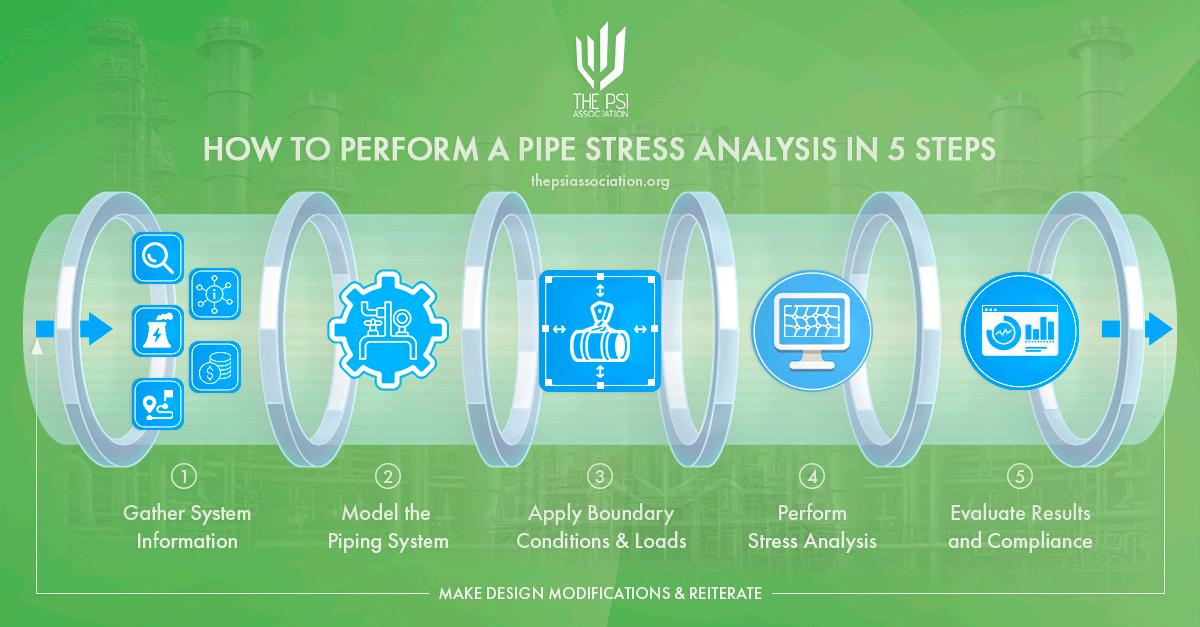
Performing a pipe stress analysis involves assessing piping systems’ structural integrity and safety under various operating conditions.
1.- Collect all relevant information about the piping system, including design specifications, pipe dimensions, material properties, operating conditions (pressure, temperature, fluid type, etc.), allowances, and support locations. This data will be the foundation for the entire analysis.
2.- Create a detailed 3D model of the piping system using specialized pipe stress analysis software. Represent the actual layout, connections, and supports as accurately as possible. The effects of friction on supports should be considered. Include all components such as pipes, fittings, valves, flanges, and supports.
3.- Define the boundary conditions and applied loads on the system. This includes interconnecting points, anchor points, and restraints for supports, as well as pressure, thermal, and other mechanical loads. Consider both static and dynamic loads, as well as potential transient events.
4.- Use the pipe stress analysis software to simulate the behavior of the piping system under the specified loads and conditions. The software will calculate stress, displacement, loads, and other relevant parameters at different points in the piping system.
5.- Review the results obtained from the stress analysis. Compare the calculated stresses and displacements with the allowable limits set by relevant codes and standards (e.g., ASME B31.3 for process piping). Check for areas of concern, such as high-stress locations, equipment and restraint loads, or displacements beyond acceptable limits.
Pipe stress analysis requires careful consideration of system-specific details and may involve more complex steps and evaluations. Always seek expert advice for critical systems or challenging applications.
Power Industry 66
Realizar un análisis de estrés en tuberías implica evaluar la integridad estructural y la seguridad de los sistemas de tuberías en diversas condiciones de operación.






2023 24 25 26 OCTUBRE
