Al servicio de la comunidad latina del condado de Humboldt
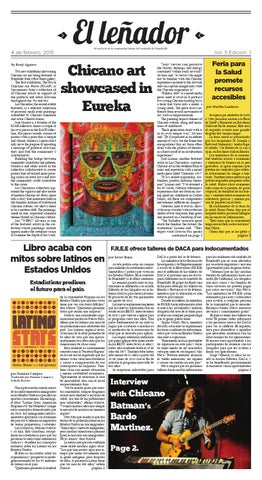
4 de febrero, 2015 by Benji Aguirre Two new exhibitions showcasing Chicano art are being featured at Humboldt State’s First Street gallery. The first exhibition, The Royal Chicano Air Force (RCAF), is Sacramento State’s collection of of Chicano artists in support of the political and labor activism throughout the 70s and 80s. Las Chicanitas, the second exhibit featured, is a selected collection of personal small-scale paintings assembled by Chicano comedian and actor Cheech Marin. José Montoya, a founder of the RCAF collective, shares a couple of his own pieces in the RACF collection. His pieces usually consist of posters with a print that is unique and vibrant. Montoya’s pieces don’t only serve the purpose of spreading a message of political activism, they also fuel the community’s synchronicity. Building the bridge between community contributor and gatherer, Montoya and other artists in the collective collaborated to create posters that advertised more pressing issues on labor laws and how the community could contribute to the cause. Las Chicanitas collection represents the vigorous and alive nature of modern Chicano art. Every piece tells a story that maintains itself in the familiar notions of traditional Chicano culture, yet allows there to be a modern shift. The paintings, small in size, represent common themes found in Chicano culture. Jari “WERC” Alvarez is one of the featured artists in the collection whose paintings’ instant appeal makes the audience yearn to examine the depth of his work.
Chicano art showcased in Eureka
Estadísticas predicen el futuro para el país.
Traducido por Damian Campos y Fabiola Barrios
Una equivocación común acerca de los indocumentados inmigrantes en los Estados Unidos es que ellos no aportan a la economía. Sin embargo, el libro “Latino Stats: American Hispanics by the Numbers” rompe estos conceptos demostrando que en 2010, los inmigrantes indocumentados aportaron a la economía del país $10.6 billones en impuestos de ventas, propietarios, y estatales. Las coautoras, Idelisse Malavé, y su hija, Esti Giordani, recopilaron las estadísticas para que las personas la usen como referencias críticas y desafíen los conceptos erróneos sobre los Latinos en los Estados Unidos. El libro es un estudio sobre las experiencias y perspectivas multigeneracionales de los 53 millones de latinos en el país. “Queríamos presentar la realidad
“Any viewer can perceive the beauty, feelings, and energy contained within each artwork” Alvarez said. “A viewer who might not be familiar with the Chicano experience can relate to the Artwork and can capture insight into what the Chicano experience is.” “Pollitos, 2008” is a mixed media piece, sized at 13x13 in. It portrays two young Chicano-looking boys, a hose that turns into a snake, a young chick. The piece draws influence from several movements of art, such as impressionism. The painting depicts themes of Chicano culture, slang and memories of childhood. “Each generation deals with it in its own unique way,” Alvarez said. “[It’s] expressed in an infinite amount of ways, but the frame that encapsulates this art form often deals with the politics of identity as a direct result of an acculturation experience.” José Lozano, another featured artist in Las Chicanitas, captures Chicano art in the ebullient form of color and repetition with a mixed media piece called “Centauro, 1997.” “It is a shared experience, costumbres, pasados, historias, fantasmas.” Lozano said. “I’ve retained a lot of visual, cultural references, experiences that are Mexican, having spent my childhood in Ciudad Juarez. All these are components and enhance, infiltrate my imagery.” Centauro, sized at 10x8 in., shows a Mexican wrestler with exuberant shades of teal, turquoise, lime green and mustard on a backdrop of red. “The ‘luchador’ mascaras speak about the familiar, the distant, the existential.” Lozano said. “They depict what Octavio Paz speaks
continued on page 2
Libro acaba con mitos sobre latinos en Estados Unidos
por Damian Campos
Vol. 5 Edición 1
de la comunidad Hispana en los Estados Unidos que muchas veces tiene que ver con datos difíciles,” dice Malavé. “Queríamos presentar datos que serían una sorpresa.” Malavé, una consultante organizacional nacida en Puerto Rico, afirma que los latinos son unas de las poblaciones más saludables del país. Los Latinos, según el texto, viven más de la edad promedia de 82 años de vida que son aproximadamente dos años más que los Americanos de otras razas. Esta realidad es comúnmente conocida como la “Paradoja Hispana” en la cual sea ha registrado que los latinos viven vidas más duraderas y sanas a comparación de sus contrapartes no hispanas. También viven con menor educación y menor estabilidad económica. Típicamente se relaciona la tasa de mortalidad alta con el nivel socioeconómico bajo. “Me da mucho gusto que nuestra comunidad, aunque tengamos acceso muy limitado a servicios de salud, sea una de las poblaciones más saludables,” afirma Malavé. “Vivimos muchos años más aunque la mayoría de nosotros no tenemos seguro.” Otro dato que resalta es que dos tercios de la población latina en los Estados Unidos no son imigrantes. “Somos hijos y nietos de inmigrantes, pero muchos americanos piensan [que] la mayoría son inmigrantes. No lo somos,” dice Malavé. La autora cree que esta confusión viene desde muchos siglos atrás. “Los que han estado aquí más tiempo que nadie obviamente son la gente indígena, pero después de ellos, la presencia Latina tiene que ver más de 500 años,” señala Malavé. página 2
Feria para la Salud promete recursos accesibles por Martha Landeros Se espera que alrededor de 5,000 a 7,000 personas asistan a la Feria de Salud y Bienestar en Bayshore Mall este fin de semana. Este será el segundo evento más grande después del viernes negro. La feria anual es patrocinada por los hospitales St. Joseph y Redwood Memorial y tendrá lugar el sábado, 7 de febrero de 10 a.m a 3p.m. en Bayshore Mall en Eureka. Los miembros de la comunidad tendrán acceso a exámenes y chequeos de lunares en la piel gratuitos, al igual cupones que pueden ser canjeados para obtener extracciones de sangre a bajo costo. También habrá médicos que podrán responder preguntas sobre la salud. Habrá otros exámenes tales como de la presión, de grasa corporal, de densidad de los huesos, y también habrá exámenes de colesterol, glucosa, y anemia por uso de piquetes en el dedo. El coordinador de la feria de la salud, Brian Olson, dijo que el hospital tendrá personal bilingüe en las mesas de información. “Esto hace que la comunidad tenga acceso fácil a estos recursos.” dijo Olson. Olson dijo que se les pidió a
página 2
F.R.E.E ofrece talleres de DACA para indocumentados por Javier Rojas Ayuda podría estar en camino para millones de estudiantes indocumentados y padres que viven en los Estados Unidos. En el condado de Humboldt ya se ofrece asistencia. La semana pasada nuevas regulaciones se añadieron a la Acción Diferida de los Llegados en la Infancia (DACA) para ciertos jóvenes. El proyecto de ley fue presentado en agosto de 2012. Las nuevas regulaciones requieren que los nuevos solicitantes hayan estado en los EE.UU. antes de enero de 2010 y que vuelvan a aplicar para el programa cada tres años. Una parte fundamental de las nuevas reglas que ayudarán a muchos es la anulación de la restricción de edad que se necesita para aplicar. Las reglas anteriores indicaron que quien aplique debe haber estado en los EE.UU. antes de los 16 años y haber sido residente desde el 15 de julio del 2007. También debe haber sido menor de 31 años a partir del 15 de junio de 2012 con el fin de solicitar el programa renovable de dos años. Se aceptarán solicitudes para
Interview
DACA a partir del 18 de febrero. Los miembros de los Recursos de Investigación y de Empoderamiento a través de la Educación (F.R.E.E) será el anfitrión de los talleres de DACA el próximo mes en dos lugares diferentes en el condado de Humboldt. El grupo ha fijado una fecha para albergar los talleres en Eureka y Fortuna el 22 de febrero, mientras que la ubicación es aún todavía provisional. Durante los talleres, los miembros de F.R.E.E. darán información sobre la nueva ley actualizada y tendrán abogados del área de la bahía para ayudar con cualquier pregunta legal que la gente pueda tener. Según Wendy Nava, miembro del club, estas nuevas regulaciones les darán a millones de indocumentados que viven en Estados Unidos una nueva esperanza. “Básicamente, les da la oportunidad de superarse en este país y dejar de tener miedo de ser arrestados cada que salen de sus hogares,” dijo Nava. “Podrán intentar alcanzar el ‘sueño americano,’ ser alguien y causar un cambio en este país.” Nava asegura que los próximos talleres darán mucha información
Chicano Batman’s Bardo Martinez. with
Page 2.
para los residentes del condado de Humboldt que se vean afectados por su estatus migratorio y será una oportunidad para despejar dudas. “Sabemos que no hay muchas fuentes de información hasta aca arriba [de California]. Los abogados son muy caros y las familias de bajos recursos no pueden pagar por estos servicios,” dijo Nava. “Los miembros de F.R.E.E. están entrenados para esto y están listos para ayudar a cualquier persona de la comunidad que lo necesite. Estamos dando todos nuestros servicios y conocimiento gratis.” El plan es tener tres talleres en total. El primer taller informará a las personas acerca del DACA para ver si califican. El segundo, será para identificar a aquellos que necesiten asistencia con las renovaciones de sus aplicaciones. El tercero dará oportunidad a los participantes de reunirse con los abogados para que les ayuden a llenar sus aplicaciones. Jorge Villareal, 21 años, ha usado la Acción Diferida, DACA, y se ha beneficiado personalmente al encontrar varias oportunidades
página 2
2
4 de febrero, 2015
First Street Gallery to showcase Chicano art
about, the remoteness, the distant, hermetic Latino character, Chicano too.” Wrestlers, behind the mask, are humans with emotions and problems of their own but when on stage they are a façade for pure entertainment. “It stems from imagination and vivencias.” Lozano said. “They come from a Mexican-American experience and are as varied and different as every human being should be.”
Feria para la salud en Eureka continúa de la página 1 las organizaciones participantes que tuvieran recursos bilingües. Jorge Matías, promotor local y educador de Paso a Paso, organización para la salud de mujeres y familias hispanas en el condado, dijo que la comunidad latina tendrá acceso a descuentos especiales en la feria.
Estadísticas predicen el futuro para el país. continúa de la página 1 Malavé y Giordani usaron datos del Pew Hispanic Research Project, una organización de investigación que busca mejorar el conocimiento general sobre la población hispana/ latina en EE.UU. “Hoy en día hay tantos recursos digitales donde uno puede conseguir mucha información. Muchos
DACA continúa de la página 1
que le otorgan. “No es solamente una oportunidad para conseguir un mejor trabajo o ir a la escuela, pero también para tener un poco más de tranquilidad al estar aquí.” dijo Villarreal. Villarreal ve las nuevas regulaciones como una via de ayuda a más personas que anteriormente no calificaban para la Acción Diferida y también para futuras generaciones. “Siempre hay personas llegando a los Estados Unidos y a los niños también los beneficiará a largo plazo y les ayudará con empleos
Calendar 5 a 7 de febrero Obra “Los Pájaros” basada en la comedia griega por Aristóteles. John Van Duzer Theatre Funciones empiezan a las 7:30 pm.
Yet these works of art show a sense of community and a yearning to stay united. These are familiar themes within the culture, along with struggle, anguish, and identity. Jack Bentley, the curator at First Street Gallery, understands the unique quality of these works and the history that lies beyond all of them. “It is art that celebrates the bicultural identity of Mexican-Americans, while affirming personal expression and supporting the
Juan Aguirre can be reached at ellenador@humboldt.edu
“Mucha gente hispana toma ventaja de los cupones. Con ese cupon pueden obtener un examen de sangre para saber cómo está su glucosa, su tiroides y su metabolismo,” afirmó Matías. “Un examen de este tipo cuesta 300 dólares. Con el cupón, la gente que viene a la feria de salud obtiene un descuento del 40%. La Cruz Roja Americana, 2-1-1 Humboldt, Food for People, y otras organizaciones locales tendrán puestos de información en la feria
de la salud. Habrá 62 organizaciones que proveerán información de salud y protección. Después del evento los miembros de la comunidad pueden ir al Centro de Recursos Comunitarios en Rio Dell al igual que al Centro de Recursos Decanos en donde habrá suministros limitados para remitir los cupones de extracción de sangre a bajo costo. Martha Landeros can be reached at ellenador@humboldt.edu
de esos recursos son del gobierno federal.” señala Malavé. “Es una herramienta más para poder cambiar la narrativa simple sobre los Latinos,” dice María Hinojosa, conductora y productora ejecutiva de NPR Latino USA en un comunicado de prensa. “La verdad es que muchos americanos no saben la verdadera historia detrás de la demografía latina [que es] enorme y creciente en nuestro país. Y muchos no entienden la complejidad profunda que esta dentro de este grupo multifacético.” Estos parámetros hacen que Malavé y Giordani crean que la emergente población de latinos educados impactará la política del país. Actualmente 25% de los
estudiantes en escuelas primarias de los Estados Unidos son Latinos, mientras que en California este porcentaje se duplica. “Hace 25 años, un tercio de los estudiantes latinos no se graduaban de la preparatoria. Ahora solo un 14% no se gradúa,” dice Malavé. “Lo más interesante para mi es que de los latinos que se gradúan de la secundaria hay un porcentaje más alto de esos graduados latinos que estan yendo a la universidad que los graduados blancos americanos,” afirma Malavé. “Eso nadie lo esperaba.”
y su educación,” dijo Villarreal. Aunque la Acción Diferida se propone ayudar a millones de inmigrantes indocumentados en los Estados Unidos, hoy en día hay muchos quienes viven en áreas de bajos recursos y no podrán pagar la cara cuota de solicitud de $465. “El estar bajo la Acción Diferida no otorga un estatus legal, pero aún sigue siendo un estatus,” dijo Nava. “No será quizás un estatus de ciudadano, pero es un privilegio que hemos ganado y del cual nos beneficiamos.”
Q &A with Chicano Batman
by Damian Campos
Transcription by Cynthia Baltazar
Chicano Batman is a four-piece band out of East L.A. that’s got all sorts of style. From their sound to their shirts, nostalgia is up front. Their music is like a tight stack of Motown gold found inside a volcano in the tropics of Brazil by a civil rights super hero. They provided support for Jack White’s Lazaretto Tour in January and February and will be playing Coachella April 2015. Bardo Martinez, vocalist and guitarist for Chicano Batman chops it up with Damian Campos.
D: “Cycles of Existential Rhyme” is the new album by Chicano Batman and it has a psychedelic style mixed with cumbia, samba and soul. Can you tell us more about the aesthetics of the band? B: The aesthetics is based on what we used to listen to when we were kids. My father is from Jalisco, Mexico, and my mother is from Cartagena, Colombia. They listened to Leo Dan, Pasteles Verdes, Los Bukis. We are trying to represent that style, not the “grupo” wave, with its “pipiris nice” style. When one studies the music, it sounds very similar to Four Tops or Brenton Wood. D: One of the influences that you have is the Brazilian tropicalia movement from the 60s. Can you tell us about this movement and how tropicalia affects your music? B: Well, for me, they were trying to do something well thought out. They began studying the music and wanted to do something with a lot of passion. They were young and they put all their creativity into what they were doing. But they were tired of the same, of bossa nova, for example, and samba and other Brazilian styles from the 30s, 40s, 50s. It was music made for the American market. It wasn’t made for el pueblo. They wanted to engage with the music of the world but they also wanted to create something original. Also, Brazilian [musicians] would say that if it didn’t have guitar then it wasn’t bossa nova. They were purists. [The young] said “it doesn’t need to be like that, we can mix our own elements, do whatever we want and produce to our own music.” página 4
Manuel J. Orbegozo Editor-in-Chief
Rebecca Gallegos
Jeff Posadas
Adrian Barbuzza
Juan Carlos De La Cruz
promociona con ~ EL LENADOR
Adilene Martinez
Stacey De Marcos
Si desea promocionar su negocio o sus servicios profesionales en El Leñador, por favor contactese con nosotros al (323) 501-4688 o ellenador@humboldt. com.
Oscar Lopez
Paradise Martinez Graff
Damian Campos can be reached at ellenador@humboldt.edu
Managing Editor Reporter Reporter Reporter
Layout
Javier Rojas can be reached at ellenador@humboldt.edu
Sabado, 7 de febrero Feria de la Salud Bayshore Mall, Eureka. 10 a.m a 3 p.m.
Martes, 17 de febrero Ericka Huggins - Black Panther Party leader and activist Kate Buchanan Room Afternoon workshop 3 p.m to 5 p.m Evening lecture 7 p.m to 9 p.m.
Sabado, Febrero 28, Asamblea Regional de True North Centro Comunitario de Orick (autobuses saldran de Fortuna & Eureka) 12 p.m a 4 p.m.
Reporter Reporter
Opinion Writer
Head Copy Editor
Eduardo Madrigal
Calendario
Illustrator
Eduardo Barragan
Mission Statement
continued from page 1
social and political aspirations of the community” Bentley said. With the growing population of Latino students and families in a place like Humboldt County, and California in general, it is vital for the art scene to familiarize and appreciate the culture of a people who have such a big influence on American and especially Californian culture.. Chicano culture has always intertwined itself with American culture, now in a community that preaches art and expression like Humboldt County it is necessary to appreciate the culture that has permeated a country through the perspectives of identity in others. Bentley has waited 8 years for Las Chicanitas to arrive at the First Street gallery. Waitlisted since 2007, Las Chicanitas has finally made its debut in Humboldt County making it one of the first exhibit’s the gallery has ever had dealing with Chicano and Latino identity. “We should be approaching these subjects [of identity], in a curated way as it should be,” Bentley said. Bentley plans to fill out the entire season with Latino and Chicano related exhibits in hopes of giving this growing community a space to discuss identity. The First Street Gallery will feature Ana Teresa Fernandez in April and a student-run show with the theme of identity in the following months.
Damian Campos Reporter
4 de febrero, 2015
3
LSAMP report reveals positive numbers about Bolman’s work. by Israel LeFrak and Manuel J. Orbegozo There has been a lot of speculation regarding the true reason for termination of former INRSEP director Jacquelyn Bolman last fall. This frustration has resulted in protests and a student residency on campus in the Native American forum, which has been renamed by the students to the Bolman Forum. According to multiple sources the reason for Bolman’s firing was because of a few paragraphs she wrote in a 17-page annual report submitted to apply for the California State University Louis Stokes Alliance for Minority Participation (LSAMP) Program. In section 3 of the report, the applicant is asked to identify any problems the LSAMP Program has experienced on campus. Bolman said that HSU has not been supportive of LSAMP and is concerned about its future use. In section 12, Bolman stated that she had not been able to develop a separate LSAMP website due to no available funding from the administration. “I had budgeted funding with the College of Natural Resources and Sciences in Spring 2013, but
the funding was not transferred when INRSEP was moved to the RISS division,” Bolman wrote in the report. “Currently, HSU Leadership is not providing any additional funding for the STEM Center and I was provided approximately $23,000 less this academic year then(sic) AY 2012-2013.” Emails regarding Bolman’s termination were released through a California Public Records Act request done by HSU Associated Students President Jerry Dinzes last December. In an email sent on Sep. 22, 2014, HSU’s Dean of Research Rhea Williamson stated her concerns to Provost Jenny Zorn about Bolman’s CSU LSAMP report and the negative effect it could have when applying for grants. “It is really unfortunate language used in that this type of reporting can affect our ability for future funding for HSI, STEM and other support for our students,” Williamson said. Bolman also wrote that Williamson stated HSU could “opt-out” of the LSAMP program with no negative effects to the students. “The report makes very disparaging remarks against HSU and for totally unclear reasons, against
Compañeros toman salon y piden justicia. por Óscar Olivas López
Aquellos hombres y mujeres estaban decididos a tomar el auditorio a toda costa. El auditorio ceremonial de piso, techo y paredes de madera, destilaba un olor a incienso perceptible desde la entrada del complejo. Desde esa noche ya no se llamaría el Foro Nativo Americano sino el Foro Jacquelyn Bolman, en honor a la profesora destituida el pasado octubre. Un pequeño altar yacía bajo una pintura de Bolman colocada sobre la pared principal de la sala, en el que todos se acercaban a orar y a cubrirse con el humo de la salvia blanca y del copal que se quemaban lentamente. Conforme avanzaba la noche y los padres, ancianos y estudiantes que habían ido a apoyar y a aprender de la conferencia indígena se marchaban del foro, la tensión entre el grupo que ocuparía la sala aumentaba. Todo el grupo central, constituido de alrededor de 40 personas, era una unidad
me,” Williamson said. Lisa Hammersley, co-principal investigator and lead project director at CSU LSAMP, said she never had a problem with the program at HSU under Bolman’s leadership. Hammersley worked directly with Bolman and would personally evaluate every LSAMP report to ensure that the grant was being used properly. “They had a very good program that we would hold up as one of our better programs. I had no major concern about that at all,” Hammersley said. “We were very happy with Jacquelyn’s commitment to the students.” Hammersley said she was never concerned about HSU because Bolman always did well with the resources she had. “I personally didn’t see any major red flags. The overall tone of that report is positive. The activities they have going on is positive,” Hammersley said. “I’m concerned with campuses where nothing is happening.” Hammersley is personally sad to lose Jacquelyn as her campus coordinator for program at HSU, but did not want to comment further on what happened. “This is a personnel decision
en donde cada quien tenía un puesto específico y en donde todos, aunque nerviosos, estaban felices de estar ahí y formar parte del cambio. Sentían y sabían que hacían lo correcto. Dieron las diez de la noche y la policía escolar, empeñada en escandalizar a la multitud, comenzó a dialogar con el grupo de estudiantes para intentar llegar a un acuerdo que evitaría que pasaran la noche en el auditorio, pues en el caso de hacerlo se verían obligados a arrestarlos por el delito de allanamiento. Pero el grupo de los Estudiantes Unidos de Humboldt (Unified students of Humboldt) ya tenía todo planeado. Sabían de las consecuencias legales y emocionales y el impacto que causaría, no solo para la administración escolar, sino para toda la comunidad estudiantil, el tomar aquel auditorio para demostrar lo que pueden llegar a hacer estudiantes organizados. Inclusive sabían que podrían llegar a ser arrestados. A pesar de tener todo este conocimiento y valor, puesto que el ser arrestado no solo afecta el record criminal del estudiante, sino que implica también ser expulsado y fichado en el sistema de educación superior, los estudiantes siguieron con su plan de desobedecer a la autoridad y a la administración universitaria. Así pasaron la primera noche en
Doing what’s right to defend our beloved. by Peter Mueller I feel that the last year of direct action has brought a collective sense of necessity for standing up against the corrupt systems that poorly govern the people of the world. The intensified conflicts in 2014 including the 43 kidnapped students of Ayotzinapa, the 15 unarmed people of color killed by police in the U.S., and the 2,100 people killed in Palestine (7 in 10 being civilians according to the United Nations) have caused people from around the world to take power back by advancing against authority. More of us are deciding to organize. The problem with our world lies in the structures of authority and law itself. We blame ourselves for failing within the system, when actually, the system itself needs to be fixed. The only people who see it are the people who have to see it - the lowest demographics. According to the U.S. Census 2010, for every 100,000 people of white ethnicity, 380 are incarcerated. For every 100,000 people of Latino ethnicity, 966 are incarcerated. For every 100,000 people of black ethnicity, 2,207 are incarcerated. 25% of Native Americans and Alaska Natives remain below the poverty line. The cost of doing nothing is more now than the cost of doing something. What are we waiting for? How bad do things have to get before we actually begin to be less obedient to how the structure operates? When we don’t directly challenge our administration, we are validating it automatically. Authoritative power decays when exposed to the light and if you truly love, you act to defend your beloved. Beloved Staff member Dr. Jacquelyn Bolman was known to accept all students into the INRSEP program, regardless of their ethnicity. She taught her students to treat
everyone equally and with utmost respect. She spent countless hours of devout energy encouraging her mentees to take advantage of the scholarship opportunities they did not know existed; she did not rely on the Office of Research to assist her students. On Oct. 9, HSU administrators terminated beloved Staff member, Dr. Jacquelyn Bolman. In doing so, they violated the Whistleblower Protection Act of 1989 and the California Education Code, Section 66301. The California Public Records Act Request, that was released nearly a month ago regarding her termination, proved that Dr. Jacquelyn Bolman was fired because she voiced her honest opinions. As a result, students decided to build a campaign to incorporate solidarity amongst all students of color and allies, both Native and non-native. The people who work within administration are human beings and all are good people, I’m sure. The positions that they hold do not allow them to express their goodness many times a day for fear of losing their jobs. I am under the impression that our system must be dismantled, for if it doesn’t, our school will become a soulless campus. Only the trees will maintain, if we don’t cut them down. The apathy ingrained in each and every one of us who have been marginalized from birth and were raised in this oppressive society is beginning to sicken us collectively to the bone. We have created a wonderful community in the Dr. Jacquelyn Bolman forum as we commune 24 hours a day in peaceful resistance. Mother Earth is on our side. Prayers are welcome 24/7.
Peter Mueller can be reached at ellenador@humboldt.edu
at Humboldt,” Hammersley said. The LSAMP program is used to provide support for students to help them graduate in the fields of science, technology, engineering and mathematics (STEM), especially for student populations that are usually underrepresented in STEM. According to Bolman’s last CSU LSAMP report, in the 2013-2014 academic year INRSEP placed 16 students in academic research experiences, 36 summer 2013 research experiences for undergraduates and 7 students in international research experience. They were all HSU-LSAMP students. Bolman also states that there has been an increase in the number of LSAMP students making applications to/and successfully initiating STEM graduate programs, securing National Science Foundation (NSF) Graduate Research Fellowship (12 since 2011) and receiving research awards at national conferences. One of students who received the prestigious NSF Graduate Research Fellowship last year was Yvan Delgado de la Flor, whose accomplishment is highlighted in the 2014 LSAMP report. “Out of all of my professors and staff at HSU, including my advisor, Dr. Bolman was the only one who
talked to me about it,” Delgado de la Flor said. “She was the only one encouraging students to apply to internships, fellowships, and to pursue grad school.” All efforts to contact HSU administration staff regarding CSU LSAMP were forwarded to Interim Provost Jenny Zorn. Provost Zorn has yet to reply to our inquiries.
Israel LeFrak and Manuel J. Orbegozo can be reached at ellenador@humboldt.edu
WORD ON THE STREET by Oscar Lopez
Why should Dr. Jacquelyn Bolman be reinstated?
“Because she is like a second mother and a mentor to all of el nuevo auditorio Jacquelyn Bolman, muchos en vela us. She is our main resource of y otros muertos de cansancio por el ajetreado fin de education.” semana. La mañana del lunes fue recibida con una nutri–Xavier Rodriguez ente ceremonia espiritual antes del desayuno comunal. Así empezaron las clases aquellos estudiantes: seguros, sabiendo que unidos, su resistencia sería trascendental. Cada amanecer en el Bolman era una nueva victoria ante toda adversidad. Se volvió tradición el desayuno y la cena comunal en las que se daba gracias por un día más de alimentos, de paz y de resistencia. Conforme la semana avanzaba, más y más miembros se unían al movimiento. Más compañeros llegaban para cubrir los puesto de otros que por más valiente que fuesen, no eran inmunes al agotamiento físico ni psicológico. Entre los compañeros prevalecían conversaciones sobre todo tipo de temas de justicia social. Se hablaba de problemas sociales que afectaban desde el más blanco hasta el más negro, desde el más pobre hasta el más rico y desde el más sabio hasta el más ignorante. A veces bailaban y aquel auditorio se llenaba de un jolgorio donde la paz y la felicidad abundaban en el aire. Hoy se cumple la decimoquinta noche de la toma del Jacquelyn Bolman y los compañeros siguen fieles a sus demandas hacia la administración, misma que no ha dado la cara para dialogar con sus estudiantes - salvo una carta que mandó la presidenta cinco días después de la toma aconsejando a los estudiantes abandonar el foro puesto que el comportamiento del grupo no ayudaría más que a perturbar la paz universitaria y otra carta similar, siete días después de la primera, convocando una junta con los estudiantes bajo complicadas condiciones ya que será el 3 de este mes y a las 3 de la tarde, día y hora en la que la mayoría de los estudiantes asisten a clases. Desde el comienzo del movimiento, todos sabían las repercusiones negativas que tiene el ocupar un edificio escolar y desobedecer a la autoridad. Hoy en día, los estudiantes están seguros, más que nunca, de poder cumplir sus objetivos.
Environmental Policy
“Because she has offered the school and students more than they asked for. She was a family member of the students so they can’t expect us to not be emotional when they took a member of our family.” –Devina Miller Sociology, Native American Studies
“Because she is the only person that I have met that has made me feel a sense of self empowerment.” –Hector Alvarez Rangeland Resource Science
Óscar Olivas López can be reached at ellenador@humboldt.edu
“Because she ensures the success and fulfillment of our people.” –Conor Handley Wildlife Management
Los Estudiantes Unidos de Humboldt (Unified Students of Humboldt) invitan a toda la comunidad del condado a un día de diversión familiar este Sábado 7 de febrero en el Foro Jacquelyn Bolman (BSS 162, Union St y E 16th St, Arcata) de la Universidad de Humboldt. El evento comenzará a la 1:00 PM y concluirá con un diálogo comunitario a las 8 PM. Se llevarán a cabo actividades artísticas para niños, juegos para adultos y una cena para toda la comunidad. Esperamos verlos para seguir compartiendo nuestro crecimiento cultural y educacional. Gracias por su apoyo.
“Because she is the reflection of generations of resistance, strength, and refusal to be subjected to systematic violence.” –Alexia Siebuhr Critical Race, Gender, and Sexuality
“Because we need a strong, sincere, leader to help us grow and achieve our goals.” –Rosali McClure International Recreation
4 de febrero, 2015
4
Troubling (The) Use of “People of Color” by Everardo Cuevas Adilene Martinez’s article “Dear White People and Hopefuls” in the November issue of El Leñador brought to mind an issue that I often see repeated in activist and non-activist spaces of color and mirrored by white ally’s and hopefuls. I agree with Adilene that we must be critical of the ways bureaucratic “inclusivity” enters
times used by persons of color when attempting to resist the white supremacy we encounter too often. The intended audience for this article is people of color, but I also believe white folks and people who don’t identify as POCs can benefit from listening. The term “people of color” is used to point out/call out the systemic
Illustration by: Jefferson Posadas
spaces of color and be vigilant of whom such inclusion is serving especially in a historically white campus such as ours, when the discourse of diversity and inclusion can serve to enrich the experience of white folks at the cost, expense, and labor of people of color. What I want to offer to this conversation, though, is a critique of the problematic ways the term “people of color” (POC) is some-
racist actions, experiences and phenomena that darker skinned (as compared to “white”) peoples experience living in a white supremacist society. The term is a tool to acknowledge the cross-cultural struggles of many peoples oppressed by a white-normative functioning society. The struggle for U.S. citizenship (historical and current), access to resources (healthcare, water,
land), and the equity in education (funding, research opportunities, student support) are all macro issues that connect ethnic, cultural and national identities and are centered around a white supremacist system of power. My biggest criticism of the term is that it is sometimes used by folks as a way to blanket all experiences into one assumed cultural experience (i.e. POC culture vs. white culture) and effectively erases the differences in the experiences and peoples that fit into the umbrella of POC. For example, my experience as a queer Chicano on this campus is different than a straight Hmong student and is different than a biracial female staff member, but we all suffer similar racist oppression. And while the example is painting people in very broad strokes, what I’m trying to get at is that one’s experience of racism can be altered/ affected/defined by their individual identity, personal alignment with how their body’s performance is read, and historical experiences. In enacting a broad understanding of “POC culture v. white culture,” we are simply recreating the same false binaries so central to the normative ideology of racism. If we are ever to challenge racism it has to come from a position where all experiences are accounted for, not just the binary we recreate. Let me be clear, I am not saying the term people (students/women/ scientists, etc.) of color should not be used, but that it should be used with caution and when talking about macro issues; sticking to specifics is a better tool when trying to enact actual change. Extrapolating an issue specific to one group (like Danza including white skinned individuals) and naming it an issue of all POC is not only a fallacy, but detrimental to honoring differences and the struggle to keep our differences afloat and unoppressed. For example, as a person with Mexican heritage, whiteness is tied into the narrative of my people. From being colonized by conquistadores to being colonized by industrialization and globalism,
whiteness is a persistent facet in the reality of being Mexican@ and being Chican@ in America. As a Chicano, I have Chican@ peers and comrades who come in all skin tones: such diversity exists that there are Chican@s that benefit from white passing privilege. Acknowledging that whiteness exists in our Chican@ home spaces is a necessary step to better understand our oppressive realities and begin to change them. My hope in problematizing the use of the term people of color is so that we can try to imagine new
paradigms and terms, pushing past the tethers of old binaries, outdated mindsets and the anger and dysfunction of existing in a us vs. them paradigm. If we are to navigate the sometimes problematic nature of academic inclusivity, we are going to be better off doing it hand-in-hand with our differences in sight – the differences we are struggling to honor and keep alive.
Everardo Cuevas can be reached at ellenador@humboldt.edu continúa de la página 2
Bardo Martinez They made complex music, sometimes with orchestral arrangements, sometimes with indigenous groups of Brazil. They created a fusion and every song was basically a book or a movie. D: The Chicano Batman logo is like a mash-up of the United Farm Workers logo, kind of Aztec stylized eagle with steps like a pyramid, and the bat signal from Batman. It’s pretty clever. Can you tell us a little bit about how Chicano Batman’s logo came about. B: I had the logo already [before joining the band]. It was like my own symbol to represent the music I was making in 2005, years before the band actually started. It was like a natural combination. My mind was very captured in that spirit of political protest and social movements, the UFW being the symbol for the chicano movement in many ways. Batman was a symbol of the other worldly hero. To me that is what the UFW was. Any individual like Malcolm X is, people of that stature are other worldly so that’s the combination. Chicano Batman is the combination. Malcolm x is a superhero. So many individuals in our history are like superheroes who represent humanity in every sense D: “Itotiani” is the first track of the self-titled and first album by Chicano Batman released in 2010. Tell us more about the origins of the song title. Who was Itotiani? B: Itotiani was a dancer and it was a like a homage to her. The song was based on her beautify as a combination of what she does with her dancing. When I mention “mazapán,” we know that mazapan is not that dark, it’s lighter. She has lighter skin and her skin is sweet like the mazapán. It is also like mentioning the sweet to say “how are we doing, gente?” A lot people get into the song because of the message it has. I know it speaks of the spirit. It reflects the spirit of what it is to be a dancer. That’s what it’s about. To listen to the full interview and more visit: https://soundcloud.com/yosoyelmaschingon
Damian Campos can be reached at ellenador@humboldt.edu
Liberando la voz
Illustration by: Jefferson Posadas
by Erika Cardenas Cómo latina, soy callada, porque desde pequeña mis padres me enseñaron a no interrumpir cuando alguien esté hablando. A causa de este modal que me inculcaron, crecí paciente, esperando una pausa para vocalizar mis ideas, pero esa pausa nunca llegaba. Después de tantos esfuerzos por intentar hablar, me rendí y aprendí a callar y a enmascarar esa urgencia de vocalizar mis pensamientos. Esto ocasionó que me quedara callada cuando debía defenderme, o alguna idea mía. Pero yo no soy la única. De pequeña aprendí a callarme observando a mi madre. Una tarde, ella y yo íbamos en el coche regresando de un mandado cuando nos paró un policía
porque no teníamos las luces prendidas. Esto no fue necesario porque el sol todavía brillaba. Además de portarse groseramente con mi madre, el policía prosiguió a multarla por una falta inexistente. Mi madre sintió ansiedad por dos razones, una por discutir que no era necesario prender las luces y el otro por quedarse callada. Aunque en el interior estaba a punto de decirle algo, su comportamiento con el oficial fue pasivo. Ella aguantó sus palabras aunque hubiera querido decirle al policía que bajara el tono agresivo y que la multa era injusta. Octavio Paz menciona en su ensayo “Máscaras mexicanas” que como mexican@s, una de nuestras virtudes es el estoicismo que hace que aguantemos las
adversidades de la vida. Uno de los ejemplos que usa es el de Cuauhtémoc. El último rey de los aztecas, que mostró resistencia contra la conquista de Hernán Cortés, fue torturado durante un proceso atormentador. De acuerdo a la leyenda, los conquistadores le bañaron los pies con aceite, prendiendoles fuego para poder averiguar donde estaban los despojos, pero él permaneció callado. La historia Mexicana revela que nos silenciamos contra organizaciones que no estan en nuestro favor. Paz también menciona que si no todos somos como Cuauhtémoc, por lo menos somos pasivos y soportamos las dificultades. “Más que el brillo de la victoria nos conmueve la entereza ante la adversidad,” escribe Paz. En
otras palabras, guardar nuestra compostura ante la desgracia es aún más favorable que vencer a un rival. En cuanto al episodio entre mi madre y el policía, ella fue pasiva y dejó que la multaran a cambio de guardar su compostura ante la derrota. Mi madre viene de un país donde la mayoría de la gente es oprimida por la autoridad. El miedo se ha vuelto desconfianza y se sabe que el 90% de los crímenes no son reportados causa de esto (Instituto Nacional de Estadística y Geografía (INEGI) reporte 2012). Aunque este ensayo fue escrito hace más de 50 años, en mi perspectiva, esto todavía aplica hoy en día. He observado que no solamente los mexican@s pero también los latin@s se aguantan contra toda forma de opresión.
Aun así, he notado un cambio en nuestro pueblo latino. Nos hemos dado cuenta que tenemos una voz y que tenemos algo que decir. Personalmente, cuando le he dado voz a mis opiniones, después de hablar me libero de ansiedad completamente. La ansiedad permanece por el arrepentimiento de no expresarme. Es mejor darle voz a las ideas y opiniones que internalizarlas. Por esta razón elegí escribir mi opinión. Es un paso para empezar a usar mi voz.
Erika Cardenas can be reached at ellenador@humboldt.edu