4 Tool Theft Crisis Persists In UK Construction Sector
6
Building Safety Regulator
Faces New Challenges As Key Firm Collapses
8 Direct Trade (Yorkshire) Ltd Spreads Christmas Cheer With Donation To Edenthorpe Hall Primary School
10 Fascination (in) Deep Black
– Mattex Jet Black
12 How Best To Judge Success This Year
14 Endurance Golf Day Raises Thousands For Charity
16 Endurance Group Secures Stable Platform For Future Growth
18 Saint-Gobain Launches
COOL-LITE® XTREME 51/23 And 51/23 II – A New Standard In Solar Control Glazing
20 Stuga Enters ‘A Completely Different Kind Of Ownership’ Under Voilàp
21 Certass Leads The Charge On Competence Reform
22 Breedon And MRA Research
Shortlisted For Construction Marketing Award
24 Reeves’ Revenue Raid: How The Autumn Budget 2025 Will Hit the UK Fenestration Sector
26 UK Construction Sector Suffers Sharpest Decline in Over Five Years
28 You Already Need To Look Past The Budget
EDITORS COMMENT
Hello and welcome to the November edition of the DGB Digital magazine.
After what felt like an eternity of leaks, U-turns and press briefings, the Chancellor finally delivered her second and most important budget. Actually, the OBR did about 45 minutes beforehand.
Sadly, but as expected, there was very little for any of the constructionlinked sectors to cheer about. Just another massive set of tax rises to pay for other things. Fenestration and the wider construction sector were left out in the cold once again. I wrote earlier in the month that we should expect as such, and that it would not be wise to dwell on such a negative budget and to focus more on the things we can control as an industry.
Elsewhere, awards season continued around our sector, rounding off a difficult year with a bit of joy for lucky winners.
The glass and aluminium parts of the sector remained busy with new products from the likes of Saint-Gobain, and Endurance Group securing vast new facilities to help fuel the growth of the business.
I am sure we are all now looking forward to a well-earned rest over the Christmas period. It’s only a few weeks away now. One last push to the finish line!
We hope you enjoy this edition.
Team DGB
TOOL THEFT CRISIS PERSISTS IN UK CONSTRUCTION SECTOR
Tool theft continues to plague the UK’s construction industry in 2025, with tradespeople reporting widespread anxiety, repeat victimisations, and devastating financial impacts, even as a key sentencing bill inches closer to debate in Parliament.
New research from On The Tools, the UK’s largest online construction community, reveals that 86% of tradespeople are concerned about tool theft heading into the winter months, while three in four (75%) have had their tools stolen at least once in their careers. The survey highlights a rise in repeat offences, underscoring the ongoing “epidemic” that costs the industry billions annually when factoring in replacement tools, lost earnings, and project delays.
Police data paints a mixed picture. Freedom of Information requests compiled by insurers show around 25,500 tool thefts reported across the UK in 2024 – roughly one every 21 minutes –with an estimated direct value of £40 million. However, broader estimates, including downtime and uninsured losses, push the total cost to the construction sector beyond £1 billion yearly. Some reports suggest equipment theft (including larger plant) has risen by up to 20% in early 2025 compared to previous years.
“Tool theft is a crisis that affects not only tradespeople’s livelihoods but also their mental health and family stability. It’s an epidemic we can no longer ignore,” said Lee Wilcox, CEO of On The Tools. “It affects mental health, forces days off work, and leaves many tradespeople feeling unsupported by police and the system.
In response, the government has rejected
mandatory forensic marking or immobilisers on power tools, calling them “disproportionate” after industry pushback over costs. Instead, it is promoting voluntary schemes and collaboration with the police.
Hope for change lies in Parliament, where the Theft of Tools of Trade (Sentencing) Bill –sponsored by Labour MP Amanda Martin – had its second reading on October 31, 2025. The private member’s bill seeks to reclassify tool theft as causing “significant additional harm,” allowing tougher sentences even for lower-value crimes by factoring in lost income, vehicle damage, and business disruption.
“Over 90% of tradespeople support this bill,” said Martin. “It’s one of the biggest issues they face, and reclassifying the harm would send a clear message to thieves.”Campaign groups like Trades United and On The Tools have rallied in Westminster, demanding more policing, regulation of online second-hand sales, and exclusion of construction tools from lighter agricultural theft laws.
Tradespeople are fighting back with technology: usage of tool tracking devices has surged 278% in recent years, contributing to falling insurance claims in some areas. Experts recommend DNA marking kits, secure storage, and comprehensive insurance.
As darker nights approach – historically peak season for thefts – industry voices warn the problem shows no signs of abating without urgent action. For many self-employed builders, plumbers, and electricians, one more raid could be the end of their business.
BUILDING SAFETY REGULATOR FACES NEW CHALLENGES AS KEY FIRM COLLAPSES
The Building Safety Regulator (BSR) is grappling with fresh concerns over its ambitious plan to clear a backlog of 91 pending Gateway 2 applications, following the sudden collapse of Assent Building Compliance, one of the UK’s largest building control firms. The news has raised fears of further delays in a sector already strained by post-Grenfell safety reforms.
Assent Building Compliance, a key player in the BSR’s Gateway approval process for high-rise residential projects, announced it has “ceased trading and is in the process of entering insolvency.” The firm’s downfall comes after a reported 60% drop in turnover to £2.8 million in 2023 and the recent departure of its CEO, leaving its future operations in limbo. The collapse affects services for two registered building control approvers—Oculus Building Consultancy Ltd and LB Building Control Ltd— potentially impacting thousands of ongoing projects.
The BSR had set a target to clear the backlog of 21,745 high-rise residential units by January 2025, a goal hailed as a significant step toward streamlining approvals under the Building Safety Act 2022. However, with Assent’s insolvency, unfinished projects now face a critical seven-day window to transfer oversight to local authorities or find a replacement firm, a process that industry experts warn could exacerbate delays. Current average Gateway 2 approval times stand at 43 weeks UK-wide, with London— accounting for nearly half of all new build cases—lagging behind the national average.
The BSR has yet to fully clarify the extent of the disruption, though it has acknowledged Assent’s notification of “issues affecting their future
operations.”
The collapse comes as the government pushes to meet its target of delivering 1.5 million homes under the Plan for Change, with recent measures announced on October 22, 2025, aimed at accelerating housebuilding in London. Andy Roe, BSR Chair and retired fire chief, emphasised the regulator’s progress, noting that recent operational changes have reduced approval times for high-rise applications to an average of 12 weeks through the newly established Innovation Unit. However, Assent’s exit threatens to undermine these gains, particularly in London, where additional inspectors and engineers had been deployed to clear the bottleneck.
The Building Safety Act, enacted in response to the 2017 Grenfell Tower tragedy, introduced stringent regulations for high-risk buildings, including a new regulatory framework overseen by the BSR. Assent’s role was pivotal in ensuring compliance during the design and construction phases, making its insolvency a critical test for the system’s resilience. Industry stakeholders are now calling for urgent action to mitigate the fallout, with some suggesting temporary measures to reassign projects to local authorities or expedite the appointment of new building control firms.
As the situation unfolds, the BSR has promised to provide further updates, with details of Assent’s insolvency practitioners expected to be published soon. For now, the construction sector braces for potential delays, with the government’s housing ambitions hanging in the balance.
DIRECT TRADE (YORKSHIRE) LTD SPREADS CHRISTMAS CHEER WITH DONATION TO EDENTHORPE HALL PRIMARY SCHOOL
Direct Trade (Yorkshire) Ltd was proud to show support for Edenthorpe Hall Primary School this festive season, following a special donation of toys for the school’s upcoming Christmas Fair on 11th December.
As part of the company’s ongoing commitment to supporting the local community, Direct Trade donated a selection of toys to help bring extra joy to pupils and families attending the event.
Direct Trade (Yorkshire) Ltd Sales Director Mark Powell commented:
“We’re thrilled to contribute to such a wonderful community event. Having the opportunity to support a local school and add a little extra festive magic for the children is something that means a great deal to us.”
Edenthorpe Hall Primary School Principal Mr Orr commented,
“We are incredibly grateful to Direct Trade (Yorkshire) Ltd for their generous donation. Their support will make our Christmas Fair even more special for our pupils and families. It’s wonderful to see local businesses helping to create magical memories for our school community.”
Edenthorpe Hall Primary School will feature the donated toys as part of its Christmas Fair celebrations, helping to raise funds and create a fun-filled seasonal experience for all attendees.
Direct Trade (Yorkshire) Ltd remains committed to giving back to the community and looks forward to supporting more local initiatives in the future. For further information about Direct Trade (Yorkshire) Ltd, visit: www.directtradeltd.co.uk
FASCINATION (IN) DEEP BLACK –MATTEX JET BLACK
Where premium design meets smart functionality.
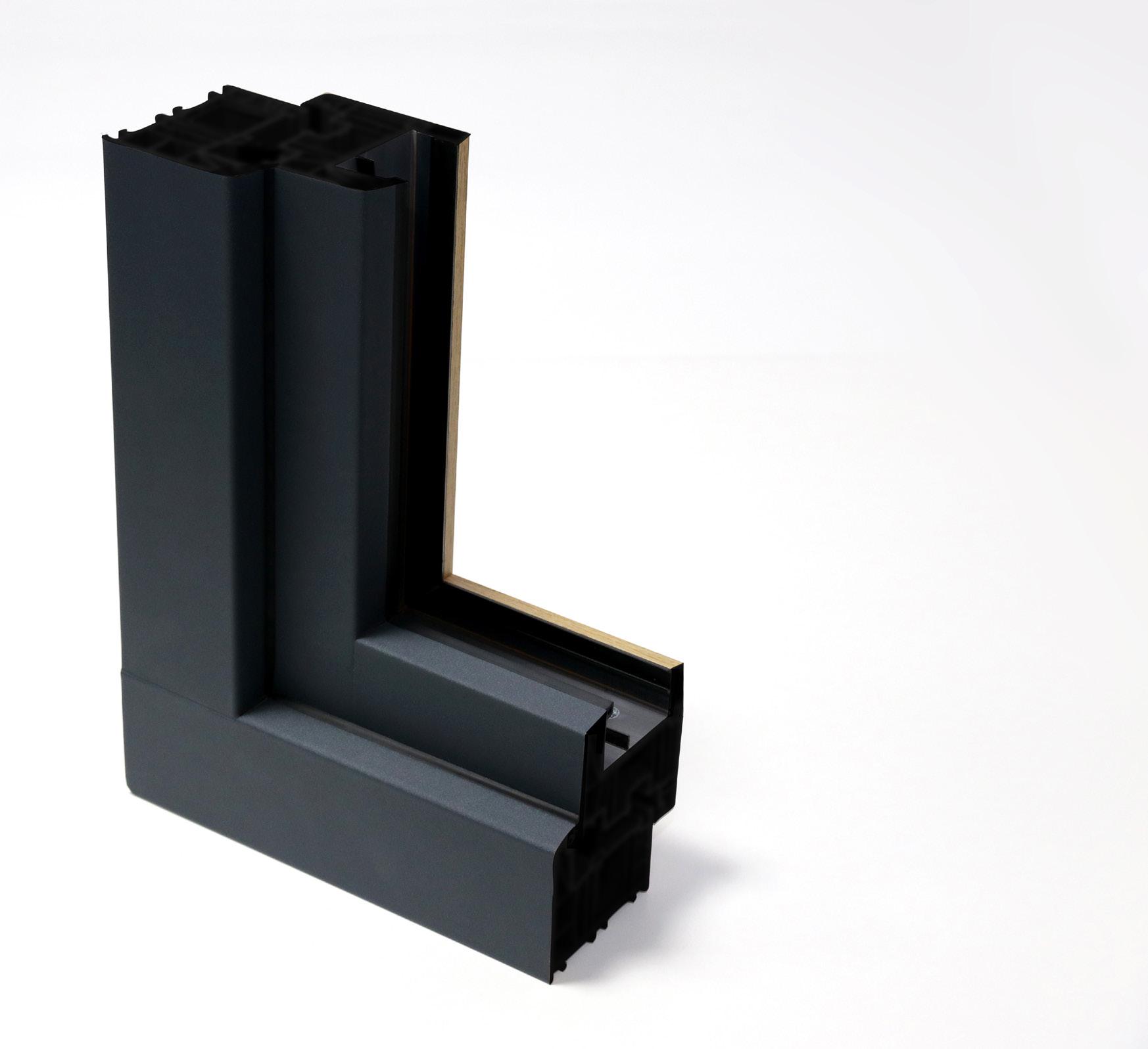
Dark. Darker. mattex jet black. With this unique surface finish for windows, façades & more, Continental introduces a black inspired by jet – a fossilised wood transitioning from brown to coal. Whether in interior design or fashion – black always looks classy and elegant. That’s exactly why building elements like windows in deep black are currently more in demand than ever. Continental offers three distinct finishes of mattex jet black to suit every taste – from a matte sand texture to a natural wood grain and a fine, glossy embossing.
Timeless elegance, always contemporary
Effortless understatement – black, no matter the setting, is a classic that always captivates and carries a hint of mystery. But with mattex jet black, it’s not just the look that makes it special and a perfect match for modern architecture –it’s also the outstanding technical features.
Chief among them: cool colours technology, which significantly reduces heat build-up in components exposed to sunlight. Even more effective than the original cool colours technology is its
advanced version: cool colours PLUS. The surface features a three-layer structure, enabling even greater heat reduction – especially on dark substrates.
How cool colours PLUS works in detail
Coloured films can only reflect part of the infrared radiation, allowing some of it to reach the underlying surface. If that surface is dark, it absorbs the IR radiation and converts it into heat. The cool colours PLUS technology counters this with a white base layer that offers excellent reflective properties.
The result: top-tier heat reduction, making dark colours viable even in hot climates. Thanks to an innovative acrylic layer with outstanding UV protection, the technology also delivers excellent weather resistance.
This time last year, I am sure all of us were hoping for a better year than 2024. A year disrupted by an election, a sector battered by endless bankruptcies and administrations, with the after-effects of inflation and the cost of living hitting our customer base.
Sadly, 2025 has not turned out to be the turning point year many hoped it would be. Who thought a new Government could actually make things worse than they already were?
So, as we look back at yet another unstable year, how best can we judge success?
Not going backwards
The vast majority of companies up and down our supply chain set targets for the coming year. No doubt many of us have already done it for 2026. I suspect, as is usually the case, sales figures for 2025 were meant to be better than 2024. I also suspect those sales figures aren’t hitting the targets like we all hoped.
I know from my own conversations with my own suppliers and contacts that most of the sector is down on 2024 to some degree. Some a little, some more than that. But we are in a very difficult market right now, so it isn’t a surprise to be hearing these things.
Some of us, though, have managed to keep track of the previous year. And in my eyes, that in itself is a win. In a market that is generally down, if your business has managed to achieve the same sales figures as the year previous, take that as a win. You haven’t gone backwards
like much of the sector might have. Any meaningful growth this year would have been very difficult to achieve, so at least maintaining the level you’re at in a hard market is definitely a positive. Perhaps not what many of us had intended for this year, but times are tough, and we have to be pragmatic in times such as these.
Steady staffing
One thing that has been sad to see this year is the sheer number of people who have been made redundant from companies, either cutting back or falling into bankruptcy. It feels like every time I open LinkedIn, there is someone else posting that they are looking for work. It’s not a great sign.
That being said, if your company has managed to maintain the same staffing levels as you did in 2024, or even manage to add on a few extra people this year, then that is great news. It means your business has remained stable in a very unstable market, and perhaps managed to squeeze out just enough growth to take on a few extra people.
Employee churn is often a sign of the health of a company. In the age of social media that we now operate in, it is easy to establish a sense of whether a company is doing well or not by just looking at who is coming or going from a company.
So if you have managed to maintain the same headcount in 2025 as 2024, then you can definitely count that as a win.
New products
Innovation, even in difficult times, is still an important part of any business. It is tempting to cut budgets, become conservative and defensive for fear of losing fiscal control.
But withdrawing in a recessionary market only makes things worse. One thing all companies can do in our supply chain, be it installers, fabricators, systems companies, glass companies, etc, is to bring new products to the market. New products create new opportunities, which is arguably more important in hard times than good times.
New products cost time, money and resources. All very precious things during difficult trading conditions. So if you’re a manufacturer who has managed to bring a new product, or more than one, to the market this year, then this is also a win. You’ve had the faith and stability to be able to invest in new opportunities, not only for yourself but for your installer customers to whom you also have a responsibility to support.
In fact, the number of new products and innovations this year has been very impressive. I would go so far as to say that we’re actually in an age of supreme product innovation, not only just in 2025 but spanning the last couple of years as well. The industry has seen a huge number of new products and updates come to the market in the last few years, which I believe is helping to professionalise the sector, especially in the aluminium part of the market.
Planning for 2026
I’ve got to be honest, and I don’t think many would disagree, but 2026 may well look very much like 2025. Economic growth for the UK looks pretty anaemic for the next couple of years, and with a budget coming next week, which looks set to raise taxes across the board, it’s going to hit consumer confidence and spending yet again.
So how can a company plan for the coming 12 months? It is probably a copy and paste from this year to next. With growth looking stagnant, a subdued consumer base and business and consumer confidence low, we are faced with the same challenges.
Whilst that doesn’t sound all that sunny, the good news is that we have lived experience now in these types of conditions. We know what works for our businesses in these market conditions. We know that new products and innovations create new opportunities. We know (at least we should by now) how to keep costs streamlined and efficient. We know we have to market ourselves well and consistently to the general public.
Knowing “knowns” is sometimes a powerful weapon to have in our armoury. It allows us to look ahead with a certain degree of clarity, and lets us plan accordingly. That way, we can identify the routes all our businesses need to take next year and make the most of those.
ENDURANCE GOLF DAY RAISES THOUSANDS FOR CHARITY
The Endurance Group – which consists of Endurance® Doors, Endurance® Aluminium and BDC Aluminium – has staged another highly successful annual golf day.
Over eighty people from across the fenestration industry and its markets joined the business for this year’s event which took place on Wednesday 24th September at the Forest Pines Golf Club in Brigg, close to Endurance’s head office.
True to form, the day offered those attending the opportunity to network and to indulge in some light-hearted competitive fund whilst raising money for a number of worthy causes.
Funds were raised via player entry fees, the sponsorship of holes and other elements, and through a charity auction.
This offered attendees the chance to bid on lots that included a signed New Zealand All Blacks shirt and a Mercedes-AMG PETRONAS Formula One shirt signed by the team’s current drivers, George Russell and Kimi Antonelli.
In total, the golf day raised £4,000. This will be used to make donations to the MS Society, Crohn’s & Colitis UK, Brigg Food Bank and Lindsey Lodge – a local hospice and specialist provider of palliative care and wellbeing services to people living with progressive life-limiting illnesses.
The event also saw the following players being recognised with the awards for their achievements on the day:
• Eddy Nichol Memorial Award (Winning player) – Jonathan Hewitt, Glasscraft
• Winning team –Tony Moundrill, Andy Dunn, Dave Smith, Dave Gorman, ABI Holiday Homes
• Closest to Pin – Dave Stockwell, Business Micros
• Longest drive – Dan Liles, VEKAPLAN UK
• Beat the Pro – Alan Taylor (1st), Endurance Group guest, and Shaun Mellors (2nd), Europa Caravans
Speaking of the 2025 golf day, Stephen Nadin, CEO of the Endurance Group, said: “Once again, the Endurance Group golf day was a great success that enjoyed strong attendance and support.
“The funds raised will go to our Community Fund, which is used to support a number of charities and community initiatives which are chosen by our team. As an example, this fund was recently used to pay for a coach to help local school children attend a careers fair.
“l would like to thank all those who were involved in organising the day and who took part. I’d also like to express our gratitude to our sponsors, many of whom are repeat supporters of the event.”
The next generation of door is here. The new Origin OB-36+ system is available in 2 di erent collections. The Soho aesthetic is perfect for replicating a sought-a er steel-look design, whilst the Contemporary style o ers an elegant way to maximise light levels in a home. Both systems are 2025 Future Homes compliant for thermal e ciency and feature sightlines of just 36mm.
Don’t get le behind. Stand out from the competition and futureproof your business by opening an account with Origin today. Call 0808 192 0042 or visit origin-global.com/partner-with-origin
ENDURANCE GROUP SECURES STABLE PLATFORM FOR FUTURE GROWTH
The Endurance Group has taken steps to ensure a more stable future for its business, its team and its customers.
In line with its commitment to reinvesting profits back into its business, the company, which includes Endurance® Doors, Endurance® Aluminium and BDC Aluminium, has purchased the 2.2-acre site in Brigg, North Lincolnshire, where its main production operations are located.
The purchase was completed for an undisclosed sum and was supported by Ryan Crellin, Partner at Bridge McFarland LLP, acting as legal advisor.
Stephen Nadin, CEO of the Endurance Group, said: “The purchase of our Brigg site is a significant development which delivers exciting benefits for many different stakeholders.
“For our team members, it demonstrates the strength of our commitment to the local area and ensures our ability to offer long-term, meaningful employment opportunities for the surrounding community.
“Similarly, it provides increased reassurance and stability for our customers.
“They can rest assured that our ability to supply them with high-quality fenestration solutions isn’t set to be disrupted or negatively affected by circumstances outside of our control – for instance, by the forced need to relocate or by rent increases.”
The Endurance Group has been based at its current site since 2002.
Over the last 23 years, the site has grown to its current size through the incorporation of additional units. It has also seen numerous developments.
It now includes a distribution hub, extensive stockholding facilities and over 48,500 sq. ft. of internal space, which is largely used for manufacturing.
Most recently, the Endurance Group has invested over £250,000 into a remodelled assembly hall at the site.
Used to create Endurance doors, this hall employs techniques and technology more commonly found in the automotive and aerospace industries to optimise production. efficiency and product quality.
The Endurance Group has made similar largescale capital expenditures into a new dust extraction system to optimise employee wellbeing and health and safety, whilst work is about to start imminently on a new and state-of-the-art paint spraying facility.
“Since moving to our current location, the Endurance Group has evolved significantly, growing in both size and capability” adds Stephen.
“In order to build on those achievements and forge the next chapter in our success, we have ambitious plans for the future in terms of new products, new markets and new channels.
“Owning our site will provide us with the ideal platform from which we can achieve those goals.”
SAINT-GOBAIN LAUNCHES COOLLITE® XTREME 51/23 AND 51/23 II – A NEW STANDARD IN SOLAR CONTROL GLAZING
Saint-Gobain Glass has launched COOLLITE® XTREME 51/23 and COOL-LITE® XTREME 51/23 II, the latest evolution in its solar control range. This high-performance, triple silver-coated, glass delivers outstanding selectivity, processing flexibility and a neutral aesthetic that aligns with modern architectural trends.
COOL-LITE® XTREME 51/23 (annealed) and 51/23 II (to-be-tempered) provide the highest selectivity in the XTREME portfolio, combining a light transmission of 51% with a remarkably low solar factor of just 23%. This results in a selectivity of 2.22, allowing more natural daylight to enter while effectively managing solar heat gain – a critical balance for creating liveable, comfortable spaces, even in highly glazed buildings. The product helps improve both visual and thermal comfort, supporting building performance without compromising on aesthetics.
The launch introduces the first annealed version of this specification to the XTREME range, giving fabricators, architects and specifiers greater design flexibility. Both versions deliver identical performance and visual qualities, regardless of whether the glass is tempered or not. The to-be-tempered COOLLITE® XTREME 51/23 II version also comes with EASYPRO® surface protection, making handling and processing simpler, cleaner and more sustainable – saving time, reducing waste, and supporting energy efficiency in production.
A key feature of this new product is its refined, modern appearance. With a neutral colour tone, low exterior reflectivity and consistency across all viewing angles, COOL-LITE® XTREME 51/23 (II) was developed to meet the most demanding architectural ambitions. Whether used in façades, curtain walling or
glazed roofs, it offers a sleek, contemporary look that complements a wide variety of building styles.
Supporting the building industry’s shift towards more sustainable solutions, COOLLITE® XTREME 51/23 (II) is available on PLANICLEAR® standard float glass, DIAMANT® low-iron glass, and ORAÉ® low-carbon glass. The availability on ORAÉ® makes it possible to specify a highperformance solar control solution while reducing both operational and embodied carbon, helping projects meet increasingly stringent environmental targets without compromise.
This new product will replace the outgoing COOL-LITE® XTREME 50/22 II, offering improved aesthetics and, for the first time in this performance category, an annealed version to complement the to-be-tempered option. It joins the existing COOL-LITE® XTREME family, including 70/33 (II) and 61/29 (II), and will be manufactured in Saint-Gobain’s high-tech facility in Germany with the same reliable supply, availability and service that UK customers have come to expect.
With the launch of COOL-LITE® XTREME 51/23 and 51/23 II, Saint-Gobain Glass continues to push the boundaries of what is possible in architectural glazing – delivering solutions that combine technical excellence, design flexibility and sustainability. This latest innovation demonstrates the company’s commitment to helping its partners in the building industry meet the evolving demands of modern construction, from energy performance to aesthetics and environmental responsibility. For more information, technical data, or to request samples, please visit https://www.saintgobain-glass.co.uk/product/cool-lite-xtreme/
STUGA ENTERS ‘A COMPLETELY DIFFERENT KIND OF OWNERSHIP’ UNDER VOILÀP
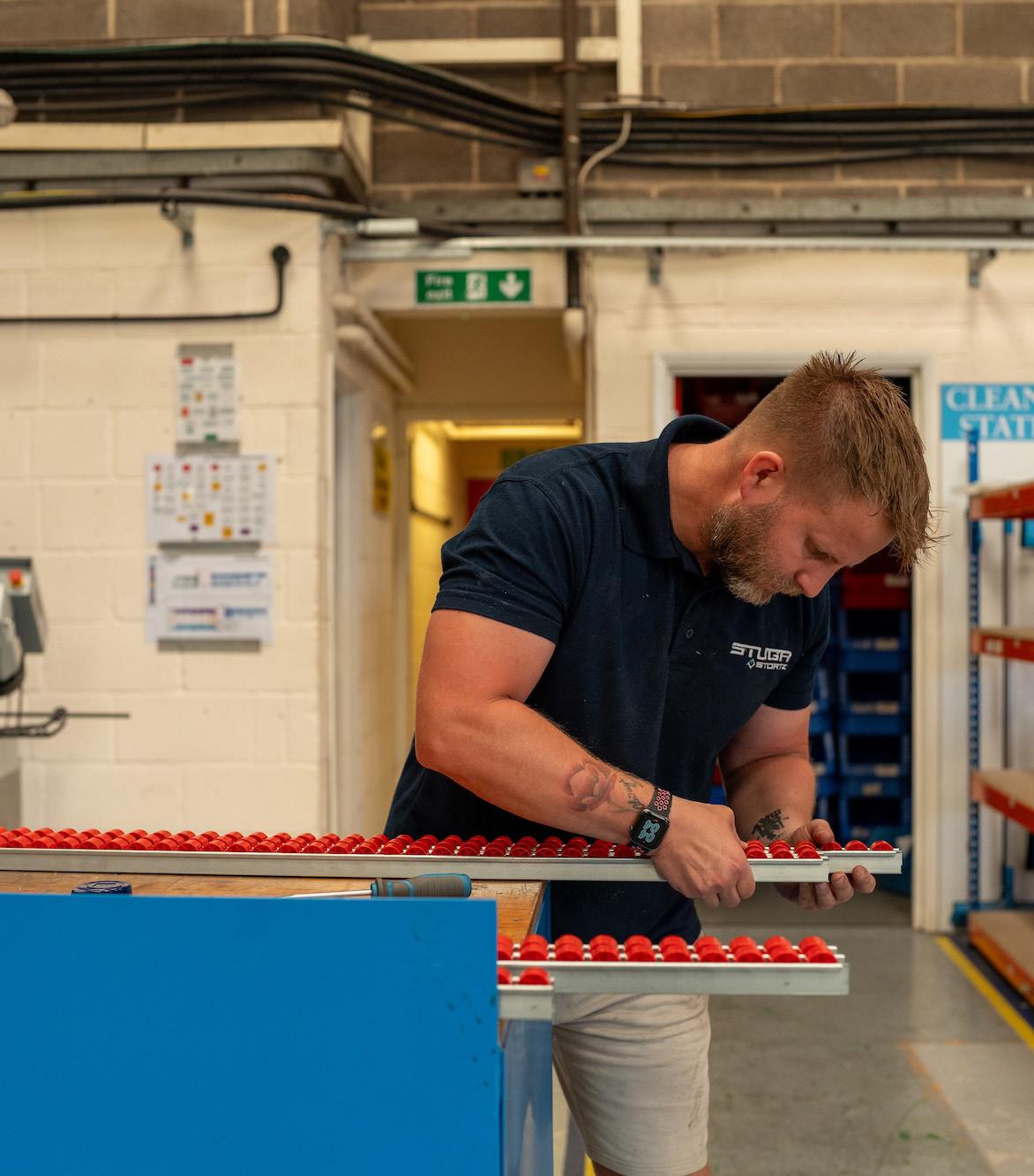
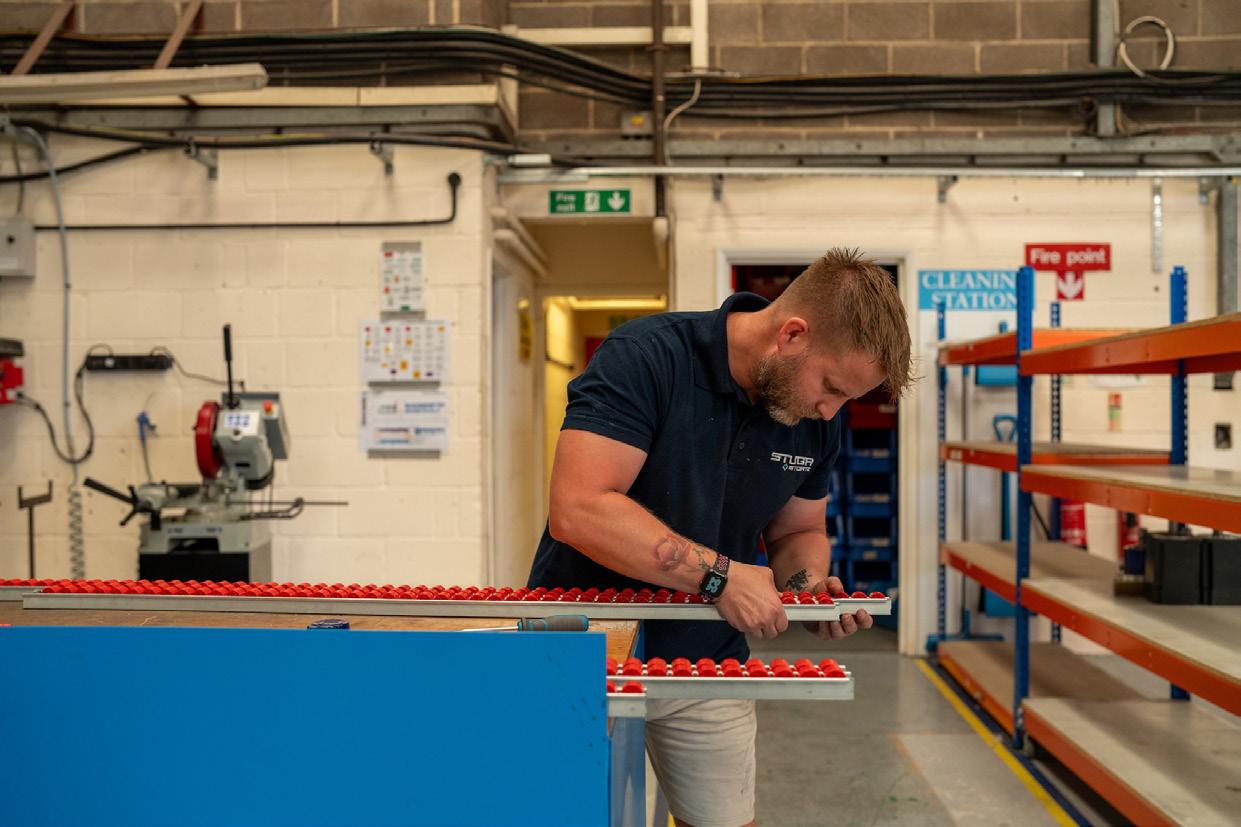
Stuga Machinery says its new position within the Voilàp Group marks a major step forward for UK operations. Following the acquisition of its parent company, Stürtz Maschinenbau GmbH, in September, the move has already brought a renewed sense of long-term, engineering-led stability and opportunity across the business.
At a time when UK fenestration volumes remain subdued and investment confidence has been tested, Stuga’s new ownership provides a foundation of stability and future-focused innovation.
“Becoming part of the Voilàp Group gives us a much stronger long-term foundation,” explains Stuga’s Managing Director, Ed Williams. “Voilàp isn’t a financial investor – it’s a manufacturing and technology company, just like Stürtz and Stuga –and that makes a world of difference.
“Voilàp’s drive is engineering and innovation, not short-term financial gain. It’s precisely the kind of industrial ownership that allows us to plan years ahead, reinvest in our people and technology, and focus entirely on designing and supporting worldclass machinery for UK fabricators.”
For customers, everything familiar continues – the same engineers, the same technical support, and the same focus on uptime and after-sales. What changes is the depth of capability behind it. With Voilàp’s capital, R&D and manufacturing strength, Stuga is better positioned than ever to support UK fabricators with reliable, future-ready automation. The company continues to design and build its range of sawing and machining centres from its Great Yarmouth base, as its expert team has done for more than 40 years. With Voilàp’s support,
the business also gains access to wider R&D, automation expertise and global manufacturing strength.
“Voilàp builds, manufactures and innovates,” Ed continues. “That opens up new collaboration opportunities across the group. We can draw on Stürtz’s strength in welding and cleaning, Voilàp’s automation and digital factory systems, and combine that with our own knowledge of UK fabrication. Together, that creates a powerful platform for innovation.”
Continuing its innovation strategy, Stuga is progressing new entry-level PVC-U and aluminium systems, currently in R&D, to make automation more accessible for smaller fabricators. The company is also expanding StugaConnect – its platform for machine data, service records and live production insights via StürtzCloud. While Voilàp’s backing may further support these developments in time, the projects are already laying the groundwork for greater efficiency and flexibility for UK fabricators.
“The real advantage for customers is the engineering collaboration now happening across the group,” adds Ed. “By combining Stürtz’s precision, Voilàp’s automation expertise and our understanding of the UK market, we can deliver smarter, more efficient production solutions and stand-out aftercare that helps fabricators stay ahead.”
Ed concludes: “We can plan years ahead with confidence, reinvest in our people, our stock and our technology. We’re here for the long term.” For more information, contact Stuga on 01493 742 348 or email machinesales@stuga.co.uk.
CERTASS LEADS THE CHARGE ON COMPETENCE REFORM
The glazing and home improvement industry is entering a new phase of leadership and accountability as the updated Mandatory Technical Competence (MTC) framework begins its rollout, and Certass has been instrumental in shaping it from the start.
As the primary authors of both the current and previous MTC frameworks, the Certass technical team has worked closely with government and industry partners to modernise how competence is defined, assessed, and maintained. The move from Minimum to Mandatory represents a cultural shift toward verified, behaviour-based professionalism rather than box-ticking.
Jon Vanstone, Chair of Certass and the National Home Improvement Council (NHIC), explained:
“This is about raising the bar in a way that supports real people doing real work. The new MTC ensures that competence is not just about what you know or what you can do, but how you apply that knowledge in practice. It sets a higher standard for accountability and trust across our sector, helping show consumers to distinguish good from bad.”
projects.
“This evolution has been a long time coming,” added Vanstone. “For too long, competence has been reduced to paperwork, often favouring large organisations over skilled tradespeople. The new framework turns it into a living standard, one that reflects how good businesses really operate.”
Through its direct involvement in shaping regulation and its commitment to clear, practical guidance, Certass continues to position its members ahead of the curve, giving them confidence and credibility in a rapidly changing market.
As part of this commitment, Certass is also calling for a return to integrity in how Building Regulations Compliance Certificates are presented to consumers.
The revised framework introduces separate criteria for domestic, non-domestic, and highrisk buildings, providing clarity across different working environments. It also integrates behavioural expectations drawn from the BS 8670 standard to ensure ethical, quality-focused working is recognised as an essential part of competence.
Certass has already been assessing against the principles of the new domestic MTC criteria for over two years, giving its members a head start on compliance. The organisation will expand assessments through its Learning Management System (LMS) in early 2026, offering tailored modules for non-domestic and higher-risk
“When a homeowner receives a Compliance Certificate, it should mean something,” said Vanstone. “It should be assurance that the installer has been properly assessed as competent delivering you a compliant installation with all parts of the regulations, rather than just a branded document used to push marketing agendas.”
He added: “A certificate is not a badge of corporate identity. It’s a legal document. At Certass, we’re ensuring that every certificate issued is underpinned by real competence, not just box-ticking or brand reach.”
By aligning certificates with rigorous, behaviourbased assessments, Certass is working to restore consumer confidence and raise the bar across the industry by making it clear that compliance is about regulation and standards, not someone else’s logo.
For more information, visit www.certass.co.uk
BREEDON AND MRA RESEARCH SHORTLISTED FOR
CONSTRUCTION MARKETING AWARD
Breedon Group plc and MRA Research have been named as finalists in the category ’Best use of Research and Insight’ at the 2025 Construction Marketing Awards (CMAs).
Breedon is a leading vertically integrated construction materials group that supplies aggregates, asphalt, cement, ready-mixed concrete and building products to the construction industry. MRA Research, an agency specialising in the construction sector, has been carrying out regular customer experience research for three of Breedon’s divisions since 2022.
The research provides Breedon with customer feedback on an ongoing basis, helping to drive continuous improvement and deliver excellent customer service. Net Promoter Score (NPS®) is a key metric, but MRA has broken down the results further into several sub-measures, which monitor different aspects of the customer’s experience for maximum impact.
The data is fed through to Breedon almost in real time, allowing their teams to remedy any issues quickly. Its NPS scores, which were already good,
have improved further and the additional insight provided through MRA Research’s CX Suite® of insight tools has enabled Breedon to target improvement measures where they are needed the most.
Callum Budd, Research Director at MRA Research, says: “We’re delighted that our customer experience research with Breedon has been shortlisted for the prestigious Best Use of Customer Research & Insight award. It recognises the importance of gaining a deep understanding of the customer’s experiences in order to improve customer satisfaction and retention”.
Richard Brown, Head of Marketing and Innovation of Breedon GB, comments: “We take great pride in the quality of our service and are continually evolving our approach to ensure we focus on what matters most to our customers. It’s fantastic to see our efforts in this area recognised by the Construction Marketing Awards.”
MRA Research’s CX Suite® of insight tools was designed to ‘explain’ the NPS score and enable businesses to target improvement where it’s required. The CMAs are a national measure of excellence in construction marketing and business development, including research and strategy. Winners will be announced at a gala dinner held in London on 3rd December.
Visit cmawards.co.uk to book a table or see the full list of finalists for the 2025 instalment of the awards.
For further information about MRA Research, visit www.mra-research.co.uk or email hello@mraresearch.co.uk. To find out more about Breedon, visit www.breedongroup.com.
The next generation of door is here. The new Origin OB-36+ system is available in 2 di erent collections. The Soho aesthetic is perfect for replicating a sought-a er steel-look design, whilst the Contemporary style o ers an elegant way to maximise light levels in a home. Both systems are 2025 Future Homes compliant for thermal e ciency and feature sightlines of just 36mm.
Don’t get le behind. Stand out from the competition and futureproof your business by opening an account with Origin today. Call 0808 192 0042 or visit origin-global.com/partner-with-origin
REEVES’ REVENUE RAID: HOW THE AUTUMN BUDGET 2025 WILL HIT THE UK FENESTRATION SECTOR
Chancellor Rachel Reeves today delivered the largest tax-raising Budget since the early 1990s, with measures expected to raise £26.1 billion a year by the end of the decade.
According to the Office for Budget Responsibility (OBR), the tax burden is set to climb to around 38% of GDP by 2030–31 — a post-war high — while economic growth in 2025 is forecast at around 1.5%. Although the OBR notes that higher taxes can affect economic activity, it has not quantified the impact in percentage terms.
For the £3 billion UK fenestration sector — manufacturers, fabricators and installers of glazing, windows and doors — the Budget represents a challenging shift in operating conditions. The industry is dominated by SMEs, is labour-intensive, and is heavily reliant on private housing repair, maintenance and improvement (RMI) work. While the full extent of the Budget’s impact will depend on how firms and consumers respond, several measures will clearly raise costs or squeeze household budgets.
Employer National Insurance Contributions: the most immediate cost pressure
The increase in employer National Insurance Contributions from 13.8% to 15% from April 2026 will directly raise labour costs, particularly for installation and fabrication businesses where wages represent 35–45% of operating costs. The freeze to the Employment Allowance also reduces relief for eligible small firms. The precise cost increase will vary by company size and pay structure, but most firms will face a noticeable rise in labour overheads. Businesses may attempt to pass on these costs to customers or absorb them, but either route could put pressure on margins in a sector already characterised by tight profitability and intense
price competition.
Income tax threshold freeze: indirect but meaningful pressure on demand
The extension of the freeze to the personal allowance and higher-rate thresholds to 2028 will increase the number of taxpayers moving into higher bands as wages rise. The Institute for Fiscal Studies estimates most households will experience a real-terms income reduction.
For fenestration, where major retrofit projects often cost £4,000–£12,000, weaker household disposable income could delay non-essential home-improvement spending. The scale of this effect is uncertain and will depend on broader factors such as mortgage rates, energy prices and housing-market confidence.
High-value property tax changes: potential cooling at the premium end
New surcharges on properties valued above £2 million, alongside higher stamp duty for the same segment, target a small portion of the market but one that has historically supported demand for high-specification glazing, heritage windows and bespoke premium products.
Developers and high-value homeowners may adjust plans in response to higher transactional and ownership costs. While it is too early to quantify the impact, the premium fenestration segment could see slower activity if high-end housing transactions moderate.
Pension tax relief changes: implications for the self-employed workforce
The restriction of higher-rate pension tax relief
on contributions above £2,000 will affect some self-employed installers and sole traders. Any reduction to the overall attractiveness of selfemployment comes at a time when the sector faces persistent skills shortages. The degree to which this discourages experienced tradespeople will depend on how widely the new limits are felt within the sector.
Areas of support: useful but limited in scale
The Budget includes £5 billion for affordable housing and an additional £1.5 billion for the Warm Homes Plan, which could stimulate some demand for energy-efficient glazing in both retrofit and new-build contexts. However, these resources will be spread across the wider construction and energy-efficiency supply chain and are unlikely to offset the broader tax-related cost pressures for most fenestration businesses.
Outlook: moderate growth with heightened cost pressures
Before the Budget, industry forecasts — including
from the Construction Products Association — anticipated a recovery in RMI and new-build demand from 2026–27, supported by the Future Homes Standard and ongoing energy-efficiency needs.
Post-Budget, the central outlook remains positive for long-term energy-efficient product demand, but short-term growth may be more modest if higher household taxation and business costs weigh on RMI spending and SME profitability. Larger manufacturers with stronger balance sheets and the ability to invest in low-U-value or smart-glazing technologies remain wellpositioned. Smaller regional installers and fabricators may face greater margin pressure, potentially accelerating consolidation trends already visible in the market.
Without additional sector-specific support — for example, enhanced capital allowances for energy-efficient products or expanded reliefs for small employers — the next two to three years are likely to present a tighter trading environment rather than the more robust rebound previously expected.
UK CONSTRUCTION SECTOR SUFFERS SHARPEST DECLINE IN OVER FIVE YEARS
UK construction output plunged at its fastest rate since May 2020 in October, according to the latest S&P Global UK Construction PMI® report, marking the tenth straight month of contraction and the longest downturn since the global financial crisis over 15 years ago. The headline Total Activity Index fell to 44.1 in October, down from 46.2 in September and well below the 50.0 threshold that separates growth from decline. The steep reduction highlights ongoing challenges across the sector, with civil engineering and residential building hit hardest.
Sector Breakdown: Civil Engineering and Housing Lead the Downturn
Civil Engineering: The weakest performer, with an index of 35.4 – the sharpest drop since May 2020. Firms frequently reported a scarcity of new projects to replace completed work.
Residential Building: Activity contracted markedly at 43.6, the steepest decline in eight months.
Commercial Building: Showed relative resilience, with an index of 46.3 little changed from September.
The broader decline stemmed from a sustained fall in new orders, which accelerated in October, though remained milder than the average seen in the first half of 2025. Companies cited sluggish market conditions, fewer tender opportunities, project delays, and heightened political and economic uncertainty deterring client spending.
Jobs Cut at Fastest Pace in Over Five Years Shrinking workloads and rising payroll costs prompted widespread job reductions. Staffing levels fell at the quickest rate since August 2020,
with many firms opting not to replace voluntary leavers. Subcontractor usage also declined, though to the slightest extent, since July. Input buying dropped sharply in line with lower output and orders – the steepest reduction since May 2020 – easing supply chain pressures. Vendor delivery times shortened for the third consecutive month, while subcontractor availability continued to rise.
Cost Pressures Ease, But Optimism Remains Subdued
Input cost inflation slowed to its lowest in 12 months (since October 2024), offering some relief amid the downturn. Looking ahead, business confidence improved slightly to its highest since July, with 34% of firms expecting output growth over the next 12 months compared to 20% forecasting a fall. Hopes for lower borrowing costs, a potential shift in client risk appetite, and stronger demand in areas like energy infrastructure helped lift sentiment. However, overall expectations stayed well below the longrun survey average, reflecting concerns over fragile investment and weak sales pipelines. Tim Moore, Economics Director at S&P Global Market Intelligence, commented:
“UK construction companies reported another challenging month in October as the prolonged weakening of order books so far in 2025 resulted in the fastest decline in business activity for over five years. Civil engineering and residential activity saw the fastest rates of contraction, while commercial building showed some resilience. Reduced workloads were again widely attributed to risk aversion and delayed decision-making among clients.”
The S&P Global UK Construction PMI® is based on responses from around 150 construction firms, collected between 9-30 October 2025. The survey has tracked sector trends since April 1997. For more details, visit www.spglobal.com/ marketintelligence.
YOU ALREADY NEED TO LOOK PAST THE BUDGET
The key fiscal event of the year is about to take place next week, and that is the Budget. I think we all know by now that it is not going to deliver much good news for people and businesses alike.
I don’t believe we have seen such a budget drip-fed to the public in the manner in which we have this one. Although no specific details about policy have been leaked…yet, we have had a fair dollop of ideas that the Chancellor has been batting around. Almost all of them are massively unpopular. One of which was the proposed idea to raise income tax by around 2p. That would have broken a key manifesto pledge, not that they are worth the paper they’re written on, and proved so politically poisonous that Rachel Reeves had to drop it. Instead, she’s going to tinker around with the rules on income tax thresholds, which will still be a technical manifesto breach, but that will be spun another way.
Right now, there looks to be nothing good for businesses in this upcoming budget. Unless there is some miracle rabbit out of a hat situation, which doesn’t look likely.
The most productive thing right now is to look past the budget already.
Digest tax, then move on
One area that our sector is going to have to keep an eye on is where any new tax thresholds are going to land. No doubt the Chancellor will aim to close loopholes and tinker around the edges of various thresholds to eek yet more cash out of businesses. If so, we all need to take a look at that and let our accountants tell us what damage it is going to cause. Then, digest it, work out where those costs can be absorbed or passed down the line, and then move on.
The budget is going to create negative waves for weeks, and we ought not to be consumed by it. Instead, our sector needs to remain level-headed, plan according to the new economic landscape, and then crack on.
I wrote earlier this year that we have to expect
no help from this Government for our sector, and that we have to control our own destinies and fortunes. We are ultimately the ones in control. The same message I can apply here. There will be little to nothing in this budget for us, other than more taxes and excuses. It is not a productive exercise to dwell on doom that will be delivered next week.
So listen, digest, absorb, tweak plans if required, then crack on.
Focus on what you can control
We’re approaching the end of the year. A year that has probably disappointed more than it has pleased. It has been far more difficult a trading environment than we wanted it to be, and we have seen far too many business failures as a result.
But, in spite of next week’s budget and the year that has passed, there are still niches within our sector that provide opportunities, especially in the higher end of the market. And this is where we all have to focus our attention.
We have to really zero in and exploit the areas of our businesses that are in our own control. For example, we know that in aluminium, sliding sash windows, timber windows and doors and heritage products, there is a solid and growing demand. We can adjust our businesses accordingly to make the most of these parts of the market. Create more leads, produce more products, and sell more to the type of homeowners who actively seek out these niches.
It’s not a walk in the park. It takes time, investment, vision and solid delivery to make it happen. But a failure to do so would cause additional damage where it is not needed.
So let us not dwell too much on what is said at the budget next week. Remain focused on what we are good at as companies within the fenestration sector, identify areas that can be exploited and go after them with as much vigour and energy as can be mustered!
QUALITY CONTENT
T a c k l i n g g e n u i n e , t h o u g h t p r o v o k i n g
U K g l a z i n g i n d u s t r y i s s u e s o n a d a i l y
a n d i n d e p e n d e n t b a s i s
FAR REACHING
S e t t o b e r e a d b y o v e r a q u a r t e r o f a m i l l i o n p e o p l e , c r e a t i n g o v e r
3 5 0 , 0 0 0 p a g e v i e w s
( e s t i m a t e d 2 0 2 5 s t a t s )
LATEST NEWS FIRST
R e a d t h e m o s t i m p o r t a n t b r e a k i n g
n e w s , f e a t u r e s , o p i n i o n a n d P R l o n g
b e f o r e y o u ' l l s e e t h e m i n p r i n t