A FIRM FOCUSED ON DEVELOPING AND TRAINING LITIGATORS
ECCLESTON AND WOLF
ECCLESTON AND WOLF is a law firm based in Baltimore that focuses on professional liability defense, insurance law, and general civil litigation. The firm is well known for representing professionals, businesses, and insurance carriers across a wide range of legal matters in the region.
When did the firm start, and what were the primary areas of practice?
Eccleston and Wolf is the successor to the Baltimore law firm of Eccleston and Seidler, founded in 1969. For over 40 years, the firm has developed its reputation and is known for its representation of attorneys in legal
malpractice claims, as well as bar complaints pending before the Attorney Grievance Commission. It also handles the defense of all professional malpractice claims, employer-side employment matters, and the defense of significant personal injury cases, including wrongful death cases.
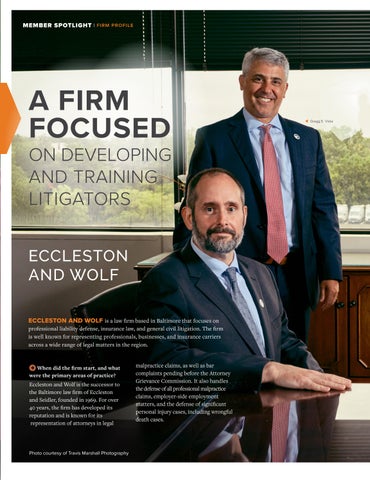
Photo courtesy of Travis Marshall Photography
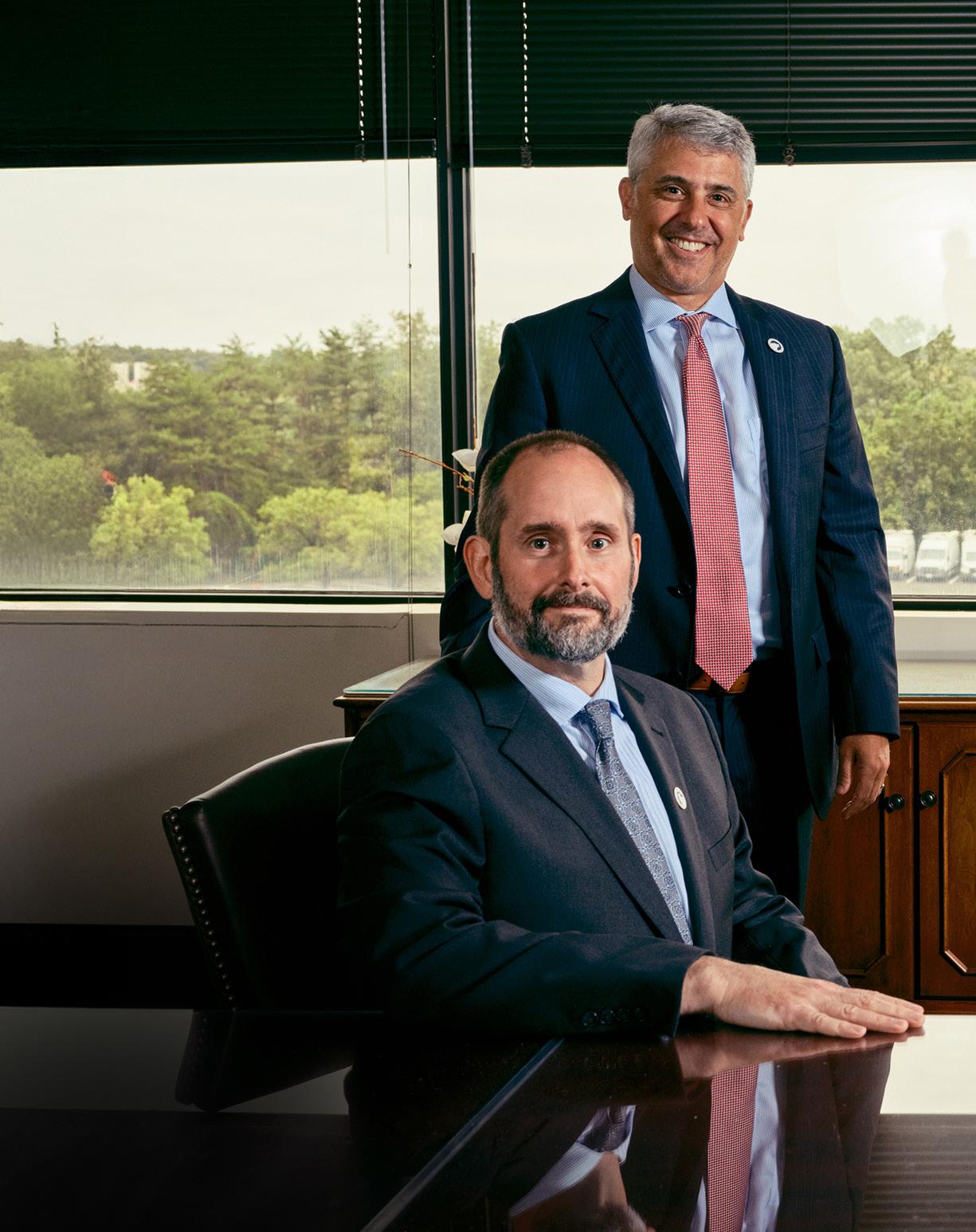
Gregg E. Viola
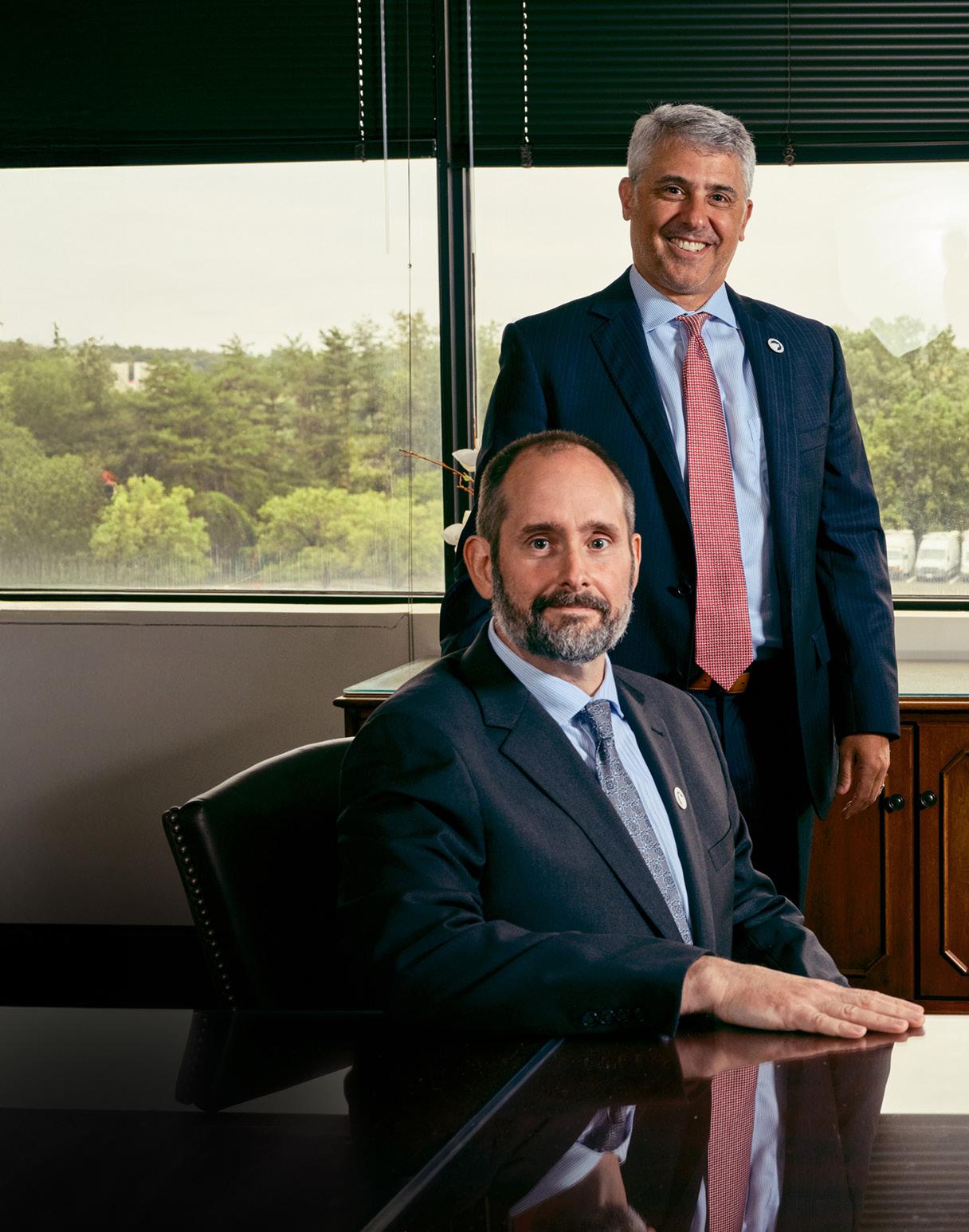
Stephen M. Cornelius
Eric M. Rigatuso
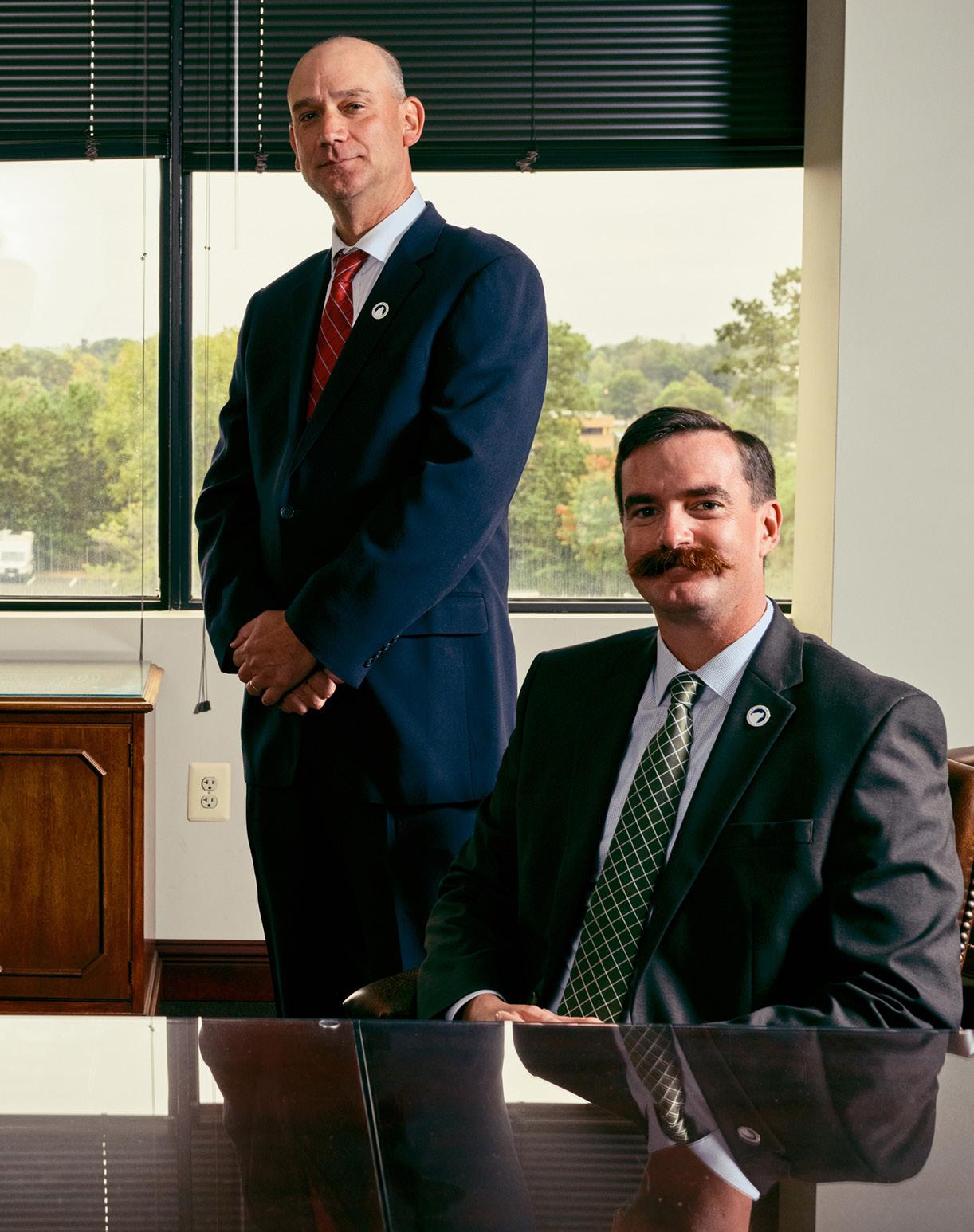
Daniel R. Hodges
How have you expanded the firm and your practice over the past few years?
For the past several years, the firm’s attorneys have been open-minded and adaptive in (a) their hiring practices, seeking out established, experienced attorneys, as well as training new lawyers, and (b) handling a wide array of cases to meet the evolving litigation demands of individuals and entities in Maryland. In addition to representing lawyers and law firms, Eccleston and Wolf also defends almost all licensed professionals, such as health care providers, accountants, real estate agents, architects, and
and implements policies to effectively govern and run the law firm, deference is given to experienced principal attorneys to manage their respective teams. This has fostered a collaborative team environment at the firm, while at the same time, enabled experienced litigators to maintain their individualized, successful approaches to practicing law.
How do your lawyers keep up with emerging and evolving legal issues, and why do you think this is important?
To keep up with legal trends, we regularly engage our attorneys by circulating and discussing legal
For the past several years, the firm’s attorneys have been open-minded and adaptive in (a) their hiring practices, seeking out established, experienced attorneys, as well as training new lawyers.
engineers. Eccleston and Wolf also handle cases in a multitude of other practice areas, including employment matters, homeowners’ association and community organization disputes, and defense of significant personal injury cases, such as wrongful death cases.
What is on the horizon for Eccleston & Wolf?
We are committed to growth—on a firmwide and individual basis. Eccleston and Wolf has a long tradition of training new lawyers, usually right out of law school or a judicial clerkship, in handling civil litigation from start to finish. Our focus is on training and developing litigators. We are looking to grow the firm by bringing in experienced lateral attorneys and training the next generation of attorneys.
Who is your target client?
Primarily lawyers and other licensed professionals. Attorneys in Maryland, D.C., and Virginia facing such claims have been and remain the firm’s target client.
What sets Eccleston and Wolf apart from other firms?
Eccleston and Wolf has a unique balance of “lifers” who have been practicing at the firm for decades and young attorneys who share a common desire for defending clients, learning the law, and honing litigation skills. This combination brings a unique energy to the firm.
How would you describe your firm's culture?
Professionally relaxed. While the firm’s management team oversees the day-to-day operation of the firm
developments, hosting in-house continuing education luncheons, and providing risk management seminars to law firms and businesses in the surrounding community. With respect to the latter, attorneys at Eccleston and Wolf are regularly asked to provide risk management programs focused on attorney ethics, the impact of recent developments in the law, and best practices. This requires presenting attorneys to research and stay abreast of changes in the law and the Maryland Rules of Professional Conduct.
In your opinion, what are some of the ways the legal profession has changed over the past few years?
The digitization of the legal profession, such as e-discovery and the implementation of AI, has had a profound impact on the modern practice of law. The rapidly changing and significant advances in technology demand a steep learning curve for attorneys to competently represent clients. This can prove quite difficult for more seasoned attorneys who did not grow up with complex computer systems, social media, and online databases.
What skills do you think lawyers and law firms should have in the AI age?
Discernment. It is easy and dangerous for attorneys to simply accept the answer or information generated by AI, without exercising the appropriate level of diligence to ensure the accuracy of the responsive material. We have already seen litigation and attorney discipline arise out of the easy/dangerous
approach to blindly accepting the results of AI-generated work product. So, in this AI age, it seems that attorneys and law firms must be committed to practicing discernment and independently verifying the accuracy of AI-generated material.
What do you see as the top three challenges your clients will face in the next 10 years? What are the practice areas that you think will be implicated because of this?
(1) Successfully and ethically utilizing AI for the benefit of clients; (2) security of clients’ digital information; and (3) attracting and cultivating talent. Among other practice areas, attorney ethics and professional responsibility will be implicated because of these challenges.
What do you see as the practice areas that will experience the most growth in the future?
We expect cases involving cybersecurity and data privacy breaches to continue to
increase in frequency. The upward trend of these claims is driven by the casual and sometimes reckless use of computers and online repositories for storing and protecting sensitive information and data. We have seen significant ransomware attacks in the news, some involving attorneys and law firms. As a means of proactively addressing these issues, companies and clients are insisting on certain minimum safeguards and cybersecurity measures to be in place.
What do you see as the legal challenges Maryland will face in the next few years?
Grappling with the responsible use of Generative AI. Although it is not unique to Maryland, the rise of ethical issues concerning the use of AI poses a significant challenge to practicing attorneys. In response, having checks and balances, policies, and proper oversight in place for the use of AI is essential. With the seemingly unavoidable use of AI to more efficiently,
Although it is not unique to Maryland, the rise of ethical issues concerning the use of AI poses a significant challenge to practicing attorneys.
and at times, more effectively, represent clients, law firms and lawyers must responsibly harness this technology.