
A Look at MSBA's Executive Committee
THE MSBA’S MISSION, which is to provide valuable member services and content, promote professionalism, diversity, access to justice, and respect for the rule of law, is the guiding principle for leadership at every level. The Board of Governors, the Executive Committee, and the Section and Committee Chairs collaborate to make the strategic decisions that bring this mission to life.
The Executive Committee plays a vital role in managing the business and affairs of the MSBA. It's a select group of Governors with the authority to act on behalf of the larger Board of Governors between meetings, to ensure the MSBA remains steadfast in its mission to effectively represent Maryland's lawyers and provide a rewarding and valuable membership experience.
THE EXECUTIVE COMMITTEE SELECTION PROCESS
The Executive Committee includes the MSBA’s President, President-Elect, Secretary, and Treasurer. The Chair of the Young Lawyers Section also holds a permanent spot on the committee.
The MSBA President appoints the remaining five members of the Committee from the Board of Governors. They include two Section Governors and three other Governors who are not officers. The appointed members serve one-year terms. The President can reappoint them as long as they remain members of the Board.
EXECUTIVE COMMITTEE MEMBERS
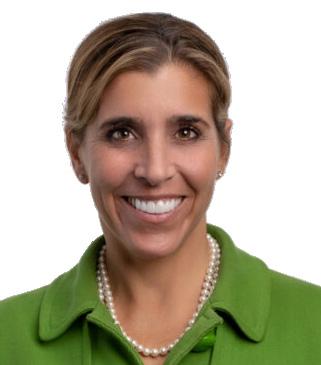
Currently, the Executive Committee is chaired by President Marisa A. Trasatti. Interestingly, Trasatti wears two hats as a private firm partner and in-house counsel. In the organization’s 129-year history, she is MSBA’s first full-time General Counsel/President. Specifically, Marisa serves as Sciton, Inc.’s General Counsel/Vice-President of Legal and also holds a part-time Partner position with Bowman and Brooke, LLP’s Baltimore Office, which she helped launch with her team in September 2024. Trasatti is a seasoned trial attorney with over 25 years of experience specializing in litigation defense for high-profile clients in life sciences, product liability, and toxic tort. She has been
The Executive Committee plays a vital role in managing the business and affairs of the MSBA. It's a select group of Governors with the authority to act on behalf of the larger Board of Governors between meetings, to ensure the MSBA remains steadfast in its mission to effectively represent Maryland's lawyers and provide a rewarding and valuable membership experience.

A Look at MSBA's Executive Committee
THE MSBA’S MISSION, which is to provide valuable member services and content, promote professionalism, diversity, access to justice, and respect for the rule of law, is the guiding principle for leadership at every level. The Board of Governors, the Executive Committee, and the Section and Committee Chairs collaborate to make the strategic decisions that bring this mission to life.
The Executive Committee plays a vital role in managing the business and affairs of the MSBA. It's a select group of Governors with the authority to act on behalf of the larger Board of Governors between meetings, to ensure the MSBA remains steadfast in its mission to effectively represent Maryland's lawyers and provide a rewarding and valuable membership experience.
THE EXECUTIVE COMMITTEE SELECTION PROCESS
The Executive Committee includes the MSBA’s President, President-Elect, Secretary, and Treasurer. The Chair of the Young Lawyers Section also holds a permanent spot on the committee.
The MSBA President appoints the remaining five members of the Committee from the Board of Governors. They include two Section Governors and three other Governors who are not officers. The appointed members serve one-year terms. The President can reappoint them as long as they remain members of the Board.
EXECUTIVE COMMITTEE MEMBERS
Currently, the Executive Committee is chaired by President Marisa A. Trasatti. Interestingly, Trasatti wears two hats as a private firm partner and in-house counsel. In the organization’s 129-year history, she is MSBA’s first full-time General Counsel/President. Specifically, Marisa serves as Sciton, Inc.’s General Counsel/Vice-President of Legal and also holds a part-time Partner position with Bowman and Brooke, LLP’s Baltimore Office, which she helped launch with her team in September 2024. Trasatti is a seasoned trial attorney with over 25 years of experience specializing in litigation defense for high-profile clients in life sciences, product liability, and toxic tort. She has been
The Executive Committee plays a vital role in managing the business and affairs of the MSBA. It's a select group of Governors with the authority to act on behalf of the larger Board of Governors between meetings, to ensure the MSBA remains steadfast in its mission to effectively represent Maryland's lawyers and provide a rewarding and valuable membership experience.
recognized with multiple awards for her legal work and has served on the boards and/or as president of several legal organizations, including Maryland Defense Counsel, CLM Maryland, and the Federation of Defense & Corporate Counsel. Trasatti was the subject of a member profile in the Maryland Bar Journal: Volume 2, Issue 1, which you can read here: https://tinyurl.com/bdebahuw.




MSBA Treasurer Natasha Marina Nazareth co-founded Maryland's first Certified B Corporation law firm. She is a corporate, business, employment, and education law attorney focusing on serving purpose-driven organizations. A Fulbright Scholar, she is also a senior mediator and has been recognized with a Lifetime Achievement Award from the American Bar Association. Nazareth was the subject of a member profile in the Maryland Bar Journal: Volume 6, Issue 3, which you can read here: https://tinyurl.com/43mw2fh2.
MSBA Secretary Randolph Stuart Sergent is the Executive Vice President, General Counsel, and Corporate Secretary for CareFirst BlueCross BlueShield. He oversees the company's legal, public policy, government affairs, and compliance divisions and serves as the Chair of the Maryland Health Care Commission. Sergent was the subject of a member profile in the Maryland Bar Journal: Volume 6, Issue 2, which you can read here: https:// tinyurl.com/3vspdmbj.
Emily Ruth Greene, who represents the Young Lawyers Section as its Chair, has a background in legislative affairs and public policy, with a focus on government and international relations. Her career includes roles as a Congressional Affairs Specialist and legislative positions in the office of Congressman Jim Jordan. Greene was the subject of a member profile in the Maryland Bar Journal: Volume 3, Issue 3, which you can read here: https://tinyurl. com/4pb7mmdz.
Penny L. Somer-Greif, an appointed member representing the Business Law section, is Counsel at Lucosky Brookman LLP. She is an expert in securities and corporate law, advising clients on public and private securities offerings and regulatory compliance. Her career includes experience at the U.S. Securities and Exchange Commission and other prominent law firms. Somer-Greif was the subject of a member profile in the Maryland Bar Journal: Volume 4, Issue 2, which you can read here: https://tinyurl. com/2uactup3.


MEET SOME OF THE EXECUTIVE COMMITTEE MEMBERS:
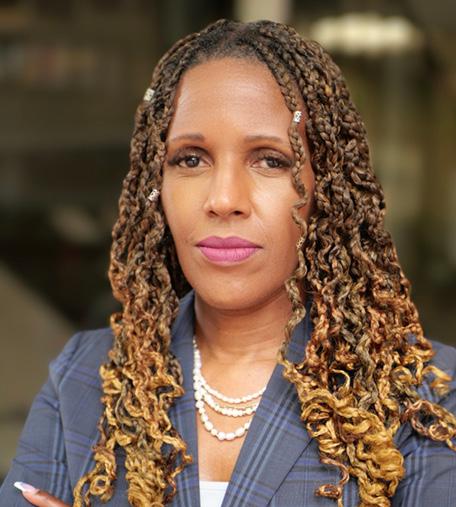

MSBA PRESIDENT-ELECT NATASHA DARTIGUE is Maryland’s State Public Defender. She has held several leadership positions in the MSBA, including serving as the MSBA Secretary in 2024-2025, Executive Committee Member at large from 2022-2023, Board of Governors member from 2022-2023 and as the Budget and Finance committee Co-Vice Chair from 2024-2025.
Why did you enter the legal profession?
My original plan, having majored in biology as an undergraduate, was to attend medical school. Although I enjoyed research, I quickly concluded genetics work was not my life calling. I pivoted and went to law school. After graduation from Howard University School of Law, I clerked for Baltimore City Circuit Court Judge Roger Brown. My clerkship experience showed me the impact I could have in serving vulnerable populations and ultimately led me to dedicate my career to public defense.
Tell us a little bit about your current role.
As the Maryland State Public Defender, I serve as the chief executive officer with comprehensive managerial responsibilities spanning budget oversight, policy development, and personnel administration. The agency comprises approximately 1100 employees, which includes attorneys and staff across 52 offices. I work collaboratively MOPD statewide management and external criminal justice stakeholders to identify pertinent criminal justice issues and develop solutions for clients and their communities.
What are some of the challenges you face in your current role?
I confront multiple complex challenges as Maryland State Public Defender, ranging from resource constraints to systemic criminal justice issues. The most pressing challenge involves budget management and staffing shortages amid overwhelming caseloads. I continue to push for substantial staff boosts even as the state faces budget deficits.
What is the best piece of advice you have received from someone in the legal profession?
Feel the fear and do it anyway.
What makes you unique in your profession?
My uniqueness stems from being a trailblazing leader, and daughter of Haitian immigrants. I am the first Black person to serve as Maryland Public Defender. My background allows me to bring fresh perspectives on criminal justice work and serve as a symbol of possibility for underrepresented communities in the legal profession.
Tell us a little about your biggest project or passion project related to your professional career right now.
I am deeply committed to several initiatives that represent the evolution of public defense beyond traditional case-by-case representation. The two projects I will highlight are the Maryland Equitable Justice Collaborative (MEJC) and the MOPD Innocence Project Clinic at Carey Law.
Maryland Equitable Justice Collaborative (MEJC) - Partnership between the Office of the Public and the Office of the Attorney General working together to address systemic inequities that have led to mass incarceration in Maryland.
MOPD Innocence Project Clinic (MOPD IPC) at Carey Law – MOPD IPC is now located at both Maryland law schools, thereby doubling the number of individuals served. Through this clinic, we not only work to exonerate the innocent but also identify systemic failures that lead to wrongful convictions in the first place, including prosecutorial misconduct, faulty forensic evidence, and eyewitness misidentification. These projects embody my belief that public defense should be proactive rather than reactive. The MEJC partnership allows unprecedented collaboration with community stakeholders on shared equity concerns, while the MOPD IPC ensures we are learning from our system's worst failures to prevent future wrongful convictions. Both initiatives multiply impact beyond individual cases. Every protocol or new law we develop, every systemic flaw we identify, every student we train creates ripple effects that protect countless future Marylanders. The ultimate vision is simple but revolutionary: a legal system where we actively prevent the conditions that lead to incarceration and wrongful convictions rather than just responding after the damage is done.
How has the MSBA helped you in your legal career?
MSBA has enhanced my legal career by: a) providing continuing education opportunities that kept me current on evolving legal strategies; b) offering networking platforms that elevated my visibility within the legal community; c) creating opportunities for thought leadership through speaking engagements and committee work; and d) connecting me with attorneys and legal professionals working outside of criminal law.




SAMANTHA P. RODIER, AN APPOINTED MEMBER of the Executive Committee representing the Family Law Section, is the Managing Partner of Rodier Family Law, P.A. She was a MSBA Leadership Academy Fellow in 2015-2016, and was a member of the Family Law Section Council for over 10 years, serving as the Chair in 2023-2024.
What is your fondest memory of your legal career so far?
All the wonderful people—my partners, our fabulous support staff, my co-workers in prior years, all of the family law section council members that served during my time there, my fellow WBA Board and Chapter members, my Leadership Academy cohort fellows, my family law and bar association colleagues, Courthouse staff and members of the Judiciary—that I have encountered and worked with throughout the years. My experiences within the legal community, and my service to that community over the years, has been the secret ingredient that elevates the practice of law from a tough job to a rewarding profession.
What professional accomplishment are you most proud of?
My proudest professional accomplishments to date are being accepted as a Fellow in the American Academy of Matrimonial Lawyers and serving as the Chair of the MSBA Family Law Section Council as well as President of the Women’s Bar Association of Maryland.
What are the best skills you bring to your legal career?
As family law is client-centered, I feel like I possess the soft-skills that are required to be successful in this area of practice. If you have emotional intelligence, can relate to people from many walks of life, communicate well, and adapt easily, then you can help more people more effectively. I strive to be my authentic self in all of my interactions with others. I am always prepared. When appropriate, I am not afraid to use creativity to solve problems. I generally believe that common sense should prevail over conflict and that people deserve grace—everyone is doing the best they can despite their circumstances. I am an eternal optimist; beyond every misstep is an opportunity for achievement. These traits, or beliefs—perhaps my perspective—which I consider skills, have greatly enhanced my effectiveness as a family law attorney.



“
My experiences within the legal community, and my service to that community over the years, has been the secret ingredient that elevates the practice of law from a tough job to a rewarding profession.
What does a day at work look like for you?
My day varies significantly based on whether I am meeting with clients, appearing in court, participating in settlement negotiations, or hunkering down in the office to prepare cases or tackle operational projects. Other days I am out of the office attending or assisting with CLE planning for Family Law Section, attending meetings, events, and/or conferences relating to my roles with the MSBA, AAML, as Immediate Past President of the Women’s Bar Association, or as a member of the District 4 Judicial Selections Committee or the Harford Community College Foundation Board. Most evenings, if I am not obligated in some manner to these various organizations which I serve, I am typically rushing off somewhere to attend my children’s sporting events!
What are your goals for yourself in this role?
Continuous study of the law is non-negotiable at our firm; I look forward to always building my legal knowledge and skills in order to provide the highest quality services to our clients. On the business side, I look forward to growing my managerial/operational skills with the goal of ensuring a rewarding professional experience for everyone employed at our firm. We would also like to see our firm add attorneys in order to better meet the high demand for legal services in Harford County and have set goals to start seeking out the right people to bring on to the team in the near future.
How has the MSBA helped you in your legal career?
Joining the Family Law Section Council as the Young Lawyer Representative over 10 years ago was a game-changer in my careertrajectory. Through Section Council I formed relationships with colleagues and mentors in other counties that would not likely have developed organically due to the location of my practice. I believe that I became a better lawyer, more fully engaged in the purpose of what we do and gained a broader perspective on the practice and profession as a result of these relationships. Along with the friendships formed, I have also had incredible opportunities to be directly involved in the legislative process and related efforts of the Section to pass or defeat significant family law legislation over the past decade.

RICHARD SHERMANSKI, AN APPOINTED
at-large member of the Executive Committee, is a Hearing Examiner for the District of Columbia Department of Motor Vehicles, Adjudication Services.


Why did you enter the legal profession?
I entered the legal profession driven by a deep passion for public service. I wanted to use the law as a mechanism to advocate for others and make a meaningful difference in my community.
What is the best piece of advice you have received from someone in the legal profession?
The most transformative advice came from my Leadership Academy Mentor, Gary Norman, a blind attorney who taught me to reframe adversity as opportunity. I struggled for years with the bar exam and during that time discovered I had a learning disability at the age of 30. Even after finally passing, I was very nervous and anxious when in a room full of other attorneys. Gary encouraged me to use my story of adversity as a focal point—to demonstrate that with passion and dedication, you can not only overcome struggles but excel in this profession. His words fundamentally changed how I viewed my challenges and inspired my advocacy work today.
What makes you unique in your profession?
My journey through the legal profession has been marked by unexpected challenges that became my greatest strengths. My bar exam struggles, could have ended my legal career before it even started. Instead, it opened my eyes to the silent struggles many law students and attorneys face. This lived experience gives me unique insight into the barriers facing both law students and lawyers with disabilities and positions me to advocate authentically for systemic change in how our profession supports those who learn and work differently.
Tell us about your biggest passion project:
For the past two years, I've organized an annual law school program featuring panels of speakers who discuss mental health and accommodations with law students. This program addresses three critical areas: seeking accommodations in law school, navigating the bar exam accommodation process, and understanding disability rights within the legal profession.
This project is deeply important to me because I know firsthand how isolating it feels to struggle in silence. When I discovered my learning disability, I felt alone and uncertain about my future in law. I wish I'd had access to the kind of honest, informed discussion this program provides.
My goal is to expand this initiative beyond a single annual event. Through my role on the MSBA Executive Committee, I'm working to establish panels and presentations throughout Maryland, reaching not just law students but practicing attorneys who may be quietly struggling with their own disabilities. I want every lawyer in Maryland to know that having a disability doesn't limit your potential—it can become your greatest asset in serving others.
Tell us a little bit about your current role.
I serve as a Hearing Examiner for the DC Department of Motor Vehicles, essentially functioning as a traffic court judge for a large metropolitan city. In this role, I preside over administrative hearings involving traffic violations; specifically regarding parking and moving violations. I'm responsible for reviewing evidence, applying relevant statutes and regulations, and issuing written decisions that are both legally sound and fair. The position requires balancing efficiency with thoroughness, as I manage a substantial caseload while ensuring each case receives proper attention and due process.
“
I want every lawyer in Maryland to know that having a disability doesn't limit your potential—it can become your greatest asset in serving others.

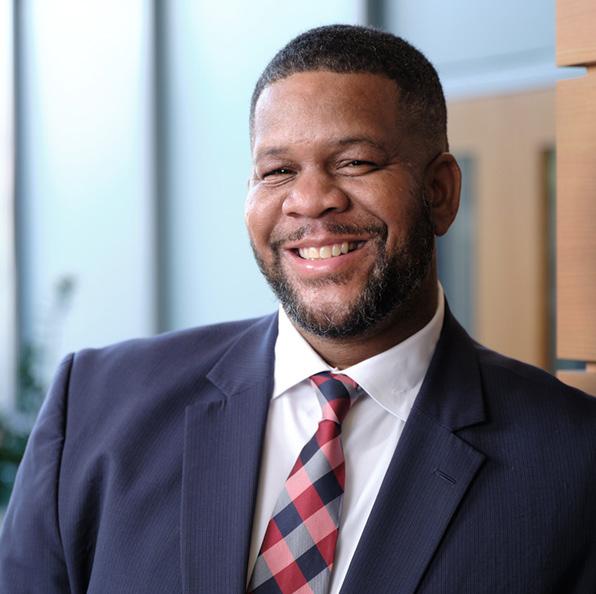


WM. CARL ISLER, AN APPOINTED at-large member of the Executive Committee, holds the position of Compliance and Enforcement Program Counsel at Legal Services Corporation. He has been involved with MSBA his entire career, serving on multiple committees, including Young Lawyers, Membership, Strategic Planning, Board of Governors, and the Executive Committee.
Why did you enter the legal profession?
I wanted to help people, and growing up, I recognized and realized the impact attorneys and the law had on people and the community. It led me to a career in public service and government agencies.
What is the best piece of advice you have received from someone in the legal profession?
Thoroughly prepare, research, review the rules and be kind to everyone in every single case you handle, not to ensure success but to establish your reputation as a good attorney. Maryland’s legal community is not big, and your reputation, whether good or bad, will precede you. Find mentors and build a network; you are not in this profession alone, and it's good to have resources for advice, sounding boards, and collaboration.
How has the MSBA helped you in your legal career?
It allowed me to get my foot in the door in this profession. I was sworn in as a Maryland attorney on February 6, 2020, two weeks later my son was born, and then three weeks later, the COVID lockdown started. I spent over a year as a Maryland attorney, and I did not personally know a single other attorney in this state. Joining the MSBA allowed me to not only network but also rediscover my joy of community involvement and leadership.
Who is someone you admire, and why?
My father, Richard E. Shermanski, Sr. While I am a first generation attorney, as a kid watching my father going to work everyday, as the owner of his own restaurant, and later working for the federal government running the food and beverage department of an Army Depot, helped me to establish and pursue my own professional ambitions.
What is your fondest memory of your legal career so far?
Welcoming new attorneys at their swearing ceremony at the Supreme Court of Maryland, and then teaching those same attorneys in the Maryland Professionalism course. It was so exciting and rewarding, and I enjoyed it every time. It allowed me to reminisce on the beginning of my legal career and share advice and lessons I had learned in my career.
Tell us a little bit about your current role.
Legal Services Corporation receives funding from the U.S. Congress to grant to legal offices across the United States and its territories to provide civil legal aid to low-income people. My role is to ensure that the grant recipients are in compliance with the federal regulations for using the granted funds. I often train legal aid offices on the regulations, helping them develop policies and procedures to

ensure compliance, and conducting onsite reviews to ensure that all the regulations are being adhered to.
What are some of the challenges you face in your current role?
There simply is not enough funding to meet the growing need for legal assistance across the country. LSC grant recipients are unable to provide assistance to everyone seeking their help due to limited resources. Thankfully, there are attorneys who volunteer and take cases pro bono and other organizations that can provide some resources.
Describe a memorable MSBA event or product that has had an impact on you personally or professionally.
MSBA held a Continuing Legal Education course; I cannot recall the name of it, but it was for new attorneys. It was an allday course that walked you through how to litigate cases and provided forms, case precedents, and document templates. I kept and referred to the materials and information from that course for a long while when I first began in litigation.
How do you spend your free time?
In my spare time, I love to be with family and friends, travel, and play golf. My goal is to play in all 50 states.
Do you volunteer?
I thoroughly enjoy giving back to the community, whether through volunteering at a food bank, mentoring young people, participating in fundraising events and efforts, and donating resources. I love my local community in Prince George’s County and the greater Maryland community, and I want them to thrive. I feel like everyone can help and should give back in some way to improve and strengthen their communities.

AN APPOINTED MEMBER

Jeremy S. Scholtes is Office Managing Principal at Miles & Stockbridge’s Frederick office. He specializes in government contracting and commercial litigation.
What is the best piece of advice you have received from someone in the legal profession?
While visiting a client with my supervising attorney early in my career, the client told my boss: “Your job isn’t to tell me no, it is to legally and ethically get me to yes.” This was in the context of combat military operations, but the concept remains with me 15 years later and in my civilian practice. It is easy to point out all of the reasons something won’t work, but my job as a counselor and advisor is not to make the decision. Rather, my job is to provide my client with the most complete and timely analysis of risk and to present viable options, so that my client can make an informed decision.
What are some accomplishments you've achieved during your career?
Find mentors and build a network; you are not in this profession alone, and it's good to have resources for advice, sounding boards, and collaboration.
From 2010 to 2012, I served as a prosecutor at Joint Base LewisMcChord, WA, on a high-profile trial team investigating a rogue infantry squad. The squad had committed brutal murders and other crimes against Afghan civilians during its 2009–2010 deployment, and our team was assigned the demanding task of preparing these cases. As the junior prosecutor, basically just out of law school, I gained an immense amount of experience in case preparation and trial strategy, learning from exceptionally talented colleagues. In numerous cases, I was first or second chair counsel, working to secure justice for the victims and their grieving families. The squad’s actions were a stain on our military, but our team's diligent efforts demonstrated a commitment to accountability and affirmed the rule of law to both the public and the Afghan people.
What makes you unique in your profession?
Before joining Miles & Stockbridge P.C. in June 2014, I was an active-duty U.S. Army infantry officer and then a lawyer in the Judge
Rather, my job is to provide my client with the most complete and timely analysis of risk and to present viable options, so that my client can make an informed decision. “
Advocate General (JAG) Corps from 2001 through 2014. I first served as a platoon leader in 25th Infantry Division (Hawaii) and then as a platoon leader, assistant operations officer, and rear detachment commander in 3d Battalion, 75th Ranger Regiment (Ft. Benning, GA). I was then selected for the Funded Legal Education Program (FLEP), which is a program the Army uses to send 10-15 line officers to law school each year, each of whom subsequently return and serve in the JAG Corps for six years. It is a great way for the JAG Corps to have practitioners in the ranks who have conducted military operations in the field. I attended the University of Maryland School of Law and then served as an operational law attorney, prosecutor, rule of law attorney, regulatory law and ethics advisor, and labor and employment counselor, all at various times at Joint Base Lewis-McChord, WA, Camp Red Cloud, South Korea, and Ft. Meade, MD. From 2014 until retiring as a Lieutenant Colonel in 2022, I also served in the Army Reserve as an operations officer for a legal detachment in Gaithersburg, MD, then a defense appellate attorney at Ft. Belvoir, VA, and finally an adjunct professor in National Security Law and associate dean at The Judge Advocate General Legal Center and School in Charlottesville, VA.
How has the MSBA helped you in your legal career?
In 2013, while I was a MSBA Leadership Academy participant, I was also starting my transition from the Army JAGC to the private sector. I was attending the Bar President’s Conference, sharing with other attendees that I was job hunting, and two people I met started a series of connections for me that led to two job offers a couple of months later, one of which I accepted. This in-person MSBA event created the environment for me to build a meaningful network of colleagues, mentors, and advocates. The two lawyers I met, Ian Bartman and Harry Storm, graciously introduced me to Danny O’Connor, Tom Lynch, and Lauri Cleary. My 11 years with Miles & Stockbridge P.C. started with these people who invested in me and believed in me.
How do you spend your free time?
My free time is almost 100% committed to time with my wife and three kids. Much like my parents did for me, I want my kids to see and feel that they are loved without boundary and have all of the support and backing to prepare to be good human beings. In the slivers of time that I have for just me, I love to run, hike, volunteer, and travel.
Photos courtesy of Travis Marshall Photography, with the exception of Emily Ruth Greene and Samantha P. Rodier which were self-submitted.