

CELEBRATING 30 YEARS of the Law Links Internship
This year marks the 30th anniversary of the Law Links internship, which places high school juniors and seniors in law firms and law-related agencies.

The Law Links Internship, a seven-week paid summer program, is a cornerstone of Maryland Youth & the Law's (MYLaw) efforts to empower Baltimore City public high school students. This year marks the 30th anniversary of the Law Links internship, which places high school juniors and seniors in law firms and law-related agencies. The internship is more than just a summer job, though; it’s a powerful vehicle for change that demonstrates the transformative power of exposure.
History of Law Links
The Law Links internship began in 1994, at the "behest of the MSBA president." According to Shelley Brown, MYLaw's executive director, two MSBA leaders, Denny Belman and Paul Beckman, were inspired after seeing a similar program in St. Louis and said, "This program is amazing. We need to replicate it here in Baltimore."
The program's primary goal from the beginning has been to "create professional and meaningful work opportunities for Baltimore City Public High School students who might not otherwise have that kind of opportunity." Brown says the program was designed to bridge the gap for students who "might be in and out of the city every single day, maybe walking by these law firms, but have no real idea of what's going on inside."
The Law Links internship program had incredible support in its first year, and was able to place 55 interns with firms and legal services providers throughout the city. There was one year in the mid-1990s when funding was unavailable, but the program started back up in 1996 and has been running ever since. Its success in Baltimore City even led to its expansion into Prince George's and Howard counties, and it collaborated with a similar program on the lower Eastern Shore.
CELEBRATING 30 YEARS of the Law Links Internship
This year marks the 30th anniversary of the Law Links internship, which places high school juniors and seniors in law firms and law-related agencies.

The Law Links Internship, a seven-week paid summer program, is a cornerstone of Maryland Youth & the Law's (MYLaw) efforts to empower Baltimore City public high school students. This year marks the 30th anniversary of the Law Links internship, which places high school juniors and seniors in law firms and law-related agencies. The internship is more than just a summer job, though; it’s a powerful vehicle for change that demonstrates the transformative power of exposure.
History of Law Links
The Law Links internship began in 1994, at the "behest of the MSBA president." According to Shelley Brown, MYLaw's executive director, two MSBA leaders, Denny Belman and Paul Beckman, were inspired after seeing a similar program in St. Louis and said, "This program is amazing. We need to replicate it here in Baltimore."
The program's primary goal from the beginning has been to "create professional and meaningful work opportunities for Baltimore City Public High School students who might not otherwise have that kind of opportunity." Brown says the program was designed to bridge the gap for students who "might be in and out of the city every single day, maybe walking by these law firms, but have no real idea of what's going on inside."
The Law Links internship program had incredible support in its first year, and was able to place 55 interns with firms and legal services providers throughout the city. There was one year in the mid-1990s when funding was unavailable, but the program started back up in 1996 and has been running ever since. Its success in Baltimore City even led to its expansion into Prince George's and Howard counties, and it collaborated with a similar program on the lower Eastern Shore.
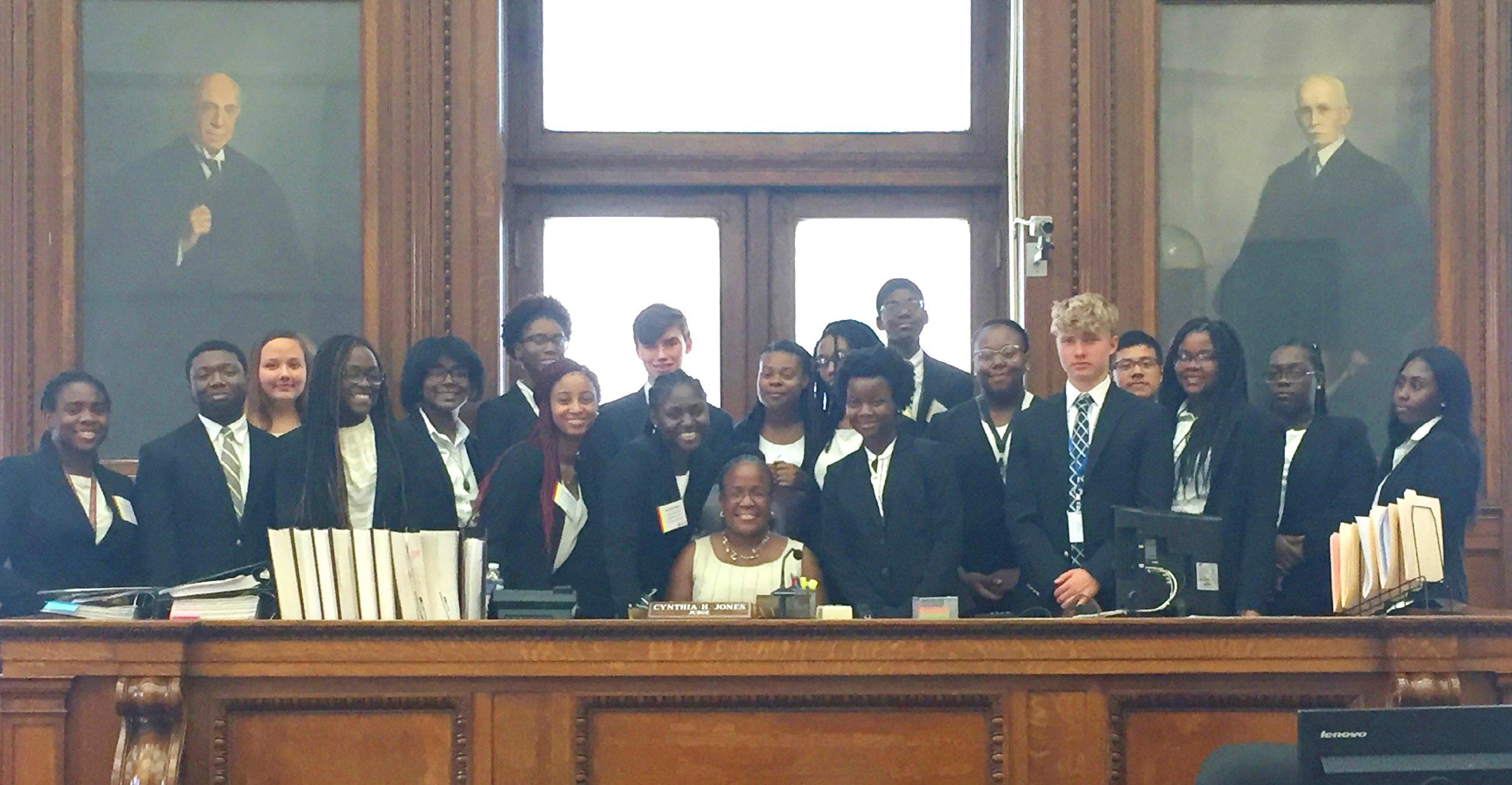
The program's primary goal from the beginning has been to "create professional and meaningful work opportunities for Baltimore City Public High School students who might not otherwise have that kind of opportunity."
Structure of the Law Links Internship
To be selected for the program, students must be rising juniors and seniors who attend a Baltimore City public high school and reside in the city. The application process is competitive and requires a typed letter of interest, a transcript, a school attendance record, three letters of recommendation, and a completed application form.
Interns work full-time, Monday through Friday, earning minimum wage, which is currently $15 an hour. This allows them to earn almost $4,000 over the course of the summer.
To kick off the program, Law Links interns attend Law & Leadership Institute, a 50-hour educational seminar held at the University of Maryland Francis King Carey School of Law. The program's curriculum is based on Stephen Covey's Seven Habits of Highly Effective People, and imparts lessons on topics like effective time management and communication. The orientation culminates in a kickoff luncheon with supervisors from the Law Links workplaces.
Law Links holds Law and Leadership Institute sessions with the interns every Wednesday as well, during which interns meet with guest speakers, including former interns, and go on field trips to locations like the federal district courthouse. These meetings not only allow Law Links to facilitate the interns’ professional growth, but they also give the interns the opportunity to discuss any issues or concerns they may have.
A unique aspect of Law Links is its provision of professional attire from either Ann Taylor or Joseph A. Banks, and any necessary alterations at no cost to the students. This removes financial barriers and ensures every student is dressed appropriately for a professional setting. Brown explained that wearing the suits helps interns elevate themselves by "looking the part" and "feeling the part."
The Law Links program has been around long enough that people in the community now recognize interns by their attire. Many former interns have shared how they looked professional and were treated accordingly when they wore their suits. Because of this, Brown says it's "probably something we will never not do."
The Transformational Impact of Law Links
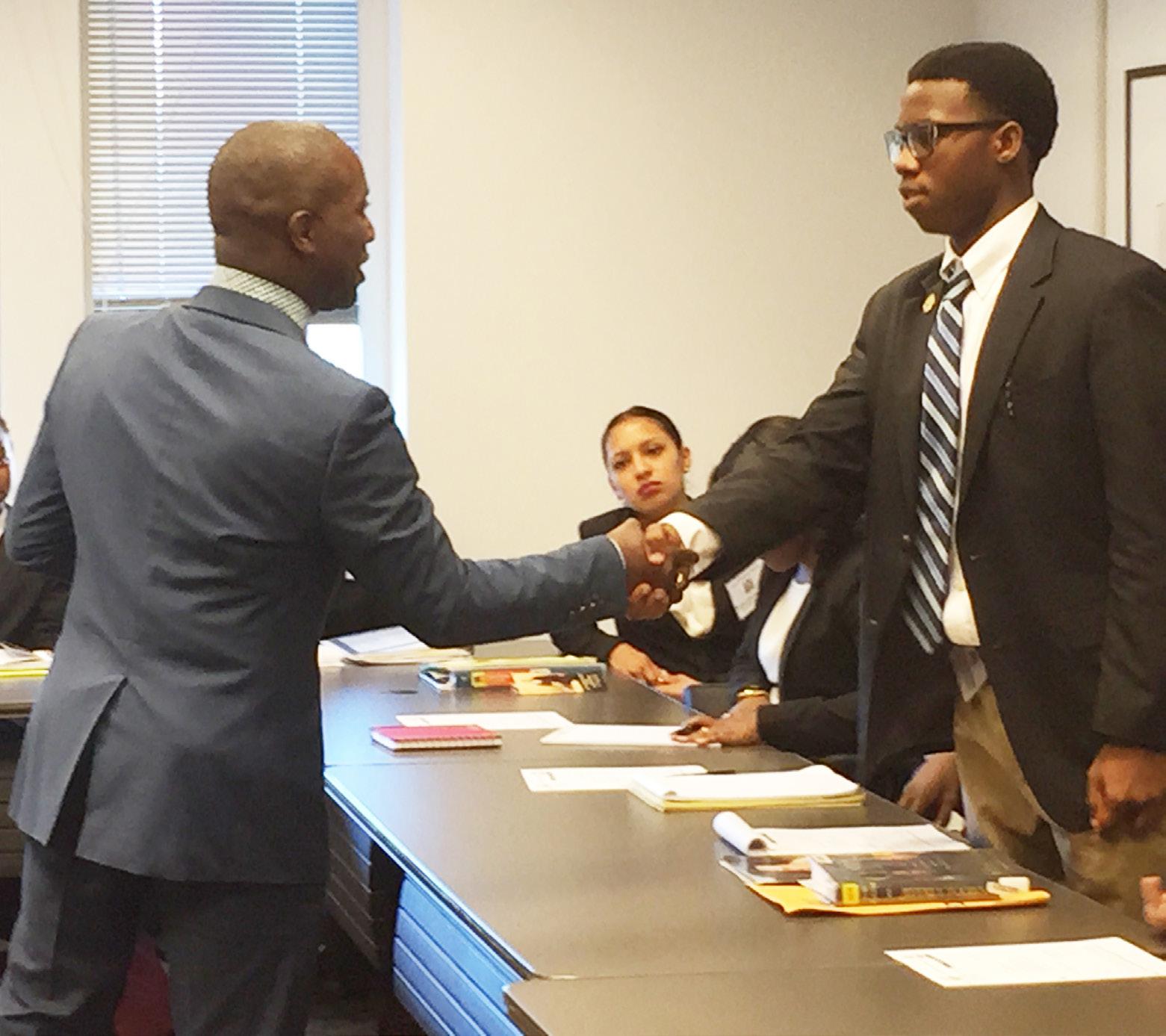
Brown considers Law Links to be "our most transformational program," noting that it has "changed a lot of lives for the good". She says that even for those who don't go into law, they take "a lot of things from the program." Many of the Law Links interns are on track to be the first high school graduates in their families, and they don’t necessarily have the support network to understand the professional world. The program exposes students to the working world and helps them develop essential soft skills like networking, teamwork, and communication, which are vital in many professions but are not taught in schools. It also teaches them practical skills such as navigating public
transportation to get to work on time. For many participants, the program is their first exposure to a professional environment and a chance to build a valuable network.
Brown noted that some people say that the kids who come into Law Links would have been successful no matter what. To that, she replies, “Maybe that's true. But I think that the people who come into Law Links have a certain level of motivation and they find opportunities in Law Links that they wouldn't have found elsewhere, and I think that combination is really powerful.”
Law Links’ Dedicated Supporters
The Law Links program relies on and thrives with the sustained support of dedicated Maryland attorneys and law firms, whose long-term commitment is vital to its mission of empowering Baltimore City youth. This support, spanning decades, provides not only financial backing and professional opportunities but also mentorship that helps shape the next generation of legal and community leaders.
Gordon Feinblatt
Gordon Feinblatt is the only law firm that has participated in the Law Links program every year for 30 years. The firm looks forward to working with the interns annually, sharing, “it gives us the opportunity to introduce them to law firm practice, connect them with attorneys for one-onone conversations, and give them a clearer picture of how a firm operates is rewarding for us as well as for them. Most of all, we value playing a part in helping them move closer to their goals.”
The firm's mentors and attorneys play a big role in making the internship meaningful. They’re always eager to meet with the interns, share their own law journeys, and listen to the interns’ interests. That encouragement and support
helps the interns see what’s possible and motivates them to keep moving forward on their path.
The firm believes “the Law Links program is valuable not just for the interns, but for everyone in the firm.” To them, “it’s a privilege to be part of their growth—helping them gain professional skills and confidence while also learning from their fresh perspectives. There’s a real sense of joy in supporting them as they take steps toward their goals, and that experience is rewarding for the firm as well.”
Chief Judge George L. Russell III
The Honorable George L. Russell III, Chief Judge of the U.S. District Court for the District of Maryland, has been a supporter of Law Links since his time as a Circuit Court judge. He participates in the program's speaker series and arranges field trips for interns to his courtroom to observe live legal proceedings.
Judge Russell shared, “throughout the course of my career, I have always enjoyed inspiring young people to pursue their dreams. The Law links program provides an opportunity to support Baltimore youth in the pursuit of those dreams.” To him, “[t]hese young men and women are the
future and with so many suffering from a lack of positive influences I feel obligated to provide positive guidance as they navigate their academic challenges.”
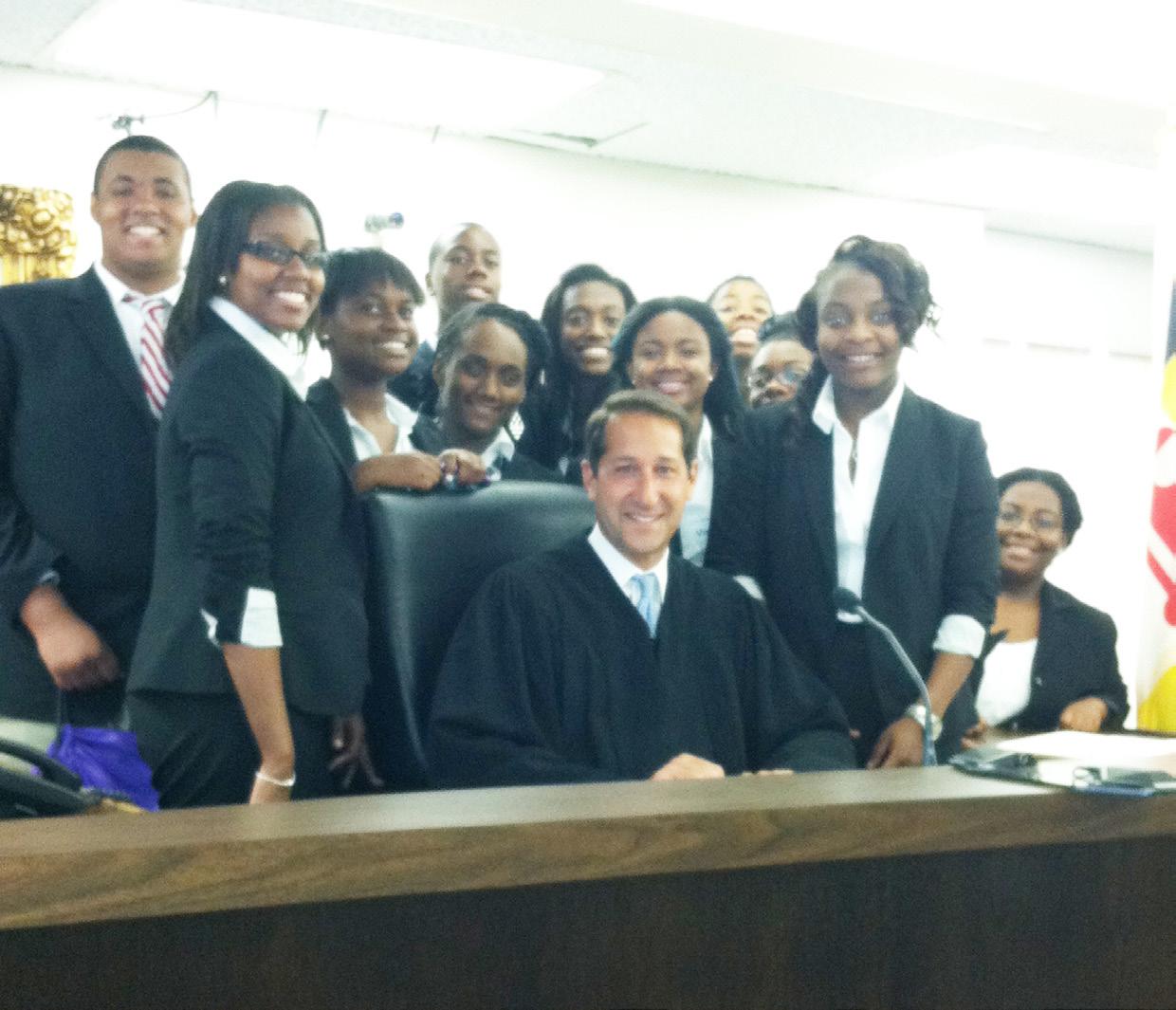
To help students envision themselves in legal roles, Judge Russell has a hallmark tradition of having interns who aspire to be a judge try on his robe for a photo. He tells them to "own their dreams" and helps "create a clear vision." His law clerks also provide interns with advice on preparing for law school and successful legal careers. He finds it rewarding to meet with the students, as he believes he has "made a difference in their lives and provided some focus in the pursuit of their dreams."
Challenges and Future Opportunities
Law Links faces ongoing challenges, primarily in securing consistent funding and recruiting enough work sites. The program has historically been reliant on grants and donations from foundations and law firms, which can be inconsistent. Brown says her biggest goal is to have "established funding for law links every year. So it's not a mad dash and scramble every single year to figure out how we're going to fund this thing."
Judge Russell expressed gratitude for the program, noting, “I am rewarded every time I meet with the students because I believe I have made a difference in their lives and provided some focus in the pursuit of their dreams.” He believes, “it is our obligation to give back for the purpose of helping and inspiring, hard-working young people who, in some instances, are much less fortunate.”
Barry Gogel
Barry Gogel, a long-serving member of the MYLaw Board and the Law Links committee, shared he is motivated to participate in the program for selfish reasons, because "nothing makes [him] feel happier than knowing that [he] can help another person on their journey in life." He believes Law Links is a "life-changing program" that closes the "opportunity gap that exists in Baltimore City and in our society."
For Gogel, the most rewarding part of working with interns is having lunch with them to discuss their "future dreams and ambitions." To him, the most valuable insight an intern gains is learning that the professional world is "open to them, regardless of where they come from."
Gogel believes that every attorney should be proud to be part of a profession that produced such a program, and that the rewards for participating lawyers, firms, and the entire profession are "immeasurable." He wishes that every profession had similar opportunities for young, deserving people who otherwise would not have them.
The shift to hybrid work models following the COVID-19 pandemic has also made it more difficult for firms to host interns, as they may not have enough in-house staff to provide adequate supervision. Despite these challenges, MYLaw remains committed to finding creative solutions, such as having law firms sponsor interns at non-profits or city agencies that need extra help. Brown says that if someone wants to support the program, "we will find a way." The organization is also focused on expanding its alumni network through the Young Leaders Board to gather more data on post-program outcomes and strengthen community ties.
To support the Law Links program, individuals and organizations can get involved in several ways. Law firms, law-related nonprofits, and city agencies can hire a Law Links intern for 2026 or sponsor an intern at a nonprofit legal organization for $3,900. They can also make a general monetary donation to the internship. Another way to contribute is by having a staff member serve as a speaker for the Law & Leadership Institute (LLI). Interested parties can complete a form with their contact information and indicate their desired method of support, which can be found at this link: https://www.mylaw.org/law-links-worksites. The program relies on these various forms of support and "couldn't do it without them."
If you participated in a MYLaw program or would like to support MYLaw, please reach out via https://www.mylaw.org/contact or shelley@mylaw.org
Meet Some of Law Links' Former Interns
The Law Links internship has had a significant impact on nearly 950 students over its 30-year history. Several alumni have gone on to achieve notable success:

Shea Player
Player was a Law Links intern in 2016. During her internship, she worked in the Johns Hopkins Health System Legal Department. She attended Dickinson College, where she was Student Body President, and graduated with a degree in Chemistry. Player is currently pursuing her medical degree at Stanford. She regularly supports Law Links through its speaker series.
What is the most valuable lesson you learned during your internship?
The value of networking and self-advocacy. Many of the opportunities I had, both during Law Links and in my time after, grew out of relationships I began cultivating during my time in Law Links.
How has the Law Links experience continued to impact your life since completing the internship?
The most significant ways Law Links has continued to impact my life are through the mentors I met and the skills I gained during the program. I still connect with many of these mentors regularly, and they continue to support me in meaningful ways. When I began medical school last year, my journey started with the White Coat Ceremony. This milestone was made even more special because many of the people who attended on my behalf were mentors I first met through Law Links or another MyLaw program.
In what ways did the Law Links program influence your decision to pursue your current career path? Law Links was my introduction to both the legal and medical fields. My placement at the Johns Hopkins Health System Legal Department exposed me equally to medicine and law, sparking my interest in their intersections. This curiosity deepened
when I took a course in biomedical ethics, which exposed me to the application of autonomy and justice in the field of medicine. Although I entered college as a chemistry major with plans to attend law school, my additional medical experiences (resulting from a Law Links connection!) inspired me to pivot toward medicine. I am now a second-year medical student at Stanford University School of Medicine with a scholarly concentration in biomedical ethics and medical humanities.
Why would you recommend that Law Firms participate in the MyLaw Law Links internship?
I would recommend that law firms participate in the Law Links program because it provides Baltimore City students with a truly rare opportunity for access, exposure, and professional development. For most students, Law Links is their first experience in a professional legal environment, where they not only gain practical skills but also build relationships with mentors who can guide them for years to come. Law firms have the chance to make a lasting impact on the trajectory of students’ lives, while also investing in the future of the legal profession by fostering a more diverse, prepared, and community-rooted pipeline of the future leaders of Baltimore City.

Reggie Smallwood
Smallwood was a Law Links intern in 2011. He graduated magna cum laude from Morgan State University and earned his J.D. magna cum laude from the University of Baltimore School of Law, where he was a Fannie Angelos Program scholar and staff editor of the University of Baltimore Law Review. Presently, Smallwood is currently an associate with Miles & Stockbridge. He supports Law Links through its speaker series, works on the Law Links committee, and is the supervisor of Law Links interns at Miles and Stockbridge.
What would you like people to know about the Law Links program?
It provides high school students with opportunities that most people don’t get until law school or even later in their careers – whether it was meeting judges, interacting with attorneys, or simply seeing the legal system up close. That kind of early access was invaluable because it not only gave me a clear sense of what a legal career could look like, but it also built my confidence and drive to pursue it. The program really opens doors and plants seeds that can shape your entire trajectory.
What aspects of the Law Links internship do you think were most effective?
The professional development training was extremely impactful. Being placed in a legal setting as a high school student meant learning how to navigate professional spaces, interact with people older and more experienced than me, and build confidence in environments that could otherwise feel intimidating. Those lessons became the same skills I continue to rely on as a new attorney.
Why would you recommend that Law Firms participate in the MyLaw Law Links internship?
Although office culture has shifted post-COVID, law firms still have so much to offer students—whether it’s exposure to real legal work, mentorship, or even the discipline of dressing professionally and reporting to a workplace each day. Participating in the program is also a meaningful way for firms to give back to the community while helping shape the next generation of lawyers.
Can you recall a specific moment or lesson from your Law Links internship that still resonates with you today?
During my Law Links internship, my cohort had the pleasure of visiting Judge George L. Russell, III while he was serving on the Circuit Court of Baltimore City. He shared inspiring words of wisdom, and I even had the chance to wear his robe and take a picture with him. Fast forward a few years later, I was a second-year law student and had the privilege of interning for him as a judge on the U.S. District Court for the District of Maryland. It was truly a full-circle moment that continues to resonate with me today.
Ebony Thompson

Thompson was a Law Links intern in 1995. Thompson obtained Bachelor of Arts degree in Economics from Brown University and a Master of Business Administration from American Intercontinental University before graduating magna cum laude from University of Baltimore School of Law. During law school, she served as the Associate Technology Editor for the University of Baltimore Law Review and emerged as the Overall Winner of the Moot Court Competition. Currently, Thompson is City Solicitor for Baltimore City; she is the first woman and first openly gay City Solicitor in the 294-year history of the city.
What is the most valuable lesson you learned during your internship?
The most valuable lesson I learned during my internship was that the law is not just about statutes and cases—it’s about people. At the Baltimore City Department of Law, I saw firsthand how legal work directly affects families,
neighborhoods, and the very future of our city. That realization—that law can be a tool for justice and transformation—has stayed with me throughout my career. It guided me years later when we held opioid manufacturers and distributors accountable for nearly $600 million in settlements and awards to help the 30,000 plus Baltimoreans still struggling with opioid use disorder, and when we secured a $62 million jury verdict against a gun dealer flooding our streets with ghost guns.
How has the Law Links experience continued to impact your life since completing the internship?
The impact has been immeasurable. Law Links gave me my first look inside the City’s Law Department. Today, I have the privilege of leading that same Department. Every major case I take on—the opioid settlements, the historic ghost gun verdict, our work to hold those responsible for the Key Bridge collapse accountable, and even introducing blockchain to combat redlining and vacant housing—stems from the foundation Law Links built for me. It’s the ultimate full-circle moment.
How did the Law Links program prepare you for future academic or professional endeavors?
It gave me confidence in spaces where I didn’t always see people who looked like me. Learning to navigate a professional legal environment at 16 prepared me for the rigor of law school, for trial work, and ultimately for leadership. It taught me that even when challenges seem overwhelming—like taking on billion-dollar opioid corporations or standing up to reckless gun dealers—you can rise to meet the moment.
Why would you recommend that Law Firms participate in the MyLaw Law Links internship?
Because it changes lives—plain and simple. When law firms or government offices invest in a Law Links intern, they’re not just filling a summer slot—they’re planting seeds for the future of the profession. I am living proof. That one internship grew into a career where I’ve been able to help bring nearly $600 million back to Baltimore by holding opioid distributors and manufacturers accountable, secure justice against illegal gun dealers, and pioneer new ways to build equity in housing. Firms that participate are investing in the next generation of leaders.

Alicia Wilson
Wilson was a Law Links intern in 1998. She is a graduate of the University of Maryland Baltimore County and the University of Maryland Francis King Carey School of Law. Wilson is currently the Vice President for Civic Engagement and Opportunity at Johns Hopkins University. Previously, she was a partner at Gordon Feinblatt, the first African-American partner in the firm’s 60-year history. She supports Law Links through its speaker series as well as mentoring many of its interns.
What is the most valuable lesson you learned during the internship?
My internship was my first time working, and it really set the framework for how I showed up for work for the rest of my career.
The Law and Leadership Academy that accompanies your internship teaches you all the soft skills that you need as you go into your internship for the summer, and so much of that was just critically important because it set the foundation for my work ethic and also for how I engage in a professional setting.
How much would you say that the law links internship impacted your decisions regarding your career? 100%. It was the turning point in helping me to realize that law and advocacy was going to be a part of my life's work and my mission. Getting exposed to law links really helped me to appreciate that the law was a really powerful vehicle to effectuate change in my community. And that the people they had around us really helped instill in me a belief that it was possible for me to achieve my dreams. So I felt like I can go to law school, I can become an attorney, I can have audacious expectations of myself because these people also believe in me.
Is there anybody from the Law Links internship that you still keep in contact with?
Tons. Paul Caiola, he was an attorney at Gallagher Evelius & Jones LLP, and was one of the people that I would go and see when I was 15 years old. Ken Walden, who was my supervisor and now leads a health rights organization in Chicago. One of my mentors, Ava Lias-Booker, who's at McGuire Woods. She was someone I met during my law links internship. They were all people that would engage with us and I kept in contact with.
If there was one thing that you can convey to people about the law links program, what would it be?
The Law Links program really demonstrates the power of exposure. You strive for excellence when you get exposed to excellence.
I didn't know what a lawyer did, but being able to actually work in a law firm at 15 helps you to be exposed to all of the different facets of the law and the way that it could shape you as a professional.
In addition, I think that it's really critically important that your first job be one that teaches you things that you can carry forth in the rest of your career. It really shaped who I am. It's why every year I go talk to the interns on their first day of work, and I mentor a lot of the interns who come out of the program.

Angel Yates
Yates was a Law Links intern in 2011. She obtained a BS from Hampton University, an MS from University of Baltimore, and is pursuing her PhD at Walden University. Presently, Yates is a field supervisor in the Division of Parole and Probation for the State of Maryland. She supports Law Links through our speaker series as well as through her work on our Young Leaders’ Board.
What was your experience with the Law Links program like?
The experience to actually work in a professional setting, be around attorneys and judges, get their insight at such a young age was a powerful experience. It allows you to shape and learn what questions to ask when you're in front of these people, to really get their insight. It’s a judgment-free zone as well.
What would you say is the most valuable lesson you took away from being a Law Links intern?
We went through a lesson about deposits and asking people for things and how to build professional relationships. You're going to deposit positive things into the relationship, so when it's time for you to ask for a withdrawal, such as a letter of recommendation, you built this relationship with somebody for them to feel comfortable enough to do that for you. I think that goes a long way and just sending a follow-up email to check on someone or making sure you understood something.
In what ways did working as a LawLink intern influence your decision to pursue the career you're now pursuing?
I think Law Links set me on a great track because I met a lot of judges and prosecutors throughout the program that I can still stay in contact with till today. I also think it prepared me for a professional environment, learning how to have an elevator speech, knowing how to send an email, and knowing people's titles.
What would you most like Maryland attorneys to know about the Law Links program?
I would like them to support it for one, whether they choose to participate as a guest speaker, whether they choose to host an intern. I think it's an amazing opportunity to allow young teenagers the chance to understand law because they are so impressionable. So the only way that we can shape how people look at the legal system is to be a part of the programs that are shaping these young minds on being a part of the legal system without being arrested.
Portrait photos courtesy of Travis Marshall Photography, with the exception of Shea Player which was self-submitted.